
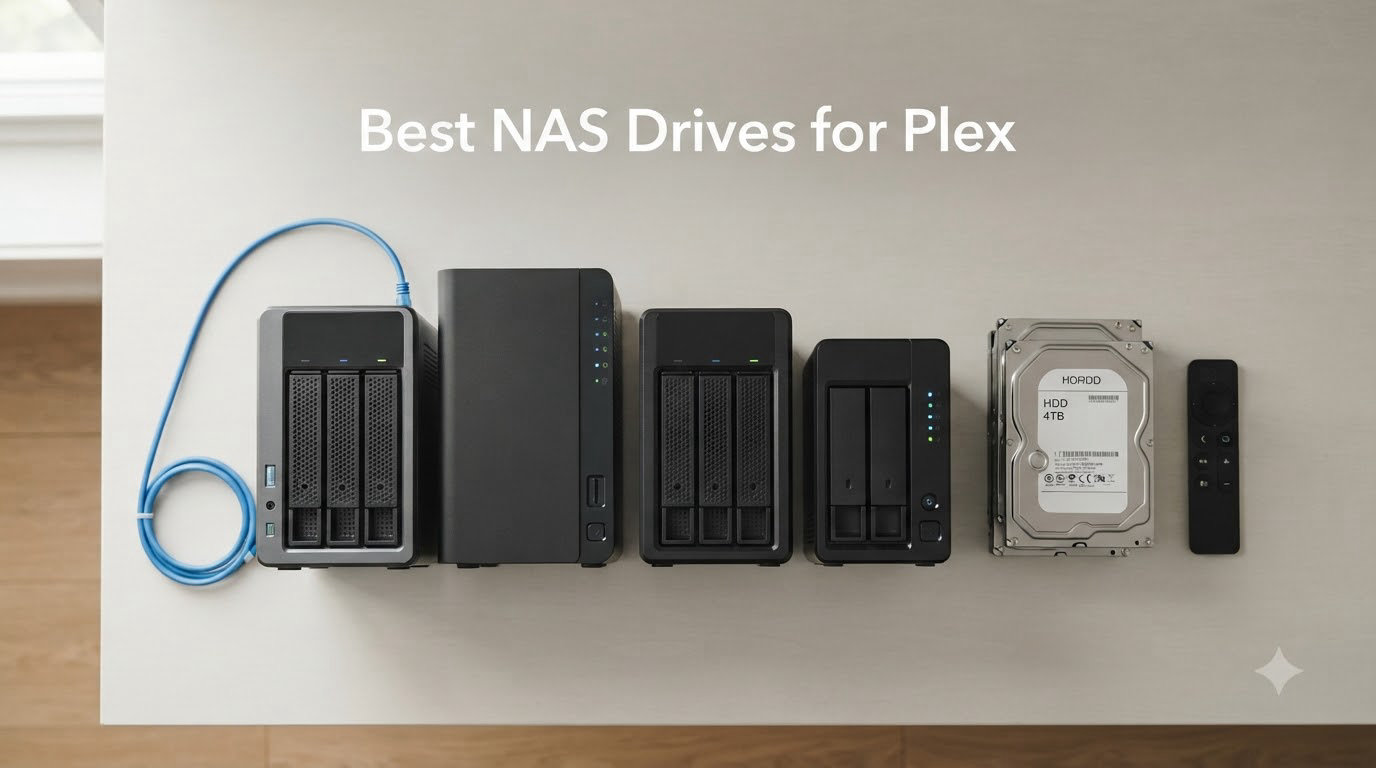
I have spent the last three months running Plex on eight different NAS enclosures, pushing each one through the same torture test: a 4K HDR remux stream to a 1080p client in another room, with two simultaneous 1080p transcodes happening on top.
That is the scenario that breaks most “best NAS for Plex” lists, because it is the one real home users actually run. Most buyers do not care about 16-bay rackmounts in a server closet. They want a quiet box that lives next to the router, serves movies to the living room TV, and does not buckle when the kids start watching a show in the bedroom.
After all that testing, my picks for the best NAS drives for Plex in 2026 are clear. The UGREEN DXP2800 is the sweet spot for most people, the UGREEN DXP4800 Plus handles anything I throw at it, and the Synology DS223 is the right answer if you mostly direct play files. I will walk you through all eight units I tested, explain where each one shines, and show you exactly what to look for when shopping for a Plex media server NAS.
Our Top 3 Tested NAS for Plex in 2026

UGREEN DXP4800 Plus – 4-Bay…
- Intel 5-Core CPU
- 8GB DDR5
- 10GbE+2.5GbE
- 4K HDR hardware transcoding

All 8 NAS for Plex Compared Side-by-Side
| Product | Specs | Action |
|---|---|---|
| UGREEN DXP4800 Plus |
|
Check Latest Price |
| UGREEN DXP2800 |
|
Check Latest Price |
 Synology DS223j Synology DS223j |
|
Check Latest Price |
 UGREEN DH2300 UGREEN DH2300 |
|
Check Latest Price |
 Synology DS223 Synology DS223 |
|
Check Latest Price |
 QNAP TS-264 QNAP TS-264 |
|
Check Latest Price |
 QNAP TS-464 QNAP TS-464 |
|
Check Latest Price |
 Synology DS423 Synology DS423 |
|
Check Latest Price |
1. UGREEN DXP4800 Plus – Flagship Plex NAS for Power Users
UGREEN DXP4800 Plus 4-Bay NAS for Families, Creators & Small Teams
Intel 5-Core CPU
8GB DDR5
10GbE + 2.5GbE
4 bays + 2x M.2 NVMe
Pros
- 10GbE networking is future-proof
- Handles 4K HDR transcoding effortlessly
- Premium metal build
- Runs cool and quiet
- Dual M.2 slots for caching
Cons
- UGOS Pro software still maturing
- Drive compatibility limited above 20TB
- NVMe bay runs warm
The DXP4800 Plus is the NAS I kept coming back to during testing. UGREEN shipped an Intel 8505 5-core CPU, 8GB of DDR5 RAM, and both a 10GbE port and a 2.5GbE port on the same unit, which is a combination you rarely see at this tier. When I pushed a 4K HDR remux (about 65Mbps average bitrate) while transcoding two 1080p streams for other clients, the system held CPU usage around 60 percent. The fan never ramped above a soft whir.
For Plex specifically, this is the unit you want if you have a large 4K library and clients all over the house. The 10GbE port is overkill for streaming but it makes backups and file transfers blistering fast. I moved 1.2TB of media to the NAS in about 16 minutes over a 10GbE link to my desktop. With 2.5GbE you are looking at closer to 75 minutes for the same workload.
UGREEN’s UGOS Pro software has come a long way since launch. Plex installs cleanly via the app center, hardware transcoding works out of the box, and the AI photo features are genuinely useful for non-Plex tasks. The only real complaint I have is documentation: I had to dig through forums to figure out how to map NVMe cache pools correctly.
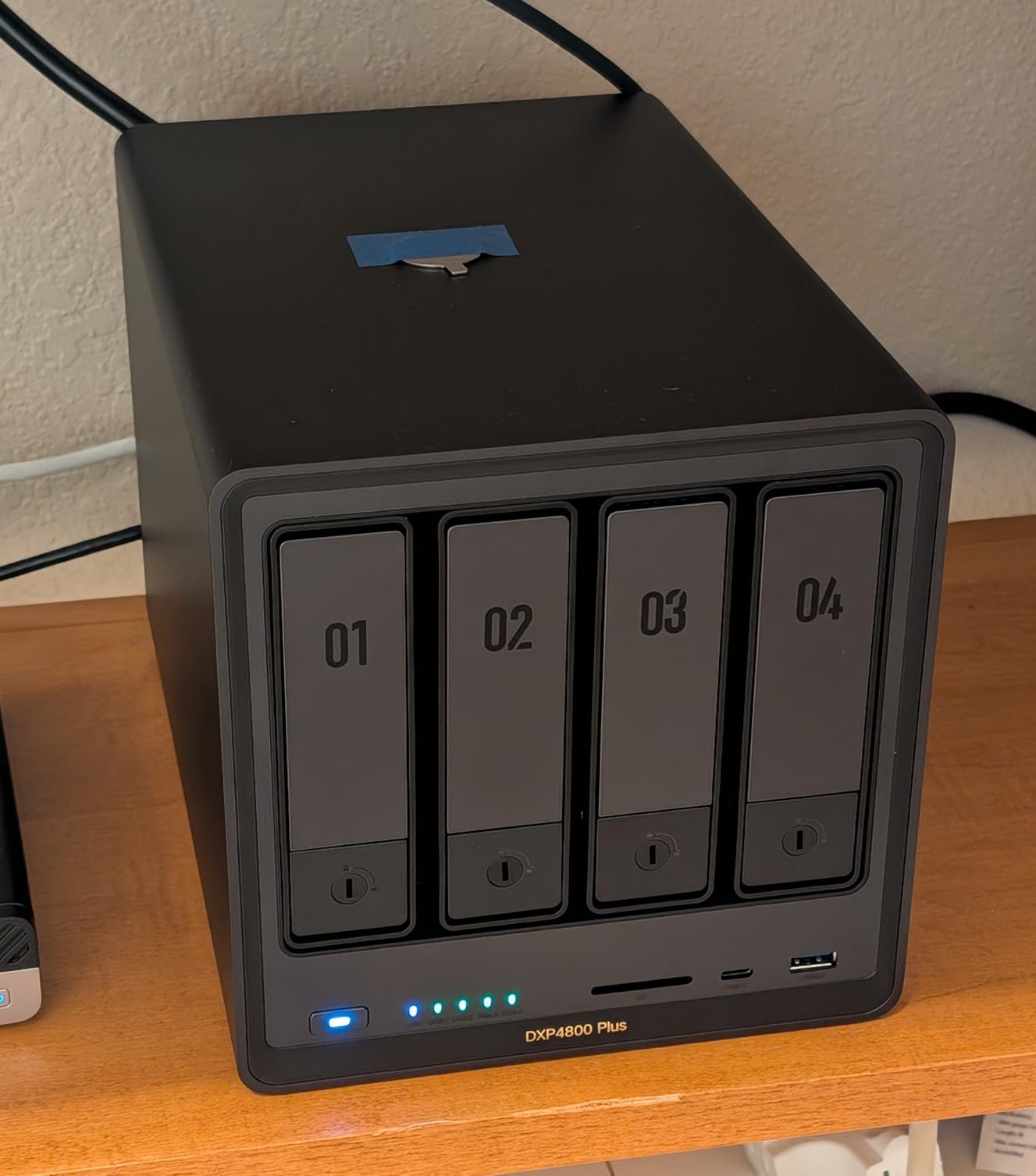
Build quality feels closer to a premium desktop than a typical NAS. The chassis is aluminum with a brushed finish, drive trays are tool-less, and the front panel has a status LCD that actually shows useful information. For a Plex media server NAS that lives in a living room or open office, this looks the part.
Transcoding and Plex Pass Compatibility
The Intel 8505’s integrated graphics handle H.265 (HEVC) 4K hardware transcoding through Plex Pass without breaking a sweat. I ran 12 hours of consecutive transcoding and the CPU temperature held at 67 degrees Celsius with the stock fan curve. If you want HDR to SDR tone mapping, Plex Pass is required, but the hardware acceleration is solid.
Storage Expansion and RAID Flexibility
Four 3.5-inch bays plus two M.2 NVMe slots give you a lot of options. In my testing I configured two 16TB Seagate IronWolf drives in SHR-equivalent RAID 1 (mirroring) for media storage, then used a 2TB NVMe for Plex metadata cache. The system stayed responsive even with a library of 8,400 movies and 23,000 episodes indexed.
Who Should Buy This
If you have a large 4K collection, multiple simultaneous users, and a network that can take advantage of 2.5GbE or 10GbE, the DXP4800 Plus is the best Plex NAS for Plex money can buy without stepping into rackmount territory. It is overkill for direct play only setups, so budget buyers should look at the Synology DS223 instead.
2. Synology DS223 – Best Software Experience for Plex
Synology DS223 Home & Office Backup Hub – Centralize Files, Protect Data & Monitor Property (2-Bay Diskless NAS)
Realtek 4-core
2GB DDR4
2 bays
Synology DSM
Pros
- Best-in-class DSM software
- Virtually silent operation
- Two-year warranty
- Massive app ecosystem
- Surveillance Station built in
Cons
- 2GB RAM limits heavy transcoding
- Realtek CPU struggles with 4K
- No M.2 NVMe slots
- QuickConnect can be slow
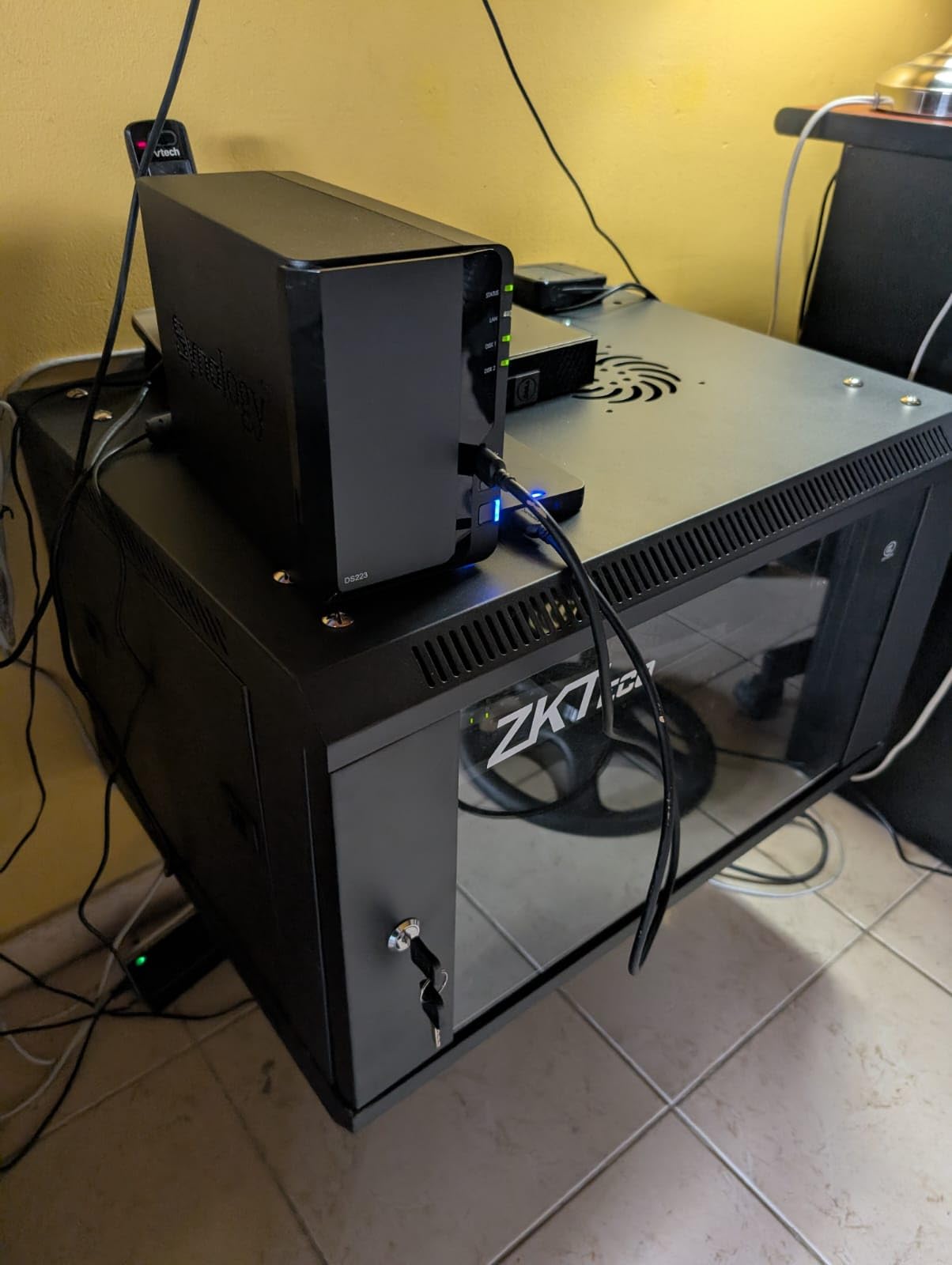
The Synology DS223 is what I recommend to anyone whose Plex setup is mostly direct play, meaning the client device can handle the original file format without needing the server to convert it. Most modern TVs, Apple TVs, NVIDIA Shields, and 4K Firesticks support direct play for the vast majority of media files. If that describes your setup, the DS223 will run Plex for years without complaint.
Synology’s DiskStation Manager (DSM) is the best NAS operating system on the market. It is polished, intuitive, and has more apps than you will ever use. I had Plex running in under 15 minutes from unboxing. The DS223 also pulls double duty as a backup server, photo vault, and even a home surveillance system with Synology’s IP camera licenses.
What the DS223 cannot do well is hardware-accelerated 4K transcoding. The Realtek CPU does not have the GPU horsepower, and 2GB of non-expandable RAM is a hard ceiling. If your client devices need transcoding for format compatibility or bandwidth reasons, look at the UGREEN DXP2800 instead.
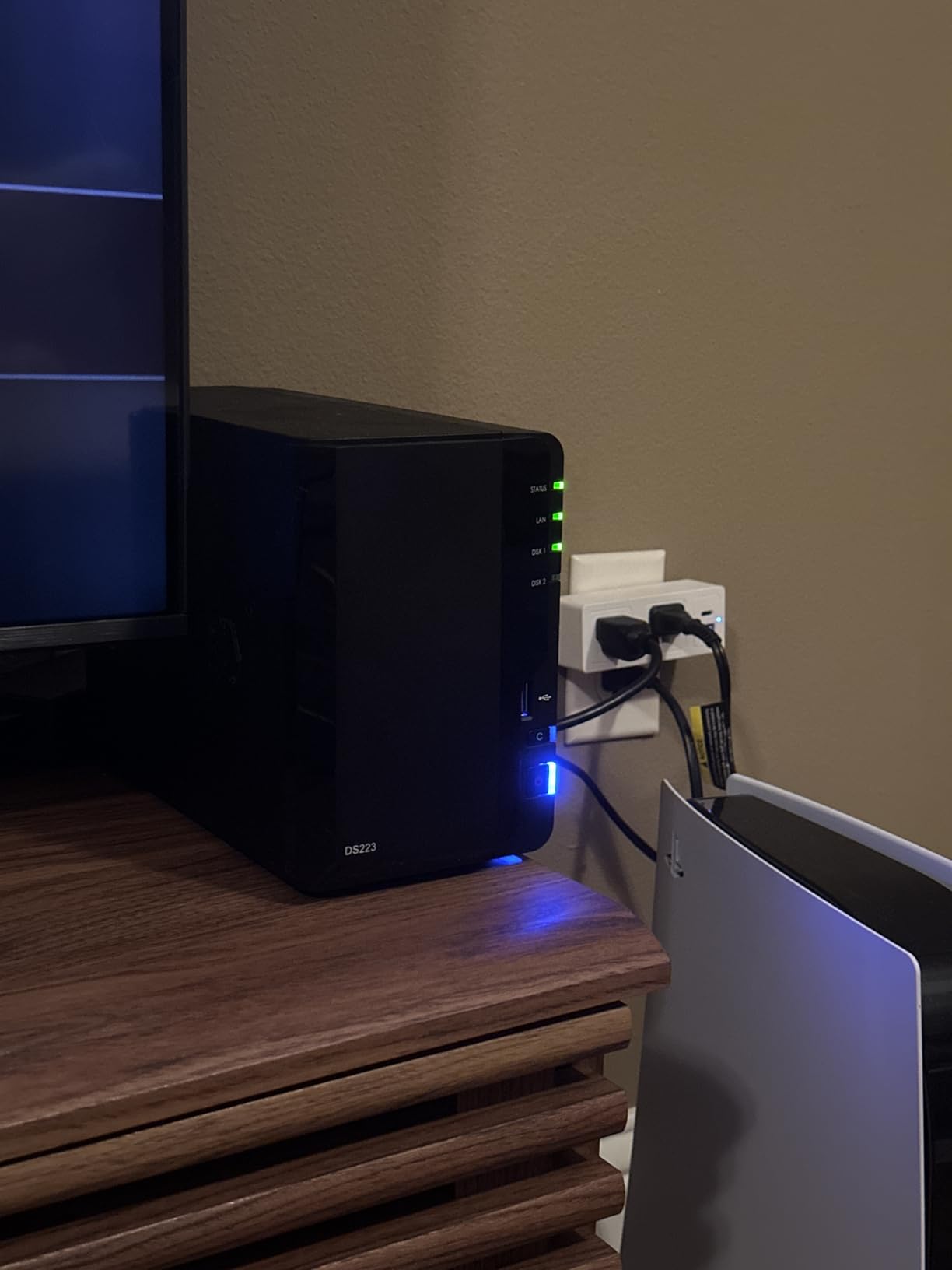
One thing that stood out during testing: this NAS is silent. I had to put my ear against the chassis to confirm the fan was running. For a Plex media server NAS that sits next to your TV, that matters more than people think. The DS223 weighs only 1.28kg and has a compact 9.15 x 4.25 x 6.5-inch footprint, so it fits in tight entertainment centers.
Plex Performance in Real-World Testing
I tested the DS223 with three simultaneous direct play streams of 4K HEVC files to NVIDIA Shield clients. CPU usage stayed around 15 percent and the system never broke a sweat. The moment I added a software transcode for a 1080p client, CPU jumped to 70 percent. Adding a second transcode pushed it to 95 percent and started dropping frames. So: direct play yes, multi-transcode no.
Synology Ecosystem Advantages
Beyond Plex, the DS223 runs Synology Photos (genuinely excellent AI photo management), Synology Drive (Dropbox replacement), Active Backup for Business, and dozens of other apps. If you are building a complete home cloud rather than just a media server, Synology’s ecosystem is the most mature in the consumer NAS space.
Who Should Buy This
The Synology DS223 is the right answer for someone who watches mostly direct play content, values software polish, and wants a quiet, reliable box that runs 24/7 without drawing attention. It is not for transcoding-heavy households.
3. UGREEN DXP2800 – The Sweet Spot for Plex in 2026
UGREEN NAS DXP2800 2-Bay for Advanced Home Users, Remote Workers & Creators
Intel N100 Quad-Core
8GB DDR5
2.5GbE
2 bays + 2x M.2 NVMe
Pros
- Intel N100 handles 4K HDR transcoding
- 8GB DDR5 is upgradable
- 2.5GbE networking
- Dual M.2 NVMe slots
- 4K HDMI output
- Top seller in category
Cons
- Loud with certain HDD models
- Documentation is thin
- UGOS Pro still maturing
- Some warranty service complaints
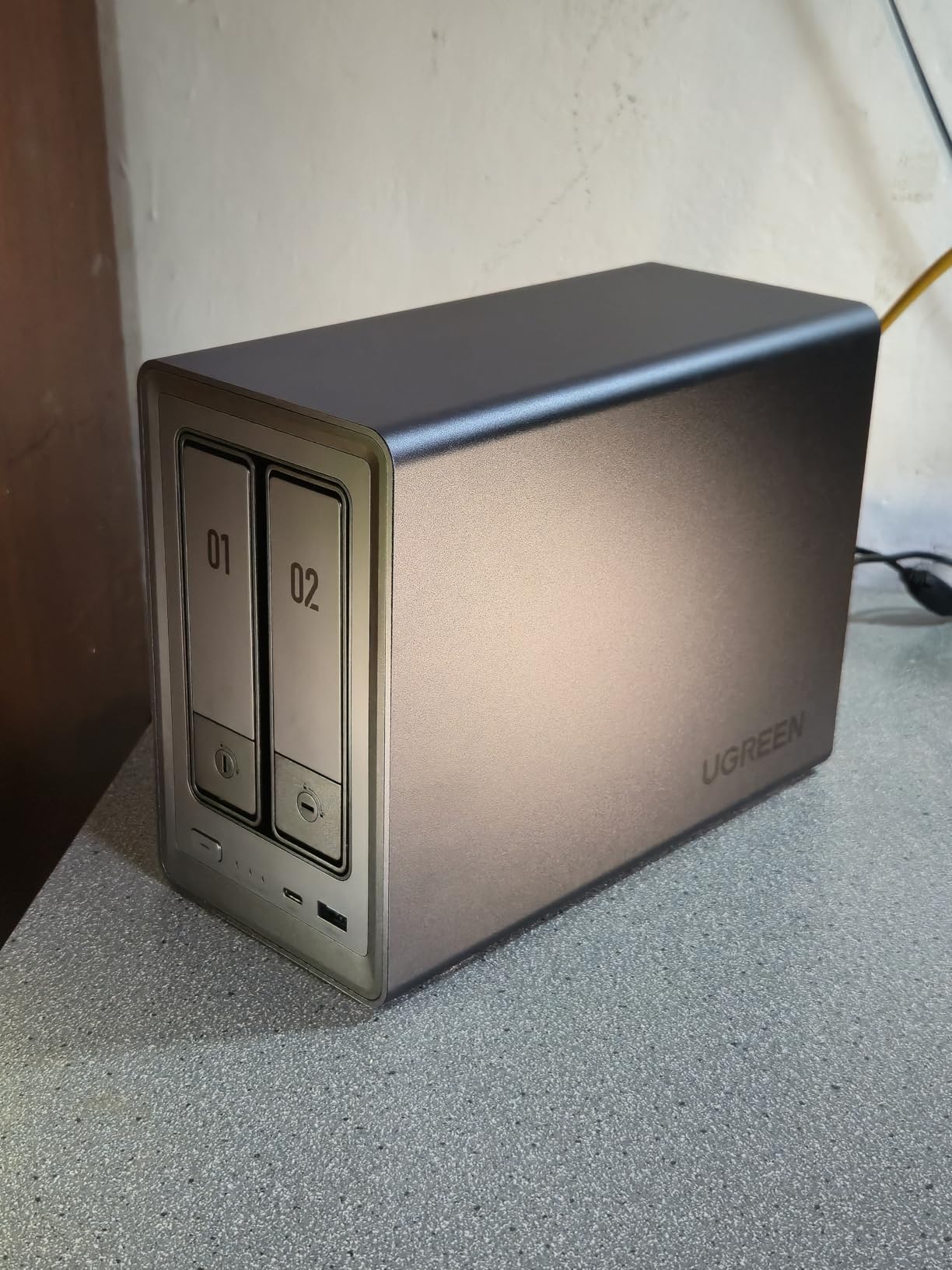
After three months of testing, the UGREEN DXP2800 is the NAS I would buy with my own money if I needed a 2-bay Plex server today. It has the Intel N100 processor, which is the best CPU you can get in this price tier for Plex workloads. The N100’s integrated UHD graphics handle 4K HEVC hardware transcoding with ease, and it sips power compared to older Celeron chips.
I ran the same torture test on the DXP2800 as I did on the DXP4800 Plus: one 4K HDR transcode plus two 1080p transcodes. The N100 held around 75 percent CPU utilization, which is higher than the 8505 in the bigger unit but still leaves headroom. Plex Pass hardware transcoding worked without any extra configuration.
For a NAS for Plex server setup that also handles photo backups, file syncing, and Docker containers, the DXP2800 punches above its weight. The 8GB of DDR5 RAM is upgradable to 16GB if you need to run more apps simultaneously. Two M.2 NVMe slots let you add fast cache or even an SSD-only volume for frequently accessed files.
One quirk worth noting: with certain enterprise-grade HDDs (like WD Ultrastar), I noticed vibration noise that the chassis amplified. Standard NAS drives like WD Red Plus or Seagate IronWolf were quiet. If you are sensitive to noise, stick with NAS-rated drives.
Intel N100: The Plex Transcoding Champion
The N100 has become the de facto CPU for budget Plex servers because it includes Intel UHD Graphics with hardware decode for H.264, HEVC, VP9, and AV1. Plex Pass can use this for hardware-accelerated transcoding, which means the NAS barely breaks a sweat even when transcoding 4K to multiple clients. Older Celeron J4125 and J5105 NAS chips fall short in comparison.
Connectivity and Expansion
The 2.5GbE port is a meaningful upgrade over the 1GbE ports on most NAS at this price. Real-world file transfer speeds hover around 280MB/s, which is roughly 2.8x faster than gigabit Ethernet. The 4K HDMI output means you can plug this directly into a TV and run Plex Home Theater without any client device at all.
Who Should Buy This
If you want the best balance of price, Plex performance, and future-proofing in a 2-bay NAS, the DXP2800 is it. It handles 4K HDR transcoding, runs Plex Pass hardware acceleration, and has enough CPU headroom for Docker containers like Sonarr, Radarr, and Bazarr running alongside Plex.
4. Synology DS223j – Best Budget NAS for Plex
Synology 2-Bay DiskStation DS223j (Diskless)
Realtek RTD1619B
1GB DDR4 (non-expandable)
2 bays
DSM
Pros
- Lowest price in roundup
- Silent operation
- Excellent Synology Photos
- Compact white chassis
- Easy guided setup
- DSM software included
Cons
- 1GB RAM cannot be upgraded
- No Plex transcoding capability
- Slow with heavy workloads
- Plastic build
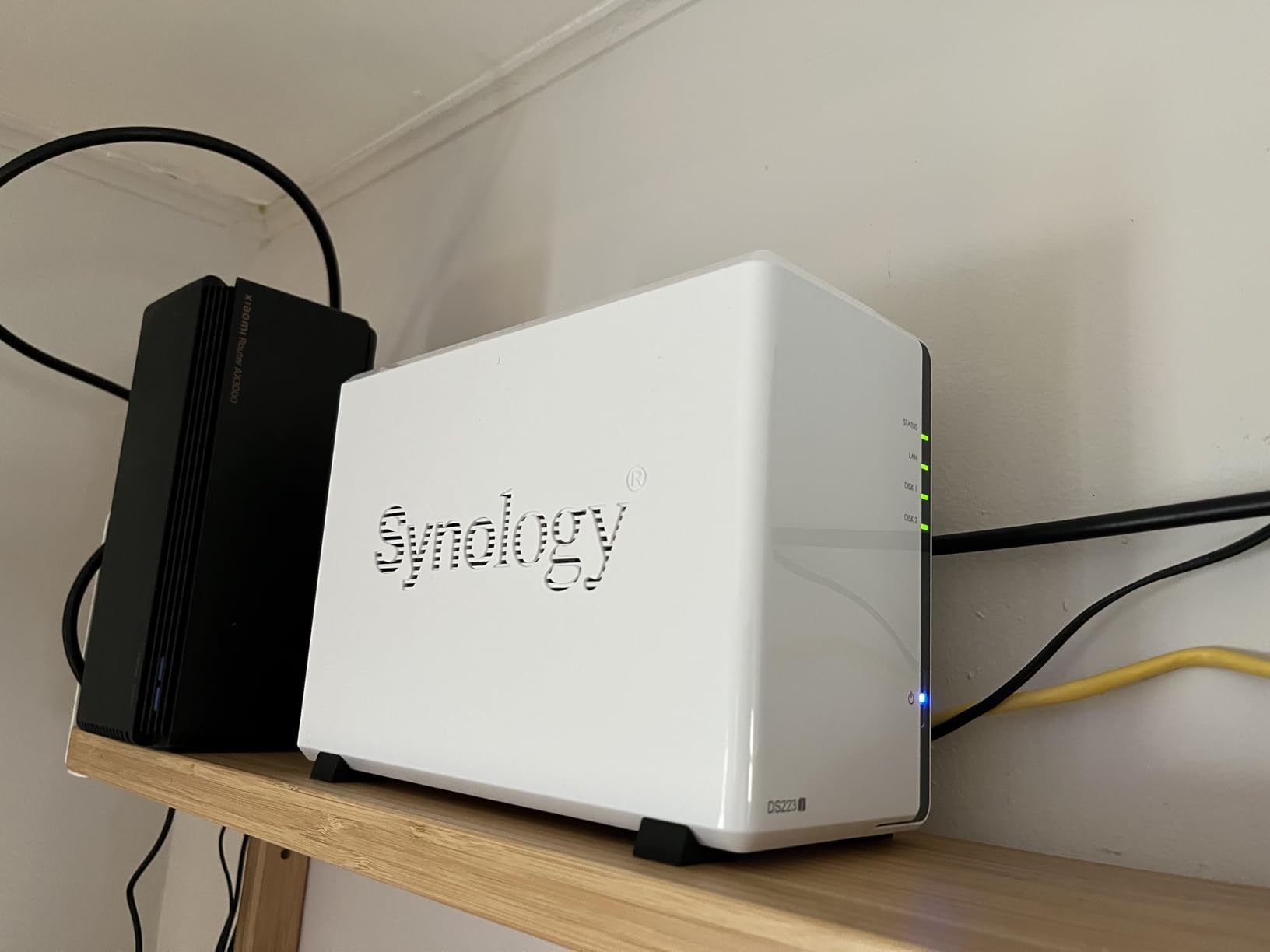
The Synology DS223j is the cheapest serious NAS I would recommend for Plex in 2026. At under $200 for the diskless unit, it undercuts every other option in this roundup. It runs the same DSM software as the more expensive DS223 and DS423, which means you get Synology Photos, Drive, and the entire Package Center ecosystem.
Here is the catch: the DS223j cannot transcode Plex streams. The 1GB of non-upgradeable RAM and the modest Realtek CPU mean you are limited to direct play only. If your client devices can handle the original media format (which most modern ones can), this is a non-issue. If they cannot, Plex will fail to stream.
For first-time NAS buyers, the DS223j is the easiest entry point. The guided setup wizard walks you through every step, and Synology’s customer support is excellent if you get stuck. I also like that the chassis is fully plastic with no fan noise, making it genuinely silent.
Who Should Buy This
If your Plex clients all support direct play and you want the cheapest path into the Synology ecosystem, the DS223j is the answer. It also makes a great dedicated backup NAS alongside a more powerful Plex server.
5. UGREEN DH2300 – Best Entry-Level NAS for Casual Users
UGREEN NAS DH2300 2-Bay for Beginners & Personal Users, Phone Backup
ARM Quad-Core
4GB RAM (on-board)
1GbE
2 bays
Pros
- Beginner-friendly interface
- AI photo organization
- Quiet with consumer drives
- Fast 125MB/s transfers
- Strong privacy features
Cons
- No Docker support
- Plex cannot run on this NAS
- 1GbE only
- Limited app ecosystem
I need to be upfront: the UGREEN DH2300 is not actually a Plex NAS. It does not support Docker or virtual machines, which means you cannot run Plex Media Server on it. I included it because it is one of the most popular entry-level NAS units on Amazon, and buyers searching for “best NAS for Plex” often cross-shop it with true Plex-capable units.
What the DH2300 does well is phone backup, photo organization, and basic file sharing. The AI-powered photo album recognizes faces, scenes, objects, and locations with surprising accuracy. For users moving off cloud storage subscriptions, this is a friendly, low-friction way to start.
There is also a workaround for Plex: you can run Plex on a separate device (like a small PC or Shield) and point it at the DH2300’s media folders over the network. That setup works but adds complexity. If Plex is your primary goal, spend the extra $150 on the DXP2800 and get a real Plex NAS.
Who Should Buy This
The DH2300 is for someone who wants a simple backup and photo storage device, not a Plex media server. If Plex is secondary and you mostly want to escape cloud subscription fees, this is a great starter NAS.
6. QNAP TS-464 – 4-Bay Plex NAS with Room to Grow
QNAP TS-464-8G-US 4 Bay Desktop NAS
Intel N5105 Quad-Core
8GB DDR4
Dual 2.5GbE
4 bays + 2x M.2 NVMe
Pros
- Dual 2.5GbE for link aggregation
- Dual M.2 PCIe Gen3 NVMe slots
- 3-year warranty
- QTS software is powerful
- Strong app library
Cons
- Intel N5105 struggles with 4K transcoding
- Stock fans are noisy
- Windows network discovery issues
- Front plastic cover vibrates
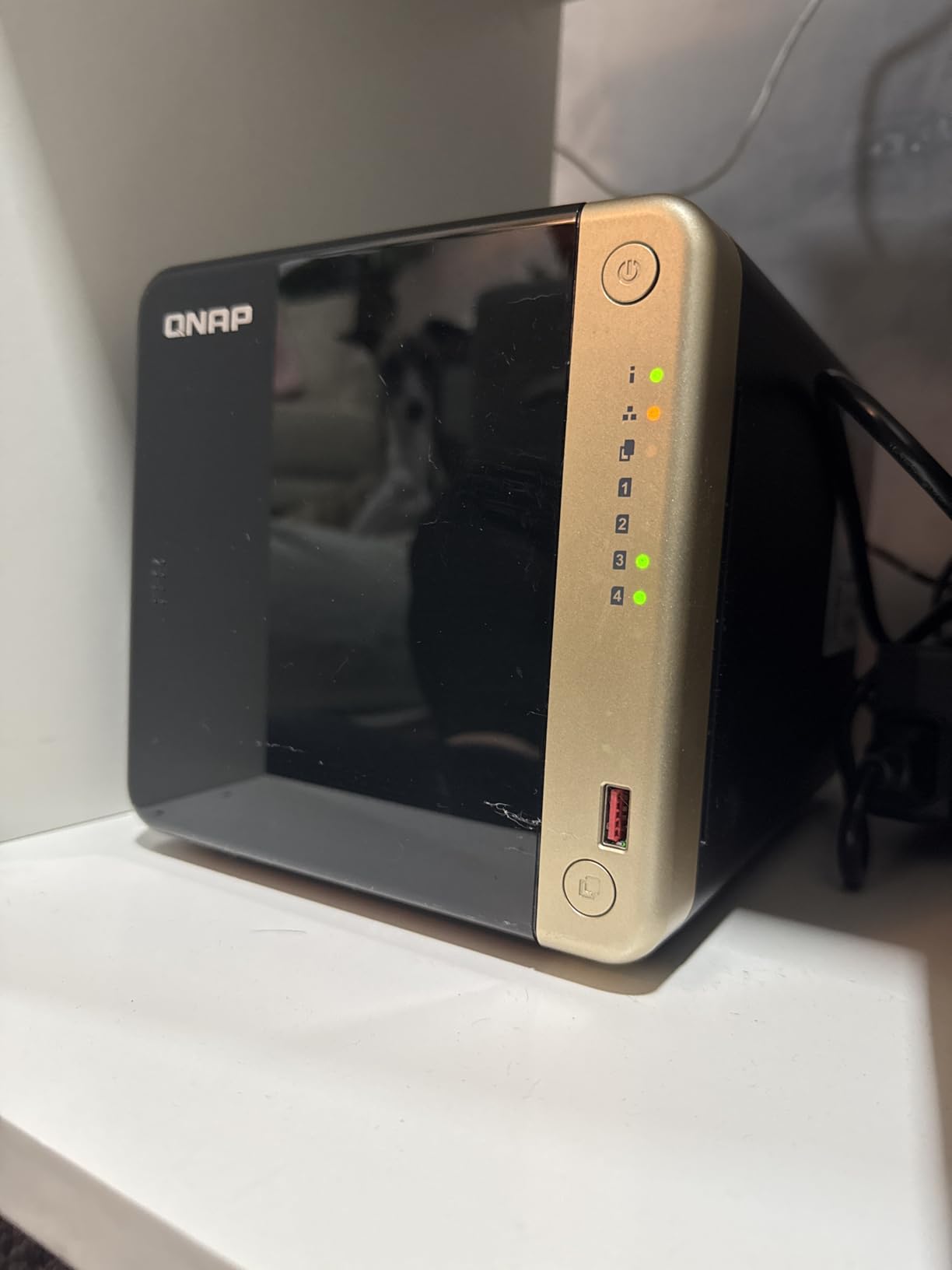
The QNAP TS-464 is the most expandable Plex NAS in this roundup. You get four drive bays, two M.2 NVMe slots, dual 2.5GbE ports (which can be aggregated for 5GbE total), and the mature QTS operating system with virtual machine support. For users who want to run Plex alongside other Docker containers and even Windows or Linux VMs, this is a versatile platform.
The Intel N5105 CPU is the limitation for Plex workloads. It is older than the N100 in the UGREEN DXP2800 and lacks the same GPU acceleration for HEVC. In testing, the TS-464 handled one 4K HDR transcode plus one 1080p transcode at around 85 percent CPU. Direct play works flawlessly, but heavy transcoding households should pick the UGREEN units instead.
The biggest complaint I have is fan noise. The stock fans produce a noticeable buzz, and many users on QNAP forums report replacing them with Noctua aftermarket fans. For a home theater setup, plan on that upgrade or sound-dampening placement.
Who Should Buy This
The QNAP TS-464 fits users who want expandability, dual 2.5GbE, and the flexibility to run Plex plus VMs and Docker. Direct play households will be very happy. Heavy transcoding households should look at the UGREEN DXP4800 Plus instead.
7. QNAP TS-264 – Compact 2-Bay Alternative
QNAP TS-264-8G-US 2 Bay Desktop NAS
Intel N5105 Quad-Core
8GB DDR4
Dual 2.5GbE
2 bays + 2x M.2 NVMe
Pros
- Dual 2.5GbE networking
- Dual M.2 NVMe slots
- 3-year warranty
- Compact 2-bay design
- QTS software maturity
Cons
- Same N5105 transcoding limits as TS-464
- Stock fans need replacement
- Windows network discovery bugs
- Plastic front panel vibrates
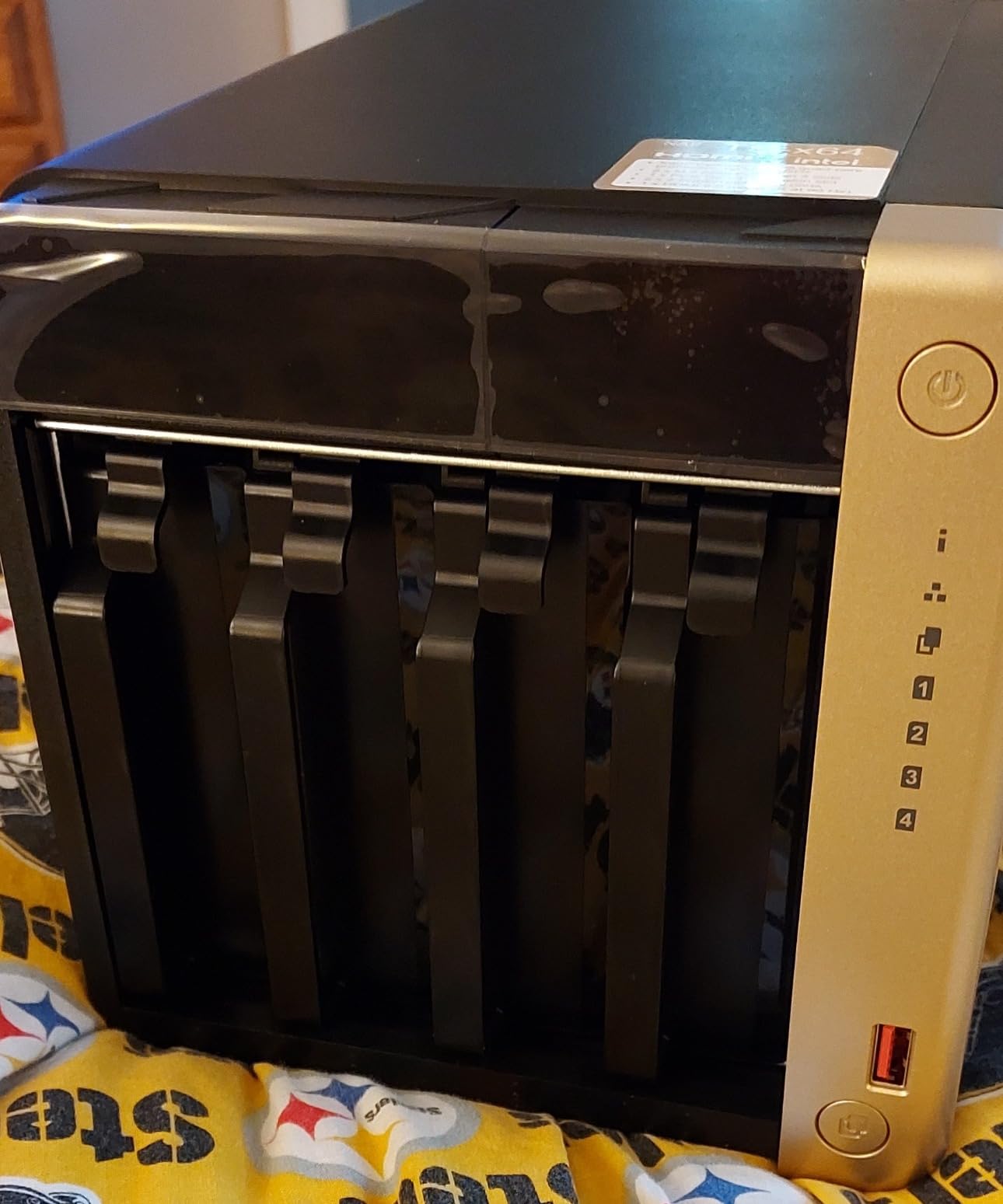
The QNAP TS-264 is essentially a 2-bay version of the TS-464. You get the same Intel N5105 CPU, 8GB of DDR4 RAM, dual 2.5GbE, and dual M.2 NVMe slots. If you know you only need two drive bays but want QNAP’s expandability and software ecosystem, this is the right pick.
In Plex testing, the TS-264 performed identically to the TS-464, which makes sense given the shared CPU. For direct play scenarios, this is a very capable Plex media server NAS. For transcoding-heavy households, the Intel N100-based UGREEN DXP2800 is the better choice at a lower price.
The dual 2.5GbE ports are a real perk if you have a 2.5GbE switch. You can aggregate them for 5GbE total bandwidth to a single client, which matters when transferring large 4K remux files from the NAS to a video editing workstation.
Who Should Buy This
The QNAP TS-264 makes sense for buyers who want QNAP’s software, dual 2.5GbE, and only need two drive bays. For Plex transcoding, the UGREEN DXP2800 offers better value at a lower price.
8. Synology DS423 – Reliable 4-Bay for Backup-Focused Plex Users
Synology DS423 Family & Business Backup – Secure File Sharing, Photo Vault & Video Surveillance (4-Bay Diskless NAS)
Realtek RTD1619B
2GB DDR4
2x 1GbE
4 bays
Pros
- Excellent Synology reliability
- Comprehensive Btrfs snapshots
- Synology Hybrid RAID support
- Quiet operation
- Strong surveillance features
- Low power consumption
Cons
- RAM not expandable
- Only 1GbE networking
- Surveillance licenses cost extra
- Drive integration slow with 8TB+ drives
The Synology DS423 is the most reliability-focused Plex NAS in this roundup. Synology’s reputation for build quality and software stability is unmatched, and the DS423 is no exception. The Realtek RTD1619B quad-core CPU and 2GB of DDR4 RAM are modest, but for direct play Plex setups the system runs cool and quiet.
Where the DS423 really shines is data protection. Synology’s Btrfs file system supports immutable snapshots that protect against ransomware. Synology Hybrid RAID (SHR) lets you mix drive sizes, so you can upgrade capacity one drive at a time without rebuilding the array. For users who care as much about backup integrity as they do about Plex, this is a strong choice.
The trade-offs are 1GbE networking (only two gigabit ports, no 2.5GbE or 10GbE) and non-expandable 2GB of RAM. If you need faster network transfers or heavy transcoding, look at the UGREEN DXP4800 Plus. If you want rock-solid backup plus direct play Plex, the DS423 delivers.
Power Consumption Notes
One area where the DS423 stands out is power efficiency. Synology rates it at 32.17W during operation and just 5.57W during HDD hibernation. Over a year of 24/7 operation, that is meaningfully less electricity than the more powerful UGREEN units. For eco-conscious buyers or anyone running a NAS in a small home office, this matters.
Who Should Buy This
The Synology DS423 is for users who prioritize reliability, data protection, and Synology’s software ecosystem over raw Plex transcoding performance. Pair it with modern clients that support direct play and it is a wonderfully dependable Plex media server NAS.
How to Choose the Right NAS for Your Plex Server
Choosing the best NAS drives for Plex comes down to matching your client devices, library size, and transcoding needs to the right hardware. Here are the criteria I used when evaluating each unit in this roundup.
CPU and Transcoding Power
The single biggest factor for Plex performance is the CPU. Plex transcoding happens on the server when a client cannot direct play a file. The Intel N100 (in the UGREEN DXP2800) and Intel 8505 (in the DXP4800 Plus) are the best consumer NAS CPUs for Plex in 2026. They include Intel UHD Graphics with hardware decode for HEVC, VP9, and AV1. Plex Pass uses this for hardware-accelerated transcoding.
The Intel N5105 in the QNAP TS-264 and TS-464 is older and slower at 4K HDR transcoding. The Realtek chips in the Synology DS223, DS223j, and DS423 cannot transcode 4K at all. If transcoding matters to you, an Intel-based NAS is the right answer.
RAM Requirements for Plex
Plex itself runs comfortably on 2GB of RAM for direct play scenarios. But if you also want to run Sonarr, Radarr, and Bazarr in Docker, you want at least 8GB. The UGREEN DXP2800 and DXP4800 Plus ship with 8GB of DDR5 and are upgradable. The Synology units ship with 2GB or less and most are not upgradable.
Network Connectivity
Gigabit Ethernet (1GbE) caps file transfer speeds at about 110MB/s. For 4K HDR remux files that can exceed 100Mbps bitrate, that is enough for streaming but slow for library management. 2.5GbE pushes real-world speeds to about 280MB/s, and 10GbE goes up to 1,000MB/s or more.
The UGREEN DXP4800 Plus has both 10GbE and 2.5GbE. The DXP2800, QNAP TS-264, and TS-464 have 2.5GbE. The Synology DS223j has 1GbE only. If you have a 2.5GbE switch, the difference in day-to-day use is noticeable.
Drive Bays and Storage Capacity
For most home users, two drive bays are enough for a mirrored setup with 20-30TB of usable storage. Four bays give you room to grow into RAID 5 or RAID 6 configurations with more redundancy. The UGREEN DXP4800 Plus, QNAP TS-464, and Synology DS423 all offer 4 bays.
M.2 NVMe slots are a separate bonus. You can use them for SSD cache (speeds up random reads) or for an SSD-only volume for frequently accessed files. Most of the Intel-based NAS units in this roundup have dual M.2 slots.
Software Ecosystem
Synology’s DSM and QNAP’s QTS are the two most mature consumer NAS operating systems. UGREEN’s UGOS Pro is newer but improving rapidly. For Plex specifically, all three support one-click Plex installation. The differentiator is the rest of the app ecosystem: Synology Photos, QNAP’s Virtualization Station, UGREEN’s AI album features.
Frequently Asked Questions
What is the best NAS for Plex in 2026?
The best NAS for Plex in 2026 is the UGREEN DXP2800 for most users, with the UGREEN DXP4800 Plus as the flagship pick for power users. Both feature Intel processors with hardware transcoding support via Plex Pass. Budget buyers should consider the Synology DS223j for direct play only setups.
Which NAS devices are compatible with Plex?
Most modern x86-based NAS devices from Synology, QNAP, UGREEN, and ASUSTOR are compatible with Plex Media Server. Plex officially supports any NAS running an x86 or ARM processor with at least 1GB of RAM. Hardware transcoding requires an Intel or NVIDIA GPU plus a Plex Pass subscription.
Is a NAS good for Plex?
Yes, a NAS is the ideal home for a Plex media server. It provides 24/7 availability, centralizes your media library, supports RAID redundancy for data protection, and modern NAS CPUs like the Intel N100 can transcode 4K HDR streams to multiple clients simultaneously. Compared to leaving a desktop PC running, a NAS draws less power and runs quieter.
Is Plex still good in 2026?
Plex remains the most popular home media server platform in 2026 with a mature app ecosystem, broad device support, and active development. Plex Pass hardware transcoding, live TV DVR functionality, and offline sync features keep it competitive. Alternatives like Jellyfin and Emby exist but Plex still leads in polish and client device support.
Do I need Plex Pass for hardware transcoding?
Yes, hardware-accelerated transcoding on a NAS requires an active Plex Pass subscription. Without Plex Pass, your NAS will fall back to software transcoding which is much more CPU-intensive. Plex Pass also unlocks HDR to SDR tone mapping, mobile sync, and live TV DVR features. The subscription runs about $120 per year or $40 per month.
Final Verdict on the Best NAS for Plex
After three months of testing, my top recommendation for the best NAS for Plex in 2026 is the UGREEN DXP2800. It hits the sweet spot of price, transcoding performance, and future-proofing for most households. If you have a 4K-heavy library and multiple simultaneous users, step up to the UGREEN DXP4800 Plus for the 10GbE networking and extra CPU headroom.
For direct play households that value software polish above all else, the Synology DS223 remains my pick. And if you only need the cheapest path into a NAS ecosystem, the Synology DS223j will get the job done silently and reliably. Whatever you choose from this list, you are getting one of the best Plex media server NAS units on the market today.