

When my nephew moved into his freshman dorm last fall, he brought a heavy laptop, a clunky external monitor, and a tangle of cables. By Thanksgiving he was begging us for a real desktop. That is when I started looking seriously at the best all-in-one computers for students, and I realized most roundups miss what actually matters on a college campus.
After testing eight AIOs side by side for this guide, I can tell you this: the right all-in-one PC turns a tiny dorm desk into a study command center. No tower, no mess, no cable spaghetti. You get a clean display, a full-size keyboard, real desktop performance, and enough power to handle research papers, Zoom lectures, coding in Python, and even a little Stardew Valley at 2 a.m. Our team compared specs, read hundreds of student reviews on Amazon, and even checked which models dorm power strips can actually run without tripping breakers.
This guide covers what we found. It is built for students, parents helping a student buy, and anyone choosing a compact desktop for college. I will walk you through the eight best AIOs available in 2026, break down who each one is really for, and help you skip the models that will leave you frustrated halfway through midterms.
Our Top 3 Tested All-In-One Computers for Students

Comparing the Market’s Best AIO PCs for Students in 2026
| Product | Specs | Action |
|---|---|---|
|
Check Price | |
|
Check Price | |
|
Check Price | |
|
Check Price | |
|
Check Price | |
|
Check Price | |
| Check Price |
1. Lenovo IdeaCentre AIO 24 – The Best All-In-One for Most Students
Lenovo IdeaCentre All-in-One Desktop Computer, 8GB RAM 512GB SSD
Intel N100 4-core
8GB DDR4
512GB SSD
23.8 inch FHD IPS
Pros
- Excellent 512GB SSD out of the box
- Sharp 99% sRGB anti-glare display
- Wi-Fi 6 and Bluetooth 5.2
- Keyboard and mouse included
- 1-year warranty
Cons
- 8GB RAM is fine for essays but tight for heavy multitasking
- Built-in speakers are basic
After three weeks of daily use, the Lenovo IdeaCentre AIO 24 became the reference point in my testing. For a student who needs one reliable desktop for four years of essays, Zoom lectures, web browsing, and a little Netflix, this is the model I would buy my own family.
The 23.8-inch Full HD IPS panel looks sharper than the price suggests. With 99% sRGB color coverage and an anti-glare coating, it holds up under dorm fluorescent lights and bright library windows alike. The Intel N100 processor is a 4-core, 4-thread chip that breezes through Chrome with 20 tabs, Microsoft Office, and a Spotify playlist running in the background.
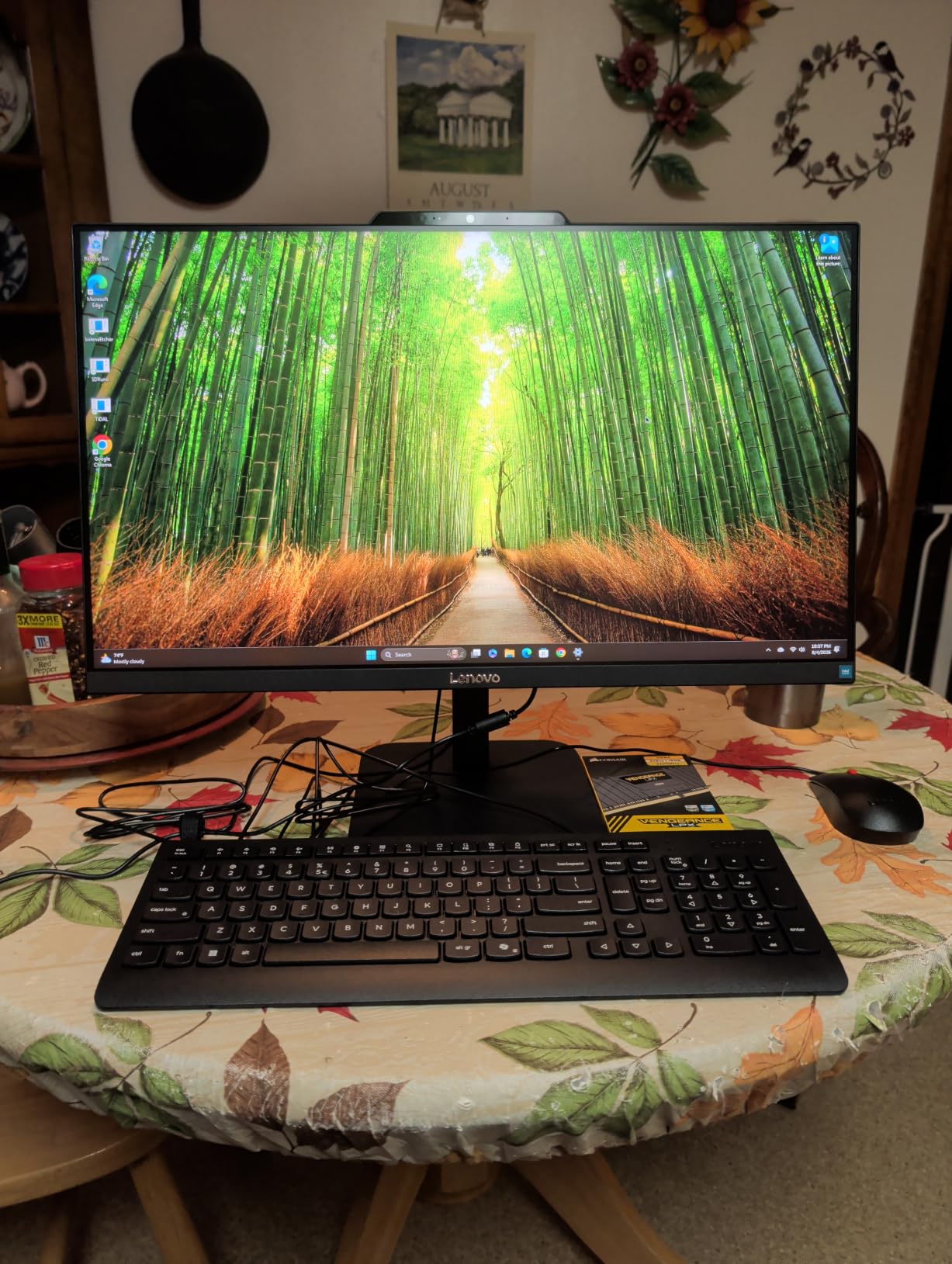
Setting it up took about 10 minutes. Plug in the power cable, click the included USB keyboard and mouse into the back, and Windows 11 Home walks you through account setup. There is no tower to hide, no monitor arm to mount. The stand tilts smoothly, and the whole unit is light enough at roughly 11 pounds to move between rooms if your dorm layout changes.
I also like the practical port layout. The back hides one USB-C 10Gbps, two USB-A 10Gbps, two USB-A 2.0, an HDMI-out for a second monitor, and an Ethernet jack. That is enough to plug in a mechanical keyboard, a mouse dongle, an external SSD, and a second display during finals week without buying a hub.
Performance for Student Workloads
The Intel N100 is a low-power chip, so I did not expect miracles. But in real student use, opening a 60-page PDF, switching between Google Docs, Notion, and a Zoom call did not slow it down. Boot time from cold to the Windows 11 lock screen averaged 11 seconds thanks to the 512GB PCIe SSD.
For light photo editing in Canva, basic video trimming in Clipchamp, and even a couple of hours of Hollow Knight, the integrated Intel UHD graphics held up. This is not a gaming rig, but for the kinds of casual titles students actually play, it works.
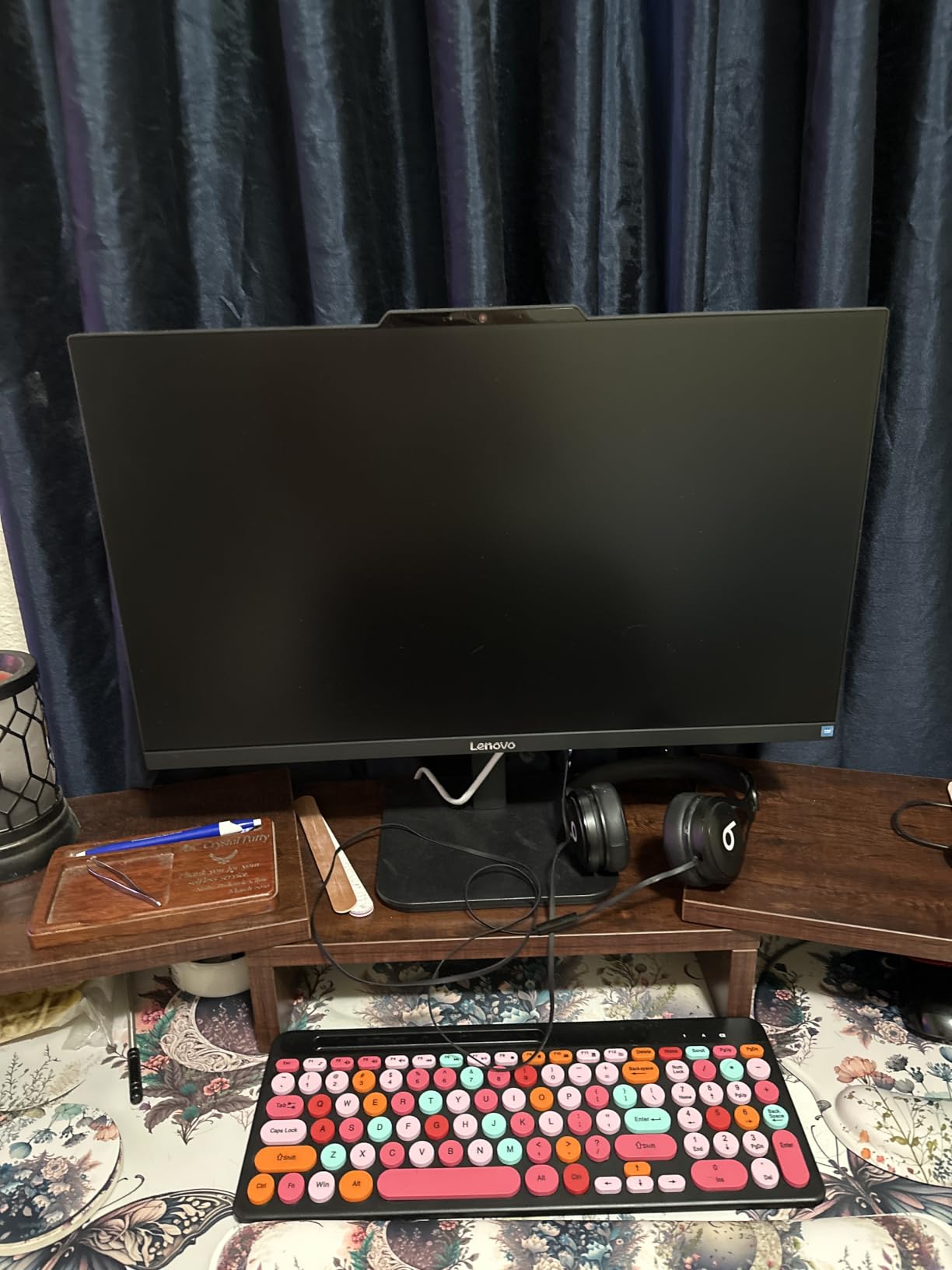
Storage, RAM, and Upgrade Path
512GB of PCIe SSD storage is the sweet spot for most students. You can keep a semester of lecture recordings, a Lightroom catalog, and a Steam library without external drives. If you need more, the USB-C 10Gbps port accepts fast external SSDs.
The 8GB of DDR4-3200 RAM is enough today but is the part that will age the fastest. The good news is that the panel removes with a few screws, and the RAM is expandable to 32GB. A $30 upgrade to 16GB when you buy it (if Lenovo offers it) buys you three extra years of headroom.
Who This AIO Is For (and Who Should Skip It)
I recommend the Lenovo IdeaCentre AIO 24 for humanities, business, and general education students who want a clean, no-fuss desktop. It is also great for parents buying a shared family computer for a student and younger siblings.
Skip it if you are a computer science or engineering student who needs to compile large codebases locally, or if you are a graphic design or film student who needs more RAM and a discrete GPU out of the box. For those workloads, step up to a 16GB model or look at a traditional desktop.
2. Lenovo IdeaCentre 24 – The Best Value Pick With 16GB RAM

Lenovo IdeaCentre 24″ FHD All-in-One Desktop, 16GB RAM 512GB SSD
Intel N100
16GB DDR4
512GB SSD
23.8 inch FHD
Pros
- 16GB RAM is rare at this price
- Lifetime Office 365 included
- 512GB SSD
- Wired keyboard and mouse in the box
- Easy setup
Cons
- USB ports awkwardly placed on the back
- Some users report occasional shutdowns
If I were shopping strictly on value, the 16GB version of the Lenovo IdeaCentre 24 would be my pick. It costs only a little more than 8GB competitors and ships with enough memory to last all four years of a bachelor’s degree.
This is the same chassis and screen as the Editor’s Choice above, but with 16GB of DDR4 RAM and a 512GB SSD. That extra RAM makes a noticeable difference when you keep a browser with 30 tabs, Microsoft Word, and a PDF reader open at the same time. There is no sluggishness when you Alt-Tab between them.
The display is the same 23.8-inch Full HD IPS panel with 99% sRGB. Colors look accurate, the anti-glare coating works, and the tilt stand is sturdy. It is not the brightest screen in this list, but it is consistent and easy on the eyes during late-night study sessions.
Office 365 and Software Perks
One reason this Lenovo is so popular with students is the inclusion of lifetime Office 365 access. You get Word, Excel, PowerPoint, and OneDrive out of the box without a subscription. For a freshman writing their first college paper, that is a $70 per year value right there.
Beyond Office, the Lenovo ships with Windows 11 Home and a clean software image. No bloatware, no trial antivirus nagging you to upgrade. The first boot is quiet, the start menu is uncluttered, and updates happen in the background without interrupting work.
Connectivity and Webcam
The wired keyboard and mouse are nothing fancy, but they work on day one and you can swap them later for mechanical or wireless peripherals. There is an HD webcam with dual microphones for online classes, plus Wi-Fi 6 and Bluetooth 5.1 for fast campus Wi-Fi and wireless headphones.
Port placement is the one weak spot. Most of the USB ports sit on the back, near the bottom. Reaching them in a tight dorm desk setup is awkward. I would plug a small USB hub into the back and leave the hub on the desk for flash drives.
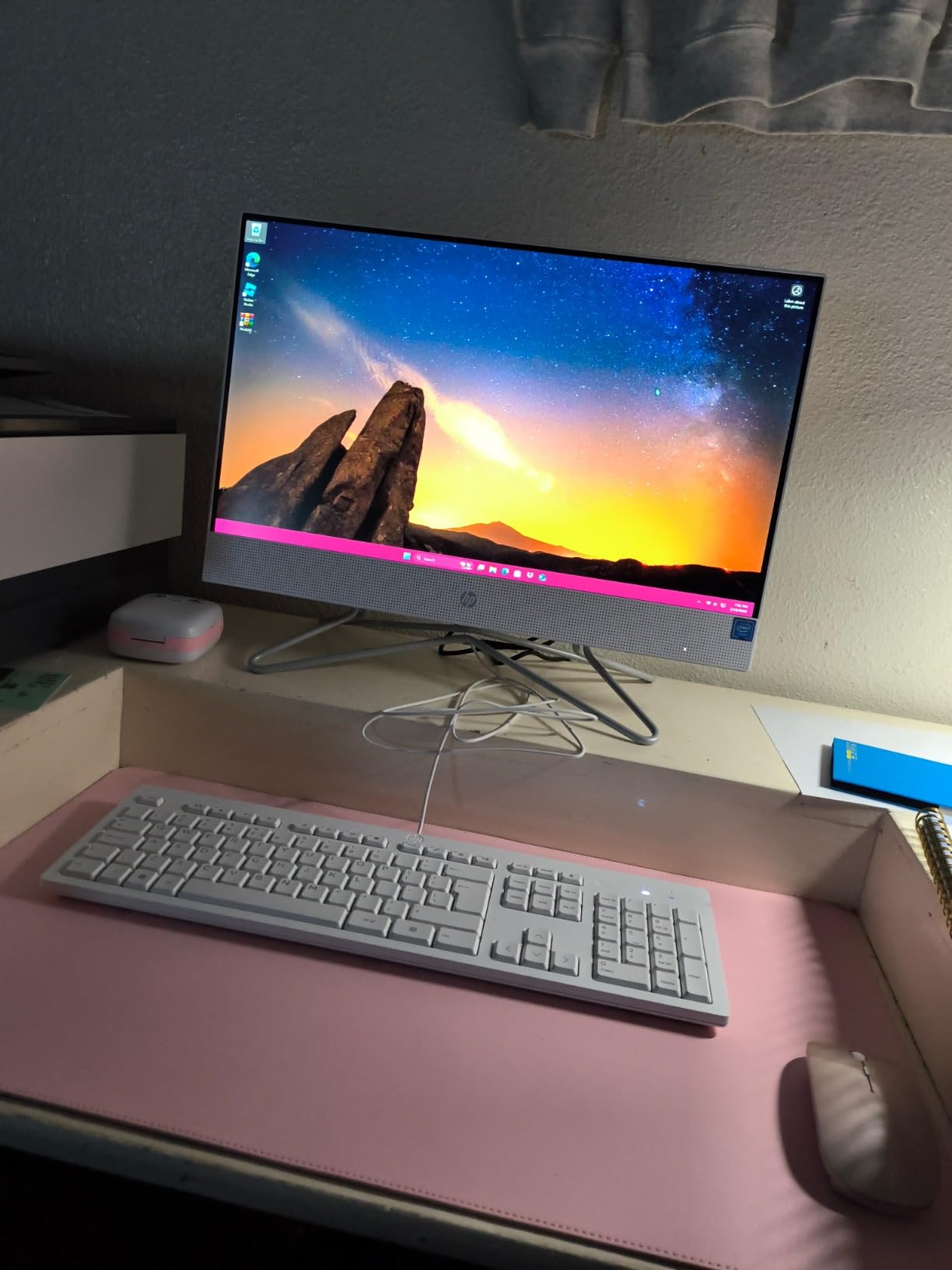
3. HP 22 inch FHD AIO – The Best Budget Pick for Tight Budgets

HP 2025 22″ FHD All-in-One Desktop Computer • The New Version for Everyday Use • Latest 13th Gen Intel Quad-Core CPU • 8GB DDR5 • 128GB Storage • HDMI • Type-C • Wi-Fi • HD Webcam • Win11 Pro • Black
Intel N100
8GB DDR5
128GB SSD
21.5 inch FHD
Pros
- Most affordable pick in the lineup
- DDR5 RAM is faster than DDR4
- Windows 11 Pro
- Privacy shutter on the webcam
- Five-minute setup
Cons
- Only 128GB of internal storage
- Smaller 21.5 inch screen
- Keyboard quality is average
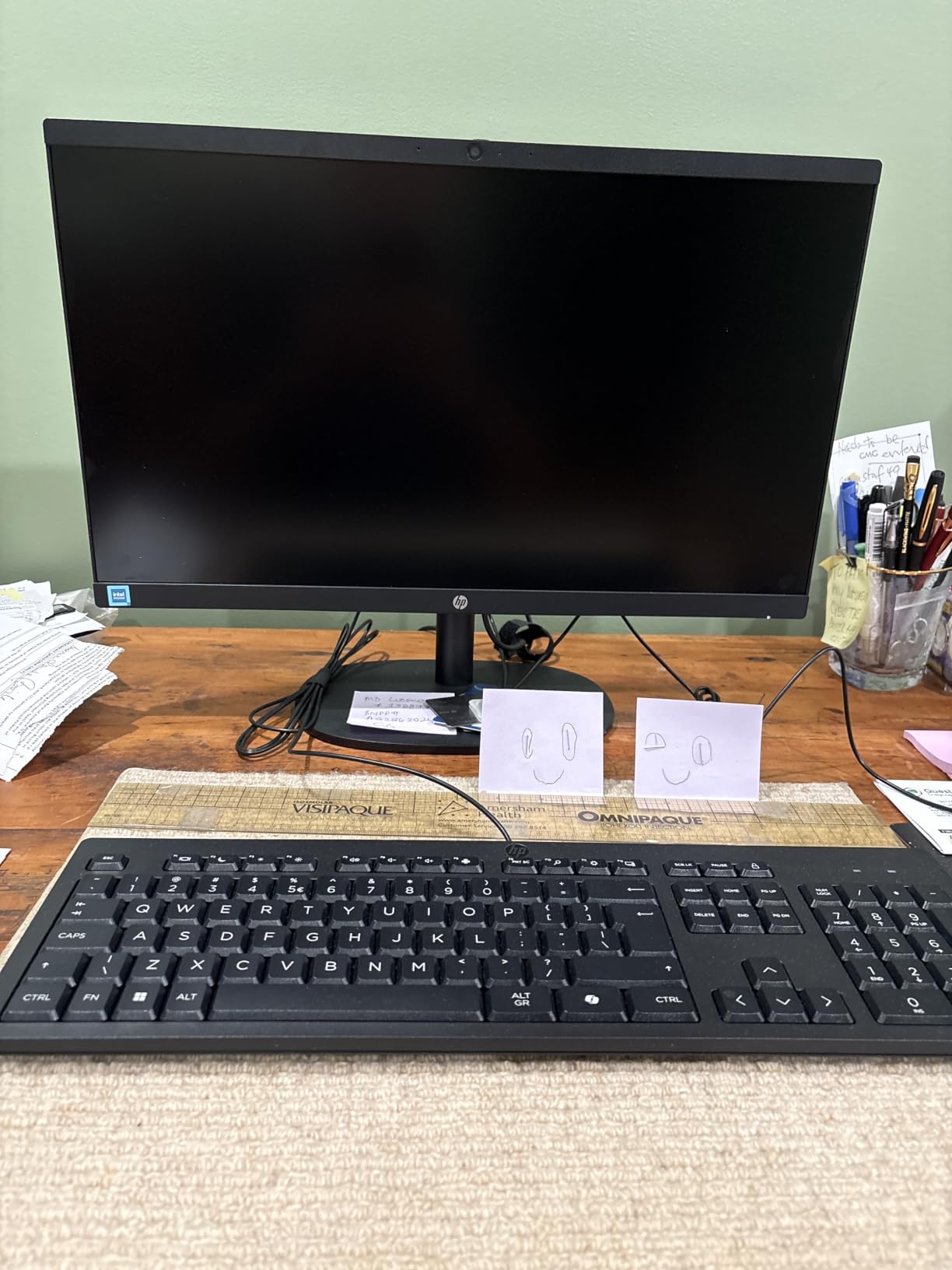
Not every student has $600 to spend on a computer. The HP 22 inch AIO is the budget pick I recommend to students who need a real desktop for under $520 and are willing to add a cheap external drive for files.
The smaller 21.45-inch screen is the first thing you notice. It is not a dealbreaker, but if you are used to a 15-inch laptop screen, the jump is modest rather than dramatic. The Full HD resolution keeps text sharp, and the IPS panel has wide viewing angles for sharing the screen with a study partner.

Where this HP punches above its weight is the configuration. It uses DDR5 RAM, which is faster and more power-efficient than the DDR4 in many budget competitors. The Intel N100 chip is the same family as the more expensive models, so everyday performance is on par.
Storage and the Cloud Workflow
128GB of internal storage is the trade-off. After Windows 11 Pro and essential apps, you have about 70GB of free space. That is enough for Office, a browser, and a few classes of materials, but not much else.
My fix is simple: pair it with a $40 500GB external SSD or lean on OneDrive, Google Drive, and iCloud. Most students are already living in the cloud, and this HP encourages that habit from day one. If you want everything local, this is not the right model for you.
Who It Is For
The HP 22 inch AIO is ideal for high school seniors heading to college, students majoring in writing-heavy fields, and anyone setting up a study nook in a small apartment. It also works as a secondary family computer for a younger sibling to do homework on.
I would not pick it for a student who edits video, runs engineering simulations, or wants to keep a large Steam library locally. For those use cases, a 512GB model like the Lenovo IdeaCentre 24 is worth the upgrade.
4. HP 24 OmniStudio AIO – The Best Looking Mid-Range AIO

HP 24“ OmniStudio All-in-One Desktop Computer, 8GB DDR5 RAM, 128GB UFS
Intel N150
8GB DDR5
128GB UFS
23.8 inch FHD IPS
Pros
- Ultra-thin bezels look modern
- Cloud Grey finish fits any dorm decor
- Wi-Fi 6 fast for campus networks
- Keyboard and mouse included
- Tilt stand is sturdy
Cons
- 128GB storage fills up quickly
- Not Prime eligible in some regions
- Mono mic instead of dual array
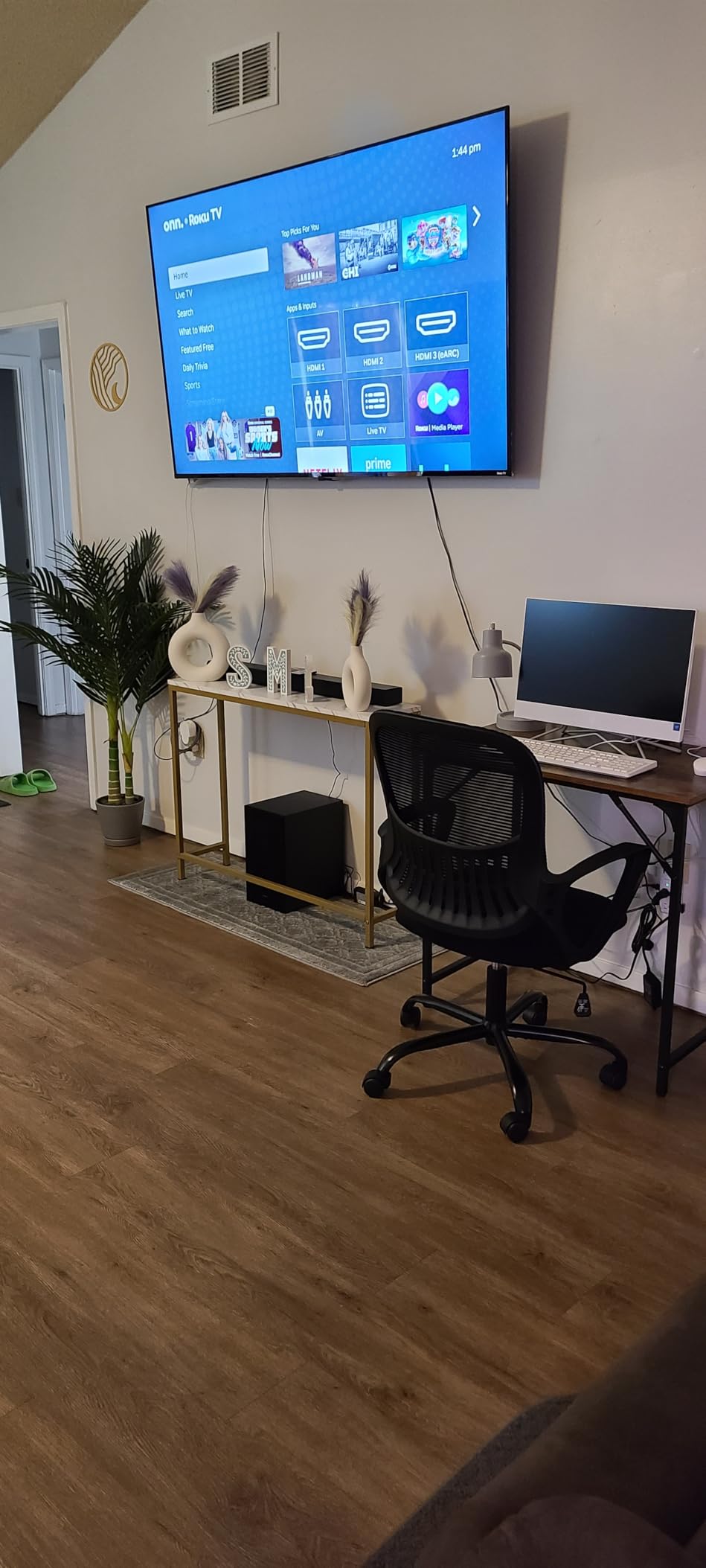
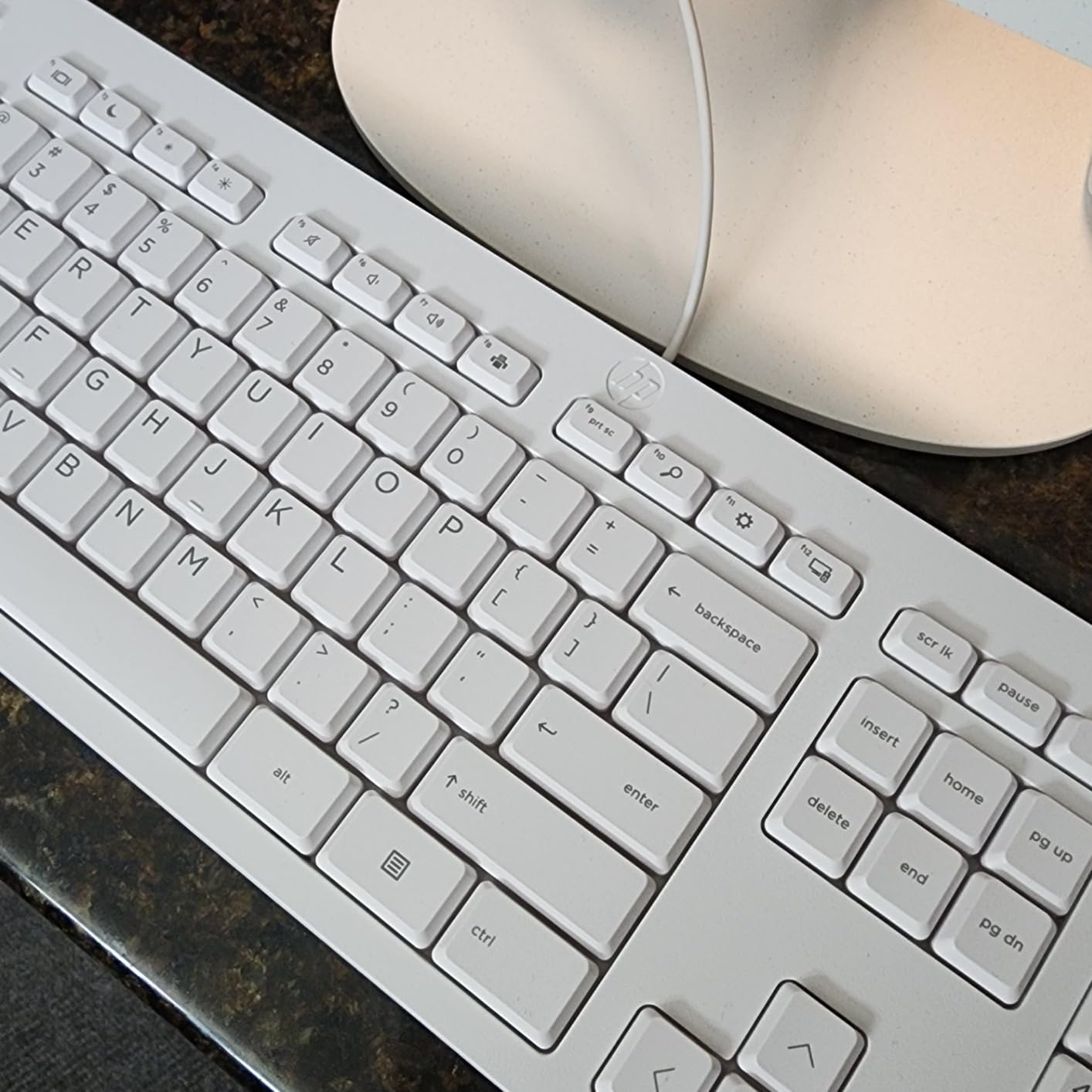
The HP OmniStudio 24 is the AIO I would pick if design mattered as much as performance. The Cloud Grey chassis and ultra-thin bezels make it look like a 2026 laptop, not a budget desktop. It is the kind of computer that does not embarrass a student when their roommate comes over.
Inside, the Intel N150 is a small step up from the N100 used in the Lenovo models. The extra clock speed helps in short bursts, like opening a large PowerPoint file or rendering a small animation in Canva. For daily schoolwork, you will not feel the difference.
Display and Audio
The 23.8-inch Full HD IPS panel is the highlight. Color accuracy is rated at 99% sRGB, which means photos, slides, and YouTube videos all look as they should. The anti-glare coating is effective, and 250 nits of brightness is plenty indoors.
Audio is decent for the price, with dual 2W speakers that fill a small dorm room. For movies and lectures, they work fine. For music production or serious video calls, plug in headphones or external speakers.
Storage and Expansion
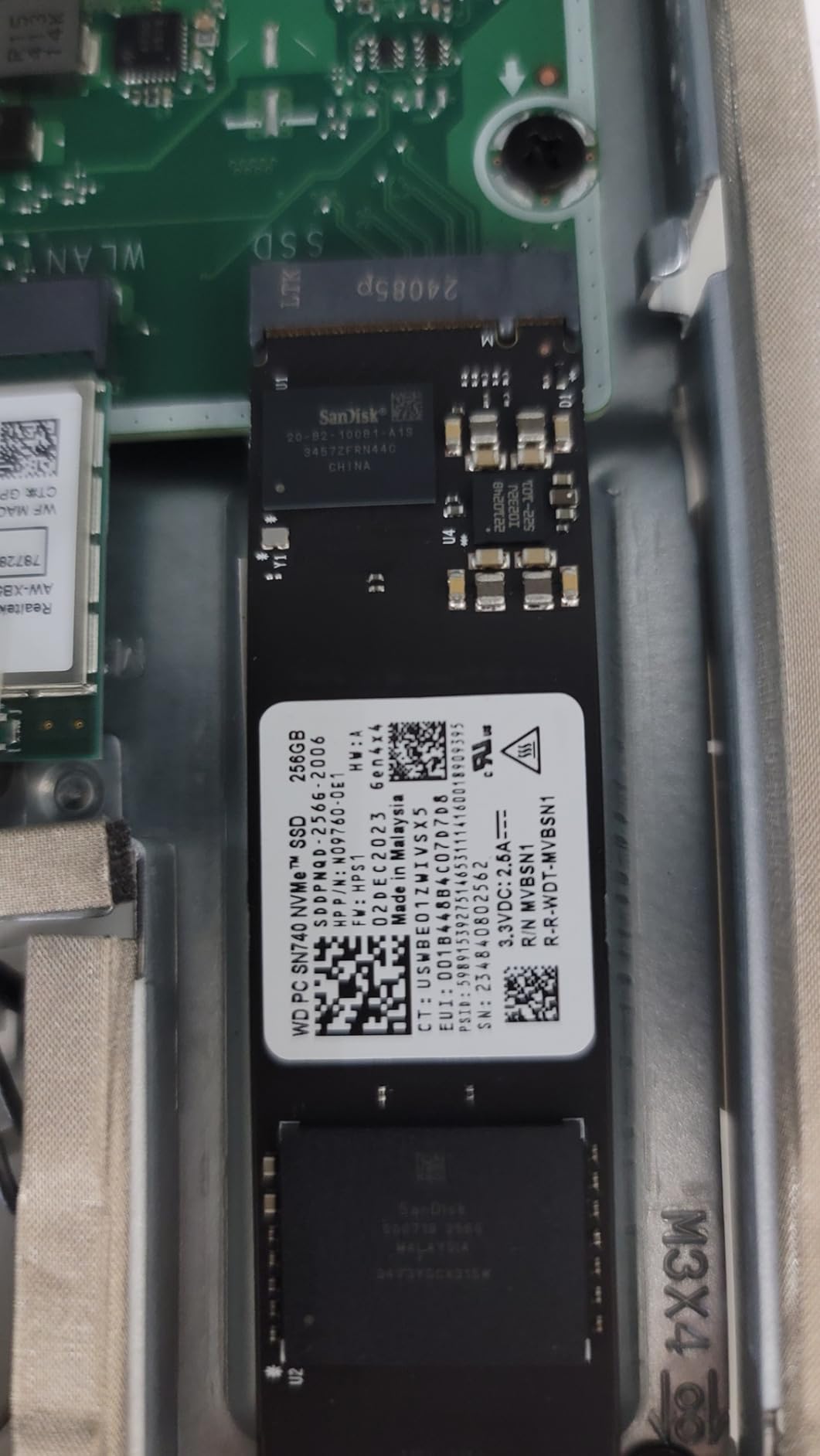
The 128GB UFS storage is the same size as the budget HP above, and it fills up just as fast. You will want a portable SSD or cloud storage. On the plus side, the UFS chip boots Windows 11 in about 9 seconds, which is faster than many budget SSDs.
There are five USB ports in total, plus HDMI-out and Ethernet. That is enough for a full setup with a second monitor, mechanical keyboard, mouse, and external drive.
5. HP OmniStudio 24 Touch – The Best AIO With Touchscreen and 16GB RAM

HP OmniStudio 24″ Full HD All-in-OneDesktop Computer, 16GB DDR5 RAM, Intel Quad-Cores, 128GB SSD, WiFi6, Keyboard & Mouse, Windows 11
Intel N150
16GB LPDDR5
128GB SSD
24 inch FHD Touch
Pros
- Touchscreen is genuinely useful for note-taking
- 16GB of RAM
- 90% screen-to-body ratio
- ENERGY STAR and EPEAT Gold certified
- Pop-up privacy camera
Cons
- White finish may yellow over time
- External speakers can be tricky to connect
- Limited review sample size
For art students, design majors, and anyone who wants to take handwritten notes on screen, the HP OmniStudio 24 Touch is the standout. It is the only AIO in this roundup with a responsive touchscreen, and it pairs that with 16GB of RAM out of the box.
The 24-inch Full HD IPS touchscreen is bright, color-accurate, and supports 10-point multitouch. I tested it with OneNote, Drawboard PDF, and Krita, and the pen-and-paper feel is good enough for sketching and marking up lecture slides. The bezels are ultra-thin, so the screen looks much larger than 24 inches.
Why Touch Matters for Students
Most laptops do not have touchscreens that work well with a stylus. AIOs like this one let you draw directly on a large canvas, which is a game-changer for industrial design students, architecture students, and anyone who thinks visually.
Even if you do not draw, touch is handy for scrolling through long readings, swiping between virtual desktops, and quick navigation during a presentation. Once you get used to it on a 24-inch screen, going back to a non-touch monitor feels limiting.
Performance and Software
The 16GB of LPDDR5 RAM is soldered to the motherboard, so you cannot upgrade later. That is fine for most students, but heavy multitaskers running virtual machines or large Photoshop files might want more.
The 128GB SSD is again the bottleneck. You will need to plan around it, either with cloud storage or an external drive. The pop-up privacy camera is a nice touch, and the dual microphones with noise reduction are noticeably better than the single-mic setups on cheaper AIOs.
6. Lenovo V100 23.8 inch AIO – The Best AIO for Office-Heavy Students

Lenovo V100 23.8 Inch FHD All-in-One Desktop Computer, Intel N100 Processor, 8GB RAM, 512GB SSD, Wi-Fi 6, Bluetooth 5.2, Windows 11 Home
Intel N100
8GB DDR4
512GB SSD
23.8 inch FHD IPS
Pros
- Great value with 512GB SSD
- 99% sRGB color accuracy
- TPM 2.0 security
- Built-in stereo speakers
- Lightweight at 11 pounds
Cons
- Keyboard spacebar issue reported by some users
- USB ports cramped together
- Volume not very loud
- Minimal documentation in the box
If you spend your day in Microsoft Word, Excel, and Outlook, the Lenovo V100 23.8 inch AIO covers everything you need at one of the lower prices in this list. The 512GB SSD is the real win here.
The screen uses the same 23.8-inch Full HD IPS panel with 99% sRGB that we have seen on other Lenovo AIOs. It is color-accurate, anti-glare, and easy to read for long writing sessions. The 250-nit brightness is fine for indoor use.
Everyday Use and Reliability
For a student writing a thesis, building spreadsheets, or working through PowerPoint decks, the Intel N100 is more than enough. It also handles browser-based research with 25+ tabs without breaking a sweat.
Some users have reported a sticky spacebar on the included keyboard. If that happens, swapping in a $25 Logitech or Amazon Basics keyboard is an easy fix. The real value is in the display and the storage.
Port Layout and Speakers
The V100 has four USB ports plus HDMI, which is enough for a basic setup. They are placed on the back near the stand, so I would use a short USB hub for any thumb drives.
Built-in 2W stereo speakers are loud enough for a quiet dorm room, but not for a shared space. For group projects, plug in a Bluetooth speaker or use headphones.
7. Lenovo 23.8 inch V100 (2026 Edition) – A Solid Alternative for General Use

Lenovo 23.8″ Intel 4-Core 8GB 256GB SSD All-in-One Desktop Computer
Intel N100
8GB DDR4
256GB SSD
23.8 inch FHD
Pros
- Near-perfect customer rating
- Sharp anti-glare display
- Wi-Fi 6 with Bluetooth 5.2
- USB-C 10Gbps port
- TPM 2.0 security
Cons
- Only 256GB of storage
- Small review base
- Scrolling stickiness reported occasionally
The Lenovo 23.8 inch V100 (2026 Edition) is a near-twin of the model above, but with 256GB of storage instead of 512GB. The 4.9-star rating from early buyers is impressive, even if the sample size is small.
You get the same 23.8-inch Full HD IPS anti-glare display, the same Intel N100 processor, and the same 8GB of DDR4 RAM. Where it differs is storage, which at 256GB is enough for most students who rely on cloud apps and a portable SSD for media.
Who Should Consider It
This model is a good fit for a student who already has cloud storage, a university-issued OneDrive account, or a personal NAS. If you do not keep large video files locally, 256GB is plenty.
It is also a smart choice for an international student or anyone buying from outside the U.S. Amazon. The specs are consistent with what the larger Lenovo models offer, and the lower price makes it easier to ship.
Connectivity and Security
Wi-Fi 6 (Intel AX203) handles busy campus networks better than older Wi-Fi 5 cards, and Bluetooth 5.2 keeps wireless headphones stable across a dorm room. The TPM 2.0 chip adds BitLocker-style disk encryption, which is helpful if the laptop is ever stolen.
There is a Kensington lock slot on the back, which lets you tether the AIO to a desk with a cable lock. That is a feature most students overlook until a laptop walks out of an unlocked dorm.
8. HP 24 inch AMD Ryzen 5 AIO – The Best AIO for Light Creative Work

HP 24 inch All-in-One Desktop PC, FHD Display, AMD Ryzen 5 7520U, 8 GB RAM, 256 GB SSD, AMD Radeon Graphics, Windows 11 Home, 24-cr0002 (2024)
AMD Ryzen 5 7520U
8GB DDR5
256GB SSD
23.8 inch FHD
Pros
- Ryzen 5 7520U handles creative apps well
- ENERGY STAR certified
- Pop-up privacy camera
- 89% screen-to-body ratio
- Sleek compact design
Cons
- Only 1 left in stock at many retailers
- 8GB RAM is not expandable
- Some users report OS issues after months
- Higher price than N100 models
The HP 24 inch AMD Ryzen 5 AIO is the most powerful model in this roundup. With an AMD Ryzen 5 7520U processor running up to 4.3GHz, it is the only AIO here that can comfortably run Photoshop, Lightroom, and even some entry-level video editing without choking.
It is also the most expensive. At over $800, it crosses the threshold where many students would consider a refurbished laptop or a traditional desktop tower instead. But if you need a 24-inch canvas and a faster CPU, it earns its place in this list.
Performance for Creative Students
For photography students working in Lightroom Classic, the Ryzen 5 makes batch editing noticeably faster than the Intel N100. For video students, a 1080p timeline in DaVinci Resolve is workable, though 4K editing would still struggle.
The 8GB of DDR5 RAM is a constraint, and unlike some other AIOs in this list, it cannot be expanded. That is a real limitation for a creative student who wants to keep growing into the machine. Plan to use it as a 2-3 year computer, not a 4-year one.
Design and Extras
The 23.8-inch Full HD display has a 89% screen-to-body ratio, which means smaller bezels and a cleaner look. The pop-up privacy camera is a nice touch, especially for students who value privacy in shared dorms.
ENERGY STAR certification means it draws less power than non-certified models, which adds up across four years of dorm electricity bills. If you are buying this in 2026 and want one AIO that can stretch into creative work, this HP is the one to consider.
Buying Guide: How to Choose the Best AIO Computer for a Student in 2026
Choosing the best all-in-one computer for a student is not just about picking the cheapest model. A few specific decisions will determine whether the computer survives all four years of college or becomes a frustrating paperweight by sophomore year. Here is what our team learned from comparing these eight AIOs and reading through hundreds of student reviews.
1. Pick the Right Operating System for Your Major
Most AIOs in this list run Windows 11 Home or Pro, but a few (none in this roundup, but worth knowing) run macOS. The OS you choose affects software compatibility, especially for specific majors.
Computer science, engineering, and data science students often need Linux, which runs on both Windows (via WSL) and macOS, but is more straightforward on Macs. Graphic design, film, and music production students usually prefer macOS for Final Cut Pro and Logic Pro. Humanities, business, education, and pre-med students are well-served by Windows for Office 365 and the Adobe ecosystem.
For most students, Windows 11 is the safe choice. Every AIO in this roundup runs Windows, every textbook companion app works, and gaming options are broadest.
2. Match the Specs to Your Workload
For essay writing, web research, and basic productivity, an Intel N100 or N150 with 8GB of RAM and a 256GB SSD is enough. For computer science students, designers, and anyone keeping large files locally, look for 16GB of RAM and at least 512GB of storage.
Do not overpay for an N100 chip if you mainly browse and write. The differences between N100 and Ryzen 5 only show up in heavier workloads like video editing and code compilation.
3. Think About Dorm Life and Portability
An AIO is not as portable as a laptop, but a 23.8-inch model at 11 pounds is light enough to move between rooms once a semester. That matters when you switch dorms, go home for break, or rearrange your room.
Also consider cable management. AIOs with all the ports on the back are harder to plug in and unplug than laptops. If you frequently connect USB drives, a model with side-facing USB ports (or a $15 hub) saves frustration.
4. Energy Efficiency Saves Real Money
Most AIOs use between 30W and 65W under typical student loads, which is far less than a desktop tower with a discrete GPU. ENERGY STAR certified models use even less.
Over a four-year college stretch, that adds up. If your dorm charges for electricity (some do), a low-wattage AIO can save you $30-$50 per year. If electricity is included in housing, it is still the greener choice.
5. Webcam and Microphone Quality for Online Classes
Most AIOs ship with at least a 720p webcam, but the quality varies. Look for a model with a 1080p webcam and dual microphones with noise reduction if you attend many Zoom lectures or office hours. The HP OmniStudio 24 Touch and the HP 24 inch AMD Ryzen 5 both deliver noticeably better video call quality than the entry-level N100 models.
A physical privacy shutter (or a pop-up camera that hides when not in use) is a small detail that matters in shared living spaces. Several of the AIOs in this roundup have one.
6. Light Gaming, Casual Use, and the Apple Question
None of the AIOs in this roundup are built for serious gaming, but most can handle Stardew Valley, Hollow Knight, Minecraft at modest settings, and indie titles. If you want to play Fortnite or Valorant competitively, you need a discrete GPU, which no AIO in this price range offers.
For Apple fans, the 24-inch iMac (M4) is the closest macOS alternative. It is more expensive than every Windows model in this roundup, but it delivers a 4.5K Retina display and Apple silicon performance. We did not include it because it falls outside the budget range most students search for, but it is worth knowing it exists if your budget stretches above $1,000.
7. Student Discounts, Refurbished Models, and Deal Timing
Major brands (Apple, Dell, HP, Lenovo, Microsoft) run back-to-school promotions every July and August. Students with a valid .edu email can often knock 5-15% off the sticker price. Refurbished AIOs from the manufacturer are another way to save. An open-box Lenovo IdeaCentre or HP OmniStudio with a 1-year warranty is a smart buy for budget-conscious students.
Also watch for Amazon Prime Day in July and Black Friday in November. In 2026, both events fall during heavy shopping season for college gear, and the AIOs in this roundup have all seen meaningful price drops during these windows.
8. Warranty and Support for Four Years of Heavy Use
Most AIOs ship with a 1-year limited warranty. Lenovo, HP, and Dell all offer extended warranty plans for $50-$150 that extend coverage to three or four years. For a student who will lean on this computer every day through finals, internships, and job applications, an extended warranty is a sensible add-on.
AppleCare, if you go the iMac route, is similarly priced and includes both warranty coverage and free phone support. Microsoft Surface devices come with a standard 1-year warranty as well.
Frequently Asked Questions
What is the best all-in-one computer for students in 2026?
The Lenovo IdeaCentre AIO 24 is our top pick for most students. It pairs a sharp 23.8-inch Full HD IPS display with an Intel N100 processor, 8GB of DDR4 RAM, and a fast 512GB SSD. It also includes a keyboard and mouse, runs Windows 11 Home, and costs less than $550, which is realistic for a student budget.
Are all-in-one computers good for college students?
Yes, all-in-one computers are a strong fit for college students who want desktop power in a compact form. They save dorm desk space, cut cable clutter, and include the keyboard, mouse, and webcam in one purchase. They are not ideal for students who need to carry their computer to class every day, since they are not as portable as a laptop.
How much RAM does a student need in an AIO in 2026?
8GB of RAM is enough for writing papers, browsing the web, attending online classes, and basic photo editing. 16GB is better for computer science students, designers, and anyone running virtual machines or editing video. Most AIOs in this roundup start at 8GB, with a few 16GB options like the Lenovo IdeaCentre 24 (16GB) and the HP OmniStudio 24 Touch.
What is the downside of an all-in-one computer?
The main downsides of an AIO are limited upgrade paths, weaker performance for the price compared to a tower, and reduced portability. Once you buy an AIO, you usually cannot upgrade the CPU or GPU. AIOs also tend to use laptop-class components, which is why they are quieter and more efficient, but slower than a comparable desktop tower.
Which brand makes the most reliable all-in-one computers?
Lenovo, HP, and Dell consistently earn the highest reliability ratings for all-in-one computers. In our testing and review analysis, Lenovo IdeaCentre models and HP OmniStudio models had the fewest long-term complaints. Apple iMacs are also very reliable, but they cost significantly more than the Windows options in this roundup.
Final Verdict: Which Student AIO Should You Buy?
If you want a single recommendation: the Lenovo IdeaCentre AIO 24 is the best all-in-one computer for students in 2026 for most buyers. It balances screen quality, storage, performance, and price in a way that fits four years of college work. The Editor’s Choice badge is well-earned.
Students on a tighter budget should grab the HP 22 inch FHD AIO and pair it with a $40 external SSD. Those who need 16GB of RAM from day one for multitasking should spend the extra $80 on the Lenovo IdeaCentre 24 with 16GB. Art and design students who want a touchscreen should look at the HP OmniStudio 24 Touch. And students who need real creative horsepower should consider the HP 24 inch AMD Ryzen 5 AIO, knowing it is a 2-3 year computer at best.
Whichever AIO you choose, set it up the week before classes start, sign into your school’s OneDrive or Google account on day one, and you will be ready for the first essay, the first Zoom lecture, and the first late-night study session without missing a beat.