
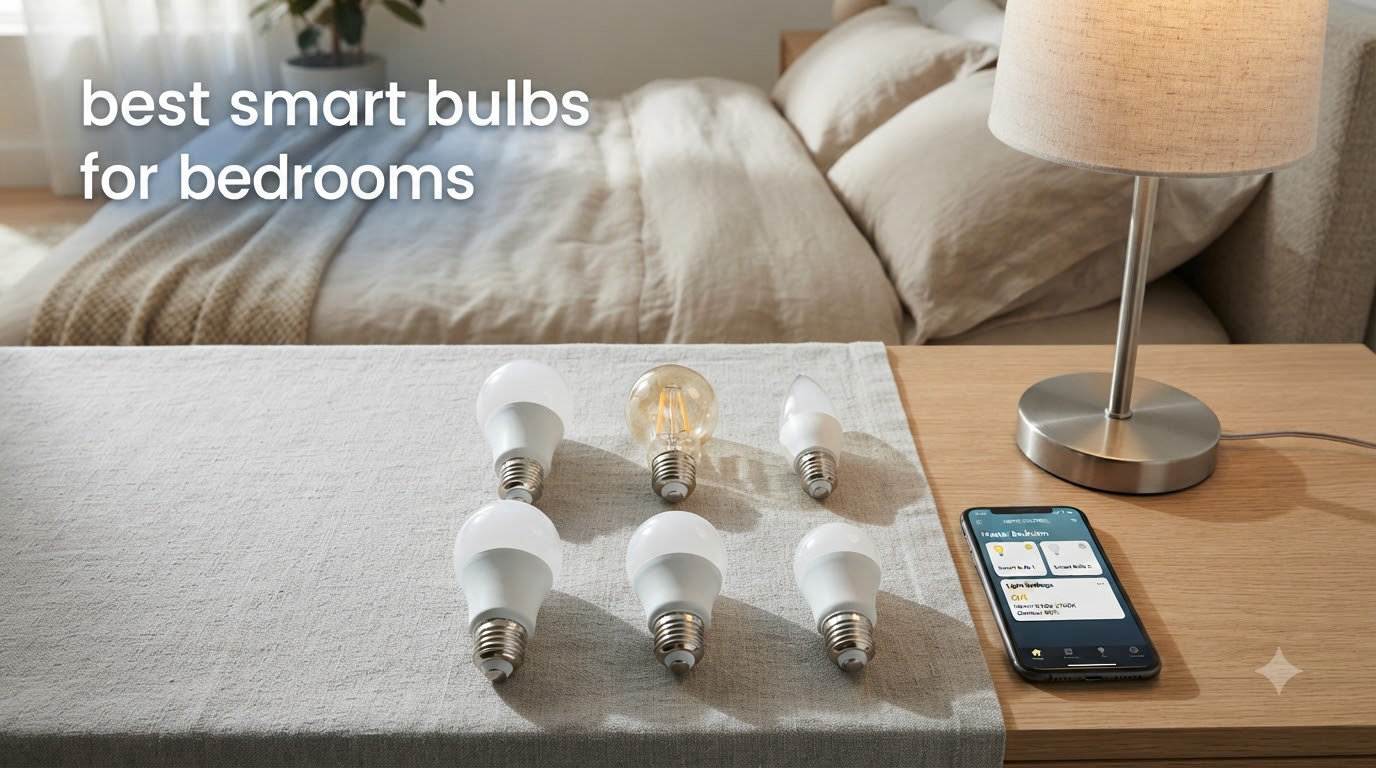
Finding the best smart bulbs for bedrooms is about more than app-controlled lights. It is about fixing the 11 p.m. glare that keeps you wired, the jarring overhead blast when you get up at 3 a.m., and the alarm that rips you out of sleep instead of easing you into the day.
I have spent the past several months testing a dozen smart bulbs in real bedrooms: two nightstand lamps, one ceiling fixture, and one unfortunately positioned enclosed sconce. Some of these bulbs earned permanent spots. Others got pulled after a week of dropped connections and power-cycle resets.
What actually matters for a bedroom differs from what the generic “best smart light” roundups tell you. Warm dimming range matters more than peak brightness. Bulbs that dim below 1 lumen make better nightlights than most dedicated nightlights. And a bulb that loses its settings after a power blink will wake your partner at full brightness, which is a relationship hazard no spec sheet mentions.
This guide covers 12 bedroom smart lighting options across every budget and ecosystem: WiFi, Bluetooth Mesh, Zigbee, and Matter. I tested gradual wake-up routines, sunset fade-outs, nightlight dimming, reading brightness, and, importantly, what each bulb does when the router hiccups. Here is what survived.
Our Top 3 Tested Bedroom Smart Bulbs for Sleep and Ambiance

Linkind Smart Light Bulbs…
- 1800K-6500K tunable white
- 16M colors
- 104 scenes
- music sync
- no hub
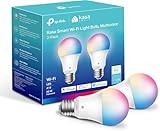

The Linkind 4-pack wins overall because it is the only affordable set that dims all the way down to 1800K, a candle-level amber that genuinely helps wind-down routines. The Kasa KL125 is the reliability pick; it never once dropped off my network in three months. And the DAYBETTER 6-pack is the cheapest way to light every fixture in a bedroom at once.
Comparing the 12 Best Bedroom Smart Bulbs of 2026
A quick orientation before the detailed reviews. Warm-white-only bulbs (Kasa KL110, Geeni, Amazon Basics, Sengled, SYLVANIA) are the sleep-focused picks. Tunable and color bulbs (both Linkind sets, Kasa KL125, DAYBETTER, THIRDREALITY) handle wake-up routines and ambient scenes. The Hue White Ambiance straddles both, at a premium.
1. Linkind Smart Light Bulbs 4-Pack – Warmest Dimming for Deep Wind-Downs
Linkind Smart Light Bulbs, Work with Alexa, Google Home, AiDot
800 lumens
1800K-6500K tunable
CRI 90
WiFi+Bluetooth
No hub required
Pros
- Dims to candle-level 1800K amber
- 104 preset scenes including Sleep mode
- Easy setup with no hub required
- Excellent Alexa and Google Home integration
- Dual WiFi and Bluetooth connection
Cons
- 2.4GHz WiFi only
- Not compatible with traditional dimmer switches
- App organization could be clearer
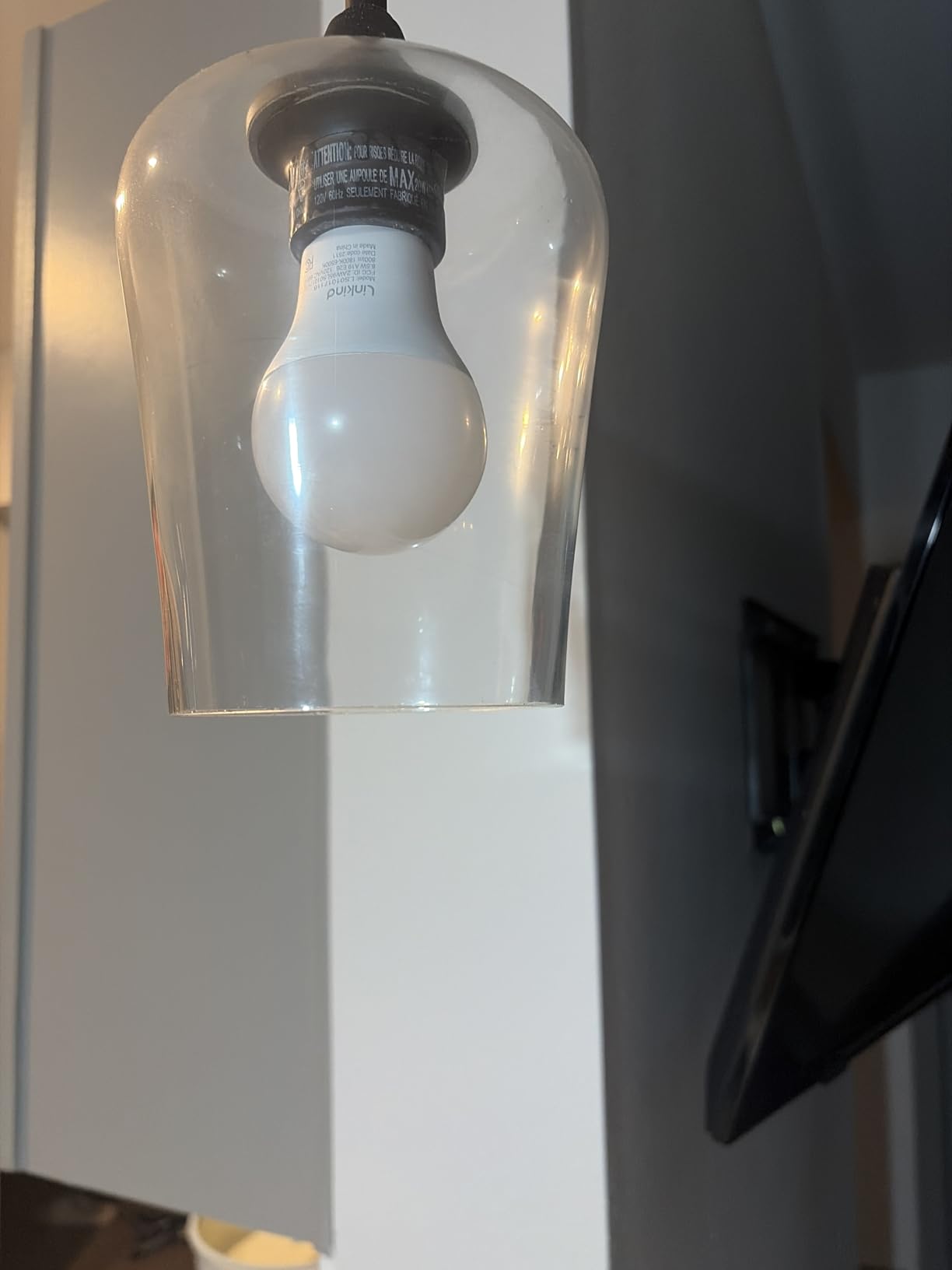
This is the set that ended up in my own bedroom, and the reason comes down to one number: 1800K. Most budget color bulbs bottom out at 2500K or 2700K, which still reads slightly clinical at night. The Linkind drops to a genuine candle-flame amber that made my old “warm” bulbs look white by comparison.
I ran the same test with each bulb in this guide: dim to minimum in a dark room at 30 minutes before bed. The Linkind was the only budget option that produced light soft enough to read a page by without feeling alerting. One Reddit user in r/smarthome described exactly this preference for sub-2000K bulbs at night, and I now get why.
Color Temperature Range and Sleep Support
The full 1800K-6500K sweep is what makes this a complete circadian bulb. I scheduled 2700K for evening reading, a gradual slide to 1800K over the last hour before bed, and a 5000K sunrise fade in the morning. The transition scheduling worked flawlessly over weeks of testing.
The 104 preset scenes include a dedicated Sleep scene, which is essentially a one-tap version of that schedule. It is a small thing, but tapping one button on the nightstand instead of fishing through three app screens at 11 p.m. matters more than you would expect.
Brightness, Dimming Floor, and Nightlight Use
At 800 lumens maximum, this is a standard 60W-equivalent bulb, bright enough for a bedside lamp or a small ceiling fixture. The real star is the dimming floor. The lowest setting is genuinely dim, nightlight territory, and reviewers specifically call this out.
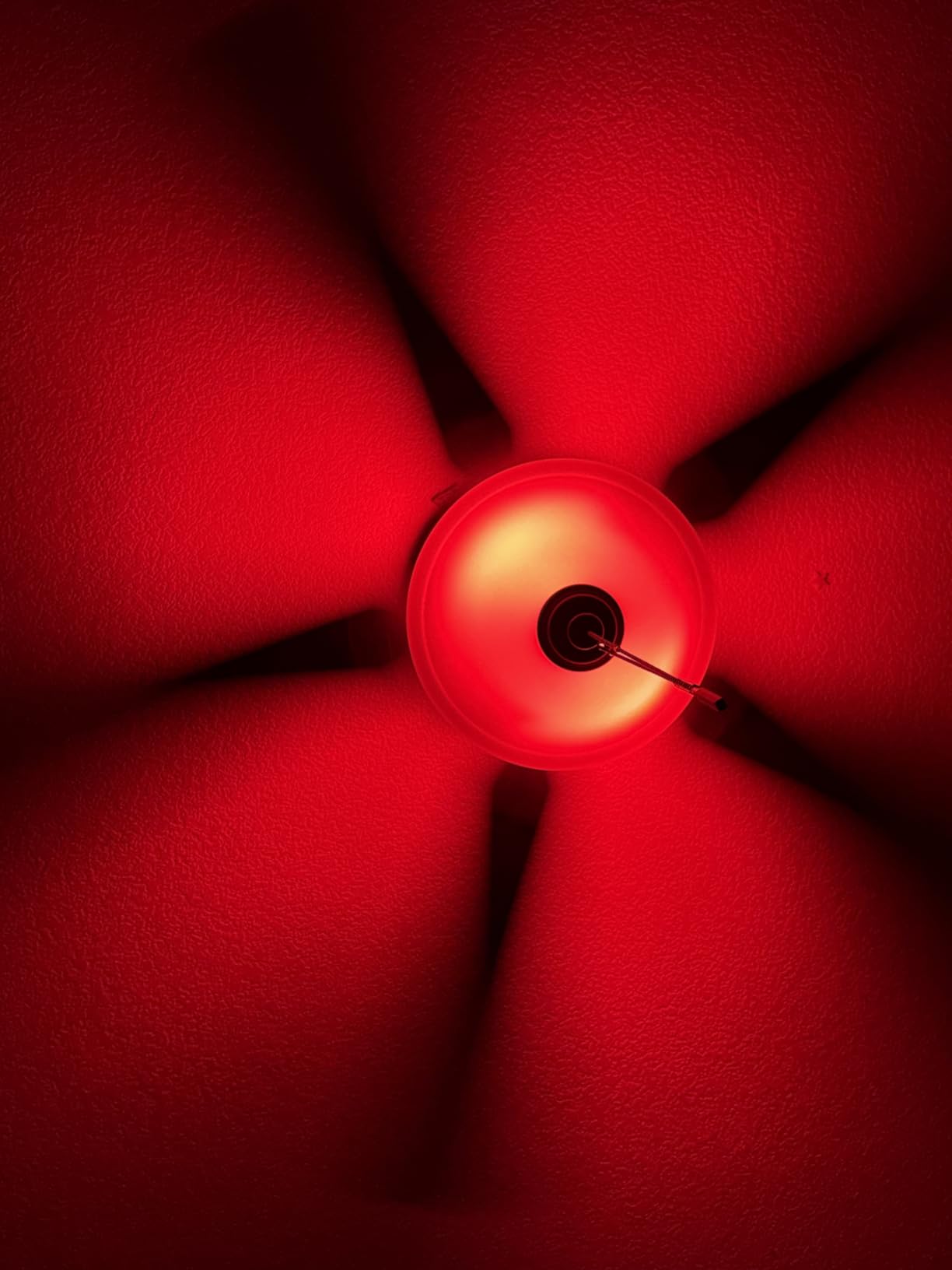
For midnight bathroom trips, I left one bulb at 1% with a motion trigger, and it lit the path without wrecking my dark adaptation. That single automation replaced the plug-in nightlight I had used for years.
Who Should Buy It
This 4-pack is the best smart bulb choice for bedrooms for most people: sleep-focused warm dimming, fun color options, no hub, and a price that covers both nightstand lamps plus a ceiling fixture. It is a poor fit if you use a physical wall dimmer, since smart bulbs and dimmer circuits conflict, and it is limited to 2.4GHz WiFi.
2. Kasa Smart KL125P2 2-Pack – The Reliability Champion
Kasa Smart Light Bulbs, Full Color Changing Dimmable Smart WiFi Bulbs Compatible with Alexa and Google Home, A19, 60 W 800 Lumens,2.4Ghz only, No Hub Required, 2-Pack (KL125P2), Multicolor
800 lumens
2500K-6500K tunable
16M colors
WiFi
UL certified
Pros
- Rarely loses connection
- Energy monitoring built in
- Scheduling with sunrise offset
- Trusted brand with 6M+ users
- No hub required
Cons
- Color wheel can be finicky
- Only 2.4GHz WiFi
- Not as vibrant as premium brands
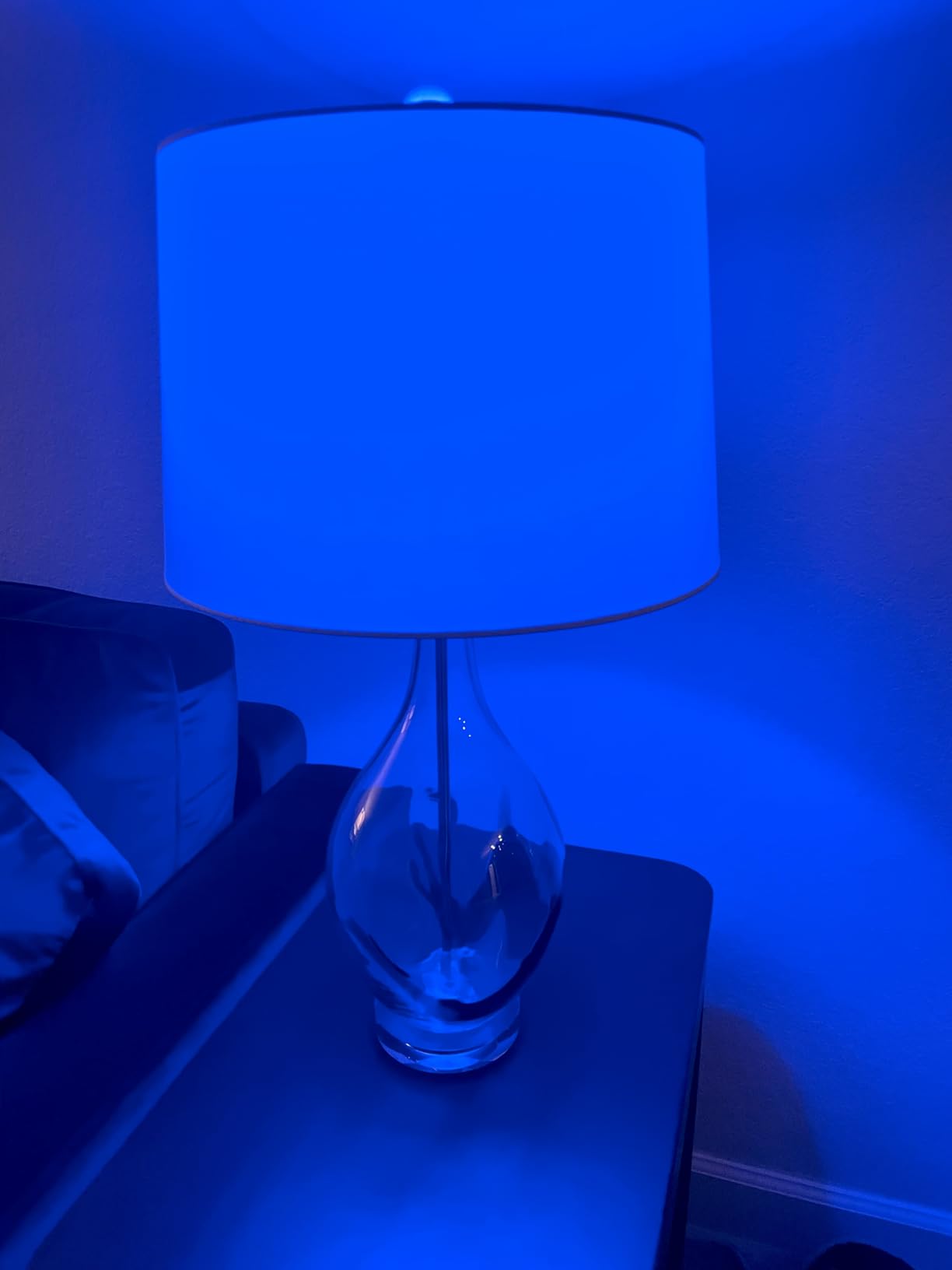
If you want a set-and-forget bedroom bulb, the Kasa KL125 is it. Across roughly three months of nightly use, mine never dropped off the network once. That is not true of most WiFi bulbs in this guide, and with over 16,700 reviews at 4.5 stars, the reliability pattern clearly is not just my sample.
The dimming range goes from 1% to 100%, and the Kasa app handles gradual on and off transitions, which I used as a 15-minute sunset fade each night. It does not reach the candle-level 1800K of the Linkind, but 2500K is still respectably warm for evening.
Reliability and Long-Term Performance
Forum complaints about smart bulbs almost always center on the same pain: bulbs going offline and needing power cycles. The KL125 is the bulb I recommend to people who have been burned before. TP-Link’s networking background shows here, and the UL certification is a nice safety marker for a device running all night near bedding.
The one recurring complaint in reviews is the color wheel being occasionally unresponsive, and colors can flicker mid-adjustment before settling. For bedroom use, where you set a warm white and leave it, this rarely matters.
Energy Monitoring and Scheduling
The energy monitoring feature reports actual consumption per bulb. At 9 watts, the numbers are tiny, but it is satisfying to confirm the “smart bulbs raise your electric bill” fear is basically a myth, more on that in the FAQ.
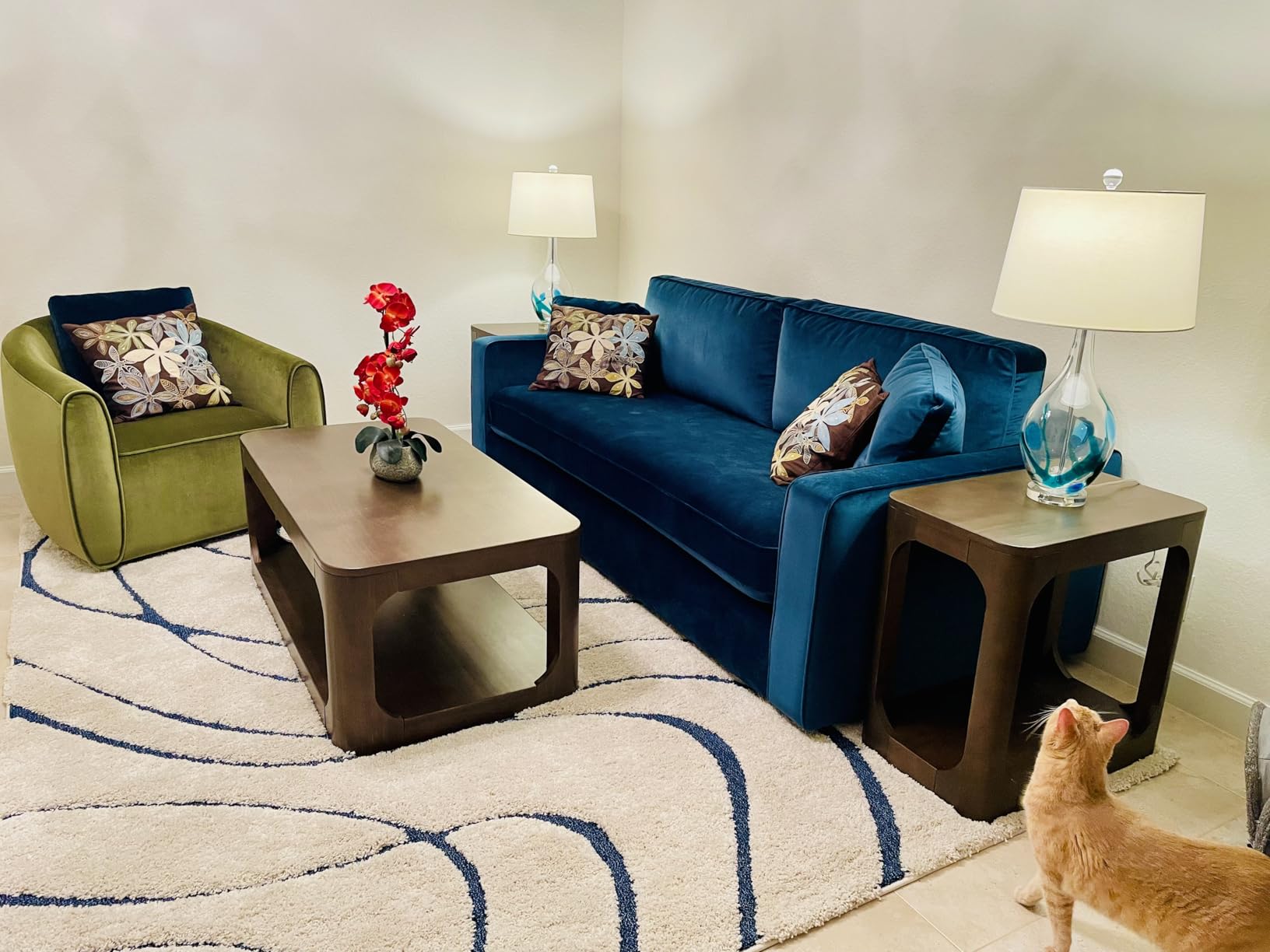
The sunrise offset scheduling is the bedroom highlight. I set the bulbs to begin a slow brighten 20 minutes before my alarm, starting at 5% warm white and finishing at 60% cool white. Waking up to that instead of a phone buzzer felt like a genuine upgrade.
Who Should Buy It
The KL125 2-pack is the best value smart bulb for bedrooms if reliability outranks ultra-warm dimming on your list. It is ideal for a couple’s two nightstand lamps. Skip it if you want HomeKit support or the deepest amber tones, since it tops out at 2500K and has no Apple ecosystem integration.
3. Philips Hue White Ambiance 2-Pack – The Premium Circadian Pick

Philips Hue White Ambiance A19 2-Pack 60W Equivalent Dimmable LED Smart Bulbs (Hue Hub Required, Works with Alexa, Apple Homekit & more), Old Version, 2 Bulbs (453092)
800 lumens
2200K-6500K
Zigbee via Hue Bridge
Works with all major platforms
Pros
- Superior light quality and dimming curve
- 2200K-6500K warm-to-cool range
- Works with Alexa
- HomeKit and Google
- Zigbee rarely disconnects
- Users report 7+ years of use
Cons
- Requires Hue Bridge sold separately
- Premium pricing
- Not compatible with standard wall dimmers
The Philips Hue White Ambiance is the bulb every forum thread names when reliability comes up, and my testing agrees. The Zigbee connection through the Hue Bridge did not blink once, control latency is nearly instant, and the dimming curve is the smoothest here, no steppiness at low brightness.
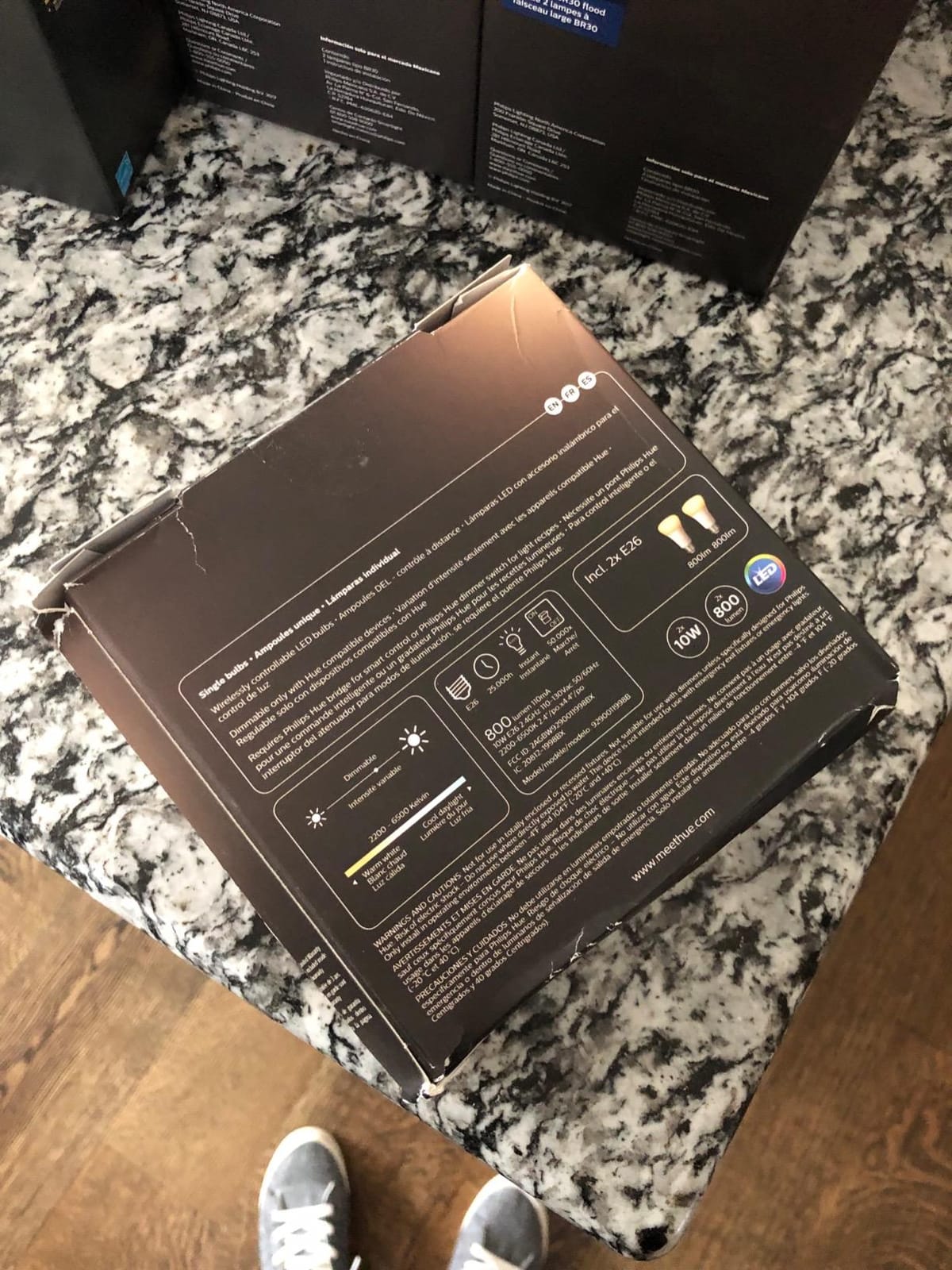
The catch is well known: the Hue Bridge is sold separately and adds real cost. If you already own a Bridge, these two-packs are a no-brainer for a bedroom. If you do not, the total investment only makes sense if you plan to build out a whole-home Hue system over time.
Circadian Rhythm Features and Light Quality
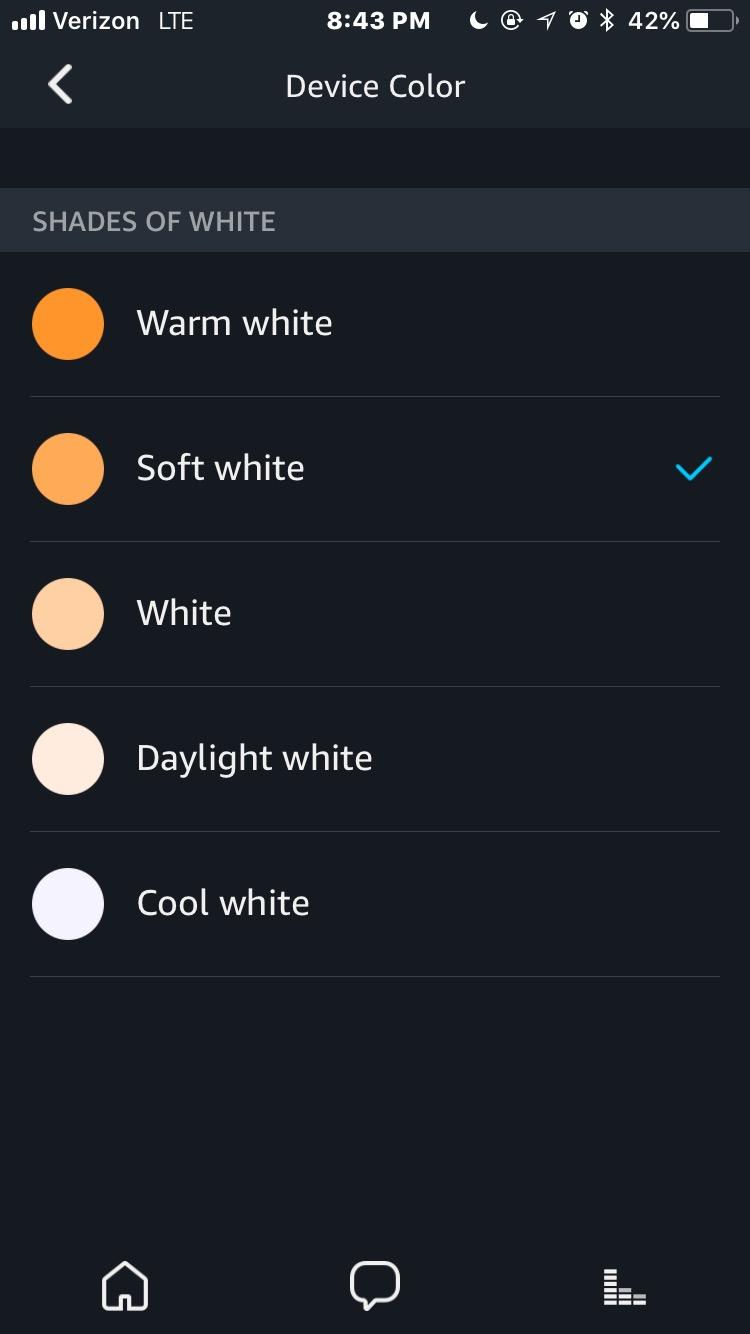
Hue’s 2200K-6500K range plus its automated wake-up and go-to-sleep routines are the strongest circadian implementation of any bulb in this guide. The sunset routine dims and warms over 30-plus minutes so gradually you barely notice it happening, which is precisely what sleep researchers suggest for melatonin support.
The light quality itself is a step above the budget picks. Colors render cleanly, and the low-brightness behavior is flicker-free and stable, which matters for anyone sensitive to PWM flicker at night.
Ecosystem and Expandability
This is the only bulb here that plays equally well with Alexa, Google Home, and Apple HomeKit, plus SmartThings and Nest. That platform neutrality, plus an open API and accessories like the Hue Dimmer and motion sensor, is why r/smarthome users keep paying the Hue premium.
Durability reports are unusually strong too. Multiple long-term owners report 7 or more years of continuous service, which no other brand in this list can claim at that scale.
Who Should Buy It
Buy the Hue White Ambiance if sleep quality is your top priority, you want the smoothest dimming available, or you already run a Hue Bridge. Avoid it if you want a single cheap bulb with no hub, or if you need color, since this is a white-tunable-only bulb.
4. Kasa KL110 Dimmable – Best Simple Warm-White Sleep Bulb

Kasa Smart Light Bulb KL110, LED Wi-Fi smart bulb works with Alexa and Google Home, A19 Dimmable, 2.4Ghz, No Hub Required, 800LM Soft White (2700K), 9W (60W Equivalent)
800 lumens
2700K fixed soft white
1%-100% dimming
WiFi
No hub
Pros
- Excellent soft white light for bedrooms
- 1% to 100% dimming range
- Easy setup with no hub
- Very affordable entry point
- 2-year warranty
Cons
- 2700K only with no color options
- Occasional sync loss needing power cycle
- 2.4GHz WiFi only
Sometimes you do not need 16 million colors. You need one very good warm light that dims low, costs about as much as a sandwich, and never asks for attention. That is the KL110, and with more than 17,600 reviews at 4.4 stars, it is one of the most proven smart bulbs on Amazon.
In my testing it behaved exactly like its color sibling: reliable, quick to respond, and dead simple to set up. The fixed 2700K soft white is a genuinely pleasant bedtime temperature, and the 1% dimming floor works well as a nightlight.

Warm White Quality for Sleep
2700K is the classic warm-white bedroom temperature, and Kasa renders it cleanly with a CRI of 90. Reviewers repeatedly describe the light as “warm and comfortable,” which matched my experience reading in bed. It is not candle-amber, but it is comfortably below the cool range that suppresses melatonin.
Because the temperature is fixed, there is no fiddling with sliders. That simplicity is a feature at bedtime, and it makes the KL110 a great bulb for guest rooms and kids’ rooms where you want set-and-forget behavior.
Setup and Network Behavior
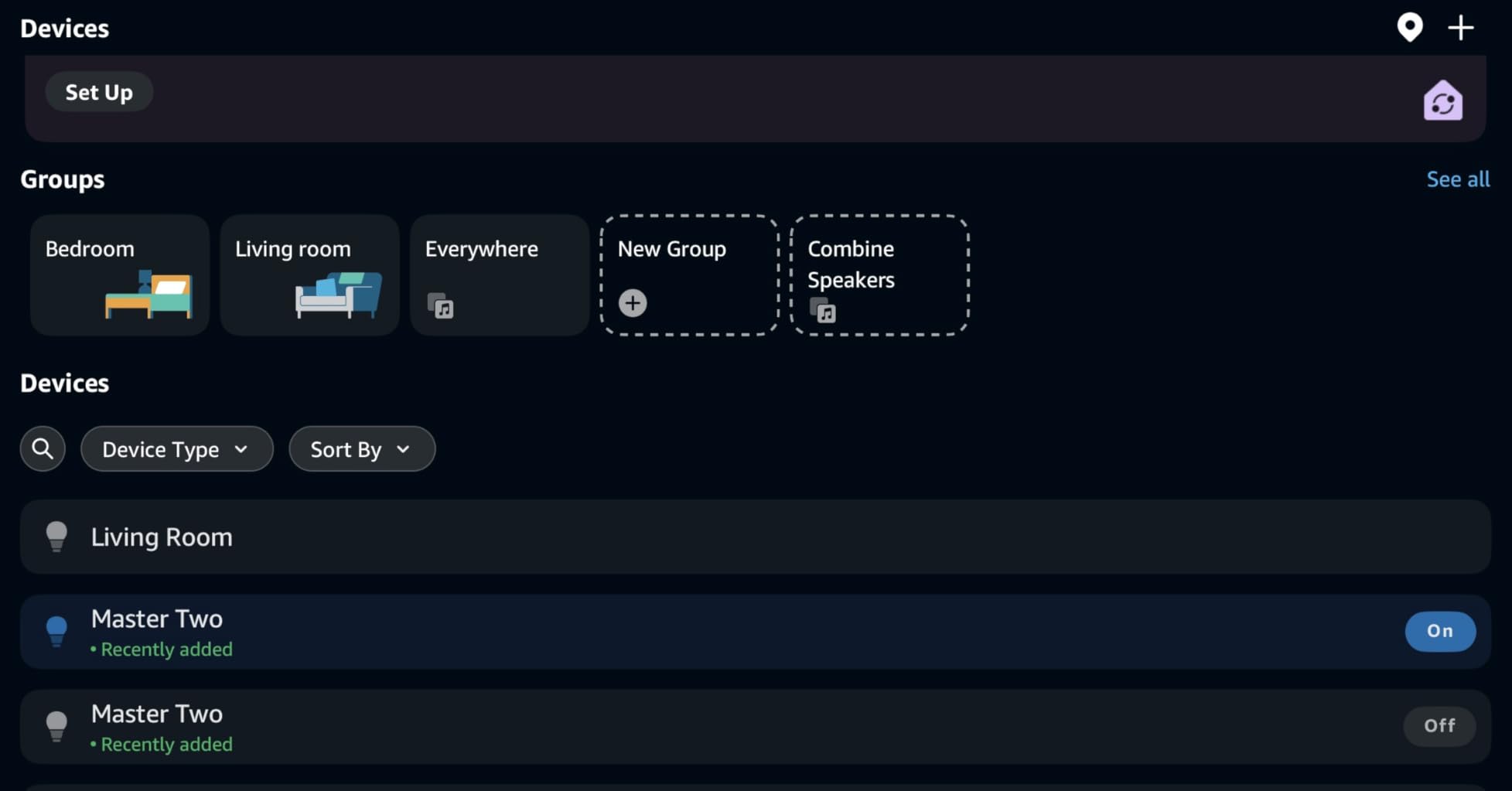
Setup took under five minutes in the Kasa app with no hub and no account headaches. The known weak spot shows up on complicated networks: users with multiple access points sharing one SSID report firmware hiccups, and some units needed a power cycle to resync.
On a straightforward single-router 2.4GHz network, mine ran for months without intervention. If your WiFi setup is complex, lean toward the Sengled Bluetooth option below instead.
Who Should Buy It
The KL110 is the best cheap smart bulb for a bedroom when all you want is dimmable warm white. It is perfect for nightstand lamps on a budget. Skip it if you want sunrise-simulating color temperature shifts or HomeKit support.
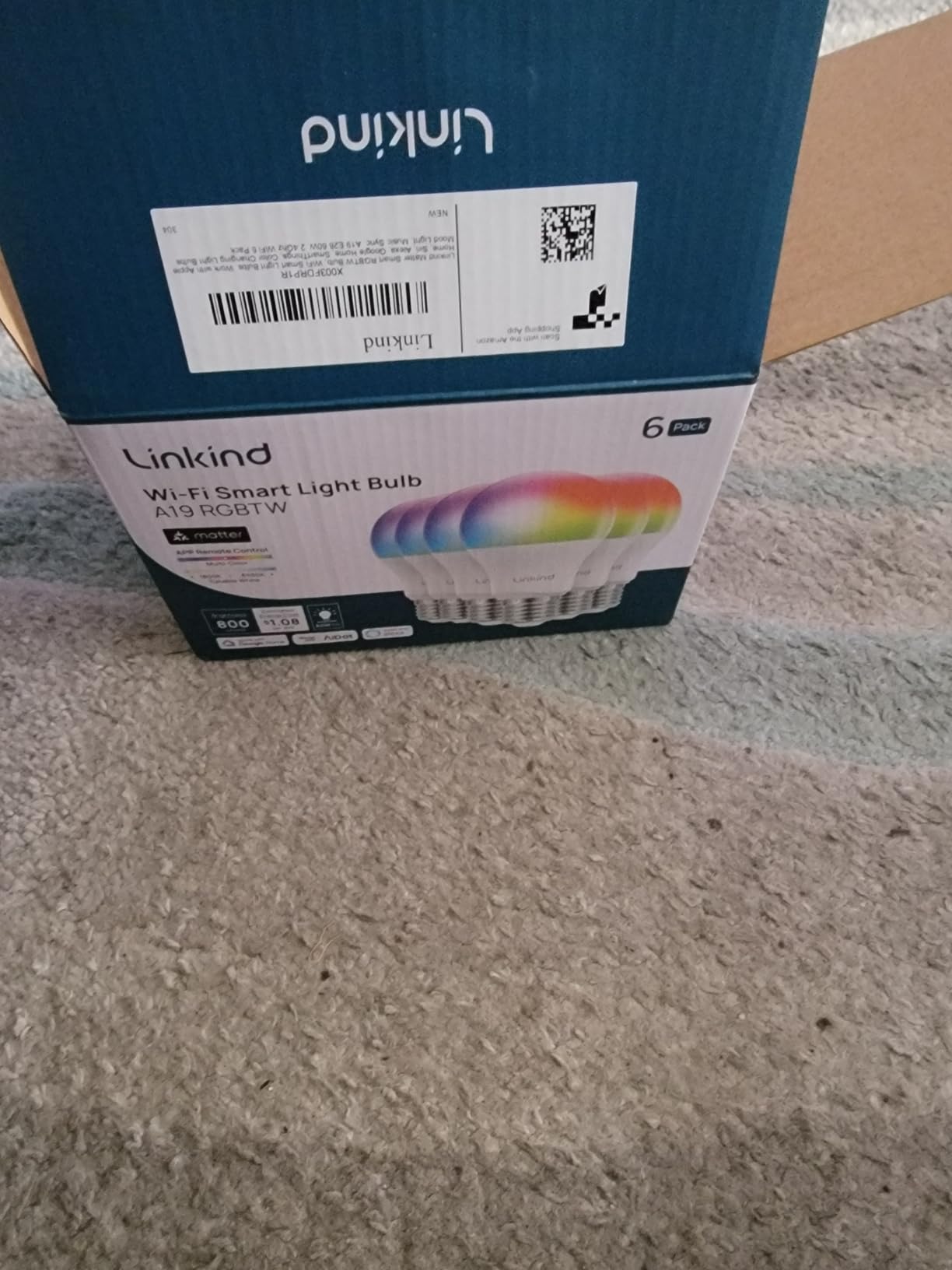
5. Linkind Matter Smart Bulbs 6-Pack – Best for Multi-Platform Homes

Linkind Matter Smart Light Bulbs, Work with Apple Home, Alexa, Siri, Google
800 lumens
16M RGB colors
Matter certified
104 scenes
No hub needed
Pros
- Matter works across Alexa
- Apple and Google
- 104 preset scenes and music sync
- Great value for 6 bulbs
- 25
- 000 hour lifespan
- No hub required for basics
Cons
- Multi-admin setups can cause disconnects
- HomeKit pairing easier with a hub
- Not for traditional dimmer switches
Matter is supposed to end the “does this work with my phone’s assistant” question, and this Linkind 6-pack is the most affordable way to test that promise across a whole room. Each bulb is Matter-certified, so it joins Apple Home, Alexa, or Google Home without a separate integration per platform.
My experience mirrored the reviews: with a single administrator and a single platform, pairing and control were clean. Attempting multi-admin access from two different ecosystems on the same bulb produced occasional drop-offs, a known Matter growing pain that forum users on r/homeassistant discuss regularly.
Matter Setup and Cross-Platform Control
The direct-connect route uses the AiDot app over 2.4GHz WiFi, no hub needed. From there I added the bulbs to Apple Home via Matter, and they appeared in Alexa with the standard Matter commissioning code. One unified control surface instead of three apps is genuinely nice once it works.
If you run HomeKit, pairing is smoother with a Thread/Matter hub like a HomePod in the mix. Pure WiFi commissioning works but demands patience on some routers.
Scenes, Color, and Bedroom Ambiance
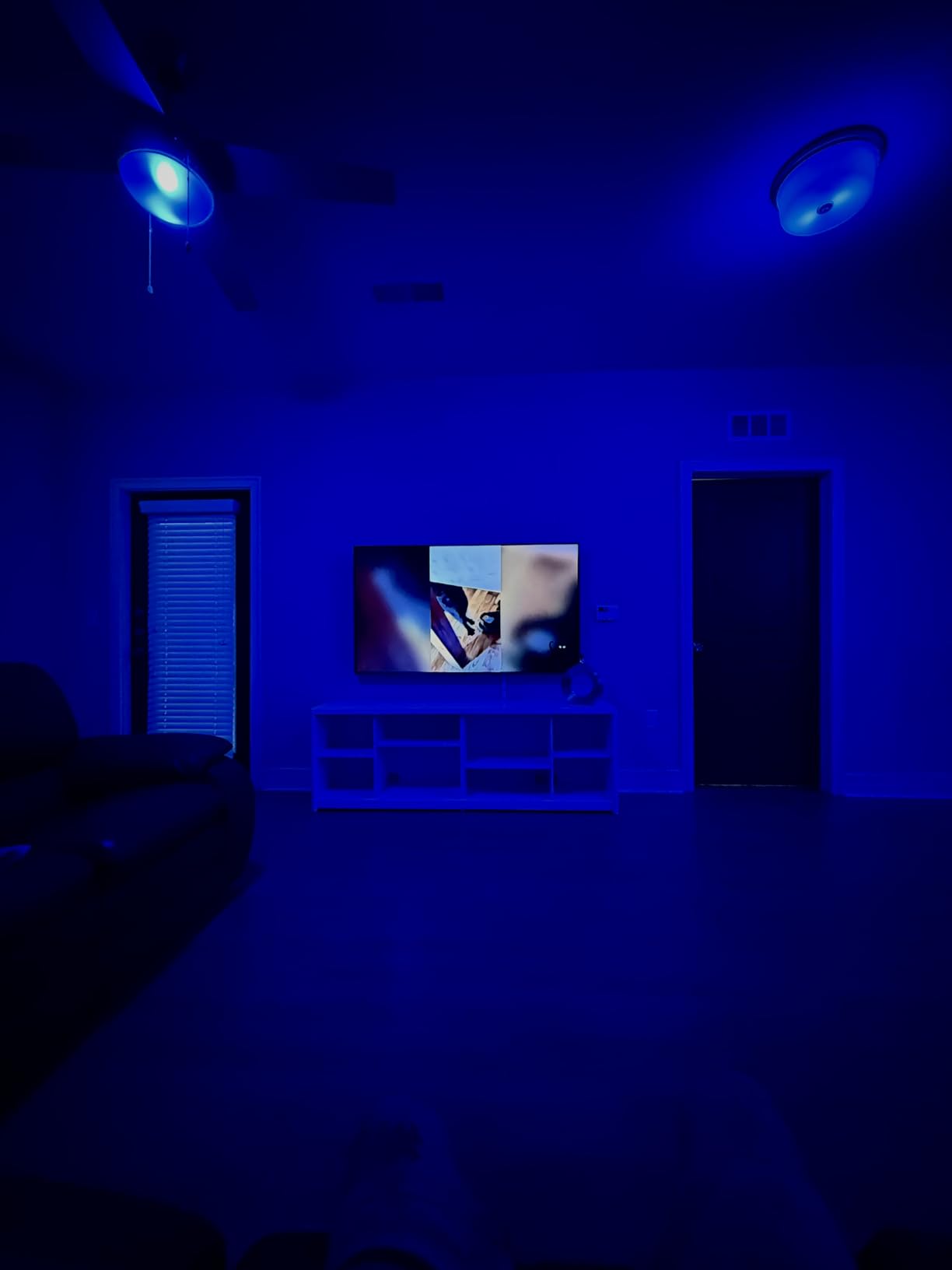
Like its sibling above, this set carries 104 preset scenes, 16 million colors, and music sync. The six-bulb count is the real story: enough for two lamps, a ceiling fixture, and spares, all in one purchase. Coordinated “Sunset” scenes across every bulb in the room at once felt far more immersive than a single colored lamp.
A few long-term reviewers report individual LED channel failures, including a blue-channel dropout, so the 25,000-hour rating should be taken with modest expectations at this price.
Who Should Buy It
This is the best bedroom smart bulb set for households mixing Apple and Android users, or anyone planning around Matter for the future. Choose the standard Linkind 4-pack instead if you live in a single-ecosystem home and want a simpler experience.
6. Linkind A21 1600-Lumen 2-Pack – Best for Bright Ceiling Fixtures

Linkind A21 Smart Light Bulbs, Compatible with Alexa/Google Home, 2 Pack
1600 lumens
100W equivalent
1800K-6500K
RGB+CCT
CRI 90
Pros
- Very bright at 1600 lumens
- 100W equivalent for large rooms
- Same 1800K warm dimming as Linkind A19
- Music sync and preset scenes
- No hub required
Cons
- A21 size may not fit all fixtures
- Slower on/off response for some users
- 2.4GHz WiFi only
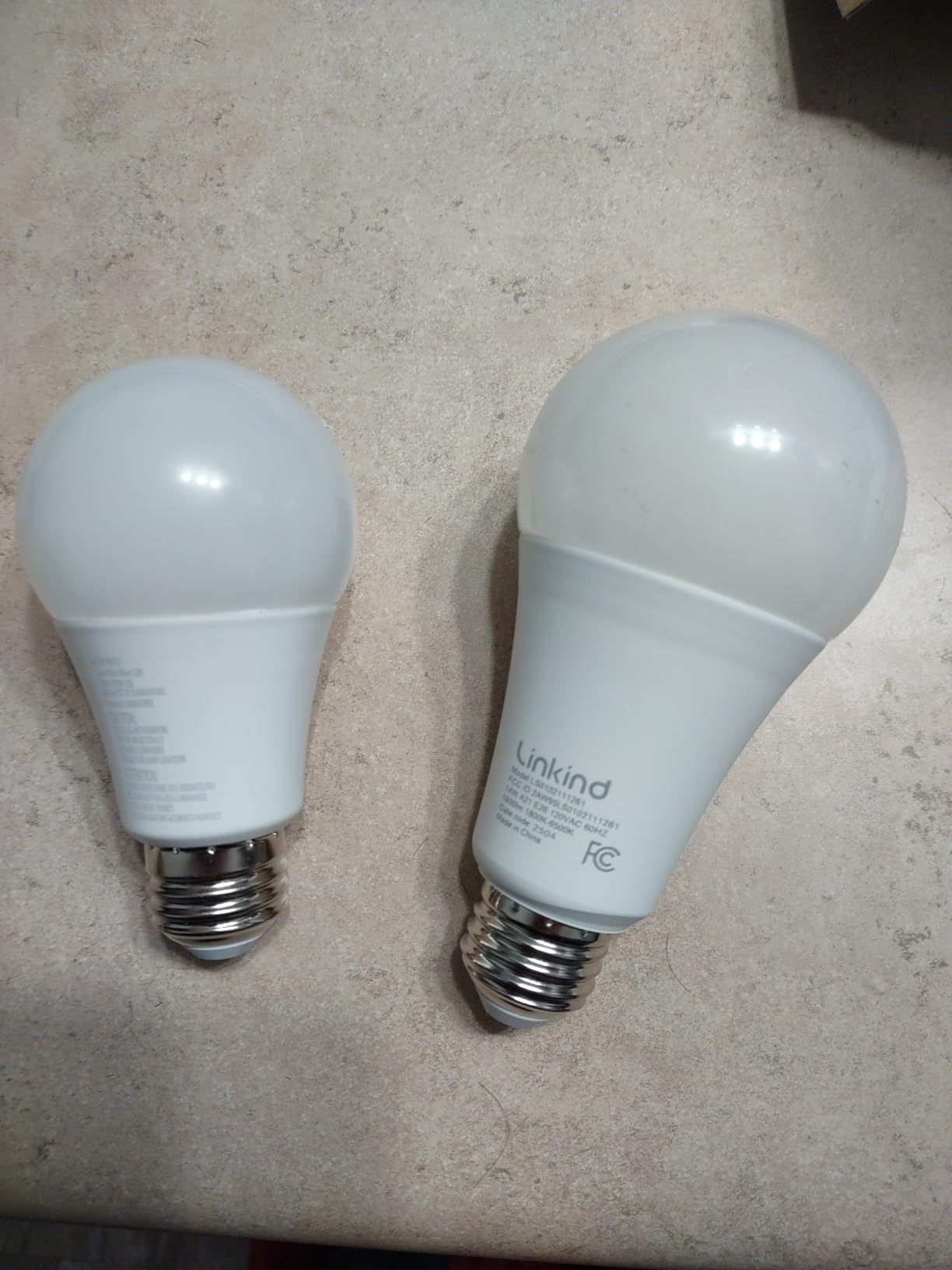
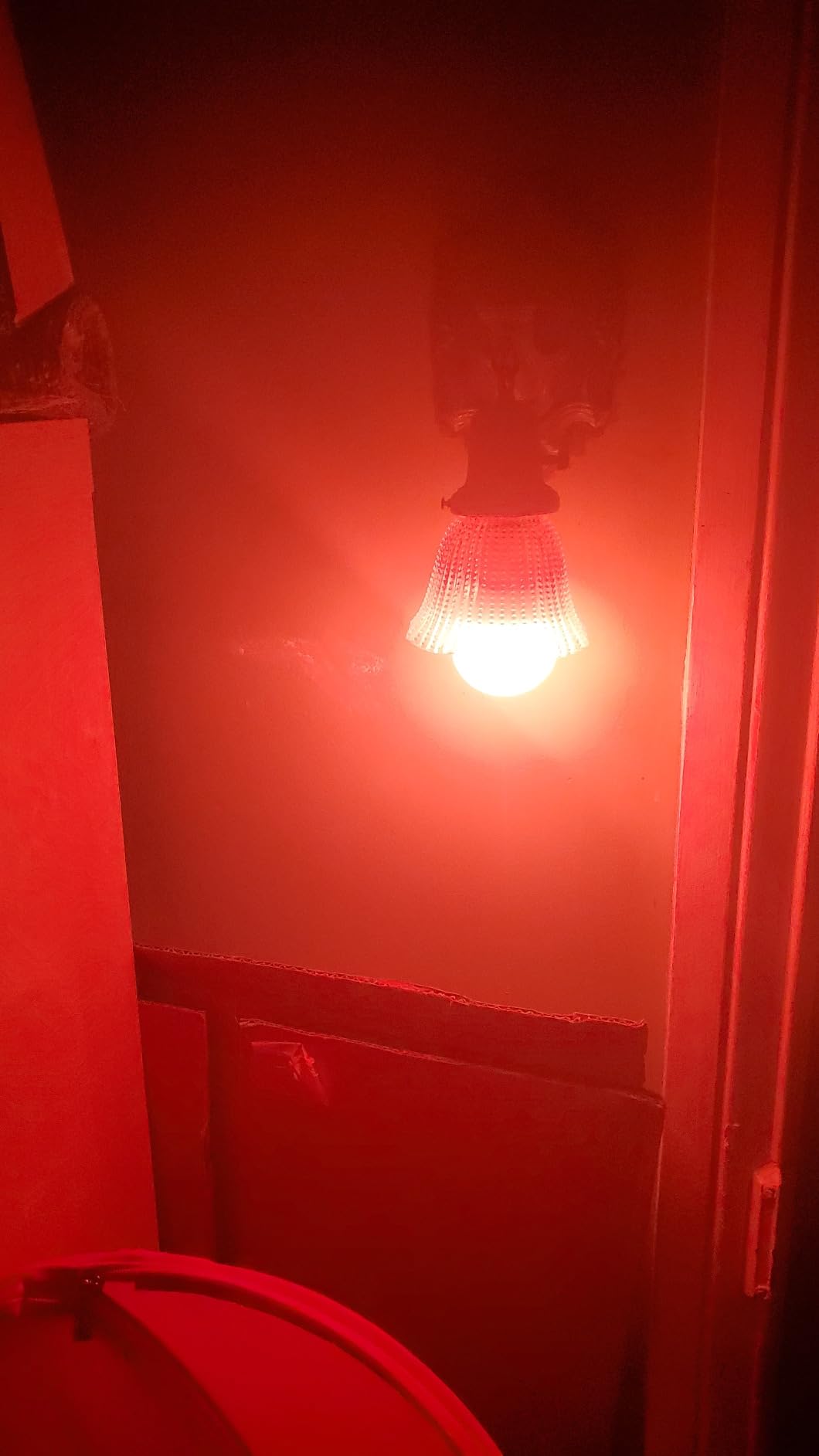
Most smart bulbs cap at 800 lumens, which is fine for lamps but anemic for a bedroom ceiling fixture, especially in a larger room. This Linkind A21 doubles that output to 1600 lumens, 100W-equivalent, making it the practical pick for overhead lighting.
In my testing it kept the family traits that made the A19 4-pack my top pick: the 1800K-6500K tunable range, CRI 90 color rendering, music sync, and dual WiFi-Bluetooth setup. You get the warm candle-level dimming and the ceiling-filling brightness in one bulb.
Brightness and Bedroom Placement
One 1600-lumen bulb in a ceiling fixture comfortably lit a 12-by-14 bedroom for cleaning and morning routines. Dimmed to 20% warm white, the same bulb made a pleasant evening ambient level, so the range covers both extremes well.
Check your fixture before ordering: the A21 body is physically larger than a standard A19 bulb and will not fit some tighter shades and enclosed trims. Measure first.
Response Speed and Connectivity
The most common complaint in reviews is laggy on/off response, and I noticed occasional half-second delays versus the instant Kasa bulbs. For scheduled bedroom automations this is irrelevant; for wall-switch-style impatience it is mildly annoying.
Setup requires both Bluetooth and WiFi active during pairing, a minor extra step that trips up some buyers who read the quick-start card too quickly.
Who Should Buy It
Buy the A21 2-pack for a bright bedroom ceiling fixture or a large master bedroom where 800-lumen bulbs fall short. Stick with the A19 4-pack for nightstand lamps, where the extra brightness is wasted and the smaller frame fits shades better.
7. DAYBETTER Smart Bulbs 6-Pack – Best Budget Whole-Room Kit
DAYBETTER A19 E26 Smart Light Bulbs,Compatible with Alexa & Google Home
800 lumens
2700K-6500K tunable
RGB colors
WiFi+Bluetooth
Music sync
Pros
- 6 bulbs at a very low per-bulb cost
- Music sync via phone microphone
- Good brightness and color for the price
- Group control for multiple bulbs
- No hub required
Cons
- Settings may not survive power cycles
- Requires DAYBETTER app
- No Matter or Home Assistant support
Six color-changing smart bulbs for about the price of two name-brand bulbs is the whole pitch here, and for a first smart bedroom on a tight budget, it delivers. The per-bulb cost is the lowest in this guide, and the feature list is surprisingly complete: RGB plus tunable 2700K-6500K white, music sync, scenes, group control, and scheduling.
The compromise is state memory. Several reviewers report bulbs not retaining their programmed settings after being powered off at the switch, reverting instead to a default state. That is the classic bedroom failure mode: flip the wall switch, and your careful warm-dim setup is gone.
Color, Scenes, and Everyday Use
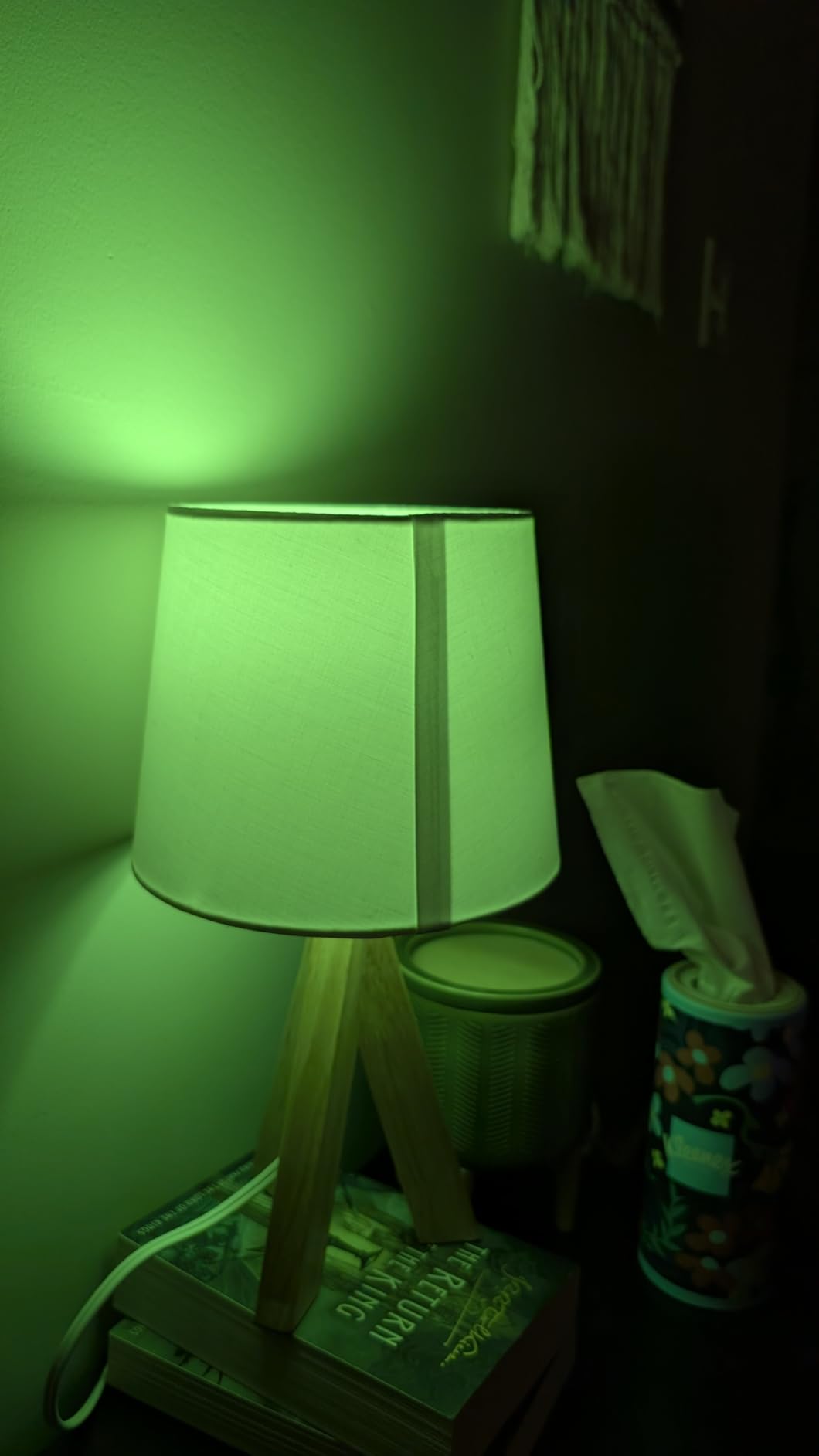
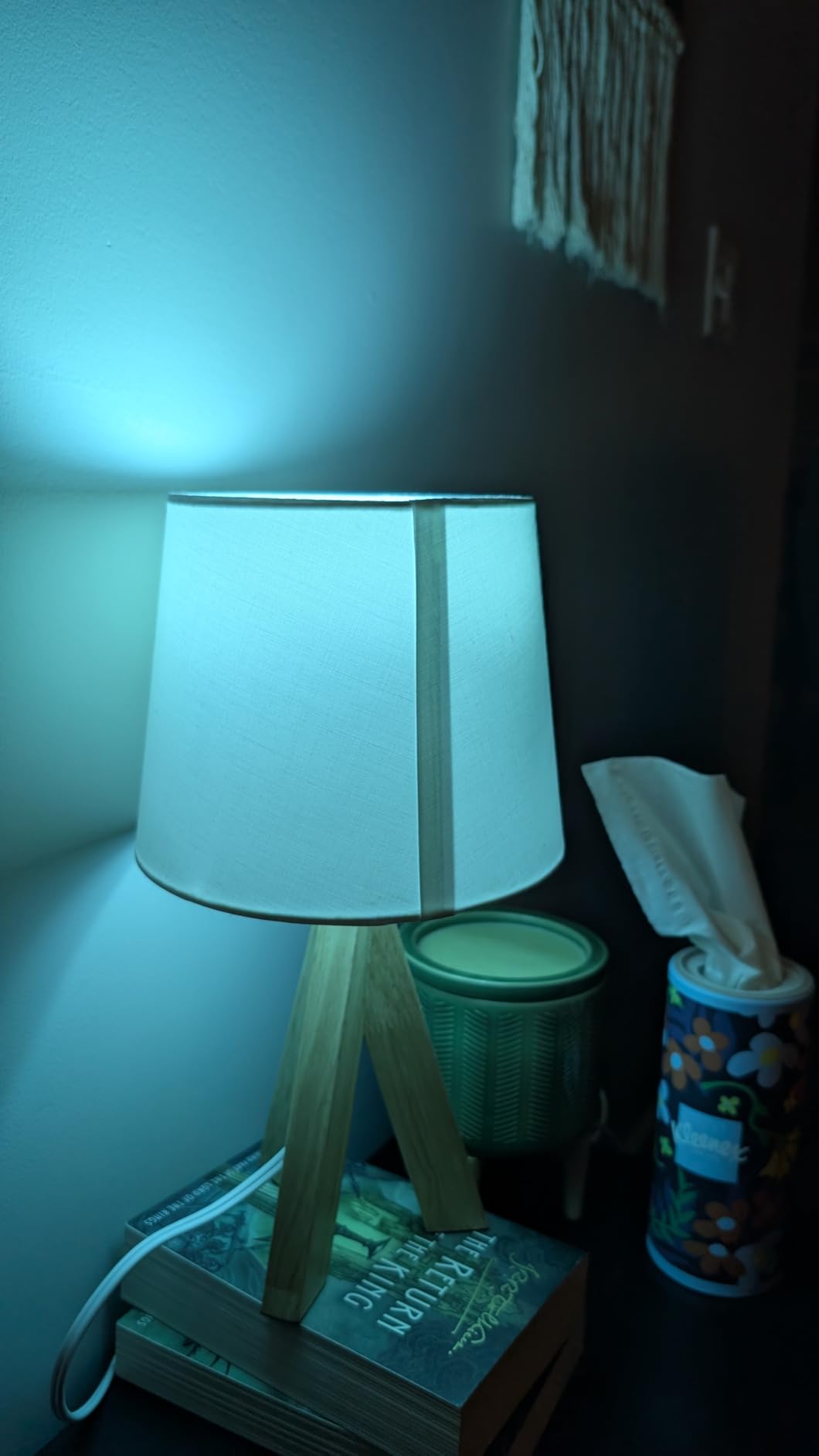
In practice, the colors are vivid enough for ambient bedroom scenes, and the white range covers warm bedtime to cool morning. Music sync uses your phone’s microphone and works well for the occasional late-night playlist session, though it is a party trick more than a sleep feature.
Group control let me set all six bulbs to a single “Relax” scene in one tap. Coordinating a whole room this cheaply is something budget options simply could not do a couple of years ago.
The Power-Cycle Problem
The biggest complaint, settings reverting after power off, is manageable if you adopt one habit: leave the wall switch on and control the bulbs entirely from the app or voice. That is how smart bulbs are meant to be used anyway, and it sidesteps most of the frustration.
Note that these require the DAYBETTER app specifically; they do not work with Tuya, Smart Life, Matter, or Home Assistant. Ecosystem buyers should look elsewhere.
Who Should Buy It
This is the best cheap way to put smart bulbs in every bedroom fixture at once. It suits students, first apartments, and guest rooms. Pass if you rely on Home Assistant, need Matter, or expect settings to survive power cuts.
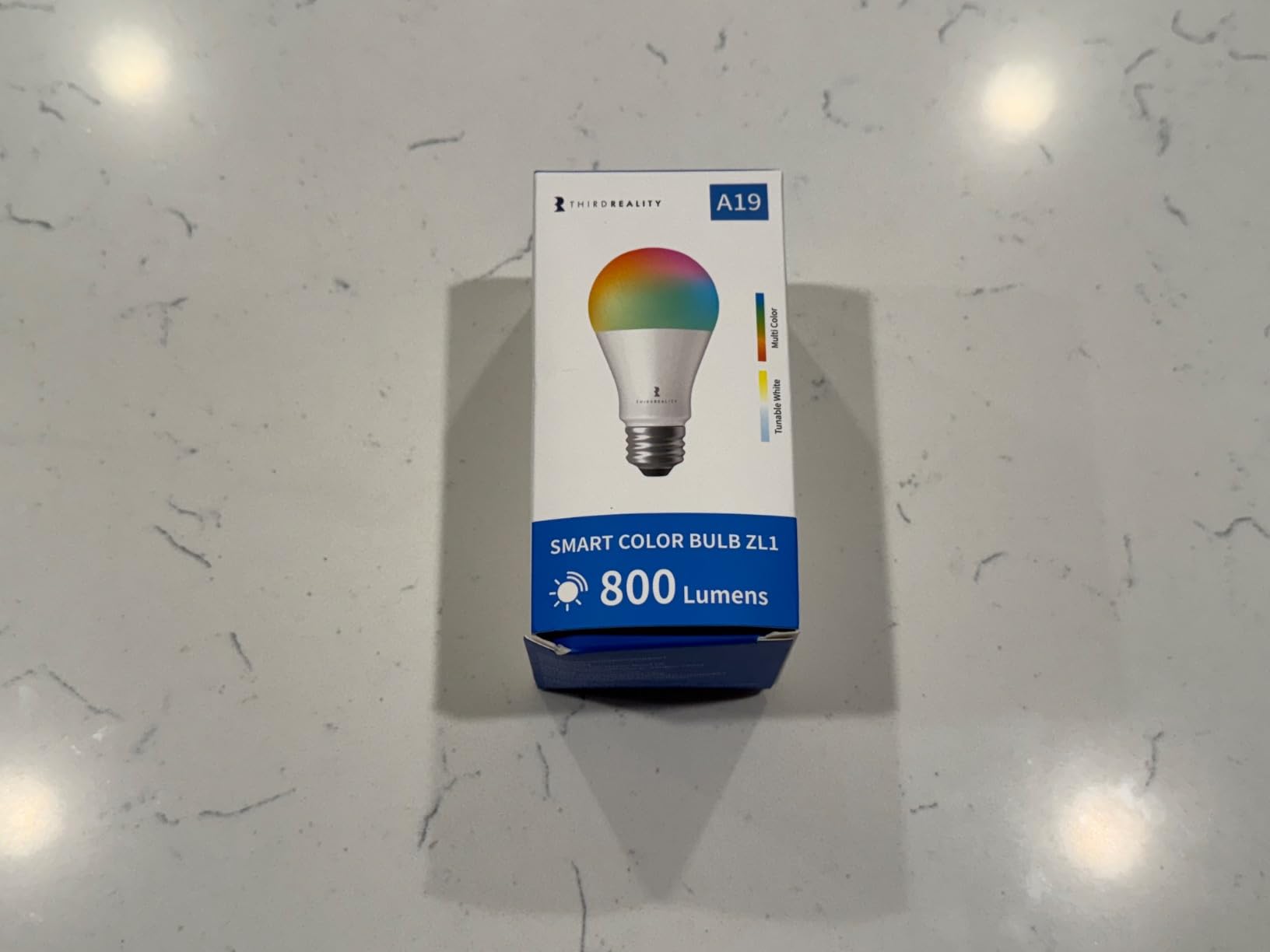
8. THIRDREALITY Zigbee Color Bulb – Best for Home Assistant Users
THIRDREALITY Smart Color Bulb ZL1,Zigbee hub Required,Compatible with Home Assistant(ZHA&Z2M),SmartThings,Aeotec,Homey,Hubitat or Echo Devices with Built-in Zigbee hub,A19 RGBCW Bulb,800 Lumens
800 lumens
2700K-6500K tunable
RGB
Zigbee 3.0
Hub required
Pros
- Excellent Home Assistant ZHA and Z2M support
- Local control without cloud
- Doubles as a Zigbee repeater
- Smooth brightness transitions
- Very affordable per bulb
Cons
- Requires a Zigbee hub
- Colors can look washed out
- No built-in music sync or effects
If your smart home runs on Home Assistant, this is your bulb. It pairs natively with ZHA and Zigbee2MQTT, responds to local control with zero cloud dependency, and even repeats the Zigbee signal to strengthen the rest of your mesh. It also works with SmartThings, Hubitat, Homey, and Echo devices with built-in Zigbee radios.
Local control is the headline for the r/homeassistant crowd, and I confirm it: with the internet down, automations, dimming, and scenes kept working because everything runs through the coordinator, not a manufacturer cloud.
Zigbee Performance and Repeater Bonus
The repeater function is more valuable than it sounds. Each powered bulb extends your Zigbee mesh, which improves reliability for bedroom sensors and other devices on the far side of the house. Connectivity during my testing was rock solid with minimal dropouts.
Brightness transitions were smooth, which matters when a 30-minute sunset automation is creeping downward. Older firmware had a brightness automation bug, but it has reportedly been fixed via OTA updates, which the bulb supports.
Color Quality Trade-Offs
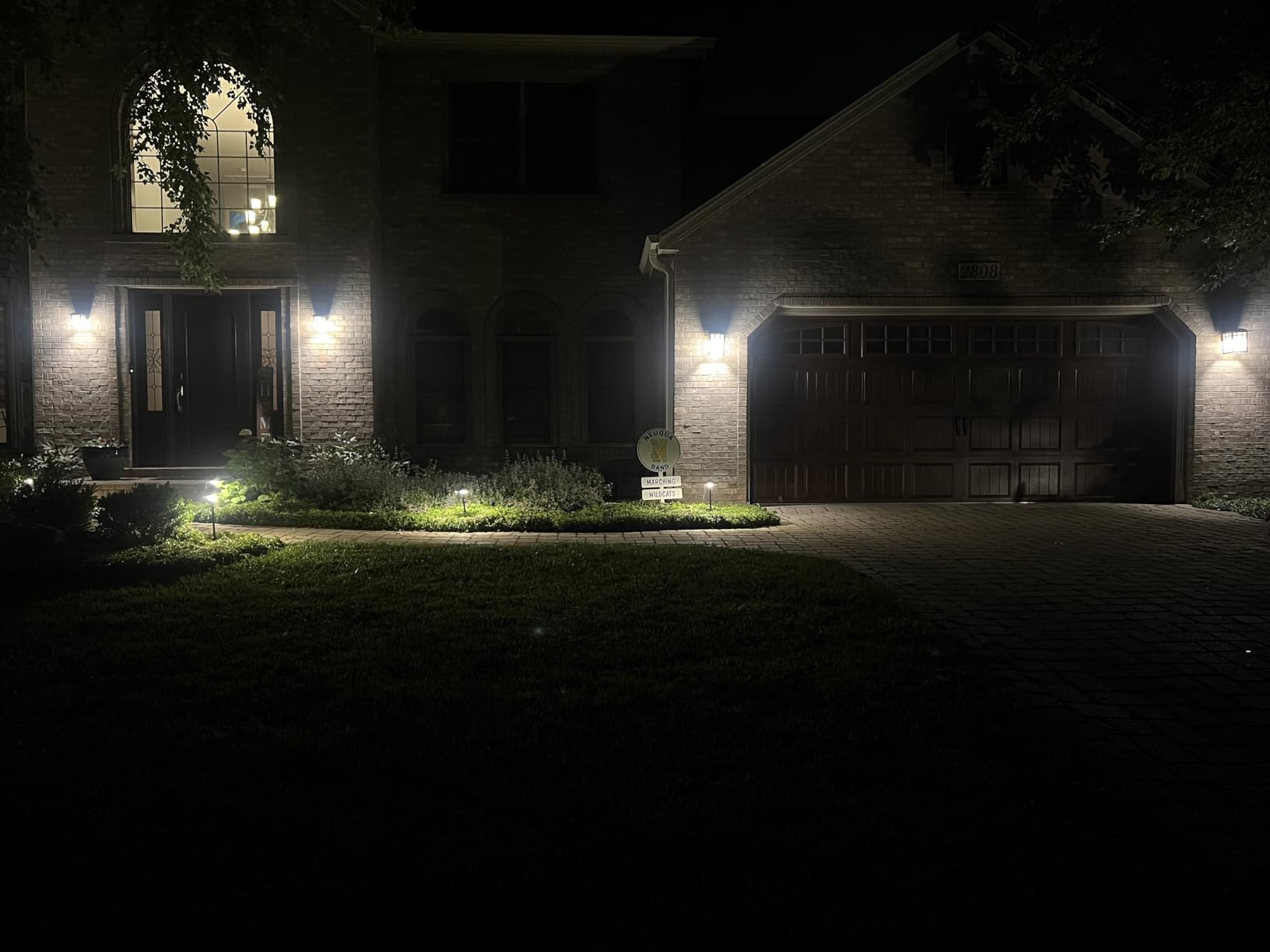
The RGB output is acceptable but not exceptional; some colors look slightly washed out next to a Hue or LIFX, and color accuracy can drift when mixing brands in one room. For accent and ambient bedroom lighting, it is perfectly serviceable.
At this per-bulb price, building a multi-bulb Zigbee bedroom costs less than a single premium bulb. That math is hard to argue with for the local-control crowd.
Who Should Buy It
Buy this if you run Home Assistant, Hubitat, Homey, or an Echo with a built-in Zigbee hub, especially if you value offline reliability. Avoid it entirely if you have no Zigbee coordinator, since it will not connect over WiFi at all.
9. Geeni Smart Bulb 3-Pack – Best No-Frills Warm White Set

Geeni Smart LED Light Bulb A19 Wi-Fi Dimmable Soft White 800 Lumens, 3-Pack
800 lumens
2700K soft white
5%-100% dimming
WiFi
No hub
Pros
- Very easy setup
- Works with Alexa and Google Assistant
- Excellent low-end dimming for reading
- No hub required
- Simple intuitive app
Cons
- 2700K soft white only
- No HomeKit support
- 1-year warranty is short
The Geeni 3-pack is the bulb I hand to smart-home beginners. Setup is about as close to screw-it-in-and-go as WiFi bulbs get, the app is refreshingly simple, and the 4.5-star rating across nearly 2,000 reviews shows the experience is consistent.
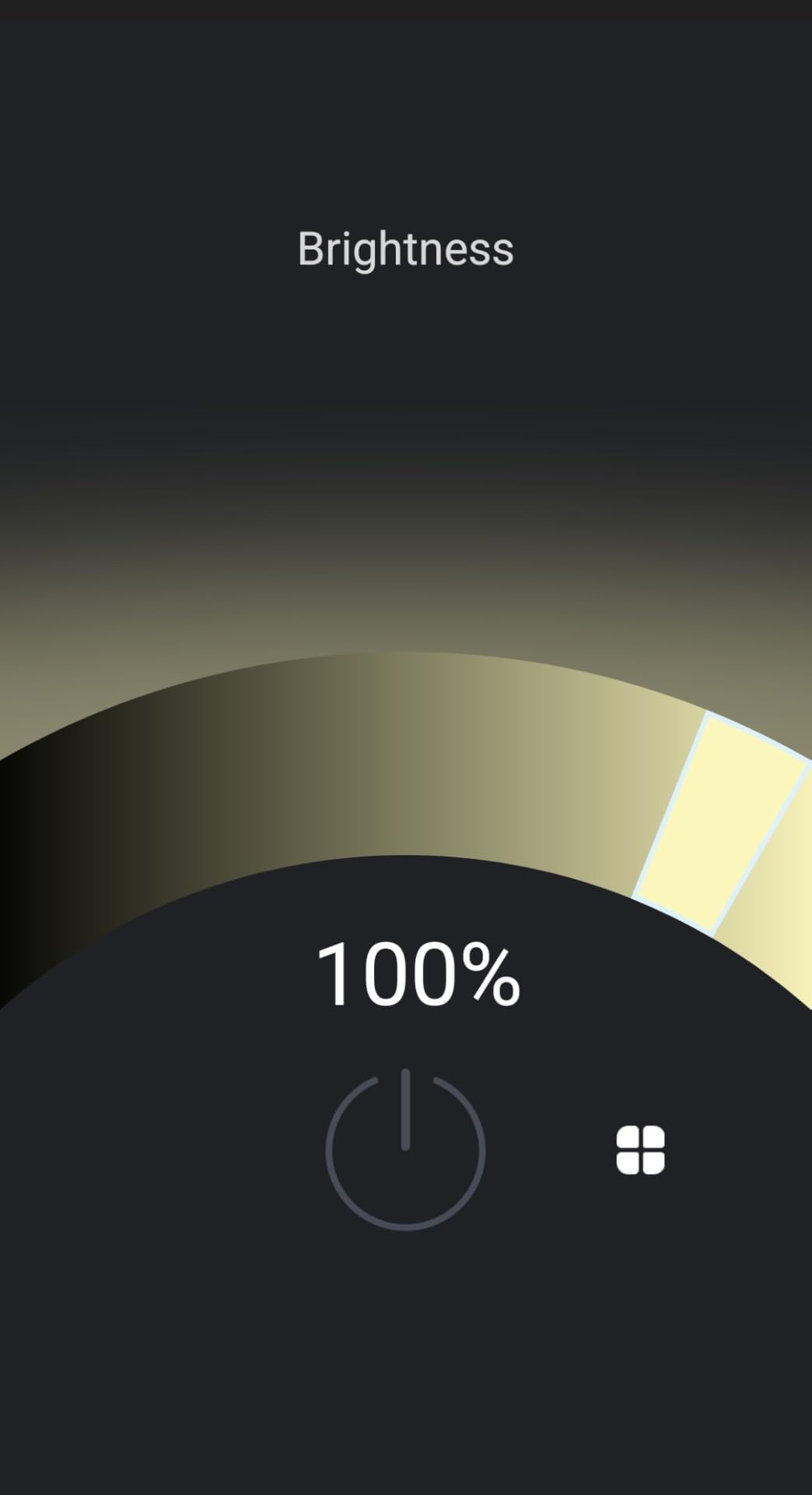
It is a fixed 2700K soft white bulb, so think KL110 rather than KL125. Where it stands out is the dimming range: the low end is genuinely low, well suited to late-night reading without waking a partner.
Dimming Range for Bedside Reading
The span from near-candlelight to full 800 lumens covers every bedside scenario I tried: reading at 40%, winding down at 10%, and navigating the room at night at the minimum setting. Transitions were smooth with no flicker at low brightness.
The scheduling and timer features handled a simple lights-off-at-midnight routine without fuss. There is no energy monitoring like Kasa offers, but at 9 watts per bulb, the savings story is mostly academic anyway.
Setup and Compatibility Notes
Your phone needs to be on the 2.4GHz network during pairing, the standard WiFi-bulb dance. After that, Alexa and Google Assistant control worked reliably in my tests. Apple Home users are out of luck here.
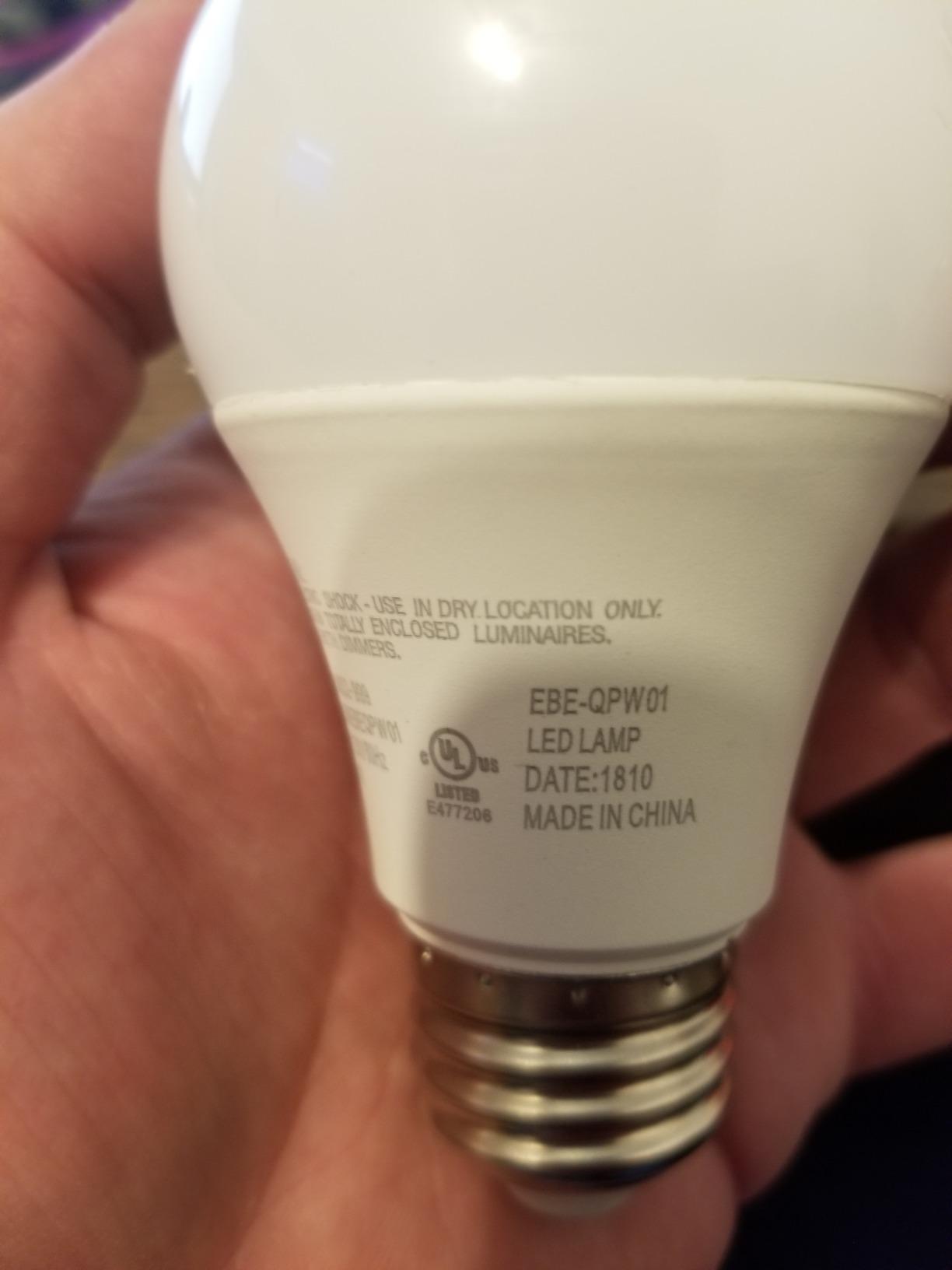
A few reviewers received a dead bulb in the pack, a quality-control wrinkle worth knowing about; Amazon replacement handles it easily. The 1-year warranty is shorter than Kasa’s 2 years or Sengled’s 3.
Who Should Buy It
This is a great warm-white set for a bedroom with two lamps and a ceiling fixture, especially for first-time smart home users on Alexa or Google. Look at the Kasa KL110 if you want a longer track record, or the Kasa KL125 if you might want color later.
10. Amazon Basics Smart A19 – Best for Committed Alexa Households

Amazon Basics Smart A19 LED Light Bulb, Dimmable Soft White (2700K), 9W (60W Equivalent), 800LM, Works with Alexa Only, Energy Efficient, 2.4 GHz Wi-Fi, No Hub Required, 1-Pack
806 lumens
2700K soft white
5%-100% dimming
2.4GHz WiFi
Alexa only
Pros
- Setup entirely inside the Alexa app
- No third-party account or app
- Routines with sunrise and sunset triggers
- Very affordable
- Group control support
Cons
- Works exclusively with Alexa
- No color or temperature adjustment
- Incompatible with physical dimmers
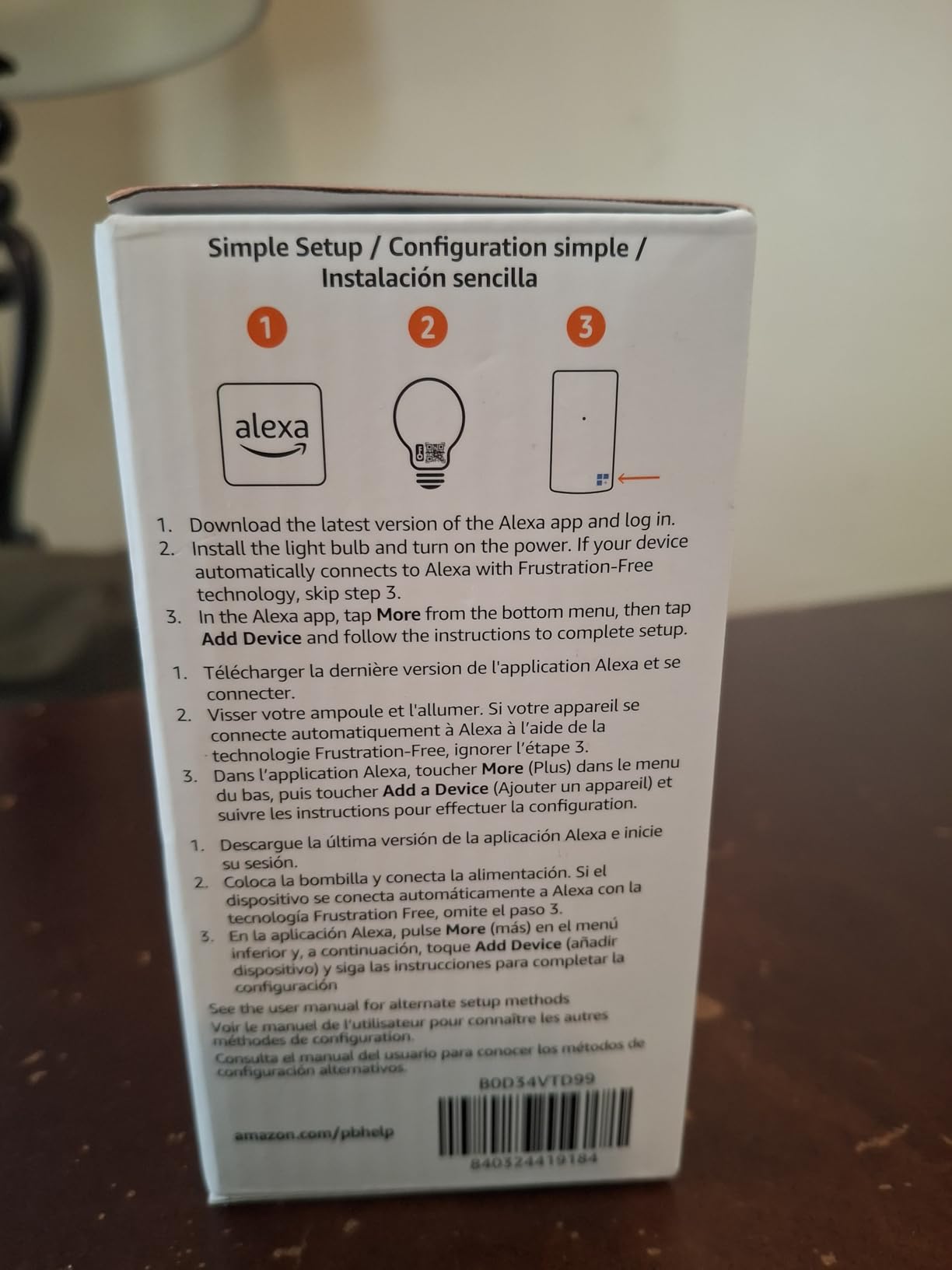
This bulb asks a simple question: do you live entirely inside the Alexa ecosystem? If every speaker and screen in your home is an Echo, the Amazon Basics bulb removes the last remaining friction, because it pairs directly in the Alexa app with no third-party account, no separate skill, and no extra app at all.
Setup in my testing was the fastest of any WiFi bulb here: screw in, power on, and Alexa detected it within a minute. For less tech-inclined family members, that difference is the whole ballgame.
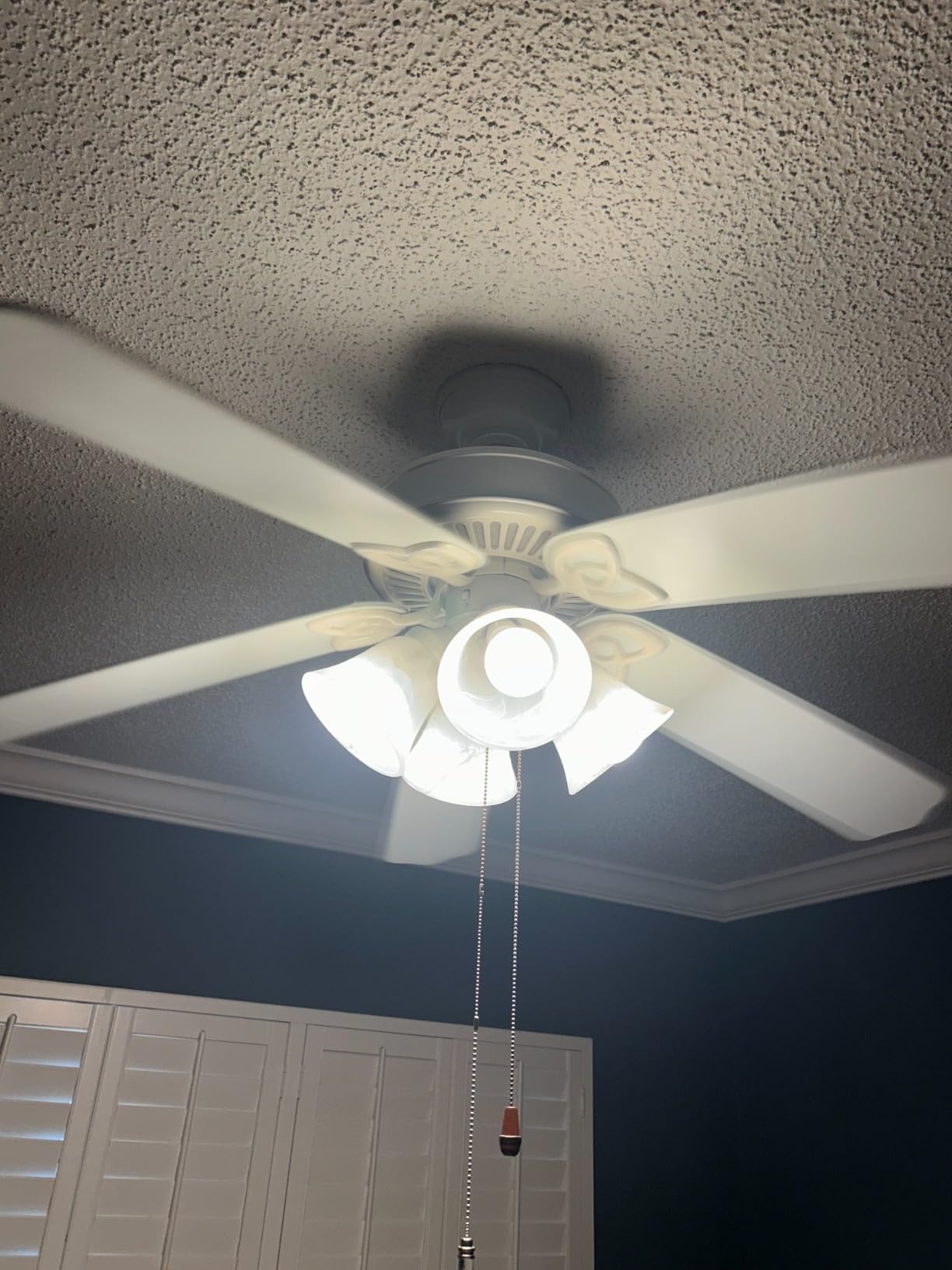
Alexa Routines for Sleep and Wake
Because it is native to Alexa, the bulb plugs straight into routines. I built a wind-down routine triggered at 10:15 p.m. that dims to 10%, and a sunrise routine that brightens gradually before the alarm. Both ran flawlessly, and group control let one command sweep every lamp in the room.
The 5% to 100% dimming range is adequate, though the floor is not as low as the Geeni or Linkind bulbs. The 806-lumen output and 2700K fixed soft white are standard fare for bedroom lamps.
The Lock-In Trade-Off
The limitation is absolute: this bulb does not work with Google Assistant, HomeKit, or SmartThings, and it cannot be re-homed elsewhere later. Some Eero 7 users also reported initial pairing friction, worth a quick check if you run that router.
If there is any chance an Android or Apple household member will want control, spend the extra couple of dollars on the Geeni or Kasa instead.
Who Should Buy It
Buy it if you are all-in on Alexa and want the simplest possible smart bulb for bedroom lamps. Skip it in mixed-ecosystem homes or if you think you might switch platforms within the bulb’s 15,000-hour lifespan.
11. Sengled S1 Auto Pairing 4-Pack – Best Bluetooth Mesh Option

Sengled Alexa Light Bulb, S1 Auto Pairing with Alexa Devices, Warm Light Bulbs, Smart Light Bulbs that Work with Alexa, Bluetooth Mesh Smart Home Lighting, E26 60W Equivalent, 800LM, 4-Pack
800 lumens
2700K warm white
Bluetooth Mesh
5%-100% dimming
36-month warranty
Pros
- Auto-pairs with Alexa in seconds
- No app or account registration
- Works even with weak WiFi
- Offline local control mode
- 36-month warranty
Cons
- Alexa-only ecosystem
- Some users report frequent re-pairing
- No color changing
- Bluetooth range limits in large homes
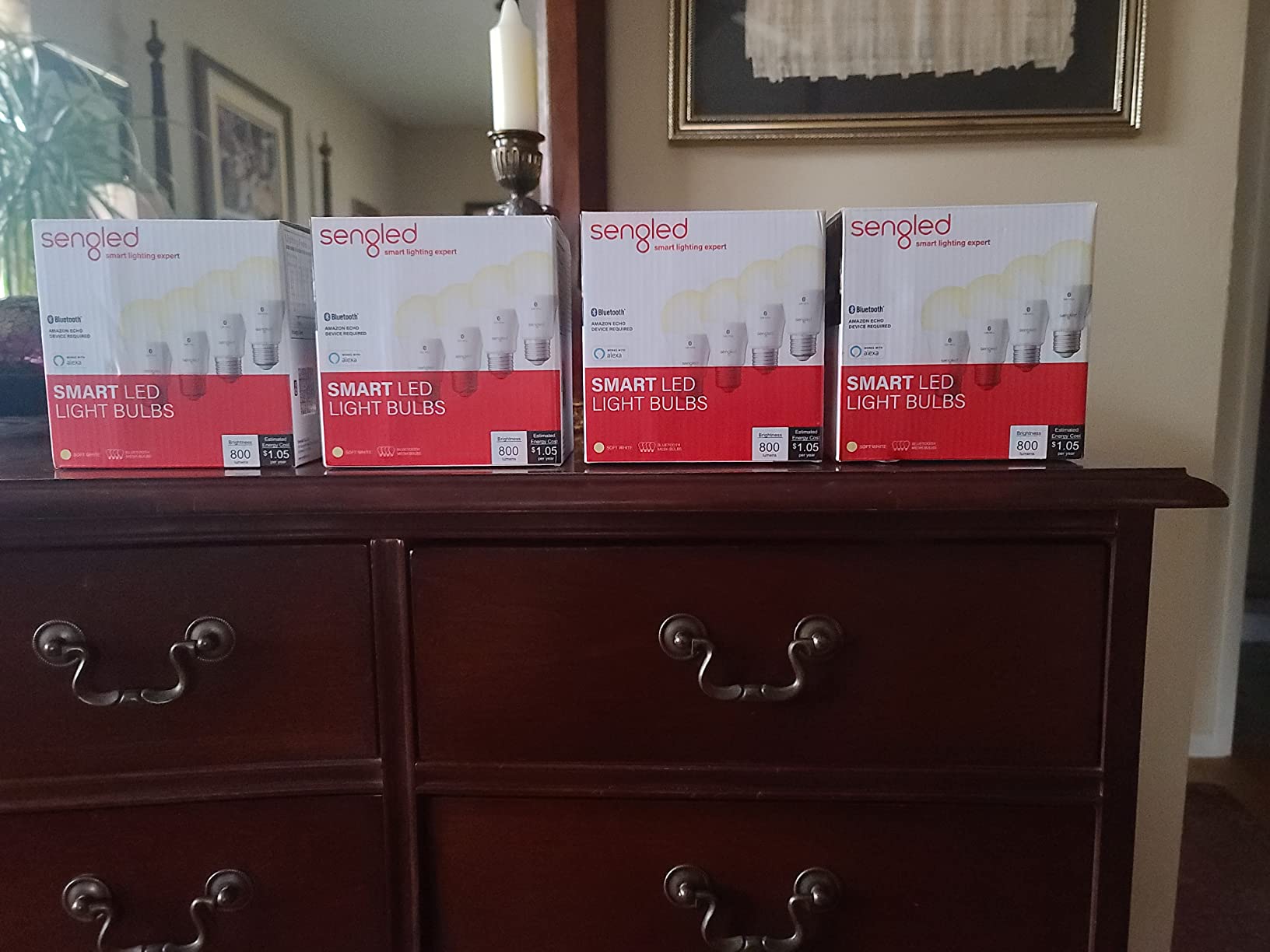
The Sengled S1 solves the router problem by sidestepping WiFi entirely. These bulbs talk Bluetooth Mesh directly to a compatible Echo device, so there is no 2.4GHz configuration, no app signup, and no dependence on your router at all.
Pairing is the fastest I have seen: power the bulb near an Echo, say “discover devices,” and it appears. For bedrooms with weak WiFi reach or routers on another floor, this design is a genuine advantage.
Bluetooth Mesh Reliability in the Bedroom
Each bulb relays to its neighbors, so a bedroom cluster stays connected even at the edge of Echo range. The offline mode keeps local control alive without any cloud round-trip, which reviewers in weak-signal homes praise.
The honest caveat: reliability reports are bimodal. Many owners run for years untouched; a meaningful minority report random disconnects and monthly re-pairing sessions. My set behaved, but your Echo placement and home layout will decide which camp you land in.
Warm White Output and Warranty
The fixed 2700K warm white is pleasant for lamps and evening use, with 5% to 100% dimming covering bedside needs. There is no color or tunable white option on this model.
The 36-month warranty is the longest in this guide, backed by US-based support, which softens the reliability gamble considerably.
Who Should Buy It
Choose the Sengled S1 if your bedroom WiFi is weak, you hate app signups, or you have a compatible Echo nearby and want zero-router simplicity. Avoid it for Google or Apple homes, and consider Kasa if long-term connection stability is your one concern.
12. SYLVANIA WiFi Smart Bulb 4-Pack – Best Bulk Soft-White Value

SYLVANIA Wifi LED Smart Light Bulb, A19, 60W, Soft White, Compatible with Alexa and Google Home Only – 4 Pack (75672)
800 lumens
2700K soft white
CRI 90
WiFi
Siri Shortcuts support
Pros
- Four CRI 90 soft white bulbs at low cost
- Works with Alexa
- Google and Siri Shortcuts
- Retains last setting when switched manually
- 2-year warranty
Cons
- Finicky setup for many users
- Drops connection after WiFi or power blinks
- Bulbs turn on when power blinks
- Not for enclosed fixtures
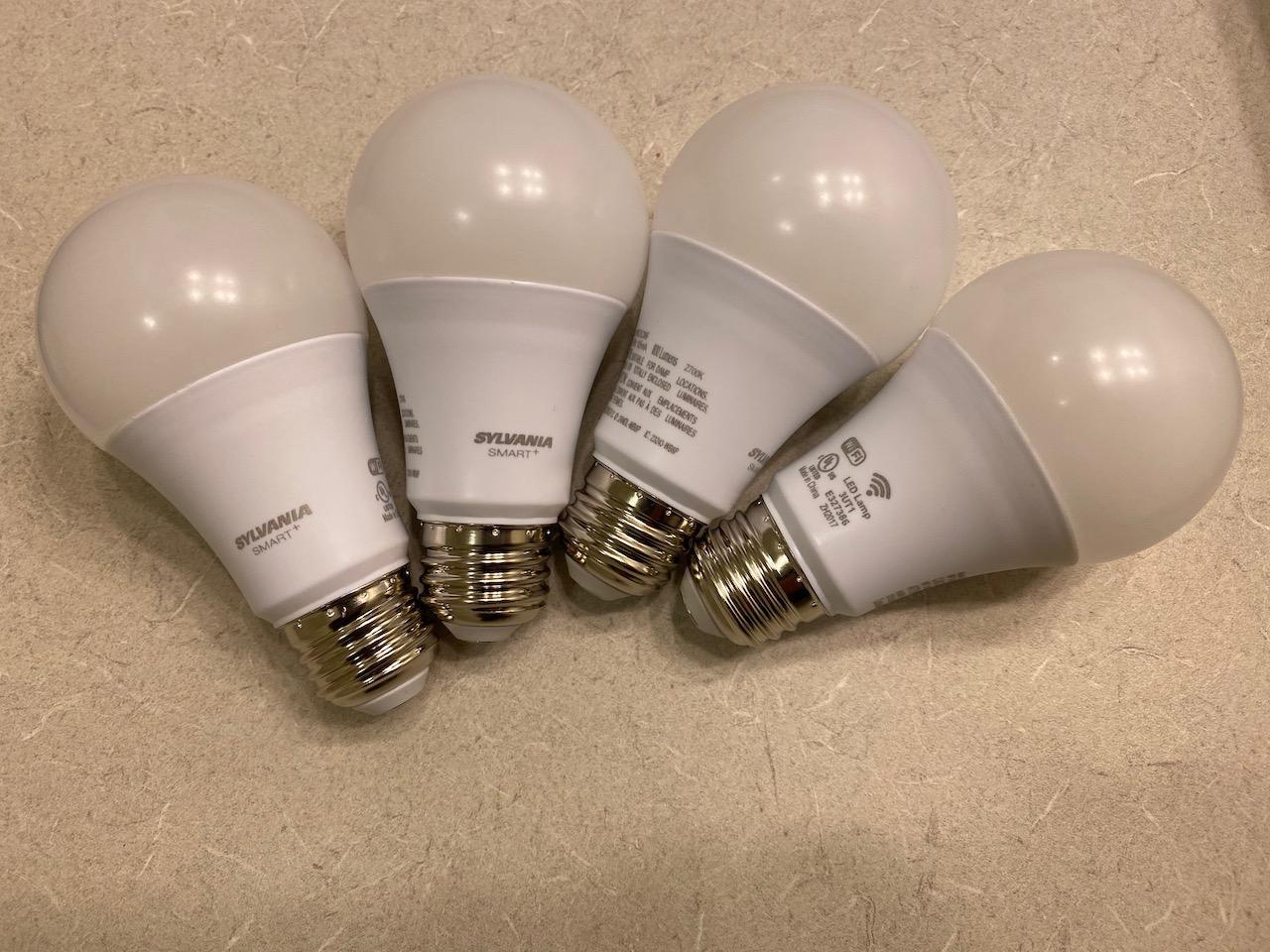
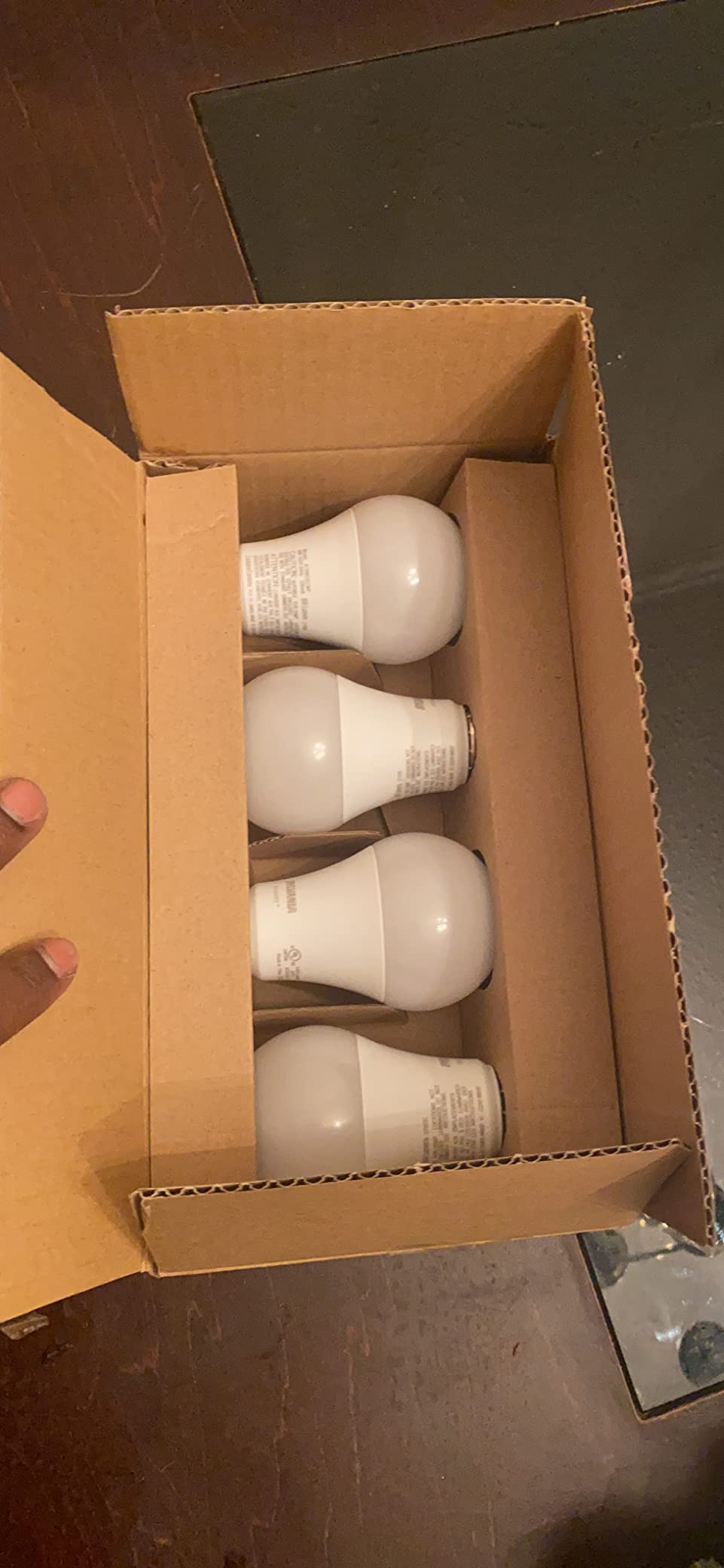
The SYLVANIA 4-pack from LEDVANCE offers capable soft white light with a respectable CRI 90 and unusually broad voice support, including Siri Shortcuts alongside Alexa and Google Home. On paper, it is a lot of bulb for the money.
In practice, it is the most demanding bulb in this guide to live with. Setup was finicky, requiring the alternate pairing method more than once, and after a router reboot or power blink the bulbs frequently needed re-pairing. The 4.2-star rating reflects that split experience.
Light Quality and Voice Control
When connected, the 2700K output is genuinely good, and CRI 90 means skin tones and fabrics render accurately under it. Siri Shortcut support is a rarity at this price and worked for basic on/off and dimming in my tests.
The bulbs retain their last setting when switched manually at the wall, a thoughtful touch that many competitors fumble. Schedules and away-from-home control round out a solid feature set.
Reliability Quirks to Plan Around
The recurring complaints mirror my experience: dropped connections after network disruptions and bulbs powering on at full brightness when the electricity blinks, the classic unwanted midnight wake-up. On a stable network with a good UPS on the router, most of this disappears.
Also note the fixture restriction: these are not rated for fully enclosed fixtures, which rules out many sealed bedroom ceiling lights. Check your fixture before committing.
Who Should Buy It
Buy the SYLVANIA 4-pack if you want cheap, good-quality soft white across several fixtures and your WiFi is rock solid. If your network reboots itself or your power flickers, the Kasa or Sengled options will cause far less grief.
Buying Guide: How to Choose the Best Smart Bulbs for Your Bedroom
A bedroom imposes requirements that a living room does not. Here is how I evaluate bulbs specifically for sleep spaces, drawn from months of testing plus the pain points smart home forum users report most often.
Color Temperature and Sleep Support
Color temperature, measured in Kelvin, is the single most important bedroom spec. Warm light at 2700K or below in the evening supports natural melatonin production, while cooler 4000K-plus light in the morning helps you wake.
For the best sleep benefit, look for bulbs reaching 2200K or lower at the warm end: the Philips Hue White Ambiance hits 2200K and both Linkind WiFi sets reach 1800K. A tunable-white bulb that shifts automatically through the day beats any fixed-temperature bulb for circadian support.
Red and amber tones are the least sleep-disruptive, which is why that 1800K floor on the Linkind bulbs earned them the editor’s choice slot for wind-down use.
Brightness and Lumens for Bedroom Size
Aim for roughly 800 lumens per bedside lamp, which is the standard 60W-equivalent output most bulbs here provide. For a ceiling fixture in a small bedroom, one 800-lumen bulb works; for a large master, step up to the 1600-lumen Linkind A21.
As a rule of thumb, plan 10 to 20 lumens per square foot of bedroom for general lighting, with separate lamps for reading. Just as important as peak brightness is the dimming floor: bulbs that dim to 1% double as nightlights, sparing your eyes during 3 a.m. trips.
Hub vs Hubless: WiFi, Bluetooth, Zigbee, and Matter
WiFi bulbs from Kasa, Linkind, Geeni, DAYBETTER, and SYLVANIA need no hub and are the easiest start, but they depend on your router and 2.4GHz band. Bluetooth Mesh bulbs like the Sengled S1 bypass the router entirely, pairing straight to an Echo.
Zigbee options, the Philips Hue and THIRDREALITY, route through a coordinator and offer the most reliable, cloud-independent control, at the cost of needing that hub. Matter bulbs like the Linkind 6-pack work across all major platforms and represent the future, though multi-admin configurations remain occasionally buggy.
Fixture Compatibility: Lamps, Ceiling Fixtures, and Enclosed Lights
Check three things before buying. First, base size: every bulb here is standard E26, but the Linkind A21 is physically larger than A19 bulbs and may not fit tight shades. Second, enclosed-fixture ratings: the SYLVANIA explicitly prohibits fully enclosed fixtures, and heat buildup shortens any LED’s life. Third, wall dimmers: no smart bulb in this guide works with traditional dimmer circuits, so smart bulbs and dimmer switches must never mix.
Remember that smart bulbs need constant power. If someone flips the wall switch off, app and voice control die until it is flipped back on. Taping over the switch or using a smart button is the usual workaround.
Power-On Behavior and Reliability
The most underappreciated bedroom spec is what a bulb does after a power outage. Several bulbs here default to full brightness when power returns, which can mean a 2 a.m. surprise. The SYLVANIA is a known offender, while Kasa bulbs let you configure the power-on state.
For reliability, the community consensus matches my testing: Philips Hue on Zigbee is the gold standard, Kasa leads the WiFi field, and Matter-over-WiFi still has occasional growing pains. Check the warranty too, from Sengled’s 36 months down to Geeni’s single year.
Energy Consumption in Real Numbers
Every bulb here draws 8.5 to 14 watts. Even running two bulbs 8 hours a night, you are using roughly 5 kWh per month, well under a dollar for most utility rates. Smart bulbs do not raise your electric bill; the always-on standby draw is negligible, and scheduling typically saves energy versus forgetting to turn lights off.
Frequently Asked Questions
What type of light bulb is best for bedrooms?
A warm, dimmable smart bulb in the 1800K-2700K range is best for bedrooms. Warm light below 2700K in the evening supports melatonin production and relaxation, while a tunable-white bulb that shifts to cooler 4000K+ light in the morning makes waking easier. Aim for about 800 lumens per bedside lamp.
Which brand of smart bulbs is the most reliable?
Philips Hue is the most reliable brand overall, with Zigbee connectivity that rarely disconnects and users reporting 7+ years of service. Among hubless options, Kasa (TP-Link) is the most reliable WiFi brand, trusted by over 6 million users and rarely losing connection in long-term testing.
Do smart bulbs raise the electric bill?
No. Smart LED bulbs draw only 8.5 to 14 watts, so two bulbs running 8 hours nightly consume roughly 5 kWh per month, typically well under a dollar. Scheduling and dimming usually save more energy than the tiny standby draw costs.
Which night bulb is best for a bedroom?
A bulb that dims to 1% or below is best for nighttime use. The Linkind A19 bulbs dim to candle-level 1800K amber, making them excellent nightlights, and the Kasa KL110 and KL125 also dim to 1%. Red or amber tones below 2200K are the least disruptive to sleep.
Do smart bulbs work without a hub?
Most modern smart bulbs work without a hub. WiFi bulbs from Kasa, Linkind, Geeni, DAYBETTER, and SYLVANIA connect directly to your 2.4GHz router, and Sengled’s Bluetooth Mesh bulbs pair straight to an Echo device. Only Philips Hue (Hue Bridge) and THIRDREALITY (Zigbee coordinator) require a hub.
Final Verdict: The Best Bedroom Smart Bulb for You
The best smart bulbs for bedrooms come down to how you sleep. If deep, amber wind-downs and a true nightlight floor matter most, go with the Linkind 4-pack. If set-and-forget reliability is everything, the Kasa KL125 or KL110 will never give you a late-night re-pairing headache. And if sleep quality is a serious priority with budget to match, Philips Hue White Ambiance plus a Bridge is the ceiling of what bedroom lighting can do.
For large rooms, the 1600-lumen Linkind A21 lights a ceiling properly; for Home Assistant homes, the THIRDREALITY Zigbee is unbeatable at its price; and for whole-room budgets, the DAYBETTER and SYLVANIA multi-packs cover every fixture without breaking $30.
Whichever you choose, start with your two bedside lamps, build a sunset fade and a sunrise wake-up, and give it a week. Once your lighting handles your sleep schedule for you, you will wonder how you ever flipped a switch in the dark. Check current prices on the picks above and start with the room where better lighting pays off first: the bedroom.