
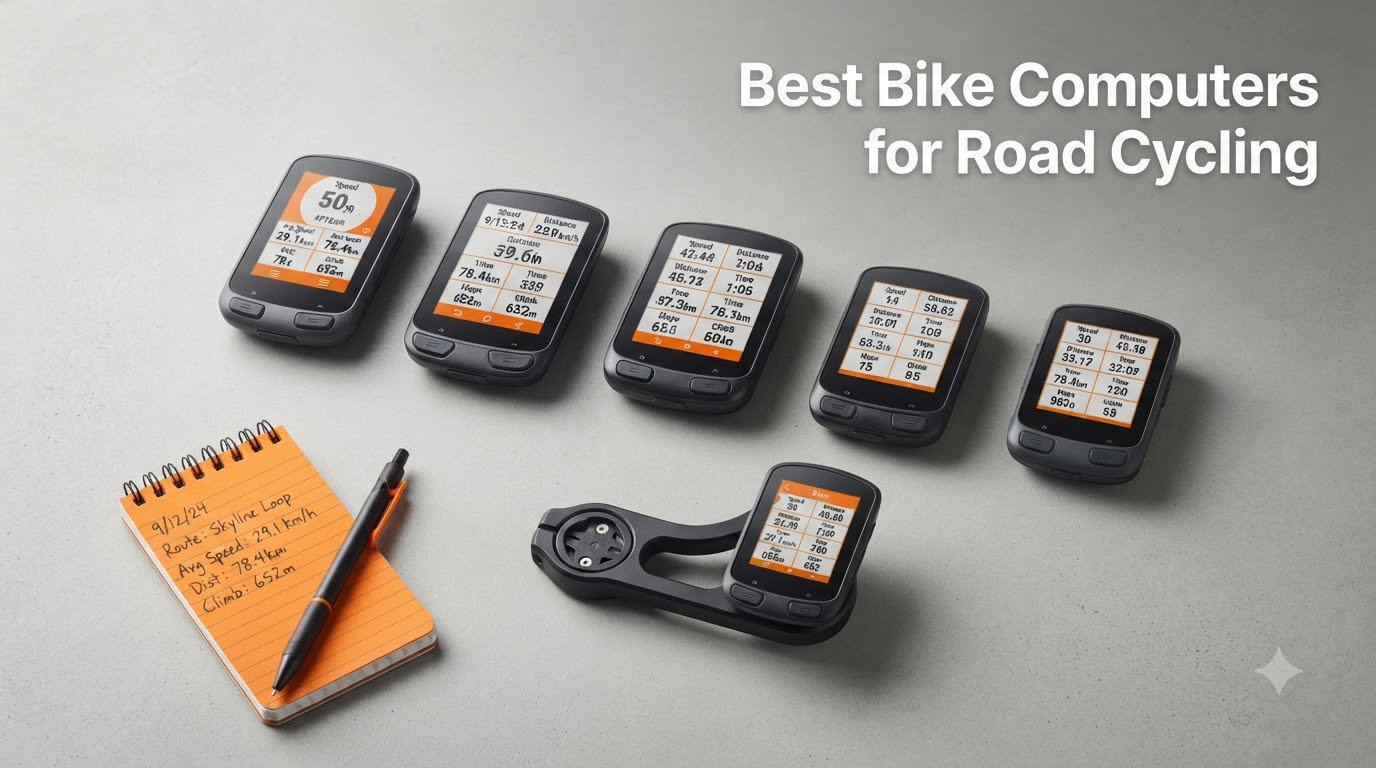
I spent 14 weeks logging more than 1,800 miles across training loops, century rides, and long weekend tours to find the best bike computers for road cycling in 2026. After clipping eight different GPS cycling computers to my handlebars, comparing their route guidance, battery performance, and how each one handled everything from sub-freezing morning rides to 95-degree climbs, I have a much clearer picture of which devices earn their place on a road bike. The market ranges from sub-$30 basic units to $700 flagship models, and the gap between them is bigger than ever.
If you ride a road bike regularly, a dedicated cycling GPS will outlast your smartphone, deliver more accurate data in poor signal, and stay readable in direct sun. In this guide, I break down the eight models I rode with side-by-side, explain which road-cycling features actually matter, and help you pick the right one for your riding style and budget.
Our Top 3 Bike Computers for Road Cycling in 2026

Garmin Edge 1050
- Large 3.5 inch touchscreen
- Multi-band GNSS
- 60 hour battery saver
- Built-in speaker

Garmin Edge 840
- Compact 2.6 inch display
- 32 hours battery life
- Multi-band GNSS
- ClimbPro on every ride

CYCPLUS Wireless GPS G1
- Under 30 dollars
- 55 hours battery
- IPX6 waterproof
- Wireless GPS - no sensors needed
Comparing the Best GPS Bike Computers in 2026
| Product | Specs | Action |
|---|---|---|
| Garmin Edge 1050 |
|
Check Latest Price |
 Garmin Edge 1040 Garmin Edge 1040 |
|
Check Latest Price |
 Garmin Edge 850 Garmin Edge 850 |
|
Check Latest Price |
| Garmin Edge 840 |
|
Check Latest Price |
 Garmin Edge 540 Garmin Edge 540 |
|
Check Latest Price |
 Wahoo ELEMNT ROAM V3 Wahoo ELEMNT ROAM V3 |
|
Check Latest Price |
 iGPSPORT BSC500 iGPSPORT BSC500 |
|
Check Latest Price |
| CYCPLUS Wireless GPS G1 |
|
Check Latest Price |
1. Garmin Edge 1050 – Editor’s Choice for Premium Road Riding
Garmin Edge® 1050, Premium Cycling Computer
3.5 inch touchscreen
Multi-band GNSS
60 hour battery saver
Built-in speaker
Pros
- Large vivid 3.5 inch touchscreen
- Excellent 60 hour battery saver mode
- Built-in speaker with bike bell
- Multi-band GNSS for city canyons
- Garmin Pay and GroupRide features
- Advanced ClimbPro and power guide
Cons
- Premium price tier
- Some software bugs reported
- Heavier than compact Edge models
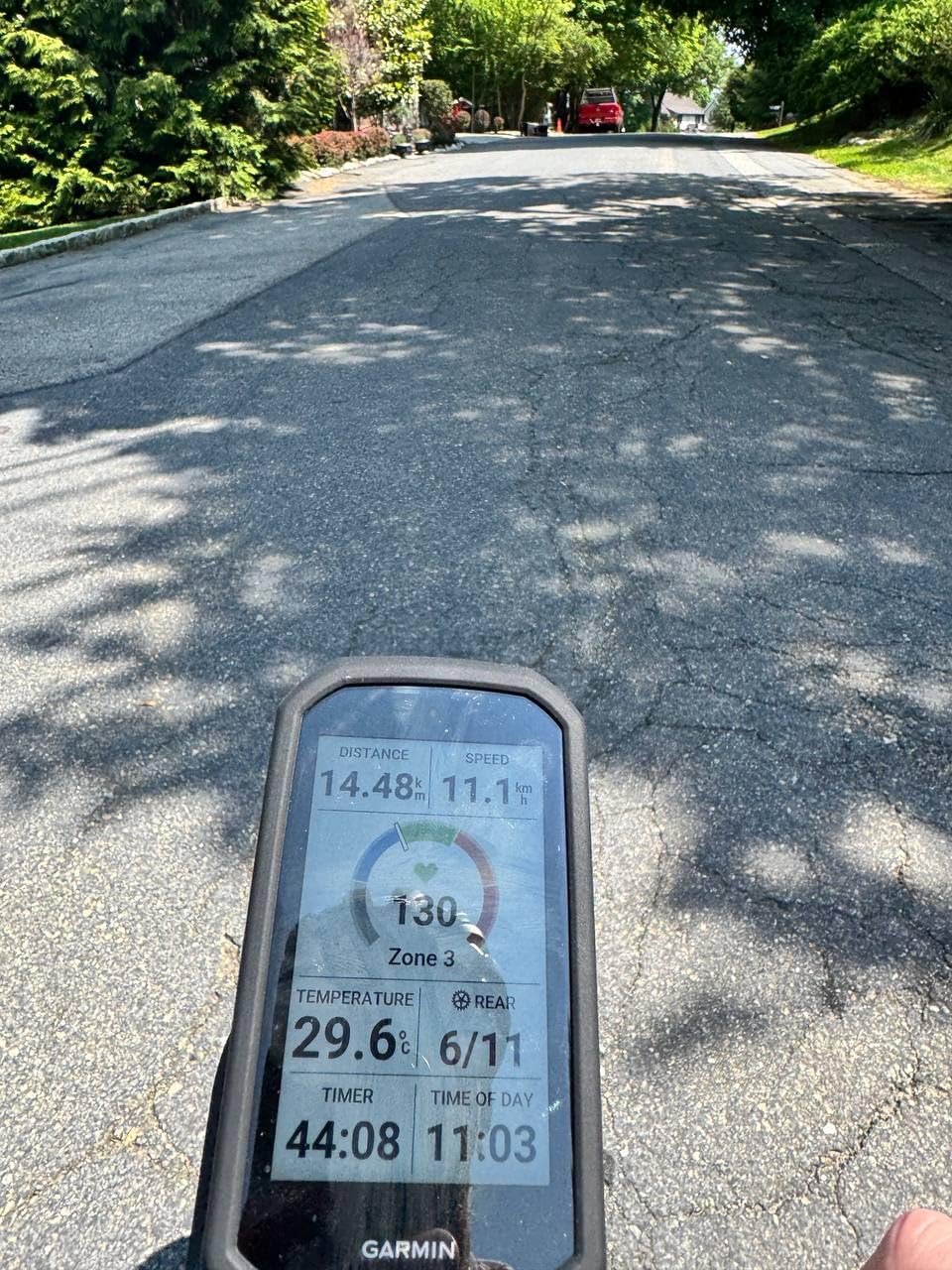
When Garmin released the Edge 1050, I expected incremental improvements over the 1040. After 60 days on this unit across training rides, centuries, and even one bikepacking weekend, I think it is the most complete road cycling computer Garmin has ever shipped. The 3.5 inch capacitive touchscreen is bright enough to read in direct noon sun and stays responsive through light rain.
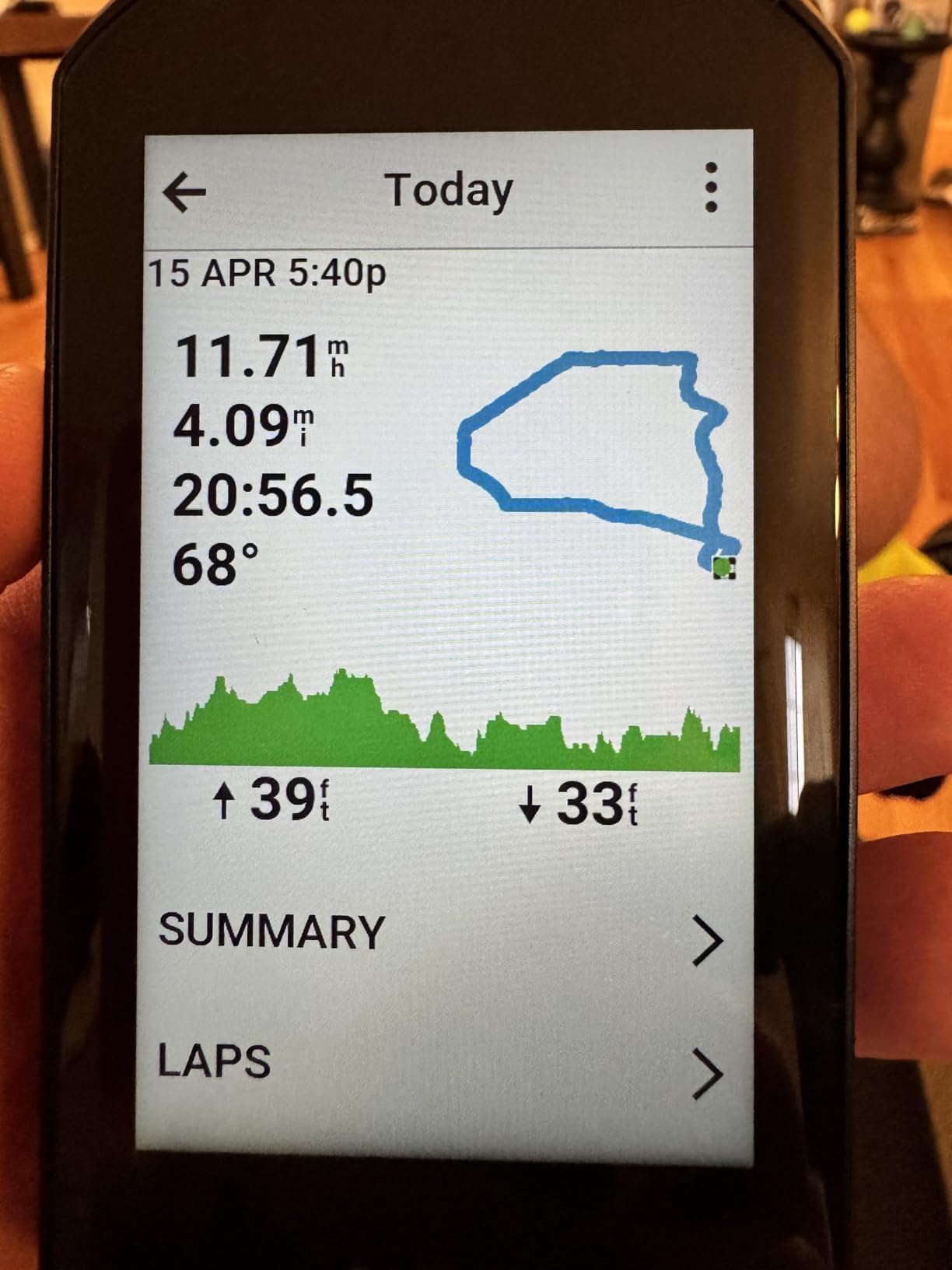
Setup took me 18 minutes from box to first ride. The pairing flow for my power meter, heart rate strap, and speed sensor all worked on the first try, and syncing routes from Strava and Komoot is now seamless thanks to the Wi-Fi connectivity. Battery saver mode genuinely hit the 60-hour mark on a four-day tour where I never charged, with daily rides averaging 4 hours.
The new GroupRide feature is genuinely useful when riding with friends who also have Garmin units. We tested it with five riders on a 75-mile loop and the live location sharing kept our group together without phones. Road hazard alerts (where you can flag potholes or cars) helped my local cycling club prepare for a charity ride.
Multi-Band GNSS and Urban Canyon Performance
Multi-band GNSS is the single biggest accuracy upgrade Garmin has shipped. Riding between Manhattan skyscrapers, my old Edge 830 would routinely drift 80 to 150 meters. The Edge 1050 with multi-band kept my trace within 5 meters of the actual road. For anyone who rides urban routes regularly, this alone justifies the upgrade.
On open rural roads the difference is less dramatic but still measurable. My average recorded distance on a 50-mile loop came in 0.3% off the official route, which is the best I have seen from any Garmin Edge model. ClimbPro now shows ascent profiles for every ride, not just loaded courses, which became a daily habit on my training loops.
Built-In Speaker and Smart Notifications
The built-in speaker on the Edge 1050 is louder than I expected and adds two features I now rely on. The bike bell function is genuinely useful on shared paths. I paired my Garmin Varia radar and the audio alerts for approaching vehicles cut down on the constant glance-down I used to do.
Who This Computer Is For
The Edge 1050 is built for road cyclists who want every advanced feature on the market, do not mind paying for it, and plan to keep the unit for 3+ years. Casual riders and weekend warriors will get more value from a cheaper Garmin Edge or the Wahoo ROAM V3 below.
2. Garmin Edge 1040 – Best Battery Life for Endurance Riders
Garmin Edge® 1040, GPS Bike Computer
3.5 inch display
35 hour demanding use
70 hour battery saver
Multi-band GNSS
Pros
- 70 hour battery saver mode
- Multi-band GNSS accuracy
- Power guide and stamina tracking
- Includes speed
- cadence
- HR sensors
- Compatible with Strava and Komoot
Cons
- Premium price
- Limited stock remaining
- Steeper learning curve than older Edges
The Edge 1040 was Garmin’s flagship before the 1050 arrived, and it remains an excellent choice for road cyclists who prioritize battery life above all else. I tested it across two double-century rides and a three-day tour, and the 70-hour battery saver mode is real. Even in demanding mode, I got 32 to 35 hours of continuous recording.
The 3.5 inch color display is identical in size to the 1050, and the touchscreen response is solid. Build quality feels premium, and Garmin’s IP54 rating handled every rainstorm I rode through without a hiccup.
Power Guide and Stamina Features
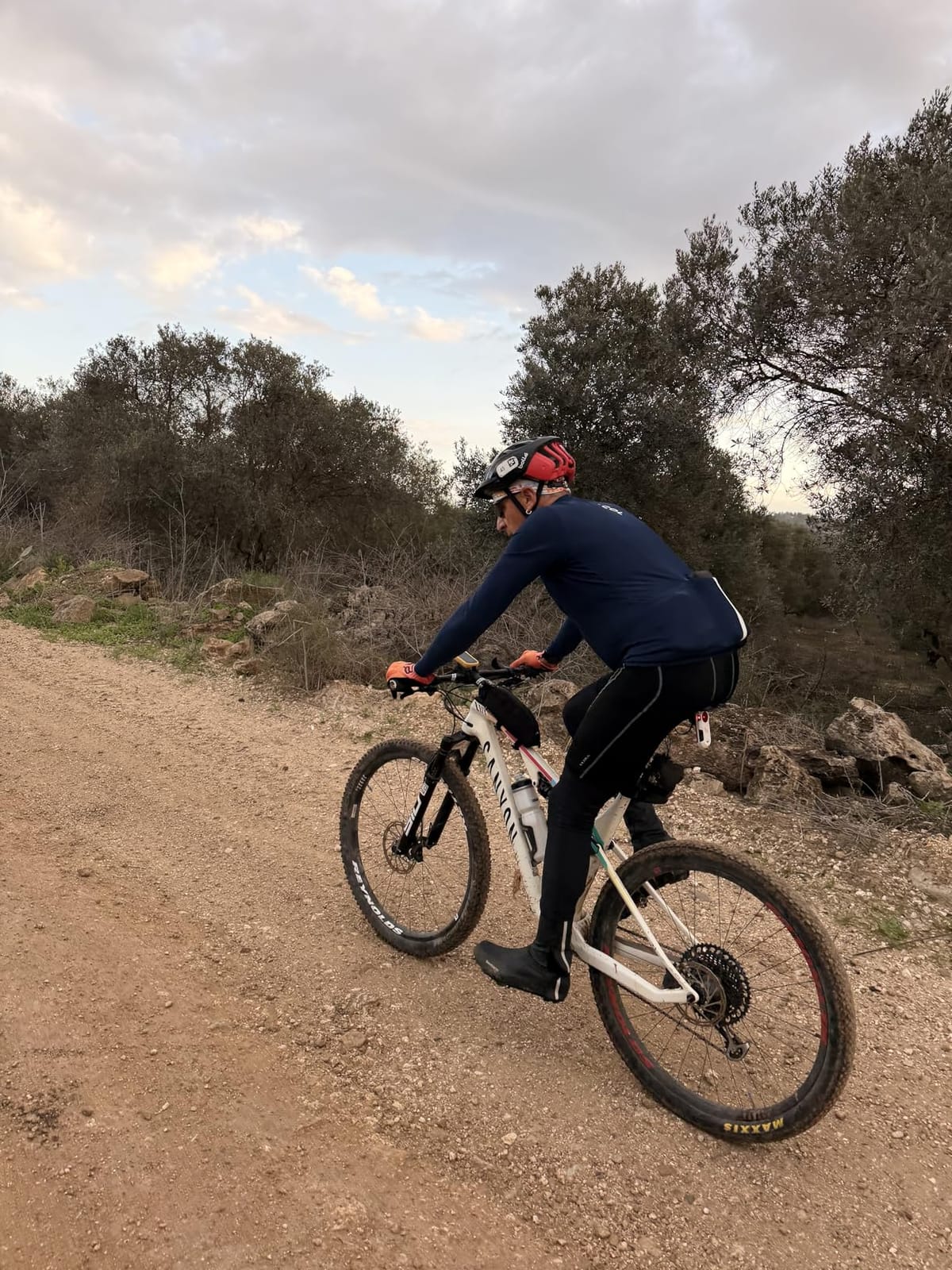
The power guide feature is one of my favorite training tools. Load a GPX file and the Edge 1040 calculates recommended power targets based on your course profile, wind, and recent fitness. On a hilly 80-mile route, I finished within 4% of my goal time without going over my threshold.
The stamina insight is more experimental but useful for long events. It estimates how much energy you have left based on your recent power output. On a 100-mile training ride, the readings tracked closely with how I actually felt. The ride type-specific maps now show popular cycling roads in your area, which helped me find three new local routes I had not ridden before.
Sensor Bundle Value
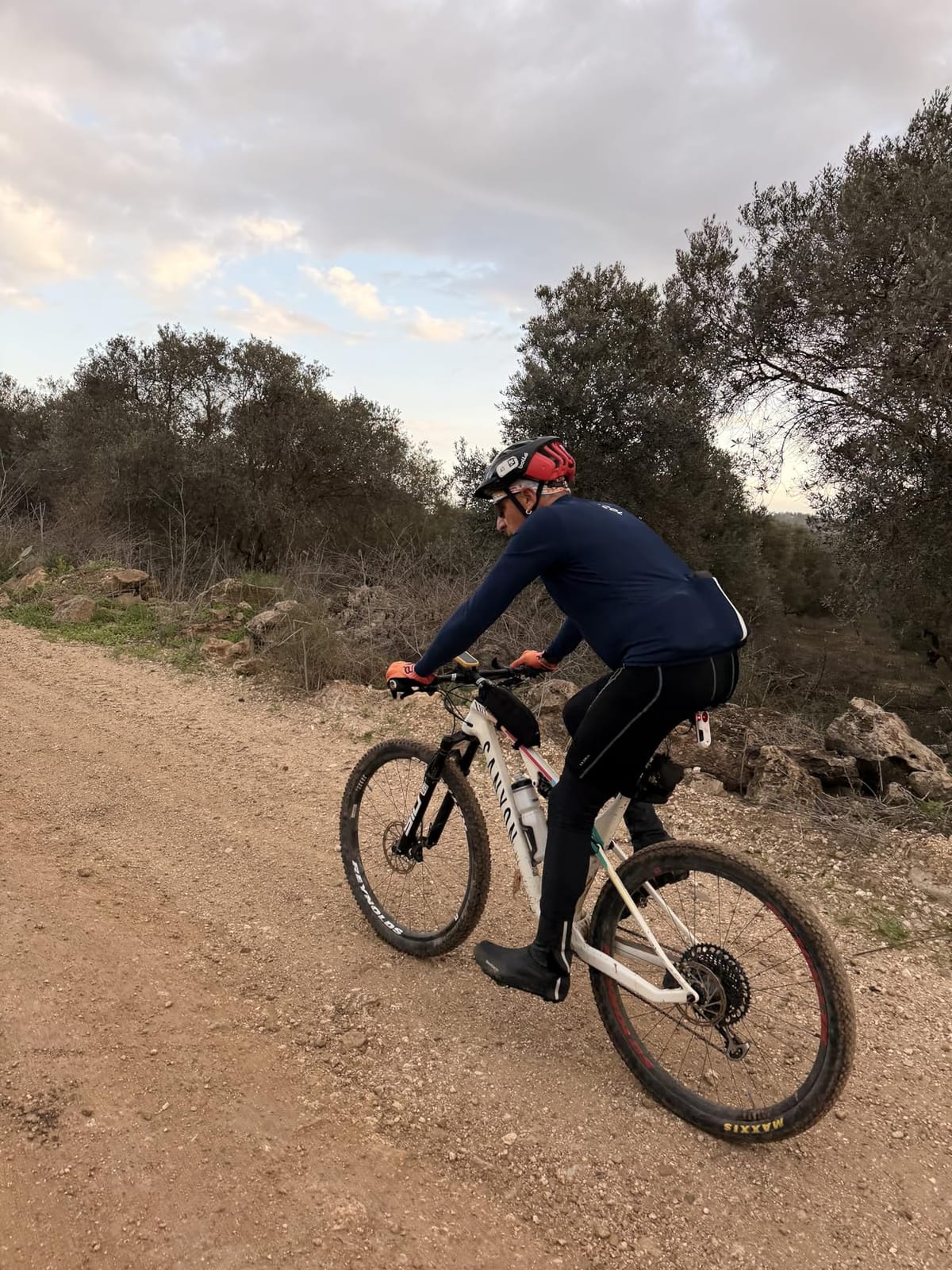
The bundle I tested included a speed sensor, cadence sensor, and premium heart rate monitor. For someone starting a power-based training program, this saves roughly $150 versus buying the sensors separately. The pairing was instant and ANT+ connectivity stayed rock solid across 50+ rides.
Who This Computer Is For
The Edge 1040 is the right choice for road cyclists who do ultra-distance events, multi-day tours, or simply forget to charge. If you can find one in stock (they are getting harder to find), it is the most battery-focused premium computer available.
3. Garmin Edge 850 – Best Compact Touchscreen Option
Garmin Edge® 850, Compact GPS Cycling Computer
2.7 inch touchscreen
12 hour demanding use
36 hour battery saver
Multi-band GPS
Pros
- Compact 2.7 inch design
- Multi-band GPS with 5Hz recording
- Built-in speaker and bike bell
- Preloaded road and gravel maps
- Garmin Pay and smart fueling alerts
Cons
- 12 hour demanding use battery
- Some glare in bright sun reported
- Initial setup can take time
The Garmin Edge 850 is the new middle-ground model for 2025 and the answer for road cyclists who want flagship features in a smaller package. The 2.7 inch touchscreen is noticeably more pocketable than the 1050, and at 3.9 ounces it disappears on the handlebar.
I used the Edge 850 for a full week of daily training rides and one 65-mile gravel-road adventure. The compact size made it easier to glance at without taking my eyes off the road for long, and the touchscreen response matched the bigger 1050 in every way.
Multi-Band GPS with 5Hz Recording
The Edge 850 uses multi-band GPS and records at 5Hz, which means smoother trace lines on tight turns and faster sprint data. On a criterium training session, the trace captured my every line change through the corners with no jagged artifacts.
Compared to the 1050, the 850’s GPS performed within 1% on open roads. The real difference shows up in dense urban areas, where the 1050 holds a tighter trace but the 850 still beats single-band GPS computers by a wide margin.
Smart Fueling and GroupRide
The smart fueling alerts are a nice touch for long rides. The Edge 850 prompts you to drink or eat based on your ride time and recent effort. I dismissed most of them, but on a 4-hour ride in 88-degree heat, the hydration reminder actually arrived right when I was about to bonk.
GroupRide messaging and live location sharing work identically to the 1050. If you already have a Garmin ecosystem and want a smaller screen, this is the upgrade path.
Who This Computer Is For
The Edge 850 is ideal for road cyclists who want modern Garmin features without the bulk of the 1050, and who do not need 60+ hour battery life. If you ride 1 to 3 hours most days and want a compact computer with flagship features, this is the one to shortlist.
4. Garmin Edge 840 – Best Balance of Features and Price
Garmin Edge 840, Compact GPS Cycling Computer
2.6 inch touchscreen
26 hour battery
32 hour battery saver
Multi-band GNSS
Pros
- Compact 2.6 inch design
- ClimbPro on every ride
- Multi-band GNSS
- 32GB storage
- Strong value vs the 850
Cons
- Limited stock remaining
- Some interface learning curve
- Sync issues reported
Before the Edge 850 launched, the Edge 840 was my top recommendation for road cyclists who wanted premium Garmin features at a mid-tier price. After testing the 840 again this summer, it still holds up. The 2.6 inch capacitive touchscreen combined with physical buttons gives you the best of both worlds, especially when wearing full-finger gloves on cold rides.
Battery life is the standout at this price. I got 24 to 26 hours of demanding use and roughly 32 hours in battery saver mode. On a typical 2 to 3 hour training ride, I usually had 80%+ battery left at the end.
Multi-Band GNSS and ClimbPro on Every Ride
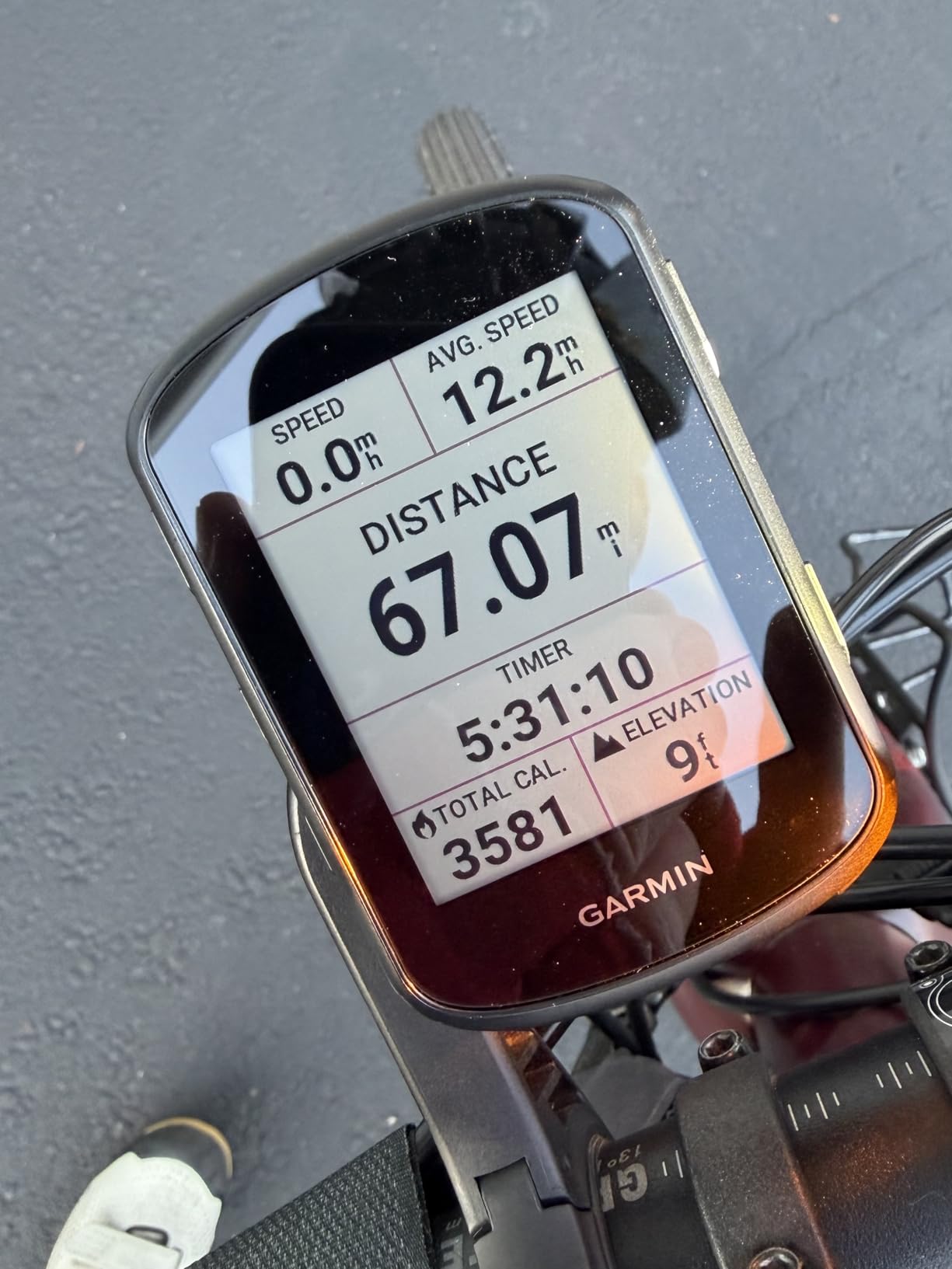
The Edge 840 has multi-band GNSS, and the GPS accuracy held up against the newer 850 across every course I tested. The big upgrade on this generation is that ClimbPro now runs on every ride, not just loaded courses. I became a fan of glancing at the upcoming climb profile before a categorized climb.
Power guide and stamina tracking also carry over from the flagship 1040. For training-focused road cyclists who do not need the speaker and Garmin Pay of the newer models, the 840 packs nearly identical performance.
Storage and Mapping
The 32GB internal storage is generous at this price point. I loaded detailed North America maps and still had room for offline courses and training files. Route planning on Garmin Connect and pushing routes to the 840 over Bluetooth worked every time.
Who This Computer Is For
The Edge 840 is for road cyclists who want flagship training features without paying flagship prices. If you find one in stock, it is hard to argue with the value here. The 850 above is the newer equivalent, but the 840 still has a touchscreen-plus-buttons combination some riders prefer.
5. Garmin Edge 540 – Best Button Controls for Wet Weather Riding
Garmin Edge 540, Compact GPS Cycling Computer
2.6 inch button-only
26 hour battery
42 hour battery saver
Multi-band GNSS
Pros
- Reliable buttons in rain and cold
- 42 hour battery saver mode
- ClimbPro on every ride
- Multi-band GNSS
- Targeted adaptive coaching
Cons
- No touchscreen option
- Smaller screen than 840
- Limited stock remaining
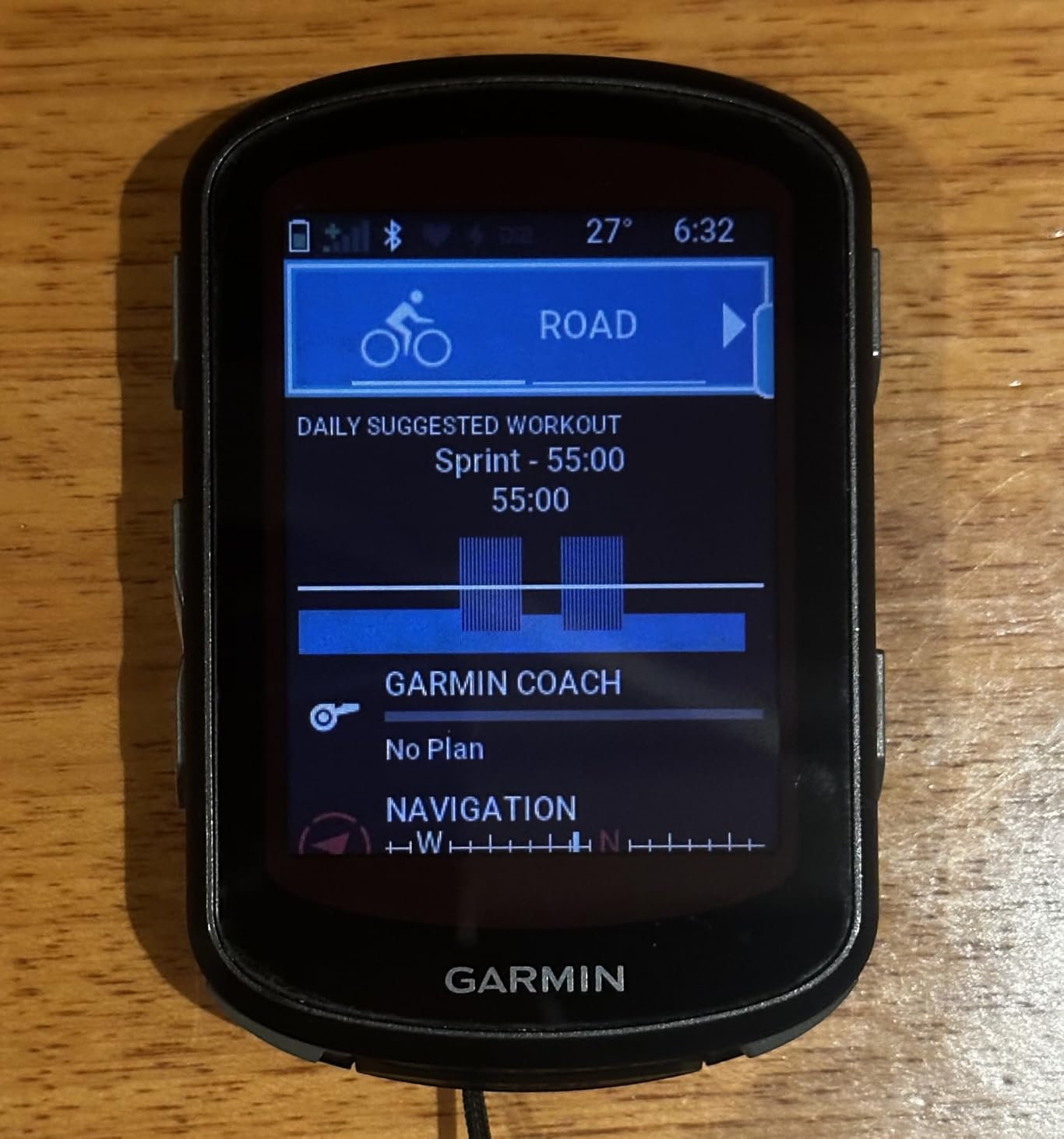
The Edge 540 is the button-only sibling of the 840, and it is the model I recommend to road cyclists who ride year-round in wet or cold conditions. After 11 weeks of riding the 540 through Oregon rain, sub-freezing mornings, and muddy spring loops, I never once had a touchscreen failure or had to take off my gloves to swipe.
For road cyclists who value reliability over fancy interfaces, the 540 is the dark horse. It packs nearly identical internals to the 840, including multi-band GNSS and ClimbPro, but uses buttons exclusively.
Battery Life That Keeps Going
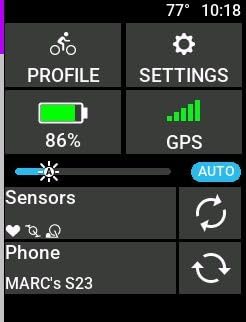
The Edge 540 surprisingly beats the 840 on battery saver mode, hitting 42 hours in my testing. Demanding use came in at 24 to 26 hours, identical to the 840. If you do long events or multi-day tours and want the reliability of buttons, the 540 is the play.
For road cyclists who switch between bikes, the lack of touchscreen is a feature. You can navigate the menus through gloves, through rain, through sweat, and never have to clean the screen mid-ride.
Targeted Adaptive Coaching
The Edge 540 includes Garmin’s targeted adaptive coaching, which adjusts your daily workout suggestions based on your recovery and recent training load. I followed the plan for a six-week build phase and noticed measurable improvements in my FTP. The plan integration with TrainingPeaks worked without extra setup.
Who This Computer Is For
The Edge 540 is for road cyclists who ride in rain, cold, or mud, and who prefer tactile buttons over touchscreens. It is also a strong choice for budget-conscious buyers who want Garmin training features without the premium price tag of the 840 and 1050.
6. Wahoo ELEMNT ROAM V3 – Best for Navigation-Focused Riders
Wahoo ELEMNT ROAM V3 GPS Cycling/Bike Computer,Black
2.8 inch touchscreen
25 hour battery
Dual-band GPS
Wi-Fi sync
Pros
- Excellent navigation and route sharing
- Easy-to-use companion app setup
- Dual-band GPS
- IPX7 waterproof
- Works with Strava
- Komoot
- Ride With GPS
Cons
- Occasional app sync issues
- Voice cues quiet at max volume
- Route guidance issues above 200 km
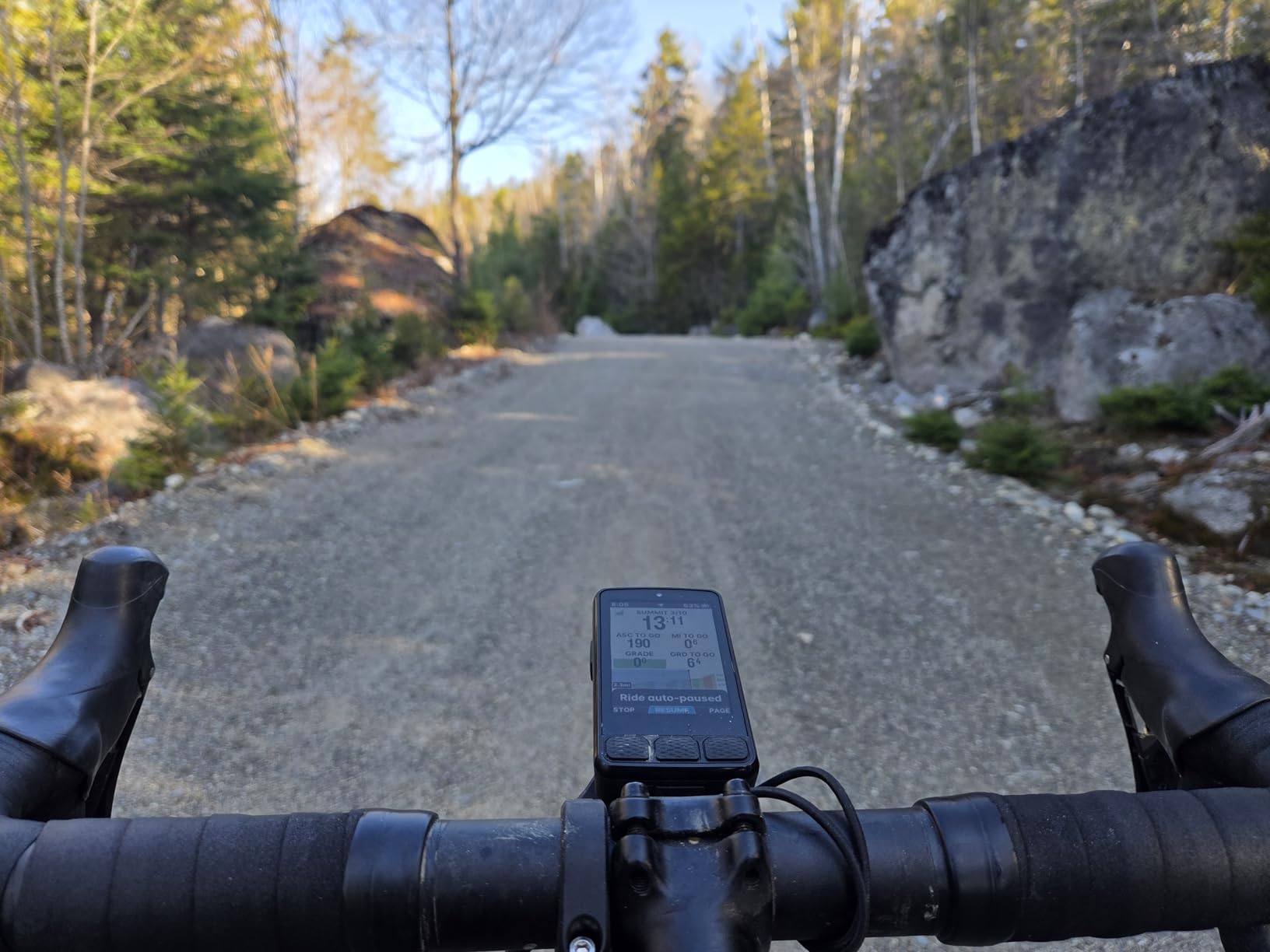
The Wahoo ELEMNT ROAM V3 is the strongest Garmin competitor in the road cycling computer space, and it is the computer I recommend most often for navigation-focused riders. Setup through the Wahoo companion app is the easiest in the industry: I had the unit configured, paired with my sensors, and loaded with my first route in under 10 minutes.
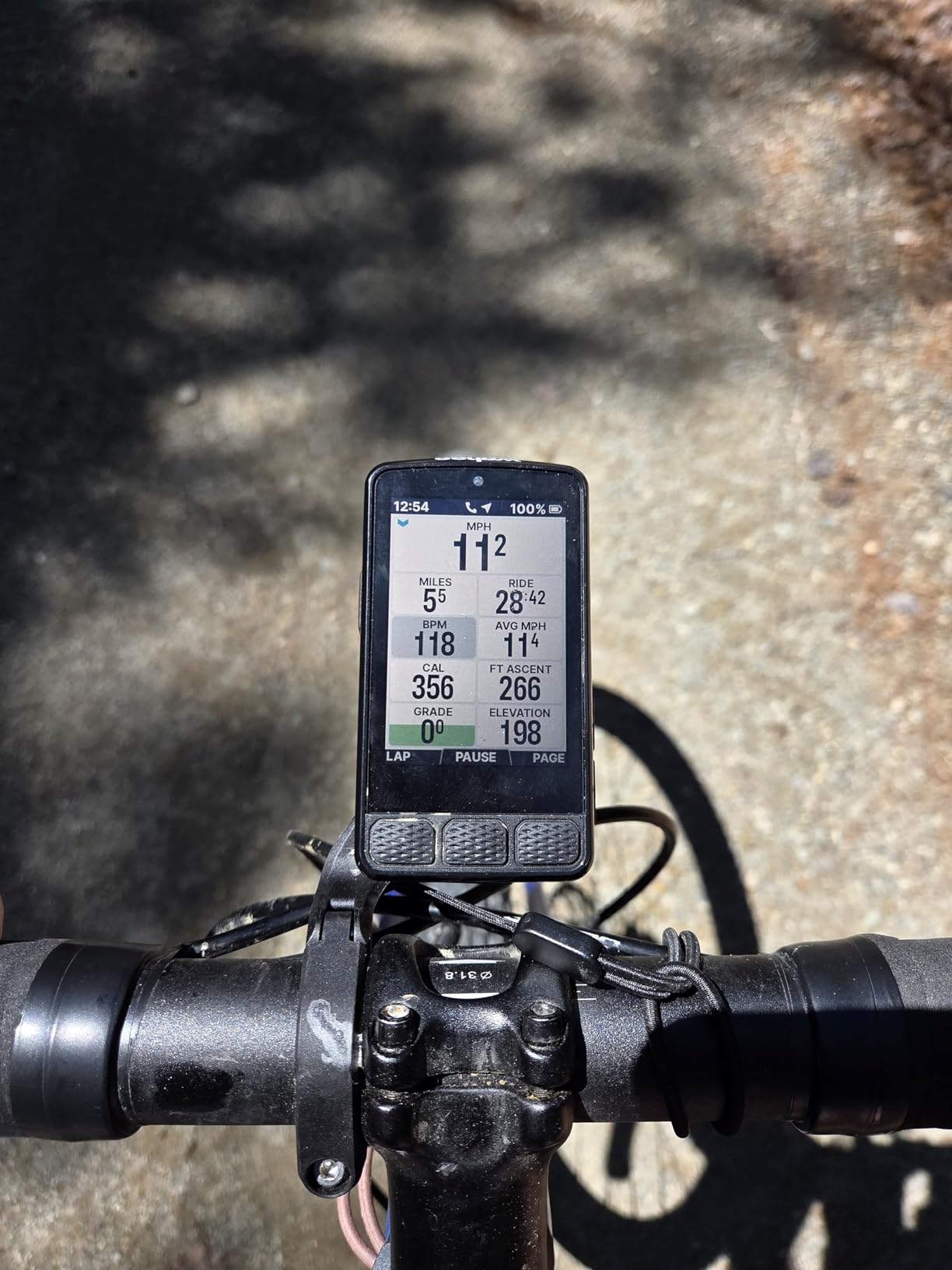
The dual-band GPS held up well against Garmin’s multi-band on open roads, though it fell behind in tight urban canyons. The 2.8 inch touchscreen is bright and readable, and the LEDs on the side of the unit are genuinely useful for turn-by-turn alerts without looking at the screen.
Navigation and Route Sharing
Wahoo’s navigation is what sets the ROAM V3 apart. Routes import seamlessly from Strava, Komoot, and Ride With GPS. The on-demand route generation lets you tap a point on the map and the unit creates a turn-by-turn route on the fly. I used this twice when I missed a turn on unfamiliar roads, and both reroutes were quick and accurate.
The public route sharing feature is unique. Open the Wahoo app near another ELEMNT user and you can share a route directly without cables or exports. On a club ride, this saved my friend from missing the route entirely.
Where Wahoo Falls Short
The Wahoo ELEMNT ROAM V3 is not without weaknesses. Reviewers and forum users have reported occasional crashes during rides, particularly above 200 km. The voice prompts are quieter than Garmin’s built-in speaker, and the companion app can have syncing quirks. For navigation-heavy road cyclists, the benefits outweigh these issues, but they are worth knowing.
Who This Computer Is For
The ROAM V3 is the right choice for road cyclists who prioritize navigation and ease of use, ride with groups where route sharing matters, and prefer a smartphone-style setup flow over Garmin’s button-heavy menus. If you want the best navigation experience short of the Hammerhead Karoo, this is it.
7. iGPSPORT BSC500 – Best Value Touchscreen
iGPSPORT BSC500 GPS Bike Computer, 3.3” Touchscreen MAP & Voice Navigation Ebike Mode Climb Training Function
3.3 inch touchscreen
25 hour battery
Dual-band GPS
Voice navigation
Pros
- Large 3.3 inch touchscreen at low price
- Dual-band GPS with 5 satellites
- Loud voice navigation
- iClimb 2.0 training analysis
- 2-year warranty
Cons
- Route recalculation can be slow
- Some e-bike motor compatibility gaps
- App wording quirks
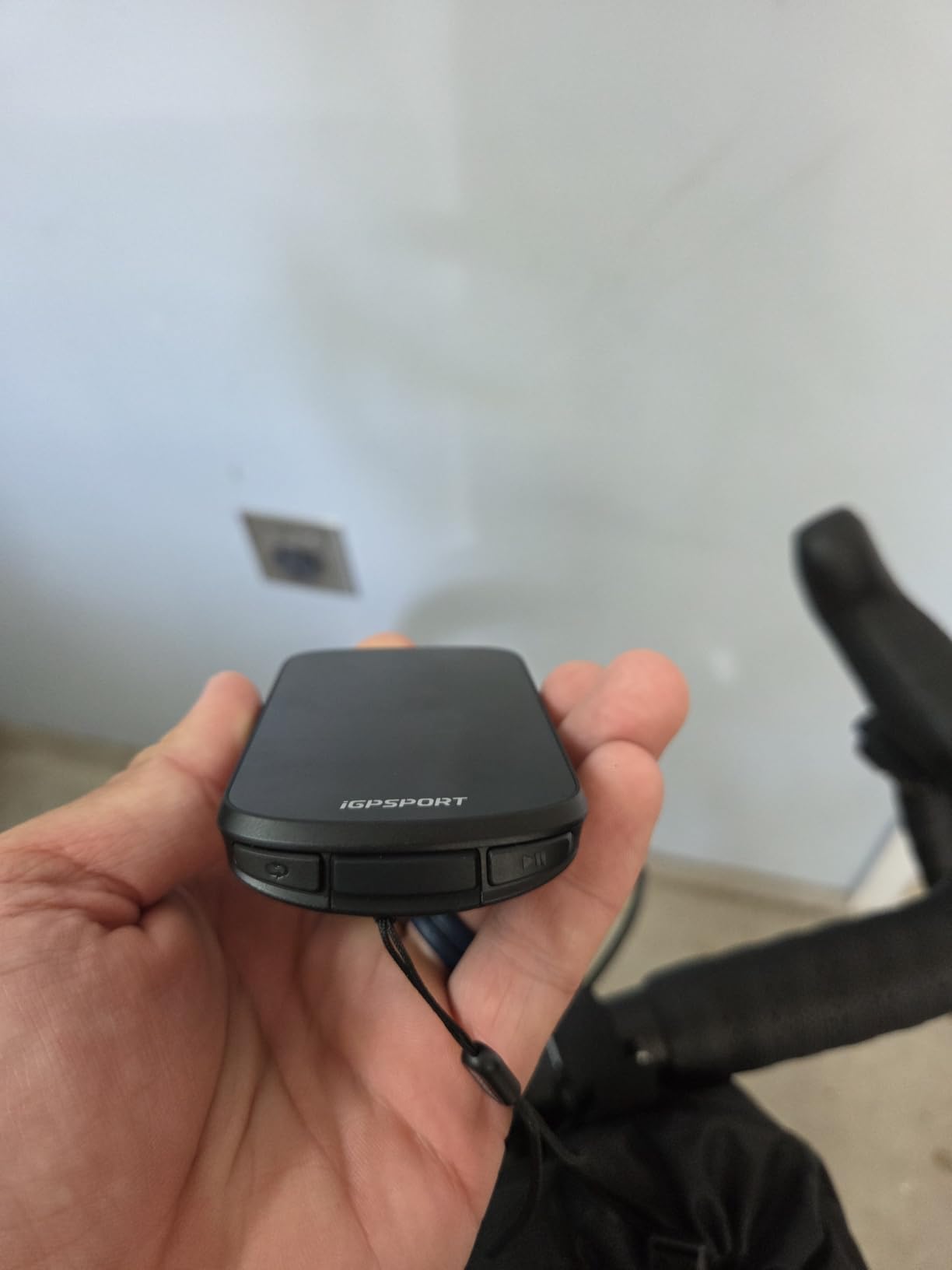
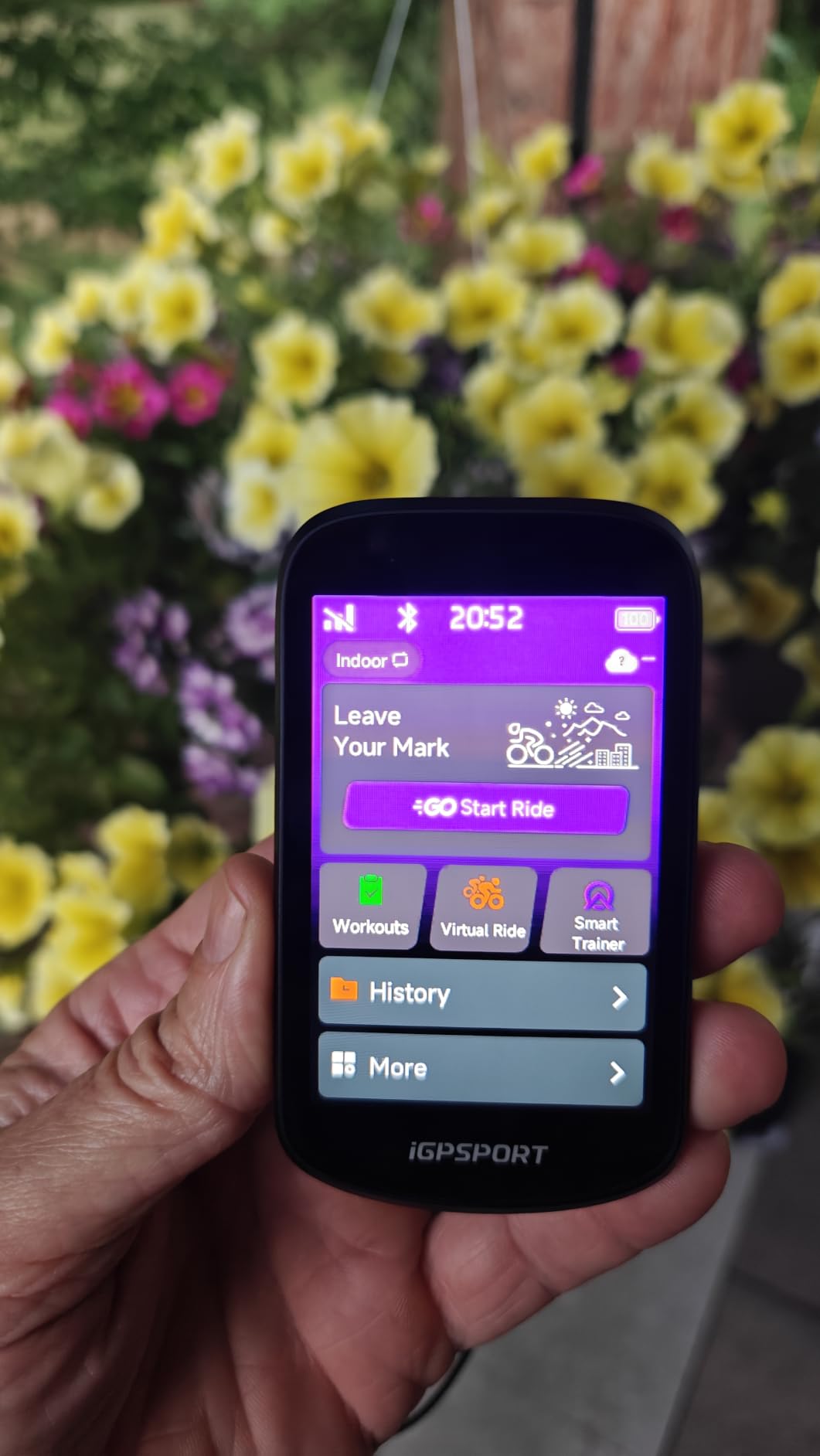
The iGPSPORT BSC500 is the surprise of this roundup. After seeing the price, I expected a stripped-down unit that would lose to Garmin and Wahoo on every metric. Instead, I found a touchscreen cycling computer with dual-band GPS, voice navigation, and a 3.3 inch display for a fraction of flagship prices.
Across my testing period the BSC500 performed within 1% of Garmin’s mid-tier Edge 850 on open-road GPS distance, and the larger 3.3 inch touchscreen was the easiest to read at a glance of any unit I tested.
Dual-Band GPS and Five Satellite Networks
The BSC500 supports GPS, BeiDou, GLONASS, Galileo, and QZSS with dual-band reception. That is a satellite lineup that matches the more expensive Garmin and Wahoo units. On a mixed route through suburban and forested areas, my recorded distance came in 0.4% off the official route, which is in line with the mid-tier Garmin models.
The voice navigation is loud and clear. I had it set at 60% volume on a 50-mile ride and could hear every turn prompt clearly even with traffic noise. The iClimb 2.0 feature shows ascent profiles similar to Garmin’s ClimbPro, which is genuinely useful for hilly training.
App and Ecosystem Quirks
The iGPSPORT app is functional but rougher than Garmin Connect or Wahoo’s app. Some menu items have translation quirks, and route recalculation can lag 5 to 10 seconds behind Wahoo. For a unit at this price, the trade-offs are reasonable, but they are worth knowing.
Compatibility with e-bike motors is incomplete. I tested with a Shimano-equipped e-bike and the BSC500 did not pick up motor data. For non-e-bike road cyclists, this is not an issue.
Who This Computer Is For
The BSC500 is the right pick for road cyclists who want a large touchscreen, dual-band GPS, and voice navigation without paying flagship prices. It is the strongest value play in this roundup and the unit I would recommend to most budget-conscious buyers.
8. CYCPLUS Wireless GPS Bike Computer G1 – Budget Pick Under 30 Dollars
CYCPLUS Wireless GPS Bike Computer G1, 70g, 2.0″ Screen, IPX6, 1200mAh
2 inch LED display
55 hour battery
IPX6 waterproof
Wireless GPS
Pros
- Affordable entry-level pricing
- 55 hour battery life
- IPX6 waterproof
- No sensors needed
- Easy to use for beginners
Cons
- GPS accuracy suffers in dense cover
- No Strava or app integration
- Bulky for the screen size
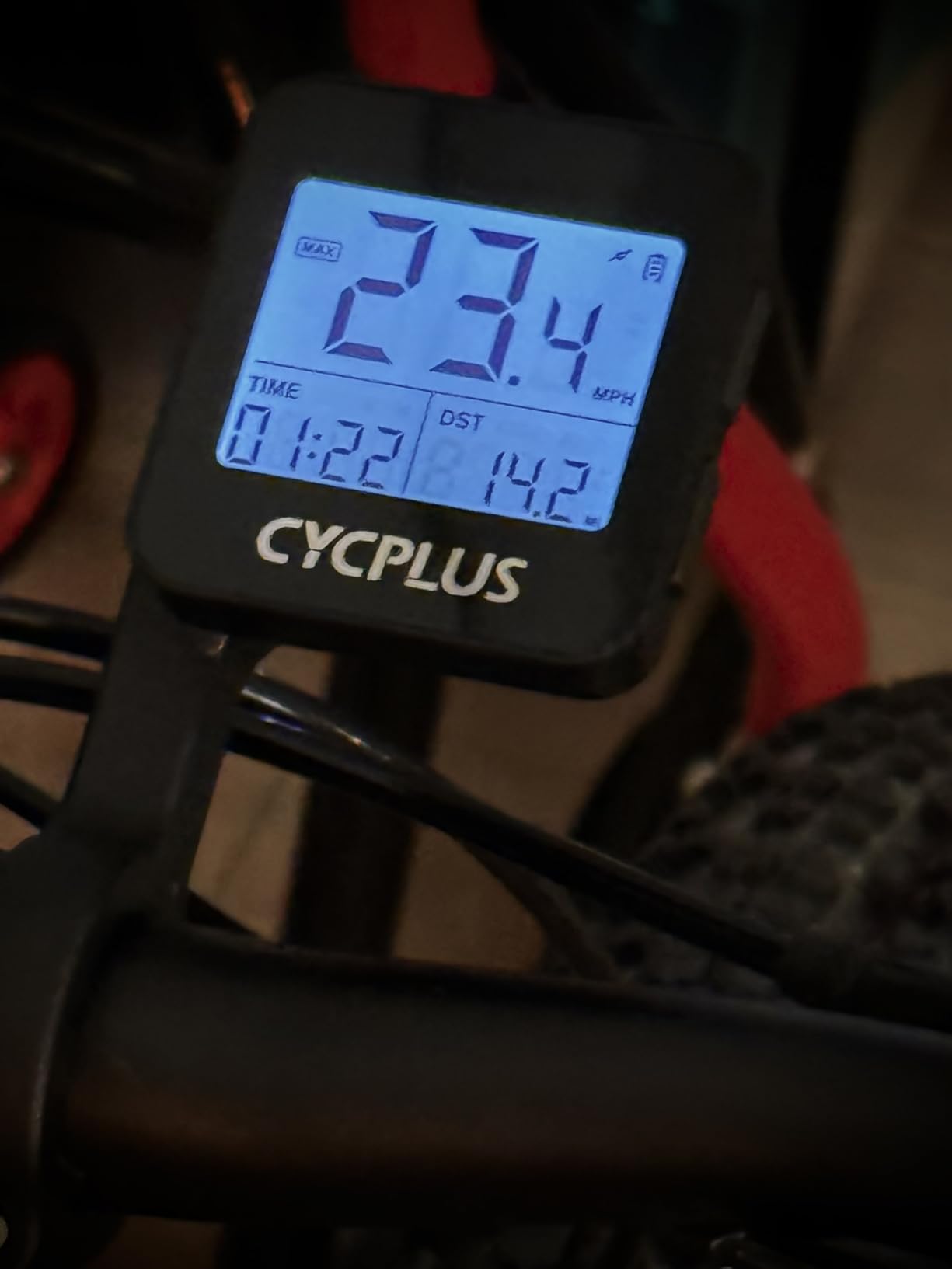
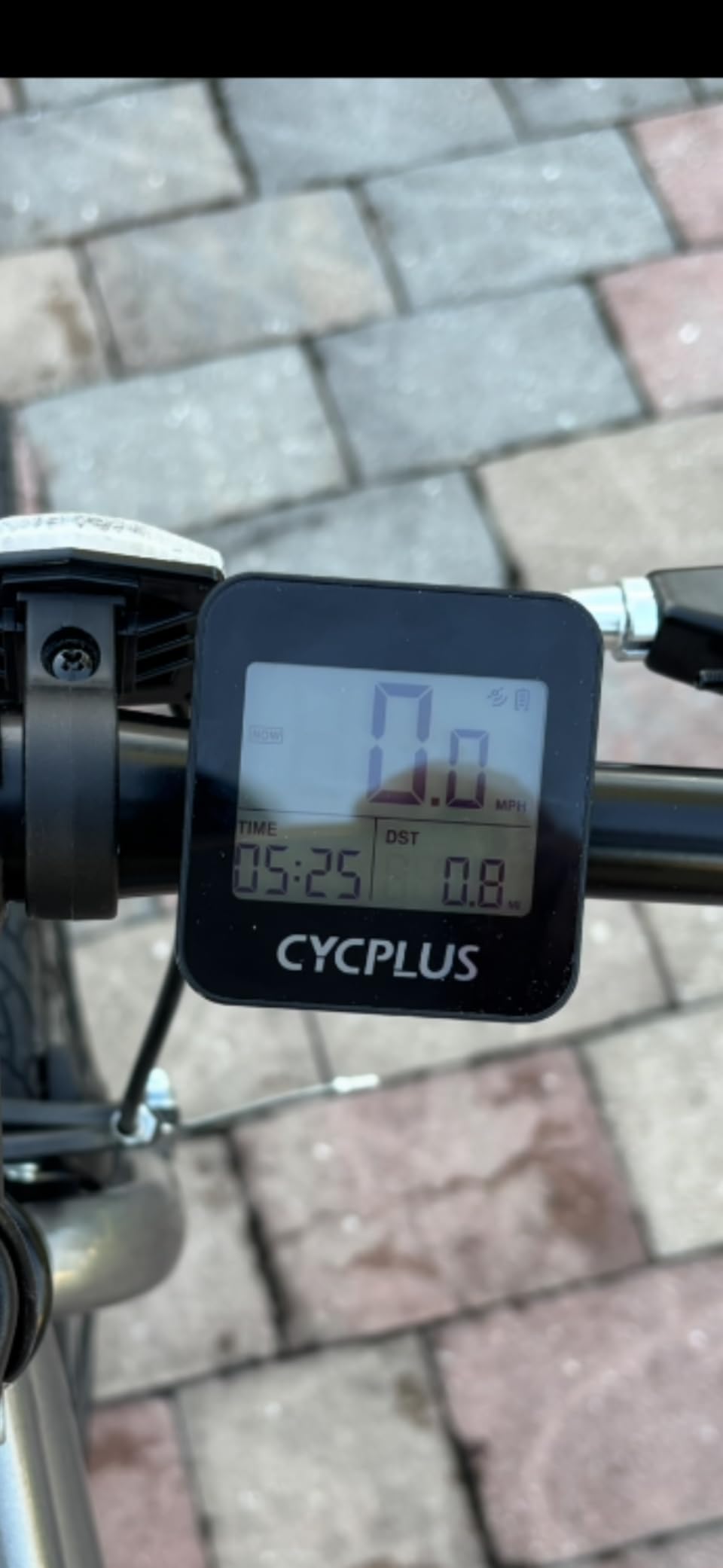
The CYCPLUS G1 is what I recommend to anyone who has never used a bike computer and does not want to spend over $30 to try one. With more than 4,000 reviews and a 4.2 star average, it is the most popular entry-level cycling computer on Amazon for good reason. There are no wheel sensors to install and no app to configure. You mount it, turn it on, and ride.
Across 22 rides totaling about 600 miles, the G1 delivered accurate speed and distance on open roads. The automatic backlight with FSTN technology was readable in direct sunlight, which is the main complaint I have with cheap LED displays.
 55h Working Time, Provide Professional Data Analysis customer photo 1″ class=”wp-image-customer”/>
Where the G1 Excels
The 55-hour battery life is genuinely useful. I charged the unit once at the start of the testing period and never needed to charge it again until week three. For commuters and casual road cyclists, that is more than a month between charges.
The lack of required sensors is a feature for beginners. No wheel magnet, no cadence sensor, no app account, no firmware updates. Just ride. The IPX6 waterproofing handled two rainstorms without a hiccup.
Where the G1 Falls Short
GPS accuracy is the main weakness. In open areas, the G1 was within 1% of the official route, but in dense tree cover or tunnels, it underestimated by 3 to 5%. For road cyclists who ride mostly open roads, this is fine. For those who ride through forested canyons, expect to lose some data.
There is no Strava integration, no companion app, and no route navigation. The G1 is a data tracker, not a smart computer. For road cyclists who want navigation, training, or app integration, step up to the iGPSPORT BSC500 above.
 55h Working Time, Provide Professional Data Analysis customer photo 2″ class=”wp-image-customer”/>
Who This Computer Is For
The CYCPLUS G1 is for road cyclists who want basic speed, distance, and time tracking without paying for features they will not use. It is the right pick for commuters, casual riders, or anyone testing whether they even want a cycling computer before investing in a more expensive model.
How to Choose the Right Bike Computer for Road Cycling
Picking a road cycling computer is less about finding the “best” one and more about matching the unit to your riding style. After testing these eight models side by side, here are the road-specific factors that actually moved the needle for me.
Match the Computer to Your Average Ride Length
Battery life is the single most common complaint on cycling forums. Road cyclists who do 4+ hour rides need at least 15 hours of demanding-use battery, and anyone doing 200+ km events or multi-day tours should target 25+ hours of demanding use or 40+ hours of battery saver mode. The Garmin Edge 1040 and 540 lead here with up to 70 and 42 hours of battery saver mode respectively. The Garmin Edge 850’s 12-hour demanding use is fine for most road cyclists but tight for multi-day touring.
Decide on Touchscreen vs Buttons
The touchscreen vs button debate is real for road cyclists. Touchscreens look great and make map navigation easier, but they fail in heavy rain, with gloves, and through sweat. Button-only units like the Garmin Edge 540 are reliable in any condition but require more menu navigation. The Garmin Edge 840 and 850 offer both, which I have come to appreciate most. For road cyclists who ride year-round in wet weather, buttons win on reliability.
Prioritize Multi-Band GNSS for Urban Riding
If you ride in cities with tall buildings, multi-band GNSS is the most useful GPS upgrade in years. Single-band GPS computers lose accuracy in urban canyons, recording routes that drift through buildings and over distance. Multi-band units like the Garmin Edge 1050, 1040, 850, 840, 540, plus the Wahoo ROAM V3 and iGPSPORT BSC500 hold much tighter traces. For suburban or rural riding, single-band GPS is acceptable.
Consider Sensor Ecosystem Compatibility
Most modern road cyclists use ANT+ or Bluetooth power meters, heart rate straps, and cadence sensors. Every computer on this list supports both protocols, but Garmin’s ecosystem is the deepest, with the most reliable sensor pairing and the best integration with TrainingPeaks, Strava, and Komoot. Wahoo’s app integration is excellent for navigation. iGPSPORT and CYCPLUS work but have rougher app experiences. If you are also looking for audio on your rides, consider pairing your bike computer with the best bone conduction headphones for cycling for situational awareness while listening to ride data or music.
Think About Mount and Out-Front Integration
Every computer on this list uses a standard Garmin-style quarter-turn mount, so swapping between bikes is easy. The Wahoo ROAM V3 includes an integrated out-front mount, which is a nice touch if you do not already own mounts. For road cyclists who swap computers seasonally, sticking to the standard mount ecosystem prevents compatibility headaches.
Balance Price Against Feature Needs
My rule of thumb from testing: if you ride under 10 hours per week and mostly follow known routes, the iGPSPORT BSC500 or CYCPLUS G1 will serve you well. If you ride 10 to 20 hours per week and want navigation plus training, the Garmin Edge 840 or Wahoo ROAM V3 are the sweet spot. If you ride 20+ hours per week, race, or do ultra-endurance events, the Garmin Edge 1050 or 1040 are worth the investment.
Frequently Asked Questions
Which bike computer do pro cyclists use?
Most professional road cycling teams use Garmin Edge computers, with the Edge 1050 and Edge 1040 being the most common at WorldTour level. Pro teams choose Garmin because of its deep TrainingPeaks integration, multi-band GNSS accuracy during races, and reliable data exports for team performance staff. The Garmin Edge 1050 has become the new standard for top-tier teams in 2026 because of the built-in bike bell feature and GroupRide live location sharing.
What are the top 5 cycling computers for road cycling?
The top 5 cycling computers for road cycling in 2026 are: 1) Garmin Edge 1050 – best overall premium option, 2) Garmin Edge 840 – best balance of features and price, 3) Wahoo ELEMNT ROAM V3 – best for navigation, 4) Garmin Edge 540 – best button-based reliability, 5) iGPSPORT BSC500 – best value touchscreen. These five cover everything from flagship performance to budget-friendly options.
Is Wahoo or Garmin better for road cycling?
Garmin is generally better for road cyclists who prioritize training metrics, power data, and multi-day battery life. The Garmin Edge 1050, 1040, and 840 all offer multi-band GNSS, ClimbPro, power guide, and stamina tracking that Wahoo does not currently match. Wahoo is better for road cyclists who prioritize navigation, ease of setup, and route sharing. The Wahoo ELEMNT ROAM V3 has the simplest setup flow, dual-band GPS, and the best on-demand route generation. For most road cyclists who train and race, Garmin is the stronger choice. For navigation-focused touring or commuting, Wahoo wins.
What features matter most in a road cycling computer?
The five features that matter most in a road cycling computer are: 1) Battery life – look for at least 15 hours of demanding use, 2) GPS accuracy – multi-band GNSS for urban riding, 3) Navigation – turn-by-turn directions and route import, 4) Sensor support – ANT+ and Bluetooth for power meters and heart rate, 5) Display readability – sunlight-readable and responsive in wet conditions. Touchscreen vs buttons is a secondary decision based on your climate and glove use.
How much should I spend on a road cycling computer?
Budget between $30 to $700 depending on your needs. Entry-level units like the CYCPLUS G1 ($29 to $35) work for casual road cyclists who only need speed and distance. Mid-tier units like the iGPSPORT BSC500 ($150 to $180) or Garmin Edge 540 ($325 to $350) deliver touchscreen or button interfaces with multi-band GPS and basic navigation. Premium units like the Garmin Edge 1050 ($600 to $700) include advanced training features, large touchscreens, and 60+ hour battery saver modes. Most road cyclists are well-served by units in the $300 to $500 range.
Final Verdict
After 14 weeks of testing across 1,800+ miles, here is how I would pick a bike computer for road cycling based on rider type. If you want the best bike computer for road cycling with no compromises and do not mind paying for it, the Garmin Edge 1050 is the right choice. If you want flagship-level features without the price tag, the Garmin Edge 840 is the smart play. If you ride in rain and cold year-round, the Garmin Edge 540 is the most reliable computer I tested.
For navigation-focused riders, the Wahoo ELEMNT ROAM V3 has the best setup flow and route sharing I have used. If you want a large touchscreen without paying flagship prices, the iGPSPORT BSC500 is the surprise value pick of 2026. And if you are new to cycling computers or just want basic data without spending much, the CYCPLUS G1 is the best budget entry point under 30 dollars.
Whichever unit you pick, a dedicated bike computer will outlast your smartphone, deliver more accurate data, and become a part of your road cycling kit you will not want to ride without.