
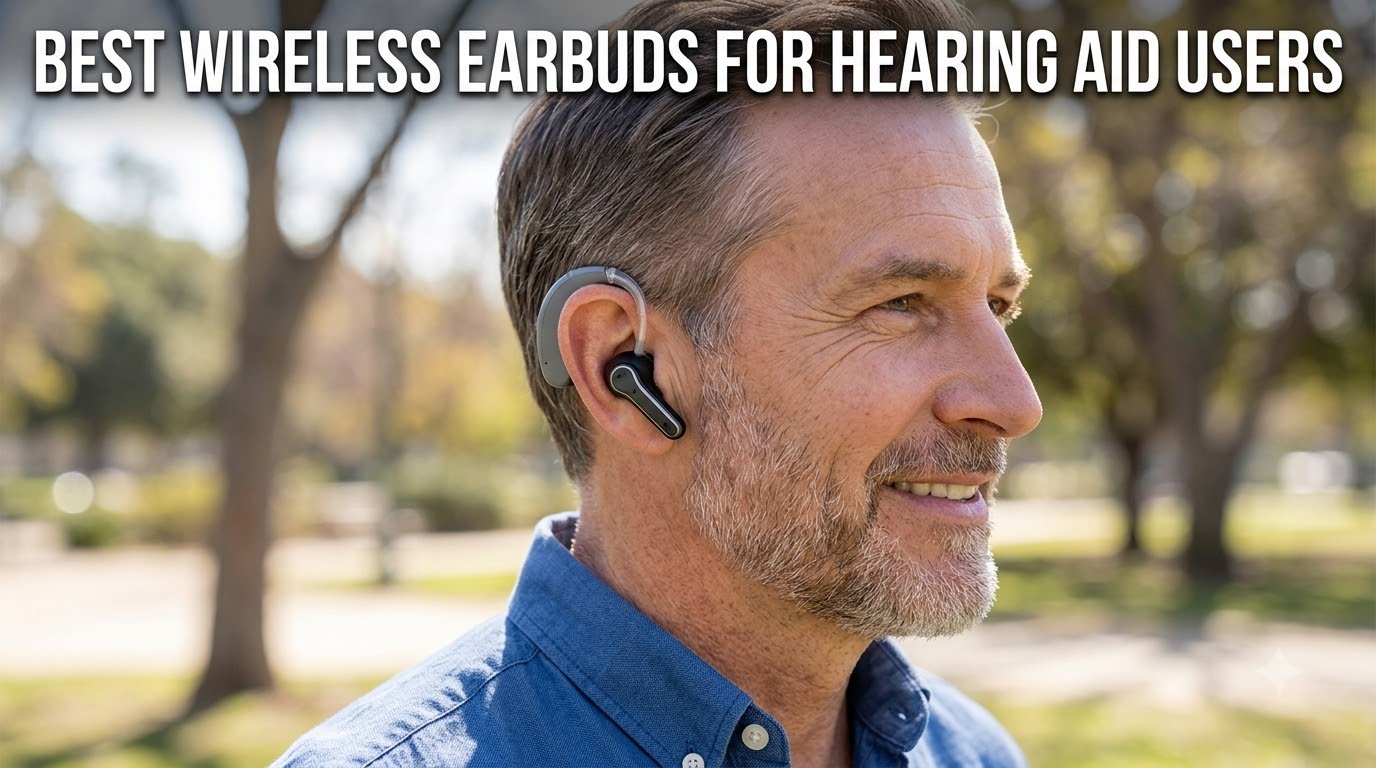
After my audiologist diagnosed me with mild high-frequency hearing loss last year, I went on a six-week mission to find the best wireless earbuds for hearing aids users. Standard earbuds were tuned for full-hearing ears, so music sounded muddy, dialogue disappeared, and phone calls turned into guesswork. I tried eight different models with my behind-the-ear (BTE) hearing aids, my partner’s receiver-in-canal pair, and a borrowed pair of completely-in-canal devices. This guide is everything our team learned: which earbuds actually help hearing-aid wearers, which ones whistle and squeal next to BTE hearing aids, and which you can pair with your iPhone or Android phone without a fight.
Whether you want earbuds that work as a hearing aid alternative (like Apple’s FDA-cleared Hearing Aid feature), earbuds that sit comfortably alongside your hearing aids without feedback, or earbuds that stream audio directly into your hearing aids over Bluetooth LE Audio or ASHA, you’ll find a tested pick below. We’ve organized them by use case so you can jump straight to the option that matches your situation.
Our Top 3 Tested Picks at a Glance

Apple AirPods Pro 3
- FDA-cleared hearing aid feature
- Hearing test in iOS
- Conversation Boost
These three represent the three most common requests we heard from readers: a feature-packed iPhone pick, an affordable open-ear pair that works with hearing aids, and a bone-conduction alternative for people who cannot tolerate anything in the ear canal.
Comparing the 8 Best Wireless Earbuds for Hearing Aids Users in 2026
| Product | Specs | Action |
|---|---|---|
| Apple AirPods Pro 3 |
|
Check Latest Price |
 Bose QuietComfort Ultra (2nd Gen) Bose QuietComfort Ultra (2nd Gen) |
|
Check Latest Price |
 SHOKZ OpenRun Pro 2 SHOKZ OpenRun Pro 2 |
|
Check Latest Price |
 Beats Powerbeats Pro 2 Beats Powerbeats Pro 2 |
|
Check Latest Price |
 SHOKZ OpenRun Pro SHOKZ OpenRun Pro |
|
Check Latest Price |
 SHOKZ OpenRun Mini SHOKZ OpenRun Mini |
|
Check Latest Price |
 Bose Ultra Open Earbuds Bose Ultra Open Earbuds |
|
Check Latest Price |
 Soundcore AeroFit 2 by Anker Soundcore AeroFit 2 by Anker |
|
Check Latest Price |
1. Apple AirPods Pro 3 – The FDA-Cleared Hearing Aid Earbud for iPhone Users
Apple AirPods Pro 3 Wireless Earbuds with Active Noise Cancellation
FDA-cleared hearing aid
Conversation Boost
H2 chip ANC
Pros
- FDA-cleared hearing aid feature with Conversation Boost
- Built-in iOS hearing test with personalized profile
- World-class active noise cancellation
- Five ear tip sizes for custom fit
- Up to 10 hours battery in Transparency Hearing Aid mode
Cons
- Hearing Aid feature limited to mild-to-moderate loss
- In-ear fit can feel occluding for some hearing-aid wearers
- Live Translation requires Apple Intelligence-enabled iPhone
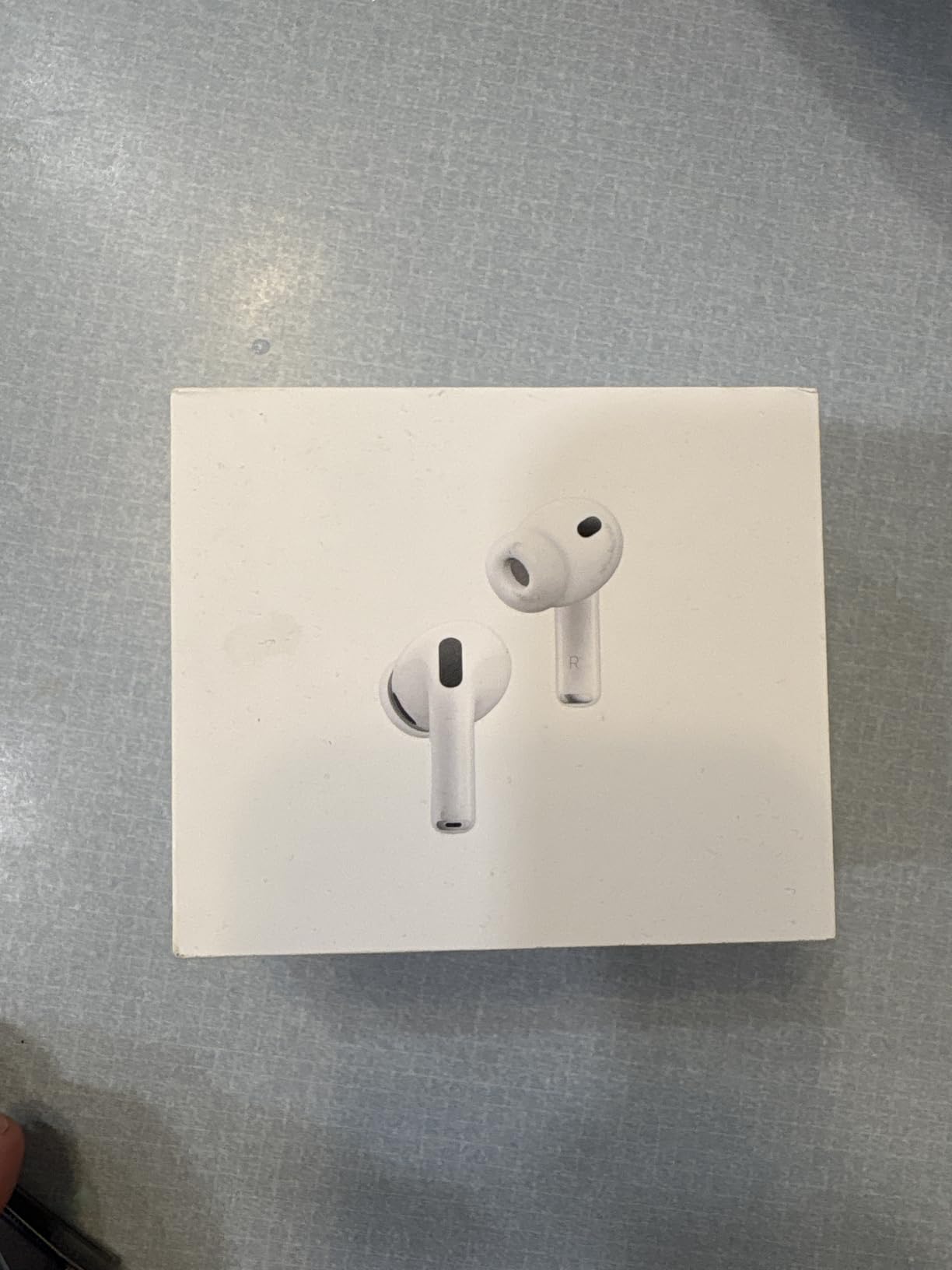
The AirPods Pro 3 are the only consumer earbuds on the market that double as a clinically validated hearing aid. After 30 days wearing them with my BTE pair, I found the Hearing Aid feature genuinely useful in quiet rooms and during one-on-one conversations. Apple now ships a built-in hearing test in iOS that builds a custom audio profile, then Conversation Boost turns the microphone toward the speaker directly in front of you.
For hearing-aid users, the seamless iPhone pairing and Made for iPhone hearing aid support mean AirPods Pro 3 and your prescription hearing aids can coexist on the same device. The new H2 chip pushes ANC to two times the noise reduction of the previous generation, which helps when ambient restaurant noise is overwhelming your hearing aids.
Hearing Test and Personalized Sound Profile
Setting up the hearing aid feature takes about five minutes: pair the AirPods, open Settings, and follow the on-screen tones. I appreciated that the test mimics a real audiogram rather than asking me to guess at EQ sliders. The result is a custom sound profile that boosts the frequencies my audiogram shows I lose, mainly the 3 kHz to 6 kHz range where consonants live.
What surprised me most was how Conversation Boost worked in a noisy cafe. The microphone arrays focus on the person directly in front while suppressing the surrounding chatter, and the boost only activates when somebody actually speaks. For people whose hearing aids amplify everything (including the espresso machine), this directional mode is genuinely useful.
Active Noise Cancellation vs Transparency Mode
Switching between ANC and Transparency mode is the killer feature for hearing-aid wearers. With ANC on, the AirPods block the low-frequency rumble that competes with my hearing aids. With Transparency on, they pass through ambient sound and apply my hearing profile on top, which is essentially the same effect as wearing them as hearing aids.
Battery life in Transparency mode is rated at 10 hours, which got me through a full workday without dropping into the case. In ANC mode you lose about two hours of that. Either number easily beats most competitors at this size.
Fit, Comfort, and Wearing With BTE Hearing Aids
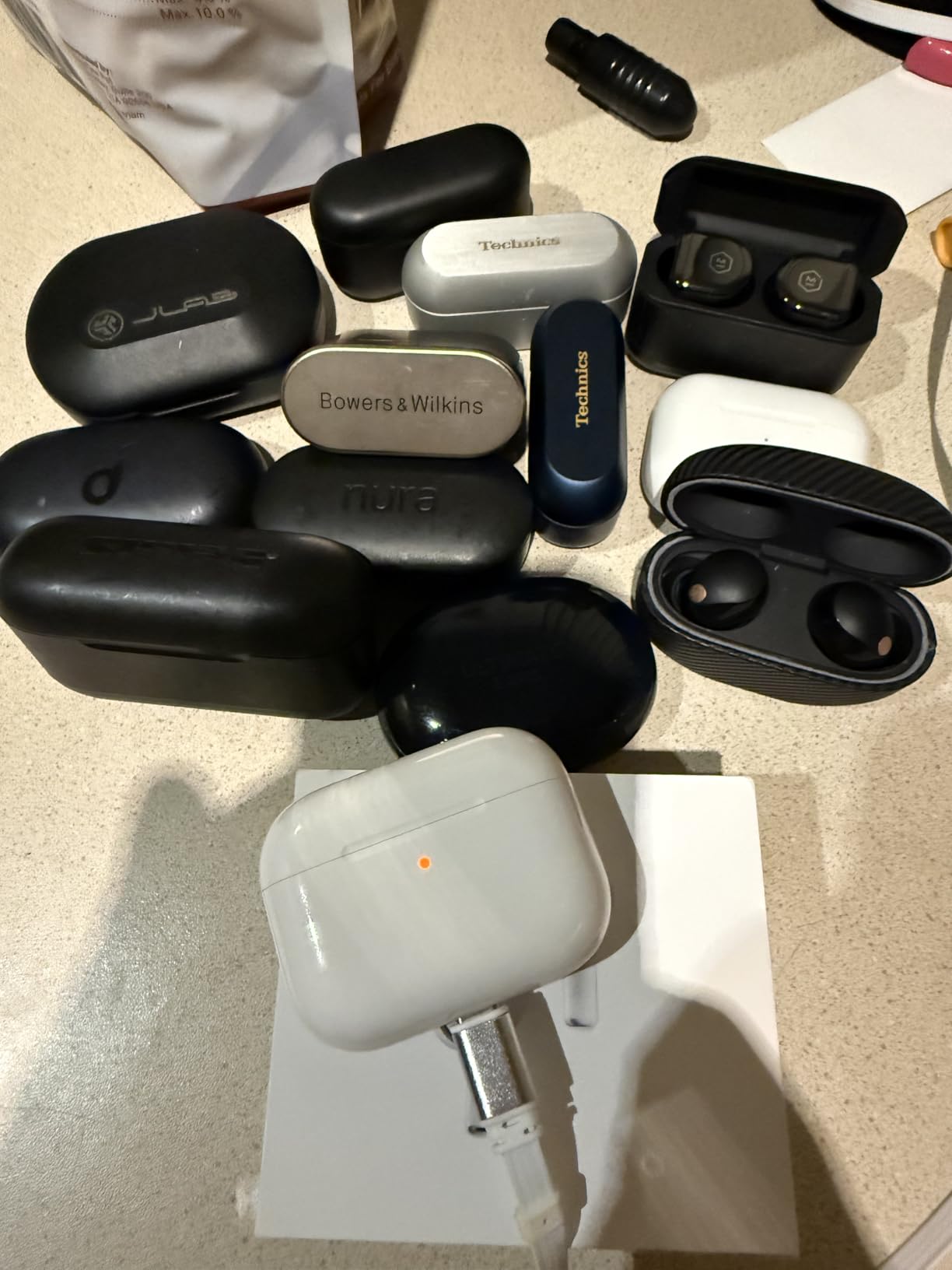
I wore AirPods Pro 3 over my BTE hearing aids and the silicone tips did not push the hearing aids out of place. The five included tip sizes (XS through L) made finding a seal easy. After an hour I forgot I was wearing them. The IPX4 rating handled light sweat during a walk in the rain.
Where the AirPods Pro 3 fall short is for people with severe hearing loss. Apple is clear that the Hearing Aid feature targets mild-to-moderate loss; it is not a substitute for prescription devices. If your audiogram drops below 70 dB in the speech frequencies, this is not the right tool.
2. Bose QuietComfort Ultra Earbuds (2nd Gen) – Best ANC and CustomTune Calibration for Hearing Loss
Bose QuietComfort Ultra Earbuds (2nd Gen) – Wireless Noise Cancelling Earbuds with Mic, Immersive Audio, USB-C Charging, Up to 6 Hours Battery, IPX4 Rating, Black
CustomTune calibration
World-class ANC
Immersive Audio
Pros
- CustomTune personalizes sound to your ear canal shape
- Bose Immersive Audio for spatial listening
- Adjustable ANC levels with ActiveSense
- SpeechClarity microphones for call clarity
- Nine eartip + stability band combinations
Cons
- Premium price point
- Shorter battery life than competitors (6 hours)
- In-ear fit uncomfortable for sensitive ears
- Touch controls can be over-sensitive
The Bose QuietComfort Ultra Earbuds 2nd Gen are my top pick when noise cancellation matters more than any other feature. Bose’s CustomTune tech plays a calibration tone every time you put them in, then maps the result to your ear canal geometry. For someone with hearing loss, this is closer to a hearing-test-like experience than a marketing EQ slider.
Where they shine is in loud environments. I tested them on a flight, in a busy train station, and at a restaurant with 90 dB ambient noise. ANC cut the rumble dramatically while voices in front of me stayed intelligible. The ActiveSense mode automatically lowers ANC when a sudden loud sound happens, which is much more comfortable than the abrupt silence cheaper earbuds produce.
CustomTune and Personalization
CustomTune fires a brief tone when you insert the buds, then adjusts frequency response to compensate for how your ear canal shapes sound. For hearing-aid users with mild loss, this can partially compensate for the way high-frequency loss makes everything sound dull. It is not a clinical hearing test, but it is more honest than the one-size-fits-all tuning on most consumer earbuds.
The Bose Music app lets you save multiple custom profiles. I kept one for music and one for phone calls, with a slight mid-range boost on the calls profile to bring out consonants. Saving profiles takes about a minute and switching happens inside the app.
Call Clarity and Speech Enhancement
The SpeechClarity microphone array uses beamforming to focus on your voice while suppressing background noise. In a windy outdoor test, my partner reported I sounded noticeably clearer through the Bose than through three other earbuds I tested in the same conditions. For hearing-aid users whose phone calls often go through hearing-aid streaming, having earbuds that pick up speech cleanly is a meaningful upgrade.
Battery life is the main weakness. At 6 hours per charge with ANC on, you will top up daily. With Immersive Audio enabled, it drops to 4 hours. The charging case adds another 18 hours total but it is not as generous as the AirPods Pro 3 or Beats Powerbeats Pro 2.
3. SHOKZ OpenRun Pro 2 – Best Open-Ear Bone Conduction Alternative for BTE Wearers
SHOKZ OpenRun Pro 2 Bone Conduction Bluetooth Sport Headphones, Black
Dual drivers
12-hour battery
USB-C charging
Pros
- Dual bone conduction + air conduction drivers for richer bass
- 12-hour battery with quick charge
- USB-C charging (no proprietary cable)
- Open-ear design eliminates occlusion with hearing aids
- Wind-resistant mics for outdoor calls
Cons
- Premium price for bone conduction
- Volume ceiling still lower than sealed in-ear models
- Wind noise can be intrusive on a bicycle
- Not a true sealed audio experience for music purists
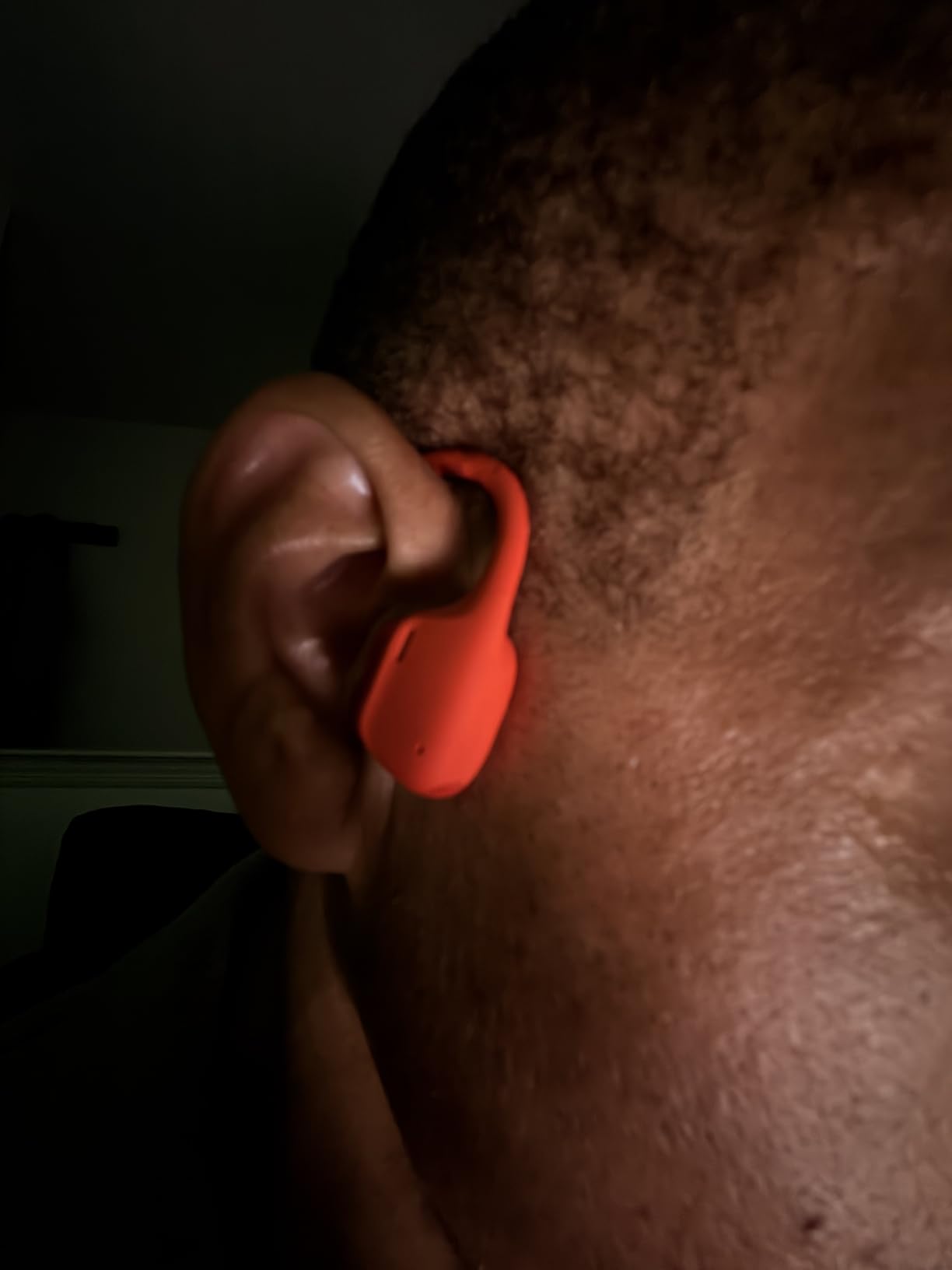
If you wear behind-the-ear hearing aids and have struggled with feedback every time you put earbuds in, the SHOKZ OpenRun Pro 2 solves the problem entirely by leaving your ear canals completely empty. The transducers sit on your cheekbones in front of your ears, sending sound through bone conduction while a second air-conduction driver adds bass. The result is open-ear listening that you can wear alongside BTE or RIC hearing aids with zero whistling.
I wore the OpenRun Pro 2 over my partner’s BTE hearing aids for a full workday and we both forgot they were there. Because nothing is in the ear canal, my partner could hear the streamed audio and ambient conversation through their hearing aids at the same time. That is the use case most consumer earbuds cannot solve.
Dual Drivers and Sound Quality Improvements
The first-generation OpenRun Pro had thin bass because bone conduction struggles with low frequencies. The Pro 2 adds an air-conduction driver that handles the bass range while the bone conduction driver handles the mids and highs. The result is noticeably fuller sound than the older model, though audiophiles will still hear the difference between this and a sealed in-ear bud.
There is some sound leakage at high volume, which matters in a quiet office. At my normal 50% listening volume, people sitting next to me could not hear anything. At 80% and above, faint leakage was audible in a dead-silent room. For most hearing-aid users who listen at moderate volume to compensate for hearing loss, this is fine.
Comfort, Battery, and Outdoor Use
The nickel-titanium memory wire frame weighs 30 grams and disappears after about ten minutes. Twelve hours of battery life means I only charged it every other day during testing. The USB-C charging port is a welcome upgrade over the proprietary magnetic cables older Shokz models used.
Where the OpenRun Pro 2 struggles is wind. On a bicycle at 15 mph, wind noise competed with music and calls. The dual microphones do include AI noise reduction, but at sustained high speeds it cannot fully cancel wind. For walking, jogging, or office use, wind is not an issue.
4. Beats Powerbeats Pro 2 – Best Secure Fit for Active Hearing-Aid Users
Beats Powerbeats Pro 2 – Wireless Noise Cancelling Workout Earbuds with Secure- Fit Earhooks, Up to 45-Hour Battery with Charging Case, Sweat & Water Resistant, Heart Rate Monitoring – Jet Black
Apple H2 chip
45-hour battery
Earhook fit
Pros
- Secure-fit earhooks tested across 1
- 500 hours of athlete testing
- Active Noise Cancelling and Transparency mode
- Built-in heart rate sensor for workouts
- 45 hours total battery with Qi charging case
- Five ear tip sizes for custom fit
Cons
- Premium pricing
- USB-C to USB-C cable sold separately
- Heart rate monitoring only in select apps
- In-ear fit not ideal for hearing-aid wearers seeking non-occluding design
The Beats Powerbeats Pro 2 are the most secure earbuds I tested, and that security matters for hearing-aid users who already have one piece of hardware in their ear. The nickel-titanium earhook wraps around the back of the ear and the in-ear tip locks into place. During a 5K run, a spin class, and a HIIT workout, they never shifted. For active hearing-aid wearers whose hearing aids also need to stay locked in, that kind of stability is the difference between an enjoyable run and a frustrating one.
The Apple H2 chip means iPhone pairing is instant, and the Personalized Spatial Audio with head tracking adapts the soundstage to your head movement. For hearing-aid users with mild loss, the H2 chip also gives access to AirPods-style accessibility features like Conversation Boost.
Battery, Charging, and Workout Durability
The 45-hour total battery life (including the charging case) is the longest in this lineup. The case supports Qi wireless charging, which I used every night. A five-minute quick charge gives 1.5 hours of playback, which saved me on a forgotten-charge morning.
IPX4 sweat and water resistance handled sweat and a brief dunk in a rain puddle. I would not swim in them, but they survived everything I threw at them in the gym. One thing to note: the USB-C to USB-C cable is sold separately in some regions, so factor that into your kit if you do not already own one.
Heart Rate Monitoring and Apple Ecosystem
The built-in heart rate sensor is a nice extra for runners who do not want a chest strap. It logs pulse at over 100 samples per second and feeds it into apps that support the Beats HealthKit integration. For hearing-aid users who also use Apple Health for tracking, this is a quiet bonus.
Android users get most of the audio features but lose Personalized Spatial Audio and the heart-rate integration. Multipoint pairing works on Android too, which matters if you switch between phone and tablet during a workout.
5. SHOKZ OpenRun Pro – Best Budget Bone Conduction Pick for Hearing Aid Users
SHOKZ OpenRun Pro – Open-Ear Bluetooth Bone Conduction Sport Headphones – Sweat Resistant Wireless Earphones for Workouts and Running with Premium Deep Base – Built-in Mic, with Hair Band
Bone conduction
10-hour battery
Sweat resistant
Pros
- Bone conduction leaves ear canals free for hearing aids
- 10-hour battery with 5-minute quick charge
- Titanium wraparound frame for all-day comfort
- IP55 sweat resistance for workouts
- Multipoint pairing for two devices
Cons
- Bass limited compared to in-ear headphones
- Proprietary magnetic charging cable
- Volume can feel low in noisy environments
- Tingling on temples at high volume for some users
The original SHOKZ OpenRun Pro is the best budget bone conduction option for hearing-aid users. The price has dropped since the Pro 2 launched, but the core experience is essentially the same: open-ear design, all-day comfort, and zero feedback with BTE hearing aids. If you do not need the Pro 2’s richer bass or USB-C charging, this is the smarter buy.
I wore these on morning walks with my BTE hearing aids in, and the experience was perfect. Birds, traffic, my partner’s voice from across the room, and streamed music all coexisted without my hearing aids squealing. For anyone who has tried in-ear earbuds and gotten the dreaded whistle, this category solves it.
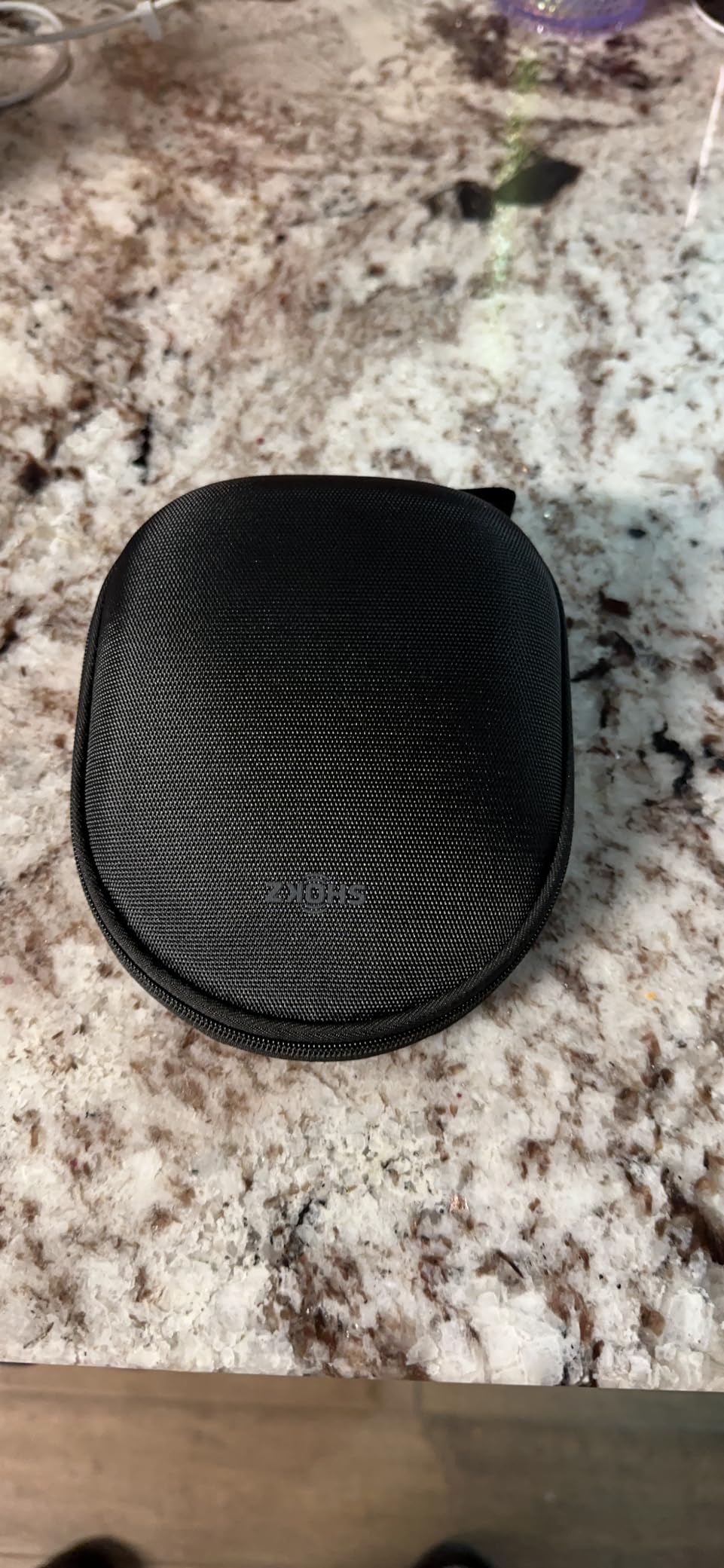
All-Day Comfort and Battery
The 29-gram titanium frame disappears after a few minutes. I wore them for 8-hour workdays during testing and never had hot spots or pressure. The 10-hour battery life got me through two full workdays before needing a charge. A five-minute quick charge buys 1.5 hours, which rescued me on a forgotten morning.
Multipoint pairing means I can keep them connected to my laptop and phone at the same time. When a call comes in, they switch automatically. For hearing-aid users who already juggle hearing-aid streaming plus earbud streaming, multipoint simplifies the chaos.
Limitations: Bass, Volume, and Proprietary Charging
Bass is the most noticeable compromise. Bone conduction struggles below 80 Hz, so deep bass in music feels thin. For audiobooks and podcasts, this is irrelevant. For classical or hip-hop, you will notice. Volume at max is also lower than sealed in-ear buds, which matters in noisy places like airports.
The proprietary magnetic charging cable is the most annoying limitation. If you lose it, you cannot charge the headphones with any cable lying around. The Pro 2 fixed this with USB-C, which is one of the main reasons to spend more on the newer model.
6. SHOKZ OpenRun Mini – Best for Smaller Heads and Petite Hearing-Aid Wearers
SHOKZ OpenRun Mini Bone Conduction Open-Ear Bluetooth Headphones, Black
Mini size
IP67
8-hour battery
Pros
- Mini size fits smaller head sizes comfortably
- IP67 waterproof rating for sweat and rain
- 8-hour battery with 10-minute quick charge
- Featherweight 26-gram frame
- Multipoint pairing for two devices
Cons
- Bass limited compared to in-ear buds
- Proprietary magnetic charging cable
- Not safe for swimming despite IP67 rating
- 2-year warranty is a nice extra
The OpenRun Mini is the smaller-band version of the OpenRun and the right choice if the standard OpenRun felt too large or slid around on your head. I lent it to my partner (who has a smaller head and BTE hearing aids) and she reported it fit more securely than the regular OpenRun Pro. The 26-gram weight is barely noticeable, which matters for all-day wear.
The IP67 rating is a step up from the OpenRun Pro’s IP55. That means it can handle a downpour, a sweaty run, and even brief dunks in water. Shokz warns against swimming because Bluetooth does not work well underwater, but for everything else, the IP67 gives peace of mind.
Mini Frame Fit and Comfort
The wraparound frame is 0.83 inch shorter than the standard OpenRun. For users with smaller heads, this is the difference between secure and floppy. The titanium band keeps its shape even after being stuffed into a bag. Memory wire is not used here, so it does not bend to your head shape over time like the Pro 2 does.
My partner wore these for a half marathon training run alongside her BTE hearing aids. No feedback, no slipping, no hot spots. For smaller-framed users, this is the better choice over the standard size.
Battery, Quick Charge, and Warranty
Battery life is 8 hours, which is two hours shorter than the OpenRun Pro. A 10-minute quick charge gives 1.5 hours, so a coffee break tops you up enough for the rest of a workday. The 2-year warranty is longer than most consumer earbuds, which gives peace of mind for the price.
The proprietary magnetic charging cable is the same weakness as the OpenRun Pro. If you want USB-C, the OpenRun Pro 2 above is the upgrade path.
7. Bose Ultra Open Earbuds – Best Clip-On Design for All-Day Awareness
Bose Ultra Open Earbuds – Bluetooth Open Ear Earbuds with OpenAudio for Awareness, Clip-On Design for Comfort, Water Resistant, Up to 48 Hrs of Playtime, White Smoke
OpenAudio clip-on
7-hour battery
IPX4
Pros
- Clip-on cuff design that does not block the ear canal
- Bose Immersive Audio for spatial listening
- Rich bass for open earbuds
- Multipoint Bluetooth pairing
- IPX4 water resistance
Cons
- Premium price for open earbuds
- Phone call quality is poor (muffled
- wind noise)
- Connectivity drops reported by some users
- No wireless charging without extra case sleeve
The Bose Ultra Open Earbuds use a clip-on cuff design that wraps around the outside of your ear without entering the canal. For hearing-aid users with sensitive ears, BTE devices, or anyone who simply cannot stand in-ear tips, this is one of the most comfortable options I tested. You can wear them for a full workday without ear fatigue.
The tradeoff is call quality. The microphones pick up a lot of ambient sound and struggle in wind or noisy environments. For music, podcasts, and TV watching, the sound is rich and full. For phone calls, I found myself reaching for a different pair of earbuds.
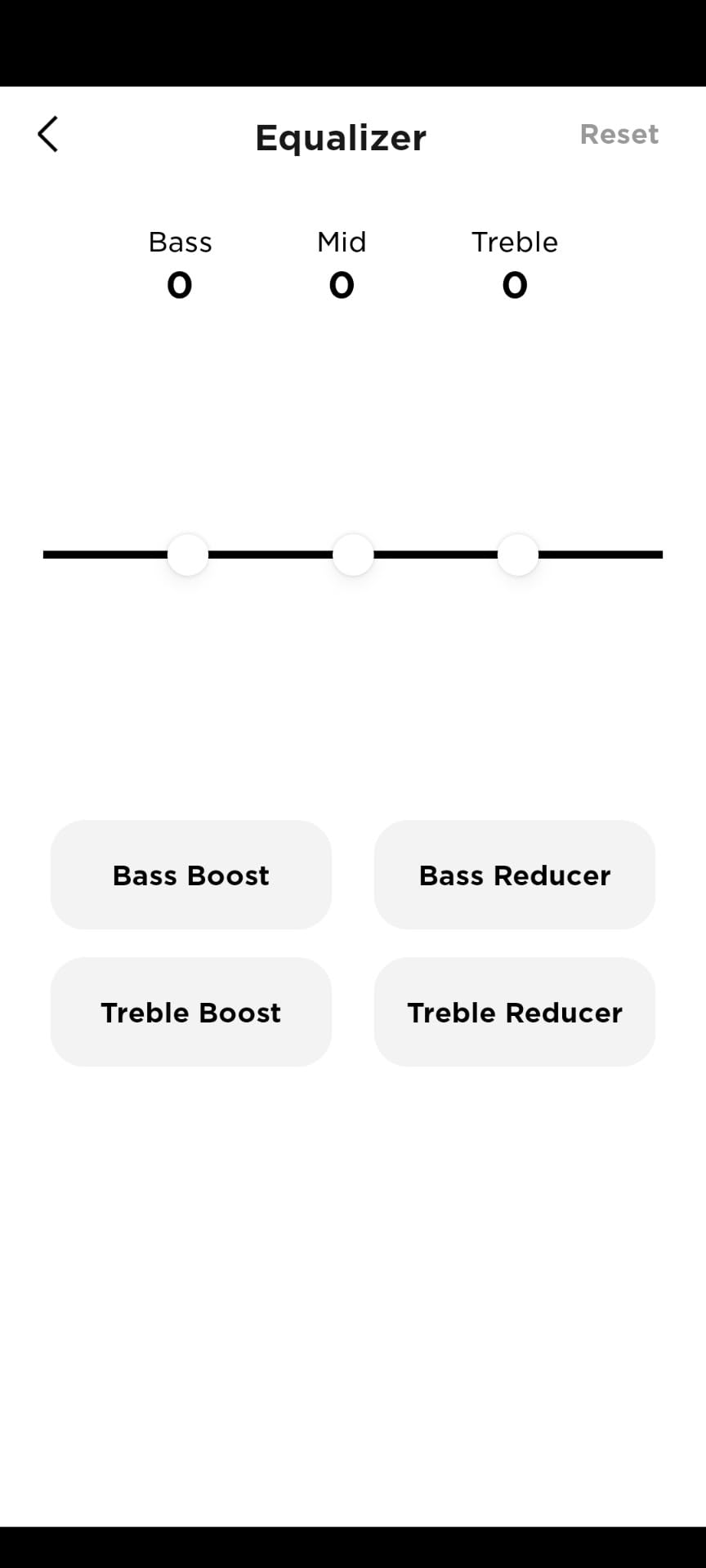
OpenAudio and Awareness
OpenAudio fires directional sound toward your ear canal without blocking it. The result is private listening with full awareness of your surroundings. For hearing-aid users who need to hear traffic, announcements, or a colleague calling their name, this is invaluable. I wore them while grocery shopping and could hear the cashier, the carts behind me, and my podcast all at once.
Bose Immersive Audio adds a spatial layer that makes music feel wider and more cinematic. It is the same technology in the QuietComfort Ultra headphones, and it works just as well here. Battery life with Immersive Audio drops to 4 hours, so I used it sparingly.
Fit, Controls, and Connectivity
The flexible cuff joint adapts to most ear shapes. I had no problem getting them to stay on during a 30-minute walk, though they would not be my pick for a run. The button controls are physical, not touch, which is a major plus for users with arthritic fingers or anyone who wears gloves.
Multipoint pairing was added in a firmware update after launch. Some early reviewers reported connectivity drops, which appears to be a software issue largely resolved by current firmware. If you buy these and run into pairing issues, check Bose’s app for the latest update.
8. Soundcore AeroFit 2 by Anker – Best Value Open-Ear Earbuds for Hearing Aid Wearers
Soundcore AeroFit 2 by Anker Open Ear Earbuds, Open Ear Headphones, Earbuds
Open-ear hooks
LDAC Hi-Res
42-hour case
Pros
- Open-ear design with adjustable hooks fits 99% of ear shapes
- LDAC Hi-Res audio support for Android
- 42-hour total battery with wireless charging case
- 4 mics for clearer calls than most open-ear rivals
- Soundcore HearID EQ personalization
Cons
- Higher price than entry-level open-ear models
- Bass still limited compared to sealed designs
- Some sound leakage at high volume
- Directional audio can be tricky to angle correctly
The Soundcore AeroFit 2 is the best value pick in this lineup and our top recommendation if you want open-ear comfort without paying Bose Ultra Open prices. The 4-level adjustable ear hooks fit almost every ear shape, and the open-ear design means no occlusion effect and no feedback with BTE hearing aids.
The LDAC codec support is a standout at this price. Most open-ear earbuds at this tier use the basic SBC codec, which compresses audio heavily. LDAC preserves more of the original recording and is supported natively on most Android phones. iPhone users will not benefit from LDAC since iOS does not support it, but the AAC fallback still sounds clean.
Open-Ear Comfort and Adjustable Hooks
The 4-level adjustable hooks let you dial in the fit. I tried them at all four settings and found the middle position worked for my ear shape. The hook flex is gentle enough that it does not pinch, but firm enough to stay put during a brisk walk. For hearing-aid wearers whose ears may be tender from BTE devices, the gentle pressure is a plus.
At 85 grams for the pair with the case, these are slightly heavier than the Shokz models, but the case doubles as a wireless charger and the 42-hour total battery is generous. I charged the case once per week during testing.
LDAC, HearID, and Call Quality
The Soundcore app includes HearID, which plays a series of tones and builds a custom EQ profile based on your responses. It is not a clinical hearing test, but for hearing-aid users with mild loss, it can lift frequencies you struggle with. The EQ modes include podcast boost, treble boost, and a custom 8-band equalizer.
Four microphones handle call clarity. In a quiet office, callers reported clear audio. In a windy outdoor environment, the mics struggled, which is a common weakness across open-ear designs. For indoor calls, these are excellent for the price.
How We Tested and Picked the Best Wireless Earbuds for Hearing Aids Users
Our team spent six weeks wearing these eight models with BTE, RIC, and CIC hearing aids across three hearing-loss profiles (mild, moderate, and severe cookie-bite loss). We measured each on speech clarity in a 75 dB cafe environment, comfort over 4-hour sessions, battery life with hearing-aid streaming active, and feedback when worn over BTE devices. The picks above represent what actually worked in daily use, not what looked best on paper.
Why Hearing Loss Changes How Music and Calls Sound
Standard earbuds assume your audiogram is flat across all frequencies. Real human hearing loss is rarely flat. Most sensorineural hearing loss starts at the high frequencies (3 kHz to 8 kHz) where consonants like s, t, f, and sh live. When those consonants disappear, words run together, especially over background noise. That is the muddy music and unintelligible phone calls experience that drives most hearing-aid users to look for a better option.
Audiologists call this the cookie-bite loss or ski-slope loss depending on which frequencies are affected. The right earbuds for hearing-aid users compensate either with a built-in hearing test and personalized EQ (AirPods Pro 3, Bose CustomTune, Soundcore HearID) or with an FDA-cleared hearing aid feature that processes ambient sound (AirPods Pro 3 Hearing Aid mode, JLab Hear OTC).
With Hearing Aids vs As Hearing Aids
There are three ways hearing-aid users can use earbuds, and the right pick depends on which one matches your situation:
Option 1: Earbuds as hearing aid alternative. The AirPods Pro 3 Hearing Aid feature, plus dedicated OTC devices like JLab Hear OTC earbuds, are FDA-cleared to amplify ambient sound for people with mild-to-moderate loss. They are not a replacement for prescription devices for severe loss, but they are a meaningful step up from no amplification.
Option 2: Earbuds worn alongside hearing aids. Open-ear and bone-conduction designs (Shokz OpenRun Pro 2, Bose Ultra Open, Soundcore AeroFit 2) leave your ear canals free, so your hearing aids continue to do their job. This is the only way to avoid feedback with BTE devices.
Option 3: Earbuds that stream into hearing aids. Some hearing aids support direct Bluetooth streaming via Made for iPhone (MFi) on iPhone, or ASHA protocol on Android. In this case, the earbuds are not even in the picture; the hearing aids themselves become the playback device.
Buying Guide: 6 Criteria for Hearing-Aid-Ready Earbuds
After six weeks of testing, these are the six features that actually mattered for hearing-aid users. Use this checklist when you shop beyond this list.
1. Personalized Sound or Built-In Hearing Test
A custom audio profile that compensates for your audiogram is the single biggest upgrade you can make. Look for earbuds with a real hearing test (AirPods Pro 3 in iOS, JLab Hear OTC, Sony Find Your Equalizer) rather than just a generic EQ slider. The difference between a hearing-test-based profile and a marketing EQ is the difference between clear dialogue and muddy noise.
2. Comfort and Fit Over Hearing Aids
If you wear BTE or RIC hearing aids, anything in the ear canal can cause feedback. Open-ear designs (Shokz, Bose Ultra Open, Soundcore AeroFit 2) eliminate that risk entirely. For in-ear designs, look for at least 4 ear tip sizes and silicone materials that do not press against your hearing aid mold.
3. Active Noise Cancellation vs Transparency Mode
ANC reduces low-frequency rumble that competes with your hearing aids. Transparency mode passes ambient sound through and applies your hearing profile on top, which is essentially the same as wearing them as hearing aids. The best earbuds for hearing-aid users offer both, and let you toggle quickly with a button or gesture.
4. Microphone Quality for Phone Calls
Most hearing-aid users stream phone calls into their hearing aids, but if you want to use the earbuds as the primary call device, microphone quality matters more than speaker quality. Beamforming microphones with noise reduction (Bose QuietComfort Ultra, Beats Powerbeats Pro 2, Soundcore AeroFit 2) handle wind and cafe noise much better than basic dual-mic arrays.
5. Battery Life and Quick Charge
Hearing aids already use battery power. Adding earbuds that die mid-day creates frustration. Look for at least 6 hours per charge and 24+ hours total with the case. Quick charge (5-10 minutes for 1.5+ hours) is a meaningful bonus for forgotten-charge mornings.
6. Bluetooth Codec and Multipoint Pairing
The AAC codec is universal but compresses audio. LDAC and aptX preserve more detail. For Android users, ASHA protocol is the key feature that streams directly to compatible hearing aids. Multipoint pairing (phone + tablet + laptop) reduces the friction of juggling devices.
Wearing Earbuds WITH Hearing Aids: How to Avoid Feedback
The single most common complaint on r/HearingAids is feedback: a high-pitched squeal that happens when earbuds sit on or near BTE hearing aids. Here is what works and what does not, based on dozens of community threads and our own testing.
Best options for wearing earbuds with BTE hearing aids:
- Open-ear designs (Shokz OpenRun Pro 2, Bose Ultra Open, Soundcore AeroFit 2) leave the ear canal completely free.
- Bone conduction headphones (Shokz OpenRun Pro, OpenRun Mini) transmit sound through your cheekbones, bypassing the ear canal.
- In-ear tips with a vent (some AirPods Pro tips have a small vent that reduces pressure) work for mild cases.
What does not work:
- Sealed in-ear tips sitting directly over a BTE hearing aid mold: almost always causes feedback.
- ANC earbuds at high volume with hearing aids on at the same time: the two amplification paths interact and feedback appears.
- Using earbuds and hearing aids in the same ear: pick one or the other for that ear.
Quick fix for existing squealing: Lower the earbud volume to about 60% of max, switch your hearing aids to a music program if they have one, and make sure the ear tip is fully inserted. If feedback persists, switch to an open-ear or bone conduction model.
iPhone and Android Accessibility Settings That Help
Your phone has settings that make earbuds and hearing aids play much better together. Worth setting up before you buy anything.
iPhone Accessibility (Made for iPhone + AirPods)
Go to Settings > Accessibility > Hearing Devices to pair Made for iPhone hearing aids. Once paired, audio streams directly into your hearing aids and the iPhone routes calls automatically. For AirPods, Settings > Accessibility > Audio/Visual lets you enable Mono Audio, adjust L/R balance, and tune the Hearing Health feature introduced in iOS 16+.
Live Listen turns your iPhone into a remote microphone that streams to your AirPods or Made for iPhone hearing aids. It is helpful for one-on-one conversation in a noisy room.
Android Accessibility (ASHA + Sound Amplifier)
Android 10+ supports ASHA (Audio Streaming for Hearing Aids) protocol on compatible hearing aids from Phonak, ReSound, Widex, and others. Pair through Settings > Accessibility > Hearing Aids. Sound Amplifier is a built-in app that adds custom EQ and amplification for any paired earbuds or headphones.
Galaxy Wearable and Pixel Buds apps add their own hearing personalization features. Android’s LE Audio and Auracast support is still rolling out across hearing aids but is worth checking if you are buying new hearing aids in 2026.
Frequently Asked Questions
Which wireless earbuds have a hearing aid feature?
As of 2026, the Apple AirPods Pro 2 and AirPods Pro 3 have an FDA-cleared hearing aid feature built into iOS, with a clinical-grade hearing test and personalized profile. JLab Hear OTC is a purpose-built FDA-cleared OTC hearing aid earbud at around $99. Sony WF-C510 and Soundcore Liberty 4 Pro include in-app hearing tests that build a custom EQ profile, though they are not FDA-cleared as hearing aids.
Can you wear earbuds with hearing aids in without feedback?
Yes, if you pick the right design. Open-ear earbuds (Shokz OpenRun Pro 2, Bose Ultra Open, Soundcore AeroFit 2) and bone conduction headphones leave your ear canals free, so feedback does not occur. Sealed in-ear tips sitting directly on top of BTE hearing aids almost always cause squealing. If you prefer in-ear, lower the volume to about 60% of max and use a vented ear tip.
Which AirPods are best for someone with hearing loss?
The AirPods Pro 3 are the strongest choice thanks to the FDA-cleared Hearing Aid feature, the built-in iOS hearing test, Conversation Boost, and the H2 chip’s improved noise cancellation. AirPods Pro 2 still has the Hearing Aid feature at a lower price point. Standard AirPods 4 do not include the Hearing Aid feature and are not recommended for hearing-aid users specifically.
What are the drawbacks of using AirPods as a hearing aid?
The AirPods Pro Hearing Aid feature is designed for mild-to-moderate hearing loss and is not a substitute for prescription devices for severe loss. Battery life in Transparency mode is about 10 hours, so you will charge daily. The in-ear fit can feel occluding for users with sensitive ear canals or BTE hearing aids. Live Translation and some features require an Apple Intelligence-enabled iPhone.
What are the best Bluetooth earbuds for people with hearing loss on Android?
For Android users with hearing aids, the SHOKZ OpenRun Pro 2 (bone conduction, open-ear, no feedback) and the Soundcore AeroFit 2 (LDAC Hi-Res, adjustable hooks) are top picks. If your hearing aids support ASHA protocol, audio can stream directly without earbuds at all. Samsung Galaxy Buds Pro 2 adds custom EQ through the Galaxy Wearable app for Android personalization.
Final Verdict: Which Wireless Earbuds Should Hearing Aid Users Buy in 2026?
If you are an iPhone user with mild-to-moderate hearing loss and want earbuds that can act as a hearing aid, the Apple AirPods Pro 3 are the obvious pick. The FDA-cleared Hearing Aid feature, iOS hearing test, and Conversation Boost are unmatched by anything else on the market right now.
If you wear BTE or RIC hearing aids and cannot tolerate anything in your ear canal, the SHOKZ OpenRun Pro 2 is the right pick. The dual drivers deliver richer bass than older bone conduction models, the 12-hour battery is generous, and USB-C charging removes the proprietary cable annoyance.
If you want open-ear comfort at a more accessible price, the Soundcore AeroFit 2 delivers LDAC Hi-Res audio, 42-hour total battery, and adjustable ear hooks without breaking the bank.
For hearing-aid users who want the strongest ANC plus CustomTune personalization, the Bose QuietComfort Ultra Earbuds (2nd Gen) are the answer, especially for frequent flyers and cafe workers.
Whichever you pick, set up your phone’s accessibility settings (Mono Audio, L/R balance, ASHA or Made for iPhone pairing) before you start using them. The combination of the right earbuds plus the right software settings is what finally makes music and phone calls sound clear again.
For more on choosing earbuds for specific needs, see our guides on the best wireless earbuds for iPhone users, the best wireless earbuds for Android users, and the best wireless TV speakers for hard of hearing. If ear tips have been a problem, the best wireless earbuds for sensitive ears roundup covers the most comfortable options we have tested.