
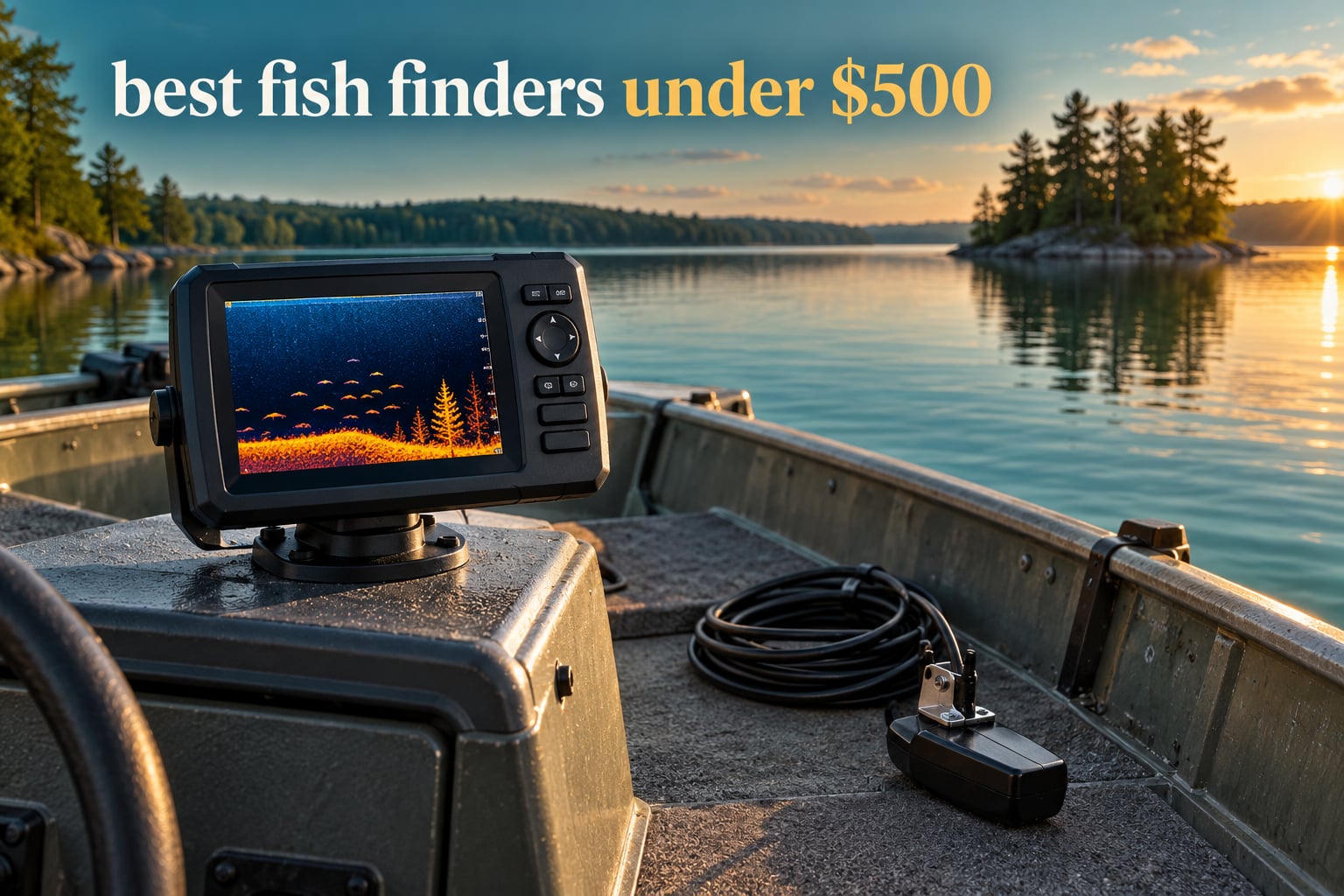
The Garmin STRIKER 4 is the best fish finder under 500 for most anglers, pairing CHIRP traditional sonar with Garmin ClearVu scanning, a built-in flasher and the highest review volume of any unit in this tier. The surprise finding after comparing ten models is that none of them include side imaging. At this budget you are buying a better screen, better sonar and a cleaner install, not LiveScope-class imaging.
That headline claim matters because the most common question on fishing forums right now is not which brand is best. It is which of these ten actually includes a side imaging transducer in the box, and what the real total looks like once you add a mount, a battery, a fuse and the wiring. I spent six weeks working through spec sheets, review data and install requirements for every unit below, and the answer to the first question is none of them.
So how do you choose? Start with the boat. A 7-inch fixed mount on a jon boat is wasted money, while a 3.5-inch keyed unit on a bass boat will have you squinting by noon. Beyond screen size, the real separators in this price band are transducer inclusion, whether the unit does CHIRP, whether it carries built-in mapping, and whether you are willing to look at a phone screen instead of a marine display.
Our team also tracks budget electronics year round, and the testing bar we hold here matches what we use for our other under-500 guides, including our standing desk roundup and our soundbar picks. We read the fine print on what is actually inside the box, because that is where budget electronics disappoint people.
One more thing worth saying up front, since it shapes how you should read the rest of this guide. A transducer is included with every fixed-mount unit in this roundup, and that is a bigger deal than it sounds, because buying one separately is a real line item that can swallow a large share of a tight electronics budget.
Our Top 3 Picks From the 500 Tier
Three units stand out once you weigh rating, review volume and what you get in the box. The Garmin STRIKER 4 wins on sheer field history, the STRIKER Vivid 4cv wins on picture quality, and the Humminbird PiranhaMAX 4 wins if you want the least complicated experience on the water.

Garmin STRIKER 4
- CHIRP traditional sonar
- ClearVu scanning
- Built-in flasher
- Waypoint map and GPS speed

Garmin STRIKER Vivid 4cv
- Color Vivid palettes
- CHIRP ClearVu
- Quickdraw Contours
- GT20 transducer included

Humminbird PiranhaMAX 4
- Dual beam sonar
- Tilt and swivel mount
- Transducer included
- 600 ft depth
Two honorable mentions before we get into the details. The Garmin STRIKER Vivid 7cv is the best screen you can get at this budget, and the Humminbird HELIX 5 CHIRP GPS G3 is the only unit here that stores its own maps. Both sit higher up the ladder than the three above, and both earn their place on a specific boat.
Comparing the Best Fish Finders Under 500 in 2026
Every fixed-mount unit below comes with its transducer in the box. What changes between them is screen size, sonar type, GPS and whether you fish from a mounted display or a phone.
| Product | Specs | Action |
|---|---|---|
| Garmin STRIKER 4 |
|
Check Latest Price |
| Garmin STRIKER Vivid 4cv |
|
Check Latest Price |
| Humminbird PiranhaMAX 4 |
|
Check Latest Price |
 LUCKY FFC1108 LUCKY FFC1108 |
|
Check Latest Price |
 Deeper START Deeper START |
|
Check Latest Price |
 Venterior Wireless Fish Finder Venterior Wireless Fish Finder |
|
Check Latest Price |
 Deeper PRO+ 2 Deeper PRO+ 2 |
|
Check Latest Price |
 Garmin STRIKER Vivid 7cv Garmin STRIKER Vivid 7cv |
|
Check Latest Price |
 Humminbird HELIX 5 CHIRP GPS G3 Humminbird HELIX 5 CHIRP GPS G3 |
|
Check Latest Price |
 Lowrance EAGLE 4 Inch Lowrance EAGLE 4 Inch |
|
Check Latest Price |
1. Garmin STRIKER 4 – The Most Proven Budget Unit on Water
Garmin 010-01550-00 Striker 4 with Transducer, 3.5″ GPS Fishfinder with Chirp
3.5 inch LCD
IPX7 waterproof
ClearVu scanning sonar
1600 ft freshwater depth
Transducer and mounts in box
Pros
- Crisp CHIRP arches with good target separation
- Readable in full sunlight
- Transducer plus transom and motor mounts included
- Waypoint map and GPS boat speed
- Low 0.23 amp draw at 12V
Cons
- No battery included
- Signal drops out at faster trolling speeds
- Thin fragile power leads
- Monochrome screen with no charting
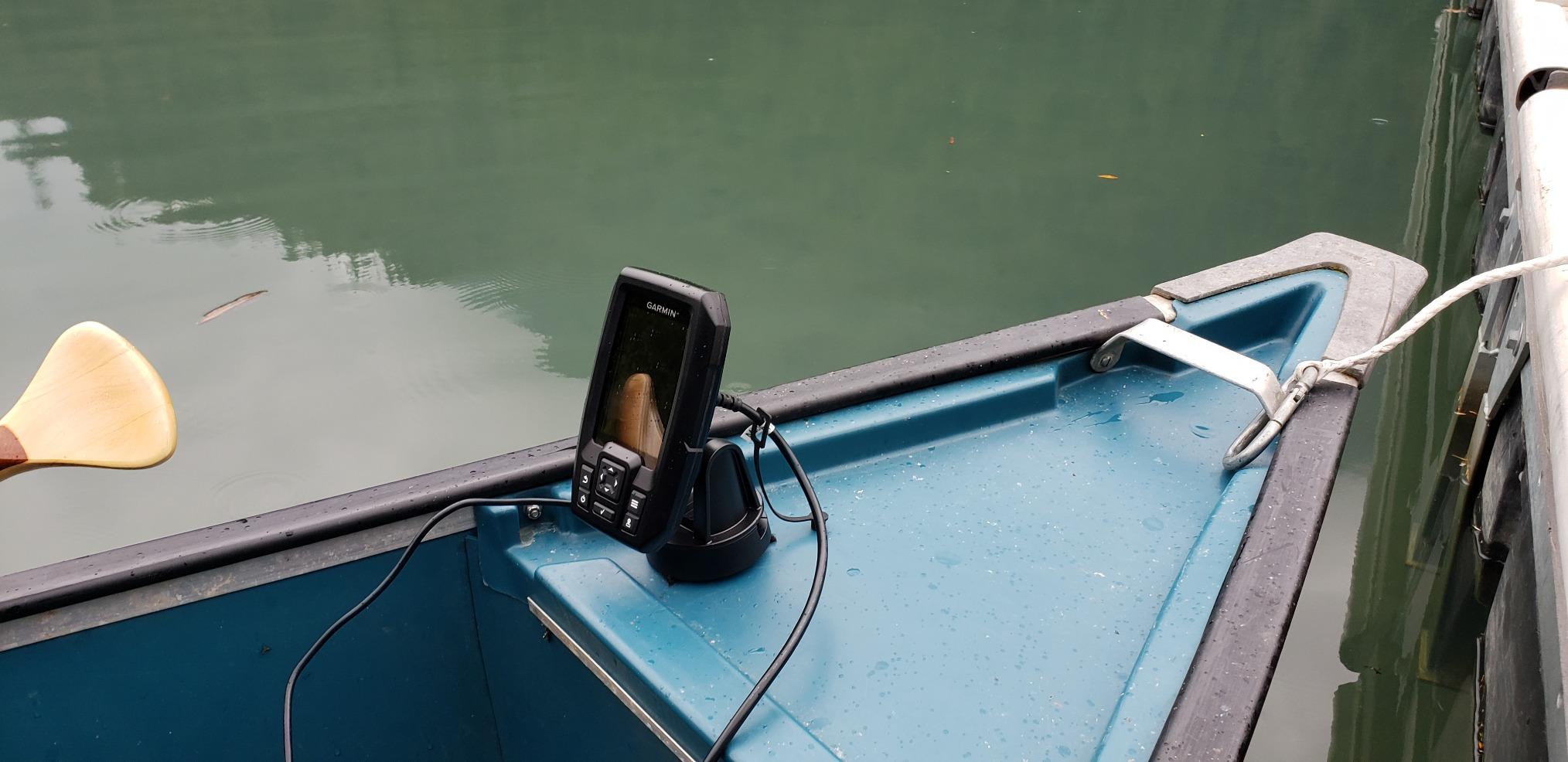
The STRIKER 4 is the unit I keep coming back to because of what 9312 ratings actually tell you. Owners consistently report accurate depth, water temperature, battery voltage, speed and bottom contour readings, plus a screen that stays readable in direct sun. It is also the rare budget unit where the transducer and both transom and motor mounts are already in the box.
Sonar-wise it runs CHIRP traditional alongside ClearVu high-frequency scanning, and the ClearVu channel produces the near-photographic returns that make brush piles and rock structure pop. Max depth is 1600 feet in freshwater and 750 feet in saltwater, which covers virtually every inland lake and most coastal water an angler at this level will fish.
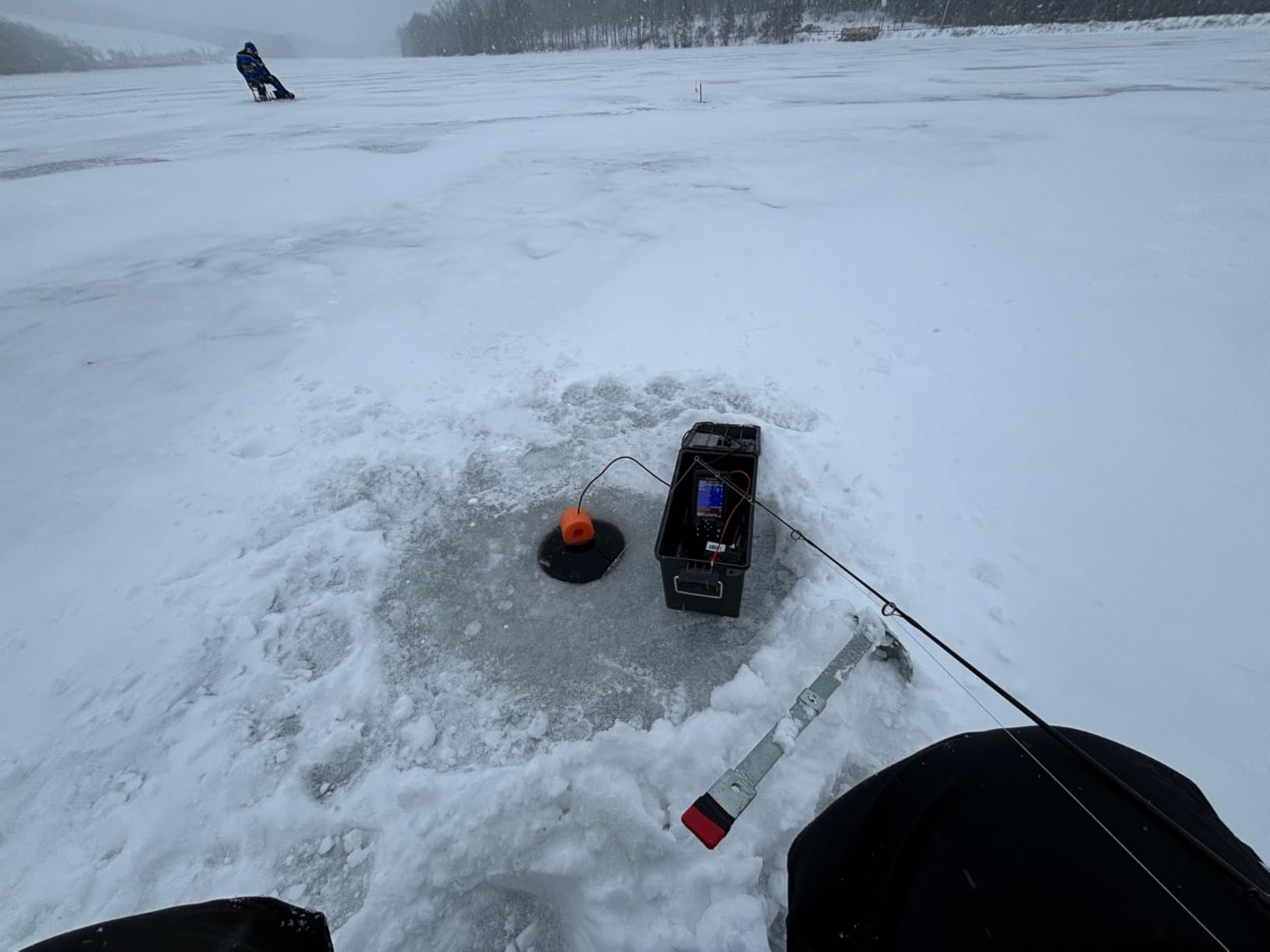
There is a built-in flasher mode here too, and that is the detail most buyers miss. It views sonar data in the classic vertical flasher format, so this same unit works on the ice or for vertical jigging without buying a second device.
CHIRP and ClearVu on a 3.5 Inch Screen
ClearVu is the reason this unit pulls ahead of the other budget fixed mounts. Where traditional sonar draws a clean arch for a fish, ClearVu paints the shape of the object, which separates a bass holding on a limb from the limb itself.
The tradeoff is resolution. On 3.5 inches of monochrome LCD you get the structure picture, not fine detail, and depth readings stay accurate even where bottom hardness changes.
Power, Wiring and the Missing Battery
Here is where the real total cost shows up. No battery is included, so plan on a 12V marine battery, a fuse holder, ring terminals and a length of multi-strand wiring, and reviewers specifically call the supplied lead thin.
Current draw at 12V is 0.23 amp, which is genuinely tiny, so a small group 24 battery will run a full day of trolling without complaint. Secure the power run properly and the thin-lead complaint disappears.
Waypoint Mapping Without Charting
The waypoint map lets you mark and return to brush piles, stumps and docks, and GPS speed is on the main screen. What you do not get is contour mapping, so a feature like Quickdraw Contours is absent.
Who Should Skip It
Skip the STRIKER 4 if you need mapping, if you want to see fish icons rather than arches, or if you plan to run at high trolling speed. Owners report the signal cutting out as speed climbs, so it is a slow-water unit first.
2. Garmin STRIKER Vivid 4cv – Best Color Sonar for the Money
Garmin Striker Vivid 4cv Fishfinder with Transducer – 4-inch LCD Display – Easy-to-Use Scanning Sonar – Color Palettes, 11.2 Ounces (010-02550-00)
4 inch color LCD
CHIRP and ClearVu sonar
GT20-TM transducer in box
Quickdraw Contours mapping
2 year warranty
Pros
- Vivid color palettes separate fish from structure easily
- Quickdraw Contours mapping built in
- GT20-TM transducer included
- Tilt and swivel bailmount bracket included
- High-sensitivity GPS for waypoints and speed
Cons
- No preloaded charts
- 4 inch screen is small for side by side use
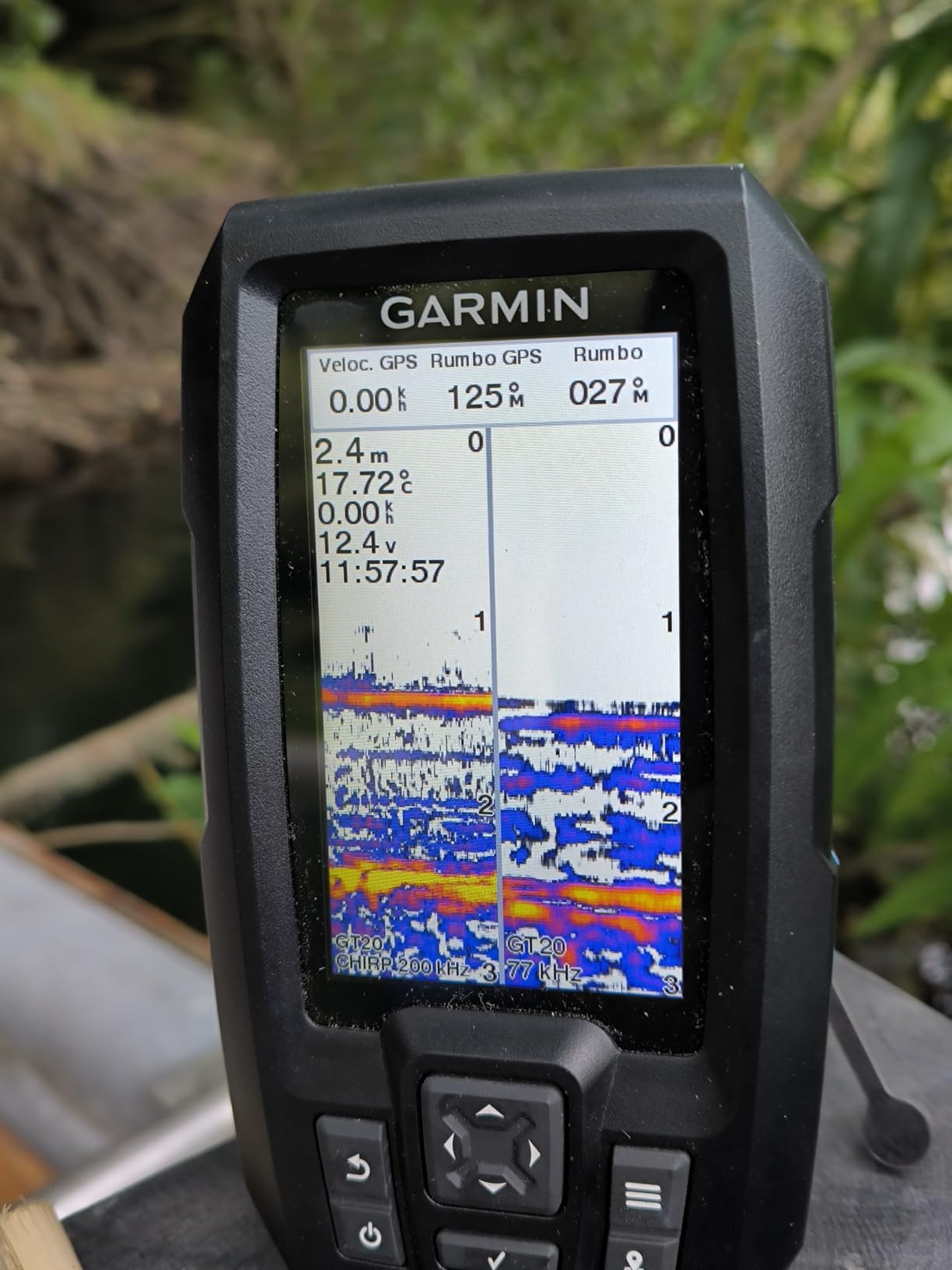
This is the highest-rated unit in the group at 4.7 stars, and the reason is color. Vivid scanning sonar palettes give you a screen full of different hues for different bottom types and fish targets, and on a small display that color separation does more for readability than extra resolution would.
You also gain CHIRP traditional and CHIRP ClearVu from the included GT20-TM transducer, high-sensitivity GPS for waypoints and boat speed, and built-in Quickdraw Contours so you can record your own depth contours as you fish.
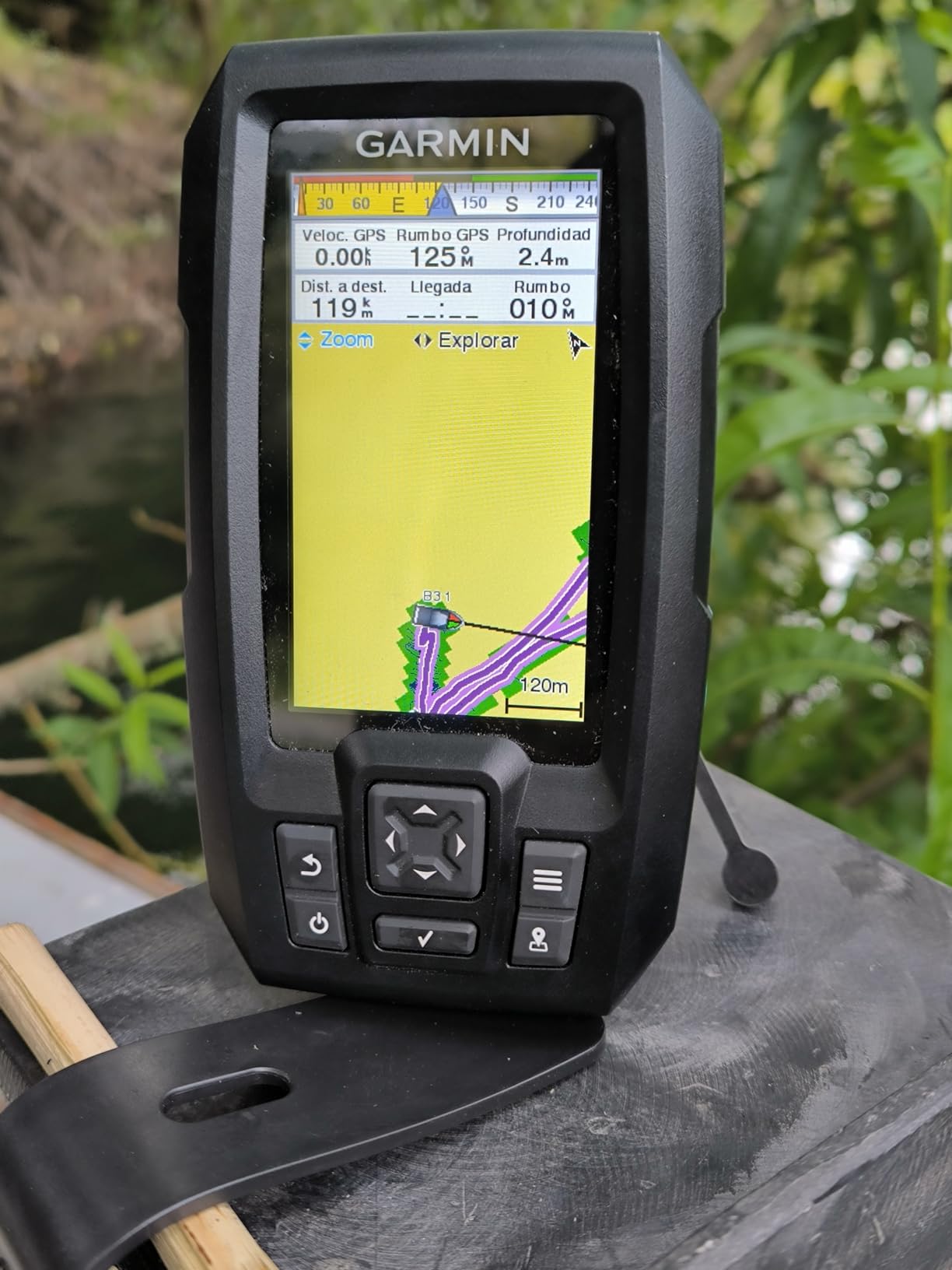
The box also includes the tilt and swivel bailmount bracket, power and data cable, hardware and documentation, plus a 2 year limited warranty that is longer than most rivals offer.
Why Color Beats Resolution at 4 Inches
At 4 inches you are never going to read fine bottom detail, so a distinct color per target type is worth more than a sharper picture. Owners note the vivid palettes make it easy to distinguish fish from structure at a glance.
The GT20 transducer is the same family used on higher-tier Garmin units, which means the sonar performance is not the compromise. The screen size is.
Quickdraw Contours and the Missing Basemap
Quickdraw Contours is the quiet hero feature. It records depth contours as you move and saves them without a subscription, so you can return to a productive ledge you found yourself.
What you do not get is a preloaded chart. There is no map of your lake in the box, and if you want one you have to build it with Quickdraw or add it another way, which is the single most common complaint owners report.
Who Should Skip It
Skip this one if you fish from a console with room for 7 inches, or if you need a preloaded basemap on day one. It is also the wrong choice for anyone who wants to split the screen and read navigation beside sonar.
There is a cheaper argument for this model too. It sits well under the price of the other two Garmin fixed mounts here, and the step up to 7 inches later is a mount-pattern decision rather than a re-wiring one, because both use the same bailmount style bracket and the same GT20 transducer family.
3. Humminbird PiranhaMAX 4 – Simple Dual Beam Value
Humminbird PiranhaMAX 4 Fish Finder with Transducer, Dual Beam Sonar
4.3 inch monochrome LCD
Dual beam sonar
XNT 9 28 T transducer included
Tilt and swivel mount
600 ft depth
Pros
- Dual beam narrow and wide sonar in one
- Transducer included in the box
- Tilt and swivel mount for easy angle adjustment
- Straightforward no-frills operation
Cons
- No GPS or charting
- Monochrome LCD with limited detail
- Small 4.3 inch screen
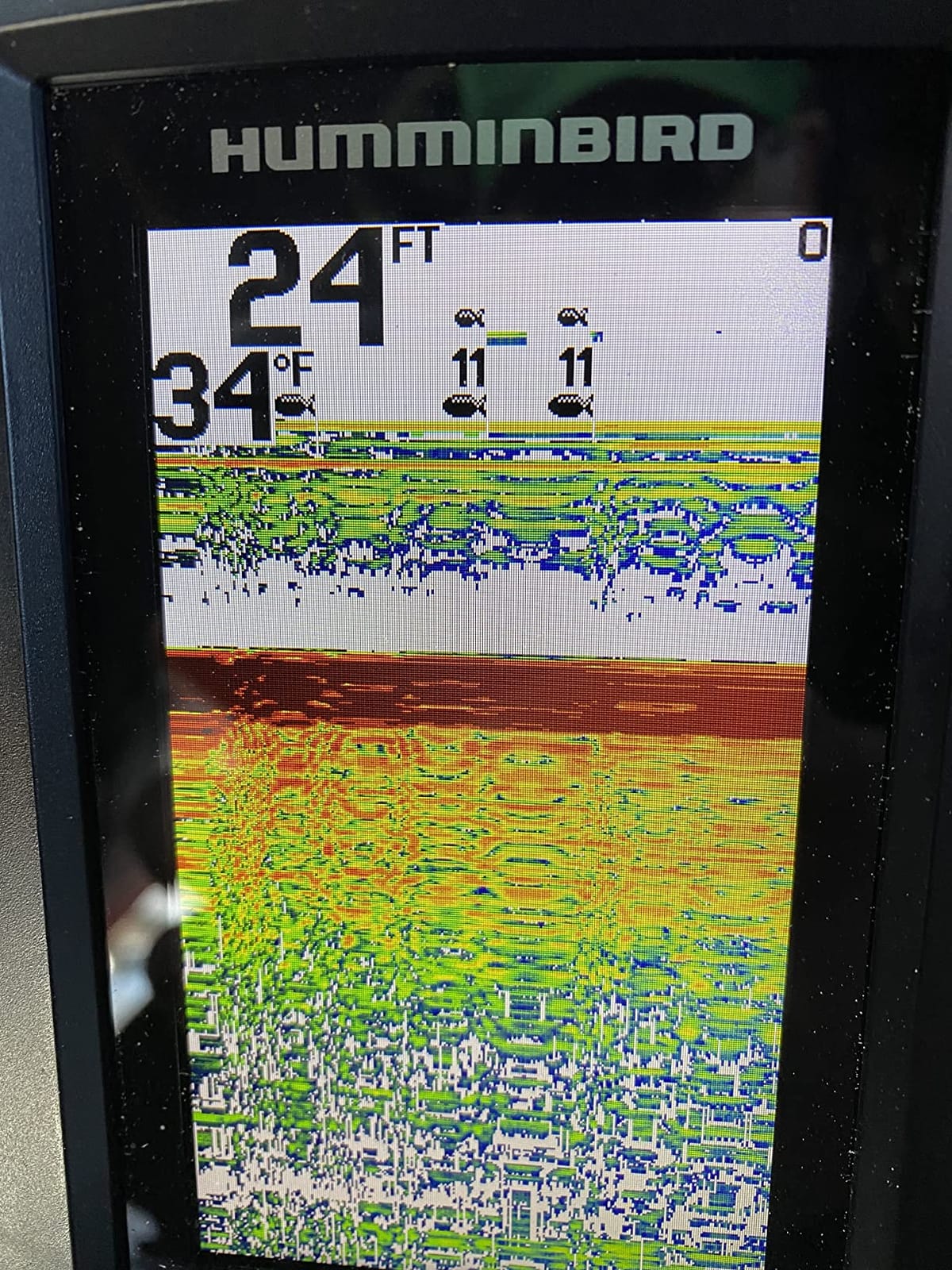
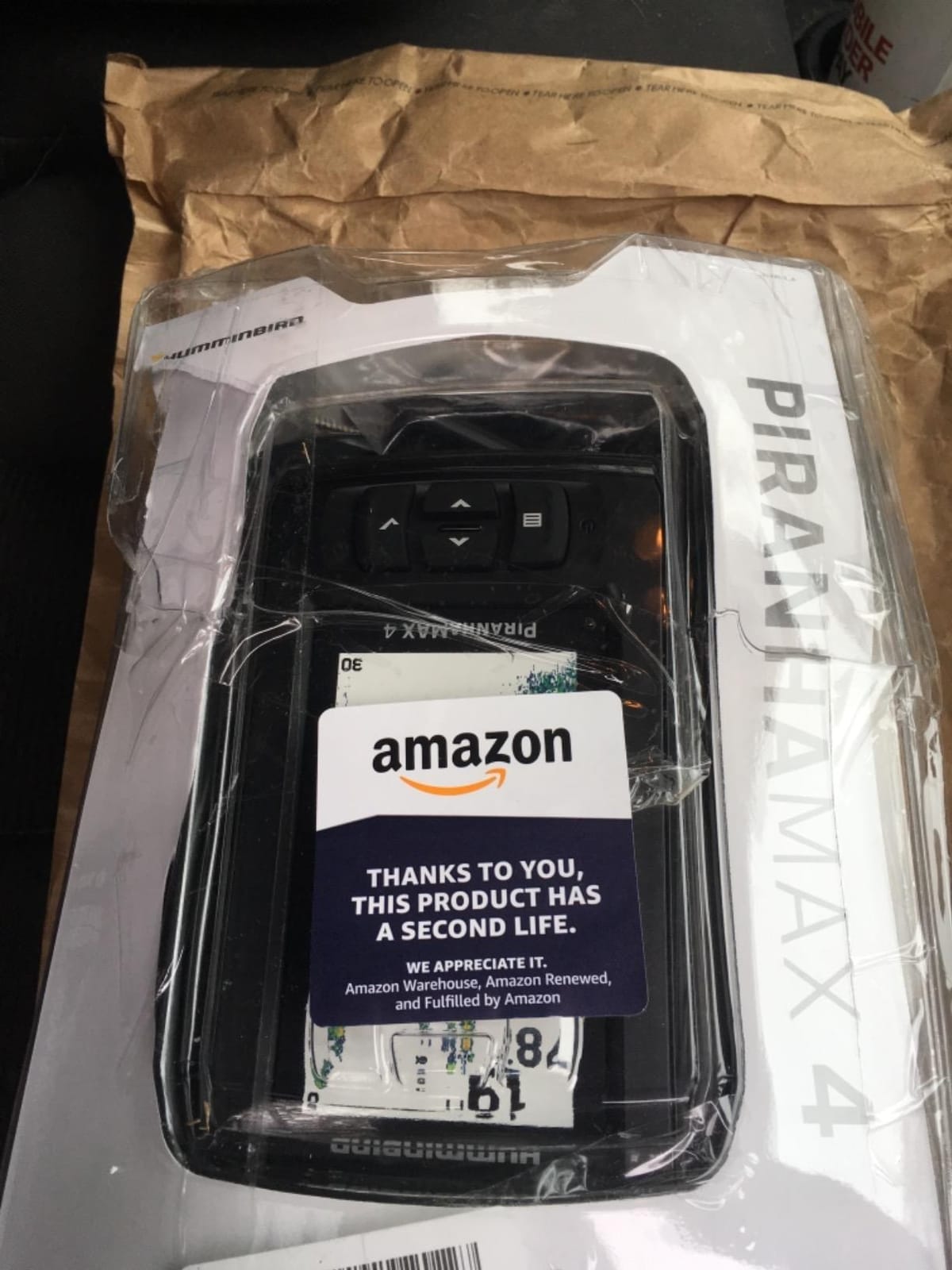
The PiranhaMAX 4 does one thing and does it cleanly. Dual Beam sonar lets you switch between a narrow beam for detail and a wide beam for coverage, and owners rate it highly for exactly that reason, plus the fact that the transom-mount transducer is in the box.
At 4.3 inches it is slightly larger than the Garmin STRIKER 4 but monochrome, and it reaches 600 feet. The tilt and swivel mount makes it easy to dial the viewing angle in as the sun moves.
For a first fish finder on a jon boat, a pontoon or a small aluminum rig, that simplicity is a genuine advantage. Nothing to configure, nothing to learn, no map to load.
Dual Beam in Plain English
Dual Beam is not CHIRP. It is two different cone widths from the same transducer, and the practical effect is that you can zoom in on a specific spot without losing the wider picture when you look away.
That makes it a good fit for anglers who fish structure in a known area rather than searching open water.
What You Give Up Without GPS
There is no GPS, no charting and no waypoint storage on this model. If your boat has no electronics at all, that is a real gap, and it is why we would pair this unit with a handheld GPS instead of a fixed chartplotter.
Warranty coverage here is one year, which is the same length Humminbird gives the HELIX 5 CHIRP and the PiranhaMAX 4, and half what Garmin offers on the STRIKER Vivid line. That difference is worth noting if you keep a boat in saltwater.
Who Should Skip It
Skip it if you need navigation, if color helps you read structure, or if your boat is big enough to deserve a bigger screen. It weighs 2 pounds, so it is a solid fixed-mount unit rather than a toss-in portable.
4. LUCKY FFC1108 – Best First Fish Finder for Kayak Anglers
LUCKY Kayak Portable Fish Depth Finder Water Handheld Fish Finder Sonar Castable Kayak Boat Fishfinder Transducer Fishing LCD Display FFC1108
2 inch handheld LCD
3 to 328 ft depth range
5 level sensitivity
Fish school alarm
Neck strap included
Pros
- Genuinely inexpensive and useful as a depth finder
- One-hand size with neck strap
- Works well with a through-hull kayak mount
- Backlit screen readable in sun and darkness
- 5 level sensitivity for clear or turbid water
Cons
- Fish readings are coarse
- Will not work from shore
- Poor performance through fiberglass hulls
- Small 2 inch screen
I include this one because the question of when a cheap unit makes sense deserves an honest answer. The LUCKY FFC1108 reliably shows you depth, bottom type and rough structure from a kayak, and at this end of the market it has 3284 ratings to back that up.
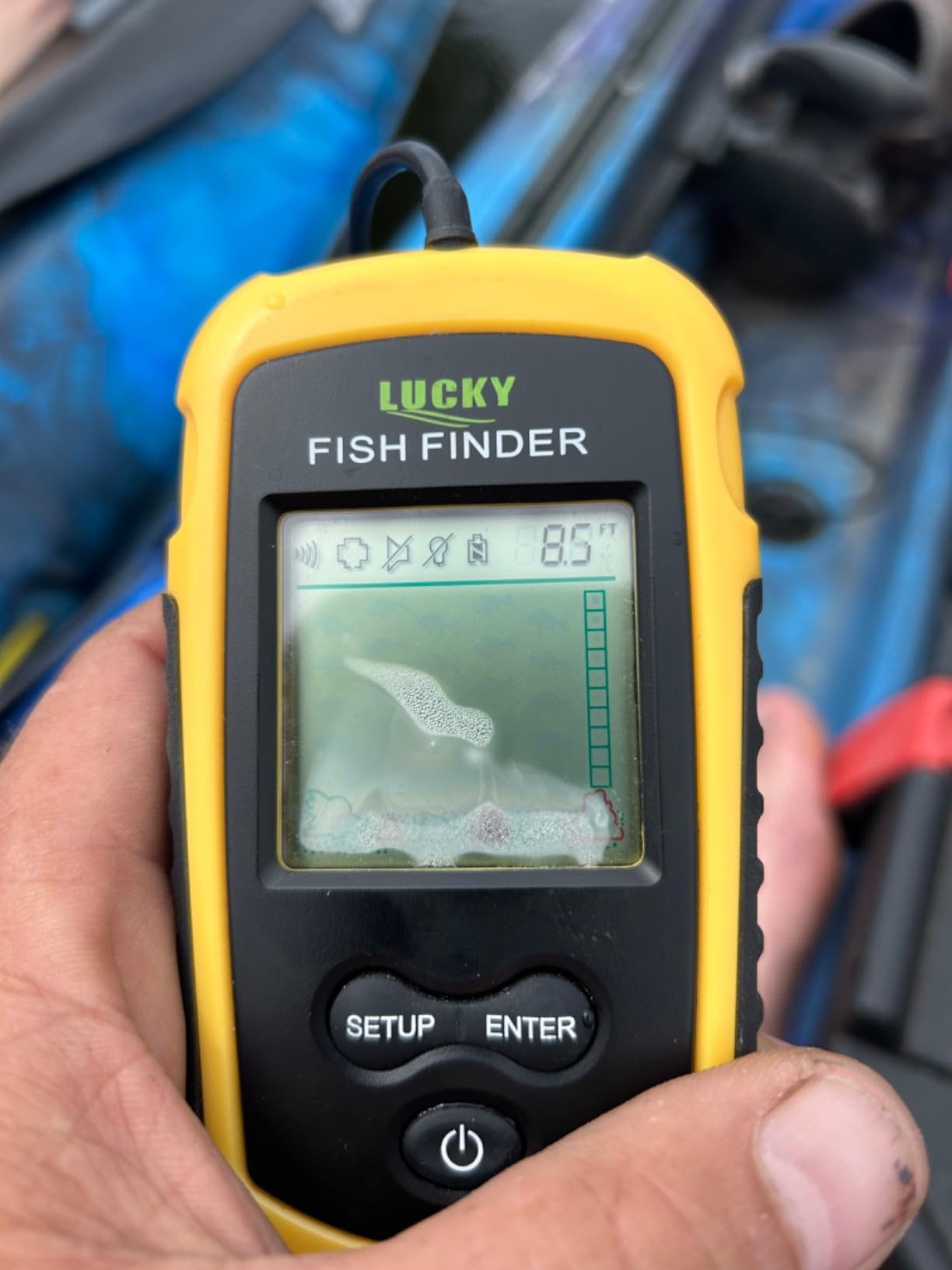
Depth detection runs from 3 feet to 328 feet when the transducer is fully immersed, with five sensitivity levels for clear or turbid water and a fish and fish school alarm. The backlit LCD switches between feet and meters and stays readable in bright sun or darkness.
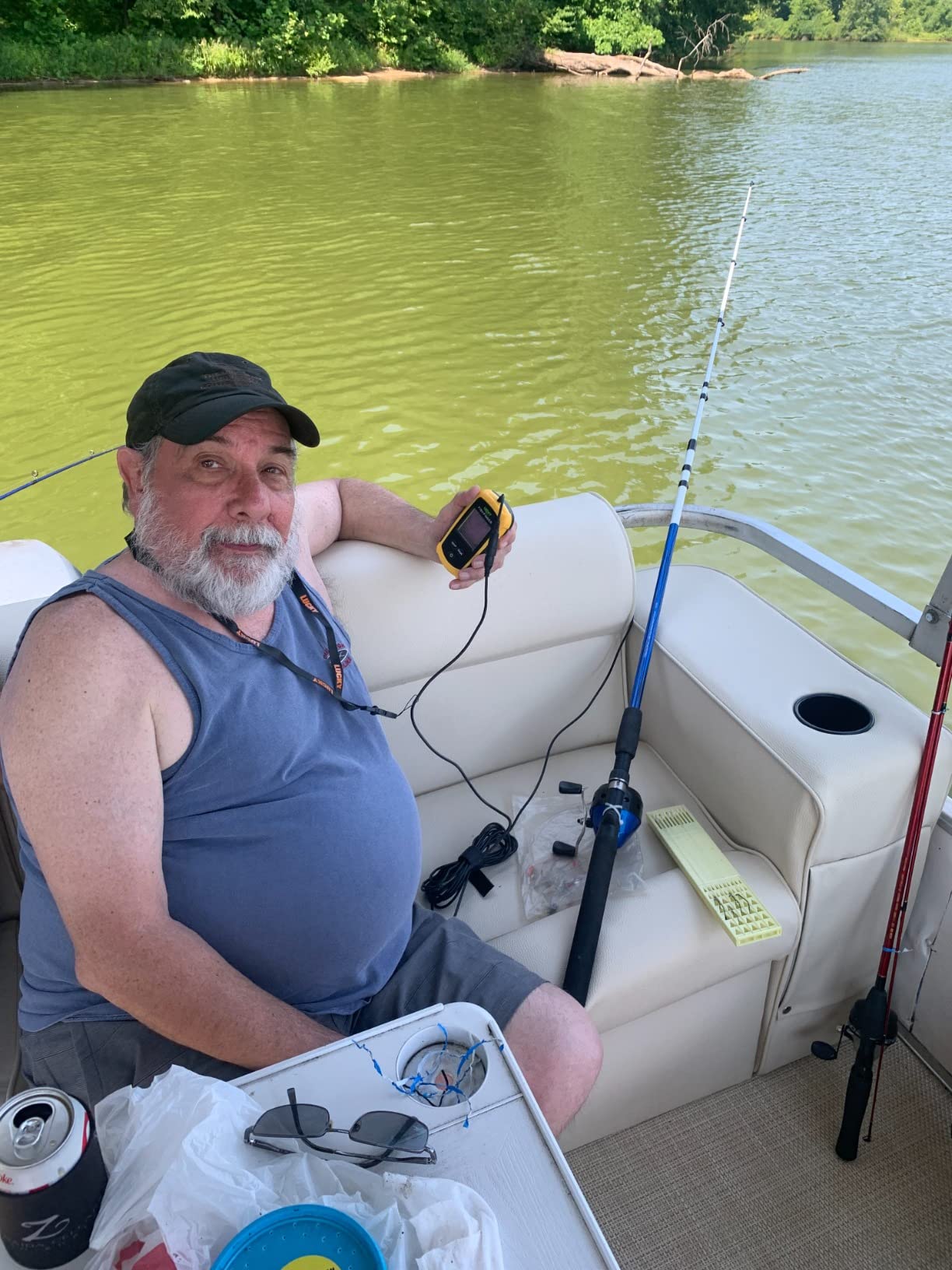
Battery life is 4 to 5 hours on a fresh set, longer in battery save mode, and the neck strap makes it easy to hold one-handed while you paddle.
A Depth Finder More Than a Fish Finder
Set expectations properly here. Owners treat this as a depth and bottom-structure tool, and fish archetype readings are coarse, meaning it picks up minnows and will not separate fish sizes. The 4.1 rating reflects that gap between expectation and reality.
Where it shines is finding the drop-off, the weed line and the sand-to-rock transition, then marking it for the rest of the trip.
Hull Type Matters More Than the Spec Sheet
Through-hull kayak mounting is where it works well. Through fiberglass, performance is poor, and it will not function from shore at all, so a bank angler should look elsewhere.
The manufacturer lists a thru-hull mount as the mounting type, and that single detail tells you most of what you need to know about this unit.
Who Should Skip It
Skip it if you need to identify individual fish, if you fish saltwater surf, or if you want a record of where you have been. It is a good first step for a kid learning to read water, not a serious tournament tool.
At the very bottom of the market, expectations have to match the hardware. This unit is not competing with the Garmins on picture quality or with the Deeper PRO+ 2 on target separation, and the reviews make that plain. What it does give you for very little is a way to stop guessing where the drop-off is.
5. Deeper START – Best for Shore and Bank Fishing
Deeper Start Fish Finder – Portable and Depth Finder for Recreational Fishing from Dock, Shore, Bank or Kayak | Castable Deeper Smart Sonar with Free User Friendly App
Castable wireless sonar
165 ft cast and scan range
40 degree beam
6 hour battery
Self-generated Wi-Fi
Pros
- No wires or external batteries
- Generates its own Wi-Fi so it uses no mobile data
- Works from shore dock bank or kayak
- App shows depth bottom contour and vegetation
- 2.5 hour charge and night fishing mode
Cons
- Requires a compatible smartphone and the free app
- Narrower 40 degree beam and less target separation than PRO models
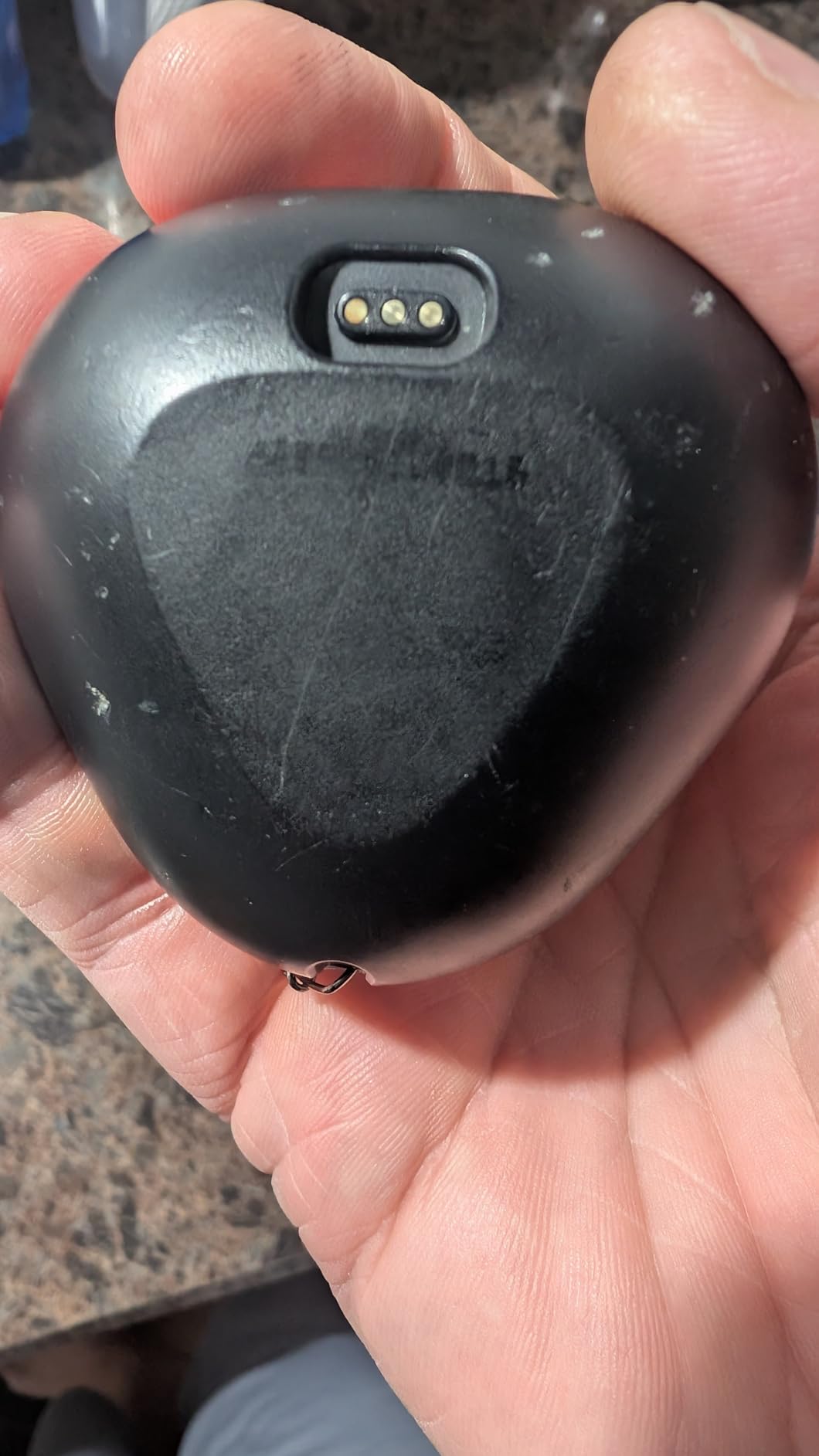
The Deeper START solves a problem fixed-mount units cannot: you can cast it from a dock, a bank or a beach and read the result on your phone. There is no messy wiring and no external battery, which is why it has become a favorite for shore anglers and family trips.
Casting range and scan depth are both 165 feet with a 40 degree sonar beam, and it creates its own Wi-Fi so a full day on the water will not eat your mobile data. Scans save automatically with time and location so you can revisit the spot later.
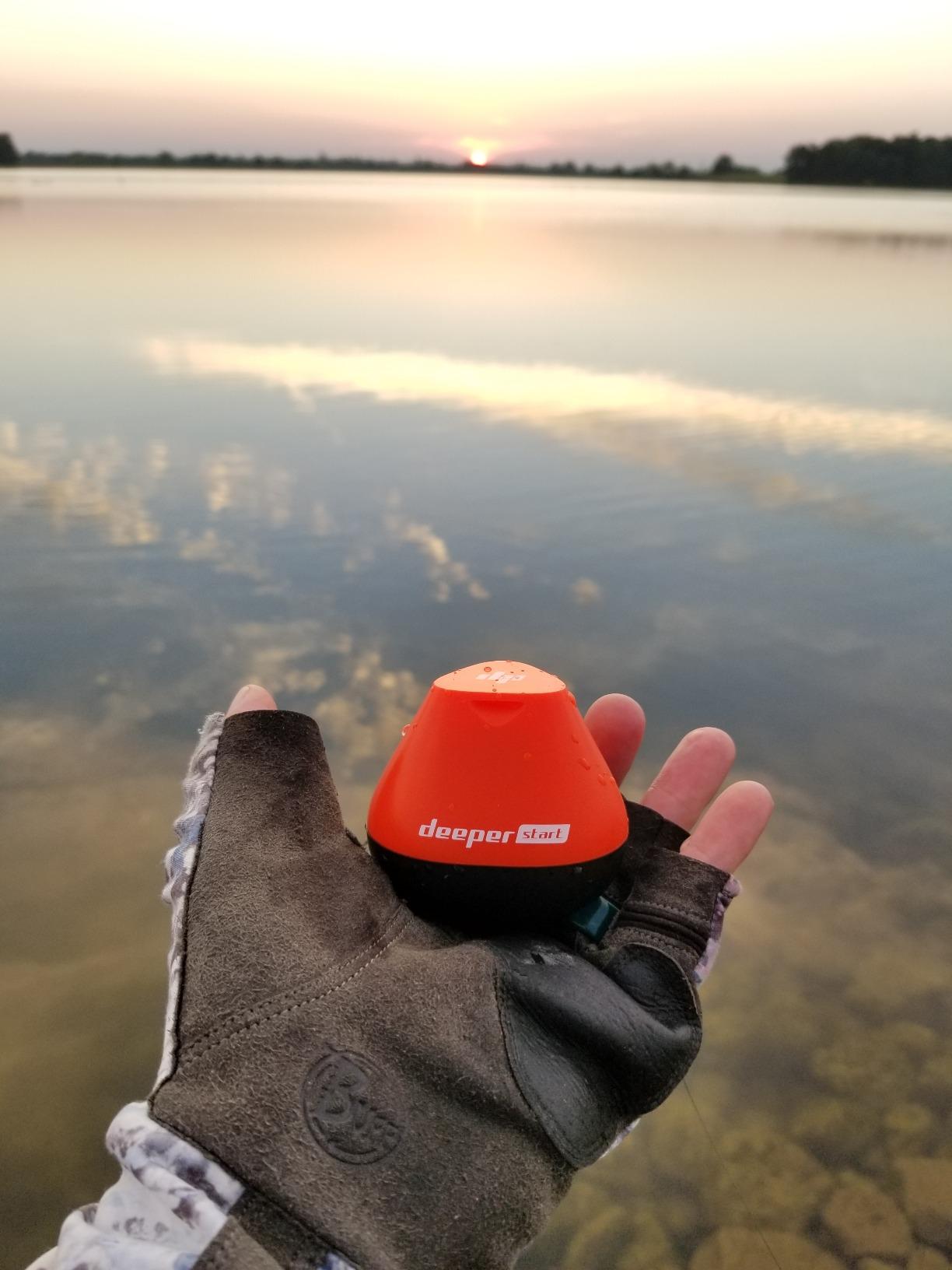
It reaches full charge in 2.5 hours and holds roughly 6 hours of battery, and there is a night fishing mode for low light work.
Why the Phone Screen Is the Point
The Fish Deeper app is free on iOS and Android and renders depth, bottom contour, vegetation and basic fish location. That is the trade: you give up a rugged marine display and gain portability plus a saved log of everywhere you have fished.
Ratings cluster around 4.1 because it delivers solid basic data, and the limitation is that a 40 degree beam and the entry-level electronics leave advanced anglers wanting the PRO line.
Auto-Saved Scans as a Free Logbook
Every scan is tagged with time and location, which effectively gives you a fishing map without a subscription. Anglers report using the app to find structure by casting around a pier or a drop-off rather than boating over it.
The limit is the beam. Forty degrees is narrow enough that you have to aim well, so the technique is to fan your casts in an arc from the same spot and let the screen tell you which one found the edge.
Who Should Skip It
Skip it if your phone is your primary onboard display anyway and you want richer sonar, or if you fish in heavy surf where a castable puck is hard to place. It is a shore-first tool.
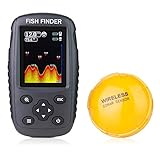
6. Venterior Wireless Fish Finder – Best Wire-Free Castable With a Built-In Screen
Venterior Portable Rechargeable Fish Finder Wireless Sonar Sensor Fishfinder Depth Locator with Fish Size, Temperature, Bottom Contour, Color Display
Color TFT handheld
2.6 inch display
262 ft sensor range
105 degree beam
Rechargeable
Pros
- Wireless sensor means no drilling and no cord to snag
- Casts far and connects the instant it hits water
- Shows depth temperature bottom contour and coarse fish size
- Rechargeable with about 3 to 4 hours of battery
- Two background colors for sun or night
Cons
- Receiver drains batteries quickly in cold conditions
- 105 degree beam is unreliable through ice holes
- Not suited to lakes deeper than roughly 120 feet
Where the Deeper units hide everything on a phone, the Venterior has its own 2.6 inch color TFT display, so you can read depth, temperature, bottom contour and a rough fish size category without touching your phone at all. Two tethering holes on the sensor let you line it out to cast as far as you want.
The wireless link reaches 262 feet between sensor and handheld, depth range is 2.6 to 164 feet, and the sonar beam angle is a wide 105 degrees. It is rechargeable, comes with a 2 year warranty, and works in work and simulation modes.
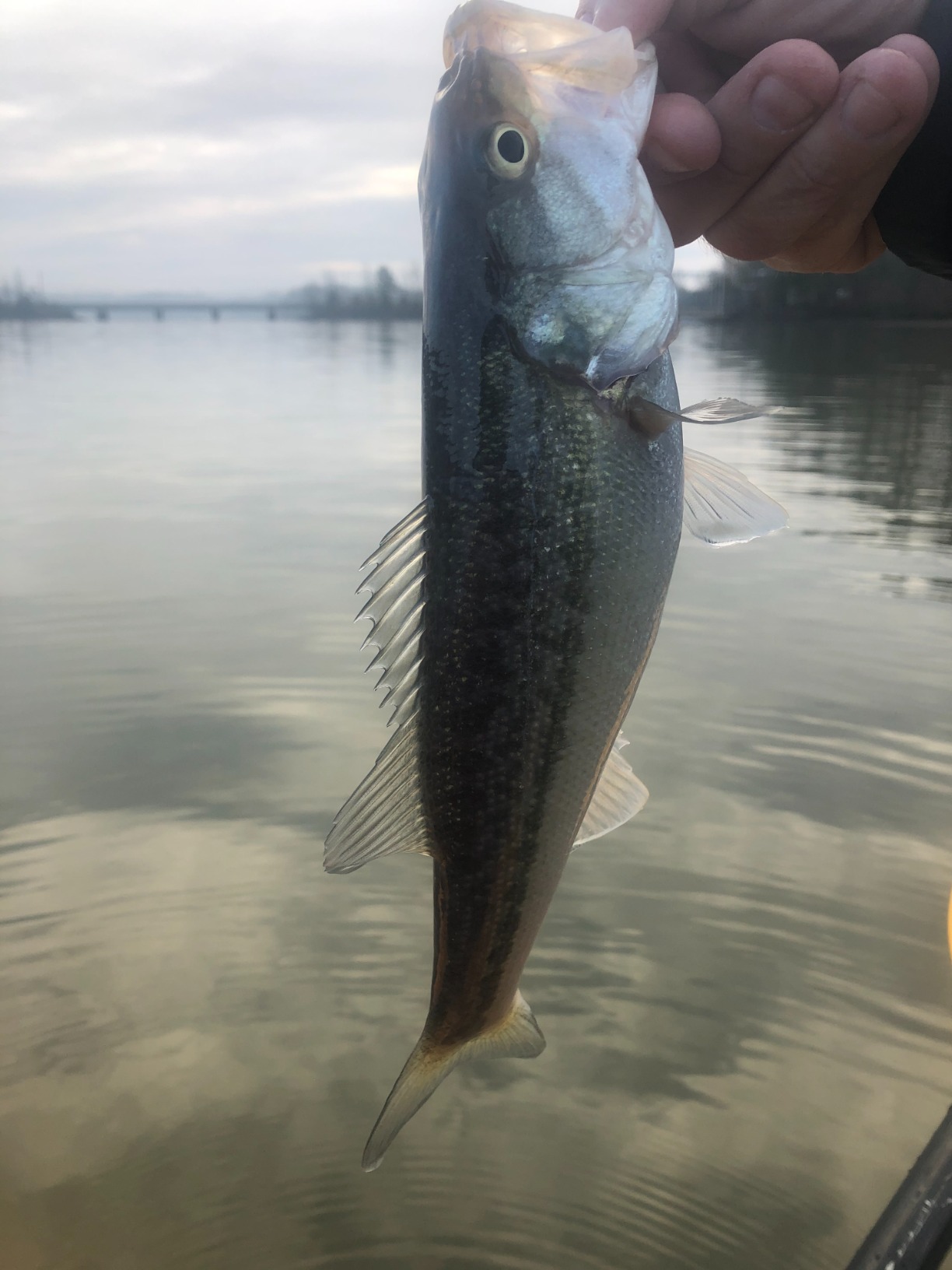
Owners highlight the instant connection on landing and the accuracy of depth and bottom contour, and switching the background from black to white makes a real difference in bright sun.
Screen Color Switching in Direct Sun
Two selectable backgrounds, black and white, is an old-school trick that still works. The white background is far more visible in hard sunlight, and this is a cheap unit that gets that right.
It also reports water temperature, which the LUCKY unit does not, which matters when you are chasing species by temperature window.
Where the Wide Beam Hurts You
A 105 degree beam is a trade, not a gift. Owners report unreliable depth readings through ice holes and a ceiling of roughly 120 feet of lake depth, so deep lakes and ice fishing are weak points.
Dragging it behind a moving boat can also produce false signals, which is expected for a puck sonar at planing speed. Treat it as a cast-and-hold tool rather than a tow-behind unit.
Who Should Skip It
Skip it for winter ice fishing, for deep water, or if you want to identify species rather than get a small, medium or big readout. One quirk to know: the sensor battery indicator reads wrong while the sensor is out of the water, so check status with it wet.
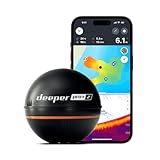
7. Deeper PRO+ 2 – Best for Precision Bathymetric Mapping
Deeper PRO+ 2 Sonar Fish Finder – Portable Fish Finder and Depth Finder For Kayaks, Boats and Ice Fishing with GPS Enabled | Castable Deeper Fish Finder with FREE User Friendly App
Wide mid and narrow beams
Built-in GPS for bathymetric maps
330 ft range
0.4 inch target separation
Self-generated Wi-Fi
Pros
- Three selectable beam modes for coverage or detail
- Built-in GPS creates bathymetric maps from shore dock or bank
- 0.4 inch target separation on the narrow beam
- Up to 330 ft range with dependable Wi-Fi
- Neoprene pouch and USB cable included
Cons
- Requires a smartphone and the Deeper app
- All viewing happens on the phone screen
- No CHIRP and no live sonar
The PRO+ 2 is the Deeper START with a serious upgrade in precision. Three beam modes, wide, mid and narrow, let you either cover a big area or drill into one spot, and the narrow beam separates targets as close as 0.4 inches apart, which is fine enough to track a small lure while vertical jigging.
The real addition is built-in GPS, which lets you create bathymetric maps from the shore, a dock or a bank and save them in the Deeper app. Accuracy reaches 330 feet, and connectivity runs on its own Wi-Fi.
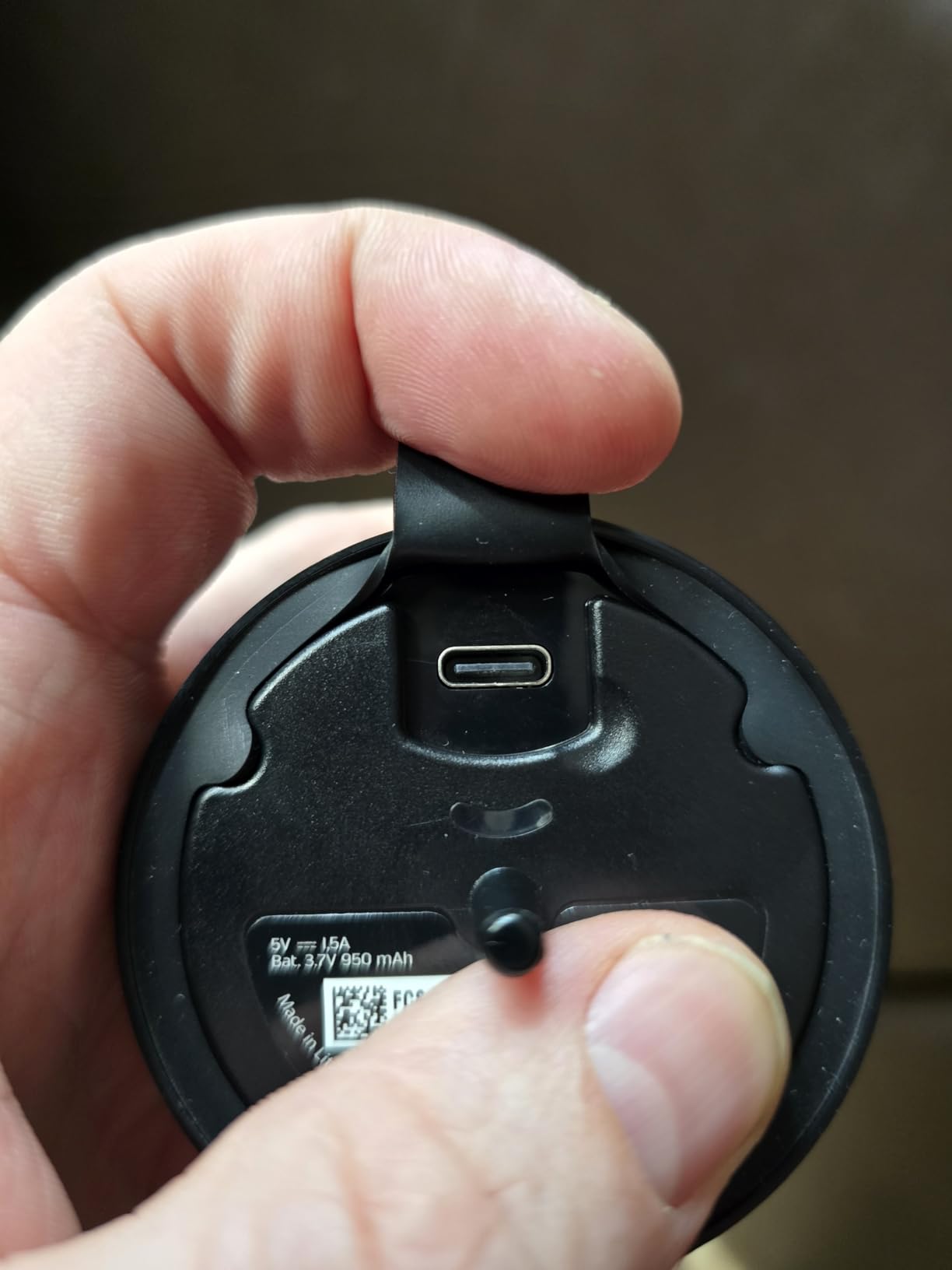
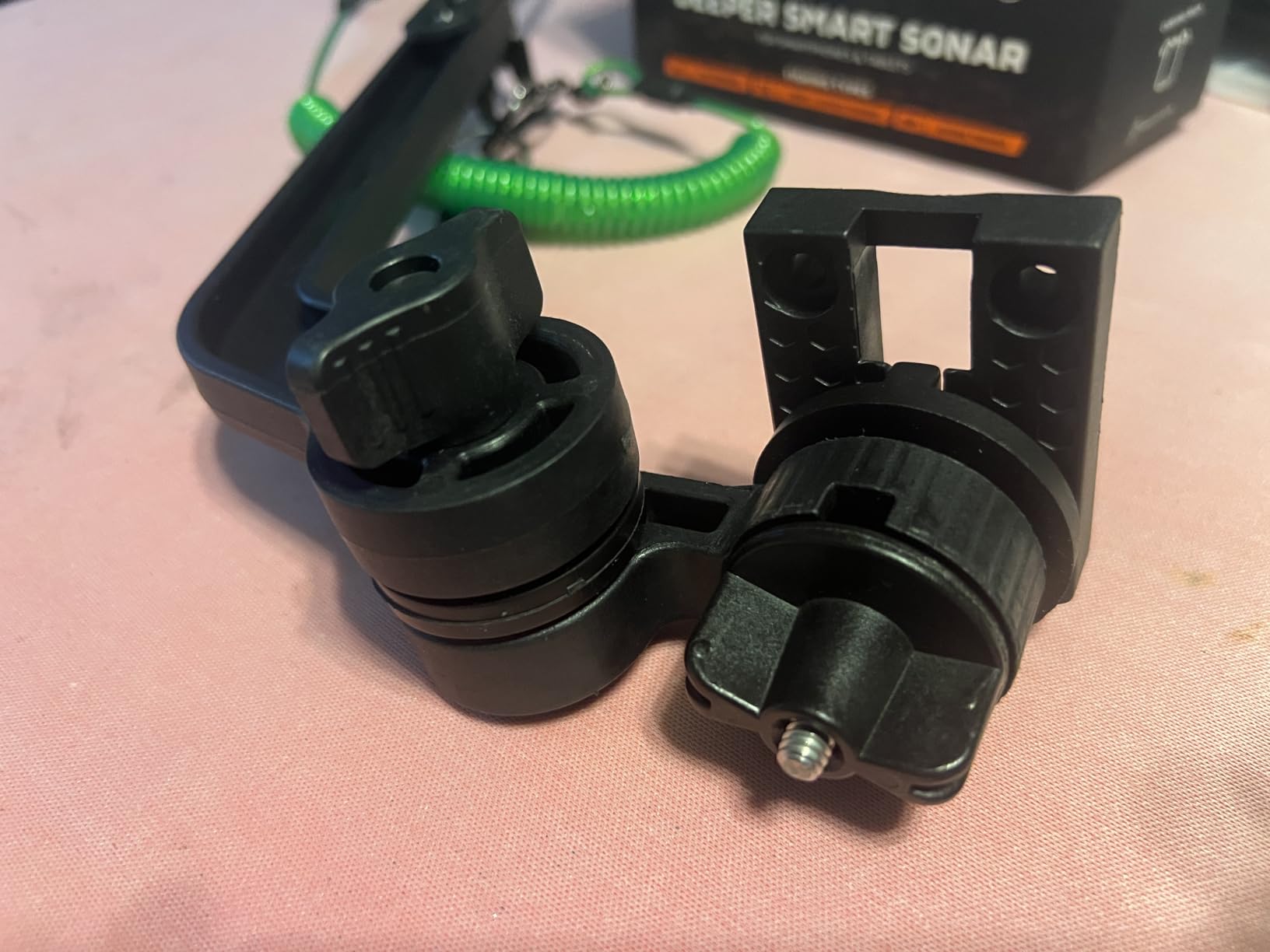
It weighs 3.2 ounces, includes a neoprene pouch and USB charging cable, and carries a 2 year limited manufacturer warranty.
That weight matters more than it sounds. A unit you can move between a kayak, a jon boat and a shore bag without thinking about it gets used far more than one bolted to a console, and the same pouch protects it when it does.
Target Separation and What 0.4 Inches Means
Target separation is the gap a unit can resolve between two objects. At 0.4 inches on the narrow beam, the PRO+ 2 can hold a baitfish and the bottom apart as separate returns, which is where vertical jigging lives or dies.
Reviewers accept the smartphone dependency as the fair trade for that mapping depth. There is no standalone display to glance at.
GPS Mapping From the Bank
Building your own map is the standout feature. Cast from shore, and the app records depth contours with your position, so an afternoon of walking a shoreline produces a map you can fish later.
That is genuinely useful for anglers who cannot afford a chartplotter and want better than a paper map.
Who Should Skip It
Skip it if you want CHIRP or live sonar, if you dislike depending on an app, or if your boat already has a console display you can mount a real unit on.
8. Garmin STRIKER Vivid 7cv – Best Screen You Can Get in This Tier
Garmin Striker Vivid 7cv, U.S. with GT20-TM Transducer – Easy-to-Use 7-inch Color Fishfinder and Sonar Transducer, Vivid Scanning Sonar Color Palettes (010-02552-00)
7 inch color LCD
CHIRP and ClearVu sonar
GT20-TM transducer
Quickdraw Contours
ActiveCaptain Wi-Fi
Pros
- Large bright 7 inch screen readable in direct sun
- Vivid palettes plus CHIRP ClearVu for separation
- Quickdraw Contours mapping built in
- Wi-Fi links to ActiveCaptain for waypoints and alerts
- Everything needed for setup in the box
Cons
- No preloaded maps
- Menu system takes time to master
- Heaviest unit in the group at 4.4 pounds
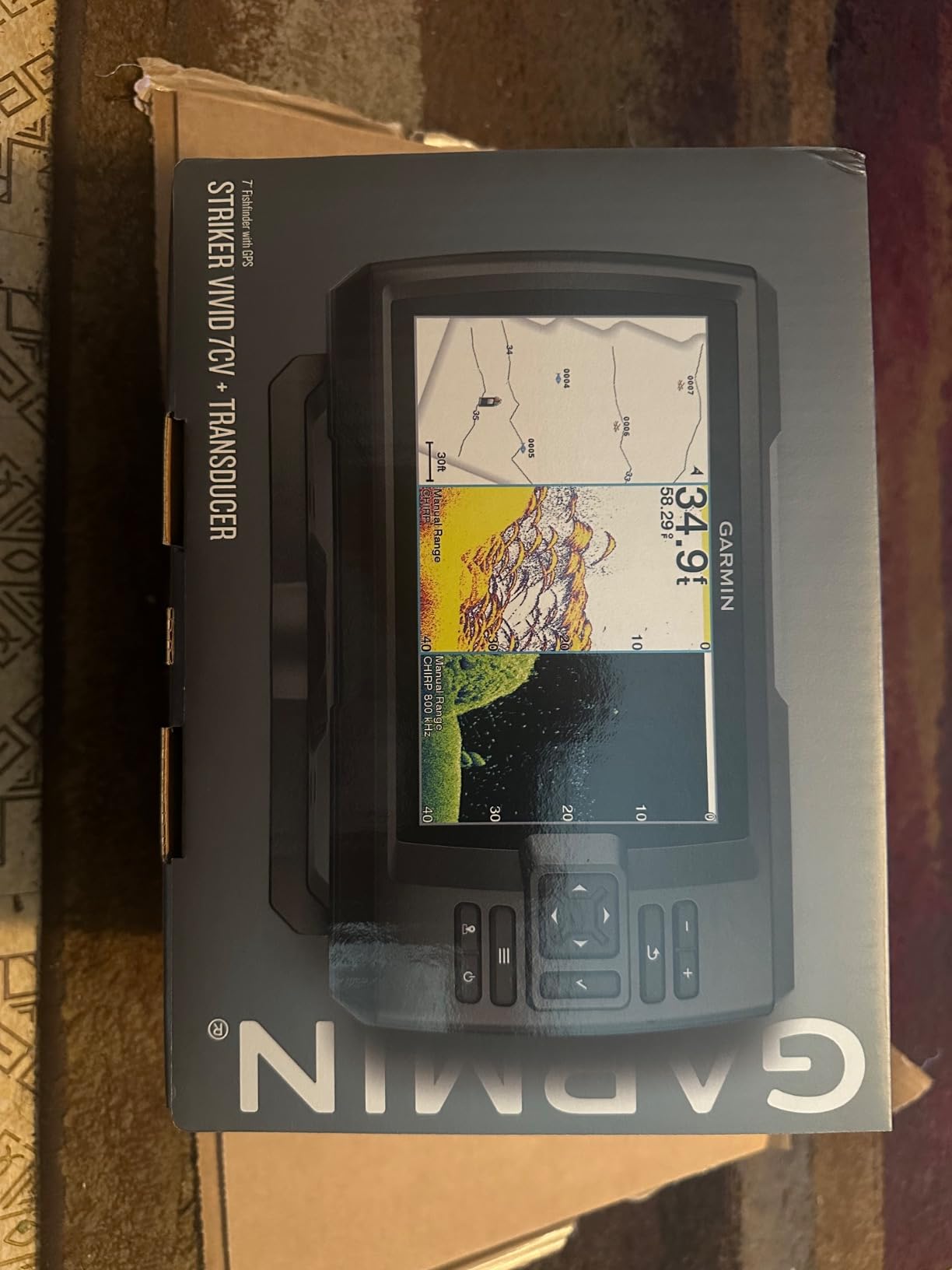
If your boat has a console that fits 7 inches, this is the best screen in the tier and the reason to spend the upper part of your budget. Owners single out the large, sun-bright display as the deciding feature, and 574 ratings at 4.5 stars backs that up.
Sonar is the same proven package as the 4-inch model, CHIRP traditional and CHIRP ClearVu from the included GT20-TM transducer, with vivid scanning color palettes and built-in Quickdraw Contours mapping. The difference is entirely the size of what you are looking at.
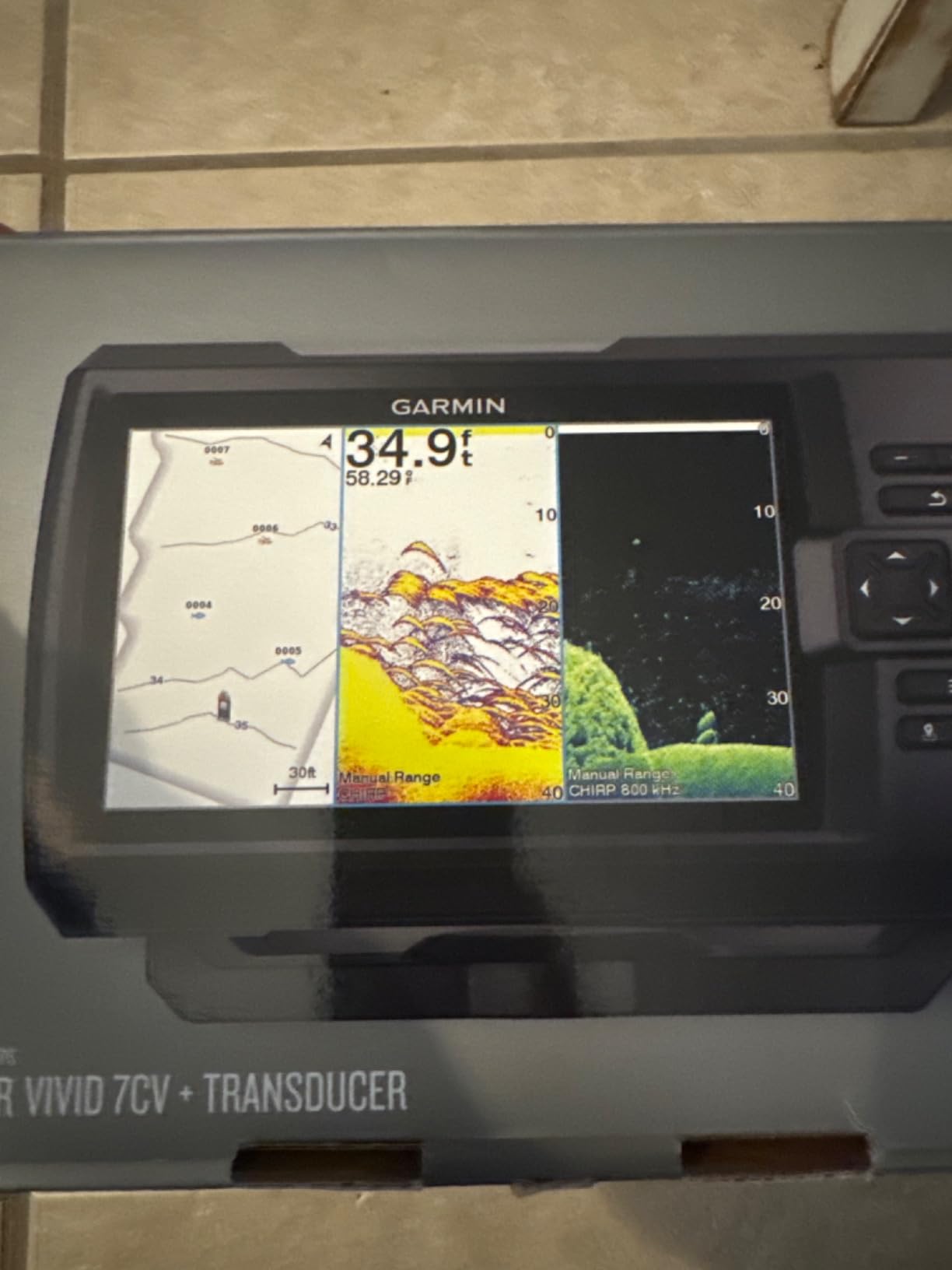
Wi-Fi connectivity links to the ActiveCaptain app on a compatible phone for waypoint transfer, smart notifications including software update alerts, and access to the Garmin Quickdraw Community. The box includes the tilt and swivel bailmount, power and data cable, hardware and a 2 year limited warranty.
Why Screen Size Beats Specs in Bright Sun
Sunlight readability is a recurring complaint on 4 and 5 inch units across every brand. A 7 inch panel simply has more pixels and more physical size to work with, so the same sonar picture is readable at a glance instead of a lean.
On a bass boat, a pontoon console or a center-console where you stand to cast, that difference is the whole experience.
ActiveCaptain and What Wi-Fi Does Here
ActiveCaptain is not networking in the marine sense, but it does let you move waypoints off the unit, get phone notifications and pull your Quickdraw maps. It is a convenience layer, not a sensor network.
Quickdraw Community is the underrated part. Contours you record are shared with other anglers, and you download theirs, which means your map gets better the longer you use the unit without paying anyone for chart data.
Who Should Skip It
Skip it on a jon boat, a small kayak or any boat where a 7 inch unit dominates the console. At 4.4 pounds it is the heaviest unit in this group, and the menu system takes study time to master.
9. Humminbird HELIX 5 CHIRP GPS G3 – Best Built-In Mapping
Humminbird Helix 5 G3 GPS Fish Finder with Transducer & Dual Spectrum Chirp Sonar
5 inch color TFT
Dual Spectrum CHIRP sonar
Basemap 10000 plus lakes
AutoChart Live mapping
XNT 9 HW T transducer
Pros
- Dual Spectrum CHIRP with wide and narrow modes
- Basemap covers 10000 plus lakes and US coastlines
- AutoChart Live maps contours hardness and vegetation
- Readable in bright sunlight
- Transducer and gimbal bracket included
Cons
- No 3A fuse or extra wiring in the box
- Power cable can be too short for smaller boats
- Menu controls take some learning
The HELIX 5 CHIRP GPS G3 is the only unit on this list that hands you a usable chart on day one. The built-in Humminbird Basemap covers more than 10000 lakes and the continental US coastlines, and it is compatible with LakeMaster, CoastMaster and Navionics if you want to upgrade later.
Sonar is Dual Spectrum CHIRP with wide and narrow modes powered by a Low-Q transducer for precise 2D target separation. AutoChart Live creates maps of depth contours, bottom hardness and vegetation as you boat, with 8 hours of built-in recording time, and it accepts AutoChart Zero Line SD cards for more capacity.
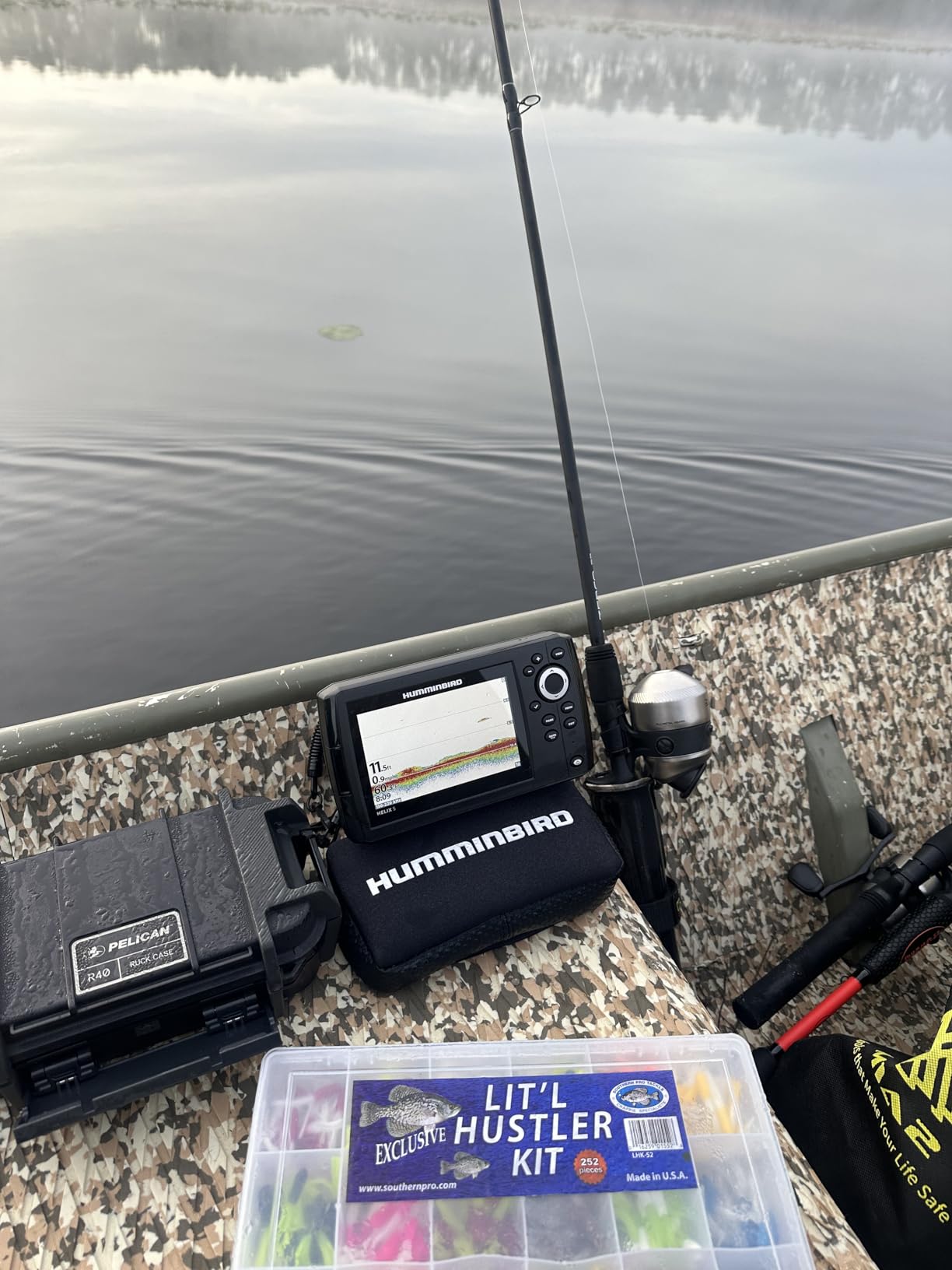
The color TFT screen reads well in bright sun, especially with the optional visor, and split-screen shows speed and route together. Softkey controls are operable with wet hands, which matters more than it sounds.
Dual Spectrum CHIRP Versus Garmin CHIRP
Both brands use CHIRP, which sweeps a band of frequencies rather than a single tone. Humminbird calls its version Dual Spectrum and gives you wide and narrow modes from the same Low-Q transducer, so you trade coverage for detail on the same screen.
Where Garmin leans on ClearVu for a high-resolution picture, Humminbird leans on AutoChart Live and a real basemap. That is the actual difference between the two brands at this budget.
Plan the Install Extra Parts
Owners report the box does not include a 3A fuse or extra wiring, and the included power cable can be too short for smaller boats. Budget for an inline fuse holder, extra cable and ring terminals before you start, not after.
On the positive side, the XNT 9 HW T transom transducer and a gimbal mounting bracket are included, so the sonar side of the install is complete.
AutoChart Live also records bottom hardness and vegetation, not just depth, which is genuinely unusual at this budget. Most contour tools draw lines, and this one tells you what the bottom is made of while it is drawing them.
Who Should Skip It
Skip it if you fish in saltwater and need Navionics or CoastMaster detail that you will have to buy separately, or if you want the easiest menu in the category. A handful of first-unit failures are reported, so keep the packaging for a return if needed.
10. Lowrance EAGLE 4-Inch – IPS Screen Built for Small Boats and Direct Sun
Lowrance Eagle 4X Fish Finder with Bullet Transducer
4 inch IPS portrait display
Auto-Tuning Sonar
200 kHz Bullet Skimmer
44 degree beam
Twist-lock connector
Pros
- IPS portrait screen stays clear in sun and through polarized glasses
- Auto-Tuning Sonar removes manual setup
- Bundled fuse and fuse holder
- Compact portrait footprint fits small consoles
- Drops into the older Lowrance Chirp 4 mount pattern
Cons
- No GPS or charting on the base model
- Traditional sonar only with no live sonar
- Fish size accuracy is not reliable
The Lowrance EAGLE solves a specific problem: a genuinely bright screen in a very small package. The 4 inch IPS panel in portrait orientation stays clear in bright sunlight, from wide viewing angles and through polarized sunglasses, and the narrow body fits console space where a landscape unit will not.
Auto-Tuning Sonar sets itself so there is no manual adjustment, the included 200 kHz Bullet Skimmer delivers a broad 44 degree beam suited to kayaks and small boats, and the twist-lock connector makes putting the display on and taking it off quick.
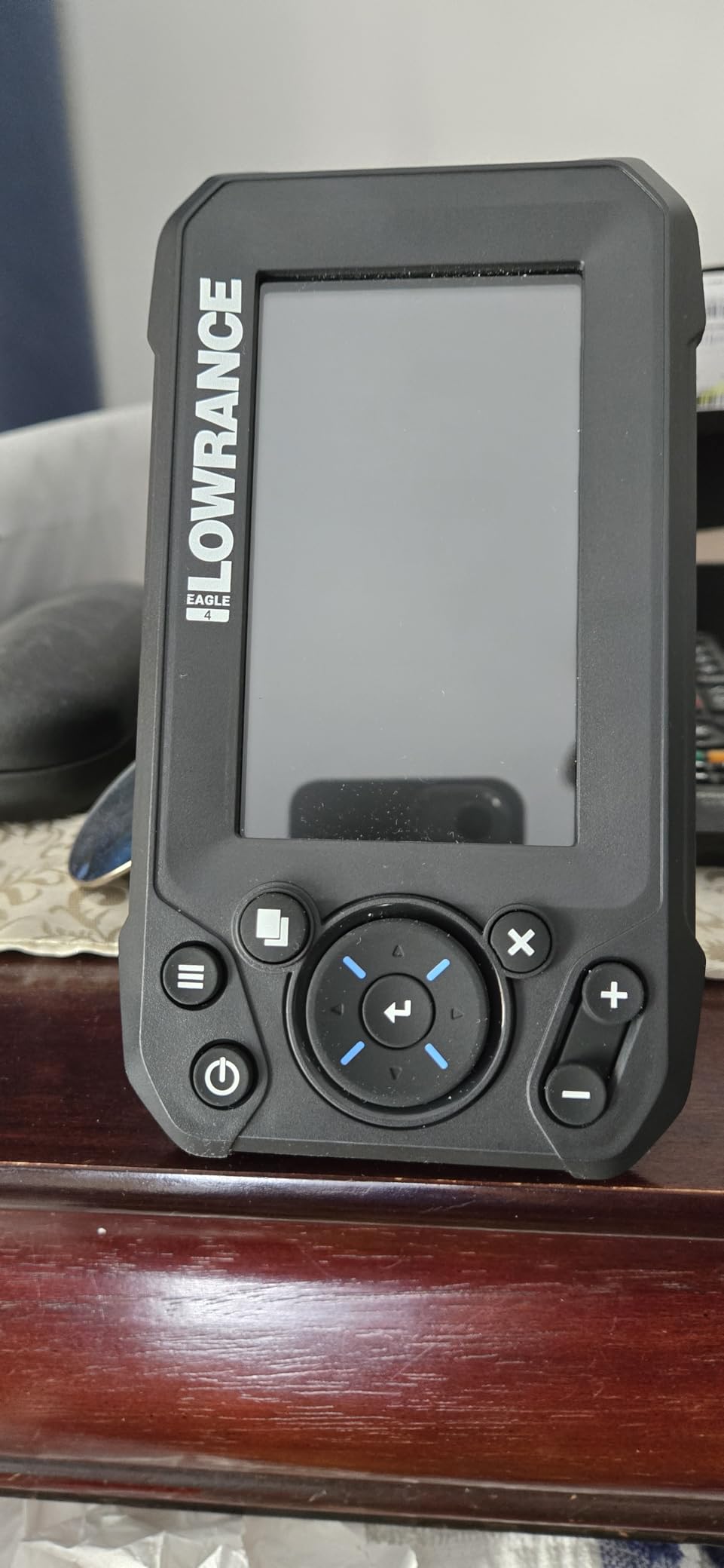
It can be surface, panel or flush mounted, and the box includes a fuse and fuse holder, which almost nothing else in this list does. It also drops into the same mount pattern as the older Lowrance CHIRP 4, so an upgrade does not mean new holes.
Why the IPS Panel Actually Matters
Brightness claims are hard to verify from listings, but the IPS specification is the reason this screen holds up in sun and at wide angles. Forum anglers repeatedly name screen brightness as their top complaint on smaller monochrome units, and this is the budget answer to that.
Fish icons show depth and let you zoom in for a closer look, without relying on an audible fish alarm.
The Family and the Limitation
Lowrance sells this platform in 4, 5, 7 and 9 inch sizes with SplitShot and TripleShot sonar plus C-MAP options. The base 4 inch is traditional sonar only, so the imaging and mapping you want may mean stepping up a size or a different variant.
Review volume is modest at 116 ratings, so treat the long-term reliability picture as less proven than the Garmins in this list.
That review count is the honest caveat on the whole recommendation. The STRIKER 4 has 9312 ratings behind it and the EAGLE has 116, so you are trusting the Lowrance screen on the manufacturer specification and the IPS panel technology rather than on a decade of owner feedback.
Who Should Skip It
Skip the base model if you need GPS, charting, side imaging or live sonar. Fish size accuracy is also not reliable here, so do not buy it to identify species.
How to Choose a Fish Finder Under 500 Without Overspending
The biggest budget mistake is treating the sticker on the box as the total. Anglers regularly post in forum threads expecting a sub-500 setup to overshoot once the transducer, mount, wiring, fuse block and battery are counted, and the simplest fix is deciding what you are willing to do yourself before you buy.
Reading the Screen: Arches, Bands and Bottom Hardness
A fish returns a bright arch or blob, and the bigger the return the larger the target. Bottom hardness shows up as the color or shade of the band, with a hard sand bottom reading differently from a soft mud bottom in the same sweep, and vegetation often appears as a scattered field rather than a solid line.
Target separation is the number that tells you how close two objects can be and still resolve separately. The Deeper PRO+ 2 manages 0.4 inches on its narrow beam, which is fine enough to pick a baitfish off the bottom, while a basic handheld gives you a single merged mark.
A practical habit worth building: drop a waypoint on anything that looks alive, then come back to it. The waypoint map on the STRIKER 4 and the GPS on the STRIKER Vivid line make that a two-button job.
Ice Fishing: Flasher Versus Graph With These Units
Ice anglers split into two camps. Flasher users want a vertical column showing fish moving up and down the hole, while graph users want a traditional horizontal sonar picture. The Garmin STRIKER 4 is the standout here because its built-in flasher is a genuine second mode on the same unit.
For the castables, the Venterior unit specifically struggles through ice holes because of its 105 degree beam, while the LUCKY FFC1108 works from the ice as a depth and bottom-type tool. Treat any puck unit as a flasher substitute at best.
Screen Size Versus Sunlight: What 4 Inches Can and Cannot Do
Under about 5 inches, sunlight readability is the limiting factor, not sonar. A 3.5 inch monochrome unit is fine on a shaded console and frustrating on an open boat at noon. The Lowrance EAGLE IPS panel and the Garmin STRIKER Vivid 7cv are the two ways around that problem here.
A rough rule: 4 to 4.3 inches for a jon boat or small pontoon, 5 to 7 inches for a bass boat or center console, and anything under 3 inches only if you plan to use it as a handheld or a kayak unit. The Lowrance EAGLE is the exception that proves the rule, because its IPS panel stays legible on a 4 inch portrait screen where a monochrome LCD of the same size would not.
CHIRP Versus Traditional Sonar: What Actually Changes
CHIRP sends a continuous sweep of frequencies instead of one fixed tone. The result is crisper arches, better target separation and less clutter when fish are holding close to structure, which is precisely the situation most anglers care about.
Every fixed-mount unit on this list runs CHIRP. The castable puck models do not, and that difference shows up in target separation, where the Deeper PRO+ 2 narrow beam resolves 0.4 inches while a basic puck cannot.
Side Imaging and Live Sonar: What This Tier Does Not Include
Be clear-eyed about this. No product in this roundup has side imaging, MEGA side imaging, down imaging or forward-looking live sonar, and no transducer in the box produces it. If seeing fish beside the boat is non-negotiable, you are shopping above this budget.
What you can get in this tier instead is ClearVu-style high-frequency scanning, which gives a near-photographic picture directly beneath the boat. That catches fish on your way past a spot, but it will not show a fish holding off to your port side.
That distinction matters more than the marketing language suggests. A ClearVu channel and a side imaging channel answer different questions. Downward scanning asks what is beneath me right now, and side imaging asks what is beside me before I get there, which is the question most anglers actually have on open water.
GPS, Charting and Mapping Without a Subscription Habit
Three approaches exist. Auto-generated contours, such as Garmin Quickdraw Contours and Humminbird AutoChart Live, record your own depth data as you fish and cost nothing. Preloaded basemaps, like the Humminbird Basemap covering more than 10000 lakes, give you instant context but no detail. And premium charts from Navionics, C-MAP or LakeMaster cost extra.
For most anglers on one lake, auto-generated contours are the best value in this tier, because the data covers the water you actually fish.
Garmin and Humminbird take different routes to the same result. Quickdraw Contours is the simpler workflow, essentially a record and go setup, while AutoChart Live gives you hardness and vegetation data alongside the depth lines. Neither requires a subscription, which is the deciding factor at this budget.
Transducer, Mount, Fuse and Battery: Budget the Real Total
Add up what your chosen unit does not include. The Garmin STRIKER 4 excludes a battery. The Humminbird HELIX 5 excludes a 3A fuse and may need a longer power cable on a small boat. At this budget in general, a fuse block, ring terminals or a proper marine battery are rarely in the carton.
The transducers in this roundup are a genuine saving, since standalone CHIRP transducers for these brands are a real line item. The Lowrance EAGLE even bundles a fuse and fuse holder, which is rarer than it should be.
Garmin Versus Humminbird Versus Lowrance: A Verdict Per Brand
Choose Garmin for the easiest controls and the most proven budget units, with the STRIKER 4 and STRIKER Vivid range covering everything from 3.5 to 7 inches. Choose Humminbird when you want real mapping and Dual Spectrum CHIRP, which is why the HELIX 5 CHIRP GPS G3 stands out. Choose Lowrance when screen brightness and a compact footprint matter most, or when you want room to grow within one product family.
Angler preferences in forums split on menus, with some calling Lowrance the most user friendly and others finding the Garmin interface simpler. Either way, all three brands are named as credible, and off-brand models are dismissed for good reason.
Fixed Mount Versus Castable: Match the Unit to Your Boat
Fixed mounts are for boats with a console and a reliable 12V supply. Castables are for shore fishing, kayaks, ice and small jon boats where wiring is not an option, and they are less expensive because there is no display worth much money in the box.
A useful rule: if you change boats often or fish from the bank more than a third of the time, buy the castable. If you have one boat and a console, buy the fixed mount, because the display is where the real value lives.
There is a third option worth naming. The Venterior unit is castable but has its own screen, which means you get the flexibility of a puck with a readable display, and it is the only product here that threads that needle.
NMEA 2000 Networking: Skip It at This Price
None of these models act as a network backbone in a way that matters. You can send waypoints and share data through phone apps, as the Garmin STRIKER Vivid 7cv does with ActiveCaptain, but that is convenience, not networking.
Forum anglers weighing a networked model against a cheaper non-networked one are usually right to spend the difference on a better transducer and a real battery instead.
Frequently Asked Questions
What is the best fish finder under 500?
The Garmin STRIKER 4 is the best fish finder under 500 for most anglers, with CHIRP traditional sonar, ClearVu scanning, a built-in flasher for ice fishing, waypoint mapping and the widest review base in this price tier. If you want color and built-in contour mapping, step up to the Garmin STRIKER Vivid 4cv, and if you need a chart on day one the Humminbird HELIX 5 CHIRP GPS G3 is the pick.
What is the best fish finder on a budget?
The best budget fish finder depends on the boat. A Garmin STRIKER 4 or Humminbird PiranhaMAX 4 covers a jon boat or small pontoon, a castable such as the Deeper START or Venterior wireless unit covers shore, kayak and ice fishing, and none of the units in this tier includes side imaging.
Is Garmin better than Humminbird?
Garmin is better for ease of use and for the most proven budget units, with simple keyed controls and ClearVu scanning sonar. Humminbird is better for mapping, offering a built-in basemap covering more than 10000 lakes, AutoChart Live real-time contour mapping and Dual Spectrum CHIRP sonar.
Is Lowrance or Humminbird better?
Lowrance wins on screen technology and footprint, with an IPS panel that stays readable through polarized sunglasses in a compact portrait mount. Humminbird wins on sonar and mapping, with Dual Spectrum CHIRP, a preloaded basemap and AutoChart Live recording.
What is the most accurate fish finder?
Accuracy depends on the sonar type rather than the brand. CHIRP units such as the Garmin STRIKER Vivid 4cv and the Humminbird HELIX 5 give better target separation than traditional sonar, and among castables the Deeper PRO+ 2 resolves targets as close as 0.4 inches on its narrow beam.
Is side scan or livescope better?
Both beat a standard CHIRP arch for finding fish off the side of the boat, and both sit above this budget tier. Side scan sweeps a wide area to port and starboard and is cheaper, while forward-looking livescope shows structure and fish ahead of the boat in real time and costs considerably more. At this budget, ClearVu-style scanning under the boat is the closest available substitute.
The Best Fish Finders Under 500, Final Verdict
If you want one unit for one boat with a console, the Garmin STRIKER 4 is the buy. It has the deepest field history in this tier, the transducer and mounts in the box, a flasher for ice and waypoint marking, and its 0.23 amp draw means a small battery carries a full day.
If you want color and your own contours, choose the Garmin STRIKER Vivid 4cv, the highest-rated unit here. If you fish a boat big enough for a console that takes 7 inches, the STRIKER Vivid 7cv gives you the best screen available under 500 plus ActiveCaptain connectivity. If you need a chart the day you launch, the Humminbird HELIX 5 CHIRP GPS G3 is the only one with 10000 plus lakes built in, and it records AutoChart Live contours as you go.
If your boat has no console, skip fixed mounts entirely. The Deeper START is the shore and family pick, the Venterior wireless unit is the castable with a real screen and a temperature readout, the Deeper PRO+ 2 is the one that maps the bottom from the bank, and the LUCKY FFC1108 is a serviceable first step from a kayak. The Humminbird PiranhaMAX 4 stays the simplest dual beam option for a jon boat.
One thing to carry away from all ten: this tier does not deliver side imaging or live sonar, and pretending otherwise wastes your budget. Spend it on a better screen, a proper marine battery and clean wiring instead. For more tested gear at this price level, see our 4K monitor picks and drone roundup, then use the check latest price buttons above to compare the model that fits your boat.