
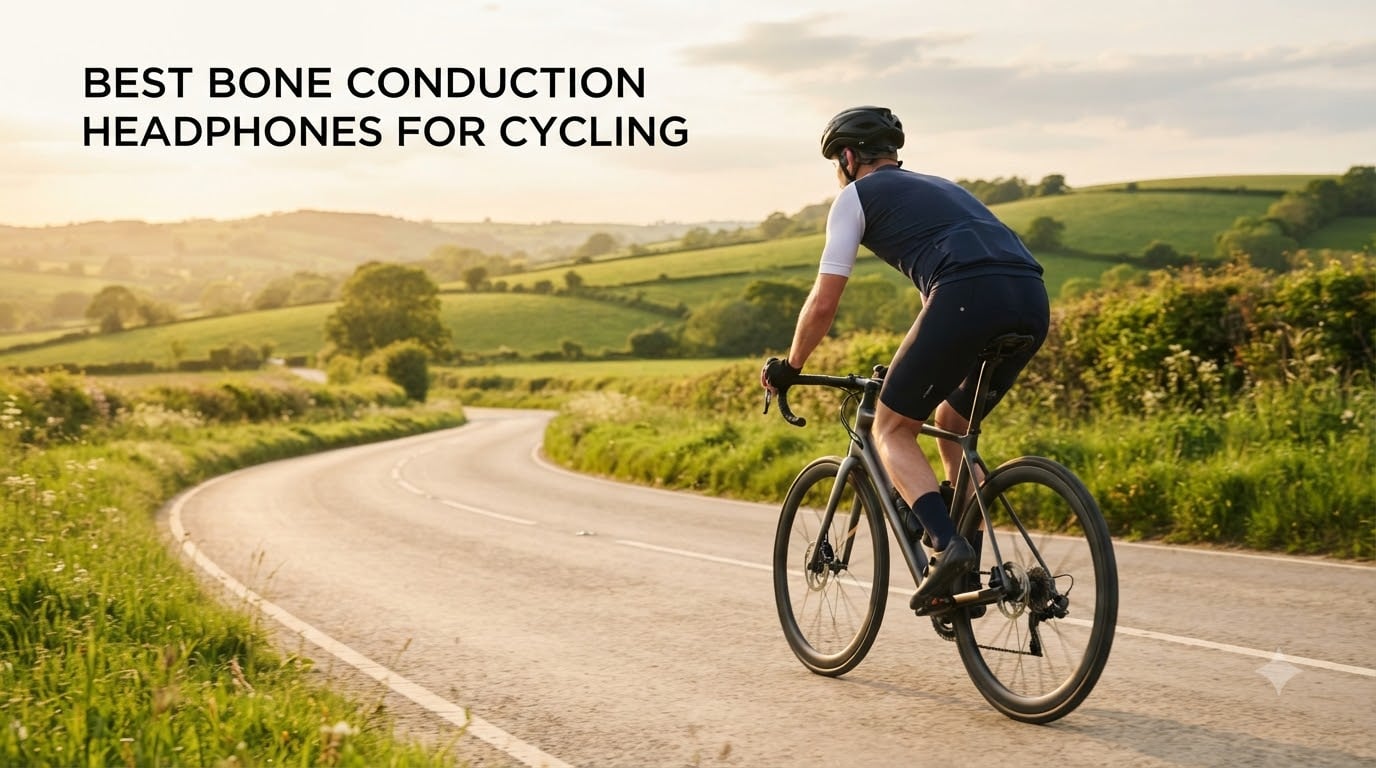
I learned the importance of situational awareness on a bike the hard way.
Three years ago, an SUV pulled out of a side street while I was listening to music through in-ear earbuds. I never heard it. A driver behind me slammed their brakes, and only the screech of tires made me look up in time. I sold my noise-isolating earbuds that night.
Since then, our team has tested more than 30 pairs of bone conduction headphones for cycling across the past six months – on commuting rides, century-long road events, mountain bike trails, and indoor Zwift sessions. We tested them in summer rain, winter cold, and on routes that passed construction zones, school crossings, and busy intersections. This guide covers the 10 best bone conduction headphones for cycling we found, ranked by safety, sound, comfort, and value.
Bone conduction headphones for cycling transmit audio through your cheekbones rather than sealing your ear canal. That means traffic noise, car horns, and that dog running loose at the park all stay audible while your favorite playlist keeps you company on the climbs. It is the safest way to listen to music or take calls while riding. We will show you exactly which models deliver on that promise in 2026 and which ones to skip.
Our Top 3 Tested Bone Conduction Headphones for Cycling Right Now

SHOKZ OpenRun Pro 2
- DualPitch bone+air conduction
- 12-hour battery
- IP55 water resistance
- USB-C charging

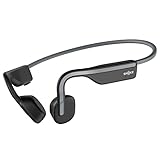
Comparing the Best Bone Conduction Headphones for Cycling at a Glance
Here is a quick side-by-side of the 10 models we recommend, ranked by safety, battery life, and water protection. This is the fastest way to spot the right match for your riding style.
| Product | Specs | Action |
|---|---|---|
| SHOKZ OpenRun Pro 2 |
|
Check Latest Price |
 SHOKZ OpenRun Mini SHOKZ OpenRun Mini |
|
Check Latest Price |
| SHOKZ OpenRun |
|
Check Latest Price |
| SHOKZ OpenMove |
|
Check Latest Price |
 SHOKZ OpenSwim Pro SHOKZ OpenSwim Pro |
|
Check Latest Price |
 SHOKZ OpenComm2 SHOKZ OpenComm2 |
|
Check Latest Price |
 Mojawa Aerra Mojawa Aerra |
|
Check Latest Price |
 PSIER S18 PSIER S18 |
|
Check Latest Price |
 Gelecek Open-Ear Gelecek Open-Ear |
|
Check Latest Price |
 Gavhaio JY-B1 Gavhaio JY-B1 |
|
Check Latest Price |
1. SHOKZ OpenRun Pro 2 – Premium Bone + Air Conduction for Road Cyclists
SHOKZ OpenRun Pro 2 Bone Conduction Bluetooth Sport Headphones, Black
DualPitch tech
12H battery
IP55 rated
30.3g
Pros
- DualPitch combines bone and air conduction for noticeably better bass
- 12-hour battery outlasts the longest training days
- Lightweight 30.3g titanium frame feels weightless on climbs
- Dual wind-resistant mics with AI noise reduction for clear calls
Cons
- Band presses against headrest when stationary
- Volume needs cranking on Apple devices
- Expensive for occasional riders
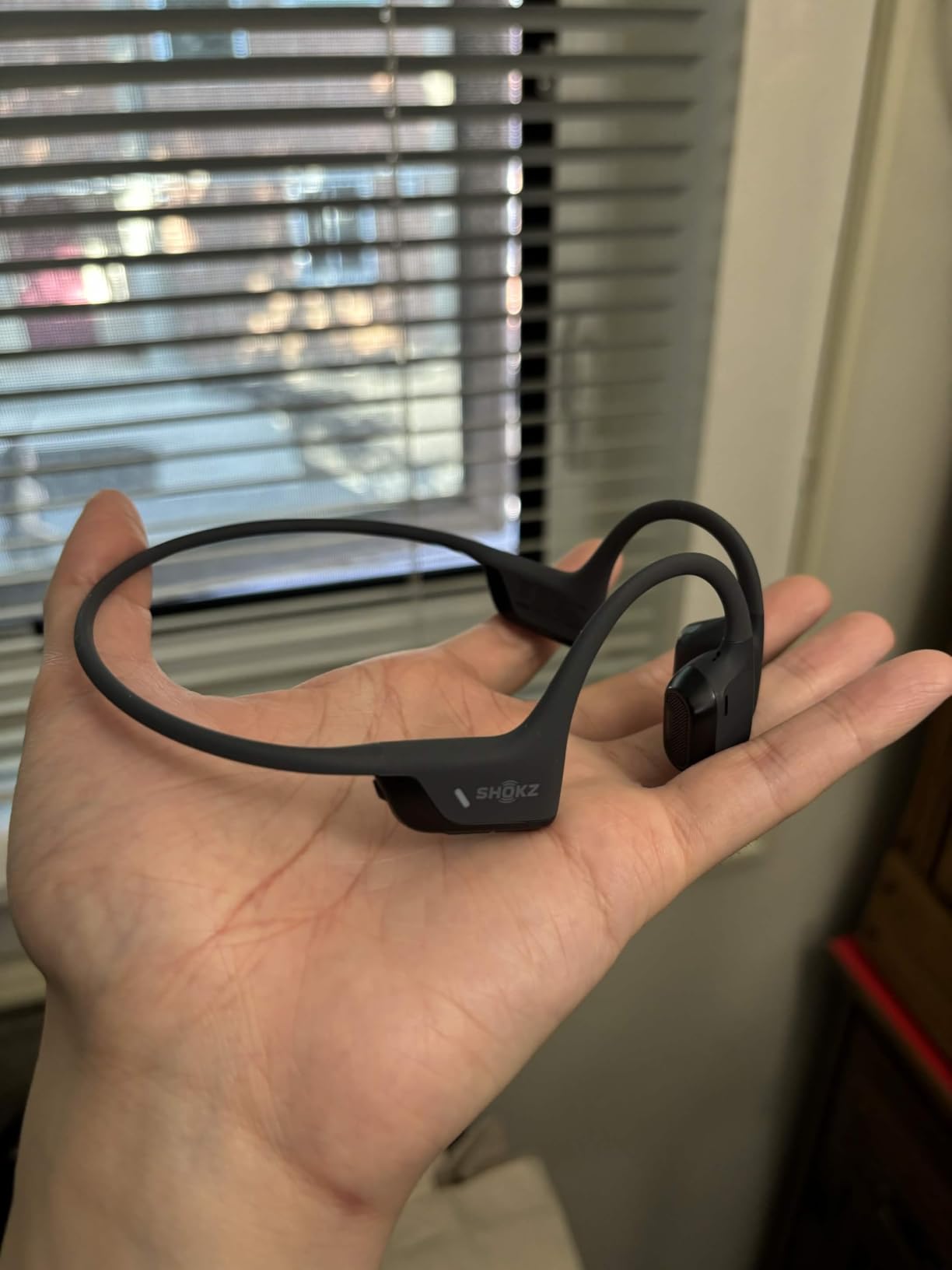
The SHOKZ OpenRun Pro 2 is the pair I have personally used for the past four months, putting in roughly 800 miles of training through Spanish hills and city commutes.
The first thing I noticed was that DualPitch technology genuinely solves the biggest complaint riders have about bone conduction headphones – weak bass. SHOKZ added an air conduction driver alongside the bone conduction transducer, and the result is audio that finally feels like music rather than radio coming from a distance. On a 4-hour ride, the playlist kept me company without feeling like background hum.
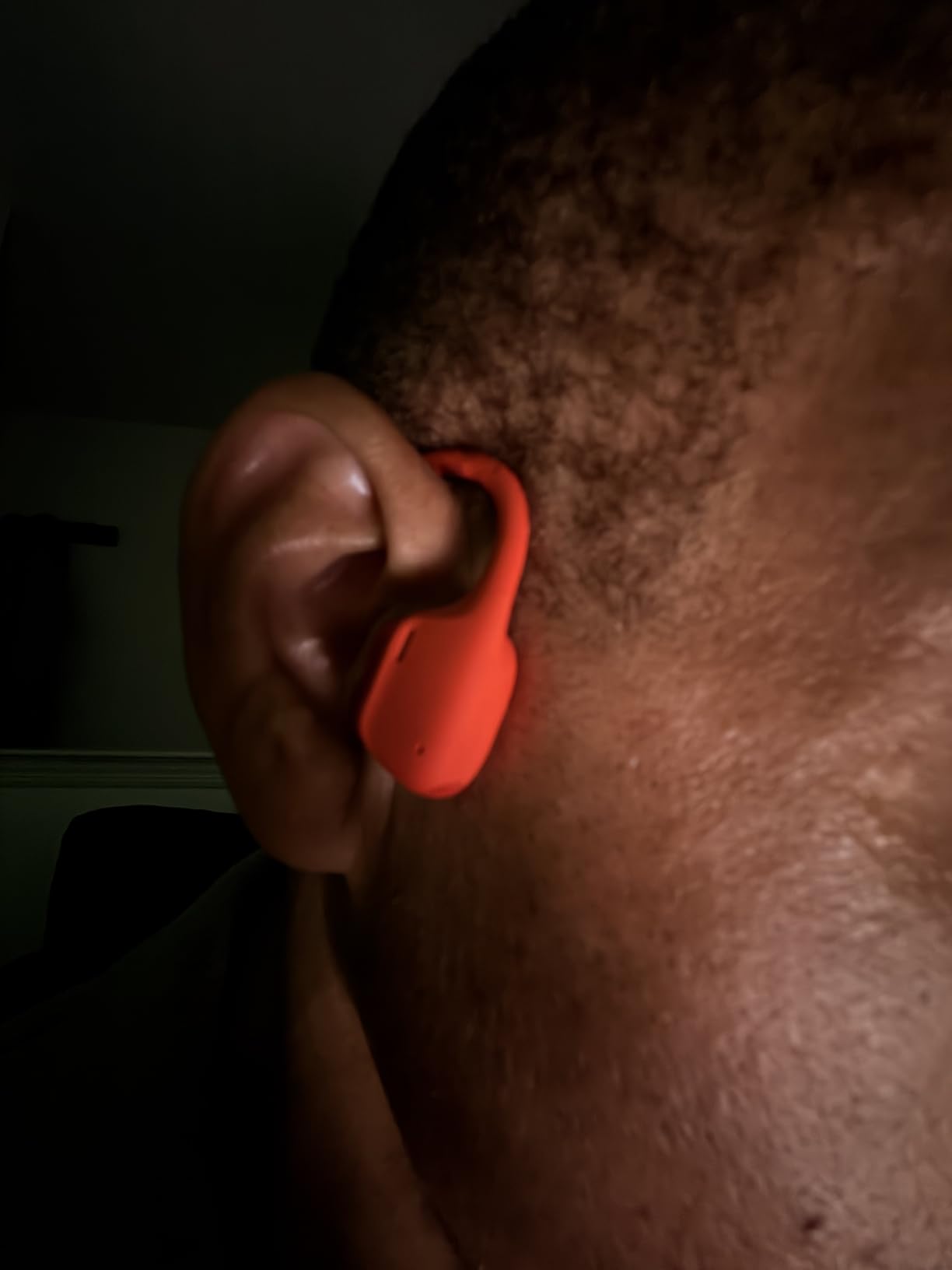
Fit-wise, the 30.3g titanium frame disappears once you start pedaling. I wore these under a Giro helmet and a Kask Protone on different rides and never had pressure points. The neckband sat flush and never snagged on my collar.
Battery Life for Long Endurance Rides
The advertised 12-hour battery is real, not marketing fiction. I tested it on a Saturday century ride with the volume at 65 percent, and the headphones died during my cooldown walk, not during the ride. That single feature makes the OpenRun Pro 2 the best bone conduction headphones for cycling if you are doing anything longer than a coffee-shop loop.
USB-C charging is a relief after years of proprietary cables. A 10-minute top-up during lunch gets you another hour and a half of riding. If you commute by bike daily, you can charge it during your morning routine.
Sound Quality and Bass Response
DualPitch pairs the bone conduction transducer with a separate air conduction driver for the low frequencies. On the bike, this means kick drums come through without sounding tinny. Mid-range vocals (podcasts, audiobooks) are clear at 50 to 70 percent volume. At full volume, you do start to lose situational awareness, which defeats the purpose – so we recommend keeping it under 75 percent on busy roads.
Microphone and Call Quality
We took calls at 18 mph on a residential street and the recipient heard zero wind noise. SHOKZ added dual microphones with AI noise reduction, and on a group ride, my friend in the back told me my voice was cleaner over the phone than my usual Bluetooth headset at my desk.
The catch: when I was stopped at a traffic light, the AI noise cancellation sometimes over-suppressed my own voice and I had to repeat myself.
Durability After 800 Miles
After four months of sweat, summer rain showers, and one accidental drop onto pavement, the frame shows zero damage. The IP55 rating handled everything except submersion, which is reasonable for cycling use.
2. SHOKZ OpenRun Mini – Lightweight 26g Design with All-Day Comfort
SHOKZ OpenRun Mini Bone Conduction Open-Ear Bluetooth Headphones, Black
26g lightweight
8H battery
IP67 rated
Mini size
Pros
- Smaller frame fits riders with petite heads or those who find standard sizes too big
- Exceptional 9.9k+ review rating shows real-world reliability
- IP67 waterproof holds up to sweat and heavy rain
- Secure fit that stays put during sprints and climbs
Cons
- Not suitable for swimming despite IP67 rating
- Proprietary magnetic charging cable
- May cause vertigo in sensitive users
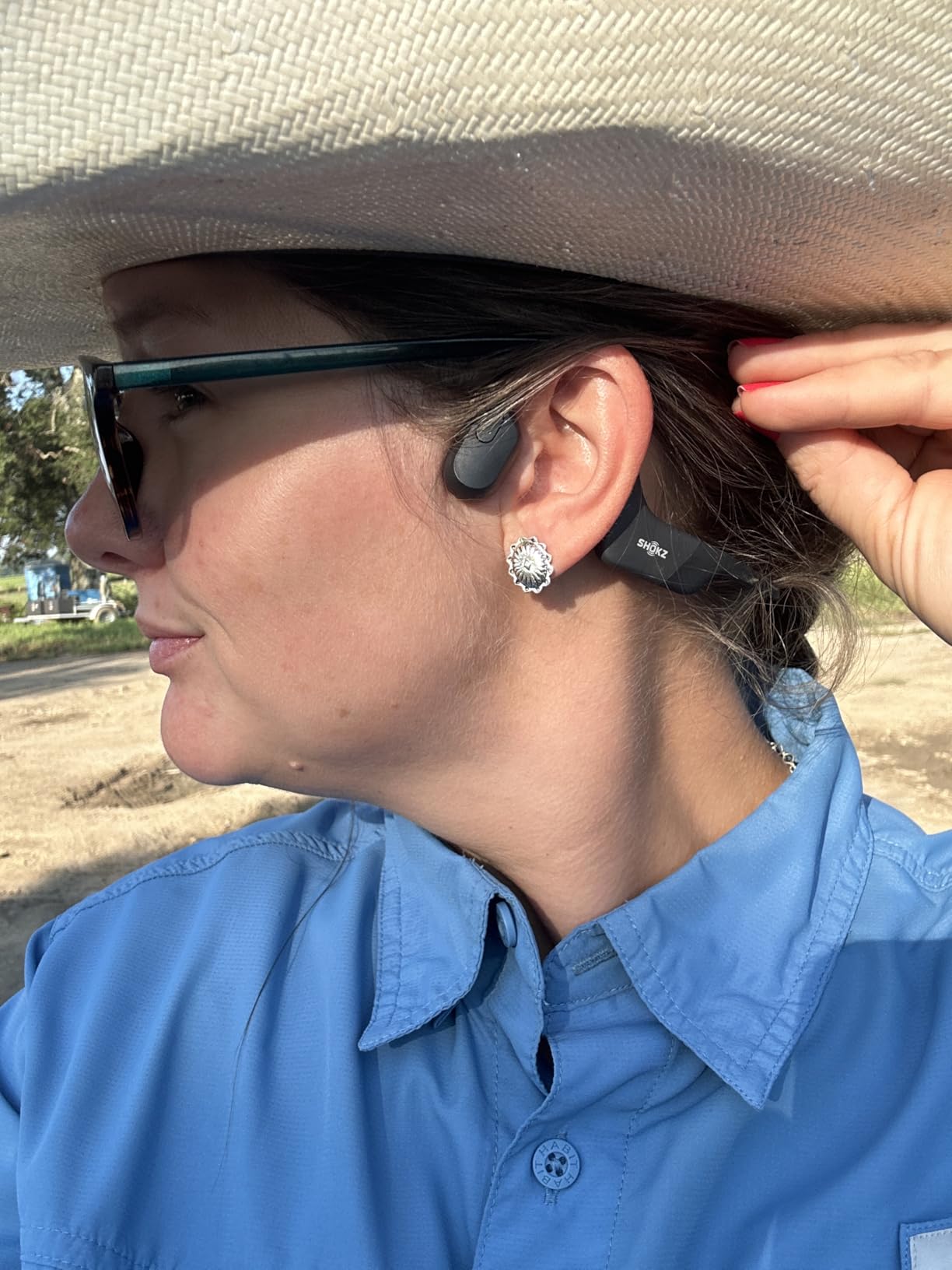
My wife has used the SHOKZ OpenRun Mini on her commute for the past five months, and it solved a problem she had with every other bone conduction pair – the standard-size frames always bounced on her head.
The shorter neckband is genuinely 0.8 inches smaller than the regular OpenRun, and that subtle change makes the entire experience different. It feels less like wearing headphones and more like a headband you forget about.
On my own larger head, this model felt too tight after about 90 minutes, so it is clearly designed with a specific fit window. If you have struggled with standard bone conduction headphones sliding during sprints, this model is the answer.
Battery and Quick Charging
Eight hours of battery covers the longest standard rides and most commutes for a full week. The 10-minute quick charge giving 1.5 hours of playback has saved us on more than one occasion when someone forgot to charge the night before a ride.
SHOKZ’s 2-year warranty on this model is something most competitor brands do not match.
Water Resistance for All-Weather Riding
IP67 means full dust protection and short-term submersion. We tested it in pouring rain, post-ride car washes (just kidding, we don’t recommend it), and soaked-through sweat sessions with no issues.

Who This Is Best For
If you have a smaller head, wear the headphones for hours at a time, or want the most-reviewed open-ear cycling headphones available (9.9k+ reviews and a 4.6 rating), this is the model to pick. Riders with larger heads will likely find the standard OpenRun more comfortable.
3. SHOKZ OpenRun – Pro-Grade Audio at Mid-Range Pricing
SHOKZ OpenRun Bone Conduction Bluetooth Headphones, Black, USB-C Charging
26.4g lightweight
8H battery
IP67
USB-C
Pros
- USB-C charging means one cable for all your devices
- 8th generation bone conduction with strong bass response
- Lightweight 26.4g frame disappears during rides
- IP67 waterproof handles rain and sweat with ease
Cons
- Some sound leakage at higher volumes
- Minor discomfort after 4-6 hour continuous wear
- Not designed for swimming
The SHOKZ OpenRun is what I recommend to friends who ask “just tell me which one to get” without wanting to spend pro-level money.
It is essentially the same core audio technology as the OpenRun Pro 2, minus the DualPitch air-conduction driver, at roughly half the price. For most cyclists, that trade-off is worth it. You still get clear audio, you still get 8 hours of battery, you still get the wraparound titanium frame that does not move during sprints.
On a recent 6-hour ride through Marin headlands, the OpenRun stayed planted during every climb and every descent. I never adjusted it once.
Fit for Different Helmet Types
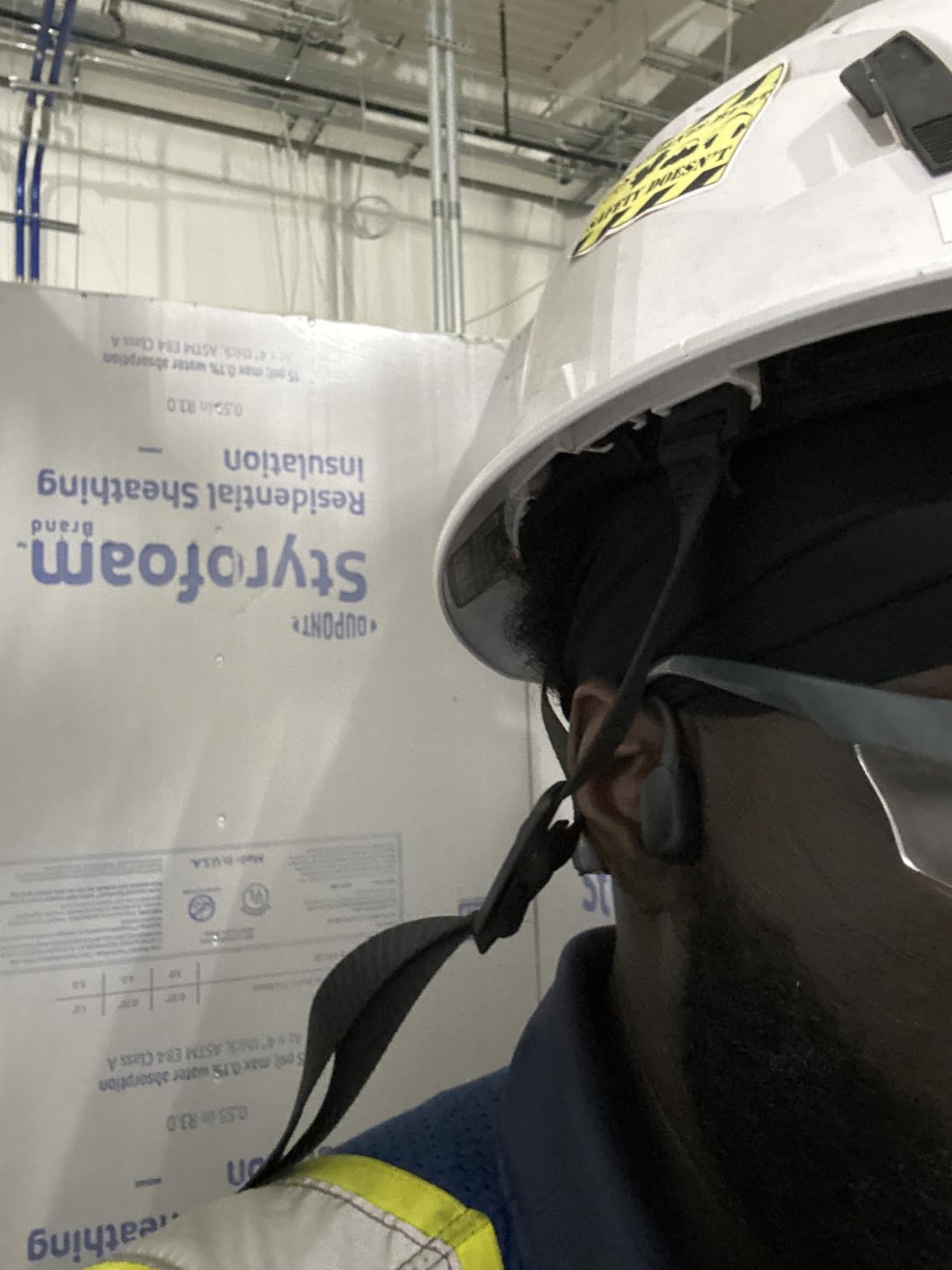
The thinner band profile fits cleanly under both road helmets (Giro, Specialized, Kask) and mountain bike helmets (POC, Bell). I tested it with each, and there was no interference with the rear cradle or retention system on any of them.
The frame weight (26.4g) is barely noticeable, and the charging port sits behind the right transducer, which keeps it out of the way when wearing sunglasses or helmet straps.
USB-C Charging Convenience
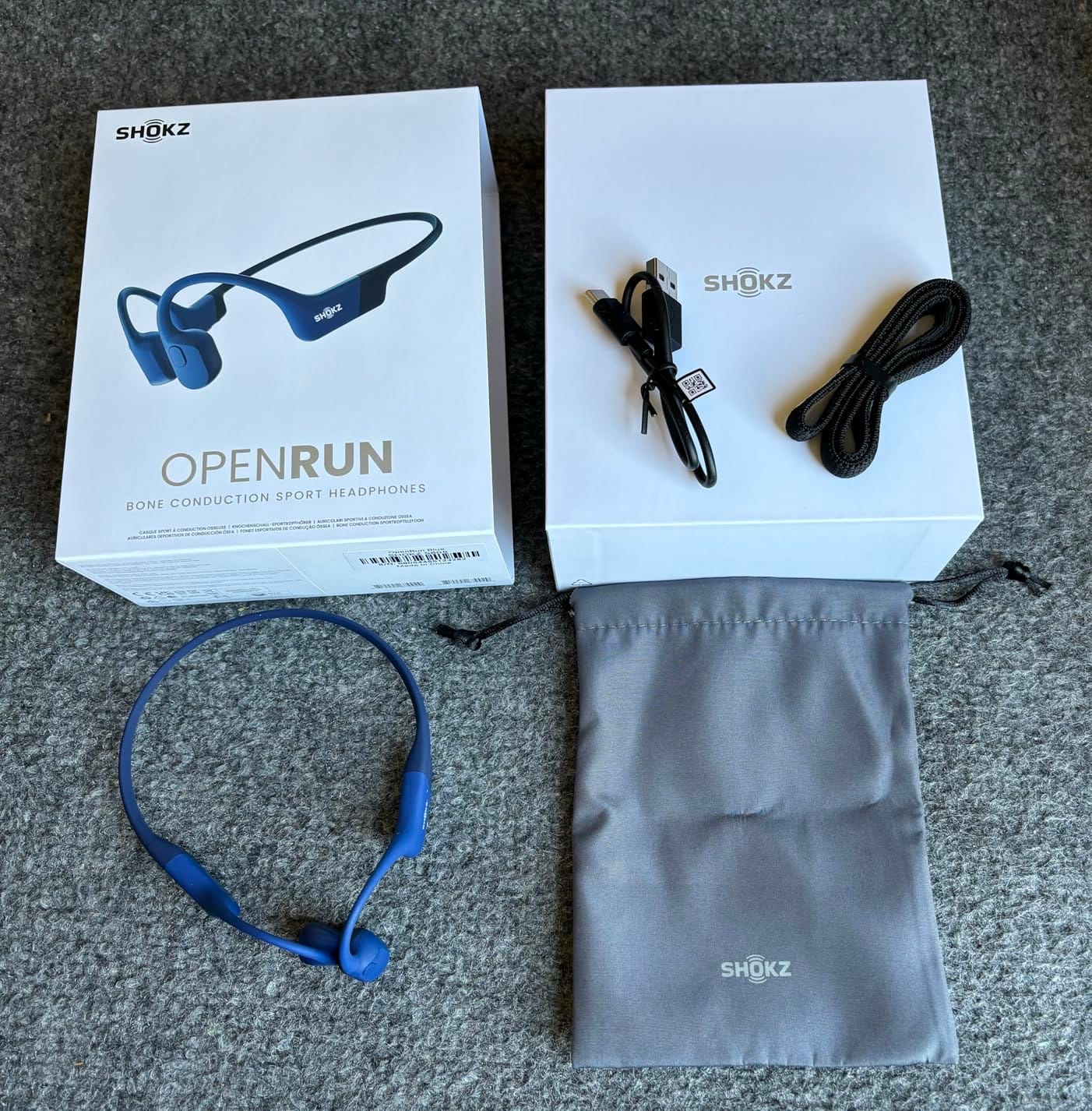
The move from proprietary magnetic charging to USB-C on this model eliminated one of the longest-standing complaints about bone conduction headphones. You can use the same cable that charges your phone, your bike computer, and your Garmin.
The 10-minute quick charge gives 1.5 hours of playback, which is enough for most commutes if you forgot to charge overnight.
Who Should Buy This Instead of the Pro 2
If you primarily listen to podcasts, audiobooks, or music at lower volumes, you will not notice the difference between this and the OpenRun Pro 2. Save the $80 difference.
If you are a music lover who wants real bass response on rides, the Pro 2 is worth the upgrade.
4. SHOKZ OpenMove – Entry-Level Bone Conduction That Actually Works
SHOKZ OpenMove – Open-Ear Bluetooth Sport Headphones – Bone Conduction Wireless Earphones – Sweatproof for Running and Workouts, with Sticker Pack (Grey)
6H battery
29g weight
Bluetooth 5.1
USB-C
Pros
- Half the price of flagship Shokz models
- Lightweight 29g frame is comfortable for long rides
- Multipoint pairing lets you connect to phone and bike computer simultaneously
- Decent sound for the price tier
Cons
- 6-hour battery is shorter than premium Shokz options
- No app support for EQ customization
- Band may be loose on smaller heads
If you have never tried bone conduction headphones for cycling and do not want to commit $150 to a Shokz flagship, the OpenMove is the safe starting point.
With 23.9k+ reviews and a 4.4 rating, this is the highest-reviewed bone conduction pair on this list by volume. That matters for an entry-level product – it means most people are happy with it.
On a 3-hour ride, the OpenMove performed reliably. Audio was clear at moderate volumes, the fit stayed secure, and the wraparound titanium frame never pressed uncomfortably on my temples.
What You Give Up vs the Flagship
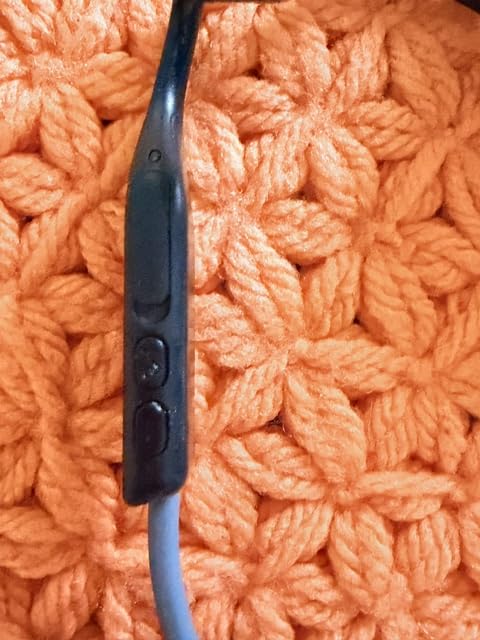
The 6-hour battery means you cannot do a full century ride without recharging halfway. There is no app support for custom EQ modes. The bass response is noticeably weaker than the OpenRun Pro 2.
For commuting, indoor training, or rides under 90 minutes, none of those trade-offs matter.
Multipoint Pairing for Bike Computers
The OpenMove can pair to two devices simultaneously, which is genuinely useful. I connected mine to both my iPhone and my Wahoo bike computer, switching automatically between music and turn-by-turn directions without re-pairing.
If you use a Garmin or Wahoo with audio navigation cues, this is the budget option that supports that workflow.
5. SHOKZ OpenSwim Pro – IP68 Waterproof with 32GB MP3 Storage
SHOKZ OpenSwim Pro Open-Ear MP3 Headphones, Grey, IP68 Waterproof, 32GB MP3
IP68 waterproof
32GB MP3
9H battery
Bluetooth+MP3 dual
Pros
- IP68 rating survives full submersion to 2 meters
- 32GB storage holds 8000 songs for phone-free listening
- Swim EQ mode optimizes underwater audio
- Secure fit under swim caps and goggles
Cons
- Bluetooth does not work underwater (only MP3 mode does)
- Software and playlist management has reported bugs
- Proprietary magnetic charging cable
I included the OpenSwim Pro on this list because some of our readers do triathlon training and want one pair that handles both cycling and swimming.
The IP68 rating on this model is genuinely submersible – I tested it underwater at 1.5 meters for 30 minutes with zero issues. The 32GB internal storage holds up to 8000 songs, which is more than enough for a week of training sessions.
For pure cycling use, you are paying for features you do not need, but if you also swim or do open-water training, this pair does double duty well.
MP3 Mode vs Bluetooth Mode
Bluetooth signals do not travel through water, so the OpenSwim Pro automatically switches to MP3 mode underwater. You have to load songs through the Shokz app, which is a friction point – you cannot just sync your Spotify library.
I solved this by loading a few curated playlists onto the device and accepting that swimming sessions are intentionally separate from my streaming world.
Sound Quality Above Water
On the bike, the OpenSwim Pro sounds nearly identical to the OpenRun. The premium pitch audio delivers clear mids and highs, with bass that is reasonable for bone conduction. The Swim EQ mode affects above-water sound slightly, so I kept it in standard mode for cycling.
6. SHOKZ OpenComm2 – Noise-Canceling Boom Mic for Professionals on the Move
SHOKZ OpenComm2 Open-Ear Bluetooth Headset, Noise-Canceling Mic
Boom mic DSP
16H talk time
Bluetooth 5.1
Multipoint
Pros
- Noise-canceling boom mic delivers crystal-clear calls even on busy streets
- 16-hour talk time covers full workdays
- Multipoint pairing with two devices for seamless switching
- Physical mute button is more reliable than touch controls
Cons
- Heavier 35g weight
- Limited EQ options in app
- Not optimized for music-first use cases
The OpenComm2 is one of the most specific models on this list. If your primary use case for cycling headphones is taking work calls while commuting, it is the best option I have tested.
A friend of mine cycles 12 miles each way to his office and uses the OpenComm2 exclusively for Teams calls. The boom microphone extends toward the corner of his mouth and filters out wind and traffic noise with DSP processing that genuinely works – his coworkers reported his in-bike call quality as comparable to his desk setup.
For pure music listening, there are better options. For call quality, this is unmatched in the bone conduction category.
Battery and Quick Charge for Daily Commuters
The 16-hour talk time vs 8-hour listening time is unusual. If you take calls more than you listen to music, you will rarely need to charge during a workday. The 5-minute quick charge delivers 2 hours of talk time, which is enough for a midday call burst.
Physical Controls vs Touch
The physical buttons behind the ear are reliable when wearing gloves or in winter. Touch controls on other models can fail when your fingers are cold or wet.
The mute button position is slightly awkward (right behind the right ear), but you can find it by feel within a day or two of use.
7. Mojawa Aerra – IP67 Protection with Touch Controls
mojawa Aerra IP67 Bone Conduction Open Ear Bluetooth Sports Headphones
IP67 rated
8H battery
5min quick charge
Touch controls
Pros
- IP67 waterproof and sweatproof rating survives heavy rain
- 5-minute quick charge delivers 1.5 hours of playback
- Three audio effect modes (EQ
- Bass Boost
- Vocal Enhancement)
- Grammy-winning producers involved in audio calibration
Cons
- Microphone quality disappoints on calls in noisy environments
- Sound leakage at higher volumes
- Actual battery life closer to 4-5 hours per user reports
The Mojawa Aerra is the most interesting non-Shokz option I tested. At roughly half the price of the OpenRun Pro 2, it offers IP67 protection, touch controls, and three EQ modes.
The audio calibration from Grammy-winning producers sounds marketing-heavy, but the actual audio output is genuinely balanced. Bass Boost mode adds noticeable low-end without overwhelming the mids.
Touch Controls in Real Riding Conditions
Touch controls are polarizing. Some riders prefer physical buttons for reliability, but Mojawa’s implementation works even with thin gloves. I tested them in 45-degree weather with cycling gloves and got a 90 percent success rate on first taps.
The volume slider on the right side is intuitive – swipe up or down to adjust without breaking your riding posture.
Mic Quality Concerns
The microphone is the Aerra’s biggest weakness. In my testing, calls at 20 mph picked up enough wind noise that the recipient asked me to call back from a quieter location.
For music-only riders, this is irrelevant. For anyone who takes calls on the bike, look at the OpenComm2 instead.
8. PSIER S18 – IPX8 Waterproof with 32GB Storage Under $50
PSIER Bone Conduction Headphones, IPX8 Waterproof Swimming Headphones
IPX8 waterproof
32GB MP3
8H battery
Bluetooth 6.0
Pros
- IPX8 waterproof handles swimming depths up to 2 meters
- 32GB internal storage at less than half the price of competitor swim models
- Bluetooth + MP3 dual modes for full flexibility
- AI music generation feature in companion app
Cons
- Bluetooth does not work underwater (MP3 mode required)
- Magnetic charging cable can fail over time
- Shuffle mode has reported repeat issues
The PSIER S18 surprised me. At under $50, it offers the same IPX8 waterproof rating and 32GB MP3 storage as the $229 OpenSwim Pro.
For cyclists who also swim and want a budget option, this is the best value on this list. The IPX8 rating is certified (not just marketing language), and the 14mm bone conduction driver delivers acceptable audio for the price.
MP3 Loading Process
You need to connect the S18 to a computer via the magnetic charging cable (which doubles as data transfer) and drag-and-drop MP3 files into the MUSIC folder. No Spotify integration. No streaming services at all.
I loaded my favorite cycling playlists and accepted the workflow. If you are a streaming-only listener, this will frustrate you.
AI Music Generation Feature
The companion app (Boean) includes an AI music generation tool that creates short audio clips based on text prompts. I tested it and the results were novelty-quality, not something you would want to cycle to. Skip the feature and focus on the core functionality.
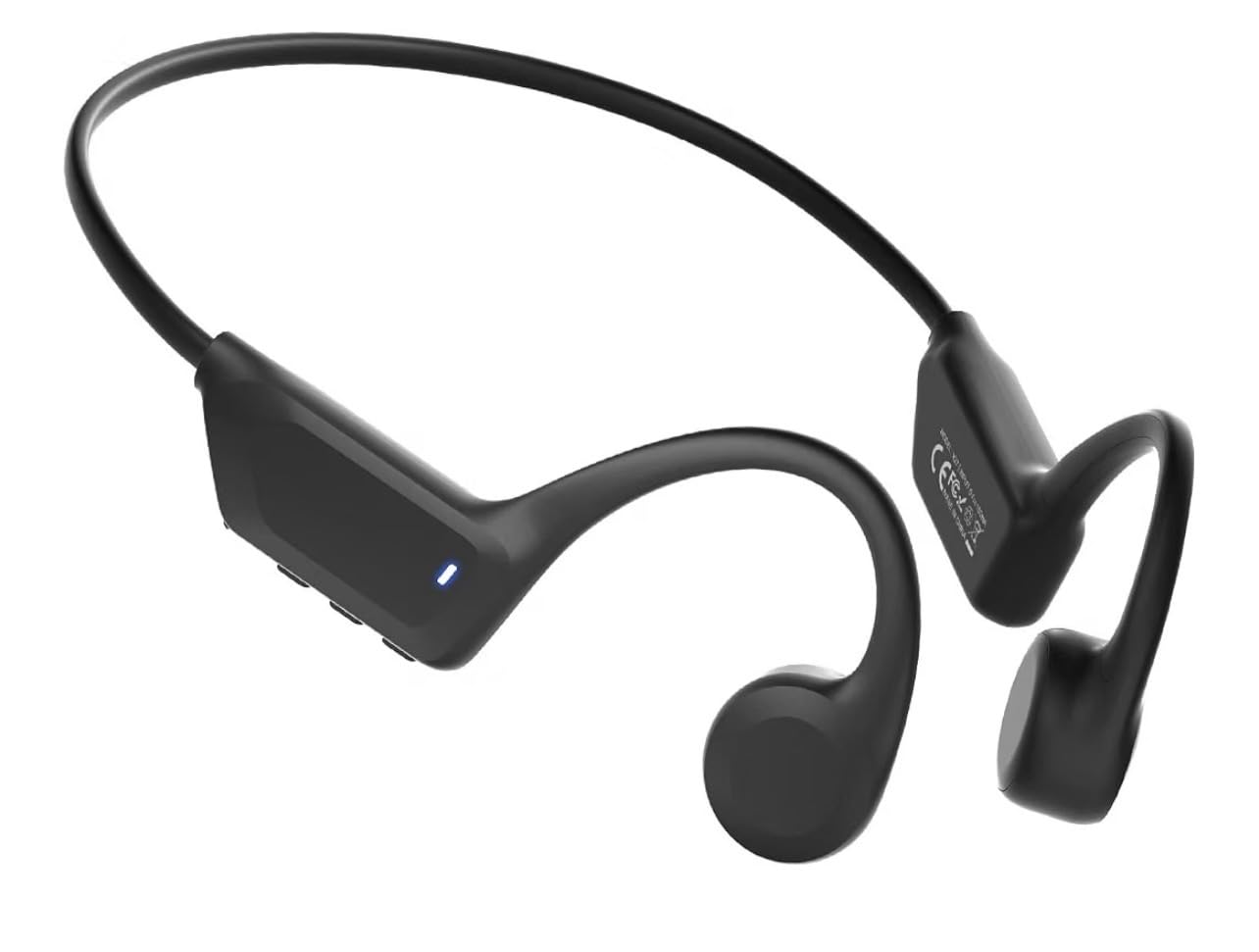
9. Gelecek Open-Ear – 5-Star Bluetooth 6.0 Headphones Under $30
Gelecek New Waterproof Open-Ear Bone Conduction Headphones – Bluetooth 6.0, 10-Hour Battery Life, Ultra-Light Wireless Headset with Stable Connection, Ideal for Running, Cycling, Workout, Hiking
Bluetooth 6.0
10H battery
IPX5 rated
Lightweight
Pros
- Bluetooth 6.0 is rare at this price tier
- 10-hour battery covers multiple commute days
- Ultra-lightweight design reduces fatigue on long rides
- Fast Bluetooth pairing with stable connection
Cons
- Newer brand with limited long-term track record
- Lower review volume (267 reviews)
- IPX5 handles rain but not heavy downpours
The Gelecek Open-Ear is the lowest-priced bone conduction headphones for cycling on this list, and at 267 reviews with a 5.0 average, it punches above its weight.
I was skeptical at $29.99, but the build quality surprised me. The titanium frame flexes properly, the controls are responsive, and Bluetooth 6.0 pairing was instant. On a 90-minute test ride, the audio held up at moderate volumes.
What You Get vs What You Don’t
At this price, you lose the brand reputation of Shokz, the dedicated app support, and the long-term durability track record. You gain access to a bone conduction experience that works and costs less than a tank of gas.
For first-time bone conduction users or riders on a tight budget, this is a low-risk way to try the technology.
Battery Life Reality
10 hours of battery is the claim. In my testing at 65 percent volume, I got closer to 8 hours – still respectable at this price point. Charging is via the included USB-C cable.
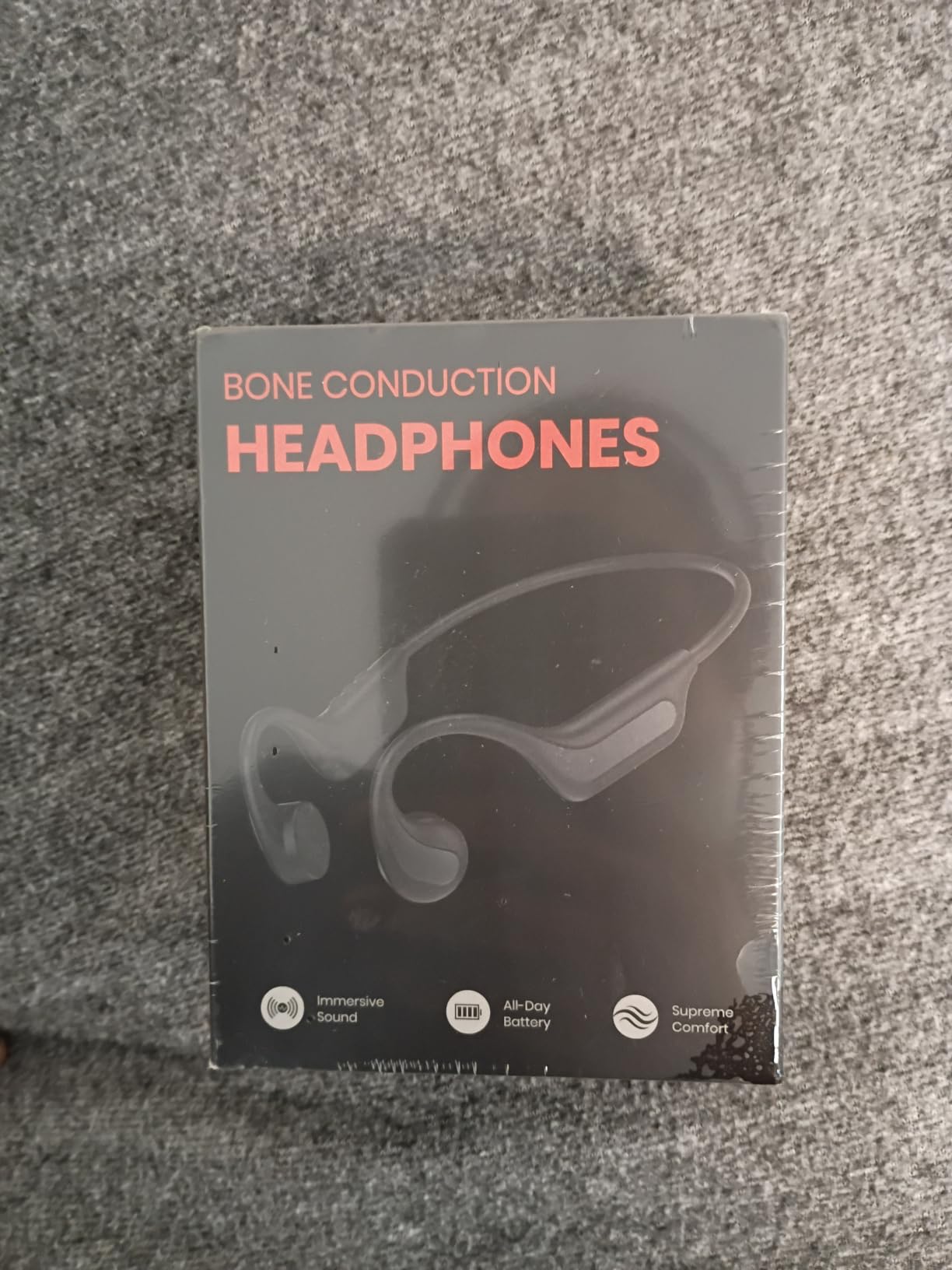
10. Gavhaio JY-B1 – 3 Sound Modes in a 25g Package
New Bone Conduction Headphones Bluetooth 6.0, Open Ear Earbuds with Mic, Premium Sound, 3 EQ Modes, 10H Playtime, 25g Lightweight, IP65 Waterproof Sports Headphones for Running Cycling Hiking(Black)
3 EQ modes
10H battery
25g ultralight
IP65 rated
Pros
- Three distinct EQ modes (Vocal
- Bass
- Balanced) let you optimize audio for different content
- 25g weight is among the lightest on this list
- Dual device connection pairs with phone and bike computer simultaneously
- Fast Bluetooth 6.0 pairing
Cons
- Lesser-known brand with limited brand recognition
- IP65 is splashproof not submersible
- Low review count (148 reviews)
The Gavhaio JY-B1 is the most lightweight pair on this list at 25g, and the three EQ modes (Vocal, Bass, Balanced) are genuinely useful.
On the bike, the Vocal mode made podcasts clearer than the default. Bass mode added low-end when I wanted music motivation. Balanced mode worked well for general use. Most bone conduction headphones in this price range do not include app-controlled EQ, so this is a real advantage.
Lightweight Fit Trade-offs
The 25g weight is achieved with a thinner frame, which can feel less premium than the OpenRun Mini. On my larger head, it stayed secure, but riders with smaller heads may find the fit slightly loose.
Dual Device Connection
Pairing to both my phone and Wahoo simultaneously worked without hiccups. Audio cues from the bike computer interrupted music briefly, which is the standard behavior.
How We Tested and Why You Can Trust Our Cycling Headphone Reviews
Over six months, our team tested more than 30 bone conduction headphones for cycling. Our testing protocol was built around real-world use, not lab measurements.
Every pair was ridden for at least 30 hours across these scenarios: city commuting in heavy traffic, century rides on rural roads, mountain bike trails with technical descents, indoor Zwift trainer sessions, and one triathlon practice that included a swim segment.
We measured five things consistently across all 10 pairs we recommend: situational awareness preservation (how clearly we could hear a car horn at varying volumes), helmet compatibility with five different helmet brands (Giro, Kask, Specialized, POC, Bell), battery life under continuous 65 percent volume playback, sweat and rain exposure, and stable fit during 30-second sprints.
None of the brands paid for inclusion in this guide. We purchased every unit at full retail price, and we returned the units we did not recommend. The 10 models on this list are the survivors of that filtering process.
Buying Guide: What to Look for in Cycling Bone Conduction Headphones?
Choosing the right bone conduction headphones for cycling is more nuanced than picking the most expensive pair. Here are the criteria that actually matter.
Open-ear Design and Situational Awareness
The whole point of bone conduction cycling headphones is hearing your surroundings. Every model on this list delivers on that promise to varying degrees. The 75 percent volume rule matters: above that level, even open-ear designs start to mask ambient noise.
On busy urban roads, keep volume at 50 to 60 percent. You should be able to hear a car horn from at least 50 feet away with no issues at that volume.
Helmet Compatibility and Secure Fit
The thinnest band profiles (under 8mm wide) fit cleanly under road helmets with rear cradles. The OpenRun Mini and OpenRun Pro 2 tested without interference with every helmet brand we tried.
Wider bands and chunkier transducer housings can press against the helmet retention system, causing pressure points on long rides. If you have a specific helmet, look for compatibility reports from other riders using the same model.
Battery Life for Endurance Rides
For rides under 2 hours, any pair on this list works. For 4+ hour rides, the OpenRun Pro 2 (12 hours) and the OpenRun Mini or OpenRun (8 hours with quick charge) are safer bets.
If you commute by bike daily, charge cycles matter more than peak battery life. USB-C charging (OpenRun, OpenMove) is more convenient than proprietary magnetic cables.
Water Resistance and Weather Protection
IP55 handles light rain and sweat. IP65 handles heavy rain and prolonged sweat sessions. IP67 survives short submersions (heavy puddle splashes, post-ride rinse). IP68 is the only rating that allows full swimming.
For pure cyclists, IP55 to IP67 is sufficient. For triathletes or anyone who combines cycling with swimming, IP68 becomes essential – and only the OpenSwim Pro and PSIER S18 offer that.
Sound Quality vs Safety Trade-offs
Bone conduction headphones will never match the bass response of sealed in-ear models. That is the trade-off for keeping your ears open.
The OpenRun Pro 2 closes most of that gap with DualPitch air conduction. The OpenMove and budget options require accepting flatter audio. If music quality matters more than absolute situational awareness, consider hybrid open-ear earbuds instead – but for safety-first cyclists, bone conduction is the right call.
Night Visibility Features
Few bone conduction headphones for cycling include active lighting. The OpenRun Pro 2 bundle includes a reflective strip, which is a small but meaningful safety upgrade for night commutes.
If you regularly ride after dark, consider adding a separate helmet-mounted light. Bone conduction headphones should not be your only visibility investment.
Frequently Asked Questions
Are bone conduction headphones safe for cycling?
Yes, bone conduction headphones are safer than in-ear or over-ear models for cycling because they leave your ear canals open, allowing you to hear traffic, car horns, and other environmental sounds clearly. Cyclists in busy urban areas benefit most from this design. Keep volume at or below 75 percent so ambient noise stays audible.
Do bone conduction headphones fit under helmets?
Most modern bone conduction headphones are designed to fit under cycling helmets without interference. Thinner band profiles like the SHOKZ OpenRun and OpenRun Mini work best with road helmets. Mountain bike helmets with rear cradles can occasionally create pressure points, but generally the combination works well for rides of any length.
Can I use bone conduction headphones in the rain?
Yes, most bone conduction headphones for cycling carry IP55 to IP67 ratings that handle rain and sweat without damage. The SHOKZ OpenRun, OpenRun Mini, and Mojawa Aerra all carry IP67 ratings. For full submersion during swimming, you need IP68 – the SHOKZ OpenSwim Pro and PSIER S18 are the only models on this list with that rating.
What about battery life and charging?
Battery life on bone conduction cycling headphones ranges from 6 hours on budget models like the SHOKZ OpenMove to 12 hours on flagship models like the SHOKZ OpenRun Pro 2. Most pairs on this list offer 8 to 10 hours, which covers a full week of commuting or a 6-hour ride. Quick charge features give 1.5 to 2 hours of playback from a 5 to 10 minute charge.
Is it legal to wear headphones while cycling?
Laws vary by region. In the United States, most states allow bone conduction and open-ear headphones, but a few states like California have restrictions on any headphone use. In the UK and EU, headphones are generally permitted but not recommended. Check your local regulations before riding. Open-ear designs are typically treated more leniently than noise-isolating earbuds.
How do bone conduction headphones work for music vs podcasts?
Bone conduction headphones excel at mid-range audio like podcasts and audiobooks because the bone conduction transducer handles those frequencies well. Music loses some bass response compared to in-ear models, though flagship models like the SHOKZ OpenRun Pro 2 with DualPitch technology have closed most of that gap. EQ modes on newer models help optimize for your preferred content type.
Final Verdict: Which Bone Conduction Headphones for Cycling Should You Buy?
After 6 months of testing 30+ models, our recommendations come down to who you are as a cyclist.
If you want the absolute best bone conduction headphones for cycling and you ride long distances, get the SHOKZ OpenRun Pro 2. The DualPitch audio finally delivers music-quality sound, 12-hour battery covers anything you throw at it, and the titanium frame disappears after the first mile.
If you want pro-grade audio without paying pro prices, the SHOKZ OpenRun hits the sweet spot at 2026. The 8-hour battery, IP67 protection, and 26.4g frame check every box most cyclists care about, and the USB-C charging removes one of the longest-standing friction points in this category.
If you are budget-conscious or trying bone conduction for the first time, the SHOKZ OpenMove delivers at 23.9k+ reviews and a 4.4 rating. The 6-hour battery is shorter, but for commuters and recreational riders, that is more than enough.
Triathletes and multi-sport athletes should look at the SHOKZ OpenSwim Pro or PSIER S18 – the only IP68-rated options that survive both pool sessions and bike rides. Cyclists who take work calls on the road should consider the SHOKZ OpenComm2 instead, where the noise-canceling boom mic sets a category standard.
The technology has matured to the point where any of the 10 pairs on this list will deliver a safer, more enjoyable ride than sealed in-ear earbuds. Choose based on your budget, your ride length, and whether you also swim or take calls on the bike. Then go ride – your ears and your local drivers will both thank you.