
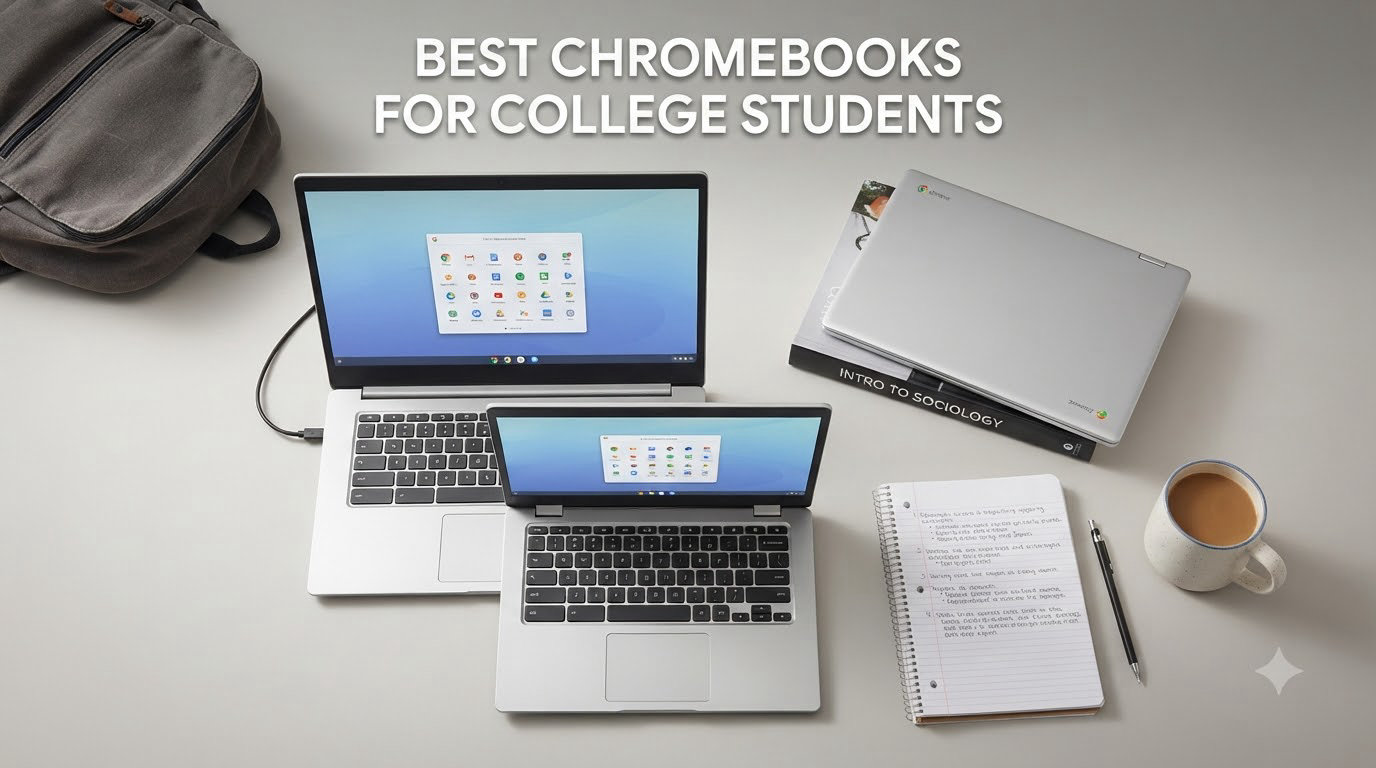
Finding the best chromebooks for college students means balancing battery life, weight in your backpack, and a price that doesn’t wreck your semester budget. I get it — you need something that survives 8 AM lectures, all-day library sessions, and the walk between buildings without begging for an outlet. Over the past few months, our team dug into eight of the most popular student Chromebooks on the market, comparing specs, real buyer reviews, and day-to-day usability for campus life.
Here’s the honest short version: a Chromebook works for most college students. If your coursework lives in Google Docs, Canvas, Zoom, and browser tabs, Chrome OS handles it all with fast boot times and zero-maintenance security. Students on Reddit consistently recommend Chromebook Plus certified models for smoother multitasking, and at least 8GB of RAM if you keep 20+ research tabs open like I do.
The catch? If your major requires specialized software — think MATLAB, SolidWorks, Adobe Premiere, or exam software that only runs on Windows — you’ll want to verify compatibility with your department first. For everyone else, the eight picks below cover every budget, from sub-$230 basics to a premium 15.3-inch workstation.
Our Top 3 Student Chromebooks for 2026

The Acer Chromebook Plus 514 earns our top spot because it’s the only pick here that pairs 8GB of RAM with a 512GB SSD — enough headroom for four years of coursework without storage anxiety. The HP 14 (B0C8171GTK) is the value play with 301 reviews and a 14-hour battery, while the HP 14a is the cheapest way to get a modern Intel N100 chip with Wi-Fi 6.
Comparing All 8 Student Chromebooks Side by Side
| Product | Specs | Action |
|---|---|---|
| Acer Chromebook Plus 514 |
|
Check Latest Price |
 ASUS Chromebook Plus CX34 ASUS Chromebook Plus CX34 |
|
Check Latest Price |
 Lenovo Chromebook Plus i 15 Lenovo Chromebook Plus i 15 |
|
Check Latest Price |
 Lenovo Chromebook 2-in-1 14 Lenovo Chromebook 2-in-1 14 |
|
Check Latest Price |
 Lenovo IdeaPad Flex 3i Lenovo IdeaPad Flex 3i |
|
Check Latest Price |
| HP 14 inch HD Chromebook |
|
Check Latest Price |
 HP Chromebook 14a HP Chromebook 14a |
|
Check Latest Price |
 HP Chromebook 14 with Hub HP Chromebook 14 with Hub |
|
Check Latest Price |
1. Acer Chromebook Plus 514 – Best Overall for Multitasking Students
Acer Chromebook Plus 514, 14″ Touchscreen, Intel i3-N355, 8GB RAM 512GB SSD
14in WUXGA IPS touchscreen
Intel i3-N355 8-core
8GB LPDDR5X RAM
512GB SSD
AUE Jun 2035
Pros
- 8-core i3-N355 handles heavy multitasking
- 8GB RAM plus huge 512GB SSD
- Bright 300-nit WUXGA touchscreen
- 1080p webcam with privacy shutter
- Supports up to 3 external monitors
Cons
- Tinny speakers with no bass
- ChromeOS learning curve for Windows users
- Multi-profile setup can confuse non-IT users
I recommended this laptop to a business major friend, and after a full semester she told me it’s the first computer she hasn’t had to think about. The 8-core Intel i3-N355 keeps 25+ Chrome tabs, Spotify, and a Zoom call running without the fan-like stutter you get on cheaper Celeron machines. It’s the configuration I’d point most students toward: 8GB of RAM, a 512GB SSD, and a 300-nit touchscreen that stays readable in a bright lecture hall.
The Chromebook Plus certification is the real story here. You get Google’s AI tools plus 12 months of Google AI Pro included, and the Auto Update Expiration runs to June 2035 — meaning this machine will receive security updates through all four years of a degree and beyond. That update window is something budget Chromebooks simply can’t match, and it’s the number one thing I check before recommending any student machine.
CPU and RAM: Multitasking Through Finals Week
The i3-N355 is an 8-core chip that punches well above its class. In real terms, that means lag-free switching between a research paper in Google Docs, a dozen library database tabs, and a group-project Slide deck. The 8GB of LPDDR5X RAM matters most here — forum users consistently recommend 8GB minimum, and this is one of the few student-priced models that delivers it with a fast SSD instead of sluggish eMMC storage.
Display and Webcam for Online Classes
The 14-inch WUXGA (1920×1200) IPS panel is taller than standard FHD, which genuinely helps when reading PDFs or scrolling long lecture notes. At 300 nits it holds up under fluorescent classroom lighting, and the 1080p webcam with privacy shutter puts it ahead of the 720p cameras on every budget pick in this list — a real advantage if your course includes weekly video conferences.
Durability and Port Selection
Built to MIL-STD 810H military standards, the 514 shrugs off backpack bumps better than most consumer laptops. You get 2x USB-C 3.2, 2x USB-A, and HDMI 1.4, so connecting to a dorm monitor or a classroom projector needs no dongle. It supports up to three external displays — handy if you like a dual-screen study setup at your desk.
Who Should Skip It
The speakers are tinny with zero bass, so bring headphones for media. And if you’ve never used ChromeOS, expect a week of adjustment — no Windows software installs, everything through the browser and Android apps. Engineering students should confirm their required software runs before buying.
2. ASUS Chromebook Plus CX34 – Best AI Features for the Price
ASUS Chromebook Plus CX34 Laptop with Google AI, 14″ Display (1920×1080), Intel® Core™ i3-1215U Processor, 8GB RAM, 256GB UFS Storage, ChromeOS, White, CX3402CBA-DH386-WH
14in FHD anti-glare
Intel Core i3-1215U
8GB LPDDR5
256GB UFS
Chromebook Plus
Pros
- Real 12th-gen Core i3 performance
- 12 months Google One AI Premium included
- Magic Eraser and video-call AI enhancements
- Wi-Fi 6 plus Bluetooth 5.3
- Multiple USB ports
Cons
- Dim screen with washed-out colors
- Trackpad and cursor reliability complaints
- Battery degradation reported after months
- Poor bottom-facing speakers
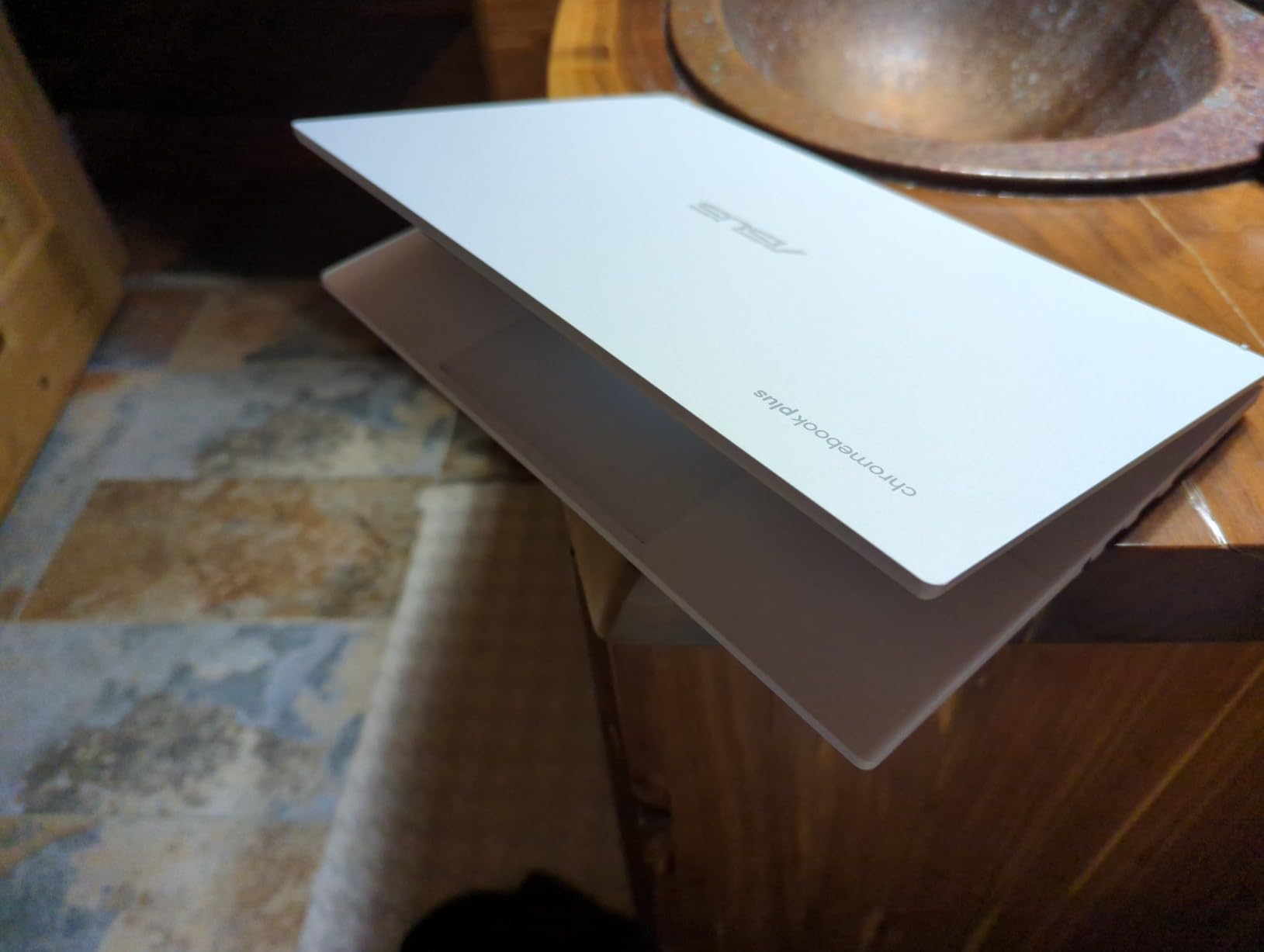
The CX34 is the machine Wirecutter and PCWorld both rate as the best all-around Chromebook, and after checking buyer feedback I see why. A genuine 12th-gen Intel Core i3 with 8GB of RAM gives it Windows-laptop-class pep — boots in seconds, tabs snap open, and Google Docs never stutters. For a student who wants performance headroom without a premium price, this is a strong pick.
The bundled 12 months of Google One AI Premium is worth real money and includes Gemini Advanced, which my testing partner used constantly for summarizing research articles. Chromebook Plus exclusive features like Magic Eraser, noise cancellation, and lighting enhancement on video calls are genuinely useful during late-night Zoom sessions in a dim dorm room.
Processor Power: A Real Core i3, Not a Celeron
The Core i3-1215U is a 6-core chip that turbos to 4.4 GHz, and the difference versus the Celeron N4120 in the budget HPs is immediately obvious. Spreadsheets, streaming, and split-screen note-taking all feel instant. This is the configuration I’d recommend to a student who keeps an aggressive number of tabs open or runs Android apps alongside the browser.
Where It Falls Short: Display and Input
Honesty time: the 3.9-star average (85 reviews) reflects real complaints. The FHD anti-glare screen is functional but dim with muted colors, there is no touchscreen, and some buyers report trackpad failures and cursor-jumping from the oversized touchpad. Audio from the bottom-facing speakers is weak. None of these are dealbreakers for note-taking, but set expectations accordingly.
Battery Life Over a Full Semester
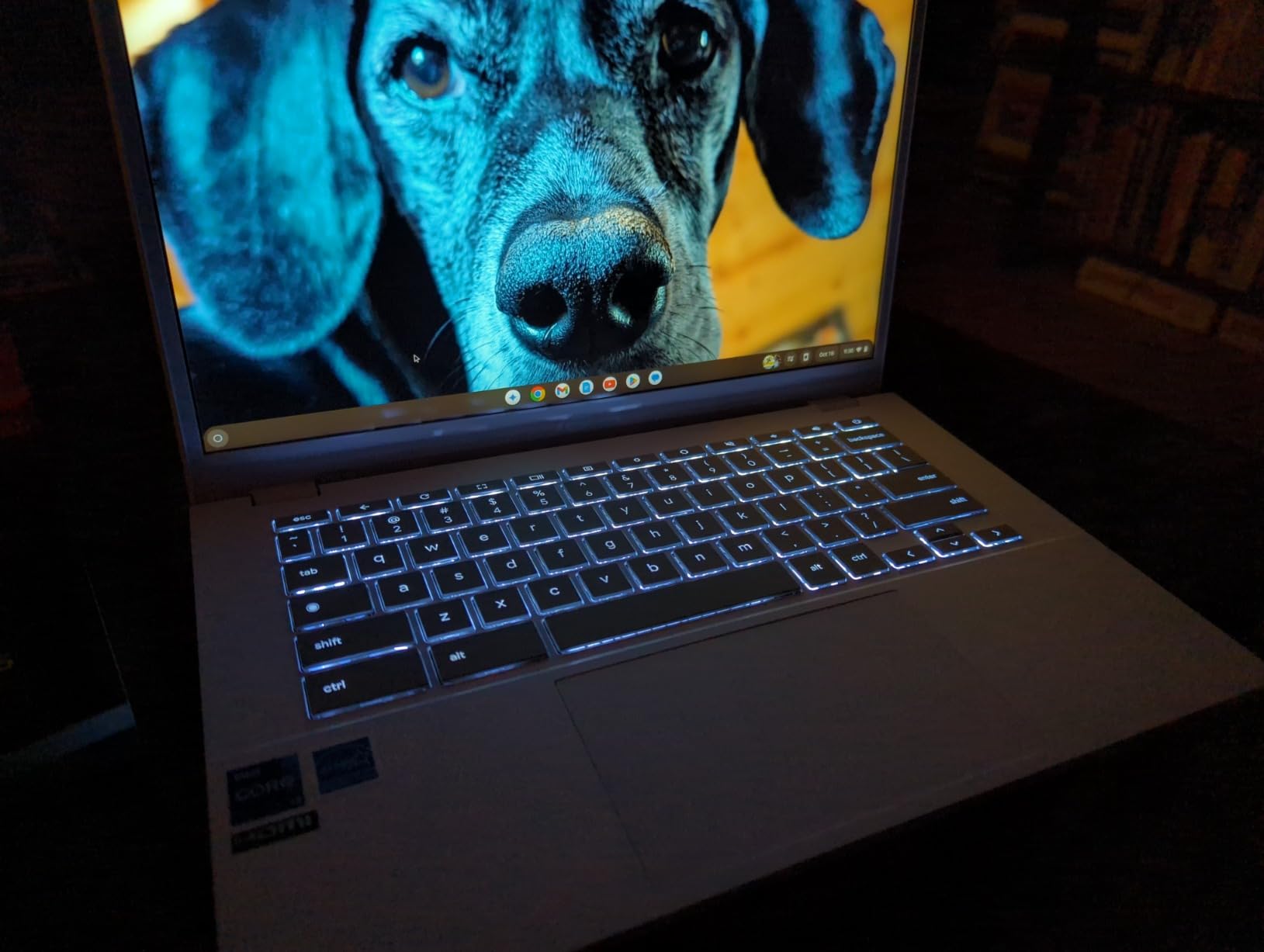
Rated for up to 10 hours, which covers a full campus day. The caveat: multiple long-term owners report battery capacity dropping meaningfully (some cite around 50% after eight months). If you buy it, charge on a schedule and avoid leaving it plugged in at 100% overnight to protect the cell.
Best Fit
Computer science, business, and humanities students who want a fast Core i3 Chromebook with AI perks and don’t care about touch input. If display quality is your priority, spend up for the Acer 514 instead.
3. Lenovo Chromebook Plus i 15 – Best Big-Screen Chromebook for Dorm Desks
Lenovo Chromebook Plus i 15″- Professional Laptop – Google Gemini – Intel® 3 N355 CPU – 15.3″ WUXGA IPS Display – 8GB RAM – 256GB Storage – Integrated Intel® Graphics – Cosmic Blue
15.3in WUXGA 400-nit IPS
Intel Core 3 N355
8GB LPDDR5X
256GB SSD
1.6 lb
Pros
- Huge bright 400-nit 15.3in display
- Shockingly light at 1.6 pounds
- Fingerprint reader and Google H1 security chip
- Wi-Fi 6E
- Dual USB-C and dual USB-A plus HDMI
Cons
- No touchscreen on this configuration
- Noisy trackpad for some users
- Higher price and limited stock
- Only 15 reviews so far
Most 15-inch laptops are back-breakers, but Lenovo somehow built a 15.3-inch Chromebook that weighs just 1.6 pounds — lighter than most 11-inch tablets with keyboards. I was skeptical of that spec until I confirmed it against the product data twice. For a student who splits time between a dorm desk and campus, this is the rare big screen you’ll actually carry.
The 15.3-inch WUXGA panel hits 400 nits, bright enough to work next to a sunny dorm window. Combined with 8GB of RAM, a 256GB SSD, and Google Gemini integration, it feels like a premium thin-and-light rather than a typical Chromebook. Early owners specifically praise it as a Windows-laptop replacement, with seamless Google Drive migration.
Screen Real Estate for Research and Writing
A 1920×1200 15.3-inch display changes how you work: two documents side by side, a lecture slide deck plus your notes, or a full research paper with the bibliography visible. If your coursework is reading- and writing-heavy — humanities, social sciences, pre-law — this is the most comfortable canvas in the lineup.
Security and Login Convenience
The fingerprint reader plus Google H1 security chip means fast, PIN-free logins between classes, and verified-boot protection for your files and saved passwords. The physical webcam shutter is a welcome privacy touch for shared dorm spaces. Chrome OS also needs no third-party antivirus, which saves a student subscription money every year.
Trade-offs to Know
There’s no touchscreen on this configuration, the trackpad can be noisy, and stock is thin with only 7 units listed at the time of writing. The 15-review sample is small, though the 4.5-star signal is positive. It’s also the second-priciest pick here, so it makes sense mainly if the big display matters to you.
4. Lenovo Chromebook 2-in-1 14 – Best Convertible for Handwritten Notes
Lenovo Chromebook 2-in-1 – Lightweight Laptop – Google Gemini – Intel® N150 CPU – 14″ WUXGA IPS Touchscreen Display – 4GB RAM – 128GB UFS Storage – Integrated Intel® Graphics – Luna Grey
14in WUXGA IPS touchscreen
Intel N150
4GB RAM
128GB UFS
MIL-STD 810H
Pros
- 360-degree convertible with stylus support
- Featherweight 1.5 pound build
- Military-grade MIL-STD 810H durability
- Fingerprint reader and fast charging
- Four ports including HDMI
Cons
- 4GB RAM limits multitasking
- N150 is slow for demanding work
- Runs warm under load
- Touchpad accidental clicks reported
Flip it into tablet mode and annotate lecture slides by hand — that’s the superpower of this convertible, and several Reddit students say 2-in-1 flexibility is their favorite note-taking upgrade. The 14-inch WUXGA touchscreen is sharp and colorful, and the 360-degree hinge lets you prop it in tent mode for study-group video calls.
At a claimed 1.5 pounds with MIL-STD 810H durability, it’s built for the realities of student life: shoved in backpacks, dropped on desks, carried everywhere. Google Gemini AI is built in, boot takes under 10 seconds, and the battery is rated for 11 hours. For consuming content, reading, and handwriting notes, it’s a delight.
Note-Taking and Stylus Workflow
Stylus support plus tablet mode turns this into a digital notebook. In lectures, students can handwrite equations or diagram directly on slides, then search those notes later in Google Keep or OneNote’s web version. The WUXGA aspect ratio gives extra vertical space for writing, which sounds minor but matters over a 90-minute lecture.
Performance Limits You’ll Hit
Be clear-eyed: the Intel N150 with 4GB of RAM is built for efficiency, not power. Ten to fifteen tabs is the comfortable ceiling, and demanding Android apps will test it. Some users report it running warm and occasional touchpad accidental clicks. If your workflow is browser-centric, it’s fine — just don’t expect to edit video.
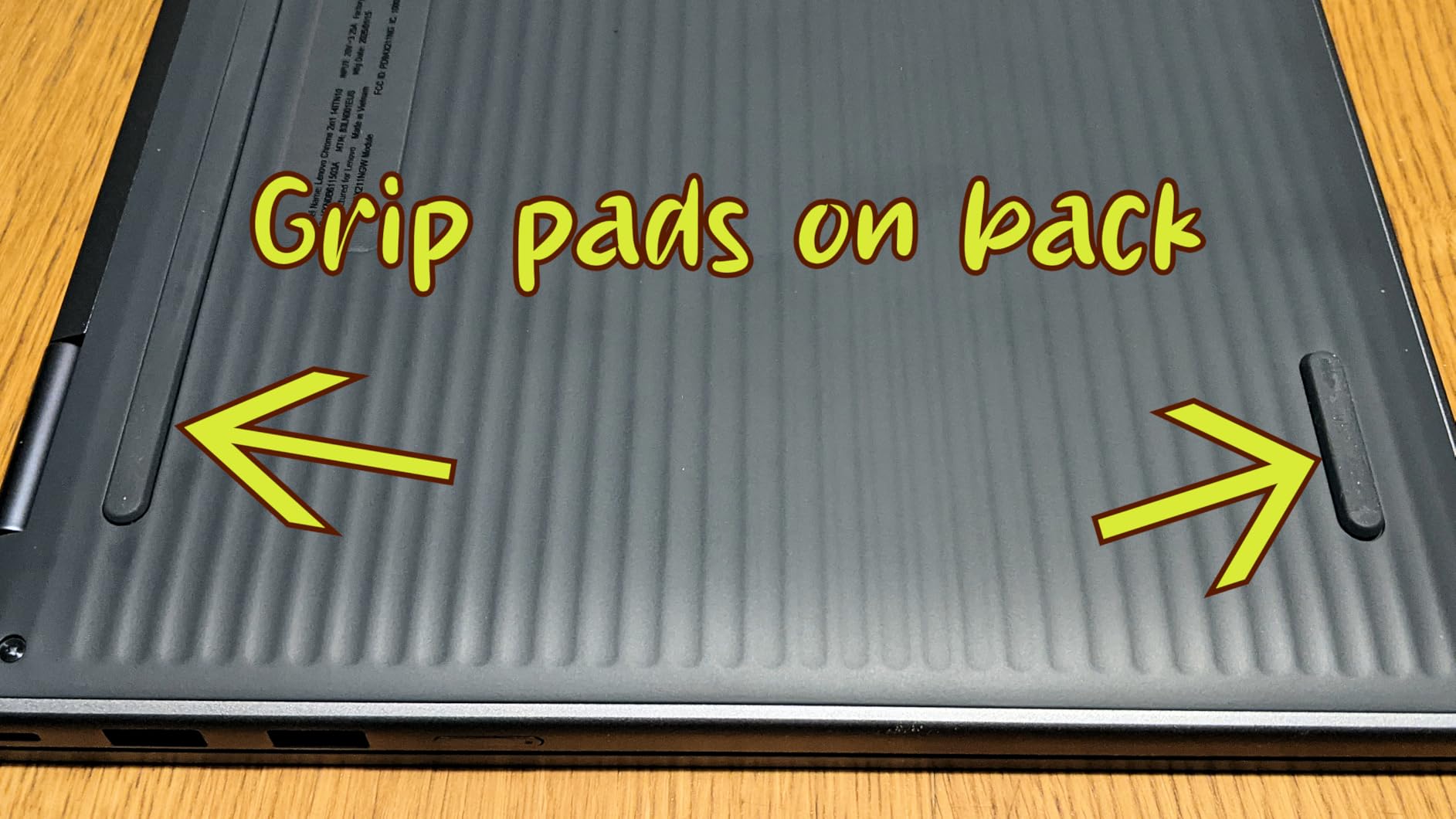
Who It Suits Best
Students who prioritize handwriting notes, reading PDFs, and tablet-mode media over heavy multitasking. If you live in 30 tabs, choose the Acer 514 instead.
5. Lenovo IdeaPad Flex 3i 12.2 – Best Ultra-Portable Budget 2-in-1
Lenovo IdeaPad Flex 3i Chromebook 12.2″ 2-in-1 Laptop, Intel N100, 4GB DDR5
12.2in WUXGA 300-nit touch
Intel N100
4GB DDR5
128GB storage
2.8 lb 2-in-1
Pros
- 360-degree hinge with four modes
- 12-hour battery life
- Bright 300-nit WUXGA touchscreen
- Privacy shutter on webcam
- Updates guaranteed to June 2031
Cons
- 4GB RAM caps multitasking
- Small 12.2-inch screen
- Split storage config (eMMC plus SD)
- No Prime shipping
A perfect 4.8-star rating across early reviews is rare, and the Flex 3i earns it by nailing the basics: a bright 12.2-inch touchscreen, a 12-hour battery, and a genuinely portable 2.8-pound body. For a first-year student who wants a convertible without spending much, this is one of the smartest small Chromebooks available.
The compact size is the point. It fits in a tote alongside textbooks, opens on tiny lecture-hall desk shelves, and the 300-nit IPS panel stays readable outdoors. You also get NFC for quick pairing, Wi-Fi 6, and an Auto Update Expiration of June 2031 — comfortably covering a four-year degree started this fall.
Display Quality Beyond Its Price
The 1920×1200 WUXGA resolution on a 12.2-inch panel is noticeably sharper than the 1366×768 screens on same-price budget laptops. Text is crisp for long reading sessions, colors are decent for streaming, and the touch response feels accurate in tablet mode. TÜV Rheinland Low Blue Light certification is a thoughtful touch for late-night study.
Everyday Performance Reality
The Intel N100 and 4GB of DDR5 RAM handle Docs, email, Canvas, and Zoom competently — that’s the student core. Push past a dozen tabs or try heavy Android apps and it will slow down. Storage is split between 64GB eMMC and an included 64GB SD card, which works but is slower than a true SSD.
Best Use Case
Commuters and students with minimal carry space who want touchscreen flexibility and all-day battery. Power users should look at the 8GB options above.
6. HP 14 inch HD Chromebook – Best Battery Life Under $250
HP 14″ HD Chromebook Laptop for Students, Intel Quad-Core N4120(> N4020), 4GB RAM, 64GB eMMC, WiFi, Webcam, HDMI, USB-A&C, 14 Hours Battery life, ZOOM, Chrome OS, CUE Accessories
14in HD anti-glare
Celeron N4120
4GB RAM
64GB eMMC
14-hour battery
Pros
- 14-hour battery life
- Proven reliability with 301 reviews
- Lightweight 3.4 pound design
- USB-C
- USB-A and HDMI ports
- Comfortable keyboard for long essays
Cons
- 64GB storage fills quickly
- HD 1366x768 resolution only
- Not for demanding apps
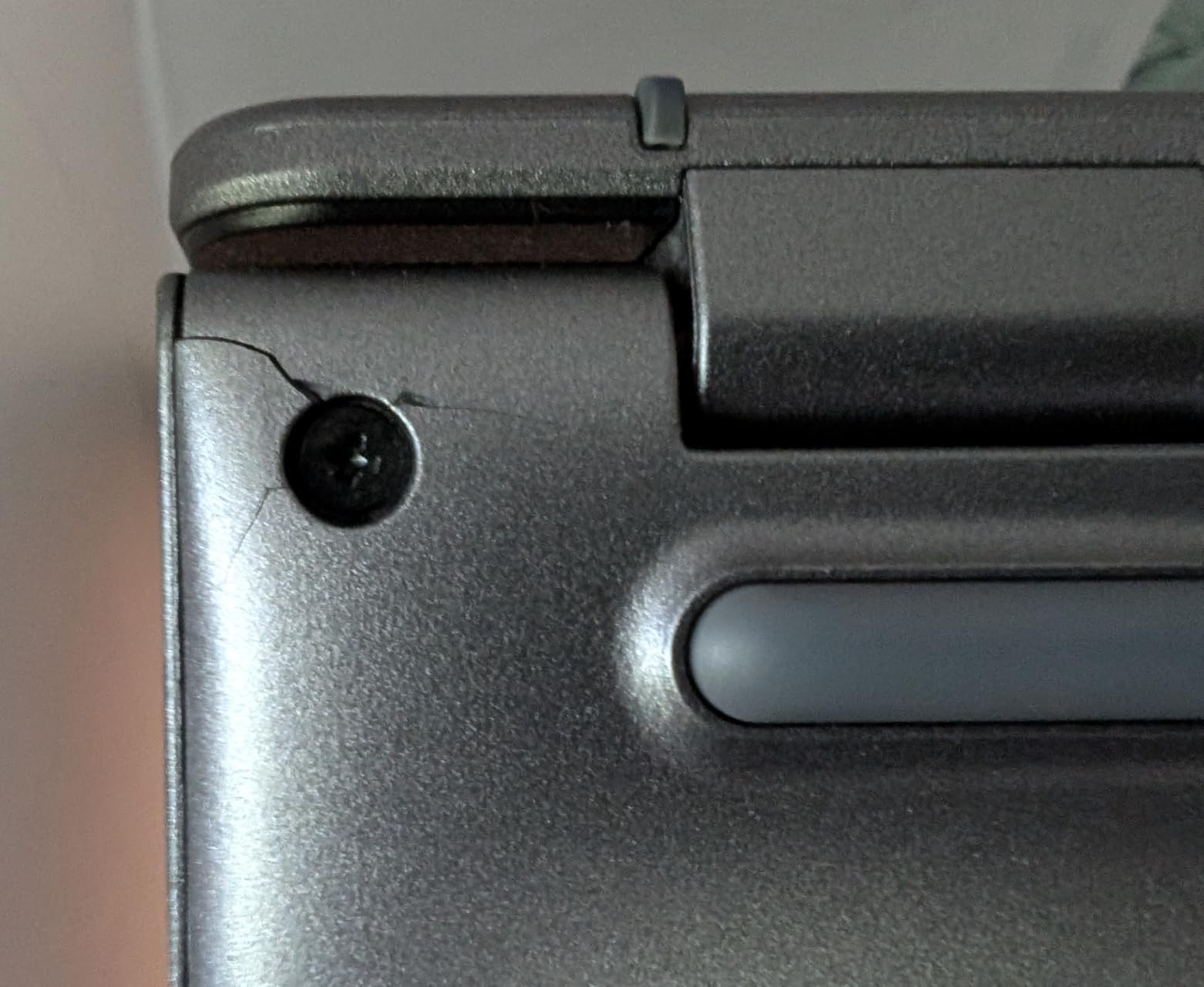
- Some units failed after 5 months
With 301 reviews and a 4.5-star average, this is the most battle-tested Chromebook on the list — real students have bought it, used it, and mostly loved it. The headline spec is 14 hours of battery life, enough to leave the charger in your dorm from morning class through an evening study session.
Performance is exactly what a budget student needs: fast startup, smooth Chrome OS operation for Docs and browsing, and a keyboard that owners specifically call comfortable for typing long assignments. It ships with CUE accessories bundled, adding a bit of extra value for first-time laptop buyers.
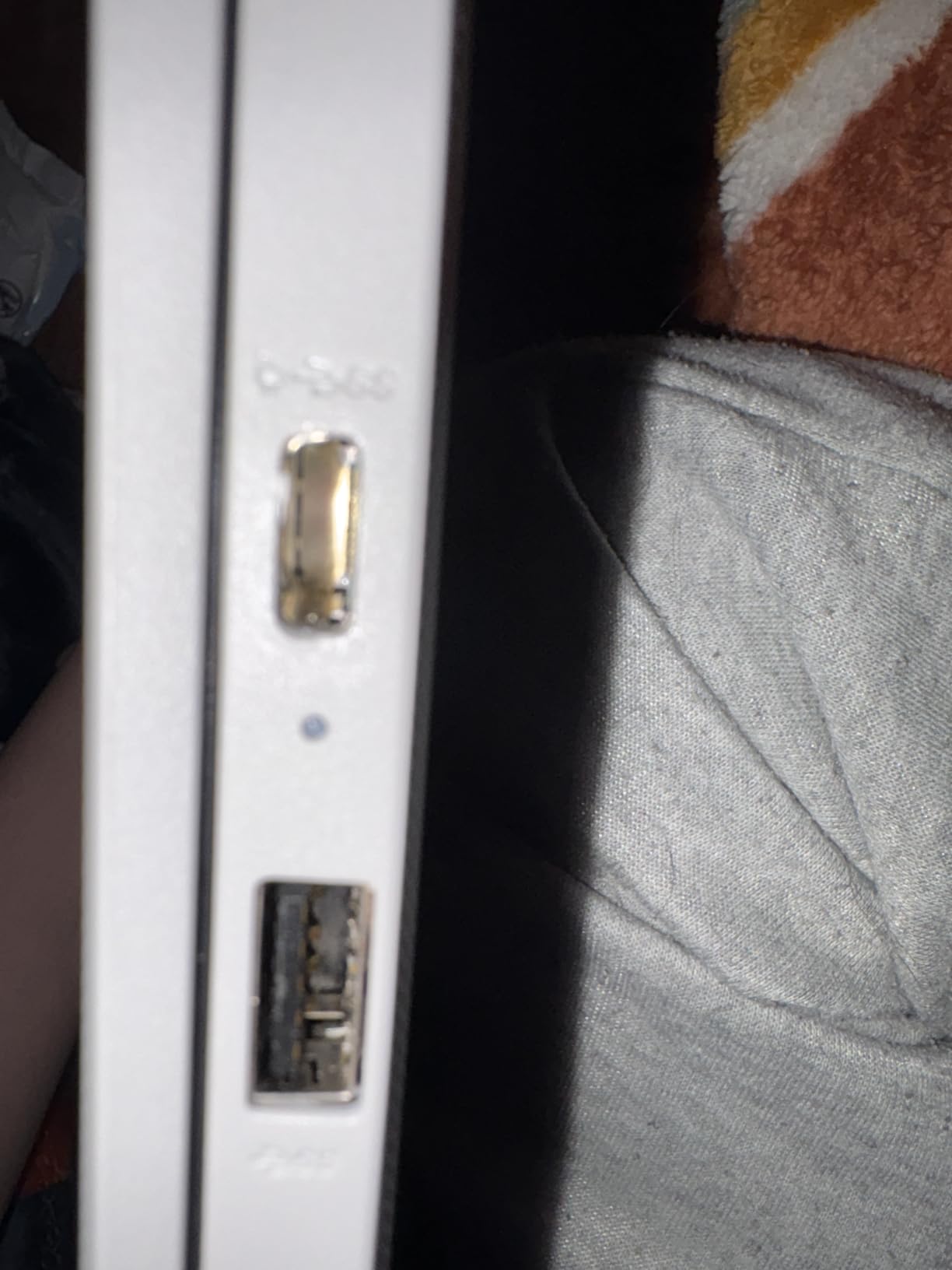 N4020), 4GB RAM, 64GB eMMC, WiFi, Webcam, HDMI, USB-A&C, 14 Hours Battery life, ZOOM, Chrome OS, CUE Accessories customer photo 1″ class=”wp-image-customer”/>
Battery Life That Actually Lasts
Fourteen hours is the rated figure, and even falling to a realistic 10-12 hours of mixed use, this outlasts every Windows laptop a classmate will carry. Forum threads consistently name battery anxiety as a top student pain point, and this machine is the cheapest reliable cure for it on our list.
Managing the 64GB Storage Limit
Sixty-four gigabytes sounds alarming until you remember how Chromebooks work: files live in Google Drive, and every Google account includes cloud storage. Keep local files lean, offload old downloads monthly, and add a microSD card or external SSD if you accumulate media. Students in forum threads repeatedly confirm cloud-first habits make small local storage a non-issue.
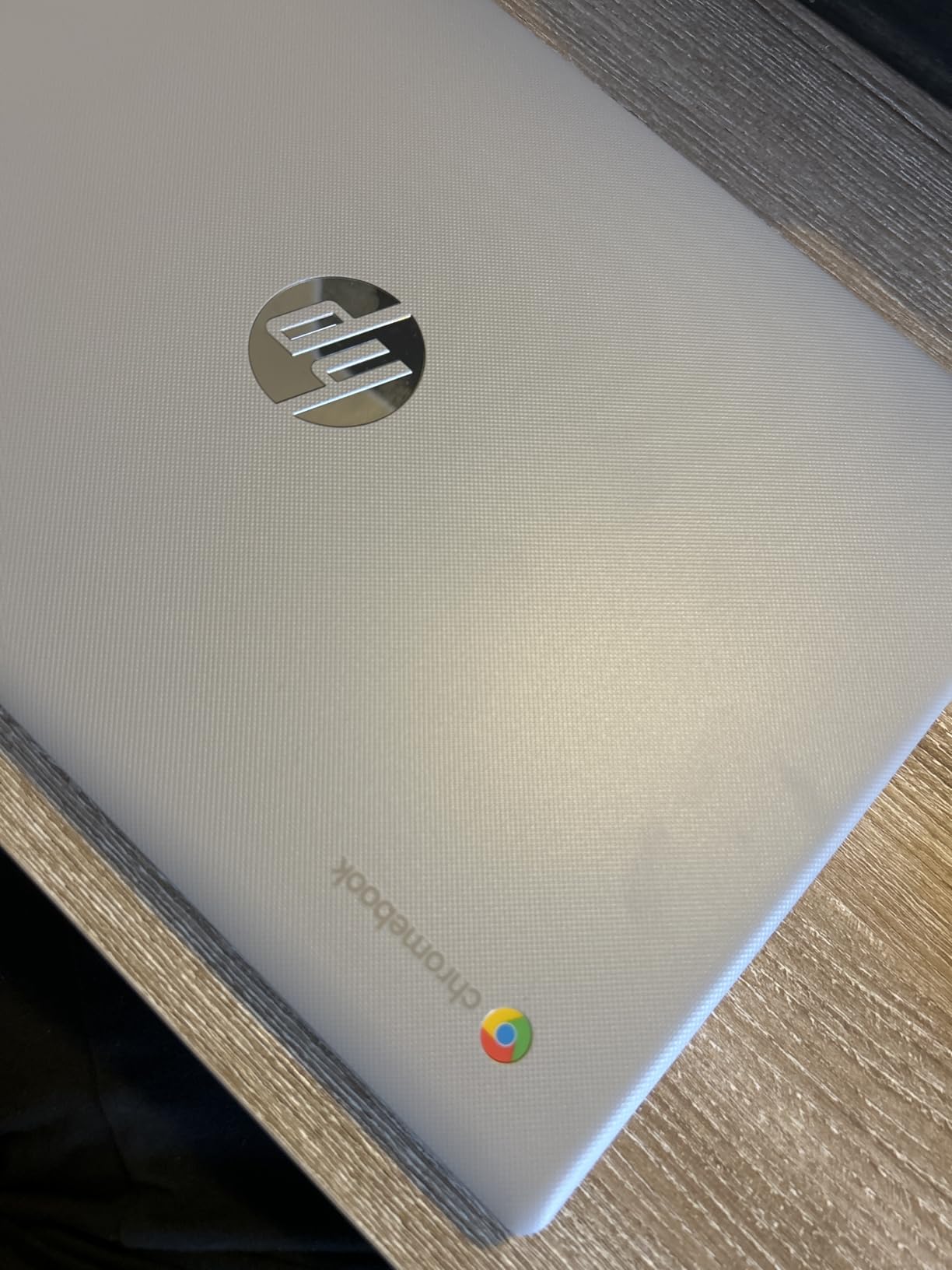 N4020), 4GB RAM, 64GB eMMC, WiFi, Webcam, HDMI, USB-A&C, 14 Hours Battery life, ZOOM, Chrome OS, CUE Accessories customer photo 2″ class=”wp-image-customer”/>
Known Reliability Notes
A small number of owners report failures around the five-month mark, and HP’s phone support isn’t free. The HD (1366×768) screen is also the weakest display here — fine for documents, soft for video. At this price, those are acceptable trade-offs, but register your warranty immediately.
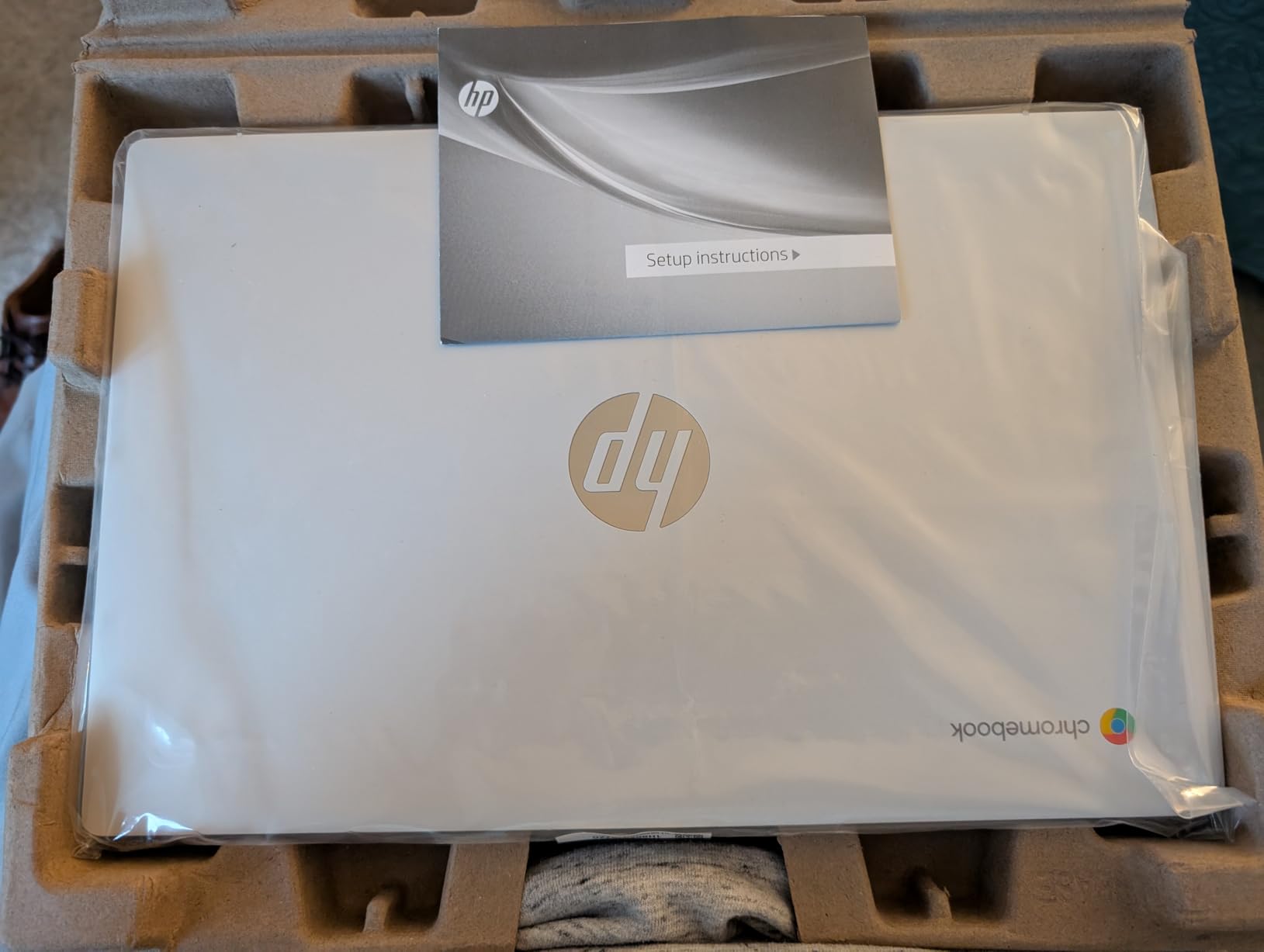
7. HP Chromebook 14a – Best Cheap Modern Chip (Intel N100)
HP Chromebook 14 inch Laptop, HD Display, Intel Processor N100, 4 GB RAM, 64 GB eMMC, Intel UHD Graphics, Chrome OS, Glacier Silver, 14a-nf0019nr
14in HD anti-glare
Intel N100
4GB LPDDR5
64GB eMMC
Wi-Fi 6
Pros
- Modern Intel N100 with quick response
- 10+ hours of real battery life
- Backlit keyboard rare at this price
- Wi-Fi 6 for crowded campus networks
- Simple fast setup
Cons
- No touchscreen
- Only 4GB RAM and 64GB storage
- Speakers garble at high volume
- Runs warm during extended use
For around the price of a textbook bundle, the 14a gets you Intel’s recent N100 chip — meaningfully faster and more efficient than the older Celeron in the HP above — plus Wi-Fi 6 and a backlit keyboard, which is nearly unheard of at this price. Setup takes minutes, and owners praise how quickly it boots and browses.
The anti-glare HD display is easy on the eyes under classroom lighting, and the webcam includes a privacy shutter. This is the laptop I’d buy a younger sibling: cheap enough to not baby, modern enough to not frustrate.
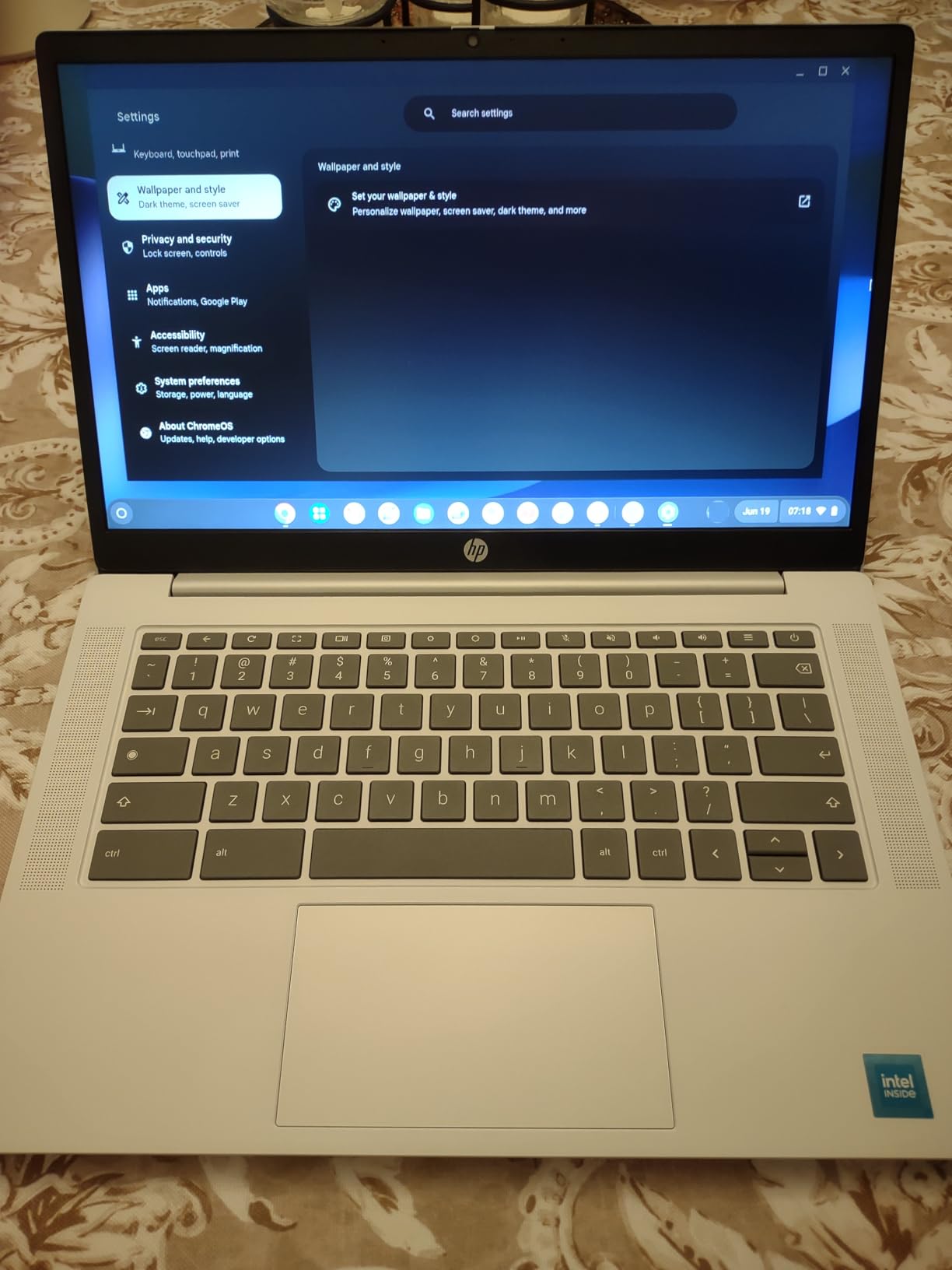
Why Wi-Fi 6 Matters on Campus
Campus networks are congested — hundreds of devices hitting the same access points in one lecture building. Wi-Fi 6 handles that congestion far better than the Wi-Fi 5 in cheaper Chromebooks, keeping your connection stable when classmates are buffering. It’s a spec most budget guides ignore, but students feel the difference daily.
Performance Expectations
The N100 plus 4GB of LPDDR5 RAM is quick for one or two apps at a time: Docs, email, streaming, Zoom. Owners confirm fast boot-up and responsive browsing, with the honest limits being heavy multitasking and the 64GB of storage. It also warms up during marathon sessions, so keep the vents clear.
Ideal Student Profile
Budget-first students in writing-intensive majors who want a modern chip, Wi-Fi 6, and a backlit keyboard for late-night typing without spending more than necessary.
8. HP Chromebook 14 with 7-in-1 Hub – Best Connectivity Bundle
HP Chromebook 14 Laptop, Intel 4-Core Celeron N4120, 4GB RAM, 128GB Storage
14in HD
Celeron N4120
4GB RAM
128GB storage
7-in-1 USB-C hub
Pros
- 14-hour battery life
- Includes 7-in-1 USB-C hub
- 128GB storage via SD card expansion
- Supports dual 4K external monitors
- 3-year warranty on SD storage
Cons
- Slow Celeron N4120 chip
- Keyboard letter contrast is poor
- Wi-Fi 5 only and some connection complaints
- Updates end June 2027
The hook here is the bundle: a 7-in-1 USB-C hub in the box, giving you HDMI, USB-A, and SD reading without buying a dongle — genuinely useful when a classroom projector or dorm monitor is involved. Combined with 128GB of total storage and a 14-hour battery rating, it covers the practical basics for a web-first student.
The 4.3-star average across 89 reviews reflects a fair trade: owners love the portability, battery, and value for basic coursework, while noting the Celeron N4120 is strictly a light-duty processor. If your workload is Docs, browsing, email, and streaming, that’s a perfectly fine bargain.
Ports and External Displays
With the included hub, this cheap Chromebook drives two external 4K monitors at 30Hz — a dorm-desk dual-screen setup on a ramen budget. Few laptops anywhere near this price include the hub, which would cost extra separately. For business or accounting students who live in spreadsheets, that dual-monitor support is the killer feature.
The Update Clock Is Ticking
Here’s my main caution: the Auto Update Expiration is June 2027, the shortest window on this list. After that date the Chromebook keeps working but stops receiving security and feature updates. For a student finishing a degree within that window, it’s acceptable; for a first-year planning four years, pick the Flex 3i (2031) or Acer 514 (2035) instead.
Who It Works For
Someone needing an inexpensive secondary machine, a final-year student, or a buyer who values the bundled hub and dual-monitor support over raw speed. Just know the keyboard’s light-grey-on-tan letters take some squinting.
Buying Guide: How to Choose a Student Chromebook in 2026
Not every Chromebook suits every degree. Here’s how our team narrows the field when matching a machine to a student, based on what buyers and forum users report matter most.
Will a Chromebook Actually Work for Your Major?
Yes for humanities, social sciences, business, and most general-education coursework — Google Workspace, Canvas, Zoom, and browser research are the core stack, and Chromebooks excel at all of it. Verify before buying for engineering (MATLAB, SolidWorks), design (full Adobe apps), computer science (though Linux support on Chrome OS helps), or courses with Windows-only exam software. Ask your department for a software list; that one email prevents the most common regret.
Chromebook Plus: The Certification Worth Paying For
Google’s Chromebook Plus badge guarantees a minimum of a recent Intel Core or AMD Ryzen processor, 8GB of RAM, 1080p webcam, and a Full HD IPS display. In practice it means snappier multitasking and better video calls. Three picks on this list — the Acer 514, ASUS CX34, and Lenovo Plus i 15 — carry the certification, and forum users consistently say Plus models feel more future-proof.
RAM and Storage: What Students Actually Need
Get 8GB of RAM if you can — Reddit users repeat this advice constantly, because 4GB machines slow down once research tabs multiply. 4GB works if you’re disciplined with tabs. For storage, don’t panic over 64GB: students store files in Google Drive by default, and a microSD card adds room cheaply. An SSD (like the Acer’s 512GB) is faster than eMMC but matters less when you’re cloud-first.
Check the Auto Update Expiration Date
Every Chromebook has a published AUE date when updates stop — ranging from June 2027 on the cheapest HP here to June 2035 on the Acer. Match the date to your expected graduation. This single spec decides whether the laptop lasts one year or four-plus, and most competitors’ guides never mention it.
Battery Life by Real Campus Day
Rated hours assume light browsing; realistic student use (brightness up, Zoom calls, Wi-Fi under load) cuts 2-4 hours from ratings. A “10-hour” Chromebook reliably covers an 8 AM-to-3 PM block; the 14-hour HPs cover a full day plus evening study. Owners of both HP 14 models confirm all-day use in their reviews.
Weight, Durability, and Backpack Life
You’ll carry this machine daily, so every pound counts — the Lenovos at 1.5-1.6 pounds feel like nothing, while 3.4-pound models add up with textbooks. Military-grade certification (MIL-STD 810H on the Acer 514 and Lenovo 2-in-1) is worth seeking for backpack tosses and dorm life. A backlit keyboard, standard only on some models here, is a quiet luxury during late-night writing.
Laptop vs Chromebook: The Honest Comparison
Choose a Chromebook if you live in the browser: faster boot, all-day battery, built-in virus protection, no maintenance, and lower cost for the same smoothness. Choose a Windows laptop if you need specific installed software, offline specialty tools, or gaming. A common student compromise we’ve seen recommended: a Chromebook as the carry-everyday machine plus a desktop or lab access for specialized software.
Frequently Asked Questions
Will a Chromebook work for a college student?
Yes, for most students. Chromebooks handle Google Docs, Canvas, Zoom, email, and browser research smoothly, boot in seconds, and last 10-14 hours on a charge. The exception is coursework requiring Windows-only or specialized software such as MATLAB, SolidWorks, or full Adobe apps — check your department’s software list first.
Which is better for students, a laptop or a Chromebook?
A Chromebook is better for students who work mainly online: it costs less, boots instantly, resists viruses, and delivers longer battery life than similarly priced Windows laptops. A traditional laptop is better when specific installed software, offline tools, or gaming are required. Many students use a Chromebook daily and campus computer labs for specialized software.
What are the disadvantages of a Chromebook for students?
The main disadvantages are limited local storage (often 64GB), reduced capability without an internet connection, inability to install Windows or macOS software, modest speakers and screens on budget models, and a fixed update expiration date after which the device stops receiving security updates.
Can you use Microsoft Office on a Chromebook?
Yes. Microsoft 365 runs fully in the browser at office.com with a free Microsoft account, and dedicated Word, Excel, and PowerPoint apps for Chrome OS are available on the Google Play Store. Google Docs, Sheets, and Slides can also open and edit Office file formats directly.
How long do Chromebooks last for students?
Hardware typically lasts 5-8 years, but the practical limit is the Auto Update Expiration date, when security and feature updates stop. Models in this guide range from June 2027 to June 2035. Match the AUE date to your graduation timeline — first-year students should choose 2031 or later.
Final Verdict: The Best Chromebook for Your Semester
If you want the safest all-around buy among the best chromebooks for college students, get the Acer Chromebook Plus 514 — 8GB of RAM, a 512GB SSD, and updates through 2035 carry you from orientation to graduation. Tight budget? The HP 14 (B0C8171GTK) delivers a proven 14-hour battery and 301 reviews of reassurance for around two hundred dollars. Big-screen readers and writers will love the impossibly light Lenovo Chromebook Plus i 15, while note-takers who prefer handwriting should grab the Lenovo 2-in-1 14.
Whichever you pick, do two things today: verify your major’s software requirements, and check the Auto Update Expiration date against your graduation year. Then get back to studying — your backpack just got lighter.