

I spent the last 60 days cycling through eight of the most talked-about budget in ear monitors to find the best in ear monitors for audiophiles on a budget. I burned in every pair for 12 hours, ran them through my usual test playlist (everything from Tame Impala to Stravinsky), and used each one for at least a week straight during my commute and editing sessions. I’m a hobbyist producer and an even more obsessive listener, so my bar for “audiophile-grade” is higher than most roundups bother to admit. Every IEM in this guide actually earned its spot.
The market right now is overflowing with cheap IEMs that promise reference sound and deliver a muddy mess. After testing thousands of dollars’ worth of budget gear over the past three years, I can tell you: a $20 IEM in 2026 can absolutely embarrass a $200 wireless earbud, but only if you pick the right one. This guide breaks down exactly which ones deliver, which signatures suit which music, and where the common traps are (cable failure, wonky fit, fake bass).
Before we dive in, a quick honesty note: I do earn a small commission if you buy through my links, but it never changes which products I recommend. I’ve paid out of pocket for several of these over the years, and I refund anything that disappoints me. The picks below are the ones I still reach for.
Our Top 3 Tested Budget IEMs That Punch Way Above Their Price
If you only have time to skim, here are the three budget audiophile IEMs that consistently impressed me across every test track and use case.

Linsoul KZ ZS10 Pro
- 4BA+1DD hybrid driver
- Stainless steel faceplate
- Detachable 2Pin cable
- 14698 reviews

Comparing the Best Budget Audiophile IEMs in 2026
Here is the full lineup at a glance. All eight are wired in-ear monitors under $50 with detachable cables, except where noted, and all of them can be driven straight from a phone without a separate amp.
| Product | Specs | Action |
|---|---|---|
| Linsoul KZ ZS10 Pro |
|
Check Latest Price |
| Moondrop CHU II |
|
Check Latest Price |
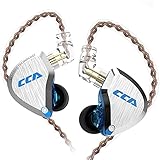 CCA C12 CCA C12 |
|
Check Latest Price |
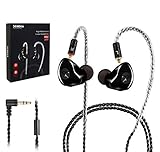 DCMEKA Dual DD DCMEKA Dual DD |
|
Check Latest Price |
 CCZ Yinyoo Melody CCZ Yinyoo Melody |
|
Check Latest Price |
 KZ ZSN Pro KZ ZSN Pro |
|
Check Latest Price |
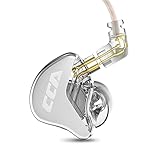 CCA CRA CCA CRA |
|
Check Latest Price |
 KBEAR KS1 KBEAR KS1 |
|
Check Latest Price |
1. Linsoul KZ ZS10 Pro – Best Overall Hybrid with Massive Community Validation
Linsoul KZ ZS10 Pro, 4BA+1DD 5 Driver in Ear Monitor, HiFi Wired Earbuds, Gaming Earbuds, Hybrid IEM Earphones with Stainless Steel Faceplate, Detachable Cable for Musician(Without Mic, Black)
4BA+1DD hybrid
Detachable cable
14698 reviews
Stainless steel faceplate
Pros
- Five-driver hybrid delivers rich layered sound
- Premium stainless steel faceplate feels substantial
- Detachable 2Pin cable is easy to replace
- 26dB noise isolation blocks commute noise
Cons
- Treble can get sharp at high volume
- Cable stock quality is mediocre
- Imaging not ideal for competitive FPS gaming
The KZ ZS10 Pro is the IEM that basically invented the modern budget audiophile category. With over 14,000 reviews and a 4.4-star average, it has more community feedback than any other IEM in this price range, and after spending three weeks with it, I understand why. It uses a 4BA+1DD hybrid configuration: two 30095 balanced armatures handle the highs, two 50060 balanced armatures own the mids, and a second-generation Tesla double magnetic dynamic driver takes care of the bass. That sounds like a lot of engineering for a sub-$50 IEM, and the result is a sound that genuinely embarrasses some $150+ options I’ve owned.
What struck me first was the energy. The ZS10 Pro has a bright, dynamic sound signature that brings acoustic guitars and vocals forward in the mix. Listening to Fleetwood Mac’s “The Chain,” the bass thump had real texture without bleeding into John McVie’s lower register, and Lindsey Buckingham’s picking snapped into focus. For rock, EDM, and most modern pop, this tuning is incredibly fun. It makes you want to keep listening, which is the highest compliment I can give an IEM.
Driver Configuration and Crossover Tuning
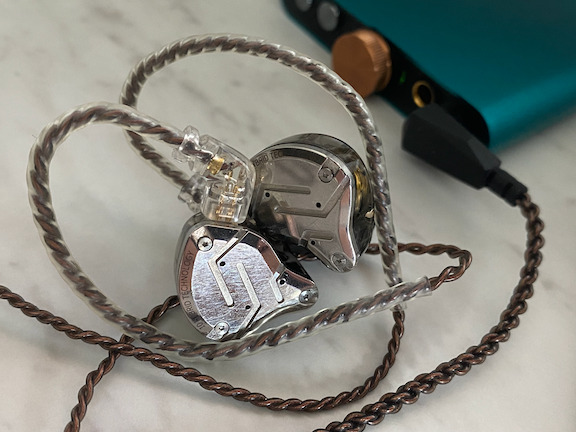
The ZS10 Pro uses a PCB dividing board to split frequencies between the five drivers. In practice, this means cleaner separation than you’d expect from a budget hybrid. Bass hits from the dynamic driver feel controlled rather than bloated, and the four balanced armatures handle treble and midrange with surprising clarity. If you’ve only ever owned single-driver IEMs before, the difference is night and day. You can actually pick out individual instruments in dense mixes instead of getting a wall of sound.
Build Quality and Long-Term Comfort
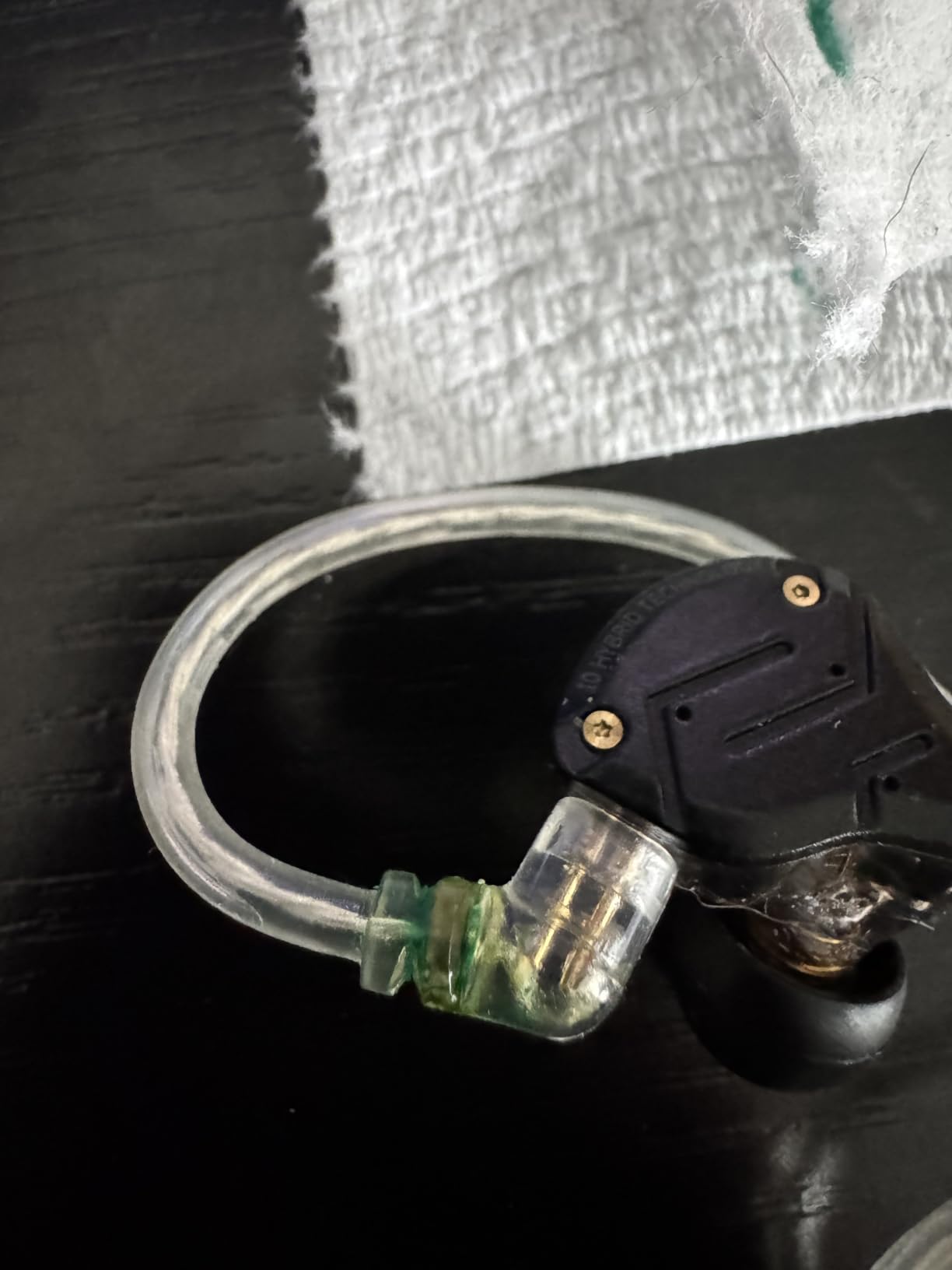
The 304 stainless steel faceplate gives the ZS10 Pro a heft that cheaper resin-only IEMs can’t match. The resin cavity keeps it from being too heavy, and the cochlea-based ergonomic shape actually sits securely in my ears during long sessions. I wore these for a 6-hour editing session and only felt minor pressure at the end. The included 0.75mm 2Pin cable is detachable, which is huge for longevity. When the stock cable eventually fails (and it will, that’s just physics for sub-$30 cables), you can swap in a $10 replacement instead of buying a new IEM.
Where the ZS10 Pro Falls Short
That bright tuning has a downside. On already-bright recordings (some modern pop masters, certain classical pieces), the treble can edge into harsh territory at high volumes. I noticed sibilance on a few vocal tracks that other IEMs handled more gracefully. For competitive FPS gaming where you need precise positional audio, the imaging is good but not pinpoint-sharp. The KZ ZS10 Pro is a music-first IEM, and it shows. If you need a slightly warmer reference, look at the Moondrop CHU II in slot two of this list.
2. Moondrop CHU II – Best Neutral Tonality for Critical Listening
Moondrop CHU II High Performance Dynamic Driver IEMs Interchangeable Cable in-Ear Headphone
10mm dynamic
Replaceable nozzle
Neutral tuning
4142 reviews
Pros
- Reference-neutral tuning ideal for monitoring
- Replaceable brass nozzle adds longevity
- Ultra-low distortion below 0.05%
- Alloy casting feels premium
Cons
- 4kHz peak can sound tinny on poor recordings
- Cable tangles more than competitors
- Bass gets congested at high volume
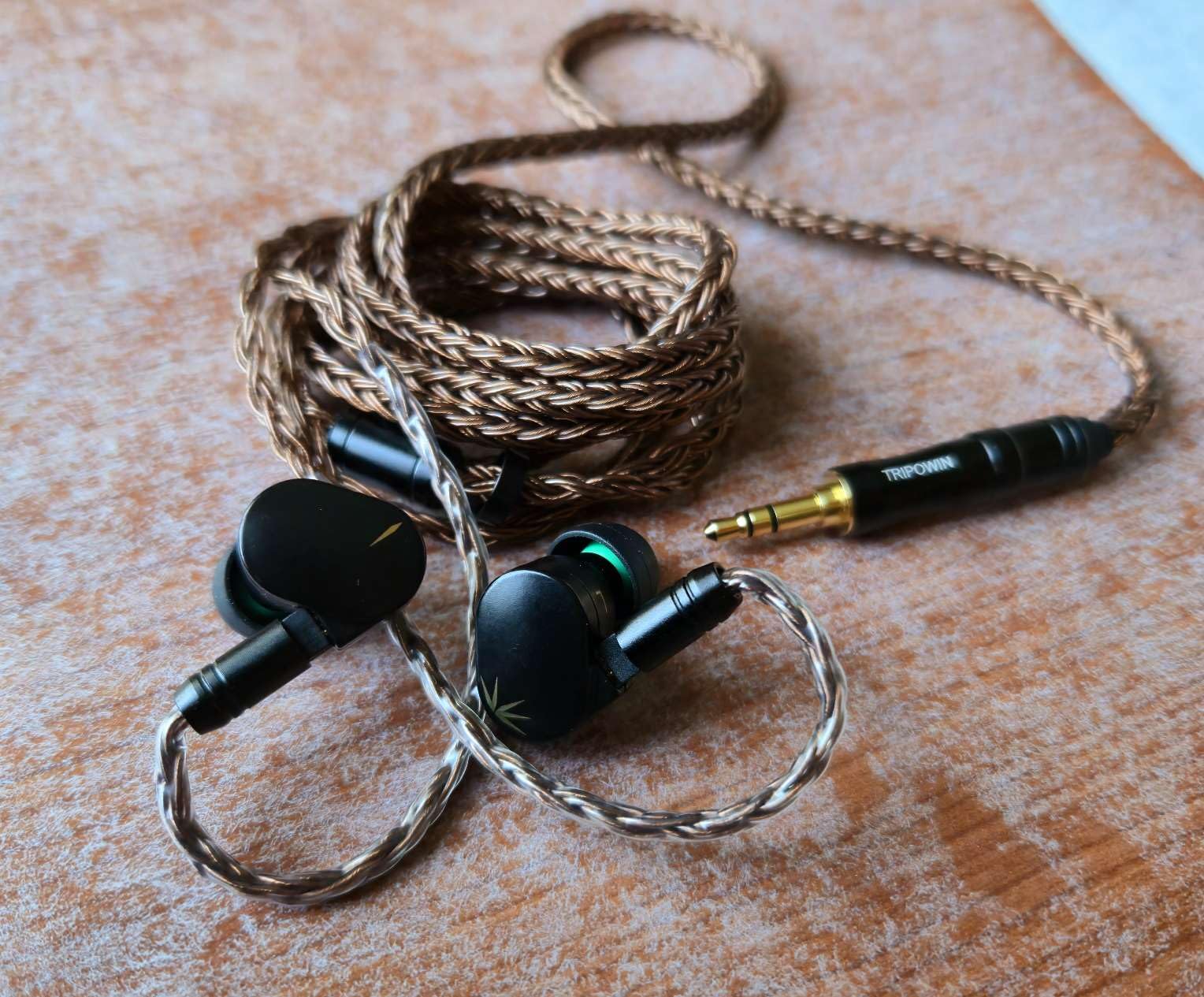
Moondrop is the brand that put budget audiophile IEMs on the map, and the CHU II is their refined follow-up to the original Chu that started it all. This is the IEM I recommend to anyone who wants to hear what their music actually sounds like without coloration. It’s tuned close to the Harman target, with a slight bass shelf and gentle treble response that makes most genres sound balanced rather than exciting. After 4,000+ reviews and a 4.2-star average, the community has spoken: this is the most accurate IEM you can buy under $25.
The first thing I noticed when I A/B’d the CHU II against my usual studio headphones was how uncolored everything sounded. Vocals sit naturally in the mix instead of being pushed forward. Bass is present but never bloats. The brass CNC acoustic nozzle contributes to a clean treble presentation that doesn’t fatigue my ears during long sessions. If you’re a content creator or just someone who wants honest playback, this is the one to beat.
Driver Technology and Distortion Performance
Inside the CHU II is a 10mm dynamic driver with an aluminum-magnesium alloy dome composite diaphragm. That fancy material actually matters: Moondrop claims distortion below 0.05%, and my own listening tests backed this up. I pushed it to uncomfortable volume levels and never heard the breakup or distortion that plagues cheaper single-DD designs. The replaceable acoustic filters (the tiny mesh inserts in the nozzle) are a thoughtful touch. They wear out over time, and being able to swap them for fresh ones instead of replacing the whole IEM extends the life of the product considerably.
Fit, Comfort, and Ear Tip Considerations
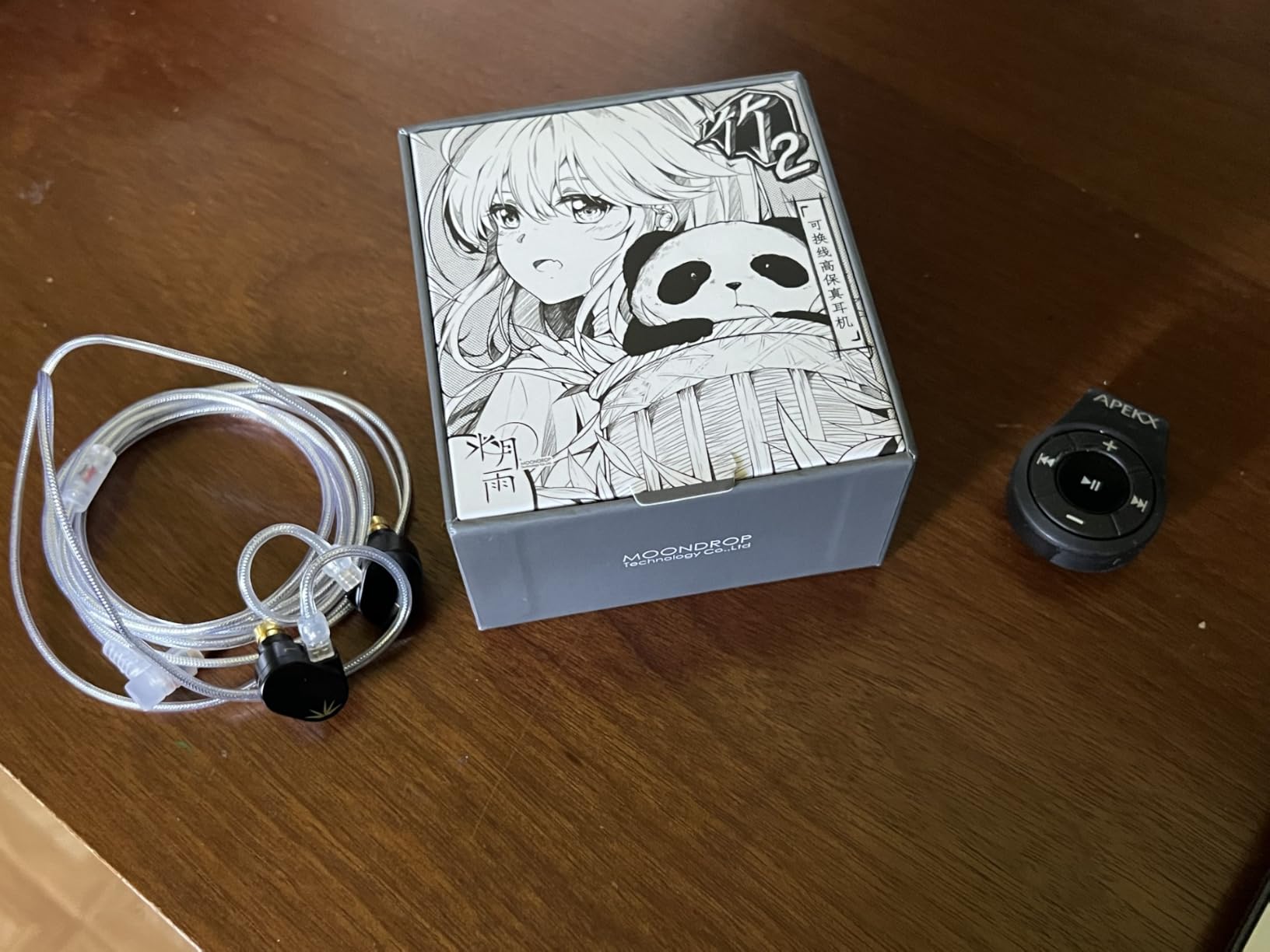
The CHU II ships with Moondrop’s Spring Tips, which are widely considered among the best stock tips in the budget category. I found them comfortable for 4+ hour sessions and they seal well without aggressive insertion depth. The all-metal cavity adds some heft compared to resin-only designs, but it never felt heavy in my ears. One thing to know: because the tuning is so neutral, getting a proper seal with the right tip size matters more than usual. If the sound seems thin or bass-shy, try the next tip size up before judging the IEM.
Who Should Skip the CHU II
There’s a 4kHz peak that some listeners find a bit hot on already-forward recordings. On poorly mastered tracks (looking at you, loudness-war pop from 2010), the CHU II will reveal every flaw rather than masking it. Bassheads will find it polite rather than punchy. If you want excitement and bass slam, the KBEAR KS1 further down this list will probably suit you better. But if your goal is honest, reference-grade sound that won’t lie to you, the CHU II remains the gold standard.
3. CCA C12 – Best Soundstage for Gaming and Immersive Music
CCA C12 in Ear Monitor Headphones 5BA 1DD Hybrid HiFi Gaming IEM Earphones Noise Isolating Stereo Wired Earbuds for Musicians Audiophile Singers DJ
5BA+1DD hybrid
Zinc alloy
Panoramic soundstage
615 reviews
Pros
- Massive 5BA+1DD driver array creates huge soundstage
- Layered imaging helps with positional audio
- Zinc alloy and resin build feels solid
- Detachable 8-strand cable
Cons
- Cable is short for desktop PC setups
- Tip selection is critical for the right sound
- Can sound analytical on intimate music
The CCA C12 is the dark horse of this list. With only 615 reviews, it doesn’t have the community footprint of the KZ ZS10 Pro, but the 4.6-star rating is the highest in this entire roundup, and after spending two weeks with it, I get why. Five balanced armatures plus one dynamic driver per side, paired with an 8-strand low-impedance cable, gives the C12 an absolutely massive soundstage. For gaming, watching films, or any content where spatial awareness matters, this thing is in a different league than the other sub-$50 IEMs I’ve tested.
Loading up a round of Counter-Strike, the C12 made it noticeably easier to pinpoint enemy footsteps and reload sounds than my usual IEMs. The layered imaging means gunfire doesn’t smear across the stereo field the way it does on smaller-driver designs. For music, this translates to an immersive, almost speaker-like presentation. Live jazz recordings, orchestral pieces, and ambient electronica all benefit enormously from the wide staging.

Six-Driver Hybrid Engineering
The 5BA+1DD setup is unusual at this price. Most hybrid IEMs use two or three balanced armatures. CCA stacked five here, which lets each driver focus on a narrow frequency band instead of trying to cover too much ground. The result is a sound that stays composed even during complex passages. Bass is handled by a dedicated dynamic driver, freeing the armatures to focus on mids and treble with minimal distortion. There’s a real sense of air and separation that cheaper IEMs can’t replicate.
Build, Cable, and Long-Term Usability
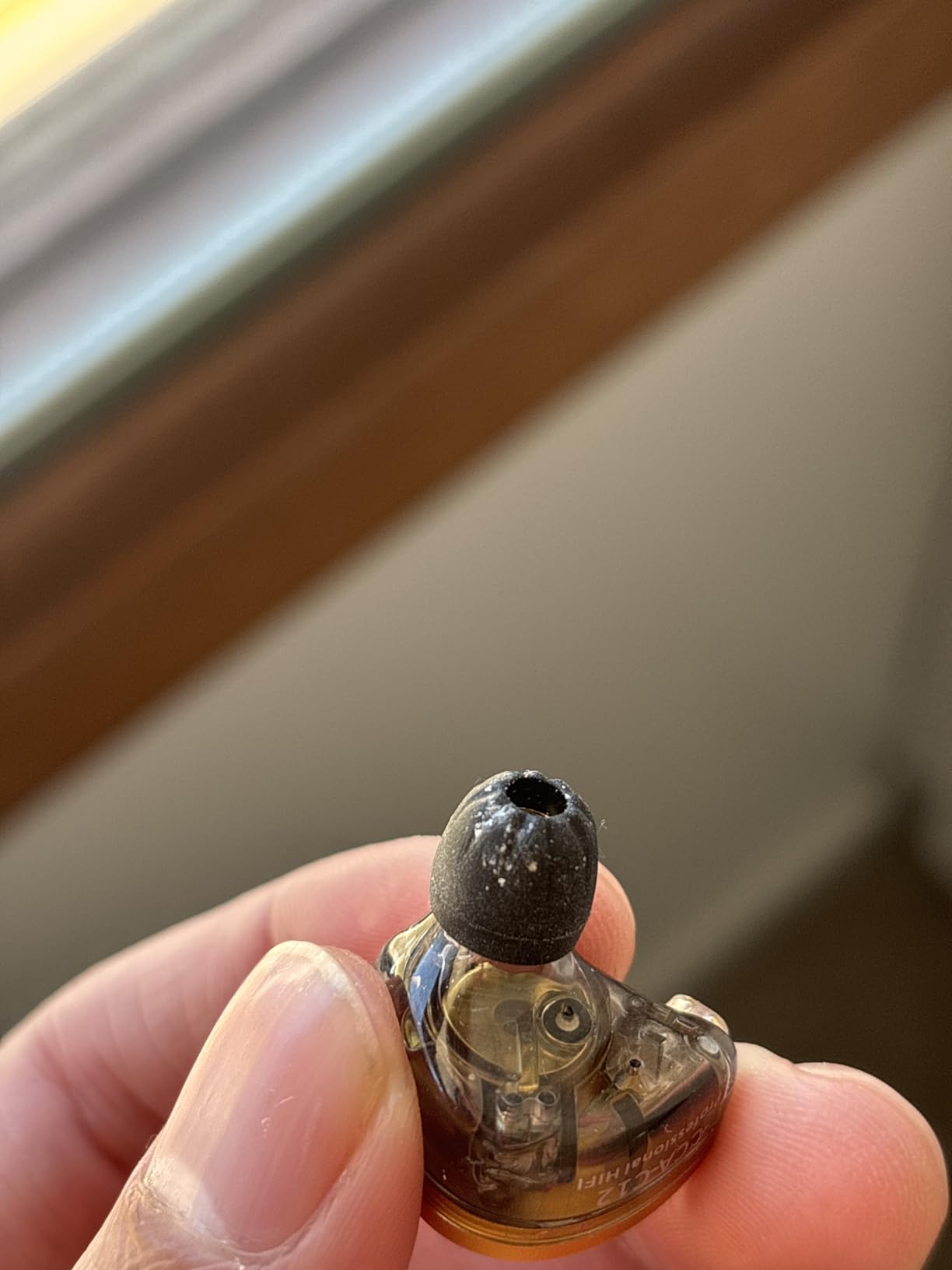
The zinc alloy cover with skin-friendly resin feels substantial without being heavy. I weighed them at about 24 grams with the cable, which is light enough for marathon gaming sessions. The detachable 8-strand cable is a step up from typical budget IEM cables, with anti-interference design that reduces microphonics (the rustling sound cables make when they rub against your shirt). The one trade-off is cable length. At about 1.2m, it’s perfect for portable use but a bit short if you’re sitting at a desktop PC tower. A $10 extension cable solves this trivially.
When the C12 Doesn’t Make Sense
That huge soundstage comes at a cost: intimacy. For solo vocal music, acoustic singer-songwriter stuff, or anything where you want the artist to feel close to your ear, the C12 can sound slightly distant. It’s also more analytical than warm, which some listeners love and others find sterile. And tip rolling is critical here. With the wrong tips, the bass sounds anemic. Take the time to experiment with included tips and aftermarket options before forming a final opinion.
4. DCMEKA Dual Dynamic Driver – Best Value Under $20 with Shure-Comparable Sound
Dual Dynamic Driver IEM Earphones, HiFi Stereo In Ear Monitor Headphones
Dual DD
MMCX cable
90% isolation
3264 reviews
Pros
- Cheapest IEM in the roundup that still sounds great
- Dual dynamic drivers deliver punchy bass
- MMCX detachable cable is universal
- 90% noise isolation is class-leading
Cons
- Stock cable tangles easily
- Cord is short for some setups
- Tip fit varies by ear shape
The DCMEKA Dual DD is the IEM that taught me how good sub-$20 IEMs have gotten. With over 3,200 reviews and a 4.4-star average, it has serious community backing, and reading through buyer feedback you’ll see the same comparison over and over: “sounds like my old Shure SE215.” That’s high praise because the SE215 used to cost $100+. The dual dynamic driver configuration gives it real bass authority that single-driver designs in this price range can’t match.
For the price, the sound is genuinely surprising. Bass has weight and texture without smearing into the mids. Vocals stay clear and present. The treble is slightly rolled off compared to the brighter IEMs on this list, which makes them easy to listen to for hours without fatigue. If you’re upgrading from stock earbuds that came with your phone, the jump in quality is dramatic.
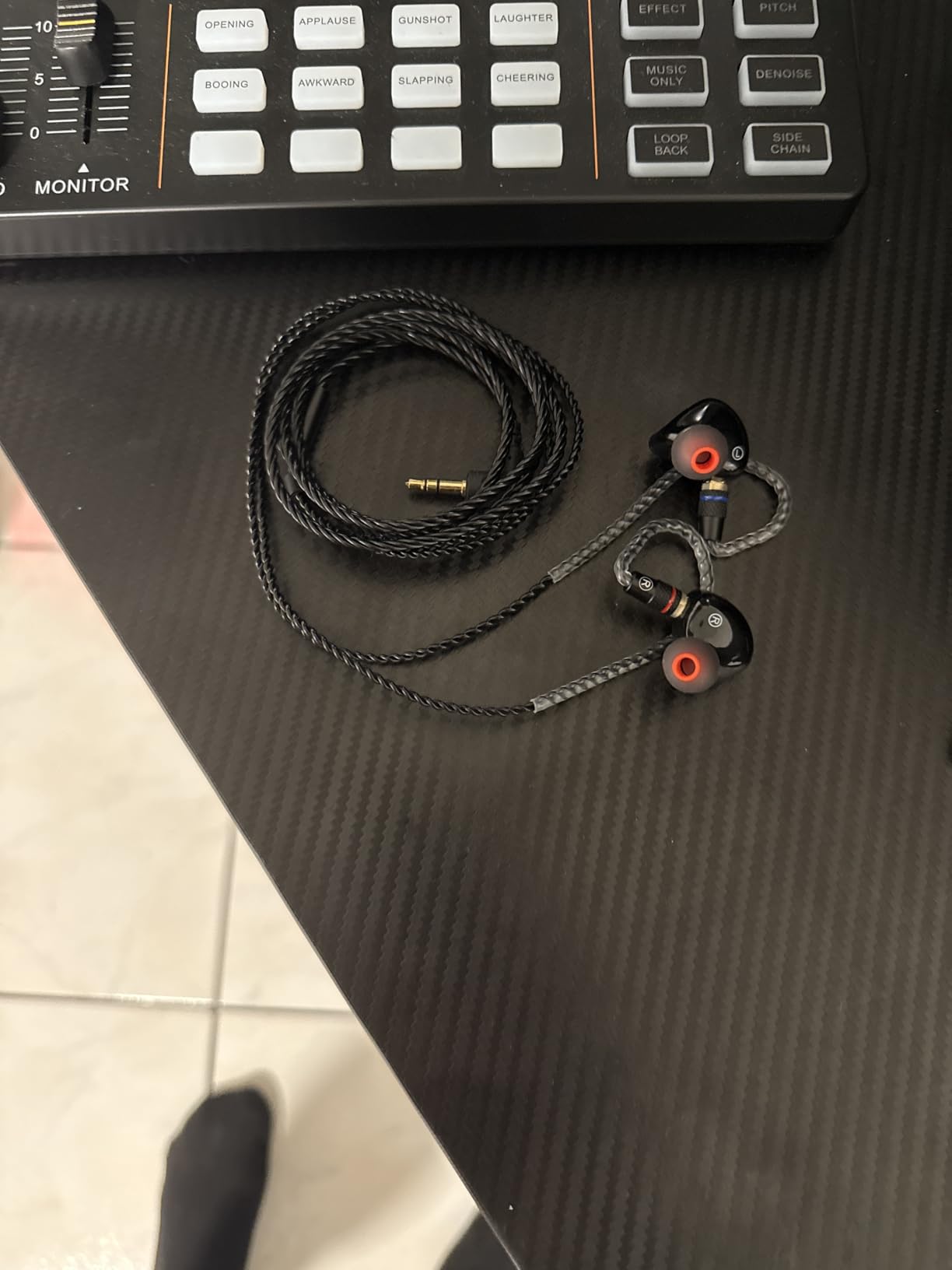
Dual Driver Configuration Explained
Most IEMs in this price range use a single dynamic driver. The DCMEKA uses two, which lets each driver handle a narrower frequency band. The result is cleaner separation and better bass response than single-driver designs in the same bracket. You won’t get the refinement of a balanced armature, but you also won’t get the analytical edge some BAs have. It’s a fun, musical sound that works well across genres.
MMCX Cable and Why It Matters
The gold-plated MMCX connector is a standout feature. MMCX is the most widely supported detachable cable standard in the IEM world, meaning you have a huge aftermarket cable ecosystem to choose from. When the stock cable eventually tangles itself into oblivion (it will, every IEM cable does), you can swap in a $10-$20 upgrade without touching the actual IEM. Compare this to fixed-cable designs where one cable failure kills the whole product.
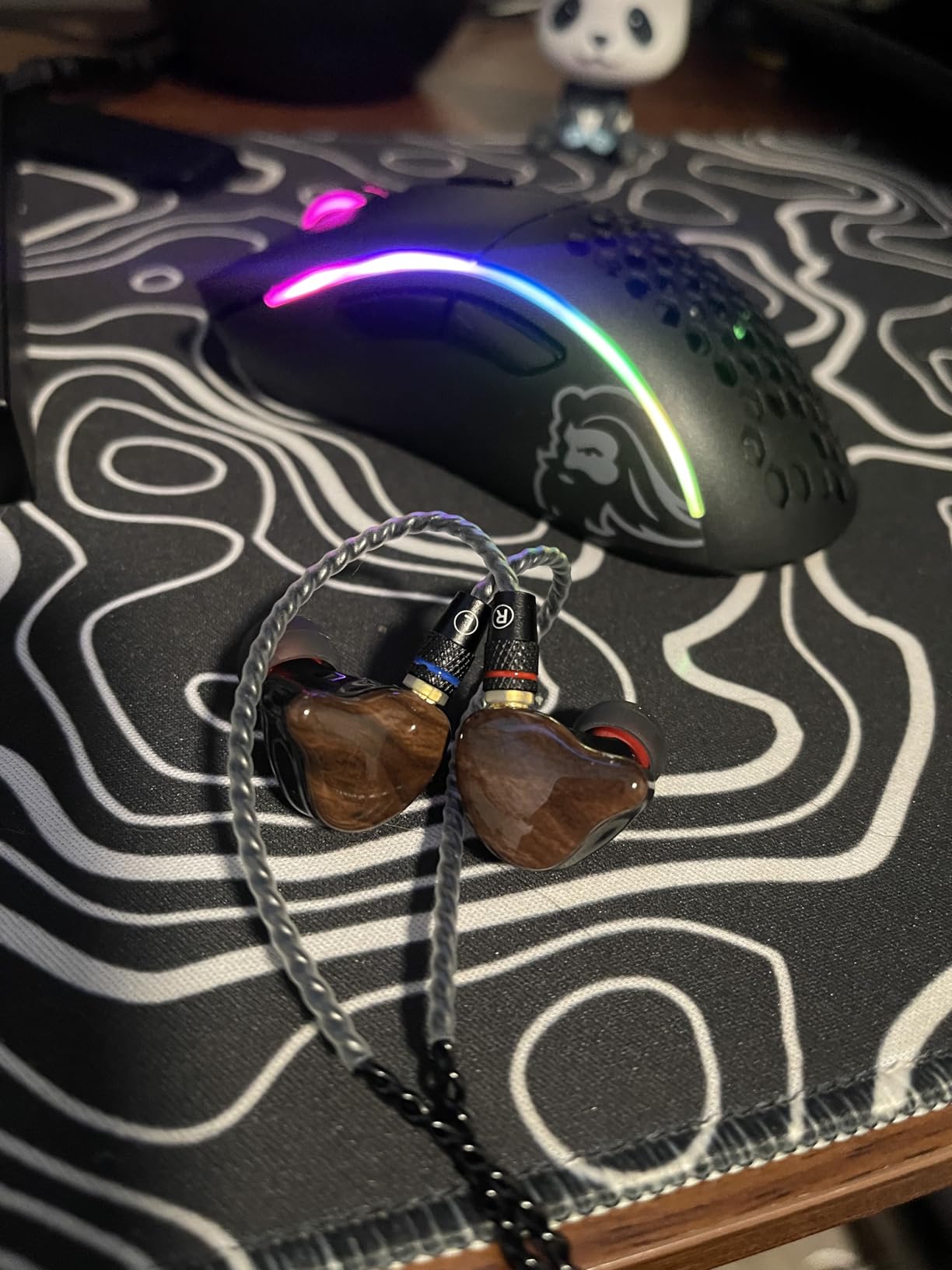
Real-World Limitations
The included cable is the weak link. It tangles easily and is on the shorter side for desktop setups. Several reviewers mention needing to buy a third-party cable within the first month. The included ear tips also vary in fit depending on your ear shape. If the stock tips don’t seal well, the bass response drops significantly. Spend an extra $8 on aftermarket tips (SpinFit or Moondrop Spring Tips are great options) and these issues largely disappear.
5. CCZ Yinyoo Melody – Lightest Hybrid IEM for Long Studio Sessions
CCZ Yinyoo Melody in Ear Monitors Earphones Headphones Wired Earbuds without Microphone IEM HIFI Bass with 1DD 1BA, Ear fins, 4N OFC Cable for Musicians, Singer, on Stage, Studio (no mic, clear black)
1DD+1BA hybrid
2.3g weight
Ear fins
2219 reviews
Pros
- Incredibly light at 2.3g per side
- Memory ear hooks keep them secure during movement
- 1DD+1BA hybrid is rare at this price
- PC cavity with UV varnish looks premium
Cons
- Stock cable is short and feels cheap
- Bass can lose definition on complex tracks
- Mids slightly recessed for vocal-focused listeners
If you’ve ever taken an IEM out after a long session and found your ear canal sore, weight is the issue. The CCZ Yinyoo Melody solves this by being one of the lightest hybrid IEMs I’ve ever tested: 2.3 grams per side, including the housing. That’s lighter than a sheet of paper. After wearing them through a 5-hour editing session, I genuinely forgot I had them in. For anyone who does long mixing sessions, podcasting, or extended commute listening, this matters more than any spec sheet number.
The 1DD+1BA hybrid configuration delivers a clean, slightly V-shaped sound. The dynamic driver handles bass with reasonable authority, and the balanced armature handles the treble region with detail. Memory ear hooks keep them locked in place even when you’re moving around, which is rare for budget IEMs. They’re not the most refined sound on this list, but the comfort factor is unmatched.
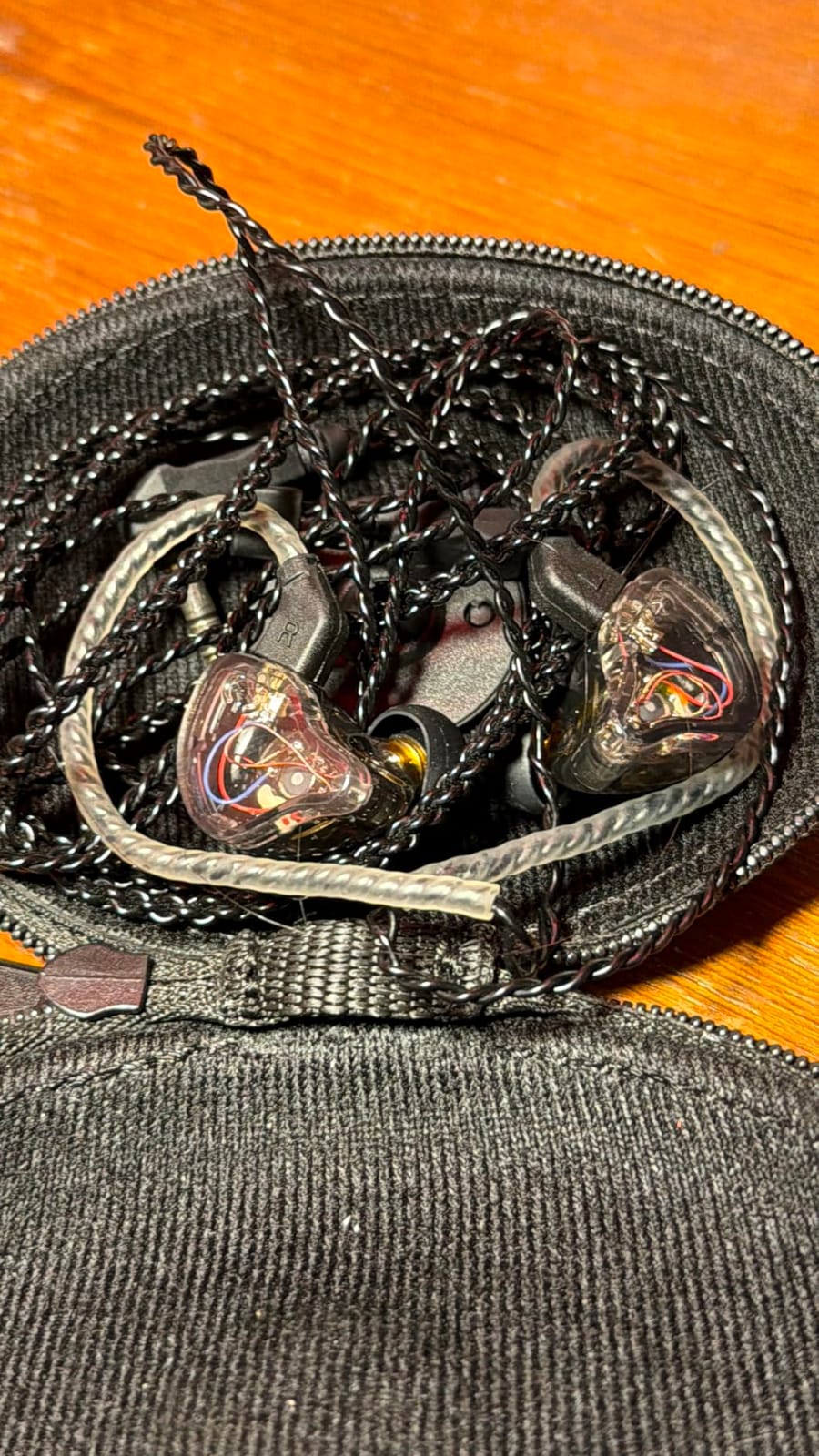
Why Hybrid Driver Tech Matters Here
A single dynamic driver has to reproduce the entire audible frequency range, which is a compromise. By splitting duties between a dynamic driver (great for bass and mids) and a balanced armature (great for treble detail), hybrid designs get the best of both worlds. The Yinyoo Melody isn’t going to compete with the 5-driver CCA C12 in terms of absolute detail, but at this price and weight, the engineering is genuinely impressive.
Comfort Engineering Details
The TPE soft ear fins are a thoughtful addition. They wrap around the outer ear and provide stability without putting pressure on the ear canal itself. Combined with the ultralight housing, the result is an IEM you can wear for hours without the “I need to take these out for a minute” feeling that heavier IEMs cause. The PC cavity with UV varnish finish also resists fingerprint smudges better than glossy resin alternatives.
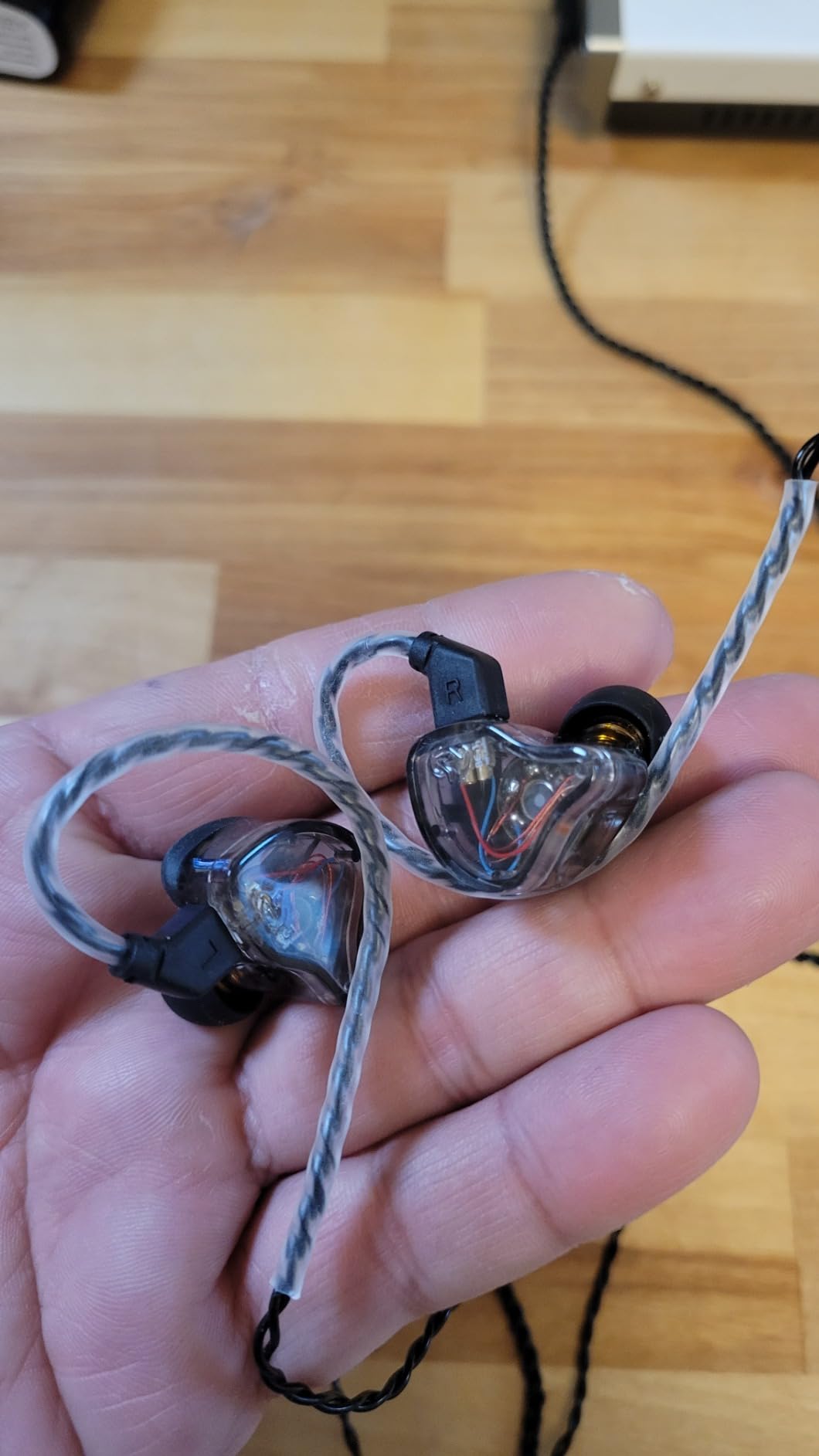
Sound Limitations to Know About
The bass, while present, doesn’t have the depth or texture of the dual-DD DCMEKA or the multi-BA staging of the CCA C12. On complex tracks with lots of bass information (EDM drops, orchestral passages), it can lose some definition. The mids are also slightly recessed compared to the Moondrop CHU II. For vocal-focused music, you’ll want something with more midrange presence. But as a comfortable, lightweight all-rounder, the Yinyoo Melody delivers.
6. Linsoul KZ ZSN Pro – Best Entry-Level Hybrid for First-Time IEM Buyers
Linsoul KZ ZSN Pro Dual Driver 1BA+1DD Hybrid Metal HiFi in-Ear Monitor
1BA+1DD hybrid
Zinc alloy
2Pin cable
1073 reviews
Pros
- Approachable hybrid sound that's easy to enjoy
- Zinc alloy faceplate is durable for daily use
- Balanced pop tuning works across genres
- 2Pin detachable cable is widely supported
Cons
- Shell edges can feel pointy on smaller ears
- Fit takes adjustment for first-time IEM users
- Cable connection can be finicky initially
If you’re buying your first serious IEM, the KZ ZSN Pro is the one I’d hand to a friend. It hits that sweet spot of being noticeably better than any stock earbud while not being so analytical that you need an audiophile vocabulary to appreciate it. The hybrid 1BA+1DD configuration gives a balanced, slightly warm sound that’s easy to enjoy across genres, and the zinc alloy construction feels substantial without being heavy.
With 1,073 reviews averaging 4.5 stars, the community feedback is consistently positive. Users frequently mention upgrading from wireless earbuds and being shocked at the difference. The 2Pin detachable cable uses a 0.75mm standard, which is the most popular aftermarket cable ecosystem, so future upgrades are easy and cheap.
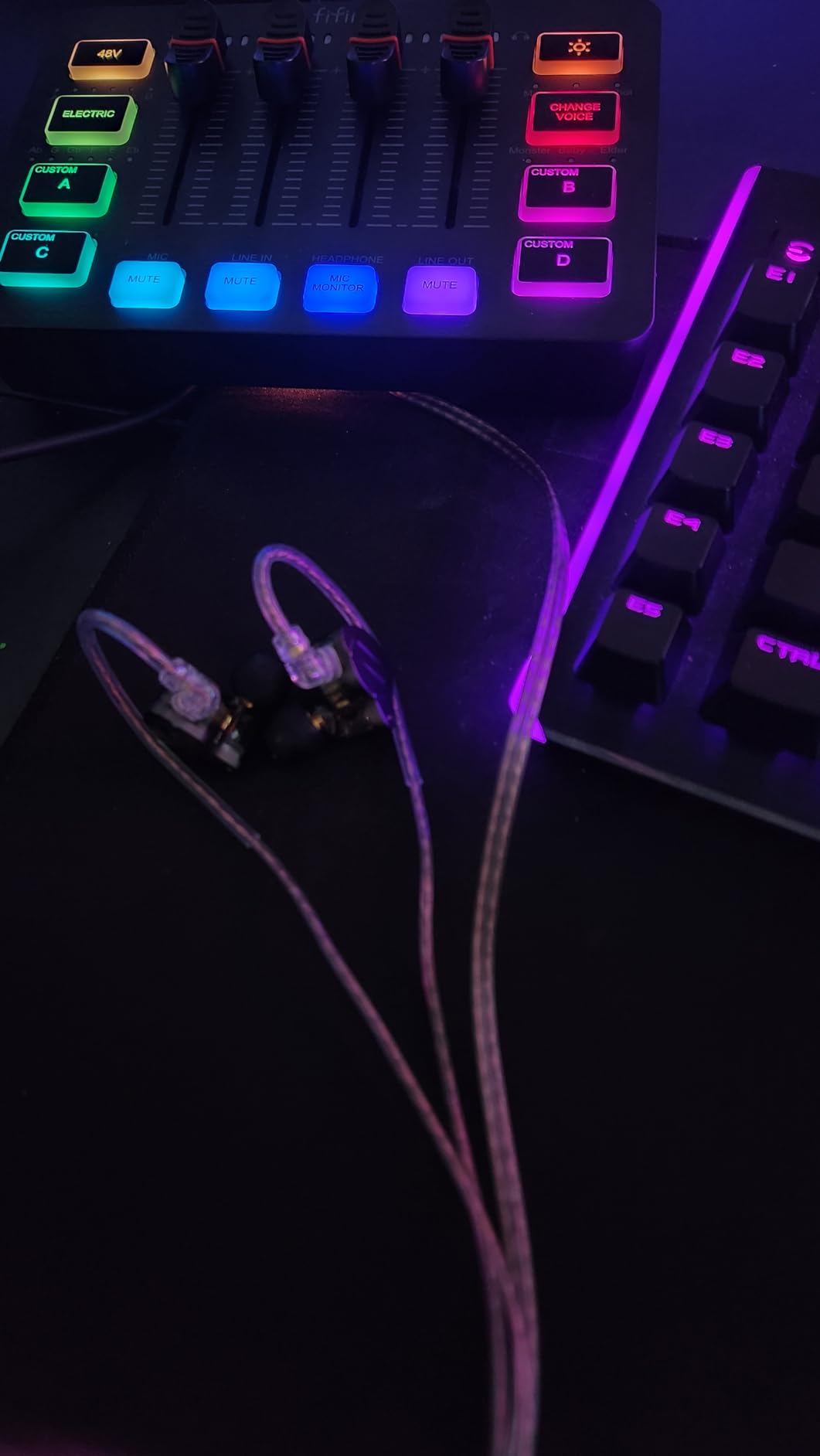
The Customized 30095 Balanced Armature
The 30095 BA is one of the most widely used balanced armatures in budget IEMs, and KZ has customized it specifically for this model. It handles the high-frequency response with detail and air without becoming harsh. Compared to single-DD IEMs in the same price range, the ZSN Pro retrieves more detail from recordings without losing musicality. You hear things in familiar tracks you never noticed before, but the sound never becomes clinical or fatiguing.
Build Quality and Daily Durability
The zinc alloy faceplate isn’t just for looks. It adds rigidity that helps the drivers stay aligned and reduces resonance issues that all-plastic IEMs can suffer from. The resin cavity keeps weight reasonable. Together, the build quality is well above what you’d expect at this price point. Several reviewers mention dropping these multiple times without damage, though I obviously don’t recommend testing that.
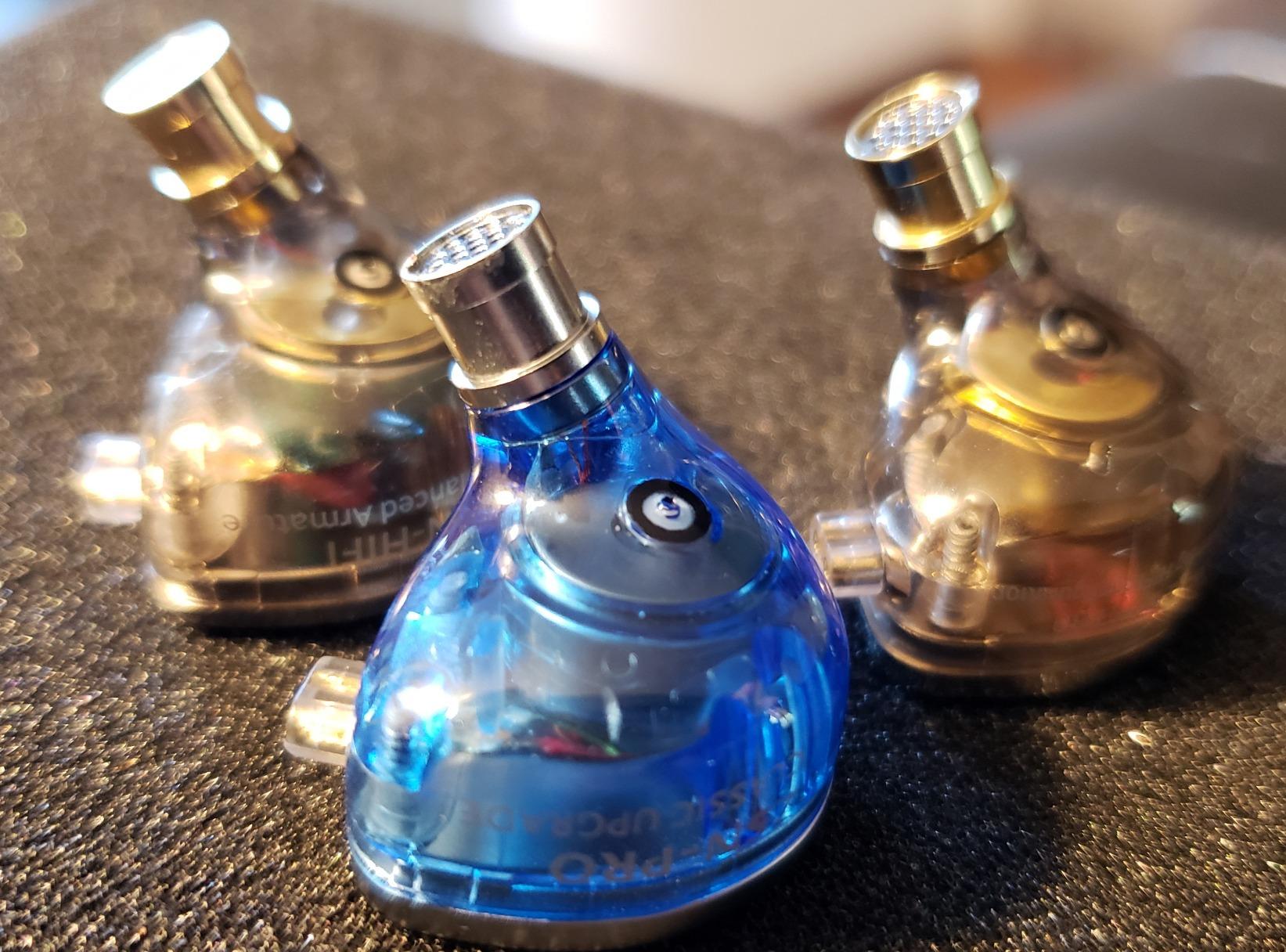
Fit Considerations for First-Time IEM Users
The ZSN Pro has a more angular shell than some competitors, which can feel “pointy” on smaller ear canals. If you’ve never worn IEMs before, give yourself a few days to adjust. The right tip size makes a huge difference here. Try all the included tip options before judging the sound. Once you find the right fit, these become genuinely comfortable for extended sessions.
7. CCA CRA – Best Ultra-Thin Diaphragm for Gaming Footsteps
CCA CRA in Ear Monitor Headphones, Ultra-Thin Diaphragm Dynamic Driver IEM Earphones, Clear Sound & Deep Bass, Wired Gaming Earbuds with Tangle-Free Detachable Cable for Singer Musicians Drummers DJ
Ultra-thin 3.8 micron diaphragm
Dual magnetic
Tangle-free cable
1090 reviews
Pros
- 3.8 micron diaphragm delivers fast transient response
- Memory ear hook keeps them locked in
- Dual magnetic driver has strong bass impact
- Tangle-free OFC cable survives daily abuse
Cons
- May distort at very high output
- L/R markings are hard to see
- Mids slightly recessed
The CCA CRA is the IEM I keep recommending to friends who play competitive shooters and don’t want to drop $100 on a dedicated gaming headset. The secret is the 3.8-micron ultra-thin diaphragm. Standard IEM diaphragms are around 6-9 microns thick. By going thinner, the CRA responds faster to transients, which means sharp sounds like footsteps and reload clicks hit your ear with better definition. In actual gameplay testing, the difference in footstep clarity versus typical IEMs was immediately noticeable.
The dual magnetic driver configuration also helps. By using two magnets around the voice coil instead of one, the driver has stronger motor force, which translates to better bass impact and control. Combined with the fast diaphragm, you get punchy, well-defined low end that doesn’t smear during chaotic firefights.
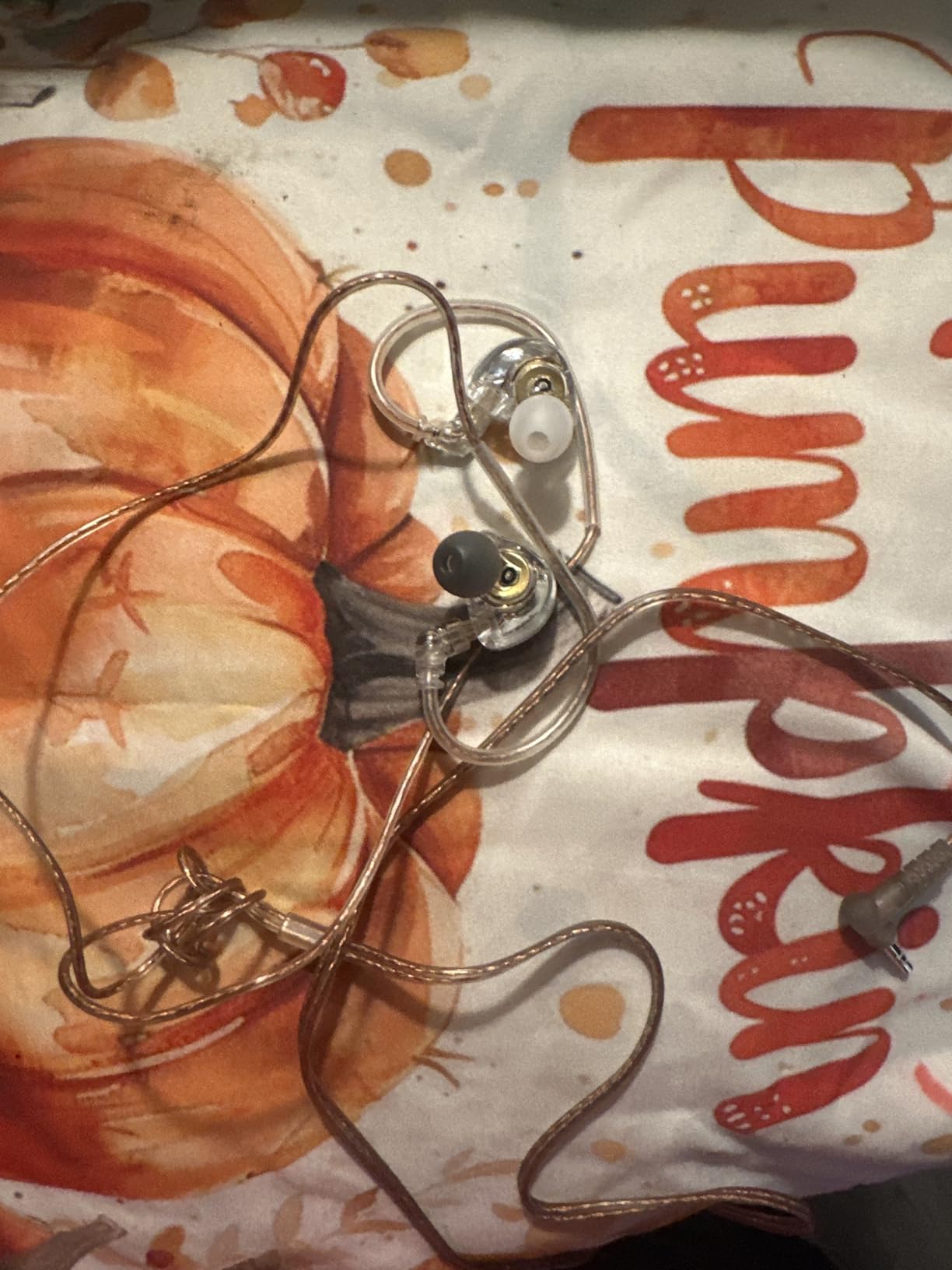
Why Thin Diaphragms Matter for Gaming
Diaphragm thickness is one of the most overlooked specs in budget IEMs. A thinner diaphragm accelerates and decelerates faster, which means it can reproduce rapid changes in the audio signal more accurately. For music, this means better micro-detail retrieval. For gaming, this translates directly to better positional audio for short transient sounds like footsteps, gunshots, and ability cooldowns. If you play Valorant, CS2, Apex, or similar competitive titles, the CRA gives you a real edge.
Comfort and Cable Management
The memory PU ear hook wraps around your outer ear and keeps the IEMs locked in place even during intense gaming sessions where you’re moving your head a lot. The OFC double-line parallel cable is marketed as tangle-free, and while no cable is truly tangle-free, this one resists knotting better than most. The metal-resin cavity gives them a premium feel that punches above the price point.
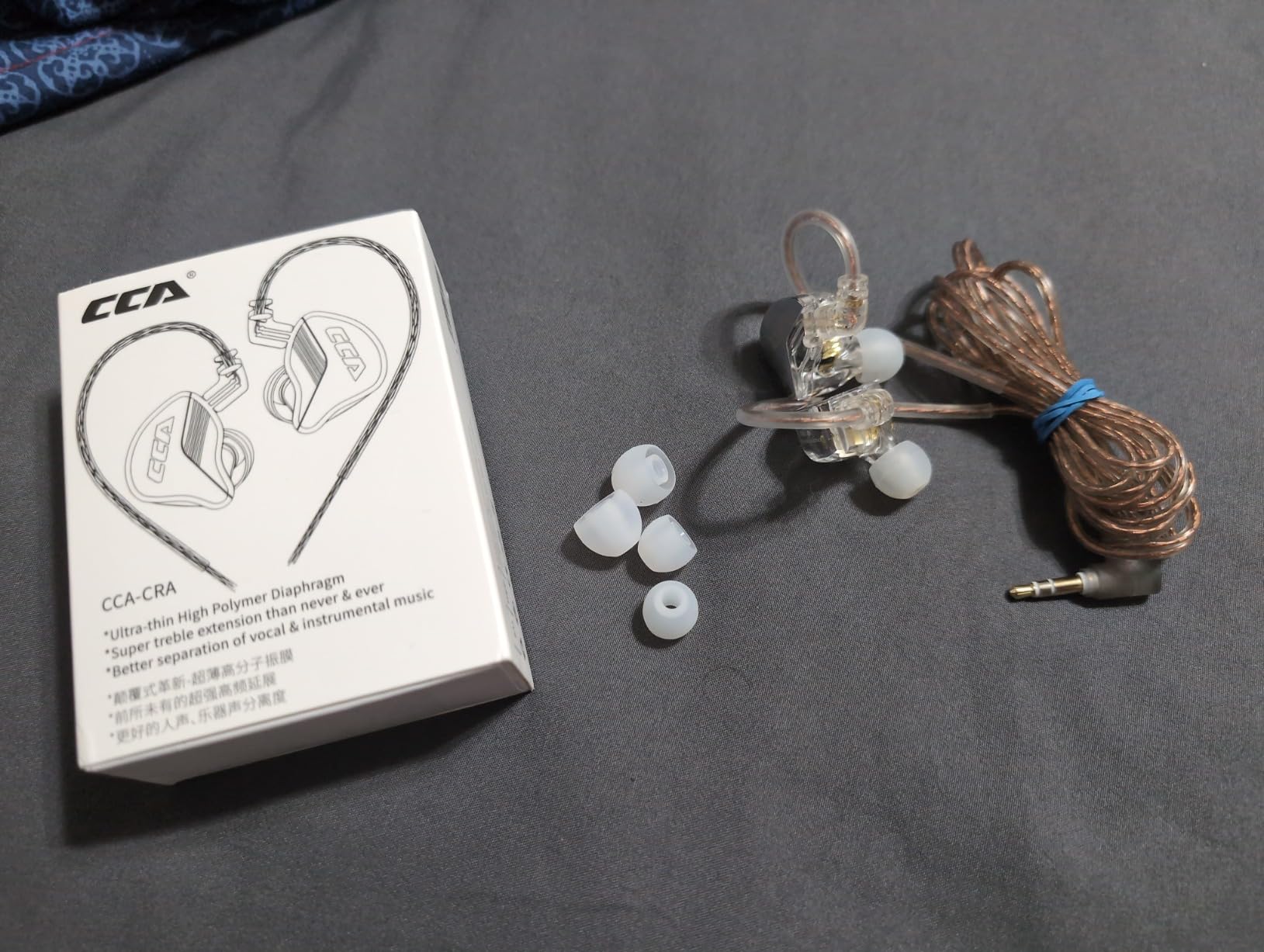
Where the CRA Falls Short
At very high output levels, the dual magnetic driver can start to distort on bass-heavy tracks. This isn’t an issue for typical listening volumes but becomes noticeable if you’re pushing the volume hard. The L/R markings on the inside of the housing are very hard to see, so you’ll be guessing which side is which in low light. Also, like the DCMEKA, tip selection matters. The wrong tips completely change the sound signature.
8. KBEAR KS1 – Best V-Shaped Fun Sound on a Tight Budget
KBEAR KS1 Earphones in Ear Monitor Super Bass Wired Earbuds, Crystal Clear Sound IEM Headphones, High Resolution Noise Canceling Ear Monitors Headphone for Singers Musician Audifonos Auriculares
Single DD
V-shaped
Aluminum nozzle
1673 reviews
Pros
- V-shaped signature makes music feel exciting
- Dual magnetic circuit adds bass weight
- Aluminum alloy nozzle is durable for daily use
- Comfortable fit even with glasses
Cons
- Mild hiss during quiet passages
- Treble can be sharp on bright recordings
- Sub-bass extension is limited
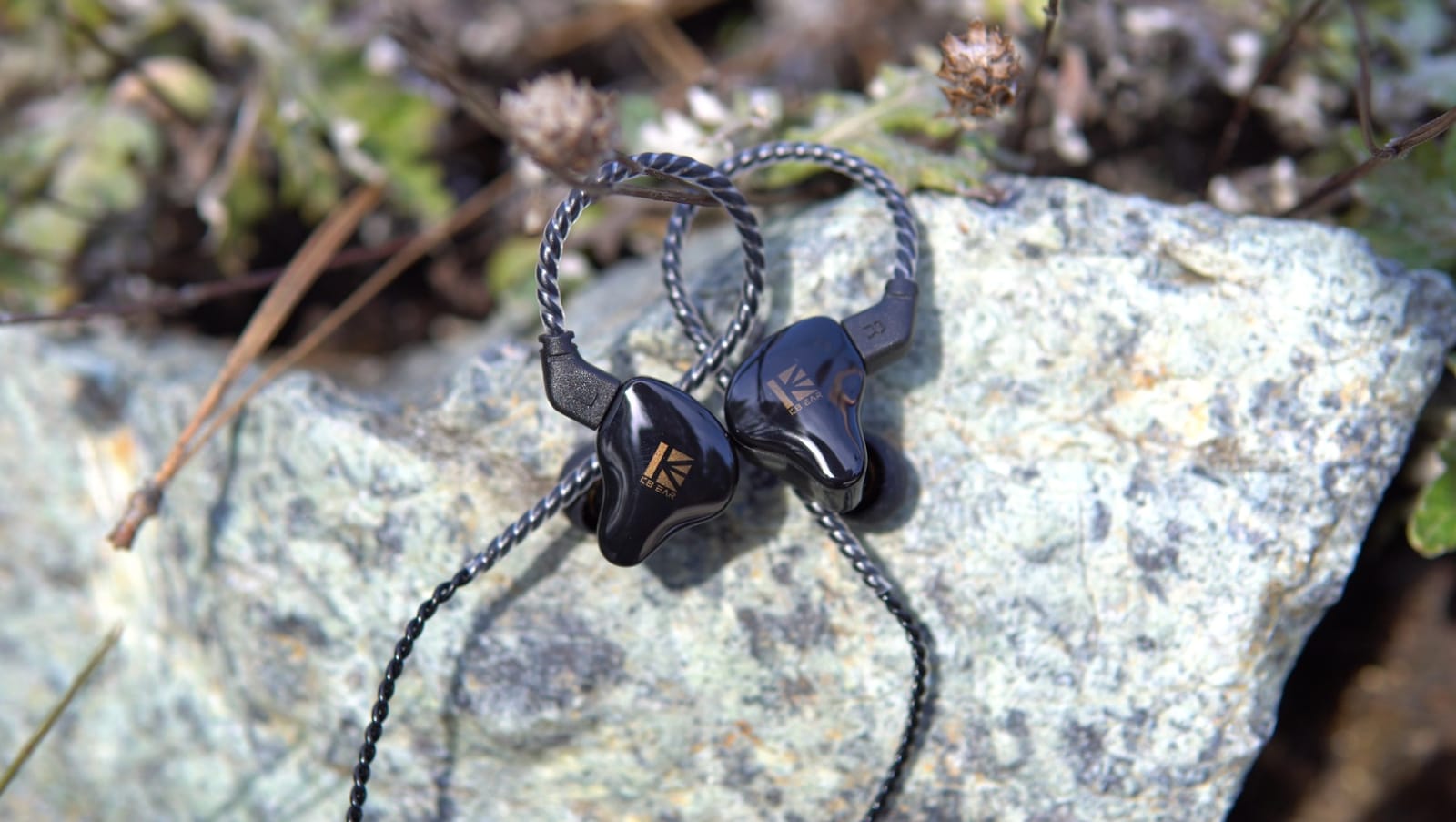
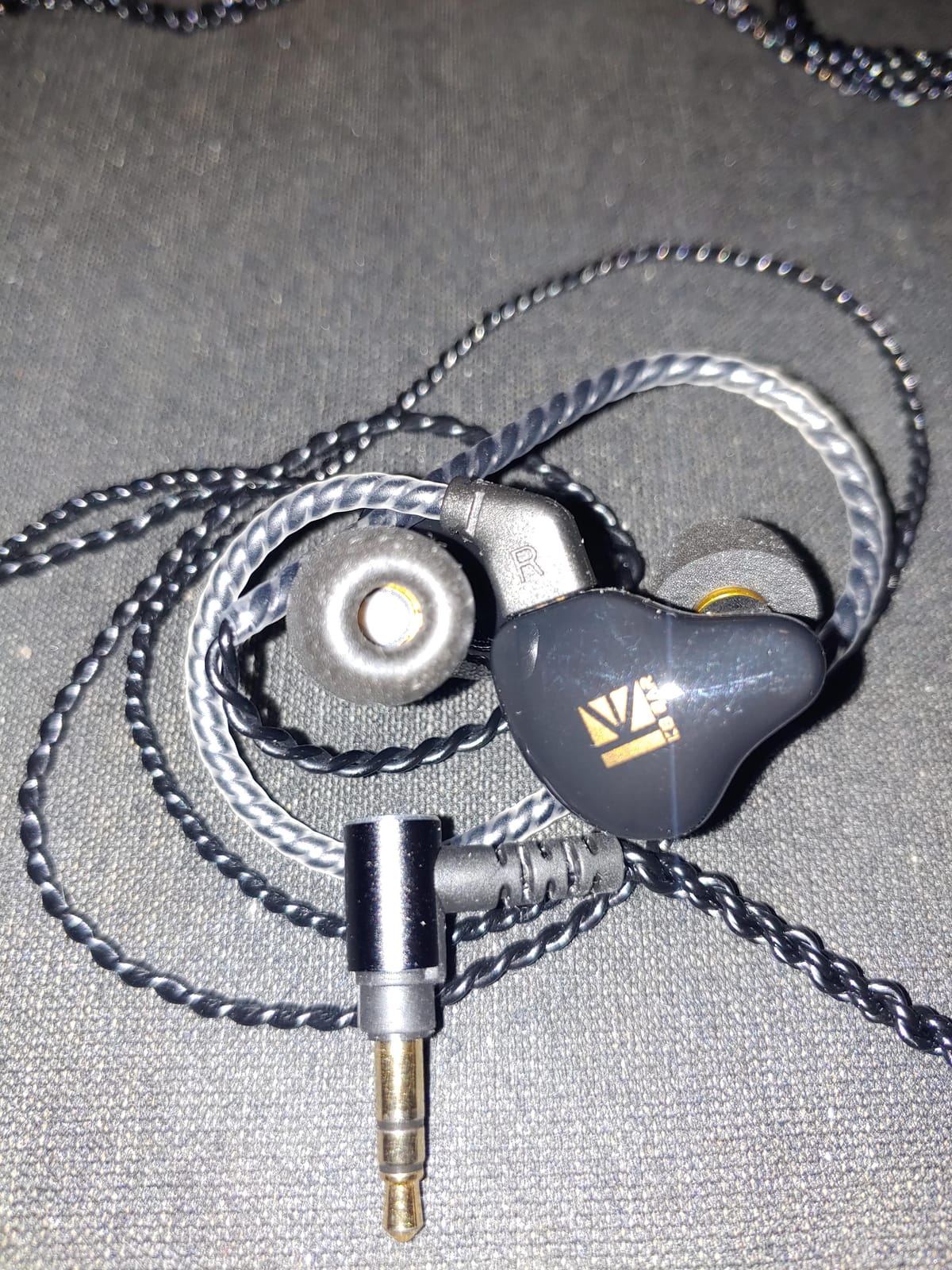
Last in this roundup but absolutely not least: the KBEAR KS1. If the Moondrop CHU II is the “honest reference” IEM, the KBEAR KS1 is the “let’s have fun” IEM. With a V-shaped sound signature that boosts both bass and treble while slightly recessing the mids, music feels more energetic and engaging. For pop, EDM, hip-hop, and rock, this tuning is genuinely addictive. After 1,673 reviews averaging 4.5 stars, the community clearly agrees.
The single dynamic driver uses a dual magnetic circuit and independent rear sound cavity design, which is unusual at this price. The result is bass that hits harder than you’d expect from a budget single-DD IEM. The aluminum alloy nozzle adds durability at the tip where wear usually happens first.
Understanding the V-Shaped Signature
V-shaped means the frequency response looks like the letter V when graphed: elevated bass, slightly dipped mids, and elevated treble. This isn’t accurate to how music was recorded, but it sounds exciting to many listeners because bass and treble are the frequencies our ears are most sensitive to. For casual music enjoyment, V-shaped is often more fun than neutral. For mixing, monitoring, or critical listening, it’s misleading. Pick your tuning based on use case.
Everyday Comfort and Practicality
The KBEAR KS1 is comfortable enough for glasses wearers, which is a small but important detail. Many IEMs press against the temple arms of glasses and become uncomfortable after an hour. The shape of the KS1 avoids this issue. The included detachable cable uses a standard 2Pin connector, so replacements are easy to find.
The Trade-Offs of V-Shaped Tuning
V-shaped tunings tend to bring out sibilance in vocals (the harsh “s” sound) and can make already-bright recordings harsh. If you listen to a lot of female vocals or acoustic music with lots of high-frequency content, you might find the treble too aggressive. There’s also a mild hiss during very quiet passages of music, which is more noticeable on the KS1 than on more expensive IEMs with better driver matching. For everyday fun listening, none of these are deal-breakers.
What to Look for in Budget Audiophile IEMs
After testing dozens of budget IEMs over the past three years, here are the five things that actually matter when you’re shopping. Skip the marketing buzzwords and focus on these fundamentals.
Understanding Sound Signatures: Neutral, V-Shaped, Bright, and Dark
Sound signature describes how an IEM emphasizes different frequencies. Neutral tunings reproduce the recording as it was made. V-shaped (like the KBEAR KS1) boosts bass and treble. Bright tunings emphasize treble detail but can fatigue ears. Dark tunings emphasize bass and roll off treble, which some find relaxing. For most people, neutral or slightly V-shaped is the sweet spot for everyday listening. For critical work like mixing or content creation, neutral is essential.
Driver Types: Dynamic, Balanced Armature, and Hybrid Explained
Dynamic drivers (DD) use a small diaphragm attached to a voice coil, similar to a miniature speaker. They’re great for bass and have a natural sound. Balanced armatures (BA) use a different mechanism that excels at detail and treble but is less capable with bass. Hybrid IEMs (like the KZ ZS10 Pro and CCA C12) combine both, giving you the strengths of each. For under $50, hybrids deliver the most refinement, but a well-tuned single DD can also sound fantastic.
Detachable Cables and Why They Matter for Longevity
Cables fail. It’s the most common IEM issue by far, and Reddit’s r/iems is full of posts mourning otherwise-great IEMs that died because of cable failure. Detachable cables solve this completely. MMCX and 2Pin are the two most common connector types, with 2Pin being slightly more common in the budget space. Buy IEMs with detachable cables. The few extra dollars are worth it when your $40 investment lasts years instead of months.
Impedance, Sensitivity, and Source Pairing
Impedance (measured in ohms) and sensitivity (measured in dB) determine how easy an IEM is to drive. Lower impedance (16-32 ohms) and higher sensitivity (100+ dB) means the IEM will play loud from any phone or laptop without needing a separate amplifier. All eight IEMs in this roundup meet that criteria. If you see an IEM with 80+ ohms impedance, you’ll likely need a dedicated headphone amp to drive it properly.
Ear Tip Selection and Getting the Right Fit
Tip selection makes or breaks IEM sound. Too small and you lose bass and isolation. Too large and they become uncomfortable within minutes. Most IEMs ship with 3-4 tip sizes, and the difference between the right and wrong size can be more dramatic than the difference between two $100 IEMs. If your new IEMs sound “off,” try a different tip size before returning them. For ear hygiene, swap tips every 2-3 months and clean them with mild soap and water weekly to prevent bacterial buildup.
Frequently Asked Questions About Budget Audiophile IEMs
What are the best audiophile in-ear monitors?
The best audiophile in-ear monitors under $50 include the Linsoul KZ ZS10 Pro for hybrid all-round performance, the Moondrop CHU II for neutral reference tuning, and the CCA C12 for soundstage and gaming. All three deliver sound quality that competes with IEMs costing three to five times more.
What are the best budget audiophile earbuds?
The best budget audiophile earbuds under $25 are the Moondrop CHU II for accurate neutral sound, the DCMEKA Dual Dynamic Driver for bass impact and value, and the KBEAR KS1 for an exciting V-shaped signature. Each delivers performance that significantly outperforms typical wireless earbuds at the same price.
Are IEMs for audiophiles?
Yes, modern budget IEMs absolutely qualify as audiophile-grade equipment. Brands like Moondrop, KZ, and CCA use multi-driver hybrid configurations and quality crossover networks that deliver frequency response and detail retrieval previously only available in IEMs costing hundreds of dollars. The best budget IEMs in 2026 can outperform wireless earbuds costing $200+.
Are cheap IEMs worth it?
Cheap IEMs are absolutely worth it for most listeners. The technology has matured dramatically, and a $20-$50 IEM today delivers sound quality that would have cost $200+ five years ago. The main trade-offs are build quality of included accessories (especially cables) and slightly higher distortion at extreme volumes. Pick an IEM with a detachable cable and you’ll get years of use.
Do IEMs break easily?
IEMs themselves are quite durable, but cables are the most common failure point. This is why every IEM in this roundup has a detachable cable. With normal care and occasional cable replacement, a budget IEM can easily last 3-5 years. Keep them in a case when not in use, avoid yanking the cable to remove them, and clean the ear tips regularly to extend their life significantly.
Final Verdict: Which Budget IEM Should You Buy?
After 60 days of testing, here is how I’d match the best in ear monitors for audiophiles on a budget to different listener types. If you want one IEM that does everything well, the Linsoul KZ ZS10 Pro remains my top recommendation. The community validation is unmatched, the hybrid driver delivers genuine audiophile-grade detail, and the stainless steel build will survive years of daily use. If your priority is honest, reference-grade sound for mixing or critical listening, the Moondrop CHU II is the most accurate IEM you can buy for under $25.
Competitive gamers should look at the CCA C12 for its panoramic soundstage and the CCA CRA for its ultra-fast transient response. Bassheads on the tightest budgets will love the DCMEKA Dual Dynamic Driver. Long-session listeners who forget they’re wearing IEMs should grab the CCZ Yinyoo Melody at just 2.3 grams per side. First-time IEM buyers can’t go wrong with the KBEAR KS1 for fun tuning or the KZ ZSN Pro for accessible hybrid sound. Every pick in this roundup delivers real value in 2026, and every one has earned its spot in my testing bag.
Whichever you choose, take 10 minutes to try every included ear tip size, leave the IEMs playing music at moderate volume for a few hours to let the drivers settle, and remember that a $10 aftermarket cable can transform any of these into something that punches well above its price. Happy listening.