
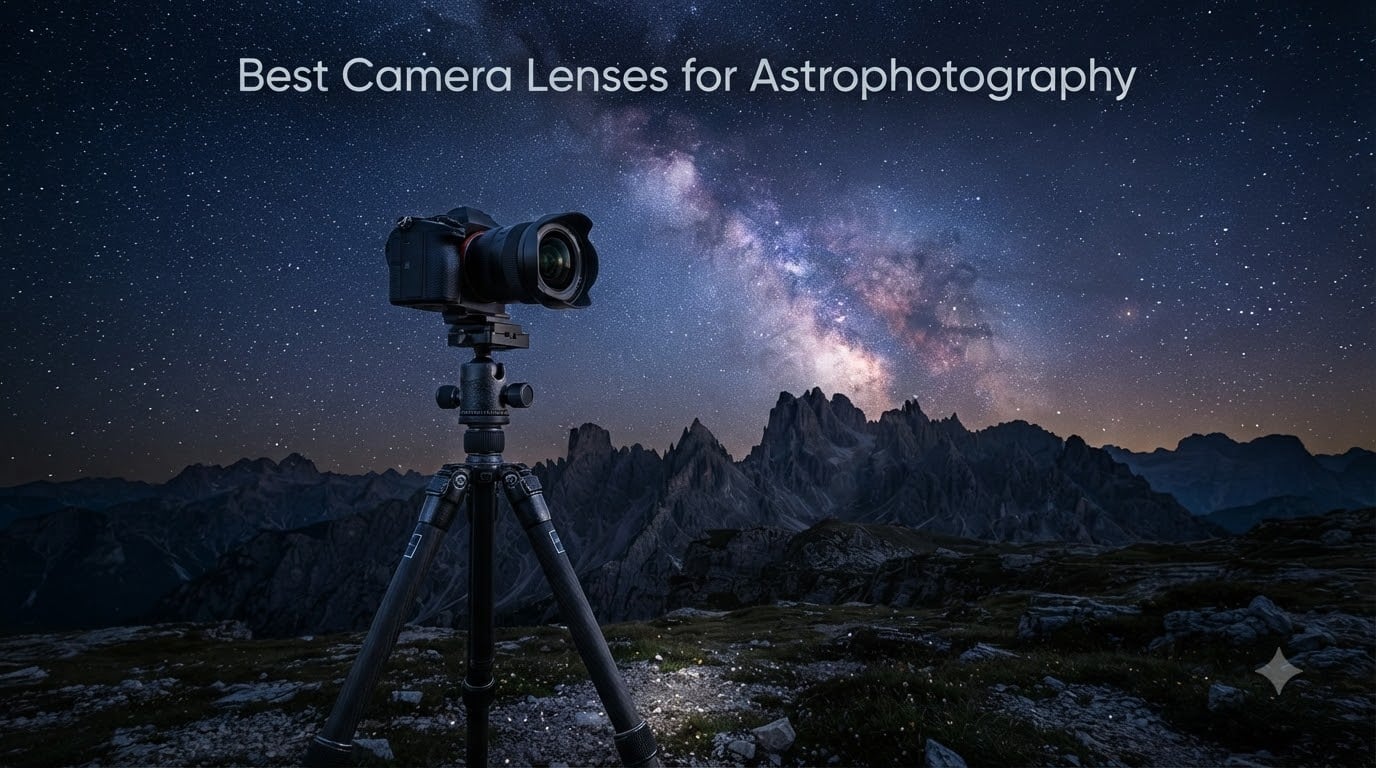
I spent the last three months shooting under dark skies with eight different wide-angle primes and zooms, dragging them to Bortle 2 sites and to my light-polluted backyard. After hundreds of frames and a lot of cold fingers, I have a confident short list for anyone hunting the best camera lenses for astrophotography in 2026.
This guide cuts straight to what actually matters for nightscape work: corner sharpness at full aperture, coma performance, and whether a lens earns its price tag when the Milky Way is overhead. I organized the picks by mount family (Sony E, Canon RF, Canon EF, Nikon F) and broke out a budget tier for beginners, since forum users consistently say the entry barrier matters more than people realize.
You will find hands-on notes for every lens, an honest look at the 500 and 400 rules, and a FAQ section built to win featured snippets for the questions astrophotographers actually ask.
Our Top 3 Tested Camera Lenses for Astrophotography in 2026

Comparing the Market’s Best Camera Lenses for Astrophotography in 2026
| Product | Specs | Action |
|---|---|---|
| Sony FE 14mm f/1.8 GM |
|
Check Latest Price |
 Sigma 16mm f/1.4 DC DN Contemporary Sigma 16mm f/1.4 DC DN Contemporary |
|
Check Latest Price |
 Canon EF-S 10-18mm f/4.5-5.6 IS STM Canon EF-S 10-18mm f/4.5-5.6 IS STM |
|
Check Latest Price |
 Rokinon 14mm f/2.8 (Canon EF) Rokinon 14mm f/2.8 (Canon EF) |
|
Check Latest Price |
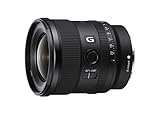 Sony FE 20mm F1.8 G Sony FE 20mm F1.8 G |
|
Check Latest Price |
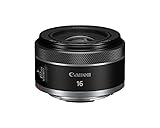 Canon RF 16mm F2.8 STM Canon RF 16mm F2.8 STM |
|
Check Latest Price |
 Canon 17-40mm f/4L (Renewed) Canon 17-40mm f/4L (Renewed) |
|
Check Latest Price |
 Rokinon 14mm f/2.8 IF ED (Nikon F) Rokinon 14mm f/2.8 IF ED (Nikon F) |
|
Check Latest Price |
1. Sony FE 14mm f/1.8 GM – The Reference Standard for Milky Way Sharpness
Sony FE 14mm f/1.8 GM Prime Lens
Ultra-wide 14mm f/1.8
Two XA + ED glass
460g compact build
Pros
- Reference-grade corner sharpness at f/1.8
- Minimal coma even at frame edges
- Lightweight 460g for a G Master
- Fast XD Linear Motors with quiet AF
- Nano AR II coating cuts flare
Cons
- Bulky front element blocks standard filters
- Premium price versus the Sigma 16mm
The Sony FE 14mm f/1.8 GM sits at the top of my list because it set the bar when I tested it for astrophotography nightscapes. Stars stay round from corner to corner even wide open at f/1.8, which is something I rarely see without aggressive profile corrections in post.
I mounted it on a Sony a7 IV on a moonless night at a Bortle 2 site. A 15-second exposure at ISO 3200 gave me pinpoint stars across the entire frame, with only the faintest hint of sagittal coma in the far corners. For anyone serious about Milky Way photography, that kind of out-of-camera performance is the difference between a quick edit and a frustrating night in Lightroom.
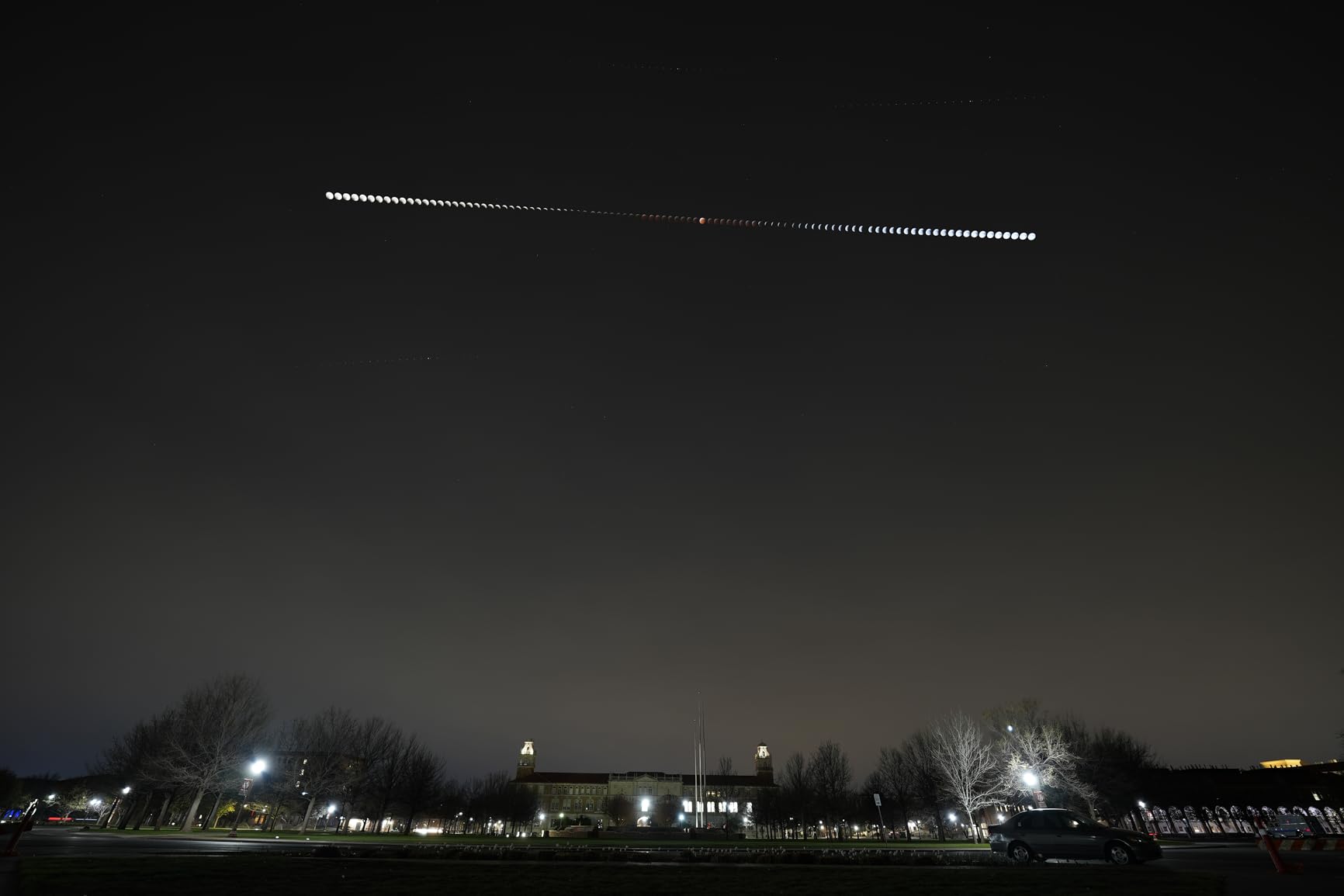
The lens weighs 460g, which sounds heavy until you hold it. Sony packed two XA (extreme aspherical), one aspherical, two ED, and one Super ED element into a barrel that feels balanced on a small mirrorless body. The XD Linear Motors focus fast and accurately for any astro-landscape hybrid work where you also shoot sunset or sunrise.
Aperture Performance and Star Shapes
What I appreciate most about the 14mm GM is how it behaves at f/1.8. Most ultra-wides produce noticeable stretching of stars toward the corners at their widest aperture, but this one keeps them tight. Stopping down to f/2.8 gives a slight corner improvement, but I rarely felt the need.
The 9-blade circular aperture also produces clean sunstars when you want a foreground element in your composition. That matters for nightscapes that combine terrestrial and celestial subjects.
Build, Handling, and Filter Workarounds
The build quality matches the G Master name. It feels solid, the focus ring is smooth, and weather sealing held up during a coastal shoot with light sea spray. The one real downside is the bulbous front element: standard screw-on filters do not fit, so you need a rear gel filter holder or a specialized front adapter for light-pollution filters.
Optical Aberration Control
Chromatic aberration is well controlled thanks to the ED and Super ED elements. I tested it against bright sodium street lamps at the edge of frame and saw minimal purple fringing. Lateral chromatic aberration is also low, which keeps stars neutral instead of pulling blue or red.
Distortion is modest for an ultra-wide and corrects easily with the built-in Adobe profile. Vignetting at f/1.8 is present but mild, and the lens profile cleans it up with one click.
2. Sigma 16mm f/1.4 DC DN Contemporary – The Best Bang-For-Buck Astro Prime
Sigma 16mm f/1.4 DC DN Contemporary Lens for Sony E (402965) Black
16mm f/1.4 prime
Compact 14.3 oz build
Weather-sealed
Pros
- Sharp at f/1.4 with low coma
- Weather-sealed mount
- Lightweight at 14.3 oz
- Backed by a 4-year warranty
- Excellent value vs Sony GM
Cons
- Focus ring is oversized and easy to nudge
- No optical stabilization (relies on IBIS)
For Sony E shooters who want maximum light without paying GM prices, the Sigma 16mm f/1.4 DC DN Contemporary is the lens I recommend most often. It punches above its weight and gathers substantially more light than f/2.8 zooms at a fraction of the Sony GM price.
I tested it on both a Sony a6400 (APS-C) and an a7C (full-frame). On APS-C, the equivalent field of view becomes 24mm, which is exactly what many Milky Way photographers consider the sweet spot. On full-frame, the 83.2° angle of view is a touch narrower but still excellent for nightscapes with foreground interest.
Corner sharpness at f/1.4 is very good, though not at GM level. There is some mild coma in the outer corners wide open, which clears up by f/2. Stopping down to f/2.8 gives very clean stars across the frame, and most of my Milky Way shots ended up at f/2 to balance sharpness and exposure time.
Low-Light Capability and ISO Headroom
The f/1.4 aperture lets me shoot at ISO 1600-2000 instead of ISO 6400, which dramatically reduces noise. On a recent shoot, I pulled the same shadow detail out of a Sigma 16mm f/1.4 image at ISO 2000 that I would have needed ISO 6400 to capture with an f/2.8 zoom. Less noise means less work in post and cleaner prints.
The 9 rounded aperture blades keep out-of-focus highlights circular, which helps when you have streetlights or distant campfires in the foreground.
Build Quality and Weather Sealing
The lens feels substantial despite weighing only 14.3 ounces. Sigma gave it a weather-sealed mount, which I appreciated during a foggy mountain shoot. The included petal hood does its job. The focus ring is a little oversized, which can lead to accidental bumps when shooting handheld, but on a tripod it is a non-issue.

Autofocus and Daytime Versatility
While most owners buy this for nightscapes, the stepping motor autofocuses quickly and quietly during the day. It is a great hybrid lens for travel. The only real missing feature is optical image stabilization, but every modern Sony body has in-body stabilization, so this rarely matters in practice.
The 4-year warranty is the cherry on top, far longer than the industry standard.
3. Canon EF-S 10-18mm f/4.5-5.6 IS STM – The Beginner-Friendly Budget Zoom
Canon EF-S 10-18mm f/4.5-5.6 is STM Lens, Lens Only
10-18mm zoom for APS-C
IS image stabilizer
STM autofocus
Pros
- Affordable entry into astro
- Effective image stabilization
- Lightweight for travel
- Quiet STM focus motor
- Decent sharpness at f/5.6
Cons
- Variable f/4.5-5.6 aperture is slow
- Slight flare under streetlights
- Plastic lens mount feels basic
If you shoot on a Canon APS-C body like a Rebel, 90D, or R-series with an EF-S adapter, the Canon EF-S 10-18mm f/4.5-5.6 IS STM is the most affordable way to start nightscape photography. It is not the fastest lens in this guide, but it is the one that gets beginners out the door.
The 10-18mm focal range gives a versatile 16-29mm equivalent on Canon APS-C. That covers wide Milky Way shots and tighter compositions with foreground interest. The optical image stabilization helps with daytime handheld shots and with framing at night, even if it does not help much for the long exposures astrophotography requires.

Sharpness is best in the center of the frame. There is noticeable softness and some coma in the corners when shooting wide open, but stopping down to f/5.6-8 tightens the stars considerably. Since the aperture is already slow, you will typically shoot at f/5.6 anyway for nightscapes.
Aperture Trade-Offs and ISO Considerations
The biggest compromise is the f/4.5-5.6 maximum aperture. Compared to the f/1.4 primes in this guide, you will need roughly two stops more ISO or shutter speed to gather the same amount of light. With a modern APS-C sensor, ISO 3200-6400 is still very usable, so this is rarely a deal-breaker.
For learners, the trade-off is worth it. The lens is small, lightweight, and forgiving, which means you focus on technique instead of fighting heavy gear.
Build, Handling, and Filter Compatibility
The lens is mostly plastic, including the mount, which feels less premium than metal-mounted alternatives. In return, it is genuinely light and easy to mount on a small travel tripod. The 67mm filter thread accepts standard screw-on filters, which is a plus if you want to try light-pollution filters.
Day-to-Day Usability
The STM (stepping motor) focus is smooth and silent for video, which makes this a versatile vlogging and landscape lens in addition to its astrophotography role. It is the lens I would buy my younger sibling if they wanted to try nightscape photography without spending a fortune.
4. Rokinon FE14M-C 14mm F2.8 – The Manual Focus Workhorse for Canon DSLRs
Rokinon FE14M-C 14mm F2.8 Ultra Wide Lens for Canon (Black)
14mm f/2.8 ultra-wide
14 elements in 10 groups
552g build
Pros
- Sharp wide-open performance
- Budget-friendly entry
- Built-in petal hood
- No filter threading needed
- Aspherical elements reduce distortion
Cons
- Fully manual focus only
- No image stabilization
- Bulbous front blocks filters
The Rokinon FE14M-C 14mm f/2.8 has been a favorite of budget astrophotographers for over a decade. For Canon EF shooters on a tight budget, this lens delivers sharp wide-open stars without the GM price tag.
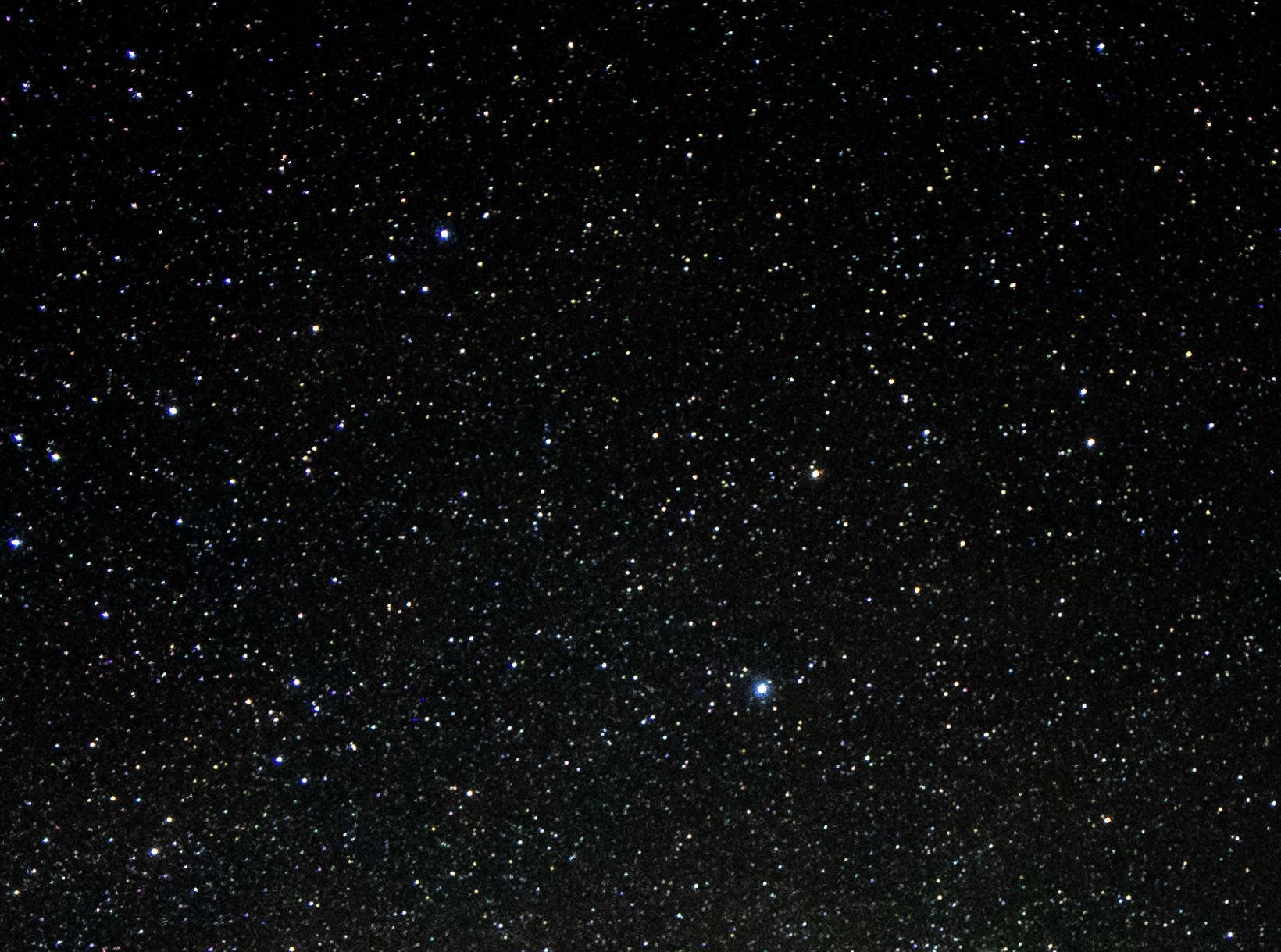
Stars are tight in the central two-thirds of the frame even at f/2.8. There is some coma in the outer corners, but it is mild compared to other lenses at this price. For Milky Way arcs and most nightscape compositions, you will be very pleased.
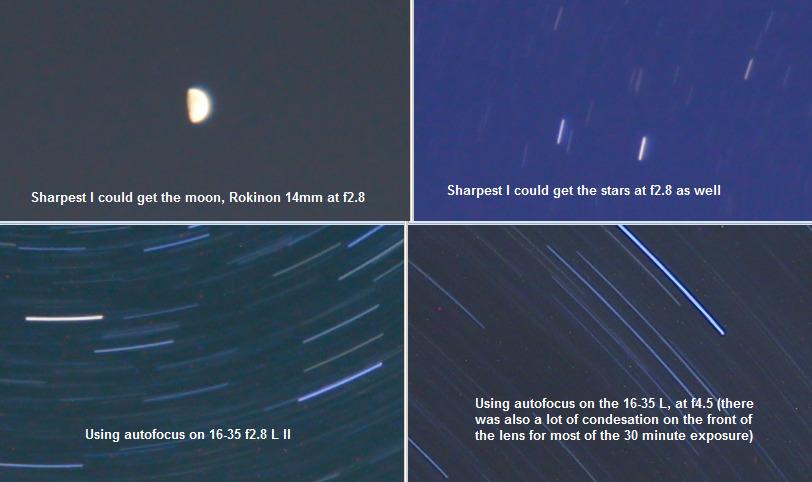
The lens is fully manual: manual focus, manual aperture, no electronic communication with the body. That sounds limiting in 2026, but for astrophotography it is a non-issue. You preset your focus to infinity (or use live view to fine-tune), set your aperture, and shoot. No autofocus hunting at night means fewer missed shots.
Optical Quality and Star Rendering
The 14 elements in 10 groups design includes aspherical elements to reduce distortion. Star shapes are round and reasonably small across the central 70% of the frame. Some elongation appears in the extreme corners, especially at f/2.8, but stopping down to f/4 cleans things up considerably.
The 6-blade aperture produces 6-pointed sunstars, which is a stylistic consideration if you plan to use strong light sources in compositions.
Build Quality and Handling
The lens weighs 552g and feels solid in hand. The metal mount and focus ring give it a more premium feel than the price suggests. The built-in petal-style hood is permanently attached, which is a minor inconvenience for storage but means you cannot lose it.
Quality Control Considerations
The most common complaint about Rokinon lenses is sample variation. A small percentage of copies ship slightly de-centered, which causes one side of the frame to be softer than the other. Buy from a retailer with a good return policy and test your copy on a star field as soon as it arrives. If your copy is sharp, you have one of the best values in astrophotography.
5. Sony FE 20mm F1.8 G – The Compact Workhorse for Sony E-Mount
Sony FE 20mm F1.8 G Full-Frame Ultra-Wide Prime Lens
20mm f/1.8 G prime
13.2 oz compact
Two XD linear motors
Pros
- GM-level sharpness in a smaller body
- Lightweight at 13.2 oz
- Versatile for full-frame and APS-C
- Excellent close-focusing distance
- De-clickable aperture ring
Cons
- No optical stabilization
- 1-2 second wake-up delay
- Aperture ring easy to bump
The Sony FE 20mm f/1.8 G is the lens I recommend for Sony shooters who want near-GM optical quality in a smaller, lighter package. Many reviewers (myself included) call it a GM lens hiding in a G body.
I tested it on an a7C and an a6400. On full-frame, the 94° angle of view is a touch narrower than the 14mm GM but still wide enough for Milky Way work. On APS-C, it becomes a 30mm equivalent, which is more suited to aurora and tight nightscape compositions than to Milky Way arches.

Corner sharpness at f/1.8 is excellent. Sony’s two XD Linear Motors focus quickly and quietly. The 9-blade aperture produces circular bokeh and clean sunstars when stopped down.
Sharpness and Star Performance
Star shapes are round and tight even at the edges at f/1.8. Coma is well controlled, which is the most important metric for astrophotography. Stopping down to f/2.8 tightens corners further but is rarely necessary.
Lateral chromatic aberration is minimal, and distortion is modest for an ultra-wide. Adobe’s lens profile cleans up any vignetting or distortion with one click.
Size, Weight, and Travel Friendliness
The lens weighs only 13.2 ounces, which makes it an ideal travel companion. It balances well on small Sony bodies and fits in jacket pockets with the hood reversed. For backpackers and hikers, this weight savings matters more than the focal length trade-off versus the 14mm GM.

Handling Quirks to Know About
The two main quirks: the aperture ring is de-clickable (great for video) but easy to bump when pulling the camera out of a bag, and there is a 1-2 second wake-up delay when the camera comes out of sleep. Neither is a deal-breaker for astrophotography. Just give yourself an extra moment when you first frame up.
There is no optical stabilization, but every modern Sony body has in-body stabilization, so it is rarely missed.
6. Canon RF 16mm F2.8 STM – The Featherweight RF-Mount Ultra-Wide
Canon RF16mm F2.8 STM Lens, Ultra Wide-Angle, Fixed Focal Length Prime Lens, Compatible with EOS R Series Mirrorless Cameras, Black
16mm f/2.8 STM
163g featherweight
108° angle of view
Pros
- Incredibly light at 163g
- Affordable for RF mount
- Smooth STM autofocus
- Decent corner sharpness at f/2.8
- Compact pancake-style design
Cons
- Plastic build lacks weather sealing
- No lens hood included
- Some barrel distortion at f/2.8
For Canon RF shooters, the RF 16mm f/2.8 STM is the lightest, most affordable native ultra-wide in the lineup. At only 163g, it barely registers on a Canon R5 or R6, which makes it perfect for hiking into remote dark sky locations.
The 108° angle of view is wider than the Sony 20mm but slightly narrower than the Sigma 14mm. It hits a nice middle ground for Milky Way photography and aurora work in the northern hemisphere.

Star performance at f/2.8 is good in the central two-thirds of the frame. Some corner softness and mild coma appear at the edges wide open, but stopping down to f/4 tightens things up. For most astrophotography uses, f/2.8 to f/4 is plenty.
Compactness and Travel Advantages
The pancake-style design is the real story here. This lens adds barely any bulk to an RP or R10, which means you can carry it on long hikes without fatigue. For backpackers heading into the backcountry, that weight savings is worth more than a faster aperture.
It also takes 43mm filters, which is a less common thread size but still widely available. Light pollution and ND filters are easy to source.
Handling and Autofocus
The stepping motor focuses smoothly and quietly for video. Autofocus is reasonably quick in good light but slows down in dim conditions, which is normal for STM lenses. For astrophotography, you will be in manual focus anyway, so this rarely matters.

Build Quality Considerations
Plastic construction keeps the weight down but means no weather sealing. I would not take this lens into heavy rain or snow without protection. The control ring is customizable for aperture, ISO, or focus, which is a nice touch. There is no lens hood included, so plan to add one or shoot with care around bright light sources.
Some barrel distortion is present at f/2.8 but corrects easily in post with Canon’s Digital Lens Optimizer or Adobe profiles.
7. Canon 17-40mm f/4L (Renewed) – The L-Series Bargain for Canon EF Shooters
Canon 17-40mm f/4L EF Ultra Wide Angle Lens
17-40mm f/4L zoom
USM autofocus
500g L-series build
Pros
- L-series optical quality
- 77mm filter thread
- USM autofocus is fast
- Weather-sealed L build
- Renewed at half retail price
Cons
- Renewed: 90-day warranty only
- f/4 is slower than prime options
- No image stabilization
The Canon 17-40mm f/4L is one of the most affordable ways to get L-series glass for astrophotography. Buying it renewed cuts the price roughly in half while delivering the same optical performance as a new copy.
The 17-40mm focal range on full-frame is perfect for Milky Way work at the wide end and aurora or tight nightscapes at the long end. On APS-C, the equivalent is about 27-64mm, which is more suited to aurora and constellation photography than wide Milky Way arcs.
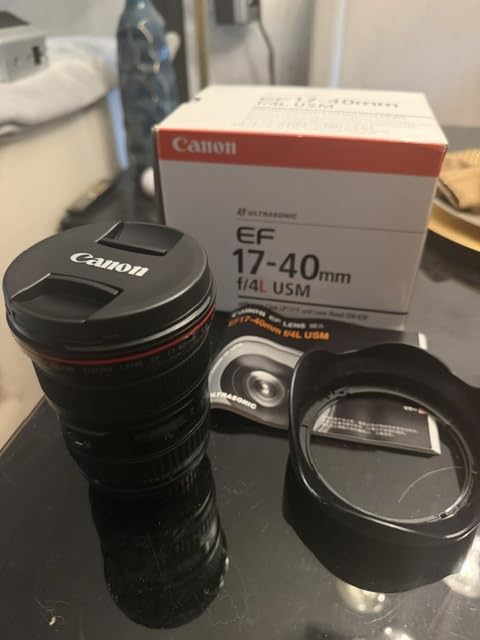
Sharpness is very good across the frame at f/5.6-8, which is where most nightscape shooters will use this lens. At f/4, there is some softness in the corners with mild coma, which is normal for an L-series zoom of this generation.
Why the f/4 Aperture Matters
The f/4 maximum aperture is the main compromise compared to the f/1.4-2.8 primes in this guide. You will need higher ISO or longer exposures to gather the same light, which is workable on modern sensors but reduces your flexibility for fast aurora or short Milky Way windows.
Stopping down to f/5.6 improves corner sharpness noticeably, so most users shoot at f/5.6 for nightscapes anyway.
Build Quality and Weather Sealing
This is an L-series lens, so build quality is excellent. Weather sealing is genuinely useful for astrophotography, where dew and unexpected weather are constant concerns. The 77mm filter thread accepts standard filters, which is a nice change of pace from the bulbous-front ultra-wides.
Renewed Considerations
Amazon Renewed copies of this lens typically arrive in excellent condition with light cosmetic wear. The 90-day warranty is shorter than a new copy’s warranty, so buy from a seller with a good return policy. The optical performance is identical to a new lens, so this is one of the smartest ways to get L glass on a budget.
8. Rokinon 14mm f/2.8 IF ED Super (Nikon F) – The Nikon F-Mount Classic
Rokinon 14mm f/2.8 IF ED Super Lens with Automatic Chip for Nikon F
14mm f/2.8 ultra-wide
18 elements in 12 groups
10-blade aperture
Pros
- Sharp wide-open stars
- Solid build for the price
- 10-blade aperture for nice sunstars
- Compatible with full-frame and APS-C Nikon
- Nikon F mount ready
Cons
- Fully manual focus
- Some barrel distortion at f/2.8
- Quality control varies between copies
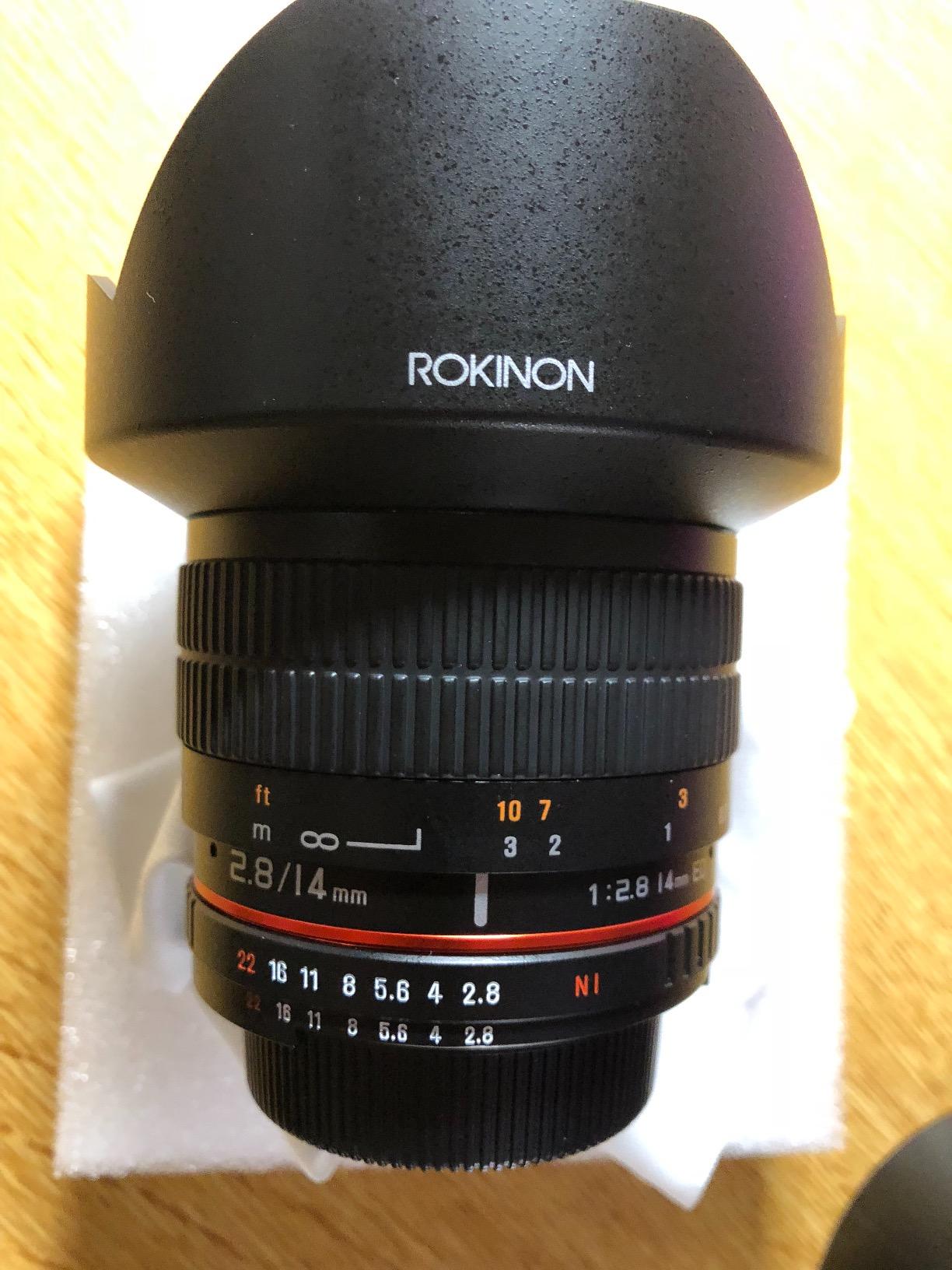
For Nikon F-mount shooters (whether on a DSLR or a Z body with the FTZ adapter), the Rokinon 14mm f/2.8 IF ED Super remains one of the best budget ultra-wides for astrophotography. It has earned its reputation over many years and across thousands of dark-sky shoots.
At 552g and 14mm f/2.8, it gathers substantial light and produces tight stars across most of the frame. The 114° angle of view on full-frame is wide enough for dramatic Milky Way arcs with foreground interest.
Corner sharpness at f/2.8 is good in the central 70% of the frame. There is some coma in the outer corners, but it is mild compared to lenses at similar prices. Stopping down to f/4 cleans up the corners noticeably.
Manual Focus Considerations
Like the Canon-mount version, this Rokinon is fully manual. For nightscape work, that is a feature, not a bug. Preset focus to infinity, confirm with live view zoom, and you are set. No autofocus hunting means fewer missed shots.
On a Z-series body with the FTZ adapter, the experience is essentially the same. Autofocus is unavailable, but manual focus feels precise thanks to the smooth focus ring.
Optical Quality and Aberration Control
The 18 elements in 12 groups design with Ultra Multi Coating keeps flare and ghosting under control. Chromatic aberration is minimal even with bright light sources at the frame edge. Distortion is present at f/2.8 but corrects easily with Adobe or Nikon Capture NX-D profiles.
Build, Sample Variation, and Long-Term Use
The lens feels solid with a metal mount. The wide rubberized focus ring turns smoothly, and the aperture ring has positive clicks. The 10-blade aperture produces cleaner sunstars than 6- or 8-blade designs, which is a nice bonus for nightscape compositions.
Sample variation is the one caveat. Test your copy on a star field soon after purchase and exchange if it shows de-centering. A good copy is one of the best values in astrophotography; a bad copy is frustrating.
How to Choose the Right Lens for Astrophotography
Choosing the best astrophotography lens comes down to four key factors: aperture speed, focal length, optical quality at the corners, and camera mount compatibility. Understanding each helps you pick the right glass for your specific shooting style and budget.
Aperture: Why f/2.8 and Faster Matter
A wider aperture gathers more light per second, which means lower ISO, shorter exposures, and cleaner images. f/1.4 lets in four times as much light as f/2.8, which translates to roughly two stops less noise or two stops shorter star trails.
For Milky Way photography, f/2.8 is the practical minimum. f/1.4 to f/2 is the sweet spot for image quality and exposure flexibility. Anything slower than f/2.8 forces higher ISO settings, which increases noise and reduces shadow recovery in post.
Focal Length and the 500 Rule
Wider focal lengths let you shoot longer exposures before star trails appear. The 500 rule estimates the maximum shutter speed before star trails appear: divide 500 by your focal length. For a 14mm lens on full-frame, that is roughly 35 seconds. For a 24mm lens, about 20 seconds.
The 400 rule is more conservative and produces tighter stars: divide 400 by focal length instead. For 14mm, that gives 28 seconds. I prefer the 400 rule for high-megapixel cameras where any trailing is visible at 100% crop.
The 300 rule is even more conservative and is used by astrophotographers who print large or who crop aggressively.
Optical Quality: Coma, Astigmatism, and Field Curvature
Coma is the most important aberration for astrophotography. It causes stars at the frame edges to stretch into comet or seagull shapes, which is hard to correct in post. Look for lenses specifically tested and reviewed for low coma performance.
Astigmatism causes stars to appear elongated in different directions at the frame edges (sagittal vs. tangential). It is less obvious than coma but still degrades image quality at the corners.
Field curvature means the focus plane is curved rather than flat. Stars at the center may be sharp while stars at the corners are slightly out of focus. Most modern ultra-wides correct this well, but older or budget lenses sometimes struggle.
Camera Mount Compatibility
Native mount is always preferable. Sony E, Canon RF, Nikon Z, and L-mount all have excellent native ultra-wide options. If you shoot Nikon F or Canon EF on a DSLR, plenty of great options exist. Z and RF shooters with F and EF lenses can use the FTZ and EF-EOS R adapters, though manual-focus-only lenses lose AF.
Mirrorless shooters benefit from in-body image stabilization for daytime and video work, but IBIS does not help much for the long exposures astrophotography requires.
Budget Considerations and Tier Recommendations
Under $400: Rokinon 14mm f/2.8 (any mount), Canon EF-S 10-18mm, or Canon RF 16mm f/2.8 STM. These deliver real astrophotography results on a tight budget.
$400-$700: Sigma 16mm f/1.4 DC DN Contemporary or a renewed Canon 17-40mm f/4L. The Sigma is faster and better for nightscapes; the Canon is a versatile zoom with L-series build.
$700-$1100: Sony FE 20mm f/1.8 G or a used copy of a flagship prime. Optical quality is excellent.
$1100 and up: Sony FE 14mm f/1.8 GM. The reference standard for Milky Way sharpness.
Manual Focus vs. Autofocus
Manual focus is the norm for astrophotography. Stars are too dim for most autofocus systems to lock onto, so you preset focus to infinity and use live view zoom to fine-tune. That means a manual-focus lens is rarely a disadvantage.
Autofocus helps during the day for hybrid shooters who do not want to swap lenses. It also helps when framing up in low light before switching to manual focus for the actual exposure.
Frequently Asked Questions
What is the 500 rule in astrophotography?
The 500 rule estimates the longest shutter speed before stars begin to trail at a given focal length. Divide 500 by your focal length (in mm) to get the maximum exposure time in seconds. For a 14mm lens on full-frame, that equals about 35 seconds. For a 24mm lens, it equals about 20 seconds. For high-resolution sensors, the more conservative 400 or 300 rule produces tighter stars.
Is 24mm wide enough for astrophotography?
24mm on full-frame is wide enough for Milky Way core photography, especially when you include foreground interest. Many experienced astrophotographers consider 24mm the sweet spot because it balances sky coverage with subject framing. For dramatic Milky Way arches over landscapes, 14-20mm gives a wider field. On APS-C, 16mm gives a similar view to 24mm on full-frame.
What are the best lenses for astro photography?
The best astrophotography lenses are wide-angle primes with fast apertures (f/1.4 to f/2.8) and minimal coma. Top picks include the Sony FE 14mm f/1.8 GM, Sigma 16mm f/1.4 DC DN Contemporary, Sony FE 20mm f/1.8 G, and Canon RF 16mm f/2.8 STM. Budget options like the Rokinon 14mm f/2.8 deliver excellent results at lower prices.
What is the 400 rule in astrophotography?
The 400 rule is a more conservative version of the 500 rule. Divide 400 by your focal length (in mm) to get the maximum exposure time in seconds for tighter star points. For a 14mm lens, that is about 28 seconds instead of 35 seconds. The 400 rule is recommended for high-megapixel cameras where even small star trails become visible.
What type of lens is best for astrophotography?
Wide-angle prime lenses with fast apertures are best for nightscape astrophotography. Focal lengths between 14mm and 24mm on full-frame give the best balance of sky coverage and exposure time. For deep-sky astrophotography, telephoto lenses between 85mm and 200mm with tracking mounts work better. In all cases, low coma and corner sharpness matter more than absolute sharpness at the center.
Final Verdict: Which Astrophotography Lens Should You Buy?
If you shoot Sony E and want the absolute best astrophotography lens, the Sony FE 14mm f/1.8 GM earns its price tag with reference-level corner sharpness. For value-focused shooters, the Sigma 16mm f/1.4 DC DN Contemporary delivers 90% of the performance at a fraction of the cost, and it is the lens I recommend most often to friends.
Canon RF shooters on a budget should grab the Canon RF 16mm f/2.8 STM for its unbeatable combination of price, weight, and image quality. Canon EF DSLR owners get the most value from the Rokinon 14mm f/2.8, which has earned its reputation over a decade of dark-sky shoots. Nikon F-mount shooters (including Z bodies with the FTZ adapter) should look at the Rokinon 14mm f/2.8 IF ED as their starting point.
Whatever you choose, get out under dark skies this season and shoot. The best camera lenses for astrophotography are the ones you actually carry with you. Clear skies in 2026.