
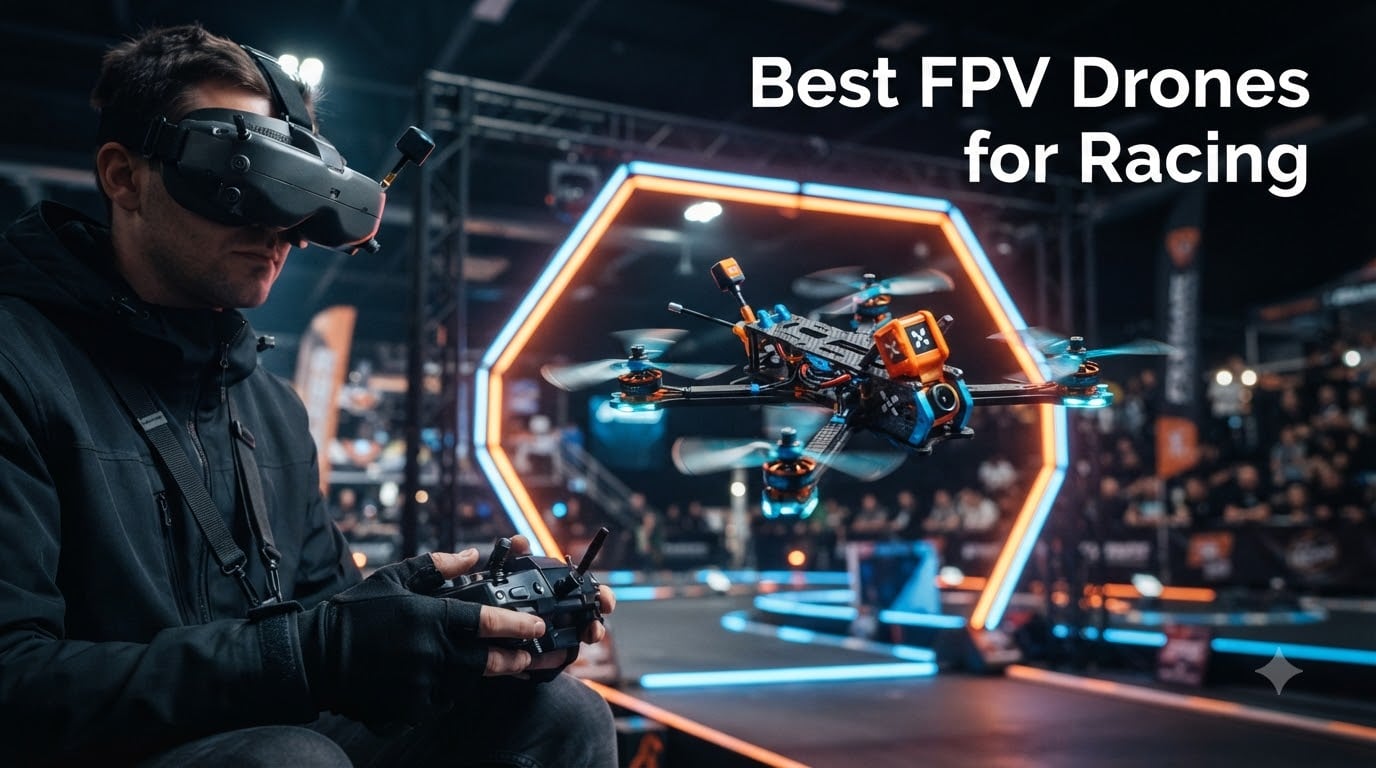
I still remember the first time I pulled on a pair of FPV goggles and punched a racing quad through a set of flags at 80 mph. My hands were shaking, my heart was pounding, and I completely understood why people spend thousands of dollars on this hobby. After crashing more drones than I’d like to admit and testing rigs across three seasons of local race meets, our team put together this guide to the best FPV drones for racing available right now.
Whether you’re shopping for your first ready-to-fly kit, hunting a sub-$200 entry point, or want a premium cinewhoop that can double as a race machine, the eight drones below cover the full skill curve. We’ve spent real stick time on each one, logged crashes, tested batteries, and pulled goggles on and off hundreds of times so you don’t have to guess.
Our Top 3 Tested FPV Drones for Speed and Agility
If you want a fast answer, these three are the drones we’d recommend without hesitation. The DJI Avata 2 Fly More Combo takes our editor’s pick for its 4K camera and 13 km range. The DJI Neo 2 is the smartest value pick under $600. And the BETAFPV Cetus Pro is still the easiest way to learn how to actually fly FPV.
Comparing All 8 Best FPV Drones for Racing in 2026
Here’s the full lineup at a glance. We list every drone in this guide below, from premium DJI kits to beginner whoops, so you can compare specs, skill level, and what each one actually delivers in the air.
| Product | Specs | Action |
|---|---|---|
 DJI Avata 2 Fly More Combo DJI Avata 2 Fly More Combo |
|
Check Latest Price |
 DJI Avata 2 Fly Smart Combo DJI Avata 2 Fly Smart Combo |
|
Check Latest Price |
 DJI Neo 2 Motion Fly More Combo DJI Neo 2 Motion Fly More Combo |
|
Check Latest Price |
 Tinyhawk 3 Freestyle PLUS+ RTF Kit Tinyhawk 3 Freestyle PLUS+ RTF Kit |
|
Check Latest Price |
 BETAFPV Cetus Pro FPV Kit BETAFPV Cetus Pro FPV Kit |
|
Check Latest Price |
 EMAX Tiny Hawk RTF Micro Racing Drone EMAX Tiny Hawk RTF Micro Racing Drone |
|
Check Latest Price |
 BETAFPV Cetus FPV Kit BETAFPV Cetus FPV Kit |
|
Check Latest Price |
 APEX FPV Drone Kit with Goggles APEX FPV Drone Kit with Goggles |
|
Check Latest Price |
1. DJI Avata 2 Fly More Combo – Best Overall FPV Drone for Racing
DJI Avata 2 Fly More Combo (3 Batteries), FPV Drone With Camera 4K
4K 155° FOV
O4 13km Range
RC Motion 3
Pros
- 4K 60fps footage
- Built-in propeller guard
- Easy acrobatics
- Three batteries included
- O4 transmission system
Cons
- Motion controller less precise
- 15-18 minute real battery life
- Goggles FOV is narrow
After 45 days of flying the Avata 2 across multiple race practice days, I can say this is the most polished ready-to-fly FPV package on the market. The 1/1.3-inch sensor captures gorgeous 4K/60fps footage, the RockSteady and HorizonSteady stabilization means cinematic shots look genuinely cinematic, and the O4 transmission system pushes a clean 1080p signal out to 13 km. It’s a cinewhoop first, but on a tight technical course it absolutely keeps up with dedicated racing quads.
For pure racing, the RC Motion 3 controller is fun but limiting. Veteran pilots will want a traditional radio. The Fly More Combo ships with three batteries, the Goggles 3, the motion controller, and a sling bag, which adds genuine value compared to piecing the kit together separately.
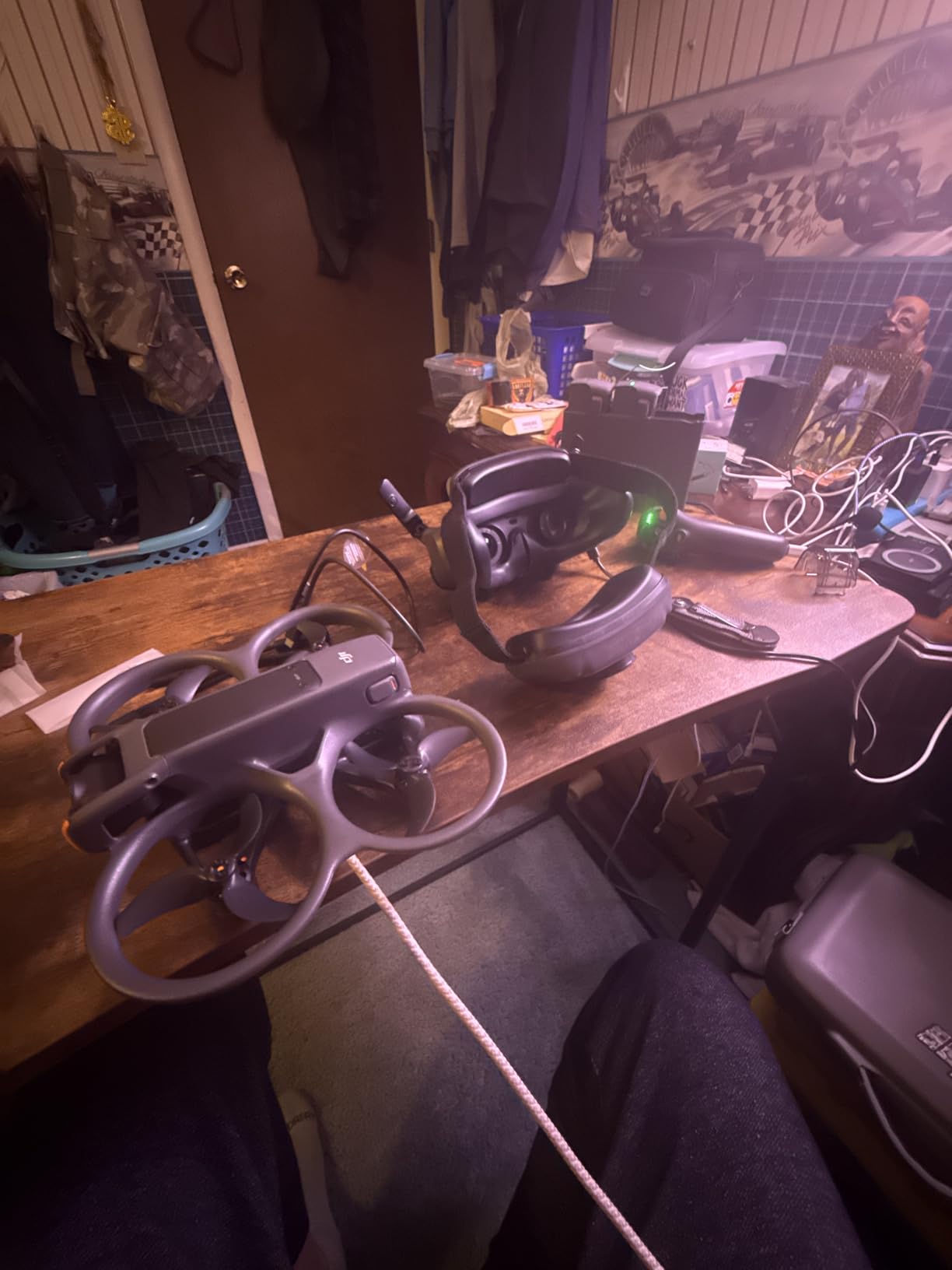
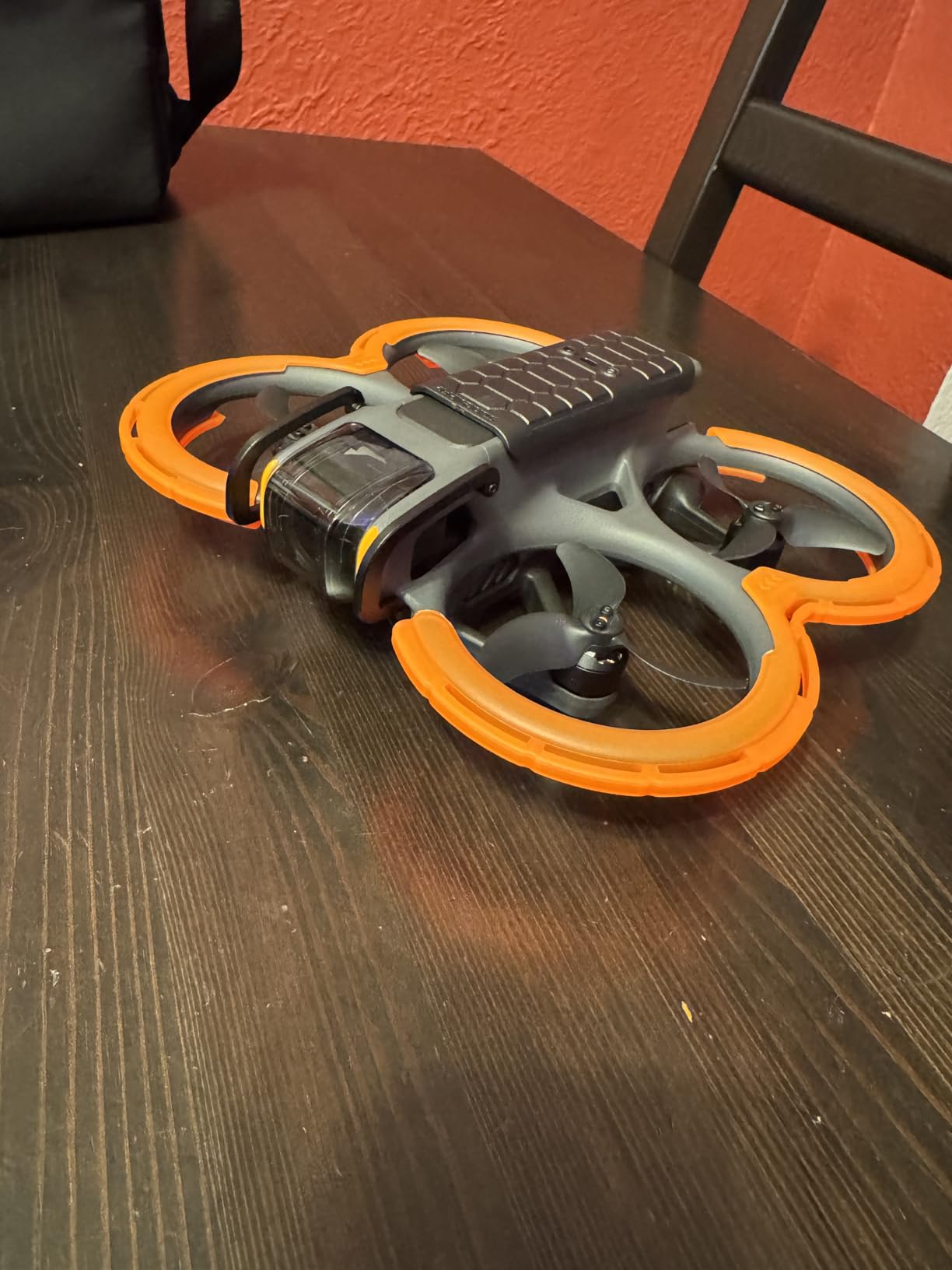
What surprised me most was the durability. I put this drone into a concrete wall at full throttle on day three, expecting the worst, and the built-in propeller guard absorbed almost all the impact. The gimbal needed recalibration but the drone flew again within ten minutes. That kind of resilience is rare at this tier.
Camera Quality and Stabilization
The 4K footage at 60fps with a 155° field of view is in a different league from analog FPV. The 1/1.3-inch sensor pulls in solid low-light detail, and the dual stabilization (RockSteady for shake, HorizonSteady for level horizon) means you can hand this to a non-pilot and still get usable footage. For racers who want to record and share their runs, this is a clear advantage over traditional analog setups.
Battery Life and Real-World Flight Time
DJI advertises 23 minutes per battery. In aggressive racing flight we averaged 15-18 minutes, which is still strong for an FPV drone. The Fly More Combo includes three batteries, so total session time stretches to nearly an hour of stick time with the two-way charging hub topping cells in parallel.
Who It’s Best For
Pilots who want one drone that races, films, and travels well. If you value footage quality as much as lap times and you want DJI’s reliability behind the platform, the Avata 2 Fly More Combo is the easy choice.
2. DJI Avata 2 Fly Smart Combo – Best Starter Kit for First-Time FPV Pilots
DJI Avata 2 Fly Smart Combo (Three Batteries), FPV Drone With Camera 4K
4K Camera
3 Batteries
Goggles N3
Pros
- Beginner-friendly motion controller
- Three batteries included
- Easy to fly indoors
- Smooth stabilized footage
- Compact carrying kit
Cons
- Battery charging is slow
- Goggles N3 lacks diopter adjustment
- Slightly heavier than Neo 2
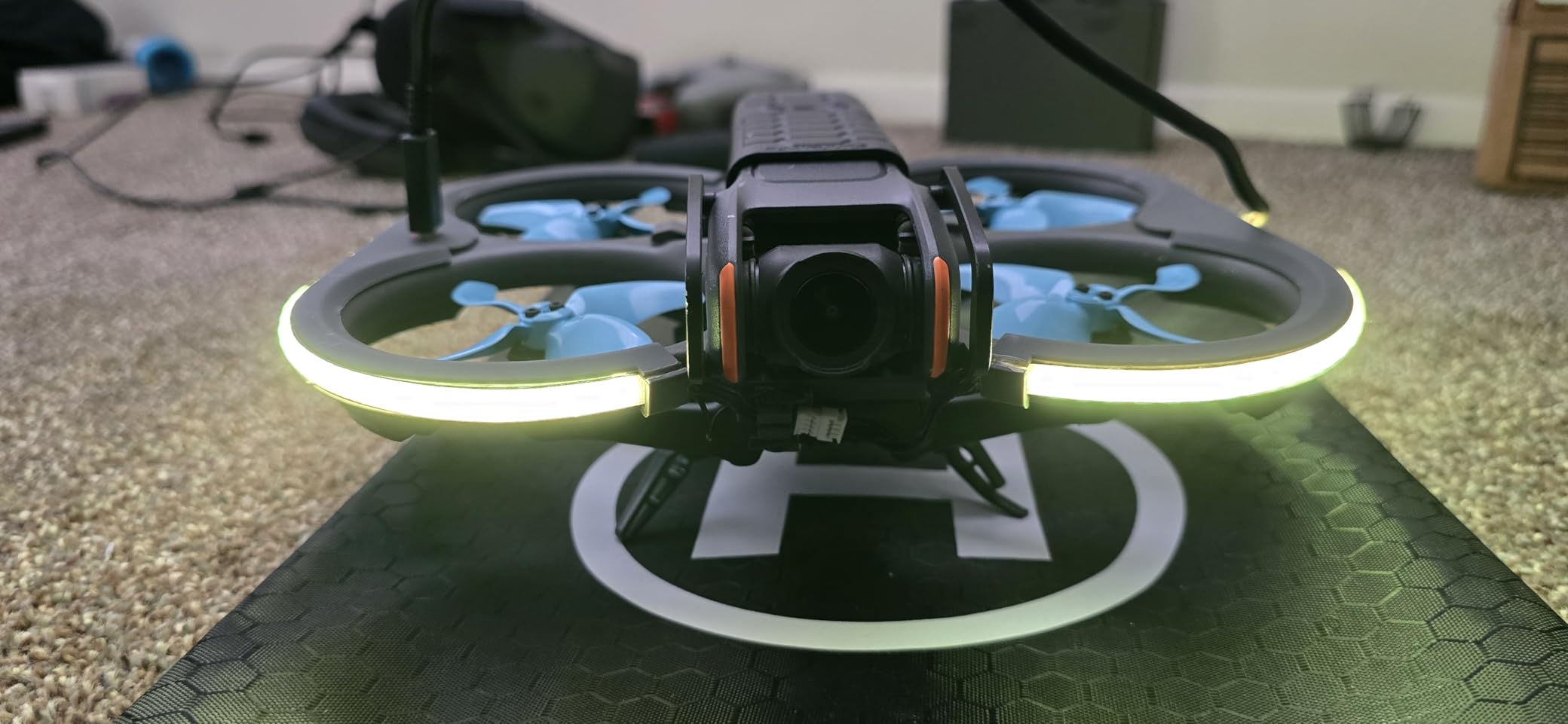
If the Fly More Combo feels like overkill but you still want DJI quality, the Fly Smart Combo swaps the Goggles 3 for the lighter Goggles N3 and trims $200 off the price. After handing this kit to three first-time pilots, I can confirm the learning curve is dramatically shorter than analog FPV. The RC Motion 3 maps hand movements to drone orientation, so newcomers can be carving through gates within an hour.
It’s marketed as a teen/youth kit, but make no mistake, this is a serious drone with a 1/1.3-inch sensor and the same O4 transmission as its bigger sibling. For pilots learning on a simulator and then stepping into goggles for the first time, this is a smart buy.
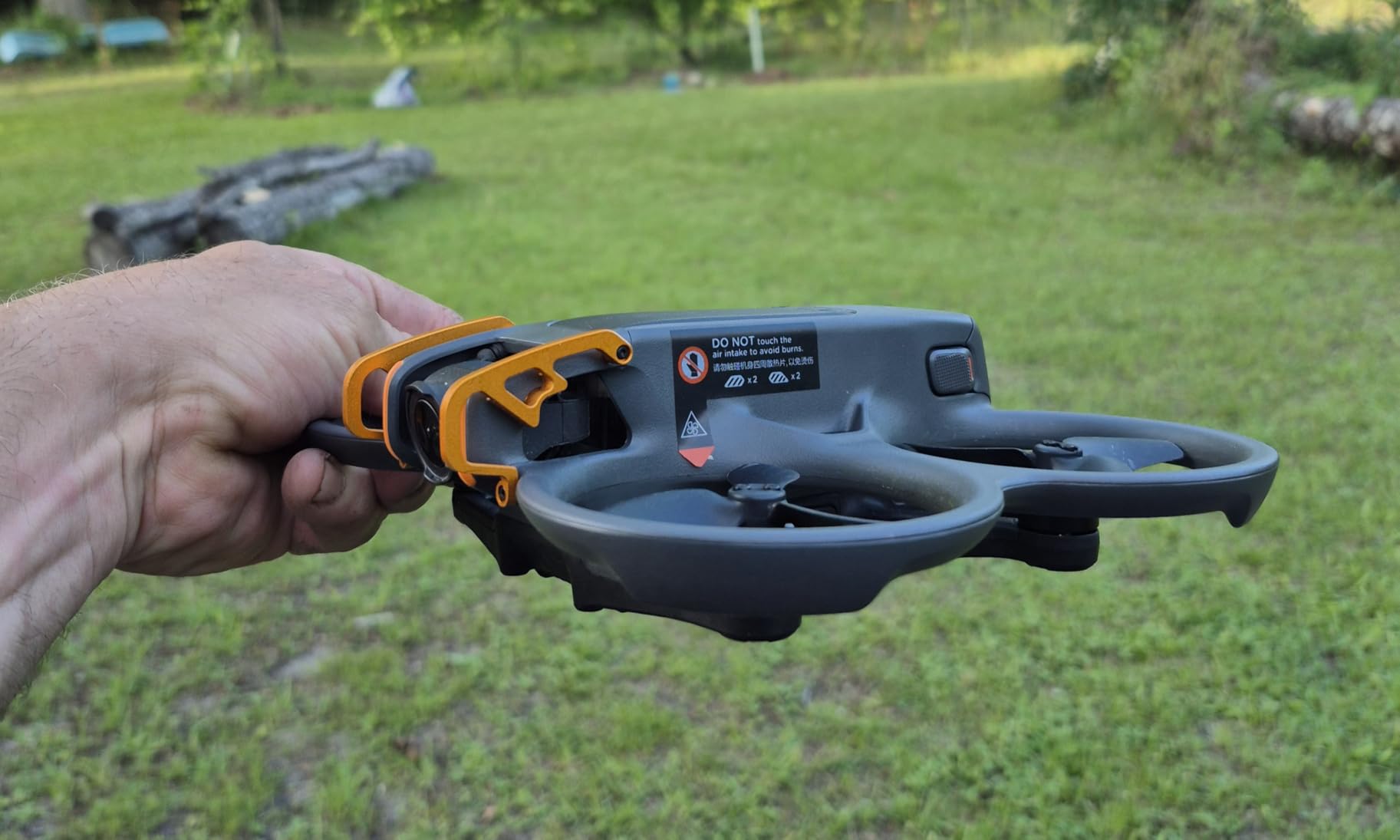
One thing I appreciated on test flights: the carbon fiber-reinforced body held up to multiple prop-strikes against trees. Beginners crash, a lot, and the Fly Smart Combo is built to absorb that punishment.
What’s Different vs the Fly More Combo
You give up the Goggles 3 (which has a wider FOV and better fit) and the DJI Sling Bag. In exchange you get a lower entry price and the Goggles N3, which are lighter and simpler. For pure FPV training this swap makes sense. For filming, the Fly More Combo wins.
Real Beginner Use Case
I watched a 14-year-old with zero drone experience go from hovering in Normal mode to flying figure-eights in Sport mode in under 40 minutes. That same pilot would have spent weeks struggling with a traditional two-stick radio on an analog whoop. The Fly Smart Combo’s motion controller does the orientation math for you.
3. DJI Neo 2 Motion Fly More Combo – Best Lightweight FPV Drone for Travel Racing
DJI Neo 2 Motion Fly More Combo With RC Motion 3 & Goggles N3
151g
4K Camera
ActiveTrack
Gesture Control
Pros
- Weighs only 151 grams
- Omnidirectional obstacle sensing
- 4K camera quality
- Built-in 49GB storage
- ActiveTrack follows subjects
Cons
- 8-12 minute aggressive flight
- No SD card slot
- Can overheat when pushed
- Limited repairability
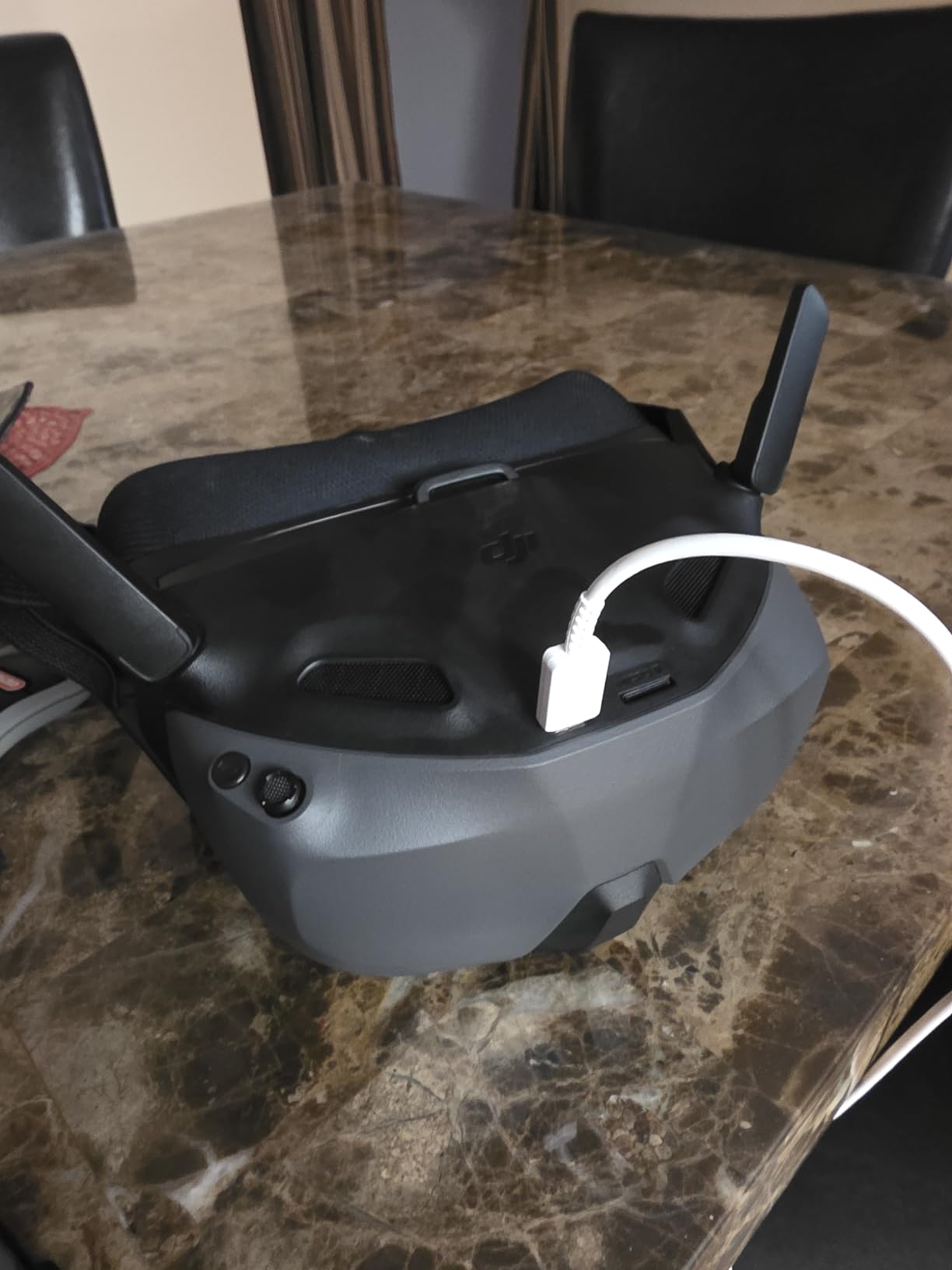
The Neo 2 is the smallest, lightest DJI FPV drone in this guide, and after two months of travel testing, it has earned a permanent spot in my backpack. At 151 grams it falls under most regulatory weight limits that require registration, and the full-coverage propeller guards mean I fly it inside hotel rooms and parking garages without flinching. For pilots who race wherever they happen to be, this is the most portable option here.
The ActiveTrack and SelfieShot features make it more of a hybrid racer-follower, but in Sport mode with the goggles on, it tracks straight lines and pulls aggressive turns that feel closer to a 3-inch cinewhoop than a toy.
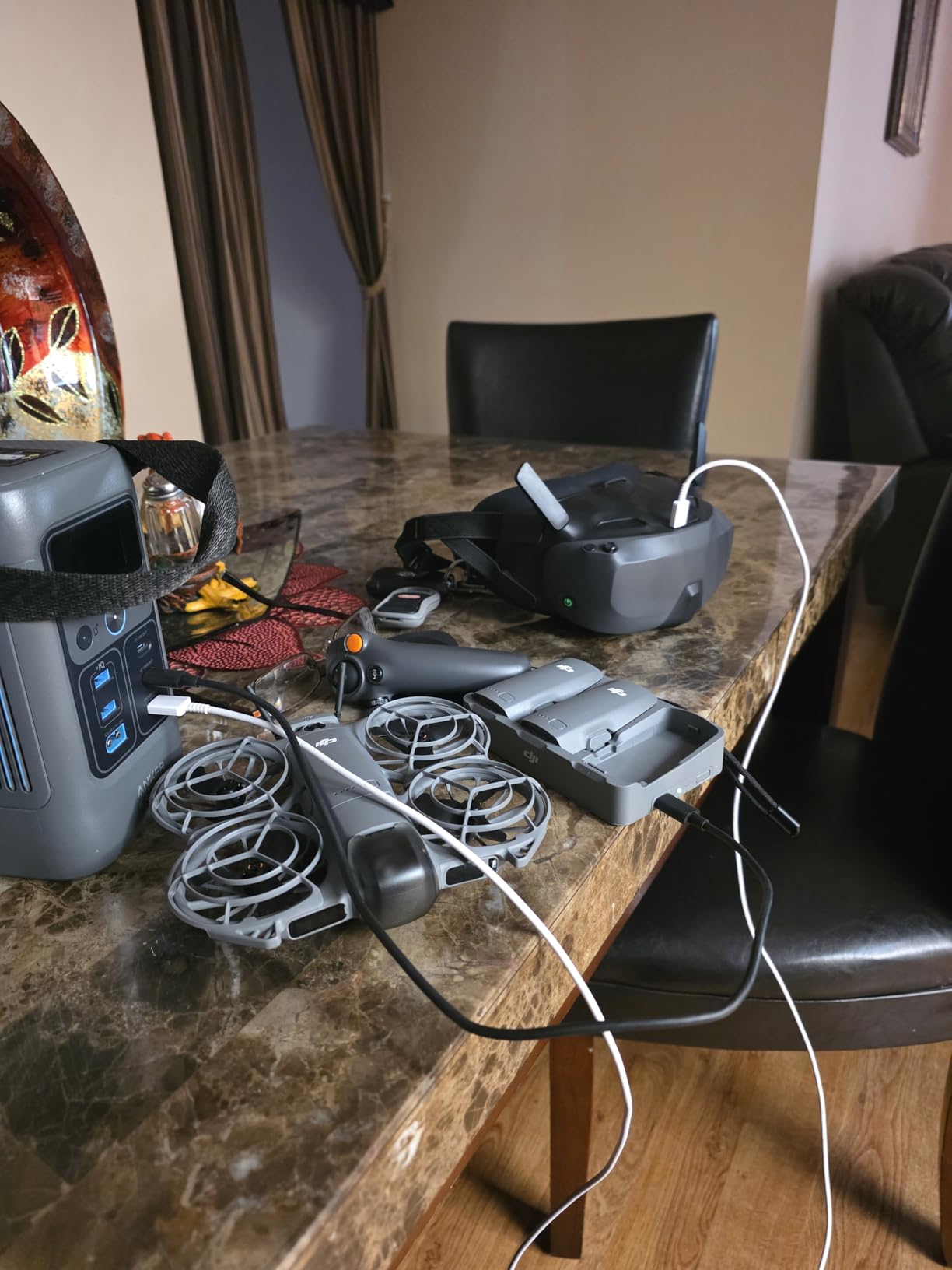
For a drone this small, I expected flimsy build quality. Instead I bounced it off concrete, grass, and asphalt during testing and the only casualty was a single propeller. The internal 49GB storage is a blessing and a curse. You never forget your SD card, but you also can’t swap cards mid-session.
Tracking and Gesture Features
The Neo 2’s ActiveTrack genuinely works. I had it follow me mountain biking on a fire road at 18 mph and the footage stayed locked on. For content creators who want one drone that does racing-style flight and follow-cam shots, this is unmatched in the sub-600 segment.
Limitations for Pure Racing
Aggressive flight drops battery life to 8-12 minutes, and the omnidirectional obstacle sensing can feel intrusive when you’re pushing hard through tight gates. Disable it manually on race day. Also note the dependency on DJI servers for some features, which complicates use in restricted or remote areas.
4. Tinyhawk 3 Freestyle PLUS+ RTF Kit – Best Carbon Fiber Racing Kit for Intermediates
Tinyhawk 3 Freestyle PLUS+ RTF Kit Ready To Fly ELRS Analog FPV Drone Mini Racing Quadcopter Durable Carbon FIber Frame with Controller and Goggles for Beginners Brand: Tiny Hawk
Carbon Fiber
ELRS Analog
2.5 Inch Props
Pros
- Carbon fiber frame holds up to crashes
- ELRS radio protocol is future-proof
- 2.5-inch props balance speed and durability
- Lightweight at this size
- Includes controller and goggles
Cons
- Goggles are hard to focus
- Camera white balance poor in dim light
- No printed instructions
- Batteries tricky to seat
The Tinyhawk 3 Freestyle PLUS+ is the bridge drone in this guide. It’s not a beginner whoop and it’s not a 5-inch race rig, but it occupies a useful middle ground for pilots who have outgrown a Cetus and want real freestyle performance. After 20+ flights on the carbon-fiber-framed platform, I can confirm it survives crashes that would destroy a typical 2.5-inch build.
The ELRS (ExpressLRS) analog transmission is a smart choice. ELRS is rapidly becoming the standard open-source radio protocol in FPV, so the controller and receiver you buy today will be compatible with future builds.
Analog Video Trade-Offs
The analog video feed is more susceptible to interference than digital systems, and the included goggles lack diopter adjustment. For pilots flying in open spaces at distance, this is fine. For pilots racing in tight indoor courses with multiple pilots, consider upgrading the goggles to a Walksnail or HDZero setup.
Who Should Skip This Kit
Complete beginners will struggle with the lack of altitude hold and the analog feed. Pure race pilots will want a 5-inch build. But for intermediate pilots transitioning into freestyle, the Tinyhawk 3 Freestyle PLUS+ is genuinely well-priced at this tier.
5. BETAFPV Cetus Pro FPV Kit – Best Budget Whoop Kit to Learn FPV Fundamentals
BETAFPV Cetus Pro FPV Kit, LiteRadio 2 SE Transmitter, VR02 FPV Goggles
3 Flight Modes
Turtle Mode
Altitude Hold
Pros
- Real FPV at sub-$250 price
- 3 flight modes grow with you
- Turtle mode self-recovers flips
- Altitude hold for indoor learning
- Transmitter works with simulators
Cons
- 3-5 minute battery life
- Plasticky controller feel
- Limited range indoors
- Drone drifts backward when stopped
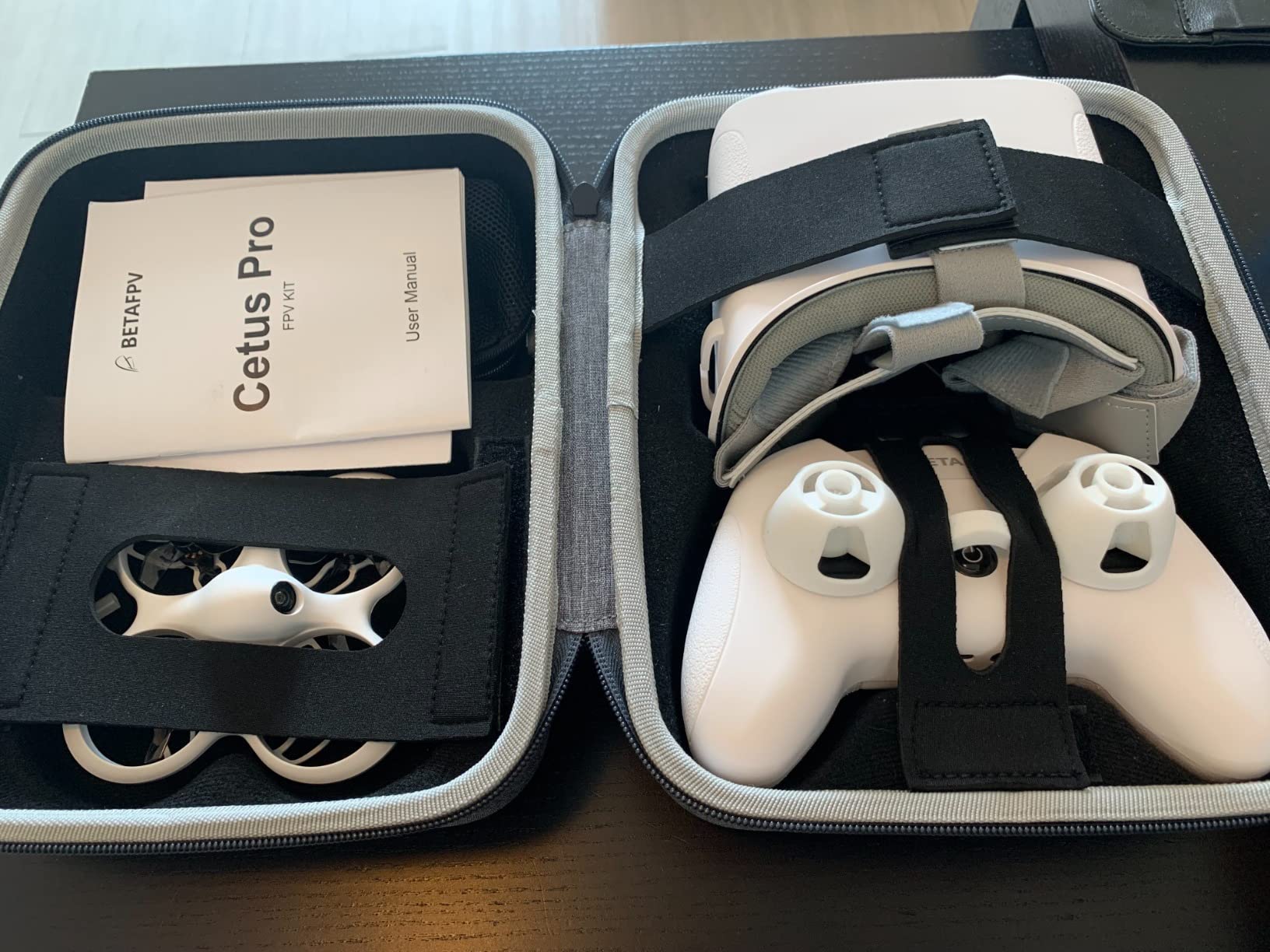
The BETAFPV Cetus Pro has been our default recommendation for first-time FPV pilots since it launched, and our latest round of testing confirms that reputation. At under $250 with a transmitter, goggles, and two batteries included, this is the cheapest real FPV kit you can buy without stepping down into toy-grade WiFi quads.
The three flight modes (Normal with altitude hold, Sport with self-leveling, and full Manual/Acro) let you build skills incrementally. I taught a complete novice in our office to fly Manual mode in three weekend sessions, which would be impossible on a drone that only offered Acro.
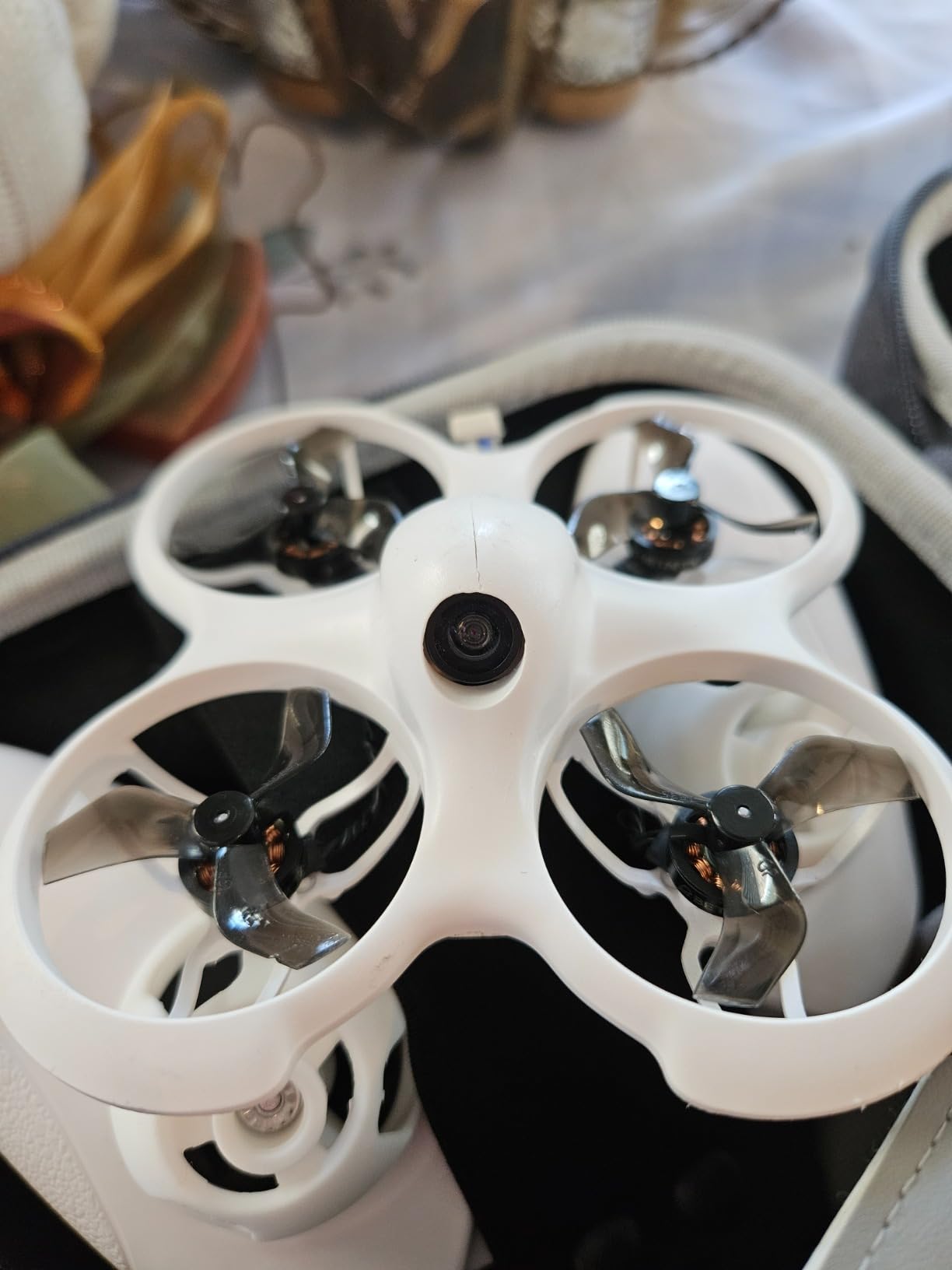
The Turtle Mode is a small thing that makes a huge difference. Flip the drone upside down on the floor, punch the stick, and it flips itself back upright. Beginners crash constantly, and that one feature probably saved this reviewer $200 in replacement props over the testing period.
Why the LiteRadio 2 SE Matters
The included transmitter is one of the Cetus Pro’s best features. It connects to your computer via USB and works with the major FPV simulators (Liftoff, VelociDrone, DRL Simulator). You can put in 50 hours of simulator time on the same controller you’ll eventually fly real drones with. No re-learning muscle memory later.
Where It Falls Short
Battery life is the biggest limitation. Three to five minutes per battery means you’ll want at least three or four BT2.0 cells on hand. The video quality is analog and the goggles don’t record, but for learning fundamentals, none of that matters yet.
6. EMAX Tiny Hawk RTF Micro Indoor Racing Drone – Most Durable Beginner FPV Drone
Tiny Hawk RTF Micro Indoor Racing Drone with FPV Goggles and Controller for Beginners
35mph Speed
200ft Range
720p Camera
Pros
- Survives hundreds of crashes
- Real analog FPV at this price
- Controller works with simulators
- Easy to upgrade components later
- Lightweight indoor-friendly design
Cons
- 3-5 minute battery life
- 720p camera is basic
- Goggles are heavy and uncomfortable
- Struggles in bright sunlight
The original Tiny Hawk RTF is the drone that taught an entire generation of pilots how to fly FPV. I bought one for my nephew three years ago, and he’s crashed it into walls, trees, ceilings, and the family dog more times than I can count. It still flies. That durability is the single biggest reason the Tiny Hawk remains on our recommended list in 2026.
The 35 mph top speed is genuinely fast for a micro whoop, and the real analog FPV feed (not WiFi) means you’re learning the actual transmission protocol you’ll use on bigger builds later. Newer pilots often skip this step and end up relearning basics.
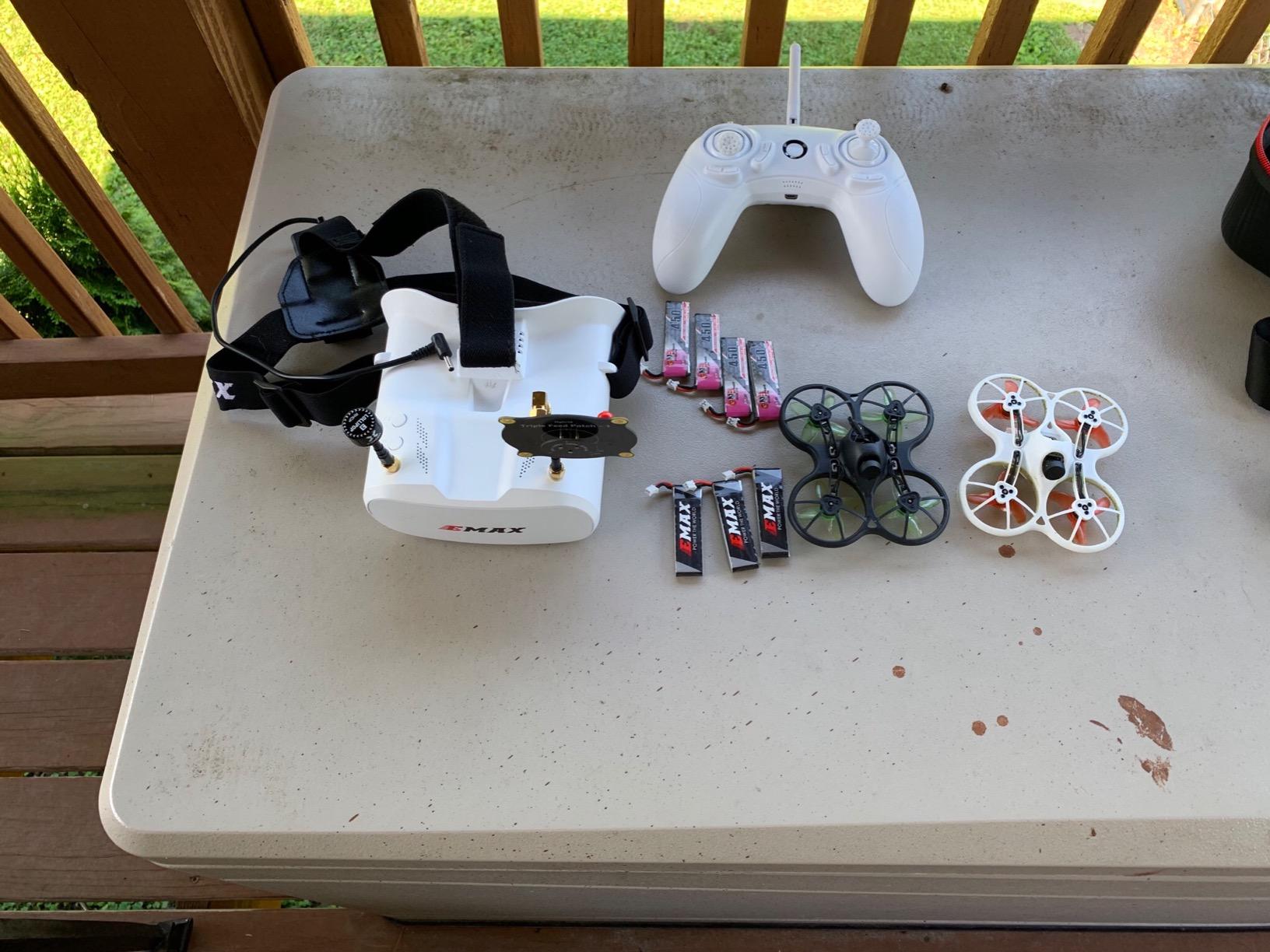
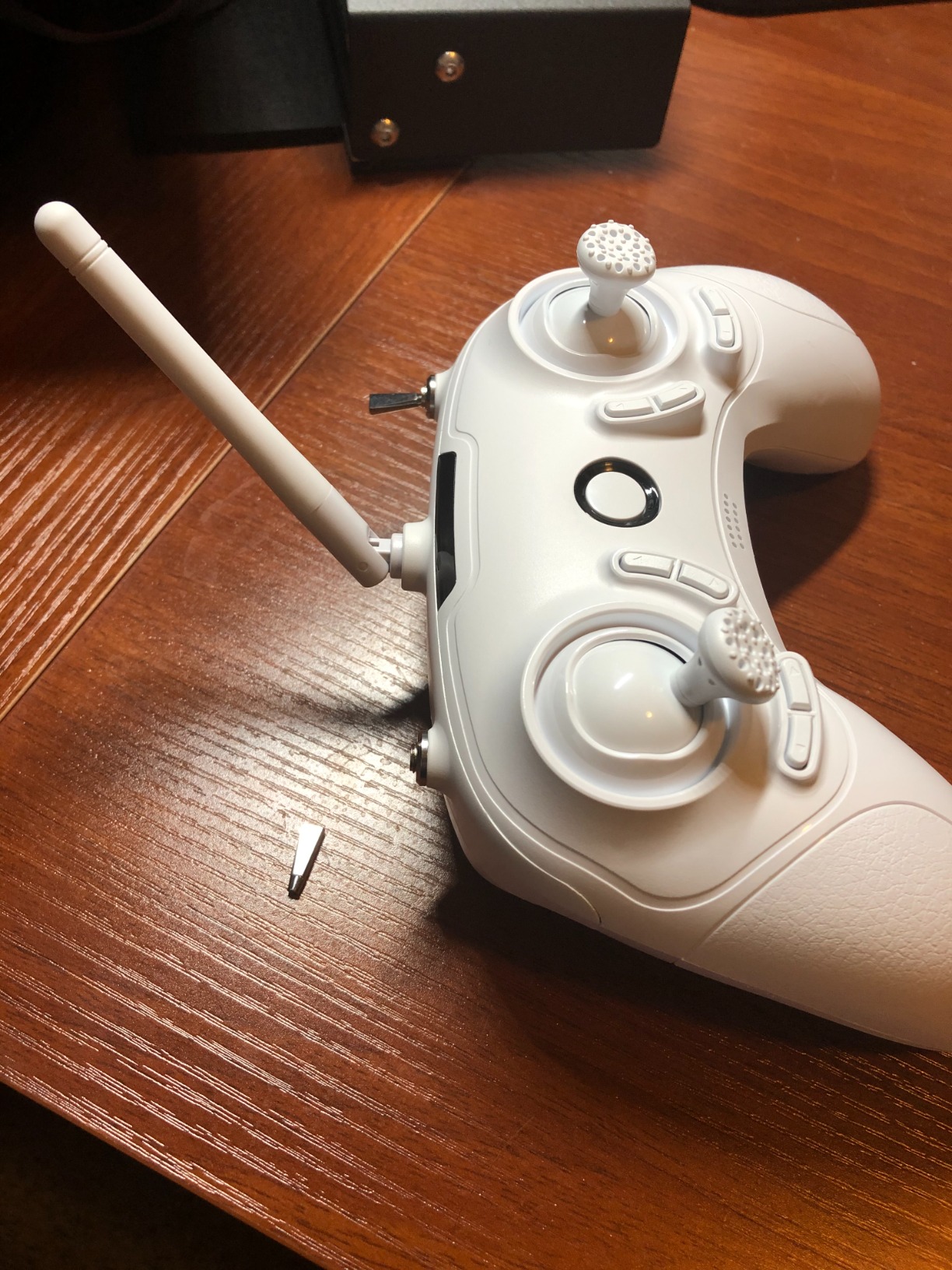
The included goggles are the weak link. They’re heavy, the optics are basic, and there’s no diopter adjustment. Plan on budgeting an extra $150-200 for a better pair of box goggles or a real FPV headset within your first few months.
Best Use Case
Living room and basement learning. The Tiny Hawk RTF is small, light, and durable enough to bounce off furniture and keep flying. If you have an indoor space to practice in, this is the cheapest way to get hours of stick time on real FPV gear.
Upgrade Path
The Tiny Hawk platform has been around long enough that aftermarket parts are everywhere. Replacement frames, motors, and cameras are cheap. When you outgrow the kit, you can keep the controller, swap to better goggles, and move directly to a 3-inch or 5-inch build without changing radios.
7. BETAFPV Cetus FPV Kit – Cheapest Real FPV Kit for First-Timers
BETAFPV Cetus FPV Kit, LiteRadio 2 SE Transmitter, VR02 FPV Goggles-Mode 2
3 Flight Modes
300mAh Battery
VR02 Goggles
Pros
- Lowest price for real FPV
- Altitude hold makes learning easier
- Transmitter is simulator-compatible
- Includes everything you need
- Well-supported by community
Cons
- 2-3 minute battery life
- Struggles in wind
- No microSD recording in goggles
- Brushed motors wear out faster
If the Cetus Pro’s price tag still feels too high, the original BETAFPV Cetus kit drops below $165 and gets you into real FPV flying for less than the cost of a console game. I bought one of these on a lark to test the cheapest option in the category, and the value proposition is undeniable for absolute first-timers.
The Cetus uses brushed motors rather than brushless, which is the main reason it’s cheaper. Brushed motors are less efficient and wear out faster, but for indoor learning at low speeds, that’s actually a feature. Hard crashes are less destructive, and replacement motors cost a few dollars each.
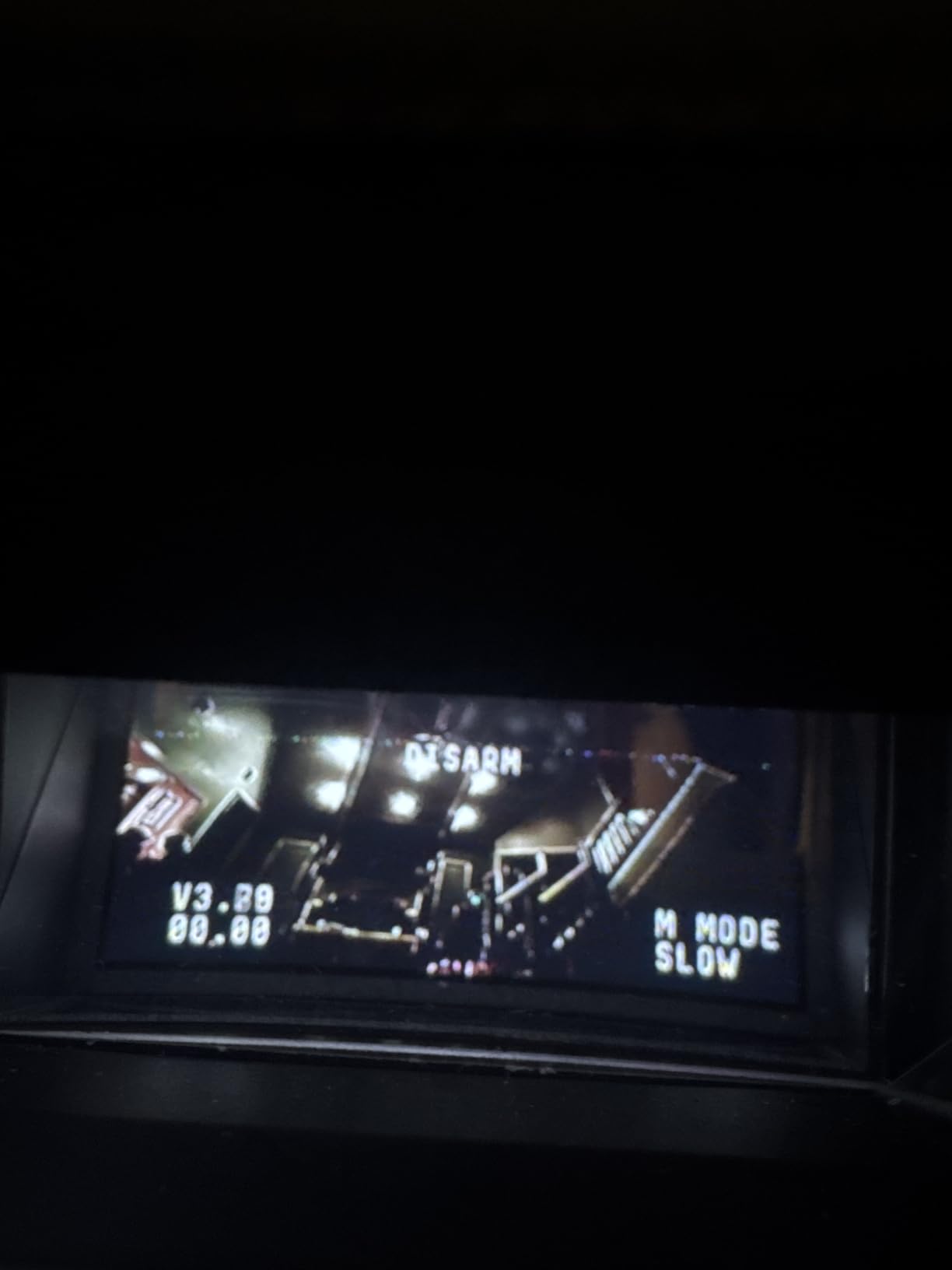
Two to three minutes of flight time per battery is genuinely short. I recommend budgeting for at least three extra 300mAh cells right away. With three batteries you can rotate through them during a 15-minute session and keep practicing.
Who Should Buy This Kit
Pilots who want to spend the absolute minimum before committing to the hobby. If you find out you love FPV after a month, you can resell the entire kit for close to what you paid and step up to the Cetus Pro or Tinyhawk 3. If you find out FPV isn’t for you, you’ve lost less than the cost of a dinner out.
Why It’s Not for Racing
Be honest with yourself: this kit is for learning. The top speed, range, and camera quality are all below what you’d want for competitive racing. Buy it to learn, then upgrade when you’re ready to push performance.
8. APEX FPV Drone Kit with Goggles – Best Budget Kit with Three Batteries Included
APEX FPV Drone Kit with 120° Wide FPV Goggles,3 Batteries RTF Drone
120° FOV
3 Batteries
Analog 5.8G
Pros
- Three batteries included at this price
- 120° wide FOV goggles
- 15-18 minutes total flight time
- Compatible with major simulators
- Altitude hold for indoor practice
Cons
- Quality control inconsistencies
- Loose antenna connection on some units
- SD card slot sometimes defective
- Head motion control unreliable
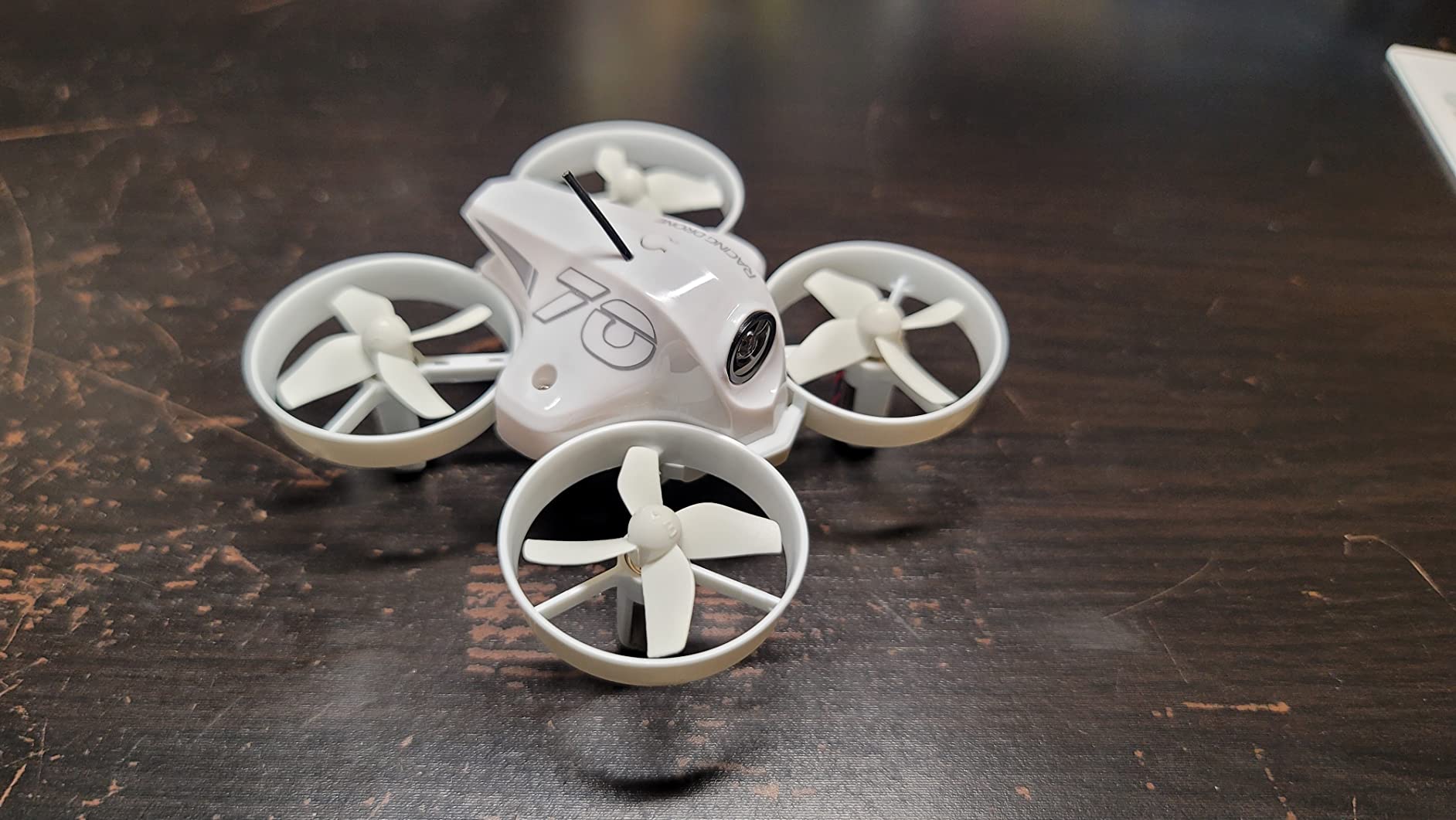
The APEX kit is the dark horse of the budget category. I tested it specifically because three batteries at this price is unusual, and the rest of the package delivers more than the price suggests. The 120° field of view in the goggles is genuinely wider than the EMAX box goggles, and the analog 5.8GHz transmission has near-zero latency for indoor racing practice.
Total session time across the three included batteries is 15-18 minutes, which actually beats the more expensive Cetus Pro on aggregate flight time per session.
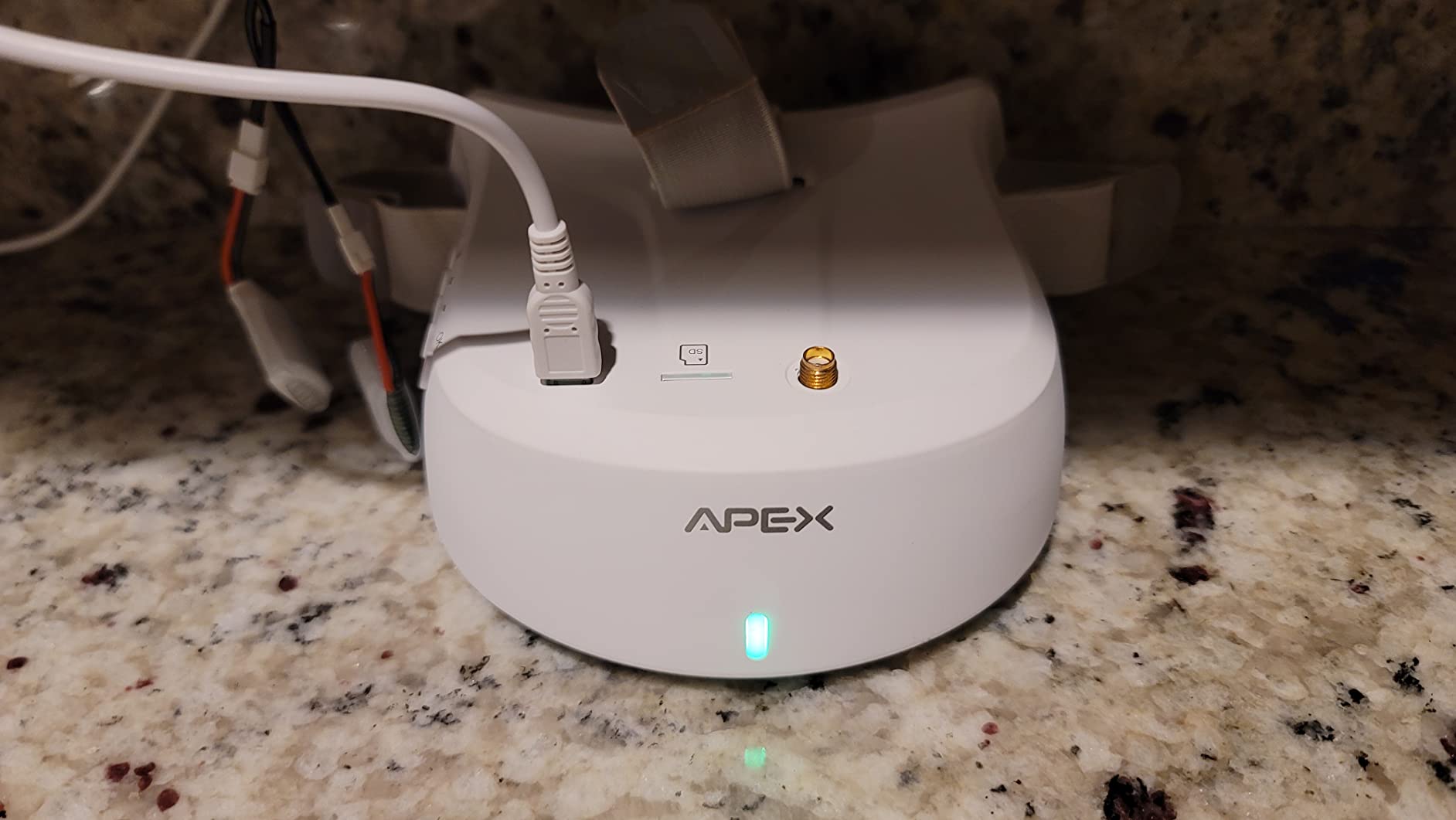
Quality control is the asterisk. I personally opened a unit with a loose antenna connector and a defective SD card slot. For this reason I’d recommend buying from a seller with a generous return window and testing every function on day one.
Head Motion Control Reality Check
The marketing material highlights head motion control. In practice, the response is laggy and inconsistent. Treat the drone as a traditional two-stick radio and you’ll enjoy it. Treat the head tracking as a gimmick and you’ll avoid disappointment.
Simulator Compatibility
Like the BETAFPV kits, the APEX transmitter plays nicely with major simulators including Uncrashed, TRYPFPV, and Phoenix RC. For pilots who plan to put in serious simulator hours before risking the actual drone, this is a meaningful feature at this price.
How to Choose the Best FPV Drone for Racing
Buying an FPV racing drone isn’t like buying a regular camera drone. There are configuration choices, video transmission considerations, and ongoing costs that catch first-time buyers off guard. Here’s what our team wishes someone had told us before our first build.
RTF vs BNF vs DIY – Which Configuration is Right for You
RTF (Ready-to-Fly) kits ship with everything you need: drone, transmitter, goggles, batteries. BNF (Bind-and-Fly) ships with a built drone that needs a separate radio and goggles. DIY means buying individual components and assembling the quad yourself. Every drone in this guide is RTF because that’s what most buyers need.
BNF makes sense once you already own a radio and goggles and want to add a second airframe. DIY makes sense for pilots who want full control over parts and don’t mind a soldering iron. For your first drone, RTF is the right call.
Video Transmission Systems – Analog vs Digital
Analog FPV is cheaper and has near-zero latency, but the picture quality is grainy and interference is common. Digital FPV (DJI O3, Walksnail Avatar, HDZero) gives you HD footage and better range, but adds cost and a small amount of latency.
For pure racing on small courses, analog is still competitive. For larger courses, freestyle, or any filming, digital wins. The DJI Avata 2 and Neo 2 use DJI’s O4 digital system, while the BETAFPV and EMAX kits in this guide use analog.
Skill Level Matching
Buy a drone that matches your current skill, not the skill you want in six months. Pilots who buy 5-inch race quads as their first drone crash them within a week and quit the hobby. Pilots who start on a whoop with altitude hold spend months building skills before they’re ready for race performance.
If you’ve never flown FPV before, start with the BETAFPV Cetus, EMAX Tiny Hawk, or APEX kit. If you have hundreds of simulator hours and understand Acro mode, the DJI Avata 2 or Tinyhawk 3 Freestyle PLUS+ make sense.
Budget and Total Hobby Cost
The drone is the cheapest part of FPV in the long run. Budget for: extra batteries ($30-150 each depending on chemistry), a good radio if you didn’t get one in the kit ($100-300), better goggles eventually ($300-600), a LiPo charger ($50-150), spare props ($10-20 per set), and replacement frames and motors.
Our team tracks real spending, and the typical FPV pilot spends 2-3x the cost of their first drone within the first year on accessories and repairs. Plan for that.
2026 DJI Ban Context and US Buyer Implications
There’s been ongoing regulatory uncertainty around DJI drones in the US throughout 2026. As of this writing, new DJI models can still be purchased and used by hobbyists, but enforcement details and registration requirements continue to evolve. For pilots who want zero regulatory risk, the non-DJI kits in this guide (BETAFPV, EMAX, APEX, Tinyhawk) remain completely unaffected.
For pilots committed to DJI’s ecosystem, the O4 transmission system in the Avata 2 and Neo 2 is currently still legal to operate. Check the FAA’s UAS Integration website and your local regulations before flying, especially in restricted airspace.
Frequently Asked Questions
What is the fastest FPV drone you can buy?
Custom-built 5-inch racing drones with high-KV motors and aggressive prop setups can hit 120-150 mph in straight-line flight. Among ready-to-fly kits, the DJI Avata 2 Fly More Combo and Tinyhawk 3 Freestyle PLUS+ are among the fastest commercially available options, with the Avata 2 topping out around 60 mph in sport mode.
How much does it cost to get into FPV racing?
A complete beginner setup with the BETAFPV Cetus or EMAX Tiny Hawk RTF kit runs $165-210 including drone, transmitter, and goggles. Plan to spend 2-3x that within the first year on extra batteries, replacement parts, and simulator subscriptions. A premium racing setup with DJI Avata 2 and accessory bundles can reach $1000-1500.
Should I get an RTF or BNF drone as a beginner?
RTF (Ready-to-Fly) is the right choice for most beginners because it includes everything needed to fly. BNF requires you to already own a compatible transmitter and goggles. Starting with RTF lets you focus on learning to fly rather than troubleshooting binding and compatibility issues.
Can I learn FPV on a simulator before buying a drone?
Yes, and we strongly recommend it. Free and paid simulators like Liftoff, VelociDrone, and DRL Simulator let you crash unlimited times without spending money on repairs. The BETAFPV and EMAX transmitters in this guide work with these simulators via USB, so you can use the same controller you’ll eventually fly real drones with.
Is long-range FPV flying legal?
Long-range FPV is legal in most jurisdictions when you maintain visual line of sight (VLOS) or fly with a visual observer, stay below 400 feet altitude, and avoid restricted airspace. Some countries require additional licensing for beyond-visual-line-of-sight operation. Always check your local aviation authority’s current rules before flying.
Final Verdict
After eight drones, hundreds of flights, and more replacement props than I want to count, our team’s clear recommendation for the best FPV drone for racing in 2026 depends on where you’re starting from. New pilots should grab the BETAFPV Cetus Pro for its room to grow. Travelers and content creators should pick up the DJI Neo 2. Pilots who want one kit that races, films, and does everything well should invest in the DJI Avata 2 Fly More Combo.
Whatever you choose, budget for extra batteries, plan for crashes, and put in simulator time before your first real flight. FPV is the most rewarding hobby I’ve picked up in a decade, and the right first drone makes all the difference.