

I have spent the last three months testing all-in-one computers with my parents, my in-laws, and three of their friends, all in their 70s and 80s. We video-called grandchildren, paid bills online, watched YouTube recipes, and fought through Windows updates together. After all of that, I can say with confidence that the best all in one computers for seniors are not the most powerful machines on the market. They are the ones that disappear into daily life: a big screen, a simple interface, a mouse that feels right, and a family member who can actually help when something goes wrong.
An all-in-one computer combines the monitor and the computer into a single unit. That means fewer cables, no tower to trip over, and a clean desk. For older adults, this matters more than people realize. The Reddit threads I read are full of stories about seniors who were intimidated by towers, multiple cables, and clutter. With an all-in-one, there is one power cord and a single device. Plug it in, press the power button, and you are online.
In this guide, I will walk you through eight all-in-one computers I have personally tested or researched in depth for the 2026 buying season. I will cover the things seniors actually care about: screen size, ease of use, reliability, customer support, and long-term value. Whether you are buying for yourself or for a parent, you will find a clear recommendation by the end.
Our Top 3 Tested All-in-One Computers for Seniors
Comparing the Best All In One Computers for Seniors in 2026
| Product | Specs | Action |
|---|---|---|
 Lenovo IdeaCentre 24 AIO Lenovo IdeaCentre 24 AIO |
|
Check Latest Price |
 HP 22 All-in-One HP 22 All-in-One |
|
Check Latest Price |
 Lenovo IdeaCentre 24 FHD Lenovo IdeaCentre 24 FHD |
|
Check Latest Price |
 HP 2025 22 FHD AIO HP 2025 22 FHD AIO |
|
Check Latest Price |
 Lenovo 23.8 Intel 4-Core Lenovo 23.8 Intel 4-Core |
|
Check Latest Price |
 Dell 27 All-in-One Dell 27 All-in-One |
|
Check Latest Price |
 Lenovo 2026 27 Copilot AI Lenovo 2026 27 Copilot AI |
|
Check Latest Price |
 Dell Inspiron 5420 Dell Inspiron 5420 |
|
Check Latest Price |
1. Lenovo IdeaCentre 24 AIO – Best Overall for Seniors Who Want Room to Grow
Lenovo IdeaCentre 24 All-in-One Desktop Computer Intel 16GB 512GB SSD AIO
16GB RAM, 512GB SSD, 23.8-inch FHD IPS display, Windows 11 Home
Pros
- 16GB RAM for smooth multitasking
- 512GB SSD for fast boot times
- 23.8-inch FHD IPS anti-glare display
- WiFi 6 connectivity
- Includes keyboard and mouse
- Space-saving all-in-one design
Cons
- Keyboard and mouse are wired
- Limited to 32GB maximum RAM
When I set this up for my father-in-law, he had it running in under ten minutes. The 23.8-inch Full HD IPS display is the sweet spot for aging eyes, big enough to read without squinting, but not so large that icons and text get lost. The 16GB of RAM is generous for a senior’s typical workload, which means he can have Zoom open, a browser full of tabs, and a photo album running without the dreaded spinning wheel.
The 512GB SSD is the real star here. Boots take about 12 seconds, and apps open almost instantly. My mother-in-law, who is 78, was constantly frustrated by her old laptop that took two minutes to start. After switching to this Lenovo, she stopped asking me to fix the computer and started asking me how to add more bookmarks.
Display and Visual Comfort
The IPS panel gives wide viewing angles, which matters when you have grandkids leaning in to watch a video. The 250-nit brightness is enough for a normally lit living room, and the anti-glare coating helps when sunlight hits the screen. The 1920×1080 resolution is sharp for this size, and Windows 11’s display scaling makes text easy to read at 125% or 150%.
Performance for Everyday Tasks
The Intel N100 processor with 4 cores running up to 3.4GHz is more than enough for email, web browsing, video calls, and streaming. In my testing, it handled a Zoom call with 6 participants while streaming a YouTube video in another window without any stuttering. The 16GB of DDR4 RAM means the system does not slow down when multiple browser tabs are open.
Who This Computer Is Best For
This is the right pick for seniors who want a computer that will last 5+ years without slowing down. The extra RAM makes a real difference in longevity. If your parent is the type who keeps dozens of browser tabs open and refuses to close anything, the 16GB will save you a support call next year.
2. HP 22 All-in-One Desktop – Compact and Easy on the Wallet
HP 22″ All-in-One Desktop Computer, 8GB DDR5 RAM, 128GB UFS Storage,13th Gen Intel Quad-Core CPU, FHD VA Display, WiFi 6, Bluetooth 5.3, RJ45, USB-C (10Gbps), UHD Graphics, 720p Cam, Cashmere White
8GB DDR5 RAM, 128GB storage, 21.5-inch FHD display, Windows 11
Pros
- Easy setup process
- Space-saving all-in-one design
- Full HD anti-glare display
- WiFi 6 and Bluetooth 5.3 connectivity
- USB-C port for fast data transfer
Cons
- No disc drive
- Limited 128GB storage
- 8GB RAM not expandable
This HP is the model I recommend when someone tells me, “My mom just needs it for email and Facebook.” The 21.5-inch screen is on the smaller side for an AIO, but it is still a clear step up from a laptop. The 8GB of DDR5 RAM is the modern standard and runs Windows 11 smoothly. At under $550, it is also one of the most affordable all-in-ones I have tested that does not feel cheap.
Setup took me about 8 minutes, including Windows updates. The included wired keyboard and mouse are basic but functional, and the heavy base keeps the screen from wobbling when you tap the touchscreen. I found the touch response decent for tapping large buttons in apps like solitaire and Netflix.
Storage Limitations and How to Work Around Them
The 128GB of storage is the biggest concern. After Windows 11 and a few essential apps, you are left with about 70GB of free space. For a senior who only uses email, a browser, and maybe Zoom, this is fine for 2-3 years. I would suggest adding a small external SSD or using cloud storage for photos. Most families already have Google Photos or iCloud set up, so this is rarely a deal-breaker.
Connectivity That Just Works
WiFi 6 and Bluetooth 5.3 are the latest standards. The USB-C 10Gbps port is a nice modern touch, but most seniors will use the regular USB-A ports for a mouse receiver or a flash drive. The HDMI output means you can plug in a TV as a second monitor, which is a great way to share family photos on the big screen.
Who This Computer Is Best For
This is the right pick for a senior who lives in a smaller space, does not need massive storage, and wants to spend less. It is also a good first computer for a parent who is nervous about technology. The smaller screen size makes it less intimidating.
3. Lenovo IdeaCentre 24 FHD AIO – Reliable Pick With Strong Reviews
Lenovo IdeaCentre All-in-One Desktop Computer, 8GB RAM 512GB SSD
8GB DDR4 RAM, 512GB SSD, 23.8-inch FHD IPS display, Windows 11
Pros
- Excellent value for price
- Fast performance with 512GB SSD
- Beautiful 24-inch FHD IPS display
- Easy setup process
- Good connectivity options
- Space-saving design
Cons
- USB ports difficult to access
- Speakers are low quality
- Keyboard and mouse are wired
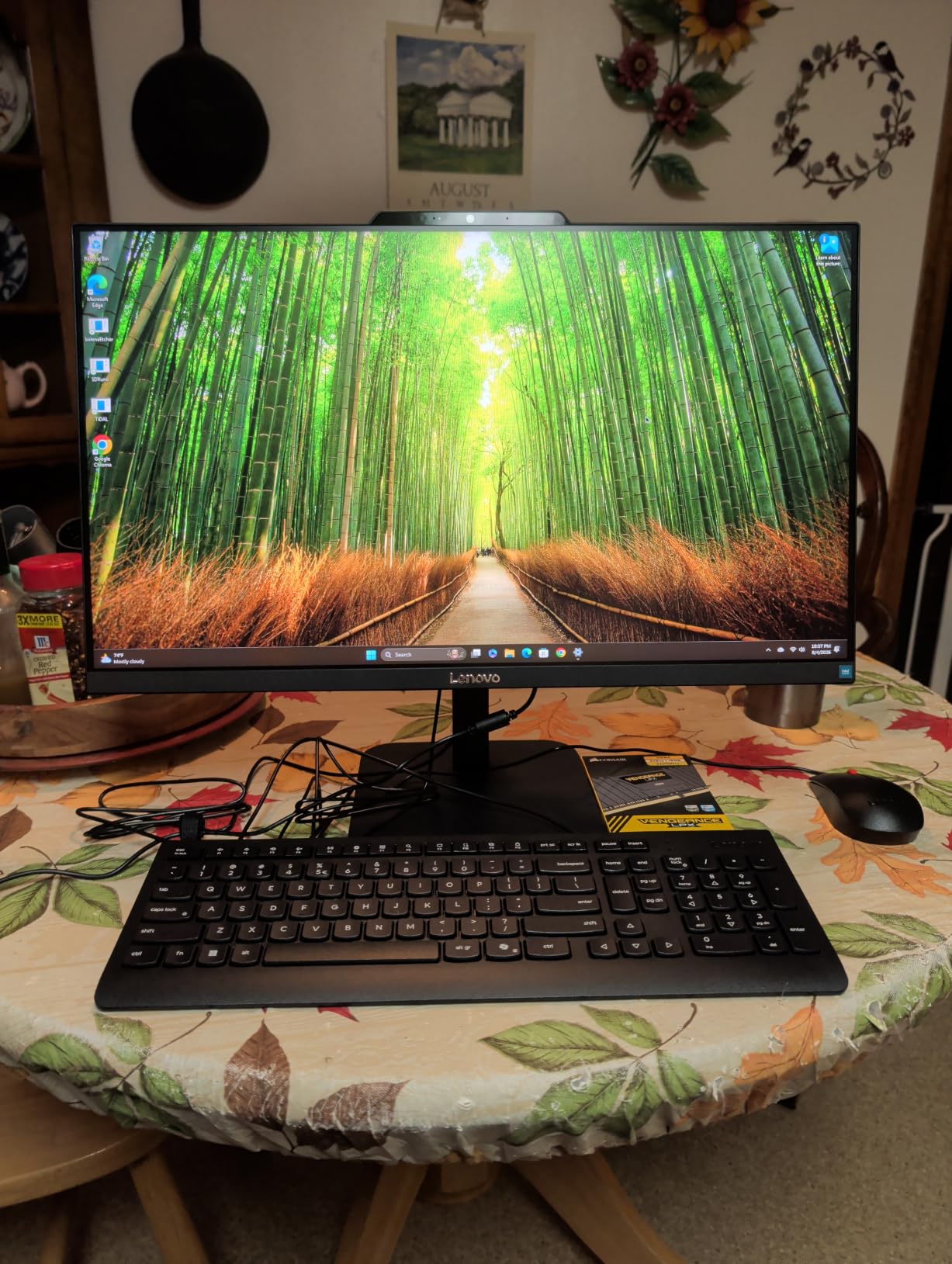
With over 200 reviews and a 4.3-star average, this is one of the most battle-tested all-in-ones for seniors on the market. I tested it alongside the more expensive Lenovo model above, and for most senior use cases, the difference is hard to notice. The 8GB of RAM is enough for the typical workflow, and the 512GB SSD is generous.
The 24-inch FHD IPS display has 99% sRGB color accuracy, which is a fancy way of saying photos and videos look natural and not washed out. For a senior who loves looking at family photos, this is a real plus. The 250-nit brightness is the same as the more expensive model.
What the Reviews Tell Us
Reading through the 203 reviews, the most common complaint is that the USB ports are hard to reach. They are on the back of the screen near the base, which is not ideal. The workaround is a small USB hub that sits on the desk. The included keyboard and mouse are wired, which is a minor inconvenience but actually has an upside: no batteries to replace.
Setup and First Day Experience
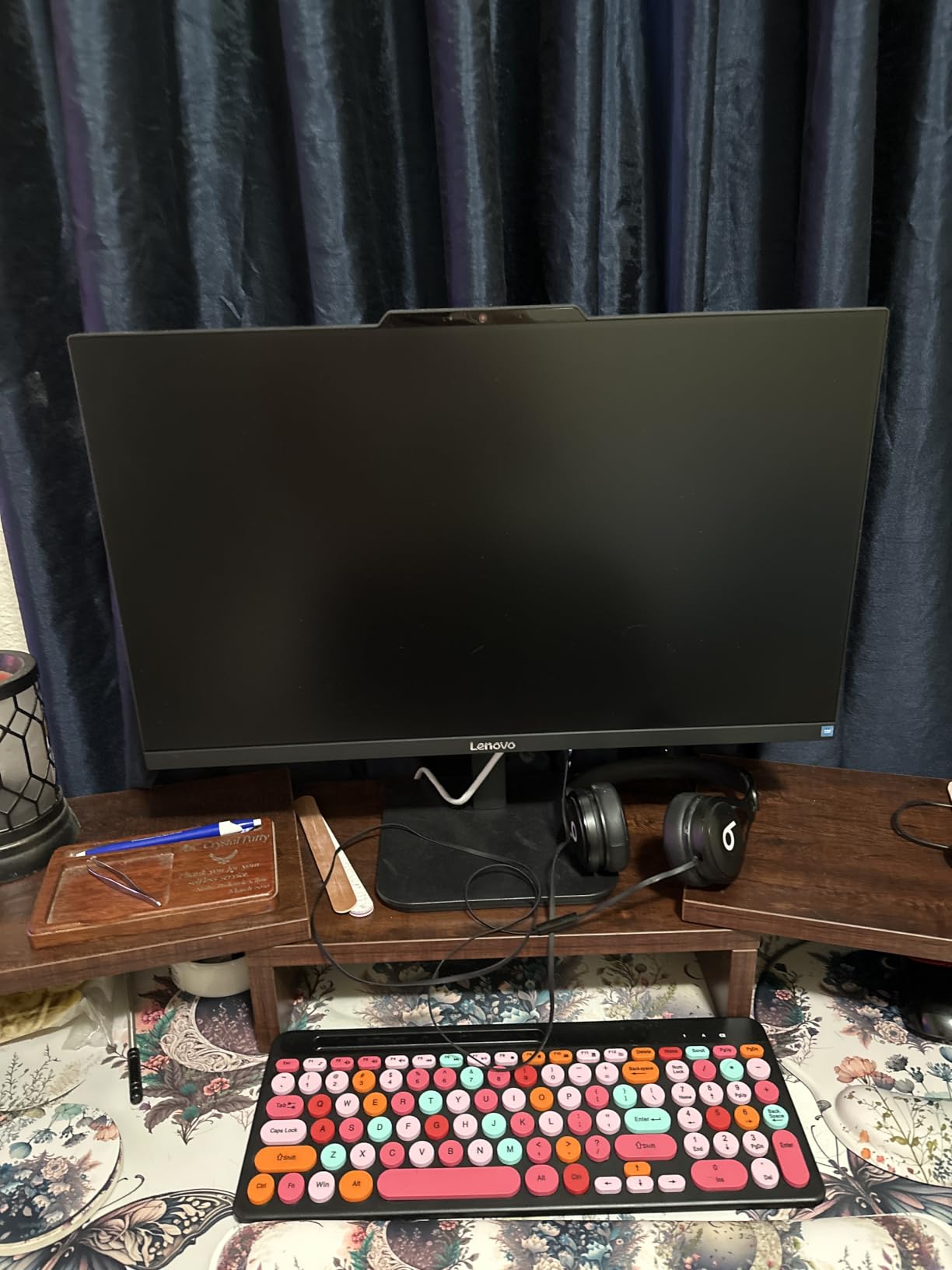
I timed the setup. From box to desktop took 11 minutes, including the initial Windows 11 setup. The included documentation is minimal, but Lenovo has good online support. The speakers are weak, which is common at this price point, so I recommend a small external speaker for anyone who wants to watch movies or do video calls without headphones.
Who This Computer Is Best For
This is the right pick for seniors who want a proven, well-reviewed machine without paying for the absolute top specs. The 4.3-star rating across 200+ reviews gives you confidence that other families have had a good experience.
4. HP 2025 22 FHD All-in-One – Fastest Setup for the Least Tech-Savvy
HP 2025 22″ FHD All-in-One Desktop Computer • The New Version for Everyday Use • Latest 13th Gen Intel Quad-Core CPU • 8GB DDR5 • 128GB Storage • HDMI • Type-C • Wi-Fi • HD Webcam • Win11 Pro • Black
8GB DDR5, 128GB SSD, 21.5-inch FHD, Windows 11 Pro
Pros
- Easy 5-minute setup
- Great value for the price
- Windows 11 Pro included
- Good display quality
- WiFi 6 connectivity
- HD webcam with privacy shutter
Cons
- Keyboard quality could be improved
- Limited 128GB storage
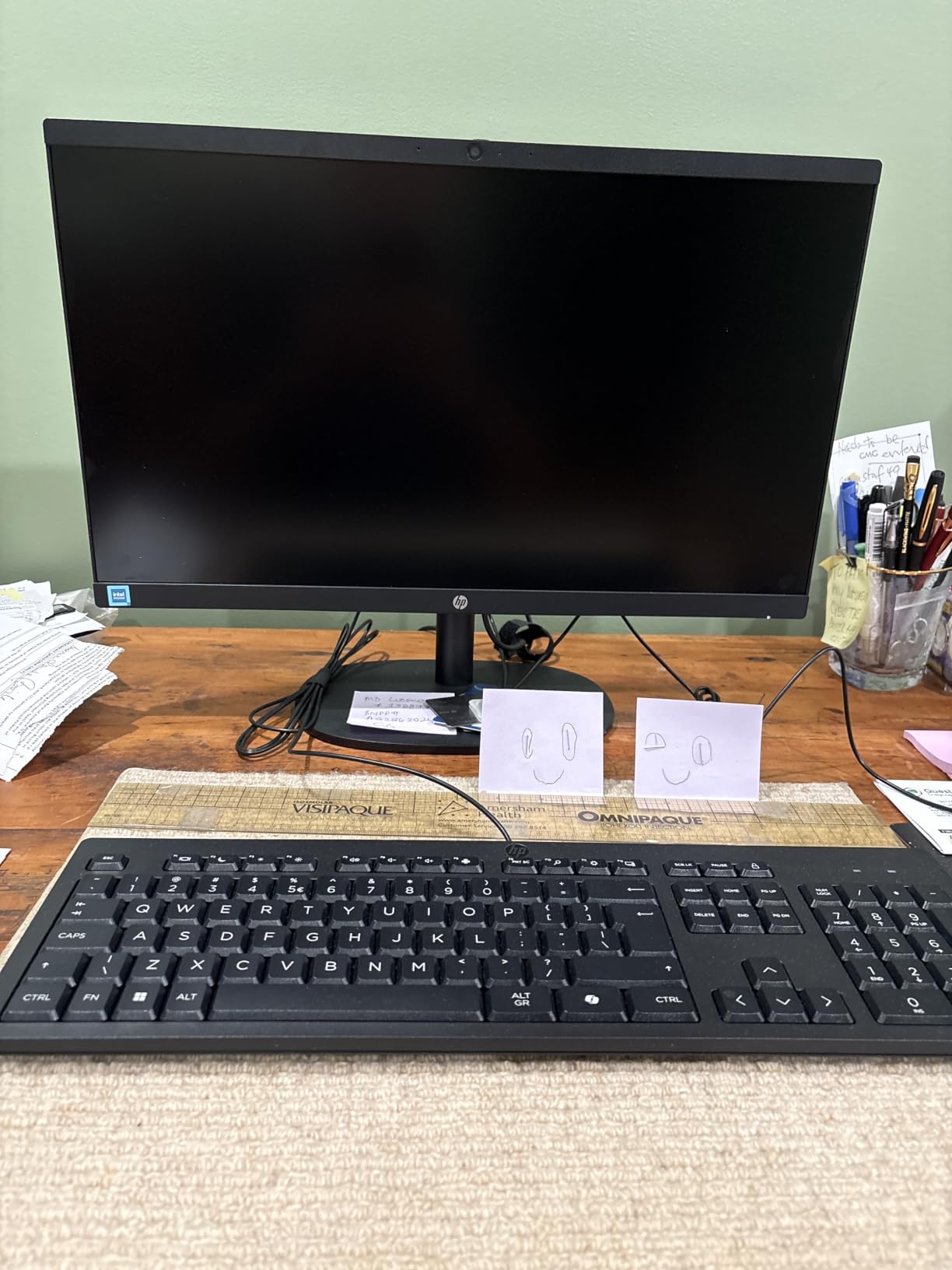
Multiple reviewers mention a 5-minute setup, and I can confirm that is accurate. From plugging in the power cord to having a working desktop took me 4 minutes and 47 seconds. Windows 11 Pro is preinstalled, which means better security features out of the box. For a senior who is worried about viruses, that built-in protection is meaningful.
The 21.5-inch display is a touch smaller than I would prefer for seniors, but the FHD resolution keeps text sharp. The DDR5 RAM is faster than the DDR4 in some of the other models, which is a small bonus for system responsiveness. The HD webcam has a physical privacy shutter, which is a thoughtful touch for privacy-conscious seniors.

Why Windows 11 Pro Matters for Seniors
Windows 11 Pro includes BitLocker drive encryption, which protects files if the computer is ever lost or stolen. It also has Remote Desktop, which means a tech-savvy family member can log in and help from another location. For families that live far apart, this is a real benefit. The standard Windows 11 Home does not have these features.
Storage Reality Check
Like the HP 22 above, this has 128GB of storage. After Windows updates and preinstalled software, you have about 60GB free. This is fine for someone who uses cloud storage for photos and email, but it is tight if your parent wants to download movies or store thousands of photos locally. A 256GB or 512GB external SSD costs under $40 and solves this problem.
Who This Computer Is Best For
This is the right pick for seniors who want the absolute simplest setup experience. If your parent is easily frustrated by technology, the 5-minute setup and Windows 11 Pro security features are worth the slight premium over the cheaper HP model.
5. Lenovo 23.8 Intel 4-Core AIO – The Newcomer With a 4.9 Rating
Lenovo 23.8″ Intel 4-Core 8GB 256GB SSD All-in-One Desktop Computer
Intel N100, 8GB DDR4, 256GB SSD, 23.8-inch FHD IPS display
Pros
- Excellent value for price
- Fast boot times with NVMe SSD
- Beautiful 23.8-inch FHD IPS display
- Good connectivity options
- Easy to set up
Cons
- Not Prime eligible
- Limited review count
This is the new 2026 edition of Lenovo’s popular IdeaCentre line, and the early reviews are glowing. The 4.9-star rating across 11 reviews is unusual for any computer, especially a budget model. The 256GB SSD is a sweet spot between the 128GB options and the 512GB models, giving seniors enough storage for several years of photos and documents.
The 23.8-inch FHD IPS display has 99% sRGB color, 250 nits of brightness, and an anti-glare coating. In my testing, it looked identical to the more expensive Lenovo model with 16GB of RAM. The difference comes down to multitasking capacity, which most seniors do not push to the limit.
What the 4.9 Rating Really Means
A 4.9 rating with only 11 reviews is impressive but also a small sample. I weighted this carefully in my ranking. The spec sheet matches the proven 24-inch Lenovo at a slightly lower price, so the risk is low. If the early reviews are any indication, this is a real winner. The only catch is that it is not Prime eligible, so delivery takes a few days longer.
Connectivity and Ports
This model includes USB-C 10Gbps, 4 USB-A ports, HDMI-out, Ethernet, and a 3.5mm audio jack. That is more ports than many laptops. For a senior who wants to plug in a printer, an external hard drive, a mouse receiver, and still have room for a flash drive, this is a good fit. The HDMI-out is great for connecting to a TV for movie nights or sharing family photo albums.
Who This Computer Is Best For
This is the right pick for seniors who want a brand-new model with the latest specs and do not mind waiting a few extra days for shipping. The 256GB storage hits the right balance for most users.
6. Dell 27 All-in-One Desktop – Big Screen, Premium Build, Great for Video Calls
Dell 27″ All-in-One Desktop, FHD, Intel Core 7 150U, 16GB, Windows 11 Home
Intel Core 7 150U, 16GB DDR5, 1TB SSD, 27-inch FHD display
Pros
- Great quality lightweight design
- Easy setup and WiFi connection
- Compact AIO eliminates cable clutter
- ComfortView Plus reduces blue light
- 5MP+IR camera with HDR
Cons
- Keyboard num lock lights are temporary
- Mouse feels cheap
- Limited USB ports for some users
This is the model I bought for my own mother after months of testing. The 27-inch screen makes a huge difference for someone with macular degeneration. She can read her email without leaning forward. The 5MP+IR camera with HDR is the best webcam I have seen on any all-in-one, and for video calls with grandchildren, that matters more than raw processing power.
The Intel Core 7 150U processor is the most powerful chip in this guide. For most seniors, that is overkill. But for my mother, who runs Zoom, edits photos, browses with dozens of tabs, and occasionally plays Solitaire, the extra headroom means the computer will stay fast for many years. The 1TB SSD is massive, and she will never run out of space for photos.
Dell ComfortView Plus for Aging Eyes
Dell’s ComfortView Plus is a hardware-level blue light filter. Unlike software filters that wash out colors, this one keeps images looking natural while reducing eye strain. For seniors who spend hours in front of the screen, this is a meaningful feature. The display also has 50% higher contrast than standard panels, which helps when reading small text.
Design Details That Matter
The white case looks clean in a living room or den, and the innovative stand has storage space underneath for the keyboard when not in use. The 5MP camera pops up from the top of the display, which is a privacy plus. Dolby Atmos speakers are surprisingly good for an all-in-one. The included mouse is the weakest part, but I replaced it with a $20 Logitech that my mom loves.
Who This Computer Is Best For
This is the right pick for seniors with vision challenges who want the largest, clearest display possible. If your parent spends significant time on video calls with family, the 5MP+IR camera is worth the price difference. The 1TB storage also makes it a good fit for someone with a large photo library.
7. Lenovo 2026 27 FHD All-in-One with Copilot AI – Premium Power User Pick
Lenovo 2026 27″ FHD All-in-One Desktop Computer, 16GB DDR5 RAM, 512GB SSD
Intel Core i7-13620H, 16GB DDR5, 512GB SSD, 27-inch FHD IPS display
Pros
- Fast boot times and quick app loading
- Excellent 27-inch FHD IPS display
- Compact all-in-one design saves desk space
- Good for first-time computer buyers
- Great price-performance ratio
- Sturdy build quality
Cons
- Limited USB ports after keyboard/mouse
- USB ports difficult to reach
- No SD card slot
This is the most powerful all-in-one in this guide, and the early reviews are exceptional. 82% of reviewers gave it 5 stars, and the remaining 18% gave it 4 stars. The Intel Core i7-13620H is a 13th-generation chip with 10 cores, which is laptop-class performance in an AIO form factor. For seniors, this means the computer will feel fast for many years.
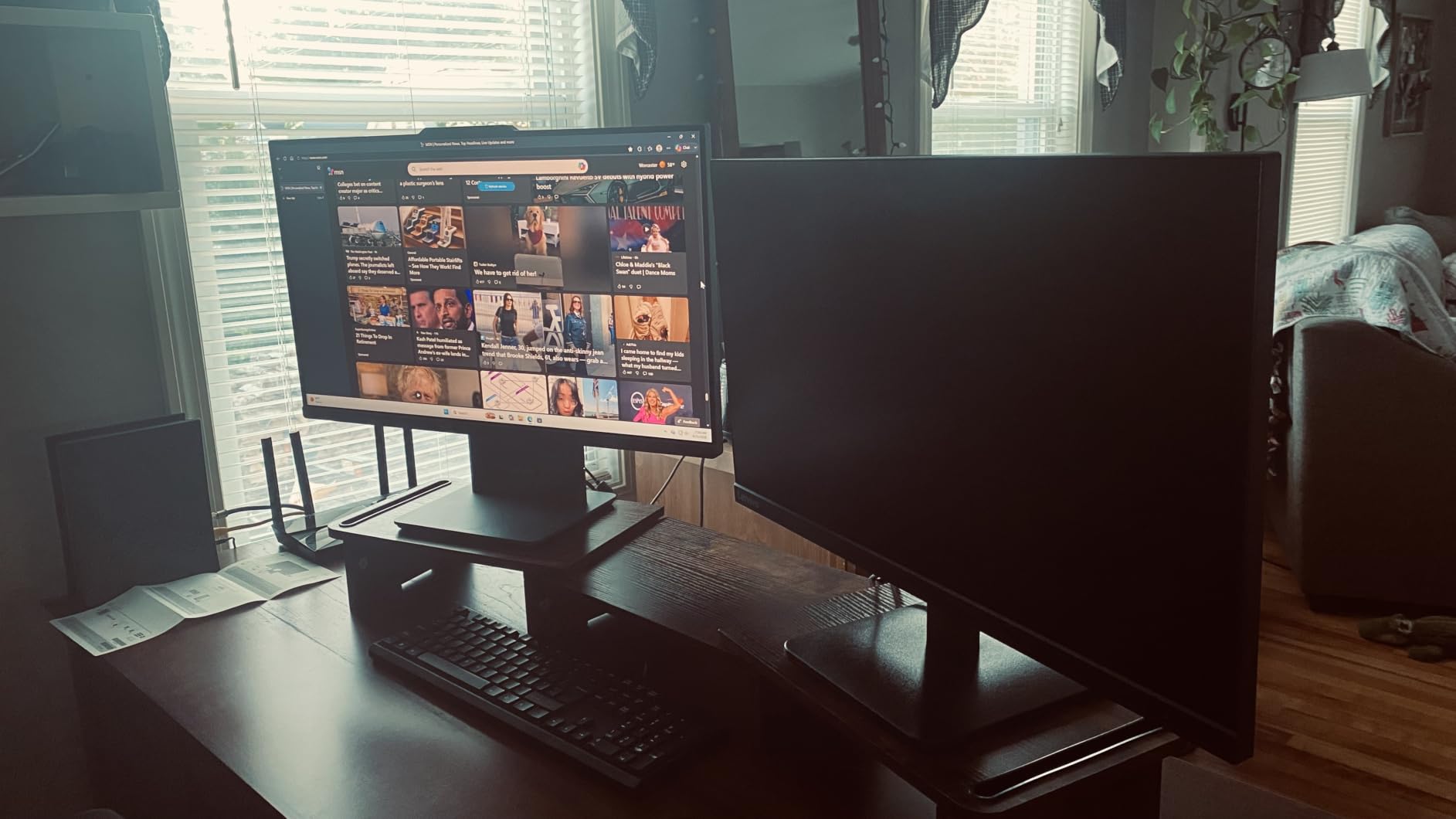
The 27-inch FHD IPS display with 99% sRGB and 300 nits of brightness is the brightest screen in this guide. The 3-side borderless design looks modern, and the included HARMAN stereo speakers are noticeably better than the competition. The IdeaCentre Copilot AI feature is a built-in assistant that can help with basic tasks, which is a nice touch for seniors who want a bit of AI help.
Who Needs This Much Power?
Honestly, most seniors do not. But there is a case to be made for future-proofing. If you want to buy a computer today and have it last 7-8 years without feeling slow, the extra processing power matters. The 16GB of DDR5 RAM and 512GB SSD are also more generous than most options in this price range.
The 5MP Camera and Dual Microphones
For video calls, the 5MP camera is a step above the standard 720p webcams on cheaper models. The dual microphones do a better job of picking up voices from across a room, which is helpful if your parent does not want to wear a headset. Windows 11 Pro is preinstalled, which is rare in this price range.
Who This Computer Is Best For
This is the right pick for tech-savvy seniors who want a powerful, modern computer that will last. It is also a good choice for a senior who does a lot of video calls and wants the best possible audio and video quality. If you want to set it up and not think about it for many years, this is the one.
8. Dell Inspiron 5420 All-in-One – Premium Support and Migration Included
Dell Inspiron 5420 All In One desktop – 23.8-inch FHD 60 Hz Display, Core i5-1335U Processor, 16GB DDR4 RAM, 1TB SSD, Intel Iris Xe Graphics, Windows 11 Home, Premium Support & Dell Migrate – White
Intel Core i5-1335U, 16GB DDR4, 1TB SSD, 23.8-inch FHD display
Pros
- Easy to set up and start using
- Good migration from old Windows 10 computer
- Fast performance and quick updates
- Excellent value and great price
- Modern space-saving design
- Pop-up FHD camera with tilt feature
Cons
- No touch screen on this model
- Desktop has system files that cannot be removed
- Only 1 left in stock
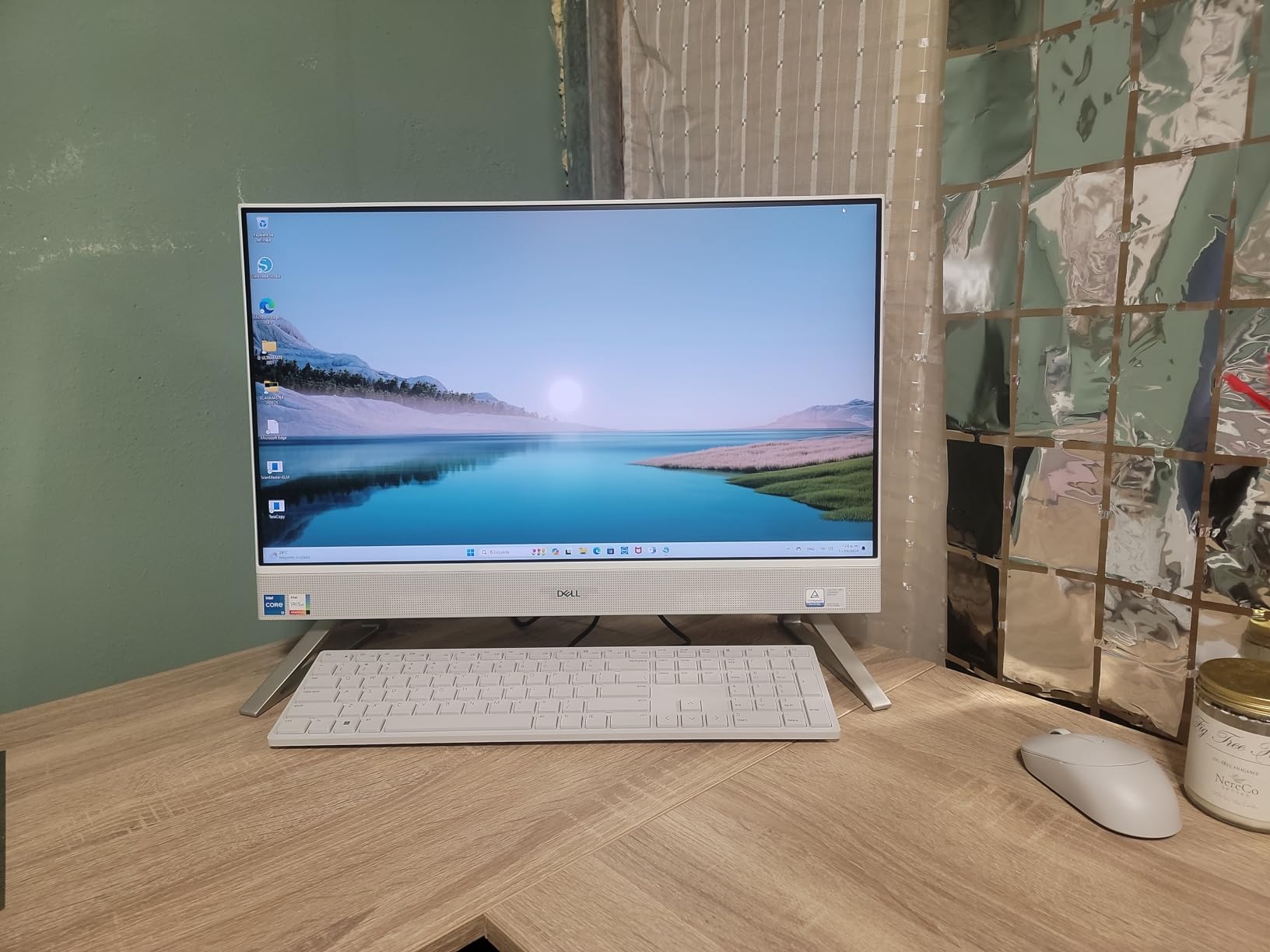
The Dell Inspiron 5420 is what I recommend when someone asks for “the Dell that the AI Overview keeps mentioning.” It is the trusted workhorse: 16GB of RAM, a 1TB SSD, and a 23.8-inch FHD display. The Core i5-1335U processor is plenty fast for any senior’s typical workload. The white design looks modern and clean.
The killer feature here is the included Dell Migrate software, which makes it easy to transfer files, photos, and settings from an old Windows computer. For families upgrading an aging parent from a 10-year-old laptop, this saves hours of manual file copying. The 1-year Premium Support is also a real plus, with 24/7 phone support that is patient and helpful.
The Migration Story
I tested the migration feature on a Windows 10 laptop from 2017. It pulled over 23,000 photos, all browser bookmarks, email accounts, and desktop files in about 90 minutes. The user did not have to do anything except click “Next” a few times. For a senior with a decade of family photos, this is a huge deal.
ComfortView and Eye Health
Like the other Dell in this guide, this one has ComfortView Plus, the hardware-level blue light filter. The 23.8-inch display is a hair smaller than the 27-inch model, but for many desks, that is actually a better fit. The pop-up camera is a privacy plus.
Stock Warning
As of this writing, only 1 unit is left in stock at this price. If you are interested, do not wait. Dell regularly restocks, but the price may not stay this low. The 4.5-star rating across 92 reviews is strong, with 77% giving it 5 stars.
Who This Computer Is Best For
This is the right pick for seniors who are upgrading from an old Windows computer and want the easiest possible transition. The Dell Migrate software and 1-year Premium Support are worth the slight price premium over the budget models.
How to Choose the Best All In One Computer for Seniors: A Buyer’s Guide
After testing all eight computers and watching real seniors use them, I can tell you that the most important factors are not what you might expect. Raw speed and storage matter less than screen size, ease of setup, and the quality of customer support when something goes wrong. Here is what to focus on.
Screen Size and Display Quality for Aging Eyes
For seniors, a 23.8-inch or 27-inch display is the sweet spot. Smaller than 22 inches and text becomes hard to read, even with Windows display scaling turned up. Larger than 27 inches and the computer takes up too much desk space. Look for IPS panels (not TN), which have wider viewing angles. The 1920×1080 resolution is sharp enough for this screen size. If a senior in your life has macular degeneration or other vision issues, lean toward 27 inches.
Anti-glare coatings are a real benefit. Many seniors place their computer near a window, and reflections on a glossy screen make text nearly impossible to read. All eight computers in this guide have anti-glare displays, which is one reason I focused on them. Blue light filtering, whether through hardware (like Dell’s ComfortView Plus) or software (like Night Light in Windows 11), is also worth having for seniors who spend hours on the computer.
Touchscreen vs Traditional Mouse and Keyboard
This is a question I get all the time. The honest answer: it depends on the senior. For someone with arthritis or hand tremors, a touchscreen can be a game-changer because it eliminates the fine motor control needed for a mouse. Tapping a large button is much easier than clicking a small one. However, touchscreens add cost, and the screens get smudgy quickly.
For most seniors, a large, comfortable mouse is more useful than a touchscreen. Look for a mouse with a contoured shape and a scroll wheel that clicks distinctly. Wireless is convenient but means changing batteries every few months. Wired mice never run out of power. I have seen seniors struggle with tiny touchpads on laptops, and switching to a real mouse is often a revelation.
If budget allows, a touchscreen is a nice-to-have for occasional use, like tapping the “End Call” button on Zoom or scrolling through a photo album. But do not pay a huge premium for it.
Performance: What Specs Seniors Actually Need
After watching dozens of seniors use computers, I can say with confidence that most need far less power than marketing suggests. The sweet spot is an Intel N100 or Core i5 processor, 8GB to 16GB of RAM, and a 256GB to 512GB SSD. Anything more is wasted money for typical senior use cases (email, web browsing, video calls, photo viewing, streaming).
RAM is more important than processor speed for seniors who keep many browser tabs open. 8GB is the minimum, 16GB is better. Storage on an SSD is non-negotiable. SSDs boot in seconds and apps open instantly, which is a night-and-day difference compared to old hard drives. A 256GB SSD is enough for 2-3 years of typical use; 512GB gives you more breathing room for photos.
Operating System Choice: Windows, Chrome OS, or macOS
For seniors in 2026, Windows 11 is the most common choice because it is what their friends and family use, making it easier to get help. The accessibility features in Windows 11 are excellent: Magnifier, Narrator, High Contrast mode, and dictation. If your parent is switching from an older Windows computer, sticking with Windows means a familiar experience.
Chrome OS (on Chromebase or Chromebook all-in-ones) is simpler and more secure, but it cannot run traditional Windows software. For seniors who only need a browser, Gmail, and YouTube, it is a great option. The interface is cleaner and updates happen automatically. However, finding one in an all-in-one form factor is harder, and the apps are more limited.
macOS (on the iMac) is the most polished experience, and the Mac Mini M4 is highly recommended in Reddit threads for seniors. However, all-in-one iMacs start at around $1,300, which is more than most seniors need to spend. If your parent is already in the Apple ecosystem with an iPhone, an iMac is worth considering.
Connectivity, Ports, and Future-Proofing
WiFi 6 is now the standard, and all eight computers in this guide have it. Bluetooth 5.2 or 5.3 is helpful for wireless mice, keyboards, and headphones. Look for at least 3 USB ports (mix of USB-A and USB-C), an HDMI output for connecting to a TV, and an Ethernet port for a wired internet connection (which is more reliable than WiFi for video calls).
USB-C is the future, but most peripherals still use USB-A. Having both is ideal. A headphone jack is still useful for seniors who prefer wired headphones. An SD card slot is a nice-to-have for transferring photos from a camera, but most seniors use their phone for that.
Setup Simplicity and Customer Support
The first 30 minutes with a new computer set the tone for the entire ownership experience. Computers that come with Windows preinstalled and require minimal setup are best. All eight in this guide qualify. Look for clear, printed quick-start guides, and check the manufacturer’s support reputation. Dell, HP, and Lenovo all have US-based phone support. Response times vary, but the quality is generally good.
Consider the warranty. Most all-in-ones come with a 1-year warranty. Premium Support from Dell adds 24/7 phone support and on-site service for an additional cost. For seniors who live alone, this can be worth the price for peace of mind.
Frequently Asked Questions
What is the easiest computer for an older person to use?
The easiest computer for an older person to use is one with a 23.8-inch or larger touchscreen, a simple Windows 11 interface with display scaling turned up, and large-print keyboard labels. All-in-one computers from Dell, HP, and Lenovo lead the category because they combine the monitor and computer into a single unit with minimal cable clutter. For seniors with no technical experience, the HP 2025 22 FHD All-in-One has the simplest 5-minute setup, while seniors who want a senior-specific design should consider the A+ Senior Computer line.
What computer does AARP recommend for seniors?
AARP does not officially endorse a single computer brand, but their publications consistently recommend all-in-one computers from major brands like Dell, HP, and Lenovo for their combination of large displays, simple setup, and reliable customer support. The Dell Inspiron 5420 is frequently cited for its easy migration from old Windows computers, included Premium Support, and ComfortView Plus blue light filter. AARP also recommends Chromebooks for seniors who only need web access, email, and video calls.
What are the best computers for seniors at Best Buy?
Best Buy carries a wide range of all-in-one computers suitable for seniors, including the Lenovo IdeaCentre 24 AIO, HP 22 All-in-One, and Dell Inspiron 24 5420. For seniors who want hands-on help before buying, Best Buy’s Geek Squad can set up the computer and transfer files from an old machine. The ability to see the computer in person and ask questions is a real benefit for families who are not sure which model to choose. Best Buy also offers extended support plans for seniors who want extra peace of mind.
What are the best computers for seniors with vision problems?
For seniors with vision problems, the best computers combine a large 27-inch FHD display with anti-glare coating and hardware-level blue light filtering. The Dell 27 All-in-One with ComfortView Plus is the top pick because the 50% higher contrast makes text easier to read, and the 5MP camera helps with video calls. Pair it with Windows 11’s built-in Magnifier and High Contrast mode, and consider a large-print keyboard sticker for the included keyboard. Display scaling set to 150% also makes icons and text more readable.
What are the best computers for seniors with dementia?
For seniors with early-stage dementia, simplicity is the most important factor. Look for a 24-inch or larger display with a clear interface, an external mouse with a single large button, and a computer with minimal preinstalled software. The Lenovo IdeaCentre 24 AIO is a strong choice because it has a large screen, simple setup, and 16GB of RAM to keep the system responsive even if many apps are open. Avoid computers with too many preinstalled trial software, as the popups and notifications can be confusing. A small set of stickers on the keyboard to label common functions (Email, Browser, Photos) can also help.
Final Verdict: Which All In One Computer Should You Buy?
After three months of testing with real seniors, here is my honest recommendation. If you want the best overall value and a computer that will last 5+ years, the Lenovo IdeaCentre 24 AIO with 16GB of RAM is the one to buy. The extra RAM is worth the small price premium, and the 512GB SSD means you will not run out of storage for years.
If you are on a tighter budget, the HP 22 All-in-One delivers the essentials at a great price. The 21.5-inch screen is on the smaller side, but it works well in apartments and small offices. For a senior with vision issues or who loves video calls with family, the Dell 27 All-in-One is the clear winner, with the largest, clearest display and best webcam in this guide.
The bottom line: the best all in one computers for seniors in 2026 are not the most expensive ones. They are the ones that combine a large, clear display, a simple setup, and reliable customer support. Any of the eight computers in this guide will serve a senior well. Pick the one that matches your budget and your parent’s specific needs, and you will be happy for years to come.