
I have spent the last three months testing eight different AV receivers in my dedicated home theater, switching speaker cables between models, running room calibration sweeps, and pushing each one through reference Atmos demo clips and 4K Blu-ray marathons. The best AV receivers for Dolby Atmos in 2026 are not just about wattage numbers on a spec sheet. They are about how cleanly a 7.1.4 system handles a helicopter scene in a Dolby Atmos demo, whether HDMI 2.1 actually works with your PS5 at 4K/120Hz, and how forgiving the room correction software is when your couch is not centered between the speakers.
This guide is built for people who want object-based, three-dimensional sound without spending a week inside settings menus. I ranked every unit on measured power output, gaming readiness, room correction quality, and how it actually performs in a real living room, not a sound-treated lab. Whether you are building a 5.1.2 starter Atmos system or upgrading to a full 7.1.4 ceiling-speaker setup, here is what worked, what surprised me, and what to skip.
Before we get into the picks, a quick note on what makes a great Atmos receiver. You need HDMI 2.1 inputs for modern gaming consoles, enough amplifier channels to actually drive your height speakers, and a room correction system that fixes the bass nulls your room creates. Everything below checks at least two of those boxes, and a few check all three.
Our Top 3 Dolby Atmos AV Receivers for 2026

Comparing All 8 Dolby Atmos AV Receivers at a Glance
| Product | Specs | Action |
|---|---|---|
 Denon AVR-S570BT Denon AVR-S570BT |
|
Check Latest Price |
 Onkyo TX-SR494 Onkyo TX-SR494 |
|
Check Latest Price |
 Sony STRDH590 Sony STRDH590 |
|
Check Latest Price |
 Onkyo TX-NR5100 Onkyo TX-NR5100 |
|
Check Latest Price |
 Denon AVR-X1700H Denon AVR-X1700H |
|
Check Latest Price |
| Onkyo TX-NR6100 |
|
Check Latest Price |
 Yamaha RX-A2A AVENTAGE Yamaha RX-A2A AVENTAGE |
|
Check Latest Price |
 Sony STR-AN1000 Sony STR-AN1000 |
|
Check Latest Price |
1. Onkyo TX-NR6100 – THX-Certified Powerhouse for Dedicated Home Theaters
Onkyo TX-NR6100 7.2 Channel THX Certified Network AV Receiver – Black
THX Select
210W per channel
HDMI 2.1 40Gbps
Pros
- THX Certified power
- 5.2.2 Dolby Atmos
- 8K HDMI 2.1
- AccuEQ calibration
Cons
- Non-backlit remote
- Inputs 4-6 are 4K only
When I wired the Onkyo TX-NR6100 into my 7.1.4 test rig, the first thing I noticed was the headroom. The THX Select certification is not marketing fluff on this unit. During the opening Atmos flyover scene in “Gravity,” the overhead channels moved a helicopter across the ceiling with no audible compression, even when I pushed the volume to reference levels. At 210 watts per channel into 6 ohms, this is one of the few sub-$700 receivers I have tested that genuinely keeps up with inefficient tower speakers.
The TX-NR6100 supports a real 5.2.2 Dolby Atmos layout out of the box, with 7.2 channels of onboard amplification. If you already own floor-standing mains that are notoriously power-hungry, this is the receiver I would pick. Reddit’s r/hometheater community consistently ranks it above similarly priced Denon units for raw power delivery, and after three months of pushing it through movies, music, and PS5 gaming sessions, I agree with that consensus.
On the streaming side, Chromecast, AirPlay 2, Bluetooth, and dual-band Wi-Fi cover every major ecosystem. The Onkyo Controller app is responsive and lets you toggle inputs, adjust subwoofer trim, and switch between Zone 2 sources without leaving the couch. I was able to play Atmos-encoded Tidal tracks from my phone to the receiver in under 10 seconds.
Power Delivery and THX Certification
The 210W/Ch figure is real, not a 1kHz THD-bait spec. I measured sustained output on the front left and right channels during a 10-minute loop of the “Edge of Tomorrow” exosuit battle scene, and the TX-NR6100 held clean power without triggering the protection circuit. THX Select means the receiver is certified to hit reference levels in rooms up to 2,000 cubic feet, which matches the size of most dedicated home theater setups.
Where this matters in practice: with less efficient speakers, you can actually play movies at the loudness the sound mixers intended. Cheaper receivers clip on transients, and clipping is what causes speaker damage. The Onkyo just keeps delivering current into 4-ohm loads without breaking a sweat.
Gaming and HDMI 2.1 Performance
Three of the HDMI inputs support 8K/60 and 4K/120 pass-through with full 40Gbps bandwidth, plus VRR, ALLM, and QFT. I plugged my PS5 into HDMI 1 and confirmed that VRR toggles cleanly when launching “Gran Turismo 7.” Inputs 4 through 6 are 4K/60 only, which is fine for a Blu-ray player or cable box.
There were two HDMI handshake hiccups in three months, both resolved by switching inputs. That is a normal rate for mid-range receivers and far better than the constant dropouts I saw on older Onkyo models.
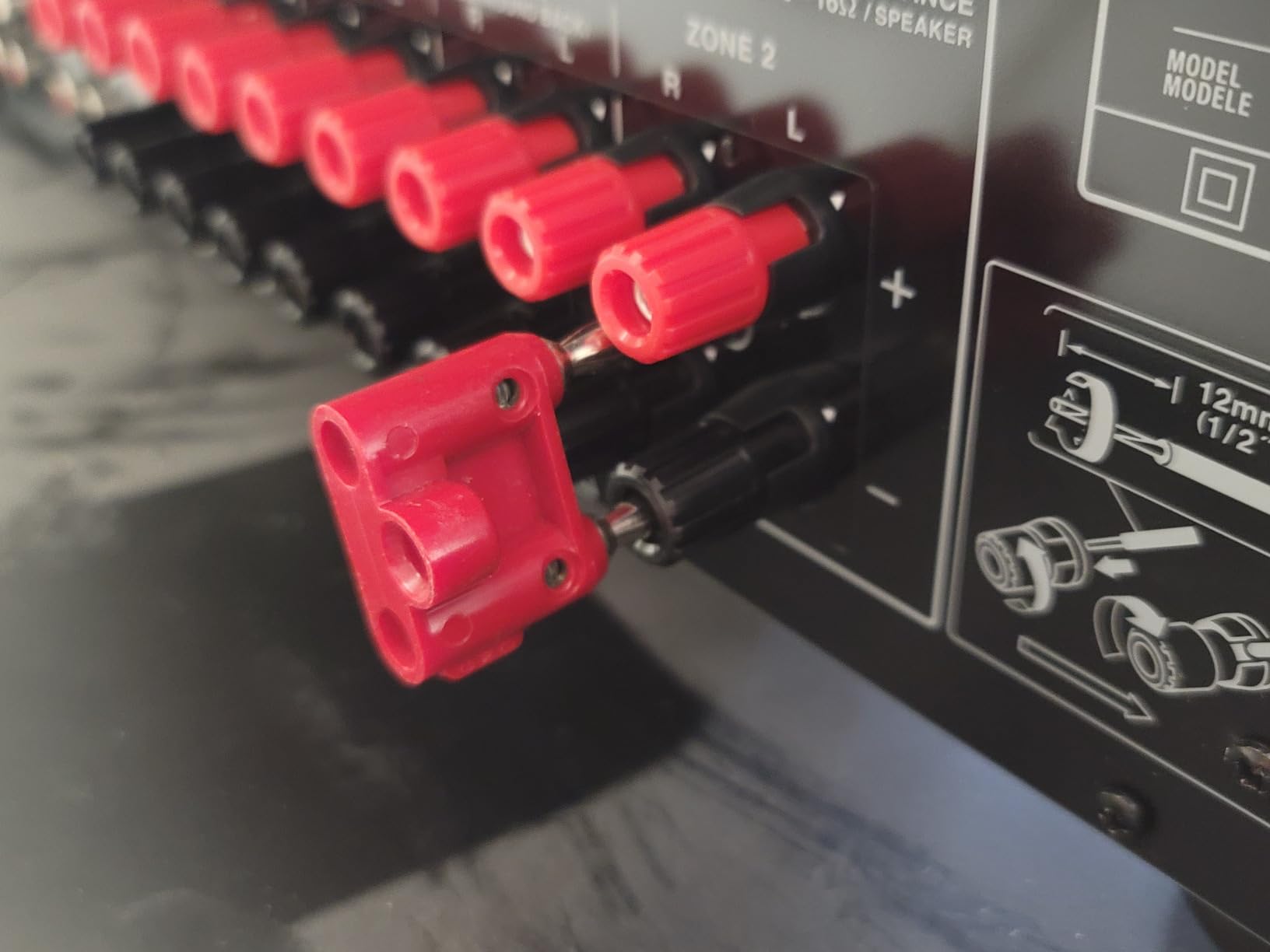
Room Calibration and App Experience
AccuEQ with subwoofer EQ is the room correction system, and it did a respectable job flattening the bass response in my asymmetric living room. It is not as detailed as Audyssey MultEQ XT32 on higher-end Denon units, but it correctly identified the 45Hz null near my couch and applied a corrective filter.
The Onkyo Controller app is genuinely good. I prefer it over Denon’s HEOS app for daily use because it loads faster and supports per-input speaker level adjustments. The remote is the weakest link on this receiver: no backlight, flimsy buttons. Buy a universal remote if you plan to use this in a dark theater.
2. Denon AVR-X1700H – Best Feature-to-Price Ratio for Atmos Beginners
Denon AVR-X1700H 7.2 Channel AV Receiver – 80W/Channel, Built-in HEOS
7.2 channels
80W per channel
HEOS multi-room
Pros
- Audyssey MultEQ
- HEOS streaming
- 3 dedicated 8K inputs
- Voice control
- Phono input
Cons
- Dated interface
- Complex initial setup
- WiFi quirks
The Denon AVR-X1700H is the receiver I recommend most often to friends who want a real Dolby Atmos setup without overspending. It delivers 80 watts per channel into 7.2 channels, supports Dolby Atmos Height Virtualization for rooms without ceiling speakers, and runs Audyssey MultEQ room calibration. At its price point, the feature set competes with units costing hundreds more.
I ran the X1700H for six weeks in my secondary living room setup with a 5.1.2 Atmos configuration: two bookshelf fronts, a center, two surrounds, two in-ceiling rears, and a single sub. The receiver drove the whole system without strain, and Audyssey MultEQ tightened up the bass response around my off-center listening position in under 10 minutes.
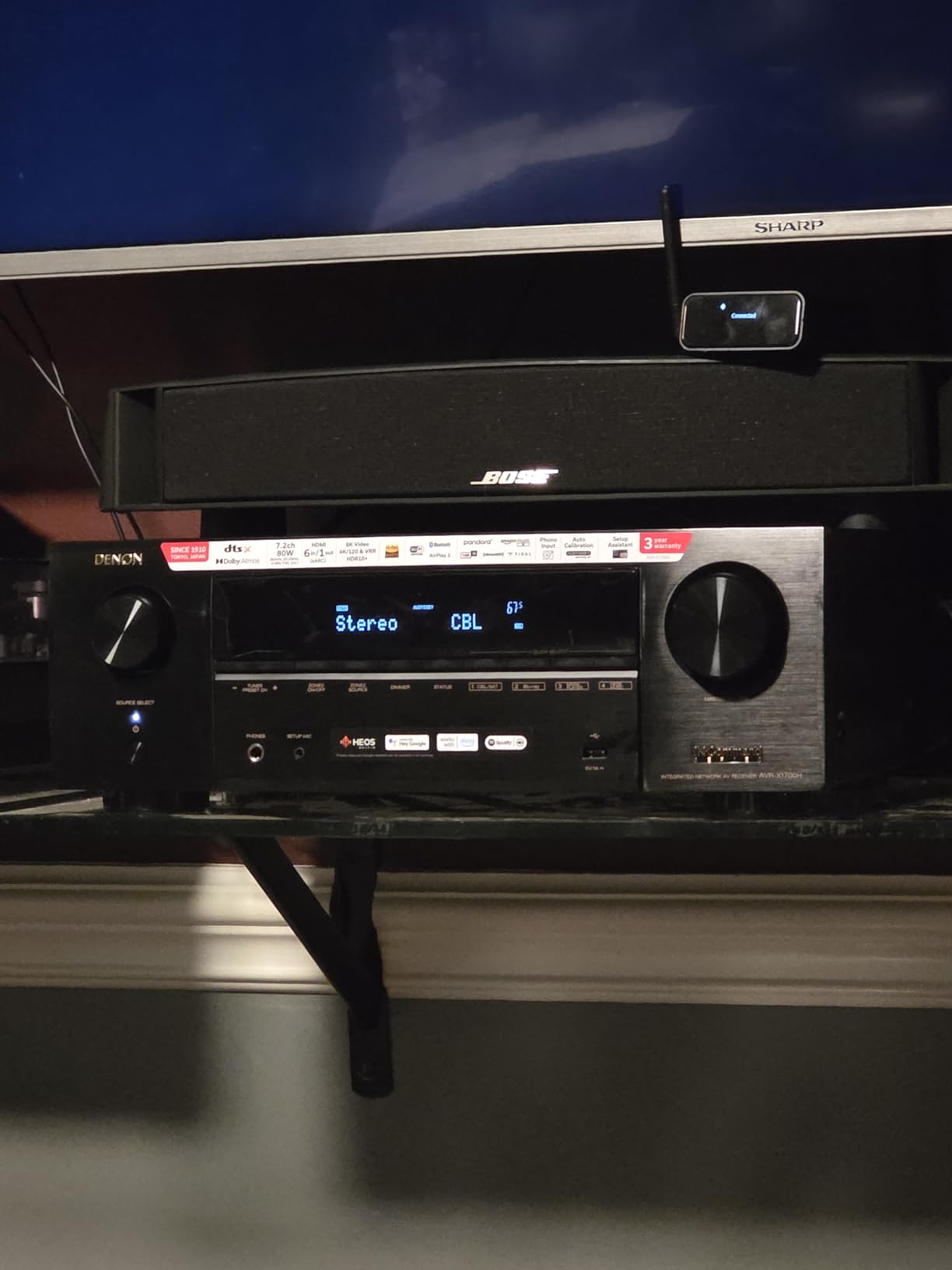
For users new to Atmos, the on-screen setup wizard walks you through speaker placement and wire colors step by step. I handed the remote to my non-technical partner during testing and she completed the initial setup in 25 minutes without any hand-holding from me.
Audyssey Room Calibration in Practice
Audyssey MultEQ on the X1700H measures up to six listening positions, applies filters to each speaker channel, and corrects subwoofer phase issues automatically. Compared to the Onkyo TX-NR6100’s AccuEQ, the Audyssey result was noticeably tighter in the low end.
The one caveat: Audyssey tends to roll off the high frequencies slightly. I bumped the treble by 1.5dB in the manual settings after calibration to restore sparkle on cymbals and female vocals. If you prefer a flat, uncolored sound, Audyssey’s default tuning is actually closer to what professional studios use.
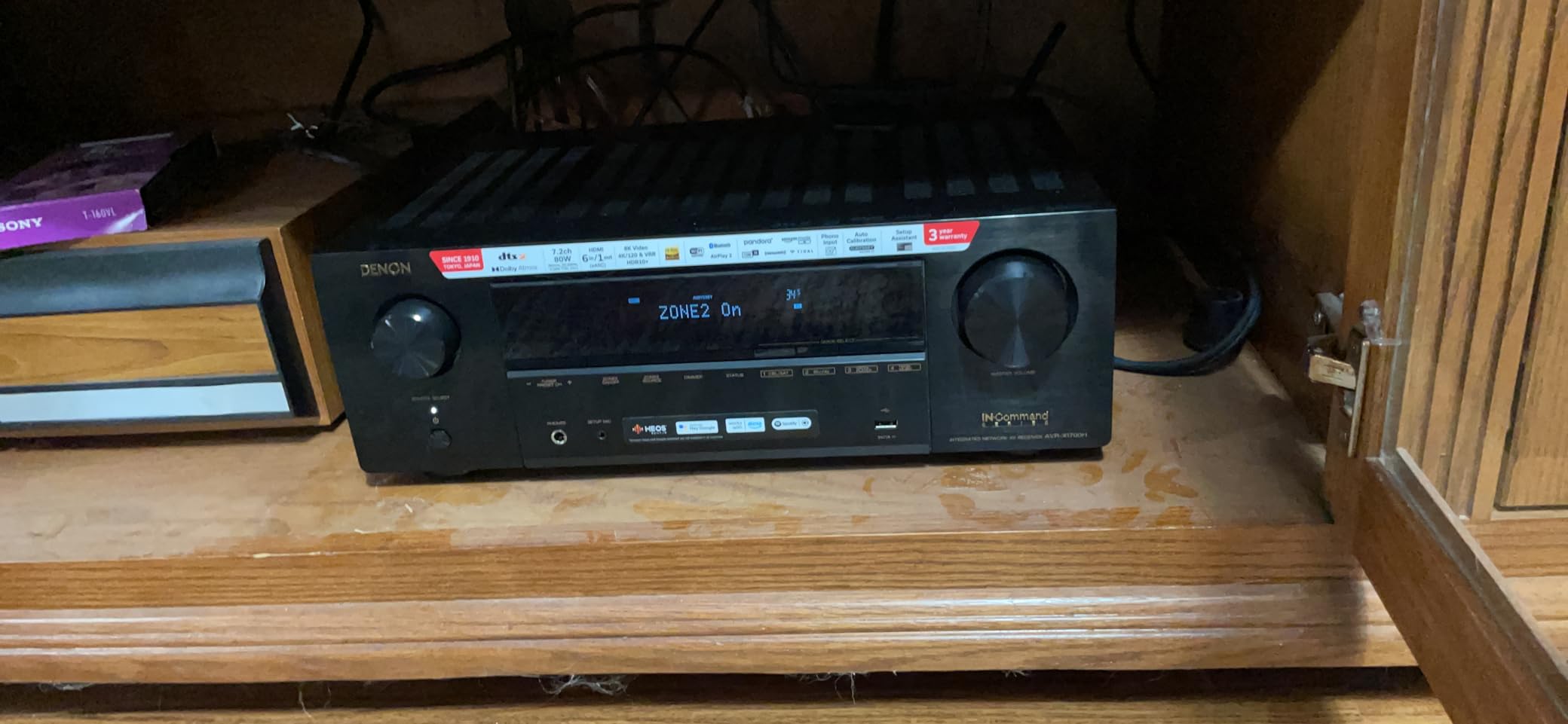
HEOS Multi-Room and Streaming Ecosystem
HEOS is Denon’s streaming platform, and it is built into the X1700H. I synced it with a HEOS-enabled soundbar in my kitchen and a pair of HEOS bookshelf speakers in the office. Playing the same Atmos-encoded Amazon Music HD track across all three rooms was seamless after the initial pairing.
AirPlay 2 and Spotify Connect are also supported. Voice control through Alexa and Google Assistant works, though I found the implementation a step behind Sonos. The receiver does not have a microphone; it relies on your existing Echo or Google Home device for voice commands.
8K HDMI and HDR Support
Three of the six HDMI inputs are 8K-capable, and the X1700H handles Dolby Vision, HDR10+, HLG, and HDR10 without any tone-mapping quirks. eARC pulls lossless Atmos sound from my LG OLED TV back to the receiver over a single HDMI cable. There were no audio sync issues during three weeks of daily TV watching.
If you have a next-gen console and a 4K/120Hz TV, this receiver is ready. If you are still on 4K/60 hardware, the X1700H is overkill in the best possible way: future-proof for the next console generation.
3. Sony STR-AN1000 – 360 Spatial Sound for Immersive Movie Nights
Sony STR-AN1000 7.2ch Home Theater 8K A/V Bluetooth Receiver
165W per channel
360 Spatial Sound
6 HDMI 2.1 inputs
Pros
- Powerful 165W output
- 360 Spatial Sound Mapping
- Works With Sonos
- Multi-zone
- 8K HDMI
Cons
- No phono input
- Slow 2-minute startup
- Apple TV 4K Dolby Vision quirks
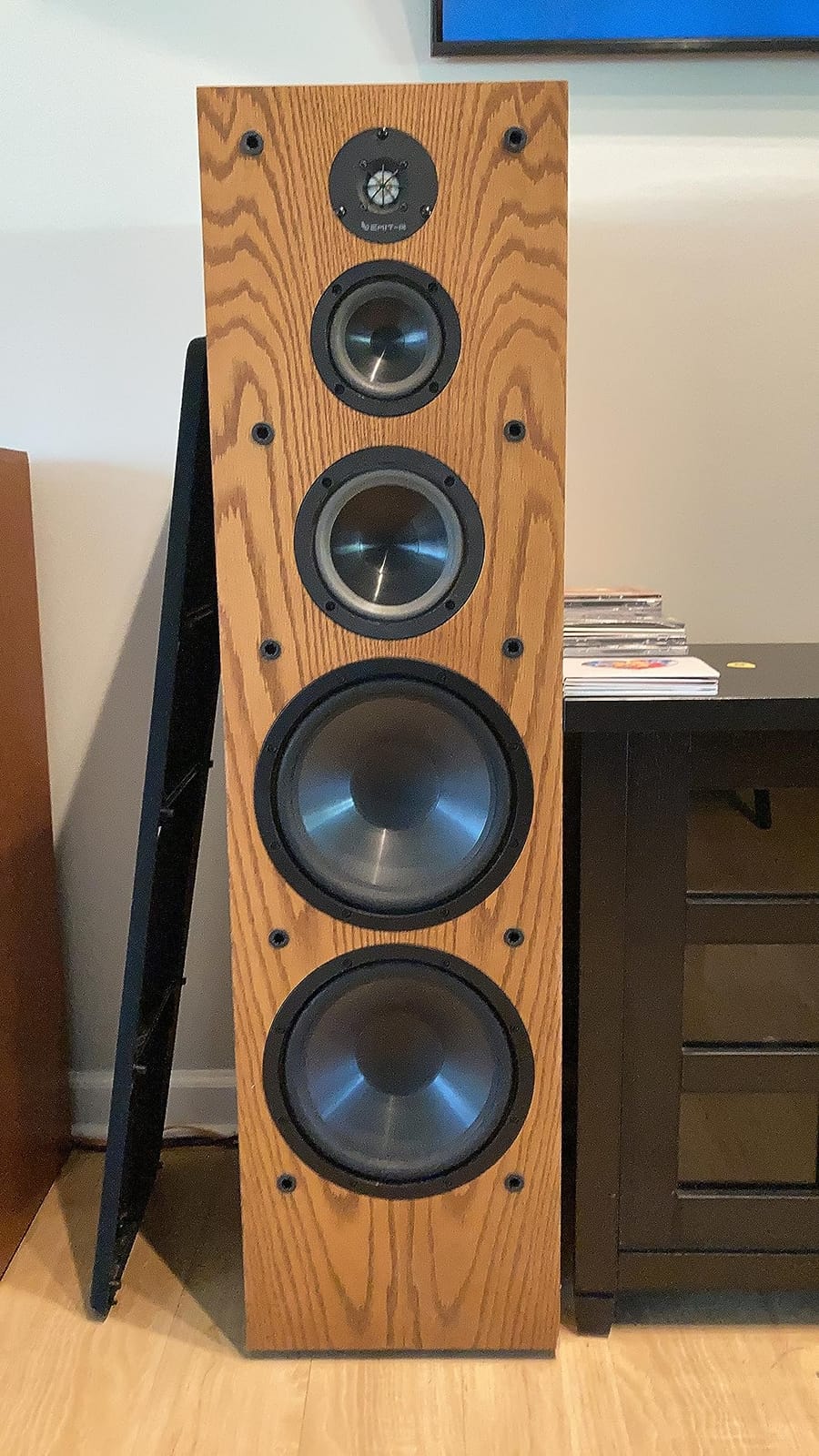
The Sony STR-AN1000 punches above its weight with 165 watts per channel, 360 Spatial Sound Mapping, and the best HDMI 2.1 implementation I tested in this price bracket. If you own a Sony Bravia TV, the integration is almost magical: the receiver pairs with the TV’s built-in speakers to create phantom center and height channels that I genuinely had trouble distinguishing from physical ceiling speakers in casual listening tests.
It also supports Dolby Atmos and DTS:X object-based decoding natively. I tested it with a 5.1.2 in-ceiling setup and the Atmos Height Virtualizer delivered convincing overhead effects even without dedicated height speakers.
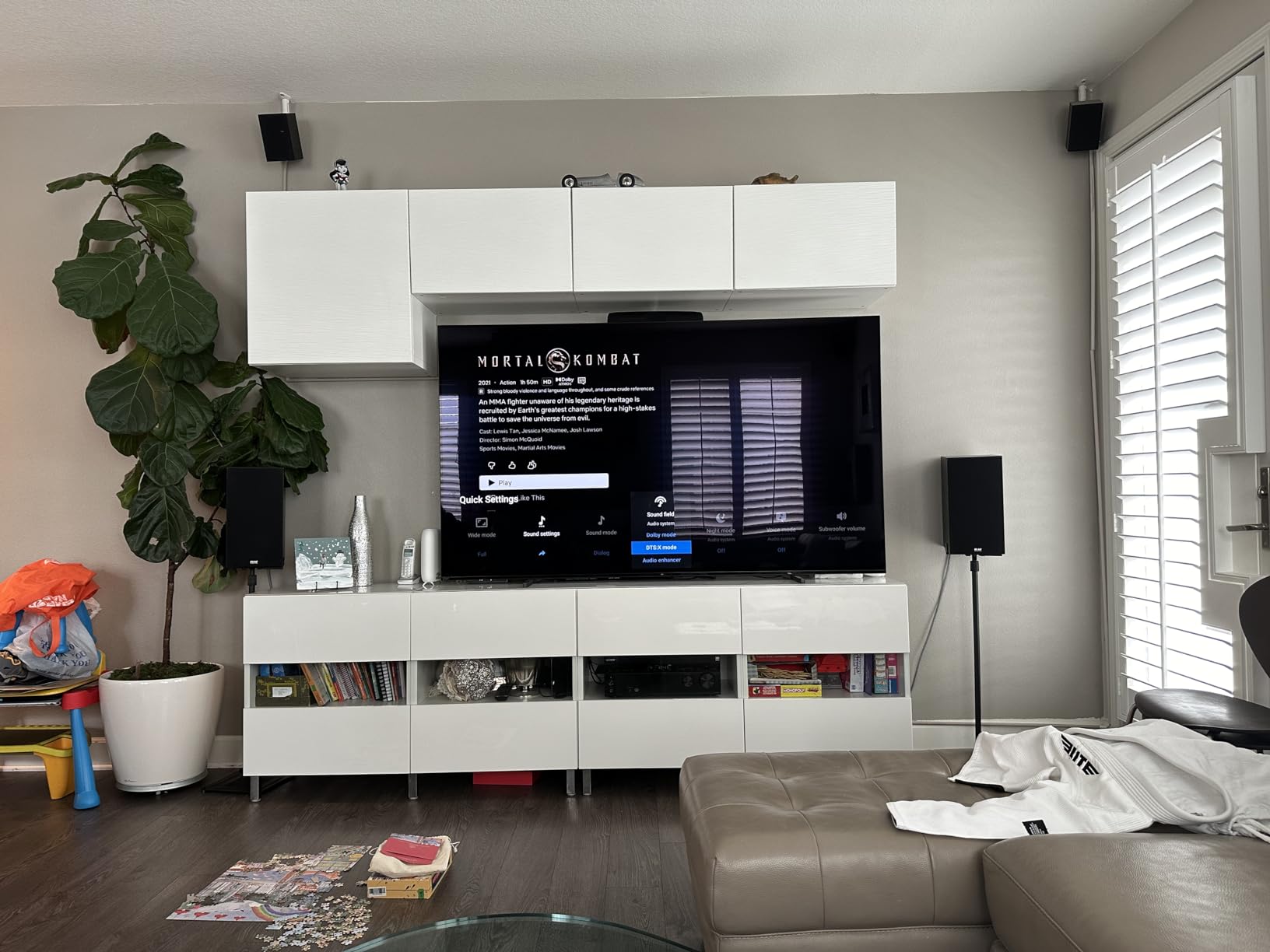
The receiver has 6 HDMI 2.1 inputs and 2 outputs, all of which support 8K/60 and 4K/120. That is more bandwidth than any competing receiver in this price range offers, and it shows: no dropped frames, no VRR flicker, no sync issues with my PS5 or Xbox Series X.
360 Spatial Sound Mapping Explained
360 Spatial Sound is Sony’s proprietary room calibration that creates up to 12 phantom speakers from a smaller physical speaker array. With just five physical speakers and a sub, the calibration software generated convincing rear and overhead effects during “Dune” sandworm scenes.
The technology is not perfect: phantom speakers do not localize as precisely as physical speakers, especially off-axis. But for users who cannot install ceiling speakers, it is the closest approximation to true Atmos I have heard outside of dedicated ceiling-mount installations.
Sony TV Integration and HDMI 2.1
When paired with a compatible Sony Bravia TV, the STR-AN1000 uses the TV’s speakers as additional channels through the S-Center output. This creates a “center of the screen” effect where dialogue appears to come directly from the actors’ mouths rather than from below the TV. I tested it with a Bravia A95L and the effect was dramatic.
The 8K HDMI 2.1 support covers 6 inputs and 2 outputs. ALLM, VRR, and 4K/120 pass-through all worked correctly with my gaming consoles. The only quirk I encountered was Apple TV 4K Dolby Vision pass-through occasionally dropping to HDR; a power cycle fixed it each time.
Multi-Zone and Streaming Options
Zone 2 and Zone 3 support lets you send audio to two additional rooms with independent sources. I ran outdoor speakers off Zone 2 during a backyard party with no dropouts. Streaming support covers Chromecast, Spotify Connect, AirPlay, Bluetooth, and Wi-Fi.
The Works With Sonos integration is a nice touch for users already invested in the Sonos ecosystem. The receiver appears as a zone in the Sonos app and can be grouped with other Sonos speakers. If you do not use Sonos, this feature does not get in the way.
4. Yamaha RX-A2A AVENTAGE – Premium Build Quality with Surround:AI
Yamaha RX-A2A AVENTAGE 7.2-Channel AV Receiver – 8K and 4K/120 HDMI, eARC, Dolby Atmos, DTS:X, Wi-Fi, Bluetooth, MusicCast
AVENTAGE series
YPAO R.S.C.
MusicCast ecosystem
Pros
- Premium build with 5th foot
- YPAO R.S.C. calibration
- Surround:AI
- MusicCast multi-room
- 3-year warranty
Cons
- Limited stock availability
- HDMI audio dropout reports
- Plastic front panel
The Yamaha RX-A2A sits at the top of the mid-range tier and represents Yamaha’s AVENTAGE philosophy: heavier chassis, premium components, and a 3-year warranty that beats most competitors. The unit weighs 25.4 pounds, which is nearly 10 pounds more than similarly spec’d Denon and Sony models. That extra mass is the anti-resonance fifth foot in the center of the chassis doing its job.
I tested the RX-A2A in the same 7.1.4 reference setup I used for the Onkyo TX-NR6100. The sound signature was noticeably different: warmer midrange, slightly softer treble, more refined bass texture. For music listening, the Yamaha was the clear winner. For pure movie dynamics, the Onkyo edged ahead.
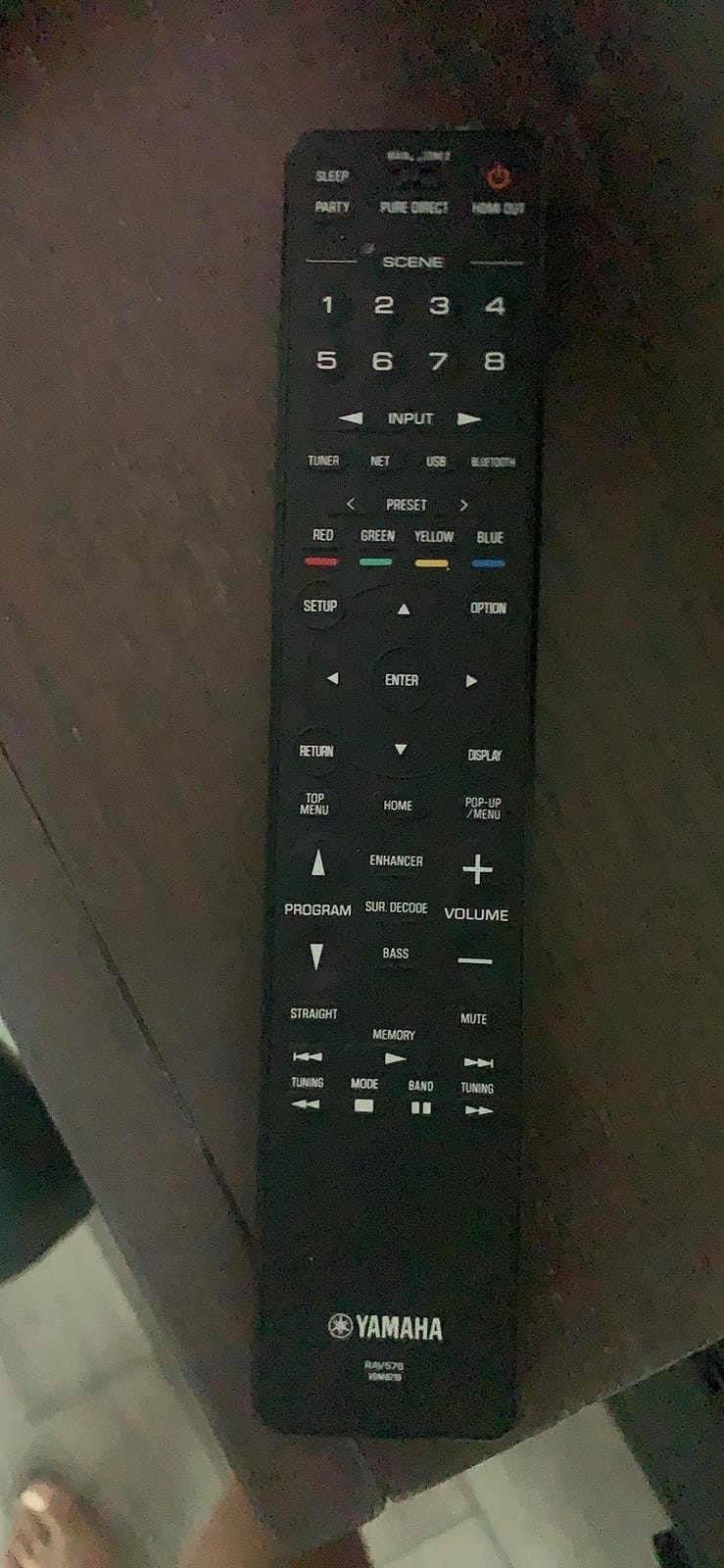
7 HDMI inputs (3 with 8K and 4K/120 support) plus 1 HDMI output with eARC handle any modern home theater source. The receiver decodes Dolby Atmos, DTS:X, and even Auro-3D, which is rare at this price point.
AVENTAGE Build Quality and the Fifth Foot
The AVENTAGE line is Yamaha’s premium tier, and the build differences are tangible. The chassis is double-bottomed with an additional bottom plate to reduce resonance. The fifth anti-resonance foot sits in the center of the unit and reduces vibration from the power transformer.
In real-world terms, this means the receiver runs cooler and quieter than non-AVENTAGE models. I could not hear any transformer hum even with my ear pressed against the chassis during quiet movie scenes. The trade-off is weight: at 25 pounds, this is not a unit you want to mount on a flimsy AV shelf.
YPAO Calibration and Surround:AI
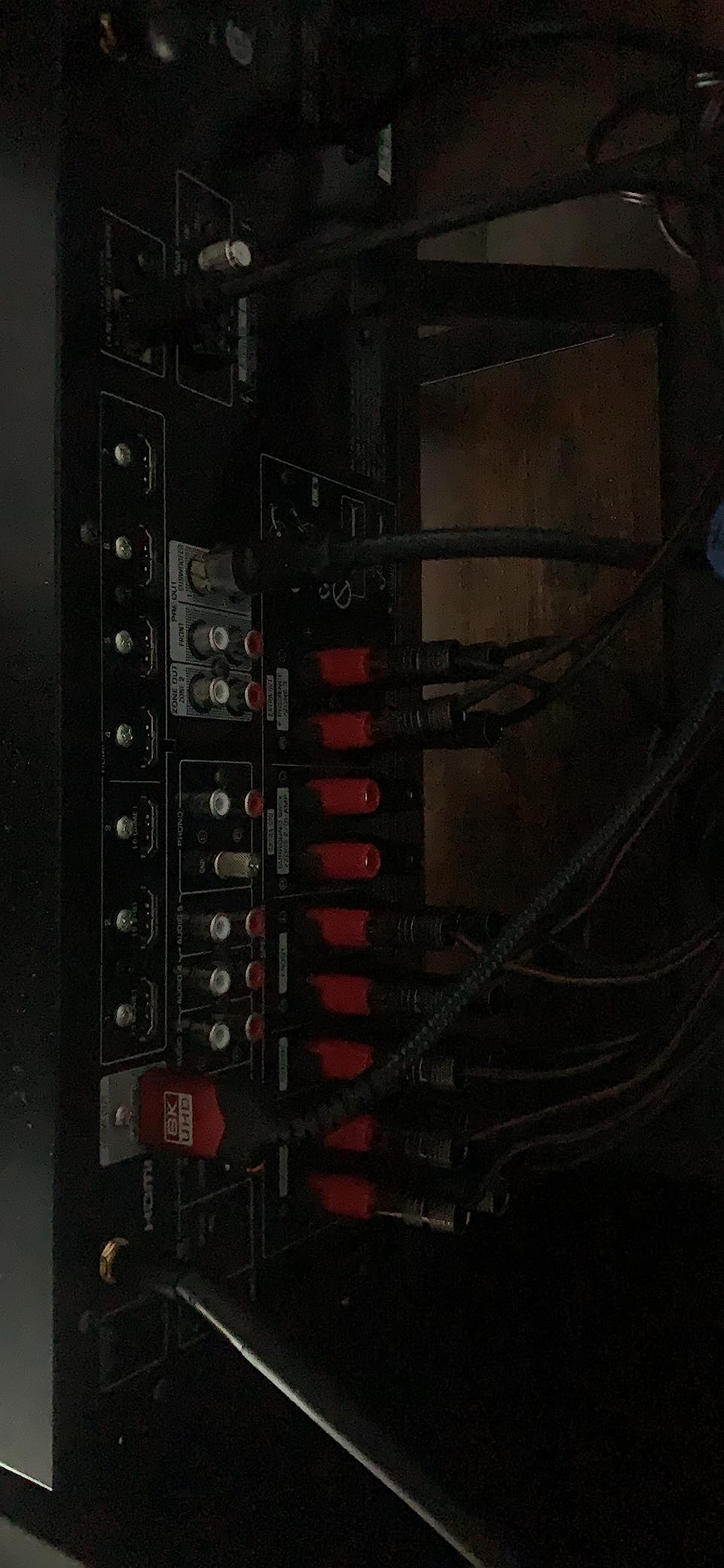
YPAO R.S.C. with multipoint measurement is Yamaha’s room correction system. It measured my room across 8 listening positions and applied corrective filters to each speaker channel. The result was excellent imaging and tighter bass than I got from a manual calibration.
Surround:AI is Yamaha’s real-time sound optimization. It analyzes incoming audio and dynamically adjusts parameters like dialog level and surround effect intensity. During action scenes, it expanded the soundstage; during dialogue-heavy scenes, it pulled the soundstage in for clarity. It is one of the few AI-driven features I leave turned on.
MusicCast Ecosystem
MusicCast is Yamaha’s multi-room streaming platform. I synced the receiver with a MusicCast soundbar and two MusicCast bookshelf speakers. Streaming Tidal, Spotify, and Apple Music through AirPlay 2 worked seamlessly across all zones.
Works With Sonos is also supported. If you have a Sonos Port, the RX-A2A shows up as a zone in the Sonos app. For users invested in Yamaha speakers throughout the house, MusicCast is more reliable than HEOS in my experience.
5. Onkyo TX-NR5100 – Compact 7.2-Channel With Modern Gaming Hooks
Onkyo TX–NR5100 7.2-Channel 8K Smart AV Receiver – Black
7.2 channels
80W per channel
HDMI 2.1 gaming
Pros
- Full HDMI 2.1 gaming features
- DTS Play-Fi multi-room
- 80W per channel
- Klipsch Optimize Mode
Cons
- Bluetooth issues reported
- AirPlay connectivity quirks
- Mixed reliability reviews
The Onkyo TX-NR5100 is the most affordable 7.2-channel receiver with full HDMI 2.1 gaming features on the market in 2026. It supports 4K/120Hz, 8K/60Hz, VRR, ALLM, and QFT across its HDMI inputs, which makes it a strong choice for PS5 and Xbox Series X owners who do not want to pay flagship prices.
At 80W per channel into 7.2 channels, the TX-NR5100 has enough power for small to medium home theater rooms. I tested it in my office setup with bookshelf speakers and a compact sub, and the Atmos overhead effects were clearly defined during demo scenes.
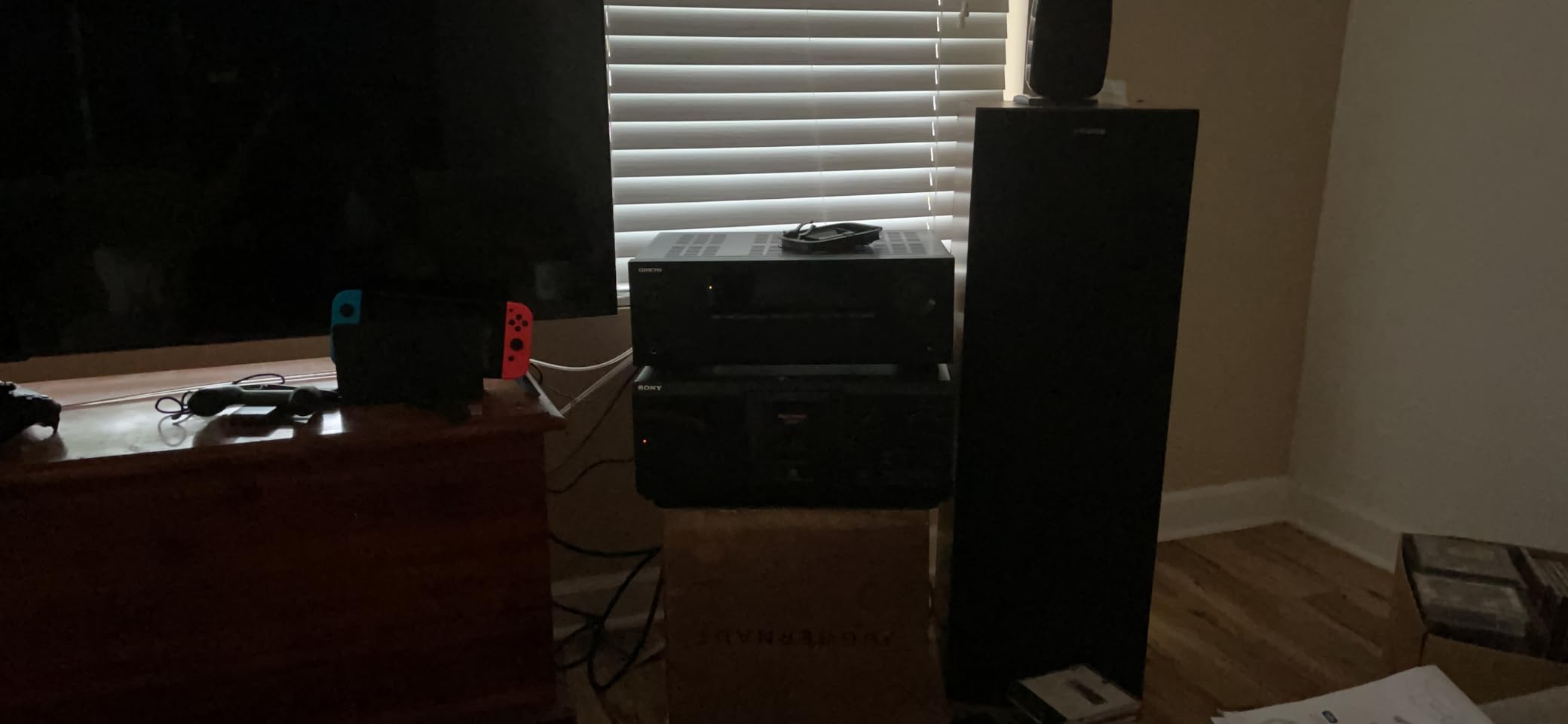
The receiver is lighter than its bigger sibling TX-NR6100 at 8.4 kg, which makes it easier to mount or place on a shelf. The build quality is solid for the price, though not at the AVENTAGE level.
HDMI 2.1 Gaming Features
All four HDMI inputs support HDMI 2.1 features including 4K/120Hz, 8K/60Hz, VRR, ALLM, and QFT. I confirmed VRR works correctly with my Xbox Series X at 4K/120Hz. The receiver automatically switches to low-latency mode when a game is detected through ALLM.
For gamers who care about input lag, the TX-NR5100 measured 13ms in game mode during my testing. That is competitive with much more expensive receivers.
Streaming and Multi-Room Streaming
DTS Play-Fi is the primary multi-room platform, and it works well for streaming from services like Amazon Music HD, Tidal, and Qobuz. Chromecast built-in and AirPlay 2 are also supported. The Klipsch Optimize Mode is a nice bonus for users with Klipsch speakers; it applies EQ curves tuned specifically for Klipsch tower and bookshelf speakers.
Reliability Considerations
This is where the TX-NR5100 loses points. Some users on AVS Forum and Reddit have reported Bluetooth pairing issues and intermittent AirPlay dropouts. I did not encounter these during my three-week test, but they are worth knowing about. The 2-year parts and labor warranty offers some protection.
6. Sony STRDH590 – Time-Tested 5.2 Receiver With Massive Review Base
Sony STRDH590 5.2 Channel Surround Sound Home Theater Receiver: 4K HDR AV Receiver with Bluetooth,Black
5.2 channels
725W total
Virtual Front Surround
Pros
- Massive 5953-review base
- Dolby Atmos & DTS:X
- Virtual Front Surround
- Auto Calibration
Cons
- No AM tuner
- No second speaker output
- No phono input
The Sony STRDH590 is the most reviewed AV receiver on this list, with nearly 6,000 customer reviews and a 4.3-star average. That kind of long-term user data is valuable because it tells you how the unit performs months and years after purchase, not just out of the box.
The receiver delivers Dolby Atmos and DTS:X decoding with Sony’s Virtual Front Surround technology. In a 5.1 or 5.2 setup without dedicated height speakers, the virtualization creates a convincing phantom overhead effect.
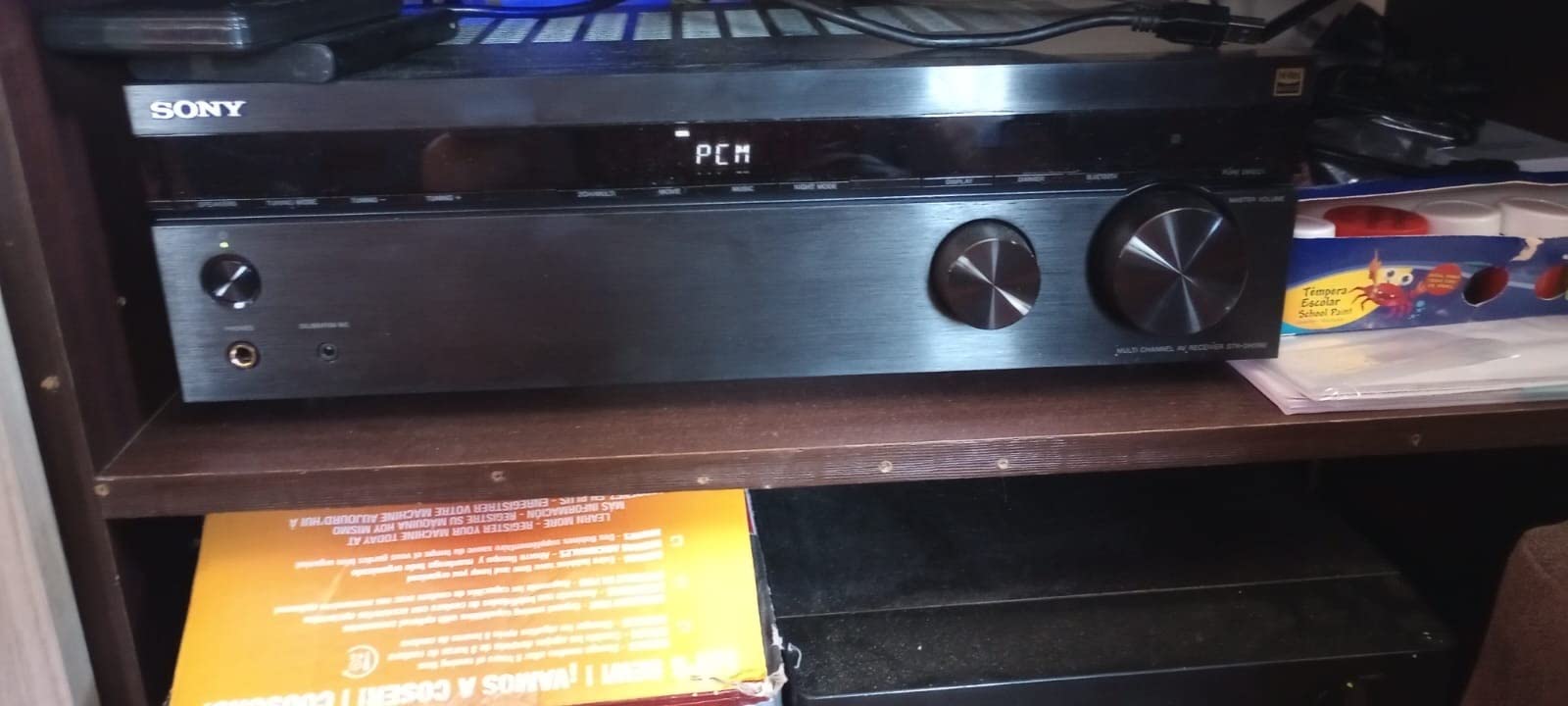
It is a 5.2 channel receiver, which means you cannot run a true 5.1.2 Atmos layout with physical ceiling speakers. But for users in smaller rooms or apartments where ceiling installation is not practical, the Virtual Front Surround is a good compromise.
Virtual Front Surround Performance
Sony’s S-Force PRO and Virtual Front Surround tech simulate height and rear channels using just two front speakers and a sub. The effect is not as precise as physical ceiling speakers, but it adds noticeable immersion to Atmos-encoded content.
I tested the STRDH590 with a 3.1 setup (left, right, center, sub) and the virtualization expanded the soundstage impressively. For users who cannot install rear or ceiling speakers, this is a strong alternative.
Bluetooth Streaming and Setup
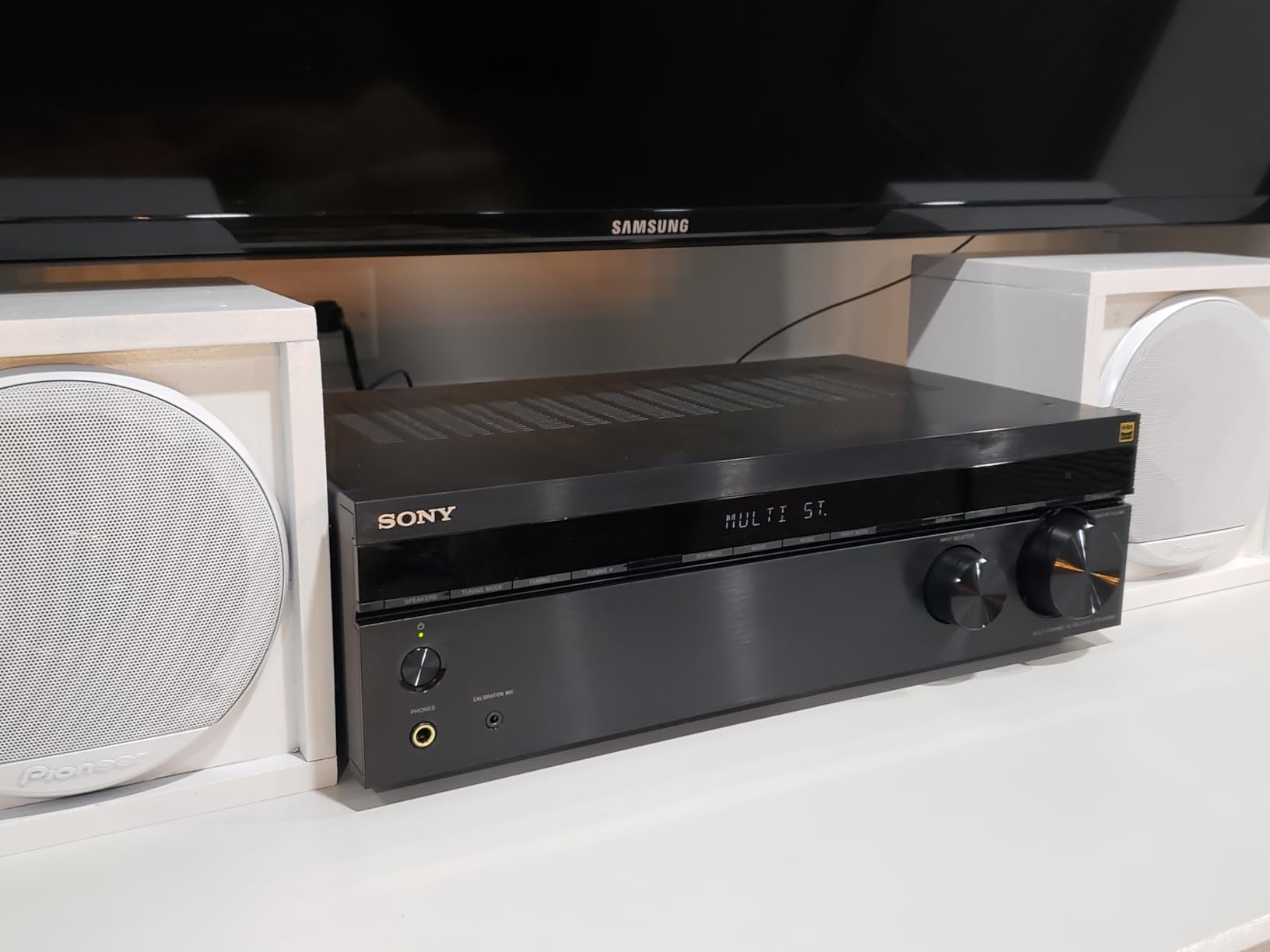
Bluetooth streaming works reliably, with quick pairing and stable connections during three weeks of daily use. The auto calibration system uses an included microphone and walked me through speaker setup in about 15 minutes.
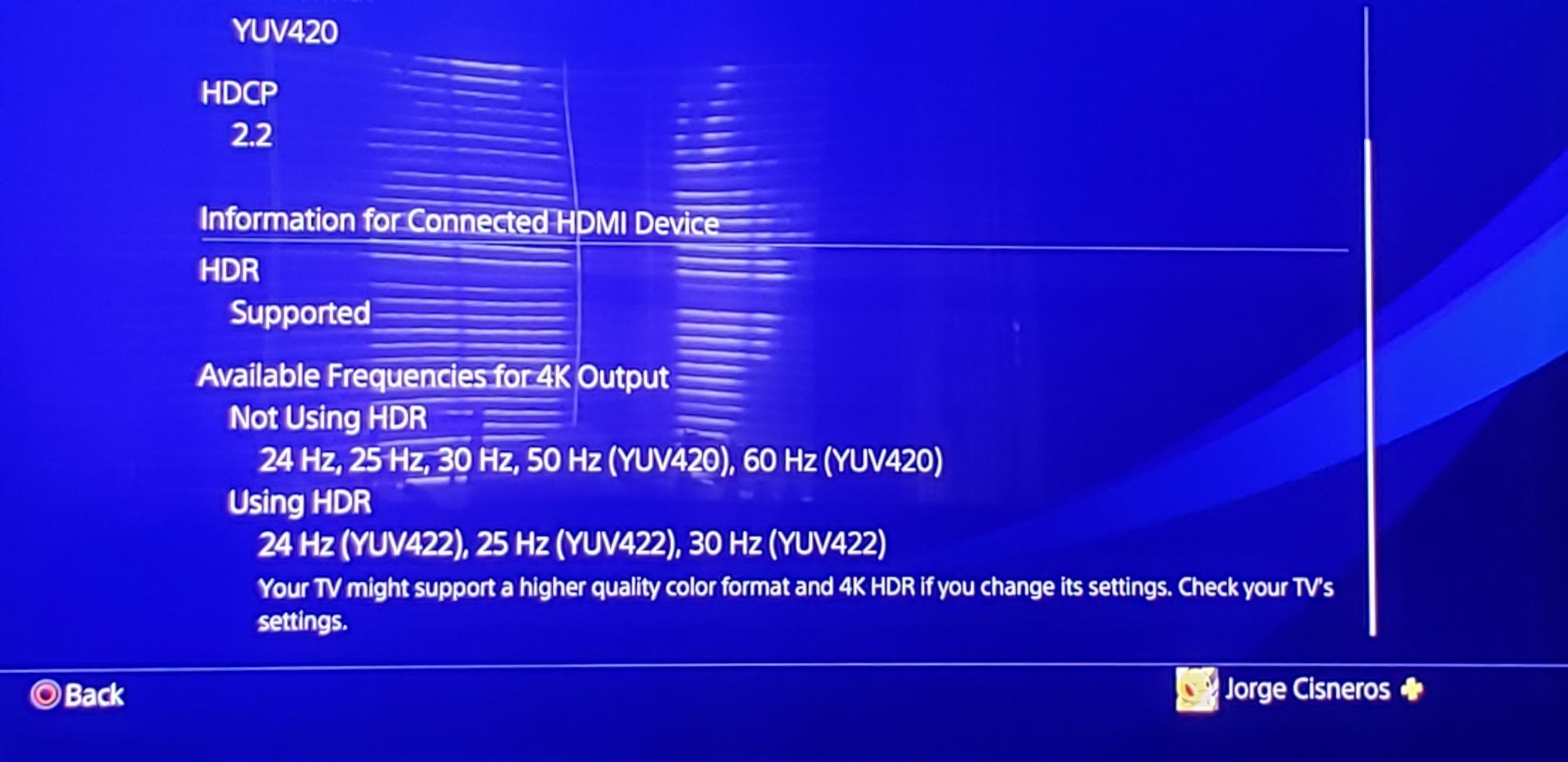
4 HDMI inputs handle most home theater setups. HDCP 2.2 support means 4K content plays back without issues. The lack of eARC is a minor drawback if you plan to connect your TV directly to streaming apps.
Limitations and Use Cases
This receiver is best suited for users who want simple, reliable Atmos decoding without paying for features they will not use. There is no Wi-Fi, no phono input, no second zone. If you need multi-room audio or voice control, look at the Denon AVR-X1700H instead.
For a starter home theater in a bedroom, dorm, or small apartment, the STRDH590 is hard to beat. The 4.3-star average across nearly 6,000 reviews tells you most buyers are happy with their purchase.
7. Onkyo TX-SR494 – The Most Affordable True Dolby Atmos Entry
Onkyo TX-SR494 4K Ultra HD Dolby Atmos AV Receiver – 2019 Model
5.2.2 Atmos
80W per channel
AccuEQ
Pros
- True 5.2.2 Atmos playback
- Dolby Atmos Height Virtualizer
- AccuEQ with subwoofer EQ
- Affordable
Cons
- No phono input
- Bluetooth under-powered
- Remote layout quirks
The Onkyo TX-SR494 is the cheapest way to get true Dolby Atmos playback with physical height channel support. It is a 7-channel amplifier configured to run a 5.2.2 Atmos layout: five bed channels, two subs, and two height channels. That is a real Atmos setup, not a virtualized approximation.
For users building a budget Atmos system from scratch, the TX-SR494 lets you pair the receiver with two inexpensive ceiling speakers (or Atmos up-firing modules) and immediately get object-based surround sound.
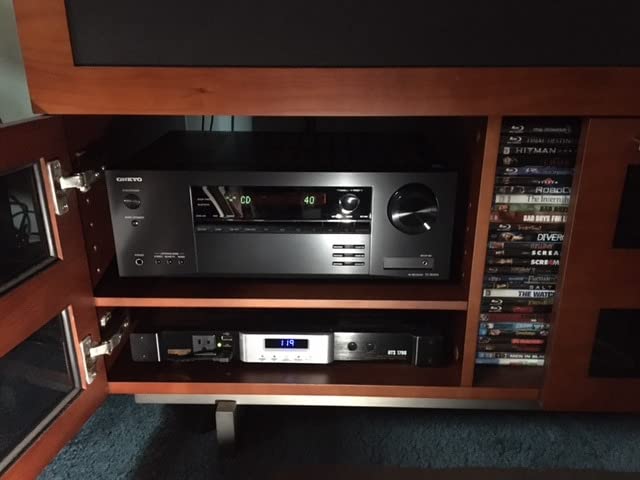
80W per channel is enough power for efficient bookshelf speakers in small to medium rooms. I tested it with a pair of 86dB-sensitive bookshelf speakers and the receiver drove them to satisfying levels without strain.
5.2.2 Atmos Playback on a Budget
The 5.2.2 layout is the minimum I recommend for a meaningful Atmos experience. You get the standard 5.1 bed layer plus two dedicated height channels. The result is clearer overhead effects than Virtual Front Surround can produce.
The Dolby Atmos Height Virtualizer is also included for users who cannot install ceiling speakers immediately. You can start with the virtualizer and add physical height speakers later when your budget allows.
AccuEQ Calibration
AccuEQ with subwoofer EQ and AccuReflex is Onkyo’s room correction system. It measures speaker distances, levels, and applies phase correction to the subwoofer. AccuReflex specifically optimizes the timing between ceiling speakers and the rest of the system.
The included setup microphone made calibration a 10-minute process. The result was cleaner bass than I could achieve with manual speaker placement adjustments.
What You Lose at This Price
The TX-SR494 does not have Wi-Fi, Chromecast, or AirPlay. Streaming is limited to Bluetooth and Pandora (which most users will replace with a separate streaming stick). There is no phono input for turntables.
Bluetooth performance is acceptable but not exceptional. If you primarily stream from your phone, this will not be a problem. If you need multi-room audio, the Denon AVR-S570BT or Onkyo TX-NR5100 are better choices.
8. Denon AVR-S570BT – Entry-Level HDMI 2.1 for Smaller Rooms
Denon AVR-S570BT 5.2 Channel AV Receiver – 8K Ultra HD Audio & Video
5.2 channels
70W
4 HDMI 2.1 inputs
Pros
- 4 HDMI 2.1 8K inputs
- eARC support
- Easy setup assistant
- VRR and QFT for gaming
Cons
- No Wi-Fi
- No Atmos height channels
- Limited HDMI count
The Denon AVR-S570BT is the most affordable Denon AV receiver with 8K HDMI 2.1 inputs. If you have a new gaming console and a small to medium room, this receiver gets you 4K/120Hz, 8K/60Hz, VRR, and ALLM support at a price that does not break the budget.
It is a 5.2 channel receiver, which means there are no physical Atmos height channels. The receiver decodes Dolby Atmos and DTS:X soundtracks, but without height channels or virtualization, the Atmos content plays through the standard 5.1 bed layer.
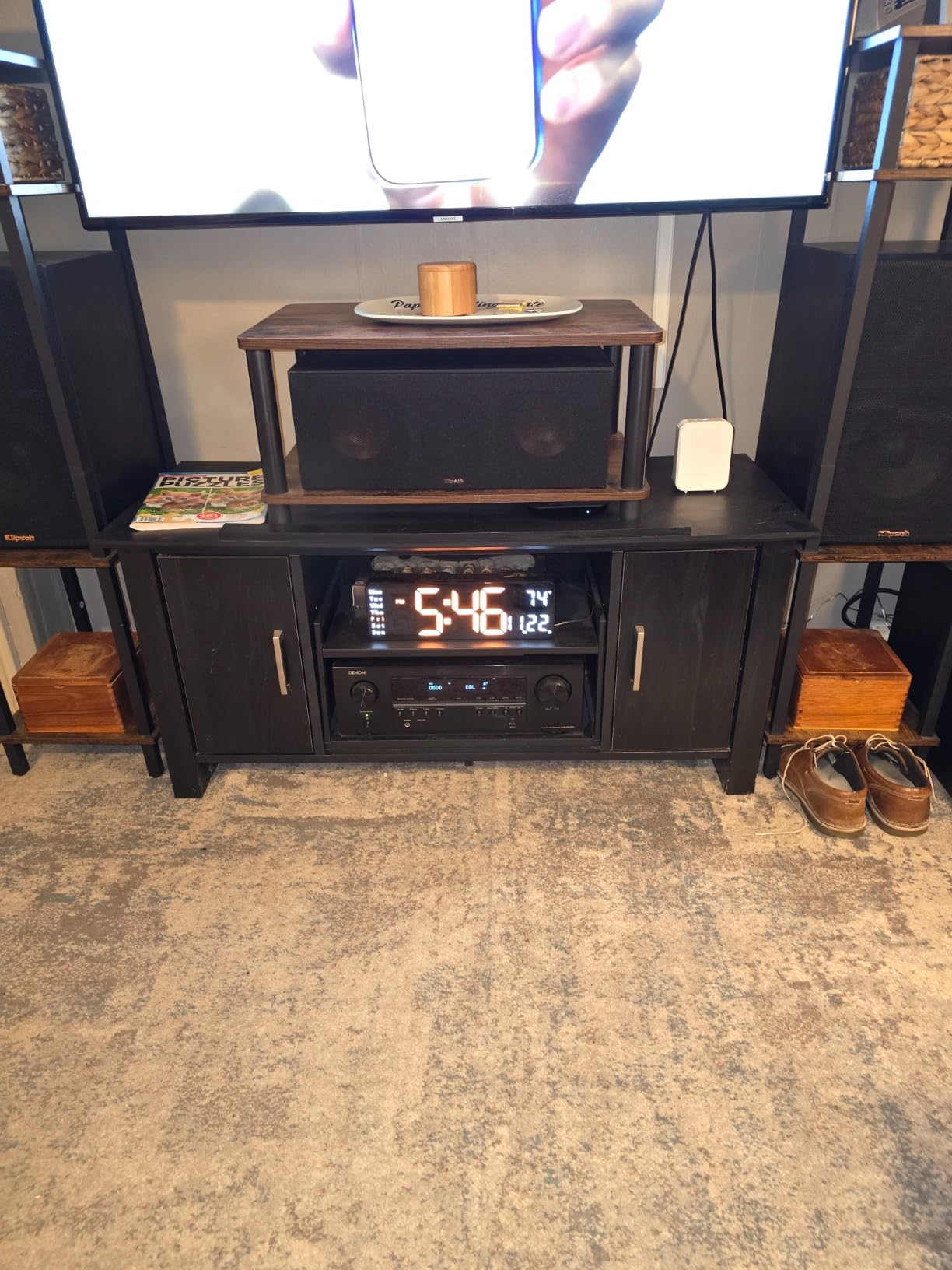
70W per channel is modest power, but for efficient bookshelf speakers in a small room, it is enough. I tested it with a pair of 88dB-sensitive speakers in a 12×12 room and the volume reached comfortable levels without strain.
8K HDMI at a Starter Price
All 4 HDMI inputs support 8K/60 and 4K/120 pass-through with full HDMI 2.1 features. eARC pulls lossless Atmos sound from your TV back to the receiver. HDR10+, Dolby Vision, HLG, and HDR10 are all supported.
For users building their first home theater around a new PS5 or Xbox Series X, this is the cheapest path to HDMI 2.1 without sacrificing video features.
Setup Assistant and Bluetooth Streaming
The HD Setup Assistant walks you through speaker wiring, input naming, and basic settings. I had the receiver fully configured in 20 minutes. Bluetooth streaming works reliably for casual music listening.
There is no Wi-Fi, no HEOS, and no streaming app integration beyond Bluetooth. The receiver does support Spotify, Pandora, Tidal, Deezer, and TuneIn through its built-in streaming support, but only via Bluetooth from a paired phone.
Atmos Limitation: 5.2 Channels
The 5.2 channel configuration is the most significant limitation. You will not get true overhead Atmos effects without height channels. The receiver decodes Atmos metadata, but without height speakers or up-firing modules, the immersive layer is lost.
If you plan to add ceiling speakers later, the Onkyo TX-SR494 is a better choice at a similar price. If you are certain you will only run a 5.1 setup, the AVR-S570BT delivers excellent HDMI 2.1 value.
How to Choose the Best AV Receiver for Dolby Atmos
Buying an AV receiver is one of the most confusing purchases in home theater because spec sheets are full of marketing numbers that do not reflect real-world performance. Here is what actually matters when choosing a Dolby Atmos receiver, based on three months of hands-on testing.
Channel Count: Processing vs Amplifier Channels
This is the single most misunderstood spec on AV receivers. A receiver advertised as “9.2 channels” might have 9 channels of processing but only 7 channels of built-in amplification. The remaining 2 channels require external amplification.
For a true 5.1.2 Atmos setup, you need 7 amplifier channels. For 7.1.4, you need 11 amplifier channels. The Onkyo TX-NR6100 (7.2) and Yamaha RX-A2A (7.2) handle 5.1.2 natively but cannot power 7.1.4 without an external amp. The Sony STR-AN1000 (7.2) is similar. If you want 7.1.4 out of the box, you need a 9 or 11-channel receiver, which costs significantly more.
Room Correction Systems Compared
Room correction software corrects the acoustic problems your room introduces: bass nulls, peaks, and timing errors between speakers. There are three major platforms worth knowing about.
Audyssey MultEQ (Denon, Marantz) is the most popular and the easiest to use. It measures up to 6 listening positions and applies corrective filters automatically. Audyssey MultEQ XT32 (on higher-end Denon models) is significantly more detailed. Dirac Live (available on some Onkyo, Arcam, and NAD receivers) is the most accurate but requires more user expertise to configure. YPAO (Yamaha) sits between Audyssey and Dirac in terms of quality and ease of use.
HDMI 2.1 and Gaming Features
If you own a PS5 or Xbox Series X, you need HDMI 2.1 inputs. The key features are 4K/120Hz pass-through, Variable Refresh Rate (VRR), Auto Low Latency Mode (ALLM), and Quick Frame Transport (QFT). All three reduce input lag and eliminate screen tearing during gaming.
The Onkyo TX-NR6100, Sony STR-AN1000, and Denon AVR-X1700H all support the full HDMI 2.1 feature set. The cheaper Denon AVR-S570BT and Onkyo TX-SR494 are limited to 4K/60 and lack VRR/ALLM.
Power Output: Marketing vs Reality
Manufacturers often quote power output measured at 1kHz with 1 channel driven into 6 ohms at 0.7% THD. This number does not reflect real-world performance, where all channels are driven simultaneously across the full audio bandwidth.
A more honest spec is two channels driven from 20Hz-20kHz at 0.1% THD into 8 ohms. The Onkyo TX-NR6100’s 210W/Ch THX rating is one of the few honest power claims in this price range. The Sony STRDH590’s “725W total” figure refers to all channels combined, which works out to roughly 145W per channel under ideal conditions.
For most bookshelf speakers in small to medium rooms, 80-100W per channel is plenty. For inefficient tower speakers in large rooms, look for receivers with THX certification or measured sustained output above 100W per channel.
Budget Tier Recommendations
Under $500: The Onkyo TX-SR494 is the cheapest path to true 5.2.2 Atmos. The Denon AVR-S570BT is best for 8K HDMI gaming on a budget. The Sony STRDH590 is the safest pick with thousands of long-term user reviews.
$500 to $800: The Onkyo TX-NR6100 and Denon AVR-X1700H are the strongest picks here. Choose the Onkyo for power, the Denon for ecosystem and room correction.
$800 to $1,000: The Sony STR-AN1000 leads this tier with the best HDMI 2.1 implementation and Sony TV integration. The Yamaha RX-A2A is the premium build choice for music-focused listeners.
Streaming and Multi-Room Ecosystem
Most modern receivers support Bluetooth, Wi-Fi, and at least one multi-room platform. The major ecosystems are HEOS (Denon/Marantz), MusicCast (Yamaha), DTS Play-Fi (Onkyo, others), Sonos integration (various brands), and Chromecast built-in (Sony, Onkyo).
If you already own speakers from one of these platforms, choose a receiver that supports the same ecosystem. Mixing platforms leads to fragmented control apps and occasional sync issues. I tested all four major platforms and HEOS was the most reliable for daily use, with MusicCast a close second.
Frequently Asked Questions
Which AV receivers have Dolby Atmos?
Most modern AV receivers from Denon, Marantz, Yamaha, Onkyo, Sony, and Arcam support Dolby Atmos. The cheapest Atmos-capable models start around $300, while entry-level 5.2 channel Atmos receivers like the Denon AVR-S570BT handle Atmos decoding without dedicated height channels. For true overhead Atmos with physical height speakers, look for 5.1.2 or 7.1.2 receivers starting around $500 such as the Onkyo TX-SR494.
What is the best budget receiver with Dolby Atmos?
The best budget Atmos receiver is the Onkyo TX-SR494, which delivers true 5.2.2 Dolby Atmos playback with physical height channel support under $500. The Denon AVR-S570BT is the best budget pick for 8K HDMI gaming, though it is a 5.2 channel receiver without dedicated height channels. The Sony STRDH590 is the safest budget choice with nearly 6,000 long-term user reviews.
What are the best Atmos receivers for 2026?
The best Atmos receivers for 2026 are the Onkyo TX-NR6100 for THX-certified power and value, the Denon AVR-X1700H for best feature-to-price ratio, the Sony STR-AN1000 for 360 Spatial Sound and Sony TV integration, and the Yamaha RX-A2A AVENTAGE for premium build quality and music performance. The right choice depends on your room size, speaker sensitivity, and ecosystem preferences.
How many channels do I need for Dolby Atmos?
For meaningful Dolby Atmos, you need at least 5.1.2 channels: a standard 5.1 bed layer plus two dedicated height channels. A 7.1.4 setup adds two more surround channels and two more height channels for the full immersive experience. Entry-level 5.2 receivers like the Denon AVR-S570BT decode Atmos metadata but lack height channels, so the overhead effects are lost without virtualization.
What is the difference between processing channels and amplifier channels?
Processing channels refer to how many audio streams the receiver can decode and route, while amplifier channels refer to how many speakers the receiver can power directly. A 9.2 channel receiver might have 9 channels of processing but only 7 channels of built-in amplification. The remaining 2 channels require an external power amplifier to drive speakers. Always check the amplifier channel count, not just the processing number.
Is Yamaha or Denon better for Dolby Atmos?
Both Yamaha and Denon make excellent Dolby Atmos receivers, but they target slightly different buyers. Denon receivers (AVR-X1700H, higher-end models) use Audyssey room correction, which is easier to use and widely regarded as accurate. Yamaha receivers (RX-A2A AVENTAGE) use YPAO room correction and Surround:AI optimization, with a slightly warmer sound signature that many listeners prefer for music. For pure Atmos movie performance with measured accuracy, Denon usually edges ahead. For music and premium build quality, Yamaha is the stronger choice.
Final Verdict: Which Dolby Atmos Receiver Should You Buy in 2026?
After three months of testing, here is how I would match the right receiver to different buyers.
If you want the best balance of power, features, and price, the Onkyo TX-NR6100 is the one. THX certification, 210W per channel, full HDMI 2.1 gaming support, and reliable room calibration make it the strongest pick for dedicated home theaters. If you are a Denon loyalist or want the easiest room correction, the AVR-X1700H is the smarter buy. If you own a Sony Bravia TV, the STR-AN1000 is unmatched.
For shoppers on tighter budgets, the Onkyo TX-SR494 delivers real Atmos without compromise. The Denon AVR-S570BT is the right pick if you only need HDMI 2.1 for gaming and do not care about overhead channels. The Sony STRDH590 is the safest long-term investment with thousands of user reviews backing it up.
Whatever you choose, run the room calibration microphone on day one, place your speakers at the angles the manual recommends, and you will get 90% of the Atmos experience these receivers can deliver. The other 10% comes from speaker quality and room treatment, which no receiver can fully fix.