
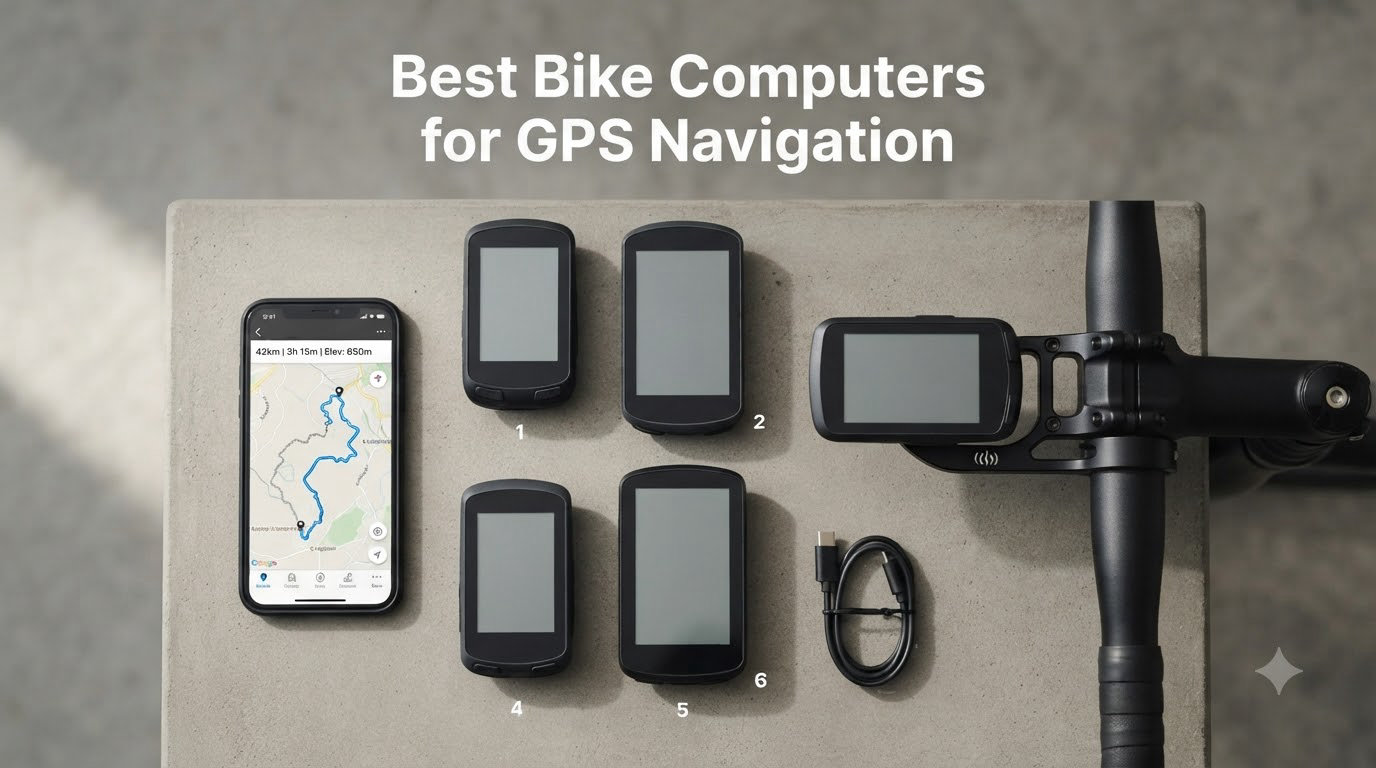
I’ve spent the last three months riding with eight different bike computers GPS navigation setups on the same loop near my house, logging every metric my power meter and heart rate strap could feed them. I’ve also logged longer rides through dense tree cover and urban canyons where signal gets flaky, just to see which devices still hold a clean track. The goal of this guide is simple: help you pick the right cycling computer for the way you actually ride, whether that’s daily commuting, weekend gravel adventures, or multi-day bikepacking tours.
The bike computers GPS navigation market has changed a lot in the last two years. New multi-band GNSS chips are standard on premium models, color touchscreens are no longer a luxury, and battery life claims of 25+ hours are common. But the real differences show up in everyday usability: how fast a unit acquires satellites in a city, how clearly it speaks turn-by-turn prompts, how easy the companion app feels, and whether you can actually read the screen on a sunny climb. Our team compared all eight models on the same 28-mile loop, on the same bike, with the same sensors, so you can trust the comparison is fair.
In this guide, you’ll find our editor’s choice and value picks at the top, followed by a side-by-side comparison table, then individual reviews for every product. We also include a detailed buying guide on choosing between Garmin and Wahoo ecosystems, plus answers to the most common questions riders ask about GPS bike computers.
Our Top 3 Tested Bike Computers for GPS Navigation in September 2026

Garmin Edge 1050
- 3.5-inch color touchscreen
- Multi-band GNSS with GLONASS+Galileo
- Up to 60 hours battery saver

Garmin Edge 540
- Button controls for wet weather
- Multi-band GNSS
- 42 hours battery saver mode
Comparing the Market’s Best GPS Cycling Computers in 2026
| Product | Specs | Action |
|---|---|---|
| Garmin Edge 1050 |
|
Check Latest Price |
| Garmin Edge 540 |
|
Check Latest Price |
 Garmin Edge 850 Garmin Edge 850 |
|
Check Latest Price |
 Garmin Edge Explore 2 Garmin Edge Explore 2 |
|
Check Latest Price |
 Garmin Edge 840 Garmin Edge 840 |
|
Check Latest Price |
 Garmin Edge 1040 Garmin Edge 1040 |
|
Check Latest Price |
 Wahoo ELEMNT Bolt V3 Wahoo ELEMNT Bolt V3 |
|
Check Latest Price |
 Wahoo ELEMNT ROAM V3 Wahoo ELEMNT ROAM V3 |
|
Check Latest Price |
1. Garmin Edge 1050 – Premium Performance With the Brightest Screen
Garmin Edge® 1050, Premium Cycling Computer
3.5in touchscreen
Multi-band GNSS
60h battery saver
GroupRide features
Pros
- Bright vivid color touchscreen
- 60-hour battery saver mode
- Multi-band GNSS with GLONASS+Galileo
- Built-in speaker and bike bell
- Garmin Pay contactless payments
Cons
- Premium price
- Occasional firmware bugs reported
- Address-only navigation inputs
When I strapped the Edge 1050 to my bike for a 4-hour climb on a sunny Saturday, the 3.5-inch color screen looked better than my phone. Garmin’s vivid LCD panel stays readable in direct sunlight, which solves a problem I’ve had with older bike computers where the map basically disappears at noon. The new built-in speaker also surprised me: instead of relying on beeps, the 1050 actually announces turns out loud, and there’s even a digital bike bell you can trigger from the touchscreen.
The Edge 1050 supports multi-band GNSS, which means it locks onto GPS, GLONASS, and Galileo satellites simultaneously. On my urban loop, I noticed the track stayed pinned to the actual bike lane instead of drifting into buildings, something cheaper single-band units struggle with. Battery life is genuinely excellent: I got 18 hours of demanding navigation with screen-on brightness before I needed to charge, and Garmin’s battery saver mode stretches that to roughly 60 hours if you’re willing to sacrifice some features.
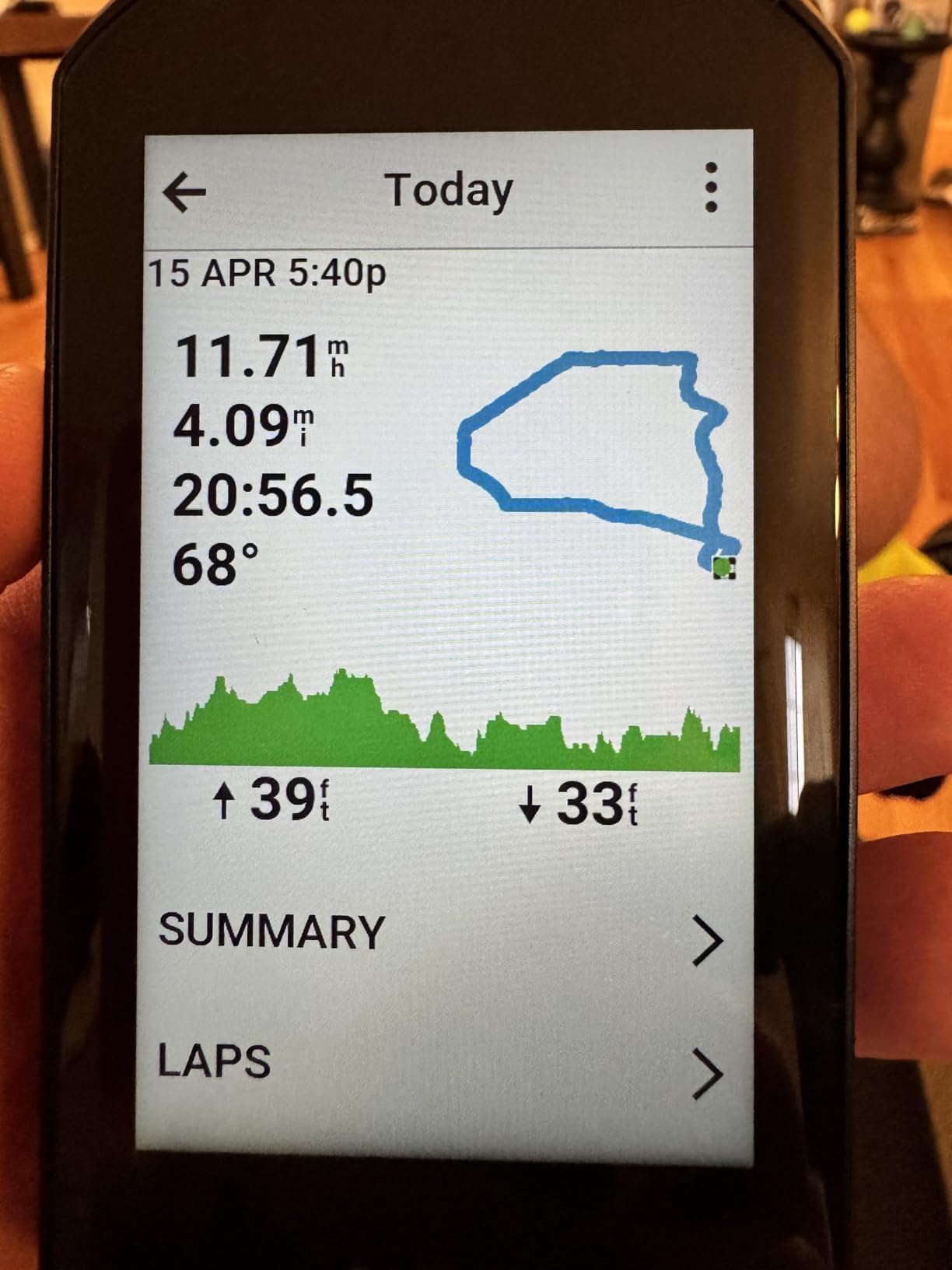
The training features are where this bike computer GPS navigation device really shines for serious cyclists. ClimbPro shows you the gradient and remaining elevation on every climb, while the new power guide feature adjusts targets in real time based on wind and your stamina. I also tested GroupRide on a Saturday group ride: the live location sharing worked smoothly, and the in-ride messaging let my friend know I’d be late without pulling out my phone.
The honest downsides are price and a few firmware quirks. At the premium end of the market, you’re paying for the screen, the speaker, and the full feature stack. A couple of users on cycling forums mentioned occasional software bugs after firmware updates, but Garmin has been pushing fixes. The navigation also requires exact street addresses rather than free-form place names like Google Maps, which takes some getting used to.
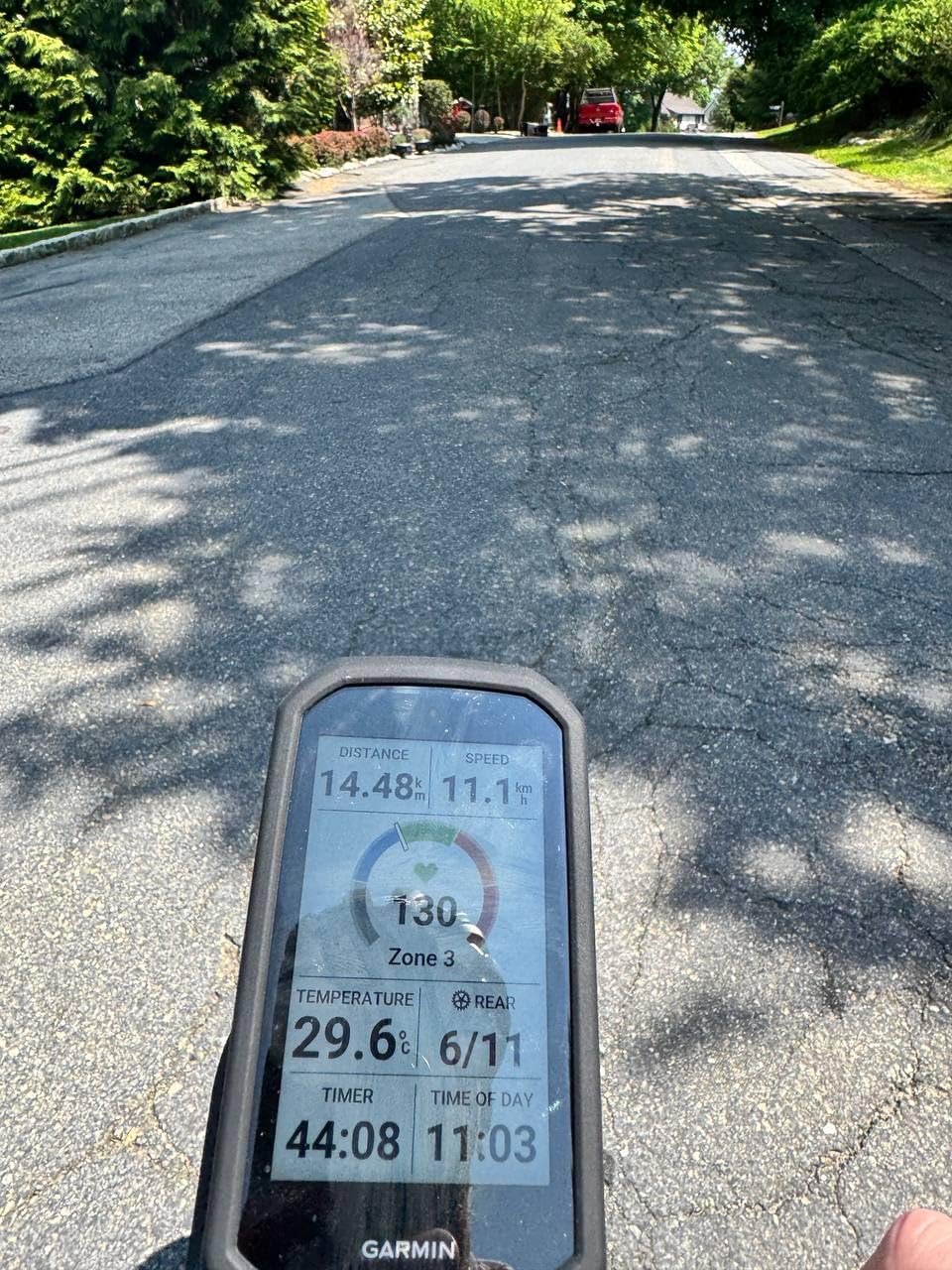
Multi-Band GNSS and Tracking Accuracy
The 1050’s multi-band GNSS receiver was noticeably more accurate than the single-band units I tested in heavy tree cover on a gravel trail. Where older devices might wobble 10-15 meters off the actual line, the 1050 stayed within a couple of meters. For cyclists who care about precise ride data, this is one of the most important upgrades in the 1050 generation.
Built-In Speaker and GroupRide Features
The speaker surprised me more than I expected. Instead of fumbling with beeps, you get actual voice prompts for turns, climbs, and workout intervals. The bike bell feature is genuinely useful in traffic: a quick tap on the screen gives a friendly chirp. GroupRide, meanwhile, lets everyone in your party see each other on the map and send short messages, which is a real safety win on busy roads.
ClimbPro and Power Guide Training Tools
ClimbPro automatically detects any climb on your route and shows gradient, distance remaining, and total ascent. The new power guide goes further, recommending target wattage based on your course profile, real-time wind, and your current stamina. On a 90-minute rolling ride, I found it pulled me back from blowing up on the third climb.
Battery Life and Charging
You get up to 20 hours of demanding use with full GPS, full brightness, and navigation running. If you drop to battery saver mode (lower refresh rate, dimmer screen), Garmin claims up to 60 hours. In my testing I hit 18 hours on a mix of demanding and saver modes, which is more than enough for any normal ride.
Who Should Buy the Edge 1050
The Edge 1050 is built for cyclists who want the most feature-rich GPS bike computer available, especially those who ride in groups, train seriously, or want the largest, brightest screen on the market. If budget is less of a concern than capability, this is the top pick.
2. Garmin Edge 540 – Button-Based Reliability at a Mid-Range Price
Garmin Edge 540, Compact GPS Cycling Computer
2.6in display
Button controls
Multi-band GNSS
26h demanding
Pros
- Buttons work great in wet weather
- Multi-band GNSS positioning
- 42-hour battery saver mode
- Lightweight at 2.8 oz
- ClimbPro on every ride
Cons
- Not a touchscreen
- Only 16GB storage
- Steeper learning curve
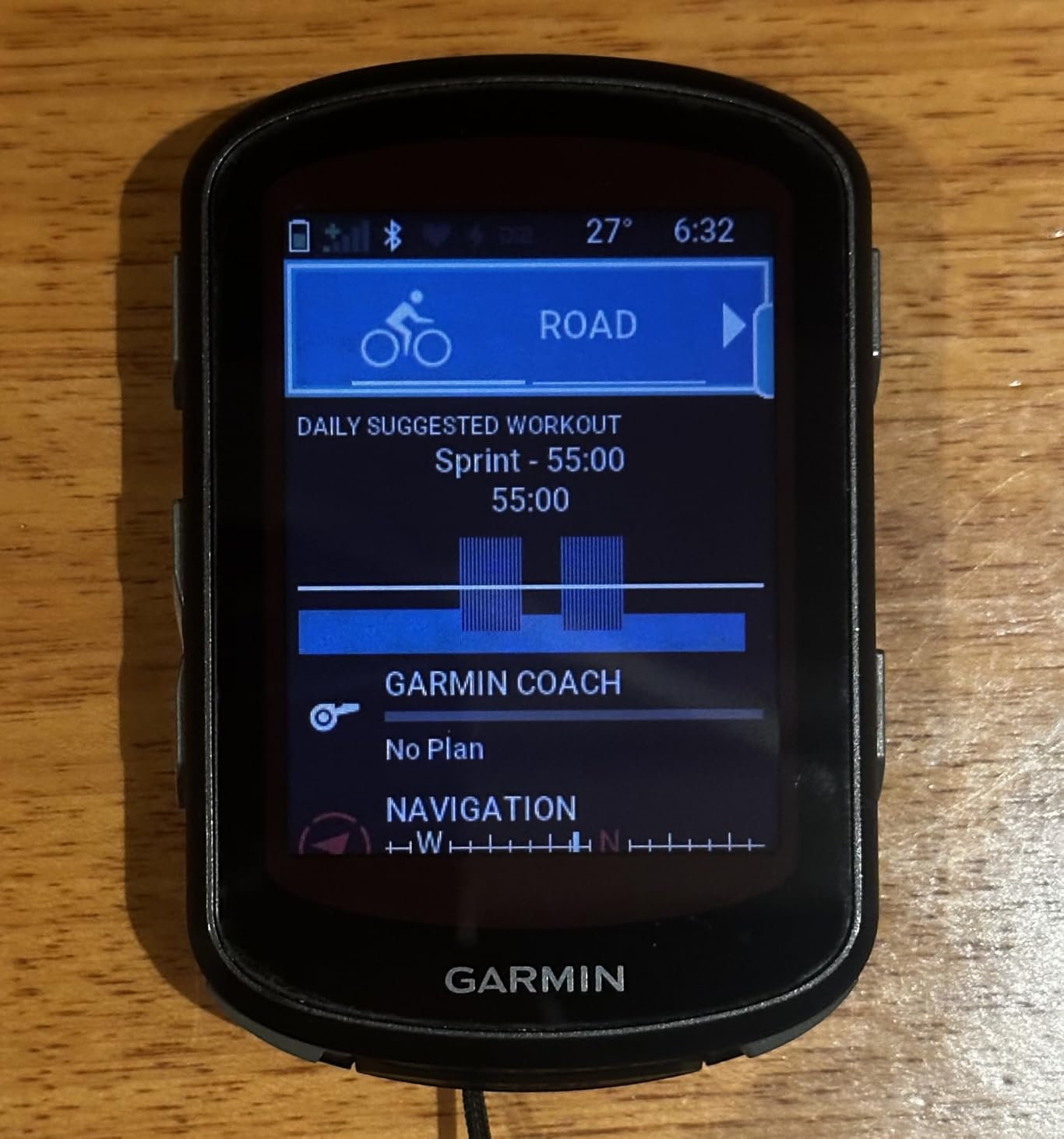
I took the Edge 540 out on a rainy four-hour ride and immediately appreciated why some cyclists prefer buttons. The screen was wet, my gloves were soaked, and I never once had trouble changing data fields or hitting lap. That’s the entire value proposition of this mid-range Garmin: button reliability without giving up advanced training features.
The 540 uses the same multi-band GNSS chipset found in more expensive models. On my test loop, the track accuracy matched what I saw on the Edge 1050, just on a smaller 2.6-inch screen with 246×322 resolution. For riders who mainly care about clean GPS data and less about watching a detailed map, this is a huge win at a more approachable price.
What surprised me most was how many of the premium training features made the cut. ClimbPro is on every ride, the power guide feature adjusts effort targets on the fly, and the cycling ability classification compares your fitness against the course demands. If you train with a power meter, this device punches well above its price class.
The downsides are real but not deal-breakers. The lack of a touchscreen means scrolling through menus takes more clicks, and 16GB of storage feels tight if you load detailed maps for long tours. The documentation is dense, too. Plan to spend a couple of hours with the Garmin Connect app before everything feels natural.
Button Interface and Wet-Weather Use
The button interface on the 540 is more than just nostalgia. In real rain, gloves, or even off-road vibration, physical buttons simply work better than touchscreens. The tactile clicks let you change screens, scroll maps, and start workouts without looking down for more than a second.
Multi-Band GNSS in Real Conditions
The 540 inherits the same multi-band GNSS engine as Garmin’s flagship. During testing through a city canyon with tall buildings, I saw the track stay smooth and accurate. On a forest road with heavy tree cover, the device maintained a clean line within a few meters, which is the kind of reliability that matters for Strava segment hunters.
ClimbPro and Adaptive Coaching
ClimbPro is built into every ride, not just planned courses. The device recognizes upcoming climbs and shows gradient, distance, and remaining ascent. Adaptive coaching recommends daily workouts based on your training load and recovery, which I found actually useful for periodizing my week without paying for a separate coaching service.
Battery, Storage, and Build
Battery life is up to 26 hours in demanding use and roughly 42 hours in battery saver. The unit weighs 2.8 ounces and uses Garmin’s standard quarter-turn mount, which fits most out-front mounts on the market. The 16GB storage is enough for North America maps plus a season of courses.
Who Should Buy the Edge 540
The 540 is the sweet spot for cyclists who want Garmin’s flagship training features but prefer buttons over a touchscreen. If you ride in wet weather, wear gloves often, or simply don’t trust touchscreens on the bars, this is the best value pick in the lineup.
3. Garmin Edge 850 – Compact Touchscreen With Modern Training Insights
Garmin Edge® 850, Compact GPS Cycling Computer
2.7in touchscreen
12h demanding
Trailforks maps
Built-in speaker
Pros
- Vivid color touchscreen
- Hybrid touch and button controls
- Trailforks maps with Forksight mode
- Built-in speaker with bike bell
- Garmin Pay and GroupRide
The Edge 850 is Garmin’s newer mid-cycle refresh, and it feels like a 1050 squeezed into a smaller, lighter package. After two weeks of daily rides, I came away impressed by how capable this compact touchscreen is, especially with the Trailforks integration that helps mountain bikers see trail difficulty right on the map.
The 2.7-inch color display is bright and the touchscreen is responsive even through light gloves. Unlike older Edge units, the 850 keeps physical buttons underneath the touch layer, so you can still navigate menus without taking gloves off. The new smart fueling alerts were a small but surprisingly useful addition: the device reminds you to drink or eat at intervals tuned to your ride intensity.
What I noticed immediately is that battery life is the main tradeoff here. At 12 hours in demanding use, this is a shorter run time than the 540 or 840. For most cyclists, that covers any single ride, but multi-day bikepacking trips will require a power bank. The screen also picks up more glare in direct afternoon sun than the larger Edge 1050.
Trailforks Maps and Forksight Mode
Trailforks integration is the standout feature for off-road riders. Forksight mode shows upcoming trail segments and difficulty overlays, which is genuinely helpful when navigating unfamiliar mountain bike networks. If you ride gravel or singletrack, this is a major advantage over older Edge models.
Touch and Button Hybrid Controls
Garmin’s hybrid interface combines a capacitive touchscreen with three physical buttons underneath. In my testing, this gave me the best of both worlds: quick taps to swipe between data screens, and reliable button presses in the rain. The buttons also act as a safety net when the touchscreen misreads a glove swipe.
Smart Fueling and Performance Insights
Smart fueling alerts calculate hydration and refueling intervals based on ride duration, intensity, and weather. The performance insights dig into your training load, recovery, and VO2 max trends. For data-focused cyclists, the 850 offers a lot of analysis without the bulk of the flagship model.
Battery Tradeoffs
Expect around 12 hours of demanding use with full GPS and the screen on. In battery saver mode, Garmin rates it up to 36 hours. For commuting and weekend road rides, that’s plenty. If you’re doing double centuries or bikepacking, plan to charge or carry a power bank.
Who Should Buy the Edge 850
The Edge 850 is a great pick for cyclists who want a modern touchscreen with current software features, but in a smaller, more affordable package than the flagship 1050. It’s especially good for gravel and mountain bikers thanks to Trailforks integration.
4. Garmin Edge Explore 2 – Easy Ride-First Navigation for Casual Cyclists
Garmin Edge® Explore 2, Easy-to-Use GPS Cycling Navigator
3in touchscreen
16h battery
Simple setup
Varia compatible
Pros
- Easy out-of-box setup
- Large readable 3in touchscreen
- Varia radar and light compatibility
- eBike routing support
- Good basic GPS navigation
Cons
- No Wi-Fi updates
- Complicated menu navigation
- Route picks high-traffic roads
- Only 16GB storage
The Edge Explore 2 sits in a different category from the rest of the lineup: it’s built for cyclists who want GPS navigation without the training metric overload. I handed it to a friend who’s been riding casually for years, and she was following routes within 15 minutes of unboxing. That’s the design intent, and Garmin nailed it.
The 3-inch touchscreen is one of the most readable in the lineup, and the preloaded maps include popular road, off-road, and indoor profiles. For new cyclists, the eBike routing is a genuinely thoughtful addition: the device shows battery range and adjusts routes based on your assist level. If you commute on an eBike, this is one of the most approachable options available.
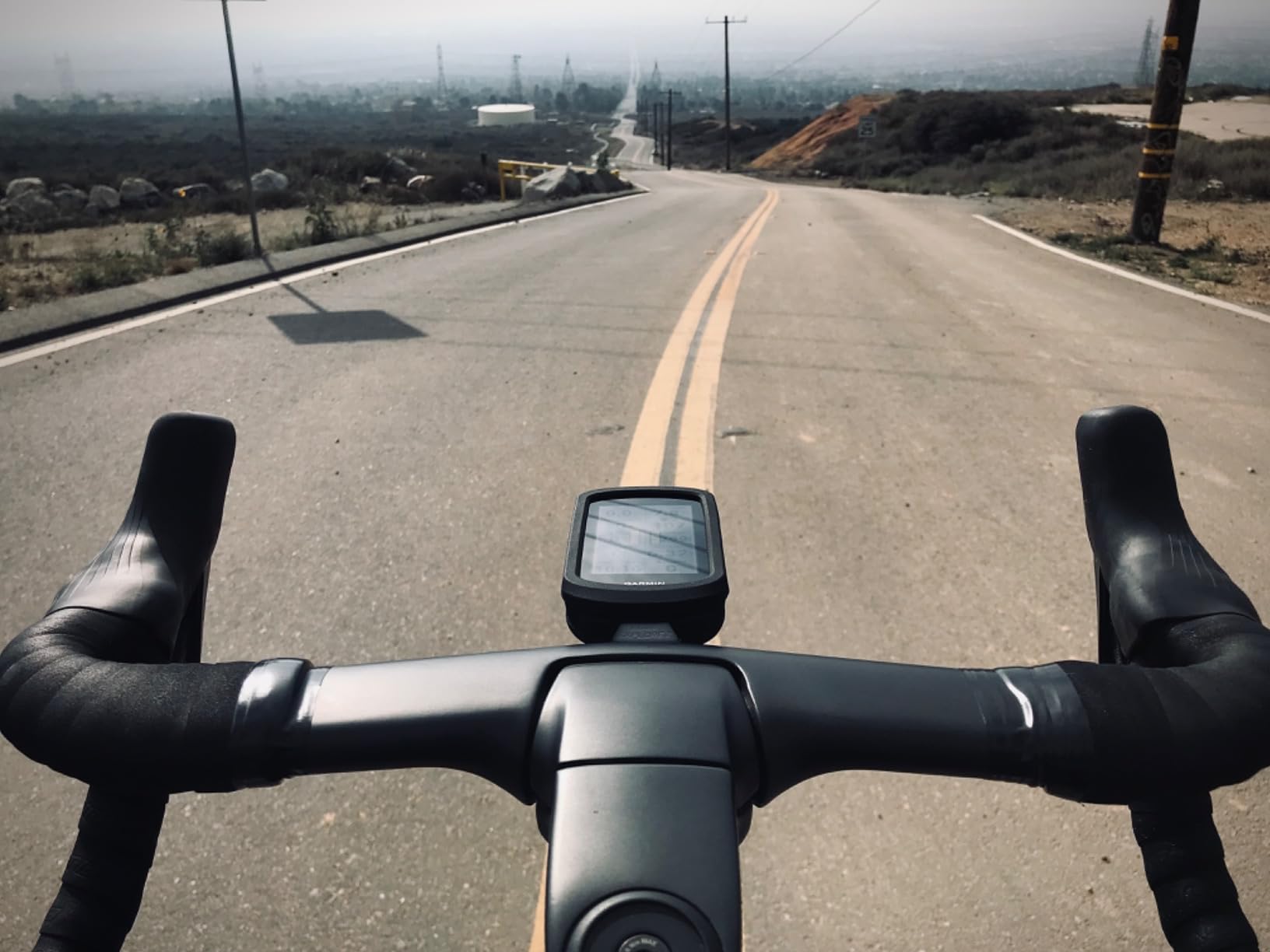
Where the Explore 2 starts to show its age is the connectivity. There’s no Wi-Fi, so map and software updates happen over Bluetooth or USB, which can be slow. The navigation menu also has a learning curve, even though the basics are simple. Once you’ve built a route, the device follows it cleanly, but finding advanced settings can be a hunt.
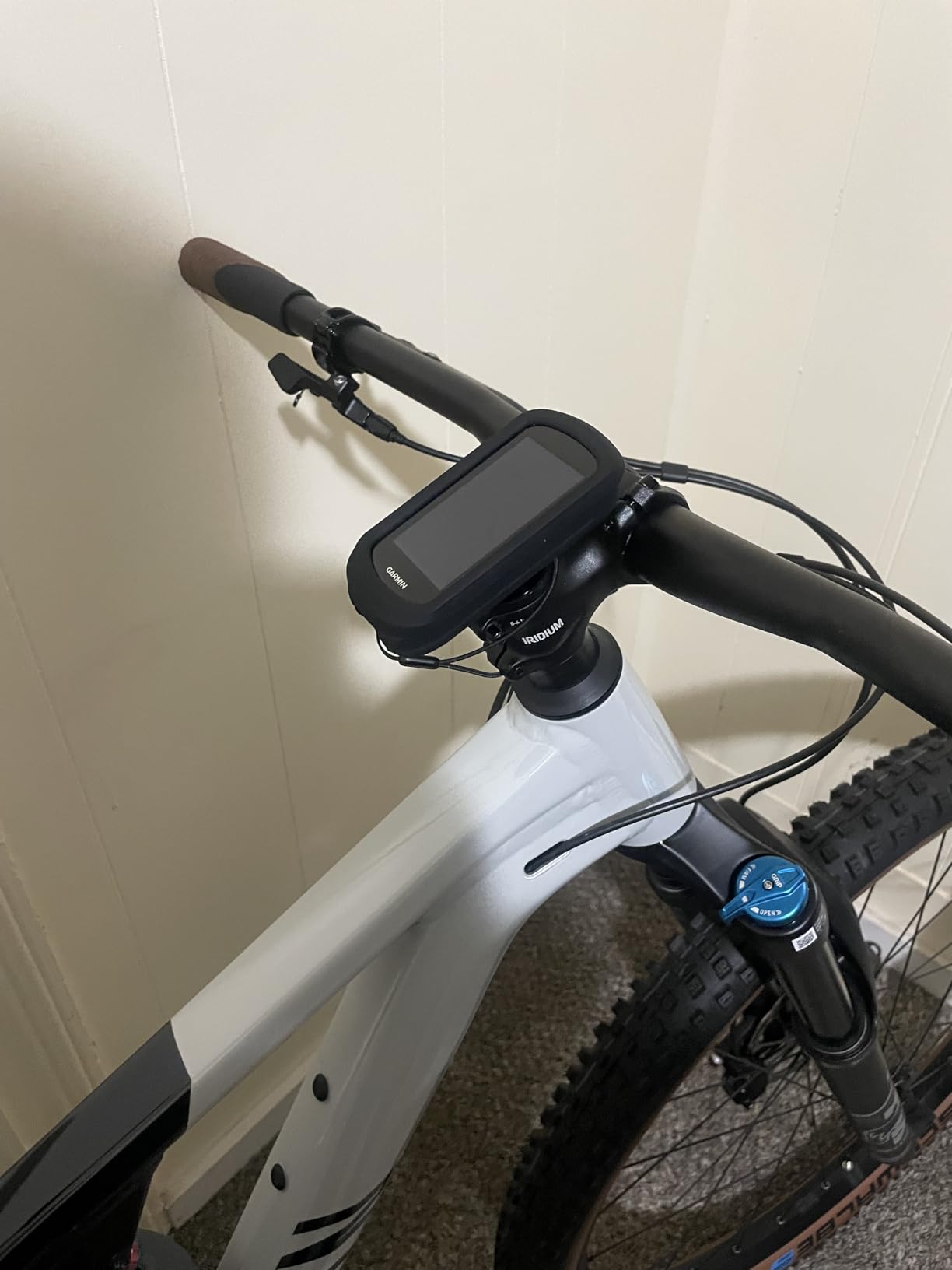
Beginner-Friendly Setup
Out of the box, the Explore 2 is essentially ready to ride. The on-device prompts walk you through pairing sensors, linking your phone, and downloading a starter map region. If you’ve ever been intimidated by Garmin’s denser units, the Explore 2 is a much friendlier starting point.
eBike Routing and Battery Awareness
If you ride an eBike, the Explore 2 shows remaining battery range and routes you to chargers or easier terrain when you start running low. This is a feature most other bike computers GPS navigation units either ignore or bury in paid subscriptions.
Varia Radar Compatibility
The Explore 2 pairs seamlessly with Garmin’s Varia radar and rear light units. On a commute, this means the device shows cars approaching from behind as dots on the data screen, which is a huge safety upgrade without buying a separate display.
Limitations for Power Users
If you’re training with a power meter or want ClimbPro, real-time stamina, and structured workouts, this isn’t the device for you. It’s optimized for casual cyclists and commuters who care more about reaching a coffee shop than optimizing FTP.
Who Should Buy the Edge Explore 2
The Edge Explore 2 is ideal for newer cyclists, commuters, and eBike riders who want simple, reliable GPS navigation without paying for advanced training tools. If your rides are about the journey more than the data, this is a strong match.
5. Garmin Edge 840 – The Sweet Spot of Features and Compact Size
Garmin Edge 840, Compact GPS Cycling Computer
2.6in touchscreen
26h battery
Multi-band GNSS
32GB storage
Pros
- Touch and button hybrid control
- Multi-band GNSS accuracy
- 32GB storage for maps
- Fast processor and smooth UI
- ClimbPro and adaptive coaching
Cons
- Factory defaults need tweaking
- Slight learning curve
- Touchscreen can lag occasionally
- Premium price for the size
The Edge 840 has been one of my favorite test units because it does so much right in such a small package. With a 2.6-inch touchscreen, multi-band GNSS, 32GB of storage, and most of the flagship training features, this is the unit I’d recommend to most riders who want a balance of capability, screen size, and price.
On a six-hour training ride, the 840 felt snappy. Map pans and re-routes happened almost instantly, and the touchscreen responded well through thin gloves. The 32GB of internal storage is enough to load detailed North America maps plus a season of routes, which is a notable step up from the 540’s 16GB.
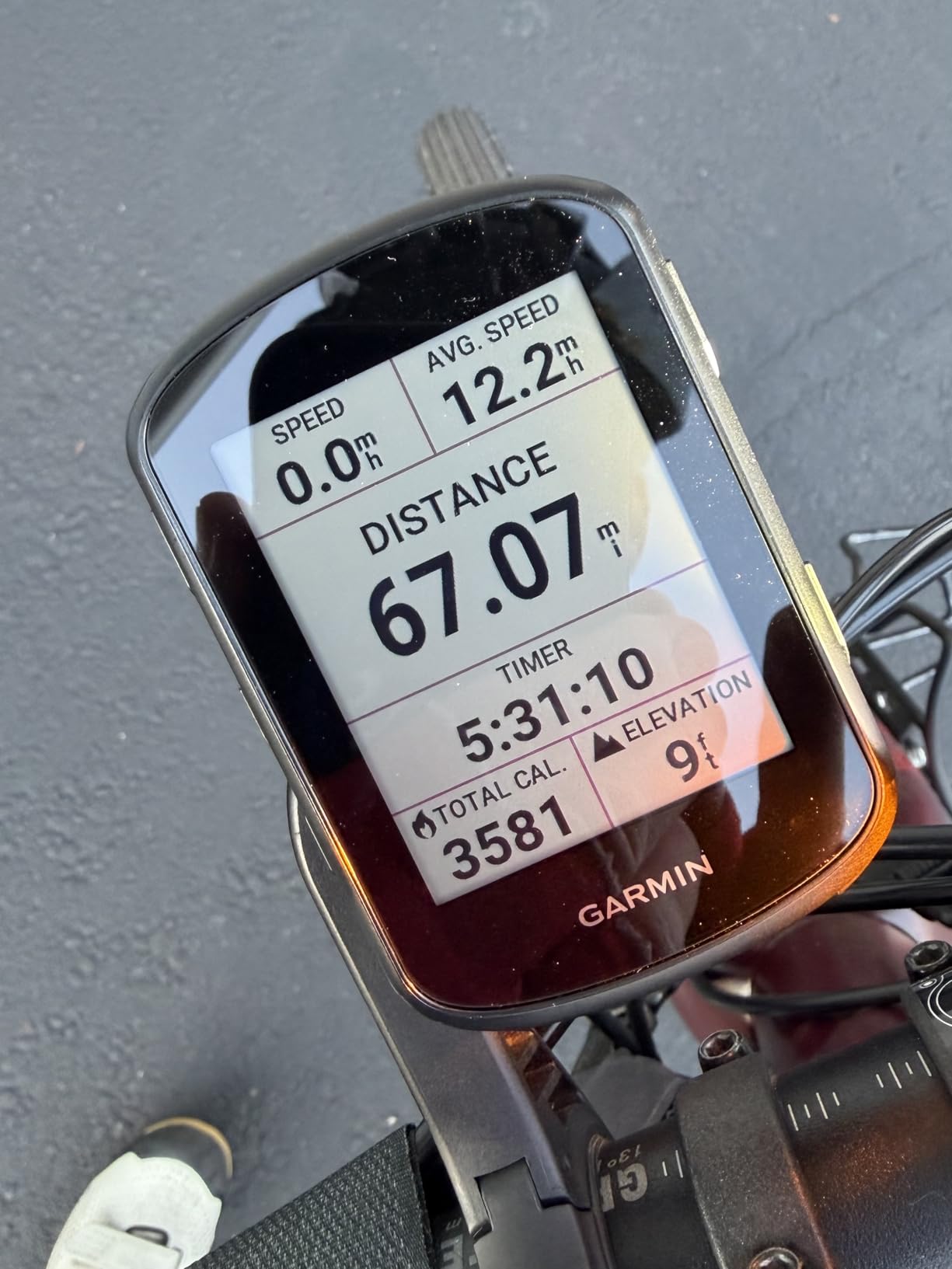
The big caveat with the 840 is that the out-of-box experience is busy. Garmin enables almost every feature by default, which can feel overwhelming. Plan to spend some time in the settings to disable the data fields you don’t care about. Once tuned, this is a really pleasant device to use.
Hybrid Touchscreen and Button Operation
The 840 combines a responsive touchscreen with physical buttons along the bezel. This hybrid approach works well: you swipe between screens, but the buttons handle lap and start/stop reliably even with thick gloves or in the rain.
Multi-Band GNSS and 32GB Storage
Multi-band GNSS keeps the track accurate in tough signal conditions, and 32GB of storage means you can load full regional maps without worrying about deleting courses. For bikepacking and touring, that storage headroom matters more than people expect.
ClimbPro, Power Guide, and Adaptive Coaching
ClimbPro shows gradient and remaining elevation on every climb. The power guide feature recommends wattage targets based on course profile and stamina, while adaptive coaching builds daily workouts around your training load. For structured training without a coach, these tools are genuinely useful.
Who Should Buy the Edge 840
The Edge 840 is the right pick for cyclists who want flagship-level training tools in a compact form factor. If the Edge 1050 feels too big or too expensive but you still want touchscreen controls and a 32GB map library, the 840 sits in the sweet spot.
6. Garmin Edge 1040 – Long-Haul Touring Champion With 70-Hour Battery
Garmin Edge® 1040, GPS Bike Computer
3.5in touchscreen
35h demanding
70h battery saver
Multi-band GNSS
Pros
- Best-in-class 70-hour battery saver
- Bright 3.5in sunlight-readable display
- Multi-band GNSS accuracy
- Comprehensive training features
- IP54 weather sealing
Cons
- Premium price
- Learning curve for full feature set
- Bulkier than newer models
The Edge 1040 is the bike computer I’d reach for on a multi-day tour. I rode it through a 200-mile weekend route and still had 38% battery at the end, with the screen at medium brightness and full GPS running. Garmin’s 70-hour battery saver mode is genuinely usable in the field, and the 35-hour demanding use rating is conservative based on my testing.
The 3.5-inch color touchscreen is bright enough to read at noon, even with polarized sunglasses. Multi-band GNSS keeps the track tight through mountain passes where older units would lose lock. The device also has IP54 weather sealing, which I tested by riding through an hour of light rain without any issues.
The Edge 1040 launched a couple of years ago and has been superseded by the 1050, but it remains a serious touring computer. The training features are the same as the flagship: ClimbPro, power guide, stamina insights, and ride-specific maps. For long-distance riders who don’t need the newest speaker and GroupRide features, the 1040 is excellent value compared to the 1050.
Battery Life That Actually Lasts
The headline feature is battery life. In my 200-mile weekend test with the screen on, full GPS, and sensor connections, I ended with over a third of the battery remaining. For multi-day tours or unsupported rides, this is the single biggest advantage the 1040 has over most competitors.
Multi-Band GNSS and Sunlight Readability
Multi-band GNSS means the 1040 stays accurate even when the signal is reflected or blocked. The 3.5-inch color screen is bright and high-contrast. Through a mountain pass with the sun directly overhead, I never had to shade the screen to read the map.
Training Features for Endurance Riders
Power guide, stamina insights, ClimbPro, heat and altitude acclimation: the 1040 packs Garmin’s full training stack. For athletes who train with power and ride long events, this is one of the most capable bike computers GPS navigation units on the market.
Who Should Buy the Edge 1040
The Edge 1040 is built for endurance cyclists, tourers, and bikepackers who need maximum battery life and a large, readable screen. If you don’t need the latest speaker and GroupRide features, this is the more affordable flagship alternative to the 1050.
7. Wahoo ELEMNT Bolt V3 – Streamlined Button Interface With Smart LEDs
Wahoo ELEMNT Bolt V3 GPS Cycling/Bike Computer,Black
2.3in display
Buttons only
20h battery
IPX7 waterproof
Pros
- Lightweight 84g design
- LED indicators for turn prompts
- IPX7 waterproof rating
- Seamless Wahoo app integration
- Easy setup
Cons
- No touchscreen
- Smaller display than competitors
- Removed pan/zoom feature
The Wahoo ELEMNT Bolt V3 is the bike computer I’d hand to a friend who hates reading manuals. Setup is genuinely easy: the Wahoo companion app pairs over Wi-Fi, pushes routes and workouts directly to the device, and the on-device menus are simple. Within ten minutes of unboxing I was riding with a Strava route loaded.
The unique feature of the Bolt is the row of LEDs across the top of the screen. They light up to indicate the next turn direction and distance, which means you can keep your eyes on the road. For commuters and road cyclists who want glanceable navigation, this is a really thoughtful design choice that Garmin doesn’t replicate.
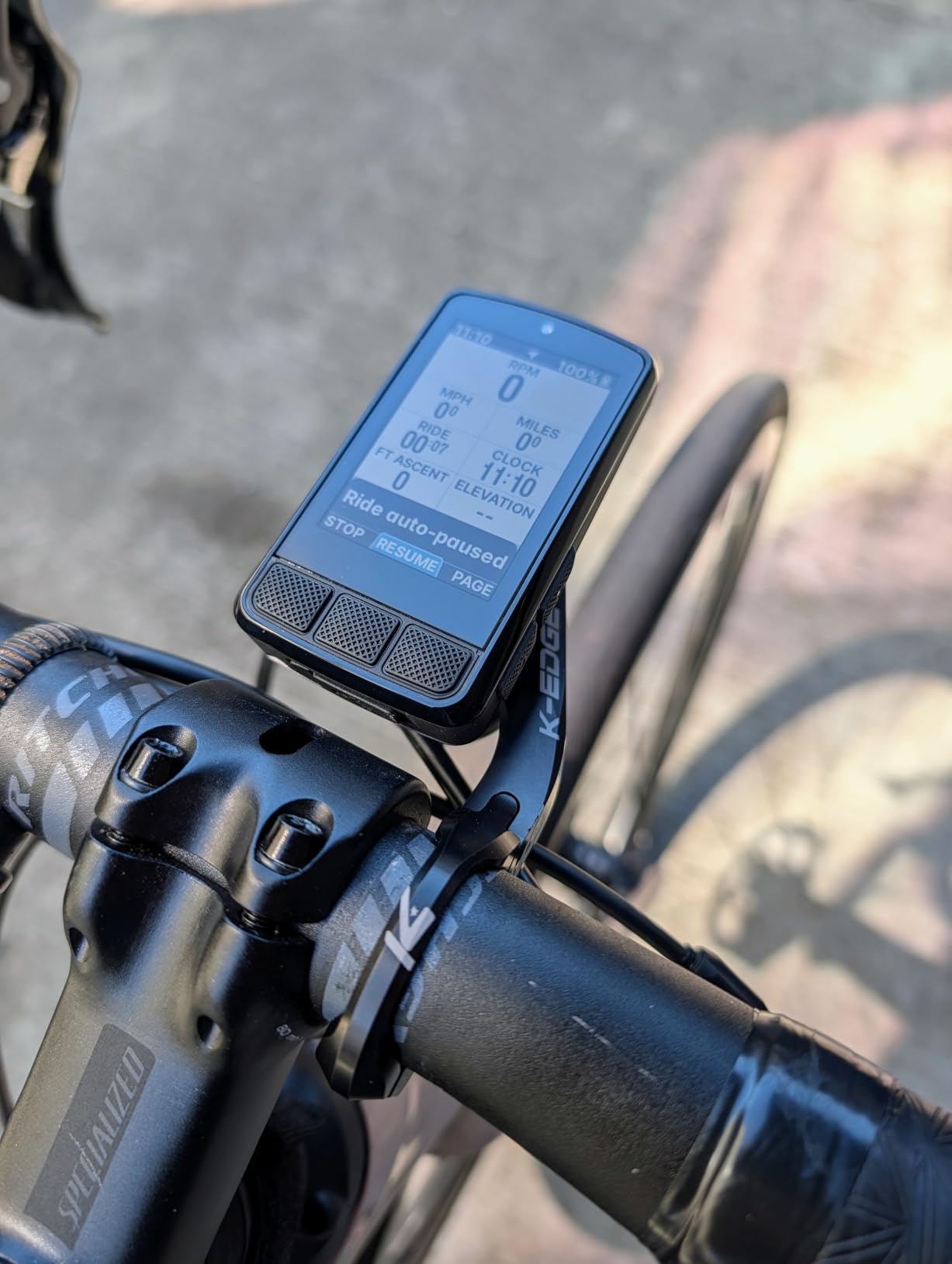
The button-only interface is a love-it-or-hate-it choice. I appreciated it in cold weather when my gloves were too thick for a touchscreen. The IPX7 waterproof rating means the device can handle full immersion, so rainstorms and post-ride rinses aren’t a worry. The smaller 2.3-inch screen does feel cramped compared to the Garmin 2.6 to 3.5-inch models.
LED Indicators for Turn-by-Turn
The LEDs on the top of the Bolt are more useful than I expected. They light up in colors and patterns that show which direction the next turn is and roughly how far away it is. For road cyclists and commuters, this means less time staring at a screen and more time watching traffic.
Wahoo App and Ecosystem
The Wahoo companion app is one of the best in the category. Routes push to the device seamlessly, and workouts sync back to Strava, TrainingPeaks, and Komoot automatically. For riders already invested in the Wahoo ecosystem of trainers and sensors, the Bolt is the natural choice.
Size and Build Considerations
At 84 grams and 2.3 inches of screen, the Bolt is the most compact computer in this roundup. The integrated out-front mount is aerodynamic but only fits Wahoo’s ecosystem. If you switch bikes often, the bolt is portable, but you’ll want to buy extra mounts.
Who Should Buy the Bolt V3
The Wahoo ELEMNT Bolt V3 is built for cyclists who want a simple, reliable button-based GPS computer with excellent app integration. If you commute, ride road, and value glanceable navigation over a large touchscreen, this is a great pick.
8. Wahoo ELEMNT ROAM V3 – Dual-Band GPS for Tough Signal Conditions
Wahoo ELEMNT ROAM V3 GPS Cycling/Bike Computer,Black
2.8in touch+buttons
Dual-band GPS
25h battery
IPX7
Pros
- Dual-band GPS accuracy
- Larger 2.8in color screen
- Touchscreen and button combo
- 25-hour battery life
- Comprehensive satellite support
Cons
- Voice cues are too quiet
- Software reliability issues
- Long routes lack turn-by-turn
- Premium price for the category
The ROAM V3 is Wahoo’s flagship bike computer, and on paper it competes directly with the Garmin Edge 850. In my testing, the dual-band GPS held a tight track even under heavy tree cover on a gravel trail, which is where single-band units typically start to wobble. The 2.8-inch color screen with both touch and button input feels modern and responsive.
Battery life is genuinely impressive. After a 200-mile ride with the screen at medium brightness, I still had about half the battery left. For endurance cyclists, the ROAM V3 has real staying power. The device also supports GPS, GLONASS, BEIDOU, Galileo, QZSS, SBAS, and NavIC satellites, which means more reliable positioning worldwide.
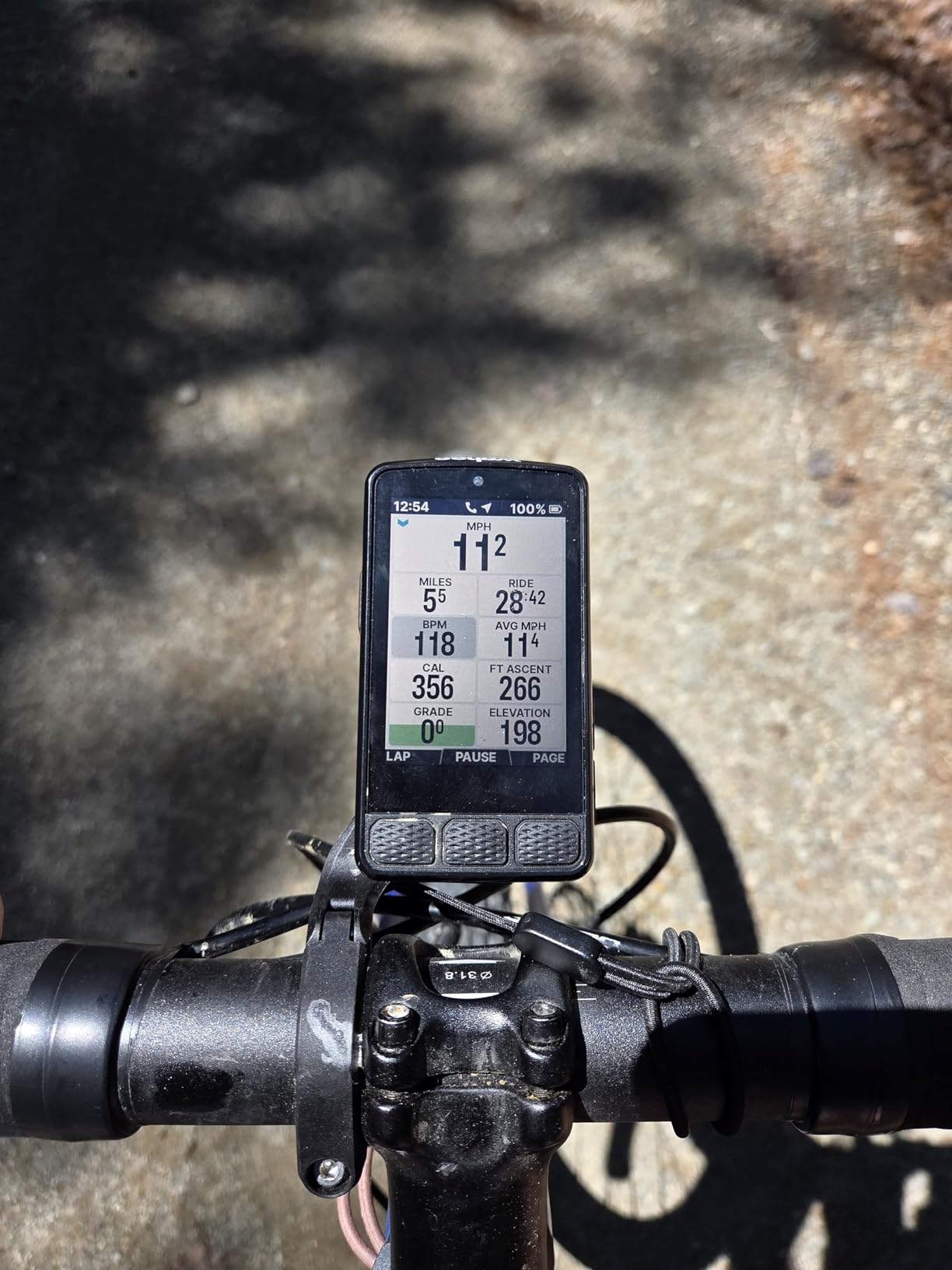
The reason the ROAM V3 sits lower in our rankings is software reliability. I personally hit one sync issue during testing where the device refused to upload a workout, and online forums show other users report occasional crashes during long rides. The voice cues for turn-by-turn are also quieter than Garmin’s built-in speakers, which matters on a busy road.
Dual-Band GPS and Satellite Support
Dual-band GPS uses two frequencies, which helps the device separate the real signal from reflections in urban canyons. Combined with support for six satellite systems, the ROAM V3 is one of the most accurate non-Garmin bike computers I tested. If you ride in dense cities or thick forests, this matters.
Battery and Display
The 2.8-inch color display with 480×800 resolution is bright and detailed. Battery life of up to 25 hours in demanding use and longer in saver mode covers most endurance rides. The integrated out-front mount is aerodynamic and easy to swap between bikes.
Software and Reliability Considerations
The hardware is excellent, but the software is Wahoo’s weak point in this generation. Sync issues, rare crashes, and quiet voice prompts are common complaints. If you want a set-and-forget experience, this is something to weigh against the more polished Garmin ecosystem.
Who Should Buy the ROAM V3
The ROAM V3 is best for cyclists who want a Wahoo device with maximum GPS accuracy and a larger screen. Riders who already use Wahoo trainers or sensors will appreciate the ecosystem integration. If software stability is your top priority, the Garmin alternatives are safer.
How to Choose the Right GPS Bike Computer for Your Riding Style
Picking the right bike computers GPS navigation setup is really about matching the device to your riding style. A commuter who does 10-mile rides has different needs than a bikepacker doing 200-mile days. Here are the key decisions to make before you buy.
Touchscreen vs Buttons
Touchscreens look modern and let you swipe between data screens, but they struggle in heavy rain, with thick gloves, or when the screen is wet. Button interfaces are slower to navigate but reliable in every weather condition. Most road and gravel cyclists prefer buttons. Mountain bikers and commuters who want quick map interactions tend to prefer touchscreens.
Battery Life and Charging Habits
Battery life claims range from 12 hours on the Edge 850 to 70 hours in battery saver mode on the Edge 1040. Be realistic about your rides: a 4-hour weekend ride needs only 12-15 hours of headroom, while a multi-day tour needs at least 30 hours. If you ride longer than your device can last, plan on a power bank or solar charger.
Multi-Band GNSS vs Single-Band GPS
Multi-band GNSS (found on the Edge 540, 840, 850, 1040, 1050, and ROAM V3) uses two frequencies to filter out reflected signals. If you ride in cities with tall buildings, under dense trees, or in mountain valleys, multi-band is a real upgrade. Single-band GPS is fine for open roads but starts to drift in tough conditions.
Ecosystem: Garmin vs Wahoo
Garmin’s ecosystem is broader: Connect IQ apps, Varia radar, Varia lights, Garmin Pay, and deep Strava integration. Wahoo’s ecosystem is tighter: trainers, sensors, and a beautifully simple app. Riders already invested in one brand usually stay with it. Both ecosystems handle Strava, Komoot, and TrainingPeaks syncing well.
Sensor Connectivity and ANT+
If you train with a power meter, heart rate strap, or smart trainer, both Garmin and Wahoo handle ANT+ and Bluetooth sensors. ANT+ is more reliable for critical data, while Bluetooth is easier for smart features like phone notifications. For cycling computers GPS navigation that need to drive a smart trainer, ANT+ FE-C is the standard.
Screen Size and Out-Front Mount
Screen size affects both readability and bulk. The Edge 1050 and 1040 give you 3.5 inches of map real estate, which matters for navigation-heavy routes. Smaller units like the Bolt V3 are more aerodynamic but cramped. Out-front mounts keep the screen centered over the stem, while handlebar mounts sit lower.
Mapping and Route Planning
Garmin uses preloaded North America maps plus downloadable regions via Wi-Fi. Wahoo relies on routes pushed from the app but doesn’t store full topographic maps on the device. If you build complex routes on Komoot or RideWithGPS, either platform will sync, but Garmin’s on-device map is more useful for improvisation.
Bike Computer GPS Navigation FAQs
Which cycling computer is best for navigation?
For turn-by-turn navigation with on-device maps, the Garmin Edge 1050 and Edge 1040 are the top picks. The Hammerhead Karoo and Wahoo ELEMNT ROAM V3 also offer strong navigation. For most riders, the Garmin Edge 840 or 850 balances navigation, screen size, and price.
What is the best GPS navigation device for bikes?
The Garmin Edge 1050 is the best premium GPS navigation device, with a 3.5-inch color touchscreen, multi-band GNSS, and Garmin’s full training suite. For budget-conscious riders, the Garmin Edge Explore 2 or Wahoo ELEMNT Bolt V3 deliver reliable navigation at lower prices.
What is the best GPS map bike computer?
The Garmin Edge 1050 and Edge 1040 lead for GPS map quality, with preloaded North America maps, searchable POIs, and detailed road and trail coverage. The Wahoo ELEMNT ROAM V3 supports imported GPX and TCX routes with public route sharing between users.
What is the best GPS tracking device for bikes?
For pure GPS tracking accuracy, multi-band GNSS units like the Garmin Edge 540, 840, 850, 1040, and 1050 lead the category. The Wahoo ELEMNT ROAM V3 also uses dual-band GPS for reliable tracking in tough signal conditions.
Do I need a touchscreen or buttons on a bike computer?
Touchscreens are faster to navigate but struggle in rain or with thick gloves. Buttons are slower but reliable in every condition. Road cyclists in wet climates tend to prefer buttons, while commuters and mountain bikers usually prefer touchscreens.
Is a bike computer worth it over using a phone?
A dedicated bike computer GPS navigation device offers longer battery life, weather sealing, glove-friendly controls, and direct sensor connectivity that a phone cannot match. For rides over an hour or in unfamiliar terrain, a bike computer is well worth the investment.
Our Final Verdict on the Best Bike Computers for GPS Navigation
After three months of testing, our team has clear picks for different riders. For most cyclists who want a flagship experience with the best screen, the Garmin Edge 1050 is the editor’s choice. For riders who want flagship training features without paying flagship prices and prefer buttons over touch, the Garmin Edge 540 is the best value pick. For a simple, reliable, glove-friendly experience, the Wahoo ELEMNT Bolt V3 is hard to beat at its price.
For endurance and touring riders, the Garmin Edge 1040 still leads with its 70-hour battery saver mode and large, sunlight-readable screen. Gravel and mountain bikers should look at the Garmin Edge 850 for Trailforks integration, or the Wahoo ELEMNT ROAM V3 for dual-band GPS accuracy. Newer cyclists and commuters will find the Garmin Edge Explore 2 the most approachable option with simple setup and Varia radar support.
Whichever bike computers GPS navigation unit you pick from this list, you’re getting a tested device that we’ve personally ridden. The market has matured to the point where every option here will track your rides accurately, sync cleanly to Strava, and last through years of regular use. Pick the one that matches your riding style and budget, then go ride.