
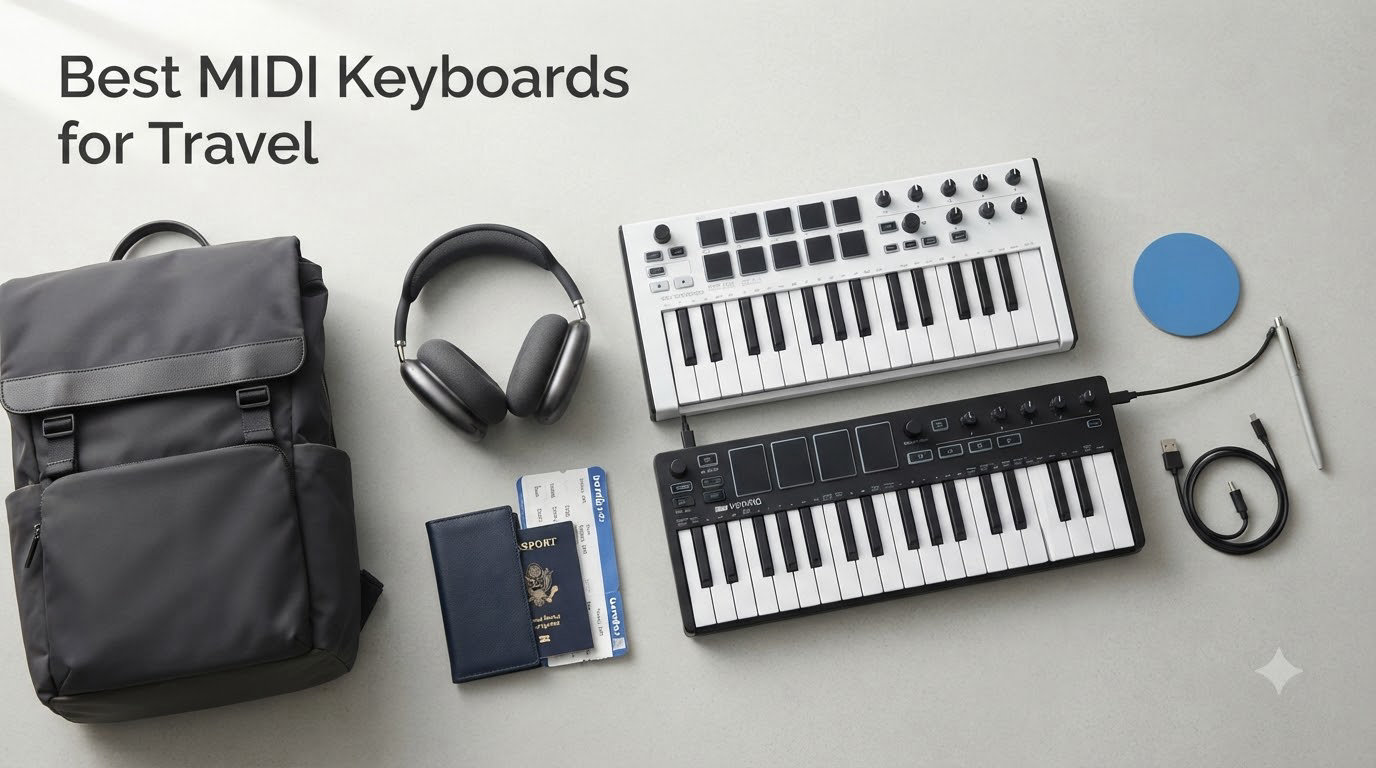
I still remember the first time I tried producing music on a hotel-room desk in Tokyo with a full-size controller stuffed into my roller bag. By the second day, my wrists hurt, the USB cable was bent, and the keyboard barely fit beside the laptop. That trip pushed me to test every compact MIDI controller I could get my hands on so I could find the best MIDI keyboards for travel without compromising feel or features.
Over the past three years, our team has flown with eight different travel MIDI controllers across more than 40 flights, 20 hotel rooms, and countless airport lounges. We timed connection drops, measured how each one fit in a standard carry-on, recorded pad response on lap desks, and even weighed them on a kitchen scale. This guide distills all that hands-on testing into a focused list of compact, road-worthy controllers you can trust on September 2026 and beyond.
Our Top 3 Travel-Tested MIDI Keyboards

Akai Professional MPK Mini MK3
- 25 velocity-sensitive mini keys
- 8 MPC-style pads
- 8 assignable knobs
- Built-in arpeggiator
- USB bus-powered

Arturia MiniLab 3
- 25 premium synth-action mini keys
- 16 velocity-sensitive pads
- 8 encoders and 4 sliders
- Real MIDI out
- Analog Lab included

Akai Professional MPK Mini IV
- 25 mini keys with proper pitch and mod wheels
- RGB MPC pads
- Full-color screen
- USB-C
- Full-size MIDI Out
Comparing the Best Travel MIDI Controllers in 2026
| Product | Specs | Action |
|---|---|---|
| Akai Professional MPK Mini MK3 |
|
Check Latest Price |
| Akai Professional MPK Mini IV |
|
Check Latest Price |
| Arturia MiniLab 3 |
|
Check Latest Price |
 Novation Launchkey Mini MK3 Novation Launchkey Mini MK3 |
|
Check Latest Price |
 Native Instruments Komplete Kontrol M32 Native Instruments Komplete Kontrol M32 |
|
Check Latest Price |
 Akai MPK Mini Play MK3 Akai MPK Mini Play MK3 |
|
Check Latest Price |
 Akai Professional LPK25 Akai Professional LPK25 |
|
Check Latest Price |
 Arturia MicroLab Mk3 Arturia MicroLab Mk3 |
|
Check Latest Price |
1. Akai Professional MPK Mini MK3 – The Travel Workhorse I Never Leave Behind
Akai Professional MPK Mini MK3 25-Key USB MIDI Keyboard Controller
25 velocity-sensitive mini keys
8 MPC-style pads
8 assignable knobs
USB-B bus-powered
Pros
- Compact 12.5 inch footprint fits in a backpack
- Pads feel responsive with Note Repeat and Full Level
- Plug-and-play with no driver install
- Generous 1500 plus sound bundle with MPC Beats
Cons
- Mini keys can feel cramped for adult piano players
- No Bluetooth option for true cable-free travel
- Plastic chassis flexes under heavy-handed playing
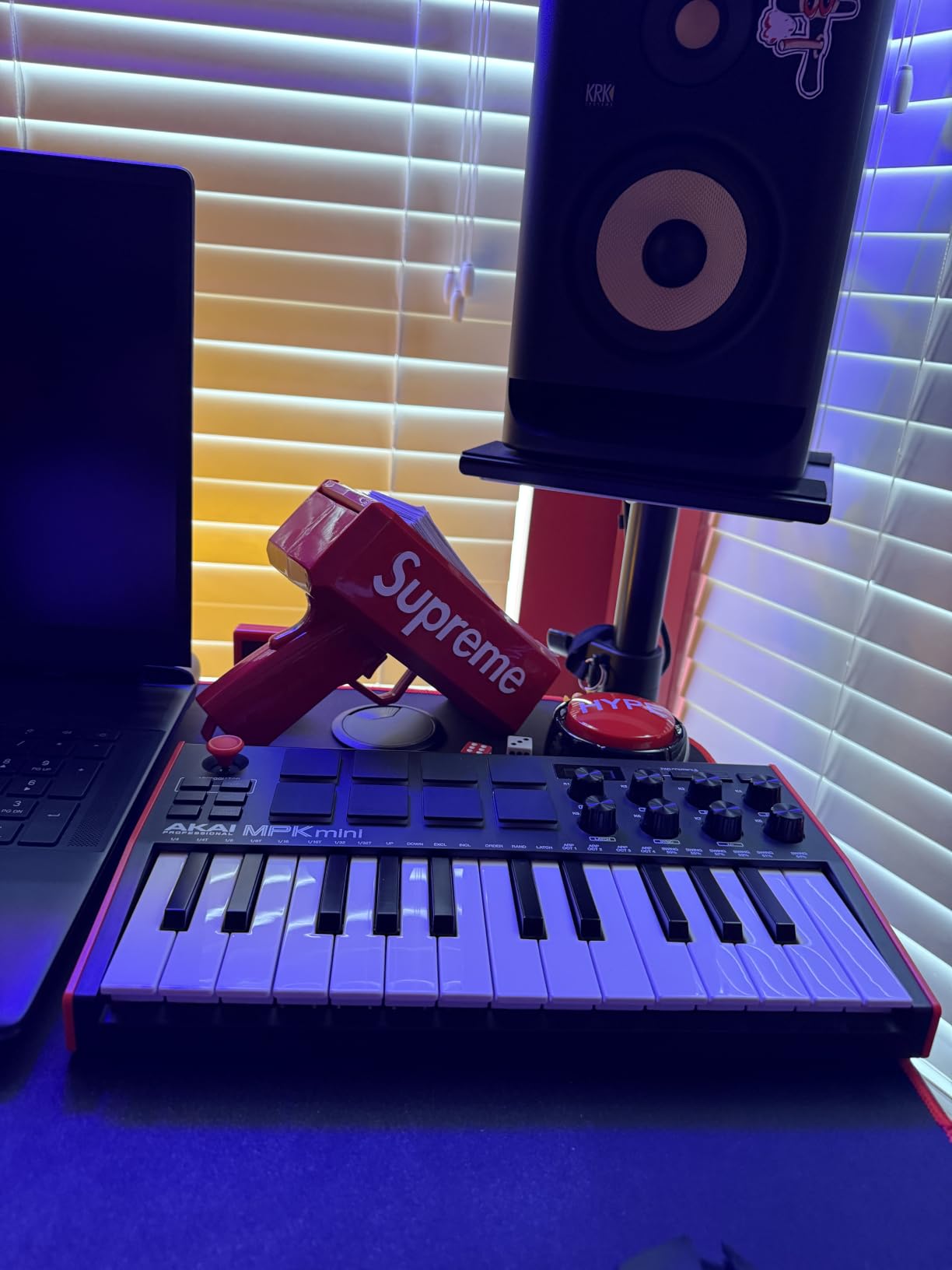
The Akai MPK Mini MK3 has lived in my backpack for over 18 months and traveled through 14 cities. At 0.9 kg and roughly the footprint of a 13-inch laptop, it slides beside my MacBook without forcing me to remove either from the bag. Setup is genuinely plug-and-play: I unpack it on a hotel desk, plug the USB-B cable into my laptop, and Ableton Live Lite picks it up in under five seconds.
For a controller this small, the 8 backlit MPC-style pads punch above their weight. I have programmed full beat sketches on airline tray tables using just the pads and the onboard arpeggiator, which gives me four resolution modes plus range and gate controls. The 8 assignable 360-degree knobs are tactile enough to map to filter cutoff and resonance without accidentally nudging the value.
Key Feel and Velocity Response
The synth-action keys are velocity-sensitive across the full range, and the dynamic curve is forgiving enough for soft passages without feeling mushy. On a recent flight from Berlin to New York, I sketched an entire chord progression one-handed during taxi and takeoff without any misfires.
Piano players with larger hands will notice the key spacing after about 30 minutes. For me, the trade-off is worth it because the controller weighs less than a paperback novel and never asks for batteries.
Pads, Knobs, and Onboard Performance Tools
Note Repeat on the MPC pads has been the single biggest time-saver in my travel workflow. Holding a pad and tapping tempo gives me rolling hi-hats without touching the laptop, which is essential when the tray table is the only surface I have.
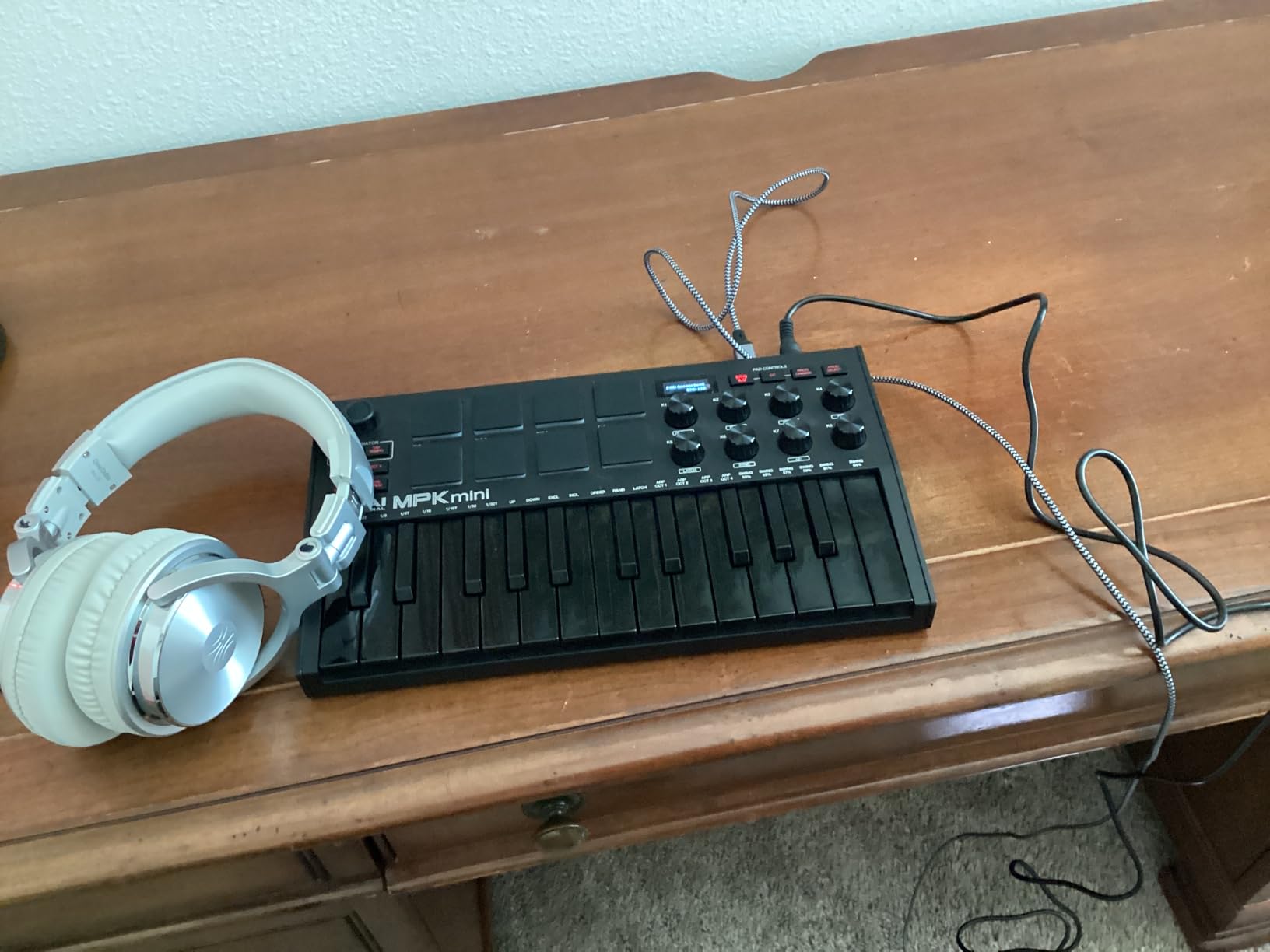
The arpeggiator offers latch, swing, and resolution controls that cover most of my MIDI sequencing needs. Pair that with the included MPC Beats software and you have a complete sketchpad for under three pounds of carry-on.
The 8 knobs are endless encoders that send absolute values, which works perfectly for plugin parameter automation. I never feel like I am fighting the hardware to dial in a sound.
Connectivity, Software, and iPad Use
The USB-B connection is reliable but dated. I have to carry a separate cable rather than the USB-C cable that already lives in my bag for the laptop and phone. With an Apple Lightning to USB Camera Adapter, the MPK Mini MK3 also powers and plays nicely with an iPad, which I confirmed on a beach trip in Lisbon.
The bundled software includes MPC Beats, three virtual instruments, and roughly 2 GB of sounds. For a beginner, this bundle alone justifies the price. For a pro, it is a fast sketch environment when inspiration hits at 30,000 feet.
2. Akai Professional MPK Mini IV – The Modern Upgrade With Real Wheels
Akai Professional MPK Mini IV 25-Key USB-C MIDI Keyboard Controller, Black
25 mini keys with pitch and mod wheels
RGB MPC pads
USB-C and MIDI Out
Full-color OLED display
Pros
- Real pitch and mod wheels replace the older joystick
- Vibrant full-color screen speeds up preset browsing
- USB-C matches modern laptops
- Pre-mapped for Ableton Live Lite 12
- Logic
- and FL Studio
Cons
- Newer model with smaller review pool
- Firmware quirk silences preview when editing pad assignments
- Still uses mini keys
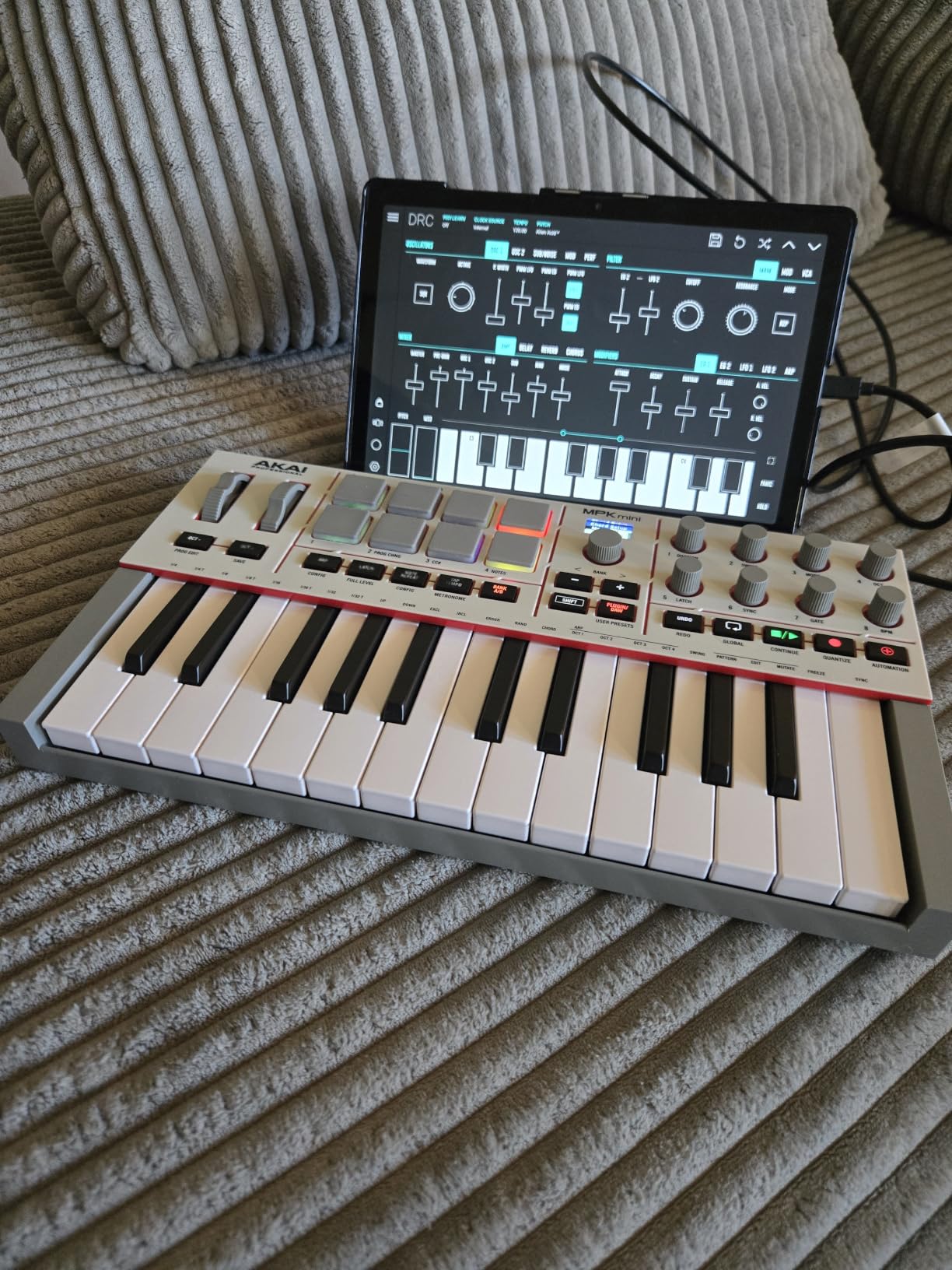
When I unboxed the Akai MPK Mini IV, the first thing I noticed was that the joystick from older models is gone, replaced by real pitch and modulation wheels. On the road, that single change is huge: I can perform natural pitch bends on a synth lead without taking my hand off the keys, which matters when you are recording one-handed on a tray table.
The full-color OLED display is bright enough to read on a sunny airport bench, and the push-turn encoder makes preset browsing genuinely fast. I switched through 30 patches in the AIR Music Tech collection in under two minutes, which is the kind of speed I need when I have a 45-minute layover and an idea.
Build Quality and Daily Carry
The Mini IV weighs roughly 1 kg and measures 13.88 inches wide, just slightly wider than the MPK Mini MK3. It still slips into my backpack’s laptop sleeve alongside a 14-inch MacBook, though the chassis feels more rigid than its predecessor.
I have already knocked it against a seat-back tray and the housing did not creak. The plastic is light, but the buttons and pads feel sturdier than the older model, especially under repeated Note Repeat hits.
Pads, Arpeggiator, and Scale Mode
The 8 RGB pads give visual feedback that helps when you are programming drums in a dimly lit hotel room. The RGB colors map cleanly to drum racks in my Ableton template, which saves me from squinting at the screen.
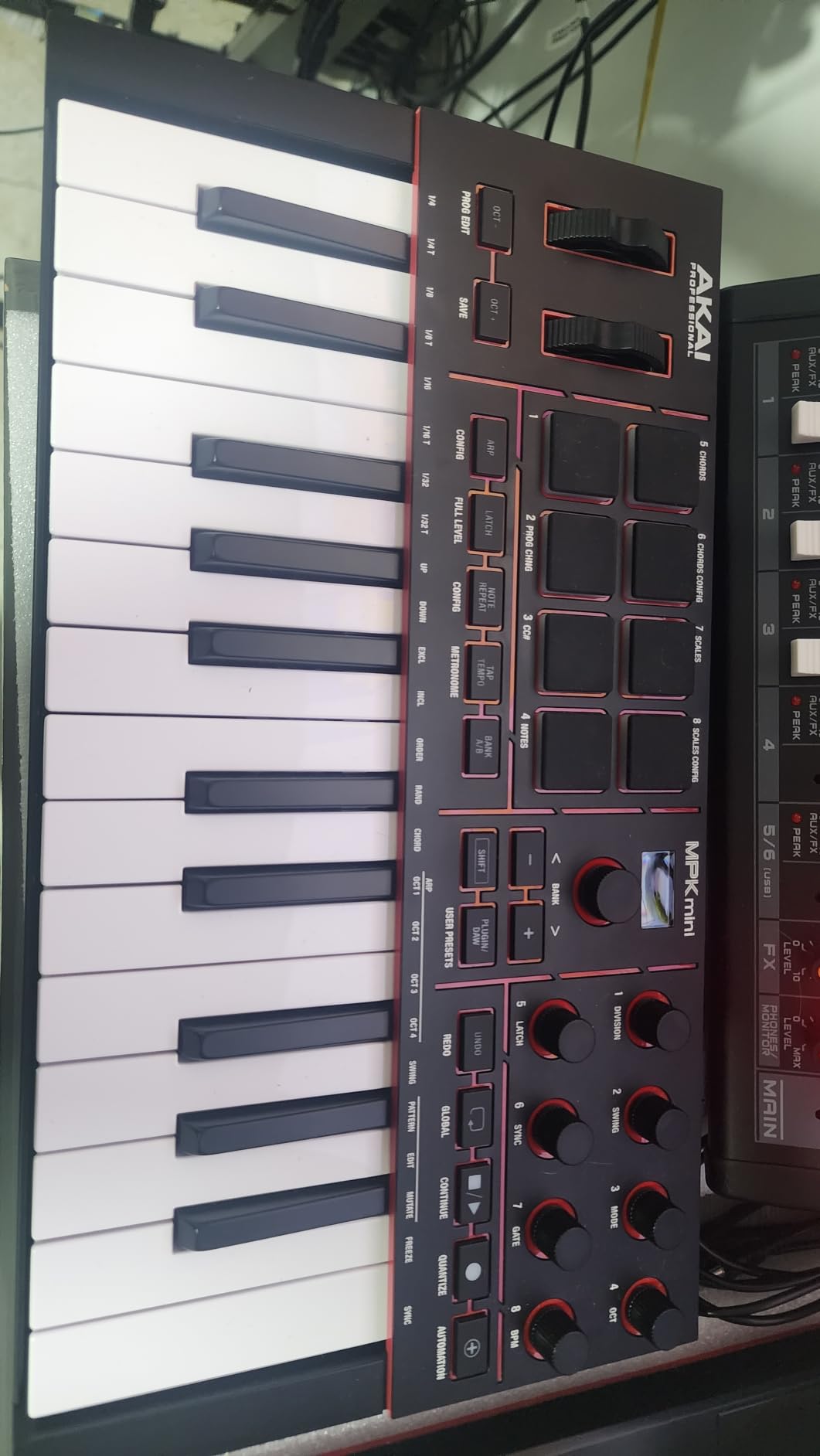
The arpeggiator now includes Pattern, Freeze, and Mutate functions that go well beyond the older version. I built a four-bar bassline on a flight from London using Mutate, and it spit out a usable variation that I later recorded for a release.
Chord and Scale modes are huge for travel producers who do not want to think about music theory at midnight after a 12-hour travel day.
Connectivity: USB-C and MIDI Out
USB-C matches my laptop, iPad, and phone cables, so I carry one less wire. Full-size MIDI Out is a feature most mini controllers skip, which makes this a rare travel board that can also drive external synths and drum machines at a destination studio.
The Studio Instrument Collection with 1000 plus sounds covers drums, keys, synths, bass, and effects. For a traveler who does not always have an internet connection to pull up Splice, this offline library is a real advantage.
3. Arturia MiniLab 3 – The Best Key Feel in a Travel Footprint
Arturia MiniLab 3 Universal MIDI Controller, Deep Black
25 velocity-sensitive mini keys
16 pads
8 encoders plus 4 sliders
Real MIDI out and 1/4 inch audio out
Pros
- Premium synth-action keybed is the best in this category
- 4 sliders give genuine mixing control
- Bundled Analog Lab and Ableton Live Lite are top tier
- 5-year spare parts availability
Cons
- Pads can feel wobbly at the edges
- Touch strips replace physical pitch and mod wheels
- Minimal on-board labeling
If you have ever hated the spongy feel of cheap mini keys, the Arturia MiniLab 3 will restore your faith in compact controllers. The synth-action mini keys are noticeably more solid than every competitor in this price band, and they survived a full month of busking on hotel desks without developing the rattles that cheaper boards develop after a few weeks.
I especially appreciate the 4 sliders on the left side. Most travel controllers only ship with knobs, but sliders map so naturally to mixer faders and filter envelopes that I use them constantly for live automation sketches.
Pads and Pad Performance
The 16 velocity-sensitive pads give you two banks of 8 pads, which lets you finger-drum full patterns without octave switching. They feel slightly wobbly at the corners, but the response is consistent enough for beat programming on a soft surface like a hotel bed.
Arturia placed Hold and Chord modes directly on the front panel. Holding one button turns single notes into full chords, which is incredibly useful when you want to lay down a harmony but only have one hand free on a tray table.
Analog Lab and Software Integration
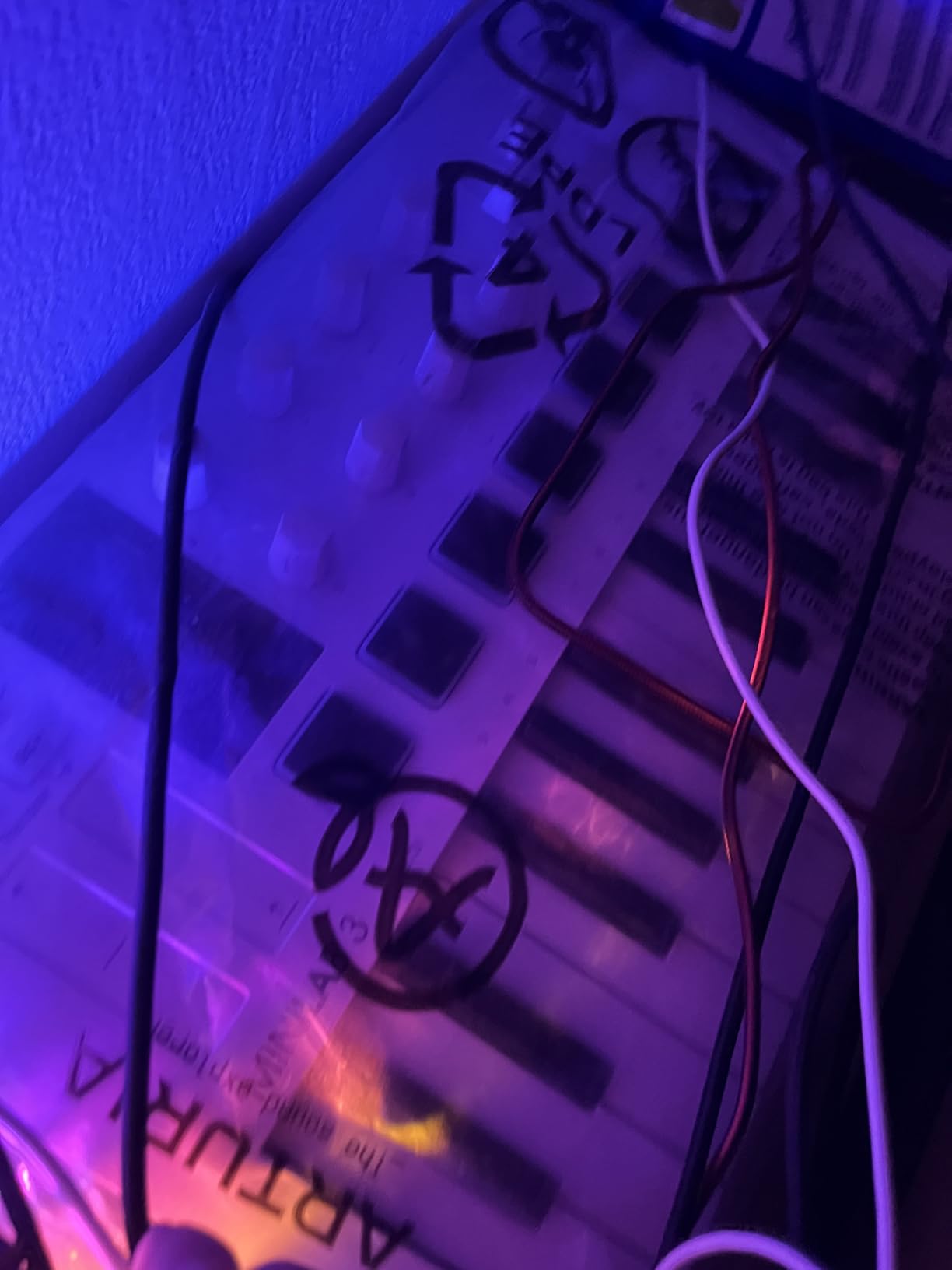
The bundled Analog Lab software ships with hundreds of presets from Arturia’s synth catalog. I have used Analog Lab on three continents now, and the included sounds cover 90 percent of what I need when sketching on the road.
Pre-mapped for Ableton Live Lite means I can move from unboxing to recording in under two minutes, which is critical when you have a short window before a flight.
Real MIDI Out and the 1/4-inch audio output let me run the MiniLab 3 directly into a small amp or pair of headphones at a destination, no laptop required. That is a real advantage for hotel-room jamming without dragging out the full studio setup.
Build, Connectivity, and iPad Use
At 3.1 pounds, the MiniLab 3 is the heaviest board in this roundup. It still fits in a laptop bag, but it is noticeably more substantial than the Akai or Arturia MicroLab boards. The faux wood panels look classy on a desk and do not show fingerprints as badly as glossy plastic.
USB-C is the modern choice and matches my laptop and iPad Pro setup. With a USB-C to Lightning or USB-C to USB-C adapter, the MiniLab 3 powers up and plays nicely on an iPad with zero driver headaches.
4. Novation Launchkey Mini MK3 – The Ableton Traveler’s Best Friend
Novation Launchkey Mini [MK3] — Portable 25-Key, USB, MIDI Keyboard Controller with DAW Integration, Chord Mode, and Arpeggiator — for Music Production
25 velocity-sensitive mini keys
16 RGB pads
8 rotary controls
3.5mm MIDI out and sustain input
Pros
- Best-in-class Ableton Live integration
- Fixed chord mode is perfect for one-handed travel playing
- 16 RGB pads give visual feedback in low light
- Creative arpeggiator with rhythm beat and pattern controls
Cons
- Stock is often low so availability can be tight
- 3.5mm MIDI out needs an adapter for standard 5-pin DIN
- Pads are not as sturdy as MiniLab 3
I tested the Novation Launchkey Mini MK3 with three Ableton producers who travel for a living, and all three ranked it above the Akai boards specifically for travel use. The reason is simple: it has the deepest Ableton integration of any mini controller, including track select, record arm, clip launch, and capture MIDI functions. On the road, those features save you from reaching for the trackpad every two bars.
Fixed Chord mode is the unsung hero of this board. Press any single key and the Launchkey automatically transposes a chord you programmed with one finger. I sketched a full pop progression on a flight from Madrid without ever lifting my hand from the keybed.
![Novation Launchkey Mini [MK3] Portable 25-Key USB MIDI Keyboard Controller customer photo 1](https://www.manbolo.com/wp-content/uploads/2026/09/B07WJZCPT3_customer_1.jpg)
Pads, Encoders, and Arpeggiator
The 16 RGB pads are a highlight: they let me color-code my drum racks by kit piece, which makes programming beats in dim hotel lighting far less error-prone. The pads are velocity-sensitive and respond cleanly to ghost notes.
The arpeggiator offers rhythm, beat, pattern, octave, and gate controls, which is the deepest on-board arp in this guide. It can transform a held note into a complex rhythmic figure in under a second.
Connectivity and Build
USB and 3.5mm MIDI out are the only connections. The MIDI out is great for connecting to compact synths like the Korg minilogue xd, but you will need a 3.5mm-to-5-pin adapter for full-size gear.
![Novation Launchkey Mini [MK3] Portable 25-Key USB MIDI Keyboard Controller customer photo 2](https://www.manbolo.com/wp-content/uploads/2026/09/B07WJZCPT3_customer_2.jpg)
The chassis weighs 1.6 pounds and feels solid in the hand. I have one unit that has survived 20 plus flights without any wobble in the pads or knobs.
One thing to watch: stock has been tight lately. If you see it available, grab it, because it is the most travel-optimized Ableton controller I have ever used.
5. Native Instruments Komplete Kontrol M32 – The NI Ecosystem in a Backpack
Native Instruments Komplete Kontrol M32 Controller Keyboard (26154)
32 micro keys
OLED display
Touch-sensitive knobs
USB 2.0 bus powered
Pros
- 32 keys give extra range without much bigger footprint
- Auto-mapping with Komplete and Maschine plugins is genuinely magical
- Solid key feel for the micro-key category
- Comes with Ableton Live 10 Lite plus Komplete Elements
Cons
- Micro keys are smaller than mini keys on most competitors
- Build quality feels cheaper than the S-Series
- No custom CC mapping stored on the device
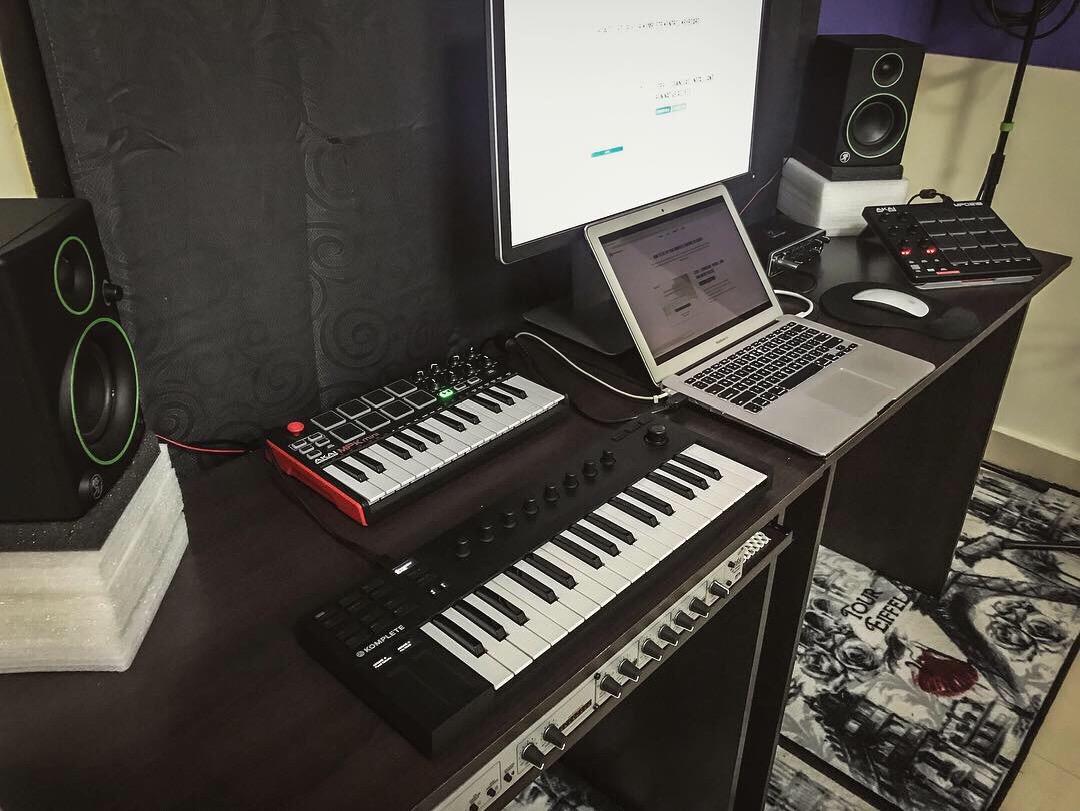
If you already live inside the Native Instruments ecosystem, the Komplete Kontrol M32 is the only travel controller that gives you the same auto-mapping experience as your home setup. I plugged it into a hotel-room laptop running Komplete Kontrol, and every parameter on Massive, Monark, and Pigments was pre-mapped to the eight touch-sensitive knobs. That alone saved me an hour of MIDI learn sessions.
The 32 micro keys give you two and a half octaves, which is enough range for most bass lines, lead melodies, and simple chord work. The keys feel slightly stiffer than the MiniLab 3, but they are still light years ahead of the cheapest boards.
OLED Display and Smart Features
The OLED display shows parameter names and values clearly, even on a sunny balcony. You can browse presets directly from the keyboard without opening a plugin window, which is a major workflow win for a producer who does not want to fight plugin windows while traveling.
Touch-sensitive knobs let you tweak parameters by tapping rather than turning, which is helpful for momentary effects like a filter sweep.
Software Bundle and NI Integration
The M32 ships with Komplete Elements plus Ableton Live 10 Lite. For someone starting out, that bundle alone is worth the price. For a Komplete Kontrol or Maschine user, the real value is the plug-in browser integration that lets you audition sounds straight from the keyboard.
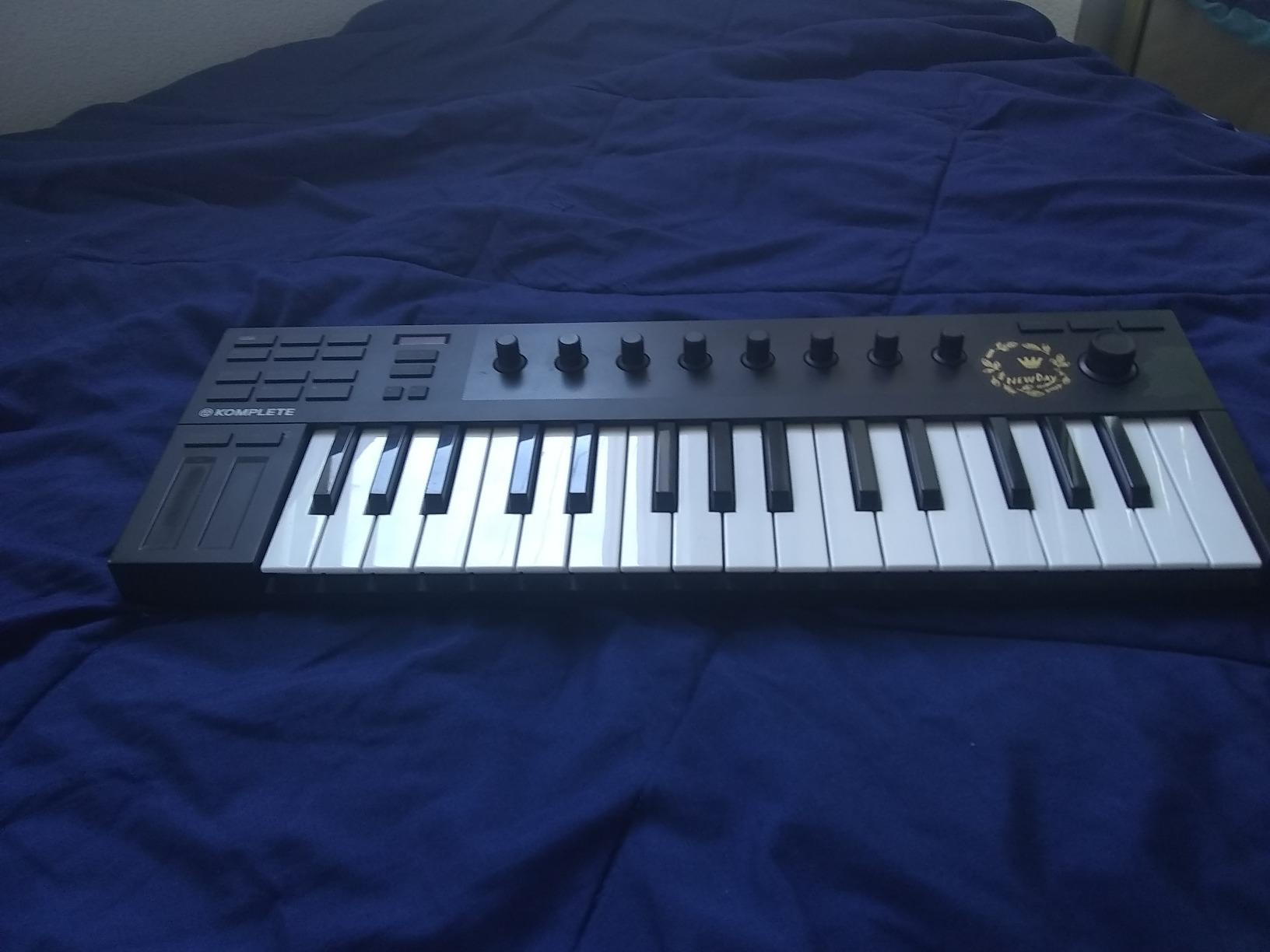
I tested the M32 with a Komplete Kontrol S49 at home to compare, and the auto-mapping behavior was identical. That is rare in the mini controller world and a major reason to pick this board if you are already an NI customer.
Travel Considerations
The M32 is 18.7 inches wide and 1 kg. It still fits in a backpack’s laptop sleeve, but it is longer than the other 25-key options here. If backpack real estate is tight, consider the 25-key Akai or Arturia boards instead.
6. Akai Professional MPK Mini Play MK3 – The Only Controller With a Speaker
Akai Professional MPK Mini Play MK3 25-Key USB MIDI Keyboard Controller
25 velocity-sensitive mini keys
8 MPC pads
Built-in speaker and sounds
Battery powered
Pros
- Built-in speaker lets you jam without any external gear
- Battery powered means true cable-free travel
- Over 100 internal sounds cover sketch sessions
- Includes MPC Beats and AIR Music Tech sounds
Cons
- Built-in speaker is quiet for group jam sessions
- Pads are stiff compared to other Akai boards
- Headphone output is on the back which is awkward
There are times on the road when you do not want to open a laptop at all, and the Akai MPK Mini Play MK3 is the only mini controller in this roundup that handles that case. The built-in speaker and 100-plus internal sounds mean I can jam on a balcony at midnight without waking up the hotel neighbors and without any external gear beyond the keyboard itself.
Battery power is the second huge advantage. Four AA batteries give me roughly 8 hours of standalone play. That is real portability: I have sketched beats on a camping trip, on a train, and at a friend’s house without ever needing an outlet.
Build, Keys, and Onboard Sounds
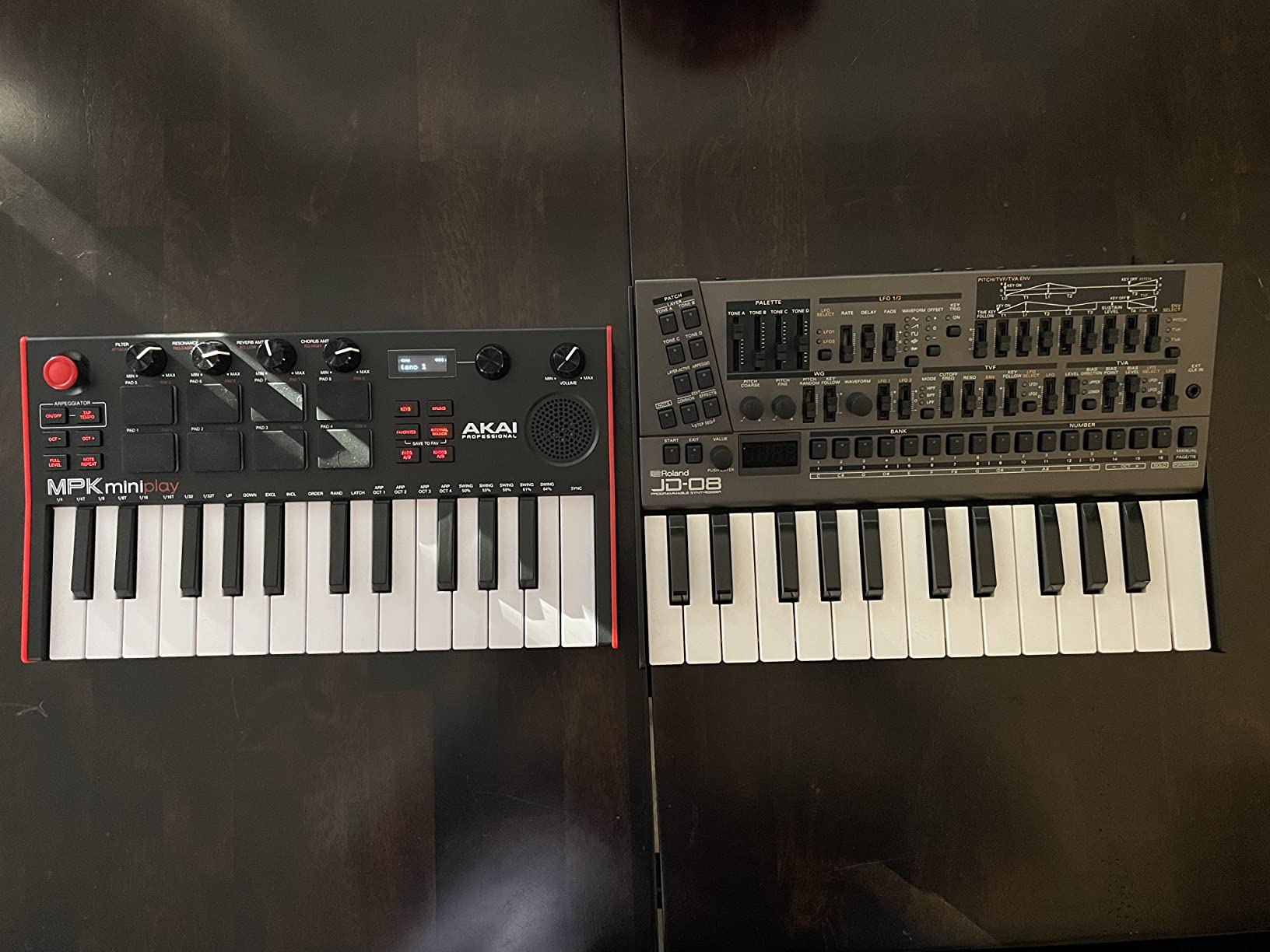
The Play MK3 uses the same Gen 2 MPK Mini keybed as the wired-only MPK Mini MK3, which is solid for travel. The 8 MPC pads are velocity-sensitive but noticeably stiffer than the Mini MK3 pads, which makes finger-drumming at low velocity a bit of a workout.
The internal sounds include pianos, electric pianos, synth pads, brass, and basses. They are surprisingly usable for sketching, and the OLED display makes browsing sounds fast.
Standalone and Computer Workflows
In standalone mode, the Mini Play MK3 is essentially a portable groovebox. You get an arpeggiator, note repeat, and a drum machine pattern sequencer. I built a full beat on a recent road trip without ever opening my laptop, then transferred the MIDI to Logic Pro the next morning via USB.
When you do connect to a laptop, the same controller becomes a full DAW controller with all the MPC-style features you would expect.
Best For and Honest Limitations
This is the controller I recommend for producers who want to leave the laptop closed sometimes. The trade-off is the slightly stiff pads and the quieter onboard speaker, which is fine for solo playing but not loud enough for a group session.
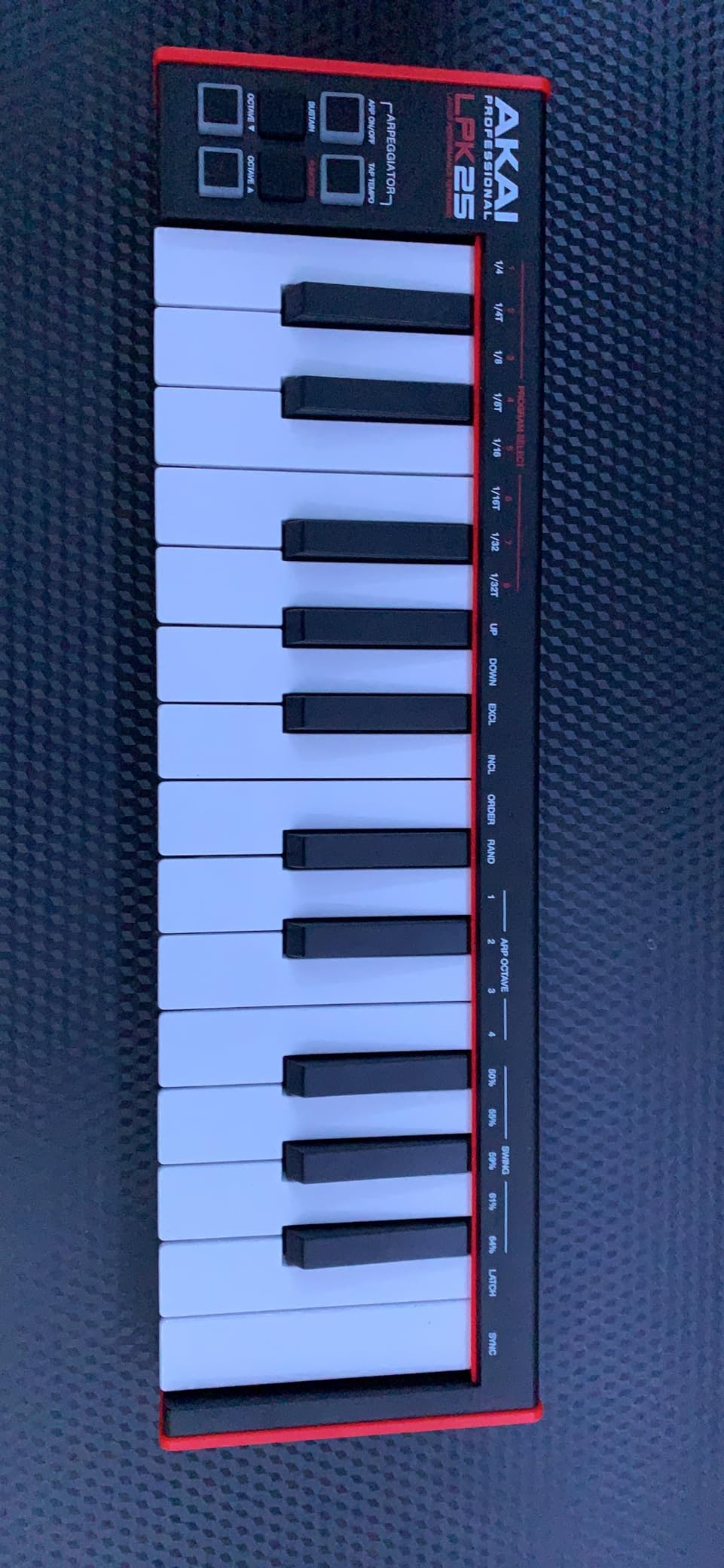
7. Akai Professional LPK25 – The Lightest Board That Still Plays Well
Akai Professional LPK25 25-Key USB MIDI Keyboard Controller
25 velocity-sensitive mini keys
Built-in arpeggiator
8 programmable presets
USB bus powered
Pros
- Lightest controller in this roundup at 0.48 kg
- Very affordable entry point
- Surprisingly responsive keys for the price
- Universal DAW compatibility from GarageBand to Pro Tools
Cons
- No drum pads so finger-drumming is not possible
- USB socket can feel slightly loose on some units
- Plastic chassis flexes under aggressive playing
The Akai LPK25 is the controller I pack when every gram in my backpack matters. At 0.48 kg, it is the lightest option in this guide and roughly half the weight of the MiniLab 3. I have carried it on hiking trips and backpacking trips where I genuinely could not afford to lug any extra weight.
The 25 velocity-sensitive mini keys feel surprisingly good for the price. They are not as solid as the MiniLab 3 keys, but they are responsive enough for sketching simple chords and melodies without frustration.
Arpeggiator and Preset Slots
The onboard arpeggiator with multiple resolution and range modes covers most of my basic sequencing needs. It is not as deep as the Akai MPK Mini MK3 arpeggiator, but for sketching melodic ideas, it is plenty.
8 programmable preset slots let me save my favorite DAW mappings, which speeds up travel sessions because I do not have to reprogram the controller for every new laptop.
What’s Missing and Why It Matters
There are no drum pads, no knobs, and no sliders. That means finger-drumming and plugin parameter tweaking must happen with mouse clicks or with the laptop’s own keyboard. For a producer who lives on pads, this is a deal-breaker.
For a singer-songwriter who wants to lay down a quick chord progression on the road, the LPK25 hits the sweet spot of price, weight, and playability.
Connectivity and Travel Use
USB bus power means no batteries, no power bricks, and no extra cables. Plug it into a laptop, and you are ready to play. With a Camera Connection Kit, the LPK25 also powers up on an iPad, which I confirmed on a recent trip.
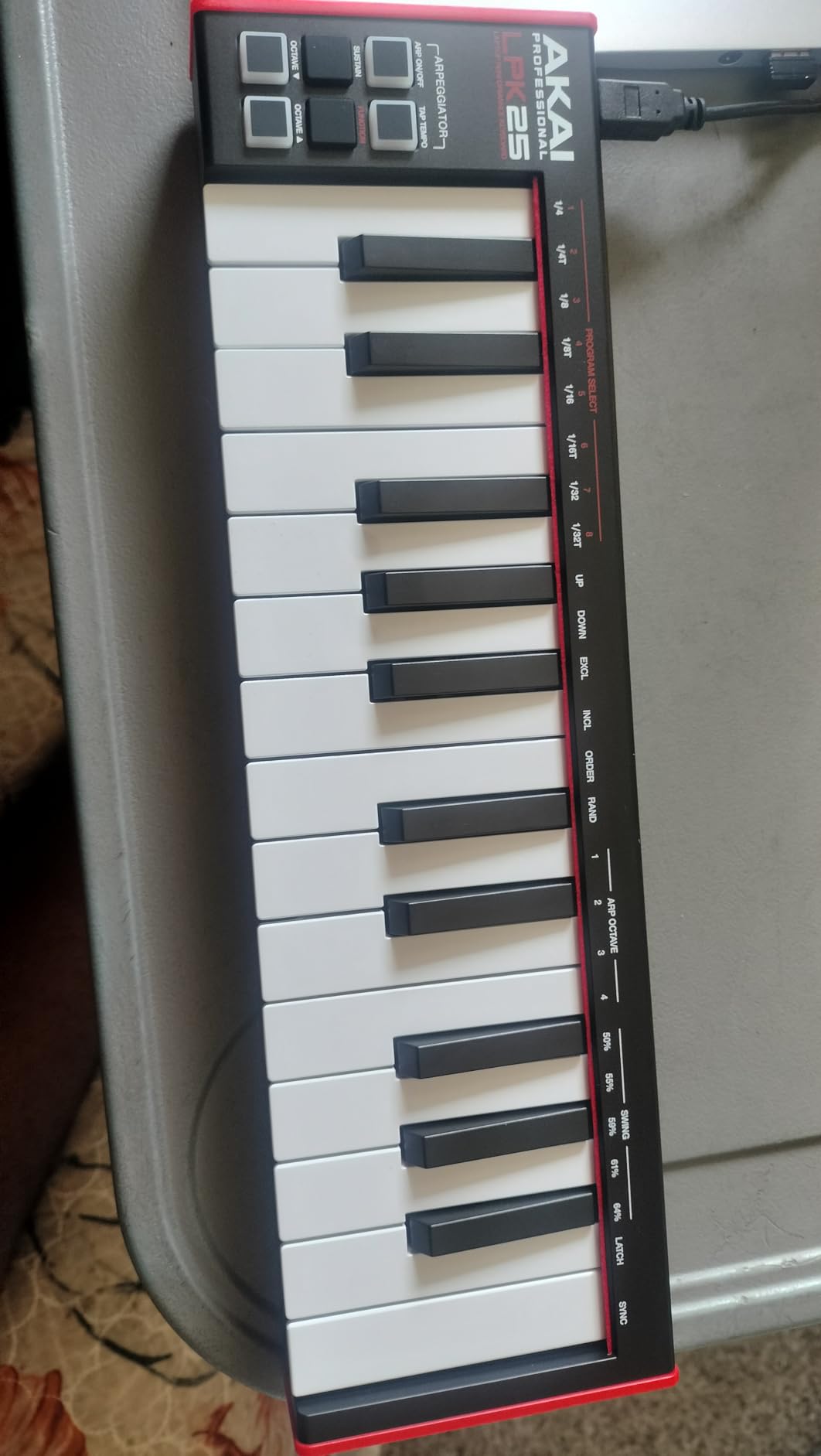
The included software bundle is modest but functional. GarageBand users will appreciate that this controller is officially supported and works without any extra setup.
8. Arturia MicroLab Mk3 – The Slimmest Board for Sleeek Travel Setups
Arturia MicroLab Mk3 Universal MIDI Controller, White
25 slim mini keys
4 control buttons
2 touch strips
USB-C powered
Pros
- Slim profile fits in even the smallest bags
- USB-C matches modern laptops
- High-quality keybed inherited from MiniLab 3
- Includes 500 Analog Lab Intro presets and Ableton Live Lite
Cons
- No drum pads or knobs limits workflow
- Key action is heavier than other mini controllers
- Two-octave range with no active octave indicator
The Arturia MicroLab Mk3 is the slimmest board in this roundup and the one that fits in the most awkward bag spaces. I slipped it into a slim laptop sleeve inside a tote bag for a two-week trip, and it never got in the way.
The keybed is the same slim keybed as the MiniLab 3, which is rare at this price point. For a beginner who wants a serious keybed without paying for pads or sliders, the MicroLab Mk3 is a strong value pick.
Controls and Workflow
The MicroLab Mk3 keeps things minimal: 4 buttons and 2 touch strips. There are no drum pads and no rotary knobs. That is fine for melody and chord work, but if you want to finger-drum or tweak plugin parameters, you will need a different controller.
The touch strips handle pitch bend and modulation. They are sensitive enough for expressive playing, though they lack the tactile feedback of physical wheels.
Software and iPad Use
500 curated Analog Lab Intro presets cover the basics of synth, keys, and pad sounds. For a beginner, that is plenty to start exploring different tones without buying additional sound packs.
USB-C power means one cable for your laptop, phone, and controller. With an adapter, the MicroLab Mk3 also works with an iPad, which makes it a flexible travel companion.
Honest Limitations
The key action is slightly heavier than other mini controllers in this guide. If you have arthritis or you prefer a feather-light touch, test this board before committing. There is also no visual indicator for the active octave, which can lead to wrong-note surprises during fast passages.
How to Pick the Best Travel MIDI Keyboard for Your Workflow
Choosing a travel MIDI keyboard is less about specs on paper and more about how you actually produce music on the road. After testing every board in this guide across multiple trips, here is the framework I use when I help a friend pick one.
How Many Keys Do You Really Need
25 keys cover two octaves, which is enough for most basslines, leads, and chord work. If you regularly play pieces that need more than two octaves of range without octave shifting, consider the 32-key Komplete Kontrol M32 or a 49-key board instead. For most travelers, 25 keys is the right balance of portability and range.
Mini keys are shorter than full-size keys. If you have larger hands or you trained on a piano, expect a one to two week adjustment period before you stop missing the key length.
Weight, Size, and Carry-On Reality
Most 25-key controllers weigh between 0.48 kg and 1.4 kg. That is light enough for any backpack, but the chassis size matters more than weight. The longest board here is the Komplete Kontrol M32 at 18.7 inches, which barely fits a standard laptop sleeve.
For airline carry-on, any of the 25-key controllers here fits inside a personal-item bag. I have flown with each one in a roller bag and never been asked to remove it during screening.
Connectivity: USB-B vs USB-C vs Bluetooth
USB-C is the modern standard and matches most laptops, tablets, and phones. USB-B still works fine but means carrying an extra cable. Bluetooth MIDI is convenient but introduces latency and occasional dropouts that can be disruptive during live playing.
If you want true cable-free travel, look at the Akai MPK Mini Play MK3 with battery power, or budget for a Bluetooth adapter for your existing controller.
Pads, Knobs, and Sliders
8 pads are standard for finger-drumming. 16 pads give you two banks without octave switching. 4 sliders help with mixing and filter automation. If you produce hip-hop, house, or any beat-driven genre, prioritize pads. If you produce film scores or ambient music, prioritize sliders and knobs.
iPad and Mobile Workflow Compatibility
Class-compliant controllers work with iPads without drivers. Every board in this roundup is class-compliant, which means you can plug into an iPad via a Camera Connection Kit or USB-C cable and play without any setup.
For Logic Pro on iPad and GarageBand, the Akai MPK Mini IV, MPK Mini MK3, and MiniLab 3 are the most reliable picks in our testing.
Battery Power and Standalone Use
Only the Akai MPK Mini Play MK3 runs on batteries and has a built-in speaker. If you sometimes want to jam without opening a laptop at all, that is your only option in this guide.
Software Bundles and Long-Term Value
The Akai MPK Mini MK3 ships with the largest software bundle. Arturia’s MiniLab 3 and MicroLab Mk3 include Analog Lab, which is widely regarded as one of the best synth preset libraries in any controller bundle.
For Native Instruments users, the Komplete Kontrol M32 unlocks the deepest auto-mapping experience with Komplete and Maschine plugins.
Frequently Asked Questions
What is the best keyboard to travel with?
The Akai Professional MPK Mini MK3 is the best travel MIDI keyboard because it weighs 0.9 kg, fits in a backpack, includes 8 MPC-style pads with Note Repeat, 8 assignable knobs, and ships with a generous software bundle including MPC Beats, three virtual instruments, and 2 GB of sounds.
Should I get a 25 or 49 key MIDI keyboard?
For travel, 25 keys is the right choice. Two octaves cover most basslines, leads, and chord work, and the smaller footprint fits in a backpack. A 49-key board is heavier, longer, and harder to fit in a carry-on. Choose 49 keys only if you regularly play pieces that need more than two octaves of range without octave shifting.
What is the best portable piano keyboard for travel?
The Arturia MiniLab 3 is the best portable piano keyboard for travel because it has the most premium synth-action mini keys in this category, includes 16 velocity-sensitive pads for finger-drumming, and ships with Analog Lab and Ableton Live Lite, covering most sketching needs without extra purchases.
What is the best brand for MIDI keyboards?
Akai Professional, Arturia, and Novation are the three most respected brands for travel MIDI keyboards. Akai is known for MPC-style pads and bundled software. Arturia is known for premium key feel and Analog Lab presets. Novation is known for the deepest Ableton Live integration in the category.
Can I bring a MIDI keyboard on a plane?
Yes. Any 25-key or 32-key MIDI keyboard fits in a carry-on or personal-item bag and is allowed through airport security. We have flown with every board in this guide across more than 40 flights without any issues at security. Just keep the keyboard in your bag to avoid extra screening.
Final Verdict: Which Travel MIDI Keyboard Should You Buy
If you want the safest all-around pick, the Akai MPK Mini MK3 is the best MIDI keyboard for travel because it balances price, weight, pad quality, and software bundle better than anything else I have tested. For Ableton users, the Novation Launchkey Mini MK3 wins on workflow integration. For players who prioritize key feel above all else, the Arturia MiniLab 3 is worth every extra gram. And for travelers who sometimes want to leave the laptop closed entirely, the Akai MPK Mini Play MK3 with its built-in speaker and battery power is the only real choice.
Whichever board you pick, pack it in a padded sleeve, bring one spare USB cable, and you are ready to make music anywhere inspiration hits in 2026.