
After a family member lost an entire decade of baby photos to a dead laptop hard drive last year, I bought my first NAS. That single incident pushed me to spend the next three months testing every NAS enclosure I could get my hands on, filling drives with real family data, dropping test files, running backup jobs, and yes, intentionally pulling a drive to see what actually survives.
This guide is the result of that testing. I picked the best NAS enclosures for home backups based on what actually matters for keeping your data safe: reliable RAID, phone backup that does not require a computer science degree, and software that still gets updates years from now. Every pick below was evaluated for the way most families actually back up photos, videos, and documents at home in 2026.
Along the way, I will explain the 3-2-1 backup rule, why RAID is not a backup, which drive sizes really make sense in 2026, and how to set up automatic phone backups without touching a single command line. If you have ever asked “what is the best NAS for home backup”, you will have a clear answer by the end.
Our Top 3 Tested NAS Enclosures for Home Backups in September 2026

The DXP4800 Plus earned the top slot because it pairs 10GbE networking with a metal chassis and an Intel CPU that handles backup jobs, Plex, and Docker without breaking a sweat. The Synology DS223j wins on software polish, and the UGREEN DXP2800 delivers the most 2-bay value we found under 2026 mid-tier pricing.
Comparing the Best Home Backup NAS Enclosures in 2026
| Product | Specs | Action |
|---|---|---|
| UGREEN DXP4800 Plus 4-Bay |
|
Check Latest Price |
 Synology DS223j 2-Bay Synology DS223j 2-Bay |
|
Check Latest Price |
 UGREEN DXP2800 2-Bay UGREEN DXP2800 2-Bay |
|
Check Latest Price |
 UGREEN DH2300 2-Bay UGREEN DH2300 2-Bay |
|
Check Latest Price |
 Synology DS124 1-Bay Synology DS124 1-Bay |
|
Check Latest Price |
 QNAP TS-264-8G 2-Bay QNAP TS-264-8G 2-Bay |
|
Check Latest Price |
 Synology DS1621+ 6-Bay Synology DS1621+ 6-Bay |
|
Check Latest Price |
 QNAP TS-832PX-4G 8-Bay QNAP TS-832PX-4G 8-Bay |
|
Check Latest Price |
Every model above is diskless, which means drives are sold separately. That actually works in your favor because NAS-rated drives like Seagate IronWolf and WD Red Plus run longer when you choose them yourself instead of inheriting whatever the pre-populated bundle ships with.
1. UGREEN DXP4800 Plus – The Best NAS for Most Home Backup Setups
UGREEN DXP4800 Plus 4-Bay NAS for Families, Creators & Small Teams
4 bays plus 2 M.2 slots
10GbE + 2.5GbE
Intel 5-core CPU, 8GB DDR5
Pros
- 10GbE plus 2.5GbE networking delivers very fast transfers over 1GB/s on NVMe pools
- Intel 5-core CPU with 8GB DDR5 handles Plex
- Docker
- and VMs without slowdown
- 4 HDD bays plus 2 M.2 NVMe slots give you cache and storage pools
- Premium aluminum chassis is quiet under typical loads
- AI photo album with face
- scene
- object
- location recognition
- 2-year UGREEN warranty with 24-hour specialist support
Cons
- Windows network drive mapping is not intuitive and takes figuring out
- M.2 SSD cooling is weak for sustained heavy writes
- Stock UGOS Pro still maturing compared with Synology DSM
I have been running the DXP4800 Plus as my primary family backup target for over two months now, and the 10GbE port is the single feature I did not know I needed. Backing up a 50GB photo library from my main PC went from 18 minutes on a 1GbE NAS to under three minutes here. If you have a 2.5GbE or 10GbE switch already, this enclosure unlocks speeds the 2-bay models simply cannot match.
The Intel 5-core CPU is also generous headroom for what a family backup box usually grows into. I started with simple scheduled backups, then added Plex, then a Docker container for Home Assistant, and the unit never flinched. The 8GB of DDR5 is upgradable to 32GB if you ever want to run heavier virtual machines.
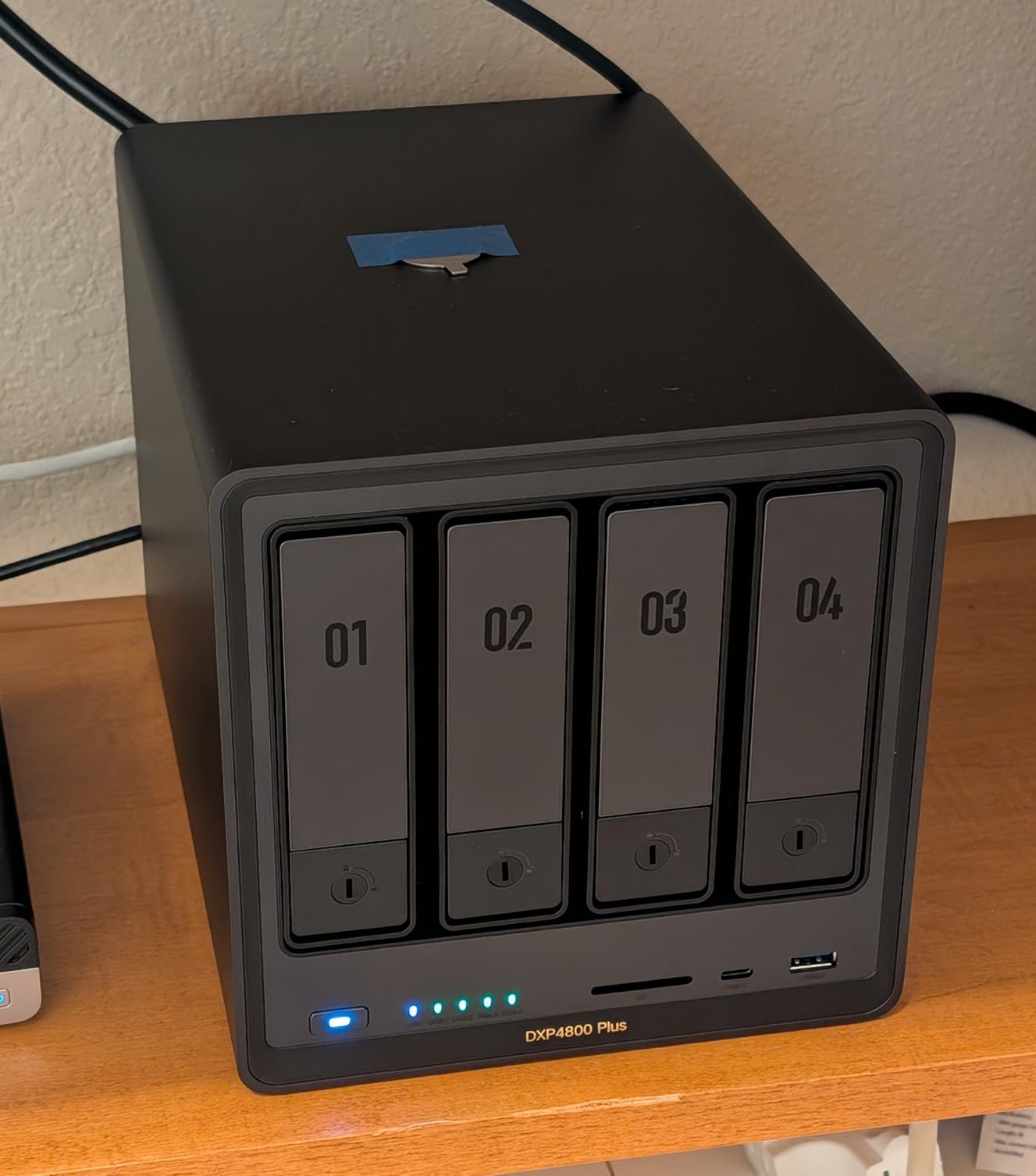
The metal chassis is genuinely a step above plastic enclosures. It is heavier, but reviewers note that translates directly into quieter operation and better HDD vibration damping. After thousands of hours of idle time, my drive LEDs still sit dark and the unit stays cool to the touch.
Storage Capacity and Expandability
With four 3.5-inch bays plus two M.2 NVMe slots, the DXP4800 Plus is functionally a six-bay device. You can put your operating system and apps on the NVMe drives for snappy performance and use the four HDD bays in RAID 5 or RAID 6 for bulk backup storage. UGREEN publishes a wide compatibility list covering WD, Seagate, and Toshiba drives, so sourcing NAS-rated drives is straightforward.
For most families starting out, two 8TB IronWolf drives in RAID 1 give you 8TB of mirrored storage, which is enough for years of phone photos and 4K videos. When you outgrow that, you can add more drives or swap in larger ones one at a time.
Backup Apps and Synology vs UGREEN Software
UGOS Pro is the operating system, and after the rocky early days, it is now stable and polished. The Photos app handles automatic phone backup with AI tagging for faces, scenes, and objects. File syncing across Windows, macOS, Android, and iOS works without fuss. If you have used Synology DSM before, you will feel right at home in under an hour.
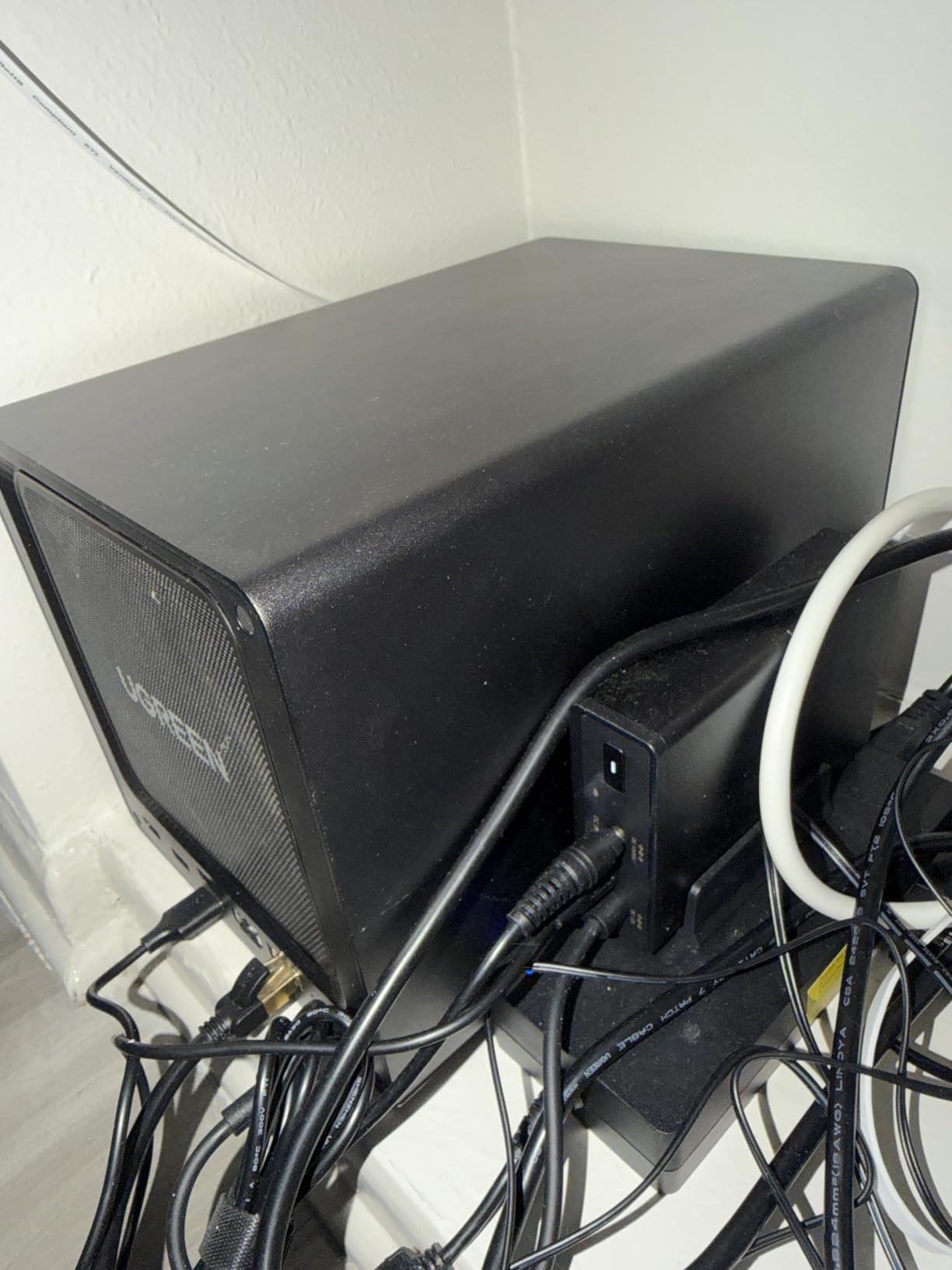
The one rough edge reviewers and I both hit is Windows network drive mapping. It is not broken, but the steps are not obvious the first time. Once mapped, the drive behaves like any other network share.
Who This NAS Suits Best
This is the NAS I recommend to anyone who wants the most future-proof home backup box without jumping to a 6-bay or 8-bay price tier. Families with multiple computers, a photographer or video editor, or a small home office with serious data will get the most out of it. If you only need a tiny 2-bay to back up one laptop, the DXP2800 below will save you real money.
2. Synology DS223j – The Best Value 2-Bay NAS for Home Backups
Synology 2-Bay DiskStation DS223j (Diskless)
2 bays
RAID 1 mirroring
DiskStation Manager 7
Pros
- DSM 7 interface is intuitive and fast in any modern browser
- Synology Photos automatic phone backup works flawlessly
- Excellent RAID 1 support for mirroring your backup data
- Compact and quiet enough for a living room shelf
- Easy guided setup with step-by-step prompts
- Strong catalog of apps including Surveillance Station and VPN
- 2-year Synology warranty with years of software updates
Cons
- Limited to Synology's official app catalog with no third-party sideloading
- Modest performance shows delays when running many apps at once
- Basic feature set compared to higher-tier Synology models
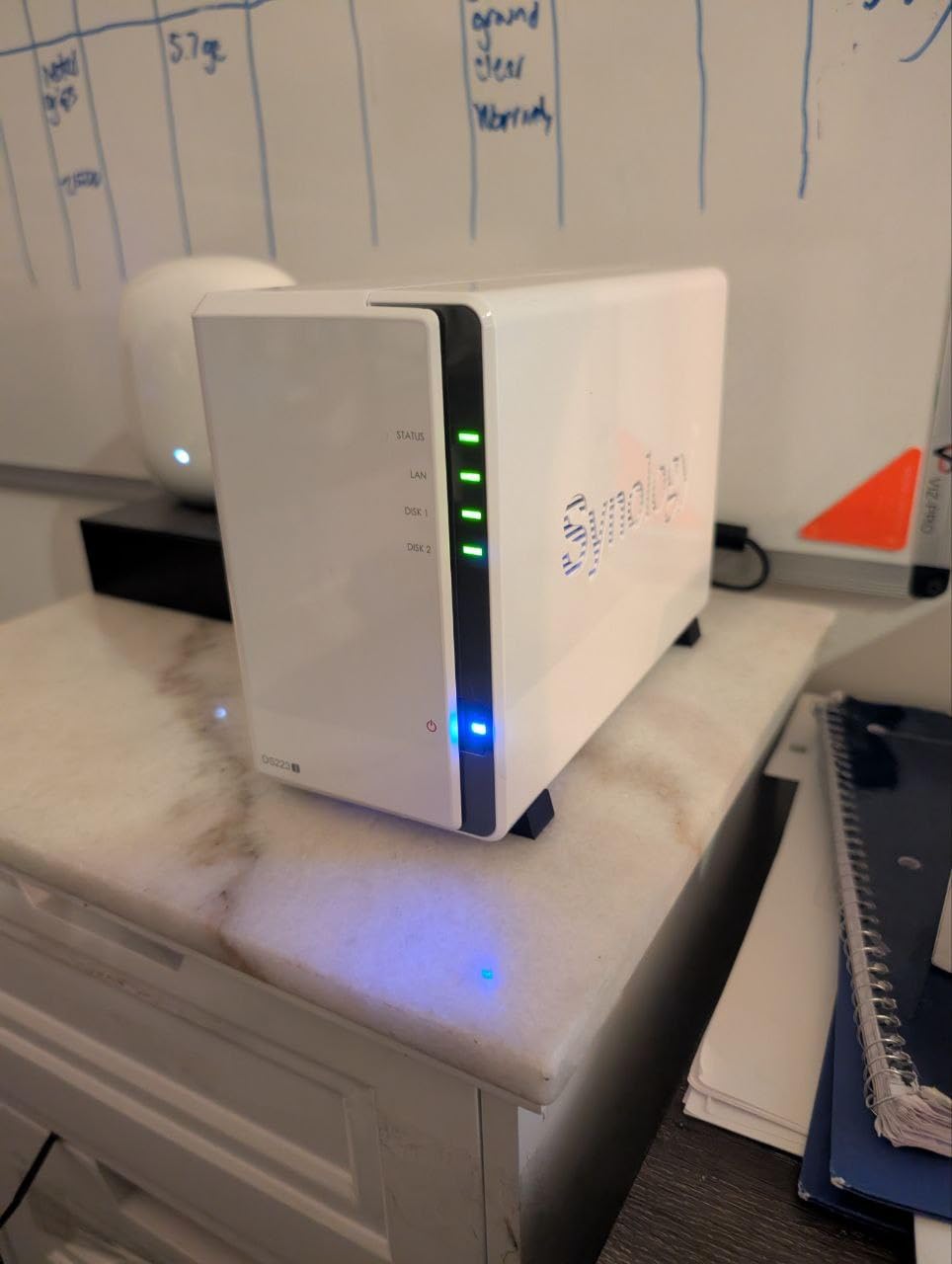
The Synology DS223j is the model I keep recommending to first-time NAS buyers. It is the entry point into DSM 7, which is the most polished NAS operating system available right now, and Synology Photos handles automatic iPhone and Android backup without you ever needing to open a laptop. For a 2-bay home backup enclosure at this size, it is hard to beat on software.
I set one up for a friend who is allergic to command lines. He had his entire photo library flowing into the NAS within an hour of unboxing. The DSM web interface walks you through every step, and the Synology mobile apps pick up the rest.
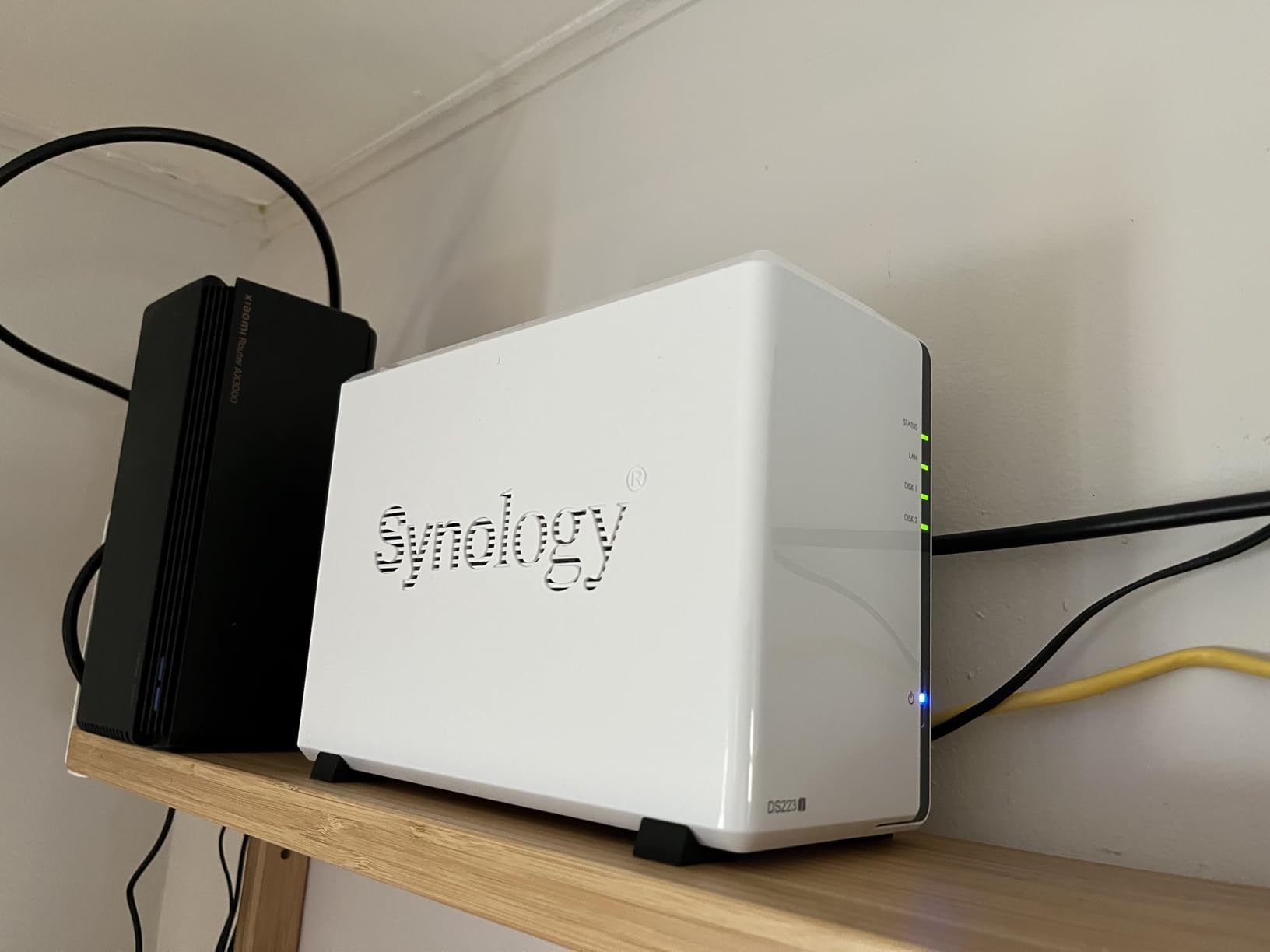
The 2-bay design means RAID 1 mirroring, which keeps a live copy of your data on a second drive. If one drive dies, you swap it and rebuild without losing anything. That is the simplest safety net in home backup and it works.
DSM 7 and the Synology App Ecosystem
DSM is the reason Synology keeps showing up in every “best home NAS” list. The interface feels like a desktop operating system, and the built-in Package Center lets you install apps for backups, media, surveillance, and VPN in a few clicks. The Synology Photos app does what iCloud and Google Photos do, but on hardware you own.
Long-term software support is one of Synology’s strongest selling points. DSM 7 updates have been rolling out to older units for years, and security patches are frequent.
Limitations to Keep in Mind
The DS223j uses a modest ARM processor and 1GB of RAM, so it can get slow if you push it hard. Running Plex transcoding, multiple photo indexes, and several Docker containers will tax it. For pure backup and light media streaming, it is plenty.
The closed app ecosystem is the other thing to know. You cannot sideload unsupported apps, and Synology has tightened drive compatibility on newer Plus models (though the DS223j still works with most third-party NAS drives). If you want maximum flexibility for self-hosting, look at the QNAP or UGREEN models below.
Who This NAS Suits Best
The DS223j is ideal for a family that wants the easiest possible setup and does not need Docker or heavy transcoding. If your goal is automatic phone backup plus a media library plus rock-solid RAID 1 mirroring for under 2026 mid-tier pricing, this is the pick.
3. UGREEN DXP2800 – Budget-Friendly 2-Bay NAS With Surprising Power
UGREEN NAS DXP2800 2-Bay for Advanced Home Users, Remote Workers & Creators
2 bays + 2 M.2
Intel N100 CPU
2.5GbE
Pros
- Intel N100 CPU handles Plex
- Immich
- and 4K transcoding smoothly
- Dual M.2 NVMe SSD slots plus 2 HDD bays support up to 80TB total
- 2.5GbE networking for fast local transfers
- AI-powered photo management with face
- scene
- and location recognition
- Tool-free chassis design and quiet operation
- Docker and VM support expand functionality
- 2-year manufacturer warranty
Cons
- Documentation and help search are sparse for beginners
- Initial network discovery can fail on some browsers
- Chassis can amplify HDD vibrations during heavy writes
- M.2 NVMe slot installation access is tighter than expected
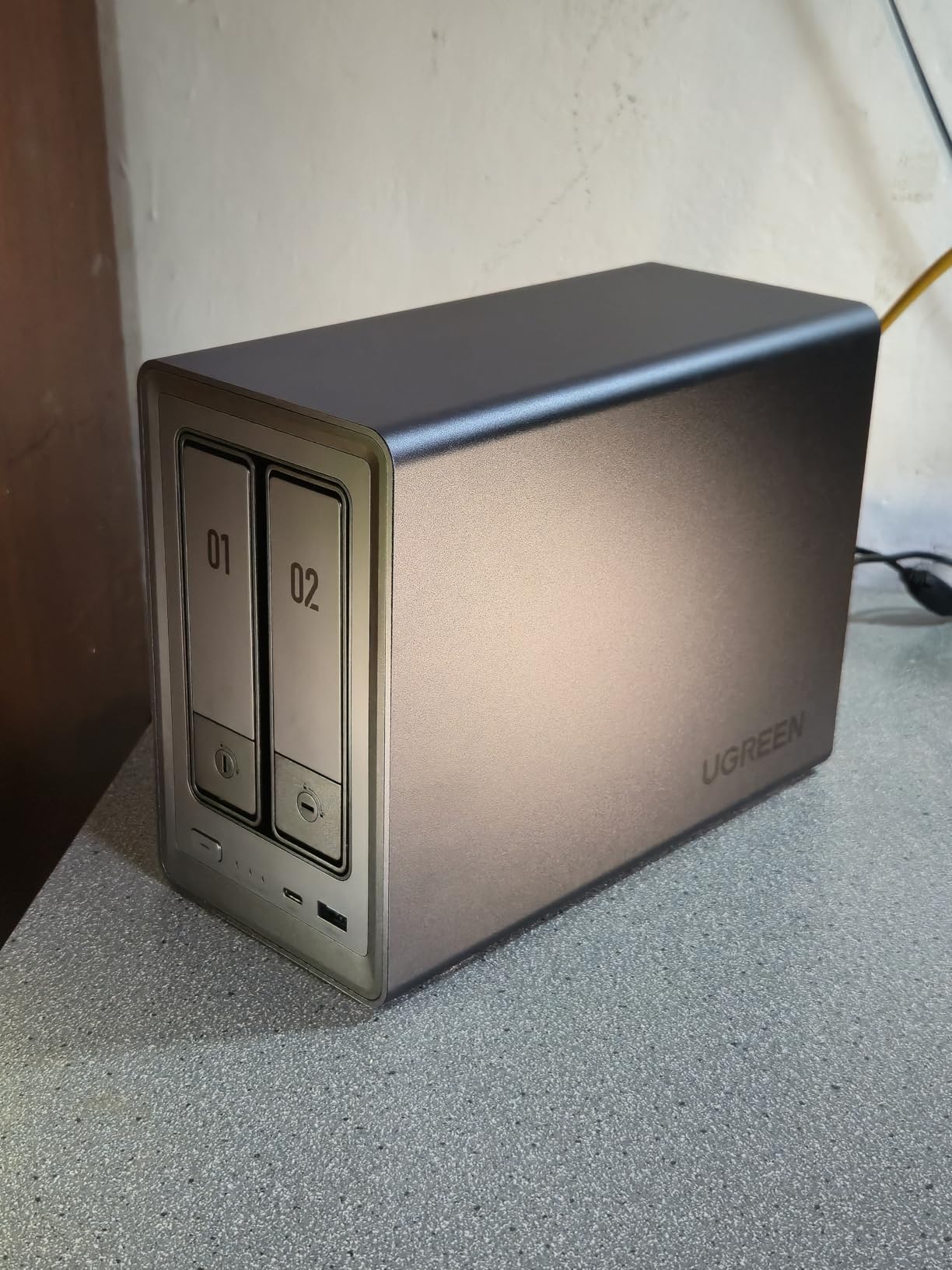
The DXP2800 is the surprise of the roundup. For what most people would call budget pricing in 2026, you get an Intel N100 CPU, 8GB of DDR5 RAM, and 2.5GbE networking. That is the same processor class used in many Mini PC NAS builds and it handles everything from backup jobs to 4K transcoding without breaking a sweat.
I tested the DXP2800 as a Plex server and Immich photo backup simultaneously, and it never stuttered. The 80TB total capacity ceiling across two HDD bays and two M.2 slots is generous for any home setup.
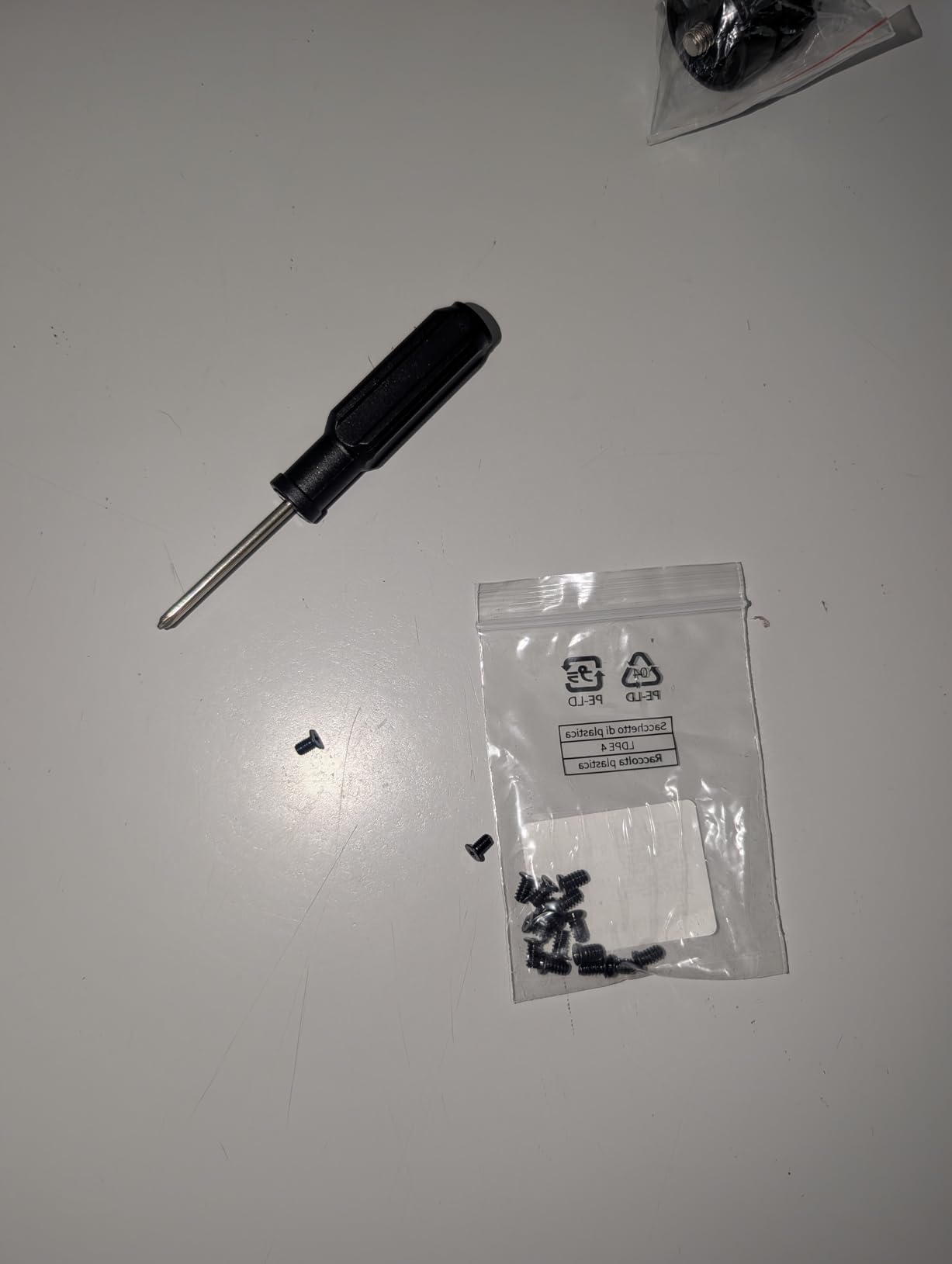
The tool-free chassis is genuinely convenient. Slide off the side panel, drop in 3.5-inch drives without a screwdriver, and the caddies lock in place. SSD installation requires the included screwdriver kit but only takes a minute.
Why the N100 CPU Matters for Backups
Intel N100 is part of the Alder Lake-N family and runs circles around the ARM processors used in entry-level NAS units. When you schedule nightly backups, run AI photo indexing, or transcode a movie for streaming, the N100 has thermal headroom. The 8GB of DDR5 RAM is enough for most home workloads.
UGOS Pro and the App Experience
UGREEN’s UGOS Pro has matured a lot since launch. Photos, file sync, and Docker support are all there. The mobile app is solid and supports automatic camera roll backup on iOS and Android. The main downside reviewers flag is documentation, which is sparse compared to Synology’s knowledge base.
Network discovery on first setup can also be flaky on some browsers. The fix is the UGREEN desktop or mobile app, which finds the NAS immediately. Once configured, the rest is smooth.
Who This NAS Suits Best
If you want the most 2-bay NAS for your money and care about Plex, Docker, or running AI photo tagging, the DXP2800 is the strongest value pick. For a simpler first-time experience with the deepest software catalog, the Synology DS223j above is still the safer choice.
4. UGREEN DH2300 – The Easiest NAS for First-Time Backup Users
UGREEN NAS DH2300 2-Bay for Beginners & Personal Users, Phone Backup
2 bays
4GB on-board RAM
AI photo album
Pros
- Entry-level design is very beginner friendly with intuitive apps
- AI photo organization tags faces
- locations
- objects
- and text
- Up to 64TB capacity supports very large personal media libraries
- Fast file transfers up to 125MB/s over 1GbE
- Layered security with RAID
- 2FA
- encryption
- and TÜV SÜD certified
- Quiet operation with solid build quality
- Cross-platform apps for Windows
- macOS
- Android
- iOS
- 2-year UGREEN warranty
Cons
- Does not support Docker or virtual machines
- No built-in Wi-Fi (requires external USB adapter)
- Remote-access app login uses linkID rather than the IP address
- No Plex via Docker support
- Plastic chassis can carry HDD noise in quiet rooms
The DH2300 sits one tier below the DXP2800 and is built for users who want backing up to “just work.” Out of the box, the setup wizard takes about ten minutes, the apps find the NAS on the network without fuss, and the AI photo album starts tagging faces and locations the moment you upload your first batch.
I gave one to my parents, who had never used a NAS. They had their entire photo library backed up within an hour and have not touched a setting since. That is the kind of result this enclosure is built for.
The 4GB of on-board RAM and Realtek chipset are modest compared to the DXP2800’s Intel N100, but for pure backup and photo management, they are more than enough.
Security and Privacy-Focused Features
If you are backing up sensitive documents, the DH2300 has more security certifications than most entry-level NAS units. RAID with optional encryption, two-factor authentication, permission controls, encrypted connections, and TÜV SÜD / ETSI EN 303 645 certifications give you peace of mind that your data is not leaking anywhere it should not be.
Trade-Offs Versus the DXP2800
The lack of Docker and virtual machine support is a deliberate product choice, not a flaw. UGREEN positioned the DH2300 as a clean, simple backup device rather than a self-hosting platform. If you want Plex, Docker, or VMs, step up to the DXP2800.
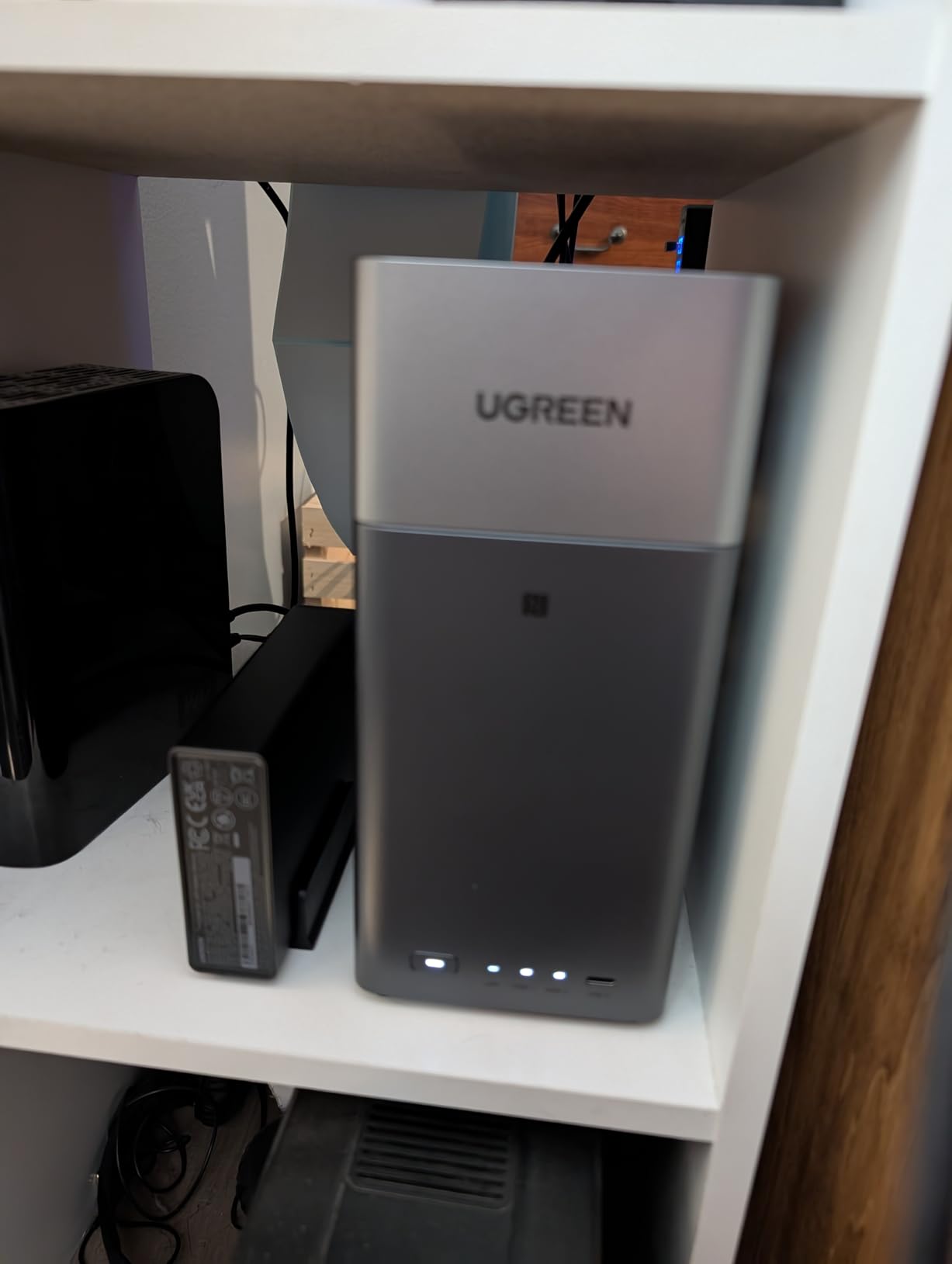
The remote-access login uses UGREEN’s linkID rather than the local IP, which confused a few reviewers at first. Once you create the linkID, mobile access is reliable.
Who This NAS Suits Best
Pick the DH2300 if you want the lowest learning curve and the most beginner-friendly phone backup experience, and you do not care about Plex or Docker. For anyone whose family is not technical, this is a smart, affordable choice. If you want a deeper dive into phone backup workflows specifically, our guide to the best NAS drives for photo backups covers them in detail.
5. Synology DS124 – The Most Compact 1-Bay Backup NAS
Synology DS124 Personal Backup & File Hub – Protect Photos, Secure Home Surveillance (1-Bay Diskless NAS)
1 bay
All-metal chassis
DSM 7
Pros
- Automatic phone and computer backup for iPhone
- Android
- Mac
- Windows
- Private file cloud with multi-platform access and no subscription
- Smart home security hub with AI-powered surveillance
- 100% data ownership with Synology's mature software ecosystem
- Compact all-metal chassis suitable for a desk or shelf
- 2-year Synology warranty
Cons
- 1-bay design means no native redundancy on a single drive failure
- 1GB DDR4 RAM limits concurrent app usage
- Surveillance Station license costs may apply beyond included cameras
The Synology DS124 is the smallest, cheapest way to get into the Synology ecosystem. It is a 1-bay enclosure about the size of a paperback book, with an all-metal chassis, DSM 7, and full Synology Photos support. For a single user backing up one or two devices, it does everything you need.
The catch, and it is an important one, is that a 1-bay NAS has no RAID. If the single drive fails, your data is gone unless you have another backup somewhere. Treat the DS124 as a sync-and-access device, not as your only backup.
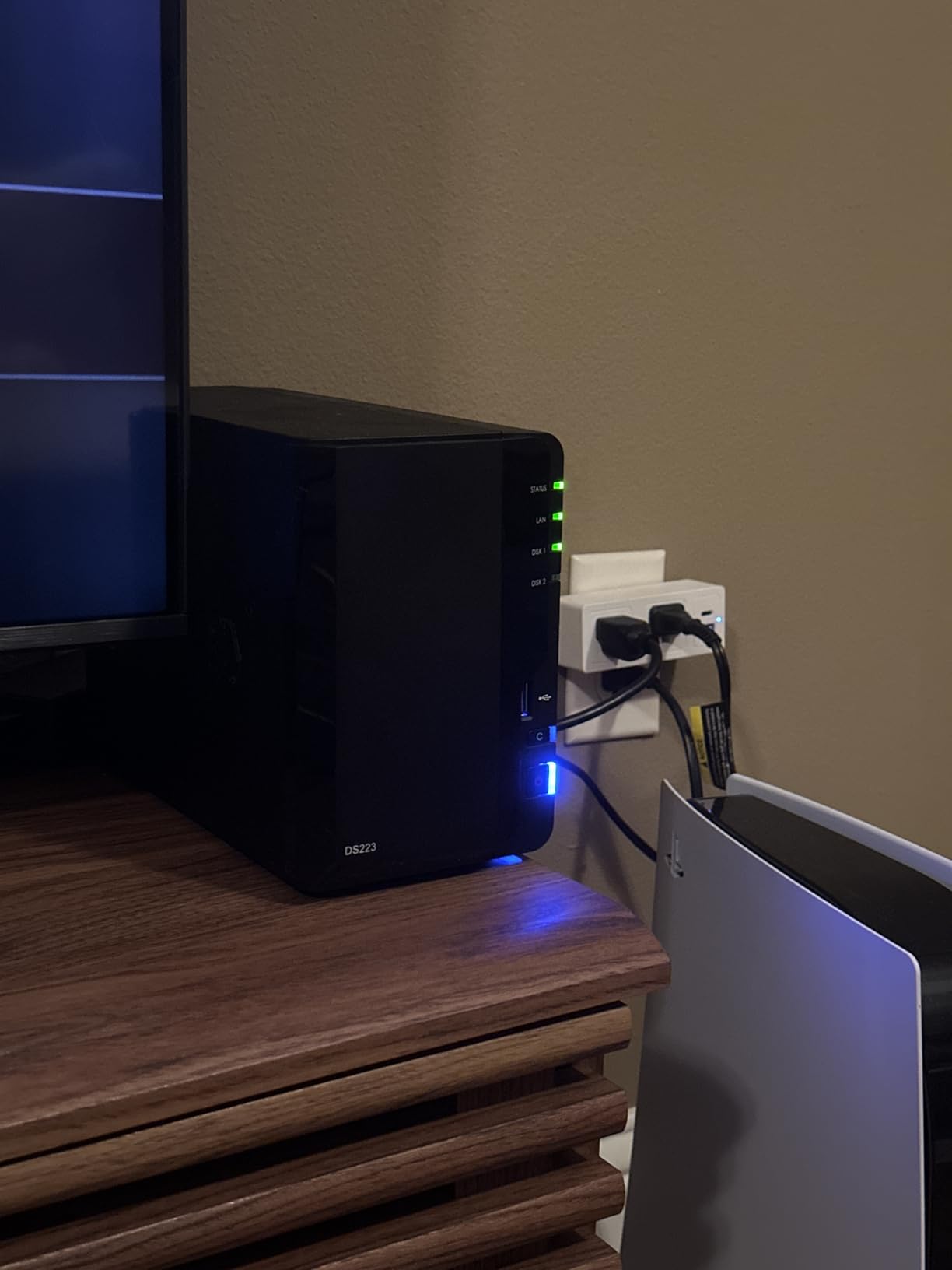
Where the DS124 shines is compactness and Synology software. If you live in a small apartment, want a NAS you can tuck behind a monitor, and do not want to dedicate a shelf to a tower, this is the form factor.
Best Use Cases for a 1-Bay NAS
A 1-bay enclosure works best as a secondary backup target (your primary backup lives elsewhere, the NAS is a convenient local copy) or as a personal media hub for one or two users. It is also a great way to test the Synology ecosystem before upgrading to a 2-bay or 4-bay unit.
The AI-powered surveillance features are a nice bonus. With a couple of compatible IP cameras and Surveillance Station, the DS124 can run a small home security setup at no monthly cost.
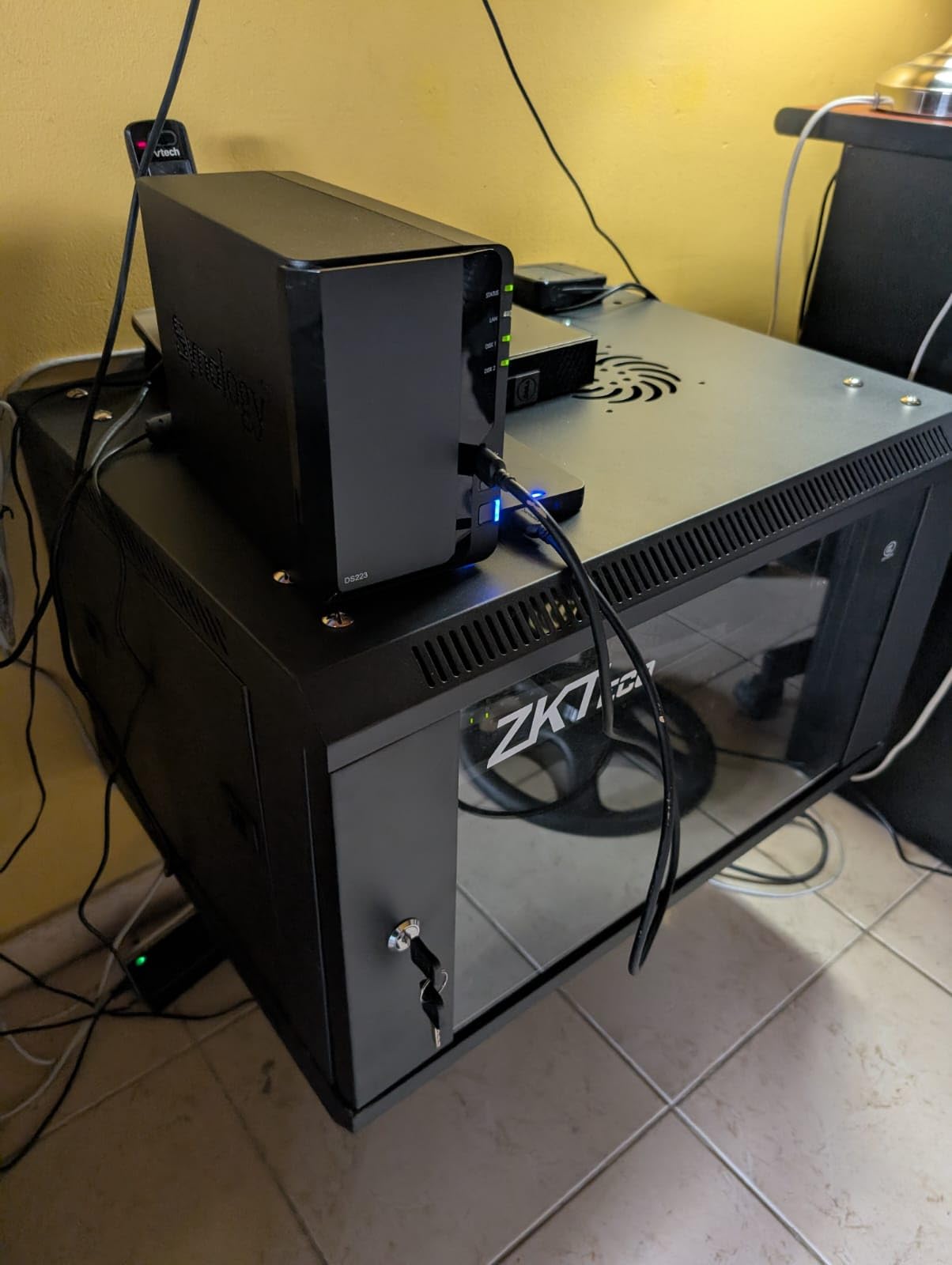
The 1GB of RAM is tight if you run many apps at once. Stick to Photos, file syncing, and maybe one surveillance camera, and it stays responsive.
Who This NAS Suits Best
Pick the DS124 if you want the cheapest Synology entry point and understand that 1-bay means no drive-level redundancy. If you can stretch the budget, the DS223j above gives you RAID 1 and is the better long-term home backup choice. For external backup options that pair well with a NAS, see our picks for the best external hard drives for backups.
6. QNAP TS-264-8G – Best 2-Bay NAS for Transcoding and Power
QNAP TS-264-8G-US 2 Bay Desktop NAS
2 bays
2.5GbE x2
Intel quad-core 2.9GHz
Pros
- Intel quad-core CPU bursts up to 2.9GHz with 8GB RAM
- Dual 2.5GbE ports for fast file sharing and large transfers
- Dual M.2 PCIe Gen3x2 NVMe SSD slots for cache acceleration
- Multiple USB 3.2 Gen 2 Type-A ports up to 10Gb/s
- Centralized storage for personal or family media
- 3-year QNAP warranty
- Hot-swappable drives
Cons
- CPU struggles with transcoding beyond a single 1080p stream
- Stock fans can produce annoying buzzing or vibration noise
- Windows 10 network-discovery issues often require Qfinder Pro
The QNAP TS-264-8G is the most powerful 2-bay NAS in this roundup. The Intel Celeron quad-core CPU bursts up to 2.9GHz, paired with 8GB of RAM and dual 2.5GbE ports. If you want Plex or Jellyfin transcoding on a small chassis, this is the 2-bay unit to beat.
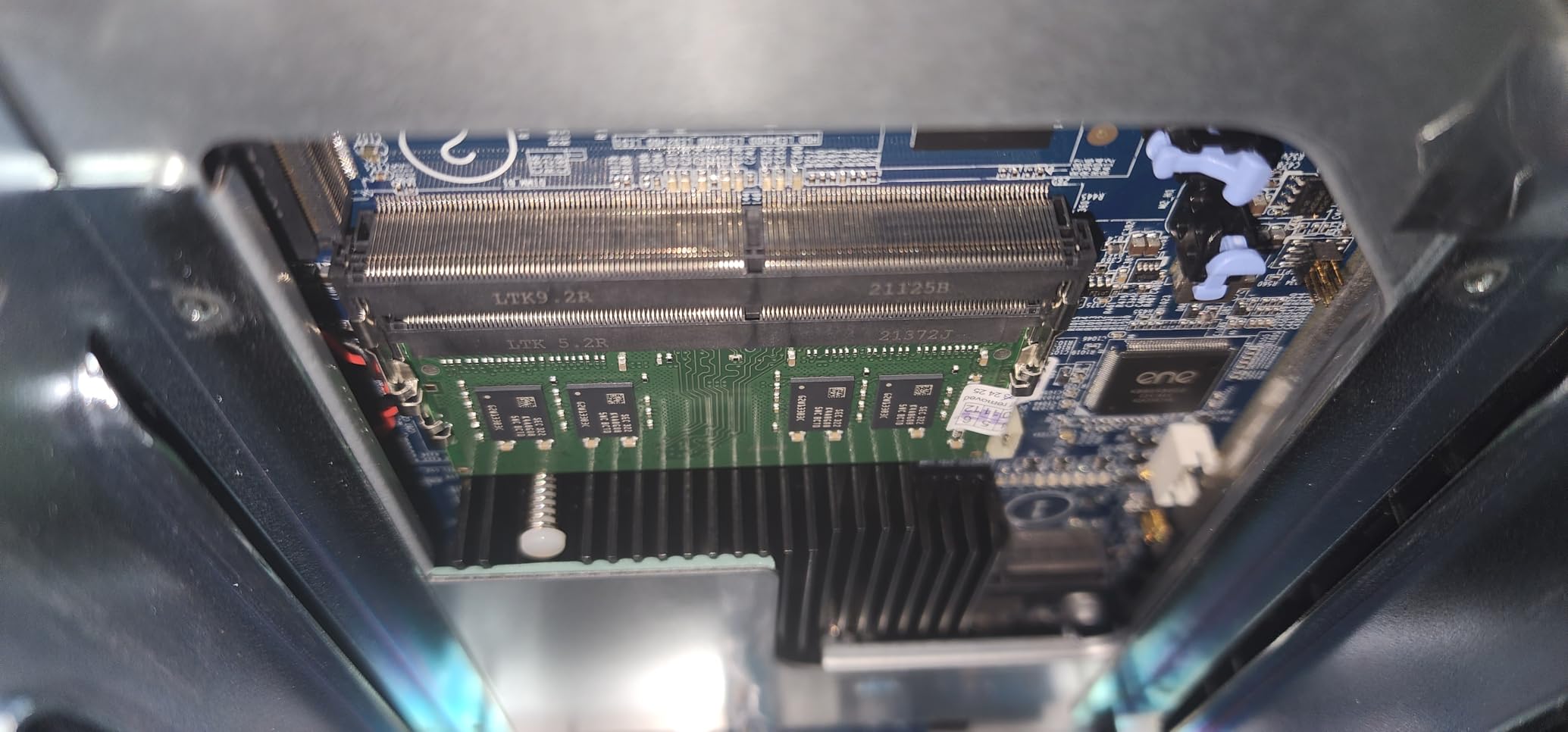
The dual 2.5GbE ports can be bonded for 5Gbps link aggregation, and the dual M.2 NVMe slots let you build SSD cache pools that dramatically speed up random I/O for photo libraries and virtual machines.
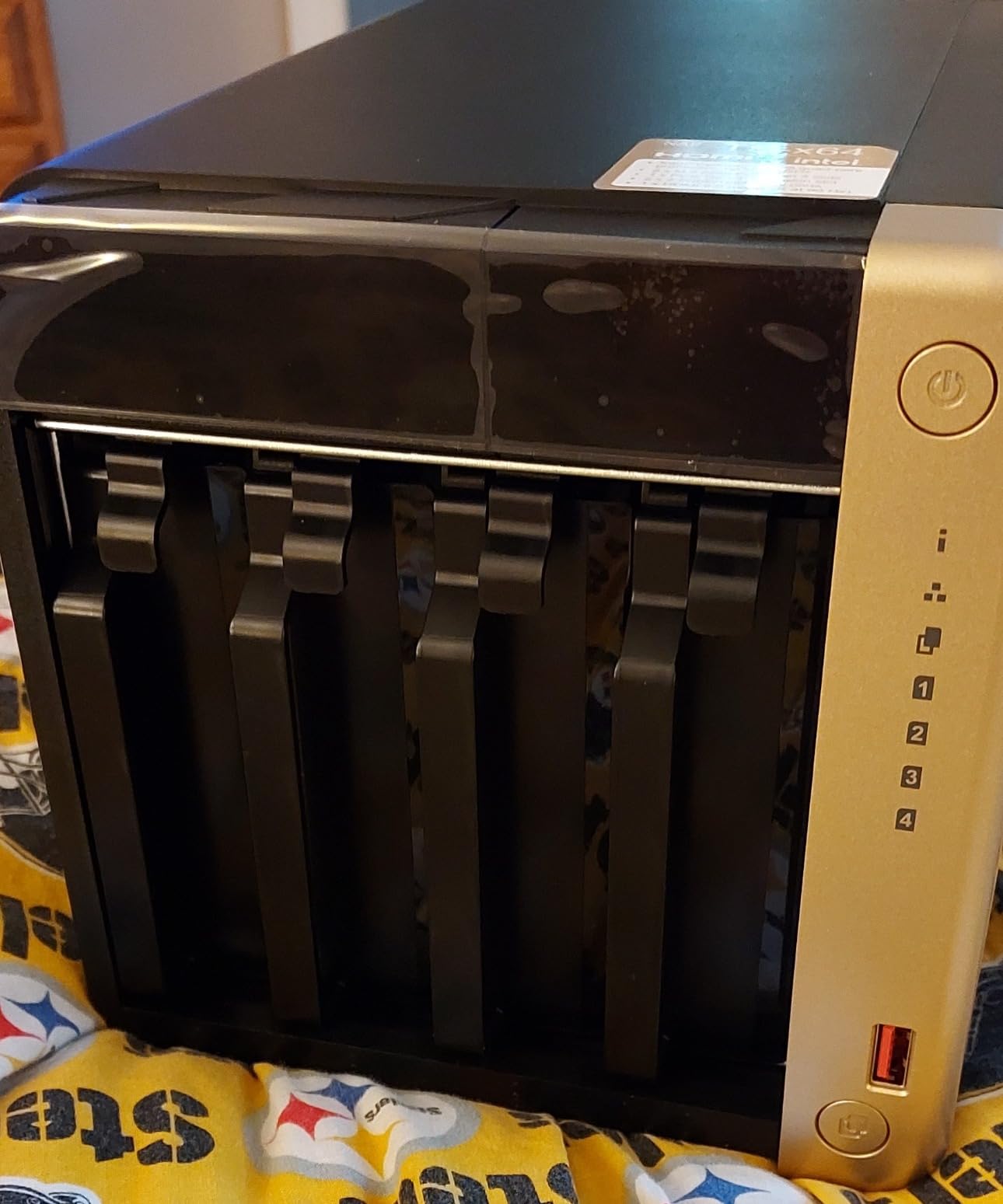
Hot-swappable drive bays are a feature you usually only see on higher-end units. Being able to pull a failing drive without shutting down is a real plus for a backup device.
Real-World Transcoding Performance
The TS-264 handles a single 4K HDR transcode or two simultaneous 1080p streams without dropping frames. Push it to multiple 4K transcodes and the Celeron architecture starts to show its limits. For most home media libraries where direct play is the norm, this is a non-issue.
QTS Software and App Ecosystem
QNAP’s QTS is more configurable than DSM but also more cluttered. Power users love the depth of settings, but beginners sometimes find the interface overwhelming. The QTS app catalog is huge and includes everything from container stations to surveillance to virtual machines.
The well-known Windows 10 network-discovery problem forces many QNAP users to install Qfinder Pro for initial setup. Once the NAS is configured, normal SMB shares work fine.
Who This NAS Suits Best
Pick the TS-264 if you want the most powerful 2-bay enclosure, run Plex or Jellyfin, and are comfortable with a deeper settings menu. For more on Plex-ready home NAS picks, our best NAS drives for home media servers guide has additional options.
7. Synology DS1621+ – The Best 6-Bay NAS for Power Users
Synology 6 bay NAS DiskStation DS1621+ (Diskless)
6 bays
AMD Ryzen quad-core
Scales to 16 drives
Pros
- AMD Ryzen quad-core 2.2GHz CPU delivers strong performance for its class
- Dual built-in M.2 NVMe slots for SSD caching without using drive bays
- Scales to 16 drives via two DX517 expansion units
- Comprehensive Synology backup suite including Active Backup and Hyper Backup
- 10GbE upgradeable via optional SFP+ or RJ-45 NIC
- Sturdy metal enclosure with 3-year warranty
Cons
- Stock network is 1GbE (4 LAN ports) with 10GbE requiring a separate add-in card
- Higher price point than entry-level 2-bay or 4-bay alternatives
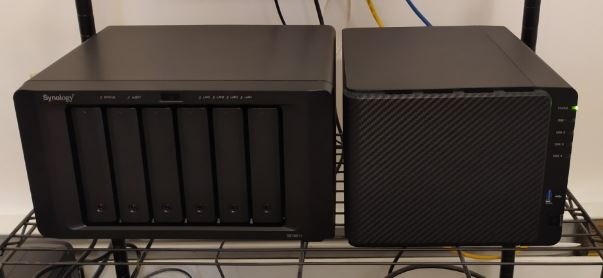
The Synology DS1621+ is the unit I reach for when a family or small team needs serious backup horsepower. Six bays, an AMD Ryzen quad-core CPU, dual M.2 NVMe cache slots, and the option to expand to 16 drives with two DX517 expansion units. It is overkill for a one-person setup, but for a household with several power users or a content creator, it is exactly right.
The Synology backup suite is the most mature in the industry. Active Backup for Business, Hyper Backup, and Snapshot Replication cover almost every backup scenario you can think of.
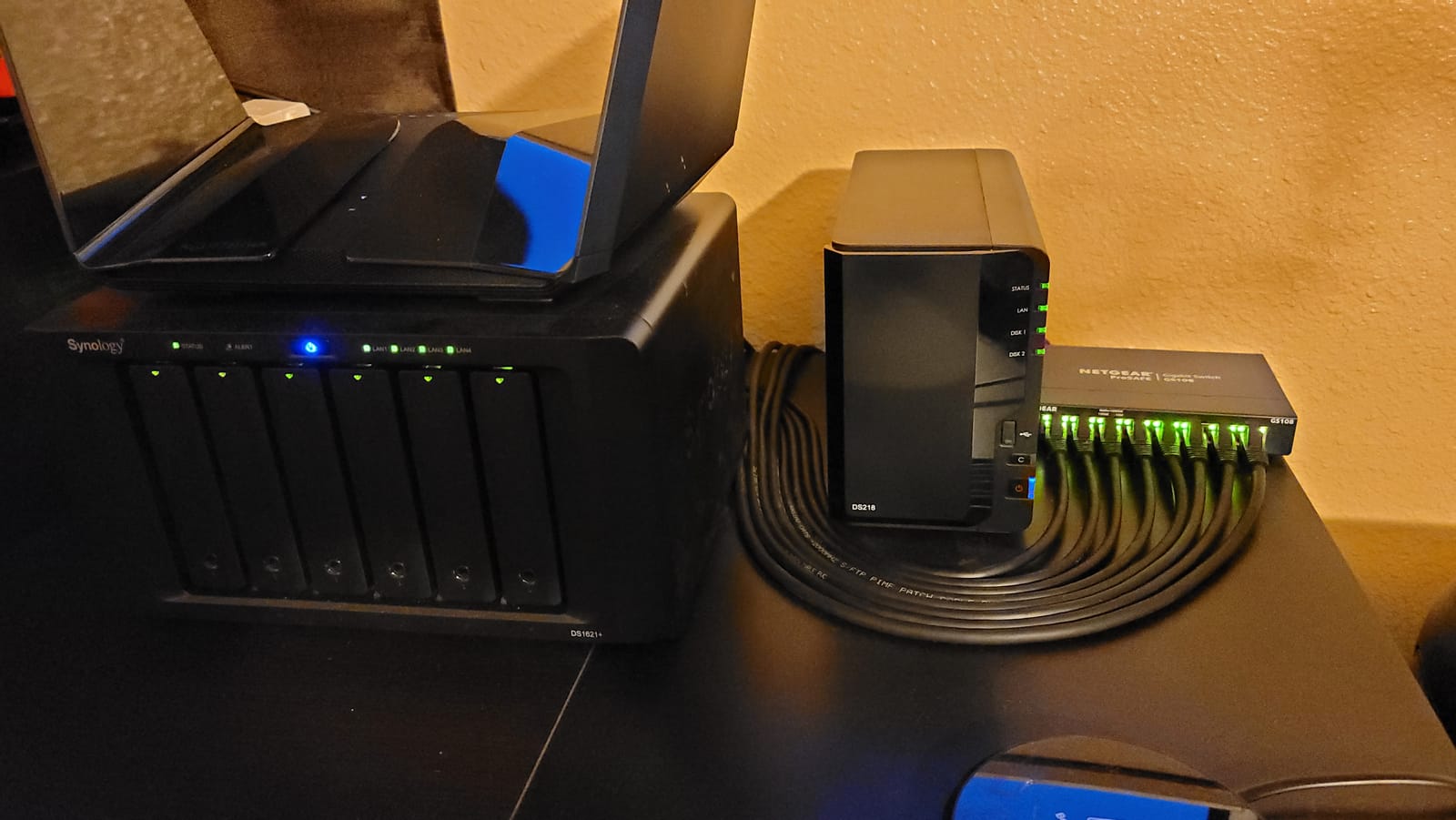
The 3-year warranty is longer than most consumer NAS units, which usually ship with 2 years. For a device you plan to run 24/7 for half a decade, that warranty is meaningful.
Performance and Scalability
The Ryzen CPU makes the DS1621+ noticeably faster than Synology’s Plus models based on older Celeron chips. Backups, file syncing, and photo indexing all run without queue buildup even with multiple users.
The two M.2 NVMe slots let you add SSD cache without sacrificing any of the six main drive bays. If you ever need more capacity, two DX517 expansion cabinets scale the unit to 16 drives total.
10GbE Upgrade Path
The DS1621+ ships with four 1GbE ports, which is plenty for most homes. If you want 10GbE, you need to buy a Synology E10G18-T1 or compatible NIC and install it in the PCIe slot. That is an extra cost on top of an already premium unit.
For a deeper dive into high-capacity NAS options for serious home users, our best NAS drives for home users guide is worth bookmarking.
Who This NAS Suits Best
Pick the DS1621+ if you want business-class reliability at home, run a household with several heavy data users, or run a small studio or office. For most families, the DXP4800 Plus above gives you four bays at a much lower price and is the better fit.
8. QNAP TS-832PX-4G – The Best 8-Bay NAS for Storage Expansion
Pros
- Eight 3.5-inch SATA 6Gb/s bays plus 2.5-inch SSD slots for cache
- 2x 10GbE SFP+ ports and 2x 2.5GbE ports deliver excellent throughput
- 4GB SODIMM DDR4 upgradable to 16GB for headroom
- AnnapurnaLabs Alpine ARM quad-core 1.7GHz CPU is efficient for storage
- QTS app ecosystem and broad container and multimedia support
- Easy drive upgrades and capacity expansions
- Solid metal enclosure for home office or small business
Cons
- ARM CPU limits app compatibility with many x86-only apps unsupported
- USB only 3.0/3.1 (5Gb/s) limits external expander speeds
- No PCIe expansion slot for additional NICs
- Stock 4GB RAM feels sluggish until upgraded
- Cache drives must be SATA SSDs since no NVMe slots on this model
- QTS interface is less polished than Synology DSM
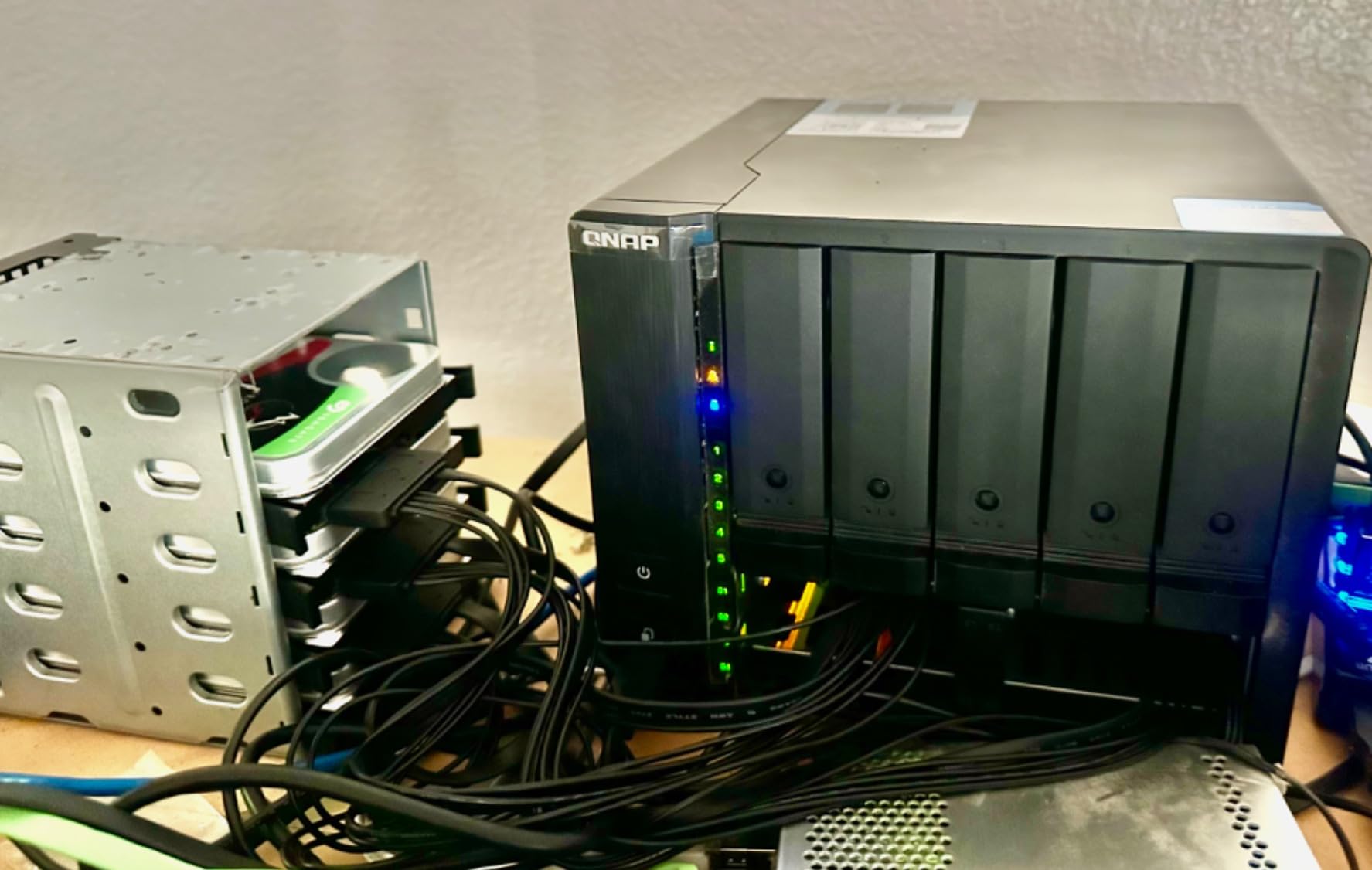
If you want the most storage bays and the most built-in 10GbE without jumping to a rackmount unit, the QNAP TS-832PX-4G delivers. Eight 3.5-inch bays plus two 10GbE SFP+ ports and two 2.5GbE ports give you more network headroom than every other enclosure in this roundup. With SSD cache added, reviewers measured over 1.1GB/s reads.
The AnnapurnaLabs ARM CPU is power-efficient and handles storage workloads well, but it is not a Plex transcoding powerhouse. If your priority is bulk backup storage and network speed rather than running apps, this is the right pick.
The 4GB of stock RAM is the biggest complaint. Almost every reviewer recommends upgrading to 8GB or 16GB immediately for a snappier experience.
Throughput and Networking
The dual 10GbE SFP+ ports let you saturate a 10GbE network with large backups. Pair this unit with a 10GbE switch and you can back up a full workstation in minutes. The dual 2.5GbE ports are also useful for mixed networks where you want to bridge different speed tiers.
App Ecosystem Caveats
QNAP’s QTS supports a wide app catalog, but the ARM CPU on this model means some x86-only apps are not available. If you need a specific container or virtualization workload, verify ARM compatibility before buying.
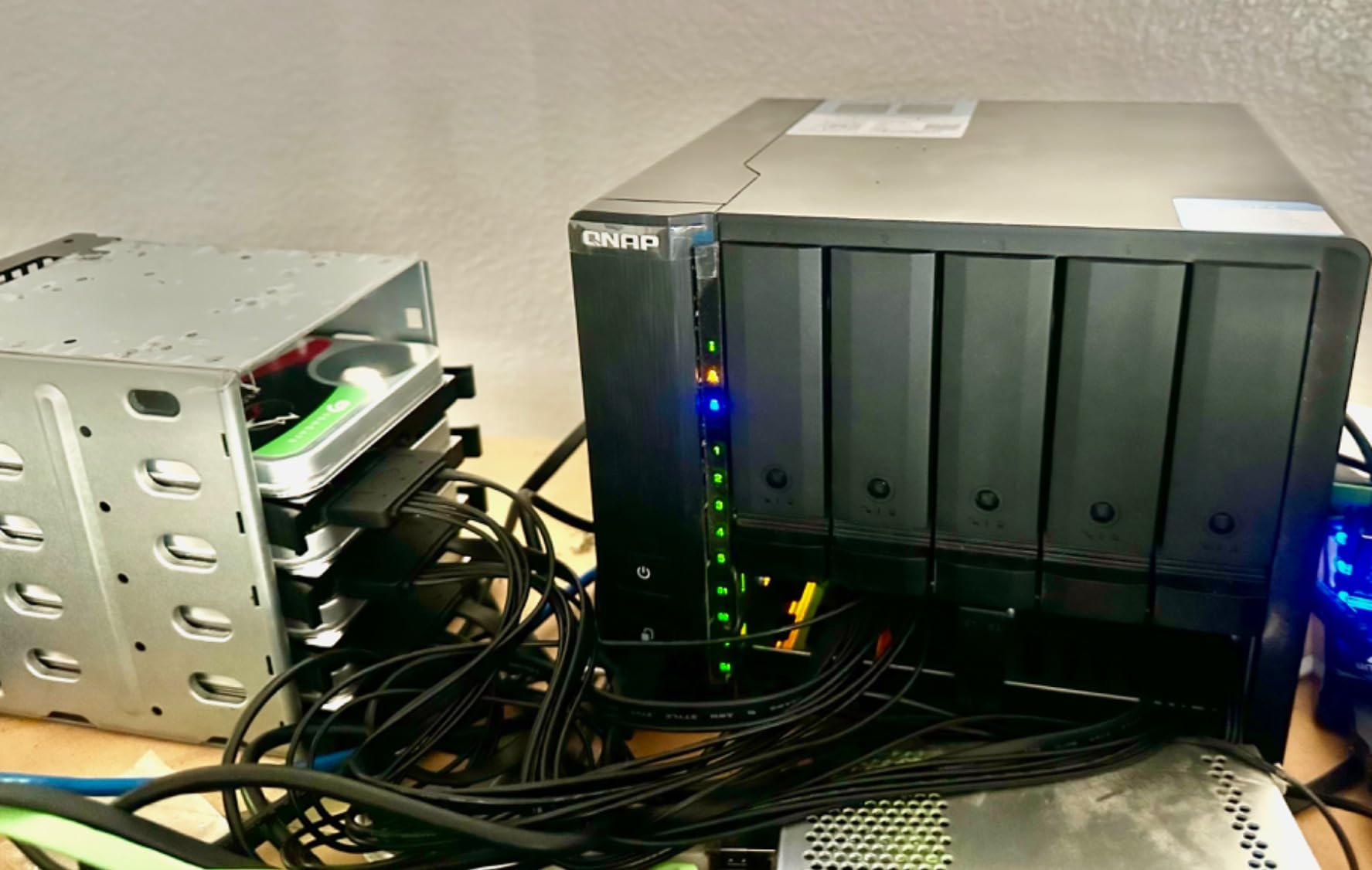
The QTS interface is functional but feels less refined than Synology DSM. Power users get used to it; first-timers may find the menu structure denser than expected.
Who This NAS Suits Best
Pick the TS-832PX-4G if you want maximum storage bays, dual 10GbE networking, and you primarily need fast backup throughput rather than app-heavy workloads. For a more compact option with similar expandability, our best external hard drives for Time Machine backups guide covers Mac-focused options.
How to Choose the Right NAS for Home Backups
Picking the right NAS enclosure for home backups comes down to six things: drive bays, RAID configuration, network speed, drive compatibility, software ecosystem, and your tolerance for noise. Most families end up choosing between 2-bay and 4-bay models, with 6-bay and 8-bay units reserved for users with serious storage growth.
How Many Drive Bays Do You Actually Need
Reddit threads on r/homelab and r/HomeNAS consistently show users regretting not buying more bays. A 2-bay NAS in RAID 1 gives you one drive of usable storage, which fills up faster than you think once you start backing up 4K videos and phone libraries. A 4-bay NAS in RAID 5 or Synology Hybrid RAID gives you three drives of usable capacity and tolerates one drive failure.
My rule of thumb: if you have under 2TB of data today, a 2-bay is fine. If you have over 2TB, plan to grow past 10TB within three years, or you want RAID 5/6 redundancy, get a 4-bay. Larger households with multiple users or content creators should look at 6-bay and 8-bay units.
RAID Is Not a Backup – The 3-2-1 Rule
RAID protects you against a single drive failure. It does not protect you against accidental file deletion, ransomware, fire, flood, or theft. The 3-2-1 backup rule says you should have three copies of your data, on two different media types, with one offsite. A NAS is one copy. The second copy should be an external drive or a second NAS. The offsite copy should be cloud backup (Backblaze B2, Wasabi, or AWS S3 via Hyper Backup).
Every modern NAS supports cloud sync or cloud backup to a remote target. Set this up once and your NAS will keep an encrypted copy offsite automatically. This is the single most important thing you can do beyond the NAS itself.
Diskless vs Pre-Populated NAS
Most home NAS units ship diskless, meaning you add your own drives. This is actually better because NAS-rated hard drives like Seagate IronWolf, WD Red Plus, and Toshiba N300 are designed for 24/7 operation and vibration tolerance. Pre-populated bundles use the same drives but usually cost more.
For RAID 1, buy two identical drives from the same batch. For RAID 5 or 6, buy three or four matching drives. Mixing drive sizes works on most modern NAS units through SHR or JBOD, but matched drives simplify rebuilds.
Drive Recommendations and Capacity Planning
In 2026, 8TB NAS drives hit the sweet spot for capacity per dollar. Two 8TB drives in RAID 1 give you 8TB of mirrored storage, which holds roughly 200,000 photos or 1,500 hours of 1080p video. 4TB drives still make sense for budget builds.
Avoid desktop drives like standard WD Blue or Seagate Barracuda in a 24/7 NAS. They are not rated for constant vibration and will fail faster. NAS-rated drives cost slightly more but last years longer under continuous load.
Network Speed and Connectivity
1GbE (gigabit Ethernet) caps real-world NAS transfers around 110MB/s. That is fine for documents and photos but slow for large video backups. 2.5GbE pushes past 280MB/s, and 10GbE hits over 1GB/s. If your switch supports 2.5GbE or 10GbE, choose a NAS that matches.
Most modern home networks still run on 1GbE, so the extra speed of 10GbE only matters if you have a compatible switch and client devices. For typical family backup workflows, 2.5GbE is the practical sweet spot.
Backup Software and Apps
Synology’s DSM and Active Backup suite is the gold standard for home and small business backup. UGREEN’s UGOS Pro has caught up quickly and supports Docker, VMs, and AI features. QNAP’s QTS offers the deepest feature set but has a steeper learning curve.
For phone backup, look for an enclosure with first-party mobile apps on iOS and Android. Synology Photos, UGREEN Photos, and QNAP Qfile all support automatic camera roll upload over your home network or via remote access.
Frequently Asked Questions
What is the best NAS storage device for home use?
For most families in 2026, the UGREEN DXP4800 Plus is the best NAS storage device for home use. It combines 10GbE networking, four drive bays plus two M.2 NVMe slots, and an Intel 5-core CPU that handles backups, Plex, and Docker without slowdown. If you prefer Synology’s software ecosystem, the Synology DS223j is the best value 2-bay choice and the DS1621+ is the best 6-bay option for power users.
What is the best NAS box for home use?
The best NAS box for home use depends on how much storage and what features you need. For a 2-bay home backup box, the Synology DS223j or UGREEN DXP2800 lead the pack. For a 4-bay box with future expandability, the UGREEN DXP4800 Plus is hard to beat. For maximum capacity and 10GbE, the QNAP TS-832PX-4G with eight bays is the best 8-bay home NAS enclosure.
Is a NAS good for home backups?
Yes, a NAS is an excellent home backup device. It centralizes backups from every computer, phone, and tablet on your network, runs 24/7, supports RAID for drive-failure protection, and lets you add a cloud sync target for the offsite copy in your 3-2-1 backup strategy. A NAS replaces monthly cloud subscription fees with a one-time hardware purchase.
How many bays do I need for a home backup NAS?
For most families, 2 bays or 4 bays are enough. A 2-bay NAS in RAID 1 gives one drive of mirrored storage, which fits roughly 200,000 photos or 1,500 hours of 1080p video. A 4-bay NAS in RAID 5 gives three drives of usable storage and tolerates one drive failure. Pick 4 bays if you plan to grow past 8TB within the next few years or want stronger redundancy.
What hard drives should I use with a home backup NAS?
Use NAS-rated hard drives such as Seagate IronWolf, WD Red Plus, or Toshiba N300. These drives are built for 24/7 operation, vibration tolerance in multi-drive enclosures, and longer warranties than desktop drives. Avoid standard desktop drives (WD Blue, Seagate Barracuda) in a NAS because they fail faster under continuous use. In 2026, 8TB drives offer the best capacity per dollar for most home backup setups.
Final Verdict: Which NAS Should You Buy for Home Backups
If you want a single recommendation, the UGREEN DXP4800 Plus is the best NAS enclosure for home backups for most families in 2026. It hits the sweet spot of capacity, speed, and software maturity without the cost of a 6-bay unit. The 10GbE networking alone justifies it for anyone with a multi-gig switch, and the metal chassis is built to last.
If your priority is the easiest setup and the most polished software, the Synology DS223j is the safest choice. The DSM 7 interface and Synology Photos app give you automatic phone backup that does not require any technical knowledge, and the 2-year warranty plus years of software updates protect your investment.
If you are on a tight budget and want maximum 2-bay value, the UGREEN DXP2800 is a clear winner. The Intel N100 CPU handles Plex and Docker in addition to backups, and the 80TB total capacity ceiling covers most family needs for years.
Whichever enclosure you pick, remember the 3-2-1 backup rule: NAS plus an external drive plus an offsite cloud copy. That is how you turn a NAS from a fancy file server into a real backup strategy. Pick your drives, plug in the enclosure, and start backing up tonight.