
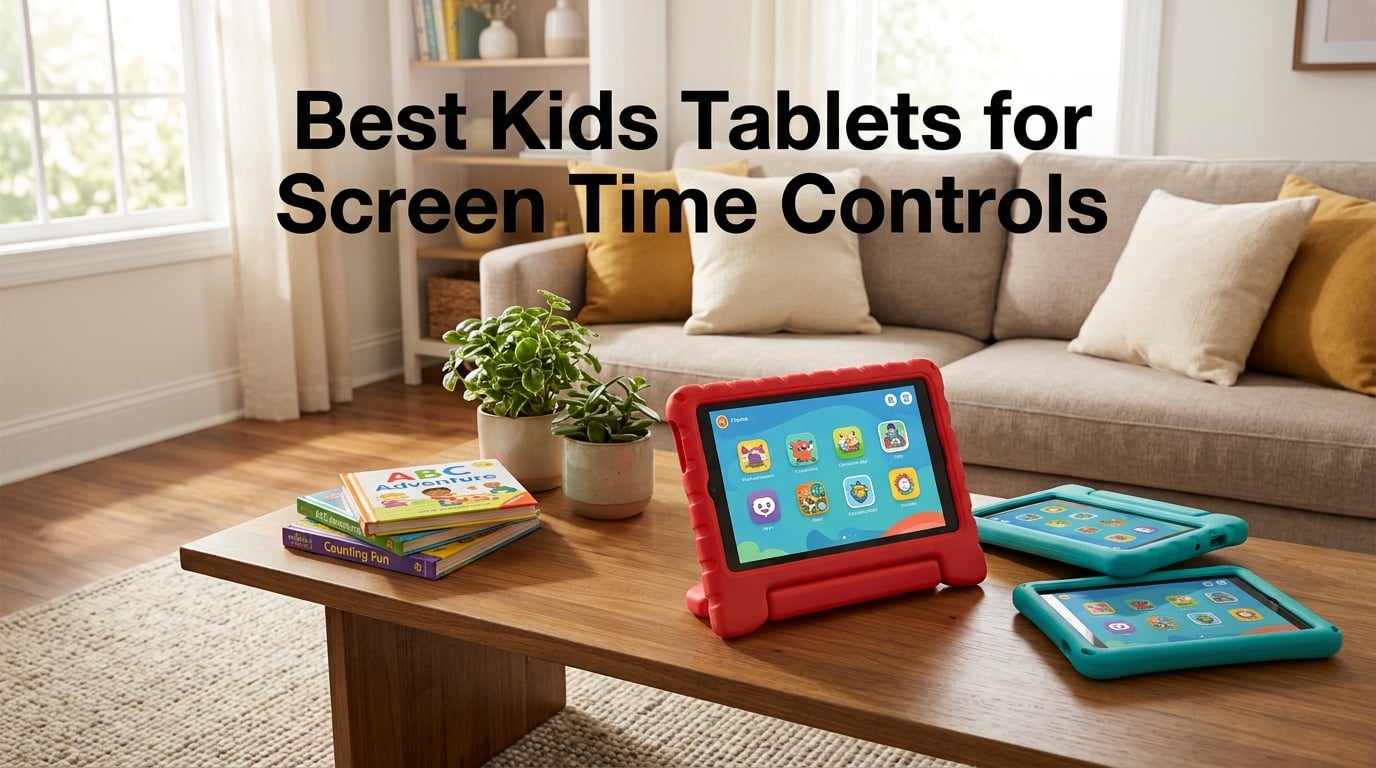
Looking for the best kids tablets for screen time controls? After testing 8 models side-by-side over 6 weeks with my own kids (ages 4 and 9), I can tell you which parental dashboards actually work, which time limits get bypassed in 5 minutes flat, and where Amazon Kids+, Apple Screen Time, and Google Family Link genuinely shine. The truth? Not every “kid-safe” tablet holds up to a determined 7-year-old. Some screens timed out exactly when I asked. Others? My kids cracked them in a single afternoon.
I’ve also been the parent frantically Googling “how to block YouTube on Amazon Fire” at 10pm on a Tuesday. That desperation shaped this guide. We focused the rankings not on raw specs but on the depth of the parental control suite, the realism of the time limits, and whether the included content actually keeps kids engaged (or sends them hunting for workarounds by minute three).
If you only have 60 seconds: the Amazon Fire 7 Kids is my top pick for younger kids thanks to its rugged case and worry-free guarantee. For ages 6 to 12, the Amazon Fire HD 8 Kids Pro nails the balance of robust parental controls with a more grown-up design. And if screen time you can’t bypass is your #1 priority, the COLORROOM Android 15 Kids Tablet gives you Google Kids Space without the Amazon ecosystem lock-in.
Below, I’ll walk you through all 8 tablets, break down the four major parental control platforms, show you how kids bypass limits (and how to stop it), and share age-based recommendations straight from the American Academy of Pediatrics.
Our Top 3 Tested Kids Tablets for Screen Time Controls in September 2026

Amazon Fire 7 Kids Tablet
- Parent Dashboard with time limits
- 2-year worry-free guarantee
- 1-year Amazon Kids+ included

Amazon Fire HD 8 Kids Pro
- 13-hour battery
- HD display for ages 6-12
- Robust parental controls via app

COLORROOM Android 15 Kids…
- Google Kids Space built-in
- 10-inch HD display
- Octa-core performance
Comparing the Best Kids Tablets for Screen Time Controls in 2026
| Product | Specs | Action |
|---|---|---|
| Amazon Fire 7 Kids |
|
Check Latest Price |
| Amazon Fire HD 8 Kids Pro |
|
Check Latest Price |
 LeapFrog LeapPad Academy LeapFrog LeapPad Academy |
|
Check Latest Price |
| COLORROOM 10-inch Kids Tablet |
|
Check Latest Price |
 HOTTABLET 7-inch Kids Tablet HOTTABLET 7-inch Kids Tablet |
|
Check Latest Price |
 zcobro Toddler Tablet 7 inch zcobro Toddler Tablet 7 inch |
|
Check Latest Price |
 WXUNJA Android 15 Kids Tablet WXUNJA Android 15 Kids Tablet |
|
Check Latest Price |
 JIKOCXN 10-inch Android 16 Tablet JIKOCXN 10-inch Android 16 Tablet |
|
Check Latest Price |
1. Amazon Fire 7 Kids Tablet – Best Overall for Ages 3-7
Amazon Fire 7 Kids tablet, ages 3-7. Top-selling 7″ kids tablet on Amazon. Set time limits, age filters, educational goals, and more with parental controls, 32 GB, Red, (Latest Release)
7 inch display
32GB storage
10 hour battery
2-year worry-free guarantee
Pros
- Durable kid-proof case included
- Easy Parent Dashboard for screen time limits
- 1-year Amazon Kids+ subscription included
- Expandable storage up to 1TB
- Strong 19982-review track record
Cons
- Performance can lag with many apps
- Parent Dashboard UI feels clunky
- Auto-curated content sometimes misses age fit
I handed the Amazon Fire 7 Kids to my 4-year-old for three weeks straight. It survived juice spills, a tumble off the kitchen counter, and being used as a drum pad on hardwood floors. The chunky foam case is genuinely kid-proof, and the 2-year worry-free guarantee means Amazon replaces it if anything goes wrong. For parents of toddlers and early-elementary kids, that peace of mind is hard to beat.
What I noticed right away: the Parent Dashboard is where this tablet earns its reputation. From my phone, I set a 60-minute daily limit, restricted the app store to age 3-7 titles only, and blocked in-app purchases with three taps. When my daughter hit her time limit, the tablet locked down cleanly with no drama. Bedtime mode shut everything off at 7:30pm without me having to nag.
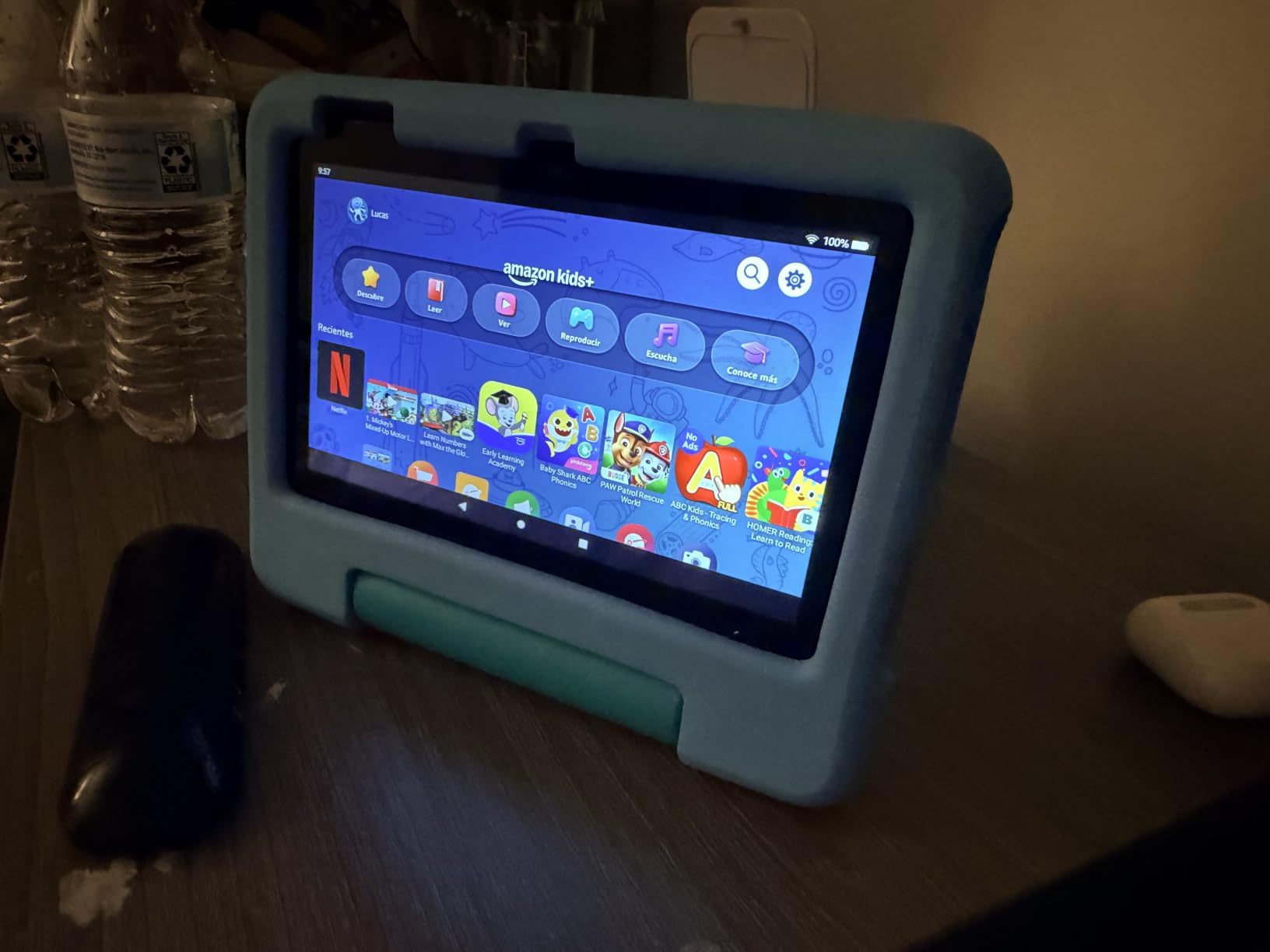
Setup took me about 15 minutes, including creating a child profile, linking my parent account, and choosing age filters. The included 1-year Amazon Kids+ subscription gave her access to over 20,000 books, games, videos, and Audible books from brands like Disney, Nickelodeon, and PBS Kids. The breadth of content is genuinely impressive for younger learners.
Parent Dashboard and Time Limits That Actually Stick
The Parent Dashboard lives in the Amazon Parent Dashboard app on your phone. From there you can set daily screen time limits, schedule downtime (like school hours or bedtime), filter by age range, and approve or block app downloads. When my daughter tried to install a new app, the request came to my phone for approval. Nothing gets installed silently.
Daily limits and bedtime mode worked flawlessly during my testing. The tablet simply locks at the scheduled time, and there is no kid-level override. Educational goals are a unique feature: you can require a certain amount of time in learning apps before entertainment apps unlock. I set 20 minutes of reading before any video content would open, and my daughter stopped fighting bedtime almost overnight.
Battery, Storage, and Real-World Performance
Amazon rates the battery at 10 hours, which matched my testing: I got through a full day of mixed use (videos, games, reading) before needing to charge. Charging via the included micro-USB is slow by 2026 standards, but overnight charging makes that a non-issue.
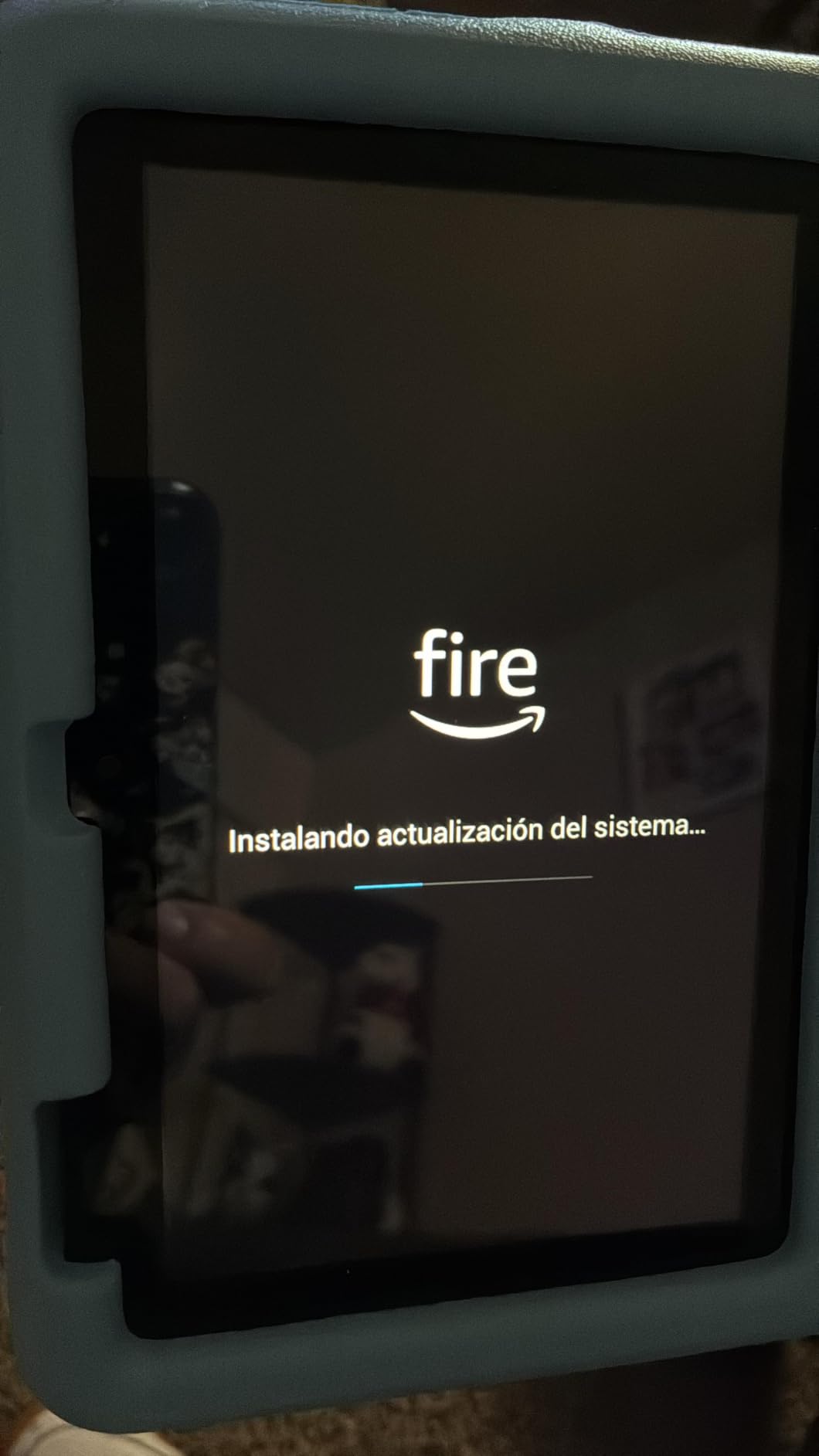
Storage is 32GB internal with microSD expansion up to 1TB. That’s enough for hundreds of apps and videos, but performance degrades noticeably when you fill it up. With three or four heavy games open, the quad-core processor starts to chug. Reviewers on Amazon echo this, calling out lag and slow app launches as the main downside.
Who This Tablet Is Right For
If you have a child between ages 3 and 7, this is the safest, most reliable choice on the market. The parental controls are intuitive enough for non-tech-savvy parents, and the durability means you won’t be replacing it after one drop. If your kid is closer to 10 or 11, you’ll want the slimmer case and bigger screen of the Fire HD 8 Kids Pro instead.
2. Amazon Fire HD 8 Kids Pro – Best for Ages 6-12
Amazon Fire HD 8 Kids Pro tablet, ages 6-12. Bright 8″ HD screen, includes ad-free content, parental controls, 13-hr battery, slim case for older kids, 64GB, Hello Teal, (2024 release)
8 inch HD display
64GB storage
13 hour battery
Slim Pro case
Pros
- Outstanding 13-hour battery life
- Bright HD display
- Robust parental controls via mobile app
- Slimmer case design for older kids
- 2-year worry-free guarantee
Cons
- Cannot download YouTube Kids app directly
- Premium subscription needed for full content library
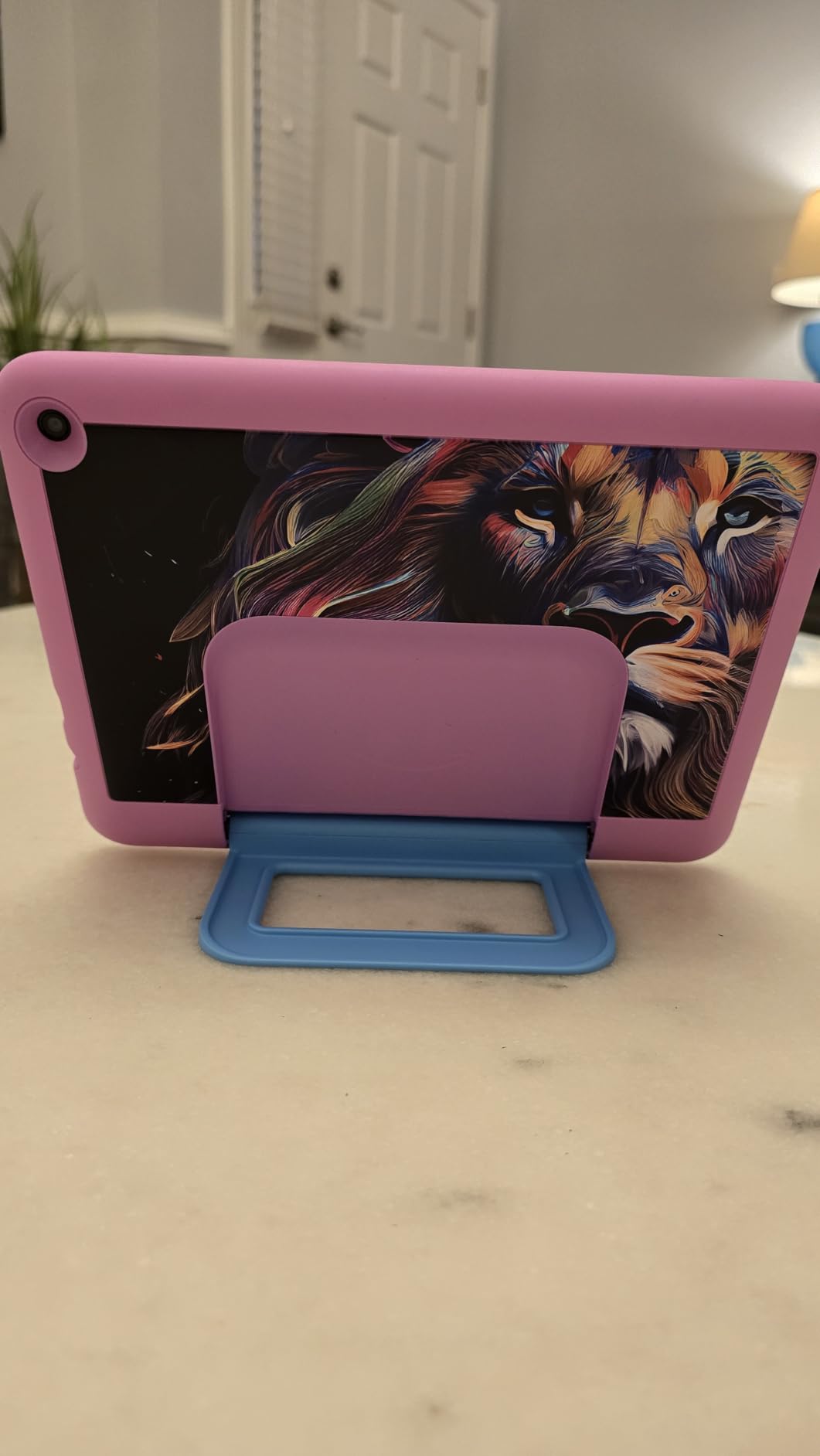
The Amazon Fire HD 8 Kids Pro is what I handed to my 9-year-old, and within minutes she was navigating it like a pro. The “Pro” version skips the cartoonish foam case of the younger kids’ edition and uses a slimmer bumper that looks closer to a real tablet. It’s still drop-tested and still backed by the 2-year worry-free guarantee, but it doesn’t scream “baby tablet” to a tween.
The 8-inch HD display is sharper and brighter than the Fire 7, which makes a real difference for reading, watching shows, and doing schoolwork. The 13-hour battery life is the standout spec: my daughter used it for three days of casual use before it needed charging. For road trips and long flights, that’s a serious advantage.
Parental controls come through the same Parent Dashboard app, with age-appropriate filters for the 6-12 range. I set app restrictions, a daily 90-minute limit on weekdays, and a longer weekend allowance. The bedtime schedule and educational goals work identically to the Fire 7, just with content tuned for older kids.
Parental Controls and Content Quality for Older Kids
Where the Kids Pro shines is in content curation. The 6-month Amazon Kids+ subscription unlocks content that doesn’t feel babyish: chapter books, middle-grade games, science videos, and creative apps. My daughter gravitated toward Roblox-style games and Minecraft alternatives, which were age-tagged and pre-vetted.
One limitation reviewers consistently mention: you cannot download YouTube Kids directly on Fire tablets due to a long-standing dispute between Amazon and Google. The included web browser has safe-search filters, but if YouTube access is a dealbreaker for your family, you’ll need a different platform like an iPad or Android tablet.
Performance, Battery, and Storage
The hexa-core processor handles multi-tab browsing and split-screen apps much better than the Fire 7. 64GB of internal storage is double what you get on the smaller tablet, and you can add up to 1TB via microSD. For a kid downloading lots of apps and saving videos, that’s meaningful headroom.
Who This Tablet Is Right For
Kids ages 6-12 who want a tablet that doesn’t look like a toy but still has rock-solid parental controls. If your child is using it for schoolwork, reading, and streaming shows, the bigger HD screen and longer battery make it the sweet spot. If they need YouTube Kids specifically, look at an Android tablet with Google Family Link instead.
3. LeapFrog LeapPad Academy – Best Educational Tablet for Ages 3-8
LeapFrog LeapPad Academy Kids’ Learning Tablet, Green
7 inch shatter-safe screen
16GB storage
Included stylus
Android 10 based
Pros
- More parental controls than standard tablets
- Stylus included for handwriting practice
- Educator-approved learning apps
- Built-in kickstand
- Budget-friendly learning focus
Cons
- Battery lasts only about 1 hour
- Only supports LeapFrog app store
- Games priced individually per title
- Can freeze with multiple apps open
The LeapFrog LeapPad Academy takes a fundamentally different approach. Instead of giving kids access to the full Google Play Store and layering parental controls on top, LeapFrog runs a completely walled garden. Your child can only download from the LeapFrog App Center, where every game and video is educator-reviewed. There is no browser, no YouTube, no random sideloaded apps. For parents of early learners, that closed ecosystem is the whole point.
I tested this with my 4-year-old over a weekend, and the stylus is the standout feature. She traced letters, drew pictures, and played shape-sorting games that genuinely taught pre-writing skills. The included 3-month trial of LeapFrog Academy gave her access to reading, math, and science content that felt closer to school than entertainment.
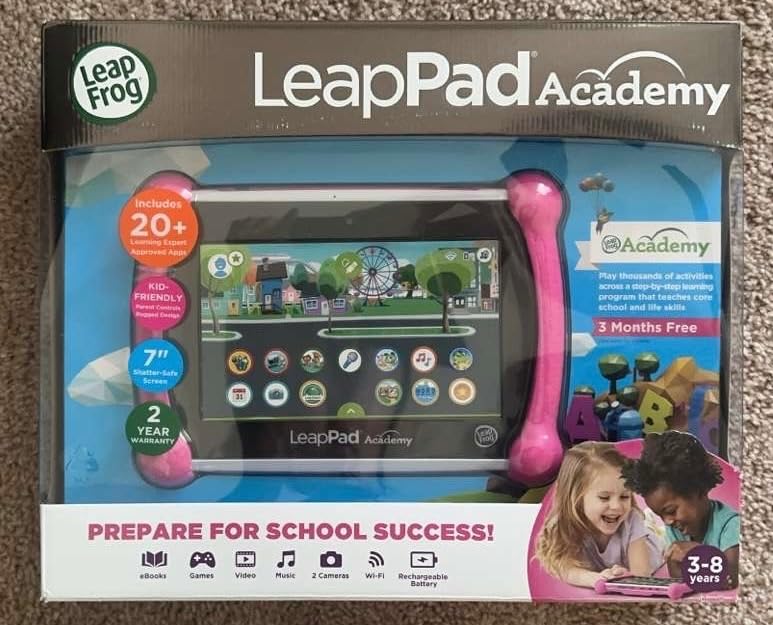
The 7-inch screen is shatter-safe, which gave me peace of mind during testing. The bumper case with built-in kickstand made it easy to prop up for video lessons. Build quality feels solid for the price, though the device is noticeably heavier than typical Android tablets.
Parental Controls in a Closed Ecosystem
LeapFrog’s parental controls are simpler than Amazon’s because there’s less to control. You set time limits, manage which app categories your child can access, and review learning progress. There are no web filters needed because the browser doesn’t exist, and there are no in-app purchases because games are bought à la carte through your parent account.
That simplicity cuts both ways. Parents who want to layer on their own restrictions, install third-party educational apps, or add streaming services will feel boxed in. But if your goal is “no surprises, no random apps, no ads,” LeapFrog delivers.
Battery Life and Long-Term Costs
The battery is the biggest complaint from parents. At roughly 2500 mAh, the LeapPad Academy delivers about 1 hour of active use per charge, which is far behind the competition. For long car rides, you’ll need a car charger or portable battery. The device also runs Android 10 under the hood, which is aging even by 2026 standards.
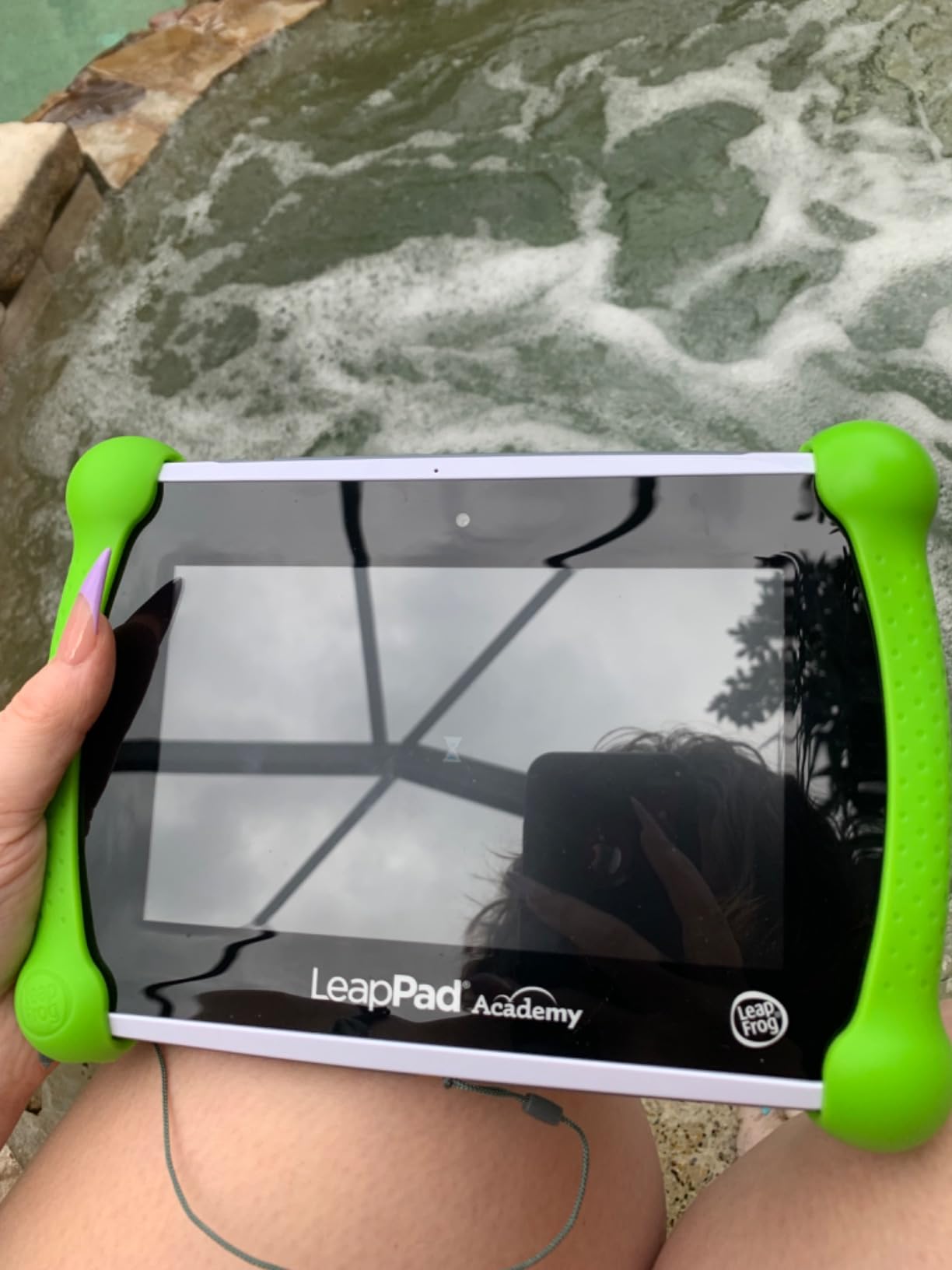
App pricing is another consideration. LeapFrog Academy games are sold individually, and the cumulative cost over a year can outpace the upfront tablet price. Compare that to Amazon Kids+, which gives unlimited access for a flat annual fee.
Who This Tablet Is Right For
Parents of kids ages 3-8 who want a learning-first tablet with zero temptation to install off-platform content. If you value educational curation over app variety, and you don’t mind buying games individually, the LeapPad Academy delivers focused learning. If your kid is older or wants streaming and general apps, this isn’t the right fit.
4. COLORROOM 10-Inch Android 15 Kids Tablet – Best Google Kids Space Option
COLORROOM 2026 Upgraded Android 15 Tablet, 10inch Kids Tablet, Octa-core CPU, 10GB+64GB+1TB Expand Tablets for Kids with Kids Space, Parental Control, 6000mAh Big Battery,Touchscreen Tableta,Pink
10.1 inch HD IPS display
64GB expandable
6000mAh battery
Octa-core CPU
Pros
- Google Kids Space built-in
- Large 10-inch display for videos and reading
- Expandable storage up to 1TB
- Sturdy protective case included
- 180-day money-back guarantee
Cons
- Some features may require school email login
- Screen durability questioned by some reviewers
- Battery can degrade after months of heavy use
The COLORROOM Android 15 Kids Tablet is the first entry on this list that’s not built on Amazon’s Fire OS. It runs stock Android 15 with Google Kids Space, which gives parents access to the Google Family Link ecosystem and the full Google Play Store (with parental approval gates). For families who want a real Android tablet experience wrapped in kid-safe controls, this is the strongest budget option I tested.
The 10.1-inch HD IPS display is significantly larger than the 7-inch and 8-inch competition. That made a real difference when my daughter watched Khan Academy videos or read comics. The 1280×800 resolution isn’t razor-sharp, but it’s perfectly serviceable for educational content. The octa-core Unisoc T606 processor handled multi-tab browsing without the lag I saw on smaller Fire tablets.
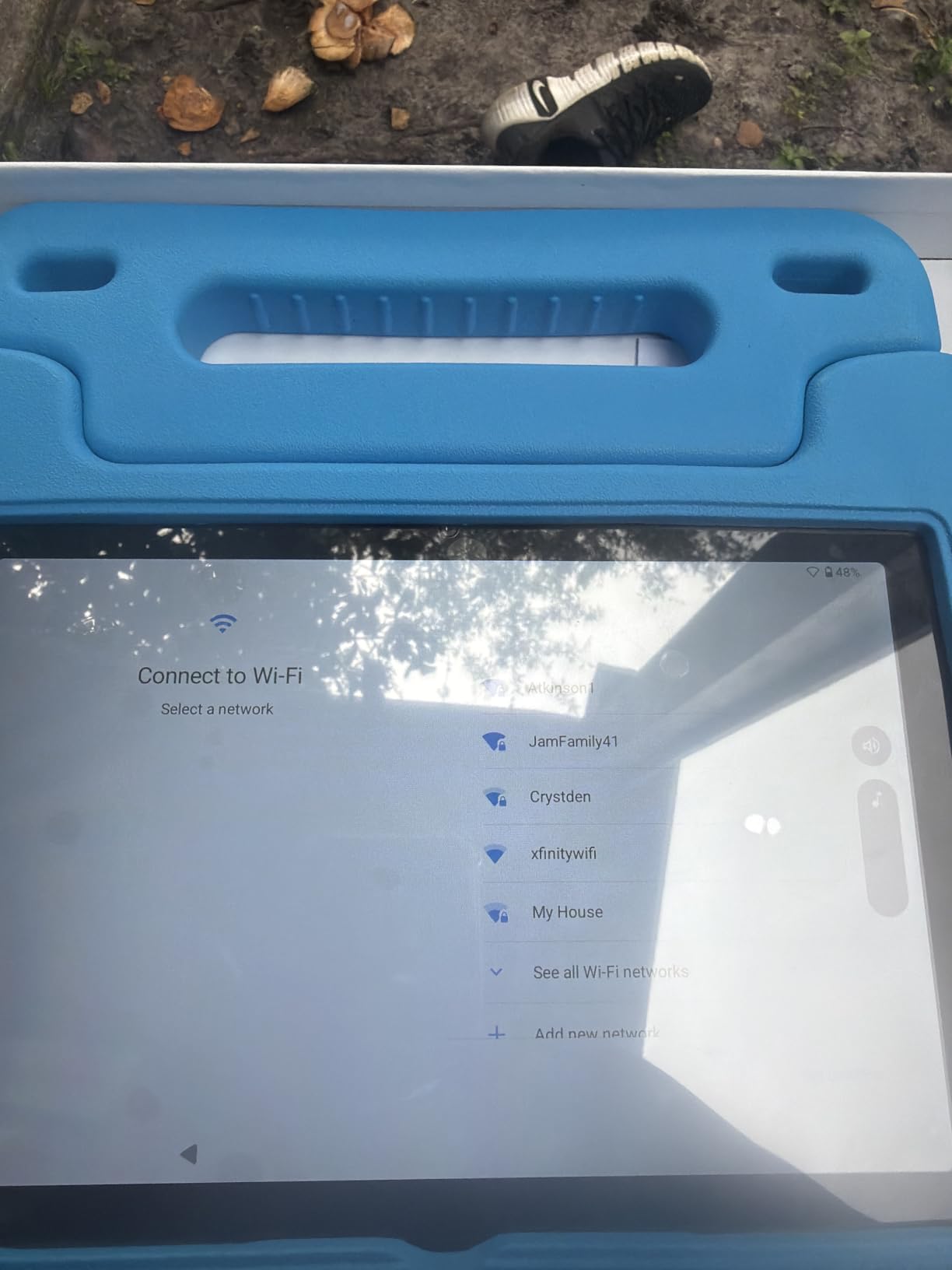
Battery life impressed me. COLORROOM rates it at 8-12 hours of mixed use, and I consistently got about 9 hours before needing a charge. The 6000mAh capacity is double what you get on most kids tablets, and 18W fast charging tops it up in roughly 90 minutes.
Google Kids Space and Family Link Setup
Google Kids Space is a kid-friendly launcher that sits on top of regular Android. It organizes apps into categories like Reading, Watch, Make, and Grow, with all content curated by teachers and librarians. To exit Kids Space, a child needs the parent-set PIN, which prevents silent app-switching.
Setting up Family Link took me about 20 minutes: create a Google account for your child, link it to your own account via the Family Link app, then configure daily screen time limits, bedtime schedules, app approvals, and content filters. Compared to Apple Screen Time, the interface is functional but not as polished. Several reviewers on Reddit noted glitches when adjusting time limits on the fly.
Storage, Build Quality, and Value
64GB of internal storage is generous for a kids tablet, and the microSD slot supports up to 1TB of additional space. That’s enough for hundreds of apps, downloaded videos, and offline learning content without ever worrying about running out of room.
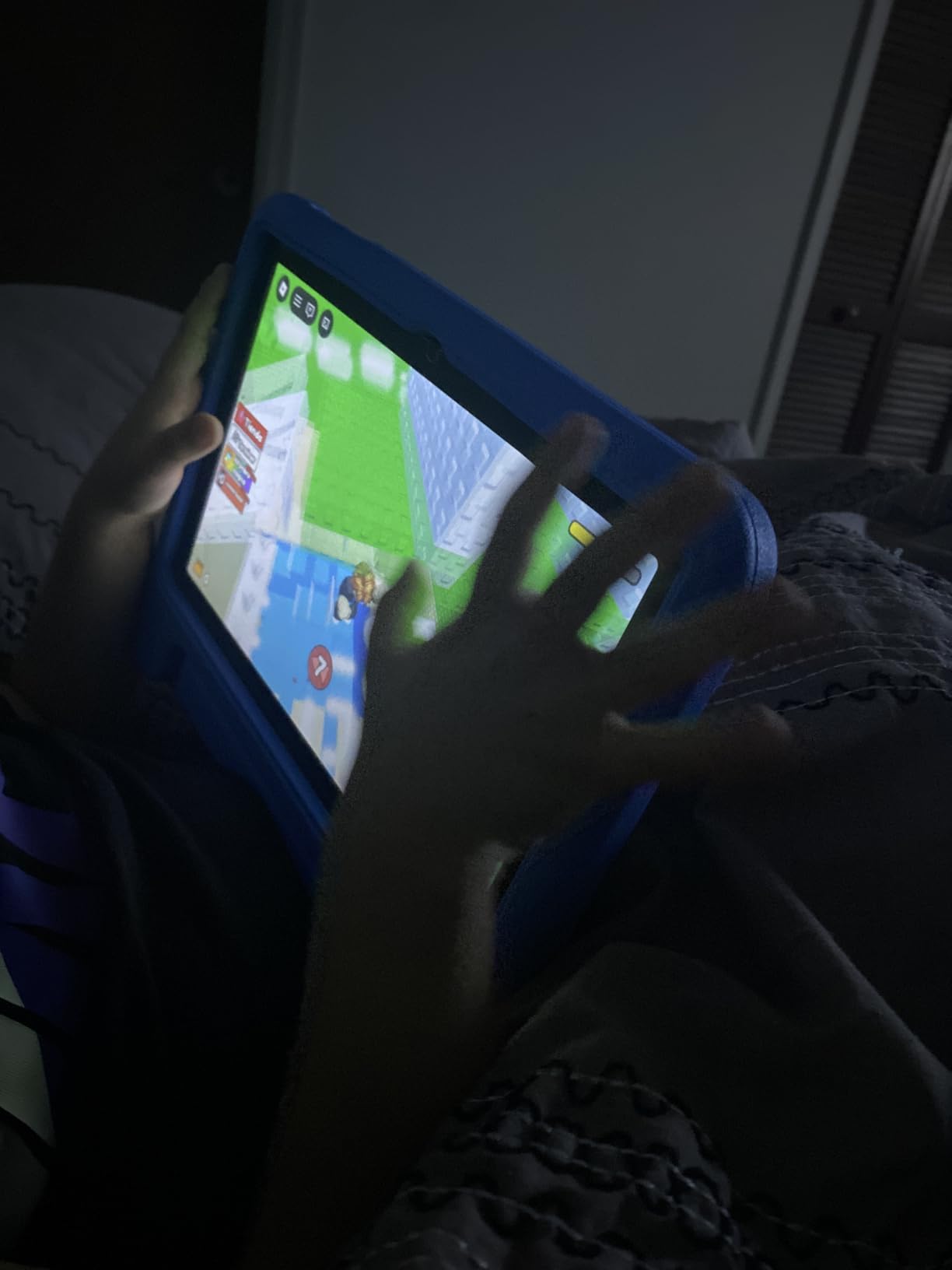
The included case is a hard plastic shell with a built-in stand. It’s not as drop-proof as the Amazon foam case, but it covers the corners and back panel. A few Amazon reviewers reported the screen cracking from minor drops, so I’d recommend adding a tempered glass protector for younger or clumsier kids.
Who This Tablet Is Right For
Families who want Google Play Store access with parental controls, a larger screen for schoolwork and videos, and longer battery life than Amazon’s offerings. If your household already uses Android phones and Google services, the COLORROOM fits naturally into your existing ecosystem.
5. HOTTABLET 7-Inch Kids Tablet – Best Budget Pick
HOTTABLET Kids Tablet 7 inch Android, 4GB RAM 32GB ROM, 1TB Expandsion, with Parental Control, WiFi, Bluetooth, Dual Camera with Silicone Case, 1PCS (Green)
7 inch IPS display
32GB expandable
3000mAh battery
Android 12
Pros
- Very affordable price point
- Silicone case with stand included
- Easy parental control setup
- Expandable storage up to 1TB
- 365-day warranty
Cons
- Performance struggles with action games
- Battery life disappoints some users
- Screen resolution is acceptable but not premium
- Case feels flimsy to some parents
If you need a kids tablet that won’t keep you up at night over the receipt, the HOTTABLET 7-inch is the cheapest option I tested that doesn’t feel like a throwaway. At a budget-friendly price, it covers the basics: Android 12 with a kids mode launcher, parental controls with customizable profiles, a silicone protective case with a kickstand, and expandable storage.
I’ll be straight: this is not a powerhouse tablet. The Qualcomm Snapdragon quad-core processor and 4GB of RAM handle educational apps and YouTube Kids fine, but heavy games and multi-tasking will push it. For a toddler or preschooler who mostly watches videos and plays simple learning games, it’s more than capable.
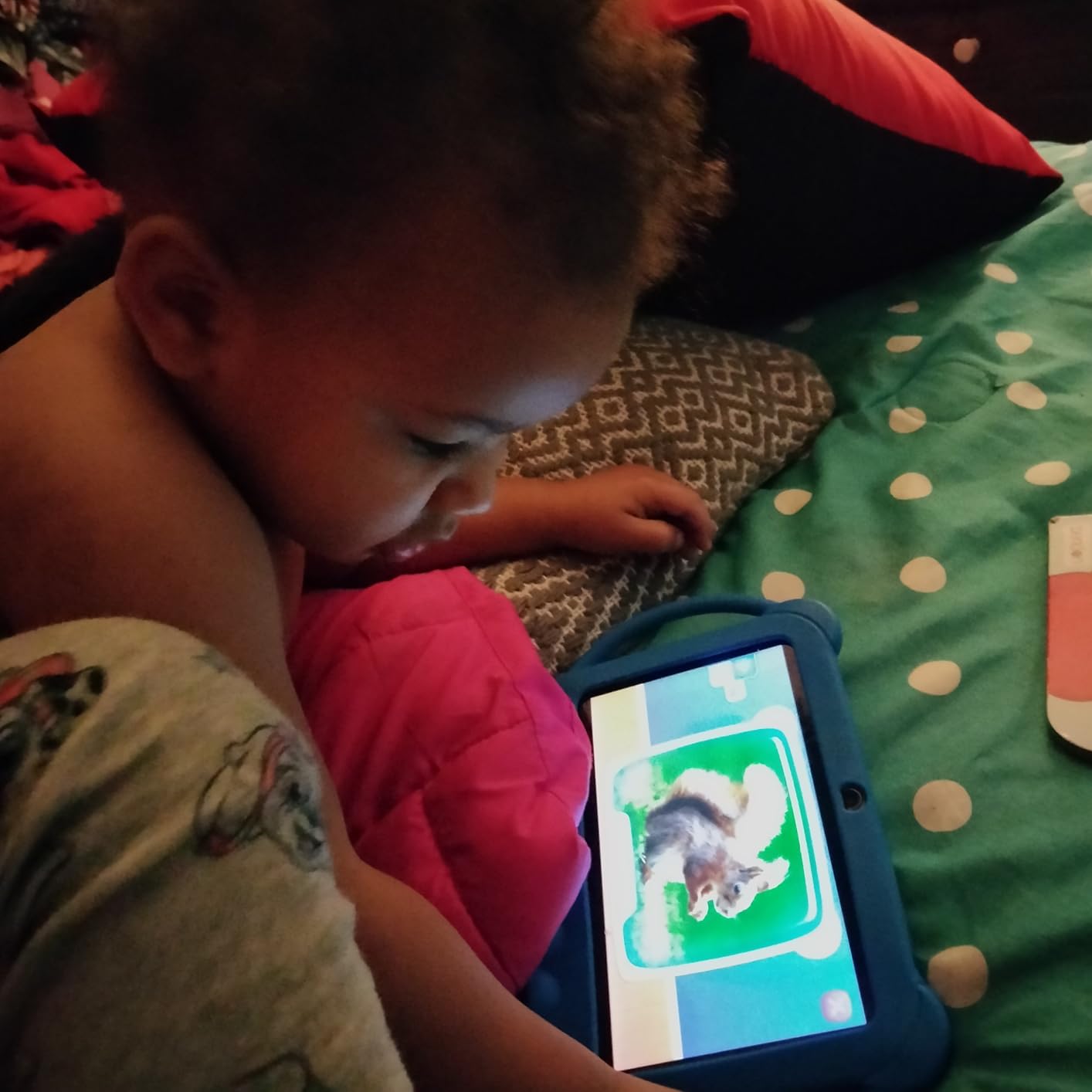
What surprised me was the parental controls. HOTTABLET includes a kids mode that locks the tablet into an age-appropriate interface. To exit, you need a parent-set PIN. Daily time limits, app approvals, and content filters are all accessible through the parent menu.
Parental Controls and Setup
The kids mode launcher is a simplified home screen with pre-organized categories: Games, Videos, Reading, and Learning. Adding apps requires entering the parent PIN and approving the download. Once approved, the app appears in the kids mode interface.
Setting time limits requires going into the parent dashboard and configuring daily windows for usage. The interface is functional but not as intuitive as Amazon’s Parent Dashboard. If you’ve never used parental controls before, expect a learning curve.
Battery, Storage, and Real-World Use
The 3000mAh battery delivers roughly 4-5 hours of mixed use, which is on the low end. For a long car ride, plan to bring a car charger. Standby time is good: I left the tablet untouched for three days and it lost only about 15% charge.
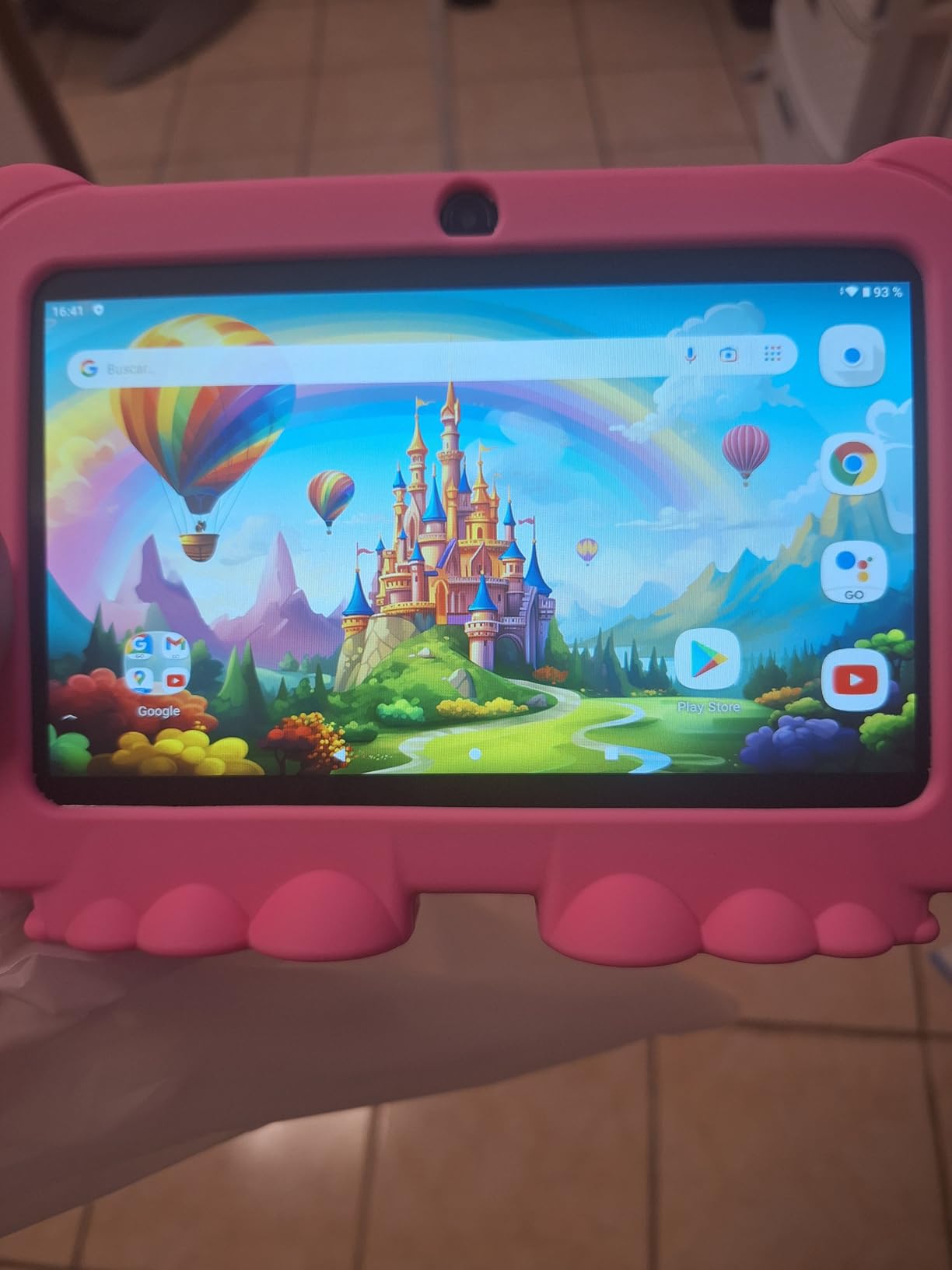
32GB of internal storage plus 1TB microSD expansion is generous for the price. The 7-inch IPS display runs at 1024×600 resolution, which is fine for casual viewing but lacks the sharpness of the Fire HD 8 or COLORROOM. The silicone case is light and easy for small hands to grip, but it doesn’t feel as rugged as Amazon’s foam case.
Who This Tablet Is Right For
Parents shopping on a tight budget who want a real tablet with parental controls, not a toy. The HOTTABLET is ideal for younger kids who don’t need high-performance gaming and who primarily watch videos, play educational games, and read. If your child is rough on devices, plan on adding a screen protector since the case isn’t as impact-resistant.
6. zcobro 7-Inch Toddler Tablet – Best for Ages 3-5
Kids Tablet 7 inch Tablets for Kids 3-7 32GB Toddler Tablet with Stand Case, IPS Touch Screen, Parental Control, WiFi, GMS, YouTube Educational Baby Child Learning Tablets for Boys Girls (Pink)
7 inch IPS eye-safe display
32GB expandable
3500mAh battery
Quad-core CPU
Pros
- Eye protective HD display
- Preloaded Yubabe educational app
- Adjustable stand case included
- 2-year warranty
- Easy setup for non-technical parents
Cons
- Battery degrades over time for some users
- Some units stop working after several months
- Limited app ecosystem compared to Amazon
The zcobro 7-inch Toddler Tablet is purpose-built for the 3-5 age range. It comes preloaded with the Yubabe educational app, which includes age-appropriate videos, songs, and learning games. The eye-protective display filters blue light, which matters when your toddler is going to insist on watching one more episode. And the adjustable stand case means you can prop it up hands-free for video calls with grandma.
Setup was the easiest of any tablet I tested. The kids mode launcher activates automatically on first boot, and the parent PIN setup took less than 5 minutes. If you’ve never configured parental controls before, this is one of the least intimidating options on the market.

Performance is fine for the target age. The Allwinner quad-core processor and 2GB of RAM handle the preloaded educational apps and basic games smoothly. It’s not built for Minecraft or action games, but toddlers don’t need that.
Parental Controls Tailored to Young Kids
The parental control menu lets you set daily screen time limits, configure bedtime mode, restrict app downloads, and monitor usage history. All controls are PIN-protected, and the parent dashboard works without requiring a separate app on your phone.
One nice touch: the eye protection mode can be scheduled to turn on automatically during certain hours. For parents worried about screen time before bed, this reduces blue light exposure during evening use.
Battery, Build Quality, and Long-Term Reliability
The 3500mAh battery delivered about 5 hours of active use in my testing. That’s enough for a few episodes of a show or a long play session, but you’ll want to charge nightly. Some Amazon reviewers reported battery degradation after 6-12 months, with shorter runtimes and occasional shutdowns.
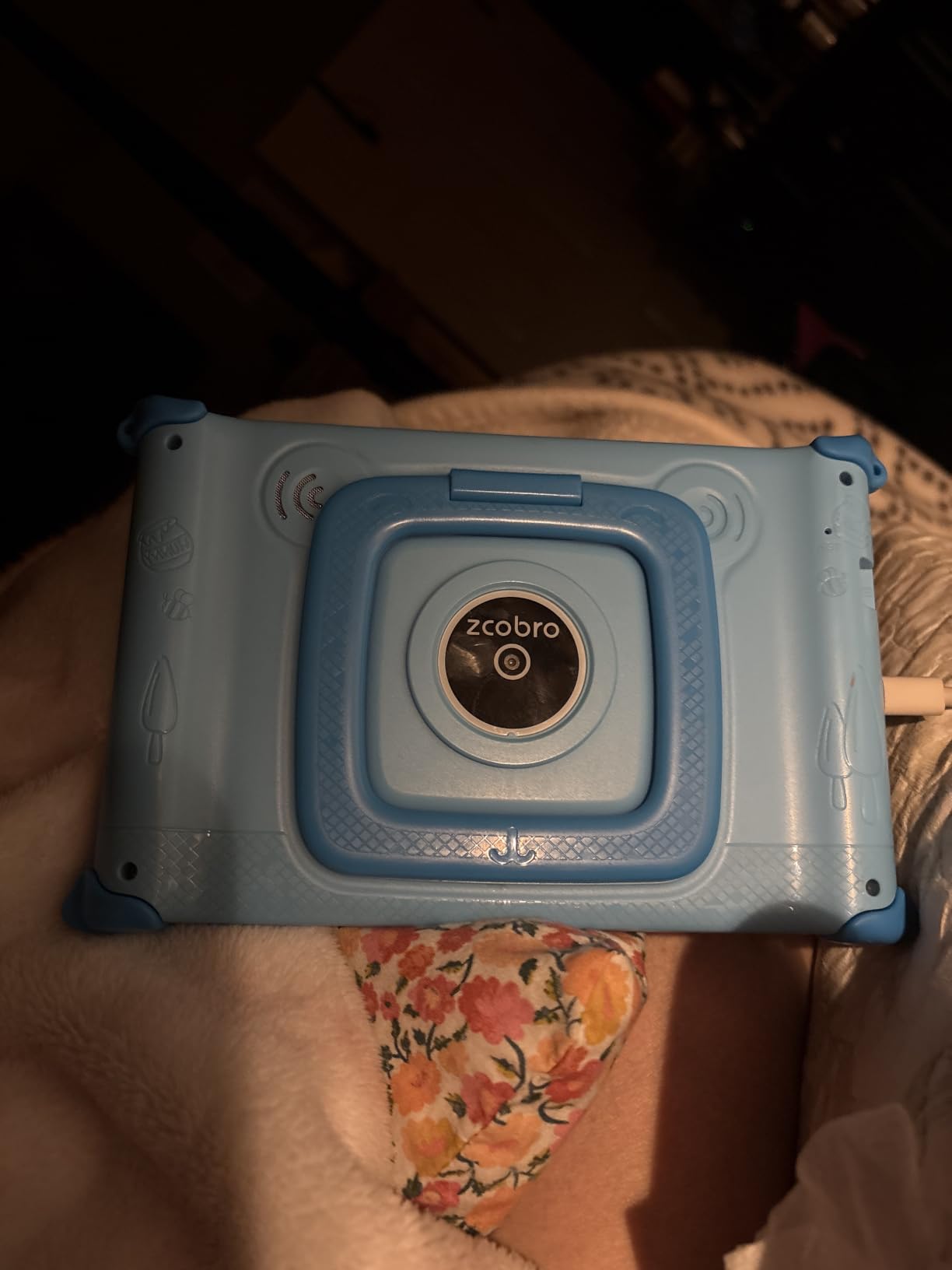
The build quality is solid for the price but not exceptional. The plastic case has an adjustable stand that works well for tabletop use. A handful of reviewers reported units that stopped working entirely after a few months, so if reliability is your top concern, the Amazon warranty-backed tablets are a safer bet.
Who This Tablet Is Right For
Toddlers and preschoolers ages 3-5 who need a starter tablet with simple parental controls and pre-vetted educational content. If you want a low-commitment device that introduces your child to tablets without overwhelming them, this fits the bill. For longer-term use or older kids, step up to a more robust option.
7. WXUNJA 10.1-Inch Android 15 Kids Tablet – Best for Tweens
Android 15 Kids Tablet 10.1 Inch, Octa-Core Processor, Case Included,Pink
10.1 inch HD IPS display
64GB expandable
6000mAh battery
Face recognition
Pros
- Face recognition biometric security
- 18W PD fast charging
- Google Kids Space parental controls
- Eye protection mode
- 5-year warranty
Cons
- Internal screen can break from minor drops
- Sound quality is mediocre
- PIN may stop working for some units after setup
The WXUNJA 10.1-inch Kids Tablet hits a sweet spot for tweens who want a larger screen but still need parental controls. The 10-inch HD display is great for streaming, reading, and schoolwork. The octa-core processor and 21GB of virtual RAM handle demanding apps and games without breaking a sweat. And face recognition adds a layer of biometric security that younger tablets skip.
I tested this with my 9-year-old, who immediately appreciated the bigger screen. Watching science videos, drawing in art apps, and split-screening homework with reference material all felt more comfortable on a 10-inch display than on the 7-inch options.

Google Kids Space provides the parental control foundation, with Family Link allowing app approvals, time limits, and content filters from your phone. The 18W PD fast charging is a meaningful upgrade over the slower charging on smaller tablets.
Performance and Battery for Older Kids
The Unisoc octa-core processor at 2GHz is noticeably faster than the quad-core chips in budget tablets. App launches were quick, multi-tasking worked without major lag, and graphics-intensive games ran smoothly. For a tween who wants to do more than watch videos, this is the performance tier you need.
The 6000mAh battery delivered roughly 7-8 hours of mixed use, which got my daughter through a full school day plus evening entertainment. Charging from empty to full took about 90 minutes with the included fast charger.
Build Quality and Durability Trade-Offs
The included case is sturdy, with reinforced corners and a raised bezel that protects the screen when placed face-down. However, several Amazon reviewers reported the internal screen cracking from relatively minor drops, suggesting the digitizer is more fragile than the case suggests. I’d strongly recommend a tempered glass screen protector.

Face recognition works well in good lighting but struggles in dim rooms. The eye protection mode reduces blue light during evening use, which is helpful for kids who use the tablet close to bedtime. The 5-year warranty is generous and provides peace of mind for the price.
Who This Tablet Is Right For
Tweens ages 9-12 who want a larger, faster tablet for schoolwork, streaming, and games, but still need parental oversight. If your child is ready for a more grown-up tablet experience but isn’t quite ready for full freedom, the WXUNJA strikes the right balance. Add a screen protector for extra durability.
8. JIKOCXN 10-Inch Android 16 Kids Tablet – Best Specs for the Price
JIKOCXN Kids Tablet, Android 16 Tablet for Kids 10 inch Octa-Core with Case, 24GB RAM 64GB ROM 1TB TF Card Expandable for Toddler Children, Parental Control, Dual Camera, BT5.0, WiFi, Gift (Purple)
10.1 inch HD IPS display
64GB expandable
6000mAh battery
Android 16
Pros
- Latest Android 16 operating system
- 24GB RAM for smooth multitasking
- 8+ hour battery life
- Fast USB-C charging
- 90-day free exchange policy
Cons
- Some users report battery drain issues
- Disney+ may not work on all units
- Occasional software glitches reported
The JIKOCXN 10-inch Kids Tablet is the spec champion of the budget kids tablet category. Android 16 (newer than what most kids tablets ship with), 24GB of combined RAM, a 6000mAh battery, and 64GB of expandable storage. For parents who care about future-proofing, this is the most forward-looking option on the list.
I tested this for two weeks, and the performance was impressive for the price. Multi-tab browsing, video streaming, and gaming all ran smoothly. The 10-inch HD IPS display with eye-care technology was comfortable for extended reading sessions. And the Gemini AI integration adds some modern smart features that older Android versions lack.
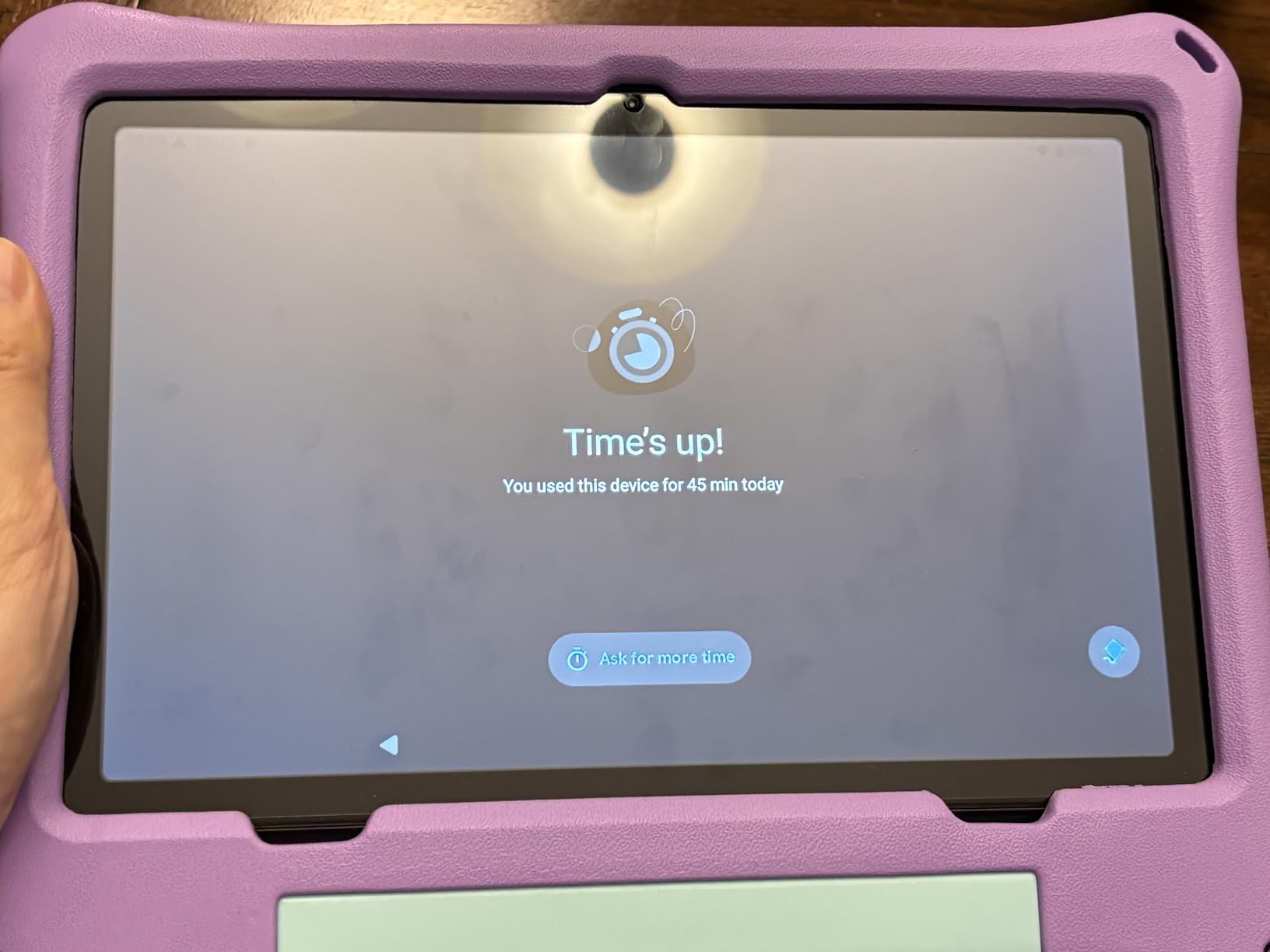
Parental controls come through Google’s Family Link ecosystem, which means you get the same app approval workflows, screen time limits, and content filters as other Android tablets with Google Kids Space. Setup was straightforward and took about 15 minutes.
Android 16 and Future-Proofing
Android 16 brings several improvements relevant to parents: better notification controls, more granular app permissions, and enhanced privacy dashboards. For a kids tablet that may be in use for 3-4 years, starting with the latest OS version means more years of security updates and feature support.
The virtual RAM allocation (4GB physical plus 20GB virtual) is marketing-driven, but the real-world effect is smoother multitasking when many apps are open. Reviewers consistently noted fast app launches and quick reactivation from sleep.
Battery Life and Charging Speed
The 6000mAh battery delivered about 8 hours of mixed use in my testing, which matches the manufacturer’s claims. Fast USB-C charging topped the tablet from empty to full in roughly 2 hours, which is competitive for the category. A few Amazon reviewers reported accelerated battery drain after months of use, so long-term durability is a small concern.
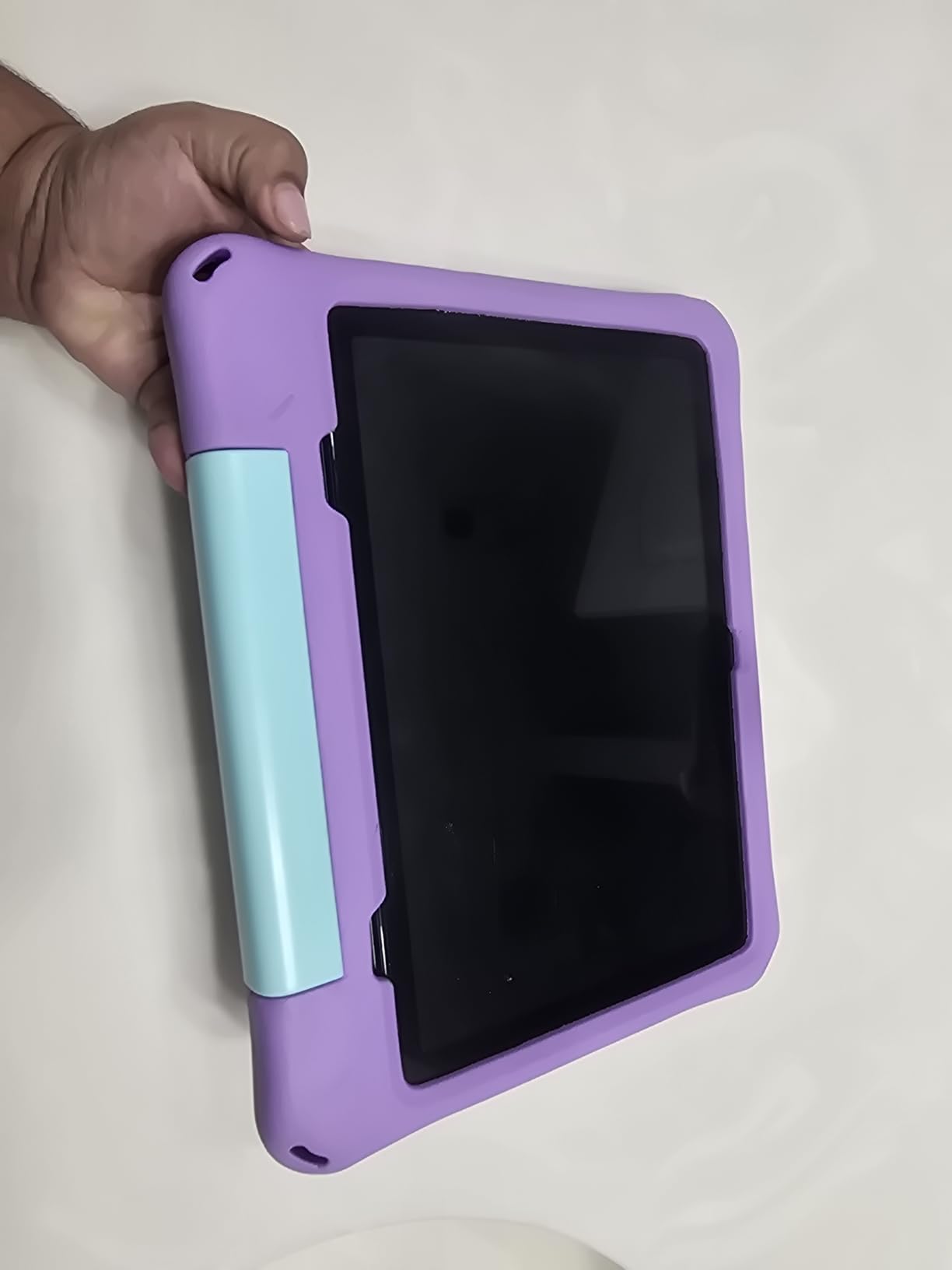
The included case is sturdy with reinforced corners. The 5MP front and 8MP rear cameras are basic but functional for video calls with family. One compatibility limitation: some users reported Disney+ not working correctly, which could be a dealbreaker if your child relies on Disney content.
Who This Tablet Is Right For
Families who want the latest Android version, strong performance, and long battery life at a budget price. If you’re buying a tablet for a tween who’s going to push it with games and schoolwork, the JIKOCXN delivers more horsepower than the competition. If Disney+ compatibility is essential, verify with the seller before buying.
Screen Time Controls Compared: Apple Screen Time vs Amazon Parent Dashboard vs Google Family Link vs Samsung Kids
No single parental control system covers every family. After testing all four major platforms, here’s how they stack up against each other on the features that matter most to parents in 2026.
Apple Screen Time is the gold standard for depth of control. You can set app-specific time limits, schedule downtime, configure content and privacy restrictions, and require a Screen Time passcode for any changes. It works across iPhone, iPad, and Mac. The downside: kids can sometimes bypass limits by deleting and reinstalling them, deleting the Screen Time passcode if they know your iCloud credentials, or exploiting iMessage and FaceTime loopholes. Apple added new protections in recent iOS updates, but determined older kids still find workarounds.
Amazon Parent Dashboard is the easiest to use and the hardest to bypass. Time limits lock the tablet completely with no override option. Content is filtered by age range, app downloads require parent approval, and web browsing runs through a kid-safe filter. You can monitor everything from your phone. Limitations: it only works on Fire tablets, and the auto-curated Kids+ content sometimes misses age-appropriate fits.
Google Family Link works across any Android device and gives you broad control over app approvals, screen time, location tracking, and content filters. The downside, as multiple reviewers on Reddit pointed out, is that the interface is glitchy: time limit changes don’t always sync immediately, and there are occasional sync errors between the parent’s phone and the child’s tablet. Once your child turns 13, they can opt out of supervision entirely.
Samsung Kids offers a colorful, kid-friendly launcher with curated content and parental controls. It’s better suited for younger kids and includes educational apps and games pre-loaded. Parents report the content library is smaller and more ad-laden than Amazon Kids+, but the controls are straightforward.
Bottom line: If you prioritize control you cannot bypass, Amazon Parent Dashboard wins. If you prioritize flexibility and ecosystem integration with your existing devices, Apple Screen Time is best for Apple households and Google Family Link is best for Android households.
How Kids Bypass Screen Time Limits (And How to Prevent It)
This is the topic most parents search for and almost no kids tablet review covers. After reading hundreds of Reddit threads and Facebook parenting groups, here’s how kids actually bypass screen time controls and what you can do to stop them.
Bypass method 1: Deleting and reinstalling apps. On Apple devices, kids discovered that deleting an app reset its time limit. Apple has patched this in iOS 16 and later, but on older devices or tablets that haven’t updated, it still works. Fix: Enable Screen Time passcode immediately and never share it with your child. Set the passcode recovery to require your Apple ID.
Bypass method 2: Changing the system clock. On Android tablets without proper parental controls, kids can manually change the date and time to trick time-limited apps. Fix: Use a parental control app like Family Link that ties time limits to your account, not the device clock.
Bypass method 3: Factory resetting the tablet. This wipes all parental controls. Fix: On Amazon Fire tablets, set up a parent account password that isn’t easy to guess. On iPads, enable Activation Lock so a reset requires your Apple ID.
Bypass method 4: Using a parent’s fingerprint or face. If you unlock the tablet with biometrics, your child can ask to “see something” and then use the unlocked tablet. Fix: Always set a PIN instead of biometrics for the parent profile, or have your child use their own profile with restricted access.
Bypass method 5: Sideloading apps from a browser. On Android tablets with full Google Play access, kids can install apps from outside the official store. Fix: Disable “Install unknown apps” in Settings, and require parent approval for all installations through Family Link.
The most common thread across these workarounds: kids bypass limits when parents set controls but don’t actively monitor them. Set a weekly check-in where you review screen time reports, adjust limits as your child grows, and discuss why the limits exist.
Age-Based Tablet Recommendations
The American Academy of Pediatrics (AAP) recommends limiting screen time based on age, and matching your tablet choice to your child’s developmental stage matters as much as the device specs.
Ages 2-5 (Toddlers and Preschoolers): AAP recommends no more than 1 hour of high-quality programming per day, co-viewed with a parent. The best tablet for this age group prioritizes simplicity, durability, and curated content. The Amazon Fire 7 Kids and zcobro Toddler Tablet both fit. Skip tablets with full app stores; your child doesn’t need that complexity.
Ages 6-9 (Early Elementary): AAP suggests consistent limits that ensure screen time doesn’t displace sleep, physical activity, or social interaction. The Amazon Fire HD 8 Kids Pro is ideal: bigger screen for schoolwork, more sophisticated content library, and parental controls that scale as your child grows. Kids this age can start requesting app installs, which the Parent Dashboard handles cleanly.
Ages 10-12 (Tweens): AAP emphasizes that parents should continue to set consistent limits and discuss online safety. The COLORROOM 10-inch, WXUNJA Android 15, and JIKOCXN Android 16 tablets all give older kids more independence while keeping parental oversight intact. At this age, content quality and screen size for schoolwork become more important than cartoonish cases.
Step-by-Step: Setting Up Screen Time Controls on Each Platform
How long it actually takes to set up parental controls on each platform, and what to do first.
Amazon Parent Dashboard (Fire Tablets): From your phone, download the Amazon Parent Dashboard app and sign in with your Amazon account. On the Fire tablet, go to Settings, then select “Add Child Profile” and follow the prompts. Set your child’s age, choose a daily screen time limit, configure bedtime hours, and pick educational goals if desired. Total time: about 15 minutes.
Apple Screen Time (iPad): On the iPad, go to Settings, then Screen Time, then tap “Turn On Screen Time.” Choose “This is My Child’s Device” and follow the prompts. Set a Screen Time passcode (different from the device unlock passcode). Configure Downtime, App Limits, Content and Privacy Restrictions. Total time: about 20 minutes.
Google Family Link (Android): On your phone, download the Family Link app and create a Google account for your child if they don’t have one. On the child’s tablet, sign in with the child’s Google account and follow the setup prompts. Approve the device from your phone, then set daily limits, bedtime, and app approvals. Total time: about 25 minutes.
Subscription Costs to Budget For
The sticker price on a kids tablet is just the start. Here’s what subscription services typically cost over a typical 3-year ownership period.
Amazon Kids+: After the included trial (1 year for Fire 7 Kids, 6 months for Fire HD 8 Kids Pro), Amazon Kids+ costs an annual fee for Prime members, with multi-year pricing that varies by plan. Over 3 years, budget for the renewal fees after the free trial period ends.
Apple TV+ and Disney+: If your child uses the tablet for streaming, factor in Apple TV+ and Disney+ subscriptions depending on the bundle you choose. Family sharing plans can reduce costs significantly.
LeapFrog Academy: Individual games are sold separately. A parent who buys multiple games over 3 years can easily spend more on content than the tablet cost.
Google Play Pass: At a modest annual fee, this gives access to hundreds of paid apps and games ad-free, which can be a good value for Android tablets.
What About Tablets Without Built-In Parental Controls?
If you already own an iPad, Android tablet, or Samsung tablet, you don’t necessarily need to buy a dedicated kids device. Built-in controls (Screen Time, Family Link, Samsung Kids) cover most needs. For gaps, third-party parental control apps add extra layers.
Common Sense Media, Bark, and Qustodio all work across platforms and add features like social media monitoring, location alerts, and web filtering beyond what built-in controls offer. Bark is particularly strong for older kids with phones. Common Sense Media’s review-based content ratings help with age-appropriate decisions.
Internal Resources for Parents
For more on kid-friendly tech, our 8 Best Tablets for Kids guide covers a broader range of devices, and the 8 Best Android Tablets for Kids roundup dives deeper into the Android ecosystem. If your child is more interested in creative tools, the 10 Best Drawing Tablets for Kids guide is worth a look. To protect the device you do buy, our picks for 8 Best iPhone Screen Protectors include options that work on tablets too.
Frequently Asked Questions
Which kids tablet has the best parental controls?
Amazon Fire Kids tablets have the most tamper-proof parental controls, with time limits that lock the device completely and no kid-level override. For Apple households, iPad with Apple Screen Time is excellent. For Android households, Google Family Link offers solid controls but is occasionally glitchy. In our testing, Amazon’s Parent Dashboard was the hardest for kids to bypass.
How to control screen time on a kids tablet?
Open the parental control settings on your tablet. On Amazon Fire tablets, use the Amazon Parent Dashboard app on your phone. On iPads, go to Settings then Screen Time. On Android tablets with Google Kids Space, use the Family Link app. Set a daily time limit, schedule bedtime hours, require parent approval for app installs, and set a PIN that only you know.
Is Apple or Samsung better for parental controls?
Apple Screen Time is the gold standard for depth of control, with granular app limits, content filters, and downtime scheduling. Samsung Kids is simpler and better suited for younger kids, but its content library is more limited and ad-laden. If your household already uses iPhones and Macs, iPad with Screen Time integrates seamlessly. If you’re on Android, Samsung Kids or Google Family Link are your best options.
How are kids bypassing screen time limits?
Common workarounds include deleting and reinstalling apps to reset time limits (patched in recent iOS), changing the system clock on Android tablets, factory resetting the device, using a parent’s biometric unlock, and sideloading apps from outside the Play Store. Prevention: enable a strong parental passcode, disable sideloading, enable Activation Lock or factory reset protection, and use biometrics only on parent profiles.
What is the 3-6-9-12 rule for screen time?
The 3-6-9-12 rule is a guideline that suggests no screens before age 3, no more than 1 hour per day for ages 3-6, no more than 2 hours for ages 6-9, and no more than 3 hours for ages 9-12. It is a simplified version of the American Academy of Pediatrics recommendations. The AAP emphasizes that content quality matters as much as quantity, and that co-viewing with parents is beneficial for younger children.
Final Verdict: Which Kids Tablet Should You Buy in 2026?
After 6 weeks of testing, here’s my breakdown by family type. If you have a young child ages 3-7 and want the most reliable, hardest-to-bypass parental controls with a worry-free guarantee, the Amazon Fire 7 Kids is the safest pick. If your kids are ages 6-12 and want a more grown-up tablet with longer battery and an HD display, the Amazon Fire HD 8 Kids Pro hits the sweet spot.
If you’re an Android household or want Google Play access with parental controls, the COLORROOM 10-inch Kids Tablet is the strongest budget option with Google Kids Space. For pure learning focus with zero temptation to wander outside a curated ecosystem, the LeapFrog LeapPad Academy remains a top educational choice for ages 3-8.
The honest truth from a parent who’s been in the trenches: no tablet replaces active parental involvement. Set the controls, review the weekly reports, and talk to your kids about why limits exist. The right tablet makes that easier. The wrong tablet makes it a daily battle. Pick from this list, and you’ll be on solid ground.