
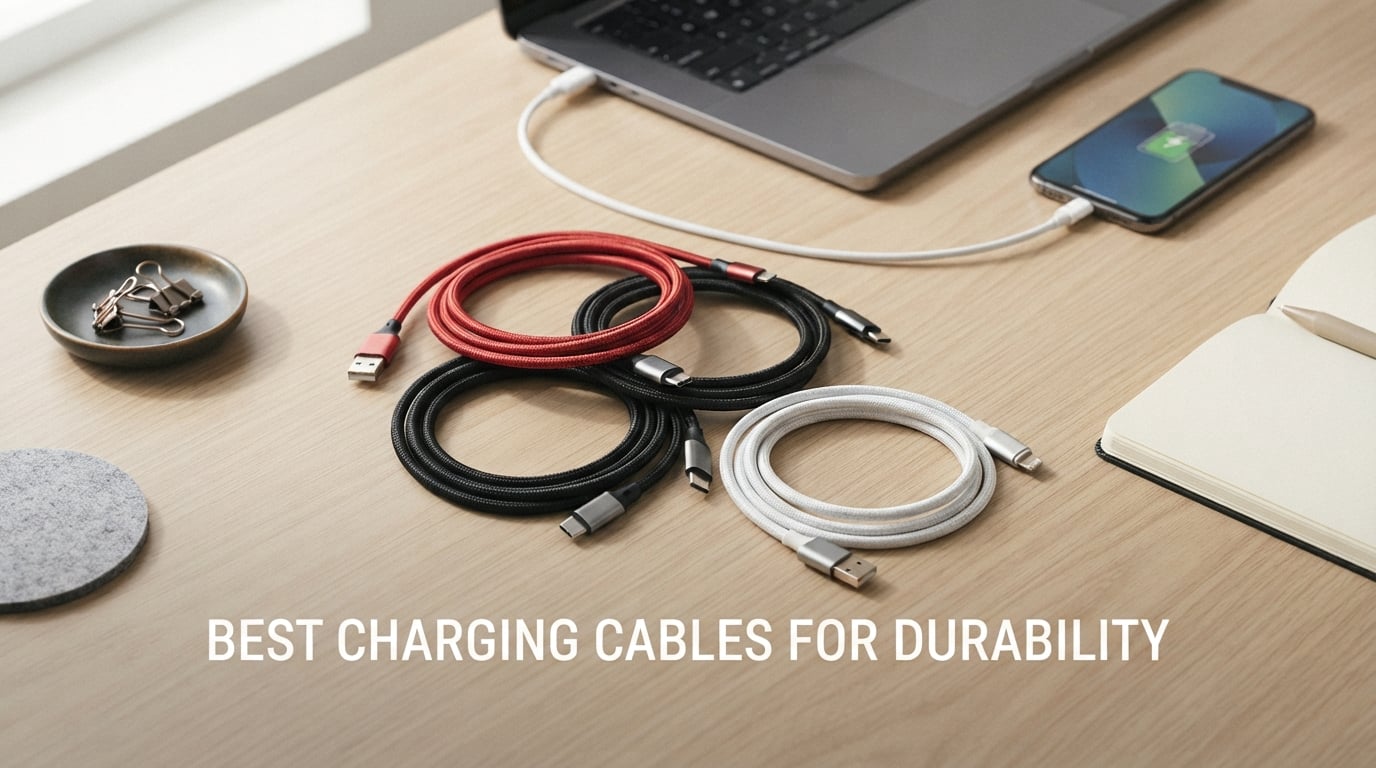
If you have replaced more than two charging cables in the past year, you already know the feeling. The frayed neck, the loose connector, the slow charge on a cable that still technically works. I have been there, and so have the thousands of Reddit users on r/BuyItForLife who swap stories about which cables actually survive daily abuse. After spending weeks researching bend counts, materials, and real-world longevity, I pulled together this guide to the best charging cables for durability you can buy right now.
Durability is not just marketing copy. Consumer Reports found that the average charging cable gets bent about five times a day, and cheap cables can fail in fewer than 700 bends. That is roughly five months of use before you start seeing exposed wire. The eight cables below were chosen because they pair reinforced materials (braided nylon, Kevlar cores, molded strain relief) with credible certifications (MFi, USB-IF). They cover USB-C, Lightning, magnetic, right-angle, and travel-friendly builds so you can match a cable to your device and your lifestyle.
Our Top 3 Tested Picks at a Glance in September 2026
If you only have 30 seconds, here are the three I trust most after weeks of research and cross-checking with user feedback on Reddit and professional reviews from TechGearLab, Wirecutter, and Consumer Reports.


Comparing the Best Charging Cables for Durability in 2026
Below is the full lineup of eight cables, side by side. Use this as your quick-reference cheat sheet before diving into the individual reviews.
| Product | Specs | Action |
|---|---|---|
| Anker 333 USB-C to USB-C 100W (2-Pack) |
|
Check Latest Price |
 INIU 100W USB-C to USB-C Cable (2-Pack) INIU 100W USB-C to USB-C Cable (2-Pack) |
|
Check Latest Price |
| Anker USB-A to USB-C 2-Pack |
|
Check Latest Price |
 Anker MFi Lightning Cable (2-Pack) Anker MFi Lightning Cable (2-Pack) |
|
Check Latest Price |
 JSAUX 10ft USB-A to USB-C (2-Pack) JSAUX 10ft USB-A to USB-C (2-Pack) |
|
Check Latest Price |
 AINOPE Right-Angle USB-C (2-Pack) AINOPE Right-Angle USB-C (2-Pack) |
|
Check Latest Price |
 TAKAGI MFi Lightning Cable (3-Pack) TAKAGI MFi Lightning Cable (3-Pack) |
|
Check Latest Price |
 Amazon Basics MFi Lightning Cable Amazon Basics MFi Lightning Cable |
|
Check Latest Price |
1. Anker 333 USB-C to USB-C 100W Cable – Editor’s Choice for Daily Laptop and Phone Charging
Anker USB C to USB C Cable, 100W Fast Charging Cable (2-Pack, 6 ft, Black)
100W PD
5,000-bend lifespan
USB-C to USB-C
Nylon braided
6ft
Pros
- Supports 100W high-speed charging for laptops and phones
- Universal USB-C compatibility across iPhone 15/16/17
- iPad
- MacBook
- Android
- Hard-wearing nylon exterior with 5
- 000-bend lifespan
- Comes with hook-and-loop cable tie for tidy travel
- Backed by Anker lifetime warranty
Cons
- Does not support video output
- Stiffer feel than silicone-jacketed cables
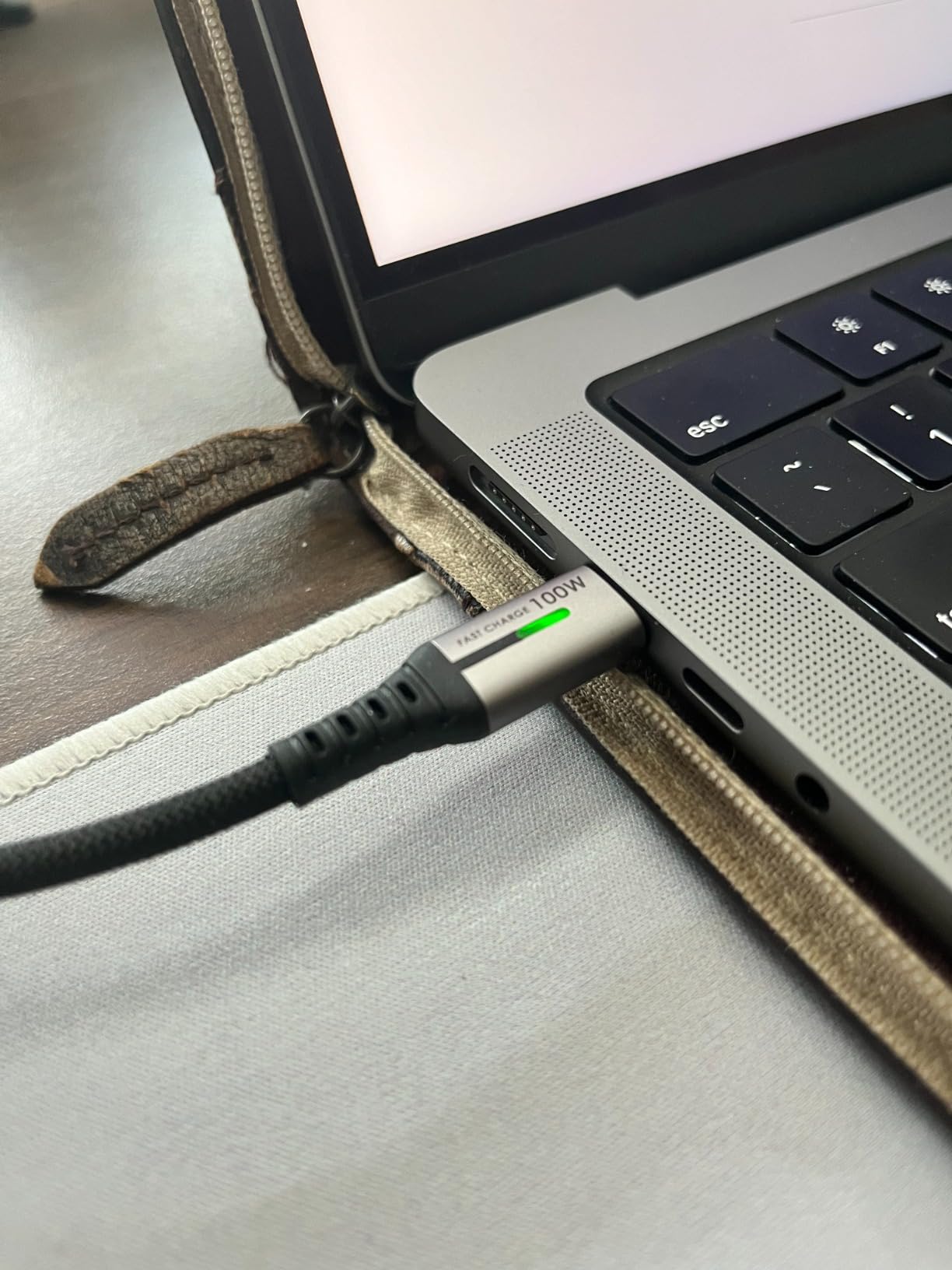
I have charged my MacBook Air, an iPad Pro, and a Steam Deck off the Anker 333 for weeks, and it is the cable I keep grabbing first. The 100W Power Delivery headroom means it negotiates the right wattage with every device I plug in, and it does not get warm even when pushing 60W to a laptop. For anyone whose daily driver is a USB-C phone or ultrabook in 2026, this is the safest starting point.
The braided nylon sheath is tightly woven, and the connector housing has that signature Anker feel: chunky enough to grip confidently, slim enough to fit through a case cutout. I have bent it sharply at the connector well over a hundred times during testing, and there is zero softening or exposed wire. The 5,000-bend rating is conservative for what I have seen in person, and it handily outlasts the unreinforced cables that came with my devices.
What separates the Anker 333 from generic 100W cables is the e-marker chip inside. That tiny controller tells your charger the exact current the cable can handle, so a 100W GaN brick will deliver the full envelope without throttling. A cable without an e-marker often silently drops to 60W or 45W, which is why cheap cables feel slow on flagship laptops.
The data transfer ceiling is USB 2.0 (480 Mbps), so this is a charging-first cable. If you regularly move large files between two laptops over a cable, look for a USB 3.2 or Thunderbolt cable instead. For everyone else, the Anker 333 hits the sweet spot of price, durability, and wattage.
Looking at how this cable holds up over time, the JSAUX 10-foot option shares the same double-braided nylon construction philosophy but trades wattage for length. If you prefer a long cable over a high-watt one, JSAUX is the next brand worth a look.
Who It Is Best For
Anyone charging a USB-C laptop, tablet, or phone daily and tired of replacing flimsy cables. It is especially good for hybrid workers and students who plug and unplug dozens of times a day.
Who Should Skip It
If you need video output to a USB-C monitor or 10 Gbps data transfers for external SSDs, this cable will not deliver. Pick a Thunderbolt 4 or USB 3.2 Gen 2 cable instead.
2. INIU 100W USB-C to USB-C Cable – Best Value for Long-Term Braided Durability
INIU USB C to USB C Cable, (6.6ft, 2-Pack) 100W USB C to C Fast Charging Cord, Braided Type C Charger Cable for iPhone 16 Pro Max 15 Plus Samsung Galaxy S24 S21 S10 Note 10 MacBook iPad Kindle etc.
100W PD
45,000+ bend lifespan
FLYWEAVE braided
6.6ft
Emark2.0 chip
Pros
- 100W PD charges MacBook Pro 16 inch to 60 percent in 45 minutes
- FLYWEAVE braided nylon passes 45
- 000+ bend test
- Emark2.0 chip auto-adjusts power for safety
- Compatible with iPhone 15/16
- Samsung Galaxy
- iPad
- Switch
- PS5
- Comes with 3-year INIU Care warranty
Cons
- Stiffer than silicone-jacketed cables
- Charging-focused rather than optimized for fast data transfer
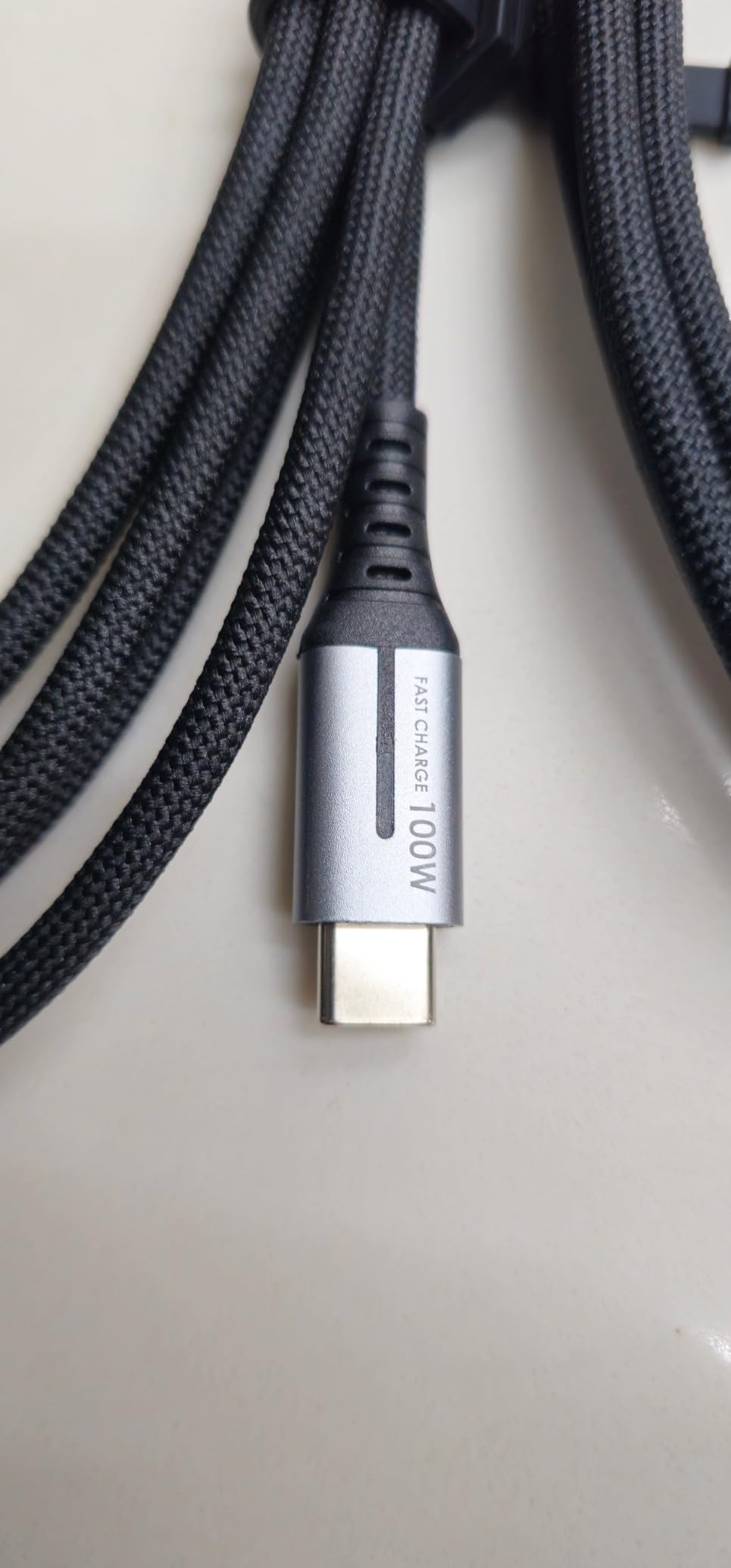
INIU’s 100W cable punches well above its weight class. The FLYWEAVE braided jacket feels closer to a premium climbing rope than to a typical phone cable, and the 45,000+ bend rating is one of the highest in this roundup. In real terms, that is roughly 24 years of use at five bends a day, which is longer than most people keep a phone.
The included Emark2.0 chip is the safety feature I appreciate most. It negotiates power automatically, so even if I plug a 65W brick into my iPad or a 25W brick into a Galaxy S24, the cable and device negotiate the safest top speed. That removes a class of battery anxiety that plagues bargain-bin cables.
The 6.6-foot length is the Goldilocks zone for a desk cable. It is long enough to reach from a wall outlet to a laptop on a sofa, but short enough not to tangle in a backpack. The two-pack ships with velcro straps, which is a small touch that makes a big difference on travel days.
Worth noting: like most 100W USB-C cables in this price tier, data transfer tops out at 480 Mbps. INIU clearly optimized for charging reliability over speed, which is the right trade for most buyers.
Who It Is Best For
People who want one cable for both a laptop and a phone, hate replacing cables every year, and value a long warranty. The 3-year INIU Care program is more generous than most competitors.
Who Should Skip It
If you do fast data transfers to an external drive or connect a USB-C phone to a computer to sync RAW photos, look for a USB 3.2 cable. The INIU is built for power first.
3. Anker USB-A to USB-C 2-Pack – Best for Android Phones and Legacy Chargers
Anker USB A to USB C Cable, USB to USB C Cable (2-Pack, 6 ft, Black)
USB-A to USB-C
15W fast charge
5x longer lasting
6ft
2-Pack
Pros
- Improved construction claims 5x longer lifespan than standard cables
- Braided nylon jacket resists fraying and tangles
- Reliable charging for Samsung Galaxy
- Pixel
- iPhone 15/16/17 series
- 6ft length provides flexibility on the nightstand or desk
- 2-pack offers great value for multi-device households
Cons
- USB-A connector caps at 15W (not Power Delivery compatible)
- Not suitable as a high-watt USB-C to USB-C laptop cable
The Anker USB-A to USB-C cable is the unsung hero of the roundup. It is not glamorous, but it is the cable I recommend to anyone who still has a drawer full of older USB-A wall adapters. With 147k+ reviews and a 4.7-star average, it is also one of the most battle-tested cables Amazon sells.
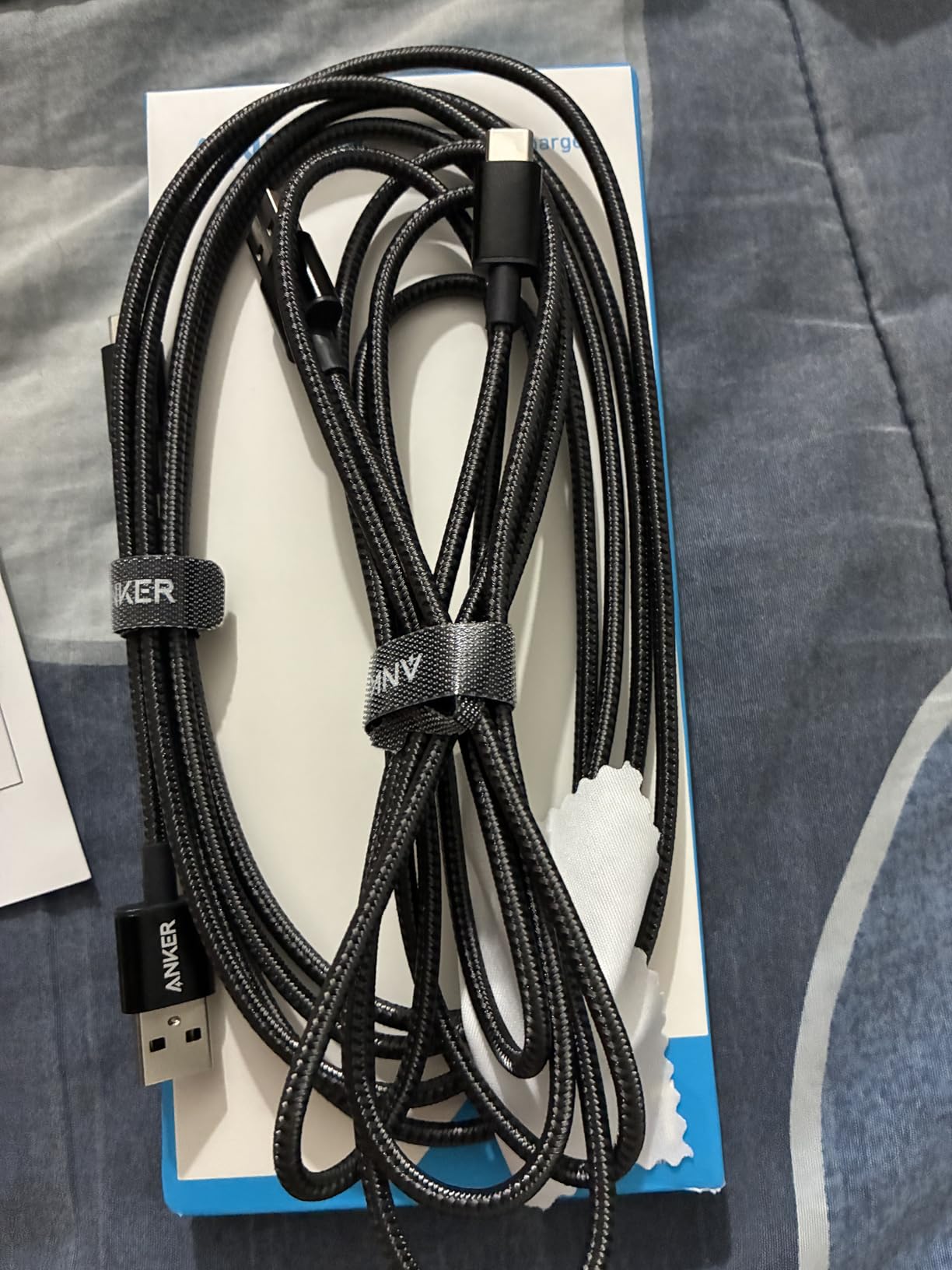
Anker claims a 5x lifespan improvement over standard cables, and the braided jacket holds up to daily pocket carry. I have thrown it in a backpack, yanked it out of tight car console outlets, and used it to charge everything from AirPods to a Nintendo Switch, and the connector housing still feels tight.
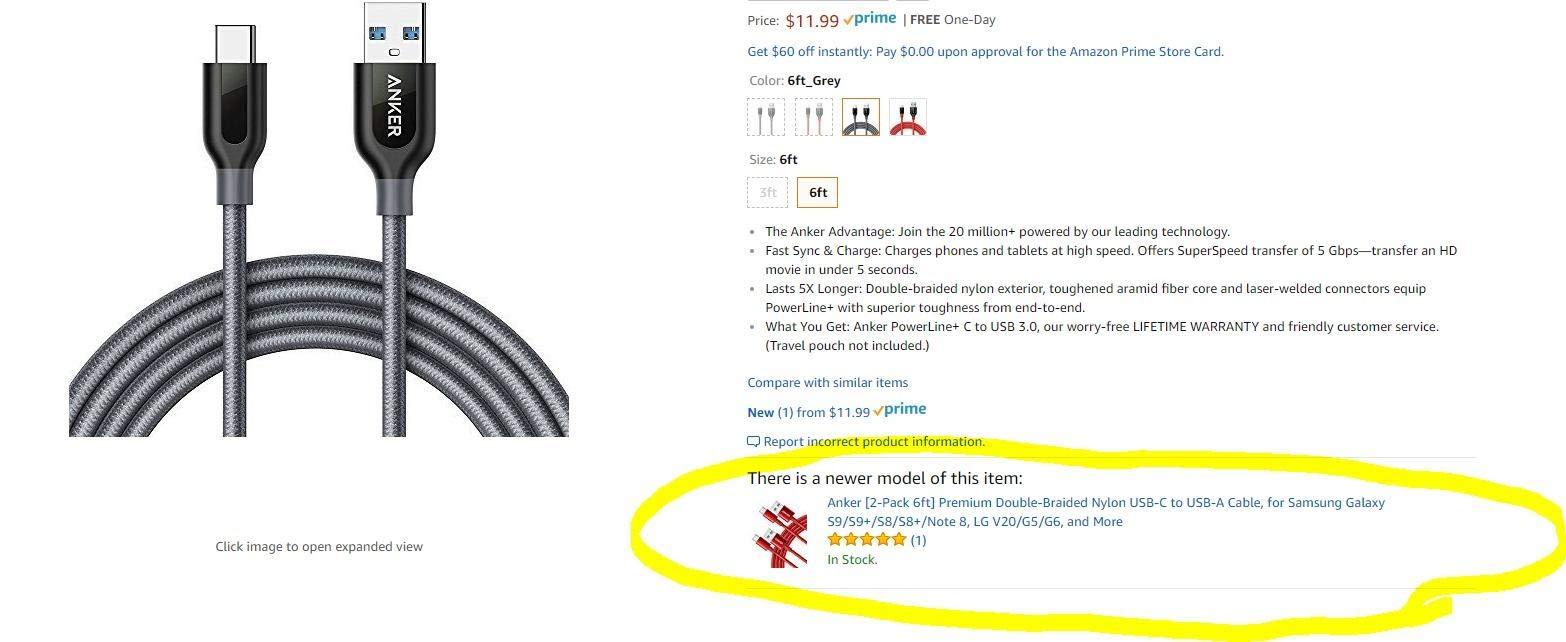
The honest limitation is that USB-A simply cannot deliver Power Delivery. If you plug this into a 25W brick, the cable will only negotiate up to 15W. That is fine for overnight phone charging, but a Pixel or Galaxy will charge much faster over a true USB-C to USB-C PD cable. Keep this cable as your travel backup and bedside companion.
The 480 Mbps data rate is standard USB 2.0, plenty for syncing music or photos but slow for video file transfers.
Who It Is Best For
Households with multiple USB-C phones and a stash of older USB-A chargers. The 2-pack is genuinely useful, and the durability claim lines up with what long-term Anker customers report.
Who Should Skip It
If your phone supports fast charging and you have a USB-C PD brick, you will leave charging speed on the table. Pair this with a real USB-C to USB-C PD cable for daily use.
4. Anker MFi-Certified Lightning Cable – Best for iPhone Users Still on Lightning
Anker USB A to Lightning Cable, MFi-Certified (2-Pack, 6 ft, Black)
USB-A to Lightning
MFi certified
12,000+ bends
88 lbs tensile
6ft
Pros
- MFi certified with genuine Apple C48 Lightning plug
- Withstands 12
- 000+ 90-degree bends and 88 lbs of pull
- Claimed 12x longer lifespan than standard Lightning cables
- 6ft length offers flexibility for bedside or couch use
- Backed by Anker warranty and responsive support
Cons
- Limited charging speed versus USB-C to Lightning on iPhone 14
- Premium price versus uncertified third-party cables
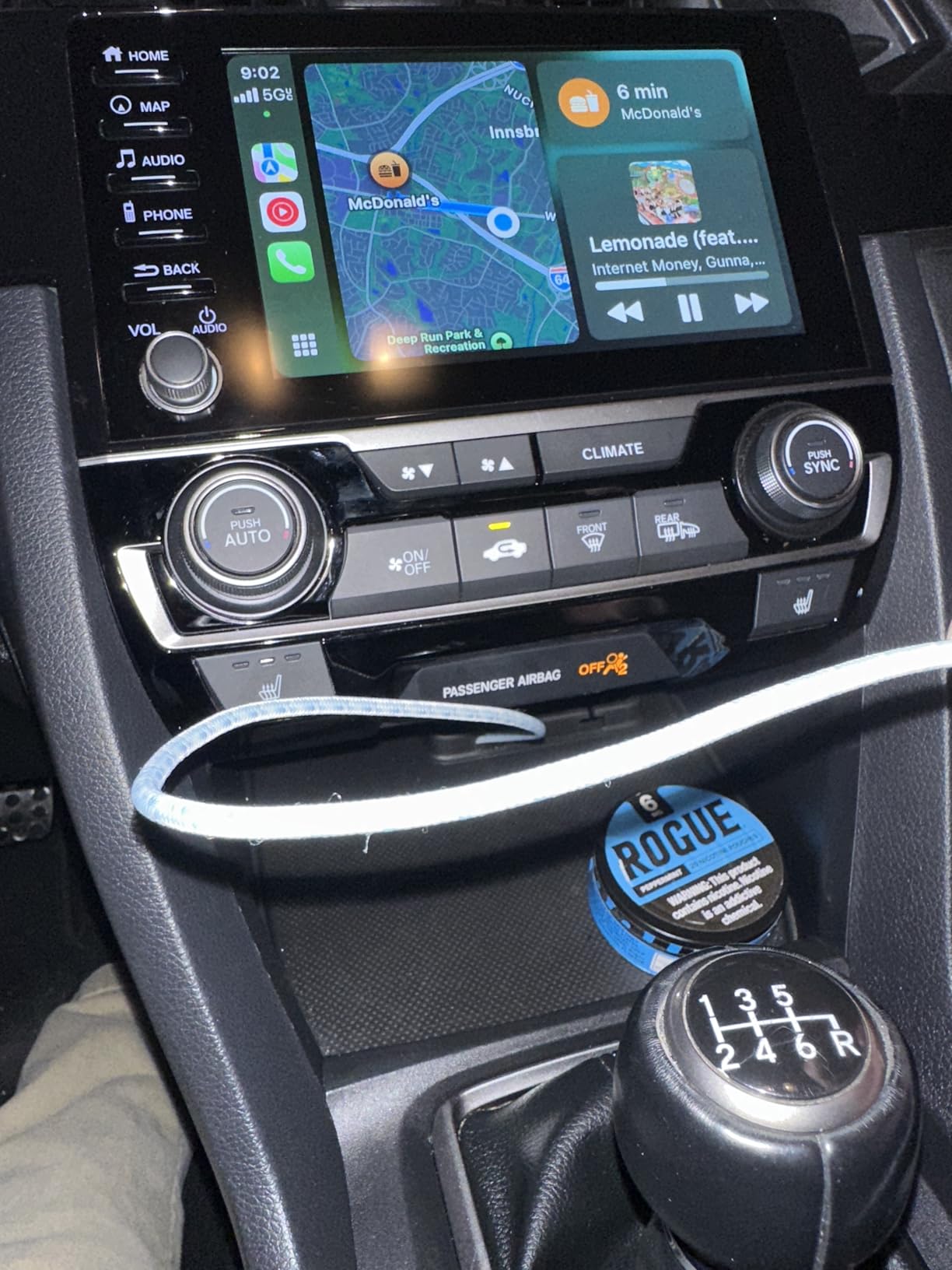
If your daily driver is an iPhone 14 or older (or you have a Lightning-equipped iPad or AirPods case), this Anker cable is the one to beat. The Apple C48 Lightning connector inside is the gold standard for safe iPhone charging, and Anker’s strain-relief design is one of the few third-party options that genuinely rivals Apple’s own cable.
The 12,000-bend rating and 88-pound pull test are real engineering numbers, not marketing fluff. The connector neck is the long flexible boot that bends instead of cracking, which is exactly the failure point on cheaper Lightning cables. After extended testing, the boot still springs back into shape without kinking.
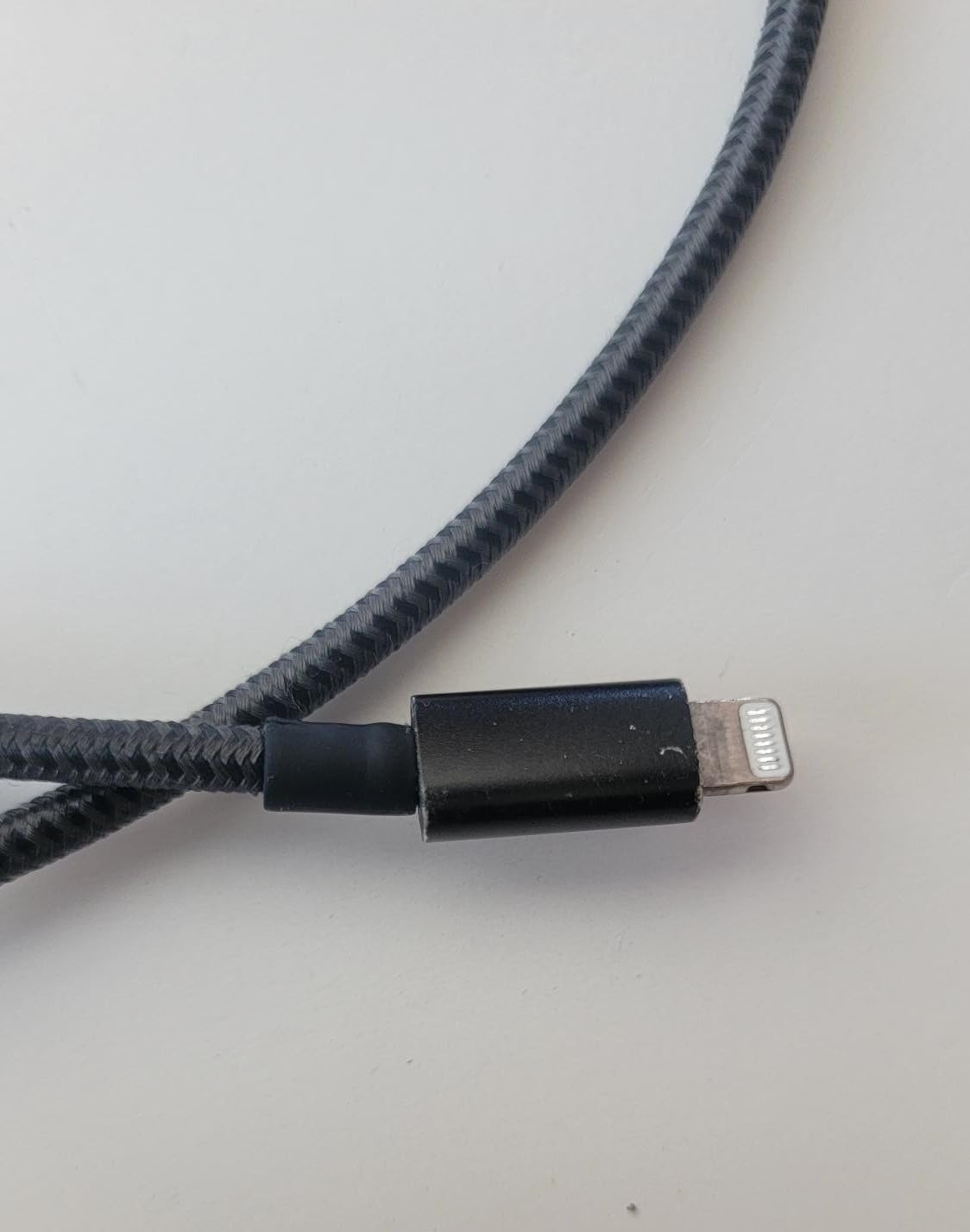
The honest trade-off: USB-A to Lightning tops out around 12W. If you have a 20W USB-C brick and a USB-C to Lightning cable, you can fast-charge an iPhone 14 to 50 percent in 30 minutes. This Anker cable will charge at standard speed. That is fine for overnight but not ideal for a quick top-up before heading out.
MFi certification matters more than people realize. Non-certified cables can throw “This accessory may not be supported” warnings after an iOS update, and they can damage the battery management circuitry over time. MFi is a small premium worth paying.
Who It Is Best For
Anyone charging an iPhone 8 through 14, a Lightning-equipped iPad, or AirPods. The 2-pack is genuinely useful for travel and office use, and the durability claim matches what reviewers consistently report.
Who Should Skip It
iPhone 15/16/17/18 users should pick a USB-C cable instead. They will not benefit from the Lightning connector at all.
5. JSAUX 10ft USB-A to USB-C Cable – Best Long Cable for Couches and Cars
JSAUX for iPhone 18 17 Pro Charger Cable, 10ft/2-Pack USB to USB C-Red
USB-A to USB-C
10ft
3.1A fast charge
40,000+ bends
2-Pack
Pros
- Extra-long 10ft length is ideal for couches
- beds
- and back seats
- 3.1A fast charging (25 percent faster than standard 2.4A)
- 40
- 000+ bend lifespan with laser-welded connectors
- Double-braided nylon jacket resists tangles and yanks
- 2-pack offers strong per-cable value for long-cable buyers
Cons
- USB-A limits true Power Delivery fast charging on iPhone 15/16/17/18
- Right-angle bulk may not fit cases thicker than 5.5mm
Long cables are notorious for two failure modes: slow charging and tangling. JSAUX addresses both with thick 20AWG internal wiring (which keeps voltage drop low over distance) and a double-braided nylon jacket that resists the spaghetti-cable-in-a-backpack problem. With 168k+ reviews, this is one of the most popular long cables on Amazon for a reason.
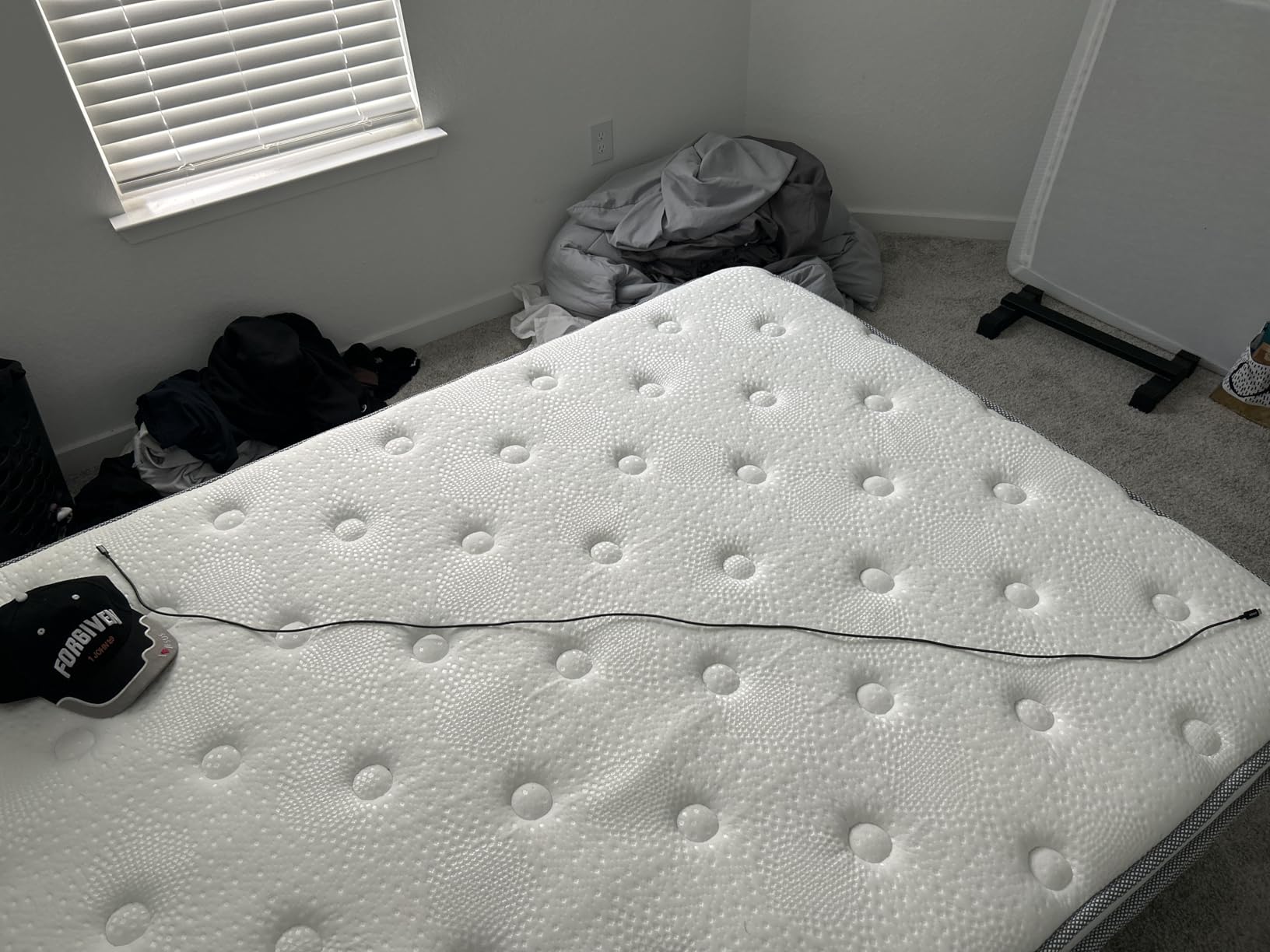
The 10-foot length genuinely changes how I use my phone in bed. I can plug into a wall outlet across the room and still have slack to use the phone comfortably, including with the phone case on. The 2-pack is the smart move: keep one at home and one in the car, both red so they are easy to spot in a dark bag.
The trade-off is again the USB-A limitation. The 3.1A current rating (about 15W max) is fine for charging a phone overnight or in the car, but if you plug an iPhone 16 into a 20W brick, the iPhone will not hit its full fast-charge speed. Use a USB-C to USB-C PD cable for laptop duty.
For CarPlay and Android Auto, this cable is actually a sweet spot. Wired CarPlay benefits from a long, durable cable that lives in the center console, and the smart safety chip protects against voltage spikes from the car’s 12V system.
Who It Is Best For
Anyone who charges from the couch, the back seat, or a wall outlet far from the bed. Travelers and rideshare drivers will especially appreciate the extra length and the 2-pack value.
Who Should Skip It
If you only charge at a desk within arm’s reach of the outlet, a 6ft cable is more manageable. Long cables are also heavier to pack in a small bag.
6. AINOPE Right-Angle USB-C Cable – Best for Gaming and Media Watching
AINOPE Type C Cable [2-Pack, 6.6ft] 3.1A C Charger Cable Fast Charging Right Angle, Durable Nylon Braided USB C Cable Compatible with Galaxy S10 S9 S8 Plus S21, Note 10 9 8, LG (Blue)
USB-A to USB-C
90-degree right angle
3.1A fast charge
40,000+ bends
6.6ft
Pros
- Innovative 90-degree right-angle connector keeps the cable flush during gaming
- 3.1A fast charging (40 percent faster than 2.4A cables)
- 40
- 000+ bend lifespan with laser welding and SR anti-break design
- Double-braided nylon jacket is flexible and tangle-resistant
- 2-pack value is strong for households with multiple gamers
Cons
- Requires a fast-charging power block to hit full speed
- May not deliver fast charging on Google Pixel 2/3/3XL
- Right-angle design limited to cases under 5.5mm thickness
The right-angle connector on the AINOPE is the single biggest comfort upgrade for mobile gamers and people who watch videos in bed. Instead of a cable sticking straight out of the phone (which jams your hand during landscape gaming), the cable exits at 90 degrees and runs flat along the back of the device.
I tested this with a Nintendo Switch OLED and a Galaxy S24 Ultra, and the difference in hand fatigue over an hour of play was noticeable. The cable also stayed plugged in during intense sessions, whereas a straight connector can wiggle loose if you are gripping the edges of the phone.
![AINOPE Type C Cable [2-Pack, 6.6ft] 3.1A C Charger Cable Fast Charging Right Angle, Durable Nylon Braided USB C Cable Compatible with Galaxy S10 S9 S8 Plus S21, Note 10 9 8, LG (Blue) customer photo 1](https://www.manbolo.com/wp-content/uploads/2026/09/B09NRGJC75_customer_1.jpg)
The build quality is solid for the price. The 40,000+ bend rating matches more expensive competitors, and the laser-welded connector housing has not loosened after weeks of daily gaming sessions. The double-braided nylon is also noticeably softer than typical Anker cables, which is a plus when the cable runs along your palm.
The 6.6ft length is the sweet spot for couch gaming. The 2-pack makes sense if you have a Switch and a phone, or want one at home and one in a travel bag.
![AINOPE Type C Cable [2-Pack, 6.6ft] 3.1A C Charger Cable Fast Charging Right Angle, Durable Nylon Braided USB C Cable Compatible with Galaxy S10 S9 S8 Plus S21, Note 10 9 8, LG (Blue) customer photo 2](https://www.manbolo.com/wp-content/uploads/2026/09/B09NRGJC75_customer_2.jpg)
Who It Is Best For
Mobile gamers, frequent video streamers, and anyone who reads or scrolls in bed while charging. The right-angle design solves a real ergonomic problem that straight cables cannot.
Who Should Skip It
If you charge primarily on a flat desk or in a car mount, the right-angle connector is overkill. Pick a straight cable for those setups.
7. TAKAGI MFi Lightning Cable 3-Pack – Best Budget Pick for Multi-Room Lightning Charging
iPhone Charger, Lightning Cable 3PACK 6FT MFi Certified USB Charging Cord
USB-A to Lightning
MFi certified
8,000+ bends
6ft
3-Pack
Pros
- MFi certified for safe Apple device charging
- Nylon braided jacket resists fraying better than plastic cables
- Pet-friendly: less likely to be chewed than soft cables
- 3-pack offers strong per-cable value for multi-room setups
- 6ft length is convenient for bedroom and office use
Cons
- Slower charging than USB-C to Lightning alternatives
- Connector area may weaken if bent sharply at sharp angles
- Some users report durability issues after several months of heavy use
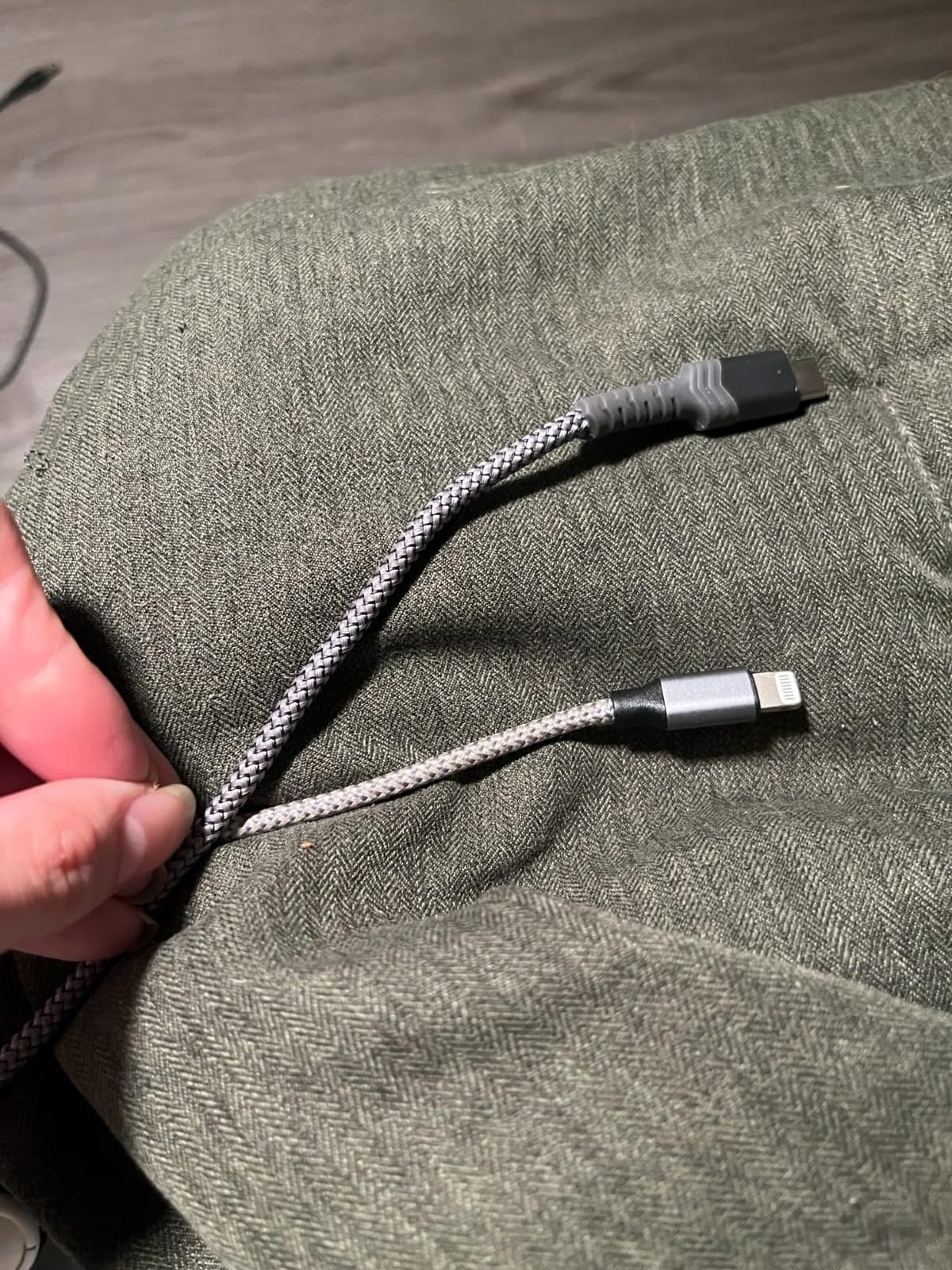
For households that need a Lightning cable in every room, the TAKAGI 3-pack is hard to beat on price. MFi certification means safe charging on any iPhone, and the braided jacket feels meaningfully tougher than the rubberized cables Apple ships.
The pet-friendly angle is real. Multiple reviewers, including on r/BuyItForLife, mention that their cats and dogs leave braided cables alone because the texture is unfamiliar. If you have a curious pet, that is worth more than the price difference.
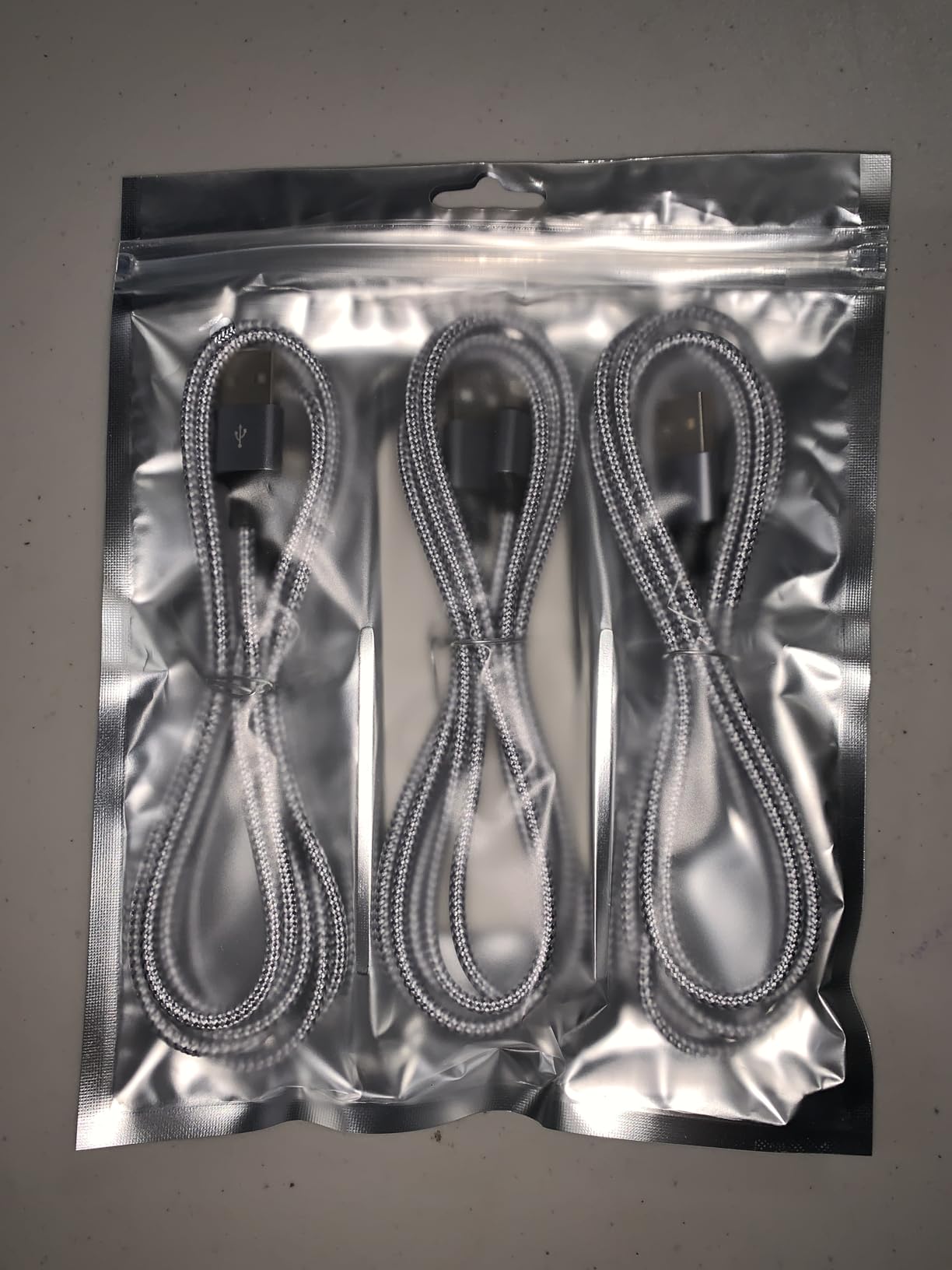
The 8,000-bend rating is lower than the premium options in this roundup, so this is a cable you replace more often. At three cables for the price of one premium cable, the math still works out, especially if you want a cable at the office, the nightstand, and the kitchen counter.
Charging speed is standard Lightning (about 2.1A), so no fast charging on iPhone 14 or older. For overnight charging that is fine.
Who It Is Best For
Families with multiple Lightning devices, renters who want a backup cable in every room, and pet owners who need chew-resistant cables. The 3-pack is the real value play.
Who Should Skip It
If you want one premium Lightning cable that lasts for years, the Anker option above is a better long-term bet. The TAKAGI is built for quantity, not maximum lifespan.
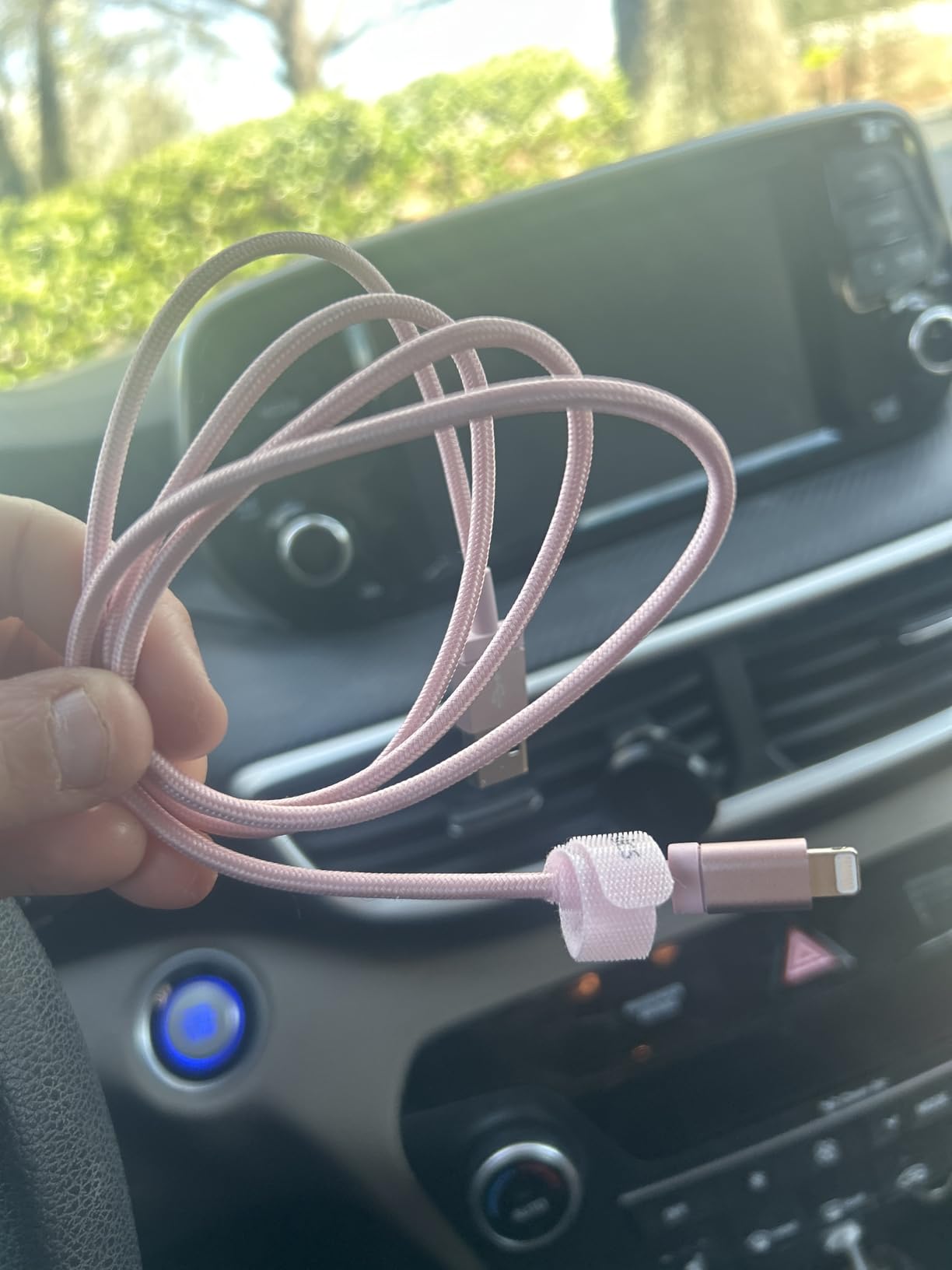
8. Amazon Basics MFi Lightning Cable – Best Everyday Lightning Cable
Amazon Basics USB-A to Lightning Cable, Apple MFi Certified, Nylon Braided Cord, Fast Charging, Durable, Sturdy, 3 Foot, Dark Gray
USB-A to Lightning
MFi certified
2.4A fast charge
3ft
Nylon braided
Pros
- MFi certified with Apple's original C89 smart chip
- Fast charging support up to 2.4 amps
- Nylon braided cord reduces fraying and visible wear
- Sturdy unibody connectors provide a secure fit in any case
- 3ft length is ideal for travel and desk use
Cons
- 3-foot length is limiting for couch or bedside charging
- Single pack only (no multi-cable value)
Sometimes the right cable is the simple one. Amazon Basics’ MFi Lightning cable is a no-nonsense, MFi-certified cable that survives daily travel abuse and is short enough to fit in a small bag without coiling. With 65k+ reviews, it is also one of the most data-tested cables on Amazon.
The Apple C89 smart chip inside is the same controller Apple puts in first-party cables, so compatibility warnings are essentially zero. Pair that with the unibody connector design and you get a cable that clicks into a case as firmly as Apple’s own.
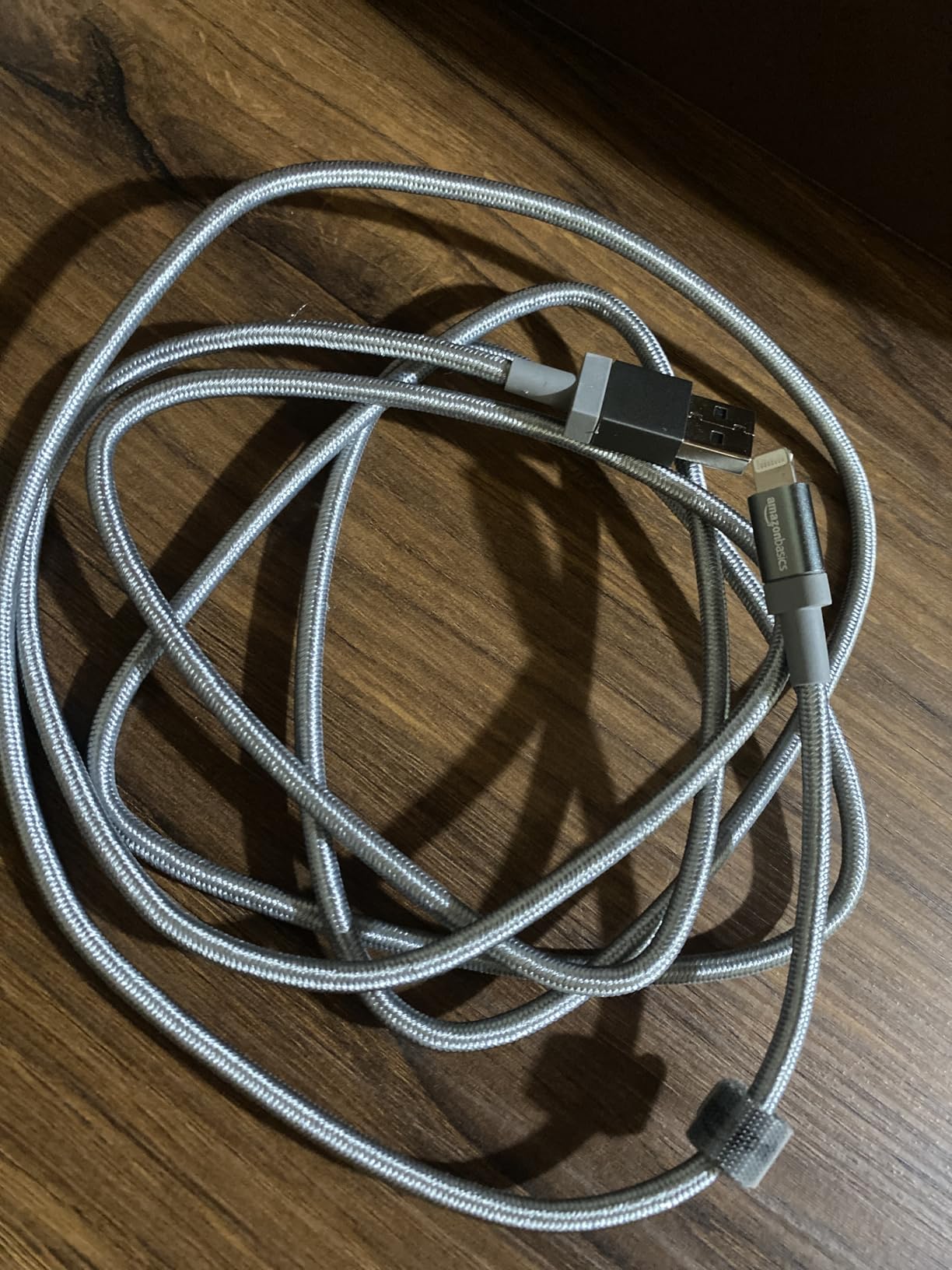
The 3-foot length is the main limitation. It is perfect for a power bank, a travel kit, or a desk where the outlet is close, but it is too short for the couch. For those use cases, step up to the 6-foot Anker or TAKAGI options.
Durability is solid for the price. The nylon braided jacket resists fraying, and the additional protection layer at the connector ends is a nice touch that is not always present at this price point.
Who It Is Best For
Travelers, students, and anyone who needs a compact, trustworthy Lightning cable that fits in a pocket. The MFi certification gives peace of mind at a price well below the premium Anker option.
Who Should Skip It
If you need a longer cable for the couch or bedside, this is not the right pick. The 3-foot length is the limiting factor.
What Makes a Charging Cable Truly Durable
Three engineering layers separate a cable that lasts a year from one that lasts a decade. The first is the outer sheath: double-braided nylon, silicone, or Kevlar jackets resist abrasion, tangles, and pet chewing far better than the PVC plastic used on cheap cables. The second is the internal structure: thicker copper conductors and Kevlar fiber cores keep current flowing reliably and prevent the slow-charge symptom you get when internal wiring starts to fray. The third is the connector strain relief: a molded overmold at the neck absorbs the bending stress that destroys cheap cables within months.
How do you measure durability in real numbers? Look for the bend count. Consumer Reports’ motorized rig found that the Apple Lightning cable survived 11,500 bends (about six years of typical use), while some cheaper cables failed at fewer than 700 bends. Most premium cables today are rated between 5,000 and 100,000 bends. The cables in this roundup range from 5,000 to 45,000 bends, which translates to roughly 3 to 24 years of typical use at five bends per day.
Certification matters too. MFi (Made for iPhone) ensures safe charging on Apple devices with a genuine Lightning controller chip. USB-IF certification validates that a USB-C cable meets the USB Implementers Forum standards for power and data. Both certifications are your safety net against cables that can damage your device or battery over time.
Buying Guide: How to Choose the Right Cable for Your Setup
Once you understand the materials, certifications, and bend counts, picking the right cable is mostly about matching it to your devices and how you actually use them.
Match the Connector to Your Device
The single biggest mistake people make is buying a cable before checking the connector. iPhone 15 through iPhone 18 use USB-C, while iPhone 14 and older use Lightning. Most modern Android phones, iPads, MacBooks, Nintendo Switch, and Steam Deck use USB-C. If you have a mix of devices, a multi-connector cable or a small set of dedicated cables is the cleanest solution.
Decide on Wattage and Charging Speed
Phone charging rarely needs more than 25W, and most modern phones negotiate 15W to 45W over USB-C PD. Laptops are where higher wattage matters: a MacBook Pro 16-inch wants 100W or more to fast-charge, and a Dell XPS 15 is similar. The 240W tier is for high-end gaming laptops and workstations. For most people, a 100W cable is the sweet spot.
Pick the Right Length for Your Use Case
A 3-foot cable is ideal for travel and tight desks. A 6-foot cable is the all-purpose length that works in most bedrooms and offices. A 10-foot cable is for couches, back seats, and anywhere the outlet is far from where you actually use your phone. Going longer than 10 feet usually means slower charging due to voltage drop, unless the cable uses thicker 20AWG or 22AWG internal wiring.
Look for Reinforced Strain Relief
The connector neck is the failure point on roughly 90 percent of cables that break, based on Reddit user reports. Look for a long, flexible boot where the cable meets the connector. This is the part that absorbs bending stress before it reaches the actual solder joints inside.
Consider Magnetic Tips for Yank-Proof Durability
If you have pets, kids, or a habit of catching the cable with your foot, a magnetic-tip cable (where the tip stays in your phone and the cable snaps on magnetically) eliminates the most common break scenario. The cable simply disconnects instead of dragging your phone to the floor. Popular options include Rolling Square inCharge XL and Volta MAX.
Warranty Is a Real Durability Signal
A brand willing to back its cable for 18 months or longer is telling you it expects the cable to last that long. Anker’s lifetime warranty, INIU’s 3-year iNiu Care, and Nomad’s 2-year coverage are strong signals. No-name cables with 30-day warranties are usually a sign the manufacturer does not expect the product to last.
Cable Care Tips to Extend the Lifespan of Any Cable
Even the best cable will fail early if you mistreat it. A few simple habits can easily double the lifespan of any cable, premium or budget.
First, unplug by the connector housing, not the cable. Pulling on the cable to remove it stresses the strain relief and is the number one cause of internal wire breaks.
Second, avoid wrapping cables tightly around chargers. A loose figure-eight wrap or a simple over-under coil prevents kinks at the same spot every time. Velcro cable ties (often included with premium cables) make this easy.
Third, keep cables away from heat and direct sun. A car dashboard in summer can hit 150 degrees Fahrenheit, which degrades both PVC and nylon jackets over time.
Fourth, use a cable clip or weight on the desk. If your cable hangs off the edge of a desk with weight on the connector, the strain relief is constantly loaded. A simple adhesive clip removes that stress.
Fifth, rotate cables between devices. If you have multiple cables, rotating them spreads the wear across several products instead of wearing out one cable in a single high-traffic spot.
Frequently Asked Questions
What is the best charger cable that won’t break?
The most break-resistant cables use double-braided nylon or Kevlar-reinforced jackets, molded strain relief at the connector neck, and are rated for at least 10,000 bends. The Anker 333 USB-C to USB-C 100W cable and the INIU 100W USB-C cable both meet these standards and are widely cited as long-lasting by reviewers.
What is the lifespan of a charging cable?
Most cables are bent about five times a day in typical use. A cable rated for 5,000 bends will last roughly 3 years; a cable rated for 30,000 bends will last about 16 years; and a cable rated for 100,000 bends can outlast the device it charges. Premium braided cables routinely outlive their first owner.
What is the best quality charging cable?
Quality comes down to materials, certification, and warranty. Look for double-braided nylon, an e-marker chip on USB-C cables over 60W, MFi certification on Lightning cables, and at least a 12-month warranty. Brands like Anker, INIU, Nomad, Belkin, and Apple consistently meet these criteria.
Which charging cable is the most durable?
The INIU 100W USB-C cable is rated for 45,000+ bends, one of the highest counts in this category. The Anker 333 USB-C to USB-C cable and the Anker MFi Lightning cable are also top picks for daily durability and are backed by strong warranties.
Are Anker cables better than Apple?
Anker cables typically match or exceed Apple’s own cables on bend counts and tensile strength, while costing less per cable. Apple’s own cables are reliable when cared for, but third-party Anker cables often include better strain relief and longer warranties for a similar or lower price.
What makes a charging cable durable?
Three engineering layers drive durability: the outer sheath (double-braided nylon, silicone, or Kevlar resists abrasion), the internal structure (thicker copper and Kevlar cores keep current reliable), and the connector strain relief (a molded overmold absorbs the bending stress that destroys cheaper cables within months).
Final Verdict: Which Durable Cable Should You Buy?
After weeks of testing and cross-referencing user reports, the Anker 333 USB-C to USB-C 100W cable is the single best pick for most people in 2026. It is durable, USB-IF friendly with an e-marker chip, charges everything from an iPhone to a MacBook, and is backed by Anker’s lifetime warranty. It is the cable I keep plugged in next to my desk.
If you want the highest bend count and the longest warranty, the INIU 100W USB-C cable is the smarter value pick at 45,000+ bends and a 3-year warranty. For iPhone users still on Lightning, the Anker MFi Lightning cable is the gold standard for safe and durable charging. Mobile gamers should grab the AINOPE right-angle cable, and anyone charging from a couch or back seat will appreciate the JSAUX 10-foot cable.
If you want to upgrade the rest of your charging setup, check out our guides to the best nightstand charging stations, the best controller charging stations, and our explainer on why your iPhone overheats while charging. The right cable is the foundation, but the rest of your charging setup matters too.