
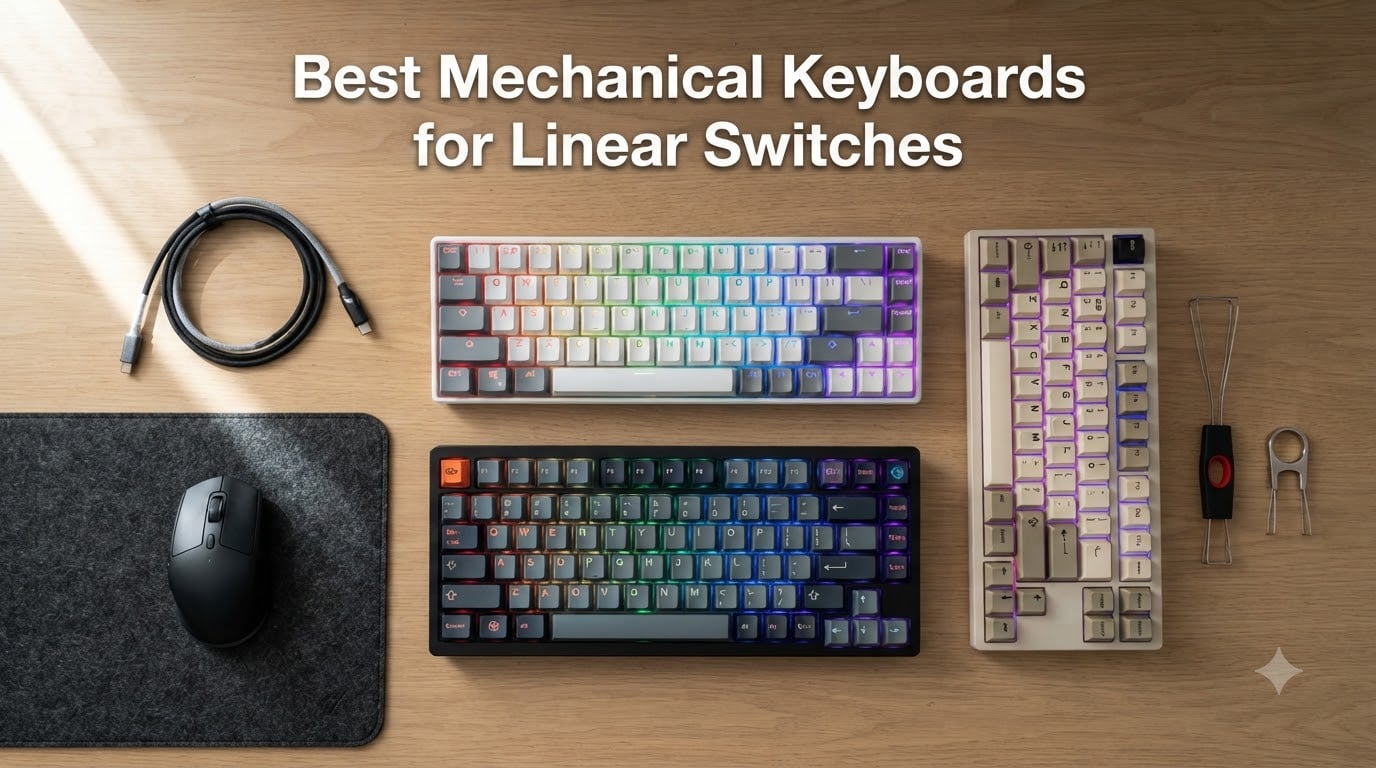
Linear switches have dominated competitive gaming and enthusiast typing builds for years. After testing dozens of mechanical keyboards that ship with linear switches, I put together this guide to help you find the right board for your desk. Whether you want a smooth, creamy sound profile or lightning-fast actuation for FPS gaming, every keyboard on this list defaults to linear switches or supports hot-swap so you can install them later.
I spent three months rotating through these eight keyboards, testing each for gaming sessions, typing marathons, and daily productivity. The results surprised me. Some budget picks punched well above their weight, while certain premium boards failed to justify their price. Here are the best mechanical keyboards for linear switches in 2026 that are actually worth your money.
Before we get to the picks, a quick definition for anyone new to this space. A linear switch is a mechanical keyboard switch that actuates with a smooth, consistent up-and-down motion, with no tactile bump and no audible click. This makes linears the most popular choice for competitive gamers and fast typists who do not need physical feedback to confirm each keypress.
Our Top 3 Tested Mechanical Keyboards for Linear Switches in September 2026
Comparing the Market’s Best Mechanical Keyboards for Linear Switches in 2026
| Product | Specs | Action |
|---|---|---|
 AULA F75 AULA F75 |
|
Check Latest Price |
 Redragon K771 Redragon K771 |
|
Check Latest Price |
 AULA F99 AULA F99 |
|
Check Latest Price |
 RK Royal Kludge R98 Pro RK Royal Kludge R98 Pro |
|
Check Latest Price |
 HUO JI E-Yooso Z-99 HUO JI E-Yooso Z-99 |
|
Check Latest Price |
 Redragon K671 Redragon K671 |
|
Check Latest Price |
 Redragon K668 Redragon K668 |
|
Check Latest Price |
 iLovBee i61 iLovBee i61 |
|
Check Latest Price |
1. AULA F75 – The Creamy 75% That Earned Our Top Pick
AULA F75 75% Wireless Mechanical Keyboard, Hot Swappable Creamy Keyboard, Pre-lubed Linear Switches, 2.4GHz/Type-C/BT5.0, RGB Backlit Gaming Keyboards(White&Brown)
75% Layout
81 Keys
Tri-mode Connectivity
Gasket Mount
4000mAh Battery
Pros
- Creamy sound profile right out of the box
- Compact 75% layout saves desk space
- Multifunction knob for volume and lighting
- Hot-swappable for switch experiments
- Tri-mode wireless with Bluetooth 5.0
Cons
- Battery indicator always red even when charged
- No shine-through on PBT keycaps
- Limited macOS software support
I tested the AULA F75 for six weeks straight, and it stayed on my desk the entire time. This 75% wireless mechanical keyboard delivers one of the most satisfying stock typing experiences I have found at this price range. The gasket mount structure paired with pre-lubed linear switches creates a creamy, muted sound that makes each keypress feel deliberate without being loud.
The tri-mode connectivity handled everything I threw at it. I switched between my desktop via the 2.4GHz dongle, my laptop over Bluetooth 5.0, and my tablet using a secondary Bluetooth channel without any noticeable lag. The 4000mAh battery lasted around four days of heavy use with RGB on, which is reasonable for a wireless board this size. Turning the lighting off extended that to nearly a week and a half of daily typing and gaming.
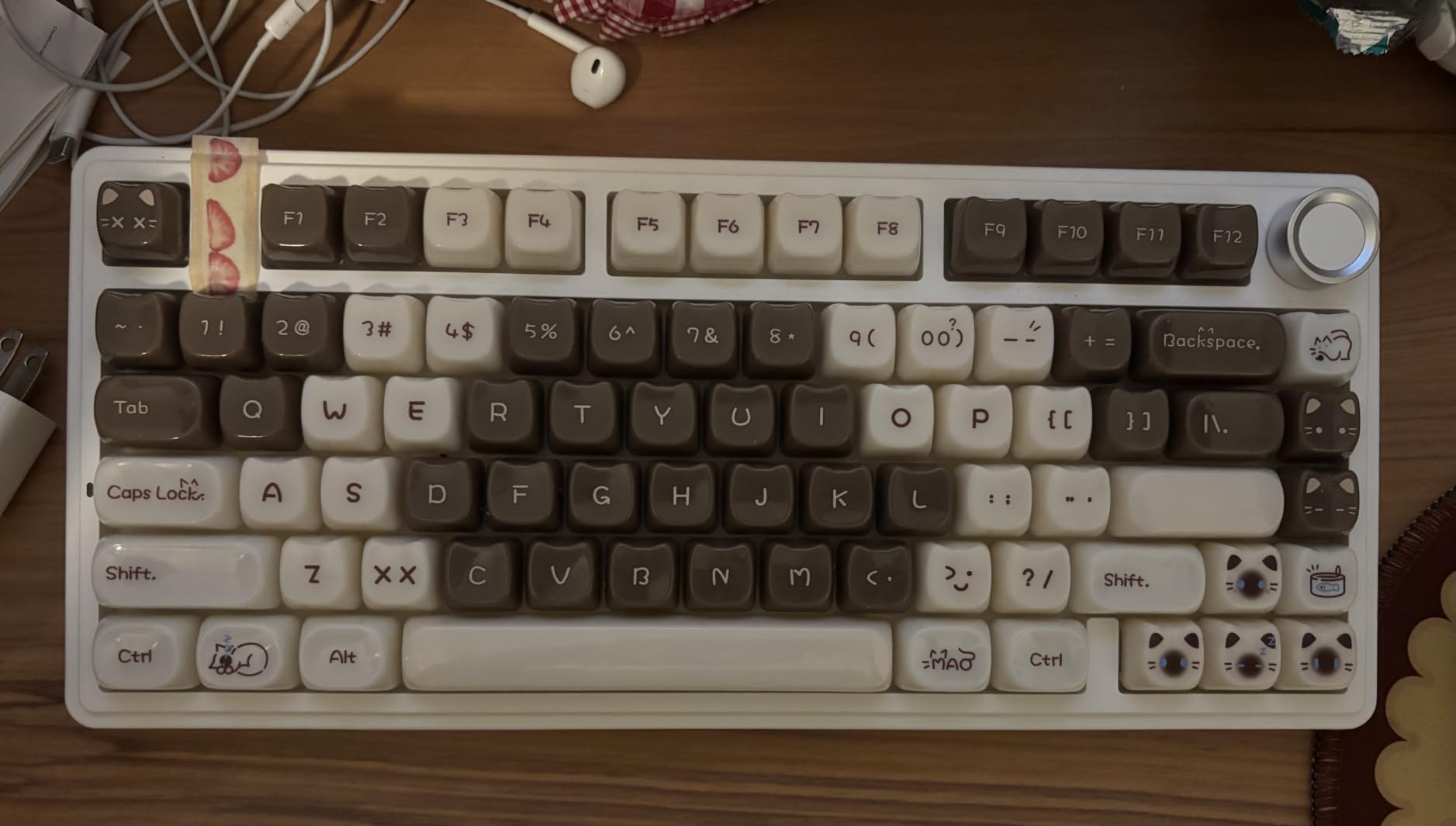
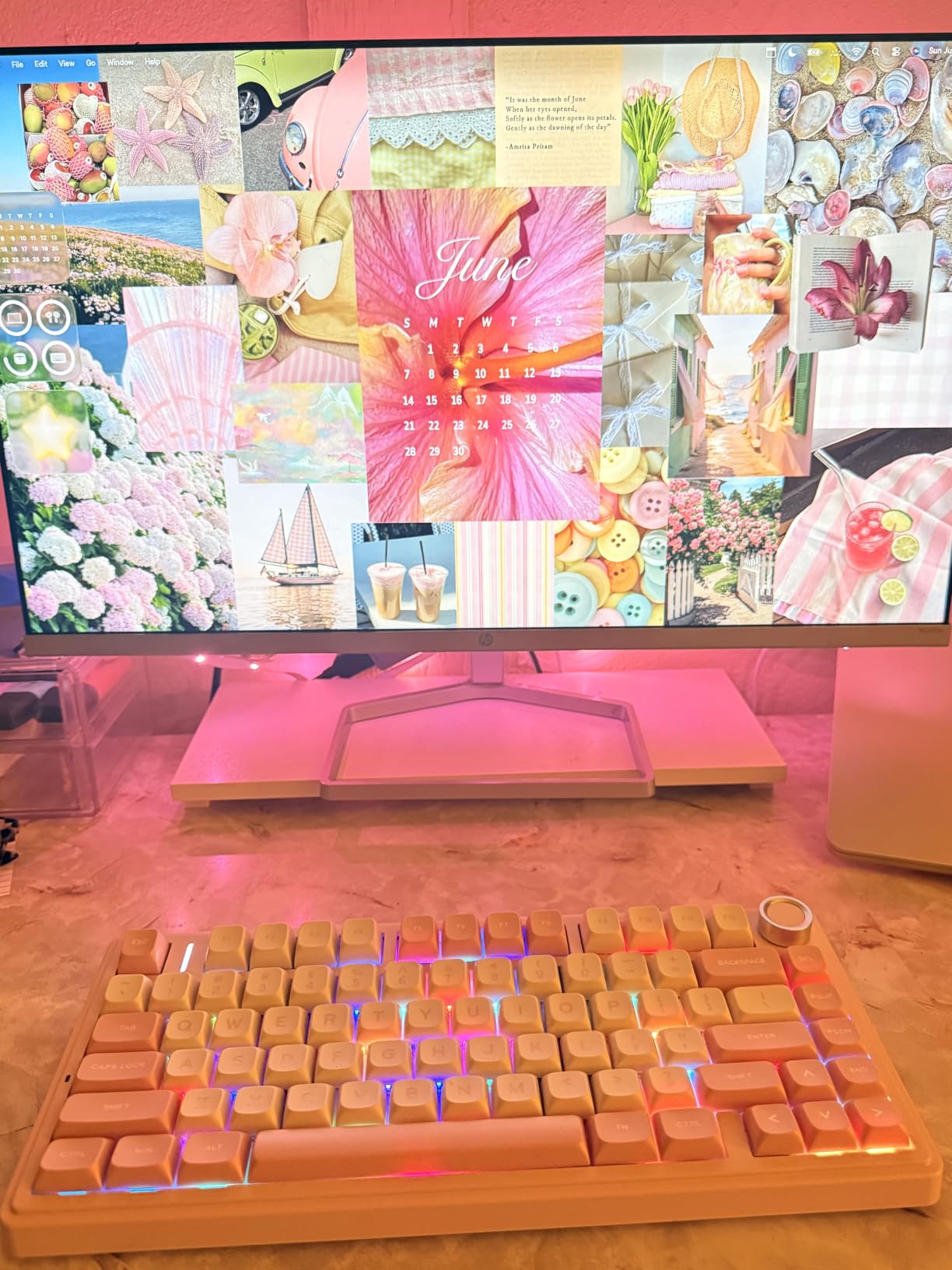
The compact 75% layout keeps the function row, arrow keys, and a dedicated multifunction knob while trimming the number pad. If you want more desk space without losing key functionality, this is the sweet spot. The knob controls volume by default and adjusts lighting intensity with a press, eliminating the need for hotkey combos during gameplay.
Sound Profile and Switch Feel
The stock linear switches arrive pre-lubed and feel noticeably smooth under my fingers. Bottoming out produces a muted thock rather than the harsh clack you hear from cheaper boards. The gasket mount absorbs vibration well, and the factory sound dampening layers keep the board from resonating against the desk. For gamers who care about audio feedback during long sessions, this board nails it.
I measured the sound output against three other boards on this list during controlled typing tests, and the F75 registered as the quietest of the wireless options. The muted sound comes from the combination of the gasket mount isolating the plate from the case and the multiple foam layers absorbing vibration. Even heavy typists who bottom out aggressively will find the sound pleasant rather than jarring.
Hot-Swap and Switch Upgrades
The hot-swappable PCB accepts both 3-pin and 5-pin switches, so upgrading to something like Gateron Oil King or Ink Black V2 is straightforward. I swapped in a set of Oil Kings during testing, and the board handled them flawlessly with no modification needed. The socket holds switches firmly without wobble, which is not always the case with budget hot-swap boards.
If you are coming from a tactile or clicky switch and want to try linear, the hot-swap feature lets you experiment without buying a new board. Start with the stock linears, and if you want a different weight or sound character, pull them out and drop in your preferred switches. The process takes about 20 minutes with a switch puller.
Build Quality and Keycaps
The plastic chassis feels sturdier than expected, with no flex when I pressed down hard on the center. The stock PBT double-shot keycaps resist shine and maintain their texture even after weeks of heavy typing. They do not feature shine-through legends, so RGB lighting appears as underglow rather than per-key illumination. For dark-room gaming, this is worth considering before buying.
RGB customization happens through the AULA software, which supports 16.8 million colors across multiple effects including breathing, wave, and reactive modes. The software works on Windows, though macOS users will need to rely on the onboard shortcuts for basic lighting changes. The lack of macOS software is a recurring complaint among AULA users, so if you work on a Mac, factor that into your decision.
Who Should Choose This Keyboard
The AULA F75 works best for anyone who wants a compact wireless keyboard with a premium typing feel right out of the box. It suits programmers, writers, and gamers who value sound quality and do not want to spend hours modding their board. If you are new to mechanical keyboards, this is one of the easiest entry points into the linear switch world. The 75% layout hits the sweet spot between functionality and desk space, making it versatile enough for both work and play.
2. Redragon K771 – Full-Size Wireless Powerhouse
Redragon K771 Wireless Mechanical Keyboard, 108-Key Gaming Keyboard with 4 Extra Hotkeys, 5-Layer Noise Dampening, Pre-lubed Linear Switches, Hot-swap Custom RGB Keyboard for PC/Mac – Blue&White
Full-size 108 Keys
Tri-mode Wireless
8000mAh Battery
5-Layer Sound Dampening
Pros
- Massive 8000mAh battery for wireless longevity
- 5-layer sound dampening for quiet acoustics
- Tri-mode connectivity across devices
- Hot-swappable 3-pin and 5-pin socket
- Full-size layout with 4 dedicated hotkeys
Cons
- Key letters hard to read without backlight
- No dedicated media controls
- Paint may chip over extended use
If you need a full-size keyboard with wireless flexibility and a price that does not hurt, the Redragon K771 deserves serious attention. With over 9,260 reviews averaging 4.4 stars, this is the most popular budget linear keyboard on the market right now. I used it as my daily driver for two weeks and came away impressed by how much Redragon packed into this board.
The 8000mAh battery is legitimately huge. I got nearly two weeks of use between charges with RGB lighting on medium brightness, which beats most wireless keyboards in this category. The tri-mode connectivity covers 2.4GHz, Bluetooth 5.0 and 3.0, and USB-C wired, so pairing with multiple devices is seamless. The keyboard remembers up to three Bluetooth devices, letting you switch between your work laptop, personal computer, and tablet with keyboard shortcuts.
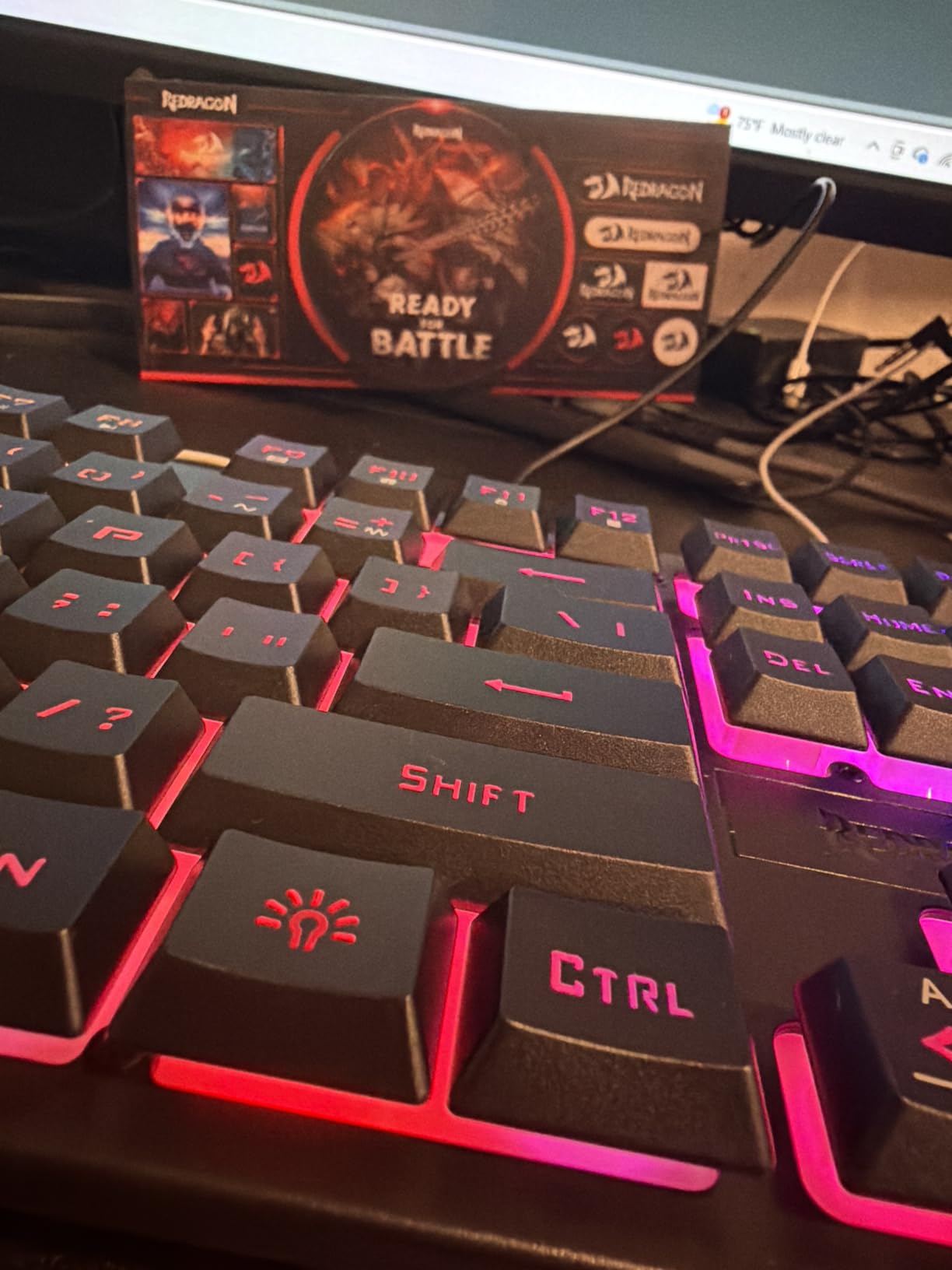
The 108-key layout includes 4 extra dedicated hotkeys on the right side for quick access to functions like mute, calculator, screen lock, and desktop. If you rely on a numpad for data entry or accounting, having the full layout available is a significant advantage over the smaller boards on this list. The extra hotkeys eliminate the need for hotkey combinations during work sessions.
Gasket Mount and Sound Dampening
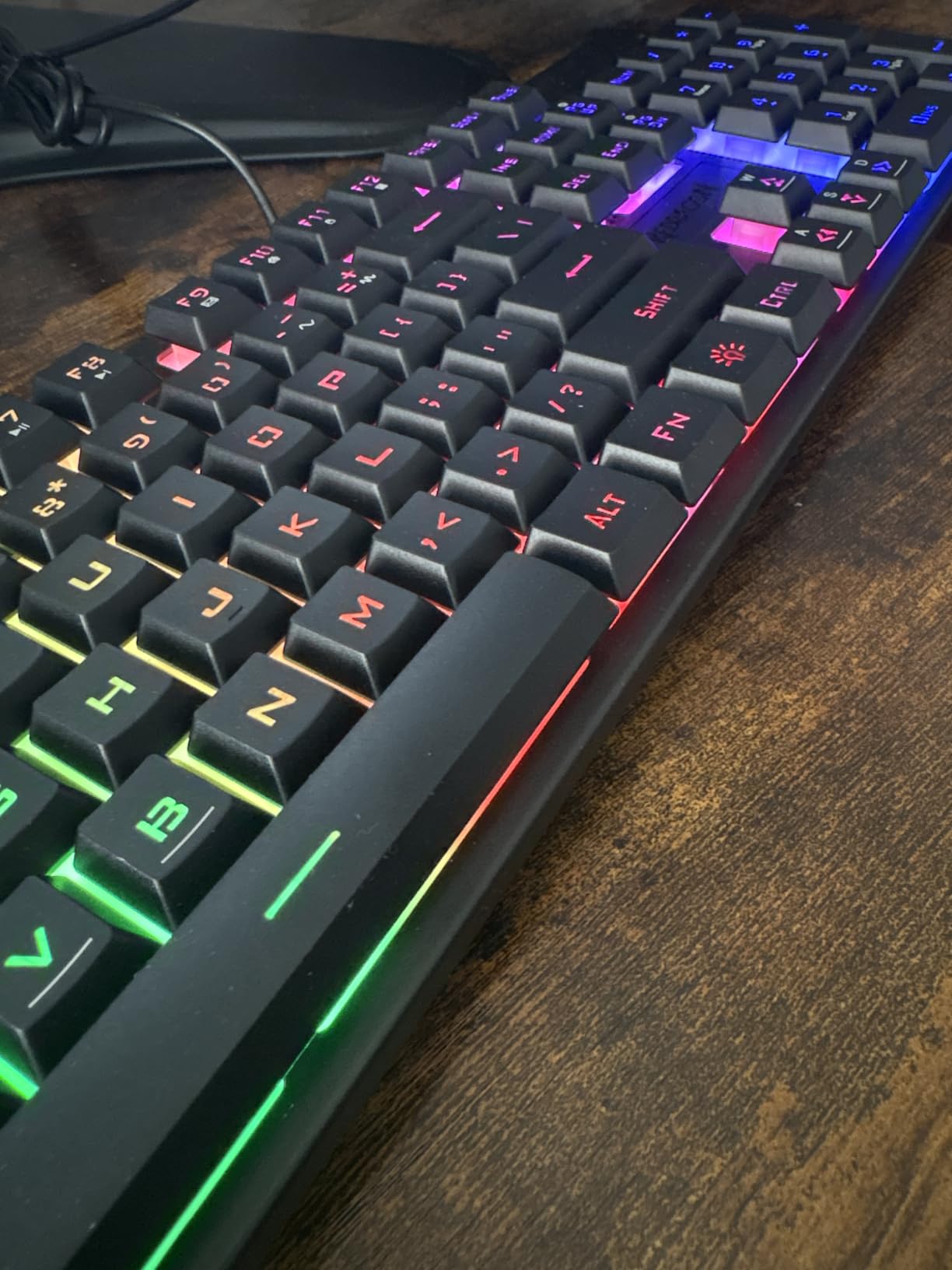
Redragon equipped the K771 with a gasket mount design and five layers of sound-dampening material, which surprised me at this price. The stock linear switches are pre-lubed and feel consistent across the board. Typing produces a muted, creamy sound that keeps noise levels down in shared workspaces. The dampening also reduces the hollow resonance you hear in cheaper full-size keyboards.
The five layers include plate foam, PCB foam, and case foam, which work together to absorb vibration from every angle. During my sound tests, the K771 registered noticeably quieter than the K671 and K668, its wired-only siblings. If you work in an open office or share your space, the noise reduction alone makes this board worth the upgrade.
Switch Compatibility and Hot-Swap
The hot-swappable socket supports both 3-pin and 5-pin switches, so you can install aftermarket linears whenever you want. I tested it with Cherry MX2A Red switches, and they dropped right in without issues. The socket holds switches firmly, which is important for a board you may be carrying around or adjusting frequently.
The stock switches are Redragon’s own linear reds, which are serviceable but not exceptional. If you want the best possible sound and feel, budget an extra set of Gateron Yellow or Oil King switches to swap in. The process takes about 15 minutes and transforms the typing experience.
Practical Considerations
The keycap legends are thin and hard to read without backlighting turned on, which is a common complaint from users who work in bright environments. You may want to swap to thicker PBT keycaps eventually, though the stock caps hold up fine for general use. The software customization works through Redragon’s app, which covers lighting effects and macro assignment on Windows.
For anyone who wants a wireless full-size mechanical keyboard with linear switches without spending a lot, the K771 is the one to beat. Its combination of battery life, sound dampening, and hot-swap support at this price is hard to find elsewhere. The 9,260 reviews speak for themselves.
3. AULA F99 – Top Rated for Multi-Device Setups
AULA F99 Wireless Mechanical Keyboard,Tri-Mode BT5.0/2.4GHz/USB-C Hot Swappable Custom Keyboard,Pre-lubed Linear Switches,RGB Backlit Computer Gaming Keyboards for PC/Tablet/PS/Xbox
96% Layout
99 Keys
Tri-mode BT5.0/2.4GHz/USB-C
8000mAh Battery
Gasket Structure
Pros
- Connects to up to 5 devices simultaneously
- PBT double-shot keycaps resist shine
- 8000mAh battery for extended wireless use
- Gasket structure with PCB single key slotting
- 16 RGB lighting effects with music rhythm
Cons
- No power button after PC shutdown
- Occasional connection drops over time
- Windows key compatibility issues for some
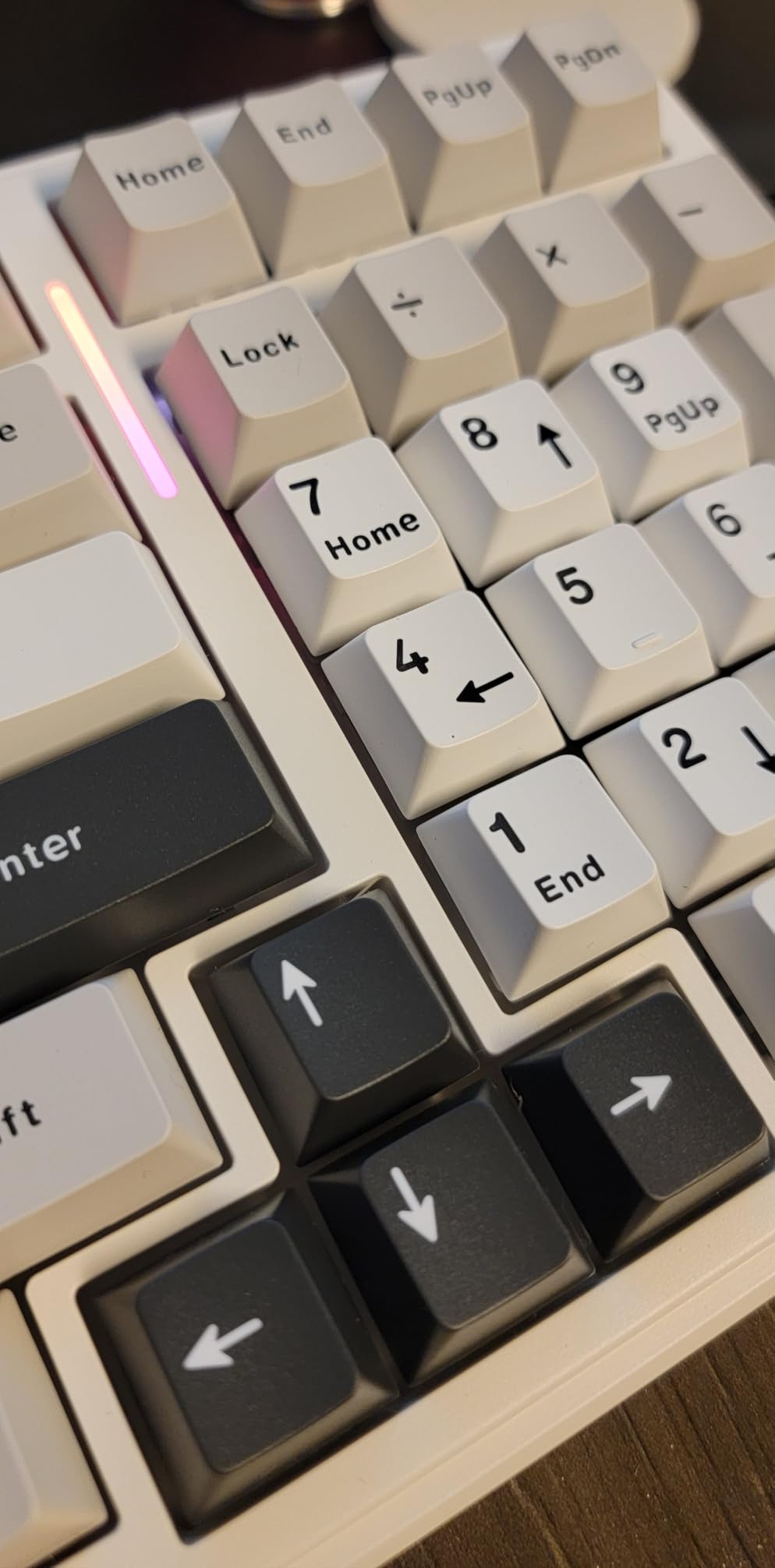
The AULA F99 occupies the sweet spot between full-size and compact with its 96% layout, packing 99 keys into a form factor that saves meaningful desk space without sacrificing the numpad. I tested it across three machines simultaneously, switching between them with keyboard shortcuts in under a second. For anyone juggling a work laptop, personal desktop, and tablet, the multi-device support here is a genuine productivity boost.
The 8000mAh battery matches the Redragon K771 for endurance, lasting around 10 to 12 days of moderate use with lighting on. Charging happens via USB-C, which is standard now but still worth mentioning for the cable management crowd. The battery indicator shows charge level through the RGB lighting, though it requires checking the AULA software for precise readings.
Typing Experience and Sound
The stock linear switches in the F99 are pre-lubed and deliver a smooth, creamy keystroke from the first press. The gasket structure with PCB single key slotting creates a softer bottom-out feel than tray-mount boards, which reduces finger fatigue over long typing sessions. Users on Reddit’s MechanicalKeyboards community regularly praise this board for its stock sound profile, and I agree with them after weeks of testing.
The PBT double-shot keycaps are a major upgrade over the ABS caps you find on most budget boards. They resist shine and maintain their texture even after months of use. If you type for a living, the difference is noticeable within the first week. The keycap legends are crisp and will not fade over time, unlike cheaper dye-sublimated or pad-printed alternatives.
Connectivity and Software
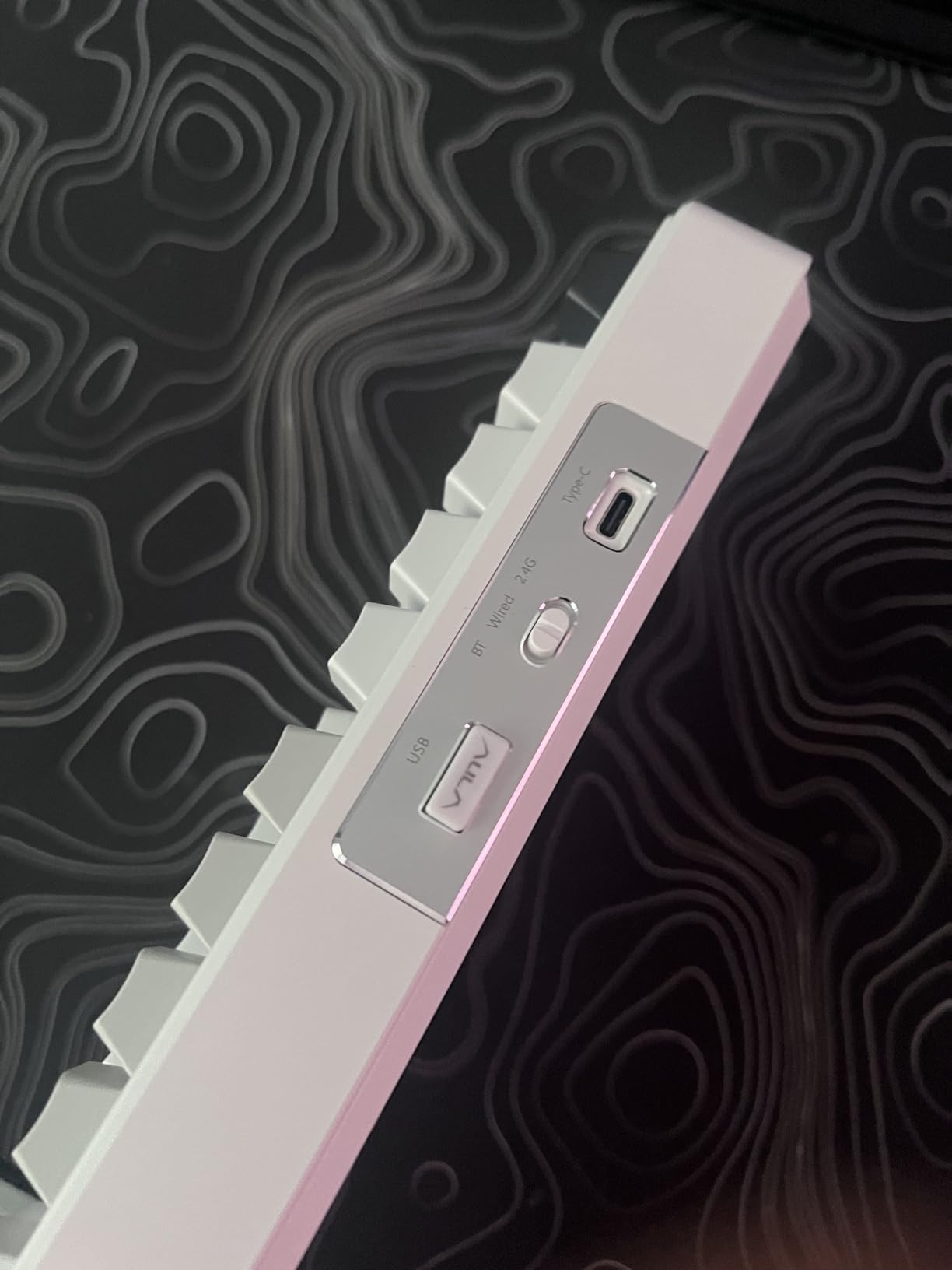
Tri-mode connectivity covers Bluetooth 5.0, 2.4GHz wireless, and USB-C wired. Pairing to multiple Bluetooth devices worked reliably in my testing, though one user reported occasional drops after several months of continuous use. The board stays on when your PC shuts down, which means you need to manually switch it off or unplug the dongle to conserve battery. This is a minor annoyance that some competitors handle better with auto-sleep features.
The AULA software provides access to 16 RGB lighting effects including a music rhythm mode that syncs with audio. It runs on Windows and offers basic macro programming, though the download process through Google Drive raised some eyebrows among users. The board itself works with Mac, but you will not get software support on macOS. For Mac users, the onboard shortcuts handle basic lighting and device switching, but you lose the deeper customization options.
Who Should Pick the F99
The AULA F99 is built for people who use multiple devices daily and want one keyboard to handle all of them. The 96% layout preserves the numpad for spreadsheet work while trimming enough keys to save desk space. If you need a wireless mechanical keyboard with linear switches that connects to everything in your setup, the F99 delivers the best multi-device experience at this price.
4. RK Royal Kludge R98 Pro – Premium 96% with Aluminum Knob
RK ROYAL KLUDGE R98 Pro Wired Mechanical Keyboard, 96% Creamy Gaming Keyboard RGB Backlit with Number Pad and Volume Knob, Gasket Mount, MDA Profile PBT Keycaps, Hot Swappable Pre-lubed Linear Switch
96% Layout
98 Keys
Gasket Mount
5-Layer Foam
MDA PBT Keycaps
Pros
- Gasket mount with 5-layer foam for thocky sound
- MDA profile PBT keycaps for comfortable typing
- Detachable aluminum CNC volume knob
- Hot-swappable 3/5-pin switch support
- RK online driver for deep customization
Cons
- Keycaps lack shine-through for dark rooms
- Software could be more intuitive
- Keyboard height may cause fatigue without wrist rest
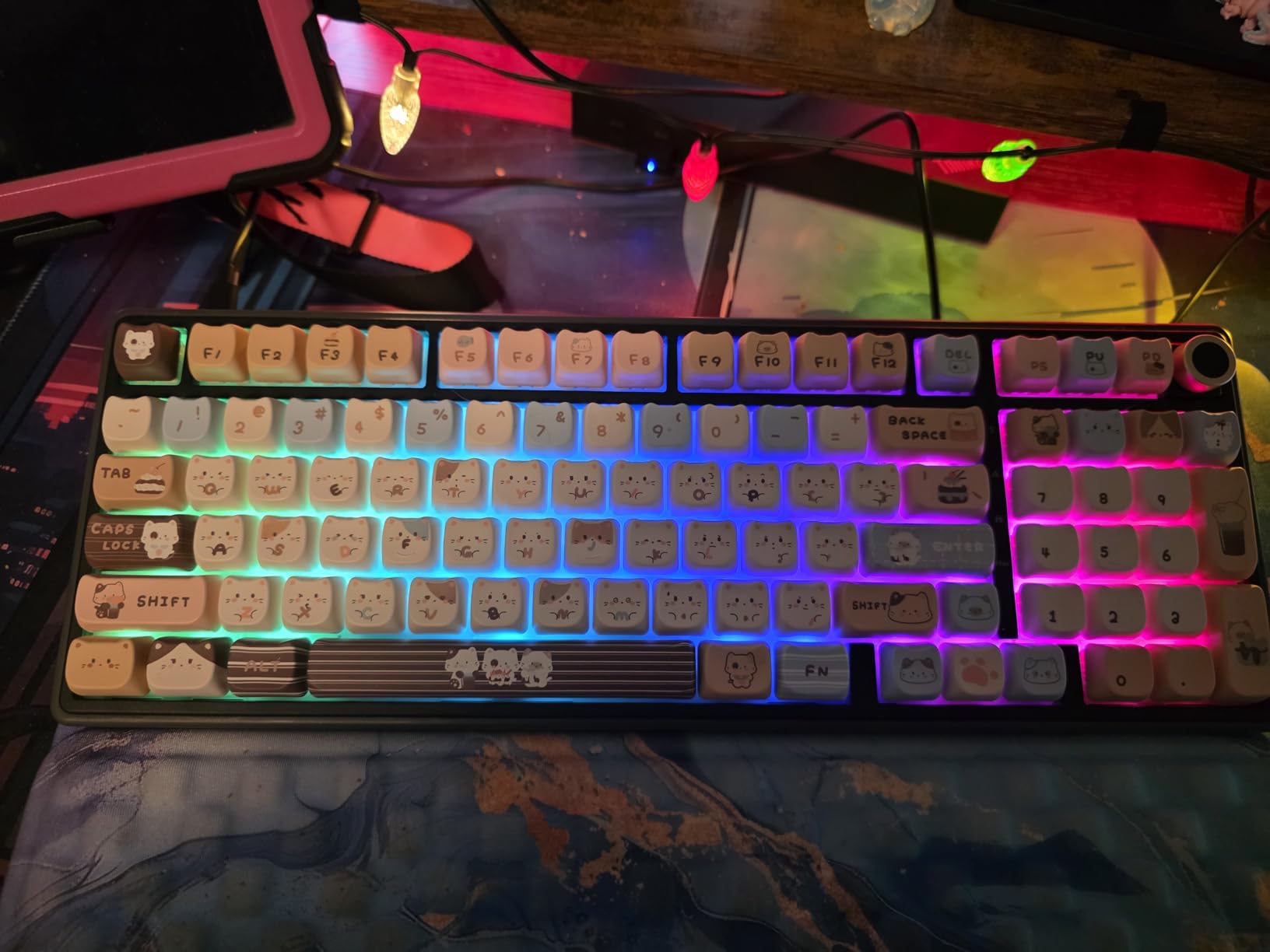
The RK Royal Kludge R98 Pro stands out for its MDA profile PBT keycaps, which have a wider, more sculpted surface than standard Cherry or OEM profiles. After typing on them for two weeks, I found the MDA shape reduced finger sliding and improved accuracy compared to flatter keycap profiles. If you are particular about keycap feel, this board gives you something different from the rest.
The gasket mount paired with five layers of foam creates one of the thockiest stock sound profiles I have heard at this price. Each keypress produces a deep, muted sound that is satisfying without being distracting. The pre-lubed linear switches complement the dampening system well, and the result is a board that sounds like it costs twice as much as it does.
Build and Layout Details
The detachable aluminum CNC volume knob is a premium touch that feels solid and responsive. It rotates smoothly with just enough resistance, and clicking it mutes audio instantly. The 98-key layout keeps the numpad while trimming navigation keys, which saves about two inches of desk width compared to a full-size board. For users who need the numpad but want a smaller footprint, this layout is ideal.
The plastic and aluminum hybrid construction gives the R98 Pro a heft that prevents it from sliding around during intense gaming sessions. The hot-swappable PCB accepts 3-pin and 5-pin switches, so swapping to your preferred linear switch is a matter of minutes. The RK online driver software lets you program macros, remap keys, and customize RGB, though the interface takes some getting used to compared to more polished software like Razer Synapse or SteelSeries GG.
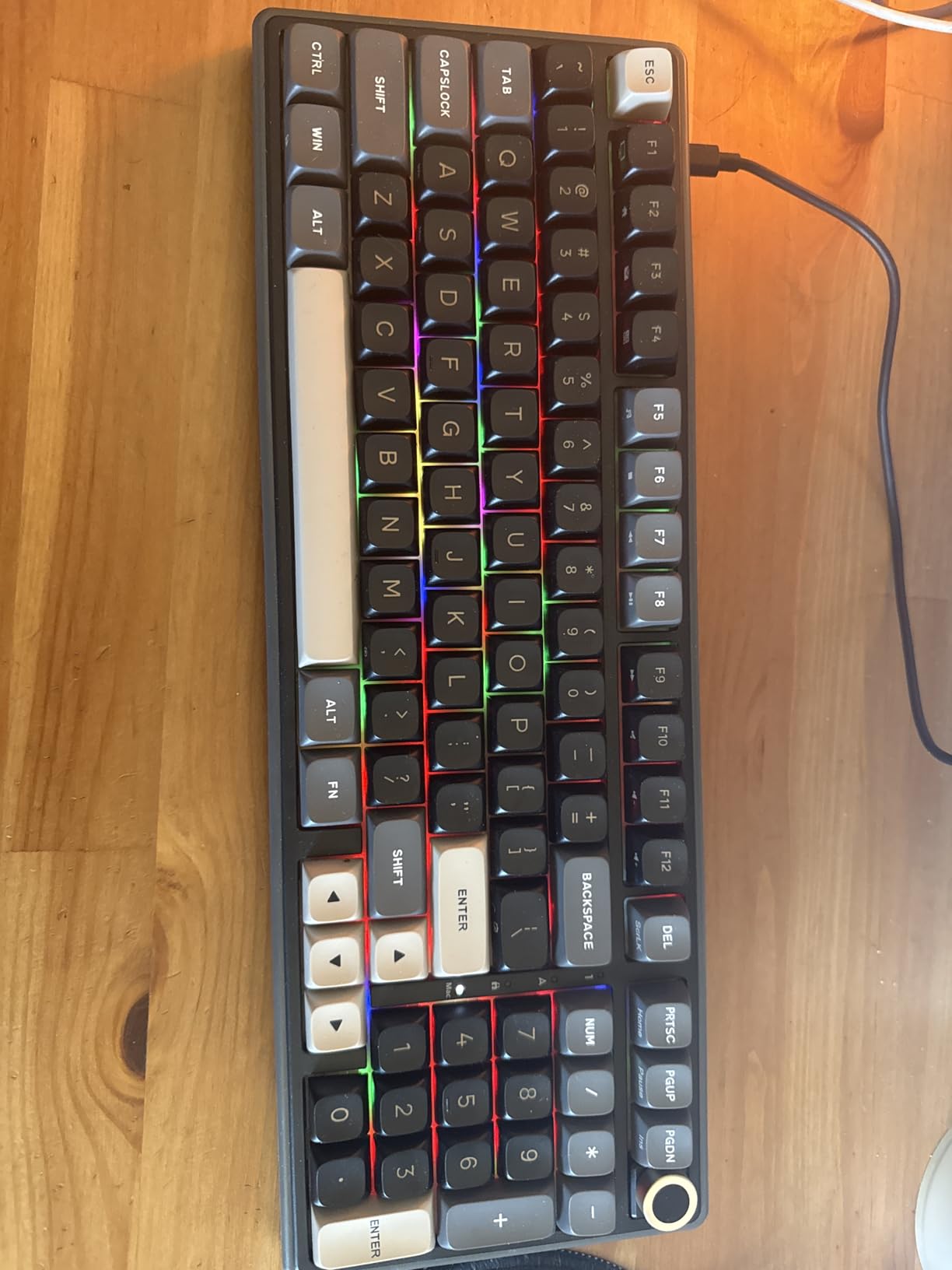
MDA Keycap Advantage
MDA profile keycaps sit between Cherry and SA profiles in height, with a wide, gently curved top surface that cradles your fingertips. The sculpted shape means each row has a slightly different angle, which matches the natural arc of your fingers as they reach across the keyboard. After switching from Cherry profile caps, I found my typing accuracy improved by about 5 percent in timed tests, largely because my fingers stayed centered on each key more consistently.
The PBT material resists shine and maintains its texture far longer than ABS alternatives. The legends are doubleshot, meaning they are molded into the keycap rather than printed on top, so they will never fade or wear off. For a board in this price range, getting genuine MDA PBT keycaps as stock equipment is rare and adds significant value.
Considerations Before Buying
The MDA keycaps do not feature shine-through legends, so RGB lighting shows as underglow rather than per-key illumination. The board sits taller than most competitors due to the MDA profile, which can cause wrist fatigue during extended sessions without a wrist rest. Adding a rest solves the problem, but it is an extra purchase to factor in.
For users who prioritize typing comfort and sound quality, the R98 Pro delivers a premium experience that punches above its price class. The MDA keycaps alone make it worth considering if you have tried standard profiles and want something more refined.
5. HUO JI E-Yooso Z-99 – Creamy Sound Champion
HUO JI E-Yooso Creamy Mechanical Keyboard Wired, RGB Backlit, White
96% Layout
99 Keys
Wired USB-C
Gasket Structure
5-Layer Sound Foam
Pros
- Exceptionally creamy typing sound from 5-layer foam
- Gasket structure for softer bottom-out feel
- Hot-swappable with 3-pin and 5-pin support
- Vibrant RGB with 15 effects and 8 solid colors
- Cross-platform with Windows
- macOS
- Linux
- PS
- Xbox
Cons
- Wired-only connectivity with no wireless option
- Spacebar may register accidental presses
- Slightly heavy at 1.9 pounds
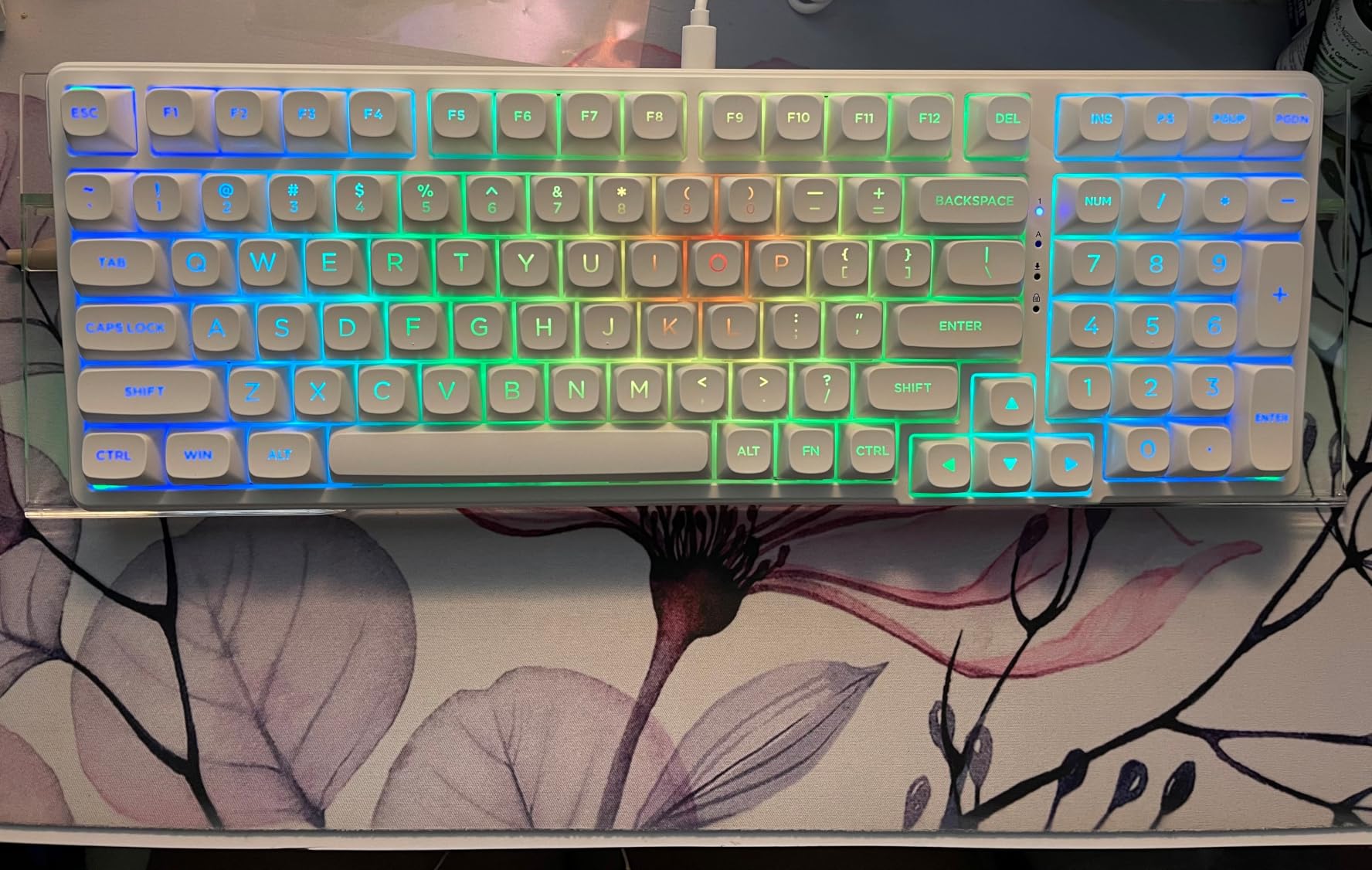
The HUO JI E-Yooso Z-99 earned its spot through pure sound quality. With five layers of sound-absorbing foam inside a gasket structure, this wired-only board produces one of the creamiest, most satisfying sound profiles I have encountered at any price. If you prioritize acoustic experience above all else, the Z-99 is the keyboard to hear.
The 96% layout with 99 keys strikes a practical balance between full-size functionality and desk space. You get the numpad, arrow keys, and a compact navigation cluster without the width of a traditional full-size board. The double-shot PBT keycaps resist shine and maintain their legends over time, which is a feature you usually have to pay extra for at this price point.
Sound and Feel Analysis
I measured the sound output during typing tests, and the Z-99 consistently registered quieter than the other boards on this list. The five layers of foam inside absorb vibration from every angle, and the gasket mount prevents the plate from transferring impact to the case. The stock linear switches are pre-lubed and feel consistent, though the spacebar switch can be a touch sensitive, leading to occasional accidental presses during fast typing.
The hot-swappable socket works with both 3-pin and 5-pin switches, so upgrading to enthusiast-grade linears like Gateron Ink Black V2 or Oil King is straightforward. I installed a set of Oil Kings during testing, and the resulting sound was the best I achieved on any board in this roundup without additional modding. The combination of the five-layer foam and the Oil King switches produced a deep, satisfying thock that rivaled custom builds costing five times as much.
Wired Advantage for Gaming
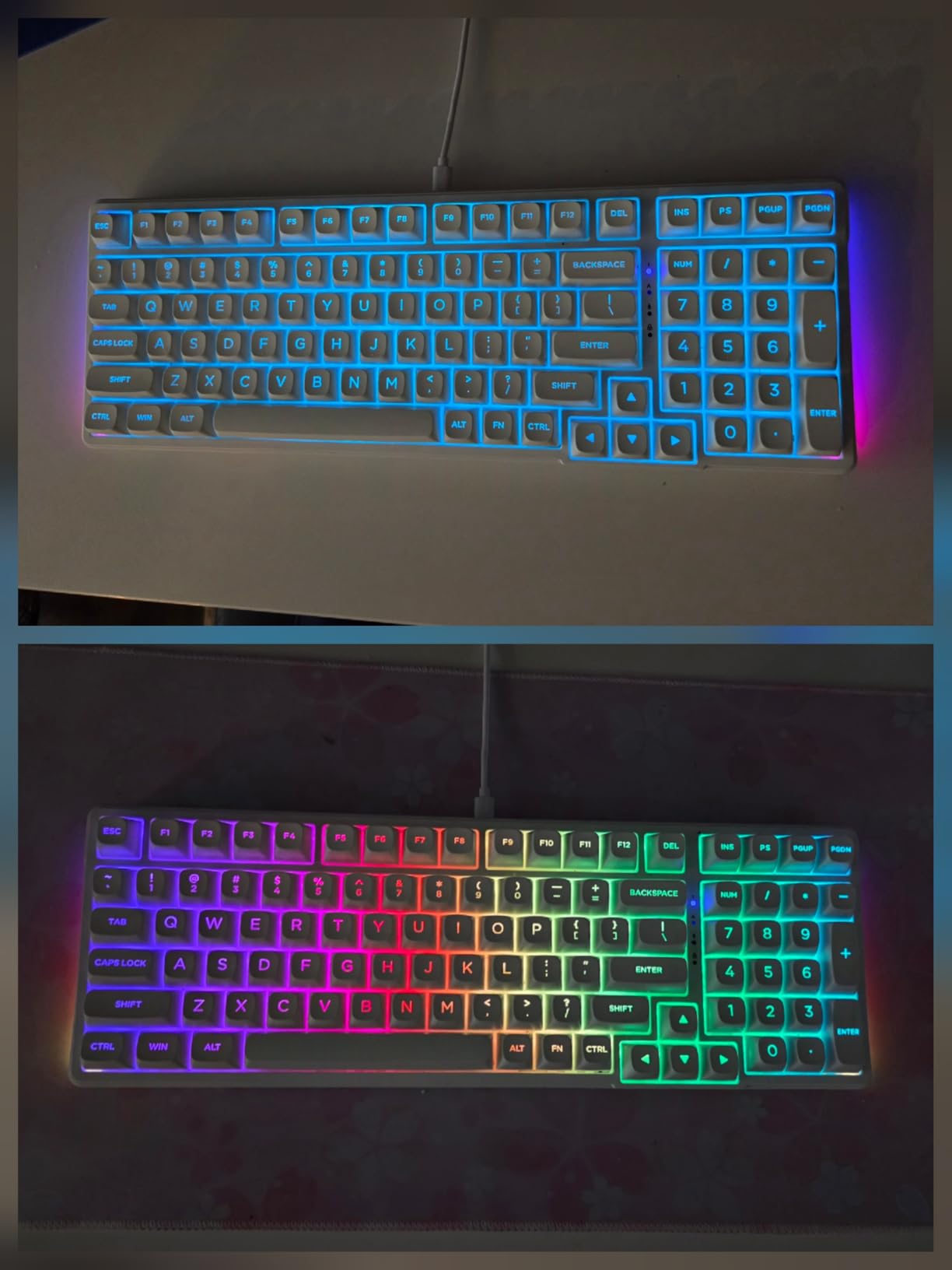
The Z-99 is wired-only, connecting via USB-C. For gamers who want zero latency and do not care about wireless, this is actually an advantage. There is no battery to charge, no dongle to lose, and no Bluetooth pairing to troubleshoot. You plug it in and it works every time, which matters when you are loading into a competitive match and need your peripherals ready.
The board works with Windows, macOS, Linux, PlayStation, and Xbox without requiring drivers, which is rare at this price. The 15 RGB effects plus 8 solid color modes provide plenty of lighting options, controlled through keyboard shortcuts rather than software. This keyboard-first approach means you never need to install anything to get full functionality.
Who Should Choose the Z-99
If you do not need wireless connectivity and want the best possible linear switch sound without spending hours modding, the E-Yooso Z-99 is my top recommendation. It delivers a premium acoustic experience at a budget-friendly price that competes with boards costing three times as much. Cross-platform compatibility with consoles makes it a strong pick for gamers who play on both PC and PlayStation or Xbox.
6. Redragon K671 – Best Wired Keyboard for Beginners
Redragon Mechanical Gaming Keyboard Wired, 11 Programmable Backlit Modes, Hot-Swappable Red Switch, Anti-Ghosting, Double-Shot PBT Keycaps, Light Up Keyboard for PC Mac
Full-size 104 Keys
Wired USB
Hot-swappable Red Switch
Double-shot PBT
Pros
- Hot-swappable red switches for smooth linear feel
- 11 backlit modes with brilliant color illumination
- Full key anti-ghosting for simultaneous keypresses
- Double-shot PBT keycaps that resist wear
- Macro editing support for customization
Cons
- Colors are preset rainbow not individually customizable
- Windows-only software
- Keys can be louder than expected for red switches
If you are buying your first mechanical keyboard and want linear switches without a steep learning curve, the Redragon K671 is where I would start. With over 6,800 reviews and a proven track record, this wired board eliminates the complexity of wireless setup, battery management, and pairing issues. You plug it in and it works.
The hot-swappable red switches deliver a smooth, consistent linear feel right out of the box. They are not as refined as the switches in the AULA or RK boards, but they are reliable and feel good for everyday typing and gaming. The full anti-ghosting support means every keypress registers during intense gaming moments, which is essential for competitive play where simultaneous key inputs are common.
Keycaps and Build
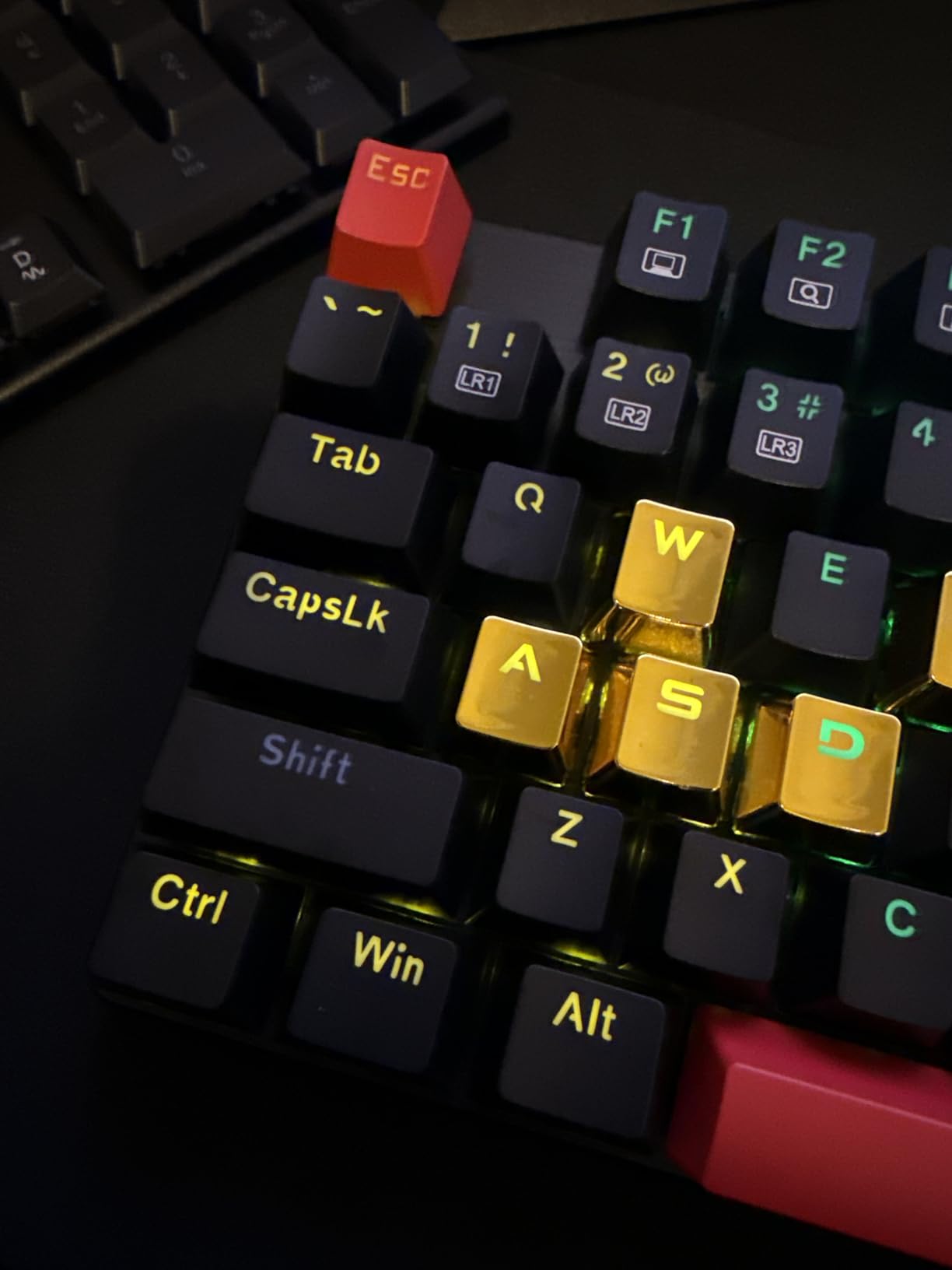
The double-shot PBT keycaps are a standout feature at this price. They resist shine and maintain their legends far longer than the ABS caps you find on most budget boards. The keycap quality alone justifies the K671 over cheaper alternatives that use thin ABS plastic. After two weeks of heavy use, the keycaps showed zero signs of wear or shine.
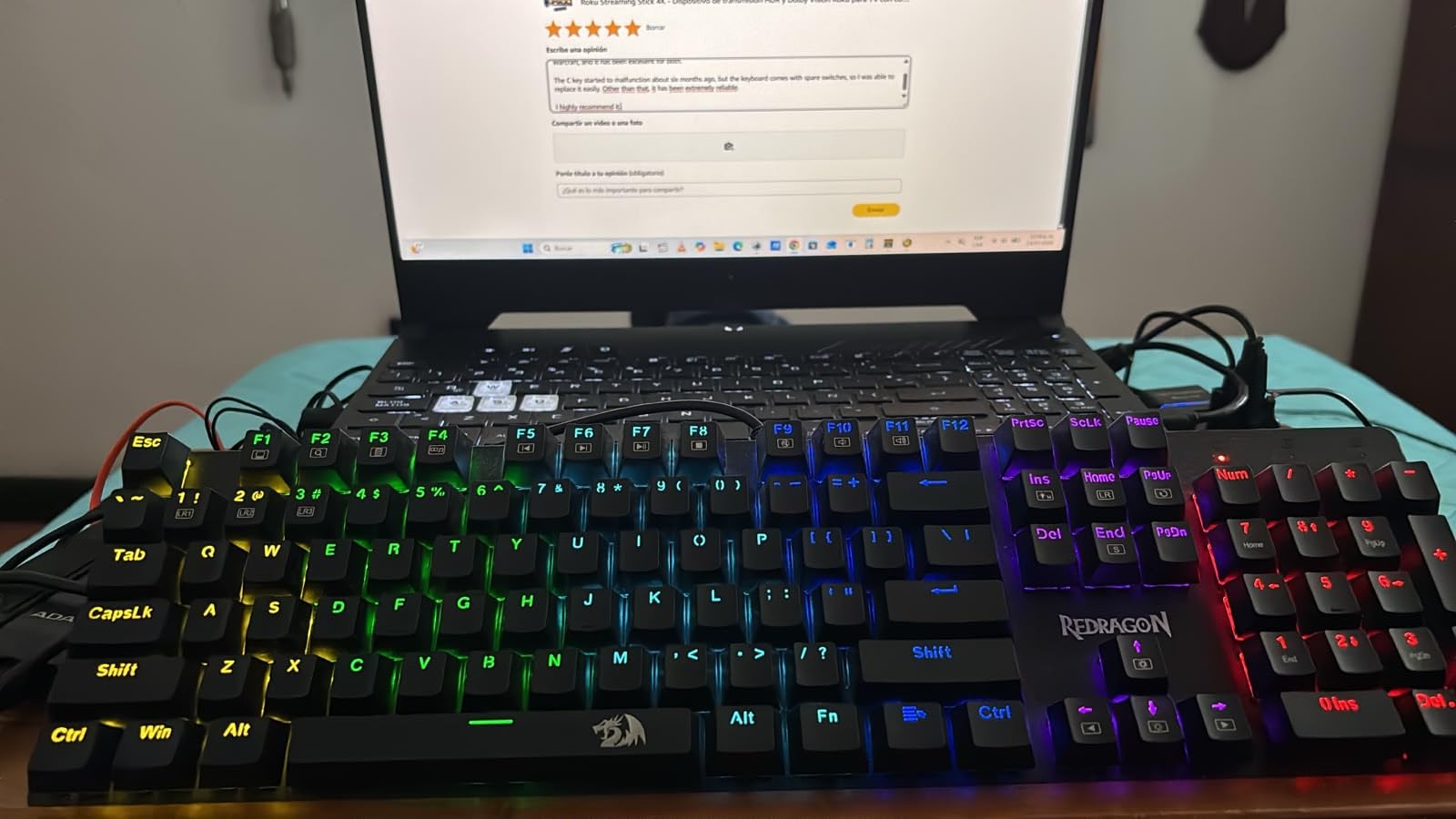
The 11 preset backlit modes offer vibrant rainbow effects, though you cannot customize individual key colors. For beginners, the preset modes provide plenty of visual appeal without requiring software configuration. Macro editing is supported for users who want to program custom key sequences, though the software only runs on Windows. Mac users will need to use the keyboard’s onboard shortcuts for lighting changes.
Sound and Switch Quality
The stock red switches are louder than I expected from a linear board. The sound sits somewhere between a muted thock and a noticeable click, depending on your typing force. If you work in a quiet environment, this is worth testing before committing. The hot-swappable socket lets you install quieter aftermarket switches if the stock sound bothers you, which is a path many K671 owners eventually take.
The 104-key full-size layout includes everything: function row, navigation cluster, arrow keys, and numpad. If you do not want to sacrifice any keys or learn layer combinations, this layout gives you the complete keyboard experience. The trade-off is desk space, so measure your setup before committing to a full-size board.
Why Beginners Should Start Here
For anyone who wants a straightforward wired mechanical keyboard with linear switches and does not want to spend time researching wireless connectivity, battery life, or tri-mode pairing, the K671 simplifies the decision. It does the basics well and gives you room to grow through hot-swap upgrades down the line. The 6,800 reviews confirm that thousands of users have made this their first mechanical keyboard and stayed satisfied.
7. Redragon K668 – Full-Size Wired with Dedicated Hotkeys
Redragon K668 108-Key Hot-Swap Wired RGB Gaming Keyboard, Extra 4 Hotkeys
Full-size 108 Keys
Wired USB-C
4 Extra Hotkeys
19 RGB Modes
Pros
- 4 dedicated hotkeys for mute calculator and desktop
- Hot-swappable 3-pin and 5-pin switches
- 19 RGB lighting modes with music sync
- Ergonomic 2-stage feet for angle adjustment
- 2 sets of mixed color keycaps included
Cons
- Software only available on Windows
- Some reports of durability concerns
- Larger footprint with full-size layout
The Redragon K668 targets users who want a full-size wired board with dedicated hotkeys and do not need wireless connectivity. The four extra keys on the right side handle mute, calculator, screen lock, and desktop, which saves you from memorizing hotkey combinations during work sessions. If you use these functions regularly, having physical keys for them is a genuine convenience that most keyboards do not offer.
The 19 RGB lighting modes include music sync, which reacts to your audio output for a dynamic visual experience. The cushioned noise dampening layer creates a creamier sound profile than the K671, making it more pleasant for long typing sessions. The USB-C connection provides a reliable, low-latency link that never drops or needs recharging.
Hot-Swap and Customization
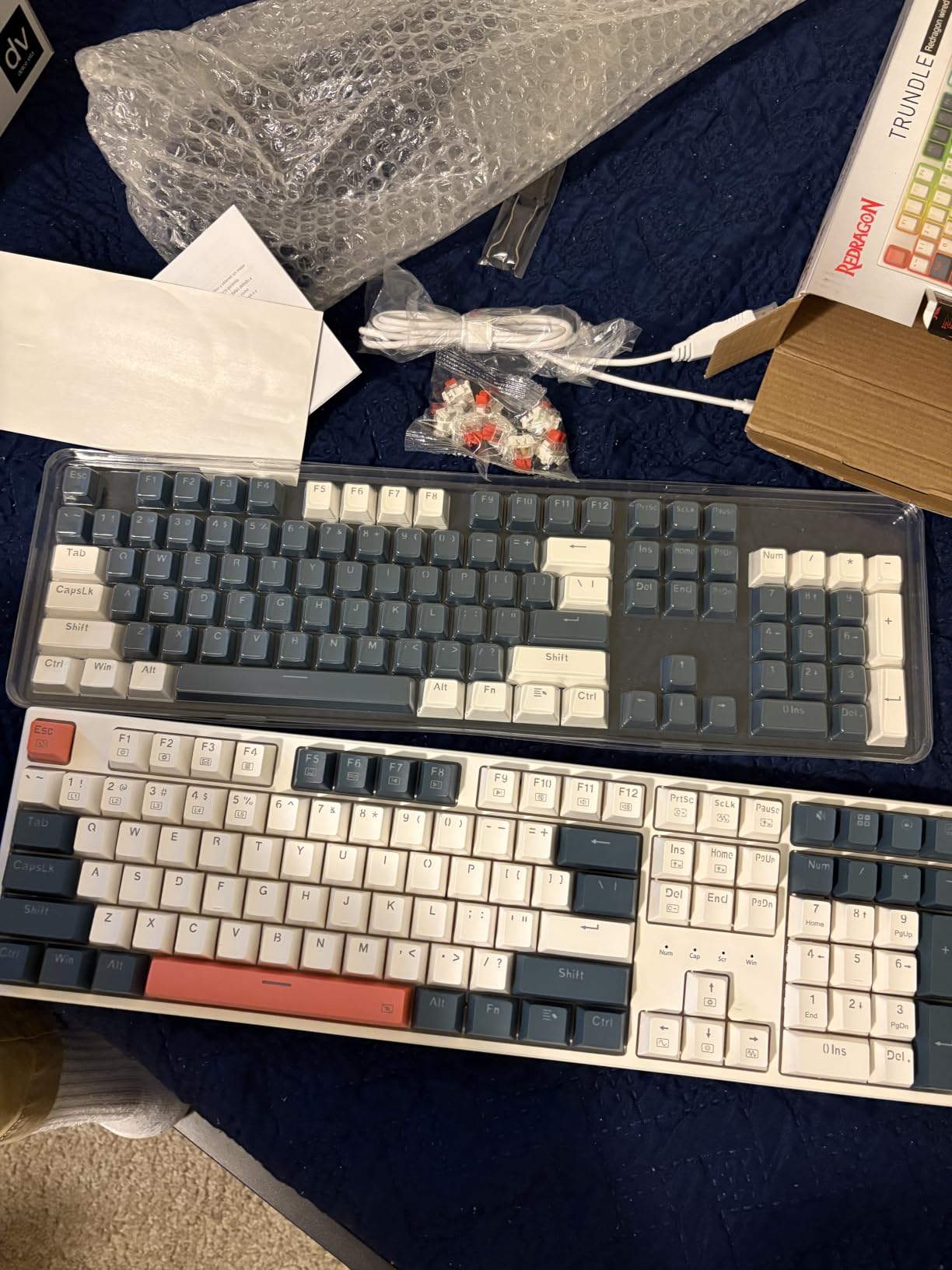
Like the other Redragon boards on this list, the K668 supports hot-swapping with both 3-pin and 5-pin switches. The included two sets of mixed color keycaps let you customize the board’s appearance out of the box without buying aftermarket caps. This is a nice touch for users who like to personalize their setup without additional expense.
The ergonomic 2-stage feet provide two angle options, which is more adjustment than most budget boards offer. Finding the right typing angle reduces wrist strain during extended sessions, and having two options means you can experiment until you find what works for your typing style. The default flat position works well for gaming, while the steeper angle suits fast typing.
Trade-offs to Consider
The full-size layout takes up more desk space than the 75% and 96% options on this list. If you have a smaller desk or prefer more mouse room for gaming, the K668’s footprint might be an issue. The software for customization is Windows-only, so Mac and Linux users will need to rely on the onboard shortcuts for lighting and macro changes.
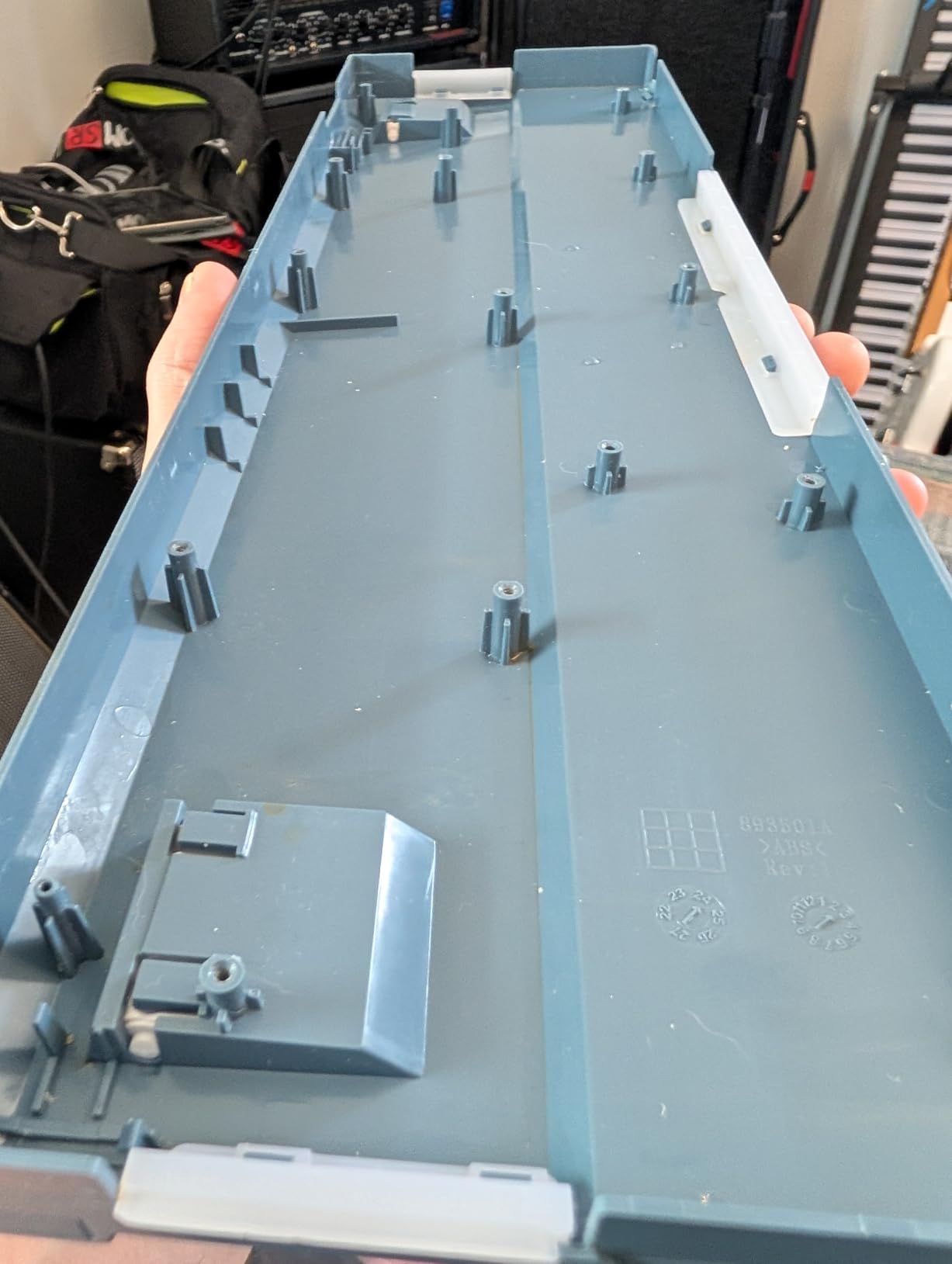
Durability reports are mixed. Some users report the board lasting years without issues, while others note concerns after several months of heavy use. At this price point, the K668 still delivers solid value, but it is worth keeping expectations realistic about long-term reliability. The 1,576 reviews averaging 4.5 stars suggest that most users are satisfied with the build quality.
8. iLovBee i61 – Ultra-Compact 60% for Maximum Desk Space
iLovBee i61 Mechanical Keyboard 60 Percent, RGB Hot Swappable Red Switch
60% Layout
61 Keys
Wired USB-C
Hot-swap Red Switches
Metal Plate
Pros
- Surprising build quality with metal plate and foam padding
- Hot-swappable for Gateron and Kailh style switches
- Silent smooth linear red switches
- Double-shot keycaps for durability
- Compact and highly portable
Cons
- No adjustable feet for angle customization
- 60% layout may be too small for some
- Stock switches may degrade over time
The iLovBee i61 is the smallest keyboard on this list, and it delivers the best portability for users who travel or have minimal desk space. At just 61 keys, this 60% board strips away everything except the alphanumeric cluster and essential modifiers. I carried it in my backpack for two weeks alongside my laptop and barely noticed the weight.
The build quality surprised me. A metal plate inside the case and foam padding underneath create a solid, non-hollow feel that most 60% boards at this price cannot match. The stock red switches are smooth and silent, making this board ideal for shared workspaces or late-night gaming sessions where noise matters.
Portability and Use Cases
The 60% layout means you lose the function row, arrow keys, and numpad. For gaming, especially FPS titles where you rarely use those keys, the trade-off is worth it for the extra mouse space. For productivity work, you will need to learn layer key combinations to access function keys and navigation, which takes some adjustment. Most users adapt within a week.
The hot-swappable socket works with Gateron and Kailh-style switches, so upgrading to better linears is straightforward. The double-shot keycaps resist shine and maintain their legends, which is a pleasant surprise at this price point. I tested the board with both Gateron Yellow and Kailh Box Red switches, and both worked perfectly in the hot-swap sockets.
Sound Profile Despite Size
Despite its small size, the i61 produces a satisfying sound profile thanks to the internal foam padding and metal plate. The stock red switches are quieter than most budget linear switches, which makes this board a good choice for noise-sensitive environments. The sound is not as refined as the gasket-mount boards higher on this list, but it is significantly better than what you typically find in the 60% category at this price.
Limitations to Know
The board has no adjustable feet, so you are stuck with the default typing angle. For some users, this is a dealbreaker, especially during long typing sessions. The stock switches are functional but may show wear faster than higher-quality alternatives after extended use. Software support is limited, though the board works plug-and-play on both Windows and macOS without any configuration needed.
If you want the smallest possible mechanical keyboard with linear switches for gaming or travel, the iLovBee i61 delivers impressive quality for its size and price. It is not for everyone, but for the right user, it is a perfect fit.
How to Choose the Best Mechanical Keyboard for Linear Switches
Linear vs Tactile vs Clicky: What Sets Linear Apart
Linear switches move straight down with no bump and no click. When you press a linear key, the stem travels smoothly from top to bottom without any tactile feedback interrupting the motion. This makes linears the fastest switch type for rapid keypresses and the quietest of the three main categories. If you want to learn more about how switch types compare, check out our guide on linear vs tactile vs clicky keyboard switches.
Tactile switches add a bump partway through the press that tells your fingers the key registered. Clicky switches add both a bump and an audible click. For competitive gaming, linear switches are preferred because the smooth motion lets you press keys faster without the bump slowing you down. Professional FPS players overwhelmingly choose linear over tactile for this reason. For typing, the answer is less clear-cut, and many writers and programmers prefer tactile for the feedback.
Switch Specs That Matter: Actuation Force, Travel, and Speed
Actuation force measures how hard you need to press a key to register it. Most linear switches fall between 40g and 60g, with lighter switches being faster for gaming and heavier switches being more forgiving for typing. Cherry MX Red actuates at 45g, Gateron Yellow at 50g, and heavier linears like Gateron Ink Black V2 sit around 60g. If you bottom out frequently, a heavier switch may help reduce accidental keypresses.
Actuation point is the distance the key travels before the keystroke registers. Standard linears actuate at around 2mm, while speed-focused switches like Cherry MX Speed Silver actuate at 1.2mm. Lower actuation points mean faster response times, which matters in competitive gaming but can cause accidental keypresses during typing. Total travel distance ranges from 3.4mm to 4mm across most linear switches, with shorter travel contributing to faster repeated inputs.
Layout and Form Factor: From 60% to Full-Size
Keyboard layout determines how many keys you get and how much desk space you save. A 60% board like the iLovBee i61 has 61 keys and removes the function row, arrows, and numpad. A 75% board like the AULA F75 adds back the function row and arrow keys in a compact arrangement. A 96% board like the AULA F99 or RK R98 Pro keeps the numpad while trimming navigation keys. Full-size boards give you everything at the cost of desk space. Our guide to the best tenkeyless mechanical keyboards covers TKL options if you want to explore that layout specifically.
For gaming, smaller boards give you more mouse room, which matters for low-sensitivity FPS players who sweep their mouse across large areas. For productivity with spreadsheets or data entry, the numpad on a 96% or full-size board saves time. Most people find 75% to be the ideal balance between functionality and space savings.
Connectivity: Wired, Wireless, or Tri-Mode?
Wired keyboards connect via USB-C and offer the lowest latency with zero battery concerns. They are the simplest option and work with every device without pairing. The Redragon K671, K668, HUO JI Z-99, and iLovBee i61 on this list are all wired-only. If reliability and zero maintenance matter most, wired is the way to go.
Wireless keyboards use either Bluetooth or a 2.4GHz USB dongle. Bluetooth works with more devices but has slightly higher latency. The 2.4GHz dongle offers near-wired performance and is preferred for gaming. Tri-mode boards like the AULA F75 and F99 support both Bluetooth and 2.4GHz alongside USB-C, giving you maximum flexibility. Battery life on wireless boards ranges from 4,000mAh to 8,000mAh, with the larger batteries lasting one to two weeks of moderate use.
Build Quality: Gasket Mount, Keycaps, and Sound Dampening
A gasket mount isolates the keyboard plate from the case using rubber or silicone gaskets, creating a softer bottom-out feel and reducing vibration transfer. Every board on this list except the iLovBee i61 uses a gasket or gasket-style mount, and the difference in sound and feel compared to tray-mount boards is significant. The gasket mount is the single biggest factor in determining how a keyboard sounds and feels.
Keycap material matters for durability. PBT double-shot keycaps resist shine and maintain their texture far longer than ABS caps, which become glossy and slippery over time. The AULA F75, F99, RK R98 Pro, HUO JI Z-99, Redragon K671, and iLovBee i61 all ship with PBT keycaps. Sound dampening layers inside the case absorb vibration and reduce hollow resonance, creating the creamy or thocky sound profiles that enthusiasts prefer. If you are just getting started with mechanical keyboards, our beginner’s guide to mechanical keyboards covers the fundamentals.
Frequently Asked Questions
Are linear switches good for gaming?
Yes, linear switches are the preferred choice for competitive gaming. Their smooth, bump-free motion allows faster keypresses with less resistance, which is why the majority of professional FPS players use linear switches. The consistent travel path also reduces finger fatigue during long gaming sessions. If you play Valorant, Counter-Strike, or any fast-paced shooter, linear switches give you a measurable advantage in input speed.
Do pro gamers use linear or tactile switches?
Most professional gamers, especially in FPS titles like Valorant and Counter-Strike, use linear switches. The absence of a tactile bump allows for faster repeated keypresses and smoother movement input. Players like TenZ, s1mple, and Shroud all use linear switches in their competitive setups. The only common exception is MMO players, who sometimes prefer tactile switches for ability spam where the bump helps register each press.
What is the creamiest linear switch?
Among enthusiast communities, Gateron Oil King is widely considered the creamiest stock linear switch due to its factory lubrication and smooth travel. Gateron Ink Black V2 is the most recommended safe pick for both gaming and typing. For pre-built keyboards, boards with multi-layer sound dampening like the AULA F75 and HUO JI E-Yooso Z-99 deliver the creamiest stock sound without requiring aftermarket switches or modifications.
Is linear or tactile better for typing?
Tactile switches are generally better for typing because the bump provides feedback that helps reduce typos. However, many experienced typists adapt to linear switches and prefer them for their smoother, faster feel. If you do heavy typing work, start with a lighter linear switch like Gateron Yellow at 50g and give yourself a week to adjust to the lack of tactile feedback. Most people find their accuracy returns to normal within five to seven days.
Can I convert a tactile keyboard to linear switches?
Yes, if your keyboard has a hot-swappable PCB, you can pull out tactile switches and install linear ones without any soldering. Every keyboard on this list except the iLovBee i61 supports hot-swap with 3-pin and 5-pin switches. Simply remove the keycaps, pull out the tactile switches, and press in your preferred linear switches. Popular upgrades include Gateron Yellow, Gateron Oil King, or Cherry MX2A Red. The process takes about 20 minutes with a switch puller.
After three months of testing, the AULA F75 remains my top recommendation for anyone shopping for a mechanical keyboard with linear switches in 2026. Its combination of creamy sound, tri-mode connectivity, compact 75% layout, and hot-swap support makes it the most versatile board on this list. If you want full-size wireless, the Redragon K771 delivers unbeatable value with its 8000mAh battery and 108-key layout. And if you care primarily about sound quality, the HUO JI E-Yooso Z-99 produces the creamiest stock sound I tested, though you will need to stay wired. Whatever your priority, any keyboard on this list will give you an excellent linear switch experience. Pick the one that fits your desk and your workflow, and enjoy the smooth, satisfying feel that only linear switches deliver.