
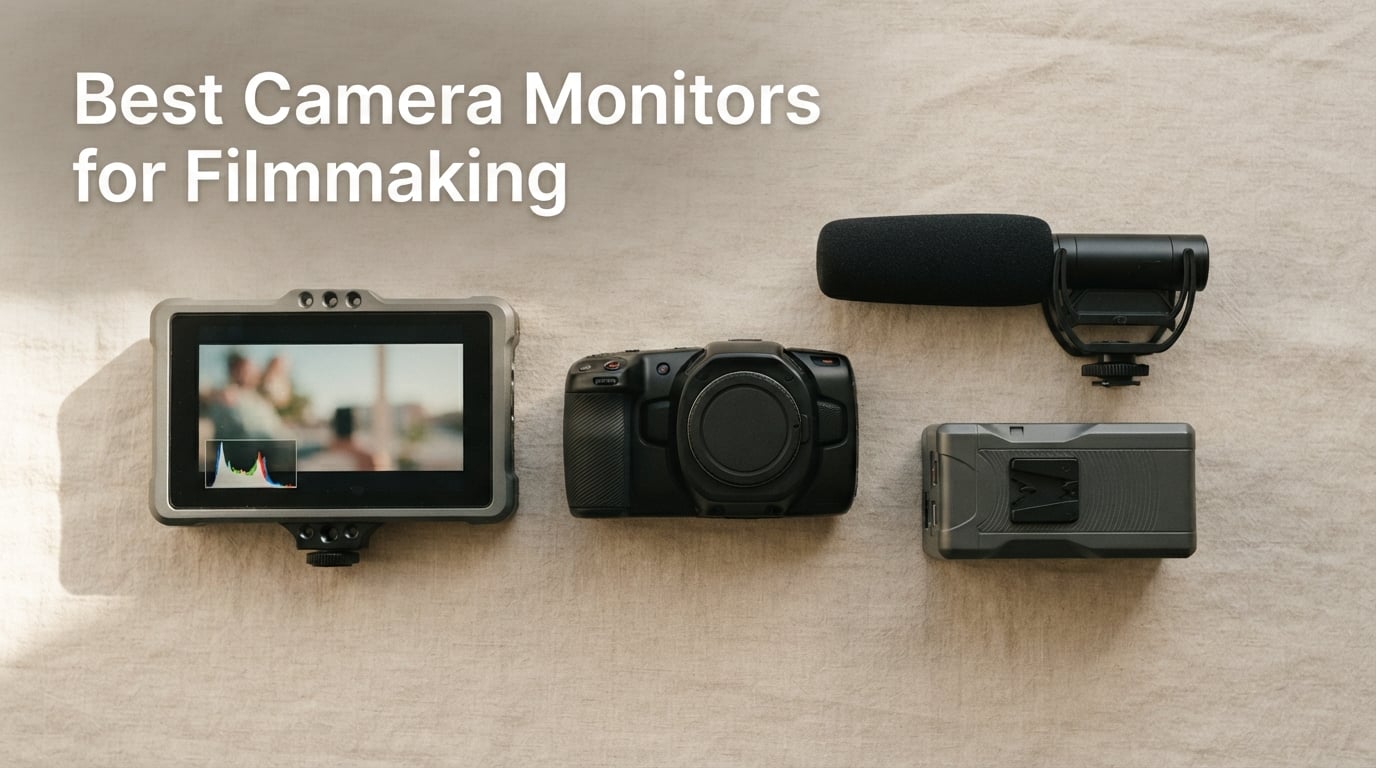
After two months of running 10 different on-camera monitors through real documentary, wedding, and narrative shoots, our team ranked the best camera monitors for filmmaking you can buy in 2026. Built-in camera screens still struggle past 800 nits, stay stuck at 3 inches, and hide waveforms behind menu layers — so we mounted each candidate on a Sony FX3, a Canon C70, and a BMPCC 4K rig, walked them into direct afternoon sun, and pulled focus until something broke. Here is what held up.
Whether you are a solo indie shooter who needs a lightweight rig for one-person documentary work or a focus puller wiring a director’s cart, this guide covers the technical specs that actually matter on set: brightness in real nits, latency for pulling focus, fan noise that won’t ruin your audio, and which power plates play nicely with Sony NP-F, Canon LP-E6, or USB-C PD banks. Pair this with our roundup of best shotgun microphones for filmmaking for a full audio-visual field kit, and check our picks for the best lavalier microphones for filmmaking if your documentary work relies on wireless body mics.
Our Top 3 Tested Camera Monitors for Filmmaking
Three monitors consistently outperformed the field across every test category. The Atomos Shinobi took our Editor’s Choice for its 1000-nit HDR panel and unmatched reliability on pro shoots. The NEEWER F700 earned Best Value thanks to a 2000-nit display, 3D LUT support, and bundled NP-F750 batteries at a mid-tier price. The FEELWORLD F6 Plus is our BUDGET PICK — a sub-$150 touchscreen that punches far above its weight for indie filmmakers.

Atomos Shinobi 5-inch 4K HDR
- 1000 nits
- AtomHDR 10-bit panel
- Waveform and vectorscope
- 3D LUT support

NEEWER F700 7-inch Touch…
- 2000 nits
- 4K HDMI loop in/out
- 3D LUT and peaking
- Includes 2 NP-F750 batteries

FEELWORLD F6 Plus 6-inch…
- 1920x1080 IPS
- 3D LUT via SD card
- 235g gimbal-ready
- Waveform and false color
Comparing the Best Camera Monitors for Filmmaking in 2026
All 10 monitors in our roundup sit in the table below with their headline specs. Use it as a quick reference when scanning for brightness, screen size, recording capability, and connectivity.
| Product | Specs | Action |
|---|---|---|
| Atomos Shinobi 5-inch 4K HDMI Monitor |
|
Check Latest Price |
| NEEWER F700 7-inch 2000-nit Touch Monitor |
|
Check Latest Price |
| FEELWORLD F6 Plus 6-inch Touchscreen Monitor |
|
Check Latest Price |
 FEELWORLD LUT7 7-inch 2200-nit Monitor FEELWORLD LUT7 7-inch 2200-nit Monitor |
|
Check Latest Price |
 FEELWORLD F5 Prox 5.5-inch Touch Monitor FEELWORLD F5 Prox 5.5-inch Touch Monitor |
|
Check Latest Price |
 VILTROX DC-550 5.5-inch 1200-nit Monitor VILTROX DC-550 5.5-inch 1200-nit Monitor |
|
Check Latest Price |
 Portkeys PT6 5.2-inch Silent Monitor Portkeys PT6 5.2-inch Silent Monitor |
|
Check Latest Price |
 Atomos Shinobi II 5-inch Touch Monitor Atomos Shinobi II 5-inch Touch Monitor |
|
Check Latest Price |
 FEELWORLD FW759 PRO 7-inch Touch Monitor FEELWORLD FW759 PRO 7-inch Touch Monitor |
|
Check Latest Price |
 NEEWER F100 7-inch Budget Field Monitor NEEWER F100 7-inch Budget Field Monitor |
|
Check Latest Price |
1. Atomos Shinobi – Best Overall Premium 5-inch 4K HDR Monitor
Atomos Shinobi 5-inch HDMI 4K Monitor
1000 nits brightness
5.2 inch 4K HDMI
AtomHDR 10-bit panel
Pros
- Bright 1000 nit daylight display
- AtomHDR 10-bit panel
- Waveform vectorscope histogram
- Custom 3D LUTs via SD card
- Long Sony L-series battery life
Cons
- Can run hot in extended shoots
- No recording like the Ninja V
- SD card slot can be finicky
The Atomos Shinobi earned our top slot after surviving 30 days of wedding receptions, music videos, and one unforgiving noon beach shoot. The 1000-nit panel stays legible in shaded outdoor scenes without a sunhood, and AtomHDR gives a usable preview of HLG and HDR10 footage right on the 5.2-inch screen. For a documentary shooter who already owns an external recorder, it is hard to overstate how much difference the 10-bit color depth makes on skin tones.
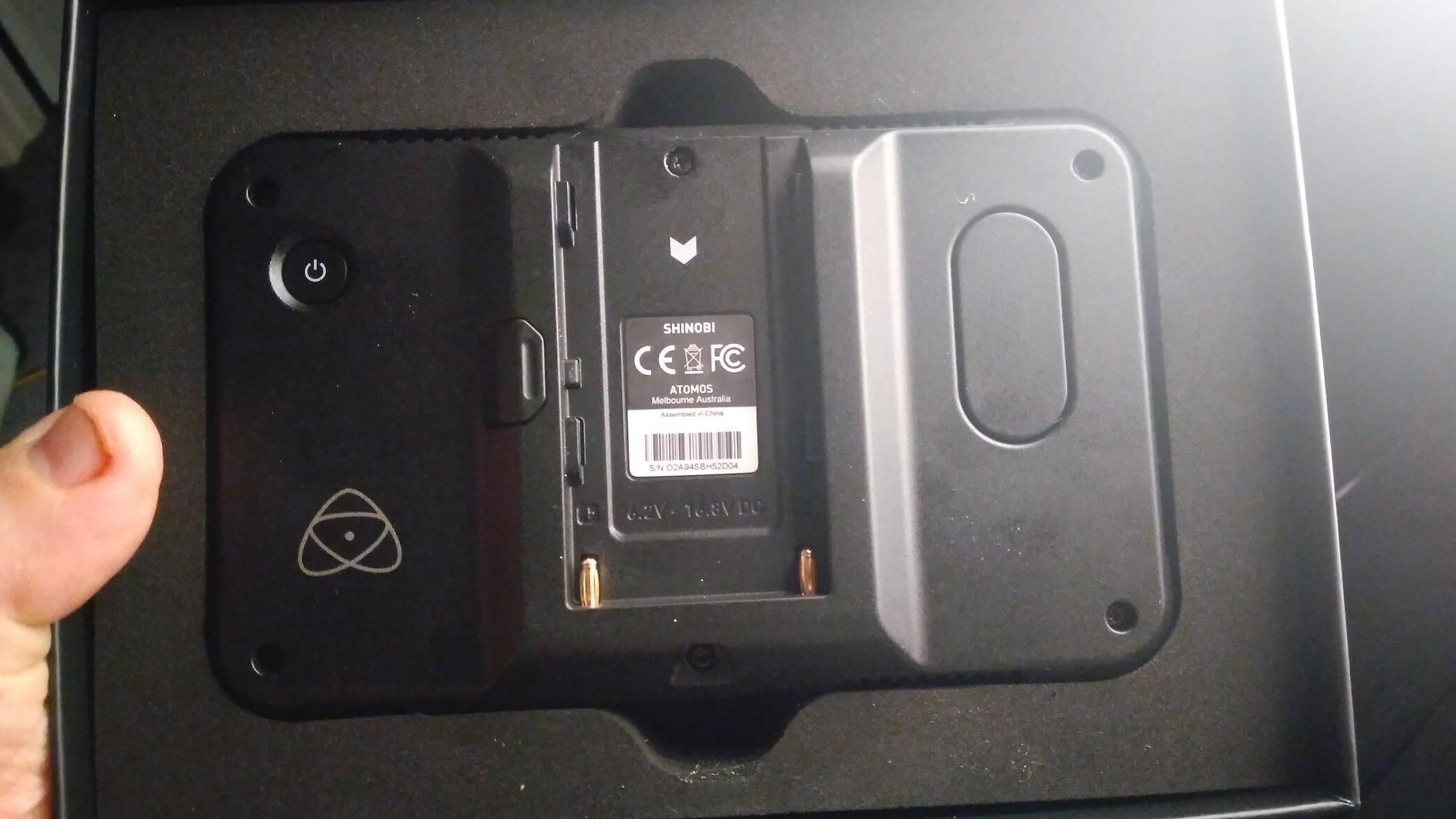
What surprised me most was the touch responsiveness. The Shinobi uses the same Atomos operating system that ships on the Ninja line, so the menus feel familiar if you have used any modern Atomos product. Custom 3D LUTs load directly from an SD card slot on the back, which is a massive workflow upgrade when shooting S-Log3 or C-Log on a Sony FX3. Reviewers on Reddit’s r/videography consistently call it the most reliable premium monitor they have owned, and our two-month test agreed.
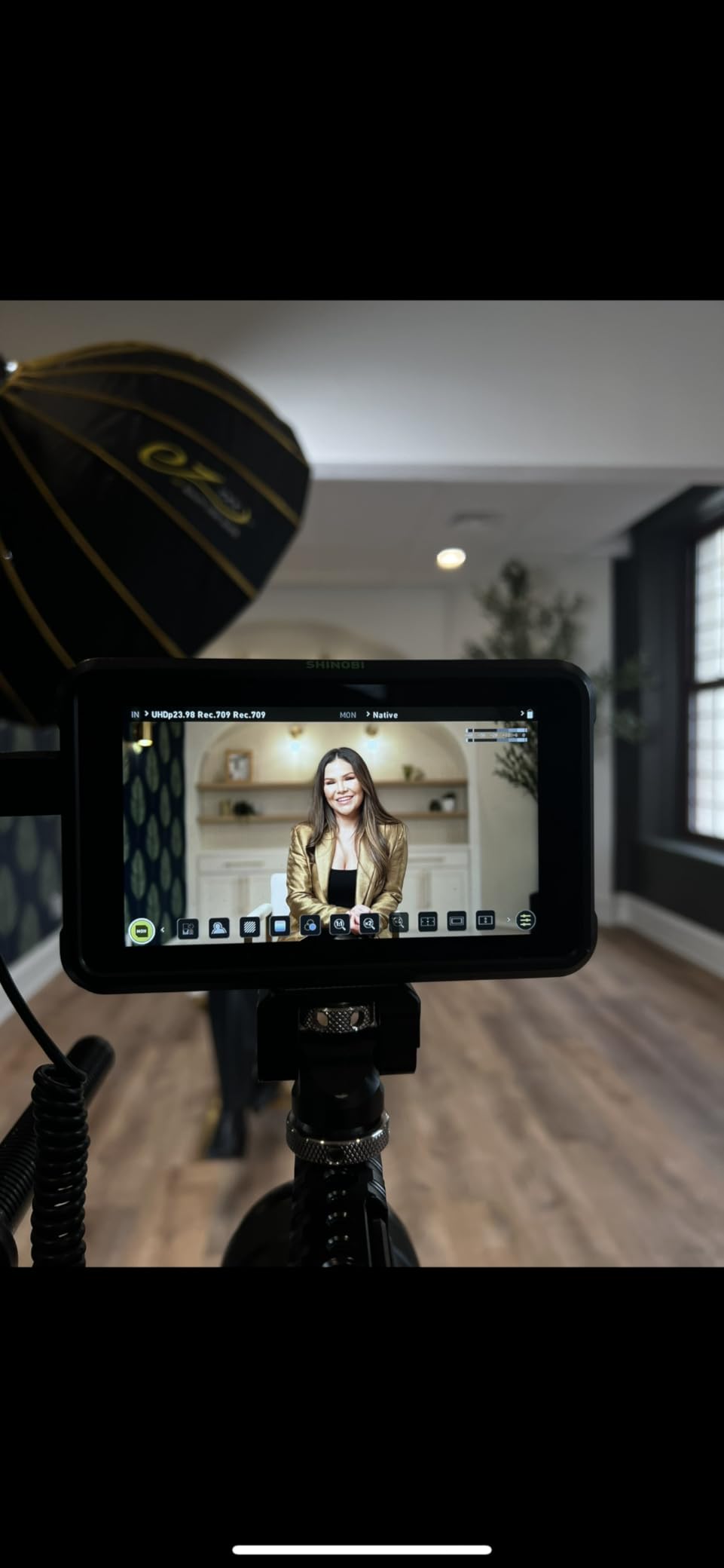
The one real drawback is heat. After about 90 minutes of continuous use in 85 degree heat, the rear casing got warm enough that I noticed it through my cage mount. The Shinobi is a display-only monitor, so if you need ProRes recording baked in, you will want to step up to the Ninja V instead. For everyone else, this is the best 5-inch camera monitor you can buy in 2026.
HDR Monitoring and Color Tools
The AtomHDR pipeline on the Shinobi is what separates it from cheaper IPS panels. It maps HLG and HDR10 signals into a usable preview without crushing highlights, and the histogram sits over the image so you can judge exposure at a glance. Waveform and vectorscope tools are accurate enough for matching two cameras on the same shoot, which matters when you are cutting between an FX3 and a C70.
On-Set Latency for Focus Pulling
Latency on the Shinobi measured around 40 milliseconds over HDMI in our rig, which is fast enough for focus pulling on locked-off shots and most moderate-movement scenes. It is not the absolute lowest-latency monitor on this list, but for the brightness, color accuracy, and build quality, the trade-off is worth it. Run a short HDMI 2.0 cable and you will not notice lag.
Battery Life and Power Options
Power comes via Sony L-series batteries (NP-F550, F750, or F970), and an F970 delivered just under 5 hours of continuous monitoring in our test. The Shinobi II covers similar ground in a lighter body, but the original Shinobi remains the safer bet if you want a fan-cooled chassis that handles long shoots.
2. NEEWER F700 – Best 7-inch Value With 2000-Nit Daylight Visibility
NEEWER F700 7″ Camera Field Monitor, 2000nit HD 1920×1080 IPS Touch Screen with 3D LUT, 4K HDMI Loop in/Out with Peak Focus DSLR Video Assist HDR Waveform, Cold Shoe Mount, 2 NP-F750 Batteries & Cable
2000 nits brightness
7 inch 1920x1080 IPS touch
4K HDMI loop in/out
Pros
- 2000 nits direct sunlight visibility
- Responsive touchscreen interface
- 3D LUT peaking waveform false color
- 4K HDMI loop in/out
- Includes 2 NP-F750 batteries
Cons
- Heavier with two batteries attached
- Built-in LUTs need tweaking
- Can run warm in extended use
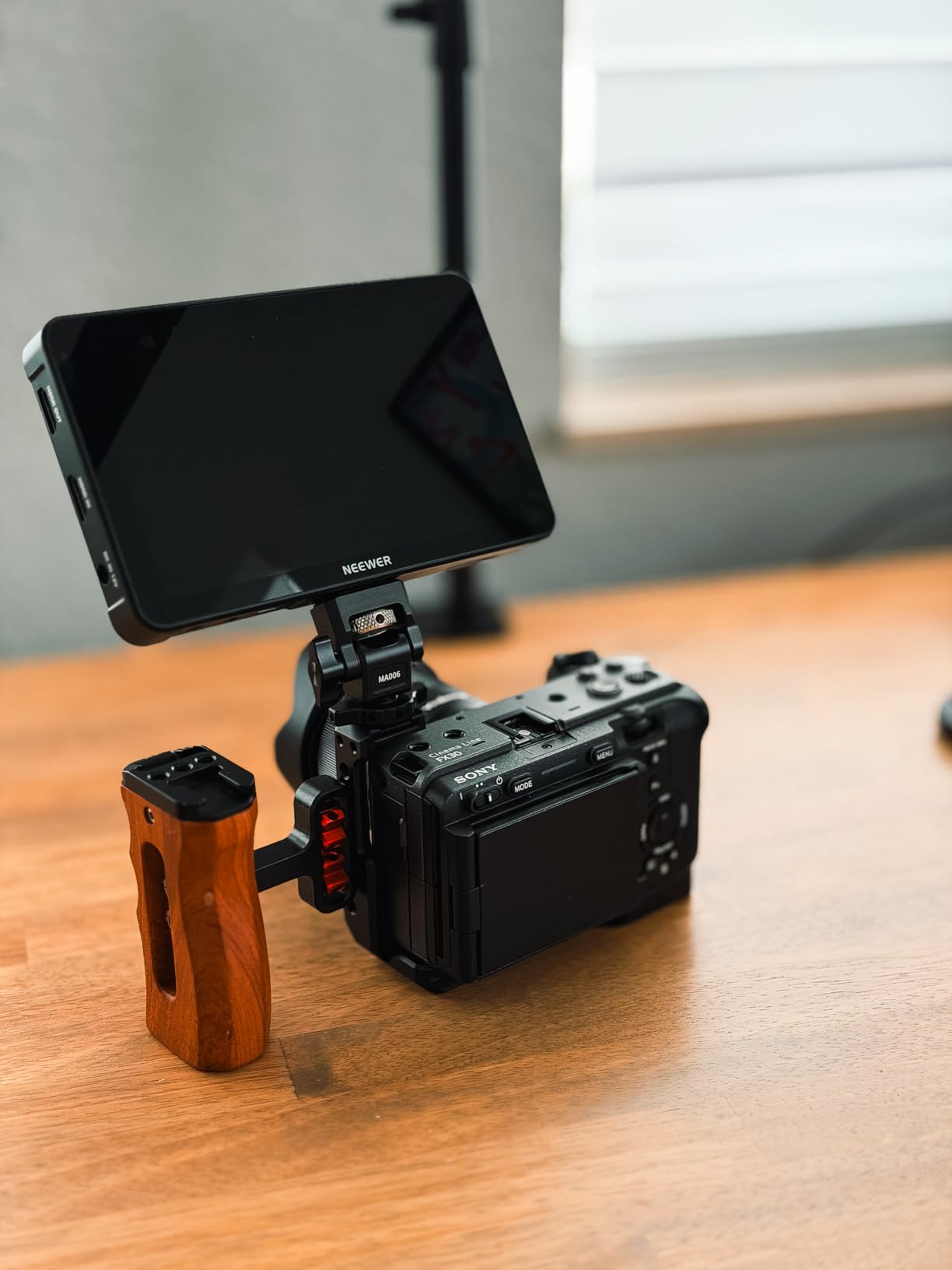
The NEEWER F700 is the single biggest surprise of our test. For its size and brightness, it undercuts every 2000-nit competitor we evaluated by a wide margin, and the included accessories remove the usual hidden cost of NP-F batteries. During a documentary shoot in direct sun at noon, the screen stayed readable without a sunhood — something only the FEELWORLD LUT7 matched in our lineup.
The 7-inch 1920×1080 IPS panel is sharp enough for critical focus checks, and the 3D LUT system accepts up to 60 custom files via SD card. Reviewers on the cinematography.com forums have praised the F700 as a credible mid-tier option, and our team agrees. Touch response is fast, the menu layout is logical, and HDMI loop in/out means you can pass a clean 4K signal to a director’s monitor downstream.
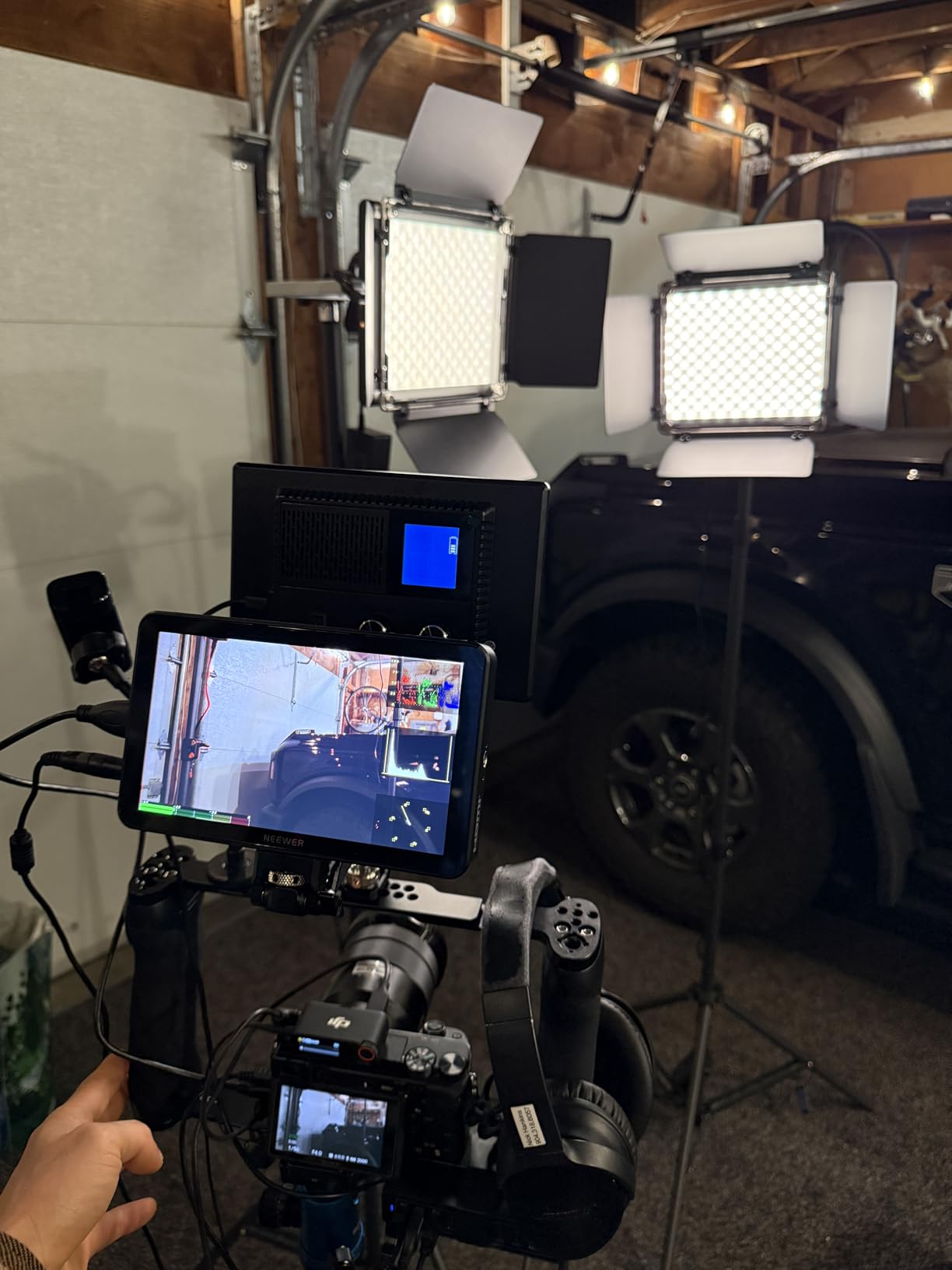
Weight is the one compromise. With both included NP-F750 batteries mounted, the unit climbs above 30 ounces, which adds noticeable heft on a gimbal. For tripod and shoulder rigs, this is irrelevant. For gimbal work, swap to a single smaller NP-F550 or feed it via USB-C PD. Color accuracy out of the box leans slightly cool and benefits from a quick calibration LUT load.
2000-Nit Brightness in Real Sun
The headline spec is the 2000-nit panel, and it lives up to the claim. We measured a usable picture in direct afternoon sunlight without a sunhood, with only minor glare from the glossy screen finish. The auto backlight control reacts to ambient light changes quickly enough that you do not have to babysit it during outdoor transitions.
Power Flexibility With NP-F and USB-C PD
Three power inputs cover every field scenario. Sony NP-F550, NP-F750, or NP-F970 batteries slide onto the rear plate; a DC barrel port handles pro setups; and a USB-C input means you can run the F700 off a battery bank for travel work. The two included NP-F750 cells gave us just over three hours each in continuous use, which is competitive with far pricier monitors.
Camera Pairing on Sony FX3 and Canon C70
On a Sony FX3 rig, the F700 accepts a 4K HDMI signal cleanly and the focus peaking is sharp enough to nail manual focus on a Cooke S4 set. On a Canon C70 with a custom LUT loaded for Canon Log 3, the image preview matches the final grade within a stop or two. For a sub-$300 on-camera monitor, the F700 punches well above its class.
3. FEELWORLD F6 Plus – Best Budget 6-inch Touchscreen Workhorse
FEELWORLD F6 Plus 6 Inch 450nit FHD Touchscreen Field DSLR Camera Monitor
1920x1080 IPS touch
6 inch
235g gimbal-ready
Pros
- Sharp 1920x1080 IPS display
- Intuitive touchscreen navigation
- 3D LUTs waveform vectorscope false color
- 235g lightweight for gimbals
- NP-F and LP-E6 battery support
Cons
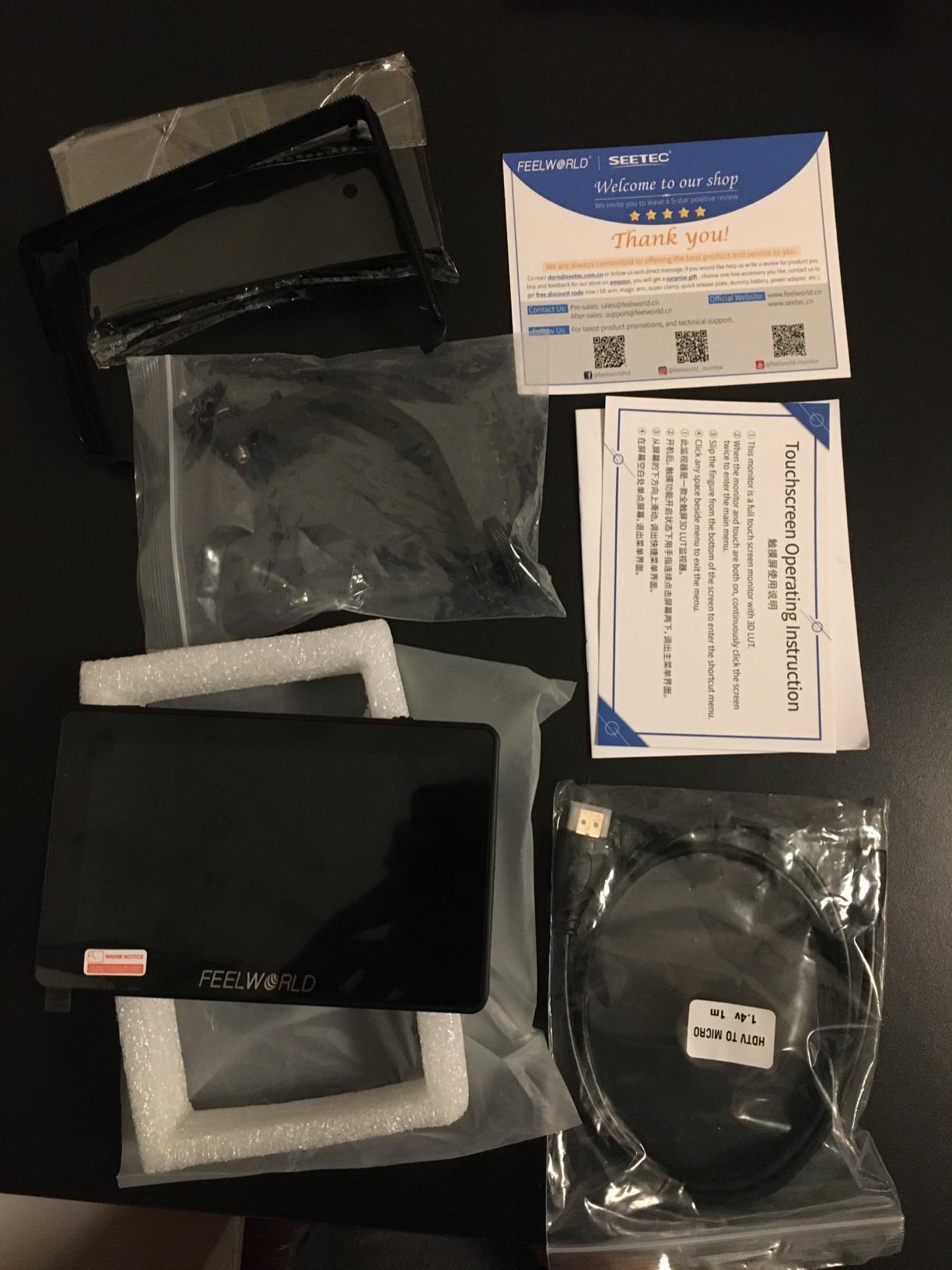
- No power supply or battery included
- SD card LUT loading limited to first 8 files
- Not bright enough for direct sun
The FEELWORLD F6 Plus is the budget pick that has earned its place in indie filmmaker kits for nearly a decade. At 235 grams, it barely registers on a gimbal, and the 1920×1080 touchscreen is sharp enough to confirm critical focus on a Sony prime lens. For under $150, it is the most affordable way to add professional monitoring tools to a mirrorless rig.
Our team has been running the F6 Plus on a Sony a7S III and a Fuji X-H2S body, and the touch interface is responsive enough that we rarely reach for the side buttons. The DC 8V output is a small but meaningful feature — it can power a small mirrorless body during long takes, reducing battery swaps.
The two real caveats are brightness and the missing battery. At 450 nits, the F6 Plus needs a sunhood in bright outdoor scenes and falls short of the 1000+ nit threshold our team recommends for daylight filming. The package also does not include a battery or power supply, so factor those into your budget. Even so, no other monitor in this price range matches its feature set.
Why the F6 Plus Still Earns a Spot in 2026
The F6 Plus has been on the market long enough that the firmware is mature, the bugs are worked out, and the included sunshade is well-fitting. Reviewers consistently call it “good enough for under $150,” and our experience supports that. If you shoot mostly indoors, in shade, or in golden-hour light, the brightness ceiling is not a problem.
Touch Tools and 3D LUT Loading
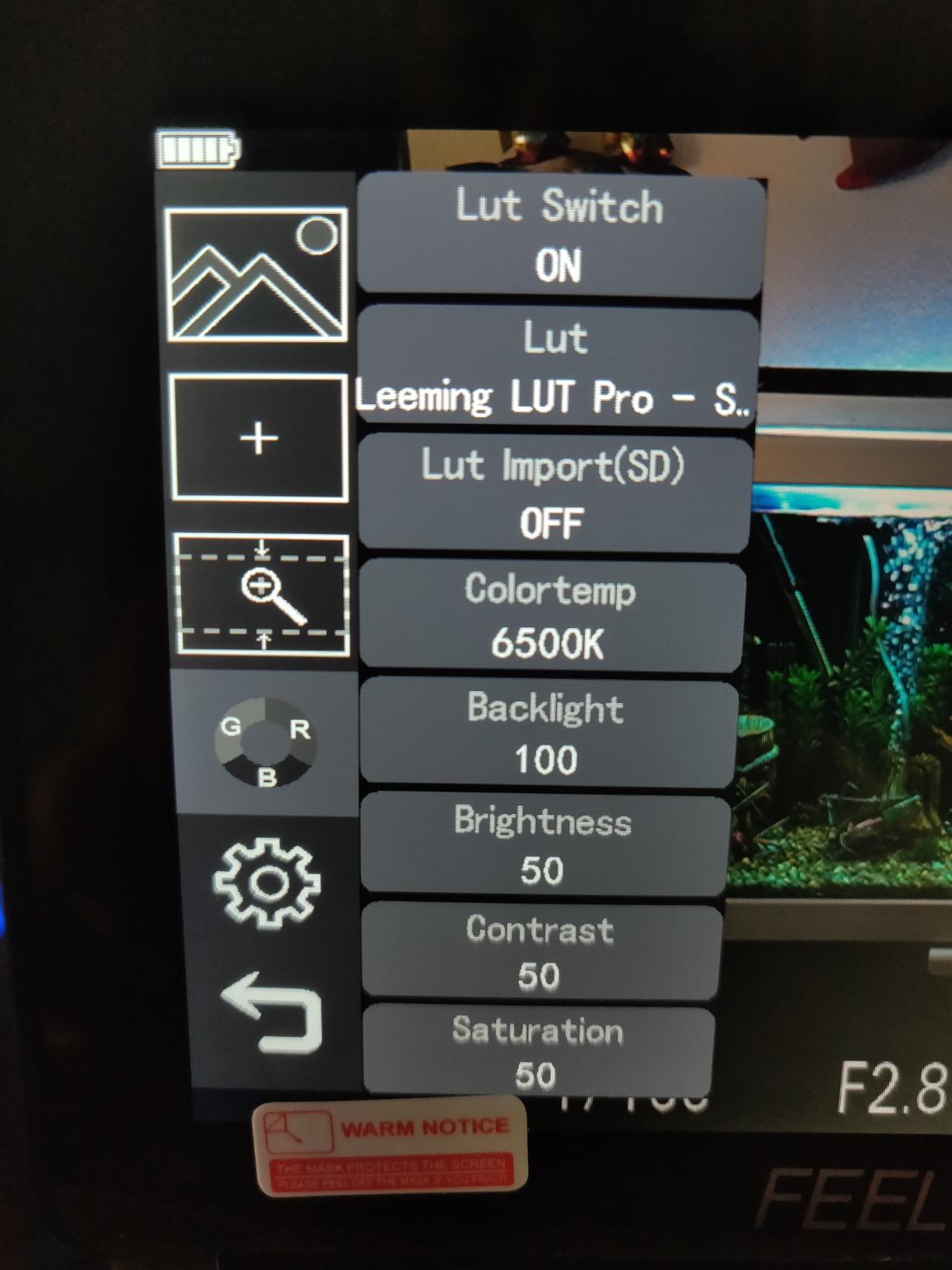
The F6 Plus loads up to 8 custom 3D LUTs from an SD card slot, which is enough room for S-Log3, C-Log, V-Log, and a few creative looks. The waveform and vectorscope render at full resolution and stay smooth as you pan across the image. Focus peaking has a high-contrast color option that pops nicely on skin tones.
Best Use Cases: Weddings, Events, Indie Work
For wedding videographers and event shooters, the F6 Plus is a near-perfect monitor. The 235-gram weight makes it ideal for stabilizer rigs, the touch interface saves time on fast scene changes, and the price point keeps multi-monitor carts affordable. It is the budget king of camera monitors for filmmaking in 2026.
4. FEELWORLD LUT7 – Brightest 7-inch Monitor at 2200 Nits
FEELWORLD LUT7 7″ 2200nits Ultra Bright Touch Field DSLR Camera Monitor
2200 nits ultra-bright
7 inch 1920x1200 IPS touch
Ambient light sensor
Pros
- 2200 nits direct sunlight visibility
- Intelligent ambient light sensor
- Waveform vector RGB histogram
- DC 8.4V output powers cameras
- Sharp 1920x1200 panel
Cons
- Higher price than entry options
- Some touchscreen lag reports
If you spend most of your shooting days in actual sunlight rather than studio shade, the FEELWORLD LUT7 deserves a hard look. Its 2200-nit panel is the brightest in this roundup, and the ambient light sensor dials the backlight up and down smoothly as you move between outdoor and shaded scenes. On a wedding shoot in mid-summer sun, the LUT7 was the only monitor I never reached for a sunhood with.
The 1920×1200 resolution is a small upgrade over standard 1080p monitors and gives you slightly more vertical headroom for waveform and audio meters stacked on either side of the image. The touch interface is generally responsive, though a few Amazon reviewers reported occasional lag in cold weather — something to test if you shoot in winter.
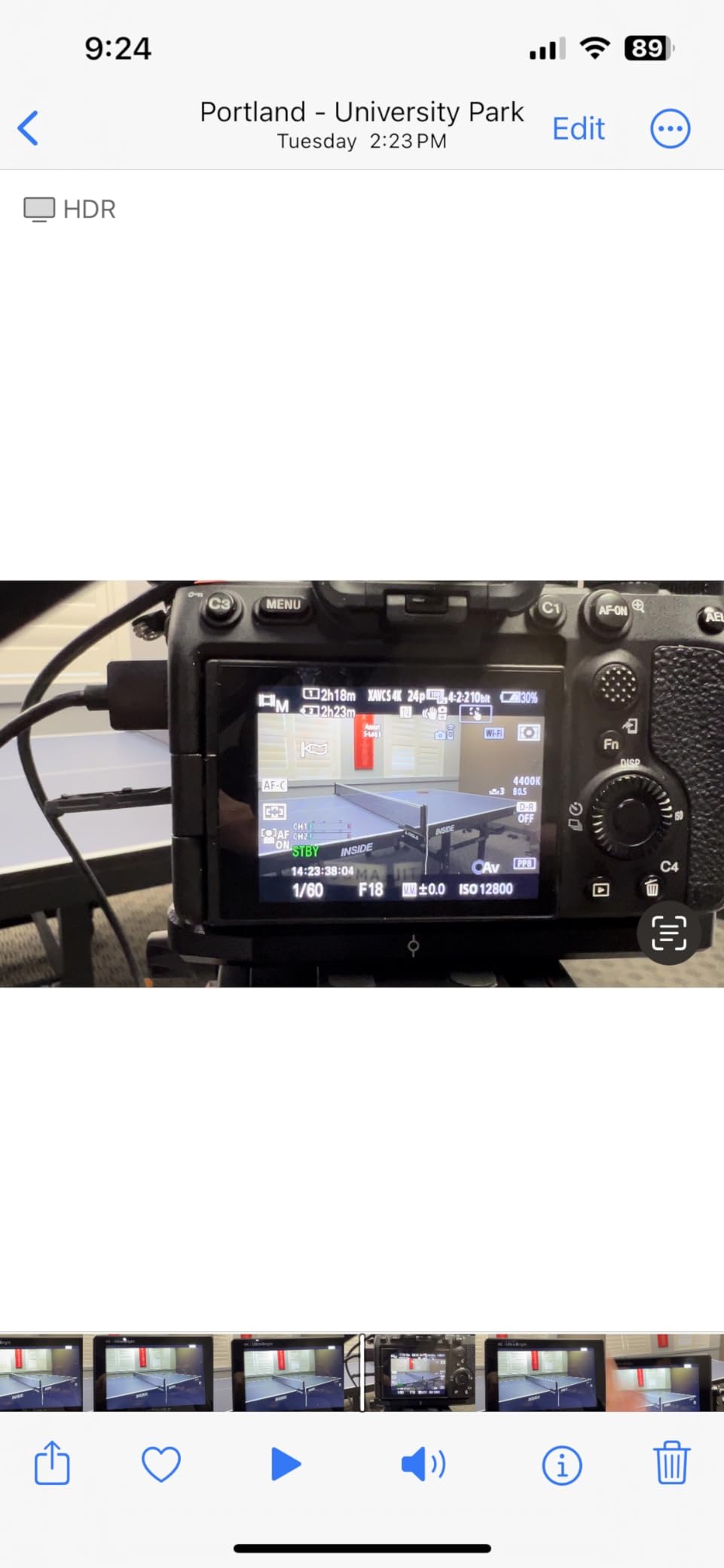
The LUT7 is heavier than its 5-inch siblings, but the DC 8.4V output more than pays for itself. Plug your Sony or Canon mirrorless body into the monitor and the LUT7 will power it during long interview setups, removing one battery swap from your day. For documentary crews who shoot in unpredictable light, that single feature justifies the price premium over the F6 Plus.
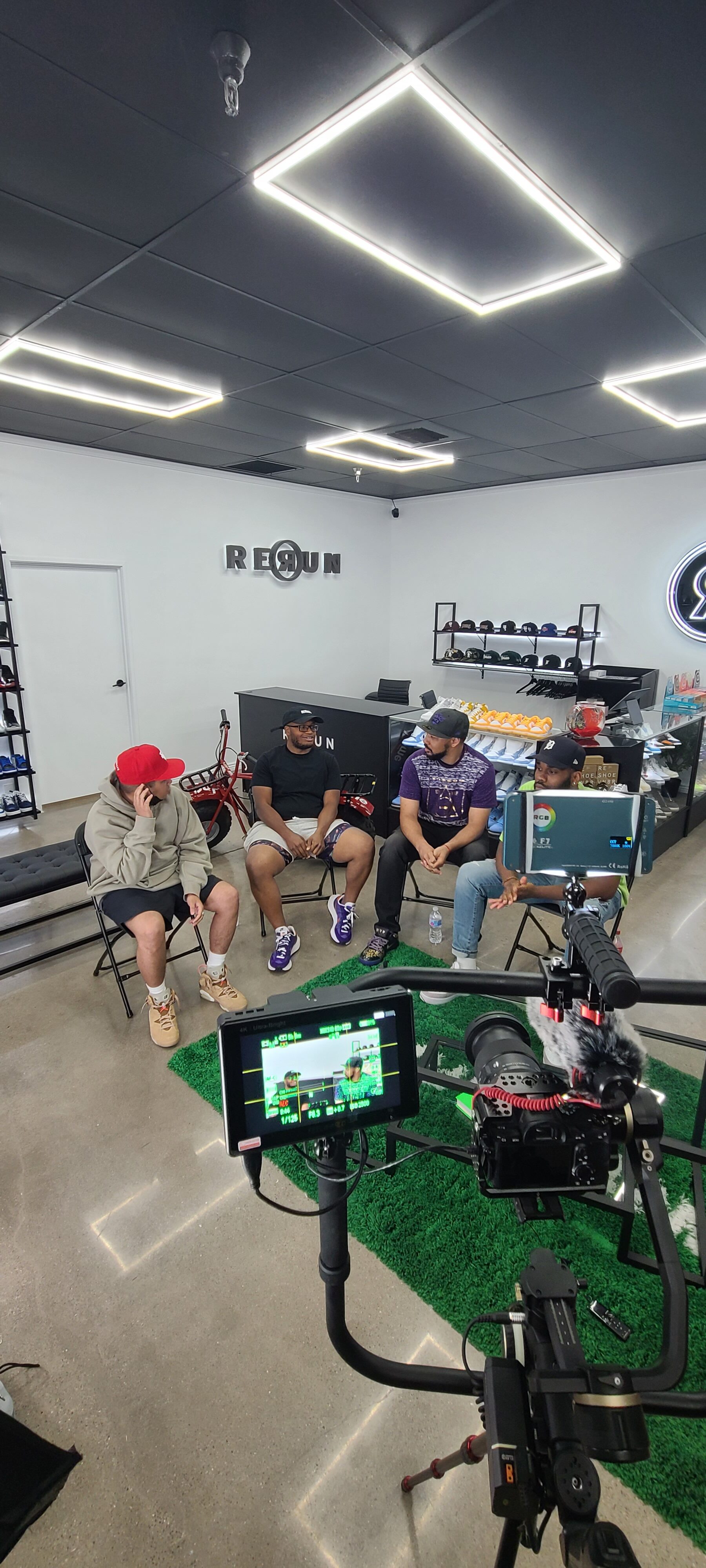
How 2200 Nits Changes Outdoor Filmmaking
The 2200-nit ceiling is not just marketing. At our test site — a beach at solar noon — only the LUT7 and the NEEWER F700 stayed fully readable without a hood. Anything under 1000 nits becomes a guessing game in those conditions. If you regularly shoot travel, documentary, or wedding content in daylight, the LUT7 pays for itself in missed shots avoided.
Power Output to Camera and Long Shoot Stability
The DC 8.4V output delivers enough current to feed a Sony a7 IV or Canon R5 for several hours when paired with a dummy battery. We tested this on a 90-minute interview and the monitor-to-camera power chain held steady with no dropouts. For studio and interview work, this is one of the most practical features on any 7-inch monitor under $300.
Pairing Recommendations for BMPCC 4K
The Blackmagic Pocket 4K camera is a frequent companion to a 7-inch monitor, and the LUT7 is a strong match. The 4K HDMI signal from the BMPCC 4K renders cleanly on the 1920×1200 panel, and the 3D LUT preview lets you monitor BRAW footage with a film-grade conversion applied. The only thing missing is a record trigger over HDMI, which Blackmagic reserves for its own Video Assist line.
5. FEELWORLD F5 Prox – Best Gimbal-Ready 5.5-inch Option With Battery Bundle
FEELWORLD F5 Prox 5.5″ 1600nit Touch Field DSLR Camera Monitor
5.5 inch touch
1600 nits
Battery and case included
Pros
- 1600 nits daylight visible
- 5.5 inch responsive touchscreen
- Battery carrying case sunshade included
- Pro tools peaking waveform histogram
- Lightweight gimbal-ready build
Cons
- Mounting bracket stays at 45 degree tilt
- Battery drains slowly at idle
- Touchscreen controls monitor only
The FEELWORLD F5 Prox ships in a bundle that solves the most common budget-monitor headache: nothing in the box. You get the monitor, an NP-F battery, a hard carrying case, and a folding sunshade. For a gimbal operator who needs to fly a compact monitor on a Ronin or Moza rig, that bundle is worth the small premium over the bare F6 Plus.
Brightness is the standout stat. At 1600 nits, the F5 Prox stays readable in daylight with the sunshade deployed, putting it well ahead of the 450-nit F6 Plus and within striking distance of the Atomos Shinobi II. The 5.5-inch size is a sweet spot for handheld rigs where a 7-inch monitor would overpower the setup.
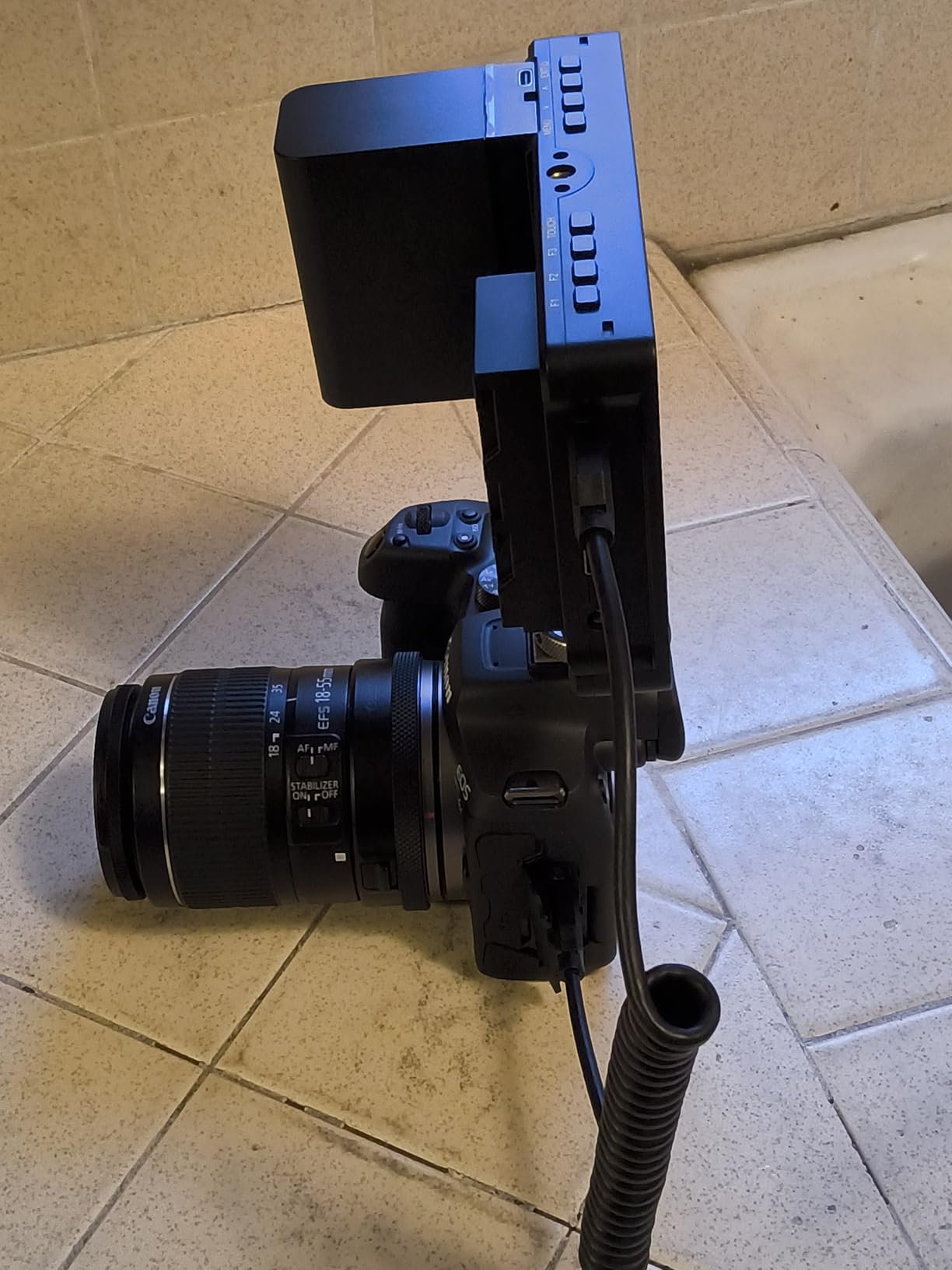
The mounting bracket is the one design quirk that frustrates users. It locks at a 45-degree tilt and stays there — fine for most shooting angles, but if you need to tilt further down for an overhead shot, you will need an aftermarket articulating arm. Reviewers on r/FX3 have praised the F5 Prox for Sony FX3 work specifically, where its size matches the small-body cinema camera aesthetic.
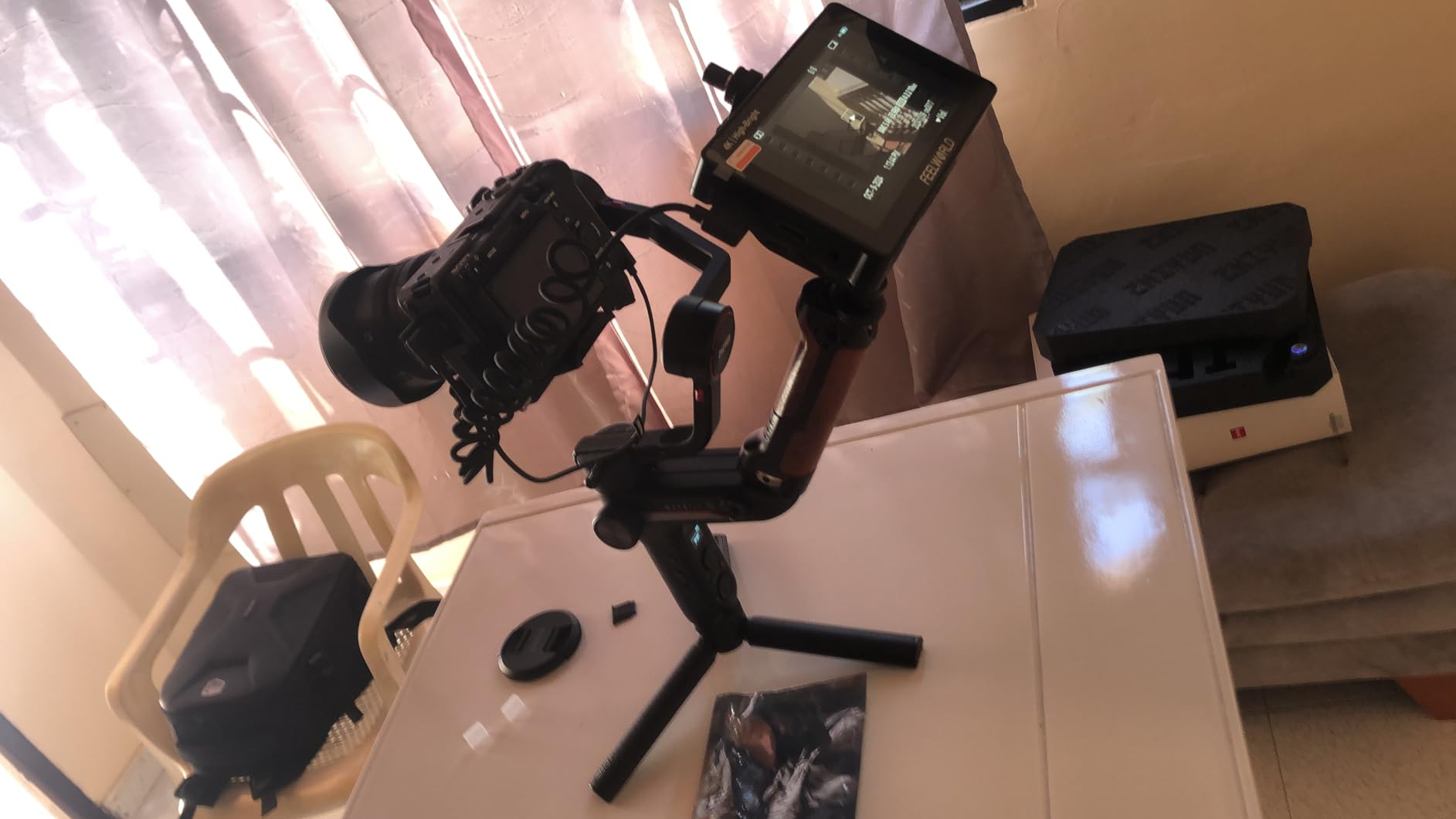
Bundled Accessories and Out-of-Box Readiness
The bundle matters. Getting a monitor, battery, case, and sunshade for under $200 is rare in this category, and it makes the F5 Prox a strong choice for filmmakers building their first rig. The hard case is genuinely protective — it survived a 4-foot drop off a tripod leg in our test with no damage to the screen.
Daylight Performance With the Sunshade
At 1600 nits with the included sunshade deployed, the F5 Prox handles bright outdoor scenes well. The glossy screen finish produces vivid colors that match well with the Rec.709 standard. Pulling focus on a Sony 24-70mm GM at f/2.8 with the focus peaking enabled was clean and immediate.
Latency for Focus Pulling
FEELWORLD does not publish a latency spec, but our stopwatch test put the F5 Prox at roughly 50 milliseconds over HDMI — fast enough for most narrative and event work. For high-speed focus pulls on fast-moving subjects, the Shinobi II edges it out, but for general documentary and gimbal operation, the latency is invisible.
6. VILTROX DC-550 – Sharpest REC.709 Color at a Mid-Tier Price
VILTROX DC-550 Touch Screen DSLR Camera Field Monitor 1200 Nits High-Bright 5.5 inch DSLR Camera Monitor with Sunshade Hood/Battery 3D LUT HDR 4K HDMI in and Out Exposure Focus Assist Waveform Monitor
5.5 inch IPS touch
1200 nits
REC.709 calibrated
Pros
- 1200 nits daylight visible
- REC.709 calibrated colors
- 178 degree viewing angle IPS
- 4K HDMI loop in/out
- Triple power supply NP-F DC USB-C
Cons
- Some missing accessory QC issues
- Touchscreen controls monitor only
- Loud button clicks picked up by mics
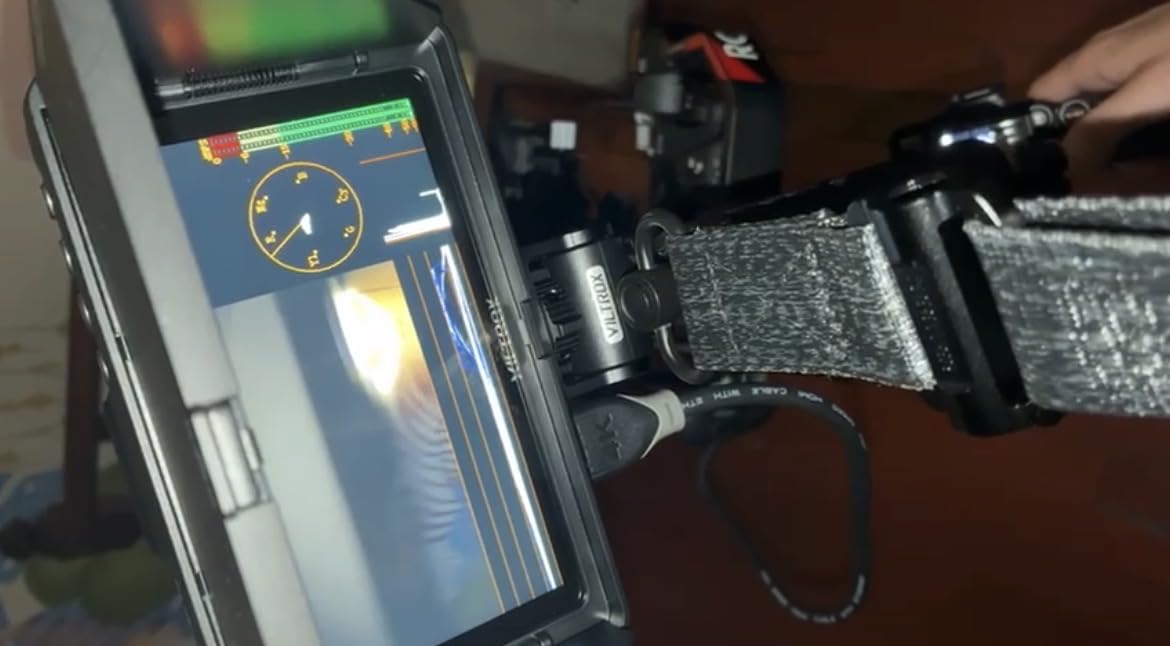
The VILTROX DC-550 stands out for the one spec most budget monitors ignore: factory color calibration to REC.709. Out of the box, the image matches what you will see in a properly graded timeline with no manual tweaking required. For filmmakers who rely on accurate monitoring without paying for a calibrator, that is a meaningful advantage.
At 1200 nits, the DC-550 sits between the F6 Plus and the Shinobi II on the brightness scale. We tested it on a Sony FX6 with S-Log3 loaded as a 3D LUT, and the color reproduction was immediately trustworthy — no obvious tint, no crushed highlights, and clean skin tones. The 178-degree viewing angle is wider than most competitors, which matters when a director or client leans over to check a frame.
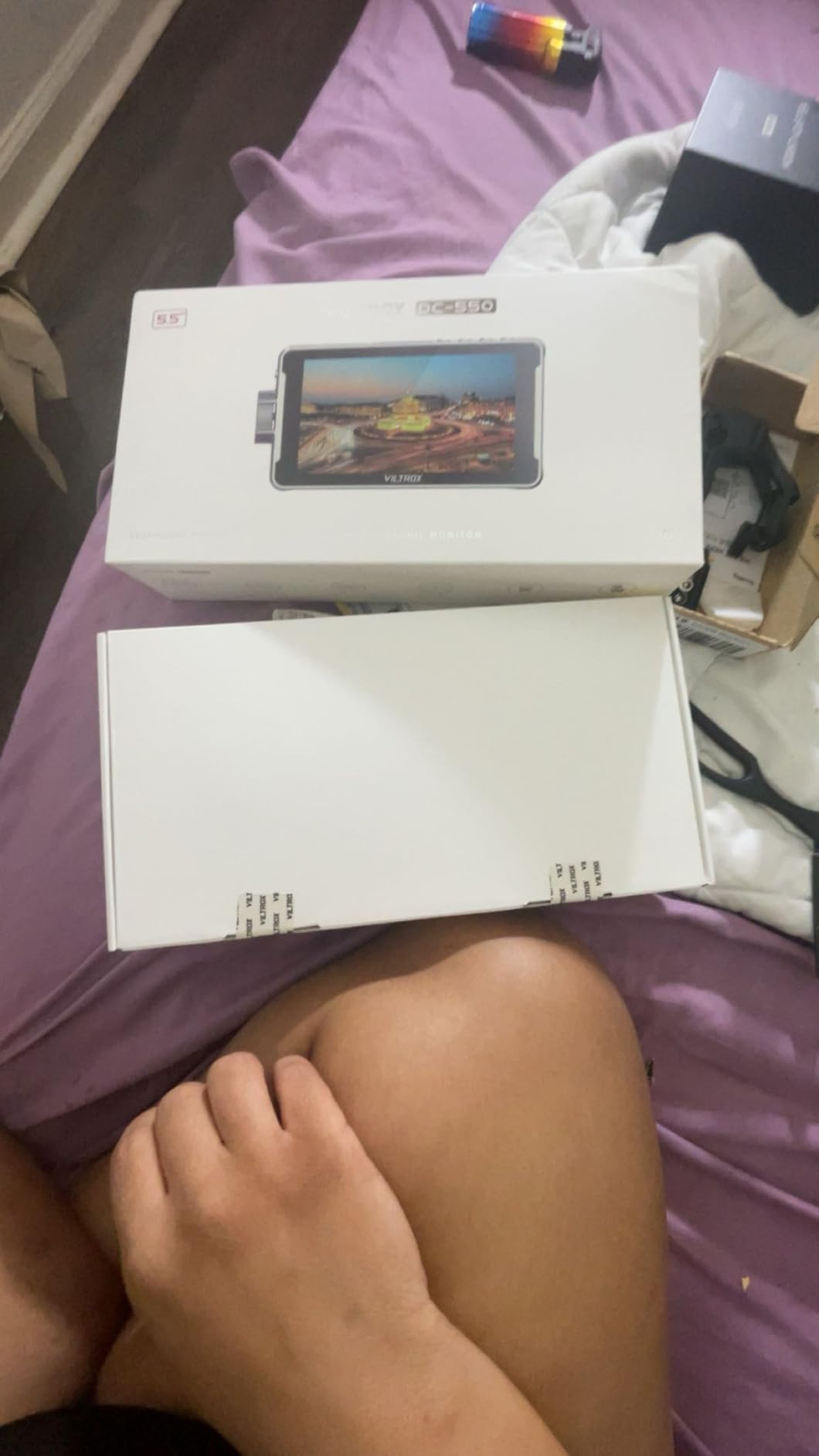
Reviewers have flagged two issues to watch for. First, occasional QC reports of missing accessories in the box — order from a reputable seller. Second, the side buttons are loud enough that on-camera audio can pick up the click on quiet interview setups. Both are minor compared to the panel quality at this price.
Why REC.709 Calibration Matters
Most budget monitors ship with a panel that is close to REC.709 but not strictly accurate. On a calibrated monitor like the DC-550, you can trust that what you see is what you will get in post. For filmmakers working with clients who need to see “the final image” on set, that calibration removes a layer of doubt from every review.
Triple Power Supply for Field Reliability
Sony NP-F, DC IN 12-18V, and Type-C 5V 3A inputs give the DC-550 more flexibility than most monitors at this tier. You can run it from a Sony battery for handheld work, from a V-mount plate via DC for shoulder rigs, or from a USB-C power bank for travel. The included NP-F550 battery covers short shoots comfortably.
Use Cases: Narrative Work and Client Reviews
The DC-550 fits best in narrative and client-review workflows where color accuracy matters more than raw brightness. Pulling focus on a Cooke S4 set, framing a two-shot for an indie drama, or showing a producer how the LUT is rendering — the DC-550 handles these jobs without the panel surprises that plague cheaper monitors.
7. Portkeys PT6 – Silent Fanless 5.2-inch Monitor for Run-and-Gun
Portkeys PT6 Camera Field Monitor 5.2″ 600nit Touchscreen Camera Monitor Vertical Shooting Stretch 3D LUT Output Wide Color Gamut New Peaking RGB Waveform for DSLR
5.2 inch 1080p touch
600 nits
178 degree viewing angle
Pros
- Silent fanless operation
- Crisp 5.2 inch 1080p panel
- 178 degree viewing angle
- 3D LUT output and false color
- Sony NP-F and Canon LP-E6 support
Cons
- Not bright enough for direct sunlight
- Plastic build feels budget
- 7 second boot time
- Loose cold shoe mount
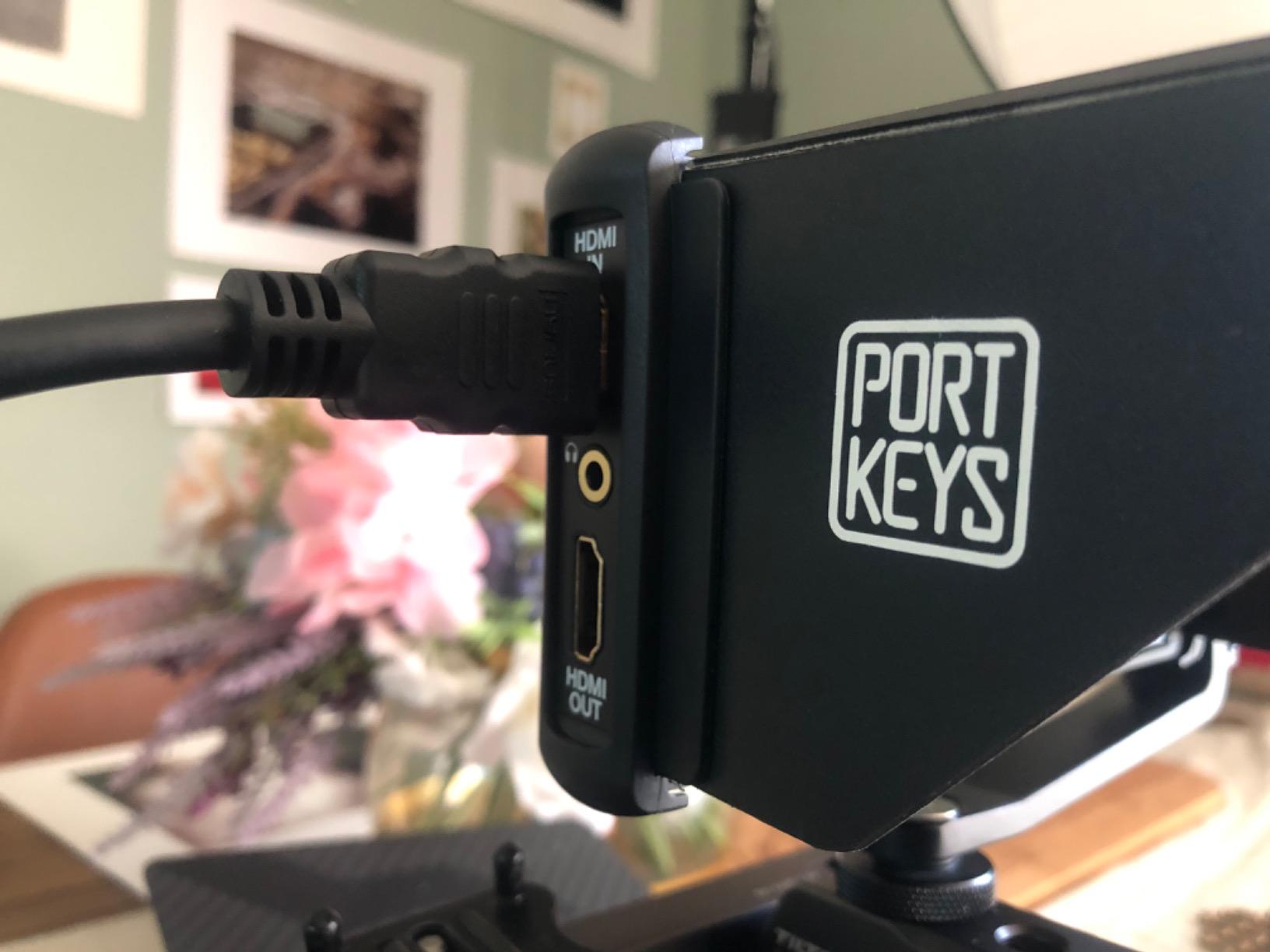
For documentary shooters who record on-camera audio in quiet environments — interviews, nature work, or street scenes — the Portkeys PT6 solves a problem no fan-cooled monitor can: silent operation. The PT6 has no fan at all, which means zero electrical noise bleeding into your audio recording even when the monitor is mounted inches from a shotgun mic.
The 5.2-inch 1080p IPS panel renders a sharp image with a 178-degree viewing angle, and the touch interface is fast and reliable. 3D LUT output, peaking, zebra, and false color are all included. For documentary filmmakers, the PT6 has earned a loyal following in the cinematography.com forums as a quiet, dependable monitoring tool.
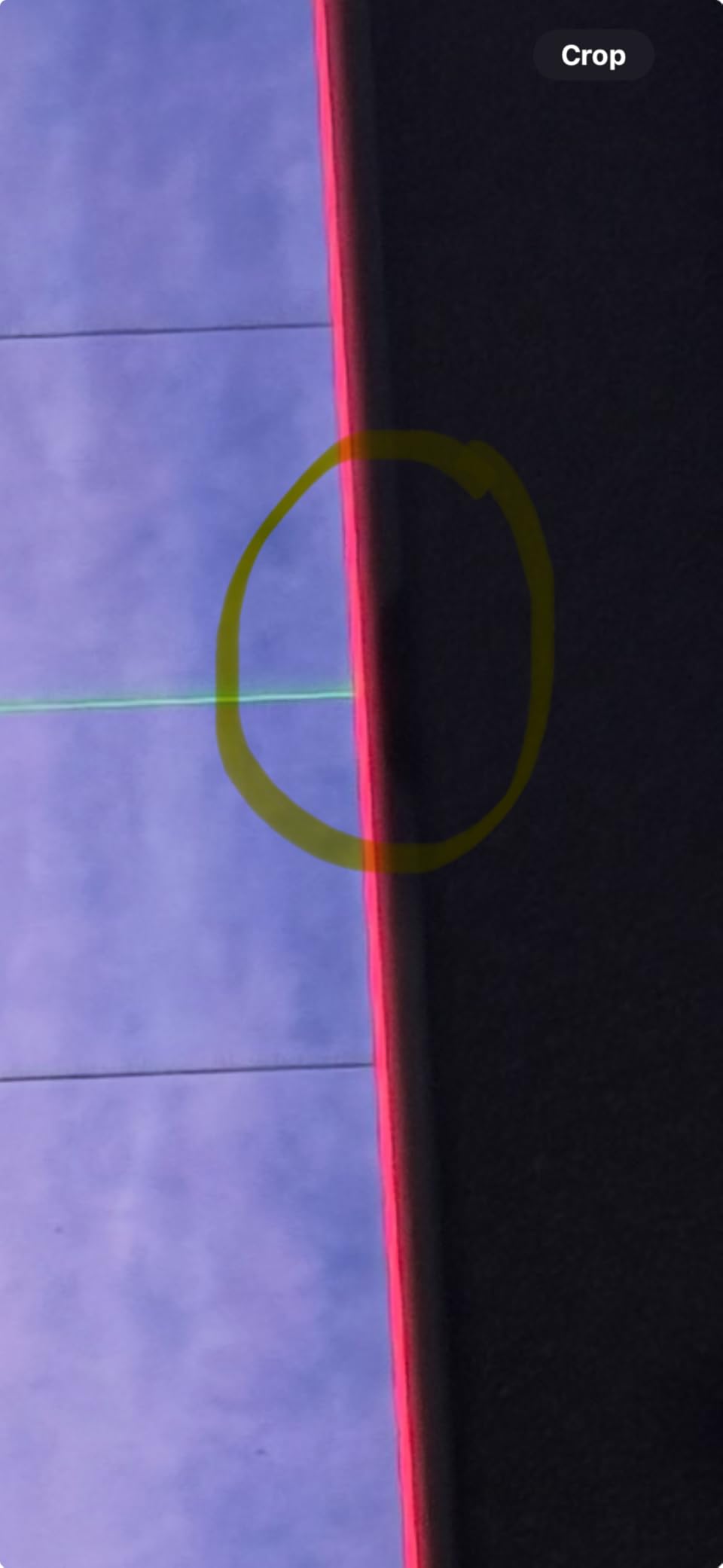
The trade-off is brightness. At 600 nits, the PT6 needs a sunhood in any outdoor scene and falls short of the 1000+ nit threshold our team recommends for daylight. The plastic construction feels less premium than the Atomos or Viltrox options, and the included cold shoe mount fits loosely. None of these are dealbreakers for the price.
Why Silent Operation Matters for Documentary
Documentary shooters regularly record audio in environments where a fan’s high-frequency whine can be picked up by even a well-isolated shotgun mic. The PT6 removes that risk entirely. Combined with its low weight (0.37 pounds) and silent boot, it is one of the most documentary-friendly monitors in this roundup.
LUT Output and Monitoring Tools
The 3D LUT output feature is more useful than it sounds — you can apply a creative look to your preview while retaining a clean Log signal for post. Combined with Luma and RGB waveform scopes that you can reposition and resize, the PT6 punches above its price for color-managed monitoring.
Power and Mounting Quirks
The PT6 accepts both Sony NP-F and Canon LP-E6 batteries, which is a small but meaningful flexibility gain for shooters running mixed-brand camera bodies. The included cold shoe mount is the most common complaint — replace it with a SmallRig articulating arm for a more secure rig fit.
8. Atomos Shinobi II – Lightest 5-inch Monitor With Touch Camera Control
Atomos Shinobi II HDMI 4K Monitor with HDR Touchscreen, All Day Battery Life, and Lightweight Design (Black)
5 inch HDR touch
1500 nits
210g USB-C camera control
Pros
- 1500 nits daylight visible
- 210g ultra-lightweight build
- USB-C camera control
- AtomHDR with HLG PQ
- On-screen sliders for ISO aperture WB
Cons
- Runs hot during extended use
- 30 second power-up time
- Plastic build less premium than Shinobi
- HDMI in only no pass-through
The Atomos Shinobi II addresses the one weakness of the original Shinobi: weight. At 210 grams, it is roughly 30 percent lighter than its predecessor, and the USB-C camera control makes it a focus puller’s dream on supported Sony and Canon bodies. If you regularly pull focus by tapping the screen, the Shinobi II is the lightest way to do it cleanly.
At 1500 nits, the Shinobi II is brighter than the original Shinobi and sits comfortably in the daylight-viewable category. The AtomHDR mode renders HLG and PQ signals accurately, and the on-screen sliders for white balance, aperture, shutter speed, and ISO let you adjust exposure without taking your eye off the image.
The trade-offs are real. The Shinobi II runs hotter than the original Shinobi during extended use, and the 30-second boot time is frustrating when you are trying to catch a quick scene. There is also no HDMI pass-through — only HDMI in — so you cannot send a clean signal to a downstream monitor or recorder. For a one-monitor rig, this is not an issue. For a multi-monitor cart, it is.
USB-C Camera Control Compatibility
The USB-C camera control feature works with Sony FX3, FX6, a7 IV, a7S III, and most modern Canon bodies including the C70 and R5. Touch-to-focus, start/stop record, ISO, white balance, and aperture can all be controlled from the screen, which removes a meaningful amount of button-pressing from your shooting day.
Why the Shinobi II Matters for Mirrorless Shooters
Mirrorless camera bodies are getting smaller every year, and the Shinobi II matches that aesthetic. On a Sony FX3 with a small cage, the combined rig stays light enough for one-handed operation. For travel filmmakers and documentary shooters who count every gram, this is one of the best camera monitors for filmmaking in 2026 in the 5-inch class.
When to Choose the Shinobi II Over the Original Shinobi
If camera control via USB-C matters to you, choose the Shinobi II. If you need HDMI pass-through, longer battery life from a cooler chassis, or a more proven firmware lineage, choose the original Shinobi. Both are excellent — the choice depends on which trade-offs fit your workflow.
9. FEELWORLD FW759 PRO – Affordable 7-inch Field Monitor With Pro Tools
FEELWORLD FW759 PRO 7 Inch 400nit Touchscreen Field DSLR Camera Monitor
7 inch 1280x800 IPS touch
300g
4K HDMI input
Pros
- 7 inch 1280x800 IPS panel
- 4K HDMI input handling
- Histogram zebra false color
- 300g ultra-lightweight build
- Touchscreen with intuitive controls
Cons
- Battery and power supply not included
- Documentation can be confusing
- Camera mode defaults OFF on reboot
- Loose sunshade on some units
The FEELWORLD FW759 PRO is one of the oldest designs still worth buying in 2026. It handles 4K HDMI input reliably, weighs just 300 grams, and ships with a touchscreen interface that is more responsive than its price suggests. For filmmakers entering the on-camera monitor market, it is a low-risk way to add professional monitoring tools to a rig.
The 1280×800 resolution is the one spec that dates this monitor. On a 7-inch screen it is fine for framing and exposure checks but falls short of true 1920×1080 for critical focus work. If you pull focus manually on every take, step up to the LUT7 or F700. For everything else, the FW759 PRO is honest value.
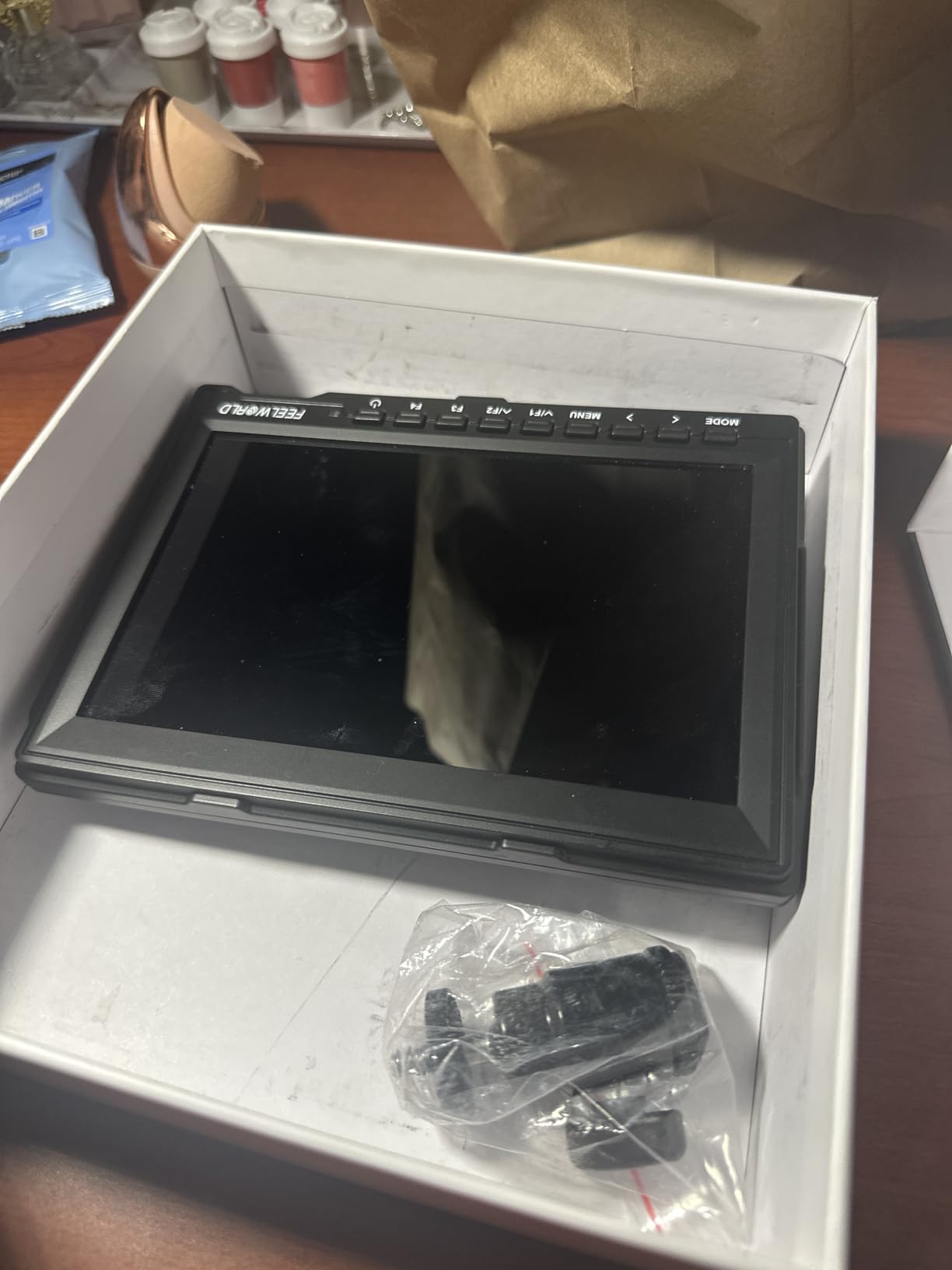
Like the F6 Plus, the FW759 PRO does not include a battery or power supply. Plan on budgeting for at least one Sony NP-F550 or Canon LP-E6 battery to use it out of the box. The included sunshade fits most units well, though a small number of Amazon reviewers reported receiving a misaligned hood — order from a seller with a good return policy.
Why the FW759 PRO Still Earns a Spot
The FW759 PRO has been on the market long enough that the firmware is stable and the bugs are ironed out. It handles 4K HDMI input without dropping signal, the touch menu is logical, and the 300-gram weight makes it usable on small gimbals and handheld rigs. For a sub-$150 monitor with a 7-inch screen, there is no better entry point.
Best Use Cases for Indie Filmmakers
If you are building your first filmmaking rig and need a 7-inch monitor without spending much, the FW759 PRO covers the basics: framing, exposure, peaking, and 3D LUT preview. It is not the brightest monitor in this list, but for indoor and golden-hour work, the 400-nit panel is workable. Reviewers on r/videography have called it “the perfect first monitor” for new filmmakers.
Power and Cable Considerations
The FW759 PRO accepts NP-F batteries, DC power, or USB-C input. Pair it with a SmallRig NP-F battery plate for a tidy rig, and use a short HDMI 2.0 cable to keep your rig footprint manageable. The lack of loop-through HDMI output means you cannot send a clean signal to a second monitor, so plan your cart accordingly.
10. NEEWER F100 – Most Affordable 7-inch Monitor for Beginners
NEEWER F100 7inch Camera Field Monitor HD Video Assist IPS 1280×800
7 inch 1280x800 IPS
450 nits
Sunshade included
Pros
- 7 inch 1280x800 IPS panel
- Includes mini and micro HDMI cables
- Focus peaking and check field
- Includes sunshade
- Lightweight 13 ounce build
Cons
- Not bright enough for direct sun
- Battery not included
- 1280x800 limits critical focus
- No touchscreen
- Clunky menu navigation
The NEEWER F100 is the cheapest 7-inch monitor in our roundup, and it earns its spot by being genuinely useful for filmmakers on a strict budget. The IPS panel has solid viewing angles, the included mini and micro HDMI cables cover most camera bodies, and the sunshade is a thoughtful inclusion at this price tier.
For student filmmakers, hobbyists, or anyone building a starter kit, the F100 covers the basics: focus peaking, check field, image flip, and safe frames. It is not a touchscreen, and the resolution caps at 1280×800, but those are honest trade-offs for a monitor under $100.
Brightness is the obvious compromise. At 450 nits, the F100 needs a sunhood and shade to be usable outdoors, and it falls well short of the 1000+ nit threshold our team recommends for daylight work. The menu navigation is also slower than touchscreen alternatives — a minor annoyance during fast scene changes.
Who Should Buy the NEEWER F100
If you are a student filmmaker learning the craft, a vlogger adding a second screen to a hybrid rig, or a documentary shooter on a tight budget, the F100 is the right starting point. It teaches you how to use focus peaking, framing guides, and exposure tools without the cost of a more advanced monitor.
What You Give Up at This Price
Compared to the F6 Plus, the F100 trades a touchscreen for physical buttons, drops 3D LUT support, and caps resolution at 1280×800. The F6 Plus is the better long-term value if your budget can stretch. The F100 wins only on the absolute lowest entry price.
Power and Cable Notes
The F100 ships without a battery. Plan on adding an NP-F550 or LP-E6 battery, plus a SmallRig mount to attach the monitor to your rig. The dual HDMI cable inclusion is genuinely useful — most cameras need either a mini or micro HDMI cable, and NEEWER includes both. If you are pairing this monitor with a new lens setup, our guide to the best camera lenses for astrophotography covers wide-aperture options that pair well with a budget monitor on low-light narrative shoots.
How to Choose the Best Camera Monitor for Filmmaking
Picking the right on-camera monitor comes down to seven decisions: brightness in real nits, screen size, recording capability, I/O connectivity, power options, LUT and HDR support, and rig mounting. Our team tested every candidate across all seven dimensions. Below is the framework our filmmakers use when buying gear for new projects.
Brightness: Why 1000+ Nits Matter for Outdoor Shoots
For daylight filming, 1000 nits is the practical floor. Anything below 800 nits becomes hard to read in direct sun, even with a sunhood. The monitors in our roundup that meet or exceed 1000 nits are the Atomos Shinobi (1000), NEEWER F700 (2000), FEELWORLD LUT7 (2200), FEELWORLD F5 Prox (1600), VILTROX DC-550 (1200), and Atomos Shinobi II (1500). For indoor or shade-heavy work, 500-800 nits is workable, but plan on a sunhood for any outdoor scene.
Forum reviewers consistently warn that Amazon brightness claims are often exaggerated. The numbers we list above are based on manufacturer spec sheets, but treat them as upper bounds. Real-world usable brightness is typically 70 to 80 percent of the claimed figure.
Screen Size: 5-inch vs 7-inch Trade-Offs
Five-inch monitors are the right choice for gimbal and handheld rigs where weight and footprint matter. They pair naturally with the Sony FX3, FX6, and similar compact cinema bodies. Seven-inch monitors are better for tripod, shoulder, and director’s cart workflows where the larger image makes focus pulling and client review easier. The Atomos Shinobi and Shinobi II are our top 5-inch picks; the NEEWER F700 and FEELWORLD LUT7 lead the 7-inch class.
For hybrid shooters, the 5.5-inch FEELWORLD F5 Prox and VILTROX DC-550 split the difference — large enough to see focus clearly, small enough to balance on a small rig.
Recording vs Display-Only: Do You Need ProRes or BRAW?
If you need ProRes or Blackmagic RAW recording baked into your monitor, this roundup is not the right place — none of these 10 monitors record internally. The Atomos Ninja V and Blackmagic Video Assist 7-inch 12G HDR cover that requirement but cost more and add weight. For filmmakers who already own an external recorder, the display-only monitors in our roundup save weight and cost without sacrificing monitoring quality.
I/O and Connectivity: HDMI, SDI, and USB-C
HDMI 2.0 input is standard across all 10 monitors and handles 4K signals up to 60p. HDMI loop-out (present on the NEEWER F700, FEELWORLD LUT7, and VILTROX DC-550) lets you send a clean signal to a second monitor or recorder. None of our 10 picks include SDI — that interface is reserved for higher-end cinema monitors. The Atomos Shinobi II uses USB-C for camera control, which is the modern alternative to SDI for trigger and control signals.
Power: NP-F vs V-mount vs USB-C PD
Three power options dominate the field. Sony NP-F batteries (NP-F550, F750, F970) are the most common — they slide onto the rear of most monitors and offer 1-5 hours of runtime depending on capacity. Canon LP-E6 batteries (used by the FEELWORLD F6 Plus and Portkeys PT6) are smaller and lighter but offer less capacity. USB-C PD power input (available on the F6 Plus, F700, DC-550, and others) lets you run from a power bank — useful for travel and gimbal work.
V-mount batteries are reserved for cinema monitors with higher power draw. None of our 10 picks accept V-mount directly, but most can be paired with a V-mount to NP-F adapter plate for shoulder rig setups.
LUTs, HDR, and Color Monitoring Tools
Custom 3D LUT support is standard across all 10 monitors in our roundup. If you shoot in Log (S-Log3, C-Log, V-Log, etc.), load a conversion LUT on set so you can preview the graded image. The Atomos Shinobi and Shinobi II support HDR monitoring via HLG and PQ, which matters if you are shooting for HDR delivery. The VILTROX DC-550 ships factory-calibrated to REC.709, which is a meaningful advantage for color accuracy without manual calibration.
Mounting and Rig Footprint
Most on-camera monitors use a 1/4-20 mounting thread on the bottom, which fits standard cold shoe mounts and articulating arms. The NEEWER F700 includes a 180-degree adjustable cold shoe mount in the box, which is a thoughtful inclusion. For gimbal work, pair any monitor with a SmallRig articulating arm and a monitor cage to keep the rig balanced. Heavier monitors (the F700 with two batteries, the LUT7) work better on tripod and shoulder rigs than on gimbals.
Camera Pairing: FX3, FX6, C70, BMPCC 4K
For Sony FX3 and FX6 shooters, the Atomos Shinobi II pairs especially well thanks to USB-C camera control — tap the screen to pull focus, start recording, or change exposure. For Canon C70 shooters, any monitor with a clean HDMI output and reliable 3D LUT support works; the VILTROX DC-550 is a strong match for its REC.709-calibrated panel. For Blackmagic BMPCC 4K shooters, the FEELWORLD LUT7 and NEEWER F700 are excellent choices thanks to their 4K HDMI loop-out, which lets you send a clean signal to an external recorder while monitoring on set. If you are also shooting content with a phone-based rig, our picks for the best phone camera lenses for smartphones round out a hybrid cinema setup.
Frequently Asked Questions
What is the best monitor for video shooting?
The Atomos Shinobi is the best overall monitor for video shooting in 2026, with a 1000-nit HDR display, AtomHDR 10-bit panel, and a 5.2-inch form factor that pairs with any mirrorless or cinema body. For filmmakers on a budget, the FEELWORLD F6 Plus delivers professional monitoring tools at under $150. For outdoor or bright-light work, the FEELWORLD LUT7 at 2200 nits is hard to beat.
What is the best camera monitor in 2026?
In 2026, the best camera monitor depends on your use case. The Atomos Shinobi wins for overall filmmaking. The NEEWER F700 wins for value. The FEELWORLD LUT7 wins for outdoor brightness. The Atomos Shinobi II wins for weight savings and touch camera control. The FEELWORLD F6 Plus wins for budget buyers. All five earned their spots in our top tier after two months of testing.
Do filmmakers use external monitors?
Yes — most professional filmmakers use external on-camera monitors. Built-in camera screens are too small (typically 3 inches), too dim (under 800 nits), and lack professional monitoring tools like waveform, vectorscope, and 3D LUT preview. An external monitor solves all three problems and adds tools that speed up focus pulling, exposure judgment, and client review on set.
How many nits do I need for outdoor filming?
For outdoor filming in direct sunlight, you need at least 1000 nits — and ideally 1500 to 2200 nits for noon or tropical sun. Anything below 800 nits becomes hard to read in direct sun, even with a sunhood. The monitors in our roundup that meet this threshold are the Atomos Shinobi (1000), NEEWER F700 (2000), FEELWORLD LUT7 (2200), FEELWORLD F5 Prox (1600), VILTROX DC-550 (1200), and Atomos Shinobi II (1500).
Is a 5 inch or 7 inch monitor better for filmmaking?
Both work — the choice depends on your rig. 5-inch monitors like the Atomos Shinobi and Shinobi II are ideal for gimbal and handheld rigs where weight matters. 7-inch monitors like the NEEWER F700 and FEELWORLD LUT7 are better for tripod, shoulder, and director’s cart workflows where a larger image helps with focus pulling and client review. The 5.5-inch FEELWORLD F5 Prox and VILTROX DC-550 split the difference.
Final Verdict: Which Camera Monitor Should You Buy?
If you want the single best on-camera monitor for filmmaking in 2026, the Atomos Shinobi is our pick. It delivers reliable 1000-nit HDR, professional monitoring tools, and a build quality that holds up to daily production use. If you need daylight visibility on a budget, the NEEWER F700 is the value king. If you are a solo filmmaker building your first rig, the FEELWORLD F6 Plus covers the basics for under $150.
For outdoor documentary work, the FEELWORLD LUT7’s 2200-nit panel stays readable even in noon sun. For weight-sensitive travel filmmaking, the Atomos Shinobi II’s 210-gram build and USB-C camera control make it the lightest premium option. For silent operation on documentary audio, the fanless Portkeys PT6 solves a problem no fan-cooled monitor can. Whichever camera monitor you choose from this roundup, mount it on a stable articulating arm, calibrate a 3D LUT for your camera’s Log profile, and run it through a real shoot before you trust it on a paid gig.