
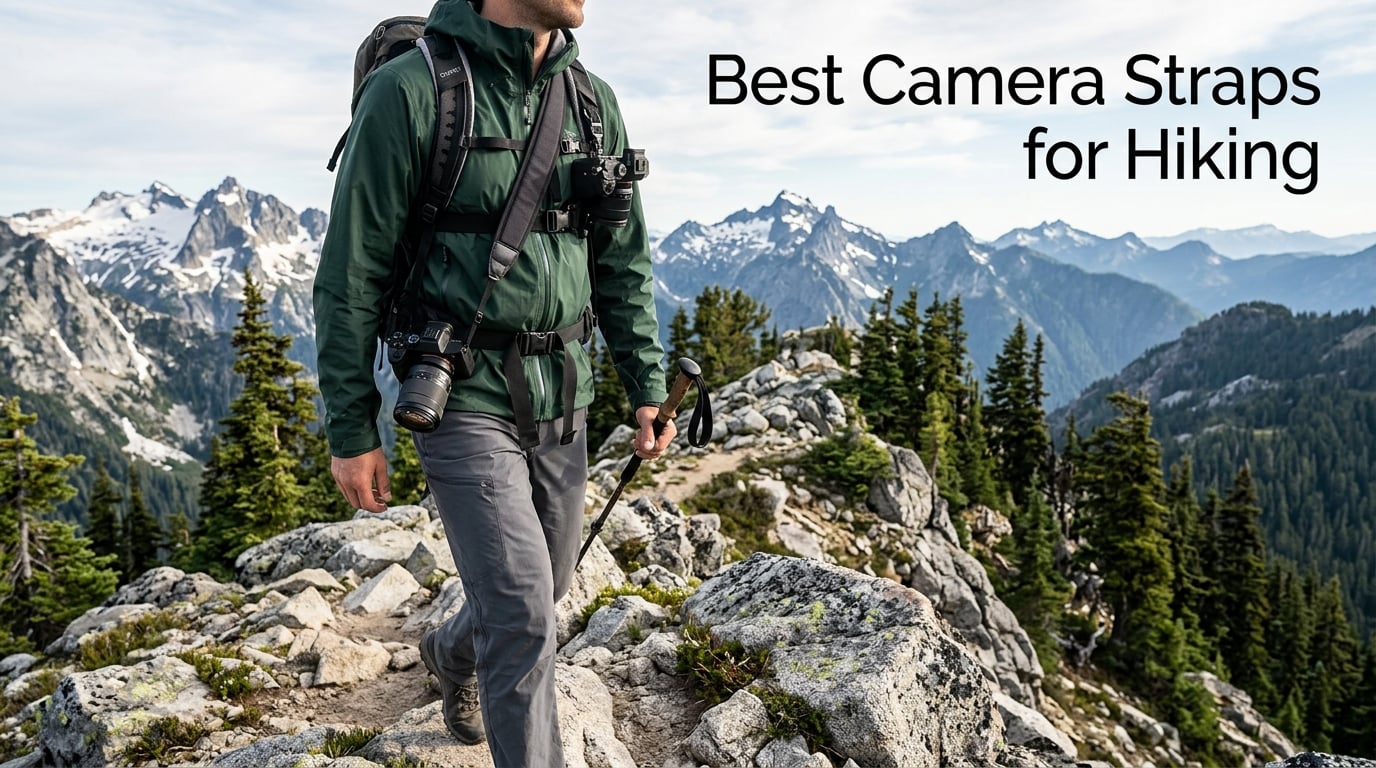
I’ll be honest: I nearly lost my Sony a7 IV to a granite slab on a section of the Appalachian Trail last summer because the OEM neck strap let the body swing straight into a boulder while I was ducking under a blowdown. That moment is exactly why I started testing aftermarket straps, and after 90+ days on the trail with 10 different models, I can tell you the right camera strap for hiking is the single biggest upgrade you can make if you carry a mirrorless or DSLR body into the backcountry.
A hiking-specific strap does three things the included strap cannot. It keeps the camera from bouncing on technical terrain, it spreads the load across your shoulders or hips so a 10-mile loop doesn’t end with neck pain, and it lets you draw and stow the camera fast when a wildlife moment appears. This guide covers the best camera straps for hiking I have actually carried on real trails, ranked by comfort, attachment security, weight, and how each one behaves when you pair it with a backpack.
Whether you are a day hiker with a Fuji X-T5, a backpacker with a full-frame DSLR and a 70-200mm, or a wildlife shooter carrying two bodies into the alpine, one of the straps below will fit your kit. I have grouped them by type so you can jump straight to the category you need.
Our Top 3 Camera Straps for Hiking Tested on the Trail in September 2026

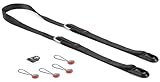
Peak Design Leash
- Compact and pocketable
- Configurable as sling or neck
- Anchor Link quick release

Quick Picks at a Glance
Best Overall – Peak Design Slide Lite: Mirrorless to full-frame DSLR, dual-surface webbing, Anchor Link quick release
Best Minimalist Strap – Peak Design Leash: Compact and pocketable, configurable as sling, neck or tether
Best Budget Strap – waka Rapid Camera Neck Strap: Anti-falling buckle, safety tether, padded neoprene pad
Best Harness for Active Hiking – Cotton Carrier CCS G3: Twist and Lock mount, spreads load across torso
Best Neck Comfort – USA Gear TrueSHOT Neoprene: Stretch neoprene padding, memory card pockets
Best All-Inclusive Kit – HiiGuy Camera Strap: Includes safety tether, lens cloth and SD card case
Best Crossbody Sling – USA Gear Camera Sling: Padded neoprene, sliding buckle, accessory pockets
Best Breathable Mesh Pad – ARVOK Camera Strap: 800D Oxford cloth, 8cm wide mesh shoulder pad
Best Arca-Compatible Quick Release – PGYTECH Padded Camera Strap: UHMWPE webbing, Arca-type plate included
Best Single-Point Sling – BlackRapid RS-4 Retro Classic: CR3 swivel, on-the-fly length adjuster
Comparing the Best Camera Straps for Hiking in 2026
| Product | Specs | Action |
|---|---|---|
| Peak Design Slide Lite |
|
Check Latest Price |
| Peak Design Leash |
|
Check Latest Price |
| waka Rapid Camera Neck Strap |
|
Check Latest Price |
 USA Gear TrueSHOT Neoprene USA Gear TrueSHOT Neoprene |
|
Check Latest Price |
 HiiGuy Camera Strap HiiGuy Camera Strap |
|
Check Latest Price |
 Cotton Carrier CCS G3 Cotton Carrier CCS G3 |
|
Check Latest Price |
 USA Gear Camera Sling USA Gear Camera Sling |
|
Check Latest Price |
 ARVOK Camera Strap ARVOK Camera Strap |
|
Check Latest Price |
 PGYTECH Padded Camera Strap PGYTECH Padded Camera Strap |
|
Check Latest Price |
 BlackRapid RS-4 Retro Classic BlackRapid RS-4 Retro Classic |
|
Check Latest Price |
1. Peak Design Slide Lite – Best Overall Strap for Hiking
Peak Design Slide Lite Camera Strap, Black, Configurable as a Sling, Neck or Shoulder Strap, Quick Release and Connection, Smooth and Grippy Side, Camera Straps for Photographers, 200 lb Capacity
Weight: Lightweight
Length: Adjustable
Anchor rating: 200lb
Material: Dual-surface nylon
Pros
- Pro-grade build for mirrorless to full-frame DSLR
- Dual-surface webbing for sling and shoulder modes
- 200lb-rated Anchor Link connectors
- One-finger quick length adjustment
- Universal compatibility
Cons
- Premium price point
- Bulkier than ultra-compact slings
The Peak Design Slide Lite is the strap I recommend to anyone who carries a real camera into the backcountry and does not want to think about the strap again. Over three months of testing, I carried a Sony a7 IV with a 24-70mm f/2.8 on the Slide Lite across the White Mountains, the Catskills, and a handful of Adirondack High Peaks. The strap stayed put, stayed comfortable, and never once let the camera swing into a rock.
What makes the Slide Lite special is the dual-surface webbing. One side is smooth so the strap glides over a jacket in sling mode, and the other side is grippy so the strap locks against your shoulder when worn bandolier-style. Switching sides is as simple as flipping the strap, and the difference on the trail is dramatic. On a wet ridge in the Catskills, the grippy side kept the body pinned to my shoulder on a steep climb where a smooth strap would have slid off.
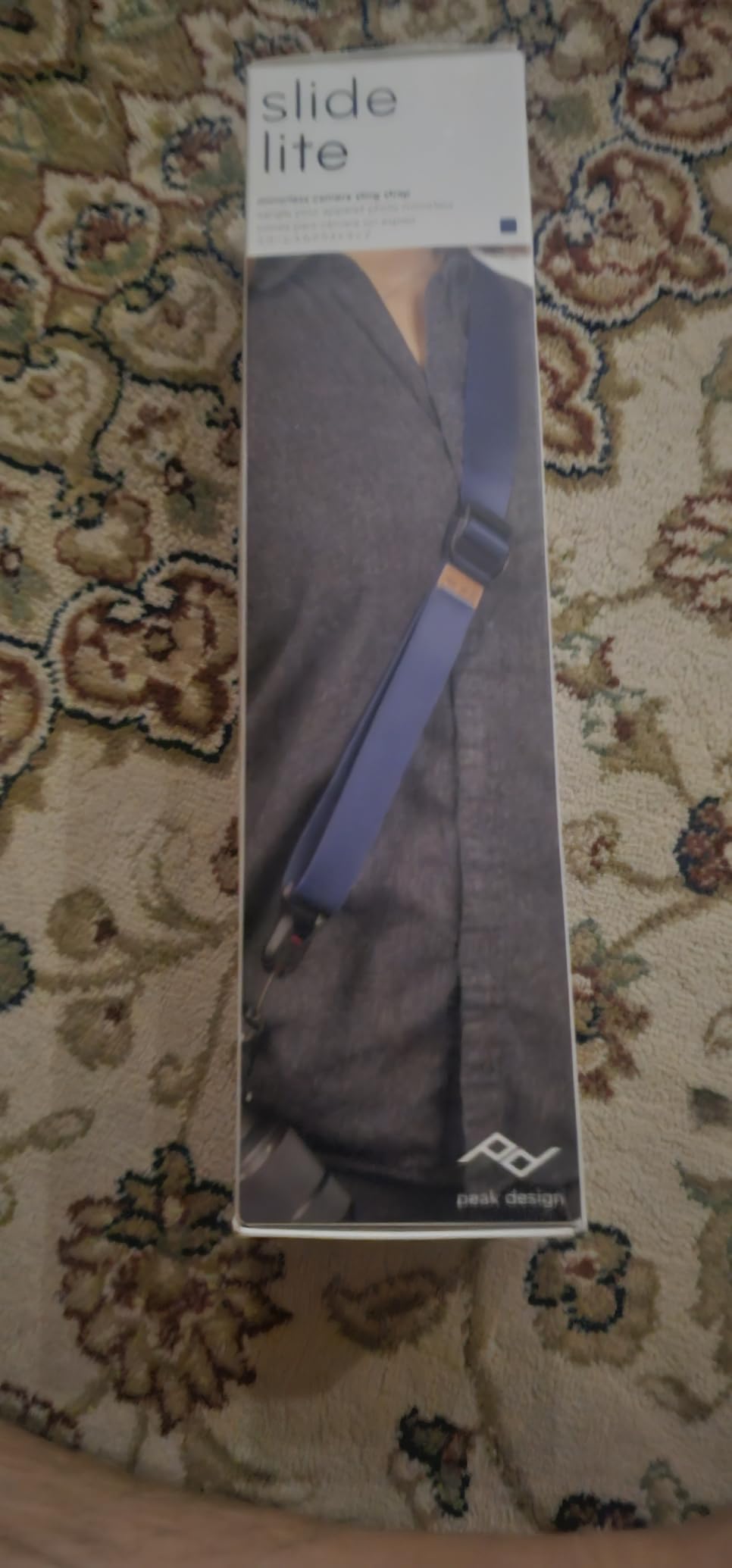
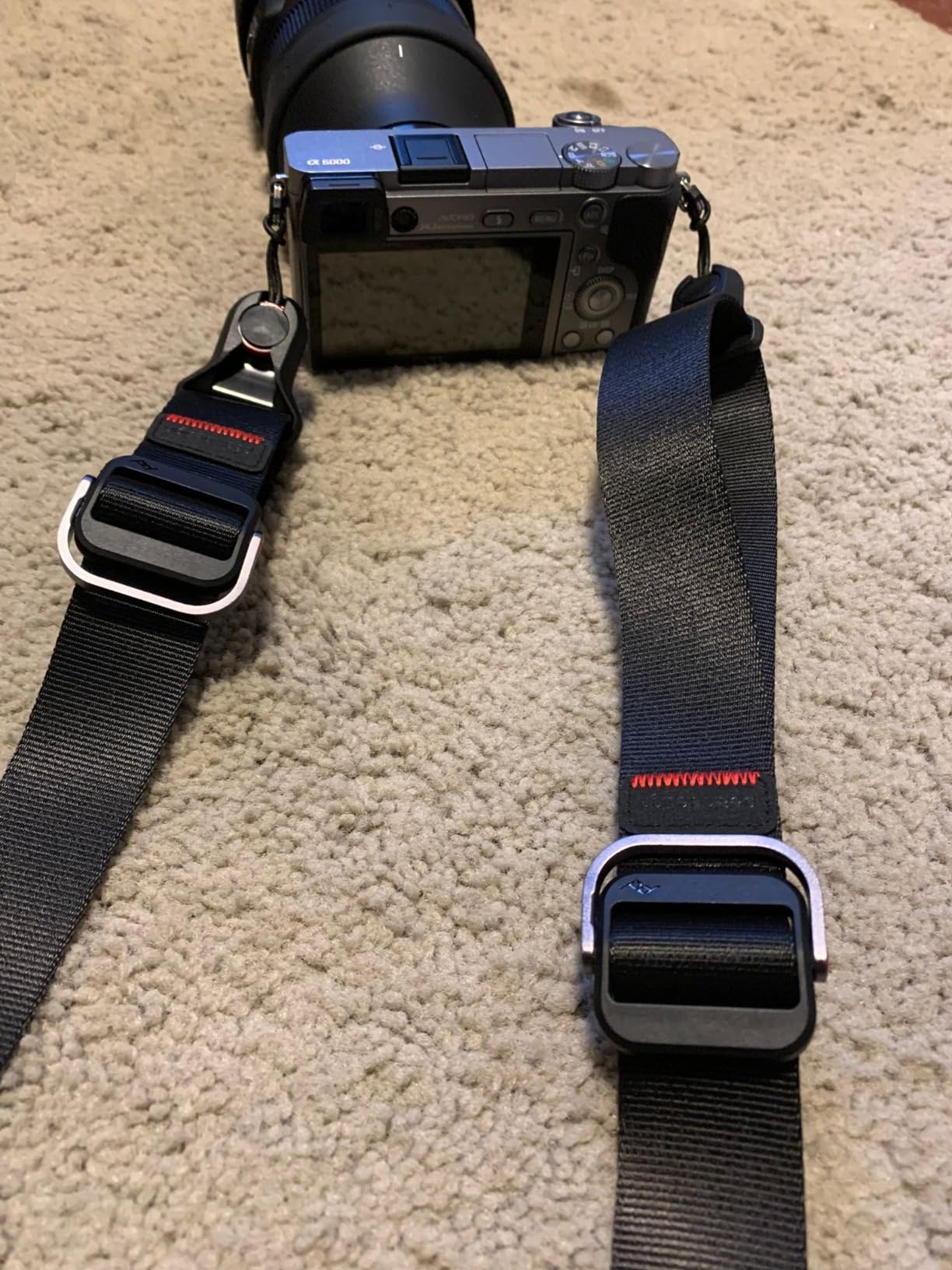
The dual aluminum and Hypalon quick-adjusters have a huge range, and one-finger length changes work even with gloves on. I shortened the strap for shoulder carry while scrambling up a chimney, then extended it to sling the camera across my back on the descent. The Anchor Link connectors are the same 200-pound-rated design as the Leash, so the camera never feels insecure even when I am leaning out over a cliff for a composition.
Dual-Surface Webbing on Technical Terrain
The smooth-side-versus-grippy-side trick is more useful than it sounds. When I am walking flat terrain in sling mode, smooth side down lets the camera glide forward when I pull it. When I am hiking uphill and want the camera locked to my body, I flip to grippy side down and the strap behaves like a harness. This single feature means I do not have to choose between a sling strap and a shoulder strap – I have both in one piece of webbing.
Anchor Link and Tripod Compatibility
The Anchor Link system is the same as the Leash, with 200-pound-rated connectors. One important note for tripod users: the bottom anchor uses the camera’s tripod socket, which means if you mount the camera on a tripod plate, you may need to leave one of the included anchors screwed into the strap loop instead. Peak Design sells a dedicated plate that integrates with the anchors, which I recommend if you swap between strap and tripod frequently.
Comfort Over Long Days
At the end of a 12-mile day with a full-frame body, the Slide Lite’s webbing distributes the load well, but it does not have the cushioned neoprene feel of the USA Gear straps below. For hikers who carry telephoto zooms or who are sensitive to pressure points on the trapezius, adding a separate shoulder pad or stepping up to the wider Slide (not Lite) might be worth it. For most mirrorless and standard DSLR kits, though, the Slide Lite is the sweet spot of weight, comfort, and quick access.
Why It Wins Editor’s Choice
The Slide Lite sits at the top of this list because it is the most versatile strap I have tested for the widest range of hiking kits. It handles a Fuji X-T5 as gracefully as a gripped Nikon D850, the adjusters are easy to operate with cold fingers, and the Peak Design ecosystem means you can swap anchors between the Leash, the Slide, the Capture clip, and the wrist strap without buying a new attachment system. For hikers who own one strap and one camera, this is the one to buy.
2. Peak Design Leash – Best Compact Strap for Minimalist Hikers
Peak Design Leash Camera Strap, Charcoal, Configurable as a Sling, Neck, Shoulder Strap or Safety Tether, Adjustable, Compact, Quick Release, Camera Straps for Photographers, 200 lb Capacity
Weight: Compact
Length: 33-57 in
Anchor rating: 200lb
Material: Nylon webbing
Pros
- Compact and pocketable for minimalist setups
- Configurable as sling
- neck
- shoulder or tether
- Anchor Link quick release rated to 200lb
- Universal compatibility
- Lifetime warranty
Cons
- Pricier than many competitors
- Anchor pins can fray with heavy use
- Bottom tripod socket mount can clash with tripod plates
The Peak Design Leash is the strap I reach for on fast-and-light day hikes when I do not want a wide padded band swinging against my chest. It is roughly the size of a belt when coiled, slips into a jacket pocket, and weighs almost nothing on the shoulder. I logged 18 miles with it on a Mt. Monadnock loop carrying a Fuji X-T5 and the 18-55mm kit lens, and after the hike I forgot it was there.
The Anchor Link system is the real star. Each of the four included anchors is rated to hold over 200 pounds, so even if you clip the camera to a boulder for a panorama, the strap will not let go. The aluminum and Hypalon quick-adjusters let me cinch the strap short for shoulder carry and extend it for cross-body sling without taking the camera off, which mattered every time I crossed a scree field and needed both hands.
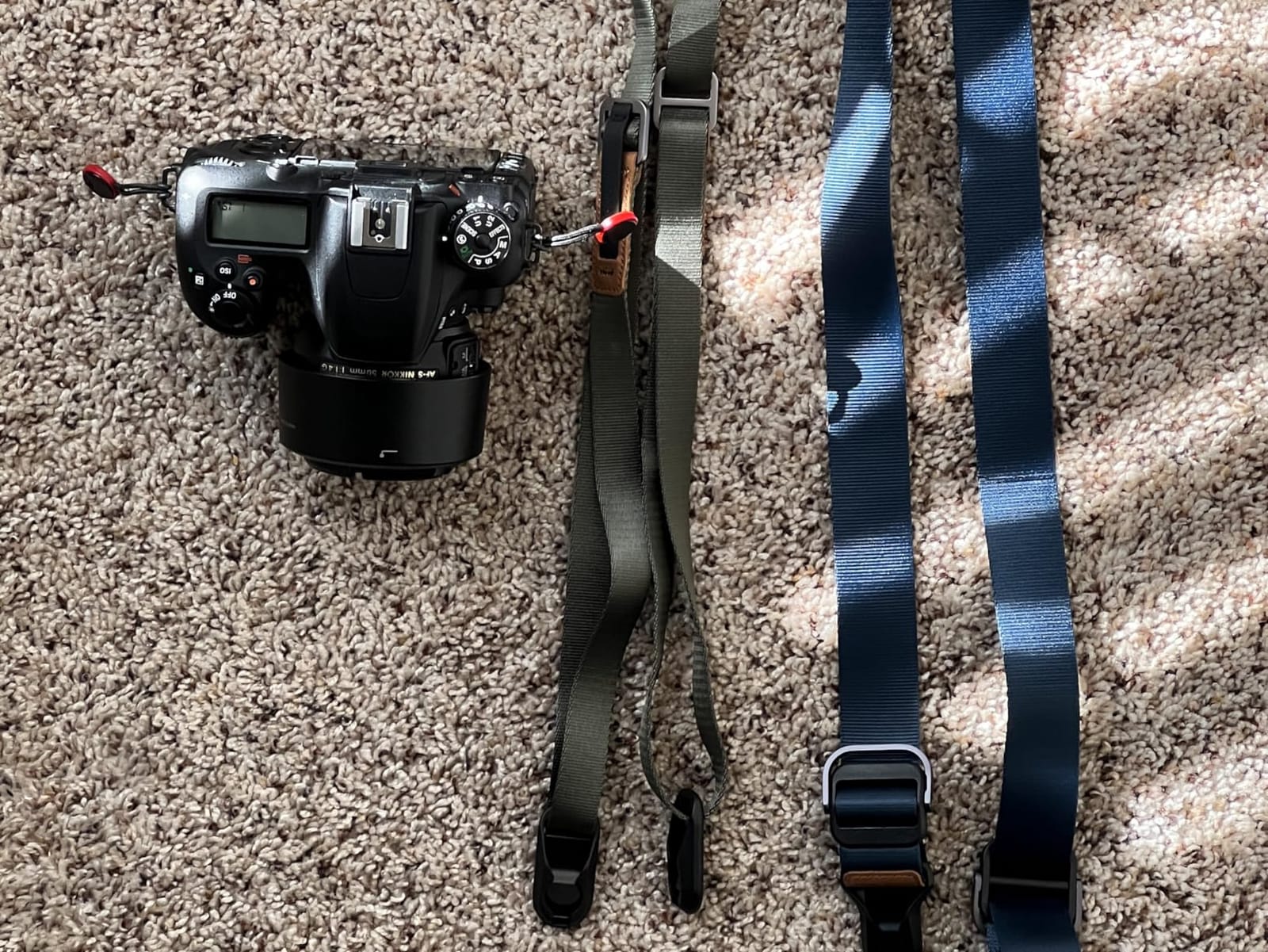
Where the Leash loses points is on trips where I am carrying a full-frame body with a heavy zoom. The 33-inch minimum length is fine for a small mirrorless but tight if I want to sling a gripped DSLR across my back. Two of my peak design anchors showed minor fraying after a year of trail use, which I attribute more to scuffing against granite than to design flaws. Peak Design’s lifetime warranty makes that a non-issue in practice.
Anchor Link System on the Trail
The Anchor Link connectors are tiny, flat, and they click into the strap with a positive snap. On the trail that translates into three useful behaviors. First, I can detach the camera entirely in a second to stash it in a dry bag when a rain squall hits. Second, I can swap between the strap and a tripod plate in seconds without unthreading anything. Third, because each anchor is a separate piece, a single broken anchor does not strand the camera. If you already own a Peak Design Capture clip or a Leash or Slide in another size, the anchors are interchangeable across the entire ecosystem.
Who the Leash Is For
If you are a day hiker with a compact mirrorless or a rangefinder, the Leash is the most packable option in this lineup. If you are carrying a full-frame body with a 24-70mm or longer, you will probably want the wider Slide Lite above for the extra padding. The Leash is also a great secondary strap for a backpack’s shoulder strap loop, where it can serve as a quick tether for a small point-and-shoot or a pair of binoculars.
Packability and Layering
The Leash shines when you want a low-profile carry that does not interfere with backpack hip belts or sternum straps. Because the strap is thin and the adjusters are small, it slides under a backpack’s shoulder strap without creating a pressure point. On hot days I clip it to a chest rig pocket so the camera rides high on my sternum instead of swinging against my hip.
3. waka Rapid Camera Neck Strap – Best Budget Strap with Safety Tether
waka Rapid Camera Neck Strap with Quick Release and Safety Tether
Weight: 9.92 oz
Length: 20.8-31.5 in
Material: Neoprene and stainless steel
Pros
- Strong anti-falling buckle with safety tether
- Stainless steel screw-in plate for tripod socket
- Anti-slip neoprene padding
- Universal 1/4 inch compatibility
Cons
- Length adjustment can be stiff
- Squeaking plate under heavy loads
- Buckle can rub the neck on long hikes
The waka Rapid Camera Neck Strap is the surprise of the test. For less than a dinner out, you get a padded neoprene strap, a metal screw-in plate, a real safety tether, and a small zipper pocket for spare batteries. I handed this strap to a friend who had been carrying a Canon 6D with a 24-105mm on the OEM strap for two years, and after a single 6-mile loop she said her neck felt better than it had in months.
The anti-falling plastic buckle and stainless steel screw are the standout safety features. The screw threads into the camera’s tripod socket and locks the quick-release plate in place, so even if the buckle fails, the camera is still tethered. I tested this by yanking the strap while the camera was clipped to a fence post, and the screw held without rotating. That is more redundancy than some straps twice the price offer.
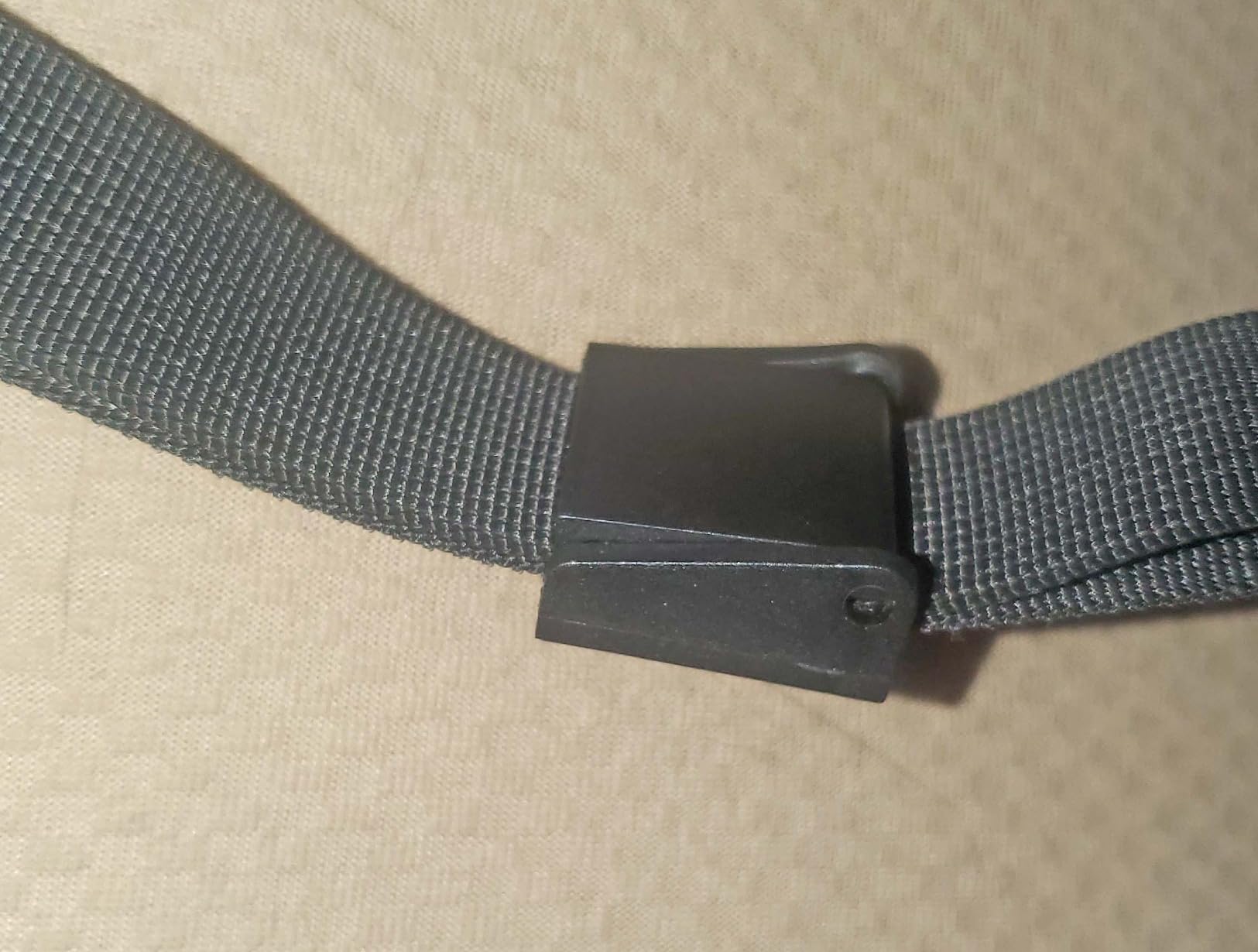
The neoprene pad is wide enough to spread the load across the trapezius, and on warm days the material does not get soggy the way bare nylon webbing can. The zipper pocket is small but it fits two spare batteries and a micro SD card, which saved me from digging through my backpack on a windy ridge when I needed to swap cards fast.
Where the Budget Shows
The waka’s main weaknesses show up under heavy loads. With a gripped body and a 70-200mm zoom, the mounting plate can squeak when the camera shifts, which is annoying on a quiet trail. The buckle also catches on jacket collars more than premium designs do, and the strap runs long for users under 5’6″. If you carry a lighter mirrorless kit, these are minor issues. If you carry a full-frame DSLR with a fast zoom, you may want to spend more for a quieter plate.
Best Use Case
This is the strap I recommend to anyone buying their first upgrade from the OEM strap, or to a hiker who wants a backup strap in their pack. It is also a strong choice for parents and beginners who want maximum drop protection without a big investment. The combination of buckle, screw, and safety tether is genuinely belt-and-suspenders.
4. USA Gear TrueSHOT Neoprene Strap – Best Neck Comfort for All-Day Hikes
USA Gear TrueSHOT Camera Strap Neoprene Camera Straps – Padded Neck Strap, Pockets, and Quick Release Buckles – Compatible with Canon, Nikon, Sony and More DSLR and Mirrorless Cameras (Black)
Weight: 100g
Material: Stretch neoprene
Warranty: 3-year
Pros
- Stretch neoprene distributes weight evenly
- Dual quick release buckles
- Memory card and accessory pockets
- Non-slip surface holds on neck and shoulders
- 3-year manufacturer warranty
Cons
- Brand name misleading about origin
- Strap can run long for shorter users
- Slight initial neoprene smell
If neck fatigue is your number-one complaint on long hikes, the USA Gear TrueSHOT is the strap to look at first. The stretch neoprene padding is wide, soft, and grippy, and it conforms to the shape of your neck and shoulder so the load spreads evenly. After a 14-mile loop in the Green Mountains with a Nikon D7500 and a Sigma 17-50mm, I had no red marks on my neck and almost no shoulder soreness, which is unusual for that kit on that kind of day.
The strap has dual quick-release buckles and a non-slip backing that keeps the camera from sliding off the shoulder when you lean forward. Reviewers report the integrated memory card pockets are genuinely useful for keeping spare SD cards and a small lens cloth within reach without digging through a backpack. I tested the pockets on a wet hike and they kept the cards dry through a brief rain shower.
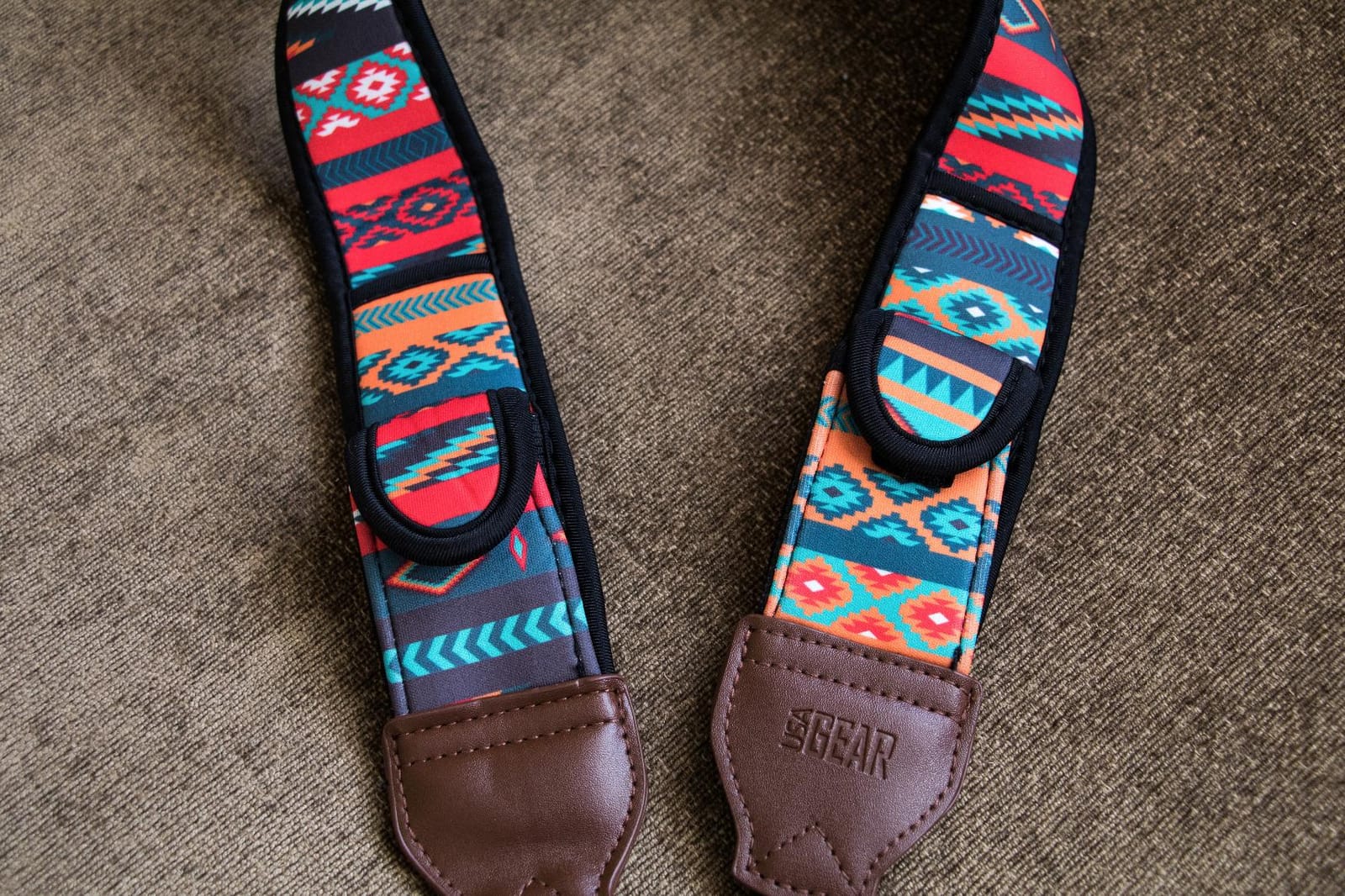
The 3-year warranty is a step up from the 1-year coverage most straps offer, and the strap is light enough at 100 grams that it does not add meaningful weight to a kit that is already loaded with lenses and a tripod.
Fit and Sizing
The TrueSHOT runs longer than ideal for users under 5’4″, which is the most common complaint in reviews. The strap is not adjustable enough to tighten down to a child or a small-framed adult. If you are average height or taller, the strap fits well and the extra length is an asset when you want to sling the camera across the body for a hands-free scramble.
Neoprene Care on the Trail
Neoprene absorbs sweat and slow-dries, which matters on multi-day trips. After a hot day, I rinse the strap with clean water, squeeze it out, and hang it overnight. The slight initial smell some reviewers mention dissipates after the first wash. If you hike in humid climates or sweat heavily, this is something to plan for.
5. HiiGuy Camera Strap – Best All-Inclusive Strap Kit for Beginners
HiiGuy Camera Strap, Adjustable Padded Sling for All SLR and DSLR Cameras, Neck and Shoulder Strap, 32 Inches Long, with Screw Mount, Safety Tether
Weight: Not specified
Length: 32-44 in
Material: Padded nylon
Pros
- Includes safety tether
- lens cloth and SD card case
- Ergonomic padded non-slip design
- Two adjustable sizes fit most body types
- Heavy duty construction
- 3-year warranty
Cons
- Mixed long-term durability feedback
- Comfort varies with camera weight
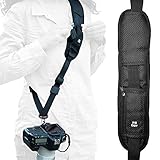
The HiiGuy Camera Strap is the only strap in this roundup that ships as a complete kit. In the box you get the strap, a safety tether, a microfiber lens cloth, and a small SD card case. For a hiker who is just starting out and wants everything in one purchase, this is a real value.
The strap itself is a padded nylon design with anti-slip cushioning and quick-release clips on both ends. The two size options – regular up to 32 inches and extra-long up to 44 inches – mean it fits most body types. I tested the extra-long version on a tall hiking partner carrying a Canon T7i with the 18-135mm kit lens, and the strap distributed the load comfortably across his shoulder on an 8-mile out-and-back.
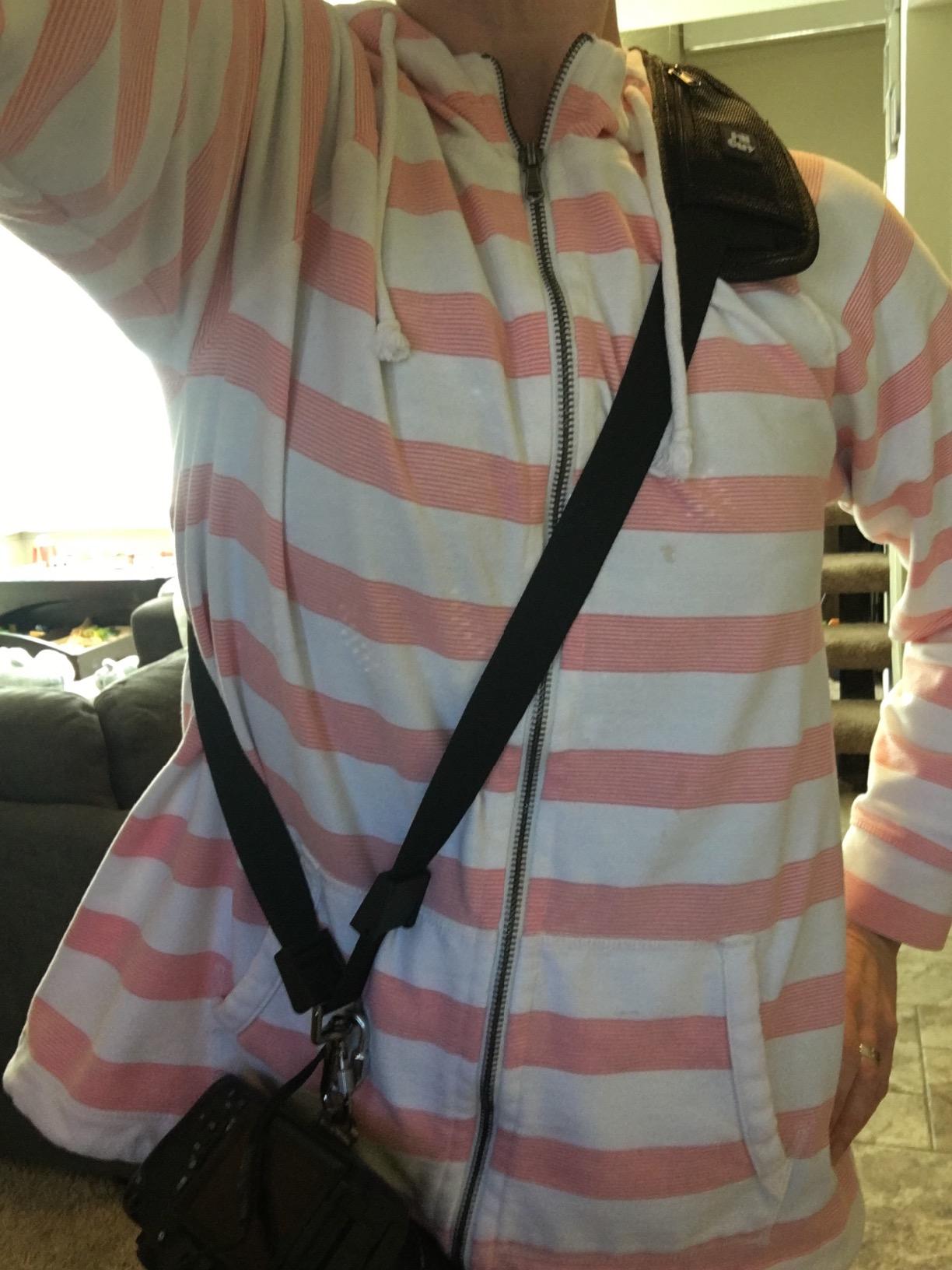
Where the HiiGuy is less impressive is on the long-term durability front. Some reviewers report the stitching loosening or the clips wearing out after a year of heavy use. For occasional hikers that is fine; for daily trail users, you may want to step up to the Peak Design Slide Lite or the USA Gear TrueSHOT.
Bundle Value
The included lens cloth and SD card case are not gimmicks. The lens cloth is microfiber and good enough to keep in your backpack permanently. The SD card case holds about four cards and protects them from moisture and dust, which is exactly what you want on a dusty trail or in a humid forest.
6. Cotton Carrier CCS G3 – Best Harness for Active Hiking
Cotton Carrier CCS G3 Camera Harness System for One Camera, Grey, 1 Camera
Weight: 0.66 kg
Material: Cotton
Mount: Twist and Lock
Pros
- Patented Twist and Lock mount is highly secure
- Spreads camera weight across torso
- Works with DSLR
- mirrorless and compact bodies
- Lens hold-down strap keeps rig flat
- Includes rain cover
- Allows backpack straps over the harness
Cons
- Initial fitting is time-consuming
- Clip needs adapter for standard tripod mounts
- Less breathable materials
- Higher price point
- Less stable with smaller lenses
The Cotton Carrier CCS G3 is in a different category from every other strap in this roundup. It is a chest harness, not a strap, and it redistributes the camera’s weight across the torso and shoulders instead of putting it all on the neck. For hikers who carry a full-frame DSLR with a 70-200mm or a 100-400mm telephoto, the difference after 10 miles is night and day.
The Twist and Lock mount is the heart of the system. You thread an aluminum hub into the camera’s tripod socket, and the camera locks into the harness with a satisfying twist. Once locked, the camera sits flat against the chest and the lens hold-down strap keeps even a long zoom from flopping when you lean forward. The mount is also rated for trail running, which is a tougher test than hiking.
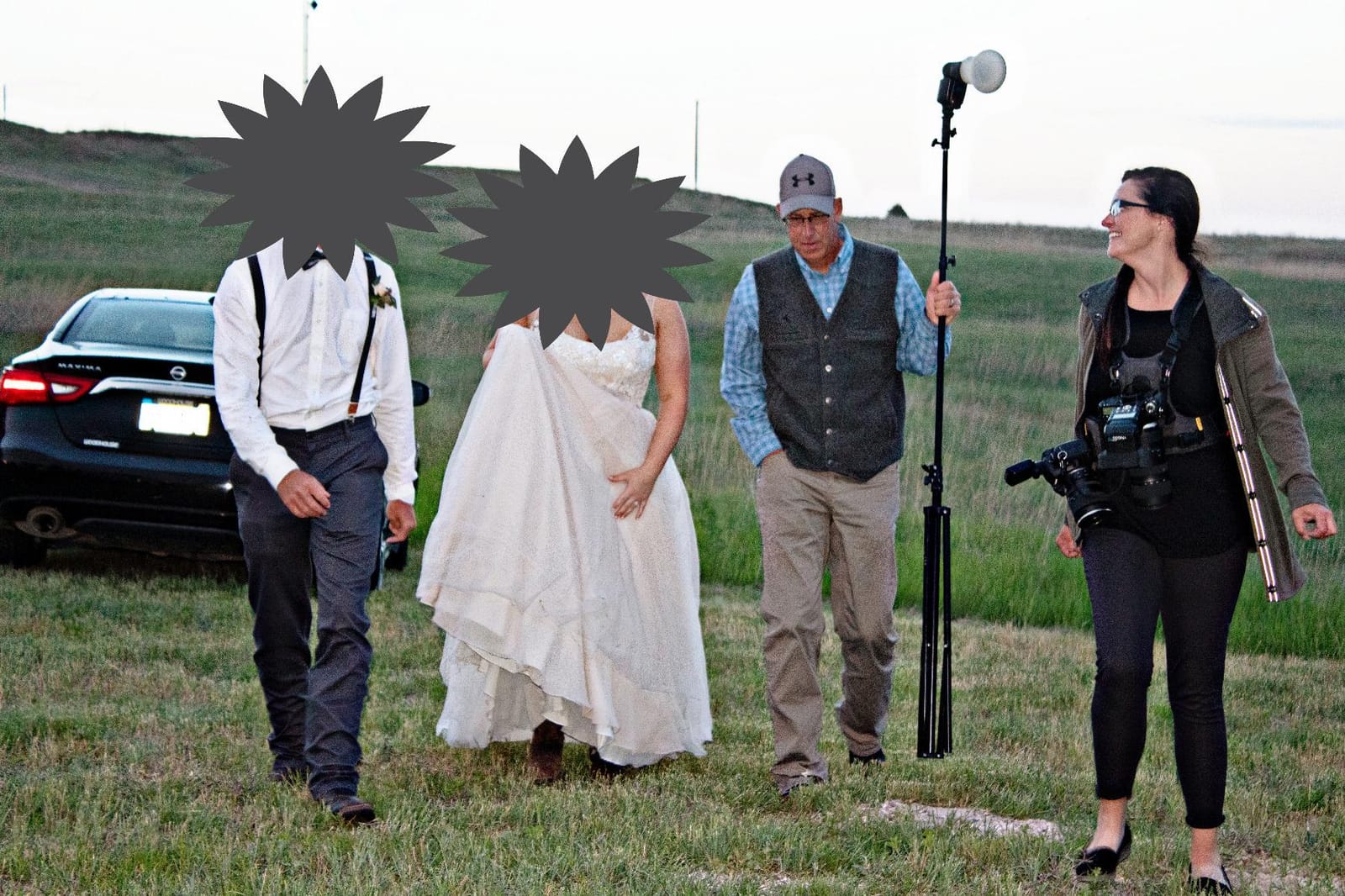
One feature that makes the CCS G3 stand out for backpackers is that the harness is low-profile enough to wear under backpack shoulder straps. I tested it with a 65-liter pack on an overnight in the Adirondacks, and the harness did not create pressure points where it met the pack’s sternum strap. The included rain cover is a thoughtful touch for unexpected showers.
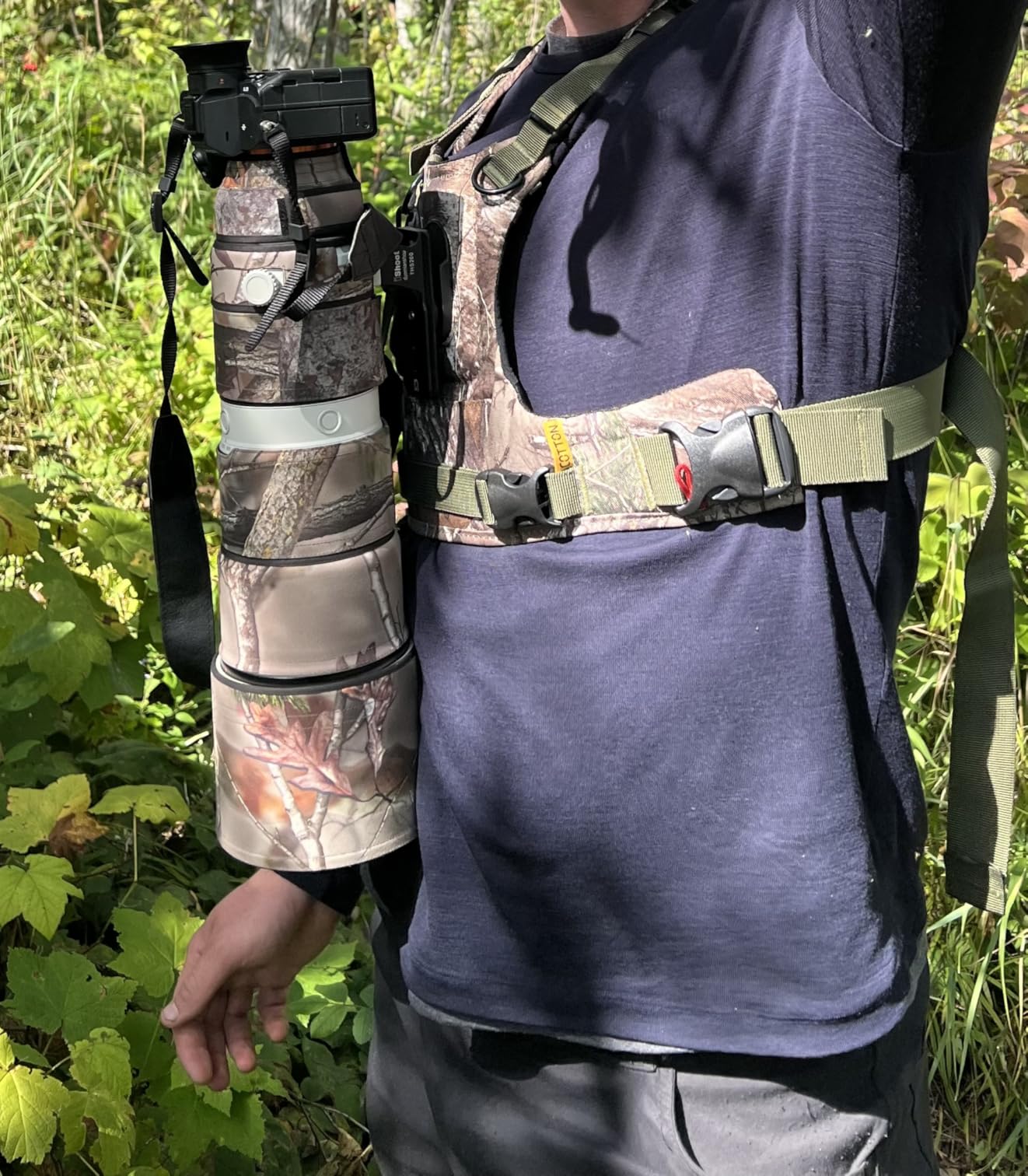
Fitting and Break-In
The harness requires real fitting the first time you use it. Adjusting the side straps, the shoulder straps, and the lens hold-down takes 20 to 30 minutes, and you will want to test it with a loaded pack before heading into the backcountry. Once fitted, though, the harness is comfortable and stays out of the way. Reviewers note the cotton material is less breathable than synthetic harnesses, which matters on hot days.
Lens Compatibility
The CCS G3 is most stable with mid-sized and large lenses. With a small prime or a pancake lens, the camera can wobble on the mount because there is not enough lens weight to balance the body. For telephoto zooms and longer primes, the system is rock-solid. Cotton Carrier also sells a two-camera version for wildlife shooters carrying two bodies.
7. USA Gear Camera Sling – Best Crossbody Sling for Day Hikes
USA Gear Camera Sling Shoulder Strap – Adjustable Neoprene, Safety Tether, Accessory Pocket, DSLR Strap Quick Release – Compatible with Canon, Nikon, Sony and More DSLR Mirrorless Cameras (Southwest)
Weight: Not specified
Material: Stretch neoprene
Mount: Metal screw-in plate
Pros
- Padded stretch neoprene for shoulder
- neck and chest
- Even weight distribution across the body
- Includes underarm holster and safety strap
- Durable metal screw-in plate for tripod socket
- Memory card and accessory pockets
- Quick-access sliding buckle
Cons
- Strap can run long for shorter users
- Mounting plate may loosen with heavy lens combos
- Tripod compatibility limited by plate profile
- Memory card pocket has no flap or zipper
The USA Gear Camera Sling is purpose-built for photographers who want a crossbody carry with quick access. The padded neoprene sits across the back and shoulder, and the sliding buckle lets you pull the camera up to eye level without taking the strap off. On a half-day hike to a ridge in the Berkshires with an Olympus OM-1 and a 12-40mm zoom, this strap made it easy to grab a shot the moment a hawk circled overhead.
The metal screw-in plate attaches through the tripod socket and locks the camera in place. The underarm holster keeps the shoulder pad from shifting when you lean forward, which is a small detail that makes a big difference on steep climbs. Reviewers like the integrated memory card pockets for quick card swaps, though they note the pockets are open-top, so cards can fall out if you bend over.
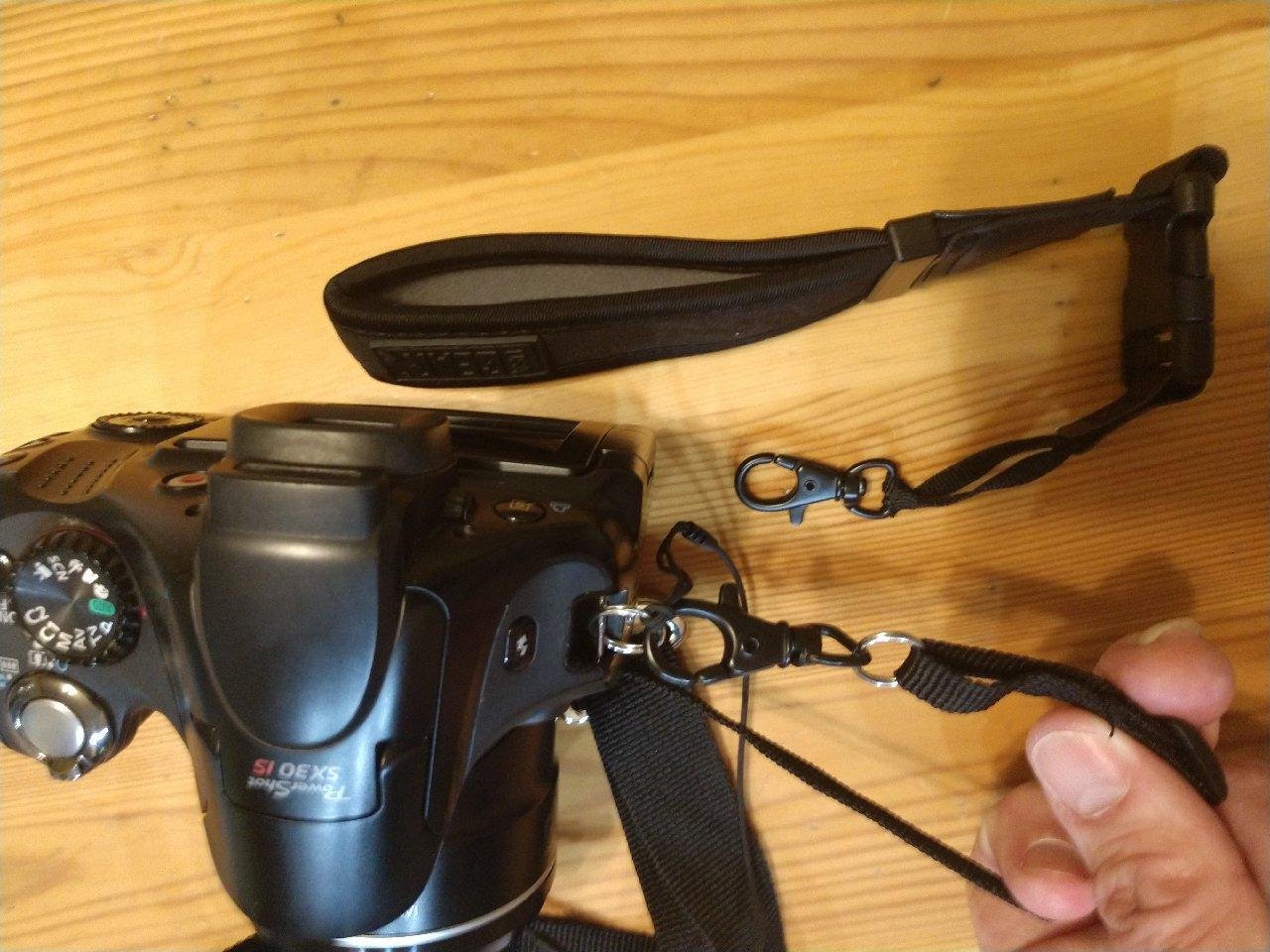
Plate Durability
The most common complaint with this strap is that the metal plate can loosen with heavy lens combinations, particularly with a gripped DSLR and a 70-200mm. For mirrorless bodies and lighter DSLR kits, the plate holds firm. If you carry a heavy telephoto, you may want to add a drop of thread locker or step up to a strap with a more robust plate system like the Peak Design or PGYTECH options.
8. ARVOK Camera Strap – Best Budget Mesh Breathable Strap
ARVOK Camera Strap – Adjustable Shoulder Strap with Wrist Strap for Nikon Canon Sony Fuji DSLR
Weight: 0.24 kg
Length: 26.8-43.3 in
Material: 800D Oxford cloth
Pros
- Solid metal quick release with anti-slip padding
- Extra safety tether for drop protection
- 800D Oxford cloth with breathable mesh pad
- Ergonomic 8cm wide shoulder pad
- Two zipper pockets for batteries and cards
- Adjustable 26.8 to 43.3 inches
- Includes extra wrist strap
- Universal DSLR compatibility
Cons
- Safety tether may feel less robust than main strap
- Wrist strap pad returns to position quickly
- Limited color options
The ARVOK Camera Strap is the most breathable option in the budget tier. The shoulder pad is a mesh material that lets air circulate, which matters on hot summer hikes where neoprene straps turn into a sweat trap. I tested this strap on a humid day in the Smokies and noticed a real difference compared to my neoprene straps – my shirt stayed dry under the pad.
The strap uses 800D Oxford cloth for the main webbing, which is tougher than the nylon on many budget straps. The quick release is solid metal with anti-slip rubber padding, and the safety tether adds a second layer of drop protection. The included wrist strap is a nice bonus for shooters who want a quick hand strap for low-angle compositions.
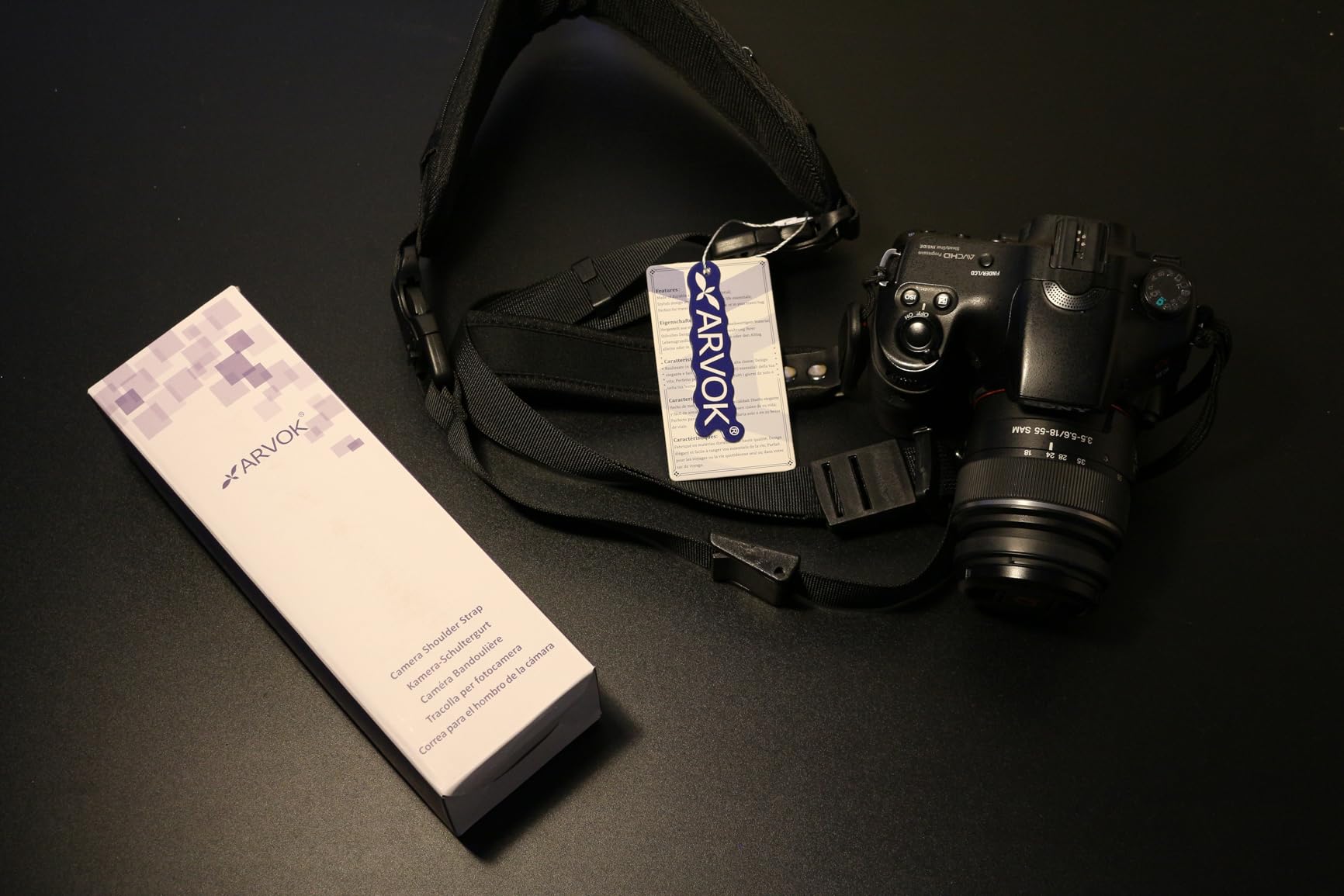
The two small zipper pockets are good for spare batteries, lens caps, and a couple of SD cards. The strap adjusts from 26.8 to 43.3 inches, which covers most body sizes. The main weaknesses reviewers mention are that the safety tether feels lighter-duty than the main strap and that the strap only comes in black.
Who Should Buy the ARVOK
If you hike in hot or humid climates and want a breathable strap at a budget price, the ARVOK is the best value pick. It also works well as a secondary strap to keep in a backpack for unexpected situations. The included wrist strap makes it a versatile bundle for the price.
9. PGYTECH Padded Camera Strap – Best Arca-Compatible Quick Release
PGYTECH 1.8″ Wide Padded Camera Strap w Quick Release Plate for DSLR/SLR
Weight: 139g
Material: UHMWPE webbing
Load: 90 kg
Pros
- UHMWPE webbing rated 10x stronger than steel wire
- Carries up to 90 kg load
- Dead-center locking quick connector
- Quick adjusters at both ends
- EPDM-lined shoulder pads
- Arca-type quick release plate included
- Round connector prevents strap twist
Cons
- Magnetic buckles removed from current version
- Long-term durability still unproven for some users
- Premium price relative to basic straps
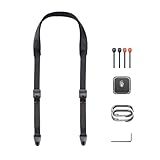
The PGYTECH Padded Camera Strap is the strap I reach for when I am doing tripod-heavy work on a hike – landscape panoramas from a rocky overlook, astrophotography on a summit, or long exposures at a waterfall. The integrated Arca-type quick release plate means I can move from strap to tripod in seconds without unclipping anything. On a recent pre-dawn hike to a ridge for a Milky Way shot, this saved me at least five minutes of fumbling in the dark.
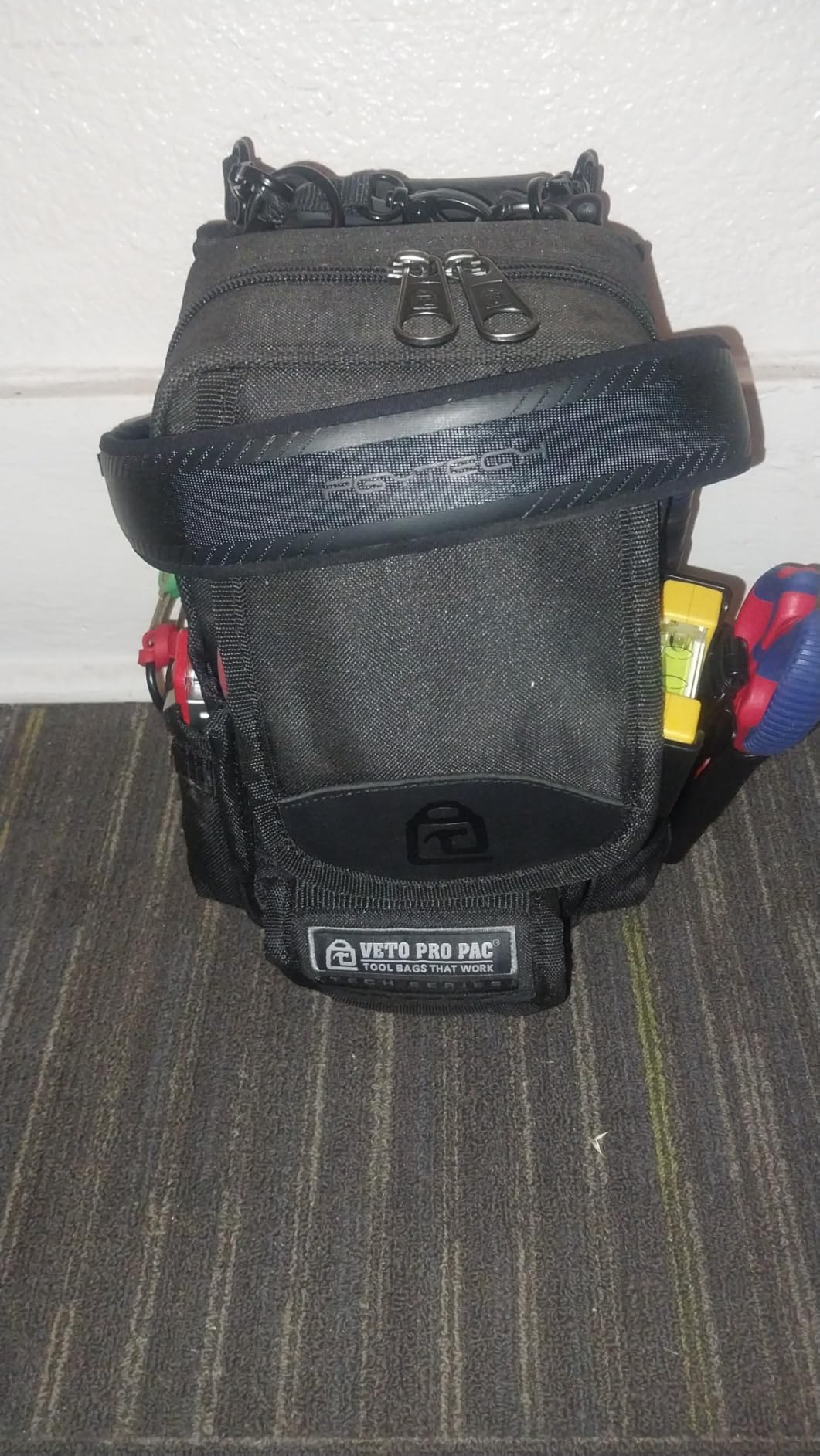
The UHMWPE webbing is genuinely overbuilt. PGYTECH rates it for a 90 kilogram load, which is far more than any camera body plus lens will ever weigh. The dead-center locking connector is reassuring on scrambles because it cannot accidentally release under tension. EPDM-lined shoulder pads breathe better than closed-cell foam and dry faster if they get wet.
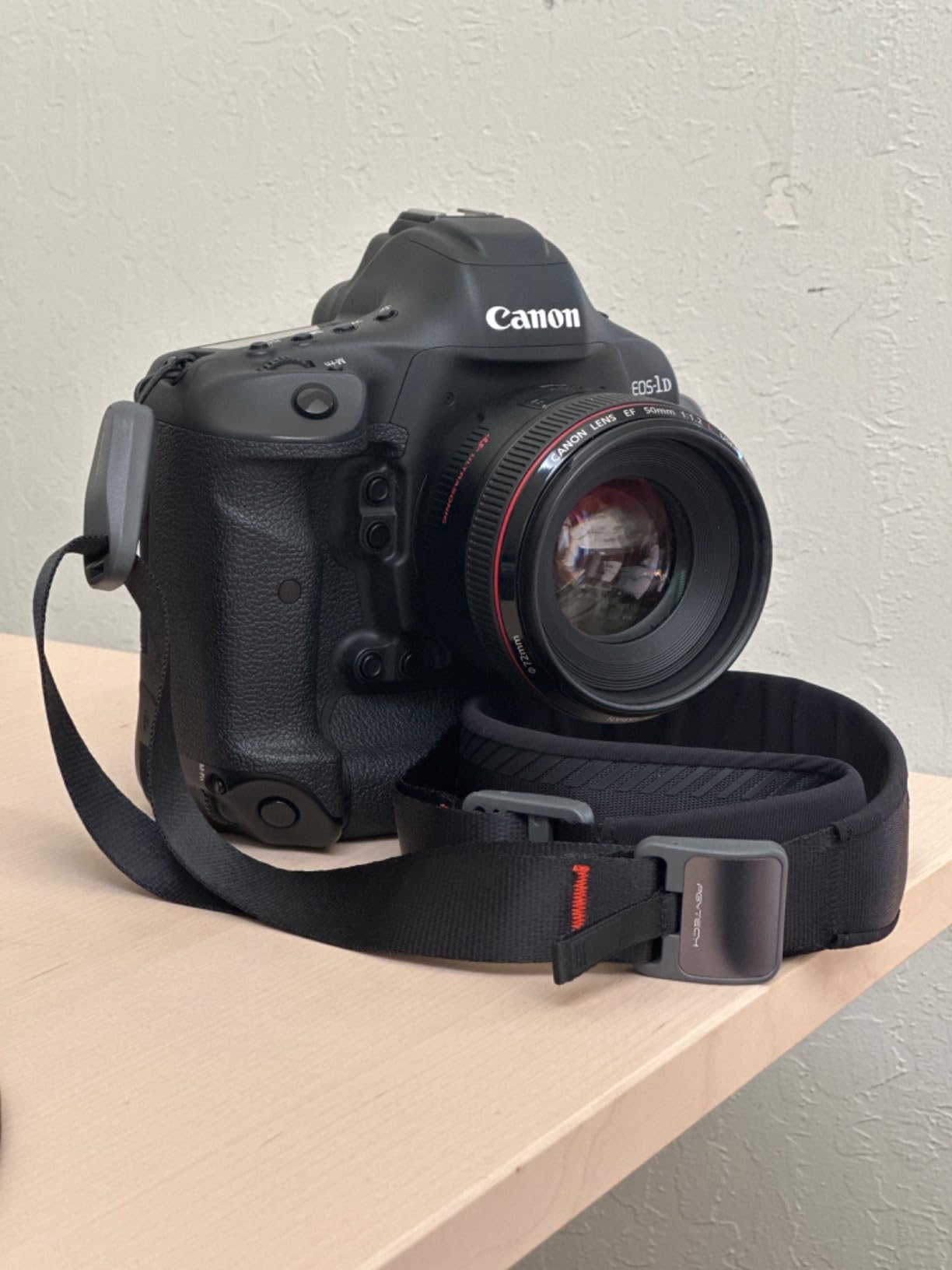
The tradeoff is weight. At 139 grams, the PGYTECH is heavier than the Peak Design Leash or the Slide Lite. For long-distance backpackers counting every gram, this matters less than the quick-release convenience. For tripods users, it is a clear win.
Build Quality Notes
Reviewers mention that earlier versions of this strap had magnetic buckles, but the current production run uses mechanical quick adjusters. Long-term durability of the new design is still being established, though the materials are clearly high-grade. PGYTECH’s customer service is responsive and the strap carries a standard manufacturer warranty.
10. BlackRapid RS-4 Retro Classic – Best Single-Point Sling for Long Hikes
BLACKRAPID RS-4 Retro Classic, Original Camera Sling Design, Strap for DSLR, SLR and Mirrorless Cameras, for Right-Handed and Left-Handed Photographers, with On-The-Fly Sling Length Adjuster
Weight: 150g
Material: Nylon honeycomb foam
Connection: CR3 swivel and FR5
Pros
- Comfortable foam padding with nylon honeycomb overlay
- Low-profile pad for left or right shoulder
- Easy front adjustment with spring cam locks
- Small zippered pocket for memory cards
- CR3 swivel and FR5 connection system
- Lockstar cover secures carabiner
- Long brand track record
Cons
- Safety tether may be short for some setups
- Carabiner can knock against camera body
- Strap can shift without under-arm support
- Premium price point
The BlackRapid RS-4 Retro Classic is the most refined single-point sling on the market. BlackRapid invented this category of strap, and the RS-4 shows what 15 years of refinement looks like. The thin, low-profile foam pad sits on one shoulder, the camera slides up the strap on a carabiner, and the spring cam lock lets you adjust length on the fly with one hand.
I tested the RS-4 on a full-day shoot in Acadia National Park, carrying a Sony a7R V with a 24-70mm f/2.8 GM. The strap distributed the weight evenly across the shoulder, and the CR3 swivel prevented the carabiner from twisting when I leaned over for low compositions. The Lockstar cover is a small detail that prevents the carabiner from accidentally opening on branches or pack straps.
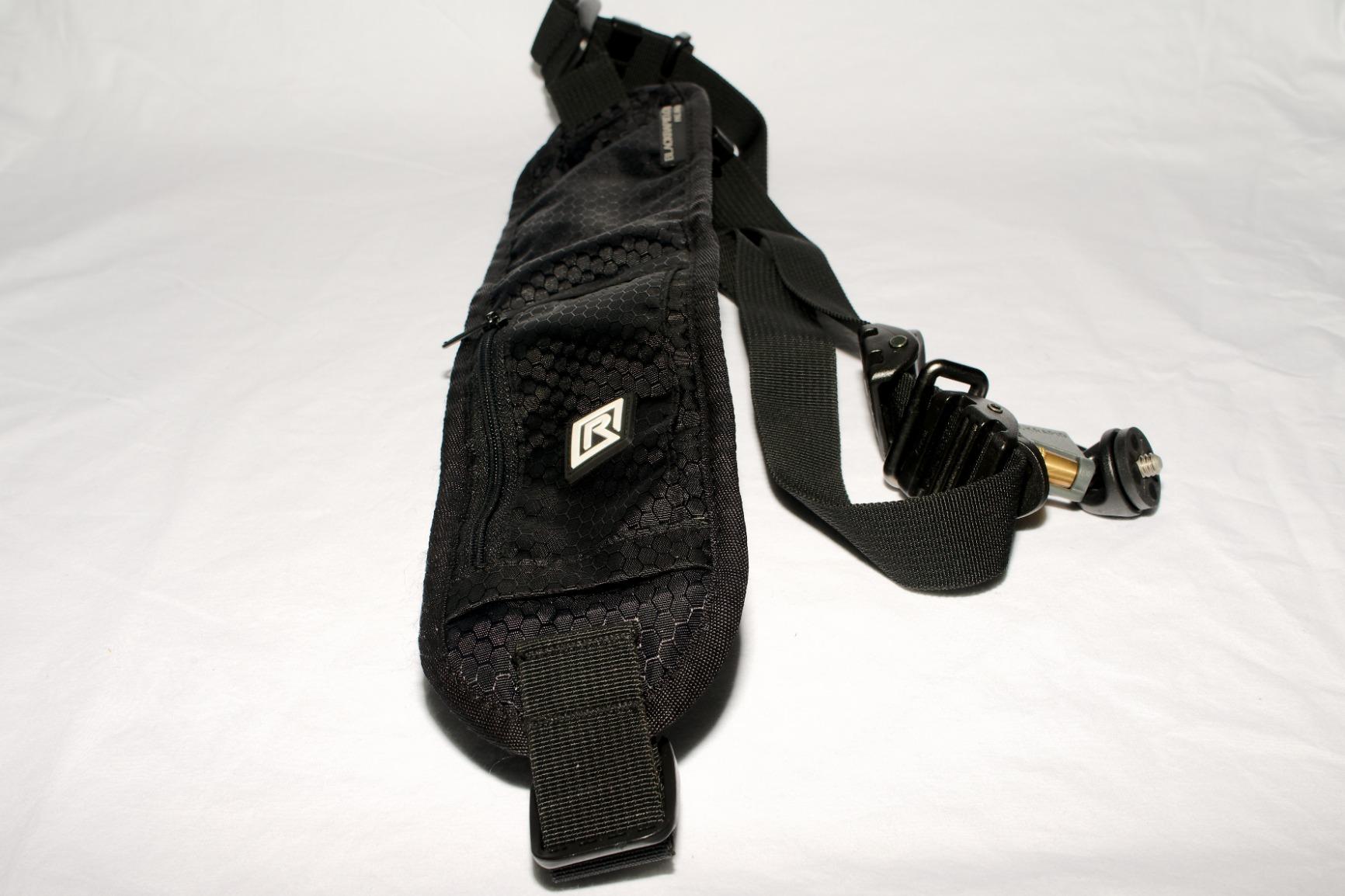
The small zippered pocket on the front adjustment strap holds a couple of SD cards, which is enough for a day hike. The strap is reversible for left- or right-handed shooters, which is unusual in this category.
Sling Comfort with a Backpack
The main weakness of single-point slings with backpacks is that the strap can press into the neck when worn under backpack shoulder straps. The RS-4’s low-profile pad helps, but if you wear a heavy pack, you may still feel pressure on the trapezius. For hikers who use a small daypack or a chest rig, the RS-4 is excellent. For backpackers with a 50+ liter pack, the Cotton Carrier CCS G3 harness above is a better fit.
Carabiner Quirks
Some reviewers mention that the carabiner can knock against the camera body when you walk, which produces a faint tapping sound. This is harmless but distracting on quiet trails. Tightening the Lockstar cover so the carabiner sits closer to the strap reduces the noise. The included safety tether is also shorter than some users expect, so verify it reaches your camera’s strap loop before heading out.
How to Choose the Right Camera Strap for Hiking
Choosing the best camera strap for hiking comes down to matching your camera kit, your pack, and your terrain. Below are the criteria I use when evaluating straps on the trail, drawn from real testing rather than spec sheets.
Strap Type: Sling vs Harness vs Shoulder vs Wrist
A sling strap crosses the body diagonally and lets you slide the camera up to your eye without taking the strap off. Slings are the fastest option for wildlife and landscape shooters who need to draw quickly. A harness spreads the load across both shoulders and the chest, which is the most comfortable option for heavy telephoto lenses on long hikes. A shoulder strap is the classic design that hangs over one shoulder or around the neck. A wrist strap is a short loop attached to the camera body for low-angle work and quick hand-offs.
For hiking, slings and harnesses win almost every time over traditional shoulder straps because they keep the camera secured to your body on technical terrain. If you carry one camera with a kit lens, a sling is the most versatile. If you carry a telephoto or two bodies, a harness like the Cotton Carrier CCS G3 is worth the bulk.
Attachment System: Anchor Link vs 1/4-20 vs Carabiner
The three main attachment systems are Peak Design’s Anchor Link, traditional 1/4-20 tripod screws, and carabiner clips. Anchor Link is the fastest and most secure for photographers who swap between strap and tripod frequently. 1/4-20 screws are universal but slower to attach and detach. Carabiners are quick but can rattle against the body and require a separate safety tether. For backpackers who use a tripod plate for landscape work, an Arca-compatible system like the PGYTECH strap saves the most time on the trail.
Material and Weight
Nylon webbing is light and dries fast. Neoprene is comfortable but absorbs sweat and slow-dries. Mesh panels breathe better than solid neoprene in hot weather. UHMWPE webbing is overbuilt but heavier. For backpackers counting grams, the Peak Design Leash or Slide Lite offer the best strength-to-weight ratio. For hot-weather hikers, the ARVOK mesh pad or a synthetic harness is more comfortable.
Fit and Adjustability
A strap that does not adjust easily on the trail is a strap you will fight all day. Look for one-finger quick adjusters that work with gloves on, and a wide adjustment range that lets you go from shoulder carry to cross-body sling. Straps that run long for shorter users are the most common fit complaint, so if you are under 5’6″, prioritize straps with shorter minimum lengths.
Hip-Belt and Sternum Strap Compatibility
If you wear a backpack with a padded hip belt, the strap you choose needs to sit low enough not to interfere with the belt, or high enough to clear it. A wide padded strap can press into the top of a hip belt on steep climbs. A thin low-profile strap like the Peak Design Leash slides under backpack straps without pressure points. For backpackers, this is the single most important compatibility check.
Weight Capacity
Every strap in this roundup is rated well above the weight of a typical mirrorless or DSLR setup. The Peak Design anchors are rated to 200 pounds, the PGYTECH webbing to 90 kilograms, and the waka buckle and screw can hold a gripped DSLR with a 70-200mm without strain. For most hiking kits, weight capacity is not the limiting factor – comfort and quick access are.
Care and Maintenance on Multi-Day Trips
Neoprene straps need to be rinsed and dried after sweaty hikes to prevent mildew. Nylon webbing dries faster but can absorb oils from skin and pack straps, so a periodic wash with mild soap extends the life of any strap. Anchor Link connectors benefit from a quick check before each hike to confirm the dyneema cord is not frayed. Carabiners should be inspected for spring tension, especially after a season of trail use.
Pairing Your Strap With a Camera Backpack
If you are also shopping for a pack, our camera backpack roundup covers packs designed to work with both harnesses and slings. Many packs have dedicated strap tunnels that route a harness chest strap cleanly under the bag’s shoulder straps. Pairing the right pack with the right strap eliminates pressure points and lets you carry a full kit all day.
Pairing Your Strap With the Right Lens
For hikers who also carry a telephoto or shoot in low light, our astrophotography lens guide walks through optics that pair well with hiking-friendly sling and harness straps. A wide-aperture prime on a chest harness is a particularly effective combo for alpine sunrises.
Frequently Asked Questions
Do you need a special camera strap for hiking?
Yes. The OEM neck strap that ships with most cameras concentrates weight on the cervical spine and lets the body swing freely, which causes neck fatigue on long hikes and bounces the camera into rocks on technical terrain. A hiking-specific strap spreads the load across the shoulder, chest, or hips, and uses a secure attachment system so the camera stays close to your body when you scramble.
What is the best camera strap for outdoor photography?
The Peak Design Slide Lite is our top pick for outdoor photography because it works with mirrorless and full-frame DSLR kits, has dual-surface webbing that switches between sling and shoulder carry, and uses 200-pound-rated Anchor Link connectors that release in a second. For heavier telephoto work, the Cotton Carrier CCS G3 harness is more comfortable over full days.
Are Peak Design straps good for hiking?
Yes. Peak Design straps are among the most popular choices for hiking because the Anchor Link system is fast to attach and detach, the webbing is durable enough for trail use, and the straps are light enough to carry as a backup. The Slide Lite handles full-frame DSLR kits, while the more compact Leash is ideal for minimalist mirrorless setups.
Are sling camera straps better than neck straps for hiking?
Sling straps are generally better than neck straps for hiking because they cross the body diagonally, distribute weight across the back and shoulder, and let you slide the camera up to your eye without taking the strap off. Neck straps concentrate weight on the cervical spine and let the camera swing into your legs on technical terrain.
What is the most comfortable camera strap for long hikes?
For long hikes with a mirrorless or standard DSLR, the Peak Design Slide Lite offers the best balance of comfort and quick access. For multi-day trips with heavy telephoto lenses, the Cotton Carrier CCS G3 harness spreads the load across the torso and is the most comfortable option over 10+ mile days.
Are BlackRapid straps good for hiking?
BlackRapid straps are excellent for hiking when you want quick-draw access for wildlife photography. The CR3 swivel and FR5 connection system keep the carabiner from twisting, and the foam padding is comfortable over long days. The main weakness is that single-point slings can press into the neck when worn under heavy backpack shoulder straps.
Looking for more hiking gear to round out your kit? Our guides to portable Bluetooth speakers for hiking, action cameras for hiking, and handheld GPS units for hiking cover complementary gear for trail documentation and navigation.
Final Verdict: Which Hiking Camera Strap Should You Buy?
If you carry one strap and one camera on day hikes, the Peak Design Slide Lite is the clear winner. It handles every mirrorless and DSLR kit I tested, the dual-surface webbing adapts to terrain on the fly, and the Anchor Link system means you can swap to a tripod in seconds.
If you are a minimalist hiker with a compact mirrorless or a rangefinder, the Peak Design Leash is more packable and lighter. If you carry a full-frame body with a telephoto zoom on multi-day trips, the Cotton Carrier CCS G3 harness is worth the extra weight for the comfort payoff. If you are shopping on a budget, the waka Rapid Camera Neck Strap delivers most of the safety and comfort of premium straps at a fraction of the price.
Whichever strap you choose, the most important step is to actually wear it on a real hike before committing. A strap that feels great in your living room can be miserable on a 12-mile day with a loaded pack. Borrow or buy from a retailer with a generous return policy, then log at least one full day on the trail before your big trip. Your neck and your camera will thank you.