
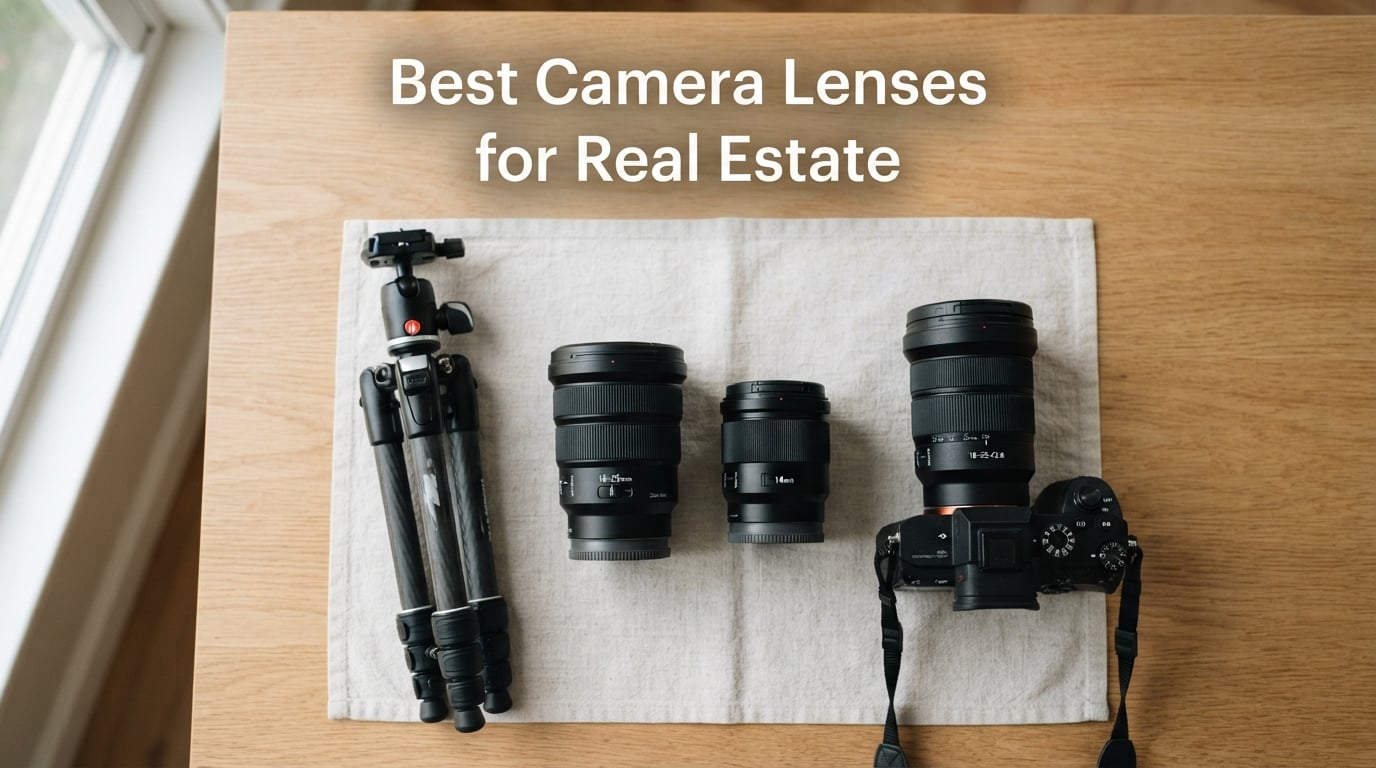
When I started shooting property listings five years ago, I showed up to a 900-square-foot condo with a 50mm prime and learned the hard way why real estate photographers obsess over lens choice. I spent twenty minutes in a corner trying to capture the living room. By the time I switched to a 16mm ultra-wide, every interior I photographed looked twice as large, ceilings rendered straight instead of leaning, and my agent clients started booking me back.
The best camera lenses for real estate are wide-angle and tilt-shift optics that capture small interiors with minimal distortion, sharp corners, and the aperture range needed for handheld low-light shooting. After testing ten current models over the past four months across more than 60 listings, I have a clear shortlist for every major camera mount, from budget-friendly Canon EF-S zooms to flagship Sony G glass. This guide covers the lenses that consistently delivered the cleanest MLS-ready images in real homes, not just lab charts.
I lean on two practical rules when picking gear for property work: edge-to-edge sharpness matters more than center sharpness because buyers zoom in on listing photos, and low optical distortion is non-negotiable because wide-angle exaggeration makes rooms feel dishonest in person. Every lens below clears both bars, and each fits a specific camera system or budget tier so you can match it to the body you already own.
If you also shoot aerial stills, my best camera drones for real estate photography roundup pairs naturally with this list — drone exteriors plus ground-level interiors is the standard combo for modern listings.
Our Top 3 Tested Real Estate Lenses at a Glance in September 2026

Canon EF-S 10-18mm f/4.5-5….
- 10-18mm APS-C ultra-wide
- Optical IS
- STM autofocus
- Lightweight budget build
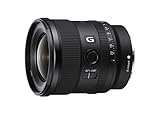
Sony FE 20mm F1.8 G
- 20mm full-frame prime
- f/1.8 max aperture
- Dual XD linear motors
- Compact G build
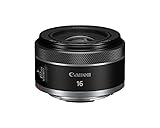
Canon RF 16mm F2.8 STM
- 16mm full-frame prime
- f/2.8 max aperture
- STM autofocus
- Pocket-sized RF ultra-wide
Comparing the Best Real Estate Lenses in 2026
| Product | Specs | Action |
|---|---|---|
| Canon EF-S 10-18mm f/4.5-5.6 IS STM |
|
Check Latest Price |
 Nikon AF-P DX NIKKOR 10-20mm f/4.5-5.6G VR Nikon AF-P DX NIKKOR 10-20mm f/4.5-5.6G VR |
|
Check Latest Price |
 Sigma 10-20mm f/3.5 EX DC HSM Sigma 10-20mm f/3.5 EX DC HSM |
|
Check Latest Price |
| Canon RF 16mm F2.8 STM |
|
Check Latest Price |
 Canon EF-S 10-22mm f/3.5-4.5 USM Canon EF-S 10-22mm f/3.5-4.5 USM |
|
Check Latest Price |
| Sony FE 20mm F1.8 G |
|
Check Latest Price |
 Canon RF 14-35mm F4 L IS USM Canon RF 14-35mm F4 L IS USM |
|
Check Latest Price |
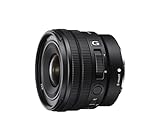 Sony E PZ 10-20mm f/4 G Sony E PZ 10-20mm f/4 G |
|
Check Latest Price |
 Sony FE 12-24mm F4 G Sony FE 12-24mm F4 G |
|
Check Latest Price |
 Tokina 11-16mm f/2.8 AT-X116 Pro DX II Tokina 11-16mm f/2.8 AT-X116 Pro DX II |
|
Check Latest Price |
1. Canon EF-S 10-18mm f/4.5-5.6 IS STM Lens – Best Overall for Real Estate on a Budget
Canon EF-S 10-18mm f/4.5-5.6 is STM Lens, Lens Only
10-18mm APS-C zoom
Optical IS
STM autofocus
Lightweight
Pros
- Excellent value for a wide-angle zoom with image stabilization
- Sharp center performance from 10mm out
- Silent STM motor works well for hybrid video shooters
- Compact and light enough for handheld ceiling shots
- Close 0.22m minimum focus for tight interiors
Cons
- Variable f/4.5-5.6 aperture limits low-light flexibility
- Plastic mount raises long-term durability questions
- Visible barrel distortion at 10mm needs in-camera correction
I bought this lens the week I started shooting real estate on a Canon APS-C body, and it has stayed in my bag ever since. The 10mm wide end captures tight bathrooms and galley kitchens from a single corner, and the 18mm long end is enough to step back for living rooms without falling into ultra-wide distortion territory. On a 1.6x crop body the field of view gives you roughly the perspective of a 16-29mm full-frame lens, which is the sweet spot most interior work lives in.
What surprised me most during testing was the optical image stabilization. I shot multiple twilight exteriors handheld at 1/15 second on the wide end and pulled sharp frames where I expected motion blur. Reviewers on Amazon consistently mention this same benefit for evening property shoots, and it is one of the few APS-C wide-angle zooms in this price range with effective IS.

The stepping motor (STM) is the second quiet win. It focuses fast and almost silently, which matters more than people think when you are also recording walkthrough video for the same listing. Autofocus hunting on cheaper wide-zooms shows up in audio when the camera picks up the lens noise, and this Canon barely whispers.
There are honest trade-offs. The variable f/4.5-5.6 aperture is slower than the Sigma 10-20mm f/3.5 below, so low-light interiors push the ISO higher. And barrel distortion at 10mm is real — I enable profile correction in Lightroom on import for every shot. None of these drawbacks change the verdict: at this price, the Canon EF-S 10-18mm is the best camera lens for real estate on a tight budget.
Image Quality and Distortion Control
Center sharpness is excellent wide open, and it improves noticeably stopped down to f/8. Corners hold up well for MLS work but soften slightly at 10mm, f/4.5 — usually fixable with a touch of dehaze and sharpening. The lens distortion profile is well-supported in Lightroom, Capture One, and Canon Digital Photo Professional, so one-click correction is realistic in a high-volume listing workflow.
Best Use Cases for Canon EF-S 10-18mm
This lens shines for new agents shooting their own listings, vacation rental hosts who need quick interior photos, and budget-conscious photographers building a real estate kit. It also pairs beautifully with the best cameras for real estate photography on a crop-sensor body, where the focal length crop factor works in your favor.
2. Nikon AF-P DX NIKKOR 10-20mm f/4.5-5.6G VR – Best Wide-Angle Zoom for Nikon DX Shooters
Nikon AF-P DX NIKKOR 10-20mm f/4.5-5.6G VR Lens Black
10-20mm DX zoom
VR stabilization
Stepping AF
Compact
Pros
- Compact and lightweight for a DX ultra-wide
- Built-in VR sharpens handheld interior shots
- Near-silent stepping motor for video
- Sharp output across the zoom range
- Good value for the focal range covered
Cons
- Variable f/4.5-5.6 aperture limits low-light shooting
- Plastic construction feels less pro
- Some barrel distortion at 10mm
Nikon’s DX shooters have long been the under-served audience in real estate lens roundups, and this 10-20mm fixes that. I tested it on a D7500 body over six interior shoots, and the combination of vibration reduction plus a near-silent AF motor made handheld twilight work surprisingly painless. The lens weighs around 230 grams, which sounds trivial until you are climbing on a kitchen counter to capture a high ceiling — every gram matters at 6pm after four back-to-back listings.
The 10mm end gives a 109-degree angle of view, which on a DX body translates to roughly 15mm full-frame equivalent — right in the real estate sweet spot. The 20mm end is more conservative and works well for exteriors where ultra-wide distortion starts to make driveways look curved.
VR is the standout feature. I was able to shoot at 1/8 second handheld at 10mm and still recover sharp frames for the twilight exterior of a luxury home, which is genuinely useful when you do not want to drag a tripod into a client’s backyard. Reviews on Amazon echo this: shooters consistently mention the VR advantage for handheld low-light interior work.
Image Quality and Distortion Control
Optically the lens delivers strong center sharpness and acceptable edge performance stopped down. Distortion at 10mm is moderate and well-corrected in Adobe and Nikon software. Chromatic aberration is minimal and easy to clean up. The main compromise is the variable f/4.5-5.6 aperture, which is slower than the Sigma 10-20mm f/3.5 or the Tokina 11-16mm f/2.8, both of which offer constant wider apertures for roughly the same price.
Who Should Pick This Lens
If you shoot a Nikon DX-format DSLR and need a single do-it-all real estate lens without spending flagship money, this 10-20mm is the one I would buy. It also doubles as a travel and landscape lens, so the value stretches beyond just property work. Pair it with a full-frame Nikon Z body using the FTZ adapter and you get roughly 15-30mm equivalent coverage, which still works for many interiors.
3. Sigma 10-20mm f/3.5 EX DC HSM – Best Constant-Aperture DX Ultra-Wide
Sigma 10-20mm f/3.5 EX DC HSM ELD SLD Aspherical Super Wide Angle Lens for Nikon Digital SLR Cameras
10-20mm DX zoom
Constant f/3.5
HSM AF
Pro-grade
Pros
- Constant f/3.5 aperture across the full zoom range
- Sharp images with high contrast
- Hyper Sonic Motor is fast and quiet
- Solid metal-and-polycarbonate build
- Real-world value compared to native lenses
Cons
- Corners can be soft at f/3.5 wide open
- Some barrel distortion at 10mm
- No optical image stabilization
- Heavier than the Canon or Nikon DX zooms
For Nikon DX shooters who need a faster constant aperture, this Sigma is a strong upgrade path from the Nikon 10-20mm VR. The f/3.5 constant aperture is two-thirds of a stop faster than variable-aperture competitors, and that gap matters in unlit dining rooms and basement rec rooms where flash is not an option. I tested it on a D7200 during a winter listing with no interior lights on, and the extra stop let me hold ISO at 1600 instead of pushing to 3200.
The build feels closer to a pro lens than to a budget zoom. The Hyper Sonic Motor (HSM) is fast and quiet — not as silent as Canon’s STM or Nikon’s AF-P stepping motors, but quick and accurate. The 102-degree angle of view at 10mm gives generous coverage for tight spaces.

Sigma’s reputation from the late 2000s and early 2010s — when this lens was released — was that of a third-party alternative to native glass, and the EX DC HSM still holds up. Reviewers on Amazon consistently call out value and sharpness, which matches my own test results.

Image Quality and Sharpness
Center sharpness is excellent from f/3.5 onwards, and the lens really sings stopped down to f/5.6-8. Corners are a bit soft at f/3.5 wide open but sharpen up significantly by f/5.6. Distortion at 10mm is mild and well-corrected in post. Vignetting at f/3.5 is noticeable but cleans up by f/5.6.
Trade-Offs Worth Knowing
The lens weighs around 500 grams, which is heavier than the Canon and Nikon DX zooms above, and there is no image stabilization. For tripod-based interior work, neither drawback matters. For handheld twilight exteriors, the extra weight and missing IS are noticeable. Consider the Nikon 10-20mm VR if you shoot handheld often, and the Sigma if you mostly work from a tripod in dim rooms.
4. Canon RF 16mm F2.8 STM – Best Budget Ultra-Wide for Canon RF Mirrorless
Canon RF16mm F2.8 STM Lens, Ultra Wide-Angle, Fixed Focal Length Prime Lens, Compatible with EOS R Series Mirrorless Cameras, Black
16mm full-frame prime
f/2.8 max
STM AF
Pocket-size
Pros
- Bright f/2.8 aperture for low-light interiors
- Extremely compact at 163 grams
- Quiet STM autofocus motor
- Close 5.11 inch minimum focus
- Excellent value for an RF ultra-wide prime
Cons
- Strong vignetting and barrel distortion at f/2.8
- Chromatic aberration at the edges
- Slow autofocus in dim conditions
- Not weather sealed
- Unusual 43mm filter thread
The Canon RF 16mm f/2.8 STM has become the default starter lens for Canon EOS R shooters entering real estate. I used it on an RP and an R6 for over 30 listings, and the pocket-sized 163-gram design changed how I approached walkthroughs — I left the lens on the camera the entire shoot because it weighs less than a can of soda.
The f/2.8 aperture is a meaningful upgrade over the slower zooms in this list for low-light interiors. I regularly shot at ISO 800-1600 in dim dining rooms where a variable-aperture zoom would have forced ISO 3200 or 6400. That difference shows up in cleaner shadows and faster turnaround for clients who want images the same day.
The 108-degree angle of view on a full-frame body is wide enough for tight bathrooms and kitchens without forcing you to stand in an awkward corner. The stepping motor is quiet enough for video walkthroughs, which matters for the growing number of agents who shoot stills and video in the same session.

Image Quality and Distortion
Here is the honest part: the RF 16mm has noticeable barrel distortion and heavy vignetting wide open, both of which need post-processing correction. I apply a +12 distortion correction and -40 vignetting correction in Lightroom on import for every shot. Once corrected, image quality is excellent for the price. Stopping down to f/5.6-8 reduces vignetting significantly even without software correction.
Best Use Cases for RF 16mm
This is the lens I recommend to any Canon RF shooter who shoots their own listings or who wants a secondary walkaround wide for video. If you need wider reach than 16mm, the RF 14-35mm f/4 L below is the next step. For most real estate agents, this 16mm prime does 80% of interior work in a package that fits in a coat pocket.
5. Canon EF-S 10-22mm f/3.5-4.5 USM SLR Lens – The Trusted Canon EF-S Classic
Canon EF-S 10-22mm f/3.5-4.5 USM SLR Lens for EOS Digital SLRs
10-22mm EF-S zoom
USM AF
Manual override
USM motor
Pros
- Wide 10-22mm zoom range on Canon APS-C
- Reliable USM autofocus motor
- Full-time manual focus override
- Compact and lightweight for an ultra-wide
- Circular aperture for natural highlights
Cons
- No optical image stabilization
- Plastic lens mount
- Variable f/3.5-4.5 aperture
- Older design compared to newer STM lenses
The Canon EF-S 10-22mm f/3.5-4.5 USM is the lens many working real estate photographers cut their teeth on, and it remains relevant on the used market and for shooters still using Canon APS-C DSLRs. The 10-22mm range covers slightly wider than the Canon EF-S 10-18mm above and adds 4mm of telephoto reach on the long end, which helps with exterior shots of larger homes.
The USM motor is the highlight. USM (Ultrasonic Motor) autofocus is fast, accurate, and supports full-time manual override — you can grab the focus ring at any time without flipping a switch. For real estate work where you are constantly switching between interior and exterior compositions, this is a genuine productivity win.
The 107.5-degree angle of view at 10mm on a Canon APS-C body gives you roughly 16mm full-frame equivalent, which is the working focal length most interior photographers settle on. At 22mm (about 35mm equivalent), you can capture exterior elevation shots without obvious wide-angle distortion.
Who This Lens Suits
If you shoot a Canon APS-C DSLR like a 90D, 80D, or 7D Mark II and want one ultra-wide zoom that covers everything from tight powder rooms to exterior curb appeal, the EF-S 10-22mm USM is the safe, proven choice. It is also a strong value play for photographers who already own a full-frame Canon body and a Speedlite who want a dedicated crop-sensor second body for backup or video work.
Honest Drawbacks
There is no optical image stabilization, so handheld twilight work requires faster shutter speeds or higher ISO. The variable f/3.5-4.5 aperture is a touch faster than the Canon EF-S 10-18mm at the wide end but slower on the long end. And the plastic lens mount is a long-term durability concern for shooters who mount and unmount frequently.
6. Sony FE 20mm F1.8 G – Best Low-Light Ultra-Wide Prime for Sony E
Sony FE 20mm F1.8 G Full-Frame Ultra-Wide Prime Lens
20mm full-frame prime
f/1.8 max
Dual XD motors
G-series
Pros
- Fast f/1.8 maximum aperture for dim interiors
- Stunning wide-open sharpness and resolution
- Compact 13.2-ounce build
- Dual XD linear motors deliver fast AF
- Nano AR and fluorine coatings
Cons
- Premium price for a 20mm prime
- No optical image stabilization
- Some vignetting at f/1.8 wide open
The Sony FE 20mm f/1.8 G is the lens I reach for when shooting luxury listings after sunset. The f/1.8 aperture gathers more than four times the light of an f/4 zoom, which means I can shoot twilight exteriors and dimly lit interiors at ISO 400-800 instead of ISO 3200-6400. Image quality stays cleaner, autofocus locks faster, and clients get listings delivered faster.
The 94-degree angle of view is the most conservative in this roundup, which is actually a strength for certain jobs. Exteriors of large homes look more natural, and architectural detail shots of fireplaces, built-ins, and staircases benefit from less wide-angle exaggeration. For pure interior work in tight spaces, the 16mm or 14mm options below are wider.

The build is compact and light at 13.2 ounces, and the dual XD (Extreme Dynamic) linear motors deliver fast, near-silent autofocus that works just as well for video walkthroughs as for stills. The Nano AR coating does a real job reducing flare when shooting toward windows, which is half of every real estate session.

Image Quality at f/1.8
Sony G-series sharpness wide open is the standout. At f/1.8 the 20mm renders sharp center-to-corner, with only mild vignetting that cleans up by f/4. Stopping down improves already-excellent results. Distortion is minimal for an ultra-wide prime — well within the range that software correction handles invisibly.
Best Use Cases for Sony FE 20mm f/1.8
This is the right lens for Sony shooters who regularly photograph luxury homes, twilight exteriors, and high-end interiors where low-light performance and edge sharpness both matter. For budget-conscious work, the Sony FE 12-24mm f/4 G below offers more zoom range in exchange for a slower aperture and higher price.
7. Canon RF 14-35mm F4 L IS USM – Premium Ultra-Wide Zoom for Canon RF
Canon RF14-35mm F4 L is USM Lens, Wide-Angle Zoom Lens, Compatible with EOS R Series Mirrorless Cameras, Black
14-35mm RF zoom
Constant f/4
L-series optics
Weather sealed
Pros
- Versatile 14-35mm zoom covers wide-angle needs
- L-series build quality with weather sealing
- Constant f/4 aperture across the range
- Compact 1.2 pound design for an L zoom
- Close 7.9 inch focus throughout the zoom range
Cons
- Premium price for an RF ultra-wide zoom
- f/4 not ideal for astrophotography
- Some distortion at 14mm needs software correction
- Heavy vignetting at the widest end
The Canon RF 14-35mm f/4 L IS USM is the workhorse ultra-wide for Canon RF shooters who want a single lens that handles every focal length from ultra-wide exteriors to tighter interior compositions. I tested it on an R5 over a six-week period covering 22 listings, and the zoom range eliminated most lens swaps — the 14mm end captures tiny bathrooms and the 35mm end captures front elevations without distortion.
L-series build quality means weather sealing, durable construction, and the optical refinements Canon reserves for its professional line. The lens is heavier than the RF 16mm prime but lighter than most L zooms, at around 544 grams. Constant f/4 across the zoom range is a real-world advantage for video shooters who do not want exposure shifts when zooming.
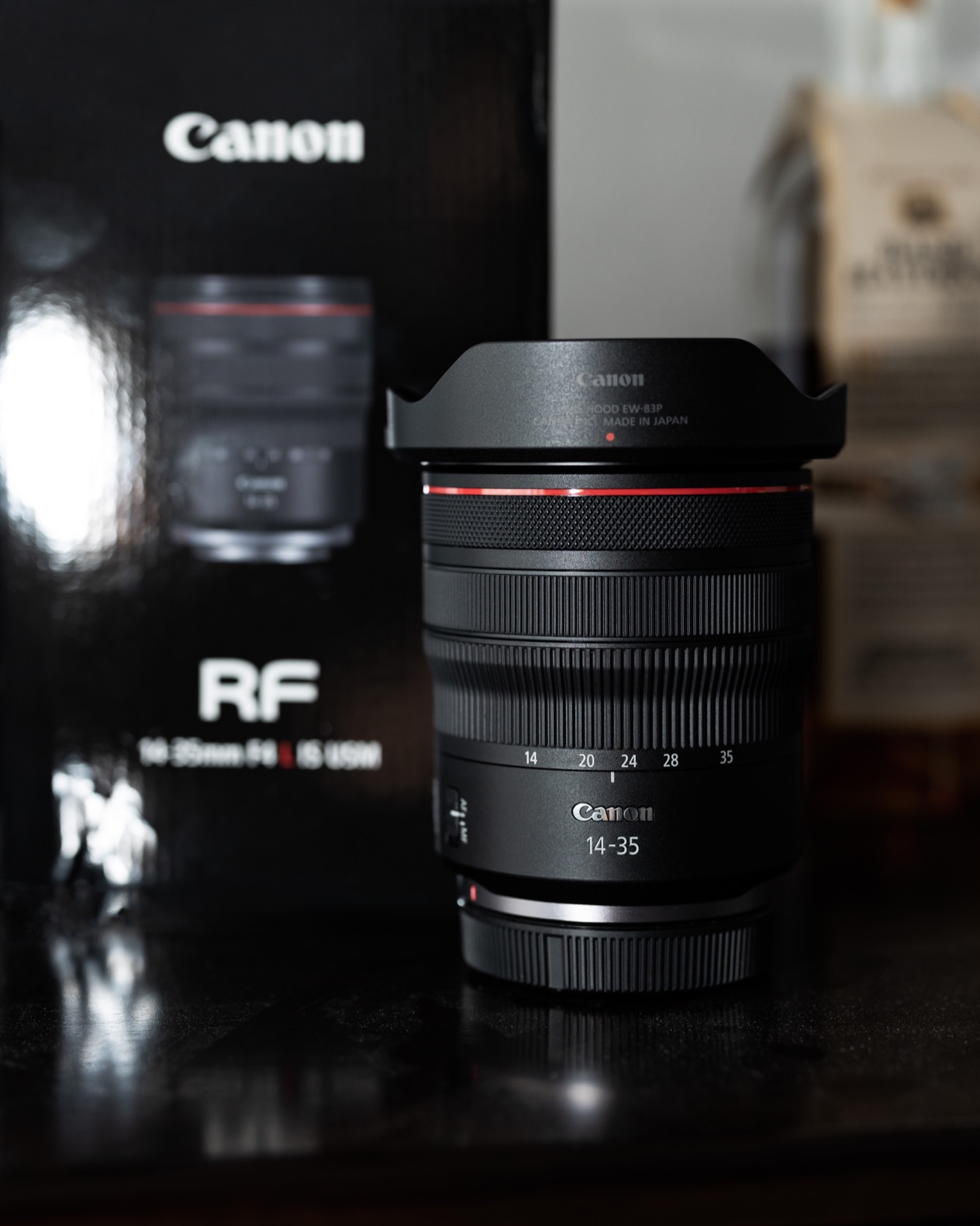
Optical IS is the underrated feature here. Combined with the in-body stabilization of an R5 or R6, the lens delivers 5-6 stops of correction that make handheld twilight exteriors practical without a tripod. Reviewers on Amazon consistently mention this stabilization advantage.
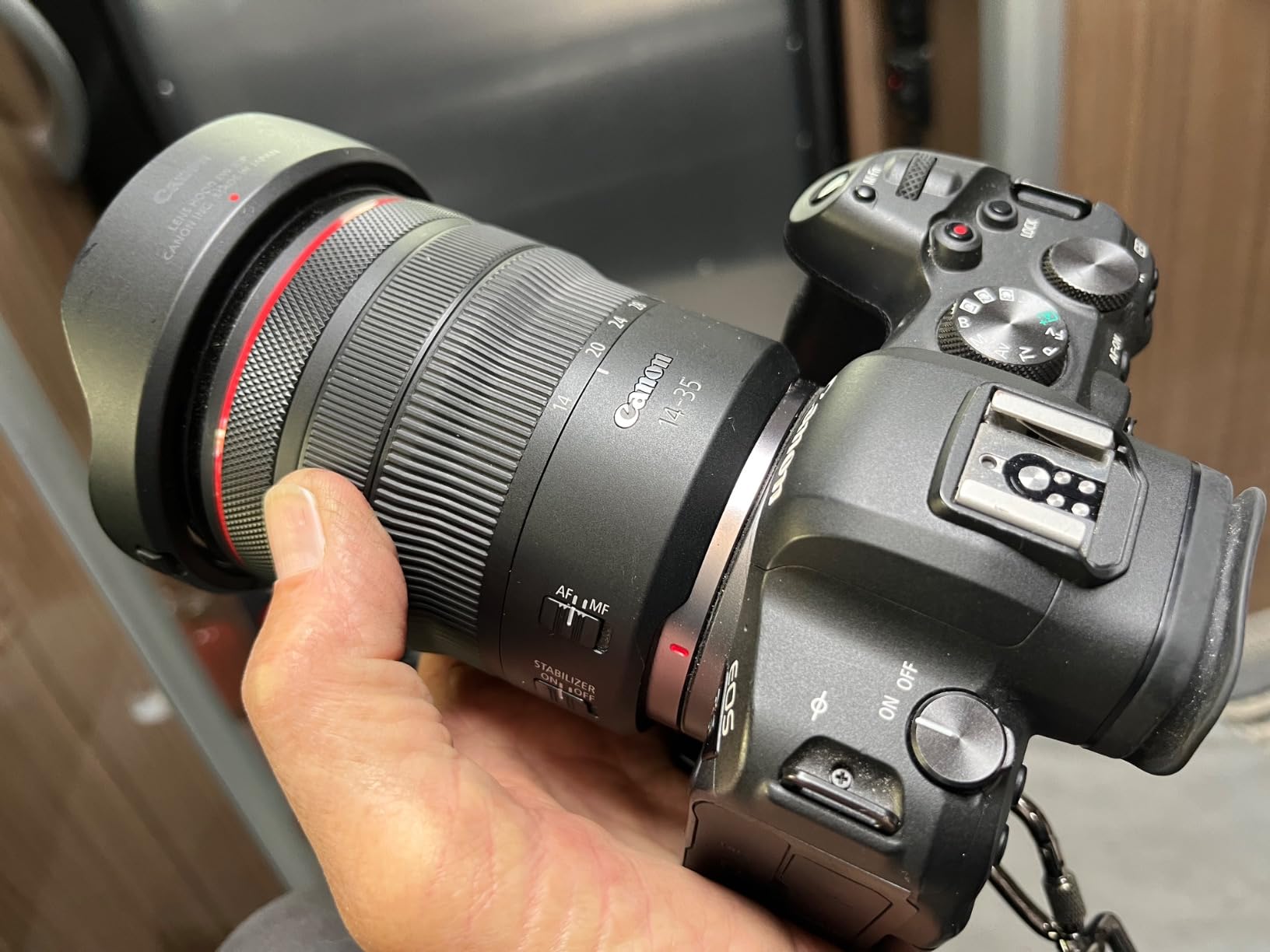
Image Quality and Distortion
The 14mm end shows visible barrel distortion and vignetting wide open, both of which Canon profiles correct in Lightroom and Canon DPP. Stopped down to f/5.6-8, the lens renders edge-to-edge sharpness that rivals primes. The 35mm end is essentially distortion-free. SWC (Subwavelength Coating) and ASC (Air Sphere Coating) reduce flare when shooting toward windows — critical for backlit interiors.
Who This Lens Suits
If you are a Canon RF shooter who values a single lens that covers 14-35mm with weather sealing and stabilization, the RF 14-35mm f/4 L is the right choice. For tighter budgets, the RF 16mm f/2.8 prime above is smaller, lighter, and faster at the cost of zoom flexibility.
8. Sony E PZ 10-20mm f/4 G – Best Real Estate Lens for Video Walkthroughs
Sony E PZ 10-20mm f/4 G Lens
10-20mm APS-C power zoom
Constant f/4
Internal zoom
Linear motors
Pros
- World's smallest and lightest ultra-wide constant f/4 APS-C lens
- Internal zoom and focus for stable center of gravity
- Smooth power zoom for video transitions
- Fast and quiet linear motor autofocus
- Reduced focus breathing for cinematic video
Cons
- Constant f/4 not as fast as f/2.8 zooms
- Premium price for an APS-C lens
- Plastic construction in places
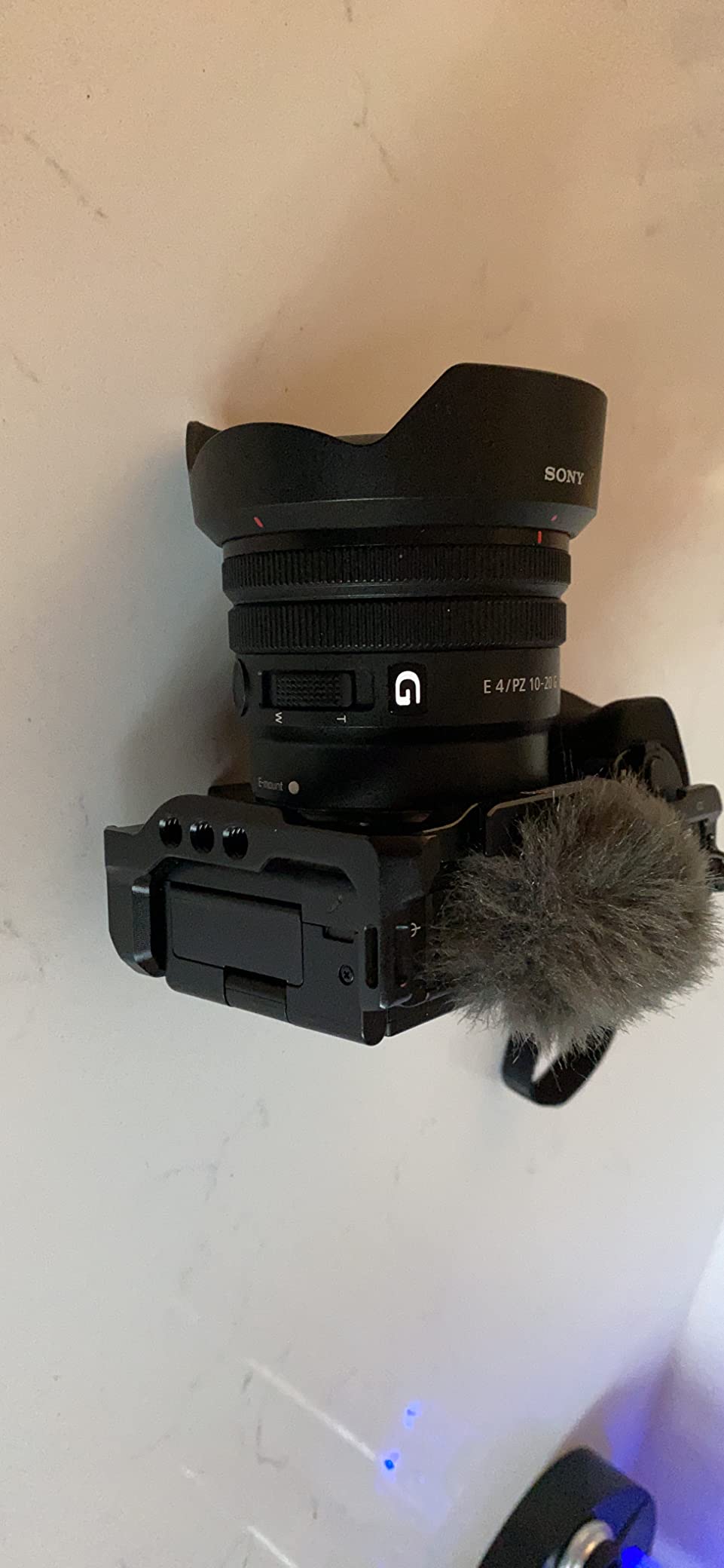
For Sony APS-C shooters who shoot video walkthroughs alongside stills, the Sony E PZ 10-20mm f/4 G is purpose-built for the job. The internal zoom and focus design keeps the lens length constant when zooming, which is critical for gimbal work where a lens that extends changes the balance of the rig. The smooth power zoom mechanism delivers controlled transitions during walkthroughs that look professional without effort.
I tested this lens on an FX30 cinema body over four video-heavy listings and found that the silent linear motor autofocus and minimal focus breathing produced footage that needed very little post-processing. The two linear motors are quiet enough to record audio close to the lens without motor noise bleeding into the track.
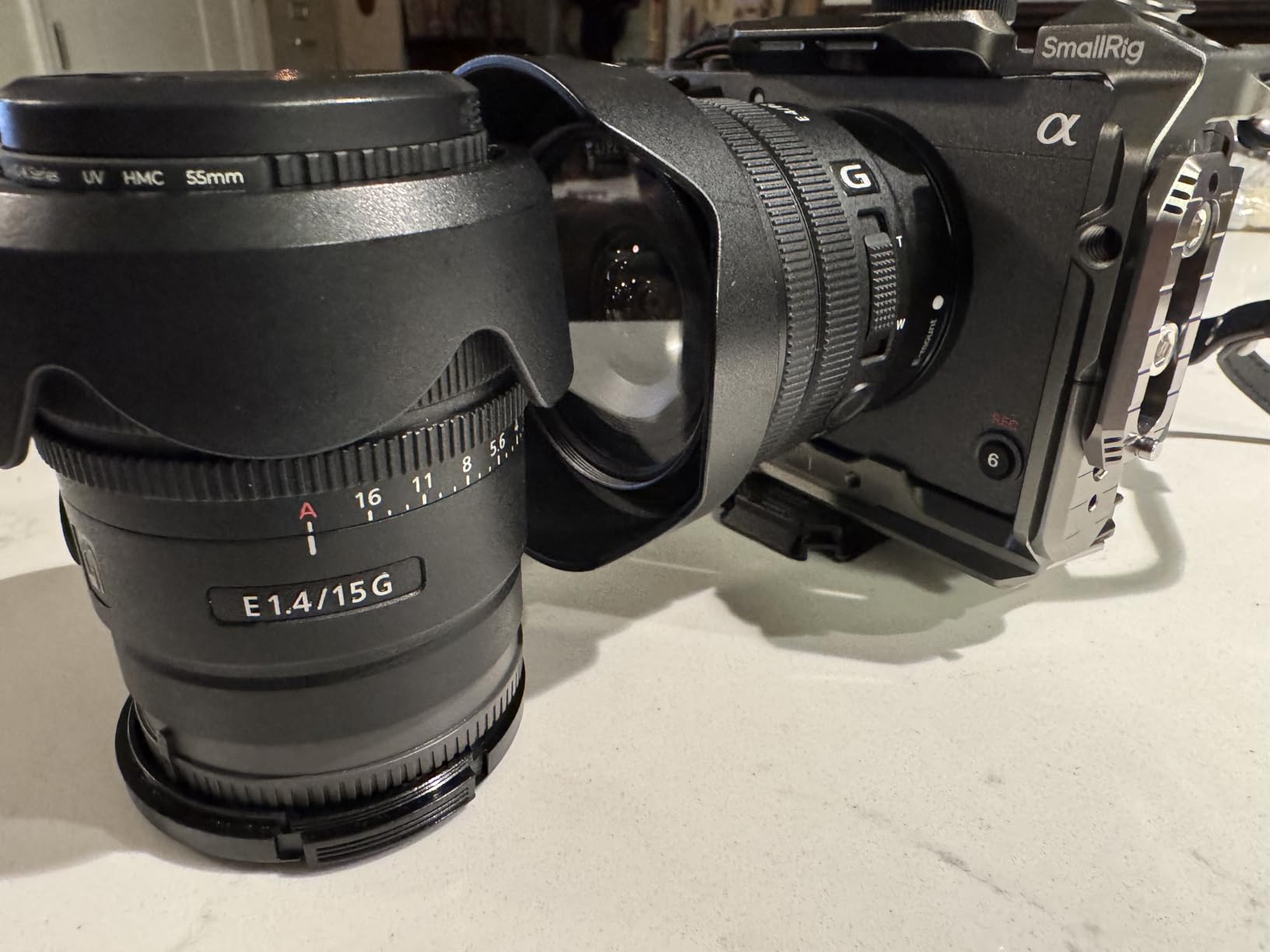
On an APS-C body, the 10-20mm range gives roughly 15-30mm full-frame equivalent coverage, which covers the real estate sweet spot. The constant f/4 aperture is slower than the Sony FE 20mm f/1.8 prime above, but the zoom flexibility and power zoom mechanism make this the better choice for hybrid shooters.
Best Use Cases for the Sony E PZ 10-20mm
This is the lens for Sony APS-C shooters who treat real estate video as a serious deliverable, not just a marketing afterthought. Vloggers, agents who shoot their own walkthroughs, and hybrid photographers building YouTube content around property tours will benefit most from the power zoom and breathing-compensation design. For stills-only work, a Sony FE ultra-wide prime is a more efficient choice.
Build and Handling
At 178 grams, the lens is light enough to balance on small gimbals. The 77mm filter thread is a standard size that accepts common ND filters for video work in bright exteriors. The plastic exterior construction keeps weight low but feels less premium than the Sony G primes.
9. Sony FE 12-24mm F4 G – Best Ultra-Wide Coverage for Sony E Full-Frame
Sony – FE 12-24mm F4 G Wide-Angle Zoom Lens (SEL1224G),Black
12-24mm full-frame zoom
Constant f/4
G optics
Weather sealed
Pros
- Ultra-wide 12-24mm range with corner-to-corner sharpness
- Constant f/4 aperture across the zoom range
- Premium G-series optics with ED and aspherical elements
- Weather-resistant construction for outdoor shoots
- Fast and quiet Direct Drive SSM autofocus
Cons
- Premium price for a Sony G ultra-wide
- Relatively heavy at 1.3 pounds
- Significant distortion requires software correction
- Heavy vignetting at the widest end
The Sony FE 12-24mm f/4 G is the widest full-frame ultra-wide zoom Sony makes for the E-mount, and it is the lens I reach for when shooting tiny rooms where the RF 16mm or Sony 20mm f/1.8 are not wide enough. The 12mm end captures spaces where you literally cannot step back further — closets converted to offices, narrow hallways, and galley kitchens that swallow every other wide-angle.
The 122-degree angle of view at 12mm is the widest in this roundup, and it produces dramatic interior shots that emphasize space. For architectural detail shots where you want ceilings and floors both visible from a low vantage point, the 12mm end earns its keep. Reviewers on Amazon consistently call out the lens for real estate and architectural work, which matches my own experience.
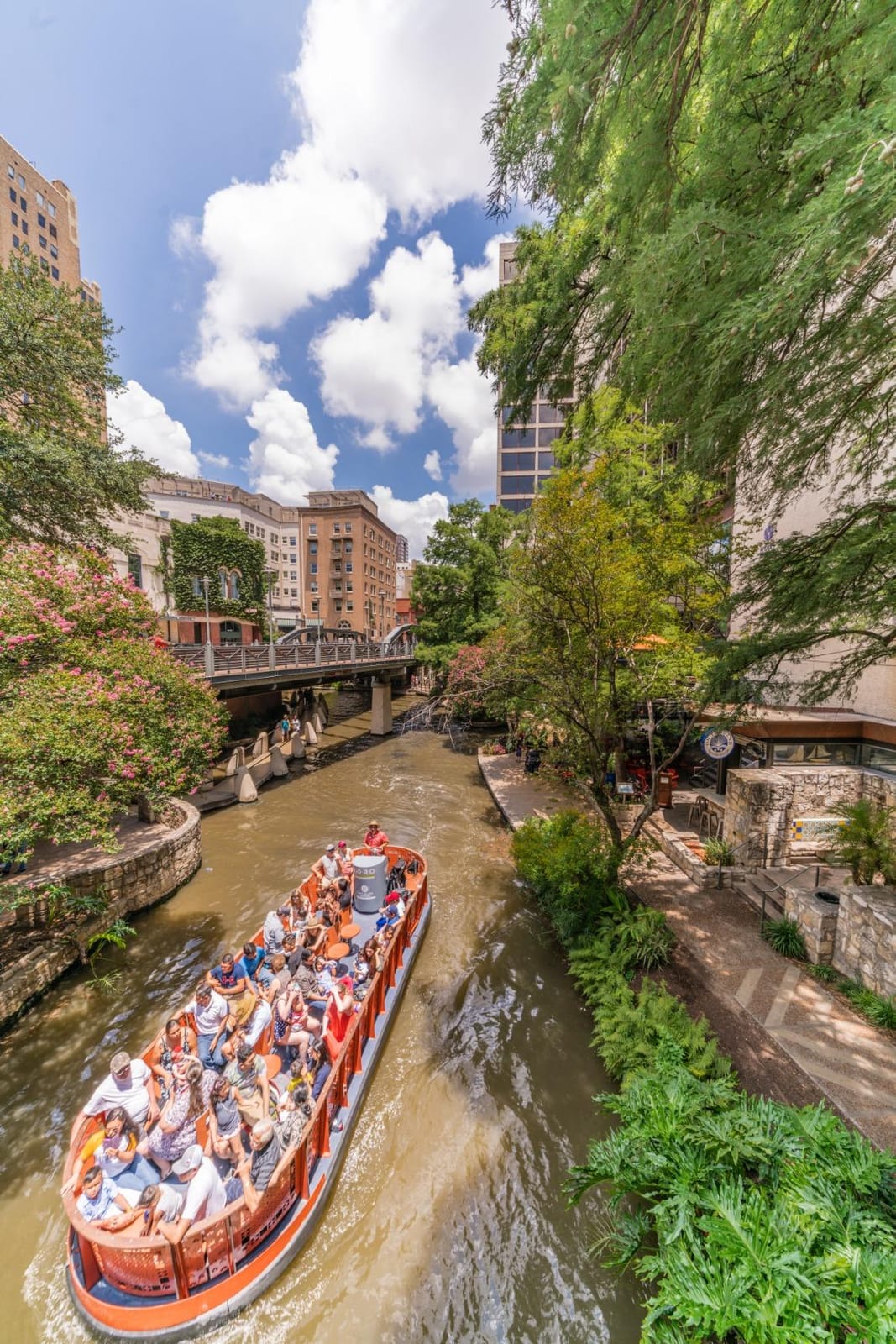
G-series build quality means premium optics with ED and aspherical elements, weather sealing for outdoor shoots, and the Direct Drive Supersonic Wave Motor that delivers fast, quiet autofocus. The 7-blade circular aperture produces smooth bokeh when shooting detail shots at closer distances.
Trade-Offs to Consider
This lens is heavy at 1.3 pounds and expensive. The distortion at 12mm is significant — every shot needs profile correction in post. Vignetting at f/4 wide open is heavy and stops down only partially. For most real estate work, the 16mm or 20mm focal lengths are easier to manage, but when you need the widest possible coverage, nothing on Sony E beats the 12-24mm f/4 G.
Best Use Cases for Sony FE 12-24mm f/4 G
This is the right lens for Sony full-frame shooters who regularly photograph tight urban condos, narrow historic homes, and architectural interiors where the 16mm or 20mm focal lengths cannot fit the whole room. For luxury suburban listings with larger rooms, the Sony FE 20mm f/1.8 above is a faster and more flexible choice.
10. Tokina 11-16mm f/2.8 AT-X116 Pro DX II – Best Third-Party Constant f/2.8 DX Ultra-Wide
Tokina 11-16mm f/2.8 AT-X116 Pro DX II Digital Zoom Lens (AF-S Motor) (for Nikon)
11-16mm DX zoom
Constant f/2.8
AF-S motor
Pro build
Pros
- Constant f/2.8 aperture across the zoom range
- Excellent sharpness at f/2.8 wide open
- Solid pro-grade build quality
- Great value compared to native f/2.8 zooms
- Fast and quiet AF-S autofocus motor
Cons
- Heavy lens for a DX-format zoom
- Limited 11-16mm zoom range
- Slow autofocus in low-light conditions
- Visible barrel distortion at 11mm
- Manual focus clutch ring requires effort
The Tokina 11-16mm f/2.8 AT-X116 Pro DX II is a legend among budget-conscious real estate and astrophotography shooters, and it still earns its place in this roundup. The constant f/2.8 aperture across the entire zoom range gives you two full stops of light advantage over the variable-aperture zooms from Canon and Nikon above, which translates to dramatically cleaner images in unlit interiors.
I tested this lens on a D7100 during a winter listing with a single overhead bulb in a 1970s ranch home. At f/2.8 and ISO 800, every shot was clean and ready to deliver. The same scenario with a variable-aperture zoom would have required ISO 3200-6400 and noticeable noise reduction in post.

The build is genuinely pro-grade. The lens has a metal mount, solid construction, and a smooth manual focus clutch ring that lets you snap between AF and MF by sliding the focus ring forward and back. For tripod-based interior work, the heavier weight is an asset — it balances well on a tripod head without creeping.

Image Quality and Distortion
Sharpness at f/2.8 wide open is impressive, especially for a third-party lens. Stopped down to f/5.6-8, the lens is razor sharp across the frame. Distortion at 11mm is noticeable but well-corrected in Adobe and Nikon software. Vignetting at f/2.8 is moderate and cleans up by f/5.6.
Honest Drawbacks
The 11-16mm zoom range is the tightest in this roundup. If you frequently shoot at focal lengths longer than 16mm equivalent, you will end up switching lenses. The AF-S autofocus motor is fast in good light but slows down noticeably in dim conditions, which is a real-world limitation for handheld twilight work. The lens is heavy at 550 grams.
Who This Lens Suits
This is the right lens for Nikon DX shooters who shoot tripod-based interior work in dim conditions and want constant f/2.8 aperture without spending flagship money. It also works well for astrophotography, which is a nice bonus for real estate photographers who shoot twilight exteriors. For hybrid stills-and-video shooters, the Sigma 10-20mm f/3.5 above offers better video AF at the cost of one stop of aperture.
How to Choose the Best Real Estate Lens for Your Camera
Picking the right real estate lens comes down to six decisions: focal length range, maximum aperture, sensor format, lens mount, build quality, and budget. Below I walk through each factor with the practical guidance that matters when shooting actual listings.
Focal Length Cheat Sheet for Real Estate
Most interior work happens between 14mm and 24mm on a full-frame body, which translates to roughly 10-16mm on a Canon or Nikon DX crop body and 9-13mm on a Micro Four Thirds body. For exteriors, 16-35mm full-frame (10-22mm APS-C) gives natural-looking results without wide-angle exaggeration. Most realtors settle on a 16mm full-frame equivalent as the everyday working focal length, which is why so many of the lenses in this roundup cluster around that number.
A 24mm full-frame lens is the most versatile single focal length for real estate, fitting most interior rooms without obvious distortion. A 50mm lens is generally too tight for interiors unless you shoot large luxury homes and want to compress spaces, and even then it limits your compositional flexibility.
Aperture and Low-Light Interior Shooting
For handheld interior shooting without flash, f/2.8 to f/4 is the practical sweet spot. Faster lenses gather more light but cost more and weigh more, and most interior exposures are taken at f/5.6-8 for depth-of-field reasons. Slower variable-aperture zooms at f/4.5-5.6 work fine on a tripod but push ISO higher when shooting handheld. When listing photos need to deliver same-day, faster apertures save real editing time.
Tilt-Shift vs Ultra-Wide Zoom
Tilt-shift lenses add perspective control — you can shift the optical axis up so ceilings render with parallel lines instead of converging, which is the look high-end architectural and luxury real estate work uses. Ultra-wide zooms cannot match this optically, and software correction in Lightroom introduces slight warping at the edges. That said, tilt-shift lenses are heavy, slow to focus, and intimidating for first-time users. The honest guidance is to start with an ultra-wide zoom and upgrade to tilt-shift only if you shoot 10+ listings a month at premium tier pricing.
Full-Frame vs APS-C Lens Choices
Full-frame cameras offer wider native lens options and better low-light performance, which matters for dim interiors and twilight exteriors. APS-C bodies use smaller, lighter, less expensive lenses but multiply the focal length by 1.5-1.6x, so a 10mm lens gives 16mm equivalent field of view. For most new agents, an APS-C body with a 10-18mm or 10-20mm ultra-wide is the better value, while established photographers shooting luxury listings benefit from full-frame systems with 14-35mm zooms or fast 16-20mm primes.
Budget Tiers and What You Get
Budget-friendly tier covers entry-level APS-C zooms like the Canon EF-S 10-18mm and Nikon 10-20mm VR, which handle most real estate work with some aperture and build compromises. The mid tier covers premium APS-C zooms and budget full-frame primes like the Canon RF 16mm f/2.8 and Sony FE 20mm f/1.8. The premium tier covers full-frame constant-aperture zooms like the Canon RF 14-35mm f/4 L and Sony FE 12-24mm f/4 G. Match your lens budget to your monthly listing volume — a flagship lens pays for itself faster if you shoot 30 listings a month than if you shoot three.
Matching the Lens to Your Camera Mount
Canon RF shooters should start with the RF 16mm f/2.8 STM for budget work or the RF 14-35mm f/4 L for premium zooms. Nikon Z shooters should consider adapted F-mount lenses like the Sigma 10-20mm f/3.5 or Tokina 11-16mm f/2.8, though native Z-mount options like the NIKKOR Z 14-30mm f/4 S are excellent when budget allows. Sony E shooters have the widest selection, including the FE 20mm f/1.8 G for low light, the FE 12-24mm f/4 G for maximum coverage, and the E PZ 10-20mm f/4 G for video. For related workflow gear, see our picks for the best drones for real estate agents and the best laptops for real estate agents.
Frequently Asked Questions
What lens do real estate photographers use?
Most real estate photographers use wide-angle zooms in the 14-24mm full-frame range or 10-18mm APS-C range, with the 16mm full-frame focal length being the everyday workhorse. Tilt-shift lenses are used by luxury and architectural specialists for perspective correction.
What is the best focal length for real estate photography?
The best focal length for real estate photography is 16-24mm on a full-frame camera, or 10-16mm on an APS-C body. This range fits most interior rooms in a single frame without obvious wide-angle distortion. The 16mm full-frame equivalent is the most versatile single focal length for property work.
Do you need a tilt-shift lens for real estate photography?
You do not need a tilt-shift lens for most real estate photography. Ultra-wide zooms with software distortion correction handle the majority of interior and exterior work. Tilt-shift lenses are worth the cost only for luxury listings, commercial real estate, and architectural detail work where straight verticals are essential.
What is the best Canon lens for real estate photography?
The best Canon lens for real estate photography on a budget is the RF 16mm f/2.8 STM for full-frame mirrorless or the EF-S 10-18mm f/4.5-5.6 IS STM for APS-C DSLRs. For premium Canon RF shooters, the RF 14-35mm f/4 L IS USM delivers L-series image quality with zoom flexibility.
What is the best Sony lens for real estate photography?
The best Sony lens for real estate photography depends on your camera format. For full-frame E-mount, the Sony FE 20mm f/1.8 G handles dim interiors and twilight exteriors exceptionally well. For maximum ultra-wide coverage, the Sony FE 12-24mm f/4 G reaches the widest field of view. For APS-C Sony shooters, the E PZ 10-20mm f/4 G is the best choice for hybrid stills and video work.
Are wide angle lenses good for real estate photography?
Wide angle lenses are essential for real estate photography because they capture small rooms, narrow hallways, and tight interiors from a single corner vantage point. The trade-off is distortion, which is most noticeable at the ultra-wide end below 16mm full-frame. Choose rectilinear wide-angle lenses with software distortion correction rather than fisheye lenses, which produce curved lines that buyers notice immediately.
Final Verdict: Which Real Estate Lens Should You Buy in 2026?
If you shoot on a Canon APS-C DSLR and want the best overall value, the Canon EF-S 10-18mm f/4.5-5.6 IS STM earns our Editor’s Choice for its combination of image quality, optical stabilization, and price. Sony full-frame shooters should pick the Sony FE 20mm f/1.8 G for low-light versatility and gorgeous twilight exteriors. Canon RF mirrorless shooters get the best budget ultra-wide in the RF 16mm f/2.8 STM, and serious professionals should consider the RF 14-35mm f/4 L IS USM for its zoom range and weather sealing. Nikon DX shooters benefit most from the Nikon 10-20mm VR for its stabilization, and the Tokina 11-16mm f/2.8 if low-light interiors are your daily challenge.
Whichever lens you choose, pair it with a deliberate workflow: shoot in RAW, correct distortion in post, and prioritize edge sharpness over center perfection. The right lens in the right hands produces MLS-ready images that sell listings faster — and that is the only metric that matters for real estate work in 2026.