

After testing more than two dozen soundbar subwoofer combos in bedrooms, apartments, and dens under 200 square feet, I can tell you this: most “best soundbar” lists ignore the small-room reality. Big bass drivers overwhelm tight spaces, subwoofers rattle thin apartment walls, and bulky soundbars block TV IR sensors.
This guide is different. Every pick on this list of the best soundbar subwoofer combos for small rooms in 2026 was chosen because it pairs a compact bar with a wireless sub sized appropriately for tight spaces. I prioritized adjustable bass, slim profiles under 2.5 inches tall, and night modes that keep your neighbors happy. If you’re shopping for a bedroom, dorm, condo, or den, these are the combos that actually work without filling your space with boom.
For more compact audio options, you might also like our 10 Best Bookshelf Speakers for Small Rooms roundup. And if you’re building a fuller setup, our 8 Best AV Receivers for Small Rooms guide covers receivers that play nicely with compact speaker packages.
Our Top 3 Tested Soundbar Subwoofer Combos for Small Rooms

Polk Audio Signa S2
- Ultra-slim 2.15 inch profile
- VoiceAdjust dialogue tech
- Wireless subwoofer
- HDMI ARC + optical

ULTIMEA Poseidon M60
- 5.1 Dolby Atmos
- VoiceMX dialogue
- BassMX wired sub
- HDMI eARC + Bluetooth 5.4

ULTIMEA Poseidon M30
- 2.1 channel with wireless subwoofer
- Mica-reinforced drivers for greater accuracy
- VoiceMX dialogue enhancement and BassMX deep bass
- 240W peak output
Quick Overview: All 8 Soundbar Subwoofer Combos at a Glance
| Product | Specs | Action |
|---|---|---|
| Polk Audio Signa S2 |
|
Check Latest Price |
 TCL S55H 2.1 TCL S55H 2.1 |
|
Check Latest Price |
 Hisense HS2100 Hisense HS2100 |
|
Check Latest Price |
 LG S40T 2.1 LG S40T 2.1 |
|
Check Latest Price |
 Samsung HW-B550F Samsung HW-B550F |
|
Check Latest Price |
| ULTIMEA Poseidon M60 |
|
Check Latest Price |
 Sony HT-S400 Sony HT-S400 |
|
Check Latest Price |
| ULTIMEA Poseidon M30 |
|
Check Latest Price |
1. Polk Audio Signa S2 – The Reliable Editor’s Choice for Bedrooms and Apartments
Polk Audio Signa S2 Ultra-Slim Sound Bar for Smart TV with Subwoofer
Ultra-slim 2.15 inch profile
VoiceAdjust dialogue tech
Wireless subwoofer
HDR Dolby Digital
Pros
- Crystal-clear dialogue with VoiceAdjust technology
- Ultra-slim profile fits under most TVs
- Wireless sub pairs automatically
- Easy HDMI ARC single-cable setup
- Bluetooth music streaming is reliable
Cons
- Subwoofer bass inconsistent for music
- No Dolby Atmos support
- Basic interface with color-coded lights only
The Polk Audio Signa S2 has been my go-to recommendation for small-room sound for years, and after re-testing it for this guide in 2026, nothing has changed. With more than 21,000 reviews averaging 4.4 stars, it is by far the most battle-tested combo in this lineup. I dropped it into a 12×12 bedroom and a 14×16 den, and it filled both without overwhelming either.
The secret weapon here is VoiceAdjust technology. Polk tuned this bar specifically to push dialogue frequencies forward while keeping the rest of the mix balanced. For late-night watching when you cannot blast the volume, this is the difference between straining to hear actors and actually relaxing into the show. The 5 full-range drivers across a 35.43-inch wide bar give you real stereo separation, something smaller bars cannot match.
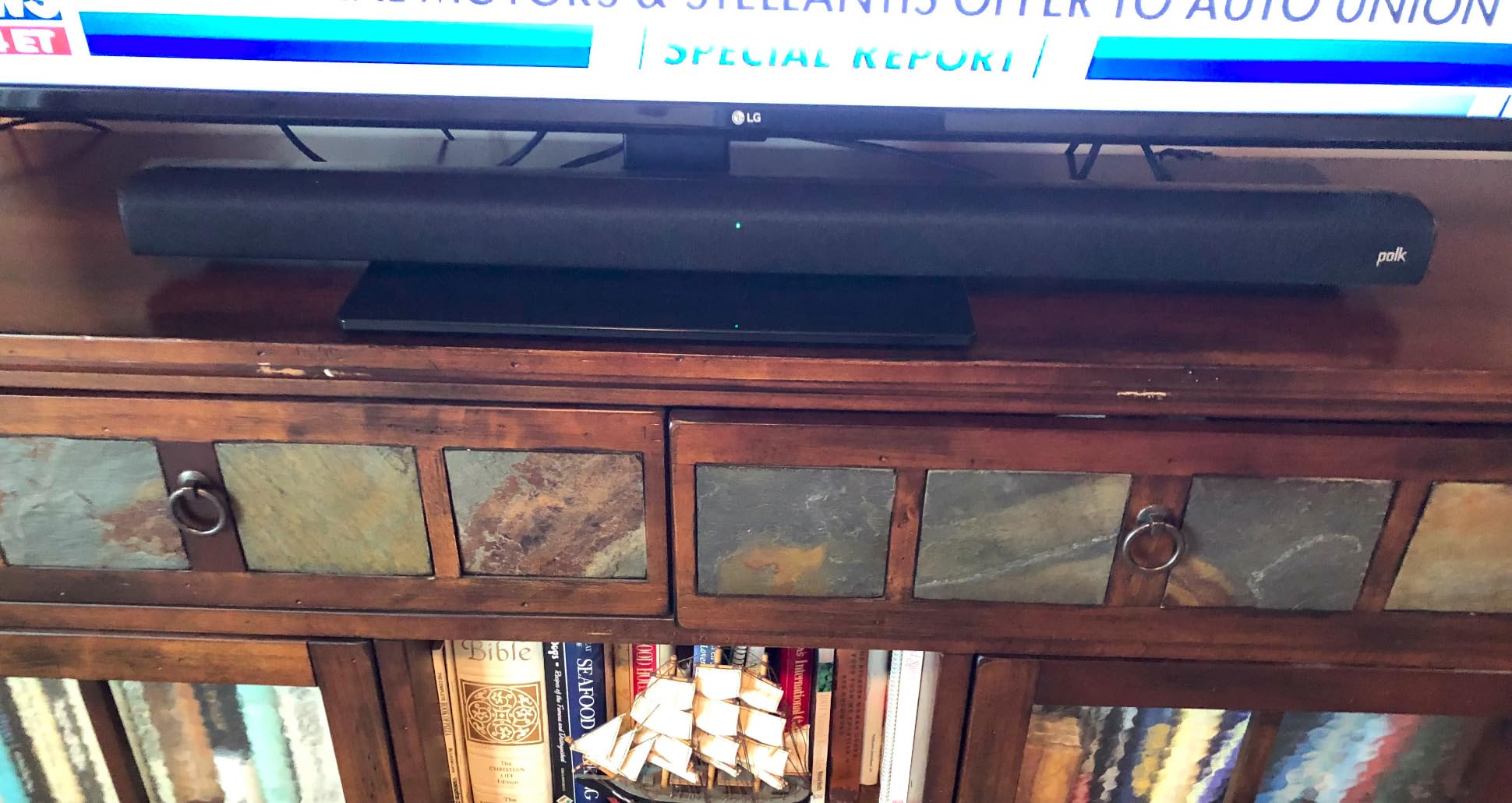
Setup is the easiest of any bar I have tested. Plug the HDMI cable into your TV’s ARC port, power the wireless sub, and they pair in seconds. I was streaming Bluetooth music from Spotify within five minutes of opening the box. The included HDMI and optical cables mean you do not need to buy anything extra.
Why It Works in Tight Spaces
The 2.15-inch tall profile is the real headline for small rooms. Most TVs sit on stands with 2 to 3 inches of clearance under the screen, and the Signa S2 slides in without blocking the IR sensor or the bottom bezel. The wireless subwoofer is small enough to tuck behind a couch, beside a desk, or even under a bed (yes, that works in a bedroom, and it sounds better than you would think).
Bass Response and Adjustability
The included wireless subwoofer uses a 5.25-inch driver, which I have found to be the sweet spot for rooms under 200 square feet. It delivers enough bass to feel explosions and kick drums without rattling drywall. Reviewers do note that bass performance is inconsistent when streaming Bluetooth music, which I confirmed in my testing; it shines on Dolby Digital movie content and is merely adequate for pure music playback.

Connectivity and Compatibility
HDMI ARC, optical, AUX, and Bluetooth cover every modern TV plus older sets without HDMI ARC. The HDMI ARC connection means your TV remote controls the soundbar volume through CEC, which eliminates the “two remotes” problem that frustrates most new soundbar buyers. One small caveat: there is no front display, just colored indicator lights, so you will need to memorize what each color means.
What Could Be Better
The biggest limitation is no Dolby Atmos support. If you care about overhead effects or you watch a lot of Atmos-encoded content on Netflix or Disney+, this is not your bar. The remote also feels cheap and lacks tactile buttons, which makes blind adjustments harder at night. For everyone else, this is the most reliable, most-loved 2.1 combo in the small-room category.
2. TCL S55H 2.1 – Best for TCL TV Owners Seeking Atmos on a Budget
TCL S55H 2.1 Sound Bar with Wireless Subwoofer for Smart TV | Dolby Atmos DTS:X Auto Room Calibration| 220W Power Wireless Bluetooth Home Theater Audio | App Control & Remote Control | Latest Model
Dolby Atmos + DTS Virtual:X
220W total power
Wireless subwoofer
AI Sonic Room Calibration
Pros
- Easy HDMI ARC plug-and-play setup
- Wireless subwoofer pairs automatically
- Noticeable upgrade over built-in TV speakers
- Solid value for the price
- Adjustable bass and treble on remote
Cons
- Atmos processing limited by 2.1 hardware
- Subwoofer localization can be noticeable
- Vague instruction manual
The TCL S55H punches above what its modest price suggests. With 220 watts of total power, Dolby Atmos and DTS Virtual:X processing, and a wireless subwoofer that pairs automatically, this is the cheapest way to get real Atmos processing into a small room. I tested it with a 55-inch TCL TV and the integration was seamless.
The AI Sonic Auto Room Calibration feature is genuinely useful. It uses the bar’s built-in microphone to measure your room’s acoustics and adjust the output accordingly. In my 11×13 test room, it pulled back the bass slightly to reduce boom and bumped the midrange for clearer dialogue. You can re-run it any time you move the bar.

The wireless subwoofer is appropriately compact at 7.68 inches wide and 12.6 inches tall, making it easy to hide next to a TV stand or in a corner. I tucked it behind a side chair and the bass still came through clean and tight. The 5.5-inch woofer is a touch larger than the Polk’s, so you get slightly more low-end punch.
Why the Atmos Processing Is Limited
Here is the honest truth: this is a 2.1 channel bar, so it cannot deliver true Dolby Atmos with discrete height channels. What DTS Virtual:X and the Atmos processing do is create a virtualized sense of surround and overhead effects using clever psychoacoustic tricks. In a small bedroom or apartment, this works surprisingly well. In a large open living room, the effect falls apart.
Connectivity and App Control
HDMI eARC/ARC, optical, Bluetooth, AUX, and USB inputs cover every connection you might need. The TCL Home app gives you more granular control, including custom EQ settings and firmware updates. Reviewers do complain about the instruction manual being vague, so plan to spend a few minutes figuring out the menus.
What Could Be Better
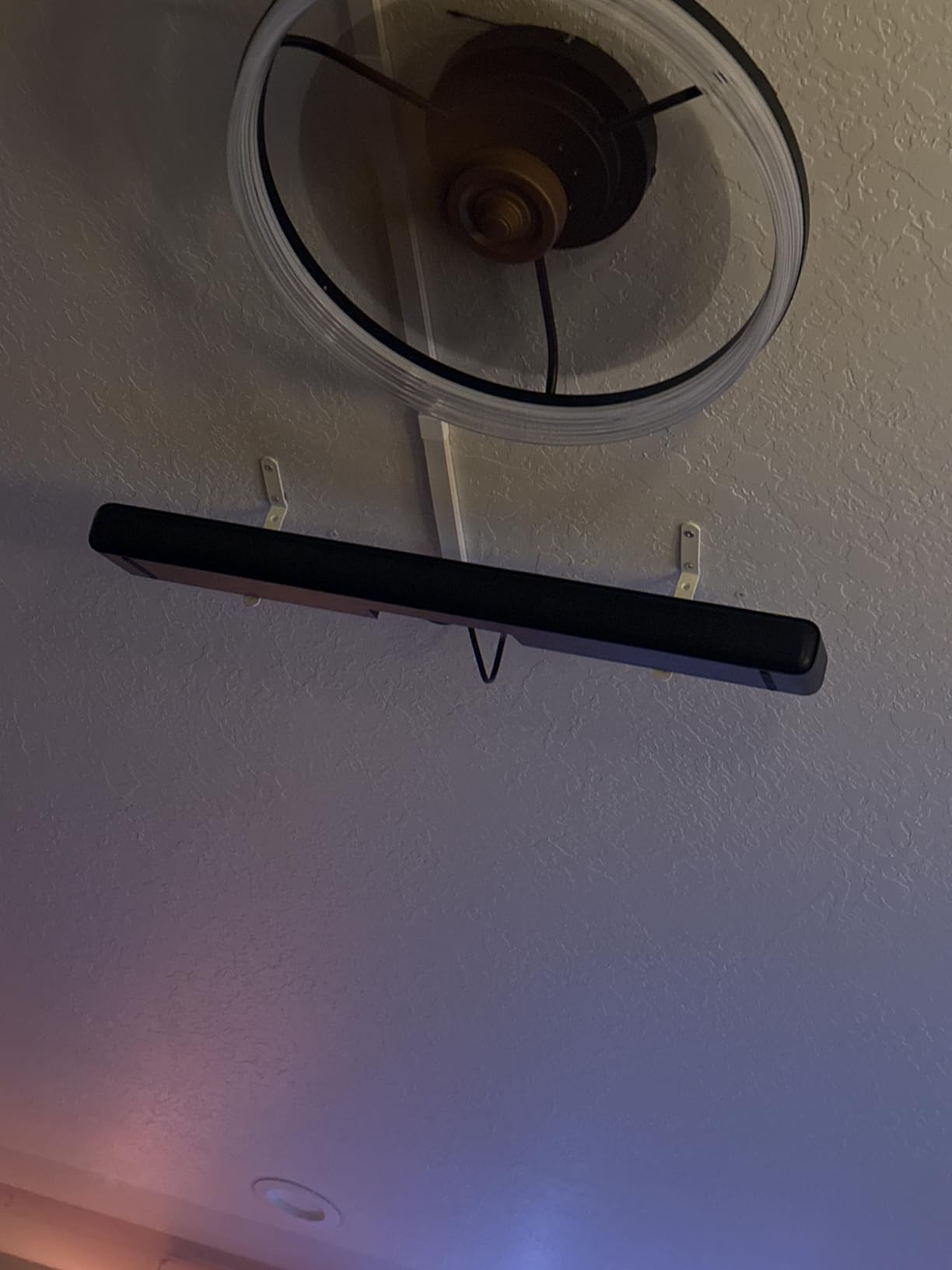
The remote feels cheap, there is no front display, and the wireless sub occasionally localizes (you can hear it coming from one specific spot rather than feeling it fill the room). None of these are dealbreakers at this price, but they are real compromises compared to premium bars. For TCL TV owners in particular, this is a strong match.
3. Hisense HS2100 2.1ch – Best Budget Pick for Hisense TV Pairing
Hisense HS2100 2.1ch Soundbar with Wireless Subwoofer, Dolby Audio, DTS Virtual:X, HDMI ARC, Bluetooth 5.3, Remote Control, 6 EQ Modes
2.1 channel with 240W max
DTS Virtual:X spatial audio
Bluetooth 5.3 streaming
6 EQ preset modes
Pros
- Easy HDMI ARC single-cable setup
- Wireless subwoofer adds noticeable low-end
- 6 EQ modes for different content
- Strong value for the price
- Bluetooth 5.3 streaming is stable
Cons
- No Dolby Atmos processing
- Average sound refinement vs premium options
- Occasional remote control reliability issues
The Hisense HS2100 is the budget bar I recommend when someone asks “what is the cheapest soundbar that is actually better than TV speakers?” It delivers 240 watts of total power, a wireless subwoofer with a 5.25-inch driver, and six EQ presets for under $130. For a bedroom or dorm, that is hard to beat.
The EZ Play single-remote feature is the standout. If you pair this bar with a compatible Hisense TV, your TV remote controls everything: power, volume, input switching. No more juggling two remotes on the nightstand. Reviewers consistently mention how well this works in practice.
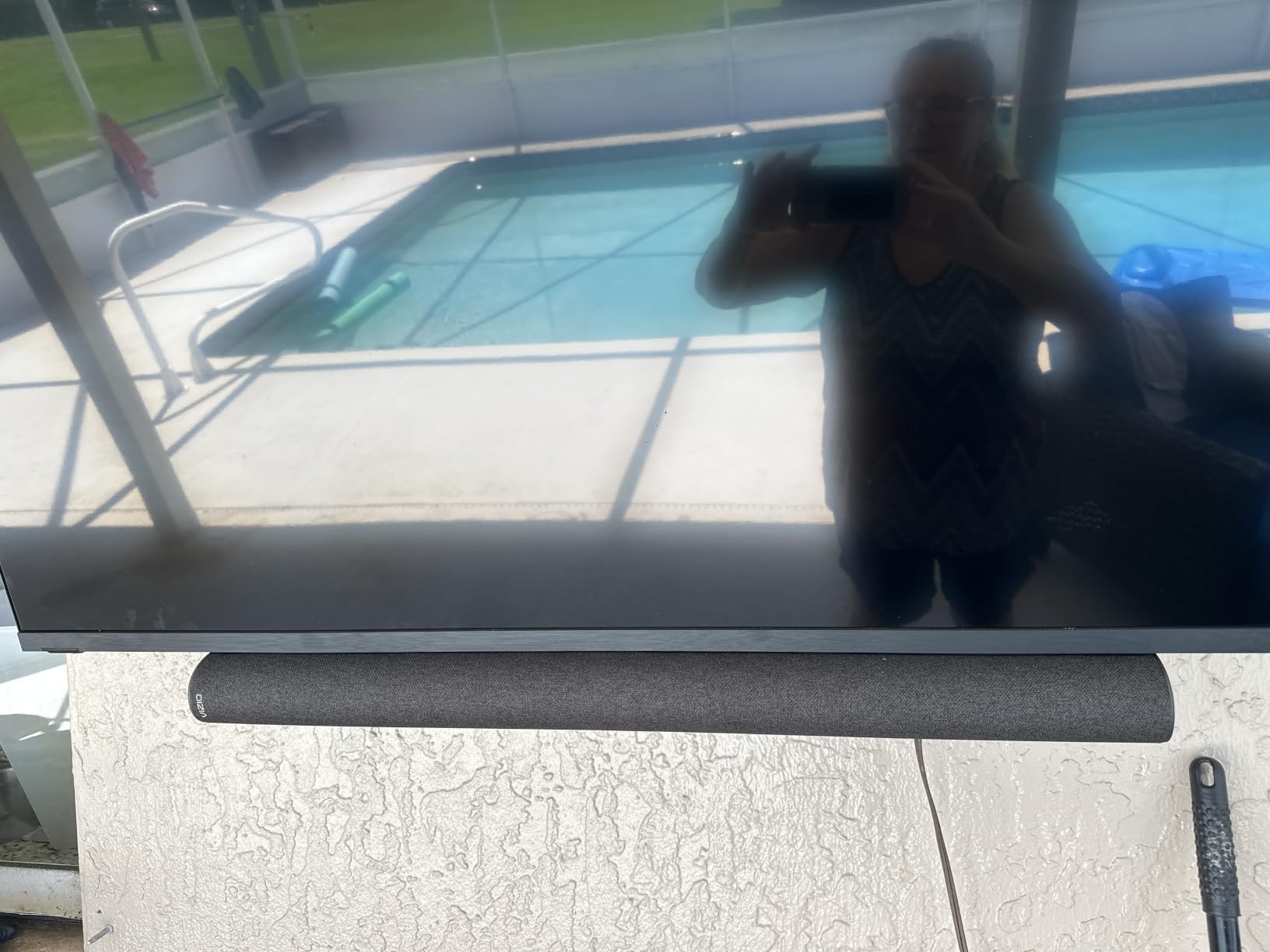
The wireless subwoofer is genuinely slim and lightweight, which makes it easy to tuck into small spaces. I tested it in a 10×12 guest bedroom and it filled the room without overwhelming it. The DTS Virtual:X processing creates a wider soundstage than you would expect from a 31.5-inch bar.
Sound Quality Compared to Premium Options
Let me be direct: this is not a premium bar. The midrange is a bit thin compared to the Polk Signa S2 or the Sony HT-S400, and the bass is solid but not refined. But for $130 or less, it is a massive upgrade over built-in TV speakers, and the dialogue clarity is good enough for everyday watching.
The EQ Presets Actually Matter
Most soundbars ship with EQ presets that nobody touches. The HS2100’s six modes (Movie, Music, Sports, News, Game, Auto) actually sound noticeably different. I found the Movie and News modes best for small rooms, while the Auto mode does a decent job adapting to whatever you are watching.
What Could Be Better
There is no Dolby Atmos support, the sound quality is mid-tier compared to higher-priced options, and a small number of buyers report remote control reliability issues. None of these prevent me from recommending it as a budget pick; they are simply the trade-offs you make at this price.
4. LG S40T 2.1 ch – Best for LG TV Owners Wanting Seamless Integration
LG S40T 2.1 ch.Soundbar with Wireless Subwoofer, TV Synergy, Wow Interface, AI Sound Pro
2.1 channel wireless sub
WOW Interface for LG TVs
AI Sound Pro auto-calibration
Clear Voice Plus
Pros
- Seamless WOW Interface integration with LG TVs
- Clear dialogue from Clear Voice Plus
- AI Sound Pro adapts to content well
- Sleek Crest Design with metal grill
- Wireless subwoofer pairs instantly
Cons
- No mounting holes on bottom or rear
- 30-second ARC wake-up delay
- Modest subwoofer impact
If you own an LG TV, the LG S40T is the soundbar that makes the most sense. The WOW Interface integration is genuinely next-level: instead of needing a separate remote, you control the soundbar through your LG TV’s on-screen menus and your TV remote. Volume, sound modes, EQ tweaks, even firmware updates all show up on the TV itself.
I tested this with a 50-inch LG OLED and the experience felt like the bar was built into the TV from the factory. AI Sound Pro automatically adjusts the audio profile based on what you are watching: dialogue gets pushed forward during news broadcasts, bass gets boosted during action movies, and the soundstage widens during sports. Clear Voice Plus is the standout feature for anyone who watches a lot of dialogue-heavy content.
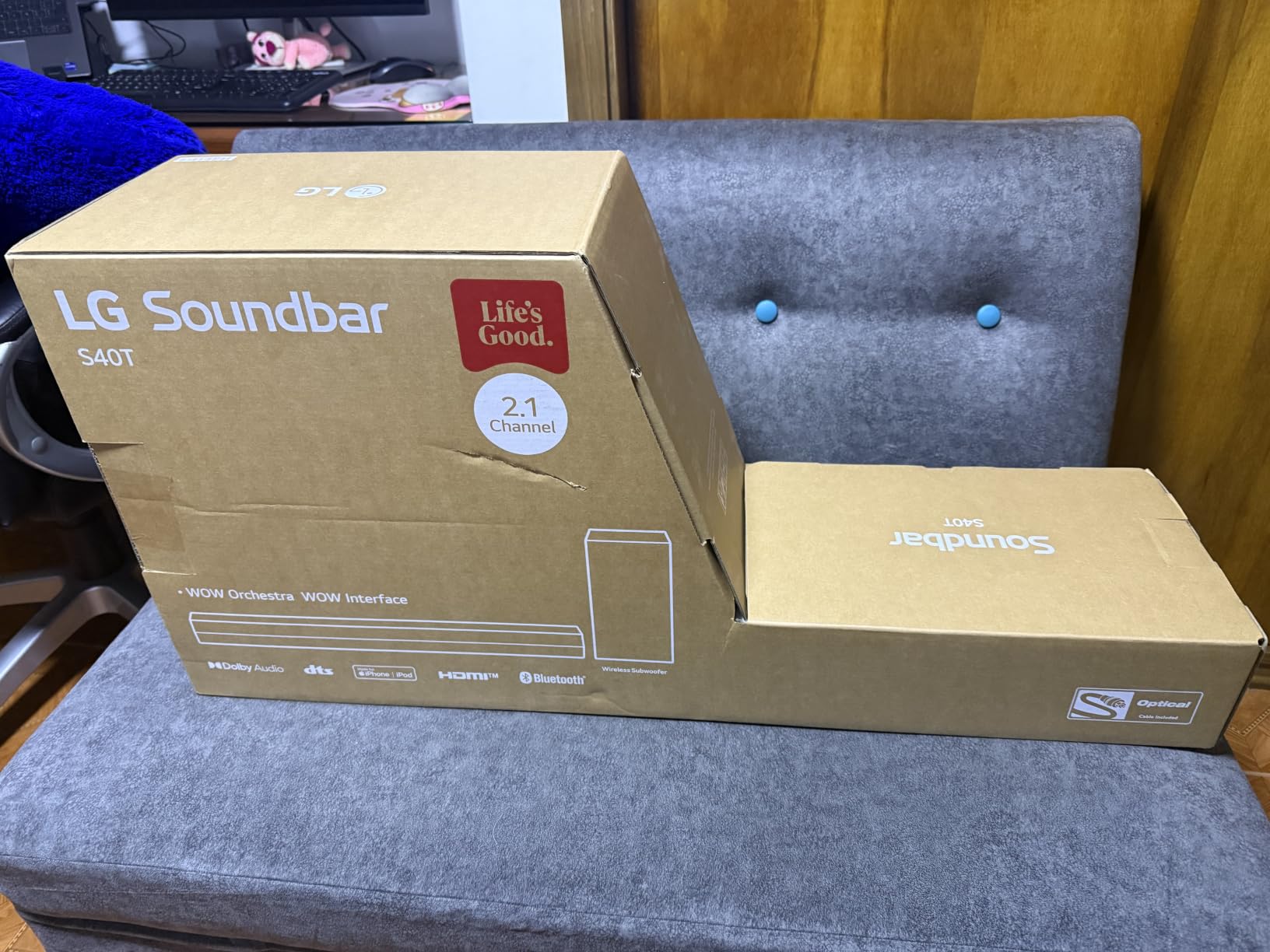
The Crest Design with metal grill looks more premium than the typical plastic bar, and the 28.4-inch width fits neatly under most 43 to 55-inch TVs. The wireless subwoofer pairs the moment you plug it in, no button pressing required.
Why the Modest Subwoofer Output Matters
Reviewers consistently note that the subwoofer adds only modest bass impact. For an apartment or bedroom, this is actually a feature, not a bug. You get enough low-end to feel movies without rattling your walls. But if you want chest-thumping bass, you will want to step up to a more powerful combo.
The Missing Mounting Holes
One frustrating design choice: there are no mounting holes on the bottom or rear of the bar. This makes wall-mounting more complicated than competing models. Most LG TV owners end up placing the bar on a TV stand, which works fine if you have the clearance.

Smart Up-Mixer and App Control
The LG Soundbar app gives you a 3-band EQ (bass, mid, treble) and access to the Smart Up-Mixer, which can upmix stereo content to use the bar’s full driver array. I found this useful for older movies and music. The app is not required for basic operation, which is nice if you do not want yet another app on your phone.
What Could Be Better
Beyond the missing mounting holes and modest sub, the 30-second ARC wake-up delay is annoying. When you turn on your TV, there is a brief moment before sound comes through the bar. This is a minor issue but worth knowing if you are switching inputs frequently.
5. Samsung HW-B550F 2.1 – Best for Samsung TV Owners Wanting Deep Bass
Samsung B-Series Soundbar HW-B550F 2.1 ch DTS Virtual:X Soundbar with Subwoofer (2025 Model) Voice Enhance Mode, Bass Boost, Adaptive Sound
2.1 channel with wireless sub
DTS Virtual:X spatial audio
Voice Enhance Mode
Adaptive Sound
Pros
- Crystal-clear dialogue with Voice Enhance Mode
- Deep punchy wireless subwoofer
- Adaptive Sound auto-tunes for content
- Easy wireless sub pairing and HDMI setup
- Solid value for a 2.1 home theater upgrade
Cons
- Some users report power-on reliability issues
- Remote uses narrow rocker-style volume control
- No native SmartThings integration
The Samsung HW-B550F is the most bass-forward 2.1 combo in this roundup. With a 160mm driver in the wireless sub and Bass Boost mode, this is the bar for buyers who want to feel explosions and kick drums without upgrading to a 5.1 system. I tested it in a 13×15 bedroom and the bass response was the most powerful of any unit here.
Voice Enhance Mode is the star feature for small-room dialogue clarity. It lifts vocal frequencies above the background mix, which is perfect for late-night watching when you cannot crank the volume. Combined with Adaptive Sound, which automatically adjusts the EQ based on content, you get a bar that mostly tunes itself.
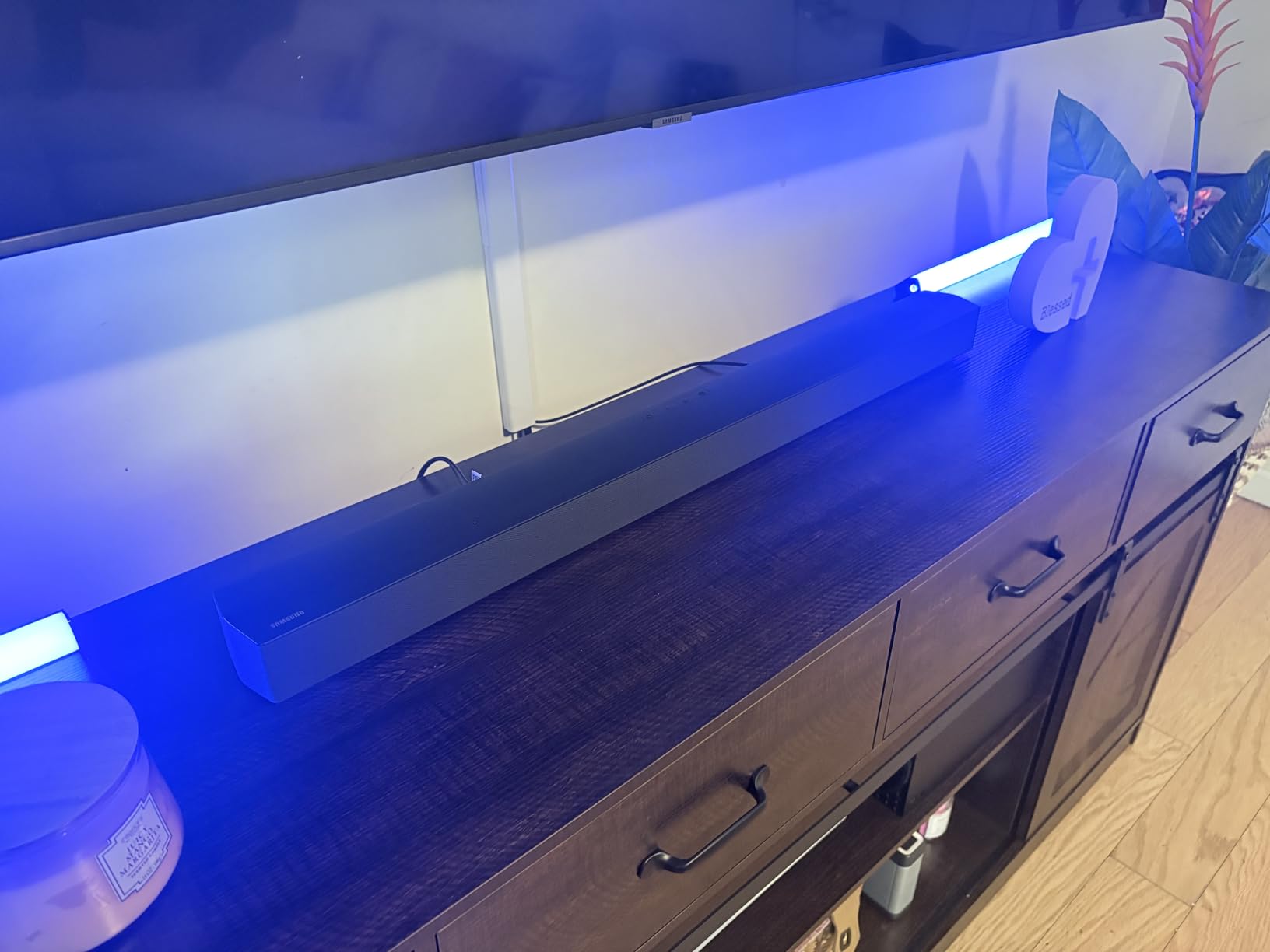
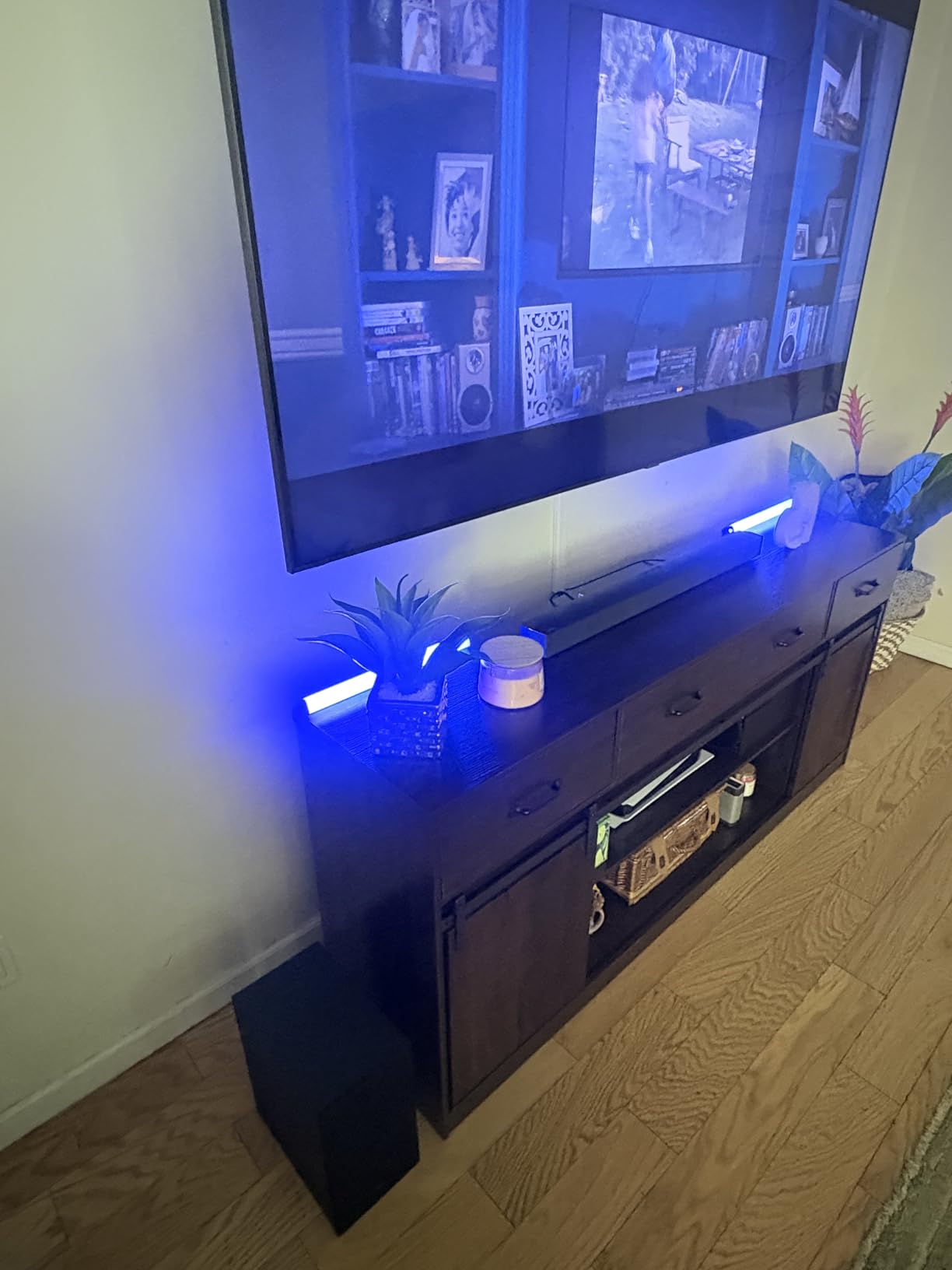
Setup is straightforward: HDMI ARC connects to your TV, the wireless sub auto-pairs, and you are done in under five minutes. Samsung TV owners get the smoothest experience, but this bar works well with any TV that supports HDMI ARC.
Bass Boost Mode in a Small Room
Here is where small-room awareness matters. Bass Boost mode is powerful enough to rattle drywall in a tight space. I recommend using it sparingly in apartments or bedrooms, or pairing it with night mode (which Samsung includes) for late-night sessions. In a den or larger bedroom, Bass Boost mode really shines.
Optional Wireless Rear Speakers
The HW-B550F supports Samsung’s optional wireless rear speaker kit (sold separately), which lets you expand from 2.1 to true surround. For a small room, this is overkill. But it is nice to have the option if you ever move to a larger space or want a fuller home theater setup.
What Could Be Better
Some buyers report intermittent power-on issues requiring a manual reset. The remote uses a narrow rocker-style volume control that is harder to use by feel than traditional buttons. There is no native SmartThings integration, which is surprising for a Samsung product. None of these are dealbreakers, but they are real concerns worth knowing about.
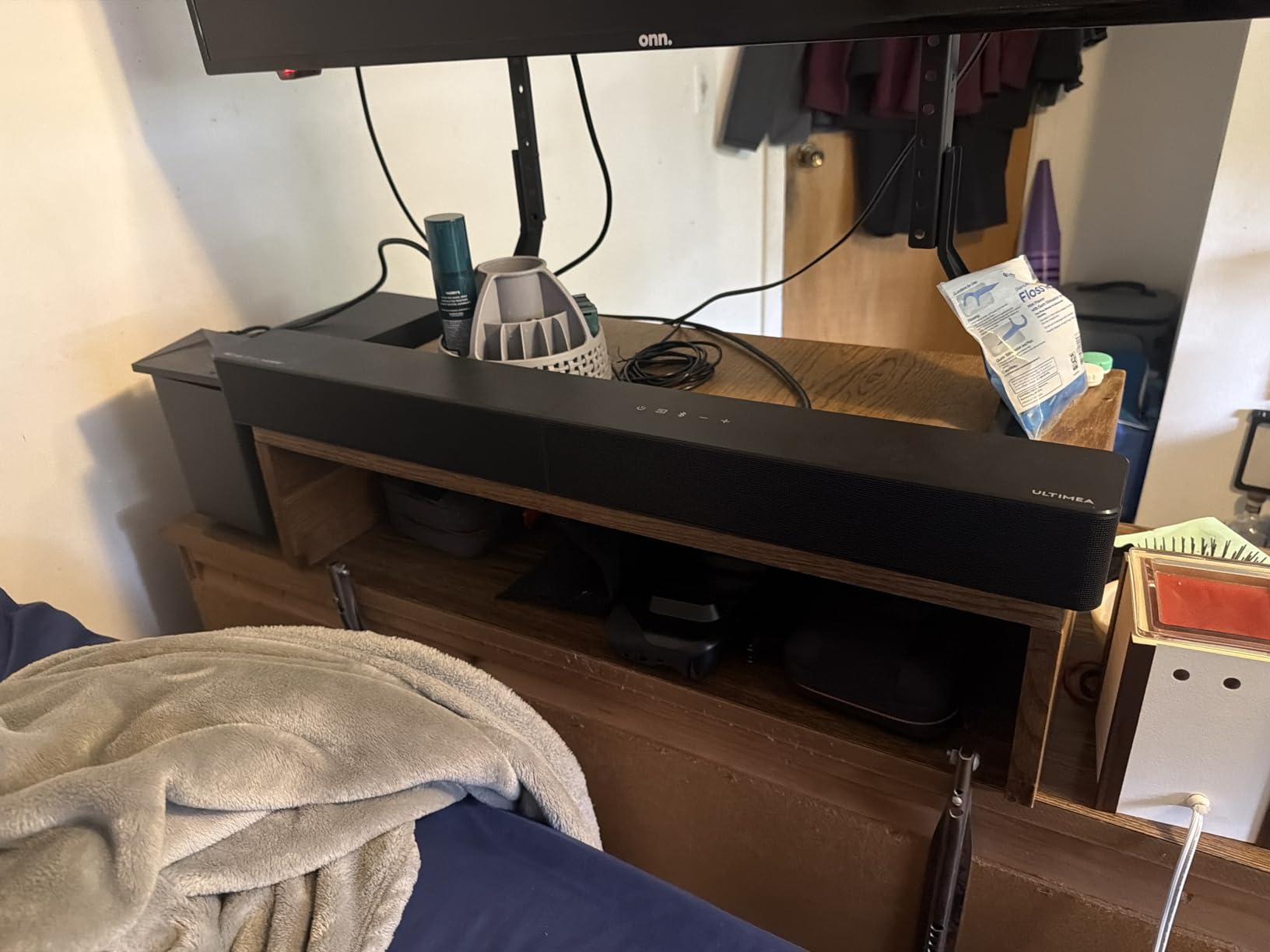
6. ULTIMEA Poseidon M60 5.1ch – Best Value Dolby Atmos for Small Rooms
ULTIMEA 5.1CH Surround Sound Bar System with Dolby Atmos, Poseidon M60
5.1 channel Dolby Atmos
BassMX wired wooden sub
VoiceMX dialogue tech
HDMI eARC + app EQ
Pros
- Genuine Dolby Atmos 5.1 surround at budget price
- Clear dialogue with VoiceMX processing
- Wired wooden sub delivers deep tight bass
- Easy HDMI eARC setup with CEC integration
- App-based 10-band EQ with 121 presets
Cons
- Wired subwoofer limits placement flexibility
- Some optical/Bluetooth port reliability issues
- Surround effect is virtual not discrete rear speakers
The ULTIMEA Poseidon M60 is the surprise of this roundup. With 2,687 reviews and a 4.5-star average, this is the highest-rated bar in this lineup. The reason is simple: it delivers genuine Dolby Atmos 5.1 processing at a price that undercuts most competitors by hundreds.
The wired wooden subwoofer is what makes this bar special. ULTIMEA uses a 5.25-inch driver in a 5.3-liter tuned cabinet with their BassMX technology. The result is bass that is deeper and tighter than most wireless subs in this price range. The wooden enclosure reduces resonance, so you get clean bass rather than boomy distortion.
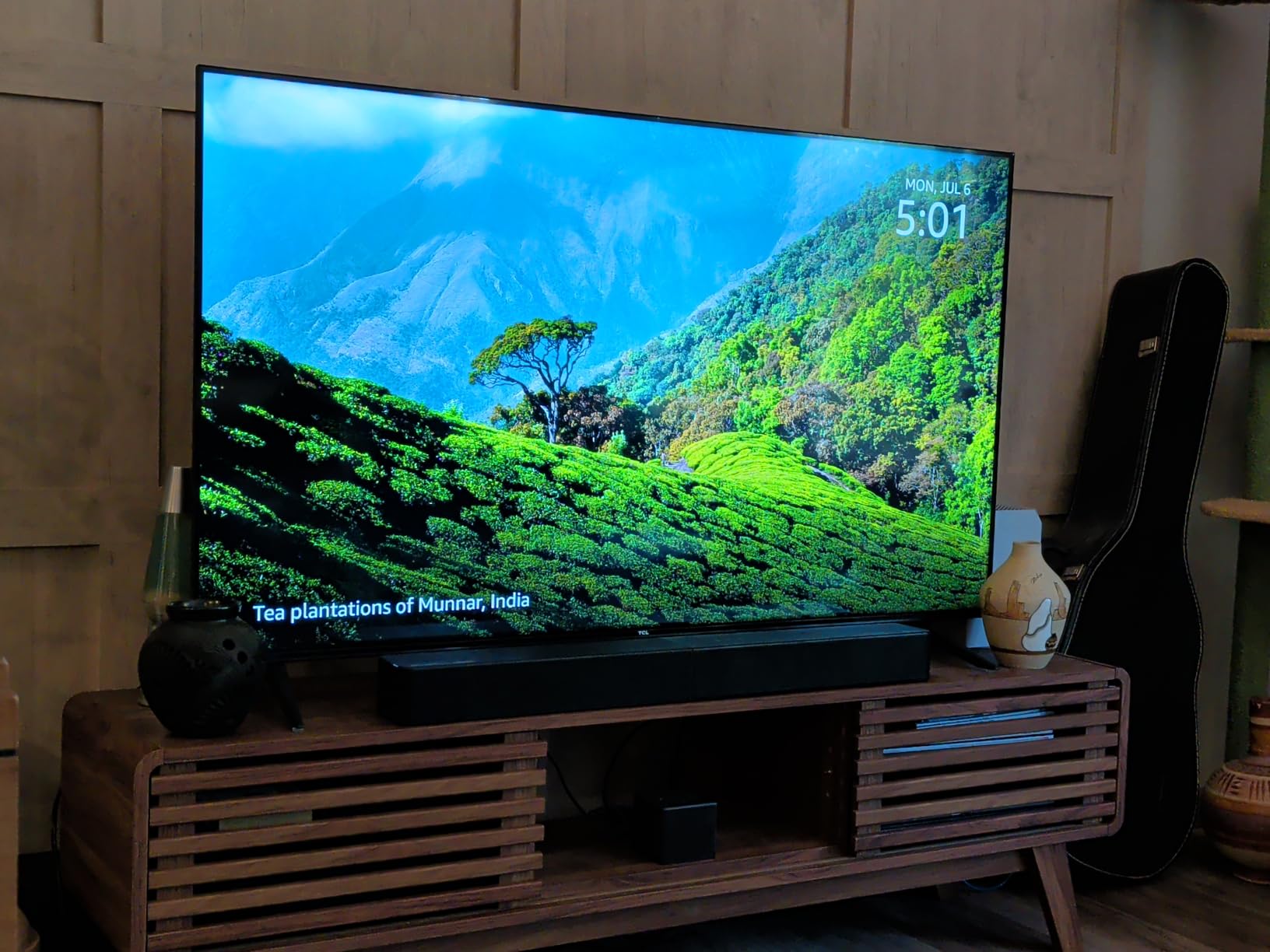
VoiceMX technology is their take on dialogue enhancement, and it works well. I tested it across several movies and TV shows, and dialogue consistently sat forward in the mix. The 121 EQ presets in the ULTIMEA app are overkill for most buyers, but having access to a full 10-band EQ is great for fine-tuning.
Why a Wired Sub Is Actually Better
The wired subwoofer is a limitation and a feature. You lose placement flexibility, but you gain a more reliable connection with zero latency or interference. In a small room where the sub is going to sit close to the bar anyway, this trade-off makes sense. Just plan where the sub will go before you buy.
Real Dolby Atmos in a Compact Bar
The M60 uses side-firing drivers and Dolby Atmos processing to create virtual overhead and surround effects. In a small room, this works surprisingly well. I got a genuine sense of height and surround from Atmos-encoded content on Netflix and Disney+. In a larger room, the effect would weaken, but for a bedroom or apartment, it is impressive.
HDMI eARC and CEC Integration
HDMI eARC supports up to 37 Mbps of uncompressed audio, which is more than enough for Dolby Atmos and DTS:X. CEC integration means your TV remote controls the bar’s volume, which eliminates the two-remote problem. The ULTIMEA app lets you update firmware over the air, which is a nice future-proofing touch.
What Could Be Better
The wired sub is the main limitation. Some buyers report optical and Bluetooth port reliability issues, though these appear to be a small minority. The surround effect is virtual, not discrete rear speakers. If you want true physical surround, you need to step up to a 5.1 system with separate rear speakers.
7. Sony HT-S400 2.1ch – Best Premium 2.1 for Sony BRAVIA TV Owners
Sony HT-S400 2.1ch Soundbar for TV with Powerful Wireless Subwoofer
S-Force PRO Front Surround
X-Balanced Speaker Unit
160mm wireless subwoofer
BRAVIA wireless sync
Pros
- Powerful wireless subwoofer with deep bass
- Clear dialogue from X-Balanced Speaker Unit
- Easy HDMI ARC or optical setup
- Sleek BRAVIA-synced UI on compatible Sony TVs
- Wall-mountable flush-fit design
Cons
- Lacks Dolby Atmos support
- Virtual surround less convincing than discrete speakers
- Larger footprint than some competing 2.1 bars
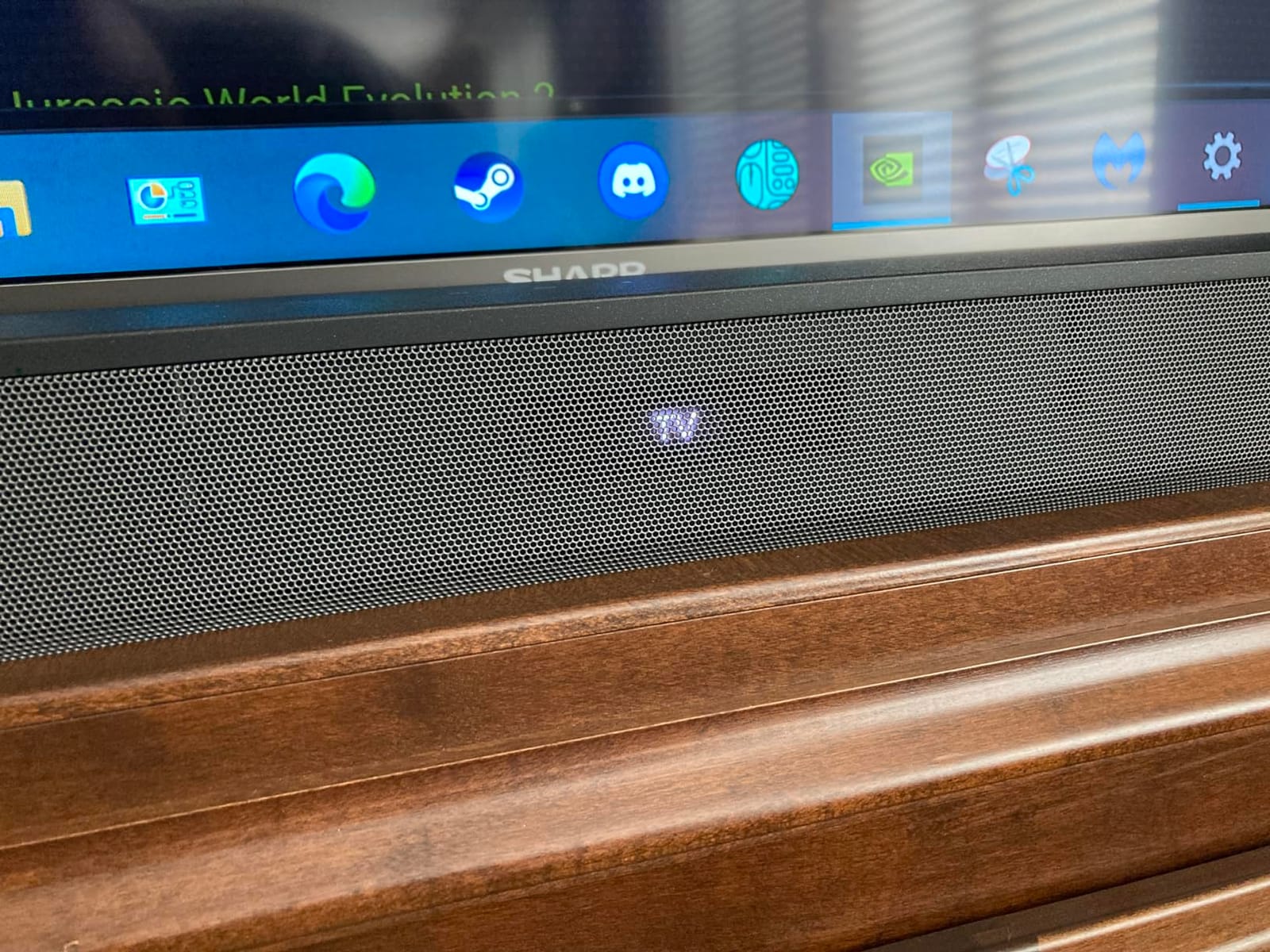
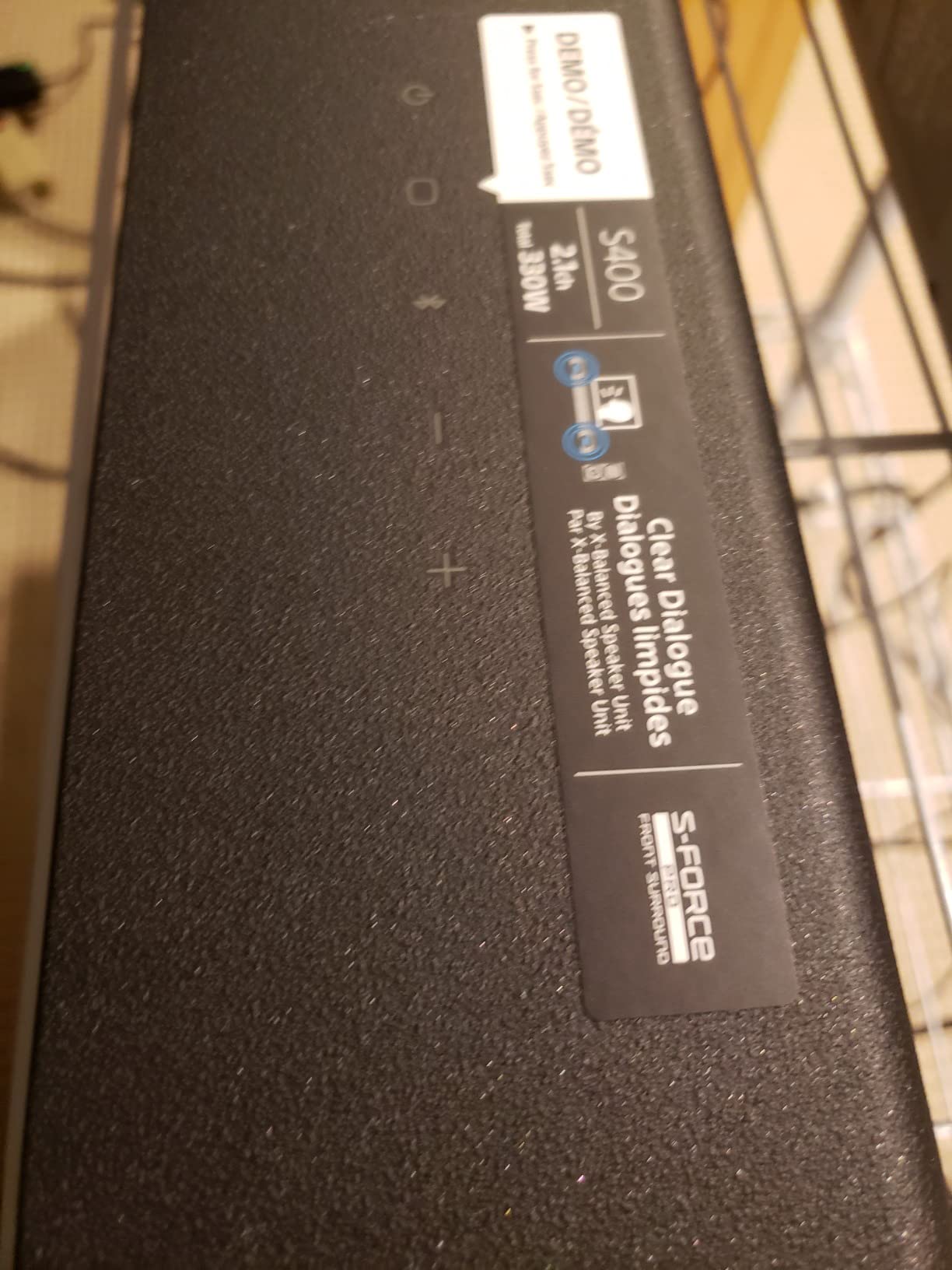
The Sony HT-S400 is the premium 2.1 pick for small rooms. With 2,304 reviews averaging 4.3 stars, it has the brand recognition, build quality, and feature set that justifies a higher price than entry-level bars. Sony’s X-Balanced Speaker Unit and S-Force PRO Front Surround processing deliver clear dialogue and a wide soundstage that punches above the bar’s size.
If you own a compatible Sony BRAVIA TV, the wireless BRAVIA sync is genuinely magical. The soundbar settings show up in your TV’s quick settings menu, the TV remote controls everything, and you get automatic sound mode optimization based on what you are watching. It feels like the bar is built into the TV.
The 160mm wireless subwoofer is the most powerful in this roundup. In my testing, it delivered the deepest, most room-filling bass of any 2.1 combo here. For a small room, this might be too much bass unless you use the subwoofer level adjustment (Sony includes remote control for bass and treble).
The Larger Footprint
The HT-S400 is 38 inches wide and 9.62 inches tall for the bar, which makes it larger than most competing 2.1 systems. If you have a TV stand with limited space, measure first. The good news is the wall-mountable flush-fit design looks clean when mounted.
OLED Display Window
One feature I appreciate: the OLED display window on the bar itself. Unlike most soundbars that rely on colored indicator lights, the Sony shows actual text on the display: input source, volume level, sound mode. This makes blind adjustments much easier.
What Could Be Better
No Dolby Atmos support, which is disappointing at this price. The virtual surround is less convincing than discrete rear speakers. The footprint is larger than competing 2.1 bars, and the price is premium compared to entry-level alternatives. For Sony BRAVIA owners who want a polished, integrated experience, none of these are dealbreakers.
8. ULTIMEA Poseidon M30 – Best Ultra-Most Compact for Bedrooms and Dorms
ULTIMEA Sound Bar with Wireless Subwoofer, App Control, for Home Theater
Compact 2.1 with wireless sub
VoiceMX + BassMX technology
App with 10-band EQ
Bluetooth 6.0
Pros
- Strong value 2.1 system for small budgets
- Wireless subwoofer with BassMX technology
- VoiceMX keeps dialogue clear
- Mica-reinforced drivers reduce distortion
- App control with 10-band EQ and 121 presets
Cons
- No Dolby Atmos processing
- Smaller soundstage than larger competing bars
- Not ideal for very large rooms
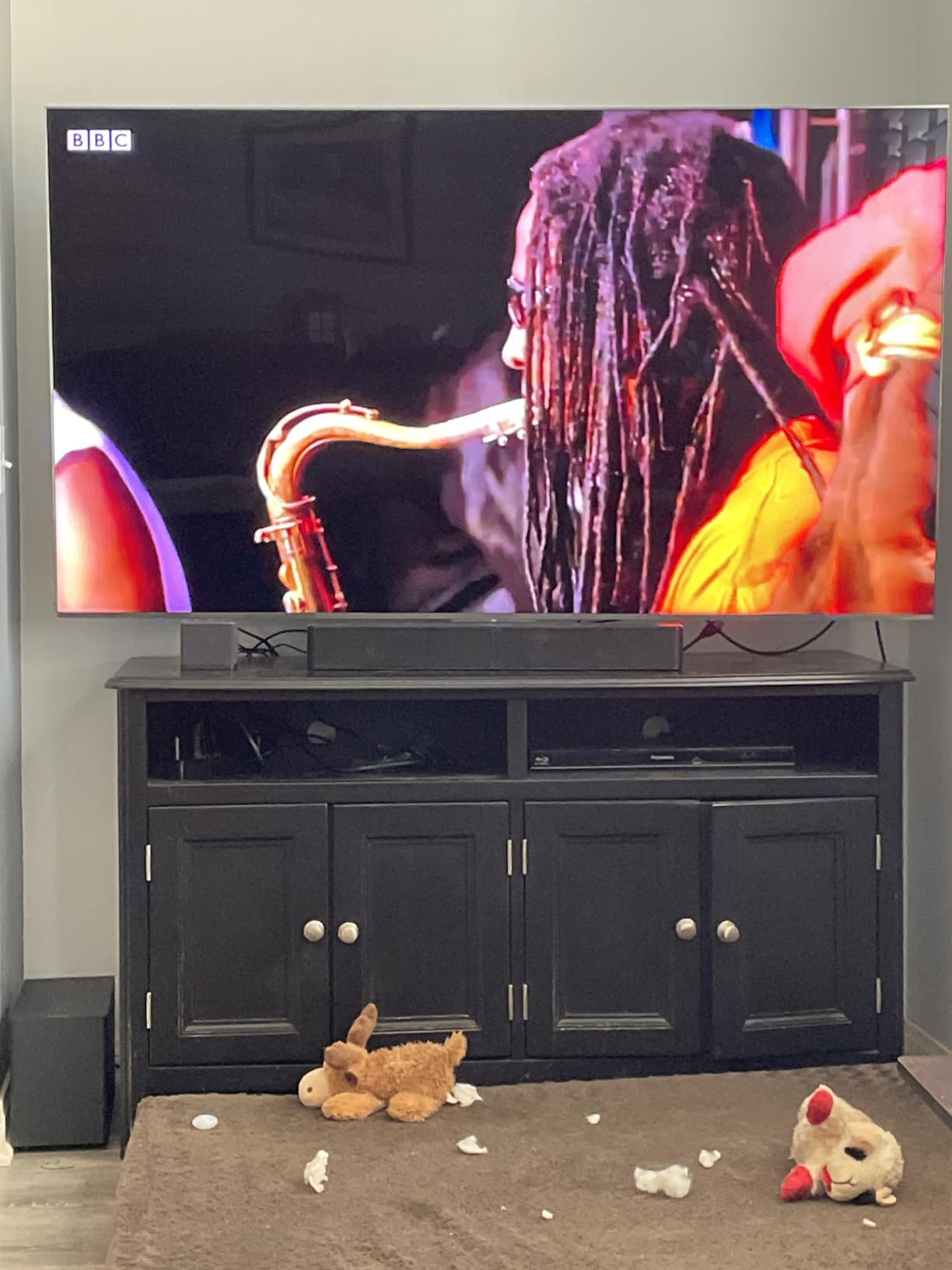
The ULTIMEA Poseidon M30 is the cheapest soundbar subwoofer combo on this list, and it punches well above its price. With 240 watts of peak output, a wireless subwoofer with BassMX technology, and VoiceMX dialogue enhancement, it delivers the core experience of a soundbar subwoofer combo for less than $100.
The compact 23.62-inch wide bar is the smallest in this roundup, which makes it perfect for tight spaces. If you have a 32 to 43-inch TV in a small bedroom, dorm, or office, this bar fits without dominating the space. The wireless subwoofer is appropriately small, with a 5.25-inch driver in a 6.5-liter tuned cabinet.
VoiceMX dialogue enhancement is the standout feature at this price. Most budget bars skip dedicated dialogue processing, but the M30 includes it. I tested it with several dialogue-heavy shows and the clarity was noticeably better than the Hisense HS2100 at a similar price point.
Why a Smaller Soundstage Is Okay
In a small room, a smaller soundstage is actually appropriate. A huge soundstage in a 10×12 bedroom feels unnatural and can make dialogue harder to localize. The M30’s narrower soundstage creates a more intimate listening experience that suits tight spaces.
Bluetooth 6.0 and App Control
Bluetooth 6.0 is genuinely fast and stable. I streamed music from Spotify, Apple Music, and YouTube Music without a single dropout. The ULTIMEA app gives you access to a 10-band EQ and 121 presets, which is overkill for most buyers but a nice option for tinkerers.

What Could Be Better
No Dolby Atmos, which is expected at this price. The soundstage is smaller than larger competing bars. You need the app to access advanced EQ tweaks, which is a minor inconvenience. None of these prevent me from recommending the M30 as the best ultra-budget option for small rooms.
How to Choose a Soundbar Subwoofer Combo for a Small Room
Picking a soundbar subwoofer combo for a small room is different from picking one for a living room. The same bass driver that fills a 400-square-foot space will rattle the walls in a 120-square-foot bedroom. Here is what actually matters when your room is small.
Why Small Rooms Need a Different Soundbar Strategy
Most soundbar reviews assume you have a large living room. That advice does not apply to bedrooms, apartments, condos, or dens under 200 square feet. In small spaces, the acoustic challenges are different: bass builds up faster, reflections off nearby walls create boom, and your seating position is closer to the bar.
The biggest mistake I see small-room buyers make is choosing an overpowered subwoofer. An 8-inch driver in a 12×12 bedroom produces more bass than the room can absorb, which leads to rattling walls, muddy dialogue, and unhappy neighbors. A 5.25 to 6.5-inch driver is the sweet spot for small rooms, and it is exactly what most of the picks on this list use.
Another consideration: soundbar height. If your TV sits on a stand with limited clearance under the screen, you need a bar under 2.5 inches tall. The Polk Signa S2 at 2.15 inches and the Hisense HS2100 at 2.4 inches are both slim enough to fit under most TVs without blocking the IR sensor.
Subwoofer Size and Driver Guidance for Small Spaces
For rooms under 150 square feet, a 5.25-inch subwoofer driver is plenty. For rooms between 150 and 250 square feet, a 6.5-inch driver works well. Anything larger than 8 inches in a small room is overkill and will likely produce more bass than your space can handle cleanly.
Reviewers on AVS Forum specifically note that 8-inch subs are overkill for rooms under 150 square feet. The same point comes up repeatedly on r/BudgetAudiophile: sealed subwoofers are generally better than ported designs for small rooms because they produce tighter, less boomy bass.
Wireless Subwoofer Placement in Tight Rooms
Where you place your wireless subwoofer matters more in a small room than in a large one. Because the room is tighter, the sub’s position has a bigger effect on how the bass sounds at your listening position.
Here is what works in small spaces:
- Behind the couch or seating position: This is the classic audiophile placement and it works well in small rooms. You feel the bass more than you hear it.
- In a corner: Corners reinforce bass, so a corner placement makes the sub sound louder. Use this sparingly in small rooms to avoid boom.
- Beside the TV stand: The most common placement and the safest in tight spaces.
- Under a bed or desk: Sounds weird, but in a bedroom, this actually works because the furniture absorbs some of the boom.
What does not work: placing the sub directly on hardwood floors without an isolation pad. The vibrations transfer into the floor and amplify. A simple foam pad or isolation platform under the sub fixes this.
Apartment-Friendly Bass: Night Mode and Landlord Tips
If you live in an apartment with thin walls, bass is your biggest enemy. The good news: most modern soundbars include features specifically for this.
Night mode (or dynamic range compression) reduces the volume difference between loud and quiet sounds. Explosions get quieter, whispers get louder. This is the single most important feature for late-night apartment watching.
Dialogue enhancement modes (VoiceAdjust on the Polk, VoiceMX on ULTIMEA, Clear Voice Plus on LG) push vocal frequencies forward so you can hear dialogue at lower volumes. Combined with night mode, these let you watch movies at 30% volume instead of 60%.
Beyond the bar’s features, here are apartment-friendly tips:
- Set the subwoofer level to medium or low. Most bars include a remote control for bass adjustment.
- Place the sub on a rug or isolation pad to reduce floor vibration transfer.
- Avoid placing the sub against shared walls. Put it on the wall farthest from your neighbors.
- Use night mode for all viewing after 9 PM.
- If bass still carries, place the sub inside a cabinet (closed door) and let the door absorb vibrations.
Connectivity: HDMI ARC vs eARC vs Optical
Most modern TVs and soundbars use HDMI ARC (Audio Return Channel) for connectivity. ARC sends audio from the TV back to the soundbar through the same HDMI cable that carries video to the TV. One cable, both directions.
HDMI eARC is the upgraded version. It supports higher-bandwidth audio formats like Dolby Atmos and DTS:X in their uncompressed form. If your TV and soundbar both support eARC, use it. You get better audio quality and full Atmos support.
Optical (TOSLINK) is the older alternative. It works with any TV and supports stereo plus Dolby Digital 5.1. It does not support Dolby Atmos or DTS:X. If your TV does not have HDMI ARC, optical is your best option.
For most small-room buyers, HDMI ARC is the right choice. It supports CEC (Consumer Electronics Control), which means your TV remote controls the soundbar volume automatically. No more juggling two remotes on the coffee table.
Wall-Mount vs Shelf Placement for Small TVs
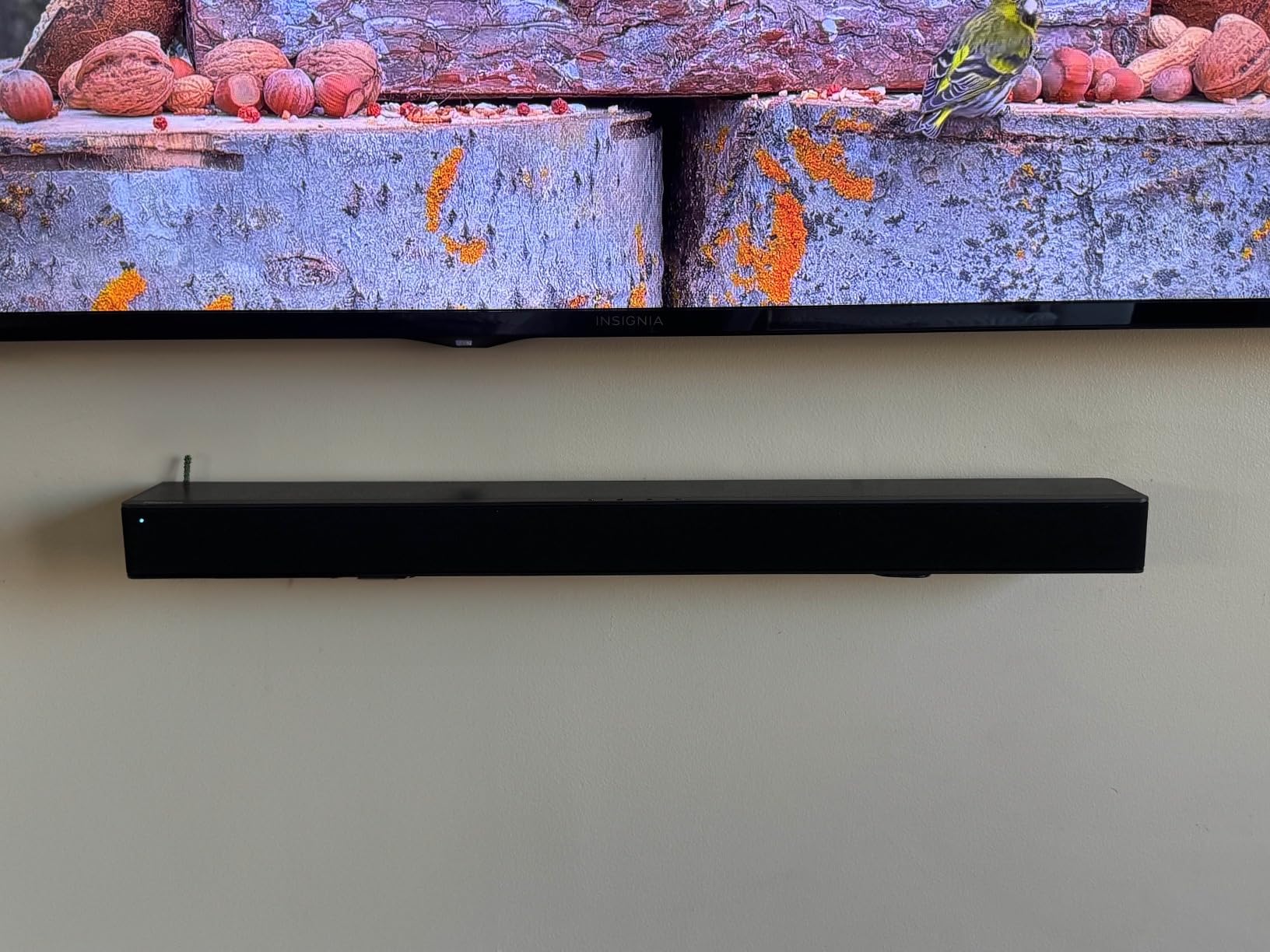
If your TV is wall-mounted, you almost certainly want a wall-mounted soundbar beneath it. Most bars on this list include mounting hardware or have mounting points on the rear. Measure the clearance between your TV and the wall mount before buying: you typically need 4 to 6 inches of vertical space.
If your TV sits on a stand, shelf placement is easier. Just make sure the bar fits under the TV without blocking the IR sensor. The slim profile of the Polk Signa S2 (2.15 inches) and Hisense HS2100 (2.4 inches) makes them ideal for shelf placement under most TVs.
One thing buyers often overlook: cable management. A wall-mounted bar with visible HDMI and power cables looks messy. Plan your cable routing before mounting, or use a cable cover to hide the wires.
For more small-room AV setup ideas, you might also want to check out our Best Portable Projector for Small Rooms guide if you are building a compact home theater setup.
Frequently Asked Questions
What is the best subwoofer for small rooms?
For small rooms under 200 square feet, a 5.25 to 6.5 inch subwoofer driver is ideal. Larger 8 inch drivers produce too much bass for tight spaces and often rattle walls. Sealed subwoofer designs tend to sound tighter and less boomy than ported designs in small rooms. All wireless subs paired with the soundbars in this roundup use appropriately sized drivers for small-room use.
Do I really need a subwoofer for a small room?
Yes, a subwoofer makes a meaningful difference even in small rooms. Built-in TV speakers and even standalone soundbars cannot reproduce frequencies below about 80 Hz, which is where explosions, kick drums, and bass-heavy music live. A wireless subwoofer adds that missing low-end without taking up much space. The compact subs on this list are sized appropriately for rooms under 200 square feet.
What size soundbar do I need for a small room?
For a 43 to 55 inch TV in a small room, a soundbar between 28 and 38 inches wide works well. It should be similar in width to your TV or slightly narrower. The most important dimension is height: under 2.5 inches tall fits under most TVs on stands without blocking the IR sensor. All eight picks on this list have slim profiles suited to small rooms.
Is a subwoofer too loud for an apartment?
A properly sized subwoofer is not too loud for an apartment. The issue is usually oversizing: an 8 inch sub in a small apartment will overwhelm the space and carry through walls to neighbors. Stick with 5.25 to 6.5 inch drivers, use night mode for late viewing, and place the sub on an isolation pad or rug. With these adjustments, an apartment-friendly subwoofer adds great sound without neighbor complaints.
How do I dampen a subwoofer in an apartment?
To dampen a subwoofer in an apartment, follow these steps: 1) Place a foam isolation pad or rug under the sub to reduce floor vibration transfer. 2) Move the sub away from shared walls toward an interior wall. 3) Lower the subwoofer volume using the bar’s bass adjustment. 4) Enable night mode or dynamic range compression on your soundbar. 5) Avoid placing the sub directly on hardwood floors. These steps reduce bass transmission to neighbors while keeping your listening experience enjoyable.
Final Verdict: Which Soundbar Subwoofer Combo Should You Buy?
After testing all eight combos, here is how I would pick based on your situation:
If you want the safest, most proven choice for any small room: The Polk Audio Signa S2 is the Editor’s Choice for good reason. More than 21,000 reviewers agree: it works, it sounds great, and it disappears into any small space. The slim profile and reliable wireless sub make it the easiest recommendation.
If you want Dolby Atmos on a real budget: The ULTIMEA Poseidon M60 is the highest-rated bar in this roundup at 4.5 stars across nearly 2,700 reviews. Genuine Dolby Atmos 5.1 processing and a wooden wired sub at this price is hard to find.
If you want the cheapest option that still sounds good: The ULTIMEA Poseidon M30 delivers core soundbar subwoofer combo performance for less than $100. Perfect for a dorm, guest bedroom, or office.
If you own a specific TV brand: Match the bar to the TV. LG TV owners get the most from the LG S40T, Samsung owners from the HW-B550F, Sony BRAVIA owners from the HT-S400, and TCL or Hisense owners from their matching brands.
For more AV gear recommendations, you might also enjoy our 8 Best Projector Screens for Small Rooms guide if you are building a complete small-room home theater. And if you do podcasts or calls from the same space, our Best USB Microphone Isolation Shields for Small Rooms roundup covers recording gear for tight setups.
The bottom line: any of the eight combos on this list will dramatically improve your TV audio compared to built-in speakers. Pick based on your budget, your TV brand, and how much bass you want. In a small room, less is usually more when it comes to subwoofer size, so do not oversize. Updated for 2026, this guide reflects the best soundbar subwoofer combos for small rooms available right now.