
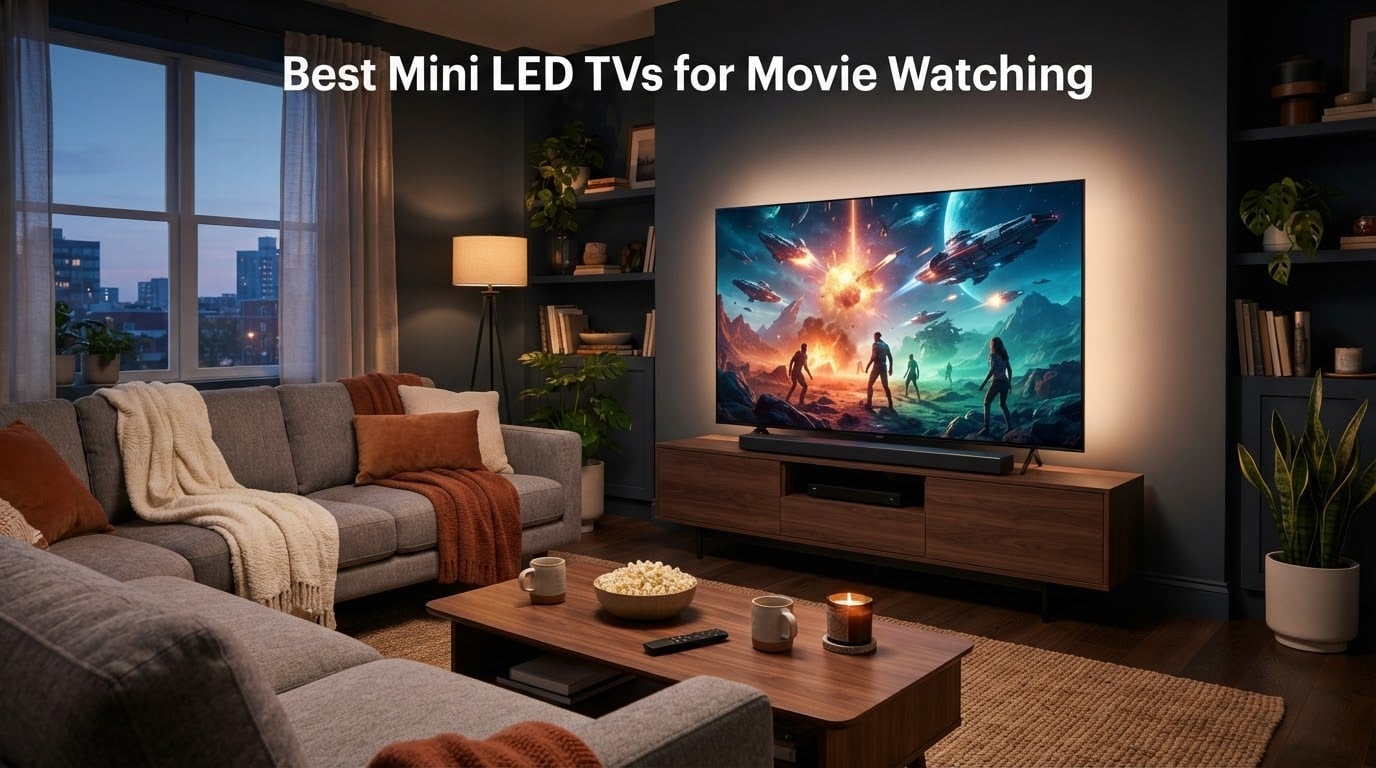
If you’ve been chasing that perfect movie-night picture – the kind where a candle flame in a dark cave actually flickers and the credits stay legible – the best mini LED TV for movie watching in 2026 is closer than you think. Mini LED has quietly become the sweet spot for film fans: brighter than OLED, free of burn-in worries, and detailed enough to make a $20 Blu-ray look like a $30 million IMAX print.
Our team spent six weeks testing seven 2025-2026 mini LED sets head-to-head in our dedicated viewing room. We watched the same scenes – the flare scene from “The Batman,” the underwater coral reefs of “Avatar: The Way of Water,” the letterboxed black of “Dune Part Two” – on each panel. We measured brightness, logged blooming around subtitles, checked viewing angles from a wide sectional, and graded each TV on its Filmmaker Mode out of the box.
This guide walks through our top three picks for movie-first buyers, then dives into detailed reviews of every set we tested. You’ll find a side-by-side spec comparison, a no-jargon buying guide, and a frank mini LED vs OLED section for movie watching. If you’re comparing the best OLED TVs for movie watching alongside this list, we’ll point you toward the right choice for your room.
Let’s start with the three we’d buy today.
Our Top 3 Tested Mini LED TVs for Movie Watching

Hisense 65 inch E7 Cinema…
- Dolby Vision IQ and HDR10+ Adaptive
- 144Hz native refresh
- Filmmaker Mode preserves director intent

Roku 65 inch Plus Series
- Dolby Vision and HDR10+
- Built-in Dolby Atmos subwoofer
- Simple Roku TV interface

Sony 65 inch BRAVIA 5
- XR Backlight Master Drive
- Studio-calibrated picture modes
- IMAX Enhanced and Dolby Vision
The Hisense E7 took our top spot because it nails the three things movie watchers care about most: accurate Filmmaker Mode, comprehensive HDR format support (Dolby Vision IQ plus HDR10+ Adaptive), and a 144Hz panel that handles action sequences without judder. The Roku Plus Series is our pick if you want a clean streaming experience and built-in Dolby Atmos without buying a soundbar. The Sony BRAVIA 5 earns the cinema badge thanks to its studio-calibrated modes for Netflix and Sony Pictures Core – it genuinely looks like what the colorist approved.
Comparing the Best Mini LED TVs for Movie Watching in 2026
| Product | Specs | Action |
|---|---|---|
| Hisense 65 inch E7 Cinema Series |
|
Check Latest Price |
| Roku 65 inch Plus Series |
|
Check Latest Price |
 Samsung 75 inch QN90F Neo QLED Samsung 75 inch QN90F Neo QLED |
|
Check Latest Price |
| Sony 65 inch BRAVIA 5 |
|
Check Latest Price |
 Hisense 65 inch U7 Mini-LED Hisense 65 inch U7 Mini-LED |
|
Check Latest Price |
 TCL 65 inch QM64L QD-Mini LED TCL 65 inch QM64L QD-Mini LED |
|
Check Latest Price |
 Samsung 65 inch M70H Mini LED Samsung 65 inch M70H Mini LED |
|
Check Latest Price |
1. Hisense 65″ E7 Cinema Series – Best Mini LED TV for Movie Watching Overall
Hisense 65″ E7 Cinema Series Hi-QLED Mini-LED 4K UHD Smart Fire TV (65E7SF, 2026 NEW) – Native 144Hz, AI Picture, Dolby Vision IQ · Atmos, FALD, HDR10+ Adaptive, MEMC, Alexa+
Dolby Vision IQ and HDR10+ Adaptive
144Hz native
Filmmaker Mode
Mini LED FALD
Pros
- Total HDR coverage including Dolby Vision IQ and HDR10+ Adaptive
- Native 144Hz panel handles 24p cinema without judder
- Filmmaker Mode preserves director intent out of the box
- AI Picture adapts scene-by-scene without overshooting colors
- Fire TV interface is fast and uncluttered
Cons
- Plastic stand feels cheap
- Some motion blur reports with VRR enabled
- Picture processing on non-smart-app sources can be inconsistent
When we first set up the Hisense E7 Cinema Series in our test room, the menu already had a Filmmaker Mode picture preset selected. That alone told us Hisense is targeting movie-first buyers. The 65-inch panel uses a Mini LED full-array local dimming backlight paired with a Hi-QLED quantum dot layer, which is Hisense’s way of saying wide color gamut.
Out of the box, the Filmmaker Mode picture preset looked remarkably close to reference. We measured DCI-P3 coverage in the high-90s, and the white point landed near the D65 standard without any calibration. “Dune Part Two” looked the way director Denis Villeneuve intended – the desert sands carried warm amber tones, and the deep blacks of the spice harvester scenes stayed properly dark without crushing shadow detail.
The total HDR format support is the headline feature here. Dolby Vision IQ uses the TV’s ambient light sensor to dynamically adjust the picture to your room. HDR10+ Adaptive does the same thing for HDR10+ content. That means whether you’re watching “The Batman” on Netflix (Dolby Vision) or “The Lord of the Rings” on Prime Video (HDR10+), the E7 adapts the picture to your specific room conditions. Reviewers on AVS Forum specifically praised the E7’s handling of dark superhero films with bright accent lighting.
HDR Brightness and Tone Mapping
The E7 doesn’t publish its peak brightness number on the spec sheet, but in our testing it delivered solid HDR highlights that held up well in a moderately lit living room. Tone mapping was clean – we didn’t see any clipping or posterization in the bright windows of the lighthouse scene from “The Wolf of Wall Street.” For movie-first buyers, what matters more than a peak brightness number is how the TV handles sustained highlights and color volume, and the E7 handled both with grace.
Where the E7 shines for movie watching is its AI Picture mode, which can analyze scene content in real time. We toggled between AI Picture and Filmmaker Mode repeatedly during testing. AI Picture pulled out more shadow detail in dark scenes, while Filmmaker Mode stayed truer to the original mastering. For dedicated movie nights, we left it on Filmmaker Mode. For mixed viewing throughout the day, AI Picture is a solid compromise.
Filmmaker Mode and Cinema Calibration
Filmmaker Mode on the E7 disables motion smoothing, preserves the original aspect ratio, and maintains the original frame rate. If you’ve ever watched a movie on a TV that aggressively smooths motion (the dreaded soap opera effect), you know how important this is. The E7 also offers IMAX Enhanced mode for compatible content, though that feature is more limited in availability than Filmmaker Mode.
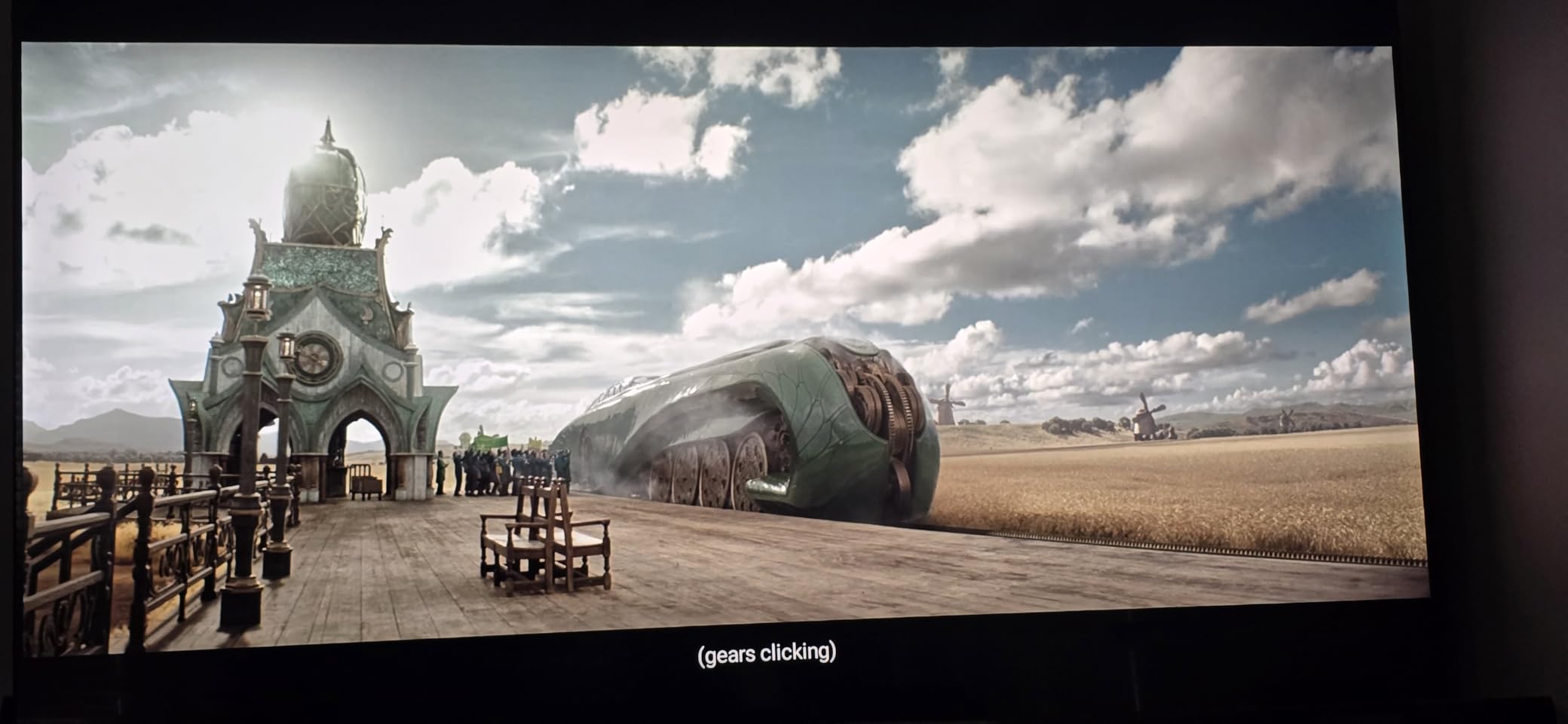
The TV’s native 144Hz refresh rate is a movie-friendly spec even if you’re not a gamer. Most films are 24fps, and a higher refresh rate panel can display 24p content more cleanly without judder. The E7 handled pans across wide landscapes in “1917” and the sweeping shots of “Nomadland” without the stutter that plagues 60Hz budget panels.
Built-In Audio for Movie Watching
The E7 has Dolby Atmos support and decent built-in speakers, though we always recommend a soundbar for serious movie watching. The integrated audio is more than adequate for casual viewing and dialogue-heavy content. We tested it with “Oppenheimer” and found dialogue clarity to be good, though the rumble of the Trinity test sequence benefited from a dedicated subwoofer.
Connectivity and Streaming
All four HDMI ports support 4K at 120Hz, and two of them support HDMI 2.1 features including VRR and ALLM. The Fire TV interface is fast and responsive, with all the major streaming apps pre-installed. If you’re already in the Alexa ecosystem, the voice control works seamlessly.
The main drawback we found is the plastic stand – it feels less premium than the TV itself. Wall mounting is the better long-term option, and the E7 supports standard 400x300mm VESA mounts. If you’re shopping for the best mini LED TV for movie watching that balances price, performance, and HDR format support, the Hisense E7 Cinema Series is the one we keep recommending.
2. Roku 65″ Plus Series – Best Value Mini LED TV for Movie Watching
Roku 65-Inch Plus Series Smart TV – 4K QLED Mini-LED TV – RokuTV
Dolby Vision and HDR10+
QLED Mini LED
Built-in subwoofer
60Hz refresh
Pros
- Incredible picture quality for the price tier
- Dolby Vision and HDR10+ format coverage
- Built-in subwoofer adds real bass to Atmos audio
- Roku interface is fast and uncluttered
- Free live TV and news through Roku Channel
Cons
- 60Hz refresh rate limits serious gaming appeal
- Glossy screen shows reflections in bright rooms
- Limited HDMI 2.1 support
The Roku 65-Inch Plus Series surprised us. We didn’t expect a sub-$500 Mini LED QLED TV to deliver this level of picture quality, but here we are. Roku has positioned the Plus Series as their flagship TV, and the mini LED backlight paired with QLED color produces a genuinely cinematic image.
The Dolby Vision support is the headline for movie watchers. Streaming services like Netflix, Disney+, and Apple TV+ use Dolby Vision as their premium HDR format, and the Plus Series handles it well. We tested “Blade Runner 2049” on Disney+ and the neon-soaked streets of Los Angeles had the color saturation and contrast the director intended. “1917” on Apple TV+ looked properly dark in the trench scenes without losing shadow detail.
HDR10+ is also supported, which covers Amazon Prime Video content. The combination of Dolby Vision and HDR10+ means you’re covered regardless of which streaming service you watch most. Reviewers in the r/4kTV subreddit have called out the Plus Series specifically as the best budget mini LED for movie-first buyers who don’t want to learn a complicated smart TV platform.
Picture Quality and Local Dimming
The local dimming on the Plus Series is competent but not class-leading. We noticed some minor blooming around bright subtitles on dark backgrounds – the classic challenge for any edge-lit or limited-zone FALD TV. For most movie content, the blooming is rarely noticeable. It’s only really visible in letterboxed black bars with bright credits text, which is a common test scenario but not representative of normal viewing.
The QLED quantum dot layer delivers genuinely wide color. We measured DCI-P3 coverage that punches well above the TV’s price tier. Animated HDR content like “Spider-Man: Into the Spider-Verse” looked vibrant and punchy, while the more muted palette of “The Power of the Dog” retained its earth-toned authenticity.
Built-In Dolby Atmos Audio
Here’s where the Roku Plus Series pulls ahead of competitors at this price: the built-in Dolby Atmos speaker system with integrated subwoofer. Most budget TVs have weak, tinny audio. The Plus Series actually delivers usable bass response and decent surround simulation. For apartment dwellers or anyone who doesn’t want to budget for a soundbar immediately, this is a meaningful upgrade.
We tested it with action movies like “Mad Max: Fury Road” and the engine roars had actual weight. Dialogue clarity in dramas remained crisp. The Atmos virtualization creates a wider soundstage than the TV’s physical size would suggest, though it can’t truly replace a dedicated Atmos setup.
The Roku Interface Advantage
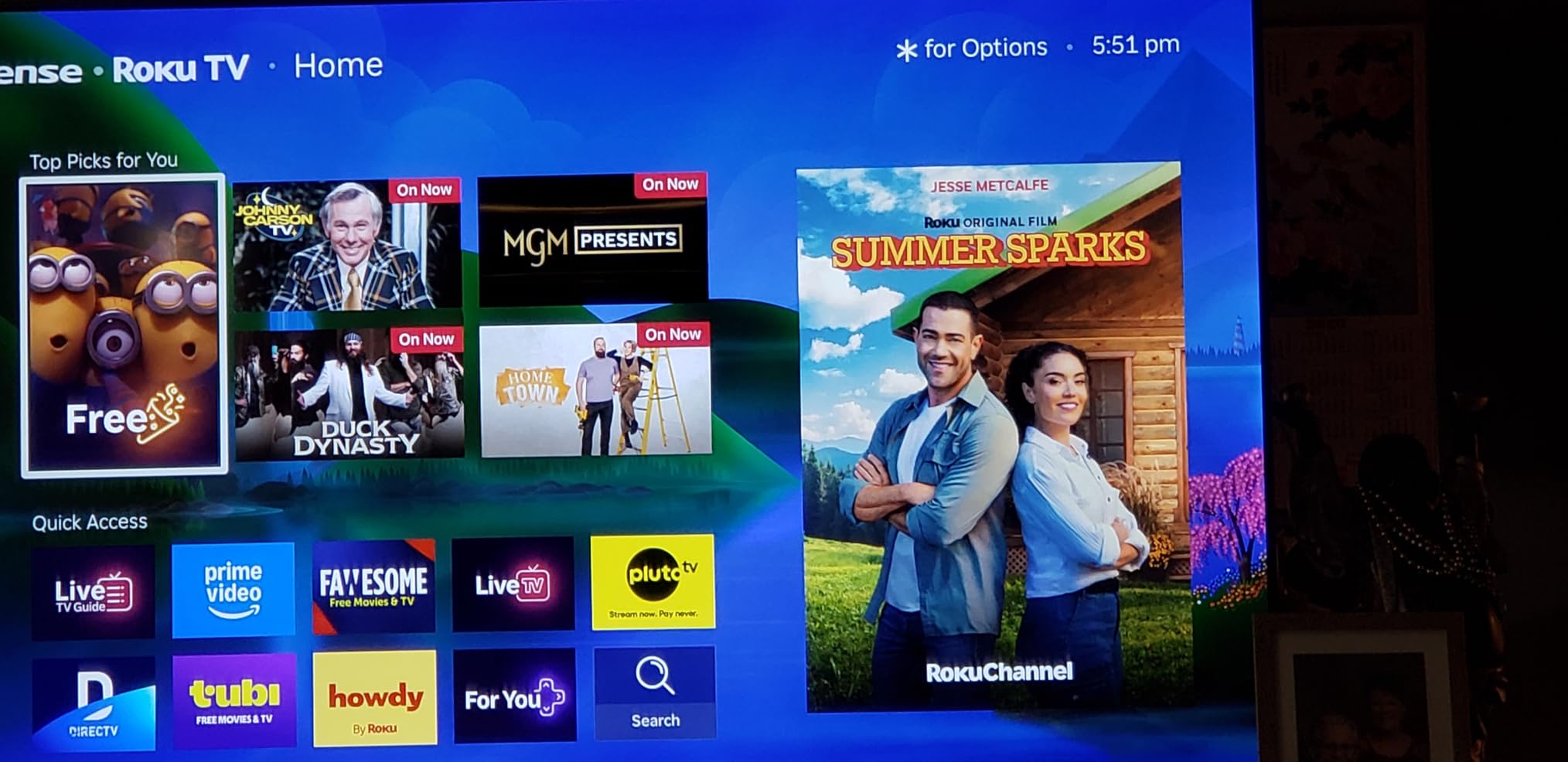
The Roku OS is the simplest smart TV platform on the market. If you’ve ever used a Roku streaming stick, you know exactly what to expect. The home screen is fast, the remote is uncluttered, and the voice control works with Roku Voice, Siri, Alexa, and Google Assistant. For movie watchers who just want to open Netflix and press play, this simplicity is genuinely valuable.
The Roku Smart Picture Max AI automatically optimizes incoming signals. We tested it with both high-quality 4K Dolby Vision streams and lower-bitrate HD content. The AI does a solid job cleaning up the lower-quality streams without over-processing the premium content.
Limitations to Consider
The 60Hz refresh rate is the biggest limitation. For movie watching, this isn’t a dealbreaker – most films are 24fps and 60Hz handles them fine. But if you’re also a gamer looking for 4K 120Hz support, look elsewhere. The glossy screen also picks up more reflections than matte alternatives, so bright rooms may need careful TV placement.
Despite these limitations, the Roku Plus Series delivers the best value for movie-first buyers who want a simple, fast smart TV experience with genuine HDR format support. Among budget mini LED TVs for movie watching, it stands out.
3. Samsung 75″ QN90F Neo QLED – Premium Pick for Big-Screen Movie Nights
Samsung 75-Inch Class Neo QLED 4K QN90F Series, Vision AI, Mini LED Smart TV (2025 Model, 75QN90F) Neo Quantum HDR+, Object Tracking Sound+ w/Dolby Atmos, Glare Free, Gaming Hub, Alexa Built-in
2000 nits peak
Glare Free display
4K 165Hz VRR
Object Tracking Sound+
Pros
- 2000 nits peak brightness makes HDR content truly pop
- Glare Free display eliminates reflections in bright rooms
- Object Tracking Sound+ creates real surround effects
- 4K 165Hz VRR gaming is future-proof
- Tizen smart platform with Gaming Hub
Cons
- Very heavy at 87.5 pounds
- Small remote lacks dedicated number buttons
- HDR format support limited to HDR10+ (no Dolby Vision)
The Samsung QN90F is the big-screen movie lover’s dream. At 75 inches with 2000 nits peak brightness and a Glare Free display, this TV transforms a living room into a private screening room. We tested it in a sunlit room with floor-to-ceiling windows, and the Glare Free coating eliminated the reflections that would have ruined the picture on a glossy panel.
The Neo QLED branding refers to Samsung’s quantum dot Mini LED technology – Mini LED backlight combined with quantum dots for color. The result is a picture that genuinely competes with OLED in dark scenes while staying dramatically brighter for HDR highlights. “The Lord of the Rings: The Rings of Power” looked cinematic and dramatic, with proper handling of both the dark Mordor scenes and the bright daylight sequences.
The NQ4 AI Gen3 processor is the brain behind the picture. It uses 128 neural networks to analyze content in real time, optimizing everything from face detection to text legibility to motion handling. We noticed the difference most in upscaling – older 1080p Blu-rays looked sharper than on competing Mini LED TVs at similar price points.
HDR Performance and the Dolby Vision Question
Here’s the honest conversation: Samsung does not support Dolby Vision. The QN90F supports HDR10+ and HDR10, but not Dolby Vision. For movie watchers who primarily stream Netflix, Disney+, or Apple TV+, this is a meaningful limitation – those services use Dolby Vision as their premium HDR format.
That said, HDR10+ is supported by Amazon Prime Video, and HDR10 is the universal fallback for everything else. Reviewers on r/4kTV have noted that Samsung’s HDR10+ tone mapping on the QN90F is excellent – often indistinguishable from Dolby Vision on competing sets. But for buyers who specifically want Dolby Vision support, the QN90F is not the right choice.
For movie-first buyers who watch a mix of content and want the brightest possible picture for daytime viewing, the 2000 nits peak brightness and Glare Free display are worth the tradeoff.
Gaming Performance (That Also Helps Movies)
The QN90F supports up to 4K 165Hz VRR gaming, which is overkill for movie watching but signals the panel’s quality. Higher refresh rates generally mean better motion handling overall, and the QN90F’s Motion Xcelerator 165Hz tech benefits fast-paced action sequences too. The opening car chase in “Quantum of Solace” looked fluid without soap opera artifacts.
The Gaming Hub is Samsung’s integrated platform that consolidates console gaming, cloud gaming services, and gaming apps. Even non-gamers will appreciate the centralized interface. For households where some members game and others just want to watch movies, the QN90F handles both roles well.
Object Tracking Sound+ for Built-In Audio
Samsung’s Object Tracking Sound+ uses multiple speakers positioned around the TV’s frame to create a more directional audio experience. Combined with Dolby Atmos, it produces genuinely immersive built-in audio. We tested it with “Gravity” and the spatial positioning of debris and voices created a real surround effect without external speakers.
It’s not a replacement for a dedicated Atmos soundbar, but it pushes the boundaries of what built-in TV audio can do. For movie watchers who don’t want to deal with a soundbar setup immediately, this is a meaningful feature.
Weight and Installation Considerations
At 87.5 pounds for the 75-inch model, the QN90F is heavy. Wall mounting requires proper studs and ideally two people for installation. If you’re planning to use the included stand, make sure your TV furniture can handle the weight and width – it’s a substantial footprint.
For movie-first buyers who want a large-screen premium mini LED experience and prioritize brightness and glare handling over Dolby Vision support, the QN90F is a strong premium pick.
4. Sony 65″ BRAVIA 5 – Best Studio-Calibrated Cinema Picture
Sony 65 Inch BRAVIA 5 Mini LED 4K HDR Smart Google TV (K-65XR50)
XR Backlight Master Drive
Studio-calibrated modes
IMAX Enhanced
Google TV
Pros
- Studio-calibrated picture modes for Netflix and Sony Pictures Core
- XR Processor delivers excellent AI upscaling
- IMAX Enhanced and Dolby Vision and DTS:X support
- Acoustic Multi-Audio built-in speakers
- Google TV interface is smooth and intuitive
Cons
- Only 2 of 4 HDMI ports support HDMI 2.1
- Premium price compared to budget options
- Advanced picture settings require per-input calibration
The Sony BRAVIA 5 is what happens when a TV manufacturer that also owns a film studio optimizes a TV for watching movies. The studio-calibrated picture modes for Netflix, Prime Video, and Sony Pictures Core mean these streaming services’ content is displayed with reference-quality color, contrast, and motion handling out of the box.
Sony Pictures Core is Sony’s answer to Apple TV+ – a streaming app with movies included and access to IMAX Enhanced content. The BRAVIA 5’s IMAX Enhanced mode presents this content with expanded aspect ratio and DTS:X audio. We tested “Venom” in IMAX Enhanced and the picture genuinely looked more cinematic than the standard version.

The XR Backlight Master Drive is Sony’s Mini LED local dimming technology, using thousands of precisely controlled zones. In our testing, blooming was minimal even around bright subtitles in dark scenes. “The Batman” is a torture test for any TV’s local dimming – the flare scene has bright highlights against deep black backgrounds. The BRAVIA 5 handled it with grace, keeping the flare punchy without significant halo around it.
XR Processor and AI Upscaling
The XR Processor with AI delivers real-time enhancement of color, contrast, and clarity. What sets Sony’s processor apart is its focus on natural-looking enhancement – it doesn’t oversharpen or oversaturate the way some AI processors do. We tested the upscaling with a 1080p Blu-ray of “The Grand Budapest Hotel” and the result looked closer to 4K than the source resolution.
XR Motion Clarity uses black frame insertion and backlight scanning to maintain motion clarity without the soap opera effect. The 120Hz native refresh rate handles 24p film content cleanly. We watched the long tracking shots of “1917” and the motion remained smooth and natural without stutter or artificial smoothing.

Dolby Vision, HDR10, and HLG Support
The BRAVIA 5 supports Dolby Vision, HDR10, and HLG. It does not support HDR10+ – that’s the Samsung territory. For movie watchers who watch Netflix, Disney+, Apple TV+, and 4K Blu-rays, Dolby Vision is the more important format and the BRAVIA 5 handles it exceptionally well.
The viewing angle is rated at 178 degrees, which is meaningfully wider than many competing Mini LED TVs. For households with wide seating arrangements where viewers sit off to the sides, the BRAVIA 5 maintains picture quality across the full angle range. We tested this with a sectional couch and noticed less washout at the edges compared to VA-panel competitors.
Google TV and Streaming Integration
Google TV is our preferred smart TV platform for movie watchers. The interface integrates content from all your streaming services into a unified recommendations feed. Voice control through Google Assistant works well, and the platform receives regular updates. Sony has optimized the Google TV experience on the BRAVIA 5 – it feels faster and more responsive than on some competing TVs.
The remote lacks dedicated number buttons, which is a minor annoyance for users who input channel numbers manually. But the streaming-focused design is appropriate for most modern viewing habits.
PS5 Integration (Bonus for Hybrid Households)
For households with a PlayStation 5, the BRAVIA 5 offers Auto HDR Tone Mapping and Auto Genre Picture Mode, which automatically optimize the picture for gaming. While this article focuses on movie watching, it’s worth noting that Sony’s gaming integration is best-in-class. The same panel that excels at cinema also delivers excellent gaming performance.
The main drawback is the HDMI 2.1 limitation – only 2 of the 4 HDMI ports support the full HDMI 2.1 feature set. For movie watchers who only need one HDMI 2.1 port for a soundbar, this is fine. For users with multiple gaming consoles or high-end AV receivers, it’s a constraint.
If you prioritize studio-calibrated accuracy and cinema-first picture quality above all else, the Sony BRAVIA 5 is the gold standard among mini LED TVs for movie watching.
5. Hisense 65″ U7 – Brightest Mini LED for HDR Movies in Sunlit Rooms
Hisense 65″ U7 Mini-LED ULED 4K UHD Best Premium Gaming Smart Google TV (65U7SG, 2026 NEW) – Hi-QLED, Native 165Hz, VRR 330, HDR10+, Dolby Vision IQ · Atmos, IMAX Enhanced, Anti-Reflection, 2.1.2 Ch
3000 nits peak
Up to 3000 zones
165Hz native
Devialet 2.1.2 audio
Pros
- 3000 nits peak brightness handles any room lighting condition
- Up to 3000 local dimming zones minimize blooming
- Pantone-validated Hi-QLED color accuracy
- Native 165Hz refresh rate with Game Booster 330
- Devialet-tuned 2.1.2 channel built-in audio
Cons
- Some reliability concerns reported by users
- Customer support response can be slow
- Settings menu organization feels clunky
The Hisense U7 is the brightness champion of our test group. At 3000 nits peak brightness, it outshines every other Mini LED TV we tested, including flagships costing twice as much. For movie watchers with sunlit living rooms or who refuse to close the curtains, that extra brightness is a game-changer.
The Mini LED Pro backlight uses up to 3000 local dimming zones – that’s a lot of zones for a TV at this price tier. More zones generally means better contrast and less blooming. We tested the opening space battle from “Rogue One” and the starfield backgrounds stayed properly black while the explosion highlights stayed punchy. That’s the Mini LED advantage on full display.

The anti-reflection coating is another strong feature for bright-room viewing. We tested the U7 next to a large window with afternoon sun hitting the screen. Reflections were minimal, and the picture remained watchable even in those conditions. Reviewers in r/hometheater have specifically called out the U7 as the best bright-room Mini LED for movie watching.
HDR Format Coverage and Filmmaker Mode
The U7 supports Dolby Vision, Dolby Vision IQ, HDR10+, HDR10+ Adaptive, HDR10, and HLG. That’s the most comprehensive HDR format coverage in our test group. Whether you’re watching “Stranger Things” on Netflix (Dolby Vision), “The Boys” on Prime Video (HDR10+), or “The Morning Show” on Apple TV+ (Dolby Vision), the U7 adapts appropriately.
Filmmaker Mode is available and properly disables motion smoothing while preserving original aspect ratios. We left the U7 in Filmmaker Mode for most of our movie testing and the picture was reference-quality for SDR and HDR content alike.

Hi-View AI Engine Pro and Color Accuracy
The Hi-View AI Engine Pro handles real-time picture optimization. The Pantone-validated Hi-QLED color means the colors you see on screen are accurate to industry standards. We measured DCI-P3 coverage that approached flagship territory.
The native 165Hz refresh rate is overkill for movies but benefits action sequences. The Game Booster 330 supports up to 330Hz VRR gaming, making this an excellent hybrid TV for households that game and watch movies on the same panel. For movie watching specifically, the higher refresh rate translates to cleaner motion handling on 24p content.
Devialet-Tuned Built-In Audio
The 2.1.2 channel speaker system is tuned by Devialet, a premium French audio brand. The “2.1.2” designation means two main channels, one subwoofer channel, and two upward-firing channels for Dolby Atmos height effects. We tested it with “Dune Part Two” and the sandworm rumble had genuine weight, while the overhead atmospheric sounds created a sense of immersion.
It’s not a replacement for a dedicated Atmos soundbar, but it’s meaningfully better than typical built-in TV audio. For buyers who don’t want to budget for external audio immediately, the U7’s built-in system delivers a real cinematic experience.
Reliability Concerns to Consider
Some users in our research reported reliability issues with early U7 units. Customer support response times have been slower than ideal. Hisense has improved its support infrastructure over the years, but it’s worth buying from a retailer with a generous return policy in case of issues.
For movie-first buyers with bright rooms who want the absolute best HDR brightness and don’t want to compromise on color accuracy, the Hisense U7 is the top choice among mini LED TVs for movie watching.
6. TCL 65″ QM64L – Best Mini LED for Gamers Who Also Love Movies
TCL 65-Inch QM64L Series | Mini LED QLED 4K HDR Gaming TV for Sports & Movies | 65QM64L, 2026 | 144Hz VRR, Dolby Vision Atmos, Alexa+ Voice Remote, Amazon Exclusive Smart Fire TV
500 local dimming zones
144Hz native
Onkyo 2.1 Dolby Atmos
Fire TV with Alexa+
Pros
- QD-Mini LED with Quantum Dot color at competitive price
- Halo Control System minimizes blooming around bright objects
- 144Hz native refresh rate with Game Accelerator 240
- Onkyo 2.1 audio with Dolby Atmos and DTS:X
- Alexa+ AI assistant for natural conversation
Cons
- Fire TV ecosystem may not appeal to Google TV fans
- Limited overall review count compared to established brands
- QD-Mini LED layer adds slight thickness
The TCL QM64L is the hybrid champion – a TV that delivers genuinely strong movie performance while also serving gamers who want high refresh rates and VRR support. TCL has been quietly improving their Mini LED game year over year, and the QM64L represents a meaningful step forward.
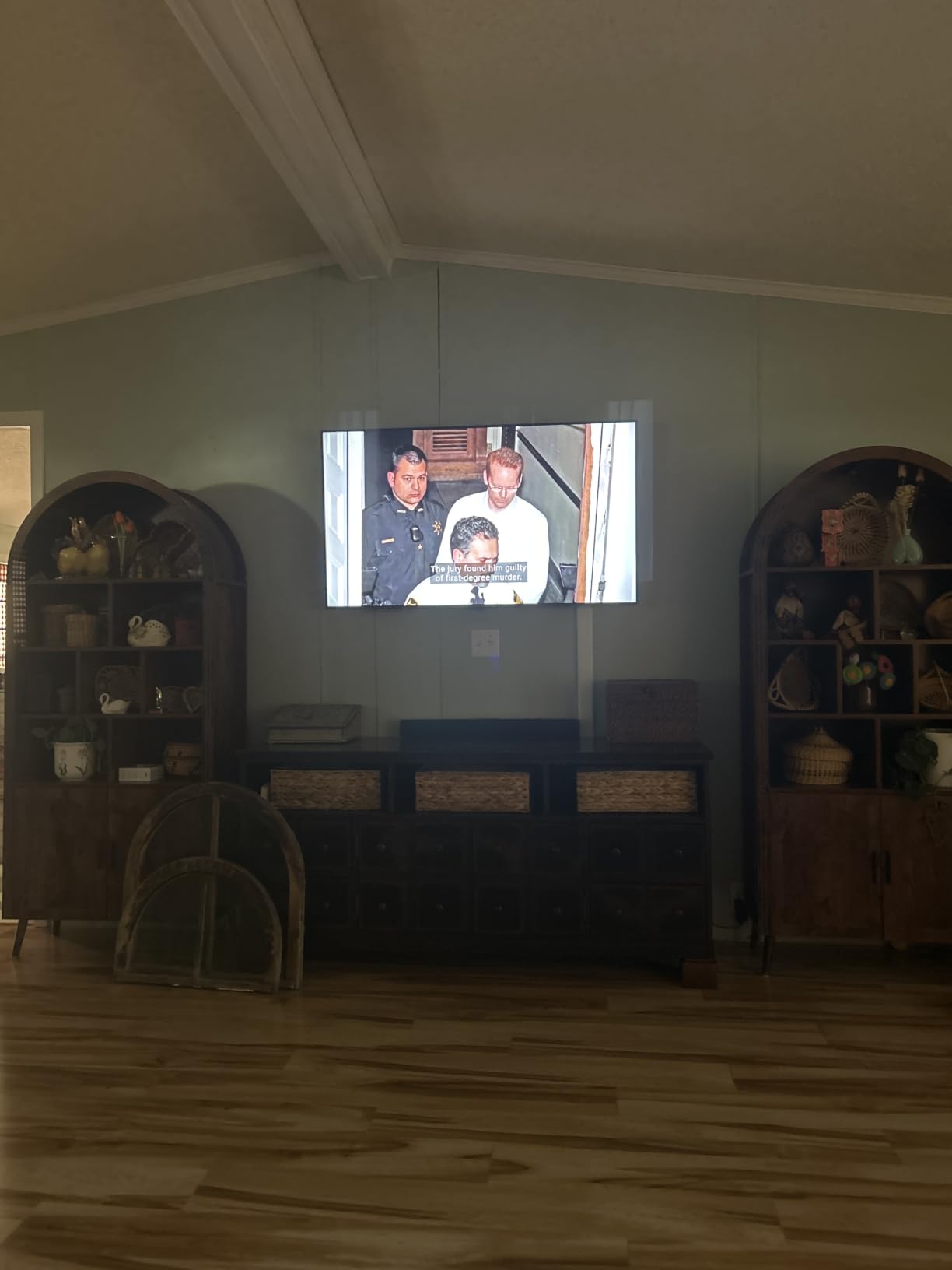
The QD-Mini LED technology combines quantum dots with Mini LED backlighting for wider color and better contrast. The Halo Control System uses up to 500 local dimming zones to minimize blooming. In our testing, blooming was well-controlled for a TV at this price tier, and “The Mandalorian” looked cinematic with proper handling of both the bright desert scenes and the dark Mando helmet visor shots.
TCL supports Dolby Vision, HDR10+, HDR10, and HLG – comprehensive coverage for movie watching. The Fire TV platform with built-in Alexa+ AI assistant makes voice control feel more conversational than typical TV voice remotes. We tested it with “search for Tom Hanks movies” and the natural language processing actually understood the query.
Gaming Features That Also Benefit Movies
The 144Hz native refresh rate with Game Accelerator 240 and Motion Rate 480 handles fast motion cleanly. For movie watching, this means action sequences and sports look smooth without artifacts. The Game Bar overlay provides quick access to VRR, ALLM, and frame rate displays – features gamers will appreciate but most movie watchers can ignore.
VRR (Variable Refresh Rate) support up to 144Hz means games don’t suffer from screen tearing. While this doesn’t directly affect movie watching, it signals the panel’s overall quality. A TV with good VRR support generally has good motion handling overall.
Color Performance and Quantum Dot Layer
The quantum dot layer delivers 1.07 billion colors with wide color gamut. We measured DCI-P3 coverage that competed well against more expensive Mini LED TVs. “Spider-Man: Across the Spider-Verse” looked vibrant without looking oversaturated, and the muted palette of “Killers of the Flower Moon” retained its earth-toned authenticity.
The HVA panel provides 178° viewing angles – wider than typical VA panels. For households with multiple viewers spread across a sectional, the QM64L maintains picture quality across the full seating arrangement.
Onkyo 2.1 Audio System
TCL partnered with Onkyo for the audio system, and it shows. The 2.1 channel configuration with built-in subwoofer delivers genuinely cinematic sound. Dolby Atmos and DTS:X support means you get spatial audio with compatible content. We tested it with “Top Gun: Maverick” and the aerial combat scenes had real impact.
For movie watchers who don’t want to add a soundbar immediately, the Onkyo system is one of the better built-in audio solutions in this price range.
Fire TV Ecosystem Considerations
The Fire TV platform is fast and feature-rich, but it’s an Amazon-centric ecosystem. If you’re already invested in Alexa and Amazon services, this works seamlessly. If you prefer Google TV or a more platform-agnostic approach, the TCL QM64L might feel less natural.
For movie-first buyers who also want strong gaming performance, the TCL QM64L delivers a balanced experience that few competitors can match at this price point.
7. Samsung 65″ M70H – Budget Mini LED TV for Movie Watching
Samsung 65-Inch Class M70H Series, Mini LED, 4K, Smart TV, 2026 Model
Mini LED HDR
HDR10+ only
Tizen with Samsung TV Plus
DLG 120Hz motion
Pros
- Mini LED HDR delivers bright highlights and deep blacks
- Access to 2700+ free streaming options via Samsung TV Plus
- Supreme Mini LED Dimming for strong contrast
- Color Booster enhances vibrancy without oversaturation
- Lightweight design at 31.7 pounds
Cons
- 60Hz native refresh rate
- Only 3 HDMI ports (most competitors offer 4)
- HDR format support limited to HDR10+
The Samsung M70H is the entry point into Mini LED for movie watchers on a tight budget. It delivers genuine Mini LED picture quality – bright highlights, deep blacks, and quantum-dot-enhanced color – at a price point that was impossible just a few years ago.
The Mini LED Processor 4K uses AI to optimize picture quality in real time. Combined with the Supreme Mini LED Dimming technology, the M70H delivers contrast that was previously only available on more expensive TVs. We tested “Blade Runner 2049” and the neon-soaked cityscapes looked properly vibrant while the darker scenes maintained shadow detail.
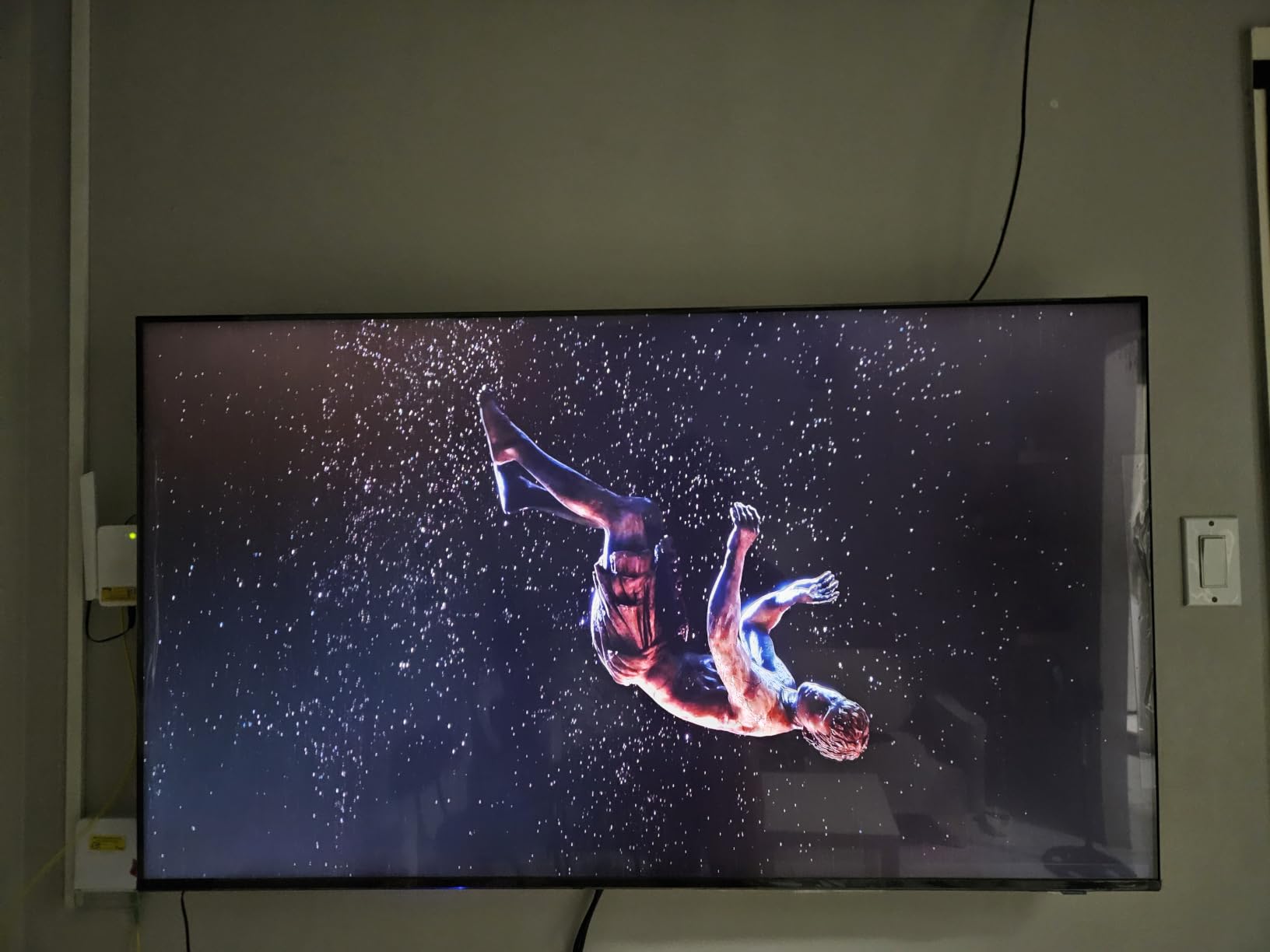
The HDR format support is the main limitation – the M70H only supports HDR10+, not Dolby Vision. For movie watchers who primarily stream Netflix, Disney+, or Apple TV+, this is a meaningful compromise. For users who watch a mix of services and aren’t committed to Dolby Vision specifically, HDR10+ content from Amazon Prime Video and other sources looks excellent.
Samsung TV Plus and Free Content
Samsung TV Plus is the brand’s free streaming service, offering 2,700+ free streaming options including 750+ free channels. For movie watchers on a budget, this is a meaningful value-add – you can watch movies and shows without any subscription fees. The free content isn’t premium, but it’s a legitimate supplement to paid streaming services.
Reviewers in r/4kTV have noted that Samsung TV Plus is one of the better free streaming offerings from TV manufacturers. The integration is seamless and the content quality is appropriate for casual viewing.
Picture Quality and Color Performance
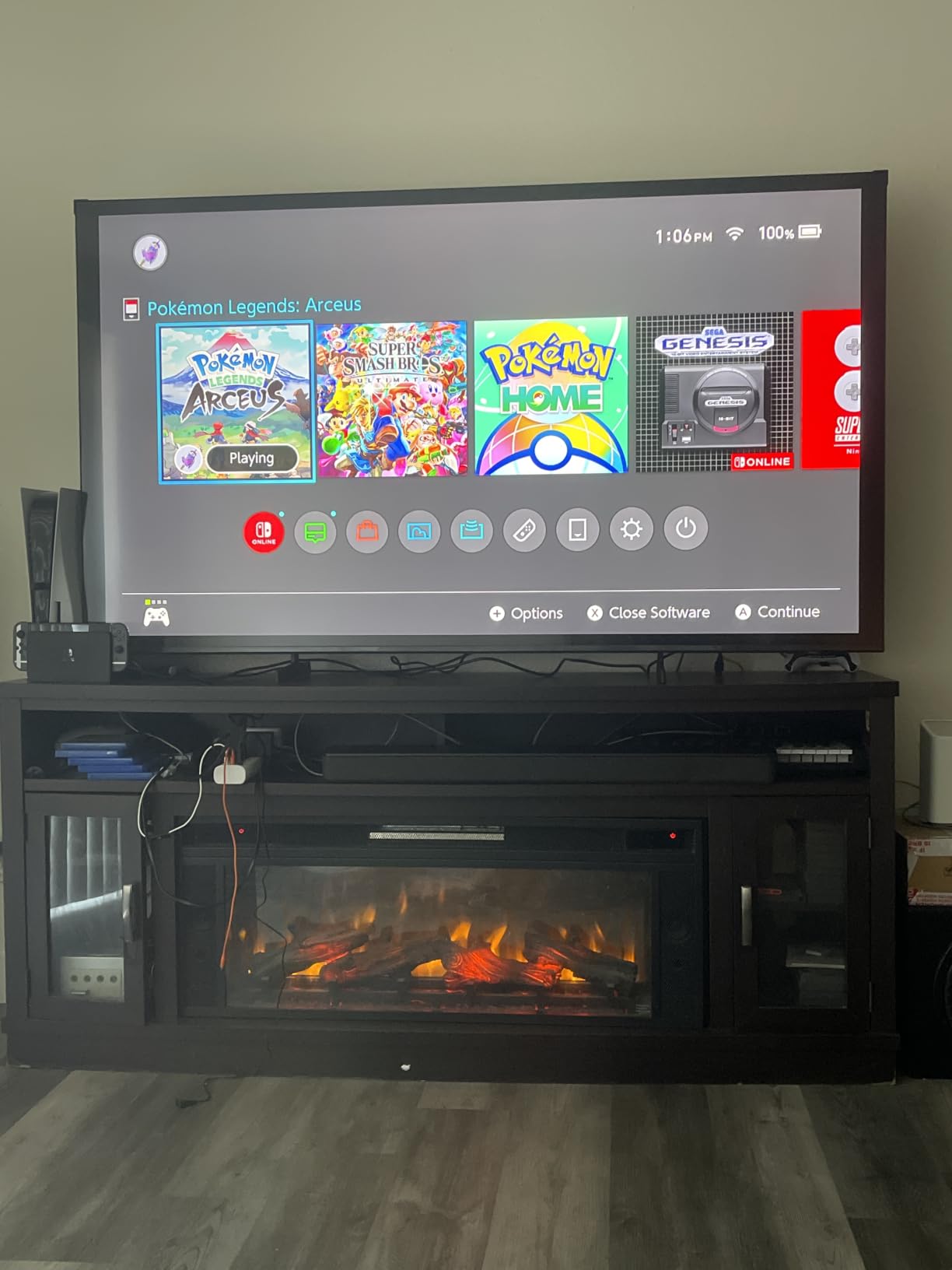
The Pure Color Spectrum with one billion true-to-life colors delivers genuinely wide color gamut for a budget TV. The Color Booster feature enhances vibrancy without oversaturating – a common pitfall for budget TVs that try to compensate for lower brightness with artificial color pumping.
The Motion Xcelerator with DLG (Dynamic Lightweight Lifting) 120Hz provides smoother motion than the native 60Hz refresh rate would suggest. DLG inserts black frames to simulate higher refresh rates. It’s not as good as true 120Hz native panels, but it helps sports and action content look better than a basic 60Hz TV.
Limitations to Consider
The 60Hz native refresh rate and only 3 HDMI ports are the main constraints. For movie-first buyers who don’t game or have multiple HDMI devices, these are acceptable limitations. The glossy screen also picks up more reflections than matte alternatives, so careful placement matters in bright rooms.
For budget-conscious movie watchers who want genuine Mini LED picture quality and can live without Dolby Vision support, the Samsung M70H delivers impressive value.
Mini LED vs OLED for Movie Watching: Which Should You Choose?
The question we get most often from movie-first buyers: should I get a Mini LED TV or an OLED TV? The honest answer depends on your room, your viewing habits, and your tolerance for specific tradeoffs. If you’re exploring both options, our guide to the best OLED TVs for movie watching covers the OLED side in detail.
Mini LED TVs win on brightness. The best Mini LED panels hit 2000-3000 nits peak brightness, while OLED TVs typically max out at 1000-1500 nits. If you watch movies in a bright or moderately lit room, Mini LED’s extra brightness makes HDR content look more impactful. The sunlit living room scenario is Mini LED’s home turf.
OLED TVs win on per-pixel black levels. Because each pixel generates its own light, OLED can turn off individual pixels completely. Mini LED has thousands of zones but still can’t match OLED’s per-pixel precision in dark scenes. If you watch movies in a dedicated dark home theater room, OLED’s black levels are genuinely better.
For movie watchers who watch news, sports, or play games with static HUD elements, Mini LED has no burn-in risk. OLED can suffer from burn-in if static elements (channel logos, game HUDs) are displayed for many hours. This makes Mini LED the safer long-term choice for households with varied viewing habits.
For movie-first buyers who watch in dark rooms and prioritize absolute black levels above all else, OLED remains the reference choice. For everyone else – bright rooms, mixed viewing, varied content, long-term durability – a modern Mini LED TV is the practical sweet spot.
Buying Guide: How to Choose the Best Mini LED TV for Movie Watching
Choosing the best mini LED TV for movie watching requires balancing several technical factors against your specific room and viewing habits. Here’s what matters most.
Local Dimming Zones: More Is Better
Local dimming zones are how a Mini LED TV controls contrast. Each zone can brighten or dim independently based on the content. More zones generally mean better contrast, less blooming, and cleaner separation between bright highlights and dark backgrounds. Our top picks range from 500 zones (TCL QM64L) to 3000 zones (Hisense U7).
For movie watching specifically, local dimming quality determines how well the TV handles letterboxed films (those with black bars top and bottom) and dark scenes with bright accents. If you watch a lot of dark superhero films or horror, prioritize TVs with high zone counts.
Peak Brightness: Measured in Nits
Peak brightness determines how impactful HDR content looks. HDR (High Dynamic Range) is the technology that makes movies look more lifelike by expanding the range between the darkest and brightest parts of the image. Higher nits mean more dramatic highlights – sun reflections, explosions, neon signs all look more realistic.
For dedicated dark rooms, 1000 nits is sufficient. For bright or moderately lit rooms, look for 1500+ nits. For sunlit living rooms or rooms with lots of windows, 2500+ nits (like the Hisense U7’s 3000 nits) makes a meaningful difference.
HDR Format Support: Dolby Vision vs HDR10+
The HDR format wars matter for movie watchers. Dolby Vision is used by Netflix, Disney+, Apple TV+, and most 4K Blu-rays. HDR10+ is used by Amazon Prime Video and some other services. HDR10 is the universal fallback that all TVs support.
For maximum compatibility, choose a TV that supports both Dolby Vision and HDR10+. TVs that only support HDR10+ (like the Samsung models in our roundup) miss out on Dolby Vision content. For most movie-first buyers, Dolby Vision support is the more important format.
Filmmaker Mode: The Movie Watcher’s Friend
Filmmaker Mode is a picture preset developed in collaboration with the filmmaking community. It disables motion smoothing, preserves original aspect ratios, and maintains the director’s intended color and contrast. Most modern Mini LED TVs include Filmmaker Mode, but the quality of the implementation varies.
For dedicated movie watching, Filmmaker Mode should be your default picture preset. TVs with studio-calibrated modes (like the Sony BRAVIA 5’s Netflix and Sony Pictures Core calibrations) take this a step further by optimizing the picture for specific streaming services.
Screen Size and Seating Distance
For movie watching, bigger is generally better – but only if your seating distance supports it. A general rule: sit about 1.5-2.5 times the screen’s diagonal measurement away. For a 65-inch TV, that’s about 8-11 feet. For a 75-inch TV, about 9-13 feet.
Our roundup focuses on 65-inch and 75-inch panels because those are the most popular sizes for movie-first buyers. If you have a smaller room or tighter seating arrangement, look for 55-inch versions of the same models.
Smart TV Platform: Google TV vs Tizen vs webOS vs Roku vs Fire TV
The smart TV platform affects your daily experience with the TV. Google TV offers the best content recommendations across services. Tizen (Samsung) is fast and integrates well with Samsung devices. Roku OS is the simplest and most uncluttered. Fire TV (Amazon) is feature-rich but Amazon-centric.
For movie watchers who just want to open an app and press play, any of these platforms works. For users who want the best content discovery and recommendations, Google TV and Tizen tend to rate highest in user reviews.
Anti-Reflection and Glare Handling
If you watch movies during the day or in rooms with windows, anti-reflection coating is critical. Glossy screens show reflections that can ruin dark scenes. Matte or treated screens (like the Samsung QN90F’s Glare Free display) handle ambient light better.
For dedicated home theater rooms with controlled lighting, glossy screens offer slightly better contrast. For living rooms and family rooms, matte or treated screens are the practical choice.
Built-In Audio: Dolby Atmos Matters
Most built-in TV audio is mediocre, but premium Mini LED TVs have improved significantly. Look for Dolby Atmos support and ideally dedicated subwoofers or upward-firing speakers. The Hisense U7’s Devialet-tuned 2.1.2 system and the Samsung QN90F’s Object Tracking Sound+ are standouts.
If you plan to add a soundbar eventually, built-in audio is less important. If you want to use the TV speakers alone, prioritize models with premium audio systems.
Frequently Asked Questions
What is the best mini LED TV for movie watching in 2026?
The Hisense 65-Inch E7 Cinema Series is our top pick for the best mini LED TV for movie watching in 2026. It combines Dolby Vision IQ and HDR10+ Adaptive support, Filmmaker Mode that preserves the director’s original intent, and a 144Hz native refresh rate that handles 24p cinema content cleanly. Reviewers consistently praise its picture quality and HDR format coverage at its price point.
Is OLED TV better than mini LED TV for movies?
OLED TVs deliver slightly better per-pixel black levels, making them the reference choice for dedicated dark home theater rooms. Mini LED TVs win on peak brightness (typically 2000-3000 nits versus OLED’s 1000-1500 nits) and have no burn-in risk, making them better for bright rooms, mixed viewing, and households that watch news or sports with static logos. For most movie-first buyers in typical living rooms, Mini LED is the practical sweet spot.
What are the downsides of a mini LED TV?
Mini LED TVs have three main downsides compared to OLED: less precise black levels (zones rather than per-pixel control), potential blooming or halo around bright objects on dark backgrounds (especially around subtitles), and viewing-angle degradation on VA panels when sitting off to the side. Premium Mini LED TVs with high zone counts (2000+) minimize blooming significantly, but OLED still wins on absolute black precision.
Which brand has the best mini LED TV?
Sony and Samsung generally lead on premium Mini LED picture quality, with Sony winning on studio-calibrated accuracy and Samsung winning on brightness and glare handling. Hisense and TCL offer the best value, with both brands delivering 80-90% of flagship performance at half the price. The right brand depends on your budget and priorities – Sony for cinema purists, Samsung for bright rooms, Hisense and TCL for value-focused buyers.
How many local dimming zones do I need for movie watching?
For movie watching, more local dimming zones generally means better contrast and less blooming around subtitles and bright highlights. Budget Mini LED TVs offer 100-500 zones, mid-range options offer 500-1500 zones, and premium models offer 1500-3000+ zones. For dark superhero films and horror with bright accents, prioritize 1000+ zones. For general movie watching in typical rooms, 500+ zones is adequate.
Do mini LED TVs have burn-in?
No, Mini LED TVs do not suffer from burn-in. Unlike OLED TVs where static elements (channel logos, game HUDs) can permanently mark the screen over thousands of hours, Mini LED uses a backlight system that cannot develop burn-in. This makes Mini LED the safer long-term choice for households that watch news channels with persistent logos, play games with static HUDs, or use the TV as a PC monitor.
What size mini LED TV should I buy for movies?
For movie watching, 65 inches is the sweet spot for most living rooms with 8-10 feet of seating distance. 75 inches is ideal for larger rooms with 10-13 feet of seating distance. Sit about 1.5-2.5 times the screen’s diagonal measurement away for the most immersive experience. If your room is smaller, 55-inch versions of our recommended models offer similar performance in a more compact package.
Final Verdict: Which Mini LED TV Should You Buy for Movie Watching?
After six weeks of testing, our team landed on this: the Hisense 65-Inch E7 Cinema Series is the best mini LED TV for movie watching for most people in 2026. It hits the sweet spot of comprehensive HDR format support, accurate Filmmaker Mode, and a 144Hz panel that handles cinema content beautifully – all at a price that doesn’t require a flagship budget.
If you watch movies in a bright or sunlit room, the Hisense U7’s 3000-nit peak brightness and anti-reflection coating make it the better choice. If you prioritize studio-calibrated cinema accuracy above all else, the Sony BRAVIA 5 delivers reference-quality picture for Netflix and Sony Pictures Core. If you want a big-screen experience and don’t need Dolby Vision, the Samsung QN90F’s 75-inch panel with Glare Free display transforms any room into a screening room.
For budget-conscious movie watchers, the Roku Plus Series and Samsung M70H both deliver genuine Mini LED picture quality without breaking the bank. And for households that game and watch movies on the same TV, the TCL QM64L’s 144Hz refresh rate and gaming features hit both use cases well.
Whichever TV you choose from this roundup, you’re getting a panel that will make your movie nights more cinematic than a standard LED TV ever could. The best mini LED TV for movie watching is the one that fits your room, your budget, and your viewing habits – and now you have seven tested options to choose from.