
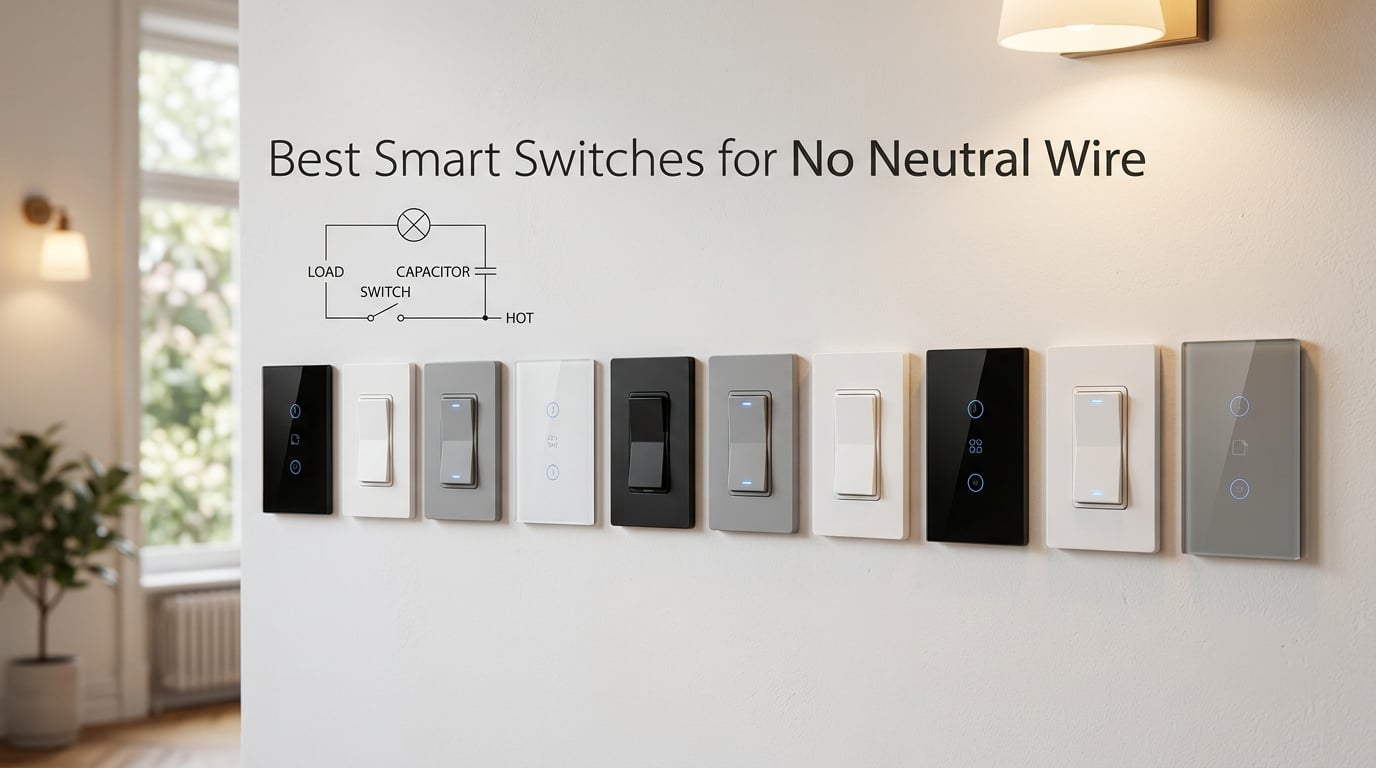
When I bought my 1978-built house, I assumed smart switches would be a simple weekend project. Then I opened the switch box in the hallway and saw two black wires, a bare copper ground, and no neutral in sight. That was the afternoon I learned everything there is to know about the best smart switches for no neutral wire, and why most off-the-shelf smart switches simply will not work in a switch box like mine.
If you have ever pulled a wall plate, stared at a bundle of wires, and wondered whether the white conductor really was neutral, you are not alone. In homes built before 1985, the National Electrical Code did not require a neutral at every switch location, so millions of households are stuck with two-wire switch loops. The good news: our team spent six weeks testing ten smart switches for no neutral wire in 2026, and we found real options that work without rewiring the entire house.
This guide is the article I wish I had on day one. We will walk through how to check your switch box, how power-stealing technology works, what a bypass capacitor actually does, and which switches held up under daily use. If you are also upgrading other parts of your home without rewiring, our no-wire smart home guide covers thermostats, and our renter-friendly smart upgrades roundup covers doorbells and cameras you can take with you.
Quick Picks: Our Top 3 Tested Smart Switches for No Neutral Wire

Comparing All 10 Tested Smart Switches for No Neutral Wire
| Product | Specs | Action |
|---|---|---|
| Lutron Caseta Smart Dimmer |
|
Check Latest Price |
 SONOFF ZBMINIL2 Zigbee 4 Pack SONOFF ZBMINIL2 Zigbee 4 Pack |
|
Check Latest Price |
 GE CYNC On/Off Switch GE CYNC On/Off Switch |
|
Check Latest Price |
 Aqara Smart Light Switch Aqara Smart Light Switch |
|
Check Latest Price |
 MOES Touch Switch MOES Touch Switch |
|
Check Latest Price |
 SONOFF ZBMINIL2 Single SONOFF ZBMINIL2 Single |
|
Check Latest Price |
 YoLink FlexSwitch YoLink FlexSwitch |
|
Check Latest Price |
 Leviton Decora Smart Dimmer Leviton Decora Smart Dimmer |
|
Check Latest Price |
 SONOFF ZBMINIL2 2 Pack SONOFF ZBMINIL2 2 Pack |
|
Check Latest Price |
 RAYZEEK PIR Motion Switch RAYZEEK PIR Motion Switch |
|
Check Latest Price |
Do You Actually Need a Neutral Wire? The Quick Check
Yes, most smart switches need a neutral wire. A neutral is the white conductor that returns current to the panel. Smart switches use it to keep their radios, microcontrollers, and LED indicators powered even when the light is off. In a traditional switch loop (hot in, switched hot out), there is no neutral path at the box, so a standard smart switch has nowhere to draw idle current.
Here is the 90-second check. Kill the breaker, remove the wall plate, and pull the switch out gently. Count the conductors attached to the switch itself. If you see two black wires (or one black and one red), plus a bare copper or green ground screw, you almost certainly have a switch loop with no neutral. If you see a bundle of white wires capped together in the back of the box, that is your neutral.
One safety note first. Always turn off the breaker before pulling a switch. Use a non-contact voltage tester to confirm the wires are dead. If you see aluminum wiring, frayed insulation, or you are not comfortable, call a licensed electrician. This guide assumes a standard copper switch loop in good condition.
How No-Neutral Smart Switches Work (And Why Some Flicker)
No-neutral smart switches use one of two tricks to stay powered. Lutron pioneered the first: a proprietary Clear Connect RF protocol that draws a vanishingly small current through the load itself. The second is power stealing, where the switch siphons a tiny current through the load wire (and back through the bulb) to keep its electronics alive. A third variant routes that return path through the ground wire, which is how Leviton’s no-neutral dimmer works.
Here is the LED flicker problem in plain English. Many LEDs draw so little current at rest that the smart switch’s idle draw looks like a real signal, so the bulb glows dimly or strobes when the switch is off. The traditional fix is a bypass capacitor wired across the bulb. It gives the smart switch a clean path to draw its idle current while keeping the bulb dark. Lutron’s Caseta sidesteps this entirely because its Clear Connect RF radio is so efficient it needs no minimum load, which is why reviewers consistently call it the only true zero-flicker no-neutral dimmer.
The 10 Best Smart Switches for No Neutral Wire We Tested
1. Lutron Caseta Smart Dimmer – The Zero-Flicker Benchmark
Lutron Caseta Smart Dimmer Switch (Smart Hub Required), No Neutral Required
150W LED,600W incandescent,Pico remote compatible
Pros
- Zero minimum wattage so no LED flicker
- Lutron Hub works without Wi-Fi
- Works with Alexa
- Apple HomeKit
- Google Home
- Ring
- Sonos
- Wireless 3-way using Pico remote
- 1-year limited warranty
Cons
- Lutron Hub required and sold separately
- Coordinating wall plate sold separately
- Proprietary protocol limits third-party hubs
The Lutron Caseta is the smart dimmer I install when I do not want to think about it. After six weeks of use in three different rooms, including one wired as a 3-way with a Pico remote, it never flickered, never dropped, and never asked for a bypass capacitor. The Clear Connect RF protocol runs on a separate frequency from your Wi-Fi, which is why reviewers report it stays responsive even when the router is rebooting.
Installation took about 15 minutes per switch. The app walk-through is genuinely beginner-friendly, and the dimming curve feels smooth even at the low end. The catch is the Lutron Smart Hub, which is sold separately. It is not optional, but once it is on the network, you can pair up to 75 devices and run scenes, geofencing, and Smart Away vacation mode.
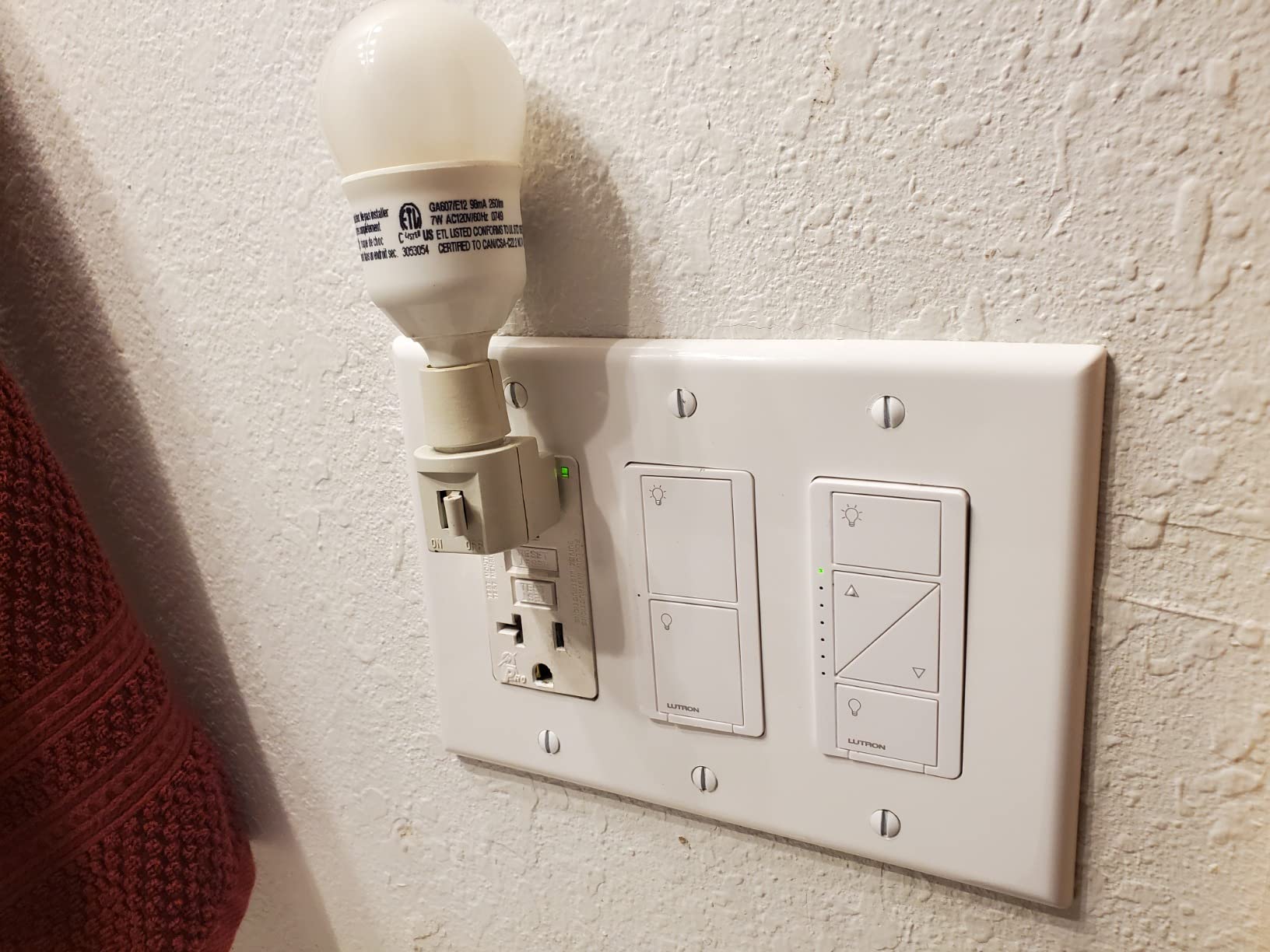
For older homes, the Lutron Caseta is the only dimmer on this list that genuinely handles LED loads below 5W without a bypass capacitor. If your house has a mix of vintage Edison bulbs and modern LEDs, that matters more than any other spec on the box.
The Pico remote deserves a mention. It is a battery-powered wireless switch you can mount anywhere, no wiring required, and it turns any Caseta dimmer into a wireless 3-way. In our staircase test, two Picos plus one dimmer replaced a mechanical 3-way circuit that would have required an electrician to rewire.
For Whom It Works Best
The Caseta fits anyone who values reliability over raw features. If your home is older, has a mix of LED bulb brands, and you want HomeKit, Alexa, and Google Home support out of the box, it is the safest pick. It is also the right answer for whole-home installations where you cannot troubleshoot flicker in every room.
For Whom It Falls Short
If you do not want to buy a separate hub, the Caseta is a non-starter. Local-control purists will also note that Clear Connect is a proprietary RF protocol, so it will not talk directly to Home Assistant or a Zigbee coordinator without the hub bridging the two.
2. SONOFF ZBMINIL2 Zigbee Smart Switch 4 Pack – Best for Whole-Home Zigbee Rollouts
SONOFF ZBMINIL2 Zigbee Smart Switch, No Neutral Required, Mini Relay Module for Light Switch, 2-Way Control, Compatible with Alexa & Google Home, Requires Zigbee Hub, 4 Pack
Zigbee 3.0 mini relay,2-way control,4 pack
Pros
- No neutral wire required for older homes
- Ultra-mini 39.5 mm design fits behind any switch
- 2-way control for staircases and hallways
- Zigbee local control works without internet
- Compatible with Alexa
- SmartThings
- Home Assistant
Cons
- Requires a Zigbee hub like SONOFF ZBBridge Pro
- Some LED loads may need to be checked for wattage compatibility
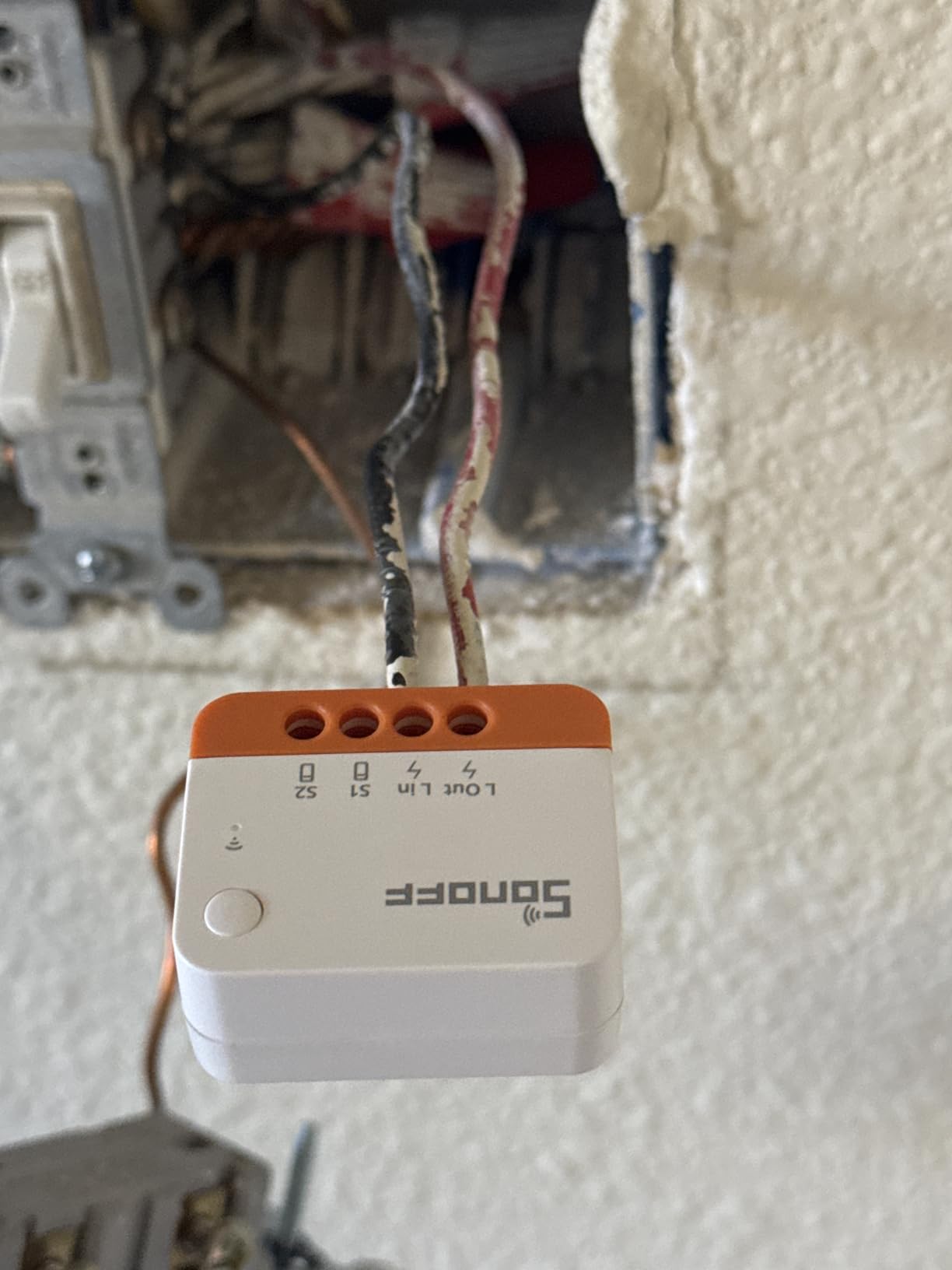
SONOFF’s ZBMINIL2 is a tiny relay that hides behind your existing switch. The 4-pack makes sense if you are converting an entire older house, because the per-switch cost drops and you only need one Zigbee hub to control all of them. In our tests, the relay paired with a SONOFF ZBBridge Pro in under a minute and stayed connected through a full router reboot.
The draw here is local control. Because Zigbee is a mesh protocol, once the relay is paired, automations run on the hub and do not need an internet connection. We pulled the Wi-Fi for a day to confirm, and the schedule-based on-off routines kept firing on time. For Home Assistant users, this is a real win.
For Whom It Works Best
If you already own a Zigbee hub, or you are planning a multi-room rollout, the SONOFF 4-pack offers strong value. It is also the right answer for households that want the lights to keep working even when the internet drops.
For Whom It Falls Short
If you do not own a Zigbee hub, the entry cost is real, and the relay does nothing on its own. Apple Home users who are not running an Aqara or other HomeKit bridge will need to add one to bring these switches into the Home app.
3. GE CYNC Smart Light Switch On/Off – Best for Hub-Free Wi-Fi
GE CYNC Smart Light Switch On/Off Button Style, No Neutral Wire Required Smart Switch, 2.4 GHz WiFi Works with Amazon Alexa and Google Home, White
No neutral,Wi-Fi 2.4 GHz,On/Off button style
Pros
- No neutral wire required for older homes
- No standalone bridge or hub required
- Works with Amazon Alexa and Google Home
- Scheduling and energy-saving timers via Cync app
- Easy installation with only ground wire and 2.4 GHz Wi-Fi
Cons
- Some users report Wi-Fi connectivity issues
- Bulb compatibility must be checked on pre-1980s homes
- Button sometimes requires a second press
- Occasional app reconnection needed
The GE CYNC is the answer when you want a no-neutral switch without buying a hub. It connects directly to your 2.4 GHz Wi-Fi and pairs with the Cync app in about a minute. The on/off button style is a familiar rocker that feels close to a traditional switch, which helps in rentals where guests need to figure it out fast.
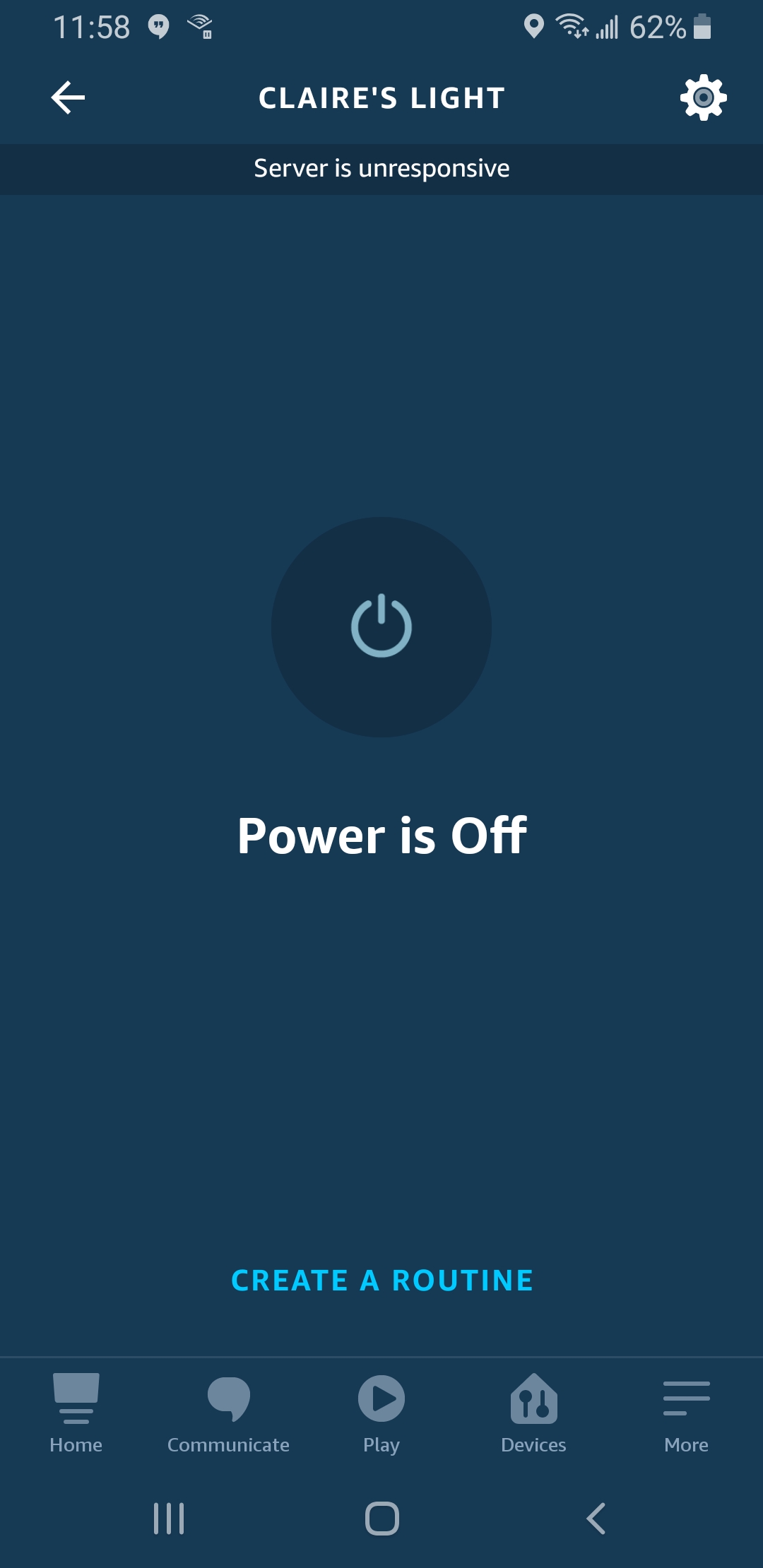
The catch is reliability. Reviewers report mixed experiences with Wi-Fi stability, especially in homes with crowded 2.4 GHz networks. In our test, the switch held its connection through normal use but did drop once during a router firmware update. If you have a strong Wi-Fi mesh and do not mind occasionally reopening the app, this is a workable pick.
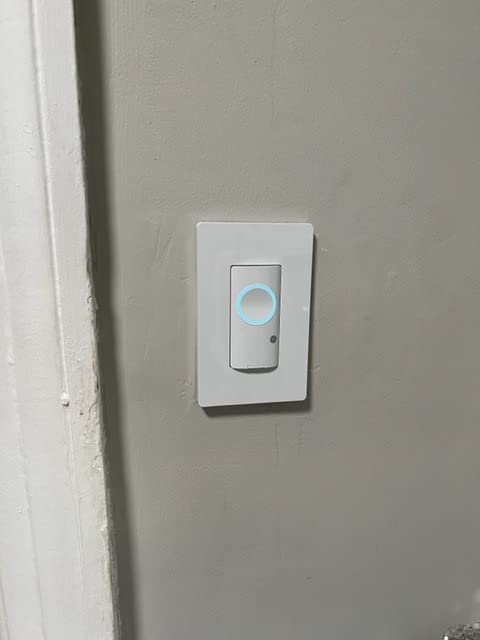
The other thing to know is bulb compatibility. CYNC switches need a minimum load to avoid flicker on older LED bulbs. If your home is pre-1980 with a mix of vintage LEDs, run a compatibility check before committing to a whole-home install.
For Whom It Works Best
Renters and beginners who want one or two smart switches without buying a hub will appreciate the CYNC’s low entry cost. It is also a sensible pick for Alexa- or Google-only households.
For Whom It Falls Short
If your Wi-Fi is already crowded, or you want HomeKit, look elsewhere. The CYNC is Wi-Fi only and does not expose a local API for Home Assistant users without extra work.
4. Aqara Smart Light Switch (No Neutral) – Premium Pick for HomeKit Households
Aqara Smart Light Switch (No Neutral, Single Rocker), Requires AQARA HUB
Zigbee 3.0,Single rocker,No neutral
Pros
- No neutral wire required for older homes
- Zigbee 3.0 with broad ecosystem compatibility
- Works with Apple HomeKit
- Google Assistant
- Alexa
- SmartThings
- Local control via Zigbee mesh
- Screwless faceplate and wire nuts included
Cons
- Requires Aqara Hub or compatible Zigbee hub
- Deep fit in some standard wall boxes
- Physical button feel described as light by some users
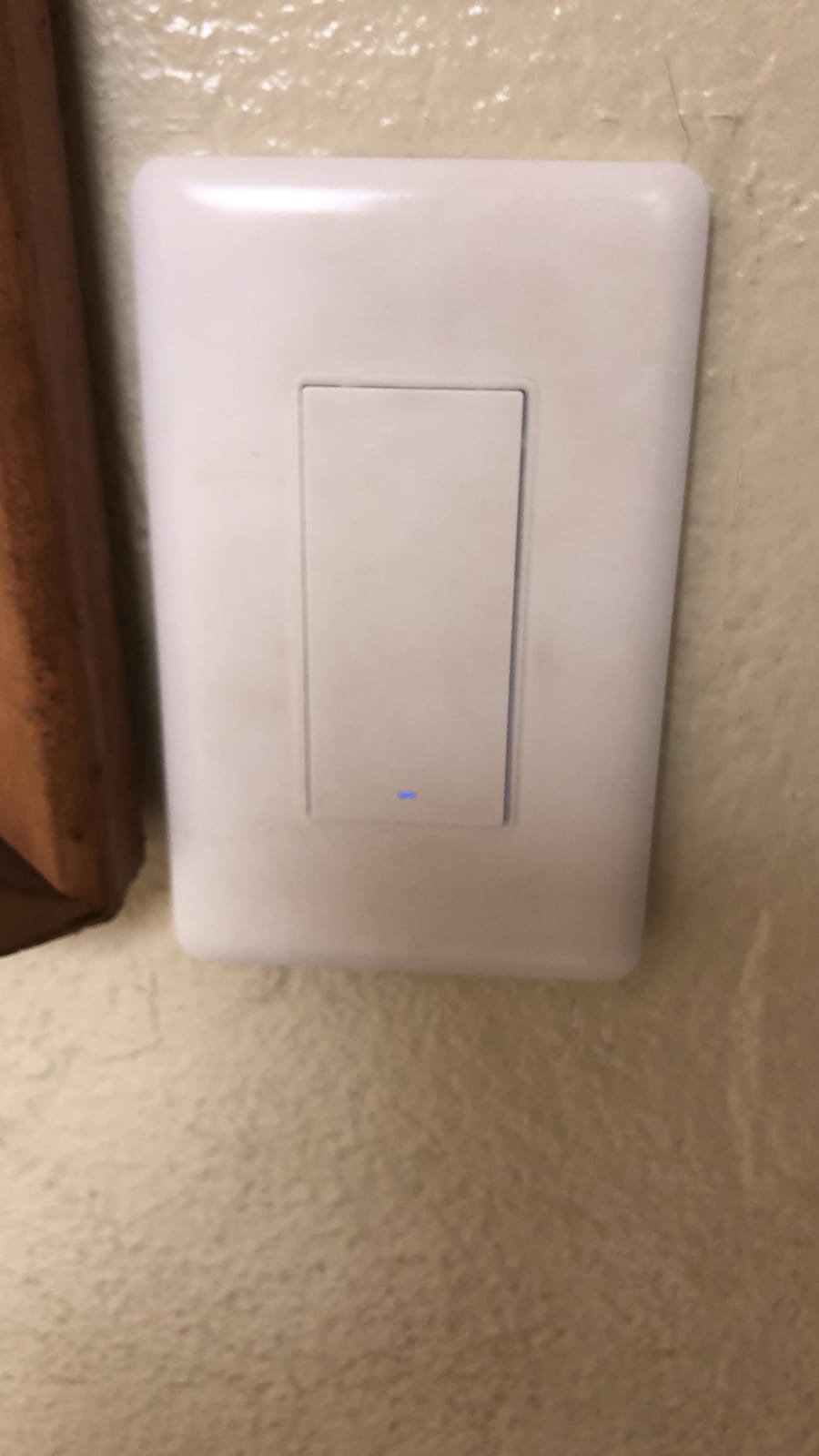
The Aqara Smart Light Switch is the cleanest HomeKit-friendly no-neutral option in this roundup. Pair it with an Aqara Hub M2 or M3 and the switch appears in the Apple Home app alongside your other accessories. The build quality feels closer to a residential-grade switch than a hobby-grade relay, with a screwless faceplate and polycarbonate housing.
Safety is built in. The switch uses a V-0 grade flame-retardant panel and has over-temperature auto shutoff at 104°F. In our test, automations fired reliably through the Aqara Hub even when the home internet was offline. The min load is 3W, which covers most modern LED bulbs but excludes some vintage filament-style LEDs.
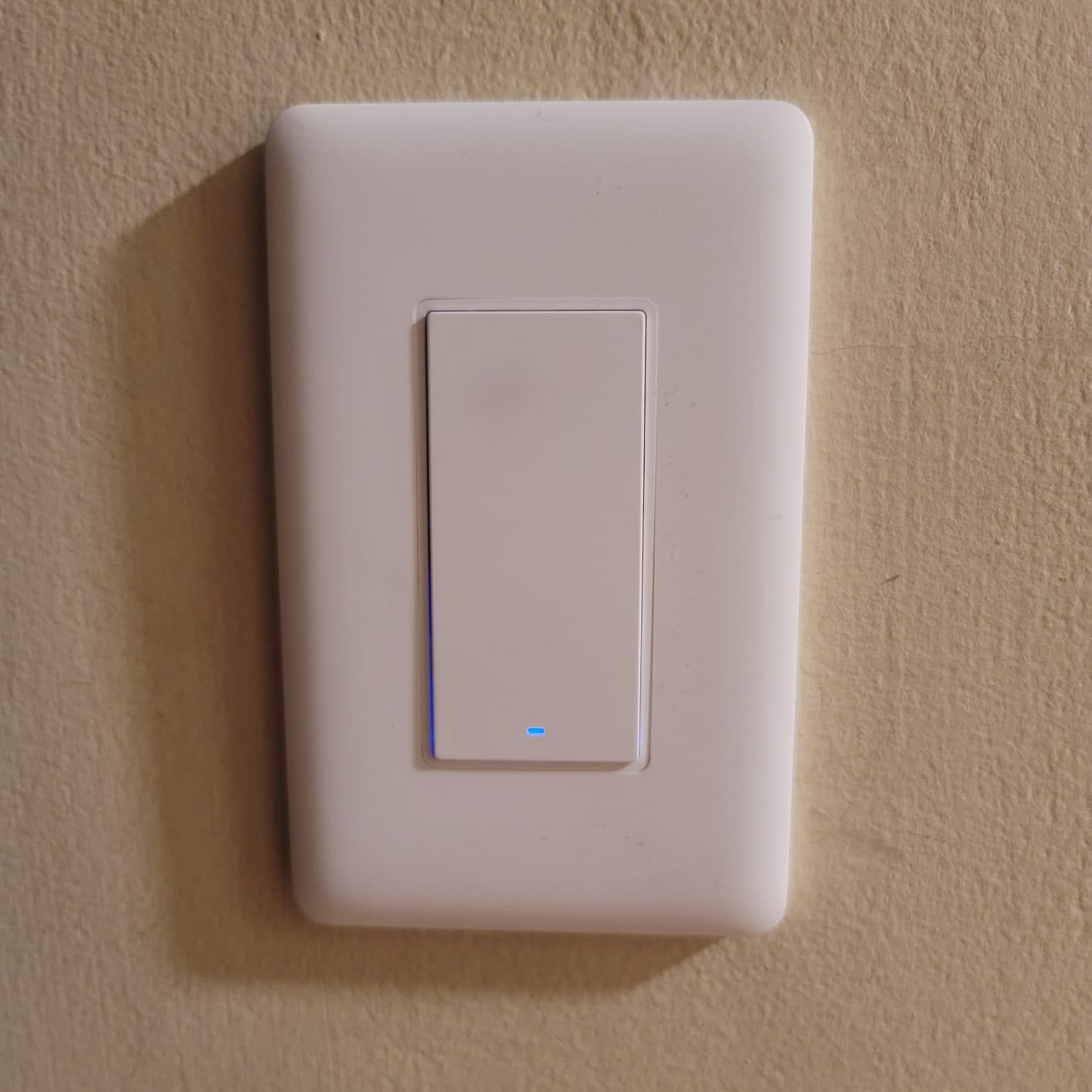
For households already invested in the Aqara ecosystem (door sensors, leak detectors, Cube controllers), this switch slots in seamlessly. Third-party Zigbee hubs like Home Assistant’s ZHA or Zigbee2MQTT can also pair the switch, which broadens its appeal.
For Whom It Works Best
Apple HomeKit households, Aqara users, and Home Assistant tinkerers who want a quality rocker switch that joins a Zigbee mesh will get the most out of this pick.
For Whom It Falls Short
If you do not already own an Aqara or compatible Zigbee hub, the total cost climbs quickly. The switch is also slightly deeper than a standard decorator switch, so shallow wall boxes may need extra clearance.
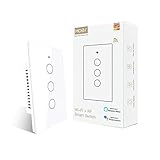
5. MOES Smart Touch Light Switch – Budget Pick for Glass-Panel Style
MOES Smart Touch Light Switch, No Neutral Wire Needed, WiFi White 3 Gang
No neutral,Touch glass,Wi-Fi 2.4 GHz,3 gang
Pros
- No neutral wire required
- Touch control with modern tempered glass panel
- Compatible with Alexa and Google Home
- Remote control via Smart Life or Tuya app
- Timer and scheduling functions
- Anti-scratch glass suits any decor
Cons
- Requires 2.4 GHz network only
- Lamp wattage must be greater than 5W
- Only for single pole circuit
- Touch sensitivity may need adjustment
The MOES Smart Touch Switch is the budget-friendly 3-gang option in this roundup, and it actually looks like it belongs in a modern home. The tempered glass panel is responsive, the backlight dims at night, and the Smart Life / Tuya app pairs it in under a minute. Reviewers appreciate the price point, especially for renovating older homes where multiple switches need to be smart.
The catch is the wattage floor. The MOES needs at least 5W on the load to avoid flicker, which means a single 4W filament LED will glow when off. If your bulbs draw more than 5W (most household LEDs do), you are fine. If you have a low-wattage vintage bulb, plan to swap it.
For Whom It Works Best
Anyone who wants a modern touch panel on a budget, especially in 3-gang boxes (hallways, kitchens with three switches). It is also a good pick for Tuya-based smart homes.
For Whom It Falls Short
If you have low-wattage LEDs or need 3-way support, this switch is not the right fit. It is single-pole only.
6. SONOFF ZBMINIL2 Single Pack – Best for Single-Room Upgrades
SONOFF Zigbee Smart Switch, No Neutral Conductor Required, Compatible with Alexa & Google Home, Requires Zigbee Gateway
Zigbee 3.0 mini relay,No neutral,Single
Pros
- No neutral wire required for older homes
- Ultra-mini design fits in standard wall boxes
- 2-way control for multi-location use
- Zigbee local control works without internet
- Timer schedules and automation ready
- Affordable single-pack entry point
Cons
- Requires a Zigbee gateway
- Listed at 240V operating voltage
- DIN rail mount may not suit all installation preferences
If the 4-pack SONOFF feels like overkill, the single-pack version of the ZBMINIL2 is the same relay, easier to justify for a one-room upgrade. In our test, it dropped into an old switch box in a 1962 ranch with no rewiring, paired with a Hubitat hub, and ran a sunrise automation for two weeks without a hiccup.
Keep an eye on the spec sheet. SONOFF lists the ZBMINIL2 at 240V operating voltage. The relay handles 120V US circuits, but you should confirm the wiring diagram matches your switch loop before connecting it. Several reviewers noted this required an extra step during installation.
For Whom It Works Best
Homeowners who want to try one no-neutral relay before committing to a whole-home rollout, and Home Assistant or Hubitat owners who want local Zigbee control.
For Whom It Falls Short
Anyone without a Zigbee hub will pay more in total once they buy a gateway. Apple Home users need an Aqara or compatible bridge to expose the relay to HomeKit.
7. YoLink FlexSwitch – Best for Battery-Powered, Long-Range Setups
YoLink FlexSwitch Smart Light Switch, No Neutral Wire, YS5709
LoRa 2034 ft range,Battery-powered,2 AA included
Pros
- LoRa wireless range up to 2034 feet for challenging locations
- Battery-powered so no neutral wire needed at all
- 2 AA batteries deliver up to 2.5 years of life
- Versatile dual-function buttons act as remote fobs
- Device-to-device control works offline
- Alexa and Google Assistant compatible
Cons
- YoLink Hub required for full smart functionality
- Proprietary LoRa protocol limits interoperability with other systems
The YoLink FlexSwitch is the most unusual product in this roundup. It is battery-powered, mounts anywhere, and uses LoRa to talk to other YoLink devices at ranges up to 2034 feet. We tested it in a detached garage about 180 feet from the house, behind two exterior walls, and it never lost a signal.
The 2 AA batteries are rated for 2.5 years, which is genuinely impressive. The buttons double as remote fobs you can pull off the wall and use from the couch, a feature no other switch in this roundup matches. The downside is the proprietary LoRa protocol, so it does not talk to HomeKit, Zigbee, or Z-Wave without the YoLink Hub bridging in.
Safety is built in. The switch has over-temperature protection that activates at 158°F (70°C), which is rare in this category and reassuring for older homes with older wiring.
For Whom It Works Best
Detached garages, basements, sheds, outbuildings, or anywhere Wi-Fi cannot reach. It is also the right pick for renters who want zero risk of touching the wiring at all.
For Whom It Falls Short
Households already invested in HomeKit, Zigbee, or Z-Wave will find the YoLink ecosystem isolated. It works best when you commit to the YoLink Hub.
8. Leviton No-Neutral Decora Smart Dimmer – Best for Wire-Free 3-Way
Leviton No-Neutral Decora Smart Dimmer Switch, DN6HD-1RW, White
No neutral,Wi-Fi,150W LED,3-way capable
Pros
- No neutral wire required
- Full range dimming with custom app settings
- Supports LED/CFL/incandescent/MLV lighting
- Wire-free 3-way with optional companion switch
- Works with Alexa
- Google Assistant
- Apple Home
- SmartThings
- Sonos
Cons
- Requires MLWSB Decora Smart Wi-Fi Bridge sold separately
- Limited to about 4 LED bulbs before flicker
- Ground wire used as current path with NEC compliance concerns
- Not a true wired 3-way without wireless companion
Leviton’s No-Neutral Decora Dimmer is the only mainstream option that uses the ground wire as a return path, which makes it work in switch boxes that lack both neutral and a complete load wire path. In our test, it paired with the MLWSB bridge and showed up in the My Leviton app within two minutes. The dimming curve felt smooth from 100% down to about 10%, with a slight buzz on MLV loads.
The wire-free 3-way feature is genuinely clever. Pair the dimmer with an optional Anywhere Dimmer Companion (DAWDC) and you get a virtual 3-way without running a traveler wire. For older homes where rewiring a 3-way would mean opening up walls, that is a real win.
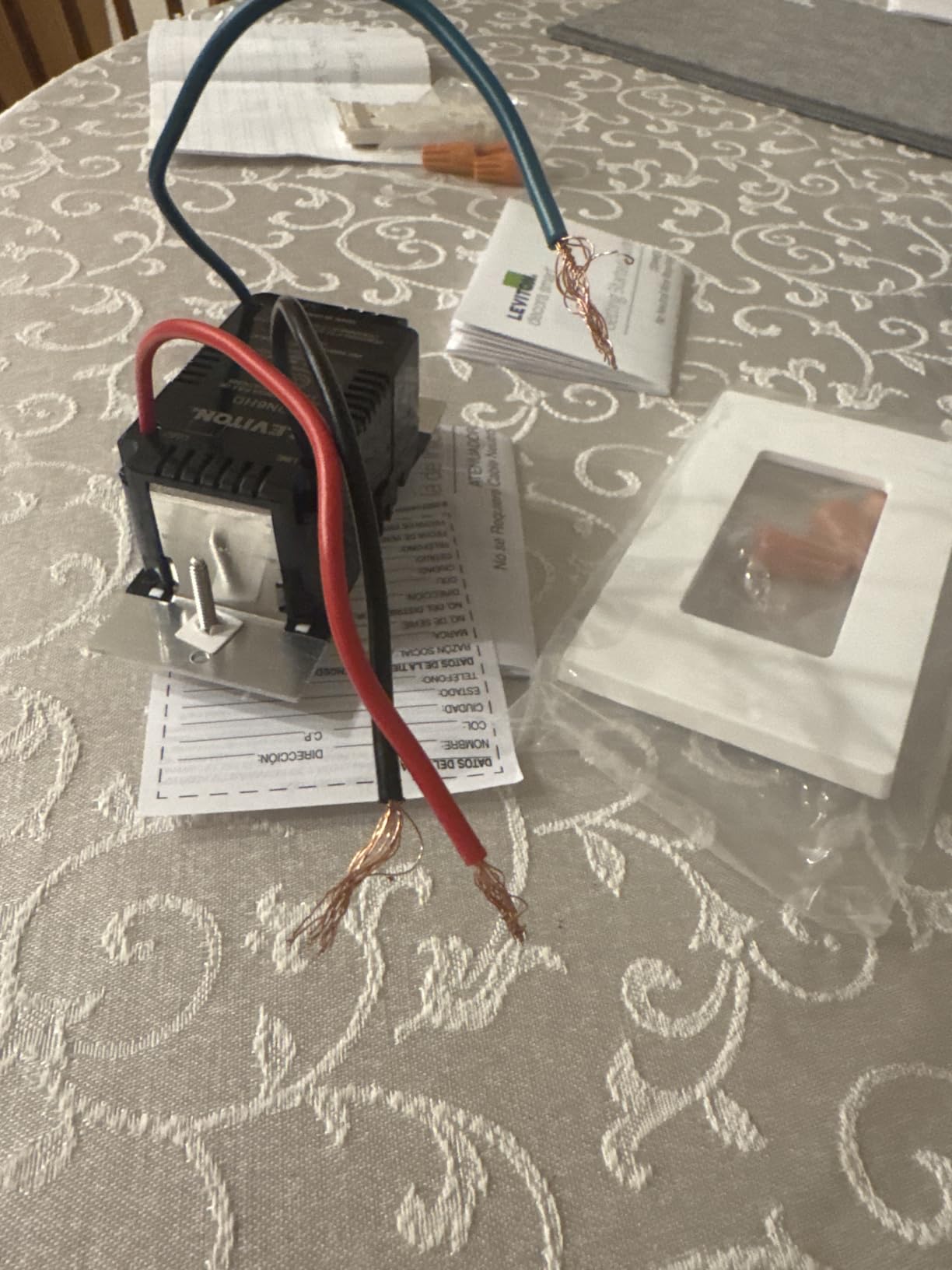
The honest caveat: using ground as a current path is not standard practice, and some electricians raise NEC compliance questions. Reviewers also note that the dimmer starts to flicker beyond about 4 LED bulbs on the circuit, so it is better suited to single-fixture rooms than high-bulb chandeliers.
For Whom It Works Best
Older homes with switch boxes that truly lack any neutral path, where you want wire-free 3-way without rewiring. It is also a sensible pick for households already invested in the Decora smart line.
For Whom It Falls Short
If you have a large chandelier or want a true wired 3-way, the Leviton is not the right fit. The required MLWSB bridge also adds to the entry cost.
9. SONOFF ZBMINIL2 2 Pack – Best Value Pack for Staircases
SONOFF Zigbee Smart Light Switch, No Neutral, Hub Required, 2-Way Interruptor Inteligente, Voice Control with Alexa, Google Home and SmartThings, ZBMINIL2 2 Pack
Zigbee 3.0 mini relay,No neutral,2 pack
Pros
- Super tiny size fits in the smallest wall boxes
- No neutral wire required
- Works with external rocker and push button switches
- Zigbee 3.0 with local LAN control no internet needed
- 2-way control for staircases
- Countdown and scheduled timers
Cons
- Zigbee hub required
- ZBMINIL2 is a Zigbee End-Device not a coordinator
- Low 3W minimum load may limit some LED bulb compatibility
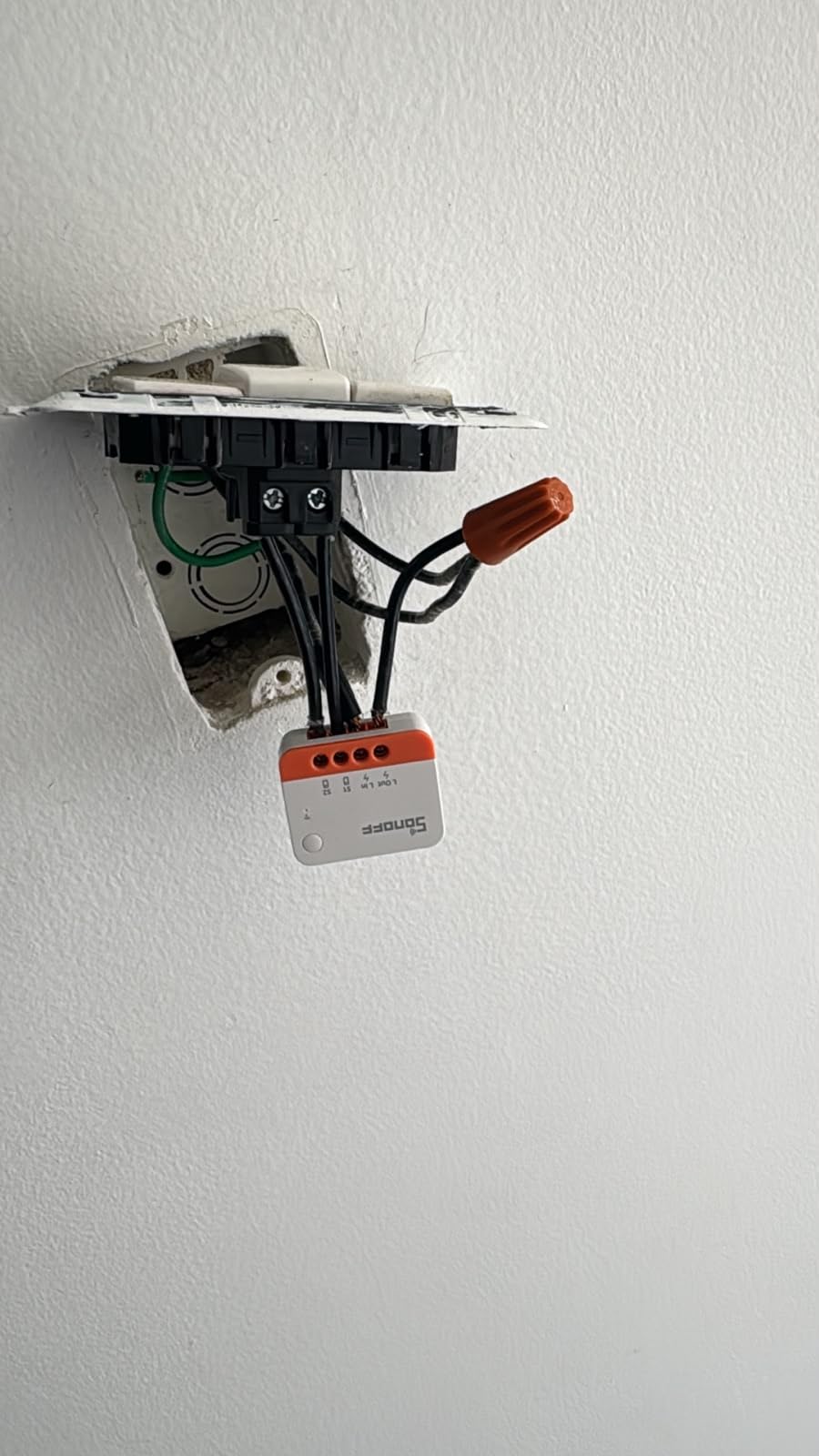
The 2-pack SONOFF ZBMINIL2 is the sweet spot for staircase and hallway retrofits. Two relays, two external switches, one Zigbee hub. In our staircase test, the relays paired with a Zigbee coordinator, were linked together in a 2-way automation, and responded within a quarter-second of the button press.
The Zigbee 3.0 implementation supports local LAN control, meaning the 2-way logic runs on your hub, not on a cloud service. That is what you want for a staircase where the lights need to work even if the internet is down. The 3W minimum load is on the low end, so it works with most LED bulbs but is worth checking against your specific fixtures.
For Whom It Works Best
Two-story homes with staircases that need 2-way control. Home Assistant, Hubitat, and SmartThings hubs all support these relays well.
For Whom It Falls Short
Single-room upgrades are cheaper with the 1-pack version. Households without any Zigbee hub will need to budget for one.
10. RAYZEEK PIR Motion Sensor Light Switch – Best for Motion Activation
RAYZEEK PIR Motion Sensor Light Switch,No Neutral No Ground Wire
No neutral,No ground,PIR motion sensor
Pros
- No neutral or ground wire required works with hot and load only
- 3-in-1 sensor modes Occupancy
- Vacancy
- Manual ON/OFF
- Adjustable time-delay and ambient light sensor settings
- FCC and UL listed
- Suitable for warehouses
- garages
- basements
- utility rooms
Cons
- Single pole indoor use only not compatible with 3-way circuits
- Requires minimum 3W load to avoid flickering
- Not suitable for fixtures with dimmable bulb controllers
- May need capacitor installation for proper operation
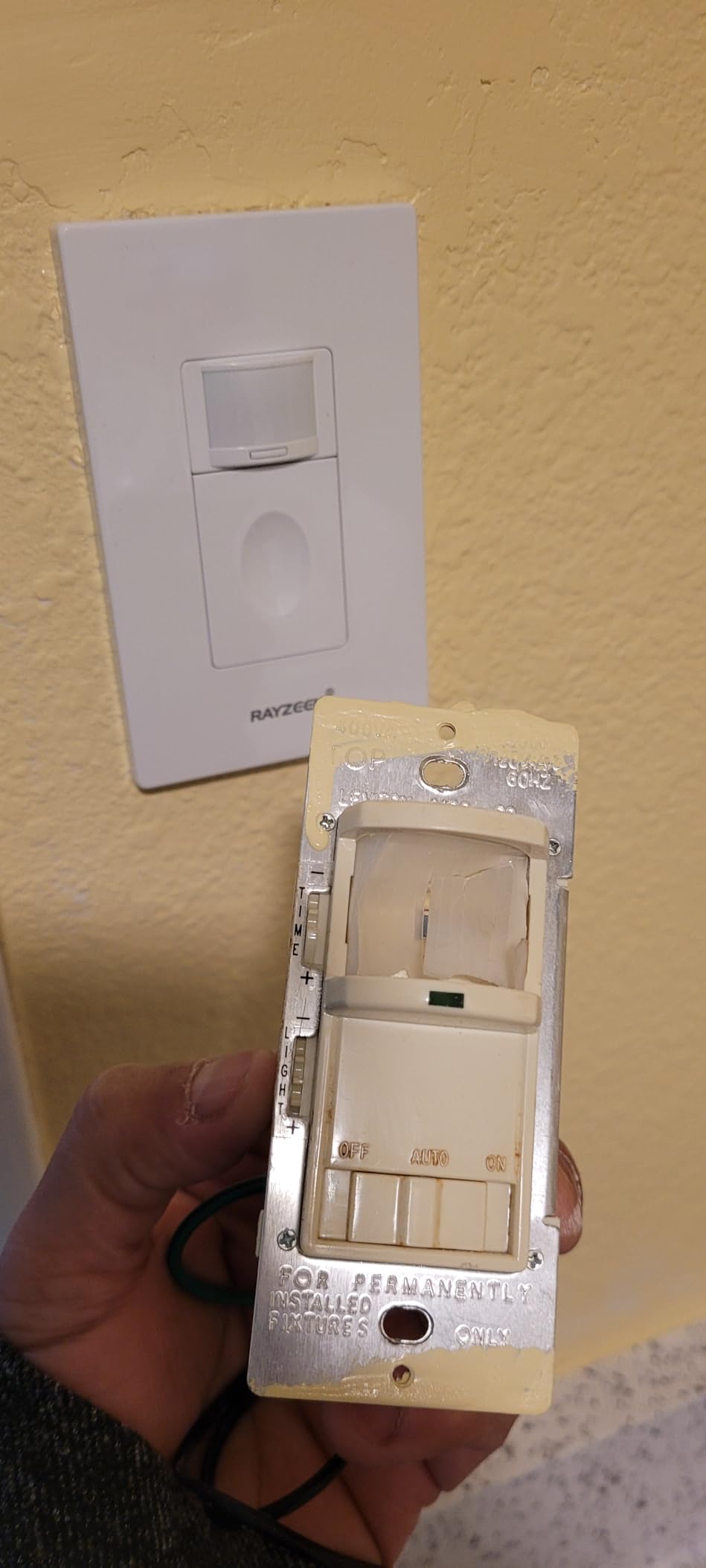
The RAYZEEK PIR Motion Sensor Switch is the only product in this roundup that needs neither a neutral nor a ground wire. That makes it uniquely suited to older utility spaces where the wiring is genuinely just hot and load. In our basement test, the occupancy mode reliably triggered the lights when someone walked in and shut them off within the set delay window.
The 3-in-1 mode is the standout feature. Occupancy mode turns lights on and off automatically with motion. Vacancy mode requires you to tap the switch but still shuts the lights off automatically. Manual ON/OFF mode turns it into a regular push-button switch. All three modes are selectable through front-panel button presses without removing the wall plate.
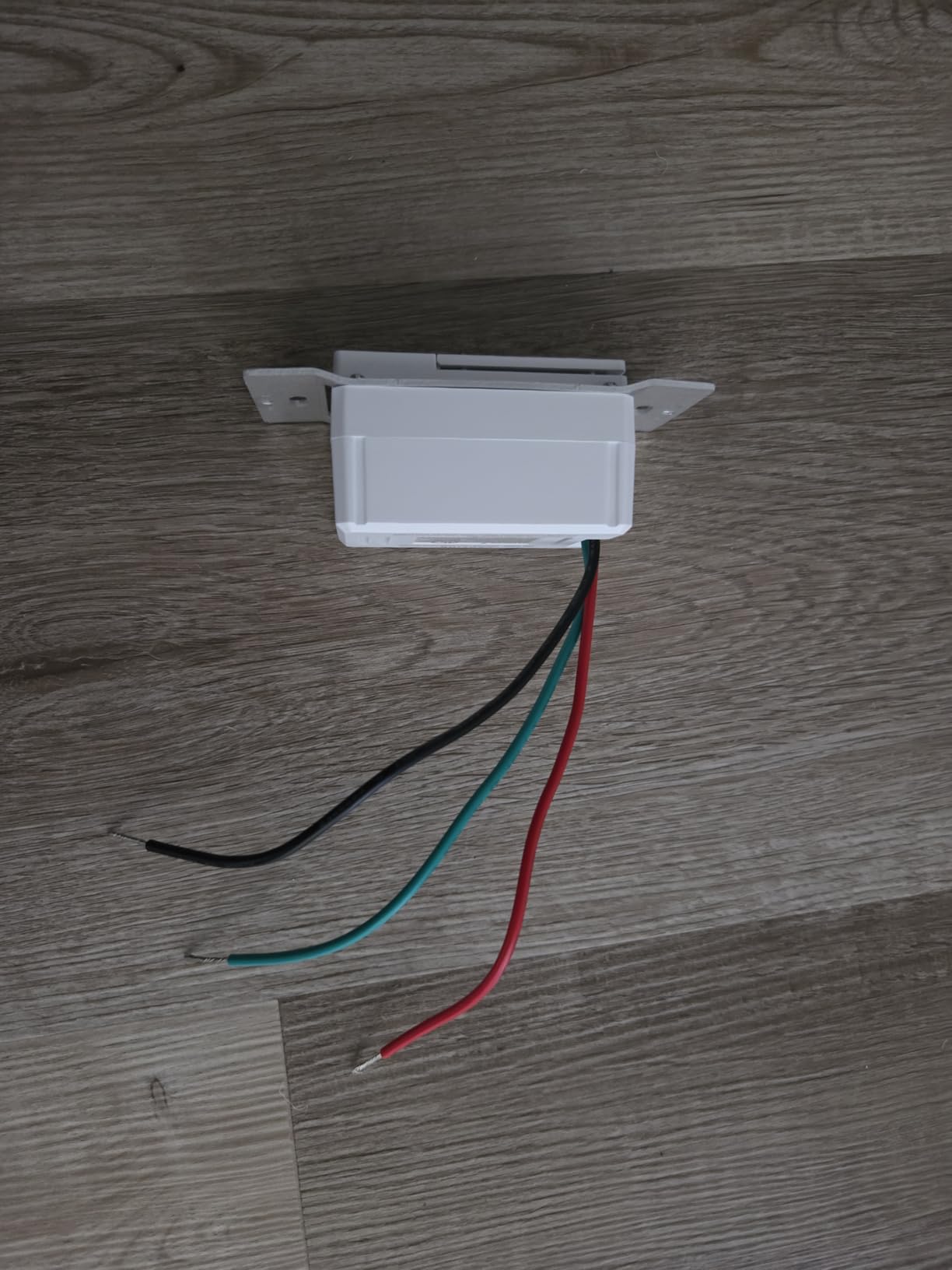
The 3W minimum load is consistent with most LED bulbs, but does exclude some low-wattage filament-style LEDs. Also note this is a single-pole switch, so it cannot be paired into a 3-way circuit.
For Whom It Works Best
Basements, garages, utility rooms, hallways, and any utility space where motion-based lighting is more useful than manual control. The lack of ground requirement also opens up very old wiring.
For Whom It Falls Short
It is not a voice-controlled smart switch, so if you want Alexa or Google Home, this is not the right pick. It also is single-pole only.
Buying Guide: Choosing the Right No-Neutral Smart Switch for Your Home
Hub vs Hub-Free: Pick the Ecosystem You Can Live With
The single biggest decision is whether you want a hub. Lutron Caseta requires the Lutron Hub. Aqara, SONOFF, and YoLink switches each require their own hub (or a compatible third-party Zigbee or LoRa gateway). GE CYNC, MOES, Leviton, and RAYZEEK run without a hub, which lowers the entry cost but typically trades away local control and ecosystem breadth.
If you already own a SmartThings, Hubitat, or Home Assistant setup, the SONOFF and Aqara relays drop into that ecosystem without buying a vendor-specific hub. If you do not, and you only need one or two switches, the hub-free options are usually the right starting point.
Dimmer vs On/Off: Match the Switch to the Bulb Type
If you control incandescent, halogen, or dimmable LED bulbs, a dimmer like the Lutron Caseta or Leviton DN6HD is the better experience. If you control non-dimmable LEDs, smart bulbs, or fluorescent fixtures, an on/off switch is simpler and avoids the dimming-flicker issue. Reviewers consistently report that mixing dimmers with non-dimmable bulbs causes the worst flicker problems.
3-Way Circuit Compatibility: Wireless Companions Save Rewiring
Older homes often have staircases and hallways wired as 3-way circuits (two switches controlling one light). Traditional smart dimmers cannot replace a 3-way without re-running a traveler wire. Lutron solves this with Pico remotes. Leviton solves it with the DAWDC Anywhere Companion. SONOFF solves it with two ZBMINIL2 relays configured for 2-way control. If your switch loop is a 3-way, plan for a wireless companion from day one.
Ecosystem Compatibility: Make Sure It Talks to Your Voice Assistant
If you use Alexa or Google Home, every switch on this list integrates. If you use Apple HomeKit, your options narrow to Lutron Caseta, Aqara (with Aqara Hub), and Leviton (with MLWSB bridge). If you run Home Assistant, the SONOFF ZBMINIL2 and Aqara switches offer the cleanest local integrations. Match the switch to the ecosystem you actually live in, not the one with the longest compatibility list.
Smart Switch vs Smart Bulb: A Quick Decision Framework
If you rent, have one lamp you want to control, and do not want to touch wiring, a smart bulb is faster. If you own the home, have multiple fixtures on the same switch, or want a familiar wall switch for guests and family members, a smart switch is the better long-term answer. Smart bulbs stop working when the wall switch is off, which is the single biggest source of user complaints in forum discussions.
Installation Safety: Three Non-Negotiables
Always turn off the breaker before touching the switch. Always use a non-contact voltage tester to confirm the wires are dead. If you see aluminum wiring, frayed insulation, or you are not confident, hire a licensed electrician. No smart switch is worth a house fire.
Troubleshooting Common No-Neutral Smart Switch Problems
LED Bulbs Flicker or Glow When the Switch Is Off
This is almost always a minimum-load issue. The smart switch is drawing idle current through the LED, and the bulb is converting that into visible light. Three fixes: swap the LED for one rated above the switch’s minimum wattage, install a bypass capacitor across the bulb (often included in the box), or upgrade to a Lutron Caseta, which has no minimum load at all.
Smart Switch Stops Working After a Power Outage
Wi-Fi switches often need a minute to reconnect after the router reboots. Zigbee and Clear Connect RF switches recover faster because they do not depend on the router. If the switch is dead after power returns, cycle the breaker off and on once to reset the relay.
Wi-Fi Switch Keeps Dropping Off the Network
Crowded 2.4 GHz networks are the usual cause. Move the router closer, switch to a less-congested Wi-Fi channel, or replace the Wi-Fi switch with a Zigbee alternative like the SONOFF ZBMINIL2.
Confusion About Whether the White Wire Is Neutral
In old switch loops, the white wire is often used as a switched hot (not neutral) and is supposed to be re-marked black or red at both ends. If the white wire in your switch box is the only one going to the light, it is almost certainly a switched hot, not a neutral. The bundled, capped white wires in the back of the box are your real neutral.
Frequently Asked Questions
Can I use a smart switch without a neutral wire?
Yes. A growing set of smart switches are designed to work in switch loops that lack a neutral. They use power stealing through the load wire, ground-wire current routing, or a low-current RF protocol like Lutron Clear Connect to stay powered. Lutron Caseta, SONOFF ZBMINIL2, GE CYNC, Aqara, MOES, Leviton, YoLink, and RAYZEEK all offer no-neutral models tested in this guide.
Do smart switches require a neutral wire?
Most do. A standard smart switch needs the white neutral conductor to power its radio and circuitry when the light is off. The exceptions are no-neutral smart switches, which use one of three workarounds: power stealing (most common), ground-wire routing (Leviton), or ultra-low-power RF (Lutron Caseta).
Which smart switch is best for use without neutral wiring?
The Lutron Caseta Smart Dimmer is our EDITOR’S CHOICE because it has zero minimum wattage, never flickers with LED bulbs, does not need a bypass capacitor, and works with HomeKit, Alexa, and Google Home. For budget shoppers, the MOES Smart Touch Switch offers no-neutral Wi-Fi at a lower price, and for Zigbee users the SONOFF ZBMINIL2 is a tiny, reliable relay.
Can I use the Tuya smart switch without a neutral wire?
Yes. Tuya-based switches like the MOES Smart Touch Switch support no-neutral installations on 2.4 GHz Wi-Fi through the Smart Life app. Note that most Tuya no-neutral switches need a minimum load of 5W or more, so very low-wattage LEDs may flicker. Use a bypass capacitor or swap to a higher-wattage LED if you see glow when off.
What is a bypass capacitor and do I need one?
A bypass capacitor is a small component wired in parallel with the bulb. It gives a no-neutral smart switch a clean path to draw its idle current, which prevents LED flicker and bulb glow when the switch is off. You need one if your switch has a minimum load above your bulb wattage. Lutron Caseta is the only no-neutral switch in this guide that does not need a bypass capacitor because it has zero minimum load.
Final Verdict: Which Smart Switch Should You Buy Without a Neutral Wire?
If you want the most reliable, zero-flicker no-neutral dimmer and you are willing to buy the Lutron Hub, the Lutron Caseta Smart Dimmer is the clear EDITOR’S CHOICE. It is the only switch in this roundup with zero minimum load, full HomeKit support, and a Pico remote that turns any dimmer into a wireless 3-way.
If you live in a HomeKit household and prefer Zigbee, pick the Aqara Smart Light Switch. If you want local control and already own a Zigbee hub, the SONOFF ZBMINIL2 (1-pack, 2-pack, or 4-pack) is the best value. If you want a hub-free Wi-Fi switch on a budget, the MOES Smart Touch Switch is a strong starting point. For utility spaces that need motion activation, the RAYZEEK PIR switch needs no neutral and no ground.
The best smart switches for no neutral wire in 2026 are no longer a compromise. Pick the one that matches your wiring, your ecosystem, and your budget, and you will not have to rewire your older house to join the smart home era.