
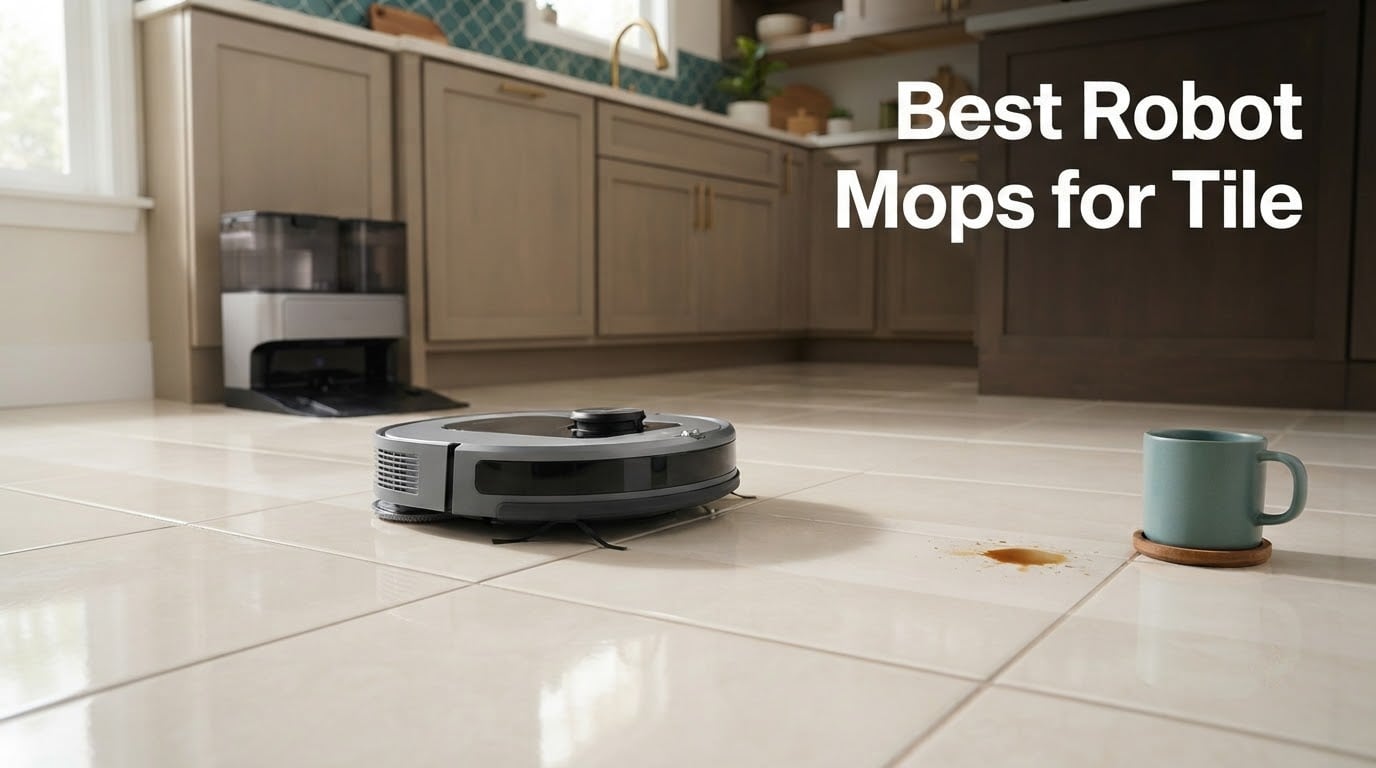
The best robot mops for tile are the ones that scrub rather than smear, and that difference comes down to two things: pads that rotate under real downward pressure, and a dock that washes those pads in hot water. A flat vibrating cloth pushed across grouted ceramic just moves the grease around and leaves a film behind it. We spent weeks running ten of the leading robot vacuum and mop combos over coffee rings, dried kitchen splashes and pet hair on tile to find out which ones actually clean a grout line.
We judged every machine on the same six criteria, and none of them were price. Pad design and scrub speed on tile, edge and corner coverage along tile borders, whether the dock washes the pads or merely rinses them, navigation accuracy over a mapped floor, behaviour on mixed tile-and-carpet homes, and the honest drawbacks that owners mention after a few months rather than a few days. Where a manufacturer’s claims and owner feedback diverge, we tell you.
One warning before we start. Natural stone, including unsealed marble and travertine, and unglazed porcelain can be damaged by alkaline or acidic cleaning solutions. If your tile is natural stone, use a pH-neutral solution only, and check with the stone supplier first. Everything in this guide assumes glazed ceramic or porcelain tile, which is what the overwhelming majority of tile households actually have.
If your tile situation is really a kitchen problem, our picks for [robot mops for kitchens](https://www.manbolo.com/best-robot-mops-for-kitchens/) overlap heavily with this list. If you are still choosing floors, [robot vacuums for hardwood floors](https://www.manbolo.com/best-robot-vacuums-for-hardwood-floors/) is the companion guide.
Our Top 3 Robot Mops for Tile Tested Against Grout, Grease and Grime
iRobot Roomba 105 Combo
- SmartScrub micro-pump mop
- 75-day AutoEmpty dock
- ClearView LiDAR mapping


iRobot Roomba 705X
- Extending PowerSpin roller at 200 RPM
- Heated mop wash and hot-air dry
- PrecisionVision obstacle avoidance
Comparing All 10 Robot Mops for Tile at a Glance
| Product | Specs | Action |
|---|---|---|
| iRobot Roomba 105 Combo |
|
Check Latest Price |
| eufy C28 |
|
Check Latest Price |
| iRobot Roomba 705X |
|
Check Latest Price |
 iRobot Roomba 105X Combo iRobot Roomba 105X Combo |
|
Check Latest Price |
 roborock Q7 M5+ roborock Q7 M5+ |
|
Check Latest Price |
 roborock Q10 S5+ roborock Q10 S5+ |
|
Check Latest Price |
 SharkMatrix Plus 2-in-1 SharkMatrix Plus 2-in-1 |
|
Check Latest Price |
 roborock Qrevo S Pro roborock Qrevo S Pro |
|
Check Latest Price |
 Tikom G8000 Max Tikom G8000 Max |
|
Check Latest Price |
 Lefant M2 Plus Lefant M2 Plus |
|
Check Latest Price |
Why Tile Punishes Weak Mopping More Than Any Other Floor
Tile is the honest test of a robot mop. On sealed hardwood or LVP, a damp pad leaves a visible improvement because the floor starts dirty. On glazed tile, the dirt that matters has already worked its way down into the grout channel, and the tile face itself wipes clean with a cloth. If a robot cannot reach into that channel under pressure, the run looks busy and changes almost nothing.
Flat vibrating pads push grime sideways, spinning pads pull it out
Budget robot mops often mount a flat microfiber pad on a small vibrator. That design can shift a dried splash, but it has no lateral action to work grit out of a grout groove, and it tends to redistribute the film in a fan pattern as it turns at the end of a run. A spinning pad system is mechanically different: the pad rotates in place while pressed against the tile, so the contact point stays concentrated and the motion is perpendicular to the travel direction.
Owners on r/RobotVacuums put it plainly, describing flat-pad machines as just moving water around. That criticism shows up again and again in the reviews of the entry-level models in this roundup, and it is the single biggest reason we rank roller and dual spinning pad machines above flat-pad machines on tile, regardless of suction.
Scrub speed is the number to read, not just the pad type
Rotation speed tells you how much work happens per second. The Roborock Q10 S5+ runs its VibraRise 2.0 pad up to 3000 scrubs per minute. The SharkMatrix Plus works at 100 scrubs per minute, the iRobot 705X spins its PowerSpin Roller at 200 RPM, and the eufy C28 drives its 28 cm HydroJet roller at 270 RPM. Higher numbers are not automatically better, but on dried kitchen grease they are the difference between a pad that lifts the deposit and a pad that relocates it.
Downward pressure matters just as much, and it is the specification most often buried. A pad spinning freely on the tile has no mechanical advantage at all, so the weight the machine puts on the pad is what converts rotation into scrubbing force in the grout.
Extending pads are the single clearest upgrade for tile borders
On a disc-shaped robot, the mop head is set inside the chassis outline, so a strip roughly 1 to 3 inches wide along walls and cabinets never gets touched. Reviewers of the Roomba 105 Combo and the 105X both name that strip as the top complaint. The iRobot 705X solves it with a roller that physically extends sideways from the body when it detects an edge, and that is the reason it is the pick for anyone whose tile is bounded by cabinetry.
Our picks for [high pile carpets](https://www.manbolo.com/best-robot-vacuums-for-high-pile-carpets/) and [small apartments](https://www.manbolo.com/best-robot-vacuums-for-small-apartments/) cover the opposite problem, where floor area and furniture clearance matter more than grout depth.
The dock is where hygiene is won or lost
Every robot in this list either rinses its pads at the dock or does not. That single feature decides whether a machine can run daily without turning into a chore. A cold-water rinse pushes dirty water through the pad and leaves it damp in a closed tray, and owners report a mild musty odour that follows a few weeks of daily use. A heated wash cycle at 167F, as the Roborock Qrevo S Pro uses, lifts grease out of the pad fibres rather than just flushing it, and paired hot-air drying stops the microbial growth that damp fabric encourages.
Docks fall into three useful tiers, and it is worth deciding which one you actually need before you shop. An auto-empty dock collects dust only and leaves the mop to you. A mop-washing dock rinses pads with hot water and dries them. A full self-maintenance dock does all of that and adds detergent dispensing or heated wash temperatures. If you mop daily on a kitchen floor, the third tier pays for itself in saved effort within a year.
Water flow settings matter more on tile than anywhere else
Tile is non-porous, so water sits on the surface until it evaporates rather than soaking in. Low flow settings that suit sealed hardwood can leave a visible trail and a faint haze on gloss porcelain. Set the flow to the highest level the app offers for kitchens and entries, and use per-room scheduling so that bathrooms and hallways run drier than the kitchen. The Roborock Q7 M5+ offers three water flow settings and the Lefant M2 Plus offers three as well, which is enough control to stop streaking.
1. iRobot Roomba 105 Combo – A Steady Daily Mop for Grouted Tile and Mixed Floors
iRobot Roomba 105 Combo Robot Vacuum & Mop with AutoEmpty Dock – Self-Empties for 75 Days, Intense Power-Lifting Suction, LiDAR Navigation, Multiple Cleaning Modes, Avoids Mopping Carpet
SmartScrub micro-pump mop
75-day AutoEmpty dock
ClearView LiDAR mapping
Auto carpet avoidance
Pros
- Evenly moist pad from the micro-pump gives consistent scrubbing
- LiDAR row coverage maps rooms methodically
- Carpet avoidance keeps rugs dry on mixed floors
- App scheduling with room targets and keep-out zones
Cons
- Mop pads are hand-washed since the dock does not wash them
- A 1-3 inch strip along walls and furniture is never mopped
- Rug tassels and thresholds can catch the mop head
The Roomba 105 Combo is the machine we kept reaching for first, because its micro-pump water delivery is the thing most flat-pad designs get wrong. Instead of letting a pad drag across a drying cloth, the pump meters water onto the pad throughout the run, so the scrubbing action stays consistent from the first room to the last. On tile that consistency shows up as a floor that stays evenly damp rather than streaky.
SmartScrub is rated at twice the scrubbing depth of earlier Roomba mop systems, and on everyday grout line grime that difference is real. It will not strip a century of ground-in black grout, and owners are clear that this is a maintenance mop rather than a deep scrub, but it reliably keeps grout from darkening further between manual passes.
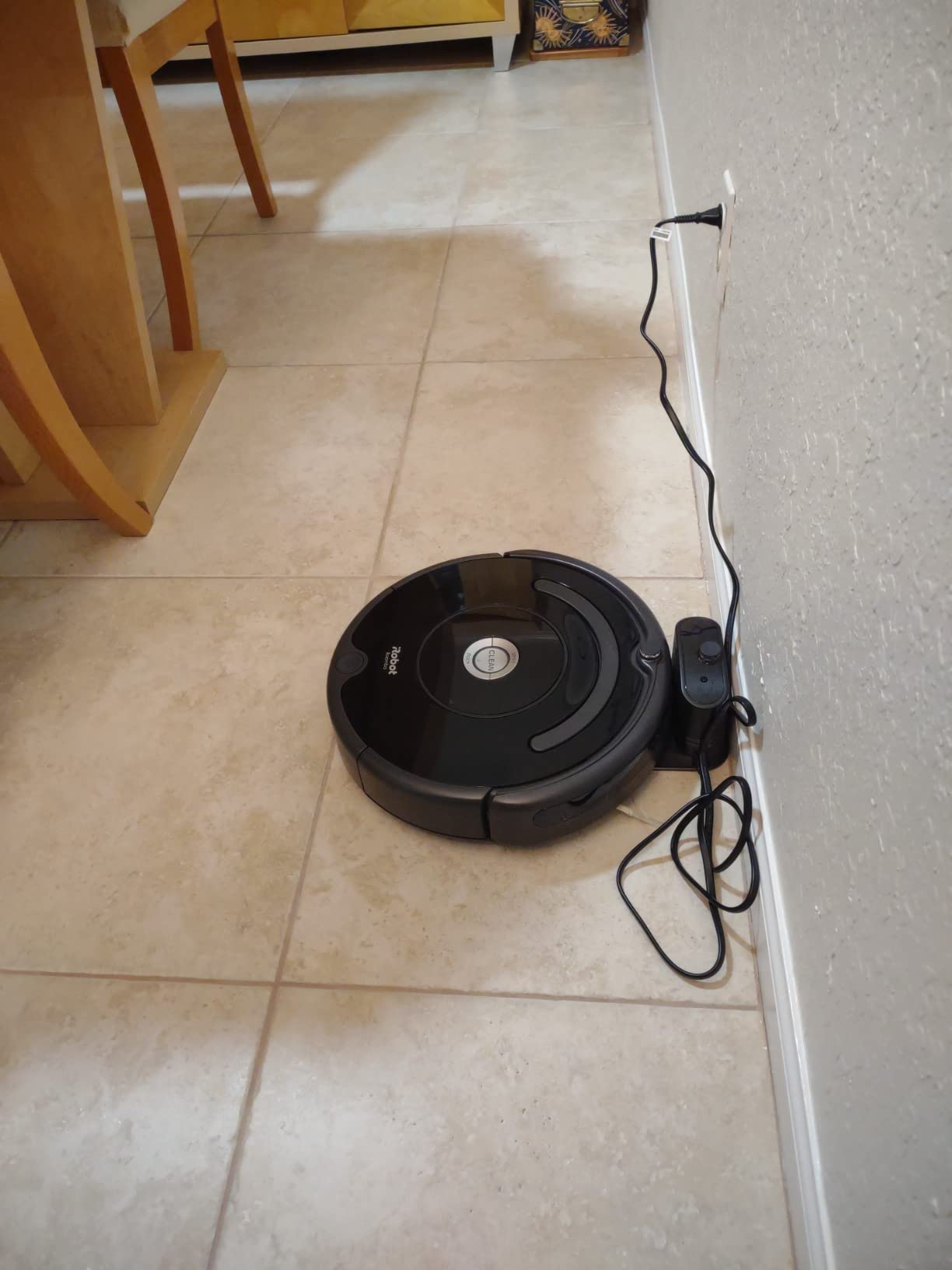
LiDAR mapping is the reason coverage feels complete
ClearView LiDAR with smart mapping produces row-by-row passes rather than the wandering paths older robots used, and on a large tiled open-plan floor that is the difference between a complete mop and a partial one. Room labelling, scheduling and keep-out zones for pet bowls all come through the iRobot app, and 2.4 GHz Wi-Fi is the only network requirement.
The AutoEmpty dock seals debris in an allergen-trapping bag that captures 99 percent of particles down to 0.7 microns and runs for up to 75 days between changes. The disc body measures 13.35 inches across and 4.09 inches tall, which is compact enough to slip under most kitchen cabinets on the perimeter of the room.
Why it wins on a mixed tile and carpet home
Automatic carpet detection and avoidance while mopping means the robot lifts away from rugs rather than rolling wet pads across them. In homes where tile meets area rugs with no bare floor in between, this is the difference between a daily mop run and a wet carpet. Owners also praise the seven suction levels and adjustable passes for switching between crumb pickup in the entryway and deeper passes in the kitchen.
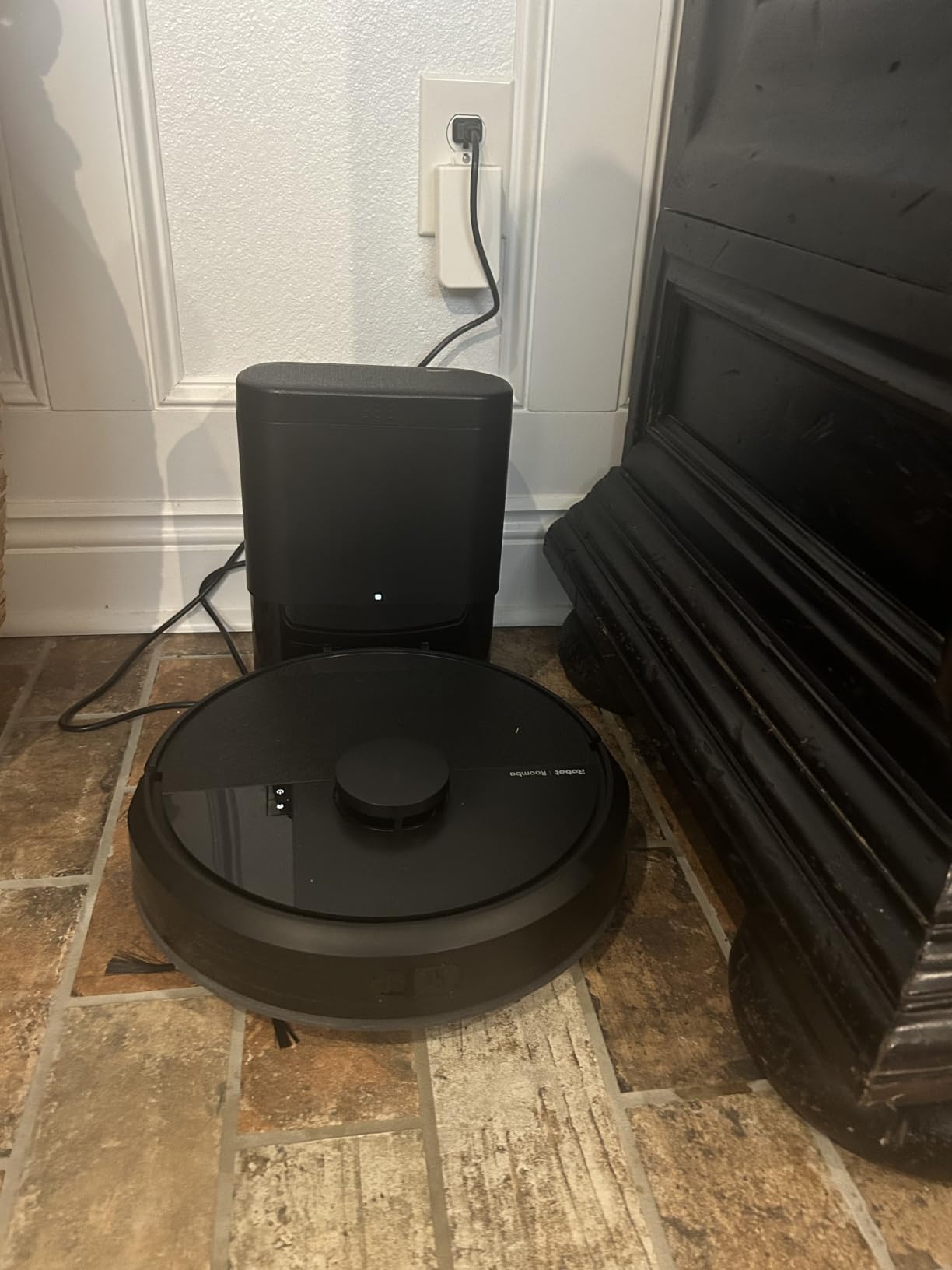
Where it falls short on tile
The dock auto-empties dust but does not wash the mop pad, so weekly hand washing is part of the deal. That is a real drawback in a pet household where the pad picks up hair on every run. The unmopped border along walls and furniture is the other persistent complaint, and the mop head can catch rug tassels when bare floor between rooms is limited.
Battery life is 100 minutes on a charge, which covers most apartments and small houses comfortably but means larger tile layouts need a mid-run dock stop. The machine also handles thresholds and low furniture less confidently than models with camera-based obstacle avoidance.
Who should buy the Roomba 105 Combo
Buy it if your tile is glazed ceramic or porcelain in a home with rugs you care about, and you want a set-and-forget daily mop that does not require learning a complicated app. It is the pick for most households reading this guide, and for anyone who has been disappointed by a flat-pad robot that merely spread water around. Skip it if you have natural stone, deep grout that needs real scrubbing power, or a kitchen with heavy dried grease.
2. eufy C28 – Full-Width Roller Mopping That Scrubs Rather Than Smears
eufy C28 Robot Vacuum Cleaner and Mop Combo, 15,000 Pa, HydroJet Roller Mop
28 cm HydroJet roller at 270 RPM
15000Pa suction
All-in-One station with 50C drying
Zero-tangle brush system
Pros
- Roller mop scrubs as it cleans instead of sliding a pad
- Built-in scraper keeps the roller clear mid-run
- Zero-tangle brush suits long-haired pets
- All-in-One station handles nearly all upkeep
- Quiet 54.89 dB operation
Cons
- One of the larger dock footprints here
- Weight of 24 pounds with a big 3 litre station
- Station needs plumbing-free space and a level floor
The eufy C28 solves the flat-pad problem structurally. Instead of a small spinning disc, it carries a 28 cm roller that spans most of the robot width and spins at 270 RPM with 24 water ports feeding it continuously. The roller also passes over a built-in scraper that separates lifted dirt into a dedicated tank during mopping, which is the detail that stops a roller mop from becoming a dirt distribution system after a few runs.
That combination is why owners single out the HydroJet roller as the standout feature on hard floors, reporting visibly cleaner tile and wood. On a grout line, a full-width roller pressing down with rotation and feeding itself with water is about as close as a consumer robot gets to a manual roller mop.
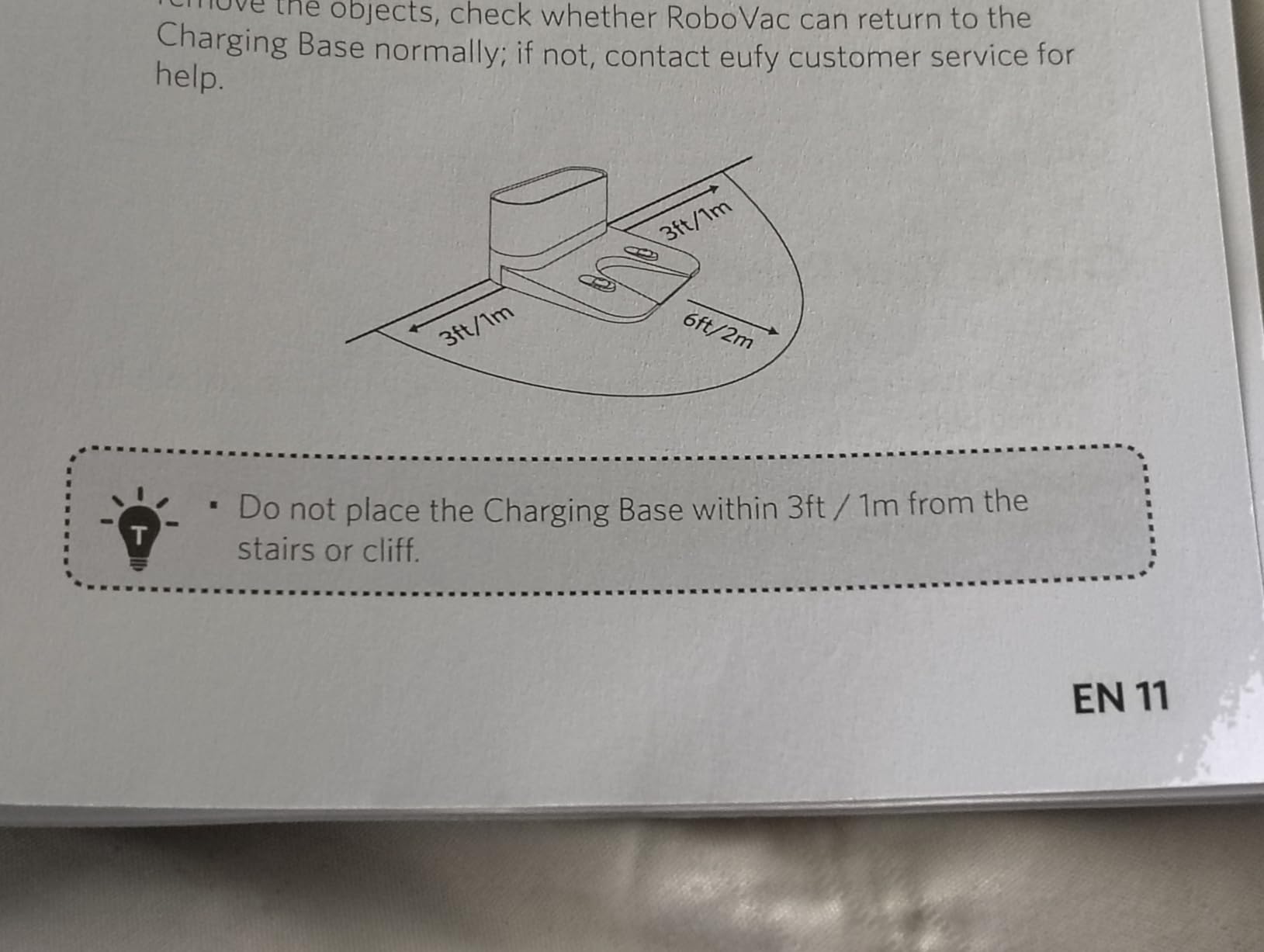
Suction that handles the debris before the mop arrives
Tile floors benefit from strong pickup before any water touches them, and the 15000Pa Turbo figure, one of the strongest in this roundup, delivers it. Pet hair, dander and fine dust get pulled off tile and short-pile carpet, with automatic carpet boost when the machine crosses onto rugs. That matters for grout, because grit left in place during the vacuum pass is what the roller ends up redistributing during the mop pass.
The zero-tangle system is built around hair up to 30 cm long, and multi-pet owners call it a genuine improvement over brush designs that need cutting every few runs. Camera-free LiDAR navigation detects obstacles from 3x3x3 cm and up while keeping the machine out of the privacy debate that camera-based sensors create.
The All-in-One station is the reason it suits a busy kitchen
The station auto-empties into a 3 litre bag, washes the roller mop, auto-collects the dirty water, and dries at 50C. That is the full self-maintenance tier, and it is the reason a daily kitchen run stays hands-off for up to 75 days. Warm drying also keeps the roller from developing the damp-pad smell that cold rinses leave behind.
Short-pile carpet triggers an automatic 10.8 mm mop lift, so mixed tile and rug homes can run a single combined pass without wetting the floor coverings.
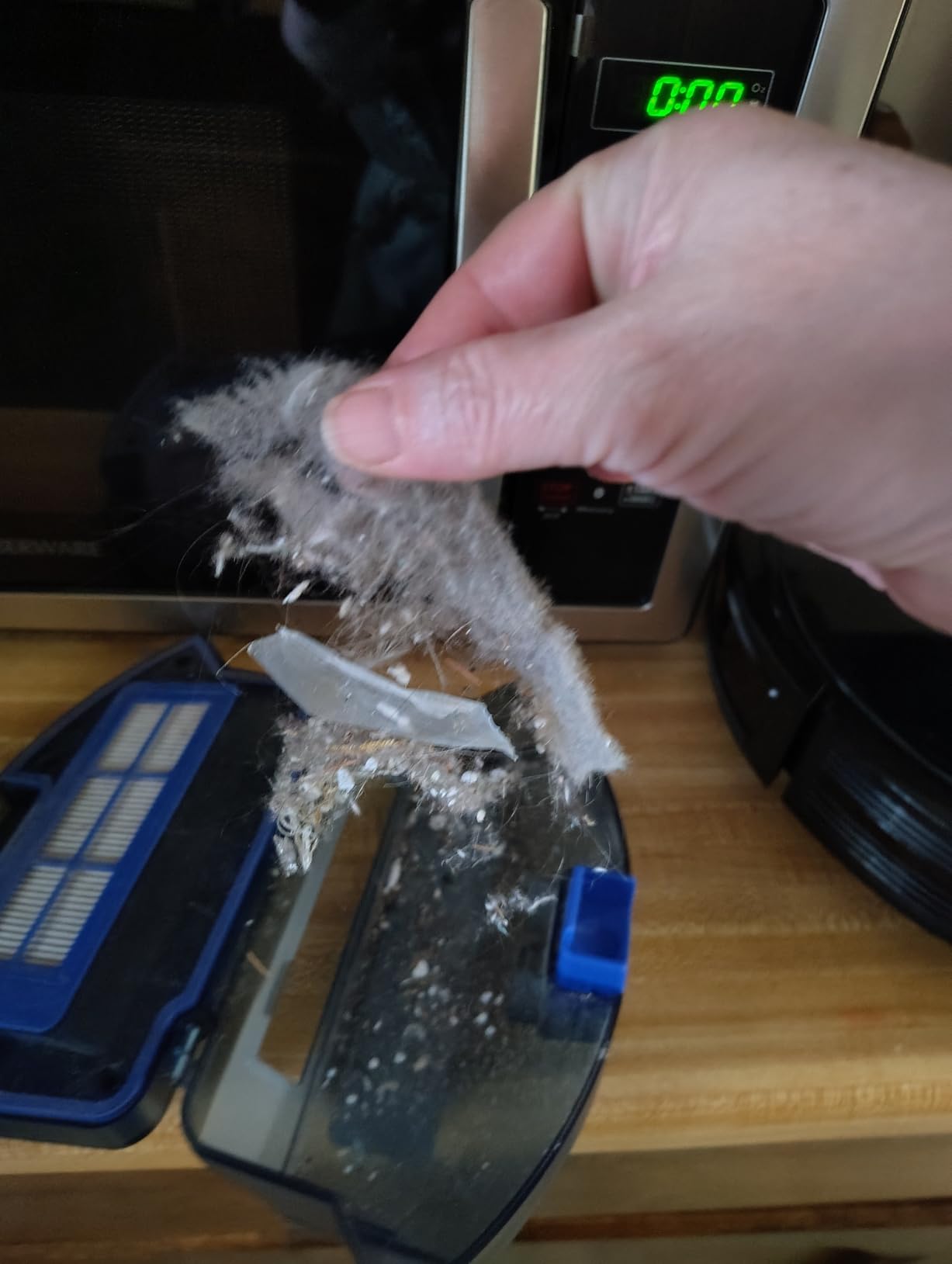
The physical reality of the footprint
This is the machine you measure twice. The station measures 15.47 by 14.6 by 18.14 inches and the combined weight is 24 pounds, which makes it a real consideration in a small kitchen where counter and floor space are tight. Our [robot vacuums for small apartments](https://www.manbolo.com/best-robot-vacuums-for-small-apartments/) guide covers slimmer alternatives if cabinet clearance is the deciding factor.
On the positive side, 54.89 dB operating noise is unusually quiet for a machine with this much suction, which matters if you plan to run it while the house is quiet or while pets are asleep.
Who should buy the eufy C28
Buy it if grout scrubbing is the reason you are shopping at all, and if you have a large tiled area where a single daily run needs to cover a lot of ground. It suits multi-pet households and busy kitchens, and any home that will not tolerate a hand-washed mop pad. Skip it if floor space is tight, you have natural stone, or if the specification sheet rather than cleaning performance is what decides it for you.
3. iRobot Roomba 705X – The Best Robot Mop for Tile Edges and Corners
iRobot Roomba 705X Robot Vacuum & Mop Combo, 175x More Suction, Extending Self-Cleaning Roller Mop, Multifunction Dock, 75 Day Self-Emptying, Hot Wash/Dry, AI Obstacle Avoidance, Ideal for Pet Hair
Extending PowerSpin roller at 200 RPM
Heated mop wash with hot-air drying
PrecisionVision AI obstacle avoidance
Pros
- Roller mop extends sideways to reach tile borders
- Heated wash and hot-air dry cut flies and leave tile cleaner
- Camera obstacle avoidance handles cords and pet waste
- Accurate LiDAR mapping that works in low light
Cons
- Vacuum pickup on hard floors can be inconsistent for the tier
- Dock wash area collects debris and needs frequent cleaning
- Noticeably loud during runs and self-emptying
The 705X solves the problem that keeps flat-pad and fixed-pad robots from ever cleaning a tiled kitchen properly: the border. Its PowerSpin Roller extends sideways from the body when the machine reaches an edge, so skirting boards, cabinet plinths and inside corners actually get mopped instead of being a permanent 1 to 3 inch grey strip. The roller spins at 200 RPM and the whole assembly retracts again for normal travel.
There is a second extension feature here that matters on mixed floors. The roller carries a built-in protective cover that lifts over carpet, so the machine can run a combined vacuum and mop pass across tile and rugs without dragging a wet roller across the fibres.
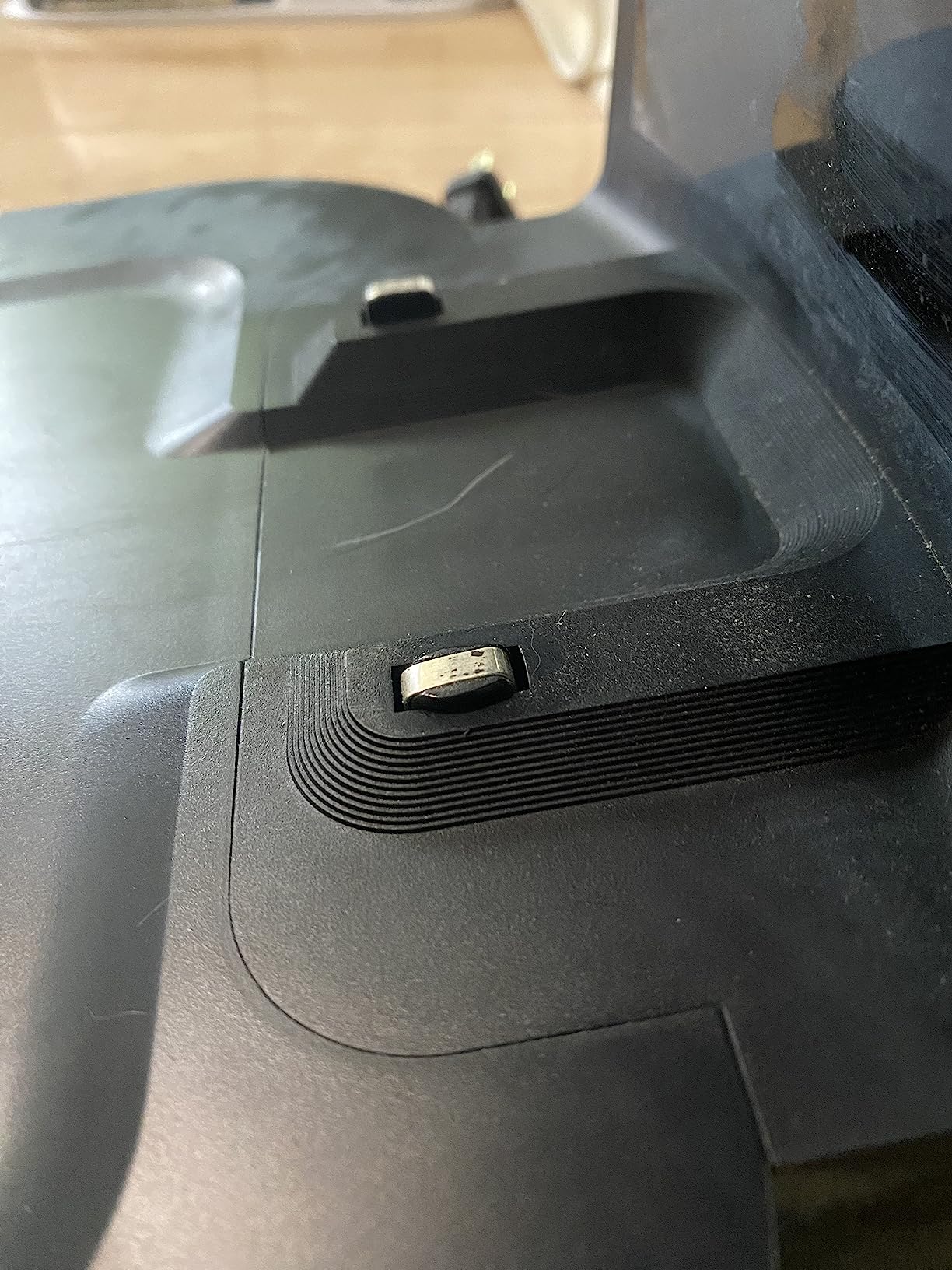
PrecisionVision is the differentiator for cluttered tile rooms
A kitchen floor is rarely empty. Charging cables, a coffee grinder, a dog bowl and a pair of shoes are all typical, and camera-based object recognition steers around them reliably rather than shoving them across the tile. The system also handles pet waste, and it re-cleans the spot automatically when it detects a mess it did not fully remove.
Suction is rated at 175 times the Roomba 600 series with anti-tangle Dual Rubber Brushes and Carpet Boost, which is the number you need to read for grit pickup in grout. The trade-off is that owners still report inconsistent hard-floor pickup for a machine at this tier, so treat the vacuum half as very good rather than exceptional.
The AutoWash dock is the full self-maintenance tier
Beyond 75-day self-emptying, the dock adds heated mop washing, solution dispensing and hot-air drying. Owners specifically credit the heated cycle with noticeably fewer household flies and visibly cleaner tile, which makes sense: a hot wash strips organic grease from the pad fibres where a cold rinse only flushes it, and hot drying stops bacteria from multiplying in a damp roller.
ClearView Pro LiDAR 3D mapping with automatic room labelling works in low light, and dock-finding remains accurate even when the base is tucked into a tight corner.

Where the compromises show up
The dock wash tray collects debris and needs manual attention more often than owners would like, which is mildly ironic on a machine sold partly on automation. Keep-out zones and mop zones cannot be placed close to the dock, even on the far side of a wall, so low-traffic corners near the base may never get mopped. Noise is noticeably high both during cleaning and during the self-empty cycle.
The body is heavy with limited suspension compared with competitors, and the 14.6 by 14.7 inch footprint is larger than the disc-shaped machines in this roundup. Measure your clearance before committing.
Who should buy the Roomba 705X
Buy it if your tile is bounded by cabinetry, you have pets that leave things on the floor, and you want heated pad washing as standard rather than as an upgrade. It is the pick for a kitchen that gets used hard, and for anyone who has accepted that edges are where their current robot falls down. Skip it if noise in your household is a concern, or if a mid-range model covers what you actually need.
4. iRobot Roomba 105X Combo – Best Tile Mopping on a Mid-Range Budget
iRobot Roomba 105X Combo Robot Vacuum & Mop with AutoEmpty Dock, Self‑Emptying for Up to 75 Days, 70× Power‑Lifting Suction, Smart LiDAR Mapping, App & Voice Control, Ideal for Homes with Pets & Kids
Vacuum and mop in a single run
75-day sealed-bag AutoEmpty dock
SmartScrub micro-pump
Automatic rug protection
Pros
- Single pass handles vacuuming and mopping together
- LiDAR row-by-row beats random paths
- Sealed-bag base runs up to 75 days
- Automatic rug protection
- Room targeting and keep-out zones in the app
Cons
- Mop pad must be cleaned by hand
- Maintenance touch-up rather than deep cleaning
- Pickup consistency draws mixed feedback
The 105X Combo shares most of the 105’s feature set, and on tile the differences are worth understanding before you choose. It keeps the SmartScrub micro-pump system, which is the feature that makes flat-pad mopping tolerable, and it still runs a combined vacuum and mop pass rather than doing them separately.
What you give up against the 105 Combo is marginal. The reported suction figure is the same 70 times the Roomba 600 series, the self-emptying base is again the sealed-bag type with the same 75-day interval, and the ClearView LiDAR mapping gives the same methodical row coverage. The 4.1 rating against 4.4 tells you the main difference is consistency of pickup rather than headline features.
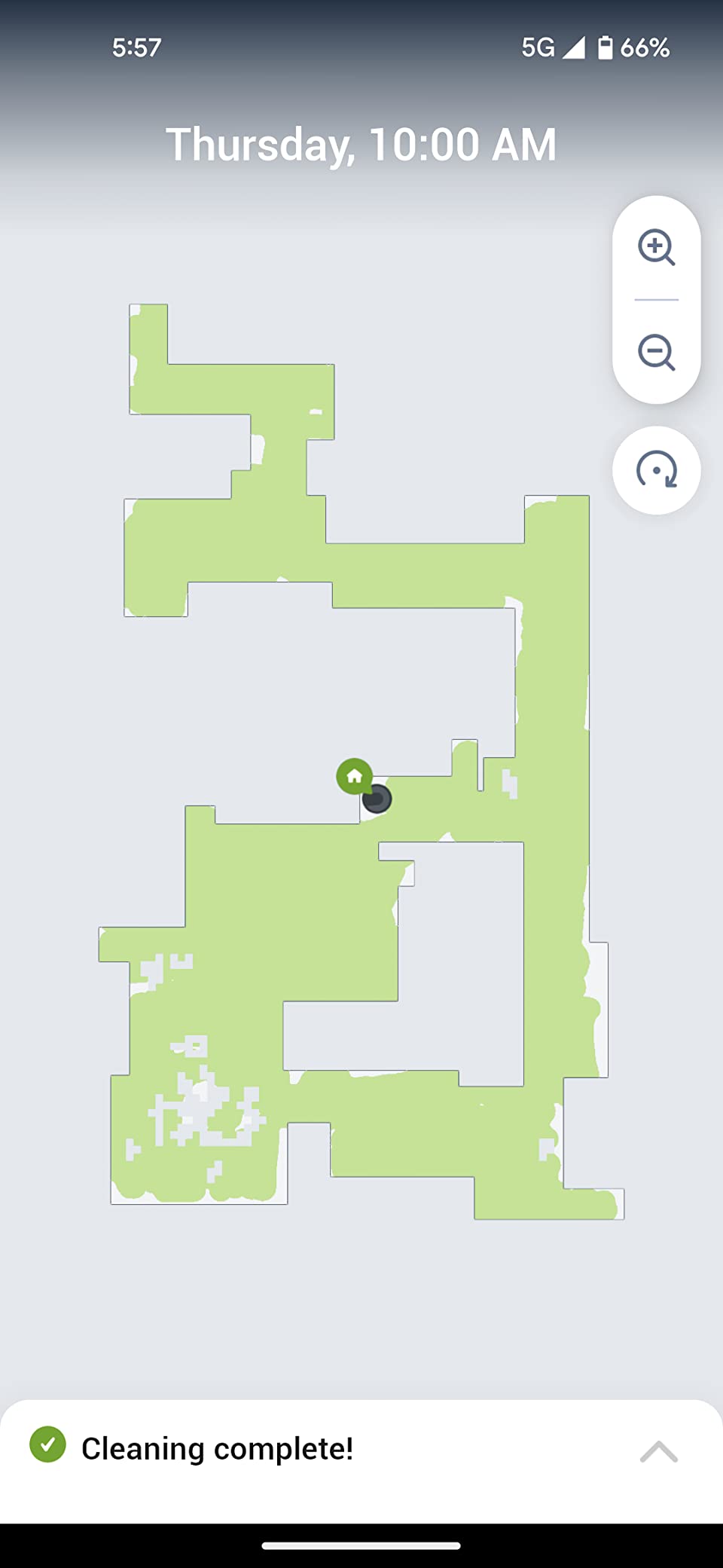
Why one-pass vacuuming and mopping suits tile
On a glazed floor, the order of operations matters. Debris picked up first never gets rolled around by the pad, so the mop is working on a clean surface rather than redistributing crumbs and grit. Saving a separate pass also matters in a kitchen where the floor is being walked on while the robot works, because a single run finishes faster and gets done daily instead of weekly.
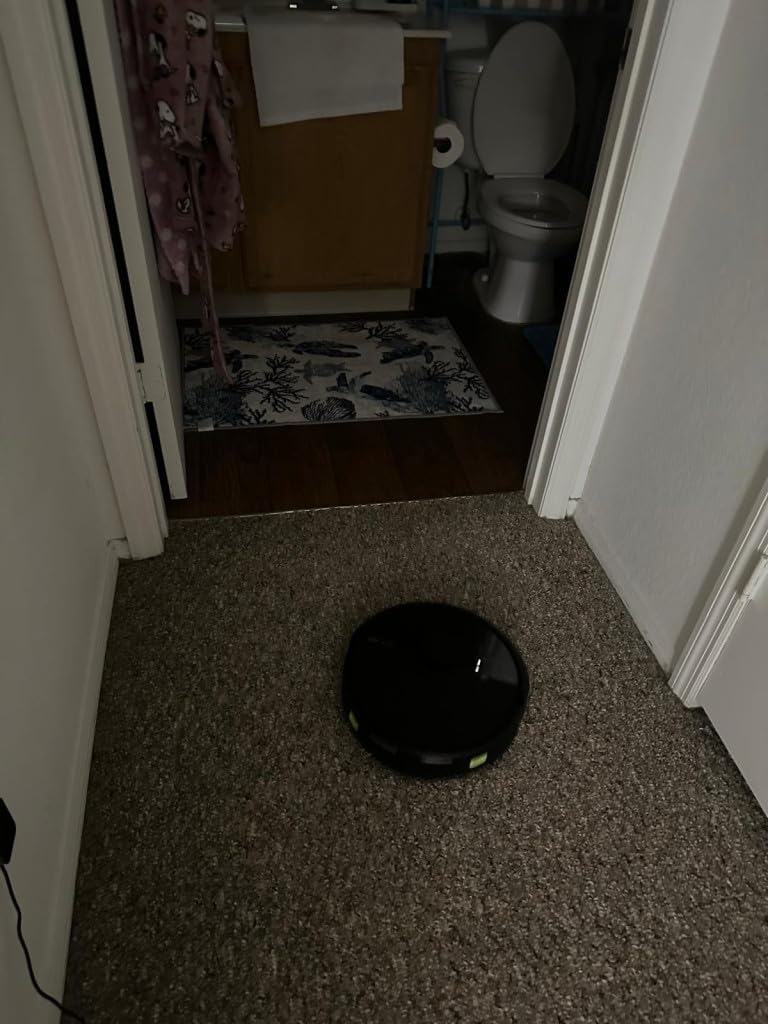
Automatic rug protection detects carpet during a mop run and keeps the pad off it, which is the practical requirement in a mixed tile and carpet home. The 3-Stage cleaning system combines intense suction with a multi-surface brush and an edge-sweeping brush, and obstacle avoidance handles furniture, cords and everyday objects day or night.
The honest limitation is the same as the 105
Neither machine washes its own pad. You are rinsing a microfiber pad in a sink every week or so, and in a heavy shedding household that is more often. On tile this is survivable because grime loads slowly, but it does undercut the hands-off story a self-emptying dock otherwise delivers.
Buyers describe the mopping as a refresh between deeper sessions rather than a real clean, which is a fair characterisation for both iRobot machines. Expect a floor that looks fresh every day and needs a proper manual mop every few weeks.
Who should buy the Roomba 105X Combo
Buy it if the 105 Combo is out of reach and you want the same core idea: a micro-pump mop, LiDAR mapping, self-emptying and rug protection without moving up a tier. It suits a first robot purchase in a home with mixed tile and carpet, and anyone who will happily hand-wash a pad once a week. Skip it if grout scrubbing is the priority, since a fixed flat pad with a micro-pump is the limit of what this design can do.
5. roborock Q7 M5+ – Strong Fine-Dust Pickup Across Large Hard Floors
roborock Q7 M5+ Robot Vacuum and Mop, Up to 7-9 Weeks Self-Empty, 10000Pa
10000Pa HyperForce suction
2.7L RockDock Plus
VibraRise 2.0 with 3 water settings
PreciSense LiDAR mapping
Pros
- Excellent fine dust and dander pickup on tile
- Methodical LiDAR row cleaning gives consistent coverage
- Dual anti-tangle brushes reduce hair wrapping
- Quiet in balanced mode
- Strong navigation and zoning features
Cons
- Mop pad must be hand-washed with no auto-wash dock
- Dust bin fills before large jobs finish
- Roller brush still collects wrap-around hair
- Roborock documentation is thin
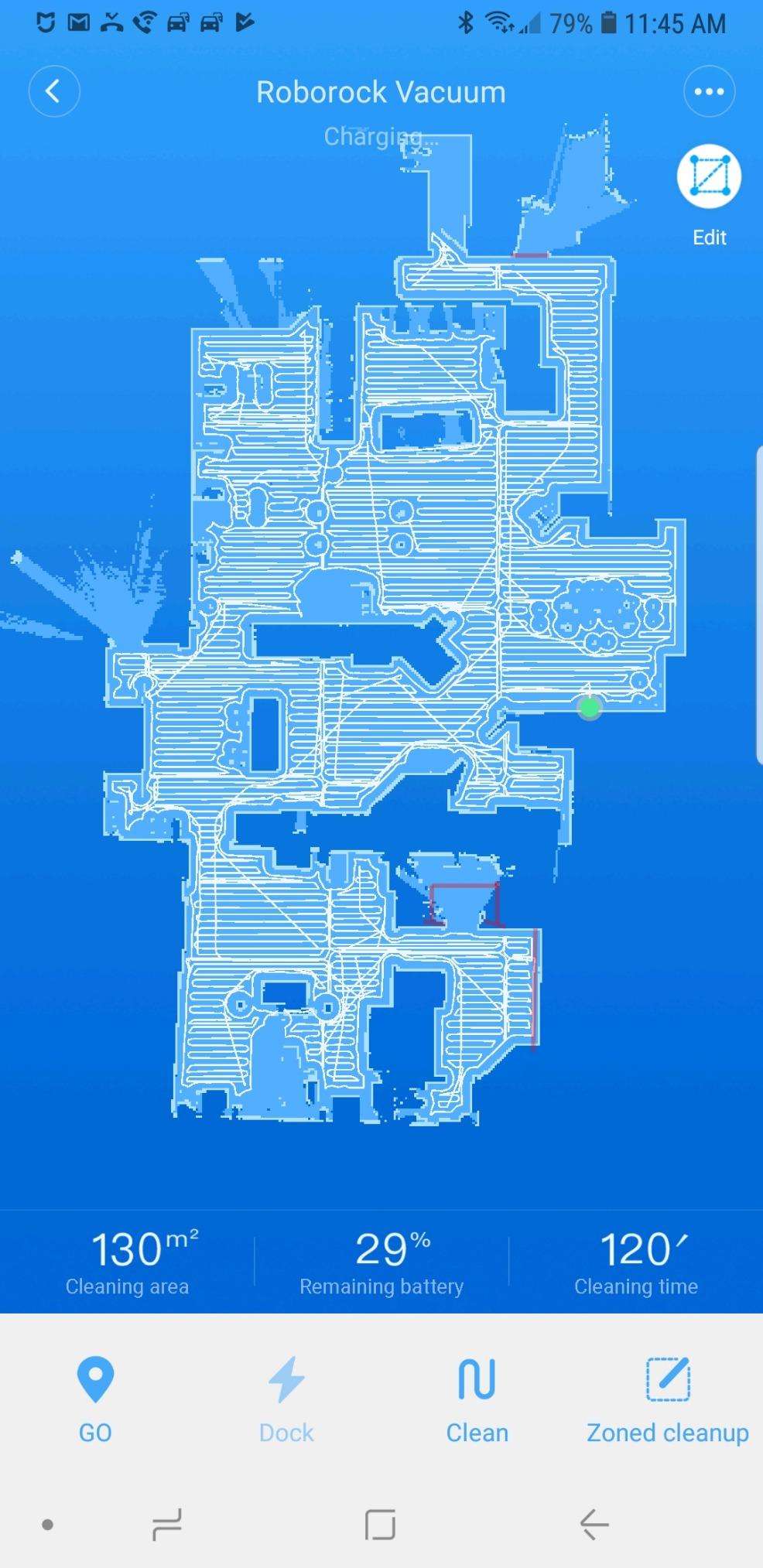
The Q7 M5+ is the pick for anyone who cleans large tiled areas and cares most about the vacuum half. At 10000Pa of HyperForce suction with a rectangular body and a 12.8 inch cleaning path, it covers hard floor faster than the disc machines here, and reviewers consistently single out fine dust and dander pickup as its strongest suit. On tile that is exactly the grit that ends up in the grout if it is not captured first.
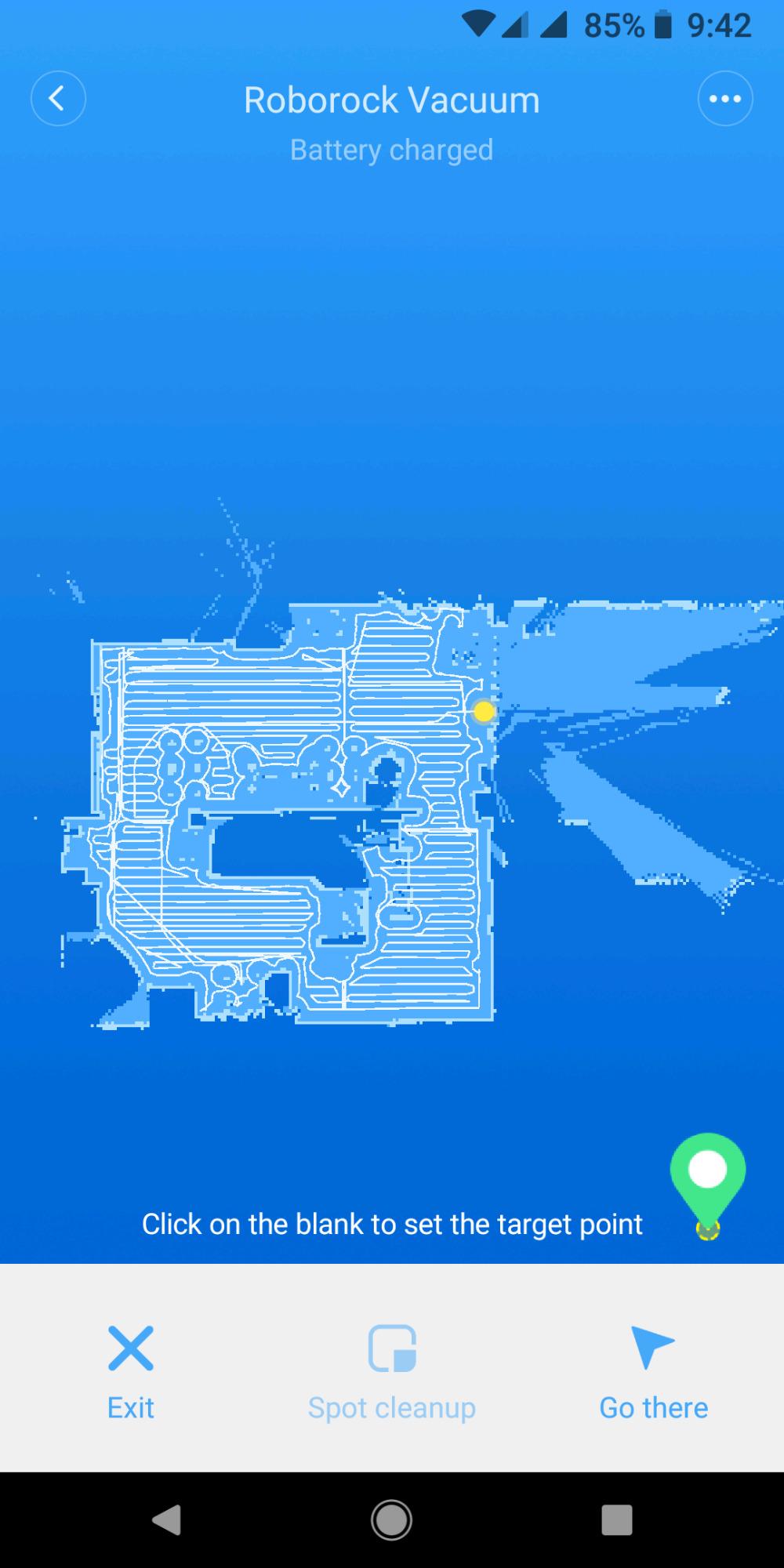
PreciSense LiDAR navigation with real-time mapping produces the same clean row pattern as the iRobot machines, with scheduling, no-go zones and battery monitoring in the Roborock app. The rectangular form factor is worth noting on tile, because corners are square and a squared body reaches closer into them than a disc.
VibraRise 2.0 is a fixed vibrating pad, and that sets its ceiling on grout
The mop system is VibraRise 2.0 with three adjustable water flow settings, which is a vibrating pad design rather than a spinning or roller one. That means it handles daily maintenance mopping well and scrubs stubborn grout poorly. Set the water flow to the middle or high position for tile, because the low setting on a non-porous surface leaves a visible trail.
The three water settings do more work here than on a spinning-pad machine, since flow is the only lever you have to compensate for the lack of rotation. If your grout is more than lightly dirty, plan to run the machine as a vacuum daily and mop the tile by hand weekly.
The dock empties dust but leaves the mop to you
RockDock Plus holds a 2.7 litre sealed dust bag for 7 to 9 weeks, which is genuinely long between changes. The important caveat is that it does not wash the mop, and owners name manual pad washing as the most common complaint. In a kitchen with a lot of cooking, a pad rinsed once a week will start smelling before it gets washed.
Battery life is 150 minutes and the dust bin is 2.7 litres, so mid-run emptying on very large homes is often necessary. Operating noise is 65 dB in the specification sheet, which is on the louder side.
Who should buy the Q7 M5+
Buy it if your home is large, mostly hard floor, and you want dependable vacuuming with mopping as a bonus. It suits a household that mops tile manually anyway and mainly wants crumbs and dust handled automatically. The 65 dB noise and 10.6 pound weight are worth noting if you plan to run it overnight. Skip it if your grout needs real scrubbing, or if a hand-washed pad is not something you will keep up with.
6. roborock Q10 S5+ – High Sonic Scrub Rates and an 8 mm Auto Mop Lift
roborock Q10 S5+ Robot Vacuum and Mop, 10,000Pa Suction
VibraRise 2.0 up to 3000 scrubs per minute
8 mm automatic mop lift
ReactiveTech obstacle avoidance
2.7L self-emptying station
Pros
- Sonic mopping is among the most aggressive in this class
- Automatic 8 mm mop lift and carpet boost handle mixed flooring
- 10000Pa suction with dual anti-tangle brushes
- ReactiveTech obstacle avoidance reduces pre-run clearing
- 2.7L bag for up to 70 days
Cons
- No hot-water washing or hot-air drying so pads are hand-washed
- 65 dB is louder than many models
- Obstacle identification trails camera-based systems
The Q10 S5+ is the model to buy if grout is your problem and you do not want to move up to a heated dock. Its VibraRise 2.0 system runs dual-zone sonic vibration at up to 3000 scrubs per minute, the highest stated scrub rate in this roundup. On a vibrating pad design, that figure is doing the work that a roller would otherwise do mechanically, and it makes dried kitchen splashes a realistic target rather than a hopeful one.
Its dual anti-tangle system pairs a JawScrapers Comb main brush with a specialised side brush, and 10000Pa HyperForce suction covers the vacuum pass. Together they handle pet hair on tile without the cutting-out routine most machines demand.
Automatic mop lift is the feature that makes mixed homes work
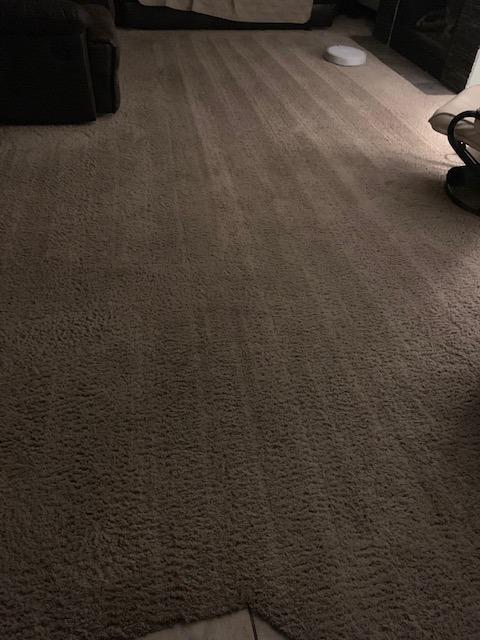
Ultrasonic carpet detection triggers an 8 mm mop lift and a suction boost, so the pad clears carpet piles entirely instead of running over them damp. In a home where the kitchen is tile and the living room is carpet, this is what allows a single scheduled run to cover everything without a manual intervention halfway through.
ReactiveTech structured-light obstacle avoidance reduces how much clearing you do before each run, which matters more in a kitchen full of cables and small objects than it does in an empty hallway. It is less refined than the camera systems on the 705X and the C28, but it is a clear step up from machines that simply bump along furniture.
LiDAR mapping across multiple levels
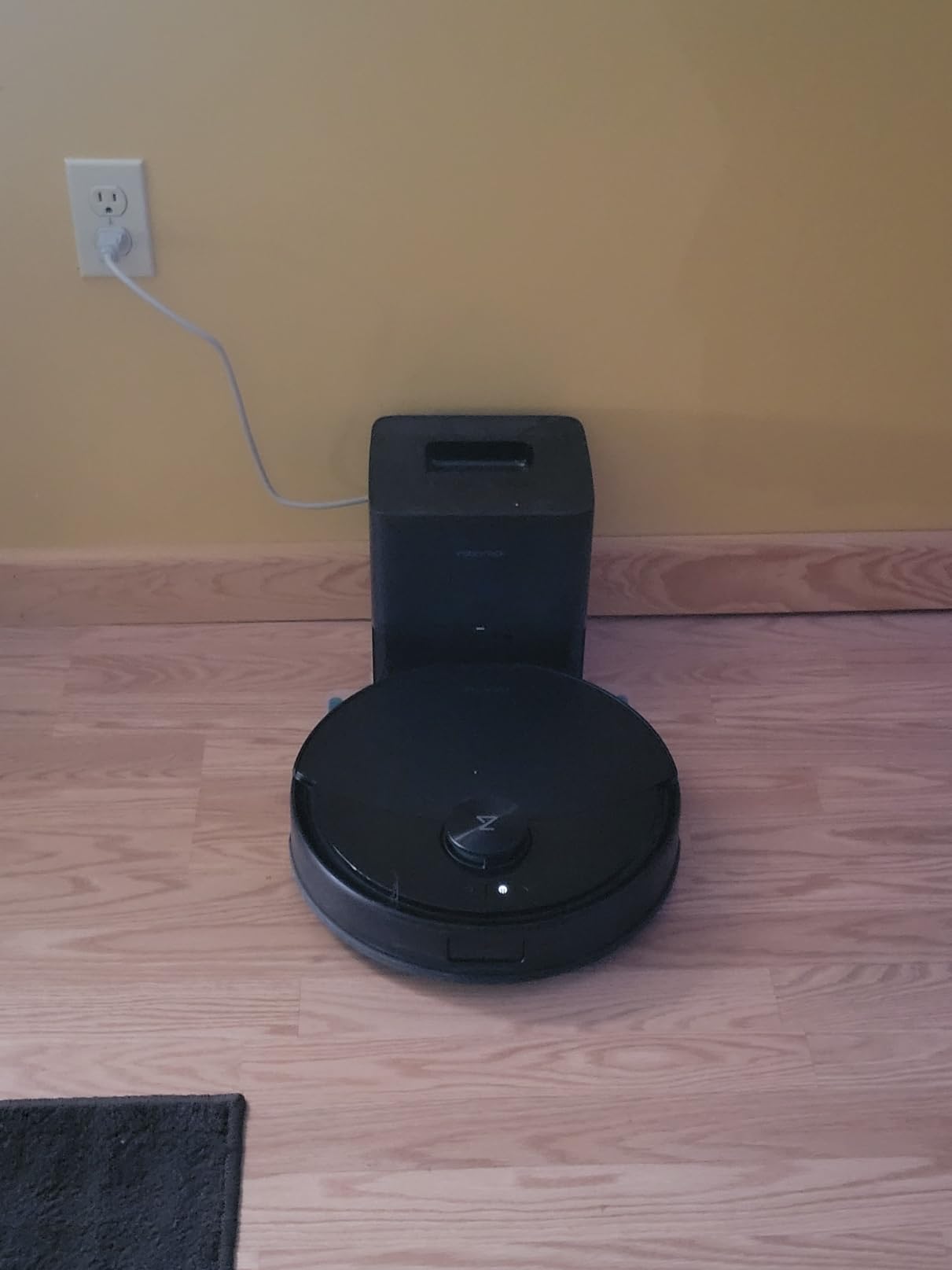
LiDAR navigation with 360-degree scanning and multi-level mapping handles a two-storey home with separate maps, and the 13.9 inch cleaning path covers tile quickly. The self-emptying station holds a 2.7 litre bag for up to 70 days, and the dock is washable for easier upkeep.
One thing to plan around: the dock does not heat wash or hot-air dry. Pads come out damp, which on a daily kitchen schedule is how you end up with the musty pad odour owners mention across this class of machine.
Who should buy the Q10 S5+
Buy it if your home mixes tile and carpet, your grout needs more than a wipe, and you want high scrub rates without stepping up to a heated dock. It suits a two-storey home and pet households. Skip it if you plan to mop daily and the hand-washed pad is a deal breaker, or if 65 dB is louder than you want during evening runs.
7. SharkMatrix Plus 2-in-1 – The Best Tile Pick That Never Needs a Replacement Bag
SharkMatrix Plus 2-in-1 Robot Vacuum & Mop, Black/Brass, AV2610WA
Sonic mopping at 100 scrubs per minute
Bagless 60-day self-empty base
True HEPA filtration
CleanEdge Detect
Pros
- Bagless base removes ongoing bag replacement cost
- Strong pickup on tile thresholds and pet hair
- Handles rugs and thick mats without jamming
- Sonic mopping dries fast and does not streak
- Accurate and quick LiDAR mapping with an easy app
Cons
- Weak on corners
- edges and stuck-on marks
- Mapping can degrade after furniture moves
- Loud on hard floors and during self-emptying
- Setup and room tuning takes a long time
The SharkMatrix Plus stands out for a reason no other machine in this list shares: the self-emptying base is bagless. It holds up to 60 days of dirt in a canister you tip into a bin, which removes the ongoing self-emptying bag cost that every other machine in this list carries.
On the mop side, sonic mopping works at 100 scrubs per minute with Matrix Mop zone targeting, so you can send extra passes to the kitchen floor specifically. Owners note that it dries quickly and does not streak, which on gloss porcelain is the failure mode that shows most.
CleanEdge Detect helps with the problem everyone complains about
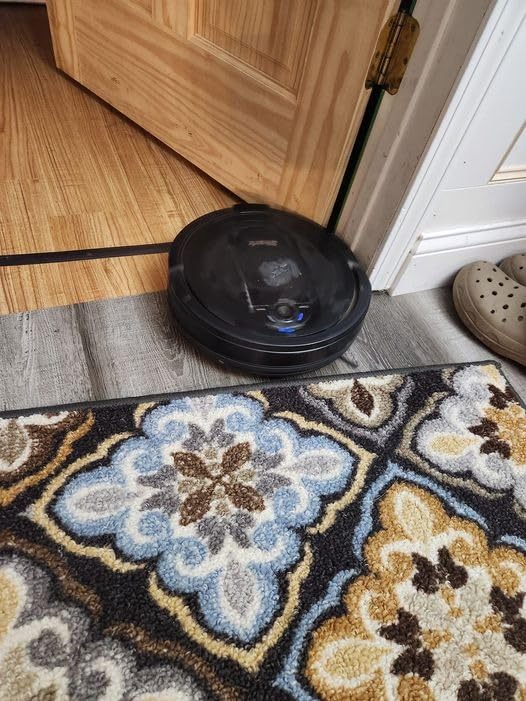
The base uses air blasts and corner recognition to push debris away from walls before the main brush reaches it, rated at 50 percent better edge cleaning. The self-cleaning brushroll resists pet hair wrap, and True HEPA filtration captures 99.97 percent of particles down to 0.3 microns, which matters in a home where someone has a pollen allergy.
360-degree LiDAR vision mapping works day or night, and the Matrix Clean grid improves carpet cleaning over the single-pass predecessor. On tile, the honest limitation is that corners and stuck-on marks still need a hand mop, and the 100 scrubs per minute figure is among the lowest here.
It copes well with thresholds, mats and awkward furniture
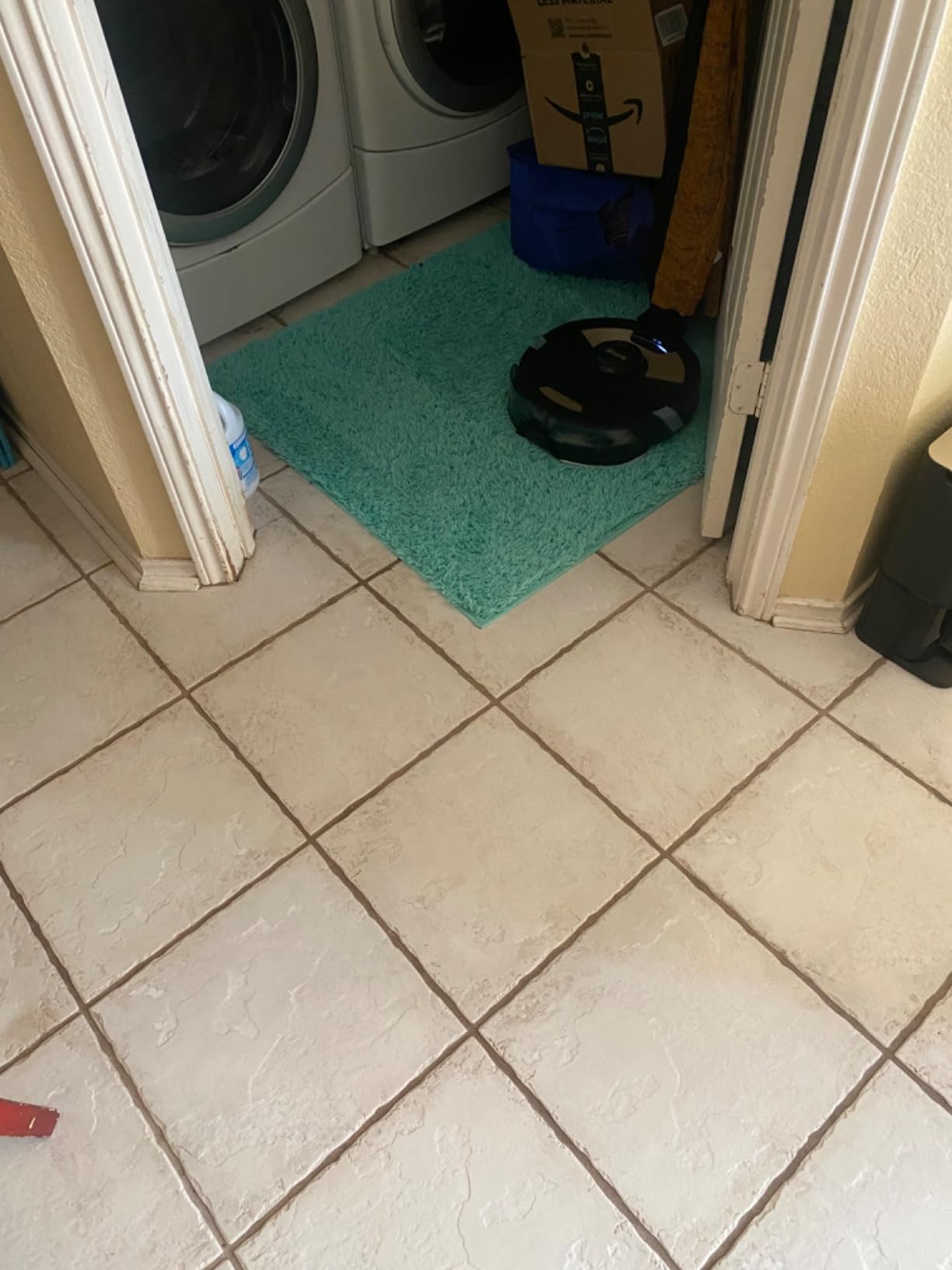
Owners consistently report that it moves over area rugs, thick mats and tight furniture arrangements without jamming, which is more than can be said for several machines here. The 110 minute battery and 17 pound weight are typical of the bagless class, and the base measures 21.4 by 14.96 inches.
The recurring negatives are noise on hard floors and during self-emptying, Wi-Fi disconnects with occasional app updates changing behaviour, and the need to re-map when furniture moves. Setup and fine-tuning per room is a long process.
Who should buy the SharkMatrix Plus
Buy it if you refuse to buy replacement dust bags, if you have pets and allergies, and if your tile is punctuated by rugs and thresholds. It is the pick for a household that mops tile lightly and vacuums it seriously. Skip it if dried grease and grout scrubbing are the priority, because 100 scrubs per minute will not shift a week-old splash.
8. roborock Qrevo S Pro – 18500Pa Suction With Dual Spinning Mops and a Hot-Wash Dock
roborock 2026 New Qrevo S Pro Robot Vacuum and Mop, 18,500Pa Suction
18500Pa HyperForce suction
Dual spinning mops
167F mop wash with 113F drying
10 mm carpet mop lift
Pros
- 18500Pa suction lifts debris from tile and grout lines
- Dual spinning mops handle daily stains and kitchen splashes
- Dock hot-washes mops and warm-dries them
- Zero-tangle brush built for long-haired pets
- 55 dB operation is quiet for this much suction
Cons
- Heaviest unit in the roundup at 25.6 pounds with a large dock
- One of the biggest dock footprints in this group
- 2.4 GHz WiFi only complicates network setup
The Qrevo S Pro is unusual in this group for pairing the highest suction figure found here, 18500Pa, with a full self-maintenance dock. Dual spinning mops run continuously at adjustable water flow, and the dock washes them at 167F before drying at 113F. On a tiled kitchen that combination is close to the ideal: strong mechanical scrubbing from the pads, and a hot wash cycle that keeps the pads from becoming the source of the smell.
Because the spinning pads press down while rotating, this is the geometry that works on grout. Dual spinning pads combined with a heated wash is the combination we would look for first if we were buying for grout lines and nothing else mattered.
Carpet strategy and low-clearance reach in the same machine
The custom carpet strategy boosts suction and lifts the mops 10 mm when the machine crosses from tile onto carpet, so mixed-floor homes get one combined run. Smart obstacle detection works down to 3.8 cm, which means the robot fits under beds and sofas to reach tile in spaces a taller machine cannot enter at all.
The zero-tangle system combines a zero-tangle side brush, an all-rubber main brush and an omnidirectional wheel to keep long pet hair off the brush assembly. Roborock SmartPlan 2.0 adapts cleaning behaviour room by room, and the whole package runs at 55 dB, which is quiet for a machine with this much suction.
The dock is where the running cost sits
Multifunctional dock with a sealed 2.7 litre bag lasting 7 to 9 weeks, 167F mop self-cleaning and 113F warm air drying. That is the top dock tier, and it is the main reason to step up from a mid-range model rather than buying a second machine for mopping alone.
The cost is physical as well as financial. At 25.6 pounds with a dock that measures 13.38 by 19.17 by 20.51 inches, this is one of the biggest footprints and the heaviest unit in the roundup. Only 2.4 GHz Wi-Fi is supported, which can complicate a dual-band home network.
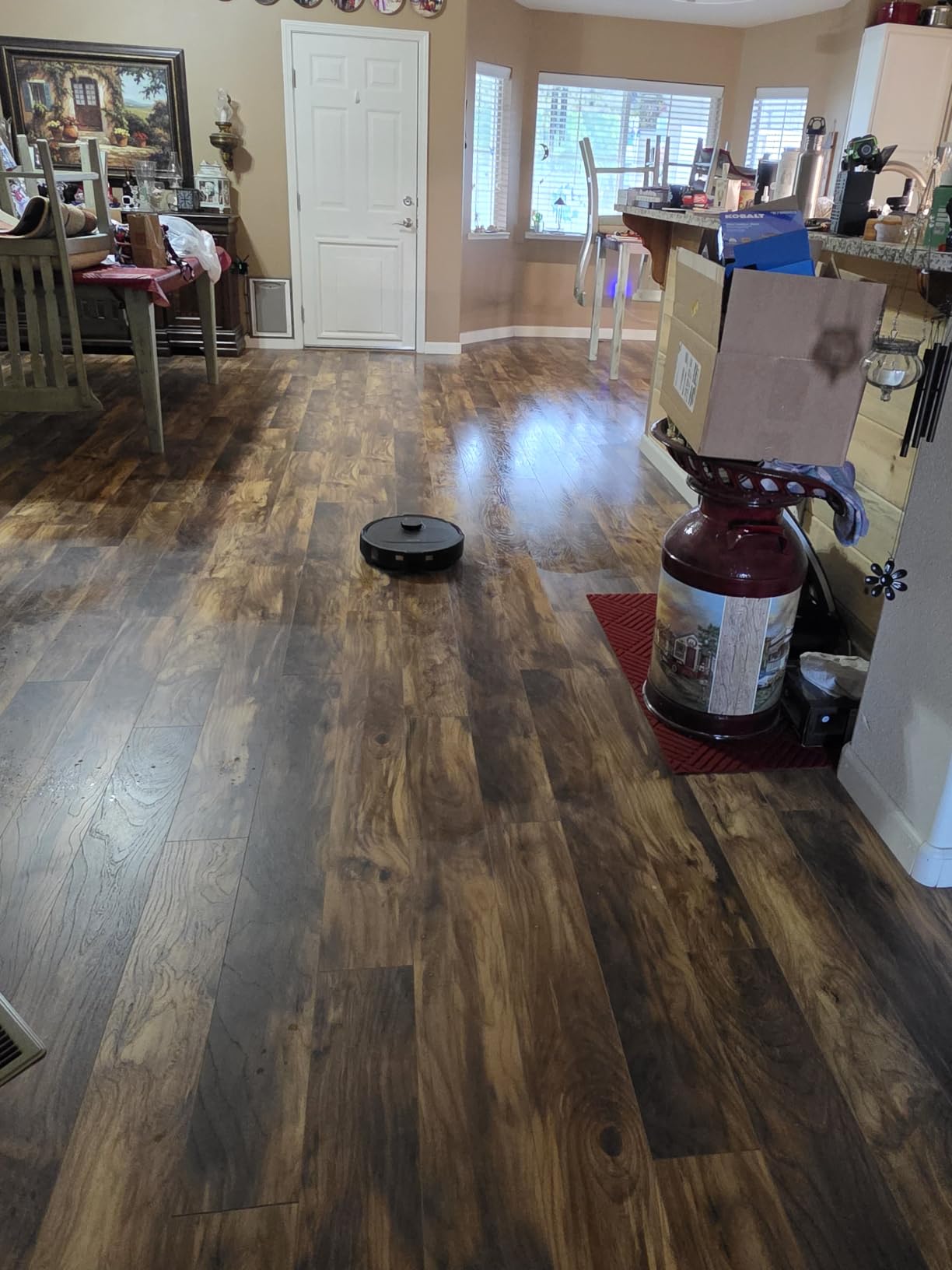
Who should buy the Qrevo S Pro
Buy it if grout lines are the main target, you have a large tiled area, and you want pad washing handled automatically with hot water. It suits long-haired pet households and anyone who will plan dock space in advance. Our [self-emptying picks](https://www.manbolo.com/best-robot-vacuums-for-self-emptying/) cover cheaper ways to get that one feature. Skip it if floor space is tight, or if stepping above a mid-range model is not right for your setup.
9. Tikom G8000 Max – A Slim, Quiet Budget Machine for Daily Tile Maintenance
Tikom Robot Vacuum and Mop Combo, 5000Pa Robotic Vacuum Cleaner, 150 Min Max, App & Remote Control, Ideal for Hard Floor, Carpet, Pet Hair, Self-Charge(G8000 Max)
5000Pa suction
300 ml water tank for simultaneous mopping
2.99 inch slim profile
45 dB operation
Pros
- Capable suction and mopping in a compact body
- 2.99 inch profile cleans under low kitchen cabinets
- Quiet 45 dB suits pets and small children
- Simultaneous vacuum and mop cuts cleaning time
- Handles pet hair and cat litter reliably
Cons
- Mopping is water only and suited to maintenance not stains
- Gets stuck more often than premium models
- Long recharge time relative to runtime
- Boundary control needs magnetic tape not supplied
The Tikom G8000 Max is the machine to buy when the goal is simply to mop tile every day without a large outlay. At 5000Pa with a 450 ml dustbin and a 300 ml water tank running simultaneously, it vacuums and mops in one pass, and owners rate it highly for doing exactly what it claims.
The 2.99 inch slim profile is the sleeper feature on tile. Most machines here stand 4 inches or taller and cannot reach under a kitchen cabinet run, which is usually where the worst dried spills accumulate. This one goes straight under them.
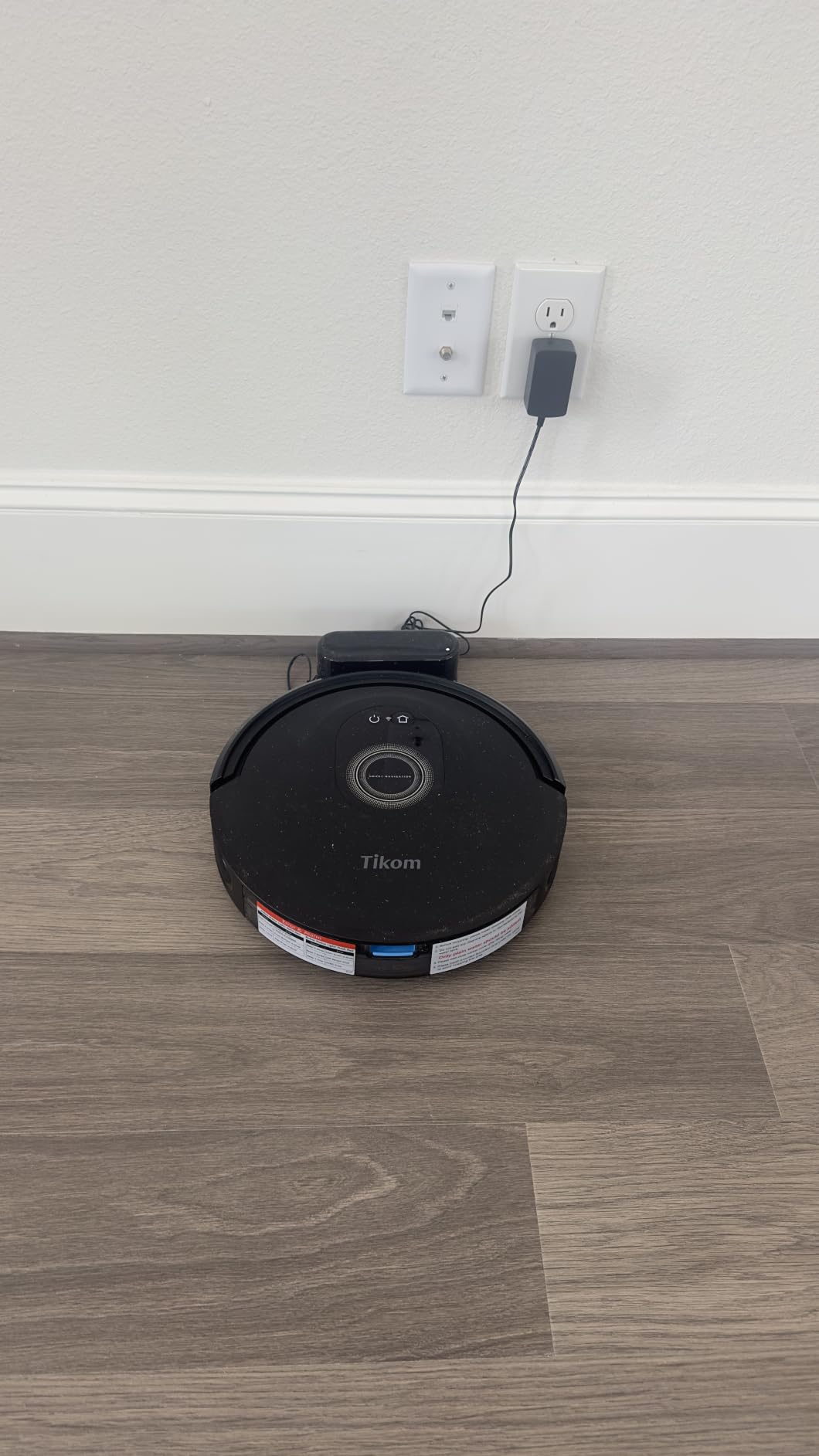
What water-only mopping does and does not achieve
The mop function uses water alone, with no detergent and no heated pad, so it is a maintenance mop by definition. On a weekly-kept tile floor, a daily water pass keeps the surface film from building and takes crumbs and pet hair with it. On a kitchen floor with dried grease it will do very little, and the pads will need rinsing by hand every run because there is no dock.
It runs at 45 dB, quieter than the other machines here, which makes it a good fit for homes with small children or nervous pets. Four control methods and four cleaning modes including zig-zag and edge give you reasonable flexibility.
Expect to rescue it now and then
Owners report it gets stuck more often than premium machines, particularly under curved furniture legs, and the recharge time is long relative to its 150 minute runtime. Boundary control relies on magnetic tape with very little supplied in the box, so you will need to buy more if you want reliable no-go zones. It is also not a deep cleaner, and dust embedded in rugs can be missed.
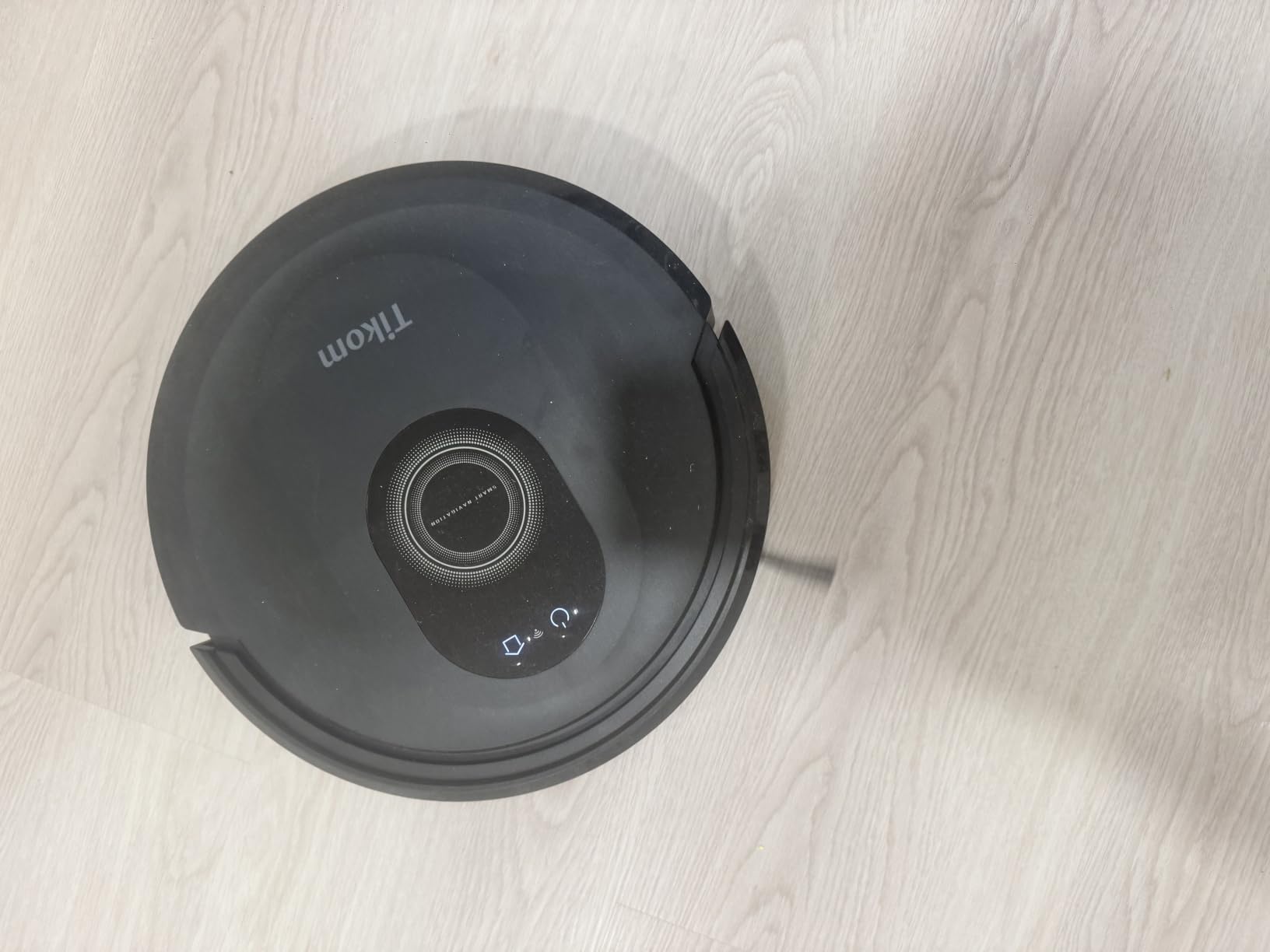
Who should buy the Tikom G8000 Max
Buy it if you live in a small flat and want to try robot mopping without a major commitment, and your tile is kept clean by hand often enough that a water-only daily pass is a bonus rather than a solution. It suits low-pile hard floors and quiet households. Skip it if grout lines need real scrubbing, if you have pets that shed heavily, or if you want a machine that runs itself for weeks without attention.
10. Lefant M2 Plus – Compact Self-Emptying with Dual-Band Wi-Fi
Lefant Robot Vacuum and Mop Combo,75-Days Self-Emptying,6000Pa Powerful Suction,Multi Floor Mapping, No-Go Zones,140 Min Runtime,2.4G/5G WiFi/Alexa/APP/iWatch, M2 Plus Black
6000Pa suction
3 water flow settings
360 degree LiDAR multi-floor mapping
Dual-band 2.4G and 5G WiFi
Pros
- Dual-band WiFi avoids connection dropouts at a low tier
- LiDAR navigation stops before obstacles instead of bumping into them
- Self-emptying station supports long unattended runs
- Build quality and results praised for the tier
- Carpet avoidance and auto boost work as described
Cons
- Louder than the description implies especially when self-emptying
- Battery capacity declines noticeably over time
- No spinning or scrubbing mop so grout is not addressed
- Mop needs frequent manual cleaning with heavy pet shedding
The Lefant M2 Plus is a small, self-emptying machine with a networking feature most machines at this tier do not offer: it supports both 2.4 GHz and 5 GHz Wi-Fi with automatic switching. On a dual-band home network that removes one of the most common setup failures, and owners single it out as unusual at this tier.
The body is 11 by 11 by 2.99 inches, which makes it one of the more compact options here and a realistic choice for a small kitchen or a flat where the dock has to tuck away.
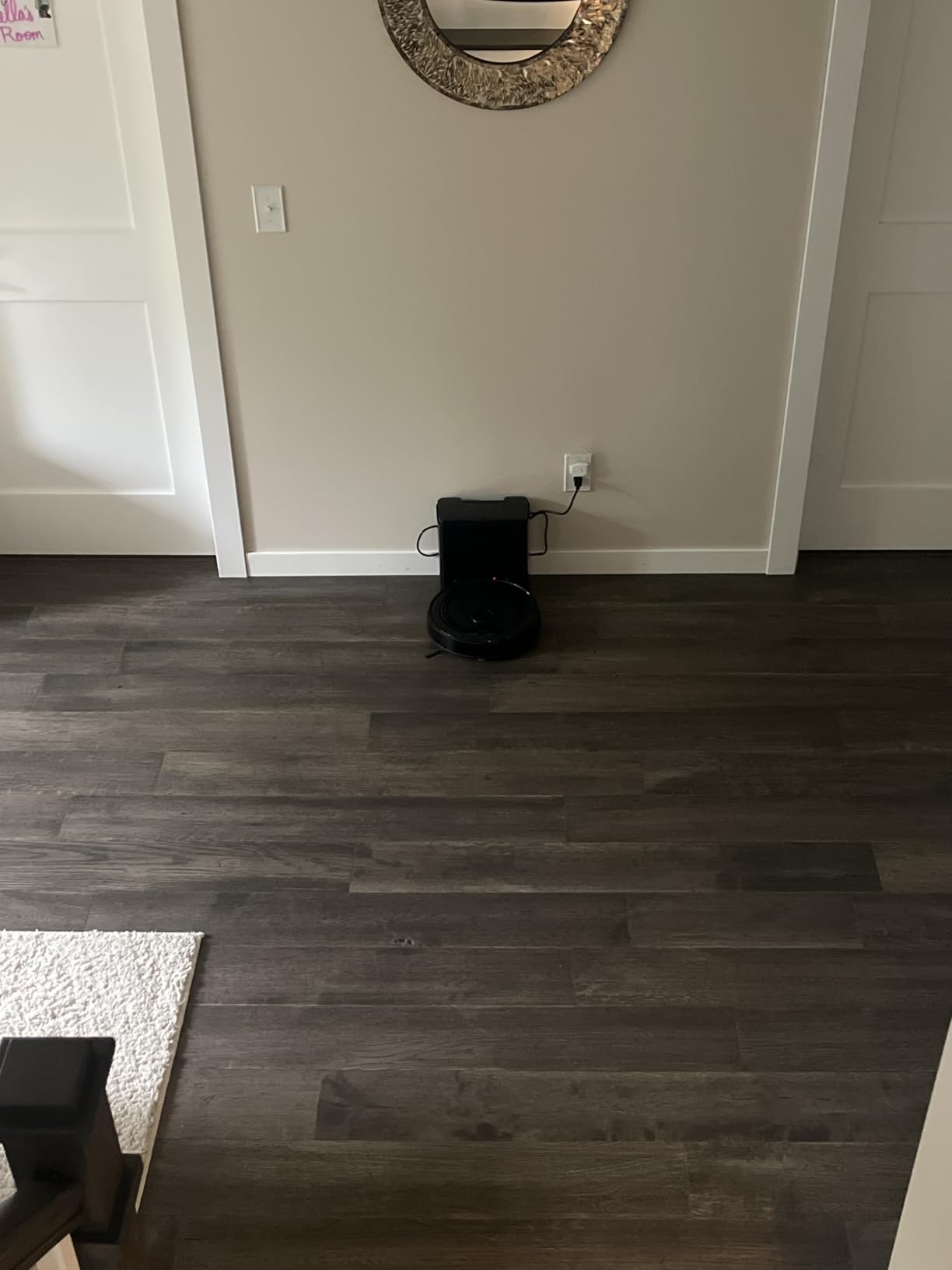
LiDAR and 6000Pa is a sensible floor-cleaning pairing
360-degree LiDAR with automatic multi-level mapping gives room-by-room coverage, and the 190 degree PSD sensor detects obstacles from 1.6 inches away and works in the dark, so it stops before it collides rather than bumping and reversing. Suction is 6000Pa across three levels, with a 250 ml dustbin and a 300 ml water tank.
Carpet detection avoids carpet when the mop holder is attached and auto-boosts suction when it is removed, which is the correct behaviour on mixed floors. The app supports per-room modes, selective area cleaning and zone splitting.
No spinning mop means grout stays grout
There is no scrubbing or spinning mop here, and several buyers explicitly say they would have preferred a roller pad. Mopping is a drag pad with three water flow settings, which is fine for keeping a clean tile floor looking clean and does nothing for a grout line. In a heavy shedding household the mop also needs very frequent manual cleaning.
Noise is higher than the product description implies, particularly during self-emptying, and battery capacity is modest and declines noticeably with long-term use, which is the reason we would not recommend it as the primary cleaner in a large house.
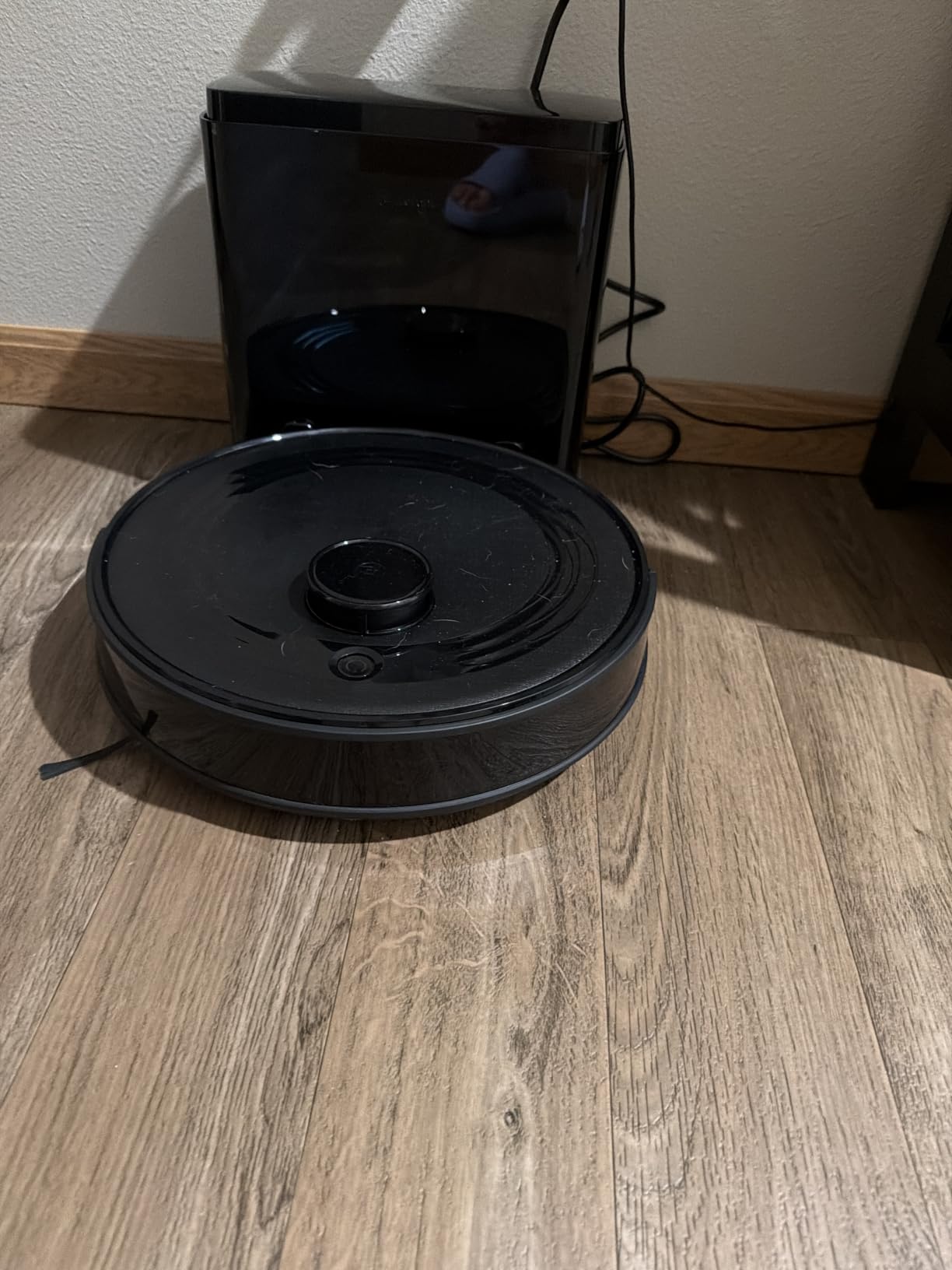
Who should buy the Lefant M2 Plus
Buy it if you want self-emptying and reliable LiDAR navigation in a compact body, your network is dual-band, and your tile is already well maintained by hand. It suits small apartments and second homes. Skip it if grout scrubbing matters, if you run it as your only cleaner in a large home, or if noise during the self-empty cycle bothers you.
How to Choose a Robot Mop for Tile Without Regretting It
Decide which dock tier you actually need
Three tiers exist, and buying above your needs is the most common mistake we see. An auto-empty dock collects dust only and means hand-washing the pad every week. A mop-washing dock rinses the pad with hot water and dries it, which removes the smell problem and the weekly chore. A full self-maintenance dock adds heated wash temperatures and often detergent dispensing, and it is the only tier we would recommend for a daily kitchen run.
Measure the dock before you commit. Footprints in this roundup range from a compact 11 inch square body to a station nearly 20 inches on one side and 20 inches tall, and the largest units need a genuine alcove rather than a corner.
Buy rotation, not vibration, if grout matters
Here is the ranking that matters on tile. A full-width spinning roller under pressure, as on the eufy C28, does the most mechanical work per pass. A dual spinning pad paired with a heated dock, as on the Roborock Qrevo S Pro, is the strongest combination of scrubbing and hygiene. An extending roller, as on the iRobot 705X, is the version that also reaches the borders. Sonic vibration at very high rates, as on the Roborock Q10 S5+, does real work on grout. A fixed flat pad with a micro-pump, as on the Roomba 105 Combo, is a maintenance mop and nothing more.
Whichever you pick, the pads must be able to press down onto the tile. A pad that can lift slightly under resistance is mopping, not scrubbing.
Set water flow per room, not per machine
Tile is non-porous, so low flow settings leave a trail that dries as a visible haze. Set the highest flow level for kitchens, entries and anywhere with traffic, and drop it one notch for hallways and bedrooms. Most apps here let you assign a setting per room, and the Roborock Q7 M5+ and Lefant M2 Plus each give you three levels to work with. Schedule the kitchen separately if you can, so the grease-heavy rooms get a longer pass.
Check floor compatibility before you buy
Glazed ceramic and porcelain tile work with every machine in this guide, and none of them require a special mode. Sealed hardwood and LVP are fine too, though high flow settings can over-wet them. Natural stone is the exception: unsealed marble, travertine and slate, along with unglazed porcelain, can be etched or dulled by solutions outside the neutral pH range. Use a pH-neutral solution only on those surfaces, and confirm with the stone supplier before the first run.
Grout depth sets your expectation too. Shallow grout lines a few millimetres wide can be maintained by any of the stronger machines in this roundup. Deep and wide grout, or grout that has gone hard and dark, needs a stiff brush and real effort, and no consumer robot will restore it. Plan on a manual deep clean once or twice a year.
Count the consumables before you commit
Three costs sit outside the purchase. Self-emptying bags are the biggest and most predictable, and running 7 to 9 weeks per bag is the figure most of these machines are built around. Replacement mop pads and side brushes wear faster on tile because grit is abrasive, and the bagless SharkMatrix Plus is the only machine here with no bag to replace at all. Detergent and cleaning solution, where a dock dispenses it, adds a recurring consumable that pads alone do not. Filter cleaning is free but must be done, or hard-floor dust recirculates.
Expect a few manual touches
Even the most automated machine here has weekly chores. Pull the wash tray and wipe it, clear hair from the main brush, refill the clean water tank, and check that no pad sits damp in the tray. The difference between the top and bottom of this list is that the top machines make those four things automatic, and the bottom ones do not. Buyers consistently say that deciding which of those two problems you actually have is the fastest way to choose.
Frequently Asked Questions
Do robot vacuums work well on tile floors?
Yes, and tile is where robots show their range most clearly. Glazed ceramic and porcelain are hard, flat and non-porous, so vacuum pickup is excellent and mopping is the variable that decides results. A robot with spinning or rolling pads under downward pressure will maintain grout lines well. A flat vibrating pad will keep the surface clean but does little for grout.
What is the best robot mop for tile floors?
The best robot mops for tile are the ones with pads that rotate under real downward pressure, combined with a dock that washes those pads in hot water. The eufy C28 and the Roborock Qrevo S Pro both pair a rotating roller or dual spinning pads with an automated heated dock. If your tile is bounded by cabinets, the iRobot 705X wins on edge coverage.
Which robot mop is best for mopping only?
If you already own a good robot vacuum and only want mopping added, a machine with a self-emptying base and automatic mop washing still makes the most sense, because you avoid maintaining a second vacuum. Choose one with a heated wash cycle if you mop daily. Adding a standalone mopping-only unit usually costs more than choosing a combo from the start.
Can robot mops handle grout lines?
Partially, and the honest answer depends on pad design. Spinning or rolling pads pressed onto the floor with rotation will lift loose grime from grout lines, and heated dock washing keeps the pads clean enough to keep working. Flat vibrating pads redistribute grime rather than removing it. Deep, wide or blackened grout needs a manual brush regardless of the robot you buy.
Do robot mops leave streaks on tile floors?
They can, and the cause is almost always water flow rather than hardware. Gloss porcelain shows a faint trail when the pad dries faster than the water is applied. Setting the flow level to the highest setting your app offers and running the kitchen separately fixes most streaking. Machines that warm the water and dry the pads at the dock also leave visibly cleaner tile.
How often should I run a robot mop on tile?
Daily on a kitchen floor, because grease builds faster than it looks. Every two to three days is enough for hallways, bathrooms and bedrooms. A daily run only stays pleasant if the dock washes the pads, because hand-washing a pad every single day is not a realistic habit and the pad starts to smell within a few weeks.
Final Verdict: Which Robot Mop Wins on Tile?
For most households with glazed ceramic or porcelain tile, the iRobot Roomba 105 Combo is the pick. Its micro-pump keeps the pad evenly moist, its LiDAR mapping gives complete row coverage, and its carpet avoidance makes it the safest daily run in a mixed-floor home. You accept a hand-washed pad and an unmopped border along the walls in exchange for a machine that works every day without attention.
If grout lines are the actual problem, the eufy C28 and the Roborock Qrevo S Pro are the two to choose between. The C28 has the most mechanically aggressive mop system in the group, with a full-width roller at 270 RPM and a self-cleaning scraper, plus a station that washes and dries it at 50C. The Qrevo S Pro pairs 18500Pa suction with dual spinning pads and a 167F hot wash, and it runs quietly for its size. If your tile is bounded by cabinetry, the iRobot 705X is the answer, because its extending roller is the one here that mops the border.
For a different set of priorities, the SharkMatrix Plus removes replacement bag costs entirely and handles pet hair and thresholds well, while the Roborock Q10 S5+ posts the highest stated scrub rate in the roundup and lifts its mop 8 mm over carpet. The Tikom G8000 Max and the Lefant M2 Plus are honest budget machines that will keep clean tile looking clean, and neither will touch a stained grout line.
Whatever you choose, set the water flow to its highest level for tile, give the kitchen its own schedule, and check that the dock actually washes the pads. Those three steps separate a good run from a disappointing one more than any specification on the box. As we head into 2026, the best robot mops for tile are the ones that rotate, press and wash.