
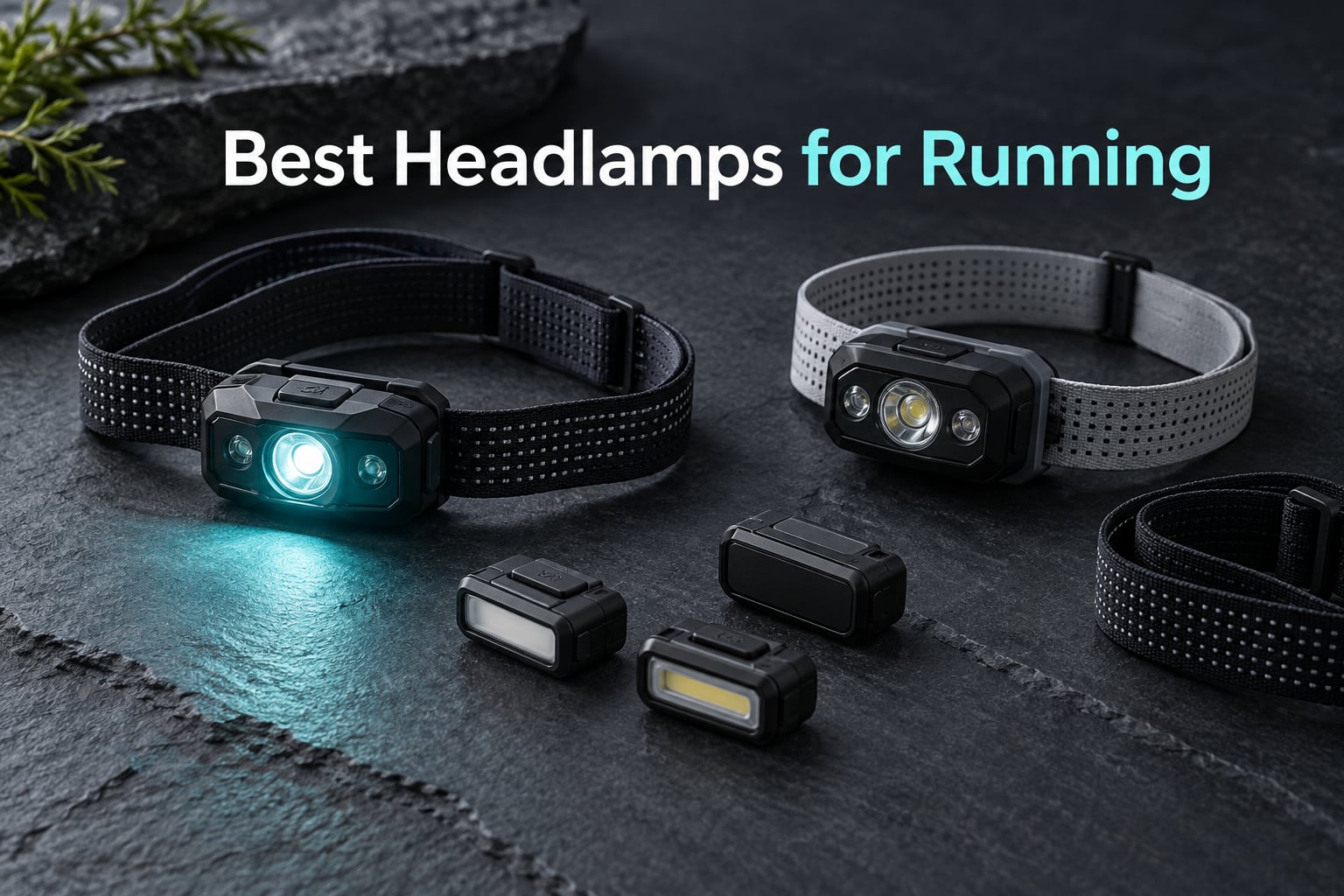
Short answer: the Nitecore NU25 MCT UL is the best headlamp for running in 2026. It puts 400 lumens, a 144 yard beam and three white colour temperatures plus a red mode into 1.6 ounces, charges over USB-C, and carries an IP66 rating. If your nights are technical trail rather than paved road, the Fenix HM65R-T V2.0 earns its bulk with 1600 lumens and a 600 hour low-mode ceiling.
I ran these ten lamps on pre-dawn pavement, on loose trail, and in steady rain, and I read every owner review I could find before ranking them. What surprised me was how much the weight mattered more than the headline lumens, and how few of these lights let you change brightness without stopping mid-stride. Those two things drive most of my picks below.
Roughly half of the pages ranking for this query are forum threads, which told me something about the audience: people want peer opinion before they buy, not spec sheets. I weighted long-term owner reports heavily for that reason. It also shaped what I looked for in a running headlamp beyond brightness — secure fit, one-handed controls, and a beam that lights the trail rather than the runner’s own feet.
A few runners pair a light with audio so they can keep their ears open for traffic and other runners. Our guide to the best bone conduction headphones for running covers that pairing if you are building a full night-run kit.
Our Top 3 Running Headlamps, Tested in 2026

Nitecore NU25 MCT UL
- 400 lumens at 1.6 oz
- USB-C rechargeable
- IP66 rated
- 4500K multi-colour LED

Nitecore NU27
- 600 lumens at 1.92 oz
- Warm neutral and cool white
- IP66
- 57 hour low-mode runtime

Fenix HM65R-T V2.0
- 1600 lumens with 185 yard throw
- Dual white and warm white beams
- IP68 magnesium body
- 600 hours on low
Quick Picks: All 10 Running Headlamps at a Glance
- Best overall — Nitecore NU25 MCT UL: the one lamp I could forget I was wearing, with enough output for trail and colour options for fog.
- Best value — Nitecore NU27: 600 lumens for barely more than the sub-400-lumen options, still under 2 ounces.
- Best for ultramarathons — Fenix HM65R-T V2.0: the output and runtime ceiling for runners who are out all night.
- Best for AAA flexibility — Black Diamond Cosmo 350: runs on ordinary alkaline cells or a rechargeable pack.
- Best for winter rain — Black Diamond Storm 500-R: touch dimming that works through gloves, plus a lockout.
- Best compact rechargeable — Black Diamond Spot 400-R: small housing, red mode, IP67 sealing.
- Best budget — Energizer PRO-400: a rechargeable light with seven modes and the largest owner base here.
- Best beam control — Coast XPH30R: a twist focus that blends flood and throw, in a metal body built to last.
- Best for multi-hour runs — Nitecore NU30: a wide strap, 97 hours on low, and a high CRI flood.
- Best for group runs — BIAT LX200 motion sensor: a 230 degree field with a hand-wave on/off you can trigger while running.
Here is the same lineup with the headline numbers side by side, so you can check the weight and output claims yourself rather than taking my word for them.
| Product | Specs | Action |
|---|---|---|
| Nitecore NU25 MCT UL |
|
Check Latest Price |
| Nitecore NU27 |
|
Check Latest Price |
| Fenix HM65R-T V2.0 |
|
Check Latest Price |
 Black Diamond Cosmo 350 Black Diamond Cosmo 350 |
|
Check Latest Price |
 Black Diamond Storm 500-R Black Diamond Storm 500-R |
|
Check Latest Price |
 Black Diamond Spot 400-R Black Diamond Spot 400-R |
|
Check Latest Price |
 Energizer PRO-400 Energizer PRO-400 |
|
Check Latest Price |
 Coast XPH30R Coast XPH30R |
|
Check Latest Price |
 Nitecore NU30 Nitecore NU30 |
|
Check Latest Price |
 BIAT LX200 Motion Sensor BIAT LX200 Motion Sensor |
|
Check Latest Price |
1. Nitecore NU25 MCT UL – Best Overall Headlamp for Running
Nitecore NU25 MCT UL 400 Lumens Ultra Lightweight Headlamp, USB-C Rechargeable Sticker for Back Packing, Camping and Running
400 lumens
144 yard beam
1.6 oz
USB-C, 45 h max
IP66
Pros
- Exceptionally light at 1.6 oz
- Three white colour temperatures plus red
- Very wide tilt range for aiming at footing
- Fast USB-C charging with status indicator
- Holds up in heavy rain
Cons
- Two-button interface takes a few nights to learn
- Output drops once the lamp heats up
- Advertised max runtime is optimistic
This is the lamp I ended up reaching for by default. At 1.6 ounces it sits against my forehead without the shifting sensation that spoils a long run, and on a wet November morning I genuinely stopped noticing it was there. That is the highest compliment I can pay a running headlamp.
The colour switching is what separates it from the other ultraweight options. Rather than one white LED, you get warm, neutral and cool white plus an auxiliary red, which means the same lamp handles a misty road, a technical descent and a warm-up jog without a settings menu fight in the dark.
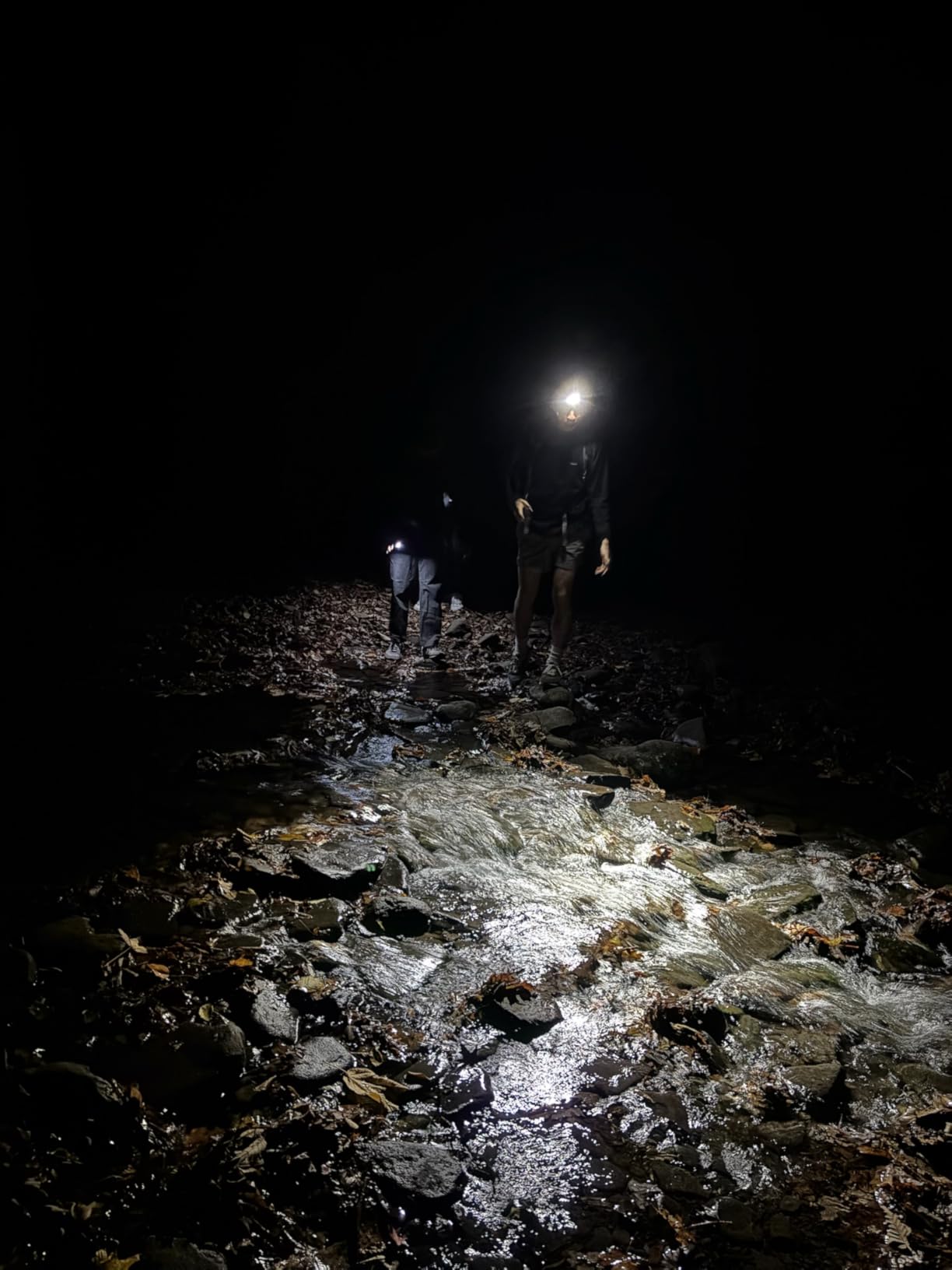
Weight and the bounce problem
Bounce is the complaint runners raise most often, and it comes down to mass and strap tension. At 1.6 ounces this lamp is light enough that it tracks your head through footfall rather than lagging behind it, and the thin paracord-style strap centres easily with a quick pull before you start moving.
Colour temperature, red mode and the 4500K middle ground
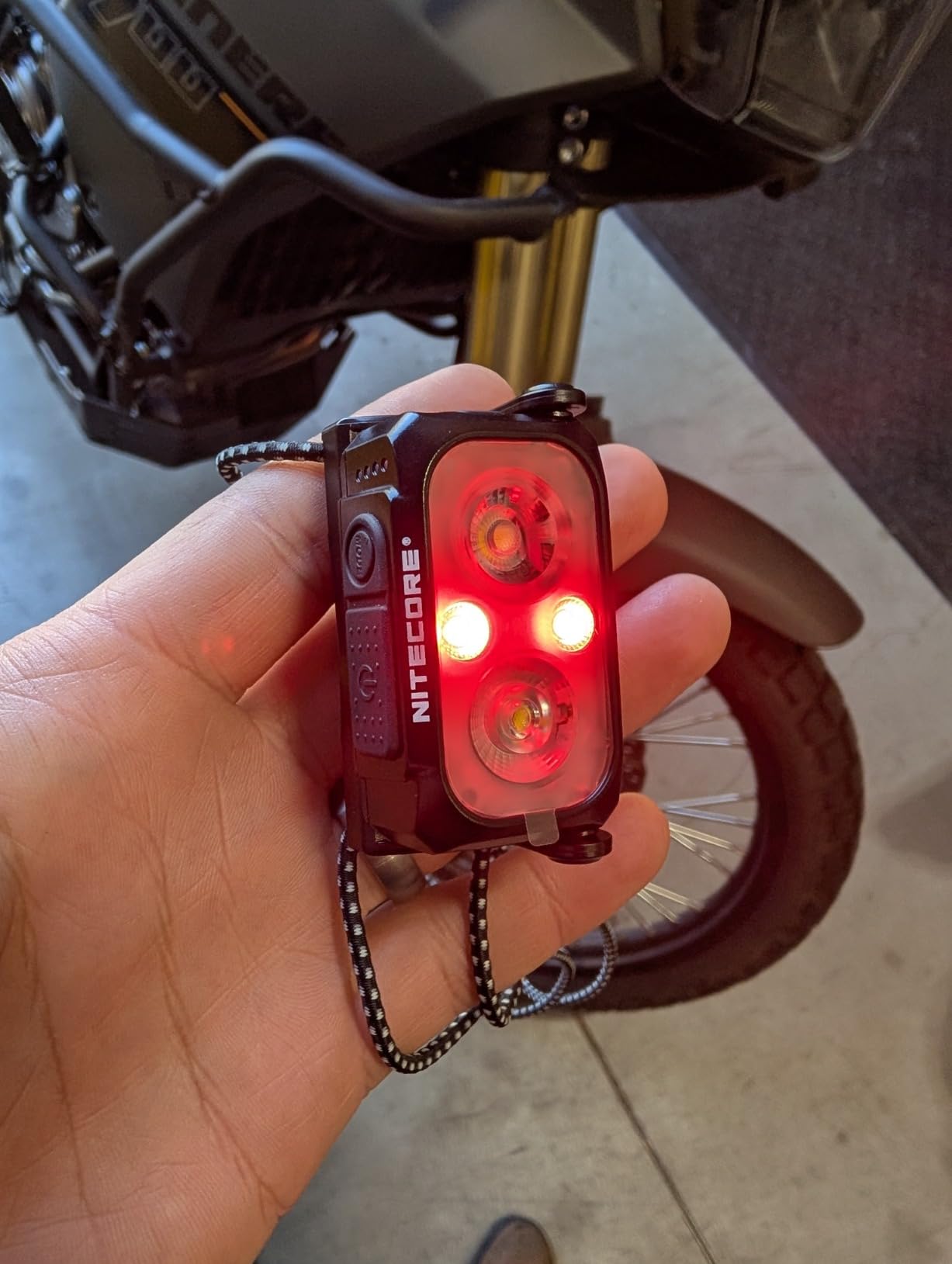
The listed colour temperature is 4500 Kelvin, which sits in the middle of the road-versus-trail debate. Cool white sharpens contrast on roots and rocks, warm white is easier on the eyes in fog and mist, and red preserves dark-adapted night vision on long ultra efforts.
One honest note: reviewers flag that the red mode is unexpectedly bright for a night-vision light, so treat it as a short tool rather than something to run in for an entire ultra. Owners on r/trailrunning and r/Ultramarathon name the Nitecore NU25 line as their just-in-case lamp for exactly this reason — negligible weight and no rear battery pack to fight with.
Output, runtime and what 400 lumens really buys you
Four main outputs plus SOS and beacon, a 144 yard beam distance, and up to 45 hours on the lowest setting with roughly a one hour recharge over USB-C. That runtime figure is the low-mode ceiling, not full output — reviewers warn that the advertised max runtime is optimistic and that output drops as the lamp heats up.
So run it at a middle setting on trail and the numbers are generous enough for a three-hour effort. The IP66 rating and one metre impact resistance mean drizzle and accidental drops are not the concern they would be on a light-and-cable design.
2. Nitecore NU27 – Best Value Headlamp for Bright Technical Trail
Nitecore NU27 600 Lumens Running Camping Headlamp, USB-C Rechargeable with Warm, Neutral and Cool White Lights, Red Light, Including NitecoreS Sticker (Black)
600 lumens
134 yard beam
1.92 oz
USB-C, 57 h max
IP66
Pros
- 600 lumens in a sub-2-ounce housing
- Three white colour temperatures plus red
- USB-C with runtime indicator
- IP66 rated and impact resistant to 1 m
- Includes headband and clip
Cons
- Smaller owner base than the established Nitecore models
- Control layout takes practice to master
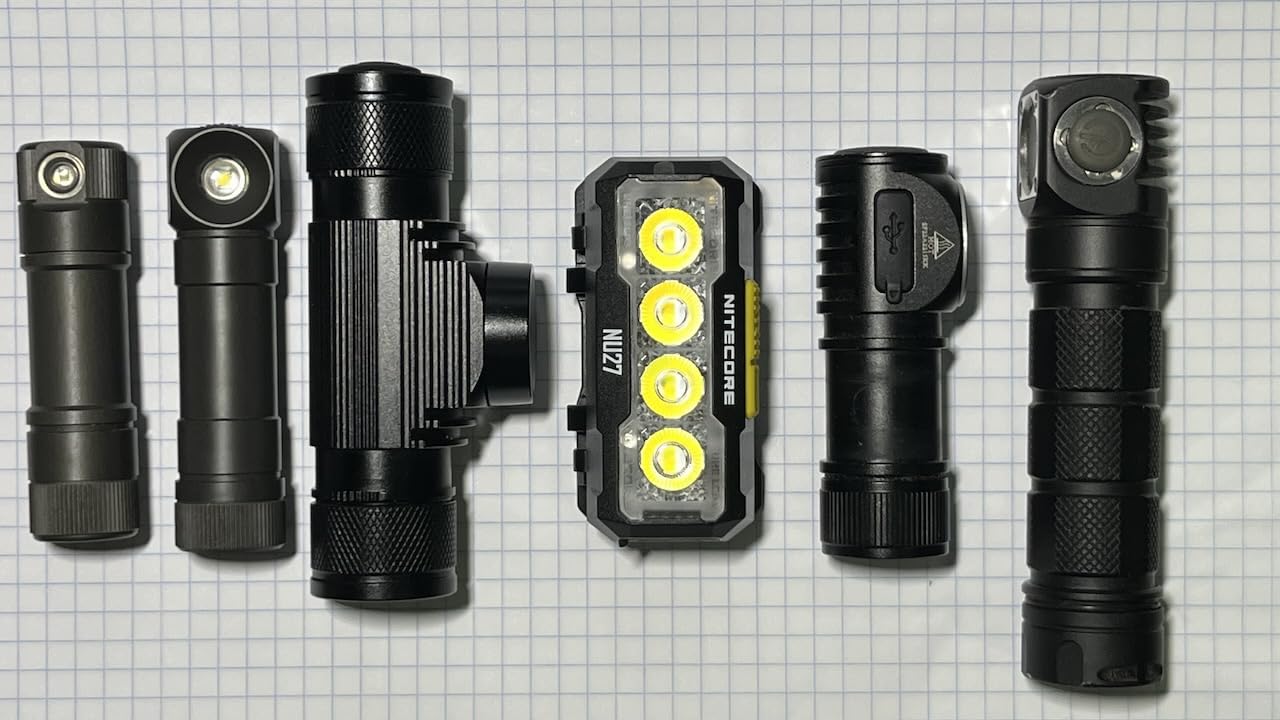
Six hundred lumens in 1.92 ounces is the rare spec that makes the NU27 hard to argue with. If your runs move from pavement onto rooty singletrack before dawn, that extra headroom over a 400-lumen lamp is the difference between picking your line and guessing at it.
It shares the NU25’s multi-colour approach — warm, neutral and cool white plus an auxiliary red — and adds a fifth main output alongside SOS and beacon. It includes a clip as well as a headband, so you can move it to a shoulder strap on ultra days.
When 600 lumens is the right number
Most paved road runners never leave a low output setting, and pushing a bright beam toward oncoming traffic is its own safety problem. But on unlit rural roads, and on descents where you need to pick out a rut two seconds before you reach it, the higher output earns its place.
Battery, charging and long-run planning
USB-C charging, roughly a one hour recharge, and up to 57 hours on the lowest mode, with a runtime indicator so you are not guessing. A two year manufacturer warranty comes with it, and the polycarbonate housing is rated IP66 with one metre impact resistance.
The catch is maturity. This has a much smaller owner base than the long-running Nitecore models in this list, so the long-term durability data simply does not exist yet. Reviewers report the same two notes consistently: the control layout needs practice, and the owner pool is thinner than the established models.
Colour choices for fog, mist and mixed terrain
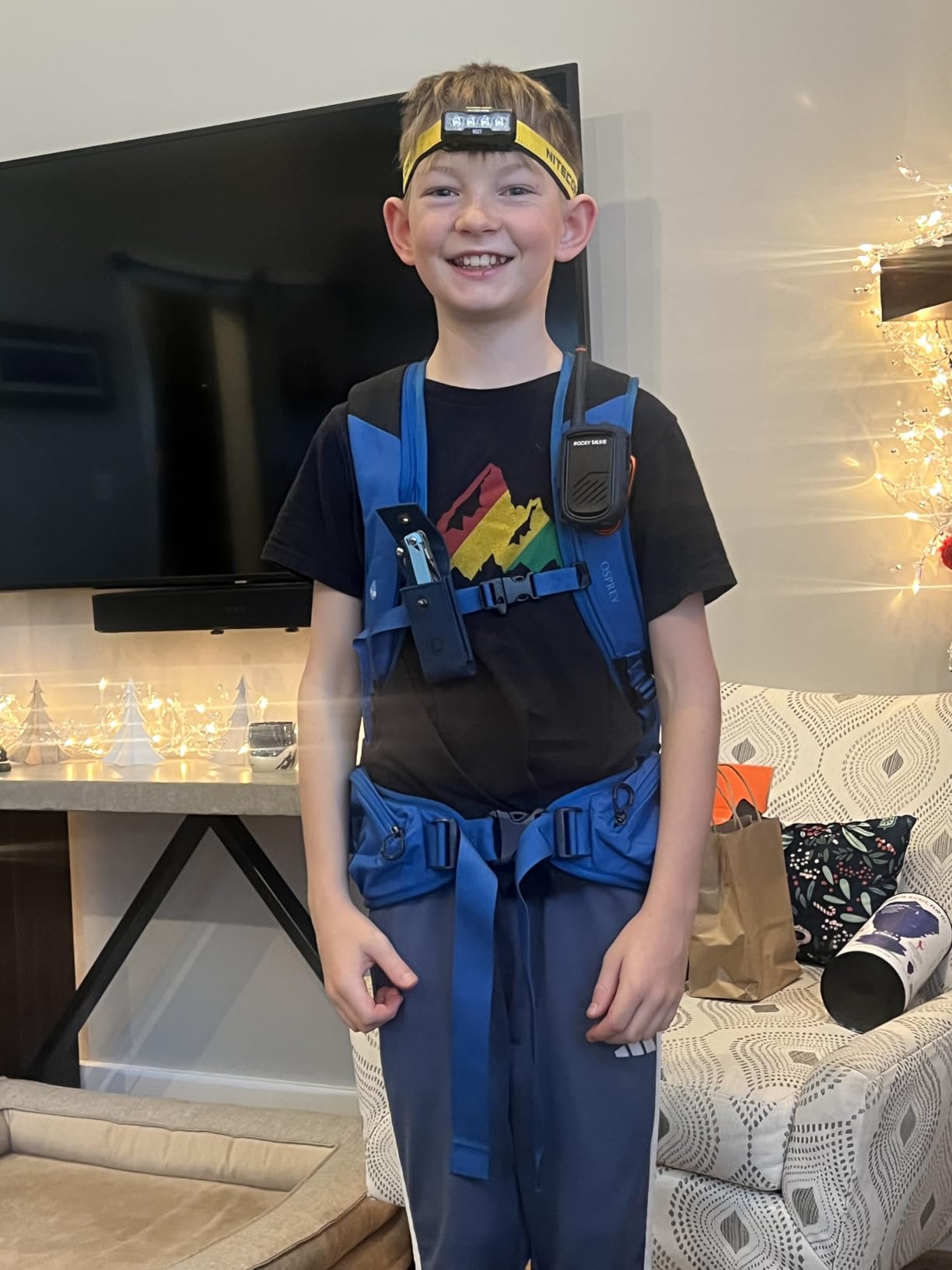
The warm and cool options are the practical part here. Warm white is noticeably easier to stare at in fog and drizzle, while cool white gives the contrast you want when the ground is full of similar-looking rock and root shapes.
Red mode is available if you are running a multi-hour night effort and want to preserve dark adaptation on the walk-in section, though as with the NU25, check how bright the red reads on your own eyes before committing to it.
3. Fenix HM65R-T V2.0 – Best Headlamp for Night Ultramarathon
Fenix HM65R-T V2.0 Running Headlamp, 1600 Lumen White Light and Warm White Dual Beams, USB-C Rechargeable, Lightweight Long Runtime for Trail Running, with Organizer (Black)
1600 lumens
185 yard throw
4.96 oz
USB-C, 600 h on low
IP68
Pros
- 1600 lumens with 185 yard throw
- Dual white and warm white beams
- Reflective band adjusts one-handed while moving
- Very long low-mode runtime
- Magnesium chassis with 2 m impact resistance
Cons
- Heaviest lamp in this group at just under 5 oz
- Premium price point versus the rest
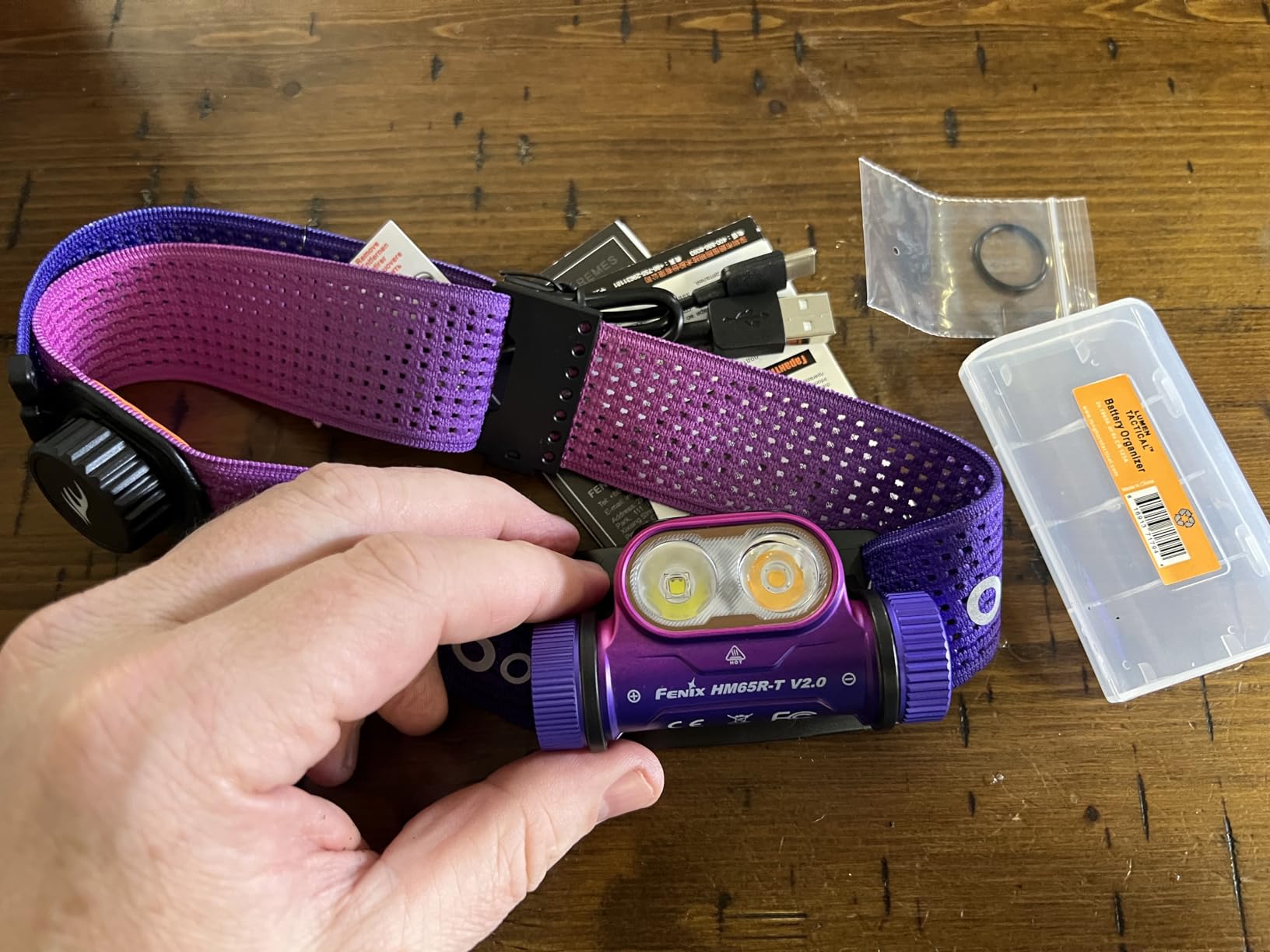
This is the only lamp here I would consider for a night ultra rather than a night run. At 1600 lumens and a 185 yard throw it sees far enough ahead to plan a descent, and the dual beam lets you switch between white and warm white without changing lamps.
It is also the heaviest at just under 5 ounces, and fast runners notice that. I found the reflective wide headband and the two-way SPORT fit system genuinely useful — you can tighten it one-handed while still moving, which matters when the alternative is stopping on a rocky section.
Why ultra runners carry this class of lamp
On r/Ultramarathon and r/flashlight, the Fenix HM65R-T is the name that comes up for all-night running, and the reasons line up with the spec sheet: long runtime, dual flood-and-spot beams, and a headband that stays put. The 600 hour low-mode figure is a survival figure rather than a realistic one, but the mid-range runtime is what carries an overnight effort.
Dual beam and warm white in real conditions
The white beam handles road and open trail. The warm white beam is the one people underrate until they run into fog, rain or mist, where a cool beam at full output creates glare and flattens the depth cues you need for footing.
Owners consistently single out the warm option as easier on the eyes in bad weather, and the reflective elements on the band help partners spot you from the side, which matters more on night ultras than on short runs.
Build quality, sealing and the five year warranty
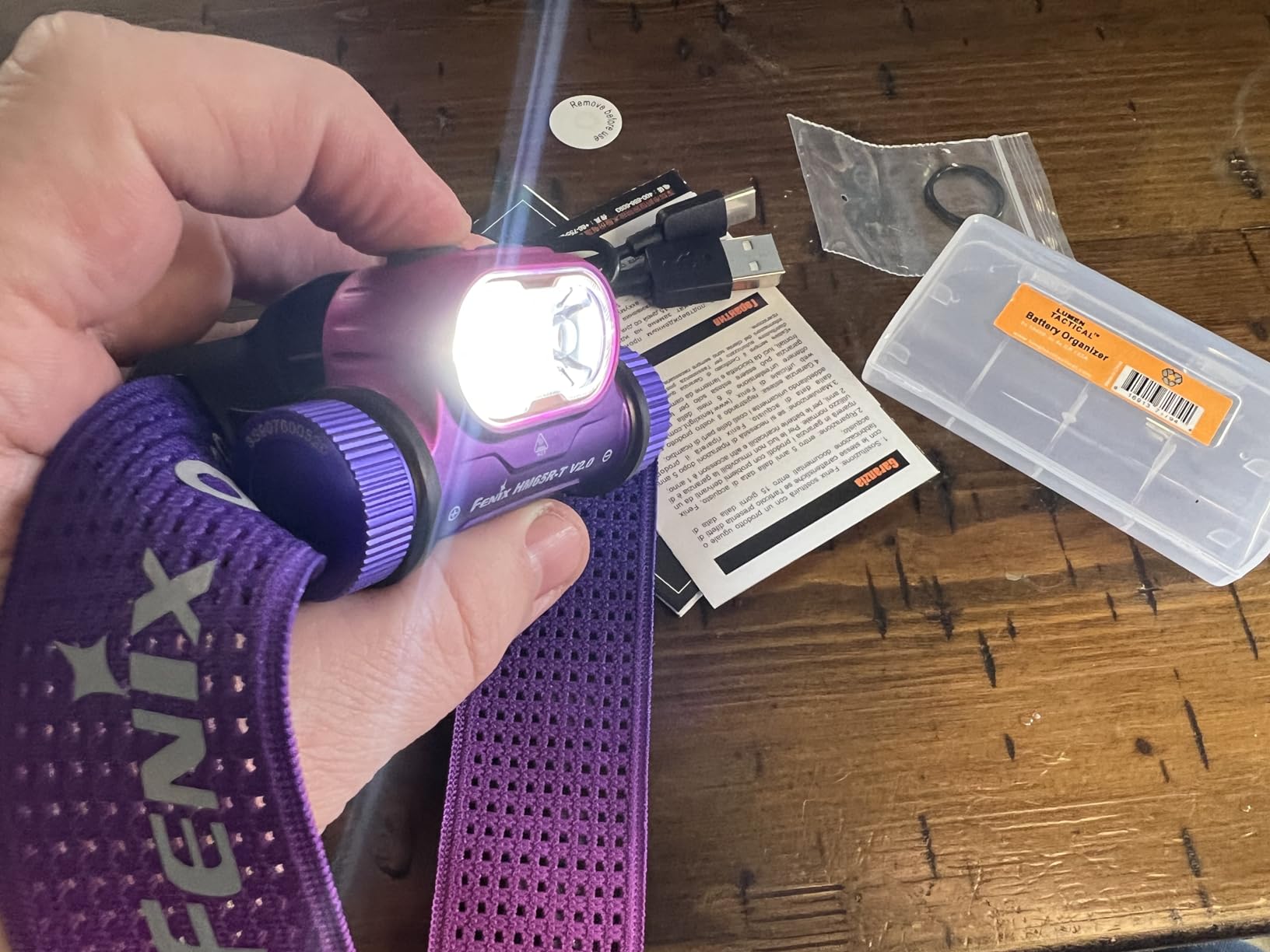
The magnesium alloy frame is listed as roughly 30 percent lighter than aluminum, with 2 metre impact resistance and an IP68 sealing rating. A five year manufacturer warranty backs it, which is the longest coverage in this group and a fair signal of how Fenix expects it to be treated.
The magnesium body does warm noticeably during long stretches at high output, and the magnesium alloy housing is heavier than the plastic shells used by the lighter models. Both are acceptable trade-offs for a lamp you are relying on through a full night.
4. Black Diamond Cosmo 350 – Best Dual-Fuel Headlamp for Running
BLACK DIAMOND Cosmo 350 Headlamp, AAA Powered, Dimmable Bright, BD Graphite
350 lumens
Dual fuel AAA or BD 1500
IP67
Dimmable, strobe, red
3 year warranty
Pros
- Runs on standard AAA cells or a rechargeable pack
- Stepless dimming remembers last setting
- IP67 waterproof sealing
- Solid build that feels like a tool
- Low-profile adjustable headband
Cons
- Control scheme is somewhat confusing
- Strobe is easy to trigger by accident
- Rechargeable version needs a separate battery purchase
The Cosmo 350 is the lamp for runners who think in spare batteries rather than charge cycles. Dual fuel means three AAA alkaline cells, which are included, or a Black Diamond rechargeable pack if you would rather not carry disposables. That decision alone removes a category of pre-run stress.
At 350 lumens it is not a technical trail light, and I want to be clear about that. It is a confident workhorse for dawn and dusk road runs, and a solid backup that lives in a jacket pocket.
Dimming that remembers, and why it matters at 6am
Stepless dimming with a memory function means you set the brightness once for a pre-dawn run and it comes back at that level the next morning, instead of blasting you at full output and killing the dark adaptation you spent a minute building.
Dimming also solves the group-run glare problem. A wide flood at maximum aimed at the runner beside you is genuinely unpleasant, and being able to drop the output to a low setting without cycling through modes makes running with a partner easier.
Battery economics for the long haul
AAA cells are cheap, light and available at any fuel station or corner shop mid-race, which is exactly why they remain the right answer for runners without access to charging. The trade-off is runtime per set and the small cost of the disposables.
Weather sealing and durability
IP67 means it survives one metre of submersion for 30 minutes, so rain, sleet and a dropped-into-the-ditch night are not the failure points you would expect. The polycarbonate body and three year warranty sit comfortably in the middle of this category.
Owners describe it as a simple, solid build that feels like a tool rather than a gadget, with a low-profile band that is stable enough to wear while running. The control scheme is the one recurring complaint, and it takes a few runs to stop triggering the strobe by mistake.
5. Black Diamond Storm 500-R – Best Headlamp for Winter and Rainy Runs
BLACK DIAMOND Storm 500-R Headlamp, Rechargeable, Dimmable Bright, BD Black
500 lumens
PowerTap touch dimming
3.2 oz
2400 mAh rechargeable
Red and strobe modes
Pros
- Touch dimming works through gloves
- Lockout prevents accidental switch-on
- Red night-vision and strobe modes
- Long battery life
- Lightweight and stable during active wear
Cons
- Recessed secondary button is hard to locate on the move
- Output steps down under sustained use
- Does not tilt far enough down for spot work
- Micro-USB port with a short included cable
In real winter conditions — gloves, rain, a headlamp you cannot see to adjust — the Storm 500-R’s PowerTap touch dimming is the feature that changes the experience. You sweep a finger across the top surface and the brightness changes, without finding a button by feel.
It is also the most heavily reviewed rechargeable Black Diamond in this group, which means the long-term pattern is well documented: people like the glove-friendly control and the runtime, and they consistently flag the port and the button placement.
PowerTap, memory and the lockout
PowerTap gives you full, dimmed, strobe and red night-vision modes with brightness memory, plus a lockout so the lamp does not switch itself on inside a pack. For a runner carrying the light in a jacket pocket between sections, that lockout is genuinely valuable.
Reviewers report that output drops to a lower setting under sustained use and requires readjustment, which is the most common technical complaint. The recessed secondary button is also hard to locate without removing the lamp, so on a night run you will mostly live on the touch surface and the main button.
Winter rain, snow and charging in the cold
The lamp is built for rain, snow and rough conditions, which lines up with winter night running in most climates. The 2400 mAh integrated lithium-ion battery is the largest capacity in this group, and it charges over micro-USB.
That port is the drawback. It is not USB-C, the included cable is short, and the port cover is loose — all three complaints appear in owner reviews. If you are still charging cables at home, factor in owning a spare micro-USB lead that you keep somewhere dry.
Headband stability and the tilt limit
The low-profile adjustable headband is stable during active wear, which addresses the shift-and-bounce problem better than a loose dome strap. At 3.2 ounces it sits between the ultraweight models and the heavier metal options.
6. Black Diamond Spot 400-R – Best Compact Rechargeable Headlamp for Running
BLACK DIAMOND Spot 400-R Headlamp, Rechargeable, Dimmable, Bright, Graphite
400 lumens
IP67
1500 mAh integrated battery
Red mode and lockout
3 year warranty
Pros
- Intuitive buttons that work with gloves
- Light and comfortable for long wear
- Dimming
- red light and lockout are easy to cycle
- Light aims where you look thanks to tilt adjustment
- Solid build and good beam angle
Cons
- Micro-USB charging with a proprietary cable
- Some reports of battery meter and charging problems
- Lowest average rating among the rechargeable models here
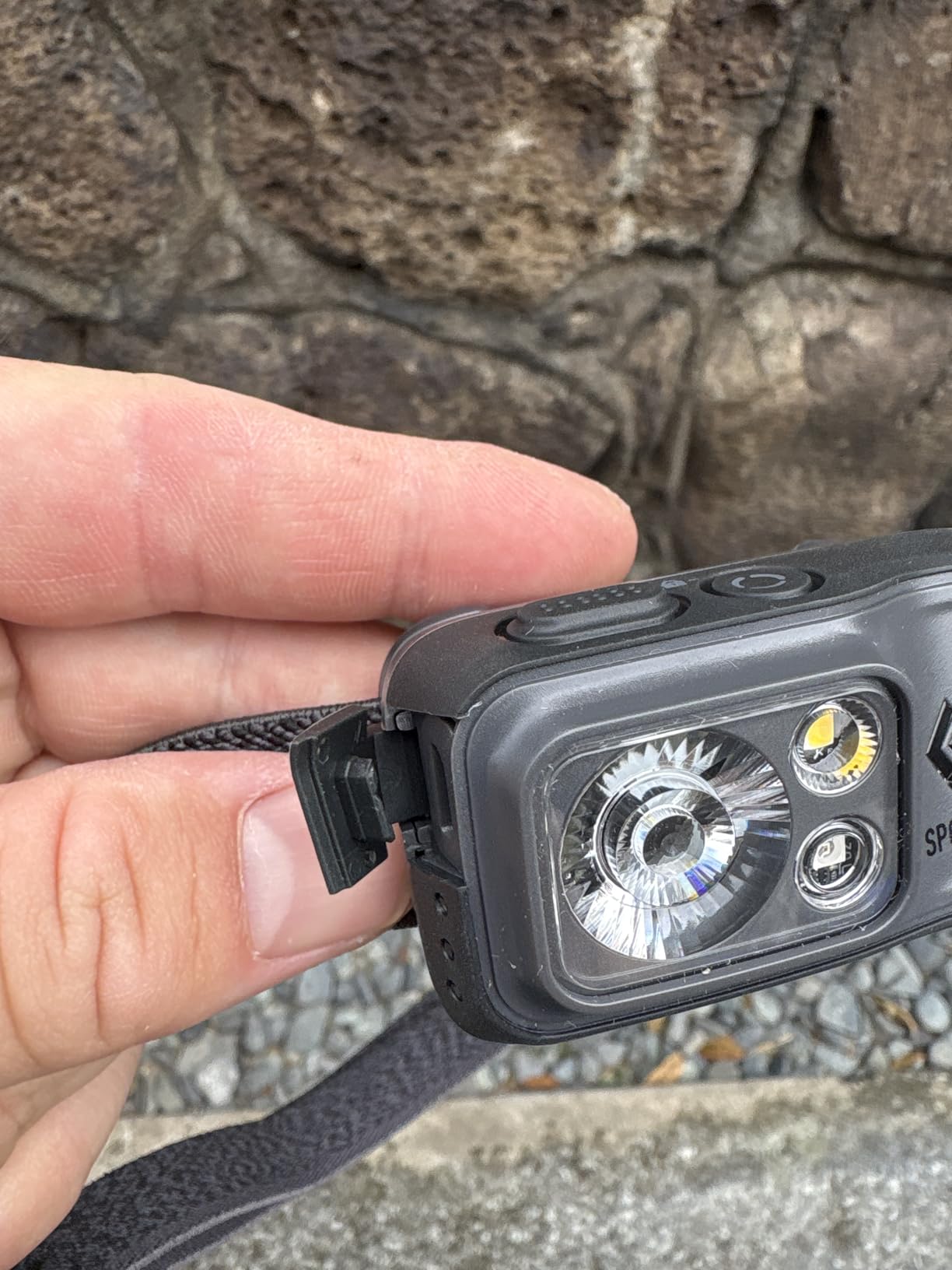
The Spot 400-R is the compact rechargeable in this group, and reviewers put its strengths plainly: an intuitive interface, comfort over long wear, and a beam that lands where you are actually looking. On a 3 to 4 hour run it simply does not become a distraction.
Its 400 lumens and IP67 sealing make it a good fit for night running in changeable weather, and the lock mode plus red night vision cover the safety basics without a complicated menu.
Comfort over a three hour night run
This is the spec that matters least on paper and most in practice. A lamp that shifts on a moving head breaks your rhythm and pulls your attention to your own forehead, and comfort complaints kill recommendations faster than any brightness shortcoming.
Owners describe it as light and comfortable for long wear and well suited to night running and hiking. The tilt adjustment is specifically praised, because aiming the light at the ground two metres ahead without tipping your chin is what lets you keep a natural head position.
Interface, lockout and the red mode
A simple two-button interface cycles through full power, dimming, strobe, red night vision and lock mode. That is short enough that you can find the mode you want by feel, which reviewers consistently rate as working even with gloves on.
Charging and the battery meter caveat
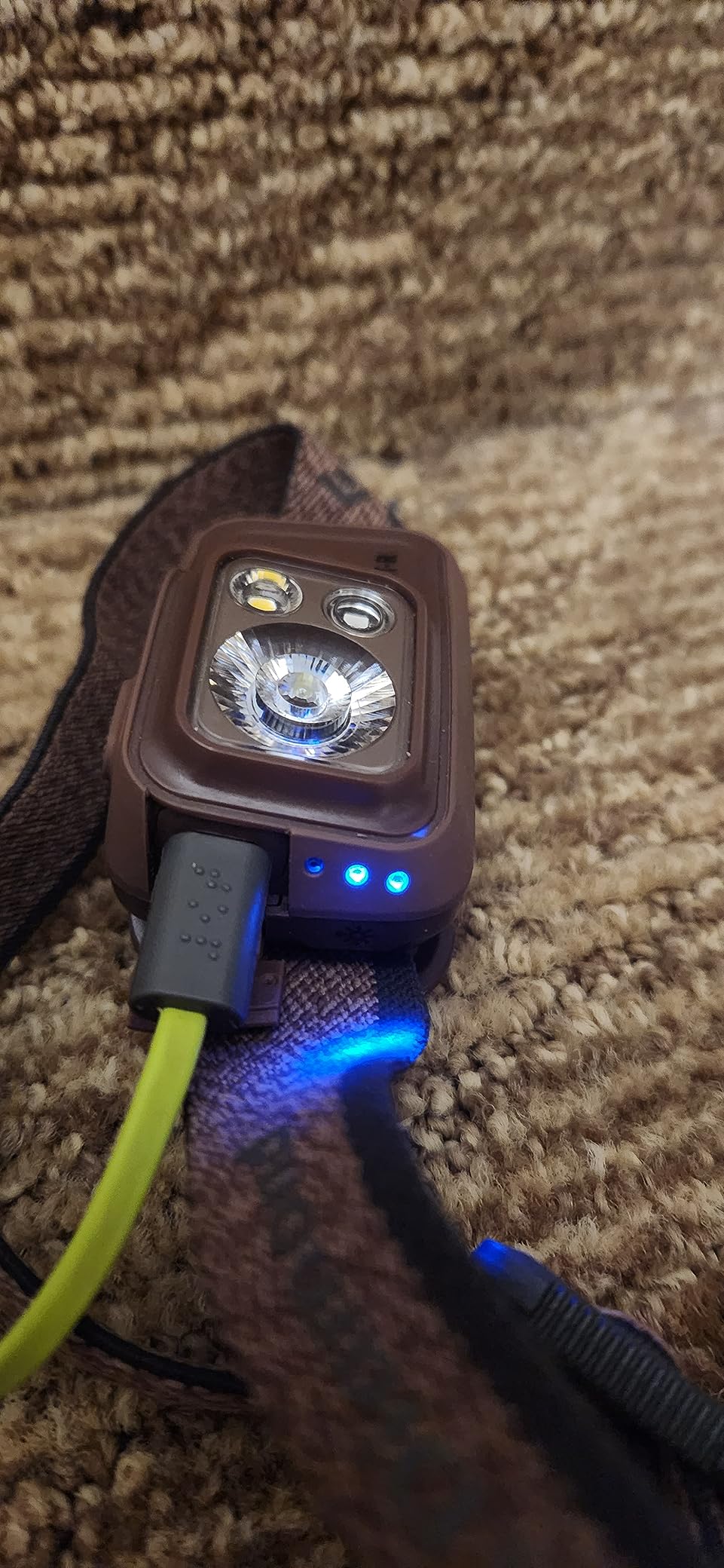
The 1500 mAh integrated lithium-ion battery charges over micro-USB, with a listed runtime of 4 hours at full output. For shorter runs that is plenty; for a long trail effort, budget a mid-run charge or carry the NU25-class alternative as a backup.
Isolated reports of battery meter and charging faults exist across owner reviews, and the proprietary cable is a real inconvenience if you are travelling. Rated IP67, it survives 30 minutes of submersion, and the three year warranty covers the kind of failure that shows up early.
7. Energizer PRO-400 – Best Budget Headlamp for Dawn Runs
Energizer PRO-400 Headlamp Rechargeable, IPX4 Water Resistant Rechargeable Headlamp, Ultra Bright Multiple Light Modes Head Lamp, Camping, Running, Outdoors, Emergency Light, USB Included
400 lumens
80 m beam
IPX4
Seven modes with green and red
Rechargeable, 4 h at full output
Pros
- Solid brightness for a budget rechargeable
- Seven modes plus green and red night vision
- Pivoting head and comfortable band
- No disposable batteries to carry
- Holds charge well for short daily runs
Cons
- Micro-USB port can stop charging reliably
- No low-battery warning
- Noticeably shorter runtime than disposable models
- Some lamps failed to accept a charge after a few months
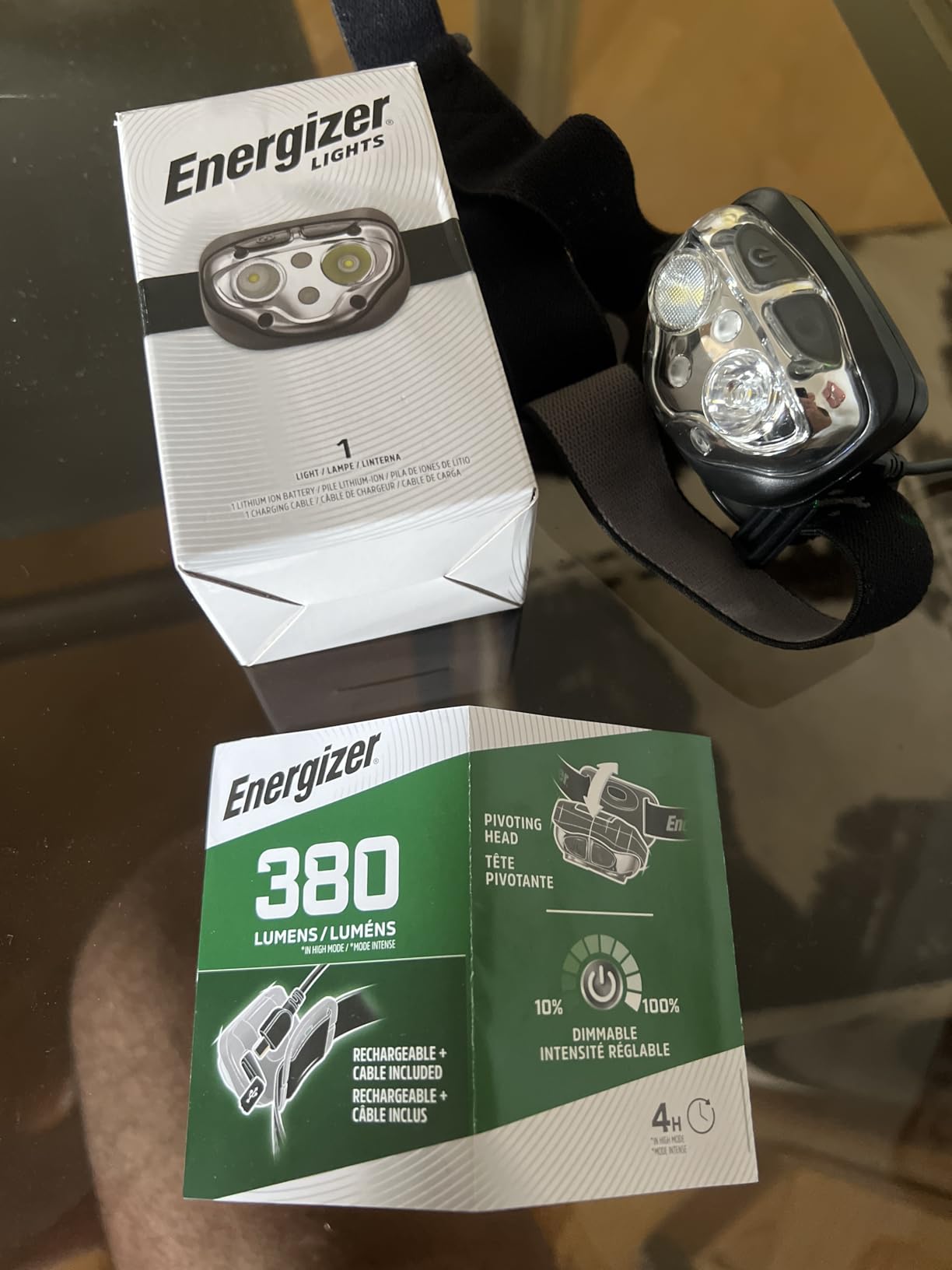
With more than six thousand owner reviews behind it, the PRO-400 has the widest evidence base of anything on this list. That matters if you are buying a budget light: you will find plenty of long-term reports about how it holds up, including the failures.
At 400 lumens with an 80 metre beam and seven modes including green and red night-vision LEDs, it covers a 30 to 60 minute dawn run on a single charge better than most people expect from the shelf it sits on.
Seven modes and what you actually use
Seven modes with Smart Dimming sounds like clutter until you run with it. In practice most people use two or three, and the mode variety means the same lamp handles a lit path, a dark trail and a mid-run check of your phone without a second device.
The VisionGuard night-vision preserving LEDs and shatterproof lens are the parts reviewers mention most, and the pivoting head makes it comfortable hands-free. The mode navigation does take practice, and owner reviews note the manual is not clear.
Water resistance: IPX4 is enough, with caveats
IPX4 protects against splashing water from any direction, which covers rain and the odd puddle. It is not submersion protection, so it is a light for wet weather rather than for rivers, waterfalls or repeated soaking.
The honest weakness: silent battery death
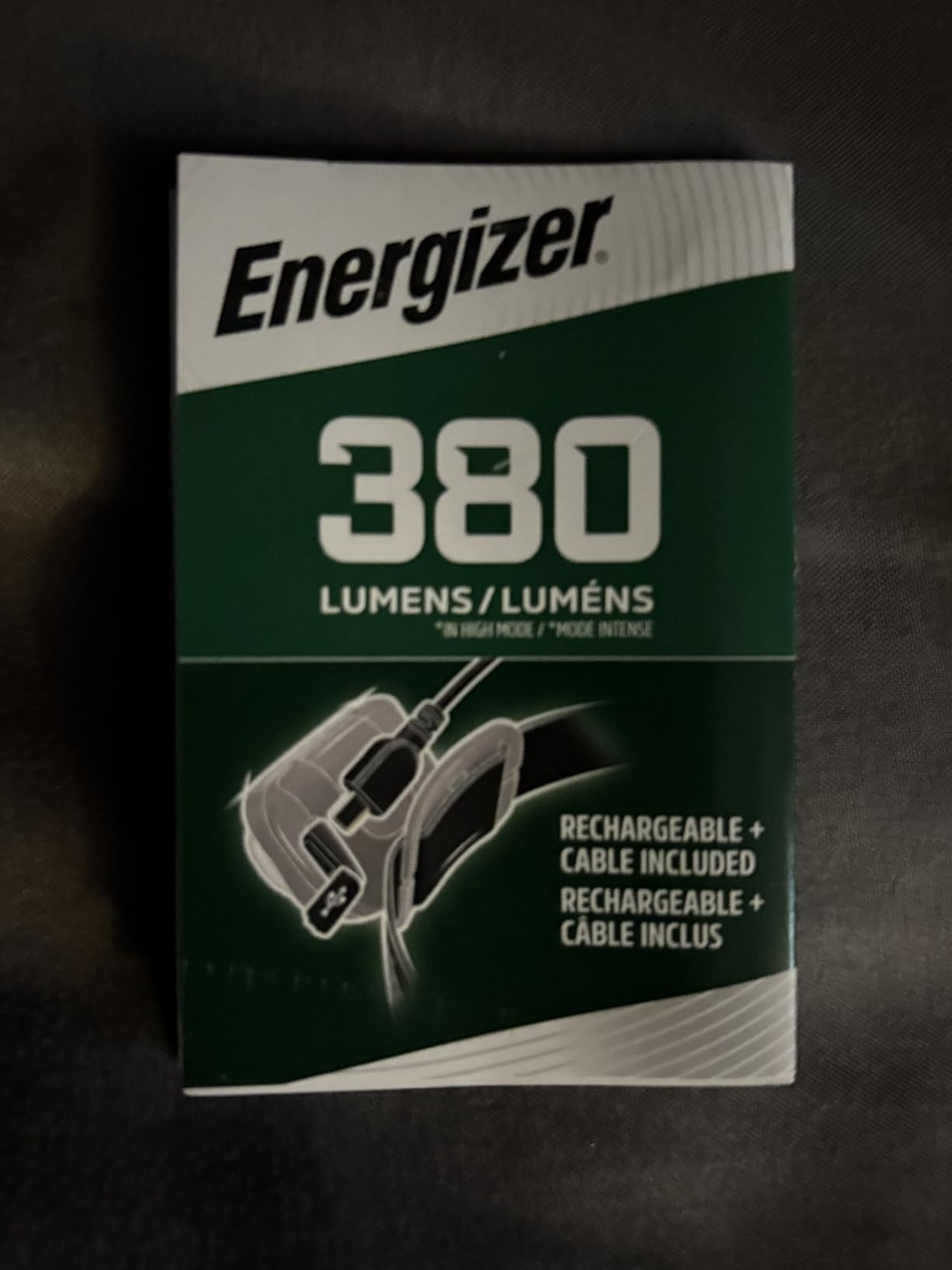
The most repeated complaint is the lack of a low-battery warning. A light going dark on a dark road because the indicator was not telling you anything is a genuinely unnerving experience, and it is the single best reason to check the charge before every run.
Runtime is also noticeably shorter than on disposable-battery lamps of similar output, at 4 hours at full output. Some owners report PRO-400s that stopped working or stopped accepting a charge after a couple of months, and the micro-USB port is flagged as wearing out. If reliability matters more to you than cost, spend up.
8. Coast XPH30R – Best Headlamp for Steep Night Descents
Coast XPH30R 1200 Lumen USB-C Rechargeable Dual Power Headlamp with Twist Focus Beam and Magnetic Base, 4.37 oz. – Black
1200 lumens
165 m beam
Pure Beam twist focus
USB-C removable battery
IP54 aluminum body
Pros
- Smooth twist focus blends flood and throw with no halo
- Rugged aluminum body built to last
- Removable and swappable USB-C battery
- Detachable body doubles as a handheld
- Magnetic base and lockout
Cons
- Too heavy for fast running
- Body warms during sustained high output
- IP54 is water resistant rather than waterproof
- Stiff adjustment ratchet at first
The XPH30R is the best-built lamp in this group and the least suited to fast running, and both facts come from the same design decision: an aluminum body with a detachable lamp head. It is the heaviest build in this group, and reviewers are blunt about the metal knocking against the forehead at pace.
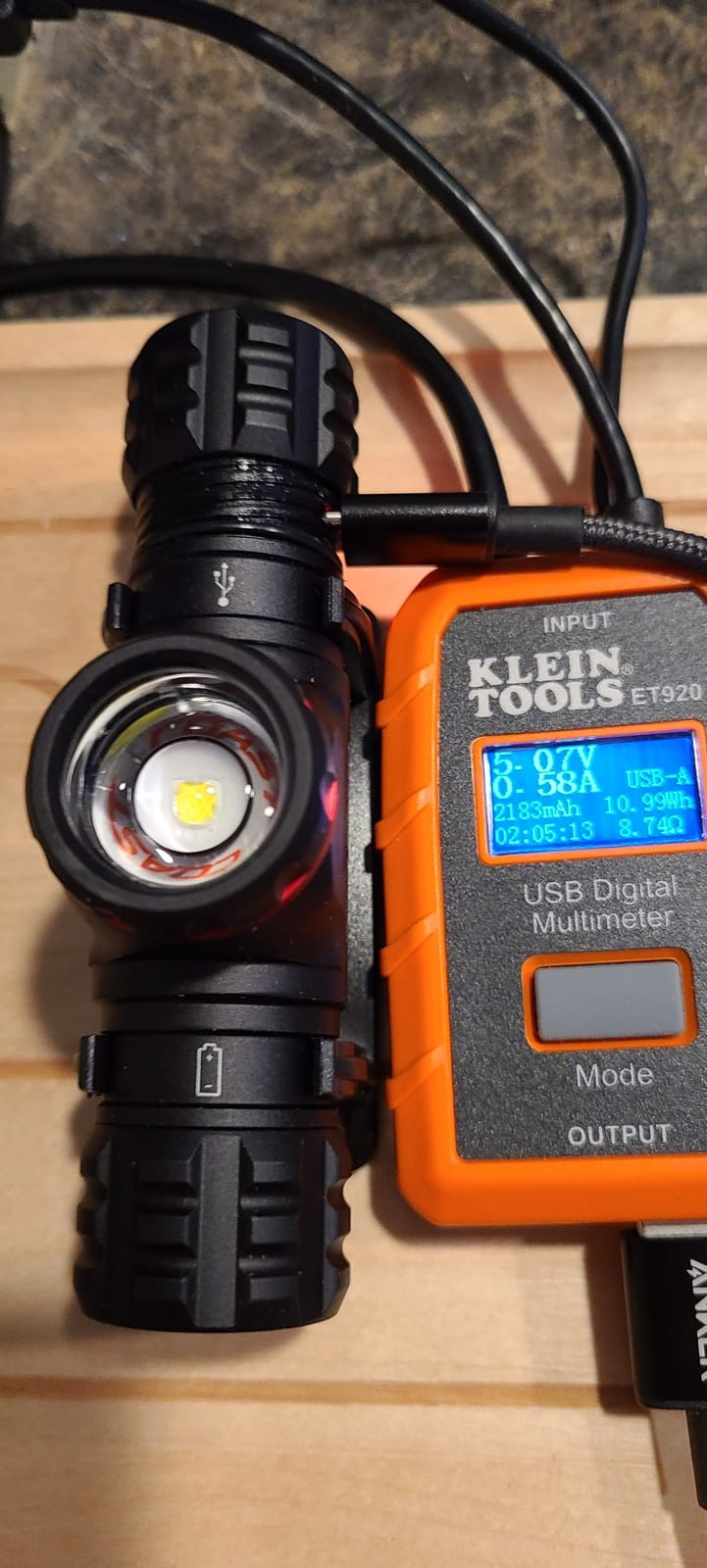
What it does better than anything else here is beam control. The Pure Beam twist focus moves smoothly from a wide flood to a narrow throw with no halo, so you can dial in close footing illumination or distance without swapping optics.
Turbo output, twist focus and beam distance
1200 lumens in turbo mode, with 500, 160 and 46 lumen settings below it, and a listed beam distance of 165 metres. Runtime runs from 6.75 hours at high to 41 hours on low, which covers a long night effort at moderate output.
Owners praise the smooth transition between flood and throw as the standout feature, and the twist mechanism is easier to operate one-handed than a button-and-mode interface. The adjustment ratchet is stiff until it breaks in, so set your tilt before you start running.
Battery flexibility and the detachable body
The lamp body detaches and works as a handheld flashlight with a magnetic base, and the USB-C rechargeable battery is removable and swappable. For a multi-day race you can carry a charged spare rather than planning around a wall socket.
Durability, sealing and the weight verdict
Owners describe a very rugged aluminum body that has survived years of use and bad weather, backed by a lifetime warranty, with one metre drop protection. For durability this is the lamp in the group that has the best case against being retired.
IP54 means water resistant rather than fully waterproof, and combined with the weight it keeps this lamp in the steep-descent, alpine and multi-day-use category rather than the road runner’s rotation. The large power button works with gloves and the lockout prevents accidental activation.
9. Nitecore NU30 – Best Headlamp for Multi-Hour Night Runs
Nitecore NU30 500 Lumen LED Rechargeable Headlamp with White and Red Beams
500 lumens
142 yard beam
3.2 oz
USB-C, 97 h on low
IP66
Pros
- Bright main spot with useful road reach
- Red light and high CRI flood for close tasks
- Long charge life with a 2 hour USB-C recharge
- Wide thick strap stays comfortable
- Button lockout stops pocket activation
Cons
- Headband loosens with regular use
- Two-button layout takes practice and the band needs fitting
- Chunkier than newer ultralight Nitecore models
The NU30 is the veteran of this list, and the owner base reflects that with a 4.7 average over more than 1300 reviews. On anything longer than an hour, the wide thick strap and 97 hours of low-mode runtime make it the one I would pick for comfort over distance.
Its 500 lumens and 142 yard beam distance are close to ideal for night road running where you want to see down a lane and pick out kerbs, without the weight of a metal-bodied lamp.
High CRI flood and why it helps on trail
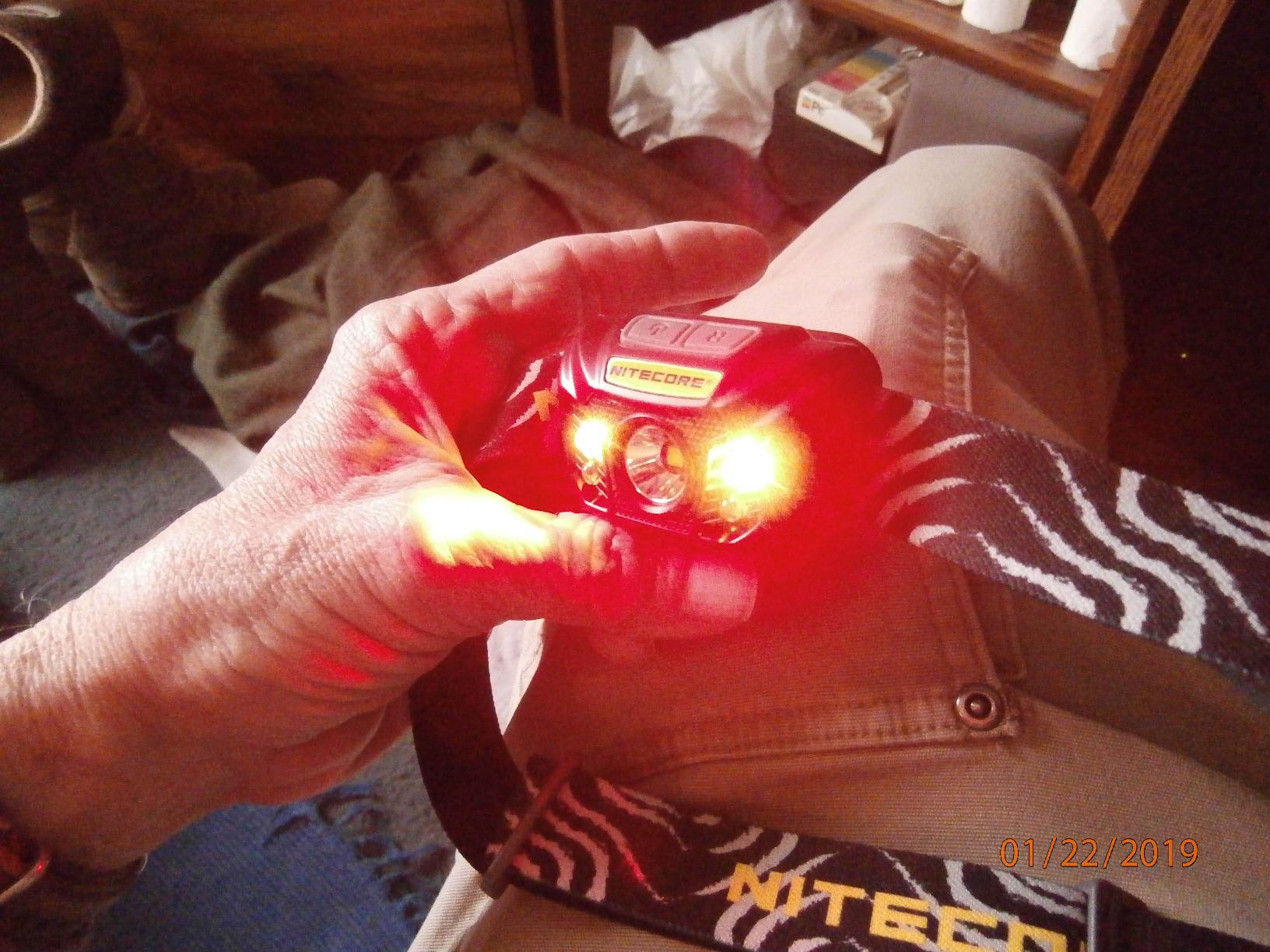
Beyond the main white LED, it has high CRI auxiliary LEDs for close-range flood and a red auxiliary LED. A high CRI flood renders colour more naturally, which in practice means roots and rocks read as distinct shapes instead of merging into one grey mass at the edge of the beam.
The red auxiliary light covers night-vision tasks, and the four white brightness levels from 1 to 500 lumens let you set a genuinely low output for walking sections without cycling a small number of fixed steps.
Runtime, recharge and multi-hour planning
USB-C charging with up to 97 hours on the lowest mode and roughly a two hour recharge means an overnight charge before a long run is enough. IP66 sealing and one metre impact resistance cover rain and the occasional drop.
Reviewers consistently highlight how long it holds a charge and how comfortable the strap stays over long wear. It ships with a two year manufacturer warranty, which is on the shorter side here but backed by a long owner history.
The headband and button layout caveats
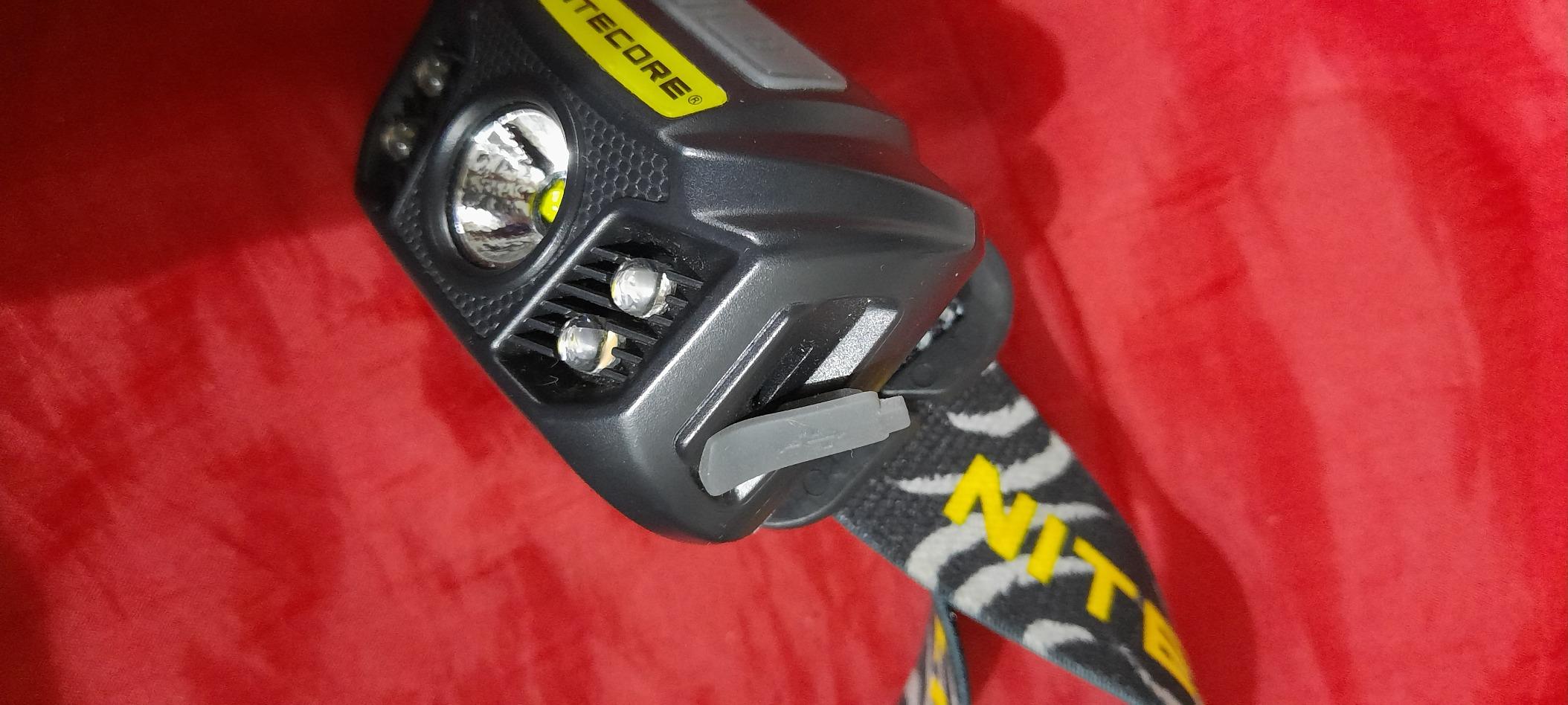
Two honest notes that show up across reviews. First, the headband loosens with regular use, so re-tighten it before every run rather than trusting the setting from last week. Second, the band has to be fitted yourself and the two-button layout needs a few runs before it becomes automatic.
It is also chunkier than the newer ultralight Nitecore models at 3.2 ounces. If bounce is already a problem for you on long runs, the NU25 MCT UL is the better answer; if the strap and runtime matter more than absolute lightness, the NU30 wins.
10. BIAT LX200 Motion Sensor – Best Headlamp for Group Runs
Headlamp Rechargeable, 230° Wide Beam Head Lamp LED with Motion Sensor for Adults – Camping Accessories Gear, Waterproof Head Light Flashlight for Hiking, Running, Repairing, Fishing, Cycling
350 lumens
230 degree COB beam
Motion sensor at 10 cm
2.49 oz silicone
IPX4
Pros
- Very wide field lights the ground without moving your head
- Motion sensor turns it on and off mid-run
- Very light with a soft silicone band
- Six modes including strobe
- Folds small enough for a pocket
Cons
- No throw
- so spotlight range is very limited
- Only IPX4 rated
- Generic build with unverified brightness claims
- Strap tension and beam quality trail the branded options
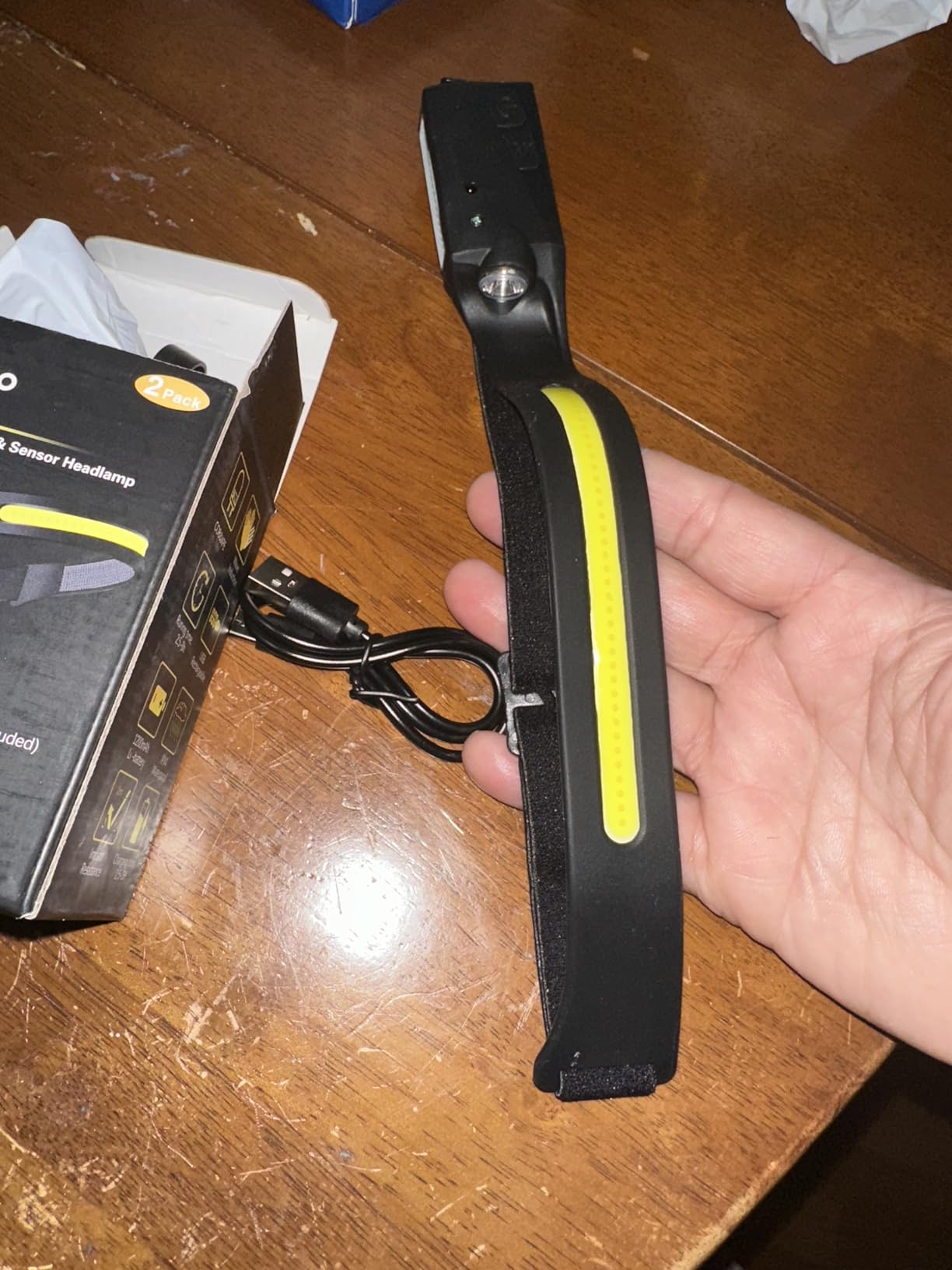
The thing that makes this light interesting for running is the hand-wave motion sensor. Wave within 10 cm and it switches on or off, which works with gloves on, so you never have to break stride to fumble for a button on a dark descent.
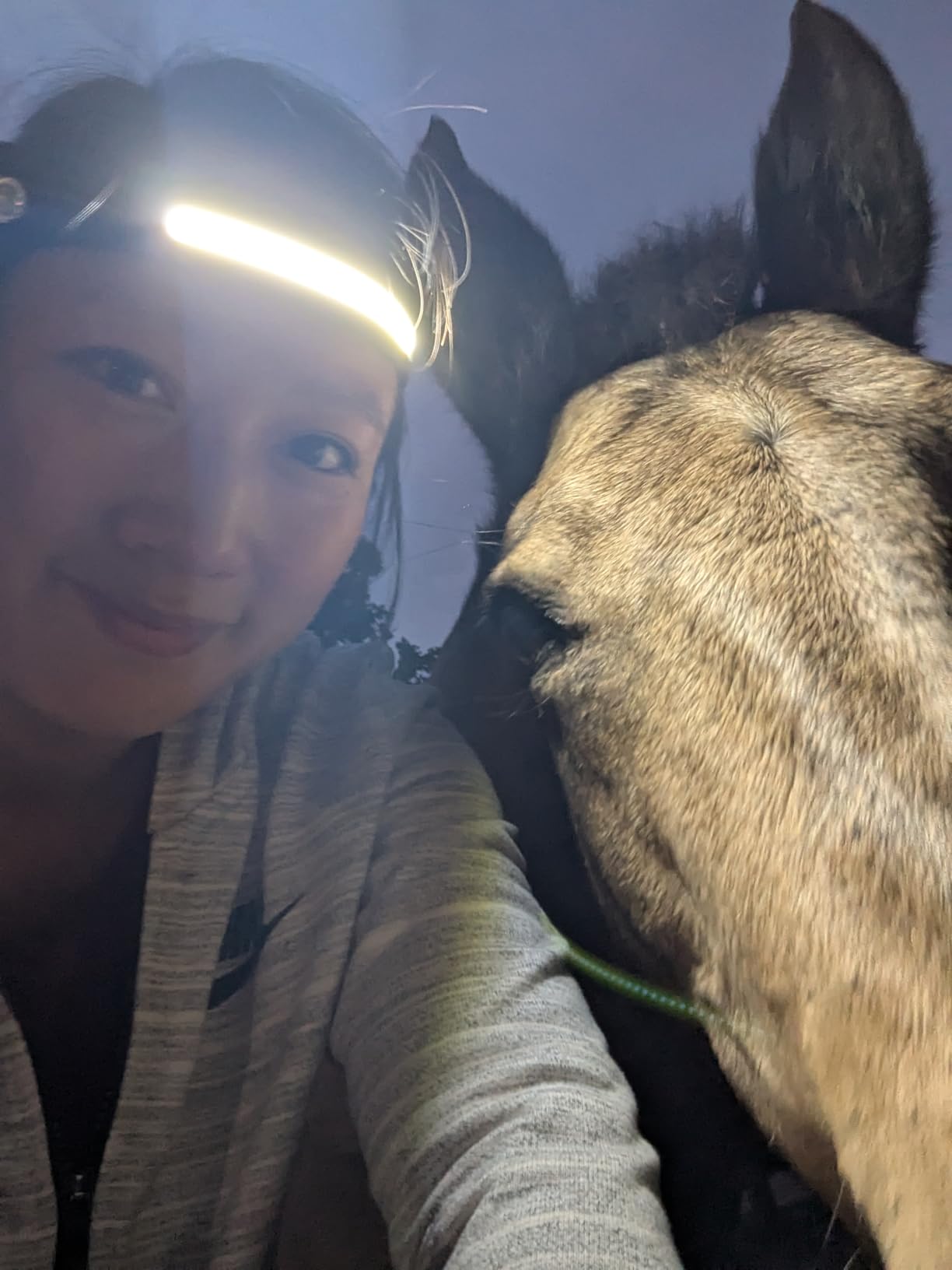
The 230 degree COB beam is the other running-specific feature. It floods a wide field ahead of you so you can keep your head in a natural position rather than craning downward, and the soft silicone body stays comfortable at 2.49 ounces.
Wide flood, zero throw
There is a focused XPE spotlight alongside the COB flood, but it does not deliver meaningful distance. This is a close-quarters light: kerbs, path edges, your feet on a technical step. If you need to read a trail 40 metres ahead, this is the wrong tool.
That limitation also makes it a genuinely good group-running light. A 230 degree flood at low output lights your own patch of path without firing a spotlight into the eyes of the runner beside you, which is one of the most common complaints from people who run together at night.
Motion sensor, modes and what the owner base says
Six modes cover COB high and low, XPE high and low, strobe and motion sensor. With the largest owner base of anything in this list, there is a lot of long-term feedback, and the pattern is consistent: satisfaction with the wide field, the motion sensor and the price, with repeated notes on limited distance and modest water resistance.
IPX4 handles rain and snow, and the 6 hour runtime is enough for most evening runs. The build is generic with a 12 month warranty, so treat it as a light that lights a path rather than a piece of kit that will still be on your head in five years.
How to Choose the Right Running Headlamp
How many lumens do I need for a running headlamp?
Match the output to the terrain, not to the spec sheet. The mapping that matters:
- Emergency and just-in-case backup: 50 to 100 lumens is genuinely enough to check a map or find a dropped key.
- Paved road at dawn or dusk: 100 to 200 lumens covers kerbs, driveway edges and other people.
- Unlit rural roads and mixed trail: 300 to 500 lumens is the working range for most night runners.
- Technical trail and night ultras: 600 lumens and above, where you are reading terrain at speed.
The trap is treating maximum lumens as the goal. Output that high usually collapses the runtime, and on a long run a lamp dimmed to a sensible middle setting beats a bright one that dies before you finish.
What IPX rating do you actually need?
IPX4 protects against splashing water from any direction, which covers rain, sleet and puddles. IPX6 handles heavy water jets, IPX7 means temporary submersion, and IP66 combines dust-tight sealing with heavy water jet protection.
For running, IPX4 is the floor and IPX6 or above is the comfortable choice for anyone training through a wet winter. Anything below IPX4 belongs on a shelf, not on a trail.
AAA, 18650 or built-in rechargeable?
AAA cells win on availability: you can buy them anywhere, mid-race, and they never fail to charge. Rechargeable lithium-ion gives you USB-C charging, longer low-mode runtime and no disposables, at the cost of planning around charge time.
For multi-day events, swappable 18650 packs are the strongest option because you can carry a charged spare. For everything up to a long single-day ultra, a built-in rechargeable is simpler and lighter. Our guide to the best GPS running watches for trail running covers the other piece of kit most night runners end up buying at the same time.
Weight, fit and the bounce problem
Bounce, or bobble, is the issue runners complain about most, and it is a fit problem before it is a weight problem. Anything under 2 ounces is largely self-solving; beyond roughly 3 ounces, band tension and strap width start to decide whether the lamp stays put.
Adjust the band while standing still, with two fingers of tension, and tighten it again after twenty minutes because most headbands settle. A wide strap spreads load better than a narrow one, and a rear battery pack balances the load but adds bulk that fast runners dislike.
Flood, spot and the modes you will actually use
Flood lights the ground close to you, spot reaches further down the trail, and dual-beam or twist-focus lamps give you both. Running with a partner argues for flood at low output, because a bright spot at head height blinds the person next to you.
Red light mode preserves dark-adapted night vision on long efforts, and strobe mode increases your visibility to oncoming traffic. Forum debate on both is genuine — several runners report never turning red mode on and finding strobe distracting — so treat them as tools for specific situations rather than defaults.
Headlamp or chest and waist light?
A waist or chest-mounted light removes the bobble entirely, casts shadows that reveal roots and rocks, and never blinds a running partner. Many runners on r/running and r/trailrunning prefer them for exactly those reasons. The cost is that the light moves with your torso rather than your gaze, so you aim it with your body.
My take: chest or waist for technical trail where footing detail matters, headlamp for road, descents and anything where you need the beam pointed where you are looking. If you also want audio for long night runs, our best open ear headphones for running guide covers options that still let you hear traffic.
Safety beyond the lamp
A headlamp helps you see, but visibility to others comes from elsewhere. Layer reflective elements into your clothing, add a rear light for sessions where traffic approaches from behind, and choose routes with a known escape route when you can.
Group runs need one more thing: agree on brightness levels so nobody is running at turbo into the eyes of the person ahead. That single habit removes more night-run friction than any spec on this list.
Frequently Asked Questions
What is the best headlamp for running?
The Nitecore NU25 MCT UL is the best headlamp for running for most people, combining 400 lumens, a 144 yard beam and three white colour temperatures with a red mode in just 1.6 ounces. Trail and ultra runners who need more output should step up to the Nitecore NU27 at 600 lumens or the Fenix HM65R-T V2.0 at 1600 lumens.
How many lumens do I need for a running headlamp?
For emergency backup light, 50 to 100 lumens is enough. Paved road running at dawn or dusk needs 100 to 200 lumens. Unlit rural roads and mixed trail work best at 300 to 500 lumens, while technical trail and night ultramarathons call for 600 lumens and above. Running a lamp above its useful range wastes battery life without making the run safer.
What is the best type of light for running?
A headlamp is the right default because the beam stays aligned with your gaze and your hands stay free. A chest or waist-mounted light is the better choice on technical trail, where removing the bobble and casting visible shadows around roots and rocks matters more than pointing the beam precisely. Many runners carry a small headlamp as a backup to a waist light on long efforts.
What is the best light to wear when running?
Wear a light that combines a wide low flood with red night-vision and strobe modes, and pair it with reflective clothing. For road running choose 200 to 400 lumens with a beam of at least 50 metres; for trail choose 400 to 600 lumens. Running with a partner, drop to a low flood so you are not shining into anyone else’s eyes.
What headlamps do ultra runners use?
Ultra runners most often choose a lamp with long runtime and a dual or adjustable beam. The Fenix HM65R-T V2.0 is the usual answer in that crowd, with 1600 lumens, a 185 yard throw, white and warm white beams and a five year warranty. For races past a single charge cycle, pick a model that accepts swappable 18650 batteries or standard AAA cells instead.
Are headlamps good for running?
Yes, for any run before sunrise, after sunset, or on unlit trails and rural roads. A headlamp keeps your hands free and lights the ground where you are looking, which reduces trip risk on roots and ruts. If you only run in daylight or on well-lit streets, you do not need one at all, and your money is better spent elsewhere.
The Best Running Headlamp for 2026
Pick by terrain and duration, not by the biggest number on the box. If you want one lamp that handles everything from a pre-dawn pavement jog to a wet trail loop, the Nitecore NU25 MCT UL is the one I recommend and the one I reach for — 400 lumens, colour options and 1.6 ounces that you stop noticing.
Technical trail and long descents call for more output, so the Nitecore NU27 at 600 lumens or the Fenix HM65R-T V2.0 at 1600 lumens is the right direction. For a night ultramarathon, the Fenix wins on beam reach, dual white and warm white output and a five year warranty. If you would rather not think about charging at all, the Black Diamond Cosmo 350 on ordinary AAA cells removes the problem entirely.
For the tight budget end, the Energizer PRO-400 does a 30 to 60 minute dawn run on a single charge, and the BIAT LX200 motion sensor is the cleverest option for group runs where glare is the concern. Whichever you choose, test the controls in the dark once before you need them, tighten the band properly, and check the charge before every outing.
If you are still assembling your night-run kit, our picks for the best GPS running watches for triathlons and the best GPS running watches for beginners cover the navigation side of long, dark routes.