
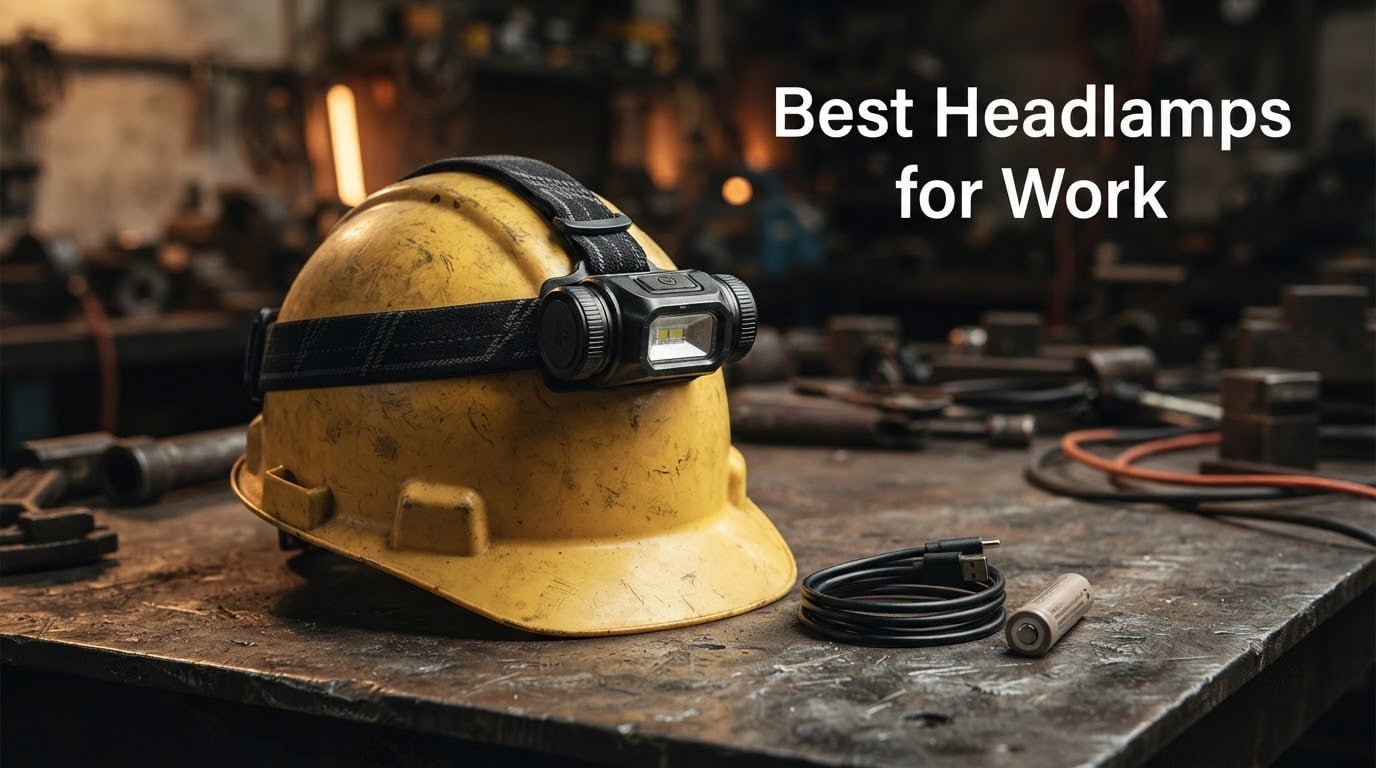
If you have ever tried to finish a panel termination with a flashlight wedged between your shoulder and your ear, you already know why the right headlamp matters. The best headlamps for work are not the brightest lights on the market; they are the ones that stay on your head for a full shift, hold a charge you can plan around, and put the beam exactly where your hands are. We put 12 of the strongest options through a comparison focused on the things tradespeople actually complain about: bounce, weight, glare up close, batteries that die mid-task, and ports that quit charging.
Our ranking weighs six things: real brightness at the modes you would actually use, beam control, runtime on a normal setting rather than a headline number, mounting security, water and dust protection, and how the light behaves on an eight-hour shift. We also flag the gap between advertised lumens and sustained output, because that gap is the number one source of disappointment after purchase.
A few patterns stood out immediately. Premium metal builds from Fenix and Nitecore sustain their output far longer than plastic budget lights before stepping down for heat. Tool-brand models from Klein mount directly to matching hard hats and disappear into an existing crew ecosystem. And more output is not automatically better; several users report that 400 lumens of controlled flood beats 3,000 lumens of glare when you are working six inches from a wire nut.
Read on for the full comparison table, twelve individual reviews, a buying guide built around real jobsite constraints, and answers to the questions tradespeople search for most. All measurements and figures below come from the manufacturer data and owner reviews for each model.
Our Top 3 Tested Work Headlamps in 2026

Coast XPH30R
- 1200 lumen turbo mode
- Twist focus flood to spot
- Detachable magnetic base
- USB-C removable cell


The Coast XPH30R takes the top slot because it is the rare light that does everything well: a twist focus optic that moves cleanly from flood to spot, a body that detaches into a handheld light with a magnetic base, and a removable USB-C rechargeable cell. The POKISEED wins on flood coverage for electricians working in attics and under cabinets, and the Energizer PRO-400 is the low-cost starting point for anyone who just needs reliable hands-free light.
Comparing All 12 Work Headlamps Side by Side
| Product | Specs | Action |
|---|---|---|
| Coast XPH30R |
|
Check Latest Price |
| Energizer PRO-400 |
|
Check Latest Price |
| POKISEED 1500 Lumens |
|
Check Latest Price |
 Klein Tools 56062 Klein Tools 56062 |
|
Check Latest Price |
 Coast XPH34R Coast XPH34R |
|
Check Latest Price |
 Klein Tools 56048 Klein Tools 56048 |
|
Check Latest Price |
 NEBO Transcend 1500 NEBO Transcend 1500 |
|
Check Latest Price |
 OLIGHT Perun 3 OLIGHT Perun 3 |
|
Check Latest Price |
 Black Diamond Cosmo 350 Black Diamond Cosmo 350 |
|
Check Latest Price |
 Fenix HM71R Fenix HM71R |
|
Check Latest Price |
 Nitecore HC65 UHE Nitecore HC65 UHE |
|
Check Latest Price |
 Nitecore HC75 UHE Nitecore HC75 UHE |
|
Check Latest Price |
What Is a Work Headlamp and Why It Beats a Handheld Flashlight
A work headlamp is a hands-free lighting tool worn on your head or clipped to a hard hat that projects a controlled beam exactly where you look, keeping both hands free for the task. It works by pairing an LED emitter with a reflector or lens that shapes the light into either a wide flood for close-up work or a narrow spot for distance, powered by rechargeable lithium-ion or disposable cells and controlled by buttons large enough to press with gloves on.
It matters because of the shadow. A handheld flashlight held in your non-working hand throws your working hand into darkness, and every time you set the light down to hold a wire stripper you lose your place. Headlamps remove the shadow, remove the fumbling, and remove the ladder-and-dark-garage risk that comes with holding a light in one hand on a vertical surface.
They also change how you work on close-up tasks. Because the light source moves with your head, you can aim it by looking, which is far faster than rotating a wrist. For anyone who also spends long seated stretches fighting fatigue, our guides to ergonomic mice for office work and ergonomic keyboards for office work cover the same principle from the input-device side.
1. Coast XPH30R – Twist Focus Control and a Removable Cell
Coast XPH30R 1200 Lumen USB-C Rechargeable Dual Power Headlamp with Twist Focus Beam and Magnetic Base, 4.37 oz. – Black
1200 lumens turbo
165 m beam
Twist focus optic
USB-C removable cell
Pros
- Pure Beam twist focus with no halos or hot spots
- Detachable body with built-in magnetic base
- Removable lithium-ion cell charges by USB-C
- Two headband options included
- Backed by a lifetime warranty
Cons
- Heavier in the hand than the listed weight suggests
- Runs warm at turbo output or when charging from exhausted
The Coast XPH30R is the light we kept reaching for. Its Pure Beam twist focus moves between a wide flood and a tight spot with no dark center and no halo ring, which means you can dial the beam from panel work to a 165 meter throw without taking the lamp off your head. The detachable body and magnetic base let you pull the lamp off the strap and stand it on a steel surface or a ladder rung when you need both hands.
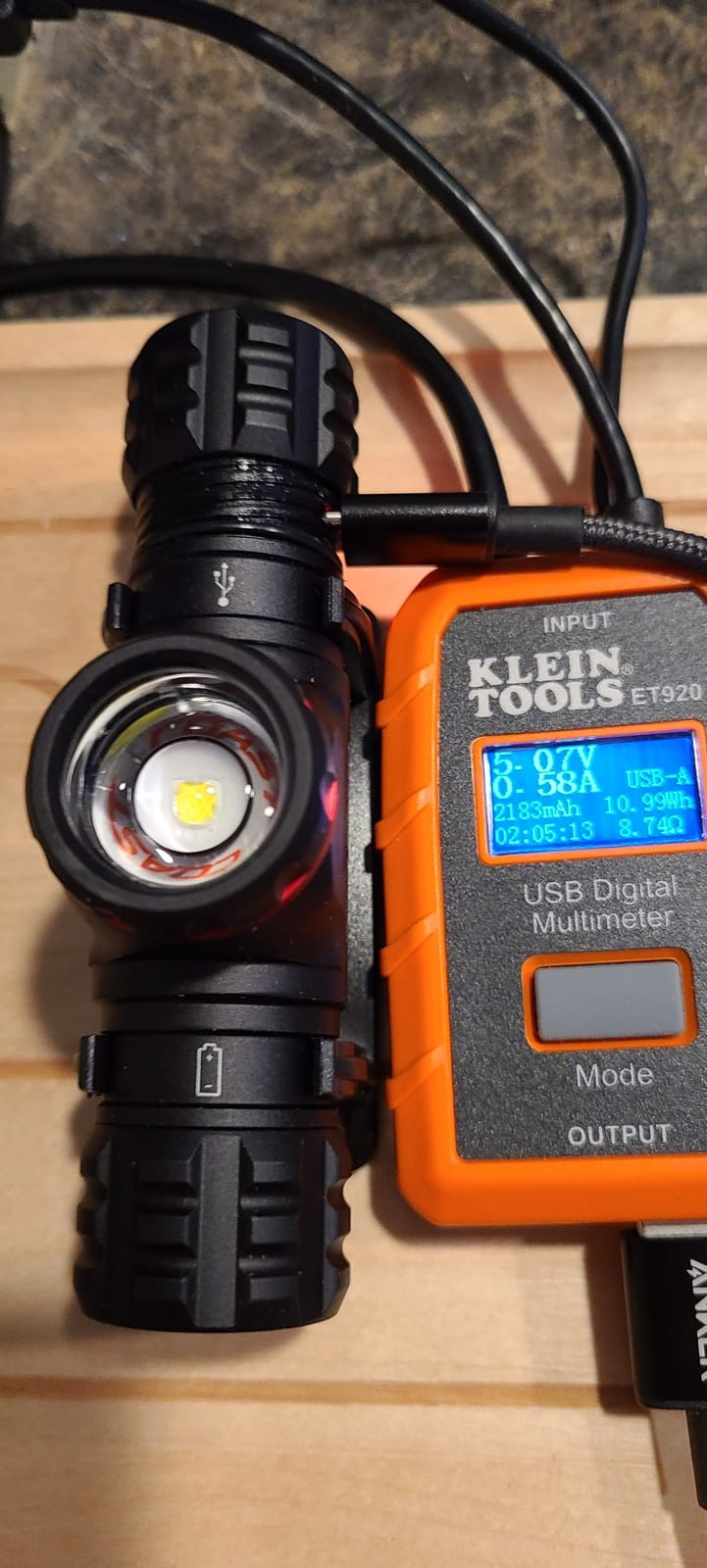
Owners consistently praise the metal build, the focus control, and endurance that outlasts the claims. One measurement we found in the reviews put runtime at 16 hours on medium against a rated 10 hours, which tells you the low and medium settings are where this lamp really earns its keep on a long shift.
Runtime That Outlasts the Spec Sheet
Output steps through 1200 lumens in turbo, 500 at high, 160 at medium and 46 at low, with rated runtimes of 6.75 hours at high, 10 hours at medium and 28 hours at low. The practical takeaway for a working crew is that medium and low are where a full shift happens, and on those settings this headlamp comfortably outlasts a normal working day on one charge.
Users who swapped older lights report the difference is immediate. The mode spacing is sensible rather than decorative, and the low setting is genuinely low enough to work in a dark crawl space without blowing out your night vision.
Build, Weight and Drop Protection
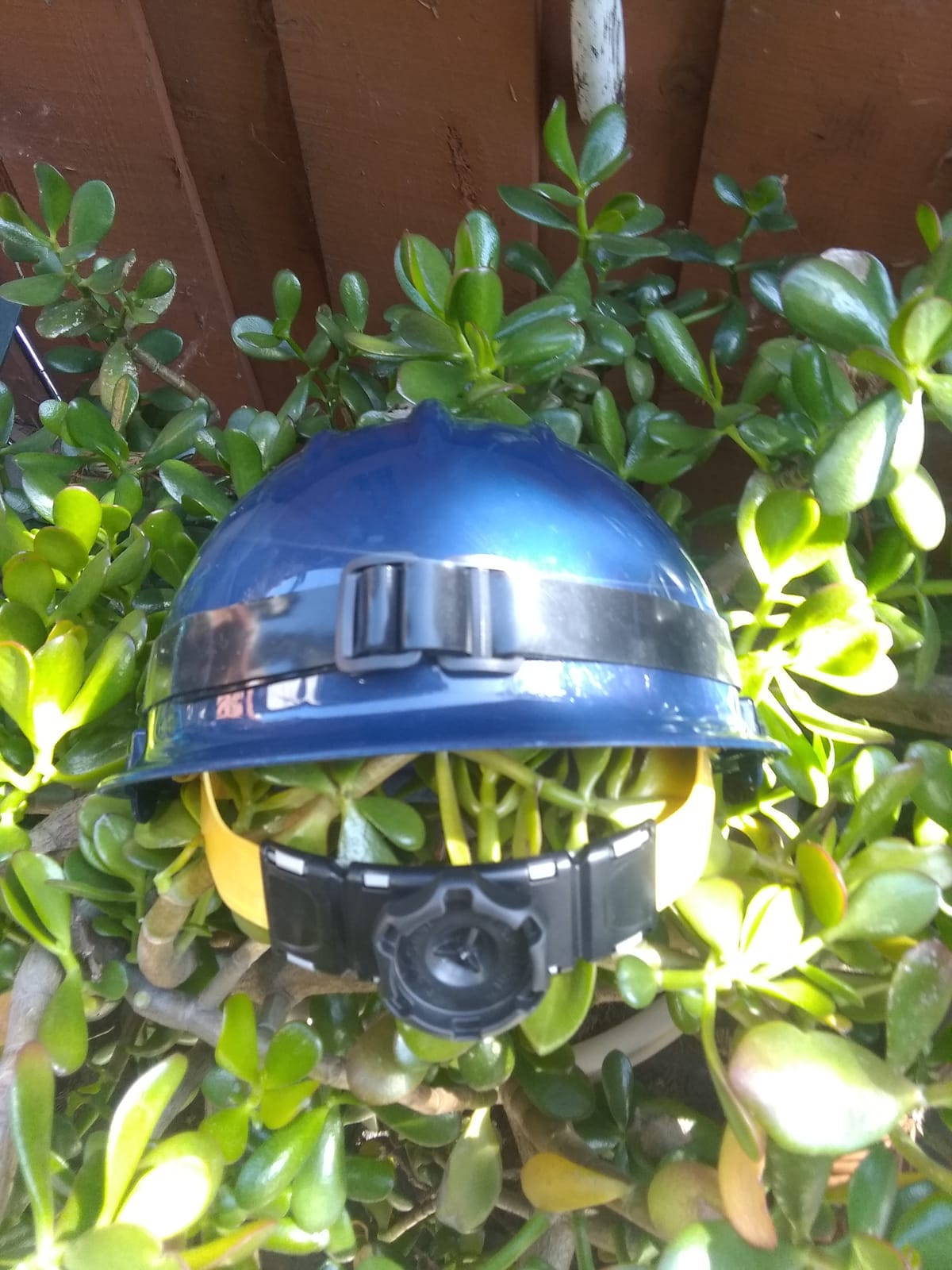
The body is aluminum with caps that screw on firmly, rated IP54 for water and dust with 1-meter drop protection, and backed by a COAST lifetime warranty. Two straps are included in the box, a rubber-like band and a cloth band, so you can pick the one that suits your shift.
The one consistent complaint is mass. Listed at 4.37 ounces, owners regularly find it closer to 5 ounces once the cell is in, which is fine for trades work but noticeable for running or climbing. If you work overhead all day, that front weight is worth considering before you commit.
Where It Earns Its Place on a Job
This is the generalist pick for electricians, HVAC technicians, mechanics and inspectors who need one lamp to do everything. The magnetic base and detachable design mean it doubles as a bench light, and the twist focus covers both close work and checking a yard or a crawl space from the entrance.
For crews that standardize, the removable cell is the deciding factor. You can carry a spare charged cell instead of a spare lamp, which is cheaper and faster than swapping a sealed unit.
2. Energizer PRO-400 – the Low-Cost Starting Point
Energizer PRO-400 Headlamp Rechargeable, IPX4 Water Resistant Rechargeable Headlamp, Ultra Bright Multiple Light Modes Head Lamp, Camping, Running, Outdoors, Emergency Light, USB Included
400 lumens
7 Smart Dimming modes
Red and green night vision
IPX4 water resistant
Pros
- Bright focused beam with adjustable tilt
- Holds charge for weeks of intermittent use
- Pivoting head and comfortable band
- Compact and inexpensive
Cons
- Micro-USB port can deform and stop charging
- Cell dies abruptly with no low-battery warning
- Seventh mode is hard to find without instructions
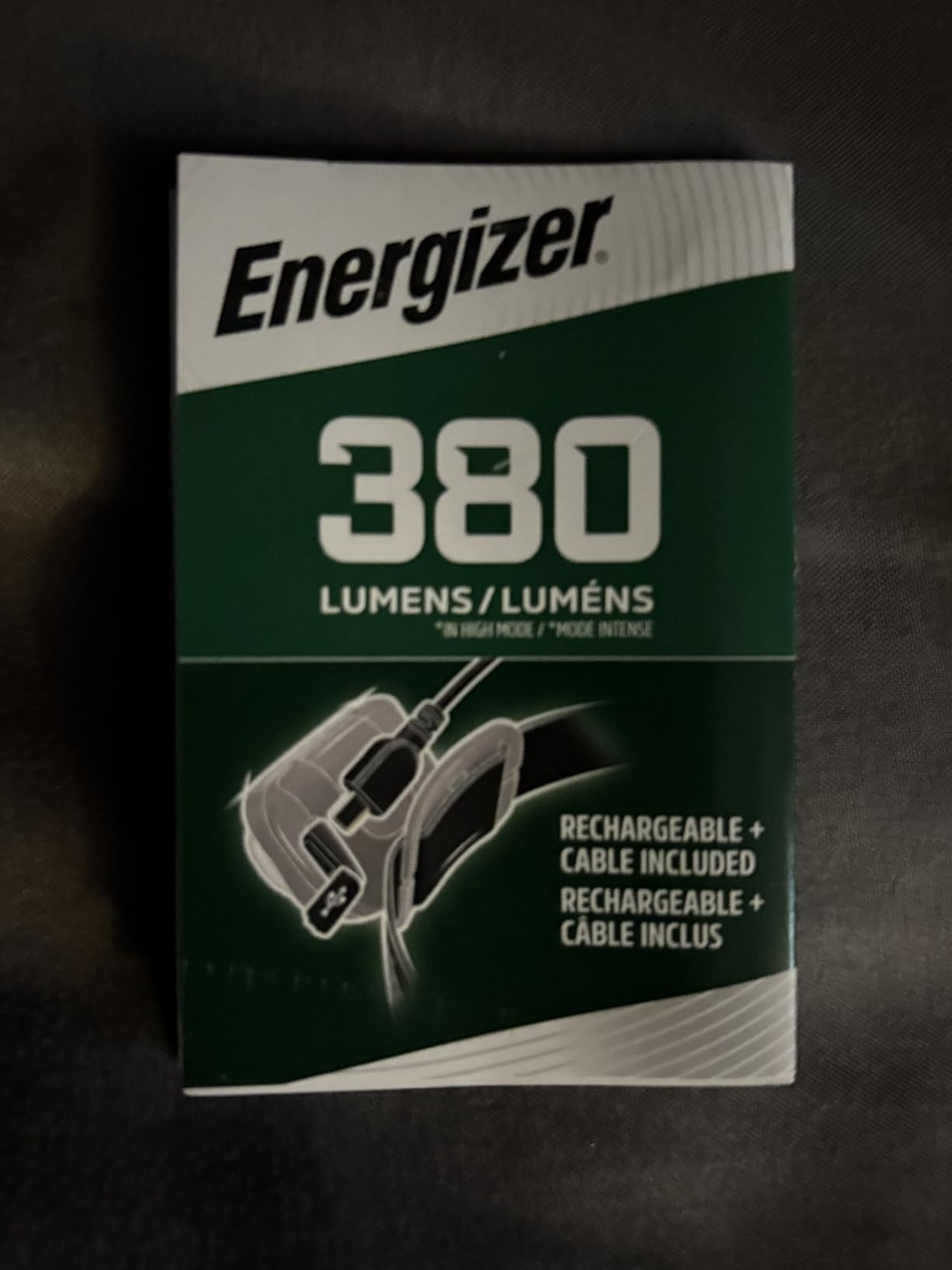
Not every job needs anodized aluminum and a lifetime warranty. The Energizer PRO-400 is the light you hand to an apprentice or a weekend DIYer, and it does the fundamentals well. The main beam is bright and focused, the head pivots so you can aim it without twisting your neck, and the band is comfortable enough for a full evening of work.
Owners treat it as a dependable budget headlamp for home projects, dog walking and light job-site use. Many report getting weeks of intermittent daily use from a single charge, which is the most useful thing a low-cost light can do.
Mode Selection and the Hard-to-Find Seventh Setting
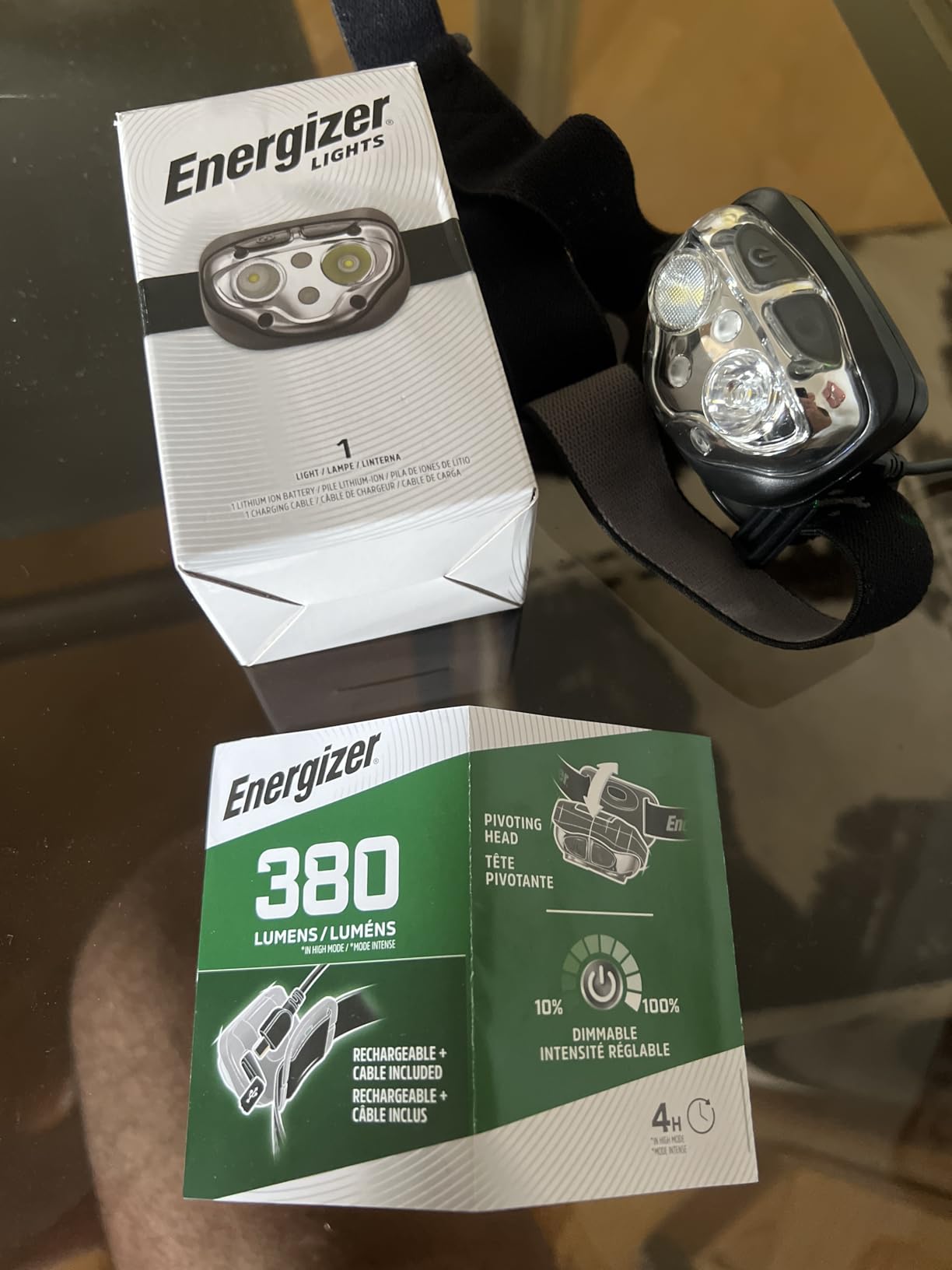
Seven Smart Dimming modes give you a wide spread of output, and the green and red night-vision modes preserve dark adaptation when you are working in a dim crawl space or checking a yard at night. The recurring criticism is discoverability: the seventh mode is buried in a cycle that new owners struggle to find without the instructions in the box.
That is a minor learning curve rather than a defect, but it is exactly the kind of UI annoyance that wears people down mid-shift when the light is clipped to a hat.
Charging Weakness and Battery Behavior
The included micro-USB cable is the weak point. Owners report the port deforming over months of use and eventually refusing to charge properly, which matters far more on a rechargeable cell than on a disposable-battery lamp.
The second issue is the absence of warning. This cell runs down and stops rather than dimming first, with no low-battery alert, so a task that started at 60 percent output can end without warning. Budgets that feed a crew should keep a spare cell on hand.
Where It Fits and Where It Does Not
Choose this for interior finish work, quick inspections, evening maintenance and anyone building a kit on a tight budget. It is not the right call for confined spaces, wet crawl spaces or refinery environments, where the IPX4 rating offers no protection against a soak.
Its actual selling point is that it costs little enough that you can own several. One in the truck, one in the tool bag, one on the crew van.
3. POKISEED 1500 Lumen Wide Beam – Maximum Flood Coverage
LED Headlamp Rechargeable, Super Bright 1500 Lumens 230° Wide Beam Headlamp, 3 Modes IPX6 Waterproof Lightweight Head Light with Taillight & Clips for Camping, Running,Fishing, Outdoors, Hard Hat Work
1500 lumen wide bar
230 degree beam
5000mAh battery
8 hard hat clips
Pros
- Very wide flood lights a whole work area at once
- Smooth 90 degree tilt adjustment
- Multi-day battery life reported by users
- Hard hat clips and carry case included
- USB-C charging
Cons
- Advertised lumen figure is not matched in practice
- No replacement battery sold separately
- Rear switch can be bumped in tight spaces
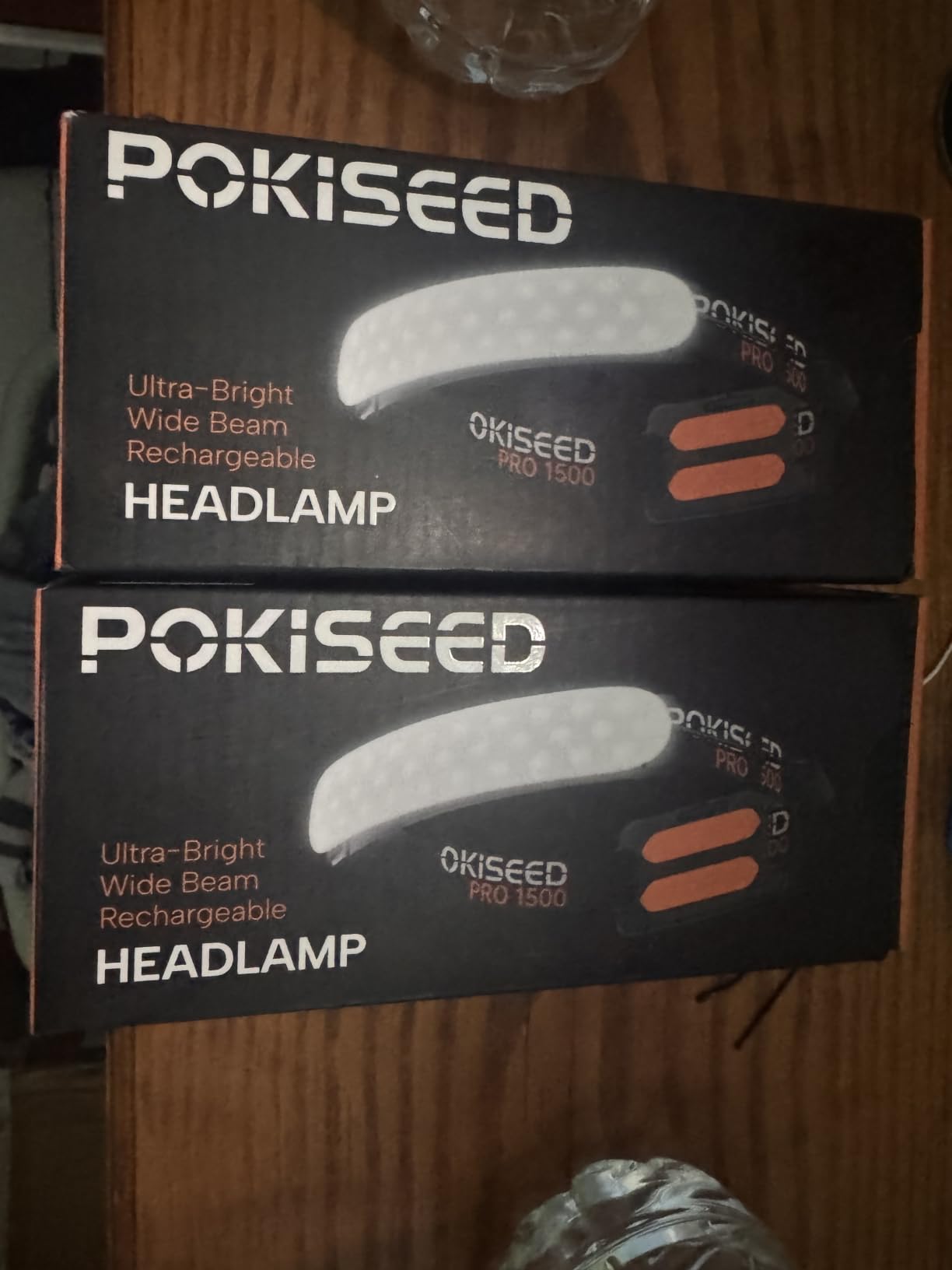
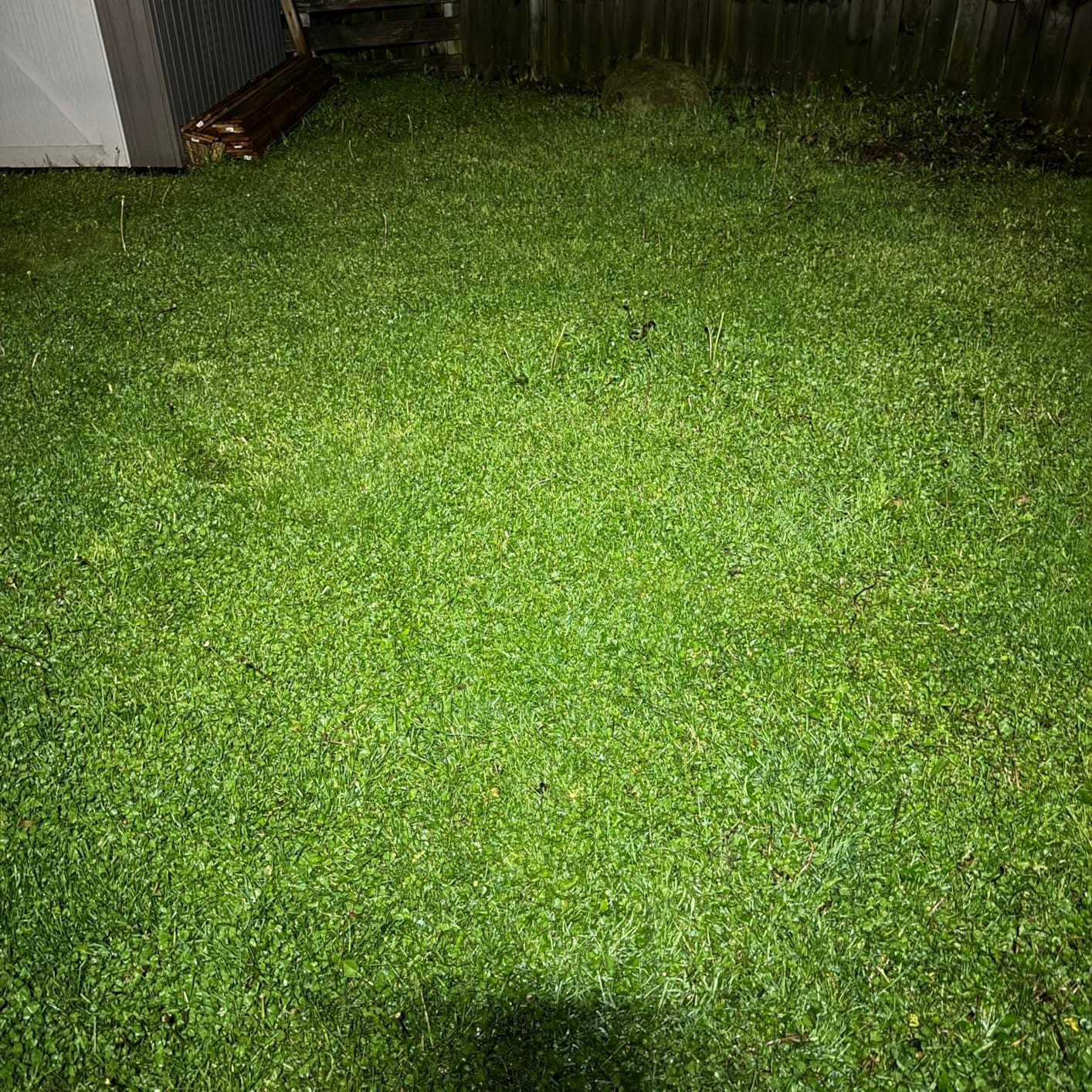
This light bar design is unusual and it works. Instead of a single emitter, you get 31 LEDs behind a wide bar that floods 230 degrees, so you can see your whole work area without turning your head. Electricians and handymen working in attics, under cabinets and inside equipment racks consistently single it out for that coverage.
The head tilts through 90 degrees smoothly, and a 5000mAh battery with USB-C charging gives 12 hours on low and 6 hours on high, with owners reporting multi-day use on one charge in typical service.
Flood Coverage Versus Beam Reach
Understand the tradeoff before you buy. A 230 degree flood is the best close-range tool in this list, and a poor long-range one. If your job is inspecting a panel, trimming joists or working under a sink, this is exactly right. If you need to pick out a fault 100 feet down a corridor, you want a spot beam instead.
The 1500 lumen headline deserves a caveat. One reviewer measured output closer to 450 lumens, so treat that number as a marketing figure and judge the light by its flood pattern, which genuinely delivers.
Hard Hat Fit and the Accessory Kit
Eight hard hat clips are included, which solves the mounting problem outright for crews on site. A zippered carry case is also in the box, a small detail that matters when the light lives in a van rather than a desk.
The front and tail lights can run together, and three modes cover high, low and strobe for signaling. The red tail light is useful on a night site where you need to be seen without blinding the person you are talking to.
Long-Term Ownership Concerns
The absence of a separately sold replacement battery is the real drawback. On a lamp meant to be worn daily, a sealed unreplaceable cell ends the useful life of the product when it finally fails.
The rear-mounted switch is also a minor issue in crawls, where you can bump it off with a ceiling joist. The light body is ABS rather than metal, so treat it as a dry-site and light-duty wet-site tool.
4. Klein Tools 56062 – Built for Hard Hats and Tool Fleets
Klein Tools 56062 Rechargeable LED Headlamp/Worklight for Klein Hardhats, 300 Lumens, All-Day Runtime, 3 Modes, for Work and Outdoors
300 lumens max
Hard hat bracket mount
Integrated magnet
3.36 ounces
Pros
- Mounts directly to Klein hard hats and bracket strap
- Integrated magnet for hands-free positioning
- Three genuinely useful modes up to 14 hours
- Battery fuel gauge with colored LEDs
- Slim profile comfortable over long shifts
Cons
- 300 lumen ceiling is modest for large work areas
- Non-removable integrated battery limits field charging
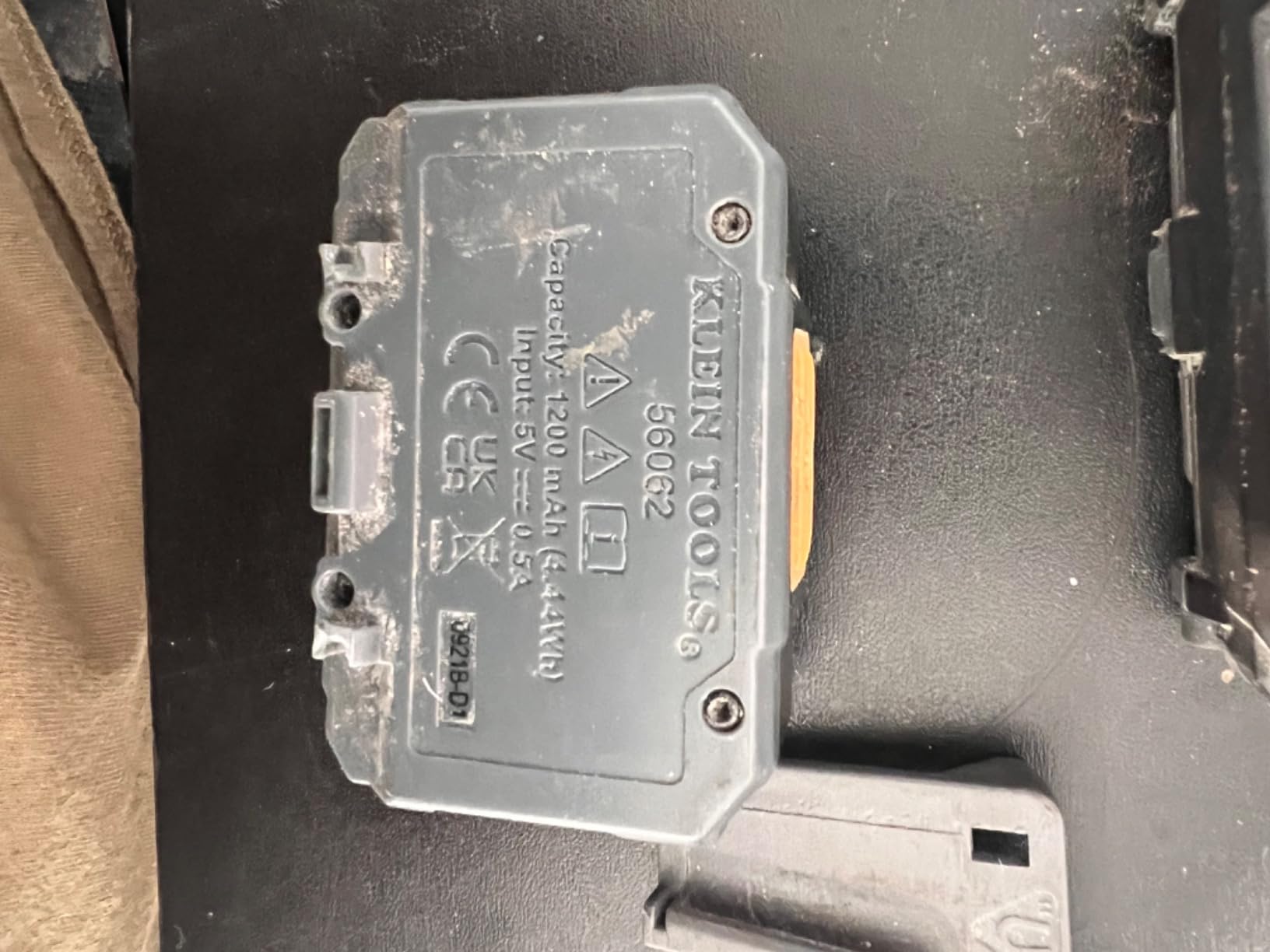
Everything about this lamp is shaped by the fact that it lives on a hard hat. The slim profile, the direct bracket-strap attachment, the integrated magnet for when you need to pull the light off and stand it on steel, and a 3.36 ounce weight that disappears under a helmet. Electricians and general trades treat it as standard-issue rather than aspirational.
Three modes cover the useful spread: a 300 lumen boost for 4 hours, a 215 lumen spotlight for 9 hours, and a 100 lumen floodlight for 14 hours. The floodlight is the one that gets a full shift out of a charge.
Mounting: The Feature That Decides This One
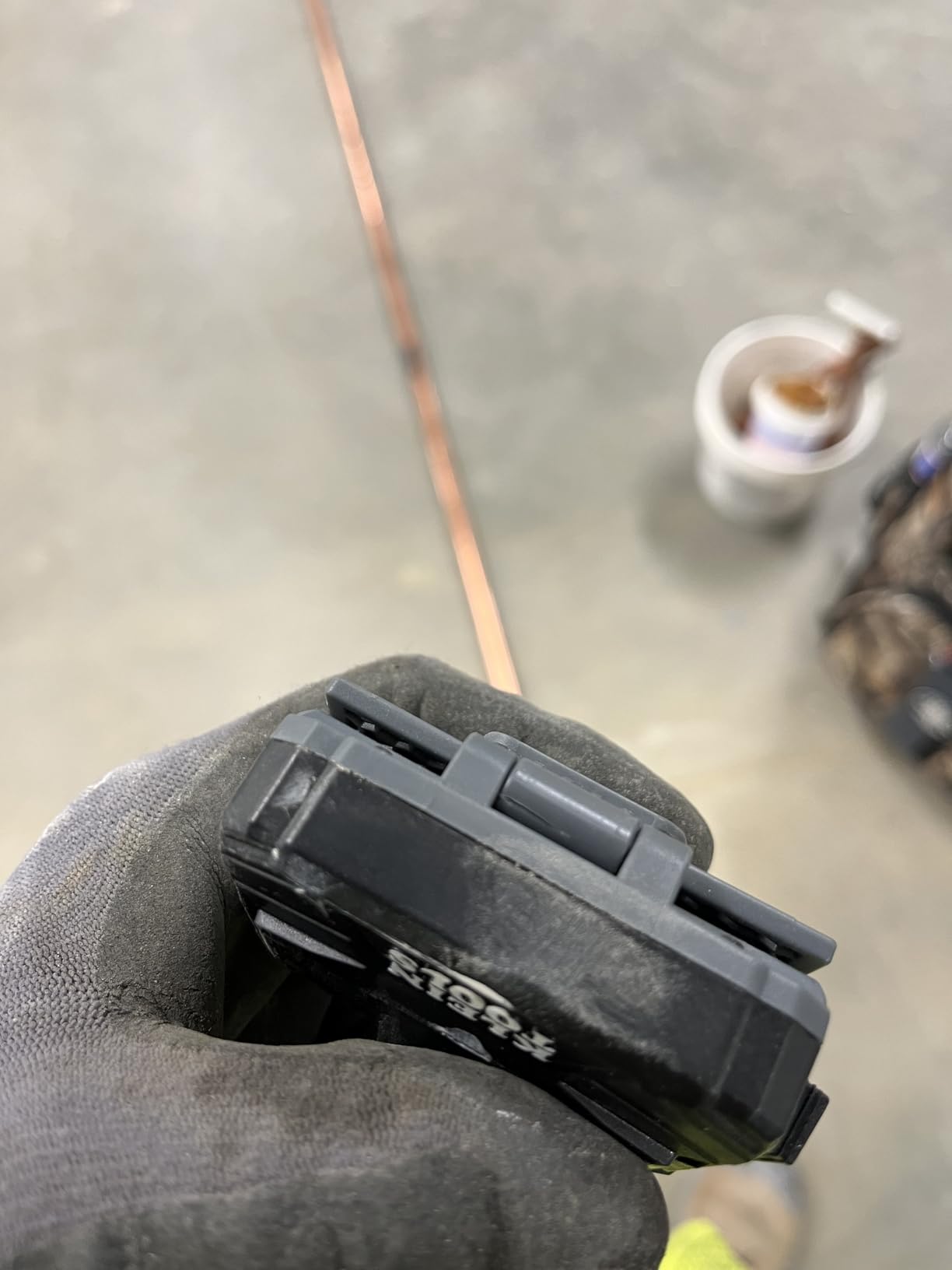
It attaches directly to Klein Tools hard hats and to the Klein bracket strap, then removes for recharging without unclipping anything else. That single design decision removes the bounce problem that owners on r/HVAC describe as the biggest complaint with any headlamp, because the light is anchored to the shell rather than balanced on a strap.
For a crew already standardized on Klein tools, this is a straightforward equipment decision rather than a lighting one.
Battery Gauge and Field Charging
The tri-color LED fuel gauge is a genuinely practical field feature. One of the most common complaints across this entire category is a headlamp dying mid-task while its indicator still shows green, and a visible multi-color gauge is a direct answer to that.
The tradeoff is that the battery is built in and not removable. You return the lamp to a USB-C charger rather than swapping a cell, which is simpler for a van setup with a shared charging block but limits you on long remote jobs.
Durability and Honest Limits
IP54 dust and water resistance plus a 6-foot drop test rating suit job-site abuse, and the pivoting mount allows up to 160 degrees of lighting angle so you can light a floor while wearing it on a helmet.
The 300 lumen ceiling is genuinely modest. If your work includes outdoor site checks or large open areas, pair it with a higher-output model rather than trying to force this one. The comfort and mount security, not the output, are why it earns a place on a helmet.
5. Coast XPH34R – Maximum Output with Long Beam Distance
Coast XPH34R 2700 Lumen USB-C Rechargeable-Dual Power LED Headlamp with Pure Beam Twist Focus and Magnetic Base
2700 lumens max
295 m beam distance
In-body battery
Magnetic tailcap
Pros
- Low setting alone outlights many older lights at full
- Smooth twist focus from flood to spot
- No dangling external battery pack
- Full-shift runtime reported by users
- Real-time power indicator
Cons
- Heavy aluminum build shifts when lying under a vehicle
- Turbo steps down quickly for heat
- Small forehead contact area without a hard hat
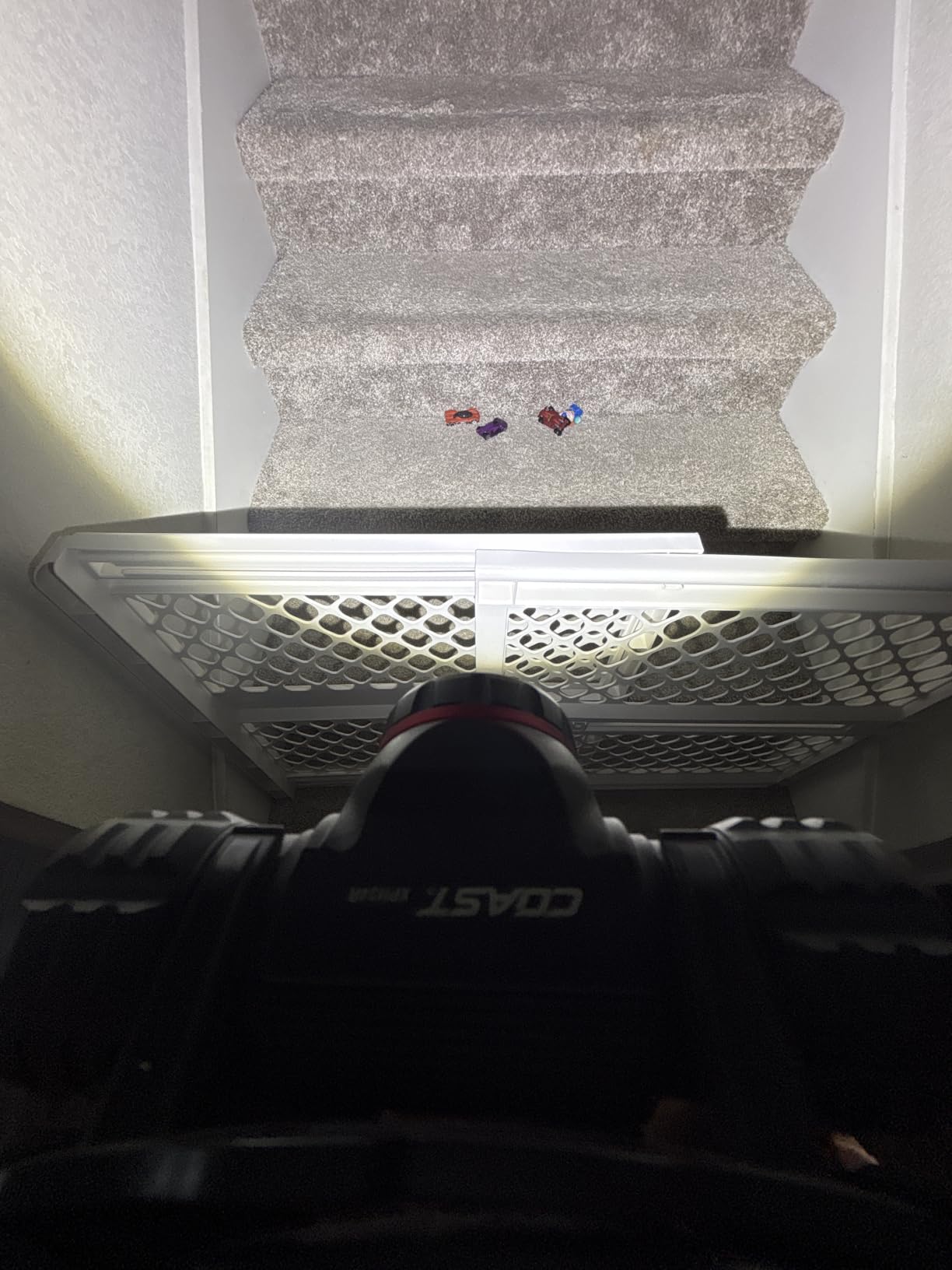
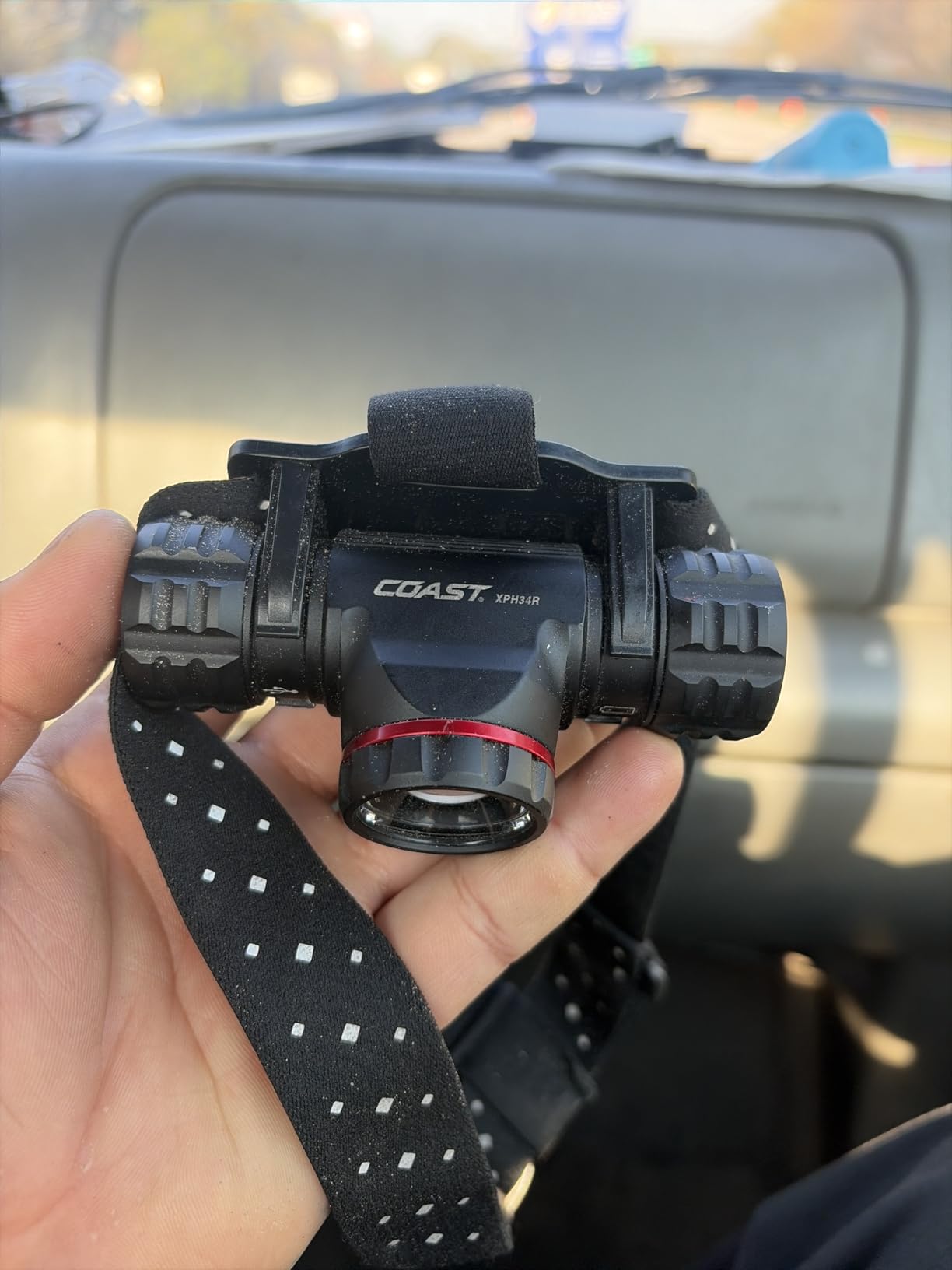
The XPH34R is the brightness answer. It puts out 2700 lumens at maximum with a 295 meter beam distance and 120 hours of rated maximum runtime, and the Pure Beam twist focus moves from a wide Ultra View flood to a Bulls-Eye spot with no halo artifacts. Several industrial users report running it on a hard hat for more than a year without problems.
For mechanics working underneath a vehicle, the magnet on the tail cap and the detachable body mean you can park the light on a chassis member and get both hands under the car with the light pointed where you need it.
Sustained Output and Thermal Step-Down
Turbos are not free. Owners note that turbo output is sustained only briefly before the light steps down to manage heat, and the headline lumen number reflects turbo only. If you plan to run maximum all shift, set expectations accordingly and plan to work mostly in the mid and high settings.
Even so, the low setting alone outlights many older headlamps at their maximum, which tells you how much the underlying platform has improved. IP54 water resistance and 1-meter drop protection cover typical site conditions, and a COAST lifetime warranty backs it.
Handling the Weight Overhead
At 180 grams in an aluminum housing, this is a front-heavy lamp, and the complaint about working overhead is consistent. Reviewers describe the build slipping forward when lying on your back under a vehicle, which is a real ergonomic problem for under-car work specifically.
The small forehead contact area is the second issue. Under a hard hat the mass is carried by the shell, but worn on a bare head for eight hours it can create a hot spot that others across this category describe as the main reason they take a work lamp off.
Who Should Buy This Output Level
Choose high output for search and rescue style work, outdoor site checks at distance, first responders, and any scenario where you need to light a space that is not within arm’s reach. The 120 hour rated maximum runtime and optional AA battery carrier add flexibility for extended deployments.
Skip it if your work is entirely at arm’s length. On close-up wiring, 2,700 lumens creates glare off pale surfaces and you will end up dimming it anyway, at which point the lighter options make more sense.
6. Klein Tools 56048 – Strap Comfort Over Long Shifts
Klein Tools 56048 Rechargeable LED Headlamp, Adjustable Fabric Strap, 400 lms, All-Day Runtime, for Work, Running, Outdoor Hiking
400 lumens
22 hour flood mode
Fabric strap with silicone grip
Tri-color battery gauge
Pros
- Fabric strap with silicone grip stays put during active work
- Three well-spaced modes including a 22-hour flood
- Tri-color battery gauge readable at a glance
- Mounts to Klein hard hats or bracket strap
- 4.8 ounces with a 6-foot drop rating
Cons
- 400 lumen ceiling is low against high-output models
- Built-in battery cannot be swapped in the field
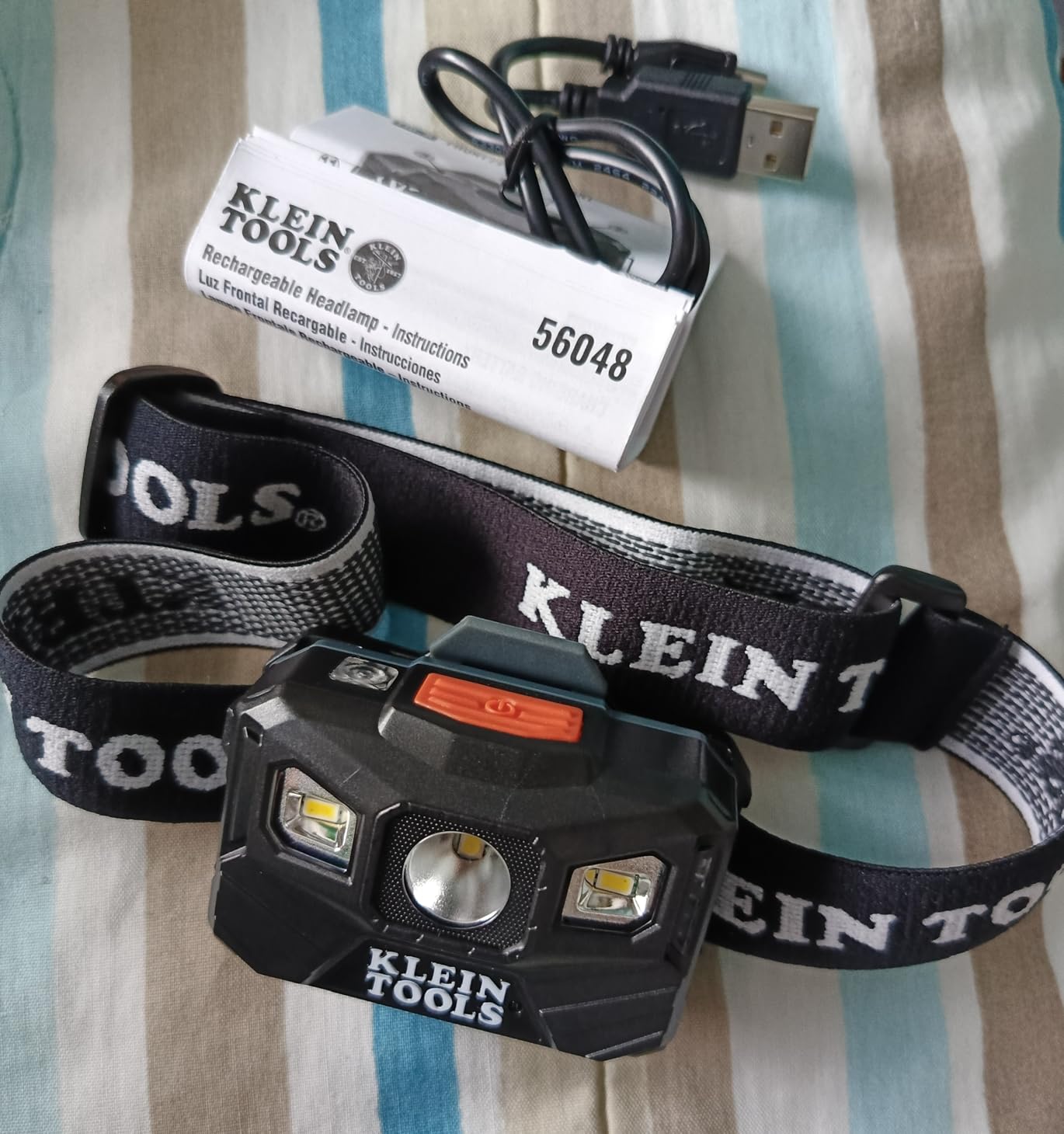
Address the biggest complaint first: headlamps that fall down or shift during work. This Klein model answers it with an adjustable fabric strap with a silicone grip, and trades users consistently report that it stays in place during active work where elastic bands slide.
It weighs 4.8 ounces and takes three FL1 rated modes: 400 lumens all-on for 4 hours, a 200 lumen spotlight for 12 hours and a 100 lumen floodlight for 22 hours. That 22-hour flood figure is the number that matters for anyone who does not want to think about charging.

Why the Strap Matters More Than the Specs
Across reviews of every lamp in this roundup, fit is the number one issue. A light that bounces forces you to stop, re-seat it with gloved hands, and refocus your beam, and that interruption repeats dozens of times a shift. The fabric-and-silicone design here is the specific answer to that problem, and owners single it out first.
It can be worn directly on the head, mounted to a Klein hard hat, or attached to the bracketed strap, and it detaches for handheld use. That flexibility makes it a sensible standard-issue lamp for a mixed-crew toolbox.
Modes, Gauge and Charging
The tri-color LED battery gauge gives quick state-of-charge feedback, which solves the still-green-indicator problem that frustrates owners of lesser lights. USB-C charging uses the same cable as most of your other site electronics.
Note that the battery is integrated and not removable, so this is a plug-it-in-at-the-van lamp rather than a swap-a-cell lamp. For crews running remote, that distinction should decide the purchase.
Where 400 Lumens Is Enough and Where It Is Not
At 400 lumens, this handles interior panels, mechanical work at arm’s length, basements, attics and evening site checks comfortably. It is not a yard-lighting tool, and the reviews describe output as adequate for task lighting rather than impressive throw.
The 6-foot drop test and dust and water resistance suit site conditions, and the fabric strap means you can forget you are wearing it. For a technician who spends ten hours in a hat, that comfort is worth more than raw output.
7. NEBO Transcend 1500 – Dial Control and Magnetic Positioning
NEBO Transcend 1500 Rechargeable Headlamp | 1,500 Lumens, 5 Light Modes, Detachable Magnetic Work Lamp, Waterproof, Bright LED Head Light for Hiking & Camping, Includes USB Charging Cable
30 to 1500 lumens on a dial
Replaceable 18650 cell
IPX7 waterproof
Magnetic base
Pros
- Brightness dial gives incremental control instead of fixed modes
- Survives serious drops with only cosmetic damage
- Strong magnetic base plus tilt for odd-angle lighting
- Replaceable 18650 cell
- Low mode runs about 28 hours
Cons
- No red night-vision mode
- Battery must be removed to charge
- Headband loses adjustment over time
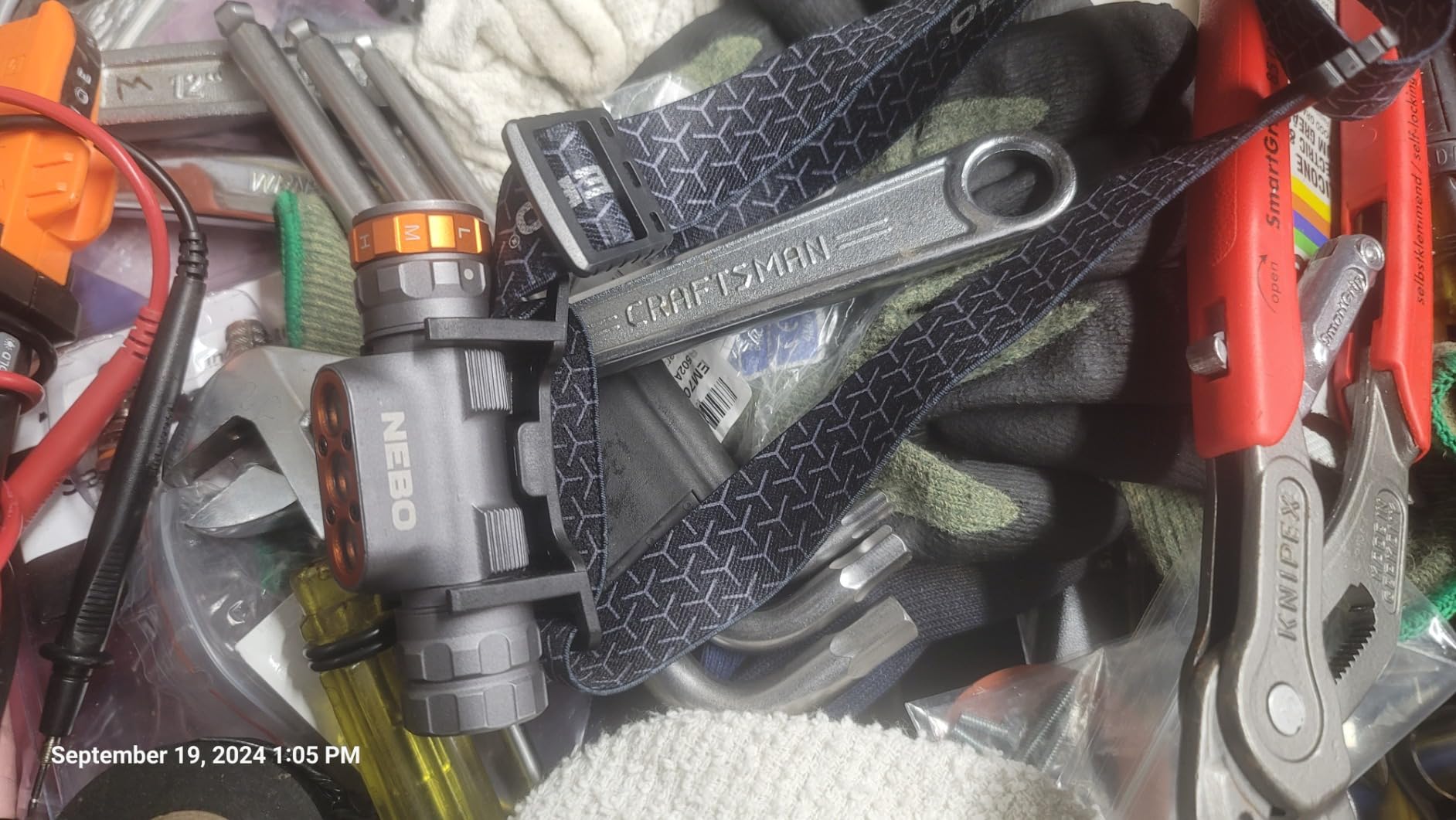
The Transcend 1500 does something most headlamps in this list do not: a control dial. Instead of cycling through fixed modes and hoping you land on the right one, you dial the output from 30 lumens to 1500 lumens. For HVAC technicians moving between a dark attic and a lit mechanical room, that is a real productivity difference.
HVAC, delivery and hard-hat users describe it as a durable, bright work light that survives long shifts, with particular praise for the dial and the magnetic base. One owner dropped it 30 feet from a boom lift and it survived with a small ding.
Magnets and Tilt for Odd-Angle Work
The detachable magnetic base is the feature that earns this lamp its place in mechanical and HVAC work. On a duct face, a steel stud or the underside of a vehicle, you can park the light exactly where you need it and take both hands off it. Controllable tilt covers the angles where a helmet-mounted light cannot follow your gaze.
Output spans five modes with a brightness dial, a strobe for emergency signaling and up to 28 hours on the low setting, with a 3200 mAh replaceable 18650 cell and a full charge in as little as 3.5 hours.
IPX7 Protection and Field Service Life
IPX7 waterproofing plus impact resistance is a meaningful upgrade for damp mechanical rooms, and combined with the dial control it makes this a strong crawls-and-ducts pick. Anodized aluminum at 5.12 ounces stays comfortable for a full shift.
Two gripes matter. The battery must be fully removed to charge, which breaks the light into three pieces, and there is no red night-vision mode, so it is the wrong pick for stealth or wildlife-sensitive night work.
Long-Term Considerations for Crews
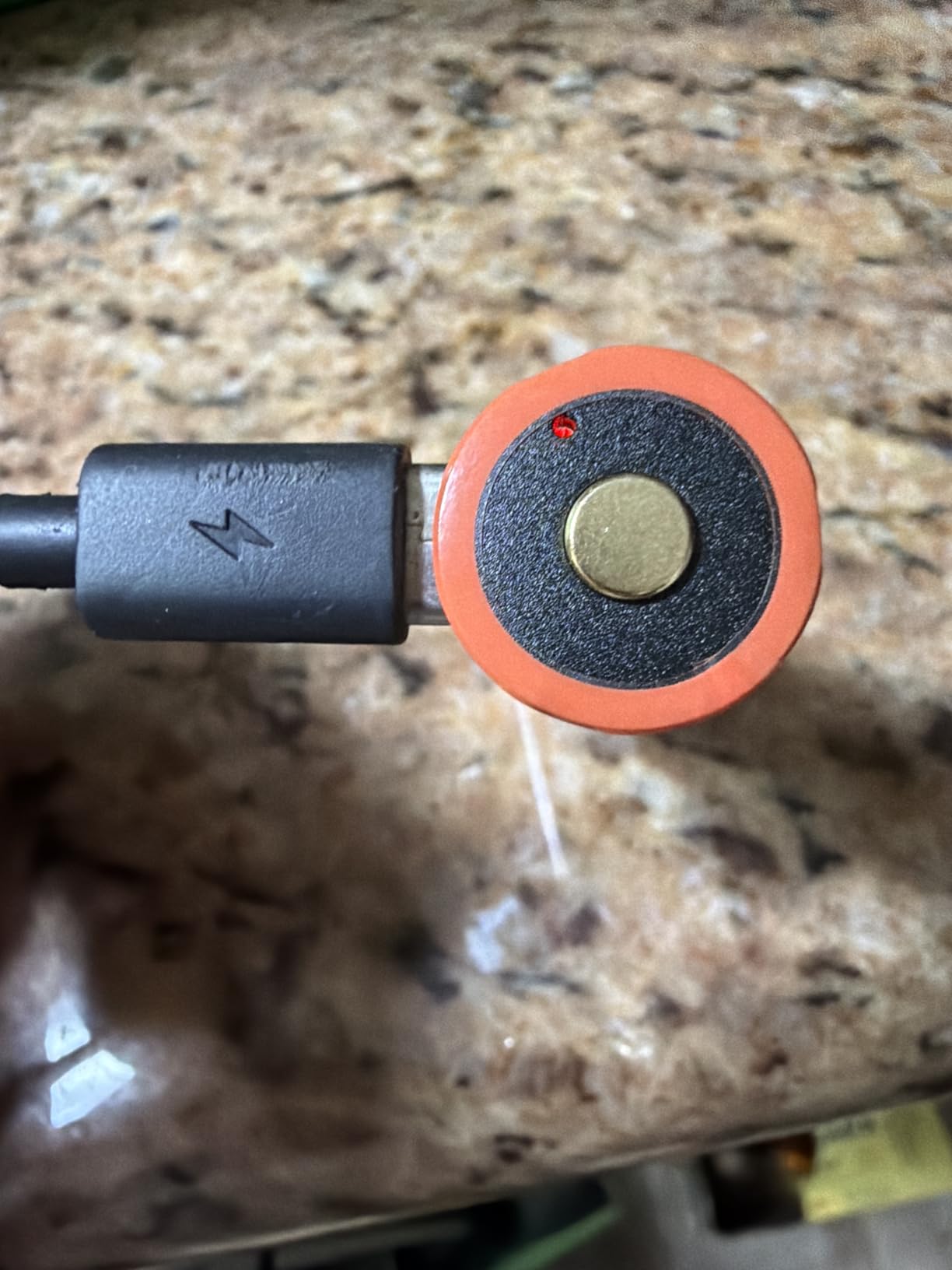
The replaceable 18650 cell is the decisive long-term feature. Spare cells are cheap, widely available and standardized, so a crew can carry two spares per technician instead of replacing whole lamps.
The trade-offs are minor by comparison: the supplied cell runs slightly longer than a standard button-top cell, and the headband loses some adjustment over time. Neither affects the light output.
8. OLIGHT Perun 3 – Red Light and Rugged Metal Build
OLIGHT Perun 3 Headlamp Rechargeable, Red Light, Waterproof, Orange
3000 lumens max
Red light with 2 levels
Proximity sensor
IP68 rated
Pros
- Very bright with runtime that often spans weeks in daily service
- Red light with two brightness levels plus strobe
- 6061-T6 aluminum and stainless steel mount survive rough use
- Strong magnetic tail cap and right-angle form
- Proximity sensor is useful and can be disabled
Cons
- Wide flood beam with no zoom limits throw to roughly 50 to 75 yards
- Heavier than many headlamps
- Higher price than plastic alternatives
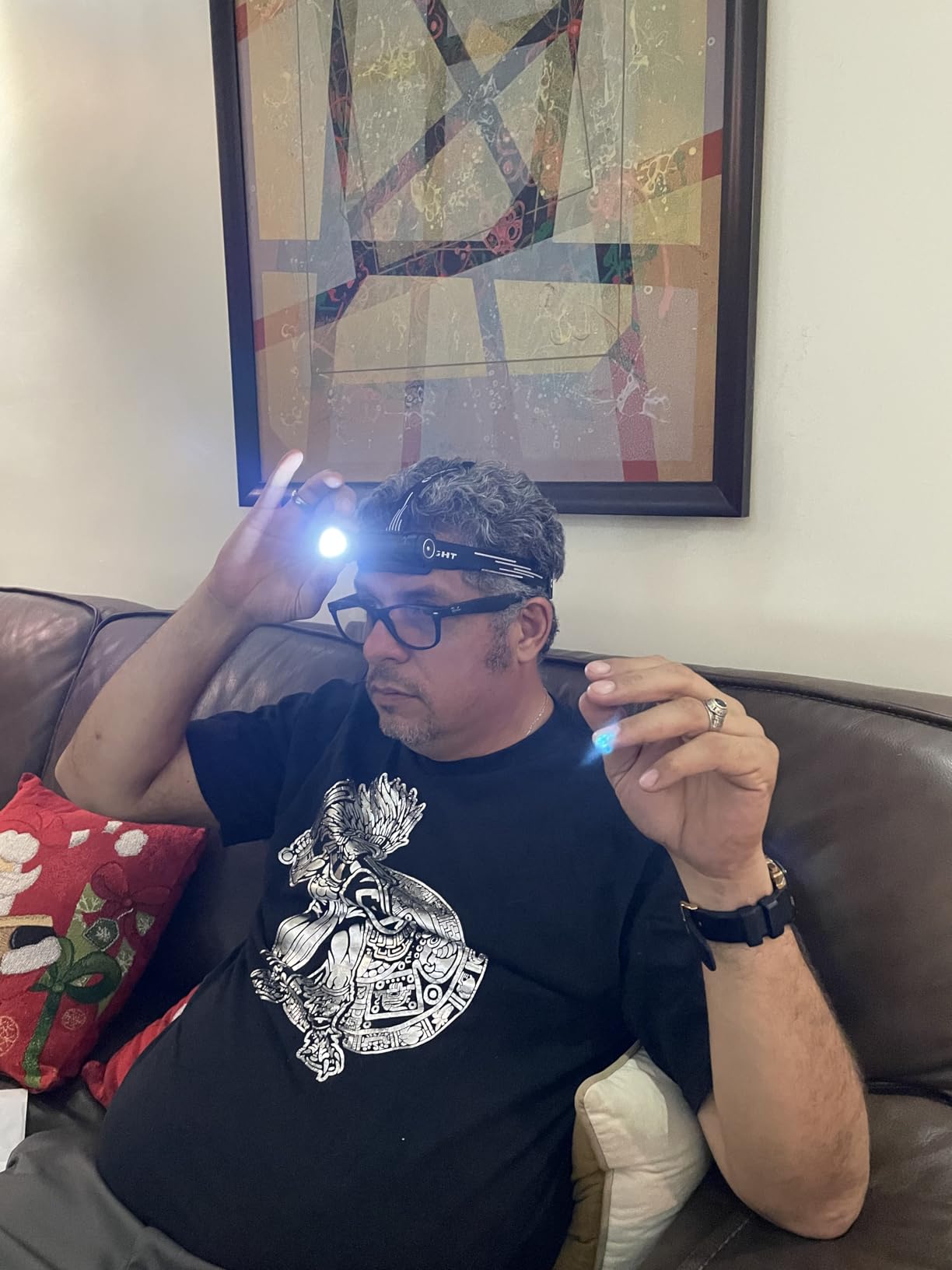
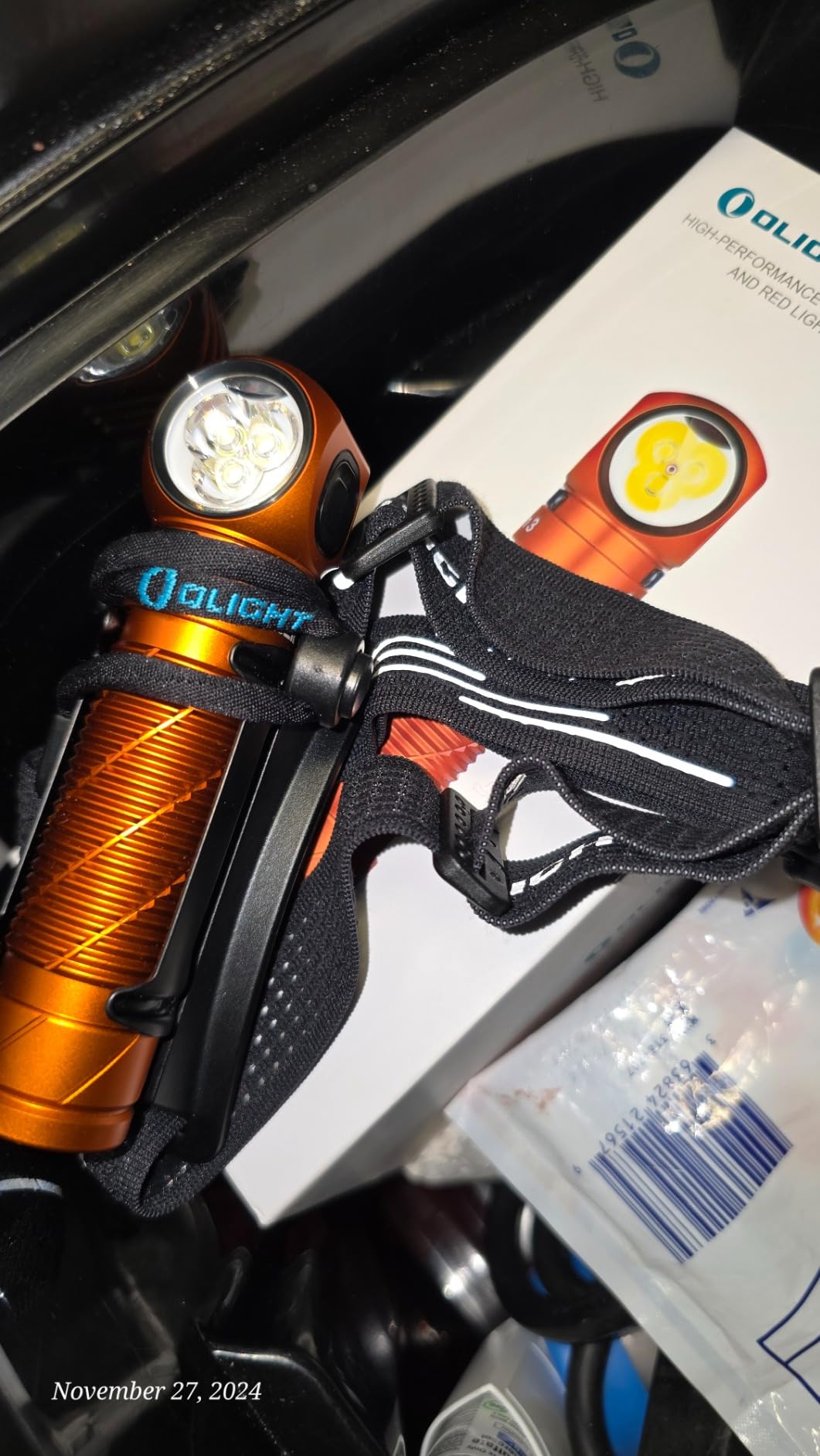
The Perun 3 is built for people who need one light for very different conditions. It reaches 3,000 lumens with a 160 meter beam distance and a rated runtime of 20 days on low, and it carries a red light with two brightness levels plus a flashing mode for signaling. Home inspectors, electricians and outdoor users treat it as a long-runtime work light rather than a single-purpose headlamp.
It detaches from the headband into a right-angle flashlight with a strong magnetic tail cap, which is how most owners use it for wiring and crawlspace work. The 6061-T6 aluminum body and stainless steel headband mount take drops, chemicals and snow without complaint.
Red Light for Night Shifts and Low-Light Work
Red light preserves dark adaptation, which matters on night shifts, in wildlife-sensitive settings and for anyone who needs to check a space without ruining their own night vision. Two brightness levels plus a flash give you working and signaling output, and the review data describes it as genuinely useful rather than a checkbox feature.
For crews working night road repair, utilities inspections or security rounds, this is one of the few lamps here where the red mode is a working tool rather than a novelty.
Proximity Sensor and Safety Step-Down
The proximity sensor reduces output automatically when an object is detected within half a second of turbo activation. Turn the lamp toward your hands and it steps down instead of dazzling you at close range, which is a direct answer to the eye-strain complaint that comes with high-lumen headlamps.
The feature can be disabled when you want full output regardless. IP68 waterproofing and dust protection make it one of the best-protected lights here, appropriate for wet, dirty and confined environments.
The Zoom Limitation and the Weight
There is no zoom or focus control. Useful throw runs out at roughly 50 to 75 yards, so if you need to pick out detail at distance, this is the wrong tool and a twist-focus or stepless-zoom model is the right one.
Weight comes from the large battery and metal body, and that front mass is noticeable for all-day wear. For anyone working under a hard hat, the shell carries the load well. For bare-headed eight-hour use, expect a hot spot.
9. Black Diamond Cosmo 350 – Dual-Fuel Flexibility
BLACK DIAMOND Cosmo 350 Headlamp, AAA Powered, Dimmable, Bright, BD Octane
350 lumens
AAA or BD 1500 dual fuel
Red night vision
IP67 submersible
Pros
- IP67 rated for submersion to 1 meter for 30 minutes
- Dual fuel runs on AAA alkaline or the rechargeable BD 1500 cell
- Dimming and strobe plus red night-vision modes
- Low-profile balanced housing for long wear
Cons
- 350 lumens is modest for large work areas
- Not USB-rechargeable in the AAA configuration
Dual fuel is the idea here, and it is rarer than it should be. The Cosmo 350 runs on three AAA alkaline cells included in the box, or on the rechargeable BD 1500 lithium-ion pack if you have one. For a crew that sometimes works where charging is impossible, that flexibility removes a whole category of planning.
Output is 350 lumens of even light with dimming, strobe and red night-vision modes on a simple button interface. The low-profile housing and adjustable headband stay balanced and comfortable over long wear.
IP67 Protection, a Cut Above Typical
IP67 means the light keeps working after submersion to 1 meter for 30 minutes, which is a genuine step up from the IPX4 and IP54 ratings common on site headlamps. For drainage work, basement inspections and wet crawl spaces, that rating does real work.
Owners highlight the waterproofing and the dual-fuel flexibility together, and describe output as even and bright for its class. The three-year manufacturer warranty adds confidence for a job-site tool.
Where the Lower Output Is the Right Trade
350 lumens is enough for campsite-style backup duty, inspections, marking out and short tasks, and it is deliberately not enough to light a whole site. If you are lighting a wall or working at distance, this is the wrong category.
Also note the second configuration is not USB rechargeable. If you buy the AAA version, you are managing disposables, which is cheap and universally available but adds ongoing cost per technician per year.
10. Fenix HM71R – Output That Holds Under Heat
Fenix HM71R Headlamp, 2700 Lumen Super Bright USB-C Rechargeable Spot Light Flood Light L-Shape 90 Degree Right Angle Flashlight Industrial Grade with LumenTac Organizer
2700 lumen spot to 251 yards
180 degree rotation
48 hours on low
IP68 rated
Pros
- Holds turbo brightness far longer than cheaper headlamps
- Runs cool and stays bright until cell voltage actually falls
- 180 degree rotation while mounted with no restrictive holder
- Premium wide adjustable headband with silicone strip
- Mode memory returns to your last brightness
Cons
- Highest price in the group and comes with a LumenTac organizer rather than spare cells
- Turbo brightness is only sustainable for a short burst
- Spot lens is plastic and one owner reported it deformed when pressed against fabric in turbo
The headline on this one is not lumens, it is thermal behavior. Users who researched the category consistently report that the HM71R holds turbo output much longer than cheaper headlamps, runs cool, and stays bright until battery voltage genuinely falls rather than stepping down early. It carries intelligent overheat protection and a digitally regulated circuit, and owners notice the difference over long shifts.
It delivers 2700 lumens of spotlight illumination reaching 251 yards, plus a 500 lumen flood for close work, so you are not choosing between reach and coverage.
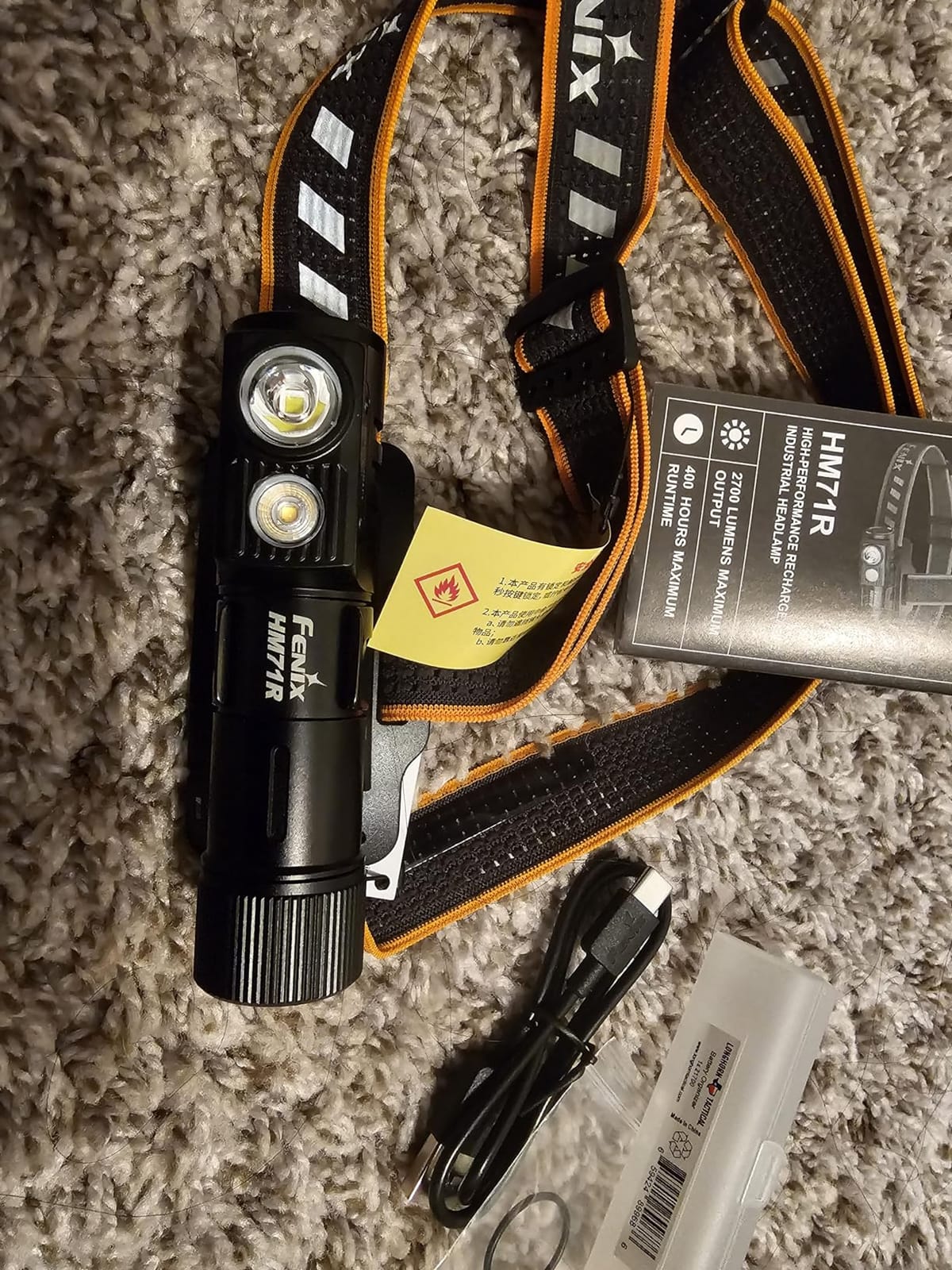
Industrial Temperature Rating and Build
The lamp is rated from minus 31 to 113 degrees Fahrenheit and carries IP68 waterproofing, which covers cold outdoor installs, hot mechanical rooms and wet conditions. The anodized aluminum body and the reflective breathable headband are built for sustained wear rather than occasional use.
USB-C charging reaches full in about 4 hours, with a power status indicator on the switch and up to 48 hours on low. A five-year warranty backs the build.
Right-Angle Design and Rotation
The quick-release clip detaches the lamp from the headband so you can clip it to a pocket, stand it on a surface or attach it magnetically. While mounted, the lamp rotates 180 degrees, and there is no restrictive silicone holder to fight with when you need to angle the light sharply.
Mode memory is a small feature that matters daily: a single click turns the light on and off, returning to the brightness you were using, instead of forcing you to cycle the whole mode ring.
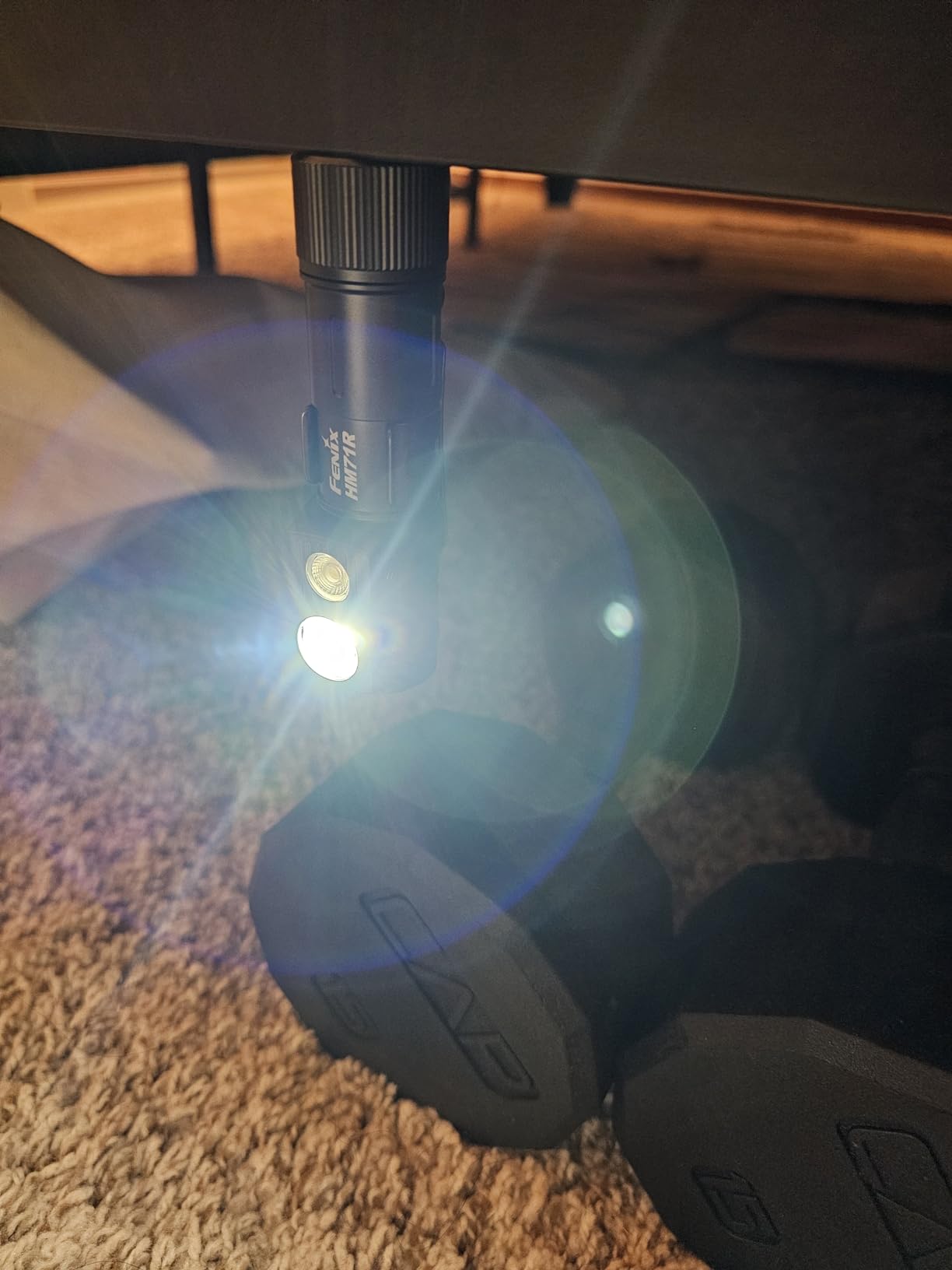
Cost, Weight and the Honest Downsides
This is the highest-priced lamp in the group, and the package includes a LumenTac organizer rather than spare cells, so you will want to budget for standard 21700 cells separately if you run multiple shifts.
At 7.32 ounces it is heavy for all-day wear, and turbo is still only sustainable in bursts. One owner also reported the plastic spot lens deforming when pressed against fabric in turbo, an isolated report but worth knowing if you work pressed against walls and ceilings.
11. Nitecore HC65 UHE – High-CRI Color and Three Light Sources
Nitecore HC65 UHE Headlamp, 2000 Lumen Max Heavy Duty Metal, USB-C Rechargeable with White, Red, and Reading Lights for Camping, Hiking, Hunting, and Industrial Works (Black)
2000 lumens
High-CRI white plus reading and red lights
82 hour runtime
2 meter impact rated
Pros
- High-CRI white light gives true color reproduction for inspection
- Three separate sources including a reading light and red light
- Up to 82 hours runtime with a 2 hour USB-C recharge
- Aero-grade aluminum with IP68 and 2 meter impact resistance
Cons
- Multiple light sources and modes take time to learn
- Premium aluminum construction adds weight for all-day wear
Color rendering is the reason to look at this lamp. A high-CRI emitter means wires, paint, sealant and printed labels read true, which matters for inspection work, finish painting and any task where you are judging color rather than just seeing shapes. Owners who moved up from major-brand lights single out the color accuracy first.
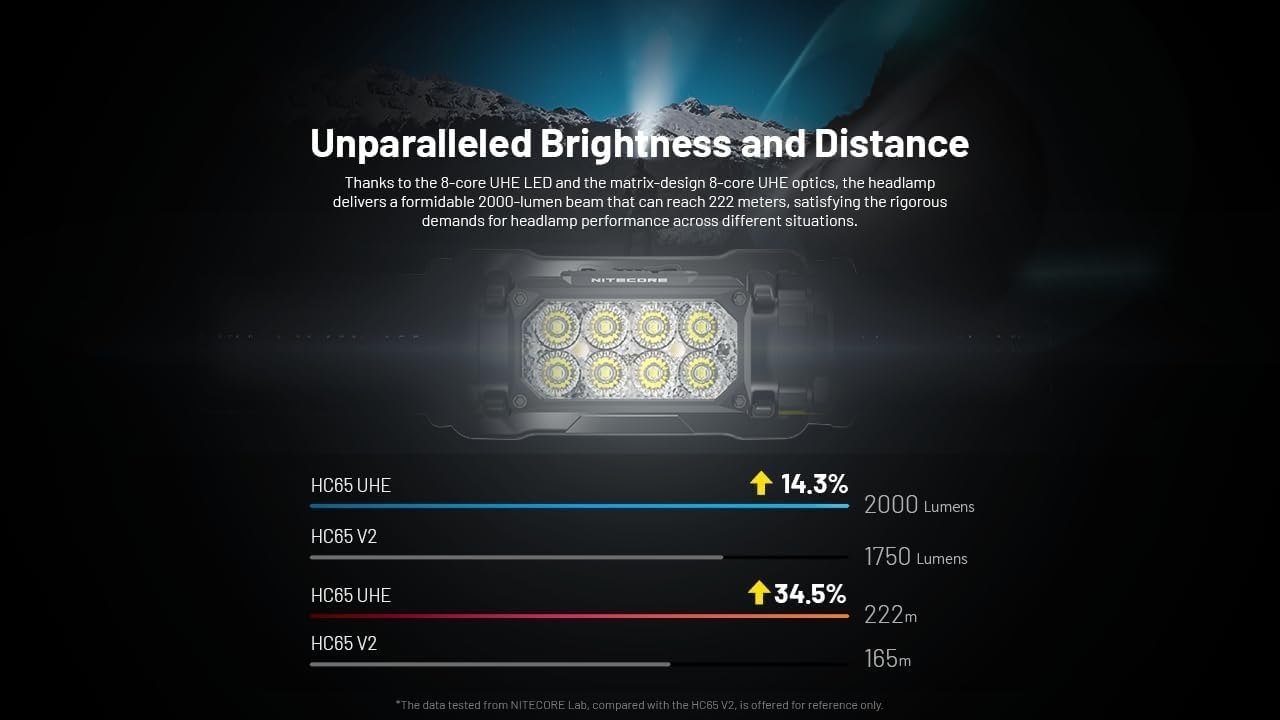
It also carries three distinct sources: a primary white LED with four output levels plus SOS and beacon, a dedicated reading light with two low brightness levels, and an auxiliary red light. Total output reaches 2,000 lumens with a 243 yard beam distance.
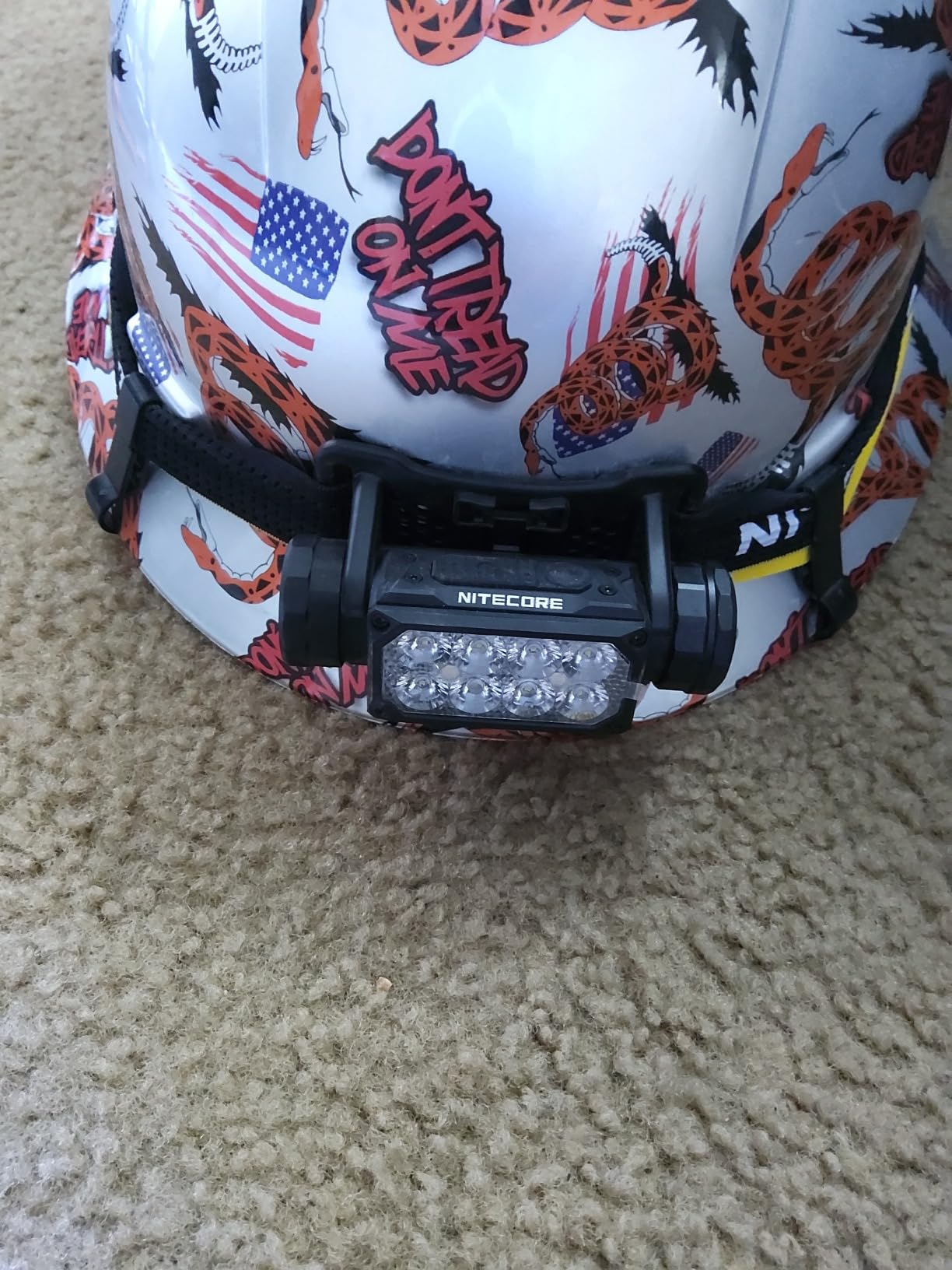
Three Light Sources in One Body
The reading light is the sleeper feature. At low brightness it lights a panel or a manual without blasting your eyes, which is exactly the close-up glare problem that high-output headlamps create. The red light handles night work, and SOS and beacon modes cover signaling in an emergency.
That is three tools in one housing, and the mild cost is a control layout that takes a few shifts to learn. Anyone who fumbles modes on a ladder will want to spend a day with it before relying on it in a live task.
Runtime, Charging and Durability
Up to 82 hours of runtime with a 2 hour recharge from the built-in waterproof USB-C port, and a power status indicator removes the guessing game. The aero-grade aluminum alloy with a hard-anodized finish carries IP68 waterproofing and impact resistance to 2 meters, which is the highest drop figure in this roundup.
A storage case is included, a small item that matters when the light lives in a van and travels to callouts. At 5.44 ounces it sits in the middle of the weight range.
Who This Lamp Is For
Inspectors, electricians doing finish work, paint and color matching, and anyone who has ever squinted at a wall under a bluish LED and second-guessed the result. The reading light and high-CRI output address close work that most headlamps handle poorly.
If you need long-range throw instead, a zoomable model is the better pick. If you need the lowest possible weight, a plastic body will serve you better. The learning curve and the weight are the two things to accept before ordering.
12. Nitecore HC75 UHE – Stepless Zoom and Lockout
Nitecore HC75 UHE 3000 Lumen USB-C Rechargeable Zoomable Work Headlamp, White and Red Beams for Industrial Work, Night Camping, Hiking, and Hunting, Adjustable Focus with Floodlight and Spotlight
3000 lumens
Stepless E-focus zoom
4500 Kelvin
5 white levels plus 2 red modes
Pros
- Stepless zoom moves from wide flood to tight spot with no steps
- Excellent high-CRI color rendering
- Very wide breathable strap that holds position without a top strap
- Fast USB-C to USB-C charging with long low-mode runtime
- Lockout mode stops it activating inside a bag
Cons
- Noticeably front-heavy with the battery at the front
- Headband side straps feel thin
- Some users report turbo stepping down after a few minutes
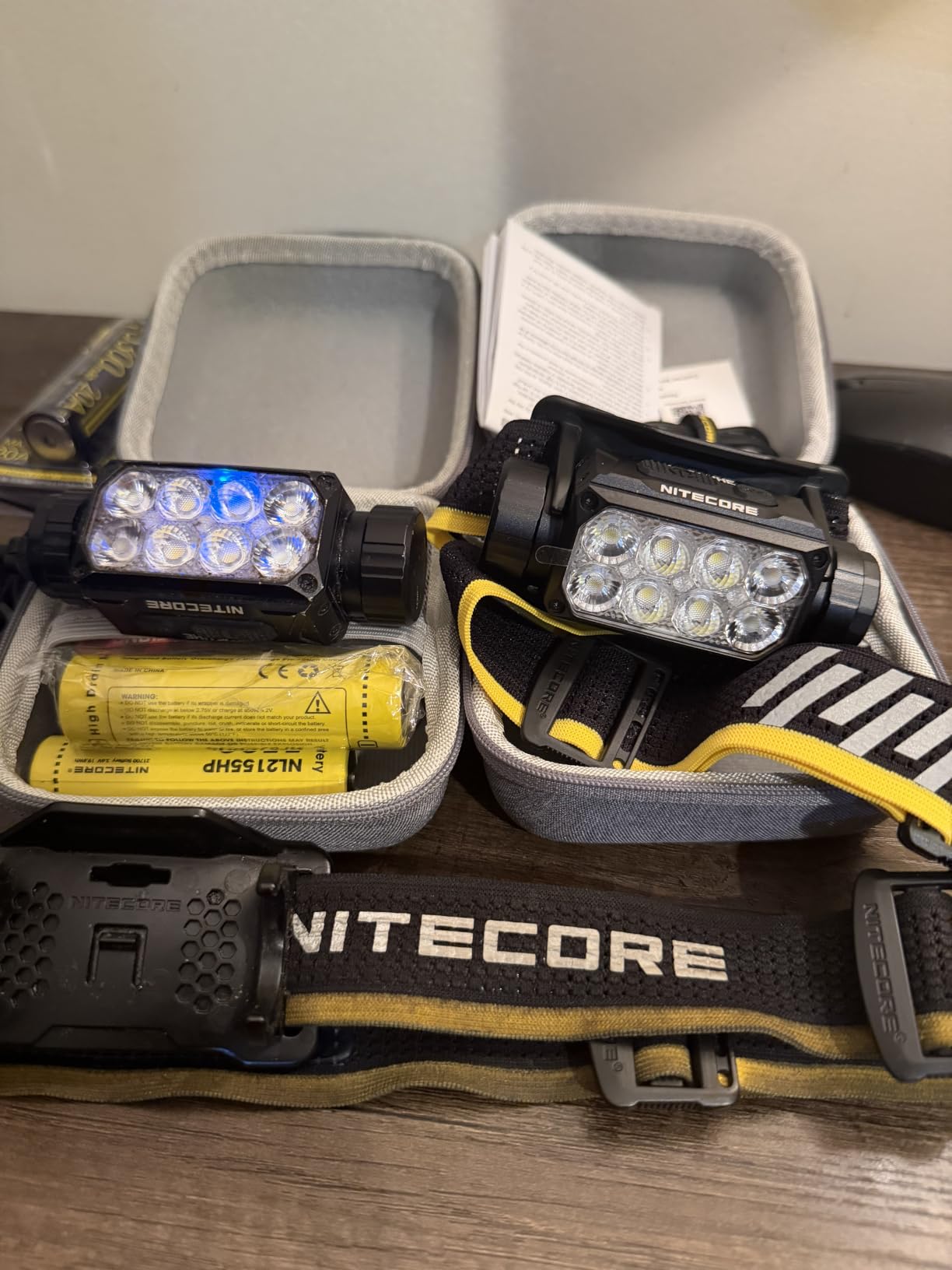
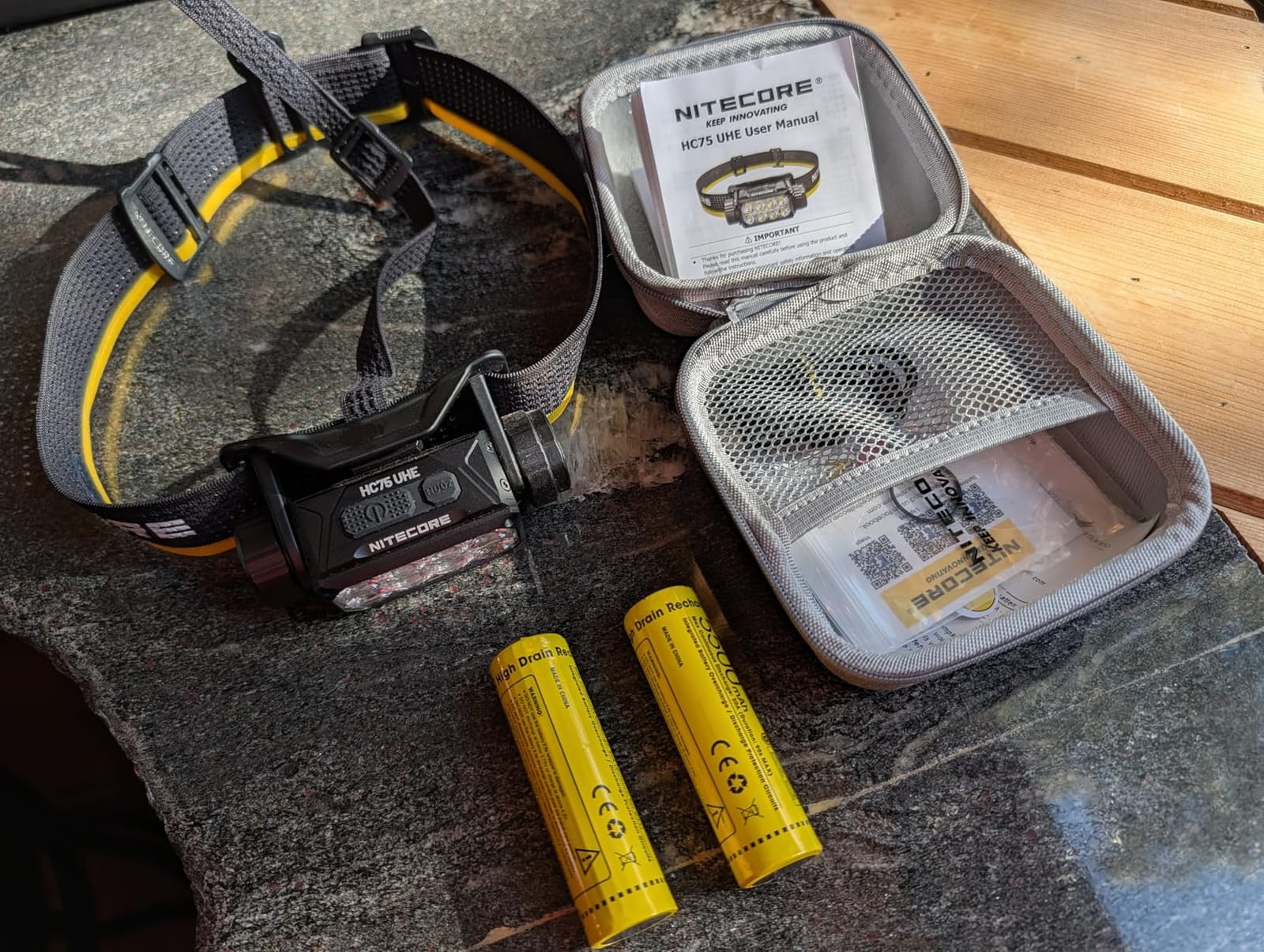
This is the most controllable lamp in the roundup. The stepless E-focus design moves continuously from a wide floodlight through a mixed mode to a focused spotlight, with no detents in between. When a job moves from a crawl space to a 200 yard yard-check without warning, that continuous control is the feature that makes the light usable across the whole task.
It reaches 3,000 lumens with a 209 yard throw, runs five white levels plus two red light modes, and a two-button layout gives direct access to Ultra High, Low and Red without cycling through everything else. Output sits at a neutral 4500 Kelvin, which reads cleaner than cool blue on metal and paint.
Zoom Control and Color Quality
Zoom changes how you work rather than just how bright you are. A tight spot for confirming a fault across a plant room, a wide flood for wiring a distribution board, a mixed mode for general site work, and you get all three from one lamp with no reconfiguration.
Long-term users rate the color rendering as excellent, with details and colors reading clearly, and describe the wide breathable strap as holding position without needing a top strap. Charging is USB-C to USB-C in a little over 2 hours.
Lockout Mode and Battery Indicator
Lockout mode prevents the lamp switching on inside a tool bag, which sounds minor until you have found a headlamp that flattened a flashlight battery in your overnight bag. The power indicator gives you a straight read on remaining charge rather than a vague green dot.
Those two details, plus the long low-mode runtime, are what make this practical for a full working week of intermittent use rather than a single demanding shift.
Front Weight and Turbo Behavior
At 7.36 ounces with the battery at the front, this is the most front-heavy lamp here, and weight distribution is the dominant complaint. Some users also report turbo stepping down after a few minutes, so treat 3,000 lumens as a peak figure rather than a sustained one.
The anodized aluminum body is water resistant and backed by a five-year warranty, and a storage case is included. For overhead and all-day work, test the fit with a hard hat before you commit to it.
How to Choose a Headlamp for Work
How Many Lumens Do You Actually Need?
More output is not automatically better. The honest answer is that 400 lumens covers most of what people ask a headlamp to do, and higher modes are for specific distances. Use this as a working map:
- Panel work, wiring, engine bays, under cabinets: 100 to 300 lumens. You want controlled flood, not raw power, because bright light at close range creates glare off pale surfaces and white metal.
- Garage, basement, attic, mechanical room, crawl space: 300 to 500 lumens, with a flood beam and a low setting you can dim to.
- Outdoor jobsite checks, yard work, large interiors: 500 to 1000 lumens with meaningful beam distance.
- Search, rescue, first response, checking a structure from a distance: 1000 lumens and up, and treat the headline figure as a peak you will not hold all shift.
If you are ever choosing between two lamps of similar build, buy the one with better beam control rather than more lumens.
Flood, Spot or Dual Beam: Getting the Optics Right
Beam type matters more than output for most trades. A flood spreads light wide and is correct for anything within a few feet, because it illuminates the whole work area and reduces the number of times you turn your head. A spot concentrates light into a narrow beam for distance, and it is what you want outdoors and across large spaces.
Dual-beam headlamps give you both, either through separate emitters, a separate flood module, or a twist or zoom control. The Coast XPH30R and XPH34R use a twist focus optic that moves between flood and spot, and the Nitecore HC75 UHE uses a stepless E-focus that moves continuously. Flood-only designs like the OLIGHT Perun 3 and the POKISEED wide bar perform well up close and lose their usefulness at distance.
Rechargeable vs Battery Powered for Full Shifts
Rechargeable is the default choice now, and the advantage is simple math: a lithium-ion cell costs nothing per shift to run. A dual-fuel lamp such as the Black Diamond Cosmo 350 covers the case where you work where charging is impossible.
Two cell formats come up constantly. 18650 cells are lighter and easier to carry, while 21700 cells hold more charge and give longer runtime, which is why premium lights like the Fenix HM71R use the larger format. Both are standard, cheap and easy to source, and that matters more than any proprietary pack.
Avoid lights with sealed, non-replaceable batteries when you work remote. The Klein 56062 and 56048 charge fast and work well, but the cell is integrated, so your only recovery option is mains power.
Hard Hat Fit, Comfort and the 8-Hour Bounce Problem
The most common complaint across owner reviews is not brightness, it is that a headlamp slides, bounces or creates a hot spot by hour six. Solutions exist, in order of effectiveness.
A purpose-built helmet mount or clip, included with the POKISEED and supported directly by the Klein 56062 and 56048, beats any strap because the shell anchors the light. If you must use a strap, a wide fabric band with a silicone strip, as on the Klein 56048, grips better than elastic. A top strap stabilizes heavier aluminum lamps on long shifts.
Weight is the second half of comfort. Lights under about 5 ounces, including the Klein 56062 at 3.36 ounces and the NEBO Transcend at 5.12 ounces, disappear on the head. Premium aluminum models between 5 and 7.5 ounces are noticeably heavier, and owners of the Coast XPH34R, Fenix HM71R and Nitecore HC75 UHE all report front-heavy feel over long wear.
IP Ratings and Drop Testing for Jobsite Durability
IP ratings describe water and dust ingress, and the first digit is dust, the second is water.
- IPX4 and IP54: splashing water and limited dust. Fine for interior work, not for a wet crawl space or a rain-exposed site.
- IP67: dust-tight and submersible to 1 meter for 30 minutes, as on the Black Diamond Cosmo 350.
- IPX6 and IPX7: heavy water jets or full submersion, as on the POKISEED and NEBO Transcend 1500.
- IP68: the highest common rating here, on the OLIGHT Perun 3, Fenix HM71R and Nitecore HC65 UHE, rated to withstand continuous immersion as specified by the manufacturer.
Drop ratings tell you more about job-site survival than the IP number. The Klein models are tested to 6 feet, the Nitecore HC65 UHE is rated to 2 meters, and the Coast models carry 1-meter drop protection. For confined and refinery work, treat anything below IP67 as a light to keep in a dry bag.
Red Light, Battery Gauges and Lockout Modes
Red light is not a gimmick. It preserves dark adaptation, so on a night shift you can check a space and keep your night vision. It also keeps you from blinding coworkers and reduces light spill in wildlife-sensitive areas. The OLIGHT Perun 3 offers two red brightness levels plus a flash, the Black Diamond Cosmo 350 includes a red night-vision mode, and the Energizer PRO-400 pairs red with green.
A tri-color battery gauge, as on both Klein models, is worth more than it sounds, because the recurring complaint across this category is a light that dies mid-task while its indicator still shows green. Lockout mode, found on the Nitecore HC75 UHE, prevents a lamp from switching on inside a tool bag and flattening another battery overnight.
Thermal behavior is the last spec worth understanding. Turbo modes deliver peak lumens briefly, then step down as the emitter heats. Reviews of the Coast XPH34R and Nitecore HC75 UHE both note early step-down, while Fenix HM71R owners report holding output far longer. That is the real difference between a lamp that works a full shift at high output and one that does not.
How to Mount a Headlamp on a Hard Hat
Bounce is the number one complaint in this category, and a correct mount solves it completely.
Step 1: Choose the right mount. Use the helmet clips included with the POKISEED, or a bracket strap such as the Klein 56060 that accepts the Klein 56062. Direct-to-helmet attachment anchors the lamp to the shell, which is the only truly secure option.
Step 2: Position the light forward of center. Centering the lamp on the front of the helmet puts weight on the brow and pitches the head forward. Moving it slightly back balances the load and keeps the hotspot off your forehead.
Step 3: Tighten evenly. Work the strap tension on both sides in small steps. A strap tightened on one side only will drift within an hour.
Step 4: Check the beam angle before you climb. Set the tilt so the beam lands where your hands will be at working position, not where you need it when standing on the ground.
Step 5: Re-check after the first hour. Bands stretch and helmets settle. A two-minute adjustment now prevents a light bouncing into your eyes for the rest of the shift.
Battery Platforms and Running Cost for Crews
For a crew, the deciding question is not lumen output but what a spare cell costs per technician per year, and whether you can standardize on one ecosystem.
Standard-cell lamps win on running cost. The Coast XPH30R takes a removable lithium-ion cell, the NEBO Transcend 1500 takes a replaceable 18650, and the Fenix HM71R runs standard 21700 cells. A technician can carry two spare cells instead of two spare lamps, and you never wait on a charging block at the end of a shift.
Sealed-cell lamps are cheaper to issue and simpler to charge in the van, since a single USB-C block charges the whole fleet. The cost shows up later, when a cell fails and the whole lamp is replaced rather than one component. For high-turnover crews, that is the more expensive path over the life of the program.
Ecosystem standardization is the other lever. Fleets already committed to a tool platform often standardize the lighting to match, which simplifies charging, spares and training into one system.
Headlamp vs Handheld Flashlight for Jobsite Work
Choose a headlamp when the work is two-handed and close. Panel wiring, assembly, inspection, crawling, anything overhead or at odd angles, and anything where holding a light would take a hand away from the task. Headlamp wins clearly here.
Choose a handheld flashlight when the task is one-handed at distance. Checking a yard, signalling a colleague across a site, reading a label from across a plant room, or laying cable where you need the light exactly where your body is not pointing. A handheld is also easier to keep aimed and can sit in a pocket.
The practical answer for most trades is both. Every lamp in this roundup that has a detachable body, including the Coast models, the NEBO Transcend and the Fenix HM71R, gives you a headlamp and a handheld in one housing, which removes the need to choose.
Frequently Asked Questions
How many lumens is a really good headlamp?
About 400 lumens covers most close-range work headlamp tasks such as panel wiring, engine bays and mechanic work. You need 300 to 500 lumens for garages, basements, attics and mechanical rooms, and 500 to 1000 for outdoor jobsite checks. Reserve 1000 lumens and above for search, rescue and lighting a space from a distance, and treat that figure as a peak that most lamps sustain only briefly.
What is the best headlamp for night work?
For night work the key features are red light mode to preserve dark adaptation, a comfortable wide strap for long wear, and a battery gauge so you are not surprised mid-task. The OLIGHT Perun 3 offers two red brightness levels plus a flash, and the Black Diamond Cosmo 350 adds a red night-vision mode on a dual-fuel body that runs on AAA cells when charging is impossible.
What is the best flashlight for use at a jobsite?
A rechargeable USB-C headlamp with IP67 or IP68 protection, a battery level indicator and a lockout mode is the most useful jobsite flashlight you can carry. The Klein 56062 adds a tri-color fuel gauge and 6-foot drop testing, while the Nitecore HC75 UHE adds lockout and stepless zoom. For one-handed distance work, a handheld flashlight remains the right tool.
What is the best headlamp for construction workers?
Construction work rewards a wide flood beam, a secure hard hat mount and drop resistance more than raw output. The POKISEED 1500 delivers a 230 degree flood with eight included hard hat clips, and the Klein 56062 mounts directly to Klein helmets with a 6-foot drop rating. For open site work at distance, add a high-output model such as the Coast XPH34R with 295 meter beam distance.
What is the best headlamp for electricians?
Electricians need controlled close-range light, a hard hat mount, and a low mode for panel work. The Klein 56062 attaches directly to Klein hard hats and offers a 14 hour flood mode, while the POKISEED 1500 covers whole-room flood at 230 degrees. For high-CRI color accuracy on finish work, the Nitecore HC65 UHE is the strongest pick with a dedicated reading light.
What is the best work light for an electrician?
For an electrician who also needs to light a panel with hands free, the best work light combines a magnetic base with tilt. The NEBO Transcend 1500 pairs a strong magnetic base and controllable tilt with a dial that adjusts output from 30 to 1500 lumens, and it runs a replaceable 18650 cell. The Klein 56062 is the simpler choice with an integrated magnet and direct helmet mounting.
What is the brightest headlamp for a hard hat?
Output on a hard hat is limited by heat and by comfort, since turbo modes step down quickly. The Nitecore HC75 UHE reaches 3000 lumens with stepless zoom and the Coast XPH34R reaches 2700 lumens with 295 meter beam distance, but both are front-heavy for all-day wear. For most electricians the best hard hat light is 300 to 500 lumens of well-controlled flood.
Is 10,000 lumens too bright for a headlamp?
For work worn on the head, yes, 10,000 lumens is far beyond what close-up tasks can use, and the glare produces eye strain and washes out color. Output that high is only useful for lighting a space from a distance. Most trades work between 100 and 500 lumens, with a low setting for close tasks and a high setting reserved for outdoor checks.
Why do the military use red headlamps?
Red light preserves dark adaptation because the human eye is far less sensitive to red wavelengths, so a red mode lets a user see with minimal loss of night vision. It also reduces glare for nearby people and avoids white light spilling to distances where it would be visible. On a work site the same logic applies to night shifts, wildlife-sensitive areas and confined spaces.
Are rechargeable headlamps better than battery-powered ones for work?
Rechargeable is usually better because a lithium-ion cell costs nothing per shift to run, while disposables add an ongoing cost per technician per year. Choose dual-fuel or disposable only where charging is impossible. The one rechargeable disadvantage is sealed batteries, so pick a model with a removable standard 18650 or 21700 cell if you work remote.
The Best Headlamp for Work Depends on Your Trade
After working through 12 models, the choice narrows to what your day actually looks like. If you need one lamp that handles panel work and distance checks with a battery you can swap, the Coast XPH30R is the pick: twist focus from flood to spot, a detachable magnetic body, and runtime that regularly outlasts the ratings.
If flood coverage is your priority and you work in attics, under cabinets and inside equipment, the POKISEED 1500 floods 230 degrees and includes eight hard hat clips. If cost is the constraint, the Energizer PRO-400 delivers 400 lumens, red and green modes and a pivoting head, with the micro-USB port as its one weak point.
For helmet crews, the Klein 56062 anchors directly to Klein hard hats at 3.36 ounces, and the Klein 56048 wins on strap grip for bare-headed all-day wear. For HVAC and crawls, the NEBO Transcend 1500 gives you a dial, a magnet and a replaceable 18650 cell. For red-light night work, the OLIGHT Perun 3 adds a proximity sensor and IP68 protection.
When output and heat are the deciding factors, the Fenix HM71R sustains turbo far longer than cheaper lamps and the Nitecore HC65 UHE gives you high-CRI color plus a reading light for close work. For continuous control, the Nitecore HC75 UHE offers stepless zoom and lockout. If charging is impossible on site, the Black Diamond Cosmo 350 runs on AAA cells or a rechargeable pack.
Whichever you choose, buy it for the fit first and the lumens second. A light that stays put through a full shift will always beat a brighter one that slides off your head or dies mid-task. Use the buttons on each model to compare current specifications before you commit, and if you are also outfitting a control room or inspection office, our guide to curved monitors for office work covers the other half of that setup.