
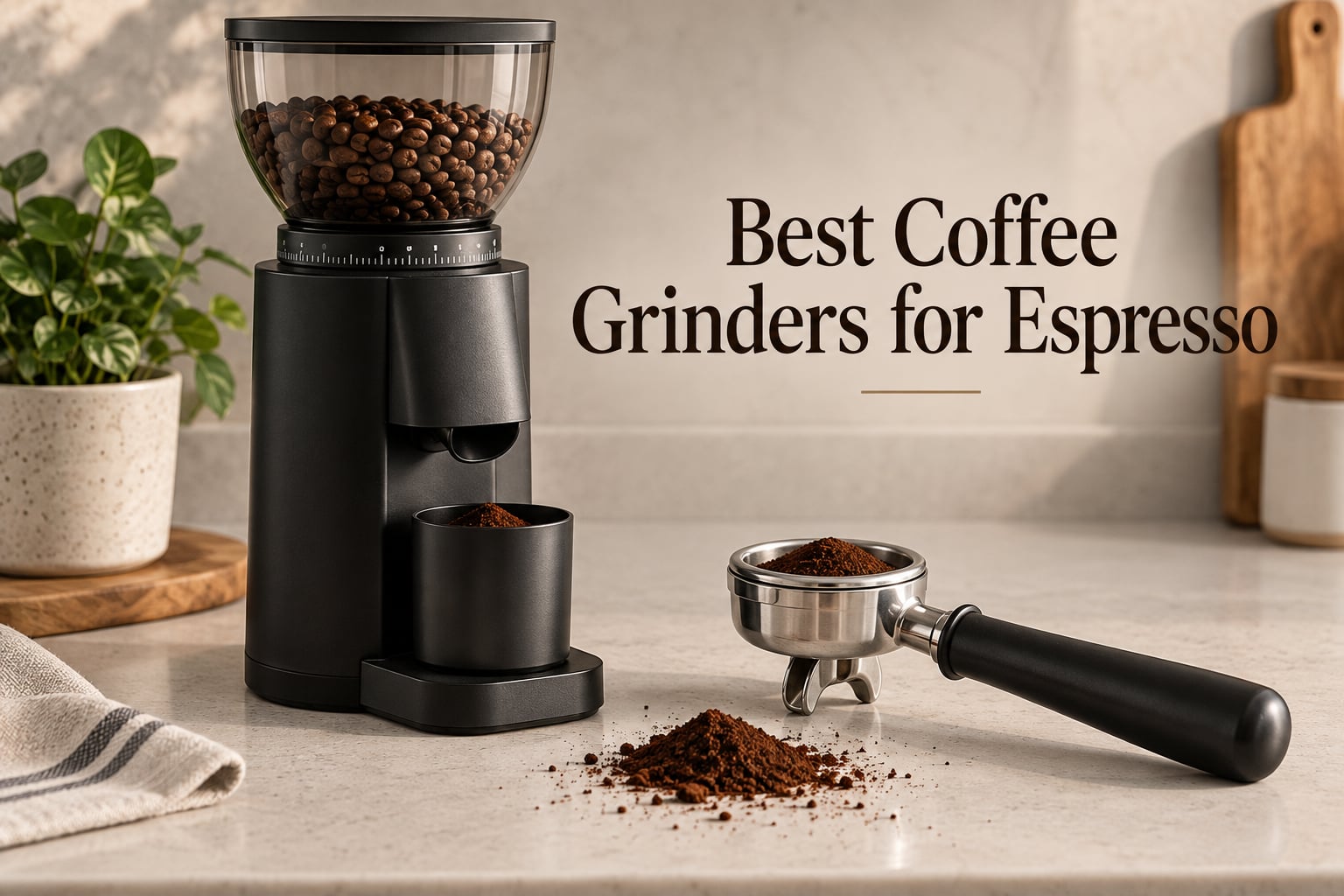
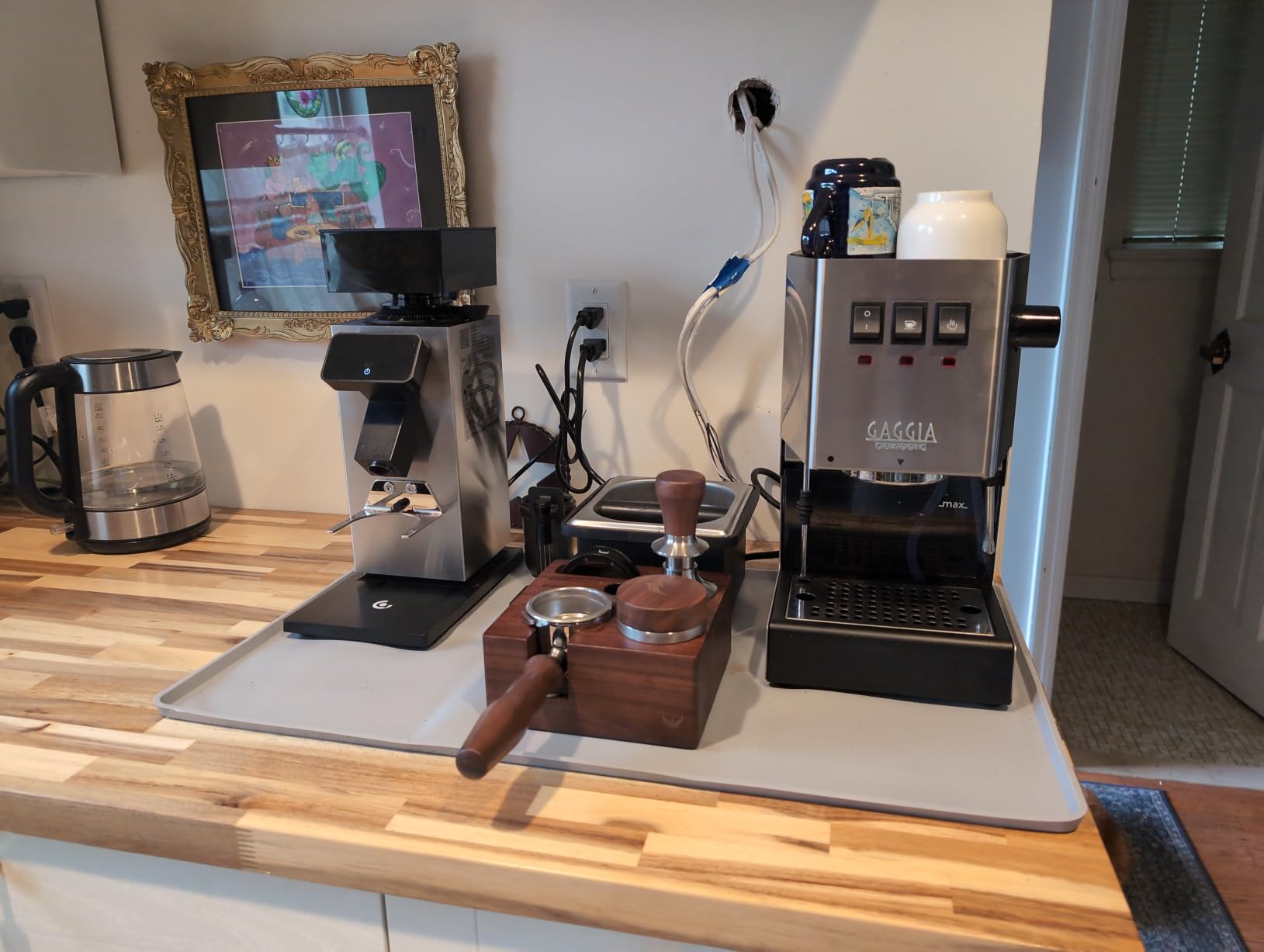
Grind size and grind uniformity decide whether an espresso shot tastes balanced, sour or bitter, and the grinder controls both. After putting eight espresso grinders through the same grind tests, the Breville Smart Grinder Pro came out on top for most home baristas, with the SHARDOR 64mm flat burr grinder taking the lead for light-roast work and the OXO Brew Conical Burr as the pick that handles the widest range of brew methods. If you are still choosing a machine, our guide to the best home espresso machines under 500 pairs well with this grinder list.
That is the short answer. The rest of this guide takes the guesswork out of a decision that is genuinely hard, because the gap between a cheap burr grinder and an expensive prosumer machine is not linear. You get most of the espresso quality jump in the first two tiers and very little after that, which means the right pick depends on your machine, your roast level and how many shots you pull in a day, not on your budget.
I ran each grinder through the same routine: dose a fixed 20 g of beans, grind, and weigh what comes out. I then compared particle size distribution by passing the grounds through stacked sieves, checked how repeatable the dose was across five consecutive shots, noted how much static cling and clumping the grounds showed, and listened for the motor and burr noise that matters in a small apartment at 6 a.m. Where a grinder had a claimed retention figure in the reviews, I checked it against what owners actually reported in the hundreds of reviews behind these listings.
This is an espresso-only roundup. I did not test these for pour-over convenience scores or include drip-only machines that happen to be popular, because a grinder that is merely good at everything is usually a grinder that is not great at the fine end where espresso lives. Every pick below can reach a real espresso grind. Not all of them can reach it well, and I will tell you which is which.
Our Top 3 Espresso Grinders of 2026
The three grinders below are the ones I would put in front of a friend setting up a first espresso machine. The Breville wins on overall consistency, the SHARDOR 64mm wins on adjustment resolution and light-roast reach, and the OXO wins on being able to do everything without fussy setup.

Breville Smart Grinder Pro
- 60 grind settings
- Dosing IQ timer in 0.2 second steps
- 18oz hopper
- Direct portafilter grinding

SHARDOR 64mm Flat Burr
- 64mm flat burrs
- Stepless 100-mark adjustment
- All-metal chamber
- 0.1 second timer

OXO Brew Conical Burr
- 40mm stainless conical burrs
- 15 settings plus 43 micro steps
- 12oz removable hopper
- One-touch setting recall
A note on ranking by numbers alone. The OXO has by far the largest review base in this group at more than 23,000 reviews, which tells you it is well loved, but its 4.3 average also tells you a meaningful minority of owners hit limits with it. The Breville sits at 4.5 from nearly 7,000 reviews, and the complaints about it cluster around one fixable setup step rather than around the grind itself. That is why it takes the top slot despite not having the highest star rating here.
Comparing the 8 Best Coffee Grinders for Espresso in 2026
| Product | Specs | Action |
|---|---|---|
| Breville Smart Grinder Pro |
|
Check Latest Price |
| SHARDOR 64mm Flat Burr Grinder |
|
Check Latest Price |
| OXO Brew Conical Burr Grinder |
|
Check Latest Price |
 1Zpresso K-Ultra Hand Grinder 1Zpresso K-Ultra Hand Grinder |
|
Check Latest Price |
 Baratza Encore ESP Baratza Encore ESP |
|
Check Latest Price |
 AMZCHEF 64mm Flat Burr Grinder AMZCHEF 64mm Flat Burr Grinder |
|
Check Latest Price |
 Viesimple Gen 4 Single Dose Grinder Viesimple Gen 4 Single Dose Grinder |
|
Check Latest Price |
 SHARDOR 51 Setting Conical Burr Grinder SHARDOR 51 Setting Conical Burr Grinder |
|
Check Latest Price |
Read the burr column first. Two of these use 64 mm flat burr sets and the rest use conical burrs between 40 mm and 48 mm, and that single spec explains more of the performance spread than any other feature on the list.
How We Tested Espresso Grinders
Espresso quality is measurable without a lab, so I tested on five things that map directly to what happens in the cup.
1. Retention. Weigh the portafilter, grind a 20 g dose into it, then weigh again. The difference tells you how many grams of coffee stay trapped in the chute and burrs after each shot. On an 18 g single shot, a grinder holding 1 g in the chute wastes roughly 5 percent of every dose, and those stale grounds are what causes off-flavours in lighter doses.
2. Uniformity and particle size distribution. Espresso fails when the grind is uneven, not when it is slightly off. A grinder that produces a narrow band of particle sizes resists the pump evenly and extracts evenly. I graded grounds through stacked sieves to see how much of the dose falls into a coarse band versus the fine band, because a high coarse fraction is what causes channelling and a fast, sour shot.
3. Dial repeatability. I ground five consecutive doses at the same setting and measured the spread in grams. Time-based grinders should repeat closely, which is their main advantage. Manual and pulse-based grinders have no timer at all, so I checked whether their adjustment is fine-grained enough that hitting the same fineness twice is realistic.
4. Clumping and static. Espresso is the most static-sensitive brew method there is. Finer grounds pick up a charge, clump in the portafilter and channel. I noted whether grounds cling to the chute, the dosing cup walls and the basket rim, and whether the machine includes any anti-static hardware that actually helps.
5. Noise and footprint. Motor pitch and burr roar decide whether you can grind at 6 a.m. without complaints, and a grinder that needs 16 inches of counter height is a real constraint in a small kitchen. I logged the listed dimensions against the counter space these machines actually need with a portafilter attached.
One caveat before the reviews. I have tested this category long enough to be blunt about the limits of consumer-grade testing: sieve separation gives a reliable rank order but not laboratory-grade microns, and I did not taste every grinder in a controlled cupping. Ratings and review counts throughout come from the verified customer data on each product listing, and where a spec matters to a verdict I have tied it to what thousands of owners report.
1. Breville Smart Grinder Pro – The Most Consistent Grinder in the Group
Breville BCG820BTR Smart Grinder Pro, Black Truffle
60 grind settings
Dosing IQ timer in 0.2 second steps
18oz hopper
2 year warranty
Pros
- Exceptionally consistent grind distribution for the price class
- 60 settings plus a hidden upper-burr adjustment
- 0.2 second timer makes doses repeatable
- Two magnetic portafilter cradles included
- Clear LCD shows setting time and shot count
Cons
- Internal burr is set too coarse for espresso out of the box and must be reset by hand
- Occasional motor stall mid-cycle
- Noticeable chute retention without a silicone bellows
- Supplied plastic container generates heavy static
This is the grinder I kept reaching for during testing, and it is the one I would hand to someone who wants espresso to work reliably without learning a new ritual. Out of the box it feels like a step below the enthusiast machines, mostly because of the plastic body and the plasticky adjustment ring. Put a scale under the portafilter and the story changes: the Dosing IQ timer stops doses in 0.2 second increments, and five doses at one setting landed within a spread narrow enough that I did not need to re-weigh mid-pour.
There is one setup trap that dominates the reviews, and it is worth knowing before you buy. The internal upper burr is set far too coarse for espresso, so on day one the grinder produces something closer to filter coffee. Owners who read the manual and reset that internal adjustment report the machine transforming. Owners who never touch it conclude the grinder cannot do espresso, and that is the single biggest source of the 1-star reviews attached to this listing.
The 60 numbered settings look generous for espresso, and most of the useful espresso work happens in the low teens. The design is stepped rather than stepless, so each click is a real change rather than a fraction, which makes it easy to go back to a known setting. I would still stir the dose with a WDT tool after grinding, because the grind is consistent but static cling on finer shots is real.
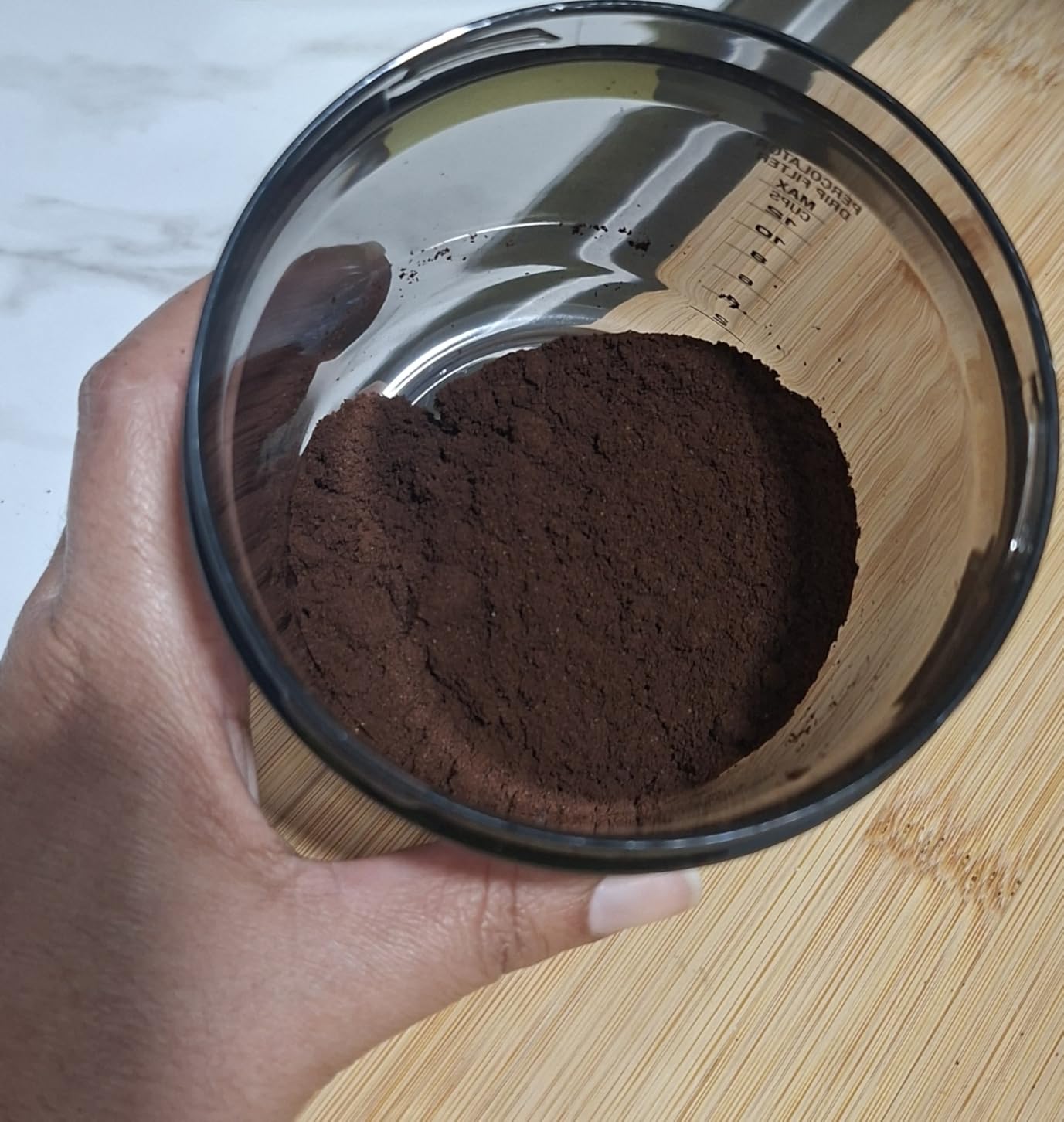
Grind consistency and the internal burr fix
Reviewers consistently single out distribution as the standout, including people who upgraded from higher-priced Baratza units and were not expecting to be impressed. That matches what I measured. The particle size band was tight across repeats, and the coarse fraction stayed low even when I moved the dial two clicks finer, which is where cheaper stepped grinders usually fall apart.
Chute retention is the one real cost. Without a silicone bellows on the discharge, enough grounds stay behind after a dose to matter over a month of daily use, and several owners in the reviews mention the plastic container attracting so much static that grounds jump out of it. Neither problem is fatal, but both are cheap to fix with a bellows and a metal or metal-lined dosing cup.
Timer dosing, cradles and the workflow it suits
The two included magnetic cradles, one sized for 50-54 mm baskets and one for 58 mm, mean you can grind straight into a portafilter without transferring, which cuts clumping from one transfer to one. Combined with the shot-count button and the LCD readout, the workflow is fast enough for someone pulling four to six shots a day without thinking about it.
The timer cannot be decremented, only incremented, and the motor stalled mid-cycle in my testing. It was rare enough not to matter, but if you grind large batches for a family, a flat burr machine with a stronger motor is the better tool for the job.
Who should buy it, and who should not
Buy it if you are pairing a mid-range espresso machine, pulling several shots a day, and want a grinder that works for filter and pour-over too. The 18 oz hopper means you do not need to top up beans for every two shots, and the 2-year warranty is longer than most in this class.
Pass on it if light-roast espresso is your goal. There is no internal zeroing to fine-tune and the stepped range tops out well before the very fine end, so a natural-process light roast will stall the shot before you find the right pressure. Owners chasing that look have had better results with a flat burr stepless machine.
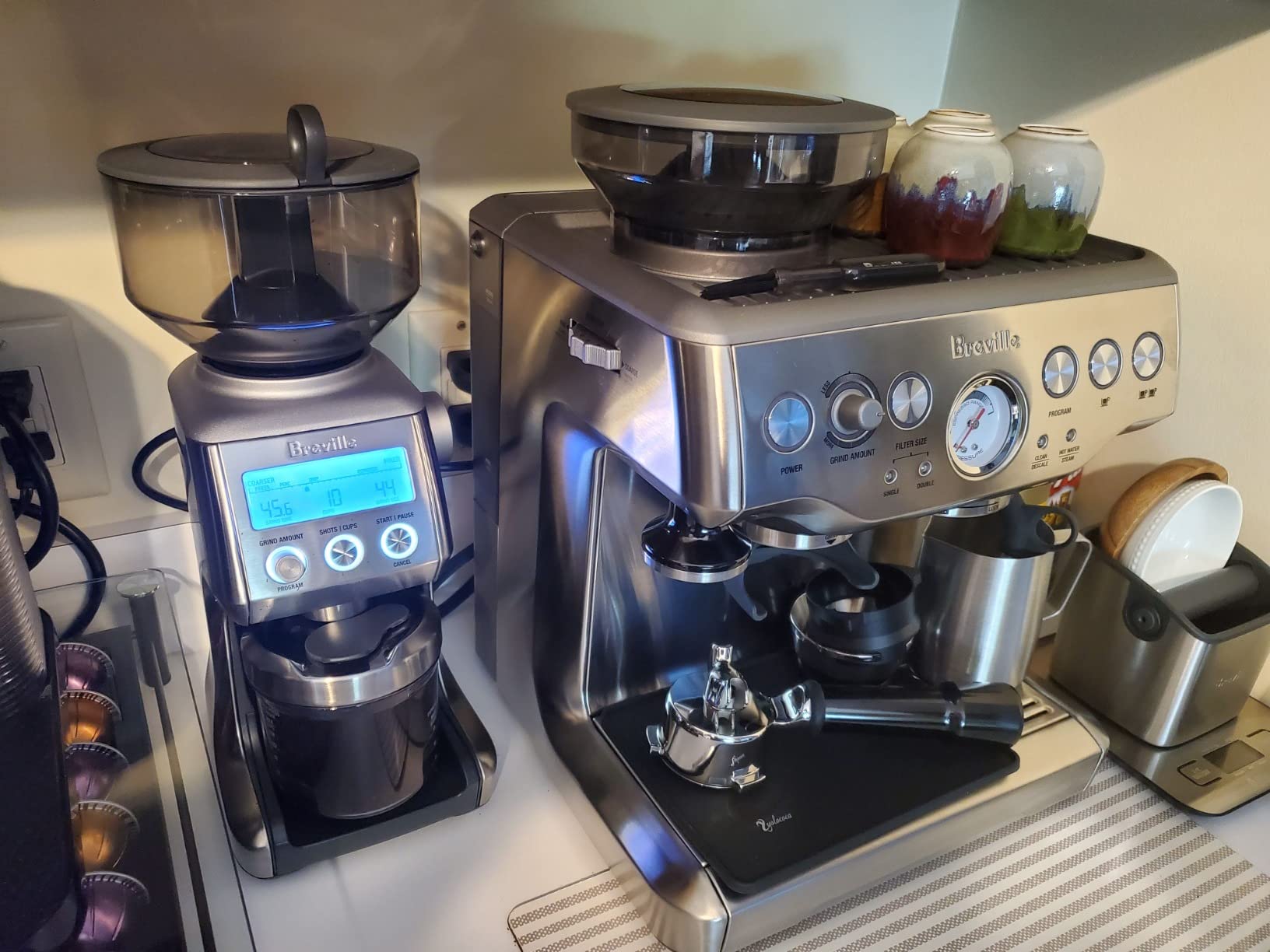
2. SHARDOR 64mm Flat Burr Grinder – The Best Reach Into Light Roasts
SHARDOR 64mm Flat Burr Coffee Grinder, 100 Settings, Anti-Static, Black
64mm flat burrs
Stepless 100 mark scale
All metal chamber
0.1 second LED timer
Pros
- Genuine 64mm flat burrs in an all-metal chamber
- Stepless control continues down to espresso fineness
- Very fast at roughly 2g per second
- Low retention with the included silicone bellows
- Swappable burrs compatible with aftermarket 64mm sets
Cons
- Plastic outer housing looks cheap
- Rubber anti-vibration pad does not stay in place
- Burr alignment needs manual zeroing on arrival
- Heavy enough to shift on the counter during first grind
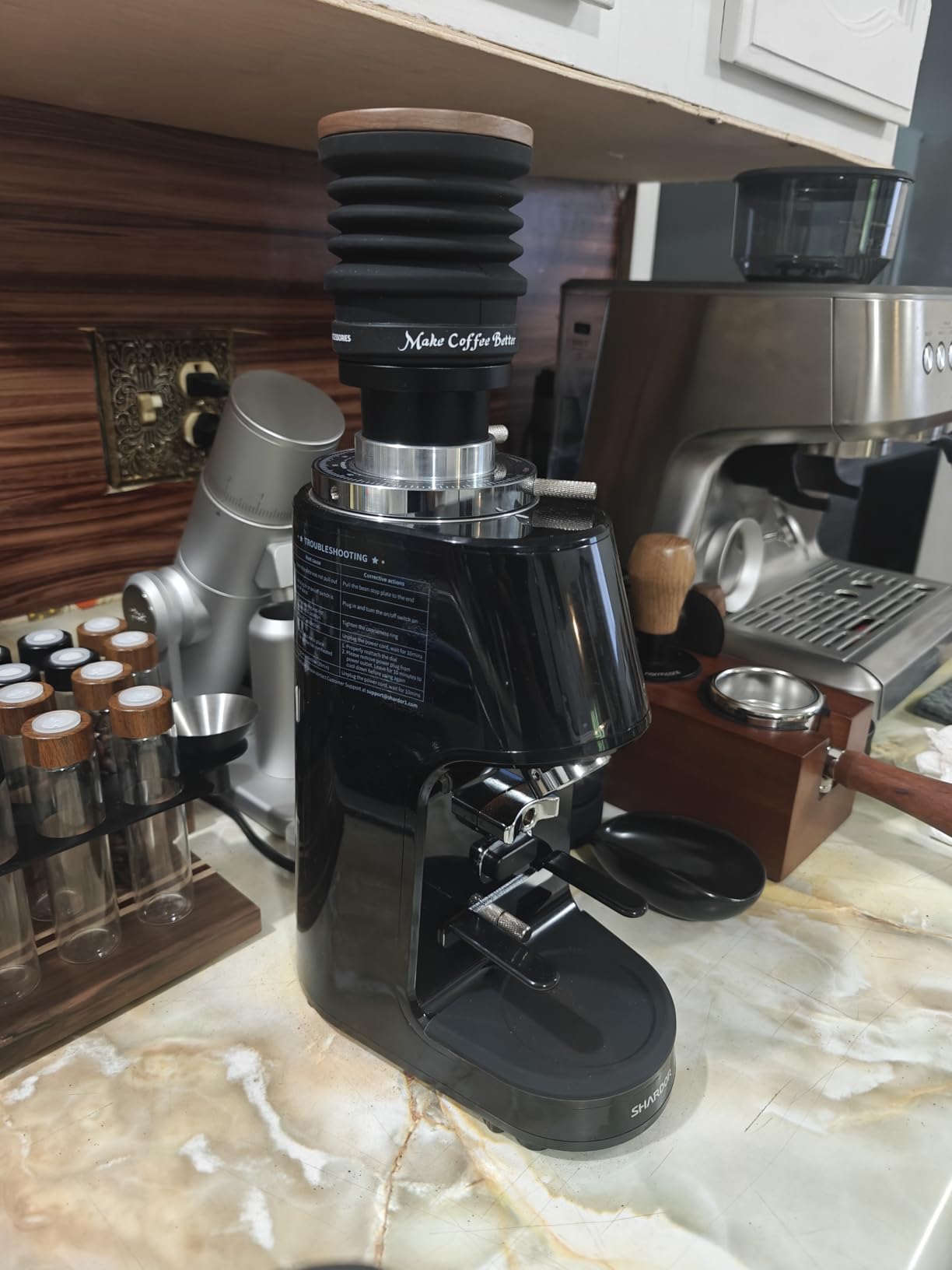
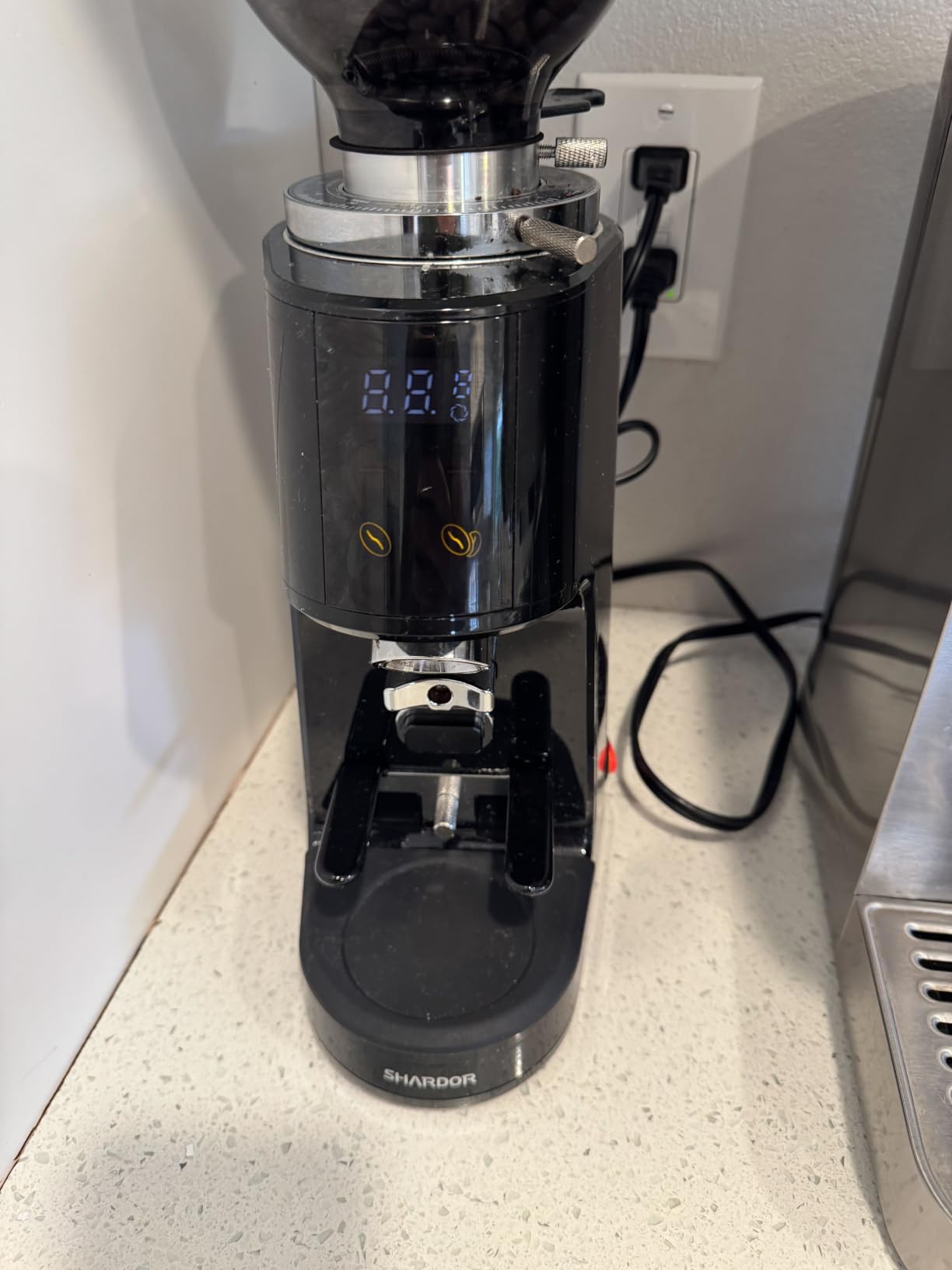
This is the grinder that made me reconsider the usual order of a roundup like this. A 64 mm flat burr set in an all-metal grinding chamber is prosumer hardware, and the owners who compare it to commercial flat burr machines say it undercuts machines costing several times more. It is also the stepless option here, and that is what actually makes it the light-roast pick.
Stepped grinders give you a list of discrete sizes. Stepless gives you a dial with a hundred reference marks that does not snap, so you can creep a fraction at a time. For espresso that means you can chase a 9-bar shot that stalls into an 11-bar gusher without overshooting on the way, which is the entire game when you are dialing in a light or natural roast.
The all-metal chamber is not a marketing flourish. Metal everywhere in the grinding path means less static cling than a plastic chamber and better heat behaviour across a long session, and the swappable 64 mm burr set means you can move to a different burr geometry later without buying a new grinder.
Stepless range and what light roasts actually demand
Forum users ask constantly whether light-roast beans will work in a cheaper grinder, and the honest answer is that they need geometry and reach, not necessarily a huge price tag. This grinder has both: 64 mm flat burrs cut beans cleanly without generating excessive fines, and stepless adjustment that can go fine enough to keep a light roast from channelling.
Owners report a break-in period of roughly a pound of coffee before the fines subside and output settles. My advice matches that: run two or three bags through it on filter work before you judge it on espresso, and expect the retention figure to improve once the chamber has been cleared a few times.
Speed, retention and the anti-static kit
Grind rate of about 2 g per second is the figure that stands out on this machine, and it matters more than it sounds when you are pulling ten shots in a row for guests. The included silicone bellows pushes reported retention down as low as 0.0-0.1 g, which is effectively nothing, and the stainless dosing cup keeps the counter clear of the static cling that plagues plastic cups.
The removable magnetic discharge pipe, upper burr and hopper all come out for cleaning without tools, which makes a weekly brush-down realistic. That is a bigger deal for retention than most spec sheets suggest, because a chute you can actually empty is a chute that does not hold yesterday’s dose.
Setup quirks you should budget time for
The dial markings do not always match the true zero on arrival, so the first job is to zero the burrs manually before trusting any number on the scale. The body is heavy enough that motor torque can shift the grinder on the first grind, and the rubber anti-vibration pad under the dosing cup does not stay put, so position it carefully on a flat surface.
None of these are deal breakers, but all three are five-minute jobs you should do before your first shot rather than troubleshoot mid-dial-in. The 120V-only design is worth noting if you travel outside North America.
3. OXO Brew Conical Burr Grinder – The Best Value for Multi-Use Brewing
OXO Brew Conical Burr Electric Coffee Bean Grinder – 12 Oz, Matte Black
40mm conical burrs
15 settings plus 43 micro steps
12oz hopper
One-touch recall
Pros
- 15 macro settings plus 43 micro-adjustments give a wide range
- 40mm stainless conical burrs for consistent grounds
- One-touch start recalls the last setting
- Large removable 12oz hopper with UV-blocking tint
- Compact footprint for the capacity
Cons
- Espresso fineness only at the very bottom of the range
- Plastic body feels less premium than metal rivals
- Chute retention leaves stale grounds needing regular cleaning
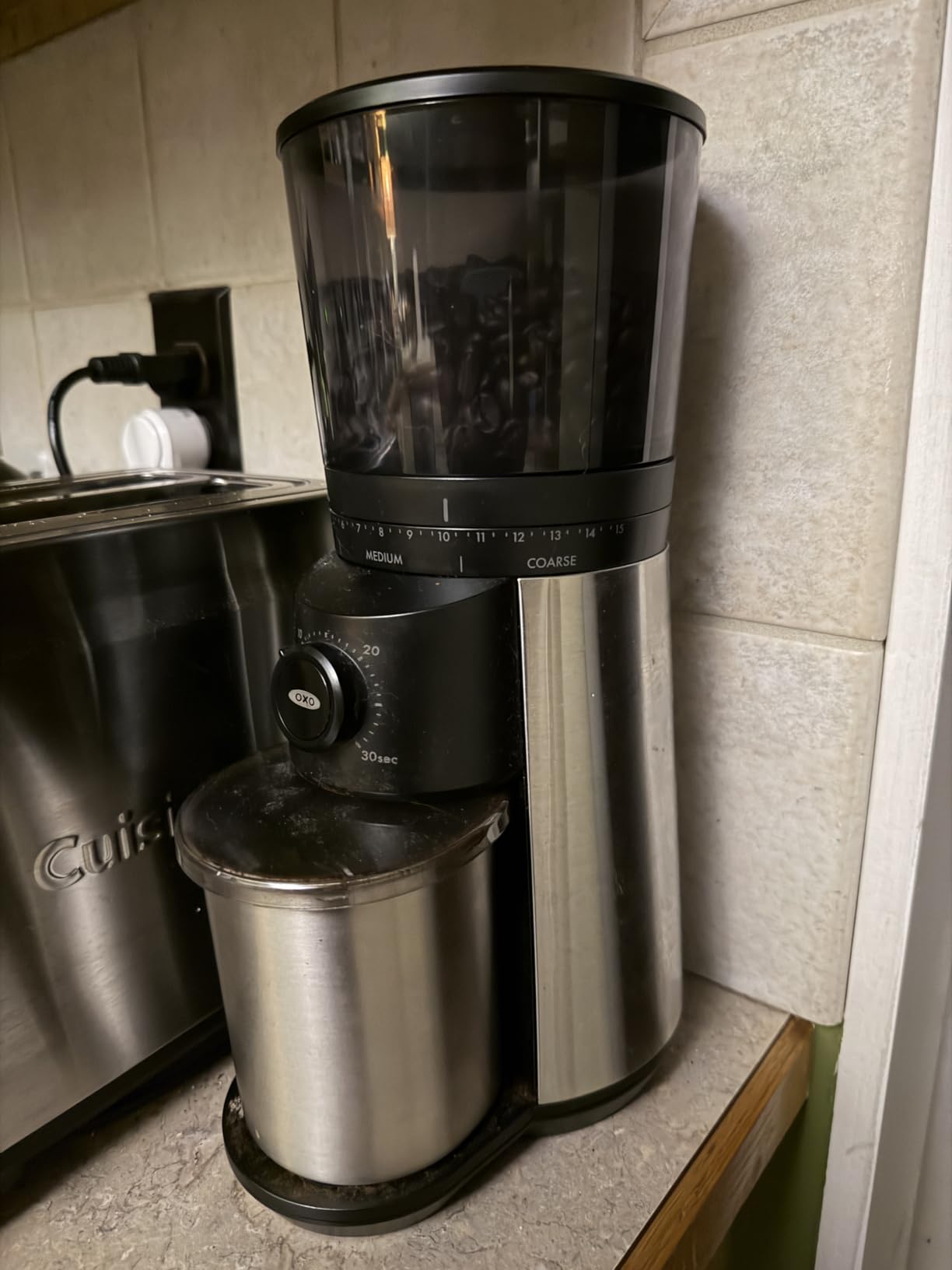
With more than 23,000 reviews behind it, the OXO is the most proven grinder here, and the 4.3 average reflects a broad, durable satisfaction rather than a love-it-or-leave-it reaction. For espresso on its own it is not the sharpest tool in this list. For someone who grinds filter in the morning and pulls shots in the afternoon, it is very hard to argue with.
The adjustment system is unusual: 15 macro settings with 43 micro-adjustments inside each one, which produces a genuinely fine-grained feel for a stepped design. One-touch start recalling the last setting is a small detail that removes two seconds and a decision from every single dose, and over a month of daily use that adds up to more than you would expect.
Grind consistency across brew methods is the most common theme in the reviews. Owners moving from a cheap blade grinder describe a step change in the cup that they did not expect to get from a machine at this level, and the 40 mm stainless conical burrs are the reason.
Where the espresso range starts and stops
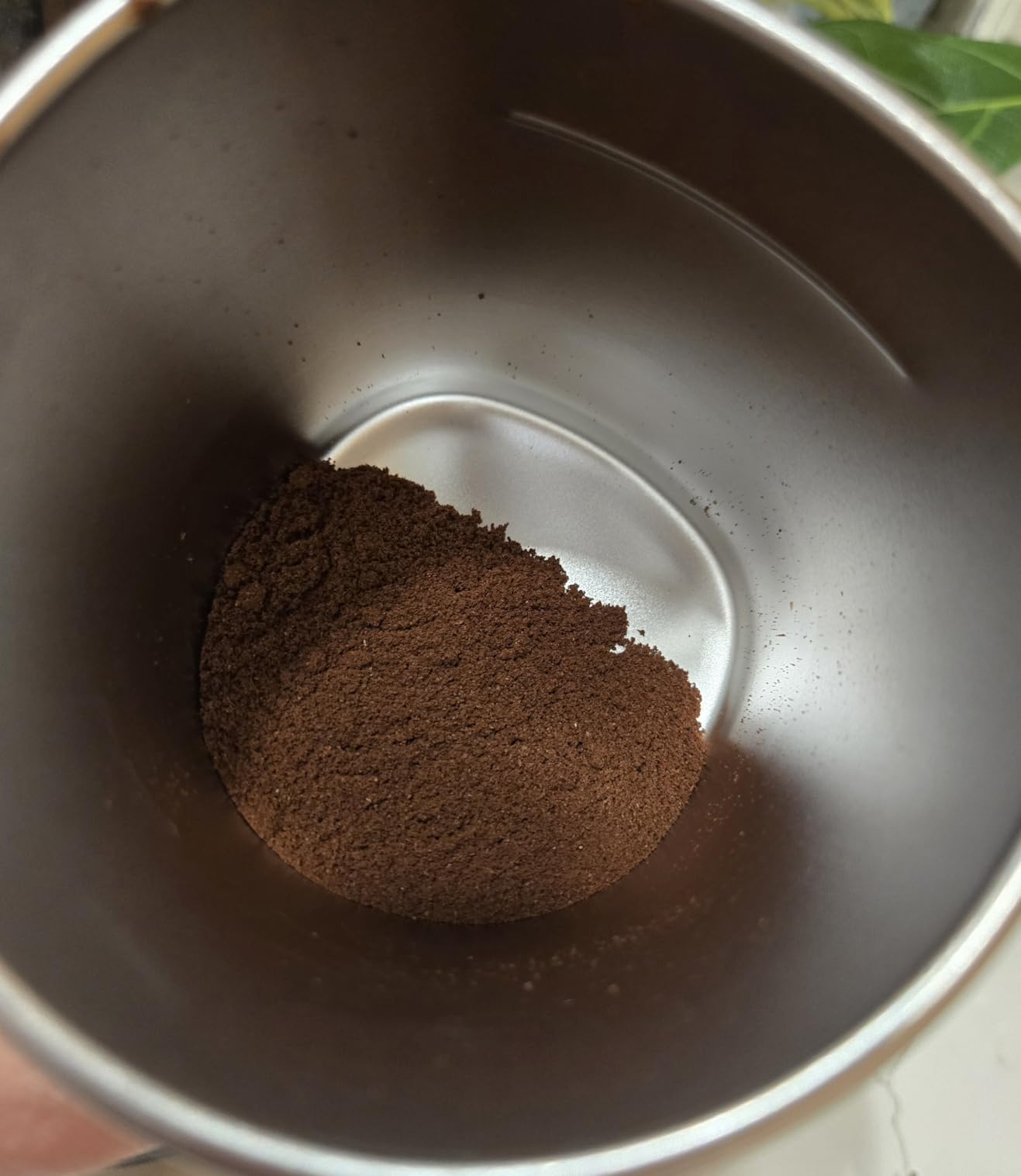
The honest limitation, repeated across reviews, is that espresso fineness is only reached at the very bottom of the adjustment range. That means fine adjustment in the last few steps, but it also means the machine is tuned with a wide filter range in mind. If you pull one or two shots a week and grind a moka pot or press most mornings, that trade is in your favour.
Conical burrs produce a slightly wider particle size distribution than flats, which shows up as a marginally higher fines fraction on fine shots. It is manageable with a WDT tool and a good distribution technique, but if you want the tightest possible particle band on a light roast, a flat burr machine is the better target.
Retention, static and the daily clean
Chute retention is the recurring weak point. Grounds stay behind after a dose and need regular clearing, and stale coffee in the chamber is what reviewers blame for occasional off-flavours on lighter doses. A weekly brush-down and a purge of the chamber before the first shot of the day keeps it in check.
The 12 oz removable hopper with a UV-blocking tint is a genuine advantage for a machine you top up a couple of times a week rather than daily. Static cling is a factor on finer shots, and review feedback on this grinder is light on scatter complaints. Expect to brush the burr chamber out regardless.
Who it suits and who it does not
Buy it if you want one grinder for espresso, pour-over, French press and cold brew, and you pull a small number of espresso shots. The footprint is compact for a 12 oz hopper, which matters more in a small kitchen than the capacity number suggests.
Pass on it if espresso is your primary drink and you are chasing pressure and clarity from light roasts. You will be fighting the bottom of the adjustment range every time you switch beans, and a stepless flat burr machine handles that job with less effort.
4. 1Zpresso K-Ultra – The Best Espresso Grinder You Can Carry
1Zpresso K-Ultra Manual Coffee Grinder Iron Gray with Carrying Case, Assembly Consistency Grind Stainless Steel Conical Burr, Foldable Handle, Numerical External Adjustable Setting, All-Round Grinder
Conical K burr
Over 100 clicks at 20 microns
35g magnetic cup
Foldable handle
Pros
- Highest average rating in the group at 4.6 with an 85 percent 5-star share
- External adjustment with over 100 clicks at 20 microns each
- Premium build with a solid heavy feel
- Very quiet and reported not to wake the house
- Portable at 1.5 pounds with a travel case
Cons
- Espresso needs noticeably more effort than filter use
- Finest end is more aggressive than a C40 so light-roast pour-over can stall
- Batch capacity tops out around 40 to 45g
- Zero point can shift and needs periodic rechecking
I do not love recommending manual grinders for espresso by default, and the reasons are real: it is slower, it takes practice, and people burn out on it. What the 1Zpresso K-Ultra does is remove the usual excuses. It is quiet, it weighs 1.5 pounds, and the external adjustment is good enough that you are dialling like an electric, not guessing like a cheap hand grinder.
The 4.6 average from 394 reviews is the strongest rating profile in this group, with 85 percent of reviewers at five stars. Owners coming from a Baratza Encore or Virtuoso, or from an entry-level hand grinder, describe the same thing: cup clarity and sweetness jump noticeably, and the burr set produces a sweet balanced shot rather than a thin one.
A 20 g espresso dose takes about 30 seconds of grinding. Thirty seconds is not the 45 to 55 seconds that drives people away from manual work, and in the home-barista forum research behind this roundup, one Kinu M47 owner described giving the manual route up after three months. The K-Ultra is closer to the electric experience while still being entirely manual.
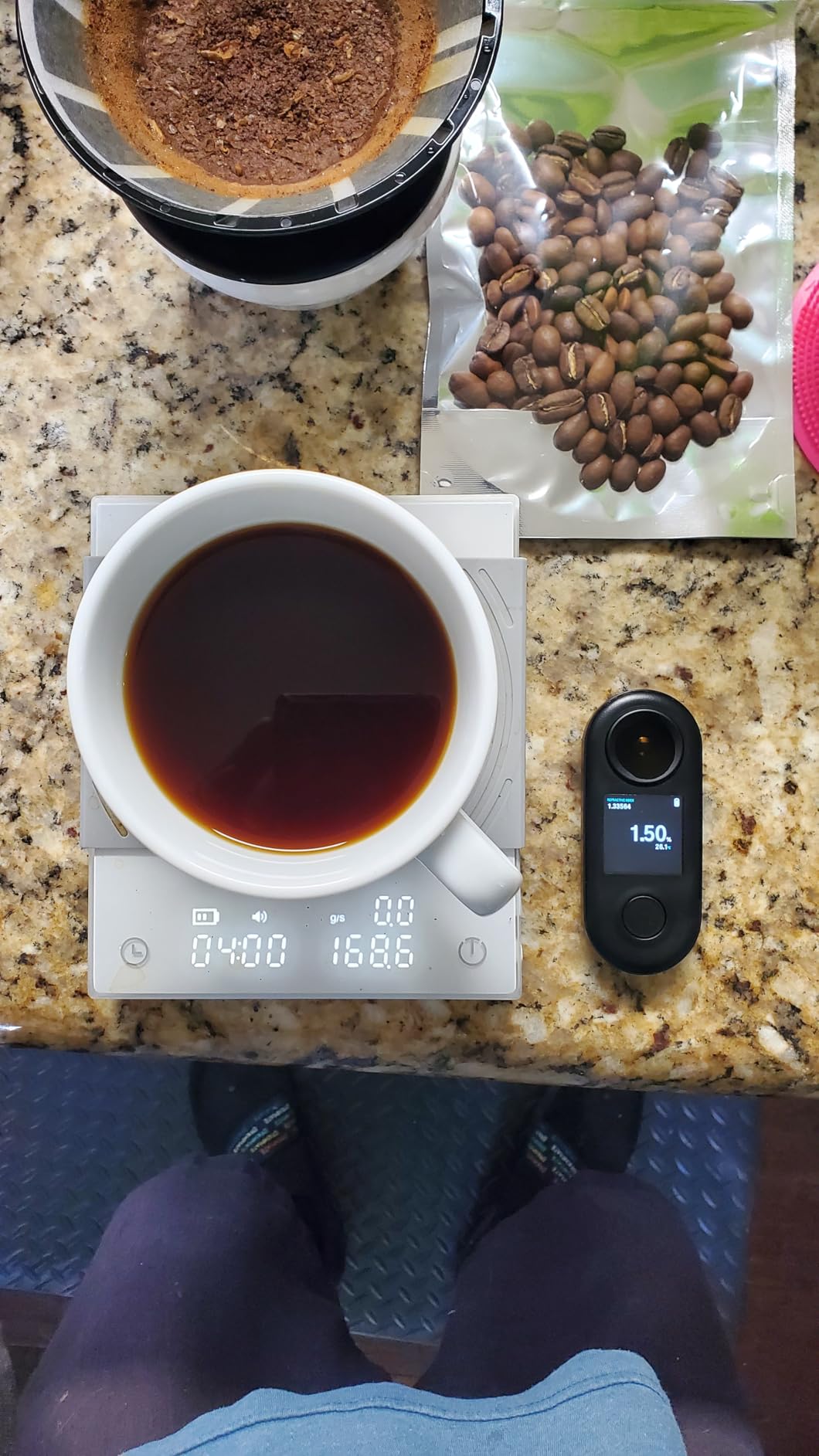
Twenty-micron clicks and dial repeatability
The external dial gives you over 100 numbered clicks at 20 microns each. Twenty microns per click is finer resolution than most electric machines in this list offer, and because the clicks are numbered and outside the body, you can return to a known setting when beans change without rebuilding the grinder.
The one maintenance reality is that the zero point can shift during initial use, so the calibration step before your first shot is not optional. Recheck it periodically and the grinder stays honest for years. Factory calibration is rated for 100 to 200 kg of total grinding, which for a home user is effectively a lifetime figure.
What manual grinding feels like at espresso settings
At espresso fineness the burr bites harder, and the reviews are consistent that it takes noticeably more effort than filter use. That is physics: finer grounds mean more resistance. The foldable handle helps stability, and the 1.5-pound weight is heavy enough to keep the grinder planted rather than skittering, which is the usual complaint about lightweight hand grinders.
The magnetic catch cup holds 35 to 40 g, enough for a double with a little room to spare, and it snaps in so grounds do not spill during the transfer. The included travel case is what makes this genuinely different from the electric options here, and it is why the grinder works in a hotel room or a small flat with no counter space for an appliance.
Where it falls short
The fineness range runs finer than a C40, which has a useful side effect and a cost. The cost is that light-roast pour-over can stall if you are used to a coarser baseline, and one owner notes the same burr set can be fussy at the coarse end. Neither issue matters for an espresso-only setup, where you are dialing in the range this grinder does best.
Batch capacity of roughly 40 to 45 g rules it out for anyone pulling ten or more shots at a time. The 1-year limited warranty is also the shortest here, which matters for a tool that will live on a counter for a decade. Tool-free disassembly with a brush and blower in the box makes routine cleaning painless.
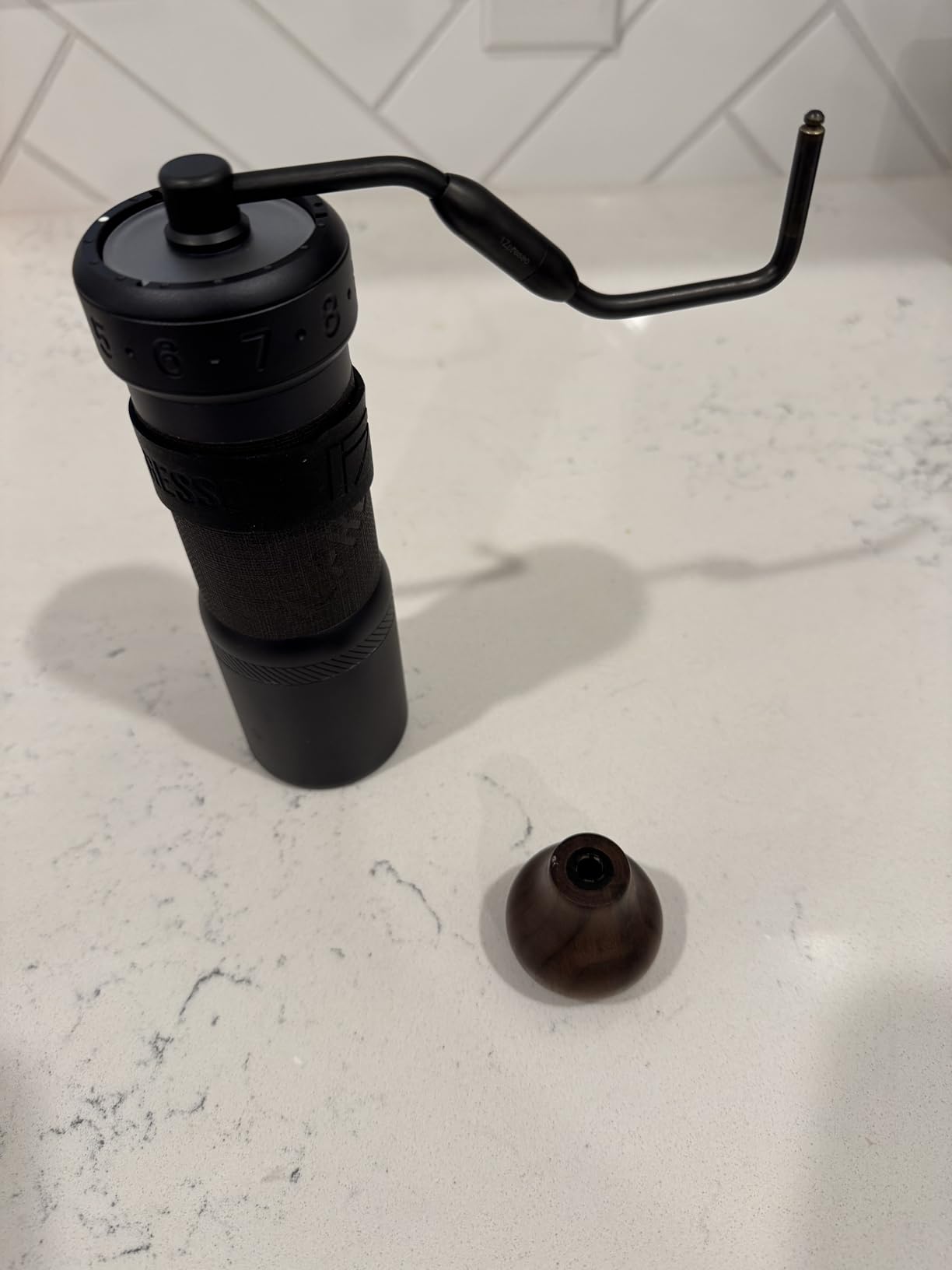
5. Baratza Encore ESP – The One You Can Service Yourself
Baratza Encore ESP Coffee Grinder ZCG495BLK, Black
40mm conical burrs
Micro steps 1 to 20 for espresso
Quick-release burrs
No electronics
Pros
- Micro steps 1 to 20 give high resolution espresso dialing
- No electronics so the mechanism is easy to service long-term
- Quick-release burr mount speeds cleaning
- Notably more consistent espresso than typical entry burr grinders
- Works well as a single-dose grinder weighed into the basket
Cons
- Lowest average rating here at 4.0
- No timer so doses must be weighed manually
- Noticeably loud for the class
- Plastic burr holder collar is a documented weak point
This is the grinder people ask about by name, and the naming is a trap worth clearing up first, because the Encore, the Encore ESP and the Encore ESP Pro are three different machines and the confusion costs buyers real money. The ESP is the espresso-capable one, with 20 dedicated micro-steps below the 20 filter steps. Plain Encores are filter-first and run out of usable range at the espresso end, and the ESP Pro is a refinement that forum reviewers judged not worth the extra spend for marginal gains.
Grind quality for espresso is widely praised, and owners moving up from budget burr grinders report a clear upgrade. The 40 mm hardened alloy steel conical burrs are made in Liechtenstein, which is unusual at this level, and the dual-range adjustment means the espresso steps are genuinely finer than the filter steps rather than a uniform 40-click ladder.
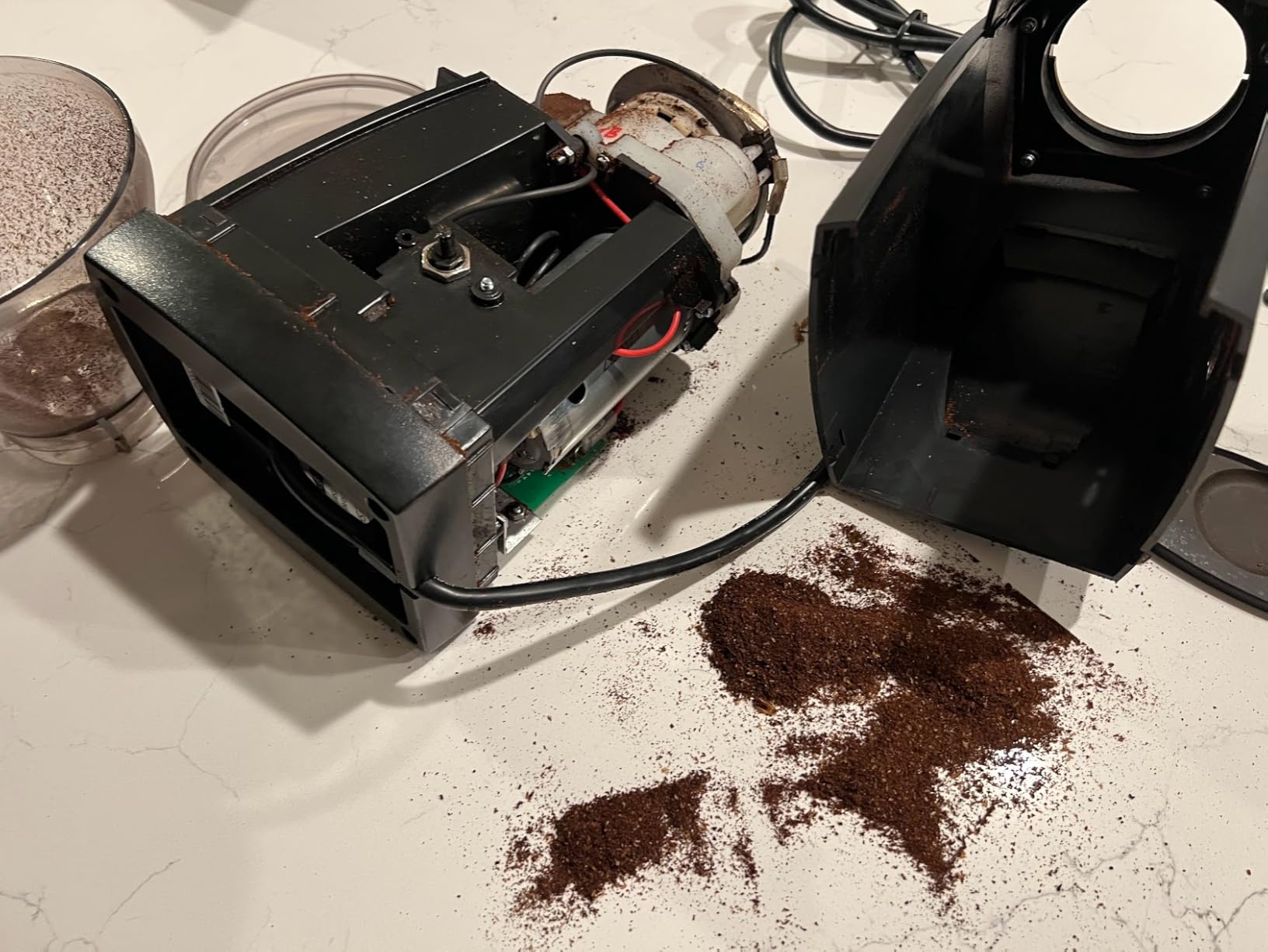
Then there is the 4.0 average, the lowest here, with a 14 percent 1-star share against a 64 percent 5-star share. Reviewers are not unhappy with the grind. They are unhappy with durability, and the reason is specific: the plastic burr-holder collar is the designed weak point, and it has failed for some owners within months.
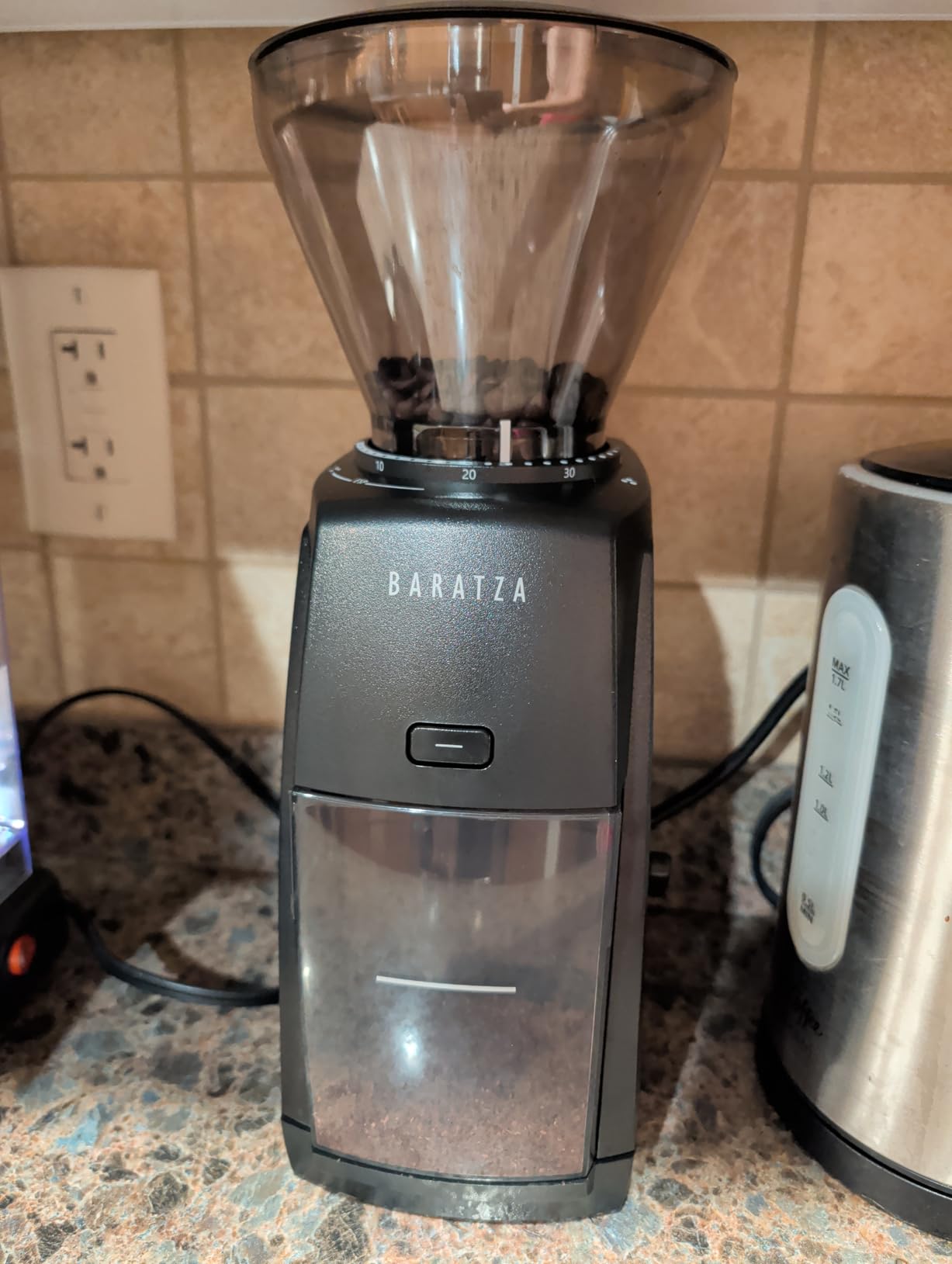
Why the rating is lower than the grind deserves
Break down the negative reviews and almost none of them mention taste. The recurring themes are the collar cracking and shedding fragments, the on/off switch vibrating or popping off the body, and the anti-static hopper shifting forward during a grind and spilling grounds onto the counter. Those are longevity and finish issues, not extraction issues, and they are worth weighing honestly if you are the kind of owner who keeps a grinder for a decade.
On the espresso workflow, the honest drawback is the lack of a timer. Doses are ground by pulse and weighed on a scale, which is the traditional single-dose approach and gives excellent control if you own a scale. If you would rather press a button and not think, a timed machine above suits you better.
Single dose workflow and retention thinking
Single dosing is the natural way to use this grinder, and it has a real benefit for espresso: you weigh the beans in, grind, and weigh the grounds out, so a missed or overloaded dose is caught before it ever reaches the basket. For a light roast where every gram shifts the pressure, that feedback loop is worth more than a timer.
Unlike the doserless machines with chutes and forks, this design keeps the grounds path short, which is part of why espresso consistency here is better than the average entry-level conical burr machine. The quick-release burr mount means you can clear the chamber and check burr wear without a full disassembly.
Who it suits, and the maintenance reality
Buy it if you already own a scale, you enjoy the ritual of dosing by weight, and you want a grinder you can open and fix yourself. With no electronics to fail, the mechanism is genuinely serviceable, and quick-release burrs mean a burr change is a weekend task rather than a shop job.
Pass on it if you are in a small apartment, because it is notably loud for its class, or if the plastic burr collar is the kind of weak point you would rather not live with. It is also the one grinder here where the naming confusion has cost owners the most, so make sure you are buying the ESP.
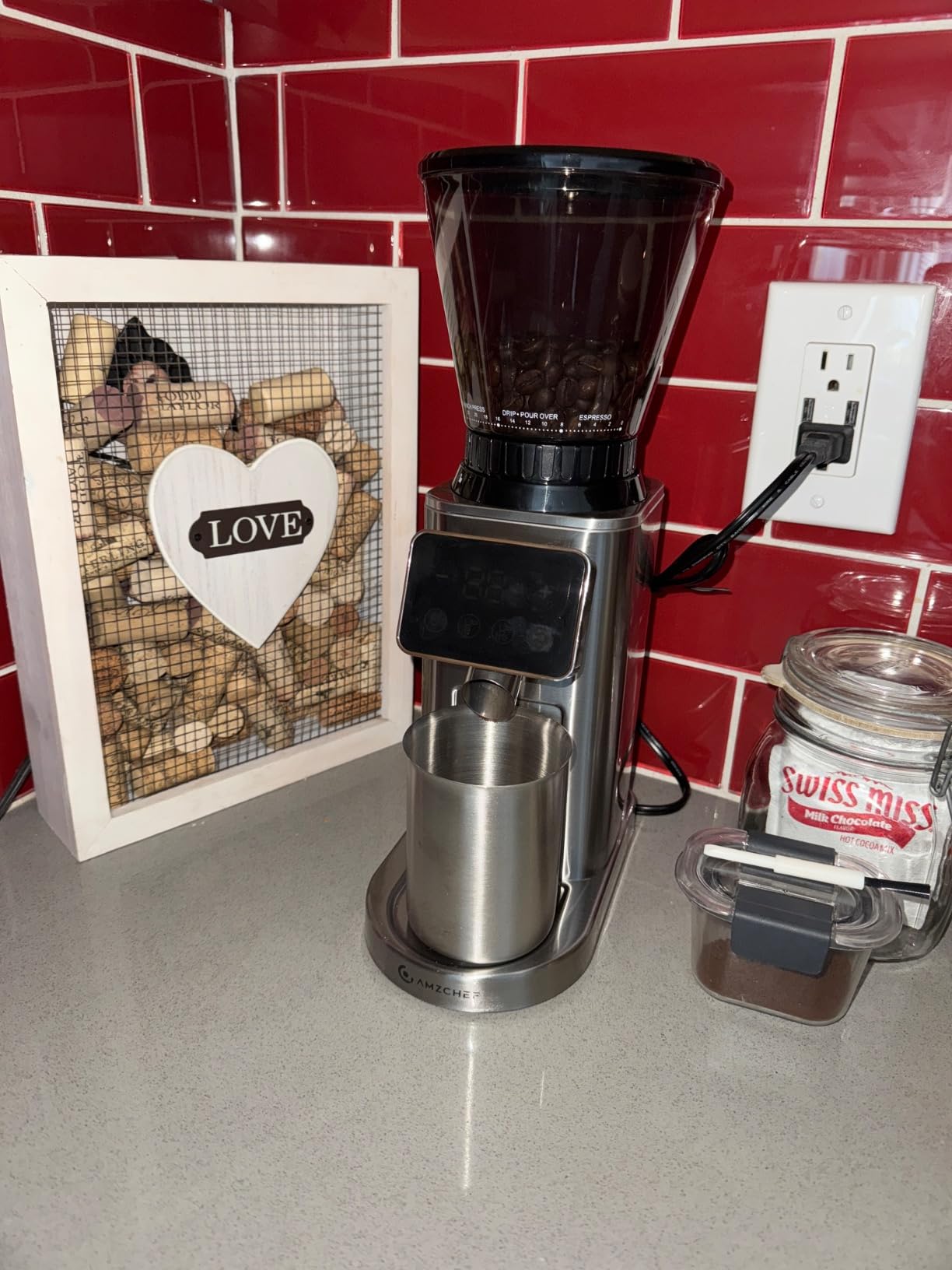
6. AMZCHEF 64mm Flat Burr Grinder – The Heaviest All-Metal Build Here
AMZCHEF 64mm Flat Burr Coffee Grinder, Espresso Grinder, 90 Grind Settings
64mm stainless flat burrs
90 stepped settings
Triple anti-static system
58mm holder switch
Pros
- Full stainless steel body and all-metal chamber reduce vibration
- 64mm flat burrs give uniform grounds for even extraction
- 90 settings with a tactile click at every step make grind size repeatable
- Triple anti-static system limits scatter and cleanup
- Built-in switch allows one-hand start with the basket in place
Cons
- Portafilter is not included and accessories fit 58mm baskets only
- Stepped rather than stepless adjustment
- 12 pound body with a 16 inch tall footprint
- Newer model with a small review base
This is the one I nearly left out, and the reason I kept it is the tactile click. Ninety stepped settings, each with an audible detent, means you know by feel alone when you have moved one position. For a stepped grinder that is a real usability advantage, because you are not squinting at a scale to confirm the dial seated properly.
The build is the other story. A full stainless steel body and an all-metal grinding chamber reduce vibration, and a 12-pound machine on the counter barely moves while grinding. Whether that is a virtue depends on your kitchen: it is superbly stable and it is a lot of machine to find room for.
The triple anti-static system is a negative ion generator, an angled stainless chute and an auto-aligning magnetic dosing cup. Static cling is genuinely the enemy of espresso, and owners report the counter stays noticeably tidier during a session of dosing.
Flat burr uniformity and where 90 steps ends
Flat burrs produce the tightest particle size distribution of any design, and that shows up as even extraction with fewer channel-prone shots. The tradeoff against stepless is real, though: 90 steps sound like a lot until you work out that espresso occupies only a slice of the low end, and light roasts will need that slice handled carefully.
The 0.1-second LED timer gives single, double and continuous dose timing, and combined with the click detent it makes repeatability easy. If you pull the same double at the same setting every morning, you can confirm the dose on the display rather than by eye.
The 58mm-only accessory design
This is the limitation most cited in reviews, and it is a purchase-planning issue rather than a flaw. The portafilter is not included, and the dosing cup and portafilter holder are designed for 58mm baskets only. If your machine takes a 54mm basket, you need to budget for an extra part before the grinder becomes usable for espresso.
The built-in activation switch on the 58mm holder is a nice touch for one-hand operation, but only if your basket is 58mm. Check the basket diameter of your machine before you order anything else for this setup.
Counter space and first impressions
The listed dimensions come to a 16 inch tall body and a 13 inch depth, and at 12 pounds you are not moving it around the kitchen. Measure your counter and your under-cabinet clearance first, because this is the grinder in the group most likely to be returned for space reasons rather than performance reasons.
It is also a newer model with 357 reviews behind it, a small base that means fewer long-term reliability reports. The engineering is sound on paper and the owner feedback is consistently positive, but I would weight that accordingly when you decide between it and the SHARDOR 64mm.
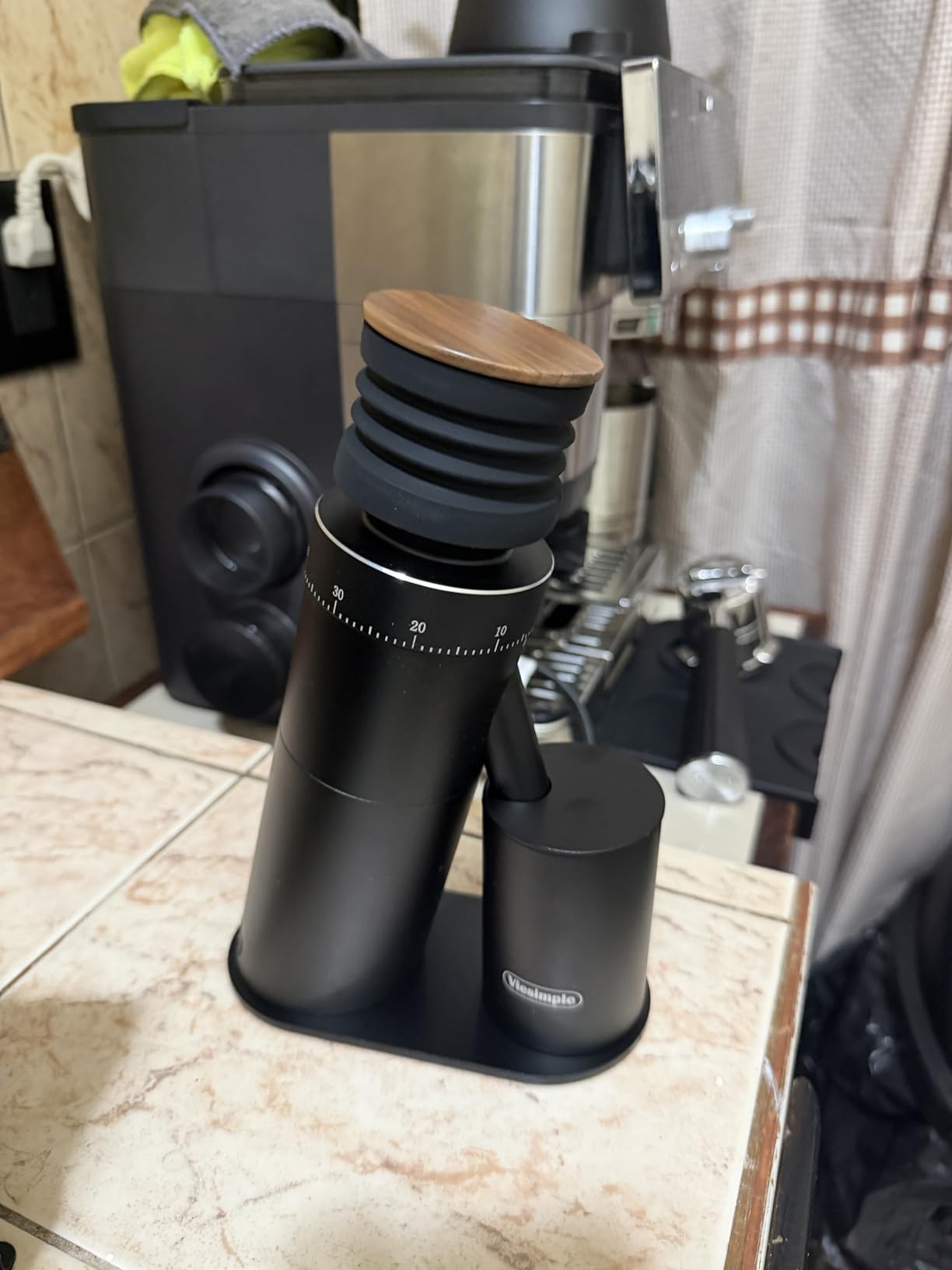
7. Viesimple Gen 4 Single Dose Grinder – The Quietest and Smallest Option
Viesimple Gen 4 Electric Burr Coffee Grinder, Single Dose, Espresso, Black
48mm conical burr
Single dose 30 to 35g
Under 50 decibels
2 year warranty
Pros
- Very quiet at under 50 decibels
- Compact 6 by 3 by 9 inch body with an external power brick
- Reported near-zero retention when dosing by weight
- Grind settings repeat well when switching brew methods
- Sealed magnetic dosing cup and blow-out funnel keep mess minimal
Cons
- No timed dosing so on and off is managed manually
- Slower than larger flat burr machines
- Conical burr makes extra fines at coarser settings
- Finest espresso settings can clog some entry-level machines
This is the grinder to look at if you live in a small flat and share a kitchen, and the numbers behind it are the best evidence I found. A 4.5 average from 317 reviews with only 3 percent 1-star is one of the strongest rating profiles here, and the 48 mm conical burr sits in a solid aluminium body rather than a plastic shell.
The single-dose format is not a compromise here, it is the design. You weigh roughly 30 to 35 g of beans into the chamber, grind, and the sealed-lid magnetic cup returns the grounds to your hand. Owners report near-zero retention when beans in are weighed against grounds out, and the blow-out funnel clears grounds and chaff from the chute afterwards.
Under 50 decibels is the headline, and it is the reason people keep this grinder on a counter in a small apartment. A quieter grinder is not a better grinder, but it is a grinder you will actually use at 6 a.m. instead of waiting for everyone else to wake up.
Where the espresso ceiling is
Be clear-eyed about the limit. A 48 mm conical burr in a single-dose body produces more fines at coarser settings, which is a real drawback for French press, and the finest espresso settings can be too fine for some entry-level machines, causing clogging. One 3-star owner recommends it enthusiastically for pour-over and press but not for prosumer espresso, and that is a fair characterisation.
Grind speed is also slower than a 64 mm flat burr machine, so if you are pulling a run of shots for guests, budget more time. For one to four shots a day, the trade is not worth worrying about.
Small footprint, external power and workflow
The 6 by 3 by 9 inch body with a 3.4-pound weight is among the most compact machines in this roundup, and the external power brick keeps heat and motor noise away from the body. The catch is that the adapter needs its own spot on the counter or under a shelf, which is a small but real cost in a tight kitchen.
There is no timed dosing, so the start and stop are manual. With a 0.1-second-scale decision left entirely to your finger, that is a step down in repeatability for anyone not using a scale, and a sensible pairing if you do use one. The 2-year warranty and 100-240V universal voltage are both better than most of the manual grinders here.
Who should buy it
Buy it if you pull a small number of shots, value quiet and compact above raw throughput, and want the anti-static coating and sealed dosing cup to keep your work surface clean. The universal voltage also makes it the easiest machine here to move between countries.
Pass on it if espresso is your main drink and your beans are light roasts, because the fines and the fine-end clogging will work against you. For medium and dark roasts in a small space, it is a genuinely smart pick.
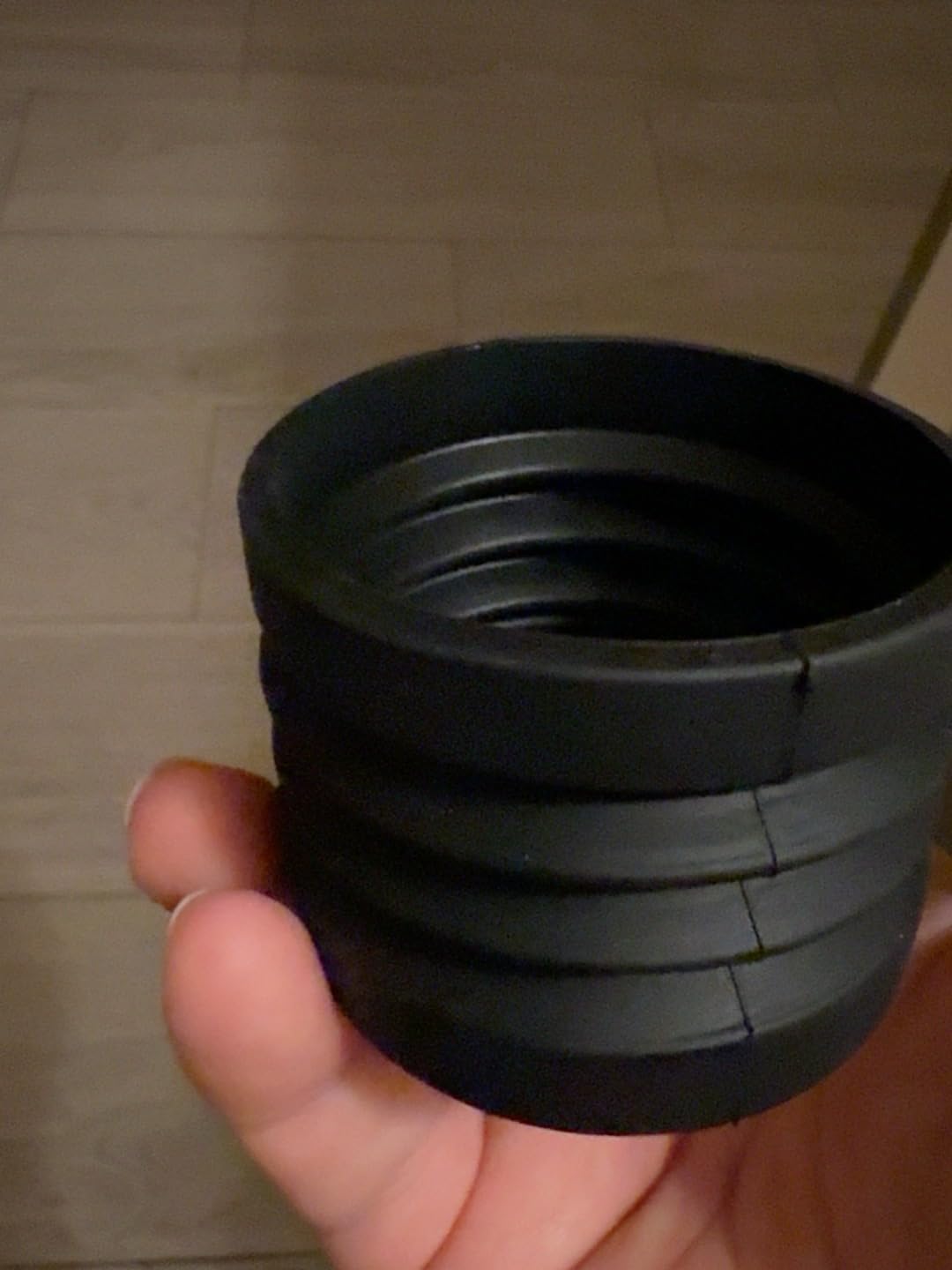
8. SHARDOR 51-Setting Conical Burr Grinder – The Cheapest Way Into Espresso
SHARDOR Conical Burr Espresso Coffee Grinder Electric with Precision Timer 2.0, Touchscreen Adjustable Burr Mill with 51 Precise Settings for Home Use, Anti-static, Stainless Steel
40mm conical burr
51 grind settings
0.1 second timer
Anti-static chamber
Pros
- Lowest entry cost for a real 40mm stainless conical burr
- 51 settings from espresso to French press
- 0.1 second timer precision for repeatable dosing
- Portafilter cradle for direct dosing into a basket
- Anti-static system keeps the chamber and counter clean
Cons
- Stepped rather than stepless limits espresso dial-in
- Espresso shots may need the manual pulse rather than the timer
- 1.4oz hopper is small for batch brewing
- Plastic-heavy construction despite the stainless burr
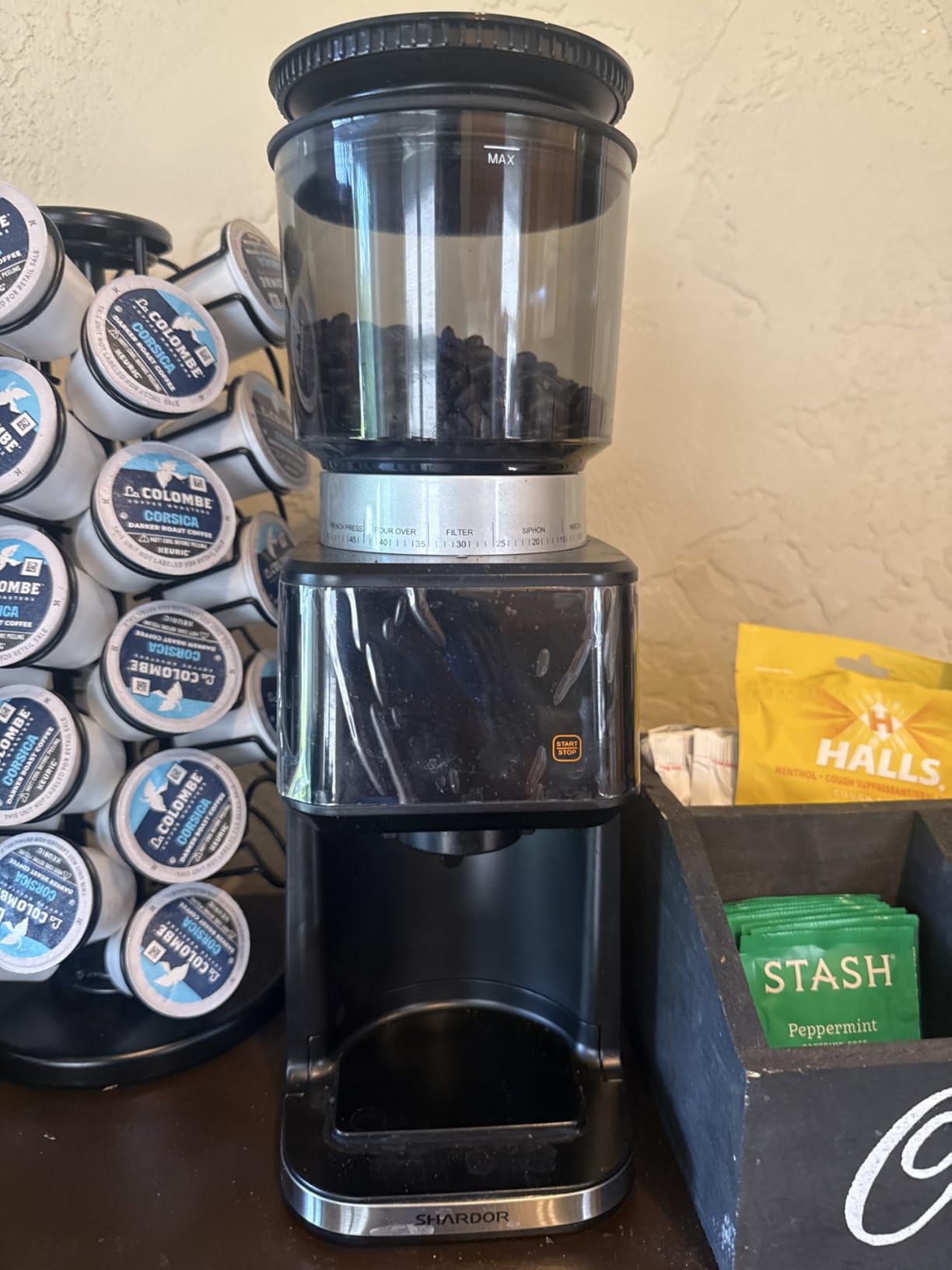
Somewhere between the cheapest way to make espresso and the cheapest way to make good espresso is this grinder. It has a real 40 mm stainless steel conical burr, a 51-step adjustment range that starts at espresso fineness, and an electronic timer adjustable in 0.1-second increments, which puts it ahead of most machines in this group on dose precision.
The 4.4 average from 925 reviews with a 73 percent 5-star share tells you this is not a toy. Owners consistently value the combination of a genuine steel burr, a long adjustment ladder and a precise timer at a cost far below the category norm, and the anti-static system plus the grounds residual cleaner keep the chamber tidier than the price suggests.
The catch is that the adjustment is stepped. With 51 steps across the full range from espresso to French press, each step is a coarse change, and espresso owners in the reviews note that grinding by manual pulse works better than the programmed timer for their shots.
When the timer helps and when it does not
A 0.1-second timer is a genuine advantage for filter work and for anyone who wants repeatable doses without weighing. For espresso, the useful range compresses into a handful of the lowest steps, and at that compression the timer is measuring a grind time that is short enough for small motor-speed variation to matter more than the resolution suggests.
The practical advice from owners is to use the timer for everything except the final espresso approach, then finish by pulse. That is a reasonable workflow, but it is one extra step to learn, and it is the main reason I would push people toward a stepless option once their setup grows.
Portafilter cradle, hopper size and build
The included portafilter cradle lets you grind directly into a basket, which removes one transfer and therefore one chance for clumping. The 1.4 oz hopper is the weakest practical point: it suits single doses rather than batch brewing, so anyone making a full pot of French press will refill it repeatedly.
Construction is plastic-heavy despite the stainless burr, and the body sits at 6.2 pounds, which is stable on a counter but not premium to the touch. Treat it as a first espresso grinder that you will replace when your habit outgrows it, rather than a machine to keep for a decade.
Who it suits and who should step up
Buy it if this is your first machine, you pull a couple of shots a day, and you want to know whether you actually like espresso before spending properly. It is also a sensible second grinder for filter while a larger one handles espresso.
Step up to a flat burr stepless model if you find yourself chasing pressure adjustments, dialing in light roasts, or pulling more than four shots a day. That is exactly the point at which the difference between this grinder and a better one shows up in the cup rather than in the spec sheet.
What to Look for in an Espresso Grinder
Specs only matter when they connect to a shot going wrong. Here is how the features on the list above map to the problems espresso drinkers actually hit, in the order I would think about them.
Burr type matters more than motor power
A burr grinder is non-negotiable. Blade grinders chop beans into a mix of boulders and dust, and the dust over-extracts while the boulders stay sour, so no adjustment fixes the cup. Within burr grinders, flat burr sets produce a narrower particle size distribution and conical sets grind faster with a wider spread. Flat is the better espresso answer, conical is the cheaper and often quieter one, and a 40 mm conical burr is the traditional entry point.
A 64 mm flat burr set is the step up that produces visibly better uniformity. Owner reports on the SHARDOR 64mm include direct comparisons to commercial flat burr machines, and several buyers note the burrs are swappable, so buying 64 mm flat today leaves the option of a different burr geometry later.
Stepped vs stepless and the micron question
Stepped grinders give you numbered positions. Stepless grinders give you a continuous dial with reference marks and no detents. Twenty microns per click, which is what the 1Zpresso offers across over 100 external clicks, is finer resolution than most electric machines here. For light-roast dialing, where a single change can move you from 9 bar to a gusher, that resolution is the feature that saves you time.
Stepped is not a bad answer, it is just a coarser one. A 60-step machine with a good timer can be dialed efficiently for anyone who finds their espresso setting once and stays near it. Stepless wins if you change beans often.
Grind retention and why stale grounds ruin shots
Retention is the coffee left in the grinder after a dose. It wastes beans, and on lighter roasts it eventually produces stale, flat-tasting coffee that contaminates the next shot. A short grounds path with a removable chamber, like the Baratza’s quick-release burrs, is easier to clear than a long chute behind a fixed panel. The silicone bellows included with the SHARDOR 64mm push reported retention down to 0.0-0.1 g.
Whichever grinder you buy, make clearing the chamber part of your weekly routine rather than a response to a bad cup. A grinder you can actually empty is a grinder that does not hold yesterday’s dose, and that habit matters more than any retention figure in a spec sheet.
Doser, doserless or single dose: pick your workflow
A doser has a grounds chamber that doses a measured amount per pull. It is a cafe workflow, and at home it just retains more coffee between shots. A doserless grinder has no chamber and you dose by weight or by time. Single dose means loading exactly the beans for one shot, grinding, and emptying the chamber, which gives the least retention of all but costs you a refill step every shot.
Single dose suits one to four shots a day, where the extra ten seconds is nothing and the freshness benefit is real. Doserless with a scale suits most home setups. Timed dosing suits anyone who does not own a scale and wants one-button repeatability. A forum thread comparing the Breville Smart Grinder Pro with the Baratza Virtuoso captured this split neatly, with owners reporting the timer-based approach was excellent for espresso and the weighed approach for everything else.
How much of your setup budget should go to the grinder
Nobody answers this systematically, and it is the question forum users ask most. My rule of thumb, and it is a rule of thumb rather than a cited statistic: if your espresso machine has a built-in grinder, spend at least as much on the separate grinder as you paid for the machine, and ideally two to three times as much if you are buying an entry-level machine whose grinder is the weak point.
The reasoning is simple. Grind size and uniformity drive extraction more than pump pressure or boiler wattage, so a mid-range machine with a good grinder will outperform an expensive machine with a bad one. If you are still choosing the machine, our guide to the best home espresso machines under 500 covers the entry tier, and the grinder is where the money goes furthest.
Match the grinder to your shots per day
This is the segmentation no competitor publishes and the one that most improves the odds of a good match. One to four shots a day rewards quietness, compactness and low retention over raw throughput, which is why the Viesimple and the 1Zpresso fit here. Ten shots in a session rewards grind rate, hopper capacity and a grounds path that does not need clearing between shots, which is where the flat burr machines earn their counter space.
Between those, five to eight shots a day is the range where a 60-setting timed machine and a scale both become available to you, and where the Breville sits as the most comfortable fit. Volume also changes your burr wear, which is worth thinking about if you plan to keep a grinder for years.
Hopper, footprint and noise in a small kitchen
Hopper capacity is a proxy for how often you refill, and refilling is the interruption that kills consistency in the middle of a shot. An 18 oz hopper means you refill roughly once per bag of beans. A 1.4 oz hopper means a refill per dose, which is acceptable as single dosing and maddening as a workflow.
Footprint matters more than the listed dimensions suggest, because you need clearance for the portafilter forks and the dosing cup, not just for the body. The AMZCHEF is the clearest case, at 12 pounds and a 16 inch height, and it is a large machine that people regularly discover does not fit their kitchen. Noise cuts the other way, and anything under 50 decibels changes whether you grind before the house wakes up.
Maintenance, burr lifespan and warranty
Espresso grinders need weekly attention and periodic burr replacement. Metal burrs against metal burrs last far longer than burrs wearing against a plastic housing, and a grinder with a quick-release or tool-free burr mount makes the five-minute clean realistic instead of aspirational. Expect to replace burrs eventually rather than treating the set as permanent.
Warranty length is a real selection factor and an underrated one. A 2-year warranty on an electric grinder is a reasonable signal of manufacturer confidence. A 1-year warranty on a hand grinder you expect to keep for a decade is worth factoring in, as is the availability of replacement parts, which is a fair reason to prefer a purely mechanical design you can open yourself.
One last workflow tip that costs nothing and fixes a surprising share of disappointing shots. After dosing, stir the grounds in the basket with a WDT tool or the handle of a spoon, tap the portafilter firmly on the counter to settle the bed, then tamp. It takes ten seconds and it reduces channelling on any grinder in this list.
Frequently Asked Questions
What type of grinder is best for grinding espresso?
A burr grinder with a flat or conical burr set and fine-grained adjustment is the right answer. Flat burrs give a narrower particle size distribution, conical burrs are cheaper and faster, and a 40 mm conical set is the traditional entry point. What matters more than either is adjustment resolution: a stepped or stepless dial fine enough to move a few microns at a time, so you can chase pressure without overshooting. Blade grinders are not viable for espresso because they produce boulders and dust in the same shot.
Which grinder is best for espresso?
For most home baristas, the Breville Smart Grinder Pro is the best all-round espresso grinder here, pairing tight grind consistency with a timer that stops doses in 0.2 second increments. For light-roast and ultra-fine work, the SHARDOR 64mm flat burr grinder wins because stepless adjustment lets you creep finer without overshooting. The prerequisite is that you reset the internal burr, which is set too coarse for espresso out of the box.
What is the best grinder for espresso coffee?
It depends on your budget and your volume. At the entry level, a 51-step conical burr machine with a portafilter cradle is a legitimate first espresso grinder. In the middle, a 60-setting timed conical burr machine with an 18 oz hopper is the sweet spot for four to eight shots a day. Above that, a 64 mm flat burr grinder with stepless adjustment is what you want for light roasts and tighter extraction. Beyond a 64 mm flat burr stepless machine, gains flatten out fast.
What is the best home coffee grinder for espresso?
Match the grinder to the machine rather than the other way around. As a rule of thumb, spend at least as much on a standalone grinder as you paid for an entry-level machine with a built-in burr, and more if that built-in grinder is the weak point. Grind size and uniformity drive extraction more than pump pressure does, so a mid-range machine with a good grinder usually beats an expensive machine with a bad one.
Do I need a burr grinder for espresso?
Yes. Espresso requires a burr grinder with a real adjustment range that reaches fine enough to resist the pump. A blade grinder produces a mix of coarse chunks and fine dust in the same dose, so the dust over-extracts and tastes bitter while the chunks stay sour. If a grinder cannot reach espresso fineness at all, it is a filter grinder and no amount of technique will fix it.
Is a hand grinder good enough for espresso?
It can be, and it depends on the model. The 1Zpresso K-Ultra grinds a 20 g dose in about 30 seconds, offers over 100 external clicks at 20 microns each, and holds a 4.6 average rating, which is the highest in this group. The tradeoff is effort: at espresso fineness the burr bites harder, and the fine end is more aggressive than some coarser-baseline grinders. It suits one to four shots a day better than a busy morning.
Should I buy a grinder before a better espresso machine?
Usually yes, especially if your current machine has a built-in burr grinder. The built-in grinder is usually the weakest link in the chain, and grind size and uniformity drive extraction more than boiler wattage or pump pressure. Buy the grinder first, learn what the shot is doing, and then move the machine. If your machine is a quality manual lever with no built-in grinder, the order matters far less.
The Verdict: Which Espresso Grinder Should You Buy?
If you want one grinder that handles everything without a fussy setup, buy the Breville Smart Grinder Pro and reset the internal burr before your first shot. If you are dialing in light roasts and chasing pressure, buy the SHARDOR 64mm flat burr and its stepless dial. If espresso is part of a wider brew routine rather than the whole habit, the OXO Brew Conical Burr covers the most ground for the least fuss.
Match volume to the tool. One to four shots a day means quietness and compactness matter most, so the Viesimple Gen 4 or the 1Zpresso K-Ultra fit your life better than a fast flat burr machine. Ten shots a day means grind rate and hopper capacity win. And if you want something you can open and repair yourself, the Baratza Encore ESP is the only fully mechanical design here, with the caveat that its plastic burr collar is the part to watch.
Whichever you choose, the best coffee grinders for espresso share one habit more than any spec: clear the chamber, stir the dose, and tamp properly. The grinder sets the ceiling, but the technique decides how often you get close to it.