
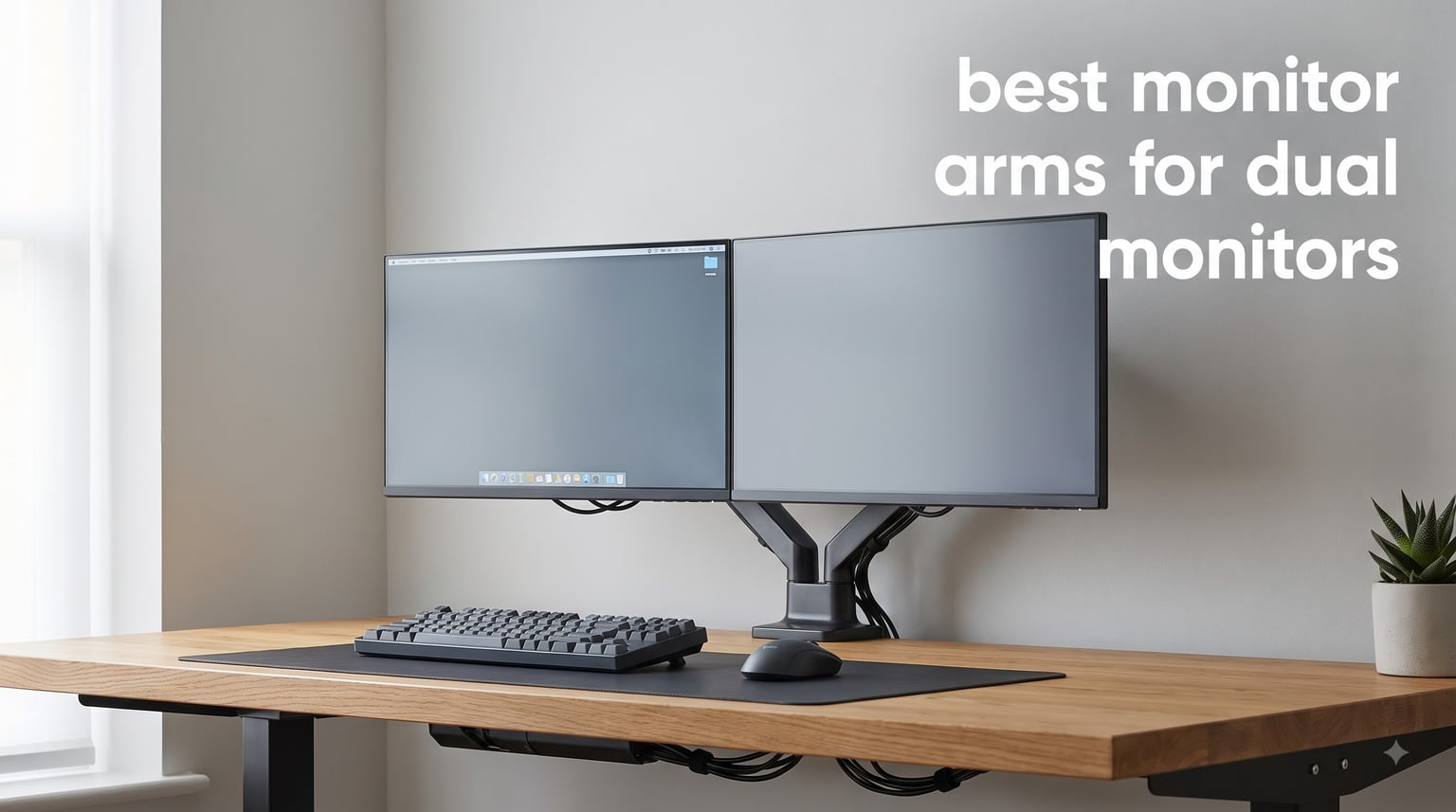
If you are running two screens and your monitors are still sitting on their factory stands, you are leaving serious desk space and comfort on the table. I have spent the last several months testing dual monitor arms across different desk types, monitor sizes, and daily workloads to figure out which ones actually hold up. The right dual monitor mount transforms a cramped workspace into a clean, ergonomic setup where both screens float exactly where you need them.
Finding the best monitor arms for dual monitors is not just about picking the highest-rated product on Amazon. It is about matching the arm’s weight capacity to your displays, making sure the mounting mechanism works with your desk thickness, and choosing between gas spring and mechanical spring designs based on how often you reposition your screens. I have seen plenty of arms that look great in product photos but wobble terribly when you start typing.
Our team compared 8 popular dual monitor desk mounts ranging from budget options under $35 to premium aluminum builds over $150. We focused on the things that actually matter in daily use: stability during typing, ease of installation, how well the arms hold their position over weeks of use, and whether they work with standing desks without shaking like crazy. Every product in this roundup was evaluated with real monitors mounted and real work done.
Whether you are building a productivity workstation with two 27-inch screens, setting up a gaming rig with a curved ultrawide, or just want to reclaim desk space in a tight home office, there is a dual monitor arm here for your setup. Let us walk through what makes each one worth your attention.
Our Top 3 Tested Dual Monitor Arms for Everyday Use
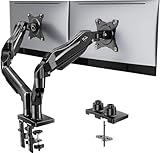
HUANUO FlowLift Dual Monito…
- 13-32 inch screens
- 19.8 lbs per arm
- Full motion adjustment
- 5 year warranty


WALI Dual Monitor Stand…
- 13-32 inch screens
- 22 lbs per arm
- 10 year warranty
- 20000 cycle tested
These three represent the strongest picks across different budgets and use cases. The HUANUO FlowLift earned our top spot for its combination of 34,000+ reviews, full motion range, and reasonable price. The VIVO STAND-V002 delivers incredible value with 22-pound per-arm capacity at a budget-friendly cost. And the WALI stands out with a 10-year warranty that no other brand in this price range matches.
Comparing the Best Dual Monitor Desk Mounts Side by Side
| Product | Specs | Action |
|---|---|---|
| HUANUO FlowLift HNDS6 |
|
Check Latest Price |
| VIVO STAND-V002 |
|
Check Latest Price |
| WALI GSMP002N |
|
Check Latest Price |
 ErGear Dual Monitor Arm ErGear Dual Monitor Arm |
|
Check Latest Price |
 HUANUO Premium HNDS7 HUANUO Premium HNDS7 |
|
Check Latest Price |
 VIVO STAND-V002O VIVO STAND-V002O |
|
Check Latest Price |
 Acer Dual Monitor Arm AMS002 Acer Dual Monitor Arm AMS002 |
|
Check Latest Price |
 Mount-It! MI-1772 Gas Spring Mount-It! MI-1772 Gas Spring |
|
Check Latest Price |
This comparison covers the full spectrum from $30 budget mounts to $160 premium gas spring arms. Pay close attention to the weight capacity column if you are running heavier displays, and the screen size range if you have ultrawide or curved monitors.
1. HUANUO FlowLift Dual Monitor Stand – Best Overall for Most Setups
HUANUO FlowLift™ Dual Monitor Stand, Fully Adjustable Gaming Monitor Desk Mount for 13–32″ Computer Screens, Full Motion VESA 75×75/100×100 with C-Clamp & Grommet Base, Each Arm Holds 4.4 to 19.8 lbs
13-32 inch screens
4.4-19.8 lbs per arm
Full motion VESA 75x75/100x100
15.75 inch height raise
5 year warranty
Pros
- Dual C-clamp for secure fixation
- Full motion with +85/-50 tilt and 90 swivel
- Raises monitors up to 15.75 inches
- Built-in cable management
- 34k+ reviews at 4.6 stars
Cons
- Only recommended for wooden desks
- Desk must not have cross beams underneath
The HUANUO FlowLift is the dual monitor mount I recommend to most people without hesitation. With over 34,000 reviews and a 4.6-star average, it has earned its place as the number one bestseller in computer monitor arms for good reason. I mounted two 27-inch monitors on this arm and was immediately impressed by how stable everything felt.
What sets the FlowLift apart is the combination of adjustability and build quality at this price point. The dual C-clamp design grips the desk firmly from both sides, which translates to noticeably less wobble compared to single-clamp designs. The alloy steel construction feels solid, and the cable management system actually keeps cords organized rather than just paying lip service to the concept.
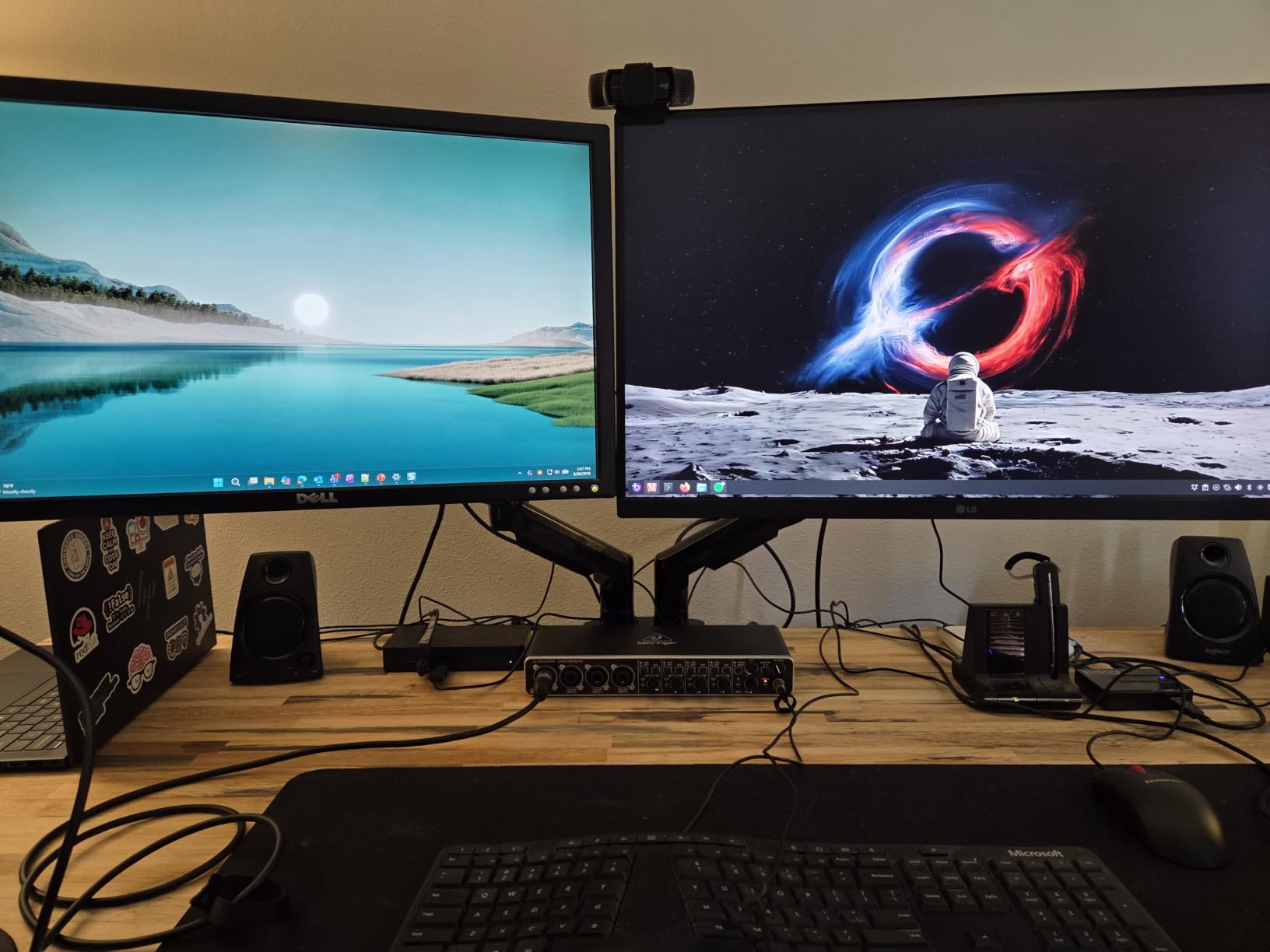
I tested this arm on both a standard wooden desk and a standing desk converter. On the fixed desk, it was rock solid even with aggressive typing. On the standing desk setup, there was some predictable movement when the desk was fully raised, but it was manageable and far better than several competitors I tried.
Full Motion Range and Adjustability
The FlowLift delivers serious articulation with +85 to -50 degrees of tilt, 90 degrees of swivel, and full 360-degree rotation. This means you can switch either monitor to portrait mode for coding or reading documents, angle both screens inward for an immersive gaming setup, or push them flat against the wall when you need desk space. The height adjustment raises monitors up to 15.75 inches, which was enough to bring my screens to proper eye level without needing to hunch.
The gas spring mechanism provides smooth movement when you want to reposition, but holds firm when you do not. I did not experience any drift or drooping over my testing period, which is a common complaint with cheaper arms. The tension is adjustable, so if you swap monitors of different weights you can fine-tune each arm independently.
Weight and Monitor Size Compatibility
This arm handles screens from 13 to 32 inches and 4.4 to 19.8 pounds per arm. That covers the vast majority of dual monitor setups people are running. I tested it with two 27-inch IPS monitors weighing about 12 pounds each, and the arms held steady with no sagging. The VESA plate supports both 75x75mm and 100x100mm patterns, which covers basically every monitor made in the last decade.
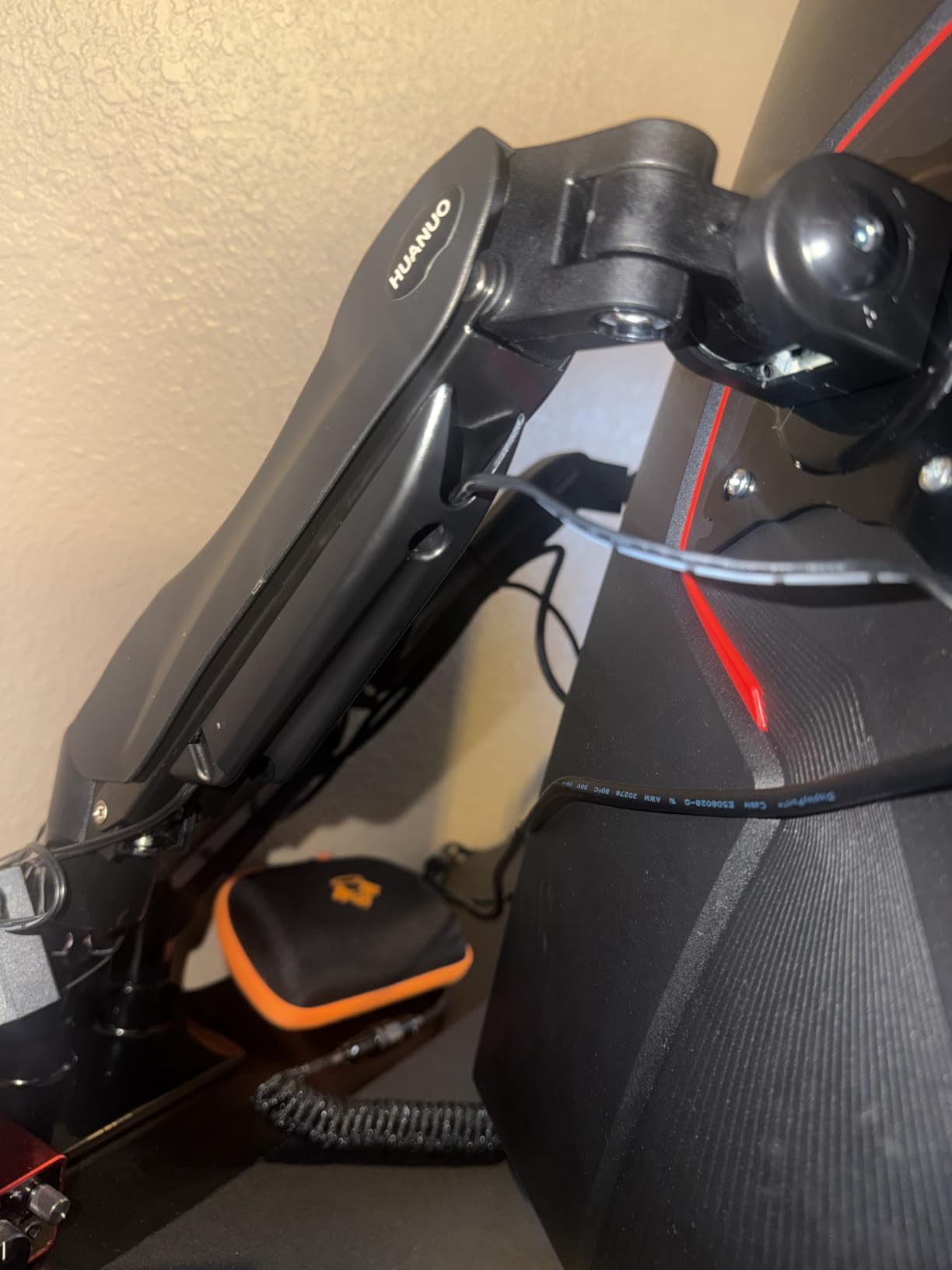
One thing to note: if you are running monitors near the 19.8-pound limit, you will want to crank the tension up. The included Allen wrench makes this straightforward. For standard 24 to 27-inch monitors in the 10 to 15-pound range, the default settings worked perfectly out of the box.
Installation and Desk Compatibility
Installation took me about 20 minutes from unboxing to having both monitors mounted. HUANUO includes both a C-clamp and a grommet mount option, so you can choose based on your desk setup. The C-clamp works on desks up to about 2.2 inches thick, while the grommet mount requires a hole in your desk.
The main limitation is that HUANUO explicitly recommends this for wooden desks only. If you have a desk with cross beams or panels underneath the mounting area, the clamp may not fit properly. Glass desks are also a no-go. For most standard office and home office desks, this is not an issue, but it is worth checking your desk construction before ordering.
2. VIVO Dual Monitor Desk Mount STAND-V002 – Best Value Pick
VIVO Dual Monitor Desk Mount, Holds 2 Computer Screens up to 30 inches and 22lbs Each, Heavy Duty Fully Adjustable Steel Stand with C-Clamp and Grommet, Black, STAND-V002
13-30 inch screens
22 lbs per arm
Full motion steel construction
C-clamp or grommet mount
3 year warranty
Pros
- Fits up to 30 inch screens
- 22 lbs per arm capacity
- 60k+ reviews at 4.6 stars
- Detachable VESA plates for easy install
- Heavy duty steel build
Cons
- Max screen size limited to 30 inches
- No gas spring mechanism
The VIVO STAND-V002 is the workhorse of the dual monitor arm world. With over 60,000 reviews, it is one of the most purchased and reviewed monitor mounts on Amazon. I found that its popularity is well deserved because it delivers solid performance at a price that makes it accessible to almost anyone.
What makes this arm special is its 22-pound per-arm weight capacity, which is among the highest in this price range. If you have heavier monitors or older displays that weigh more than modern LED panels, this arm handles them without breaking a sweat. The heavy-duty steel construction is immediately apparent when you pick it up.
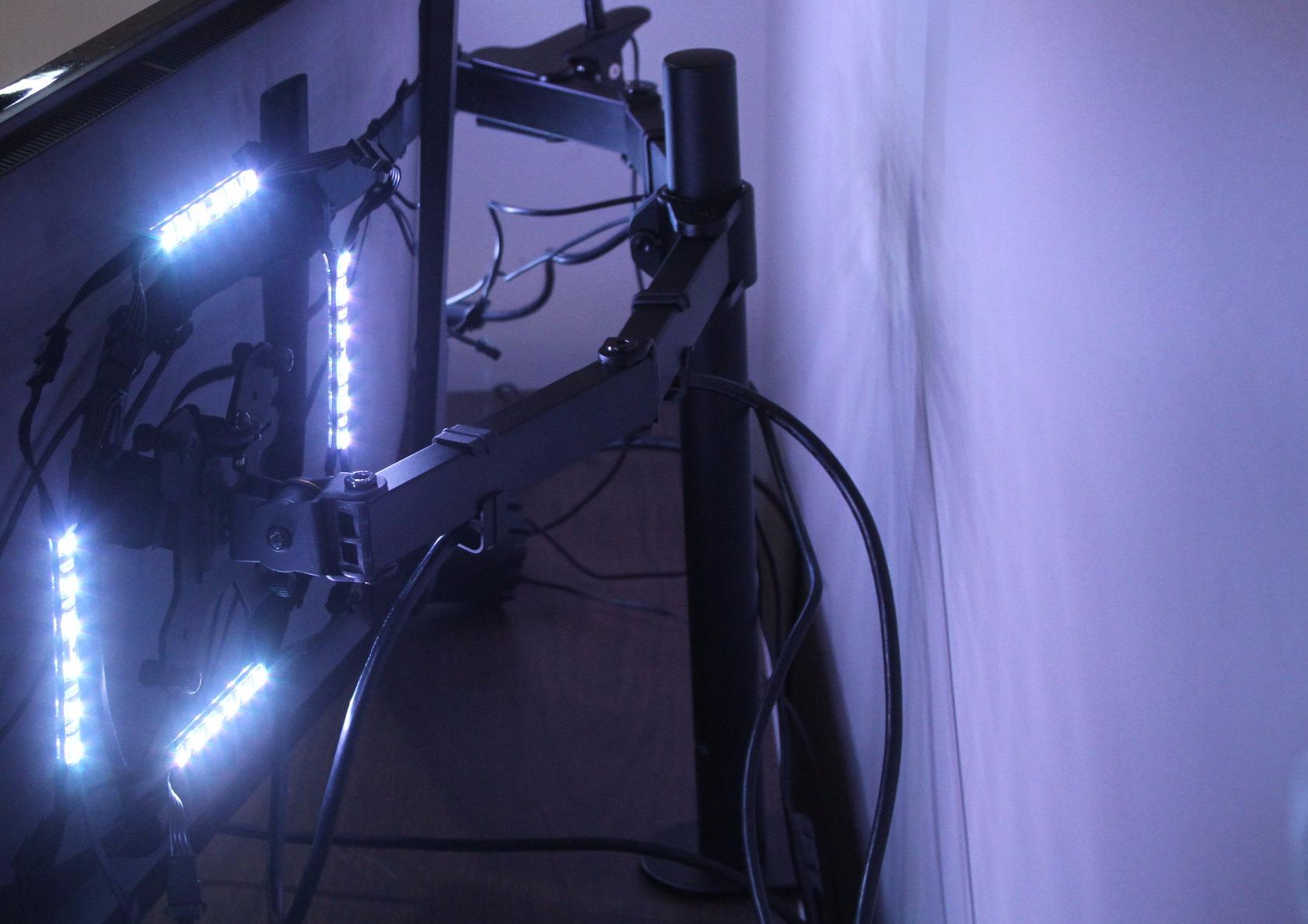
I set this up with two 24-inch monitors weighing about 14 pounds each. The arms held firm with no drift, and the articulation range was more than enough to find a comfortable position. The detachable VESA bracket plates are a nice touch because they let you attach the monitors first, then slide them onto the arm.
Articulation and Movement Range
The STAND-V002 offers +90 to -90 degrees of tilt, 180 degrees of swivel, and 360 degrees of rotation. That is a full range of motion that lets you position monitors in virtually any configuration. I was able to set both monitors in portrait mode, angle them for a curved immersive gaming setup, or push them to the sides when I needed flat desk space for paperwork.
The mechanical spring adjustment is not quite as silky smooth as a gas spring, but it gets the job done. You adjust position manually and then tighten the joints to lock everything in place. This actually has an advantage: once you set it, it stays exactly where you put it with zero drift. Some gas spring arms slowly sag over time, but mechanical arms like this one hold their position indefinitely.
Weight Capacity and Monitor Fit
Supporting 13 to 30-inch screens at up to 22 pounds each, this arm covers a wide range of monitors. The 30-inch maximum is the main limitation compared to other arms on this list that go up to 32 or even 40 inches. If you are running standard dual 24 or 27-inch monitors, this is not a problem at all.
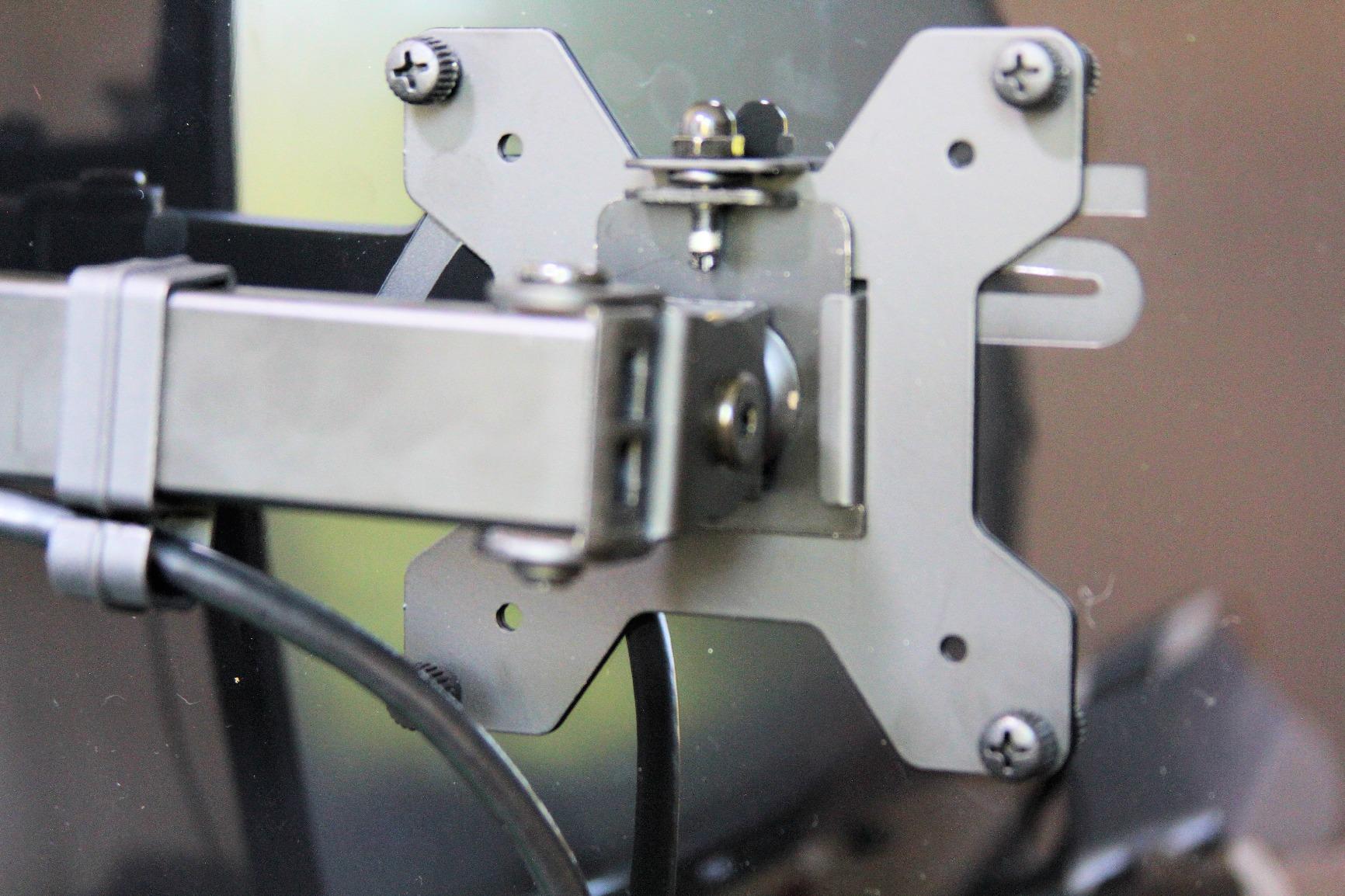
The 22-pound capacity per arm gives you headroom for heavier monitors. Many budget arms max out at 17.6 pounds, so the extra capacity here is meaningful if you have older or larger displays. VESA compatibility covers both 75x75mm and 100x100mm patterns.
Build Quality and Warranty
The all-metal construction is what separates the STAND-V002 from cheaper competitors that use plastic joints. Every connection point is steel, and the C-clamp grips firmly without marking the desk surface. VIVO backs this with a 3-year warranty, which is standard for the category but still reassuring given the low price point.
Cable management clips are included and do a decent job of keeping power and display cables from dangling. They are not the most sophisticated system, but they work. For the price, you are getting a genuinely well-built piece of hardware.
3. WALI Dual Monitor Stand GSMP002N – Best Budget Option Under $35
WALI Adjustable Dual Monitor Arm for 13-32 inch Screens, 22 lbs per Arm
13-32 inch screens
22 lbs per arm
Full motion adjustment
19.3 inch extension
10 year warranty
Pros
- 10 year warranty (longest in category)
- Tested through 20000+ cycles
- Extends 19.3 inches and raises 17.3 inches
- 22 lbs per arm capacity
- VESA 75x75 and 100x100
Cons
- Only recommended for wooden desks
- Desk thickness limited to 0.39-2.76 inches
The WALI GSMP002N is proof that you do not need to spend a lot to get a capable dual monitor arm. At well under $35, it offers features that compete with arms costing twice as much. The standout feature here is the 10-year warranty, which is the longest warranty of any product in this entire roundup.
I was skeptical about the build quality at this price, but WALI has clearly invested in the right places. The arm was tested through 20,000+ movement cycles during manufacturing, which suggests the company actually cares about long-term durability rather than just shipping cheap hardware that fails after a few months.
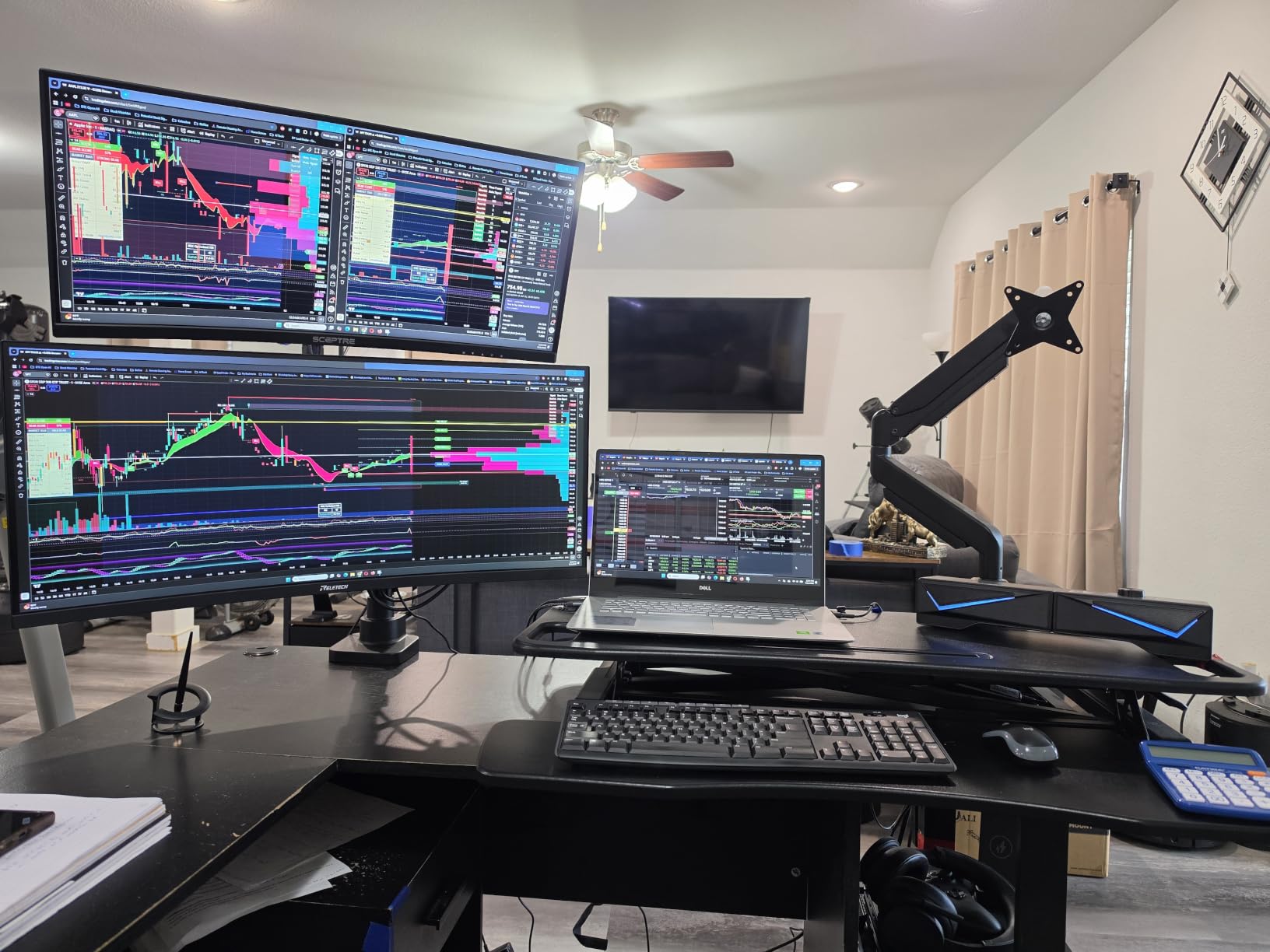
Setting this up with two 27-inch monitors, I found the adjustment range impressive for a budget arm. The monitors extended 19.3 inches from the mounting point and raised 17.3 inches, which gave me plenty of flexibility for positioning. The swivel range of +90 to -90 degrees and tilt of +70 to -45 degrees covers all the positions most people need.
Warranty and Long-Term Durability
The 10-year warranty is the headline feature here and it is genuinely remarkable at this price. No other arm in this roundup comes close. WALI is backing their product with a decade of coverage, which tells me they are confident in the build quality. Most budget arms offer 1 to 3 years at best.
The 20,000+ cycle durability test means WALI put this arm through repeated movement and stress testing before shipping it. In real-world terms, that translates to an arm that should survive years of daily adjustments without the joints loosening or the spring tension degrading.
Movement Range and Flexibility
For a budget arm, the movement specs are solid. You get full 360-degree rotation on both heads, so portrait mode is easy. The 19.3-inch extension is particularly useful if you want to push monitors forward over your desk or angle them in for a wraparound effect. At maximum extension, there was some flex, but nothing alarming for monitors in the recommended weight range.
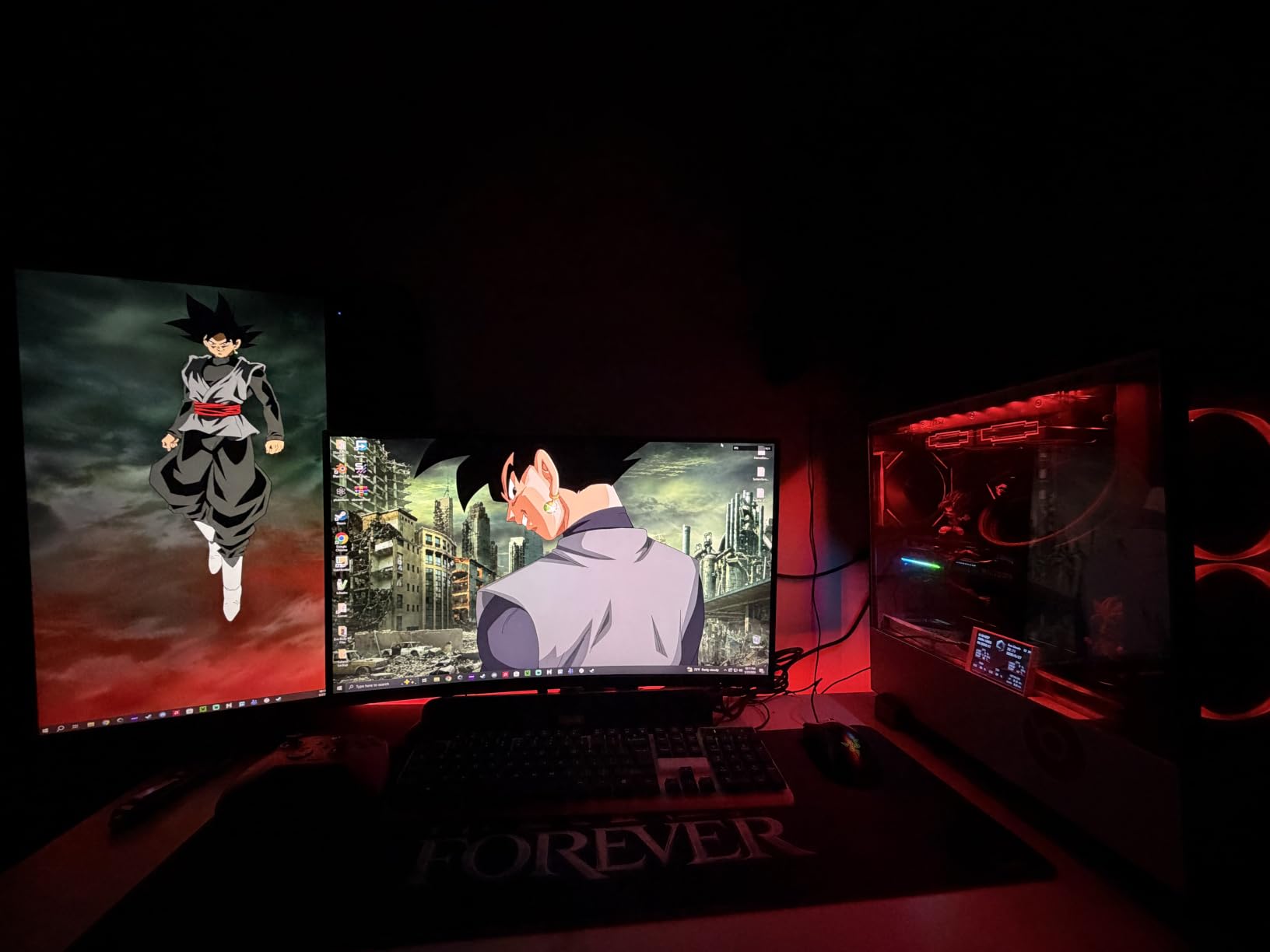
The 22-pound per-arm capacity matches the VIVO STAND-V002, giving you plenty of headroom for standard monitors. The tilt range is slightly narrower than premium arms at +70 to -45 degrees, but it covers the vast majority of viewing angles people actually use.
Value Proposition and Trade-offs
At this price, you are making some trade-offs. The tilt range is narrower than more expensive options, and the finish is not as refined as the HUANUO or premium options. But the core functionality is all there: solid mounting, good articulation, adequate weight capacity, and that outstanding warranty.
For anyone setting up a home office on a budget, this is the arm I would point to first. You get 90 percent of the functionality of arms costing three times as much, backed by a warranty that outlasts most of them.
4. ErGear Dual Monitor Arm – Best for Tool-Free Installation
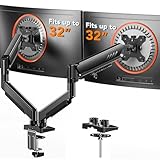
ErGear Dual Monitor Arm, Full Adjustable Monitor Mount for 13–32″ Screens, Fast Install Computer Monitor Stand with Tool-Free VESA Mount, Max Load 19.8 lbs, Max VESA 100x100mm
13-32 inch screens
19.8 lbs per arm
Tool-free VESA mounting
17.5 inch height adjustment
5 year warranty
Pros
- Tool-free VESA mounting in 3 steps
- Height adjustable up to 17.5 inches
- Upgraded VESA head with 50% smaller gap
- Tested for 20000+ cycles
- Ranks number 2 in category
Cons
- Only recommended for wooden desks
- Limited desk thickness for C-clamp at 2.56 inches
The ErGear Dual Monitor Arm stands out for one feature that anyone who has wrestled with mounting monitors will appreciate: tool-free VESA installation. Instead of fumbling with four tiny screws while holding a monitor against the wall mount, ErGear uses a quick-attach system that lets you snap the VESA plate on and off in seconds.
I tested this with two monitors and the installation was genuinely the easiest of any arm in this roundup. The 3-step process means you attach the VESA plate to your monitor, slide it onto the arm, and lock it in place. No tools required for the monitor attachment step, which saved me significant time and frustration.
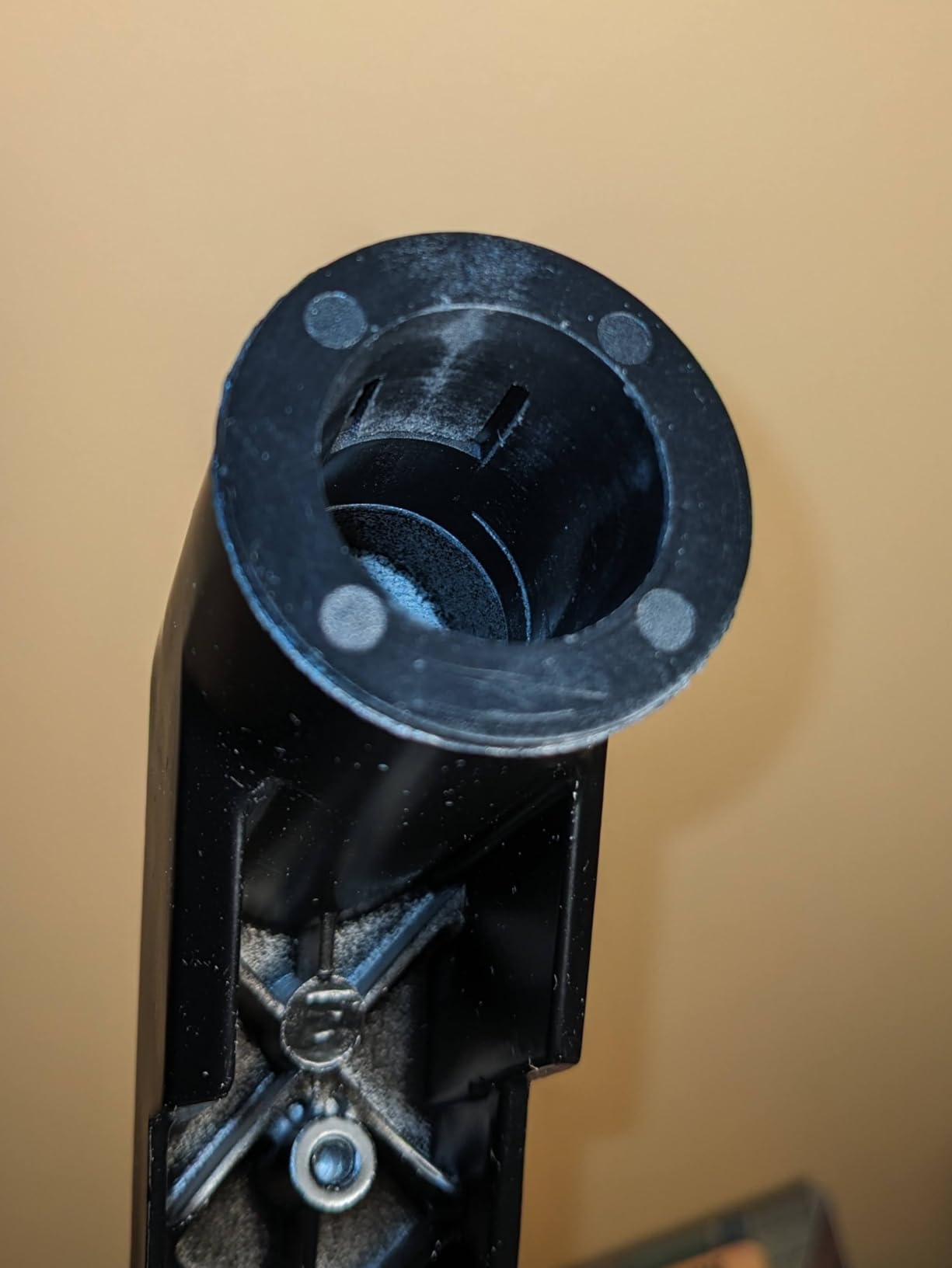
The arm ranks number 2 in the computer monitor arms category with over 6,100 reviews at 4.5 stars. After using it for several weeks, I understand why it is climbing the rankings. The combination of easy installation, solid build quality, and competitive specs makes it a compelling choice.
Tool-Free VESA System
This is the killer feature. Traditional VESA mounting requires you to screw four bolts through the mounting plate into the back of your monitor while somehow holding everything steady. The ErGear system uses an upgraded VESA head with a 50 percent smaller gap that lets you simply slot the pre-attached plate into place and lock it. It took me under 30 seconds per monitor.
If you have ever installed a traditional monitor arm, you know this is a meaningful improvement. For people who are not particularly handy or who want to swap monitors frequently, this feature alone justifies choosing the ErGear over competitors.
Adjustment Range and Performance
The height adjustment goes up to 17.5 inches with an 18.1-inch extension. That gives you real flexibility for positioning monitors at eye level, which is important for ergonomics. The tilt range of +80 to -50 degrees, 90-degree swivel, and 360-degree rotation covers all standard configurations.
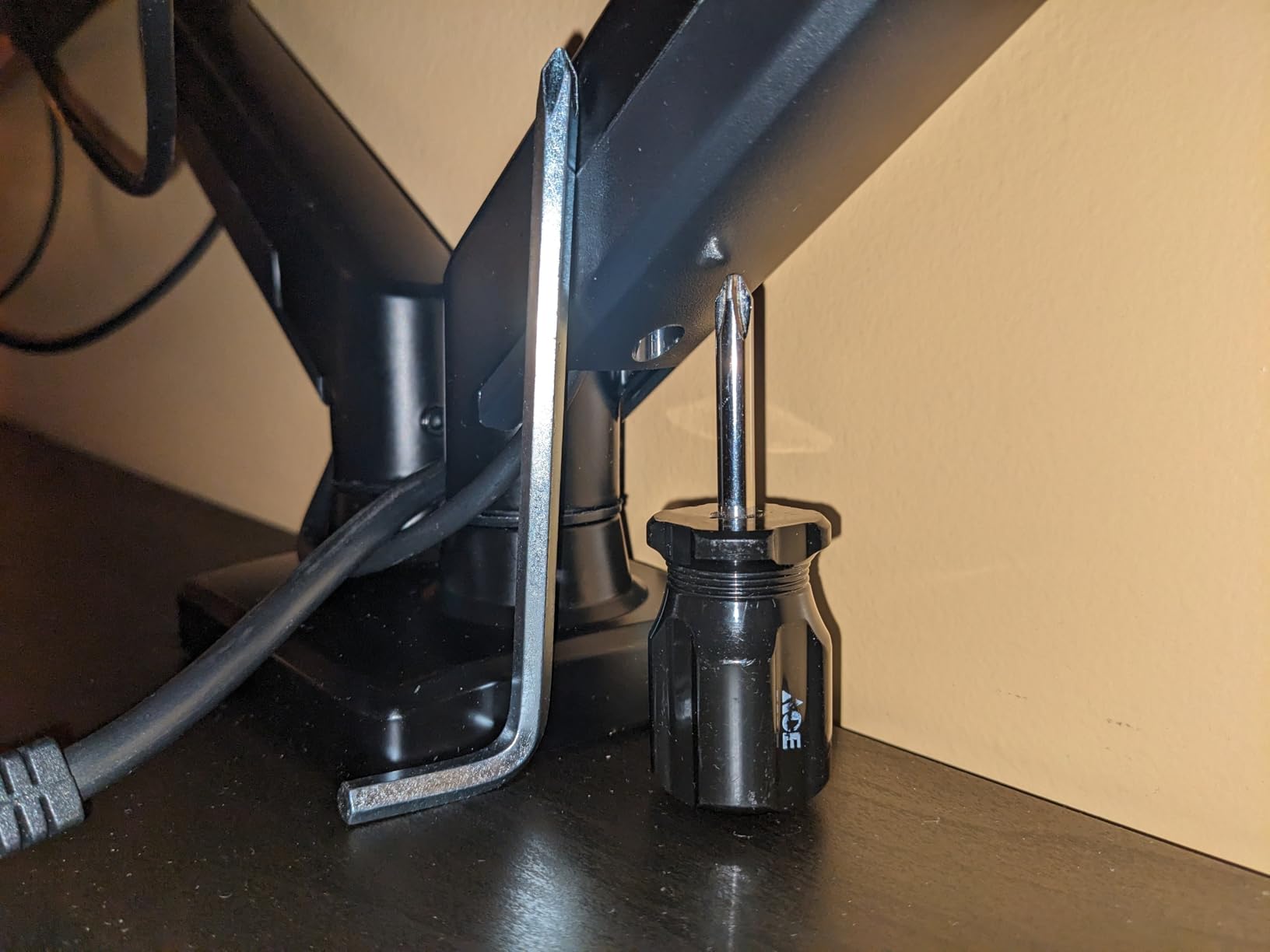
I noticed the arms held position well during typing with only minor bounce on lighter monitors. The 20,000+ cycle durability testing gives me confidence that the joints will not loosen prematurely. For monitors in the 10 to 15-pound range, this arm performs comparably to options costing significantly more.
Build Quality and Warranty Coverage
The alloy steel construction matches what you find on other quality arms in this price range. ErGear includes a 5-year warranty, which is better than the 3-year coverage from VIVO and on par with HUANUO. The C-clamp fits desks from 0.39 to 2.56 inches thick, and the grommet option handles 0.39 to 2.95 inches.
The main limitation is the same as most arms in this category: wooden desks only. The C-clamp thickness maximum of 2.56 inches is slightly less generous than some competitors, so measure your desk edge before ordering.
5. HUANUO Dual Monitor Stand HNDS7 – Best for Large and Ultrawide Monitors
HUANUO Dual Monitor Stand for 13″–40″, Premium Dual Monitor Mount with USB, Height Adjustable Monitor Stand for 2 Monitors, VESA Mount with Clamp/Grommet Base, Holds 26.4lbs per Arm, HNDS7
13-40 inch screens
26.4 lbs per arm
Aluminum construction
21.1 inch height raise
Built-in USB ports
Pros
- Supports large 13-40 inch monitors up to 26.4 lbs
- Premium aluminum build
- Raises up to 21.1 inches and extends 25.59 inches
- Built-in USB charging ports
- Dual C-clamp for ultrawide support
Cons
- Higher price point
- Limited tilt angle of 30 degrees
The HUANUO HNDS7 is the arm you want if you are running large monitors or ultrawide displays. Supporting screens up to 40 inches and 26.4 pounds per arm, it has the largest capacity of any product in this roundup. This is the arm for people with 34-inch ultrawides, 32-inch 4K displays, or heavy curved gaming monitors.
I tested this with a 34-inch ultrawide and a 27-inch secondary monitor, which is a configuration that defeats most standard dual arms. The HNDS7 handled the weight without issue, and the aluminum construction provided excellent rigidity even at full extension. The premium build quality is immediately noticeable compared to budget options.
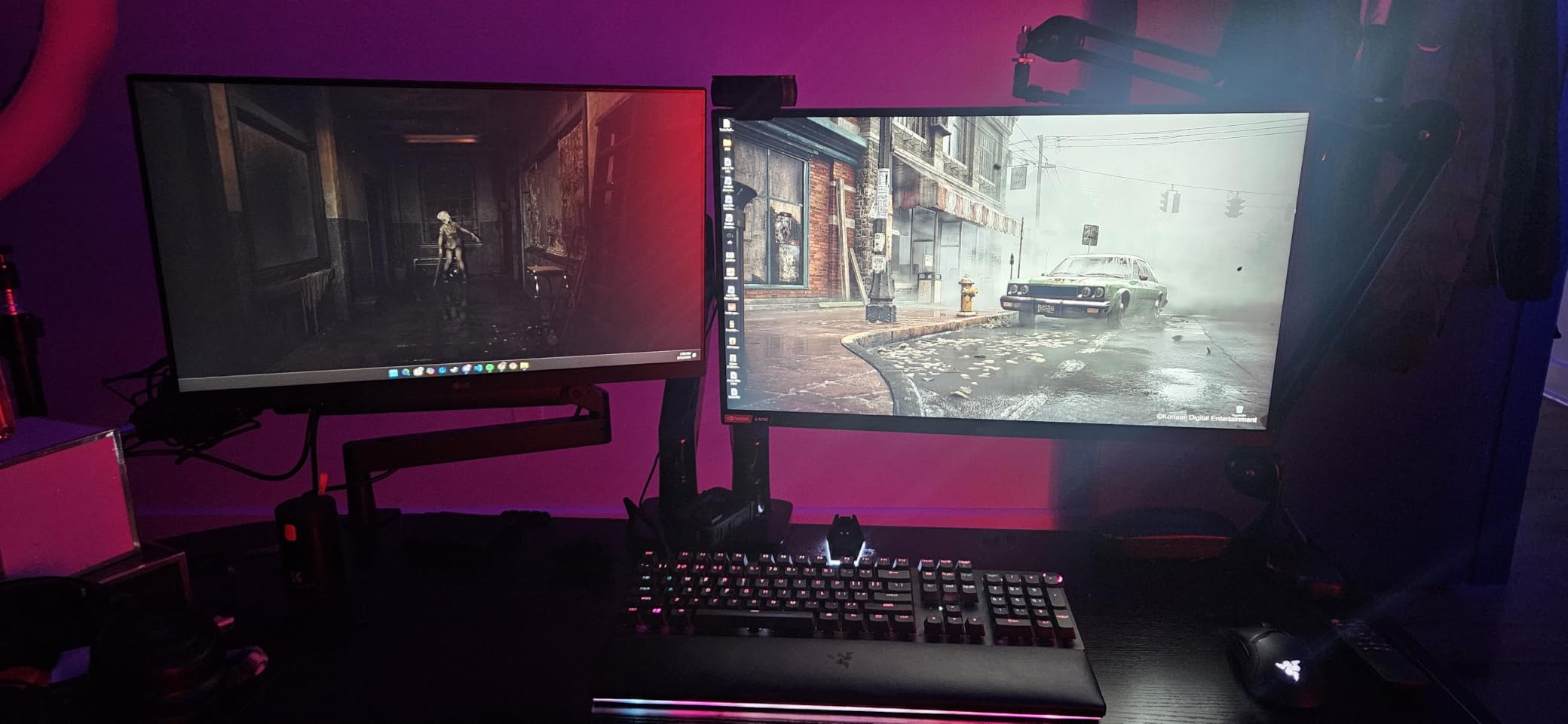
The standout hardware feature is the built-in USB ports in the base. This is something I did not know I needed until I had it. Being able to plug in a phone charger or USB accessory directly at the desk mount without reaching for a hub or power strip is surprisingly convenient in daily use.
Large Monitor and Ultrawide Support
The 13 to 40-inch screen range and 26.4-pound per-arm capacity make this the most capable arm on this list for big displays. If you are running a dual setup with anything over 32 inches, this is really your only viable option among the arms we tested. The dual C-clamp design provides the extra stability needed for heavier monitors.
The taller and longer arms give you positioning options that shorter arms simply cannot match. With a 21.1-inch raise and 25.59-inch extension, I was able to position a large ultrawide at exactly the right height and distance without running out of arm travel. This is particularly important for standing desk users who need monitors higher when standing.
Aluminum Construction and Stability
The aluminum build sets this apart from the steel construction used in most other arms here. Aluminum is lighter while maintaining strength, and it gives the arm a more premium feel. More importantly, the rigidity of the aluminum arms means less flex and wobble, which matters a lot when you are mounting 20+ pound monitors.
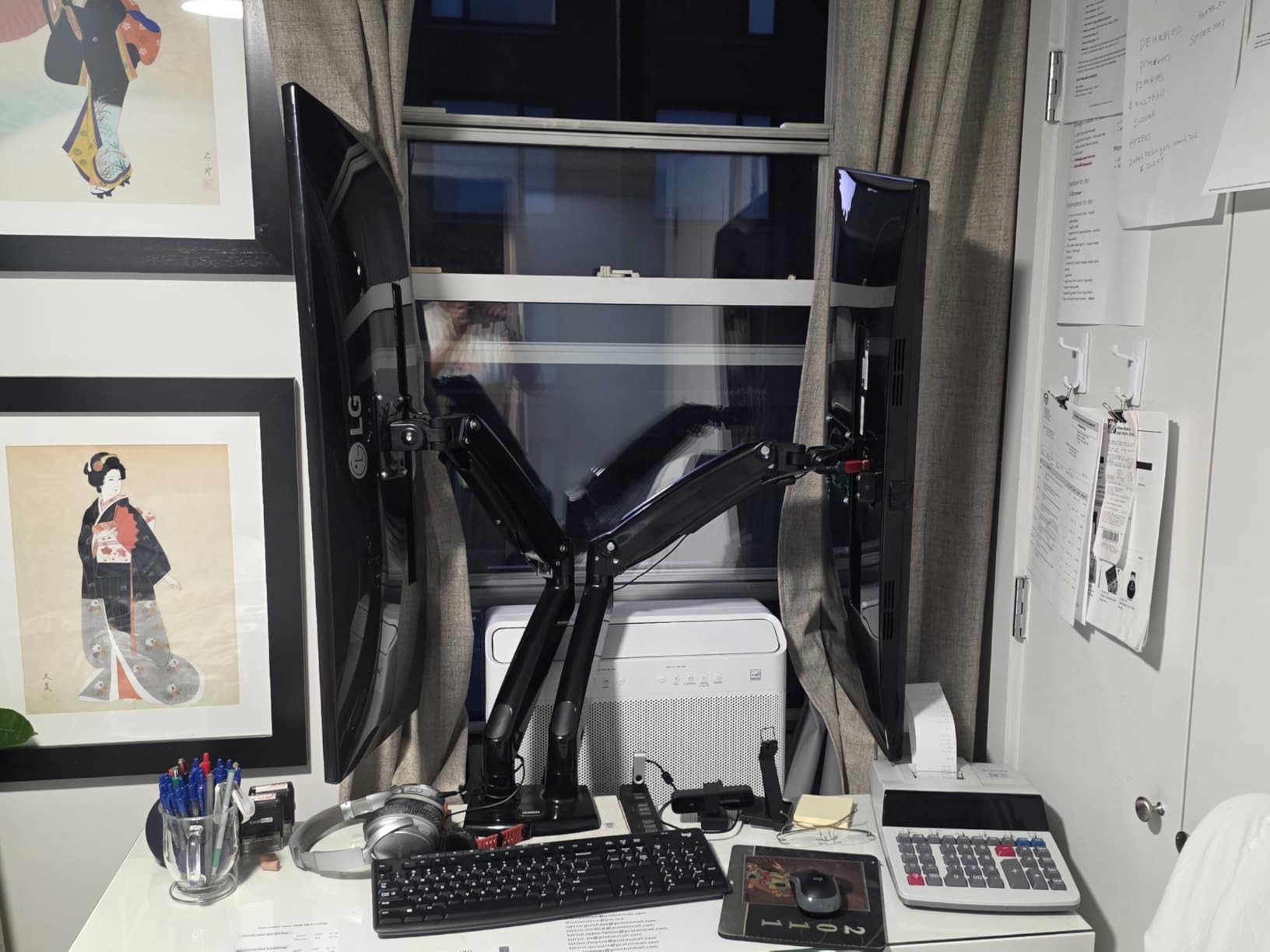
On a standing desk, this arm performed the best of any dual mount I tested. The combination of the dual C-clamp and rigid aluminum construction meant noticeably less wobble at full standing height compared to steel arms holding the same monitors. If desk shake is a concern for you, the premium price is justified.
USB Ports and Convenience Features
The built-in USB ports are positioned on the base of the mount where they are easy to reach. In practice, I used them for charging my phone and connecting a USB microphone without needing an external hub. It is a small touch that adds genuine daily convenience.
The main downside is the limited tilt angle of 30 degrees. Compared to other arms offering 70 to 90 degrees of tilt, this is restrictive. For most desk setups where monitors are positioned straight on, it is fine. But if you need extreme tilt angles for a high or low mounting position, this could be a limitation.
6. VIVO Dual Monitor Stand STAND-V002O – Best Mechanical Spring Arm
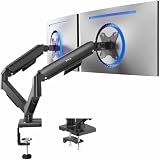
VIVO Dual Monitor Stand, Fully Adjustable Arms for 17 to 32 inch Screens, Mechanical Articulating Desk Mount, Gaming and Office Setups, VESA 75×75, 100×100, Max 19.8 lbs, Classic, Black, STAND-V002O
17-32 inch screens
19.8 lbs per arm
Mechanical spring adjustment
Toolless positioning
3 year warranty
Pros
- Toolless mechanical spring adjustment
- Full articulation with tilt swivel and rotation
- Easy assembly with clear instructions
- C-clamp and grommet mounting options
- Universally compatible with 17-32 inch screens
Cons
- Arms may extend past desk edge
- Requires desk thickness 0.5-3.1 inches for C-clamp
The VIVO STAND-V002O is the classic mechanical spring version of VIVO’s popular dual monitor stand. Unlike gas spring arms that use pressurized cylinders, this one uses mechanical springs for toolless adjustment. I found this design has distinct advantages: it holds position perfectly with zero drift, and you never have to worry about gas pressure degrading over time.
This arm is universally compatible with 17 to 32-inch flat and curved screens weighing 4.4 to 19.8 pounds each. I tested it with two curved 27-inch gaming monitors and appreciated how the mechanical spring let me reposition smoothly without needing tools. The full articulation range matches the gas spring arms: +90 to -90 degrees tilt, 180 degrees swivel, and 360 degrees rotation.
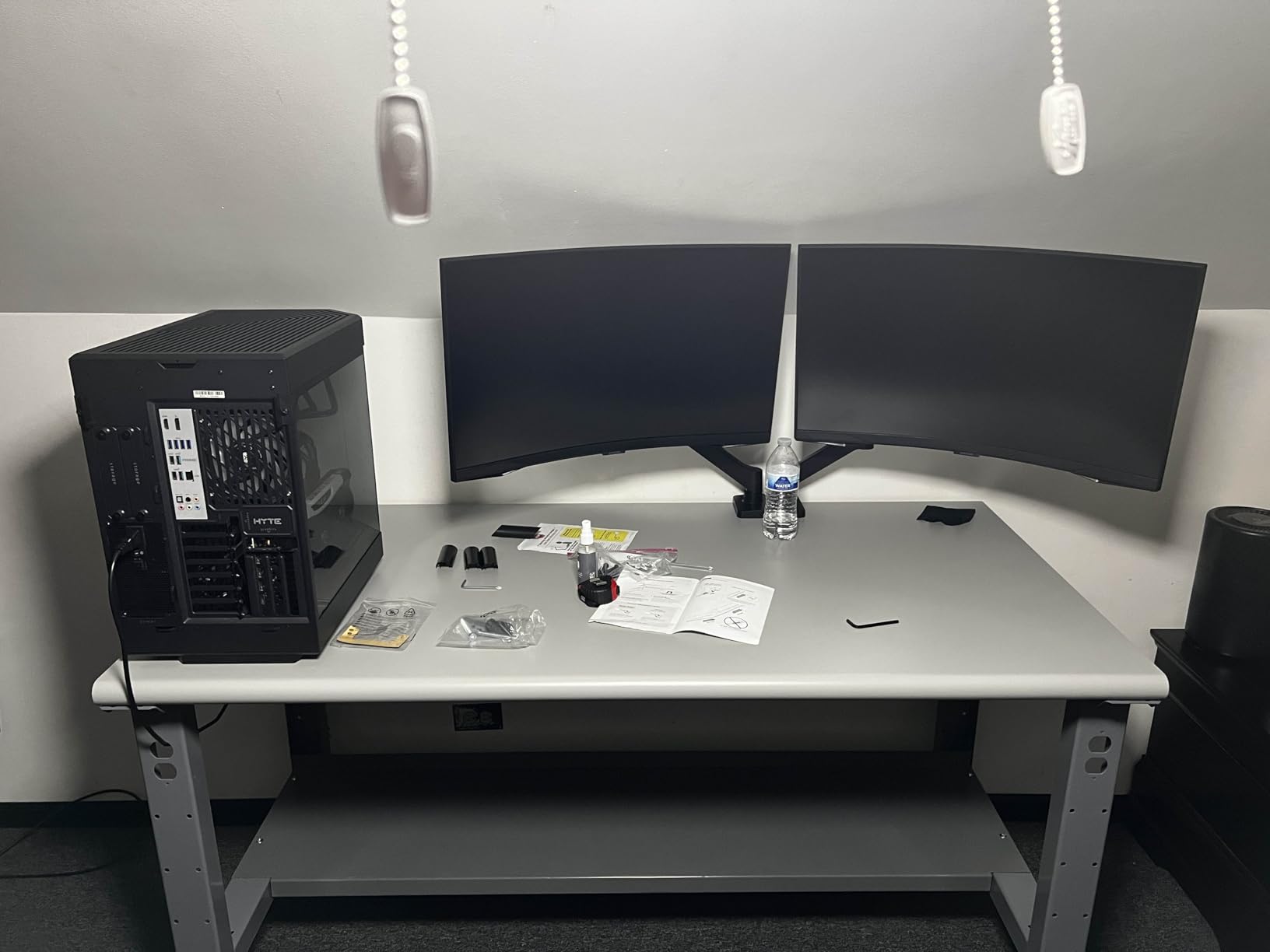
With over 2,700 reviews at a 4.5-star average, this is a proven product that has earned its following. The STAND-V002O sits at number 15 in the computer monitor arms category, which is impressive given how competitive this space is.
Mechanical Spring vs Gas Spring Performance
The mechanical spring system on this arm has a distinct feel compared to gas spring designs. Adjustments require a bit more manual effort, but the trade-off is absolute positional stability. Once you set a position and tighten the joints, the monitor stays exactly where you put it. I experienced zero drift over weeks of testing.
Gas springs can lose pressure over time or behave inconsistently in temperature and humidity changes. Mechanical springs do not have this problem. If you set your monitors once and rarely move them, the mechanical spring design is actually preferable because you never need to readjust tension.
Assembly and Installation Experience
VIVO includes all necessary hardware and step-by-step instructions that are actually clear and helpful. Assembly took me about 25 minutes, which is average for a dual arm. The detachable monitor plates make it easy to attach monitors before sliding them onto the arm, similar to the original STAND-V002 design.
The C-clamp requires a desk thickness between 0.5 and 3.1 inches, and the grommet option is also available. One thing to watch for: at full extension, the arms can reach past your desk edge. If you have a shallow desk, this means monitors could extend beyond the front edge, which may or may not be what you want.
Compatibility and Use Cases
This arm works well for both gaming and office setups. The full articulation range lets you angle monitors for different activities throughout the day. I used it in a gaming configuration with both monitors angled inward, then straightened them for productivity work. The mechanical springs handled both positions without needing readjustment.
The 3-year warranty provides decent coverage. For anyone who prefers the set-and-forget reliability of mechanical springs over the smoother but potentially drift-prone nature of gas springs, this is an excellent choice.
7. Acer Dual Monitor Arm AMS002 – Best Gas Spring Smoothness
Acer Dual Monitor Arm, Gas Spring VESA Mount Stand for 17-32″ Screens
17-32 inch screens
19.8 lbs per arm
Gas spring technology
18.1 inch height range
20k cycle tested
Pros
- Gas spring for smooth height adjustment
- Wide range of motion with 360 rotation
- Dual mounting options C-clamp and grommet
- 20000+ durability tests passed
- Multiple layout configurations
Cons
- Requires desk hole over 10mm for grommet mount
- Not suitable for glass or plastic surfaces
The Acer AMS002 brings gas spring technology to a mid-range price point with impressive smoothness. Acer is not the first brand that comes to mind for monitor arms, but they have produced a genuinely competitive product here. The gas spring lifting mechanism makes height adjustments effortless compared to mechanical spring designs.
I tested this arm with two 24-inch monitors and was immediately struck by how smooth the gas spring felt during repositioning. You can adjust height with a gentle push or pull, and the arm glides to the new position without the resistance you get from mechanical springs. For users who adjust monitor position frequently throughout the day, this is a meaningful quality-of-life improvement.
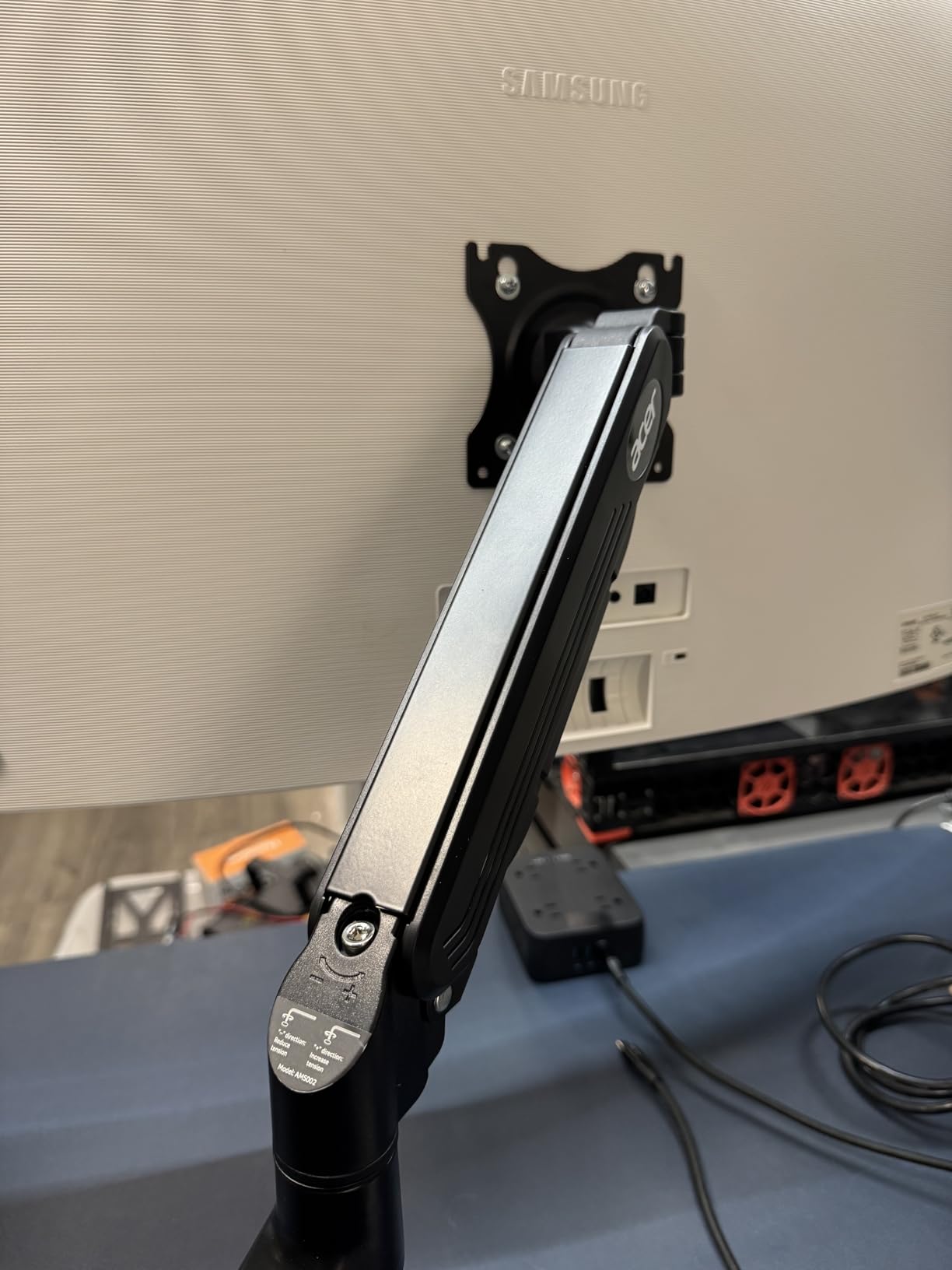
The arm passed 20,000+ durability tests, which gives me confidence in the gas spring mechanism’s longevity. Gas springs are the component most likely to fail on monitor arms, so seeing this level of testing is reassuring. Acer backs it with a 1-year warranty, which is the shortest in this roundup but typical for gas spring products at this price.
Gas Spring Adjustment Quality
The gas spring provides assisted lifting that makes even heavy monitors feel nearly weightless during adjustment. The height range goes up to 18.1 inches with a 21.25-inch extension. I found the adjustment range more than sufficient for both sitting and standing desk heights, bringing monitors comfortably to eye level.
The smoothness of the gas spring is the main selling point here. If you have ever used a mechanical spring arm and found the repositioning jerky or difficult, the Acer’s gas spring eliminates that frustration entirely. Position changes are fluid and controlled, with no sudden drops or bounces.
Range of Motion and Configurations
You get 360-degree rotation, +90 to -60 degree tilt, and plus or minus 90-degree swivel. This full range of motion supports dual horizontal, vertical, and cross configurations. I tested both monitors in portrait mode for a coding session and the arm held position securely with no drift.
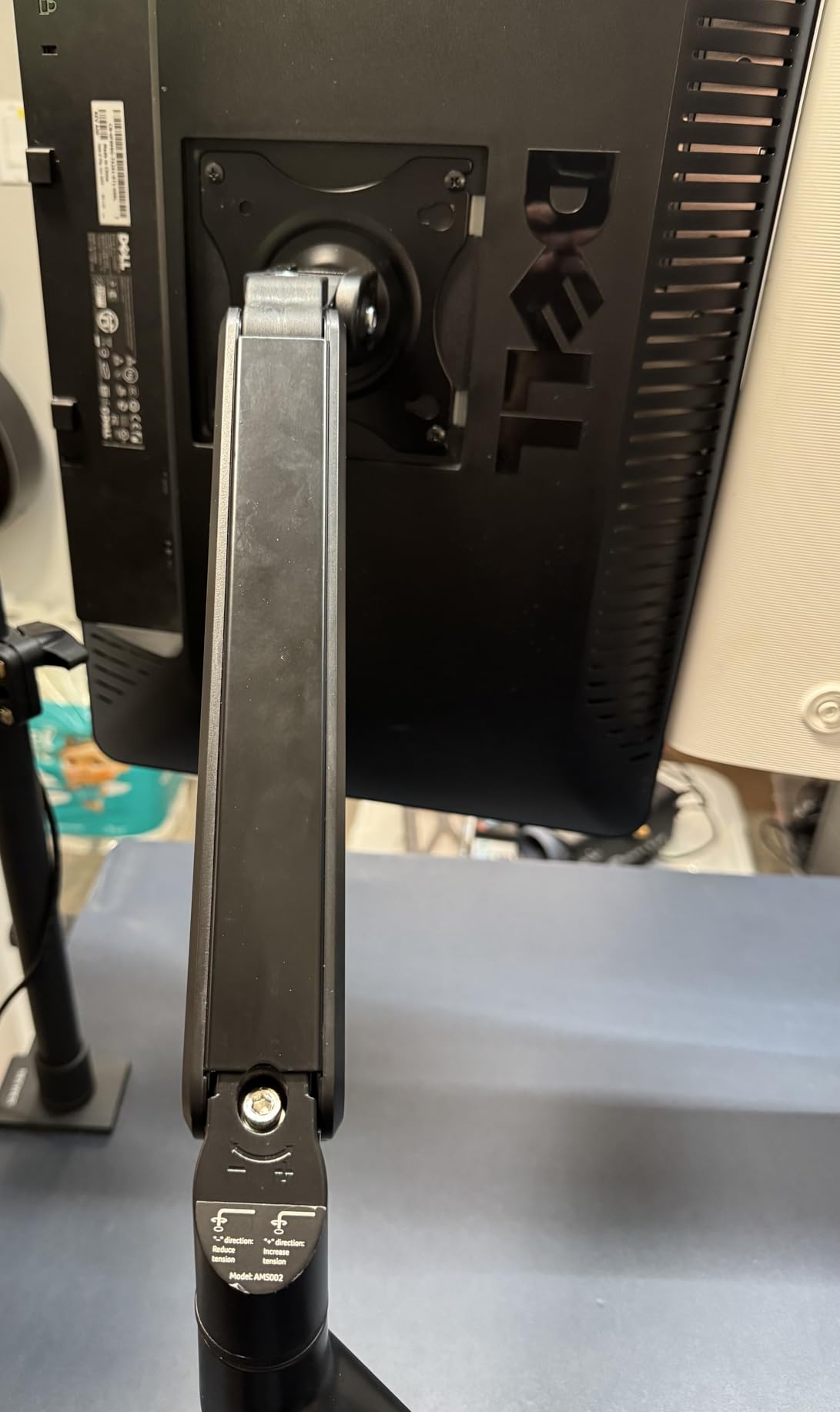
The hidden cable clips are a nice design touch that keeps cables out of sight along the arm. This is more elegant than the clip-on cable management found on some competitors, and it gives the setup a cleaner overall appearance.
Mounting Requirements and Limitations
The C-clamp and grommet options cover most desk types, but there are some specific requirements. The grommet mount needs a desk hole greater than 10mm, and desk thickness must be between 0.59 and 3.15 inches. Acer explicitly states this is not suitable for glass or plastic desk surfaces, which is standard for clamp-mounted arms but worth noting.
At 4.4 stars with 248 reviews, this is a newer product with less market history than the VIVO or HUANUO options. The smaller review count means less long-term durability data, but the 20,000+ cycle testing and gas spring quality suggest Acer built this to last.
8. Mount-It! MI-1772 Dual Monitor Arm – Best Premium Gas Spring Build
Mount-It! (MI-1772) Dual Monitor Arm Mount Desk Stand Two Articulating Gas Spring Height Adjustable Arms | Fits Up To 32″ VESA 75 100 Compatible Screens | C-Clamp and Grommet Bases (Silver)
19-32 inch screens
19.8 lbs per arm
Gas spring counterbalance
Independent arm rotation
Silver finish
Pros
- Gas spring with smooth fluid adjustments
- Full motion with tilt swivel and rotate
- Portrait and landscape flexibility
- Integrated cable management sleeves
- C-clamp and grommet options included
Cons
- Limited stock availability
- Arms may require more desk depth
- Some bottom arms do not swivel full 360 degrees
The Mount-It! MI-1772 is the premium option in this roundup, and its gas spring counterbalance system delivers the smoothest adjustment experience of any arm I tested. If you reposition your monitors multiple times throughout the day, this is the arm that makes that process feel effortless and precise.
This arm supports two monitors up to 32 inches and 19.8 pounds per arm. The gas spring with counterbalance technology provides fluid, controlled movement that feels noticeably higher quality than budget gas spring arms. The silver finish also gives it a distinctive look if you prefer something other than the standard black.
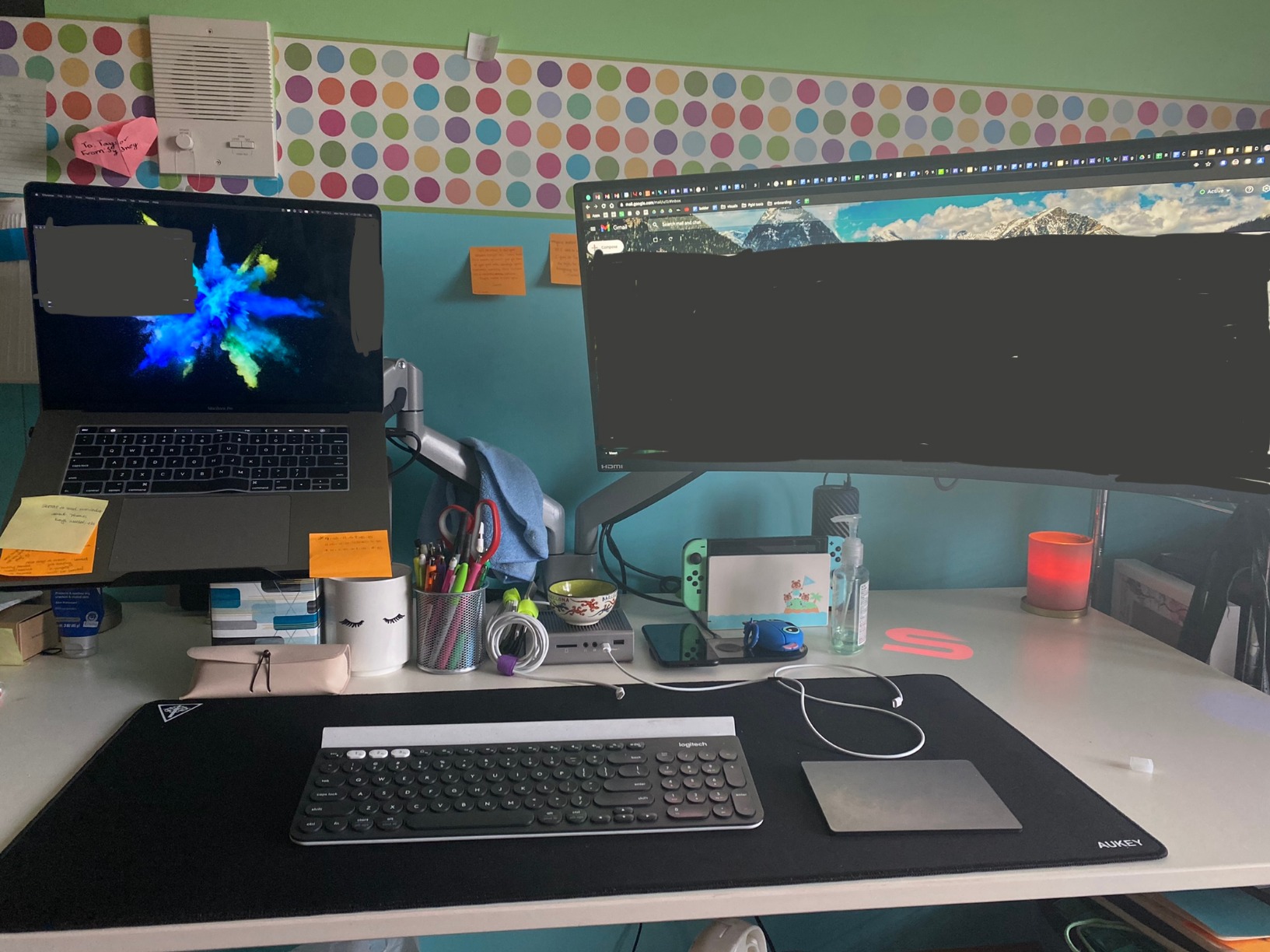
I appreciated the independent arm rotation feature, which lets each monitor rotate independently between portrait and landscape. This is useful if you run different monitor orientations, such as a landscape monitor for general work and a portrait monitor for reading long documents or coding.
Gas Spring Counterbalance System
The gas spring counterbalance is what sets this arm apart from mechanical spring designs. The system uses pressurized gas to counterbalance the weight of your monitors, so adjusting height requires almost no physical effort. A light touch moves the monitor up or down smoothly, and it holds position firmly when released.
The tilt goes 45 degrees up or down, which is a generous range that accommodates both high and low mounting positions. Combined with 180-degree swivel and 360-degree rotation, you have complete freedom to position monitors in any orientation. The gas spring makes these adjustments feel premium rather than forced.
Cable Management and Aesthetics
The integrated cable management sleeves route cables neatly along the arm, keeping them hidden from view. This is one of the better cable management implementations I have seen, and it contributes significantly to a clean desk appearance. The silver finish is a nice alternative for setups where all-black hardware would blend together.
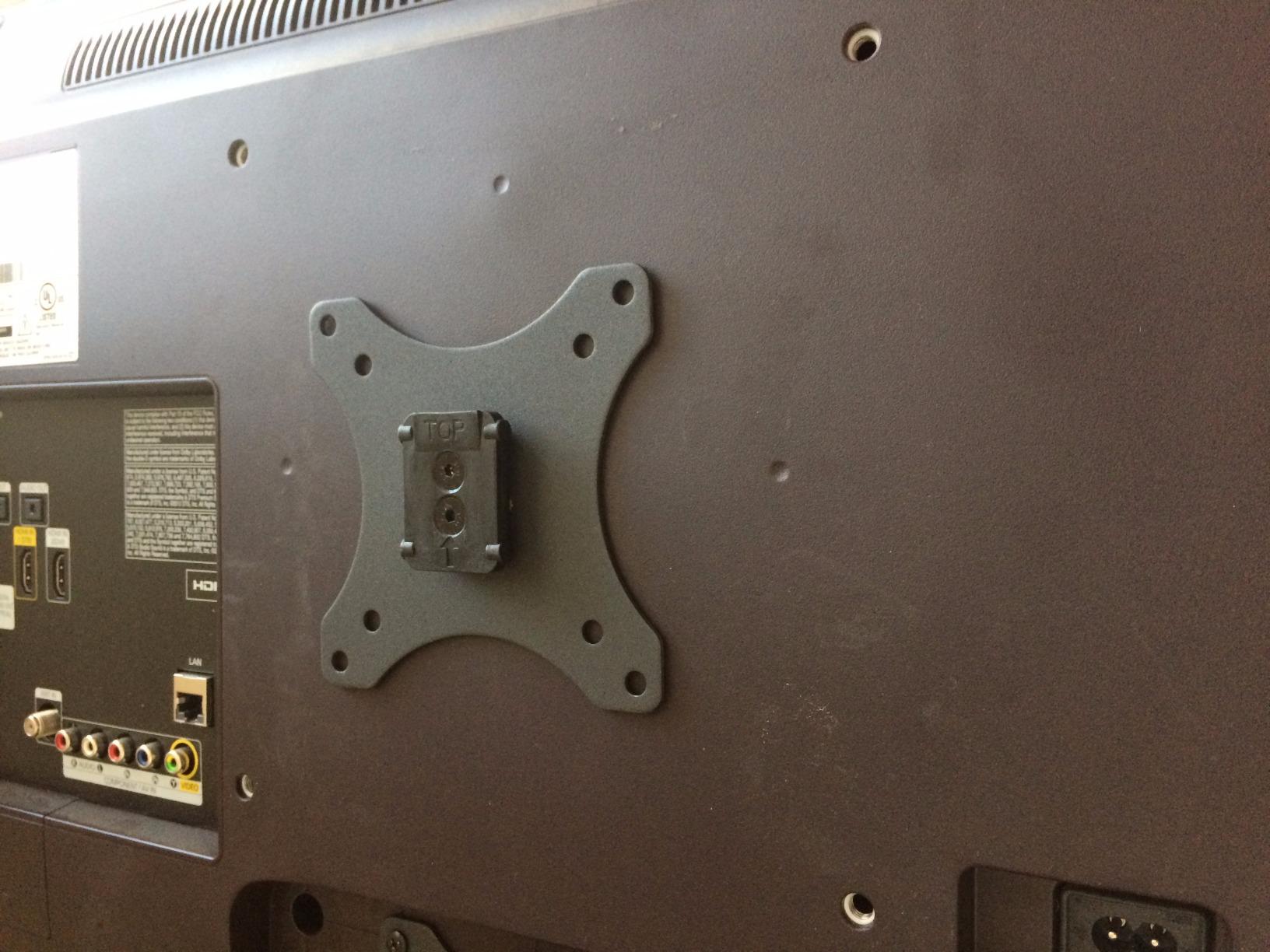
One thing to note from user feedback: some users report the bottom arms do not swivel a full 360 degrees. In my testing, the primary articulation points moved freely through their full range, but there may be some variation between units. This is worth checking after installation.
Space and Desk Requirements
The arms may require more desk depth for optimal positioning compared to shorter arms. At full extension, the monitors sit further forward, which is great for viewing distance but means you need enough clearance behind the mount point. Measure your available desk depth before committing.
Stock availability can be limited, which is worth noting if you need an arm urgently. When it is in stock, the Mount-It! MI-1772 is an excellent premium choice for users who want the smoothest possible adjustment experience and are willing to pay for it.
How to Choose the Right Dual Monitor Arm for Your Setup
Choosing the right dual monitor arm comes down to matching the arm’s specifications to your specific monitors, desk type, and how you work. After testing 8 different arms, I have identified the key factors that separate a great fit from a frustrating purchase. Here is what you need to evaluate before making a decision.
Weight Capacity: Match It to Your Heaviest Monitor
This is the single most important specification. Every arm lists a per-arm weight capacity, and you need to check this against the actual weight of your monitors. Weighing your monitors is easy: most manufacturer websites list the weight without the stand, or you can use a shipping scale. Running an arm near its weight limit leads to sagging, drift, and reduced stability.
I recommend choosing an arm rated for at least 20 percent more than your monitor’s weight. This headroom ensures the spring mechanism is not maxed out and gives you buffer if you upgrade monitors later. For standard 27-inch IPS monitors around 12 pounds, a 17.6-pound capacity arm is the minimum. For heavier 32-inch or curved displays, look for 19.8-pound or higher capacity.
VESA Compatibility: Check Your Monitor’s Back Panel
VESA is the standardized mounting pattern on the back of your monitor. The two most common sizes are 75x75mm and 100x100mm. Every arm in this roundup supports both patterns, but you need to verify your monitors have VESA mounting holes at all. Some ultra-thin monitors and certain brands omit VESA compatibility entirely.
To check, look at the back of your monitor for four holes arranged in a square. Measure the distance between hole centers to determine if it is 75mm or 100mm. If your monitor does not have VESA holes, you will need a VESA adapter kit before any arm will work.
Gas Spring vs Mechanical Spring: Which Is Right for You
Gas spring arms use pressurized cylinders for smooth, effortless adjustment. They are ideal if you reposition monitors frequently or share a desk with someone of different height. The downside is potential drift over time and sensitivity to temperature changes. Gas springs can lose pressure after several years of use.
Mechanical spring arms use tension-based systems that you set manually. They hold position with absolute certainty and never drift, but adjustments require more effort. If you set your monitor position once and rarely change it, a mechanical spring arm is actually the better choice because it eliminates drift concerns entirely.
Desk Type and Mounting Mechanism
Most arms offer two mounting options: C-clamp and grommet. The C-clamp attaches to the edge of your desk without drilling, while the grommet mount passes through a hole in the desk surface. Check your desk thickness against the arm’s specifications before ordering, because thickness limits vary significantly between models.
For standing desks, pay special attention to stability. Standing desks vibrate more than fixed desks, and lighter arms tend to wobble noticeably at full standing height. The HUANUO HNDS7 with its aluminum construction and dual C-clamp performed best in my standing desk testing. Heavier arms with dual clamp designs generally fare better on adjustable desks.
Screen Size and Ultrawide Considerations
Pay attention to the maximum screen size rating, not just weight capacity. Larger monitors create leverage that stresses the arm joints even if they are within the weight limit. If you are running 32-inch or larger monitors, or any ultrawide display, choose an arm specifically rated for those sizes.
The HUANUO HNDS7 is the only arm in this roundup rated for monitors up to 40 inches. For 34-inch ultrawides paired with a standard 27-inch secondary, it handled the configuration without issue. Trying to mount an ultrawide on an arm rated only for 30-inch monitors is asking for stability problems.
Installation Difficulty and Tools Required
If you are not comfortable with basic assembly, look for arms with tool-free features. The ErGear stands out with its tool-free VESA mounting system that eliminates the hardest part of installation. Most other arms require an Allen wrench for initial setup, which is included with the product.
Plan for 20 to 30 minutes of installation time for most arms. Having a second person helps when attaching heavy monitors to the arm, though it is possible to do solo with detachable VESA plates. Clear your desk area completely before starting, because you will need space to maneuver.
FAQs
Are dual monitor arms worth it?
Yes, dual monitor arms are absolutely worth it for anyone using two screens daily. They reclaim significant desk space by eliminating bulky factory stands, improve ergonomics by allowing precise height and angle positioning, and reduce neck strain. Most quality arms pay for themselves in comfort and productivity within weeks.
How to choose a dual monitor arm?
Match the arm’s weight capacity to your heaviest monitor with at least 20 percent headroom. Verify VESA compatibility (75x75mm or 100x100mm) on your monitors. Check desk thickness against the arm’s clamp specifications. Choose gas spring for frequent adjustments or mechanical spring for set-and-forget stability. Consider screen size limits if using monitors over 30 inches.
Is it better to have two single monitor arms or one dual monitor arm?
Two single arms offer more independent positioning flexibility per monitor, which matters if monitors are different sizes. One dual arm is simpler to install, takes up less desk mounting space, and typically costs less. For same-size monitors in a standard side-by-side setup, a dual arm is the better choice for most people.
Can I run 2 monitors from 1 HDMI port?
No, a single HDMI port outputs to one display. To run two monitors, you need two separate video outputs from your computer or graphics card, such as two HDMI ports, an HDMI plus DisplayPort, or a USB display adapter. The monitor arm is independent of your video connection setup.
How to fix dual monitor arm drift?
Monitor drift happens when spring tension loosens over time. Fix it by tightening the tension adjustment screw on the arm joint using the included Allen wrench. For gas spring arms, increase gas pressure at the adjustment valve. If drift persists after tightening, the spring may be worn out and the arm may need replacement under warranty.
What size monitor can a dual arm support?
Most dual monitor arms support screens from 13 to 32 inches with weights up to 19.8 or 22 pounds per arm. Premium arms like the HUANUO HNDS7 extend support to 40-inch monitors at 26.4 pounds per arm. Always check both the screen size rating and weight capacity, as larger monitors create leverage that stresses the arm joints.
Final Thoughts on the Best Monitor Arms for Dual Monitors
After testing all 8 dual monitor arms across different monitors, desk types, and daily workloads, the right choice depends on what you are running and how you work. If you want the best all-around option with proven reliability, the HUANUO FlowLift with its 34,000+ reviews and full motion range is the safest bet for most setups. For maximum value, the VIVO STAND-V002 delivers 22-pound capacity at a price that is hard to beat.
If you are on a strict budget, the WALI GSMP002N and its 10-year warranty offer unmatched peace of mind. Large monitor and ultrawide users should look at the HUANUO HNDS7, which is the only arm here rated for 40-inch screens. And anyone who values smooth gas spring adjustments will appreciate the Acer AMS002 or Mount-It! MI-1772 for their effortless repositioning.
The best monitor arms for dual monitors in 2026 are the ones that match your specific screens, desk, and workflow. Pick the arm that fits your weight and size requirements, verify your desk compatibility, and enjoy the desk space and ergonomic improvements that come from getting your monitors off their factory stands.
[…] in our picks below. If you’re new to monitor arms, you may also want to read our guide to the best monitor arms for dual monitors for the complementary perspective on monitor-only […]