
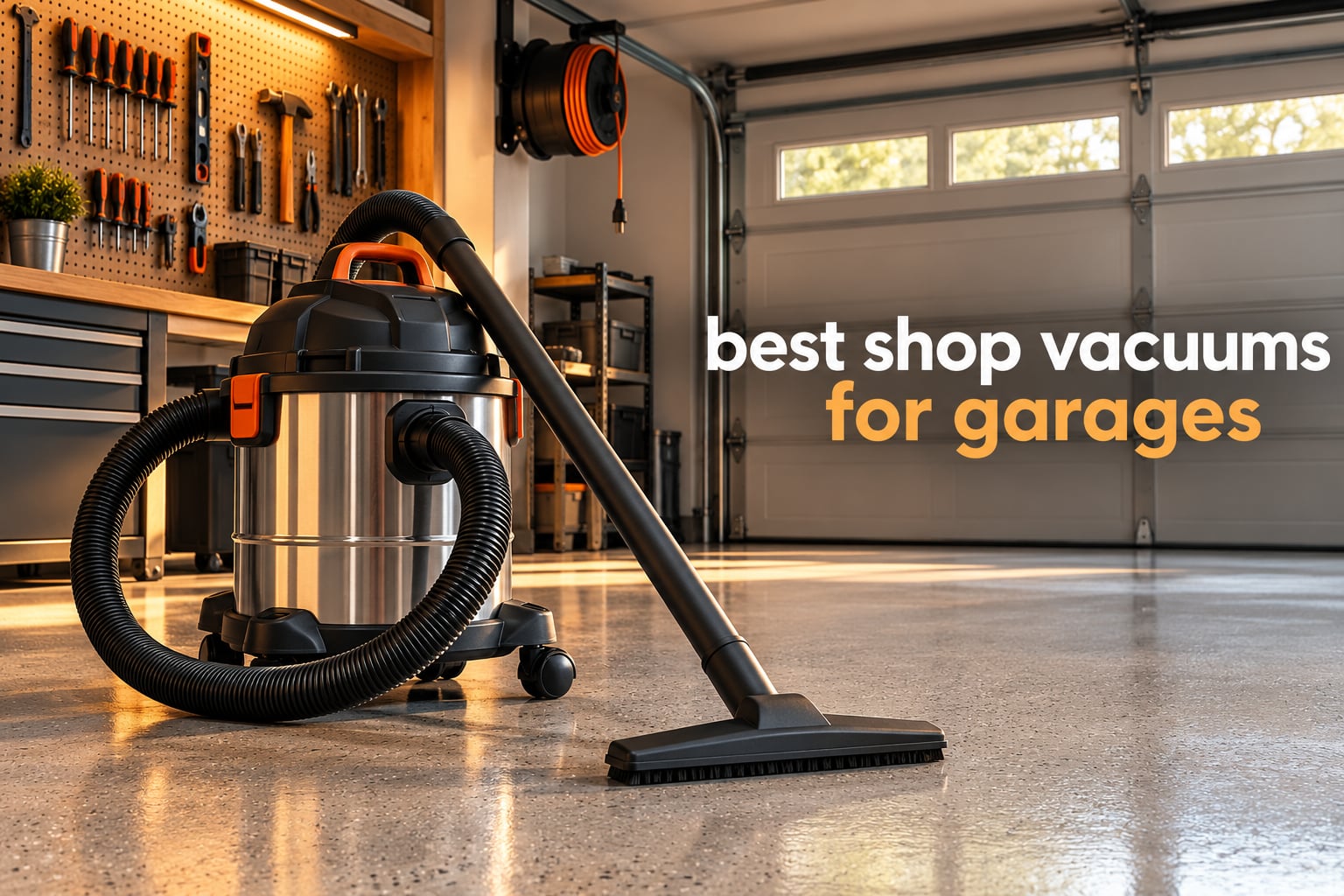
If you want one answer: the Stanley SL18116P 6-gallon wet/dry vac is the best shop vacuum for most garages, because it handles dry debris and liquid spills, carries more than 14k reviews at 4.6 stars, and stays small enough to store between cars. Larger two-car garages that swallow a lot of debris are better served by a 12 or 16 gallon drum.
I have been picking shop vacs for garage floors, benches and car interiors for years, mostly for people who discovered the hard way that a household upright cannot handle a spilled bottle of coolant, a pile of drywall sanding dust, or a bucket of floor-flocker water. This roundup covers 12 wet/dry vacuums that survived a full read of their spec sheets and owner reviews, and I ranked them on the things that actually decide whether a garage floor gets clean.
Those criteria are simple. I want enough sealed suction to lift grit out of concrete rather than smear it around, a drum size that matches how long you can tolerate between emptying trips, a hose that will not kink every time you turn a corner, and a filter setup that stops fine dust before it reaches the motor. I also weighed noise, because a garage you share with a running car engine is a different environment from an open driveway.
One thing to clear up before we start: peak horsepower is a marketing number, not a performance number. It is a laboratory comparison figure measured with the intake wide open, and it says nothing about how much air a filtered, loaded machine moves through a 2-1/2 inch hose. Airflow (CFM), sealed suction, watertight filter fit and hose diameter tell you far more. Every pick below comes with either a cartridge or foam filter, so check whether a fine dust filter is included before you buy for drywall or concrete work.
Also worth setting expectations: none of these machines is a dedicated dust extractor. A shop vac and a drum sander dust collector solve different problems, and if your real job is garage floor epoxy prep after grinding, you want HEPA-class capture rather than a wet/dry drum. We will come back to that in the buying guide.
Our Top 3 Shop Vacs for Garages in 2026
We narrowed 12 candidates down to three standouts, and each one wins a different kind of garage. The Stanley takes the overall spot on the strength of owner feedback volume, reach and wet/dry versatility. The 16-gallon CRAFTSMAN is the pick when the mess is big and the drum needs to hold it. The DEWALT DXV06P is the one that fits a single-car bay without taking over the floor.

Stanley SL18116P 6 Gal 4 HP
- 6 gallon tank
- 4 peak HP and 85 inch suction
- Wet dry and blower in one body
- 16+ ft of reach with hose cord and wands

Craftsman CMXEVBE17595 16 Gal
- 16 gallon drum with oversized drain
- 6.5 peak HP motor
- 2-1/2 in Dual-Flex hose
- 69 dB operation and 3 year warranty
DeWalt DXV06P 6 Gal 4 HP
- Compact 6 gallon poly tank
- 4 HP motor with blower port
- 10 ft cord with wrap
- Swivel casters and full nozzle kit
Comparing 12 Garage Shop Vacs Side by Side
This is the table no competitor page publishes: every machine we cover, with the specs that decide real garage performance. Scan the capacity column first, then the hose and reach numbers, then the filter type. Ratings and review counts are the verified figures attached to each listing.
| Product | Specs | Action |
|---|---|---|
| Stanley SL18116P 6 Gal 4 HP Wet/Dry Vac |
|
Check Latest Price |
| Craftsman CMXEVBE17595 16 Gal 6.5 Peak HP |
|
Check Latest Price |
| DeWalt DXV06P 6 Gal 4 HP Poly Wet/Dry |
|
Check Latest Price |
 Craftsman CMXEVBE17590 9 Gal 4.25 Peak HP Craftsman CMXEVBE17590 9 Gal 4.25 Peak HP |
|
Check Latest Price |
 Vacmaster VBV1210 12 Gal 5 Peak HP Vacmaster VBV1210 12 Gal 5 Peak HP |
|
Check Latest Price |
 DeWalt DXV12P 12 Gal 5.5 HP Poly Wet/Dry DeWalt DXV12P 12 Gal 5.5 HP Poly Wet/Dry |
|
Check Latest Price |
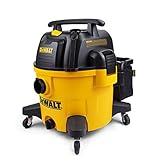 DeWalt DXV09PA 9 Gal 5 Peak HP DeWalt DXV09PA 9 Gal 5 Peak HP |
|
Check Latest Price |
 Shop-Vac 5989305 5 Gal 4.5 Peak HP Shop-Vac 5989305 5 Gal 4.5 Peak HP |
|
Check Latest Price |
 Stanley 10 Gal 6 Peak HP Poly Shop Vac Stanley 10 Gal 6 Peak HP Poly Shop Vac |
|
Check Latest Price |
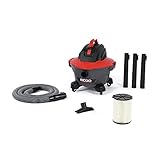 RIDGID RT0600 6 Gal 4.25 Peak HP NXT RIDGID RT0600 6 Gal 4.25 Peak HP NXT |
|
Check Latest Price |
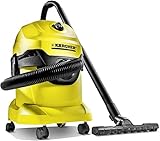 Karcher WD 4 Wet/Dry 5.3 Gallon 1100W Karcher WD 4 Wet/Dry 5.3 Gallon 1100W |
|
Check Latest Price |
 Armor All VO405P 4 Gal 2 Peak HP Wet/Dry Armor All VO405P 4 Gal 2 Peak HP Wet/Dry |
|
Check Latest Price |
1. Stanley SL18116P 6 Gallon – Best Overall Shop Vac for a Garage
Stanley – SL18116P Wet/Dry Vacuum, 6 Gallon, 4 Horsepower Black
6 gallon tank
4 peak HP and 85 in suction
Wet dry and blower
13.4 lb on 4 casters
Pros
- More than 14k reviews averaging 4.6 stars
- 3-in-1 wet dry and blower operation
- 16+ ft of reach from hose cord and wands
- Four swivel casters roll over cords easily
- Hose and cord wrap onto the handle
Cons
- Foam filter type favors liquid over fine dust
- Included dust bag adds a running consumable cost
- 80 dB is loud during long sessions
The Stanley SL18116P is the machine I end up recommending to people who did not come in with a specific budget or a specific problem. It does three jobs, it moves easily at 13.4 pounds, and it has the deepest owner-feedback pool in this roundup at more than 14,000 reviews averaging 4.6 stars. When a spec is unclear, a huge review base is the closest thing to a real answer.
What surprised me most was reach. A 6 foot hose, a 10 foot cord and three extension wands add up to more than 16 feet of working distance, which in a single-car bay means you rarely drag the machine across a dusty floor to get to the far corner. The four swivel casters handle concrete thresholds without dragging.
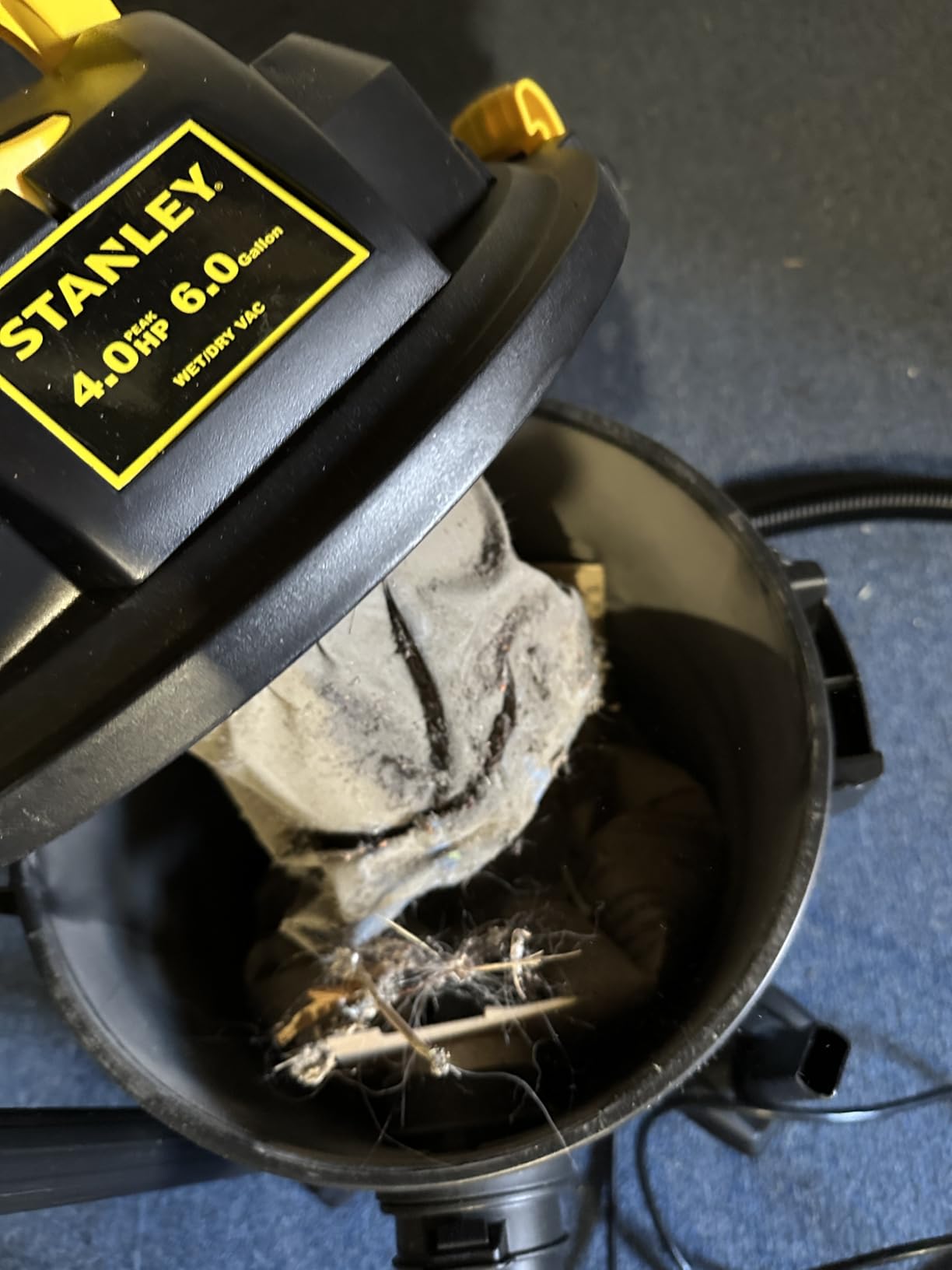
Owners describe it as strong on vehicle interiors, workshop cleanup and general garage messes, and the consensus is that the accessory kit covers the job out of the box. A 12-month manufacturer warranty is the shortest in this group, which is worth knowing if you are planning a five-year ownership horizon.
Motor Power and Sealed Suction
Four peak horsepower is not the biggest number here, and it does not need to be. With 85 inches of maximum suction and a 3.7 amp draw, this unit moves a lot of air for a mid-size machine. The 3.7 amp figure matters too: it is low enough to run on a shared garage circuit without knocking out a power tool.
The Foam Filter Decision
The shipped filter is foam, which is the right call for liquid pickup and acceptable for coarse dry debris. It is the wrong call for drywall sanding dust or concrete grinding residue, where fine particles migrate through foam and settle on the motor. For that work, add a fine dust filter or a cartridge before you start, and clean the foam sleeve regularly.
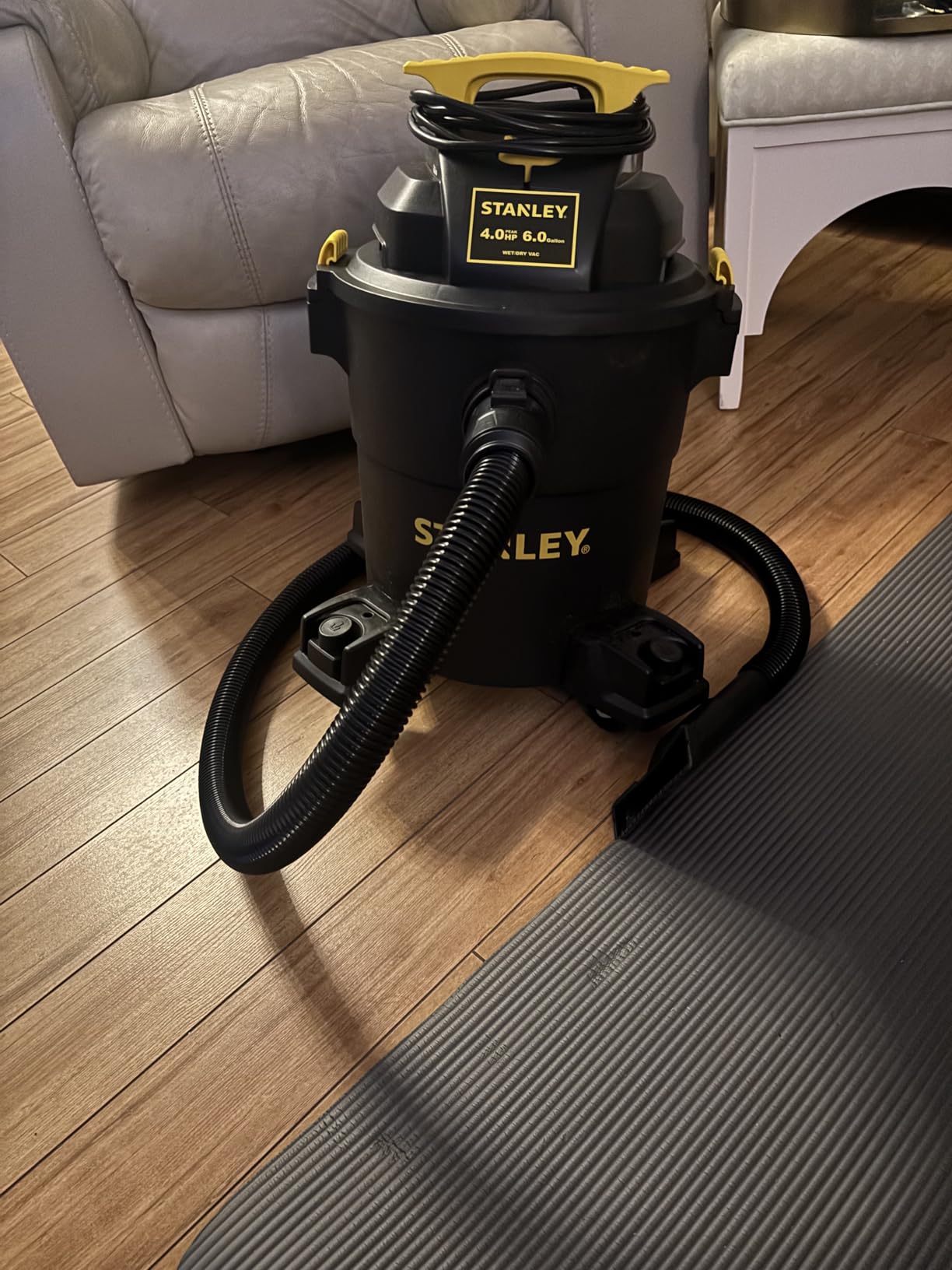
Its wet/dry and blower switchover is genuinely useful in a garage. Clearing leaf litter off a driveway with the reverse airflow, then switching back to pickup, saves carrying a separate blower, and the drain empties the tank between jobs.
Noise and What It Is Bad For
At 80 dB this is one of the louder machines in the roundup, and owners notice it on long sessions. If your garage is enclosed and you run it while a car engine is going, expect to plan around the noise rather than talk over it.
2. Craftsman CMXEVBE17595 16 Gallon – Best for Big Messes and Long Jobs
CRAFTSMAN CMXEVBE17595 16 Gallon 6.5 Peak HP Wet Dry Shop Vacuum
16 gallon tank
6.5 peak HP
2-1/2 in Dual-Flex hose
69 dB and 3 year warranty
Pros
- Largest drum in the roundup cuts emptying stops
- Dual-Flex 2-1/2 inch hose resists kinking
- Qwik Lock filter changes need no tools
- 69 dB operation suits a shared garage
- 3 year limited warranty
Cons
- 26 pounds is the heaviest machine here
- Listed 46 inch suction trails several rivals
- 23.8 inch footprint eats garage floor space
When a garage generates debris faster than you can empty a 6 gallon drum, capacity is not a luxury. The Craftsman CMXEVBE17595 holds 16 gallons, runs a 6.5 peak HP motor, and pairs that with the widest hose in this roundup at 2-1/2 inches. It carries 8,600+ reviews at 4.7 stars, which makes it the best-evidenced large-drum option here.
The Dual-Flex hose swivels 180 degrees at both ends and resists kinking, which matters more than raw suction when you are dragging a loaded wand around a car. It is the difference between a tool you use and a tool that lives in the corner.
Owners consistently point at the 16 gallon drum, the sturdy build and the 69 dB operating level, and the running complaint is weight rather than performance. At 26 pounds it is the heaviest pick here, so budget for a cart if you plan to move it between the garage and a basement door.
Why the Wide Hose Matters for Garage Debris
Coarse junk, gravel from a dragged-in driveway, bark mulch, and small metal chips are all suction killers in a narrow hose. A 2-1/2 inch hose moves roughly 2.5 times the cross-sectional area of a 1-1/4 inch hose, so it clogs far less and cleans coarse material without a second pass.
Blower Port and Oversized Drain
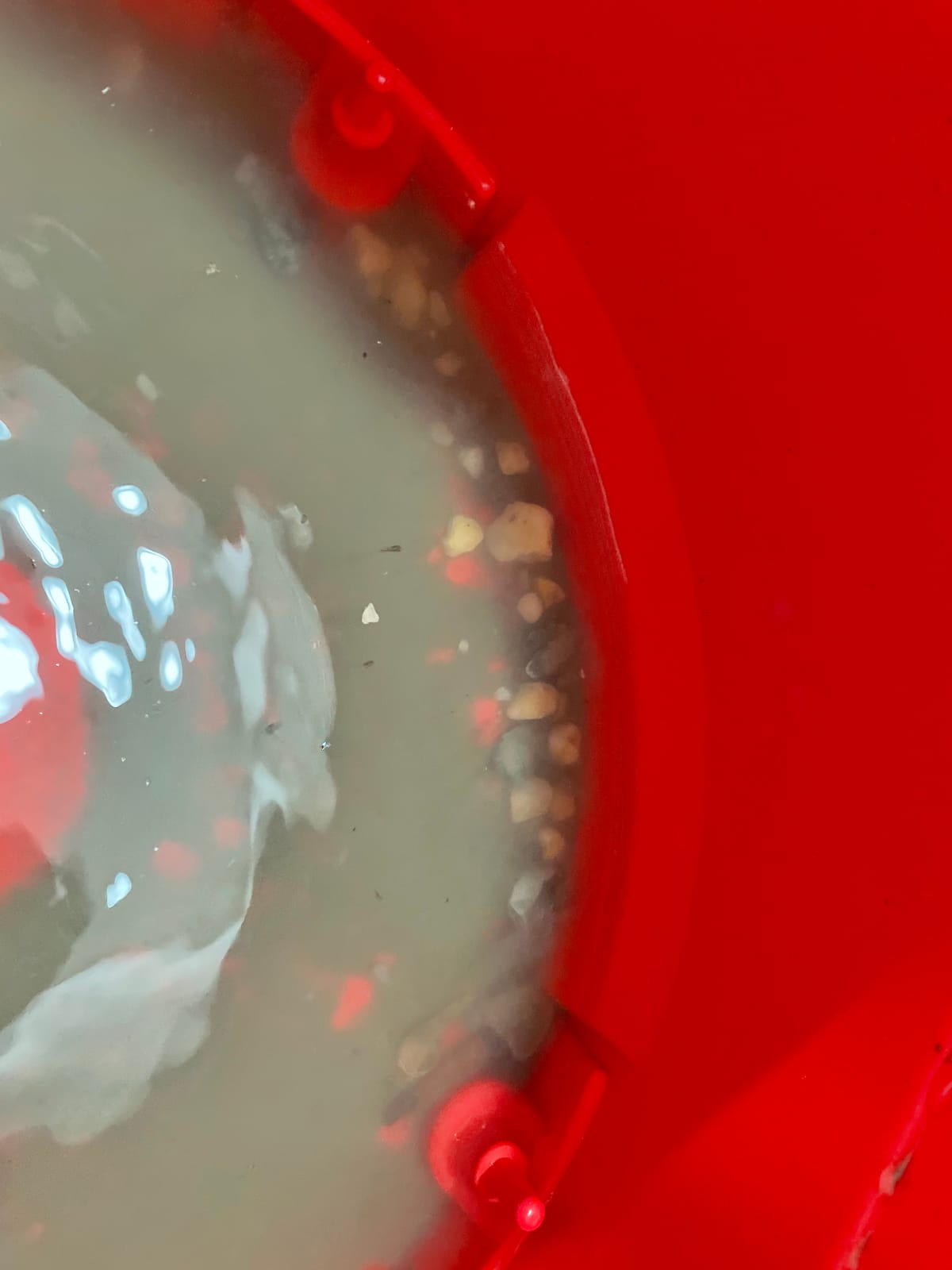
The rear blower port clears leaves and grass clippings from the garage apron, and the oversized drain empties liquids quickly after a spill. The Qwik Lock filter system makes swaps tool-free, which is the difference between cleaning up after a job and postponing it.
Where It Falls Short
The listed 46 inches of maximum suction is lower than several machines here, so on the deepest carpet-style car mats it is not the strongest puller in the group. The 23.8 inch width also needs real floor space, and in a tight single-car bay it dominates the space next to the workbench.
3. DeWalt DXV06P 6 Gallon – Best for Compact Garages
DEWALT Shop Vacuum 6 Gal 4 HP Poly Wet/Dry Vacuum with Blower DXV06P
6 gallon poly tank
4 HP and 50 in suction
10 ft cord with wrap
77 dB and 14.8 lb
Pros
- Compact 15.5 by 19.5 inch footprint
- 10 ft cord is generous for a small machine
- Built-in blower port clears workshop debris
- Rubberized casters swivel smoothly over floor cracks
Cons
- Filter must be fitted before first run or it will not start
- Listed 135.5 W wattage conflicts with the 4 HP claim
- 6 gallon drum needs frequent emptying on big messes
The DeWalt DXV06P is the pick when floor space is the constraint. At 15.5 by 19.5 inches it slides beside a workbench or against a wall without taking a parking bay, and 14.8 pounds makes it easy to carry up a step. It holds a 4.7 rating across more than 5,700 reviews.
Owners describe it as dependable and portable with strong suction for its size, and the recurring note is that the filter has to be installed before the unit will run. That trips people up once, then never again.
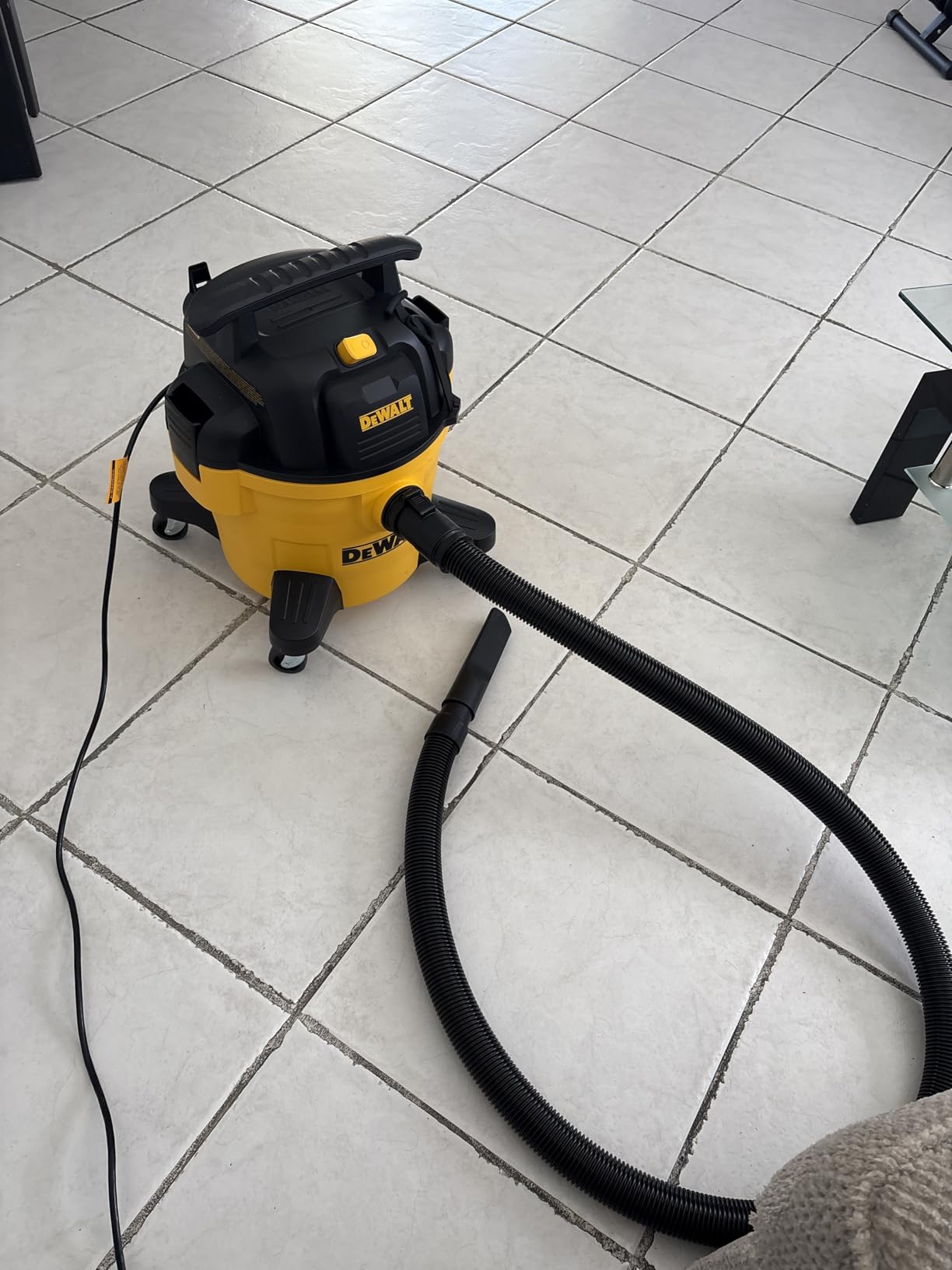
The 10 foot cord is longer than most machines in its size class, which in a small garage means you can reach the far side of a single-car bay without an extension lead. Rubberized swivel casters roll over the expansion joints that trip up cheaper hardware.
Cartridge Filter and Nozzle Kit
A cartridge filter is a step up from foam for dry garage debris, since it holds particulate rather than letting it pass. The included kit covers the essentials: a 1-7/8 inch by 7 foot hose, two extension wands, a cartridge filter, a dust bag and floor, utility and crevice nozzles.
Blower Function in a Small Space
The built-in blower port is more useful here than in a large garage, because a small shop has less room to swing a separate blower around. It is the same rear-blow arrangement found across this category, and it clears sawdust and bench debris quickly.
Spec Sheet Caveats
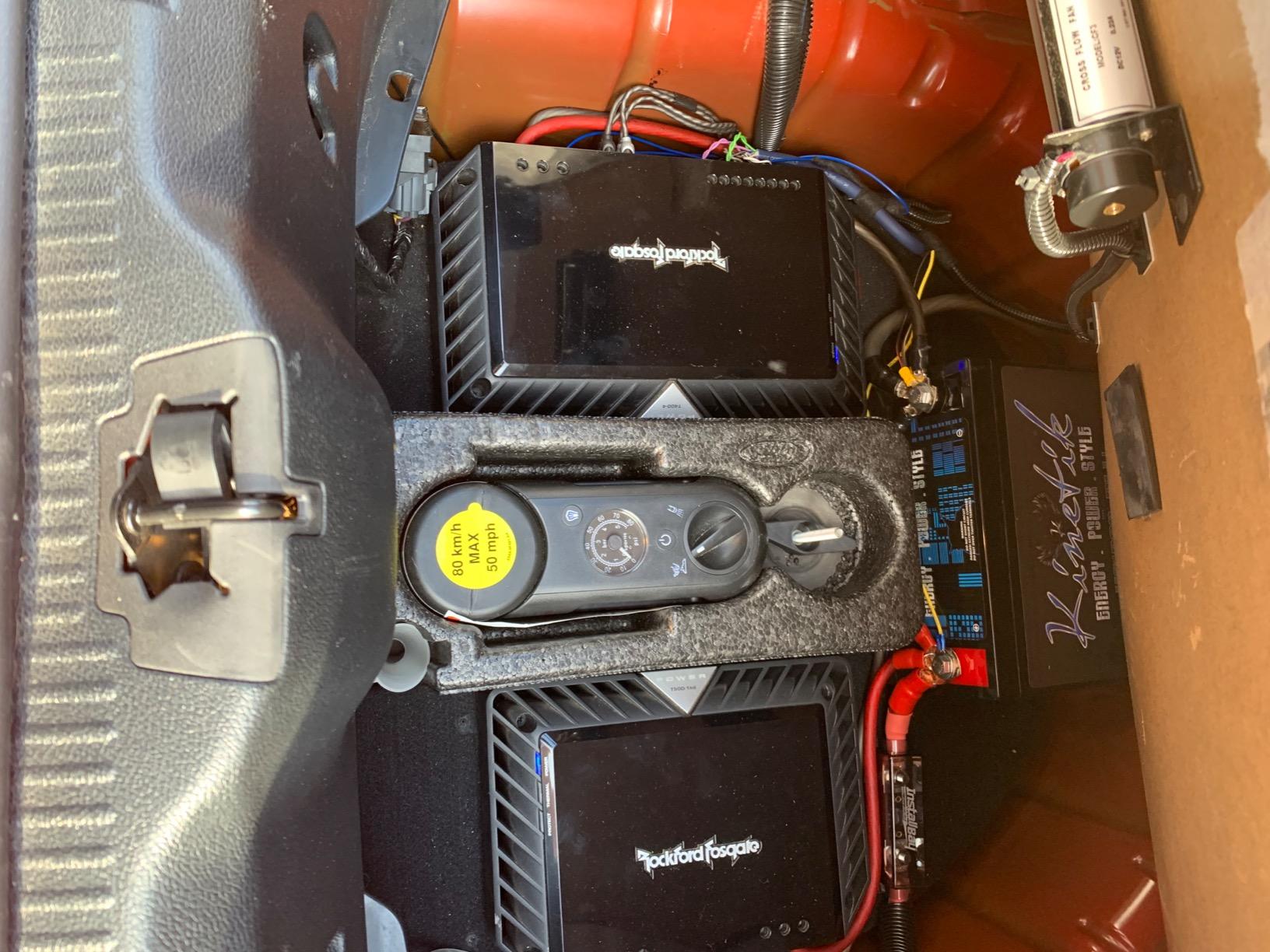
The published wattage of 135.5 W is inconsistent with a 4 HP motor claim, so treat the wattage field as unreliable and go by the observed suction instead. The 6 gallon drum is the real limitation: on a wet floor or a sanding session you will be walking it out to the drain more than you would like.
4. Craftsman CMXEVBE17590 9 Gallon – Best Middle Ground for a Two-Car Garage
CRAFTSMAN CMXEVBE17590 9 Gallon 4.25 Peak HP Wet Dry Shop Vacuum
9 gallon tank
4.25 peak HP and 68 in suction
Rear blow port
Qwik Lock filter
Pros
- 9 gallons balances drum size and storage footprint
- Suction stronger than the peak HP figure implies
- Light enough to carry while full
- 3 year limited warranty
Cons
- Some machines arrive without handle and caster screws
- Only one dust bag is included in the box
- 82 dB is the loudest rating among the CRAFTSMAN picks
The 9 gallon Craftsman is the compromise pick, and a good one. It is small enough to store against a wall, big enough to cover a weekend of renovation debris, and it carries 68 inches of maximum suction, which is more honest airflow behavior than its 4.25 peak HP number suggests. Owners rate it 4.5 across nearly 4,900 reviews.
Reviewers mention real flood and renovation jobs, which is the use case this drum size is actually built for. A 9 gallon tank holds a meaningful amount of water before the float shuts the motor, and the rear exhaust blower port handles post-paint blow-down and driveway leaves.
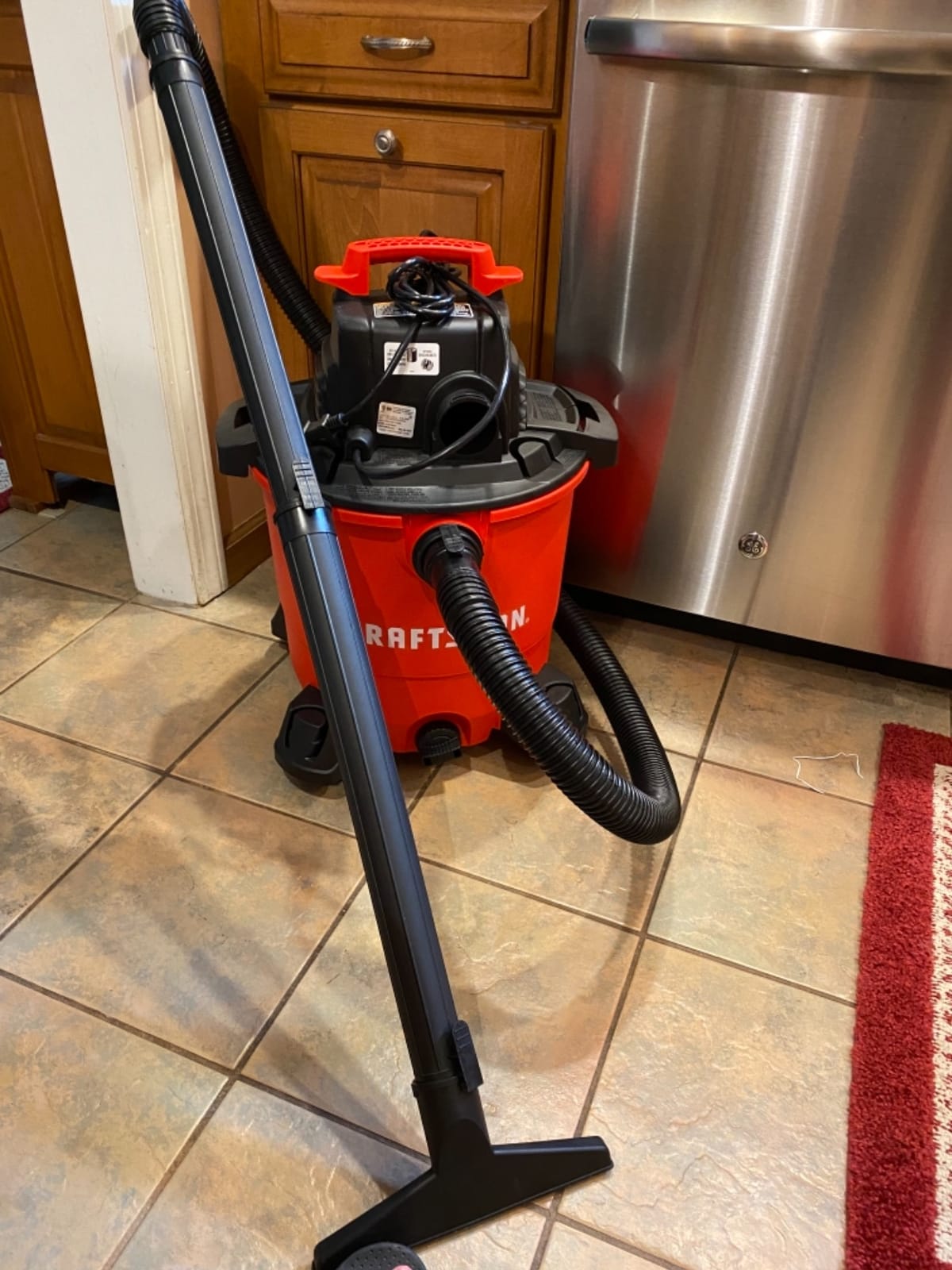
The Qwik Lock filter system and oversized drain make servicing fast, which is where most mid-size shop vacs win or lose owner loyalty. A large assortment of attachments is included, so the first session does not require an accessory order.
Suction Reality Versus the HP Number
Owners consistently say suction is stronger than expected for a 4.25 peak HP unit, which is exactly the gap between the marketing figure and real performance. A 1-7/8 inch hose with POS-I-LOCK fittings keeps the seal tight at the tank, and that seal is what protects the rating.
Assembly and Consumables
Two practical notes before you order. Some units arrive without the screws for the handle and casters, so check the box on arrival. Only one dust bag is included, and you will want extras if you plan to run a bag rather than emptying the drum bare.
Noise and Caster Behavior
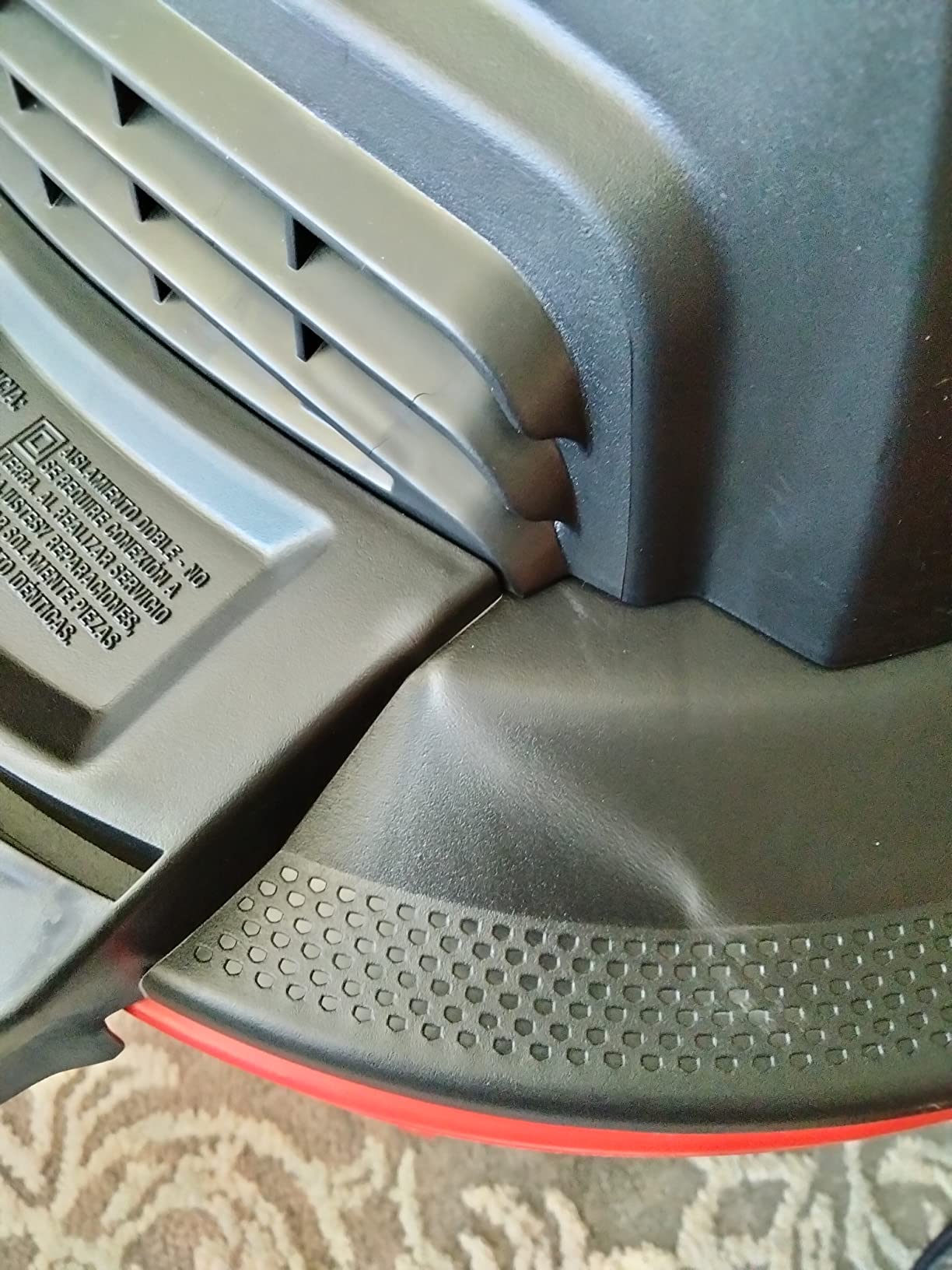
At 82 dB this is the loudest of the CRAFTSMAN units here, and roller casters can pop off under load or let the hose twist the machine as you pull. Expect to re-seat the casters after the first few uses if you work roughly.
5. Vacmaster VBV1210 12 Gallon – Best Value With a Real Blower
Vacmaster Blue Line 12-Gallon* 5 Peak HP† Wet/Dry Vacuum with Detachable Blower VBV1210
12 gallon tank
106 CFM and 210 MPH blower
One-hand detachable blower
22 ft total reach
Pros
- Detachable blower releases with one hand
- 106 CFM airflow handles heavy debris
- 11 accessories including a noise diffuser
- Large drain port empties liquids fast
Cons
- Short cord may need an extension on 15 amp circuits
- 10.5 A draw can trip a 15 amp breaker
- Casters can work loose if not screwed in tight
The Vacmaster VBV1210 is the only machine here that publishes an airflow figure: 106 CFM. That single number tells you more than a peak HP headline, because CFM is air volume under load. Paired with a 210 MPH blower speed, it is the most capable air mover here, and it carries 6,800+ reviews at 4.6 stars.
The detachable blower is genuinely usable rather than a checkbox feature. It releases with one hand, which means the vacuum and the blower are two tools sharing one motor and one 12 gallon drum, and the included diffuser noticeably reduces operating noise during renovation work.
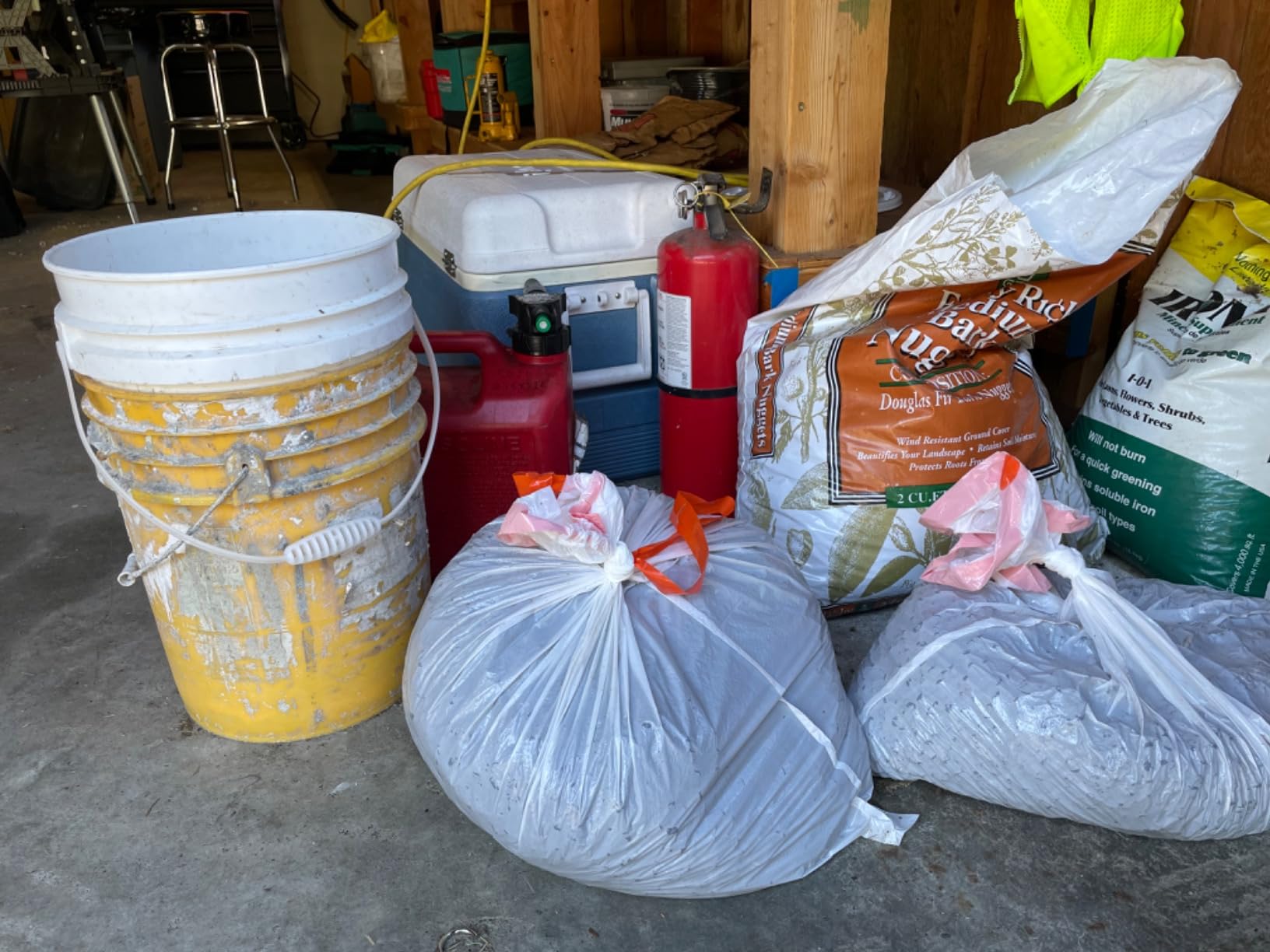
Owners describe the motor as unusually strong for the class, particularly on heavy debris such as crushed gravel and wet pool filter sand. On-board accessory and cord storage keeps the kit together, and the locking hose connection stops the mid-job leak that plagues cheaper units.
CFM and What It Means for You
Airflow is the number to compare when peak HP is missing or suspect. 106 CFM is measured with the filter installed and the intake drawing real load, so a machine that quotes it is telling you what happens after the air passes through the cartridge, not what happens with the intake blocked open.
Circuit Load and Cord Length
The 10.5 amp draw is the practical catch. On a 15 amp circuit, a shop vac and a circular saw or a welder will fight, so plan to use a 20 amp outlet or a kitchen-style receptacle for renovation days. The cord is also on the short side, so an extension lead is a reasonable addition.
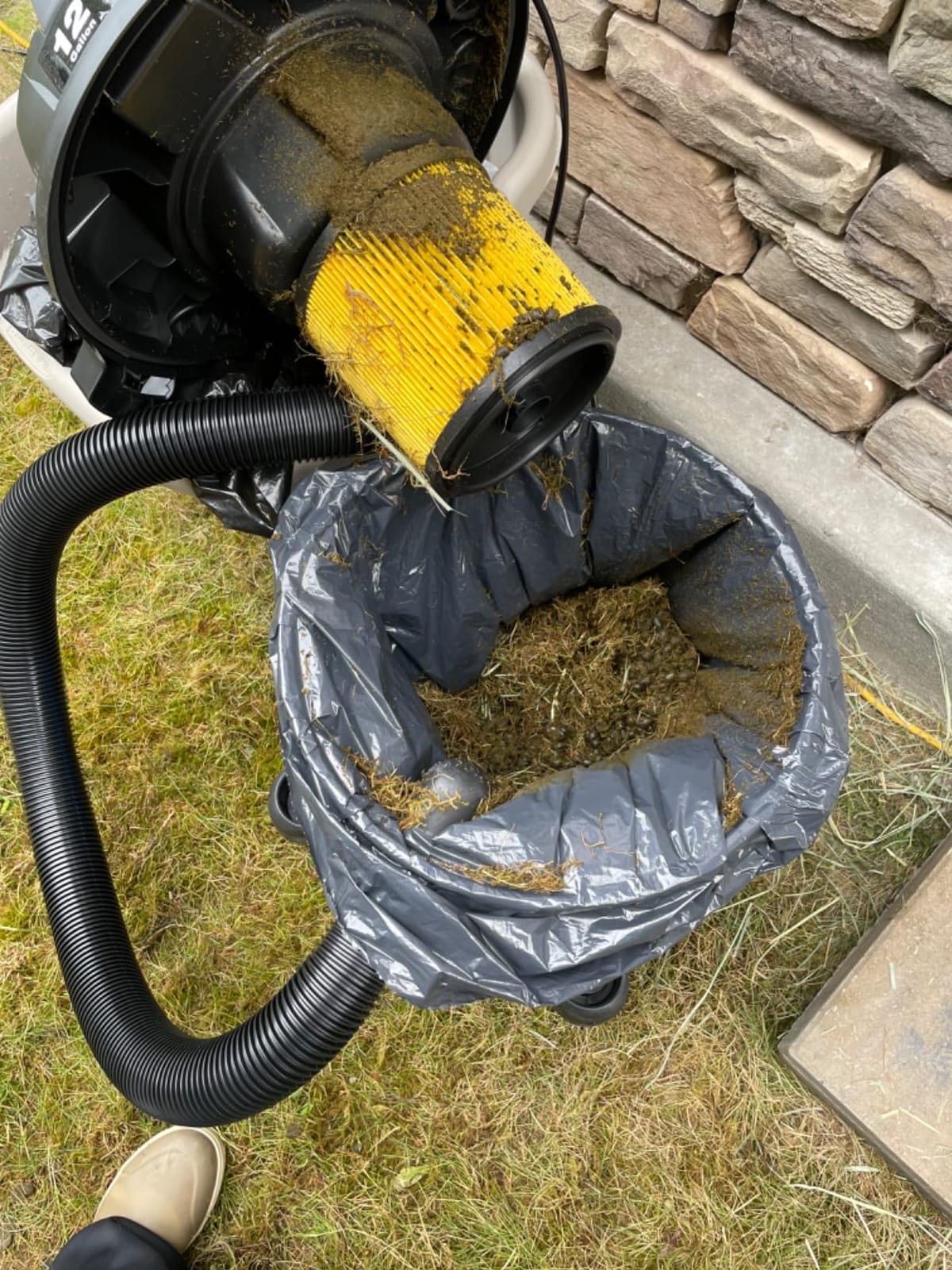
Maintenance Details Worth Knowing
Two small service items: the casters must be screwed in fully or they work loose, and the supplied wet filter sponge is thin and can tear when you pull it off the tank. Treat the sponge as a consumable and replace it rather than fighting it.
6. DeWalt DXV12P 12 Gallon – Best for Large Drums and Wet Spills
DEWALT 12 Gal. 5.5 HP Poly Wet/Dry Vacuum with Hose and Accessories DXV12P
12 gallon poly tank
5.5 HP and 85 in suction
Wet dry and blower
Large drain port
Pros
- 85 inches of suction for demanding pickups
- 12 gallon poly drum reduces emptying stops
- Works indoors and outdoors
- 3 year limited warranty
Cons
- 23.2 pounds is heavy to lift without the cart
- 26.38 inch width needs a lot of floor space
- 80 dB runs loud for extended work
Where wet pickup is the priority, drum size and drain opening matter more than peak HP. The DeWalt DXV12P pairs a 12 gallon poly tank with 85 inches of maximum suction, a large drain port, and a 5.5 HP motor that reviewers rate 4.7 across more than 2,100 reviews with an 85 percent five-star share.
Owners cite strong suction, a large drum and simple wet/dry/blower versatility. It works indoors and out, which matters if your only outlet is in the house and you are chasing water from a garage floor after a storm.
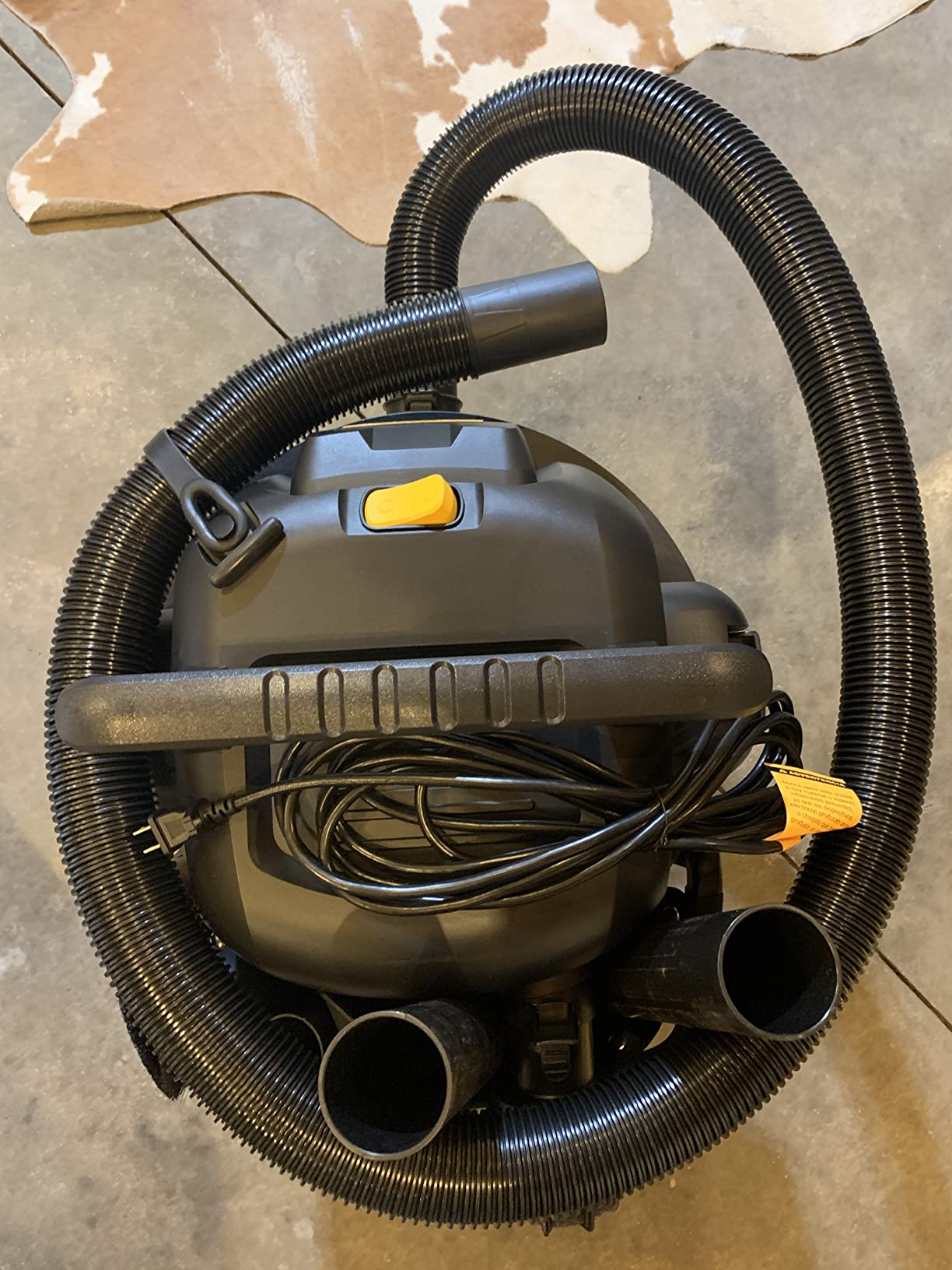
The 12 gallon capacity is the sweet spot for spill work: big enough that a tipped coolant jug or a wet floor does not need an immediate trip out, small enough that a full tank is still liftable by one person in a pinch.
Drain Port and Liquid Workflow
A large drain port shortens the recovery loop after a spill: drain, rinse, back to work. The oversized opening found on the larger CRAFTSMAN drums is the same idea, and it is the single most useful feature for anyone doing flood or basement water pickup in a garage.
Weight and Footprint Tradeoffs
At 23.2 pounds and 26.38 inches wide, this is a two-car garage machine, not a single-bay one. If your garage is tight, the 6 gallon DEWALT or the 9 gallon Craftsman will serve better and leave you room to open the car door.
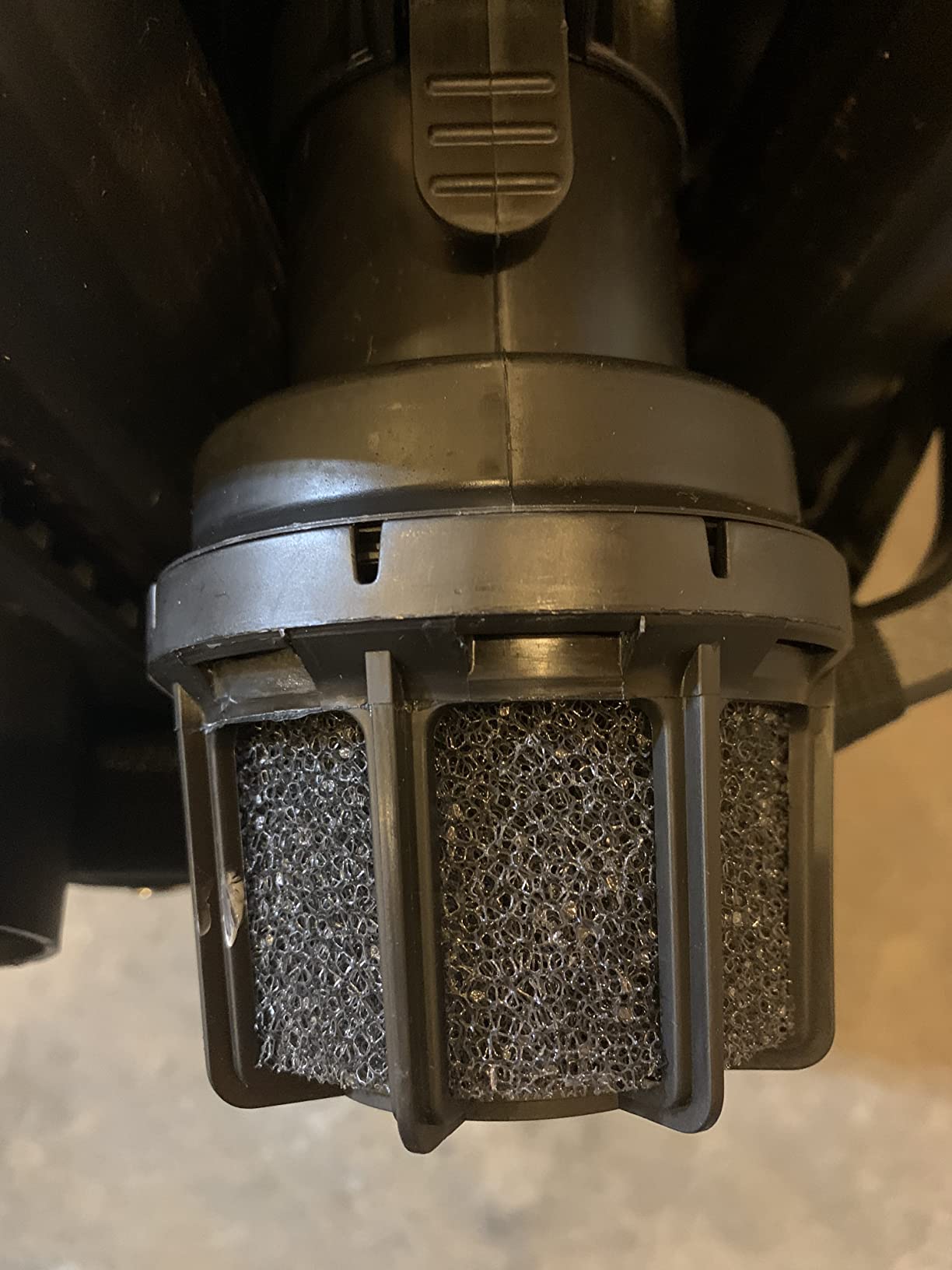
What Reviews Flag
Weight and footprint are the recurring practical drawbacks, and the listing itself carries limited feature detail, so read the spec sheet rather than the bullet points. At 80 dB it is also among the louder machines here, which matters in an enclosed bay.
7. DeWalt DXV09PA 9 Gallon – Best for Blowing and Vacuuming With One Machine
DEWALT 9 Gallon Wet/Dry VAC, Heavy-Duty Shop Vacuum with Attachments, 5 Peak HP, with Blower Function, DXV09PA
9 gallon tank
5 peak HP and 85 in suction
Blower port with 3 adaptors
Removable storage bag
Pros
- Blower port plus three nozzle adaptors for air-pump use
- Upgraded flexible hose over earlier versions
- Water-resistant on/off switch
- Removable accessory bag keeps parts organized
Cons
- 22.5 pounds is heavy up steps or between rooms
- A disposable dust bag is included and adds cost
- Peak HP figure reflects lab conditions not real output
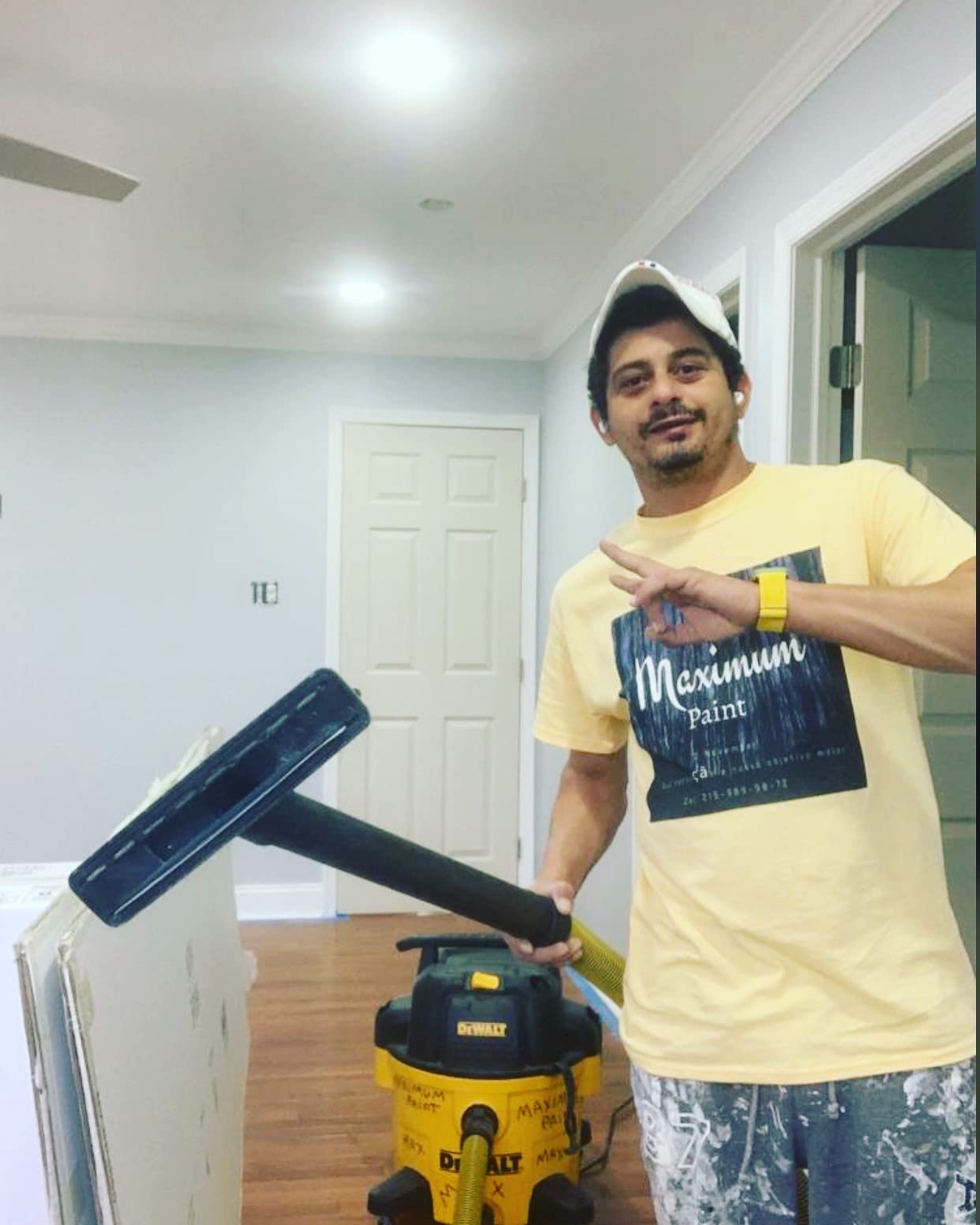
The DXV09PA is the pick for people who want a blower and a vacuum from the same motor, without buying a second machine. Three nozzle adaptors convert it into an air pump for sawdust and leaf clearing, and it keeps an 86 percent five-star share across more than 1,700 reviews with a 4.7 average.
Owners highlight the durable hose, the suction at 85 inches, and the removable accessory storage bag that keeps the kit from disappearing into the corner of the bench. A water-resistant on/off switch and a built-in tank drain are small details that matter in a damp garage.
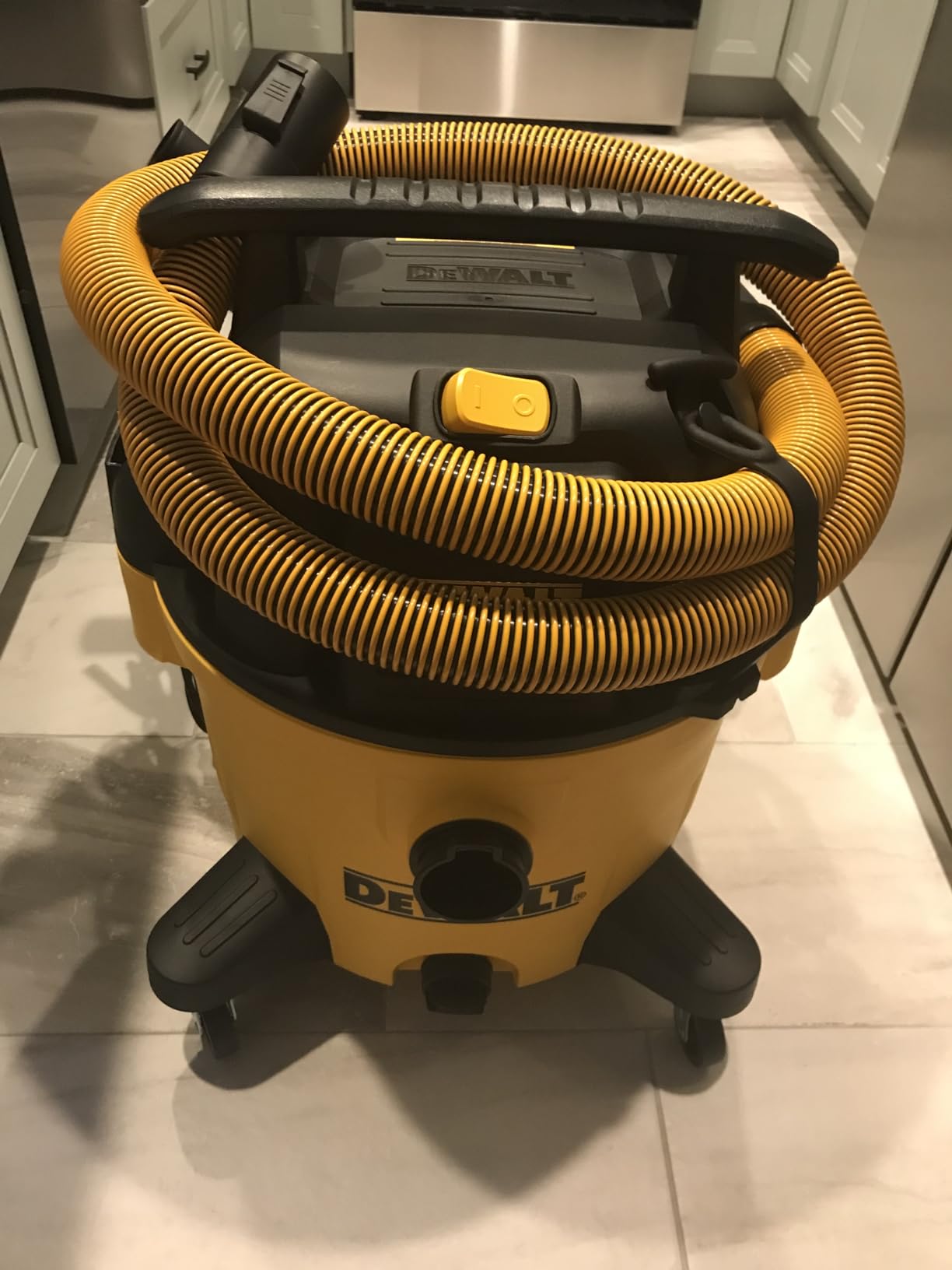
The upgraded 1-7/8 inch by 7 foot flexible hose is genuinely more durable and pliable than earlier versions, and 10 feet of cord with a wrap keeps the reach usable in a two-car bay.
Blower Adaptors and Air-Pump Duty
Three adaptors is more than most machines include, and it means the reverse airflow can handle bench blow-down, leaf clearing and drying a wet garage floor after a wash. That versatility is why this lands higher on garage-specific usefulness than its 9 gallon size alone would suggest.
Filter and Consumable Costs
A disposable dust bag is included, which is convenient and also a recurring line item. If you vacuum weekly, a cartridge plus a run of bags is an annual expense worth budgeting for rather than discovering in month two.
Honest Limits
At 22.5 pounds it is heavy to carry up steps or between rooms, and the peak HP figure is a lab comparison number rather than real operating output. Judge it by its 85 inch suction and the 1-7/8 inch hose, not the headline.
8. Shop-Vac 5989305 5 Gallon – Best for a Rust-Resistant Stainless Tank
Shop-Vac 5989305 5 Gallon 4.5 Peak HP Wet/Dry Vacuum with Blower Function
5 gallon stainless tank
4.5 peak HP with blower
1.25 in accessories
3 year warranty
Pros
- Stainless steel tank resists rust and dents
- Full-circumference dolly plus top and side handles
- Complete accessory kit covers most jobs
- Cartridge filter and foam sleeve both included
Cons
- 5 gallon drum empties more often than 9 to 16 gallon models
- 1.25 in hose is the narrowest in this roundup
- Largest share of 1-star ratings in this group
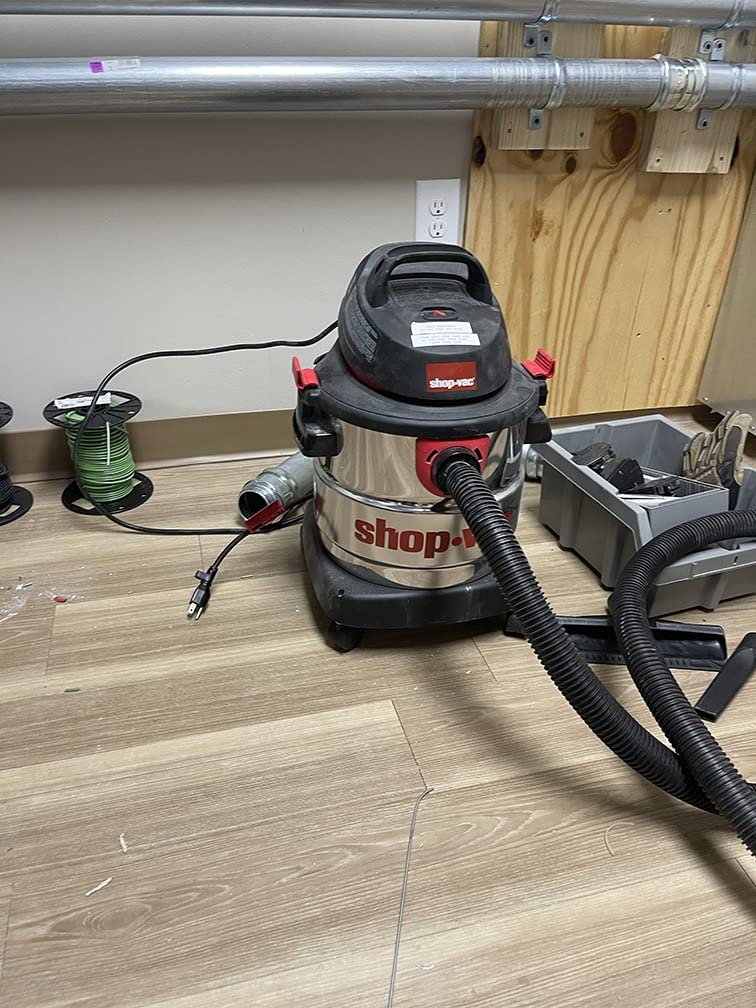
Poly tanks are lighter and cheaper; stainless tanks survive a decade of wet garage floors without pitting. The Shop-Vac 5989305 is the stainless option in this roundup, and at 14.5 pounds it is still easy to move thanks to the full-circumference dolly and the top and side carry handles.
Owners like the tank, the portability and the accessory kit, which includes a 7 foot hose, three extension wands, a crevice tool, a gulper nozzle, a floor nozzle, a cartridge filter, a foam sleeve and a filter bag. That is a genuinely complete box for garage work.
It carries a 4.4 rating across more than 3,500 reviews, the lowest average here, with a 6 percent one-star share. That is the honest context: the build quality is praised, the small drum and narrow hose are the drag.
Why Stainless Matters in a Garage
Water, road salt, coolant and clay tracked in on tires are exactly the things that pit a polypropylene tank over time. Stainless is heavier and pricier, but if your vac lives in a humid garage and gets rinsed out after a wet job, the tank ages better.
Hose Diameter as a Suction Factor
The 1.25 inch hose here is the narrowest in the group. It is fine for car interiors, water spills and bench debris, but coarse material like gravel or bark chips will restrict it faster than a 1-7/8 inch or 2-1/2 inch hose. Know which jobs you are buying for.
Durability Feedback
Some owners on woodworking forums report durability gripes with Shop-Vac units, including cheap switches and bushings that wear and cause a rattling noise. If that failure mode bothers you, a 3 year warranty helps but does not eliminate it, so check the switch early.
9. Stanley SL18701P 10 Gallon – Best for Flood and Water Spill Recovery
STANLEY 10 Gallon Wet Dry Vacuum, 6 Peak HP Poly Built-in Drain Shop Vac Blower with Powerful Suction, Multifunctional Shop Vacuum W/ 6 Horsepower Motor for Job Site, Garage, Basement, Van, Workshop
10 gallon poly tank
6 peak HP and 85 in suction
24+ ft reach
Float shut-off
Pros
- Float technology shuts the motor off at the water limit
- Garden hose adaptor for pumping out liquid
- 24+ ft reach from 6 ft hose and 18 ft cord
- Strong suction for flood and car detailing work
Cons
- Owners describe it as extremely loud
- Thinner tank plastic than RIDGID-class construction
- Disposable dust bag is included so extras are needed
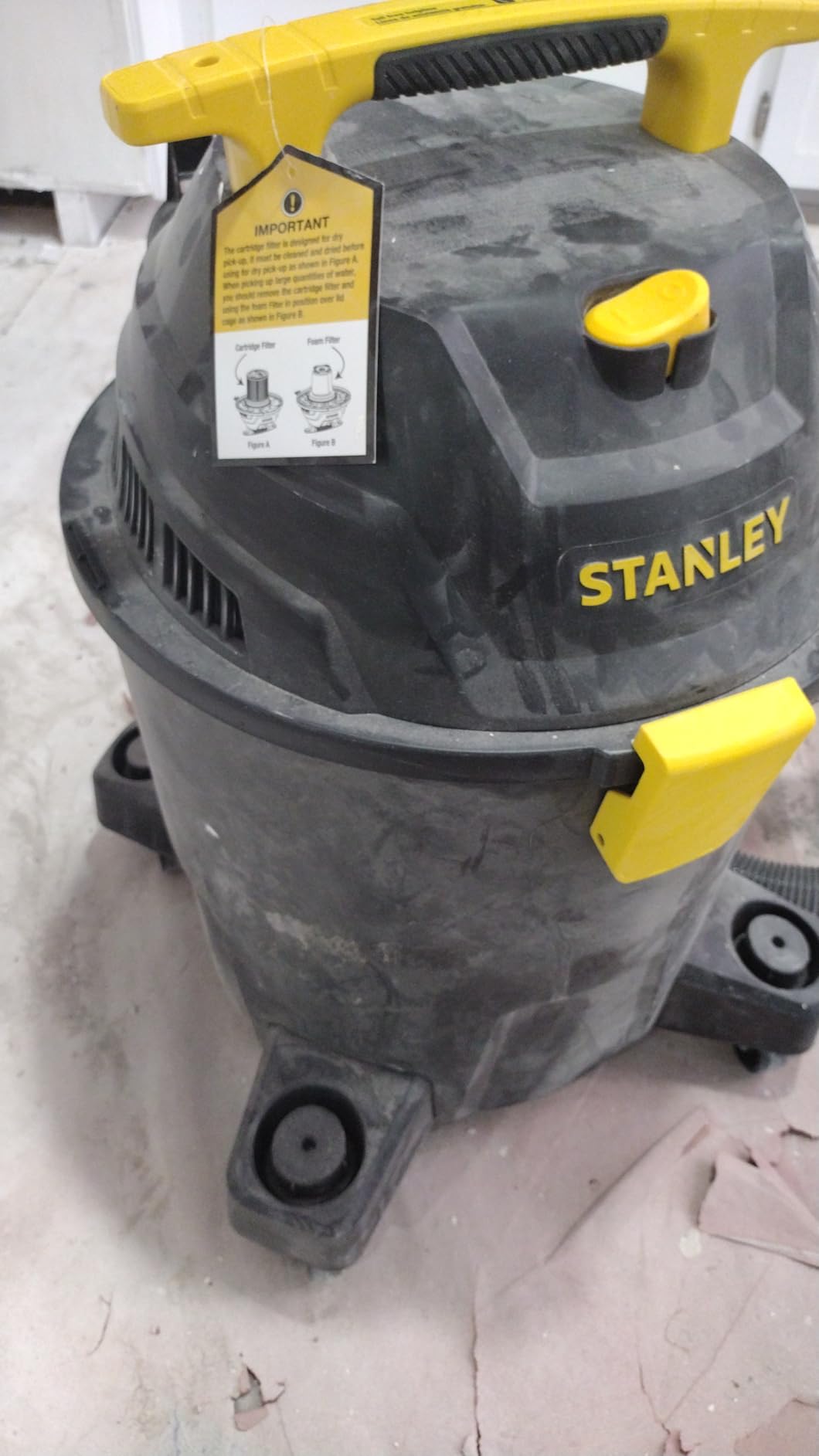
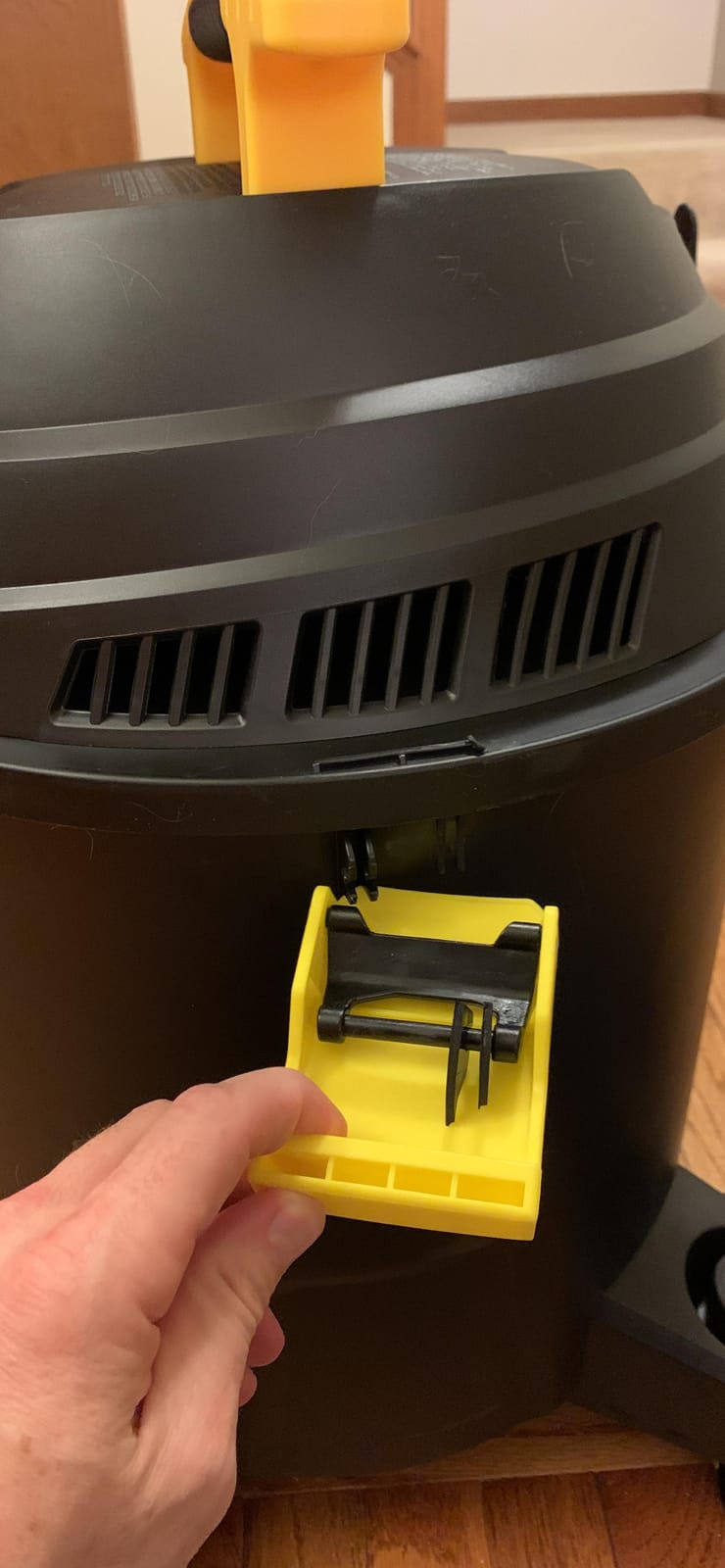
Float shut-off is the feature that makes this one different. When liquid reaches the maximum level the motor shuts itself down instead of burning out, and with a built-in drain port plus a garden hose adaptor, this is the machine I would want under the bench the day a water heater gives up.
Owners frequently say it outperforms higher-priced DEWALT and RIDGID units on suction, with a 79 percent five-star share across more than 1,500 reviews at a 4.5 average. The 10 gallon poly tank means fewer emptying stops than a 6 gallon model during flood cleanup.
Reach is excellent: a 6 foot hose, an 18 foot cord and two extension wands total more than 24 feet, which covers a two-car bay or a driveway edge from a single outlet. The 3-in-1 wet/dry/blow setup with a rear blow port also lets you dry a floor after pumping it out.
Float Shut-Off and Pumping Water Out
Most wet/dry vacs in this group rely on you watching the drum. Float technology removes that risk, which matters when you are pumping out a garage after a storm and the water keeps coming. Pair it with the garden hose adaptor and you can drain without carrying anything.
Reach Math for a Two-Car Bay
Twenty-four feet of combined hose, cord and wand is more than most single-outlet garages need. The rule of thumb: measure from your outlet to the farthest corner, subtract the cord, and check the remaining hose plus wand length covers it with a little slack.
Where Owners Complain
Noise is the dominant complaint; several owners describe this machine as extremely loud. The tank plastic is also thinner than the class-leading construction, though owners still rate it durable, and the cartridge filter needs periodic cleaning in dusty shop work.
10. RIDGID RT0600 6 Gallon – Best for Lifetime Warranty Coverage
RIDGID 62698 RT0600 NXT 6-Gal. Wet Dry Shop Vacuum with Casters, 4.25 Peak HP Motor, and Pro Locking Hose, Dark Gray and Red
6 gallon tank
4.25 peak HP
Scroll noise reduction
8 ft locking hose
Pros
- RIDGID lifetime tool warranty on materials and workmanship
- Scroll noise reduction keeps it quiet for the class
- 1-7/8 in x 8 ft locking hose that will not pull loose
- 360 degree casters and an ergonomic large handle
Cons
- Suction rated only OK by some owners
- 100 W listing implies real output well below 4.25 peak HP
- Few accessories in the box
- Narrow wheels catch in floor cracks
The RIDGID RT0600 is the warranty pick. It carries the RIDGID lifetime tool warranty, which covers defects in material and workmanship, and that is a meaningful difference when you are thinking about a five or ten year garage tool rather than a season.
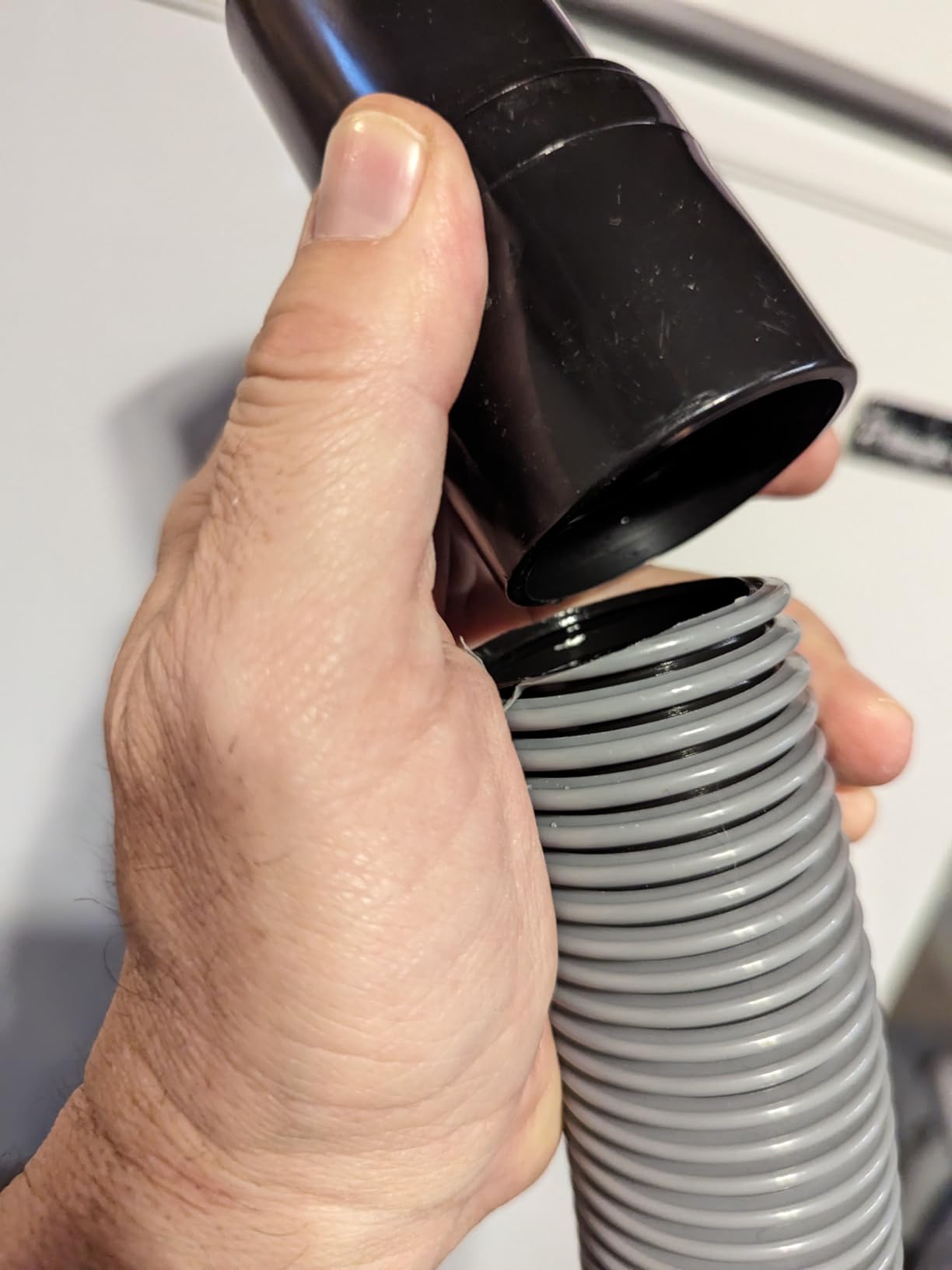
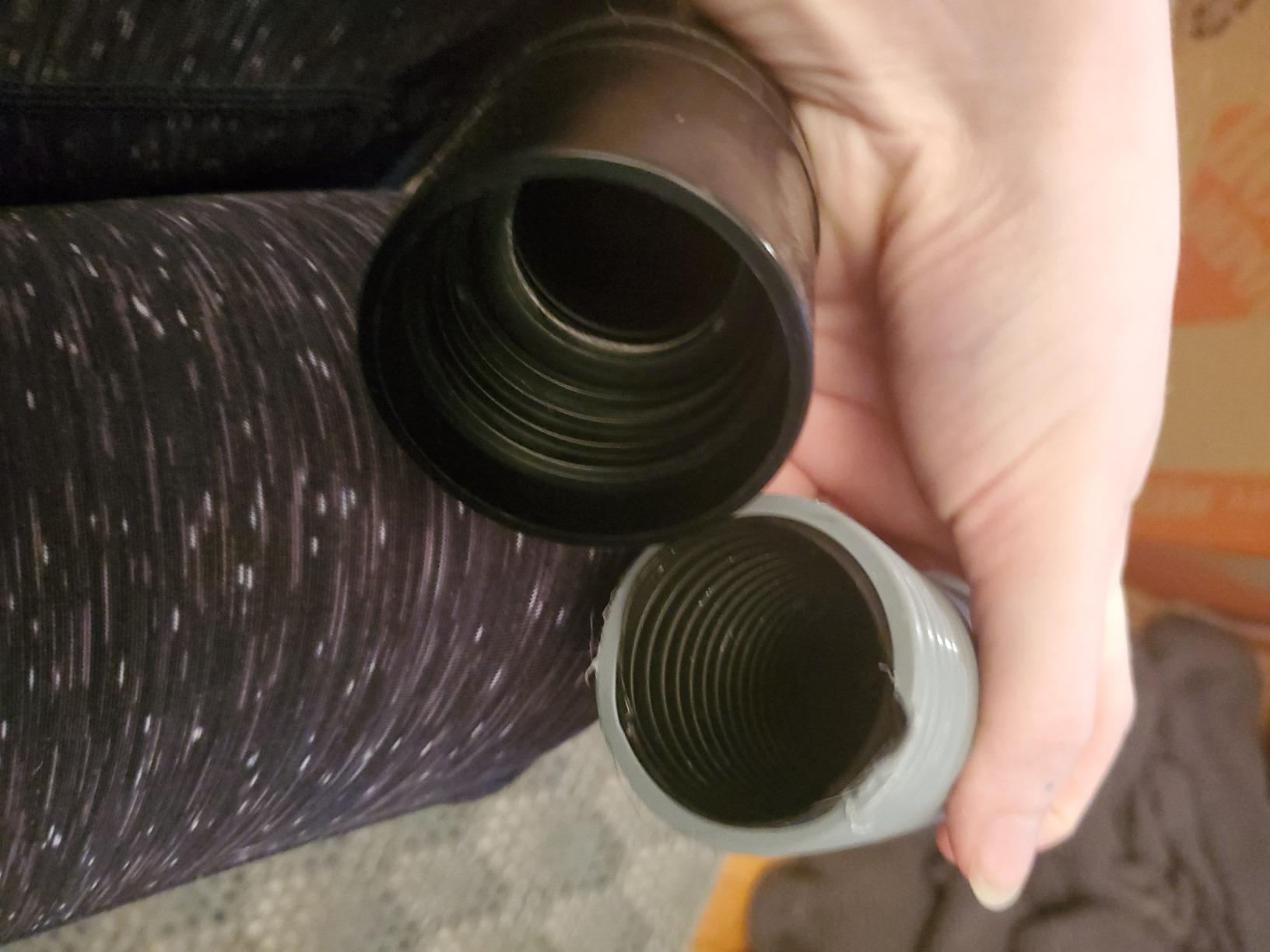
Patented Scroll noise reduction keeps the operating sound low for its class at 75 dB, and the 1-7/8 inch by 8 foot locking hose is the longest hose in this roundup. It will not pull loose from the tank, and its smooth interior resists clogging. On forums like r/Tools, RIDGID wet/dry vacs are routinely described as excellent.
The Qwik Lock filter system installs and removes without tools, 360 degree casters help in tight bays, and the blower function clears leaves and jobsite debris. It is a small 6 gallon machine, so it is about workshop chores and car interiors more than whole-garage sweeps.
Scroll Noise Reduction in Practice
At 75 dB this sits between the 68 dB Karcher WD 4 at the quiet end and the 82 dB 9 gallon CRAFTSMAN at the loud end, which is a fair middle ground for a shared garage. The scroll design also has a practical side effect: less air turbulence means the filter sees a steadier load.
The Peak HP Discrepancy
The listing shows 100 W against a 4.25 peak HP claim, which implies real output closer to 1.2 hp. Several owners rate suction as only okay and report it will not lift fine sand from window sills. If your garage work is heavy debris, choose a wider hose model instead.
Review Base and Service
Under 400 ratings is the thinnest evidence base outside the Karcher, so weight the warranty heavily here. One owner reported motor bearing failure after two years and difficulty getting a replacement motor, which is worth weighing against a model with a deeper parts ecosystem.
11. Karcher WD 4 – Best for Quiet Operation in an Enclosed Garage
Karcher – WD 4 Wet-Dry Shop Vacuum Cleaner – with Attachments – Blower Feautre, Compact Space-Saving Design – 5.3 Gallon – 1100W
1800 W motor
5.3 gallon capacity
Top-mount sealed filter
68 dB and 15.65 lb
Pros
- 1800 W motor delivers strong airflow
- Top-mount filter gives sealed dust-free access
- Compact 15.1 x 14.4 in footprint stores anywhere
- 68 dB is among the quietest ratings in this group
Cons
- Highest cost in the roundup for 5.3 gallons
- Only 187 ratings so owner feedback is thin
- 13 A draw needs a dedicated or 20 amp circuit
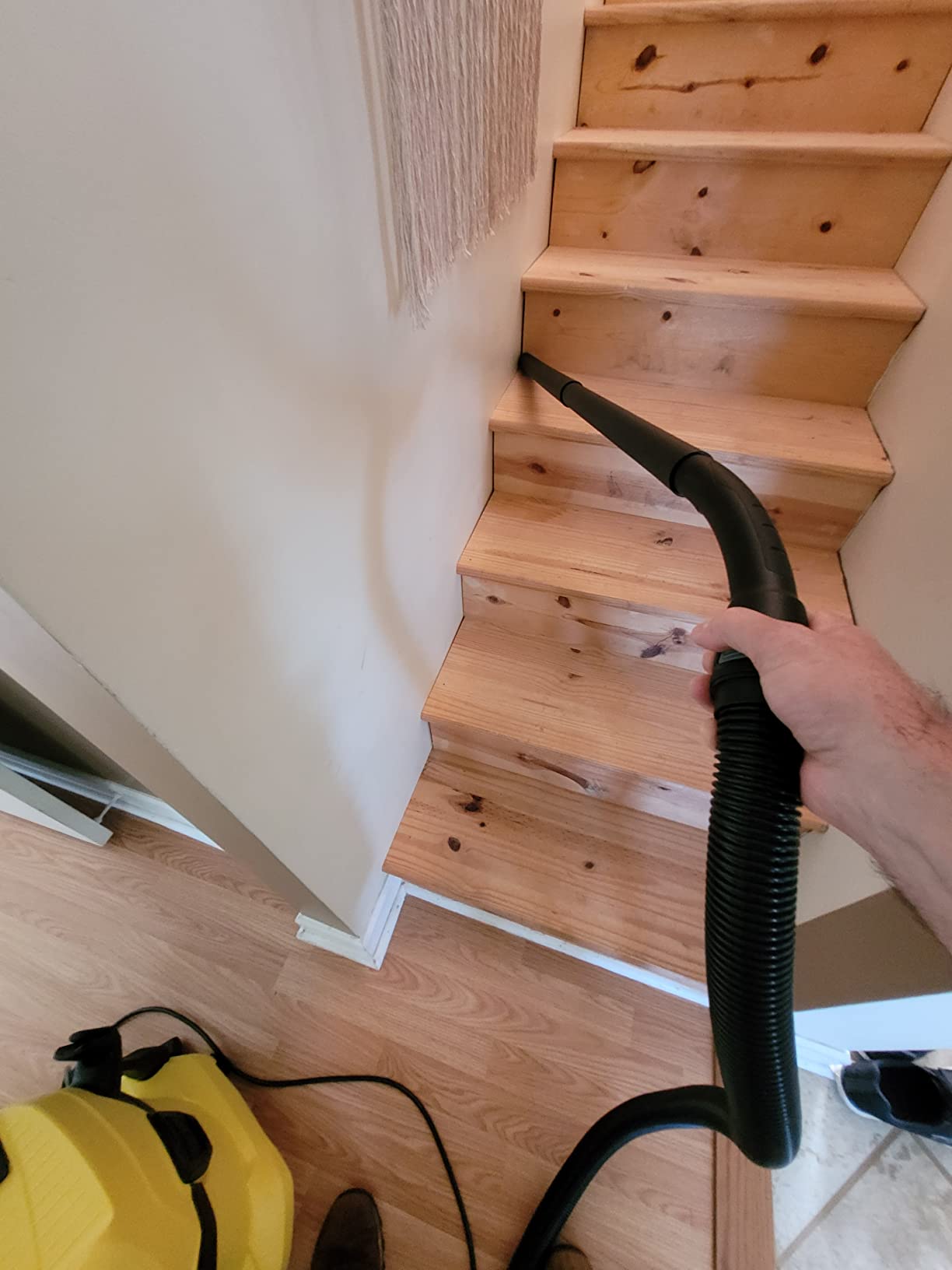
The Karcher WD 4 is the quiet, compact, European-build option. At 68 dB it matches the CRAFTSMAN 16 gallon for the quietest rating in the roundup, and at 15.65 pounds it is one of the lighter full-size machines, which makes it easy to carry up garage steps.
Owners praise the build quality, the quiet operation and the genuinely compact 15.1 by 14.4 by 20.7 inch design. The top-mount filter position gives sealed, dust-free access and allows the full 5.3 gallons of wet or dry capacity to be used rather than losing volume to an internal collar.
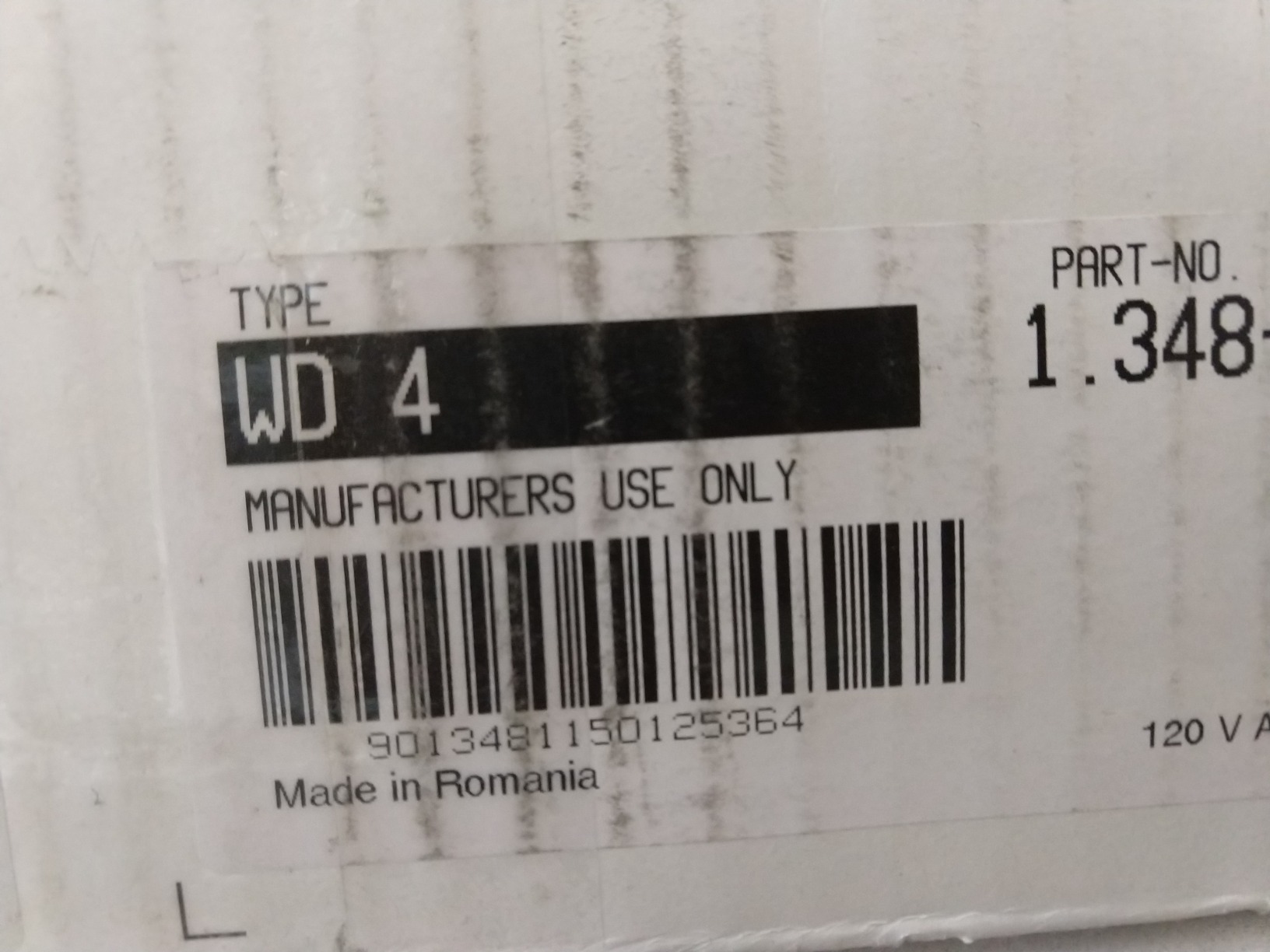
The 1800 W motor is the highest stated wattage in this group, and with a 7.2 foot hose plus two 20 inch suction tubes you have a workable reach for car interiors and bench work. Onboard accessory storage ports keep every included piece in place.
Top-Mount Filter Design
This is the quietly important engineering choice. With the filter accessible from the top and sealing against the tank collar, the whole drum stays usable and you do not inhale dust every time you lift the lid. On a 5.3 gallon tank, that recovered volume is proportionally larger than on a compact design.
Circuit Requirements
A 13 amp draw is at the top of the range here. Plan a dedicated 20 amp outlet or a kitchen-style receptacle, and avoid sharing the circuit with a welder or a large power tool. Note also that the listing title references a blower function, but a blower port is not among the included features.
Where the Premium Goes
You are paying for build quality and a compact, quiet design, not for capacity or accessories. At 187 ratings the owner evidence is thin, and the cost sits well above American-brand machines with 12 or 16 gallon drums, so the case for it is refinement rather than value.
12. Armor All VO405P 4 Gallon – Budget Pick for Quick Garage Cleanups
Armor All VO405P 0901 4 Gallon Wet/Dry Vac 2.0 Peak HP Shop Vacuum with Nozzles & Brush,Black/Orange
4 gallon poly tank
660 W and 2 HP motor
15 ft cord plus 6 ft hose
8.4 lb
Pros
- Lightest machine here at 8.4 pounds
- Strong suction for a 660 W compact motor
- Ready to use with snap-on casters and piping
- Washable cloth filter
Cons
- 4 gallon drum is the smallest capacity here
- Top-heavy body tips if the hose is pulled at an angle
- Short cord usually means using an extension lead
Not every garage job needs 16 gallons. For crumbs off a seat, water from a spill, and a quick pass over a dusty floor between projects, the Armor All VO405P at 8.4 pounds is the most grab-and-go option here. It carries more than 3,200 reviews at 4.4 stars with a 71 percent five-star share.
Reviewers treat it as a portable grabber rather than a full garage vac, and they consistently praise the power-to-weight ratio and how small it stores. It is 11.6 inches square and 18.5 inches tall, so it lives in a closet or on a shelf rather than on your floor space.
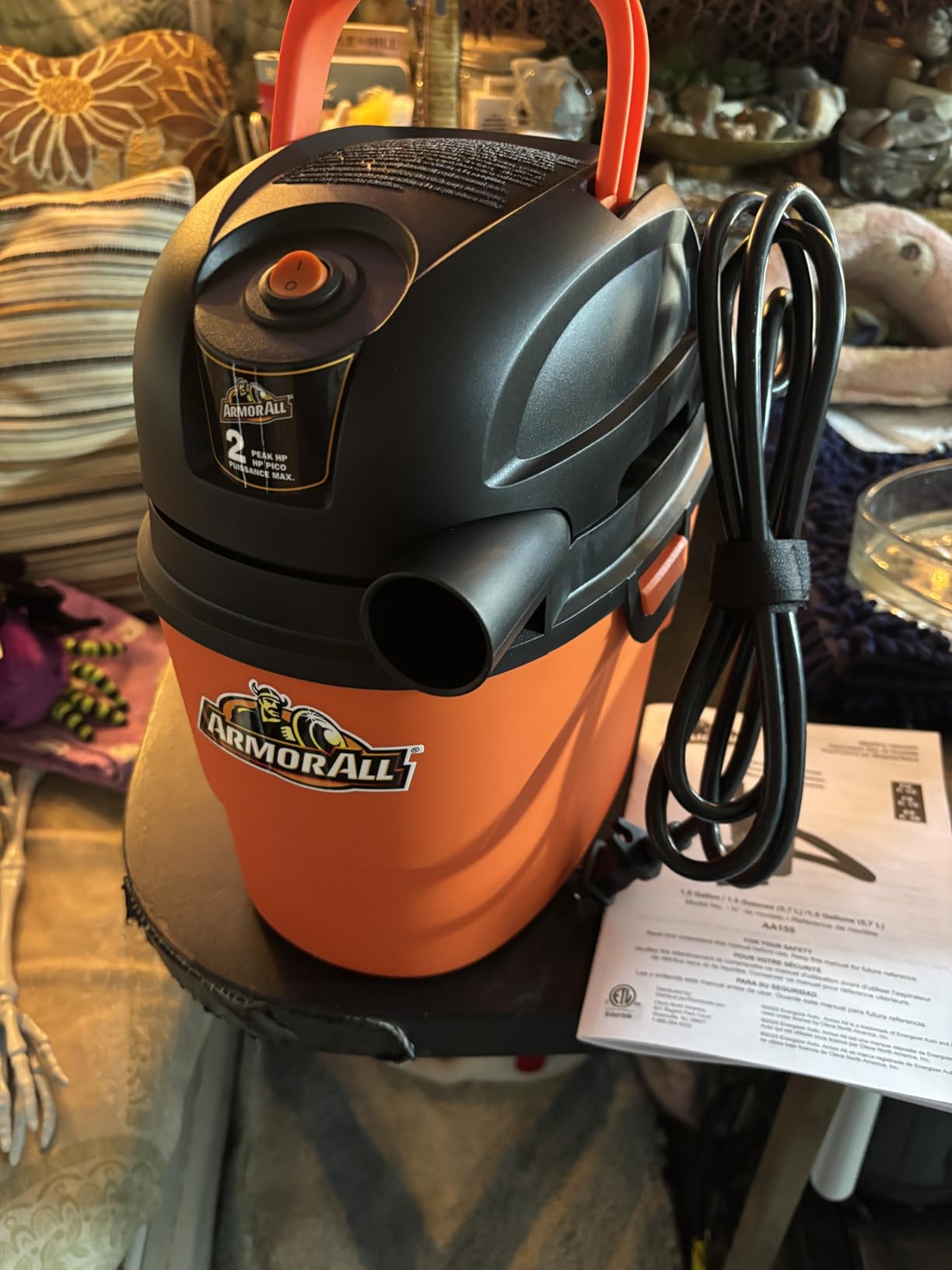
It arrives ready to use: snap on the casters and piping, and the unit switches into blowing mode. A 15 foot cord plus a 6 foot hose gives more reach than the 8.4 pound weight suggests, and the nozzles and brush cover car detailing, basement, garage and woodshop tasks.
Cloth Filter and Small-Drum Limits
The washable cloth filter keeps consumable costs at zero, which is the quiet advantage of a compact unit. The trade-off is 4 gallons of capacity, so a full-garage sweep means repeated walks to the trash can, and the 2 HP motor has far less reserve for large debris than the 4 to 6.5 HP machines.
Stability and Cord Length
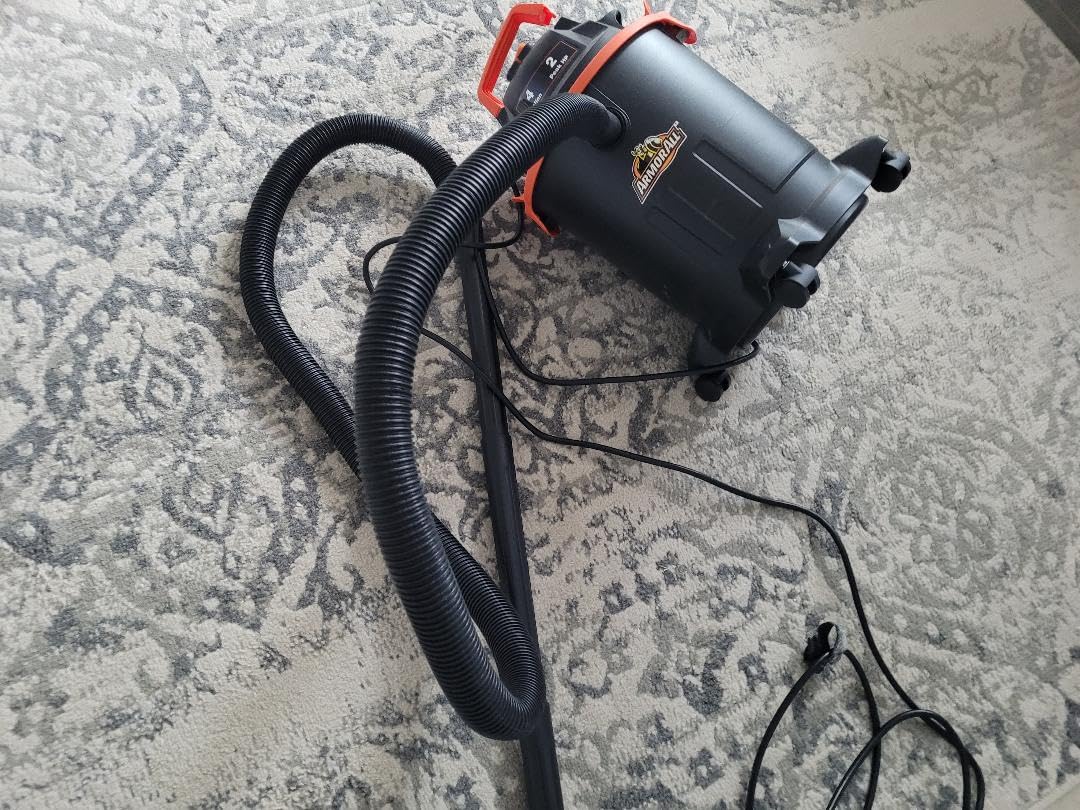
The body is top-heavy, and pulling the hose at an angle can tip it, which cuts suction until you reset it. Get into the habit of moving the machine first and the hose second. The cord is also short for a garage, so plan on an extension lead from day one.
Durability Feedback
At more than 3,200 ratings the feedback base is solid, and the recurring themes are the small tank, the tipping tendency and the extension cord. One owner reported the motor burning out after roughly three uses, so check the unit early and keep it on a proper outlet.
How to Choose a Shop Vac for a Garage
Almost every disappointing shop vac purchase traces back to a capacity mismatch or a filtration mismatch, not to the motor. Work through these in order and the choice makes itself.
1. Size the Drum to Your Mess, Not Your Ambition
For a single-car bay and weekly light cleanup, 4 to 6 gallons is genuinely enough. For a two-car garage, renovation debris, or water spill work, plan on 9 to 12 gallons. The 16 gallon CRAFTSMAN is for people who clean a garage the way some people clean a workshop, all weekend, and want to empty once.
The physical test matters more than the number. If a full tank is uncomfortable to lift, you will route around that job. A 12 gallon poly drum full of water is more manageable than a 12 gallon stainless one, and a machine with a large drain port saves you from carrying wet weight across the floor.
2. Ignore Peak HP and Read CFM, Suction and Seal Instead
Peak horsepower is measured with the intake open and no filter restriction, which is not a condition you will ever vacuum in. What matters is airflow in CFM, sealed suction in inches of water lift, and whether the hose and filter seat properly so the machine actually holds its rating. Only the Vacmaster in this roundup publishes a CFM figure, at 106, which is why it is worth knowing.
Owner forums reflect the same skepticism. The consensus in r/Tools is that comparing two vacuums from the same brand is more meaningful than cross-brand HP claims, because the peak HP number is a lab comparison, not a workload number. Compare within a brand’s lineup and you are on solid ground.
3. Check Tank Material Against Your Environment
Polypropylene is lighter and handles impacts better. Stainless resists rust and road salt and ages better in a damp garage but adds weight. If your garage is dry and you move the machine often, poly wins. If it sits next to a water heater or in a coastal climate, stainless earns its keep.
4. Do the Reach Math Before You Buy
Reach is hose length plus cord length plus wand length, and two-car garages punish cheap numbers. Add up the figures: a 6 foot hose with a 10 foot cord and three wands gives more than 16 feet, while a 6 foot hose with an 18 foot cord and two wands clears 24 feet. Measure from your outlet to the farthest corner of the floor you actually clean.
Hose diameter is the second half of that equation. A 2-1/2 inch hose moves coarse debris and gravel that a 1.25 inch hose chokes on. If you sweep up yard waste, mulch, or metal chips, width matters more than a larger HP claim.
5. Match the Filter to the Dust
Foam sleeve filters are for liquid pickup and coarse debris. Cartridge filters hold fine dust and are the right default for a garage. Fine dust filters and HEPA-class filters are for drywall sanding dust, concrete grinding residue, and anything you plan to seal over with epoxy. Many owners on r/woodworking pair a shop vac with a drum sander, but the real win is a cyclone-style separator that captures the bulk of the dust before it reaches the cartridge.
Check what is in the box. Every machine in this roundup is listed with either foam or cloth filters, and none of the spec sheets lists a fine dust filter as included, so plan on buying one if your work is dusty.
6. Check Circuit Load Before You Unplug Anything
A 10.5 or 13 amp draw shares badly with power tools on a 15 amp circuit. The Vacmaster at 10.5 amps and the Karcher at 13 amps both want a 20 amp or dedicated outlet for renovation days. A 3.6 or 3.7 amp machine like the 6 gallon Stanley coexists with a saw without drama.
7. Count Noise If the Garage Is Enclosed
Decibels in this category range from 68 to 82. If your garage door is closed and a car engine is running, the 68 dB Karcher and the 69 dB 16 gallon CRAFTSMAN are the two least fatiguing options. The 82 dB 9 gallon CRAFTSMAN and the 80 dB machines are fine in an open space and tiring in a small bay.
8. Budget for Filters, Bags and Service Parts
Consumables are the real running cost of a shop vac, and garage use accelerates them. Drywall dust loads a cartridge in one or two sessions. If you run a disposable bag, you are replacing it every cleanup. Washable foam and cloth filters cut that cost to near zero but demand more cleaning discipline. A three-year warranty on a 12 or 16 gallon machine is cheap insurance next to a season of filter replacements.
9. Know When a Shop Vac Is the Wrong Tool
For garage floor epoxy prep after grinding, a wet/dry drum is the wrong instrument. Concrete grinding produces crystalline silica, the residue that kills epoxy adhesion and leaves fisheye bubbles in the coating. That job needs a dust extractor with true HEPA capture. For thick sawdust piles, a broom or a drum sander dust collector beats a vacuum. For a full garage wash, a pressure washer handles the floor and the shop vac handles the dry-down.
A Safety Note on What Not to Vacuum
Do not use any shop vac on lead paint debris, asbestos-containing material, solvents, or untreated silica dust. Those require a rated HEPA dust extractor and, in the case of lead or asbestos, professional remediation. Wet down dry concrete dust before you collect it, wear a respirator rated for particulates, and keep the filter seated so nothing escapes through the motor. Readers who want the rest of the garage sorted can start with our storage cabinet picks for garages and our Bluetooth speaker picks for garage work.
Frequently Asked Questions
What is the best shop vacuum for a garage?
The Stanley SL18116P 6-gallon wet/dry vac is the best all-around shop vacuum for most garages, with more than 14000 reviews at 4.6 stars, 85 inches of suction, and a wet/dry/blower design at 13.4 pounds. Choose a 12 or 16 gallon drum instead if you handle large debris or water spills regularly.
Should I get a wet dry vac for my garage?
Yes. Garage debris is heavy and wet: sawdust, drywall dust, gravel, metal chips, and water or coolant spills that a household upright cannot handle without clogging its filters. A wet/dry vacuum handles both dry and liquid pickup, and a cartridge filter protects the motor from fine dust.
How much HP does a garage shop vac need?
Most garage jobs are handled well by a 4 to 5 peak HP machine, and coarse debris work benefits from 6 to 6.5 peak HP. Peak horsepower is a lab comparison figure, so judge real performance by sealed suction in inches, airflow in CFM, hose diameter, and whether the filter seats properly on the tank.
Which shop vac is better, Ridgid or Craftsman?
CRAFTSMAN wins on capacity, hose diameter and noise: the 16-gallon CMXEVBE17595 has a 2-1/2 inch Dual-Flex hose, 69 dB operation, and a 3-year warranty. RIDGID wins on warranty and quiet refinement, with the RT0600 covered by a lifetime tool warranty. Detailing enthusiasts on r/Detailing rate CRAFTSMAN suction very highly.
What size shop vac do I need for a two-car garage?
For a two-car garage, a 9 to 12 gallon drum is the practical range. It holds a meaningful amount of debris between emptying stops while remaining liftable when full. Go to 16 gallons only if you clean on weekends or handle flood water, and check reach: hose length plus cord plus wand should exceed your outlet-to-farthest-corner distance.
How often do you replace shop vac filters and dust bags?
Replace or wash filters based on job type, not calendar time. Drywall dust and concrete fines can load a cartridge in one or two sessions, so dry shop use means monthly checks, while a garage vacuumed weekly with coarse debris can stretch much further. Disposable bags are typically swapped every cleanup, and washable foam or cloth filters cut that cost to nearly nothing.
Is a cordless wet dry vac strong enough to replace a corded shop vac?
A cordless wet/dry vac handles small to medium tasks and removes the cord reach problem entirely, which owners on r/MilwaukeeTool frequently cite as the reason for switching platforms. For wet pickup, large capacity, and sustained coarse debris, a corded drum still wins on runtime, tank size, and airflow. Many owners keep one of each.
Why does my shop vac lose suction?
Check the filter first, since a loaded cartridge is the most common cause. Then check that the hose and filter are seated tightly on the tank collar, inspect the hose for a hidden puncture or a packed clog, and empty the drum so airflow is not restricted. A plugged foam sleeve or a torn wet sponge produces the same symptom as a blocked filter.
The Right Shop Vac for Your Garage
If you want one machine that covers a garage floor, a car interior and the occasional spill, the Stanley SL18116P is the pick: the deepest owner feedback in the group, 16+ feet of reach, and a body light enough to move without thinking about it. It remains our best overall shop vacuum for garages in 2026.
Match the drum to the mess. Large debris, renovation cleanup, or water recovery points to the 16 gallon CRAFTSMAN or the 12 gallon DEWALT. A two-car garage that gets cleaned on weekends is best served by the 9 gallon CRAFTSMAN. A quiet enclosed bay suits the Karcher WD 4 or the CRAFTSMAN 16. Dry you need a single-car spot or a car interior between jobs, the compact Armor All is the grab-and-go choice.
Whichever one you choose, add a fine dust filter before your first drywall or concrete job, keep a couple of spare dust bags on the shelf, and check that the filter seats on the tank collar every time. Those three habits prevent most of the failures we saw in owner reviews. If the rest of the garage needs sorting, our guides to cordless car vacuum cleaners and vacuums for allergies cover the detailing and indoor-cleanup side of the job.