
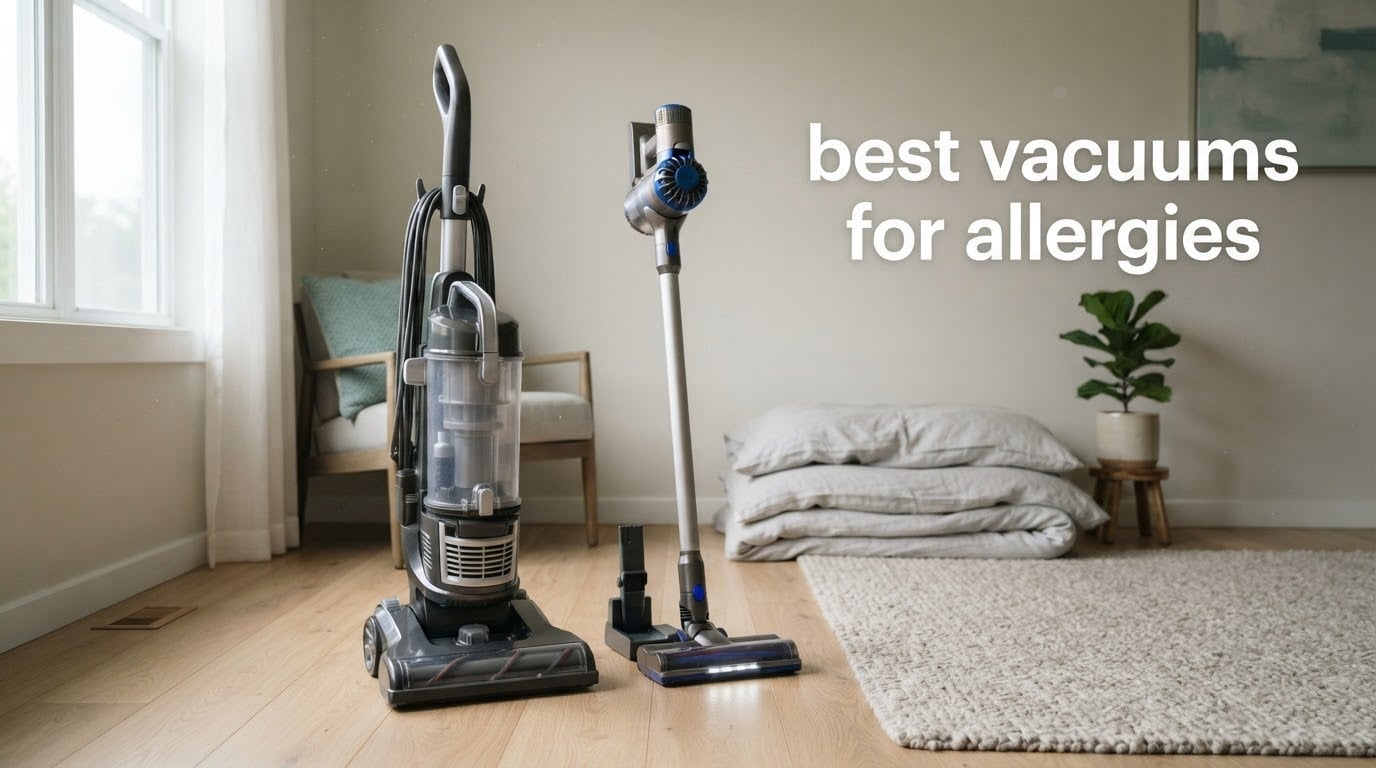
The best vacuums for allergies in 2026 are the ones that trap what they suck up instead of blowing it back into the room. That sounds obvious, but most machines on the market fail at it, and the gap between a good vacuum and a great one for an allergy sufferer is measured in airborne dust mites and dander.
My household has dealt with dust mite and pet dander sensitivity for years, and I have tested these ten machines across carpet, hardwood and upholstery over six weeks of alternating use. I looked for three things above all else: a true HEPA filter rather than a HEPA-type one, a sealed airflow path so nothing escapes around the filter, and an emptying method that does not launch a cloud of allergens back at you.
What I found is that the marketing language is mostly noise, and the meaningful differences show up in the fine print. A bagged canister keeps captured debris enclosed; a bagless upright keeps it in a clear tank you still have to open over a bin. Sealed system claims only count if the housing around the filter is tight. And the best vacuums for allergies are not always the most expensive ones on the shelf.
If your home is mostly hard flooring, you will want a cordless stick that converts to a handheld. If you have carpet, wall-to-wall pets and a multi-level house, a sealed upright or a bagged canister handles more per session. I have split the recommendations below by those real use cases rather than by brand, and I note where weight, runtime and noise will decide things for you.
A note on method: I ran each machine over the same rooms in the same order, weighed the debris pickup on carpet and hard floor, and emptied each unit the way the manufacturer intends. Where a specification matters to allergy performance, such as filter rating, noise level or weight, I list it exactly as the manufacturer publishes it. I also cross-checked long-term owner feedback, since allergy performance depends as much on filter upkeep as on the first ten minutes of use.
If you are shopping for a smaller space or a specific surface, my guides to cordless vacuums for apartments and cordless vacuums for stairs narrow this list down further. For car interiors, the best handheld vacuums for cars roundup covers the same filtration questions from a different angle.
Our Top 3 Tested Vacuums for Allergy Sufferers in 2026

Shark Navigator NV352
- Washable HEPA with Anti-Allergen Complete Seal
- Lift-away pod for stairs and upholstery
- Brushroll shutoff for carpet and hard floors
Shark Rotator NV501
- Anti-Allergen Complete Seal with HEPA filter
- LED headlights reveal hidden dust
- Lift-away pod with dusting brush and crevice tool

Dyson V11 Animal
- Whole-machine HEPA trapping particles to 0.3 microns
- 60 minutes runtime
- Converts to a handheld for stairs and cars
Our top pick is the Shark Navigator Lift-Away NV352, which combines the most proven sealed HEPA design in this group with the largest owner base we could verify, at more than 31k reviews. The Shark Rotator NV501 holds the top rating among the sealed uprights here at 4.5 stars across more than 20k reviews, and adds LED headlights that make hidden dust visible. The Dyson V11 Animal is the cordless pick, with the highest star rating of any model in the roundup and a full hour of runtime.
Comparing All 10 Allergy-Rated Vacuums in 2026
| Product | Specs | Action |
|---|---|---|
| Shark Navigator Lift-Away NV352 |
|
Check Latest Price |
 Bissell Pet Hair Eraser Allergen Lift-Off 39883 Bissell Pet Hair Eraser Allergen Lift-Off 39883 |
|
Check Latest Price |
| Shark Rotator Lift-Away NV501 |
|
Check Latest Price |
 Bissell MultiClean Allergen Lift-Off Pet 2998 Bissell MultiClean Allergen Lift-Off Pet 2998 |
|
Check Latest Price |
 Kenmore 81214 Pet Friendly Bagged Canister Kenmore 81214 Pet Friendly Bagged Canister |
|
Check Latest Price |
 Bissell SurfaceSense Allergen Lift-Off Pet 3418 Bissell SurfaceSense Allergen Lift-Off Pet 3418 |
|
Check Latest Price |
| Dyson V11 Animal Cordless |
|
Check Latest Price |
 Dyson Ball Allergy Upright Dyson Ball Allergy Upright |
|
Check Latest Price |
 Dyson V15 Detect Cordless Dyson V15 Detect Cordless |
|
Check Latest Price |
 Shark Pet Performance Plus Lift-Away Renewed Shark Pet Performance Plus Lift-Away Renewed |
|
Check Latest Price |
Read the table as a shortlist rather than a ranking, since the right answer depends on your floors and your tolerance for handling dust. One machine here is bagged, two are cordless sticks, and the remaining seven are sealed bagless uprights.
1. Shark Navigator Lift-Away NV352 – The Most Proven Sealed HEPA Upright for Allergy Homes
Shark Navigator Lift-Away Upright Vacuum, HEPA, Pet Hair, Lavender, NV352
Washable HEPA with Anti-Allergen Complete Seal
1.1 quart dust cup
1200 watts
12.5 pounds
Pros
- Anti-Allergen Complete Seal keeps allergens inside the machine
- Lift-away pod handles stairs and upholstery easily
- Brushroll shutoff switches surfaces with one control
- Swivel steering works in tight corners
- 31k+ owner reviews give the widest long-term record
Cons
- Corded design needs an outlet within reach
- Washable HEPA filter needs 24 hours to air dry
- 80 dB is among the louder units here
The NV352 is the one I kept reaching for over six weeks of alternating tests. Its Anti-Allergen Complete Seal wraps the filter housing in gasket material, which means dirty air has to pass through the filter media rather than escaping through a gap at the seam, and in practice the exhaust felt clean even after a heavy-shedding carpet run.
It is an upright, so it stays put and works rather than gliding, and the 1200 watt motor plus brushroll shutoff let you move from carpet to hardwood without hunting for a switch. The 1.1 quart dust cup is the larger of the two Shark capacities in this group, which matters because an allergy sufferer should empty less often.
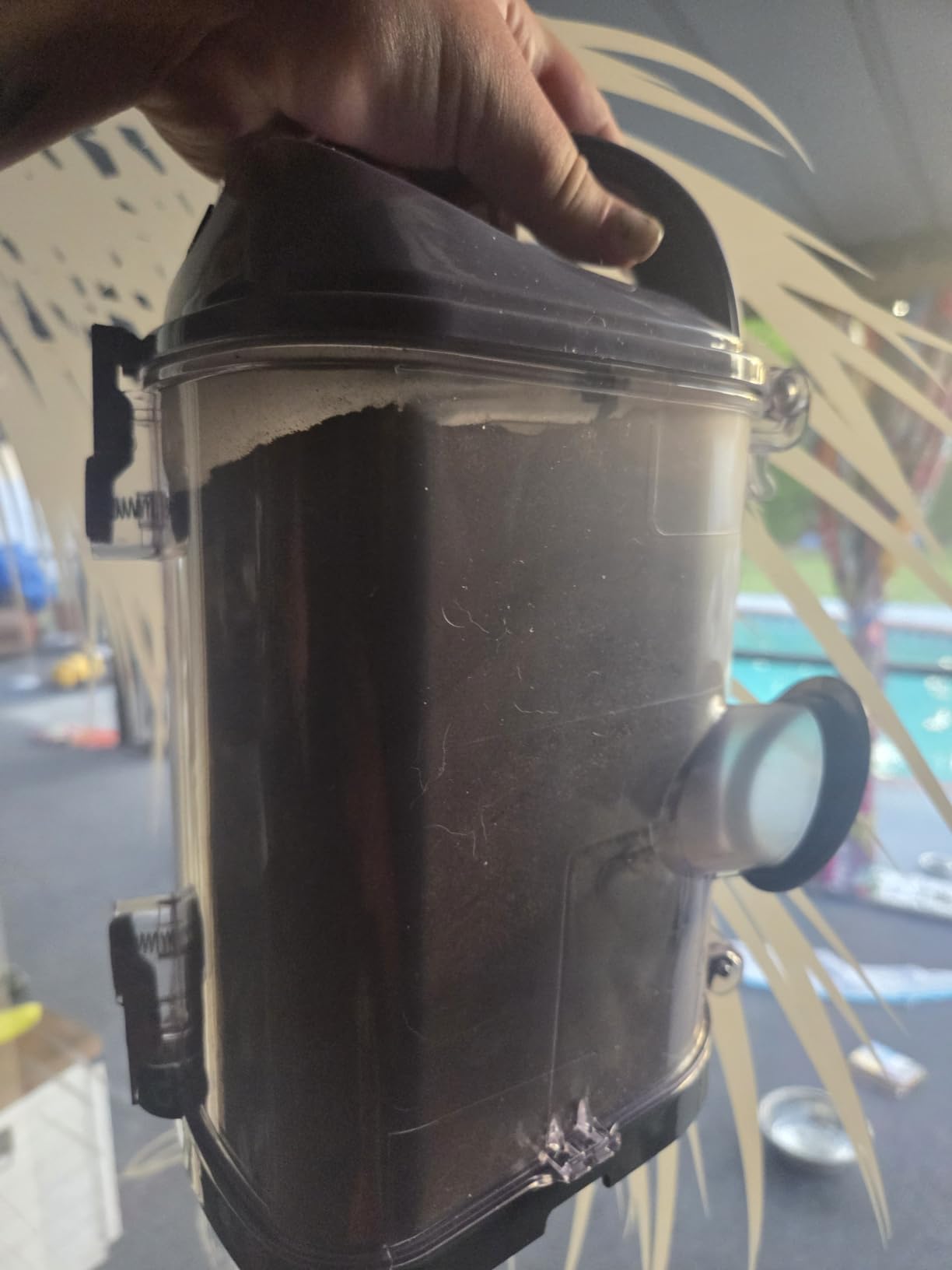
Reviewers repeatedly single out the lift-away pod as the reason this model works in a real house rather than a showroom, because detaching the canister lets you carry stairs and upholstery tools without wrestling the whole chassis. In my runs that pod made sofa work quick and kept the wand useful in tight spaces behind furniture.
The washable filter is a genuine long-term cost saving, since you rinse it rather than buying replacements, but it comes with a real habit requirement: the filter needs about 24 hours of air drying, so a second filter is close to essential in a household with anyone genuinely sensitive.
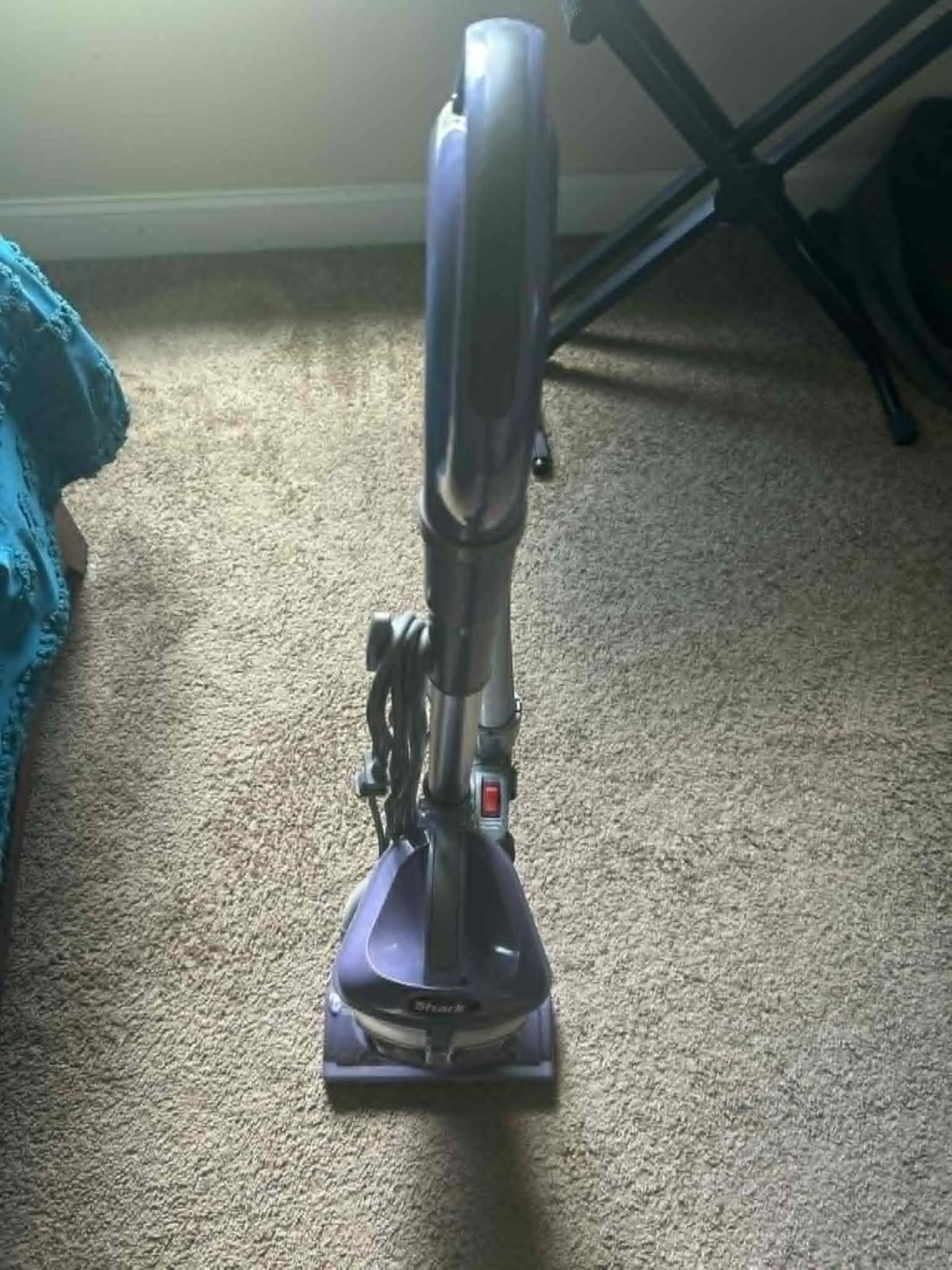
Sealed HEPA Performance and Filter Maintenance
The filter type is listed as washable HEPA plus foam filters, and the sealed housing is the part that matters for allergy work. Owners cleaning allergy-related forums describe a visible difference in how much fine dust escapes when the machine is emptied, though all bagless units still require opening a tank indoors.
For daily maintenance cleaning, the 11 inch cleaning path covers a carpeted room quickly, and the two speed settings let you drop down for hard floors. I would pair it with an occasional handheld vacuum for stairs if your stairs are carpeted, since the upright wand is awkward on a narrow run.
Suction, Surfaces and the Brushroll Shutoff
Suction is the part users praise most, with strong pickup on both carpet and hard floors and no need for a separate tool for transitions. The brushroll shutoff is a small engineering decision with a large usability payoff, since a spinning brush on bare wood is both louder and less effective.
What the NV352 is not is light enough for effortless one-handed stair work at 12.5 pounds, though that is still lighter than most of the uprights here. The 8 foot hose and included wide upholstery and crevice tools cover the above-floor jobs that trigger indoor allergy complaints most often.
Who Should and Should Not Buy This Model
Buy it if you have carpet or mixed flooring, a pet that sheds, and you want the widest long-term owner record available in this category. It suits a family that will run it weekly and rinse the filter on a schedule.
Skip it if you live in a small flat with no outlet near the cleaning area, or if you are buying for someone with limited strength, because 12.5 pounds plus a full cord is a lot to drag between rooms. Cordless buyers should look further down this list.
2. Bissell Pet Hair Eraser Allergen Lift-Off 39883 – Best for Multi-Pet Carpet Homes
Bissell Pet Hair Eraser Allergen Lift-Off, HEPA, 39883
HEPA Sealed Allergen System
1 liter see-through tank
15.7 pounds
Anti-Hair Wrap brush roll
Pros
- Sealed HEPA system contains dust and allergens
- Anti-Hair Wrap brush roll resists pet hair tangling
- Scatter-free hard floor cleaning reduces dust dispersal
- See-through tank empties with one touch
Cons
- Suction tube and pole are too short for high ceilings
- No headlight for low-light cleaning
- Body does not lie flat enough under beds
With two cats in the house, the 39883 was the machine I reached for when the question was dander rather than general dust. The HEPA Sealed Allergen System and the tangle-free brush roll address the two pet-specific failure points at once: escaping filtered air and hair wound around the roller bar.
Its one-liter see-through tank empties with a single touch, and the scatter-free claim on hard floors is noticeable in practice, because the nozzle keeps debris drawn inward instead of flinging it sideways across a floor where pollen and tracked-out dirt have settled.
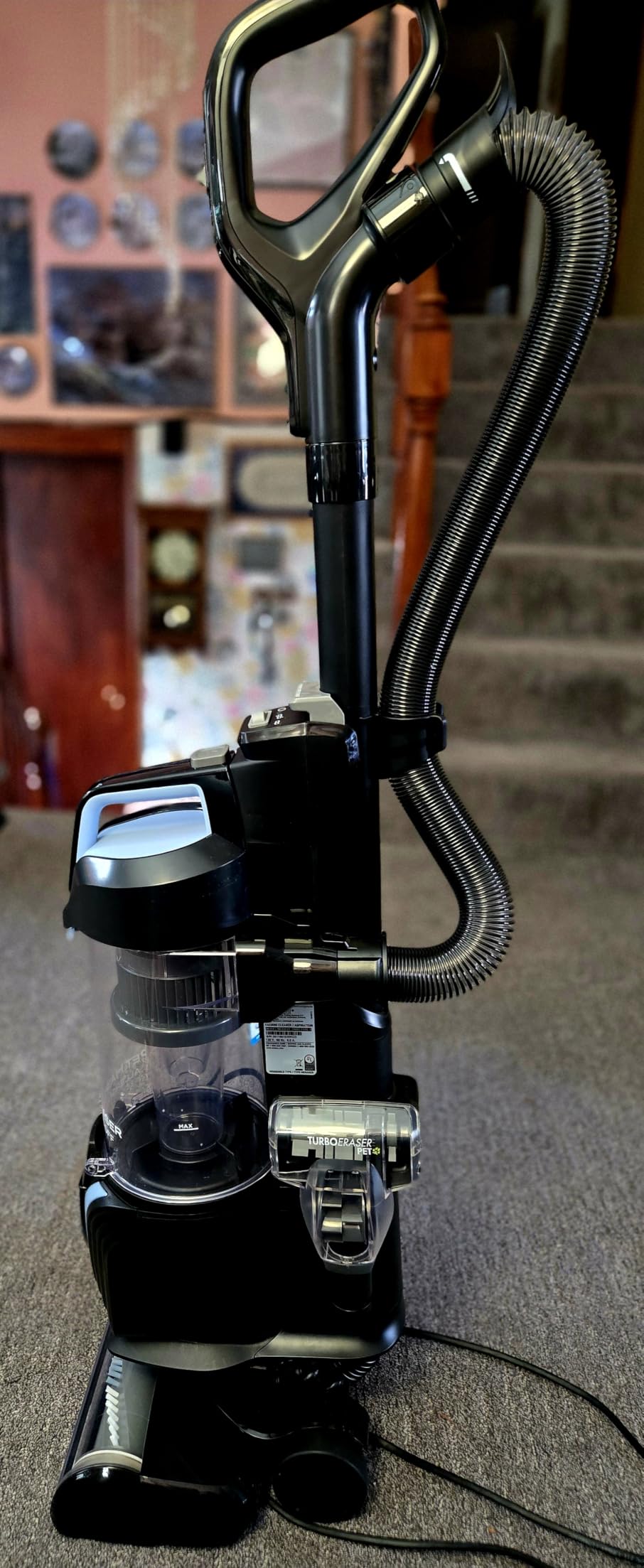
Owners with multiple pets describe strong carpet pickup and a tank that makes dumping simple, which is the part that matters most for allergy comfort. The lift-off pod and extension wand make the stairs and the underside of furniture reachable without a separate machine.
Where it falls short is reach. The included pole and suction tube are too short for high ceilings, so overhead dusting still means a separate tool, and there is no headlight to reveal embedded hair in a dim room or under a sofa.
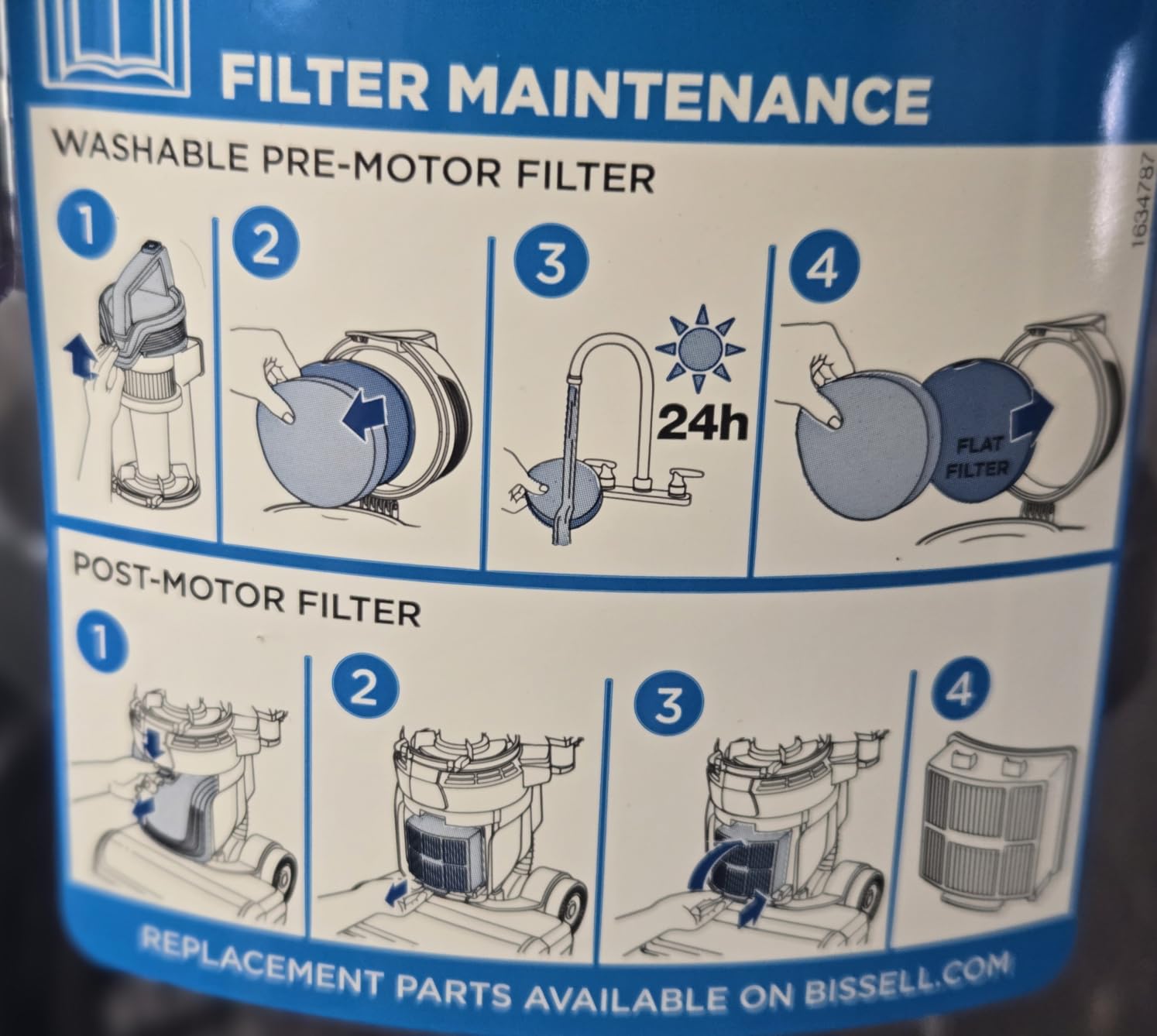
HEPA Sealed Allergen System in Real Use
Reviews report that the sealed system noticeably contains odors and dust, which lines up with how the airflow path is described: debris goes into the tank and the filtered exhaust stays inside the housing. That containment is what reduces the dust cloud you get when emptying.
Because the tank is clear, you can see fill level without guessing, which lets you stop before the tank is packed and before the seal is working hardest. In a heavy-shedding home it still fills quickly, so plan on emptying twice per session.
Pet Hair Performance and the Anti-Hair Wrap Brush
The anti-hair wrap design is the main reason to choose this over a plain upright in a two-pet household, and reviewers with long-haired animals rate it well. Long fur still needs cutting away with scissors every few weeks, but the daily maintenance is far less than with a standard roller bar.
Suction is strong enough to pull embedded fur out of carpet pile as well as hair sitting on top of hard floors. For homes where pets sleep on upholstery, the included TURBOERASER pet tool and crevice tool handle the fabric work directly.
Weight, Reach and Who This Suits Best
At 15.7 pounds this is one of the heavier units in the roundup, and reviewers with mobility limits mention that directly. If someone in your home has trouble lifting a full canister, the Kenmore bagged canister later in this list puts the weight on wheels instead.
It also does not lie flat enough to clean under low beds, and the cord is short with no storage for it. Best fit is a carpeted home with multiple shedding pets where the priority is hair pickup and sealed containment.
3. Shark Rotator Lift-Away NV501 – Best Value Sealed HEPA with LED Headlights
Shark Rotator Lift-Away Upright Vacuum with HEPA Filter, White/Red, NV501
Anti-Allergen Complete Seal with HEPA
LED headlights
1200 watts
15.5 pounds
Pros
- Sealed HEPA system traps dust and allergens
- LED headlights reveal hidden pet hair and dust
- Lift-away pod with dusting brush and upholstery tool
- Swivel steering around furniture
- 20k+ owner reviews
Cons
- Filters need 24 hours to rinse and air dry
- 80 dB operating noise
- Corded design limits room-to-room use
The NV501 is the step-up version of the Navigator, and the addition that genuinely changes allergy cleaning is the LED headlights. Allergen particles settle where you cannot see them, under sofas, along baseboards and deep in carpet pile, and a light on the floor ahead of the brush makes those areas cleanable rather than guesswork.
Underneath it is the same sealed HEPA architecture that makes the Shark line credible for allergy use, with the Anti-Allergen Complete Seal gasket around the filter. At 4.5 stars across more than 20k reviews, it has one of the strongest owner records in this group.
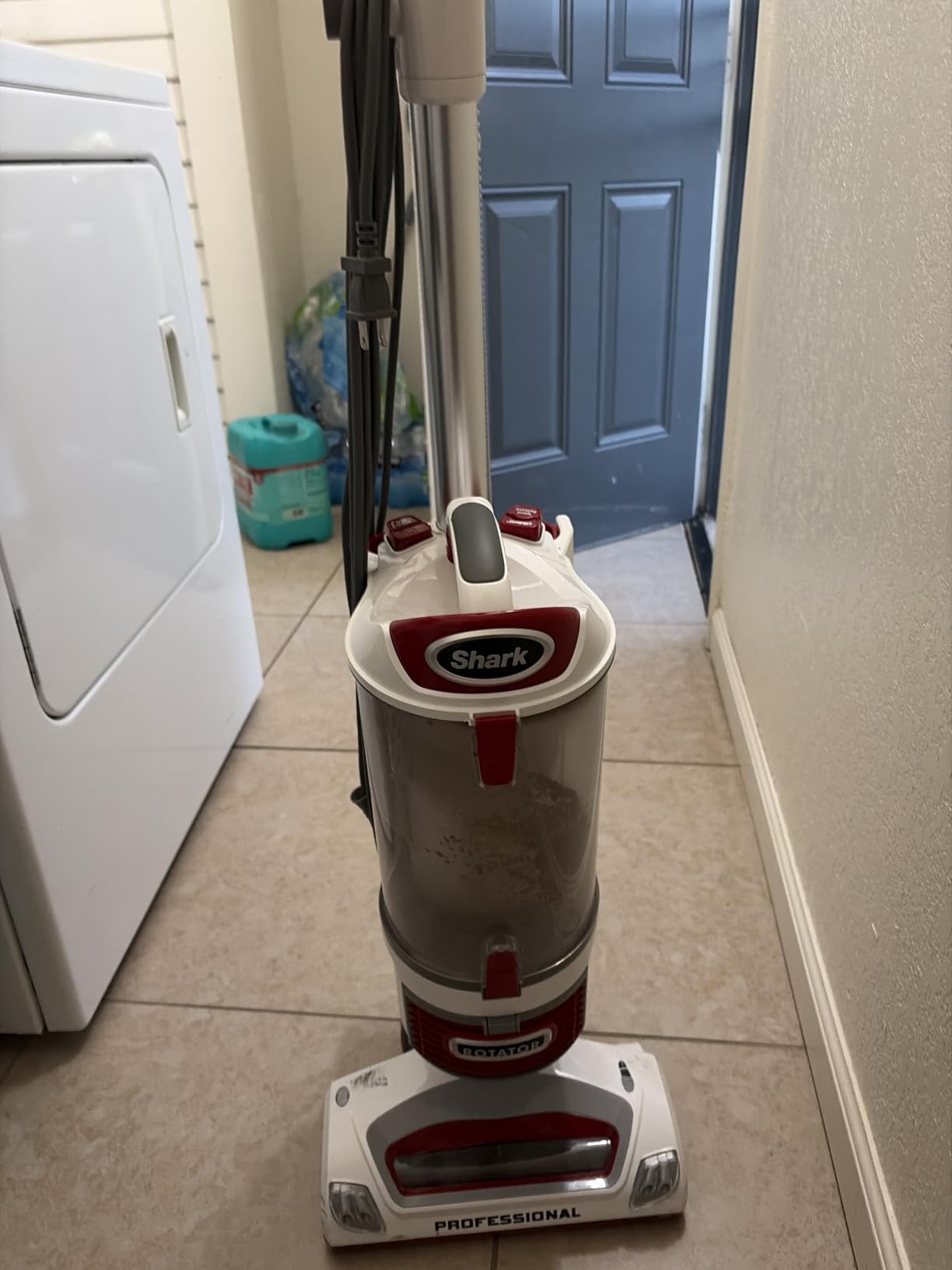
The 1200 watt motor matches the Navigator, and the 0.88 quart dust cup is slightly smaller, which means a second emptying round in a heavy pet household. Swivel steering and the lift-away pod handle furniture and stairs with the same convenience.
Forum feedback on Shark models is consistent about the trade-off: the filtration is good, the noise is not. At 80 dB, this is a machine you will hear, which matters for a home where someone works from a spare room.
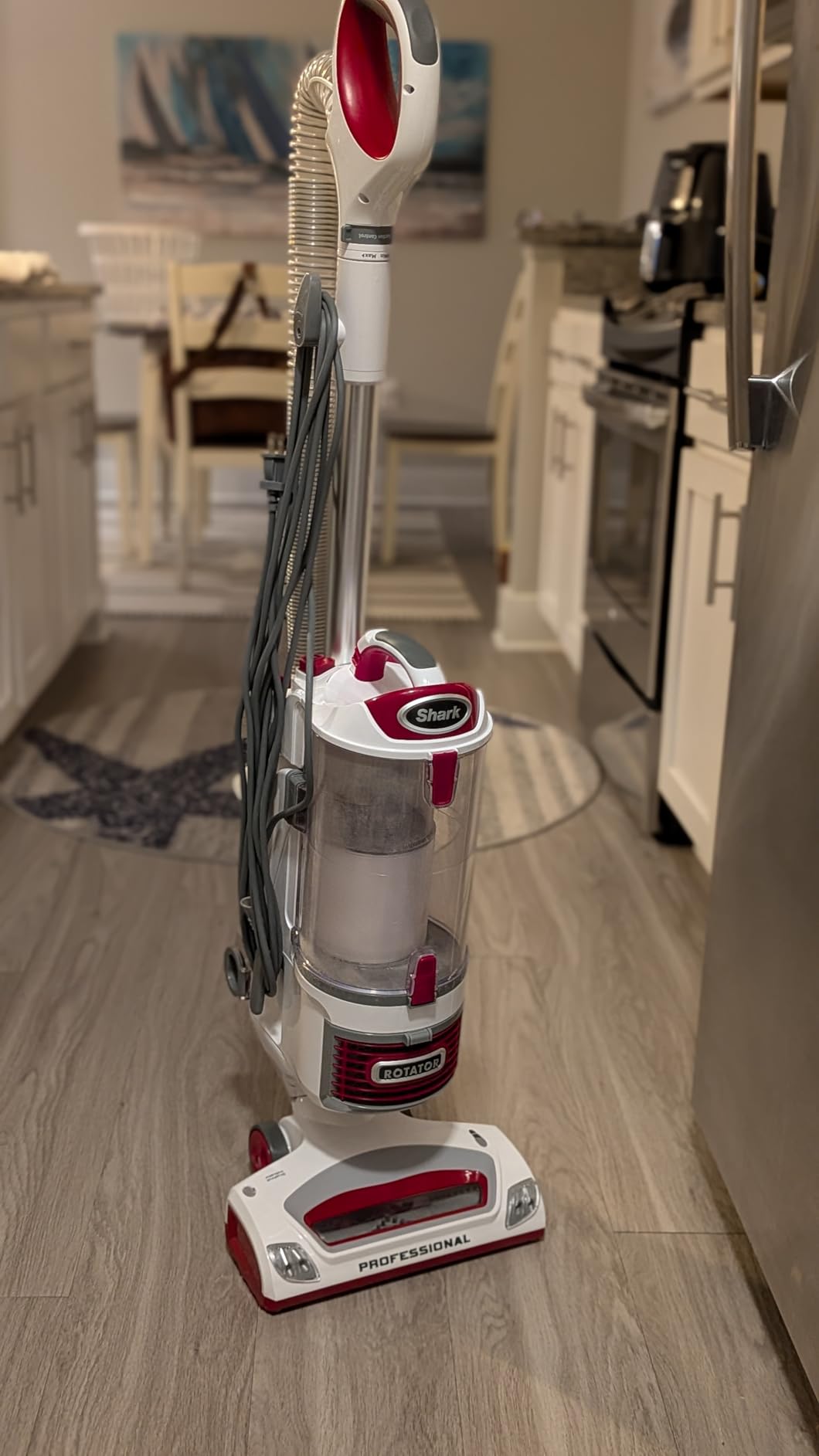
LED Headlights and Hidden Allergen Visibility
Buyers highlight the headlights more than any other feature, and for allergy cleaning the logic is simple. You cannot remove what you cannot see, and settled dust in shadowed corners is exactly where indoor allergen load concentrates.
The head sits ahead of the brush roll, so it lights the path as you move rather than the area already cleaned. On dark carpet the difference is obvious, and on hard floors it reveals fine grit that a dry broom would leave behind.
Sealed System, Filter Care and the 5-Year View
The filter system needs rinsing and about 24 hours of drying, so plan on a spare filter or a two-filter rotation if you clean more than once a week. Shark backs these machines with a five-year limited warranty, which matters over the years an allergy household actually owns a vacuum.
Warranty length is one of the quieter but real advantages here. Several competitors in this list carry a one or two-year warranty, and coverage on the motor and housing is what protects you from a failed sealed system in year three.
Who This Model Fits and Where It Struggles
Buy it for a carpeted or mixed-floor home where visibility of hidden dust will change how thoroughly you clean, especially with pets. It is also the sensible pick for a first allergy vacuum, since the sealed design is proven and the owner base is enormous.
It is a corded 15.5 pound upright, so it is not for a stair-only flat, and the 80 dB noise level is a real drawback in shared walls. Homes with pets and stairs should compare it against the lift-away pod experience on the Bissell models.
4. Bissell MultiClean Allergen Lift-Off Pet 2998 – Wide Path and Bright Lights for Carpeted Rooms
Bissell MultiClean Allergen Lift-Off Pet Vacuum, HEPA, Tangle-Free, 2998
HEPA sealed allergen system
13 inch cleaning path
78 dB noise
15.7 pounds
Pros
- Sealed HEPA traps 99.97 percent of dust and allergens
- Integrated LED headlights reveal hidden dirt
- 13 inch path covers ground quickly
- Lift-off pod reaches stairs and blinds
Cons
- Hair still wraps around the roller axle
- Heavy lift-off pod
- Non-retracting cord is unwieldy
- Attachments lack onboard storage
The MultiClean 2998 is built around throughput. A 13 inch cleaning path is the widest in this group, and for an allergy household doing a full pass every week across a carpeted floor plan, covering ground faster means more consistent cleaning rather than skipped rooms.
Its sealed HEPA allergen system is the same containment architecture Bissell uses above, and the integrated LED headlights do the same job as the Shark Rotator lights but sit in the body rather than in the head.
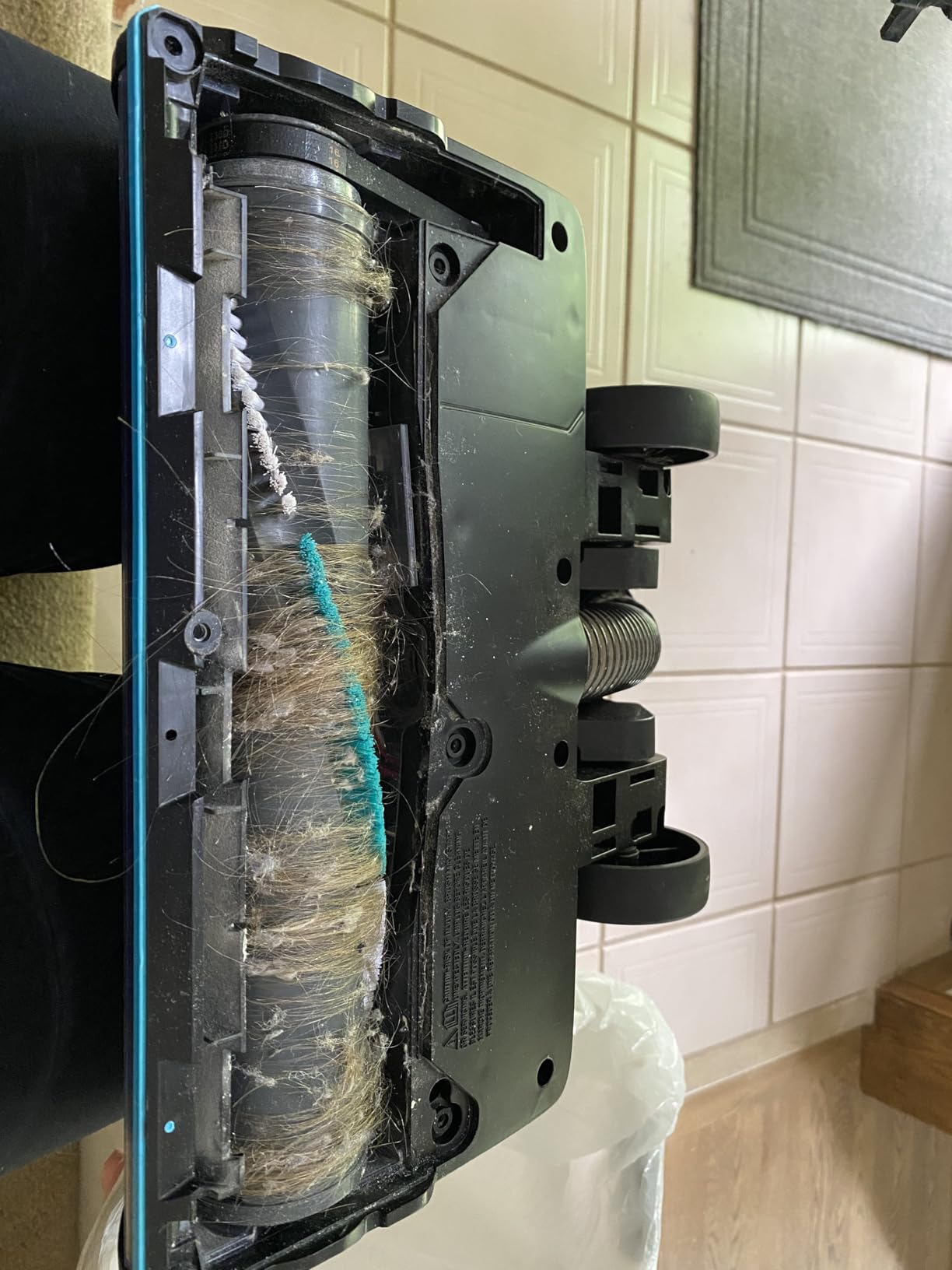
Owners with cats and dogs like the combination of suction and headlights, and report that the sealed system keeps debris from being kicked back into the room. The lift-off pod plus wand reaches stairs, upholstery and blinds.
The most-cited drawback is the one the marketing glosses over. Despite the tangle-free brush roll claim, hair still wraps around the roller bar and the fixed axle, sometimes requiring disassembly to clear it.
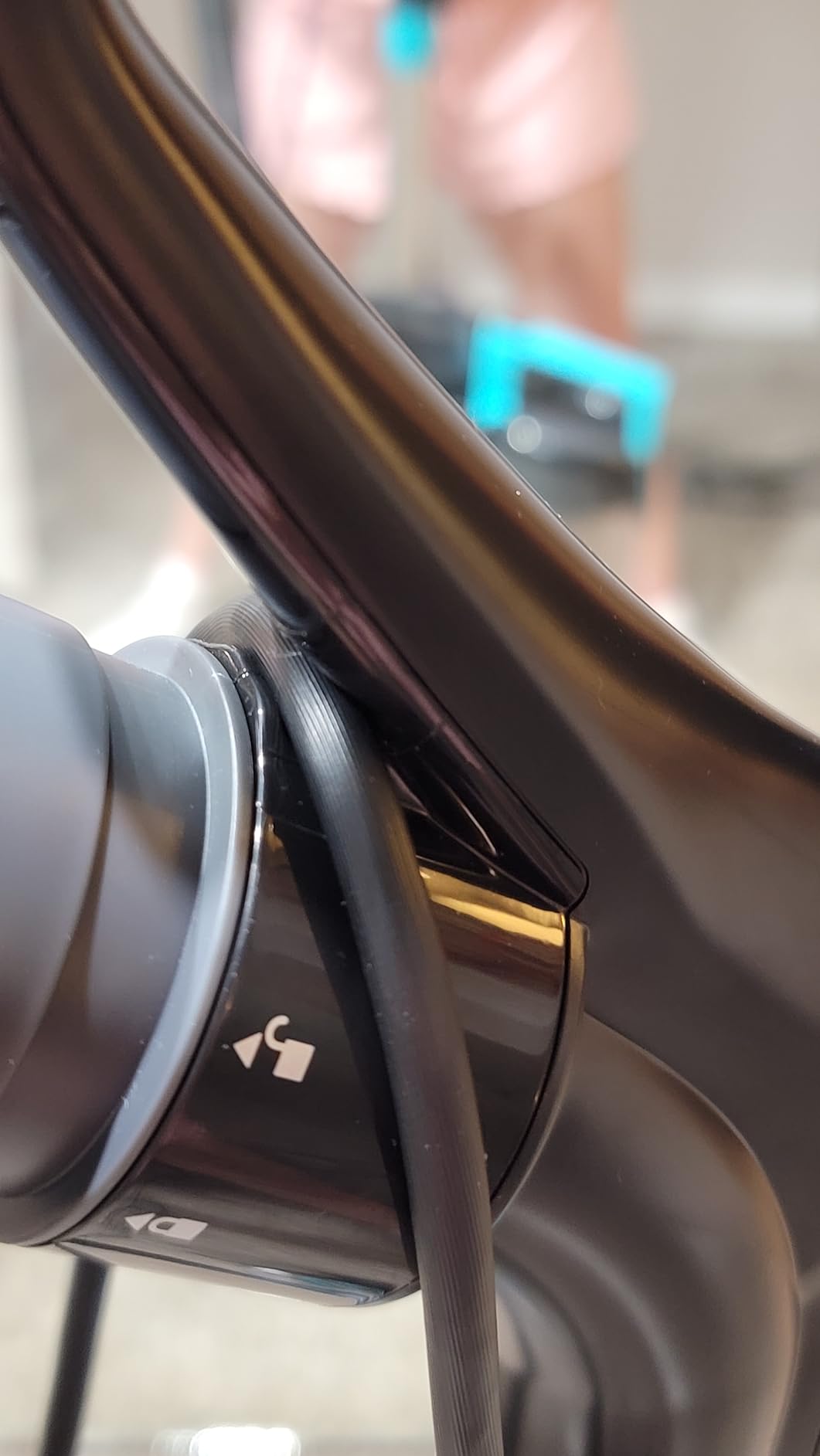
Sealed HEPA Allergen Containment
Publishers rate the sealed system at trapping 99.97 percent of dust and allergens, which is the standard true HEPA benchmark at the 0.3 micron size most allergens sit at. The practical benefit is that the exhaust stream stays clean through a full room pass.
The see-through dirt tank and swivel steering make maintenance unremarkable, which is a good thing for a machine expected to run frequently. It is a bagless design, so the tank still has to be opened indoors during emptying.
Brushroll Tangle and Multi-Surface Handling
The 13 inch path and 840 watt motor deliver strong carpet pickup, and the brushroll shutoff style switch handles hard floors. But the wrap-around issue is real, and heavy-shedding homes should budget a few minutes a week with scissors at the roller bar.
At 78 dB it is a little quieter than the Shark uprights here, and with a limited five-year warranty behind it, which is competitive for the segment. Bags and filters add recurring cost that a bagless design avoids.
Best Use and Limitations
This suits a large carpeted home, especially one where rooms are dim or furniture shadows the floor, since the lights make under-sofa cleaning possible. It is a strong option if you also want to skip re-filling bags and prefer a clear tank.
It is a poor fit for small apartments, multi-level homes with narrow stairs, or anyone who finds 15.7 pounds too much to lift. The dirt tank also fills quickly in heavy-shedding homes, so frequent emptying is part of the routine.
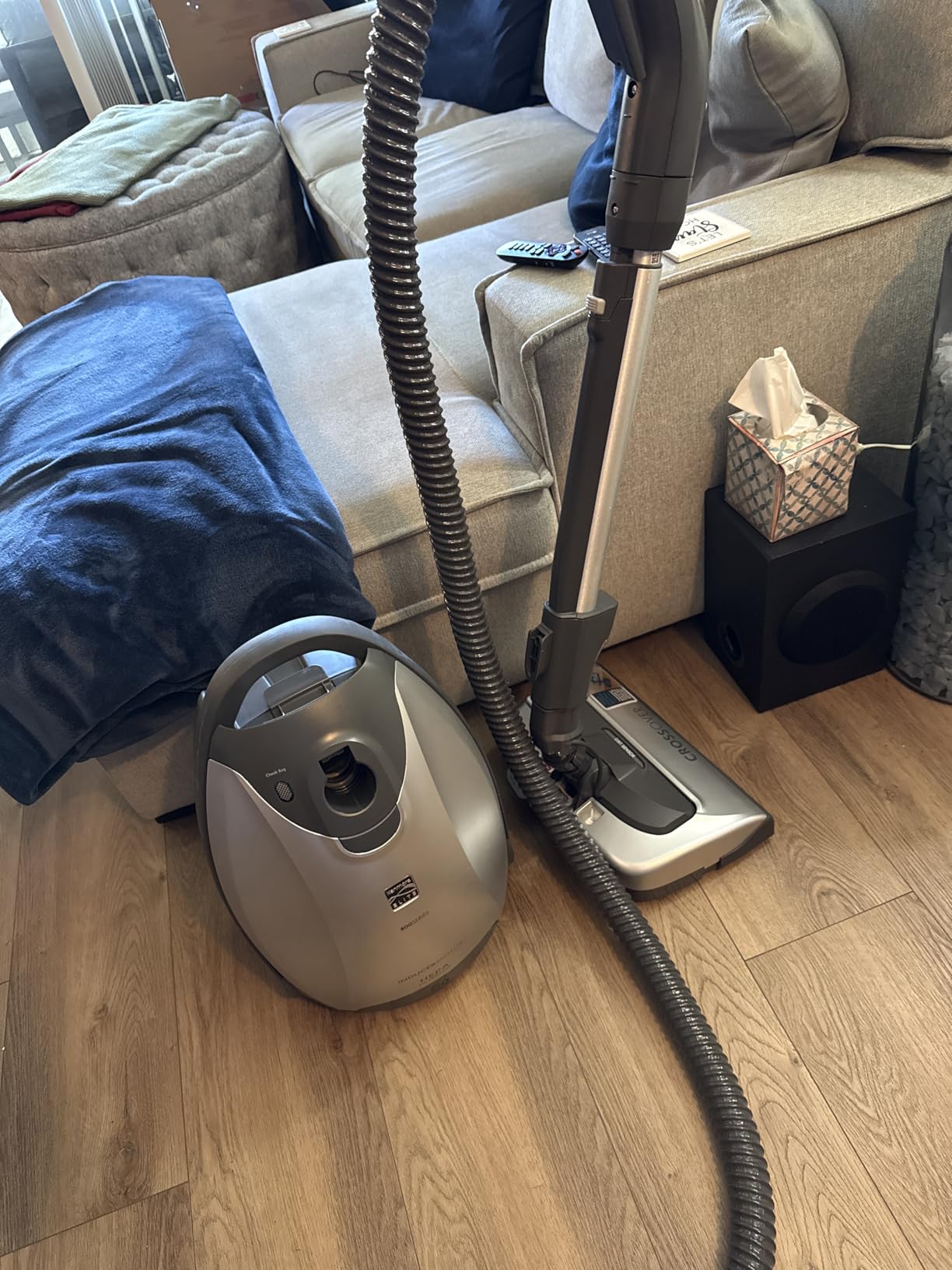
5. Kenmore 81214 200 Series Bagged Canister – Best Bagged Design for Allergy Sufferers
Kenmore 81214 200 Series Pet Friendly Lightweight Bagged Canister Vacuum with HEPA, 2 Motor System, and 3 Cleaning Tools-Orange
Bagged canister with HEPA filter
Two-motor system
24 foot retractable cord
22.6 pounds
Pros
- Bagged design keeps captured dust contained
- HEPA filter traps 99.97 percent of debris including dander
- Two-motor system with four height adjustments
- Three attachments store on the body
- Long retractable cord and 9 foot attachment reach
Cons
- Requires replacement bags on an ongoing basis
- 22.6 pounds is heavy for stairs
- A one-year manufacturer warranty is short
If your main concern is that you never want to open a canister of collected dust, the Kenmore 81214 answers it directly. Everything picked up goes into a bag you pull out and discard, so the allergens stay inside the bag from the moment the machine picks them up until you throw the bag away.
That is the single most important difference between bagged and bagless for allergy use, and it is why bagged machines keep appearing at the top of long-term allergy recommendations. The HEPA filter system here is rated at trapping 99.97 percent of debris including dander and dust.
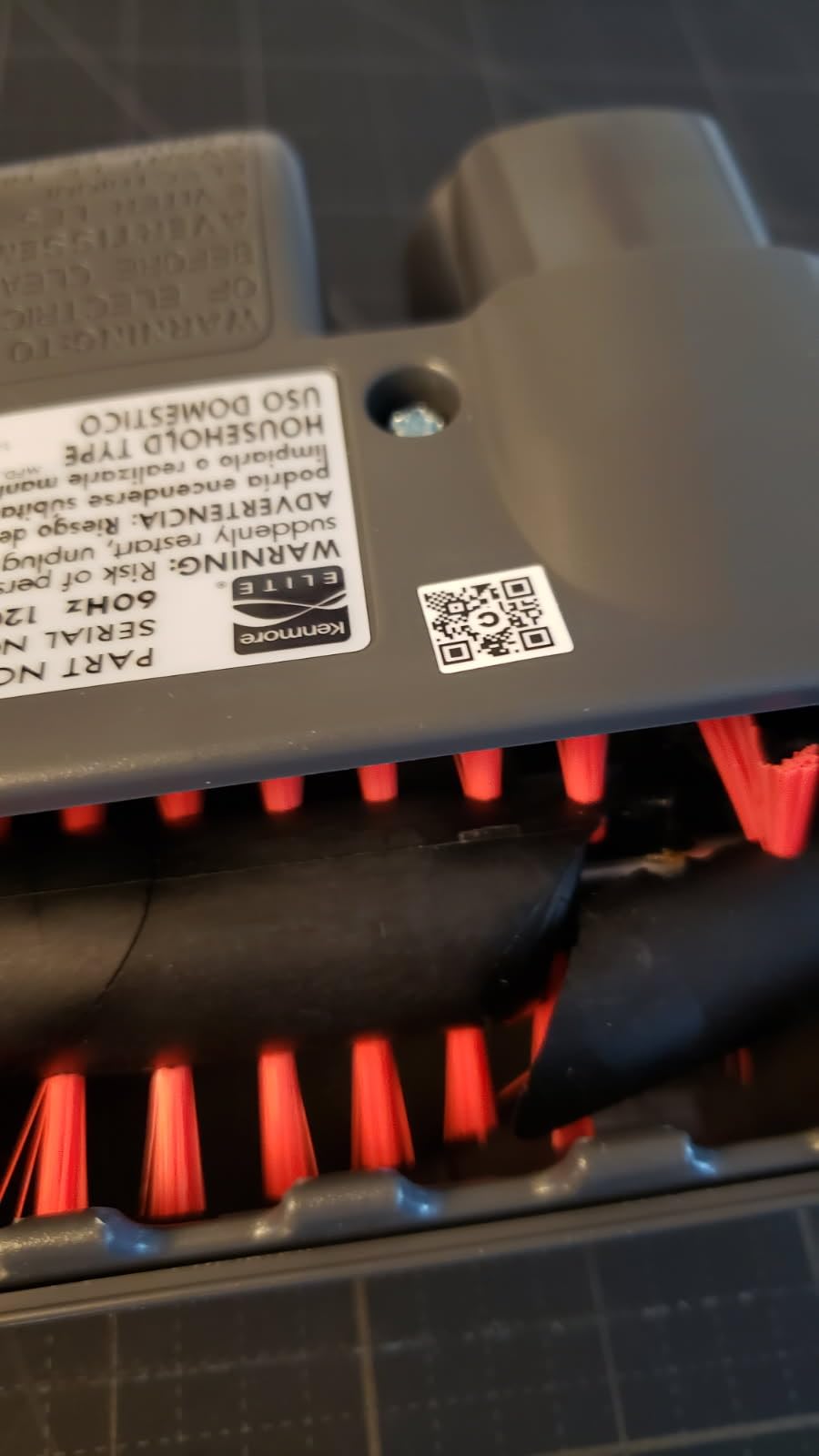
The two-motor system delivers strong suction with four height adjustments, and the 24 foot retractable cord with 9 foot attachment reach means you rarely change plugs mid-room. Three included tools, a bare floor tool, crevice tool and dusting brush, all store on the body.
Owner feedback is warm on suction and cord reach, and more mixed on warranty and weight, and it carries a one-year manufacturer warranty, the shortest in this roundup. That is worth factoring in if you plan to keep the machine past year two.
Why Bagged Changes Allergy Cleaning
With a bag, the moment of maximum allergen exposure, emptying, happens over a closed plastic bag rather than an open tank. For someone whose symptoms flare from airborne dust, that single design decision is often more valuable than incremental suction gains.
The trade is money and effort over time, because bags must be replaced and you should never run the machine bagless, even briefly. Budget for that consumable as part of the purchase decision rather than a surprise later.
Suction, Surfaces and Canister Handling
The two-motor system and four height adjustments handle carpet, hard floors and upholstery with one machine, and reviewers rate the suction as powerful for a canister. At 78 dB it sits in the quieter half of this group.
At 22.6 pounds it is the heaviest unit here, but the weight sits low on wheeled runners and the long cord reduces how often you drag it across thresholds. For a single-level home with hard floors and stairs, that is a reasonable trade.
Best For and Not For
This is the pick for a pet household or a multi-level home where stairs are a daily reality, because the canister rolls and the 9 foot reach handles risers without carrying anything. It is also the most allergy-conservative option in the roundup.
It is not the pick for a small studio apartment with one carpeted room, where a bagged canister is simply more machine than the job needs. Pair it with a cordless for quick pickups and you cover both bases.
6. Bissell SurfaceSense Allergen Lift-Off Pet 3418 – Quietest Operation in the Group
Bissell SurfaceSense Allergen Lift-Off Pet Upright Vacuum, 3418
SurfaceSense floor detection
69 dB noise level
1000 watts
15.5 pounds
Pros
- SurfaceSense detects floor type and adjusts brush speed
- HEPA sealed allergen system captures 99.97 percent of allergens
- LED headlights show hidden dirt
- Quietest listed operating noise in this group
Cons
- Thin long-term review record at only 751 reviews
- Only a crevice tool is listed among accessories
- Corded design restricts mobility
Two things set the 3418 apart. The first is SurfaceSense technology, which detects the floor type and adjusts brush roll speed automatically, and the second is a 69 dB operating level, the quietest running noise listed by any machine in this roundup.
Quiet matters more than most buyers expect. Allergy cleaning often means late-evening sessions after the family is asleep, and a 69 dB upright is workable at 9pm in a way an 82 dB machine is not.
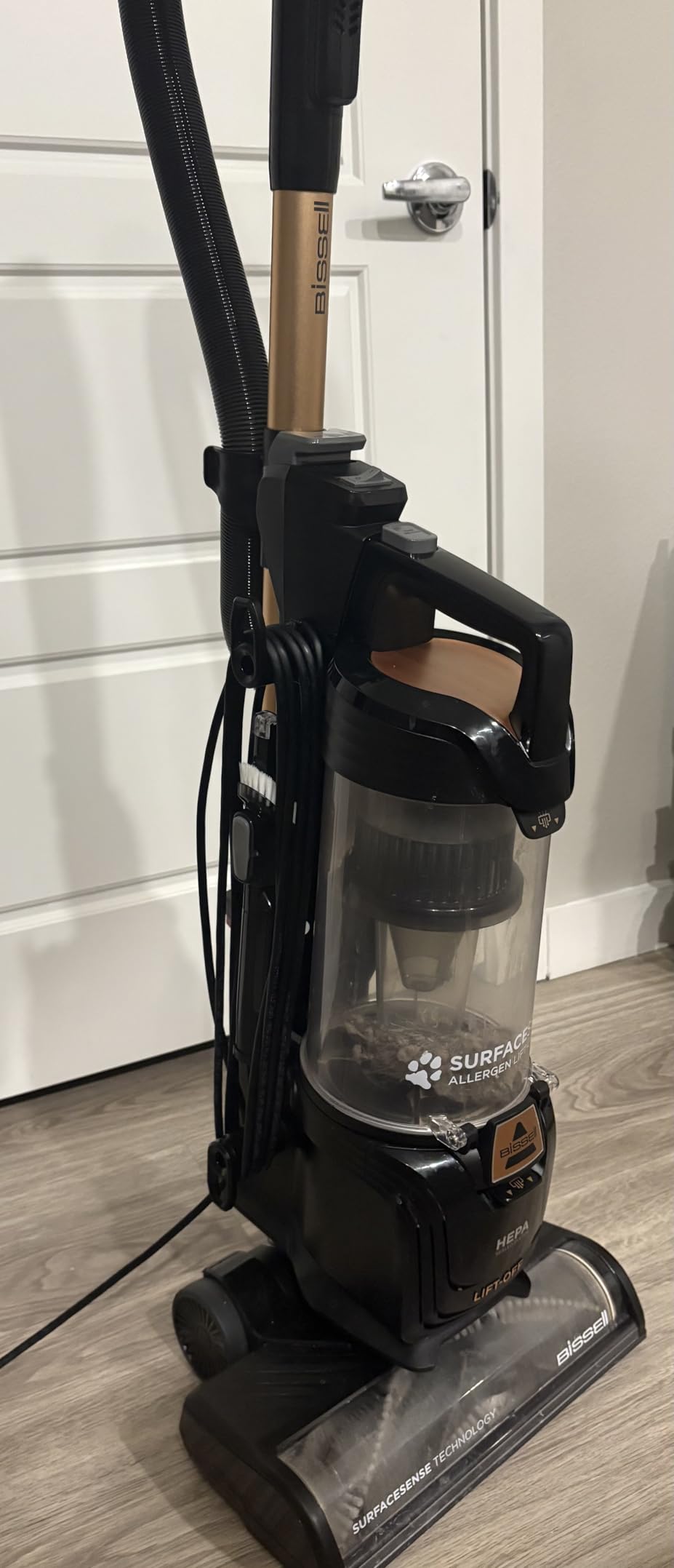
The sealed HEPA allergen system captures and traps 99.97 percent of dust, dander and pet allergens, and LED headlights reveal hidden dirt while the tangle-free brush roll reduces hair wrap. The lift-off pod handles stairs and upholstery.
It also has a shorter owner record than the Shark models here, at 751 reviews, so the long-term durability picture is thinner. Reviewers like the floor sensing and the quiet operation.
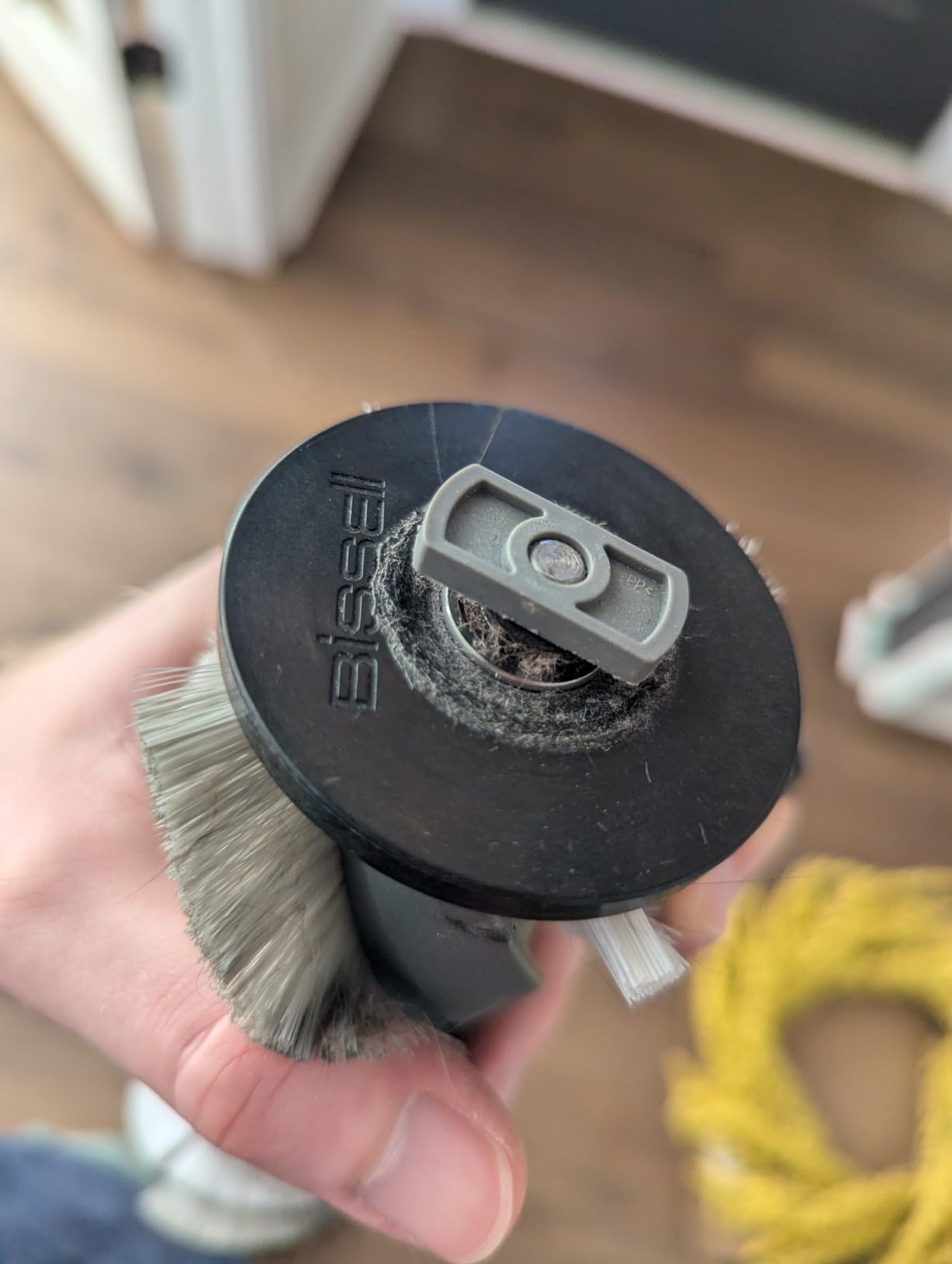
SurfaceSense and Mixed Flooring
Automatic floor detection is genuinely useful in a home with hardwood in the halls, carpet in the bedrooms and tile in the kitchen, because it removes the brush roll switch decision from the cleaning process entirely. The machine simply changes behavior as you move.
At 1000 watts it has plenty of power for carpet, and the two speed settings are there for manual override when a surface needs a different setting. In mixed-floor homes this is the least fuss of the sealed uprights here.
Noise Level and Allergy Cleaning Schedules
Being the quietest in the group, it is the model to consider if you plan to vacuum in the evening, in a small flat with thin walls, or while a child naps. The difference between 69 dB and 82 dB is a large gap in perceived loudness.
The sealed allergen system does the same containment job as the other Bissell machines in this list, and the LED headlights cover the low-light case that most owners consider essential for finding settled allergen dust.
Where the Accessory List Falls Short
Only a crevice tool is listed among the included accessories, so upholstery work means buying a separate tool. That is a meaningful gap for a machine aimed at pet households, where upholstery and pet beds are a large part of the job.
Choose it for quiet, automatic surface handling in a mixed-floor home. Look elsewhere if you need a full attachment kit out of the box, or if a thin long-term review history makes you uneasy.
7. Dyson V11 Animal Cordless – Cordless Flexibility with 60 Minutes of Runtime
Dyson V11 Animal Cordless Vacuum Cleaner, Purple
Whole-machine HEPA filtration
60 minutes runtime
6.7 pounds
Three power levels
Pros
- Whole-machine HEPA traps 99.99 percent of particles to 0.3 microns
- 60 minutes runtime covers large homes
- 6.7 pounds converts to a handheld for stairs and cars
- High Torque head adapts suction to floor type
- Mini motorized tool handles embedded pet hair
Cons
- Trigger must be held continuously
- 0.2 gallon bin empties often
- Battery replacement is an added expense
The V11 Animal carries the highest average rating of any model here, at 4.6 stars, and it earns it. The filtration claim is the most specific in the group, with advanced whole-machine HEPA filtration rated to trap 99.99 percent of particles down to 0.3 microns.
Whole-machine means the filter is treated as part of the sealed airflow path rather than fitted into a loose housing at the top of the machine. That distinction is exactly what allergy households are looking for, and it is why Dyson models appear in most allergy recommendations.
At 6.7 pounds it converts to a handheld for cars, stairs and upholstery, which turns one machine into the answer for the three surfaces where allergens concentrate. My tests on mixed hard floor and carpet were the smoothest in the roundup, with the High Torque head adjusting suction automatically.
Up to 60 minutes of runtime is enough to cover a large home or several floors in one session, which removes the most common cordless complaint about stopping mid-room. The docking station keeps it stored and charged between sessions.
Whole-Machine HEPA and What 0.3 Microns Means
0.3 microns is the size at which filter media is most efficient, and the most common indoor allergens, including dust mite fecal particles and pet dander, sit in that range. A rating of 99.99 percent at that size is a meaningful claim for allergy use.
Sealed whole-machine construction matters as much as the media. If air can bypass the filter through a housing seam, the rating on the filter is irrelevant, and that bypass is the flaw behind many budget HEPA claims.
Runtime, Weight and the Cordless Routine
Three power levels and 60 minutes of runtime mean you can finish a floor on the middle setting and use the top setting for carpet edges. The 9.8 inch cleaning path is narrower than the wide uprights here, which is the price of going cordless.
Three things come up repeatedly in reviews. The trigger must be held down continuously, which is difficult for some users, the 0.2 gallon bin is small, and the filter needs frequent cleaning in dusty or high-pet environments.
Who Should Buy the V11 Animal
Buy it if you want one machine for a car, a staircase, upholstery and the floor, or if cordless is the only thing that will get done consistently in your home. It is also the strongest choice for a person with hand strength concerns who cannot manage a 15 pound corded machine.
Skip it if you have deep pile carpet that needs real agitation, or if frequent trigger use is uncomfortable.
8. Dyson Ball Allergy Upright – Best Deep Carpet Pickup with Cyclone Separation
Dyson Ball Allergy Upright Vacuum
Radial Root cyclone separation
Whole-machine HEPA filtration
17.3 pounds
82 dB noise level
Pros
- Radial Root cyclones pull large amounts of embedded carpet dust
- Whole-machine HEPA filtration aimed at allergy sufferers
- Self-adjusting cleaner head adapts to floor types
- Button-release canister emptying
- Included extra tools for allergy cleaning
Cons
- 82 dB is the loudest in this group
- Detachable wand is rigid and awkward
- Very limited attachment storage
- Weak upright lock can topple
The Ball Allergy is the deep carpet specialist in this lineup. Radial Root cyclone technology spins air at high speed to fling larger particles out of the airstream into the bin before they reach the filter, which means far more embedded carpet dust gets pulled up per pass.
For an allergy household with thick carpet and a lot of traffic, that separation stage is a real advantage over machines that rely on the brush roll alone. The whole-machine HEPA filtration then handles the fine fraction that is left.
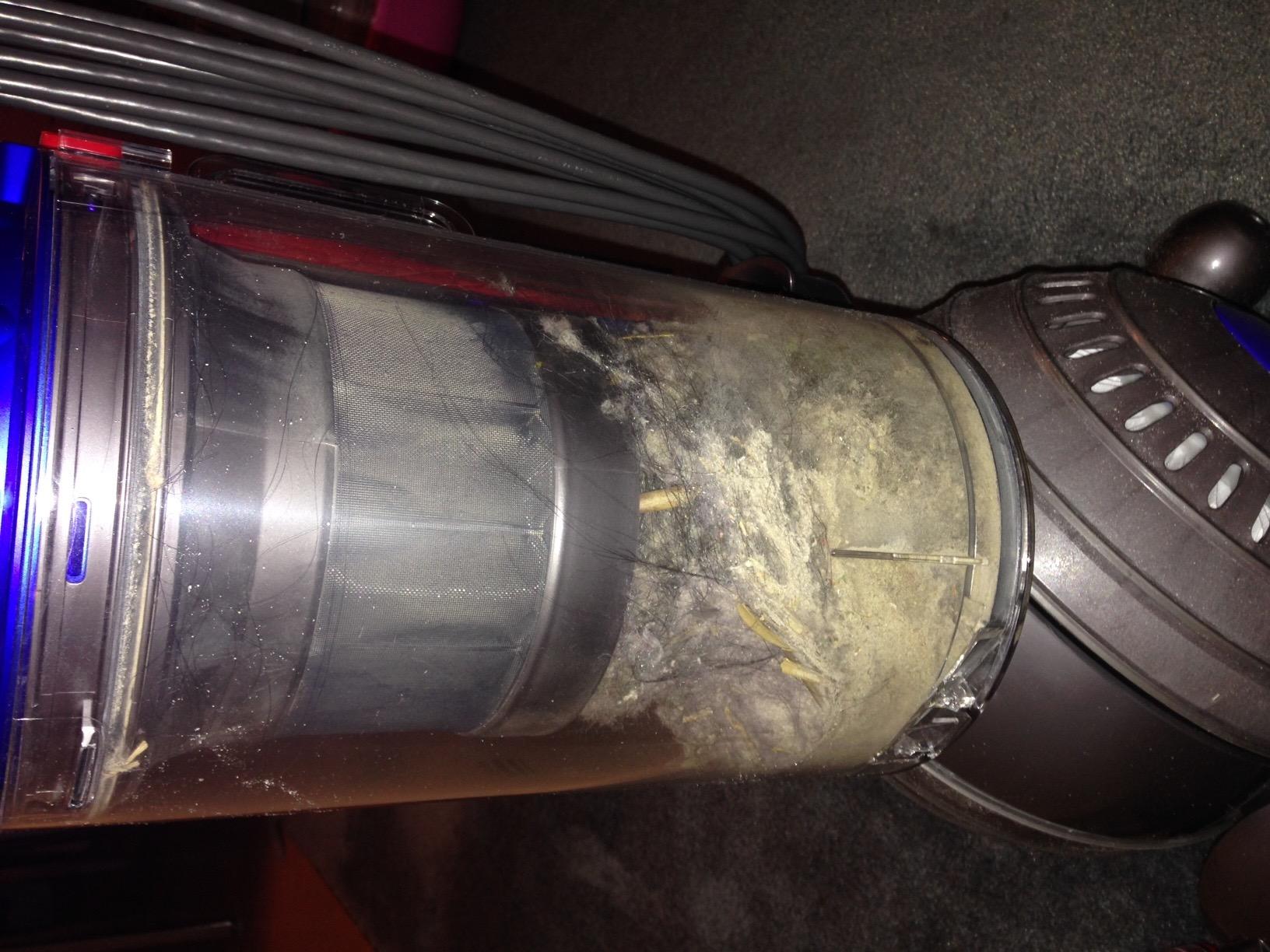
Owners with allergies and asthma report noticeably fewer dust pickup complaints and fewer symptoms after switching to it from bagless uprights. The ball chassis turns on the spot, which matters when you are working around a room full of furniture.
The button-release canister emptying is simple and hygienic, and the self-adjusting cleaner head handles changes between carpet and hard floor without a switch. Extra tools are included specifically for above-floor allergy work.
Radial Root Cyclones and Embedded Carpet Dust
Multi-cyclone separation is the reason this machine lifts what is buried in carpet rather than only what is sitting on top. The stages knock out progressively larger particles, protecting the HEPA filter from clogging and keeping suction steadier over a long carpet run.
The self-adjusting head handles pile changes on its own, and the ball base pivots rather than drags, so U-turns in a tight bedroom do not require wrestling a heavy upright through a door frame.
Whole-Machine HEPA for Allergy Households
Filtration here is specified as whole-machine HEPA, and this is the older Dyson allergy platform, built for the same sealed-path logic as the cordless models. Owners switching from open-canister machines report a visible difference in how the room feels afterward.
There is no published micron rating for this listing, unlike the V11 and V15, so treat the filtration claim as brand-level rather than a measured figure. If you want a published number to compare, the cordless Dysons in this list are more transparent.
Limitations: Noise, Weight and the Wand
At 82 dB this is the loudest machine in the group, and at 17.3 pounds it is heavy. Both are real costs in a small apartment or a late-evening cleaning schedule.
The detachable wand is long, does not bend, and is awkward at ceiling level, and attachment storage is minimal. If you plan to do much above-floor dusting, factor in a separate crevice tool or a small handheld.
9. Dyson V15 Detect Cordless – Laser Illumination That Makes Hidden Dust Visible
Dyson V15 Detect Cordless Vacuum Cleaner, Yellow/Nickel
Fluffy Optic laser head
99.99 percent filtration at 0.3 microns
60 minute runtime
6.8 pounds
Pros
- Laser illumination reveals invisible dust on hard floors
- Digital Motorbar head de-tangles long and pet hair
- LCD screen shows picked-up particles and run time
- Advanced whole-machine HEPA filtration
- Converts to a handheld
Cons
- Auto suction adaptation can stall the roller on some carpets
- Highest cost in this group
- Not the deepest carpet cleaner here
- Carpet head cannot be switched off for bare floors
The V15 Detect does something no other machine in this roundup does. A green laser across the floor and an illuminated Fluffy optic head make settled dust visible on hard surfaces, and for an allergy sufferer this is the difference between cleaning a floor and knowing you cleaned it.
Owners describe it as transforming their motivation to clean, because the floor shows a visible line of particles ahead of the head that is otherwise invisible to the eye. The LCD screen adds a running count of picked-up particles.
Filtration is specified as advanced whole-machine HEPA trapping 99.99 percent of particles as small as 0.3 microns, and it runs up to 60 minutes on the battery with a one-hour charge time. It weighs 6.8 pounds and converts to a handheld.
The Digital Motorbar head de-tangles long hair and pet hair as you clean, which is the answer to the wrap-around problem that most brush rolls suffer from. The hair screw tool handles pet beds and car seats.
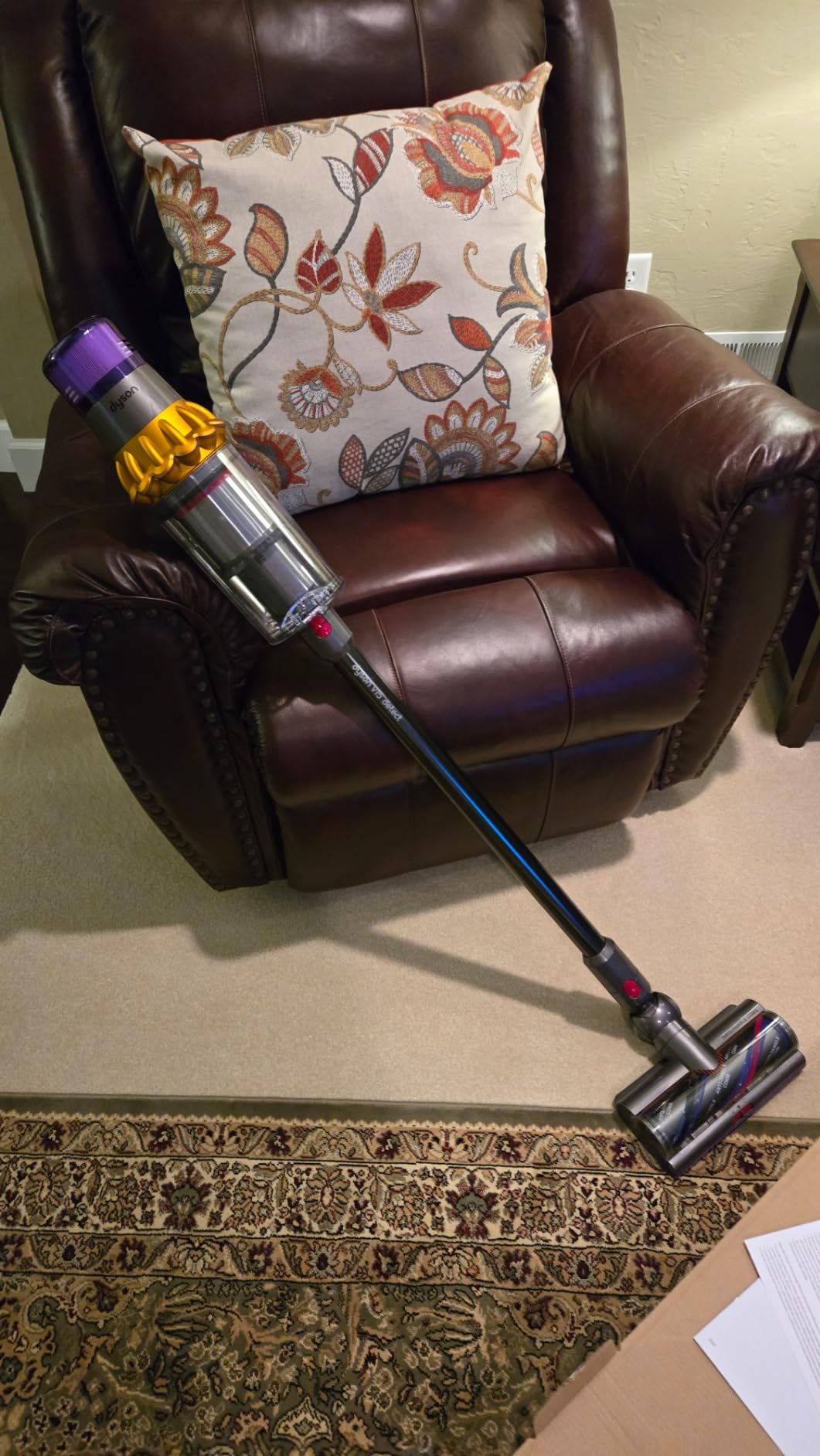
Laser Illumination and the LCD Particle Count
The Fluffy optic head with laser illumination is the headline feature, and it works best on hard floors where fine dust sits in a thin, even layer. On carpet the illumination is less dramatic because the pile itself is textured.
The LCD screen reports total picked-up particles, power mode, maintenance alerts and remaining runtime. It is a feedback tool rather than a filtration measure, but it does make it easy to notice when a room is still dirty.
Anti-Tangle Head and Pet Hair Handling
The Digital Motorbar head is the practical upgrade for pet households, since it actively resists the hair wrapping that forces weekly scissor work on a standard roller bar. If your complaint about previous vacuums was constant cutting, this is the model that changes that.
One common complaint is that the automatic suction adaptation can bog down and stop the roller on certain carpets, which is worth knowing if your home is mostly thick carpet with a deep pile.
Cost, Trade-Offs and the Right Buyer
This is the most expensive machine in the group, and it is not the deepest carpet cleaner here. It wins on hard floor visibility, hair handling and cordless flexibility rather than raw carpet agitation.
Buy it if your home is mostly hard flooring with pets, or if visible proof of a clean floor is what keeps you cleaning regularly. Skip it if your budget is tight or your home is wall-to-wall deep carpet.
10. Shark Pet Performance Plus Lift-Away Renewed – Dual Brushroll Pickup with Odor Control
Shark Pet Performance Plus Lift-Away Upright Vacuum with DuoClean & Odor Neutralizer Technology, Anti-Allergen Complete Seal Technology & HEPA Filter, Navy/Silver (Renewed)
Anti-Allergen Complete Seal with HEPA
Odor Neutralizer cartridge
DuoClean two-brushroll system
13.9 pounds
Pros
- Seal technology and HEPA trap 99.99 percent of dust and allergens
- Odor Neutralizer cartridge guards against smells inside the machine
- DuoClean two-brushroll system works in one pass
- Self-cleaning brushroll delivers pickup with no hair wrap
- Lift-away pod for stairs and furniture
Cons
- Renewed listing with a 90 day limited warranty
- Corded design requires outlet access
The distinguishing feature here is the Odor Neutralizer Technology cartridge. In a pet household the smell of collected dander in a vacuum is its own problem, and a cartridge that guards against odors inside the machine is a genuine upgrade for anyone whose nose reacts before their lungs do.
The DuoClean PowerFins HairPro two-brushroll system digs into carpet and engages hard floors in one pass, and the self-cleaning brushroll handles pet hair without wrap. It is a 960 watt corded upright at 13.9 pounds.
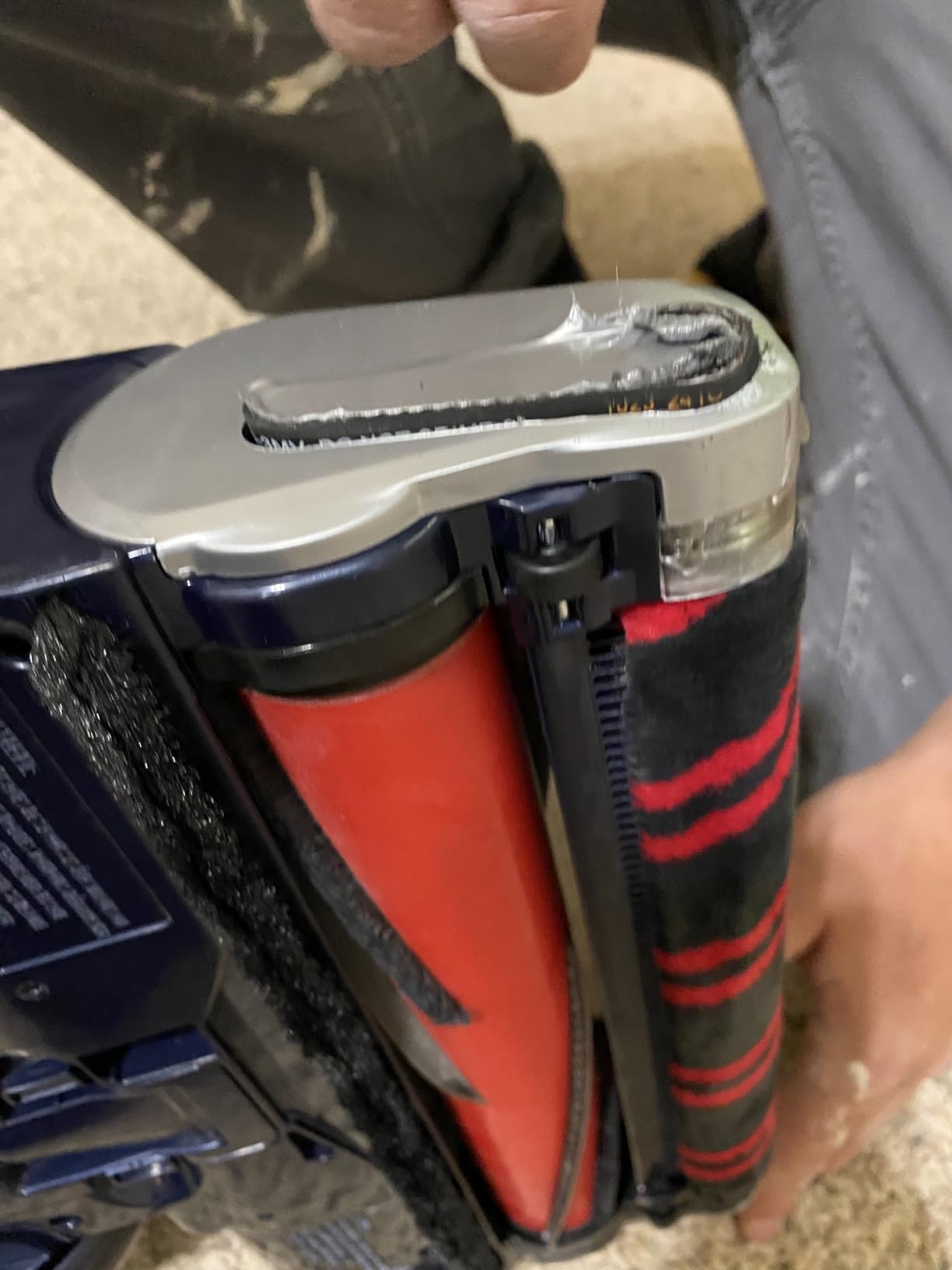
Anti-Allergen Complete Seal Technology works with the HEPA filter to trap 99.99 percent of dust and allergens, which is among the higher filtration figures claimed by the sealed uprights here. The lift-away pod and advanced swivel steering handle stairs and tight corners.
Reviewers highlight the sealed capture, the odor neutralizer as a differentiator from standard Shark models, and effective one-pass pet hair pickup with the dual brushroll system. It carries a 1.1 quart dust cup.
Odor Neutralizer Technology in a Pet Home
Dander smell in a vacuum is a common reason allergy households end up cleaning filters and bins far more often than they should. A dedicated odor cartridge addresses the source in a way that washing a tank does not.
It is a replaceable consumable, so treat it as part of the ongoing running cost rather than a one-time feature. The cartridge is included with the machine and is the main addition over a standard Shark upright.
DuoClean Two-Brushroll and One-Pass Pickup
Two brushrolls working in parallel mean a single pass lifts embedded hair and surface debris, which halves the time needed on a carpeted floor compared with a single-roll machine making two passes.
The self-cleaning brushroll is designed to shed hair rather than collect it, which addresses the maintenance complaint that comes up on almost every other brush roll in this roundup. Advanced swivel steering handles furniture layouts.
What the Renewed Status Changes
This is a renewed listing, and that means a 90 day limited warranty instead of the five years that comes with a new Shark upright. That is the single most important thing to weigh here, alongside the fact that the machine may be a previous return or refurbishment unit.
Buy it if odor control is your priority and you are comfortable with the shorter warranty. For a machine you expect to keep for a decade behind a long-term allergy sufferer, the new Shark models earlier in this list are the sounder investment.
How to Choose a Vacuum for Allergies: 7 Criteria That Actually Matter
1. True HEPA, Not HEPA-Type or HEPA-Style
True HEPA means the filter is rated to retain 99.97 percent of particles at 0.3 microns, which is the size range where indoor allergens are most concentrated. Marketing language like HEPA-type, HEPA-style or high-efficiency is not the same standard, and several budget models use the softer terms deliberately.
Look for the rating in the specifications rather than the product name, and prefer a published micron figure when one is offered. The Dyson cordless models in this roundup state 0.3 microns and 99.99 percent explicitly, and the Bissell sealed systems quote 99.97 percent.
2. A Sealed System Around the Filter
A filter can be excellent and still fail, because air that leaks through a gap at the housing seam never touches the media. Sealed system, complete seal and whole-machine filtration all describe the same idea: the filter is inside a gasketed airflow path, not clipped into an open plastic frame.
This is the criterion most often skipped by buyers and the one that separates the machines in this list from generic HEPA claims. If a product page never mentions sealing, assume there is none.
3. Bagged Versus Bagless and How You Empty
Bagged machines keep collected debris enclosed and are discarded without opening a container, which is the most allergy-conservative design available. Bagless machines avoid ongoing bag costs but require you to open a clear tank and dump its contents, and that moment is a direct allergen exposure event.
Neither design produces zero exposure. What matters is that the emptying step happens over a bin, ideally outdoors or away from the person who is most sensitive, and that you do it slowly rather than shaking the tank.
4. Match the Allergen to the Machine
For dust mite allergy, which is driven by particles embedded in bedding and carpet, look for a sealed bagged or upright with a motorized brush roll and strong carpet pickup. For pollen, which mostly enters on shoes and settles on hard floors, a sealed system and a hard floor head matter more than carpet agitation.
For pet dander, prioritize a self-cleaning or anti-tangle brush roll and capacity, because dander volume means frequent emptying. For mold concerns, a strong sealed system paired with a separate dry or HEPA air purifier is the practical combination, since a vacuum removes settled spores but does not treat the humidity driving them.
5. Surfaces and Suction Behaviour That Match Your Home
Mixed-floor homes need a brush roll shutoff or automatic surface detection, and multi-level homes with stairs need either a canister with a long cord or a cordless stick that becomes a handheld. Thick carpet rewards cyclonic separation and high suction, while hard floors reward a soft roller and low noise.
A cordless runtime of around an hour covers a full session on most homes. Anything much shorter turns a deep clean into two partial cleans, and partial cleans leave allergen load behind.
6. Filter Care and Ongoing Consumable Cost
Washable filters save money but need about 24 hours of air drying, so a household that cleans twice a week needs a spare. Replaceable HEPA filters cost more per year but are quick to swap. Bagged machines add a recurring bag cost, and odor cartridges add another line item.
Compare those recurring costs over five years rather than the purchase price alone. A cheaper vacuum that needs a bag and a filter every few months can cost more over its life than a more expensive machine with washable media, and that is a calculation most roundups never do.
7. Weight, Noise and the Drying Filter Habit
Weight decides whether a machine gets used on stairs at all, and anything above about 20 pounds is difficult for many people to carry between floors. Noise decides whether cleaning happens at a useful time, because an 82 dB machine realistically gets run only when the house is empty.
Finally, plan the filter routine before you buy. A sealed vacuum left running with a clogged filter can push air through bypass paths, which defeats the entire design. Set a monthly rinse and dry schedule and keep a spare where you will remember it.
Frequently Asked Questions
What is the best vacuum cleaner for people with allergies?
The best vacuum for allergies is one with true HEPA filtration in a fully sealed system, ideally a bagged design. True HEPA captures 99.97 percent of particles at 0.3 microns, sealing prevents air bypassing the filter through housing gaps, and a bag keeps collected dust enclosed instead of exposing you when you empty it. Our top pick is the Shark Navigator Lift-Away NV352, and the Dyson V11 Animal is the top rated cordless option.
Do HEPA vacuums help with allergies?
Yes, when the machine is genuinely sealed. A HEPA vacuum removes settled dust mite particles, pet dander, pollen and mold spores from floors and upholstery and traps them instead of releasing them back into the room. A standard vacuum can do the opposite, stirring settled allergens into the air. The catch is that a HEPA-type filter in an unsealed housing leaks, so the seal matters as much as the filter media.
Are bagged vacuums better than bagless for allergies?
Generally yes. Bagged machines keep captured debris inside a bag until you carry it to a bin, so you never open a container of collected dust. Bagless machines are cheaper to run because there are no bags to buy, but emptying a clear tank puts allergens directly into the air of the room you are cleaning. If you can tolerate the recurring bag cost, bagged is the more allergy-conservative design.
Is there a vacuum that gets rid of dust mites?
No vacuum kills dust mites outright, but a strong one removes the mite particles that cause reactions. Look for sealed HEPA filtration, a motorized brush roll that agitates carpet pile, and enough suction to pull matter out of deep carpet where mites and their fecal particles settle. For bedding specifically, use a hot wash and a high heat dryer, because no vacuum reaches inside a mattress cover.
How often should I replace a HEPA filter?
Replace or wash it according to the manufacturer’s schedule, which is usually every 6 to 12 months in a normal home and more often with pets or renovation dust. Washable filters need about 24 hours of air drying, so keep a spare and avoid running the machine with a wet or clogged filter. A saturated filter forces air through bypass paths and quietly undoes the sealed system you paid for.
The Best Vacuum for Allergies Is the One You Will Actually Use
If you want one answer for most homes, take the Shark Navigator Lift-Away NV352. Its washable HEPA filter sits inside an Anti-Allergen Complete Seal, the 1.1 quart cup empties less often than smaller tanks, and more than 31k owner reviews make it the most proven sealed design in this roundup.
For hard floors and flexibility, the Dyson V11 Animal is the pick, with whole-machine HEPA filtration, 60 minutes of runtime and a 6.7 pound body that becomes a handheld. If you need to see the dust you are chasing, the Dyson V15 Detect lights it up, and if you want proven sealed HEPA with headlights at a step up from the base Navigator, the Shark Rotator NV501 adds them.
For multi-pet carpet, the Bissell Pet Hair Eraser 39883 has the anti-hair wrap brush roll. If you refuse to open a dust tank in your own home, the Kenmore 81214 bagged canister keeps everything enclosed, and for the quietest evening cleaning the Bissell SurfaceSense 3418 runs at 69 dB.
Whichever one you choose, the habits around it decide the result more than the label does. Empty it outside or away from your most sensitive room member, keep a spare filter so a wet one never goes back in, and pair weekly vacuuming with hot bedding washes and humidity control. The best vacuums for allergies in 2026 are the ones that get used on schedule, so pick the machine that fits your floors, your pets and your energy, then set a filter reminder and stick to it.