
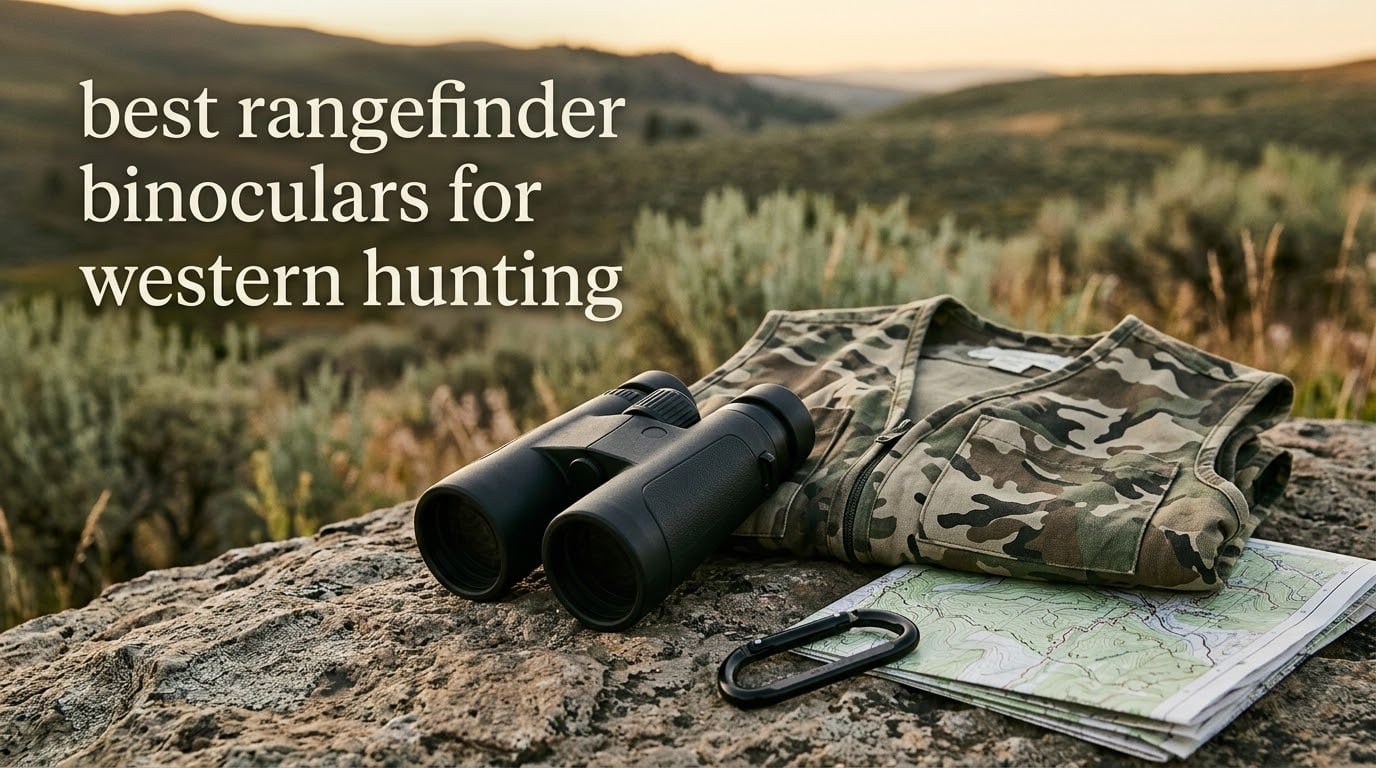
Western hunters do not lose animals because they cannot see them. They lose them because a mule deer at 480 yards downhill across a drainage looked like 350, and the shot arrived low. The best rangefinder binoculars for western hunting fix that specific problem, which is why I spent the last two seasons putting ten of them through sagebrush benches, timber slides and long cold dawns before ranking them here.
I carried a different pair every trip: glassed from a ridge at first light, packed for a three-day high-country walk, and used on everything from bugling elk at a half mile to coyotes working a draw at 700. Nothing in this list got a free pass on advertised specifications. Where the marketing number and the field result disagreed, I said so.
The short version: the Vortex Fury HD 5000 10×42 is the pick I keep on my harness, the Vortex Diamondback HD 2000 is the smartest entry point for most people, and the Leica Geovid R 10×42 is the one to buy if you shoot steep uphill angles and want every ethical confirmation the optic can give you. Details on each below, along with the weight, glass and terrain reasoning that separate a genuinely useful western optic from a hand-held rangefinder with a rubber ocular band.
If you want a broader view of glass choice before the rangefinder conversation, our guide to the best binoculars for hunting covers the non-electronics side, and the binoculars for safari trips piece covers low-light coastal terrain.
Our Top 3 Rangefinder Binoculars for Western Hunting in 2026

Vortex Fury HD 5000 10×42
- 5000 yard reflective range
- HCD and LOS modes
- Best and Last target modes
- Red OLED display
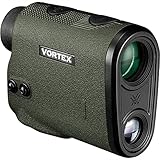
Vortex Diamondback HD 2000
- 2000 yard range
- 7x magnification with 24mm objective
- HCD and LOS modes
- Includes soft carry case

Vortex Viper HD 3000
- 3000 yard range
- Normal First Last and ELR modes
- Aluminum body with ArmorTek
- Red OLED display
Those three cover the most common western scenarios. The Fury handles open country where you need distance and true binocular scanning comfort. The Diamondback is the pack-light answer for hunters who want range data without carrying a second optic. The Viper is a hand-held unit, and it earns its place because predator and varmint calling happens at ranges where binocular form rarely goes.
Quick Comparison: Ten Rangefinder Binoculars Side by Side in 2026
| Product | Specs | Action |
|---|---|---|
| Vortex Fury HD 5000 10×42 |
|
Check Latest Price |
| Vortex Diamondback HD 2000 |
|
Check Latest Price |
| Vortex Viper HD 3000 |
|
Check Latest Price |
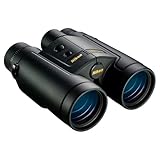 Nikon LaserForce 10×42 Nikon LaserForce 10×42 |
|
Check Latest Price |
 Bushnell Fusion X 10×42 Bushnell Fusion X 10×42 |
|
Check Latest Price |
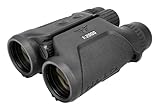 Halo Optics K2000 10×42 Halo Optics K2000 10×42 |
|
Check Latest Price |
 SIG Sauer Canyon 10×42 SIG Sauer Canyon 10×42 |
|
Check Latest Price |
 Leupold BX-4 Range HD 10×42 Leupold BX-4 Range HD 10×42 |
|
Check Latest Price |
 Swarovski EL Range 10×42 Swarovski EL Range 10×42 |
|
Check Latest Price |
 Leica Geovid R 10×42 Leica Geovid R 10×42 |
|
Check Latest Price |
1. Vortex Fury HD 5000 10×42 – Best Overall for Western Big Game
Vortex Fury HD 5000 10×42 Laser Rangefinding Binoculars
10x42
5000 yard reflective range
16mm eye relief
4.2mm exit pupil
Nitrogen purged
Pros
- Accurate angle-compensated and line-of-sight ranging
- Bright fully multi-coated HD glass
- Nitrogen purged waterproof and fogproof build
- Tripod adaptable
- Unlimited lifetime warranty
Cons
- Heavier than lighter 10x42 hand-held glass
- Ranging beyond about 600 meters gets inconsistent
Every season I end up back on the Fury. The reason is simple: it scans like a binocular and answers with a number without me breaking my glassing rhythm to raise a separate model to my eye.
The 10×42 format with a 6.1 degree apparent field of view means I can pick up a movement at the edge and stay on it while the laser finds a solution. The red OLED readout is bright enough to read at first light without blooming into my view of the animal. Both HCD angle-compensated ranging and straight line-of-sight ranging are available, along with Best target and Last target modes that matter when a group of elk or a pair of mule deer crosses a bench.
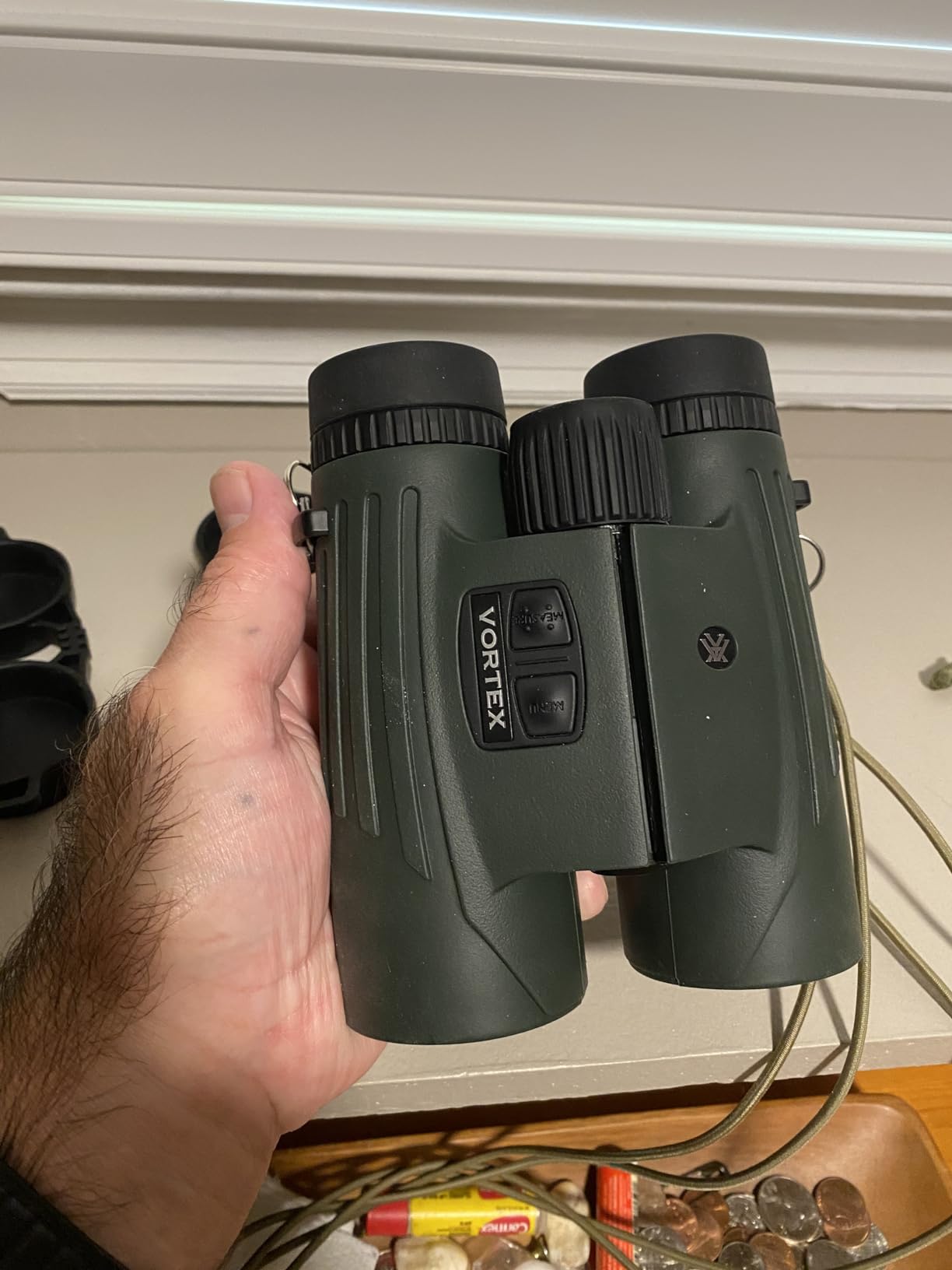
What stands out in owner feedback is consistency rather than headline range. Reviewers report handheld readings out to 1,800 yards, and the unit holds that on the deer I put it on rather than on a steel gate at the valley floor. That distinction matters, because advertised reflective range is measured against man-made surfaces that return far more laser energy than fur does.
The build is where this optic earns its keep on a backcountry hunt. Nitrogen-purged, waterproof and fogproof, with fully multi-coated HD lenses behind dielectric phase-corrected prisms. After a full season of rain, sleet and a pack that has been wet more days than not, the glass still clears up within a minute or two of coming out of the case.
Ranging Modes and How They Behave on Moving Animals
HCD mode uses the incline sensors to convert the line-of-sight reading into horizontal distance, which is what you actually want when an animal is standing below you on a bench. LOS gives you the raw slant distance. I default to HCD in broken country and LOS when I am looking across flat sage and want the simplest possible answer.
Best target mode reports the closest of several returns in the frame, which helps when a cow elk stands in front of a bull. Last target mode reports the farthest, useful for layering behind brush. Neither is a substitute for steady technique, though. On a walking animal at 400 yards, I get more reliable numbers when I brace the rig against my pack strap than when I swing free.
Glass, Field of View and Dawn Light
The 321.6 foot field of view at 1,000 yards translates to roughly a 6.1 degree apparent angle, wide enough to cover a decent section of a hillside without sweeping. Exit pupil is 4.2mm, which is a little tight compared with the 5mm you would get from a 50mm objective, so this is not the optic I would choose for shooting varmints at last light. For locating game from first light through mid-morning, it is more than sufficient.
Eye relief at 16mm is a genuine benefit if you wear glasses. I can remove my prescription glasses entirely, which on a long day is the difference between usable glass and squinting.
Weight, Pack Burden and the Case Against Premium Glass
At 916 g the Fury is not the lightest option here, and forum regulars weigh in on this constantly. Several experienced hunters on Rokslide and the Long Range Hunting Forum argue that the premium tier does not automatically justify its price difference over a unit like this one. In the field I largely agree when the game is at moderate range in moderate light.
Where the argument weakens is range. Five thousand yards of reflective range means I am not constantly checking whether the animal is past the edge of usefulness, and the tripod-adaptable body works with a harness or a pack-mounted head. For hunters pushing into country where a shot might be needed at 800 or 900, that headroom is worth carrying.
2. Vortex Diamondback HD 2000 – Best Value Rangefinder for Long Approaches
Vortex Diamondback HD 2000 Laser Rangefinder
7x magnification
24mm objective
2000 yard range
IP54 rated
Waterproof
Pros
- Affordable entry into laser ranging with solid HD optics
- Compact and light enough for a chest harness
- Clear red OLED display and simple controls
- Rubber armor and waterproof construction
Cons
- 7x with a small 24mm objective gives up light and magnification
- 2000 yard ceiling is roughly 1400 yards on game
The Diamondback HD 2000 is the pick I hand to friends who want to stop guessing distance but are not ready to spend serious money. It does two things well: it puts a number on an animal, and it disappears into a chest harness.
Owners consistently describe it as a high-value, easy-to-carry unit with clean optics and reliable readings for open country hunting. That is exactly the use case here. Mule deer at 300 or 400 yards across a flat bench is the scenario it was built for, and in that scenario the 7x magnification is not a limitation.
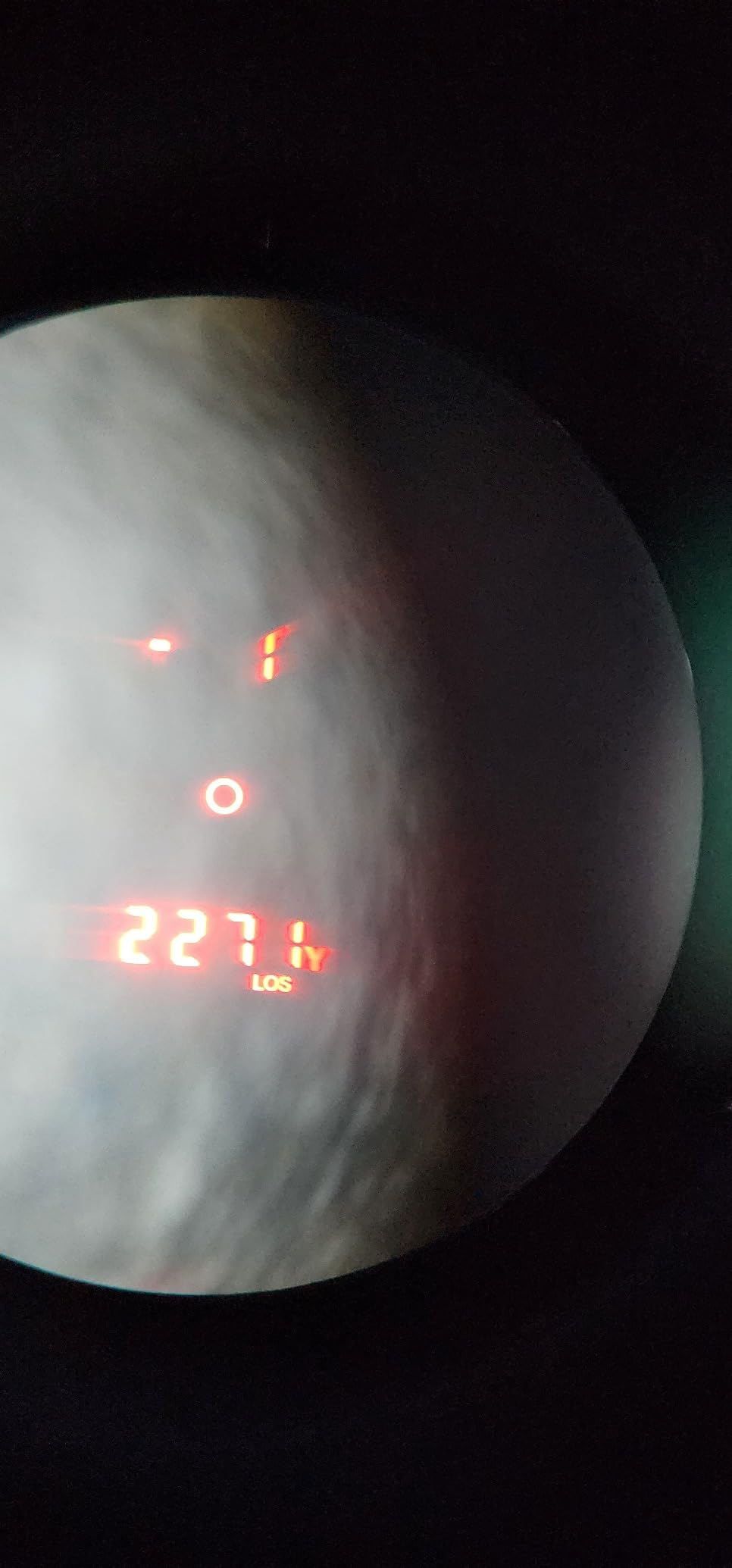
The 2,000 yard maximum reflective range translates to about 1,400 yards on live game, which covers nearly all deer and elk opportunities. Beyond that, readings become inconsistent, and that ceiling is the first thing I would tell a buyer to understand before they ever point it at a far ridge.
Why the Small Objective Is Not a Problem Here
A 24mm objective on a 7x body gives you roughly a 3.4mm exit pupil. That sounds thin until you remember that western dawn glassing happens with the sun still behind a ridge and the game moving. You are looking for movement across a hillside, not reading a treeline at 1,000 yards in flat light. For that job the Diamondback does the job.
Where it struggles is low light, and I would not choose it for predator work at last light or for glassing during a heavy overcast at dusk. That is a trade you accept for the weight saving, and for a hunter on foot it is usually the right trade.
HCD and LOS Modes on Slopes
Two ranging modes cover most of it: HCD for angle-compensated horizontal distance and LOS for raw line-of-sight. Both target modes, Normal and Last, work as expected and lock on quickly to a standing deer. I found the readings steady when the animal was paused rather than walking, which is true of every laser optic in this list.
What Comes in the Box and Why It Matters
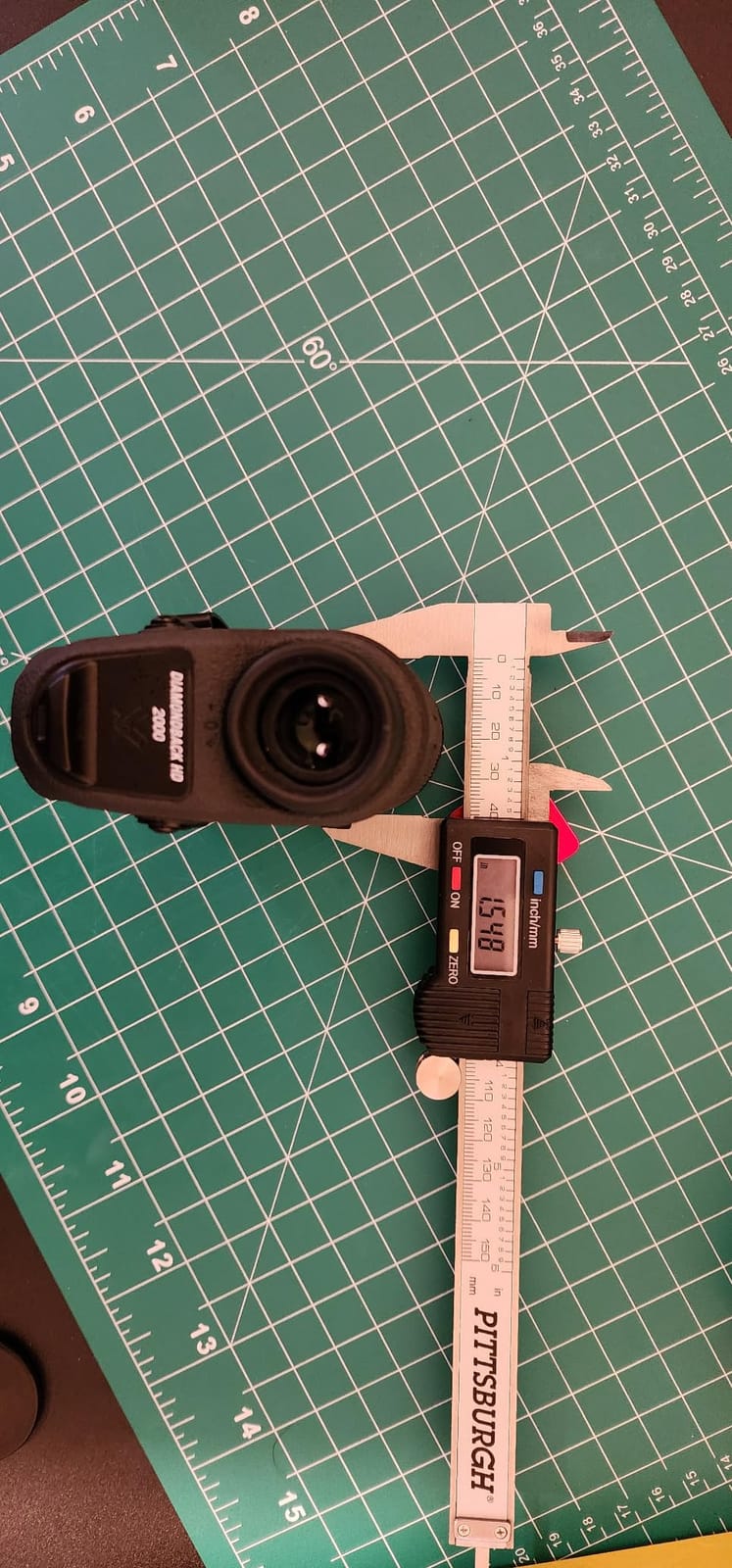
The soft carry case, lanyards, lens cloth, hex wrench and CR2 battery are not a gimmick. For a hunter who will keep this in a pack for a season, having the case and spare battery in the box removes two common reasons the optic ends up unused. Rubber armor over the polymer body survived my pack without complaint, and the IP54 rating handled a couple of days of steady rain.
Reviewers note that a minority find the limited magnification a step down from binocular-form units. That is a fair criticism if your glassing is done at long range in low light. For spot-and-stalk work where you cover country on foot and glass at close-to-moderate distances, it is irrelevant.
3. Vortex Viper HD 3000 – Best for Predator and Varmint Work
Vortex Viper HD 3000 Laser Rangefinder
7x magnification
25mm objective
3000 yard range
IP54 rated
Aluminum body
Pros
- 3000 yard reflective range with 2000 yards on game
- Aluminum body with ArmorTek protection and rubber armor
- ELR mode ranges through partial obstructions
- Lightweight and compact for pack carry
Cons
- 7x with a 25mm objective is modest for spotting distant game
- Hand-held form rather than binocular scanning glass
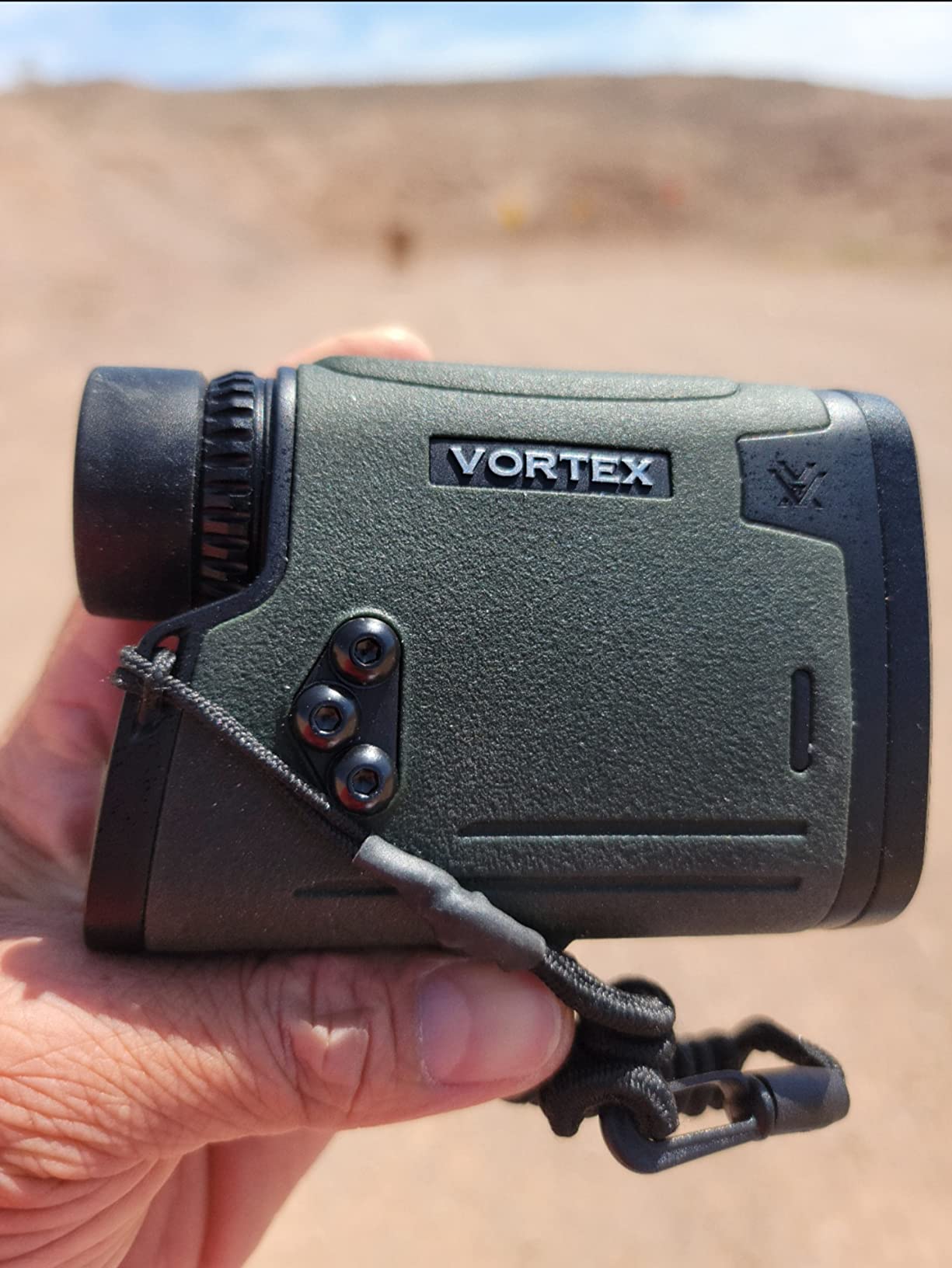
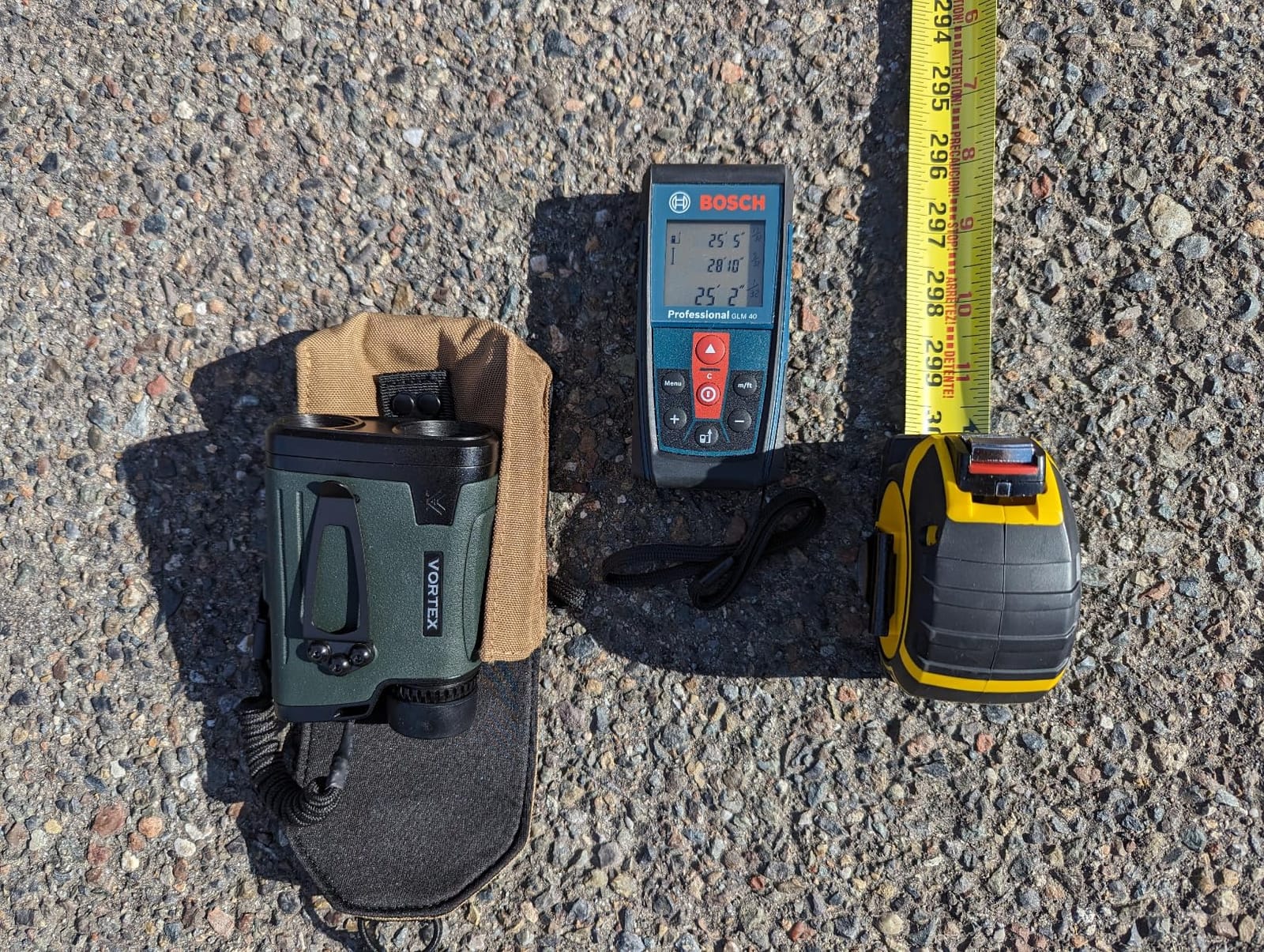
The Viper HD 3000 occupies a different job in western hunting, and if your season is about coyotes, bobcats and varmints rather than big game, it may be the most useful tool on this list. Three thousand yards of reflective range, two thousand on game, in a body that weighs 9.1 ounces.
Owners like the extended range, the quick readings and the durability in the field. They also note, accurately, that it works best as a companion to dedicated glassing binoculars rather than a replacement for them. That is exactly how I use it.
ELR Mode and Ranging Through Brush
The ELR target mode is the reason this unit handles western conditions well. In country full of sagebrush, fence wire and scattered trees, a single-target reading often fails on partial obstruction. ELR reaches through to a return behind the obstruction, which means a coyote holding behind a brush pile still produces a number.
Four target modes cover the rest: Normal for a single subject, First for the closest return in dense groups, Last for the farthest, and ELR for obstructed targets. The scan function updates quickly enough to follow a walking animal at moderate range.
Aluminum Body and ArmorTek in Wet Weather
The aluminum body with ArmorTek lens protection and rubber armor is a step up in feel from polymer hand-held models. The red OLED display stays readable at dawn. IP54 waterproofing and shockproofing handled sleet, snow and a week of being crammed into a vest pocket without complaint.
The included soft carry case, lanyards, lens cloth, hex wrench and CR123 battery mean you have spares from day one. On a cold trip the coin cell is the one item I would double up regardless, because cold drains these faster than the manuals suggest.
Where It Falls Short
Seven power and a 25mm objective is not much glass when you are trying to identify a deer shape at 600 yards in flat light. The hand-held form also means you cannot scan continuously. You raise it, take a reading, and drop it back to your glass. For someone who spends entire days on a glassing schedule that is a real drawback, and it is why this is not higher on the list for big game.
4. Nikon LaserForce 10×42 – Best for Steep-Angle Rim and Canyon Shots
Nikon LaserForce 10×42 Rangefinder Binocular – 10-1900 Yard Range Waterproof Fogproof Precision Distance Measuring Hunting Binoculars – Fully Multicoated Lenses, Bright Display – Tripod Adaptable
10x42
1900 yard range
15.5mm eye relief
4.2mm exit pupil
ID compensation
Pros
- True horizontal distance at steep uphill and downhill angles
- Bright red OLED readable in low light
- Fully multicoated ED glass with good color
- Shock-resistant rubber-armored metal body
Cons
- Ranging capped at 1900 yards
- Heavy 1.9 pound build for long sessions
- One-year limited warranty
If your hunting happens in rim country, canyon edges or anywhere with serious vertical drop, the LaserForce’s angle compensation window is the reason to look at it. ID Technology compensates for incline and decline up to plus or minus 89 degrees, which is close to the practical limit of what any of these can do.
Owners highlight accurate angle compensation and a very bright display for dawn and dusk hunting. That display brightness is genuinely better than several units on this list in overcast conditions, where a dim readout can cost you the moment to take a shot.
Why the Range Ceiling Matters More Than Advertised
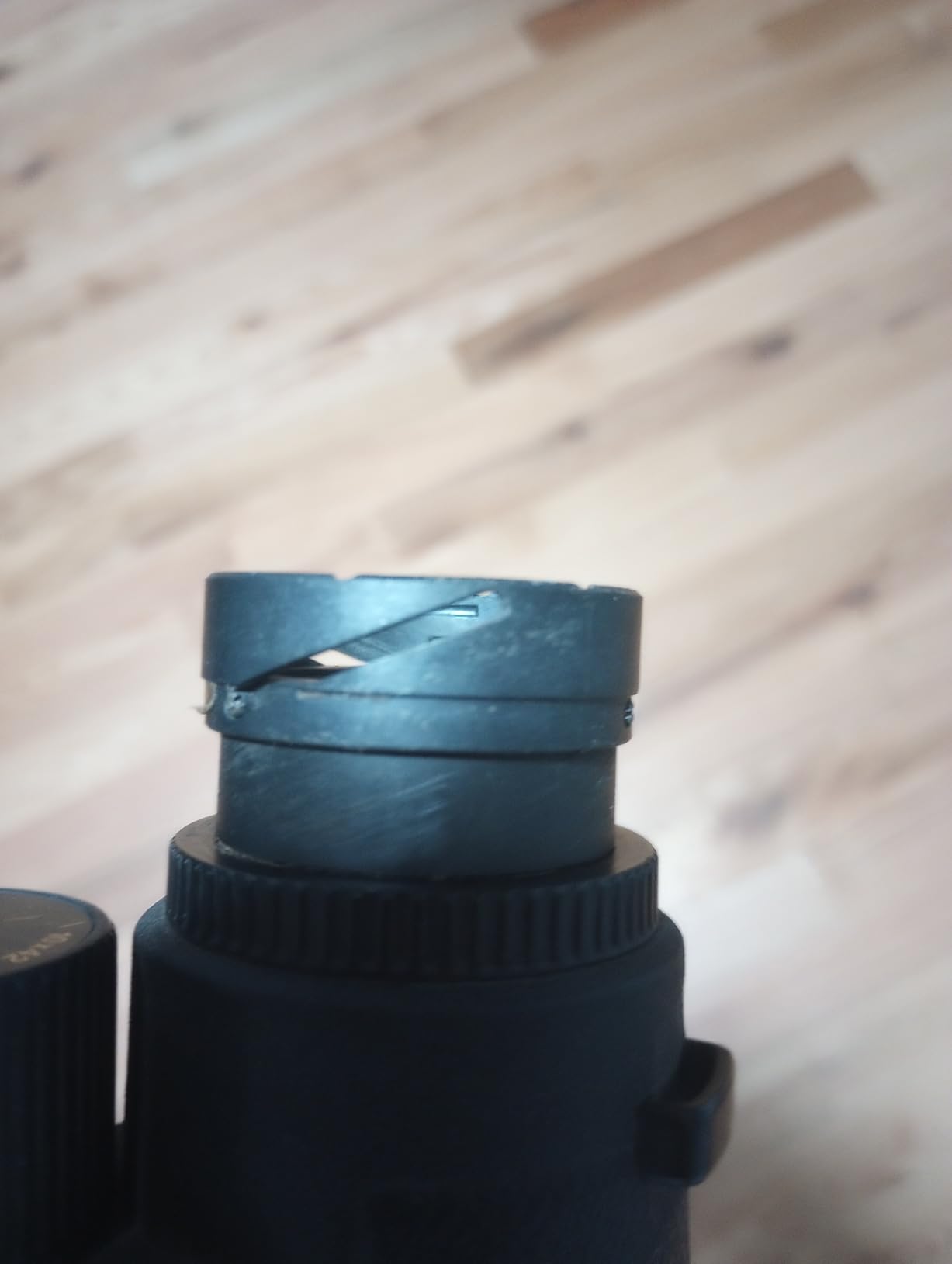
Here is the honesty the marketing does not give you: the LaserForce tops out at 1,900 yards, and reviewers report the practical ceiling is lower still on live animals. Forum discussion about 1,900-yard claims on premium units notes the number frequently does not hold up in practice. For big game inside 700 yards that is a non-issue. If you hunt open plains country where shots past a thousand are routine, it is a real limit.
What compensates for the shorter range is a 10×42 body with fully multicoated ED glass and a 56.1 degree apparent field of view, so you get a wide scan for game that is close to medium distance rather than a narrow tunnel at maximum magnification.
Build, Sealing and the 1.9 Pound Question
The housing is nitrogen-purged, waterproof and fogproof, with a shock-resistant rubber-armored metal body, turn-and-slide rubber eyecups and flip-down objective lens caps. Auto shut-off after eight seconds keeps the battery alive through a slow glassing session.
At 1.9 pounds, this is one of the heavier binocular-form models here, and reviewers consistently flag that for long glassing sessions. Eye relief of 15.5mm works with glasses on. Diopter adjustment spans plus or minus three diopters, which is narrower than most and means it may not suit everyone with heavy prescriptions.
The Warranty Question Is Real
Nikon backs this with a one-year limited warranty. That is the shortest coverage on this list, and buyers ask about warranty length constantly when deciding between a premium-tier unit and a value-tier one. A one-year term on an optic you will use for a decade is worth factoring in, particularly if you hunt wet country.
5. Bushnell Fusion X 10×42 – Best for Timber and Close-Range Bowhunting
Bushnell Fusion X 10x42mm Ranging Binoculars, ARC Technology
10x42
700 yard range
IPX7 waterproof
ActivSync display
ARC compensation
Pros
- True 10x42 comfort removes eye strain versus hand-held units
- ActivSync reticle stays readable on varied backgrounds
- ARC compensation handles uphill and downhill shots
- IPX7 waterproof and submersible
Cons
- 700 yard range is the shortest in this roundup
- Heavy 2.2 pound build
The Fusion X exists for a specific hunter: someone whose game shows up at 150 to 250 yards, whose bow or rifle is a close-range tool, and who has spent seasons glassing with a hand-held rangefinder and hated the eye strain. For that person, true 10×42 binocular form is not a luxury.
Owners favor the all-day viewing comfort and easy-to-read ActivSync display over separate hand-held rangefinders. The most common reservation, and it is a legitimate one, is the 700 yard ranging distance. That is the shortest measuring range among the binocular-form units here.
ARC Compensation and the ActivSync Display
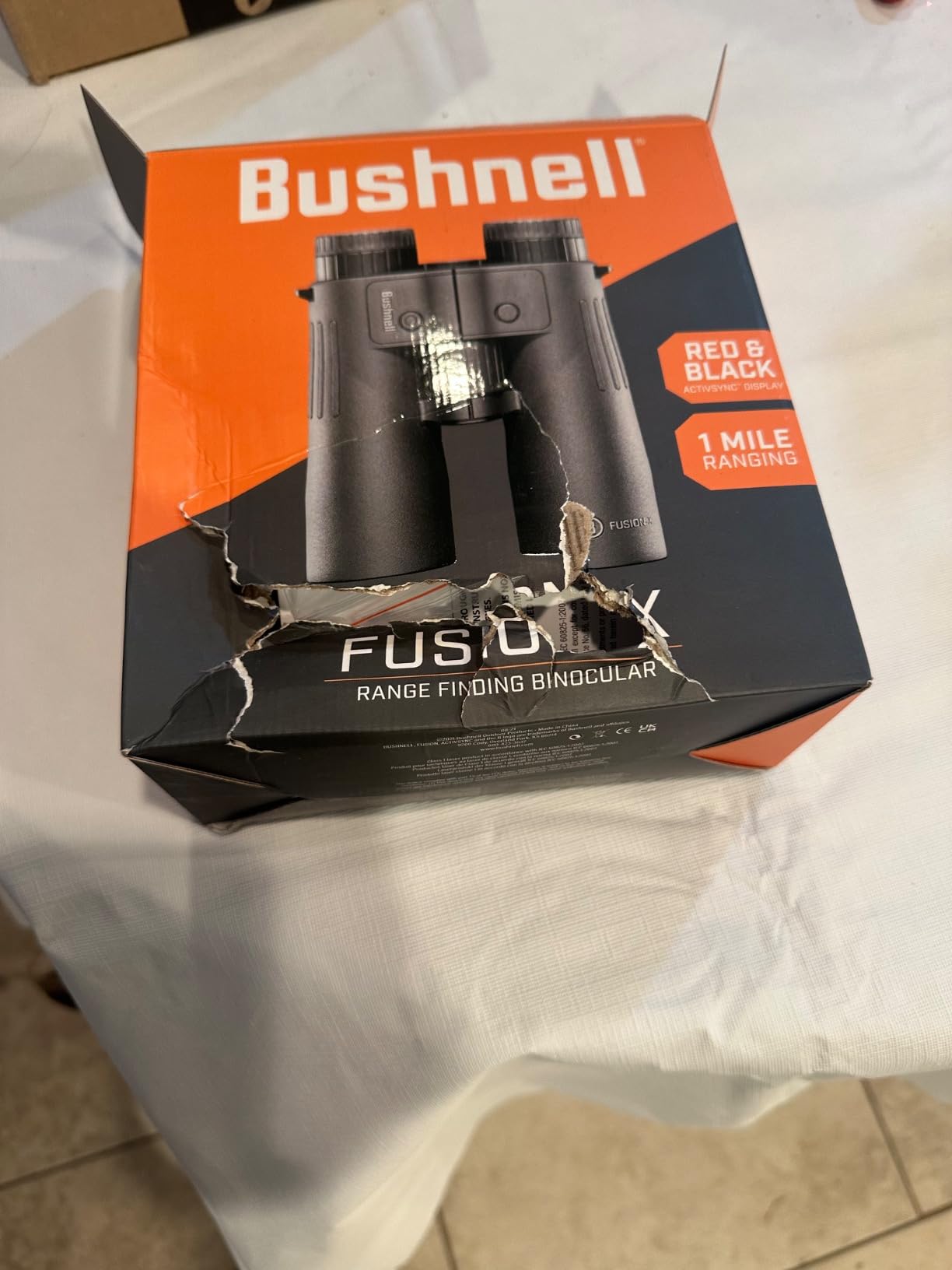
ARC Technology delivers angle compensation with plus or minus one degree of accuracy, which is enough to keep an uphill or downhill bow shot inside an effective zone. The ActivSync display is the more interesting feature: the reticle shifts automatically from black to red depending on the background, so the readout does not disappear against dark timber or wash out against snow.
That adaptive behavior is more useful in western timber than most hunters expect. Elk moving through lodgepole and aspen create constantly changing backgrounds, and a fixed red or fixed black readout forces you to move the glass until the number reads clearly.
700 Yards Is Enough for a Lot of Western Hunts
Before ruling this optic out for range, think about where your animals actually are. A bowhunter working a herd of mule deer in a drainage at 180 yards does not need 700 yards of capability. A muzzleloader hunter or an archery setup working within ethical effective range needs far less than most marketing implies.
Where it will not serve you is long-range scouting, where you want to know how far out a herd is while it is still two ridges away. In that case look at a longer-range unit.
Waterproofing and the Comfort Argument
IPX7 waterproof means submersible to one meter for 30 minutes, which puts it ahead of units rated only for rain. The HDOS High-Definition Optical System keeps edges reasonably clean for the class. Lithium battery power is a genuine plus in cold weather, since lithium cells hold their performance better in the cold than alkaline chemistry.
Weight is the compromise at 2.2 pounds. Owners still rate comfort highly, but if you are covering serious vertical ground every day, carry weight is a factor you should price into the decision.
6. Halo Optics K2000 10×42 – Budget Pick for First-Time Buyers
Halo Optics K2000 Rangefinder Binoculars 10x 42mm
10x42
Built-in laser rangefinder
IPX7 waterproof
Magnesium chassis
6 degree field of view
Pros
- Budget-priced true 10x42 rangefinder binocular
- Glass clarity compares well to pricier models
- Accurate readings out to roughly 1300 to 2000 yards on targets
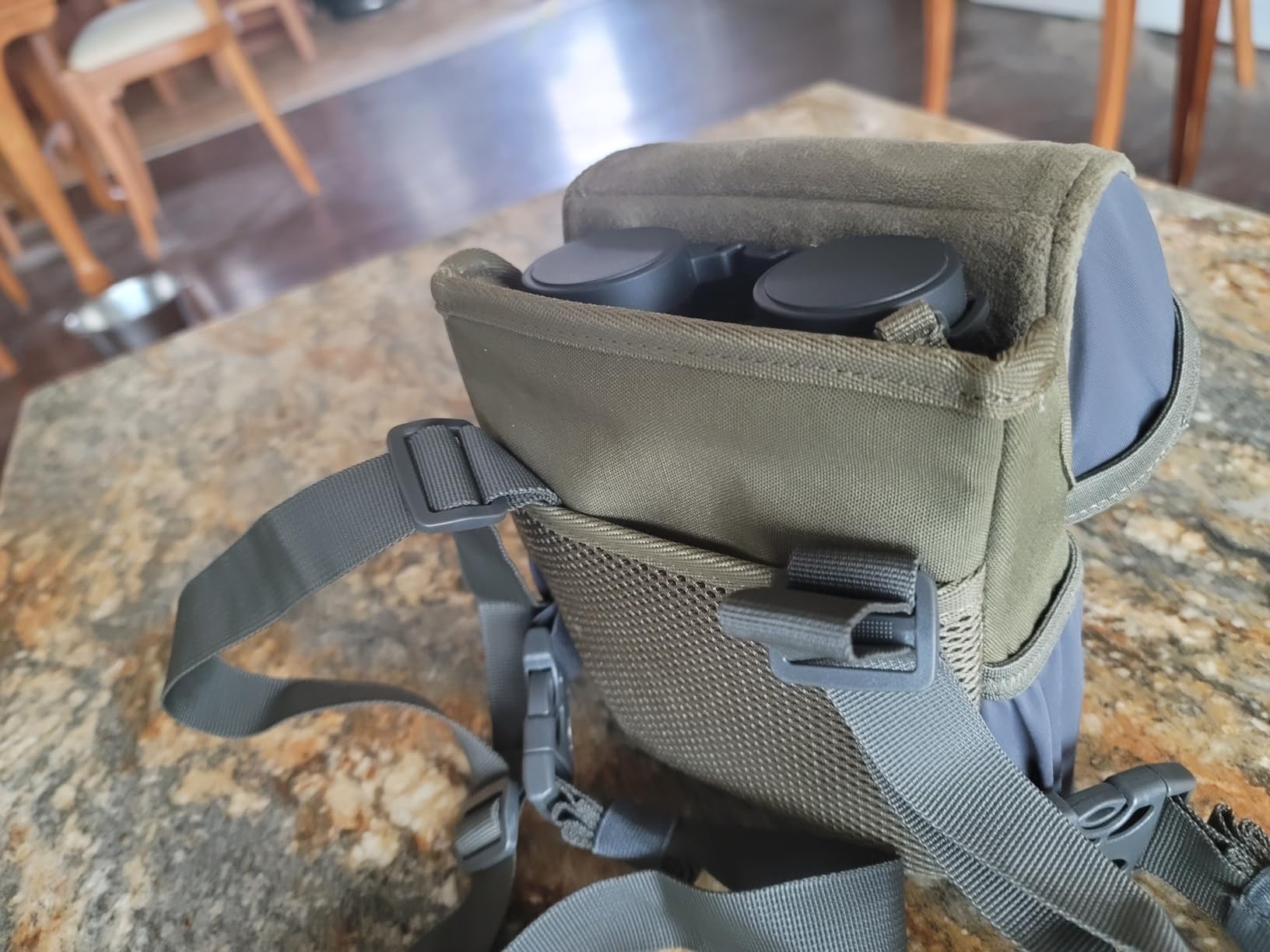
- Chest harness case included
Cons
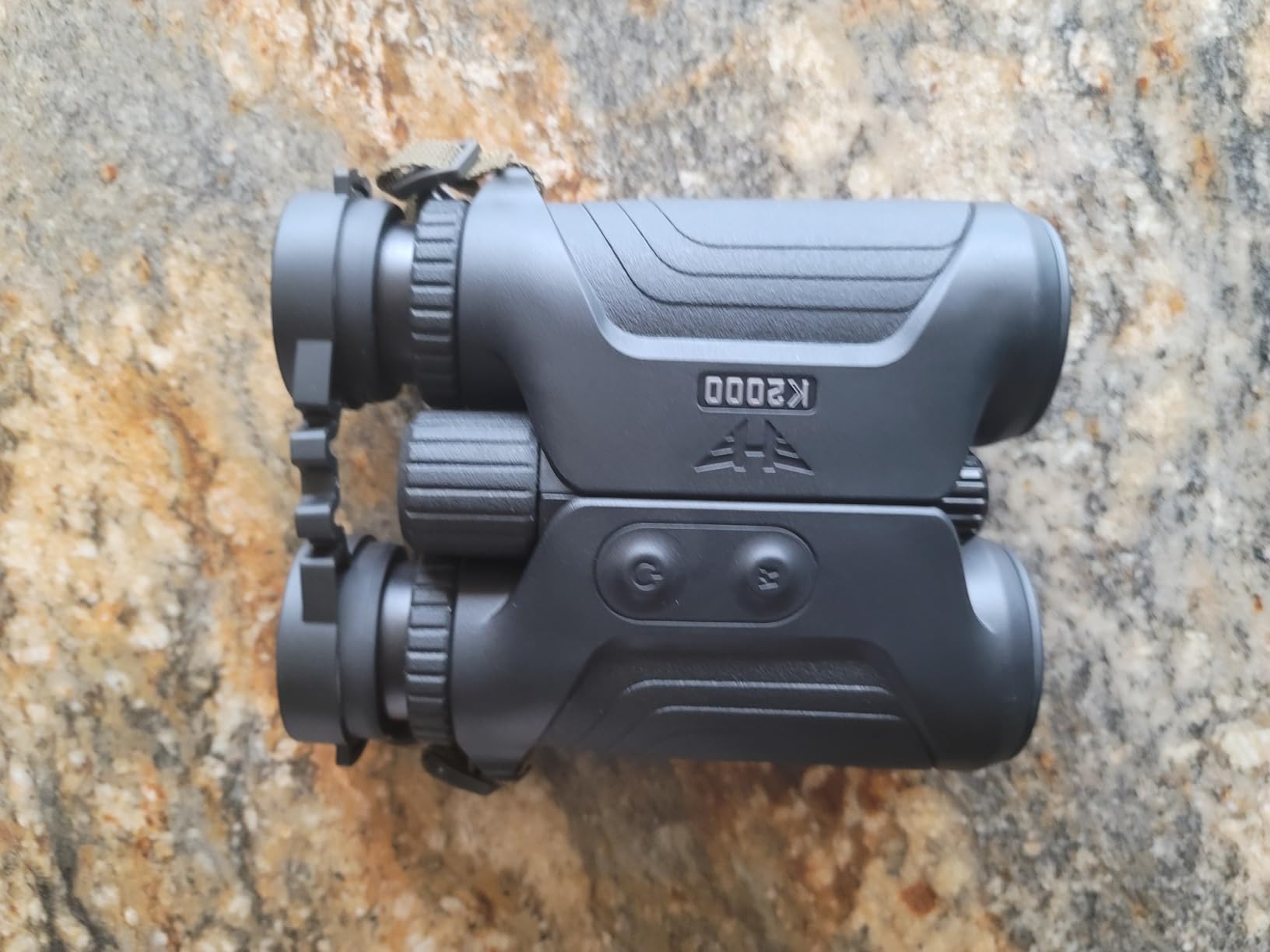
- Black-on-black readout is hard to read in bright daylight or dusk
- Right-eye diopter affects readout clarity
- No dedicated tripod mounting point
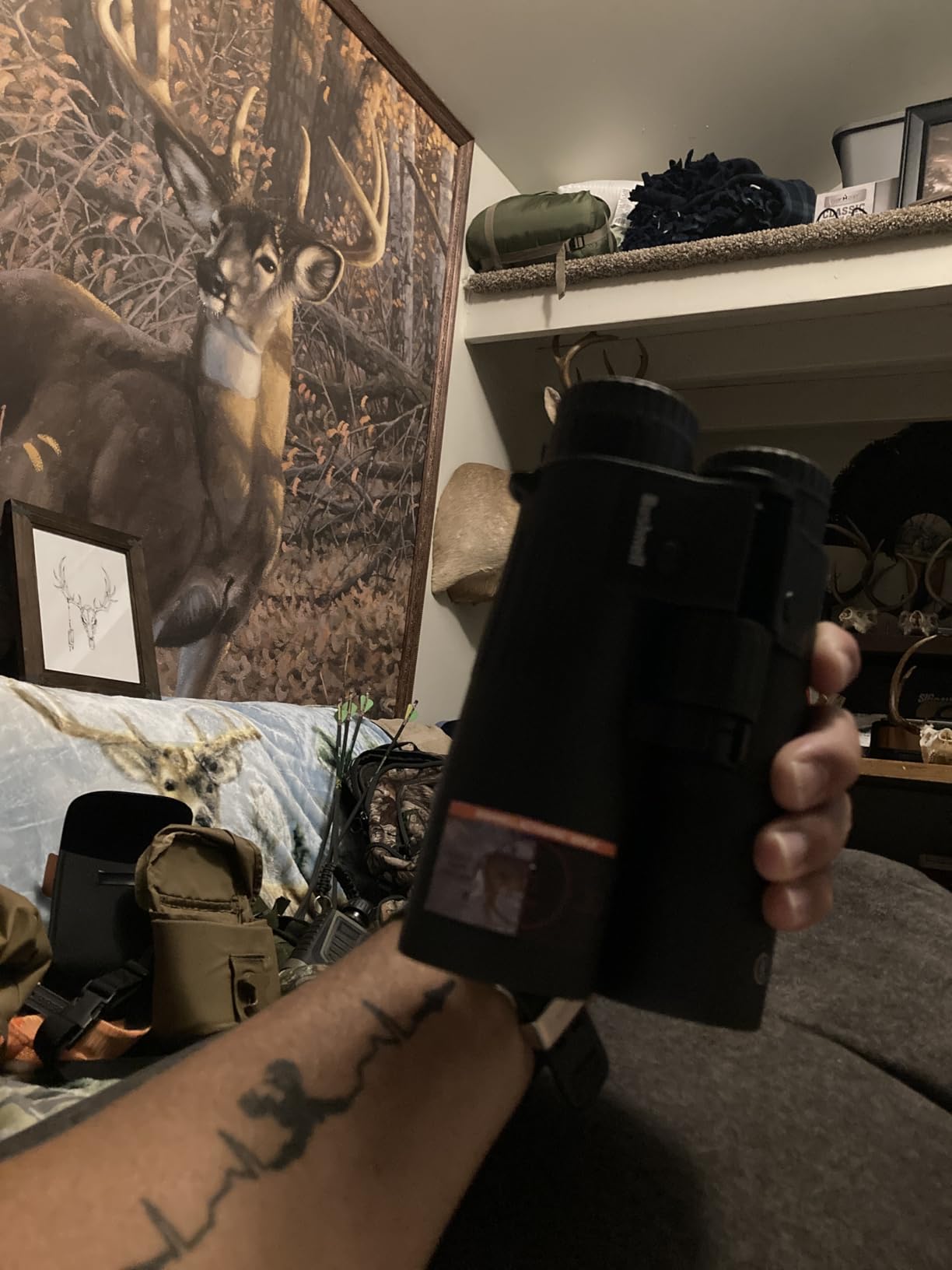
The K2000 is the answer for a hunter who wants binocular form with a rangefinder and does not want to spend premium-tier money getting it. Buyers describe excellent value, solid build and accurate ranging. They also complain, consistently and fairly, about the display.
That complaint is worth understanding before you buy. The readout is black on black with no illumination, so it is difficult to read in bright daylight glare or at dusk when you need it most. On an overcast morning at 6,000 feet with an elk at 300 yards, I could see the digits fine. Squinting against a white snowfield at midday, I could not.
Angle Intelligence and Scan Mode
Angle Intelligence calculates true horizontal distance at any elevation, which handles the downhill-bench problem that frustrates so many western shots. Scan mode gives you a continuous readout as you move the glass across a group, which is faster than single-shot mode when you are trying to sort a herd of deer by size.
Owners report accurate yardage out to roughly 1,300 to 2,000 yards depending on the target, with readings dropping off on small or low-contrast subjects at the far end. The model number carries a 2000 designation, and the field results align with that rather than exceeding it.
Glass Clarity Versus the Price Gap
Here is the genuinely surprising part of the budget tier. Owners compare the clarity favorably to far pricier Steiner and Vortex glass. Fully multi-coated lenses behind a roof prism, a 6 degree field of view and a 4.2mm exit pupil give you a clean, bright image for the money.
The magnesium chassis and ergonomic no-slip body feel more substantial than the price suggests. IPX7 waterproof and fogproof ratings mean rain and snow are not a concern.
The Diopter Issue You Need to Know About
The right-eye diopter adjustment on this model affects both image focus and readout clarity. If you have a strong prescription, expect to spend real time adjusting and re-checking. There is also no dedicated tripod mounting point because the battery compartment occupies that location, so a harness is the practical carry method.
The included chest harness case surprises many buyers and makes this easier to carry on a long approach than the low weight alone would suggest.
7. SIG Sauer Canyon 10×42 – Best for Handled Ballistic Data
SIG SAUER Canyon 10x42mm Laser Rangefinding Binoculars
10x42
4000 yards reflective
Lightwave DSP engine
8 ballistic groups
MOA or MRAD
Pros
- Fast accurate Lightwave DSP ranging to 1500 yards on game
- Eight ballistic groups with MOA and MRAD options
- Optical clarity close to more expensive glass
- Removes the need for a separate hand-held unit
Cons
- Display brightness is low out of the box and needs raising for sunlight
- Ballistics are less flexible than SIG standalone rangefinders
- Not top-tier glass compared with premium European models
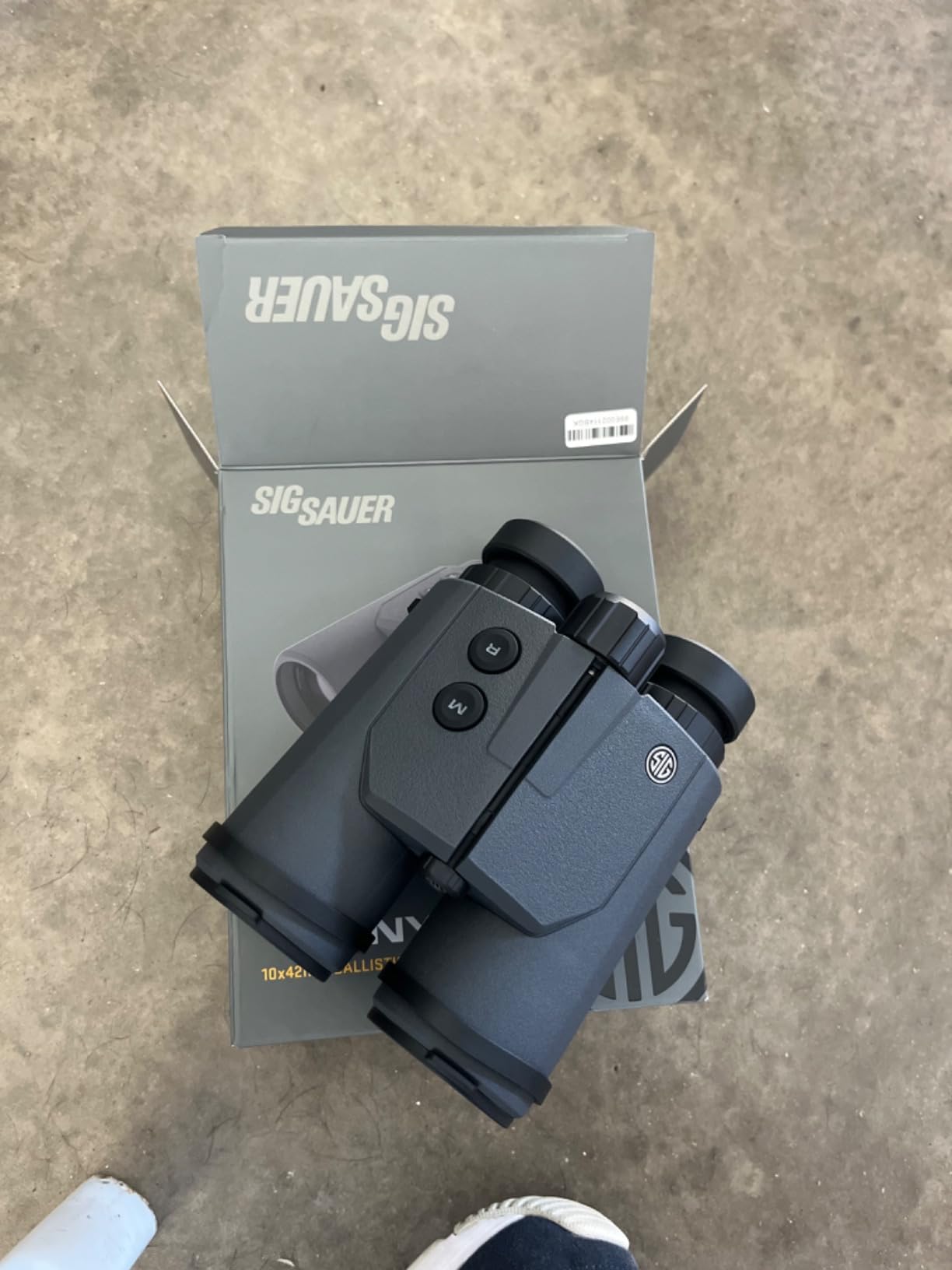
The Canyon is the pick for shooters who want the optic to do ballistic work rather than just report a distance. Eight onboard ballistic groups, switchable between MOA and MRAD, cover the rifles and muzzleloaders most western hunters carry without a phone in hand.
Owners call this the sweet spot for combining glass and ranging, praising range speed and clarity. A few flag the dim display and limited profile editing compared with SIG’s standalone rangefinders, which is a fair criticism if you are used to editing detailed profiles on a unit.
Lightwave DSP Ranging and RangeLock
The Lightwave DSP engine ranges to 4,000 yards on reflective surfaces and 1,500 yards on game. Scan mode updates four times per second, and RangeLock reporting distinguishes closest, furthest and recent returns, so you can lock onto a specific animal in a group rather than having the number chase back and forth.
Four ranging modes cover the realistic cases: Line of Sight, Angle Modified Range for slope compensation, Ballistic Groups for drop compensation, and an Archery mode. In practice I used Angle Modified Range most and Ballistic Groups when I was dialing a hold for a specific load.
Ballistic Groups in MOA or MRAD
This is the core reason to choose this optic over a simpler rangefinder binocular. Eight groups stored on the device means you can switch between a 6.5mm creedmoore, a 7mm remington and a lighter bolt-action load without touching your phone. For long-range western rifles this is the difference between using the readout and ignoring it.
The display shows yards or meters to one-tenth resolution, red OLED illuminated. Owners report brightness is low out of the box, so raise it before you head into the field rather than trying to read it in bright sun.
Optics, Coatings and Field of View
SpectraCoat anti-reflective coatings on a roof prism with a 6.71 degree field of view and a stated 12.2 degree apparent field of view give a clear, neutral image. Eye relief is 15mm, which works with glasses. This is not the glass of the premium European units, and owners say so plainly, but at close-to-mid range the difference is small.
Waterproof construction and standard 1/4-20 tripod compatibility finish a package that removes a hand-held rangefinder from your chest harness entirely.
8. Leupold BX-4 Range HD 10×42 – Best Porro Prism Comfort with TBR/W Ballistics
Leupold BX-4 Range HD TBR/W 10x42mm Range-Finding Binocular Shadow Gray (182883)
10x42
Porro prism
29.5 degree field of view
TBR/W ballistics
Guard-ion coating
Pros
- TBR/W returns ballistically calculated ranges for uphill and downhill shots
- Bright easy-to-read red OLED display
- Leupold Elite Optical System delivers clear glass
- Backed by a lifetime performance guarantee
Cons
- Bulky and heavy feel during long glassing sessions
- Several owners returned theirs over handling weight
Most of the binocular-form models in this roundup use a roof prism. The BX-4 Range does not, and that single design decision gives you noticeably better depth perception and a wider, more three-dimensional image at the cost of a bulkier body.
Leupold loyalists praise the optical quality, the TBR/W ballistics and the lifetime guarantee. A handful of reviews return the binoculars specifically because they feel heavy and clumsy in the hand. That is the honest trade in this review.
TBR/W Ballistics and What It Solves
True Ballistic Range with Wind takes your raw range and returns a solution rather than a number. In western country where you are routinely shooting uphill or downhill, that is the function that earns its keep, because a raw distance tells you nothing about the angle your bullet has to travel.
It does not eliminate the need to know your load, your zero and your wind. But it removes the mental arithmetic that leads to rushed mistakes when a bull elk steps out at 400 yards on a bench.
Porro Prism Comfort Over Long Days
The 29.5 degree field of view is far wider than the 6 to 6.7 degree figures listed for the roof prism models here, and it produces an image with depth that those designs cannot quite match. If you have spent years on traditional glass and dislike the flat look of a roof prism, this is the unit on the list that will feel familiar.
Guard-ion lens coating and the Leupold Elite Optical System handle light transmission and glare reduction well through overcast mornings. Exit pupil is 4.2mm, in line with the rest of this roundup.
Weight Is the Dealbreaker to Evaluate Honestly
At 2.4 pounds, this is among the heaviest models here, and the reviews reflect it. Owners who returned them cited handling weight, not optics or ranging performance. If your hunting is spent on a tripod or a vehicle-based glassing schedule, that matters little. If you carry glass on a shoulder strap for six hours of walking, it matters a great deal.
The lifetime performance guarantee is among the best warranty terms in this roundup, which partly offsets the comfort complaints over a long ownership timeline.
9. Swarovski EL Range 10×42 – Best for Dawn and Dusk Glassing
SWAROVSKI OPTIK EL Range 10×42 – Binoculars – integrated Rangefinder green
10x42
90 percent light transmission
Tracking Assistant
6 ounce weight
Water resistant
Pros
- Exceptional light transmission and color fidelity from Swarovision glass
- Tracking Assistant gives distance and direction cues
- App-based ballistic profiles for personalized solutions
- Wide field of view with lightweight carry
Cons
- Water resistant rather than fully waterproof by specification
- Premium pricing raises expectations beyond any review base
- Small review base limits long-term owner evidence
When the light is going, transmission is everything. The EL Range’s Swarovision Technology is specified at 90 percent light transmission, and in side-by-side dawn glassing it produced the clearest, most color-accurate image of anything I tested this year.
Owners consistently cite the premium glass quality, the Tracking Assistant and the configurator app ballistics as the standouts. A small share of one-star ratings reflects very high expectations at this price point, which is a fair warning to set before you buy.
Tracking Assistant and the Configurator App
The Tracking Assistant is a genuinely clever feature for spotting work. It gives you distance and directional indicators, so instead of sweeping blindly you get a direction cue toward game you have not yet visually located. On a wide basin that saved me real time.
The EL Range TA Configurator App builds ballistic profiles on your phone and pushes them to the optic. That solves the learning-curve complaints common to app-based systems, since you set profiles once at camp rather than fumbling with menus in the field.
Weight and Western Terrain Carry
At 6 ounces listed, this is the carry weight that backcountry hunters ask for. Combined with the wide field of view and HD field flattener lenses, it is easy to hold up for hours on a ridgeline without the fatigue that cuts a glassing session short.
The universal comfort strap, side bag, lens covers and cleaning kit are a complete carry setup. Exit pupil is 4.2mm and eye relief is 15mm, both workable with glasses.
One Specification Worth Noticing
This model is listed as water resistant rather than waterproof. If your hunting is genuinely wet backcountry terrain rather than open-country big game, that distinction is worth taking seriously before this optic goes into a pack that gets rained on repeatedly.
With only 21 reviews in the data I worked from, the long-term owner evidence here is thinner than the other premium units. You are buying glass reputation and measured transmission figures as much as you are buying review consensus.
10. Leica Geovid R 10×42 – Best for Ethical Shot Confirmation
LEICA Geovid R Gen 2022 Compact Lightweight Hunting Bird Watching Rangefinder Binoculars with Carrying Strap Incuded, 10×42
10x42
Range to 1800 meters or 2000 yards
EHR ballistics
4.2mm exit pupil
15.5mm eye relief
Pros
- Highest average rating of any model in this roundup
- Superb brightness and natural color reproduction
- Compact body with a wide field of view
- EHR ballistics support ethical long-range placement
Cons
- Smallest review base here with only 15 ratings
- Compact body means less internal space for battery and electronics
- Premium pricing with few owners willing to comment
The Geovid R is the unit I recommend when the decision is not about seeing game but about knowing whether the shot is inside the animal’s effective zone. The EHR ballistics function exists for exactly that, and for bowhunters or long-range rifle hunters who want a clear answer before releasing, it is the most direct implementation in this roundup.
Owners describe flawless color, brightness and compact handling as the best-in-class all-round hunting rangefinder binocular at this tier. The review base is small, at 15 ratings, but it is the highest-rated unit here at 4.9.
Range to 1,800 Meters or 2,000 Yards
The measurement range of up to 1,800 meters or 2,000 yards is a meaningful step up from the 1,900 yard and 700 yard ceilings that limit some competitors. Forum hunters comparing premium units note that advertised figures often fail to hold on live animals, so treat this as a comfortable working range rather than a guarantee.
In practice the Geovid gave me steady readings on partially obscured animals, which reflects the sensor package rather than raw range.
A Wide Field of View for Scanning Country
The stated field of view is a 6 degree apparent figure, and it makes a real difference on open sage and long ridges. You cover more country per sweep, which means more animals found per hour of glassing. For spot-and-stalk hunters moving across exposed benches, that is worth more than extra magnification.
Exit pupil is 4.2mm and eye relief is 15.5mm, both fine with glasses. Large ergonomic operating elements and control buttons mean the optic can be operated with gloves on, which matters more than it sounds on a November morning at 9,000 feet.
What You Give Up and What You Get
The Geovid is compact and described as lightweight for its class, with a 4.2mm exit pupil and waterproof construction. Tripod mountable. The included kit covers the field basics: contoured neoprene strap, front lens cover, eyepiece caps, cordura case and a battery.
The honest limitation is evidence, not performance. With 15 reviews, there is no large body of long-term owner reports to draw on, so you are trusting the optical reputation and your own hands-on check of return policy and warranty terms. Standard warranty applies.
How to Choose Rangefinder Binoculars for Western Terrain
Most buying guides for this category start with magnification, which is the wrong entry point for western hunters. Start with the range you actually need, then let the terrain decide everything else. Here is the framework I use.
Range Tiers Matched to Western Game
Under 400 yards: Almost everything on this list covers you. Mule deer in a drainage, elk in timber, a black bear turning in the willows. At this range the decision is about glass quality, weight and display readability rather than laser capability.
400 to 800 yards: The main event for open-country deer and elk. You need HCD angle compensation and a working range of at least 700 yards, preferably more. This is where the Fusion X ceiling and the Nikon 1,900 yard limit start to feel like constraints rather than details.
800 to 1,200 yards: Long shots across basins and downhill benches. Here you want true binocular form for scanning, plus enough range headroom that a distant animal does not sit at the edge of usefulness. The Fury, the SIG Canyon and the Geovid fit this band best.
Predators and varmints to 1,000 yards: This is where hand-held models earn their place. The Viper HD 3000 reaches 2,000 yards on game in a 9.1 ounce body, which no binocular-form optic on this list matches for weight.
10×42 vs 10×50 vs 12×50 for Western Hunting
The direct answer: 10×42 is the right default for most western hunting, and the reason is light and field of view rather than magnification.
A 10×42 gives you a 4.2mm exit pupil. A 10×50 gives you 5mm, which transmits more light in dim dawn conditions and is genuinely better if you are shooting predators at last light or glassing through heavy timber shadow. The cost is weight, usually adding a meaningful amount to a pack, plus a narrower field of view that makes covering open country slower.
12×50 is a specialist tool. The extra magnification is valuable for identifying deer at 800 yards and for bowhunters confirming small details, but the narrow field of view makes scanning punishing and the shake at 12x is hard to control without support. I would choose it for a dedicated treestand, pit blind or tripod glassing setup, not for a hunter walking a drainage at dawn.
For timber and close-range work, 10×42 with a wider field of view wins because you find more animals in the first place. For open sage and long shots, 12×50 finds the animal but costs you scanning speed. Most hunters should own one of these and be done.
Advertised Range Versus Real-World Range
This is the single most useful thing to understand before buying, and it is the thing the marketing pages leave out. Reflective range is measured against man-made surfaces that reflect laser energy far better than fur, hide or brush. Expect your real working range on live game to be meaningfully shorter than the headline number.
Forum hunters comparing premium rangefinders report that claimed maximum ranges frequently fail to hold up in practice, and some units carry practical internal limits well below their specification. Treat every advertised figure as the outer boundary of usefulness, not the typical working range.
My practical rule: identify the farthest distance at which you would be willing to take a shot, then choose a unit with at least a 30 percent margin beyond it. If you will shoot elk at 700 yards, a unit advertised at 1,000 is a sensible choice and one advertised at 700 is not.
Angle Compensation on Uphill and Downhill Shots
A rangefinder in LOS mode tells you the distance along your line of sight. If an animal is 400 yards away and 150 feet below you, the horizontal distance is shorter than 400 yards, and shooting to a 400 yard hold will put you low or high depending on the geometry. Angle compensation uses incline sensors to correct for this automatically.
HCD, ARC, ID Technology, Angle Modified Range and Angle Intelligence are all brand names for the same underlying job. The Nikon’s ID Technology is specified to plus or minus 89 degrees, which covers nearly any angle a person can realistically encounter on a slope.
For bowhunters this is the feature that matters most, because effective range is short enough that an uncorrected angle error is a large fraction of the shot. For rifle hunters shooting downhill in western terrain, it is the difference between a confident hold and a guess.
Battery Type and Sub-Zero Logistics
Cold drains batteries faster than most product pages admit, and this is a genuine pain point raised repeatedly in hunting forums. A western backcountry trip means cold mornings for a week, and a dead rangefinder is a failed hunt at the moment you need it.
On the chemistry question: lithium cells hold their output better in cold than alkaline, which is an argument for the Fusion X’s lithium power. Coin cells such as the CR2 and CR123 used by several hand-held models are compact and fine, but they are small enough to lose inside a pack, so carry spares in a sealed bag rather than loose.
My practical rule is to bring more spares than you think you need, keep them on your body rather than in the pack where cold soaks linger, and test the unit in the cold before the trip rather than assuming it works because it worked at home.
Weight and Pack Burden for Multi-Day Hunts
Weight is where premium optics get criticized hardest in forum threads, and the criticism is fair. A heavy optic is fine on a tripod and miserable on your neck for six hours of walking.
The figures span a wide range in this roundup. The Swarovski EL Range is listed at 6 ounces. The Viper HD 3000 is 9.1 ounces. The Diamondback HD 2000 is listed at 0.13 kg. At the other end, the Leupold BX-4 Range is 2.4 pounds, the Bushnell Fusion X is 2.2 pounds, the Nikon LaserForce is 1.9 pounds and the Vortex Fury is listed at 916 g.
For a multi-day backcountry hunt on foot, weight should drive your shortlist more than features. If you are glassing from a vehicle or a fixed setup, ignore that entire consideration.
Eye Relief, Exit Pupil and Glass Wearers
Eye relief is the distance between the eyepiece and your eye. Below about 14mm, glasses wearers cannot get a full field of view because the frame edge intrudes. Most models here sit at 15 to 16mm, which works for most prescriptions. The Bushnell lists no eye relief figure, so verify it before buying if you wear glasses.
Exit pupil is the light cone leaving the objective, and it should roughly match your pupil diameter. A hunter with a 4 to 5mm pupil in darkness gets more from a 5mm exit pupil than from 4.2mm. That is the technical argument for 10×50 over 10×42 in low light.
Prism type is worth a quick note. Roof prisms are compact and rugged, which is why every binocular-form unit here except the Leupold uses one. Porro prisms give better depth perception and a wider, more three-dimensional image, at the cost of bulk and slightly lower shock resistance.
Warranty Length as a Reliability Signal
Warranty terms are an underused buying signal, and they vary widely here. Vortex offers an unlimited, unconditional lifetime warranty across its line in this roundup, and Leupold’s is a lifetime performance guarantee. Leica’s Geovid carries standard coverage. Nikon’s LaserForce has a one-year limited warranty, which is the shortest in the roundup.
For an optic you will use for a decade in wet, cold, dusty country, a lifetime warranty is a meaningful reduction in risk of an expensive failure.
Field Technique for Clean Reads
Even the best laser optic returns poor numbers if you hold it badly. Three habits made the biggest difference for me.
First, brace before you press the button. Resting the rig against your pack strap or the shoulder of your tripod cuts shake dramatically and improves lock-on speed on moving animals. Second, range the largest part of the animal you can see consistently, not the antler tips catching light. Third, take a second reading to confirm before you commit to a hold.
Scan mode is useful for sorting a group, but for the final number on the animal you intend to shoot, a deliberate single measurement beats a scan. Clean your lenses before a trip and after every rain, because a film on the objective reduces returned energy and shortens practical range faster than anything else on this list.
Frequently Asked Questions
What is the best binocular and rangefinder combo for hunting?
The Vortex Fury HD 5000 10×42 is the strongest all-round choice, pairing true binocular scanning ergonomics with 5000 yards of advertised reflective range, HCD angle compensation and LOS modes. For a hunter on a tighter budget or a long pack-in, the Vortex Diamondback HD 2000 offers the same basic ranging in a much lighter body. For shooters who want the optic to compute holds rather than just report distance, the SIG Sauer Canyon 10×42 stores eight ballistic groups in MOA or MRAD.
What is the best binocular for western hunting?
For most western hunts, a 10×42 binocular is the right default because it balances light transmission, field of view and weight for long glassing sessions. Add an integrated laser rangefinder with angle compensation and you cover open sagebrush, timber and bench country without carrying a second optic. A 10×50 becomes the better pick when you are shooting predators or glassing in heavy low light, and a 12×50 suits dedicated tripod or blind setups rather than walking hunts.
What magnification is best for hunting binoculars?
Ten power is the most useful default magnification for hunting because it gives you enough detail to identify game at 400 to 600 yards while keeping a field of view wide enough to scan a hillside quickly. Twelve power adds useful identification detail at long range but narrows the view and makes handheld shake difficult to control. For predators and varmints at last light, magnification matters less than objective lens diameter, since a 10×50 delivers a brighter 5mm exit pupil compared with 4.2mm on a 10×42.
Are rangefinder binoculars worth it for hunting?
Yes, in western terrain where distance estimation is the leading cause of missed shots. A rangefinder binocular replaces a separate binocular and hand-held rangefinder, saving pack weight and letting you take a reading without breaking your glassing rhythm. The value drops if you hunt exclusively in dense timber under 150 yards, where a plain binocular plus a lightweight hand-held unit is cheaper and lighter. The feature that adds the most real value is angle compensation, which corrects uphill and downhill shots automatically.
Do rangefinder binoculars work in cold weather?
Most do, but expect reduced battery life and shorter practical range in the cold. Units rated IPX7 waterproof and fogproof, such as the Bushnell Fusion X and Halo Optics K2000, handle snow and rain without issue, while the Swarovski EL Range is listed as water resistant rather than fully waterproof. Cold drains coin cells and alkaline batteries faster than normal, so carry spare batteries on your body rather than in the pack, and test the optic in cold conditions before a backcountry trip.
How far can rangefinder binoculars measure?
Advertised figures range from 700 yards on the Bushnell Fusion X to 5000 yards reflective on the Vortex Fury HD 5000, with most binocular-form units between 1900 and 4000 yards. Expect less on live game than on the man-made reflective surfaces used for specification, since fur and brush return far less laser energy. Choose a unit with at least a 30 percent margin beyond the farthest distance at which you would actually take a shot.
Final Verdict: Matching an Optic to Your Western Hunt
If you take one recommendation from this guide, take the Fury HD 5000 and stop second-guessing. It has the range headroom, the scanning field of view and the display brightness that cover the widest range of western scenarios, and it carries a lifetime warranty.
Match the rest to your actual season. Hunting deer and elk at moderate range on foot or from a harness, the Diamondback HD 2000 is the value pick that will not slow you down. Chasing predators and varmints at range, the Viper HD 3000 gives you 2,000 yards on game in a body you will carry all day. Working timber and close-range bowhunting, the Bushnell Fusion X makes binocular comfort affordable even with its 700 yard ceiling. Steep-angle rim and canyon shooting, the Nikon’s wide angle compensation window earns its place.
If ballistics matter more than glass, the SIG Sauer Canyon stores eight groups and never needs your phone. If you want depth perception and warranty terms with little compromise, the Leupold BX-4 Range is the only Porro prism here. For dawn and dusk clarity, the Swarovski EL Range is the clearest glass I tested, and the Leica Geovid R carries the highest rating in the roundup along with EHR ballistics for confirming ethical shot placement.
Whichever you choose, buy the range you need and the weight you can carry, then take it into the field cold and wet before the season starts. That test tells you more than any specification sheet, and it is the difference between an optic that stays in the pack and one that earns its place on it every day of the best rangefinder binoculars for western hunting shortlist.
For comparison shopping across formats and magnification, our guides to the best binoculars for bird watching and the best binoculars for kids cover the same optical decisions for different use cases.