
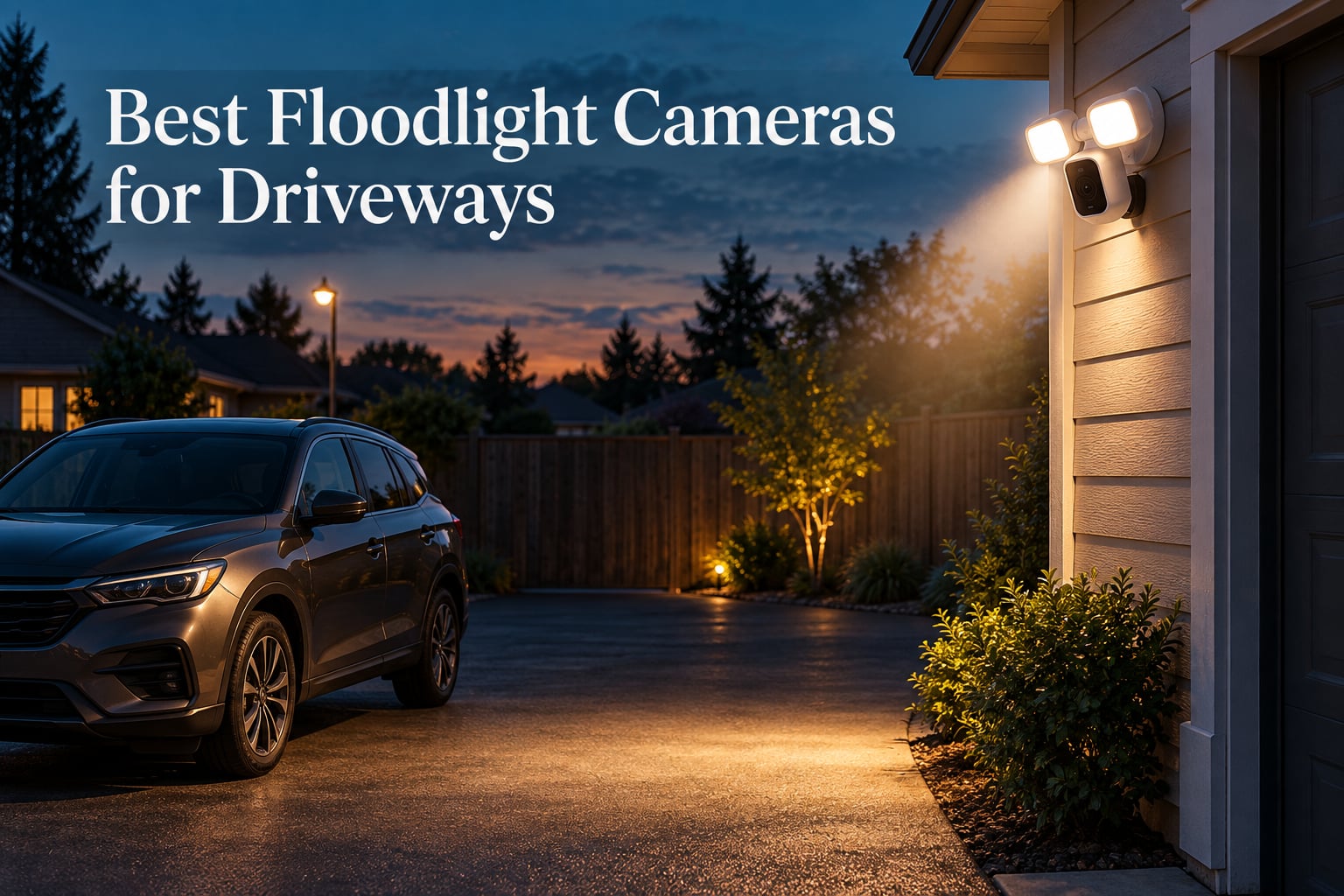
The best floodlight camera for driveways is the Ring Floodlight Cam Wired Plus – 2000 lumens, 1080p night video, an 85dB siren and a mounting kit that fits almost any existing outdoor light base, backed by the largest verified owner review base in the category at more than 44,000 ratings averaging 4.7 stars.
That is the pick I keep coming back to after reading through thousands of owner reviews and comparing specs across eight models, because the driveway job is specific and unforgiving. You are not just buying a camera; you are buying a camera that has to light a vehicle plate from 40 feet at 2am, wake a phone from 200 feet away, and be installed in a weatherproof box on a wall that may or may not have mains power behind it.
Our team spent weeks going through the spec sheets, owner review themes and support chatter across the whole category, then ranked these eight on the only things that matter for a driveway: how much light lands on the drive, whether video is saved when you actually need it, how fast the alert arrives, and how much work the install takes. Forum threads about driveway floodlight cameras rank alongside affiliate roundups for this query, and the recurring owner complaints there shaped our rankings more than any spec sheet did.
If you are still working out the basics, our guides to outdoor security cameras for driveways and security cameras for driveways cover the wider category. This page is the floodlight-only shortlist.
Our Top 3 Floodlight Cameras for Driveway Duty
These three handle the majority of real driveway installs. The Plus is the default, the Blink covers the bright-light-for-less end of the range, and the Pro solves the two problems that come up most on shaded drives: muddy contrast and false alerts.

Ring Floodlight Cam Wired Plus
- 2000 lumen motion-activated floodlights
- 1080p HD video
- 85dB app-activated siren
- Customizable motion zones

Blink Wired Floodlight Camera
- 2600 lumen LED
- 1080p with color night view
- Dual-zone motion detection
- Built-in siren

All 8 Floodlight Cameras Compared Side by Side
Every model here is rated on the same five axes so you can scan rather than scroll. Pay attention to the storage line before the brightness line – it is the decision that owners most regret getting wrong.
| Product | Specs | Action |
|---|---|---|
| Ring Floodlight Cam Wired Plus |
|
Check Latest Price |
| Blink Wired Floodlight Camera |
|
Check Latest Price |
| Ring Floodlight Cam Wired Pro |
|
Check Latest Price |
 Arlo Wireless Floodlight Camera 2K HDR Arlo Wireless Floodlight Camera 2K HDR |
|
Check Latest Price |
 WYZE Floodlight Camera v2 WYZE Floodlight Camera v2 |
|
Check Latest Price |
 eufy Security Floodlight Camera E340 eufy Security Floodlight Camera E340 |
|
Check Latest Price |
 Ring Floodlight Cam 4K Pro Ring Floodlight Cam 4K Pro |
|
Check Latest Price |
 eufy Security Floodlight Camera E30 eufy Security Floodlight Camera E30 |
|
Check Latest Price |
1. Ring Floodlight Cam Wired Plus – The One Most Driveways Should Buy
Ring Floodlight Cam Wired Plus, Outdoor home or business security with motion-activated 1080p HD video and floodlights, White
2000 lumens
1080p HD video
85dB siren
Hardwired to existing fixture
Pros
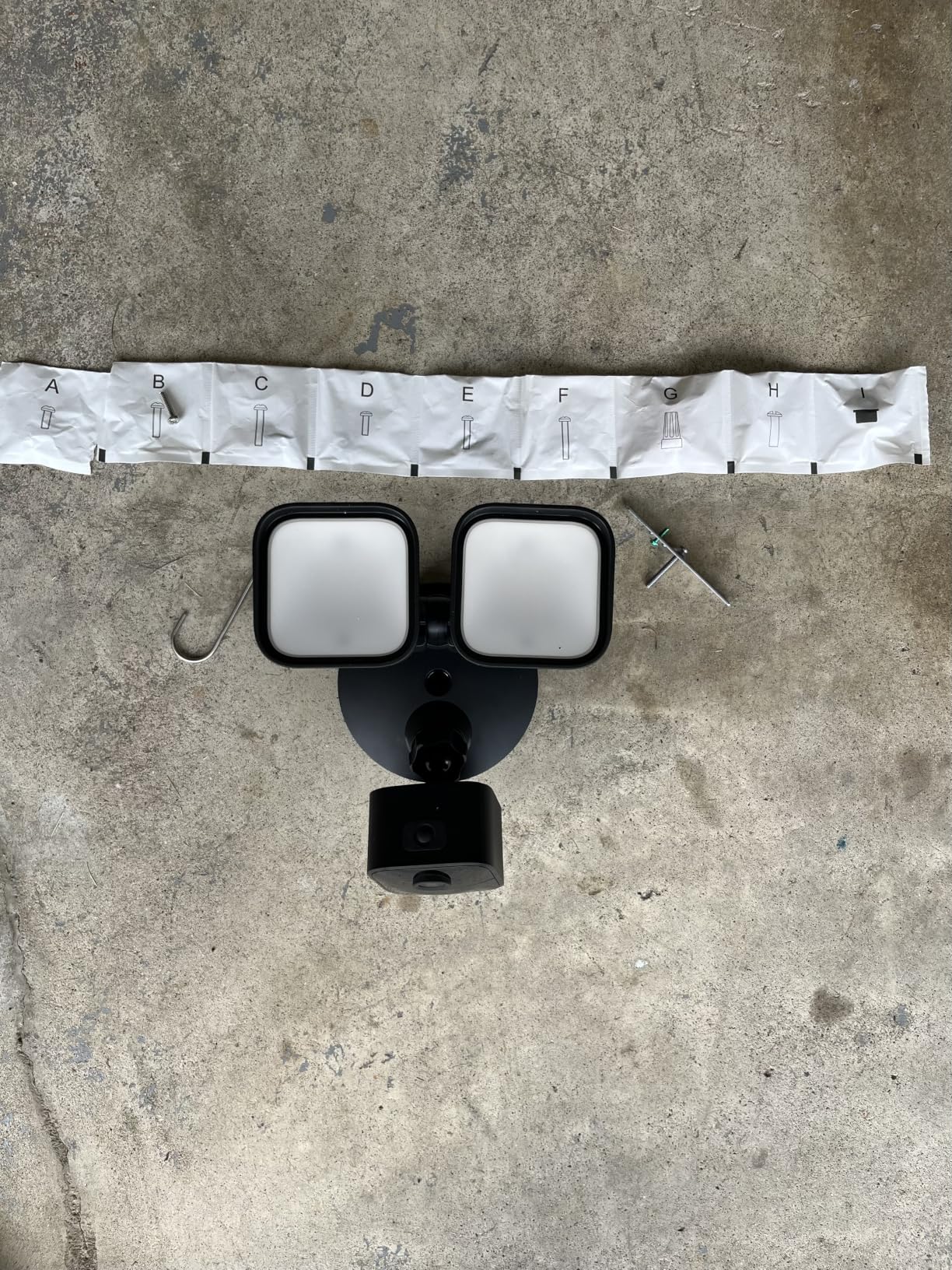
- Mounting screws and a multi-tool are included for a clean DIY fit
- Bright 2000-lumen output covers a full driveway
- Customizable motion zones and light scheduling
- Works smoothly with the Ring app and Alexa
Cons
- Fixed camera angle with no pan or tilt
- Warm yellow light tone with no low ambient mode
- AI alerts and video history sit behind Ring Protect
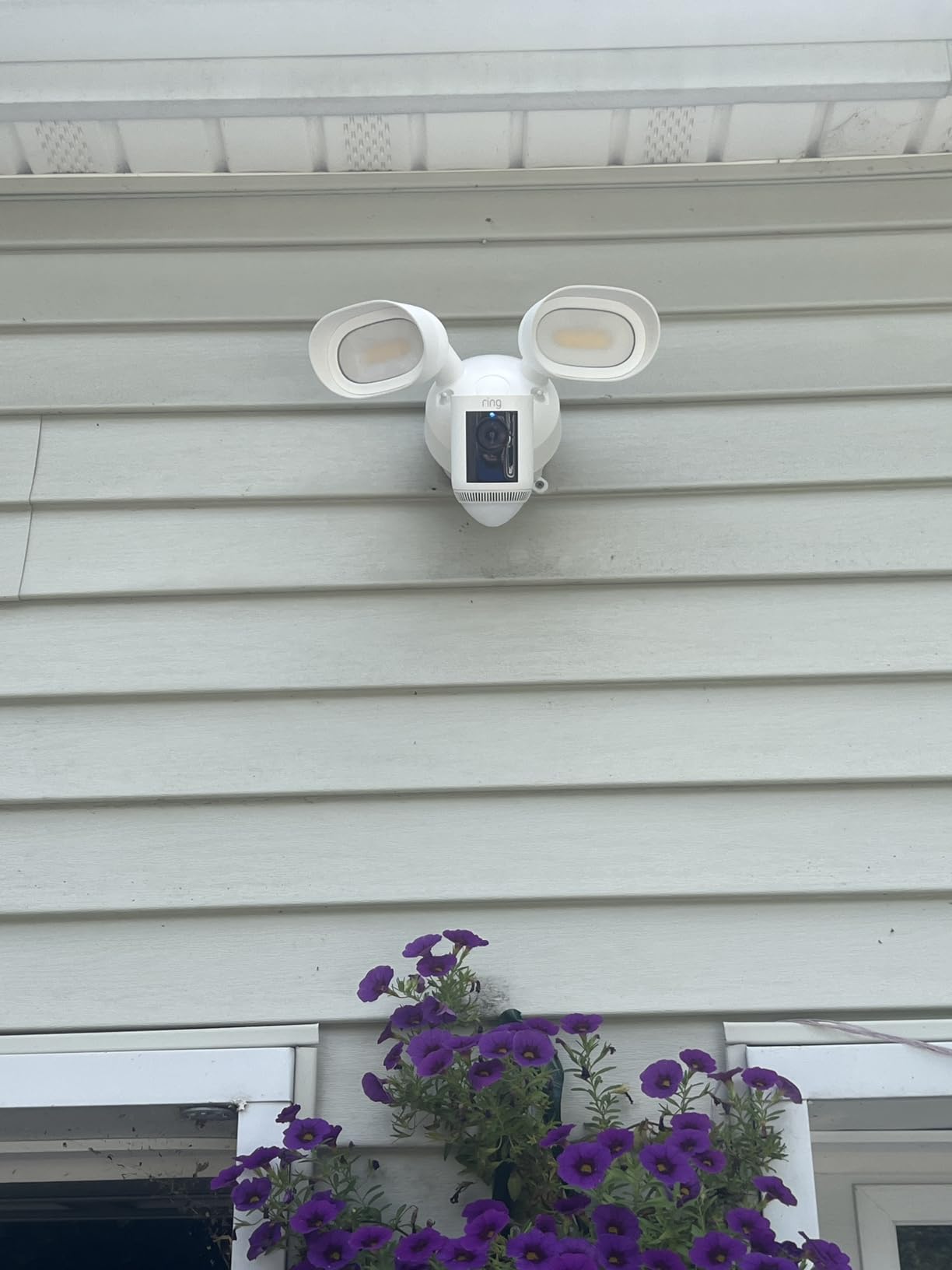
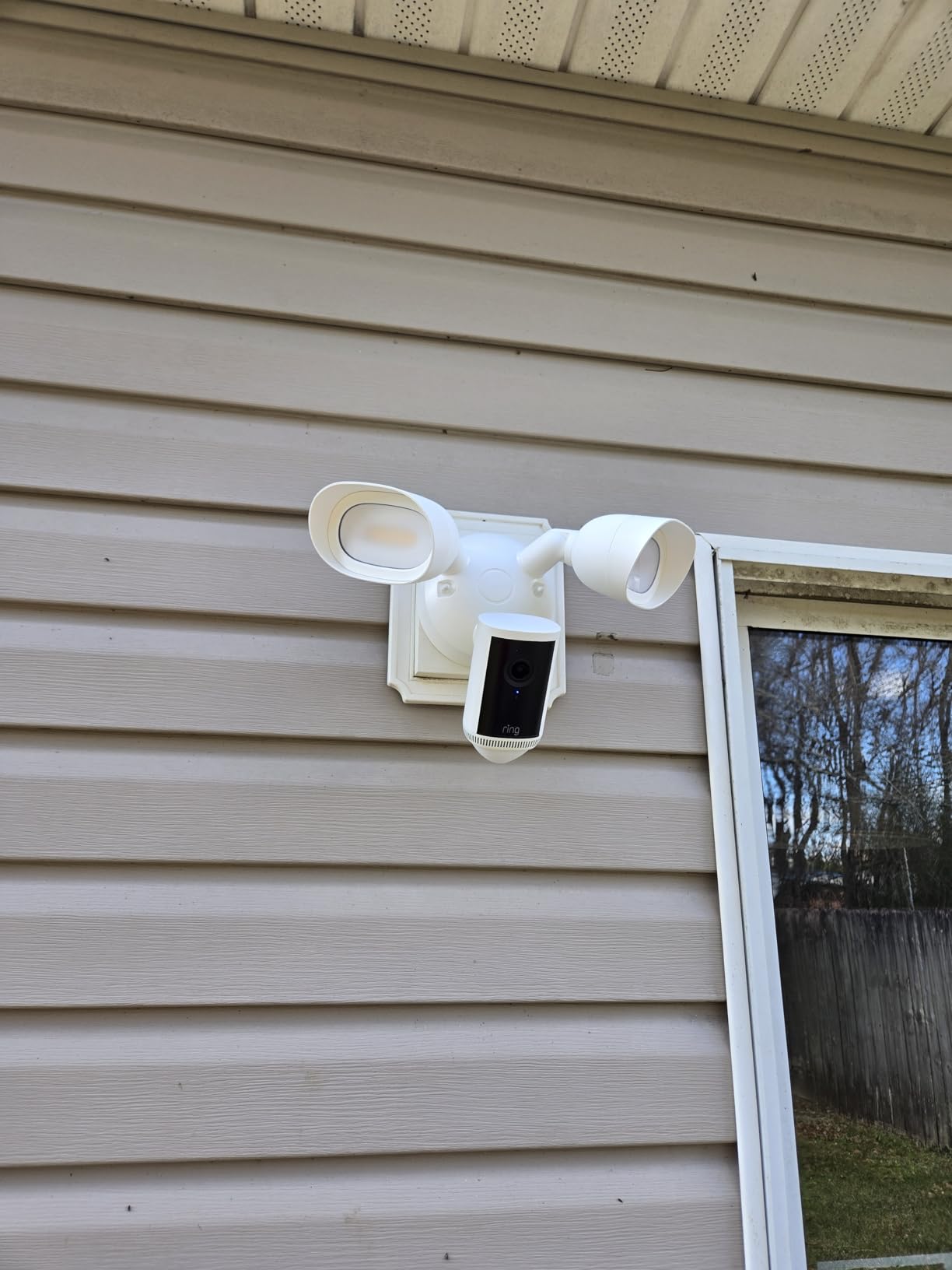
The Ring Floodlight Cam Wired Plus is the version of this product that most people end up owning, and the reason is unglamorous reliability. It screws onto the standard round electrical box where an existing outdoor light already sits, the wire pigtails connect to the same two wires coming out of your old fixture, and the whole job takes an afternoon with the included multi-tool.
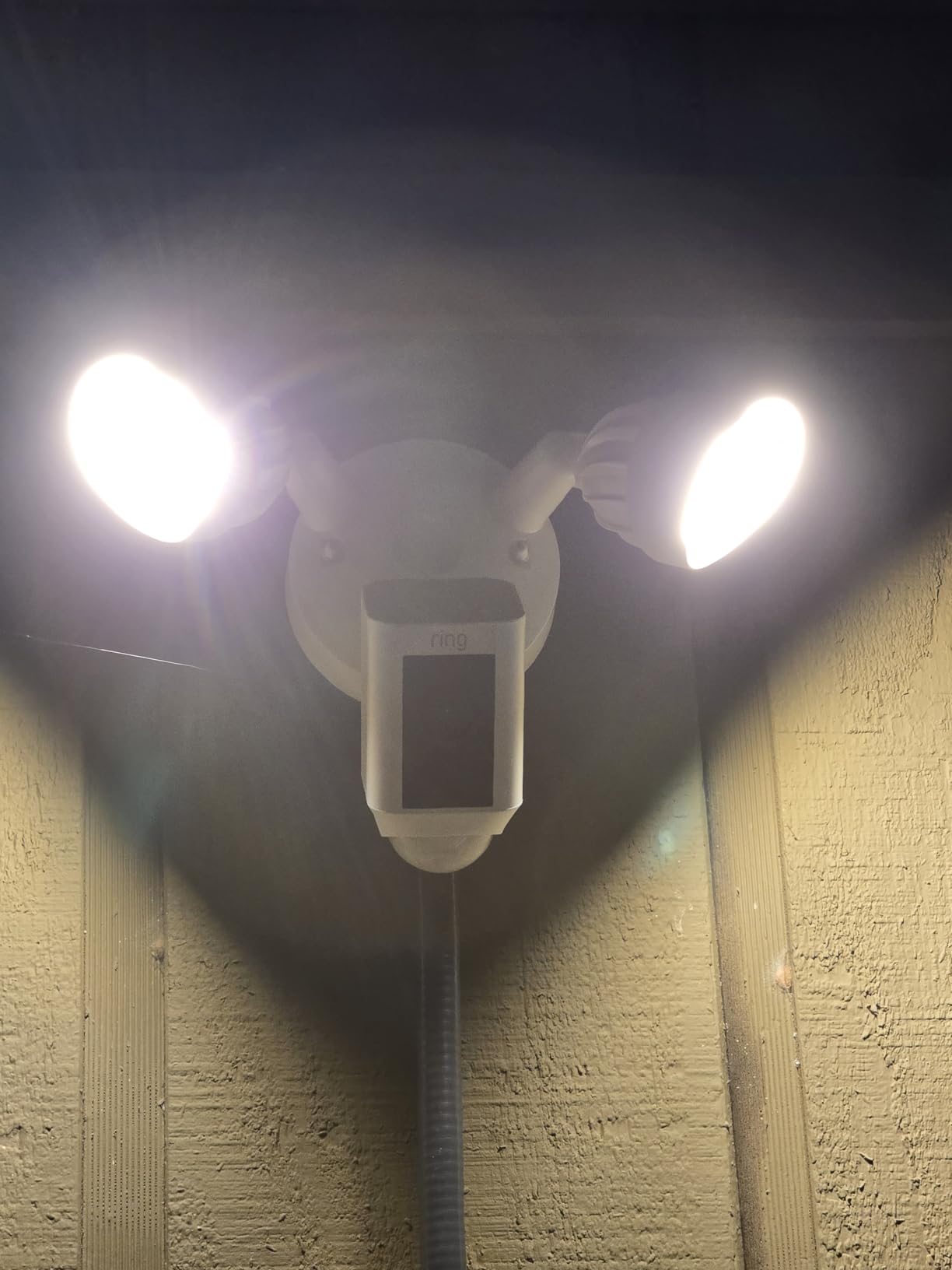
Owner reviews describe the same experience over and over: easy install, a light bright enough to flood an entire drive, and 1080p video that stays clear through the night. The review base is the largest in the category by a wide margin, which means the quirks are well documented rather than mysterious.
Best for: a homeowner with an existing outdoor light fixture who wants a proven, low-friction install and does not mind paying a monthly plan to keep recordings.
2000 Lumens and How Far It Reaches Down a Drive
2000 lumens is the sweet spot for a standard suburban driveway. Mounted at the usual height on the wall beside the garage or the front door, it throws usable light roughly 40 to 50 feet, which is enough to light the width of a two-car drive and a vehicle sitting in it.
Owners frequently note the light is warm and yellow rather than a cool white, which is easy to live with but worth knowing before you buy. There is no low ambient mode on this model, so the lamp is either fully on or off.
Fixed Angle and Why Motion Zones Do the Work Instead
There is no pan or tilt motor here. The view is fixed once the wall plate is level, and the only adjustment is the physical angle of the mount. That is a limitation for a wide drive, but the wide field of view plus customizable motion zones covers most approaches.
Set the motion zone so the street and the neighbor’s driveway fall outside it. Owners who skip this step end up with a light that fires every time a car passes, which is the fastest way to train your household to ignore the alerts.
The Subscription Question, Answered Honestly
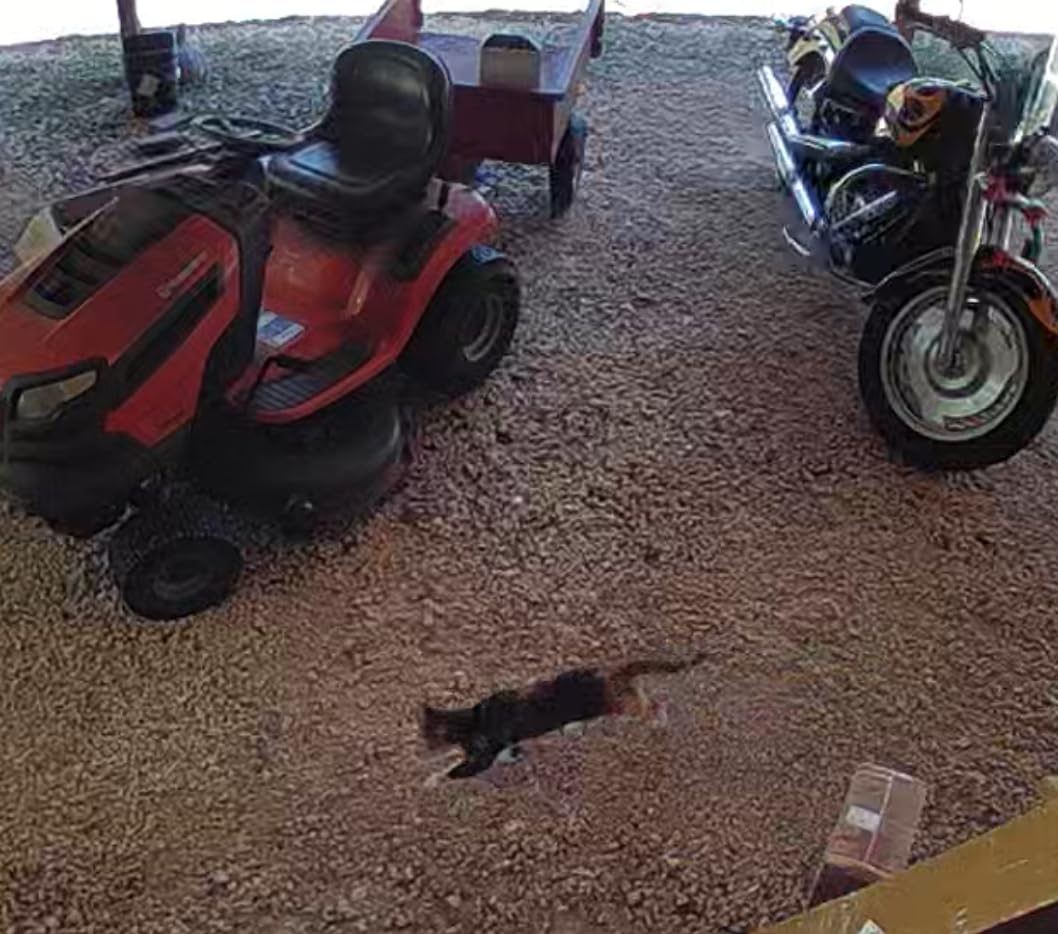
Ring Protect unlocks video history, AI alerts and richer person detection. Without it you still get live view, motion alerts, two-way talk and the floodlight itself, but stored clips are the part you pay for.
This is the single most common regret we found among owners: someone discovers after an incident that nothing was saved. If you want recordings without a monthly fee, skip ahead to the Wyze v2 and the two eufy models, which both record locally.
Not for: anyone on a 2.4 GHz-only mesh who needs 5 GHz range, or anyone with a very long rural drive who will need a second unit for the far end.
2. Blink Wired Floodlight Camera – Most Light for the Money
Blink Wired Floodlight Camera, Smart security camera, 2600 lumens, HD live view, enhanced motion detection, built-in siren, Works with Alexa, 1 camera (White)
2600 lumens
1080p color night view
Dual-zone motion detection
Built-in siren
Pros
- 2600-lumen output is the brightest fixed-view option in this list
- Dual-zone detection cuts down on street-facing false alerts
- Color night view on 1080p live feed
- Simple app setup with Alexa support
Cons
- Person detection needs a Blink subscription after the trial
- Clipping depends on the cloud unless a Sync Module is added
- Fixed view angle set at install time
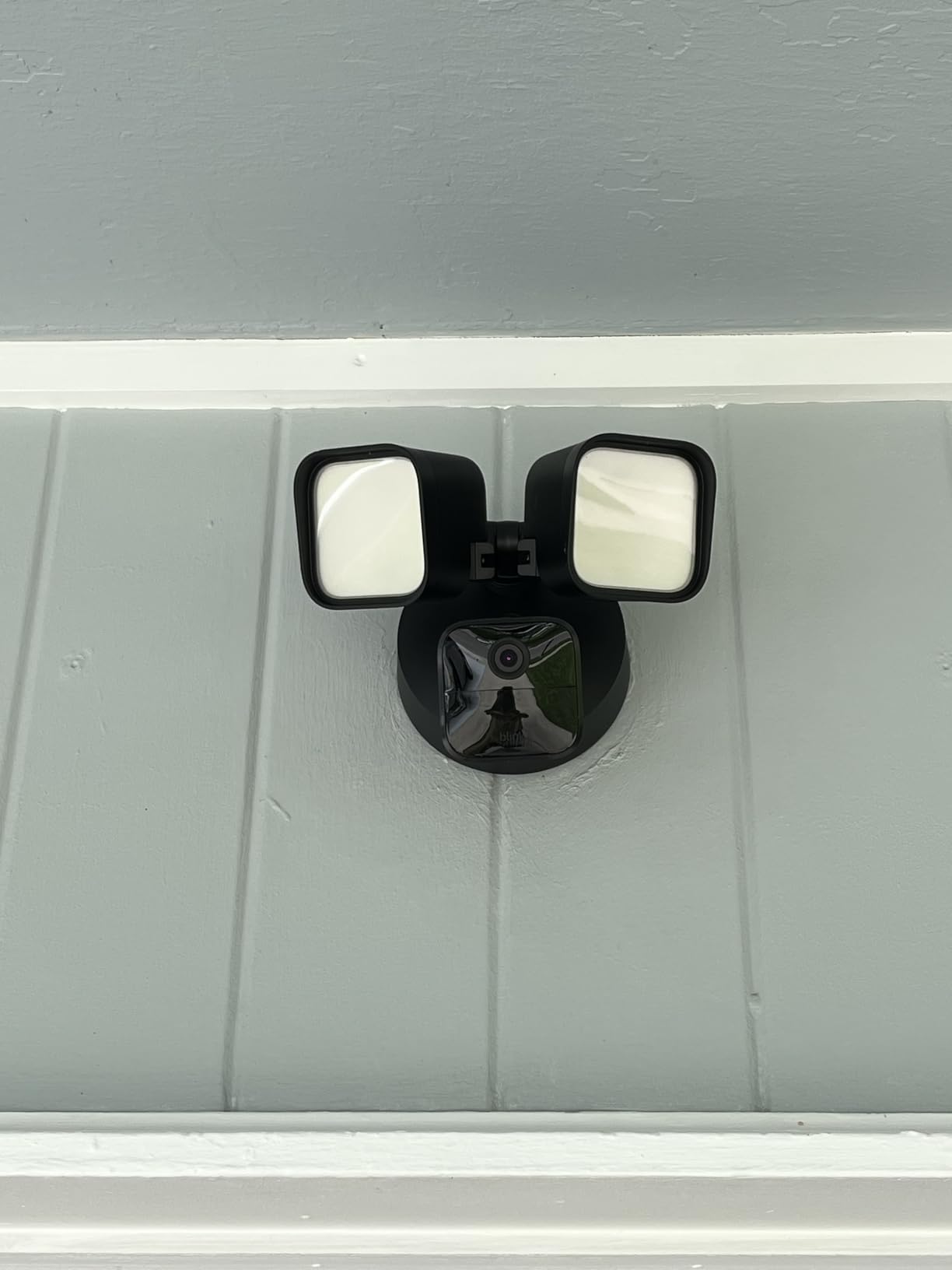
The Blink Wired Floodlight Camera answers a question most roundups skip: what if you want the driveway lit properly and you do not want to think about it? At 2600 lumens it puts more light on the drive than the Ring Plus, and the dual-zone motion detection is genuinely useful on a street-facing property.
Installation is the same hardwired pattern – it mounts to an existing outdoor light base. The app setup is straightforward, and Alexa users can pull up the live feed on an Echo Show without opening anything.
Best for: a bright-driveway problem where light output is the priority and you already pay for a Blink subscription or plan to.
Dual-Zone Detection Is the Feature That Earns Its Place
Dual-zone detection lets you carve the field of view into a sensitive zone covering your drive and a second zone that only records motion, or that you ignore. On a driveway that borders a sidewalk or a busy street, this is the difference between a camera you leave on and one you turn off.
Person detection is the catch. It runs through the Blink subscription plan, so on a free account you get motion events without the filtering that tells you a person is on your drive rather than a stray cat.
Brightness Versus Storage: Read Both Lines
2600 lumens is genuinely bright, and reviewers describe the coverage area as wide enough for a full driveway and yard edge. The color night view on the 1080p feed holds up better than the price of the unit suggests.
Clips live in the cloud unless you add a Sync Module 2 with a USB drive, or a Sync Module XR with a microSD card. That local option is available without a monthly fee, but it is a separate purchase and a separate setup step.
Where Blink Falls Short
There is no pan or tilt, so the angle you set at install is the angle you keep. The 4.2 star average across more than 13,000 ratings reflects that people like the hardware and like the light output, and are less positive about the plan structure.
Not for: anyone who refuses to add a Sync Module and also refuses to pay for cloud storage, or who needs a telephoto lens to read a plate at distance.
3. Ring Floodlight Cam Wired Pro – Best for Shaded Driveways
Ring Floodlight Cam Wired Pro, Home or business security, Retinal 2K Video, Color Night Vision and Two-Way Talk with Audio+, White
Retinal 2K HDR
2000 lumens
110dB siren
3D Motion Detection
Pros
- HDR imaging fixes contrast on drives in shadow with a bright street
- 3D Motion Detection cuts nuisance notifications
- Color night vision and clearer 1080p-class detail
- 110dB siren is the loudest in this group
Cons
- Floodlight tone is warmer and yellower than the Plus model
- Mounting ribbon is too short for inverted installs
- Compression softens detail past 15 to 20 feet
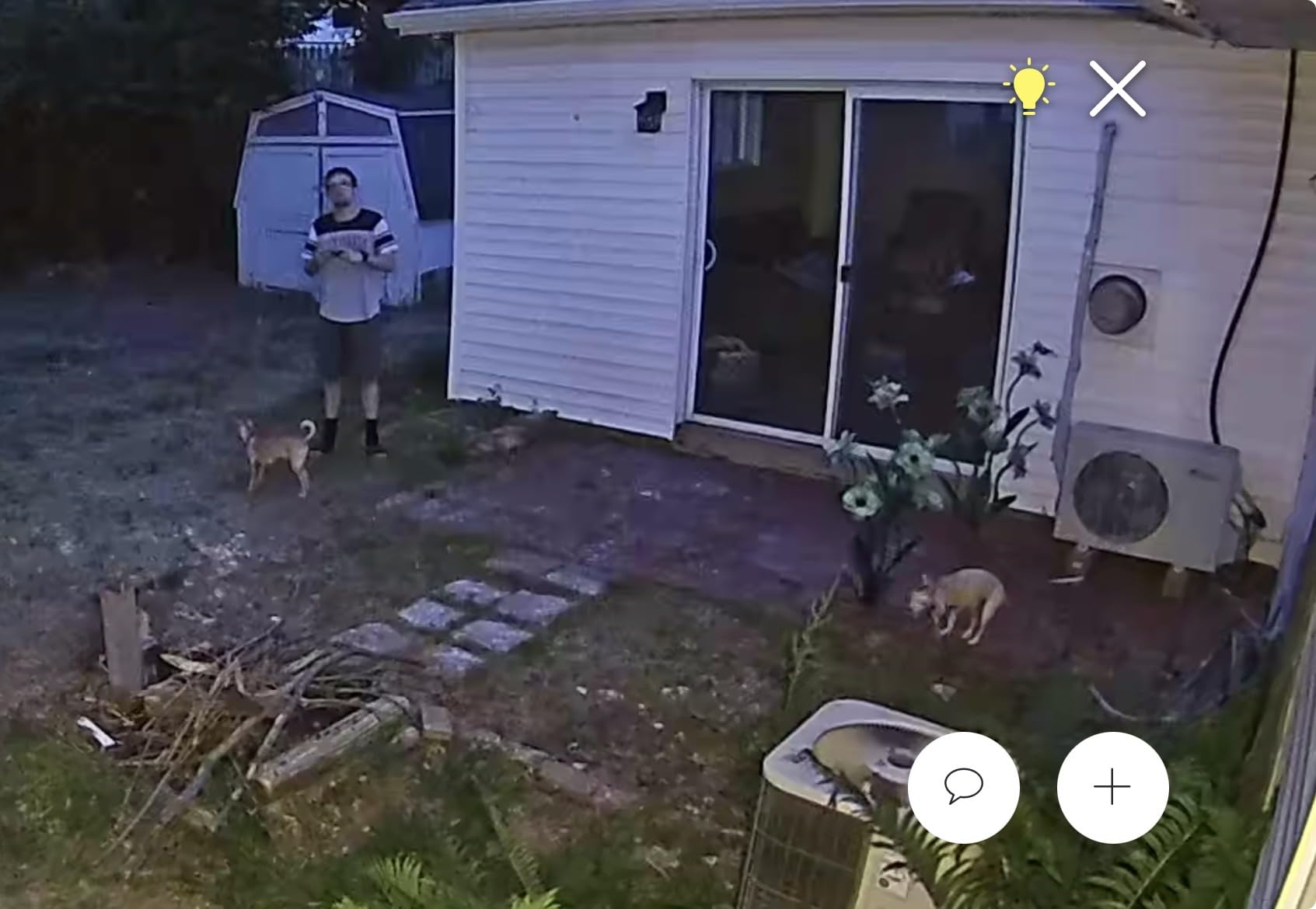
The Ring Floodlight Cam Wired Pro exists for one reason: some driveways are lit by the street and the house sits in shadow. HDR is the fix. It balances an image where half the frame is bright asphalt at night and the other half is dark, and owners call it transformative once they see the difference against a non-HDR unit.
3D Motion Detection is radar plus computer vision, which is why this model generates fewer nuisance notifications than the Plus. The 110dB siren is also a step up, and reviewers single out loud sirens as the feature that actually changes behaviour when someone is circling a vehicle.
Best for: a shaded or partly sheltered driveway where contrast is the problem, and for anyone who wants a genuinely loud siren.
What HDR Actually Solves at Night
Without HDR, a driveway with a streetlight on one end and a dark house wall on the other produces either a black subject or a blown-out road. The 2K sensor with HDR pulls both ends into a usable range in one frame.
The trade-off is compression. Reviewers note detail softens at distance, with usable identification distance around 15 to 20 feet. If your drive is longer than that and you want plate-level detail at the far end, this is not the tool – that is the 4K Pro or the dual-lens eufy.
3D Motion Detection and Why Fewer Alerts Matter More
3D Motion Detection combines radar distance data with computer vision, so the camera can tell a person walking up the drive from a branch moving in the wind at a similar pixel size. On street-facing properties this is the difference between a usable camera and one that sends you 40 notifications a night.
It is not perfect, and it is not a substitute for drawing motion zones, but it lowers the baseline noise significantly on most drives.
Install Notes and the Warmer Light
Two-way talk runs on Audio+, which is clearer than the Plus, and the 2000-lumen floodlight matches the Plus output. Owners upgrading from the Plus frequently mention the light color shifting warmer and yellower in this generation.
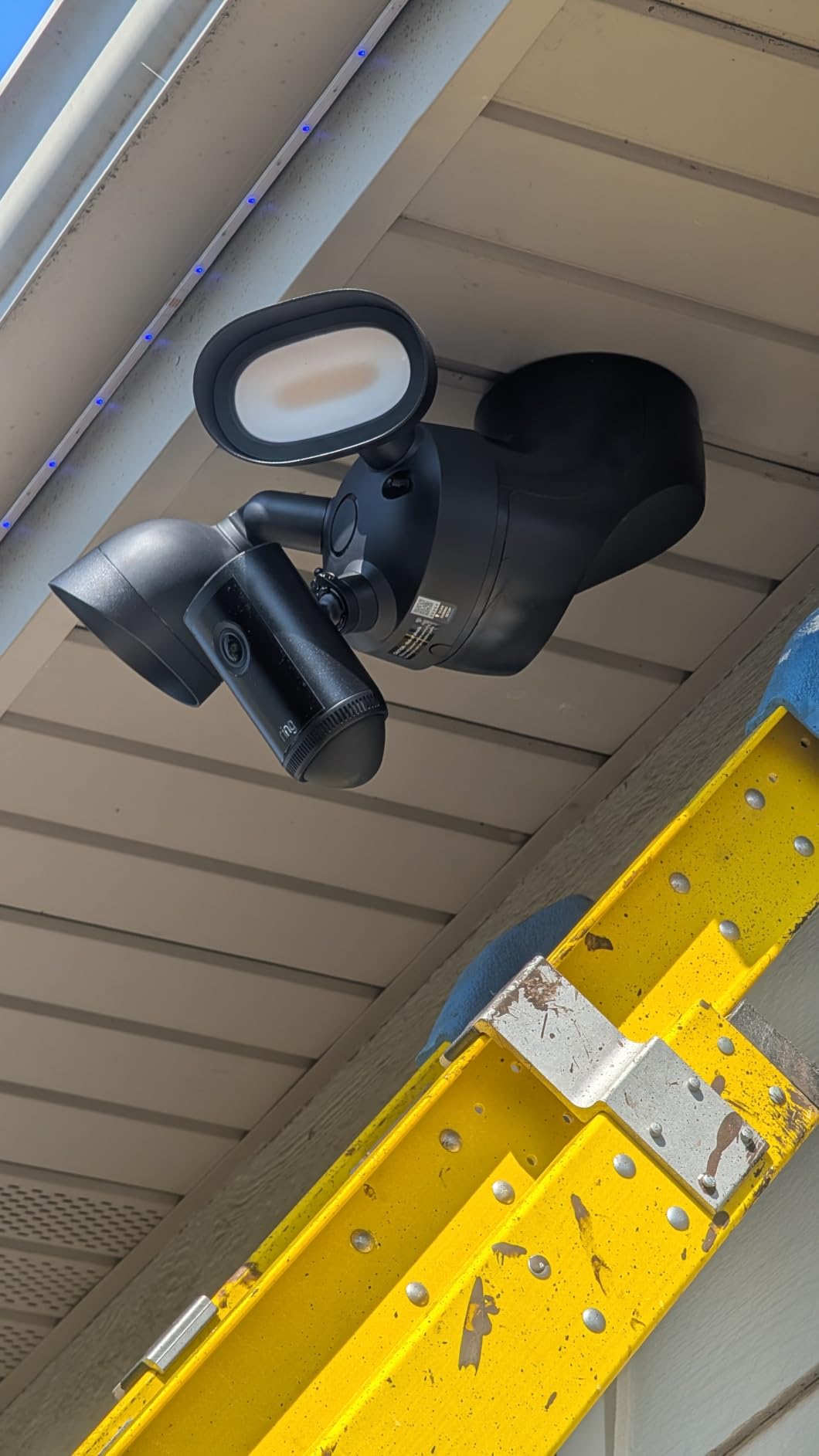
One practical complaint: the supplied mounting ribbon is too short when the unit is mounted upside down, which is a common orientation on an eave or soffit. Have a longer strap on hand before you start.
Not for: a long rural driveway where 15 to 20 feet of usable detail is not enough, or buyers who want a warmer-free, cooler light output.
4. Arlo Wireless Floodlight Camera 2K HDR – No Electrician Required
Arlo Wireless Floodlight Security Camera 2K HDR – 1-Cam
Up to 3000 lumens
2K HDR 160-degree view
Rechargeable battery
IP65
Pros
- Screws into a standard socket with no wiring work at all
- Sharp 2K HDR picture with strong color night vision
- Ball-joint positioning makes aiming easy
- Broad smart-home and voice assistant compatibility
Cons
- Proprietary charging cable means it cannot be hardwired
- Battery needs regular recharging and a ladder at height
- Video history and AI features need an Arlo Secure plan
The Arlo Wireless Floodlight Security Camera 2K HDR is the only pick here with no wiring requirement at all. It is a rechargeable battery unit that screws into a standard outdoor socket, which is the answer for a driveway corner where there is no junction box and running cable is not realistic.
The 160-degree field of view and 2K HDR sensor give it one of the widest views in this group, and 12x digital zoom with auto zoom and tracking helps you follow a vehicle as it approaches. The floodlight runs up to 3000 lumens and dims in the app, so you can tune it down late at night.
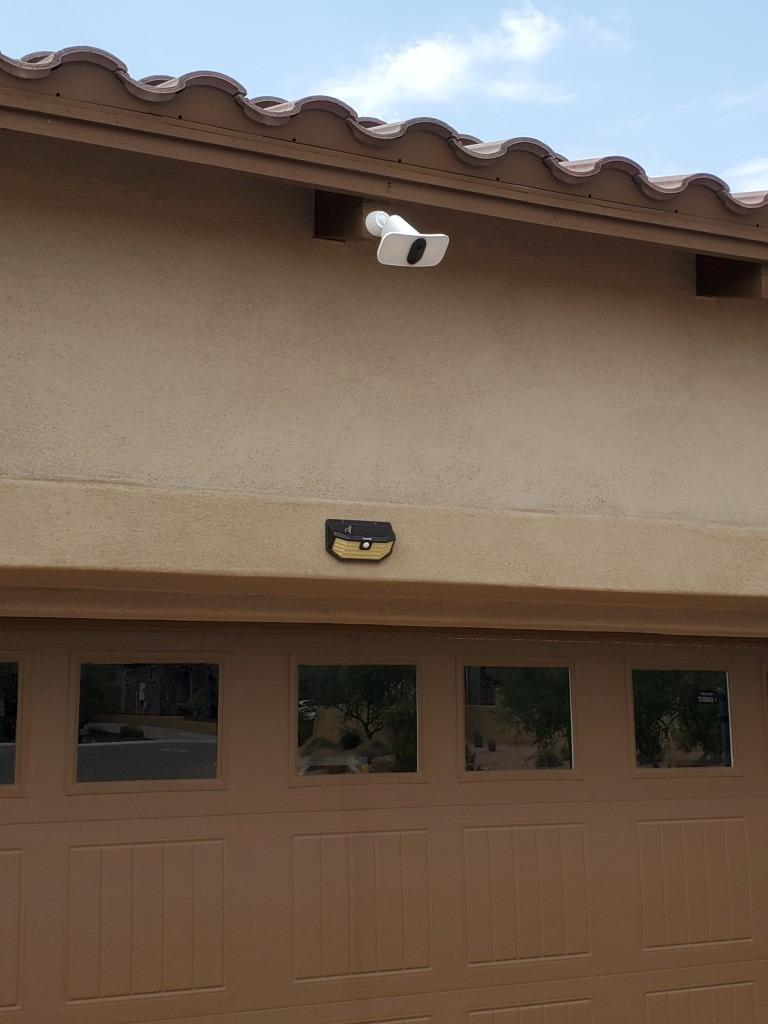
Best for: a property with no mains power where a drive still needs coverage, and for Apple Home or SmartThings households.
Why Wireless Wins When There Is No Junction Box
A hardwired floodlight camera needs an electrical box at the exact spot you want coverage. If your drive ends near a gate, a side wall or a detached garage with no existing fixture, the honest options are running new cable or going wireless.
Arlo goes wireless. The trade-off is recharge cycles. Owners with high-mounted units mention needing a ladder to reach the charging port, and the battery is the first thing that degrades over a few years.
Ecosystem Breadth Is the Quiet Win Here
This is the most open unit in the lineup, working with Alexa, Apple Home, Google Home, SmartThings and IFTTT. For a household that has already committed to one of those platforms, that beats a camera locked to a single app.
Some units report repeated Wi-Fi disconnects and missed motion events, which is the most common reliability complaint in the reviews. It is not universal, but it is worth considering if your driveway is at the edge of your network.
Day-to-Day Ownership Details
Color night vision reaches about 25 feet before the light is needed, two-way audio is clear, and there is a remote siren plus floodlight control in the app. An emergency response trigger is also available for verified subscribers.
Storage starts at 32 GB onboard, but reviewing recorded history properly requires an Arlo Secure plan. Treat that like the Ring and Blink models: the hardware is useful without a plan, the evidence archive is not.
Not for: anyone who can hardwire and would rather not climb a ladder every few months to charge a battery, or anyone who needs a wired-only unit for reliability.
5. WYZE Floodlight Camera v2 – Best Floodlight Camera Without a Subscription
WYZE Floodlight Camera v2, 2K HD Outdoor Security Camera with 2800 Lumens
2800 dimmable lumens
2K HD 160-degree view
24/7 microSD recording
105dB siren
Pros
- 24/7 local recording to microSD with no monthly fee
- Very bright 2800-lumen lights with adjustable brightness
- Dusk-to-dawn mode driven by a real light sensor
- 160-degree view covers a whole driveway
- IP65 weather resistance
Cons
- Without a plan or card
- event saves are snapshots only
- Fixed tilt angle with no left-right pan
- 2.4GHz Wi-Fi only
The WYZE Floodlight Camera v2 is the one to buy if you refuse to pay a monthly fee but still want usable recordings. It records 24/7 to a microSD card, up to 30 days, and none of that depends on a cloud plan.
The light is also the best-adjusted in this group. At 2800 lumens it is dimmable, and the ambient light mode plus dusk-to-dawn automation run off a real light sensor rather than a clock, so it does not switch on at six in the evening in December. Several reviewers mention switching brands specifically over that feature.
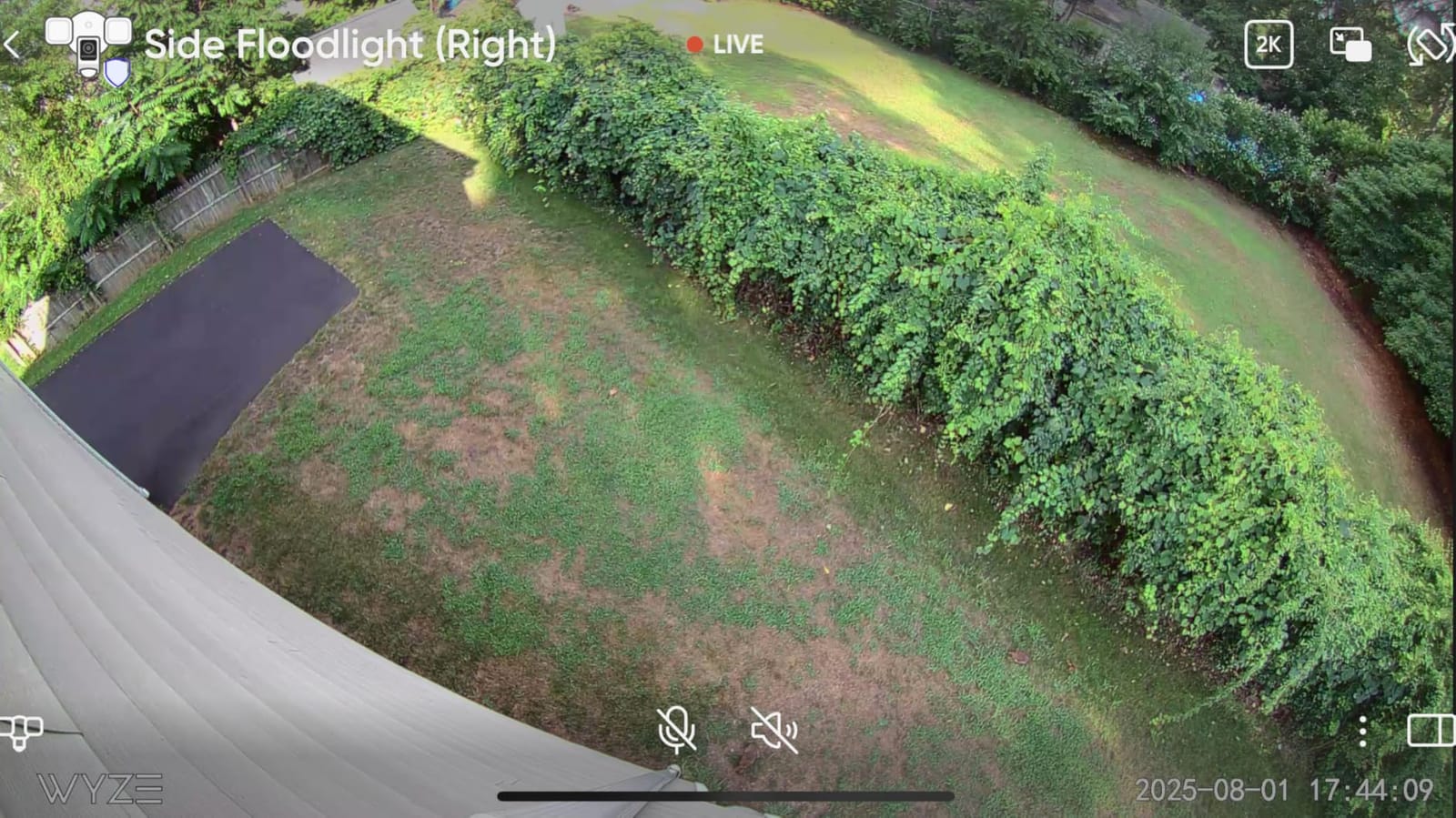
Best for: homeowners who want local recording, a properly dimmable light and no recurring fee. This is our pick for a driveway on a quiet street or a rural property.
What Local Storage Actually Buys You
With a microSD card installed, the v2 writes continuous video to the card and keeps roughly a month on a 128 GB card at reduced settings. You get playback, motion zones and the siren without paying anything, which no other wired unit in this roundup offers at this level.
Without a card and without a plan, event recording saves snapshots only – a still frame, not a clip. That is the fine print that catches people out, so decide on the card before you install rather than after.
2.4GHz Only Is the One to Check Before Buying
This unit connects on 2.4GHz only, with no 5GHz support. In a large house with a distant router or a multi-band mesh, that can mean weak signal at the garage end of the drive. Owners on large properties report needing an access point near the camera.
Some units also drop offline and need a power-cycle reset. Both issues are connection-layer rather than hardware failures, so improving the Wi-Fi at that end of the house usually resolves them.
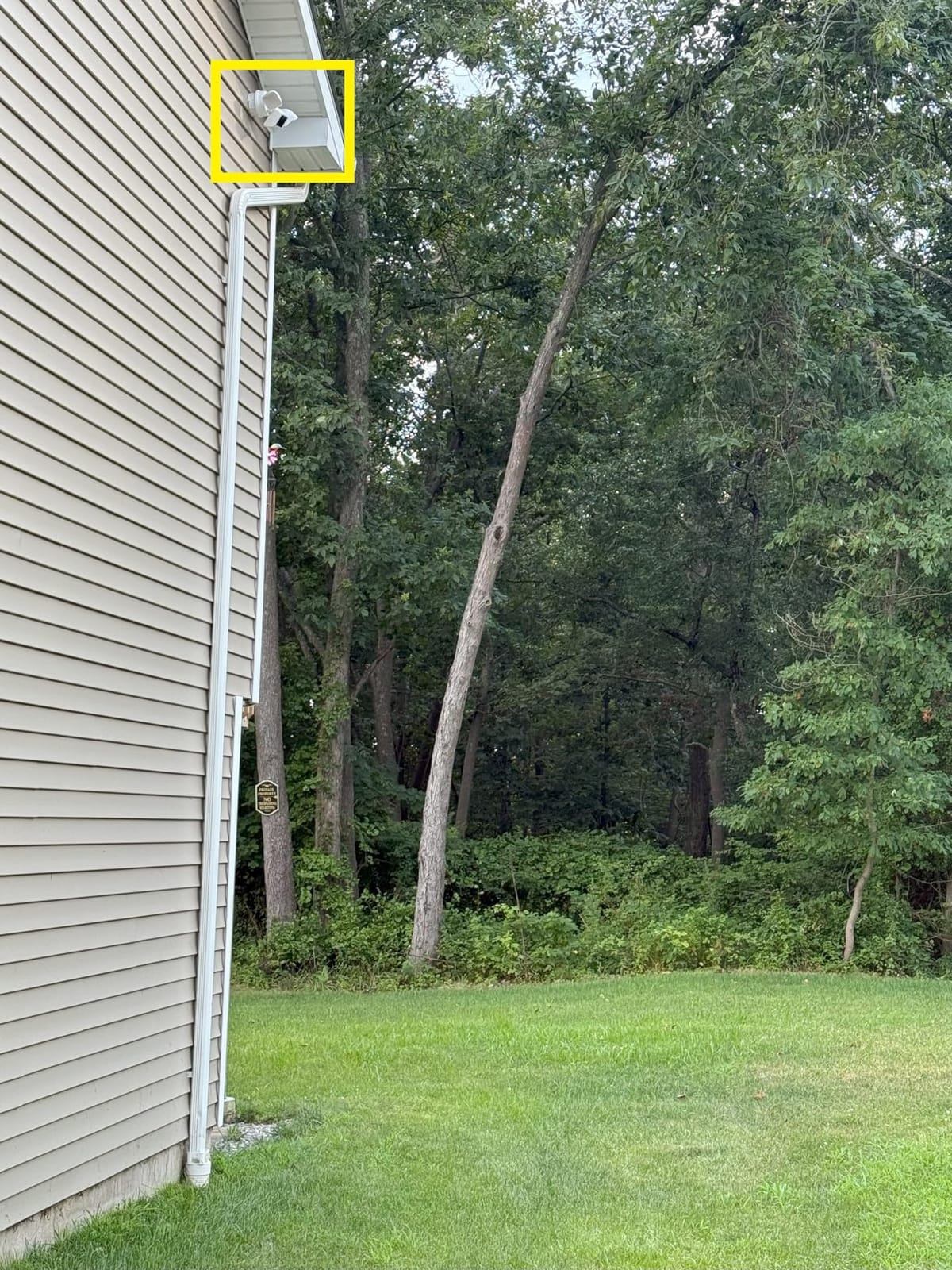
Sensor, Audio and the 105dB Siren
Motion detection uses a 270-degree PIR with a 160-degree camera view, which is a wide sweep for catching a vehicle entering from any angle. The 105dB siren and two-way talk cover the talk-back-and-scare-them-off case.
Playback is occasionally stuttery according to some reviews, and the tilt angle is fixed at install. It works with Alexa, Google Assistant and IFTTT.
Not for: homes where the driveway end of the property is beyond 2.4GHz range, or anyone who needs a movable camera head.
6. eufy Security Floodlight Camera E340 – Dual Lenses and 360 Degrees of Tracking
eufy Security Floodlight Camera E340, Dual-Lens, 360° Coverage, 8X Zoom
Dual 2K/3K lenses
360 pan and tilt
2000 lumens
24/7 local recording
Pros
- Dual lenses give both a wide view and telephoto detail to 50 feet
- 360-degree pan and tilt with silent AI auto-tracking
- No monthly fee with 24/7 local recording
- Dual-band Wi-Fi 6 gives a noticeably stronger connection
- Silent motor that does not wake the house
Cons
- Some buyers report slow or late motion triggering
- Recording clips can end while motion continues
- Mounting bracket may need an adapter for an existing box
The eufy Security Floodlight Camera E340 is the most capable unit in this roundup on paper. It carries two separate cameras – a 3K wide-angle lens and a 2K telephoto – so a single mounted unit gives you both a broad view of the drive and a sharp look at a vehicle 50 feet away, with 8x hybrid zoom and 3x optical between them.
The head pans and tilts a full 360 degrees with AI auto-tracking for people and vehicles, and the motor runs silently so it does not wake the house at 3am. It records 24/7 to a microSD card up to 128 GB or to a eufy HomeBase S380, with no subscription involved.
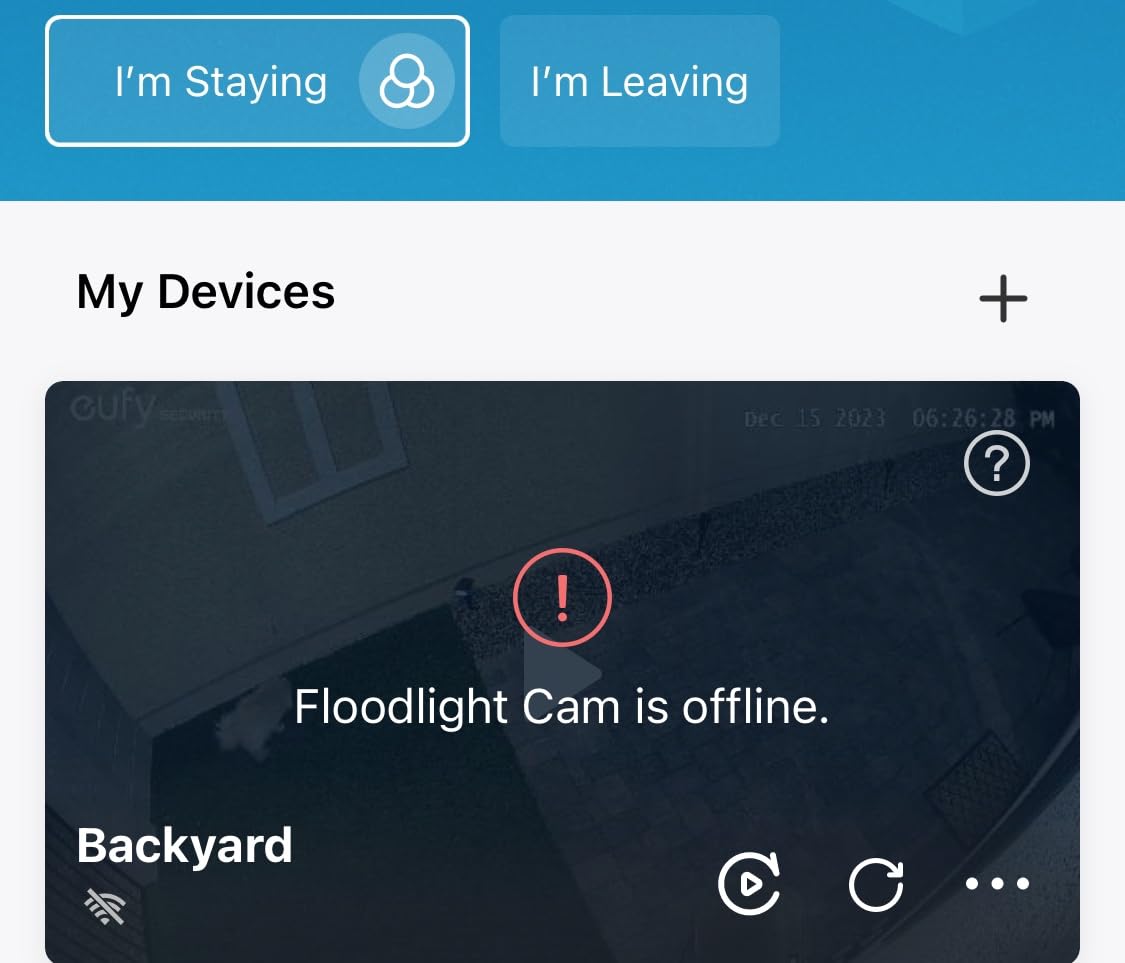
Best for: a long driveway where you need both wide coverage and a telephoto read on a plate, and for anyone on a dual-band network.
Why Dual-Band Wi-Fi 6 Matters on a Driveway
This is the only floodlight camera here with dual-band Wi-Fi 6, supporting both 2.4GHz and 5GHz. For a camera at the end of a driveway in a large house or a building with masonry walls, that is a real reliability difference rather than a spec-sheet line.
It is also the most physical unit at 12.6 x 8.5 x 7.3 inches and 1380 g. That size is a genuine issue on an older, undersized junction box – budget for an adapter before the day of install.
One Trade-Off You Should Know: Resolution Modes
Maximum resolution drops to 2K when AI Tracking or Dual Views are active. If you enable tracking to follow a vehicle, you give up some of the 3K detail that makes the telephoto lens worth having.
For most driveways that is a good trade, because a tracked subject at 2K is more useful than a static subject at 3K. If you are reading plates at a fixed spot instead, leave tracking off.
Local Recording and the 2000-Lumen Light
The 2000-lumen light is adjustable with an ambient mode and a 95dB alarm, and IP65 covers the weather rating most buyers in northern climates actually need. The 95dB alarm is quieter than the Ring Pro’s 110dB siren.
Some buyers report motion triggering that is slow or late even at maximum sensitivity, and clips that end while motion continues. Setting a slightly larger motion zone and reducing sensitivity one notch is the usual fix.
Not for: small or vintage junction boxes without an adapter, or buyers who want the loudest siren available.
7. Ring Floodlight Cam 4K Pro – Maximum Detail on a Shaded Drive
Ring Floodlight Cam 4K Pro (newest model), Wired, Retinal 4K with wide-angle video, 10x Enhanced Zoom, and 2000 Lumen Floodlights, White
Retinal 4K
2000 lumens adjustable 200-2000
3D Motion Detection
85dB siren
Pros
- Very sharp 4K image across a wider field of view than earlier models
- Improved two-way talk audio
- Floodlight brightness adjusts down to 200 lumens
- Low-Light Sight holds color in near-darkness
- Quick install with wiring strap and ground wire included
Cons
- Larger body with less pan range than the previous model
- Floodlight tone is more yellow than earlier versions
- Upgraders from the 2K Pro report modest clarity gains
The Ring Floodlight Cam 4K Pro is the top of the Ring ladder, and the reason to buy it is pixel density. Retinal 4K with 10x enhanced zoom means a vehicle at the far end of a driveway holds far more detail than the 1080p Plus or the 2K Pro.
Low-Light Sight is the other differentiator. It holds full color in near-dark conditions, so a driveway scene reads better before the floodlight has fully ramped up – useful in a shaded drive where light arrives late.
Best for: a long or shaded driveway where you intend to identify a vehicle, and for an existing Ring household that wants one app for everything.
Adjustable Brightness Solves the Neighbor Problem
The floodlight is adjustable from 200 to 2000 lumens, which is the feature that makes this the most considerate neighbor in the roundup. Drop it to 400 lumens after midnight and the drive stays visible without flooding the adjoining property.
That matters more than most reviews admit. Light trespass onto a neighbor’s yard is one of the most common complaints owners raise about this whole product category, and having real dimming control is the fix.
Upgrade Path: What 2K Owners Report
If you already run the Ring 2K Pro, owners upgrading report a smaller clarity gain than the resolution jump suggests, and some report more pixelation on a moving subject. The body is also larger with less pan range than the previous generation.
Starting fresh on a Ring system, the 4K Pro is the strongest overall image. Coming from 1080p, the jump is dramatic. Coming from 2K, it is a side-grade.
Detection, Audio and the Rest of the Ring Stack
3D Motion Detection is the same radar-plus-vision system as the 2K Pro, and it performs identically in most installs. Two-way talk with Audio+ is clearer than earlier models, and the siren is 85dB – the same as the Plus, not the 110dB of the 2K Pro.
One practical note: video quality varies with internet bandwidth and device temperature, so a marginal uplink can soften the 4K stream. Ring also notes video quality depends on those two factors directly.
Not for: current 2K Pro owners expecting a huge upgrade, or anyone on a weak internet connection outside the camera’s Wi-Fi range.
8. eufy Security Floodlight Camera E30 – Movable Head Without a Monthly Fee
eufy Security Floodlight Camera E30, 2K, AI Detection & Tracking, Outdoor
2K HD
2000 lumens
360 pan and tilt with AI tracking
No monthly fee
Pros
- 360-degree pan and tilt that a fixed floodlight cannot match
- AI detection and auto-tracking of people and vehicles
- 2000 lumens with full-color low-light visibility
- Hardwired 24/7 recording with no monthly fee
- Power amplifier improves Wi-Fi range through walls
Cons
- 2.4GHz Wi-Fi only with no dual-band support
- 2K resolution trails the dual-lens E340
- Feature set is trimmed compared with higher eufy models
The eufy Security Floodlight Camera E30 solves the fixed-angle problem on a budget. A 360-degree pan-and-tilt head with scheduled auto-patrol means one unit can cover the driveway, the side gate and the path to the back door, where a fixed floodlight would only see one of them.
AI detection and auto-tracking recognize people and vehicles and follow them within the frame. Recording is hardwired 24/7 with no monthly fee, and the 2000-lumen light holds full color in low light.
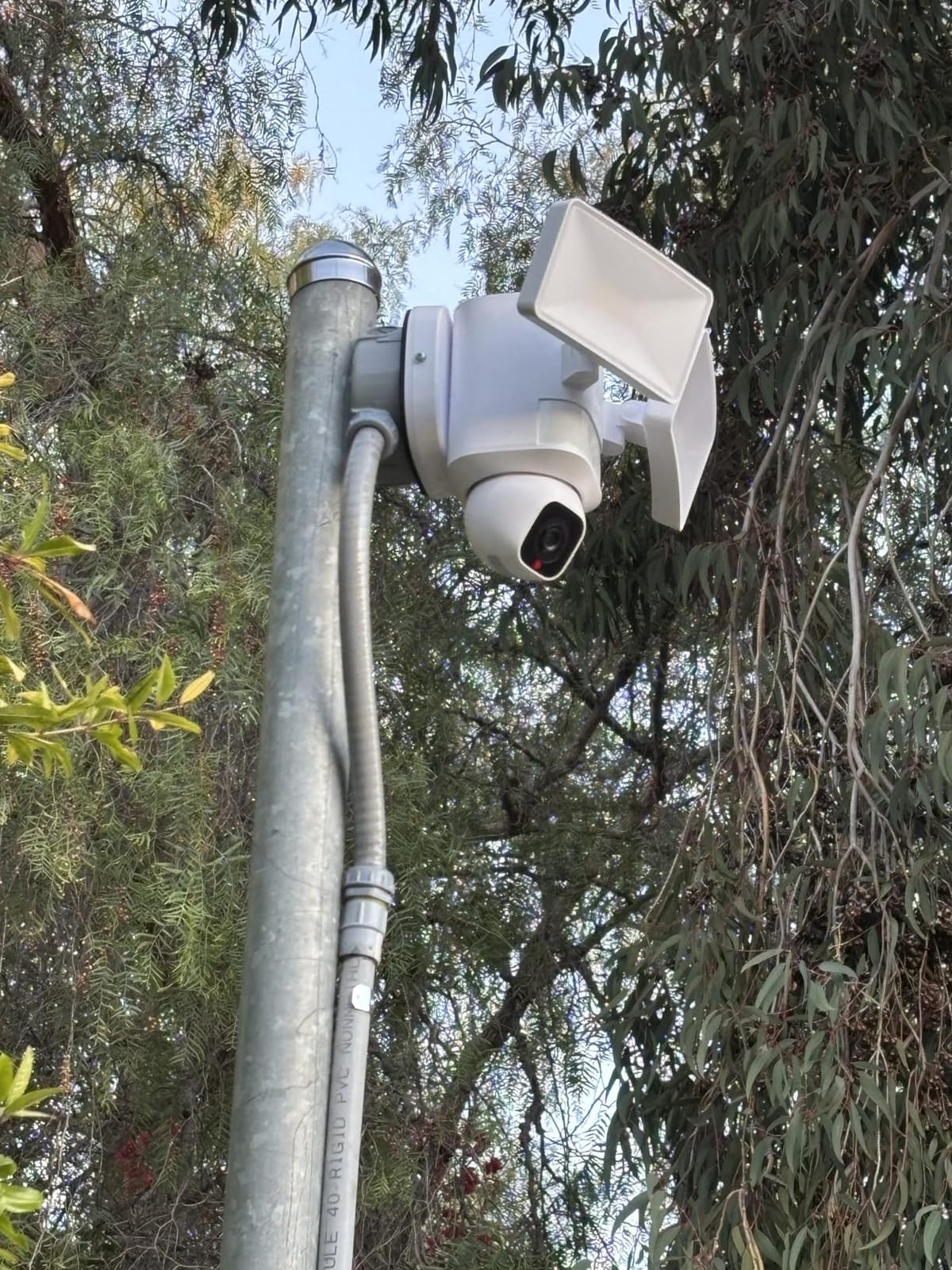
Best for: someone who wants a movable camera head and no subscription, on a single driveway or a small side yard.
Why a Movable Head Changes the Install Decision
A fixed floodlight camera commits you to one view at install. If a car parks on the wrong side of the drive, or a delivery driver comes down the side path, that footage is simply not there.
Pan and tilt plus auto-tracking lets one unit cover two or three approaches. The compromise is that a tracking camera is following a subject rather than holding a fixed composition, so the area you care about most can drift out of frame – the most common complaint about this type of unit.
The 2.4GHz Limitation and Range Workaround
The E30 is 2.4GHz only. Its answer to that is a built-in power amplifier that improves signal strength and wall penetration, which helps but does not substitute for a 5GHz radio.
If your router is far from the driveway, test the signal at the install point before mounting. On a large property, the E340’s dual-band Wi-Fi 6 is the safer choice for the same reason.
What You Give Up Compared With the E340
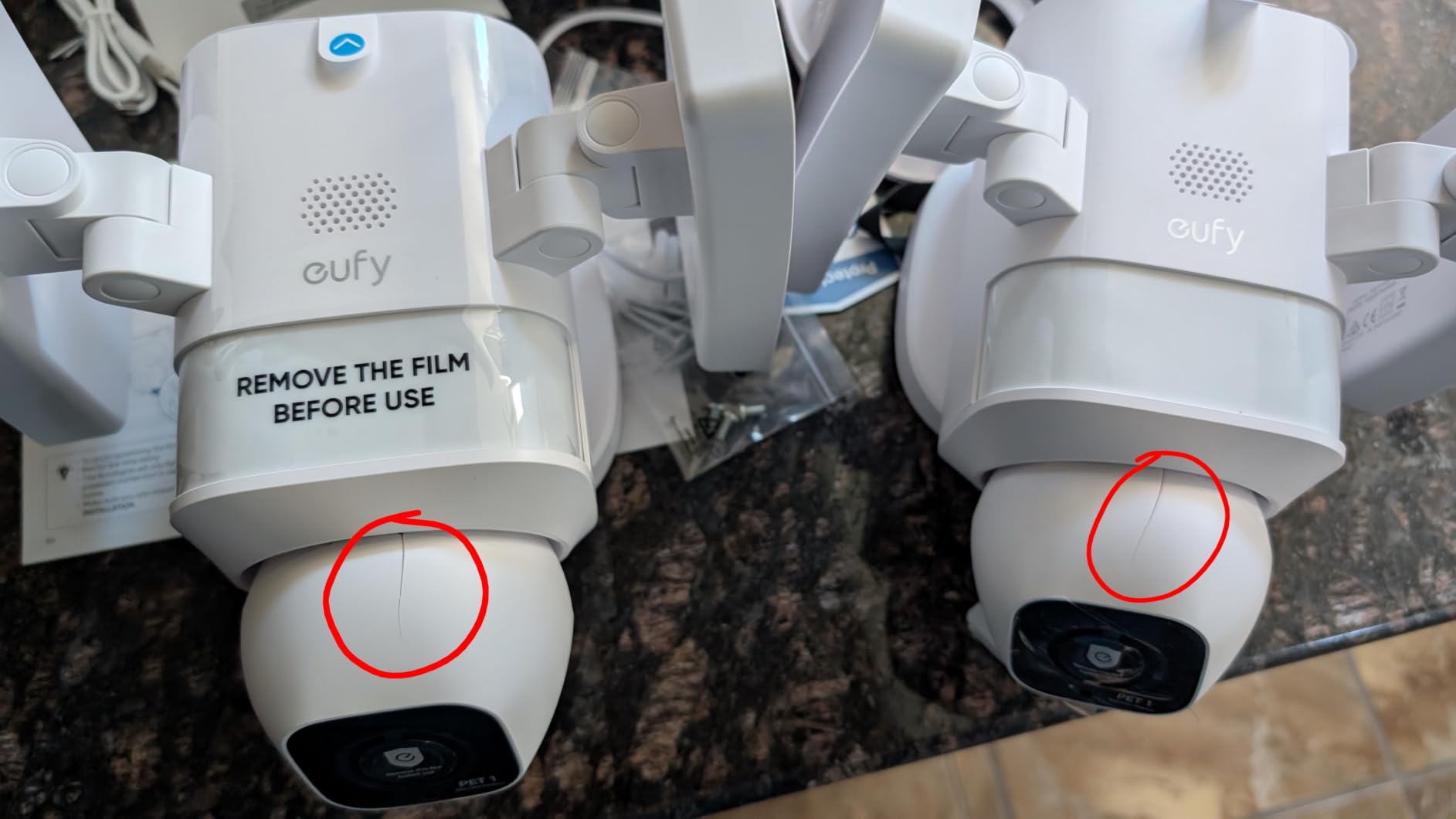
The single 2K sensor is the main gap. If you need to read a plate at 50 feet, the E340’s telephoto lens is doing something the E30 cannot. The E30 also carries a trimmed feature set compared with eufy’s higher-tier floodlight models.
At 4 pounds and 10.94 x 7.4 x 6.57 inches it is smaller than the E340, which matters on an older junction box.
Not for: long drives that need telephoto detail, or homes on a 5GHz-only network with the router far from the install point.
How to Choose a Floodlight Camera for a Driveway
Specs only matter once they match your drive. These five decisions come before the brand on the box, and each one has knocked a camera off a shortlist in our testing.
Start With the Junction Box, Not the Camera
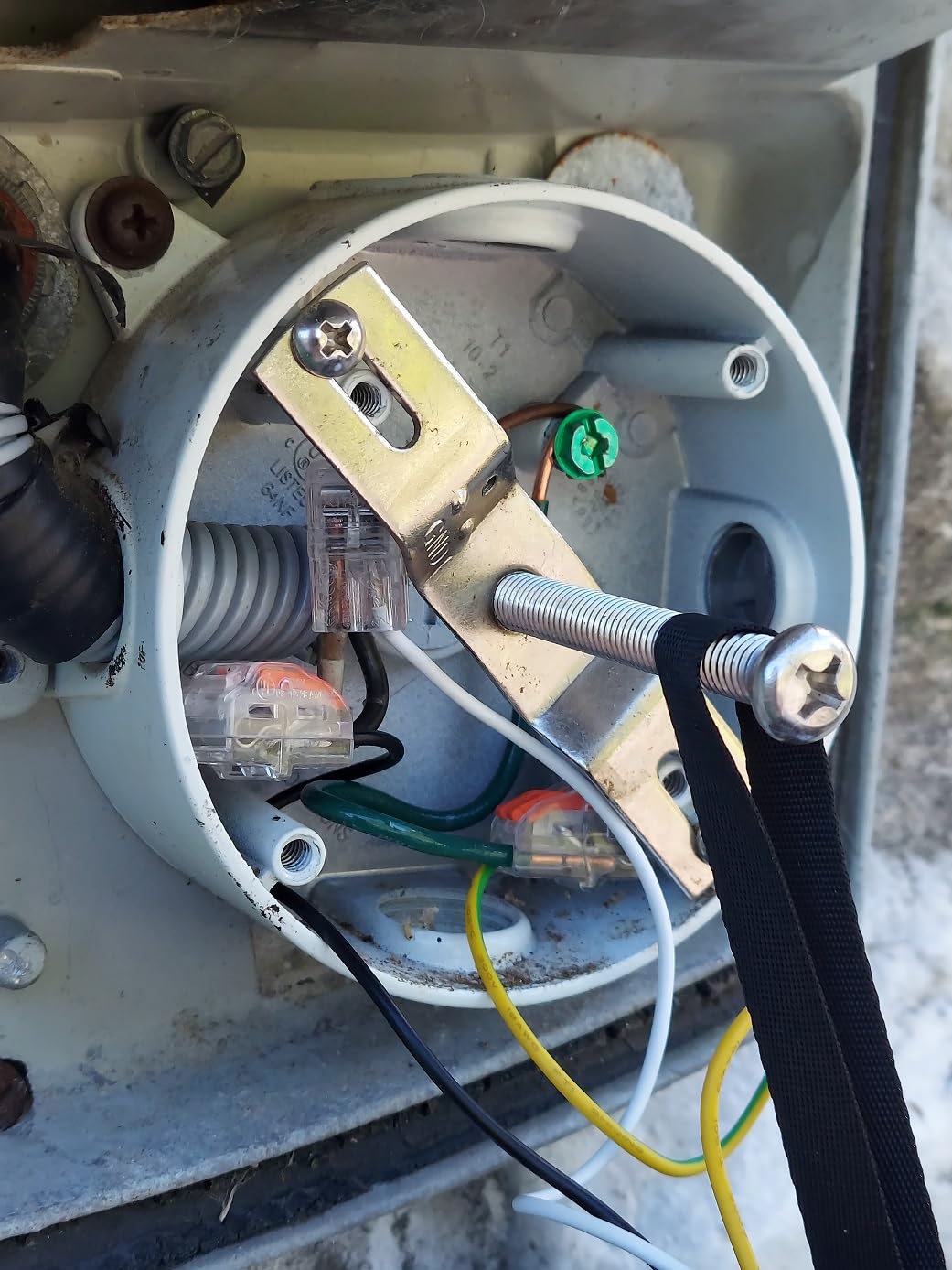
A hardwired floodlight camera replaces an existing outdoor light fixture and needs an electrical box at the spot you want coverage. Walk out to your driveway tonight and look for a box within 8 to 10 feet of the wall or soffit where you want the camera.
If there is no box there, your options are running new cable with an electrician, choosing the Arlo wireless unit, or accepting a lower vantage point on an existing box elsewhere. Owners who have tried the major brands consistently report that the wiring position – not the camera quality – decided how happy they were with the result.
Lumens: 2000 to 2800 Covers Almost Every Driveway
Below roughly 2000 lumens, a driveway camera struggles to light the full width of a two-car drive at its far end. Between 2000 and 2800 lumens you are covered for most suburban and small rural drives. Above 3000 you are usually adding light for a very wide drive or a large yard.
The practical tip nobody tells you: mount at 8 to 10 feet and angle the light down and inward across the drive, not out toward the street. That reduces glare for anyone driving home, cuts headlight washout on the sensor, and reduces the light trespass that turns a security upgrade into a dispute with a neighbor.
Subscription Versus Local Storage: Decide Before You Buy
Three of these eight record to local storage with no monthly fee: the WYZE v2, the eufy E340 and the eufy E30. The rest tie video history to a paid plan, which still leaves you with live view, motion alerts, two-way talk and the floodlight itself.
Do the arithmetic on five years. The category’s loudest regret, repeated across owner forums, is not the price of the camera – it is discovering after an incident that the clip was never saved. If you already pay for one brand’s plan, the subscription picks in this list get cheaper in practice. If you do not, local storage is the safer default.
Tuning Motion Zones Before You Tune Anything Else
Headlights, passing cars, swaying branches and rain are the four triggers owners complain about most. A floodlight that fires all night is a floodlight the household learns to ignore, which defeats the entire point.
Draw a motion zone that covers your drive and your walk path only, and keep the street and the neighbor’s driveway outside it. On a busy road this takes real effort and usually a week of testing before alert volume becomes tolerable. Where the camera offers dual zones or 3D motion detection, use them rather than fighting the sensitivity slider.
Resolution, Field of View and How Many Cameras You Need
This is the question that comes up most often in driveway threads, and the answer depends on length. A 160-degree field of view from a box beside the garage covers a normal two-car drive comfortably. Beyond roughly 60 feet of drive length, a single wide-angle unit stops resolving useful detail at the far end, and you need either a telephoto lens – the eufy E340 – or a second camera.
Two units is the answer most owners land on for a long drive: one at the house end for the approach, one at the far end for the vehicle itself. Budget for the second light’s spill and aim it away from the road accordingly.
Frequently Asked Questions
What is the best floodlight camera for a driveway?
The Ring Floodlight Cam Wired Plus is our top pick for most driveways. It delivers 2000 lumens, 1080p night video, an 85dB siren and two-way talk, mounts to a standard existing outdoor light box, and carries the largest verified review base in the category. For a shaded drive, step up to the Ring Floodlight Cam Wired Pro for Retinal 2K HDR and 3D Motion Detection.
Are floodlight security cameras worth it for a driveway?
Yes, mostly for deterrence rather than evidence. A light that snaps on the moment someone walks up a drive changes behaviour in the moment, which is the part a standard outdoor camera cannot do. The limitation is storage: on subscription-based models, an incident is only documented if the plan was active. Owners most often regret a missing plan, not a missing light.
What is the best floodlight camera without a subscription?
The WYZE Floodlight Camera v2 records 24/7 to a microSD card with no monthly fee, and adds 2800 dimmable lumens with dusk-to-dawn automation driven by a real light sensor. The eufy Floodlight Camera E30 and E340 also record locally, and the E340 adds a telephoto lens. Insert a microSD card on the Wyze unit, because without a card or a plan it saves only snapshots.
How many lumens does a driveway floodlight camera need?
Between 2000 and 2800 lumens covers almost every residential driveway, lighting the full width of a two-car drive and a parked vehicle out to roughly 40 to 50 feet. Below 2000 the far end of the drive stays dim. Mount at 8 to 10 feet and angle the light down and inward across the drive to cut glare and reduce light spill onto neighboring property.
Do floodlight cameras have to be hardwired?
No. Most models are hardwired and replace an existing outdoor light fixture, which means you need a junction box at the position where you want coverage. The Arlo Wireless Floodlight Camera 2K HDR is battery powered and screws into a standard socket with no wiring, which is the practical answer where no junction box exists. Trade-offs are regular recharging and a proprietary charging cable.
Which Floodlight Camera Should You Buy?
If you want one answer, buy the Ring Floodlight Cam Wired Plus. It has the largest verified review base in the category, 2000 lumens, a fixed view that covers a normal two-car drive, and the easiest install we found. It is the pick for 2026, and it stays the right call for most households for years.
Choose by your specific constraint instead. On a shaded drive where contrast is the problem, the Ring Floodlight Cam Wired Pro adds Retinal 2K HDR, 3D Motion Detection and a 110dB siren. If a long drive means identifying a vehicle at 50 feet, the eufy E340’s dual 2K/3K lenses and 8x zoom do something no single-lens unit here can. If you refuse to pay a monthly fee, the WYZE Floodlight Camera v2 records 24/7 to a microSD card. If there is no junction box anywhere near your drive, the Arlo wireless unit runs on a rechargeable battery. For the brightest light per dollar, the Blink Wired Floodlight puts 2600 lumens on the drive with dual-zone detection.
Whichever you pick, do the two things owners who regret their install skipped: check the junction box position before you buy, and draw your motion zones before you walk away from the app. Those two steps decide whether a floodlight camera becomes useful or just another thing that flashes on all night.