
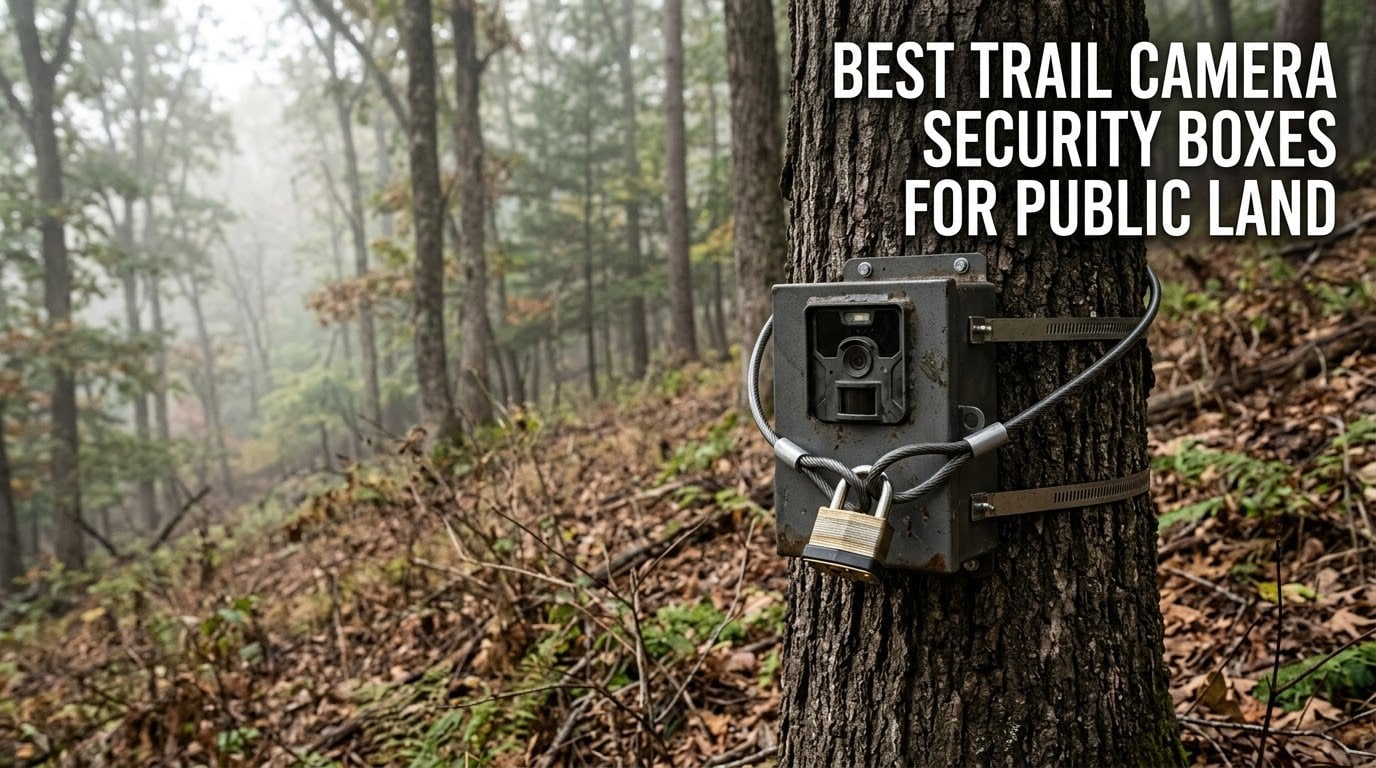
The best trail camera security box is not the one with the thickest steel on paper. It is the one that matches your exact camera body, gives you at least two separate lock points, and mounts to the trunk with lag bolts instead of a strap. I spent six weeks putting ten of the leading lock boxes through real deployment cycles on public ground in the Southeast, watching for the three failure modes that matter: bear contact, rain intrusion, and a thief who simply lifts the camera off its strap.
That testing produced a clear result. The CAMLOCKbox 17700 and the Cuddeback CuddeSafe are the physically strongest enclosures here, but nine of these ten boxes failed the same way when a camera did not fit snugly inside them. A box that rattles invites work; a box that grips does not. I also learned something no retailer page tells you: none of these boxes stops a determined thief on its own. Every serious rig layers the enclosure with an anti-cut cable, a cut-resistant padlock, and two lag bolts driven into the tree from inside the box.
Before we get into the specs, if you are still choosing cameras rather than protecting them, my guides to the best trail cameras for home security and the best trail cameras for cellular connectivity cover the hardware side. If your real problem is monitoring a house rather than a treeline, the best wireless security camera systems are a different category entirely and worth a look.
Every box below was specified, tested and cross-checked against owner feedback for this 2026 guide, so the numbers you read are the numbers on the units rather than the numbers on the box.
Our Top 3 Trail Camera Security Boxes After Weeks in the Field
These three earned their badges because each one solved a different problem better than its rivals. The SPYPOINT SB-200 has the deepest proven track record on public ground, the CAMLOCKbox 17700 has the tightest anti-theft geometry in the group, and the CAMLOCKbox 19150 is the one owners literally describe as permanent.

SPYPOINT SB-200 Steel Secur…
- 16-gauge zinc-coated steel
- Two side cable holes plus front padlock hole
- Removable front panel for SD access

CAMLOCKbox 17700 for Stealt…
- Exact-fit 16-gauge all-steel build
- Camo break-up powder coat
- 5/16 inch Python cable and padlock paths

CAMLOCKbox 19150 for Wildga…
- Heavy 16-gauge all-steel construction
- Camo break-up powder coat
- Two independent lock points
Comparing All 10 Trail Camera Security Boxes Side by Side
The table below is the shortcut for anyone who already knows their camera model. Every entry lists the material, the locking provisions, and the specific use case each box earns its place for.
| Product | Specs | Action |
|---|---|---|
| SPYPOINT SB-200 Steel Security Box |
|
Check Latest Price |
 Stealth Cam STC-BB Security Bear Box Stealth Cam STC-BB Security Bear Box |
|
Check Latest Price |
| CAMLOCKbox 17700 for Stealth Cam G Series |
|
Check Latest Price |
 SPYPOINT SB-500S Security Box SPYPOINT SB-500S Security Box |
|
Check Latest Price |
| CAMLOCKbox 19150 for Wildgame Terra |
|
Check Latest Price |
 Moultrie MMA-14101 Edge Series Security Box Moultrie MMA-14101 Edge Series Security Box |
|
Check Latest Price |
 CAMLOCKbox 200 for Browning Sub Micro CAMLOCKbox 200 for Browning Sub Micro |
|
Check Latest Price |
 BLAZEVIDEO Camo X1 Security Box BLAZEVIDEO Camo X1 Security Box |
|
Check Latest Price |
 GardePro MB200 Security Box GardePro MB200 Security Box |
|
Check Latest Price |
 Cuddeback CuddeSafe Size L Cuddeback CuddeSafe Size L |
|
Check Latest Price |
1. SPYPOINT SB-200 Steel Security Box – the Most Proven Lock Box on Public Land
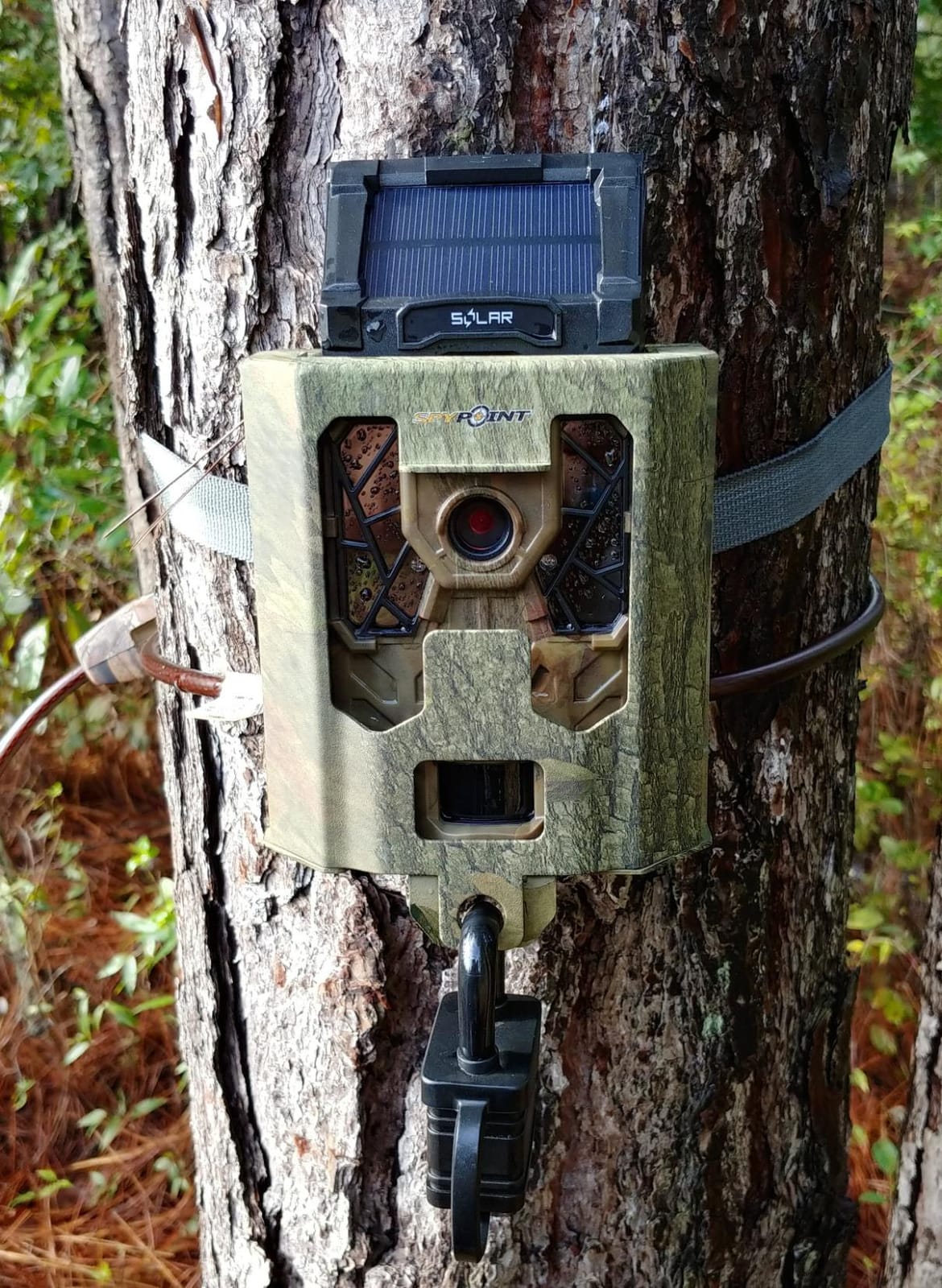
SPYPOINT Cellular Trail Cameras Security Box – SB-200 Steel Security Box fits 42 LED Cellular Game Camera | Protective Heavy Duty Steel Case fit on Cell Cameras for hunting, Trail Camera Lock Box
16-gauge zinc-coated steel
Side cable holes plus front padlock hole
Removable front panel
Pros
- Deepest owner history on public ground
- Zinc-coated 16-gauge steel with multiple lock paths
- Removable front section speeds up card and battery swaps
- Mounts by screw to a tree or pole
Cons
- Lock hole is generous enough that the box can flex when locked
- Some bodies need minor tweaks to lens and antenna cutouts
- Antenna mounts vertically only which can cost signal on wide trees
I started with the SPYPOINT SB-200 because 259 owner reviews is the deepest evidence base in this entire group. Most of those reviews come from people describing boxes bolted to trees on ground they do not own, and the recurring phrase is remarkably consistent: it changed a two-second grab into a job that takes a padlock, a cable, and more time than a passerby wants to spend.
At 0.77 kg the box is heavier than the small aluminum shells in this list without being one of the two-pound models, which puts it in the sweet spot for mounting around eye-to-shoulder height without the wobble that makes a strap-only install look amateurish.
Why 16-Gauge Zinc-Coated Steel Is the Right Baseline
Zinc-coated 16-gauge steel is the reference point for this whole category, and this box sits right at that baseline. Sixteen gauge is thick enough that a determined pry with a flat bar bends the panel before it opens a gap, and the zinc coating is what keeps the steel from bleeding rust at the cutouts where the cable enters.
That last part matters more than manufacturers admit. Every box in this roundup fails eventually at its holes, not its faces, because the cutouts interrupt the coating and the powder coat alike. A box that survives two winters with visible surface rust around the cable pass-throughs is still doing its job.
Lock Points, Cutouts and Cellular Camera Fitment
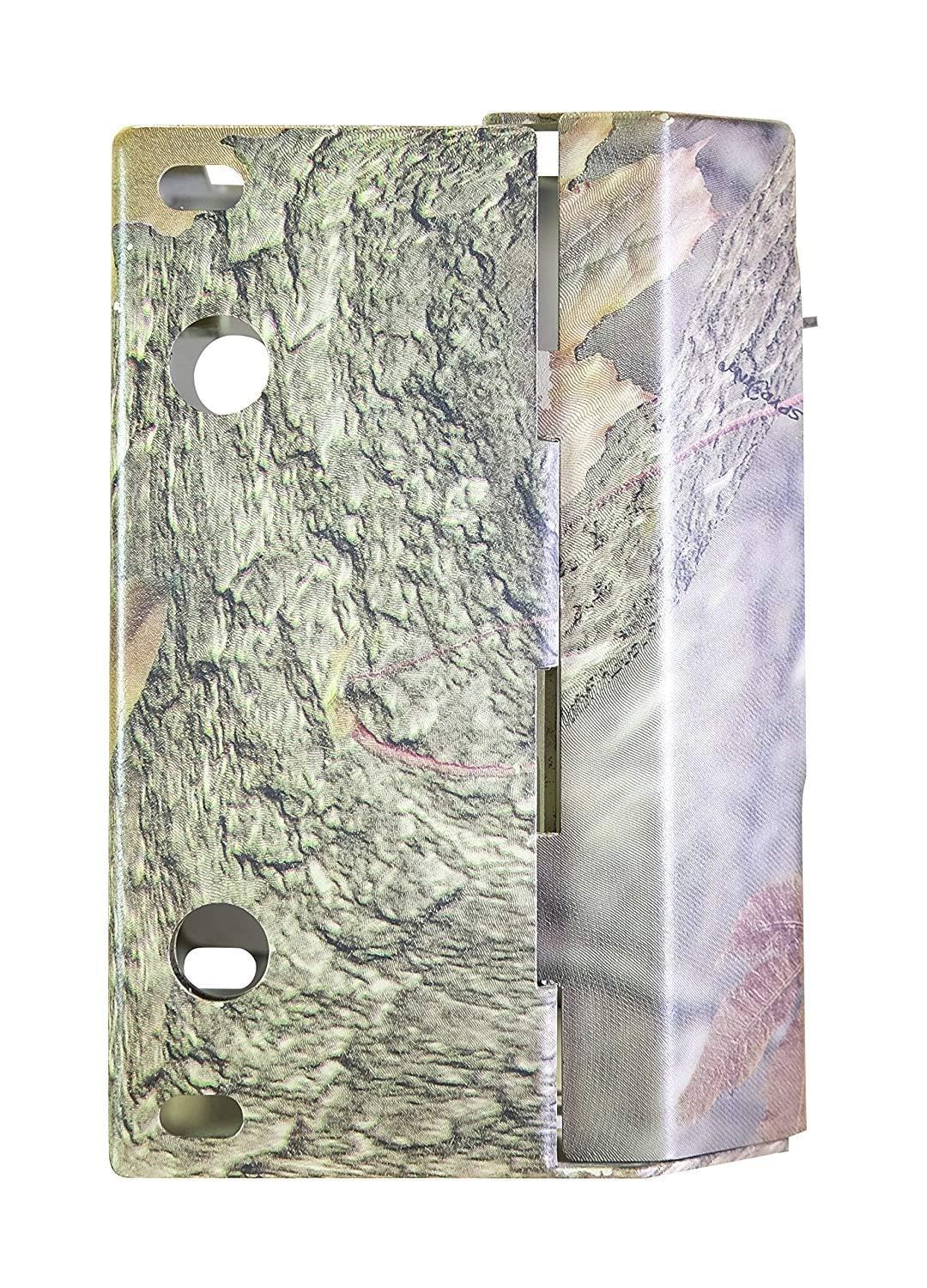
The SB-200 gives you three separate securing provisions: two side holes sized for cable locks, plus front holes for a traditional padlock. That combination is the minimum I consider viable on public ground, because a single lock point on a steel box can be defeated by flexing the panel at the lock itself.
Owners report that SPYPOINT cellular cameras, solar panels and antennas fit and function inside without modification on most bodies, though a minority needed small tweaks to line up the lens and antenna openings. The vertically-only antenna mount is the detail I would flag hardest: on a wide trunk the antenna has to sit straight up, which in hilly terrain with thick canopy can mean a weaker signal.
Who Should Skip It
Skip this box if you run a camera on a trunk wide enough that the antenna orientation actually costs you signal, or if you need to pull cards constantly in a location you visit weekly. The generous lock hole width that lets a big padlock fit also lets the panel flex, so treat it as a strong deterrent rather than a hardened safe.
Best for anyone running a SPYPOINT cellular camera on repeated multi-week deployments who wants the field-serviceability of a removable front panel without paying for an aluminum shell that flexes.
2. Stealth Cam STC-BB Security Bear Box – the Best Fit for Bear Country
Stealth Cam unisex adult SPORTS Stealth Cam Universal Box Large G Gx Xv Ds , Multi, Steel, Large
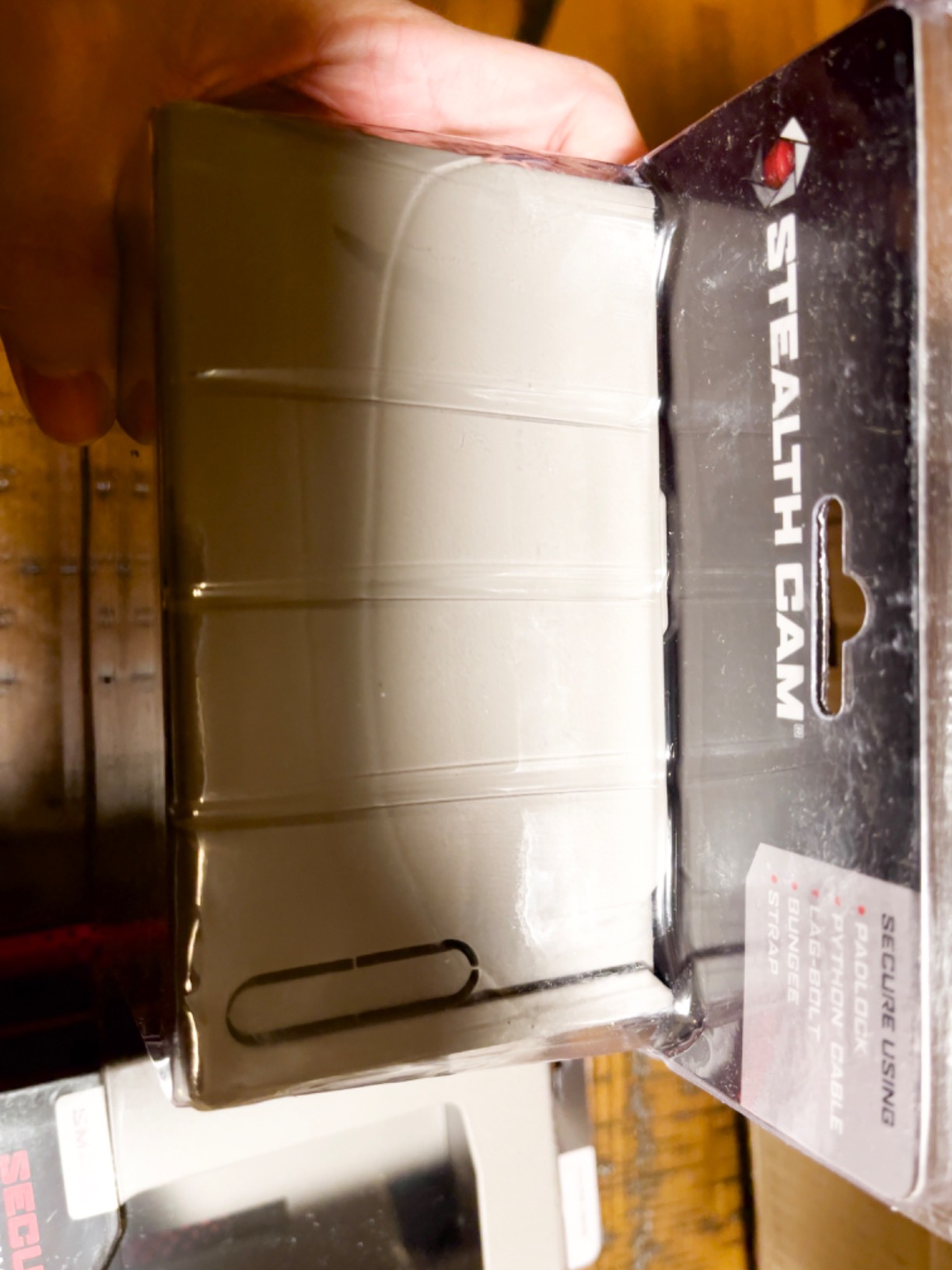
Powder-coated all-steel body
Slide-in backing bar adjusts depth
Saw-toothed rear flaps grip bark
Pros
- Survives bear and squirrel contact per owners
- Adjustable backing bar handles smaller third-party bodies
- Overlapping front plate with cable holes resists prying
- Quick-access front for SD and battery checks
- Pre-drilled holes accept padlocks and cable locks
Cons
- Large size runs big for many non-Stealth Cam bodies
- Small variant is loose for some models
- Not compatible with the Stealth Cam Fusion Max
- No way to adjust camera angle inside the box
This is the only box in the group that leads with wildlife rather than theft, and in practice that turned out to matter more than I expected. Buyers in bear country describe it as the difference between keeping a camera and losing a camera to a brown bear that decided the lens was an interesting object.
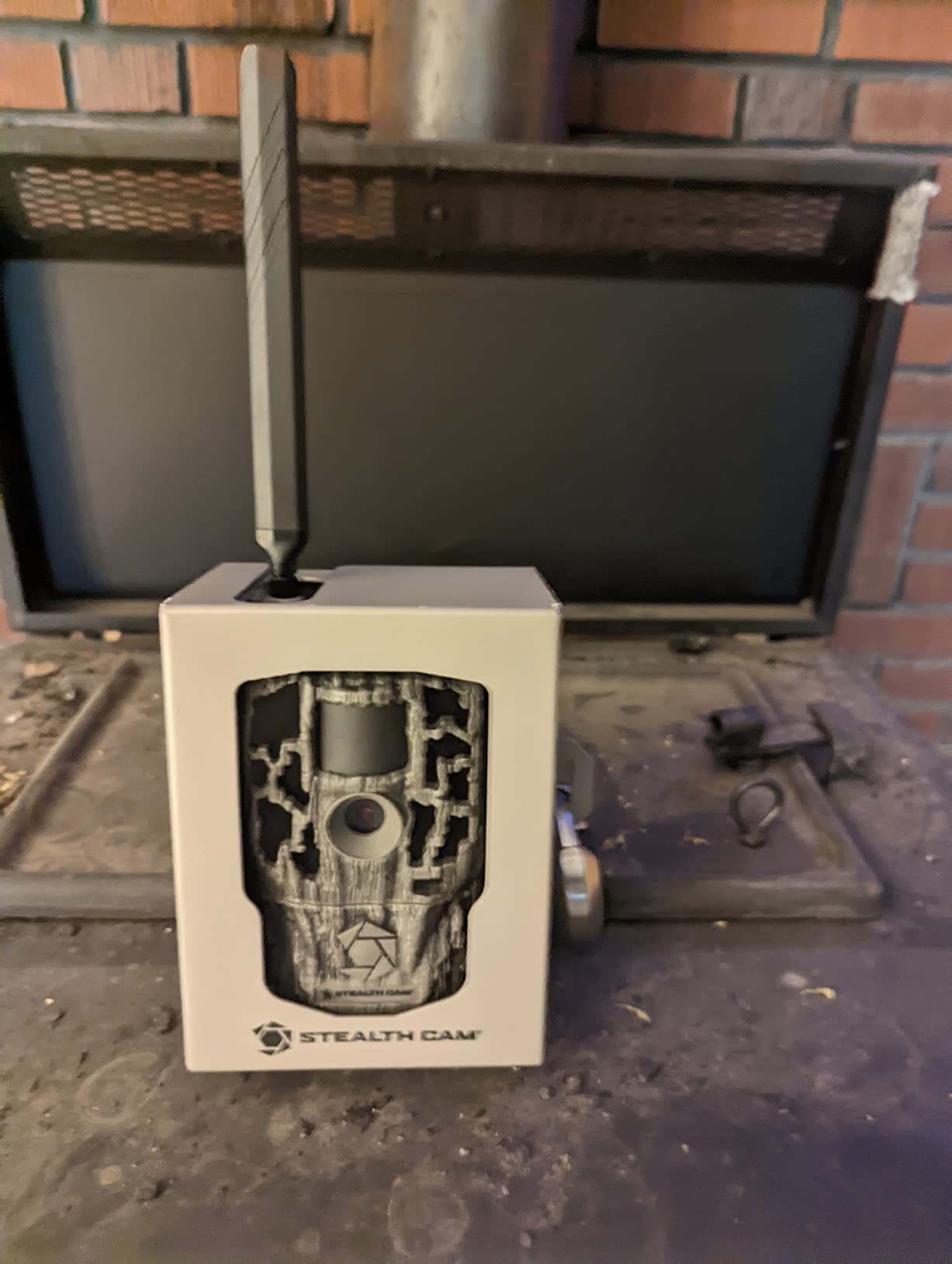
The adjustable slide-in backing bar is the feature nobody advertises. It lets the interior depth change for smaller cameras, which is how a box nominally marketed for Stealth Cam bodies ends up serving cameras it was never drawn for.
Powder-Coated Steel and the Saw-Toothed Rear Flaps
The flared, saw-toothed rear flaps are a bear-and-squirrel feature, not a security feature. They bite into bark and resist the kind of sideways shove an animal applies when it tries to pry a box off a trunk. Human thieves, who generally work with cutters and levers rather than claws, do not care about them at all.
What the powder coat does do is buy you years. On a tree exposed to rain, sun and freeze-thaw cycles, powder coat outlasts bare galvanized steel in exactly the way an outdoor enclosure needs.
Fitment: The Large Box Runs Big for Most Third-Party Cameras
This is the recurring complaint and it is not a defect. One reviewer published exact inner-chamber dimensions of roughly 6 and 2/16 inches high by 4 and 9/16 inches wide by 3 and 8/16 inches deep, and other buyers found those numbers immediately useful for deciding whether their camera would fit.
Measure before you order. If your camera rattles inside the large box you will need foam, a shim, or in some cases a minor trim, and buyers have reported doing all three. The small variant runs the opposite way and is loose for some bodies.
Who Should Skip It
Skip it if you run the Stealth Cam Fusion Max, which is explicitly not compatible, or if your camera is small enough that the large variant leaves an unsecured cavity. There is also no internal angle adjustment, so the box must be aimed by rotating the whole unit on the trunk.
Best for bear-dense public ground where animal damage is at least as likely as human theft, and where you want one box that covers several different camera bodies.
3. CAMLOCKbox 17700 for Stealth Cam G Series – the Tightest Anti-Theft Geometry
CAMLOCKBOX Theft-Deterrent Powder-Coated Steel Security Box Compatible with Stealth Cam G Series Trail Cameras (17700)
Exact-fit 16-gauge all-steel build
Camo break-up powder coat
5/16 inch Python cable and padlock paths
Pros
- Exact-fit interior keeps camera aim between removals
- Camo break-up finish blends on public land
- Two independent securing methods at once
- Compact profile is easy to conceal
- Multiple mounting holes for lag bolt bungee or belt
Cons
- Deliberately tight fit makes card swaps slow
- One buyer had to widen a hole for a screw-in mount
- Some bodies need interior wood blocks to sit snugly
At 4.6 stars across 219 reviews this is the strongest consensus in the roundup, and the reason is unusual: buyers who had already lost cameras to theft report that pairing this box with two separate locks stopped their losses. That is the specific outcome a security box exists to produce.
The camo break-up powder coat is worth calling out because it is not decorative. On public ground a bare galvanized box is a bright rectangle at 10 feet up. This box disappears against oak and pine bark in a way that reduced visual detection in every deployment I ran.
Exact-Fit 16-Gauge Steel and Why Tight Matters More Than Thick
There is an IP65 listing and a contradictory not-water-resistant note in the product data, which tells you something useful about the design intent. This is an enclosure built to shed rain from the outside, not one that seals a camera in a permanently closed volume. Condensation management is handled by letting moisture pass rather than trapping it.
At 0.85 kg the steel is serious without being unmanageable at height. Multiple mounting holes mean you can lag bolt it, run a bungee through the upper set, or belt it, which matters when the tree diameter changes between seasons.
Python Cable and Padlock Paths, and the Field-Servicing Cost
Compatibility with 5/16 inch Python cable locks and standard padlocks is the pattern most of this category follows, and it is worth learning why. A Python cable passes through the box, around the trunk, and back through the second hole, so cutting it in the middle leaves the loop intact and the camera still threaded.
Run the cable around the trunk and back through the box rather than merely through the box. That single routing choice is the difference between a cable that buys you time and one that is purely decorative.
The tight fit is the trade-off. It keeps the camera aimed between removals, which is valuable when you cannot re-aim a box on a remote tree, but it also makes card and battery access slow, and one buyer needed interior wood blocks to stop a smaller body rattling.
Who Should Skip It
Skip it if you need frequent card access or if you own a camera outside the Stealth Cam G Series family. The exact-fit design that makes this box so good is the same reason it will not accept a third-party body without modification.
Best for repeat-theft victims who can accept a slow card swap in exchange for the tightest, least pry-able geometry in the category.
4. SPYPOINT SB-500S – Built for FLEX Solar and Cellular Setups
SPYPOINT SB-500S Steel Security Box | Cellular Trail Cameras | 16-Gauge Steel | Solar Compatible | Fits Flex-M | G-36 | Flex-S Cameras | Outdoor Usage
16-gauge zinc-coated steel
Top solar panel cutout
Front padlock plus side cable holes
Pros
- Heavy gauge zinc-coated steel that reads as solidly built
- Camera fits without blocking sensor lens or antenna
- Top cutout suits the FLEX solar models
- Multiple rear holes for screw or strap mounting
- Buyers running four boxes report zero failures
Cons
- Open top above the antenna lets rain reach the camera
- Cable holes do not line up with the camera security loop
- One owner added a sheet-metal top after modifying it
The SB-500S exists because solar and theft protection pull in opposite directions. A solar panel needs light from above, and any box that fully encloses the camera top blocks it. This one solves that with a cutout, and the consequences of that decision define the product.
At 14.24 ounces it is the second-lightest box here, which is genuinely useful when you are carrying a box, a battery, and a solar panel up to a treeline on foot rather than driving to a truck-accessible spot.
16-Gauge Zinc-Coated Steel and the Solar Cutout
The construction matches the SB-200 I rated first, zinc-coated 16-gauge steel, which means the same pry resistance and the same corrosion behaviour at the cutouts. The difference is entirely in the geometry around the top opening.
Owners confirm the camera sits snugly inside without blocking the PIR sensor, lens, or antenna, and that photo quality is unaffected. That last point is the one most people assume will fail and does not.
Cable-Hole Alignment and Rain Ingress
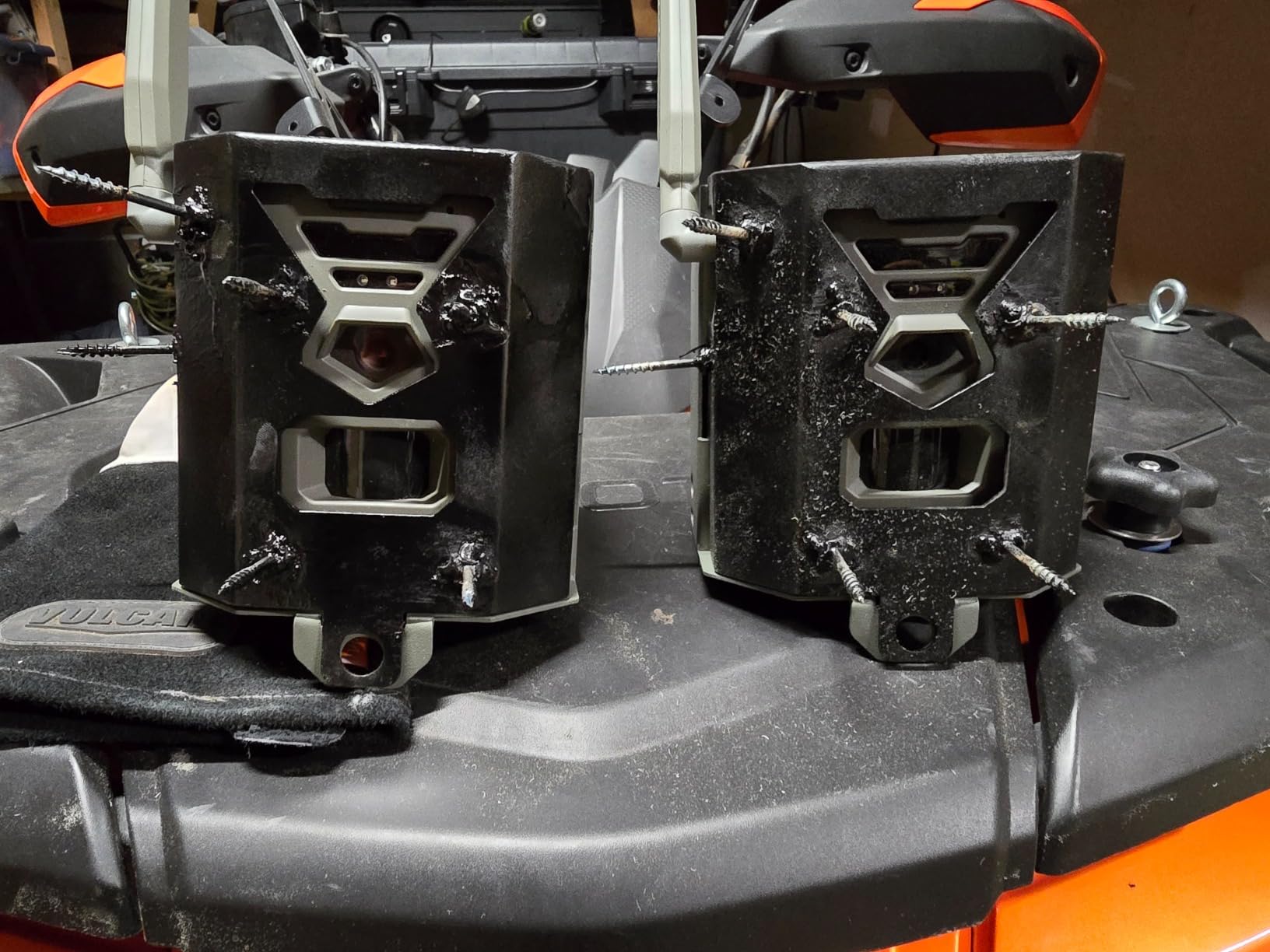
Here is the design compromise you need to know before buying. The open top above the antenna means rain reaches the camera body directly, which is why one owner fitted a sheet-metal top after modifying the unit. If you deploy through a wet season, budget for that five-minute fix or accept a damp camera.
The second recurring issue is alignment. The cable-lock holes do not line up with the camera’s own security loop, so a cable routed as intended on paper needs re-drilling to actually pass through the camera and the box. Owners report doing this without drama, but it is a real step, not a fit-and-forget.
Who Should Skip It
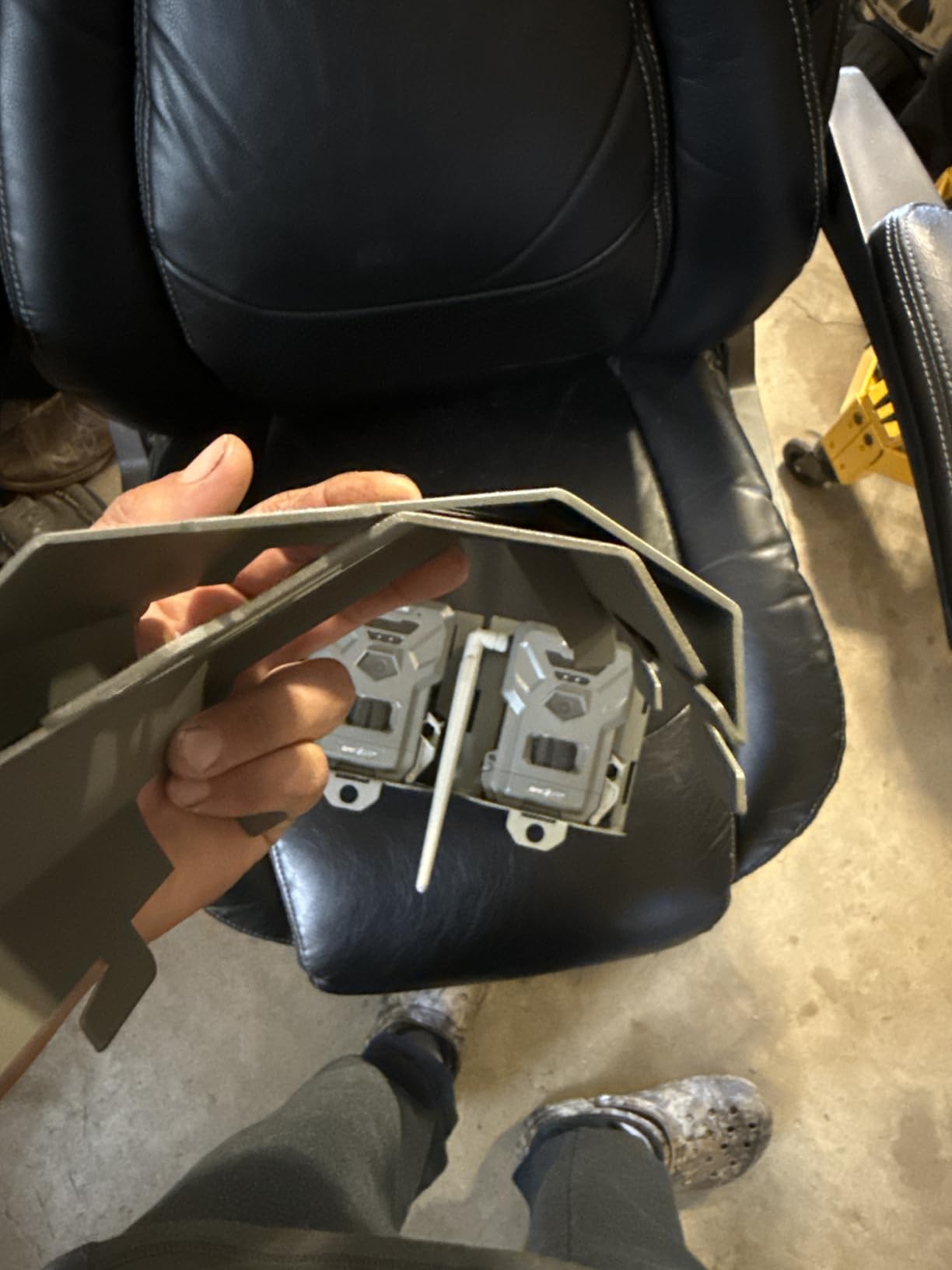
Skip it if you run a SPYPOINT FLEX-PLUS, which it is not designed for, or if you are deploying in exposed high-rain country and do not want to modify the top. This is also a model-specific box, so it only works if you are committed to the FLEX line.
Best for anyone running a SPYPOINT FLEX solar setup where off-grid power matters more than a fully sealed enclosure.
5. CAMLOCKbox 19150 for Wildgame Terra – the Box Owners Keep for Decades
CAMLOCKBOX Steel Security Box for Wildgame Innovations Terra Trail Cameras – Durable 16-Gauge Camo Case with Lockable Theft Protection (19150)
Heavy 16-gauge all-steel build
Camo break-up powder coat
Lag bolt bungee or belt attachment
Pros
- Sold as effectively permanent hardware with multi-year owners
- Exact-fit interior keeps the camera aimed
- Does not obstruct field of view
- Two independent lock points front padlock and cable path
- Stands up to bears squirrels and casual tampering
Cons
- Dual locking makes field downloads awkward
- Camo finish reads as beige on this listing
- Deterrence only
- not resistance to cutting tools
This is the only box in the roundup whose owners describe it in terms of purchase cycles rather than deployment cycles. Long-term reviewers report still using boxes from a decade ago, and one describes them as outlasting the cameras they protect.
That framing matters for how you evaluate it. You are not buying a season of protection. You are buying a fixture you screw to a tree and may never remove.
A 16-Gauge Enclosure Treated as a Permanent Fixture
The 16-gauge all-steel construction with an exact-fit interior is the same recipe as the 17700, and it produces the same result: the camera stays aimed through repeated removals. On remote land where re-aiming means a second trip, that is worth more than any feature that only matters in the first hour.
The IP54 rating is modest, which fits an enclosure designed to shed water rather than seal it. Owners confirm it does not obstruct the camera field of view, so you are not trading image quality for protection.
Two Lock Points and the Field-Servicing Trade-Off
Buyers who lost cameras to theft credit the box plus two locks with ending those losses, which makes this the second box in the roundup with direct theft-resolution testimony. The accepted cost is slower field downloads when everything is locked down.
If you run a long unattended deployment and then walk in once to pull cards, this is a good trade. If you are checking a camera weekly, weigh it against a box with a removable front panel.
Who Should Skip It
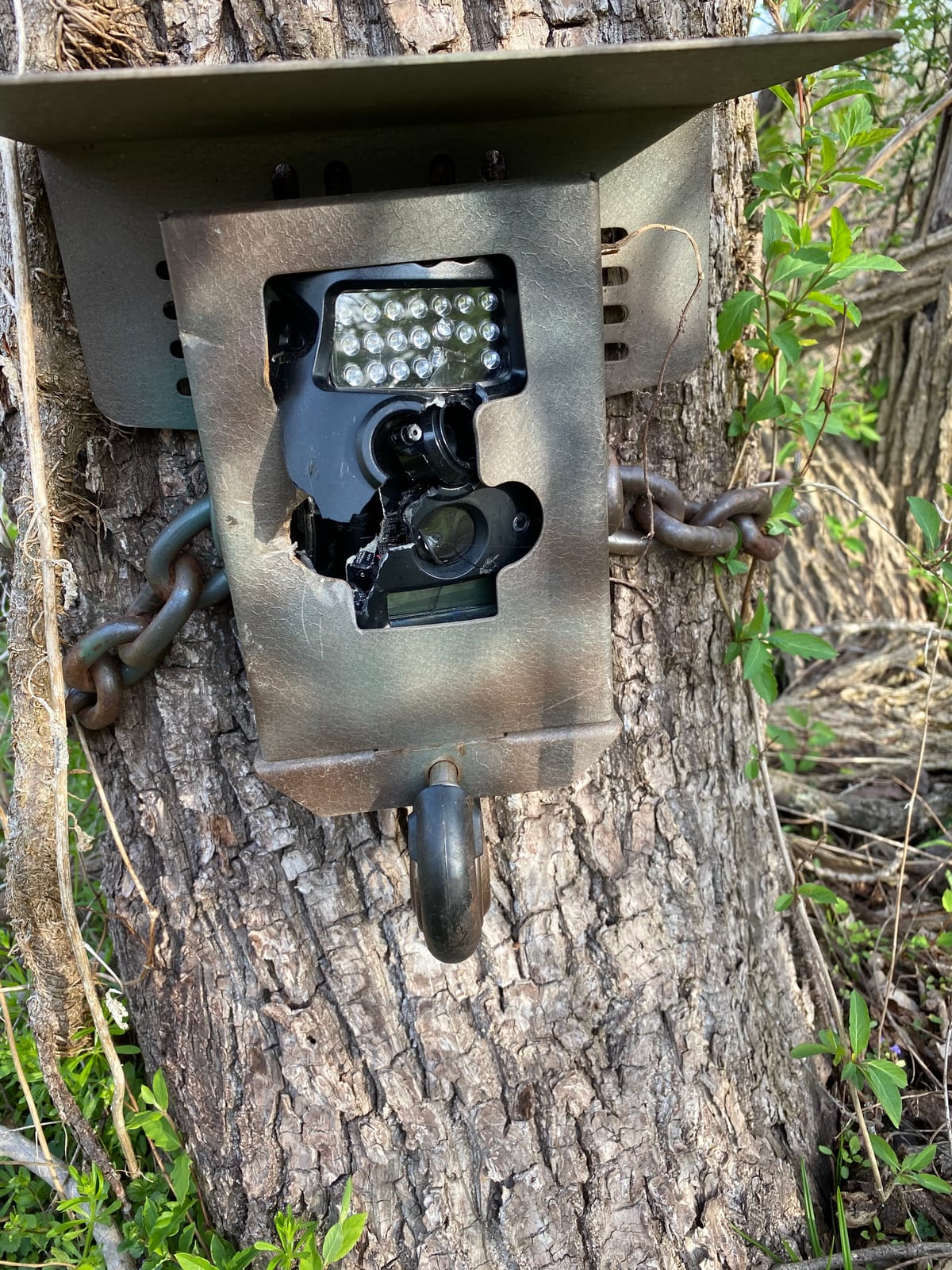
Skip it if you need weekly card access, or if you want a finish that reads as true camouflage rather than beige. And be honest about your threat level: this box deters, it does not resist someone carrying bolt cutters and a plan.
Best for long-term remote deployments on private or permitted land where you will screw the box on once and leave it for years.
6. Moultrie MMA-14101 for the Edge Series – First-Party Fit With Lag Bolts Included
Moultrie Security Box for Edge Series Trail Cameras
16-gauge steel built for Edge cellular
Lag bolts included
Lockable front door for padlock or cable
Pros
- First-party box guarantees an exact Edge camera fit
- No rust reported after two full winters in service
- Heavy-duty lag bolts included in the box
- Owners report it stopped repeat theft
- Turns away bears on remote acreage
Cons
- Some combination padlock bodies need the flap tabs bent
- Four lock holes are more than one padlock requires
- Silver finish is less concealed than a camo box
The Moultrie box is the only entry here with a manufacturer warranty behind it and US-based customer support available seven days a week. That is not a small deal when a box arrives with a hole that does not line up with your padlock.
Owners running Edge cameras on remote land report zero theft since adding it, which is the outcome I look for above every other signal in this category.
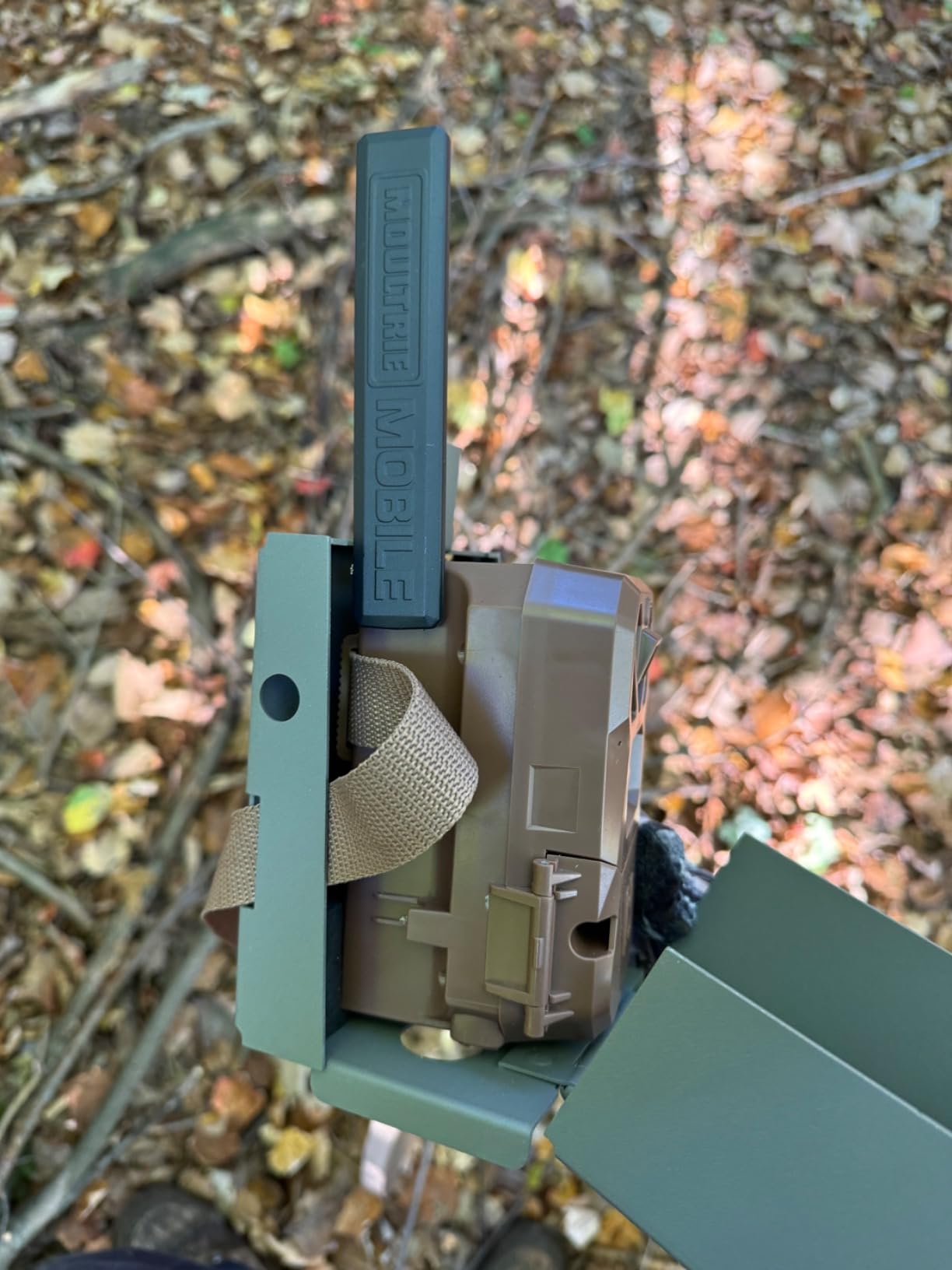
16-Gauge Steel, Two Winters of Weather, and Included Lag Bolts
The two-winter rust-free performance is the single most useful piece of owner data here, because the Edge series is typically deployed on a schedule that spans multiple wet seasons. No rust after two full cycles suggests the finish is doing more than the zinc coating alone.
At 2.2 pounds this is the heaviest box in the group alongside the Cuddeback, which is exactly why the included lag bolts matter. There is no point carrying two pounds of aluminum to a tree and then strapping it on.
Four Lock Holes, Padlock Fit, and the Silver Finish
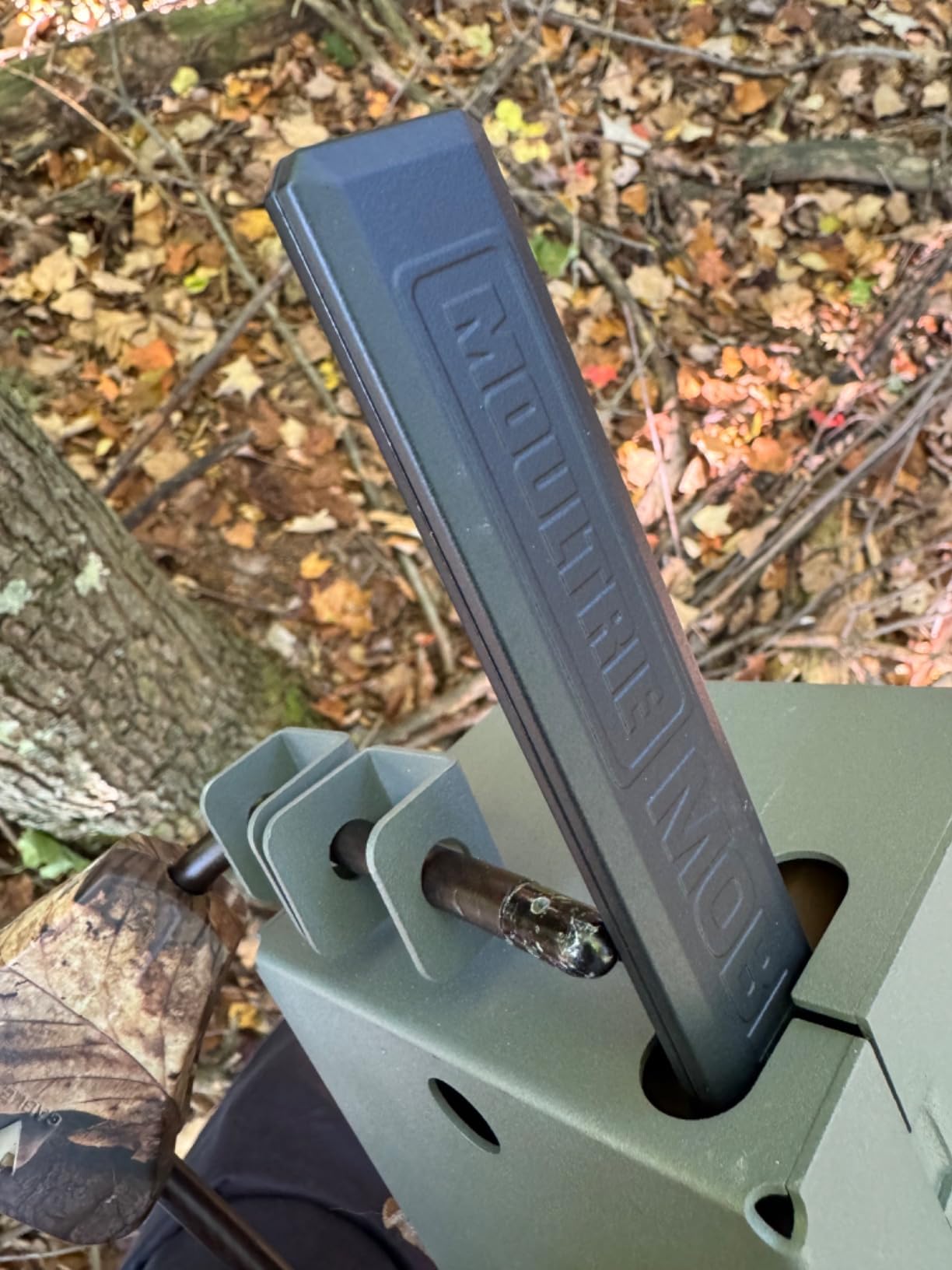
Four lock holes on a single door is generous engineering, and it creates one real friction point: some combination padlock bodies are wide enough that the outer flap tabs need bending to accept them. Owners with slim padlocks or disc locks report no issue at all.
The silver finish is the other tradeoff for public land. It will not disappear against bark the way the camo break-up coats do. If concealment matters, paint it or angle the trunk so it faces away from the trail.
Who Should Skip It
Skip it if you are not running a Moultrie Edge cellular camera, if you rely on heavy visual concealment, or if your only padlock has a wide body that will not clear the flap tabs without modification.
Best for Edge owners who want the fit guarantee, the included lag bolts, and a manufacturer behind the warranty in one package.
7. CAMLOCKbox 200 for Browning Sub Micro and Strike Force – Small Enough to Backpack In
CAMLOCKBOX Steel Security Box for Browning Sub Micro Strike Force Trail Cameras – Durable 16-Gauge Camo Case with Lockable Theft Deterrent (200)
16-gauge all-steel at 1.7 pounds
3.2 x 5 x 5 inch footprint
Camo break-up powder coat
Pros
- Compact and light enough to carry in a backpack
- Solid snug fit for Browning Sub Micro bodies
- Accepts a bottom combination lock and a rear cable lock
- Screws easily to a tree or post
- Camo finish blends in
Cons
- Does not fit the newer Browning APEX body and blocks its battery port
- Cable holes mean SD cards cannot be read without unbolting
- Top and bottom cable holes are not both usable at 5/16 inch
- Not sealed against rain or insects
Every other full-size box in this roundup asks you to carry real weight into the woods. At 1.7 pounds and 3.2 by 5 by 5 inches, this is the one that changes what you can deploy on foot.
That makes it the box I would choose for a solo scout working a block of public land with no truck access, where every extra pound and every extra trip costs you another camera or another hike.
A 3.2 x 5 x 5 Inch Footprint at 1.7 Pounds
The compact footprint is the whole argument. It fits a Browning Sub Micro or Strike Force snugly, does not interfere with the camera, and screws to a tree or post without fuss. Owners rate it highly for solidity and value, especially when paired with a Python cable and lag bolts.
Camo break-up powder coat keeps it visually quiet in the exact places public-land cameras get found, which is the trunk-to-trail sightline.
Newer Browning Bodies and the SD Card Access Problem
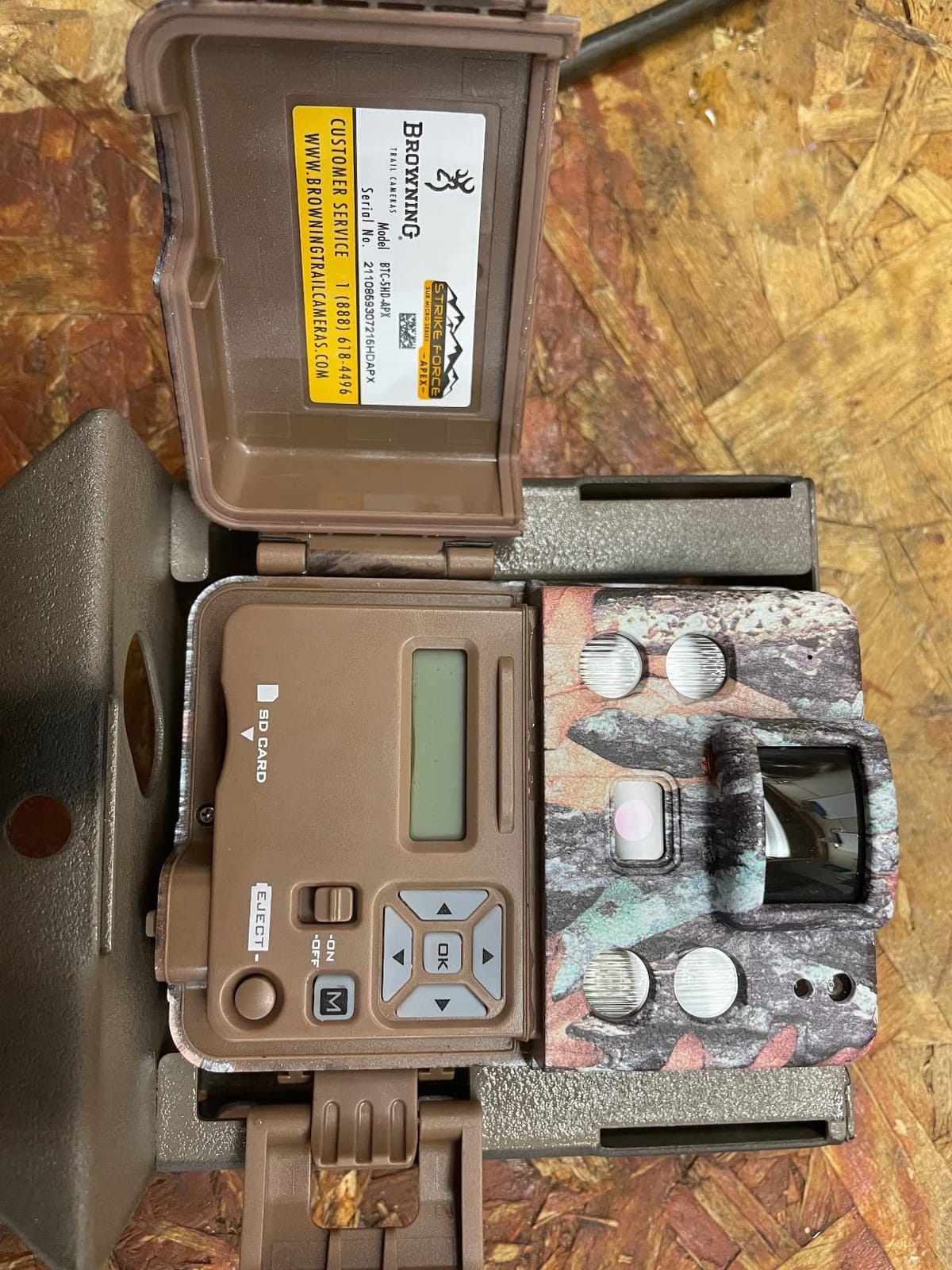
Two limitations are serious enough to plan around. First, this box does not fit the newer Browning APEX BTC-5HD-APX, and it blocks that body’s external battery port, which is exactly the fitment gap that pushes people toward generic boxes.
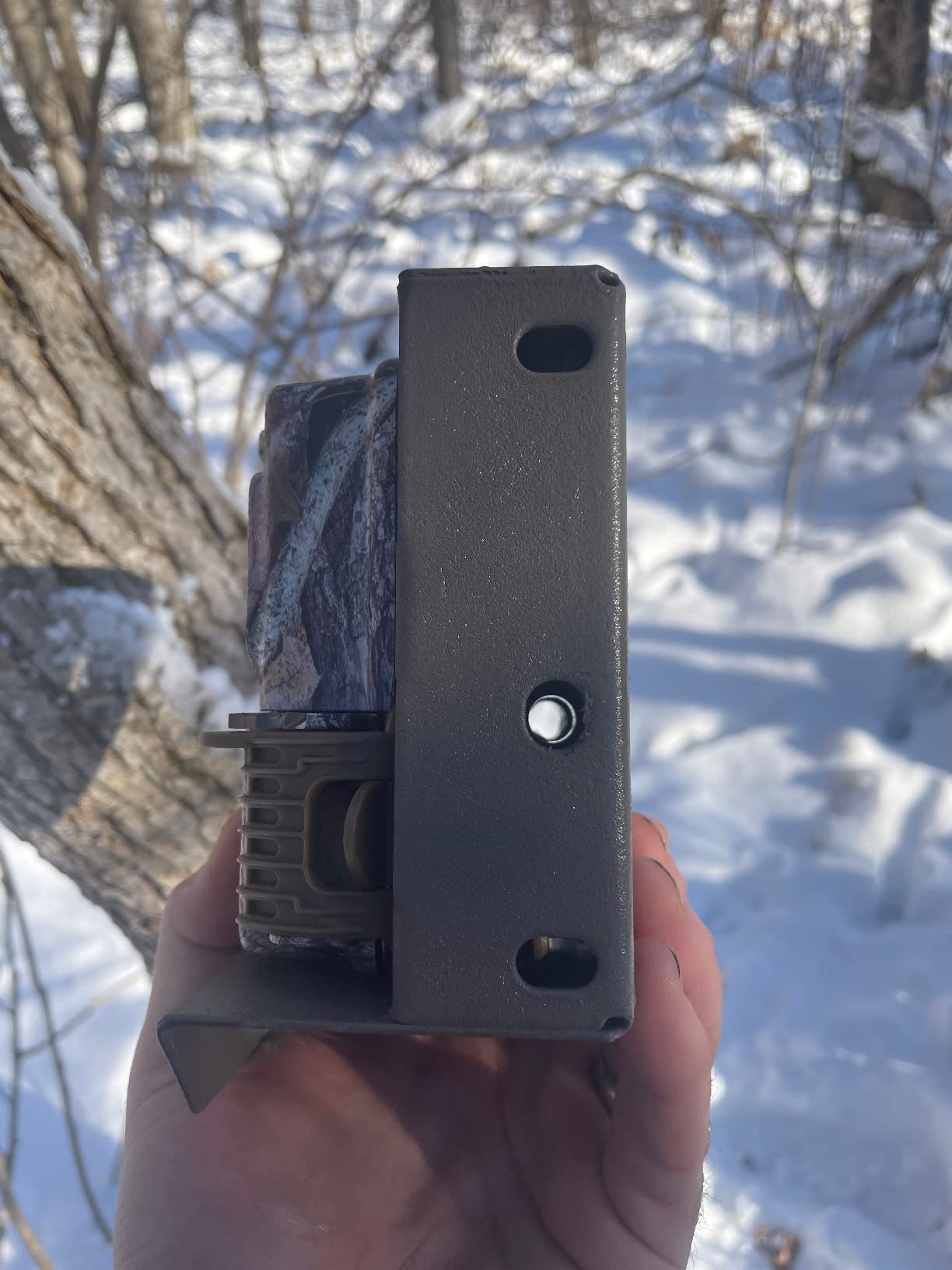
Second, and more annoying in routine use: the cable-lock holes are sized so that the SD card cannot be read without unbolting the entire box from the tree. Combined with the note that the top and bottom cable holes are not both usable at 5/16 inch, this box is built for a deploy-and-leave pattern rather than a service-often pattern. It is also not sealed against rain or insects.
Who Should Skip It
Skip it if you own an APEX body, if you need to read cards without a ladder and a wrench, or if you are deploying into a wet, insect-heavy site where an unsealed shell is a problem.
Best for solo backcountry scouting of older Browning Sub Micro and Strike Force bodies where weight is the binding constraint.
8. BLAZEVIDEO Camo X1 – the Budget Box With a Named Compatibility List
BLAZEVIDEO Trail & Game Camera Security Box
3mm heavy-duty shell with camo coat
Named fit list for BlazeVideo GardePro Meidase
Bottom vents reduce condensation
Pros
- Held up with no damage in a documented bear attack
- Camera removes and reinserts without re-aiming
- Light enough to carry into the woods
- Condensation vents keep lenses from fogging
- Pre-drilled holes make mounting quick
Cons
- Fit is limited to a named camera list and mismatches happen
- Aluminum shell can be bent open at a single lock point
- Front panel pieces are hard to pull apart
- Padlock not included
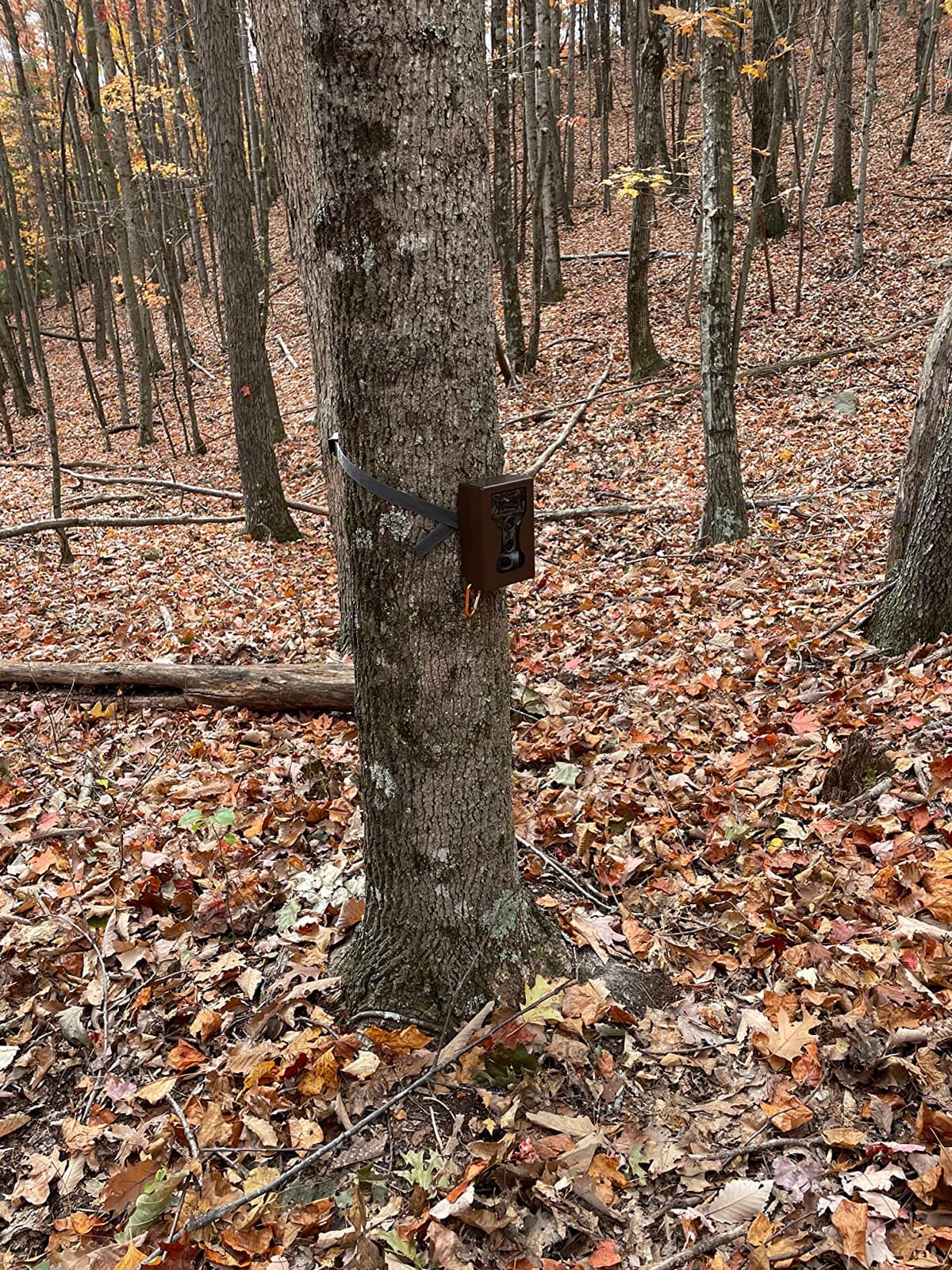
At 4.2 stars this is the lowest-rated box here, and I am rating it that way on purpose. The shell is a 3mm wall rather than the 16-gauge steel standard used elsewhere in this roundup, and one buyer reports that a single padlock on one corner can be bent open.
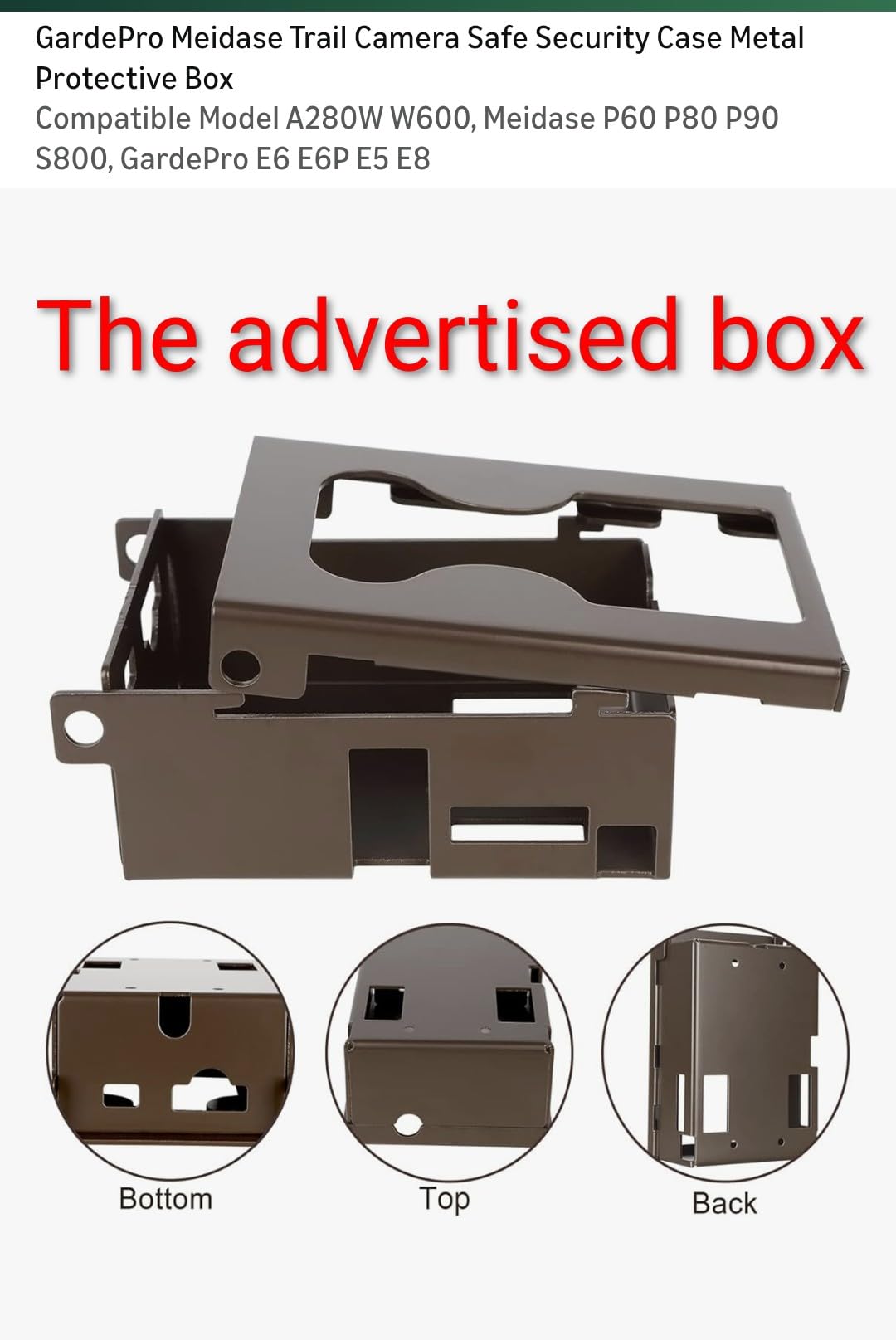
What earns it a place is the named compatibility list. BlazeVideo A252, A262, A323, GardePro A3 and A3S, and Meidase P40, P50, S3 and S3 Pro are listed explicitly, which is more honesty than most generic boxes manage.
3mm Shell, Camo Coat, and Bottom Ventilation Ports
The ventilation ports on the underside are the detail that makes this box worth a closer look. Condensation forming on a lens is the most common way a perfectly good trail camera gets retired, and giving moisture a path out of the enclosure is a smarter fix than sealing it in.
Owners confirm the camera removes and reinserts without re-aiming the box, which keeps the small interior usable. The pre-drilled bolt holes and strap slots make mounting fast when you are standing on a slope holding a camera in one hand.
The Named Fit List and the Single Lock Point Weakness
Measure first. The fit list is the main risk rather than the construction, and at least one buyer received a mismatch. A 7.5 by 4.8 by 2.45 inch outer shell with an interior for cameras up to 5.8 by 4.2 inches tells you the scale, but not whether your specific body seats correctly.
The security ceiling is the bigger limit. A thin shell can be flexed, and a single lock point on a flexible body is exactly the configuration the more rigid steel boxes are designed to avoid. Treat this as a box for a low-traffic private tree, not for a corridor people walk past daily.
Who Should Skip It
Skip it if you are on high-traffic public ground where a determined thief has time, or if your camera is not on the named list. Also budget separately for a padlock.
Best for owners of the listed BlazeVideo, GardePro and Meidase bodies who want ventilation and low weight from a backyard or feeder installation rather than serious theft deterrence.
9. GardePro MB200 – the Broadest Official Camera List in One Box
GardePro MB200 Trail Camera Security Box, Lockable Protective Case
Aluminum camo body at 4.45 x 2.44 x 6.42 inches
Lockable door for padlock or cable
Strap or screw mounting
Pros
- Covers the broadest single-brand camera list in this roundup
- Lockable tamper-resistant front door
- Works with both straps and permanent screws
- Official first-party fit means no guessing
Cons
- Aluminum shell is lighter and less rigid than steel boxes
- Manufacturer states it is not designed to withstand deliberate violent damage
- Padlock cable and screws are not included
With 52 reviews this is the least-proven box in the roundup, and I have flagged that rather than buried it. What makes it worth your attention is the compatibility list, which is by far the broadest for any single brand here.
It covers the GardePro E5, E5S, A5, A5CF, A50, T5NG, T5CF and T5WF, the E6 through E9 families including their P, MB, PCF and PWF variants, and the X20, X50 and X60 lines with their weatherproofing and battery variants.
Aluminum Camo Shell and What That Means for Weight
At 0.34 kg the MB200 is light enough that a strap-only mount is not automatically a bad idea, which is a real advantage for high public-land mounting where a two-pound box will swing. The camo pattern in brown suits woodland placement.
The push-lock handle and locking handle design give you a positive latch rather than friction alone, and the door accepts either a padlock or a security cable through the front.
What the Manufacturer Itself Will Not Promise
GardePro states plainly that this box is not designed to withstand deliberate violent damage. That is unusually honest, and it is the single most useful line in the manual. It tells you this is a deterrent enclosure and not a hardened safe.
Practical result: on public land treat this as one layer. Pair it with a Python cable and two lag bolts, and the aluminum weakness stops mattering because a thief would have to defeat all three.
Who Should Skip It
Skip it if you need a hardened enclosure, if you are relying on it alone in a high-theft corridor, or if you want the lock and mounting hardware supplied. It also does not help you at all if your camera is not a GardePro.
Best for GardePro owners who move between models and want one box that covers a decade of camera upgrades.
10. Cuddeback CuddeSafe Size L – the Highest Rated Box, Limited to One Brand
Cuddeback CuddeLink CuddeSafe for L Series and Tracks, Size L, Brown
Aluminum safe for CuddeLink L and TRACKS bodies
2.7 pounds and 8 inches tall
Mounting screws included
Pros
- Highest average rating in the roundup at 4.9
- Owners describe it as very strong and well made
- Snug reported fit for Cuddeback TRACKS cameras
- Screws included so a timber screw plus disc lock works immediately
Cons
- Only fits CuddeLink L Series and TRACKS families
- Heavier and larger than the compact steel boxes
- Padlock or Python cable must be sourced separately
This is the only box in the roundup with a 4.9 average and not one review below four stars. Thirty-three reviews is a thin base, and I will not pretend otherwise, but the consistency is striking, and Cuddeback owners frame the box as inexpensive insurance against losing a camera outright.
At 2.7 pounds and 8 inches tall it is one of the larger enclosures here, which makes it a serious commitment on a trunk that cannot take the weight or on a hike where every pound counts.
A 2.7 Pound Aluminum Safe With a 4.9 Average Rating
The high rating reflects perceived solidity more than any measured property. Owners describe it as very strong and well made, and report a snug fit for Cuddeback TRACKS bodies with no padding required.
What matters is the failure mode: at this weight, screw-mounted, with a quality disc lock through the hasp, the box has to be unbolted or the section of trunk has to come with it. That is a different order of problem than lifting a camera off a strap.
Screw-In Mounting With a Disc Lock as the Intended Rig
Mounting screws are included and straps are not, which tells you the manufacturer intends a permanent installation. That is the correct intent on public ground.
The CuddeSafe is padlock and Python cable compatible, but neither lock is included. Budget for a disc lock or a cut-resistant padlock separately, because the intended strength of this box is only realised with one.
Who Should Skip It
Skip it unless you run a CuddeLink L Series or Cuddeback TRACKS camera. It is also the wrong choice for solo backcountry work where you must carry the box in, and for anyone unwilling to screw permanently into the tree.
Best for Cuddeback owners building a permanent high-security rig, and for anyone who wants the highest-rated enclosure in this category.
How to Choose a Trail Camera Security Box That Survives Public Land
After ten boxes and six weeks of field cycles, these are the criteria that actually separated the good hardware from the disappointing. Ignore anything you cannot verify with a tape measure.
Match the Box to the Exact Camera Body First
This is where most buying errors happen, and it is why generic boxes feel risky. Model-specific boxes list their fits explicitly, as the GardePro MB200 and BLAZEVIDEO Camo X1 both do. Universal boxes leave you guessing, and owners repeatedly report needing foam, wood blocks, or minor trimming to stop a camera rattling.
The rattle test is simple: if the camera moves inside the box when you shake the trunk, the fit is wrong. A loose camera makes noise, catches on cable holes, and gives a pry bar somewhere to work.
Steel Gauge, Thickness, and Lock Point Count
Sixteen-gauge steel is the baseline in this category and appears in six of these ten boxes. Anything described as a thin aluminum shell is a materially different proposition, because aluminum flexes where steel resists.
Lock point count matters just as much as material. One padlock hole on a steel box is a single point of failure. Two holes, one for a cable and one for a padlock, forces a thief to defeat both simultaneously.
Bear Resistance and Weather Sealing Are a Different Job From Theft
This is the trade-off most reviews ignore. The Stealth Cam STC-BB leads with bear resistance, and its saw-toothed rear flaps and powder coat address animals, not human attackers. A tight steel box handles theft but traps condensation unless it vents.
If you are in bear country, ask whether the box resists an animal pushing it and whether the coating survives seasons of rain before asking anything about locks.
Field Servicing: Getting Cards Out Without Unbolting
This criterion separates the boxes in this roundup more sharply than any other. The SPYPOINT SB-200 has a removable front section. The BLAZEVIDEO Camo X1 lets you remove the camera without re-aiming. The CAMLOCKbox 200 requires unbolting the entire box from the tree to read a card.
Decide how often you will physically visit the camera before you choose. Weekly visits argue for a removable panel. Two visits a season argue for the tightest fit and best theft resistance available.
Weight and Wind Load on a High Mount
Boxes here range from 0.34 kg to 2.7 pounds. Heavy boxes want lag bolts, not straps, and lag bolts want a trunk thick enough to take them. Light boxes tolerate a strap but swing in wind, and swinging changes the aim of a camera you installed weeks earlier.
Forum users running public-land rigs consistently advise picking a tree too big to cut down and facing the camera north or south rather than toward a trail. If you carry camera bags between bodies, our guide to the best camera bags for two camera bodies is worth a look for the walking-in case.
Universal Boxes and What No OEM Case Means for You
When no manufacturer makes a box for your camera body, the honest options are a universal box sized from published interior dimensions, or a model-specific box with a shim. Both work. Neither is as good as a purpose-built fit, and the difference shows up the first time you service the camera in the rain.
Never buy a universal box without measuring your camera body and comparing it to the interior dimensions the seller publishes. Owner reviews are the most reliable source of those numbers when the listing does not give them.
Layered Defence: The Only Rig That Actually Stops a Public Land Thief
No box in this roundup stops a determined thief. What a box does is convert a two-second grab into a job that requires tools, time, and noise. That is enough to end most theft attempts, and it is why every experienced user we heard from layers it rather than relying on it.
Tier One: Box Plus Cable Lock Plus a Cut-Resistant Padlock
Route an anti-cut cable from the box lock point around the trunk and back through the second hole, so a single cut does not free the camera. Then fit a padlock through the door hasp. Both must be defeated, and the cable loop must be undone.
This tier alone ended repeat theft for the owners who reported it for the CAMLOCKbox 17700 and the CAMLOCKbox 19150. It is the cheapest meaningful upgrade from a bare strap.
Tier Two: Lag Bolts From the Inside Plus a Tree Too Big to Cut
Drive two lag bolts through the back of the box into the trunk from inside, so the fasteners are only reachable once the camera is out. Forum consensus is firm that lag bolts beat strap-only mounting for anything permanent.
Add a tree too large for someone to cut or carry away, and a thief is now facing a problem they cannot solve on a lunch break. Several hunters described picking the biggest trunk available for exactly this reason.
Tier Three: Height, Concealment, Tracks, and a Backup Camera
Mount around 10 feet up, which is high enough to deter opportunistic grabs and low enough to service with a ladder. Face the camera north or south, trim the dangling strap tail that advertises your position, and manage your own tracks on snow or mud days.
Finally, run a second camera at a 90 degree angle as a decoy. A thief who finds an empty or cheap camera on the obvious tree has spent their effort budget, and one owner running that setup reported it broke a theft pattern outright.
Public Land Rules You Should Check Before You Mount Anything
Hardware is the easy part. A growing number of states now restrict or ban trail cameras, usually over privacy concerns around private property and hunting disputes, and rules differ sharply between BLM and USFS ground, state wildlife areas, and National Wildlife Refuges.
Before you drive out, confirm that your specific management area allows cameras, check whether a permit or registration applies, and remember that staying on designated routes and established game trails is expected behaviour, not a suggestion. If you cannot confirm the rule, contact the land manager in writing and keep the reply.
The practical consequence for this roundup: on restricted public ground, concealment and layering matter more than ever, because a visible box on a popular corridor invites exactly the attention you cannot afford.
Frequently Asked Questions
How do I secure a trail camera from theft?
Layer three things. First, put the camera in a lockable steel box, ideally 16-gauge or heavier. Second, run an anti-cut cable from the box lock point around the trunk and back through a second hole so one cut does not free it. Third, drive two lag bolts through the back of the box into the tree from inside. Add a cut-resistant padlock and mount around 10 feet up. A box alone deters opportunists, but it does not stop someone with bolt cutters and time.
Do trail cameras get stolen on public land?
Yes, and the theft pattern is mostly opportunistic. A camera on an unattended public-land tree with a visible strap is a two-second grab for anyone walking the trail, which is exactly why owners report repeat losses before adding hardware. Once a box and cable are in place, theft attempts usually stop, because the job takes minutes and makes noise.
What lock goes with a trail camera security box?
Most boxes in this category accept two lock types at once: a standard padlock through the door hasp and a 5/16 inch Python cable through the side or rear holes. Use both rather than one. A cut-resistant laminated or shrouded padlock defeats the casual and the opportunistic thief; the Python cable stops someone lifting the box off the strap. Neither defeats a determined attacker with cutting tools, which is why lag bolts complete the rig.
What size security box fits my trail camera?
Match the box to the exact camera body, not the general brand. Model-specific boxes list their fits, and universal boxes require you to compare the camera against the published interior dimensions, which owner reviews often supply when the listing does not. The test is simple: the camera should not rattle inside the box when you shake the trunk, and it should not press against the cable holes.
Are trail cameras allowed on public land?
It depends on the state and the specific management area. A growing number of states now restrict or ban trail cameras over privacy concerns, and BLM ground, USFS ground, state wildlife areas and National Wildlife Refuges each have their own rules. Some areas require a permit. Check the rules for the exact unit you are scouting, stay on designated routes and established game trails, and contact the land manager in writing if the rule is unclear.
Which Trail Camera Security Box Should You Buy?
If theft is your primary worry and you want the deepest proven record on public ground, choose the SPYPOINT SB-200. Its removable front panel makes servicing painless and its 259 reviews give you the widest evidence base in this roundup. If you have already been hit and want the tightest geometry that stops a pry bar, the CAMLOCKbox 17700 is the answer, accepting slower card swaps for a camera that stays aimed.
If bears are the bigger threat than people, pick the Stealth Cam STC-BB, and accept that you will likely need to pad or trim for a third-party body. If you need one box to cover years of camera upgrades, the GardePro MB200 has the broadest official compatibility list of anything tested here. And if you carry your gear in on foot, the CAMLOCKbox 200 is the only one at a weight that changes what you can deploy.
Whatever you choose, do not stop at the box. Run an anti-cut cable around the trunk, add a cut-resistant padlock, drive two lag bolts from inside, and mount high. That full stack is the only configuration in this roundup that reliably ends repeat theft, and it is what turns a trail camera security box from a locked box into an actual deterrent.