
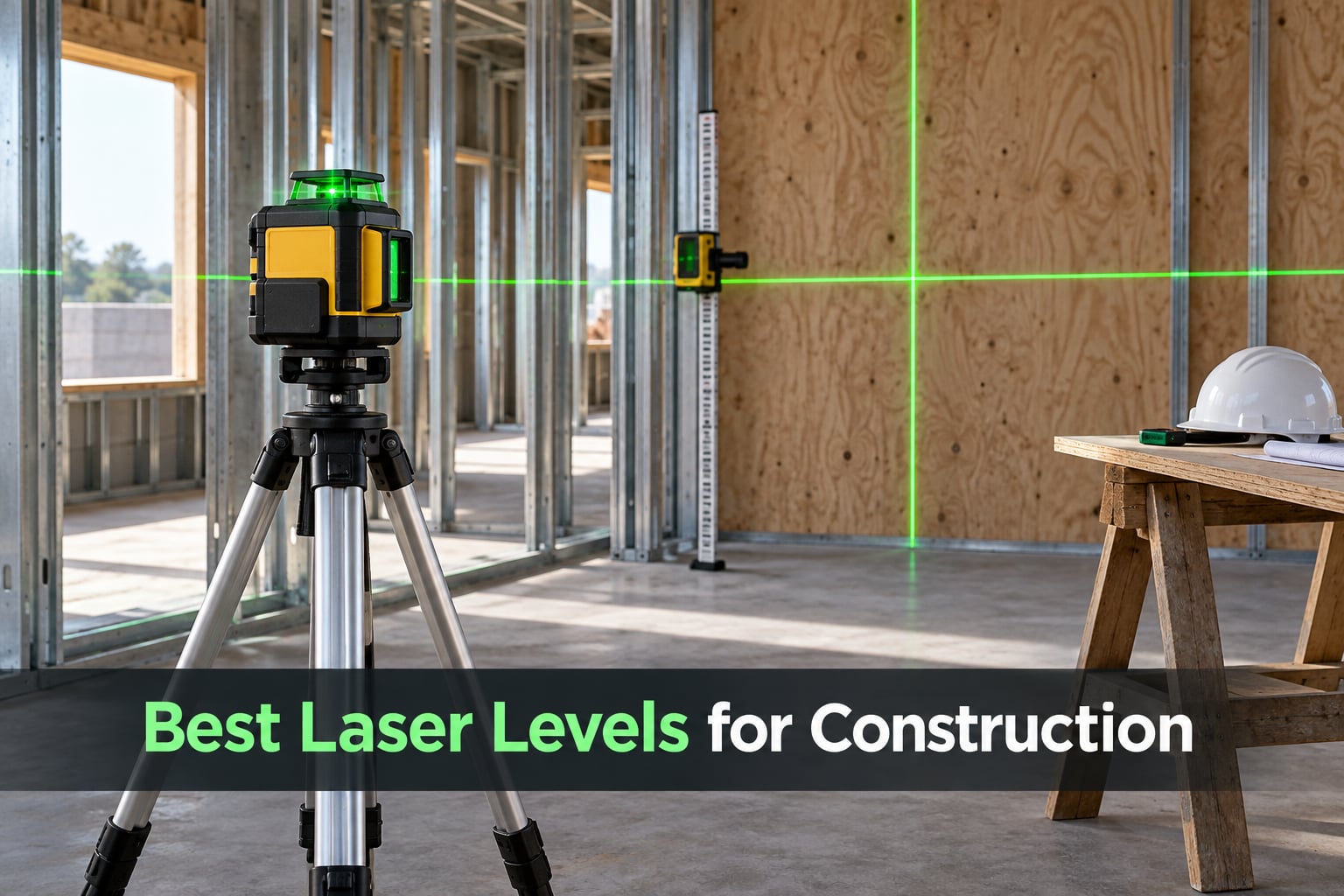
A construction laser level is a self-leveling tool that projects a precise line or rotating plane of light so you can mark level, plumb and square across a jobsite without a bubble vial. After working through the specs, owner reviews and jobsite constraints of the models below, the DEWALT DW088K stands as the best laser level for construction overall, with the DEWALT DW089LG covering full-room layout and the CIGMAN CM-701 delivering 3×360 green coverage without the platform premium.
There are four hardware classes, and most buyers only learn that after a bad purchase. A cross-line laser gives you two lines for framing and trim. A 3×360 or 4×360 green laser fills an entire room without walking the tool around. A rotary grade laser spins a plane of light for grading, drainage and foundations. A point and plumb laser drops dots for conduit and pipe runs.
We picked these twelve by reading accuracy claims at a stated distance, checking IP sealing for real site abuse, and looking hard at what is actually in the box. We do not quote bare range numbers, because a visible beam in a dark room and a working diameter with a receiver outdoors are different claims. Last updated for 2026.
If you are outfitting a whole crew, the rest of the kit matters too. Our guides to the best two way radios for construction sites and best wireless earbuds for construction workers cover that side.
Our Top 3 Tested Picks for the Jobsite

DEWALT DW088K Cross Line
- Red self-leveling cross line
- 1/8 in accuracy at 30 ft
- IP54 and 1 meter drop rating
- Magnetic bracket and hard case

DEWALT DW089LG 3×360 Green
- Green 3x360 coverage
- 12V MAX battery and charger included
- Plus or minus 3mm at 10m
- IP65 with locking pendulum

CIGMAN CM-701 3×360 Green
- 12 green lines
- 3x360 coverage
- 4000mAh USB-C battery
- Remote and carry case
The DW088K wins on review volume and a drop-rated housing rather than a spec sheet lead. It is the least glamorous tool here and the one we would hand to a new apprentice.
All 12 Laser Levels Compared Side by Side in 2026
| Product | Specs | Action |
|---|---|---|
| DEWALT DW088K Cross Line Red |
|
Check Latest Price |
| DEWALT DW089LG 3×360 Green |
|
Check Latest Price |
| CIGMAN CM-701 3×360 Green |
|
Check Latest Price |
 DEWALT DCLE34030G 3×360 Green DEWALT DCLE34030G 3×360 Green |
|
Check Latest Price |
 Takamine GM160 4×360 16 Line Takamine GM160 4×360 16 Line |
|
Check Latest Price |
 Topcon RL-H5A Rotary Grade Topcon RL-H5A Rotary Grade |
|
Check Latest Price |
 Bosch GLL50-20 Cross Line Bosch GLL50-20 Cross Line |
|
Check Latest Price |
 LASGOO LG-3D 3×360 Green LASGOO LG-3D 3×360 Green |
|
Check Latest Price |
 KEZERS KL4D-03G 4×360 Kit KEZERS KL4D-03G 4×360 Kit |
|
Check Latest Price |
 Klein Tools 93CPLG Green Planer Klein Tools 93CPLG Green Planer |
|
Check Latest Price |
 Johnson 40-6517 Rotary System Johnson 40-6517 Rotary System |
|
Check Latest Price |
 BLACK+DECKER BDL190S Line Laser BLACK+DECKER BDL190S Line Laser |
|
Check Latest Price |
Two rows deserve a note. The rotary entries are the only tools here built to work at 100 feet and beyond with a receiver. The Johnson 40-6517 is a Class IIIa unit rated up to 5mW, a different eye-safety category from every other laser on this page.
1. DEWALT DW088K – The Most Proven Cross Line for Framing Crews
DEWALT Line Laser, Self-Leveling, Cross Line, Red Beam (DW088K)
Red self-leveling cross line
1/8 in accuracy at 30 ft
IP54, 1 meter drop rating
Integrated magnetic bracket
Pros
- Self-leveling pendulum is fast and repeatable
- Strong integrated magnets hold to metal studs
- 1 meter drop-rated overmolded housing
- Hard case included
- 1/4-20 thread fits standard tripods
Cons
- Red beam hard to see in bright daylight without a detector
- No pendulum lock so it clunks in transit
- Mounting clip grips only thin material
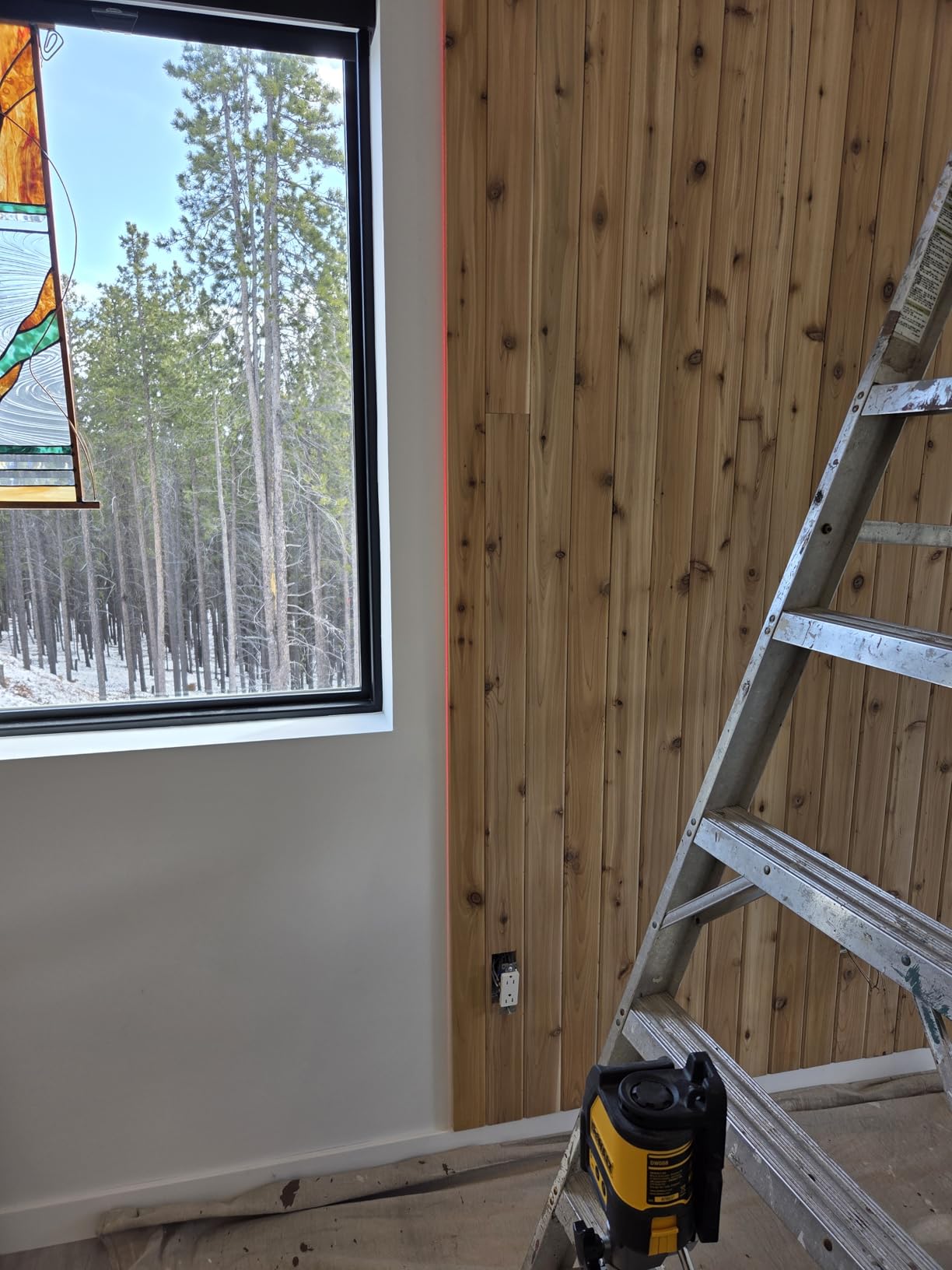
This is the tool we see most often in residential framing, and the review volume explains why. Owners report the self-leveling pendulum settles fast and repeats to spec, which is what matters when you snap a top plate across a 20 foot wall.
The integrated magnetic bracket holds to metal studs and corner bead without an adapter, so there is one less bracket to lose between jobs. At 0.6 kg it hangs on a lanyard all day, and the 1/4-20 thread means your existing tripod works with no adapter.
Drop rating and housing for a working site
The overmolded housing carries a 1 meter drop rating and an IP54 seal that handles water and debris rather than a hose-down. This is the tool that gets thrown in a truck bed and dropped off a scaffold ladder.
Accuracy and range you can actually hit
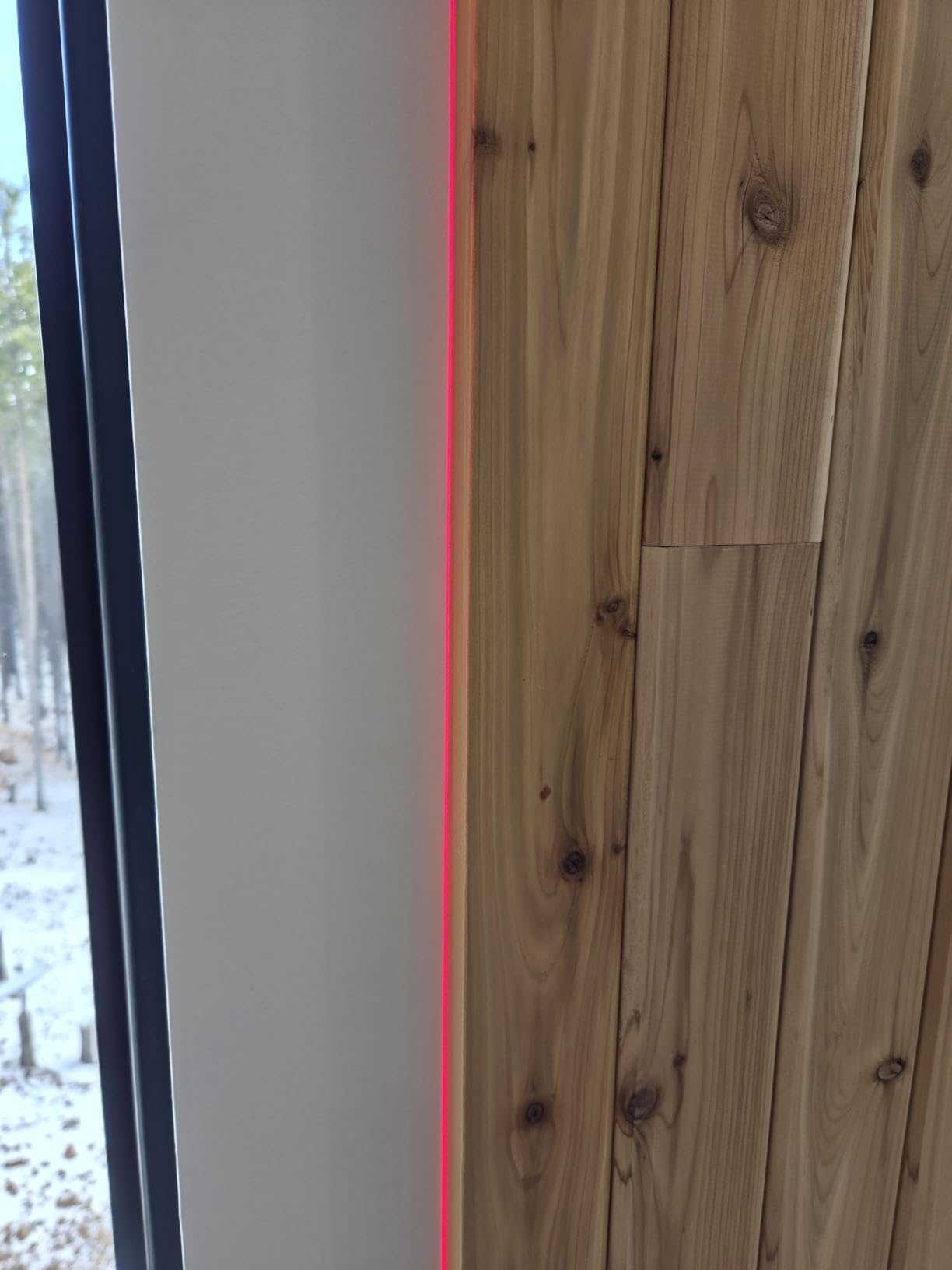
Stated accuracy is 1/8 inch at 30 feet, fine for framing, blocking and stud layout, but not fine for setting cabinet heights on a 12 foot run, which is where a 3×360 green unit earns its money. Listings quoting 165 feet assume a detector sold separately, so in daylight with no receiver treat this as a room tool.
Where it falls short
There is no pendulum lock, so it rattles in the truck bed. The mount is a magnet on a hinge, excellent on steel framing and mediocre on anything else, and on a drywall screw you will hold it with one hand and mark with the other. Red-beam users on trade forums push back on the assumption that green is always better, and for interior framing they are right.
2. DEWALT DW089LG – Best Full-Room Layout Laser for 12V MAX Crews
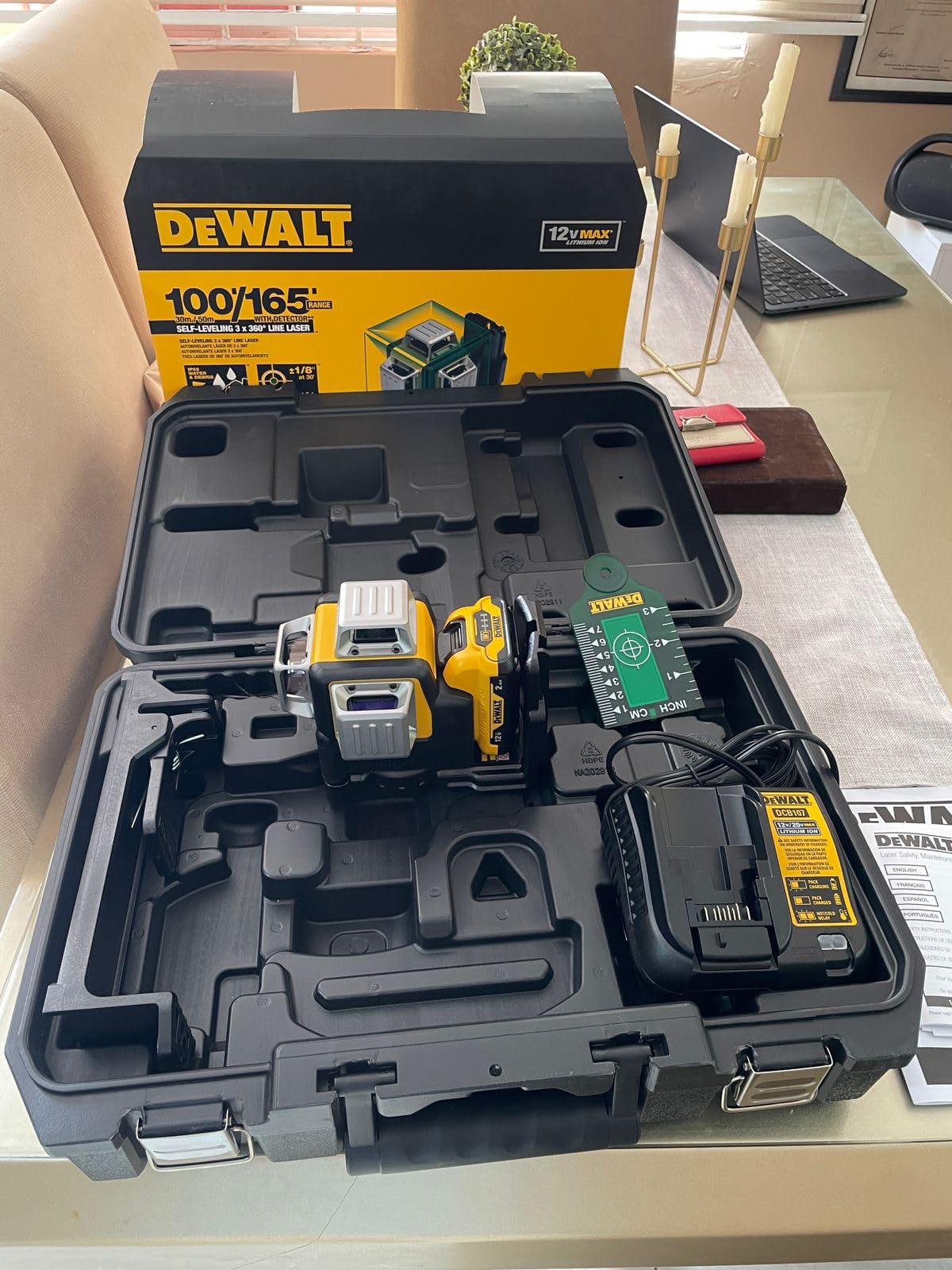
DEWALT Laser Level 360 Self Leveling, 3 Way Green Laser Leveler Tool 12V MAX with 2.0Ah Battery, Charger and Durable Carrying Case, 100 Ft, Tripod Compatible (DW089LG)
Green 3x360 line laser
Plus or minus 3mm at 10m
IP65 overmolded housing
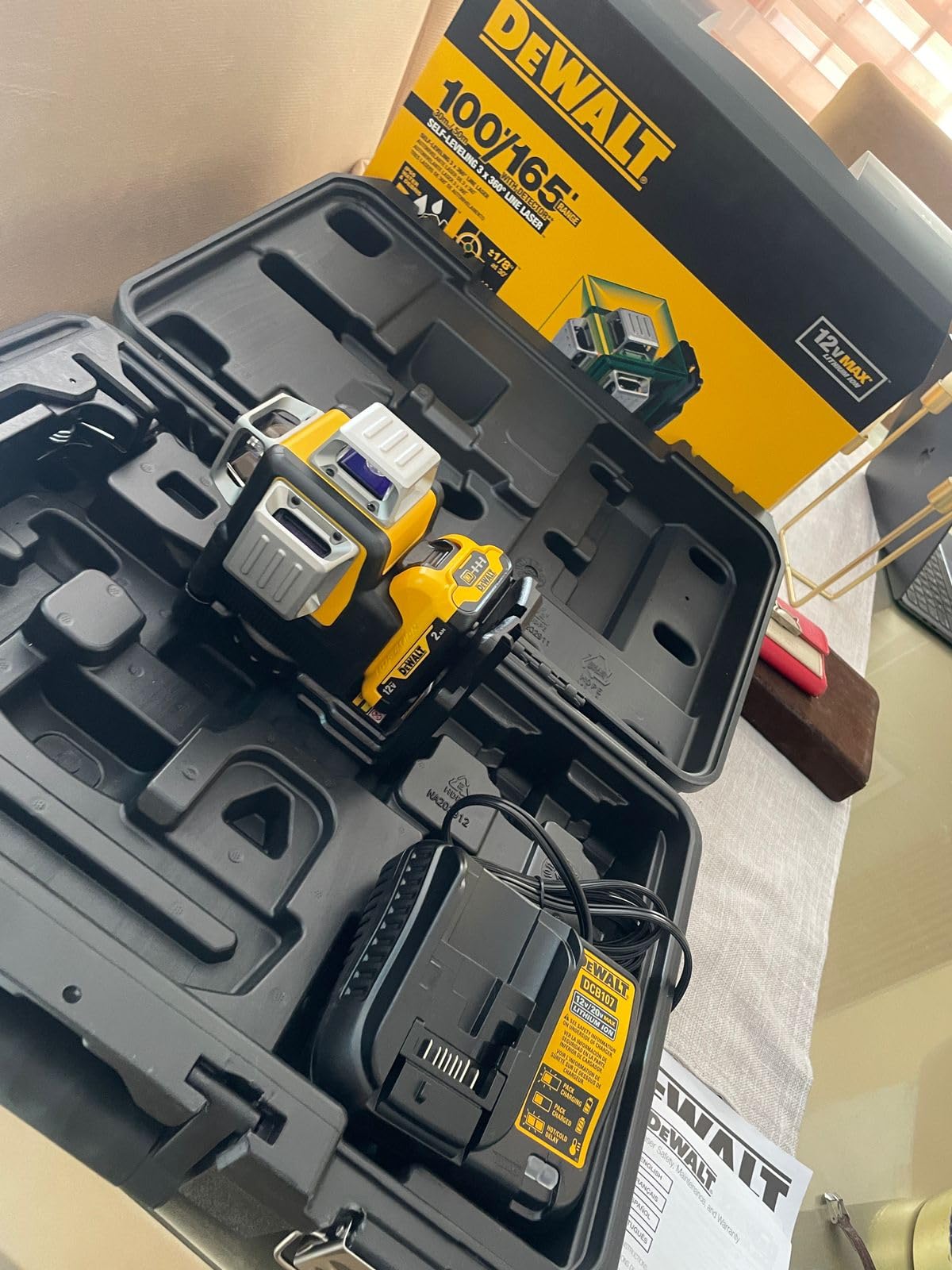
12V MAX battery and charger included
Pros
- Green 3x360 covers floor walls and ceiling
- 12V MAX battery already on most crews
- Locking pendulum protects internals
- IP65 overmolded housing
- Carrying case and ceiling bracket included
Cons
- Bundled 2.0Ah battery is the smallest capacity in the platform
- Heavier and bulkier than bare cross-line tools
This is the upgrade that changes how you work on anything from basement framing to a full ceiling grid. Instead of carrying the tool from wall to wall, you set it on a tripod mid-room and every surface gets a reference line at once.
That is why 360-degree coverage is the most requested feature on trade forums. Users describe it as removing the walk-around entirely, and once you have used one you do not go back to repositioning a cross line a dozen times.
Green beam visibility in a lit interior
Green is the reason to move up a class. Klein states its green lines shine up to twice as brightly as standard red, and trade consensus puts the figure nearer four times brighter under ambient light. The practical effect is that the line stays readable with the roller door up. Full-time pulse mode keeps it usable with a detector, which is how you push this into daylight layout.
Battery platform and the lock-in decision
This runs on DEWALT 12V MAX. If your crew already carries those packs, that is the whole argument: one charger, one battery family, no second charging station in the truck. Forum users raise that constraint constantly, and it can override a better spec on paper.
Locking pendulum, sealing and the reviewer gripes
The pendulum locks for transport, protecting the internal mechanism the way the DW088K does not. IP65 means a soaking rain and a dusty site are both survivable, though still not submersible. The most common reservation is the bundled 2.0Ah battery, the smallest in the platform, and at 3.74 kg for the kit it is bulkier than a bare cross-line on a ladder.
3. CIGMAN CM-701 – Best Value 3×360 Green Laser in This Group
CIGMAN Laser Level Self Leveling 3×360° for Picture Hanging & Construction
12 green laser lines, 3x360 coverage
4000mAh built-in battery with Type-C charging
IP54 rated
Remote control and hard case
Pros
- Green beam far more visible than red
- 4000mAh battery covers a full working day
- Remote control for line and brightness
- Padded case organizes every accessory
- Accurate enough to match higher-priced references
Cons
- Mini tripod is hard to position precisely
- Build quality lighter than premium equivalents
- Lines are thick at roughly 3-5mm
- Battery is not user-replaceable
On Reddit r/Tools, Huepar and CIGMAN come up again and again as the answer when someone asks whether a mid-priced green laser holds up. The consensus is that for interior layout the value tier is genuinely good, and that pro brands earn their money on sealing, mounting and service rather than line quality.
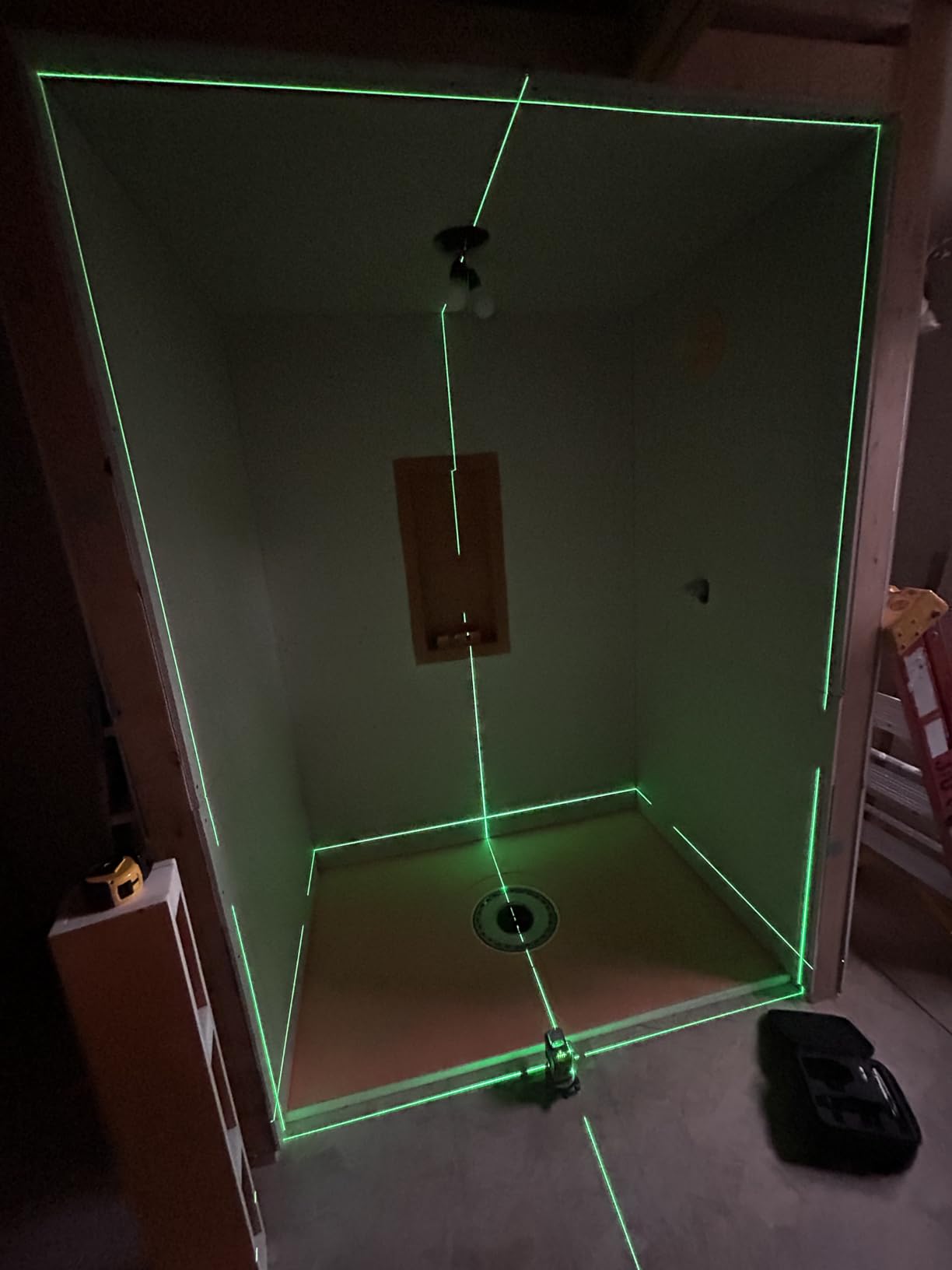
The CM-701 is the cleanest example. Twelve green lines, 360-degree coverage in all three planes, and a battery that charges over USB-C from a truck power bank. It self-levels within plus or minus 4 degrees and flashes when you exceed that, which is a useful habit to build.
Battery life and the no-ecosystem argument
The 4000mAh pack runs a full working day, and pulse mode extends working distance from 30m to 50m with a receiver. That is the opposite trade to the DEWALT kit, and for a solo operator it is the better one, because there is no platform to join and no charger to lose. The catch is that the battery is not user-replaceable.
The remote earns its place
You will be on a ladder with both hands busy, and the remote is why the lines are not thicker. Owners single it out as a feature that matters more than expected at ceiling height, where climbing down to press a button wastes a minute every time.
Honest limits
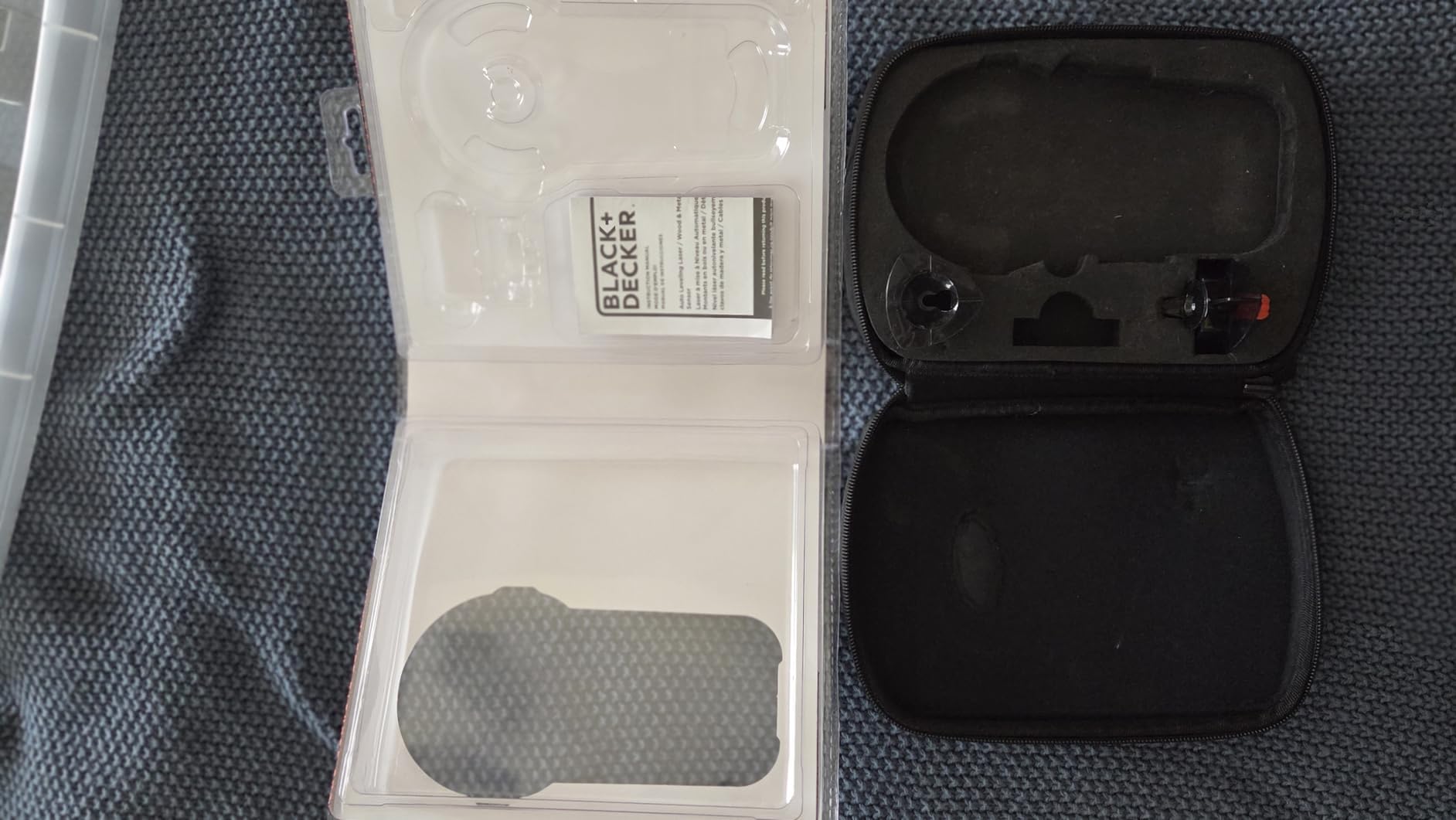
The kit includes a magnetic wall mount, remote, cable, target plate, manual and a black case with everything slotted in, but no real tripod. The mini tripod base is fine on a counter and frustrating above chest height. Owners also report small breaks or dark spots along beams roughly 3-5mm thick, which does not ruin layout work but is visible on finish carpentry.
4. DEWALT DCLE34030G – 3×360 Green for Crews Standardized on MAX Batteries
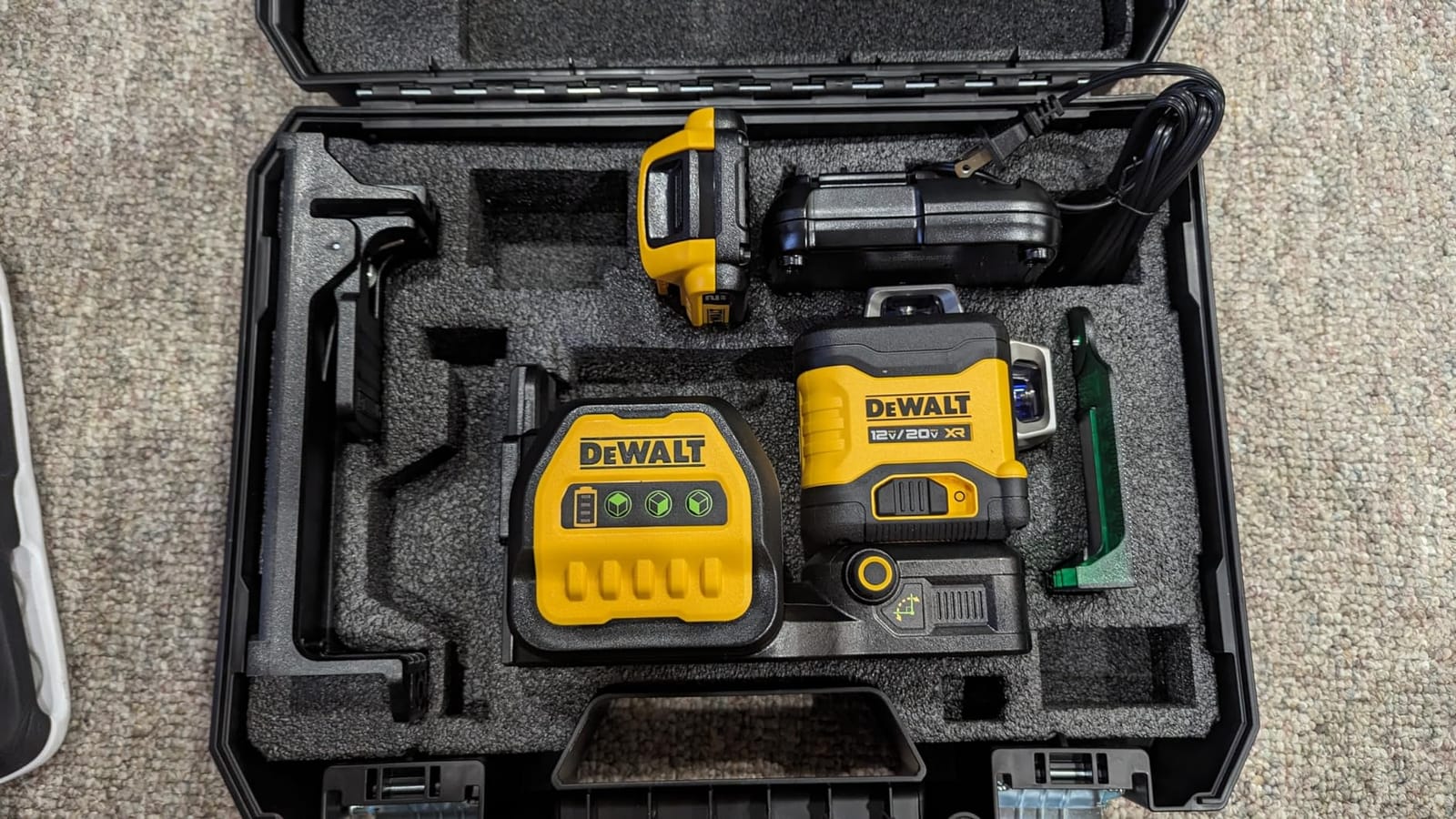
DEWALT 20V/12V MAX Laser Level Kit, 3 x 360, Green (DCLE34030G), Color Yellow
Green 3x360 line laser
1/8 in accuracy at 30 ft
Runs on 20V MAX and 12V MAX
IP54 with fine adjustment knob
Pros
- Shares batteries with 20V MAX and 12V MAX packs
- Ten hours runtime on a 2.0Ah pack
- Fine adjustment knob for plumb lines
- Pivoting magnetic base with standard threads
- Overmolded case
Cons
- Premium price for a 3x360 line laser
- Included ceiling bracket and target card are thin extras
If your crew is fully standardized on DEWALT MAX packs, this is the logical 3×360 pick. Battery interchangeability is the feature mentioned first by owners, and ten hours on a single 2.0Ah pack means a full day of layout without a midday swap.
Accuracy is stated at 1/8 inch at 30 feet, adequate for plumb layout, blocking and general framing marks. The fine adjustment knob is the sleeper detail, because on a magnetic base that wants to drift, a screw you can turn beats re-positioning the whole unit.
Battery sharing across two platforms
This is the one on the list that spans both 20V MAX and 12V MAX, so a crew mixing saws on one platform and grinders on the other can carry one laser and use the packs already in every bag. That is exactly the lock-in forums keep raising.
Mounting, threads and protection
The integrated magnetic pivoting base carries 1/4-20 and 5/8-11 threads, so it fits a compact tripod for plumb work and a heavier survey tripod for anything that must stay put. The pivot lets you set a vertical line and tilt it deliberately. IP54 with an overmolded case handles debris and splash, which makes this an interior-first tool in wet conditions.
What the reviewers push back on
The price is the objection, and a real one. Buyers note it sits well above equivalent 3×360 green options from other brands, so the argument has to be entirely about battery platform fit. Some also point out that the included ceiling bracket and target card are thin extras at this level.
5. Takamine GM160 – Densest Line Coverage with 16 Green Lines
Takamine 16 Line Green Laser Level Pro,4×360 4D Cross Line for Construction
4x360 green planes, 16 lines
130 ft working range at 100 LUX
Accuracy 33 ft at plus or minus 1/9 inch
IP54 with rubber protection
Pros
- Sixteen lines give the densest coverage here
- Bright green lines in bright indoor spaces
- Battery holds charge for years of intermittent use
- Remote control saves ladder trips
- Weighted base with fine adjustment
Cons
- Bracket arm magnets too weak at full extension
- Touch buttons are hypersensitive
- Shield bars interrupt the beams slightly
- No magnet on the unit itself
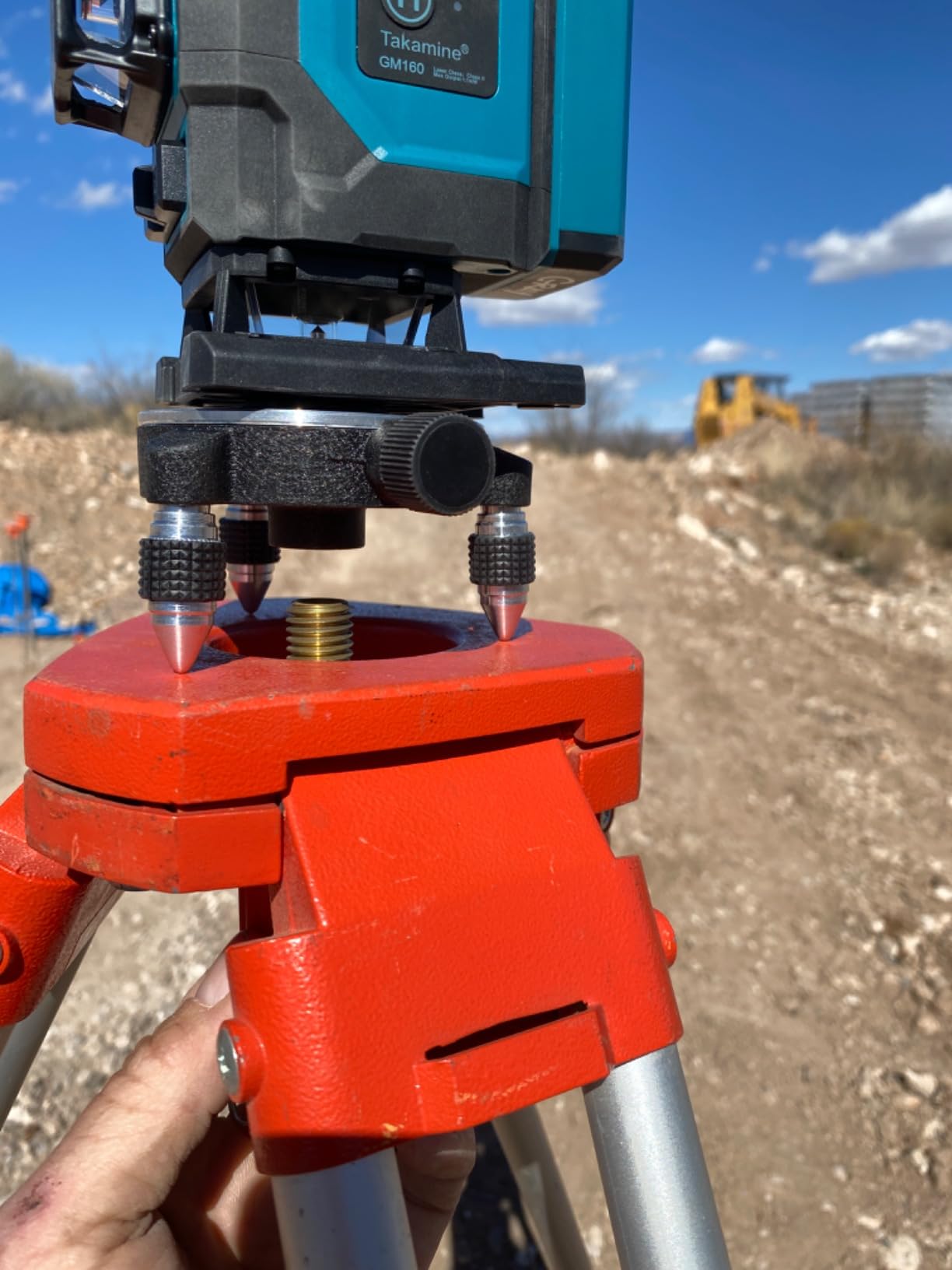
Three by three-sixty gives three planes. Four by three-sixty gives four, and the fourth is what makes complex soffits, dropped ceilings and multi-level room geometry a single-setup job instead of a repositioning job.
Owners describe an accurate, well-made unit with a SHARP green module doing the beam work. That range figure deserves scrutiny: 100 LUX is a controlled-light condition, so treat 130 feet as a spec-sheet number and plan on a receiver for outdoor layout.
Sixteen lines and where they pay off
Floor, ceiling and two independent verticals cover a room with a step-down ceiling without moving the tool. For a layout carpenter running cabinet lines, door openings and bulkhead heads in one structure, that is a real time saving. Accuracy is 33 feet at plus or minus 1/9 inch, tight enough for most finish work.
Mounting: the part owners complain about
The universal adjustable magnetic bracket is the weak point. Owners report the arm magnets cannot hold the unit at full extension, so you work close in or add a strap, and there is no magnet on the body, meaning every mount goes through the multi-part bracket. This is the recurring lesson across this list: a crooked install starts with a bumped mount, not a bad diode.
Touch controls and interrupted beams
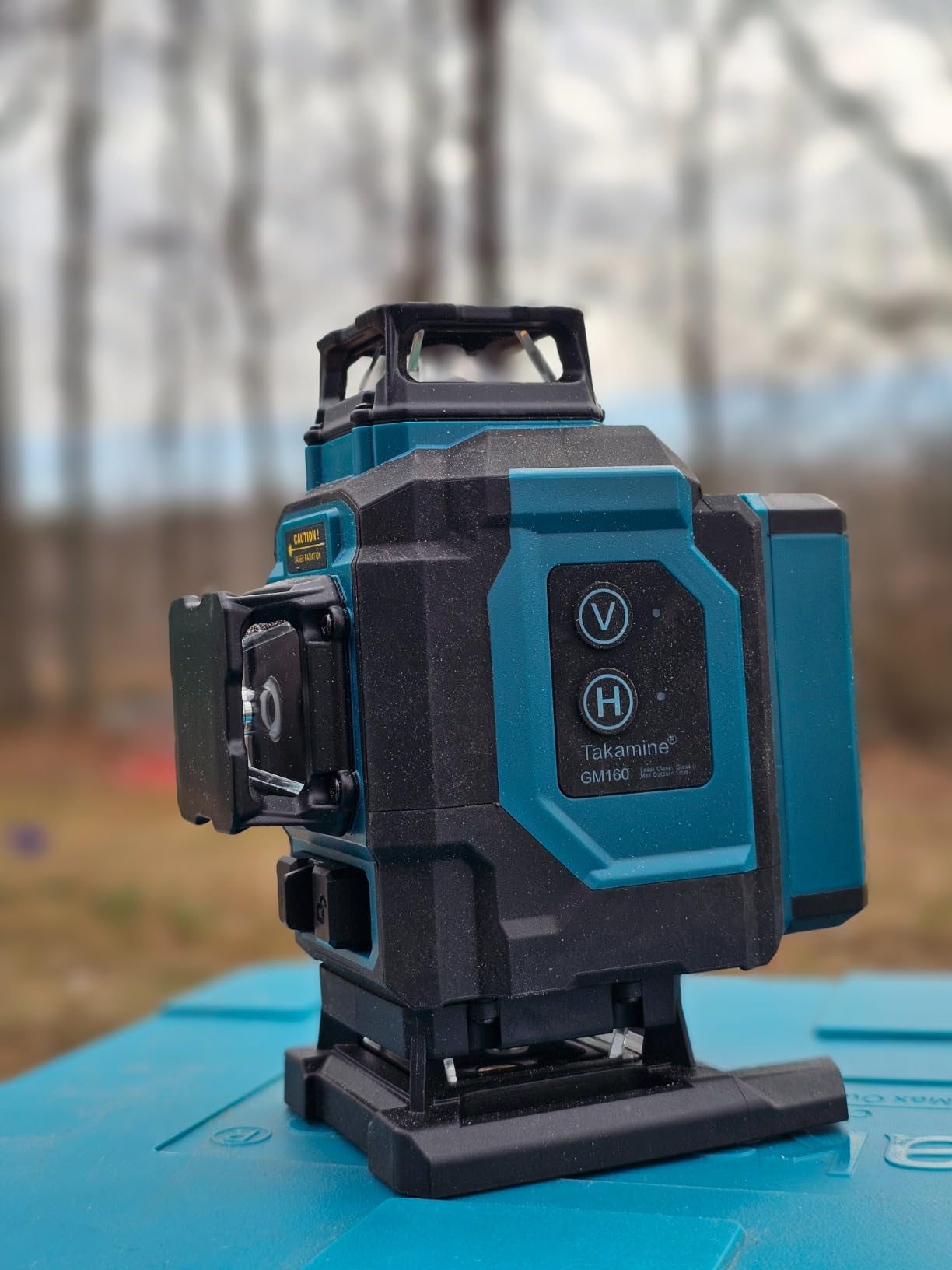
Side touch buttons are hypersensitive, which is a problem on a ladder with gloves, and accidental mode changes mid-task are how you end up re-running a layout. Shield bars interrupt the beams slightly, a durability trade owners mostly accept but that shows on a critical reference line. It also cannot run and charge at the same time.
6. Topcon RL-H5A – Best Rotary Grade Laser for Groundworks and Grading
Topcon RL-H5A Self-Leveling Construction Laser w/LS-80 Receiver
Self-leveling rotary laser
1/16 inch accuracy at 100 feet
Covers a 2600 ft job site
IP66 with LS-80 receiver included
Pros
- Out-of-box accuracy better than 1/8 in at 150 ft
- Self-levels reliably on an out-of-plumb tripod
- Owners report 80+ hours on a charge
- Solid hard case with molded storage
- Slope function handles road beds and forms
Cons
- Requires a 5/8-11 tripod
- grade rod and D cells
- Level tone is faint and hard to hear
- Some units arrive without a battery or charger
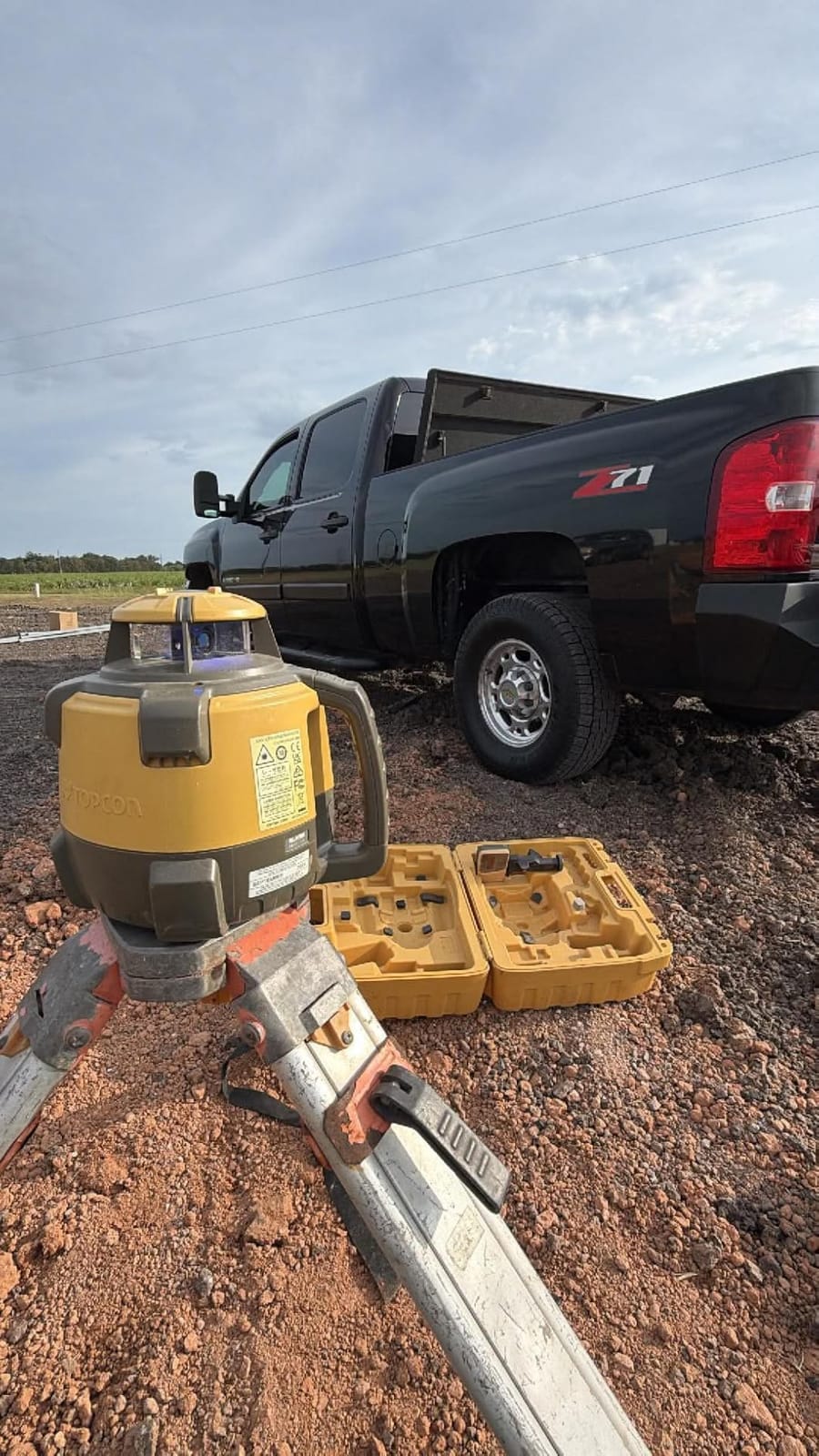
This is the class the roundups on this topic keep skipping, and it is the one the groundworks questions are actually asking about. A rotary laser does not project lines. It spins a plane of light so a receiver on a grade rod can find exact elevation anywhere across a site.
That is how you set drainage fall, hold a concrete form level or check a road bed. The stated 1/16 inch accuracy at 100 feet and 2,600 feet of coverage are the numbers builders quote, and no line laser here reaches that far. Users report measuring better than 1/8 inch at around 150 feet out of the box.

Why grade work needs more accuracy
Framing tolerance at 1/8 inch over 30 feet is a cabinet-screw problem. Grade work at 1/16 inch over 100 feet is a drainage-fall problem, where error compounds: a 1 percent slope across 100 feet is about a foot of fall, so a small angular error becomes a visible puddle. Rotary lasers exist because line lasers are the wrong instrument for that job.
Elevation alerts and slope function
The H.I. alert signals an elevation change if the unit is disturbed, which protects a run of measurements from becoming worthless because someone kicked the tripod. The slope function handles road beds and concrete forms without a second person. Stated battery life is up to 100 hours, with owners reporting 80-plus in practice.
What you still have to buy
Here is the honest part: this needs a 5/8-11 tripod, a grade rod and D-cell batteries, none of which are included. The kit does include the LS-80 receiver, sensor holder and hard case. IP66 is the highest sealing rating in this group, but no rating here means submersible. Owners also note the level tone is faint on a windy site, and some report units arriving without a battery or charger.
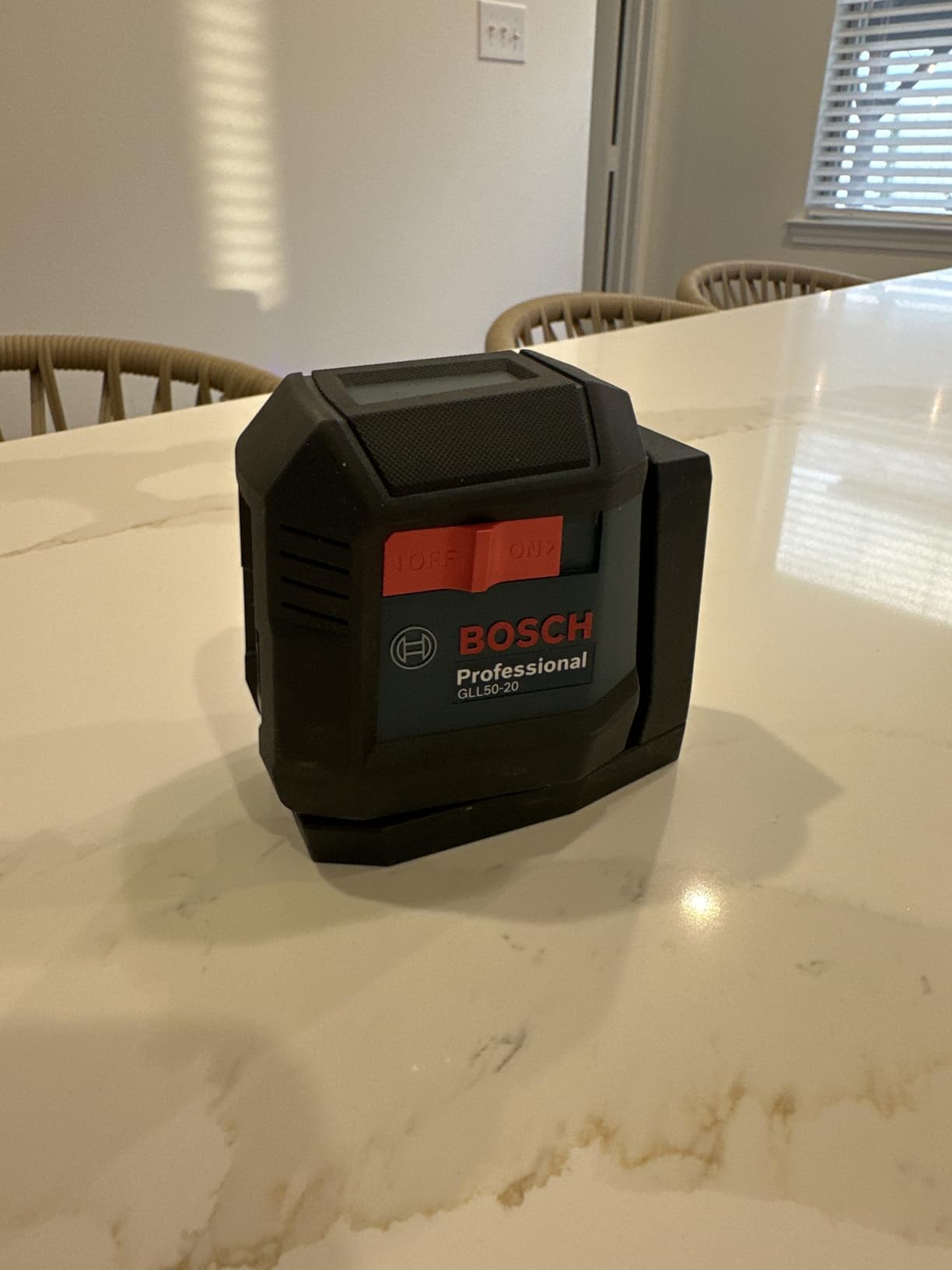
7. Bosch GLL50-20 – Best Starter Cross-Line From a Major Brand
BOSCH PRO GLL50-20 Self-Leveling Cross-Line Laser
Self-leveling cross-line laser
50 ft range, 5/16 in at 30 ft
IP55 rated
AA power with optional Li-Ion pack
Pros
- Simple
- dependable and easy to set up
- Good quality storage box included
- Magnetic mount works well in a shop
- AA power means no proprietary pack to lose
- Smart Pendulum System locks for transport
Cons
- Red line nearly invisible in bright daylight
- 50 ft range is short against green 3x360 models
- Not as precisely made as higher-tier tools
Bosch built this for interior build-out and trim work, and it does that job without fuss. The Smart Pendulum System self-levels, blinks when you push it out of level, and locks the pendulum when you switch it off.
That transport lock is what separates it from the budget cross-line crowd, and it makes this a sensible first laser or a shop backup. Two AA batteries are included and you can swap to the Bosch 3.7V Lithium-Ion pack if you own one, so there is no proprietary charger to buy on day one.
Accuracy and the 50 foot ceiling
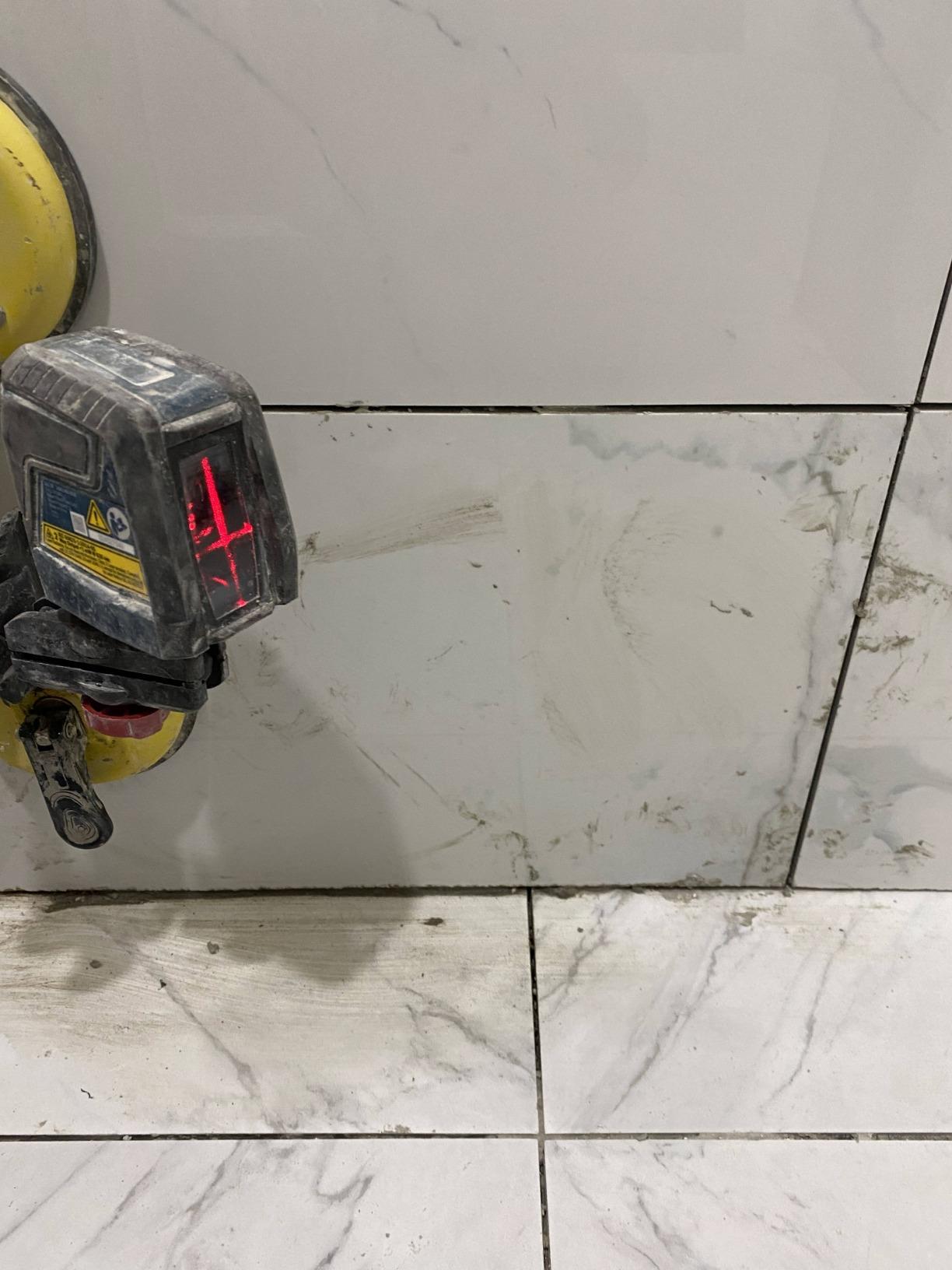
Levels within 5/16 inch at 30 feet, fine for trim, bifold doors and hanging tile, and the loosest figure among the cross-line options here. The 50 foot range is the real limit, because in a room with a long wall or a two-story drop you will be moving the tool.
IP55 and the shop environment
IP55 protects against dust and water, which suits a shop floor, a basement pour and general interior work. The full rubber overmold protects the impact points, which is where cross-line tools usually crack. Bosch also extends the warranty by an extra year if you register within eight weeks.
Where the reviews push back
Owners call the red line nearly invisible in bright daylight, so if half your work is outside this is the wrong tool. Several also note it is not as precisely made as higher-tier laser tools: it works accurately, but the finish and the mount feel a step down from a Klein or a DEWALT.
8. LASGOO LG-3D – Dual Batteries for Full-Shift Cordless Layout
LasGoo LG-3D Laser Level Self Leveling 3×360°, 3D Green Beam Cross Line Laser for Construction and Picture Hanging, 2 Rechargeable Batteries (20 Hrs), Magnetic Liftable Stand Included, Green
Green 3x360 line laser
Two rechargeable packs at about 10 hours each
Self-levels within 4 degrees
Visible up to 100 feet
Pros
- Dual battery packs cover a full shift
- 3x360 coverage for whole-room layout
- Magnetic liftable stand included for low positions
- Clear bright lines at indoor working distances
Cons
- Lower overall rating than the leading 3x360 options
- 100 ft stated visibility trails some competing 3x360 models
The distinguishing feature is not the laser, it is the batteries. Two rechargeable lithium-ion packs at roughly ten hours each mean a second pack in the bag is genuinely a spare, and you can hot-swap at lunch instead of planning around a charger.
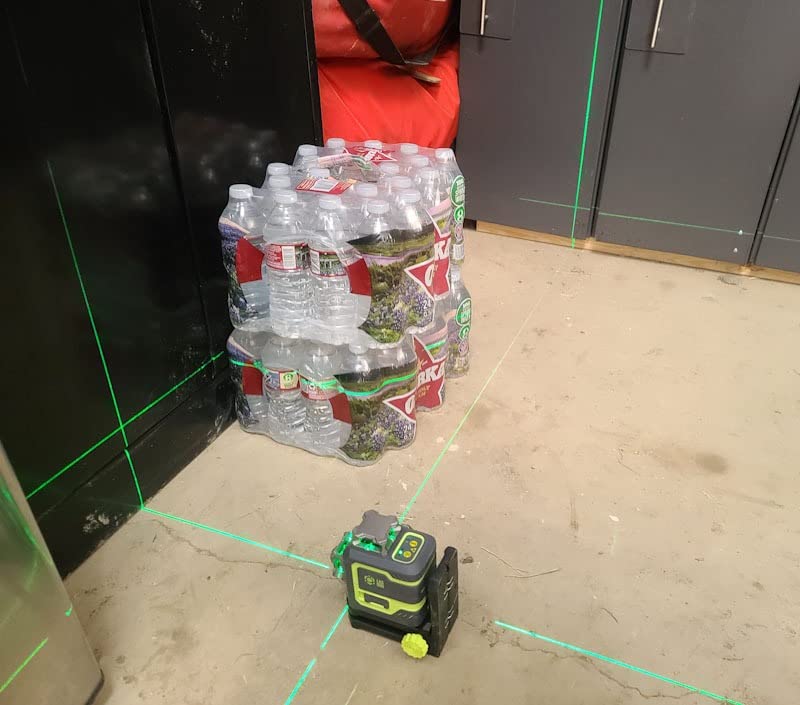
One horizontal and two vertical lines, each rotating 360 degrees, give standard three-plane green layout at a mid-tier price. Lines are visible up to 100 feet indoors, self-leveling works within 4 degrees, and manual mode is available by locking the pendulum.
What the liftable magnetic stand is for
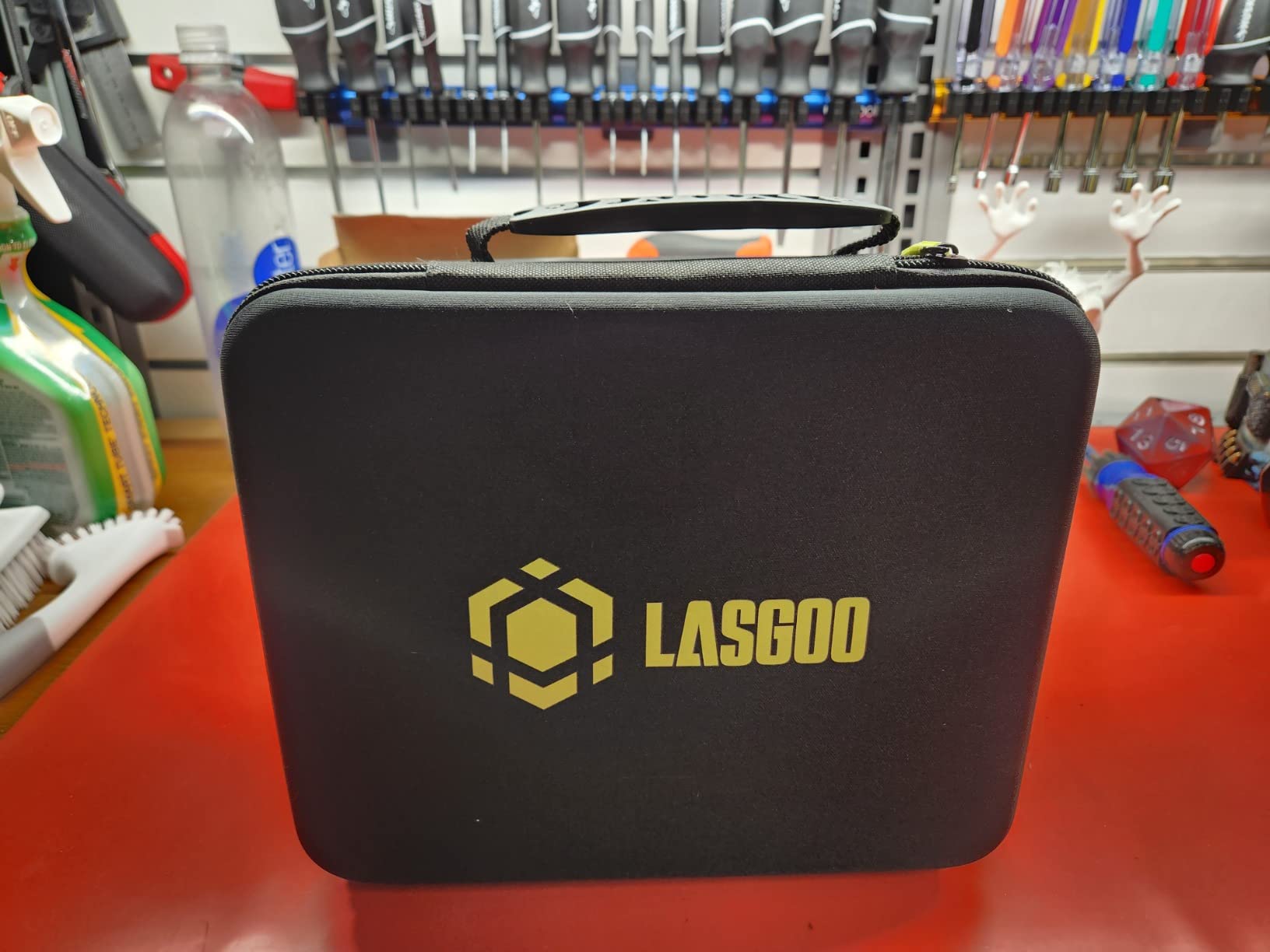
The magnetic liftable rotating stand gets the unit low to the floor, where base cabinets, toe kicks and floor tile reference lines live. It is included with a portable bag, target plate and Type-C cable, and it solves the one part of a 3×360 layout most owners end up improvising.
Manual mode for slope work
Locking the pendulum puts the unit in manual mode, and that is how you set an intentional fall. Plumbers report looking for exactly this feature when they run drain pipe, so check for it on any line laser you consider.
The honest limits
The average rating sits below the leading 3×360 options here, and that is the trade for the dual-battery configuration. Nothing in the review data points to a specific failure, so this reads as general build consistency rather than one broken element. Owners also note 100 feet of stated visibility trails some competing 3×360 models.
9. KEZERS KL4D-03G – Most Complete Kit, Receiver and Tripod Included
KEZERS Laser Level Set with Receiver,4 x360 Self Leveling Laser Level with Tripod and Grade Rod for Construction,Home Renovation,Hanging Pictures,2 Batteries,Remote Control,Touch Screen
4x360 green planes, 16 lines
Receiver, 60-inch tripod and 9 ft grade rod included
Pulse mode to 164 ft
Two 4000mAh batteries and charger
Pros
- Receiver tripod and grade rod actually in the box
- Touch LCD shows battery and line status
- Dual 4000mAh batteries support all-day use
- Four planes cover floor ceiling and both verticals
- Remote avoids moving the unit
Cons
- Bundle relies on touch input that needs a light touch
- 4x360 16-line models are bulkier than 3x360 units
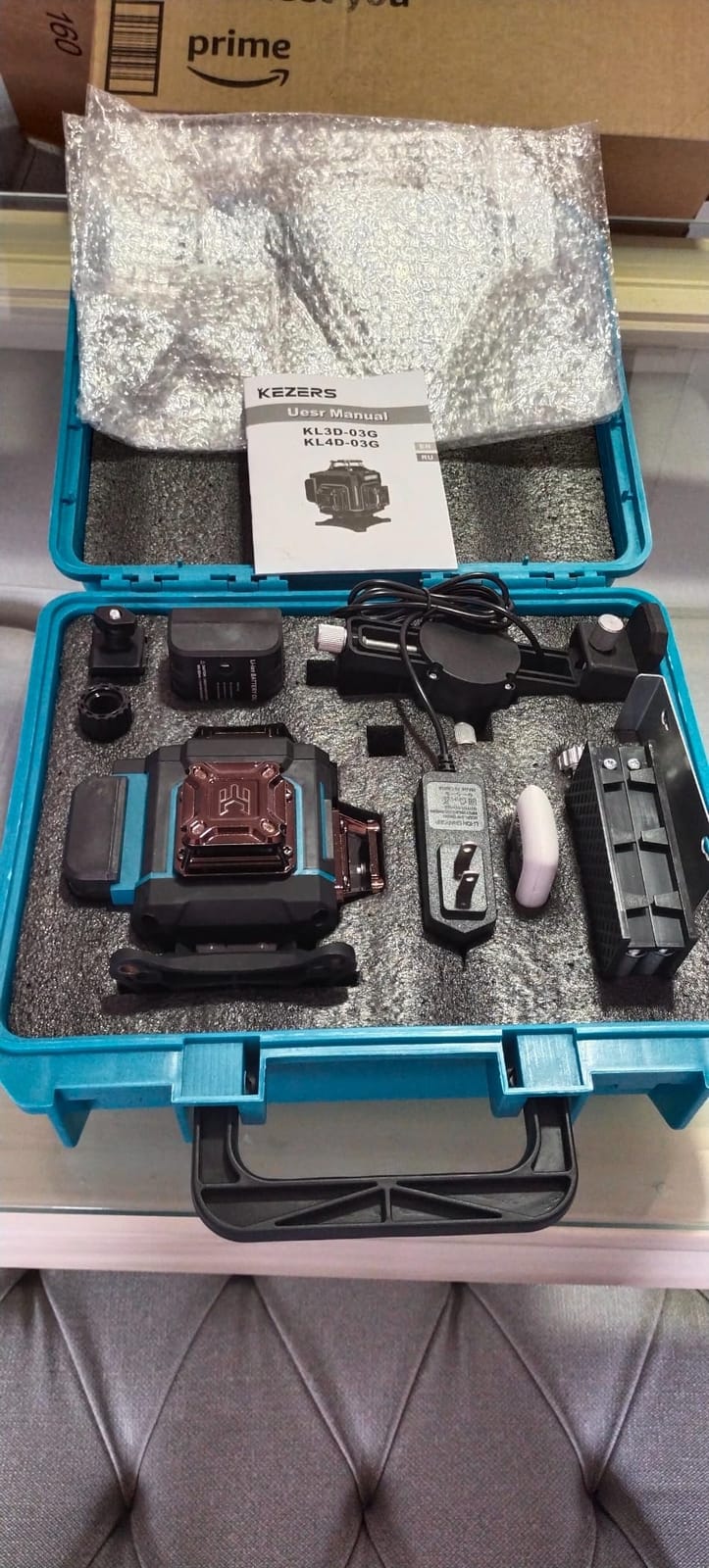
Most kits advertising a receiver, tripod and grade rod are selling you a picture of a complete set. This one includes the laser, a receiver, a 60-inch tripod, a 9 foot grade rod, two 4000mAh batteries with charger, a remote, a magnetic hanging bracket, a lifting base, a 5/8-11 adapter and a carry bag.
That matters because accessories are where budget laser purchases quietly get expensive. A receiver and a real tripod added later cost more than the difference between this and a bare-tool unit.
Touch screen control and battery status
The touch LCD shows battery status and handles line selection and brightness, so you are not climbing down a ladder to change a setting and you can see whether you have enough charge for the reference line you are about to run. Two 4000mAh batteries give up to eight hours with all 16 lines on.
Self-leveling and out-of-level alerts
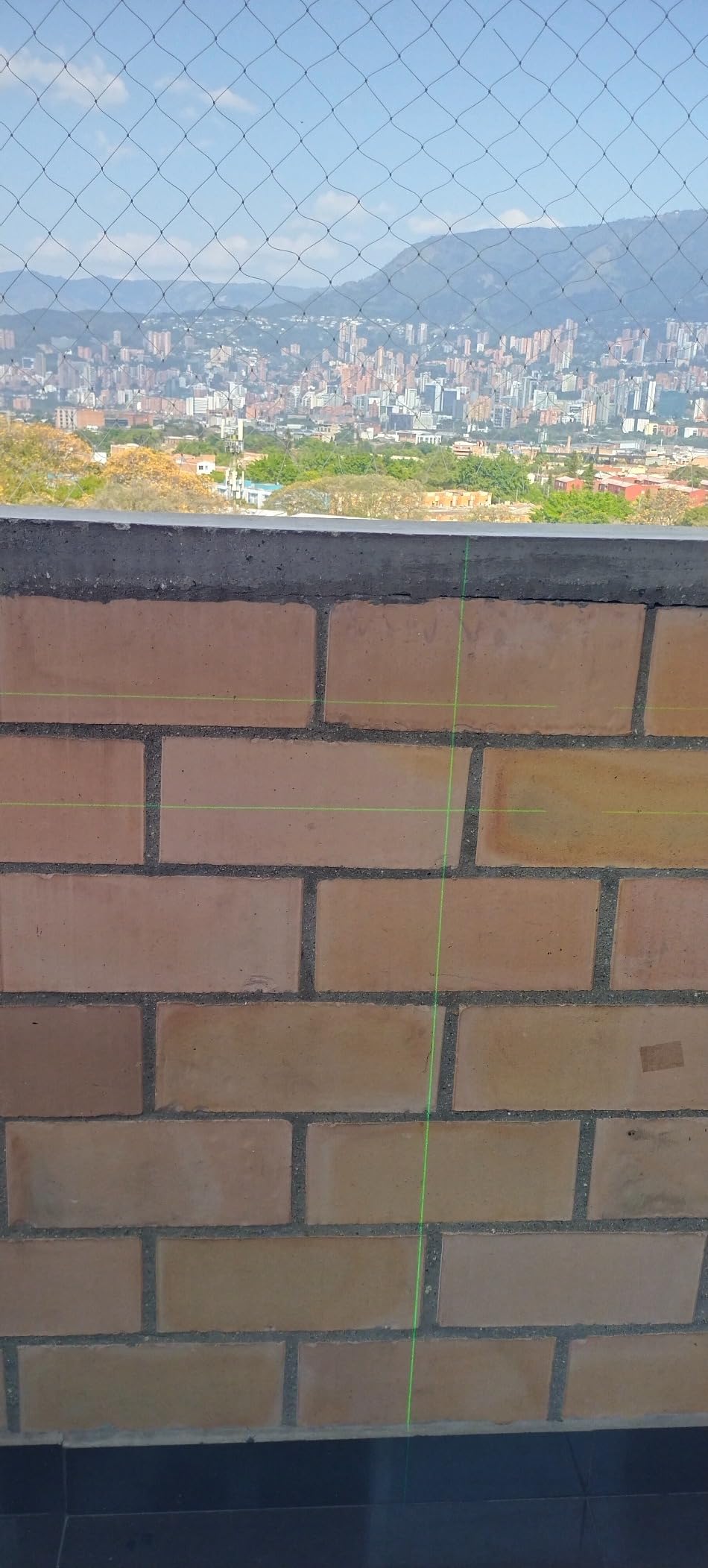
It self-levels within plus or minus 3 degrees and beeps when you exceed that, a tighter figure than most green units here, and the audible alert helps on a ladder where you cannot see the flash. Manual and pulse modes are both present, so slope work and receiver work are covered without a second tool.
What the reviewers note
The bundle relies on touch input, which needs a light touch and can misfire with gloves on, and the same caution applies to any touch-controlled laser in cold weather. As with every 4×360 unit the body is bulkier, so plan the centre of gravity before going overhead on a compact tripod.
10. Klein Tools 93CPLG – Best Compact Green Laser for Tight Jobs
Klein Tools 93CPLG Compact Self-Leveling Laser Level, 100-Foot
Three bright green 360-degree planes
Up to 100 feet of range
IP54 with durable overmold design
Built-in rechargeable battery, 6+ hours
Pros
- Bright green lines visible to 100 feet
- Compact and lightweight for tight areas
- Rechargeable battery with 6+ hour runtime
- IP54 dust and water protection
- Tilt mode plus strong magnetic mount
Cons
- Struggles in bright outdoor daylight
- Magnetic mount could be stronger
- Some units report battery charging issues
- Carry case is basic
The Klein is the smallest three-plane green laser in this group, and that is the entire argument. At 14.88 ounces it goes into a tool bag without a separate pocket, and it fits inside a vanity or millwork chase that a full 4×360 will not.
Three green 360-degree planes project up to 100 feet, and for cabinet and countertop installation that is the difference between seeing your reference line and squinting at it. It is also a Klein, a brand electricians and plumbers already trust, without a 20V battery platform.
Tilt mode and where it helps
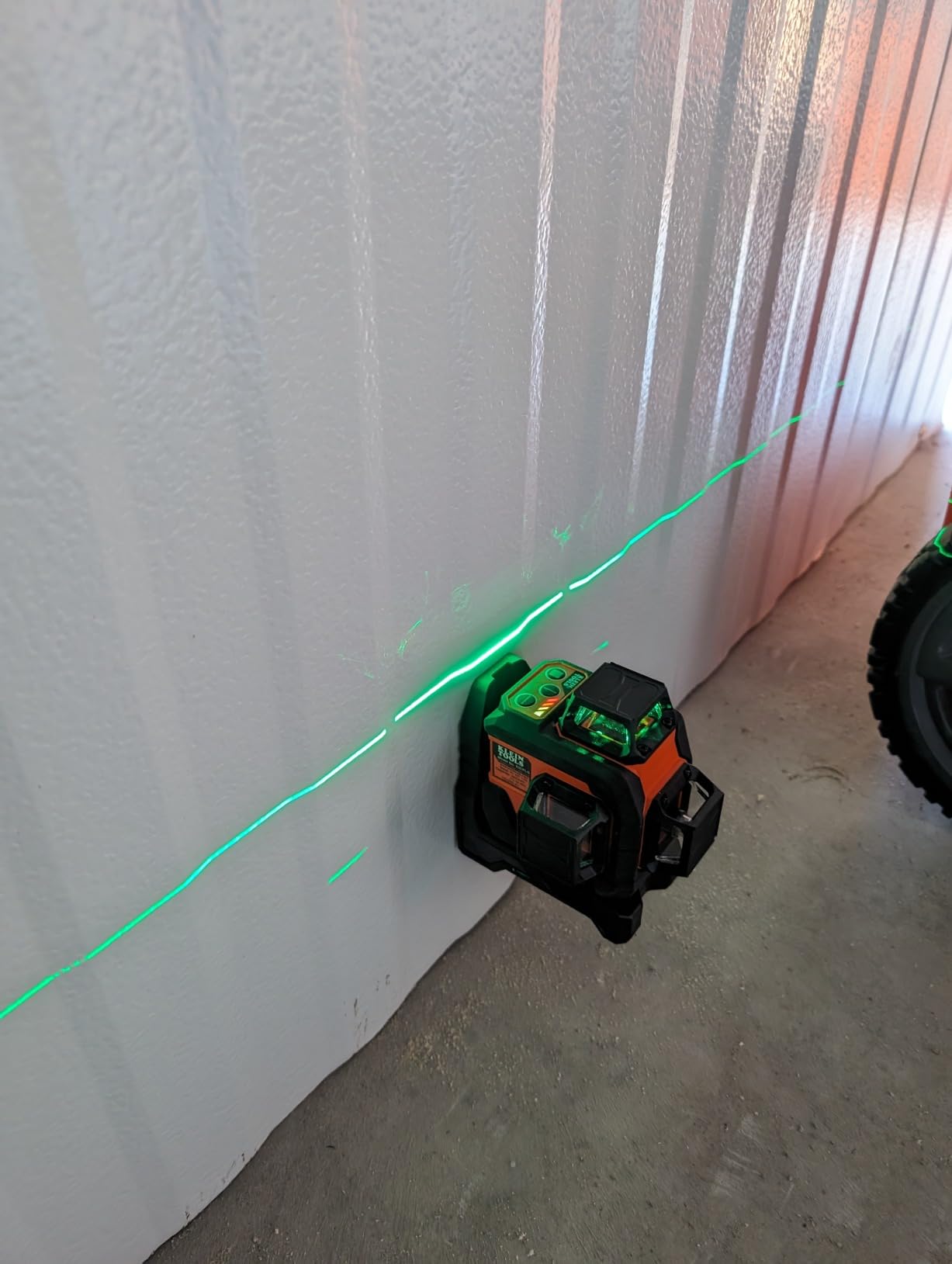
Tilt mode locks the pendulum so you can set the unit at an angle, covering sloped ceilings, stair stringers and any installation where a true horizontal reference is not what you need. The class is 2 at 1mW or less, so it carries no special handling burden over a red cross-line.
Rechargeable power with a catch
The built-in rechargeable battery is non-removable and rated at more than six hours, which covers a working day of interior finish work, and one cable serves the whole tool bag. Some users report units where the battery does not charge fully, and on a non-removable pack that is a service issue rather than a swap, so keep the receipt.
Mount strength and daylight limits
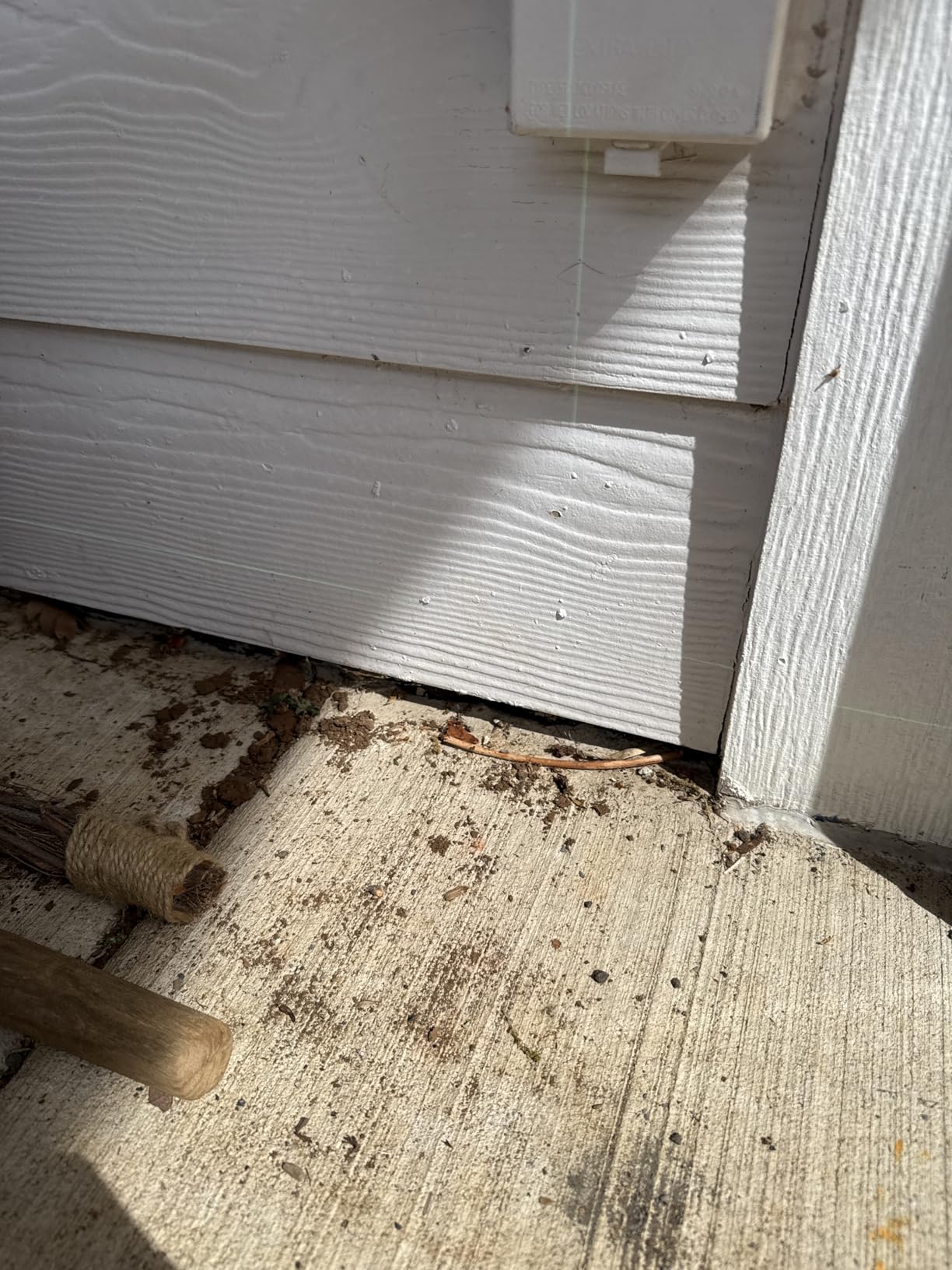
Owners like the magnetic mount but note it could be stronger, particularly on a textured surface, so check it holds before you climb. In bright outdoor daylight the Klein struggles, which is the consistent theme across every green unit here: green is an indoor advantage, and outside the receiver does the work.
11. Johnson 40-6517 – Budget Rotary System with a Full Kit
Johnson Level & Tool 40-6517 Self-Leveling Rotary Laser System, 29 x 7″, Red, 1 Kit
Self-leveling rotary laser system
Complete kit with tripod, grade rod, detector and case
Class IIIa, 5mW or less
3 year manufacturer warranty
Pros
- Complete kit with tripod rod detector and case included
- Three year manufacturer warranty
- Accurate enough for grading and leveling
- Good entry point for smaller contractors
Cons
- Tripod is flimsy
- Receiver feels cheap
- Laser difficult to see in daylight
- Batteries must be removed after use
- Not recommended for daily professional use
This is the only rotary system on the list that includes everything needed to run it. The kit holds the laser, four AA alkaline batteries, a wall and ceiling mount, an 8 foot grade rod, a detector with batteries and clamp, tinted glasses, a magnetic target, an elevating tripod and a hard-shell case.
For a small contractor doing occasional grading or drainage, that completeness is the value, because there is no 5/8-11 tripod to source and no receiver to price separately. It carries a three year warranty against defects in material and workmanship.
The Class IIIa difference you need to know about
This is the one Class IIIa laser here, rated up to 5mW, where every other unit is Class 2 at 1mW or less. Direct eye exposure is a real hazard rather than a theoretical one, and the tinted glasses in the kit are not decoration. Never point it at another person’s eyes at eye height, and treat the beam as a live hazard around the site.
Where the build quality gives out
Owners report the tripod is flimsy and the receiver feels cheap. On a rotary laser a soft tripod is a real accuracy risk, because the instrument is only as level as its support, so if you replace one thing replace the tripod first. Daylight visibility is poor, which is worse than a line laser because there is no beam to catch the light at all.
The battery beep and the case
Users must remove the batteries after use or the unit beeps, an extra step people eventually skip. Several owners also flag the case as thin and soft and recommend against professional daily use. Make it a weekend machine.
12. BLACK+DECKER BDL190S – Best Laser Level for Home Renovation Projects
BLACK+DECKER Line Laser, Auto-leveling with Stud Finder (BDL190S)
Auto-leveling line laser with stud finder
Detects wood, metal and live wires
Class 2 laser, 1.5mW or less
Reads on an easy-to-view LCD
Pros
- Two tools in one saves a second pass
- Stud finder detects wood metal and live wires
- Wall-mount pin leaves minimal holes
- Compact and lightweight
- Users report 10+ years of durability
Cons
- Line not bright in well-lit rooms or daylight
- Stud finder accuracy depends on calibration
- No vertical line projection
- Velcro mount can snag on textured walls
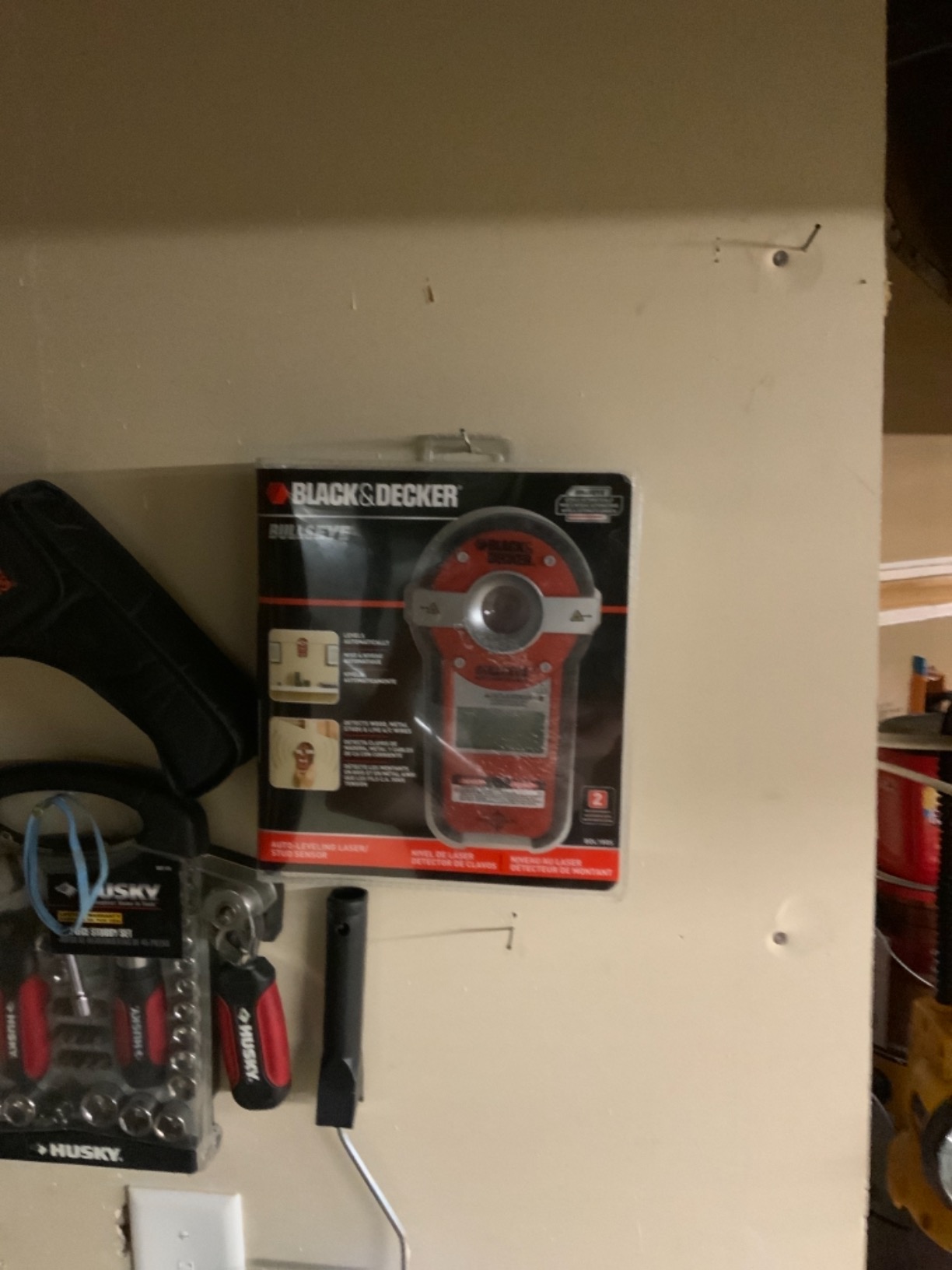
This is not a professional site laser, and we will not pretend otherwise. It is the right tool for the person hanging a full wall of cabinets in a renovated house, aligning a run of wall tile, or finding a stud without a knock.
What makes it different is the built-in stud sensor, which detects wood and metal studs and live AC wires. That is a genuine safety benefit and it removes a second pass with a separate detector. Users report tools still working after 10 to 15 years, unusual longevity for a consumer-grade laser.
The wall-mount pin and where it helps
The wall-mount pin leaves minimal holes compared with a full screw, though the marking hole is small enough that a large pencil is awkward in it. On finished drywall that is a real convenience. Keep in mind it projects a horizontal line only, so it cannot square a wall corner or mark a plumb line.
Stud detection and its calibration caveat
Knowing where wiring runs before you drill is worth more than a second laser plane. Owners do report the stud finder can be inconsistent if calibration is off, so scan the same wall twice before committing to a fix.
Light levels and the textured wall problem
The line is not bright in well-lit rooms and disappears in daylight, so indoors dim the room or use the LCD readout. The Velcro mount can also snag on textured walls, which both marks the surface and pulls the tool off true. On a flat painted wall it behaves.
If you are outfitting a professional crew, this is a secondary tool at best. The rest of our jobsite kit recommendations, from the two way radio roundup to the printer guide for small contractors, follow the same rule: buy for the trade, not for the sticker.
How to Choose a Laser Level for Construction Work
Pick the laser class before the brand
There are four main types of construction laser level, and choosing the wrong one wastes money regardless of the badge on the housing.
1. Cross-line laser. Two lines, one horizontal and one vertical. Best for framing, blocking, trim and single-wall layout. The DW088K and the Bosch GLL50-20 sit here.
2. 3×360 or 4×360 line laser. Three or four planes rotating continuously, usually green. Best for whole-room layout, ceiling grid, cabinetry, drywall and tile. The DW089LG, CIGMAN CM-701 and KEZERS kit are in this class.
3. Rotary grade laser. A rotating plane read by a receiver on a grade rod. Best for grading, excavating, drainage, foundations and concrete form work. The Topcon RL-H5A is the pick here, and no line laser substitutes for it.
4. Point and plumb laser. A single dot or cross of dots for vertical alignment. Best for conduit runs, electrical box layout and pipe risers between floors. Plumbers and electricians look for a plumb spot specifically, and a 3×360 with up and down plumb dots covers most of that need.
If your work happens in one room, buy a line laser. If it happens across a site, you need a rotary or a receiver.
Green or red beam, and why outdoor work still needs a receiver
Green is roughly four times brighter than red under ambient light, and that is the whole argument for green indoors. The line stays readable in a lit room, against a white wall and under a shop door, which is where most interior layout happens. Red still wins on price in the cross-line class, and red-beam users on trade forums defend it for controlled-light framing work.
Here is what most articles get wrong: outdoor daylight layout needs pulse mode and a receiver regardless of beam colour. Green is a visibility advantage, not a range advantage. Pulse mode slows the flashing so a receiver can pick the signal up, and without one it just makes the beam harder to see.
Accuracy tiers and what each one buys you
Accuracy is quoted as a fraction of an inch at a stated distance, and the distance is the part people skip. A tool accurate to 1/8 inch at 30 feet is roughly accurate to 1/3 inch at 100 feet.
5/16 inch at 30 feet buys trim, doors, shelf heights and general interior fit-out. 1/8 inch at 30 feet buys framing lines, blocking, plumb layout and drywall. Plus or minus 3mm at 10m buys cabinet rails and long-room alignment where a 1/8 inch error becomes a visible gap at the far end. 1/16 inch at 100 feet buys grade work, and it is the only figure on this list quoted at grade distance rather than room distance.
Be skeptical of any range number on a listing page. Ask whether it is visible range in a dark room, or working diameter with a receiver outdoors. They can differ by a factor of three.
IP ratings decoded for a real site
IP ratings have two digits: the first covers dust, the second covers water. IP54 is water and debris resistant, meaning splashes and dust but not a hose. IP55 rates it for water jets. IP65 is dust tight and protected against water jets, which is where most serious pros start reading. IP66 adds powerful water jets, and IP68 means protection against continuous immersion.
One warning matters more than the rating: none of these are submersible. IP54 is not waterproof, and a listing page that blurs that line is misleading you.
Power source and battery platform lock-in
AA cells are the lowest friction, as on the Bosch GLL50-20. If you lose the tool on a Friday you are not stuck, though output and runtime are lower. Built-in rechargeable packs charge over USB-C and run a full day, as on the CIGMAN, LASGOO, Klein and Takamine, with the trade that a non-removable battery eventually becomes a service issue rather than a swap.
Platform batteries are the DEWALT route, and the strongest argument on the DW089LG and DCLE34030G. If your crew already runs 12V MAX or 20V MAX, you add no second charger to the truck. You are paying for battery interchangeability, not better laser performance.
Mounting, tripods and the crooked install problem
More crooked installs come from a bumped mount than from a bad diode, and this is the failure nobody diagnoses correctly.
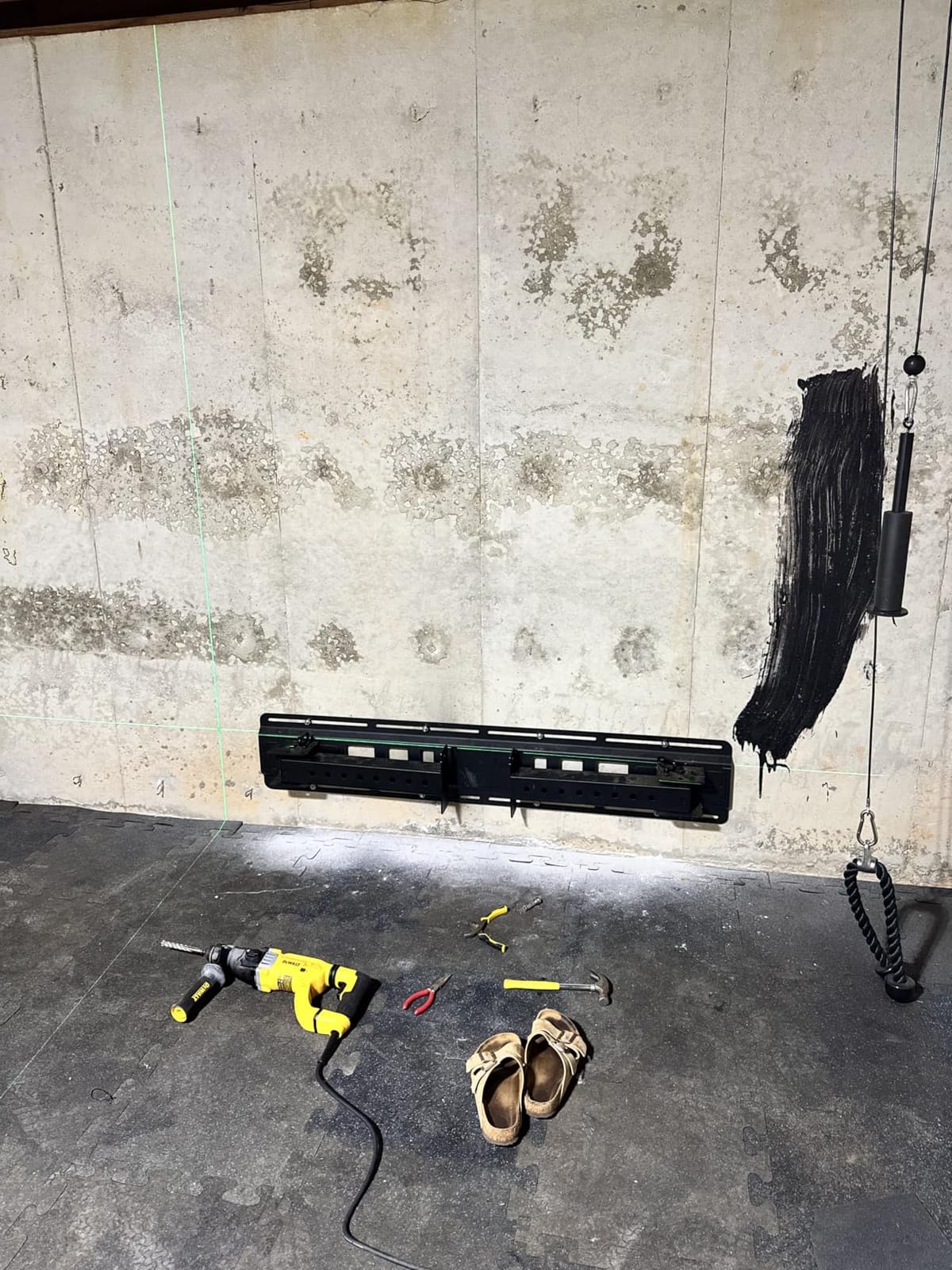
A magnetic bracket on a ceiling grid has a limited holding area, a thin adjustable arm extended to full length will drift, and a tripod screw that is bottomed out is a bent tripod putting the level at an angle it does not know it is at. Three rules fix most of it: set the tool on a rigid surface or a properly rated tripod, lock the pendulum for transport, and re-verify after a drop.
For tripods, 5/8-11 is the professional standard and is what the Topcon requires. The 1/4-20 thread on the line lasers is fine on a light tripod but not on a grade rod.
Class 2 and Class IIIa eye safety
Most construction lasers here are Class 2, meaning output under 1mW, the same class as a laser pointer and safe with normal use provided nobody looks into the beam.
The Johnson 40-6517 rotary is the exception at Class IIIa and up to 5mW, a category with a real eye-strike hazard at distance. Never sight along a rotary beam. On any site, brief your crew on where lasers will be running, because a beam at head height in a corridor is what actually causes injury.
How to Check a Laser Level Before You Trust It
Owners report units arriving out of calibration after shipping, and most do not know how to test for it. Five steps cover it.
1. Let it settle first. Set the tool on a flat surface or tripod and wait for the pendulum to stop blinking. A level still settling is not one you have measured.
2. Check against a known reference. Measure a fixed distance on a wall and mark it, then re-aim and confirm the beam lands on the mark. Consistent drift is a calibration problem; a different answer every time is a mounting problem.
3. Test at distance, not just the near field. Accuracy at 30 feet is not accuracy at 100 feet, so verify at the far end of the room against a taped reference.
4. Lock the pendulum for transport. Every time. The DW089LG, Bosch and Takamine all have a transport lock for a reason, and the DW088K does not, which is a genuine reason to carry it in its case rather than loose.
5. Clean the laser window. Dust makes a line look thick and scattered, and users then assume the tool has drifted when it has not. A lens cloth is the cheapest accuracy improvement available.
After a drop out of a truck bed, run steps one through three again before you mark anything. Most installs blamed on the tool are actually a bad mount from a poor landing.
Frequently Asked Questions
What is the best laser level for construction?
For most crews the DEWALT DW088K is the best laser level for construction overall, with proven self-leveling, integrated magnets and a 1 meter drop rating. Choose the DEWALT DW089LG for full-room green layout, the CIGMAN CM-701 for value 3×360 coverage, and the Topcon RL-H5A for grading.
What is the best laser level for groundworks?
Groundworks, grading and drainage need a rotary grade laser, not a line laser. The Topcon RL-H5A is rated 1/16 inch at 100 feet across a 2,600 foot job site, includes an LS-80 receiver, and carries IP66 sealing. A line laser cannot hold a slope reference across a site.
Is red or green better for laser levels?
Green is roughly four times brighter than red under ambient light, so green is better for interior layout in a lit room. Red is cheaper and fine for controlled-light framing. For outdoor daylight layout, beam colour is secondary, because you need pulse mode and a receiver either way.
What is the difference between a rotary laser and a line laser?
A line laser projects visible cross lines or rotating planes for marking level and plumb in a room. A rotary laser spins a single plane of light read by a detector on a grade rod, which measures elevation anywhere on a site. Use line lasers indoors for layout and rotary lasers for grading, foundations and drainage.
What are the four main types of laser levels?
The four types are cross-line lasers, 3×360 or 4×360 line lasers, rotary grade lasers, and point or plumb lasers. Cross-line suits framing, 3×360 suits whole-room layout, rotary suits grading and site work, and point or plumb lasers suit conduit, pipe risers and vertical alignment.
Which self-leveling rotary laser is the best?
For professional grading, the Topcon RL-H5A is the pick here, with 1/16 inch accuracy at 100 feet, 2,600 feet of coverage, up to 100 hours of battery life and an H.I. elevation alert. The Johnson 40-6517 is the budget entry with a complete kit, but is not built for daily professional use.
What is the best brand of laser level to buy?
For service network and warranty, Bosch, Klein Tools, DEWALT and Topcon lead. Contractors on trade forums repeatedly call Huepar and CIGMAN good value for interior work, noting that the pro brands earn their cost on sealing, mounting and support rather than line quality.
How do I know if my laser level is still accurate?
Set it on a flat surface, wait for the pendulum to stop blinking, then shoot a known reference mark at distance and confirm the beam lands on it. Test at the far end of your working range, clean the laser window, and re-check after any drop. Consistent drift means calibration, while random error means a bad mount.
Which Laser Level Should You Buy?
If you are framing walls, hanging blocking or snapping layout lines indoors, the DEWALT DW088K is our pick. It is the most proven tool on this page, the easiest decision to justify, and it survives the drop.
If you are doing whole-room layout, ceiling grid, cabinetry or drywall in a lit space, step up to a green 3×360. The DEWALT DW089LG wins if your crew is already on 12V MAX batteries, and the CIGMAN CM-701 wins if you are a solo operator who wants the same coverage without joining a platform.
If you are grading, excavating, setting drainage fall or levelling concrete forms, no line laser on this list will do the job. The Topcon RL-H5A is the answer, and the tripod and grade rod are a separate purchase whichever rotary you buy.
If you are running conduit, or installing cabinets and countertops in tight spaces, the Klein Tools 93CPLG gives you green lines in a body small enough for a tool bag.
Whichever you pick in 2026, verify it against a known reference on day one, lock the pendulum every time it goes in the case, and keep a lens cloth in the bag. Those three habits prevent more bad layouts than the brand choice ever will.