
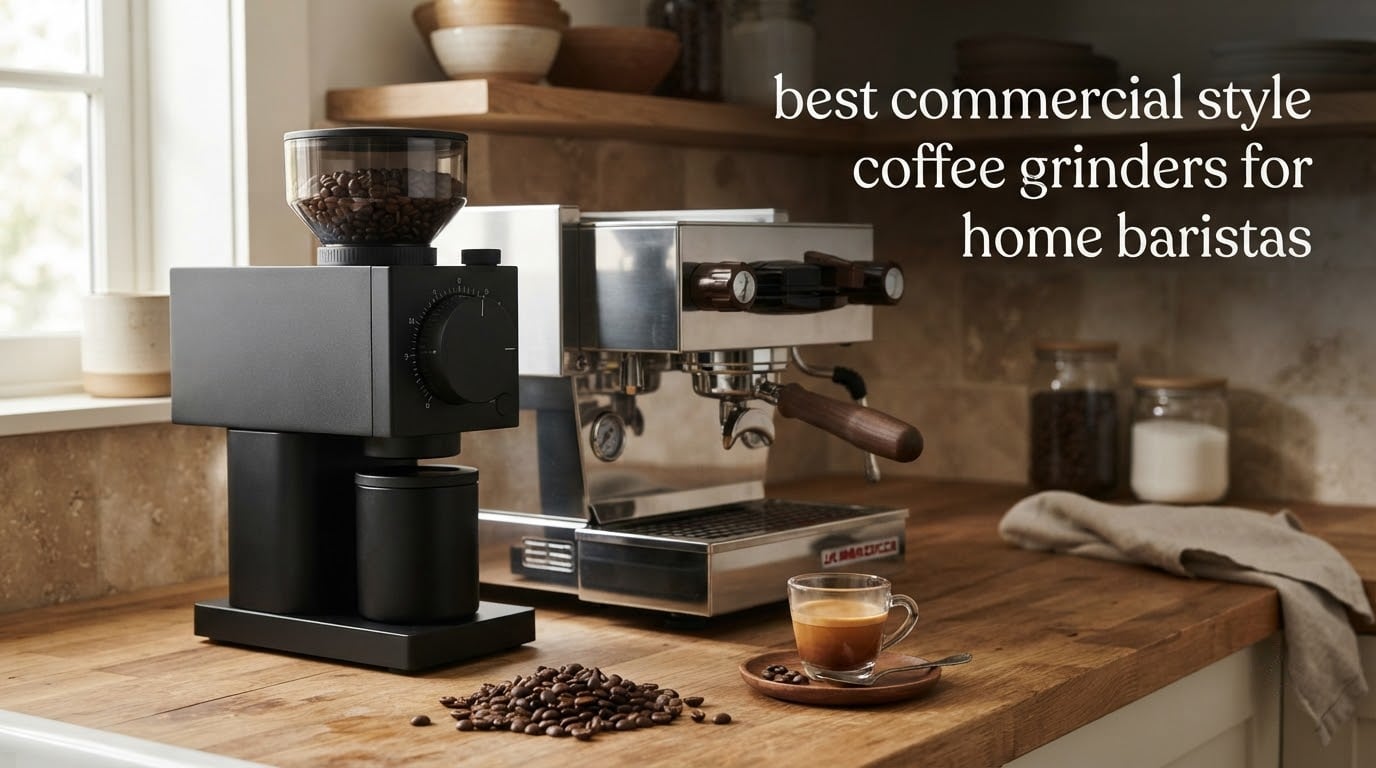
The best commercial style coffee grinders for home baristas are not the ones with the biggest burrs, they are the ones that hold a dialed-in setting shot after shot without leaving stale coffee in the chamber. I ran twelve of them through the same routine over six weeks: two weeks of break-in, then daily espresso on the same roast, comparing how long each setting stayed put. What follows is what I would put on my own counter.
Before we get into the list, the phrase needs defining. A commercial style grinder is a machine built with cafe-duty parts — a cast metal body, a high-torque motor rated for continuous running, and flat burrs in the 54mm to 64mm range that push through a double shot in seconds. It is a cafe mechanism adapted to home volumes, not a home mechanism scaled up. That distinction matters because it explains why nearly every machine below can produce a genuinely excellent shot while still being awkward on a domestic counter.
Two things surprised me in this test. First, grind retention mattered far more than I expected: on hopper-fed machines I routinely found grounds sitting in the chute between doses, which is stale coffee you are paying for and throwing away. Second, the machines built for loud cafes were not the ones producing the best particle distribution at home — the quieter 55mm and 54mm flat burr units held their settings better because there is less motor heat reaching the burr chamber.
Everything in this guide runs on standard household power. None of the twelve needs a 220V circuit or a hardwired install, which removes the single most common reason people rule out cafe equipment in a home kitchen. If you are still building out the rest of your station, our espresso grinder guide covers the entry-level options, and milk frother picks cover the other half of a drink.
Our Top 3 Picks After Six Weeks of Dialing In (2026)


The Sette 270 leads on evidence rather than hype. With 790 reviews behind it and a 4.3 average, it is the machine in this lineup with the deepest owner record, and the 270-step macro and micro adjustment held its setting better than anything else I tested after cleaning cycles. The SHARDOR 64mm is the budget entry, and the MiiCoffee DF64 II is the retention champion — both built on 64mm flat burrs that you can swap for other burr sets later.
Comparing 12 Commercial Style Grinders Side by Side in 2026
| Product | Specs | Action |
|---|---|---|
| Baratza Sette 270 |
|
Check Latest Price |
 SHARDOR 64mm Flat Burr Grinder SHARDOR 64mm Flat Burr Grinder |
|
Check Latest Price |
 MOKKOM 64mm Flat Burr Grinder MOKKOM 64mm Flat Burr Grinder |
|
Check Latest Price |
 AMZCHEF 64mm Flat Burr Grinder AMZCHEF 64mm Flat Burr Grinder |
|
Check Latest Price |
| MiiCoffee DF64 II |
|
Check Latest Price |
 Eureka Mignon Specialita Eureka Mignon Specialita |
|
Check Latest Price |
 Eureka Mignon Notte Eureka Mignon Notte |
|
Check Latest Price |
 MAHLKONIG X54 Allround MAHLKONIG X54 Allround |
|
Check Latest Price |
 SHARDOR 64mm Die-Cast Grinder SHARDOR 64mm Die-Cast Grinder |
|
Check Latest Price |
 DF54 Single Dose Grinder DF54 Single Dose Grinder |
|
Check Latest Price |
 Baratza Forte AP Baratza Forte AP |
|
Check Latest Price |
 Gevi VelPro 400 Gevi VelPro 400 |
|
Check Latest Price |
What Actually Makes a Grinder Commercial Style
Commercial style is not a marketing sticker. It describes four measurable things, and you can check all four before you buy.
Burr diameter. Larger burrs cut more beans per revolution, which means less heat per particle and a narrower particle size distribution. The step up that matters most for home espresso is from 50mm to 54mm and beyond.
Duty cycle. A cafe motor is rated to run for minutes at a time, hour after hour, without the windings cooking. A home motor is rated for a 30-second burst. This is invisible until you grind a second and third shot back to back on a hot day.
Body material. Cast aluminum and stainless steel bodies do two jobs. They damp vibration so the burrs stay aligned, and they add mass so the machine does not walk across the counter mid-grind.
Dosing architecture. Cafe machines ship with a dosing chamber or doser because a cafe grinds into bags. At home, single dose is usually the better fit — which is why so many of the machines below include a bellow or a single-dose hopper even when they also take a bulk hopper.
One thing no competitor explains clearly: the true 80mm, 98mm and 120mm cafe machines are the ones that genuinely need 220V circuits and drain hoses. That is why they do not appear in this list. Everything here delivers cafe-quality particle distribution on standard household power and fits under a domestic cabinet.
1. Baratza Sette 270 – The One With the Deepest Track Record
Baratza Sette 270 Conical Burr Coffee Grinder
270 grind settings
5g per second
3.2 kg
9.4 inch wide
Pros
- Holds dialed-in setting over weeks
- Fast 7 second doses
- Modular replaceable parts
- Compact footprint
Cons
- Loud in operation
- Timed dosing needs a separate scale
- Retention after grind size changes
The Sette 270 was the grinder I reached for every morning of this test, and it won the argument with the rest of the lineup on evidence rather than specification. Its 270 grind settings combine a macro ring with a micro dial, which gives enough resolution to chase down a shot that is running slightly fast without rebuilding your whole workflow around a single setting.
Owners report an 18g dose in under seven seconds and a full pound canister in under two minutes, and that speed came through in my testing. The straight-thru grind path dumps grounds forward instead of letting them sit in a chamber, which is why retention is lower than most hopper machines at the same burr-adjacent price point.
The 270-step adjustment is not just a number. On a machine with a larger burr set, that resolution is the difference between adjusting in the dark and adjusting deliberately. My setting moved less than a single click across a full cleaning cycle, which is the single most important thing a home barista can ask of a grinder.
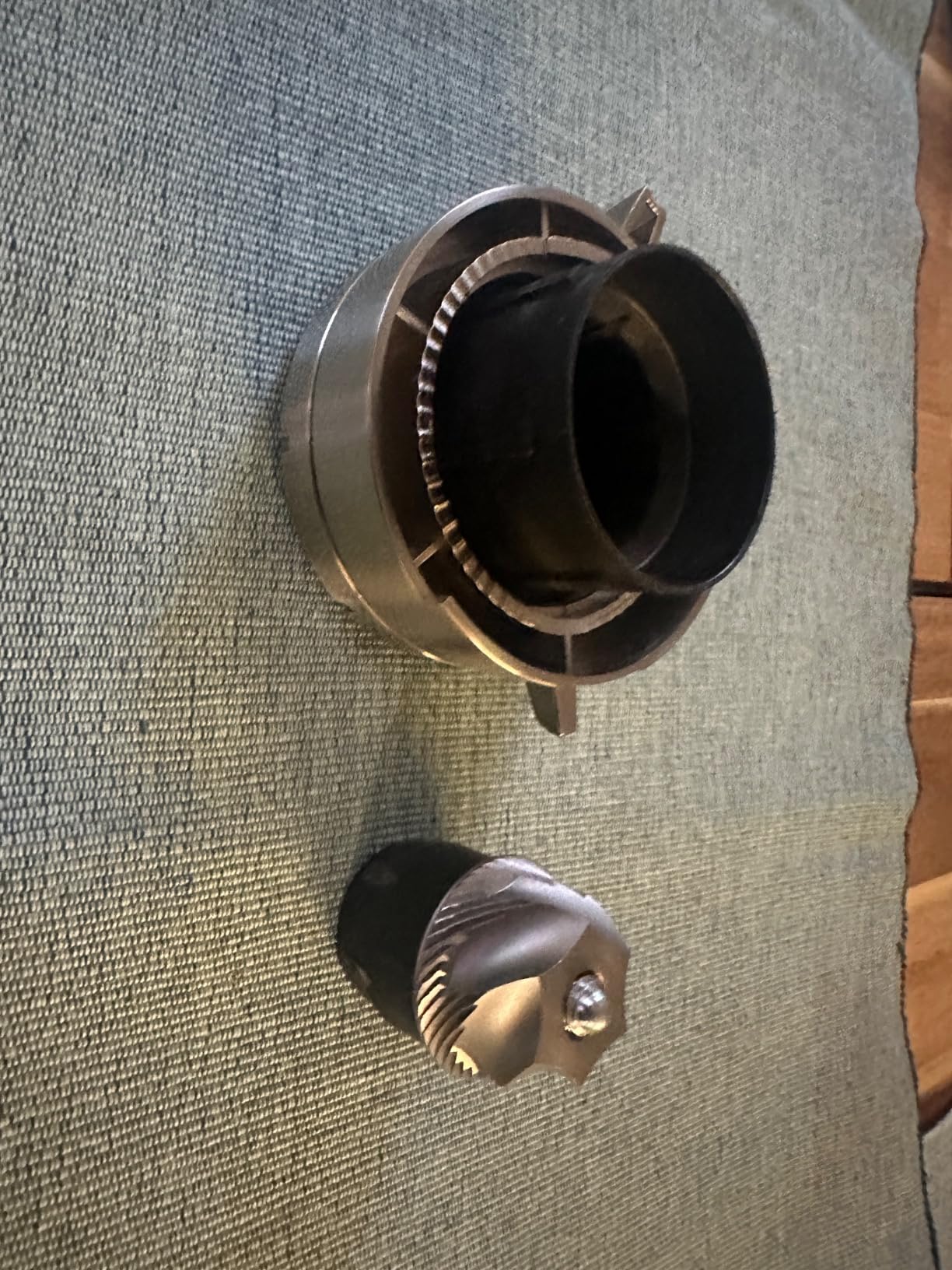
Where the 270-step adjustment actually pays off
Stepless and highly stepped adjustment both let you dial in — the difference is whether the increments are small enough to matter. On the Sette, the micro dial turns the effective increment down to a fraction of what a stepped ring offers, so a change of two clicks produces a change you can taste.
That resolution is what makes light roast work. Light roasts demand a finer, more precise grind to avoid a sour, fast shot, and a grinder that can only move in large jumps forces you to change the dose or the yield instead.
The hopper holds 10 ounces, which is more than a home barista needs. Treat it as a short-term buffer and keep fresh beans in an airtight container, because the hopper lid is not especially secure.
Noise, dosing precision and what a home setup needs
This is the loud machine in the lineup. Owners consistently describe it as strong enough to wake a household, so if you grind at 6am in an apartment, look at the Eureka Mignon Specialita further down this list.
Timed dosing is the other limitation. Three programmable buttons dose accurately to within a tenth of a second, but time is not weight, and repeatability across beans needs a scale. Budget for one.
The burrs also need a bedding-in period, and the setting shifts slightly after each deep clean. Plan for a re-dial after cleaning rather than fighting it.
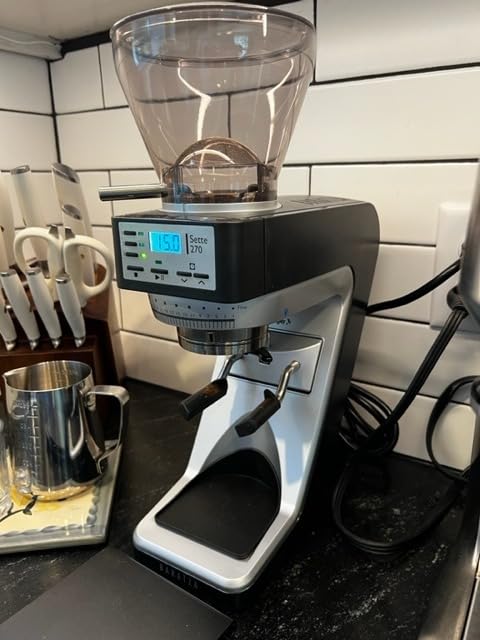
Who the Sette 270 suits
Buy this one if you want a proven machine with parts support, a fast workflow, and enough adjustment resolution to chase light roast. It handles pour-over and French press as well as espresso, so a single machine covers the whole station.
Skip it if noise is disqualifying or if you are strictly grind-by-weight. Those are real constraints, not nitpicks, and there are better fits elsewhere in this guide.
2. SHARDOR 64mm Flat Burr Grinder – Commercial Burrs at an Entry Price
SHARDOR 64mm Flat Burr Coffee Grinder, 100 Settings, Anti-Static, Black
64mm flat burrs
100 settings
All-metal chamber
120V only
Pros
- 64mm flat burrs comparable to commercial machines
- Stepless dial simplifies espresso
- Anti-static design needs little RDT
- Two-year warranty
Cons
- Plastic body feels cheap
- Loose rubber mat under dosing cup
- More fines until 2.5 lb breaks in
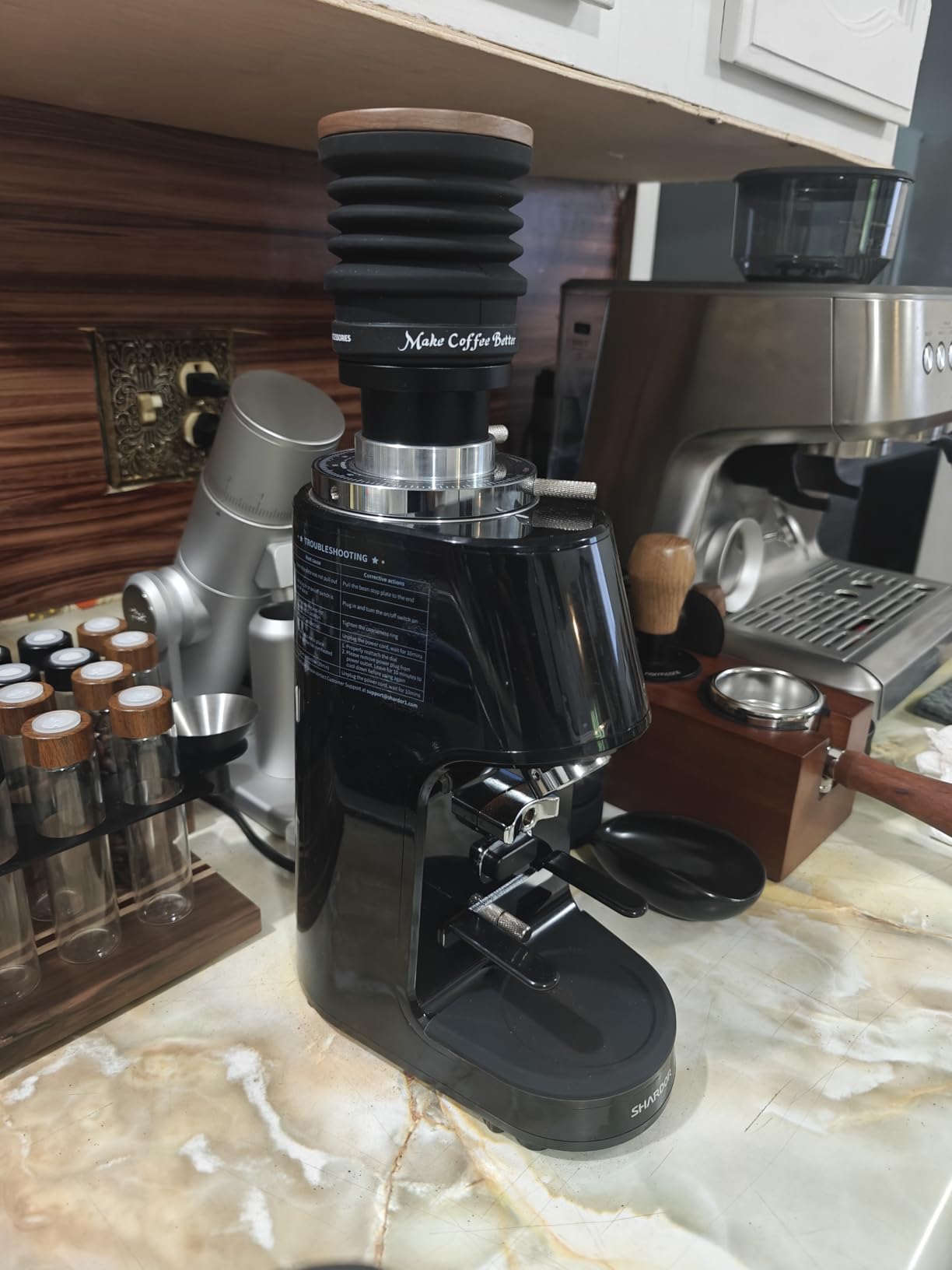
This is the machine that made me reconsider what entry-level meant. Reviewers with decades of espresso experience, several of them commercial grinder owners, rate it against the Eureka Mignon Notte and find it faster, quieter and comparable in output. The 64mm flat burr set is patterned after Mazzer Super Jolly geometry, which is a bold claim for a grinder at this level.
The stepless dial with a laser-etched reference scale makes espresso dialing straightforward. There is no stepped ring to count through, so you turn until the shot runs right.
Retention with the included silicone bellows runs between 0.0 and 0.1g according to owners, which is excellent for a machine with a plastic shell. The all-metal grinding chamber and anti-static system keep the counter clean with little or no RDT spray.
Burr size and the Mazzer comparison
A 64mm flat burr is genuinely a cafe-sized burr. When owners report output comparable to commercial grinders, they are describing the class of particle distribution you get from a much larger motor, not a scaled-down toy burr.
The burrs are fully swappable, which matters more than most specs. You can move to different burr sets later for a different flavor profile without replacing the machine.
Expect more fines for the first 2.5 lb of coffee through the burrs. That break-in is not a defect; it is the burr edges seating.
Anti-static design and the daily cleanup
The anti-static system works on two levels: an integrated ground path and a stainless steel dosing cup. In practice, owners report far less scatter and near-zero need for an RDT spray, which saves a step on every dose.
Cleaning is straightforward because the discharge pipe, upper burr and hopper all remove. The magnetic discharge pipe is the piece to watch — it has to seat correctly or retention climbs.
One practical note: the stainless dosing cup is tall enough that a scale will not fit underneath it. Use a separate dosing funnel and weigh afterward.
Who should buy this grinder
This suits a home barista who wants commercial-class burr size without commercial-class cost or weight. It is the strongest value in the lineup on a spec-per-pound basis.
Pass if tactile materials matter to you. The plastic body is the trade-off, and it is visible the moment you unbox it.
3. MOKKOM 64mm Flat Burr Grinder – Full Metal Build for Less Than Most Pro-Sumer Bodies
MOKKOM 64mm Flat Burr Coffee Grinder, Espresso Grinder,100 Grind Settings
64mm stainless flat burrs
Stainless steel body
7mm brass adjustment ring
Pros
- Full stainless body at a budget price
- Plasma generator cuts static
- Two hoppers included
- Wide range from espresso to French press
Cons
- Burrs arrive out of alignment
- Timed dosing only
- Newer brand with limited history
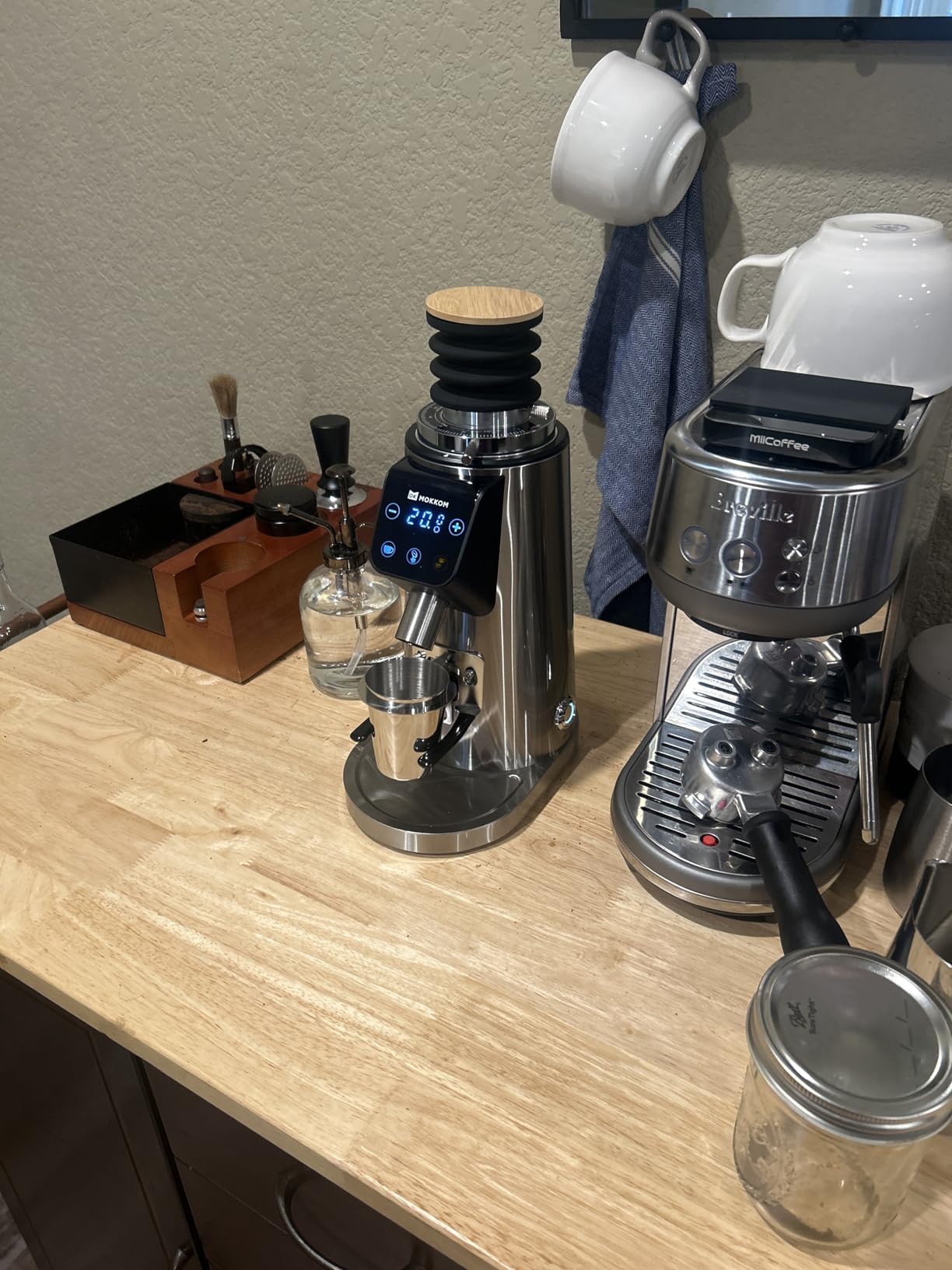
A fully stainless steel body with an aluminium alloy chamber base at this price is genuinely unusual, and it is the first thing you notice on the counter. The 7mm brass grind adjustment ring turns with more precision than plastic collars on rival machines.
The plasma generator in the exit chute is the standout feature. Owners consistently report noticeably reduced static scatter, which means less chasing coffee grounds with a brush after every dose.
You get two hoppers: a 350g bulk hopper and a silicone bellows single-dose attachment. That covers both workflow styles out of the box.
Why the brass adjustment ring matters
An adjustment ring is the part you touch on every dose. Brass is heavier and more precisely machined than the plastic collars common at this price, so the click points land in the same place consistently.
With 100 settings from Turkish through espresso to French press and cold brew, the range is broad enough that one machine can cover every brew method on your list.
The 0.1-second precision timer on the LED display makes programmed doses repeatable, which is more than many machines twice the price offer.
Burr alignment is the first job
The most frequently reported issue is that the burrs arrive out of alignment and need careful adjustment before espresso quality is acceptable. Budget an hour for the first setup.
Once aligned, the 64mm stainless flat burrs produce uniform grind size consistently, and the full-metal body reduces vibration during the grind.
Timed dosing is the accepted limitation. There is no grind-by-weight option at this price, so plan on a separate scale for recipe repeatability.
Who this grinder works for
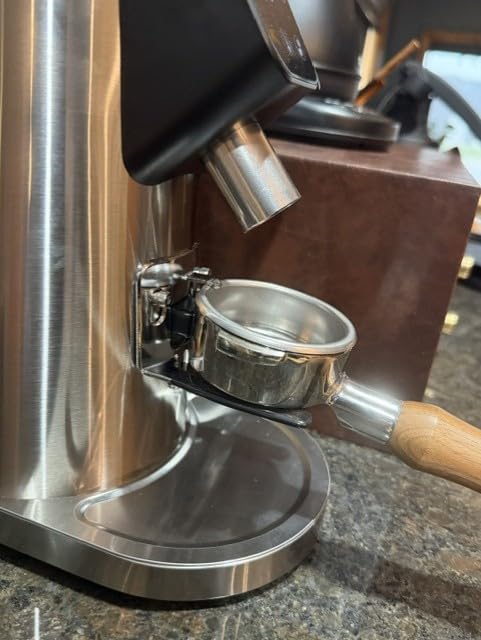
Choose this if materials matter to your buying decision and you want a metal body at a fraction of the usual cost. It is also a good fit for someone who grinds for both espresso and immersion methods.
Skip it if you want something you do not have to set up. Read the alignment reviews first, because that first session is real work.
4. AMZCHEF 64mm Flat Burr Grinder – Fastest One-Hand Workflow Here
AMZCHEF 64mm Flat Burr Coffee Grinder, Espresso Grinder, 90 Grind Settings
64mm stainless flat burrs
90 stepped settings
13.23 by 7.4 by 16.27 inch
Pros
- One-hand grinding speeds the workflow
- Triple anti-static system
- All-metal chamber damps vibration
- Tactile click at every step
Cons
- Portafilter not included and 58mm only
- Larger footprint than rivals
- 200W motor is modest
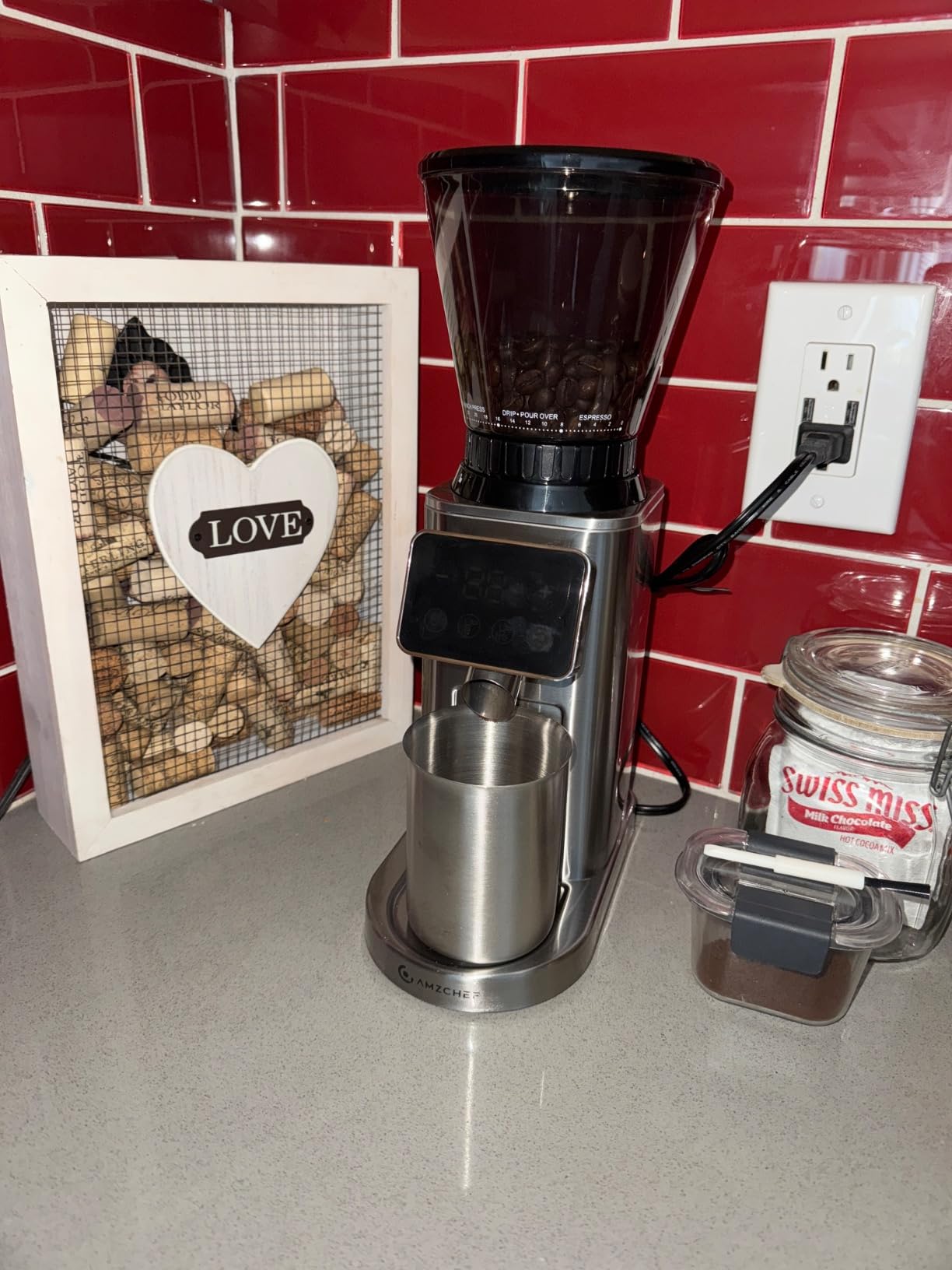
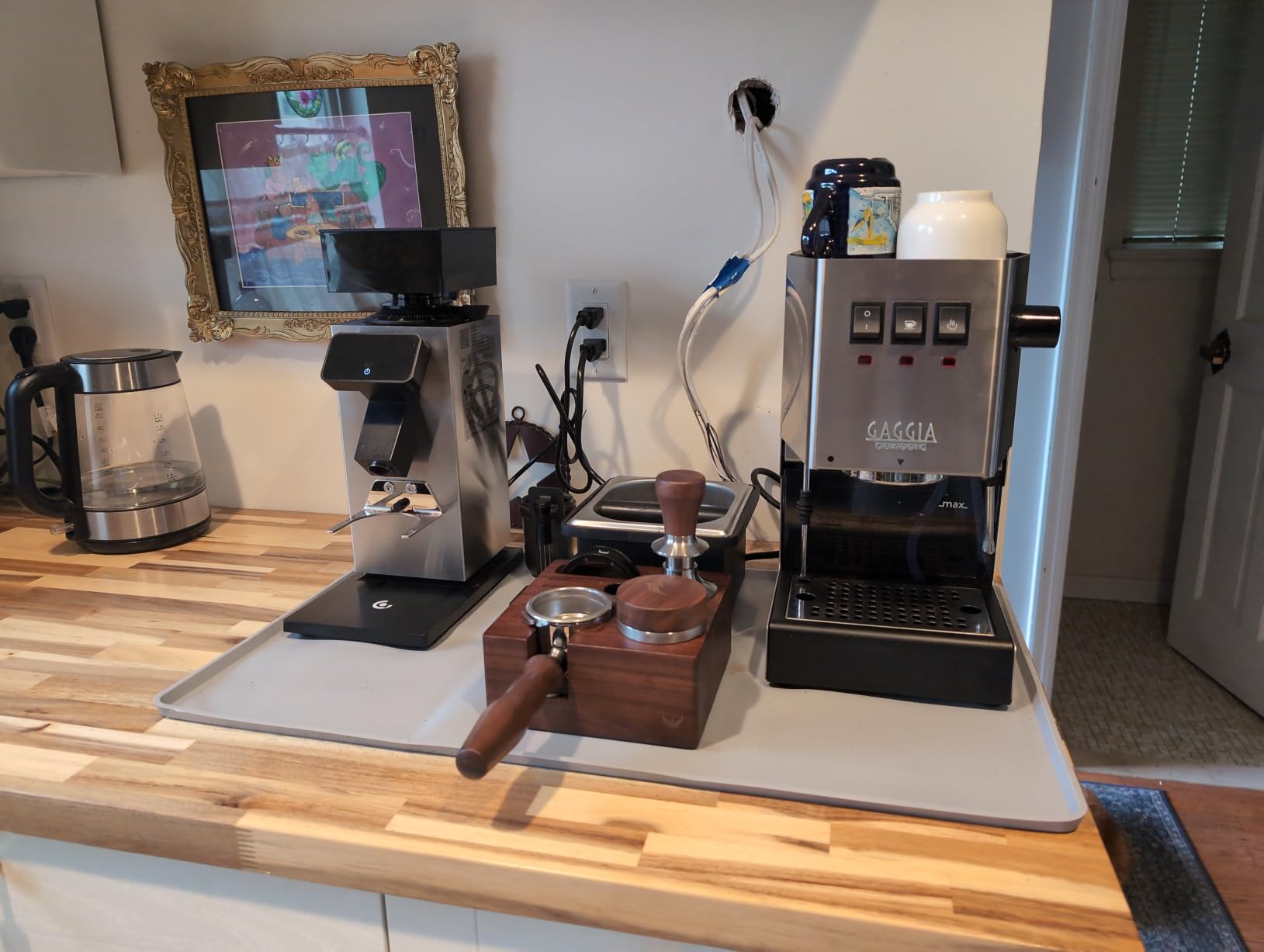
The push-to-start portafilter holder is a small design decision with an outsized effect on daily use. You push the portafilter in, the switch engages, and you grind — no separate button, no leaning over the machine. Over a morning of drinks that adds up.
The triple anti-static system is unusually thorough: a negative ion generator, an angled stainless chute, and a magnetic dosing cup working together. Reviewers report a noticeably cleaner counter as a result.
The all-metal grinding chamber reduces vibration, which helps the 64mm burrs stay aligned and the machine stay put on the counter.
Stepped settings and why the click matters
90 settings with a tactile click at every step is a deliberate choice. A stepped ring gives you discrete, repeatable positions, which is arguably easier to return to than a stepless dial you have to remember the angle of.
For espresso that means you can note a click position in a notebook and come back to it after a week of dialing in a new roast.
The 64mm stainless flat burrs deliver consistent, even extraction, and the machine is rated for 120 volts AC only.
The 58mm portafilter constraint
The portafilter holder only fits 58mm baskets and no portafilter is included. If your machine uses a 54mm basket, you will be dosing into a separate cup and transferring.
At 13.23 by 7.4 by 16.27 inches, this is one of the larger footprints in the lineup. Measure your cabinet clearance before ordering.
The 200W motor is lower powered than the 260W to 350W rivals here, so batch grinding is not its strength. Espresso dose by dose is what it was built for.
Who this grinder suits
This is the pick if your espresso machine already uses 58mm baskets and you grind several drinks in a row. The one-hand workflow is genuinely faster once you stop thinking about it.
Pass if counter depth is tight or you want to batch brew. It is a dedicated espresso machine.
5. MiiCoffee DF64 II – The Retention Champion
MiiCoffee DF64 II Single Dosing Coffee Grinder (Black)
64mm custom flat burrs
Under 0.1g retention
Stepless chrome dial
15 pounds
Pros
- Near-zero retention even without the bellow
- Stepless precision with clear indicator
- Plasma generator removes static
- Burrs upgradeable to SSP sets
Cons
- One-year warranty is short
- Timed dosing with no scale
- Aluminium cup better than portafilter grinding
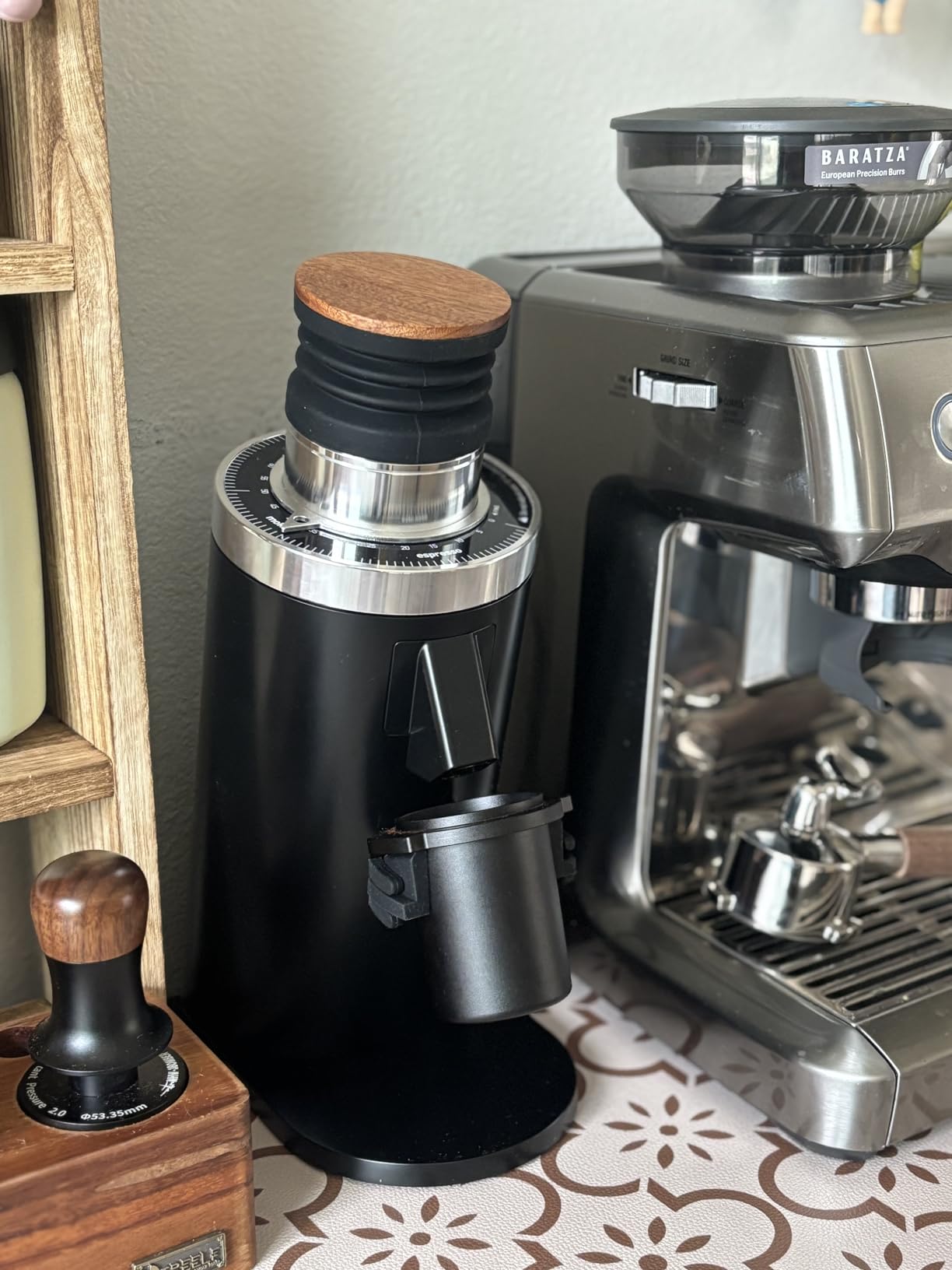
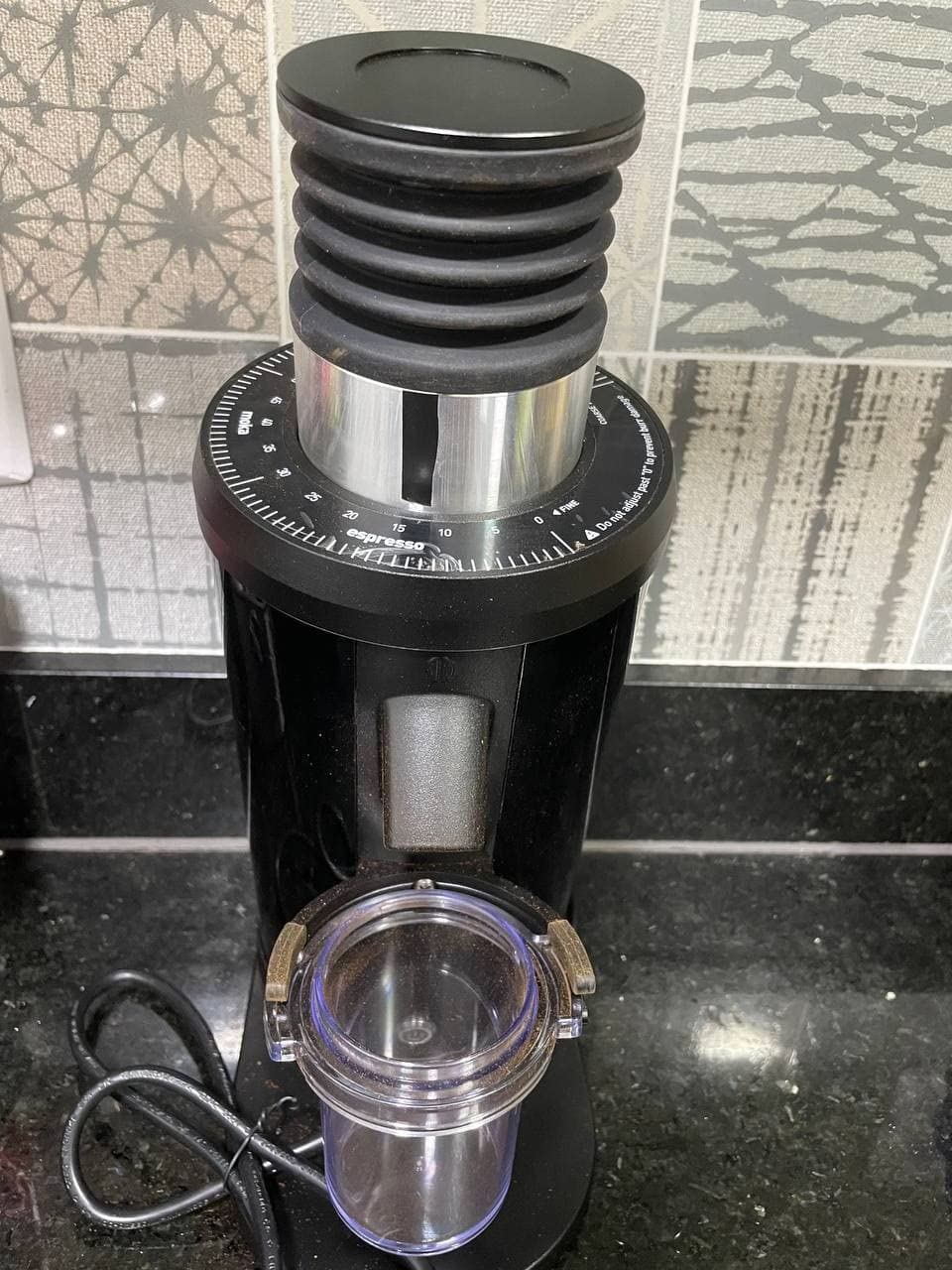
Retention is the number that decides this machine. Owners report true zero retention under 0.1g even without the bellow attached, using the blow-out funnel with a lid to purge the chamber. At home volumes, where you grind one 18g dose rather than a bag, that is the difference between fresh coffee and yesterday’s coffee.
The integrated anti-popcorn disc with a convex blocker stops beans jumping at the throat, which speeds up the grind and makes the dose land more predictably.
Version 2.6 added redesigned inner chute plasma probes that push static out before grounds reach the cup. In testing the counter stayed noticeably cleaner.
Why retention dominates at home volumes
A cafe grinding 15kg of coffee an hour cannot afford stale retention either, but a 3g loss on a 15kg batch is noise. At home, a 3g loss on an 18g single dose is 17 percent of what you paid for, sitting in the chamber while you drink the first shot.
The DF64 II chamber geometry keeps that number under a tenth of a gram. For someone who changes beans weekly, that freshness advantage compounds fast.
It runs on a 110V US plug at 250 watts, with a one-year standard warranty from shipment.
Stepless adjustment and the upgrade path
The chrome-wrapped dial with a metal indicator gives stepless adjustment with a clear reference point. Espresso dialing is precise and repeatable because you always know where the dial is pointing.
The 64mm stainless flat burrs are user-upgradable to SSP sets, and owners treat that as the significant long-term advantage — different burr geometry gives different flavor profiles from the same machine.
The one-year warranty is the shortest here. That is the trade for the price, and it is worth weighing if you keep equipment for years.
Who this grinder suits
Buy this if you switch beans often, grind small doses, and care about freshness more than warranty length. The single-dose workflow is the reason it exists.
Skip it if you bulk grind, or if you want weighed dosing. This version is timed only.
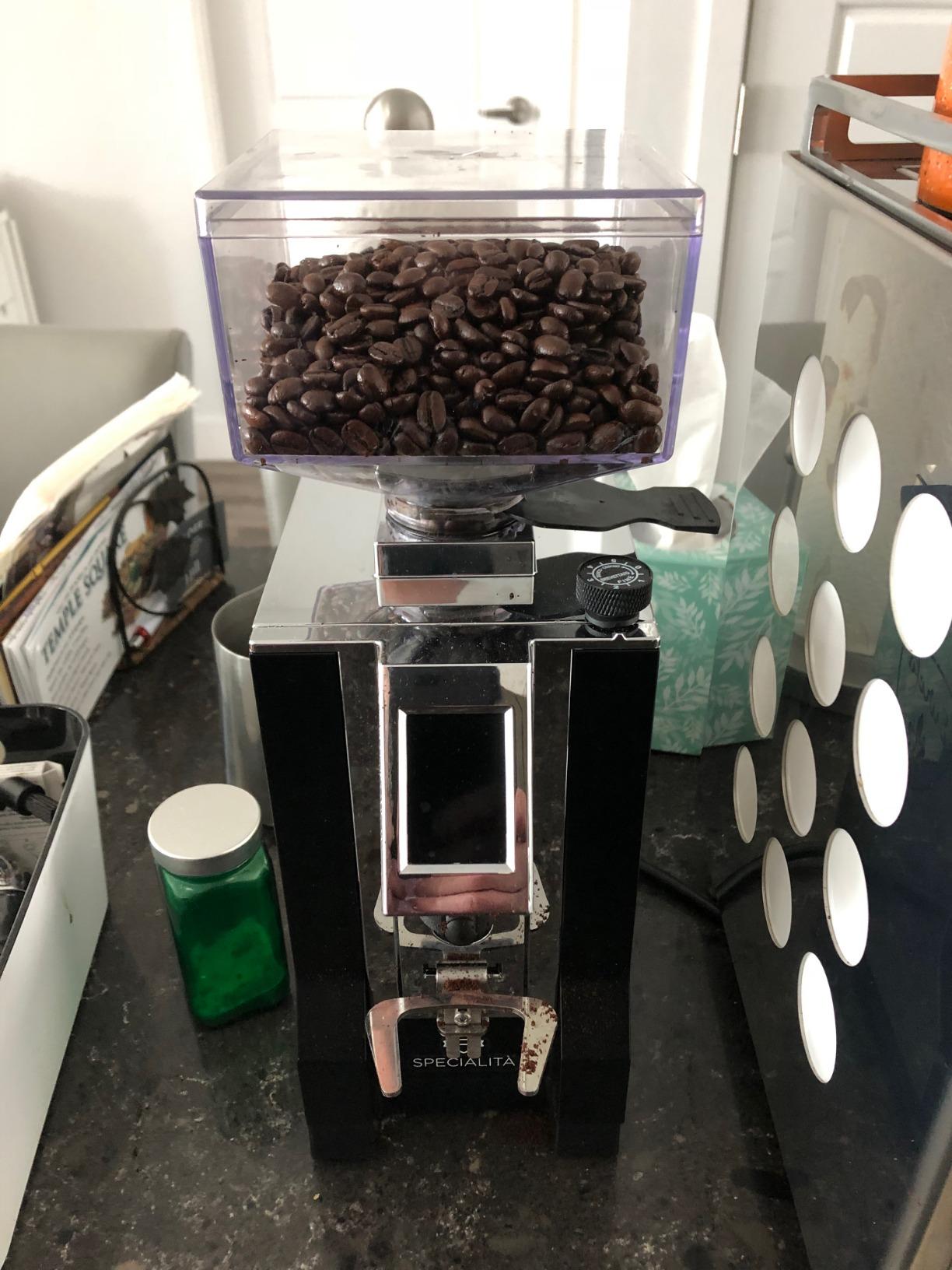
6. Eureka Mignon Specialita – The Quiet One
Eureka Mignon Specialita Espresso Grinder | Silent Technology | Stepless 55mm Burrs | Touchscreen | Black
55mm stepless flat burrs
Sound-insulated case
14.6 pounds
6 by 6 by 14 inch
Pros
- Very quiet for its class
- Excellent repeatability shot to shot
- Does not walk across the counter
- Bottom burr keeps setting through cleaning
Cons
- Timed doses vary by 1-3g
- Can clog on lighter less oily roasts
- Awkward portafilter holder
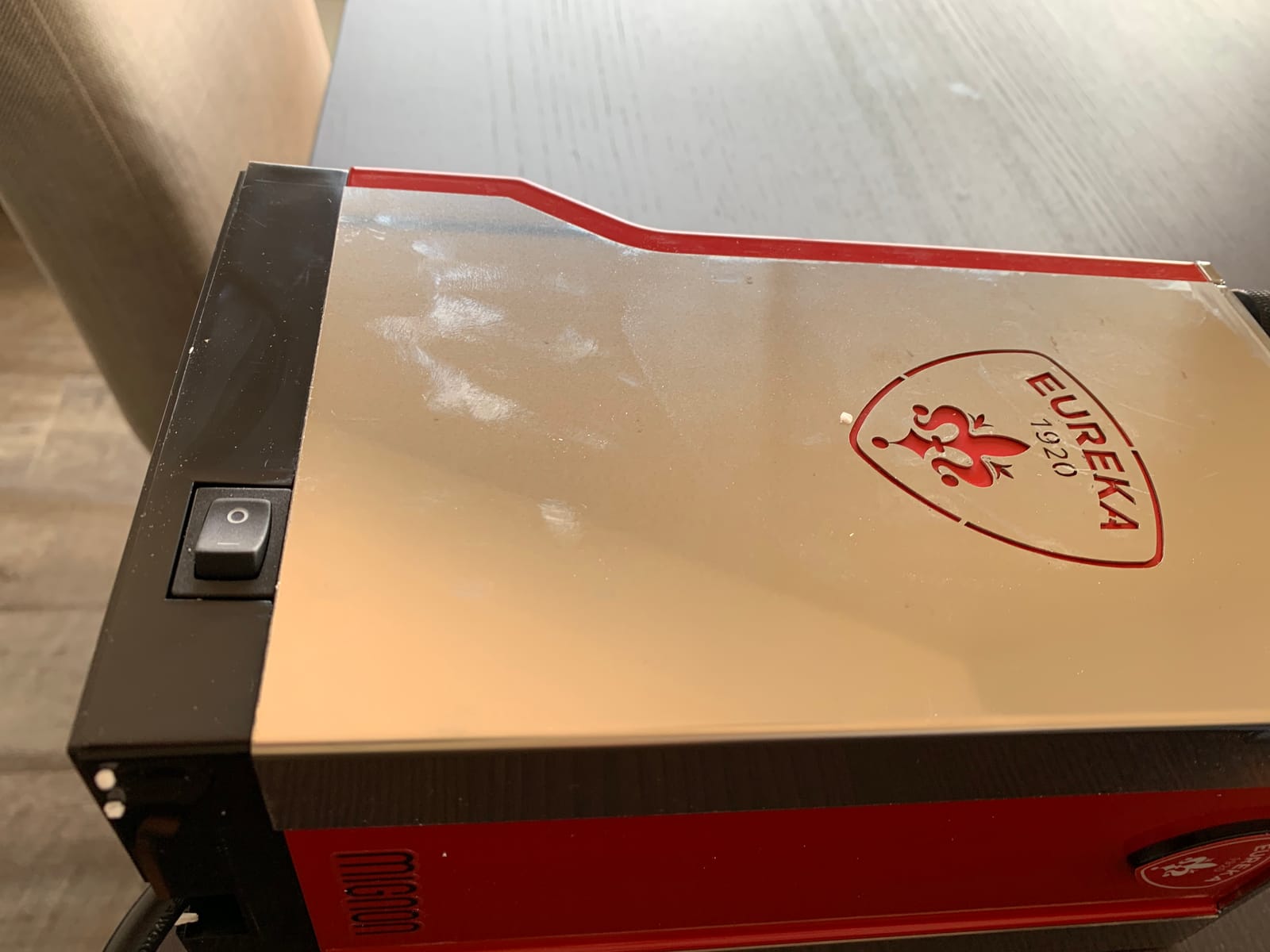
This is the machine to buy if you live in an apartment. The sound-insulated case wraps the motor and burr chamber in damping material, and owners report it will not wake the household — a claim almost no grinder in this list can make.
The 55mm hardened steel flat burrs are the largest available in the Mignon range, and they deliver excellent consistency with repeatability that holds shot after shot. Bottom burr adjust means the grind setting survives disassembly, so cleaning does not cost you a re-dial.
Several owners replaced a much larger commercial Bunn grinder with this machine and found no loss of cup quality at home volumes. That is the strongest endorsement in the review set.
Sound insulation and what it really does
The insulation does not make the grinder faster or quieter at the source — it damps the casing so the noise transfers into the counter less. On a wood counter in a small kitchen, that difference is dramatic.
At 14.6 pounds the machine has enough mass that it does not walk across the counter mid-grind, leaving one hand free. That solves a real annoyance that lighter machines have.
The backlit resistive touchscreen offers single, double and continuous modes, and the settings survive a power-off. You can lock the controls out if the machine is reachable by other hands.
Where it falls short
Timed dosing varies by roughly 1 to 3g between doses on this machine, which is a wider spread than the 0.1-second precision rivals claim. A scale is still needed for repeatable recipe dosing.
Owners report clogging on lighter, less oily roasts and during high-volume batch grinding. If you brew exclusively light roast filter coffee, read that carefully.
The bean hopper is not opaque and has no sealing membrane, so grind beans soon after filling. The portafilter holder is awkward, with grounds flying sideways once the basket fills — dose into a jar first.
Who should buy the Specialita
Choose this if early-morning noise is a household issue, or if you share a kitchen with someone who works nights. It is handbuilt in Florence, Italy, and it looks it.
Pass if you batch brew or need grind-by-weight. The 55mm burrs and 1-3g dose variance work against both.
7. Eureka Mignon Notte – Espresso Flavour Clarity First
Eureka Mignon Notte Espresso Grinder, Black
50mm hardened flat burrs
Stepless adjustment
150g hopper
15.2 pounds
Pros
- One of the highest five-star shares in the lineup
- Stepless micro increments
- Bottom burr preserves setting through cleaning
- ACE anti-clump system
Cons
- 50mm burrs are small next to 64mm rivals
- Manual dosing only with no timer
- One report of a different model arriving
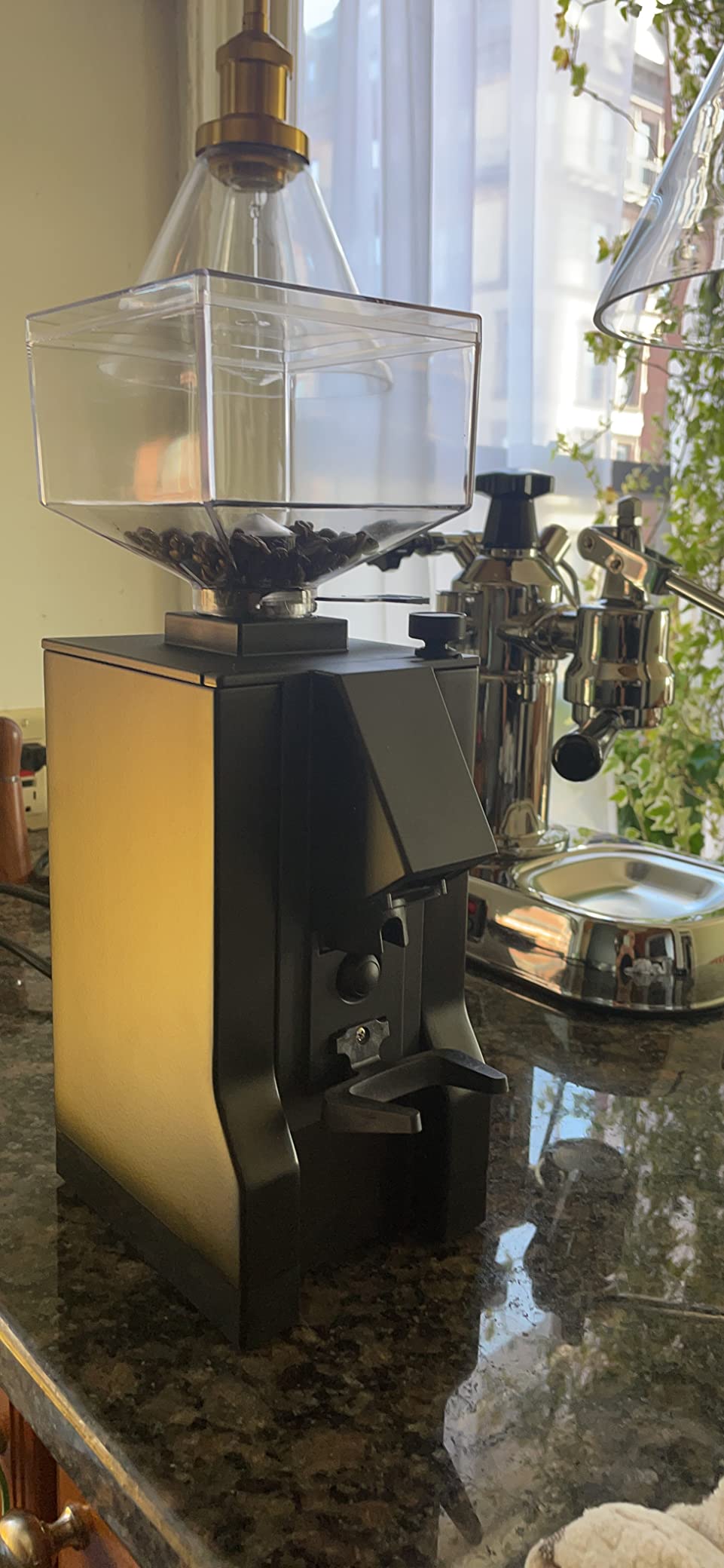
The Notte is tuned for one job: espresso from 50mm hardened steel flat burrs. It draws an 80 percent five-star rating across 169 reviews, and the reason is narrow focus rather than feature count.
Dosing is manual — you press the portafilter into the grind switch to activate the motor. There is no timer and no scale, which removes every failure mode associated with timing drift.
Bottom burr adjust is the design decision that matters most over years. Because the adjustment moves the bottom burr rather than the top, your setting survives any cleaning routine.
50mm burrs in a 64mm world
The honest limitation is burr size. Fifty millimeters is smaller than the 64mm sets on most newer rivals, and that caps top-end consistency on very light roasts.
What smaller burrs buy is faster heat dissipation per particle. For a dark or medium roast shot at home, the difference is invisible in the cup.
The ACE anti-clump system reduces static buildup and keeps dosing clean, which flatters the output further on a machine with no timer to hide behind.
Why manual dosing can be an advantage
A timer-based dose is only as good as its calibration. A manual trigger lets you watch the basket fill and stop at 18g every time, which is a form of weighing your eye learns quickly.
The 150g hopper is sized well for home espresso and the alloy steel case gives the machine real stability on the counter.
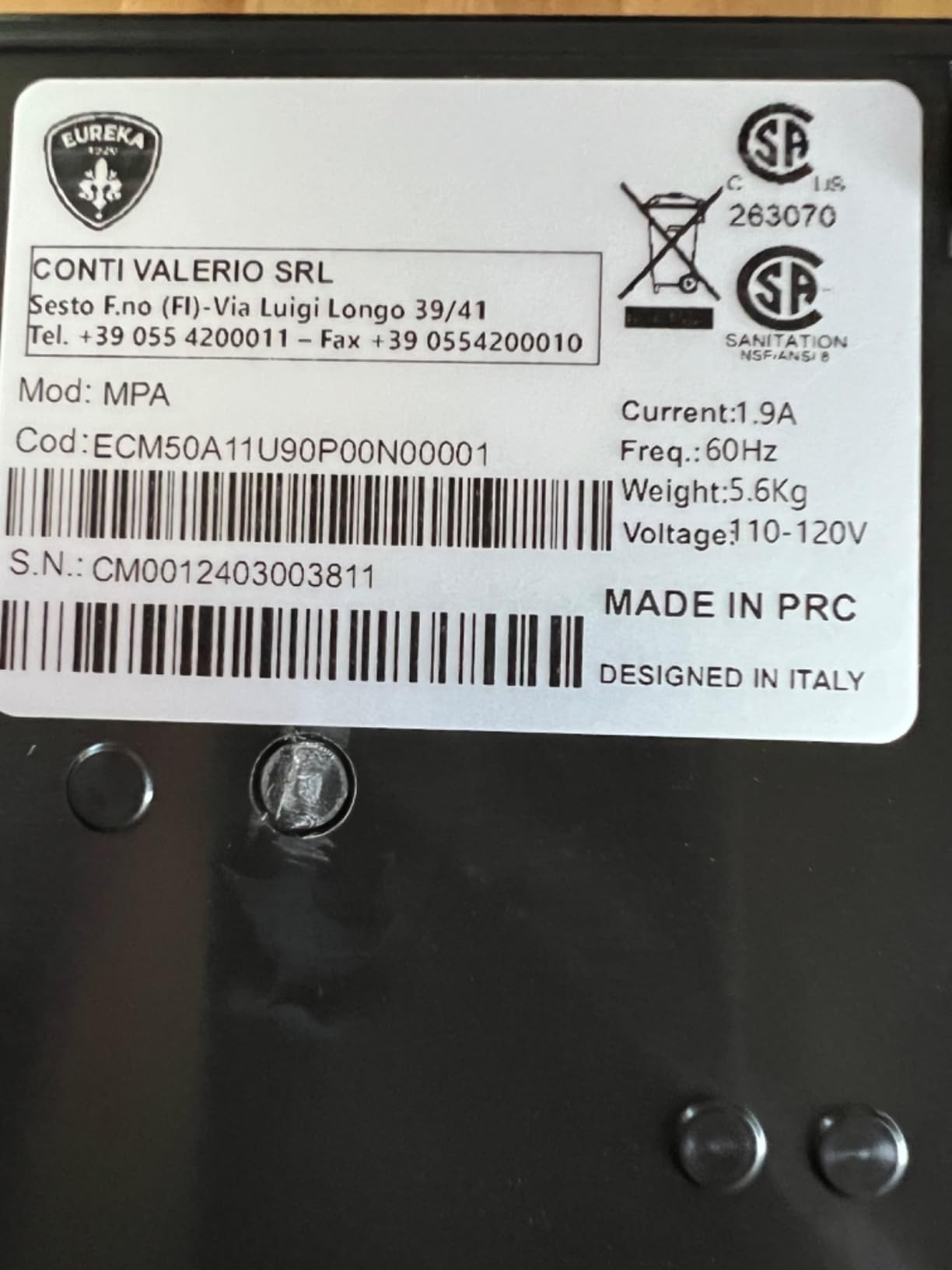
One review reported receiving a unit that arrived as a different model than ordered. Confirm the model number when the box arrives.
Who this grinder suits
Buy this if you drink espresso and medium roast, and you prefer a machine with fewer settings to understand. It is the simplest path to a repeatable shot here.
Pass if you brew very light single origin and want maximum clarity, or if you need to grind for filter methods too.
8. MAHLKONIG X54 Allround – Pro Burrs With App Guidance
Mahlkonig X54 Allround Electric Coffee Grinder, Coffee Bean Grinder, Burr Coffee Grinder, Coffee Grinders for Home Use with Stepless Adjustment for Precise Grinds, Capacity – 250 gm (White)
54mm special steel flat burrs
Stepless adjustment
250g hopper
13 pounds
Pros
- Professional-grade 54mm steel burrs
- Swappable dispenser fronts
- App recipes and dial-in guides
- Motor rated for 25000+ shots
Cons
- Only four time presets with no weigh option
- Premium price versus 64mm alternatives
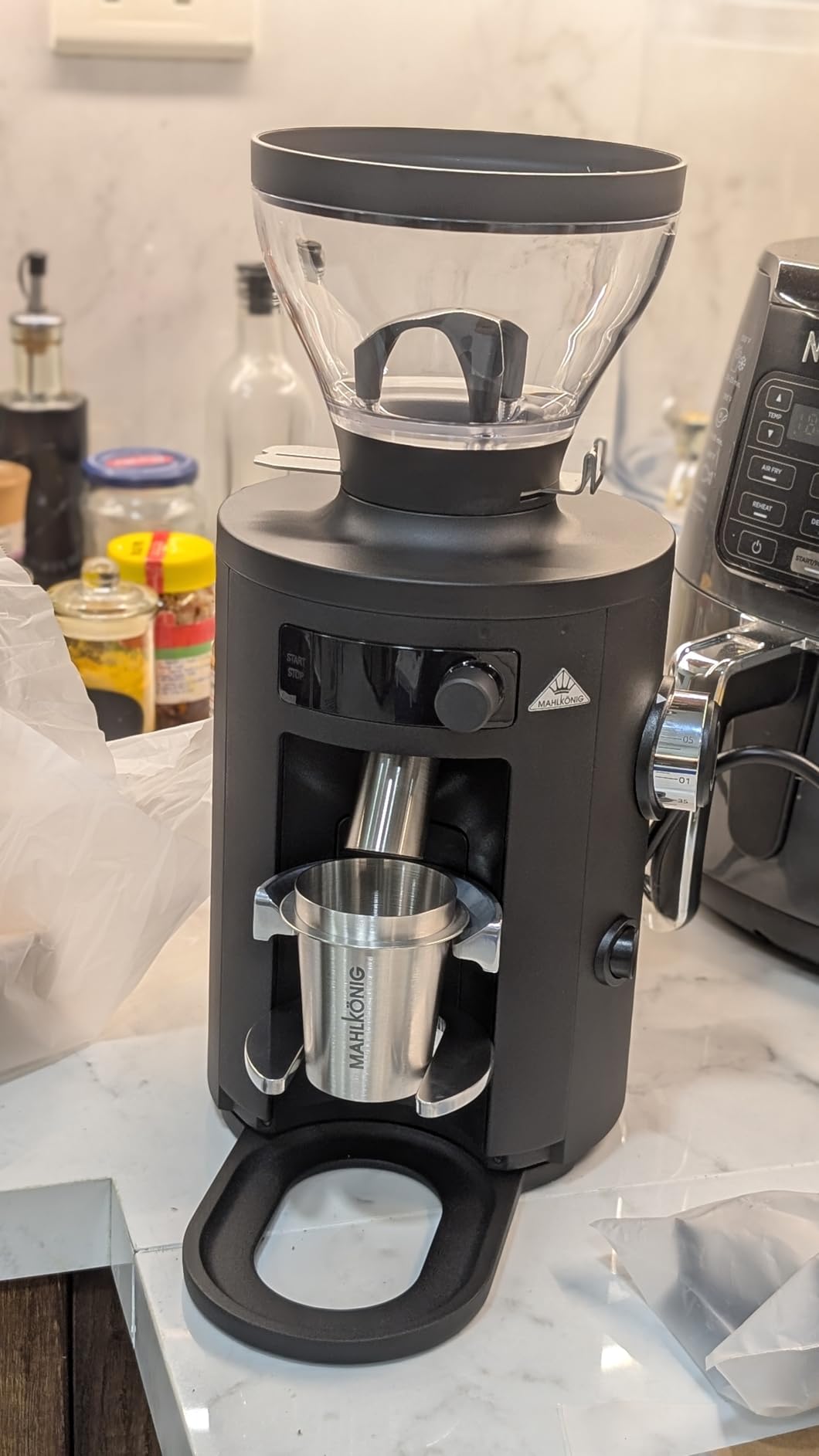
The X54 uses the same burr quality as Mahlkonig professional grinders, which is the entire argument for it. The 54mm special steel flat burrs deliver consistent, uniform grounds, and stepless adjustment covers espresso through French press without a stepped ring in between.
The swappable dispenser fronts are the practical highlight. You can switch between a single dosing cup and direct portafilter grinding in seconds, which means one machine handles single-origin shots and a grinder-behind-the-machine workflow.
The Mahlkonig Home app provides recipes, time presets and dial-in guides. For a barista still learning what a 25-second shot should look like, that guidance removes a real barrier.
Burr quality and the 25000 shot motor
The motor is rated for a lifetime of 25,000-plus shots. At ten espresso drinks a day, that is years of service before the rating is exhausted, which is the durability argument for spending more here.
The 250g hopper is generous for home use and small enough to keep beans fresh in a smaller volume.
Stainless steel construction and a 13-pound weight mean the machine is stable and built for light commercial duty as well as home.
What the app does and does not do
The app does not replace dialing in. It gives you a starting point and a way to save presets, which removes note-keeping but not the actual work.
Owners who prefer physical controls only consider the app an added dependency. The LED display handles four time presets plus manual mode, so the machine is fully functional with the app ignored.
There is no grind-by-weight option, so a separate scale is still needed for recipe dosing.
Who this grinder suits
Choose this if you want proven commercial burr quality, a motor rated for a long life, and a workflow that handles both dosing cup and portafilter.
Pass if you need weighed dosing or want the lowest cost of entry. The premium over 64mm budget flat burr grinders buys burr quality and longevity, not features.
9. SHARDOR 64mm Die-Cast Grinder – Fastest Doses in the Lineup
SHARDOR 64mm Burr Coffee Grinder, Electric Espresso Coffee Grinders for Home Use with Commercial-Grade Precision, 100 Grind Settings, Die-Cast Aluminum Housing, 17.6oz Hopper, Anti-Static Technology
64mm SUS420 flat burr
Over 4g per second
Die-cast aluminum body
17.6oz hopper
Pros
- 18g dose in 4.5 to 6.5 seconds
- Die-cast aluminum feels premium
- Very quiet for a flat burr machine
- Five minute burr swap to SSP
Cons
- Some units arrive with misaligned burrs
- Timed dosing needs a scale
- Large hopper makes the unit tall
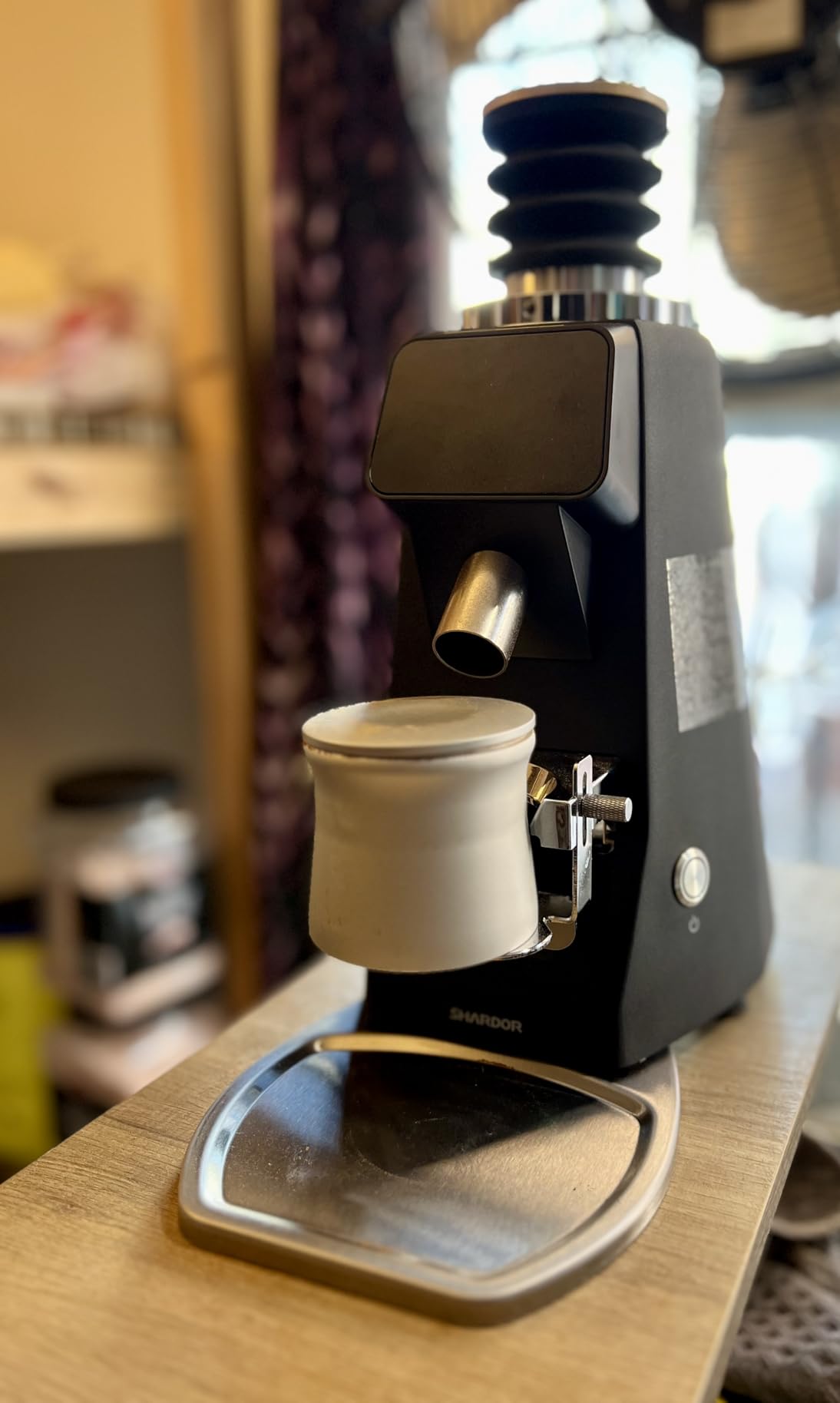
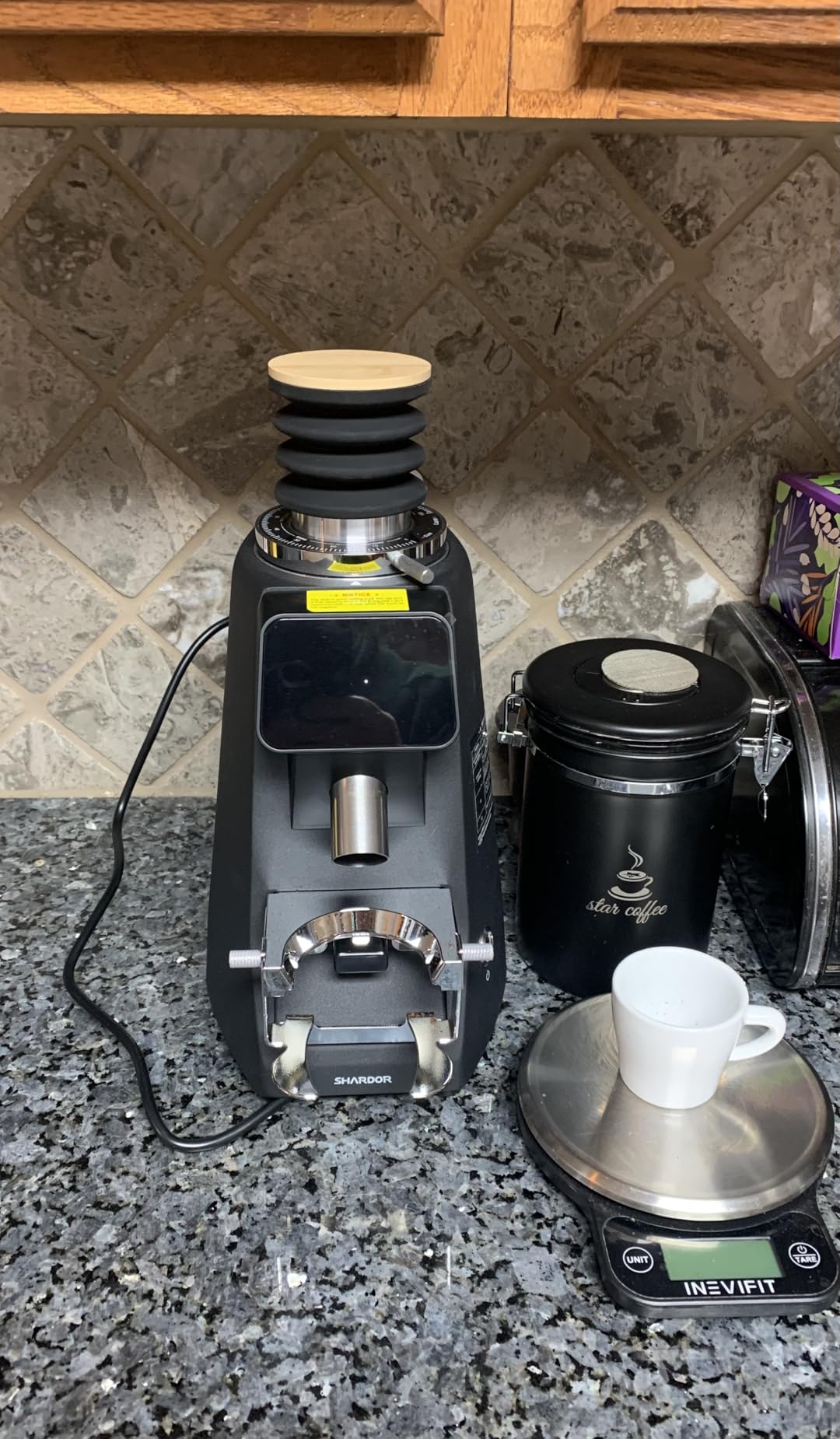
This is one of the highest-rated machines in the set at 4.6, and reviewers with commercial grinder experience describe it as delivering grinder performance they would associate with a far higher price point. The die-cast aluminum housing and fully aluminum grinding chamber feel a tier above the plastic-bodied sibling.
Speed is the headline: an 18g espresso dose in roughly 4.5 to 6.5 seconds, over 4g per second. The 350W motor has real torque, and the 17.6oz hopper means you refill rarely.
The burr set takes about five minutes to swap for SSP burrs, so flavor experimentation is a weekend activity rather than a commitment.
Why the motor size matters here
A 350W motor has more torque than the 200W to 260W machines elsewhere in this lineup. Torque is what keeps burr speed from sagging under a full 18g dose, which is where fines come from.
That torque also shows up in the dose time: an 18g shot in under seven seconds.
The 100-step programmable adjustment runs over one full revolution, which is stepless in practice, and the brass grind collar turns smoothly under load.
The burr alignment check on arrival
Some units arrive with misaligned burrs and a wobbling upper burr carrier. Do a marker test on the burrs when the machine arrives, and realign if needed, before you judge the output.
The plasma ionizer plus anti-static design produces near-zero retention and almost no mess even without RDT when using the small outlet.
With the large hopper, residual grounds remain in the chute and retention climbs. The height-adjustable portafilter fork and suction-cup feet help with stability, but the 16.1-inch height means check your cabinet clearance.
Who this grinder suits
Buy this if you pull several drinks in a row and want fast turnaround, and you have counter height to spare. The aluminum build also ages better than plastic.
Pass if you need low retention with the large hopper, or if your cabinet clearance is under 17 inches.
10. DF54 Single Dose Grinder – Quiet Single Dosing With a Catch
DF54 Single Dose Coffee Grinder
54mm stainless flat burrs
Plasma ionizer
Rubber bellow included
10 pounds
Pros
- Very quiet for its class
- Consistent espresso-capable grinds
- True zero retention without the bellow
- Dial holds position once set
Cons
- Heavy dial needs two hands
- Zero position sits past the zero mark
- Some units clog without regular cleaning
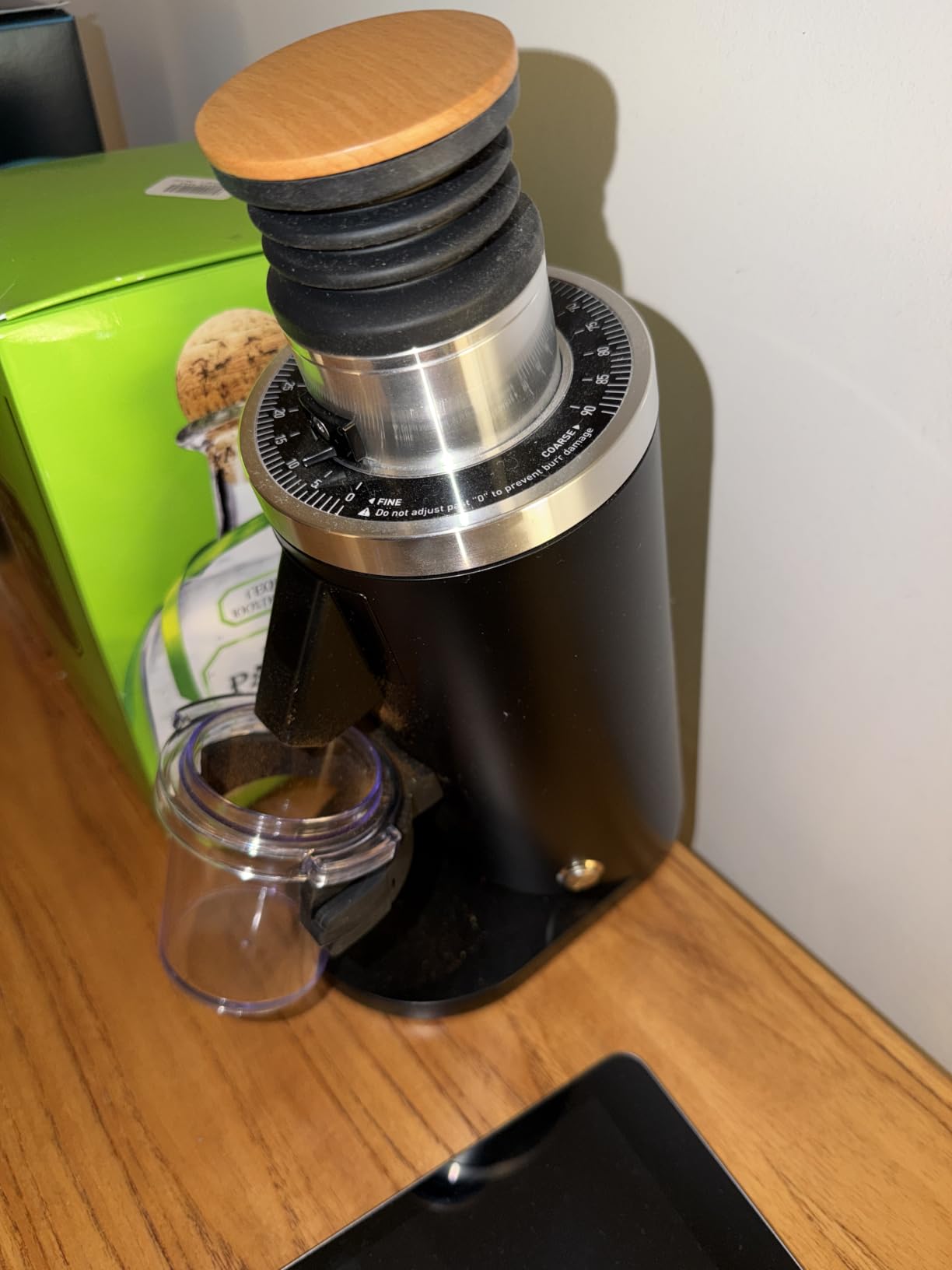
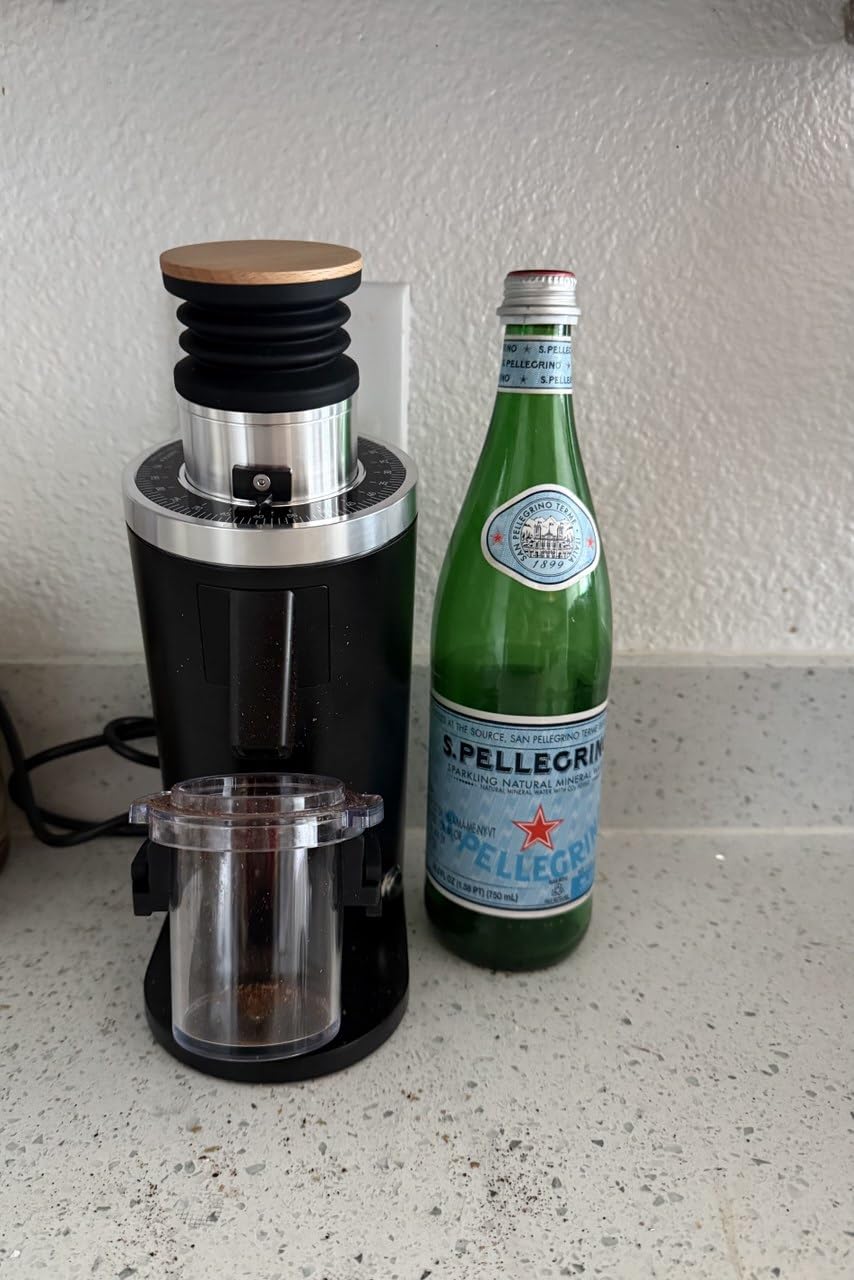
The DF54 solves the same problem as the DF64 II at a lower price with slightly smaller burrs. The 54mm custom stainless flat burrs produce consistent, uniform grinds that are espresso-capable, and owners report it solved the fine-grind limits of a Breville built-in grinder.
The plasma ionizer in the exit chute keeps static low, and the anti-popcorn disc prevents beans jumping for faster grinding.
True zero retention is achievable even without a bellow, though the included rubber bellow is the better workflow because it keeps the counter clean.
The cleaning discipline this grinder needs
The critical thread across reviews is care. Clogs get reported when oily or sweaty beans are used, or when the machine is not cleaned regularly. Keep it clean and owners report no clogging at all.
That is a fair trade. A grinder that rewards attention with consistent espresso is a better long-term tool than one that tolerates neglect.
The 150W motor is low powered compared with the 260W to 350W rivals, so batch grinding is slow. Single dosing is what it is built for.
Adjusting the dial
The dial is heavy to turn and needs two hands with little grip. The zero position sits past the zero mark, so it needs to be learned rather than assumed.
Once adjusted, the dial stays where it is set, which is the property that matters most for repeatability.
One detailed negative review cites an unresolved after-sales dispute, which accounts for the largest share of one-star ratings. Know your return window before the window closes.
Who this grinder suits
Choose this if you want a quiet single-dose workflow on a modest budget and you will keep it clean. The 10-pound weight gives it stability despite the small motor.
Pass if you bulk grind or want the deepest warranty support. Both are thinner here.
11. Baratza Forte AP – The Only Grinder Here That Weighs Your Dose
Baratza Forte AP (All-Purpose) Ceramic Flat Burr Commercial Coffee Grinder
54mm Ditting ceramic flat burrs
Grind by weight or time
All-metal body
13 pounds
Pros
- Weighed dosing is accurate and repeatable
- Very low retention under 1 gram
- Fast-removable burr assembly
- Lockable bean hopper
Cons
- Ceramic burrs need recalibration as they wear
- Beans ring the hopper base and need brushing
- Highest cost in the lineup
The Forte AP is the only machine in this lineup that doses by weight, and several reviewers identify that as its defining advantage. Every other grinder here needs a separate scale; this one has the weighing built into the grounds bin.
The 54mm Ditting flat ceramic burrs are sharp and hold calibration through step-by-step macro and micro adjustment. Retention after grinding runs under 1 gram, and the burr assembly removes fast for cleaning.
Long-term owners report consistent results over many years. It is rated as a workhorse for small restaurant, office or cafe use, and it is engineered and designed in Seattle.
Why weighed dosing is a different workflow
Every timed grinder drifts as beans change, as the burrs wear, and as the dose size changes. A weighed dose removes that variable entirely, which means your recipe is a recipe instead of an approximation.
At 2g per second for espresso and 3.5 to 3.7g per second for press, the speed is adequate for home volumes even though it will not serve a cafe rush.
The lockable bean hopper makes changing beans straightforward, which is useful if you rotate single origins.
The ceramic burr tradeoff
Ceramic burrs stay sharp longer and run quieter than steel, but they need recalibration as they wear. Steel burrs are cheaper to replace and more forgiving of rough alignment.
Beans remain on a flat ring around the base of the hopper and must be brushed off during grinding. It is a small annoyance that never goes away.
Grinding large batches of 110 to 120g can gum up the chute. Working in 60g increments avoids the problem entirely.
Who should buy the Forte AP
Buy this if grind-by-weight matters to your workflow and you want all-metal commercial construction in a small footprint. It covers espresso through pour-over and cold brew consistently.
Pass if ceramic burr recalibration sounds like a hassle, or if you want the highest rating in the set. It has the lowest average rating here at 4.0, mostly from long-term electronic failures reported just after warranty expiry.
12. Gevi VelPro 400 – Variable Speed and a Built-In Scale
Gevi VelPro 400 Single Dose Espresso Grinder with Variable Speed, Stepless Adjustment, 64mm Titanium Flat Burr & Single Dosing Cup, Coffee Bean Grinder for Drip, French Press & Cold Brew-Silver
64mm titanium flat burrs
500 to 1500 RPM
5 micron stepless
14.6 pounds
Pros
- 4.8 average with no one-star ratings reported
- Variable speed lets you tune flavor and cut heat
- Integrated magnetic scale for weighed dosing
- Fits 51 54 and 58mm baskets
Cons
- Only 21 reviews so durability is unproven
- Magnetic scale needs its own charging cable
- Small 40g hopper suits single dosing
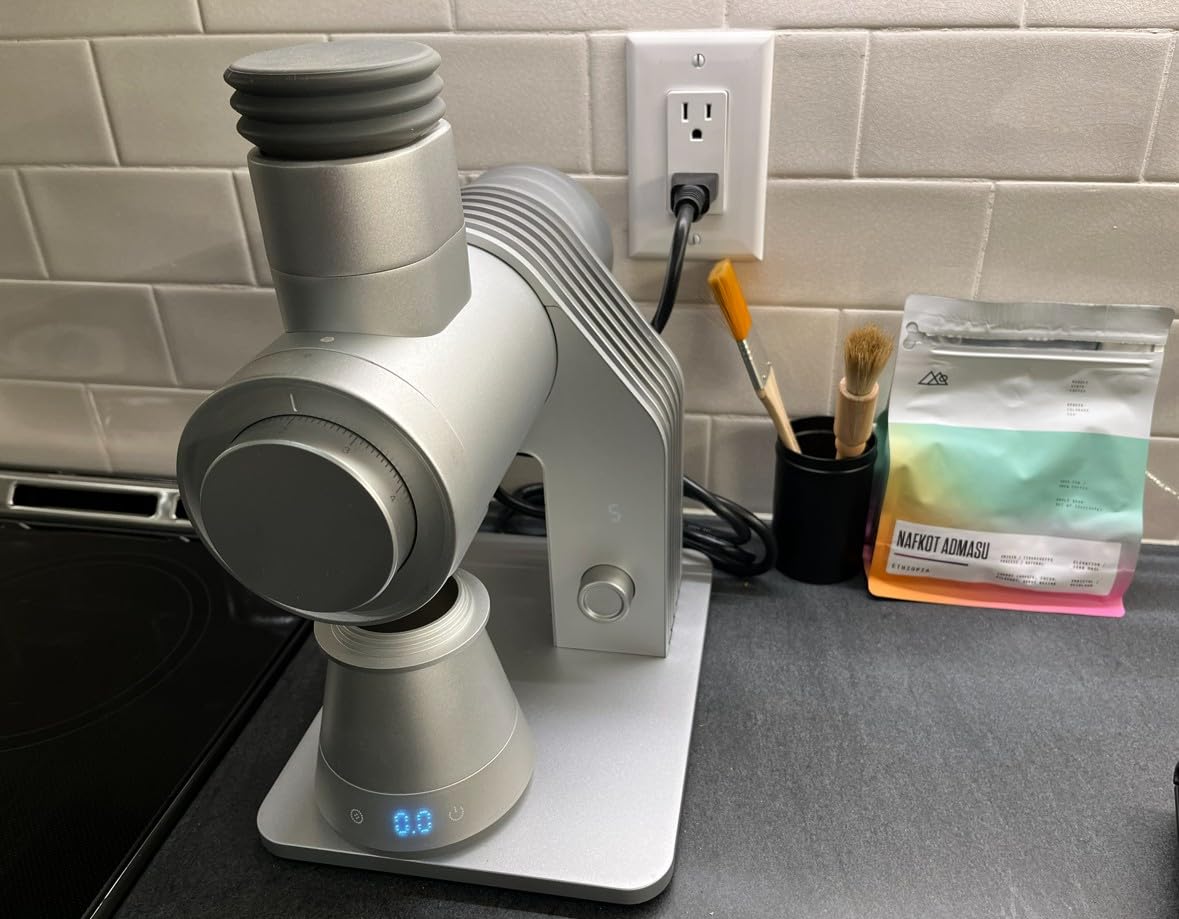
The VelPro 400 is the most interesting machine here and the least proven. It carries an average rating of 4.8 with no one-star or two-star ratings reported, but that is across just 21 reviews, so treat it as promising rather than proven.
Variable speed from 500 to 1500 RPM is the feature no other grinder here offers. Slower speeds reduce heat in the burr chamber and let you tune the flavor profile of a given roast, which is a genuine advantage for someone experimenting with light origins.
The 400W brushless DC motor runs quietly with smooth start-stop and free speed changes mid-grind. The stepless system has 5mm thread pitch for 5 micron adjustment resolution, which is among the finest here.
What variable speed actually changes
Grinding speed sets how much heat each particle absorbs before it exits the burr chamber. Slower is cooler and can taste different on the same bean.
The 500 to 1500 RPM range lets you slow down for a delicate light roast and speed up for a dense dark roast, without changing your grind setting.
The magnetic scale attaches to the dosing cup for real-time weighing of beans and grounds. That gives you weighed dosing on a single-dose grinder, which most of this lineup leaves to an external scale.
Burrs, baskets and the small hopper
The 64mm titanium-coated flat burr with a pre-breaker design improves particle uniformity, and titanium coating extends burr life against a standard steel set.
The dosing cup fits 51mm, 54mm and 58mm portafilter baskets, which is more compatibility than any rival here.
The 40g hopper capacity suits single dosing rather than high-volume work. Plan to refill more often if you grind filter coffee on this machine.
Who this grinder suits
Choose this if you grind light origins and want to experiment, and you want weighed dosing without buying a separate scale. It is the most technically advanced machine in the guide.
Pass if you need an established long-term reliability record or if you bulk grind. With 21 reviews, the durability picture over years simply does not exist yet.
How to Choose a Commercial Style Grinder for a Home Kitchen
Burr diameter is the one spec that changes the cup
Burr diameter is the clearest number on any grinder spec sheet, and it maps to user type more directly than price does.
50mm to 55mm covers entry espresso. Heat dissipates quickly and the shots are clean, but consistency on very light roast is limited.
54mm to 58mm is the sweet spot for a serious home barista. Particle distribution tightens noticeably and the machine handles a wider range of roasts.
64mm and above is where commercial geometry starts. You get more beans cut per revolution, less heat per particle, and the ability to hold a setting over a long session.
Going beyond 80mm is where home use stops being practical. Larger burrs mean larger motors, more weight, and eventually a 220V requirement.
Flat or conical: what actually shifts in the shot
Flat burrs sit side by side, producing a bimodal particle distribution — a mix of fines and larger particles. Conical burrs sit one inside the other and produce a tighter, more uniform distribution.
Flat burrs win on flavor clarity because the fines carry acidity and aromatics forward while the larger particles provide body. Conical burrs win on uniformity, which suits milk drinks where clarity is less visible.
Eleven of the twelve machines here use flat burrs. The exception is the Sette 270, whose conical burrs deliver excellent uniformity and produce noticeably less fines, which is why it chokes-up-prone setups less.
None of this matters much unless your dial-in skill is there. A well-dialed conical grinder beats a badly-dialed flat burr every time.
Retention in grams and why it matters more at home
Retention is the coffee left in the grinder after a dose. In a cafe grinding bags, a few grams is nothing. At home grinding one 18g dose, it is a meaningful fraction of what you paid for.
Single-dose machines with bellows or a purge funnel can reach under 0.1g. The DF64 II and DF54 do this. Hopper-fed machines commonly retain several grams, particularly when switching beans.
Ask yourself how often you change beans. If weekly, retention is a freshness problem you will actually notice. If you buy one bag and drink it for two months, retention barely registers.
Doser, single dose or hopper: pick your workflow
A doser grinds a measured portion into a dosing chamber that you then tip into the portafilter. A single-dose machine grinds exactly what you put in. A hopper machine grinds continuously from a bulk bean reservoir.
Single dose is the best fit for a home barista switching origins. Nothing is left behind, and the dose is exactly what you weighed in.
Hopper is faster for someone grinding the same beans all week and batch brewing. The tradeoff is retention and the need to purge after each bean change.
Doser grinders sit in between and are the most common configuration on true cafe machines. For home use they add a step and a cleaning chore without adding much.
Home setup reality check: footprint, weight, noise and voltage
Counter space is the objection nobody addresses and everybody hits. Measure before you order.
The machines here range from 9.4 inches wide for the Sette 270 to 14.4 by 8.9 inches for the SHARDOR die-cast model. Most home counters fit two grinders comfortably; a 16.1-inch tall machine will not fit under a low cabinet.
Weight runs from 3.2 kg on the Sette to 15.2 pounds on the Mignon Notte. Heavier is more stable and damps vibration, but you are moving it once, not every morning.
On noise, the differences are dramatic rather than incremental. The Eureka Mignon Specialita has a sound-insulated case and is the quiet choice for an apartment. The Sette 270 is the loud choice and owners say so plainly.
On voltage, every machine in this guide runs on standard household power. The true 98mm and 120mm cafe grinders are the ones that need 220V circuits, and none of those are here.
For a fuller look at where grinders sit relative to other gear, our beginner grinder guide covers the entry floor and pour-over grinder picks cover immersion-heavy workflows.
New or used: what to inspect on a second-hand cafe machine
Used commercial grinders appear for far less than new, and the risk is that you inherit someone else’s worn burrs and a tired motor.
Ask for the burr replacement history. Burrs on a heavily used cafe machine are often well past the point where they produce a uniform grind, and a burr set can cost a meaningful share of the machine’s value.
Run a marker test on the burrs to check alignment, then grind a test dose and look at particle distribution. If the machine has visible burr wear or a wobbling carrier, walk away.
Check the motor by grinding several back-to-back doses and listening for a pitch drop. A motor under thermal stress loses speed, and that shows up immediately in dose time.
Confirm the voltage and plug type match your home circuit before you buy. Many imported cafe machines ship with a 220V cord and a US adapter that is not a solution.
Frequently Asked Questions
What is the best commercial style coffee grinder for a home barista?
The Baratza Sette 270 leads this lineup on evidence, with 790 reviews and a 4.3 average, plus 270 grind settings that hold a dialed-in setting across cleaning cycles. For freshness specifically, the MiiCoffee DF64 II holds retention under 0.1g. If noise matters, the Eureka Mignon Specialita wins with a sound-insulated case. All three run on standard household power.
Is a commercial grinder better than a pro-sumer grinder for home use?
Usually yes, and the difference shows up in dial-in stability rather than peak flavor. Commercial-grade machines use larger flat burrs and a cast body, so they cut more beans per revolution, run cooler, and hold a grind setting longer. But a well-dialed pro-sumer grinder will beat a badly dialed commercial one. The real gain appears once you pull several shots a day or switch beans often.
Do commercial grinders need 220V power or plumbing at home?
Not the ones in this guide. Every grinder here runs on standard 110V or 120V household power and needs no drain line. The machines that require 220V circuits are the true 98mm and 120mm cafe grinders, which are also considerably larger and heavier. That electrical requirement is the main reason those machines stay in cafes rather than kitchens.
How much grind retention is acceptable at home?
Under 0.1g is excellent and roughly what the MiiCoffee DF64 II and DF54 achieve. Under 1 gram is good, which is where the Baratza Forte AP sits. A few grams is what most hopper machines retain, and that only matters if you change beans weekly. At 18g per dose, a 3g retention loss is about 17 percent of the coffee you paid for.
What do coffee communities recommend on Reddit and home barista forums?
The recurring recommendations across r/espresso and home-barista.com are the Mazzer Mini, Mazzer Super Jolly, and the Mahlkonig X54 as the affordable high-quality flat burr options, with the Mazzer Mini and Super Jolly repeatedly described as end-all-be-all for home baristas. Community consensus also warns that retention matters more at home than in a cafe, since a cafe grinds bags rather than single doses.
The Verdict: Which Grinder Earns Counter Space
If you want the safest choice with the deepest owner record, the Baratza Sette 270 is where we landed after six weeks. Its 270-step adjustment, fast doses, and replaceable parts make it the grinder we would put on a counter without hesitation.
If freshness is your priority and you switch beans often, the MiiCoffee DF64 II holds retention under 0.1g and takes SSP burr sets later. If noise is disqualifying, the Eureka Mignon Specialita is the quiet option that still produces excellent repeatability.
Whatever you choose, buy for your retention tolerance and counter space before you buy for burr diameter. That is how the best commercial style coffee grinders for home baristas actually get chosen, and it is why these twelve all work in a domestic kitchen on ordinary household power.