

Almost everything that separates a good cup of pour over from a disappointing one happens in about forty seconds of pouring. The grind, the water, and the ratio all matter, but the single variable most brewers fight with is flow rate, and flow rate is what a gooseneck kettle exists to control. That is the whole argument for spending money here, and it is why we spent six weeks putting ten of them through the same routine.
The best gooseneck kettles for pour over coffee fall into two families that solve completely different problems. Electric kettles hold a set temperature, remember it, and let you nudge it a degree at a time. Stovetop kettles give you a beautiful pour and no electronics whatsoever. We tested both, along with the odd hybrids, so you can pick the one that matches your brewer rather than the one with the longest feature list.
Our method was deliberately unglamorous. We filled each kettle to its working maximum, timed the boil, checked how fast it recovered after a drop, and then poured for three minutes straight into an empty dripper to see whether the stream stayed steady. We also checked what happens to the water temperature while you are busy pouring, because the pour is the part nobody wants to interrupt. Every pick below carries its published wattage, capacity, temperature range and hold duration, because those four numbers explain almost every difference in performance you will notice.
If you are still outfitting the rest of your setup, our guide to pour over coffee grinders covers the other half of the equation, and our picks for the best electric kettles for pour over coffee look at the broader kettle category beyond goosenecks.
Our Top 3 Gooseneck Kettles for Pour Over Coffee in 2026

Cosori 0.8L Electric
- 5 one-touch presets
- 60-minute hold
- 1200W fast heating
- 304 stainless interior

Comparing All 10 Gooseneck Kettles Side by Side
| Product | Specs | Action |
|---|---|---|
| Cosori Gooseneck Electric Kettle 0.8L |
|
Check Latest Price |
 Bodum Bistro Gooseneck Electric Kettle Bodum Bistro Gooseneck Electric Kettle |
|
Check Latest Price |
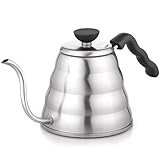
| Hario V60 Dripper Kettle Buono |
|
Check Latest Price |
| Bonavita 1L Digital Variable Temperature Kettle |
|
Check Latest Price |
 Coffee Gator Gooseneck Kettle with Thermometer Coffee Gator Gooseneck Kettle with Thermometer |
|
Check Latest Price |
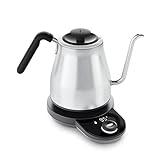 OXO Brew Pour Over Gooseneck Electric Kettle OXO Brew Pour Over Gooseneck Electric Kettle |
|
Check Latest Price |
 INTASTING Gooseneck Electric Kettle 0.9L INTASTING Gooseneck Electric Kettle 0.9L |
|
Check Latest Price |
 DmofwHi Gooseneck Electric Kettle 1L DmofwHi Gooseneck Electric Kettle 1L |
|
Check Latest Price |
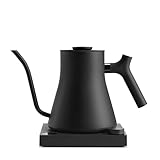 Fellow Stagg EKG Pro Gooseneck Kettle 0.9L Fellow Stagg EKG Pro Gooseneck Kettle 0.9L |
|
Check Latest Price |
 Fellow Stagg Gooseneck Pour Over Kettle 1L Fellow Stagg Gooseneck Pour Over Kettle 1L |
|
Check Latest Price |
How We Tested: Six Checks Before a Kettle Earned a Place
Every kettle in this roundup went through the same six checks, in the same order, over six weeks. Nothing here was scored on how a product page described itself.
1. Boil test. We started each electric kettle from cold tap water at its working maximum and timed to the point where a rolling boil was steady. Wattage is the dominant factor here, and we list it for every model so you can do the arithmetic before you buy.
2. Temperature accuracy. We set each variable-temperature kettle to the standard pour over targets and compared the reading against a separate probe thermometer in the water. Anything that read more than a couple of degrees off at the setpoint got flagged.
3. Heat retention. With the kettle off its base, we logged the temperature at ten and thirty minutes. This is the test most roundups skip and the one that changes your morning, because your pour takes two to four minutes and your bloom takes thirty seconds more.
4. Hold function. Where a kettle offers a keep-warm mode, we checked how long it genuinely holds and whether the setpoint survives lifting the kettle and putting it back down. That last detail separates the good bases from the irritating ones.
5. Pour test. Full kettle, empty dripper, three continuous minutes. We were watching for a stream that stays put as the kettle empties, spout geometry that does not splatter at low tilt angles, and a handle that stays neutral in the wrist the whole way down.
6. Materials and cleaning. We checked what the water actually touches, then filled and descaled each kettle following the manufacturer’s own guidance. Metallic or flat off-flavors show up here more often than people expect, and they are not always the kettle’s fault.
Two things we deliberately did not do. We did not score on app connectivity or smart home features, because scheduling a kettle does not make coffee better. And we did not test camping burners on anything not rated for them, because a kettle that melts its own handle is not a feature, it is a warning label.
1. Cosori 0.8L Electric Kettle – The Most Complete All-Rounder
Cosori Gooseneck Electric Kettle with Temperature Control, 0.8L, Black
0.8L
1200W
304 stainless interior
5 presets plus 60-minute hold
Matte black stainless
Pros
- Five presets and a full one-hour keep-warm
- 1200W heats a full pot in about 3-5 minutes
- No plastic touches the water
- Counter-balanced handle with a precise pour spout
- Ready tone you can silence
Cons
- Narrow mouth is awkward to hand-wash
- Mineral spotting if you skip descaling
- White tea preset runs hot for matcha
- Occasional long-term heating failures reported
This is the kettle we kept reaching for during testing, and the reason is boring in the best way: everything on it works. It heats fast, it holds accurately, it pours where you point it, and the one-hour hold means you can start your grind, stage your brewer, and boil the water last instead of first.
The preset spread is where it beats most rivals. White tea at 170F, green tea at 180F, oolong at 195F, coffee at 205F and a full boil at 212F covers essentially every cup anyone makes with this kind of kettle, and coffee at 205F sits right in the band you want for light and medium roasts. The 304 stainless interior, lid and spout mean nothing plastic touches your water, which matters more to a lot of brewers than any screen on the base.
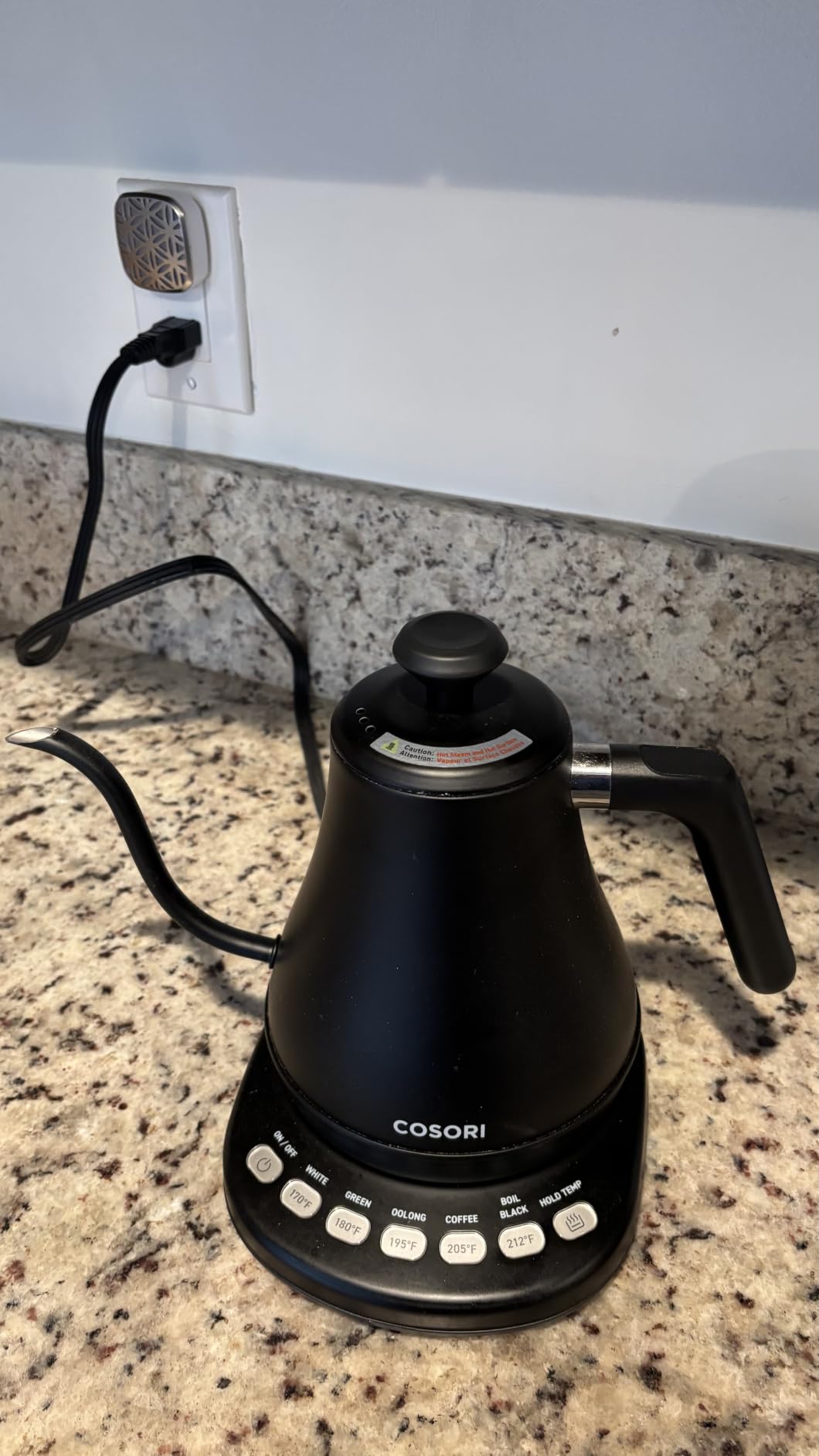
Owners are near-universal about temperature accuracy and about how quickly a full pot reaches brewing heat on 1200 watts. The beep can be disabled, which sounds trivial until you brew at five in the morning and a tone wakes the house.
Temperature Presets and the One-Hour Hold
The hold function runs for a full sixty minutes, which is longer than the standard thirty on several competitors. In practice that means your water stays at 205F while you weigh beans, grind, rinse the filter and set up the dripper, and you never boil a second round to fix a kettle that cooled off mid-brew.
The trade-off is that presets are presets. If you brew at 198F for a light roast the way many specialty brewers do, you cannot land on 198F here without repeating a coarse menu. Owners who need single-degree freedom tend to move up to a dial or button-per-degree interface, which is exactly the move our second pick makes.
Pour Geometry and Handle Balance
The counter-balanced handle keeps the center of gravity over your wrist whether the kettle is full or nearly empty, which is the ergonomic test that actually matters during a thirty-second bloom. The spout tip delivers a narrow stream that you can start and stop cleanly without the dribble that spoils a slow pour.
The narrow mouth of the body is the one genuine annoyance. Hand-washing inside the kettle takes more effort than it does on a wide-mouth design, so expect to reach for a bottle brush rather than your fingers.
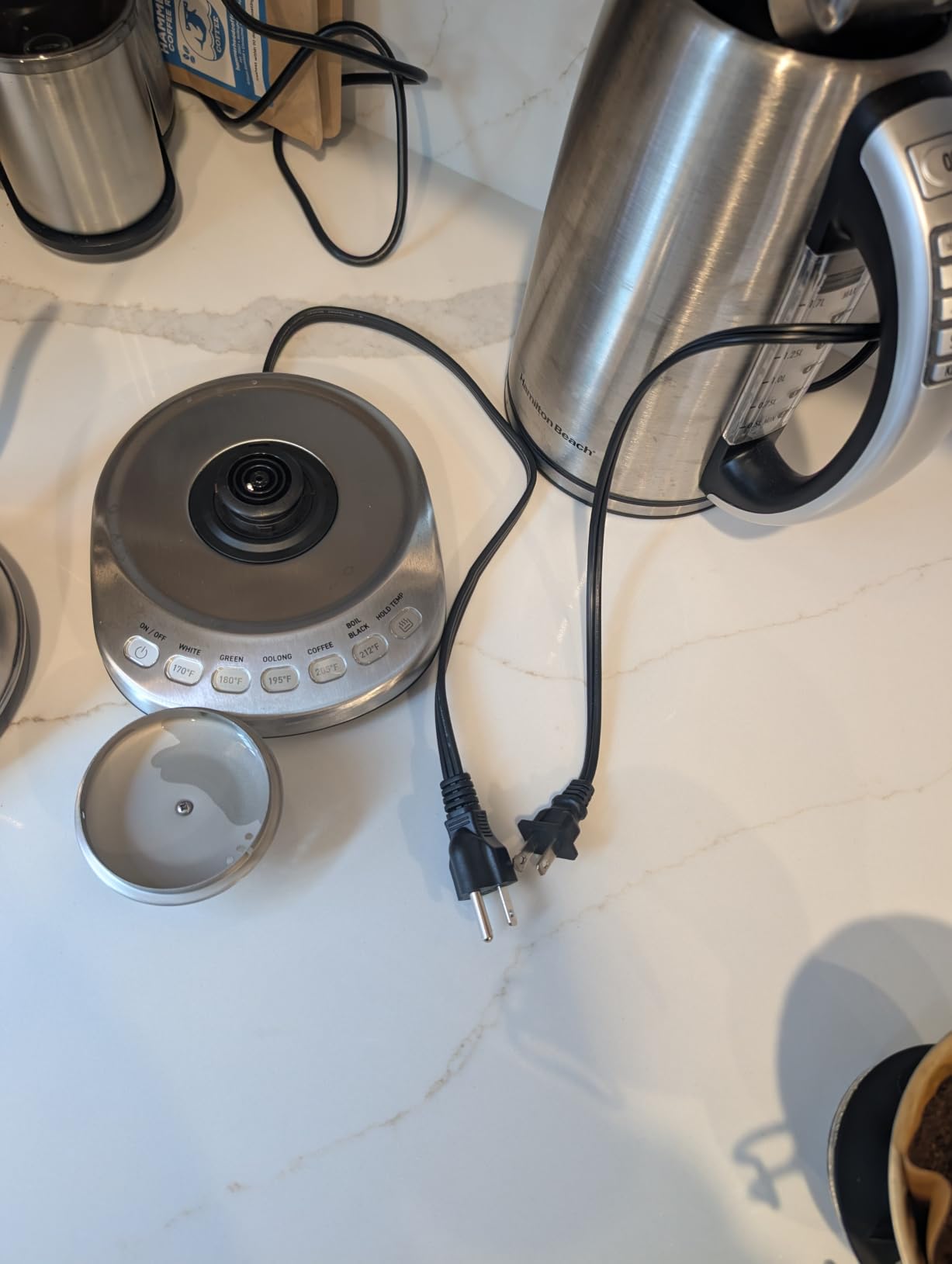
Build Materials and Long-Term Durability
The body is matte-finished stainless steel and the interior is 304 grade, and the package includes the kettle, base, manual and warranty card with a one-year warranty plus an optional two-year extension. It is a 120-volt unit rated at 1200 watts, weighing 3.5 pounds.
The honest caveat is longevity. A minority of owners report loud popping noises and intermittent heating after roughly two and a half years of daily use. That is a small share of a very large owner base, but if you want a kettle that survives a decade, the models with replaceable parts and published service options are worth considering. One name appears in that category if you are outside the US, and we covered it in our electric kettle travel picks.
Cosmetic note: if you skip descaling, mineral deposits and light discoloration show up on the interior. It does not affect taste at moderate levels, but it is visible through the open spout.
2. Bonavita 1L Digital Kettle – Best-in-Class Temperature Precision
Bonavita 1L Digital Variable Temperature Gooseneck Electric Kettle for Coffee Brew and Tea Precise Pour Control, 6 Preset Temps, Café or Home Use, 1200 Watt, LED Panel, Stainless Steel
1L
1200W
140-208F in 1-degree steps
6 presets plus 60-minute hold
304 stainless
Pros
- 1-degree accuracy across 140-208F
- Remembers your last setting across power cycles
- Superb gram-accurate gooseneck pour
- One-hour hold
- Several owners report five to eight years of daily use
Cons
- Slower than 1200W rivals because elements cycle
- Thin spout is slow for filling a large mug
- Presets miss common coffee and boil targets
- Volume marks hidden behind the handle
If you chase specific numbers, this is the kettle. Temperature is adjustable one degree at a time from 140F to 208F, and the base remembers the last setting you used, so the 205F you dialed in yesterday is waiting for you today. Nothing else in this roundup gives you that combination of fine adjustment and memory.
The spout is the narrowest of the electric group, and that is a feature for a hand-pour brewer. It lets you dose a slow spiral bloom with real precision and keeps a steady column of water moving through the coffee bed instead of flooding it. Owners who moved from a wide-spout kettle describe the difference as learning to pour rather than learning to pour slowly.
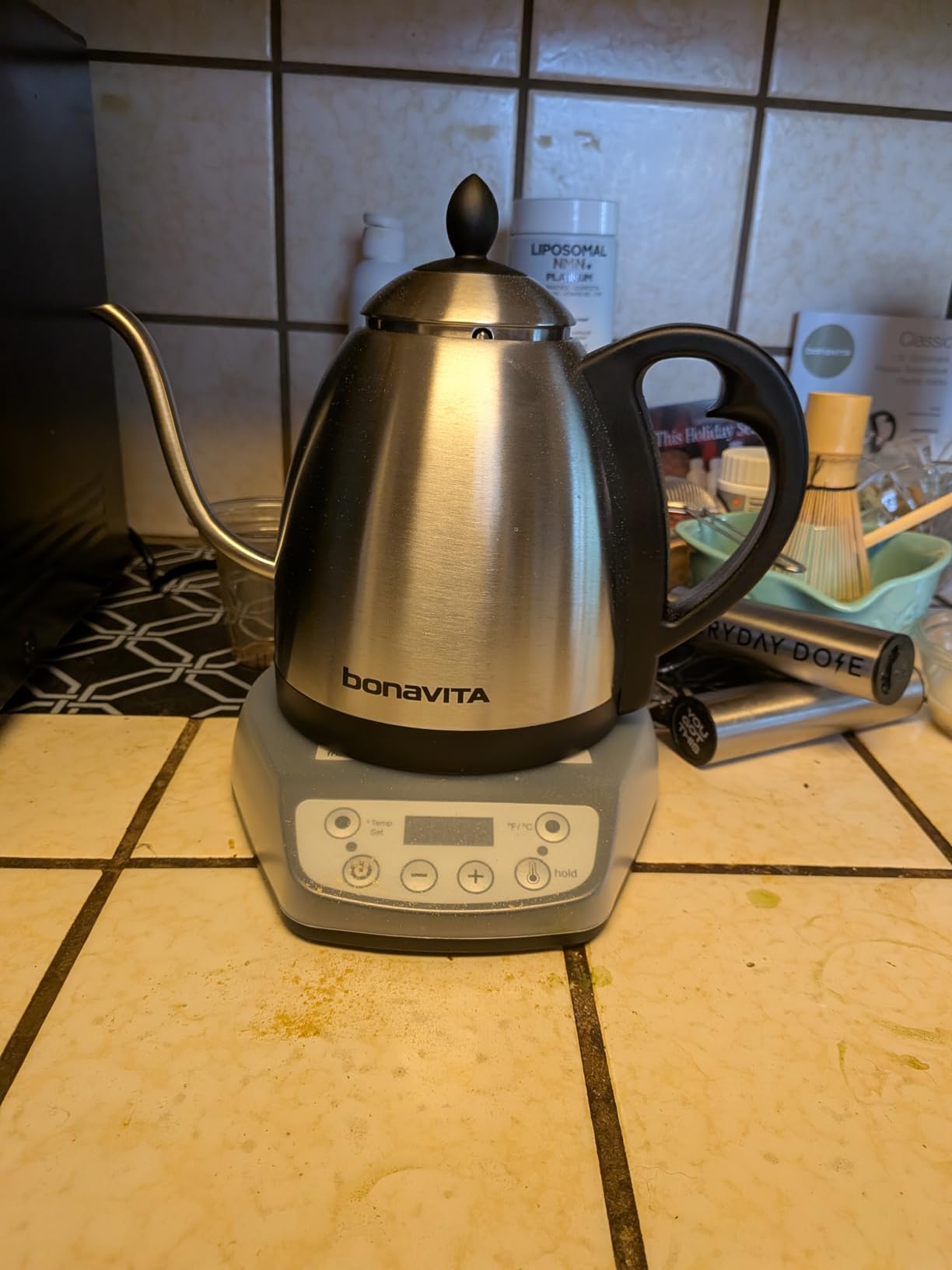
Why One-Degree Accuracy Changes Your Coffee
Light roasts want hot water, dark roasts want cooler water, and the difference between a great cup and a sour or bitter one is often only a few degrees. With six presets at 140, 176, 185, 190, 205 and 208F plus full manual adjustment between them, you can dial a recipe exactly rather than approximating it with a preset that was designed for tea.
One quirk worth knowing: the presets are fixed and cannot be reprogrammed. If your habit is to brew at 200F, you will be pressing the adjust button rather than tapping one of the six.
Heating Speed and the 1200W Reality
Published heating is 1200 watts for a full boil in about five minutes. Owners regularly note it feels slower than competing 1200W kettles, and the reason is the element cycling on and off to hold the setpoint rather than running flat out. It reaches temperature reliably; it just does not sprint.
At 2.8 pounds with a 360-degree swivel base using pin-and-ring contacts, the kettle rotates freely on the base and the cord is not in your way. The count-up timer starts when you lift it off, which is genuinely useful for steeping tea.
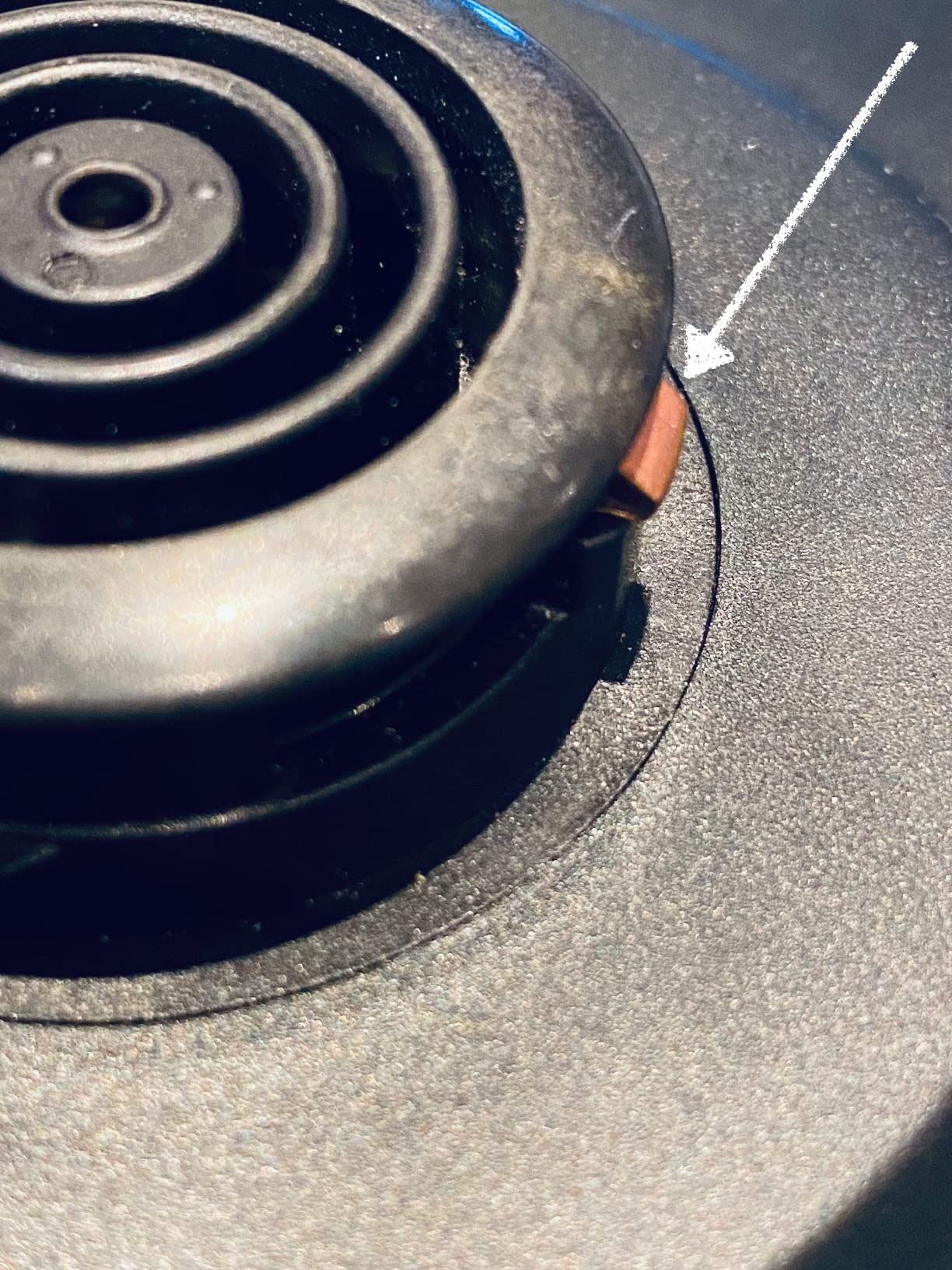
Materials, Care and Longevity
Construction is 304 stainless steel with BPA-free virgin plastics, and the specified care is hand wash only. Volume markings sit behind the handle, so you are tilting the kettle to read them in dim kitchen light, which is a small daily irritation that never seems to get mentioned in listings.
Longevity is the standout. A meaningful number of owners describe five to eight years of reliable daily use, which is longer than most electric kettles in this category. A very small number raise safety concerns about base behavior after refilling while powered, so unplug the base when you top up.
3. Hario V60 Buono 1.2L Kettle – The Best Manual Pour
HARIO V60 Buono Stovetop Gooseneck Kettle, 1.2L Silver
1.2L stainless steel
Slender gooseneck spout
Gas, electric and induction
Made in Japan
Pros
- Exceptionally smooth
- predictable pour
- Excellent heat retention
- Light and well balanced full
- Non-reactive stainless with no off-tastes
Cons
- No whistle or audible boil signal
- Lid vents release scalding steam
- Smaller base boils slower than a wide electric
- Best filled to about 800ml
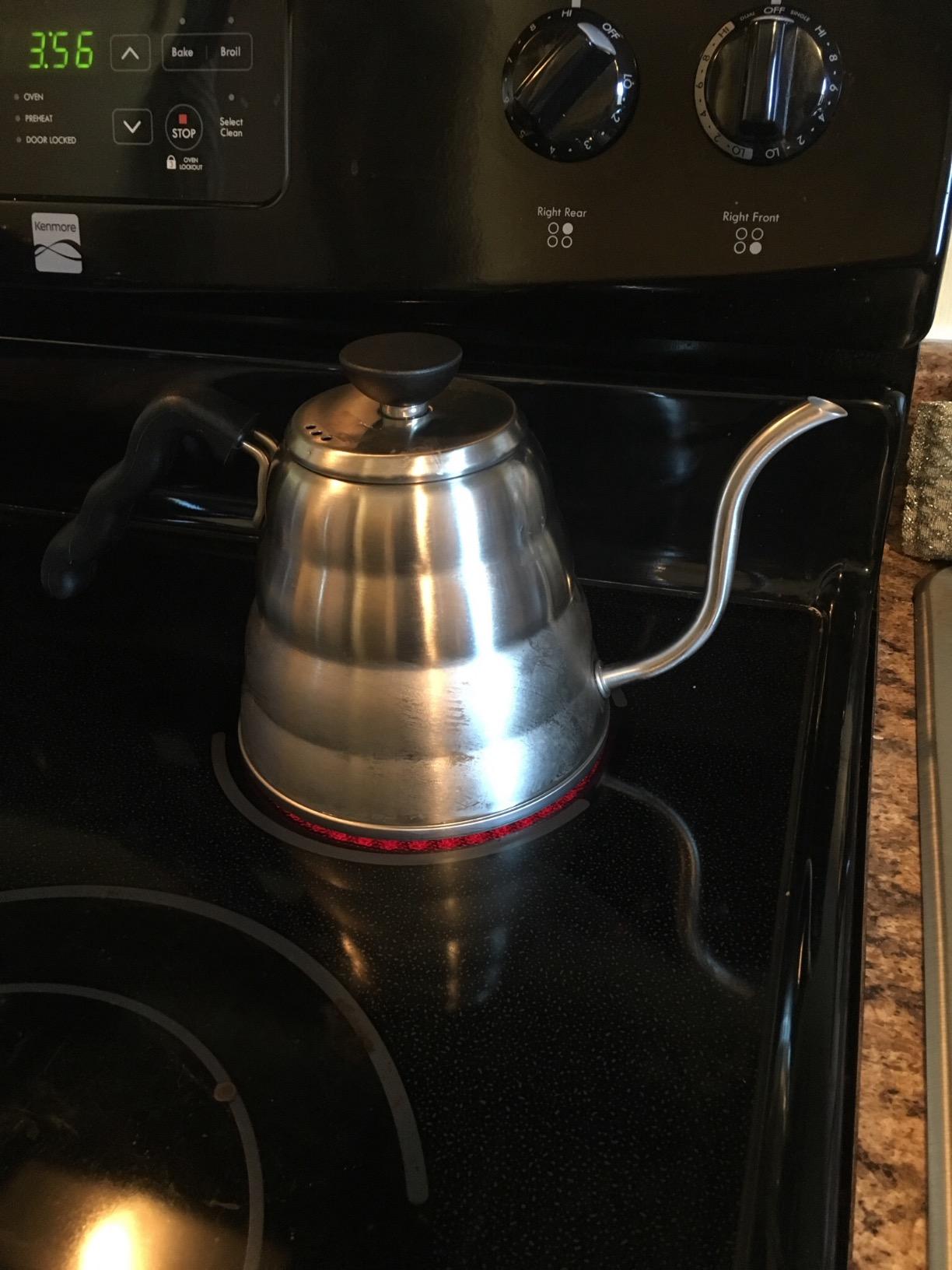
For decades this has been the reference stovetop kettle, and after a full testing cycle the reputation holds. The slender spout produces the most controlled stream we measured by hand, and the stainless body neither reacts with boiling water nor imparts off-flavors.
It weighs 144 grams empty, which is astonishingly light for something that feels this solid in the hand. A full kettle stays balanced through a long, slow pour, and you can hold a figure-eight over a Chemex for two minutes without fatigue setting in.
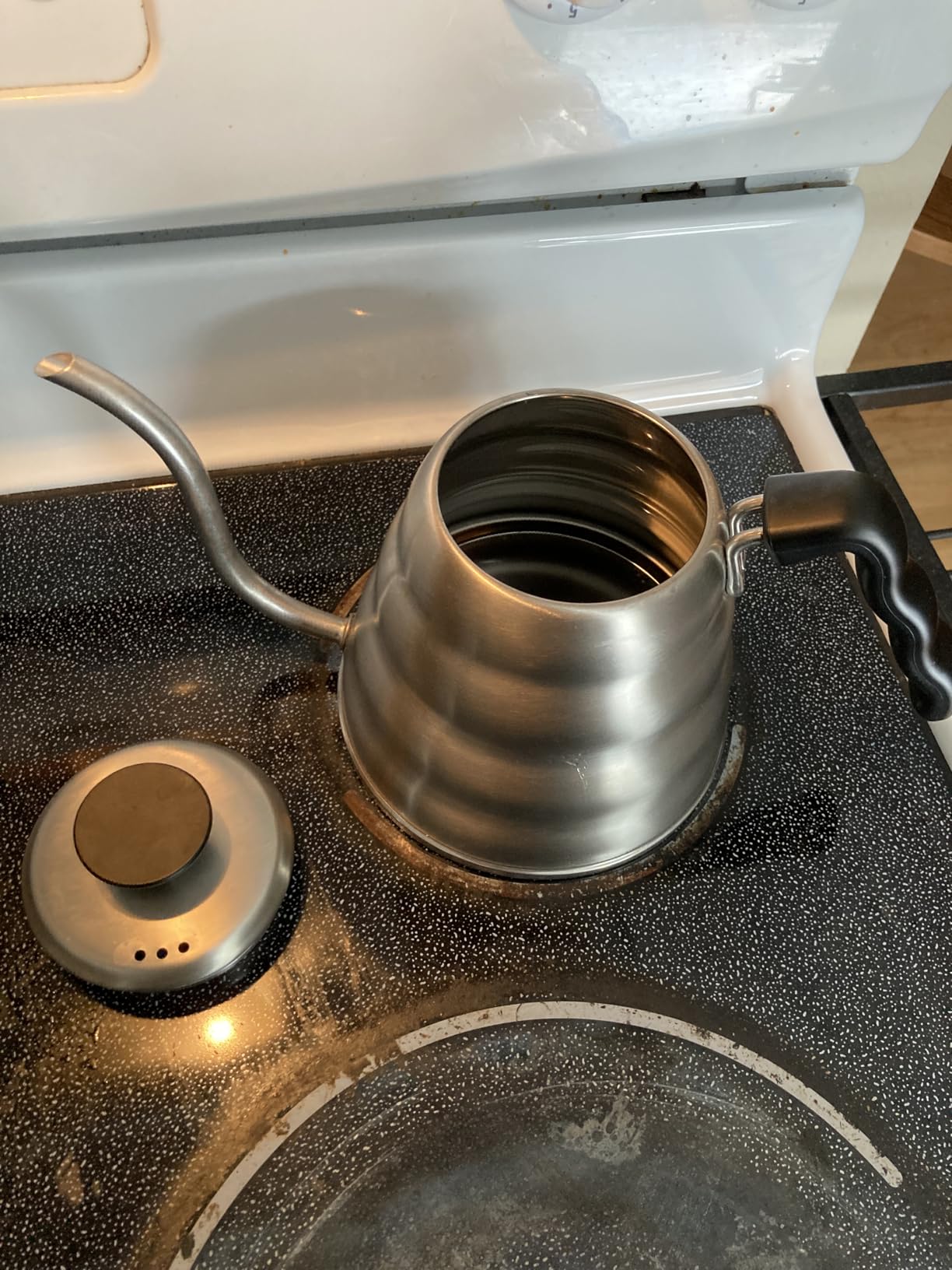
Pour Control and Heat Retention Without Electronics
Heat retention is the quiet strength here. Water measured at 210F after three minutes of cooling off the burner, which means the pour-over window is wide open from the moment it stops steaming. With no electronics drawing power and a single layer of steel, there is nothing to fail and nothing to lose in a power cut.
You manage temperature by eye and by timing. There is no readout, no probe and no beep, which means learning your brewer’s appetite rather than programming it. Plenty of experienced brewers prefer it that way, and for older or darker roasts a slower approach with a slightly longer rest often lands better.
Stovetop Compatibility and the Gas Handle Warning
This kettle works on gas, electric and induction ranges, and the lid has three vent holes that release steam at a rolling boil. Those vents are a genuine safety note: lift the lid carelessly on a gas burner and escaping steam will burn you. Push the lid back and lift slowly.
On gas, keep the handle away from the flame. It is not a plastic handle and will survive, but direct flame on any painted or bonded surface shortens its life. On induction, the flat steel base works immediately with no adapter.
Capacity, Steam and Daily Use
The listed capacity is 1.2 liters, and the guidance is to fill it to about 800ml. Going to the brim on a gas burner invites boil-over as the water sloshes, so treat 800ml as the real working capacity. That is a comfortable two-cup batch and a full V60.
The lid fit does not tighten or loosen as the temperature changes, which is a small sign of a well-made seal. Isolated reports of seam rust appear on a small number of early units, so dry it after use if you live somewhere damp.
4. Bodum Bistro 0.8L Kettle – Best Balance of Price and Pour
Bodum 27oz Bistro Gooseneck Electric Water Kettle, Pour Over Coffee & Tea, Stainless Steel, Matte Black
0.8L / 27oz
1000W
Full stainless body
Cork handle and lid knob
Pros
- Steady
- non-dribbling stream
- Compact footprint for small counters
- Heats a full kettle in about five and a half minutes
- Cork handle comfortable over years
- Very easy to rinse clean
Cons
- No temperature control at all
- No audible or clearly placed done indicator
- Minor reports of leaks near the spout base
- Base feels wobbly
- Darkening cork lid accent
This is the kettle we hand to people who want a good pour without a learning curve and without paying for temperature control they will never use. The gooseneck spout is genuinely well engineered, and owners frequently note that it pours faster and more freely than far more expensive premium kettles.
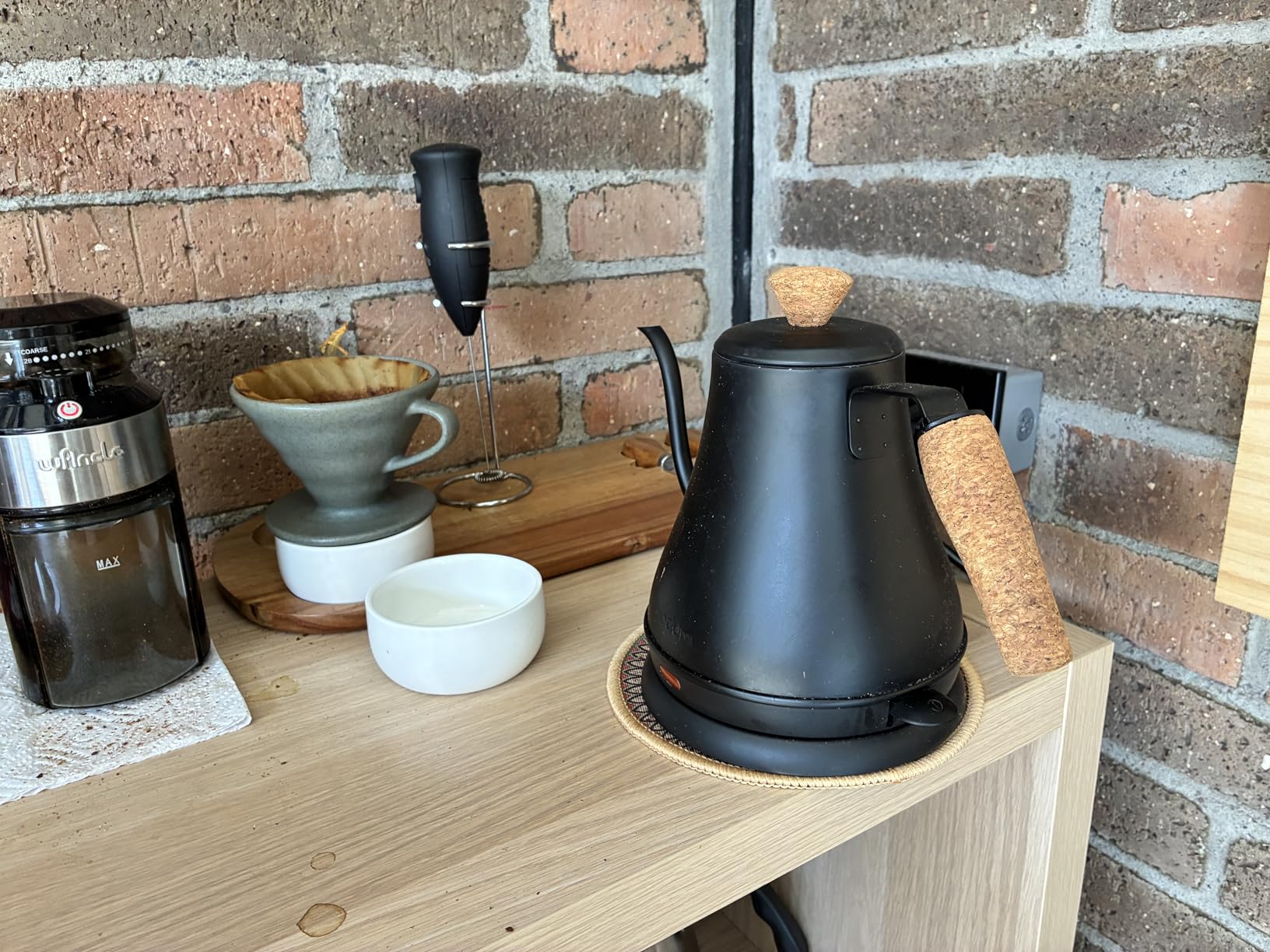
At 2.1 pounds and 0.8 liters it is the lightest electric kettle here, and the compact footprint suits a small counter. The cork handle and lid knob stay comfortable through long sessions, and plenty of owners report multiple years of daily use with nothing loosened or worn.
Pour Quality and the Limits of Boil-Only Heating
The spout gives you a clean, continuous stream that starts and stops on command, which is more than enough for concentric circle pours on a V60 and figure-eights on a Chemex. The water line indicator inside the kettle is a genuinely useful touch when the kettle is otherwise unmarked.
What you do not get is temperature control. It boils and switches off, full stop. For medium and dark roasts that is a non-issue. For light roasts brewed at 198F, you need a thermometer and a habit of pulling the kettle off the heat early, and that workflow is why many brewers eventually move up to a variable-temperature model.
Cork, Stainless and Daily Wear
The body is full stainless steel, which means no plastic contact with your water and no flavor transfer. Automatic shut-off fires at boil and the base is cordless lift-off with a simple on-off switch, so there is no interface to learn at all.
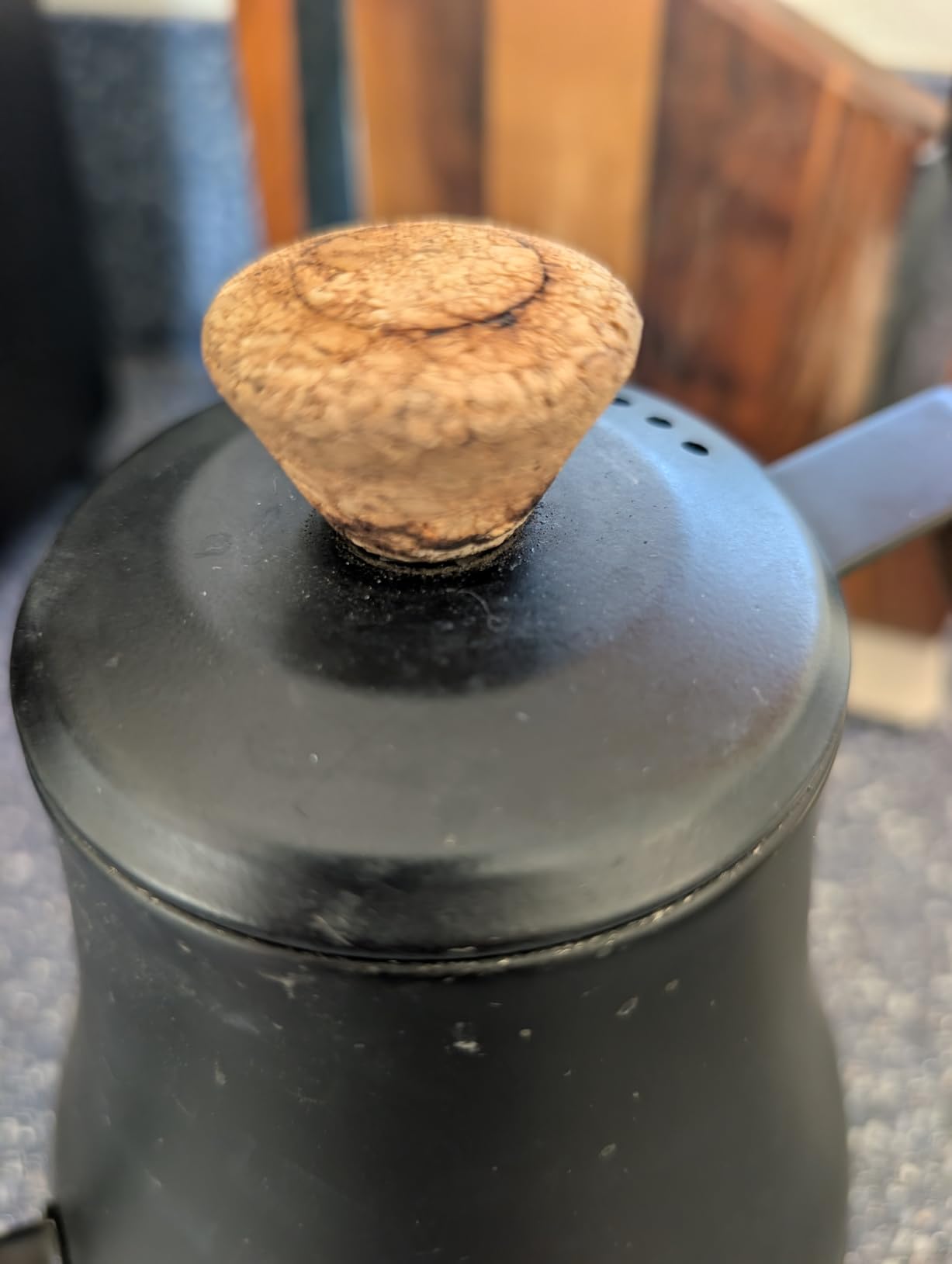
Cork is the soft spot. The handle itself holds up well, but the lid knob accent darkens and degrades with long daily use. A minority also report condensation-driven leaking near the gooseneck base or the bottom when reheating repeatedly, so dry it thoroughly if you fill it while still warm.
What You Give Up Without a Done Alert
The most common complaint is the absence of any audible indicator or a clearly placed light. At 1000 watts it takes roughly five and a half minutes to heat a full kettle, and you are relying on sound, steam or a kitchen timer to know when it is done. Many owners simply pair it with a cheap thermometer and stop thinking about it.
The base itself feels a little wobbly and cheap to reviewers, though the kettle body itself has a two-year limited warranty and holds up well. For a first gooseneck, the value here is difficult to argue with.
5. Coffee Gator 1L Thermometer Kettle – Temperature Without the Electronics
Coffee Gator Gooseneck Kettle with Thermometer – 34oz
1L / 35oz
Built-in lid thermometer
2.5mm flow spout
Triple-layer induction base
Pros
- Built-in thermometer with a highlighted brew range
- Smooth flow owners rate on par with costlier models
- Angled handle keeps hands off the body
- Fully stainless interior
- Works on every stovetop including induction
Cons
- Usable volume closer to 900ml than a liter
- No MAX water line inside
- Unsealed lid can rattle while pouring
- Analog thermometer cover can crack
- Spits if it stays on a hot burner
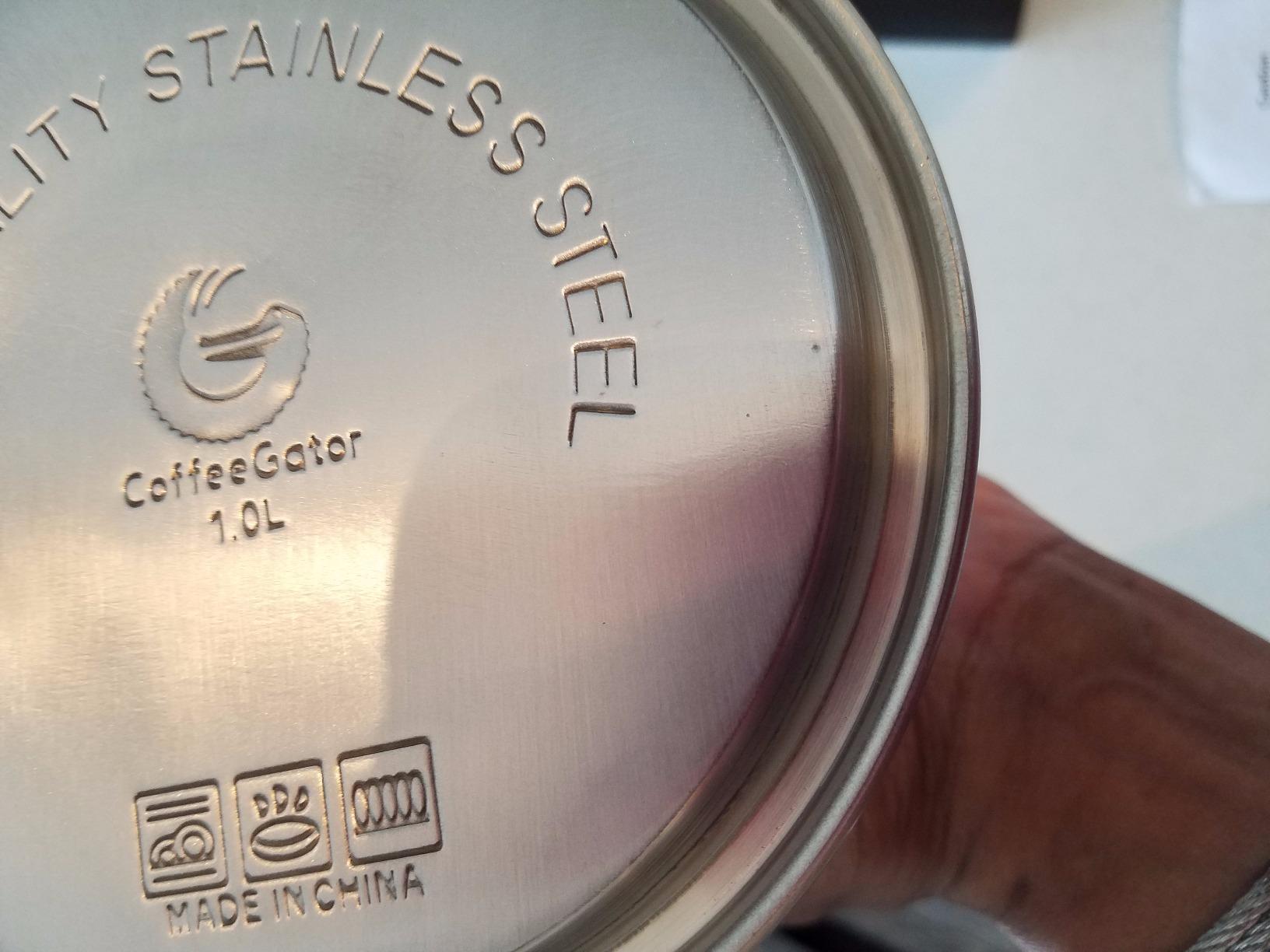
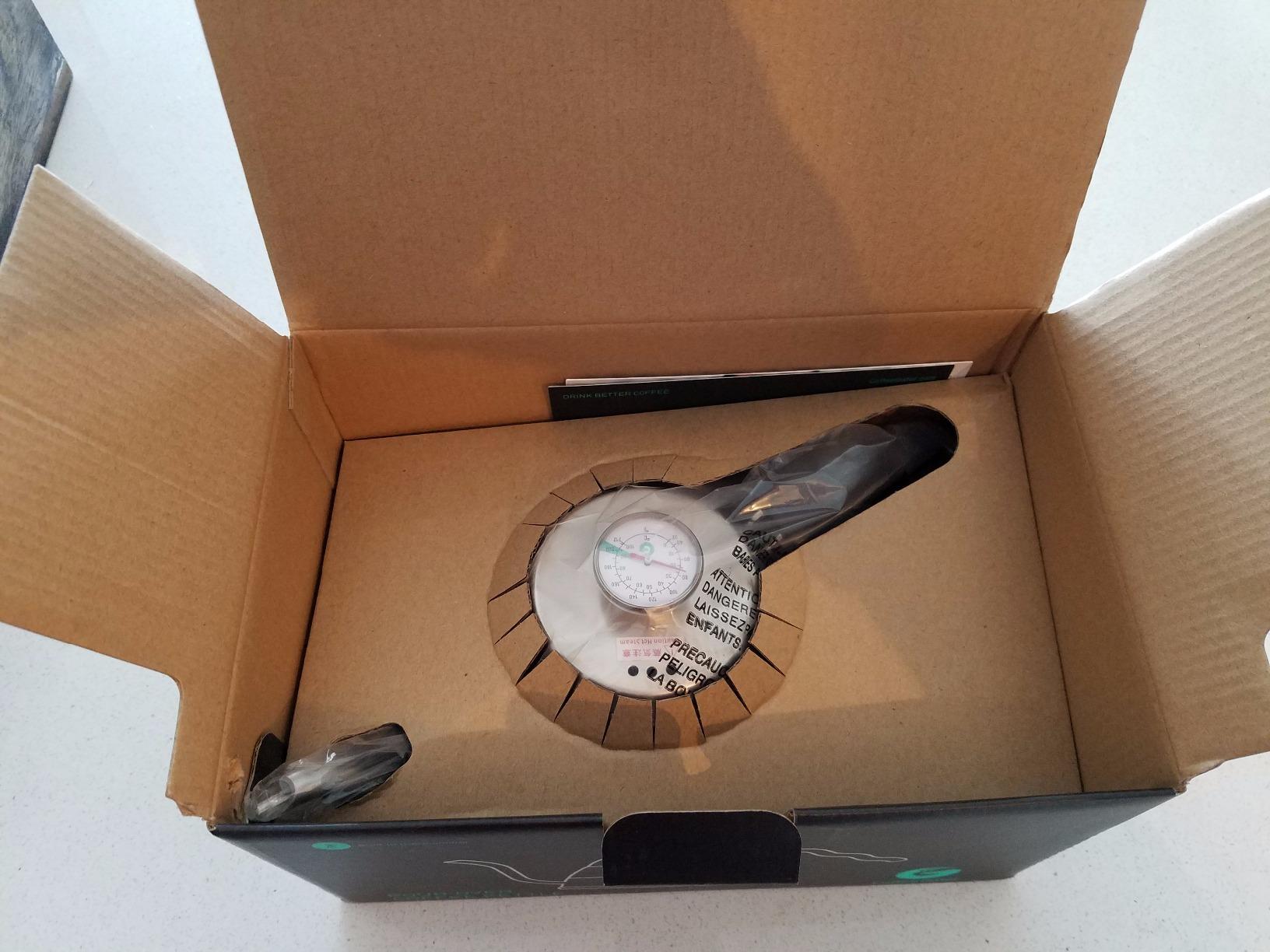
The middle path between a blind stovetop kettle and an expensive electric one. There is a small analog thermometer mounted in the lid, showing Fahrenheit and Celsius with a highlighted brew range, and that single dial gives you far more control than any pure-manual kettle at a fraction of the cost of a digital one.
The spout rotates a full 360 degrees and delivers roughly 2.5mm of flow, which owners consistently rate on par with kettles costing several times more. The angled handle keeps your hand away from the body, and at 1.2 pounds it is one of the lightest options here.
Reading Temperature Without a Screen
A needle on a lid dial is slower to read than an LCD and it cannot hold a temperature for you. But it removes the guesswork, which is the actual problem with a manual kettle. Watch the needle climb to the brew range, pull it off the heat, and pour. For someone who brews at a different temperature every morning, that is enough.
The contrast with the Fellow stovetop pick further down is worth noting: that one has a brew-range thermometer with red marks but a narrow spout and no lid attachment, while this one has a wider rotating spout, a detachable lid and an all-stainless interior with no plastic or rubber parts touching the water.
Every Stovetop Type, Including Induction
The triple-layer base works on gas, electric, radiant, halogen and induction, which is broader compatibility than most kettles in this roundup. Coffee Gator’s customer service also replaced a misprinted lid free of charge, a small signal that replacement parts are actually available.
The thermometer is the weak link. It is analog rather than sealed glass, and some units have developed cracks or leaks in the plastic cover. The lid is also unsealed and can rattle or slip while you are pouring the last of the water, and there is no MAX water line marked inside.
Capacity and Real-World Volume
Listed at one liter, usable capacity is closer to 900ml, so it will not boil a full 1.2L like the Hario will. There is no whistle, which is why many owners run a separate timer, and the spout can spit if you leave it unattended on a hot burner.
Cleaning is straightforward. The interior is 304 stainless with no plastic or rubber contacting water, and the manufacturer recommends a sponge for routine cleaning or lemon and vinegar for descaling. The detachable lid dries properly rather than trapping moisture.
6. OXO 1L Gooseneck Electric Kettle – Fastest Heating and the Friendliest Controls
OXO Brew Pour Over Gooseneck Electric Kettle – Stainless Steel
1L
1500W
104-212F in 1-degree increments
30-minute hold
Count-up brew timer
Pros
- Dial hits target within about a degree
- 1500W heats in roughly 3-5 minutes
- Keep-warm resumes after lifting and replacing
- Built-in count-up brew timer
- Two-year warranty with fast service
Cons
- Pour is on the fast side and needs technique
- 1L suits two large cups only
- Water splashes out of the lid when full and poured quickly
- Cool-touch handle can detach after years
- Base behavior when lifted can surprise you
At 1500 watts this is the fastest variable-temperature kettle we tested, reaching brew temperatures in roughly three to five minutes. If your kettle shares a circuit with anything else or you brew before anyone else is awake, that difference is the whole story.
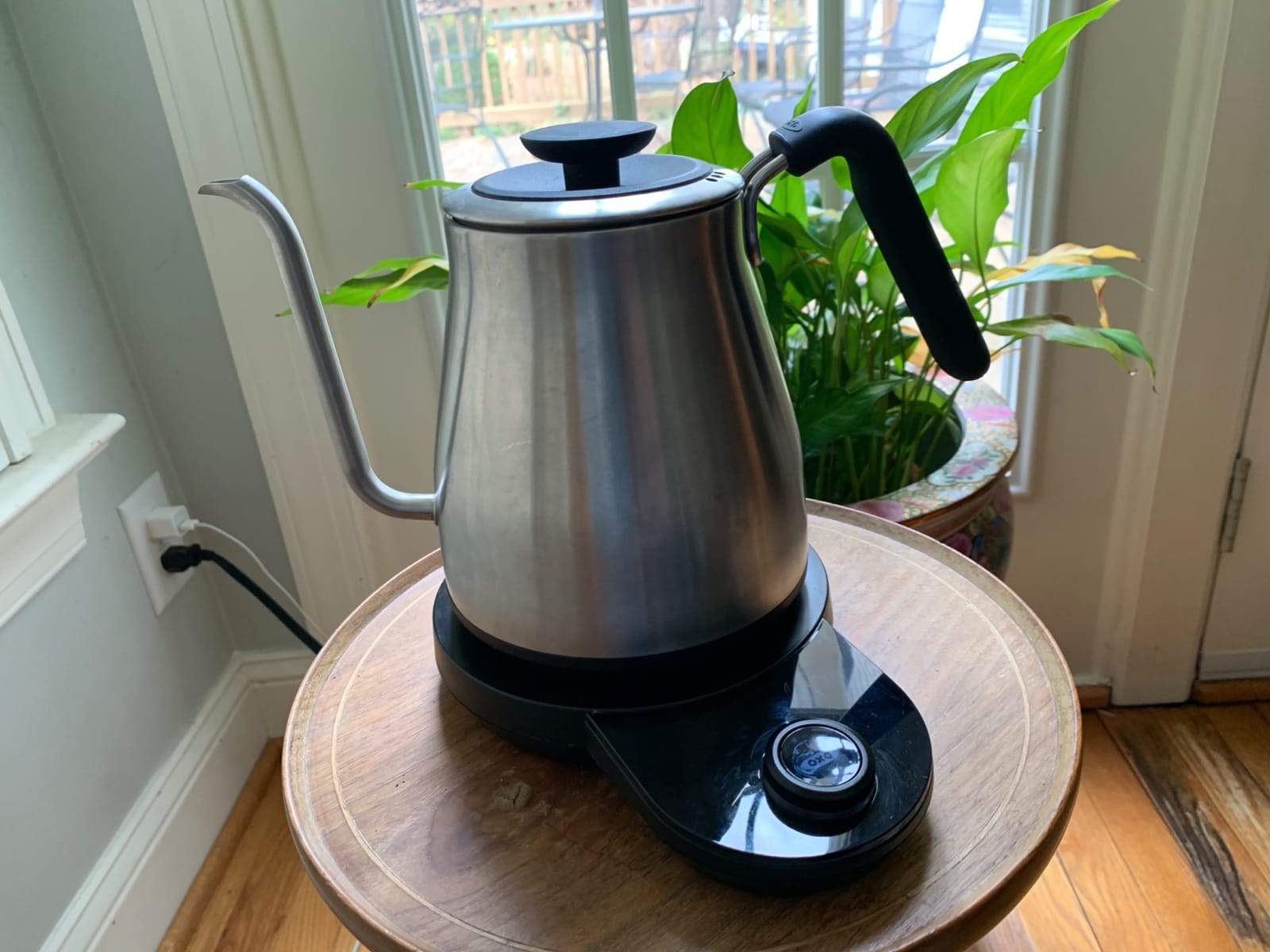
The dial is the reason people keep coming back to it. There are no presets to memorize and nothing to learn. Turn the dial, watch the reading, stop when you are there. Owners describe hitting target within about a degree consistently, and the built-in count-up timer is genuinely useful for timing pours and steeping.
Dial Control and a Hold That Actually Resumes
Temperature runs from 104F to 212F in one-degree increments, and the range extends well below coffee temperatures into gentle water for tea or formula. The 30-minute hold is shorter than the one hour offered by a few competitors here, but it re-engages automatically when you lift the kettle and replace it, so a brief pause mid-brew does not cost you temperature.
The round base offers three cord-routing options, which sounds minor until you have run the cable across a counter every morning. Automatic shut-off fires after the keep-warm cycle ends.
The Fast Pour and How to Slow It Down
The honest limitation is flow rate. Owners regularly note that the pour is on the fast side and takes technique to slow down for pour-over, and water can splash out of the lid if you tip a full kettle too aggressively. For a Chemex with a slower, wider bed it is a non-issue. For a V60, work on lifting your wrist and letting gravity do more of the work.
Some owners also find the base’s power-on behavior when the kettle is lifted unexpected, since it is a slightly different design from the ring-and-pin contacts used elsewhere.
Build, Warranty and the Handle Detail
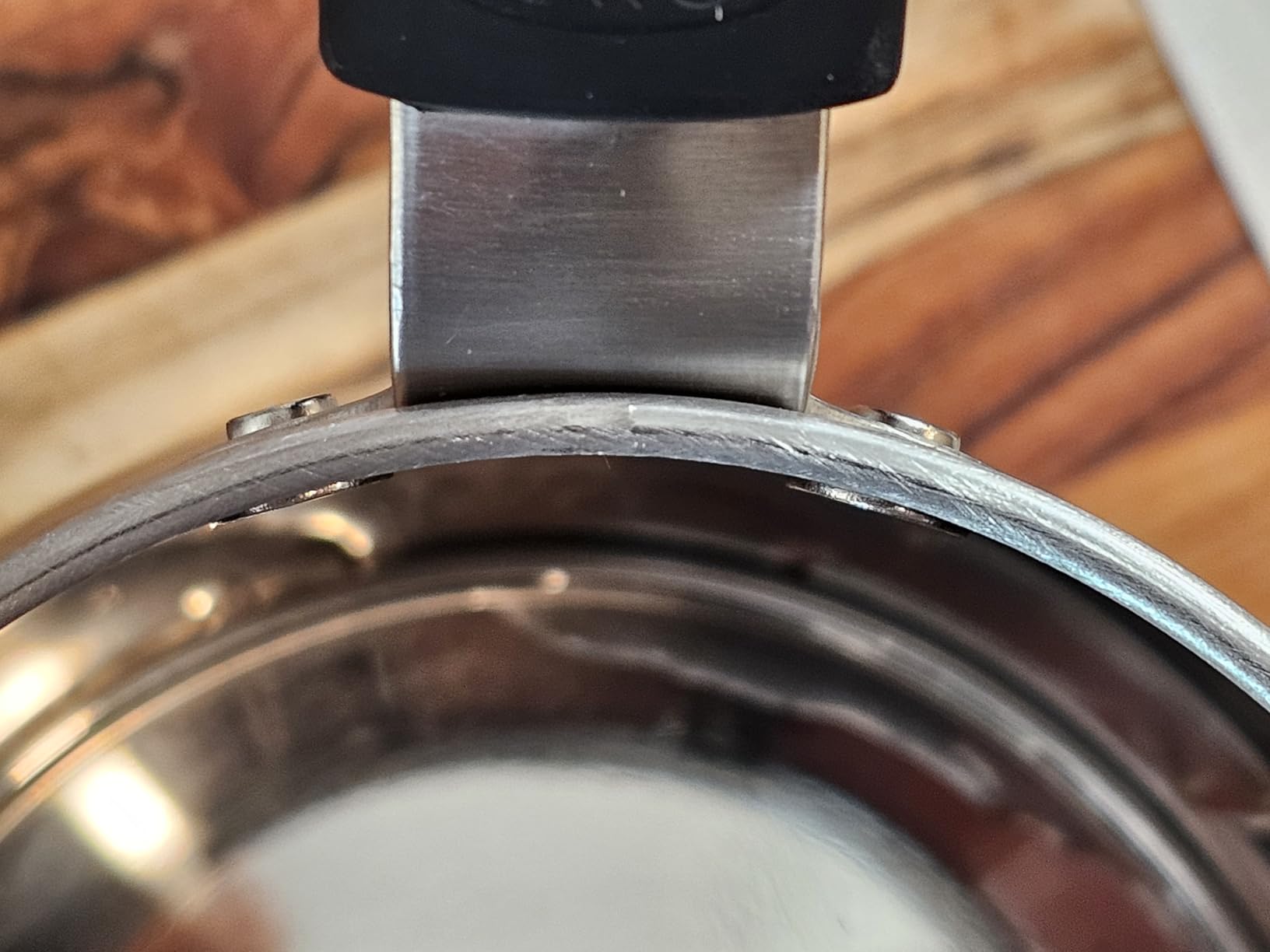
Brushed stainless steel throughout with a cool-touch handle, weighing 1.1 kg, backed by a two-year warranty. OXO replaced a failed base free of charge within about a week for at least one owner, which tells you something about how the warranty is handled in practice.
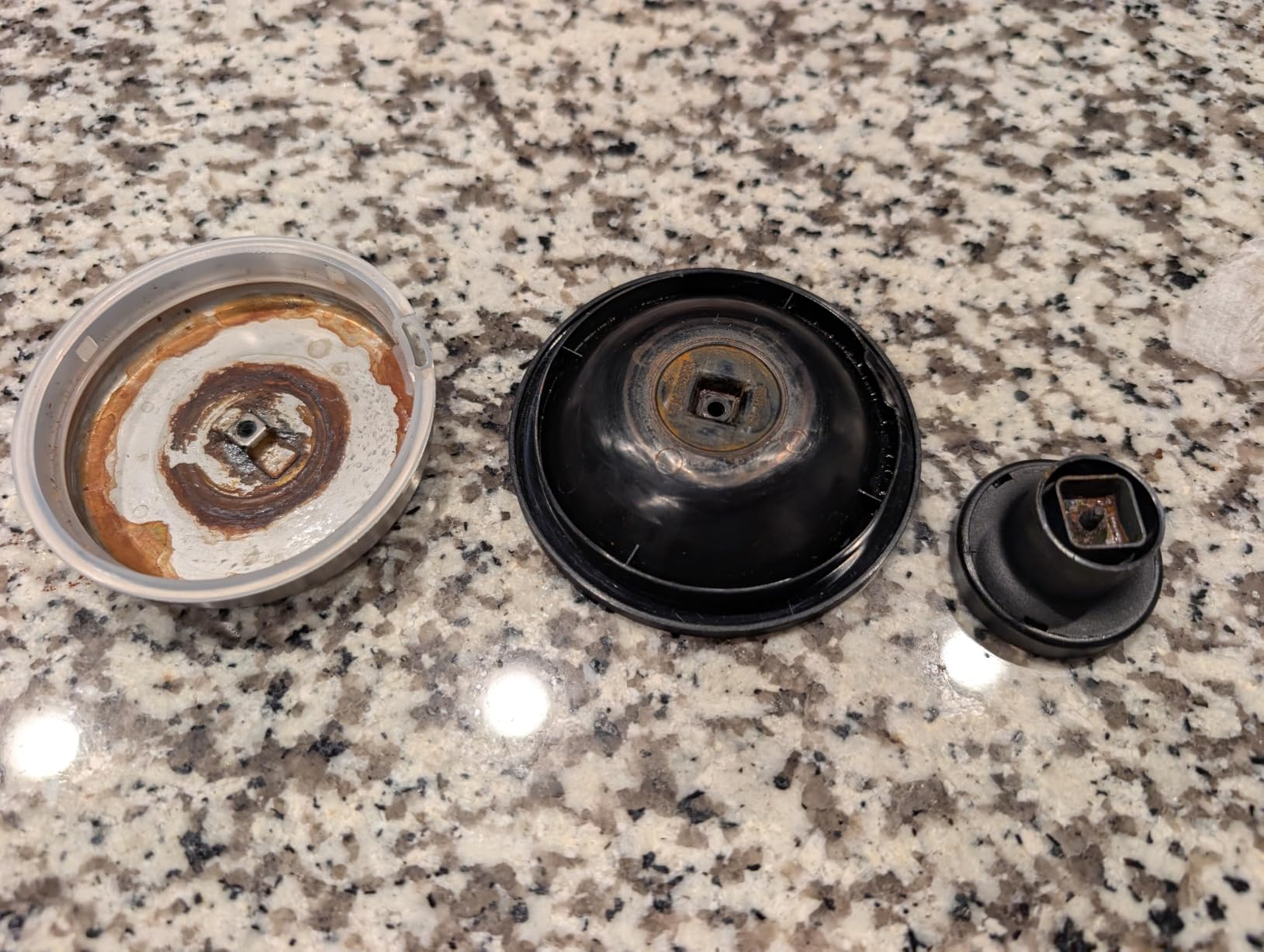
The cool-touch handle is spot-welded, and a few owners report it detaching after years of daily use. Isolated reports of water ingress around the control knob have also ended otherwise working kettles. Neither is common, but both are worth knowing if you are buying this as a long-term kettle.
7. INTASTING 0.9L Gooseneck Kettle – Fast Heating and Two-Hour Hold
INTASTING Gooseneck Electric Kettle with ±1℉ Temperature Control 0.9 Liter
0.9L
1500W
Plus or minus 1F control
2-hour hold
9mm fine spout
Pros
- Very fast 1500W heating
- User-set temperature with a hold that survives refilling
- Fine 9mm spout gives excellent pour control
- 100% 304 stainless interior with plastic-free probe
- Many matte color options
Cons
- Hot-plate sensor buttons feel cheap and need tapping
- No presets for tea or coffee
- Low maximum flow through the slim spout
- Foam-look plastic handle is the weakest part
- Sits a little wobbly on the base
This is the one to buy if heating speed is your top priority and you do not want to pay premium-brand money for it. At 1500 watts it outpaces most of the 1200W kettles here, and at 1.7 pounds it is one of the lightest electric models on the list despite the large capacity.
The temperature control is user-set to within a degree, and the hold remembers your setting after you refill, which is a nicer behavior than it sounds when you are brewing two rounds back to back. The 304 stainless interior uses a plastic-free temperature probe, so nothing smells new on day one.
A Two-Hour Hold Nobody Expects
Two hours of temperature hold is the longest in this roundup by a wide margin. It runs through a whole slow morning of tea and coffee, and it removes the need to reheat between cups entirely. There is a built-in brew timer and automatic shut-off, plus a one-touch Fahrenheit and Celsius toggle held for three seconds.
The trade-off is that there are no presets. Moving from a tea temperature to a coffee temperature means repeated presses of the plus and minus controls, which is mildly tedious if you switch drinks several times a day.
Spout Width and the Interface You Have to Learn
The 9mm spout gives you excellent, precise pour control for filter coffee, and it also limits the maximum flow rate, which makes filling a large mug slowly. If you mostly brew one cup or a small batch, this is an advantage rather than a limitation.
The controls are the real weakness. The hot-plate sensor buttons feel cheap and give little tactile feedback, so you tap rather than press. The 360-degree swivel base helps, though the kettle sits a little wobbly on it, and the foam-look plastic handle is the lowest quality part of an otherwise well-specified machine. Branding on the packaging and manual lists several different company names, which is confusing but has no effect on the brew.
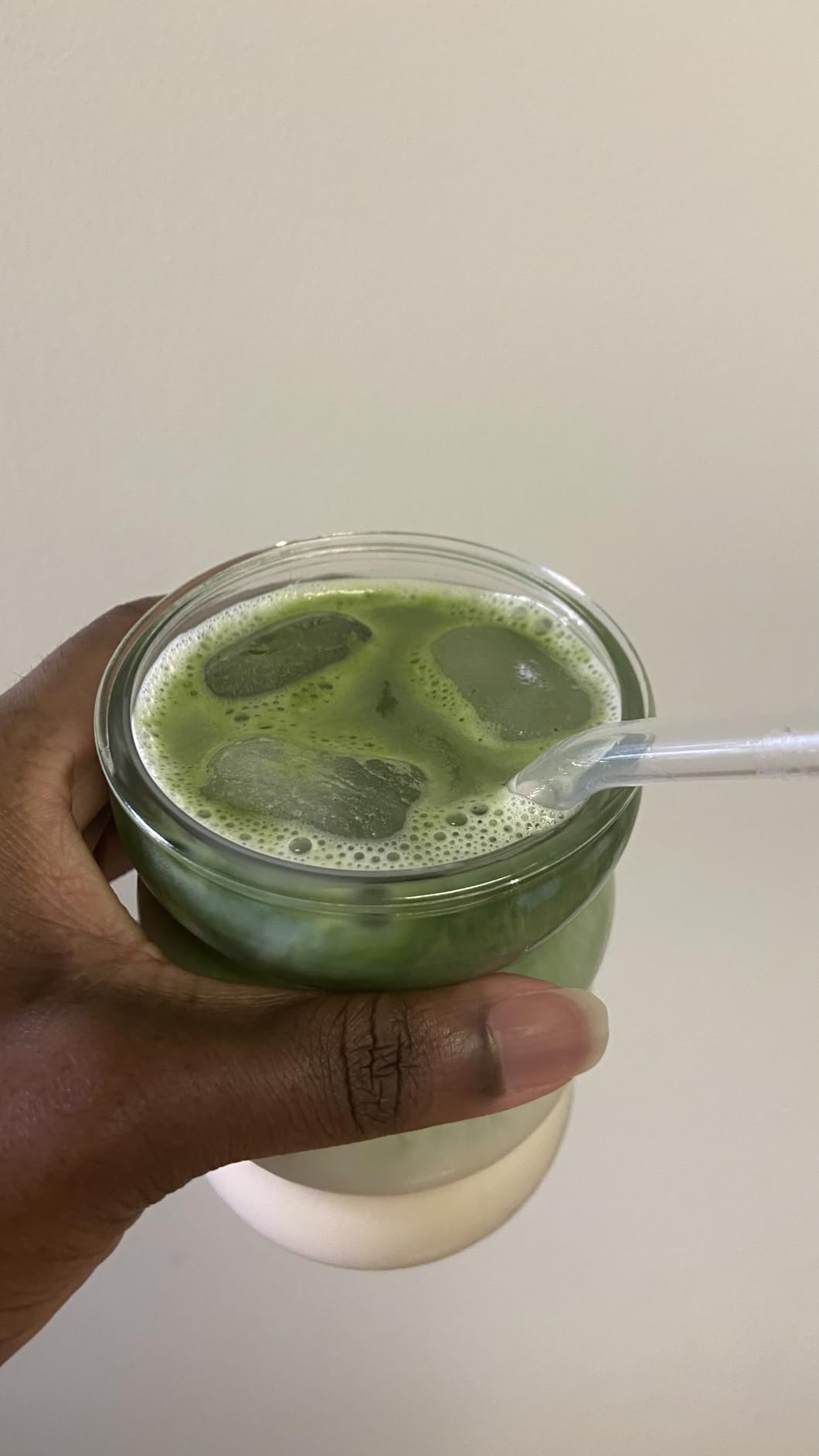
Owners broadly describe this as premium-kettle performance at a mid-range price point, with the 18-month warranty backing it up. If you can get past the interface, the combination of speed, hold duration and a stainless interior is difficult to beat.
8. DmofwHi 1L Gooseneck Electric Kettle – Simple Stainless for Straightforward Brewing
DmofwHi Gooseneck Electric Kettle(1.0L), 100% Stainless Steel BPA Free Classic Pour Over Coffee Kettle | Tea Kettle – Green
1L
1000W
304 stainless body, spout and lid
Boil-dry and overheat protection
Painted green finish
Pros
- Smooth
- controlled pour that suits pour-over and French press
- Quick 1000W heating in about five minutes
- Full 304 stainless interior and spout
- Compact 1L size with a handle that stays cool
- Several owners report years of heavy use
Cons
- No temperature control whatsoever
- Single-layer body gets hot while boiling
- Water traps in the top lip and encourages mold
- Some units failed or leaked after two to three years
- US-style two-pin plug
This is the uncomplicated option. There is one switch, one indicator light and a spout that does exactly what a gooseneck should. At 1000 watts it reaches brew-ready water in about five minutes, and the 1 liter capacity handles a large pour-over or a full pot of tea.
The precision-designed spout maintains waterfall flow control at all pouring angles, meaning the stream stays predictable even as you rotate the kettle through a spiral, which is not something every budget spout manages well. The body, spout and steam lid are all food-grade 304 stainless.
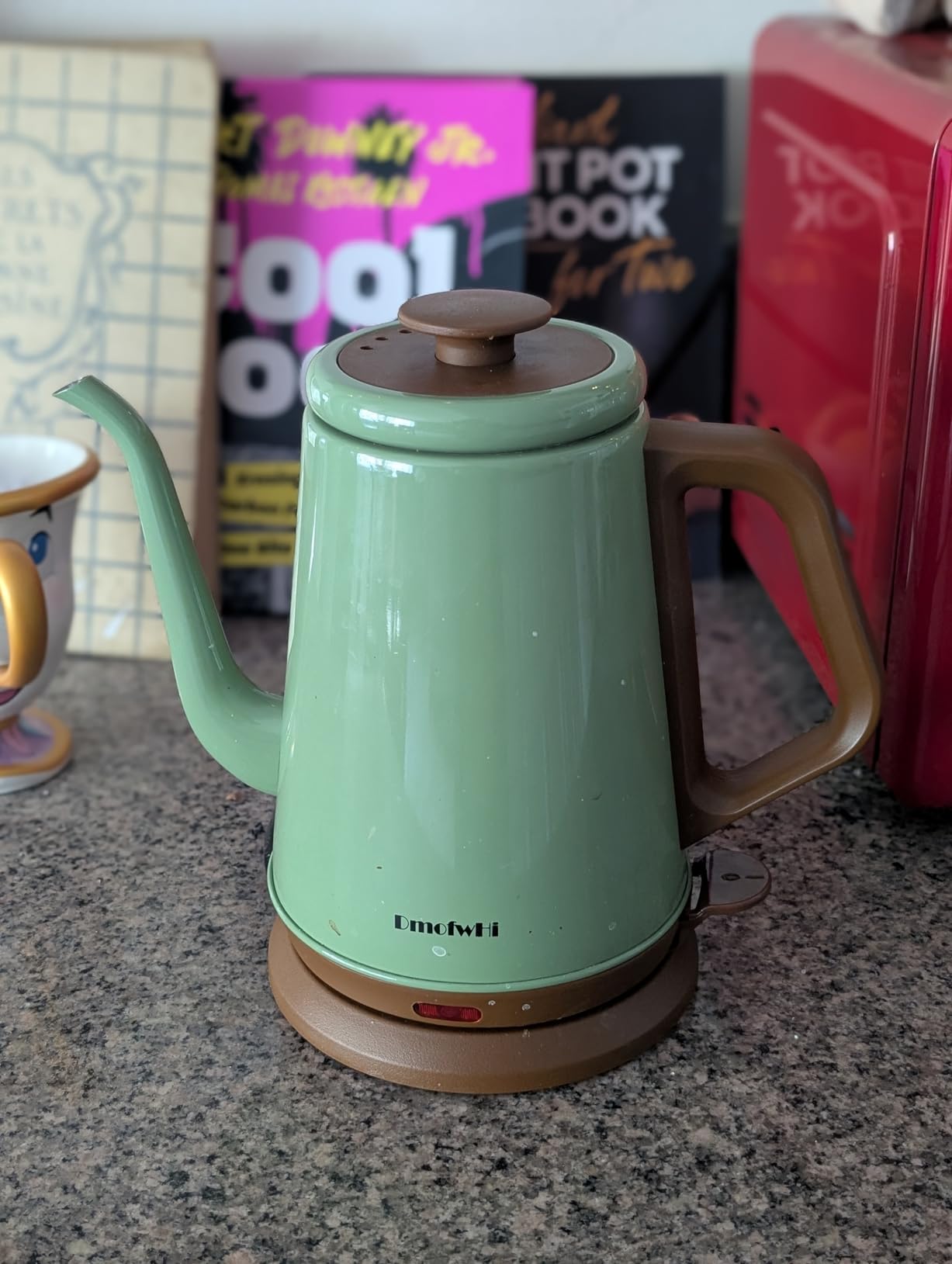
What You Get With a 1000W Single-Layer Body
Heating is fast enough for one cup and reasonable for two, and the shell stays cool enough to handle even though it does heat up during boiling. Because there is no insulation layer and no electronics, there is no temperature control and no hold function at all. You get boiling water, nothing more.
That limitation is real for light roasts but irrelevant for medium and dark, and for tea where you want a full boil anyway. It also makes this the easiest kettle here to store and the fastest to wipe clean.
Durability, Plugs and Overseas Use
Several owners report years of heavy use with no degradation. Against that, a number of UK and EU reviewers describe kettles failing or leaking from the base after roughly two to three years, and the US-style two-pin plug means overseas buyers need an adapter.
One design detail worth flagging: water can trap in the lip at the top of the spout area, and if that is not dried it encourages mold growth. Automatic shut-off at boil plus boil-dry and overheat protection cover the electrical side well.
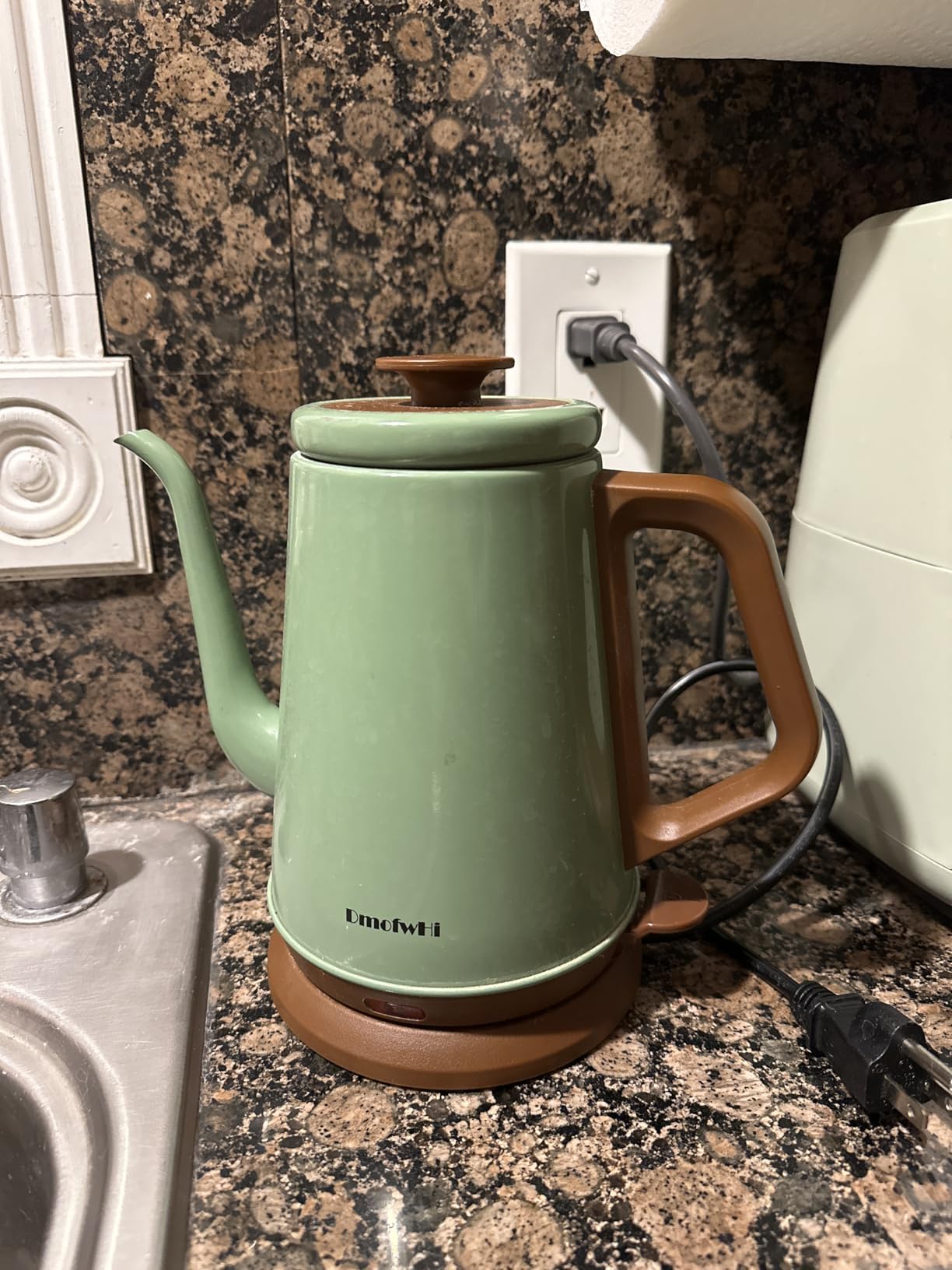
The compact 9.45 by 5.12 by 7.87 inch footprint suits a small counter, and the painted green finish is one of the more attractive options at this level. For anyone moving from a standard kettle to pour over, this is an unintimidating first step.
9. Fellow Stagg EKG Pro 0.9L – The Most Refined Touch Interface
Fellow Stagg EKG Pro Gooseneck Electric Kettle, Brew Timer, 0.9 Liter
0.9L
1200W
To-the-degree control
Color LCD display
Brew timer and hold
Pros
- Fast heating with a live temperature readout on a color LCD
- Precise settings with a hold that survives lifting the kettle
- Excellent balance and pour control
- Compact and beautifully made
- Built-in timer is genuinely useful
Cons
- Expensive relative to the capacity and features
- 0.9L is a single-serving pour-over size
- Touch points are all plastic
- A minority report temperature-sensor drift
- Clock resets after a power interruption
The screen is the difference here. A high-resolution color LCD shows the live water temperature and your selected setpoint at the same time, so you are never guessing whether the kettle is still climbing or has arrived. It is the most informative interface on any kettle in this roundup.
At 4.3 pounds it is also the heaviest, and that weight is where the balance comes from. Full or empty, the kettle sits predictably over your wrist, and the hold function survives lifting it and setting it back down, so a mid-brew detour does not cost you your setpoint.
Screen, Hold and Brew Timer
Temperature is adjustable to the degree with a hold function, and the built-in brew timer handles the timing side so you are not juggling a phone timer with wet hands. For a brewer who runs the same recipe daily and wants to see the numbers confirm themselves, that feedback loop is genuinely satisfying.
One behavior to know: the clock has to be reset after any power interruption, which is mildly annoying if you brew right after an outage.
Capacity and the Plastic Question
At 0.9 liters this is a single-serving pour-over size. It is fine for one V60, marginal for two cups, and it will not handle a Chemex for a group without a second round. That constraint, more than anything else, is why it is not the top pick here despite the quality of the electronics.
The handle and touch points are plastic, which surprises people at this price, and handle and color configurations vary between versions. A minority report the base reverting to a random temperature after the kettle is lifted, plus lid seal and sensor issues within the first year on some units, compounded by slow customer service response.
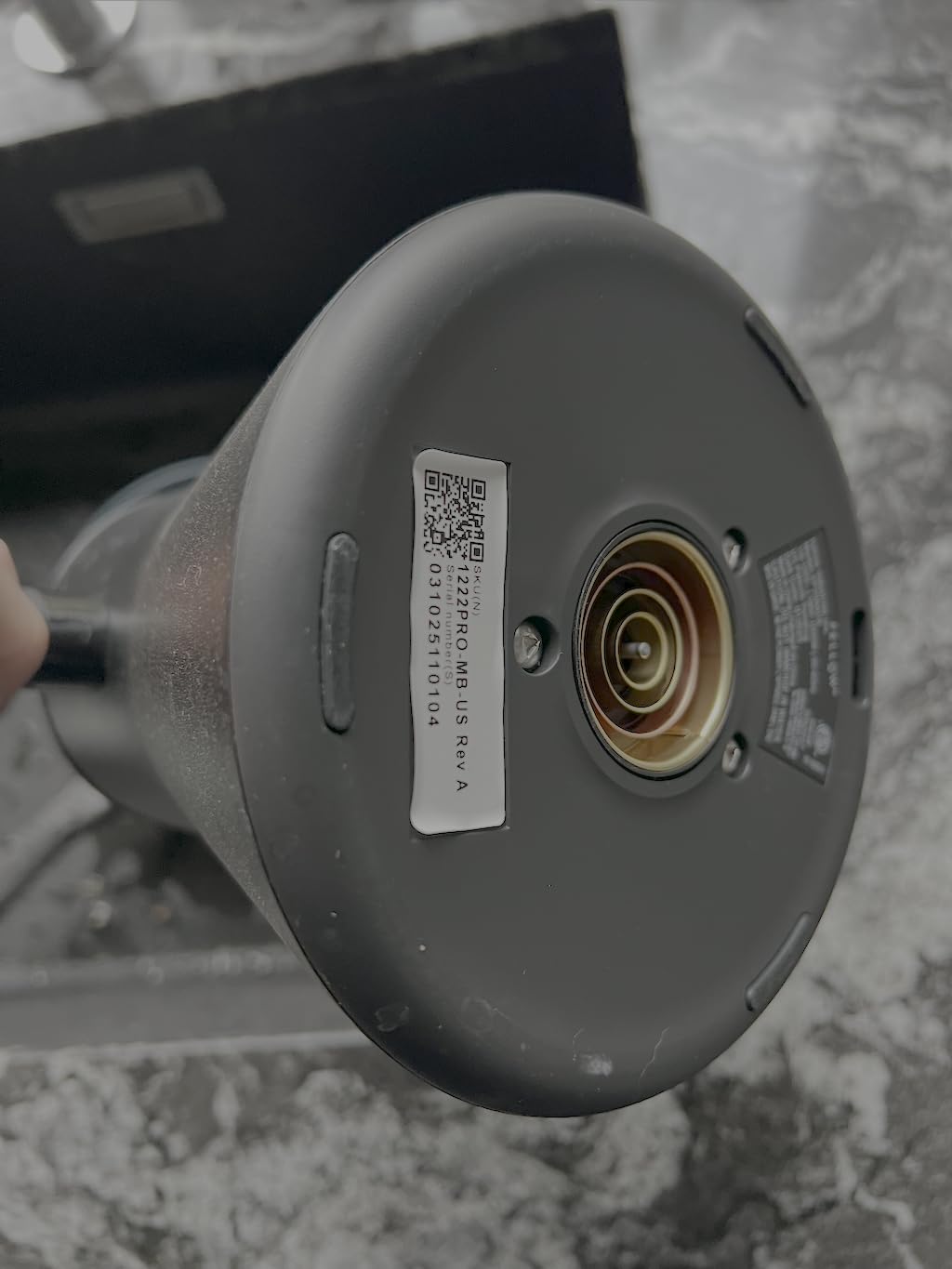
Owners consistently describe it as beautifully made, fast and precise. If you brew exactly one cup and want the clearest possible feedback on what the water is doing, this is the kettle. If you brew for two or more, step down a size.
10. Fellow Stagg 1L Stovetop Kettle – The Best Counterbalanced Handle
Fellow Stagg Gooseneck Pour Over Kettle for Coffee & Tea – Precision Spout
1.0L
18/8 stainless steel
Fluted precision spout
Counterbalanced handle
Gas and electric only
Pros
- Widely considered the most controllable pour available
- Counterweighted handle makes one-handed pouring effortless
- Brew-range thermometer marked in red in F and C
- Excellent heat retention and an even stream
- Handles direct flame and camping burners
Cons
- Not induction compatible
- Loose lid that can slide off while pouring
- Hot metal ring at the base of the handle
- Fragile analog thermometer needle
- Matte paint chips after direct flame use
The counterbalanced handle is the defining feature and the reason this kettle has a reputation. It is weighted so the center of gravity stays put as the water level drops, which means your wrist angle is the same on the first pour and the last one. Long, slow Chemex pours that would fatigue most hands stay comfortable.
The fluted tip spout is tuned to a pour-over flow rate, and it delivers an exceptionally stable stream. This is a manual kettle, so temperature comes from the built-in brew-range thermometer with red marks in both Fahrenheit and Celsius rather than any digital control.
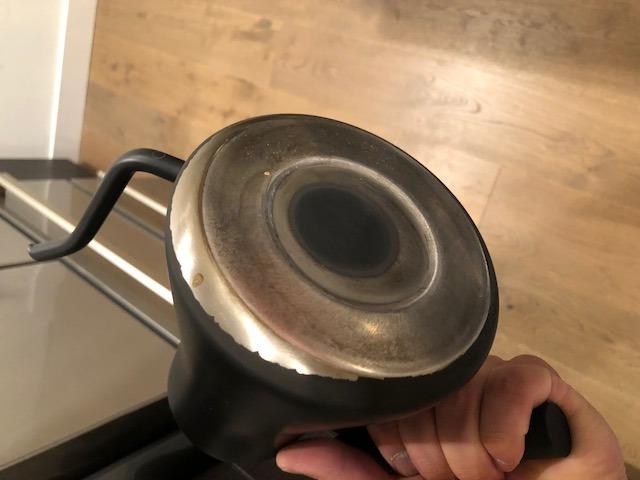
Handle Balance at Full and Empty
Handle balance is the ergonomic test that matters, and this is the model that defined it. Owners describe the pour as effortless even one-handed, which matters more than it sounds when your pour-over takes four minutes and your other hand is holding a filter.
Heat retention is strong and the stream stays even from a full kettle down to the last pour. On gas and electric ranges the stainless body holds up well, including over direct flame and portable camping burners.
Induction, the Lid and the Handle Ring
There is one hard limitation: it is not induction compatible, only gas and electric. If you cook on induction, this is a dealbreaker and the Hario pick earlier is the safer route.
The lid does not attach and can slide off while pouring. The metal ring at the base of the handle gets hot and is easy to grab by mistake. The analog thermometer needle is delicate and one owner lost theirs to a single drop, and the Celsius scale is marked at odd eleven-degree intervals that are hard to read. Matte black paint shows chipping on the base after sustained direct flame use.
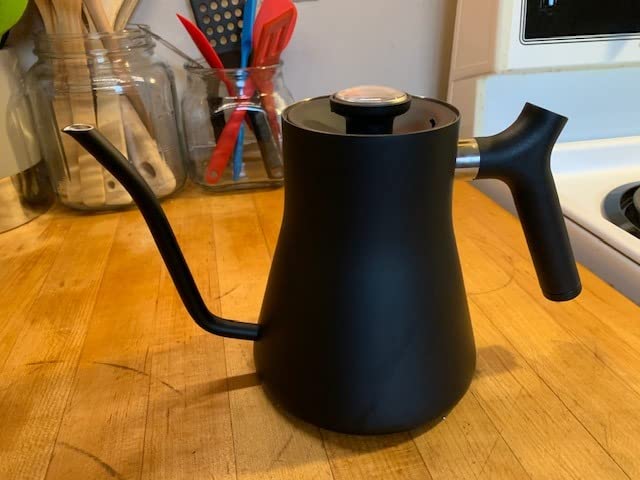
Because it is a stovetop kettle, reviews regularly note it is slower to heat than an electric equivalent and gives you no automatic temperature control at all. For enthusiasts who already know their roast temperatures and want a beautiful pour above all else, that trade still comes out ahead.
How to Choose a Gooseneck Kettle Without Regretting It
After ten kettles and six weeks, the decision simplifies to three questions in order: how fast do you need to pour, how precisely do you need to hit a temperature, and what is your actual counter and stove situation. Answer those and the choice makes itself. Here is how we would reason through each.
Match the Spout Flow to Your Dripper, Not Your Dripper’s Price
Nobody publishes the pairing and it matters more than any feature on the spec sheet. A V60 with its single large hole and steep cone walls asks for the slowest, most deliberate pour of the common brewers, and a Chemex with its flat bed and narrow waist wants more volume per second. Get this wrong and the best kettle in the world will channel water straight down the side of the filter.
V60 and Origami: slow, thin, concentric-circle pours. Favor the narrowest spout you can comfortably manage. The Bonavita and INTASTING both deliver a column fine enough for this. A wide spout here means you are fighting it.
Kalita Wave: a flat bed with a restricted flow rate, so it wants a moderate, steady pour rather than the V60’s spiral. Most of the kettles here handle this comfortably.
Chemex: the largest volume per pour of the three, delivered as a figure-eight. Faster spouts are an advantage here, not a problem, which is why the faster flow of an OXO or Bodum is not a real drawback for Chemex users.
Our general rule: if your pours feel awkward, the kettle is usually the cause, not your technique. Going from a wide-spout model to a proper gooseneck changes more about your coffee than any grind adjustment we have made.
Electric or Stovetop: the Real Trade-Off
Electric buys you three things: repeatability, active hold and speed. Stovetop buys you simplicity, indestructibility and a purer pour. If you change roast every week and care about the difference between 196F and 202F, electric is worth it. If you brew the same coffee every morning at a temperature you already know, a manual kettle is not a compromise.
Two safety notes for stovetop models. Keep handles and plastic-touching parts clear of gas flames, and check induction compatibility before you buy, because it is not universal. The Hario and Coffee Gator kettles here work on every stovetop type including induction. The Fellow stovetop model is explicitly gas and electric only.
Wattage and Boil Time Are the Same Thing
Heating speed is the most common complaint in owner discussions and the number most listings hide. Higher wattage means faster time to temperature, and a faster kettle matters when you are brewing before the rest of the house is awake or when the base shares a circuit with anything else.
Across this roundup the electric models run from 1000W to 1500W. The 1500W units here reach brew temperatures in roughly three to five minutes. The 1200W units take about five minutes to a full boil, and the 1000W models take closer to five and a half. A useful rule: a kettle that cycles its element to maintain a setpoint will feel slower than its wattage suggests, because it is no longer drawing full power continuously.
Capacity: Why 0.8L to 1.0L Is the Working Range
Below 0.8 liters you will refill constantly for two-cup brewing. Above 1.0 liters the kettle gets heavy and harder to pour steadily, which defeats the entire point. The consensus among experienced brewers is that the sweet spot sits between 0.6 and 1.0 liters depending on how often you brew for more than one person.
Working capacity also differs from listed capacity. The Hario lists 1.2L but the manufacturer recommends filling to about 800ml. The Coffee Gator lists a liter with usable volume closer to 900ml. Judge any kettle by its recommended fill line, not the number on the box.
If you want a comparison of the wider kettle landscape beyond goosenecks, our fast boiling kettle guide covers wattage in more detail, and for precise tea work our tea kettle picks go deeper on temperature ranges.
Temperature Range and Heat Retention
For coffee alone, anything that reaches 195F to 205F reliably is sufficient. For tea the range matters far more: green tea wants around 175F, oolong around 195F, and black tea or coffee a full boil. Kettles with a dedicated white tea or green tea preset handle this without you thinking about it, and the OXO model’s 104F lower bound is unusually versatile.
Heat retention is what determines whether your water is still in range when you finish the bloom. Single-wall stovetop kettles like the Hario hold heat remarkably well because the metal is the only thing between the water and the air. Electric kettles with a hold function are not really relying on insulation at all, they are actively reheating. Either approach works, as long as you know which one you have.
Descaling, Materials and Off-Flavors
Everything in this roundup has a stainless interior, which rules out plastic flavor transfer and is the single biggest quality differentiator between a good kettle and a cheap one. It does not rule out mineral deposit.
Descale when you see limescale, not before. The method is simple: mix citric acid with water at roughly a tablespoon per quart, fill the kettle, bring it to a boil, let it sit for twenty minutes, then rinse thoroughly several times. Do this every few months in a hard-water area and the kettle will stay clean, and the metallic taste that people associate with boiled water usually disappears with it.
Dry the top lip and the underside of the lid before reassembling. Trapped moisture in that area is the most common cause of both mineral spotting and the mold complaints that appear in reviews of otherwise good kettles.
Frequently Asked Questions
Is a gooseneck kettle better for pour-over?
Yes, for control rather than necessity. A gooseneck kettle’s narrow spout produces a thin, steady stream you can aim precisely, which lets you control flow rate and pour placement. That prevents channeling, where water bypasses the coffee bed and leaves some grounds under-extracted and others over-extracted, producing a cup that is both sour and bitter at once. You can make pour over with a standard kettle, but you will be fighting an uneven pour.
Why is a gooseneck kettle better?
Because flow rate controls extraction, and a gooseneck spout gives you direct control over flow rate. The narrow spout restricts water to a slow, laminar stream, so you can place water exactly where you want it, in concentric circles for a V60 or a figure-eight for a Chemex, without flooding the coffee bed. Even saturation of all the grounds is what produces a repeatable cup.
Which Hario gooseneck kettle is the best?
The Hario V60 Buono 1.2L is the one to buy. Its slender spout produces the most controlled stream of any stovetop kettle we tested, the stainless steel body imparts no off-tastes, and it works on gas, electric and induction ranges. Fill it to about 800ml rather than the full 1.2L. Expect no temperature control, no whistle, and scalding steam from the three lid vents, so lift the lid slowly.
Do you need a gooseneck kettle for pour-over coffee?
No, but most brewers end up wanting one quickly. You can pour over with any kettle that pours water. What a gooseneck adds is a thin, aimable stream that keeps the coffee bed evenly saturated through the bloom and the main pours. For a single light roast brewed in a V60, the difference in consistency between your tenth cup with a gooseneck and your tenth cup without it is usually noticeable.
Can you use a gooseneck kettle for tea?
Yes, and variable-temperature models are better for it than for coffee. Green tea wants around 175F, oolong about 195F, and black tea a full boil at 212F. The Cosori and OXO models both cover that range precisely, and the OXO’s 104F lower bound also suits gentle steeps. Stovetop kettles with a brew-range thermometer, like the Hario and Coffee Gator, work too if you watch the dial.
The Verdict: Which Gooseneck Kettle Should You Actually Buy?
If you only buy one, take the Cosori 0.8L. It pairs a genuinely fast 1200W element with an hour of hold, a fully stainless interior and pour geometry that handles a V60 and a Chemex equally well, and it is the pick our testing kept returning to.
If you change temperature by the degree or brew a new roast every week, the Bonavita 1L is the more interesting instrument, with one-degree control from 140F to 208F, a spout fine enough to dose a bloom by the gram and owners reporting five to eight years of service. If you want the best pour with no electronics at all, the Hario Buono is the one, and it works on every stovetop type including induction.
For tea, the OXO gives you the fastest heating and the friendliest dial in the roundup. For a first gooseneck on a small counter, the Bodum Bistro pours better than it has any right to at that level. And if your morning is a single light roast in a V60 and nothing else, the Fellow Stagg EKG Pro’s color screen is a pleasure to read even if its 0.9 liter body is sized for exactly one.
Whichever you choose, buy it for the pour, learn your brewer’s appetite, and give it three months before you judge it. That is how long it takes to find out whether an awkward pour is the kettle or the technique.