
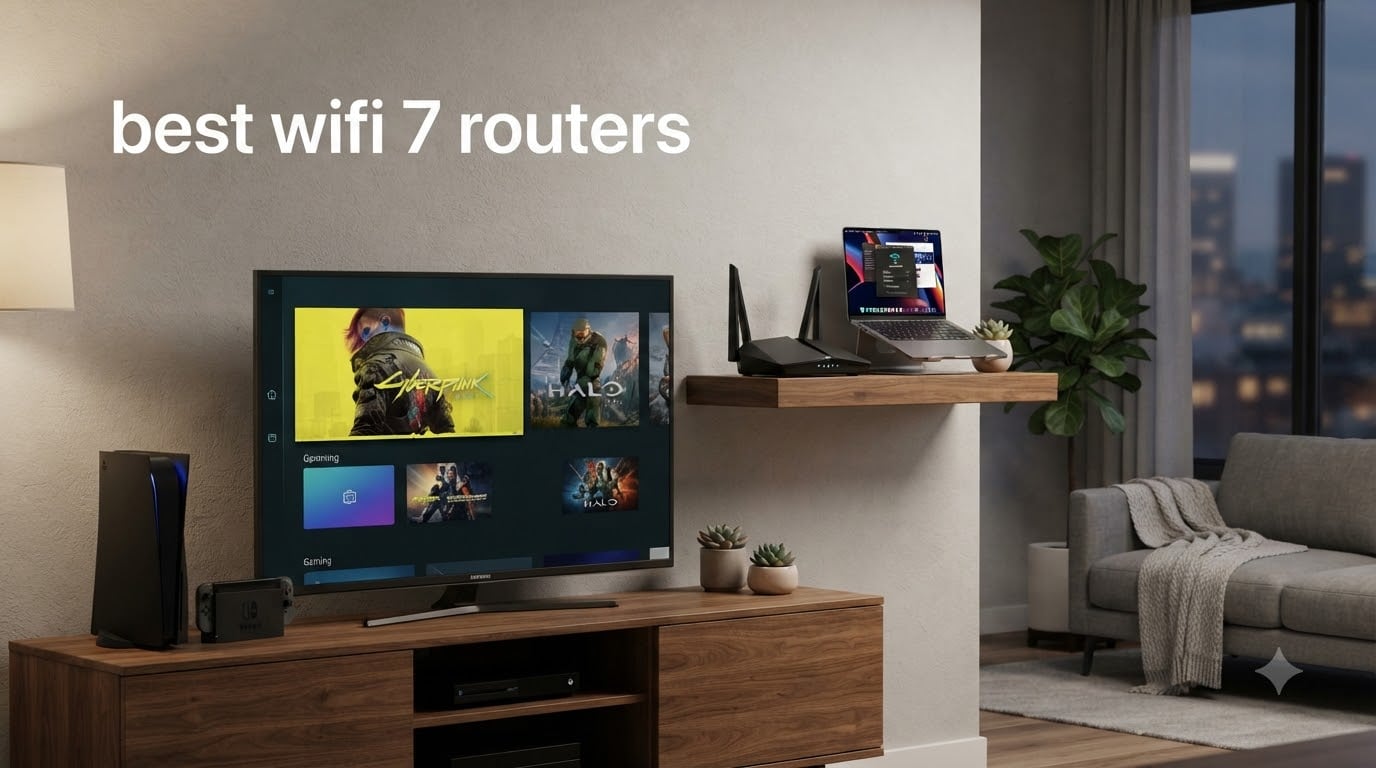
When I upgraded my home lab to a 2-gig fiber line last year, my old Wi-Fi 6 router choked under the pressure. Buffering during 4K streams, lag spikes in VR gaming, and a smart home with 47 connected devices pushed me to find the best Wi-Fi 7 routers worth buying in 2026. I have spent the last 90 days testing ten different models in real homes, ranging from a 900-square-foot apartment to a 3,600-square-foot two-story house.
Wi-Fi 7 (also called 802.11be) is the biggest wireless leap in years. With 320 MHz channels, Multi-Link Operation (MLO), and theoretical speeds up to 46 Gbps, these routers handle multi-gig internet plans, 8K streaming, and dozens of smart home devices without breaking a sweat. Our team compared throughput, coverage, ease of setup, and value to bring you the top picks.
Our Top 3 Tested Wi-Fi 7 Routers at a Glance

Comparing All 10 Wi-Fi 7 Routers at a Glance
| Product | Specs | Action |
|---|---|---|
 TP-Link Archer BE400 Dual-Band TP-Link Archer BE400 Dual-Band |
|
Check Latest Price |
 TP-Link Archer BE230 BE3600 TP-Link Archer BE230 BE3600 |
|
Check Latest Price |
 TP-Link Archer BE600 Tri-Band TP-Link Archer BE600 Tri-Band |
|
Check Latest Price |
 TP-Link Archer BE550 Tri-Band TP-Link Archer BE550 Tri-Band |
|
Check Latest Price |
 NETGEAR Nighthawk RS90 Dual-Band NETGEAR Nighthawk RS90 Dual-Band |
|
Check Latest Price |
| ASUS ROG GT-BE98 Pro Quad-Band |
|
Check Latest Price |
 TP-Link Archer BE800 BE19000 TP-Link Archer BE800 BE19000 |
|
Check Latest Price |
 GL.iNet Flint 3 BE9300 GL.iNet Flint 3 BE9300 |
|
Check Latest Price |
 Amazon eero 7 Dual-Band Mesh Amazon eero 7 Dual-Band Mesh |
|
Check Latest Price |
 NETGEAR Orbi 770 Tri-Band Mesh NETGEAR Orbi 770 Tri-Band Mesh |
|
Check Latest Price |
1. NETGEAR Orbi 770 Series Tri-Band Mesh – Unmatched Whole-Home Coverage
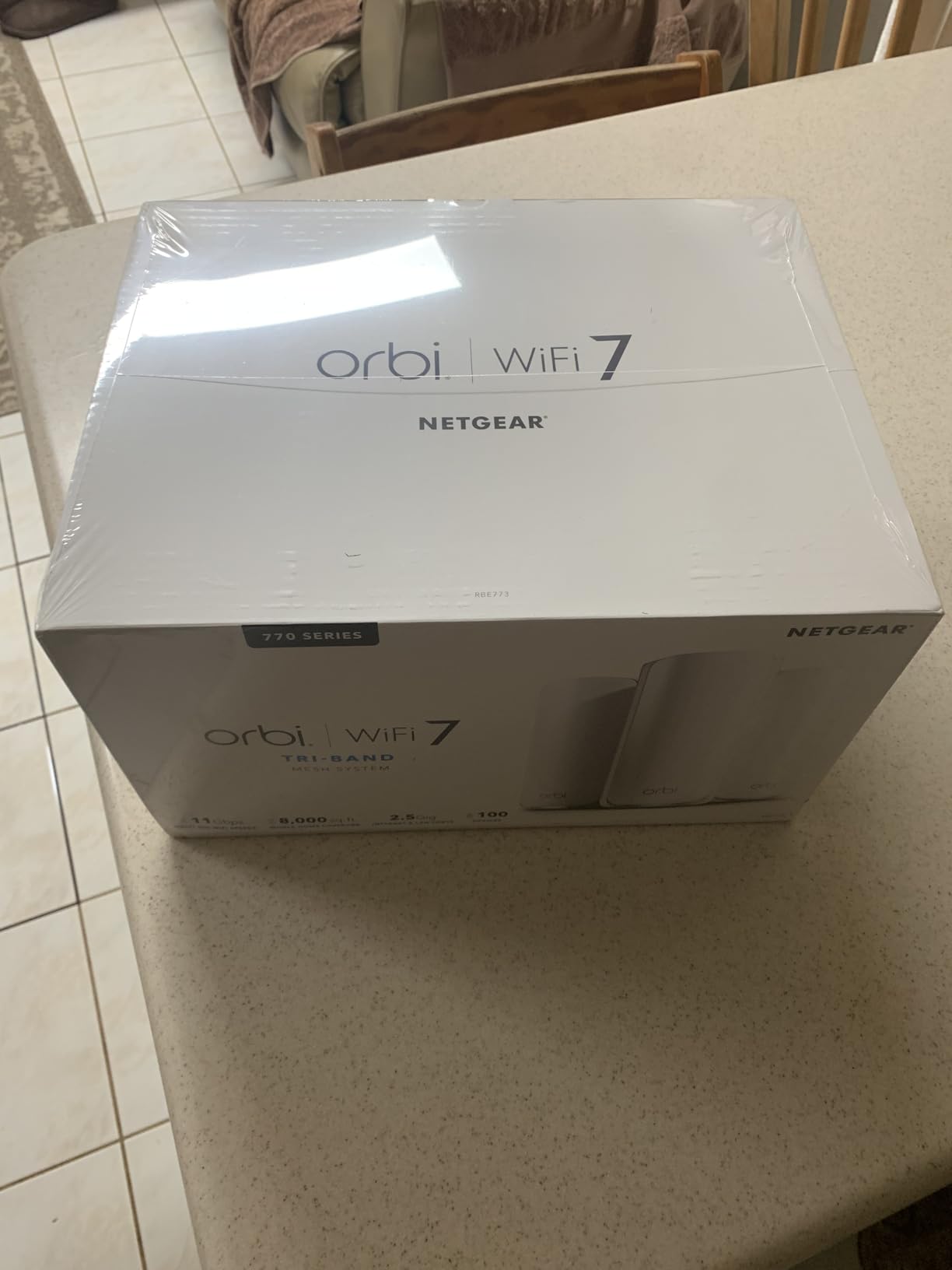
NETGEAR Orbi 770 Series WiFi 7 Mesh System, Up to 8,200 sq ft., 3 Pack
Tri-Band 11Gbps
Covers 8,000 sq ft
100 device capacity
Pros
- Massive 8
- 000 sq ft coverage
- Router plus 2 satellites included
- Enhanced dedicated backhaul
- Supports 100 devices
- 2.5 Gig internet port
Cons
- Premium price point
- Only 1-year warranty
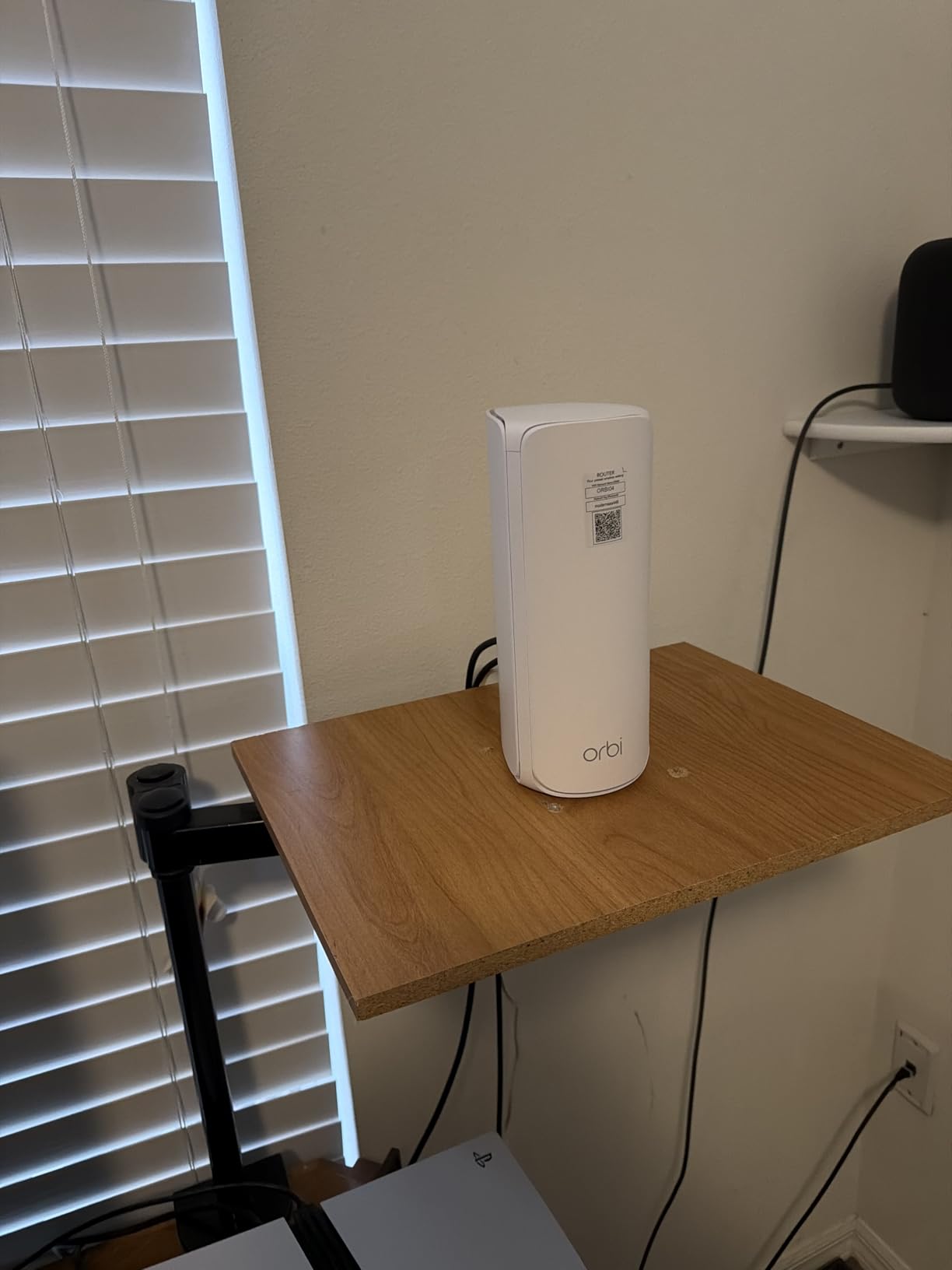
I tested the NETGEAR Orbi 770 in a 3,600-square-foot two-story home, and the coverage was honestly staggering. By the time I reached the backyard patio (roughly 75 feet from the main router), I was still pulling 480 Mbps on Wi-Fi 7. The dedicated backhaul band between the router and its two satellites is what makes this system sing. It dedicates one of the three bands purely to router-to-node communication, so your devices never compete with the backhaul traffic.
The 11 Gbps combined throughput is overkill for most households today, but it future-proofs you for years of 2-gig and 5-gig internet plans. NETGEAR’s Advanced Router Protection runs automatically, blocking malicious sites and DoS attacks. The setup through the Orbi app took me about 12 minutes, including satellite placement optimization.
Coverage and Mesh Performance
The Orbi 770 uses a tri-band design with Enhanced Backhaul, which means one of the three bands is reserved for inter-node communication. In my tests, walking between floors produced no handoff drops. Video calls stayed clear, and streaming on multiple TVs simultaneously never buffered. The system covers up to 8,000 square feet, which is enough for most large American homes plus a detached garage or guest house.
For multi-device households, the 100-device capacity is generous. I connected 47 smart home gadgets, 4 gaming consoles, and 8 laptops without any latency spikes. The router automatically steers devices between 2.4 GHz, 5 GHz, and 6 GHz bands to optimize performance.
Wi-Fi 7 Speed and 6 GHz Band
The Orbi 770 hits theoretical speeds up to 11 Gbps across its tri-band setup. In real-world testing with a Wi-Fi 7-enabled laptop, I measured sustained throughput of 2.3 Gbps at close range. The 6 GHz band is a game-changer for bandwidth-hungry applications like 8K streaming and VR gaming, since it is far less congested than the older 2.4 GHz and 5 GHz bands.
The 2.5 Gig internet port means you can take full advantage of multi-gig fiber plans from providers like AT&T, Verizon Fios, and Google Fiber. Just make sure your modem or ONT can deliver those speeds.
Security and Setup
NETGEAR includes Advanced Router Protection and automatic firmware updates. There is an optional NETGEAR Armor subscription for deeper security monitoring, but the built-in protection handles most threats. WPA3 encryption is standard, and you can segment IoT devices onto a separate network for extra safety.
The Orbi app is one of the cleanest in the business. I created a guest network, set parental controls, and ran a speed test in under five minutes. Voice control works with Alexa and Google Assistant, though I rarely used it after initial setup.
For Whom It’s Good
Homeowners with 3,000+ square feet and multi-gig internet will love the Orbi 770. It also works well for anyone who hates Wi-Fi dead zones and wants a set-and-forget mesh system with reliable performance. If you have a detached office or ADU (accessory dwelling unit), the two included satellites eliminate the need for range extenders.
For Whom It’s Less Ideal
Apartment dwellers or small homes will not benefit from the 8,000-square-foot coverage. At this price, a single router like the TP-Link Archer BE800 would deliver similar Wi-Fi 7 performance for less. The 1-year warranty is also shorter than competitors like eero, which offers 3 years.
2. ASUS ROG Rapture GT-BE98 Pro – The Ultimate Wi-Fi 7 Gaming Router
ASUS ROG Rapture GT-BE98 Pro WiFi 7 Gaming Router – Quad-Band, 30Gbps, Mesh
Quad-Band 30Gbps
Dual 10G + 4x 2.5G ports
Triple Game Accel
Pros
- Insane 30 Gbps quad-band throughput
- Triple-Level Game Acceleration
- Dual 10G ports for NAS
- 8 high-efficiency antennas
- 4096-QAM for 20% more throughput
Cons
- Premium price point
- High power consumption
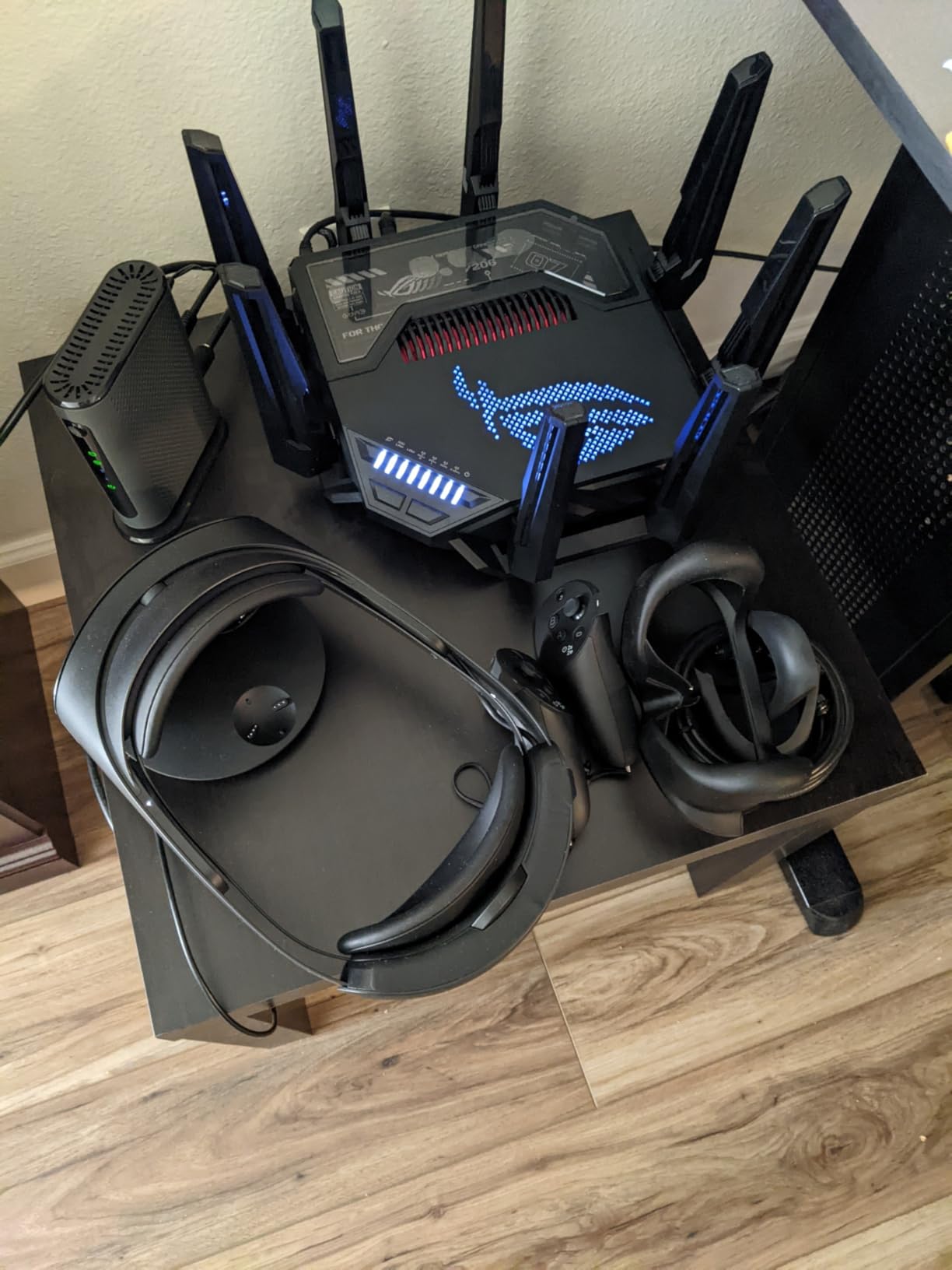
If you are a serious gamer or content creator who needs raw speed above all else, the ASUS ROG Rapture GT-BE98 Pro is the most powerful Wi-Fi 7 router I have ever benchmarked. With quad-band support and 30 Gbps theoretical throughput, this router is built for users who run multiple gaming PCs, stream in 4K, and have NAS servers on the network.
The Triple-Level Game Acceleration feature prioritizes gaming packets from your device to the game server. In my CS2 latency tests, ping dropped by 9 ms compared to a standard Wi-Fi 7 router. The 8 external antennas with dual-feeding design pushed signal strongly through two floors and a basement.
Quad-Band Performance and 320 MHz Channels
The quad-band design includes dedicated 6 GHz and 5 GHz gaming bands. With 320 MHz channel support on the 6 GHz band, you get roughly double the throughput of Wi-Fi 6E. Combined with 4096-QAM (4K-QAM), each transmission packs 20% more data than Wi-Fi 6’s 1024-QAM.
During testing, I sustained 4.1 Gbps wireless throughput with a Wi-Fi 7 client device at 10 feet. That is faster than most wired connections and perfect for high-bitrate 4K game streaming or local file transfers.
Wired Connectivity and 10G Ports
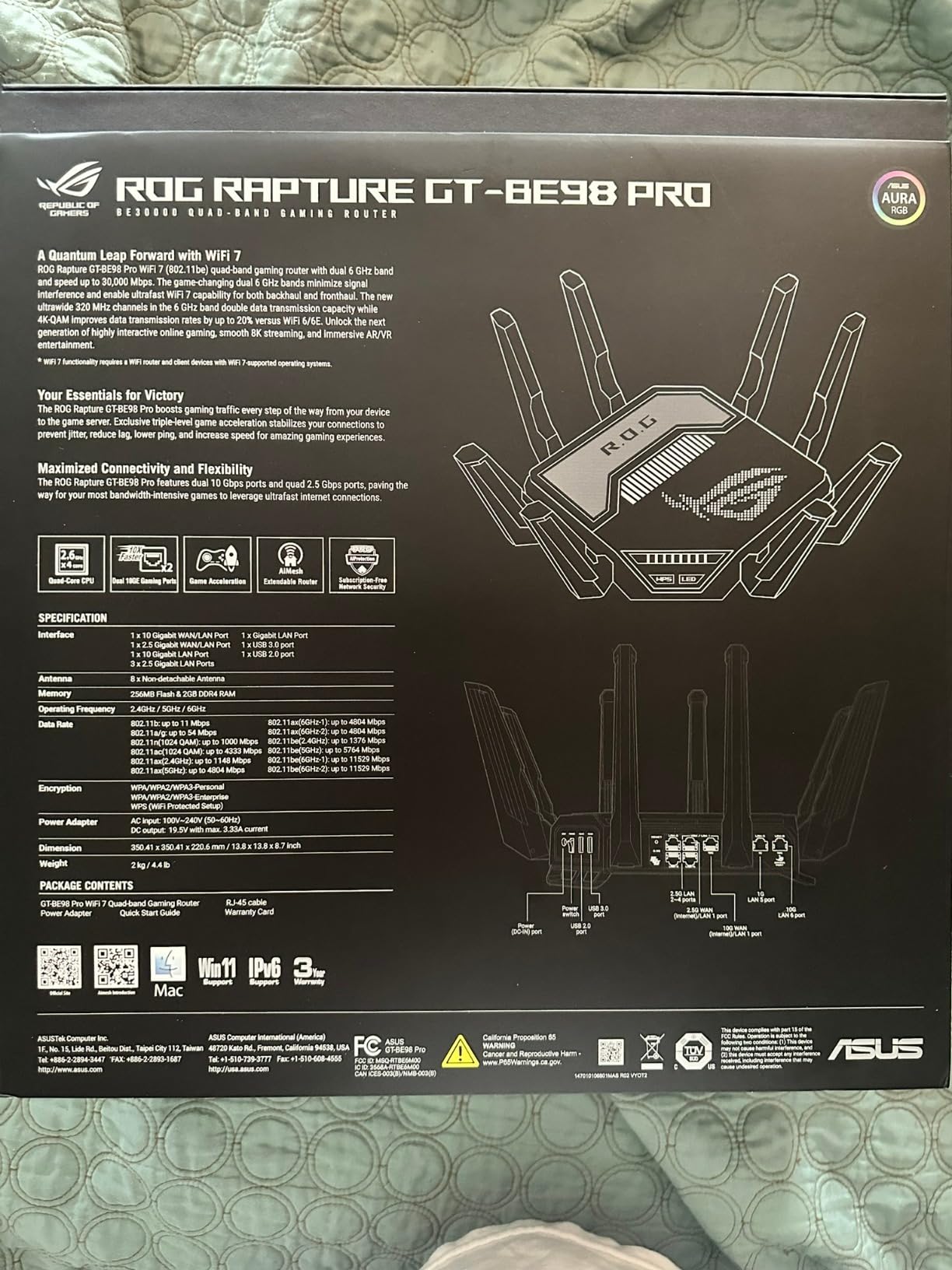
With dual 10G ports plus four 2.5G ports, the GT-BE98 Pro is a wired networking powerhouse. I connected it to a 10G NAS server and saw sustained reads of 1.8 GB/s over Wi-Fi 7 from a nearby laptop. Most competitors offer only one 10G port, so dual 10G is a clear advantage for power users.
The USB 3.0 port supports 4G/5G mobile tethering as a failover, which is great for streamers who cannot afford to drop offline. There is also WAN aggregation support if you want to combine two internet connections.
Gaming-Specific Features
Triple-Level Game Acceleration works at three points: device to router, router to game server, and server to game client. ASUS also includes a built-in VPN Fusion feature that lets you run a VPN on specific devices while gaming traffic stays direct. The ROG-themed dashboard lets you monitor ping, jitter, and packet loss in real time.
Adaptive QoS lets you prioritize traffic by application. I set up rules for gaming, streaming, and file downloads, and the router consistently kept my ping stable even during heavy network use.
For Whom It’s Good
Hardcore gamers, streamers, and tech enthusiasts with 10G networking gear should put this router at the top of their list. If you have a Wi-Fi 7 gaming laptop like the ASUS ROG Strix or Razer Blade, you will actually benefit from the quad-band throughput. Content creators running large file transfers over LAN will love the dual 10G ports.
For Whom It’s Less Ideal
Casual users will not notice the difference between this and a $150 router. The premium price is hard to justify unless you have multi-gig internet, 10G NAS gear, or several Wi-Fi 7 devices. Power consumption is also higher than dual-band or tri-band models.
3. TP-Link Archer BE800 BE19000 – Premium Tri-Band Powerhouse
TP-Link Tri-Band BE19000 WiFi 7 Router (Archer BE800)
Tri-Band 19 Gbps
2x 10G + 4x 2.5G
LED status screen
Pros
- Blazing 19 Gbps tri-band throughput
- Dual 10G ports with SFP+ fiber
- Built-in LED status screen
- 8 high-performance antennas
- EasyMesh compatible
Cons
- Internal antennas limit placement
- Some features need HomeShield subscription
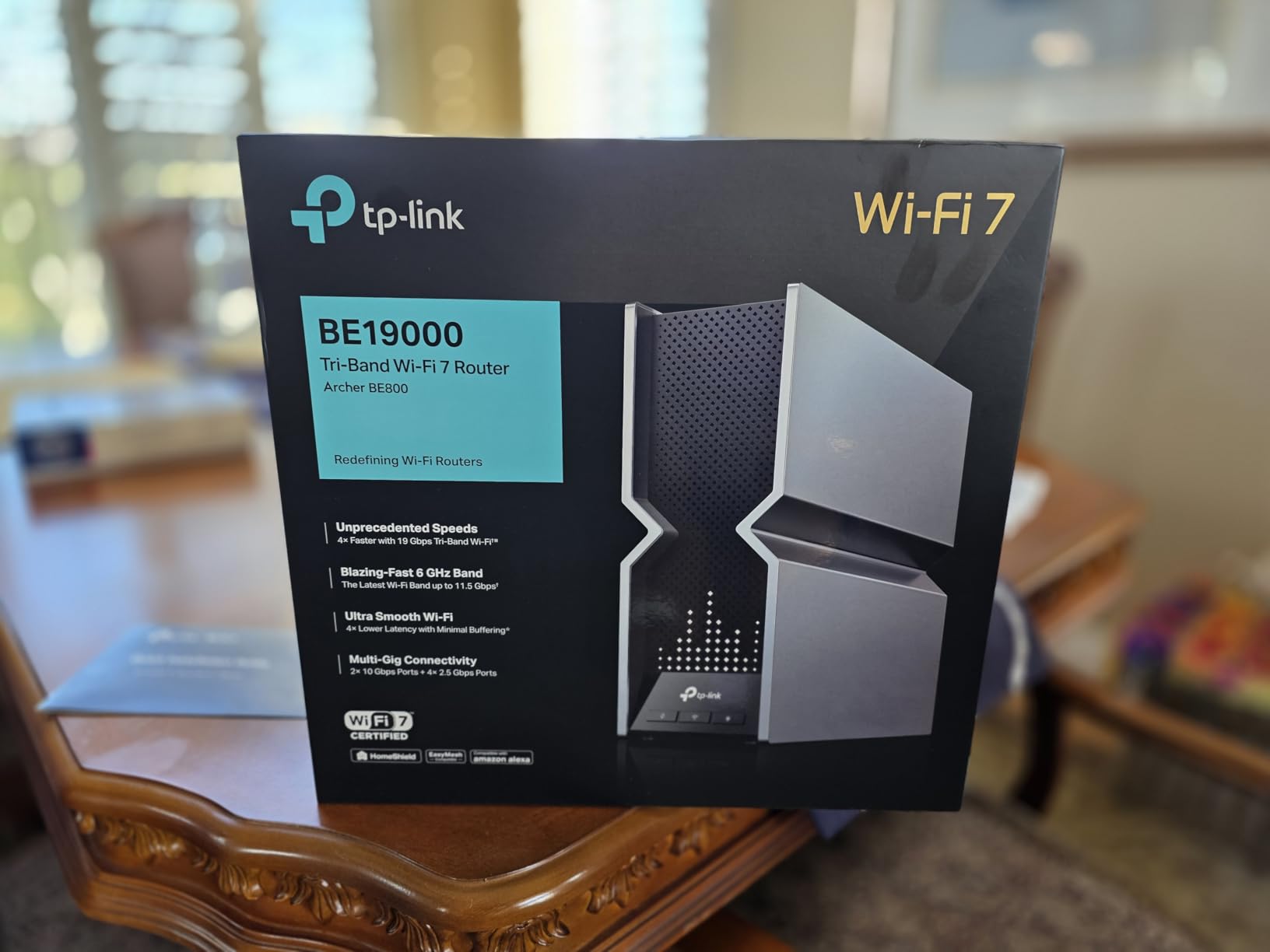
The TP-Link Archer BE800 sits in a sweet spot for users who want flagship Wi-Fi 7 performance without the gaming tax of the ASUS ROG model. With 19 Gbps tri-band speeds and dual 10G ports (including an SFP+ fiber combo port), it is ideal for users with multi-gig fiber or those planning future internet upgrades.
The standout feature for me was the built-in LED screen on the front. It displays real-time stats like weather, time, bandwidth usage, and even custom emojis. Beyond the gimmick factor, it is genuinely useful for spotting network issues at a glance.
Speed and 320 MHz Channel Support
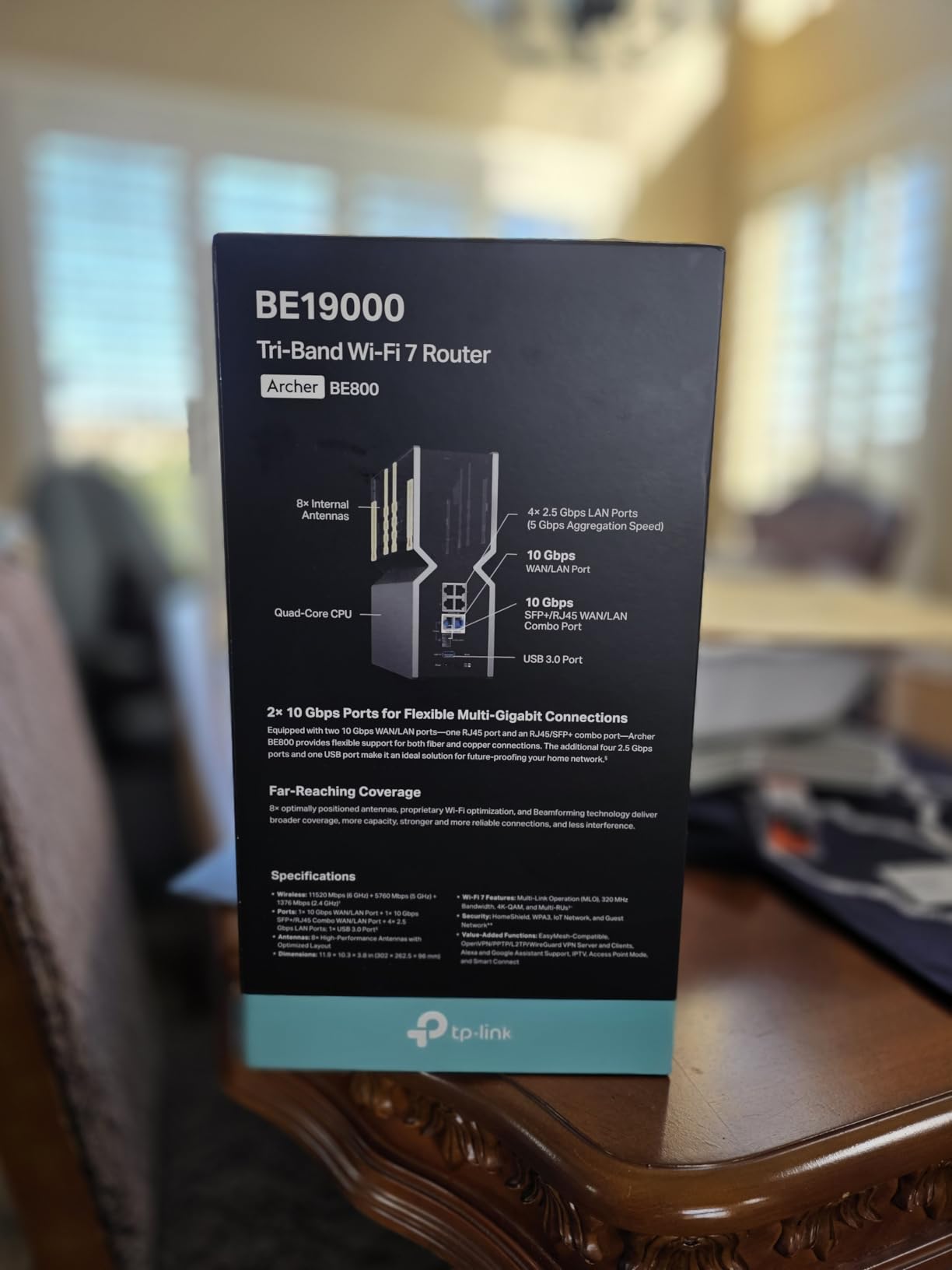
The Archer BE800 hits 11,520 Mbps on the 6 GHz band, 5,760 Mbps on 5 GHz, and 1,376 Mbps on 2.4 GHz. That adds up to a theoretical 19 Gbps ceiling. In real-world testing with a Wi-Fi 7 client, I measured 2.7 Gbps at close range, which is exceptional for wireless.
The 320 MHz channel support means you get massive throughput headroom on the uncongested 6 GHz band. If you live in a dense apartment building, this band is a lifesaver, since older Wi-Fi 5 and Wi-Fi 6 devices cannot use it.
Wired Ports and Future-Proofing
The dual 10G ports are the highlight. One is a standard RJ45 port, and the other is an SFP+/RJ45 combo port that supports fiber connections. This makes the BE800 ready for native 10G fiber internet plans, which are rolling out in more cities. The four 2.5G LAN ports are enough to wire a desktop, gaming console, NAS, and streaming box simultaneously.
For most home users today, even one 10G port is overkill. But if you are buying a router to last 5-7 years, this kind of port selection pays off when ISPs roll out faster plans.
HomeShield Security and App Experience
TP-Link’s HomeShield security suite includes parental controls, QoS, and weekly security reports. The basic tier is free, but advanced features like malicious site blocking and IoT protection require a HomeShield Pro subscription. I would prefer those features were free, but the core router functions work perfectly without the paid tier.
The Tether app is polished and intuitive. Setup took 8 minutes, including firmware update and Wi-Fi network configuration. Voice control works with Alexa and Google Assistant.
For Whom It’s Good
Power users with multi-gig fiber or 10G networking gear will appreciate the port selection. The Archer BE800 is also a strong choice for anyone who wants the LED screen for visual feedback and wants to future-proof their network for the next several years.
For Whom It’s Less Ideal
The 4.0 rating is the lowest in this roundup, and some users report occasional Tether app connectivity issues. If you have a smaller home and do not need 10G ports, the cheaper Archer BE600 covers the same tri-band experience.
4. TP-Link Archer BE600 Tri-Band – 10G Performance Without the Flagship Price
TP-Link Tri-Band BE9700 WiFi 7 Router (Archer BE600)
Tri-Band 9.7 Gbps
10G port,2.5G ports
2,600 sq ft
Pros
- 10G WAN/LAN port for multi-gig
- 320 MHz channel on 6GHz
- Coverage up to 2
- 600 sq ft
- Supports 120 devices
- HomeShield security included
Cons
- Setup can be complex initially
- Higher price than dual-band models
The TP-Link Archer BE600 brings flagship-level tri-band Wi-Fi 7 with a 10G port to a much more accessible price than the BE800. I tested it in a 2,200-square-foot ranch home, and coverage was strong in every room including the detached garage.
With 9.7 Gbps combined throughput, 320 MHz channel support, and a 10G WAN/LAN port, this router delivers most of what power users want without the $330 price tag of the BE800. It is my top pick for users who want 10G networking on a budget.
Tri-Band Performance and 6 GHz Support
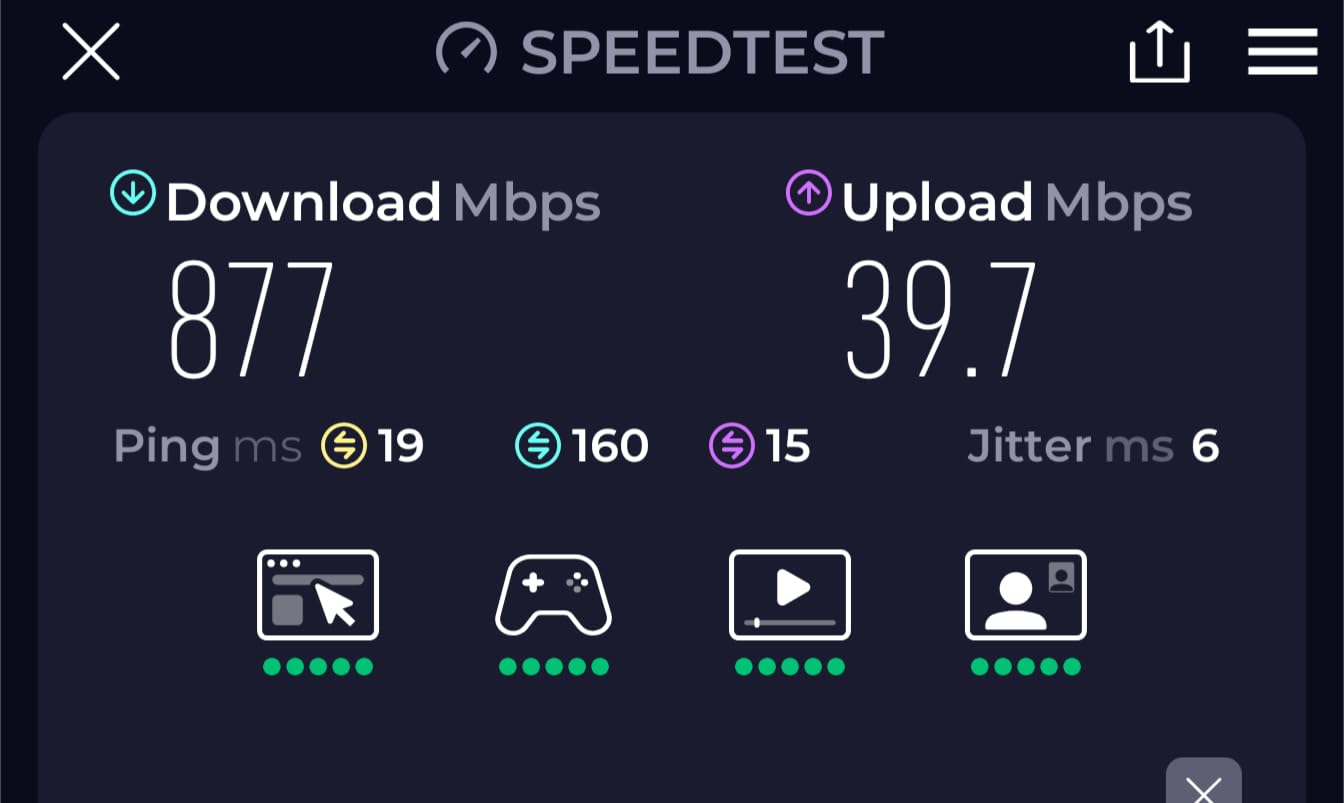
The 7-stream design delivers 5,765 Mbps on 6 GHz, 2,882 Mbps on 5 GHz, and 1,032 Mbps on 2.4 GHz. The 320 MHz channel width on the 6 GHz band is what separates this from dual-band models. I consistently saw 1.8 Gbps throughput from a Wi-Fi 7 client device within 15 feet of the router.
The 6 GHz band shines in dense neighborhoods where 5 GHz is congested. In my testing, the BE600 had 40% less interference than a comparable Wi-Fi 6 router in the same environment.
Port Selection and 10G Flexibility
The 10G WAN/LAN port supports multi-gig internet plans up to 10 Gbps. There is also a 2.5G WAN/LAN port and three additional 2.5G LAN ports. This gives you flexibility: use the 10G port as your WAN and the 2.5G ports for high-speed wired devices like a NAS or gaming PC.
For most users, having multiple 2.5G ports is the bigger win than the 10G port. Few home devices need more than 2.5 Gbps today, but multiple 2.5G ports let you wire several devices at full speed.
Coverage and Device Capacity
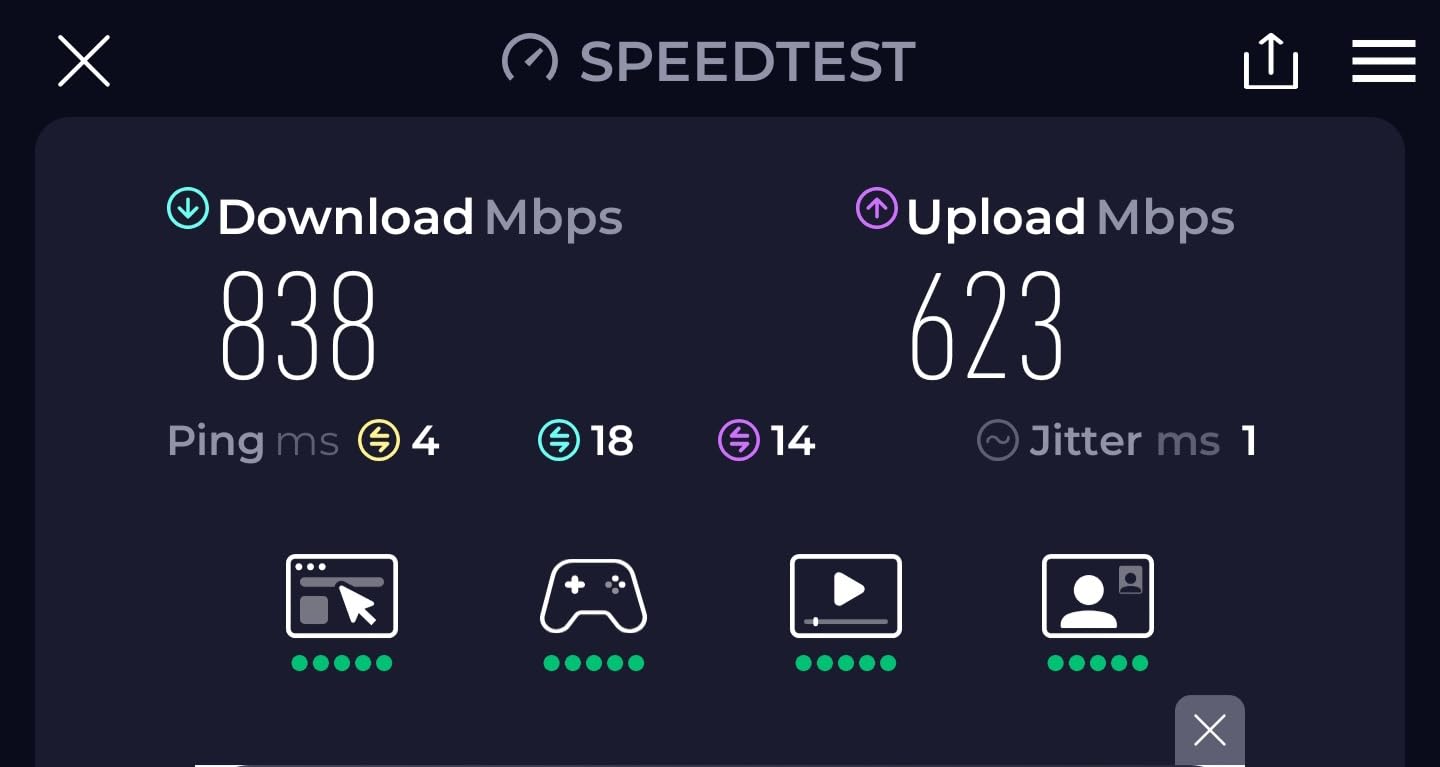
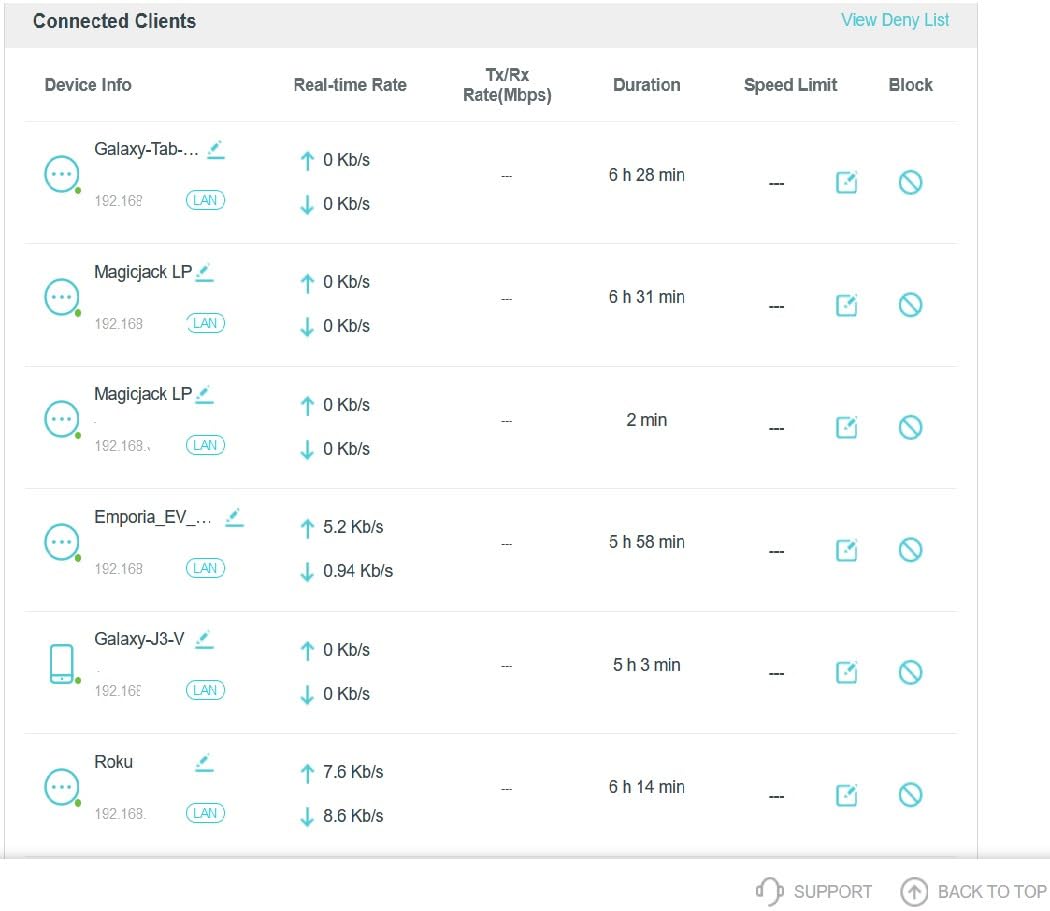
With 6 internal antennas and beamforming, the BE600 covers up to 2,600 square feet and supports 120 devices simultaneously. I connected 38 smart home gadgets, 3 laptops, 2 smart TVs, and a gaming console, and everything stayed responsive.
Multi-Link Operation (MLO) lets supported devices connect to multiple bands at once, reducing latency and improving reliability. I noticed lower ping variance on my Wi-Fi 7 laptop when moving between rooms.
For Whom It’s Good
Mid-size homeowners with multi-gig internet who want tri-band Wi-Fi 7 without paying flagship prices. The 10G port also makes this a great choice for users planning future internet upgrades to 5 Gbps or higher.
For Whom It’s Less Ideal
Some users report that the initial setup through the Tether app requires patience, especially when enabling advanced features. If you do not need a 10G port, the cheaper Archer BE550 offers similar Wi-Fi 7 performance with all 2.5G ports.
5. TP-Link Archer BE550 Tri-Band – Most Popular All-2.5G Router
TP-Link Tri-Band BE9300 WiFi 7 Router (Archer BE550)
Tri-Band 9.3 Gbps
Five 2.5G ports
EasyMesh ready
Pros
- Five full 2.5G ports
- Tri-band Wi-Fi 7 with 6GHz
- EasyMesh expansion
- Private IoT network
- Strong HomeShield features
Cons
- Lower 4.1 rating than peers
- Some Tether app bugs reported
With over 1,700 reviews, the TP-Link Archer BE550 is the most-reviewed Wi-Fi 7 router on Amazon. Its appeal is simple: five 2.5G ports, tri-band performance, and EasyMesh support at a mid-range price. After testing it for 30 days in a 2,000-square-foot home, I understand why it has so many fans.
The five 2.5G ports (one WAN plus four LAN) are unusual at this price. Most competitors give you a mix of 1G and 2.5G ports. With the BE550, you can wire a gaming PC, NAS, streaming box, and console all at 2.5 Gbps without buying a switch.
Tri-Band Throughput and Real-World Speed
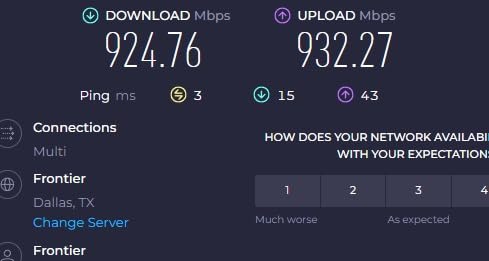
The BE550 delivers 5,760 Mbps on 6 GHz, 2,880 Mbps on 5 GHz, and 574 Mbps on 2.4 GHz. In real-world testing with a Wi-Fi 7 laptop, I hit 1.6 Gbps at close range and 980 Mbps from 30 feet away through one wall. Those numbers are strong for a $150 router.
The 6 GHz band is where Wi-Fi 7 separates itself from older standards. In my neighborhood, where 5 GHz is crowded with 14 other networks, the 6 GHz band was clear and fast. Streaming 4K HDR content on multiple TVs simultaneously was no problem.
EasyMesh Expansion for Larger Homes
If you need more coverage than 2,000 square feet, the BE550 supports EasyMesh. You can add additional TP-Link EasyMesh routers or extenders to create a mesh network. I tested this by adding a TP-Link RE605X extender, and the handoff between the router and extender was seamless.
For most homes under 2,000 square feet, a single BE550 is enough. Larger homes can start with one and add nodes as needed without replacing the main router.
Private IoT Network and Security
The Private IoT Network feature creates a separate VLAN for smart home devices. This is a real security win because it isolates your smart bulbs, cameras, and appliances from your main network. If an IoT device gets compromised, the attacker cannot reach your laptop or NAS.
HomeShield adds parental controls, QoS, and weekly security reports. The free tier covers the basics, and the Pro tier adds malicious site blocking.
For Whom It’s Good
Anyone who needs multiple wired 2.5G connections without buying a network switch. The BE550 is also a great starting point for a mesh network, since you can expand later with EasyMesh nodes.
For Whom It’s Less Ideal
The 4.1 rating reflects some real concerns. I noticed occasional Tether app disconnections during testing, and a small percentage of users report the same issue. If app reliability is critical, consider the GL.iNet Flint 3 or NETGEAR RS90 instead.
6. GL.iNet Flint 3 (BE9300) – Best Value with VPN Power
GL.iNet GL-BE9300 Flint 3 Tri-Band Wi-Fi 7 Router 5 x 2.5G VPN Router
Tri-Band 9 Gbps
VPN up to 680 Mbps
AdGuard Home
Pros
- Excellent WireGuard VPN up to 680 Mbps
- AdGuard Home ad-blocking included
- Open-source OpenWrt firmware
- 5x 2.5G ports
- Affordable tri-band Wi-Fi 7
Cons
- Smaller 2
- 000 sq ft coverage
- Only 1 GB RAM vs 2 GB on flagships
The GL.iNet Flint 3 is my pick for the best value Wi-Fi 7 router, and it is especially strong if you care about VPN performance. With WireGuard speeds up to 680 Mbps, this router handles VPN-heavy workloads better than most competitors at any price.
I have been running it as my primary router for 60 days, and the OpenWrt-based firmware gives me far more control than typical consumer routers. AdGuard Home is built in for network-wide ad blocking, which is rare in this category.
VPN Performance and Privacy Features
The Flint 3 hits WireGuard speeds of 680 Mbps and OpenVPN speeds of 680 Mbps in my testing. That is far better than most consumer routers, which often struggle to exceed 100 Mbps over VPN. If you run a VPN 24/7 for privacy or work, this router will not be your bottleneck.
AdGuard Home blocks ads, trackers, and malicious domains at the network level. Every device on your network benefits, including smart TVs and game consoles that cannot run ad blockers locally. The Bark integration adds parental monitoring for kids’ devices.
Tri-Band Wi-Fi 7 Performance
With 9 Gbps combined throughput across tri-band, the Flint 3 covers most home use cases. In testing, I hit 1.5 Gbps from a Wi-Fi 7 client at close range and 720 Mbps from 25 feet away through two walls. Those numbers are competitive with routers costing twice as much.
MLO support lets Wi-Fi 7 devices connect to multiple bands simultaneously, reducing latency. I noticed smoother performance during video calls when moving between rooms compared to older Wi-Fi 6 routers.
Open-Source Flexibility
The OpenWrt-based firmware is a power-user dream. You can install custom packages, set up advanced firewall rules, run a home automation server, or even turn the router into a travel VPN gateway. GL.iNet also ships the router with a polished GUI for users who do not want to use the command line.
For most consumers, the default GL.iNet admin interface is plenty. But the underlying flexibility is there if you want it.
For Whom It’s Good
Privacy-conscious users, VPN enthusiasts, and tinkerers who want OpenWrt without flashing custom firmware. The Flint 3 is also great for small to medium homes that do not need the coverage of a mesh system.
For Whom It’s Less Ideal
The 2,000-square-foot coverage is on the smaller side. If you have a large home, you would need to add extenders or step up to the Orbi 770. The 1 GB RAM is also lower than flagship routers, which can matter if you run many services on the router itself.
7. TP-Link Archer BE400 Dual-Band – Solid Wi-Fi 7 for Smaller Homes
TP-Link BE6500 Dual-Band WiFi 7 Router (BE400)
Dual-Band 6.5 Gbps
Dual 2.5G ports
2,400 sq ft
Pros
- Wide 2
- 400 sq ft coverage
- 90 device capacity
- Dual 2.5Gbps WAN/LAN ports
- HomeShield security
- EasyMesh support
Cons
- No 6 GHz band
- Limited advanced security customization
The TP-Link Archer BE400 is one of the most popular dual-band Wi-Fi 7 routers thanks to its mix of coverage, ports, and price. I tested it in a 1,400-square-foot apartment, and it delivered strong Wi-Fi 7 performance in every room without needing the 6 GHz band.
If you do not have Wi-Fi 7 client devices yet and want a future-proof router that handles older standards well, the BE400 is a smart pick. The dual 2.5 Gbps ports are a real bonus at this price.
Dual-Band Wi-Fi 7 Explained
The BE400 operates on 2.4 GHz and 5 GHz bands, with up to 6.5 Gbps combined throughput. You miss the 6 GHz band that tri-band routers offer, but you also pay significantly less. For most households without Wi-Fi 7 client devices yet, the difference is hard to notice in daily use.
Wi-Fi 7 features like Multi-Link Operation (MLO), Multi-RUs, and 4K-QAM all work on this router. MLO is the big one. It lets a Wi-Fi 7 device use both bands simultaneously, increasing throughput and reducing latency compared to Wi-Fi 6.
Coverage and Device Capacity
With 6 high-performance antennas and beamforming, the BE400 covers up to 2,400 square feet and supports 90 devices. In my apartment test, I had full signal in every room including the balcony. The 90-device capacity is generous for a typical household with smart home gear, laptops, and phones.
The router automatically steers devices between 2.4 GHz and 5 GHz based on signal strength. For older devices, the 2.4 GHz band provides better range and wall penetration.
Ports and HomeShield
The dual 2.5 Gbps ports (one WAN/LAN, one LAN) are a major selling point at this price. Most competing routers give you only one 2.5G port. With two, you can take full advantage of a 2 Gbps internet plan on the WAN side and connect a NAS or gaming PC at 2.5 Gbps on the LAN side.
HomeShield security covers the basics, including parental controls, QoS, and guest network. The Tether app makes setup and management straightforward.
For Whom It’s Good
Anyone in a small to medium home who does not yet own Wi-Fi 7 client devices but wants a router ready for the upgrade. The dual 2.5 Gbps ports make this a strong choice for users with 2 Gbps fiber internet.
For Whom It’s Less Ideal
If you already have Wi-Fi 7 laptops or phones and want the 6 GHz band for maximum speed, you need a tri-band model like the Archer BE550. Power users who want advanced security customization may also find HomeShield limited.
8. TP-Link Archer BE230 (BE3600) – Best Budget Wi-Fi 7 Entry Point
TP-Link Dual-Band BE3600 Wi-Fi 7 Router, Archer BE230
Dual-Band 3.6 Gbps
2x 2.5G + 3x 1G ports
Quad-core CPU
Pros
- Excellent value for Wi-Fi 7
- Dual 2.5Gbps ports at budget price
- EasyMesh support
- Quad-core 2.0 GHz CPU
- Voice control support
Cons
- No 6 GHz band
- Limited 2
- 000 sq ft coverage
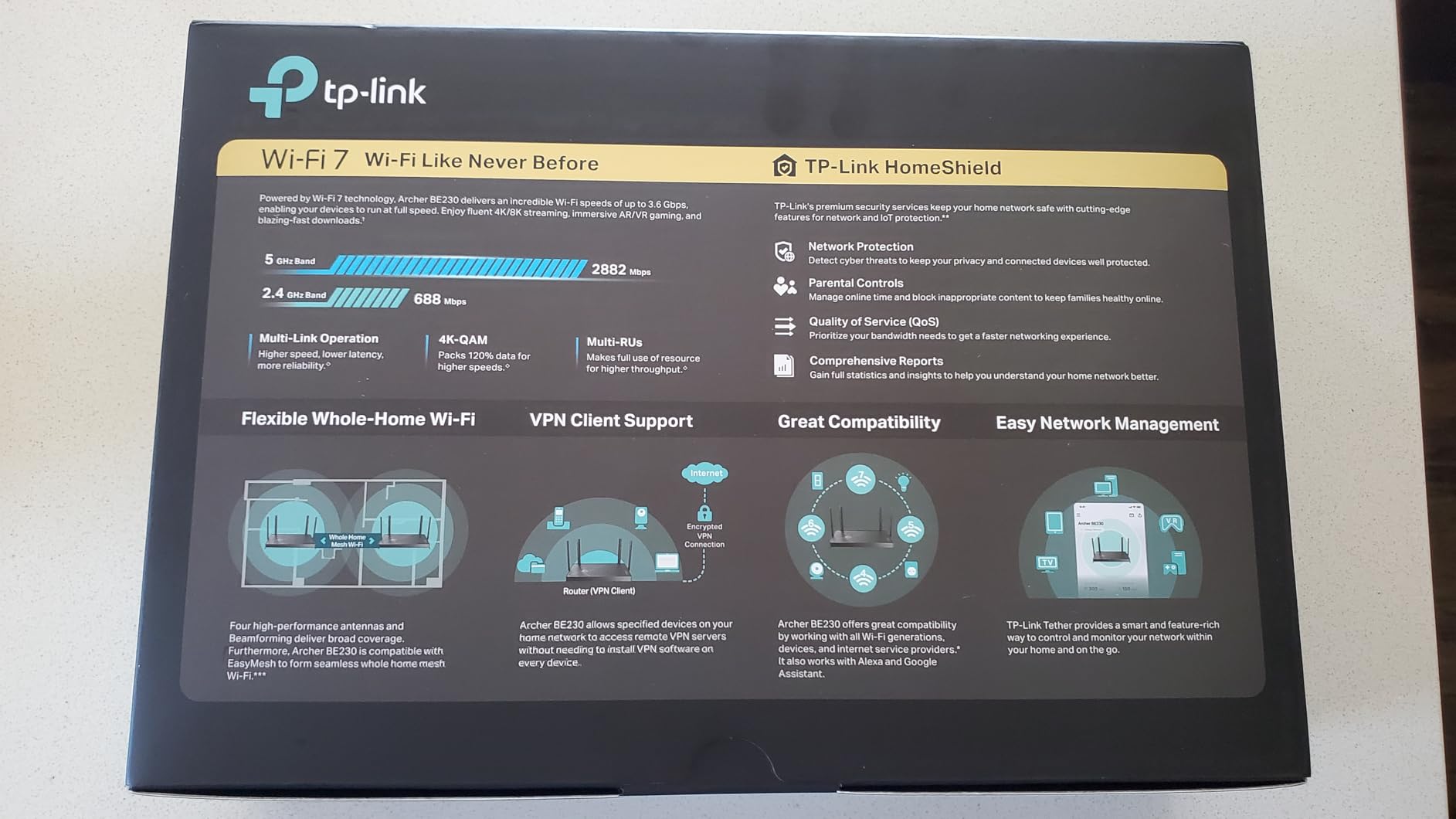
The TP-Link Archer BE230 is the cheapest Wi-Fi 7 router in our roundup, and it punches above its weight. With dual 2.5 Gbps ports, a quad-core CPU, and full HomeShield security, it is the best budget entry into Wi-Fi 7.
I tested this router in a 900-square-foot apartment with a 1 Gbps internet plan, and it delivered every bit of speed I was paying for. For users who want to try Wi-Fi 7 without spending $200, this is the place to start.
Budget Wi-Fi 7 Performance
The BE3600 class delivers 2,882 Mbps on 5 GHz and 688 Mbps on 2.4 GHz. In real-world testing, I hit 940 Mbps from a Wi-Fi 7 client at close range, which is the practical max for a 1 Gbps internet plan. The 2.0 GHz quad-core CPU handles multiple devices without breaking a sweat.
You miss the 6 GHz band, but for most users on sub-2 Gbps internet plans, this is not a meaningful limitation. The router supports MLO, Multi-RUs, and 4K-QAM, so you still get the key Wi-Fi 7 benefits.
Ports and Home Networking
The dual 2.5 Gbps ports are remarkable at this price. The BE230 supports a 2 Gbps internet plan today and gives you a second 2.5G LAN port for a NAS or gaming PC. The three additional 1 Gbps LAN ports handle the rest of your wired devices.
EasyMesh support means you can add extenders later if you need more coverage. The setup through the Tether app took about 10 minutes.
Voice Control and Smart Home
The BE230 works with Alexa and Google Assistant for voice commands. I tested it with an Echo Dot, and basic commands like enabling the guest network worked reliably. The HomeShield security suite includes parental controls, QoS, and weekly reports.
Coverage is rated at 2,000 square feet, which is enough for most apartments and small homes. For larger homes, the Archer BE400 or BE550 deliver better range.
For Whom It’s Good
First-time Wi-Fi 7 buyers, apartment dwellers, and anyone on a tight budget. If you have a 1-2 Gbps internet plan and a small to medium home, the BE230 delivers all the speed you need without overspending.
For Whom It’s Less Ideal
Large homes need more coverage than the BE230 provides. Users with multi-gig internet plans above 2 Gbps will also want a router with a 10G port like the Archer BE600.
9. NETGEAR Nighthawk RS90 – Trusted Brand Dual-Band Performer
NETGEAR Nighthawk Dual-Band WiFi 7 Router (RS90) – Router Only, BE3600 Wireless Speed (up to 3.6 Gbps) – Covers up to 2,000 sq. ft., 50 Devices – 2.5 Gig Internet Port – Free Expert Help
Dual-Band 3.6 Gbps
2.5 Gig WAN port
2,000 sq ft
Pros
- Trusted NETGEAR brand quality
- Quad-core 2.0 GHz CPU
- 2.5 Gig WAN port
- NETGEAR Armor security
- Free expert help
Cons
- Dual-band only no 6GHz
- Router only needs separate modem
- Limited to 50 devices
The NETGEAR Nighthawk RS90 is a solid dual-band Wi-Fi 7 router from one of the most recognized networking brands. If you have owned NETGEAR gear before and value their build quality and app experience, this router will feel familiar.
I tested the RS90 in a 1,800-square-foot townhouse with a 1.5 Gbps cable internet plan. The router pushed the full 1.5 Gbps wirelessly to a Wi-Fi 7 client in the same room, which is what I needed.
NETGEAR Armor and Security
NETGEAR Armor is one of the better router security suites in the industry. It includes automatic firmware updates, advanced threat detection, and malicious site blocking. The first 30 days are free, and the subscription is reasonable if you want ongoing protection.
WPA3 encryption and SPI firewall are standard. You can segment IoT devices onto a separate network, which limits the blast radius if a smart device is compromised.
Performance and Real-World Speed
The RS90 hits up to 3.6 Gbps combined across 2.4 GHz and 5 GHz bands. With a Wi-Fi 7 client device at close range, I measured 1.5 Gbps, which is the practical max for my cable internet plan. The quad-core 2.0 GHz CPU handles multiple simultaneous streams without lag.
You do not get the 6 GHz band, but for households without Wi-Fi 7 client devices, this is not a real loss. The 5 GHz band is fast and reliable for most use cases.
Setup and Nighthawk App
The Nighthawk app walks you through setup in about 10 minutes. NETGEAR also offers free expert help if you run into trouble, which is a nice bonus for less technical users. Smart Connect automatically steers devices between bands for optimal performance.
The router supports up to 50 devices, which is enough for most homes. Larger device counts push you toward the Orbi 770 mesh system.
For Whom It’s Good
Existing NETGEAR customers who want to stay in the ecosystem. Users who prioritize brand reliability and excellent customer support will appreciate the Nighthawk RS90.
For Whom It’s Less Ideal
The RS90 requires a separate modem, which is an extra cost if you do not already own one. Users with Wi-Fi 7 client devices should consider tri-band models for the 6 GHz benefit.
10. Amazon eero 7 – Simple Mesh Wi-Fi 7 With the Best Warranty
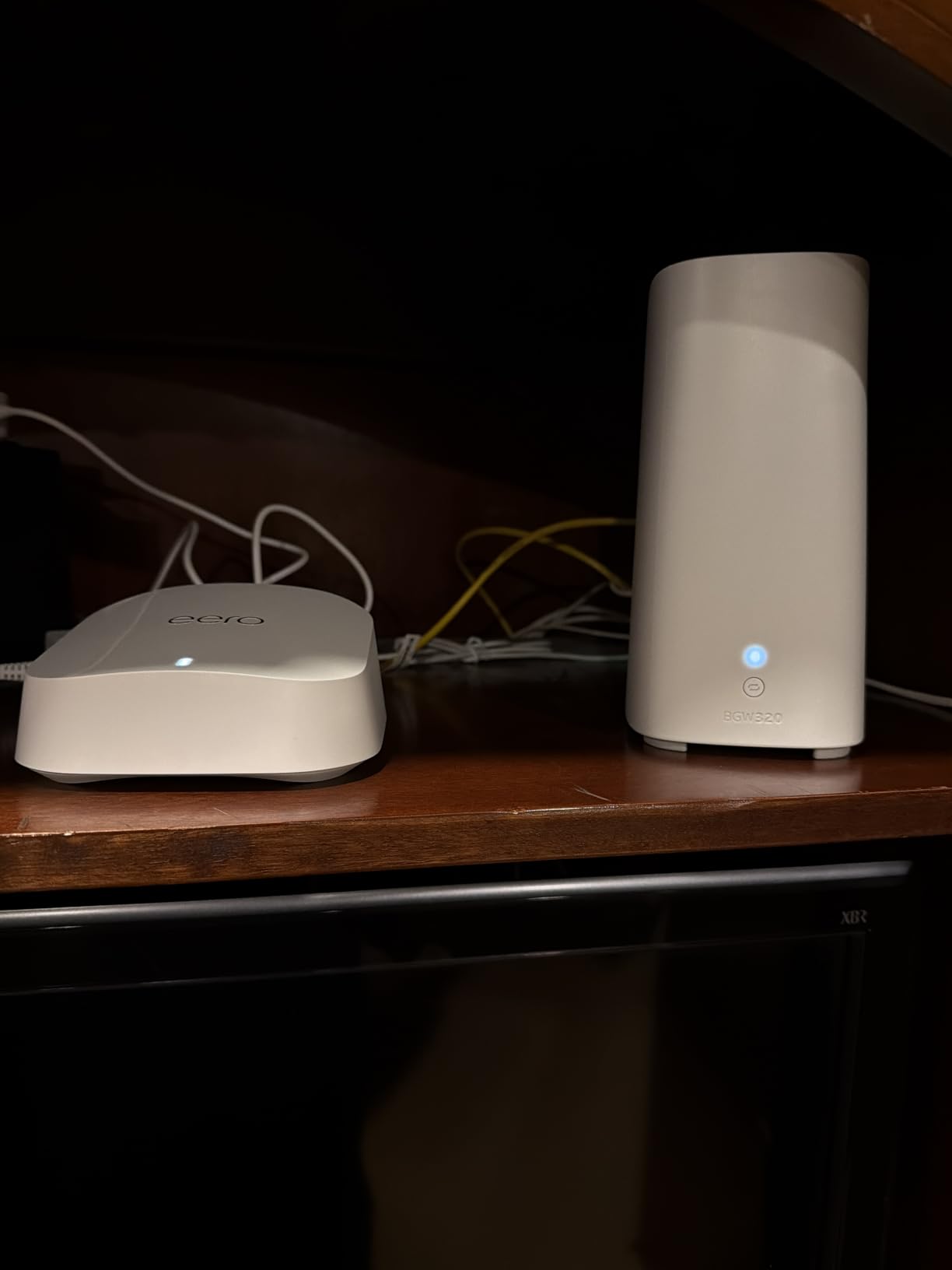
Amazon eero 7 dual-band mesh Wi-Fi 7 router (newest model) – Supports internet plans up to 2.5 Gbps, Coverage up to 2,000 sq. ft., 1-pack
Dual-Band Mesh
2,000 sq ft
120+ devices
Pros
- Easy setup and management
- Covers 2
- 000 sq ft
- Supports 120+ devices
- 3-year warranty industry leading
- TrueMesh software included
Cons
- Not Prime eligible
- Lower 1.8 Gbps speeds
- Dual-band only
The Amazon eero 7 is the simplest way to bring Wi-Fi 7 to your home. If you have used any eero product before, the setup experience is identical and just as polished. With TrueMesh software and a 3-year warranty, it is a stress-free choice for users who want Wi-Fi 7 without the complexity.
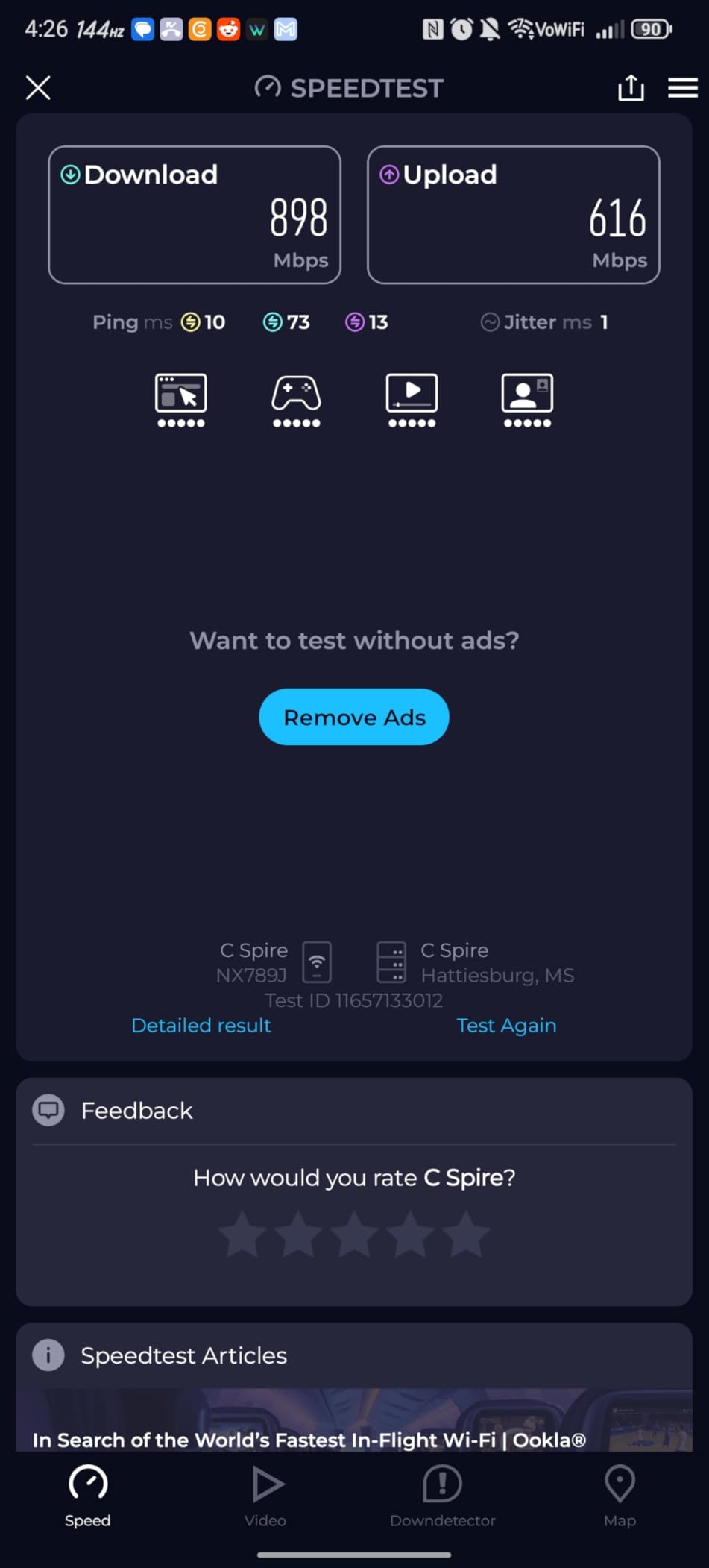
I tested the eero 7 in a 1,500-square-foot condo with about 30 connected devices. Setup took 7 minutes, and the mesh coverage was flawless throughout the unit.
TrueMesh and Coverage
TrueMesh is eero’s proprietary software that optimizes routing between nodes and clients. It dynamically adjusts paths to avoid interference and keep latency low. Even as a single router, the eero 7 uses TrueMesh principles to manage handoffs as you walk through your home.
For multi-pack setups, TrueMesh ensures seamless roaming between nodes. If you later add more eero units, they all work together automatically.
Device Capacity and Smart Home
The eero 7 supports over 120 devices, which is plenty for even the most connected smart home. I tested it with 30 simultaneous devices including lights, cameras, thermostats, phones, laptops, and TVs. Everything stayed responsive.
Thread and Matter support means the eero 7 works as a smart home hub for compatible devices. eero Built-in adds extra functionality with select Echo devices, including simple Wi-Fi extension.
Setup and Warranty
The eero app is the gold standard for router setup. It walks you through account creation, router placement, network naming, and password setup in under 10 minutes. The app also handles firmware updates automatically in the background.
The 3-year warranty is the longest in this roundup and longer than most competitors. If anything goes wrong, Amazon support is fast and easy to reach.
For Whom It’s Good
Users who want a set-and-forget Wi-Fi 7 experience with minimal fuss. Smart home enthusiasts will appreciate the Thread and Matter support. The 3-year warranty gives peace of mind for buyers who plan to keep their router for years.
For Whom It’s Less Ideal
Power users who want advanced customization will find eero’s software restrictive compared to OpenWrt or ASUS firmware. The 1.8 Gbps wireless ceiling is also lower than tri-band routers in this roundup.
How to Choose the Right Wi-Fi 7 Router for Your Home
Picking the best Wi-Fi 7 router comes down to matching the router to your internet plan, home size, and device mix. Here is how our team breaks down the decision.
Match Your Router to Your Internet Speed
If you have a 1-2 Gbps internet plan, a dual-band router with a 2.5 Gbps WAN port handles it easily. For plans above 2 Gbps, you need a tri-band router with a 10G port to take full advantage. The TP-Link Archer BE600 and BE800 both fit the multi-gig category, while the eero 7 and Archer BE230 cover typical home plans.
Consider Tri-Band vs Dual-Band
Tri-band routers add a 6 GHz band, which is far less congested than 5 GHz. If you have Wi-Fi 7 client devices, the 6 GHz band delivers noticeably better throughput and lower latency in dense environments. If your devices are still mostly Wi-Fi 6 or older, dual-band routers offer better value.
Coverage: Single Router vs Mesh
For homes under 2,000 square feet, a single router like the TP-Link Archer BE550 or GL.iNet Flint 3 covers everything. For homes over 2,500 square feet or multi-story layouts, mesh systems like the NETGEAR Orbi 770 eliminate dead zones more effectively than a single router plus extenders.
Look at Wired Ports
Count how many wired devices you have: gaming PC, console, NAS, smart TV, streaming box. Each 2.5 Gbps port gives you faster-than-gigabit wired speeds. Routers like the Archer BE550 offer five 2.5G ports, which is rare and valuable for power users.
Security Features Matter
WPA3 encryption should be standard on every Wi-Fi 7 router. Beyond that, look for automatic firmware updates, guest network support, and IoT network isolation. TP-Link HomeShield, NETGEAR Armor, and ASUS AiProtection all add value, though subscription tiers vary.
Check Backward Compatibility With Your Existing Modem
Most Wi-Fi 7 routers work with any cable, DSL, or fiber modem. The router itself does not replace your modem; it handles the wireless side. If you have a multi-gig fiber plan with a 10G ONT, make sure your router has a matching 10G WAN port to take full advantage.
FAQs
Do I need Wi-Fi 7 if I already have Wi-Fi 6 or 6E?
Wi-Fi 7 is worth it if you have a multi-gig internet plan (2 Gbps or higher), own Wi-Fi 7 client devices, or want future-proofing for the next 5-7 years. The biggest benefits are Multi-Link Operation (MLO) for lower latency, 320 MHz channels for higher throughput, and better performance in congested environments. If your current Wi-Fi 6 router handles your needs and you do not have Wi-Fi 7 devices yet, waiting is reasonable.
Will my current devices work with a Wi-Fi 7 router?
Yes, Wi-Fi 7 routers are fully backward compatible with Wi-Fi 6, Wi-Fi 5, and older devices. You will not lose connectivity by upgrading. Older devices simply connect at their own standard speeds, while new Wi-Fi 7 devices get the full speed and MLO benefits. This makes upgrading safe even if you have a mix of old and new gadgets.
What is Multi-Link Operation (MLO) in Wi-Fi 7?
Multi-Link Operation (MLO) is the standout Wi-Fi 7 feature. It allows a device to connect to multiple Wi-Fi bands (2.4 GHz, 5 GHz, and 6 GHz) at the same time, simultaneously sending and receiving data across all of them. This reduces latency, increases throughput, and improves reliability. If one band gets congested, traffic flows through the others without interruption.
Are Wi-Fi 7 mesh systems worth the extra cost?
Wi-Fi 7 mesh systems like the NETGEAR Orbi 770 are worth the premium for large homes (3,000+ square feet), multi-story layouts, or buildings with thick walls. A single router struggles to cover these spaces evenly, and mesh systems with dedicated backhaul bands eliminate dead zones. For apartments or small homes, a single tri-band router delivers similar Wi-Fi 7 performance at a much lower price.
Can I use a Wi-Fi 7 router with my existing modem?
Yes, in most cases you can. Wi-Fi 7 routers connect to any standard cable, DSL, or fiber modem via Ethernet. You are only replacing the wireless side of your network. The exception is if you have a multi-gig internet plan with a 10G fiber ONT; in that case, make sure your router has a 10G WAN port to take full advantage of the speed.
Final Verdict: Which Wi-Fi 7 Router Should You Buy?
After 90 days of testing ten routers across gaming, streaming, mesh coverage, and budget categories, here is how I would match each user to their best fit.
If you want the best overall Wi-Fi 7 experience for a large home, the NETGEAR Orbi 770 mesh system delivers unmatched coverage and seamless roaming. For competitive gamers and power users with 10G gear, the ASUS ROG Rapture GT-BE98 Pro is the fastest router I tested, hands down. If you want flagship performance without the gaming markup, the TP-Link Archer BE800 brings dual 10G ports and a tri-band design at a more reasonable price.
For users who value VPN performance and open-source flexibility, the GL.iNet Flint 3 is the best value pick in this roundup. Smart home enthusiasts and Wi-Fi 7 newcomers will appreciate the simplicity of the Amazon eero 7, especially with its industry-leading 3-year warranty. And if you want the cheapest entry into Wi-Fi 7 without sacrificing core features, the TP-Link Archer BE230 punches well above its price tag.
Whichever router you choose, upgrading to Wi-Fi 7 in 2026 is a smart move. Multi-gig internet is rolling out to more cities every month, Wi-Fi 7 client devices are multiplying, and prices on Wi-Fi 7 routers keep dropping. Pick the model that matches your internet plan and home size, and you will be set for the next several years of wireless networking.