
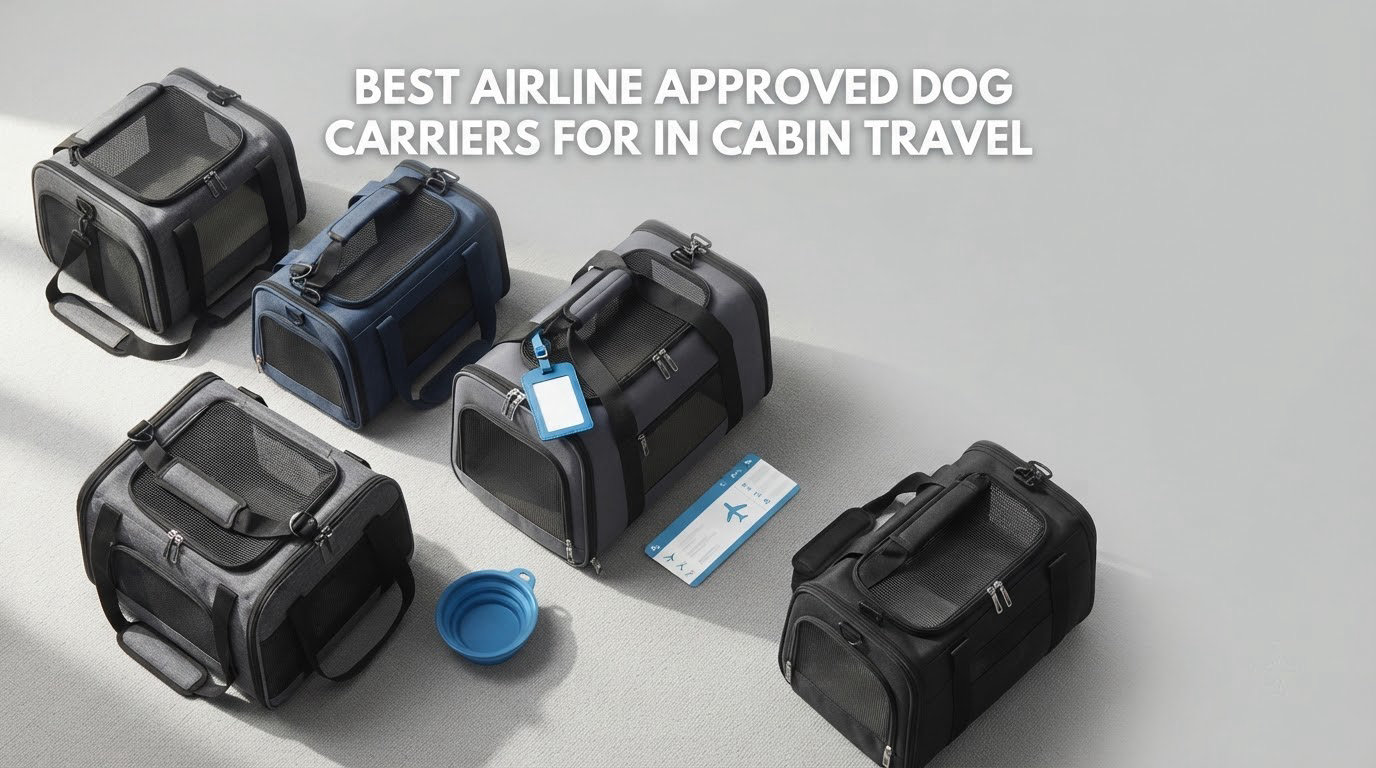
Most dogs get turned away at the gate for one reason: the carrier is the wrong shape. Airlines measure the bag, and they measure whether your dog can stand, turn around, and lie down inside it without being folded. Weight is the number everyone checks first and almost never the one that fails.
I have read the airline pet policies closely and worked through hundreds of owner reviews on soft-sided travel carriers, and this is the honest version of the best airline approved dog carriers for in cabin travel for 2026. Every pick below has published dimensions you can check against your airline’s own limit, a stated pet weight ceiling, and a real complaint from owners who have actually carried it through an airport.
Two ideas shape the whole list. First, airline approved is a marketing word, not a certification, while airline compliant means the bag meets a specific published size limit. Second, length and turning radius beat weight in almost every denial story. Both of those ideas cost travelers their dogs, their money, or both, so I kept them in view for all ten reviews below.
If you also fly with a laptop and need to keep hands free, our laptop backpacks for business travel roundup covers the other half of the carry-on problem. And if your trip involves printing boarding passes at the gate, our portable printers for travel guide is the companion piece.
Our Top 3 Airline Approved Dog Carriers for 2026
These three are the ones I would actually book with. Each has both a strong rating and a review base large enough to trust, and each solves a slightly different problem.

Henkelion Soft-Sided Carrier
- 17 x 11 x 11 inch cabin sizing
- 7.05 ounce carrier weight
- Four-side mesh ventilation
- Fits pets up to 15 lbs

Amazon Basics Mesh Carrier
- Firm base that holds its shape
- Removable washable fleece pad
- Recommended up to 22 lbs
- Front and top zip openings
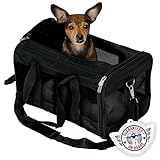
Sherpa Original Deluxe
- Patented spring wire frame compresses under seats
- Escape-proof locking zippers
- Waterproof base with washable liner
- Fits pets up to 16 lbs
Comparing All 10 In-Cabin Dog Carriers Side by Side
This table gives you the numbers that decide the outcome at the check-in counter: the published dimensions, the pet weight ceiling, and the frame style that determines whether the bag can compress on aircraft with tight under-seat clearance.
| Product | Specs | Action |
|---|---|---|
| Henkelion Soft-Sided Carrier |
|
Check Latest Price |
| Amazon Basics Mesh Carrier |
|
Check Latest Price |
| Sherpa Original Deluxe |
|
Check Latest Price |
 PetAmi Backpack Carrier PetAmi Backpack Carrier |
|
Check Latest Price |
 Petmate Sky Kennel Petmate Sky Kennel |
|
Check Latest Price |
 SECLATO Collapsible Carrier SECLATO Collapsible Carrier |
|
Check Latest Price |
 Petsfit Medium Expandable Petsfit Medium Expandable |
|
Check Latest Price |
 Petsfit Large Expandable Petsfit Large Expandable |
|
Check Latest Price |
 Ruff Life 101 Rolling Carrier Ruff Life 101 Rolling Carrier |
|
Check Latest Price |
 Pawaii Safety Leash Carrier Pawaii Safety Leash Carrier |
|
Check Latest Price |
1. Henkelion Soft-Sided Carrier – The One That Gets the Most Dogs Through the Gate
Henkelion Cat Carriers Dog Carrier Pet Carrier For Small / Medium Cats Dogs Puppies (Up To 15lbs), TSA Airline Approved Small Dog Carrier Soft Sided, Collapsible Waterproof Travel Puppy Carrier – Grey
17 x 11 x 11 inches
7.05 ounce carrier weight
Pets up to 15 lbs
Four-side mesh
Pros
- Sits exactly on the common 18 x 11 x 11 inch cabin sizing
- Lightest carrier in the test group at 7.05 ounces
- Plush padded interior settles nervous dogs quickly
- Folds flat for closet storage
- Three zippered doors plus a deep side pocket
Cons
- Removable floor board feels flimsy and can shift under a heavy dog
- Soft walls can be scratched through by a determined escaping pet
- Runs small for adult cats and dogs as they grow
This is the carrier I recommend first because it removes almost every variable. It measures 17 x 11 x 11 inches, which sits inside the 18 x 11 x 11 inch figure that most US carriers publish, and the whole bag weighs 7.05 ounces. When a gate agent weighs a carrier to work out whether the dog plus bag is reasonable, an almost weightless shell helps your case.
Owner reviews are unusually consistent about the interior. The plush padded lining is the feature people mention most, and the story that repeats is a dog who resisted the carrier on the ground but settled within minutes because the floor and walls are soft on all sides. The three zippered doors mean you are not wrestling a dog through a single opening at the gate.

The one structural weakness worth knowing about is the removable floor board. It is light, which is why the carrier weighs so little, and owners of heavier dogs report it sliding enough for a pet to wedge a paw or muzzle into the gap. A double layer of a nonslip pad or a zippered blanket liner solves it in about a minute.
My honest caution is sizing. The manufacturer recommends a pet within 15 x 9 x 9 inches and under 15 pounds, and reviewers of adult cats near that ceiling call the interior snug. Measure your dog nose to base of tail before you order, not the weight on the vet chart.
Why the 17 x 11 x 11 Footprint Is the Whole Point
Under-seat space is the constraint that decides a flight, and it varies by aircraft on the same airline. A carrier that measures exactly to the published limit gives you zero margin, which is why owners who buy one inch of extra length report gate problems far more often. At 17 x 11 x 11 inches, this bag has an inch of spare length against the common limit.
The soft polyester walls also mean that if a gate agent presses down on the bag to test the height, the sides give rather than pushing back. That is exactly the behaviour airlines want from a soft crate.
Ventilation and Escape Prevention at the 15 Pound Ceiling
Four-side mesh ventilation keeps air moving and lets your dog see you, which reduces the barking that turns a calm flight into a problem. The zippered doors are reinforced enough that owners report their dogs scratching at the mesh without getting anywhere.
Handles come in two styles, including seat-belt style loops for strapping the carrier in a car, and there is a padded shoulder strap for the walk from the gate to the aircraft door. Carrying a 7 ounce carrier with a 15 pound dog in it is genuinely easy.
Where It Falls Short
The fabric walls are thin, and that is the trade-off for the 7.05 ounce weight. A dog that panics and claws deliberately can work through soft fabric that a coated nylon shell would resist. If your dog is an escape artist, spend your money on frame strength instead of featherweight.
The sizing also works against you if you are buying for growth. A puppy will outgrow a 15 x 9 x 9 inch interior, and reviewers mention replacing the carrier sooner than they expected.
2. Amazon Basics Mesh Carrier – More Room for Bigger Dogs on a Budget
Amazon Basics Airline Approved Soft-Sided Mesh Pet Travel Carrier with Shoulder Strap, Removable Washable Fleece Pad, Top Opening, Ventilation for Dog, Cat, up to 22 pounds, 19.7Lx12Wx12H in., Black
20 x 12 x 12 inches
2.89 pounds
Pets up to 22 lbs
Washable fleece pad
Pros
- Largest stated pet weight in the group at 22 pounds
- Cardboard base keeps the bag upright in a cabin
- Fleece pad removes and machine washes
- Front and top openings simplify loading
- Mesh walls give good visibility and airflow
Cons
- Runs narrower in practice than the 22 pound rating implies
- Does not collapse flat for storage
- Some long-term failures in strap seams and internal support bars
This is the one to look at if your dog is heavier than most of this list handles. The stated ceiling of 22 pounds is the highest soft-sided number in the group, and the firm cardboard base means the carrier stands upright on its own instead of slumping when you set it down in a terminal.
The catch, and reviewers are consistent about it, is that the interior is narrower than the outer dimensions suggest. A 20 x 12 x 12 inch shell gives a bigger dog less usable width than the number implies. Measure your dog’s shoulder width and add a couple of inches before you assume a 20 pound dog will be comfortable.
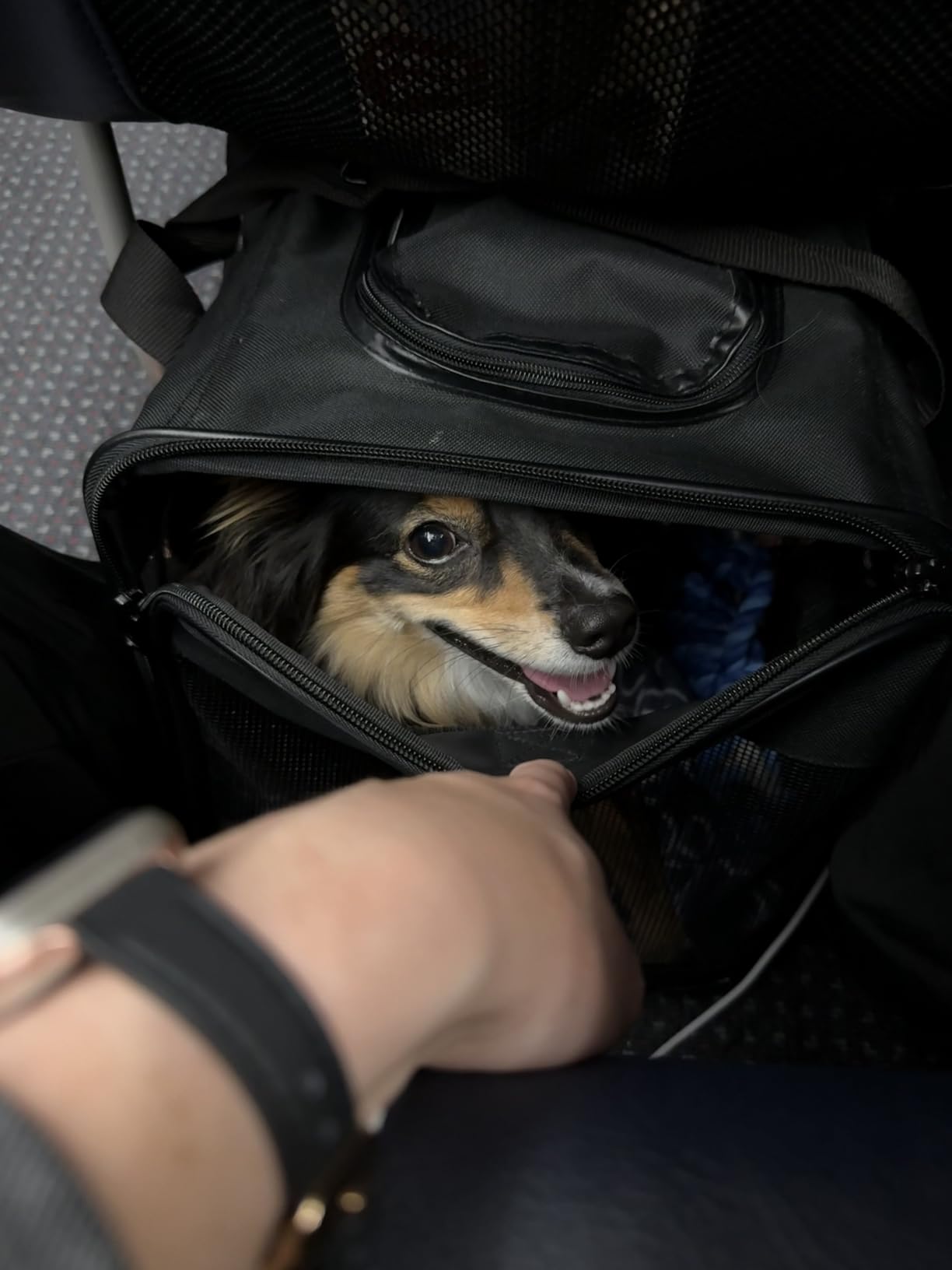
What reviewers praise most is the washable fleece pad. Dogs that have never met a carrier will settle faster on something that smells like home, and pulling the pad out and throwing it in a machine after an accident is the difference between a manageable trip and a ruined one.
Owners also report plenty of successful vet trips and airline trips with this bag, which is the kind of unremarkable consistency you want from a travel purchase.
When a Bigger Dog Actually Fits Under the Seat
A dog at 18 to 22 pounds is not a problem of weight. It is a problem of length. Measure nose to base of tail, add 2 to 3 inches of clearance, and compare that against the 20 inch internal length. If your dog is over 18 inches nose to tail, this bag will not save the flight, and no carrier in this roundup with a standard footprint will.
For dogs in that 15 to 18 inch body-length range, a 20 inch carrier is the difference between a dog that can curl up and one that spends three hours standing awkwardly.
Base Stability and What Happens During a Long Haul
The cardboard base is the quiet hero here. Rigid enough to hold the shape under a heavy dog, light enough that the whole carrier weighs 2.89 pounds, and removable so you can swap in an absorbent pad for a longer flight.
What you give up for that stability is collapsibility. This bag does not fold flat, so it occupies real space in a closet between trips. For frequent flyers who travel light, that matters.
Where It Falls Short
Beyond the narrow interior, a small number of owners report shoulder strap seam or internal support bar failures after extended use. That points to build quality that suits occasional travel more than a monthly flying schedule.
Also worth flagging: the stated 20 x 12 x 12 inch footprint sits above the common 18 x 11 x 11 inch cabin figure in two of three dimensions. Check your airline’s limit before you commit, and expect to ask about an exception if it is over.
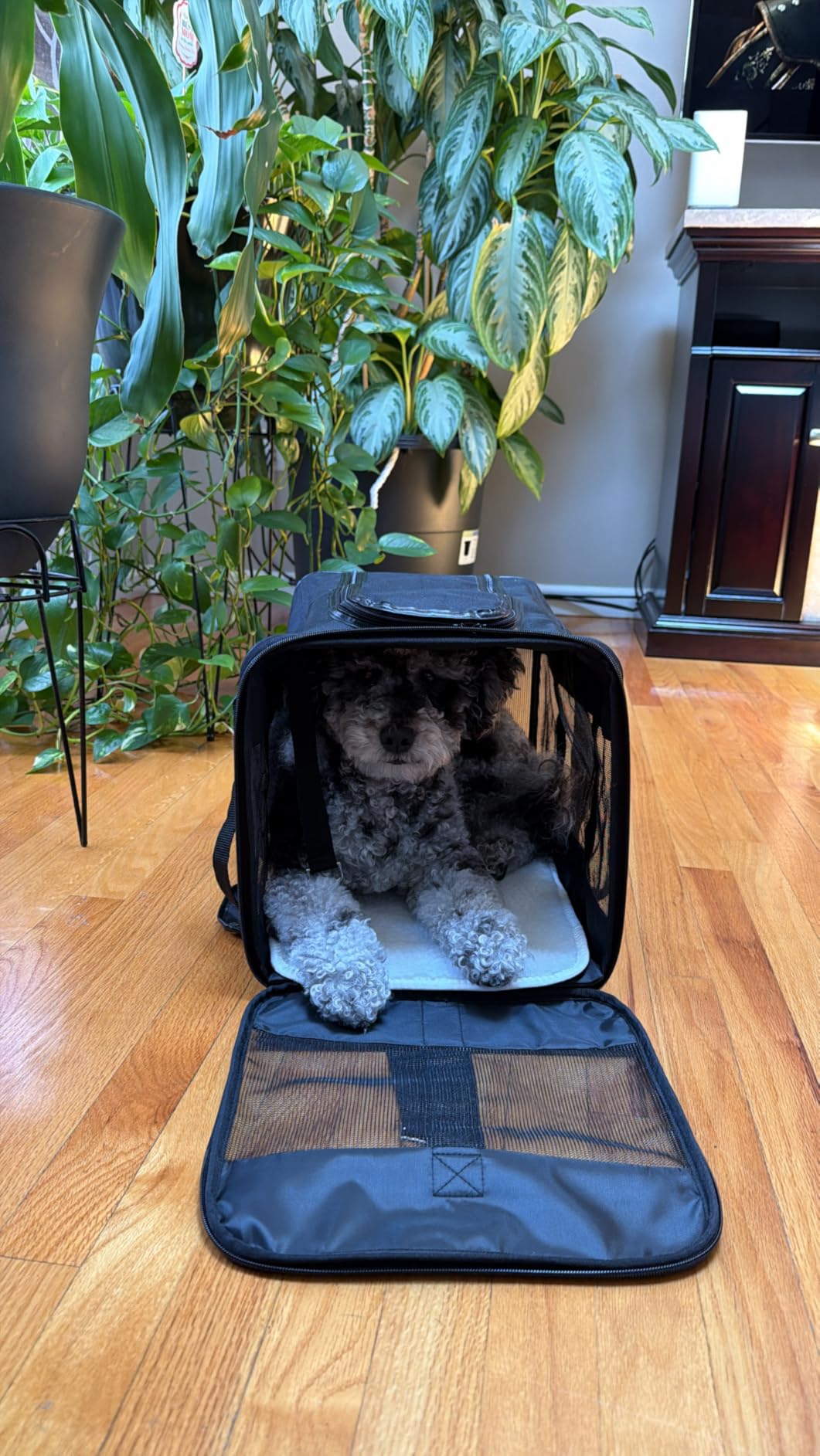
3. Sherpa Original Deluxe – The Most Documented In-Cabin Record of Any Soft Carrier
Sherpa Original Deluxe Travel Pet Carrier, Airline Approved & Guaranteed On Board – Black, Medium
17 x 11 x 10.5 inches
3 pounds
Pets up to 16 lbs
Spring wire frame
Pros
- Patented spring wire frame presses down to clear tight under-seat space
- Part of a fee-reimbursement program for denied boarding
- Escape-proof locking zippers resisted chewing attempts
- Waterproof base with a removable washable liner
- Top and side entry doors plus a document pocket
Cons
- Tight fit for flat-faced and long-backed breeds even in the larger size
- Bulkier on the shoulder than lighter soft-sided models
- Top mesh ventilation is limited on some variants
Sherpa has been building this carrier since the mid-2000s and it has the deepest in-cabin track record of anything in this roundup. If you fly more than once a year, or you fly a route where a denial would be expensive, this is the carrier whose owner base has seen the most gate checks.
The patented spring wire frame is the feature that matters. Press the rear of the bag down and the frame compresses, squeezing a few extra inches of height exactly when under-seat clearance is tight. A compressible frame is the difference between fitting on a narrow-body jet and fitting on a wide-body with a smaller seat-back pocket.
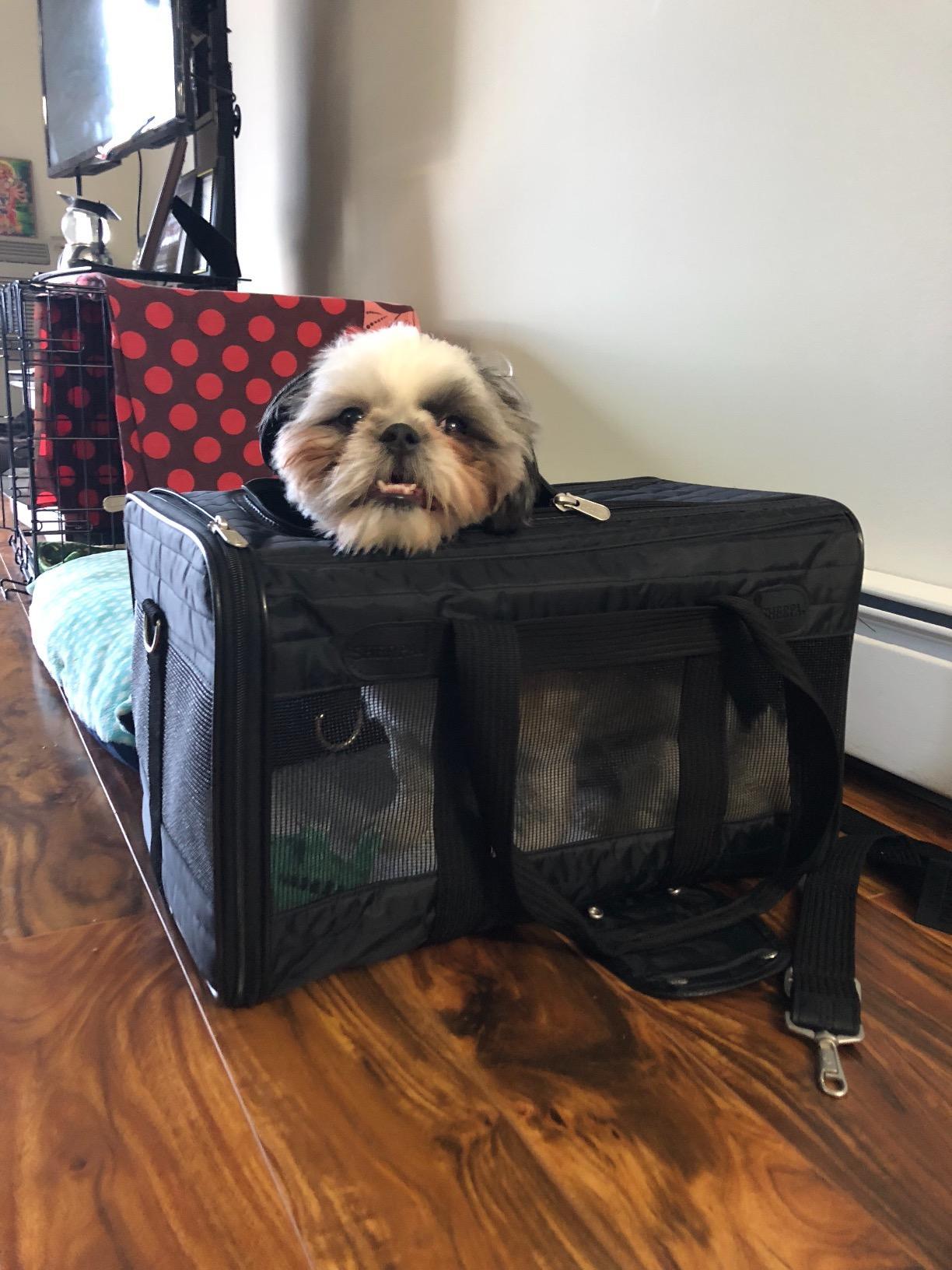
The Medium measures 17 x 11 x 10.5 inches and handles pets up to 16 pounds. Note that 10.5 inch height: it is under the common 11 inch limit, which makes it one of the safer choices if you fly a carrier with a stricter height rule than the standard 18 x 11 x 11.
This is also the only carrier here with a financial backstop. It falls under a reimbursement program that pays you back the in-cabin fee if an airline denies boarding over carrier size. That does not get your dog on the plane, but it takes the sting out of a bad morning at the counter.
Why Frame Compressibility Beats Raw Dimensions
A rigid bag that measures 10 inches fails on a seat with 9 inches of clearance. A spring-frame bag that measures 10.5 inches can be pressed down and accepted on the same seat. Travellers who fly Frontier or Spirit, where height limits are often quoted lower than the standard, have leaned on this feature more than anyone.
That is also why we list it as a premium pick rather than the top choice. It is heavier at 3 pounds, bulkier on the shoulder, and the extra money buys a mechanism that genuinely does something under pressure.
Locking Zippers, Mesh Panels and the Waterproof Base
Escape-proof locking zippers are the detail owners single out most. Multiple reviews describe dogs chewing vigorously on the mesh and the zip hardware without getting out, which is not a small claim in a pressurised cabin.
The waterproof base with a removable machine washable liner is an underrated feature. Vomiting, urination, and spilled water all happen on flights, and a liner you can strip out and wash in a hotel sink keeps the rest of the carrier usable.
Where It Falls Short
Fit is the limitation. Owners with brachycephalic breeds like pugs and bulldogs, and with long-backed dogs like dachshunds, report the interior is tight even in the larger size. The 16 pound ceiling and 11 inch width are not generous.
You also have to train the dog into it before the flight. Reviews repeatedly mention that a dog who has never been in the carrier will not settle no matter how good the bag is.
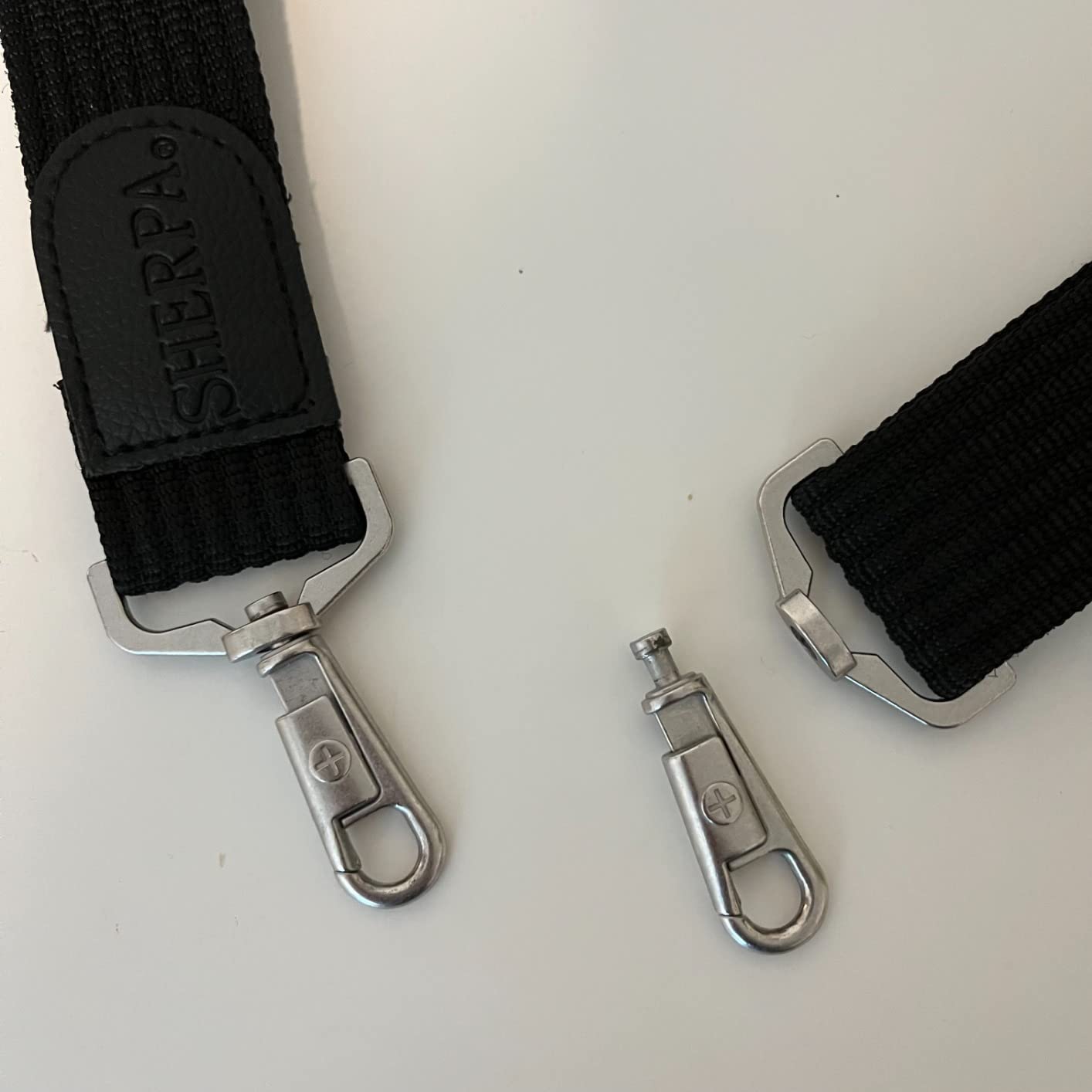
4. PetAmi Backpack Carrier – Best Choice for Hands-Free Airport Walks
PetAmi Dog Backpack Carrier Airline Approved Cat Pet Puppy Bag, Black
16.3 x 10.2 x 12.5 inches
2 pounds
Pets up to 18 lbs
Structured frame
Pros
- Padded shoulder
- chest and waist straps spread weight across both shoulders
- Structured frame holds shape and does not collapse on the pet
- Two-way side entry makes loading easy in tight spaces
- Thick sherpa-lined bed is plusher than most rivals
- Folds flat when not in use
Cons
- Bulky profile over long airport walks compared with rolling designs
- Mesh side panels give less visibility than a full mesh wall
- Weight ceiling rules out larger dogs
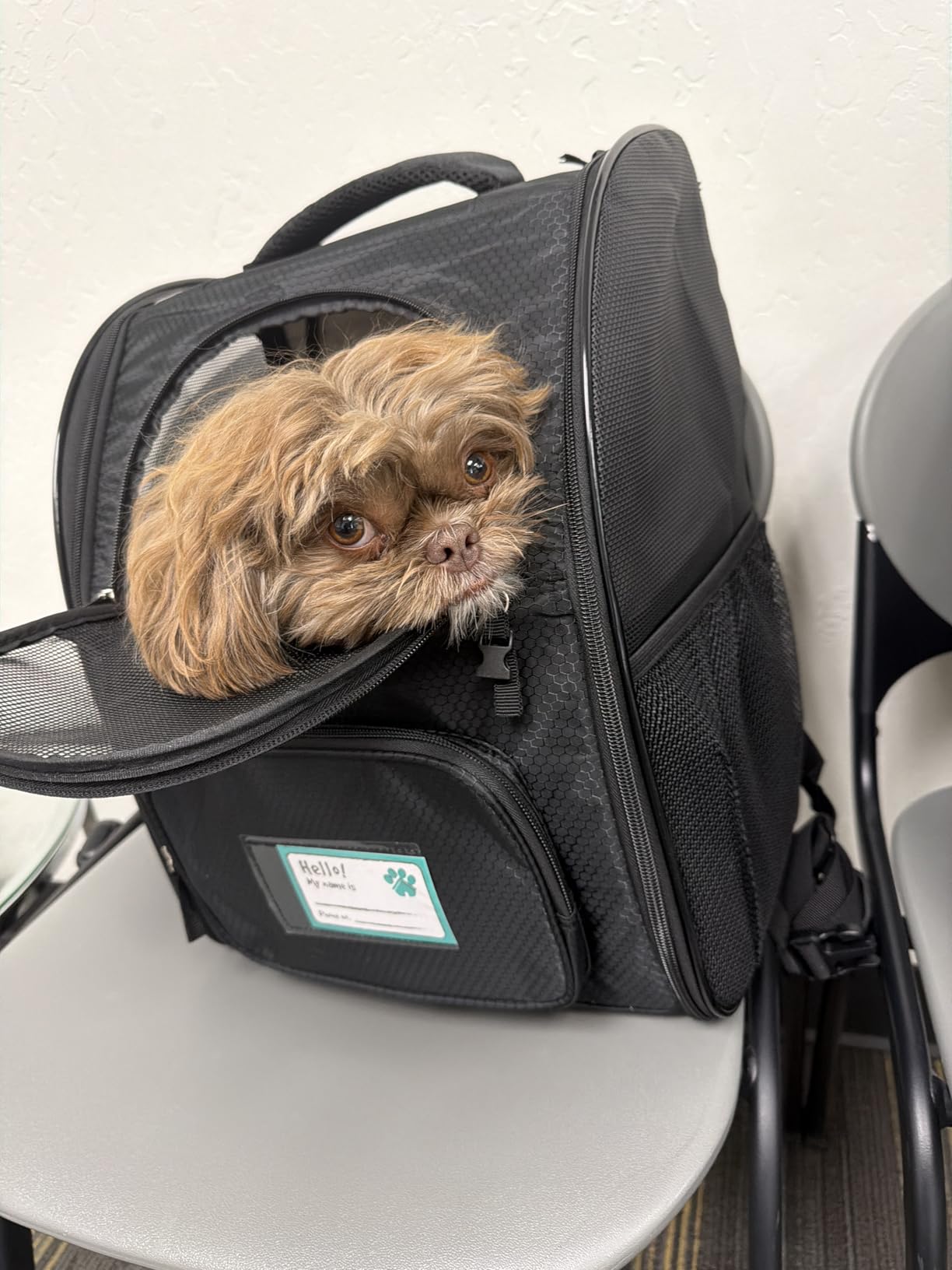
Everything else on this list is carried in one hand or on one shoulder. This one goes on your back, with padded shoulder straps plus chest and waist buckles that stop the load swinging side to side. On a long walk between security and the gate with a boarding pass, water, and a phone, your shoulders will notice the difference.
The other defining feature is the structured frame. Most soft carriers are a bag with a wire insert that gradually gives way; this one holds its shape and does not collapse onto the dog. Owners of cats particularly call that out, because a cat that feels a carrier collapse under its body panics.
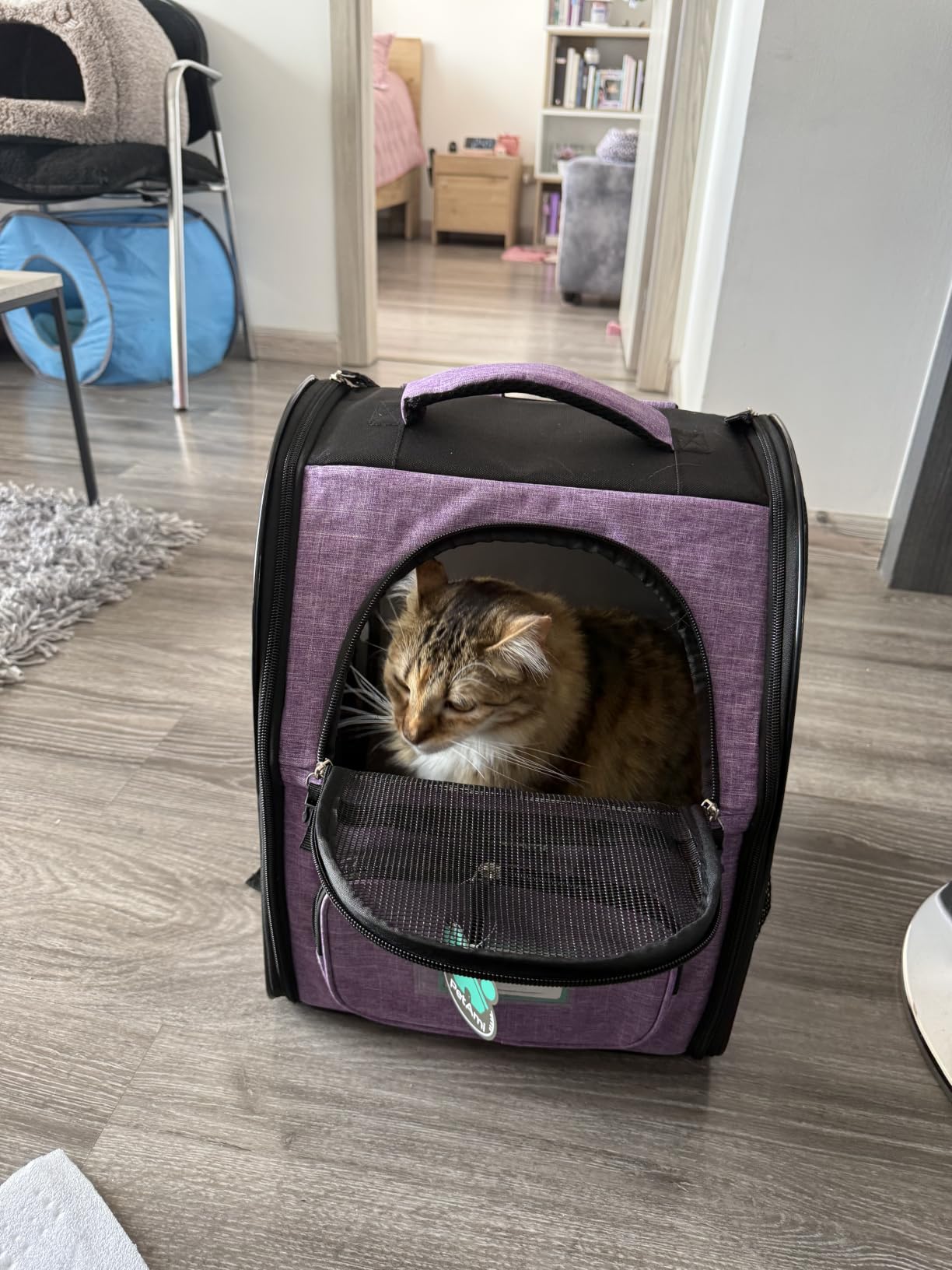
Dimensions are 16.3 x 10.2 x 12.5 inches, and the manufacturer sizes it for large cats and small-to-medium dogs up to 18 pounds. The 12.5 inch height is worth checking against your airline, because it exceeds the common 11 inch cabin figure. Fold it flat only when you are not using it.
Escape prevention is handled properly here: reinforced zippers, an interior safety strap, and a buckle clip. Three separate layers between a determined dog and an open carrier is more than most soft bags in this price range offer.
When a Backpack Design Wins at the Gate
A backpack keeps both hands free at exactly the moment you need them: loading the dog, holding a leash, scanning a boarding pass, and managing a boarding group’s line. The two-way side entry means you do not have to lift a dog up and over the top of the bag in the middle of a crowded jet bridge.
It also stores flat, which matters if you keep it in a car for vet and groomer trips rather than flying weekly.
Comfort, Padding and Escape Security
The thick sherpa-lined bed is plusher than most competing carriers, and a 600D polyester outer with side pockets adds storage for treats, waste bags and documents. A collapsible bowl is tucked in for long flights.
The reflective shoulder strap is a small detail that matters for a bag you wear on your back in a dim jet bridge at night.
Where It Falls Short
The backpack profile is genuinely bulky. If you are already carrying a laptop bag on your shoulders, adding this one is more weight to manage than a tote-style carrier would be. We keep our business travel backpack picks in mind when sizing what you can comfortably wear.
Visibility is also lower. The mesh side panels let you check on your dog, but you cannot see through the bag the way you can with a full mesh wall, which is the main way owners calm an anxious pet mid-flight.
5. Petmate Sky Kennel – The Right Tool When Your Dog Cannot Stay in the Cabin
Petmate Sky Kennel for Air Travel, 21in Dog Crate for Pets up to 15lbs
21 x 16 x 15 inches
2.2 pounds
Pets up to 15 lbs
Hard-sided EcoTEC plastic
Pros
- Meets IATA requirements for live animal transport
- Includes live animal and ID stickers
- cup and absorbent pad
- 360-degree ventilation with tie-down strap holes
- Interlocking latch door is hard for a pet to force
Cons
- Hard-sided design will not pass an in-cabin under-seat check
- No bedding included so an absorbent pad must be added
- Included cup is small and does not screw-mount as IATA requires
- Cracked for a few buyers under heavy impact
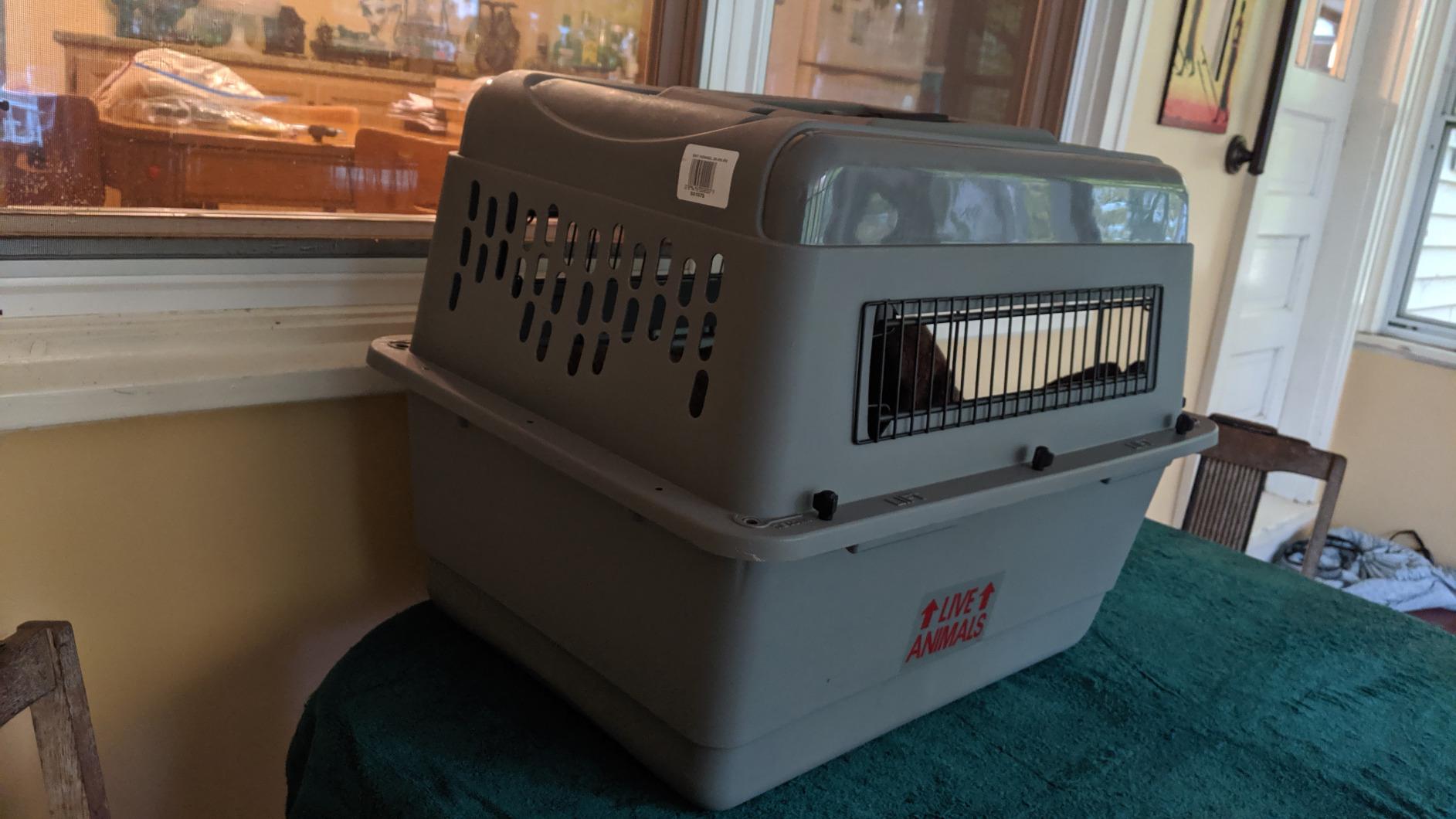
I am including this one deliberately, and not pretending it is a cabin carrier. At 21 x 16 x 15 inches it will never pass an in-cabin under-seat check, and any agent who says otherwise is wrong. It earns its place because there is a specific and common situation where it is exactly right: a dog who is too large or too long for the cabin seat, travelling on an international or long-haul route.
In that case the move to make is not a better cabin bag, it is a compliant cargo kennel, and this one is built to the IATA Live Animals Regulations with tie-down strap holes, ventilation on all four sides, and the stickers and documents that airline cargo desks ask for at acceptance.
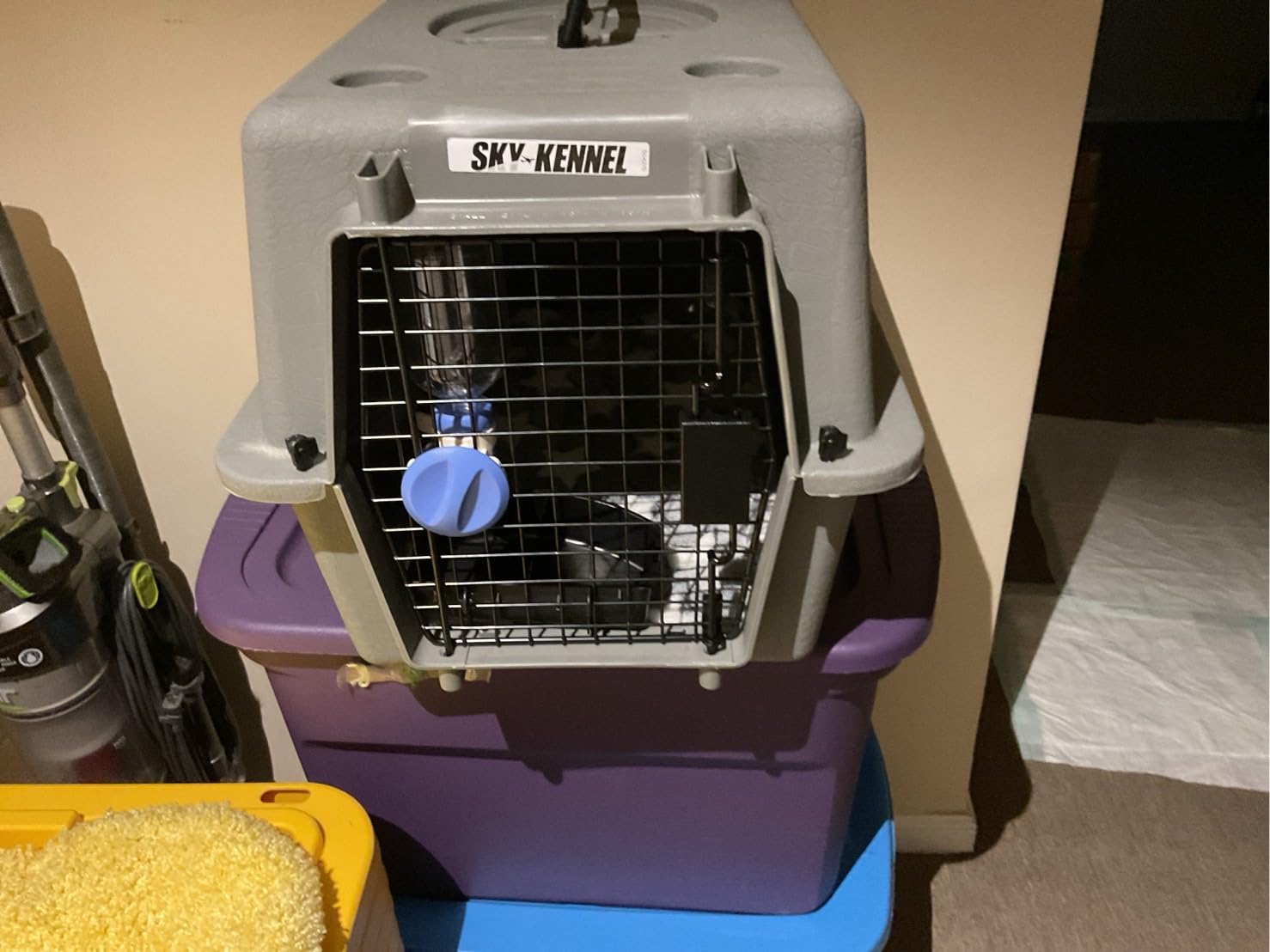
The build is good. It assembles quickly with bolts and wing nuts, the door has interlocks that are genuinely hard for a dog to force, and the two halves nest for storage. The plastic is EcoTEC with at least 90 percent pre-consumer recycled content, which matters if the airline requires a crate that is not wood.
Owners consistently treat it as the reference kennel in this category, which is a useful signal when a relocation service or cargo desk tells you to bring an IATA-compliant crate.
What IATA Compliance Actually Covers
IATA compliance is about the transport environment, not the passenger cabin. It covers ventilation on all sides, a secure door, tie-down points, and the ability to hold a bowl and an absorbent pad. It says nothing about fitting under a seat, because cargo holds are a different space entirely.
If you see a product claiming to be IATA approved and imagine it is also airline approved for the cabin, that is a category error. Sherpa’s Guaranteed On Board program and an IATA cargo specification are two different claims about two different journeys.
Preparing the Kennel for a Cargo Journey
Two things need adding before it leaves your house. The first is an absorbent pad, since the crate ships bare. The second is a proper water container: the included cup is small and does not screw-mount to the crate as the regulations require, and a loose cup in a cargo hold is a spill.
Line the base with something absorbent and non-slip, and check the temperature rules for your route before you load a dog into a hold.
Where It Falls Short
For an anxious dog, a hard plastic shell is a hard experience. There is no softness to settle into, no mesh wall to look through, and no ability to compress. For an anxious animal, the in-cabin soft carriers in this roundup are a fundamentally kinder option if your dog is small enough.
A few owners also report the plastic cracking under impact during transit. Treat it as a travel crate rather than a permanent home.
6. SECLATO Collapsible Carrier – The Cleanest Mesh Build in the Group
SECLATO Cat Carrier Pet Dog Carrier Airline Approved for Puppy Cat Carrier Under 15 lbs, Collapsible Soft Sided Airline Approved Cat Carriers, Grey
17 x 12 x 11 inches
1.76 pounds
Pets under 15 lbs
OEKO-TEX certified
Pros
- Highest satisfaction ratio in the group with a very low one-star rate
- Thick tear-resistant mesh that resists clawing
- Folds flat and is easy to clean after an accident
- Hidden foldable bowl
- Three-layer detachable washable wool pad
Cons
- Soft structure does not stand unsupported on its own
- Zippers can be stiff on first use
- Runs small for adult cats above roughly 7 to 12 pounds
At 17 x 12 x 11 inches and 1.76 pounds, this is one of the lightest and most compact compliant footprints in the roundup, and it carries an unusually satisfied owner base for the money. What stands out on inspection is the mesh: it is described as tear-resistant on all four sides, and owners with clawing cats report it holding up where cheaper mesh fails.
The escape-proof bayonet closure is a better mechanism than a standard zip, and the three-layer detachable washable wool pad is a nice touch for a dog that has never been in a carrier. The hidden foldable bowl is useful on longer flights.
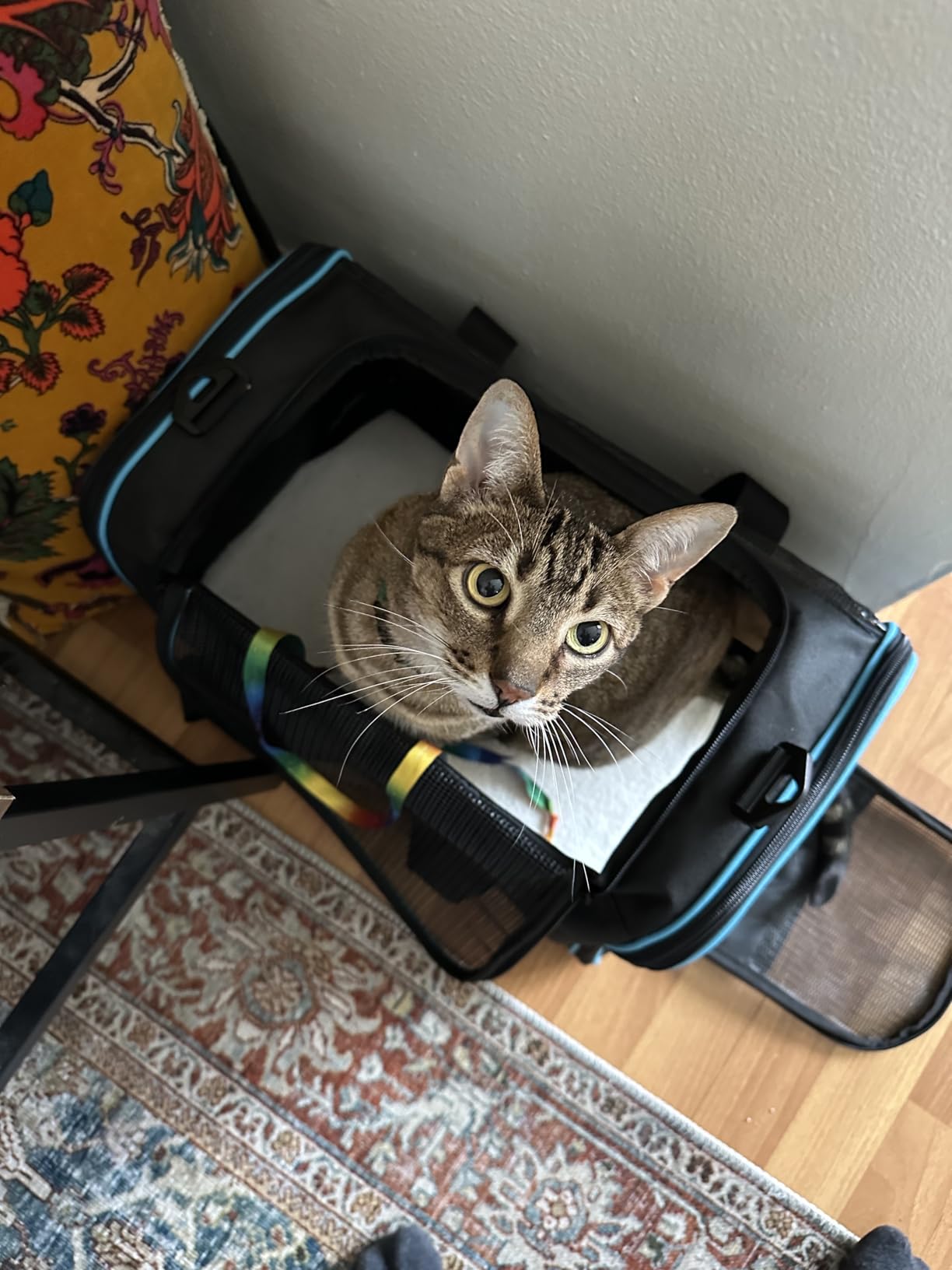
Materials are OEKO-TEX Standard 100 certified, which matters more than it sounds if your dog has sensitive skin or if you are using it for a puppy that will spend hours against the fabric. Owners note the carrier fits under the seat on major carriers including American.
Recommendation is for pets within 15.7 x 10.2 x 10.2 inches and under 15 pounds, which is a sensible interior to aim at.
Why the Mesh Matters More Than Most Buyers Expect
Mesh is not decoration. It controls airflow, it lets your dog see and hear you, and it lets you check on them without unzipping anything. On a three-hour flight, the last point is the difference between a calm dog and one you are worried about.
It is also the most likely failure point in a soft carrier. A panicked dog chewing a corner of thin netting can create a hole in minutes. Tear-resistant mesh on all four sides is the difference between a scratch and an escape.
Cleaning, Folding and Everyday Use
This is the carrier to buy if your dog has never flown and you expect a stressed accident. It folds completely flat, the pad detaches for machine washing, and the whole thing wipes down. Owners with anxious dogs mention the washable pad as the reason they stopped dreading the return flight.
It doubles as a car carrier, with a loop strap for securing it with a seat belt.
Where It Falls Short
There is no rigid base, so it will not stand up on its own. You will need to set it down on something flat or keep a hand on it. In a terminal that is a minor inconvenience; in a cargo hold or on a lap in a car, it matters.
Sizing is tight for adult cats above roughly 7 to 12 pounds, and the zippers are stiff on first use. Work them both before the flight so nothing surprises you at the gate.
7. Petsfit Medium Expandable Carrier – Best Expandable for Frequent Flyers
Petsfit Medium Expandable Cat Carrier for Air Travel, Up to 13 lb
17 x 11 x 11 inches collapsed
Expands to 20 x 17 x 11 inches
Up to 13 lbs
2.5 pounds
Pros
- Single expansion panel that stays usable during the flight
- Folds completely flat for storage
- Self-lock zipper plus luggage strap for a rolling bag
- Detachable top fibre rods let you drop the height before boarding
- Consistently passed gate checks on several major airlines
Cons
- Rods must be removed before boarding and the top then sags
- No easy way to buckle into a car seat
- Long fiddly shoulder strap and unpadded handle straps
- Only one minimal side pocket and no external loops
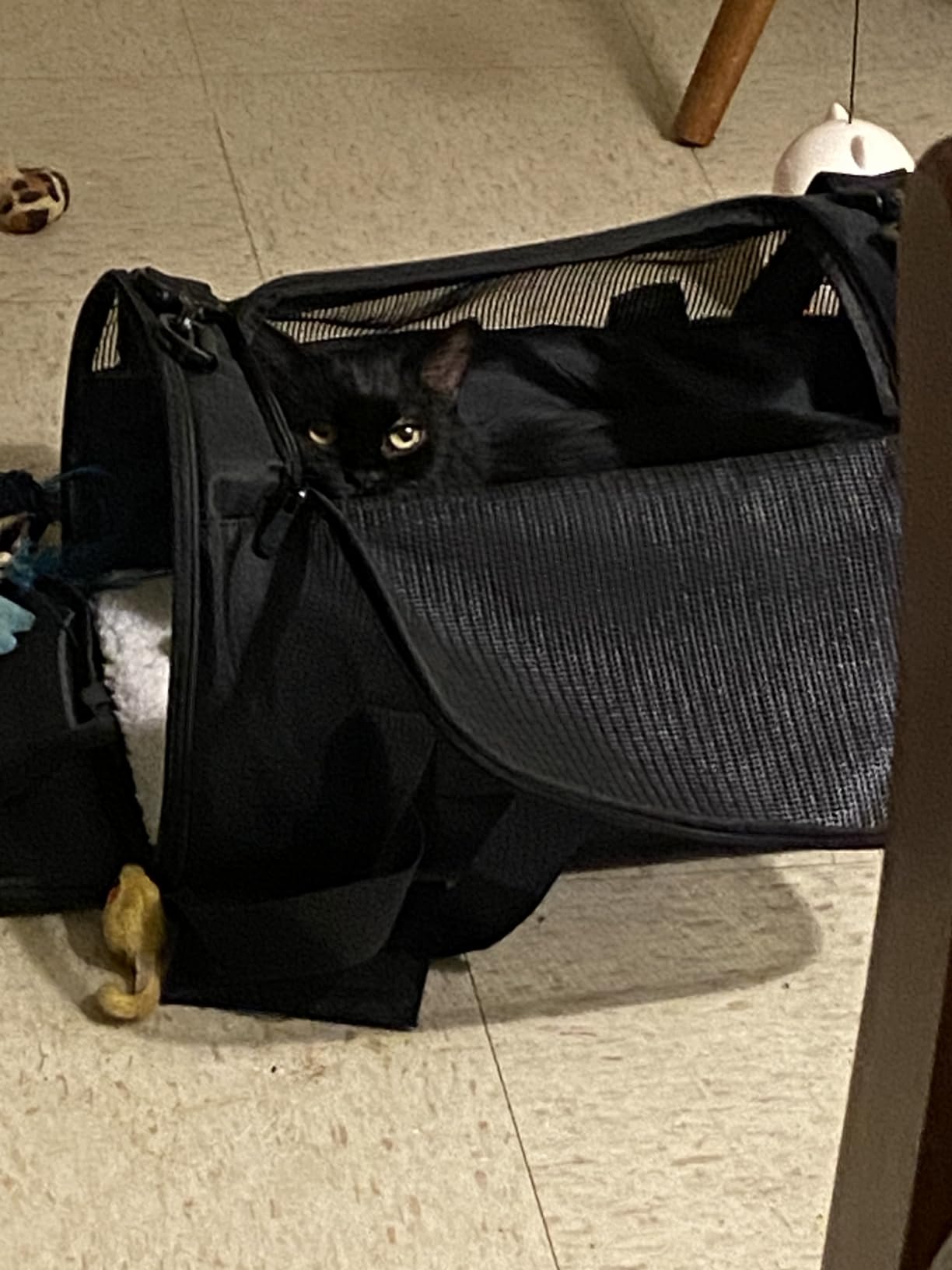
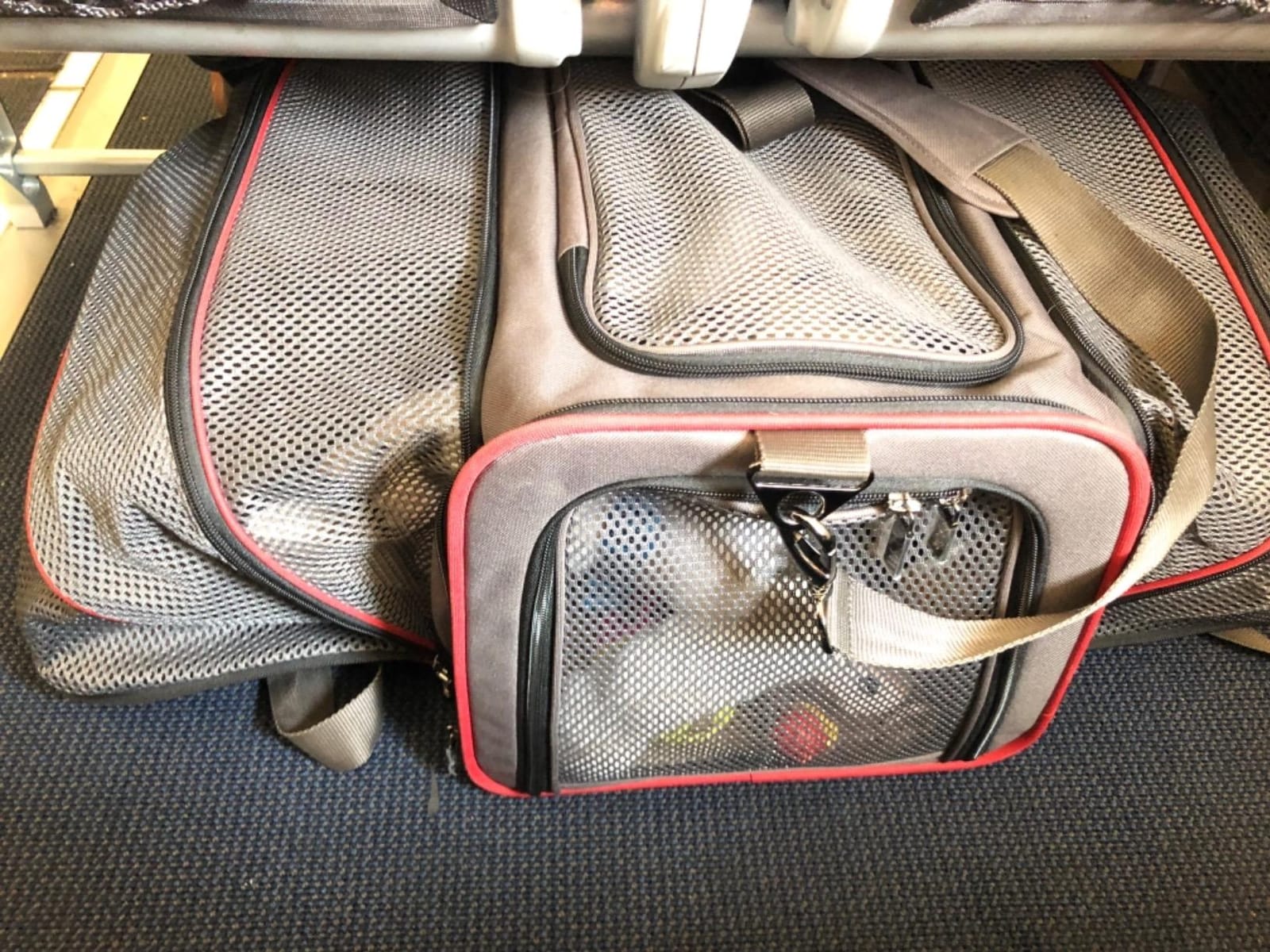
Expandable carriers confuse people. The rule is simple: it goes into the aircraft in its compliant collapsed state, and you only open the expansion panel once you are seated and the seat-back pocket is no longer relevant. Most expansion complaints happen because someone forgets the first half of that sentence.
This one expands across a single side panel, from 17 x 11 x 11 inches out to 20 x 17 x 11 inches, and that one panel stays genuinely usable during the flight. Rival designs with four or more panels often open into a tent the dog cannot lie down in properly.
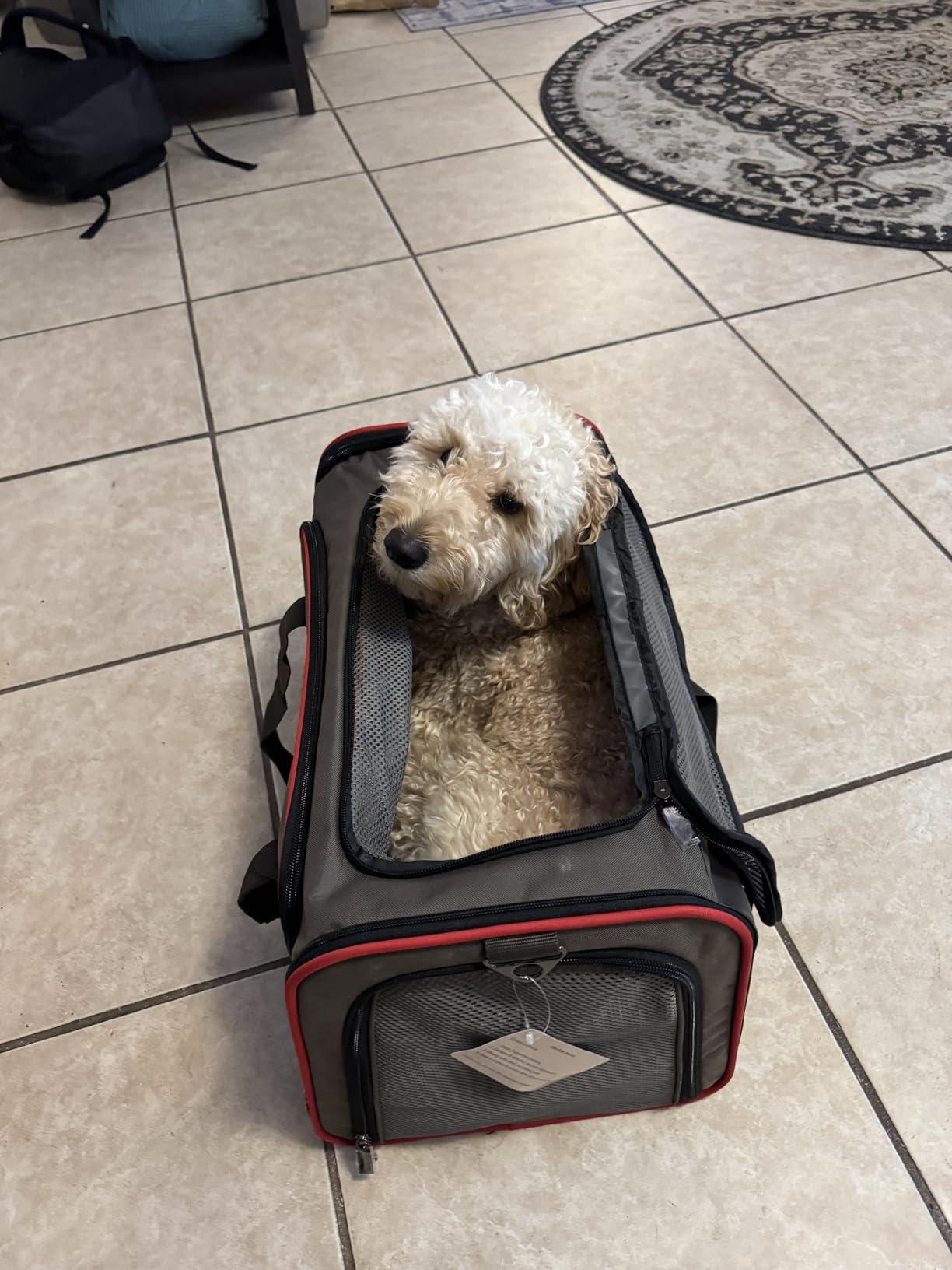
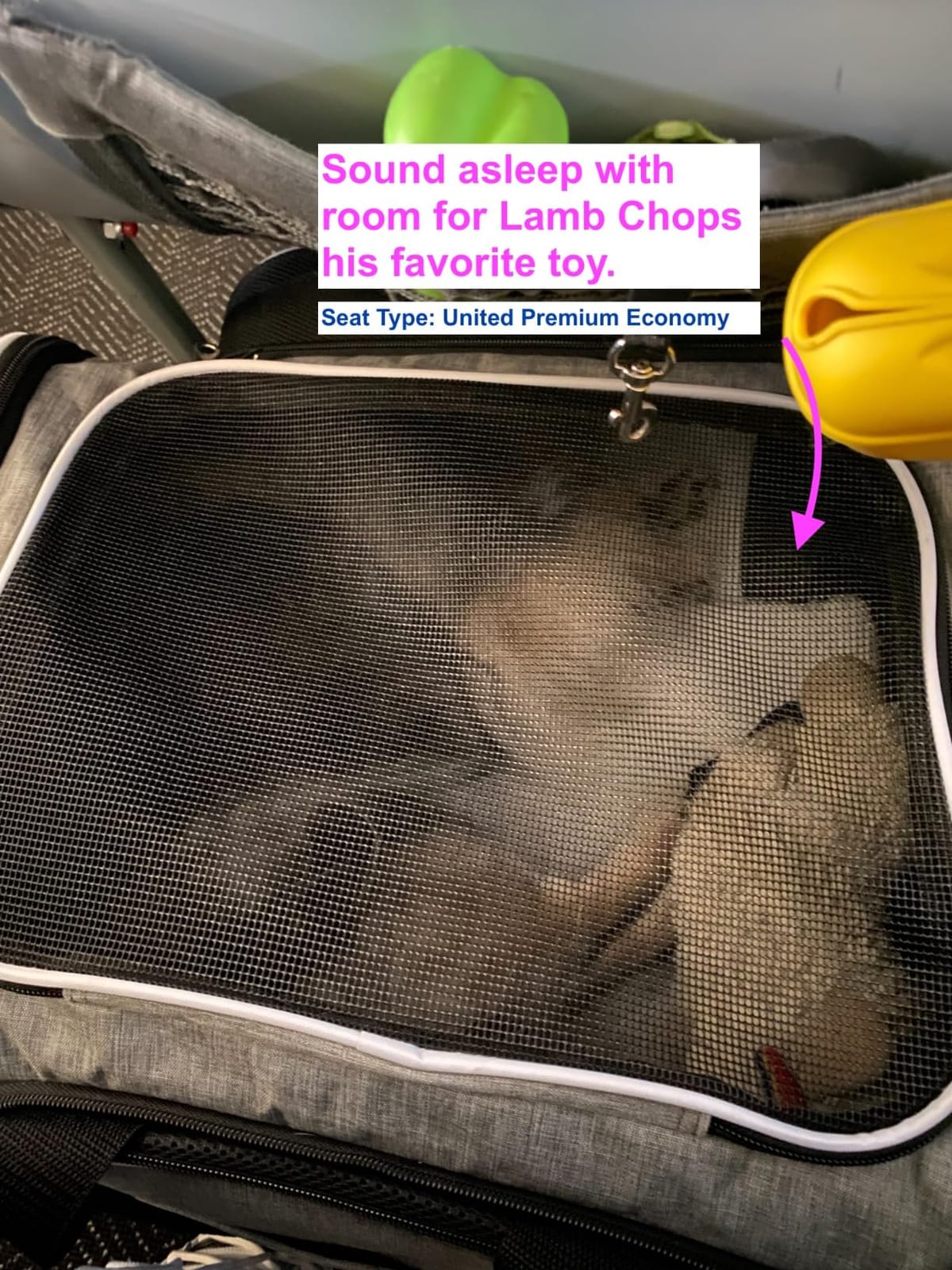
At 2.5 pounds it is among the lightest carriers here, which helps if a gate agent weighs the bag. A solid wire structure compresses to fit under a seat, the PP board base is more rigid than the bag deserves at this level, and the self-lock zipper and anti-scratch mesh are both above what the price would suggest.
Owners report uneventful gate experiences on Delta, American, Frontier and European carriers, which is the kind of breadth of evidence I look for before recommending anything.
Removing the Top Rods: The Step Everyone Misses
Two detachable fibre rods on the top let you adjust the carrier height. Pull them out before you board and the top drops to clear a tighter under-seat space. Leave them in and you are carrying an 11 inch bag at a moment when the limit may be lower.
Owners flag the trade-off clearly: with the rods out, the top sags. For a dog up to 13 pounds that is fine. For a heavier dog, choose a different carrier.
Expansion in Practice, Not Just in Theory
A collapsible false wall keeps the expanding mesh from pressing into the dog as the panel opens, which is a small design detail that stops the expansion from becoming a problem. The thick washable plush pad detaches from the PP base.
The luggage strap slides onto the handle of a rolling bag, so you are not carrying two separate bags through the terminal. Pair it with our travel backpack roundup if you want the rest of your cabin load on wheels.
Where It Falls Short
The 13 pound ceiling is the real limit. This is a carrier for small dogs, not for a 20 pound animal, whatever the expansion panel suggests.
Accessories are thin. One small side pocket, no external loops for a tracker, a shoulder strap that is long and awkward to shorten, and unpadded handle straps all show up repeatedly in reviews.
8. Petsfit Large Expandable Carrier – The Longest Expansion for Long-Bodied Dogs
Petsfit Airline Approved Expandable Large Cat Carrier Small Dog Carrier, 17″ x 11″ x 11″ Collapsible Portable Soft-Sided Airplane Pet Carrier Bag with Two Extension, Fit for Outdoor Use
17 x 11 x 11 inches collapsed
Expands to 29 x 17 x 11 inches
Up to 13 lbs
2.9 pounds
Pros
- 29 inch two-panel expansion is the longest reach in this roundup
- Six opening options make loading and access easy
- Well-stitched oxford cloth that has held up over years
- Luggage strap and thick washable plush pad
- Consistently fits under the seat on regional jets
Cons
- Opening the two panels means working three separate zippers
- Liner does not extend into the expanded area
- Rod removal is awkward and must happen before boarding
- Listed 11 inch height can exceed stricter airline limits
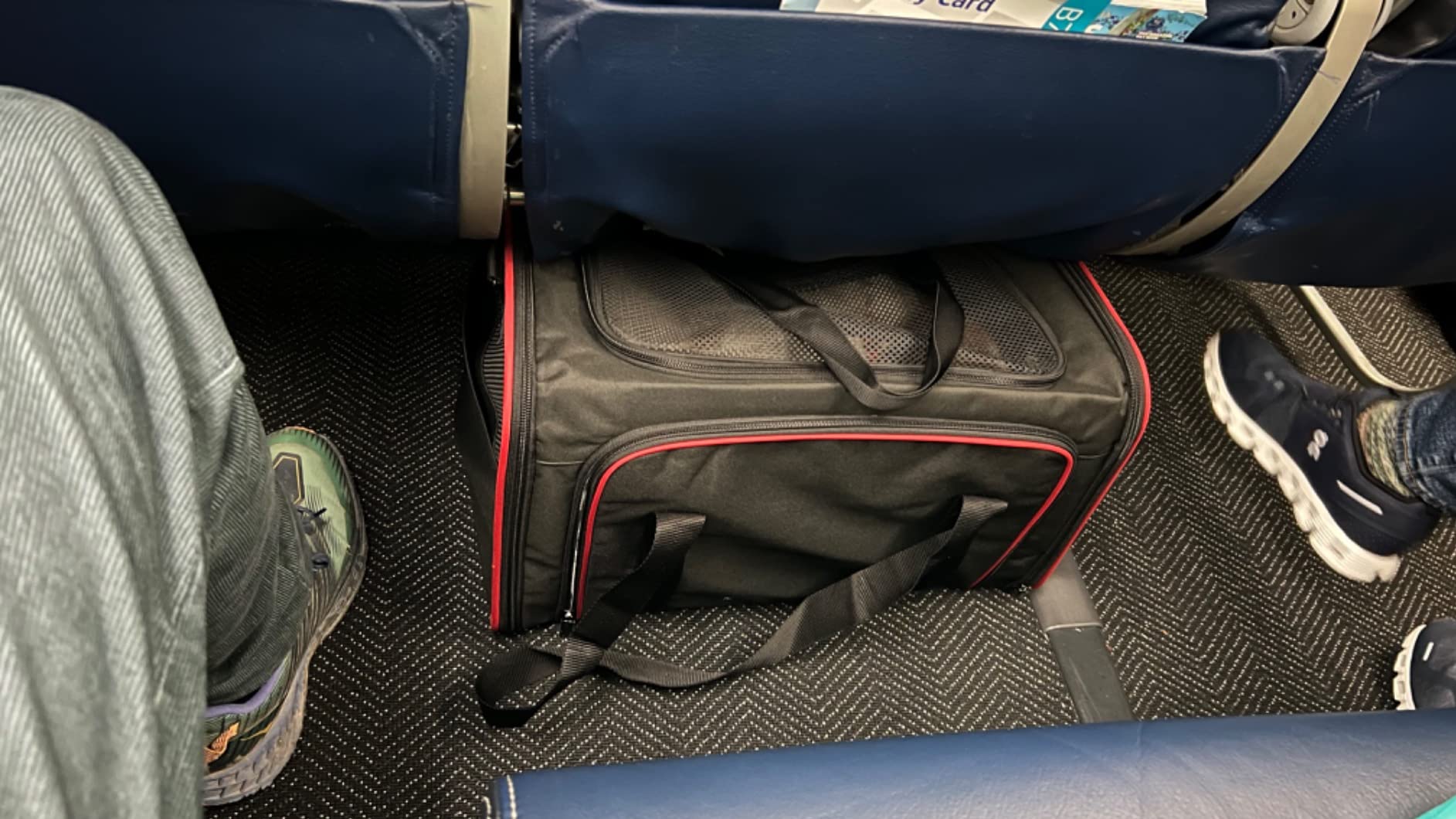
Dachshunds, corgis, and basset hounds fail the length test, not the weight test. A dog with a 16 inch nose-to-tail length weighs very little and still cannot fit a body in a 17 inch rectangular carrier without being bent. This is the carrier in the roundup built for that problem: it expands to 29 x 17 x 11 inches across two mesh panels.
Note the order of operations. The bag enters the aircraft collapsed at 17 x 11 x 11 inches. You open the expansion only after you are seated. It is a comfort feature in the cabin, not a compliance feature at the gate.
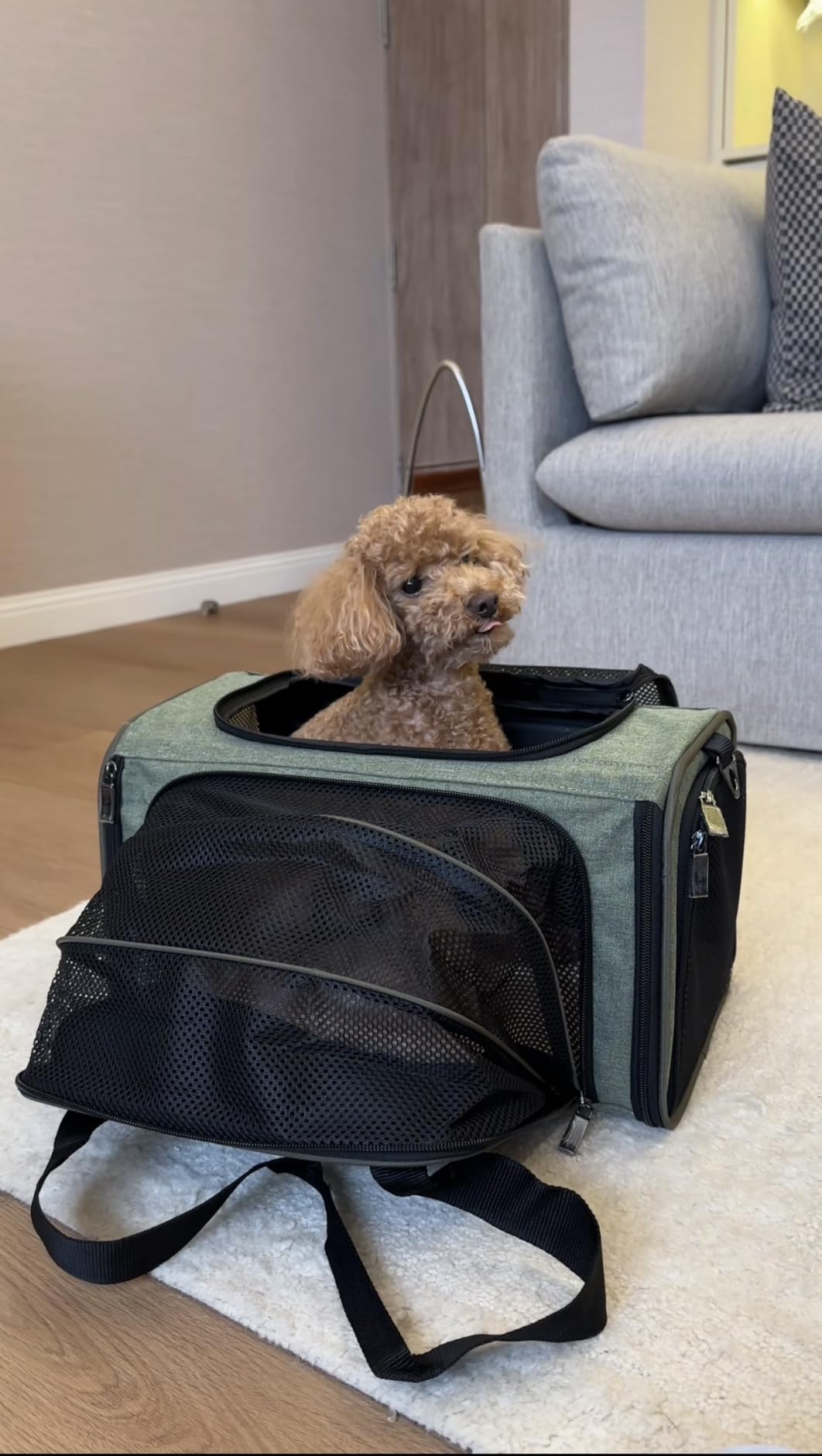
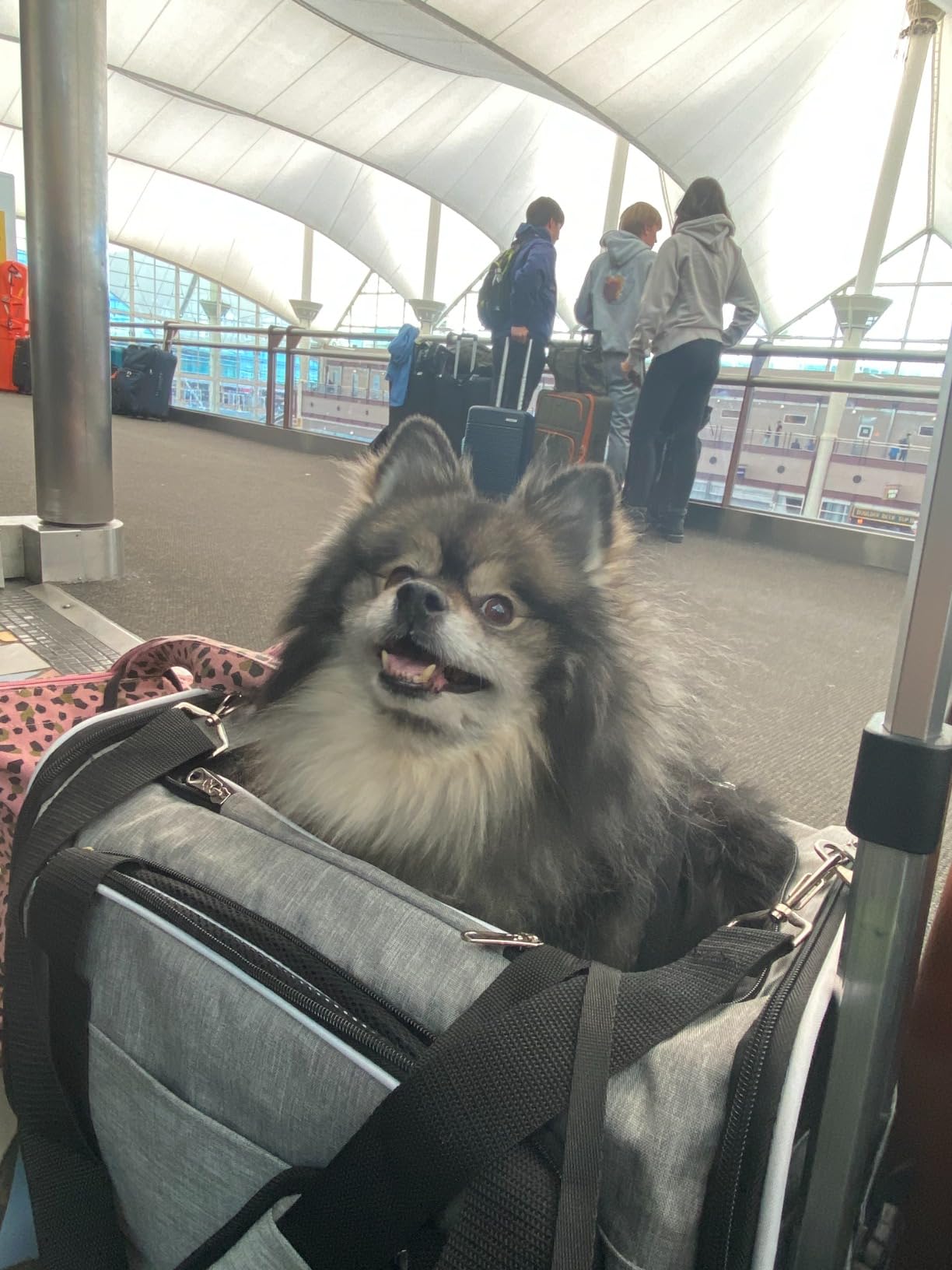
Owners of small pets report calm, unremarkable flights on American, Delta, Iberia and Vueling, with the two-panel expansion praised as noticeably roomier than single-panel rivals. The oxford cloth has held up for long-term owners, which matters for something you plan to keep for years.
Six full opening options is a lot of access, useful for a dog that needs to be loaded in a tight jet bridge or settled into a lap at boarding.
Matching a Long Dog to the Right Expansion
Here is the matching method. Measure your dog nose to base of tail while it stands naturally, add 2 to 3 inches of clearance, and that is the internal length you need. A dachshund measuring 15 inches needs an 18 inch internal footprint, which the 17 inch body plus a full panel extension delivers comfortably.
A corgi measuring 13 inches fits the collapsed state of this carrier without any expansion at all. You may never open the panels, and that is fine.
The Three-Zipper Problem and How to Avoid It
Opening two expansion panels means working three separate zippers, and owners note this can stress a dog who is watching. The fix is procedural: open the panels at the gate, not in front of the dog, and do it once you are seated with the carrier on your lap or under the seat in front of you.
Two detachable fibre rods adjust the height and must come out before boarding. Rod removal is awkward by design rather than by accident, so practise it at home.
Where It Falls Short
The removable liner does not extend into the expanded area, so a dog using the full 29 inch length is lying on bare base. Put a blanket or a folded mat in the extension yourself.
Be careful with the 11 inch listed height. Owners flying stricter carriers have found it tight, so verify the height rule before you book rather than at the gate.
9. Ruff Life 101 Rolling Carrier – Best for Long Terminal Walks, With One Measurement Warning
Ruff Life 101 Airline Approved Expandable Premium Pet Carrier on Wheels- Two Sided Expandable Rolling Carrier- Designed for Dogs & Cats- Extra Spacious Soft Lined Carrier! (Grey)
18 x 11 x 11 inches
6.5 pounds with wheel base
360 degree rotating wheels
Fully retractable handle
Pros
- Ball-bearing rolling base makes long terminal walks much easier
- Carrier detaches from the trolley in seconds for under-seat stowage
- Thick top wire frame prevents sagging when expanded
- Roof ventilation and mesh sides for air circulation
- Carrier and base both fold flat
Cons
- Measured base runs about 13 inches wide against a listed 11 inches
- Detaching happens before boarding rather than in the aisle
- Wheels can drift rather than track straight
- Under-seat fit is a very tight squeeze
Rolling a bag across a 1,200 foot concourse with a dog in it is a different experience from carrying one. This carrier uses a ball-bearing base with 360-degree rotating wheels and a fully retractable handle, and the carrier body detaches from the trolley in seconds. Roll it to the gate, lift it off, put it under the seat. Several owners confirm it worked under the seat on United and other carriers once the trolley was removed.
The two-sided expansion and thick top wire frame keep the shape from collapsing when opened, which is a common failure with cheaper wheeled designs.
There is a good bit of practical advice buried in the reviews here: set the handle to the maximum extension, not the minimum, in the terminal. A low handle means stooping and dragging rather than rolling.
At 6.5 pounds including the wheel platform, this is by far the heaviest carrier in the roundup. That is a real consideration if you are managing stairs, or if anyone in your party has a back that will not thank them for it.
Measure the Base, Not the Listing
Here is the detail that matters more than anything else in this review. Owners report that the base measures closer to 13 inches wide against a listed 11 inches. Over a stated width at the base, the bag can be refused for a limit it appears to meet on paper.
Before you buy this, put a tape measure on the bottom of the wheel base and subtract an inch of margin. If your airline publishes an 11 inch width, this is not the carrier for that route.
The Remove-Wheels Workflow
Detaching the carrier from the wheel frame has to happen before you board, not in the aisle or at the jet bridge door. Practise the release at home so it is a two-second motion rather than a puzzle with a dog inside.
Even detached, owners describe the under-seat fit as a very tight squeeze that may require pressing down a support wire. That is a frame flex working in your favour, but it is not a comfortable fit for a large dog.
Where It Falls Short
The width discrepancy is the dealbreaker for strict carriers, and it is the single most repeated complaint in the reviews. Treat the listed 18 x 11 x 11 inches as a target rather than a guarantee.
Wheels drift rather than tracking straight, so it is a comfort improvement for smooth concourses rather than a solution for cobblestones or long walks across rough ground.
10. Pawaii Safety Leash Carrier – Best In-Cabin Escape Prevention
Pawaii Cat Carrier Airline Approved Expandable Breathable Safety Leash
16.9 x 10.6 x 10.6 inches
3.44 pounds
Maximum load 13 lbs
Built-in safety leash
Pros
- Built-in anti-wandering leash clips to a collar for extra security
- Four-side breathable mesh with a top window keeps the pet observable
- Included QR code digital ID tag aids recovery if a carrier is lost
- One-sided 3D expansion lets a cat stretch out
- Attaches to a rolling luggage case and folds for storage
Cons
- 13 pound ceiling makes it a small-dog and cat carrier
- Slightly wider than the listed airline dimensions
- Carrier height must be checked per airline
The distinguishing feature here is a built-in anti-wandering safety leash that attaches to your dog’s collar inside the carrier. A dog that slips a harness mid-flight cannot get away from you with it, which is the one failure mode no zipper can solve. For a cat or a small dog that is nervous and wriggles, that tether is worth more than any amount of extra mesh.
Everything else is well executed. Breathable mesh on all four sides with a top opening keeps air moving and lets you check on the pet, and a one-sided 3D expansion gives a cat room to stretch out without the bulk of a full panel.
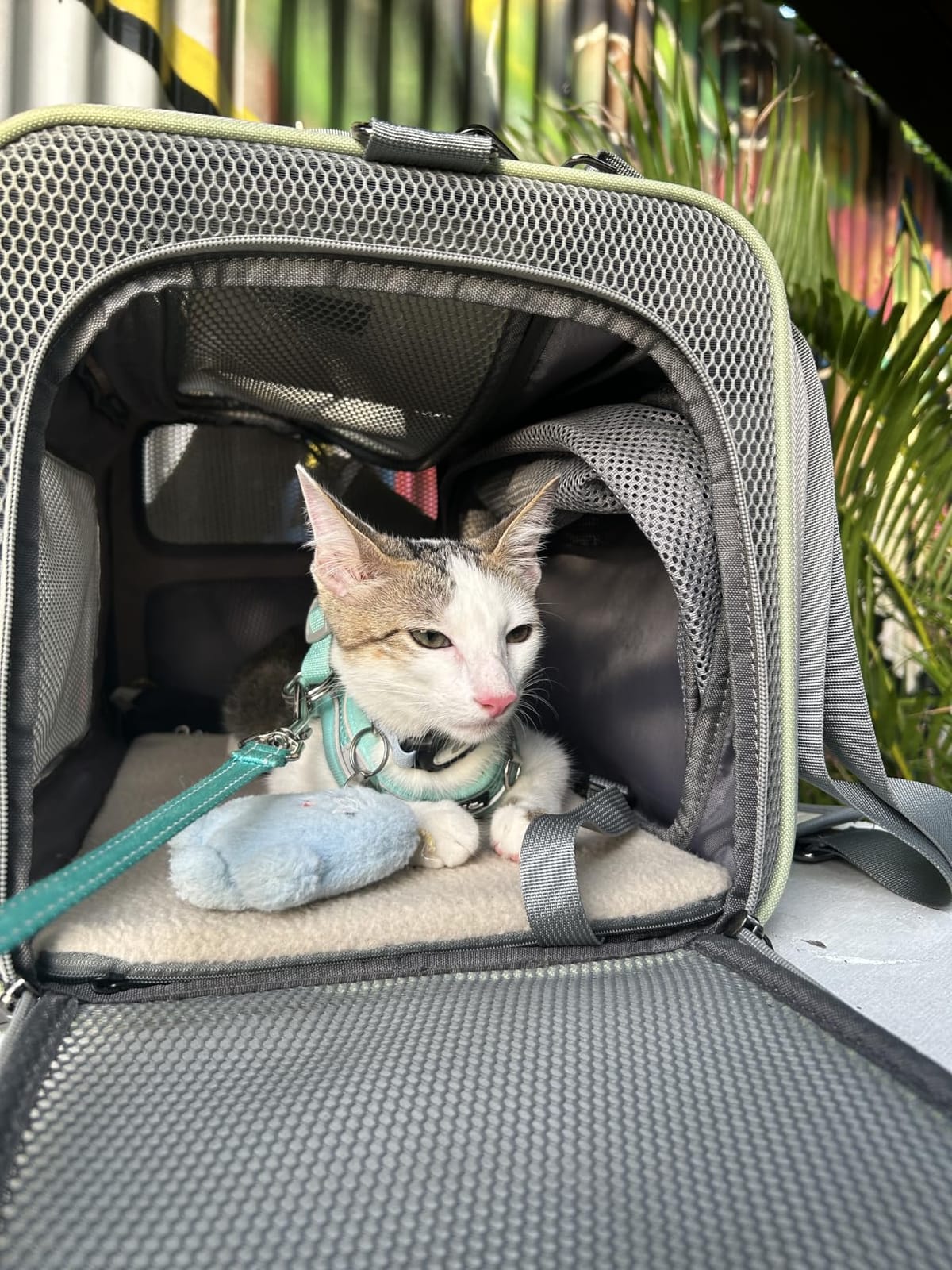
The stated airline standard size is 16.9 x 10.6 x 10.6 inches, and the maximum load is 13 pounds. Owners report the strongest satisfaction ratio in the whole group, with very few negative reviews.
The included QR code digital ID tag is an unusual inclusion. If a carrier is lost between the terminal and a connecting flight, scanning the code surfaces a recovery contact rather than an anonymous bag in a carousel.
Why the Internal Leash Changes the Risk Calculation
Every other carrier in this roundup relies on zippers, mesh, and closures holding. Those are good defences and they have all failed for somebody. An internal tether is a different category of protection, because it does not depend on any material holding at all.
It does require a collar rather than a harness, since the leash clips to a collar. Make sure your dog is comfortable in a collar before the flight.
Dimensions, Expansion and the Rolling Luggage Attachment
At 16.9 inches long, this is a compact footprint that clears the common 18 inch length limit with room to spare, and the 10.6 inch height is below the standard 11 inch figure. That combination makes it a safe pick for a carrier with slightly tighter rules.
Be aware, though, that the product dimensions field lists a wider packed figure than the airline standard field. Measure the bag yourself and compare against your carrier’s published number rather than trusting either one.
Where It Falls Short
The 13 pound ceiling makes this a small-dog and cat carrier. It is not the right choice for a 20 pound animal no matter how good the safety features are.
And because airlines publish different height rules, the same advice applies here as everywhere else: confirm the limit on your airline’s own page before you book. Nothing in this category is worth more than a five-minute phone call to the airline.
What Makes a Dog Carrier Airline Approved
An airline approved dog carrier is a soft-sided, collapsible bag that fits entirely under the seat in front of you, with mesh ventilation, self-locking zippers and a padded base, so the dog can stand, turn and lie down naturally for the length of the flight.
That is the definition worth arguing with, because airline approved is not a certification any regulator issues. It is a marketing phrase printed on a product page. What actually matters is airline compliant, meaning the carrier meets a specific published size limit that your airline has put on its own website.
Airline Approved vs Airline Compliant: The Distinction That Saves Your Dog
Airline approved is a seller saying the product should work. Airline compliant is a measurable claim: 18 x 11 x 11 inches, or whatever your carrier publishes. If a product page only offers the first, assume nothing and check the dimensions yourself.
There is a second difference that trips people up. A brand can be IATA approved for cargo transport, which is a different environment with different rules from a passenger cabin. Sherpa’s Guaranteed On Board reimbursement programme and an IATA cargo specification are two separate claims, and neither one guarantees your dog flies in the seat with you.
The Six Criteria That Decide Gate Approval
1. Soft-sided construction. Nearly every airline specifies a soft carrier. A spring-wire or compressible frame squeezes down when a gate agent tests the height; a hard crate cannot, which is why hard-sided bags fail under-seat checks no matter how compliant they are on paper.
2. Under-seat dimensions. The common published figure is 18 x 11 x 11 inches, but that is a starting point, not a rule. Buy a bag that measures at or under your airline’s number, and leave yourself a margin rather than buying the maximum.
3. The standing, turning and lying test. Your dog must be able to enter, stand, turn around, and lie down naturally inside. This is where long-bodied dogs fail while comfortably under the weight limit.
4. Ventilation. Mesh on multiple sides keeps air moving and lets your dog see you. An enclosed fabric carrier is a stress chamber for a nervous animal.
5. Zipper security. Self-locking or bayonet closures, reinforced stitching, and an interior safety strap. A dog that opens a zip at 30,000 feet is not a problem you can solve.
6. Weight versus length. Weight is the number everyone checks and almost never the one that fails. Measure nose to base of tail, add 2 to 3 inches, and compare that against the carrier’s internal length.
How to Measure Your Dog Before You Buy
Stand your dog naturally on a flat floor and measure from the tip of the nose to the base of the tail. Do not include the tail curl or stretch the dog out. That number plus 2 to 3 inches is the internal length your carrier needs.
Then measure the carrier itself at its base, not at the widest bulge, and subtract an inch of margin from your airline’s limit. Buying a bag that measures exactly the maximum is how people end up arguing at a check-in counter.
Airline Pet Carrier Size Limits by Airline
Airline pet carrier size limits are the single most repeated question in every airline travel forum, and the honest answer is that you must check your own airline’s current page before you book, because these numbers change and they vary by aircraft. What follows is the shape of the variation, not a substitute for that check.
The pattern that shows up repeatedly across carriers is a common US ceiling around 18 x 11 x 11 inches, with individual airlines publishing noticeably tighter height rules. Frontier and Spirit in particular have height limits quoted in the 8 to 11 inch range in owner reports, which is far below the standard 11 inch figure. JetBlue has been cited at around 17 x 12.5 x 8.5 inches, and Air Canada works in centimetres, with a figure around 55 x 40 x 27 cm reported by owners.
Delta’s published guidance is smaller than the standard on some routes, which is where the aircraft-type problem appears. A carrier that fits on one aircraft type in a fleet can fail on another with tighter under-seat clearance, which is the single most confusing part of this whole subject.
Four Questions to Ask the Airline Before You Book
Ask what the maximum carrier dimensions are on your specific route, and ask about the aircraft type if you can. Ask whether they require soft-sided specifically, and whether expandable carriers must be collapsed at boarding. Finally, ask about the in-cabin fee, including whether it is charged per pet, per direction, or per segment.
Add your pet to the reservation in advance. Travellers report that having the pet already on the booking changes how the check-in conversation goes, because the agent is confirming a known arrangement rather than adjudicating a new one.
What Actually Happens at the Gate
Denial at the gate is the outcome everyone is trying to avoid, and it usually happens at check-in rather than at the aircraft door. Here is what the process looks like when a carrier is not compliant, and what you can do about it.
Step 1: The bag is measured. A gate or check-in agent puts a tape measure on the carrier, or visually checks it against the published dimensions. This is the moment the listed-versus-actual discrepancy on wheeled carriers like the Ruff Life gets discovered.
Step 2: The dog may be asked out of the carrier. Owners in airline subreddits report being asked to lift the dog out and stand it next to the bag while the agent assesses whether the dog can stand and turn. This is the standard fitting test.
Step 3: Size, not weight, decides it. If the dog cannot stand, turn around, and lie down naturally, the carrier fails regardless of the animal’s weight. A dog an inch taller than the bag is a common, reported reason for refusal.
Step 4: Options are offered or you are rebooked without the dog. The realistic outcomes are a compliant alternative carrier, a fee-based seat change to buy underseat space, a gate check, or rebooking without the animal. A gate check means the bag travels in the hold, which is a different and often more stressful experience for the dog.
Step 5: Document it and appeal. Photograph the measurement, the tag, and the agent interaction. If the denial is a carrier-size issue, reimbursement programmes exist precisely for this, and a claim with evidence is processed faster than one without.
The prevention list is short and worth following: add the pet to the reservation, measure the bag yourself, measure the dog yourself, verify the aircraft-specific limit, and arrive early enough that an agent has time to work with you rather than rushing you onto a queue.
When Your Dog Is Too Big for the Cabin Seat
Some dogs will never fit under a seat, and the honest thing to do is accept that early rather than spend months on carrier comparisons. If your dog cannot curl up in an 18 x 11 x 11 inch footprint, you are in one of three situations.
1. Check whether a size exception exists. Some airlines sell an extra seat for an in-cabin pet on eligible routes, which gives the dog a full seat rather than an underseat pocket. Route eligibility and aircraft vary, so this is a question for the airline rather than a search you run online.
2. Move to compliant cargo transport. For international and long-haul routes, an IATA-compliant kennel with tie-down points, ventilation on all sides, and a properly mounted bowl is the correct tool. Add an absorbent pad and check the temperature rules for your route before the dog boards.
3. Use a professional pet relocation service. For moves rather than holidays, a relocation company handles the paperwork, the manifests, and the airline relationships. Expect a substantially higher cost than a cabin seat and a longer journey for your dog.
International routes also add paperwork that domestic travel does not: a veterinary health certificate issued in the right window before departure, rabies vaccination proof, microchip documentation where required, and the IATA forms. Start that process earlier than feels reasonable.
One more thing: a service animal is not the same as a pet in a carrier. A documented service animal travels under different rules with no carrier requirement, and the rules for emotional support animals have narrowed considerably. If that is your situation, talk to the airline directly rather than assuming carrier rules apply.
Frequently Asked Questions
What is the largest TSA-approved pet carrier for a plane cabin?
Most US airlines publish a maximum carrier size around 18 x 11 x 11 inches, which is the figure the TSA works from at security. Individual airlines publish their own limits and some are tighter, with height limits quoted as low as 8 to 11 inches on Frontier and Spirit. Buy at or under your airline’s published number rather than at the standard maximum.
What makes a dog carrier airline approved?
Airline approved is a marketing term, not a certification. What matters is that the carrier is airline compliant: soft-sided, collapsible, and within your airline’s published under-seat size limit, with mesh ventilation, secure self-locking zippers, and enough interior space for the dog to stand, turn and lie down naturally.
Which brands of pet carriers are IATA approved?
IATA approval applies to cargo and live-animal transport, not to passenger cabins. A carrier meeting IATA Live Animals Regulations needs ventilation on all sides, secure latches, tie-down points, and a mountable bowl set. Several soft carriers in this roundup serve the cabin, and the Petmate Sky Kennel serves IATA cargo, but the two claims are never interchangeable.
Can a 25 lb dog fit under an airplane seat?
Only if the length works, because size beats weight at the gate. A 25 pound dog that measures under 18 inches nose to base of tail may pass on a roomy route, while a 15 pound dachshund with a long body will fail. The test is whether the dog can stand, turn around, and lie down naturally inside the carrier.
What happens if my dog doesn’t fit under the plane seat?
An agent will usually measure the carrier and may ask you to lift the dog out and stand it beside the bag. If the dog cannot stand, turn, and lie down naturally, the carrier fails. You may be offered a compliant alternative carrier, a paid seat, a gate check, or rebooking without the dog. Photograph the measurement and check whether the carrier has a fee-reimbursement programme.
How do I get my dog comfortable in a carrier before flying?
Start two weeks ahead. Leave the carrier open at home with a treat inside, then feed meals in it, then close it briefly with the dog inside, extending the duration each time. Add a familiar blanket and use the same carrier for car trips beforehand so the smell and shape are already normal. Rewards at the gate reinforce the association right before boarding.
Which Airline Approved Dog Carrier Should You Book
If you want one carrier that clears the most gates with the least fuss, the Henkelion is the pick. At 17 x 11 x 11 inches and 7.05 ounces it has margin on the common cabin limit, a review base large enough that its weaknesses are well documented rather than mysterious, and an interior most dogs settle into fast.
If your dog is heavier, the Amazon Basics mesh carrier is the value choice for animals in the 15 to 18 pound range who measure short enough to use its 20 inch interior. If you fly often or your route has tight aircraft, the Sherpa Original Deluxe earns its premium through a spring wire frame that genuinely compresses and a reimbursement programme that covers you when an agent disagrees.
If you have a long-backed dog, the Petsfit large expandable with its 29 inch extension is the only bag here designed around the length problem. If your hands are full in the terminal, the PetAmi backpack moves the load off your shoulders, and the Ruff Life rolling carrier does the same with wheels once you have measured the base width yourself.
If your dog is anxious, work on the carrier training before the flight. No bag fixes a dog who has never been inside one, and two weeks of short positive sessions changes more than any feature on this list.
Before you book anything, call your airline and ask for the maximum carrier dimensions on your specific route, add your pet to the reservation, and measure the bag you are buying at its base. That ten-minute routine prevents nearly every failure described in this guide.
We keep updating this roundup as airlines revise their pet policies, and if you are planning a longer trip you might also want our electric kettles for travel picks for hotel rooms where the tap water is questionable.