
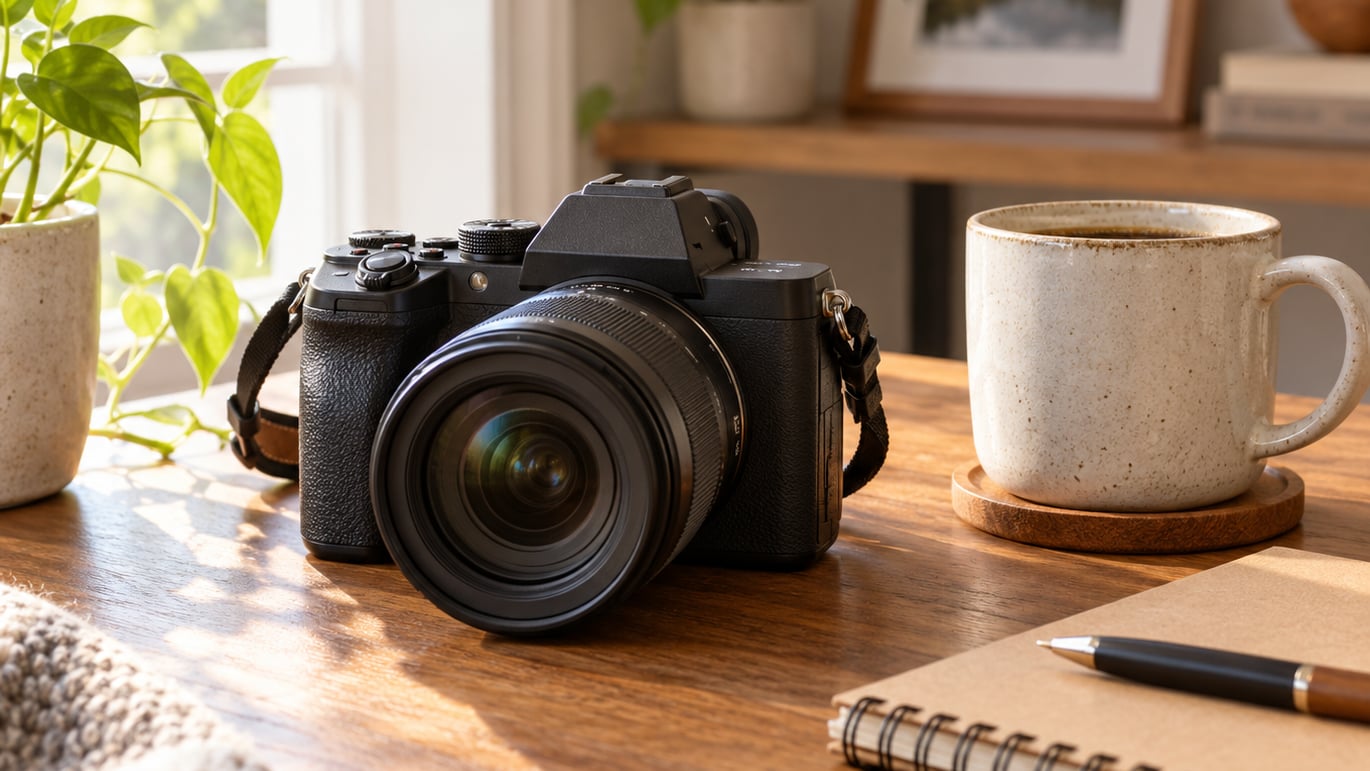
Sony’s Alpha 7 IV sits at the top of our mirrorless camera deals watch list for Amazon’s Prime Big Deal Days sale on October 6-7, 2026. Its 33MP full-frame sensor, 4K 60p 10-bit video and 759-point phase-detection autofocus make it the most balanced hybrid body for creators and enthusiasts. For shoppers focused on speed and low light, the Canon EOS R6 Mark II is the standout alternative, while budget-conscious buyers will want to keep an eye on the Sony Alpha a7 III, which still delivers genuine full-frame value several years after launch.
This roundup is the list of mirrorless bodies worth watching when the sale goes live. Most offers require a Prime membership, with prices shifting through the 48-hour event, so we focus on the specs that matter (sensor format, autofocus, video and stabilization) rather than guessed discounts.
Our Top 3 Picks for Mirrorless Camera Deals: Prime Big Deal Days (October 2026)

Sony Alpha 7 IV
- 33MP Full-Frame Sensor
- 4K 60p 10-bit Video
- 759 Phase Detection AF Points
- 5-Axis In-Body Stabilization

Canon EOS R6 Mark II
- 24.2MP Full-Frame Sensor
- 40 fps Electronic Shutter
- 4K 60p 6K Oversampled
- In-Body Image Stabilization

Sony Alpha a7 III
- 24.2MP Full-Frame Sensor
- 693 Phase Detection AF Points
- 10 fps Continuous Shooting
- 4K Video
Mirrorless Camera Deals: Prime Big Deal Days Compared
| Product | Specs | Action |
|---|---|---|
| Sony Alpha 7 IV |
|
Check Deal Price |
| Canon EOS R6 Mark II |
|
Check Deal Price |
| Sony Alpha a7 III |
|
Check Deal Price |
 Sony Alpha 7R V Sony Alpha 7R V |
|
Check Deal Price |
 Sony Alpha a6700 Sony Alpha a6700 |
|
Check Deal Price |
 Sony Alpha a6400 Sony Alpha a6400 |
|
Check Deal Price |
 Canon EOS R50 Canon EOS R50 |
|
Check Deal Price |
 Canon EOS R50 Double Lens Canon EOS R50 Double Lens |
|
Check Deal Price |
 Canon EOS RP Canon EOS RP |
|
Check Deal Price |
 Nikon Z50 II Two Lens Kit Nikon Z50 II Two Lens Kit |
|
Check Deal Price |
How We Chose
Every body here was scored on sensor format and resolution, autofocus and burst speed, video specs, lens ecosystem, and owner ratings and review volume on Amazon. Data was checked in October 2026 using each listing’s public specs, owner reviews and current pricing signals.
1. Sony Alpha 7 IV: Best for Hybrid Creators
Sony Alpha 7 IV Full-frame Mirrorless Interchangeable Lens Camera
Sensor: 33MP Full-Frame
Video: 4K 60p 10-bit
AF: 759-point Phase Detect
Weight: 0.99 kg
Pros
- 33MP full-frame sensor with excellent detail
- BIONZ XR processor and S-Cinetone color
- 759-point phase-detection autofocus with subject recognition
- 4K 60p 10-bit 4:2:2 video
- 5-axis in-body image stabilization
Cons
- Heavier than APS-C alternatives
- Menu system takes time to learn
- Premium price even on sale
For shoppers scanning mirrorless camera deals during Prime Big Deal Days, the Alpha 7 IV is the body most likely to clear the bar for both photo and video in one purchase. Its 33MP Exmor R sensor lands between the resolution-heavy 7R V and the speed-oriented a7 III, and reviewers consistently call out the dynamic range and color science as the standout strengths.

Hybrid shooters get 4K 60p oversampled from 6K in 10-bit 4:2:2, with S-Cinetone and S-Log3 profiles that match Sony’s cinema line. The 759-point AF system pulls double duty for wildlife and weddings, and reviewers report reliable subject detection across both stills and video. Compared with the Canon EOS R6 Mark II, the a7 IV leans toward resolution and color depth; the Canon pushes faster burst and slightly cleaner low-light autofocus.

Skip it if you mostly shoot fast action and want every frame at 40 fps; the R6 Mark II is the faster tool.
The a7 IV uses one CFexpress Type A slot and one SD UHS-II slot, which lets shooters spread costs by keeping CFexpress reserved for video and SD for stills.
2. Canon EOS R6 Mark II: Best for Action and Events
Canon EOS R6 Mark II Mirrorless Camera (Body Only)
Sensor: 24.2MP Full-Frame
Video: 4K 60p oversampled
AF: Dual Pixel CMOS AF II
Weight: 1.3 lb
Pros
- 40 fps electronic shutter with full AF tracking
- Subject detection for people / animals / vehicles
- 6K-oversampled 4K 60p video
- 5-axis in-body image stabilization
- Strong low-light autofocus
Cons
- Body-only price is steep
- No built-in flash
- Some menu depth for new Canon users
The R6 Mark II earns its spot on Prime Big Deal Days watch lists because it solves the one problem most hybrid bodies compromise on: speed. 40 fps with the electronic shutter and reliable subject detection make it a strong fit for sports, weddings and family events, and several reviewers mention it as a step up from the original R6 for everyday keepers.

For hybrid shooters the 6K-oversampled 4K 60p gives clean, detailed footage without a heavy crop, and the dual SD UHS-II slots keep media affordable. The 24.2MP sensor is lower resolution than the a7 IV, so landscape and cropping-heavy work leans Sony, but the Canon’s RAW files hold up well in low light. Compared with the Sony Alpha a7 III, the R6 Mark II is a real generational leap on autofocus and burst; the a7 III still wins on lens ecosystem maturity for older E-mount glass.

Reviewers rate the R6 Mark II as a step up from the original R6 for everyday keepers, and the dual SD UHS-II slots keep media affordable compared with CFexpress-only rivals. For shoppers weighing full-frame hybrids, it lands close to the Sony Alpha 7 IV on sensor size but leans Canon on color science and ergonomics.
The body accepts RF and RF-S lenses natively, with adapters available for older EF glass, which makes the upgrade path straightforward for shooters coming from Canon DSLRs.
3. Sony Alpha a7 III: Best for Budget Full-Frame Buyers
Sony Alpha a7 III Mirrorless Camera with 28-70mm Lens Black
Sensor: 24.2MP Full-Frame
Video: 4K 30p
AF: 693-point Phase Detect
Weight: 1.8 lb
Pros
- 24.2MP full-frame sensor at entry pricing
- 693-point phase-detection AF coverage
- 10 fps continuous shooting
- 4K video with full pixel readout
- 28-70mm kit lens included
Cons
- Older BIONZ X processor
- Menu system feels dated
- No in-body image stabilization on this kit version
Buyers hunting for an affordable full-frame body with mature lens support keep circling back to the a7 III, even years after launch. Reviewers still rate it highly for image quality and autofocus coverage, and it remains the cheapest path into Sony’s full-frame E-mount system without paying for the newest processor.

With 693 phase-detection AF points and 10 fps burst, the a7 III holds its own for portraits, travel and casual sports. The kit ships with a 28-70mm zoom that covers everyday focal lengths, which makes it the easiest entry in this list to use straight out of the box. Compared with the Sony Alpha a6400, the a7 III trades APS-C portability for full-frame depth and cleaner high-ISO files; the a6400 is the lighter pick for run-and-gun creators.

Photographers stepping up from APS-C or smartphone shooting get the most from this body. The a7 III also pairs well with the huge library of used Sony FE lenses, which helps stretch a tight budget during the sale.
4. Sony Alpha 7R V: Best for Studio and Landscape
Sony Alpha 7R V Full-Frame Mirrorless Interchangeable Lens Camera Body
Sensor: 61MP Full-Frame
Video: 8K 24p
AF: AI Real-time Tracking
Weight: 16 oz
Pros
- 61MP full-frame sensor with extreme detail
- AI-powered real-time tracking autofocus
- 8K 24p and 4K 60p video options
- 8-stop in-body image stabilization
- Improved menu system over earlier R bodies
Cons
- Highest price in the lineup
- Large file sizes demand fast storage
- Overkill for casual shooters
The a7R V is the resolution flagship and the obvious pick to watch for landscape, product and studio photographers hunting mirrorless camera deals during Prime Big Deal Days. The 61MP sensor delivers cropping flexibility that few bodies in any format can match, and reviewers flag the AI-powered subject recognition as a meaningful step up over earlier R-series models.

For studio work, the pixel-shift high-resolution mode combines multiple frames for ultra-detailed stills, and 8K 24p video gives cinematographers a future-proof top end. The 8-stop IBIS rating means handheld shooting is realistic even at slow shutter speeds. Compared with the Sony Alpha 7 IV, the a7R V trades speed for pixels; the a7 IV is the better all-arounder for hybrid creators who want one body.

Working professionals and serious landscape shooters will find the most value here. Pair with CFexpress Type A cards for 8K capture and a high-speed SSD for tethered backup.
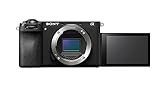
5. Sony Alpha a6700: Best for Hybrid APS-C Shooters
Sony Alpha a6700 APS-C Mirrorless Camera Body 26MP 4K Black
Sensor: 26MP APS-C
Video: 4K 120p
AF: AI Real-time Recognition
Weight: 14.5 oz
Pros
- 26MP APS-C sensor with modern BIONZ XR processor
- 4K 120p slow-motion video
- AI-based real-time recognition autofocus
- 759 phase-detection AF points
- In-body image stabilization
Cons
- No built-in flash
- APS-C sensor smaller than full-frame
- Battery life modest for long shoots
Hybrid creators looking for pro-grade video in a compact shell will find the a6700 the most video-capable APS-C body in Sony’s current lineup. 4K 120p with 10-bit color opens up cinematic slow-motion, and the AI-driven subject recognition is the same generation of autofocus found in the full-frame flagships.

For travel and documentary shooters, the lighter 14.5 oz body and the deep E-mount lens library make the a6700 a flexible everyday tool. Reviewers highlight the in-body stabilization as a real upgrade over older APS-C models.
- 4K 120p with 10-bit color for cinematic slow-motion
- AI-driven subject recognition shared with Sony’s full-frame flagships
- 759 phase-detection AF points covering most of the frame
- In-body stabilization adds steady handheld video without a gimbal
Compared with the Sony Alpha a6400, the a6700 adds stabilization, AI autofocus and 4K 120p; the a6400 stays the leaner pick for true vloggers who care more about weight than features.

Hybrid creators who want pro-grade video in a small body get the most value from this camera. The a6700 also supports the same NP-FZ100 battery as many full-frame Sonys, which simplifies spare-battery planning when a shooter runs multiple bodies.
6. Sony Alpha a6400: Best for Solo Vloggers
Sony Alpha a6400 Mirrorless Camera: Compact APS-C Interchangeable Lens Digital Camera with Real-Time Eye Auto Focus, 4K Video, Flip Screen & 16-50mm Lens – E Mount Compatible – ILCE-6400L/B, Black
Sensor: 25MP APS-C
Video: 4K 30p
AF: 425-point Real-time Eye
Weight: 10.3 oz
Pros
- Real-time eye autofocus for people and animals
- 180-degree tilting screen for self-recording
- 4K video with full pixel readout
- Light 10.3 oz body for handheld vlogging
- 425 phase-detection AF points
Cons
- No in-body image stabilization
- Battery life limited for long shoots
- Menu system can confuse new users
The a6400 has stayed on shortlists for vloggers and travel shooters because it nails the things creators actually use: real-time eye AF, a flip screen and 4K recording in a body that disappears in a bag. It is the body to watch for solo creators shopping mirrorless camera deals during the sale.
For a creator filming talking-head segments in a hotel room or a run-and-gun travel vlog, the 180-degree flip screen and Sony’s eye AF make framing simple even when the camera is on a small tripod.
The 425-point phase-detection system tracks subjects across most of the frame, which matters when you are filming yourself and the camera cannot read your mind. The kit lens covers a useful 16-50mm range and adds little weight. Compared with the Sony Alpha a6700, the a6400 drops stabilization and AI recognition but is the more affordable pick; compared with the Canon EOS R50, Sony’s eye-tracking is generally rated more reliable for moving subjects.

Solo creators who want a small, fast body with strong autofocus will find the a6400 ready-made for vlogging. Pairing with a Sony ECM-G1 or similar compact mic turns the kit into a complete travel rig.
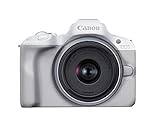
7. Canon EOS R50: Budget Pick
Canon EOS R50 Mirrorless Camera RF-S18-45mm F4.5-6.3 is STM Lens Kit
Sensor: 24.2MP APS-C
Video: 4K 30p
AF: Dual Pixel CMOS AF II
Weight: 16 oz
Pros
- Compact 16 oz body that travels well
- Dual Pixel CMOS AF II subject tracking
- 4K 30p video with no crop
- Vari-angle touchscreen for flexible framing
- Wi-Fi and Bluetooth connectivity
Cons
- Small grip less comfortable for larger hands
- APS-C sensor instead of full-frame
- Kit lens is basic
Family members moving up from a phone to a dedicated body will find the Canon EOS R50 the easiest entry in Canon’s lineup. It is light, easy to set up, and uses Canon’s modern autofocus system, which means beginners do not have to fight the camera to get sharp keepers.
- 24.2MP APS-C sensor with clean output up to moderate ISOs
- Dual Pixel CMOS AF II tracks faces and eyes for vlogs or video calls
- 4K 30p video using the full sensor for sharp detail
- Vari-angle touchscreen helps with self-recording and creative angles

The 24.2MP APS-C sensor produces clean files up to moderate ISOs, and the Dual Pixel CMOS AF II tracks faces and eyes reliably for vlogs or video calls. The 4K 30p video uses the full sensor for sharp output. Compared with the Sony Alpha a6400, the R50 has a friendlier default experience and better out-of-camera color, while the a6400 has more lens options and stronger subject tracking for moving subjects.
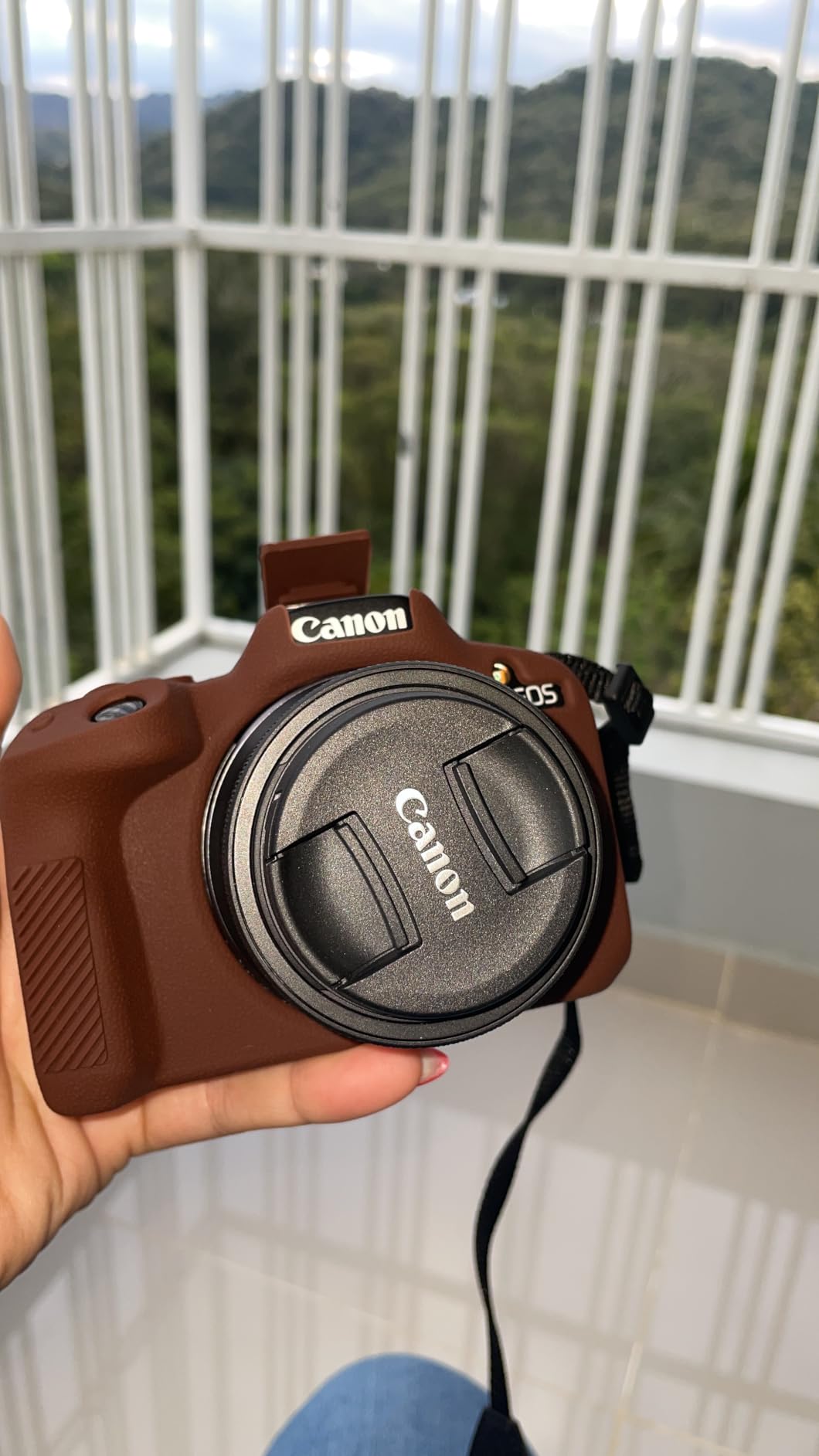
New photographers stepping up from smartphones will find the R50 the easiest entry in Canon’s lineup. The R50 uses the same LP-E17 battery as several other R-series bodies, so Canon users with multiple cameras can share spares.
8. Canon EOS R50 Double Lens Bundle: Best Two-Lens Kit Value
Canon EOS R50 Mirrorless Camera with 18-45mm & 55-210mm Double Lens Bundle
Sensor: 24.2MP APS-C
Video: 4K 30p
AF: Dual Pixel CMOS AF
Weight: 4.5 lb kit
Pros
- Two lenses cover wide to telephoto
- Same sensor and AF as the single-lens R50
- Beginner-friendly menu system
- 4K video with Dual Pixel CMOS AF
- 64GB memory card included in bundle
Cons
- 4K video applies a crop
- No in-body image stabilization
- Kit lenses are entry-level optics
The double-lens R50 bundle answers the most common first-time buyer question: which lens should I add next. It pairs the 18-45mm standard zoom with a 55-210mm telephoto, so beginners can shoot landscapes and family events from day one without buying extra glass.
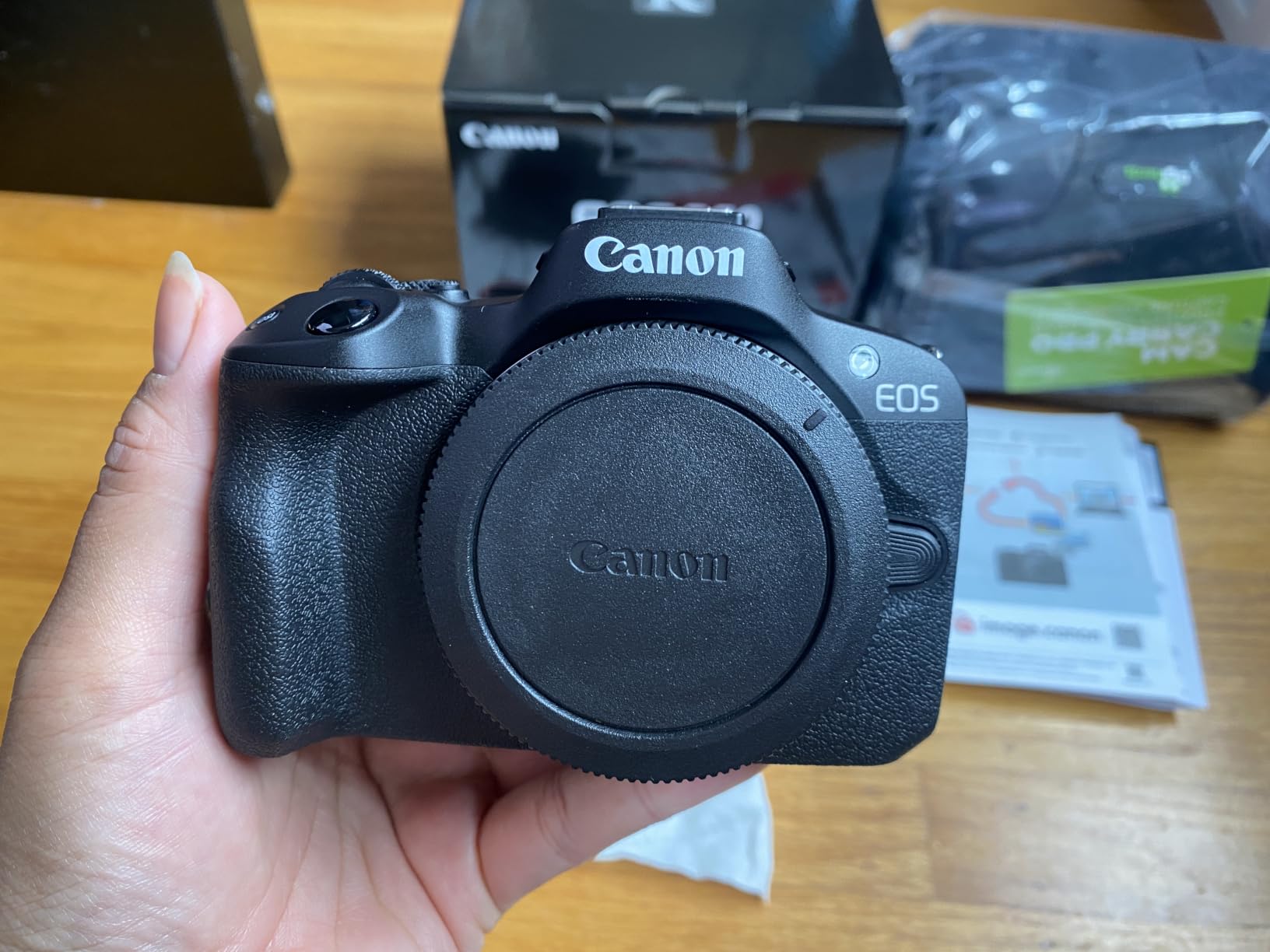
The sensor and processor match the single-lens R50, so buyers get the same image quality and connectivity. The included 64GB card removes one more shopping step. Compared with the standard Canon EOS R50 kit, this bundle trades one lens for two and adds a memory card; it is the better watch for a beginner who wants to cover more situations without separate purchases.
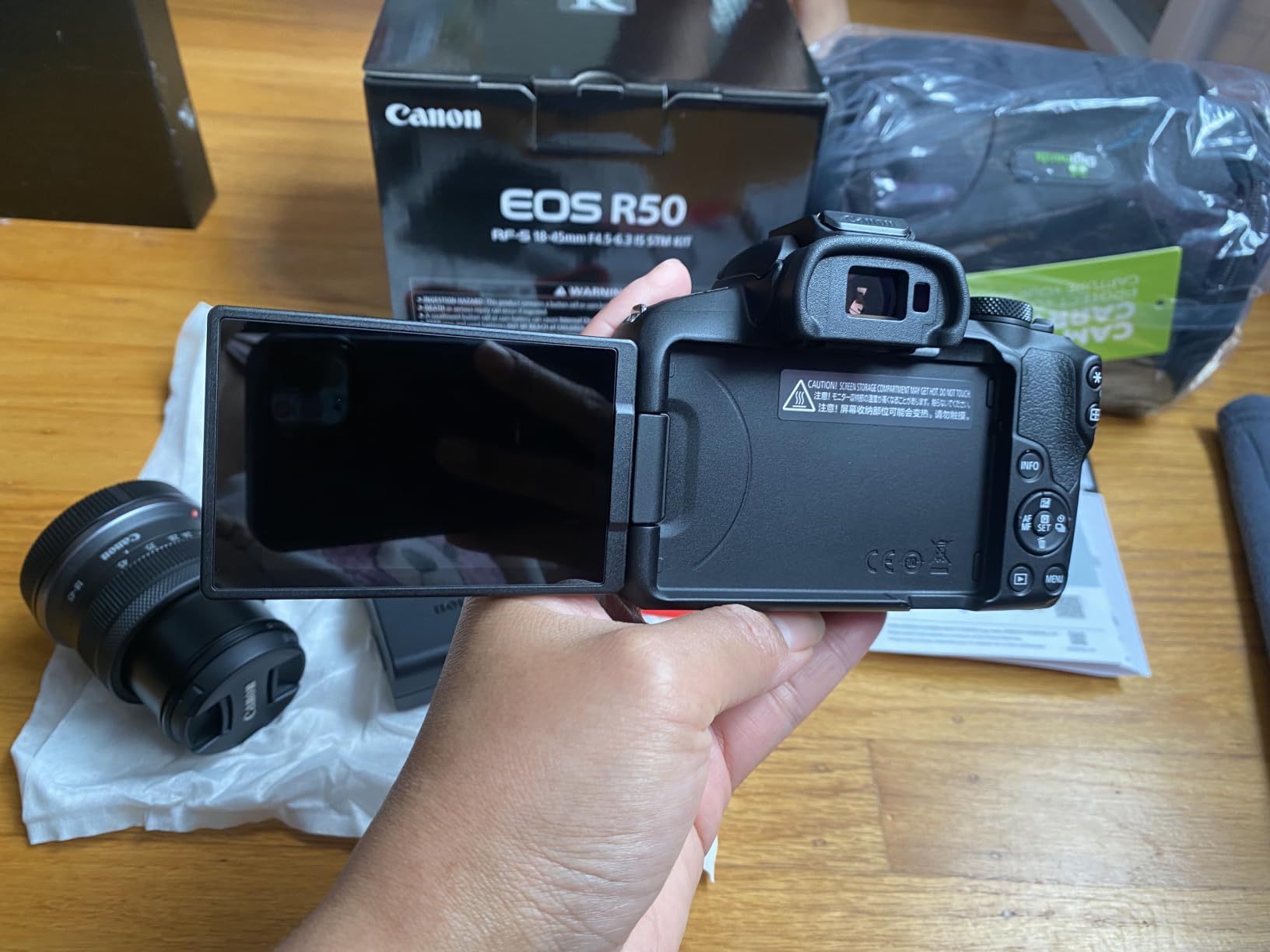
First-time camera buyers who want a complete kit in one purchase will find this the most practical starting point. The RF-S mount supports both included zooms natively, and Canon continues to expand the RF-S lineup for future upgrades.
9. Canon EOS RP: Best Full-Frame Entry
Canon EOS RP Mirrorless Camera RF24-105mm Lens F4-7.1 is STM Lens Kit
Sensor: 26.2MP Full-Frame
Video: 4K UHD cropped
AF: 4779-point Dual Pixel
Weight: 16 oz
Pros
- 26.2MP full-frame sensor at entry pricing
- Compact and lightweight body for full-frame
- RF 24-105mm zoom lens included
- 4779-point Dual Pixel CMOS AF
- Strong image quality for the money
Cons
- 4K video has a noticeable crop factor
- No in-body image stabilization
- Battery life limited for long days
Portrait and landscape photographers stepping up from APS-C will find the EOS RP the most affordable route into Canon’s full-frame RF system and one of the perennial mirrorless camera deals during every Amazon sale. With a 24-105mm zoom in the box, it is a one-purchase setup for someone who wants the depth advantage of full-frame without a multi-lens starter kit.

The 26.2MP sensor delivers strong dynamic range, and the Dual Pixel CMOS AF with 4779 selectable points tracks subjects across the frame. The kit zoom covers wide-angle landscapes to short portrait lengths, which is enough for most everyday shooters. Compared with the Sony Alpha a7 III, the EOS RP is lighter and cheaper but slower on burst and weaker on video; the a7 III is the stronger hybrid performer at a similar full-frame price.

Photographers prioritizing full-frame image quality on a tighter budget get the most from this body. The EOS RP works with EF lenses via an affordable Canon adapter, which opens up Canon’s huge used-lens market for buyers building out their kit.
10. Nikon Z50 II Two Lens Kit: Best Twin-Lens Travel Setup
Nikon Z50 II with Two Lenses | Compact mirrorless Stills/Video Camera with Easy Color presets and Wireless Photo Sharing | USA Model
Sensor: 20.9MP DX APS-C
Video: 4K 60p
AF: 231-point Hybrid
Weight: 2.4 lb kit
Pros
- Two NIKKOR Z lenses in the box
- 4K 60p video with EXPEED 7 processor
- 31 built-in picture control presets
- Easy wireless sharing via SnapBridge
- Compact for a two-lens travel kit
Cons
- Limited to DX-format sensor
- Some advanced settings take learning
- Smaller native lens catalog than Sony E
Nikon shooters planning a full travel kit will find the Z50 II twin-lens bundle the most balanced entry during the sale. It pairs a 16-50mm standard zoom with a 50-250mm telephoto, which gives beginners a complete focal-length range from wide landscapes to distant subjects. EXPEED 7 brings the same processor family used in Nikon’s higher-end Z bodies.

For travel shooters, the two lenses cover most situations without extra purchases, and SnapBridge makes phone sharing simple for casual posts. The 4K 60p video is competitive in this price band. Compared with the Canon EOS R50 Double Lens, the Nikon gives longer telephoto reach out of the box; the Canon kit favors lighter carry and Canon’s larger RF-S lens catalog.

Travel photographers who want two lenses in one purchase get the most value from this kit. The Z50 II accepts FTZ-mount adapters, so existing Nikon F-mount lens owners can bring older glass along on the trip.
How to Choose a Mirrorless Camera During Prime Big Deal Days
Sensor Format and Resolution
Full-frame sensors give cleaner high-ISO files and shallower depth of field for portraits; APS-C bodies are lighter and cheaper with deeper zoom reach for the same lens; Micro Four Thirds bodies trade some image quality for the smallest, lightest kits. If you mostly shoot indoors, low light or portraits, full-frame pays off (the Sony Alpha 7 IV, Canon EOS R6 Mark II, Sony Alpha 7R V, Sony Alpha a7 III and Canon EOS RP are the full-frame picks here). If you shoot travel, sports or everyday family moments, APS-C is the smarter trade (the Sony Alpha a6700, Sony Alpha a6400, Canon EOS R50, Canon EOS R50 Double Lens and Nikon Z50 II).
Autofocus and Burst Speed
For kids, pets and sports, look for at least 10 fps continuous shooting and modern subject detection (eye, animal, vehicle). The Canon EOS R6 Mark II at 40 fps with subject tracking is the strongest action pick, while the Sony Alpha 7 IV and Sony Alpha a6700 both add AI-driven recognition that helps in unpredictable scenes. For occasional family photos, 10-15 fps on bodies like the Sony Alpha a7 III or Canon EOS R50 is plenty. If events are the priority, our guide on mirrorless cameras for event photography goes deeper on the bodies and lenses that handle fast, unpredictable moments.
Video Features That Matter
Vloggers and solo creators want 4K 30p at minimum with reliable continuous AF (Sony Alpha a6400, Canon EOS R50). Hybrid shooters who also deliver client work need 4K 60p and 10-bit color (Sony Alpha 7 IV, Canon EOS R6 Mark II, Sony Alpha a6700, Nikon Z50 II). Cinema-leaning creators who want the most headroom should look at the Sony Alpha 7R V with 8K 24p. In-body stabilization helps handheld video everywhere it appears, which is most of the higher-end bodies on this list.
Lens Ecosystem and System Cost
Mount choice affects long-term value because every lens you buy later has to fit it. Sony E-mount has the deepest third-party catalog and the most used-lens options; Canon RF and Nikon Z are growing fast with strong first-party glass; the older EF and F systems can be reached through official adapters. If you already own lenses, check adapter cost before chasing a deal. For shoppers building a system from scratch, Sony E and Canon RF offer the widest selection of native glass at every price point. If you are still comparing entry-level bodies, our list of best mirrorless cameras for beginners breaks down the budget picks by mount and use case. Real estate shooters building a wide-angle kit around one of these mounts will find more in our picks for camera lenses for real estate.
Body Size, Stabilization and Handling
Travel and street shooters usually want the smallest body that still offers stabilization. The Sony Alpha a6700 and Sony Alpha a6400 are the lightest bodies here with stabilization on the a6700; the Canon EOS R50 and Nikon Z50 II are the most compact DSLR-style grips. For run-and-gun video and low-light handheld stills, in-body image stabilization matters, which the Sony Alpha 7 IV, Canon EOS R6 Mark II, Sony Alpha 7R V and Sony Alpha a6700 all offer. Weather sealing varies by model and matters more for outdoor shooters than studio ones. Once you have picked a body and lens pair, our guide on camera bags for mirrorless kits helps you match the carry to your kit size.
How to Shop Mirrorless Camera Deals During the Sale
When a mirrorless camera listing shows up during the sale, check the model year and generation code in the title (Mark II, II, V) so you know whether you are looking at the current body or its predecessor. Decide body-only vs kit lens based on whether the included lens fits your style; telephoto zooms add real value for travel, while basic kit zooms may be worth skipping if you already own glass. Refurbished and renewed listings with manufacturer warranty can be solid value, but gray-market imports typically skip that warranty, so read the fine print. Most offers require a Prime membership, and prices shift through the event, so adding wishlist items early helps you spot the real drops.
Quick checklist:
- Confirm sensor format and resolution match your shooting style
- Check continuous shooting speed and autofocus subject detection
- Verify video specs (4K 30p, 4K 60p, 10-bit) match your delivery format
- Compare body-only vs kit pricing against your existing lens collection
- Confirm sold by Amazon or authorized dealer with manufacturer warranty
Frequently Asked Questions
When do Mirrorless Camera Deals run during Prime Big Deal Days?
Amazon Prime Big Deal Days runs October 6-7, 2026, a 48-hour event. Most mirrorless camera deals during the sale drop in the first 48 hours and the last 48 hours, with new Lightning Deals appearing throughout the event for Prime members.
Do I need an Amazon Prime membership to get Mirrorless Camera Deals during Prime Big Deal Days?
Yes, most offers during the sale require a Prime membership, including free-trial members. Some deals are available to all shoppers, but the deepest discounts on mirrorless bodies and bundles are typically Prime-exclusive during the 48-hour event.
Do mirrorless cameras usually see good deals during Prime Big Deal Days?
Yes, mirrorless cameras are one of the stronger categories during the sale. Previous-generation bodies, kit bundles and lens pairings tend to drop more than current flagships, which is why this list leans on proven models like the Sony Alpha a7 III and Canon EOS RP for budget shoppers.
Should I buy a mirrorless camera body only or a kit lens bundle during the sale?
Buy body only if you already own native lenses or plan to buy specific glass separately. Buy a kit bundle if you are starting from scratch or want a guaranteed discount on a known lens like the RF 24-105mm or Sony 28-70mm, since bundles are often the deepest mirrorless camera deals during Prime Big Deal Days.
Is now a good time to buy a mirrorless camera or should I wait for Black Friday?
Prime Big Deal Days runs October 6-7, 2026, about three weeks before Black Friday. The mirrorless camera deals during this sale are usually close to Black Friday pricing for older bodies and lens bundles, so waiting makes more sense only for the newest flagship releases.
What should I check on a mirrorless camera listing before I buy during the sale?
Check that the model year and generation match what you expect, that the seller is Amazon or an authorized dealer with manufacturer warranty, that the kit lens is the one you actually want, and that the listing carries manufacturer warranty before you add it to your cart.
Final Verdict: Mirrorless Camera Deals: Prime Big Deal Days
Buy the Sony Alpha 7 IV if you want one body that handles hybrid photo and video without compromise; it leads our picks to watch during the sale. Buy the Sony Alpha a7 III if full-frame value is the priority and you can live with an older processor. Buy the Canon EOS R6 Mark II if you shoot fast action or weddings and want modern autofocus with 40 fps burst. Buy the Sony Alpha a6700 if you want modern video in a compact APS-C body, and the Sony Alpha a6400 if you are a solo vlogger who values lightweight AF above all else.
Beginners should add the Canon EOS R50 to the watchlist, while first-time buyers who want everything in one box should look at the Canon EOS R50 Double Lens bundle or the Nikon Z50 II twin-lens kit. The Canon EOS RP is the most affordable full-frame entry, and the Sony Alpha 7R V is the premium pick for studio and landscape work where resolution matters most. Pick the body that matches your real shooting, add it to your wishlist now, and check the listing at midnight on October 6 when the sale goes live.
Camera lens deals during the sale are worth a separate look once you have picked a body, since lenses usually see their own discounts across the same 48-hour window.
 Elena Vasquez
  Priya Kapoor