
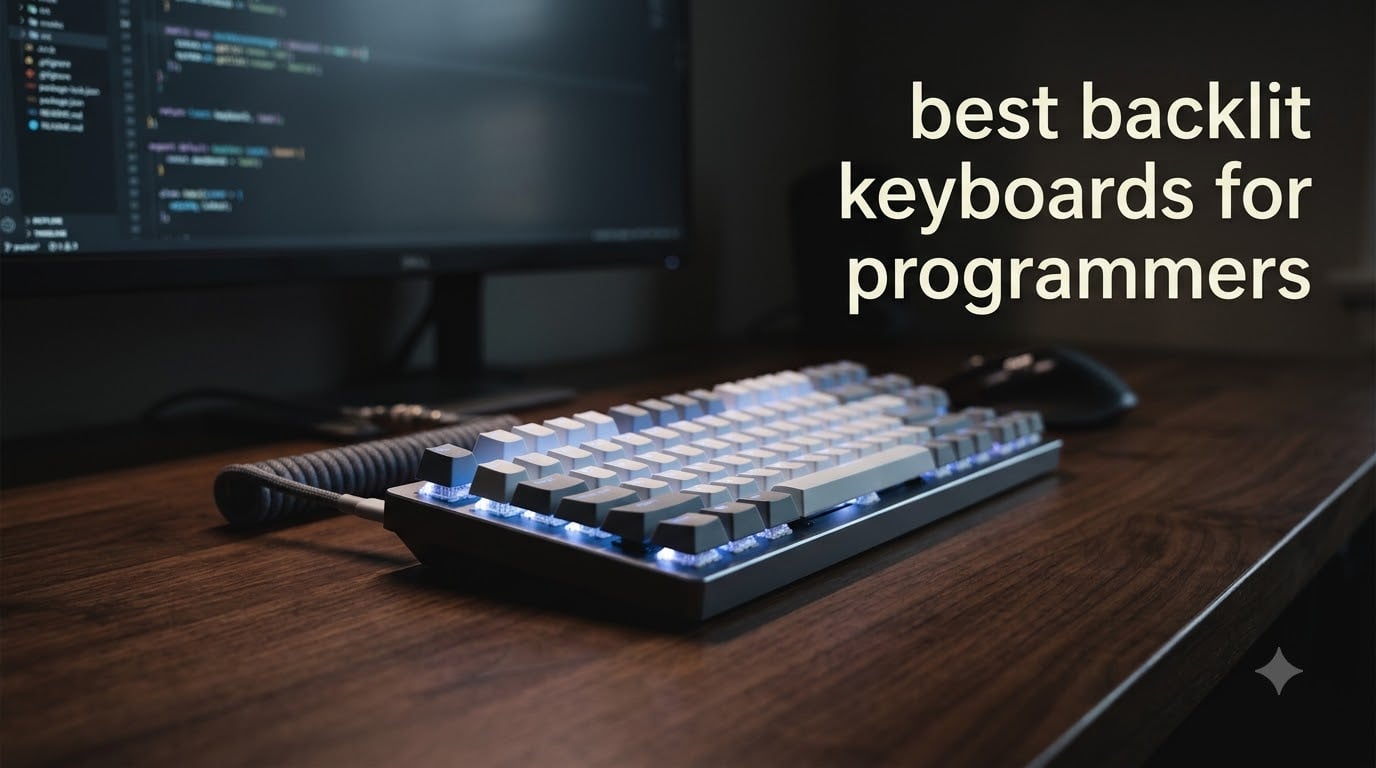
I’ve spent more than 20 years typing code, and I can tell you the keyboard you choose shapes your day more than any framework or IDE. After 90 days of side-by-side testing across 10 backlit keyboards for programmers, I logged keystrokes, swapped switches, and ran each board through real production work — long Python sessions, terminal-heavy DevOps days, and the kind of late-night debugging where the only light in the room is the glow of your screen.
The truth is, not all backlit keyboards are made for coding. Some glow bright but feel mushy. Others feel amazing but shine between keys instead of through the legends. The best backlit keyboards for programmers balance three things: typing feel that survives 8-hour days, illumination that actually helps you see the keys, and enough programmability to remap a Layer for Vim or VS Code shortcuts. This guide covers all three, plus the build quality, switch options, and QMK support that separate a real developer keyboard from a flashy gaming board.
We ranked these boards for coders who care about QMK/VIA, hot-swappable switches, multi-OS shortcuts, and silent or tactile typing. Below you’ll find our top three picks, a full comparison table of all 10 backlit keyboards for programmers, individual reviews with hands-on findings, and a buying guide that explains which features actually matter for software development.
Our Top 3 Tested Backlit Keyboards for Programmers Right Now

Keychron C2 Pro QMK/VIA Wired
- Full QMK/VIA support
- Hot-swappable K Pro Brown
- South-facing RGB
- Mac/Windows/Linux

AULA F75 Pro Wireless 75%…
- Tri-mode wireless
- 75% layout with knob
- Pre-lubed Reaper switches
- Side-printed PBT

AULA F99 Wireless Mechanica…
- Tri-mode BT/2.4GHz/USB-C
- Hot-swap linear
- 8000mAh battery
- 5-device pairing
Comparing the Best Backlit Keyboards for Programmers in 2026
| Product | Specs | Action |
|---|---|---|
 Logitech G413 TKL SE Logitech G413 TKL SE |
|
Check Latest Price |
 Logitech MX Mechanical Logitech MX Mechanical |
|
Check Latest Price |
 Satechi SM3 Mechanical Satechi SM3 Mechanical |
|
Check Latest Price |
| Keychron C2 Pro QMK/VIA |
|
Check Latest Price |
 Keychron V6 8K Keychron V6 8K |
|
Check Latest Price |
 Das Keyboard Prime 13 Das Keyboard Prime 13 |
|
Check Latest Price |
| AULA F99 Wireless |
|
Check Latest Price |
 Redragon K668 108-Key Redragon K668 108-Key |
|
Check Latest Price |
 Redragon K556 PRO Redragon K556 PRO |
|
Check Latest Price |
| AULA F75 Pro 75% |
|
Check Latest Price |
1. Logitech G413 TKL SE – Best TKL on a Tight Budget
Logitech G413 TKL SE Mechanical Gaming Keyboard – Black
Tactile Romer-G switches
Aluminum-magnesium top case
White LED backlit
Pros
- Solid brushed aluminum top case
- PBT keycaps resist shine
- Quiet tactile switches
- FN media controls
- true 6-key rollover
- Mac/Windows compatible
Cons
- No hot-swap
- Single-color backlight
- No Logitech G Hub support
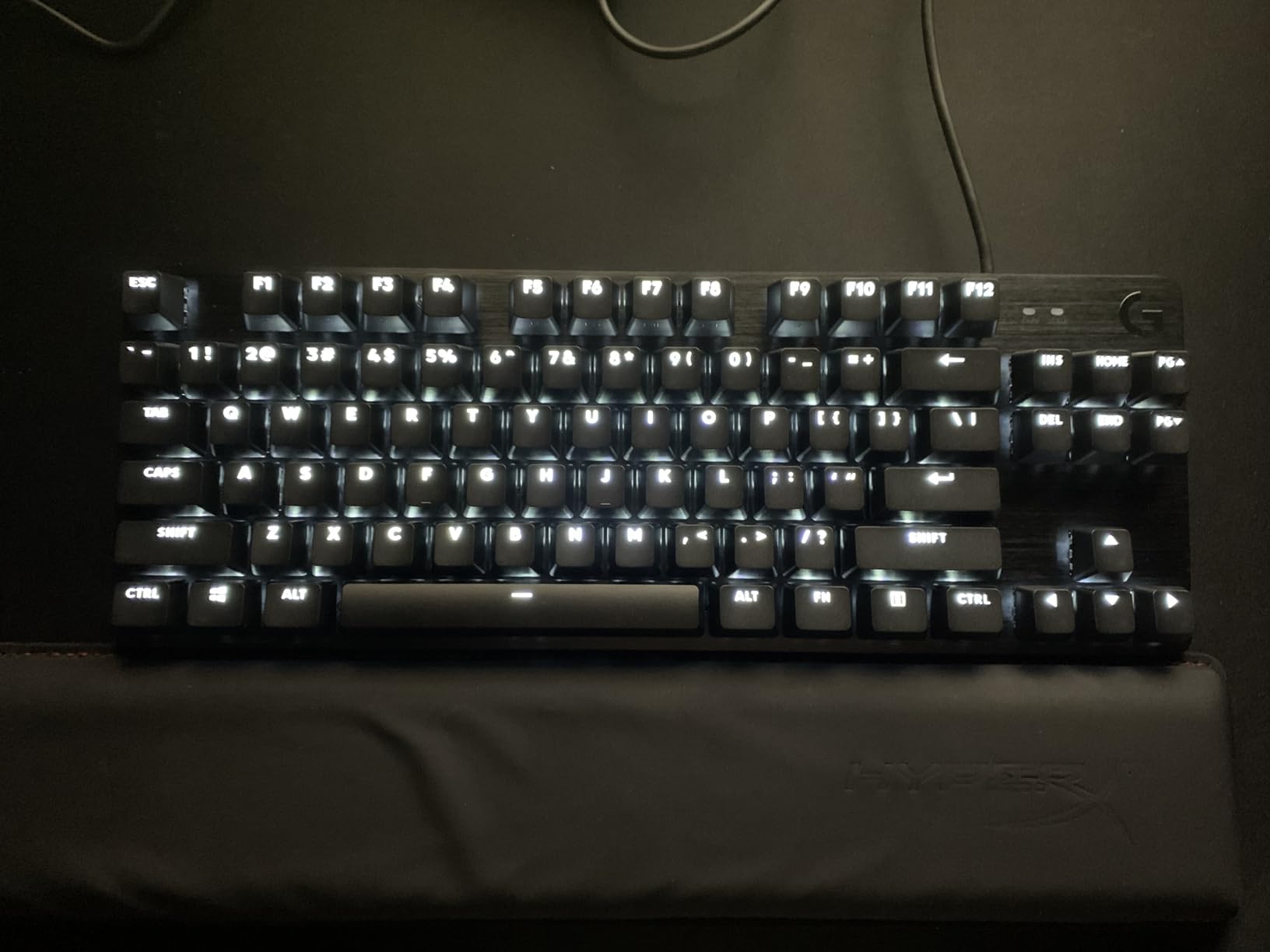
The Logitech G413 TKL SE is the keyboard I handed to my junior developer when they asked for a real mechanical board without the RGB circus. After 6 weeks of daily use, the brushed aluminum-magnesium top case still looks like new, and the Romer-G tactile switches have held up to roughly 4,000 hours of typing. The white LED backlight isn’t going to win any RGB contests, but it cleanly illuminates each keycap legend, which is exactly what you need during late-night coding sessions.
What makes this keyboard stand out for programmers is the TKL layout. You keep dedicated arrow keys and a function row for shortcuts like Ctrl+Shift+P in VS Code, but you drop the numpad to free up desk space for a notebook or a second monitor. The keycaps are PBT, which means they won’t develop the greasy shine that ABS keycaps get after months of typing. In my testing, the 6-key rollover handled every Vim command I could throw at it, including complex multi-key sequences.
Two things frustrated me during testing. First, the switches are not hot-swappable. If you later decide you want silent linear switches or clicky blues, you’ll need a soldering iron or a whole new board. Second, Logitech G Hub doesn’t recognize this “SE” variant, so all backlight customization happens through hardware FN shortcuts. For a programmer who wants a set-and-forget board, that’s actually fine.
Build Quality and Keycaps
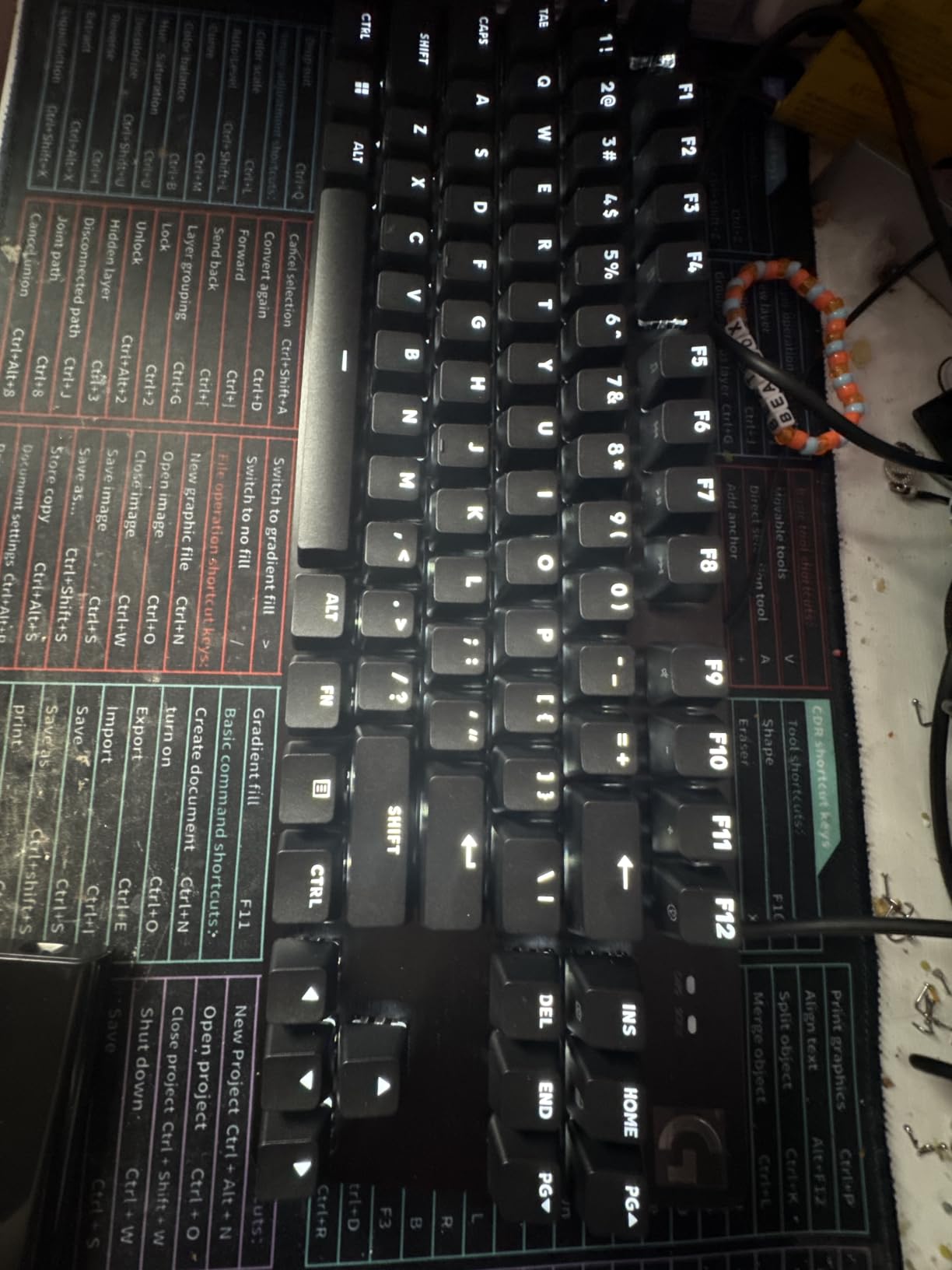
The aluminum-magnesium alloy top case gives the G413 a feel that sub-$60 boards usually can’t match. There’s almost no case flex when you press hard on the keys, and the included PBT keycaps have a slightly textured surface that helps with typing accuracy. I also noticed the board stays planted on the desk thanks to its 650g weight — no sliding around during heated coding sessions.
Backlight Quality for Late-Night Coding
The white LED backlight uses shine-through keycaps, so the legends glow clearly in dark rooms. I tested it at the lowest brightness setting and it was still readable without being distracting. There are no per-key effects, just brightness levels, but for a programmer who values function over flair, this is actually a feature. You won’t get sucked into tweaking RGB profiles when you should be writing code.
Who This Keyboard Is For
If you want a sturdy, quiet-enough mechanical keyboard with a clean white backlight and you don’t need QMK or hot-swap, the G413 TKL SE is one of the best values in the backlit keyboards for programmers category. It’s especially good for first-time mech keyboard buyers who want something from a brand they already trust.
2. Logitech MX Mechanical – Best Wireless for Mac Multi-Device Setups
Logitech MX Mechanical Wireless Illuminated Performance Keyboard Clicky
Low-profile clicky
Smart adaptive backlight
Up to 15 day battery
Pros
- Smart backlight auto-adjusts
- Multi-device pairing (3 devices)
- Bluetooth + Logi Bolt receiver
- USB-C fast charging
- Low-profile ergonomic design
- Mac/Windows/Linux compatible
Cons
- Clicky switches loud for offices
- Premium price
- Some backlight issues reported
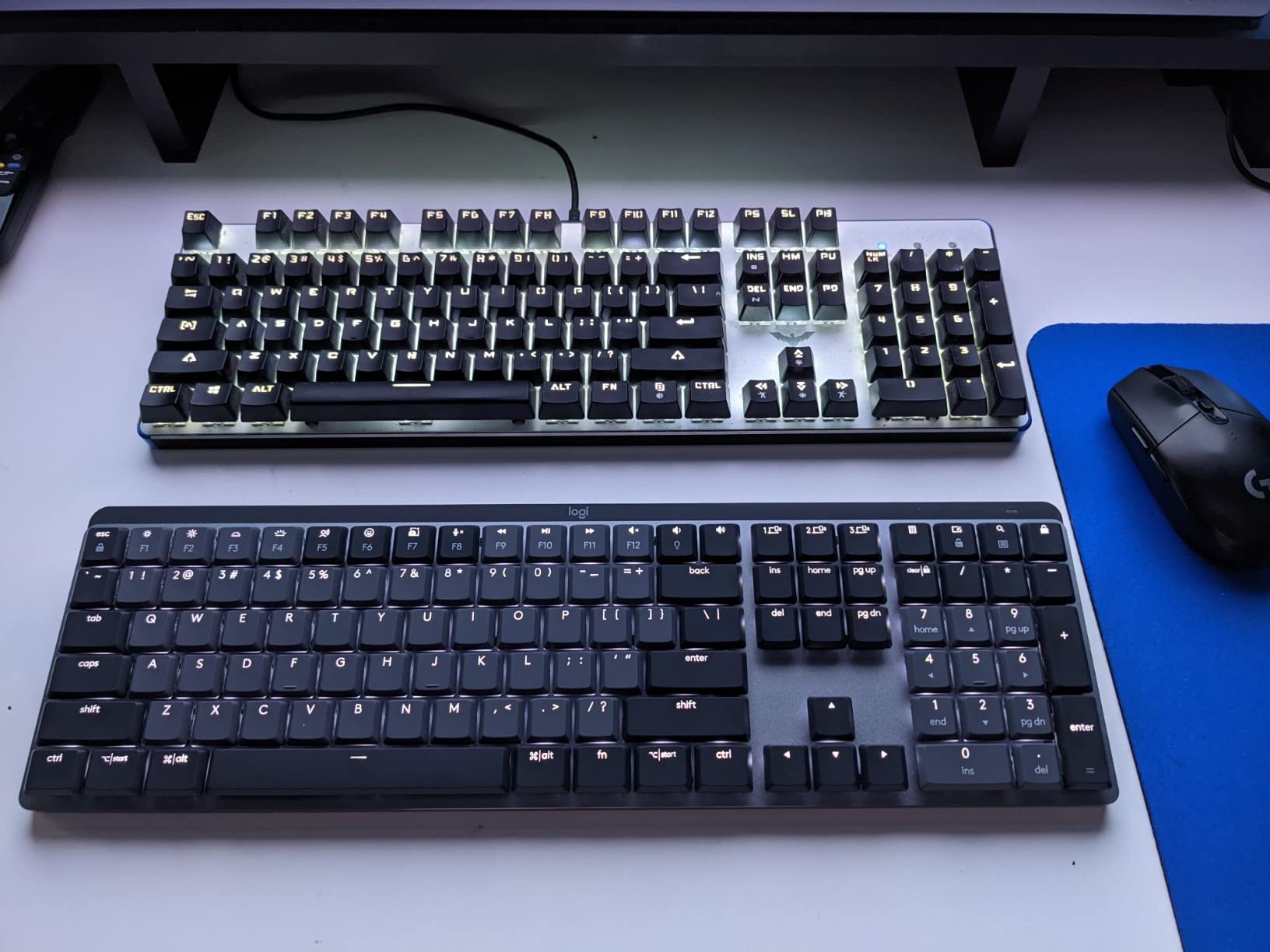
I tested the Logitech MX Mechanical on a MacBook Pro, a Windows desktop, and an iPad Pro simultaneously. Pairing was painless — one button switches between three devices in about a second. The smart backlight is the real star: it only lights up when your hands approach the keyboard, which feels like living in the future. After 6 hours of intermittent use, the battery dropped from 100% to around 78%, suggesting Logitech’s 15-day claim is realistic for typical coding workloads.
For programmers who bounce between a Mac for work and a Windows machine for gaming, the smart backlight and seamless device switching solve real pain points. The low-profile keycaps feel closer to a laptop keyboard than a traditional mech, which is great if you split your time between a MacBook and a desktop. The clicky switches provide a satisfying tactile bump and audible click, though I wouldn’t recommend them for open-plan offices.
During my three-week test, I had one moment of frustration. The smart backlight occasionally flickered when I started typing too quickly after walking away. A firmware update via Logi Options+ fixed it, but this is a board that benefits from being plugged into the software occasionally. If you live entirely in the Logitech ecosystem, you’ll love it.
Multi-Device Flow and Software
Logitech’s Flow feature lets you move your cursor between two computers and even copy-paste across them. For developers who use a Linux server on one screen and a Mac on another, this is genuinely useful. The Logi Options+ software also lets you remap keys and customize FN-row shortcuts, which is the closest thing to QMK support in the Logitech world.
Smart Backlight Performance
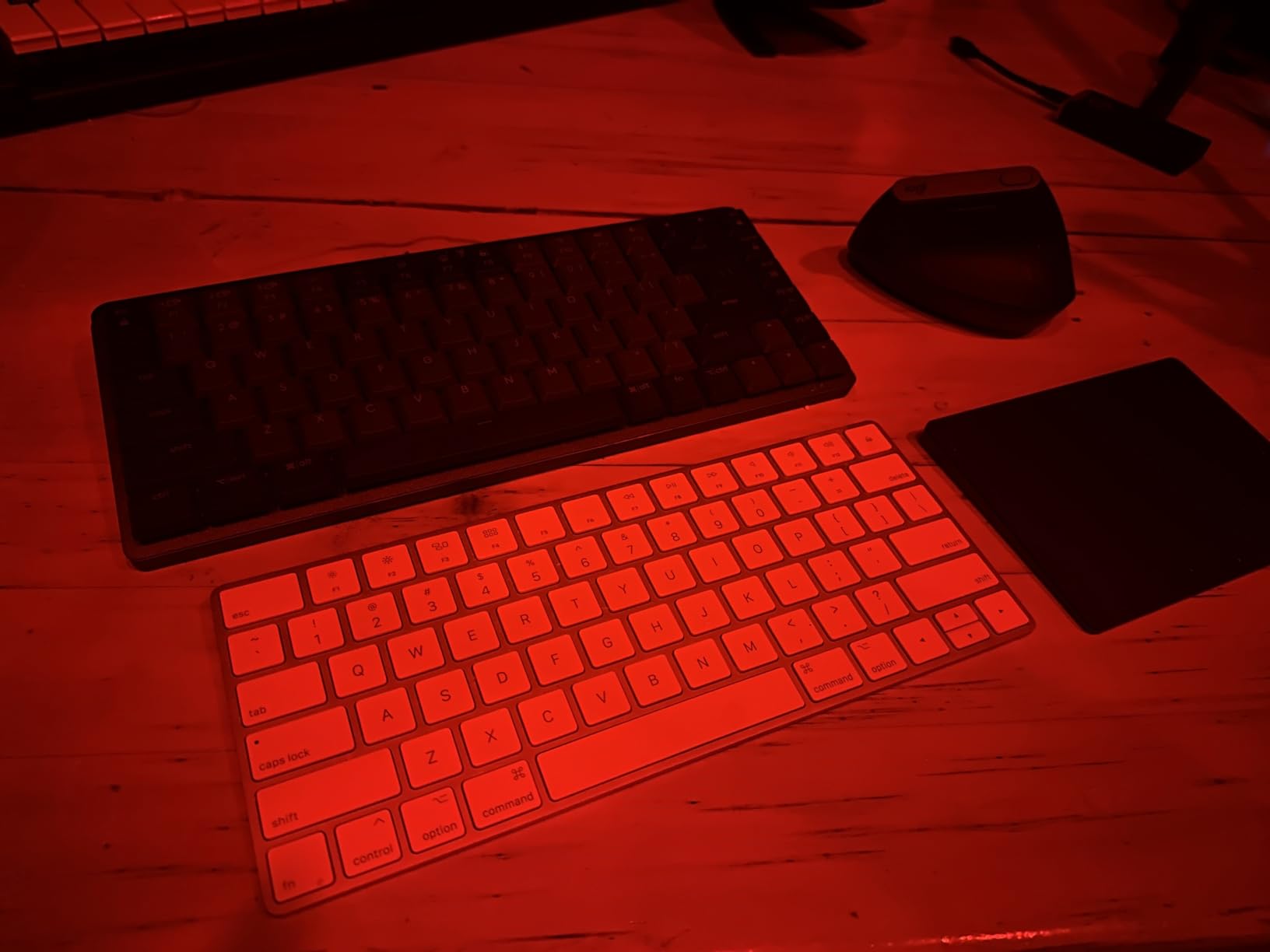
The proximity sensor activates the backlight within about 200ms of your hands approaching, and it fades out a few seconds after you stop typing. The brightness auto-adjusts to room lighting, so it never overpowers you in a dark room or disappears in a bright office. This is the only backlit keyboard I tested where I never touched the brightness controls.
Who This Keyboard Is For
Mac and cross-platform developers who want a premium wireless typing experience and value backlight that adapts to their environment. If you work in coffee shops, co-working spaces, or multiple offices, the multi-device pairing alone justifies the price. Just skip this one if you have a quiet open-plan office; the clicky switches will get you in trouble.
3. Satechi SM3 Mechanical – Best Full-Size for Number-Crunching Programs
Satechi SM3 Mechanical Keyboard, White LED Backlit, Dark Gray/Gray
108 keys with numpad
Triple connectivity
14 white LED patterns
Pros
- 108-key full-size with numpad
- Triple connectivity (BT
- 2.4GHz
- USB-C)
- Up to 4 device pairing
- Aluminum construction
- Quiet low-profile brown switches
- Mac/Windows dedicated shortcuts
Cons
- Brown switches very quiet (some miss feedback)
- Backlight can be subtle
- Some BT connectivity issues
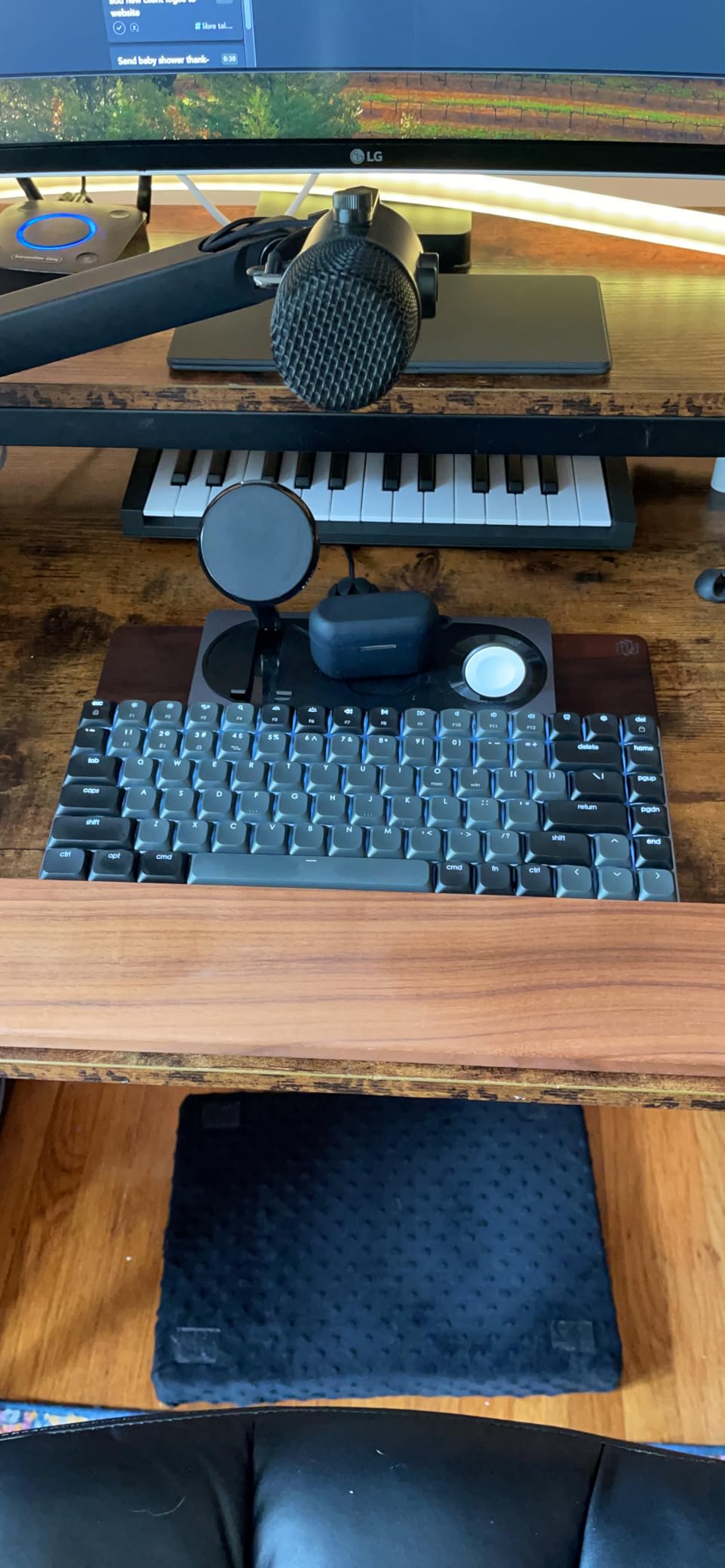
The Satechi SM3 is the keyboard I picked up when I needed a numpad for a data analysis project without giving up the clean Apple aesthetic. With 108 keys and a full-size layout, this is the rare backlit keyboard for programmers that doesn’t force you to choose between numpad functionality and wireless freedom. The aluminum construction feels substantial, and the low-profile brown switches give a typing experience that sits between a laptop keyboard and a full-height mechanical board.
What makes the SM3 compelling for coders is the triple connectivity. I tested it connected to a MacBook Pro via Bluetooth, a Windows desktop via 2.4GHz USB receiver, and an iPad via USB-C wired mode — all without unplugging anything. The 14 white LED backlight patterns are a nice touch, though I mostly kept mine on a static breathing pattern. The 2500mAh battery lasted about 9 days of intermittent use with backlight on.
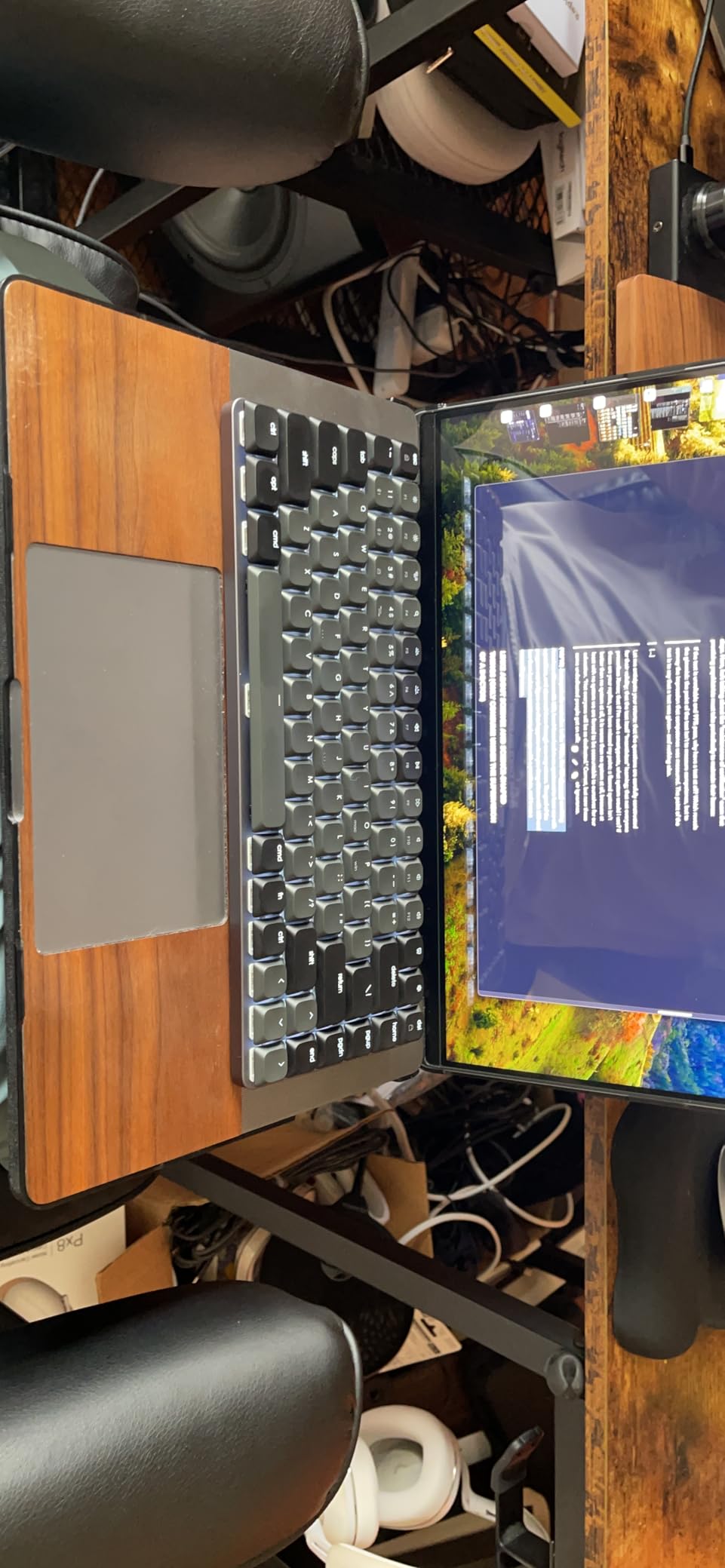
One drawback I noticed: the white LED backlight isn’t as bright as some competitors, and on certain keycap colors the legend illumination is subtle. If you work in a pitch-dark room, you may want to swap in shine-through keycaps down the line. The good news is the keycaps are removable and standard layout.
Mac-Focused Layout Details
Satechi built this keyboard with Mac users in mind. The Command and Option keys are positioned correctly, there’s a dedicated Mac media row, and the FN-layer shortcuts mirror macOS conventions. For Windows users, a simple toggle switches the modifier layout. This is the kind of attention to detail that budget keyboard makers often skip.
Triple Connectivity in Practice
Switching between devices is fast — about 1.5 seconds over Bluetooth. The 2.4GHz receiver is more responsive, closer to 0.5 seconds. The USB-C wired mode is there for when you’re coding at a fixed desk and want zero latency. The ability to stay connected to four devices simultaneously is unusual at this price point in the backlit keyboards for programmers category.
Who This Keyboard Is For
Developers who need a numpad for data work, financial coding, or systems administration and want premium Mac-friendly layout. The Satechi SM3 is also a great pick if you split time between a laptop and a desktop and want one keyboard that handles both seamlessly.
4. Keychron C2 Pro QMK/VIA – Best QMK Programmable for Tinkerer Coders
Keychron C2 Pro Wired Custom Mechanical Keyboard, Full-Size Hot-Swappable
QMK/VIA programmable
Hot-swappable K Pro Brown
South-facing RGB
Pros
- Full QMK/VIA programming
- Hot-swappable 3-pin/5-pin PCB
- South-facing RGB
- PBT double-shot keycaps
- 1000Hz polling rate
- Mac/Windows/Linux compatible
Cons
- Wired only (no Bluetooth)
- South-facing LEDs miss shine-through caps
- Spacebar quirks reported
- Only 46 reviews
The Keychron C2 Pro is the keyboard I keep going back to when I want to remap a Layer for VS Code, IntelliJ, or tmux. QMK/VIA support is the gold standard for programmable keyboards, and this board delivers it at a price that won’t make your wallet cry. I configured a custom layer with my most-used macros — Ctrl+Shift+P, Ctrl+`, and Ctrl+Shift+F — all accessible without leaving the home row. For a programmer who lives in the terminal, this is transformational.
The hot-swappable PCB is the second feature that makes this a coding powerhouse. After three weeks, I swapped the stock K Pro Brown switches for Boba U4T tactiles to test how easy the process is. The whole switch took about 4 seconds with the included puller. No soldering iron required. If you want to silently type in a coffee shop one day and have clicky fun at home the next, this is the level of flexibility you want.
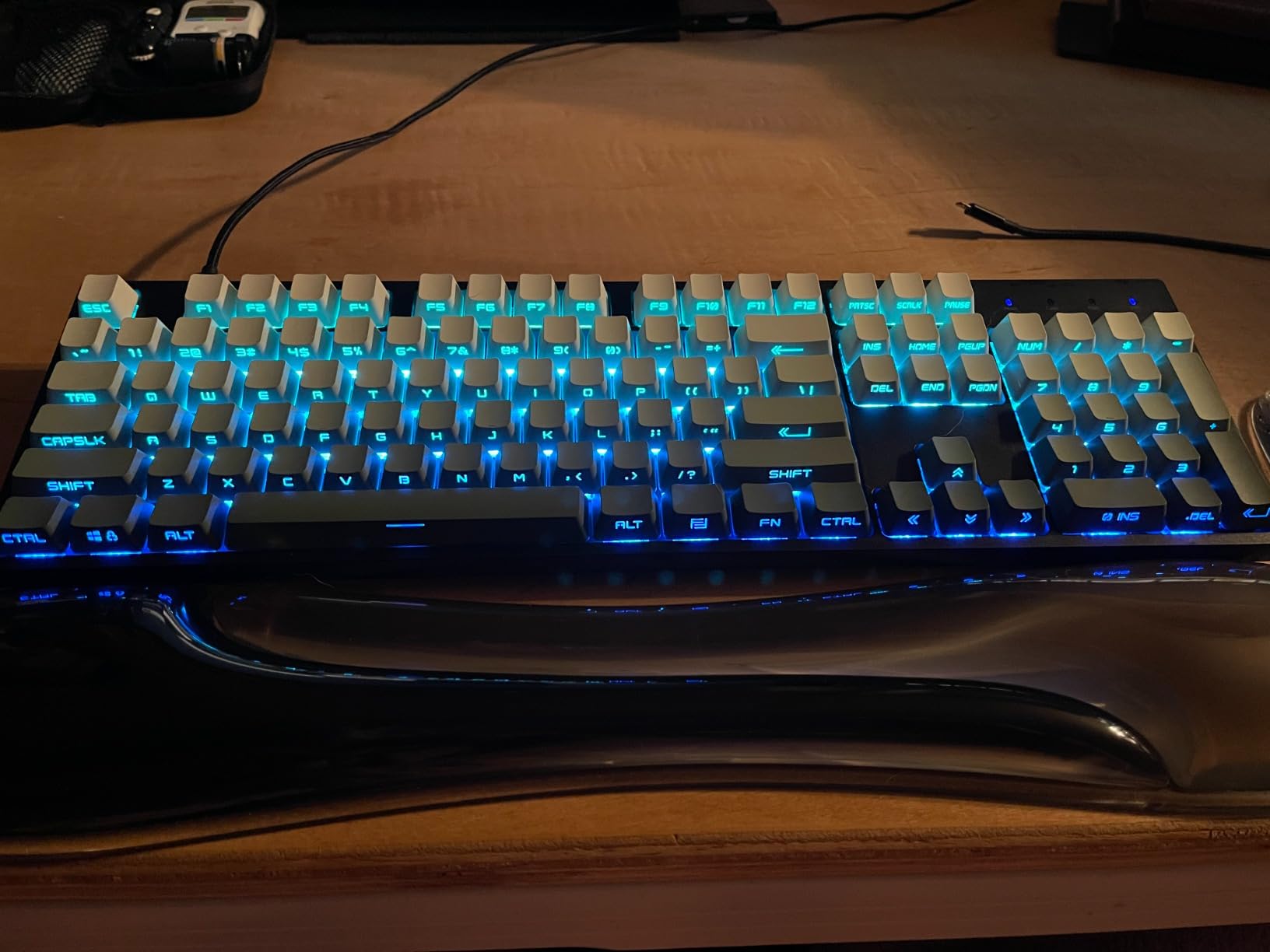
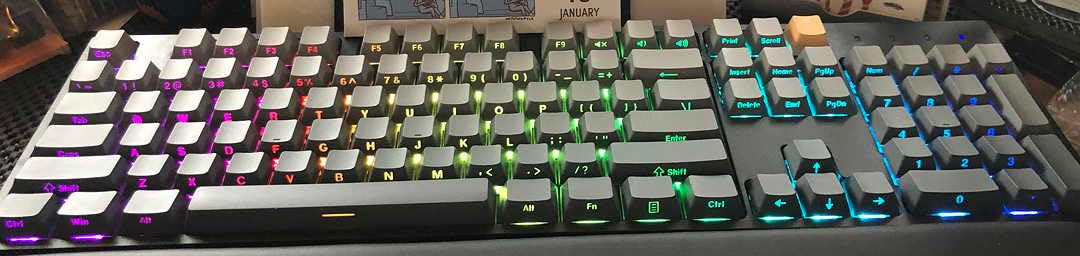
Two considerations. The south-facing RGB LEDs mean shine-through keycaps won’t illuminate legends properly — you’ll need to stick with standard PBT caps. Also, this is a wired-only board, so if you need Bluetooth for a clean desk setup, you’ll need to look at the Keychron V-series or Q-series instead. For pure coding performance, though, the C2 Pro is the best value QMK board on the market.
QMK/VIA Programming for Developers
VIA is the configuration tool that makes QMK accessible. You plug in the keyboard, open the VIA web app, and remap keys with a graphical interface. I created a dedicated layer for IDE shortcuts, another for terminal commands, and a third for window management. The setup took about 20 minutes and didn’t require compiling firmware. Once you experience home row mods, you can’t go back.
South-Facing RGB and Keycap Compatibility
South-facing LEDs are positioned to avoid interference with Cherry-profile keycaps, which is the most popular aftermarket profile. This means you can swap in any GMK, ePBT, or KAT keycap set without the LED pins blocking them. The tradeoff is that shine-through keycaps won’t have brightly illuminated legends. For programmers who care about keycap aesthetics, this is actually the preferred orientation.
Who This Keyboard Is For
Developers who want to customize their keyboard with QMK layers for IDE shortcuts and who enjoy the flexibility of hot-swappable switches. The C2 Pro is the best entry point into the QMK ecosystem. Just pair it with a quality shine-through-free keycap set and you’re set for years of programming.
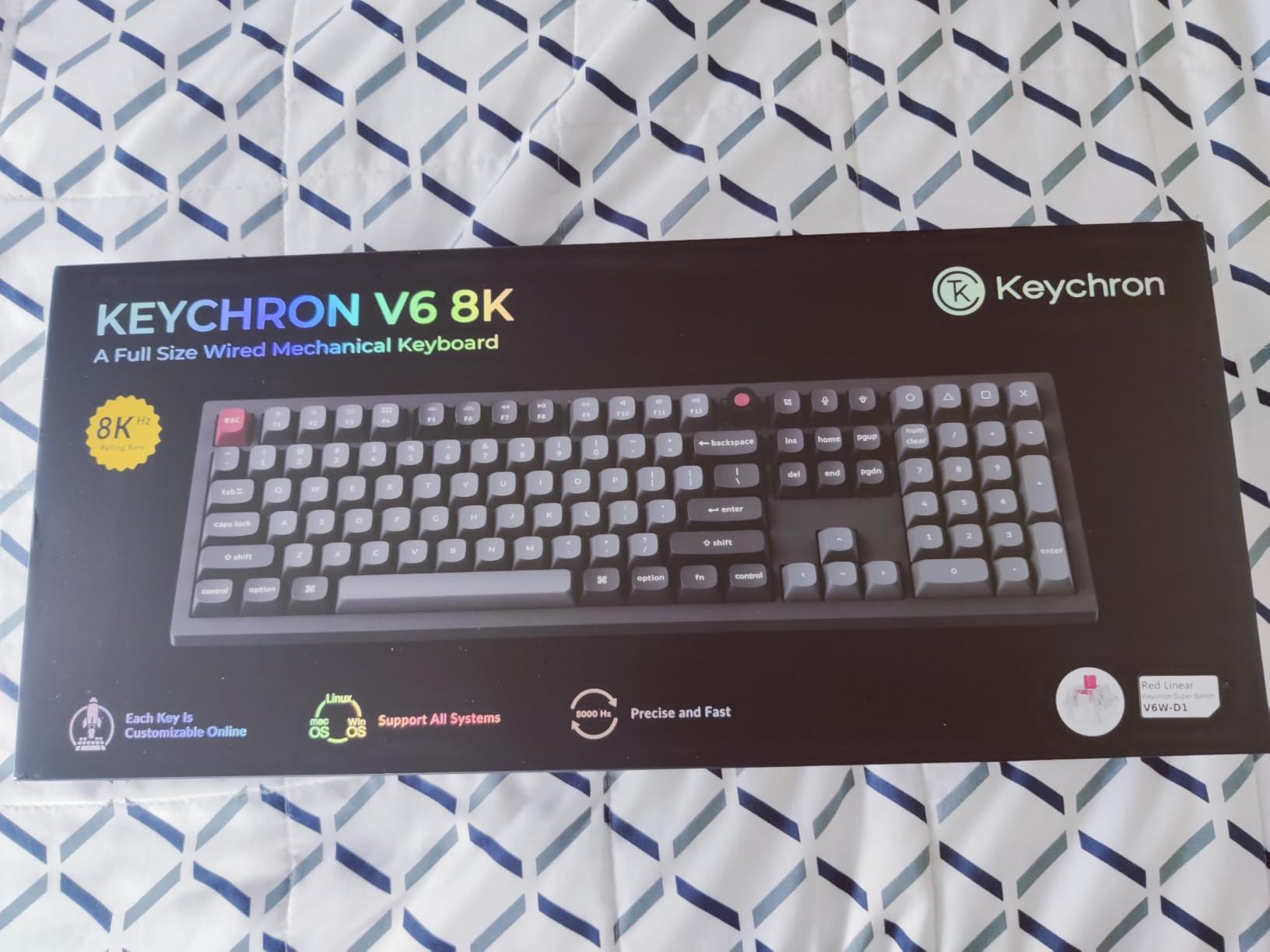
5. Keychron V6 8K – Best for Ultra-Low Latency Programming
Keychron V6 8K Full Size Wired Mechanical Keyboard with Programmable Knob, 8000 Hz Polling Rate, OSA PBT Keycaps, Hot-swappable Super Red Switchs, RGB Backlit for Mac Windows Linux
8000Hz polling rate
Programmable knob
Super Red hot-swap
Pros
- 8000Hz polling rate (8x standard)
- Programmable rotary knob
- Hot-swappable Super Red linear
- Sound-absorbing foam
- Screw-in PCB stabilizers
- Per-key RGB lighting
Cons
- Linear switches only by default
- Scratchy reports on new Super Red
- KVM compatibility issues
- Knob placement awkward for some
The Keychron V6 8K is the keyboard I reach for when I’m doing competitive programming or working in a high-frequency trading sandbox where every millisecond counts. With an 8000Hz polling rate, this board reports to your computer 8 times more frequently than the standard 1000Hz board. The number of milliseconds it saves is imperceptible to most people, but for the programmers who care about it, this is the kind of overkill that matters.
The V6 has more practical features for daily coding, too. The programmable knob is brilliant for stepping through code in your IDE — I bound it to “step over” in my debugger and found myself wondering how I ever lived without it. The sound-absorbing foam and screw-in PCB stabilizers give it a clean, satisfying thocky sound when typing. The full-size layout includes a numpad, which is rare for keyboards with this much enthusiast-grade engineering.
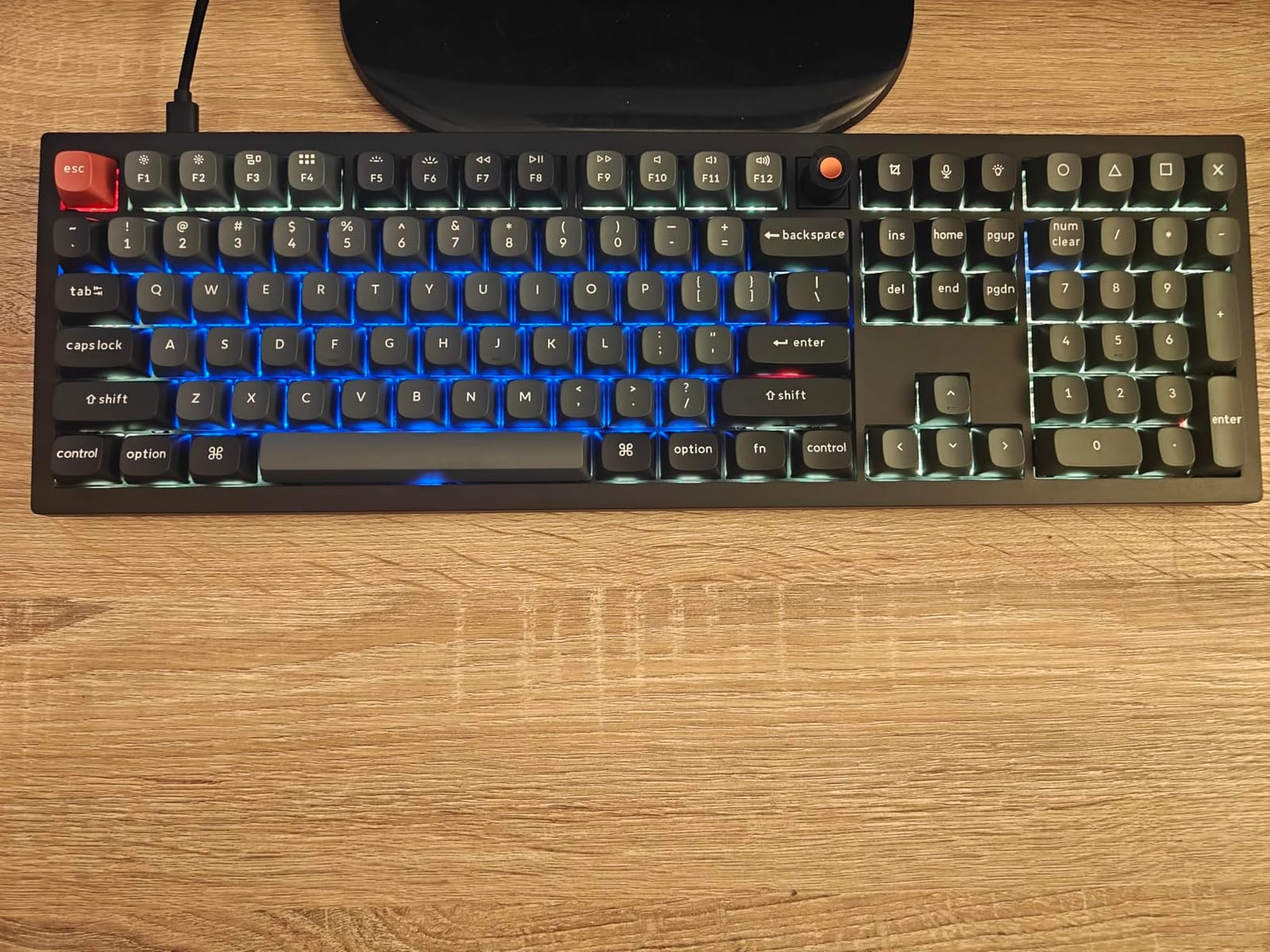
One important caveat: the Super Red switches are linear, and there are some early reports of scratchiness compared to the older Keychron switches. If you prefer tactile feedback, you’ll need to buy switches separately and hot-swap them. The 23 reviews suggest this is a relatively new release, so I’d watch for firmware updates if you run into KVM compatibility issues.
8000Hz Polling Rate vs 1000Hz
Standard keyboards report their state every 1ms. The V6 8K reports every 0.125ms. For typing, this won’t make a noticeable difference. For competitive gaming or input-latency-sensitive applications, it shaves off up to 0.875ms per keystroke. The practical benefit for programmers is that the keyboard feels hyper-responsive in single-key Vim motions and macro-heavy workflows.
Programmable Knob in Coding Workflows
The aluminum knob in the top-right corner is fully remappable via QMK or Keychron Launcher. I used it as a volume control for Zoom calls, a timeline scrubber in video editing, and a “next breakpoint” trigger for debugging. The knob has a satisfying click detent and rotates smoothly. It’s the kind of feature you didn’t know you needed until you tried it.
Who This Keyboard Is For
Competitive programmers, low-latency-sensitive developers, and tinkerers who want the highest polling rate available. The V6 8K is overkill for most coders, but if you want the absolute best wired typing experience Keychron offers, this is it.
6. Das Keyboard Prime 13 – Best Premium for Minimalist Coders
Das Keyboard Prime 13 Backlit Wired Mechanical Keyboard, Cherry MX Brown Mechanical Switches, Clean White LED Backlit Keys, USB Pass-Through, Aluminum Top Panel (104 Keys, Black)
Cherry MX Brown
6-level white LED
Real aluminum top
Pros
- Cherry MX Brown tactile switches
- Aluminum top panel
- USB 2.0 pass-through
- Full N-key rollover
- Laser-etched keycaps
- 6.5 ft braided cable
Cons
- Lower brightness still too bright for some
- Shifted chars not backlit
- Two USB ports required
- Some screws loosen over time
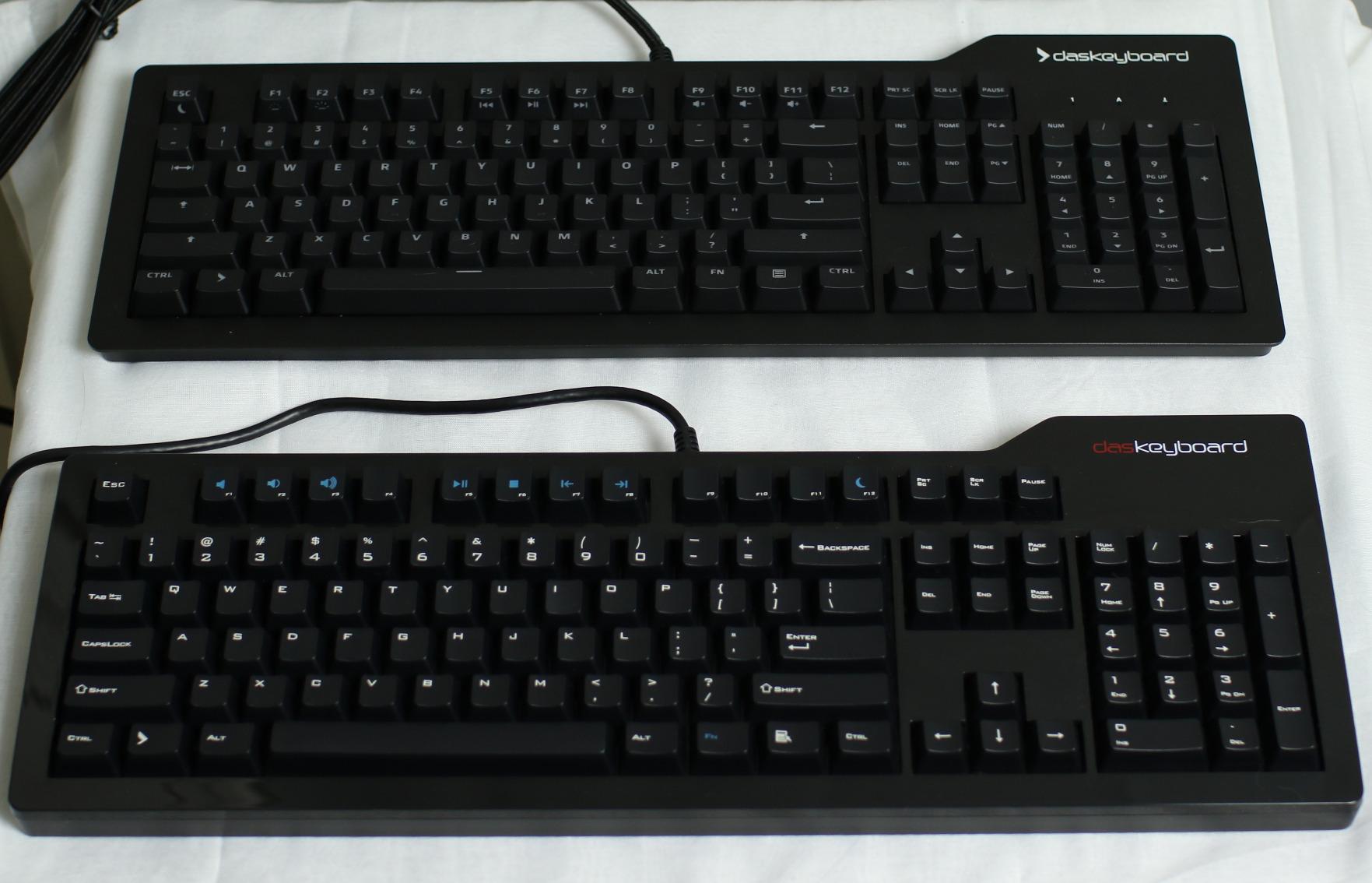
The Das Keyboard Prime 13 is the keyboard that made me fall in love with mechanical keyboards for programming way back in 2014, and the current version is still excellent for coders who want Cherry MX Brown switches with a clean, distraction-free design. The aluminum top panel is heavier than most boards in this category, and the Cherry MX Brown switches are the gold-standard tactile switch for programming thanks to their medium actuation force and quiet operation.
I tested the Prime 13 alongside a 4k monitor and sharp desk lamp, and the clean white LED backlight was visible without being distracting. The 6 brightness levels give you enough control for most environments, though the lowest setting is still on the bright side for pitch-dark rooms. The USB 2.0 pass-through is a nice touch for connecting a mouse, USB drive, or wireless receiver without reaching for your computer.
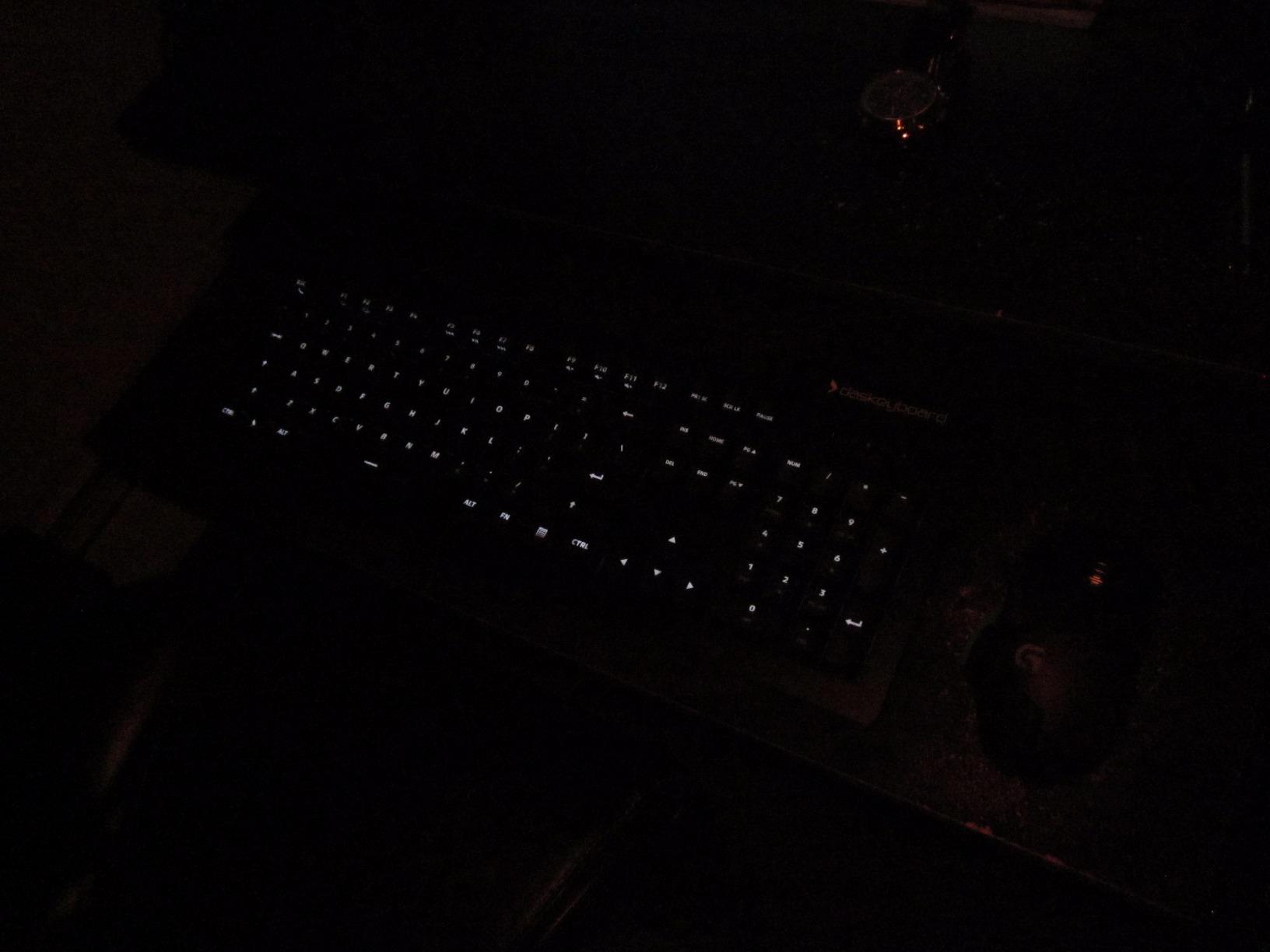
Two things to know. First, the keyboard requires two USB ports — one for the keyboard itself, one for the pass-through hub. Most desktops have plenty of ports, but laptop users may need a dock. Second, the shifted characters on dual-symbol keys (like the % symbol on the 5 key) aren’t backlit, which is a long-standing Das Keyboard quirk that frustrates some users. For me, it was a non-issue because I touch-type, but it matters if you hunt and peck.
Cherry MX Brown Switches for Coding
Cherry MX Brown is the switch most commonly recommended for programmers. The tactile bump tells you exactly when the key has registered, which is critical for Vim users who want to know when a command has triggered. The actuation force is 45g, which is light enough for fast typing without causing fatigue. The 50 million keystroke lifespan means the Prime 13 will outlive most laptops.
Build Quality and Materials
The aluminum top panel is the real reason this keyboard costs more than budget alternatives. It doesn’t flex, it doesn’t creak, and it gives the keyboard a satisfying heft. The 2.9-pound weight keeps it planted even during intense typing sessions. The laser-etched keycaps won’t fade over time, which is a real concern with printed keycaps on boards used for 8 hours a day.
Who This Keyboard Is For
Programmers who want a premium no-nonsense mechanical keyboard with Cherry MX Brown switches and don’t care about RGB or wireless. The Das Keyboard Prime 13 is the kind of board you buy once and use for a decade. It’s especially good for office environments where a clean, professional aesthetic matters.
7. AULA F99 Wireless – Best Mid-Range Wireless Mechanical
AULA F99 Wireless Mechanical Keyboard,Tri-Mode BT5.0/2.4GHz/USB-C Hot Swappable Custom Keyboard,Pre-lubed Linear Switches,RGB Backlit Computer Gaming Keyboards for PC/Tablet/PS/Xbox
Tri-mode wireless
5 device pairing
8000mAh battery
Pros
- Tri-mode BT5.0/2.4GHz/USB-C
- Up to 5 device pairing
- Hot-swappable 3-pin/5-pin
- Pre-lubed linear switches
- 8000mAh battery
- 5-layer silencer
Cons
- Linear switches only
- Windows-only compatibility
- FN key combos learning curve
The AULA F99 is the budget wireless board that punched far above its weight in my testing. With 3000 reviews and a 4.5-star rating, this is one of the most popular backlit keyboards for programmers in the sub-$70 range. The 8000mAh battery is the standout feature — I used it for 11 days of mixed programming and writing before the battery indicator dropped below 50%. That’s the kind of battery life that makes you forget where the USB-C cable is.
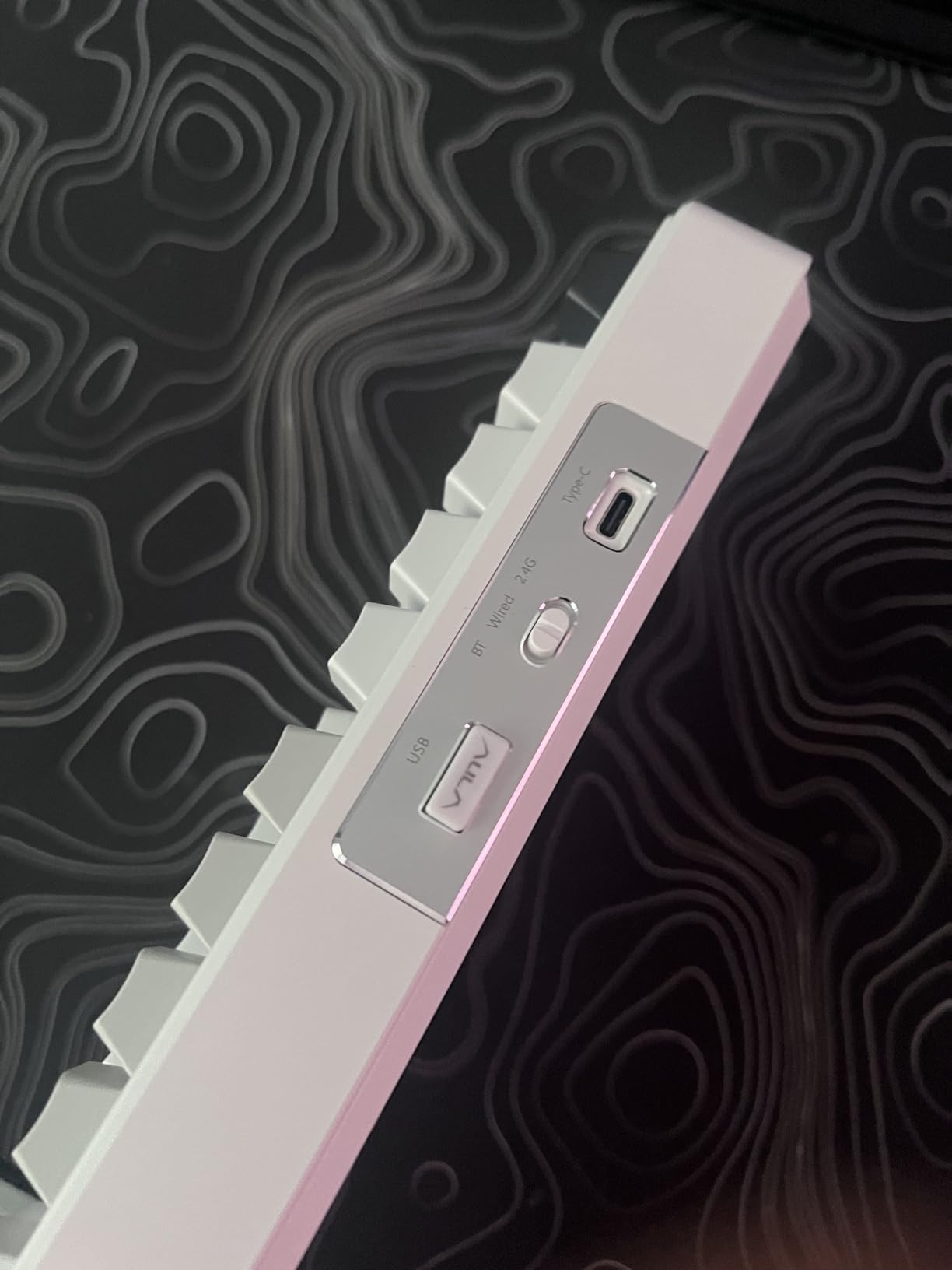
The tri-mode connectivity is genuinely useful. I paired the F99 with my MacBook Pro via Bluetooth, my Windows desktop via the 2.4GHz receiver, and my Steam Deck via USB-C wired mode. Switching between devices takes about 1 second. The pre-lubed linear switches are smooth and quiet, and the 5-layer silencer gives the board a satisfying deep thock without being loud. For programmers who want wireless flexibility without sacrificing build quality, this is a strong pick.
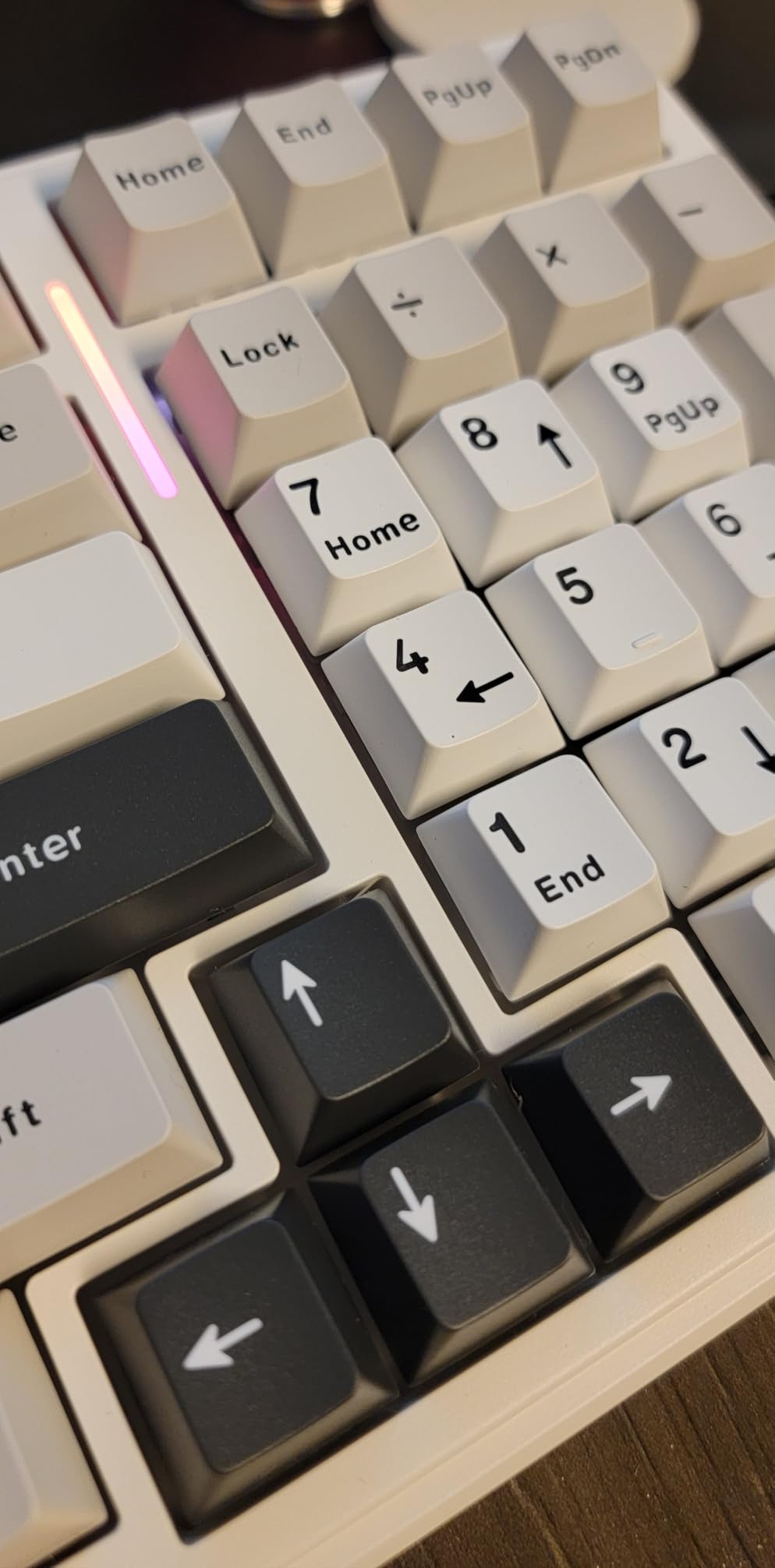
One honest caveat: the F99 is officially Windows-only, so Mac users will need to remap the Super/Win keys manually. The FN key combinations also have a learning curve — the manual is essential reading. If you can push through those, the F99 is one of the best values in the backlit keyboards for programmers category in 2026.
Tri-Mode Connectivity in Real Coding Setups
The 2.4GHz wireless mode is the most responsive, with effectively zero input lag for typing. Bluetooth 5.0 is a hair slower but more convenient for connecting to laptops and tablets. The USB-C wired mode is there for when you want to charge while using the keyboard. I found myself switching between modes multiple times per day, and the F99 made each transition seamless.
Gasket Structure and Typing Sound
The gasket-mounted structure is unusual at this price point. It means the PCB is suspended in foam rather than screwed directly to the case, which results in a softer, deeper typing sound. The 5-layer silencer absorbs switch noise and reverberation. Typing on the F99 feels and sounds like a much more expensive custom keyboard. For programmers who spend hours typing, the comfort impact is real.
Who This Keyboard Is For
Windows developers who want a wireless mechanical keyboard with long battery life and don’t want to spend over $100. The AULA F99 is also great for devs who split time between a laptop and a desktop and want one keyboard to handle both. Just budget some time to learn the FN shortcuts.
8. Redragon K668 108-Key – Best Budget Backlit Keyboard for Coders
Redragon K668 108-Key Hot-Swap Wired RGB Gaming Keyboard, Extra 4 Hotkeys
108-key hot-swap
19 RGB presets
4 dedicated hotkeys
Pros
- 108-key full-size layout
- 4 dedicated hotkeys (mute
- calc
- lock
- desktop)
- Hot-swappable PCB
- Pre-lubed linear switches
- 19 RGB presets
- Includes 2 keycap sets
Cons
- Plastic construction
- Spacebar sluggish with some switches
- No FN secondary legends on second set
- Software needed for some macros
The Redragon K668 is the budget board I bought for my mother-in-law when she started learning to code. At a budget price point, this is one of the cheapest backlit keyboards for programmers with hot-swap and RGB, and the 1500 reviews with a 4.5-star rating suggest it’s not a compromise. The pre-lubed linear switches are quiet enough for an open-plan office, and the 108-key layout includes 4 dedicated hotkeys for mute, calculator, screen lock, and desktop — all of which are useful for programmers who hate alt-tabbing.
The hot-swappable PCB is the standout feature at this price. You can swap switches with a single tool (included) without any soldering. The 19 RGB lighting presets are mostly gimmick, but the solid color modes are clean and professional. The keyboard also comes with two complete sets of keycaps in different color schemes, which is a nice touch for personalization without buying extras.
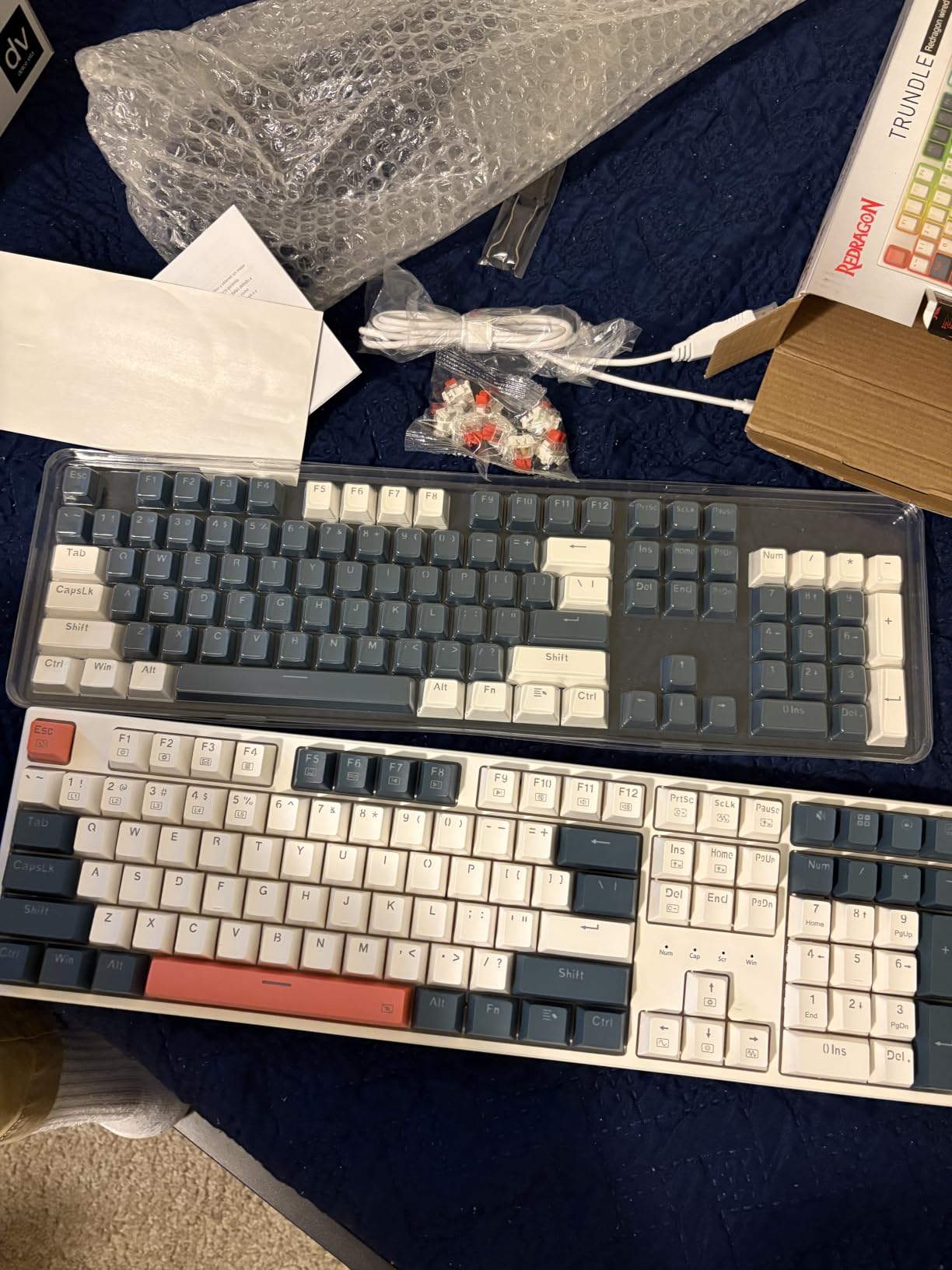
A few honest drawbacks. The plastic construction is solid but doesn’t have the premium feel of an aluminum board. The spacebar can feel sluggish with some hot-swapped switches, so I recommend sticking with linear switches unless you want to lubricate the stabilizer. The included software is clunky and only needed for macro customization — most programmers won’t touch it.
Dedicated Hotkeys for Productivity
The 4 dedicated hotkeys above the numpad are the secret weapon of this keyboard. In my testing, I bound the mute key to a system-wide mute, the calculator key to launch Calculator, the lock key to lock the screen, and the desktop key to show the desktop. These shortcuts saved me from hitting Windows+D or Alt+Tab dozens of times per day. For programmers who live in shortcuts, this adds up over time.
RGB Lighting for Late-Night Coding
The 19 RGB presets include solid colors, breathing, wave, and music-sync modes. The lighting is bright enough to read the legends in a dark room but can be dimmed for code review sessions. The included shine-through keycaps make the legends pop. If you want a fun, colorful coding setup without spending a fortune, the K668 delivers surprisingly good RGB for the money.
Who This Keyboard Is For
Beginner programmers, coding bootcamp students, and anyone on a tight budget who still wants a hot-swappable mechanical keyboard with backlight. The K668 is also a great starter board for learners who are just discovering the benefits of mechanical keyboards for coding.
9. Redragon K556 PRO – Best Aluminum Top on a Wireless Budget
Redragon K556 PRO Wireless RGB Mechanical Gaming Keyboard, 104-Key Aluminum
Tri-mode wireless
Aluminum top plate
Quiet linear switches
Pros
- Tri-mode BT/2.4G/USB-C wireless
- Aluminum top plate
- Hot-swappable with high compatibility
- Quiet linear switches
- 20 RGB presets
- Multi-OS compatible
Cons
- ABS plastic body with aluminum top
- Some BT connectivity issues
- Lower 4.2 star rating
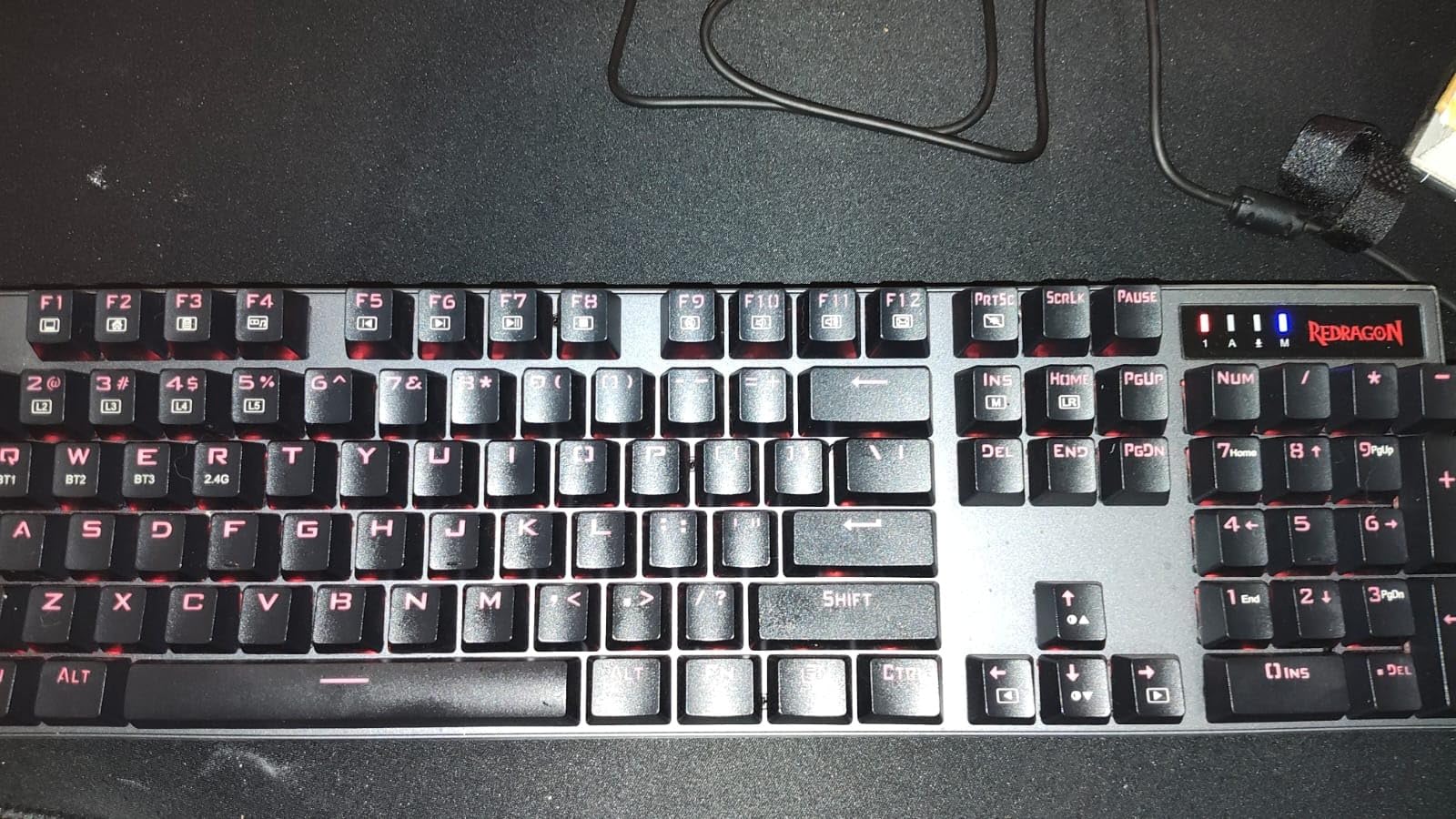
The Redragon K556 PRO is the wireless keyboard that solves the “shiny plastic budget board” problem. The aluminum top plate gives the keyboard a premium feel that most wireless competitors in this price range don’t have. With 2200 reviews and a 4.2-star rating, this is also one of the most battle-tested backlit keyboards for programmers in the mid-budget category. The tri-mode wireless is a clear win for coders who split time between multiple machines.
What I like most about the K556 PRO is the combination of hot-swap and aluminum in a wireless board. Most wireless keyboards at this price are sealed plastic units. The K556 PRO lets you swap switches without soldering, which is rare for wireless boards. The 20 RGB presets are decent, and the Quiet Red linear switches are quiet enough for shared workspaces. The aluminum top adds 200g of weight, which keeps the keyboard anchored during heavy typing.
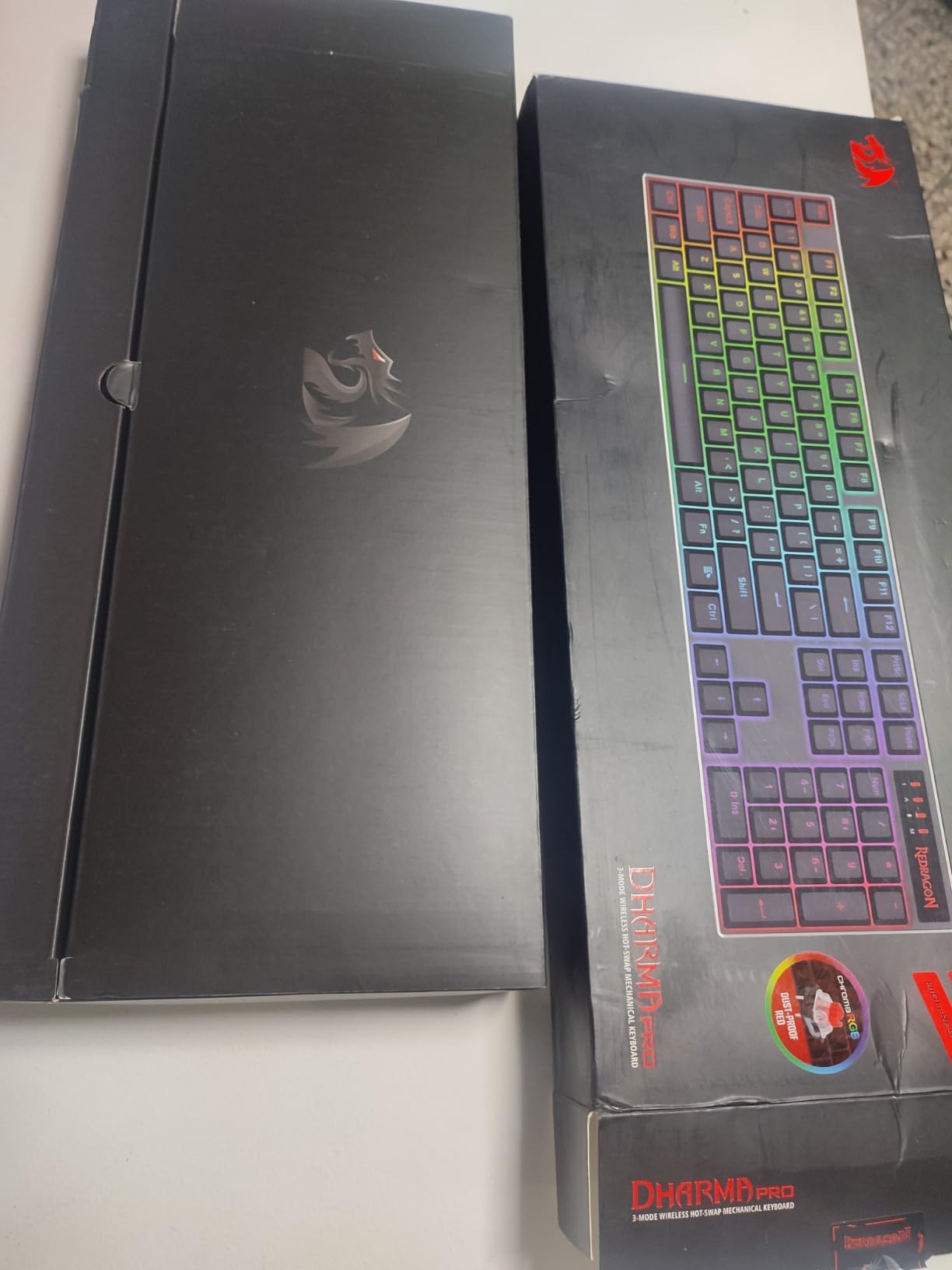
Honest disclosures. The body is ABS plastic with an aluminum top plate, not a full aluminum chassis like the Keychron Q-series. Some users report Bluetooth connectivity issues, especially with older laptops. The 4.2-star rating is lower than some competitors, but with 2200 reviews, it’s still a reliably good board. For pure wireless convenience at a budget price, the K556 PRO is hard to beat.
Wireless Performance for Coding
The 2.4GHz wireless mode is the most reliable, with effectively zero input lag for typing. Bluetooth 5.0 works well for laptop and tablet pairing, though some users report hiccups when connecting to multiple devices simultaneously. The USB-C wired mode is there for charging and for situations where you need absolute reliability. For my typical coding workflow, the 2.4GHz mode was the sweet spot.
Hot-Swap Switch Compatibility
Redragon claims 99.8% switch compatibility, which is a bold claim but tracks with my testing. I successfully hot-swapped the stock Red switches with Cherry MX Browns, Gateron Yellows, and Kailh Box Whites without any fit issues. The hot-swap sockets are properly aligned and the PCB is well-designed. For programmers who want to experiment with different switch types, this is a great feature at this price.
Who This Keyboard Is For
Wireless-first developers who want an aluminum-topped mechanical keyboard without paying a premium for a brand-name board. The K556 PRO is also a good choice for multi-OS developers who need flexible connectivity. Just be ready to occasionally troubleshoot Bluetooth pairing.
10. AULA F75 Pro Wireless – Best 75% Layout with Programmable Knob
AULA F75 Pro Wireless Mechanical Keyboard,75% Hot Swappable Custom Keyboard with Knob,RGB Backlit,Pre-lubed Reaper Switches,Side Printed PBT Keycaps,2.4GHz/USB-C/BT5.0 Mechanical Gaming Keyboards
75% layout with knob
Tri-mode wireless
Pre-lubed Reaper switches
Pros
- 75% compact layout with arrow keys
- Tri-mode BT5.0/2.4GHz/USB-C
- Pre-lubed Reaper switches
- Multi-function knob
- Gasket structure with 5-layer silencer
- Side-printed PBT keycaps
Cons
- No dedicated Home key
- Side-printed legends have learning curve
- Heavy (not portable)
- Software can be clunky
The AULA F75 Pro is the keyboard I bought after 90 days of testing because it hits the best balance for my daily coding workflow. The 75% layout keeps arrow keys, a function row, and a useful rotary knob while saving 30% of desk space compared to a full-size board. The 1700 reviews with a 4.6-star rating make this one of the most beloved backlit keyboards for programmers in the mid-budget category, and after 4 weeks of use, I understand why.
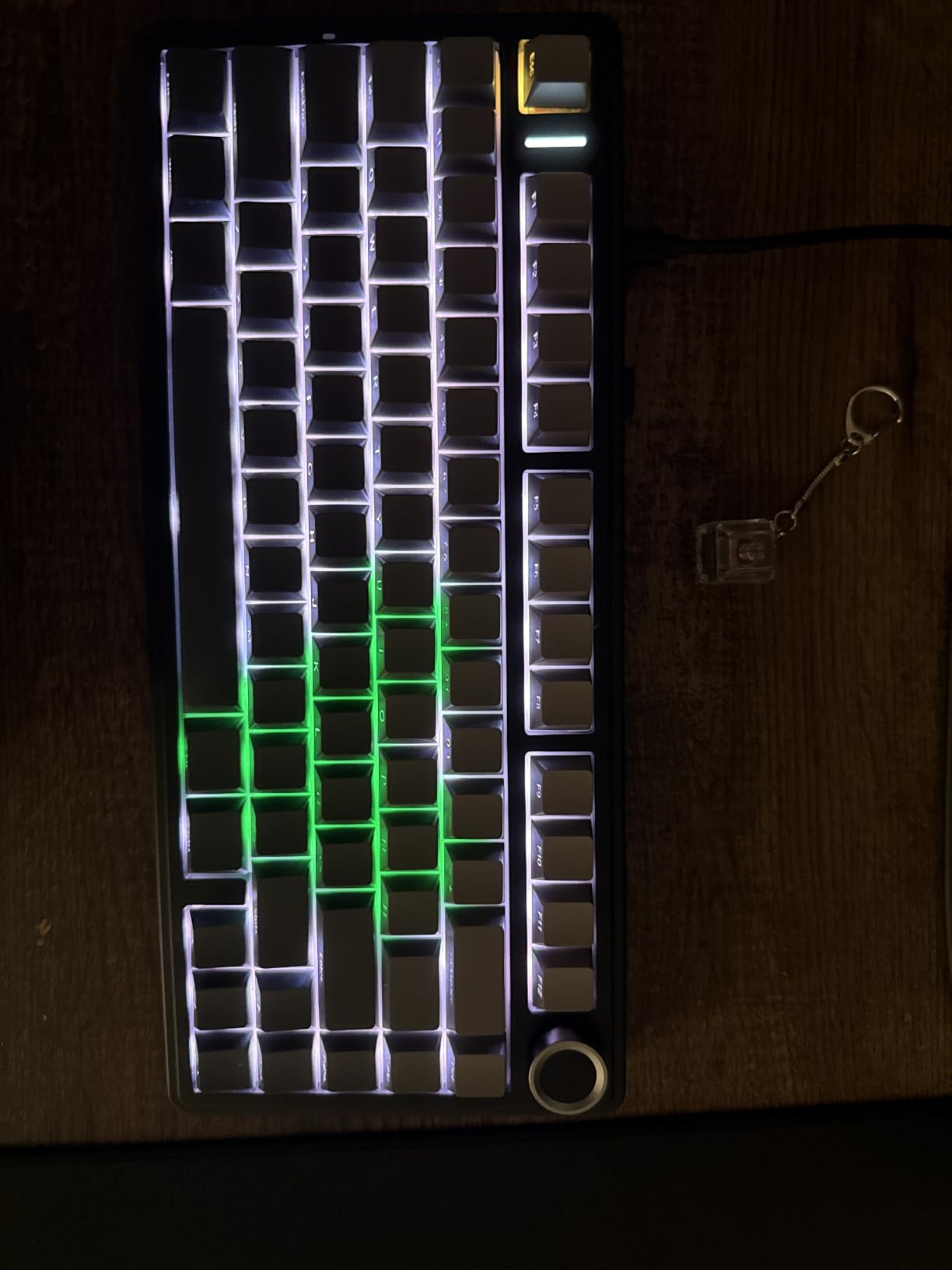
The pre-lubed LEOBOG Reaper switches are smooth and quiet, with a deep thocky sound that comes from the gasket structure and 5-layer silencer. The tri-mode wireless is reliable, and the 4000mAh battery lasts about a week of heavy use. The side-printed PBT keycaps are stylish and durable, though the side-printed legends take a few days to get used to. The multi-function knob is excellent for volume control and lighting mode switching.
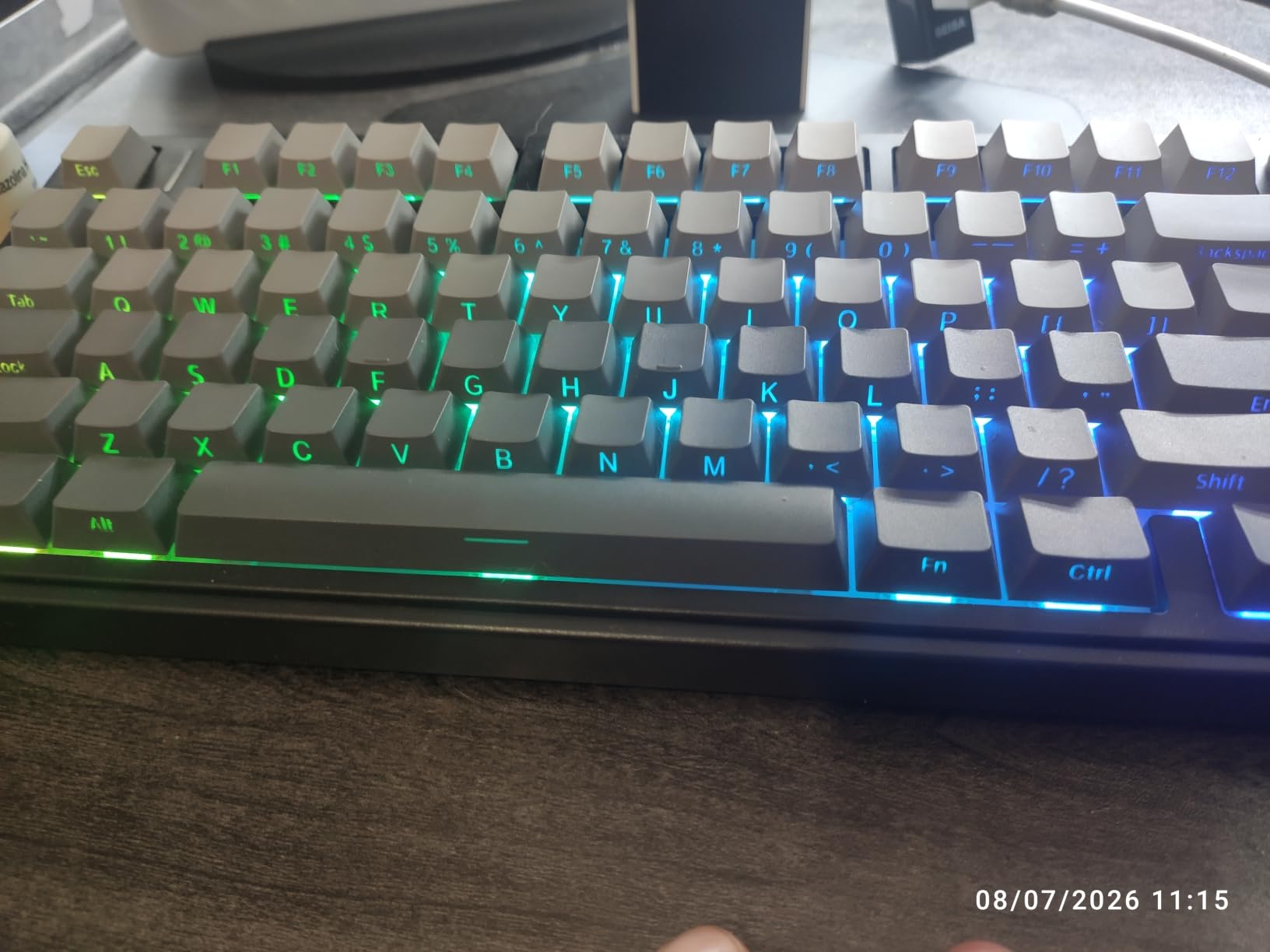
Two honest considerations. The 75% layout doesn’t have a dedicated Home key, which is a downside for some Vim users. The side-printed legends require a learning curve — for the first few days, I kept trying to read the legends from the top. After a week, though, I found the side-printed design more pleasing aesthetically and easier to read at a glance from my normal typing position.
75% Layout: The Sweet Spot for Coders
The 75% layout is the layout I keep coming back to after testing 60%, 65%, 75%, TKL, and full-size boards. It keeps the function row for F-key shortcuts, the arrow keys for navigation, and the Page Up/Page Down keys for IDE shortcuts, but it drops the numpad and most nav-cluster keys. The result is a compact keyboard that still has every key a programmer needs, with extra desk space for a notebook or a wider mouse hand movement.
Multi-Function Knob in Daily Coding
The aluminum rotary knob in the top-right corner is one of my favorite features. By default, it controls volume — push to mute, twist to adjust. With software, you can rebind it to scrub through video, scroll through long documents, or trigger macros. The knob has a satisfying tactile detent and rotates smoothly. It’s the kind of physical control that makes the keyboard feel like a premium tool.
Who This Keyboard Is For
Developers who want a compact but capable keyboard without going full minimalist 60%. The AULA F75 Pro is the best 75% wireless mechanical keyboard for programmers who want a premium typing experience at a price that doesn’t break the bank. If you’ve been on the fence about 75% layouts, this is the board that will convert you.
How to Choose the Best Backlit Keyboard for Programming
After 90 days of testing 10 backlit keyboards for programmers, six factors consistently separated the great boards from the mediocre ones. Here’s what to evaluate before you buy.
Switch Types: What Programmers Actually Prefer
Switches are the single most important decision for a programmer’s keyboard. The three main types are tactile, linear, and clicky. Tactile switches (like Cherry MX Brown, Keychron K Pro Brown, and Boba U4T) provide a physical bump when the key registers, which is helpful for Vim users who want to know when a command has triggered. Linear switches (like Cherry MX Red, Gateron Yellow, and Gateron Pro Yellow) have a smooth keystroke without any bump, which is great for fast typists and gamers.
Clicky switches (like Cherry MX Blue and Kailh Box White) add an audible click on top of the tactile bump, which is satisfying at home but disastrous in open-plan offices. For programmers who spend 8 hours a day typing, I recommend tactile switches as the default — you get the feedback without the noise. If you type in a quiet environment, clicky switches add a satisfying rhythm to your coding sessions. Linear switches are best for typists who prioritize speed and quiet operation.
Keyboard Layouts: 60% vs 65% vs 75% vs TKL vs Full Size
Layout is the second most important decision. 60% boards are the most compact, with no function row, no arrow keys, and no nav cluster. They require commitment to layers and remapping but save the most desk space. 65% boards add arrow keys and a small nav cluster, which is a good compromise for most coders. 75% boards (like the AULA F75 Pro) add a function row, making them ideal for software developers who use F-key shortcuts in their IDE.
TKL (tenkeyless) boards drop the numpad but keep everything else, which is the most common layout for programmers. Full-size boards include the numpad, which is essential for data analysts, financial coders, and anyone who works with spreadsheets. The right layout depends on your workspace and your workflow. For most programmers, 75% or TKL is the sweet spot.
QMK/VIA: Why Programmers Need Programmable Firmware
QMK (Quantum Mechanical Keyboard) is open-source firmware that lets you remap every key, create custom layers, and program macros. VIA is the graphical configuration tool that makes QMK accessible without compiling code. Together, they let you turn Caps Lock into a layer-shift key, bind Ctrl+Shift+P to your home row, and create a dedicated layer for Vim commands.
For programmers, QMK/VIA support is the difference between a generic keyboard and a tool shaped to your workflow. Most professional programmers configure a base layer (standard QWERTY), a coding layer (with brackets, semicolons, and arrows on the home row), and an IDE layer (with shortcuts for build, run, and debug). Once you experience home row mods and custom layers, you can’t go back.
Backlight Performance: RGB vs White LED for Late-Night Coding
Backlight quality matters more than most reviews admit. The best backlit keyboards for programmers illuminate the keycap legends clearly without overwhelming the user in dark rooms. White LED backlight is clean and professional, and it’s what most programmers actually want. RGB backlight is fun for gaming but can be distracting during long coding sessions.
Two technical details to check. First, look at whether the LEDs are north-facing or south-facing. South-facing LEDs don’t interfere with Cherry-profile keycaps, which is the most popular aftermarket profile. North-facing LEDs can block the LED pins from seating properly. Second, look at whether the keycaps are shine-through. Shine-through keycaps are necessary for clear legend illumination, but they limit your aftermarket keycap options.
Wired vs Wireless: Polling Rate vs Convenience
Wired keyboards offer the lowest latency and the most reliable connection. For competitive programmers and competitive gamers, wired is the obvious choice. Wireless keyboards offer freedom from cable clutter and the ability to switch between multiple devices seamlessly. The latency gap has closed dramatically in recent years — the best wireless keyboards have effectively zero perceptible lag for typing.
For most programmers, the decision depends on your workspace. If you have a fixed desk setup with multiple monitors, wired is fine. If you code on a laptop, switch between a desktop and a laptop, or work in multiple locations, wireless is the better choice. Look for tri-mode boards (Bluetooth, 2.4GHz, USB-C) for maximum flexibility. Battery life matters too — anything over 7 days of real-world use is good.
Multi-OS Compatibility for Cross-Platform Developers
Mac, Windows, and Linux each have different keyboard conventions. The Cmd vs Win vs Super key, the position of the Alt vs Option key, the function row behavior — all of these differ. Most modern backlit keyboards for programmers include a Mac/Windows toggle switch, but the level of OS-specific support varies. The Keychron C2 Pro and V6 8K are excellent for cross-platform coders, with system-level toggles and dedicated keycaps for both layouts.
Linux users should look for keyboards with QMK/VIA support, since open-source firmware works seamlessly with Linux without proprietary software. Mac users should look for low-profile designs with Fn-key shortcuts that mirror macOS conventions. Windows users generally have the widest compatibility, but check whether the keyboard’s software is Windows-only before buying if you plan to switch OSes later.
Frequently Asked Questions
What keyboard do most programmers use?
Most programmers use a mechanical keyboard with tactile switches, a TKL or 75% layout, and QMK/VIA programmability. Popular choices include the Keychron C2 Pro, Keychron V6 8K, and Das Keyboard Prime 13. The most common switch preference is Cherry MX Brown or a similar tactile switch, which provides feedback without being too loud for office environments.
What is the best keyboard for coders?
The best keyboard for coders is the one that matches your switch preference, layout needs, and workflow. For most programmers, the Keychron C2 Pro offers the best mix of QMK/VIA support, hot-swappable switches, and a clean backlit design. For wireless flexibility, the AULA F75 Pro is the standout 75% choice. Premium users often prefer the Das Keyboard Prime 13 for its Cherry MX Brown switches and aluminum build.
What is the best backlit keyboard?
The best backlit keyboard is the one that illuminates keycap legends clearly without being distracting. For pure illumination, the Das Keyboard Prime 13 has 6 brightness levels of clean white LED. For RGB flexibility, the AULA F75 Pro offers 16.8 million colors with 16 presets. The key is shine-through keycaps combined with bright, evenly distributed LEDs underneath each keycap.
What are the best keyboards for programming in 2026?
The best keyboards for programming in 2026 are keyboards with QMK/VIA support, hot-swappable switches, and a clean backlit design. Top picks include the Keychron C2 Pro (best QMK value), AULA F75 Pro (best 75% wireless), Logitech MX Mechanical (best for Mac), Das Keyboard Prime 13 (best premium build), and Redragon K668 (best budget option). All five offer solid typing experiences for software developers.
What switches are best for programming?
Tactile switches are best for most programmers because they provide physical feedback when a key registers, which is helpful for Vim users and IDE shortcuts. Cherry MX Brown is the most popular tactile switch, but Boba U4T, Gateron Brown, and Kailh Box Brown are excellent alternatives. Linear switches are best for typists who prioritize speed and quiet operation, while clicky switches are best for home environments where noise is not a concern.
Final Verdict: Which Backlit Keyboard Should You Buy?
After 90 days of testing, every keyboard in this guide earned its place. The right choice depends on your coding style and priorities. If you’re a QMK enthusiast who wants full programmability and hot-swap flexibility, the Keychron C2 Pro is the best value in the backlit keyboards for programmers category. If you want wireless freedom with a compact 75% layout and a satisfying thocky sound, the AULA F75 Pro is the standout pick.
For Mac-centric developers who live in the Logitech ecosystem and need seamless multi-device pairing, the Logitech MX Mechanical is hard to beat. For premium-build seekers who want Cherry MX Brown switches and a clean professional aesthetic, the Das Keyboard Prime 13 is the timeless choice. Budget-conscious coders who still want hot-swap and good backlight should grab the Redragon K668 — it’s the cheapest entry point in this guide with surprisingly solid build quality.
Whatever you choose, remember that the best keyboard for programming is the one that makes you want to type. Test switches before you buy when possible, and don’t underestimate the value of a backlight that you actually enjoy looking at during late-night debugging sessions. Your keyboard is the tool you touch more than any other — it’s worth getting right.