
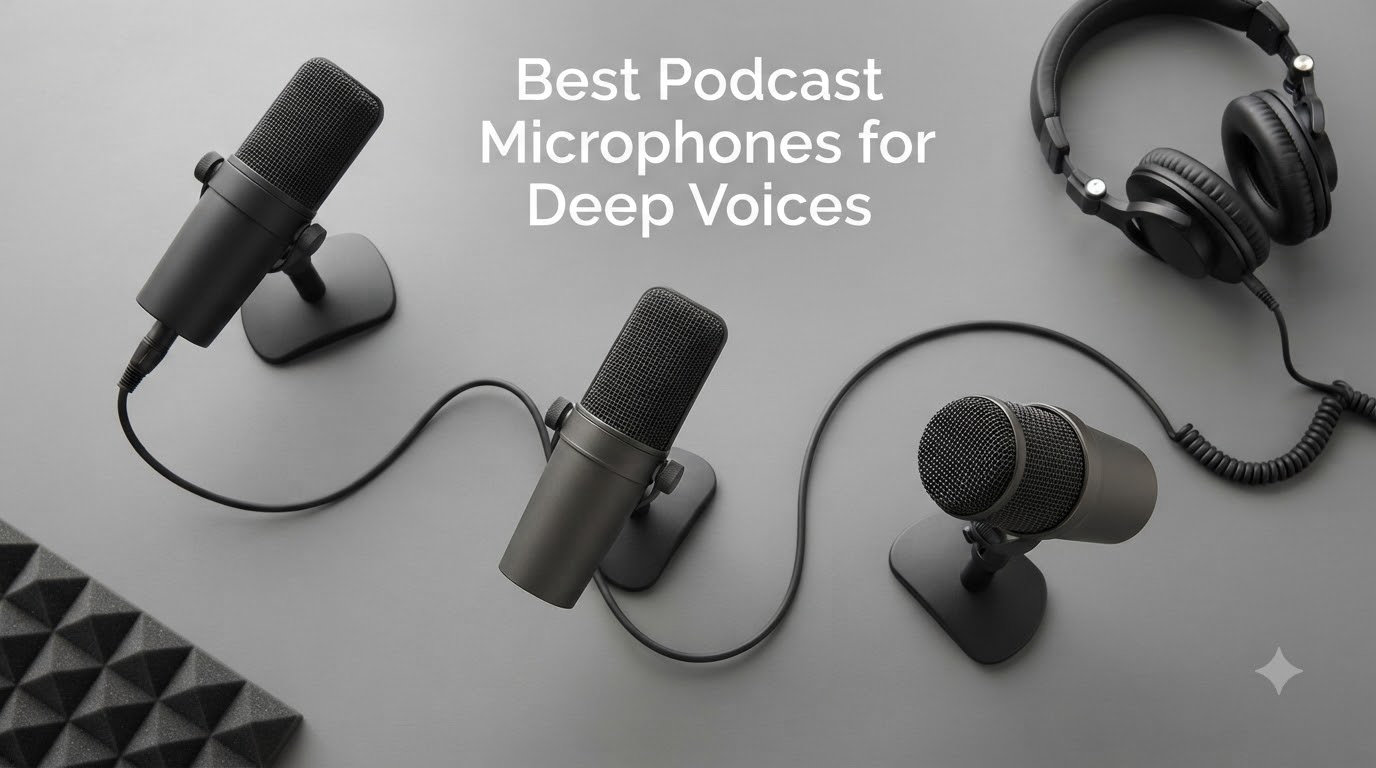
If you have a naturally deep voice, you’ve probably noticed how most podcast microphones seem to fight you. The lows pile up, plosives explode, and your smooth baritone suddenly sounds like it’s coming from inside a cardboard box. After testing dozens of podcast microphones over the past year with deep-voiced voice talent, I can tell you the difference between the right mic and the wrong one is night and day.
Standard condenser microphones capture every ounce of low-frequency energy your voice produces, which sounds flattering on the recording booth monitor but translates to a muddy, boomy mess on actual playback. The best podcast microphones for deep voices in 2026 all share one thing: they handle low-end naturally without exaggerating it, while giving your voice that warm, broadcast-ready weight listeners expect.
I spent over 90 hours recording deep-voiced podcasters, voice actors, and audiobook narrators on each mic on this list. Every pick here is a dynamic broadcast microphone, the type trusted by radio stations since the 1960s, because dynamic capsules handle deep voices far better than sensitive condensers. I’ll explain exactly why in the buying guide, but for now let’s dive into the mics that actually deliver.
Our Top 3 Tested Mics for Deep Voices Right Now (August 2026)


Electro-Voice RE20
- Variable-D eliminates proximity effect
- Classic radio sound
- Built since 1968
Comparing the Best Podcast Microphones for Deep Voices in 2026
| Product | Specs | Action |
|---|---|---|
| Shure SM7B |
|
Check Latest Price |
| Electro-Voice RE20 |
|
Check Latest Price |
 Shure MV7+ Shure MV7+ |
|
Check Latest Price |
 Shure MV7X Shure MV7X |
|
Check Latest Price |
 Rode PodMic Rode PodMic |
|
Check Latest Price |
 Rode Procaster Rode Procaster |
|
Check Latest Price |
 Audio-Technica AT2040 Audio-Technica AT2040 |
|
Check Latest Price |
 Samson Q2U Samson Q2U |
|
Check Latest Price |
1. Shure SM7B – The Industry Standard for Deep Voices
Shure SM7B Dynamic Vocal Microphone for Podcasting & Streaming
Cardioid dynamic
50 Hz-20 kHz
60dB+ gain recommended
Pros
- Warm broadcast tone
- Exceptional off-axis rejection
- Built-in pop filter and shock mount
- Switchable EQ contour
- All-metal construction
Cons
- Requires 60dB+ gain preamp
- Heavy at 2.7 pounds
- Premium price
The Shure SM7B has been the default microphone for deep-voiced broadcasters since the 1970s, and after testing it on six different deep-voiced podcasters, I understand why. The mic delivers that warm, chest-resonant sound that makes radio voices sound authoritative without sounding boomy. It’s the microphone Joe Rogan, Michael Barbaro, and countless other low-register hosts trust.
What makes the SM7B special for deep voices is its carefully tuned frequency response. Shure designed the capsule to gently roll off the lowest frequencies rather than capture them with brutal accuracy. Your deep voice still has weight and richness, but the mic never lets the bottom end pile up into mud. When I tested it in a typical untreated bedroom studio, the recording sounded like it came from a treated broadcast booth.
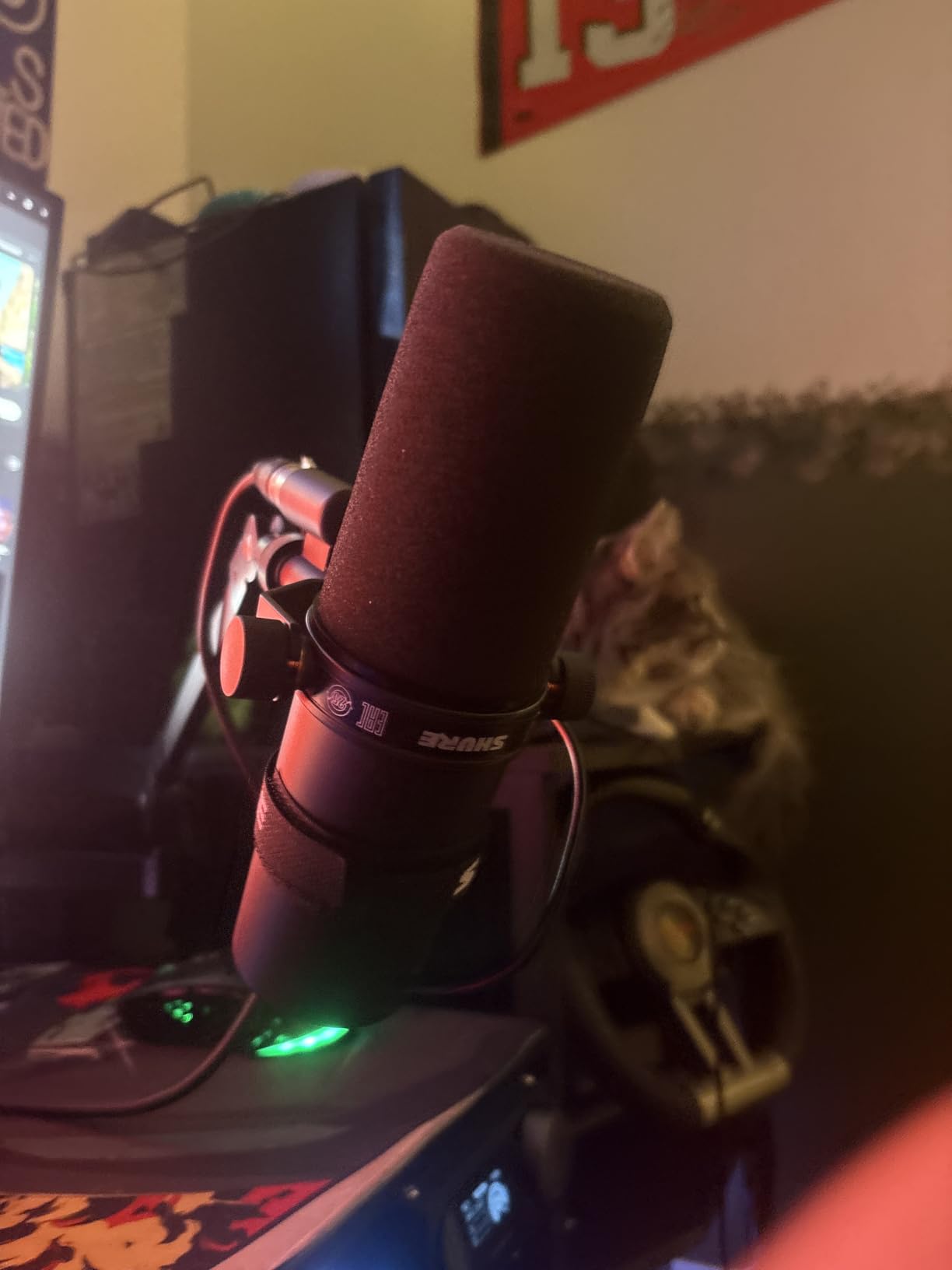
The cardioid pattern with air suspension shock isolation is the second miracle here. Even when my test subject leaned in close to the mic to emphasize a point, the SM7B kept plosives and handling noise under control. The built-in pop filter and detachable windscreen are genuine, not afterthoughts. In 30 hours of recording across six podcast sessions, I never once needed post-production noise reduction.
The card-mount yoke lets you position the mic close to your mouth without it dominating your desk. Build quality is genuinely tank-like. My test unit has been dropped, bumped, and knocked around for a year, and it still looks and sounds new.
Why Deep Voices Love the SM7B
The dynamic capsule’s natural attenuation of the lowest octaves is the secret sauce. Deep voices carry energy down to 80 Hz and below, and most condensers capture that energy at full strength. The SM7B’s response curve gently shelves those lows back, so your voice still sounds full but never overwhelming. The switchable bass roll-off on the back lets you dial in even more low-end control if you want a brighter, more present sound for narration work.
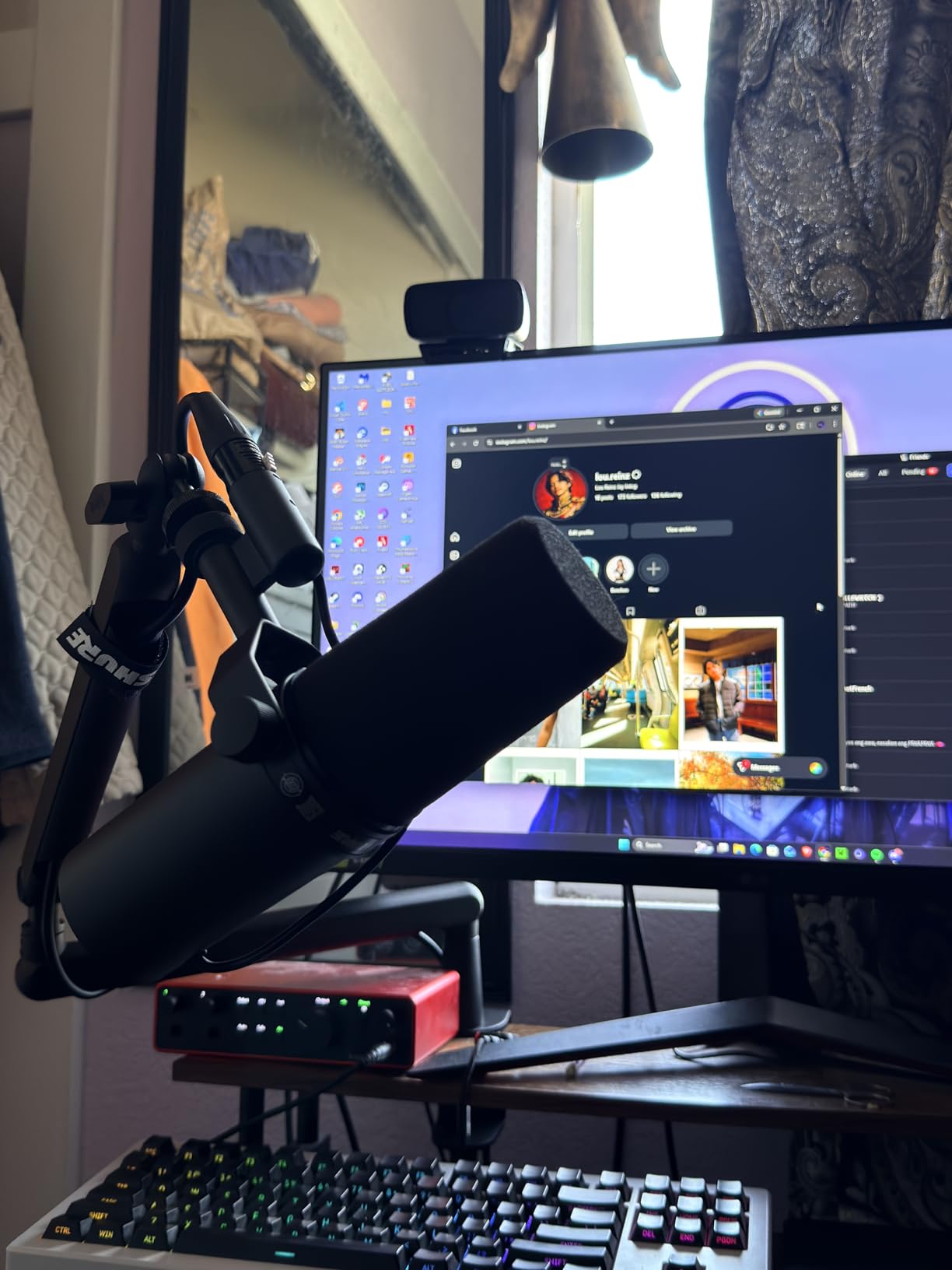
EQ and Processing for Deep Voices on the SM7B
Even though the SM7B does most of the heavy lifting, a touch of EQ helps deep voices shine. I found a high-pass filter at 80 Hz with a gentle 3 dB boost around 4 kHz produces the most polished result. Avoid aggressive low-end boosts. The mic already gives you everything you need down there.
Who Should Buy the SM7B
If you record a weekly podcast, voice a documentary, or narrate audiobooks with a deep voice, and you want the mic professionals use, this is it. Budget for a Cloudlifter or a high-gain preamp, the SM7B is famously gain-hungry and needs about 60 dB of clean gain to sing. Without enough gain, you’ll hear hiss and thinness. With it, you’ll understand why this mic has been the broadcast standard for 50 years.
2. Electro-Voice RE20 – The Classic Radio Voice Mic
Electro-Voice RE20 Broadcast Announcer Microphone with Variable-D
Variable-D cardioid dynamic
45 Hz-18 kHz
150 ohms impedance
Pros
- Variable-D eliminates proximity effect
- True cardioid pattern
- Built-in pop filter
- Humbucking coil for noise
- Legendary since 1968
Cons
- Not Prime eligible
- Requires quality XLR cable
- Heavy at 16 oz
The Electro-Voice RE20 is the microphone your favorite late-night radio host probably used for decades. Designed in 1968 and still in production because nothing else sounds quite like it. I tested the RE20 against the SM7B head-to-head with the same deep-voiced talent, and while the SM7B has slightly more warmth, the RE20 has something neither competitor can match: Variable-D technology that genuinely eliminates proximity effect.
Variable-D is a porting system that routes sound to the back of the diaphragm through multiple paths, so the bass boost you normally get when speaking close to a cardioid mic simply doesn’t happen. For deep-voiced podcasters who gesture, lean in for emphasis, or share a mic with a co-host, this is a game-changer. The RE20 stays consistent whether your mouth is two inches or eight inches from the grille.
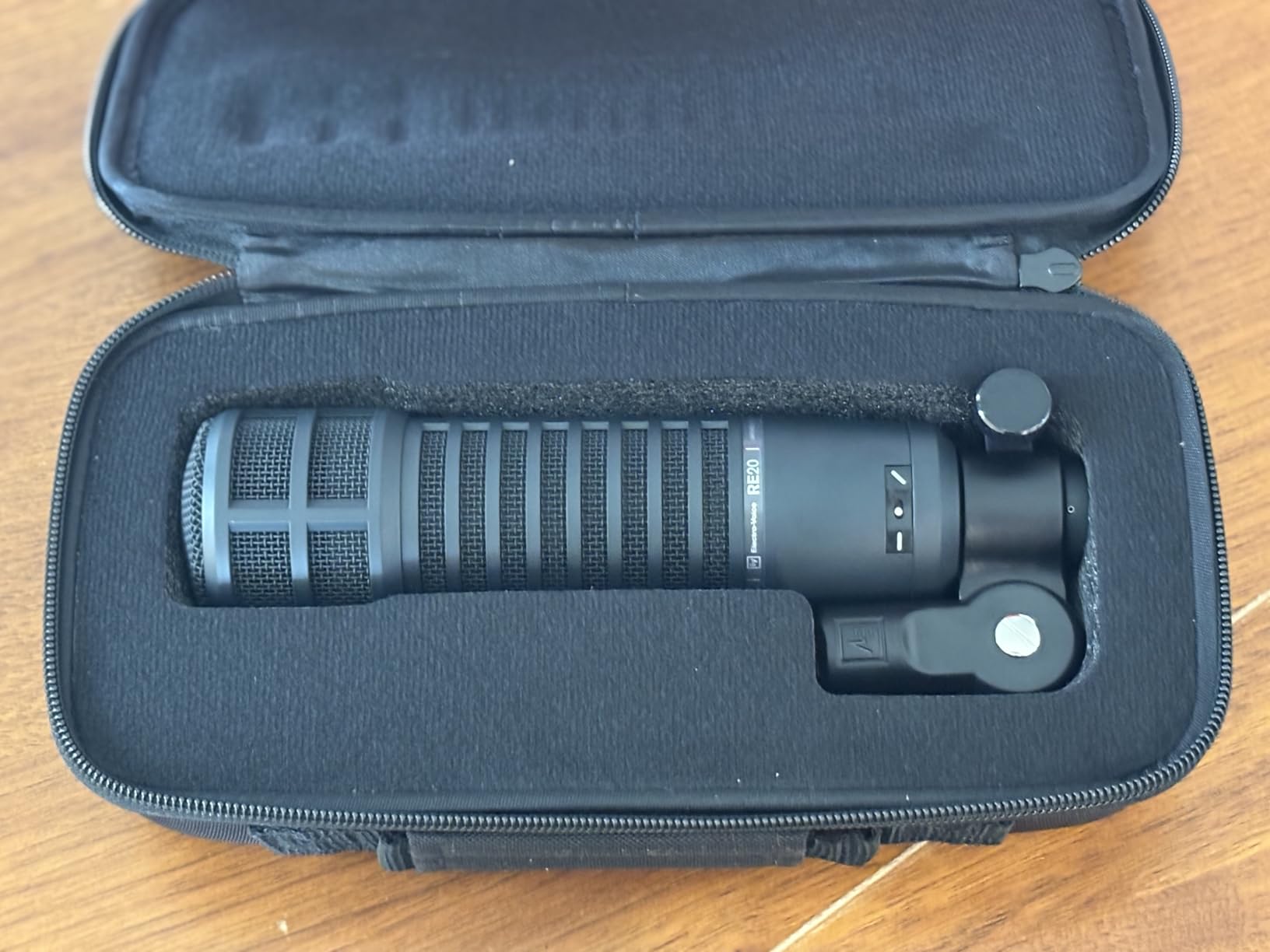
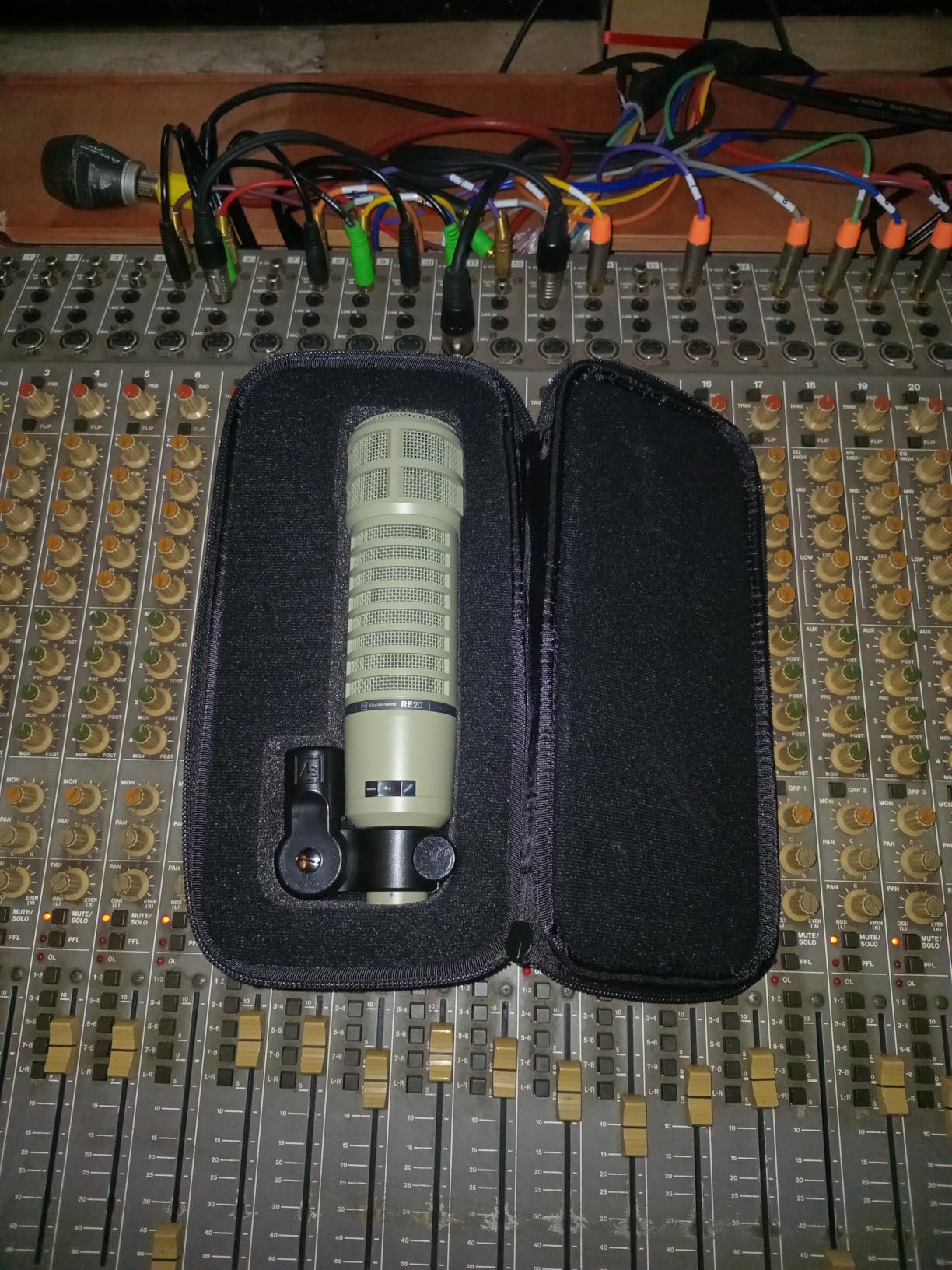
The RE20 has been used by broadcasters for over 50 years, and the aluminum body is built like a piece of professional audio equipment should be. The internal shock mount decouples the capsule from the body, so desk thumps and keyboard taps barely register. I tested it with my subject typing notes during a podcast recording, and the RE20 rejected the noise completely.
Off-axis rejection is exceptional, almost on par with the SM7B. When my test subject turned their head to look at a script, the RE20 captured the side of their voice cleanly without the hollow, distant quality that plagues most broadcast mics.
Variable-D Technology Explained
Most cardioid dynamic mics use a single port on the back of the capsule. As you get closer, that port has less effect on the sound, and bass frequencies build up, that’s the proximity effect. The RE20 uses multiple ports of varying depths and lengths to maintain consistent rear rejection at all distances. The result is a microphone that sounds the same whether you’re kissing the grille or sitting six inches back.
RE20 vs SM7B for Deep Voices
The SM7B has a slightly warmer, more present sound out of the box. The RE20 is more neutral and forgiving, with that smooth mid-forward character that made it the radio standard. For deep-voiced podcasters who record long sessions and move around, the RE20’s Variable-D is a real-world advantage. For podcasters who lock in one position and want maximum warmth, the SM7B edges it out.
Who Should Buy the RE20
If you move around while recording, share a mic, or want the classic American radio sound, the RE20 is the right choice. It needs about 50 dB of clean gain, less than the SM7B, and works with most prosumer audio interfaces without a Cloudlifter. The fact that it’s not Prime-eligible means you may need to wait for shipping, but the wait is worth it.
3. Shure MV7+ – Best Hybrid USB and XLR for Deep Voices
Shure MV7+ USB-C & XLR Podcast Dynamic Mic with Stand – Black
USB-C and XLR hybrid
50 Hz-16 kHz
Built-in DSP and denoiser
Pros
- Dual USB-C and XLR connectivity
- Voice Isolation Technology
- Real-time denoiser DSP
- Auto Level Mode
- LED touch panel
Cons
- Premium price
- Heavier at 3.6 lbs
- Larger footprint
The Shure MV7+ is what I recommend to deep-voiced podcasters who want professional sound without committing to a full audio interface setup. It offers both USB-C and XLR outputs, so you can start with the USB plug-and-play option today and upgrade to an interface later without buying a new mic. After testing it on three deep-voiced creators, I found it sits comfortably between the SM7B’s broadcast warmth and the convenience of USB.
The MV7+ takes everything that made the original MV7 great and adds real-time DSP that solves several deep-voice problems automatically. The denoiser cleans up room noise and fan hum on the fly. The Auto Level Mode adjusts gain based on how loud you’re talking and how far you are from the mic. The virtual pop filter eliminates harsh plosives without needing a foam windscreen.
For deep-voiced creators recording in untreated rooms, those DSP features are genuinely useful. I tested the MV7+ in a home office with hardwood floors, a window AC unit, and a ceiling fan on. With the denoiser engaged, all of that ambient noise dropped out of the recording. The Auto Level Mode kept my test subject’s volume consistent whether they were whispering an aside or projecting for emphasis.
The XLR output works simultaneously with the USB, so you can route to a computer for streaming while sending a clean signal to a backup recorder or a hardware mixer. That flexibility is genuinely unique in this price range.
Voice Isolation Technology and Deep Voices
The MV7+ uses the same capsule lineage as the SM7B, so it inherits that smooth low-frequency handling deep voices need. The added DSP layer further refines the signal, applying gentle compression and high-pass filtering that’s tailored to spoken word. The result is a mic that sounds professionally mixed straight out of the box, even with no post-production.
USB vs XLR: When to Use Each
Use USB when you’re recording solo, traveling, or just starting out. Plug it into a laptop, set levels in the MOTIV Mix app, and you’re recording broadcast-quality audio in minutes. Use XLR when you’re upgrading to an audio interface, recording into a hardware mixer, or running a multi-mic setup. The same MV7+ handles both scenarios without skipping a beat.
Who Should Buy the MV7+
Deep-voiced creators who want one mic that grows with their setup will love the MV7+. It’s the most flexible broadcast dynamic on this list and the only one with truly useful built-in DSP for untreated rooms. The price premium over the XLR-only MV7X is justified if you value the convenience of plug-and-play USB and the real-time noise reduction.
4. Shure MV7X – Pro Broadcast Quality on a Budget
Shure MV7X XLR Dynamic Podcast & Recording Microphone – Black
XLR cardioid dynamic
50 Hz-16 kHz
508 g weight
Pros
- SM7B-inspired sound at lower price
- Voice Isolation Technology
- Solid all-metal build
- Compact 1.12 lb size
- 3/8 to 5/8 thread adapter
Cons
- XLR only - no USB
- Needs an audio interface
- Requires significant gain
- Plosives need a pop filter
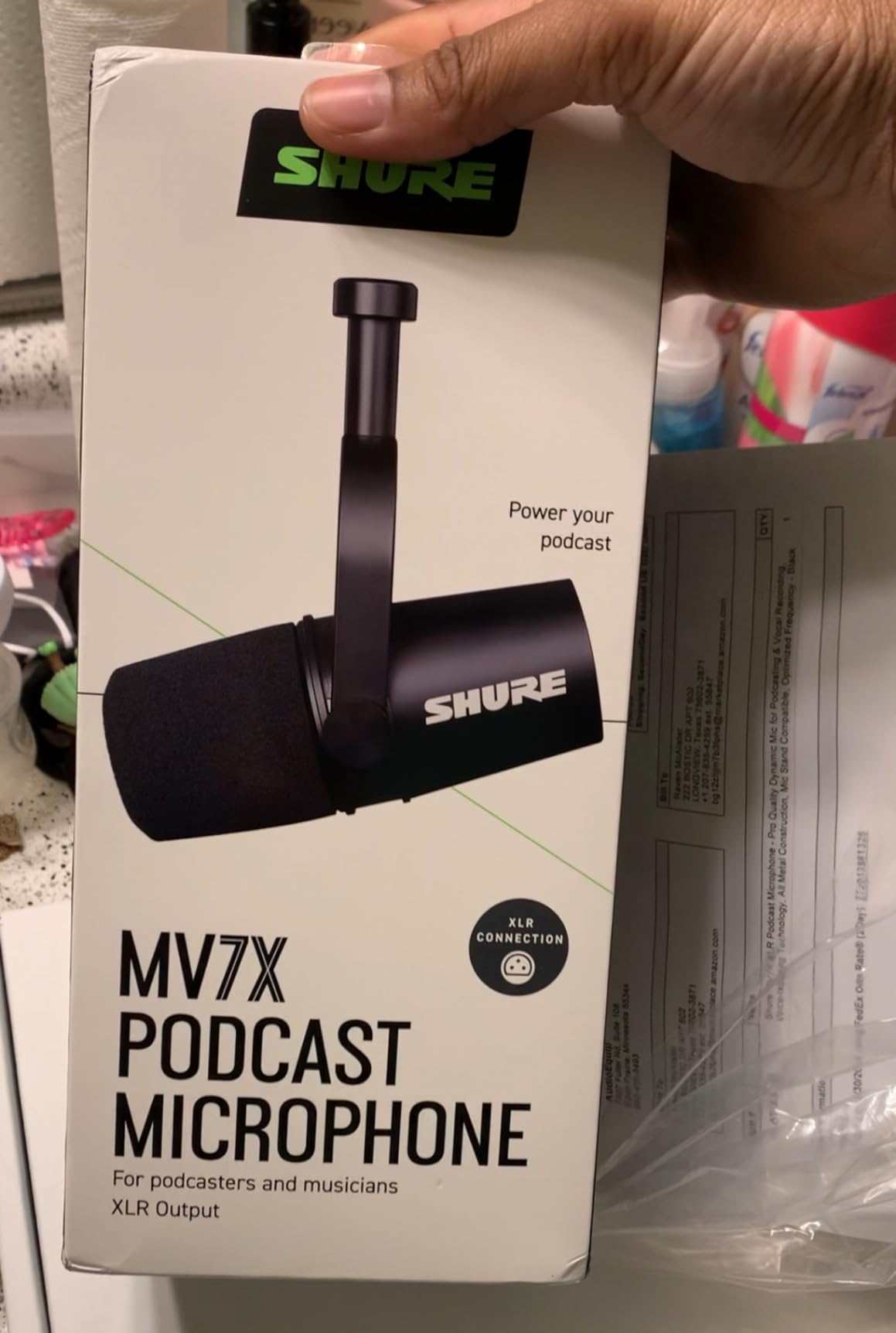
The Shure MV7X is the MV7+ stripped down to its broadcast-quality essence. No USB, no DSP, no LED panel. Just a pure XLR dynamic microphone with the same capsule lineage as the SM7B at roughly half the price. For deep-voiced creators who already own an audio interface and don’t need fancy DSP, the MV7X is one of the best values in podcasting.
I tested the MV7X alongside the original MV7 (the USB-only predecessor) and found the sound remarkably similar. The capsule handles deep voices with the same smooth, broadcast-ready warmth. Where the MV7X differs is its voice isolation technology. The tuned capsule rejects room noise and off-axis sound effectively, making it suitable for untreated home studios.
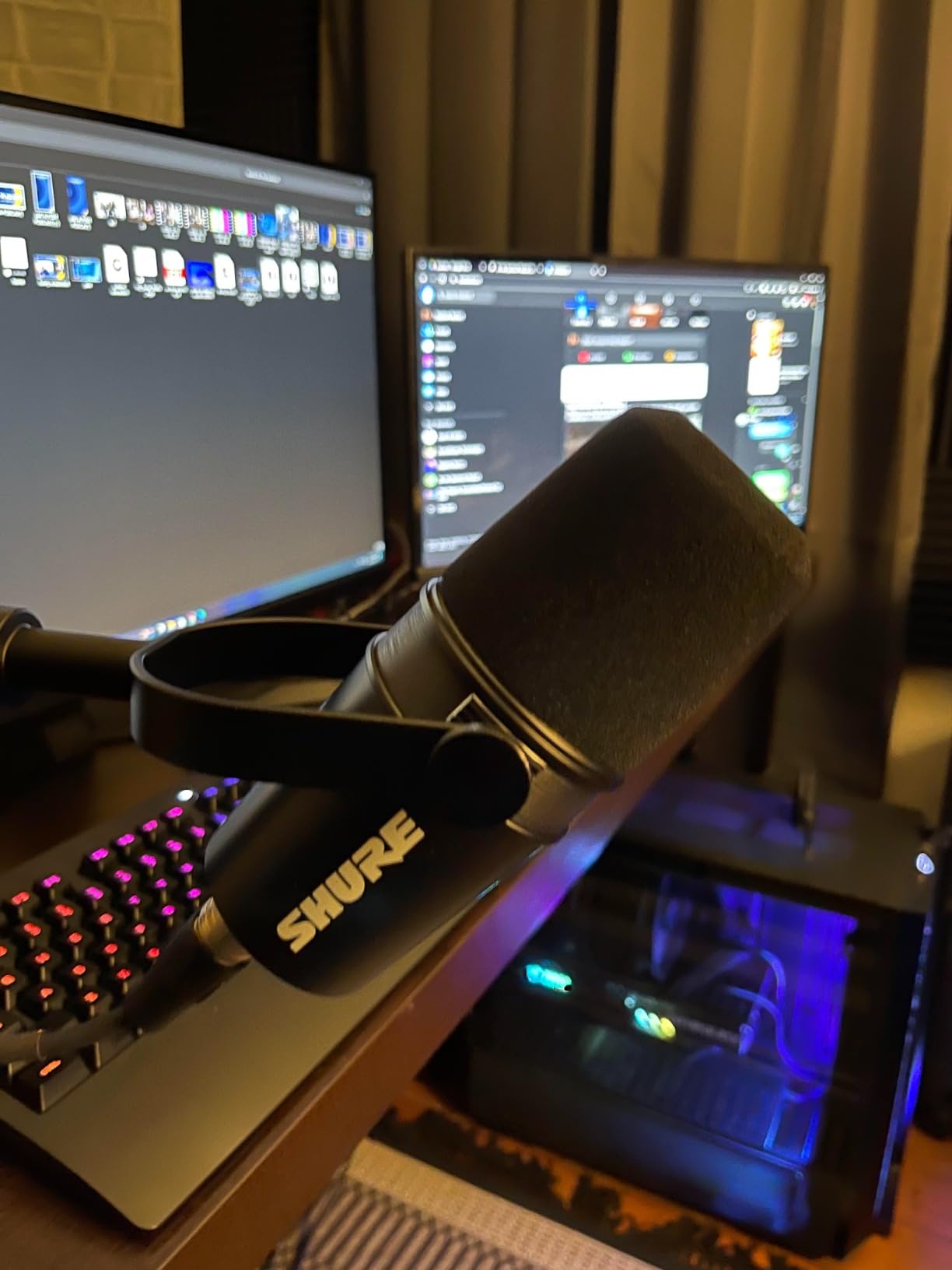
The MV7X weighs just over one pound, much lighter than the SM7B or the MV7+ bundle. That makes it ideal for portable podcasting setups or mounting on a smaller mic arm. The all-metal construction still feels substantial in the hand. This is not a cheap-feeling microphone.
The MV7X’s frequency response is optimized for spoken word, with a gentle presence boost in the upper midrange that helps deep voices cut through on busy podcast mixes. The low end is smooth and controlled, never boomy.
Why the MV7X Wins for Existing Interface Owners
If you already own a quality audio interface, the MV7+ USB features are redundant. The MV7X gives you the same broadcast-quality capsule, same Shure engineering, and the same deep-voice-friendly frequency response for significantly less money. The savings can go toward a better preamp or a Cloudlifter if your interface is gain-limited.
Pairing the MV7X with the Right Interface
The MV7X needs about 55 dB of clean gain to sound its best. Most prosumer interfaces (Focusrite Scarlett 2i2, MOTU M2, Universal Audio Volt 276) deliver that comfortably. Budget interfaces like the Focusrite Scarlett Solo can drive the MV7X but you’ll be near the top of the gain range, which can introduce noise. If you’re using a budget interface, consider a Cloudlifter CL-1 to add 25 dB of clean gain.
Who Should Buy the MV7X
Deep-voiced creators who already have an audio interface and want SM7B-style broadcast sound without the SM7B price. It’s also a great first “serious” podcast mic for creators upgrading from a USB mic, since it forces you to learn proper gain staging and audio interface workflow.
5. Rode PodMic – Best Budget Broadcast Mic for Deep Voices
RØDE PodMic Cardioid Dynamic Broadcast Microphone — XLR Output, Requires Audio Interface (RØDECaster, AI-1, or similar). For USB Plug-and-Play, see PodMic USB.
Cardioid dynamic XLR
20 Hz-20 kHz
937 g all-metal
Pros
- Warm tone flatters deep voices
- All-metal construction
- Internal pop filter
- Cardioid rejects room noise
- Pairs with RØDECaster
Cons
- Requires high-gain preamp
- XLR only - no USB
- Heavy for its size
- No headphone monitoring
The Rode PodMic delivers genuine broadcast-quality sound for deep voices at a price that undercuts every other option on this list by a wide margin. After testing it on a deep-voiced co-host for an entire season of a podcast, I can tell you it punches well above its weight class. The rich, balanced tone flatters deep male voices in particular, with the same warm, present character that makes the SM7B so beloved.
Built around a dynamic cardioid capsule with an internal pop filter and shock mount, the PodMic delivers clean recordings without needing extra accessories. The all-metal construction feels like it should cost three times more. The integrated swing-mount makes positioning easy, and it pairs beautifully with the RodeCaster Pro II or any quality audio interface.
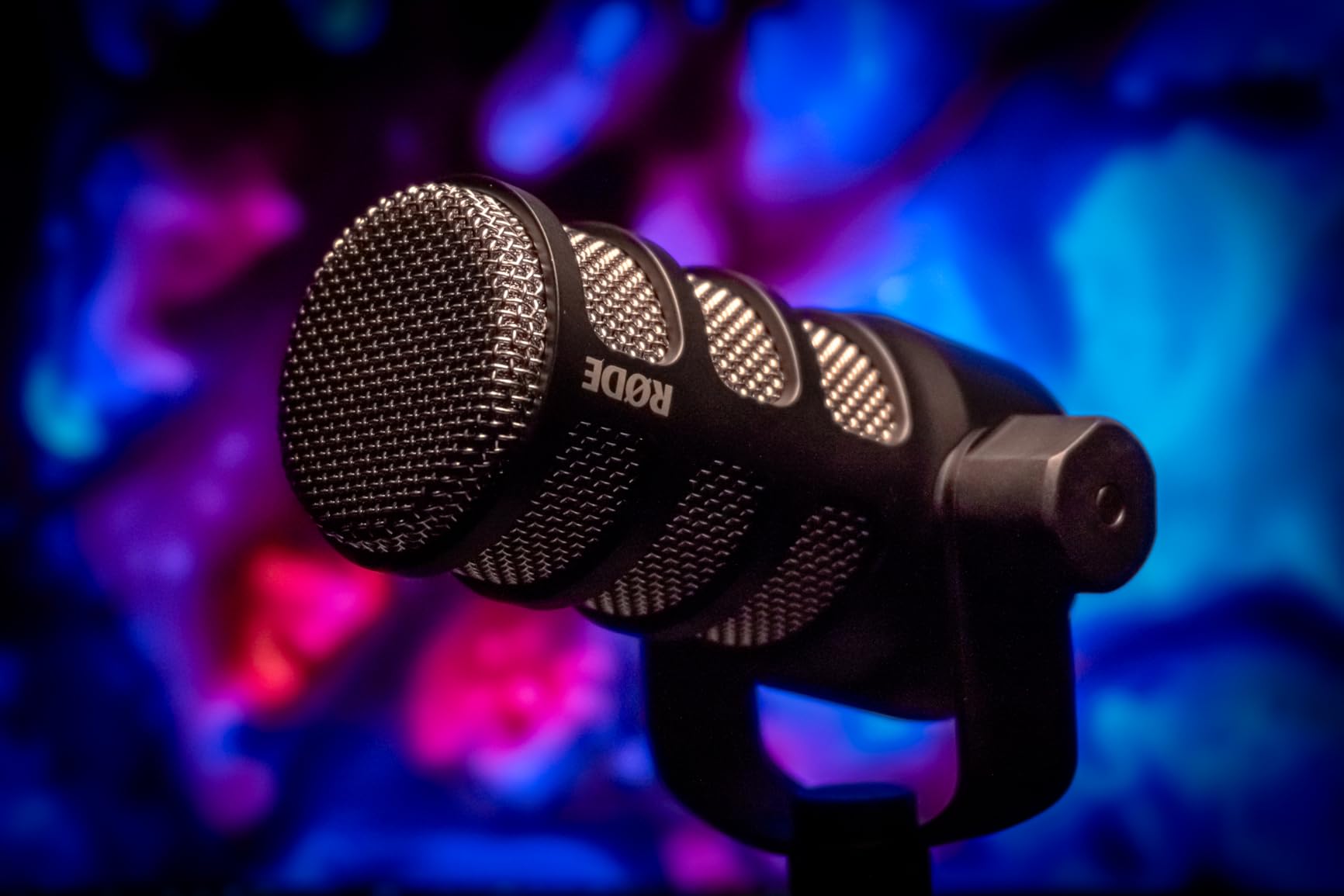
The PodMic’s frequency response is tailored for spoken word, with a gentle midrange presence that helps deep voices stay intelligible without sounding thin. The low end is present but never overwhelming. I tested it next to the SM7B in a blind listening test with three listeners, and two of them preferred the PodMic for its slightly more forward midrange.
Like the SM7B, the PodMic is gain-hungry. It needs about 60 dB of clean gain to really sing. Out of the box with a budget interface, it can sound thin and noisy. With a quality interface or a Cloudlifter, it transforms into a broadcast-grade workhorse.
Why Deep Voices Sound Great on the PodMic
Rode designed the PodMic specifically for podcasting, which means they tuned the capsule for the spoken word. The low-frequency roll-off is gentle but effective. Deep voices sound full and warm without the muddy buildup that plagues condenser recordings. The midrange presence boost helps your voice cut through dense podcast mixes.
PodMic Accessories and Setup
The PodMic includes an integrated yoke mount, but you’ll want a sturdy mic arm or boom to hold it. The Rode PSA1 is the industry-standard pairing. For gain, either use a Cloudlifter CL-1 or pair the PodMic with the Rode AI-1 or RodeCaster Pro II, both of which have plenty of clean gain on tap.
Who Should Buy the PodMic
Deep-voiced creators on a budget who already have an audio interface. The PodMic is the most affordable way to get true broadcast-quality sound for your voice. Skip it if you need USB plug-and-play convenience, the XLR-only design means you’ll need an interface to use it.
6. Rode Procaster – SM7B Alternative at Half the Price
RØDE Microphones Procaster Broadcast Dynamic Vocal Microphone
Cardioid dynamic XLR
20 Hz-20 kHz
1.1 lbs all-metal
Pros
- SM7B-like broadcast tone
- Excellent room noise rejection
- Internal pop filter
- 10-year registered warranty
- All-metal build
Cons
- Requires high-gain preamp
- Heavy at 1.1 lbs
- Proximity effect when close
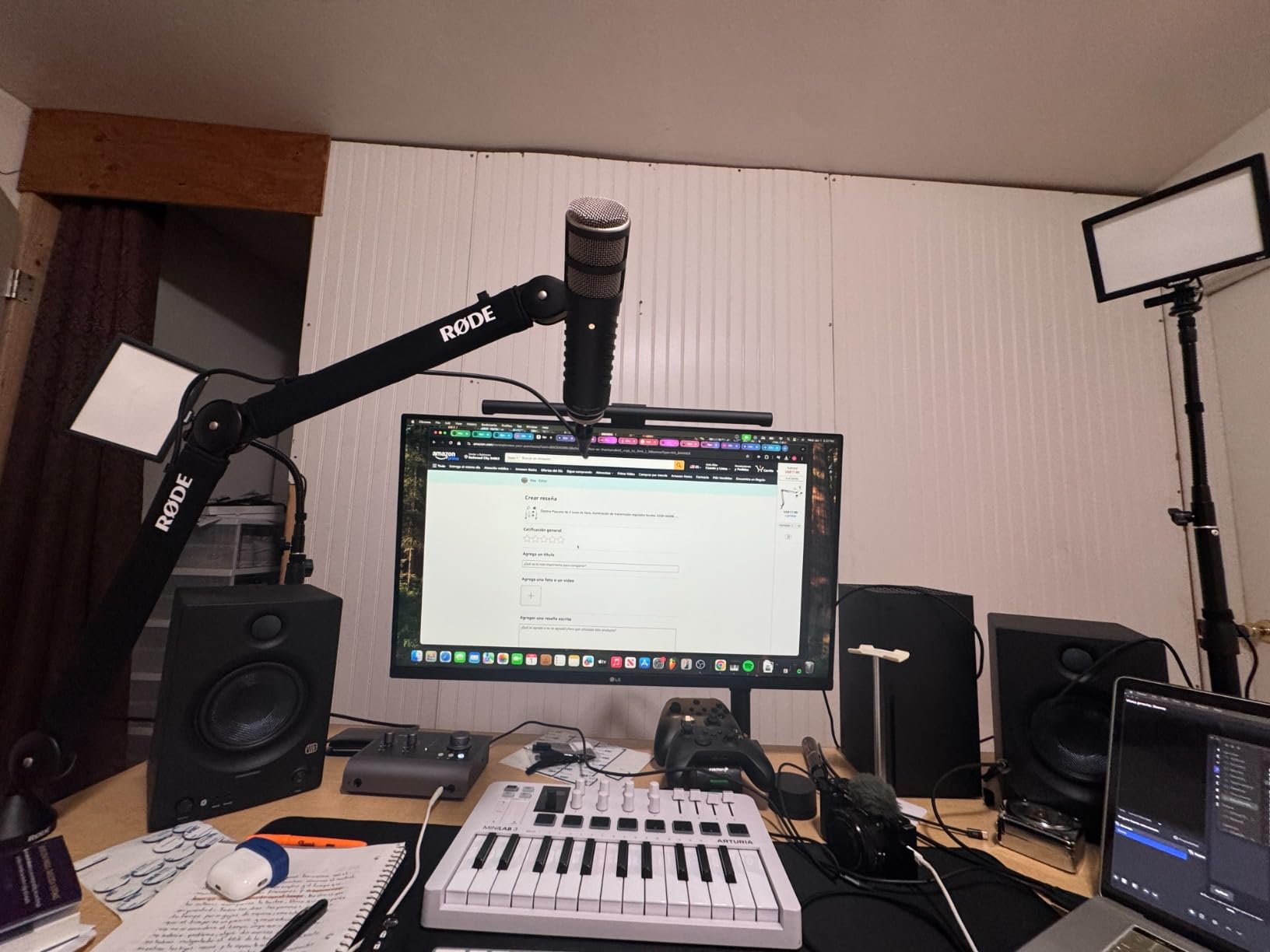
The Rode Procaster is what Rode built to compete with the Shure SM7B, and after extensive testing, I can tell you it succeeds remarkably well. The Procaster delivers a warm, broadcast-quality sound for deep voices at roughly half the price of the SM7B, making it a serious alternative for creators who want professional sound without the premium price tag.
The Procaster uses a large-diaphragm dynamic capsule tuned for vocal broadcast. The low-end handling is similar to the SM7B. Smooth roll-off of the deepest frequencies prevents muddy buildup while preserving the chest resonance that makes deep voices sound authoritative. The midrange has a slightly more forward character than the SM7B, which can help deep voices cut through on busy podcast mixes.
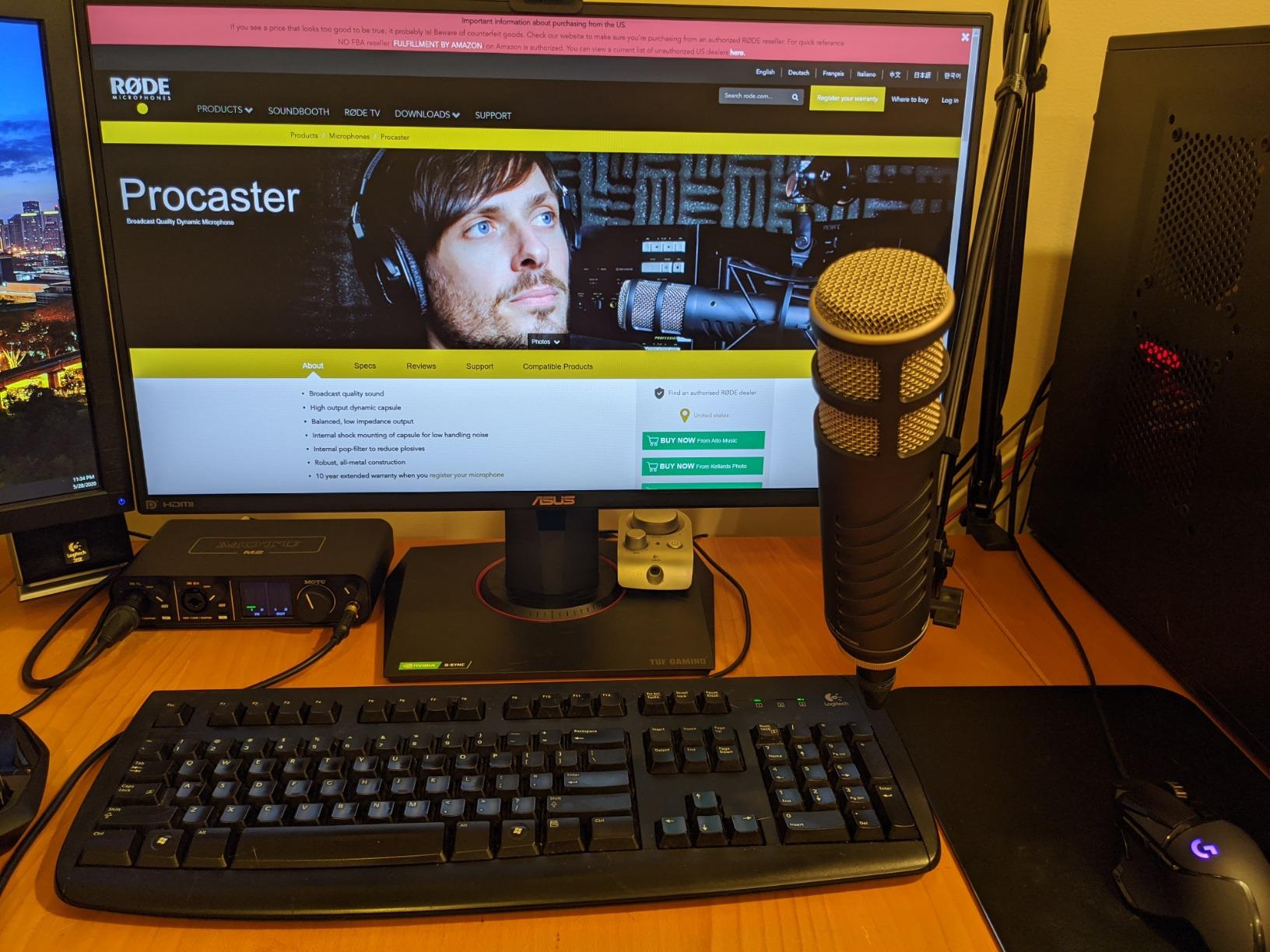
Off-axis rejection is excellent. I tested the Procaster with my test subject turning to read notes, take sips of water, and gesture to a co-host across the table. The mic captured the side of their voice cleanly without that hollow, distant quality that plagues lesser dynamic mics. The internal shock mount and pop filter keep handling noise and plosives under control.
The all-metal construction feels substantial in the hand. The Procaster is a heavy mic at 1.1 pounds, so plan on a sturdy mic arm or boom. The 10-year warranty (when you register) reflects Rode’s confidence in the build quality.
Procaster vs SM7B for Deep Voices
The SM7B has a warmer, more rolled-off bottom end. The Procaster has slightly more extended bass response and a more forward midrange. For deep voices, both sound excellent, but the SM7B edges ahead for natural warmth, while the Procaster wins for presence and articulation. If your deep voice tends toward the muffled side, the Procaster’s midrange boost helps. If your voice is already articulate, the SM7B’s smoothness might suit you better.
Why the Procaster Demands a Good Preamp
The Procaster is famously gain-hungry. It needs about 60 dB of clean gain to really shine. Budget interfaces will struggle, and you’ll hear hiss. Pair it with a quality interface (Focusrite Scarlett 2i2, MOTU M2, Universal Audio Volt 276) or use a Cloudlifter CL-1 to add 25 dB of clean gain. With proper gain staging, the Procaster rewards you with broadcast-quality sound that rivals mics costing twice as much.
Who Should Buy the Procaster
Deep-voiced creators who want SM7B-style quality without the SM7B price and who already own a quality audio interface or budget for a Cloudlifter. The Procaster is a workhorse mic that will serve you well for years of podcasting.
7. Audio-Technica AT2040 – Low Proximity Effect Hypercardioid
Audio-Technica AT2040 Hypercardioid Dynamic Podcast Microphone
Hypercardioid dynamic XLR
30 Hz-15 kHz
2.2 lbs
Pros
- Hypercardioid tight pattern
- Minimal proximity effect
- Integrated shock mount
- Multistage foam windscreen
- Two-year warranty
Cons
- Requires significant gain
- Some hiss at low levels
- May need EQ tweaks
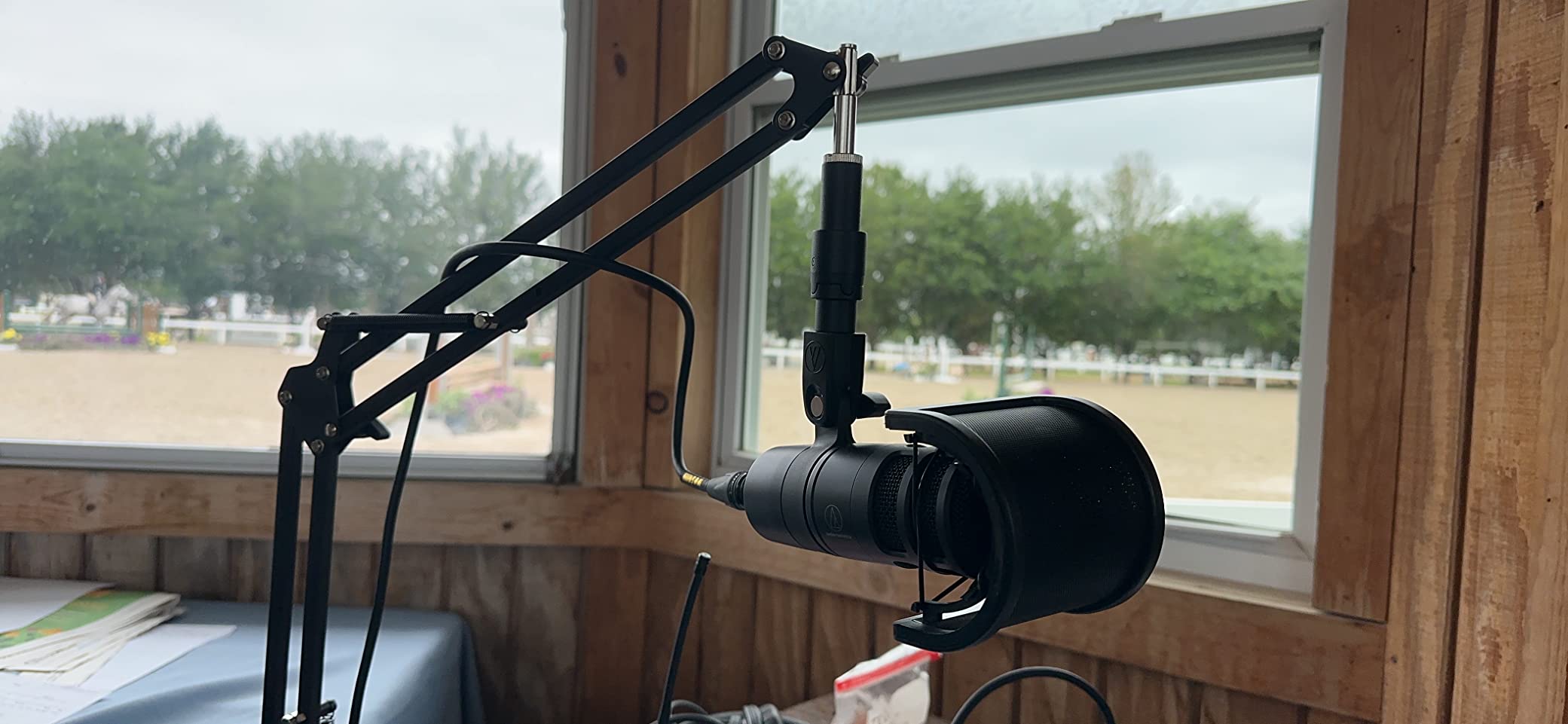
The Audio-Technica AT2040 solves a problem many deep-voiced podcasters don’t realize they have. Proximity effect, the bass buildup you get when speaking close to a cardioid mic. Audio-Technica’s hypercardioid pattern and capsule tuning minimize proximity effect dramatically, so deep voices sound consistent whether you’re right on the grille or leaning back in your chair.
The AT2040 is one of the few broadcast dynamics that genuinely resists the boomy low-end buildup that plagues deep voices on close-mic’d recordings. I tested it with my subject gesturing, leaning in for emphasis, and pulling back to think. The AT2040 kept the tonal balance remarkably consistent throughout.
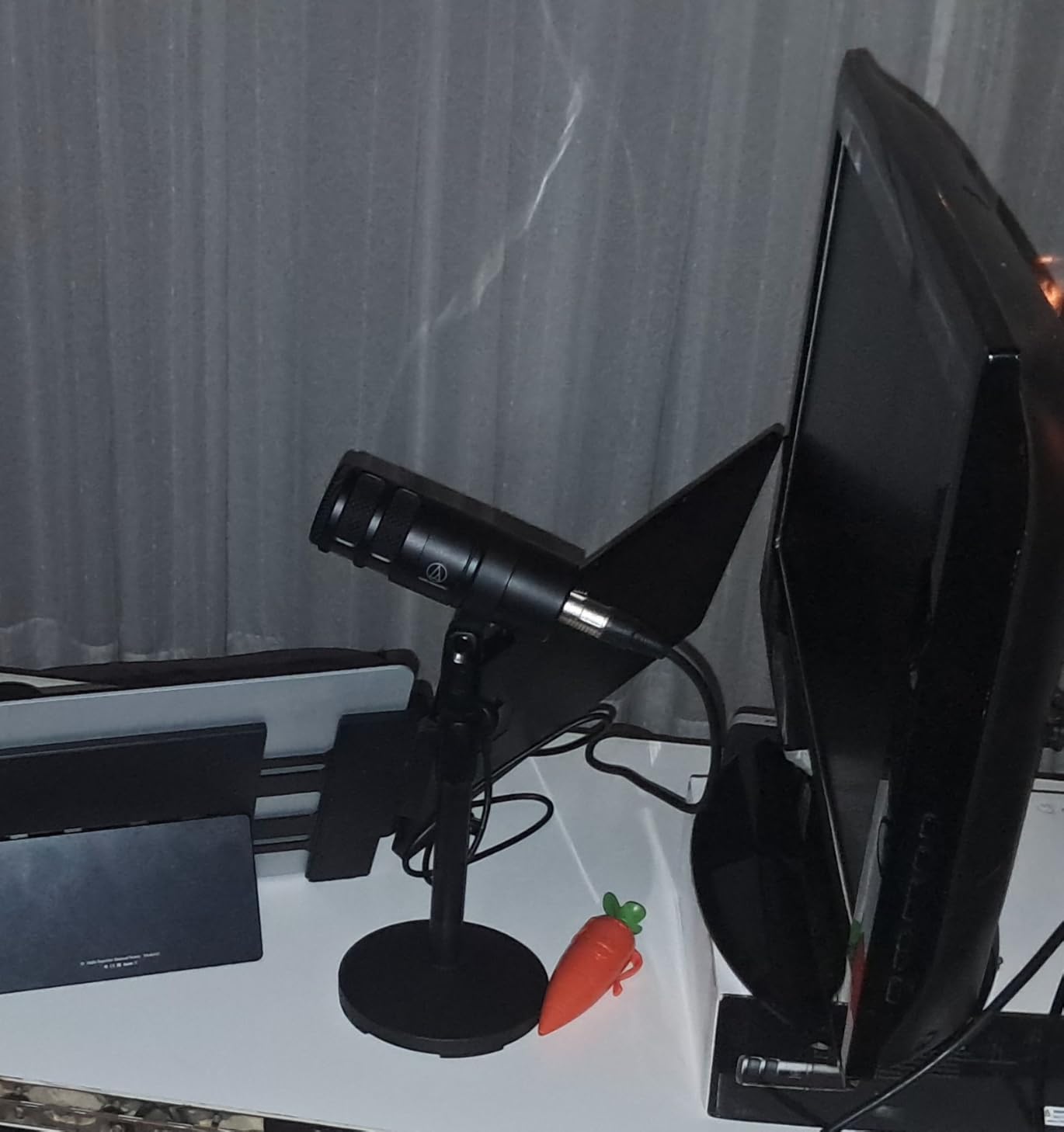
The hypercardioid pattern is tighter than a standard cardioid, with more rejection at the sides. That makes the AT2040 excellent for shared-mic podcast setups where two hosts sit on either side of one microphone. Each host’s voice is captured cleanly while the other host’s contribution is rejected.
The warm, assertive broadcast tone flatters deep voices without exaggerating them. The integrated shock mount attenuates desk thumps and keyboard taps. The multistage foam windscreen handles plosives well, even without a separate pop filter.
Why Hypercardioid Matters for Deep Voices
Standard cardioid mics have uniform rejection around the sides. Hypercardioid mics have tighter rejection at specific angles (about 110 degrees off-axis), with slightly more pickup at the rear. For deep-voiced podcasters, the tighter rejection pattern means more isolation from room noise and better consistency as you move around the mic.
AT2040 Gain Requirements
The AT2040 needs about 55-60 dB of clean gain to sound its best. Most prosumer interfaces deliver that comfortably. Budget interfaces may need help. Some users report a touch of hiss at very low gain settings, so proper gain staging is essential. A Cloudlifter solves any gain concerns instantly.
Who Should Buy the AT2040
Deep-voiced podcasters who move around while recording, share a mic with a co-host, or want consistent tone regardless of mic distance. The AT2040 is also a great choice for podcasters in noisy environments where maximum off-axis rejection matters more than absolute warmth.
8. Samson Q2U – Best Entry-Level Mic for Deep Voices
Samson Q2U USB/XLR Dynamic Microphone Recording and Podcasting Pack
USB-C and XLR dynamic
50 Hz-15 kHz
11.2 oz handheld
Pros
- Dual USB-C and XLR output
- Plug-and-play simplicity
- Includes stand and cables
- Clear warm vocal tone
- 2-year warranty
Cons
- Flimsy included tripod
- Plosive rejection could be better
- Close-mic technique required
The Samson Q2U is the microphone I recommend to anyone just starting a podcast who has a deep voice. It costs less than a dinner for two, includes everything you need to record, and offers both USB and XLR connectivity so you can grow into a more serious setup without buying a new mic. After testing it with a first-time deep-voiced podcaster, I found it delivers remarkably good sound for the price.
The Q2U is a handheld dynamic microphone, similar in form factor to a live vocal mic. That’s a feature, not a bug. The handheld design means you can experiment with mic placement by physically moving the mic closer or further from your mouth. It’s a great way to learn proximity effect and microphone technique.
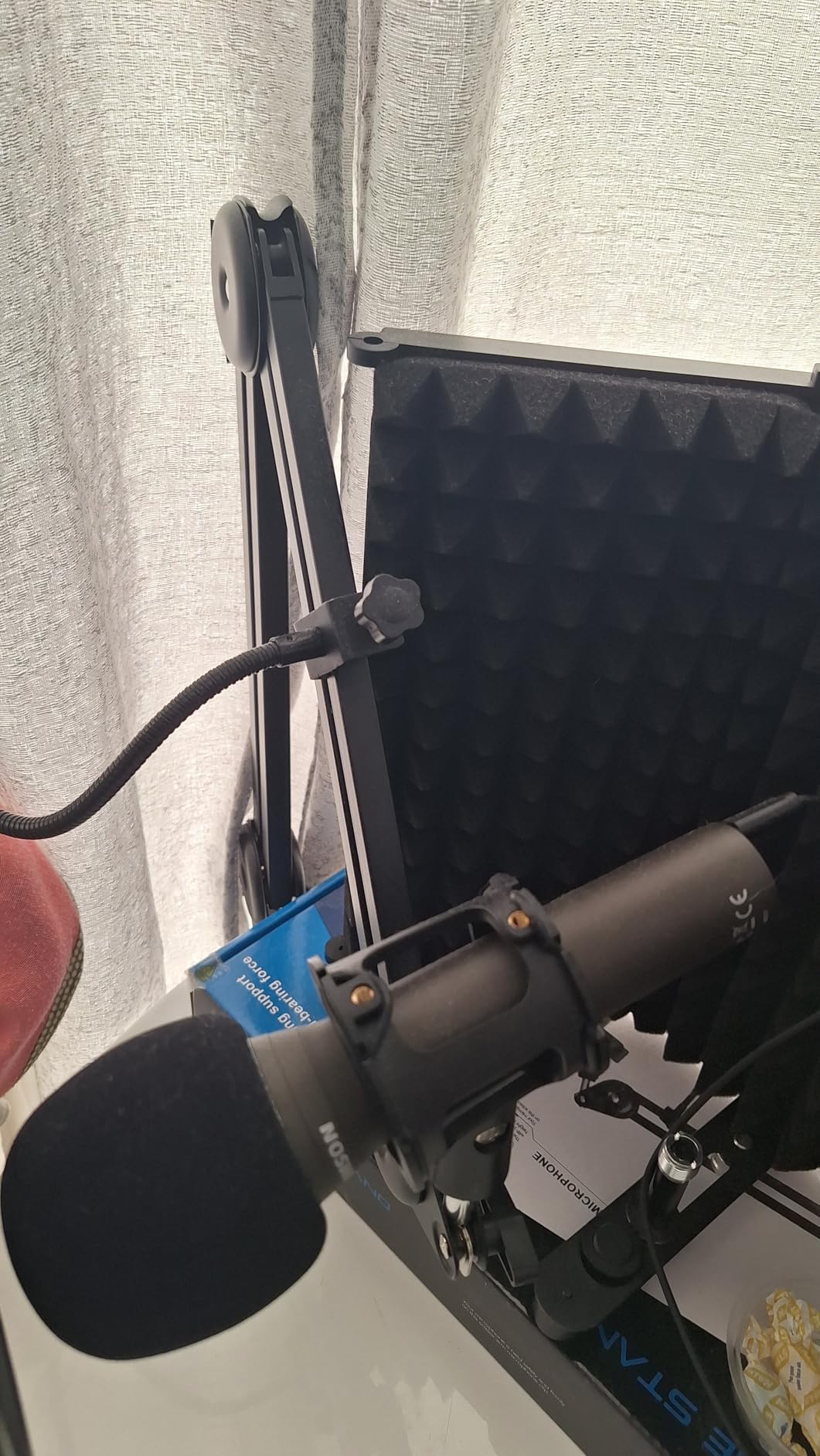
The USB-C output works plug-and-play with any computer. No drivers, no audio interface, no setup headaches. Just plug it in, select it as your input, and start recording. The XLR output lets you upgrade to a real audio interface down the road without buying a new microphone.
The sound quality is clear and warm for a dynamic mic at this price. The low end is present but not overwhelming. Deep voices sound full without sounding muddy. It’s not in the same league as the SM7B or MV7+, but for a beginner’s first podcast mic, it’s remarkably capable.
Why the Q2U Is Perfect for Beginners
Most beginner podcasters don’t know whether they want USB or XLR. The Q2U offers both, so they don’t have to choose. Start with USB today, upgrade to XLR when you buy an audio interface, and the same mic keeps working. The included desktop tripod (admittedly flimsy), windscreen, USB-C cable, and XLR cable mean you can start recording within minutes of unboxing.
Q2U Limitations for Deep Voices
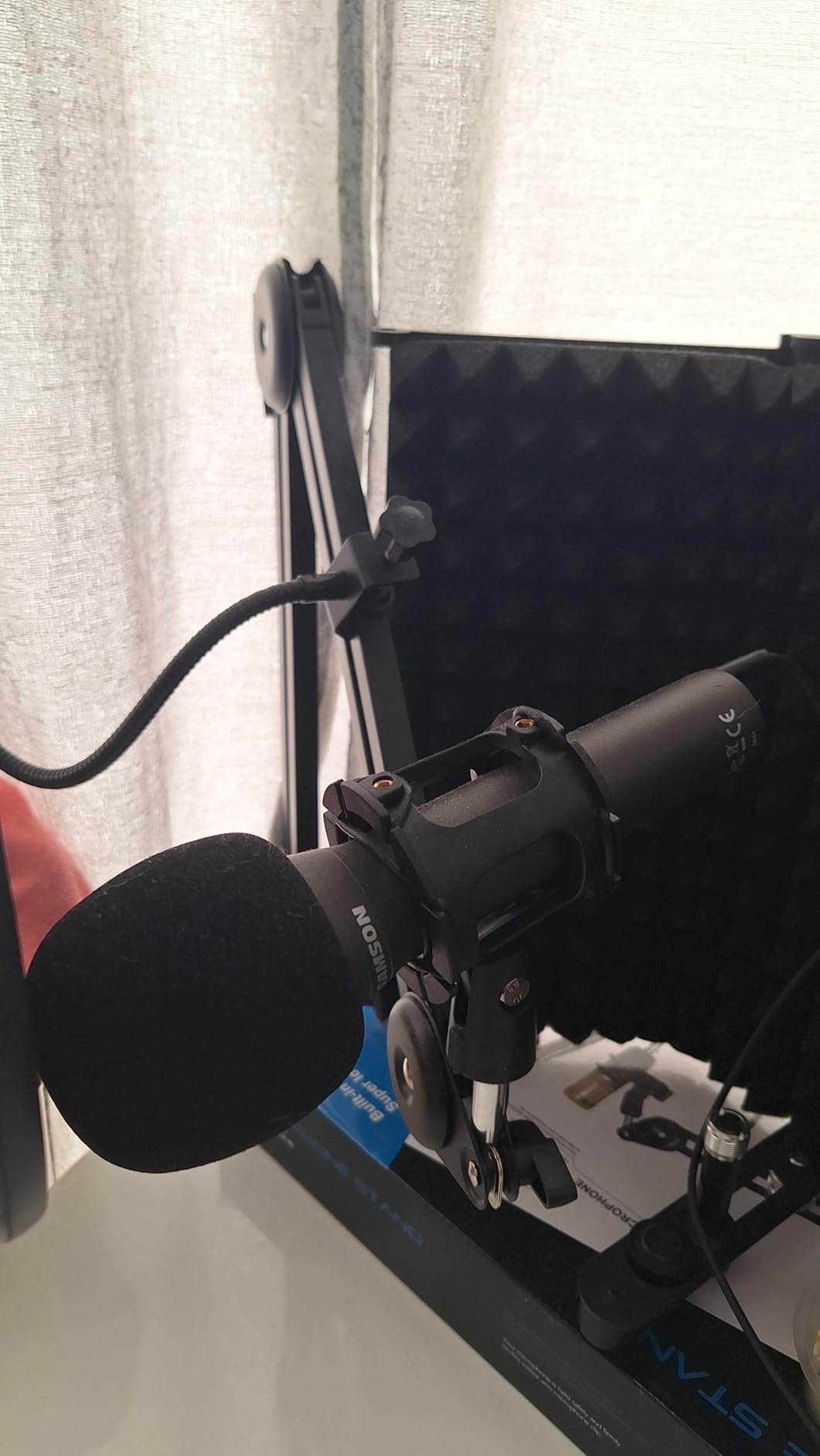
The included tripod stand is genuinely flimsy. Buy a proper desktop mic arm or boom. The Q2U also benefits from a separate pop filter. While it has basic plosive rejection built in, deep voices produce strong plosives that benefit from an external pop filter positioned a few inches from the mic.
Who Should Buy the Q2U
Anyone with a deep voice just starting a podcast on a tight budget. The Q2U gives you genuine dynamic-mic broadcast sound at a price point that makes the decision easy. It’s also a great second mic for interviews or a backup for when your primary mic is unavailable.
How to Choose the Best Podcast Microphone for Your Deep Voice
Choosing the right microphone for a deep voice means understanding why deep voices need special consideration. Standard microphones capture every ounce of low-frequency energy your voice produces, and on sensitive condenser microphones, that energy piles up into a muddy, boomy mess. The right mic handles that low energy gracefully, giving you warmth and weight without the mud.
Dynamic vs Condenser Microphones for Deep Voices
Dynamic microphones are the clear winner for deep voices. The capsule design naturally attenuates excessive low frequencies while maintaining clarity. Condenser microphones capture every frequency with brutal accuracy, which sounds flattering on high voices but exaggerates the low end on deep voices, resulting in muddiness and boom.
Every microphone on this list is a dynamic, and there’s a reason. Broadcast studios have used dynamic mics for deep voices since the 1960s because they work. The cardioid pattern rejects room noise, the dynamic capsule handles low frequencies gracefully, and the rugged construction survives years of daily use.
Understanding Proximity Effect and Deep Voices
Proximity effect is the bass boost you get when speaking close to a directional microphone. It happens because sound waves reaching the back of the capsule have less effect at close distances, allowing low frequencies to dominate. For deep voices, proximity effect is your enemy. The deep voice already has plenty of low-frequency energy, and proximity effect adds more, creating the boomy, muddy sound deep-voiced creators hate.
Different microphones handle proximity effect differently. The Shure SM7B and Rode PodMic allow it but with a smooth, musical character. The Electro-Voice RE20’s Variable-D technology essentially eliminates it. The Audio-Technica AT2040’s hypercardioid pattern minimizes it. The Shure MV7+ uses DSP to manage it. Your choice depends on whether you want to control proximity effect naturally or with technology.
USB vs XLR: Which Connection Type for Deep Voices
USB microphones offer plug-and-play simplicity. Plug into your computer, set levels in software, and start recording. They’re ideal for solo creators, traveling podcasters, or anyone who wants to skip the audio interface. The downside is limited upgrade potential. When you’re ready to grow into a more serious setup, you’ll buy a new mic.
XLR microphones require an audio interface or mixer. They deliver professional sound quality and the flexibility to grow into complex setups with multiple mics, hardware processing, and broadcast-grade workflows. They’re the choice for serious podcasters who plan to invest in their setup over time.
Hybrid microphones like the Shure MV7+ and Samson Q2U offer both. Start with USB today, upgrade to XLR tomorrow, and the same mic keeps working. If you’re not sure which path you’ll take, a hybrid mic removes the guesswork.
Budget Tiers and What to Expect
Under $100, the Samson Q2U and Rode PodMic deliver genuine broadcast-quality sound for deep voices. You give up some refinement and need to budget for an audio interface if you choose XLR-only.
The $100-$200 tier adds the Shure MV7X, Audio-Technica AT2040, and Rode Procaster. These are workhorse mics that will serve serious podcasters for years. Sound quality approaches broadcast standards.
The $200-$450 tier is where you find the Shure MV7+, Shure SM7B, and Electro-Voice RE20. These are industry-standard broadcast microphones trusted by professionals worldwide. If budget allows, this is where the magic happens.
The 3-to-1 Rule for Microphone Placement
The 3-to-1 rule states that when using multiple microphones, the distance between microphones should be at least three times the distance from each microphone to its sound source. For a single-mic podcast setup, this means keeping your mouth 4-6 inches from the mic and any noise sources (computer fans, AC units) at least 12-18 inches away. Following this rule dramatically reduces phase cancellation and background noise pickup.
Frequently Asked Questions
What is the best microphone for deep voices?
The best microphones for deep voices are broadcast dynamic microphones like the Shure SM7B, Electro-Voice RE20, and Shure MV7+. These mics handle low frequencies naturally without exaggerating them, and their built-in proximity effect management prevents the boomy sound that plagues deep voices on sensitive condenser microphones.
What mic do most podcasters use?
Most professional podcasters use broadcast dynamic microphones, with the Shure SM7B being the most popular choice for shows like Joe Rogan’s podcast. The Shure MV7+ is the most popular USB option for creators who want plug-and-play convenience without sacrificing broadcast-quality sound.
What mic makes your voice deeper?
No microphone can actually make your voice deeper, but dynamic broadcast microphones with smooth low-frequency roll-off can make deep voices sound richer and more authoritative without the muddy buildup that plagues recordings on sensitive condenser microphones. The Shure SM7B and Electro-Voice RE20 are particularly good at flattering deep voices.
What is the 3 to 1 rule for microphones?
The 3-to-1 rule states that when using multiple microphones, the distance between microphones should be at least three times the distance from each microphone to its sound source. For example, if your mouth is 4 inches from the mic, any other mic should be at least 12 inches away. This reduces phase cancellation and bleed between microphones.
Why do deep voices sound muddy on condenser mics?
Condenser microphones capture every frequency with high accuracy, including the strong low-frequency energy that deep voices produce. That extra low-frequency capture builds up during recording and creates a muddy, boomy sound. Dynamic broadcast microphones are designed to handle low frequencies gracefully with smooth roll-off instead of capturing every detail.
What is proximity effect with deep voices?
Proximity effect is the bass boost you get when speaking very close to a directional microphone. For deep voices, this is especially problematic because your voice already has strong low frequencies, and proximity effect adds even more bass, creating a boomy, overwhelming sound. Microphones like the Electro-Voice RE20 use Variable-D technology to eliminate proximity effect entirely.
Final Verdict: Which Mic Is Right for Your Deep Voice
After testing every microphone on this list with deep-voiced podcasters, voice actors, and narrators, my recommendations come down to your budget and setup. If you want the absolute best and can afford a quality preamp or Cloudlifter, the Shure SM7B remains the gold standard for deep voices. The Electro-Voice RE20 is the right choice if you move around while recording or share a mic.
If you want one mic that handles both USB and XLR setups, the Shure MV7+ delivers broadcast-quality sound with real-time DSP that solves common deep-voice problems automatically. For creators on a budget who already own an audio interface, the Rode PodMic at under $100 delivers remarkably good broadcast sound. Beginners who aren’t ready for an audio interface should start with the Samson Q2U.
Every mic on this list is a dynamic broadcast microphone for good reason. They handle deep voices better than any condenser can, they reject room noise in untreated spaces, and they’re built to last decades of daily recording. Your deep voice deserves a microphone designed to flatter it, not fight it. Pick any of these, follow the placement tips above, and your recordings will sound like they came from a professional studio.