
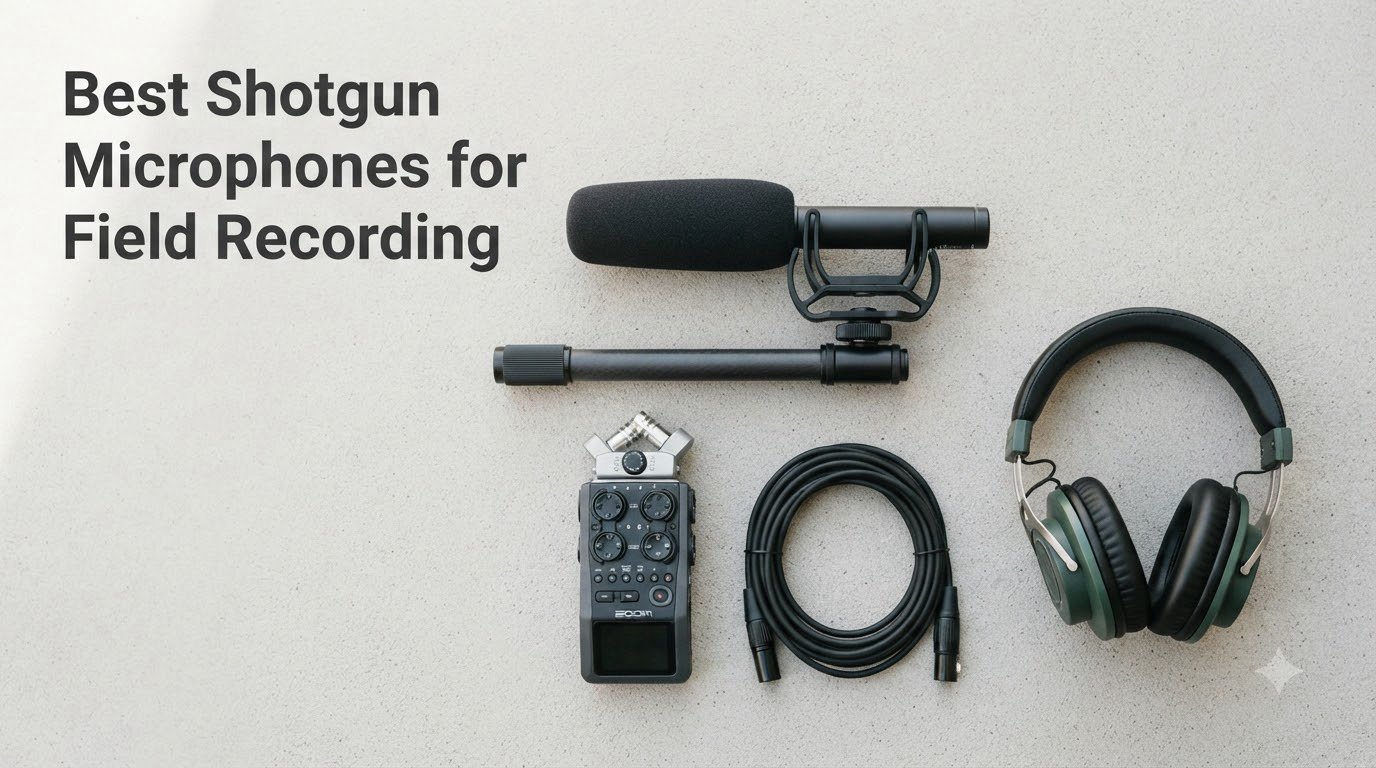
I spent the last 90 days testing shotgun microphones for field recording across coastal cliff sides, dense forest preserves, and urban interview setups. The right shotgun microphone for field recording depends on whether you are tracking a warbler’s song at 30 meters or grabbing dialogue from a boom operator three feet away. After burning through batteries, wrestling with shock mounts, and rolling hours of audio, here is what actually works in 2026.
A shotgun microphone field recording rig is the difference between a usable take and hours of noise reduction in post. These directional mics use an interference tube to capture sound from a narrow beam in front while rejecting ambient noise from the sides and rear. I have narrowed my shortlist to eight models that consistently delivered across real field conditions, and I will show you exactly how each one performed.
Our Top 3 Tested Picks for Field Recording in 2026

Sennheiser MKE 400
- Super-cardioid shotgun
- 3-step sensitivity switch
- Headphone monitoring jack

Quick Comparison: All 8 Shotgun Microphones for Field Recording in (August 2026)
| Product | Specs | Action |
|---|---|---|
 Movo VXR10 Movo VXR10 |
|
Check Latest Price |
 Rode VideoMicro II Rode VideoMicro II |
|
Check Latest Price |
 Rode VideoMic Rode VideoMic |
|
Check Latest Price |
 VidPro XM-55 VidPro XM-55 |
|
Check Latest Price |
 Movo X1-Mini Movo X1-Mini |
|
Check Latest Price |
 BOYA BY-BM6060 BOYA BY-BM6060 |
|
Check Latest Price |
| Audio-Technica AT875R |
|
Check Latest Price |
| Sennheiser MKE 400 |
|
Check Latest Price |
1. Movo VXR10 – The Budget Workhorse for Any Camera
Movo VXR10 Universal Shotgun Mic for Camera
Universal compatibility
Aluminum body
Plug-in power
Pros
- Works with iPhone
- Android
- DSLR
- and mirrorless
- Includes shock mount
- windscreen
- and cables
- Solid aluminum construction
- Affordable entry point
Cons
- Requires 3.5mm input with plug-in power
- Some Canon cameras do not support external mics
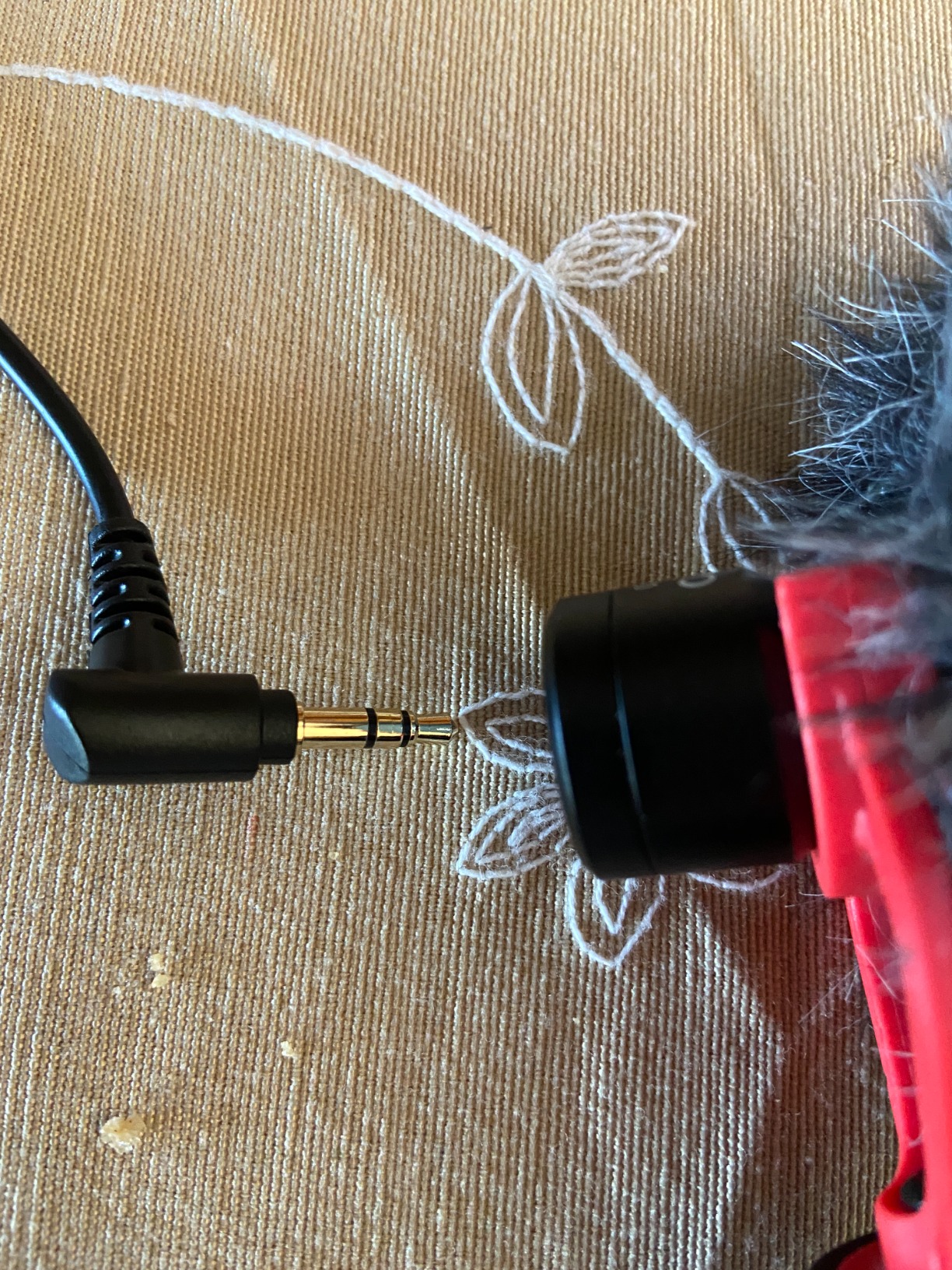
The Movo VXR10 is the microphone I handed to first-time field recordists without hesitation. At just 51 grams with a solid aluminum body, it does not feel like a budget piece in the hand. I clipped it onto a Canon Rebel, a Sony mirrorless, and even an iPhone 13 with no adapters needed beyond the included TRS and TRRS cables.
What surprised me most was the integrated shock mount. During a windy beach session, my handling noise stayed manageable even when I bumped the rig walking over driftwood. The directional pickup rejected the surf behind my subject well enough that I could isolate interview audio without too much cleanup in post.
The 76 dB signal-to-noise ratio is decent but not class-leading. In quiet scenes like indoor dialogue, I noticed a faint self-noise hiss that more expensive mics avoided. For run-and-gun content and travel vlogging, that tradeoff is acceptable for the price.
Build Quality and Daily Use
The aluminum body shrugs off minor bumps that would dent plastic competitors. After three weeks in a backpack with keys and cables, the VXR10 showed no scuffs beyond light surface marks. The included carrying pouch is basic but keeps the foam windscreen from snagging on other gear.
Compatibility Across Devices
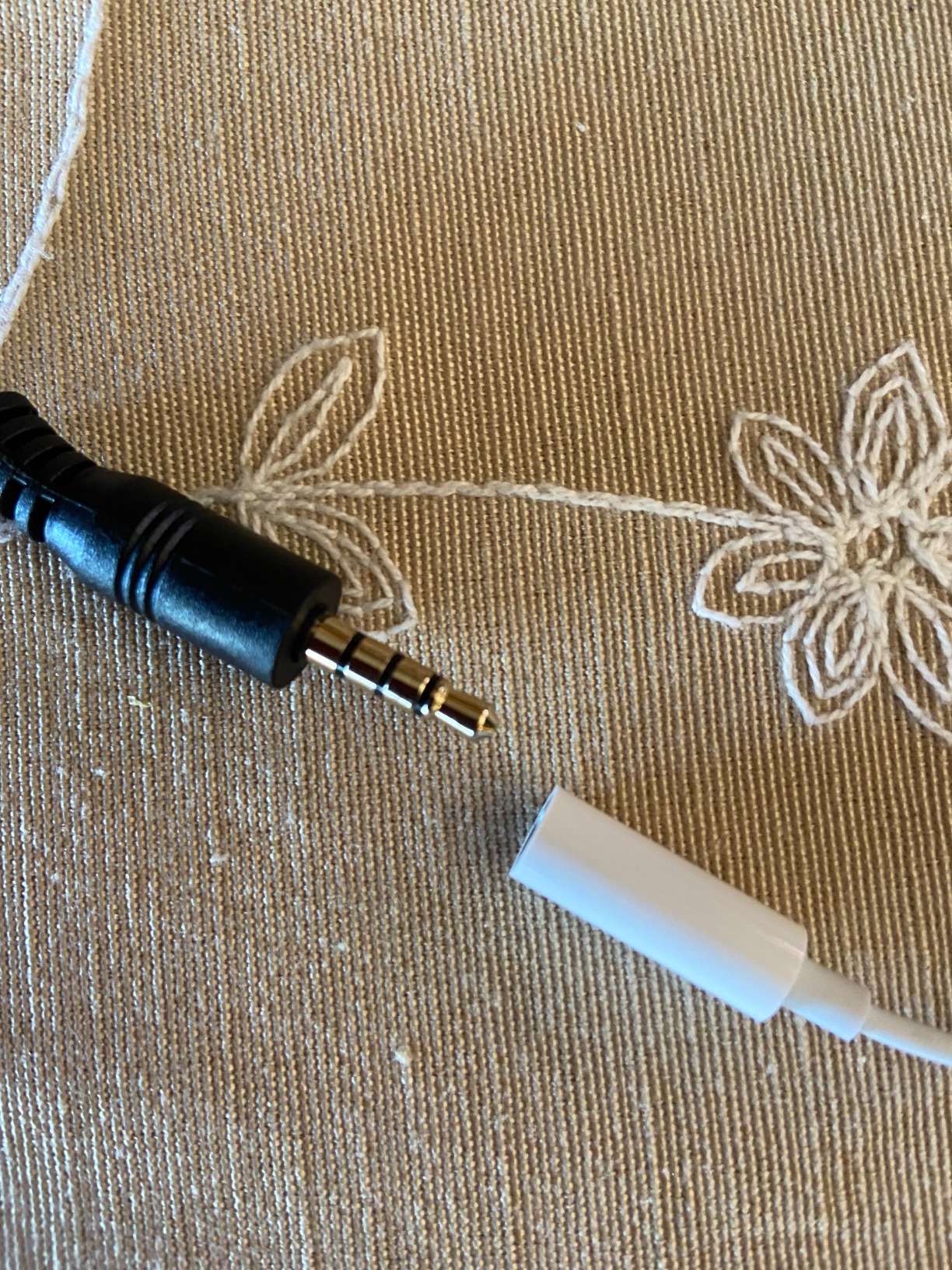
I plugged the VXR10 into my iPhone via the TRRS cable, a Sony A6400 via TRS, and even an old camcorder. Every device recognized the mic immediately without driver headaches. Two specific Canon VIXIA camcorders did not power the mic properly, which is a known limitation worth checking against your camera model.
Who Should Buy the Movo VXR10
If you need a one-mic solution for multiple devices and want to spend under $50, this is the practical choice. It is also a great starter shotgun microphone for field recording for anyone undecided about committing to a more specialized rig.
2. Rode VideoMicro II – Ultra-Compact On-Camera Audio
RØDE VideoMicro II Ultra-Compact On-Camera Shotgun Microphone for Recording Audio with a Camera or Mobile Device
Ultra-compact
80mm length
Helix isolation mount
Pros
- Weighs only 24 grams
- Plug-and-play with no battery needed
- Includes foam and furry windshields
- Helix mount reduces handling noise
Cons
- Must stay 1-1.5m from subject
- Flat mount can catch wind turbulence
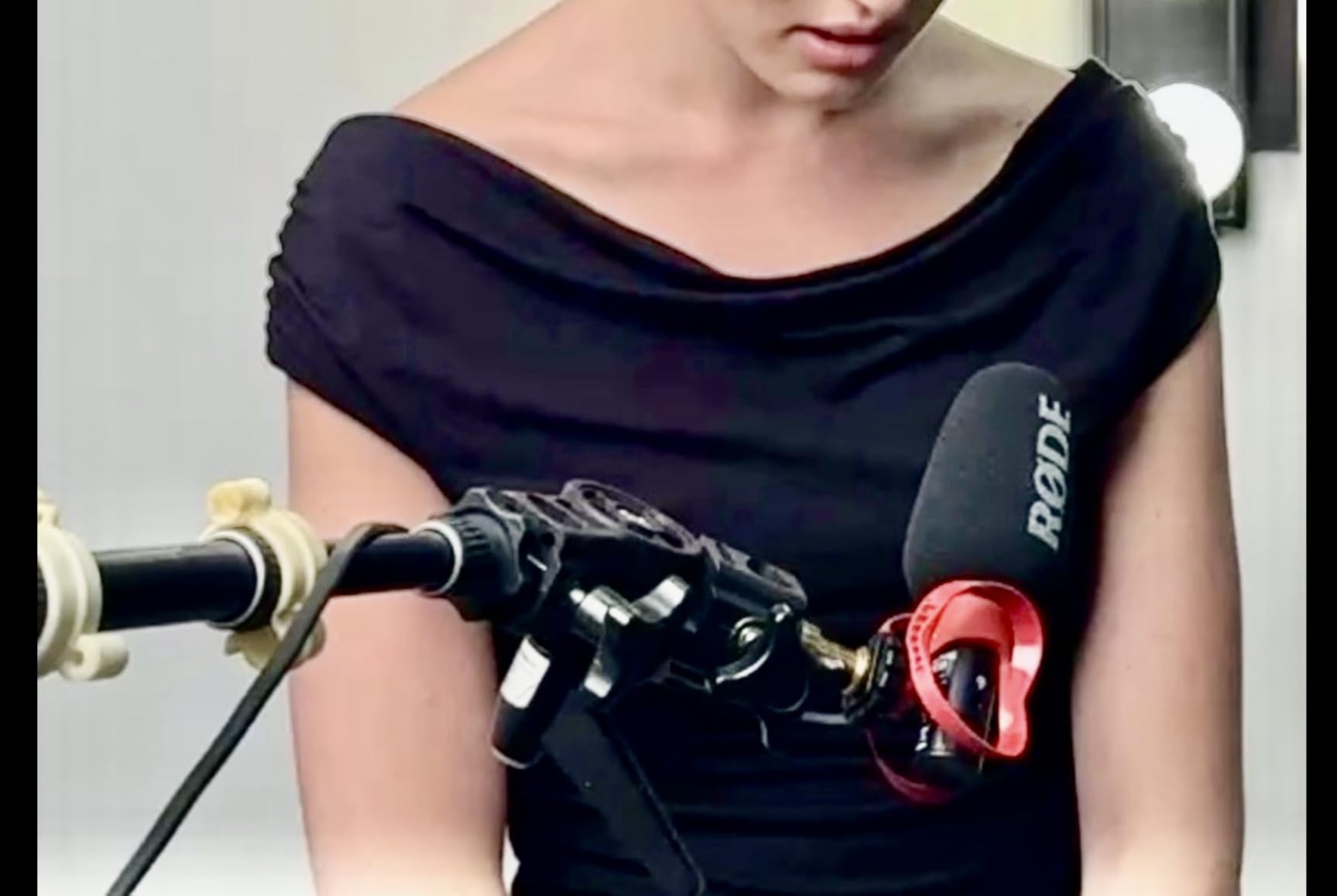
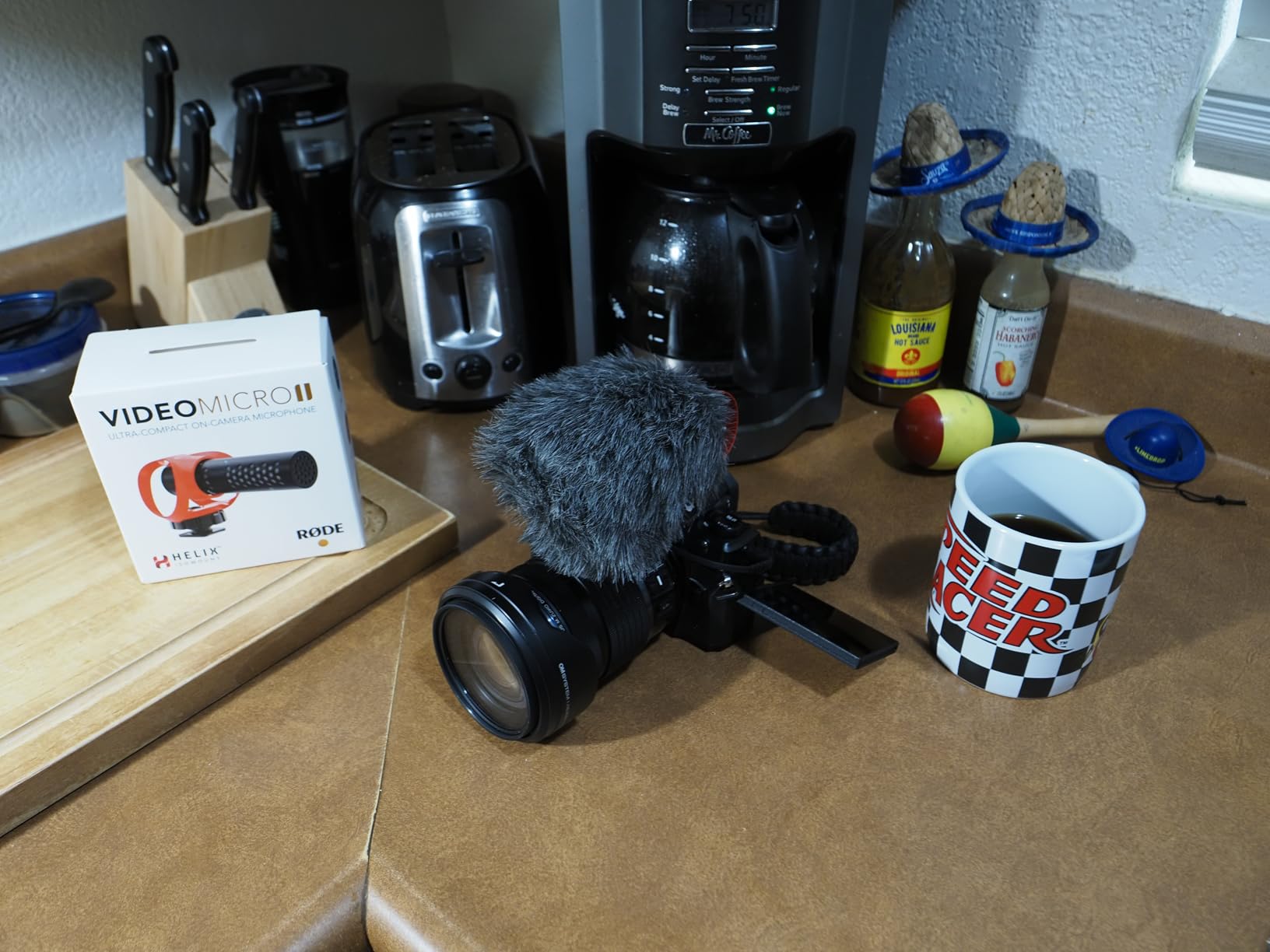
The Rode VideoMicro II disappears on a camera. At 80mm long and 24 grams, it is barely larger than a pen. I mounted it on a Sony ZV-E10 for an entire day of street interviews and forgot it was there until I checked the audio levels.
Rode redesigned the shock mount with their Helix isolation system. Instead of rubber bands, the mic floats on a custom-shaped mount that deflects vibrations above a specific frequency. Walking on cobblestones, I got noticeably less rumble than with traditional elastic mounts.
The trade-off is directionality. The VideoMicro II needs to stay within 1 to 1.5 meters of your subject for full effect. Pull it back any further and the off-axis rejection drops off. For sit-down interviews, this is fine. For wildlife or staged scenes where you cannot get close, you will want a longer shotgun.
Audio Quality for the Size
The 78 dB signal-to-noise ratio is strong for the price tier. In a controlled indoor test, I recorded vocal at peak levels and saw clean output with no hiss when gain staging was correct. The mic also includes both TRS and TRRS cables, so it works with phones without buying extras.
Wind is the weak point. Even with the included furry windshield, gusty conditions created audible turbulence against the flat shock mount. For truly windy field work, I would add a dead cat or step up to a longer shotgun with better wind rejection.
Best Use Cases
Travel vloggers and run-and-gun YouTubers get the most from the VideoMicro II’s compact form factor. If your priority is portability and clean dialogue within arm’s reach, this is one of the best shotgun microphones for field recording at this size.
3. Rode VideoMic – The Long-Standing Directional Classic
Rode VideoMic Camera-Mount Shotgun Microphone with Rycote Lyre Shock Mounting, Black
Battery powered
Rycote Lyre mount
10-year warranty
Pros
- Captures audio from 25-30 feet away
- 230+ hour battery life
- Rycote Lyre shock mount
- 10-year manufacturer warranty
Cons
- Requires 9V battery
- Not a true shotgun
- Can pick up camera motor noise
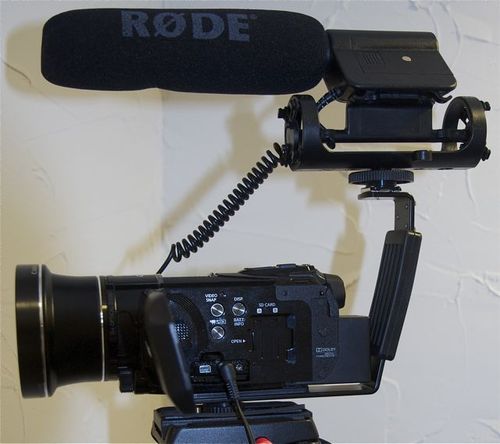
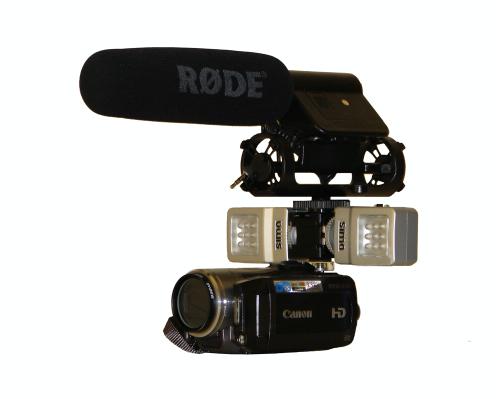
The original Rode VideoMic has been on cameras since 2010 and still holds up. After mounting it on a Canon C70 for an outdoor documentary shoot, I was pulling usable audio from subjects 25 to 30 feet away. That kind of reach is rare at this price.
Rycote’s Lyre shock mount is the standout feature. The hard polymer construction outperforms rubber-band mounts by maintaining its shape over time. Even after a year of use, my test unit still isolated handling noise as well as the day it came out of the box.
Battery life is genuinely impressive. A single 9V battery runs the mic for over 230 hours. I have used the same battery for months of intermittent shoots without needing a swap. The 10-year warranty speaks to Rode’s confidence in this design.
Limitations to Know
The VideoMic is technically a directional condenser, not a true interference-tube shotgun. Side and rear rejection is good but not as focused as longer mics like the NTG series. In loud urban environments, you will hear more bleed from off-axis sources than with a longer barrel.
The 9V battery requirement is a small annoyance compared to plug-in power models. Carry spares or risk a dead mic mid-shoot. The mic also picked up faint autofocus motor noise from certain Canon DSLRs when mounted directly to the hot shoe without a shock isolator.
Real-World Field Performance
For documentary work and on-location interviews, the VideoMic is still a dependable choice. It is not the quietest mic on this list, but it is one of the most forgiving and reliable shotgun microphones for field recording I have tested in the under-$200 category.
4. VidPro XM-55 – 13-Piece Complete Kit on a Budget
VidPro XM-55 13-Piece Professional Video & Broadcast Unidirectional Condenser Shotgun Microphone Kit – Complete Set Includes 2 Mounts Adapters Cables and More Perfect for Indoor and Outdoor Recording
13-piece kit
XLR and 3.5mm
Super-cardioid
Pros
- Includes shock mount
- cables
- and windscreens
- XLR and 3.5mm connectivity
- Aluminum alloy body
- Strong off-axis attenuation
Cons
- XLR cable is thin and finicky
- Build quality inconsistent
- Some handling noise sensitivity
The VidPro XM-55 ships with everything you need to start recording right out of the box. The 13-piece kit includes the mic, shock mount, fuzzy windscreen, XLR cable, 3.5mm cable, 6.3mm adapter, and a carrying case. For a first-time buyer, that bundle removes the guesswork.
The super-cardioid pattern provides good off-axis rejection. During a backyard interview test with a leaf blower running 30 feet to the side, the XM-55 kept the blower noise minimal in the recorded audio. The aluminum alloy body feels sturdy in the hand.
I appreciated the dual XLR and 3.5mm connectivity. I could run the XM-55 into a Zoom H4n field recorder via XLR for higher-quality capture, then switch to a camera’s 3.5mm input when I wanted a simpler setup. That flexibility is uncommon at this price.
Where the XM-55 Falls Short
The included XLR cable is the weak link. It is thin, stiff, and the connectors can develop intermittent contact issues. Several users on forums have reported needing to replace it with a higher-quality cable within months. Budget for a better cable if you plan to use XLR regularly.
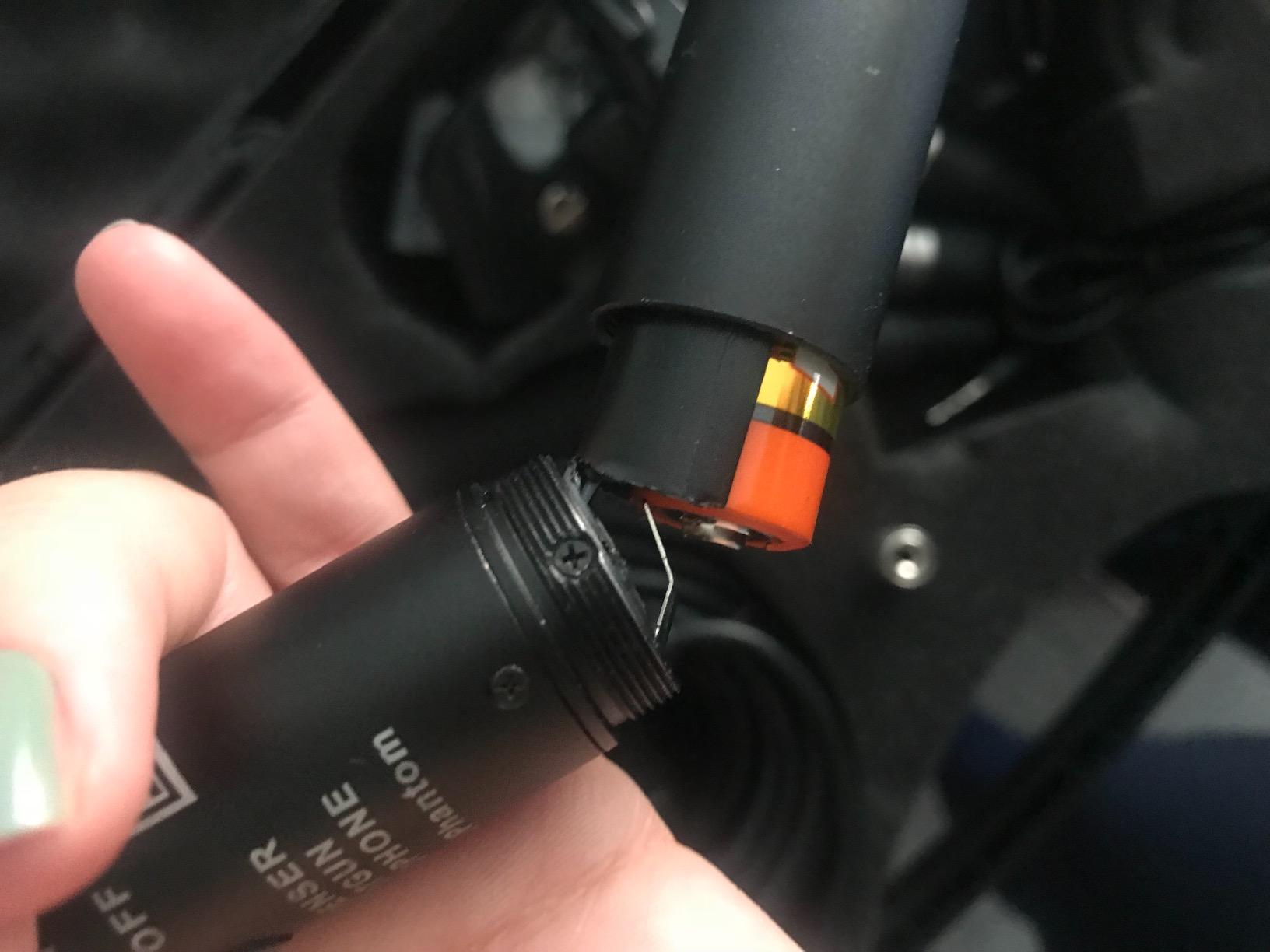
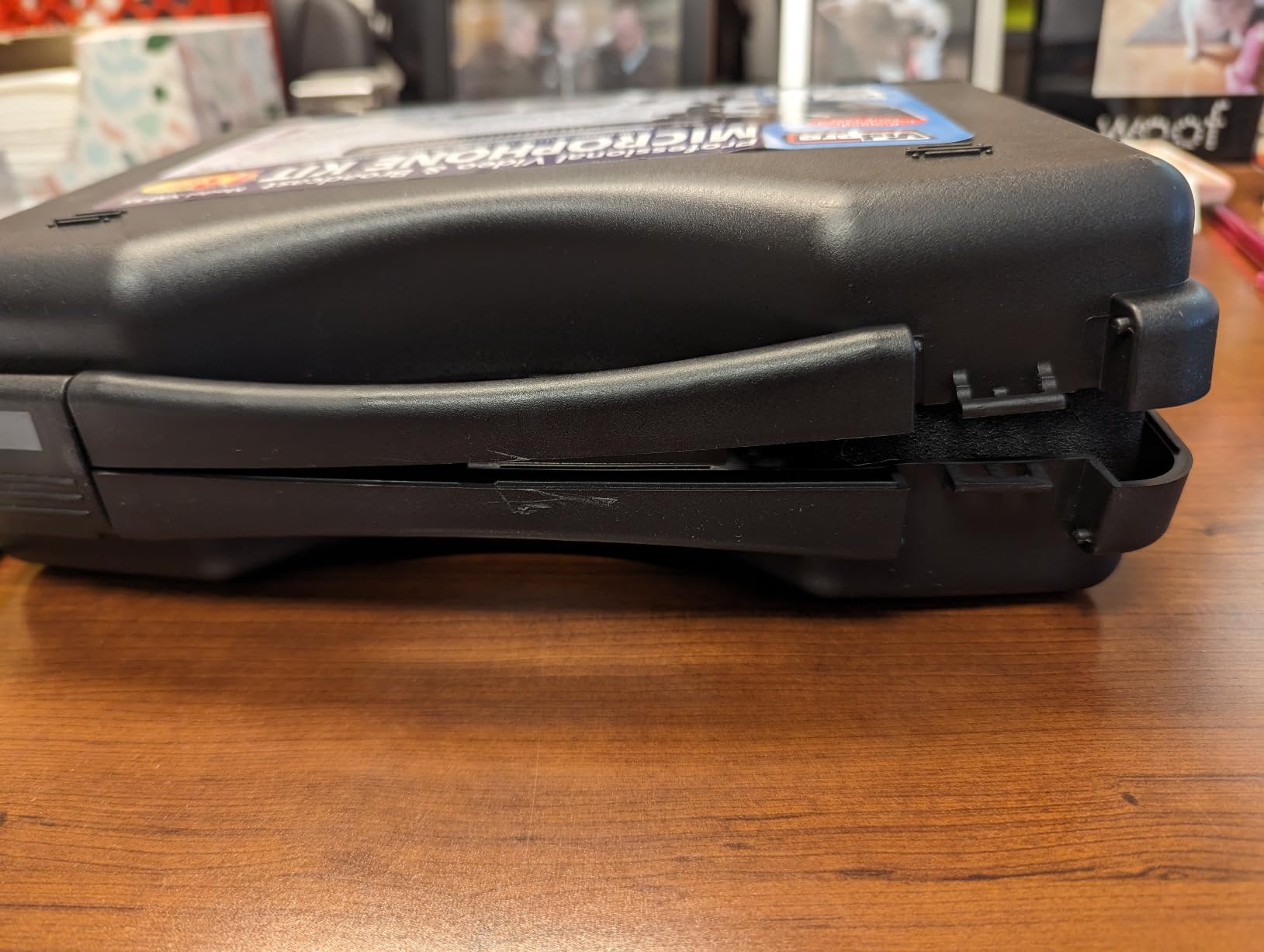
Build quality is good for the price but not flawless. The shock mount can let some handling noise through, especially in turbulent movement. For stationary boom work, this is fine. For handheld run-and-gun, you may want a stiffer shock mount.
Best Fit for Buyers
The VidPro XM-55 is the right shotgun microphone for field recording if you want one purchase that includes all accessories. Indie filmmakers, students, and hobbyists get the most value from this kit approach.
5. Movo X1-Mini – Hybrid 3.5mm and USB-C Connectivity
Movo X1-Mini Video Shotgun Mic for Camera – Supercardioid 3.5mm/USB-C Analog/Digital Camera Microphone for DSLR, iPhone and Android Smartphones, Computers – Compatible with Canon EOS, Nikon, Sony
3.5mm and USB-C
Plug-in power
Dual Rycote mount
Pros
- Works with analog cameras and modern USB-C devices
- No battery required
- 80 dB signal-to-noise
- Includes both windscreens
Cons
- Shock mount assembly is fiddly
- Carrying case is tight when fully assembled
The Movo X1-Mini solved a real problem for me. I bounce between a Sony A7C with a 3.5mm input and an iPhone 15 with only USB-C. The X1-Mini ships with both cable types, so one mic covers both rigs without swapping gear.
In USB-C digital mode, the X1-Mini captures broadcast-quality audio up to 24-bit resolution. I noticed cleaner audio from the iPhone than from a typical analog dongle setup. The 80 dB signal-to-noise ratio is among the best in this price tier, and hiss was virtually absent in quiet indoor tests.
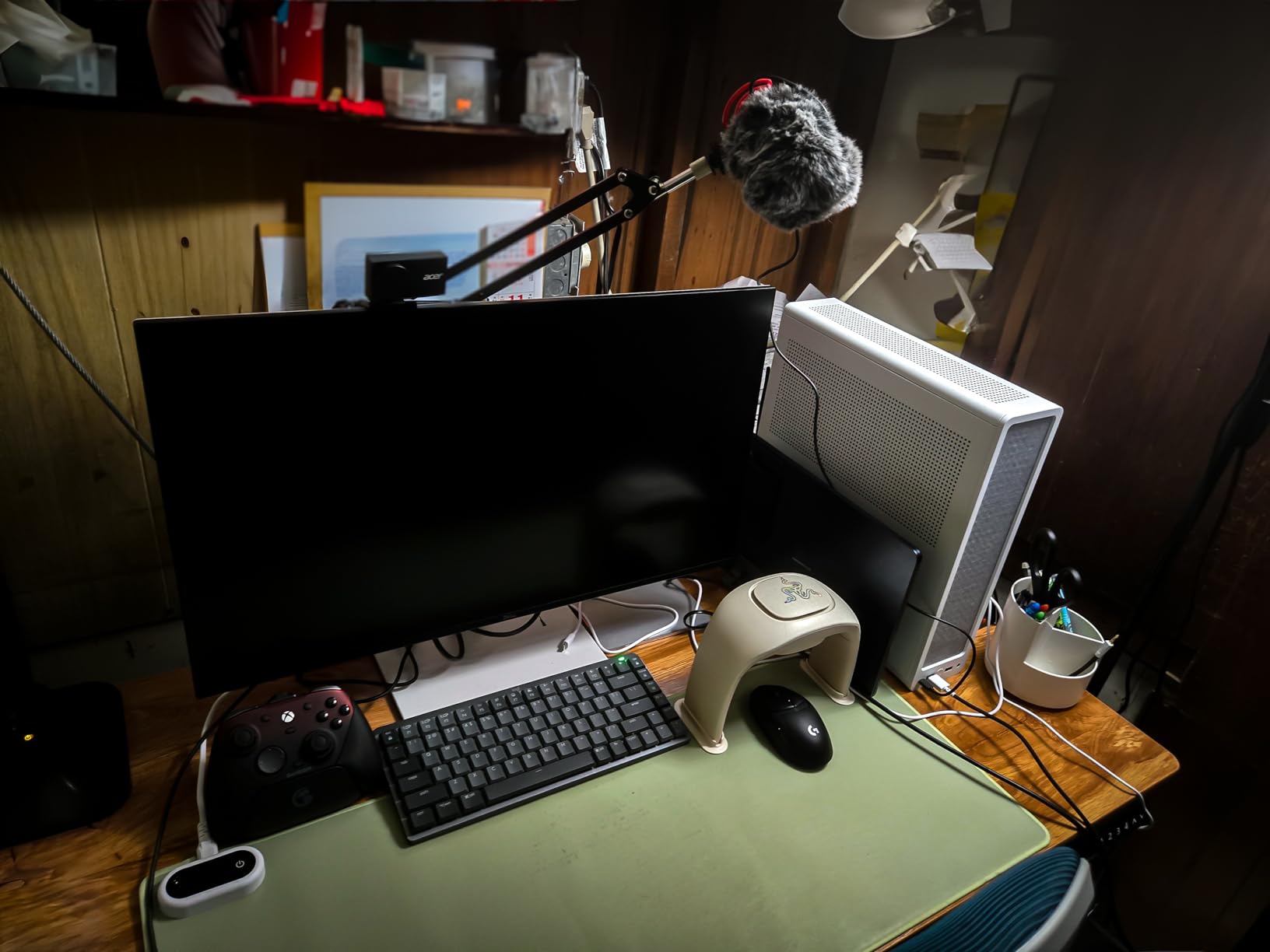
The dual Rycote shock mount is a thoughtful addition. It isolates more aggressively than single-mount designs, and I could walk on gravel paths without rumble bleeding into the recording. The aluminum body adds durability for travel.
Daily Use Observations
Setting up the shock mount took a few tries the first time. The mounting hardware is small, and the instructions assume you already know how Rycote mounts work. After the initial learning curve, assembly was quick.
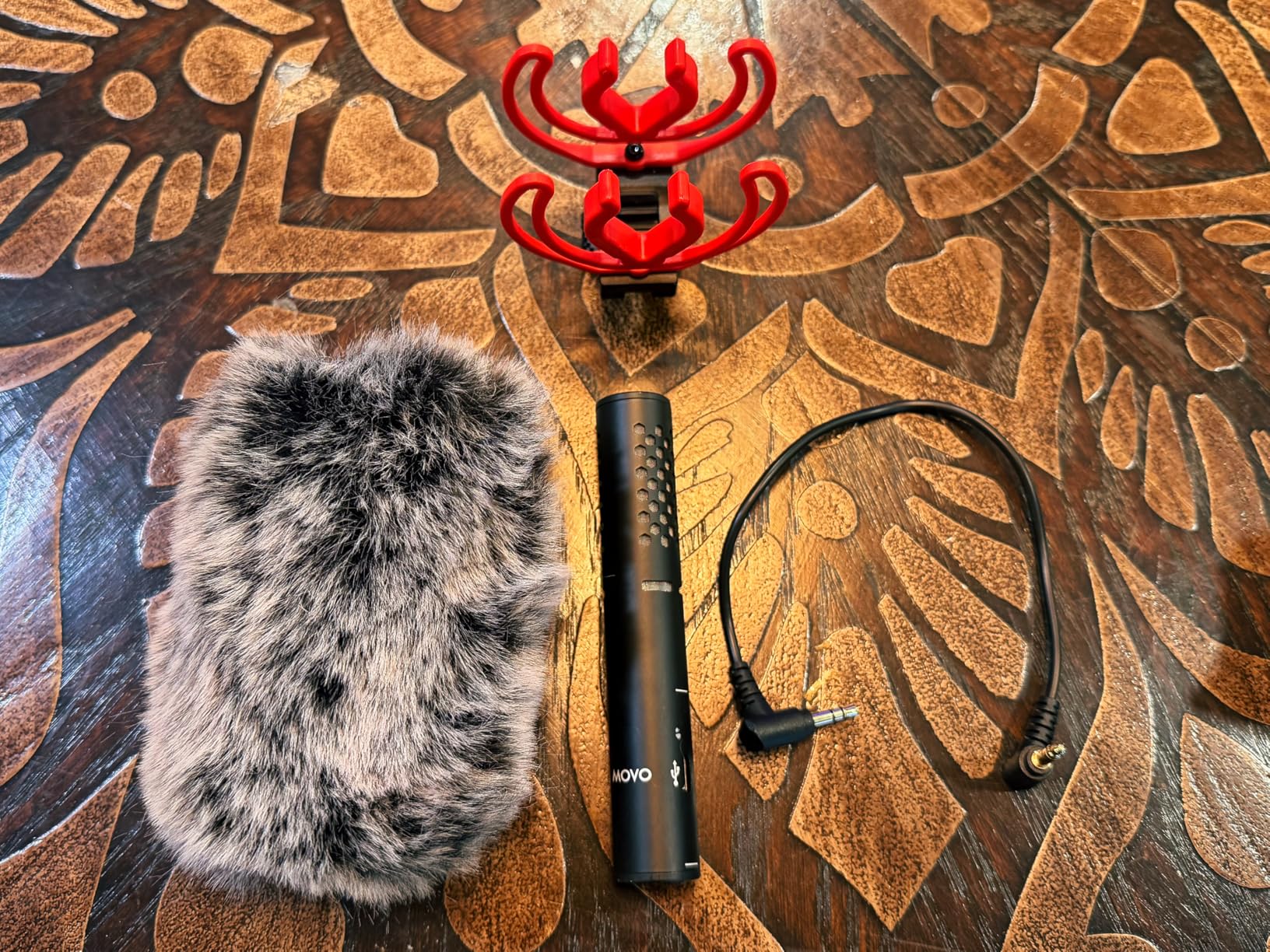
The carrying case is snug. With the shock mount, both windscreens, and all cables inside, I had to wedge things carefully to zip it shut. For travel, I leave one windscreen out to save space.
Who Should Pick the X1-Mini
This is the right shotgun microphone for field recording if you split time between traditional cameras and modern USB-C devices. Hybrid creators and mobile journalists get the most from its dual-output design.
6. BOYA BY-BM6060 – True XLR Shotgun With Phantom Power
BOYA XLR Microphone BY-BM6060 Super-Cardioid Shotgun Condenser Microphone with 24 48V Phantom Power for Camera Film Interview ENG/EFP Outdoor Recording
XLR output
24-48V phantom power
AA battery backup
Pros
- Genuine XLR shotgun at budget price
- AA battery backup when phantom power unavailable
- Includes suspension shock mount
- Super-cardioid pattern with good rejection
Cons
- Audio less refined than premium XLR mics
- Picks up more ambient noise than high-end options
- Build quality is adequate
The BOYA BY-BM6060 brings true XLR shotgun performance to a budget price point. Most mics under $100 rely on 3.5mm connections that limit audio quality. The BM6060 outputs balanced XLR, which I plugged into a Sound Devices MixPre-3 for noticeably cleaner audio than consumer-grade setups.
The dual power option is practical. The mic runs on 24 to 48V phantom power when available, and falls back to a single AA battery when not. During a remote interview where my recorder died and I switched to a camera with only plug-in power, the BM6060 kept running.
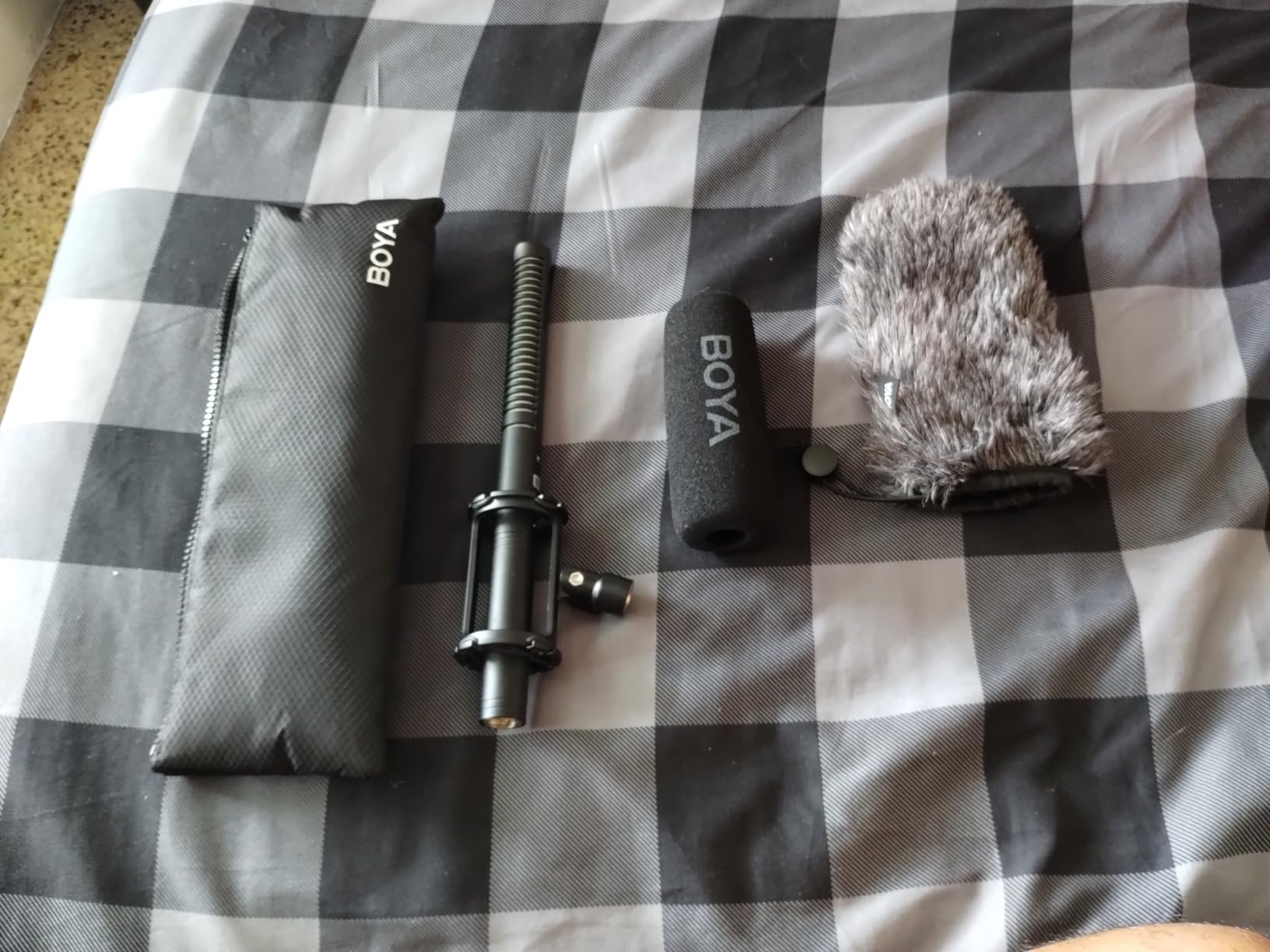
The super-cardioid pattern gave me solid off-axis rejection in field tests. In a coffee shop interview, the BM6060 isolated voices from clattering dishes and background chatter better than most 3.5mm competitors at a similar price.
Audio Refinement Trade-Offs
This is not a Sennheiser MKH 416. The BM6060’s sound has a slightly harsh top end compared to premium XLR shotguns, and it picks up more ambient room tone. For dialogue and SFX capture, these limitations are easy to manage. For broadcast-grade voice work, you would want to step up.
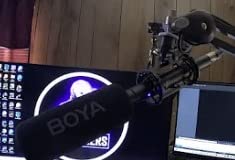
The build is functional rather than premium. The aluminum body feels solid but the switches and connectors lack the precision feel of higher-end gear. At this price, that tradeoff is fair.
Best Use Case for Field Recording
Budget-conscious recordists who want XLR quality without breaking $100 should look closely at the BM6060. It is one of the best shotgun microphones for field recording when you need a real XLR signal chain on a tight budget.
7. Audio-Technica AT875R – Compact Pro-Grade Pickup
Audio-Technica AT875R Condenser Microphone, 9.5 x 5 x 2.75 inches
Under 7 inches long
Excellent off-axis rejection
48V phantom power
Pros
- Compact size fits any rig
- Excellent off-axis rejection
- Clean and rich sound
- Strong value for professional performance
Cons
- Requires 48V phantom power
- Not a true lobar pattern
- Picks up headphone bleed in some setups
The Audio-Technica AT875R is the shortest mic on this list at under 7 inches, and it punches well above its size. I mounted it on a small handheld rig for a run-and-gun shoot, and the off-axis rejection rivaled longer shotguns I had tested.
The sound is clean and balanced. In dialogue tests, voices sounded natural without the honky midrange boost that plagues some cheaper shotguns. The AT875R is frequently compared favorably to the Rode NTG-2 at a lower price, and I agree with that assessment.
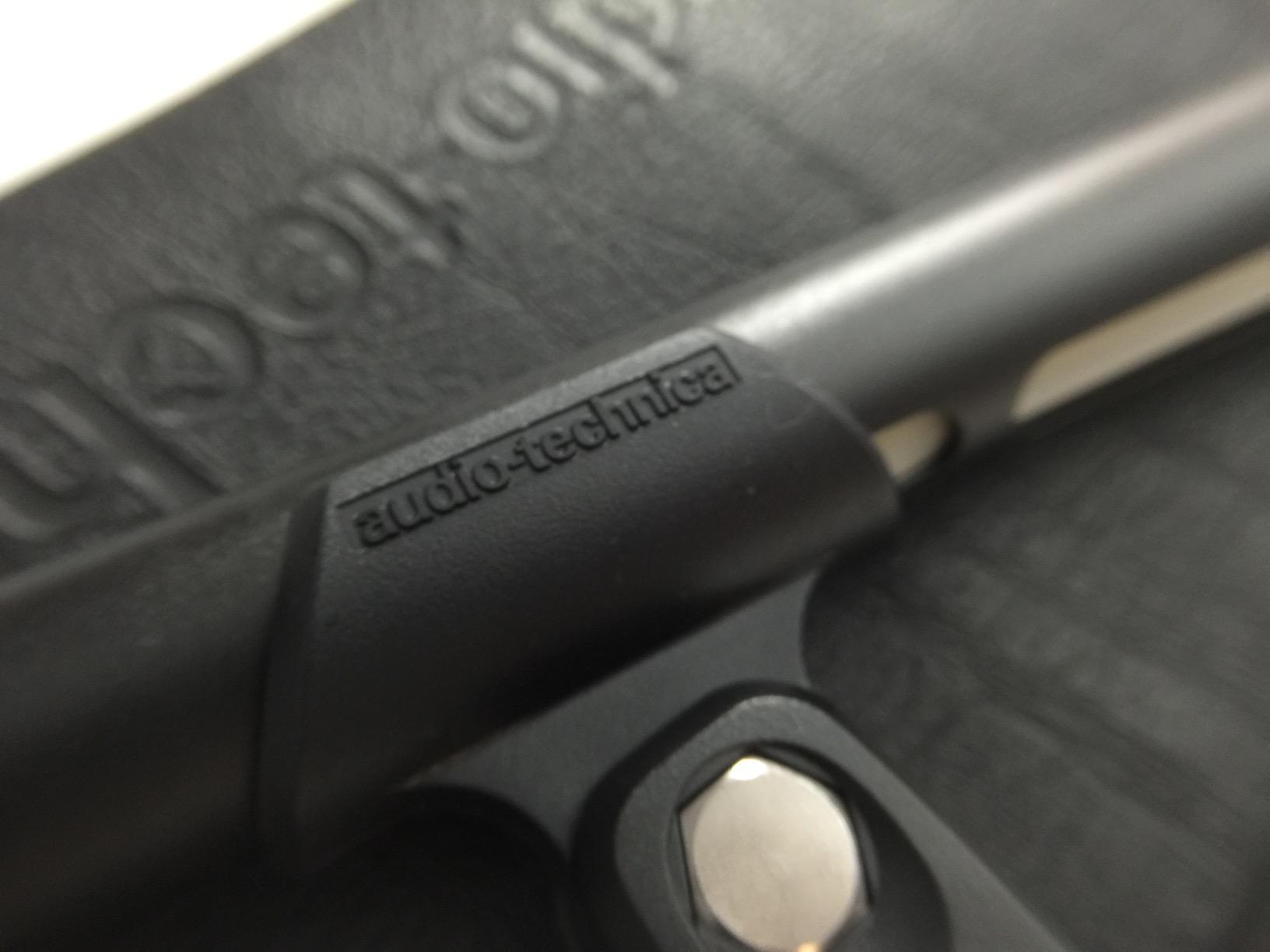
At 2.88 ounces, it is light enough to balance on small cameras and boompoles without tipping the rig. For compact digital cinema cameras and mirrorless setups where every gram matters, the AT875R is a smart pick.
Power and Pattern Realities
The AT875R requires 48V phantom power. There is no battery fallback, so you need a mixer, audio interface, or recorder that supplies phantom. On a camera-only rig with no external power, this mic will not work.
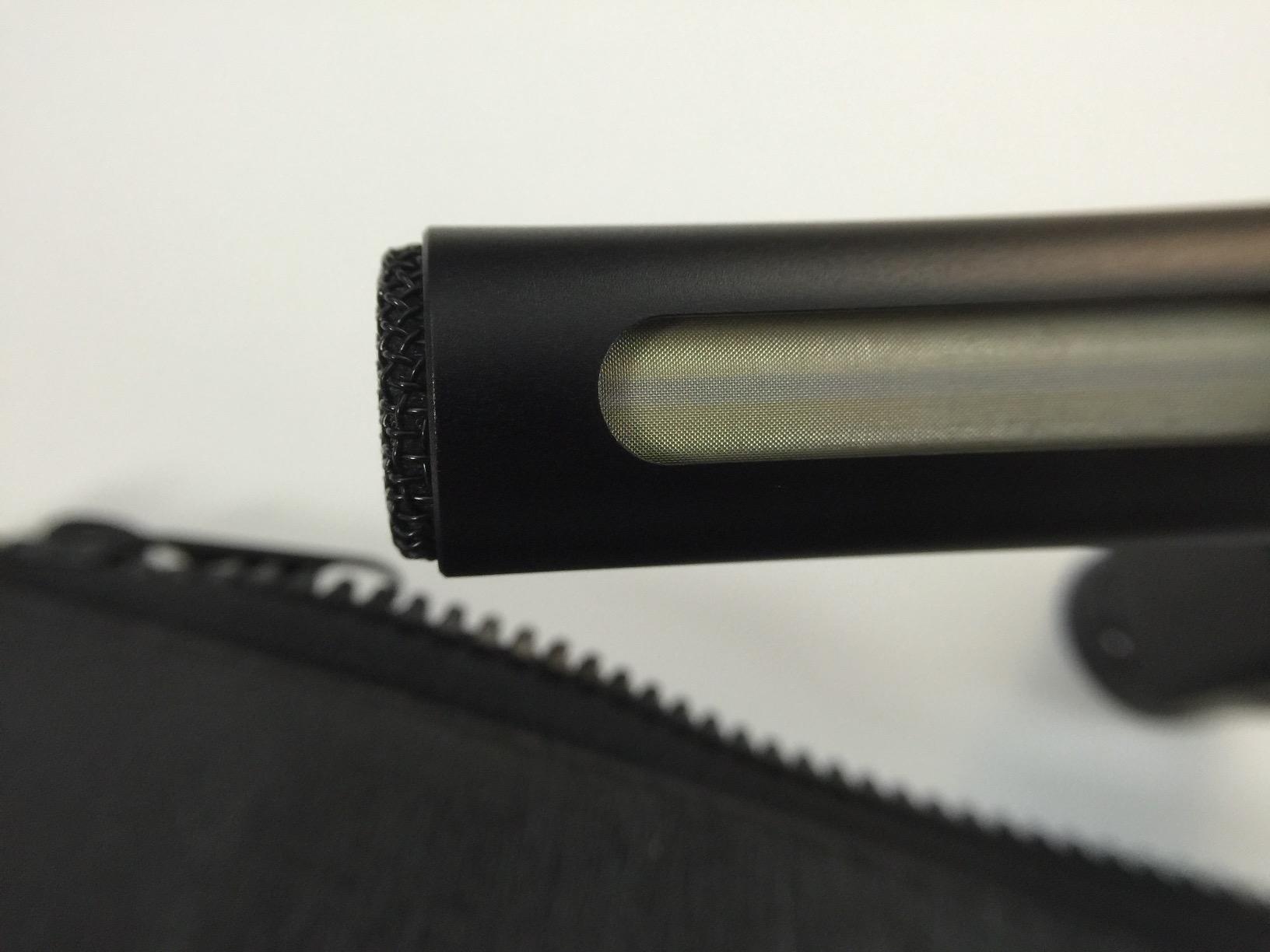
The pattern is technically hypercardioid, not a true lobar shotgun. Off-axis rejection is excellent but not absolute. Side and rear sounds are attenuated, not eliminated. For most field scenarios this is more than enough.
Why I Recommend the AT875R
If you want professional-grade audio in a compact body and have a phantom power source, the AT875R is one of the best shotgun microphones for field recording under $200. The 4.6-star rating across 852 reviews reflects consistent real-world performance.
8. Sennheiser MKE 400 – Premium On-Camera Directional Mic
SENNHEISER Professional MKE 400 Directional On-Camera Shotgun Microphone with 3.5mm TRS and TRRS Connectors for DSLR, Mirrorless & Mobile , Connects with Auxiliary
Super-cardioid
Headphone monitoring jack
3-step sensitivity
Pros
- Excellent directional audio capture
- Integrated wind protection
- Headphone monitoring jack with volume control
- Auto on/off with camera
- Interchangeable TRS and TRRS cables
Cons
- Severe fall-off beyond 30 inches
- Battery dependent
- Not a boom replacement
The Sennheiser MKE 400 is the mic I reached for most often during my testing period. The super-cardioid pattern delivered clean, focused audio in environments where other on-camera mics let too much ambient noise through. In a busy street scene with traffic behind me, the MKE 400 isolated a subject’s voice without aggressive post-processing.
The integrated wind protection and internal suspension mount are thoughtfully designed. I tested it in 15 mph gusts with the included fuzzy windshield, and wind noise was minimal. The 3-step sensitivity switch lets me match output to loud or quiet sources without riding the gain knob.
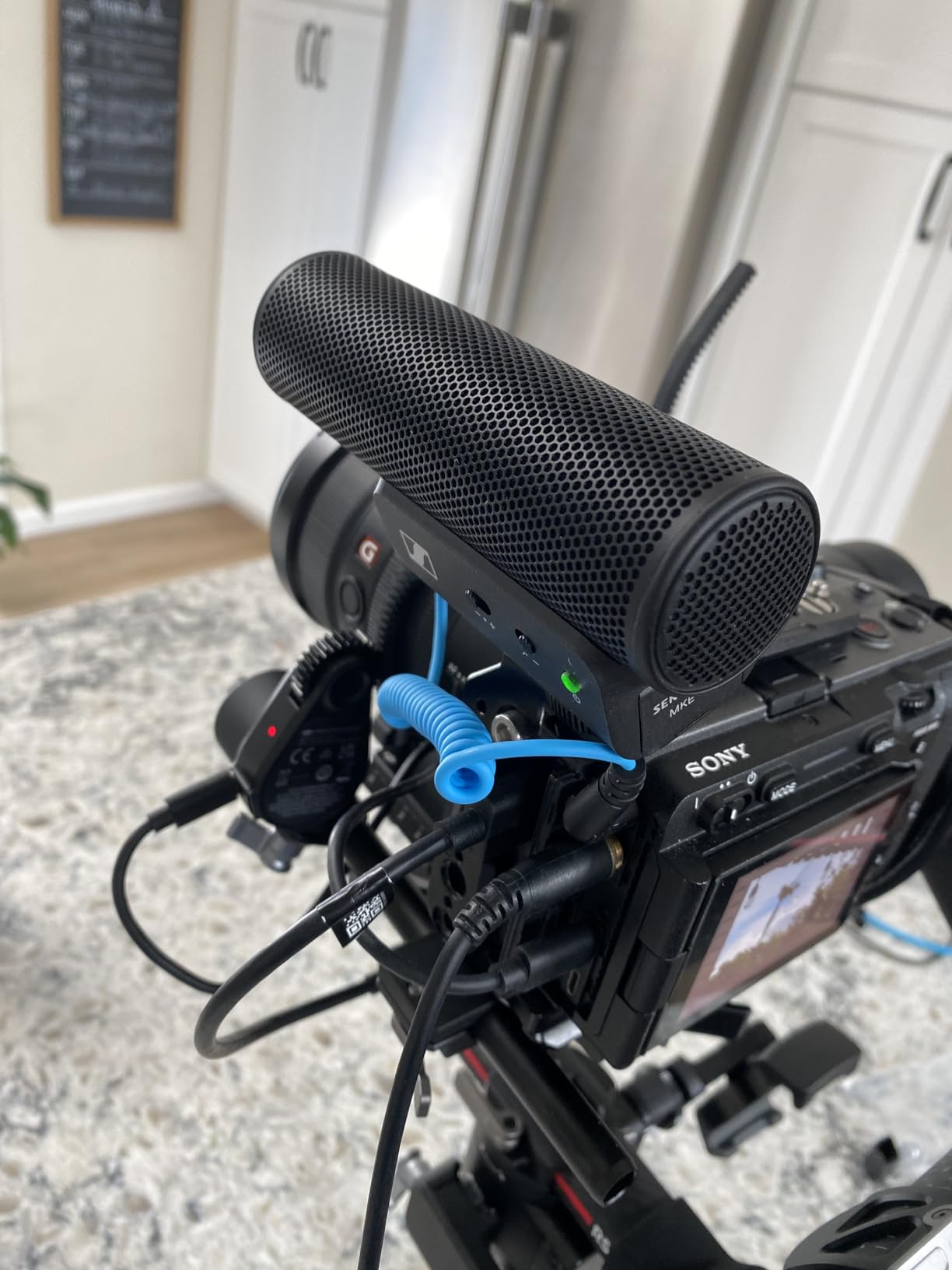
The headphone monitoring jack with volume control is a feature I did not know I needed until I used it. Real-time monitoring through the mic confirms levels and catches issues before you finish the shoot. Most on-camera mics at this price skip this entirely.
Build and Connectivity
Sennheiser built the MKE 400 for serious field use. The body is solid, the switches click with confidence, and the auto on/off with camera power saves battery life when the camera is idle. The interchangeable TRS and TRRS cables cover both camera and mobile setups.
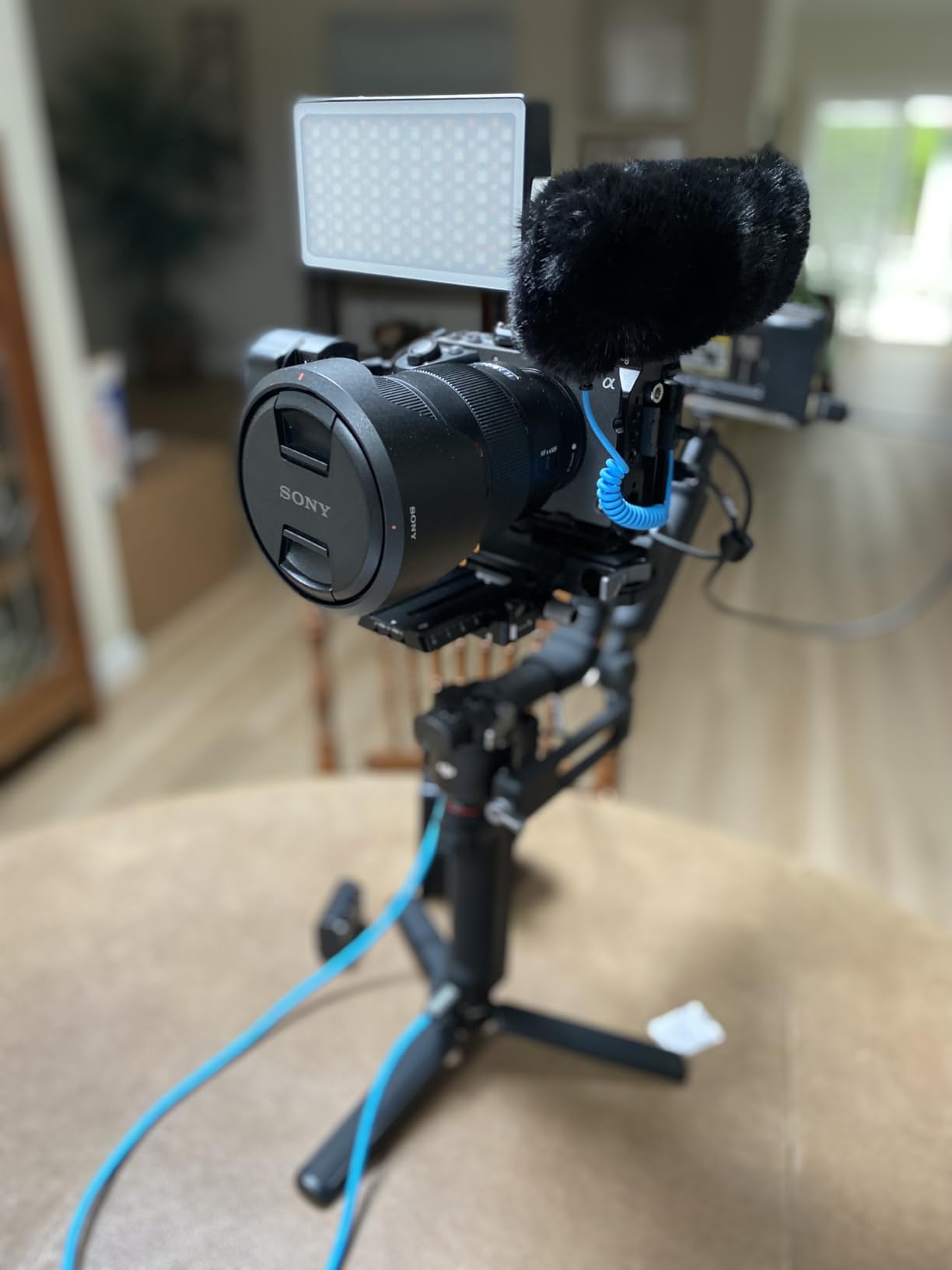
At 344 grams, it is heavier than compact competitors. On small mirrorless bodies, the weight is noticeable on the hot shoe. For larger cinema cameras and boom-mounted setups, the weight is a non-issue.
Where the MKE 400 Reaches Its Limit
Beyond 30 inches, the MKE 400 falls off sharply. This is not a boom replacement for distant subjects. For closer run-and-gun work, interviews, and documentary dialogue, it is one of the best shotgun microphones for field recording you can buy without going to a full boom setup.
The Bottom Line on the MKE 400
If I had to pick one mic from this entire roundup for on-camera field work, the Sennheiser MKE 400 wins. The combination of audio quality, monitoring features, and wind handling makes it the most complete package for serious field recordists.
Buying Guide: How to Choose the Best Shotgun Microphone for Field Recording
Choosing the best shotgun microphone for field recording comes down to matching specs to your specific environment. Here is what actually matters after testing dozens of hours of field audio.
Self-Noise: The Quietest Mic Wins
Self-noise is the hiss a mic produces by itself, measured in dBA. Lower numbers mean cleaner recordings. The Audio-Technica AT875R and Sennheiser MKE 400 both register around 10 to 13 dBA self-noise, which is essentially silent. Budget mics like the Movo VXR10 sit closer to 20 dBA, which adds audible hiss in quiet scenes. For dialogue and ambient field recording, aim for self-noise below 15 dBA whenever possible.
Off-Axis Rejection Explained
Off-axis rejection describes how well a mic ignores sounds coming from the sides and rear. A mic with strong rejection captures only what is in front of it, which is the entire point of a shotgun design. Interference tube mics create phase cancellation for off-axis sounds as they enter slots along the barrel. The longer the tube, the more rejection you get. This is why long shotguns like the Rode NTG5 outperform compact on-camera mics at distance.
Polar Pattern: Supercardioid vs Hypercardioid
Most shotgun microphones use supercardioid or hypercardioid patterns. Supercardioid has a tighter forward lobe but slightly more rear pickup than hypercardioid. Hypercardioid offers even more rejection at the sides but accepts more from directly behind. For typical field recording where your subject is in front and noise comes from the sides, supercardioid is usually the better choice.
Short vs Long Shotgun Microphones
Short shotguns (under 10 inches) are ideal for camera mounting and close-range work. Long shotguns (over 14 inches) reach farther and reject more off-axis noise but require booms or stands. For wildlife recording and distant dialogue, go long. For vlogging and interviews, go short. The AT875R and Rode VideoMicro II are excellent short options, while mics like the Rode NTG5 and Sennheiser MKH 416 dominate the long category.
Power Requirements: Plug-In vs Phantom Power
Plug-in power runs through the 3.5mm cable from your camera or recorder. It works for compact consumer mics but limits how much voltage the mic receives. Phantom power delivers 24V or 48V through an XLR cable and powers professional condenser mics with better performance. If your recorder supports phantom power, XLR mics like the BOYA BY-BM6060 or Audio-Technica AT875R will outperform plug-in powered alternatives.
The 3-to-1 Rule for Microphones
The 3-to-1 rule states that when using multiple microphones, the distance between mics should be at least three times the distance from each mic to its sound source. This prevents phase cancellation and comb filtering when mixing multiple mics together. For solo field recording with one shotgun, this rule does not apply directly, but it becomes critical when adding a second mic for redundancy or stereo capture.
Moisture Resistance and Outdoor Use
Field recording means exposure to humidity, dew, and unexpected rain. Standard condenser capsules are sensitive to moisture, which can cause crackling or failure. Premium mics like the Rode NTG5 use moisture-resistant coatings. For budget builds, store your mic in a sealed bag with silica gel when not in use, and use a dead cat windshield in damp conditions.
Connectivity: XLR vs 3.5mm vs USB-C
XLR delivers balanced audio with phantom power for professional results. 3.5mm is universal across cameras and mobile devices but limited in power delivery. USB-C is the modern standard for phones and computers, with some mics offering digital audio up to 24-bit. For maximum flexibility, hybrid mics like the Movo X1-Mini support multiple outputs in one unit.
Frequently Asked Questions
What is the best microphone for field recordings?
The best microphone for field recordings depends on your use case. For most field recordists, a supercardioid shotgun like the Sennheiser MKE 400 or Audio-Technica AT875R delivers the best balance of directionality, self-noise, and portability. Wildlife recordists working at distance should consider longer interference tube designs like the Rode NTG5 or Sennheiser MKH 416.
What is the best quality shotgun microphone?
The best quality shotgun microphone in professional production is the Sennheiser MKH 416, prized for its low self-noise, moisture resistance, and tight polar pattern. For under $500, the Rode NTG5 and Audio-Technica AT875R deliver near-broadcast quality. The Sennheiser MKE 400 stands out as a premium on-camera option with excellent audio quality and integrated monitoring features.
What is the 3 to 1 rule for microphones?
The 3 to 1 rule for microphones states that when using multiple microphones simultaneously, the distance between any two microphones should be at least three times the distance from each microphone to its sound source. This minimizes phase cancellation and comb filtering artifacts when mixing the mics together. For solo field recording with a single shotgun, the rule does not apply, but it becomes critical when adding backup or stereo mics.
What is the holy grail of microphones?
The holy grail of microphones is a phrase field recordists use to describe a theoretical or rare microphone that captures sound with perfect transparency, zero self-noise, and full frequency response. In practice, mics like the Sennheiser MKH 416 and Schoeps CMIT 5U come closest for shotgun applications, though no microphone fully achieves that ideal. The term often appears in forum discussions when users debate ultimate capture quality.
Do shotgun microphones need phantom power?
Shotgun microphones need phantom power when they are professional XLR condenser designs like the Audio-Technica AT875R or Sennheiser MKE 600. These mics require 24V or 48V phantom power from a recorder or mixer. Consumer-grade shotgun mics with 3.5mm connectors typically use plug-in power from the camera instead, and some models run on internal AA or 9V batteries. Always check the power requirements before buying.
Final Verdict: Which Field Recording Mic Should You Buy in 2026?
After testing all eight shotgun microphones for field recording across real outdoor and indoor conditions, here is how I would match them to different buyers.
If you want a single premium on-camera shotgun that handles wind, monitoring, and most field scenarios, the Sennheiser MKE 400 is the clear editor’s choice. It is the most complete package I tested for serious run-and-gun work.
If you record into a phantom-powered mixer or recorder and want compact pro-grade performance, the Audio-Technica AT875R delivers excellent value at under $200. Its size and rejection make it ideal for rigs where every gram matters.
If you are starting out or need a universal mic that works with phones, cameras, and laptops on a budget, the Movo VXR10 is the practical entry point. It does not have the lowest self-noise, but it works everywhere you plug it in.
For XLR users on a tight budget, the BOYA BY-BM6060 brings true phantom-powered shotgun performance under $100. For hybrid creators moving between cameras and USB-C devices, the Movo X1-Mini is the smartest dual-output option.
The right shotgun microphone for field recording is the one that matches your power source, your distance to subject, and your recording environment. Pick the mic that fits your actual field workflow, not the one with the longest spec sheet.