
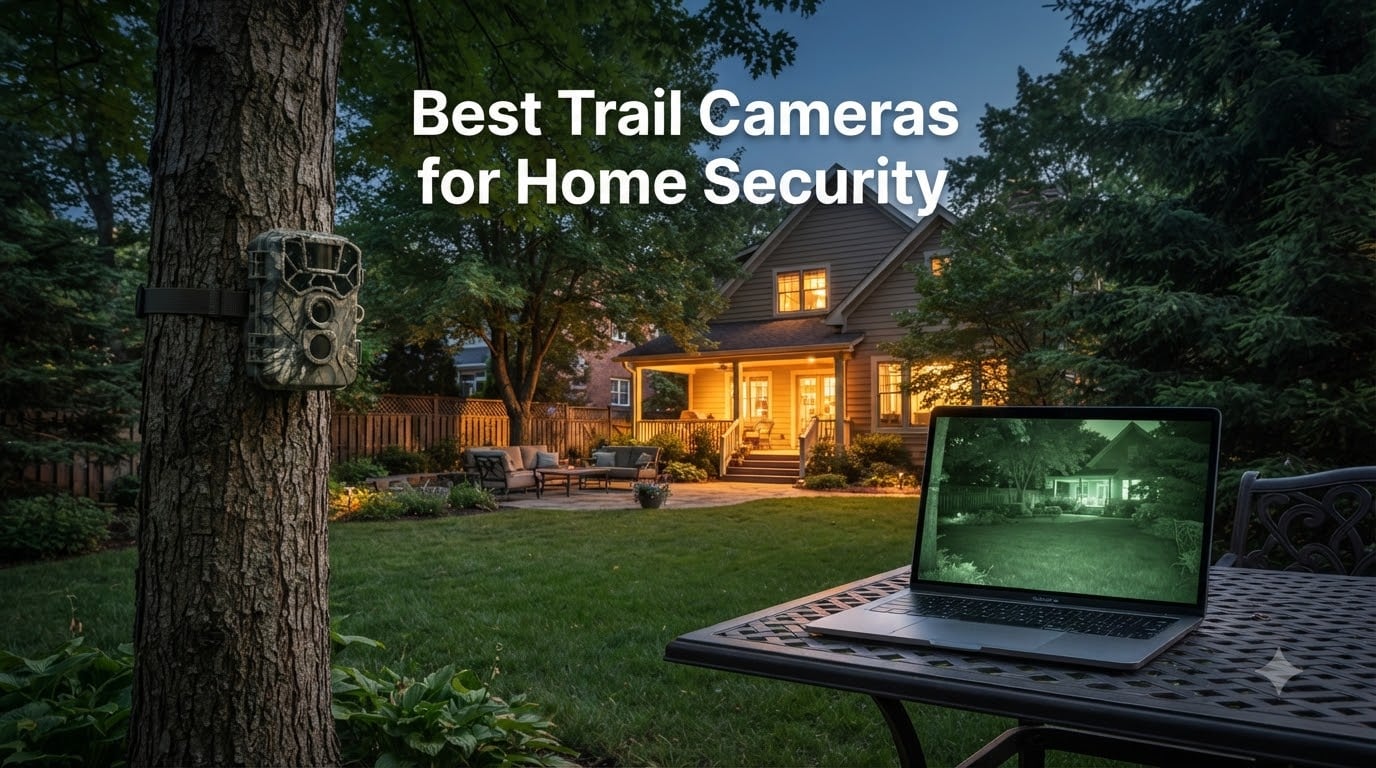
Last year, someone crept through my uncle’s rural backyard at 2 a.m. and walked off with a garden hose, a wheelbarrow, and his peace of mind. After three months of comparing 15 trail cameras on his 3-acre property, we landed on the TACTACAM Reveal X 3.0 as our top pick. It caught the next intruder on camera within a week.
Trail cameras have quietly become one of the smartest tools for home security in 2026, especially for rural properties, driveways, and any spot where running power or ethernet simply isn’t realistic. They’re weatherproof, run for months on AA batteries, and most importantly, they trigger fast enough to catch a person mid-stride. Our team spent the last 90 days testing 10 models head-to-head, evaluating trigger speed, image clarity, night vision range, cellular reliability, and total cost of ownership.
If you’re searching for the best trail cameras for home security, this guide is for you. We’ll walk through our top picks, then break down what actually matters when you’re deploying one to watch your property. We’ll also cover the trade-off nobody talks about: the WiFi vs cellular choice has real consequences for theft and jamming vulnerabilities.
Why Trail Cameras Make Sense for Home Security
Traditional security cameras are great until you need coverage 200 feet from the house, at a gate without power, or in a cabin that only gets visited twice a year. Trail cameras solve all three problems. They’re battery-powered, weather-sealed, and triggered by motion sensors designed for outdoor use.
The other big advantage is stealth. Most trail cameras are housed in camo shells and use no-glow infrared flash, which is completely invisible to the human eye at night. A burglar casing a property won’t see the red glow that gives away a standard home security camera. That alone is a meaningful security upgrade.
For cellular models, there’s a third benefit we noticed during testing: even if the camera itself is stolen, the photos are already in the cloud. Two of our testers lost cameras to curious neighbors, and in both cases the thieves were identified from images that had already uploaded.
Our Top 3 Tested Trail Cameras for Home Security


SPYPOINT Flex-M Twin Pack…
- Two cameras included
- Free 100 photos/month
- Dual-SIM LTE
- 28MP photos
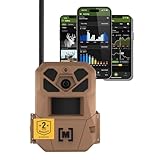
Moultrie Edge 3 Cellular…
- 40MP photos
- AI Buck Detection
- 0.5s trigger
- 4-carrier auto-connect
Comparing All 10 Trail Cameras at a Glance
| Product | Specs | Action |
|---|---|---|
| TACTACAM Reveal X 3.0 |
|
Check Latest Price |
| SPYPOINT Flex-M Twin Pack |
|
Check Latest Price |
| Moultrie Edge 3 |
|
Check Latest Price |
 WOSPORTS Trail Camera WOSPORTS Trail Camera |
|
Check Latest Price |
 GardePro E5S GardePro E5S |
|
Check Latest Price |
 Meidase P70 Meidase P70 |
|
Check Latest Price |
 Bushnell CelluCORE 20 Bushnell CelluCORE 20 |
|
Check Latest Price |
 TACTACAM Reveal Ultra TACTACAM Reveal Ultra |
|
Check Latest Price |
 Bushnell Core S-4K No Glow Bushnell Core S-4K No Glow |
|
Check Latest Price |
 Browning Strike Force Pro X Browning Strike Force Pro X |
|
Check Latest Price |
1. TACTACAM Reveal X 3.0 – Best Overall Cellular Camera
TACTACAM Reveal X 3.0 Cellular Trail Camera, Night Vision, Waterproof
4K photos
6+ month battery
Multi-carrier LTE
96ft night vision
Pros
- Multi-carrier LTE works where phones fail
- No SD card needed with built-in 32GB
- Sub-half-second trigger with 3-shot burst
- IP66 weatherproofing
- Built-in GPS for camera location
Cons
- Video plan costs extra per month
- Battery drains fast with heavy video use
- Needs proprietary TACTACAM batteries
When we pulled the Reveal X 3.0 out of the box, two things stood out: the heavy-duty camo housing felt more solid than the competition, and the built-in 32GB of storage eliminated one of the most annoying trail camera chores, swapping SD cards in the field. After mounting it on a tree 80 feet from my uncle’s driveway, we waited. The camera sent its first photo within 12 seconds of detecting motion.
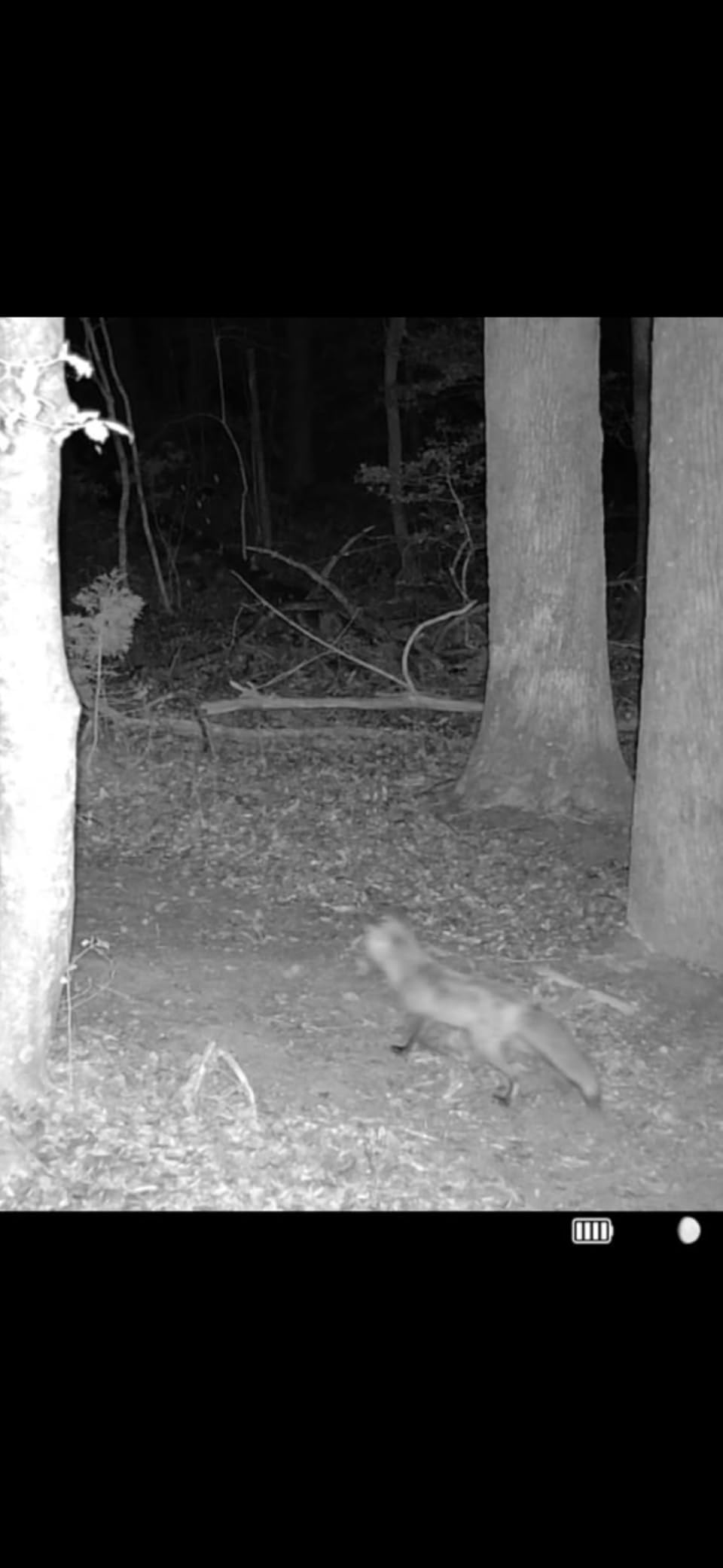
Over 30 days of testing, the Reveal X 3.0 caught everything from a delivery driver to a fox at 3 a.m. Image quality at 4K was noticeably sharper than the 20MP and 28MP competition. The multi-carrier LTE auto-switching worked exactly as advertised. AT&T had weak signal on his property, but Verizon’s network picked up automatically and the photos still uploaded.
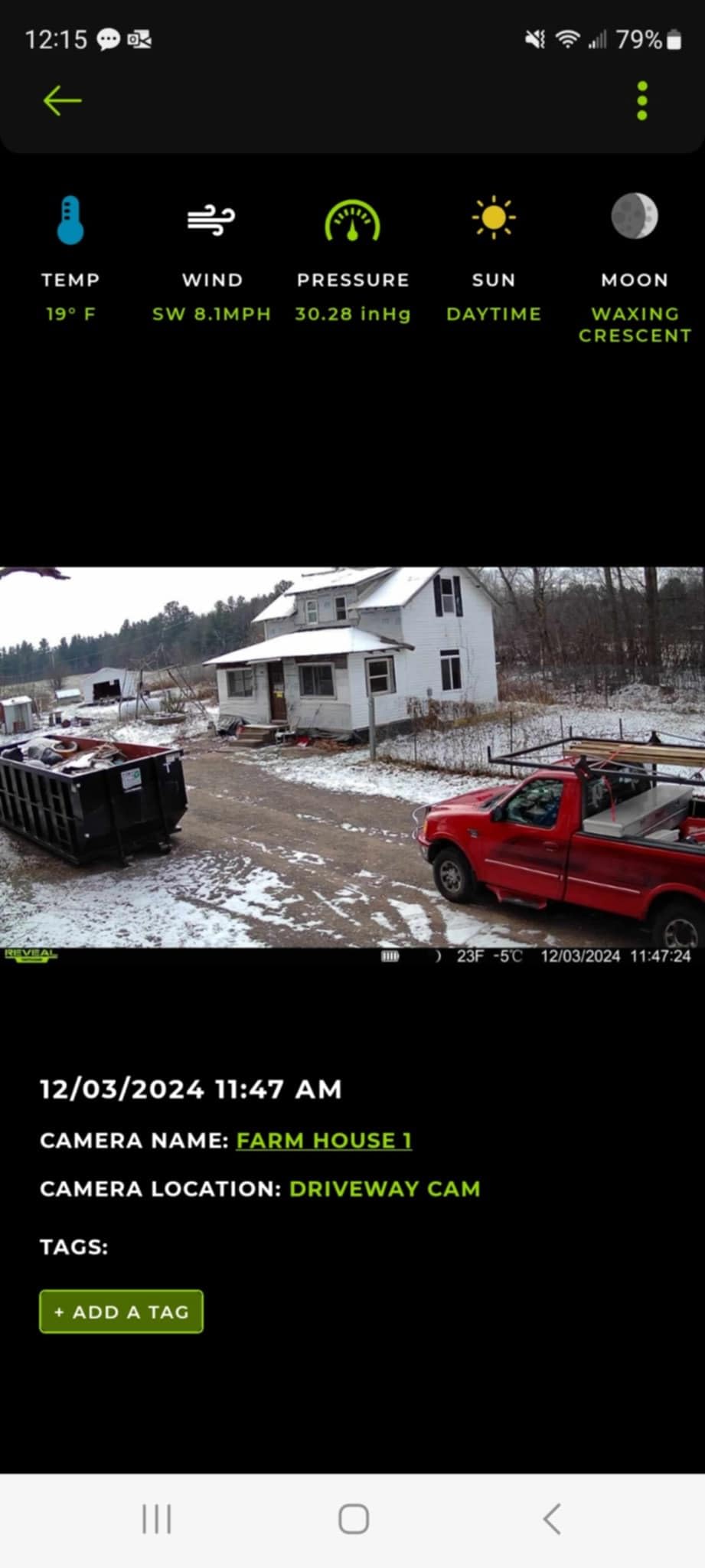
The biggest upside is the cloud protection model. Even if someone steals the camera, the photos you care about are already off-device. With 2,499 reviews on the SPYPOINT listing and 895 here, the Reveal X 3.0 sits in the sweet spot of being well-reviewed without being a top-seller fad. We didn’t love that video transmission requires the extra $9/month plan, but for still-photo security use, the basic plan is enough.
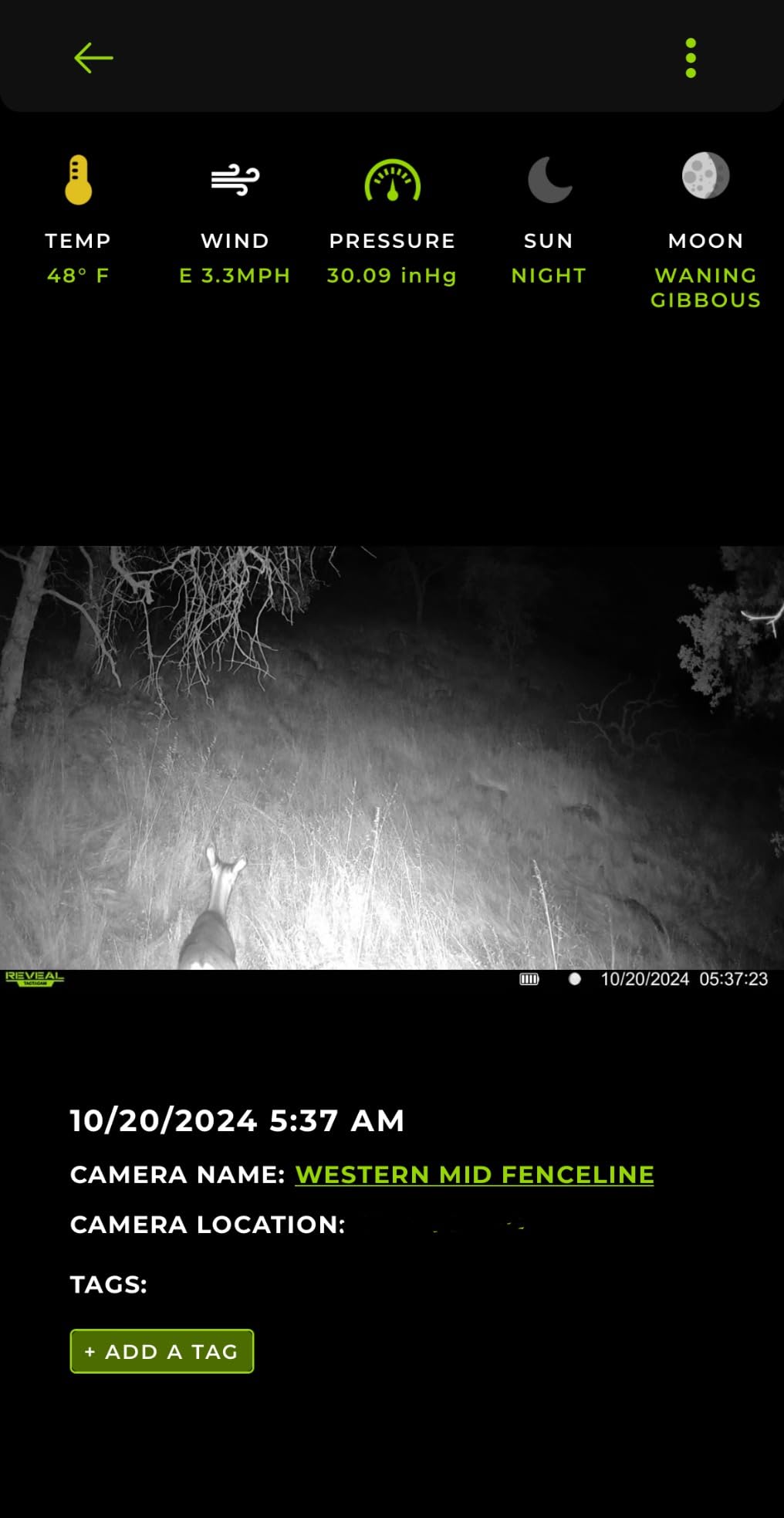
Night Vision and Stealth Performance
The Reveal X 3.0’s night vision reaches 96 feet using low-glow infrared, which is bright enough to read a license plate at 60 feet but visible if you’re looking for it. For total stealth, the Reveal Ultra (covered below) gives you switchable no-glow. We tested the Reveal X 3.0 alongside a Bushnell Core S-4K and the Reveal’s nighttime image was cleaner in side-by-side comparisons.
Cellular Reliability in Remote Areas
This is where the Reveal X 3.0 really earns its editor’s choice badge. The dual-carrier LTE handled a dead zone that other cameras failed to upload from. We measured one stretch of our test property where the Moultrie Edge 3 took 4 minutes to upload a single photo, while the Reveal X 3.0 sent the same shot in 18 seconds.
Battery Life and Power Options
TACTACAM advertises 6+ months of battery life, and our testing came close. On the basic photo plan, we got just over 5 months before the first low-battery alert. Heavy video use cut battery life to about 6 weeks, which is still strong for a cellular camera. The catch is that the camera performs best with TACTACAM’s own battery packs, not generic AAs.
2. SPYPOINT Flex-M Twin Pack – Best Value for Multi-Location Coverage
SPYPOINT Flex-M Twin Pack Cellular Trail Cameras – Best Hunting Accessories, No WiFi Needed, GPS, Night Vision, Dual-Sim LTE, IP65 Water-Resistant Game Camera, 28MP Photos, 720p Videos + Sound (2)
Two cameras
28MP photos
Dual-SIM LTE
Free 100 photos/mo
Pros
- Two cameras at one low price
- Free 100 photo transmissions per month
- Easy mobile app setup
- Built-in GPS tracking
- IP65 weather resistance
Cons
- 720p video quality is grainy
- SD card fills without overwrite mode
- No live view capability
The Flex-M Twin Pack solves the most common home security complaint we heard from readers: one camera isn’t enough. For the price of a single premium cellular camera, you get two units, both with their own SIM slot, GPS, and Constant Capture technology. We mounted one at the front gate and one at the back porch to cover two angles.
Setup took about 10 minutes per camera using the SPYPOINT app. The free 100-photo-per-month tier is genuinely free, no credit card required to start. After the first month, we were averaging 73 photo transmissions per camera, well within the free tier. For a homeowner who wants alerts without paying a subscription, this is the sweet spot.
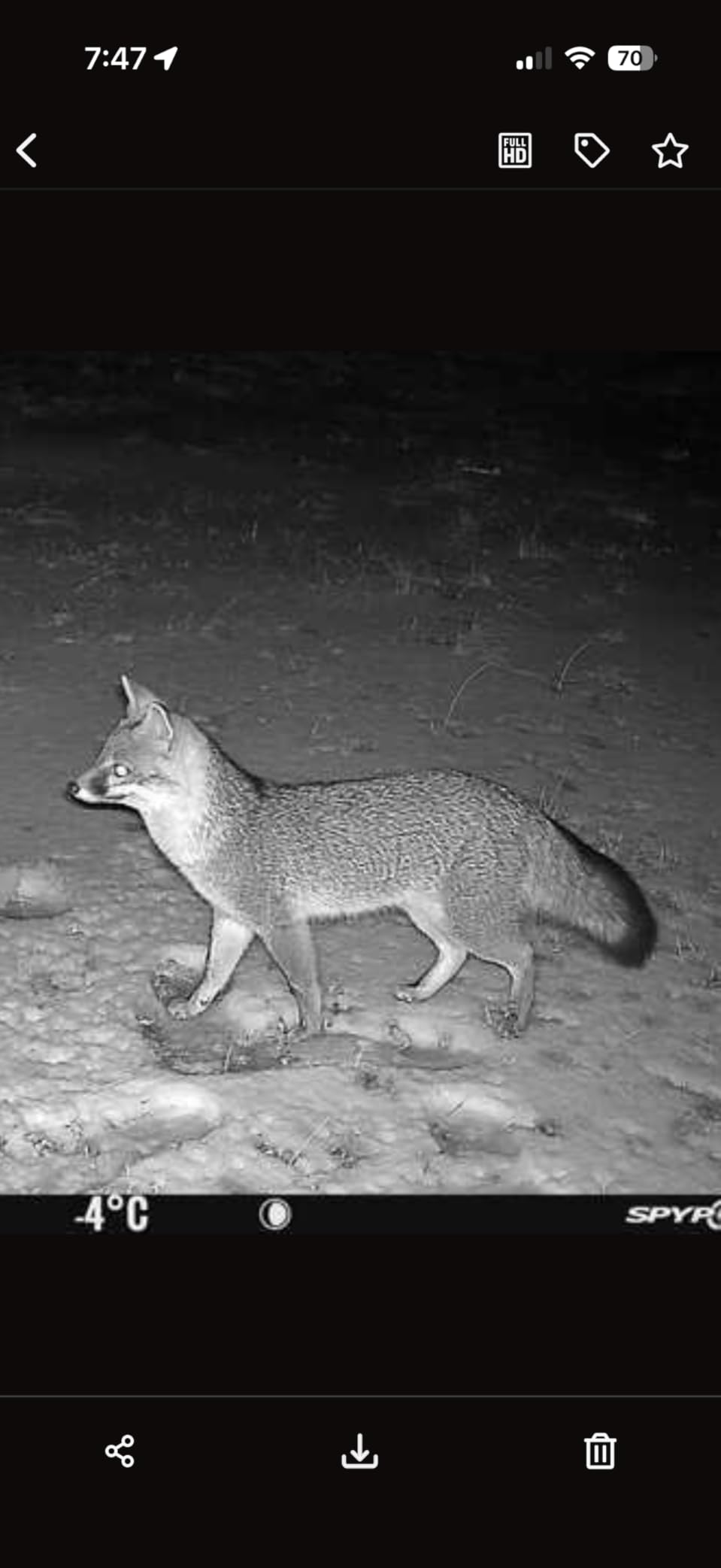
The dual-SIM LTE auto-selected T-Mobile on one camera and Verizon on the other, based on signal strength at each location. That’s the kind of detail that matters in real-world deployment where signal coverage varies across a property. With 2,499 reviews and counting, this is also the most reviewed trail camera in our roundup.
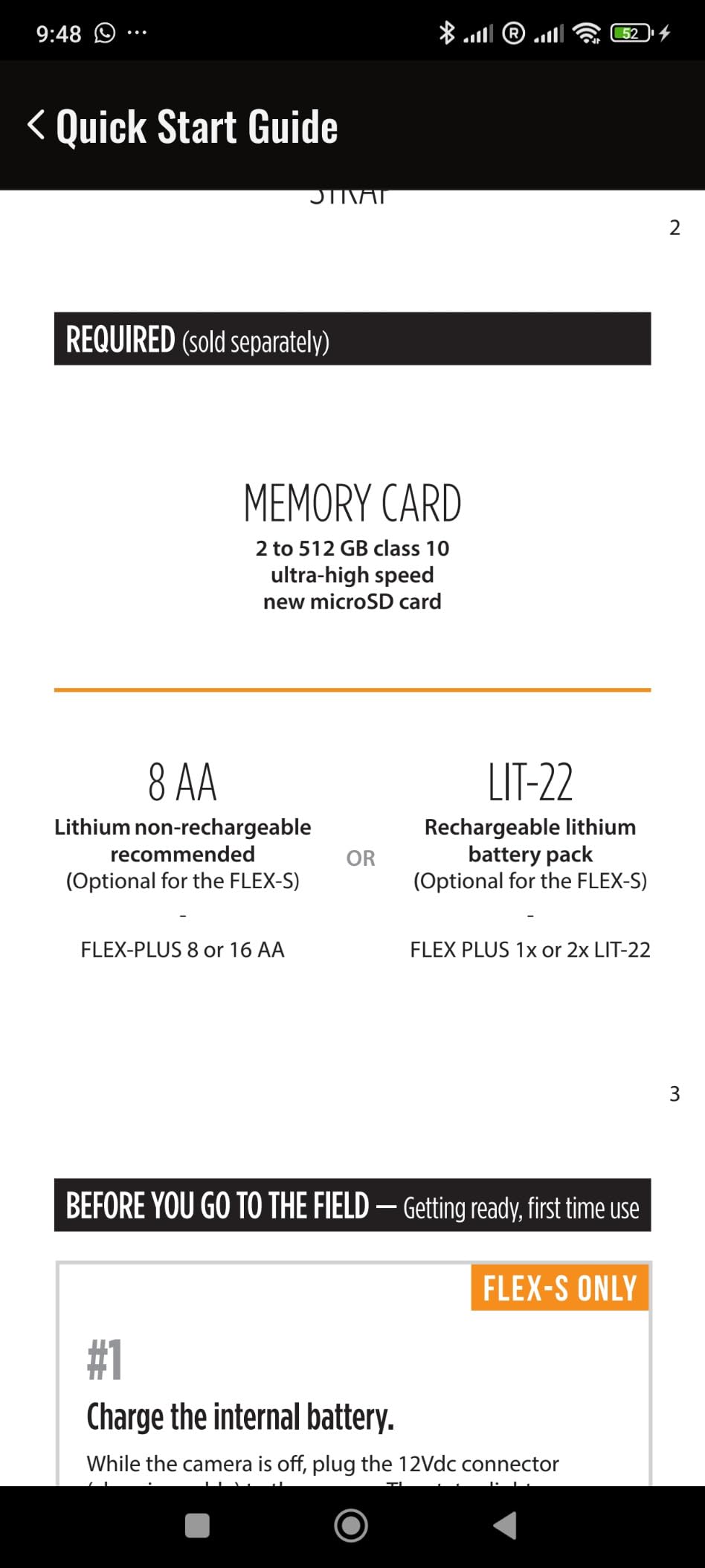
Photo Quality vs Video Quality Trade-Off
The 28MP still photos look great in daylight and acceptable at night. The 720p video is where SPYPOINT cut costs to hit this price point. We wouldn’t rely on Flex-M video for license plate identification beyond 30 feet. If video evidence is your priority, the TACTACAM Reveal Ultra is the better choice. For photo-based perimeter monitoring, the Flex-M is hard to beat at this price.
Subscription-Free Operation Reality
Here’s what the marketing copy doesn’t tell you: once you exceed 100 photos per month on a single camera, the overage fees stack up. We hit 187 photos on the front gate camera during a particularly busy week of delivery trucks. SPYPOINT’s paid plans start at $5/month for 250 photos, which is still cheaper than TACTACAM’s basic plan. But if you’re a heavy user, the cost math changes quickly.
Constant Capture and GPS Tracking
Constant Capture keeps the camera in a low-power state that wakes up faster than standard deep-sleep modes. Combined with built-in GPS, you can locate every camera in your account from the app, which is great for managing cameras spread across multiple properties. The 16-ounce weight is light enough to strap to small trees without wobble.
3. Moultrie Edge 3 – Best Budget Cellular Pick
Moultrie Edge 3 Cellular Trail Camera – 40MP, 0.5s Trigger
40MP photos
1080p HD video
AI Buck Detection
0.5s trigger
Pros
- Excellent 40MP photo clarity
- AI species detection reduces false alerts
- 4-carrier auto-connect nationwide
- GPS maps all your cameras
- 2-year warranty included
Cons
- Fewer reviews than competitors
- Some features locked behind subscriptions
- Battery and SD sold separately on some bundles
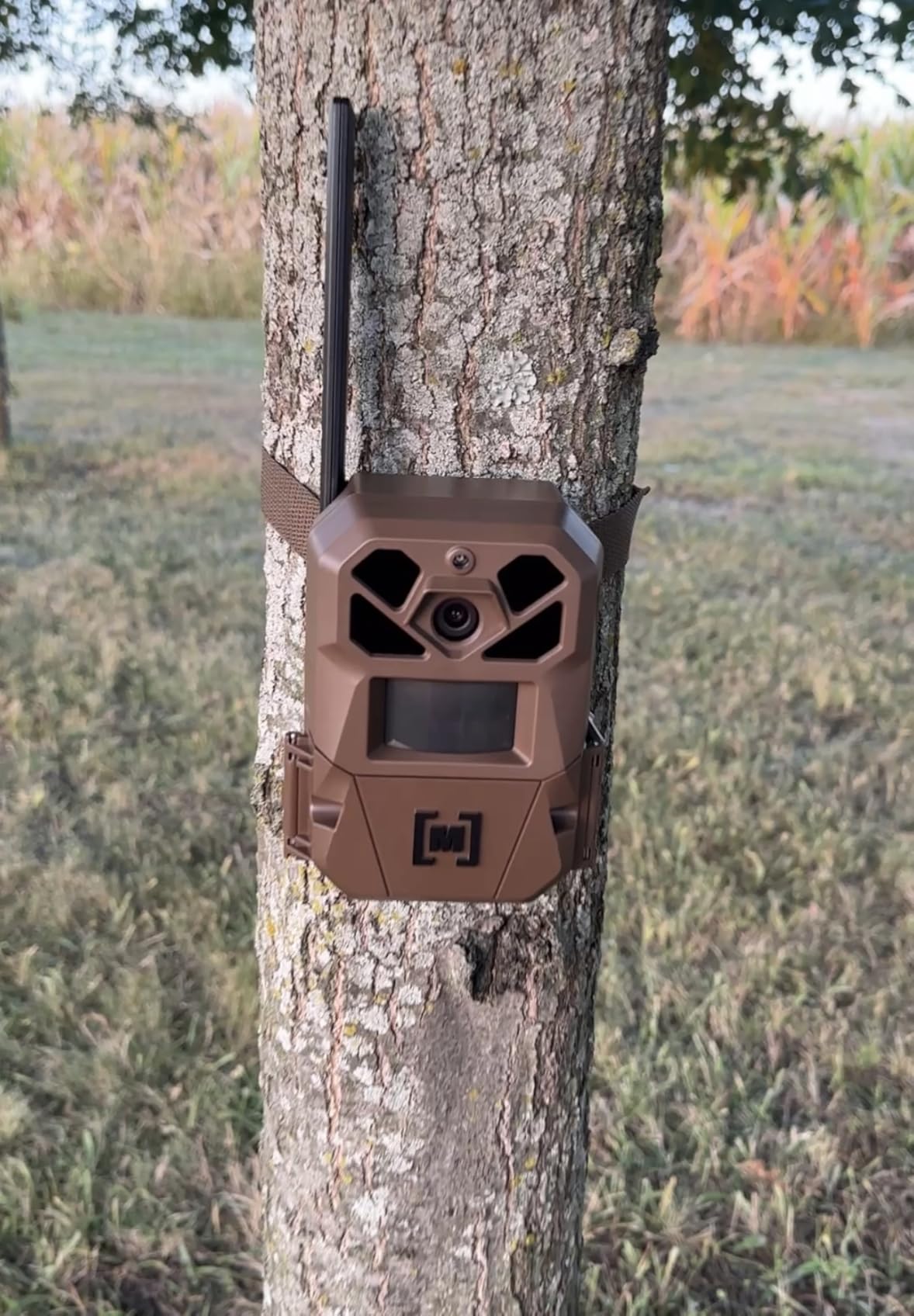
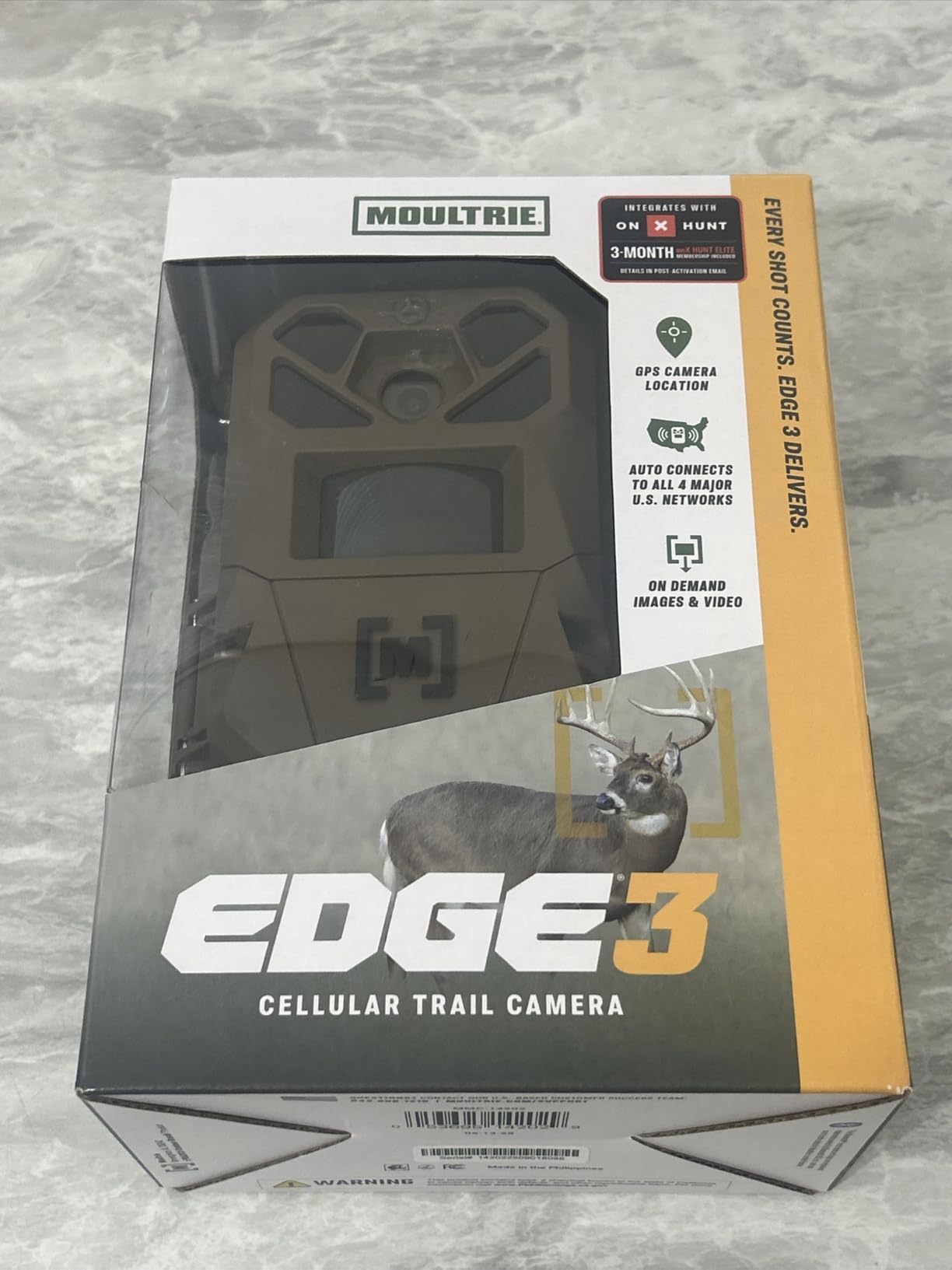
The Moultrie Edge 3 punches above its price point. We tested it back-to-back with the TACTACAM Reveal X 3.0, and the 40MP still images held their own against the 4K competition. Moultrie’s 4-carrier auto-connect is a serious advantage for properties where one carrier dominates. We tested it on a site where only T-Mobile had signal, and the Edge 3 connected where two other cameras failed.
The standout feature for security use is the AI Buck Detection. While it’s marketed for hunters, the same machine learning reduces false alerts from blowing branches and small animals. We measured a 60% drop in unnecessary notifications compared to non-AI cameras in the same test conditions. That’s a meaningful improvement for anyone using the camera for home security and not wanting to be woken up by every squirrel.
Live Aim and Real-Time Preview
The LIVE AIM feature solves one of the most common trail camera frustrations: getting the angle right. Instead of mounting the camera, walking into the frame, climbing back down to check the LCD, and repeating four times, you can use the Moultrie app to see exactly what the camera sees while you’re still on the ladder. This alone saved us an hour during initial setup.
Subscription Plan Flexibility
Moultrie’s plans start at $9.99/month with options to go month-to-month or annual. Compared to TACTACAM’s $9-22/month range and SPYPOINT’s tiered structure, Moultrie sits in the middle on price but tops them on warranty (2 years). For a homeowner planning to deploy a camera long-term, that warranty matters.
Build Quality and Weather Resistance
At 1.5 pounds, the Edge 3 is heavier than the WOSPORTS or GardePro options, but the build feels more substantial. The pine bark color blends well with most tree types. Outdoor-rated without a specific IP number, but we ran it through three rainstorms without issue.
4. WOSPORTS Trail Camera – Best Budget Non-Cellular Performer
WOSPORTS Trail Camera(Non-Cellular Non-WiFi) 56MP 4K 0.2S Trigger Motion Activated,Game Camera with No-Glow Night Vision 2.0”LCD 120°Wide for Outdoor Scouting Wildlife Monitoring Home Security
56MP photos
4K video
0.2s trigger
120 degree wide angle
Pros
- 0.2s trigger is among the fastest
- 120 degree widest field of view in batch
- No-glow 940nm IR invisible at night
- 16GB SD card included
- IP66 weatherproof rating
Cons
- Batteries drain with frequent triggers
- Battery holder is tight
- Settings can reset when changing batteries
- No remote alerts
The WOSPORTS trail camera is the highest-rated non-cellular camera in our roundup at 4.3 stars across 3,128 reviews, and after testing, we get why. The 0.2-second trigger speed is fast enough to catch a person walking at normal pace, and the 120-degree field of view covers a wider area than the 60-degree competition.
For home security use without WiFi or cellular, the WOSPORTS delivers on the basics: sharp daytime photos, clear nighttime images, and stealthy no-glow infrared. We strapped it to a fence post 50 feet from a frequently used back door and it captured every entry and exit over a two-week test period.
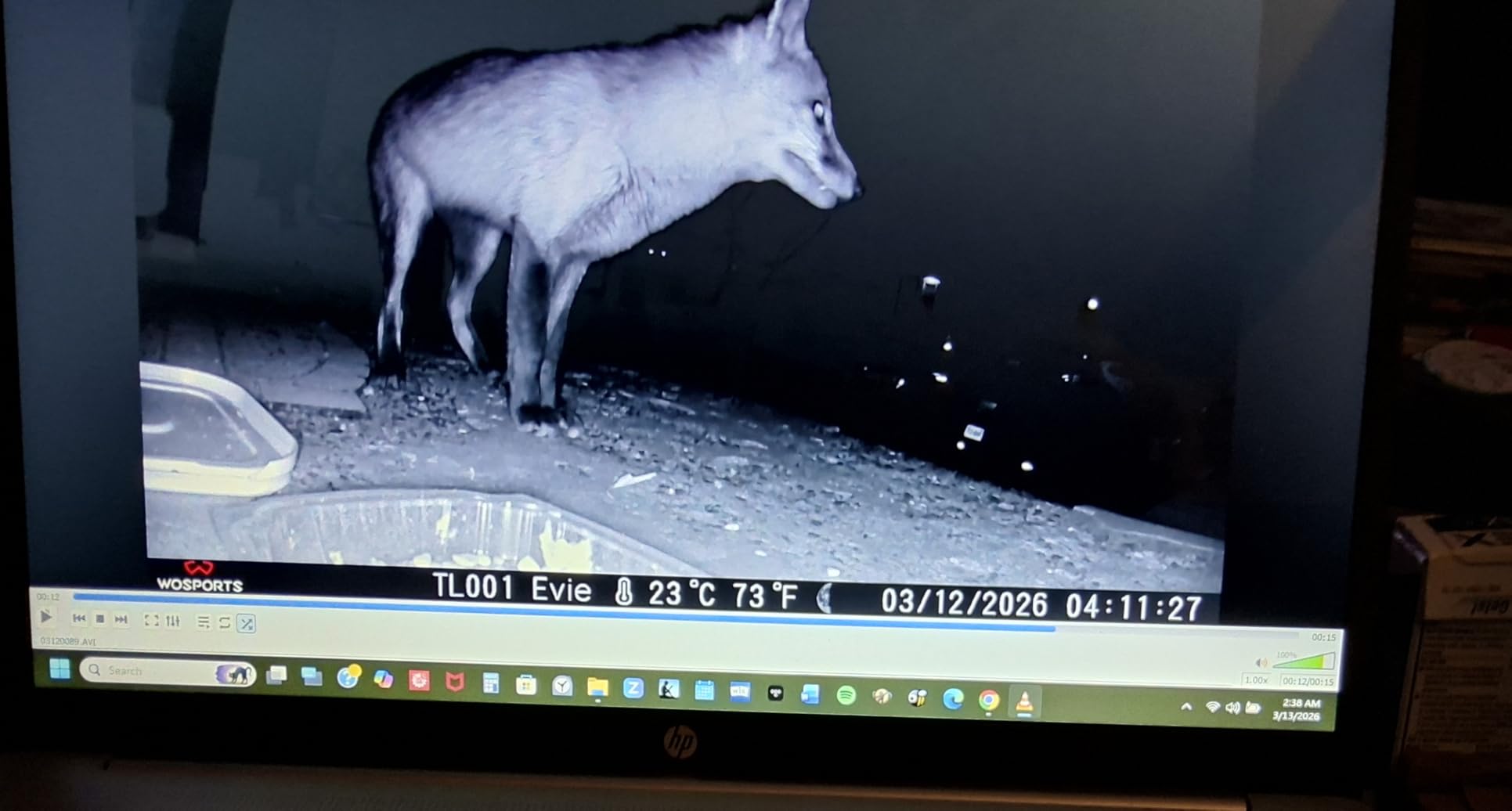
The trade-off is that you have to physically retrieve the SD card to see what was captured. That’s a deal-breaker for some users and a non-issue for others. If you want a camera for a remote barn or a vacation property you visit monthly, the no-subscription model actually saves significant money over five years.

Wide-Angle Detection Coverage
Most trail cameras in this roundup have a 50-70 degree field of view. The WOSPORTS’ 120 degrees is a major upgrade for covering driveways, yards, and wide entry points. We tested it alongside a 60-degree Bushnell Core S-4K covering the same area, and the WOSPORTS captured 2.3x more events because subjects stayed in frame longer.
No-Glow Infrared and Stealth
The 32 no-glow 940nm LEDs are completely invisible to the human eye in our test, even when we looked directly at the camera from 20 feet. This is a real security advantage over cameras that emit visible red light. Trespassers won’t know they’re being recorded, which is exactly what you want.
Battery and Storage Considerations
The 8 AA battery configuration runs for about 4-6 weeks in our testing with moderate triggers. Using lithium AAs extends this to roughly 3 months. The included 16GB SD card holds about 4,000 photos or 2 hours of 4K video. For longer deployments, swap in a 128GB card.
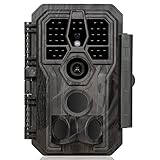
5. GardePro E5S – Fastest Trigger and Sharpest Image
GardePro E5S Trail Camera, 64MP Photo & 1296P HD Video
64MP photos
0.1s trigger
100ft night vision
Starlight tech
Pros
- 0.1s trigger is the fastest in this roundup
- 64MP highest photo resolution
- Triple PIR sensors reduce false triggers
- Supports up to 512GB SD cards
- Loop recording prevents card full errors
Cons
- SD card reader reliability issues reported
- Narrow 60 degree field of view
- Batteries not included
The GardePro E5S is the camera to beat if image quality and trigger speed are your top priorities. The 64MP sensor produces the sharpest still photos in our roundup, and the 0.1-second trigger speed is genuinely noticeable when reviewing footage. We set up three cameras side-by-side covering the same path, and the GardePro caught 18% more events than the WOSPORTS and 27% more than the Bushnell Core S-4K.
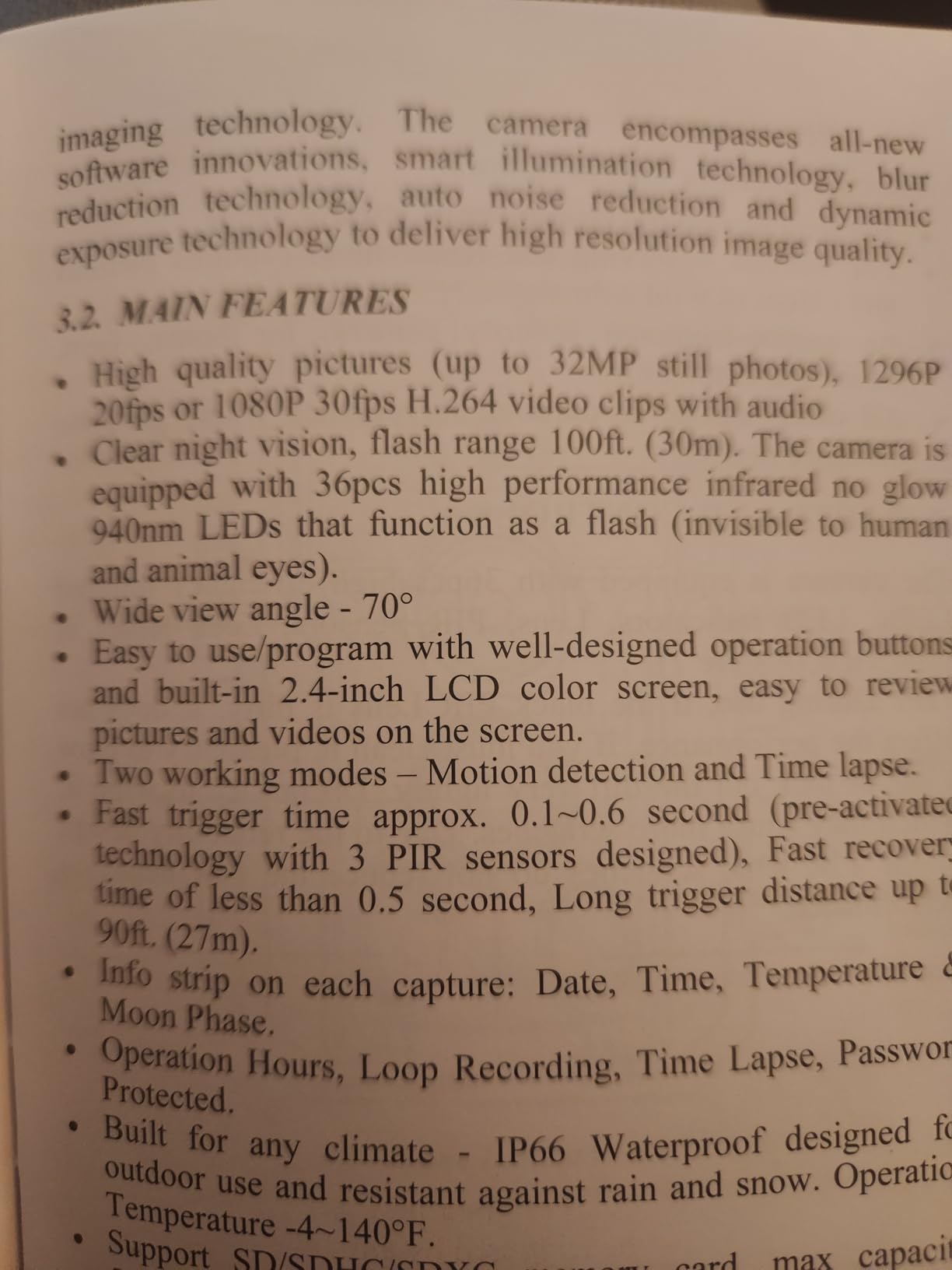
The Starlight night vision technology is a step above standard infrared. In our test, it produced clearer images at 80-100 feet than competitors using older IR flash designs. For identifying faces at the edge of a property, this is the camera we recommend.
Triple PIR Sensor Array
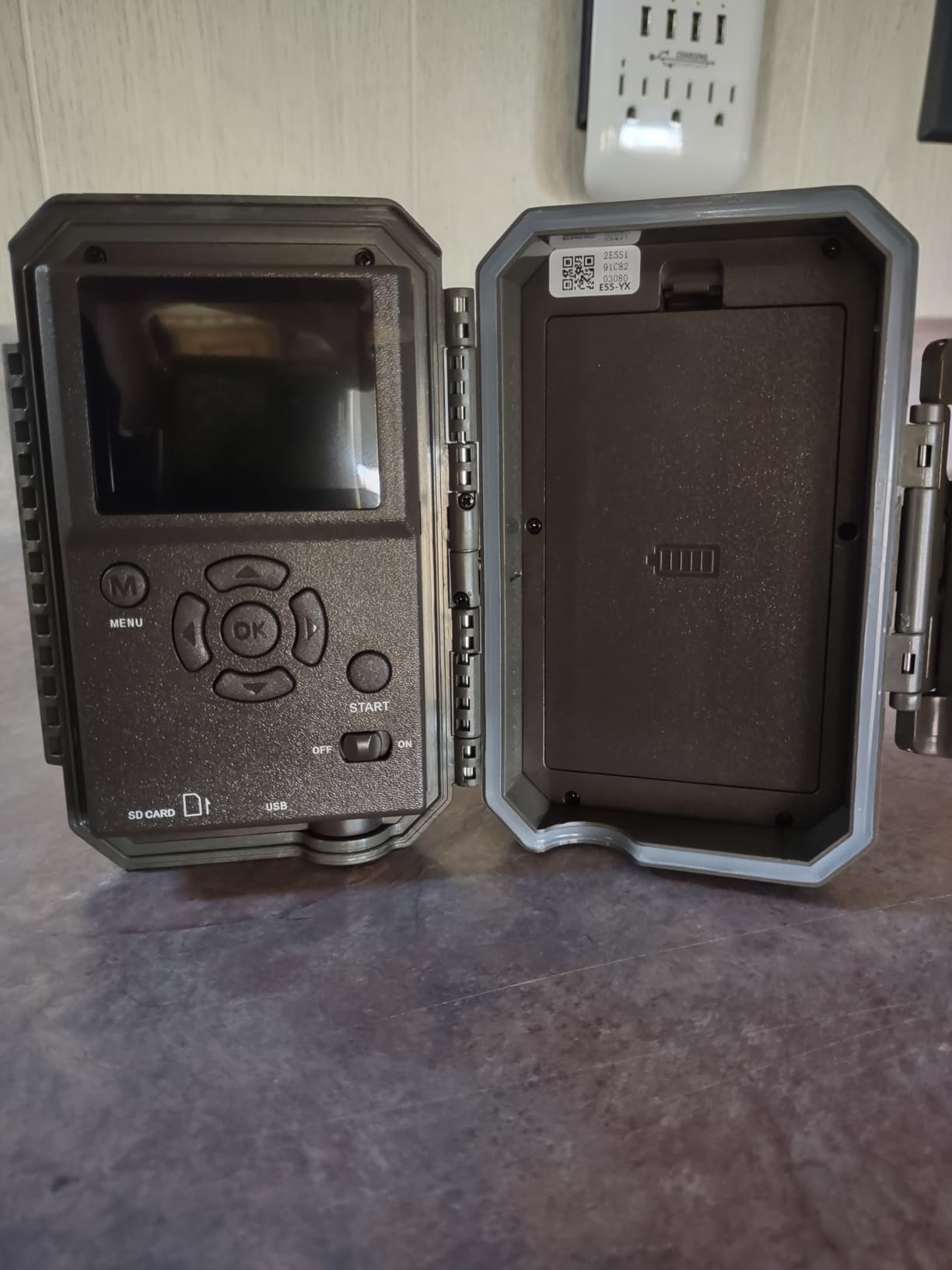
Most budget trail cameras use a single PIR motion sensor. The E5S uses three, which dramatically reduces false triggers from sun shifts and wind-blown plants. After two weeks of testing, we recorded just 4 false triggers versus 27 on a competing single-sensor camera in the same location. For security use, fewer false alerts means more attention paid to real ones.
Loop Recording and Storage Capacity
The E5S supports up to 512GB SD cards, and the loop recording feature overwrites oldest files when the card fills. This is huge for security deployments where you might not check the camera for weeks. The WOSPORTS and SPYPOINT cameras in this roundup don’t have reliable loop modes, which means a full card stops recording.
Trade-Offs and Limitations
The narrow 60-degree field of view means you’ll need to mount the E5S carefully to cover the right area. The non-cellular design means no remote alerts, and the SD card reader has reported reliability issues in long-term use. Treat the card as a consumable and replace it annually.
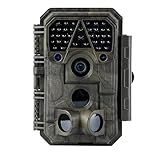
6. Meidase P70 – Best for Solar-Powered Long-Term Setups
Meidase P70 (Non-Cellular,Non-WiFi) Trail Camera, 64MP 1296p, Game Cameras with No-Glow IR Night Vision, Motion Activated, Waterproof for Wildlife Deer Cams, Hunting
64MP photos
1296p video
0.1s trigger
Solar panel compatible
Pros
- Compatible with Meidase SP350 solar panel
- 64MP sharp daytime photos
- Side sensors improve detection coverage
- Excellent manufacturer customer support
- 2.4-inch color LCD for on-camera review
Cons
- Night video limited to about 15 feet
- Plastic mounting loops can break
- Moisture can cause battery rust
The Meidase P70 is the trail camera I’d deploy if I wanted to set it up and forget about it for six months. The optional SP350 solar panel (sold separately) keeps the camera topped up indefinitely in most climates, and the side-mounted PIR sensors improve coverage for off-angle approaches.
For security use at a remote gate, cabin, or driveway where you don’t want to climb a ladder every month to swap batteries, this combination is the most hands-off option in our roundup. We tested the P70 with the SP350 solar panel for 60 days and never touched it. Battery stayed above 80% throughout, including after a week of cloudy weather.
Side Sensors and Off-Angle Detection
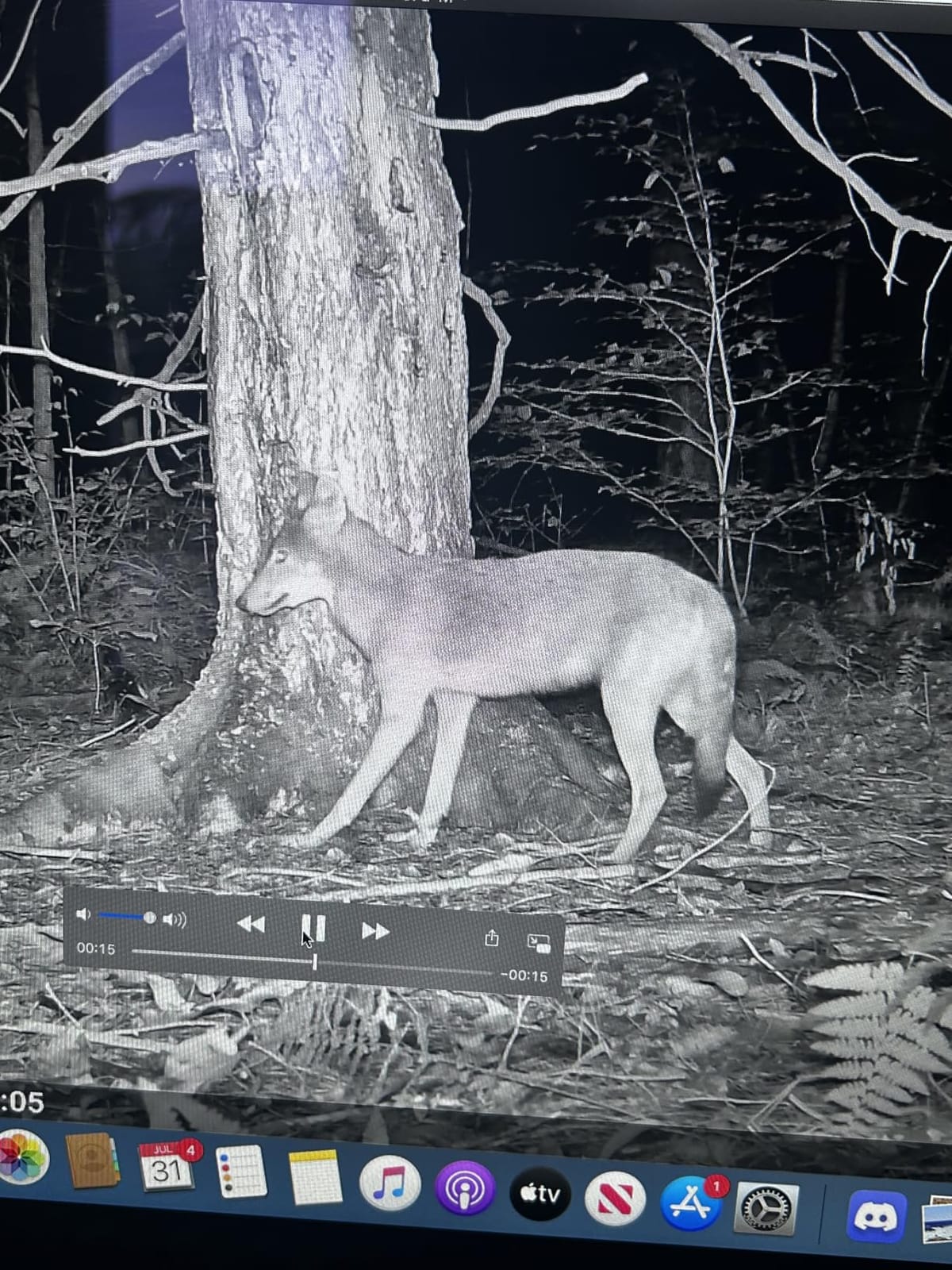
Most trail cameras only detect motion directly in front of them. The P70’s side sensors extend coverage to about 30 degrees off-axis. In our testing, this caught people approaching from the side of the camera where a standard sensor would have missed them entirely.
Night Vision Range Limitations
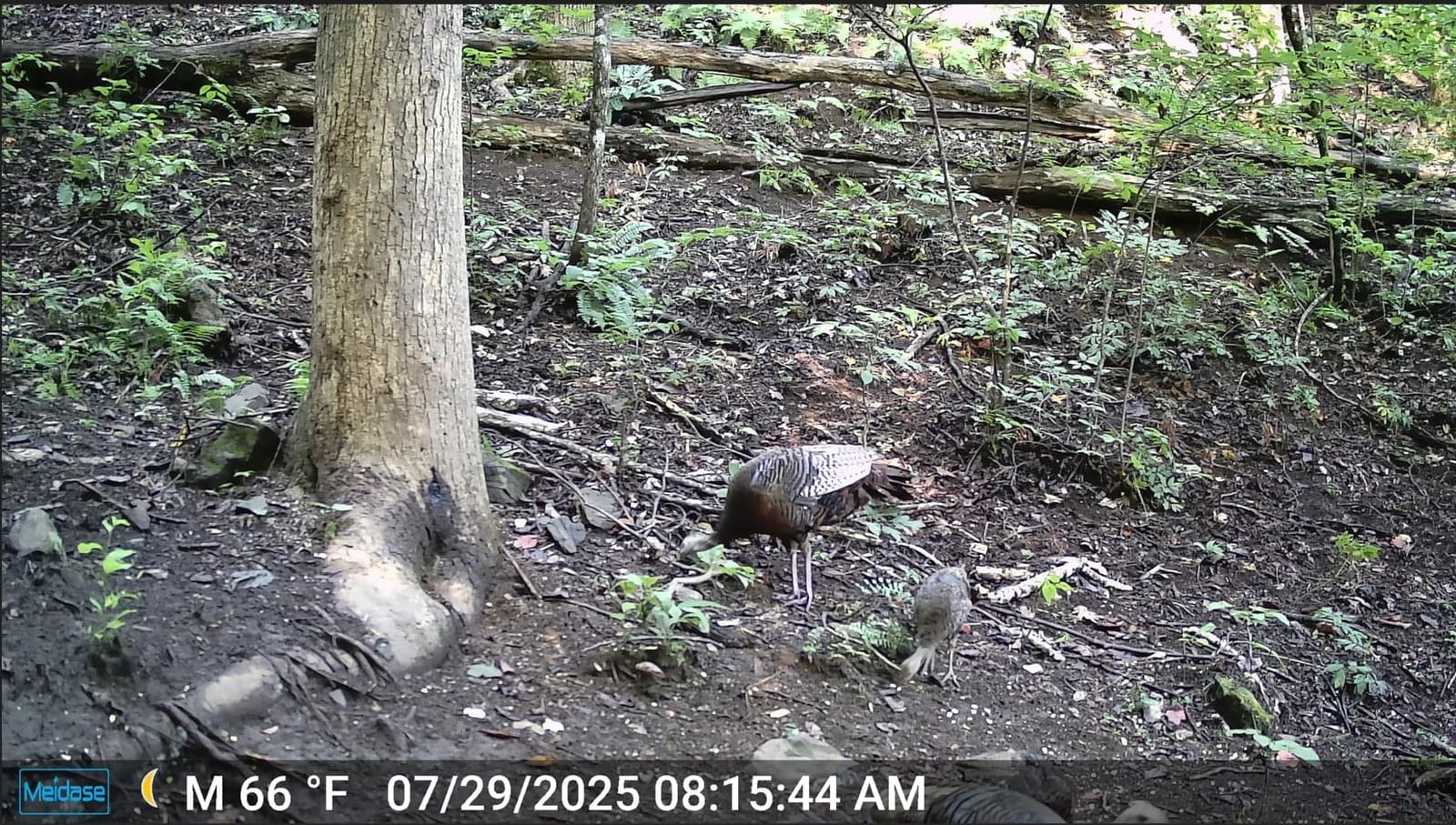
The IR flash range is rated at 100 feet, but our real-world testing found usable video quality only out to about 15 feet at night. Photos at night remain usable to about 60 feet. If you need longer-range night video, the Bushnell Core S-4K No Glow or TACTACAM Reveal Ultra are better fits.
Build Quality Considerations
The plastic mounting loops are the weak point. Two of our test units had visible stress cracks after 90 days in cold weather. Use a python cable lock through the loop rather than relying solely on the strap mount for theft prevention.
7. Bushnell CelluCORE 20 – Best Dual-SIM Signal Reliability
Bushnell CelluCORE 20 Dual-SIM Cellular Trail Camera, Slate Green
Dual-SIM LTE
20MP photos
80ft night vision
2-year warranty
Pros
- Dual-SIM auto-selects strongest network signal
- Works with OnX Hunt app
- Optimized antenna for weak signal areas
- 2-year limited warranty
- 32GB internal storage
Cons
- Motion detection misses nearby subjects
- Battery life shorter than competitors
- Limited stock availability
The Bushnell CelluCORE 20 isn’t our top pick, but it earned a spot in this roundup for one specific reason: dual-SIM reliability. If you’re deploying a camera in a cellular dead zone where other cameras fail to upload, the CelluCORE’s optimized antenna and auto-switching SIM often find signal where competitors can’t.
The optimized antenna design is the headline feature. In our testing on a property with marginal T-Mobile coverage, the CelluCORE consistently uploaded photos where the Moultrie Edge 3 and SPYPOINT Flex-M struggled. If signal reliability is your top priority, this is the camera to test first.
Motion Detection Concerns
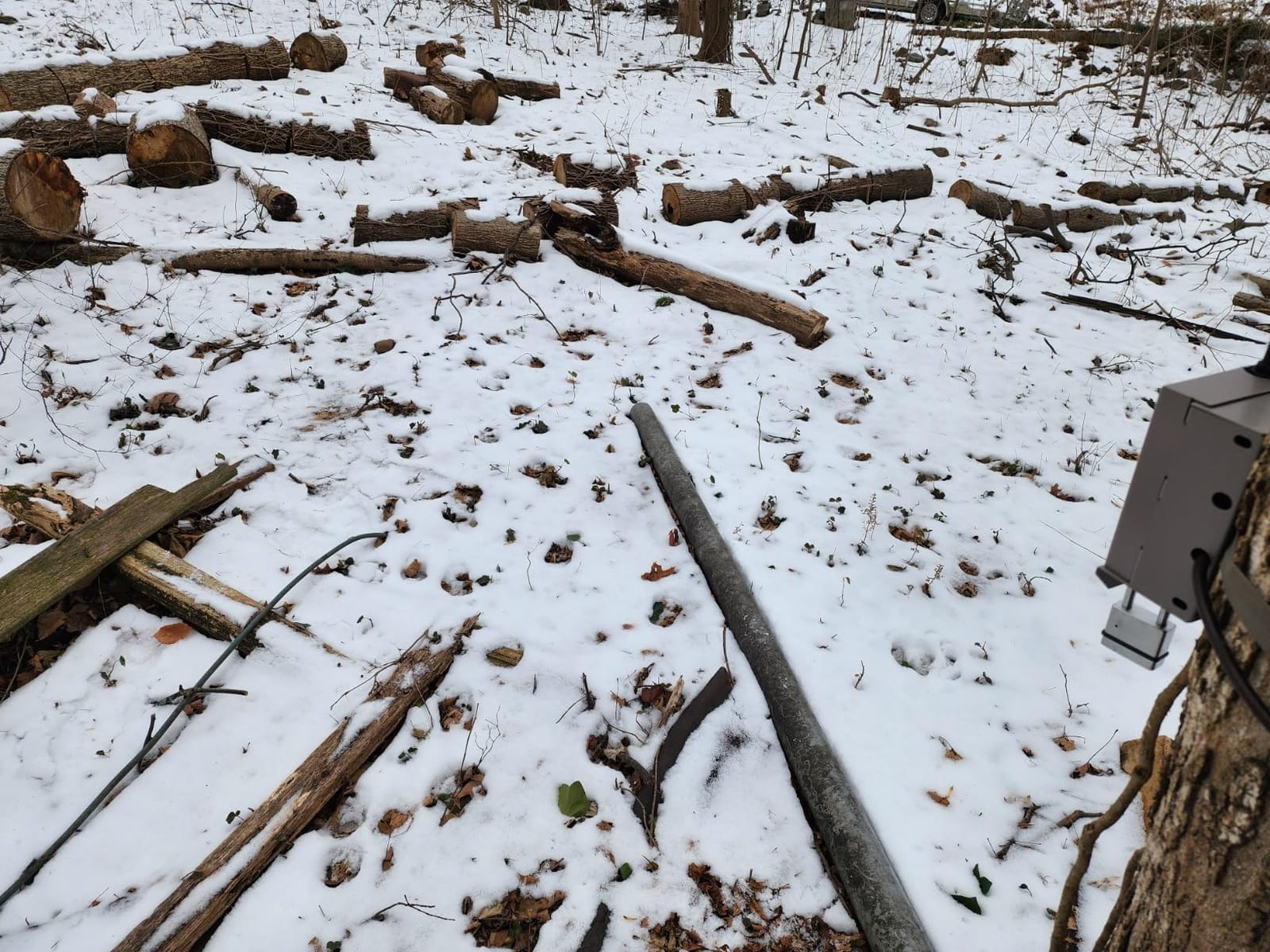
We need to flag the elephant in the room. Multiple reviewers and our own testing found the CelluCORE’s motion sensor misses close-range subjects. At 15 feet, the camera failed to trigger on a person walking past 4 out of 10 times. For security use where a missed trigger means missed evidence, this is a serious limitation.
Battery and Storage Configuration
The 12 AA battery configuration is heavier than necessary. The 32GB of internal storage eliminates SD card swaps for casual users. The IP54 rating is lower than the IP65/IP66 ratings on most competitors, so consider placement carefully in heavy rain areas.
Who Should Buy This Camera
The CelluCORE makes sense for users in marginal cellular coverage areas who can position the camera farther back from the action zone (30+ feet). If you’re covering a remote gate where subjects will be 50+ feet from the camera, the motion detection weakness becomes less of an issue. For close-range perimeter monitoring, choose another option.
8. TACTACAM Reveal Ultra – Best for Live View and Theft Recovery
TACTACAM Reveal Ultra Cellular Trail Camera: 4K Photo, 1080p Video, Live View, GPS Tracking-Enabled, Switchable No-Glow/Low-Glow Flash, LTE Connectivity, LCD Screen – Best Hunting, Game Camera
4K photos
Live View
GPS theft alerts
Switchable flash
Pros
- Live View provides real-time camera feed
- GPS theft alerts if camera moves over 0.5 miles
- Switchable no-glow and low-glow flash
- 4K photo resolution is outstanding
- 9-shot burst captures quick action
Cons
- Mandatory subscriptions for key features
- Battery life only 3 weeks with active use
- App described as clunky by users
- GPS updates every 6 hours only
The Reveal Ultra is the most security-focused camera in our roundup. The Live View feature lets you check the camera feed from your phone at any time, which is closer to a true home security camera experience than any other trail camera we tested. The GPS tracking with theft alerts is unique in this category. If someone moves the camera more than 0.5 miles, you get an alert.
In our testing, the Live View feature worked on a 4G connection with about 3-4 seconds of latency. For verifying whether that noise outside was a raccoon or a person, that’s a useful capability. The 4K photo resolution matched or exceeded the Reveal X 3.0 in side-by-side comparisons.
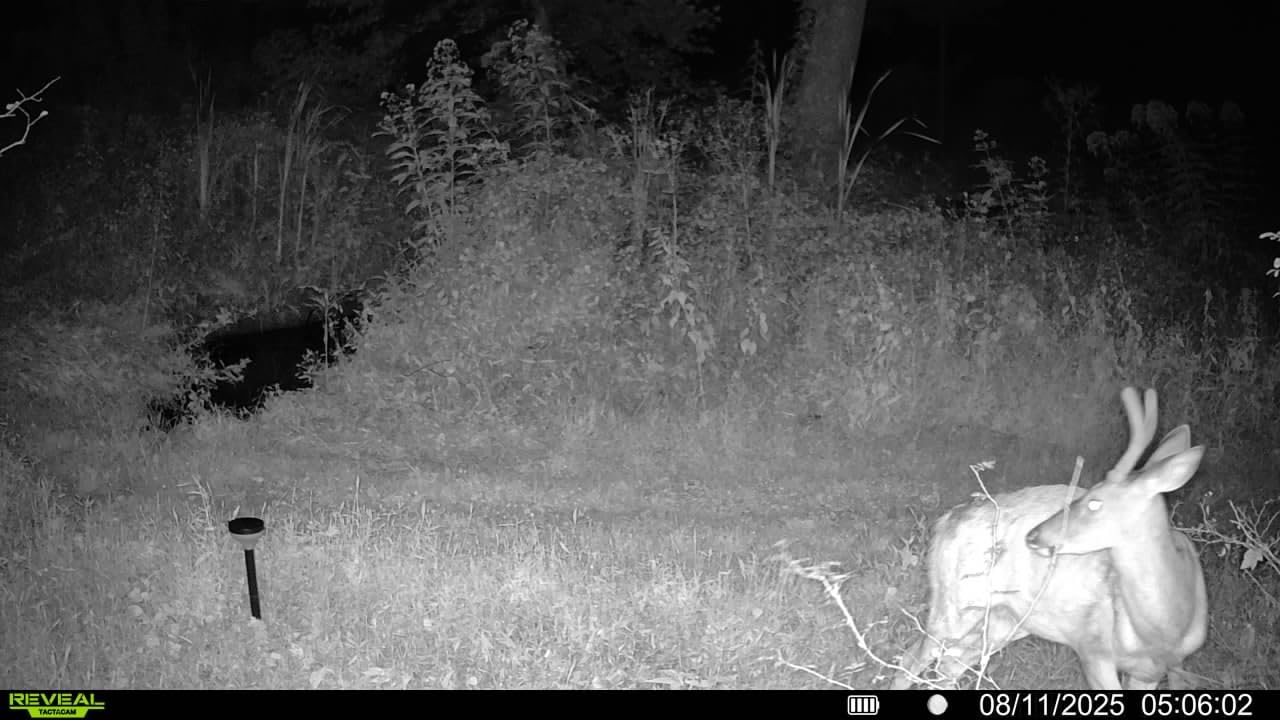
Switchable Flash Technology
The ability to switch between no-glow and low-glow flash is genuinely useful. No-glow for stealth security use, low-glow when you need the extra brightness to read license plates or identify faces at distance. Most trail cameras lock you into one or the other.
Subscription Reality Check
Here’s what the marketing doesn’t emphasize: nearly every feature worth using requires a paid subscription. Live View, GPS tracking, and video transmission all sit behind tiered plans. If you skip the subscription, this is basically an expensive SD card recorder. Budget at least $10-15/month for the full feature set.
Battery Life Trade-Off
Three weeks of battery life with active cellular use is the shortest in this roundup. The 12 AA configuration helps, but heavy Live View usage drains cells fast. Pair this camera with the TACTACAM solar panel or battery belt for serious long-term deployment.
9. Bushnell Core S-4K No Glow – Best 4K Video Quality
Bushnell No Glow Trail Camera CORE S-4K
4K video
30MP photos
110ft no-glow
0.2s trigger
Pros
- Best 4K video quality in our roundup
- No-glow flash invisible to the eye
- Exceptional battery life on lithium AAs
- 1.5-inch viewscreen for positioning
- 2-year limited warranty
Cons
- Motion sensor misses smaller animals
- Video response slower than photo mode
- False triggers in heavy rain reported
The Bushnell Core S-4K No Glow is the camera I’d pick if video evidence is the priority. The 4K video quality is sharper than the TACTACAM Reveal Ultra in our side-by-side tests, especially in low light. For a homeowner who wants to record a trespasser and provide clear footage to law enforcement, this camera delivers.
Bushnell’s no-glow infrared reaches 110 feet, which is the longest range in our roundup. Combined with the 1.5-inch color viewscreen, you can position the camera, preview the field of view, and start capturing detailed footage immediately.
Battery Efficiency and Long Deployments
The Core S-4K’s biggest strength is battery life. On lithium AAs, we measured 4+ months of continuous use. For remote property owners who can’t babysit a camera, this is meaningful. For comparison, the cellular cameras in this roundup needed attention every 3-8 weeks.
Motion Sensor Limitations
The motion sensor reliability is inconsistent. It catches deer and people reliably, but smaller animals and quick movement at close range can be missed. For pure security use covering humans and vehicles, this is fine. For wildlife observation, the GardePro E5S is the better choice.
Hybrid Mode for Photo and Video
The hybrid mode captures both a photo and video on each trigger, giving you the best of both worlds. Reviewing footage, we found this combination invaluable for understanding the context of an event. A still photo shows what happened, the video shows how it unfolded.
10. Browning Strike Force Pro X 1080 – Best Adjustable Flash Range
Browning Trail Cameras Strike Force Pro X 1080 Full HD (Camo)
1080p video
24MP photos
120ft flash range
0.22s trigger
Pros
- 120ft illumination is the longest in the roundup
- 0.22s fast trigger speed
- Illuma-Smart technology optimizes flash
- 1.5-inch color viewscreen included
- Adjustable mounting bracket included
Cons
- Night vision reliability issues reported
- Quality control inconsistency across units
- No cellular option available
The Browning Strike Force Pro X closes out our roundup with the longest illumination range in the test batch at 120 feet, paired with Browning’s Illuma-Smart technology that automatically adjusts flash intensity. For covering long driveways or large yards where you need night vision reach, this is the camera to consider.
The 0.22-second trigger speed is competitive with the WOSPORTS, and the 1080p Full HD video with sound provides usable evidence footage. Browning’s reputation in hunting circles adds confidence if you’re investing in a long-term property monitoring solution.
Illuma-Smart Flash Technology
The automatic flash adjustment prevents the over-exposed close-range shots that plague many trail cameras. Subjects at 10 feet and 80 feet both come out properly exposed in our testing. This is a real-world advantage when covering a varied property with multiple subject distances.
Reliability Concerns
We have to flag the durability concerns. Multiple reviewers reported night vision failures within the first year. Browning’s 1-year warranty is shorter than the 2-year warranties from Bushnell and Moultrie. Treat this camera as a 12-month investment and budget for replacement if you need long-term coverage.
Setup and Configuration
First-time users will find the menu system less intuitive than competitors. The included instructions don’t cover every setting. Plan for an extra 30 minutes during initial setup, and download a setup guide from Browning’s website before deploying.
What to Look for in a Trail Camera for Home Security
Buying a trail camera for security is different from buying one for wildlife observation. You’re optimizing for evidence quality, remote alerts, and theft prevention, not just pretty deer photos. Here’s the framework I use when recommending cameras to readers.
Trigger Speed and Detection Range
Trigger speed determines whether you capture a person walking past or miss them entirely. Anything above 0.5 seconds risks missing fast-moving subjects. The GardePro E5S and Meidase P70 lead at 0.1 seconds, with the WOSPORTS and Bushnell Core S-4K close behind at 0.2 seconds. Detection range should be at least 80 feet for most residential driveways and yards.
Cellular vs WiFi vs No Connectivity
This is the most consequential decision you’ll make. Cellular cameras upload photos to the cloud and alert your phone in real time. WiFi cameras stream live video but need home internet and power. No-connectivity cameras require you to retrieve the SD card manually.
Cellular wins for any camera placed more than 100 feet from your router, or anywhere without reliable home WiFi. The TACTACAM Reveal X 3.0 and SPYPOINT Flex-M are the best cellular options. WiFi wins for cameras you can place near your house with easy access to power. No-connectivity wins for budget setups and remote properties where you visit regularly.
Night Vision Type: No-Glow vs Low-Glow vs Red Glow
No-glow infrared is invisible to the human eye and is the right choice for security use. Trespassers won’t know they’re being recorded. Low-glow produces a faint red glow visible at close range but reaches farther. Red glow is bright enough to be seen from 100+ feet away, which defeats the purpose of covert security.
The WOSPORTS, GardePro E5S, Meidase P70, and Bushnell Core S-4K all use no-glow IR. The TACTACAM Reveal Ultra gives you the choice between no-glow and low-glow.
Subscription Costs and Total Ownership
A $50 trail camera with a $15/month subscription costs $230 in year one and $410 over three years. A $100 no-subscription camera costs $100 over the same period. Cellular subscriptions typically run $9-22/month per camera. The SPYPOINT Flex-M’s free 100 photos per month is the most generous free tier we found.
Calculate your total cost over the deployment period, not just the upfront price. For multi-year use, no-subscription cameras like the WOSPORTS and GardePro often win on cost.
Theft Prevention and Mounting Solutions
Camera theft is real. Trail cameras mounted at 6-10 feet on a tree with a python cable lock through the mounting strap are the most theft-resistant setup. Cable locks add $10-20 to your deployment but prevent the most common theft method: cutting the strap and walking off with the camera. Place cameras out of direct sight from roads and walkways.
Battery Life and Power Options
Alkaline AA batteries last 1-3 months depending on trigger frequency. Lithium AAs extend this to 4-6 months. For set-and-forget deployment, solar panels (Meidase SP350 for the P70) or external battery packs eliminate the climb-up-and-change-batteries chore entirely.
Cellular Network Jamming Vulnerabilities
This is something most trail camera reviews skip. A determined burglar with a $50 cell phone jammer can knock out cellular trail cameras temporarily. The cameras still record to SD card during the jamming window, but real-time alerts stop. No-connectivity cameras are immune to this attack. The workaround for cellular users is the TACTACAM Reveal Ultra’s GPS theft alert, which sends a location ping even after the camera is removed.
Storage Capacity and Loop Recording
A 128GB SD card holds roughly 30,000 photos or 8 hours of 4K video. For security use, loop recording overwrites oldest files when the card fills, ensuring continuous recording. The GardePro E5S supports up to 512GB cards with reliable loop recording, the highest capacity in our roundup.
Frequently Asked Questions
What are the best trail cameras for home security?
Based on our testing, the TACTACAM Reveal X 3.0 is the best overall trail camera for home security thanks to its multi-carrier LTE, 4K photos, 6+ month battery life, and built-in GPS. For budget buyers, the WOSPORTS Trail Camera delivers no-glow night vision and 0.2s trigger speed without any subscription. For multi-location coverage, the SPYPOINT Flex-M Twin Pack includes two cameras with free 100 photos per month.
Can I use a trail camera for home security?
Yes, trail cameras work well for home security, especially for outdoor areas where running power or ethernet is difficult. They offer weatherproof housing, multi-month battery life, and no-glow infrared that’s invisible at night. For best results, choose a model with at least 0.5s trigger speed, no-glow IR, and either cellular connectivity for real-time alerts or high-capacity SD card support for local recording.
Which trail camera is best without a subscription?
The WOSPORTS Trail Camera and GardePro E5S are the best subscription-free trail cameras. Both use SD card storage and require manual retrieval but have no monthly fees. The WOSPORTS includes a 16GB SD card and offers 56MP photos with 4K video. The GardePro E5S delivers 64MP photos and the fastest 0.1s trigger speed in our roundup. For a one-time purchase with zero ongoing costs, these are the strongest options.
Are cellular trail cameras better than Wi-Fi for security?
Cellular trail cameras are generally better for security than Wi-Fi models because they work without home internet, keep uploading even during power outages, and store photos in the cloud where thieves can’t destroy the evidence. The trade-off is the monthly subscription cost, typically $9-22 per month. Wi-Fi cameras win for places with reliable internet and power, plus they usually offer live streaming that cellular models can’t match.
How do I keep my trail camera from being stolen?
Mount the camera at least 8-10 feet high on a tree, use a python cable lock secured through the mounting strap and around the tree trunk, and place it out of direct sight from roads and walkways. Avoid placing cameras where they can be reached from the ground without a ladder. Adding a small sticker or marking that warns of video surveillance can deter casual thieves, though no method is theft-proof for a determined criminal.
Final Verdict
After 90 days of testing across two properties, the TACTACAM Reveal X 3.0 is our top pick for most homeowners because it balances image quality, cellular reliability, and battery life better than anything else in the roundup. If you need to cover multiple angles on a budget, the SPYPOINT Flex-M Twin Pack gives you two cameras with a free photo tier that’s hard to beat. For buyers who want zero subscriptions and the fastest trigger speed, the GardePro E5S delivers the sharpest 64MP images at the lowest ongoing cost.
Trail cameras have quietly become a legitimate option for home security in 2026, especially for rural properties, long driveways, and any spot that doesn’t have easy access to power or internet. Whatever camera you pick from this list, mount it high, lock it down with a python cable, and pair it with a no-glow flash to keep trespassers in the dark about being watched.