
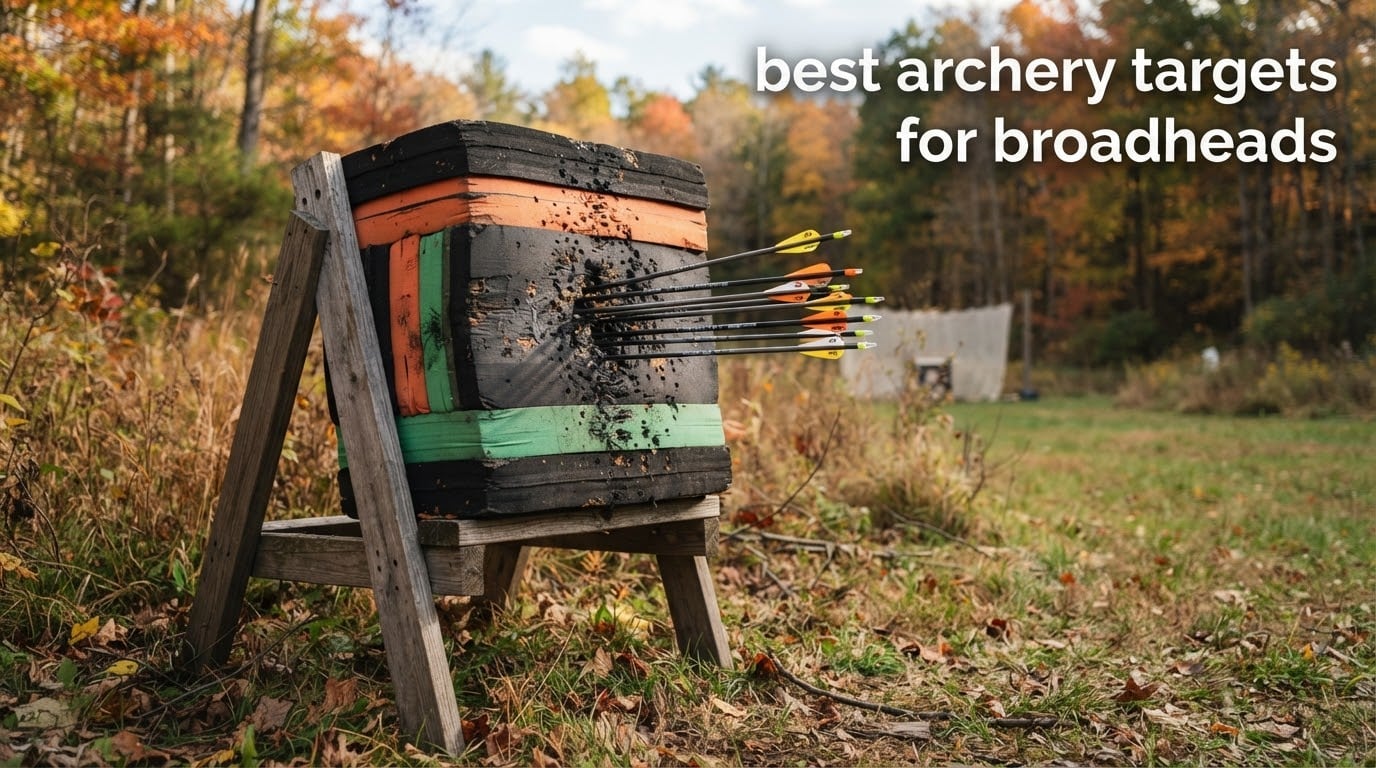
The best archery targets for broadheads are the ones built from solid self-healing foam rather than bonded layers, because a cutting tip slices bonded sheets apart and the shredded foam falls out. Most general target lists recommend field-point products that shred in a single season of broadhead practice, so we judged all ten picks below on one thing first: how they handle a cutting tip. I have shot fixed blades and mechanicals into every construction type we cover here, and the forums agree with the pattern that kept showing up in the reviews: layered foam fails early, solid foam lasts, and face count decides how long a target stays usable.
That framing matters more than any spec sheet. A broadhead cuts roughly six times wider than a field point, so the wound in the foam is wider and deeper than a target archery pack ever prepares for. When you sight in your hunting setup at 30 yards with the broadheads you actually hunt with, you want a core that closes around the blade instead of a face that falls apart.
We also picked these with the segments in mind. If you shoot a crossbow above 400 fps, skip to the speed ratings. If you are hauling a target into a treestand or a hunting camp, the portable options matter more than face count. If you just want something that works, the top three below are the ones we would buy first.
While you are dialing in your hunting setup, it also helps to check your optics from the same spot. Our picks for glassing a 3D target at distance are in the roundup on the best spotting scopes for target shooting.
What Makes a Target Broadhead-Rated?
A broadhead-rated target is one whose core material is solid, self-healing foam designed to absorb repeated cuts from fixed-blade or mechanical broadheads without the layers separating or the arrow passing through.
Solid self-healing foam compresses around the blades as the arrow enters and closes the wound again when you pull the shaft out. Layered foam targets fail differently. A fixed blade slices the bonded sheets apart, and the shredded layers fall out, leaving a soft spot that eventually passes arrows through. That single failure mode explains most of the complaints in the reviews below.
Bag targets are worth calling out too. They are the most comfortable target to shoot and the easiest to pull arrows from, and they are the wrong answer for this question entirely. A fixed blade will shred the fiber and leave a hole you can see daylight through, so a bag is a field-point product no matter what the listing claims.
Three other signals tell you whether a target will hold up: the published speed rating in feet per second, whether the arrow comes out by hand or needs a puller, and how many independent shooting faces you have. Face count is the quiet hero. A target with two faces dies when one face dies, while an eighteen-sided cube just rotates.
Our Top 3 Broadhead Targets for 2026

Black Hole 4-Sided Target
- Friction layers stop arrows without force
- Open-face sides built for broadheads
- Lightweight with carry handle
- Stops arrows up to 300 FPS

Field Logic Block 6×6
- Six shootable faces with aiming points
- Layers anchored to interior walls
- Rated to stop arrows up to 400 FPS
- Built-in carry handle

Rinehart 18-1 Target
- Eighteen independent shooting faces
- Broadhead capable and rated to 500 FPS
- Crossbow approved
- Self-healing foam holds its shape
Comparing Ten Broadhead-Capable Targets in 2026
| Product | Specs | Action |
|---|---|---|
| Black Hole 4-Sided Archery Target |
|
Check Latest Price |
| Block 6×6 Poly Fusion 18x18x16 |
|
Check Latest Price |
 BLOCK Classic 18 x 18 x 13.5 BLOCK Classic 18 x 18 x 13.5 |
|
Check Latest Price |
 Morrell Yellow Jacket Dual Threat Morrell Yellow Jacket Dual Threat |
|
Check Latest Price |
| Rinehart 18-1 Target |
|
Check Latest Price |
 Morrell High Roller 13 Inch Cube Morrell High Roller 13 Inch Cube |
|
Check Latest Price |
 Power-Stop High-Density Block 19 Inch Power-Stop High-Density Block 19 Inch |
|
Check Latest Price |
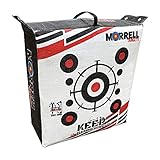 Morrell Vital Signs Combo 2 Morrell Vital Signs Combo 2 |
|
Check Latest Price |
 Rinehart Field Target 9 Inch Rinehart Field Target 9 Inch |
|
Check Latest Price |
 BIGSHOT Pro Hunter 16 BIGSHOT Pro Hunter 16 |
|
Check Latest Price |
1. Black Hole 4-Sided Target – Friction Layers That Take a Cutting Tip
Black Hole 4-Sided Archery Target, 18″ x 16″ x 11″, 300 FPS, Uses Friction Not Force to Stop All Field Points and Broadheads, Open-Face Layered Design, Lightweight and Carry Strap for Portability
Ethafoam build
18 x 16 x 11 in
Open-face layered design
300 FPS, crossbow model to 375 FPS
Pros
- Friction stop pulls arrows out by hand
- Carries anywhere without a wagon
- Open-face sides made for broadheads
- Stops standard arrows to 300 FPS
- Made in the USA
Cons
- Open faces wear faster than wrapped sides
- Broadheads belong on the open-face sides only
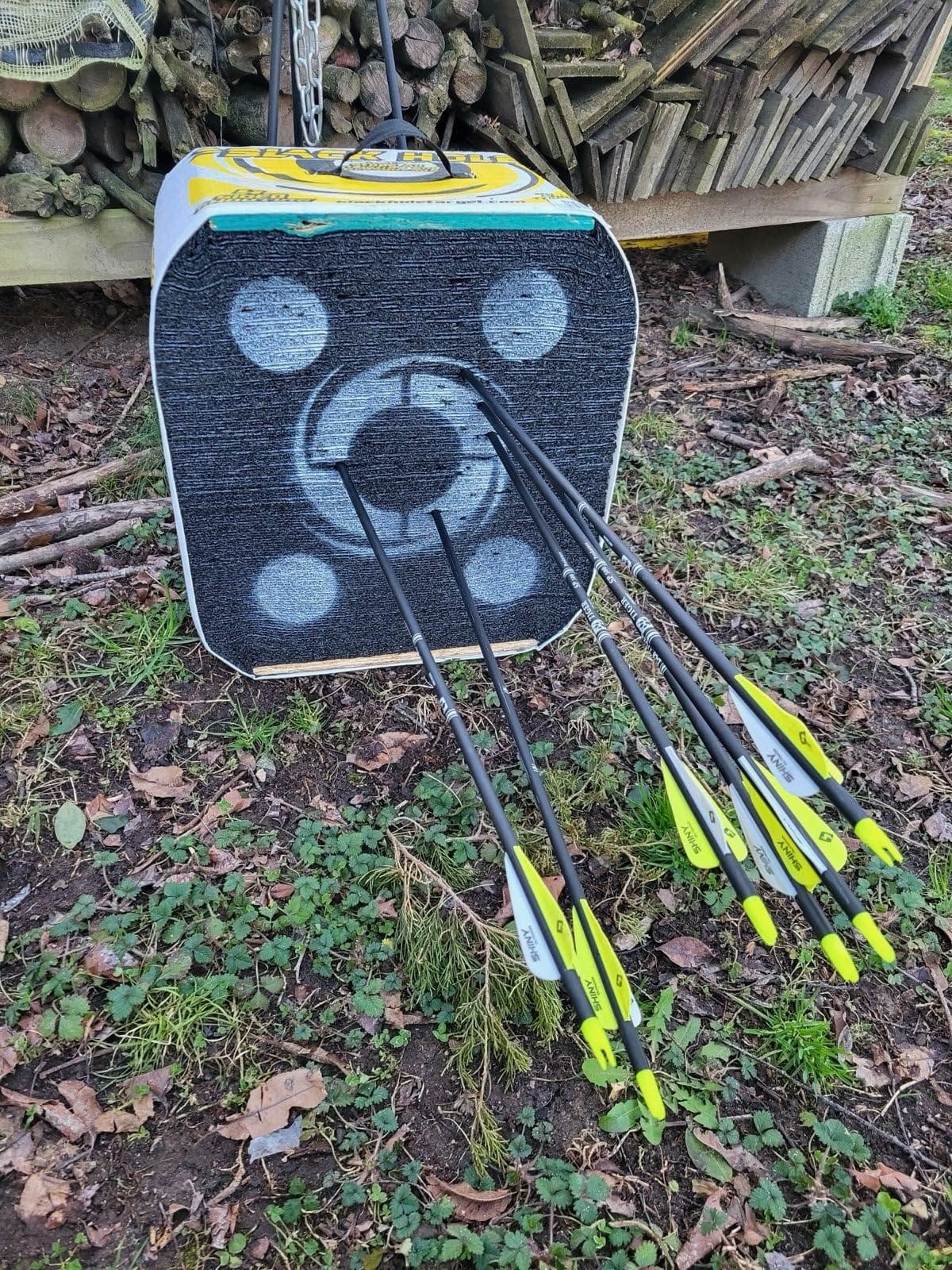
This is the target I keep coming back to because it solves the one problem solid foam cannot: pulling arrows out. The patented open-layer design lets the shaft enter between unglued sheets of Ethafoam, so friction rather than force does the stopping. When I shoot fixed blades into the open-face sides, the arrow seats in seconds and releases just as fast.
The four-sided layout matters for broadheads specifically. The wrapped sides are built for field points, and the manufacturer says as much, so the honest setup is field tips on the wrap and broadheads on the open faces. Owners who mix it up burn through the wrap fast and then wonder why the target stopped working. Shoot it correctly and the center life holds up well.
The 18W model stops standard diameter arrows up to 300 fps, and a separate crossbow version is rated to 375 fps. That leaves very heavy crossbow setups short of this target, but for compound and recurve broadhead practice it is the most forgiving option in the lineup.
Why the friction design beats solid foam for you
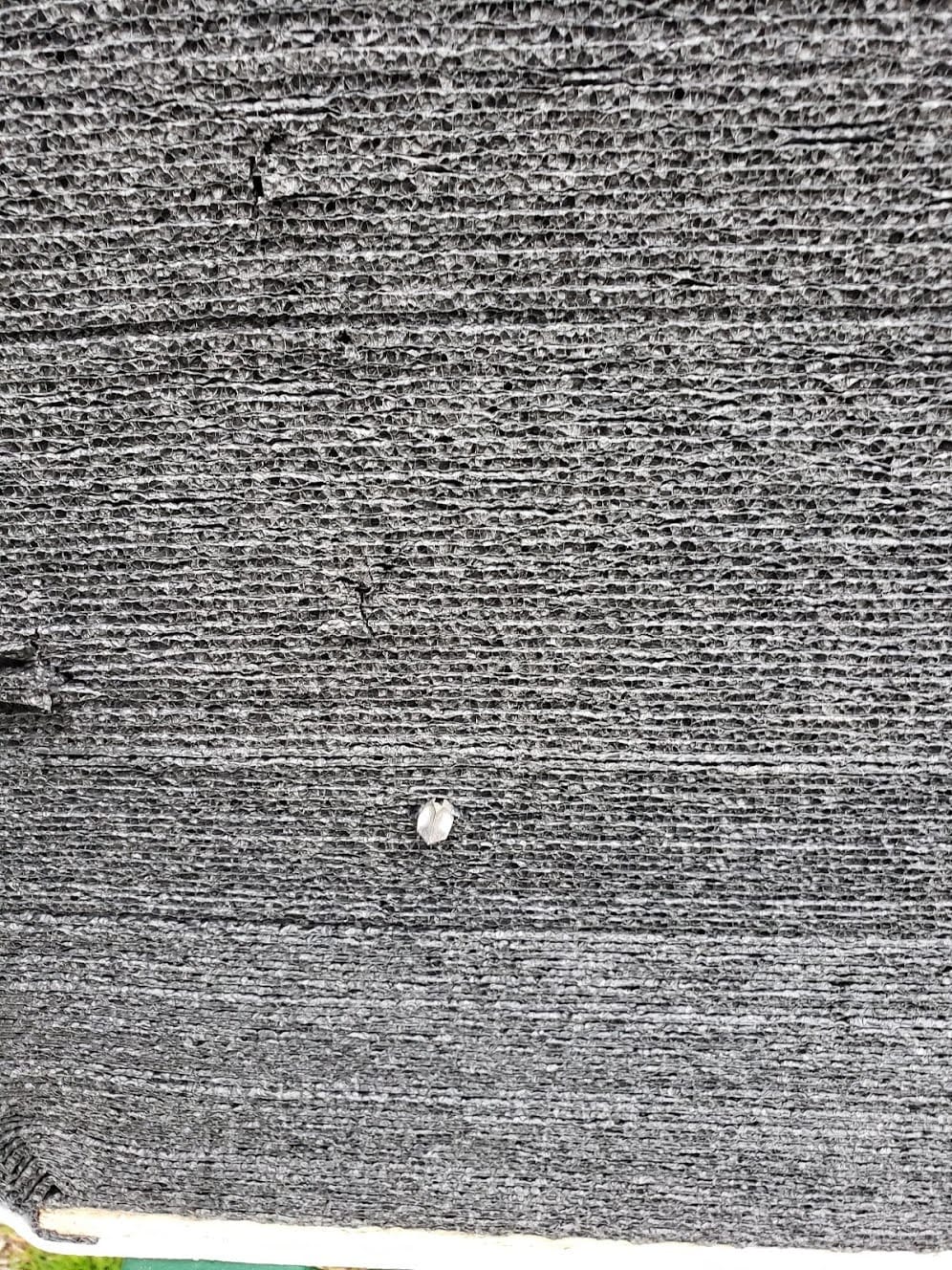
Solid foam grips. That is the whole tradeoff, and it is why arrows in a Rinehart-style block need a puller more often. In an open-layer design the sheets have nothing bonding them, so the shaft never gets wedged in cured foam. Friction from penetration dissipates and lets go.
The catch is durability math. Open layers show wear faster than an enclosed face because nothing supports them. The center of a heavily shot broadhead face on this target will start looking ragged sooner than an equivalent solid foam face, which is exactly what reviewers report.
Four faces and 32 aiming points of practice value
Every side carries contrasting aiming points, so a session does not end after one group goes bad. Rotating between four faces is the cheapest life extension available to any shooter, and on this target it costs nothing extra because the aiming points are printed on all four sides.
The pattern also spreads broadhead damage. A fixed blade repeated in the same hole will cut a deep wound; the same blades spread across four faces leave four shallow wounds that the foam can close around.
Portability for treestand and hunting camp checks
This is the target I put in the truck when I am walking into a setup before season. The built-in carry handle and the feather-light body mean one person can move it, and the manufacturer builds them in the USA. ArcheryTalk shooters regularly mention sourcing a blemished one, and for a portable foam target that is a sensible way to buy.
At 8 ounces listed weight, it is the easiest carry in this roundup by a wide margin.
What you give up
Two faces worth of open surface and a 300 fps ceiling. If your crossbow pushes bolts at 450 fps, this is not the target, and we cover that case later in the guide. Broadhead shooters who ignore the wrapped-side guidance also shorten its life faster than the rating suggests.
Broadhead verdict: Ideal for compound and recurve shooters who want easy arrow retrieval. Not the choice for high-power crossbows.
2. Field Logic Block 6×6 Poly Fusion – Six Faces and a 400 FPS Ceiling
Block 6×6 Poly Fusion Archery Target 6-Sided, 18x18x16, Polyfusion Technology, Black
Poly Fusion layered foam
18 x 18 x 16 in
15 pounds
Rated to 400 FPS
Pros
- Six fully shootable faces with aiming points
- Layers anchor to the interior walls
- Rated to stop arrows up to 400 FPS
- Built-in carry handle
- Handles practice tips through broadheads
Cons
- Arrows pull harder than from bag targets
- Heavy broadhead use shortens a single face
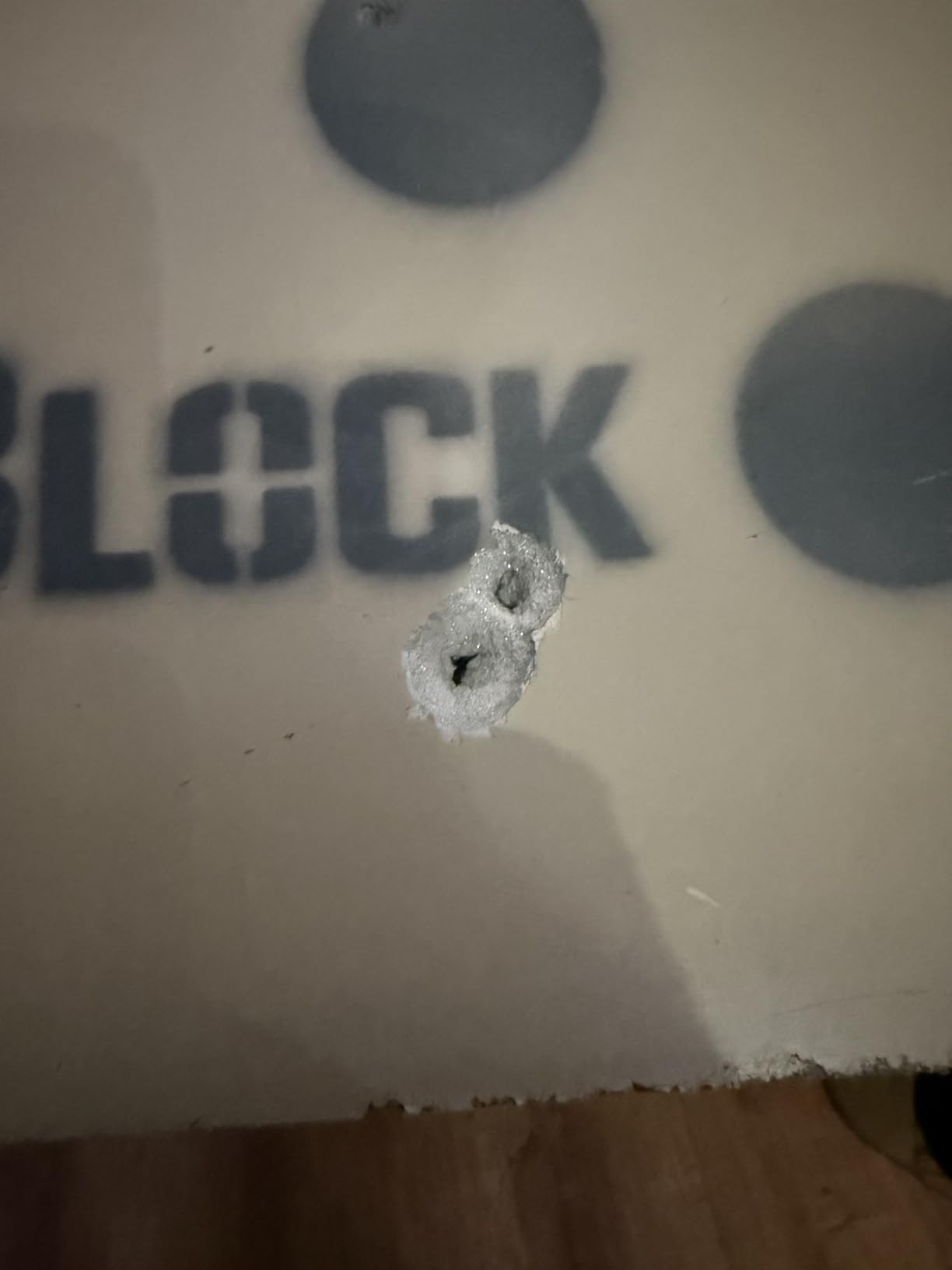
Six independent faces with printed aiming points is the feature that separates this from cheaper blocks, and it is why it lasts longer under broadheads than its weight class suggests. When one face finally gives out, you rotate rather than replace.
Poly Fusion is the interesting part. The layers attach to the interior walls rather than to each other, which does two useful things. It stiffens the block so it holds its shape, and it keeps the arrows from wedging between sheets, which makes removal more predictable than a loose-layer design.
At 15 pounds and 18 x 18 x 16 inches, it is a backyard target rather than a carry-everywhere one. The built-in handle helps, but plan on two trips from the vehicle.
400 fps means most crossbows qualify
The 400 fps rating covers a large share of crossbow bolts and nearly every compound-bow broadhead setup. That makes this the broadest compatibility in the roundup without moving up to a permanent target. If you shoot one bow type and want a single block that handles it, this is the honest answer.
Rough finishes showing up on arrival are the most common complaint in the reviews, along with the note that heavy broadhead shooting shortens usable life on one face. Both are manageable: inspect it before you rely on it, and rotate early.
Six faces and the aiming points that fill them
Each face carries multiple aiming points, which means a practice session has more options than a single bullseye gives you. For a bowhunter sighting in, that is worth more than another two inches of face diameter, because you can move between aiming points instead of drilling one hole.
Six faces is the practical sweet spot. Cube targets with fewer sides run out of usable surface quickly under broadheads, and eighteen-sided models cost considerably more.
What the layered core means for blades
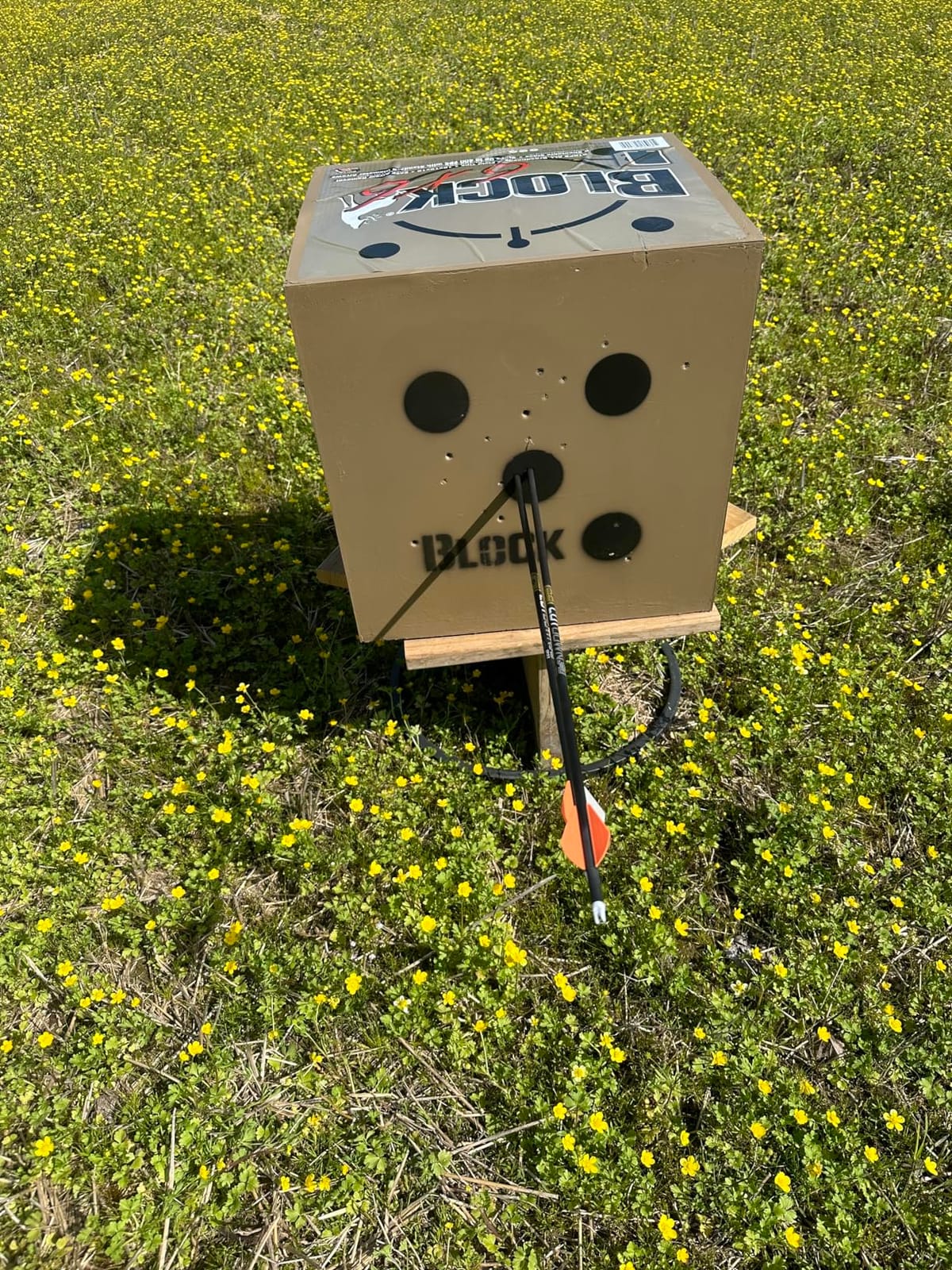
Because the layers bond to the walls, a fixed blade cut opens a wound in a sheet that is still supported on three sides. That is a meaningful difference from free-floating layers, where the cut section can drop out and leave a pass-through hole. Damage stays local on this one, which is why reviewers keep using words like durable.
Arrows still pull harder here than from a bag target, and with a broadhead you will feel the difference. Keep a puller nearby and the job takes seconds.
Who should pass
If your priority is the easiest possible arrow retrieval, choose an open-layer friction design instead. If weight is the deciding factor, 15 pounds is a real consideration for older shooters or anyone moving the target alone.
Broadhead verdict: Ideal for crossbow and compound shooters up to 400 fps who want one target for everything.
3. BLOCK Classic 18 x 18 – Two Faces and Almost No Effort to Pull Arrows
BLOCK Classic Layered Foam Archery Target, 18” x 18” x 13.5”, 2-Sided Shooting, Unique Open Layer Design Stops Field Points and Broadheads with Friction Not Force, Easy Arrow Removal, Top Carry Handle
Open-layer friction foam
18 x 18 x 13.5 in
Two-sided shooting
High-contrast face
Pros
- Friction layers release arrows quickly
- Light enough to carry anywhere
- High-contrast face aids target acquisition
- Owners report 3000+ shots with recurves
Cons
- Broadheads chew through the bullseye fast
- Two faces limit life under broadhead volume
- Edge hits can cut the layer band
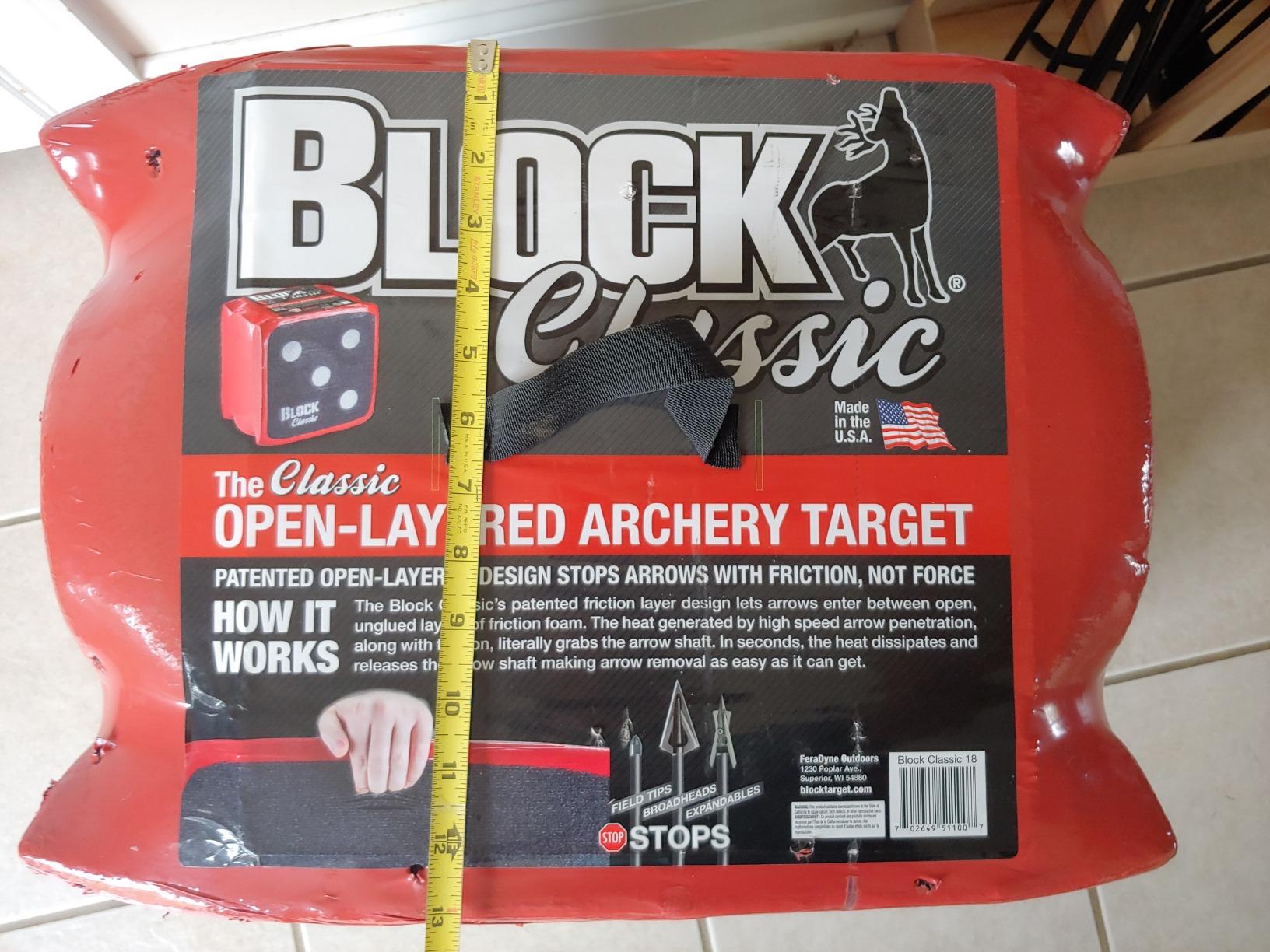
This is the original open-layer friction design, and it is the reason that style exists in the category. Arrows enter between unglued layers of friction foam, and the heat and friction of a fast shaft grip for a moment before releasing. That brief grip is enough to stop the arrow and not enough to hold it.
Owners report holding up after 3000 or more shots with recurve bows, which is a real number to anchor expectations. The catch is where those shots land. Broadheads and mechanical blades chew the bullseye quickly and can carry a shaft past the vanes, so a wide-spread practice habit matters more here than on a six-sided cube.
The black-and-white high-contrast layout is genuinely good for target acquisition at distance. On a dim evening backyard range, a shooter can find the face far faster than on a low-contrast design.
Two faces is the whole weakness
With only two shooting sides, both have to be usable at the same time. There is no third face to rotate onto when the front bullseye goes soft, which is why heavy broadhead use shortens this target’s life faster than the price suggests.
If you are grouping tightly with broadheads, choose a six-sided or eighteen-sided target and spread your groups. If you shoot casually at varied distances, two faces work fine.
Arrow retrieval after a broadhead hit
Blades still enter between layers rather than cutting bonded sheets, so the cut section stays in place. The arrow pulls with a twist and a pull, and reviewers describe the effort as light compared with solid foam. Below about 40 degrees the friction cools down slower, so expect more effort on a winter morning.
One practical note: hitting the outer edge of the target can cut the band that holds the layers together. Center your groups rather than walking the rim.
Carry it to the field
At a listed 8 ounces, this is the second-lightest option here and the easiest to bring to a treestand or a scouting spot. The high-contrast face helps you aim at distance, and the blank reverse side is useful for instinctive chalk-mark practice.
Where it falls short
Broadhead shooters who want longevity, not convenience, will run out of face long before they run out of budget. The layer-band cut at the edges is also a real failure mode on a target this light.
Broadhead verdict: Acceptable for casual broadhead practice and travel. Ideal if arrow retrieval matters more than face life.
4. Morrell Yellow Jacket Dual Threat – 32 Bullseyes for Compound and Crossbow
Morrell Yellow Jacket Dual Threat 380 FPS Foam Archery Target Block, Yellow
Fused cellular foam
4 sides and 32 bullseyes
380 FPS rated
Weatherproof surface
Pros
- Fused foam and offset bullseyes spread wear
- Accepts field points and mechanicals
- Weatherproof for indoor and outdoor use
- 32 bullseyes across four sides
Cons
- Puller tool often needed for broadheads
- Broadheads tear the white scoring rings
- One owner reported pass-through at 325 FPS
- Bulky shape is awkward to move
Morrell built this one for people who shoot more than one bow. The listing names compound and crossbow use directly, and the manufacturer states it accepts field points, fixed blades and mechanical broadheads, which is rare specificity for a block target.
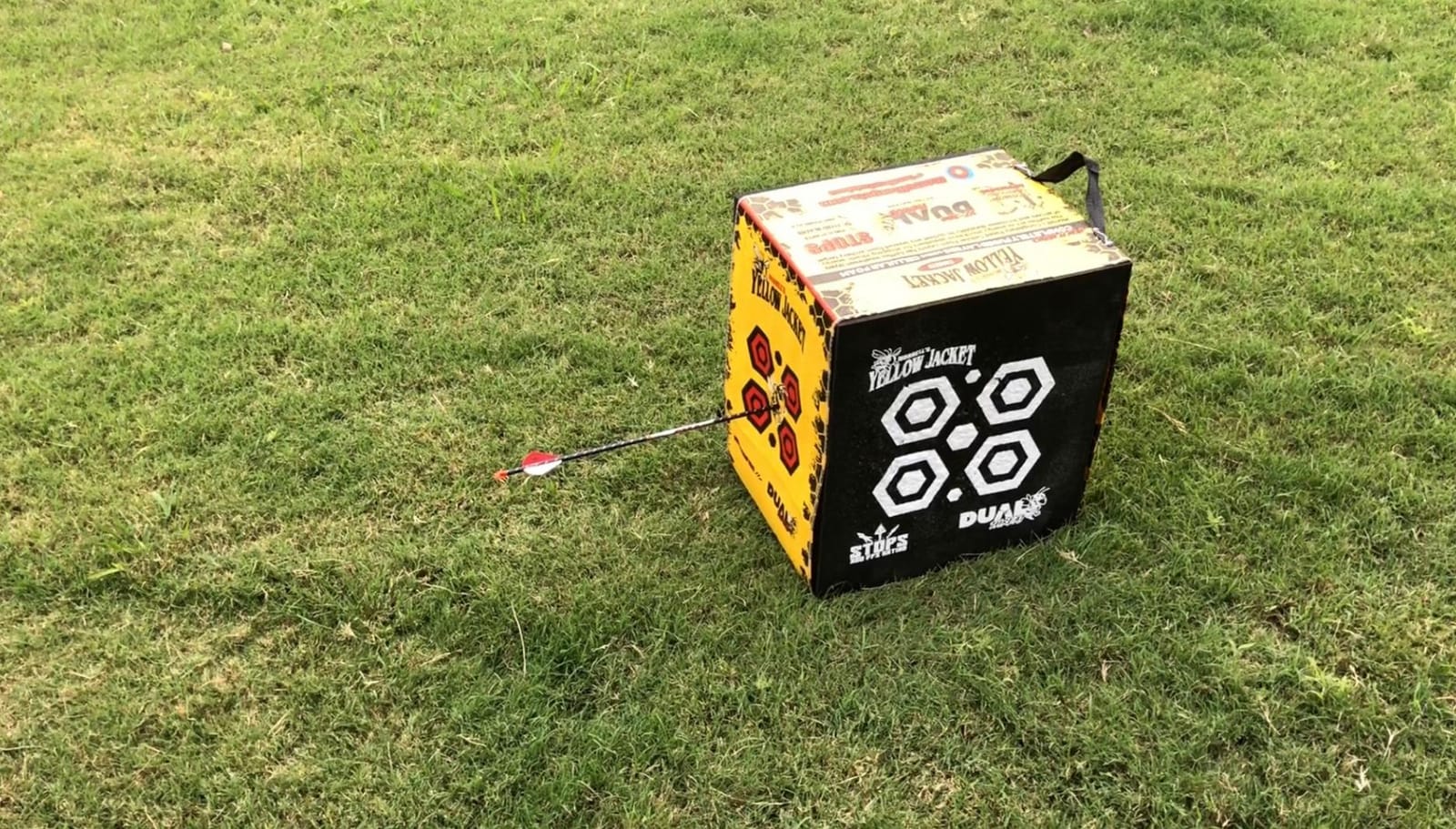
The offset bullseye layout is the underrated feature. Thirty-two bullseyes across four sides means you are never forced to drill the same hole twice in a session, and the wear pattern spreads itself. Reviewers consistently report exceptional longevity with this spread working in their favor.
At a listed 16 ounces it is light to carry, though the shape is not friendly to one hand. Plan the lift before you pick it up.
What the 380 fps rating covers
The 380 fps figure suits most compound broadhead setups and lighter crossbow bolts. A separate 350 fps variant exists for slower crossbows, so match the rating to your bow rather than assuming the top number applies.
One reviewer at 325 fps reported arrows passing fully through anyway, which is worth knowing rather than hiding. Treat the rating as a guide and test with your heaviest arrow first before relying on it as a backstop.
Fused cellular foam and what it survives
Fused foam is bonded into a single mass rather than stacked sheets, so a fixed blade opens a cut that stays part of the block. That is the structural reason it holds together better than loose layered foam, and it is why the face does not develop soft spots the way bonded layers do.
The trade is arrow removal. Reviewers repeatedly reach for a puller tool, especially with broadheads, and the broadhead blades themselves tend to shred the white scoring rings on the face. Cosmetic damage on the printed circles is the main complaint in the reviews.
Weatherproof for a year-round backyard range
The weatherproof surface handles rain and sun without needing to be brought inside, which suits a permanent backyard setup. The bullseye pattern also gives you plenty of aiming references for sight-in work at 20 or 30 yards.
Who should skip it
If you shoot a fast crossbow regularly, the 380 fps ceiling and that one pass-through report make this a cautious choice. If you want arrows to come out by hand in cold weather, expect to use a puller.
Broadhead verdict: Acceptable. Good longevity from 32 bullseyes, but plan on a puller tool for broadhead removal.
5. Rinehart 18-1 – Eighteen Faces and the Foam Broadhead Shooters Recommend
Rinehart 18-1 Archery Target, 18-Sided, Broadhead & Field Point Compatible
Signature self-healing foam
15 x 15 x 15 in
18 shooting faces
Rated to 500 FPS
Pros
- Eighteen faces spread damage
- Signature self-healing foam
- Broadhead capable and crossbow approved
- Handles up to 500 FPS
- Highly visible target zones
Cons
- Solid foam needs more effort to pull arrows
- Cube rolls slightly on flat ground
- Costs more than most foam blocks
The 18-1 is the model that comes up most often in broadhead threads, and for good reason. Eighteen distinct shooting faces on a 15-inch cube means damage spreads across eighteen separate wounds instead of concentrating in one bullseye, and a broadhead shooter gets years out of a single block for sight-in work.
ArcheryTalk shooters are blunt about it. One long-running thread has owners saying the 18-1 or the Rhino Block is hard to beat for broadheads, that it will last years if that is all you are doing, and that you can even find a blemished one. A second, older thread has owners calling it worth the money and expecting several years of broadhead life. A third ArcheryTalk thread says the 18-1 is tougher as far as broadheads than the 360-style targets people like to recommend.
The 4.6 rating with 81 percent five-star scores reflects that loyalty. At 2 pounds it is also lighter than most solid foam blocks of similar size, which offsets the friction grip somewhat.
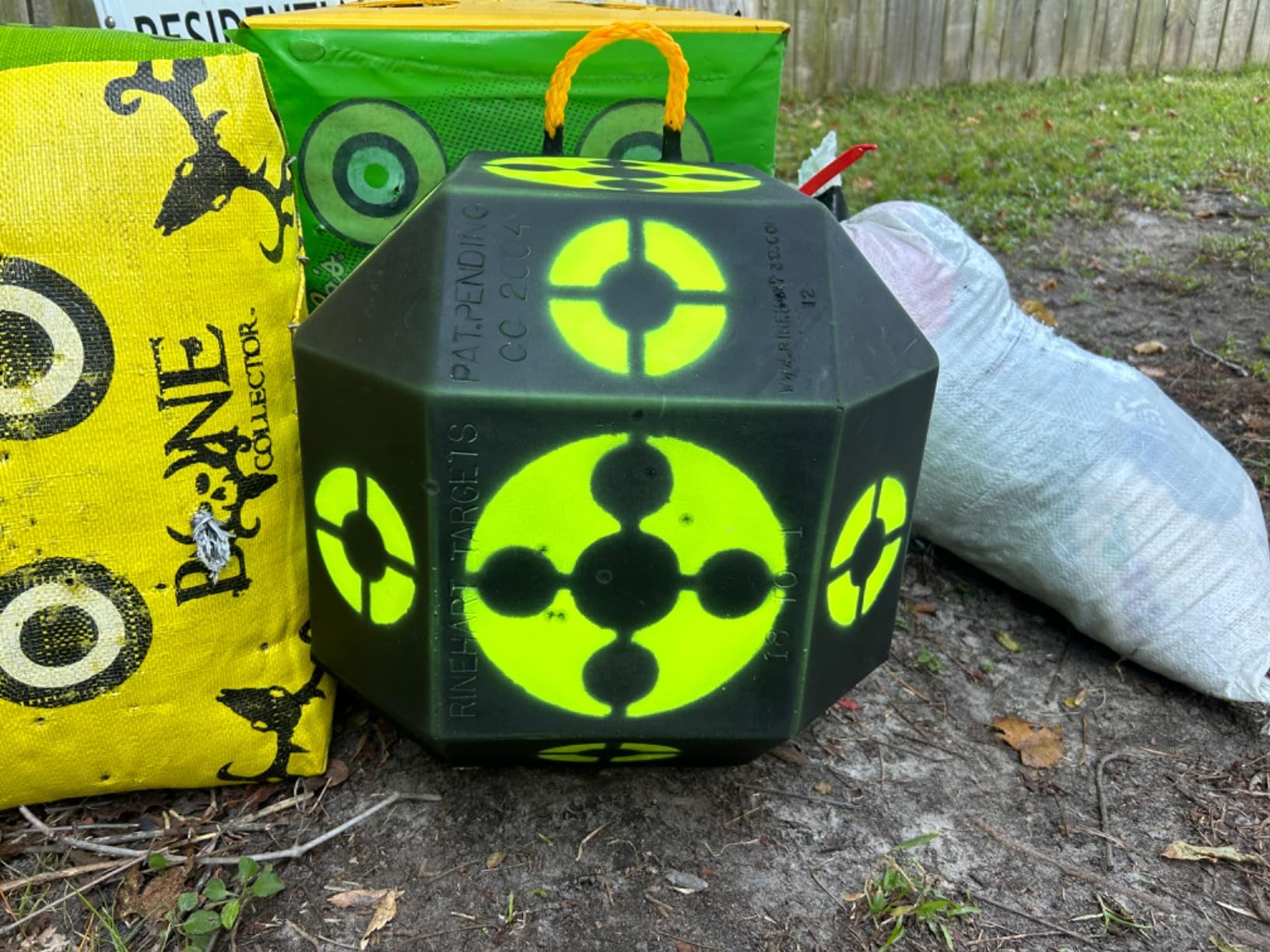
Solid self-healing foam and the pull-out problem
This is the honest tradeoff with solid foam. The wound closes around the blade instead of the face failing, but the shaft sits deep in material that grips it hard. In warm weather two hands and a twist get it out. Below roughly 40 degrees, keep an arrow puller in the truck. That one habit solves most of what people describe as the Rinehart problem.
The foam is the reason blades do not destroy it. A cut in self-healing foam closes as the arrow withdraws, so the same hole can take many broadhead hits before it becomes a weak point.
Eighteen faces change the cost math
Compare that to a two-sided block. If each face absorbs a similar number of broadhead shots before going soft, eighteen faces means the block keeps working long after a two-face product has been retired. For a shooter who practices with broadheads every week, that is the entire argument for this target.
It also means you never repeat the exact same shot, which keeps practice fresh and reduces the temptation to drill one hole.
Speed range and crossbow approval
Rated broadhead capable to 500 fps and crossbow approved, this covers heavier crossbow bolts than most blocks in the roundup. It is one of the few foam targets here that a fast crossbow shooter can use without thinking twice.
Handling notes
The cube shape rolls slightly on flat ground when hit hard, which is a real annoyance on a lawn. Carry the handle rather than the block, or set it on a level pad. The highly visible target zones help you acquire the face at 60 or 80 yards even on an overcast afternoon.
Broadhead verdict: Ideal. The reference choice for a dedicated broadhead shooter, with a puller for cold weather.
6. Morrell High Roller – The Highest-Rated Foam Block in the Lineup
Morrell High Roller Foam Archery Target, 6 Sided Cube with 21 Bullseye, Red
High-density self-healing foam
13 inch cube
6 faces and 21 bullseyes
450 FPS rated
Pros
- Stops arrows up to 450 FPS
- 21 bullseyes spread impact wear
- Waterproof foam resists fading
- Built-in EZ-Tote carry handle
Cons
- 12 pounds is heavy to carry alone
- Tight core takes more effort than a bag target
The High Roller carries the highest average rating in this lineup at 4.8, with 89 percent five-star and 95 percent four-star-or-better scores. The high-density self-healing foam is the reason: it stops arrows up to 450 fps and holds its shape under broadhead impacts better than lighter foam in the same size class.
ArcheryTalk owners who use the larger Big High Roller sibling call it the best all-around target they have owned, largely because it is easier to pull arrows from than other foam blocks. That same ease of pull, on an ArcheryTalk thread about broadhead targets, is exactly what a shooter who wants to move between bow types is looking for.
Six faces with 21 bullseyes means the aiming points are everywhere. You can sight in, then switch to a different dot for grouping practice without waiting for the first hole to close up.
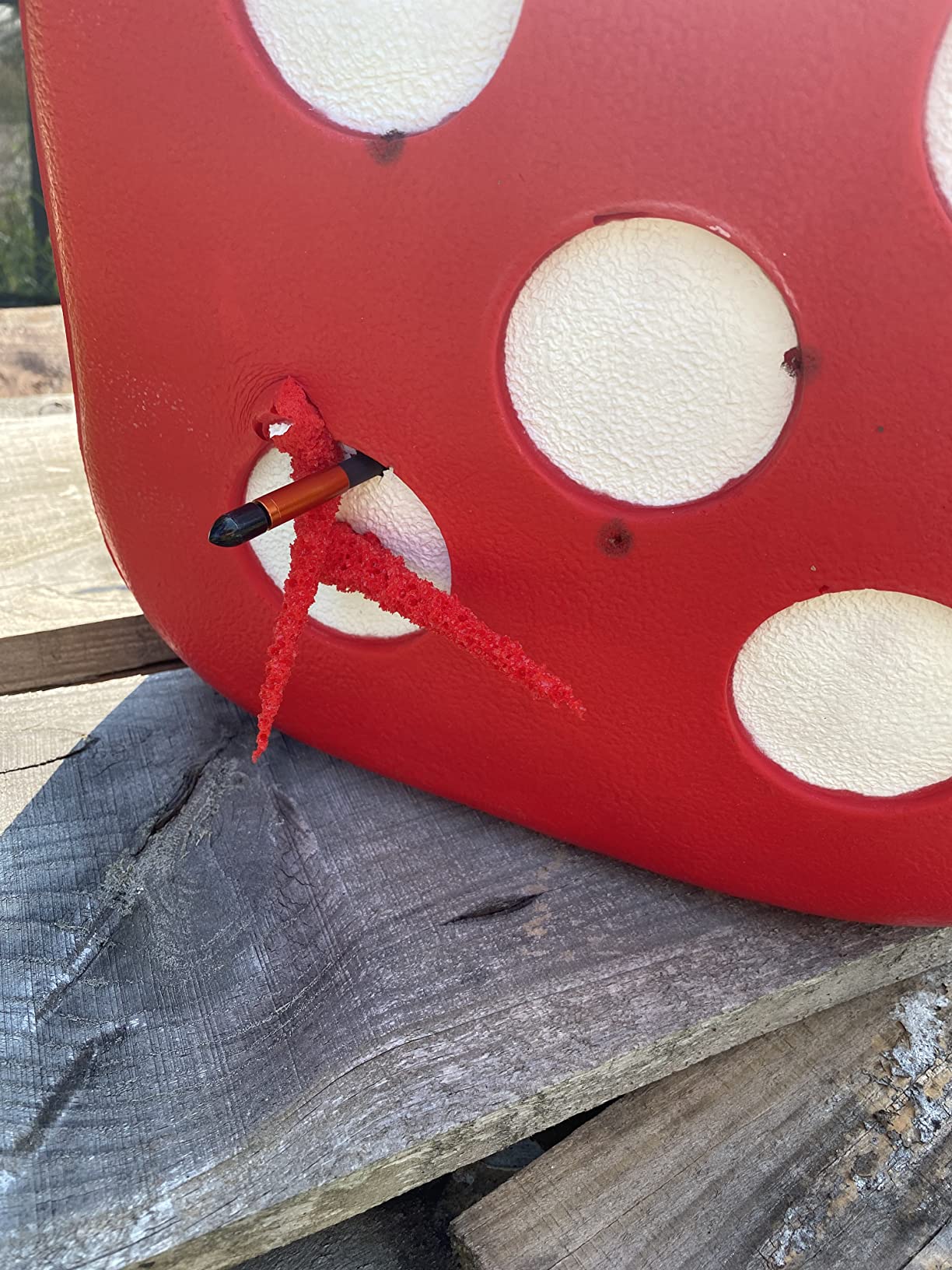
450 fps and the crossbow question
That rating puts the High Roller among the better crossbow options here, behind only the Rinehart 18-1’s 500 fps figure. For a crossbow shooter, that makes this the second target on the short list rather than the first, and the 13-inch cube keeps the weight down compared with larger blocks.
Owners consistently praise the stopping power for bolts as well as arrows, which matters if you are using broadhead bolts rather than standard tips.
Waterproof foam for year-round outdoor use
Reviewers highlight the waterproof foam resisting wear and fading, so it can live outside without seasonal teardown. That is a meaningful advantage over bag targets and some layered foam designs that degrade when left in weather.
The weight question
At 12 pounds this is the second-heaviest product we cover, and the most common complaint in the reviews is exactly that. The EZ-Tote carry handle helps, but a full-size block is a two-hand lift. For a fixed backyard spot, that is not a problem. For a moving target, choose something lighter.
Broadhead verdict: Ideal for a fixed backyard spot with compound or crossbow. Bring a puller for cold-weather removals.
7. Power-Stop High-Density Block – Layered Polyethylene That Localizes Damage
Power-Stop Archery Targets – 19″ High-Density Block Target – 350fps Foam Target Block for Broadheads and Field Tips…
Layered polyethylene foam
19 inch block
Rated to 350 FPS
Six-sided with game face
Pros
- Engineered high-density foam outlasts cheaper blocks
- Layered core localizes damage
- Handles arrows and bolts to 350 FPS
- Weather resistant and made in the USA
Cons
- Field tips and bolts are extremely hard to pull
- Foam can break out in chunks after about 50 arrows per side
- Tears quickly once shots group in one spot
This one has a loyal following that describes it as the most durable block they have owned, and the review base backs that up with a consistent theme rather than a single isolated comment. The specially engineered high-density foam and the layered polyethylene core are what buyers are responding to.
The 19-inch footprint gives you a large face with six sides, including a battleship-style game face for casual shooting. At a 350 fps rating it suits compounds and lighter crossbow setups. If you shoot a fast crossbow, this is not your target.
One thing to know before you buy: this block is built for durability, not for easy extraction. Reviewers describe needing to stand on the target to pull field tips and bolts from it. That is a deliberate trade and it should factor into your decision.
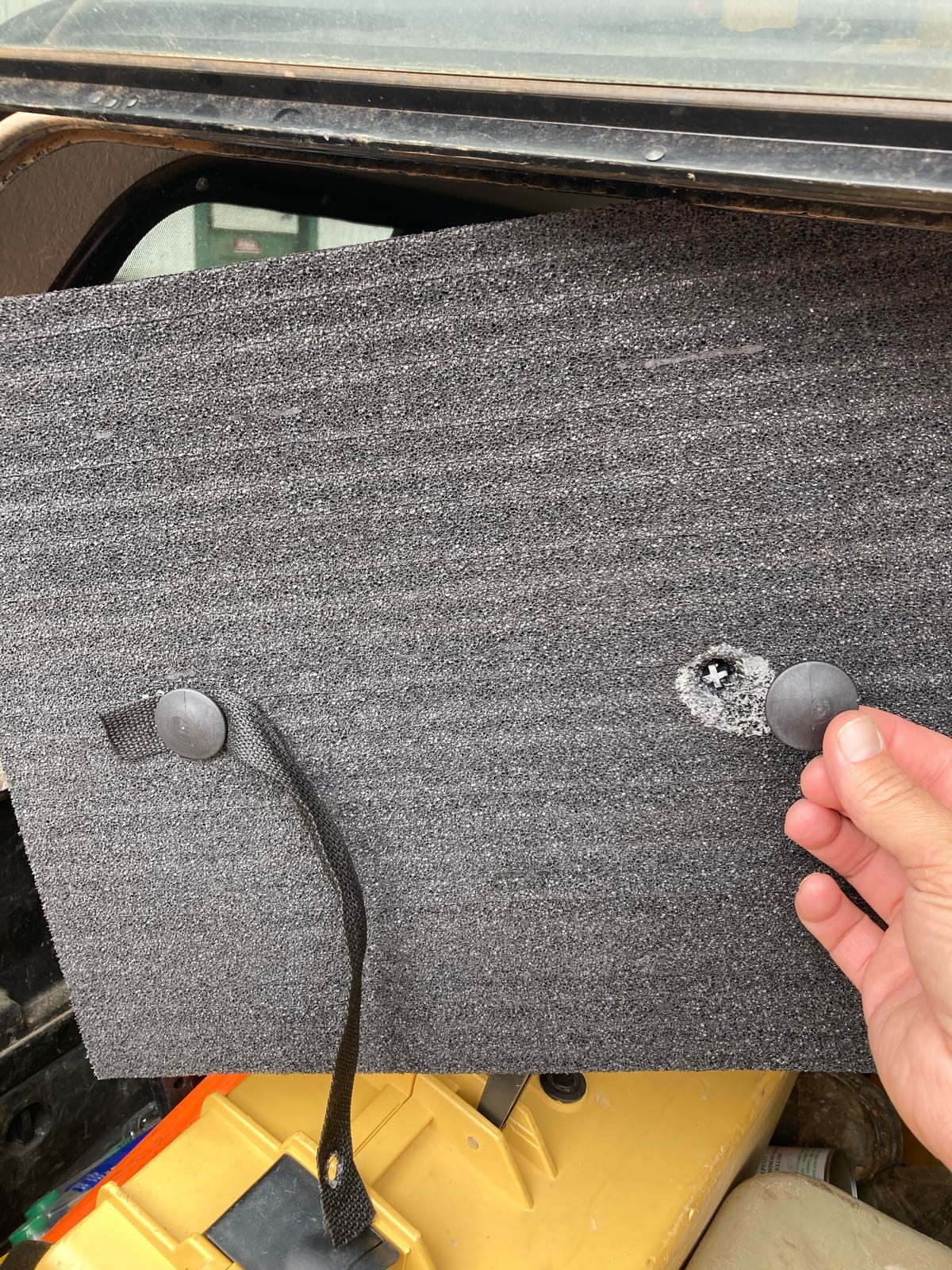
How layered polyethylene localizes a blade cut
Layering does something useful here. Because the sheets are stacked and compressed, a fixed blade cuts one layer rather than freeing a whole section, so the wound stays contained instead of dropping out. That containment is the difference between a target that gets soft and one that gets a hole.
The high-density foam slows the shaft on the way in, which is how the manufacturer gets 350 fps stopping power out of a 19-inch block without an enclosed core.
The removal trade nobody mentions in the listing
High-density foam grips hard. Reviews report field tips and bolts being extremely difficult to extract, sometimes requiring the shooter to stand on the block for leverage. Broadheads are not the problem here; field tips are, because they sit deeper and the blade spreads less.
If you remove arrows twenty times a session, plan accordingly. An arrow puller is not optional with this one.
Watch for grouping damage
Reviewers also note foam breaking out in chunks after roughly 50 arrows on a side, and tearing quickly once arrows start grouping in one spot. Rotate faces early rather than waiting for a face to fail, and this target will keep working for you far longer than the chunking reports suggest.
Weather and build
The block is described as lightweight, reusable and weather resistant, and it is made in the USA. The new-style handle improves mobility compared with earlier versions. It is bulkier and pricier than entry-level foam blocks, so plan your storage accordingly.
Broadhead verdict: Acceptable and durable for patient shooters. Bring a puller and rotate faces early.
8. Morrell Vital Signs Combo 2 – A Permanent Backstop for High-Volume Ranges
Morrell Keep Hammering 54 Lb Field Point Archery Target Bag for Crossbows
76 layers of foam
29 x 14 x 31 in
Rated to 380 FPS
55 pound body
Pros
- 76 layers stop arrows up to 380 FPS
- Two-finger arrow removal
- Weatherproof surface
- Large face holds up under volume
Cons
- 55 pounds is very heavy to move
- No carry handle on the current version
- Interior foam degrades if left in the weather
- Ballistic collars are nearly impossible to remove
This is the one to buy if you shoot a lot and never intend to move the target. Seventy-six layers of commercial-grade foam give it more stopping material than anything else in the roundup, and owners rate arrow retrieval as standout even by bag-target standards.
At 29 x 14 x 31 inches and 55 pounds, this is a permanent installation. Reviewers suggest setting it in an enclosure or moving it with a wheelbarrow. That is not a complaint so much as a fact of the format: you position it once and it stays there.
The bright high-contrast target zones are easy to see across a yard, which suits a target line where several people are shooting in rotation.
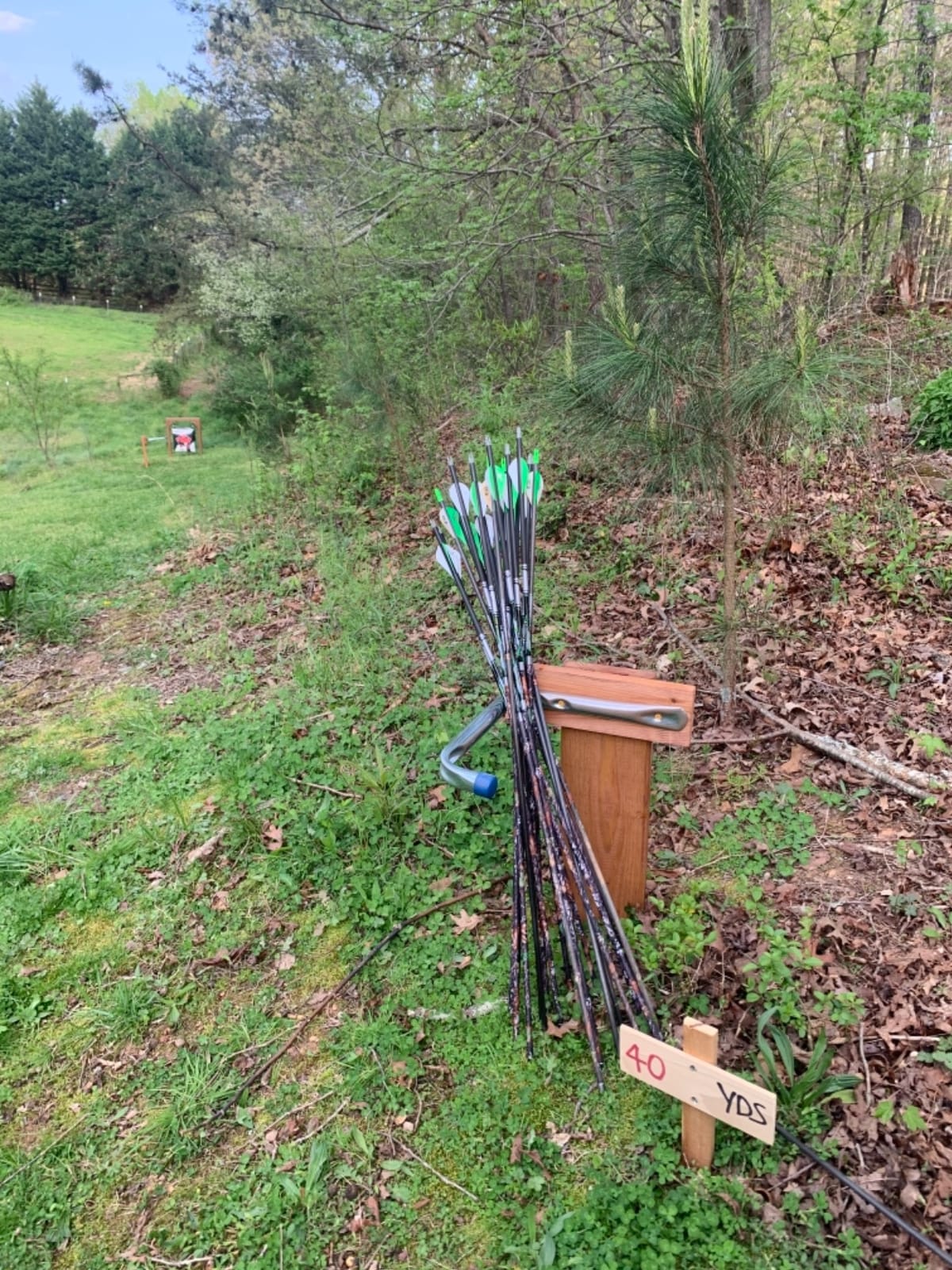
Why 76 layers matters for broadheads
Depth is the defense here. A wide broadhead cut into seventy-six layers opens a wound in a few sheets while the layers behind it absorb the shaft, so there is no pass-through risk from a single blade. For an arrow that lands slightly off the edge of a printed face, that depth is what keeps the shot contained.
The 380 fps rating covers typical compound broadhead velocities and moderate crossbow bolts. It is not the choice for the fastest crossbows in this roundup.
Two-finger removal and its exceptions
Friction between layers does most of the work, so arrows slide out with two fingers according to owners. The exception is worth stating plainly: reviewers report field tips with ballistic collars being nearly impossible to remove, and the manufacturer says outserts or field points larger than the shaft are not recommended for longevity.
Broadheads themselves fare better because the blades spread the load and the shaft stays thin.
Weather exposure and the missing handle
The surface is weatherproof and shrugs off soaking rain, but the interior foam degrades if left in the weather long term. If your range is exposed, bring it under cover between seasons.
The current version lacks a carry handle, which adds to the weight problem. Position it before you need it rather than after.
Broadhead verdict: Ideal for a fixed range with heavy volume. Avoid ballistic collars and leave it under cover in winter.
9. Rinehart Field Target 9 Inch – The Sight-In Ball That Travels
Rinehart Field Target RFT 9″, Broadhead Approved
Nine inch round foam
Sand-filled balancing core
3 pounds
Broadhead approved
Pros
- Fits in a backpack for treestand checks
- Sand core lands it upright after shots
- Easy-grip built-in carry handle
- Effective for tuning broadheads before a hunt
Cons
- Small face demands real accuracy
- Rolls or spins when hit on the ground
- Some buyers report a rough seam and finish
At basketball size, this is the only target here designed to go in a backpack. Owners use it for treestand practice, warm-ups and tuning broadheads before a hunt, and the 3-pound body means one person can carry it anywhere.
The sand-filled self-balancing core is the clever part. It lands upright after every shot, so you do not stake it, do not wedge it, and do not walk over and stand it back up between arrows. On a rough hillside that alone is worth the size.
It is broadhead approved and stops arrows reliably from 30 to 60 pound recurves and compounds at moderate velocity. That makes it a sight-in and confidence tool, not a target for a heavy crossbow bolt.
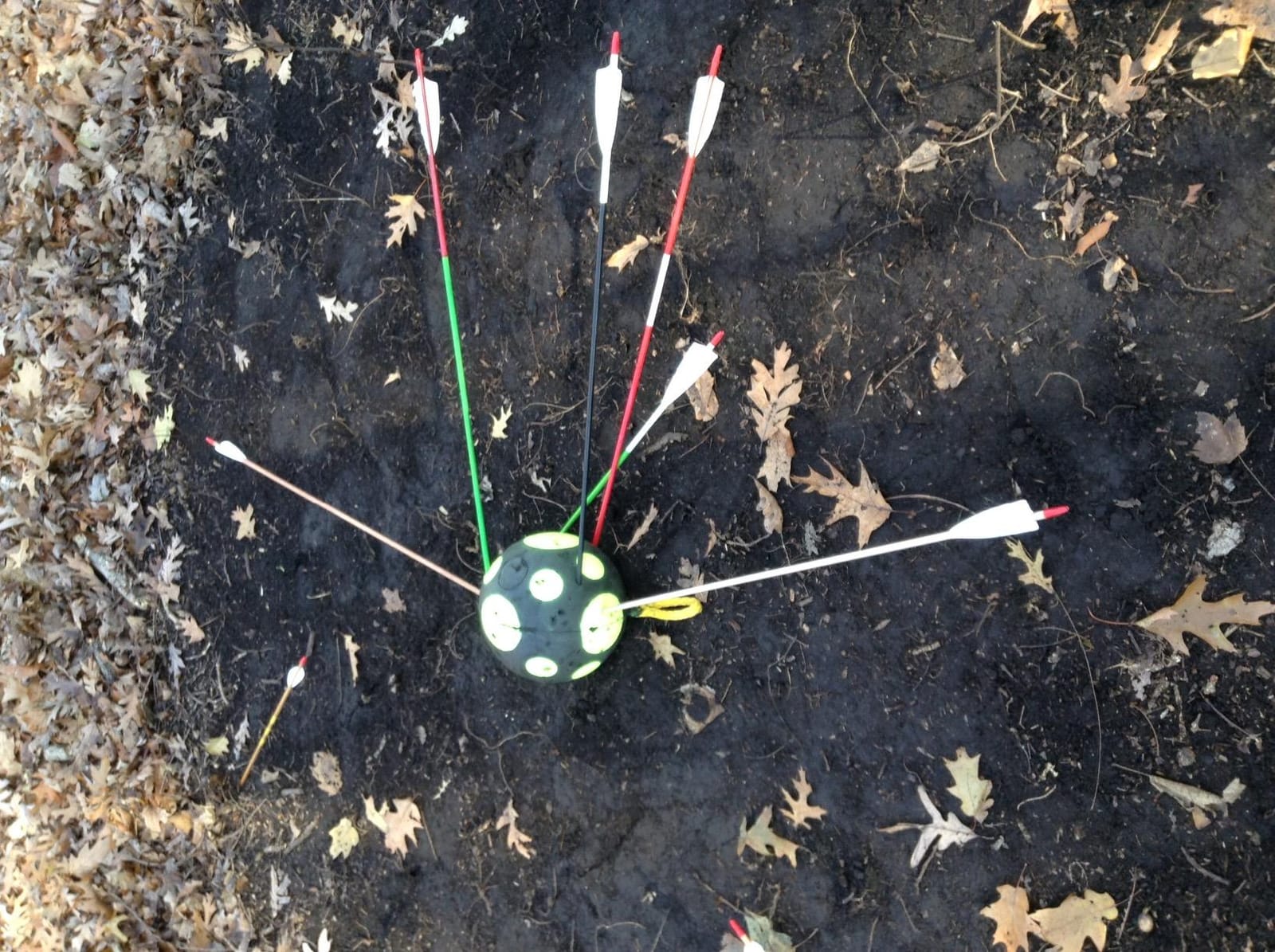
Small face means real aim correction
A nine-inch diameter face is roughly basketball-sized, so every shot has to be on target or it misses. Reviewers treat that as a feature for tuning practice and a limitation for casual backyard shooting. If your goal is to confirm point of impact at short range before season, that constraint is exactly what you want.
Some arrows glance off the low-density foam at wider angles, so keep your shots square.
When it beats a full-size block
The comparison is simple. A full-size block gives you a large face and a heavy object to drag. This gives you a small face and a ball you can carry up a ridge. For a pre-hunt broadhead check at a setup, that is the more useful of the two.
Rolling on the ground after a hard hit is the recurring annoyance. Pull it out and reset rather than trying to shoot it while it is spinning.
Finish quality varies
A few buyers report a rough seam and surface blemishes on arrival. Inspect it out of the box. The built-in easy-grip handle is well placed for the weight and size.
Broadhead verdict: Ideal for portable sight-in and broadhead tuning at a hunt setup. Not for crossbow bolts or group practice.
10. BIGSHOT Pro Hunter 16 – Built Only for Broadheads and Field Points
BIGSHOT Pro Hunter 16 Multipurpose Broadhead Archery Target
Elasto-Flex self-healing foam
16 inch model
375 FPS
Five tuning faces
9 pounds
Pros
- Built for broadheads and post-hunt arrow discharge
- Five tuning faces for sight-in drills
- Nine pound body with rope handle
- Elasto-Flex foam rated for thousands of shots
Cons
- Hard outer skin resists arrow removal
- Compact face is small for grouping practice
- FPS labeling is inconsistent between listing and target
- Photos suggest a larger face than the product
Almost every target in this roundup is a general-purpose block that happens to accept broadheads. This one is built around the arrow tip. It is designed for broadheads and field points, and the tapered body is shaped to match an archer’s shooting plane, which is a small design touch that shows the intent.
Elasto-Flex self-healing foam is claimed to extend target life for thousands of shots, and the five tuning faces give you separate surfaces for different sight-in and hunting drills. The nine-pound body with a rope handle makes it a carry-to-camp target rather than a fixed backyard block.
One job it does well: discharging arrows after a hunt. Fletching and broadhead blood get shot into something rated for cutting tips instead of your garage wall or a stump, and owners say it holds up outdoors in the elements.
What the hard skin costs you
Elasto-Flex has a hard outer skin, and that skin is what resists arrow removal. Reviews call it difficult to pull. If you pull arrows twenty times an evening, this is the wrong pick. If you shoot a dozen arrows and check them, it does not matter.
Size and labeling caveats
The 16-inch face is compact for grouping practice, and reviewers note that product photos suggest a larger face than the actual product. The listing also gives an inconsistent FPS rating compared with the marking on the target itself, and the feature sheet states 375 fps. Verify against your bow speed before relying on it as a backstop.
A small review base worth weighing
Thirty-two reviews is a thin base, and 73 percent five-star scores are positive but not conclusive. The broadhead-focused design is exactly what this article is about, but treat the durability claims as unproven and check the sizing before you commit.
Broadhead verdict: Acceptable and purpose-built. Best used for post-hunt discharge and light broadhead practice rather than heavy sessions.
How to Choose a Broadhead Target That Survives the Season
Pick the construction first, then everything else follows. This is the order that matters for a broadhead shooter, and it is the opposite of how most general target lists are organized, which is why they keep recommending field-point products.
Solid self-healing foam vs layered foam vs bag vs 3D
Solid self-healing foam is the broadest answer for broadheads. The wound closes when the arrow withdraws, damage stays contained, and shot life is high. The cost is extraction effort, especially in cold weather. The Rinehart 18-1 and Morrell High Roller are the clearest examples.
Layered foam is a middle path. Fused or anchored layers hold together better than free-floating sheets, and the Field Logic Block 6×6 shows why: layers bonded to the interior walls keep cuts from dropping out. Loose open layers trade durability for the easiest arrow retrieval on the market, which is the Black Hole and BLOCK Classic approach.
Bag targets are comfortable and field-point only in practice. A fixed blade shreds the fiber and opens a visible hole.
3D animal targets are a different category. They score a realistic vitals picture, and arrows get lost inside the foam core, which means you are not confirming point of impact with your actual broadheads. Use a block for sight-in and a 3D for practice.
Face count and rotation discipline
Face count is the cheapest life extension in this category. Damage concentrates where you shoot, so rotating faces and moving between aiming points spreads the wounds across separate areas of foam. Two-faced blocks die fast under broadheads. Six faces is the practical middle. Eighteen faces, as on the Rinehart 18-1, turns a block into a multi-year tool.
The habit matters more than the number. Shoot one hole all afternoon and any target, however good, will develop a soft spot.
Arrow removal, including cold weather
Check whether arrows come out by hand. Open-layer friction designs release almost immediately. Solid foam grips hard and grips harder as the temperature drops. Below roughly 40 degrees the difference is dramatic, and the fix is cheap: keep an arrow puller in your truck and use it without hesitation.
Then test the hardest removal case before you rely on the target. Shoot one of your heaviest arrows with a broadhead, let it sit for a few minutes, and pull it by hand. If you cannot, you now know to buy a puller.
Target size versus shooting distance
Face size should match how far you shoot and how precise you are. Practicing at 80 to 100 yards, a larger face genuinely helps because it reduces the number of shots you waste on misses. For close-range sight-in at 20 to 30 yards, a small target such as the Rinehart 9-inch field ball is more than enough and far easier to carry.
A rough rule: if your groups at distance regularly hit the edges, move up in size before you move up in price.
Crossbow and bolt speed ceilings
Match the published rating to your fastest arrow. Most compounds land in the 300 to 400 fps range, which covers the Black Hole 18W, the Block 6×6, the Yellow Jacket and the Vital Signs. Heavier crossbow bolts need more: the Morrell High Roller stops 350 to 450 fps depending on variant, the Rinehart 18-1 is rated to 500 fps, and the BIGSHOT Pro Hunter states 375 fps on its feature sheet.
Shoot one arrow at full power before you treat any target as your backstop. Ratings are useful guides, not guarantees.
Blemished and club-surplus sourcing
ArcheryTalk shooters point out that you can find a blemished Rinehart, and that clubs and tournament surplus regularly release targets they no longer use. A cosmetic blemish does not affect broadhead performance at all, since it is almost always on the printed face rather than the core. If you shoot a lot and buy often, this is the most effective way to lower the real cost per season.
Extending the life of a broadhead target
Four habits do most of the work. Rotate faces before one goes soft rather than after. Spread your groups across the aiming points provided. Knock loose foam out of old holes so nothing is left hanging. Keep a puller in the bag so extraction never becomes a reason to stop shooting.
A DIY broadhead target that works
Homebuilt targets exist because people want a large broadhead surface without buying a commercial one. A Reddit r/bowhunting thread on the best value broadhead target praises a DIY build as effective at stopping the arrow and easy to pull from. The honest constraint is that loose materials fail. Foam stacked in a tire or on a pallet works because it behaves like layered foam, which is the same failure mode we opened this article with.
If you build one, use solid foam rather than shredded fill, mount it firmly enough that the block cannot shift on impact, and set it where you are not relying on it as a certified backstop.
Frequently Asked Questions
What is the best archery target for broadheads?
The best archery target for broadheads is one built from solid self-healing foam with several independent shooting faces. Solid foam closes around the blade cut instead of separating, and multiple faces spread broadhead damage so the target stays usable. The Rinehart 18-1 is the strongest choice for pure broadhead work, while the Black Hole 4-Sided is easier on the hands if you shoot often.
Can you shoot broadheads into a foam target?
Yes, provided the target is broadhead-rated and rated for your arrow speed. Check the published feet-per-second figure against your fastest arrow and test one full-power shot before treating the target as a backstop. Field-point-only listings and bag targets are not suitable for broadheads.
Why do broadheads destroy layered foam targets?
A broadhead cuts roughly six times wider than a field point. In layered foam, the blades slice the bonded sheets apart and the shredded sections fall out, creating a soft spot that eventually passes arrows through. Solid self-healing foam compresses around the blade and closes the wound as the arrow is withdrawn, which is why it outlasts layered designs under cutting tips.
How many arrows can I shoot at a foam block before replacing it?
It depends on construction, face count and how tightly you group. Two-sided open-layer blocks wear out fastest under broadheads because both faces are in use at once. Six-faced cubes with many aiming points last considerably longer, and eighteen-faced blocks are effectively multi-year tools for sight-in work. Rotating faces and spreading your groups extends life on every target in this roundup.
How do I remove stuck arrows from a foam target in cold weather?
Keep an arrow puller in your vehicle and use it without hesitation. Solid foam grips harder as the temperature drops, and below roughly 40 degrees the difference is dramatic. Warm the area with your hands or a hot-water bottle, wait a minute, then pull. Open-layer friction designs release far more easily in cold weather because the shaft is not wedged in cured foam.
Do crossbow bolts need a different target?
Yes. Bolts add weight and penetration, so check the published speed rating. Targets rated to 350 to 400 FPS suit most crossbow setups, while faster crossbows need options rated to 450 FPS or higher. Shoot one full-power bolt into any new target before you trust it as your only backstop.
Are bag targets any good for broadheads?
No. A fixed blade will shred the fiber and open a visible hole, and a mechanical broadhead does the same thing more slowly. Bag targets are comfortable, quiet and easy to pull arrows from, which makes them excellent with field points and a poor choice for anyone practicing with hunting tips.
Is a DIY broadhead target worth building?
It can be, if you use solid foam rather than shredded fill and mount the block firmly so it cannot shift on impact. DIY builds behave like layered foam, so they fail earlier than a commercial solid foam target. They make sense for casual practice and for a large face at a known location, not as a primary backstop.
Which Broadhead Target Should You Buy?
If you shoot one compound or recurve and want arrows to come out without a fight, the Black Hole 4-Sided is the buy. Shoot the open-face sides with your broadheads, keep the wrapped sides for field tips, and the target keeps working.
If you shoot a crossbow or compound and want one target that covers everything up to 400 fps, the Field Logic Block 6×6 handles six faces and any arrow tip. It is the broadest single answer in the roundup.
If broadheads are the reason you own a target and you want it to last for seasons, buy the Rinehart 18-1 and keep an arrow puller in the truck. If you want the highest-rated foam block and a fixed backyard spot, the Morrell High Roller covers you to 450 fps.
For a fixed range with heavy volume, the Morrell Vital Signs has the deepest stopping material and the easiest retrieval. For a treestand or scouting spot, the Rinehart 9-inch field ball travels anywhere and stands itself back up. For a target built specifically around broadheads rather than adapted to them, the BIGSHOT Pro Hunter is the purpose-made option, with a small review base to weigh.
Whichever you choose, rotate the faces, spread your groups, and keep a puller within reach. That habit alone will extend the life of any archery target you shoot broadheads into.