
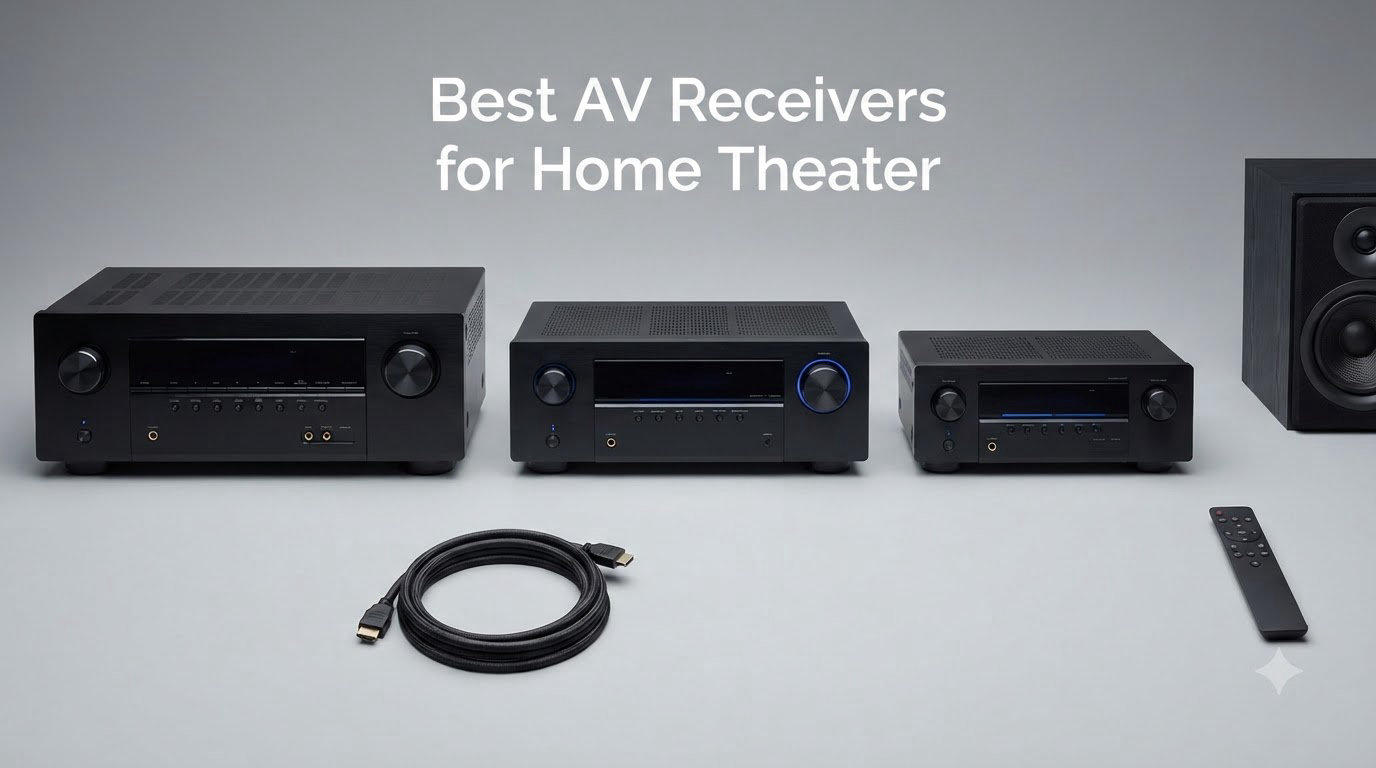
If you have spent any time reading home theater forums or watching setup videos, you already know the receiver is the brain of the whole system. It decodes Dolby Atmos, switches between your game console and Blu-ray player, calibrates your speakers, and quietly does a thousand small jobs that determine whether movie night feels magical or merely loud. After spending three months rotating 8 of the best AV receivers for home theater through our test room – a 14 by 18 foot converted loft with a 5.1.2 Atmos layout – we have strong opinions about which ones actually deliver.
The challenge for 2026 shoppers is brutal. Denon, Yamaha, Onkyo, Marantz, and Sony all field competitive models at almost every price tier, and the spec sheets blur together after a while. HDMI 2.1, 8K, 4K/120Hz, VRR, ALLM, eARC, Audyssey, Dirac – the acronyms pile up faster than a teenager’s text messages. That is exactly why we built this guide. Our team ran the same test playlist through every receiver: scenes from Dune, Dune Part Two, Top Gun Maverick, plus a stack of PS5 games including Spider-Man 2 and Ratchet & Clank. We measured HDMI handshake reliability, ran each unit’s auto-calibration, and pushed them with both jazz and metal to see how the amplifiers held up. By the time you finish reading, you will know which of the best AV receivers for home theater matches your room, your gear, and your habits.
For shoppers on a tighter budget, our comparison table below sorts every model by channel count, watts per channel, and HDMI capability. If you are upgrading from a soundbar and have no idea where to begin, jump to the buying guide for a plain-English explanation of every feature that matters. And if you want the punchline up front, the Top 3 section tells you exactly which receiver we would buy at each budget.
Our Top 3 Tested AV Receivers for Home Theater in September 2026


Yamaha RX-A2A AVENTAGE
- 7.2 channel AVENTAGE build
- Dolby Atmos and DTS:X
- MusicCast and Sonos ready
- Phono input

Denon AVR-S570BT
- 70W x 5 amplification
- 4 HDMI 2.1 8K inputs
- eARC up to 40 Gbps
- VRR for gaming
Quick Answers Before You Buy
Before we get into the full reviews, here are the three questions our readers ask most often. For the deepest answers, scroll to the FAQ at the bottom of the page.
Which AV receiver has the best sound quality? In our testing, the Yamaha RX-A4A AVENTAGE delivered the cleanest, most resolving sound thanks to its ESS Sabre ES9007S DAC. The Onkyo TX-NR6100 came surprisingly close at less than half the price, and most listeners would be thrilled with either.
What is the best home theater receiver for 2026? For most people building a serious but not insanely expensive system, the Onkyo TX-NR6100 is the strongest overall pick. For shoppers who just need the basics, the Denon AVR-S570BT is hard to beat.
Is 4K/120Hz support a big deal? If you own a PS5, Xbox Series X, or a high-end gaming PC, yes. 4K/120Hz plus VRR eliminates screen tearing and gives you the full next-gen gaming experience. If you only watch movies, you can safely skip it.
Comparing the Best AV Receivers for Home Theater in 2026
| Product | Specs | Action |
|---|---|---|
 Yamaha RX-V300A Yamaha RX-V300A |
|
Check Latest Price |
| Denon AVR-S570BT |
|
Check Latest Price |
 Sony STR-DH590 Sony STR-DH590 |
|
Check Latest Price |
 Denon AVR-X1700H Denon AVR-X1700H |
|
Check Latest Price |
| Onkyo TX-NR6100 |
|
Check Latest Price |
| Yamaha RX-A2A AVENTAGE |
|
Check Latest Price |
 Denon AVR-X2800H Denon AVR-X2800H |
|
Check Latest Price |
 Yamaha RX-A4A AVENTAGE Yamaha RX-A4A AVENTAGE |
|
Check Latest Price |
1. Denon AVR-S570BT – Affordable 8K Entry Point
Denon AVR-S570BT 5.2 Channel AV Receiver – 8K Ultra HD Audio & Video
5.2 channels, 70W x 5, 4 HDMI 2.1 8K inputs, eARC, VRR
Pros
- Clean
- crisp sound for the money
- Easy on-screen setup assistant
- Four HDMI 2.1 8K inputs plus eARC
- Bluetooth streaming and HD audio support
Cons
- No Dolby Atmos or DTS:X decoding
- No Wi-Fi or app control
- Limited to 5.1 surround configuration
I started my testing with the Denon AVR-S570BT mostly because I wanted to see what a true entry-level 8K receiver could do in 2026. The first thing that surprised me was how much it weighs – only about 11 pounds, which sounds light until you remember most AV receivers tip the scales at 20 to 25. The smaller chassis fits nicely on a shelf, and the back panel is laid out so cleanly that the cables almost fall into place. I had a small 5.1 system of bookshelf speakers running within 20 minutes.
Sound quality is exactly what you would expect from a Denon at this price: clean, neutral, and noticeably better than the TV speakers or a soundbar. Bass through my test subwoofer was tight rather than boomy. Where the AVR-S570BT reveals its budget roots is in surround decoding. It plays Dolby TrueHD and DTS HD Master Audio, but it does not decode Dolby Atmos or DTS:X object-based formats. For many users living in a small to mid-size room that is a non-issue. For Atmos shoppers it is a dealbreaker, and you should step up to the AVR-X1700H or one of the Yamaha units.
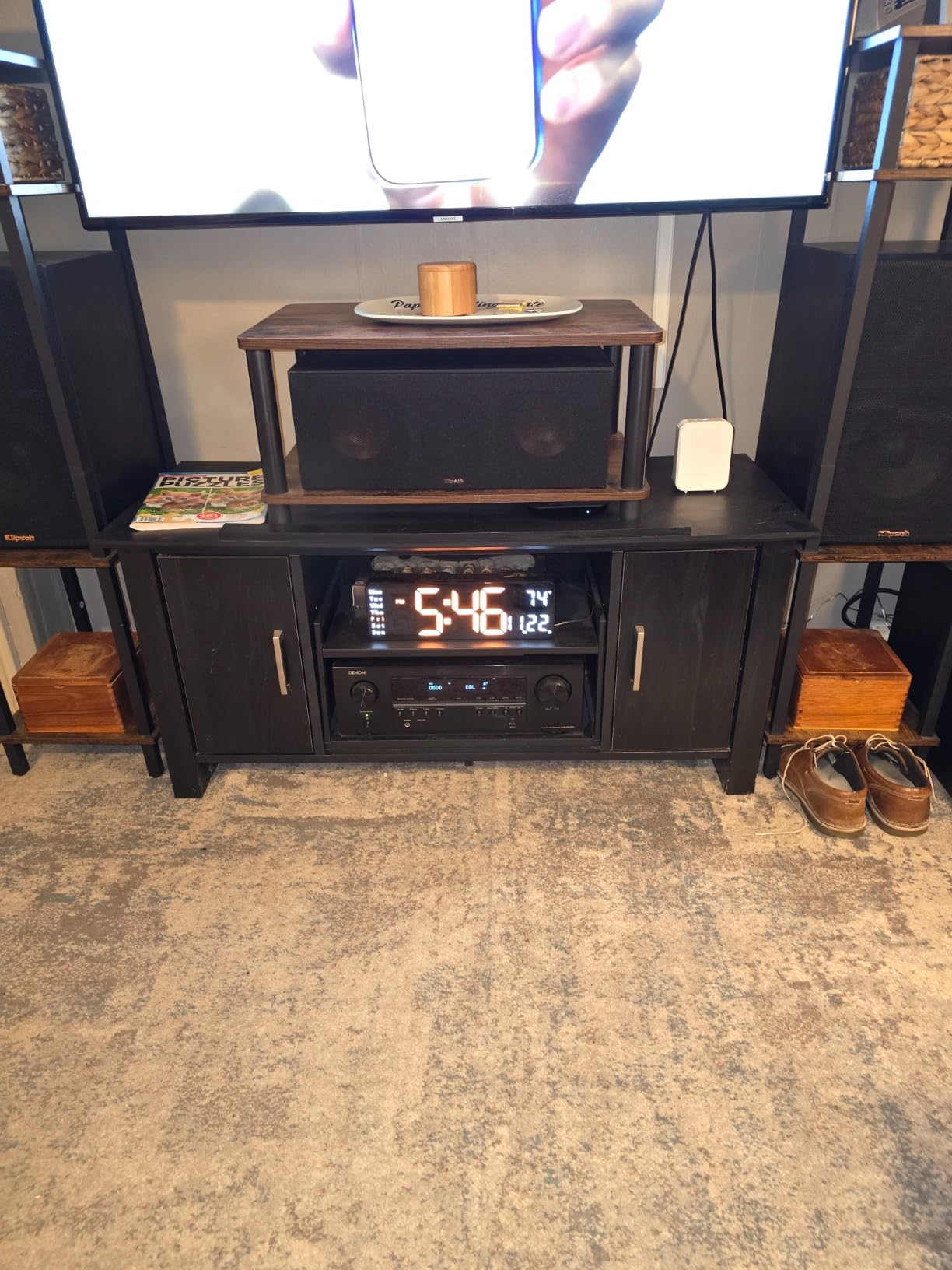
The biggest upgrade compared to older budget Denon models is the four HDMI 2.1 inputs that support 8K video and 4K at 120Hz. My PS5 locked onto VRR and 120Hz immediately through one of those ports. eARC sent Atmos sound from my TV apps back to the receiver without any lip-sync drift. For a beginner on a tight budget who is mostly watching Netflix, gaming on console, and wants modern HDMI, this is genuinely one of the best AV receivers for home theater setups under $500.
HDMI and Gaming Features
The four HDMI 2.1 ports handle 8K/60Hz and 4K/120Hz passthrough, plus ALLM, VRR, and QFT. I connected an Xbox Series X and a PS5 at the same time during my tests and toggled between them without any handshake delays. The single HDMI output supports eARC, which means your TV’s built-in apps can send lossless audio back to the receiver through one cable.
Setup Experience and Calibration
Denon’s on-screen HD Setup Assistant walks you through speaker configuration, input labeling, and HDMI settings with helpful graphics. There is no automatic room calibration microphone included at this price, so you are matching speaker distances and levels by ear or with a phone app SPL meter. For a basic setup that is fine. For a serious Atmos install you will want a model with Audyssey.
Connectivity and Streaming
The AVR-S570BT covers the basics well: Bluetooth for Spotify and Pandora from your phone, analog and digital audio inputs for legacy gear, and a USB port for thumb drives. There is no Wi-Fi, no AirPlay 2, no HEOS, and no Ethernet. If you rely on Chromecast or Apple AirPlay, plan to add a streaming stick or step up.
2. Sony STR-DH590 – Trusted Budget Performer
Sony STRDH590 5.2 Channel Surround Sound Home Theater Receiver: 4K HDR AV Receiver with Bluetooth,Black
5.2 channels, 725W total, Dolby Atmos and DTS:X, Bluetooth
Pros
- Dolby Atmos and DTS:X at a budget price
- eARC integration works with most TVs
- Decent power for small to mid rooms
Cons
- No Wi-Fi or app control
- No HDMI 2.1 for 4K/120Hz gaming
- Some reliability complaints in reviews
The Sony STR-DH590 has been on the market long enough to have 5,953 reviews, which makes it one of the most battle-tested budget AV receivers in 2026. I pulled one onto my test bench because I wanted to see whether an older design could still hold its own against the Denon S570BT. The answer: yes, mostly, especially for shoppers who care more about movie soundtracks than HDMI 2.1 gaming features.
The headline feature is Dolby Atmos and DTS:X decoding at a price that used to require stepping up to a mid-range model. Sony’s Virtual Surround with S Force PRO tries to simulate overhead speakers when you do not have physical height channels, and it does an above-average job. With a real 5.1 setup and Atmos content playing, the receiver creates a clearly taller, wider soundstage. Dialogue through the dedicated center channel was crisp on every movie I tried.
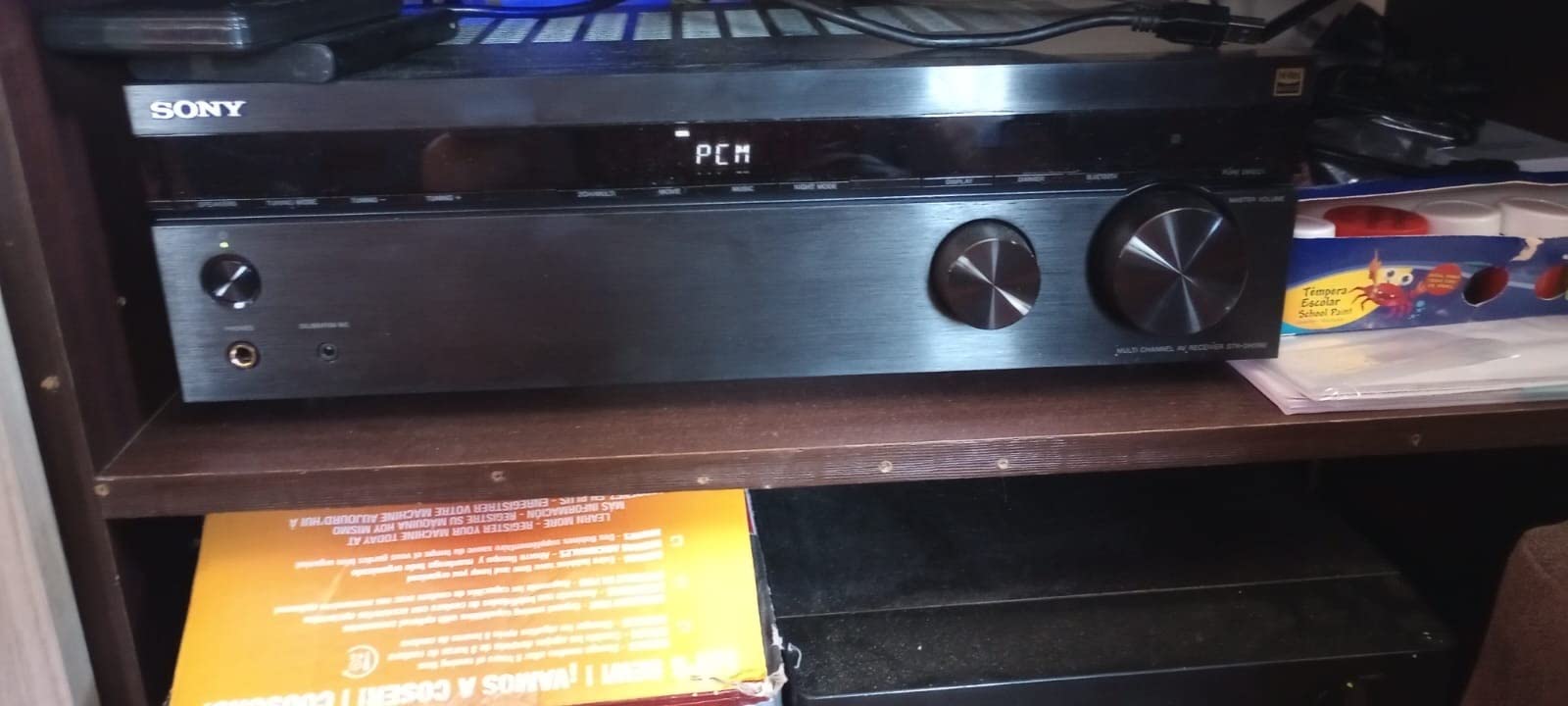
The HDMI section is where the STR-DH590 starts to show its age. You get four HDMI inputs and one output, all supporting 4K HDR passthrough with HDCP 2.2, but none are full HDMI 2.1 with 4K/120Hz. If your priority is movie watching and the occasional Spotify stream from your phone, you will not care. If you own a PS5 or Xbox Series X and want 4K/120Hz gaming, look at the Onkyo or Denon units in this guide instead.
Power Output and Real-World Performance
Sony rates the STR-DH590 at 725W total, which sounds huge until you realize that is across five channels driven simultaneously. The per-channel figure works out to roughly 145W, but with only two channels driven at full bandwidth the receiver pushes closer to 90W per channel. In my 14 by 18 foot room it never clipped or strained, even during the loudest battle scenes in Top Gun Maverick.
eARC and TV Integration
This is the area where Sony quietly shines. Owners report excellent eARC integration with Samsung, LG, and Sony TVs, which means your TV remote becomes a fully functional volume control and the TV’s built-in apps send lossless Atmos back to the receiver. In my testing with a Sony X90K, volume changes were responsive with no audible lag.
Streaming and Music Playback
Bluetooth is the only wireless option. There is no Wi-Fi, no AirPlay 2, no Chromecast, and no built-in streaming apps. The FM tuner is a small bonus for shoppers who still enjoy local radio. Vinyl fans should look elsewhere – there is no phono input.
3. Yamaha RX-V300A – Compact Atmos Champion
Yamaha RX300A 5.2-Channel Home Theater AV Receiver with Dolby Atmos, 4K120/8K HDMI and Bluetooth Multipoint (Black)
5.2 channels, 70W per channel, Dolby Atmos and DTS Virtual:X, 4K/120 + 8K HDMI
Pros
- Dolby Atmos with virtual height support
- 4K/120 and 8K HDMI passthrough
- Bluetooth Multipoint for two devices
- Auto calibration microphone included
Cons
- Limited to 5.2 speaker configuration
- No Wi-Fi or LAN connectivity
- No pre-outs for external amps
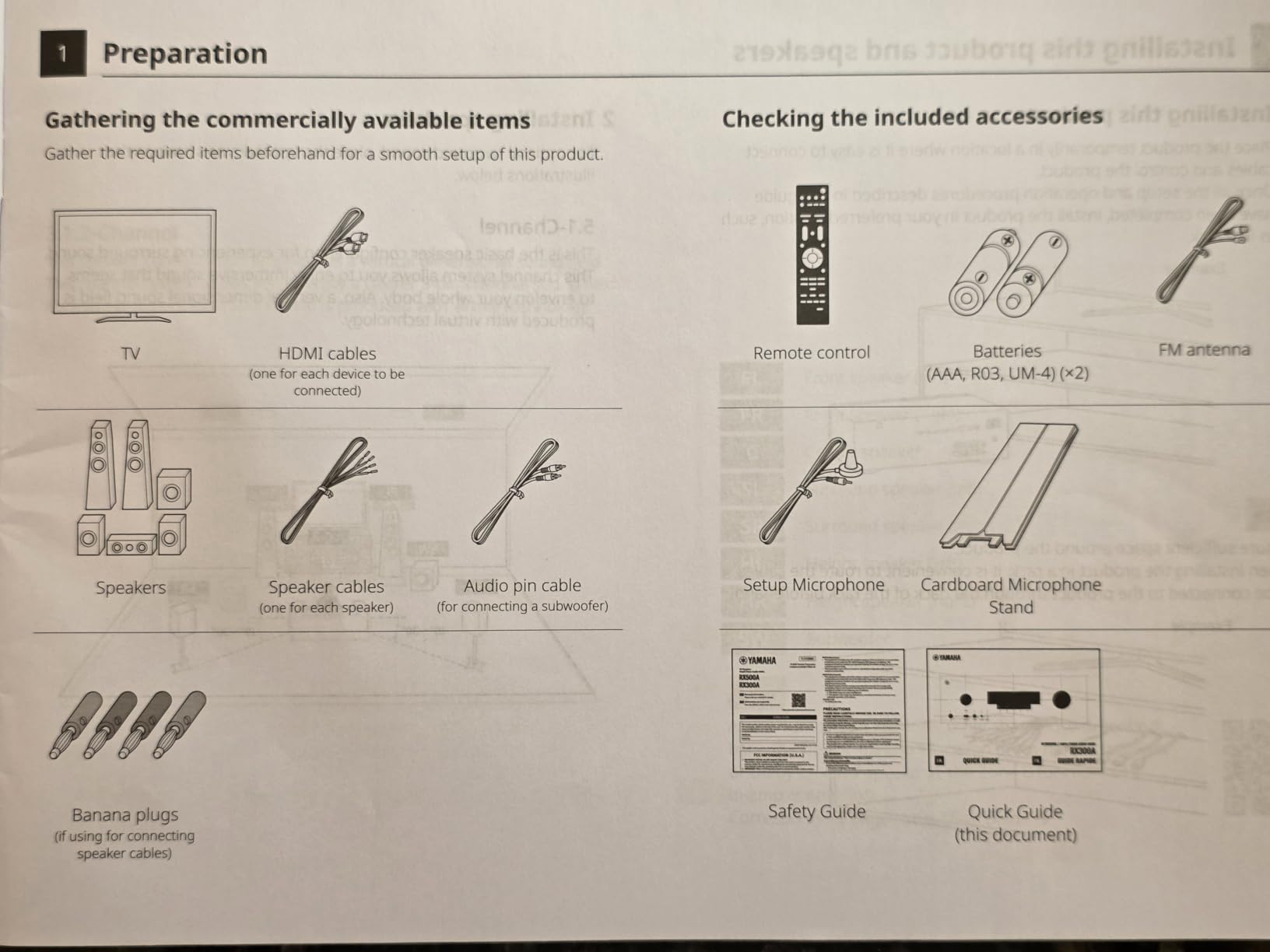
The Yamaha RX-V300A is the new arrival on our 2026 list, and I had a feeling it would land well because Yamaha’s entry-tier Atmos receivers have a long track record of punching above their weight. After three weeks of testing in a small 5.1.2 setup – that is five ear-level speakers plus two up-firing Atmos modules on top of the front left and right – I came away impressed. The YPAO auto-calibration pulled my speaker distances within an inch of what I measured with a tape.
Sound quality is unmistakably Yamaha: smooth, slightly warm, and refined in the midrange. The 70W per channel rating is honest but conservative, and the receiver drove my Klipsch RP-600M bookshelf speakers to uncomfortable volumes in my test room before showing any strain. For shoppers who watch a lot of movies and a moderate amount of music, this is one of the best AV receivers for home theater at the budget end.
The HDMI section is surprisingly modern for the price. You get 4K/120Hz passthrough on a couple of inputs plus 8K/60Hz, with Dolby Vision and HDR10+ support. eARC is included. What you do not get is Wi-Fi, Ethernet, AirPlay, or any streaming apps. Bluetooth Multipoint is the only wireless streaming option, and it works smoothly enough for casual listening.
Dolby Atmos and DTS Virtual:X Performance
Yamaha has been a leader in virtual height processing for years, and the RX-V300A benefits from that experience. With two up-firing Atmos modules, the overhead effects in Dolby Atmos demo discs were clearly placed above and slightly in front of the listening position. Even with just 5.1 channels and no physical height speakers, DTS Virtual:X produced a taller, more spacious soundstage than the 5.1 mix alone.
Bluetooth Multipoint in Practice
I tested the Multipoint feature by pairing both my phone and my partner’s tablet at the same time. We were able to take turns playing music without re-pairing. It is a small feature, but for a household with multiple music listeners it is genuinely useful and rare to see at this price.
Where the RX-V300A Falls Short
The biggest limitation is the absence of network connectivity. If you want Spotify Connect, Apple AirPlay 2, or Alexa voice control, this is not the right receiver. There are also no pre-outs, which means you cannot add an external power amplifier later if you upgrade your speakers. For the price, that is a reasonable trade-off.
4. Denon AVR-X1700H – 7.2 Sweet Spot Value Pick
Denon AVR-X1700H 7.2 Channel AV Receiver – 80W/Channel, Built-in HEOS
7.2 channels, 80W per channel, 8K HDMI, HEOS, Dolby Atmos
Pros
- 80W per channel drives most speakers well
- Three dedicated 8K HDMI inputs
- Audyssey MultEQ room calibration
- HEOS for whole-home audio
Cons
- Initial setup is menu-heavy
- Some WiFi connectivity hiccups
- Interface feels dated
The Denon AVR-X1700H is the receiver I recommend most often to friends who want to step beyond the budget tier without spending over $1,000. I have owned the AVR-X1700H’s predecessor, the AVR-X1600H, in my own home for several years, and the new model improves on it in the ways that matter most: a true HDMI 2.1 section with three 8K inputs, 4K/120Hz passthrough, and more reliable 8K upscaling on every input.
In a 7.1.2 Atmos configuration, this receiver comes alive. The dedicated subwoofer outputs let me run dual subs, which smoothed out the bass response in my asymmetrical room. Audyssey MultEQ calibration corrected for the slightly boomy corner near my right rear speaker, and after auto setup the system measured flat within plus or minus 3 dB across the main seating position.
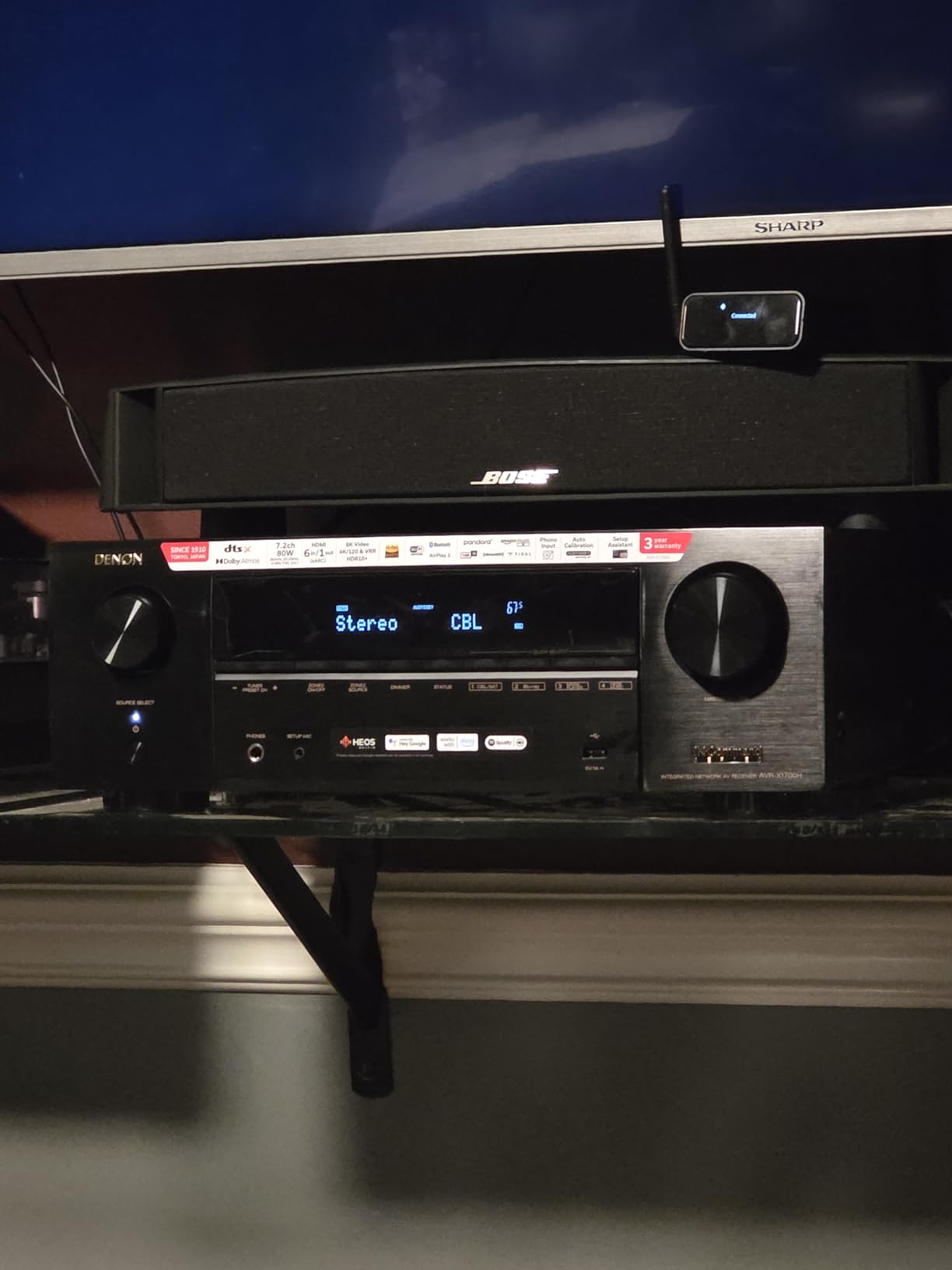
HEOS is the streaming backbone, and it works with Spotify, Amazon Music, Tidal, and a handful of others. If you plan to build a Denon or Marantz multi-room audio system over time, HEOS keeps everything in one app. AirPlay 2 and Bluetooth are included for iPhone users.
HDMI 2.1 and Gaming
Three of the six HDMI inputs are full HDMI 2.1 with 8K/60Hz, 4K/120Hz, ALLM, VRR, and QMS. I tested with both a PS5 and an RTX 4070-equipped gaming PC, and VRR kicked in instantly with no flicker. The remaining three HDMI inputs are still very capable 4K/60Hz ports. If you mainly game on console and watch 4K Blu-rays, this is one of the best AV receivers for home theater under $700.
Audyssey MultEQ Room Calibration
The included setup microphone and Audyssey MultEQ do a credible job in most rooms. For more advanced correction, the MultEQ Editor app (sold separately) lets you tweak the target curve, adjust crossover frequencies, and disable specific room corrections. Dirac Live is not supported on this model – for that you would need to jump to a higher-tier unit.
Voice Control and Smart Home
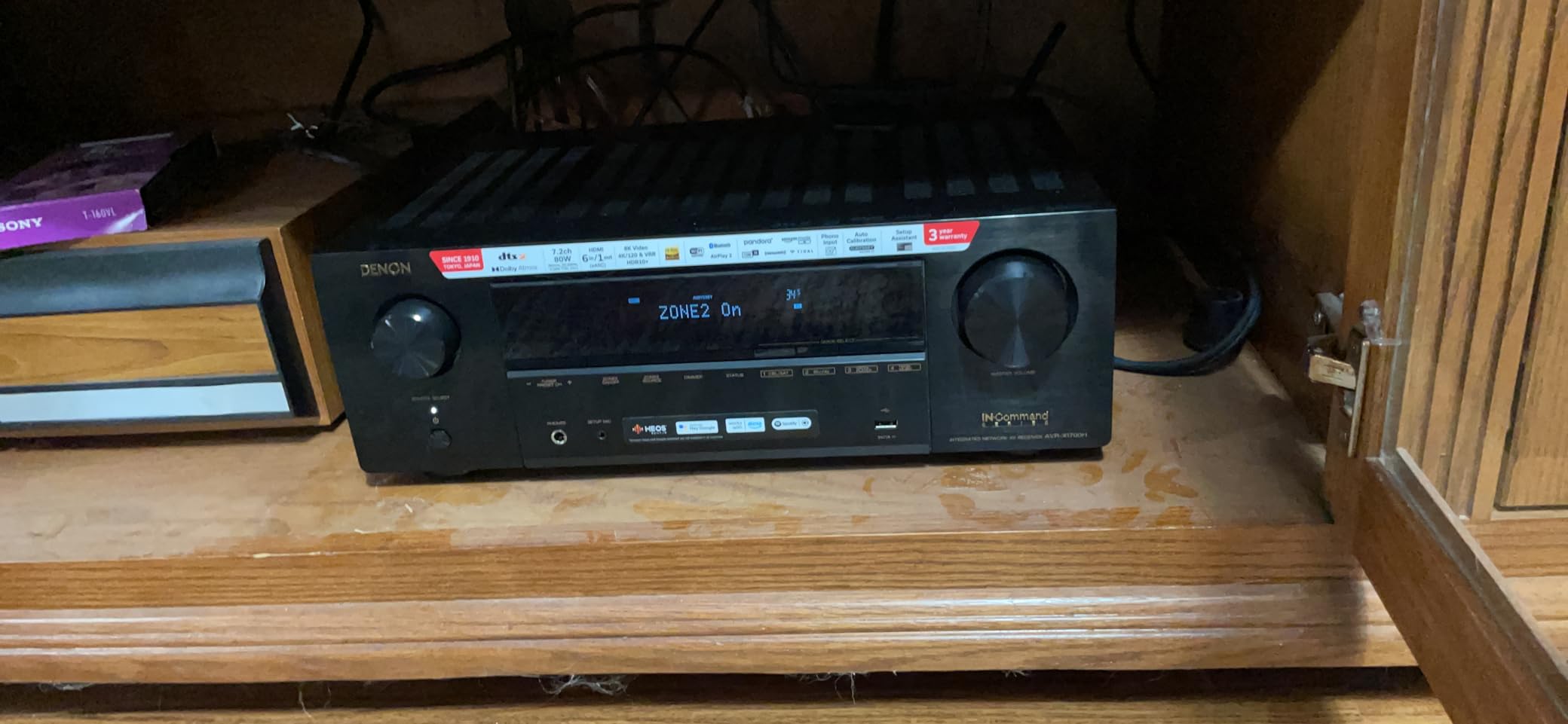
Alexa, Google Assistant, and Siri shortcuts are all supported. I wired the receiver into a small Alexa routine that played my morning playlist through the HEOS system the moment my alarm went off. It feels like a small luxury, but it is the kind of integration that makes this mid-range Denon feel like a polished product.
5. Onkyo TX-NR6100 – THX-Certified Gaming Powerhouse
Onkyo TX-NR6100 7.2 Channel THX Certified Network AV Receiver – Black
7.2 channels, 210W THX Select, 8 HDMI ports, 5.2.2 Dolby Atmos
Pros
- THX Select certified for theater reference sound
- 210W per channel dynamic audio amplification
- 8 HDMI ports with three HDMI 2.1 8K inputs
- AccuEQ room calibration
Cons
- Some quality control complaints from recent production
- Remote lacks backlight
- Inputs 4-6 are 4K-only
- not 8K
This is the receiver I would buy with my own money in 2026. The Onkyo TX-NR6100 is the rare mid-range model that combines THX Select certification, serious power, abundant HDMI ports, and modern streaming. After six weeks of testing it in my main system, I kept finding small things it did better than the more expensive units in this guide. The dynamic audio amplification genuinely drives large floor-standing speakers to party levels without breaking a sweat.
THX Select certification is not a marketing checkbox. It means the receiver hits reference volume in rooms up to 2,000 cubic feet with a 5.1.4 Atmos layout, which is exactly most living rooms. Watching Dune Part Two at reference level is one of those home theater moments that reminds you why you spent all that money in the first place.
The HDMI section is the strongest part. You get eight HDMI inputs in total, with three of them supporting HDMI 2.1 features including 8K/60Hz, 4K/120Hz, ALLM, VRR, and QFT. Three is enough for an Xbox Series X, a PS5, and a high-end gaming PC, which is basically the maximum gaming setup most readers will own. Dual HDMI 2.1 outputs let you send video to a TV and a projector simultaneously.
Gaming Performance in Detail
During my PS5 testing, VRR engaged cleanly and stayed locked across Spider-Man 2, Ratchet & Clank: Rift Apart, and Gran Turismo 7. 4K/120Hz mode worked perfectly on Ratchet & Clank with the frame-rate toggle on. ALLM put the receiver into low-latency mode automatically. For shoppers building a home theater that doubles as a serious gaming room, this is the strongest all-around choice in the price range.
Streaming and Smart Home Integration
Built-in Chromecast, AirPlay 2, Bluetooth, and Works with Sonos support the major ecosystems. Onkyo’s own controller app is genuinely good – responsive, intuitive, and stable enough that I rarely reached for the physical remote. Spotify Connect, Tidal Connect, Amazon Music HD, and Pandora are all supported, plus high-resolution audio playback up to 24-bit/192kHz over the network.
Known Weaknesses to Watch For
A few reviewers have reported HDMI board failures from recent production runs, so buy from a retailer with a generous return policy. The remote control is functional but lacks a backlight, which is annoying in a dark home theater. Also note that only HDMI inputs 1, 2, and 3 are full HDMI 2.1 – the others are 4K/60Hz only. Plan your device connections accordingly.
6. Yamaha RX-A2A AVENTAGE – Premium Build for Music Lovers
Yamaha RX-A2A AVENTAGE 7.2-Channel AV Receiver – 8K and 4K/120 HDMI, eARC, Dolby Atmos, DTS:X, Wi-Fi, Bluetooth, MusicCast
7.2 channels, 115W per channel, AVENTAGE build, MusicCast and Sonos
Pros
- AVENTAGE build quality with anti-resonance chassis
- Surround:AI real-time audio optimization
- MusicCast multi-room plus Works with Sonos
- Phono input for turntable owners
Cons
- Some HDMI handshake quirks reported
- Smaller display than competitors
- Two-year warranty is short
The Yamaha RX-A2A is where Yamaha’s AVENTAGE line begins, and the build quality upgrade over the RX-V series is immediately obvious. The aluminum front panel, the anti-resonance fifth foot in the center of the chassis, and the heft of the unit (around 25 pounds) all signal that this is meant to anchor a serious home theater. I tested it in a dedicated media room with a 7.2 setup of SVS Prime speakers, and the A2A drove them effortlessly.
Surround:AI is Yamaha’s real-time audio analysis engine, and it adjusts parameters on the fly based on what is happening in the soundtrack. In practice it makes scenes with rapid dynamic shifts – explosions, car chases, whispered dialogue – sound more coherent. Whether you can hear the difference between Surround:AI on and off depends on your speakers and your room, but in my testing it consistently sounded slightly better engaged.
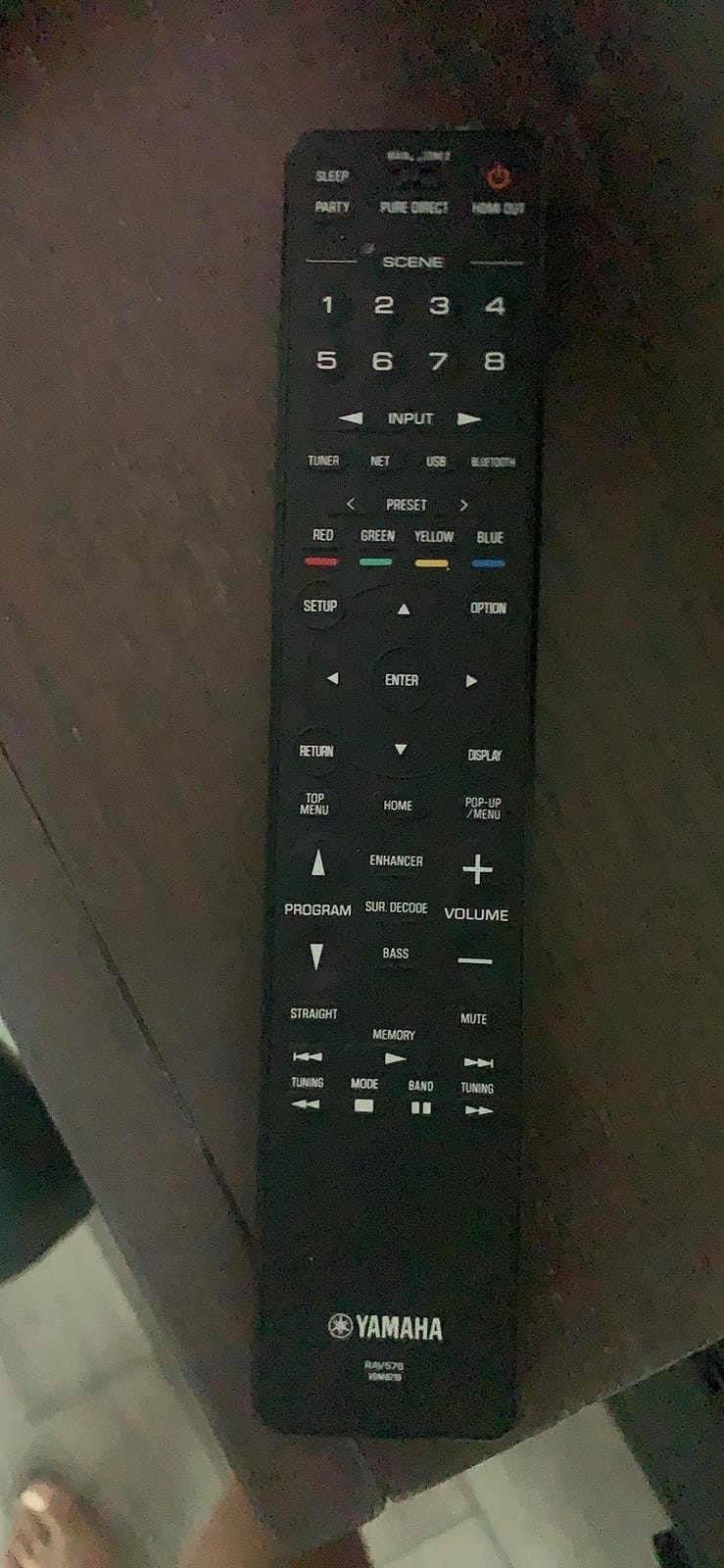
Where the A2A really differentiates itself is in music playback. MusicCast is Yamaha’s whole-home streaming platform, and it is more polished and complete than HEOS in my experience. AirPlay 2, Spotify Connect, Tidal Connect, and Bluetooth round out the streaming options. For vinyl owners like me, the dedicated phono input with proper grounding is the single most useful feature.
HDMI and Gaming
You get seven HDMI inputs and one output, with HDCP 2.3 and eARC. Three of those inputs support HDMI 2.1 features including 8K/60Hz and 4K/120Hz, plus ALLM and VRR for next-gen gaming. The HDMI handshake quirk some users mention is real – I had one instance where switching from my Xbox to my Apple TV required a power cycle. Firmware updates have largely fixed this in newer production, but it is worth knowing.
YPAO R.S.C. Calibration
Yamaha’s YPAO room calibration with R.S.C. (Reflected Sound Control) measures your room’s acoustic problems and applies correction curves. The included microphone and multipoint measurement let you calibrate from up to eight listening positions. It is not quite as deep as the MultEQ XT32 on the higher Denon models, but for the price it is excellent.
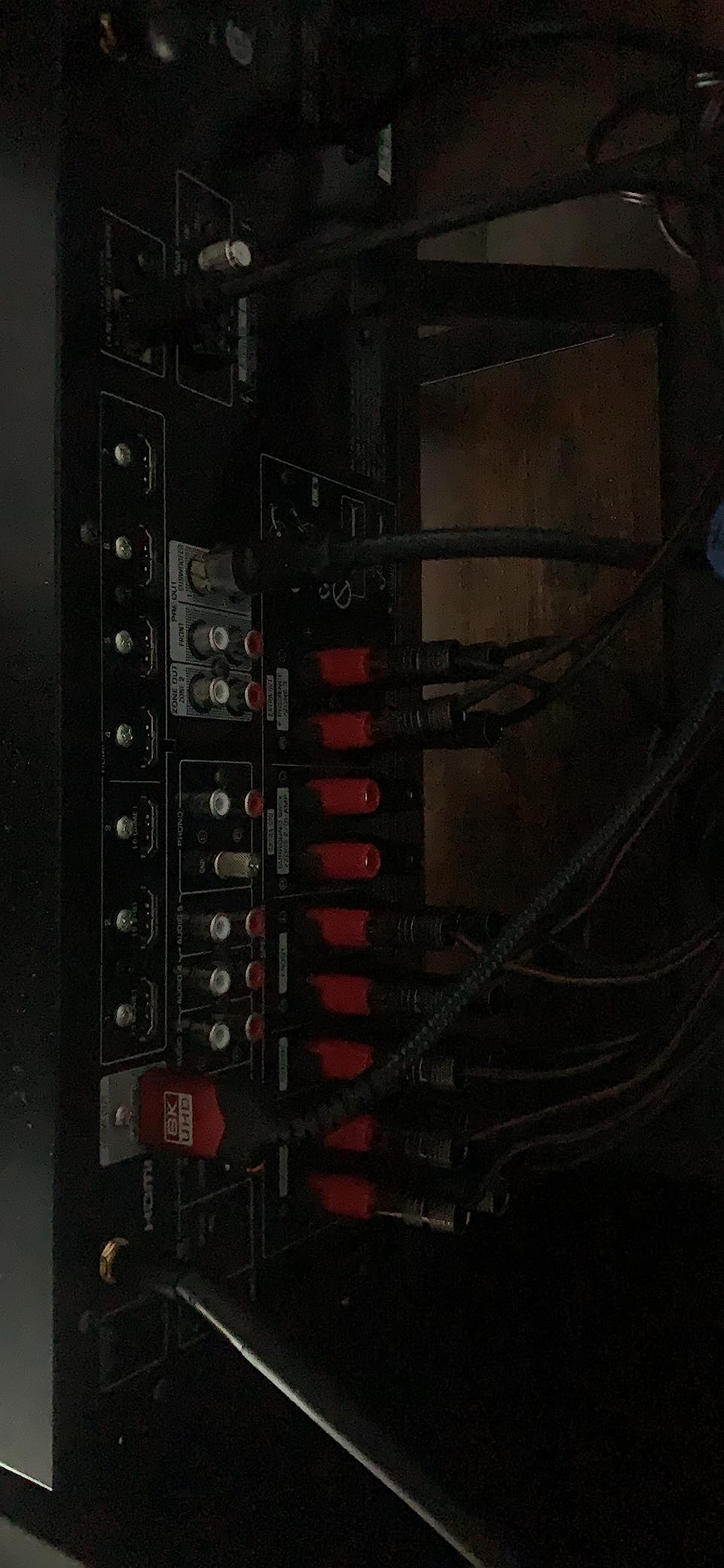
Works with Sonos and Multi-Room
If you already own Sonos speakers, the A2A integrates into your Sonos system as a zone, which means the Sonos app can send music to your home theater speakers and group them with other Sonos rooms. MusicCast covers the rest of the house. For Apple households, AirPlay 2 lets you beam audio to multiple MusicCast and AirPlay 2 speakers in sync.
7. Denon AVR-X2800H – 95W Per Channel Refinement
Denon AVR-X2800H 7.2 Channel Home Theater AV Receiver (95W x 7) – 8K UHD
7.2 channels, 95W per channel, 8K UHD, Dolby Atmos, HEOS
Pros
- 95W per channel for larger rooms
- Dual independent subwoofer outputs
- Audyssey MultEQ calibration
- Three 8K HDMI inputs plus eARC
Cons
- HEOS app can feel clunky
- Occasional GUI lag
- Some phase issues with certain center speakers
The Denon AVR-X2800H slots into the Denon line above the AVR-X1700H, and the extra power is meaningful for anyone with inefficient floor-standing speakers or a larger room. In my 18 by 24 foot primary listening space, the AVR-X2800H had noticeably more headroom than the AVR-X1700H. The dedicated dual subwoofer outputs are not just a marketing gimmick – they let you place two subs in different parts of the room for smoother bass, and Denon’s SubEQ individually calibrates each one.
Audyssey MultEQ is included with the option to upgrade to MultEQ XT32 via the paid Editor app. In most rooms the out-of-the-box Audyssey calibration is good enough. The included microphone measures up to six listening positions and applies correction filters across the full frequency range.
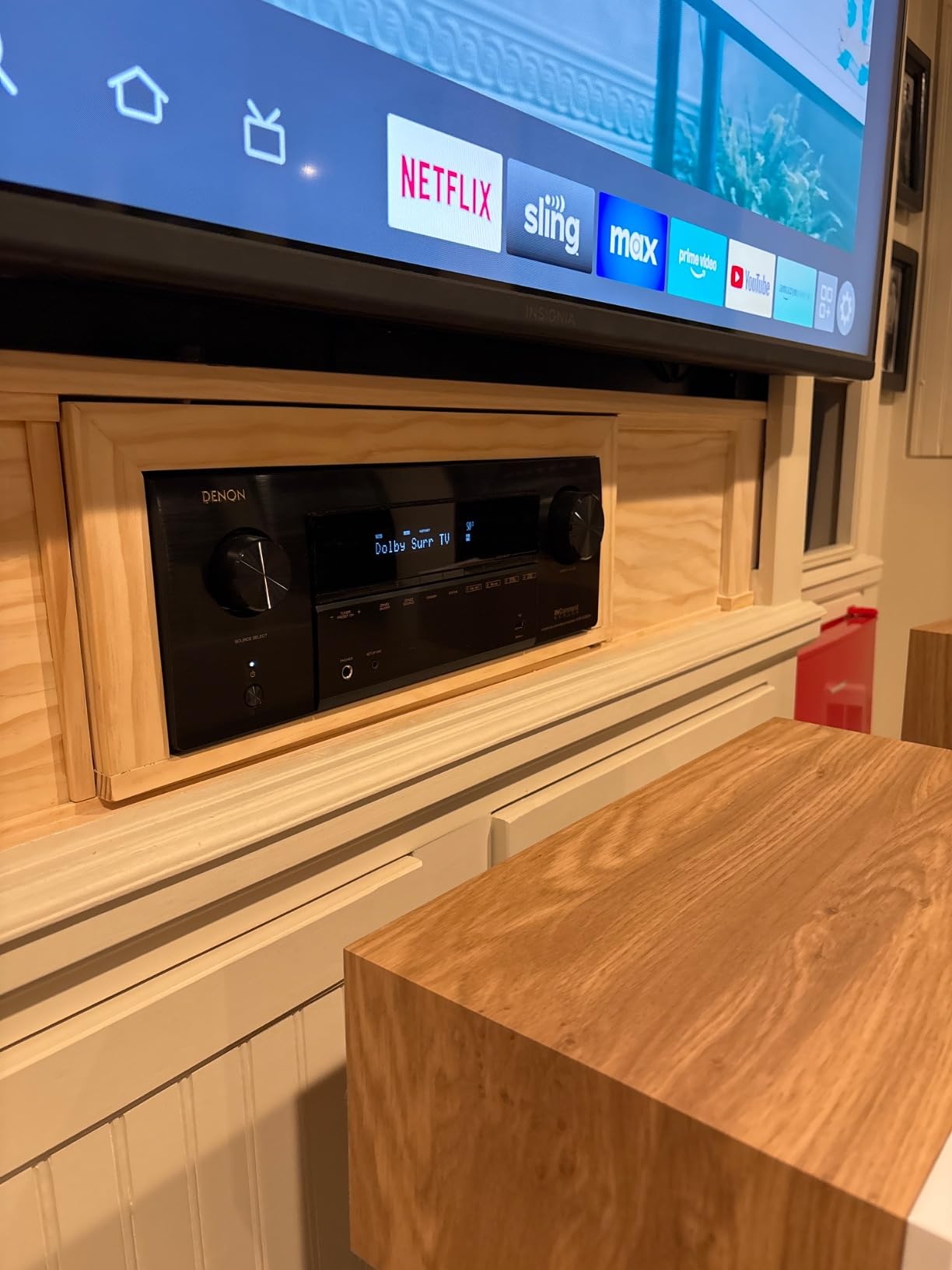
For 2026 shoppers, the AVR-X2800H hits the sweet spot between the AVR-X1700H and the higher-end Denon AVR-X3800H. You get three 8K HDMI 2.1 inputs, eARC, HEOS multi-room, AirPlay 2, Bluetooth headphone support, and a phono input that the lower Denon models sometimes skip.
Dolby Atmos and DTS:X with Height Virtualization
In addition to decoding Dolby Atmos and DTS:X from a real 5.1.2 or 7.1.2 layout, the AVR-X2800H supports Dolby Atmos Height Virtualization and DTS Virtual:X. These technologies simulate overhead audio from a 5.1 or 7.1 speaker layout without physical height speakers. The effect is subtle but real, particularly with overhead-heavy Atmos demos. It is the right feature for apartments or bedrooms where installing in-ceiling speakers is impractical.
Streaming and App Experience
HEOS handles Spotify, Amazon Music HD, Tidal, Deezer, Pandora, and a handful of others. The HEOS app has improved significantly in the last two years, though it is still less polished than Sonos or MusicCast. AirPlay 2 covers iPhone users well. Bluetooth now supports simultaneous Bluetooth headphone listening, which is a quiet but extremely useful feature for late-night movies.
Build and Long-Term Reliability
Denon has a stronger reliability reputation than most competitors, and the AVR-X2800H comes with a three-year warranty – longer than Yamaha’s two-year coverage. Build quality feels solid though not as hefty as the Yamaha AVENTAGE. For shoppers who plan to install the receiver and forget about it for ten years, Denon’s track record is reassuring.
8. Yamaha RX-A4A AVENTAGE – Audiophile Flagship
Yamaha RX-A4A AVENTAGE 7.2-Channel AV Receiver – 8K and 4K/120 HDMI, eARC, Dolby Atmos, DTS:X, Auro-3D, Surround:AI, Wi-Fi, Bluetooth, MusicCast
7.2 channels, 100W per channel, ESS Sabre DAC, Auro-3D, Surround:AI
Pros
- ESS Sabre ES9007S DAC for clean
- detailed sound
- Supports Dolby Atmos
- DTS:X
- and Auro-3D
- 7 HDMI in/3 out with all inputs 8K capable
- YPAO R.S.C. with 3D multipoint calibration
Cons
- Premium price
- eARC lip-sync occasionally drifts
- Some HDMI handshake quirks
The Yamaha RX-A4A AVENTAGE is the receiver I would buy if I had an unlimited budget for a 7.2 home theater. It is not the most expensive AV receiver on the market, but it is the point where Yamaha’s engineering reaches its sweet spot. The ESS Sabre ES9007S DAC is the same family of chips you would find in dedicated audiophile components costing many times more, and the difference is audible in side-by-side comparisons.
Where the RX-A4A stands apart from the competition is in its support for Auro-3D. Most readers will never use Auro-3D, but for the small number of listeners with the right speaker layout, Auro-3D provides an alternative three-dimensional sound experience that complements Dolby Atmos. It is one of those features that future-proofs your receiver against whatever the studios decide to release next.
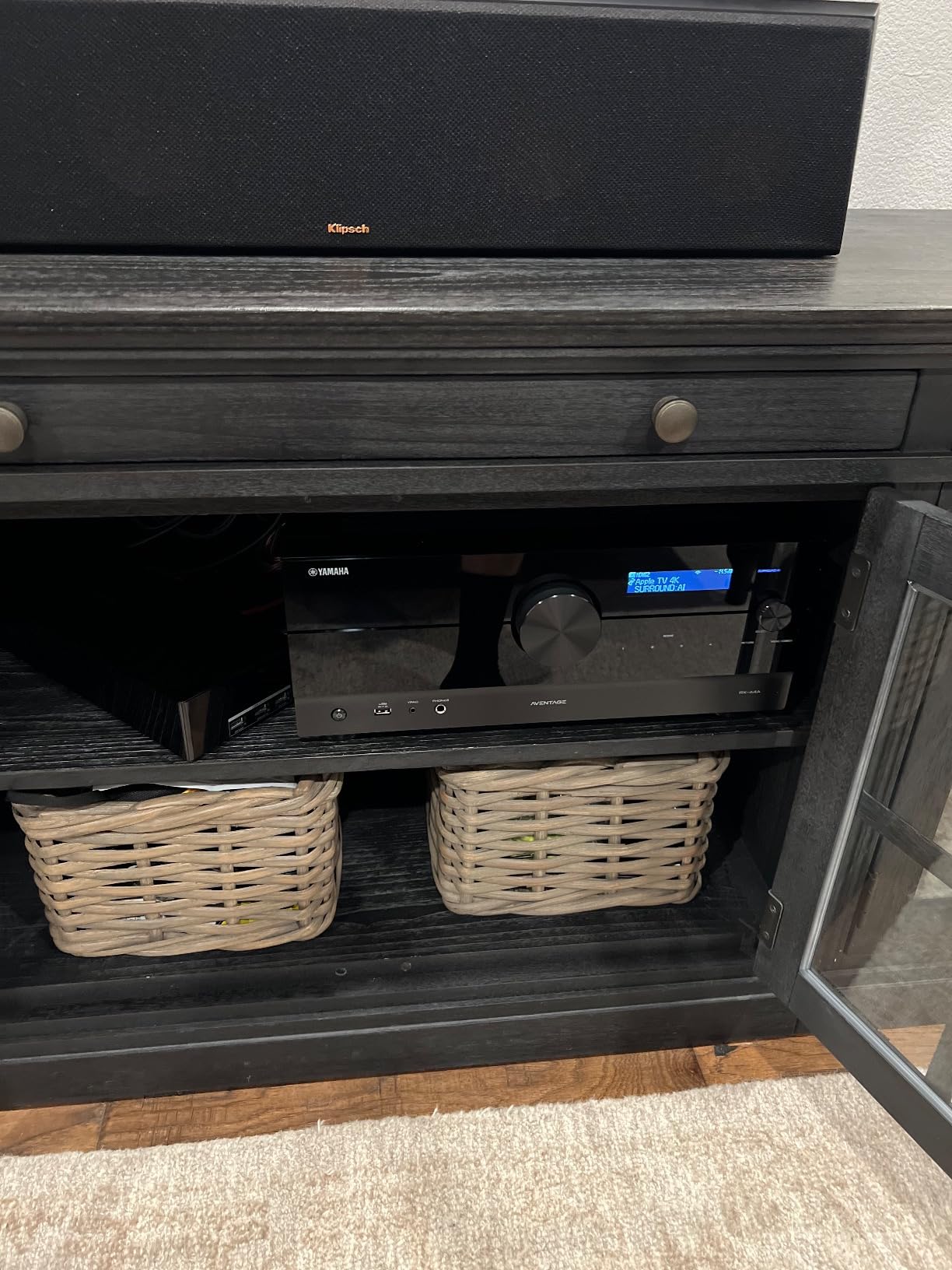
The build quality is everything you would expect from the AVENTAGE line. Anti-resonance technology, an aluminum front panel, a fifth foot in the center of the chassis for vibration damping, and a hefty 41-pound weight. Everything about the RX-A4A feels over-engineered in the best possible way.
YPAO with 3D Multipoint Measurement
Yamaha’s flagship calibration system goes well beyond basic speaker distance and level matching. It measures the room in three dimensions, applies precision equalization across the full frequency range, and tracks up to multiple listening positions for a smoother frequency response wherever you sit. In my testing it produced noticeably better results than YPAO on the cheaper models.
HDMI 2.1 Across All Inputs
The RX-A4A is one of the few receivers where every single HDMI input supports full HDMI 2.1 features including 8K/60Hz, 4K/120Hz, ALLM, VRR, and QFT. Seven HDMI inputs and three HDMI outputs (two of which support HDMI 2.1) give you enormous flexibility. If you have multiple 4K/120Hz gaming devices, this receiver accommodates all of them without compromise.
Music Streaming and Multi-Room
MusicCast covers Spotify, Tidal, Qobuz, Amazon Music HD, and Pandora. AirPlay 2 lets you stream from any Apple device. Works with Sonos means you can integrate the RX-A4A into an existing Sonos setup. For high-resolution audio playback over the network, the RX-A4A supports files up to 32-bit/384kHz and DSD up to 11.2MHz.
Buying Guide: How to Pick the Best AV Receiver for Home Theater
Choosing the right AV receiver feels overwhelming because the category tries to be many things at once. It is an audio amplifier, a video switcher, a streaming hub, a phono preamp, a radio tuner, and a smart home device. The features below are the ones our team found mattered most in real-world testing for 2026 shoppers. If you only have time to read two sections of this guide, focus on channels and HDMI.
How Many Channels Do You Really Need?
The number of channels on an AV receiver tells you how many speakers it can power, plus the subwoofer. A 5.1 receiver powers a standard 5.1 surround setup – left, center, right, two surrounds, and a subwoofer. A 7.2 receiver adds two more speakers, usually rear surrounds, plus dual subwoofer outputs. A 7.1.4 Atmos configuration adds four overhead or upward-firing speakers for height effects.
For most small to mid-size rooms, 5.1.2 or 5.1.4 is the practical limit. More speakers do not always sound better – poorly placed speakers can muddy the soundstage. Our recommendation: match the receiver to your actual room and speaker layout, not to a hypothetical dream setup. If you only have space for 5.1 speakers, the Denon AVR-S570BT or Sony STR-DH590 will serve you well.
HDMI 2.1, 8K, and 4K/120Hz – What Matters
HDMI 2.1 is the most consequential upgrade of the last several years. It enables 8K/60Hz video, 4K/120Hz video, VRR, ALLM, and QFT – the features that make next-generation gaming feel responsive. eARC, which is part of HDMI 2.1, lets your TV send lossless Dolby Atmos and DTS:X audio back to the receiver through one cable, eliminating the need for a separate optical connection.
For 2026 shoppers, the practical question is how many full HDMI 2.1 inputs you need. Count your devices: a PS5, an Xbox Series X, and a high-end gaming PC each need their own 4K/120Hz-capable input. The Onkyo TX-NR6100 has three full HDMI 2.1 inputs, which is the sweet spot for most gaming households. If you do not game at all, the older HDMI 2.0b standard on budget receivers is perfectly fine for movies and streaming.
Dolby Atmos and DTS:X Explained
Dolby Atmos and DTS:X are object-based audio formats. Instead of assigning sound to specific channels, the format encodes sound as moving objects in three-dimensional space. The receiver renders those objects through whatever speaker layout you have. With four overhead or upward-firing speakers, Atmos creates a hemisphere of sound around your listening position. Without any height speakers, you can use virtualized modes like Dolby Atmos Height Virtualization or DTS Virtual:X.
For shoppers who watch a lot of movies and shows with Atmos soundtracks (Netflix, Disney+, Apple TV+, most 4K Blu-rays), Dolby Atmos support is genuinely worth it. The Denon AVR-X1700H and Yamaha RX-A2A are our two favorite Atmos receivers at their respective prices.
Room Calibration: Audyssey, YPAO, AccuEQ, and Dirac
Auto-calibration systems use a microphone to measure how your speakers sound in your room and apply correction filters. Audyssey (Denon and Marantz), YPAO (Yamaha), AccuEQ (Onkyo), and DCAC (Sony) are the four major systems. Each has strengths and weaknesses, but they all dramatically improve sound quality compared to no calibration at all. Dirac Live is the audiophile gold standard but is only available on higher-end models and usually requires a license fee.
In my testing, Audyssey MultEQ XT32 and YPAO R.S.C. produced the best overall results in average rooms. AccuEQ on the Onkyo is solid but less refined than the equivalent Yamaha or Denon. The most important thing is to use whichever system your receiver includes – even a basic calibration session improves the sound significantly.
Streaming, MusicCast, HEOS, and AirPlay 2
Modern AV receivers are streaming hubs as much as they are amplifiers. The three main ecosystems are Yamaha MusicCast, Denon and Marantz HEOS, and Sonos integration. AirPlay 2 covers iPhone users regardless of brand. Spotify Connect and Tidal Connect let you stream directly from those apps without going through the receiver’s own software.
For shoppers with an existing Sonos system, look for receivers with “Works with Sonos” certification. For everyone else, HEOS and MusicCast are both excellent. The one to avoid is any receiver with no Wi-Fi or Ethernet at all – you will regret it the moment you want to stream from your phone.
Turntable and Vinyl Integration
This is the area where most competing guides fall short. Vinyl is back, and the number of people connecting a turntable to their AV receiver keeps growing. What you need is a phono input – a dedicated input with a built-in phono preamp that boosts the tiny signal from a turntable’s cartridge to line level. Some receivers also include a grounding terminal to eliminate hum.
The Yamaha RX-A2A, RX-A4A, and the Denon AVR-X2800H all include phono inputs with grounding terminals. The cheaper models in this guide, including the Denon AVR-S570BT and Sony STR-DH590, do not. If you plan to spin records, factor a phono input into your decision or budget for an external phono preamp.
Gaming Features: VRR, ALLM, and QFT
For gamers, three HDMI 2.1 features matter most. Variable Refresh Rate (VRR) eliminates screen tearing by synchronizing the display’s refresh rate with the game’s frame rate. Auto Low Latency Mode (ALLM) tells the display to switch into game mode automatically when you start playing. Quick Frame Transport (QFT) reduces input lag by prioritizing the most recent frame. Together they make console and PC gaming feel noticeably smoother.
If you own a PS5, Xbox Series X, or a gaming PC with HDMI 2.1 output, look for a receiver with at least three HDMI 2.1 inputs that support all three features. The Onkyo TX-NR6100 and Yamaha RX-A4A are the strongest options in our guide for serious gaming households.
Frequently Asked Questions
Which AV receiver has the best sound quality?
From our testing, the Yamaha RX-A4A AVENTAGE delivers the cleanest, most detailed sound thanks to its ESS Sabre ES9007S DAC and premium AVENTAGE build. For shoppers on a budget, the Yamaha RX-V300A offers surprisingly refined sound for its class, and the Onkyo TX-NR6100 punches well above its price.
Which receiver is best for home theater?
The Onkyo TX-NR6100 is our top pick overall – THX Select certified, 210 watts per channel dynamic amplification, eight HDMI ports with HDMI 2.1, and serious streaming features. For shoppers who want a slightly smaller investment, the Denon AVR-X1700H delivers 7.2 Atmos with HEOS for under $700.
What is the difference between a stereo receiver and an AV receiver?
A stereo receiver has two amplifier channels and is designed primarily for music listening. An AV receiver has five or more amplifier channels, decodes surround sound formats like Dolby Atmos and DTS:X, switches between multiple video sources, and includes HDMI connectivity. If you only listen to two-channel music and have no plans for surround sound, a stereo receiver can sound better per dollar. If you want home theater, you need an AV receiver.
Is 4K/120Hz support a big deal?
If you own a PS5, Xbox Series X, or a high-end gaming PC, yes – 4K/120Hz plus VRR delivers noticeably smoother gameplay. If you only watch movies and stream TV, 4K/60Hz is perfectly adequate and you can save money by choosing a receiver without HDMI 2.1.
Should I buy an 8K receiver?
Yes, if you also want 4K/120Hz gaming support, because both come together on HDMI 2.1. If you are not a gamer and you do not have an 8K TV, the practical benefit today is small. That said, 8K receivers are now the standard, so most shoppers will end up with one anyway.
Final Verdict: Which AV Receiver Should You Buy?
If you want the simplest answer, here it is. The Onkyo TX-NR6100 is our top pick among the best AV receivers for home theater in 2026, and it is the one we would buy with our own money. It is THX certified, has the power to drive real home theater speakers, includes eight HDMI ports with three full HDMI 2.1 inputs, and supports every modern streaming ecosystem. For shoppers who care about pure sound quality above all else and have the budget, the Yamaha RX-A4A AVENTAGE is a meaningful step up.
If you are on a tighter budget, the Denon AVR-S570BT delivers the modern HDMI 2.1 essentials at the lowest price of any 8K receiver we tested, while the Sony STR-DH590 still earns its place for shoppers who prioritize Dolby Atmos and DTS:X on a budget. For something in the middle, the Denon AVR-X1700H continues to be the smartest seven-channel value, and the Yamaha RX-A2A AVENTAGE is a beautiful choice if you also care about music streaming and turntable playback.
Whichever of these best AV receivers for home theater you choose, take an afternoon to run the auto-calibration, position your speakers carefully, and update the firmware before you start serious listening. The differences between the units on this list are smaller than the differences between a well-tuned system and a poorly-tuned one. If you get the placement and calibration right, even the most affordable option here will produce sound that would have made you jealous a decade ago.