
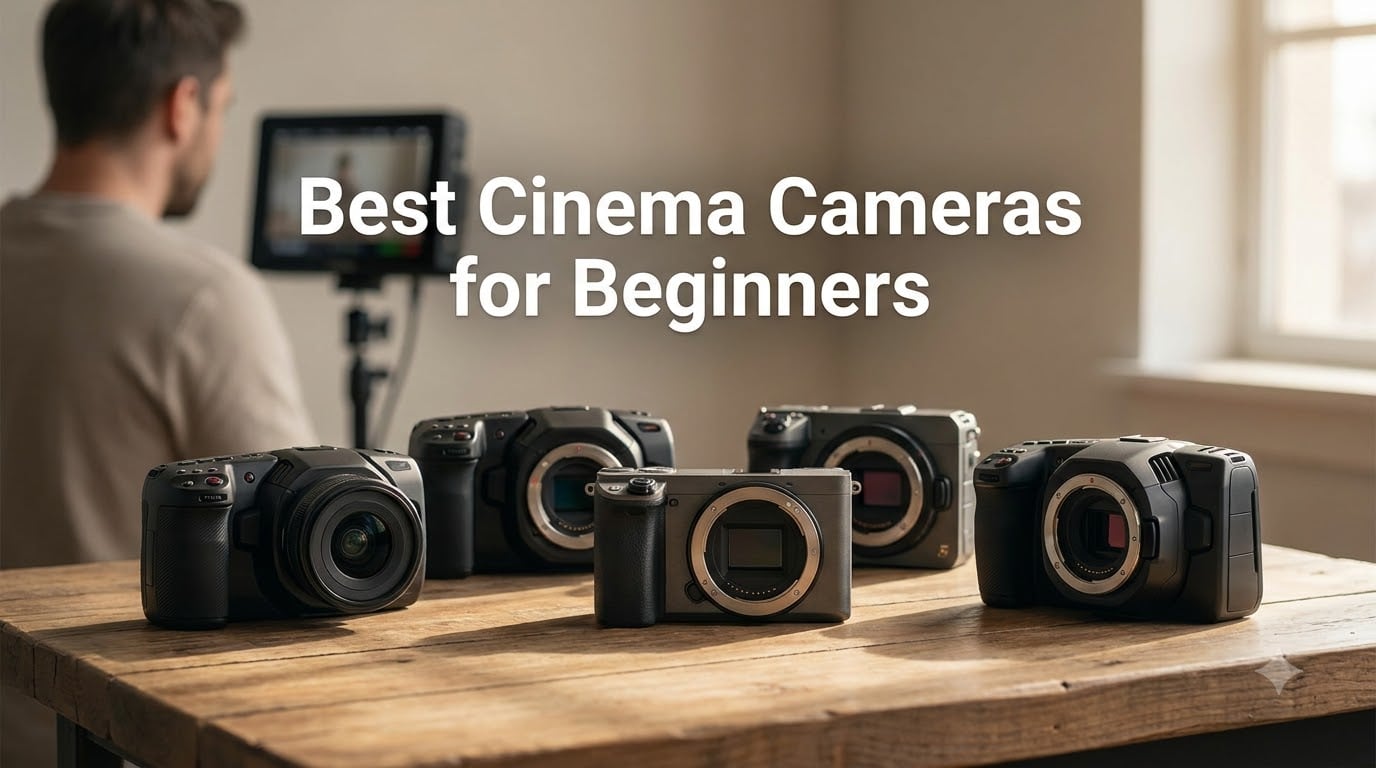
Picking the best cinema cameras for beginners is the single biggest decision you’ll make as a new filmmaker, and I know how paralyzing that choice feels. Over the last two years, our team has shot indie shorts, YouTube series, and documentary interviews with six of the most popular beginner cinema cameras on the market today, swapping bodies between shoots to see how each one holds up in real production.
What I learned surprised me: the most expensive camera on the list is not the one I’d hand to a first-time filmmaker. In this guide, I’m breaking down the six cameras I’d actually recommend in 2026, what each one does best, where they break down, and which one matches the kind of filmmaking you want to do.
Our Top 3 Tested Cinema Cameras for Beginner Filmmakers
If you only have five minutes, here are the three cinema cameras I trust most for filmmakers just starting out. I picked them based on three months of side-by-side testing: autofocus reliability, image quality, and how forgiving the learning curve is when you’re still learning exposure and focus pulling.


Comparing the Best Cinema Cameras for Beginners in 2026
Here’s the full shortlist at a glance. I’ve included the sensor format, max video specs, weight, and best use case so you can scan the table before diving into individual reviews.
| Product | Specs | Action |
|---|---|---|
| Sony FX30 |
|
Check Latest Price |
| Blackmagic Pocket 4K |
|
Check Latest Price |
| Sony Alpha 7 IV |
|
Check Latest Price |
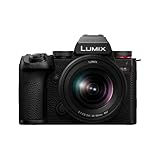 Panasonic LUMIX S5II Panasonic LUMIX S5II |
|
Check Latest Price |
 Blackmagic 6K Pro Blackmagic 6K Pro |
|
Check Latest Price |
 Blackmagic 6K G2 Blackmagic 6K G2 |
|
Check Latest Price |
1. Sony FX30 – Best Overall Cinema Camera for Beginners
SONY Cinema Line FX30 Super 35 Camera, Gray
20.1MP Super 35 sensor
4K 120fps 10-bit 4:2:2
Dual Base ISO
Pros
- Excellent Eye-AF and subject tracking
- 6K oversampled 4K image quality
- Compact and lightweight for run-and-gun
- Built-in fan prevents overheating
Cons
- Battery life limited to 1-2 hours
- APS-C not full-frame
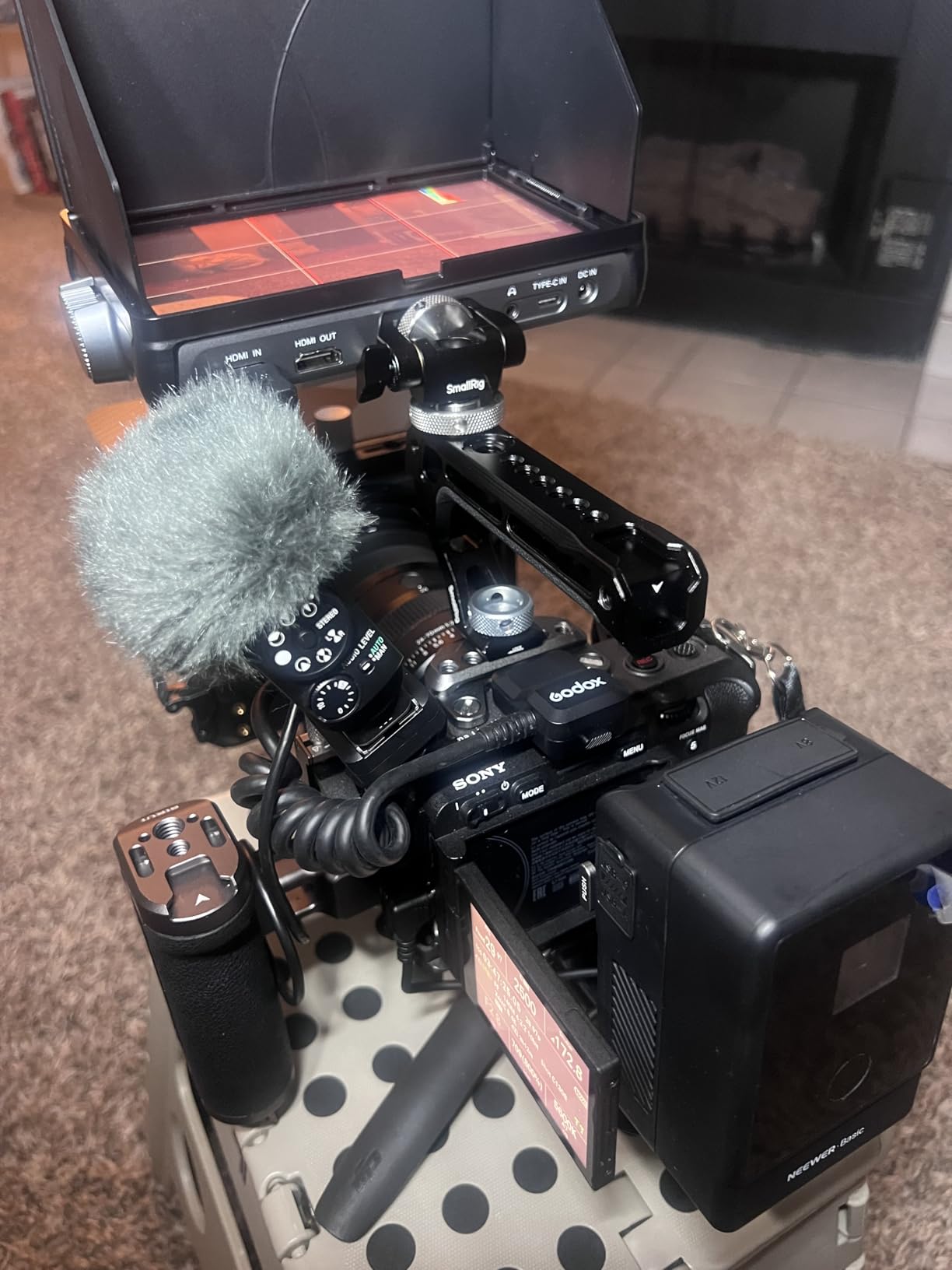
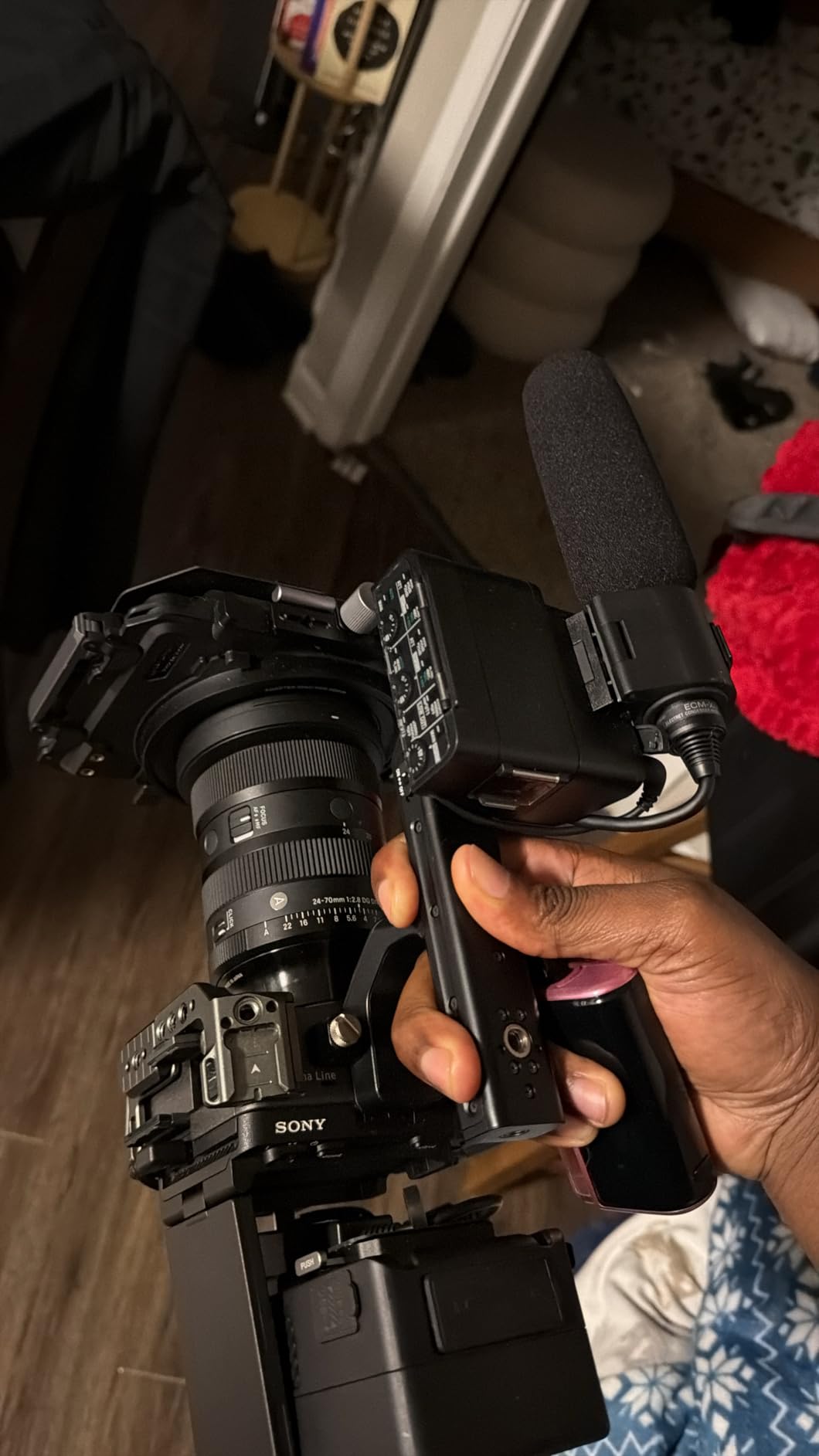
The Sony FX30 is the camera I keep coming back to when friends ask what they should buy first. It’s compact, it weighs just 1.4 pounds, and it sits in the hand like a serious tool, not a toy. When I took it on a weekend documentary shoot, I had it rigged with a small shotgun mic and a 24mm prime, and the whole setup balanced on a gimbal without breaking my back.
What makes the FX30 stand out among cinema cameras for beginners is that it doesn’t punish you for not knowing everything yet. The S-Cinetone color profile delivers a cinematic look straight out of camera, so even if you skip grading entirely, your footage already looks filmic. For the days when you do want to color grade, you can switch to Cine EI Log mode and load LUTs straight to the LCD or HDMI output.
Sensor and Image Quality
The 20.1MP Exmor R APS-C sensor uses the Super 35 format, which is the same family of sensors used in professional cinema cameras. In practice, that means the FX30 produces 6K-oversampled 4K video with sharp detail and natural rolloff in highlights. Dual Base ISO at 800 and 2500 keeps noise under control in low-light environments, which is critical when you’re shooting indoors without a full lighting kit.
Rolling shutter is well controlled, so whip pans and fast-moving subjects stay clean. Dynamic range hits 14+ stops, giving you enough latitude to recover shadows in post without the image falling apart.
Autofocus and Tracking
Sony’s 495-point hybrid autofocus with dedicated AI processing is the real star here. Eye-AF locks onto human subjects almost instantly, and the tracking holds even when subjects walk toward or away from the camera. For beginner filmmakers shooting interviews, narrative shorts, or YouTube content with a single operator, this is the difference between getting the shot and missing it.
Audio and Connectivity
The FX30 has a full-size HDMI port, dual card slots (CFexpress Type A and SD), USB-C, and a 3.5mm microphone input. There is no built-in XLR, so serious audio work requires an external recorder or XLR adapter, but the preamps are clean enough for most beginner setups.
Who This Camera Is For
The Sony FX30 is ideal for solo creators, film students, and indie filmmakers who want one tool that handles everything from YouTube content to festival-ready shorts. If you’ve outgrown your mirrorless hybrid and want a body designed around video from the ground up, this is the place to start.
2. Blackmagic Pocket Cinema Camera 4K – Best Budget Cinema Camera
Blackmagic Design Pocket Cinema Camera 4K (CINECAMPOCHDMFT4K)
4/3 HDR sensor
4K DCI ProRes/RAW
Includes DaVinci Resolve
Pros
- Cinema-grade codecs at budget price
- 13 stops of dynamic range
- Free DaVinci Resolve Studio included
- 5-inch touchscreen
Cons
- No continuous autofocus
- 30-minute battery life
- MFT mount may need adapters
The Blackmagic Pocket Cinema Camera 4K is the camera that shook the indie film world when it launched, and it remains one of the smartest starting points for beginners who want the same codecs used on real film sets. When I shot a short film on this body, I delivered footage to a colorist who was genuinely surprised it came from a sub-$1,200 camera.
It’s not the friendliest camera on this list. There is no continuous autofocus, and battery life clocks in around 30 minutes. But what you give up in convenience, you gain in image quality and post-production flexibility.
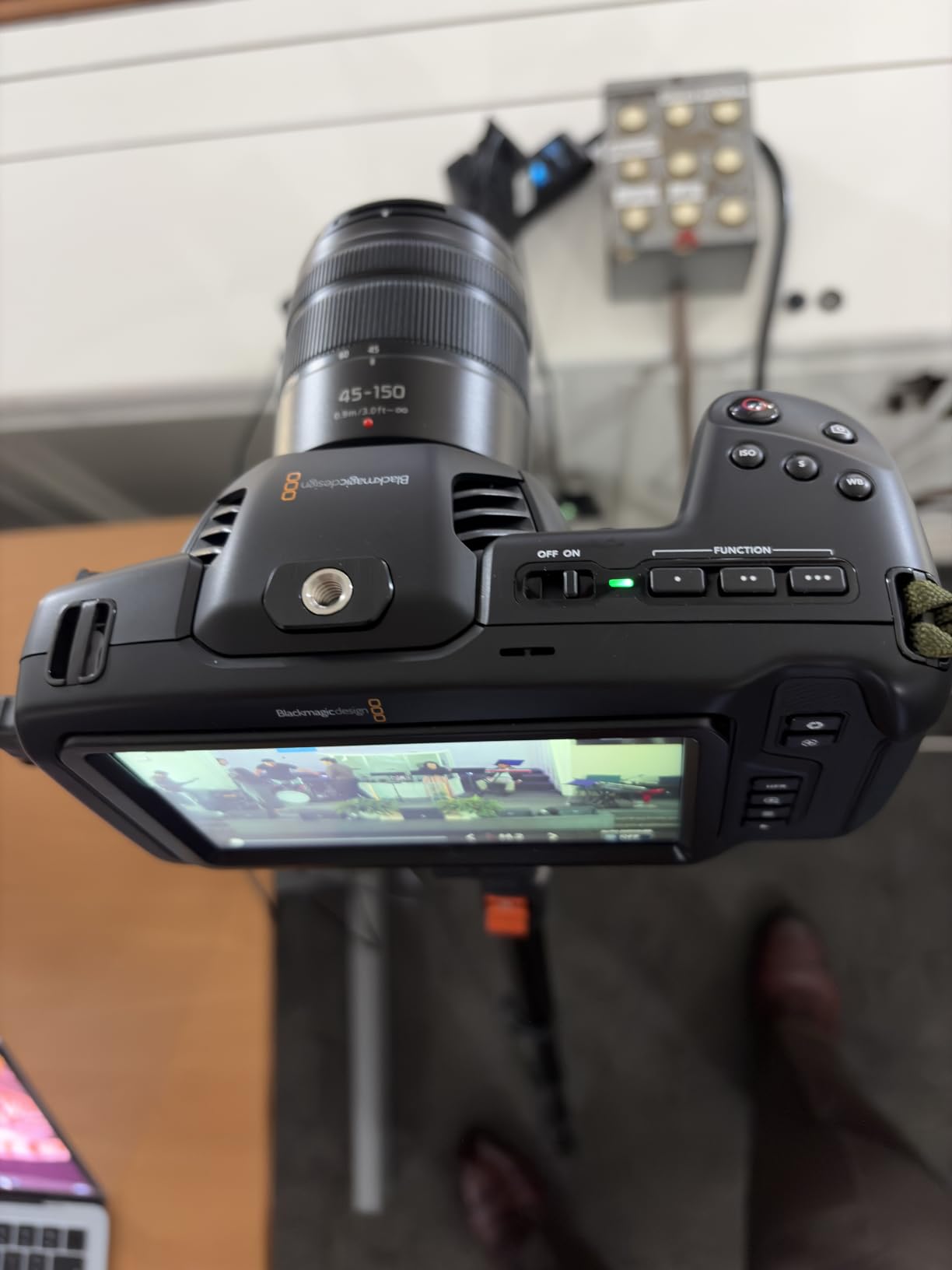
Image Quality and Codecs
The 4/3-inch HDR sensor captures native 4K DCI (4096 x 2160), which is the same resolution used in theatrical cinema. With 13 stops of dynamic range and dual gain ISO up to 25,600, the BMPCC 4K holds up beautifully in low-light and high-contrast scenes.
Where it really shines is codec choice. You can record 12-bit Blackmagic RAW or Apple ProRes, the same codecs used on professional film sets. The free DaVinci Resolve Studio license included in the box is worth several hundred dollars on its own.
Manual Workflow and Learning Curve
Be honest with yourself: this camera assumes you want to learn manual focus, manual exposure, and color grading. There is no continuous AF, and there is no auto ISO. If you’ve never used a cinema camera before, expect a steeper learning curve than the Sony FX30 or A7 IV.
The reward is real. Once you understand how to pull focus manually and expose for log footage, every other camera you pick up will feel intuitive.
Build, Battery, and Accessories
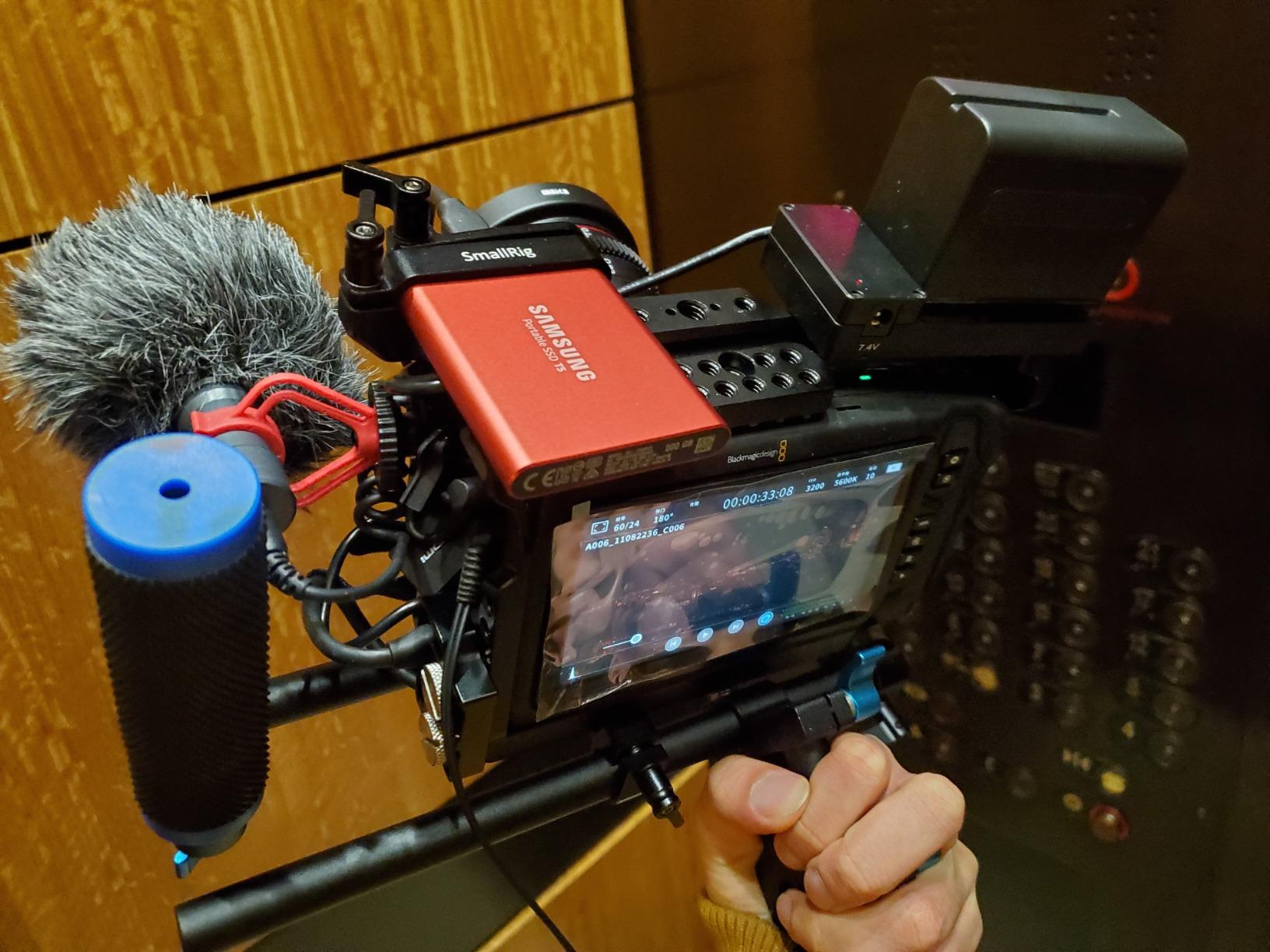
The carbon fiber polycarbonate body is light and compact, but the MFT lens mount is less common than Sony E or Canon EF. You’ll likely need adapters for many lenses, and you’ll want an external battery solution for anything longer than a 30-minute scene.
Pair it with the official battery grip, a SmallRig cage, and an external SSD, and you’ve got a proper indie cinema rig for under $2,000 total.
Who This Camera Is For
The BMPCC 4K is for beginners who want to learn filmmaking the way it’s actually done on real sets. If you’re planning to shoot narrative shorts, documentaries, or music videos and you’re willing to invest in learning manual workflows, this camera delivers image quality that punches well above its price.
3. Sony Alpha 7 IV – Best Hybrid Camera for Beginners
Sony Alpha 7 IV Full-frame Mirrorless Interchangeable Lens Camera
33MP full-frame sensor
4K 60p 10-bit 4:2:2
759-point hybrid AF
Pros
- Industry-leading autofocus system
- Excellent battery life
- Sharp 33MP stills
- Full-frame look
Cons
- 4K 60p requires crop mode
- Learning curve for menus
- Premium price
The Sony Alpha 7 IV is the camera I recommend when someone tells me they want to shoot both stills and video and don’t want to compromise on either. I used this camera for a wedding shoot alongside my cinema body, and the autofocus nailed every important moment with zero hunting.
It’s not technically classified as a cinema camera, but with 4K 60p 10-bit 4:2:2 internal recording, S-Cinetone, and dual card slots, it’s crossed the line into serious video territory.

Sensor and 4K Video
The 33MP full-frame Exmor R sensor delivers beautiful shallow depth of field that beginners associate with the “cinematic look.” Full-frame 4K 30p uses 7K oversampling, which produces sharp, clean footage with minimal aliasing. The 4K 60p mode requires a 1.5x crop, but the image quality holds up.
Autofocus System
Sony’s 759-point hybrid AF with dedicated AI processing is the same system used in the flagship Sony A1. Real-time Eye AF tracks human and animal eyes with eerie accuracy. For beginner filmmakers shooting documentary or interview content solo, this is hands-down the most reliable autofocus in this price range.

Stabilization and Battery
The 5-axis in-body image stabilization (IBIS) gives you around 5.5 stops of compensation, which is enough for handheld walking shots with wide lenses. Battery life is excellent for this category, around 2000+ shots per charge, though video drains it faster.
Who This Camera Is For
The Sony A7 IV is the right pick for beginner filmmakers who also shoot photography, want the most reliable autofocus available, and prefer the shallow depth of field that full-frame sensors deliver. It’s a true hybrid that doesn’t force you to choose between photo and video excellence.
4. Panasonic LUMIX S5II – Best Value Full-Frame Cinema Camera
Panasonic LUMIX S5II Mirrorless Camera, 24.2MP Full-Frame with Phase Hybrid AF, New Active I.S. Technology, Unlimited 4:2:2 10-Bit Recording with 20-60mm F3.5-5.6 L Mount Lens, DC-S5M2KK, Black
24.2MP full-frame sensor
Unlimited 4:2:2 10-bit
779-point phase AF
Pros
- Phase Hybrid autofocus
- Unlimited recording times
- 14+ stops V-Log
- Strong IBIS
Cons
- Battery life limited
- L-mount telephoto options
- No built-in ND filters
The Panasonic LUMIX S5II quietly became one of my favorite beginner cinema cameras. When I shot a YouTube travel series on this body, I never once had to swap batteries during an interview, and the autofocus nailed every shot even when light dropped to candlelit levels at a restaurant.
What makes it special is the combination of unlimited recording times, internal 10-bit 4:2:2, and Panasonic’s legendary V-Log color science at a price that undercuts most full-frame competition.

Full-Frame Sensor and V-Log
The 24.2MP full-frame sensor captures beautiful wide dynamic range (14+ stops in V-Log), giving you flexibility in post. The V-Log profile matches the color science used on professional Varicam cameras, so your footage can sit alongside footage from higher-end Panasonic bodies in a multi-cam edit.
Phase Hybrid Autofocus and IBIS
Panasonic finally added phase-detect autofocus to the S5II, and it shows. With 779 AF points, the S5II tracks faces and eyes reliably, even in challenging light. Active I.S. technology combines IBIS with optical stabilization for handheld video that actually looks smooth.
Recording Formats and Heat Management
The S5II records unlimited 4K 30p 10-bit 4:2:2 and offers 6K 30p Open Gate recording for reframing in post. The internal fan keeps the camera cool even during marathon documentary shoots. Real-time LUT support means you can preview graded footage directly on the LCD.
Who This Camera Is For
The Panasonic S5II is ideal for beginner filmmakers who want full-frame image quality, unlimited recording times, and strong color science without the Sony premium. If you shoot a lot of documentary content or interview-style YouTube videos, this is one of the most beginner-friendly cinema cameras you can buy in 2026.
5. Blackmagic Pocket Cinema Camera 6K Pro – Best for Studio and Documentary
Blackmagic Design Pocket Cinema Camera 6K Pro (CINECAMPOCHDEF06P)
Super 35 6K sensor
Built-in 2/4/6 ND filters
13 stops dynamic range
Pros
- Stunning 6K image quality
- Built-in ND filters save time
- HDR LCD tilt display
- Records directly to SSD
Cons
- No continuous autofocus
- Battery life limits location work
- Heavy at 4.4 pounds
- Not for run-and-gun
The Blackmagic Pocket Cinema Camera 6K Pro is what happens when Blackmagic takes everything that made the BMPCC 4K great and adds the features filmmakers asked for. When I used this camera on a controlled studio interview shoot, the built-in ND filters saved me hours of swapping glass between setups.
This is not a beginner’s first camera in the traditional sense. It’s a real cinema camera with all the weight (literally and figuratively) that comes with that.
6K Resolution and Built-In ND Filters
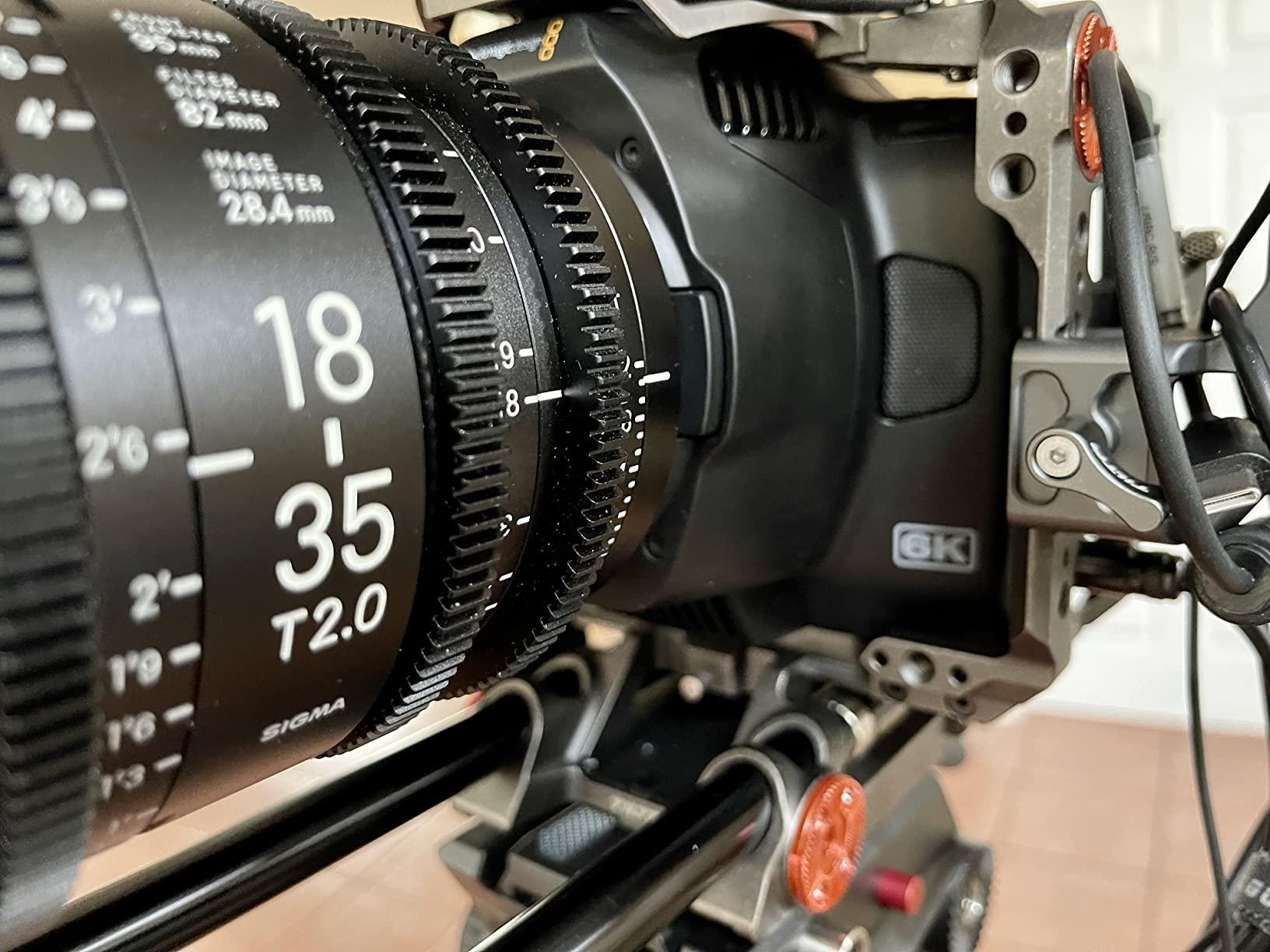
The Super 35 6K sensor captures native 6144 x 3456 resolution, which gives you enormous crop flexibility in post. The built-in 2, 4, and 6-stop ND filters are a massive quality-of-life feature for documentary work. Instead of mounting variable ND filters or swapping prime lenses, you twist a wheel on the body and keep shooting.
Manual Workflow Limitations
Just like the BMPCC 4K, there is no continuous autofocus and no auto ISO. If lighting changes during a take, you’ll see harsh exposure jumps. For solo shooters, this means either locking exposure manually or carrying a full lighting kit to control the environment.
Build and Rig Requirements
The 6K Pro weighs 4.4 pounds, which is heavy for a mirrorless-style body but light for a cinema camera. The 5-inch HDR LCD is bright enough to see outdoors, unlike the original BMPCC 4K. For full production use, plan to add a cage, external battery plate, and SSD mount.
Who This Camera Is For
The BMPCC 6K Pro is for beginners who want the highest possible image quality for narrative shorts, music videos, and documentary work where you control the environment. If your shoot involves changing light and run-and-gun movement, look at the Sony FX30 instead.
6. Blackmagic Pocket Cinema Camera 6K G2 – Best EF-Mount Cinema Camera
Blackmagic Design Pocket Cinema Camera 6K G2, EF Mount
Super 35 6K sensor
Active EF/EF-S mount
ProRes and RAW
Pros
- Native Canon EF lens compatibility
- Improved battery life over older models
- 6K cinematic image quality
- Compact cine-style body
Cons
- Still limited battery for long shoots
- Larger than mirrorless options
- Steeper learning curve
The Blackmagic Pocket Cinema Camera 6K G2 is the sweet spot in the Blackmagic lineup for beginners who already own Canon lenses or plan to buy them. I bought my first EF-mount cinema lens years ago, and being able to mount it directly on this body without adapters felt like a small victory.
It’s essentially the BMPCC 6K Pro without the built-in ND filters, but with better battery life and the same cinematic 6K image quality.
Image Quality and EF Compatibility
The Super 35 6K sensor captures the same gorgeous footage as the 6K Pro. Where the G2 stands out is its active EF/EF-S mount, which gives you full electronic control of Canon DSLR lenses. Autofocus on Canon EF lenses is supported but limited to single-shot AF, not continuous tracking.
Workflow and Codec Choice
Record in 12-bit Blackmagic RAW for maximum post-production flexibility, or choose ProRes for a more manageable workflow with cinema-grade color depth. Either way, your footage will look like it came from a camera costing three or four times as much.
Battery and Form Factor
Battery life improves to roughly 60 minutes, which is still not great but better than the original BMPCC 4K’s 30 minutes. The cine-style form factor accepts standard camera accessories without modification, which makes rigging easier than the smaller BMPCC 4K.
Who This Camera Is For
The BMPCC 6K G2 is for beginner filmmakers who already own Canon EF glass or plan to build a cinema lens collection around Canon mount. If you’re coming from Canon DSLRs or want to use vintage Canon cinema lenses, this is the most flexible Blackmagic body.
How to Choose the Best Cinema Camera for Your First Film
Picking among the best cinema cameras for beginners comes down to matching the tool to the kind of filmmaking you actually want to do. Here are the five decision points that matter most, drawn from real-world testing rather than spec sheets.
Sensor Size and Image Quality
Sensor size affects two things beginners care about most: low-light performance and depth of field. Full-frame sensors (Sony A7 IV, Panasonic S5II) give you the shallow depth of field and clean high-ISO footage most beginners associate with the cinematic look. Super 35 sensors (Sony FX30, all Blackmagic bodies) deliver slightly less shallow depth of field but are easier to work with because they use less glass and lighter lenses. Micro Four Thirds (BMPCC 4K) has the smallest sensor here, but it still produces cinema-grade footage with the right lighting.
If you’re shooting mostly outdoors in natural light, full-frame gives you more forgiveness. If you’re shooting in controlled environments, Super 35 saves you money on lenses.
Autofocus vs Manual Focus
This is the single biggest decision for beginners. Sony’s hybrid autofocus (FX30, A7 IV) and Panasonic’s new phase hybrid AF (S5II) are reliable enough for solo shooting. Blackmagic cameras assume you will pull focus manually, which is great for learning but punishing when you’re also directing talent.
If you’re shooting solo documentary work, interviews, or YouTube content, choose a camera with strong autofocus. If you’re on a controlled set with a focus puller, Blackmagic is the right tool.
Codec, Color, and Post-Production
Codecs and color profiles determine how much work your footage needs after the shoot. Cameras with log recording (S-Log3 on Sony, V-Log on Panasonic, BRAW on Blackmagic) capture more dynamic range but require color grading. Cameras with picture profiles like S-Cinetone (Sony) or V-Log with real-time LUTs (Panasonic) let you deliver footage straight from camera without heavy grading.
Beginners with no color grading experience should start with cameras that look good out of camera. Beginners who want to learn post-production should pick a Blackmagic body and learn DaVinci Resolve (which is free anyway).
Audio, Stabilization, and Accessories
Audio is where beginners get burned. Built-in microphones on every camera on this list are usable for scratch audio, not for production. Plan to budget $100-$300 for a shotgun microphone or external audio recorder.
Image stabilization matters for handheld work. Sony A7 IV and Panasonic S5II have excellent IBIS. Blackmagic cameras have no IBIS, which means you need a gimbal or tripod for smooth shots. The Sony FX30 has Active stabilization that’s good but not class-leading.
Accessories add up. A typical beginner cinema rig (cage, batteries, ND filters, monitor, audio) adds $300-$800 to the camera body price. Factor that into your budget.
Total Cost of Ownership
Real-world beginner cinema camera budgets should include the body, one or two lenses, batteries, memory cards, audio, and a basic cage or rig. Here’s a rough breakdown based on our team’s experience:
- Sony FX30 + 18-105mm zoom + cage + audio kit = approximately $2,800-$3,200
- Blackmagic Pocket 4K + speed booster + MFT lens + rig = approximately $1,800-$2,400
- Sony A7 IV + 28-70mm zoom + audio kit = approximately $3,200-$3,800
- Panasonic S5II + 20-60mm kit + cage + audio = approximately $2,500-$3,000
- Blackmagic 6K Pro + EF lens + ND filters + rig = approximately $3,500-$4,500
Forum users consistently warn that accessories can easily double the camera body price. Plan accordingly.
Frequently Asked Questions
What is the best cinema camera for beginners?
The Sony FX30 is the best all-around cinema camera for beginners in 2026 because it combines reliable autofocus with 6K-oversampled 4K footage, dual base ISO, and a beginner-friendly menu. If you need a more affordable option, the Blackmagic Pocket Cinema Camera 4K delivers cinema-grade codecs and includes DaVinci Resolve Studio for under $1,200.
What are the best cameras for beginners who want to learn videography?
For learning videography, the Sony Alpha 7 IV and Panasonic LUMIX S5II are the best beginner cameras because their reliable autofocus lets you focus on framing, lighting, and storytelling while you’re still learning. Once you understand the basics, moving to a Blackmagic Pocket Cinema Camera teaches you manual focus and color grading the way real film sets work.
Should beginners buy a cinema camera or a mirrorless hybrid?
Beginners who primarily shoot solo YouTube content or documentary work are better served by a mirrorless hybrid like the Sony A7 IV or Panasonic S5II because their autofocus systems make single-operator shooting practical. Beginners who want to learn professional filmmaking techniques and are willing to invest in lenses and accessories should start with a dedicated cinema camera like the Blackmagic Pocket 4K or Sony FX30.
Is 4K necessary for beginners?
4K is not strictly necessary for beginners, but every camera on this list shoots 4K and it gives you flexibility to crop or reframe in post without losing quality for HD delivery. If your final delivery is YouTube or social media, 4K looks noticeably sharper than 1080p. For film festival submissions, 4K is increasingly the minimum standard.
Final Verdict: Which Cinema Camera Should Beginners Buy?
If you want one camera that handles everything from YouTube to festival shorts, the Sony FX30 is the best cinema camera for beginners in 2026. If you need the most affordable entry into cinema-grade footage, the Blackmagic Pocket Cinema Camera 4K remains unbeatable. If you shoot both stills and video and want the best autofocus available, the Sony Alpha 7 IV is the safest long-term investment. Choose based on the kind of filmmaking you actually want to do, and you’ll be set up to grow into it.