
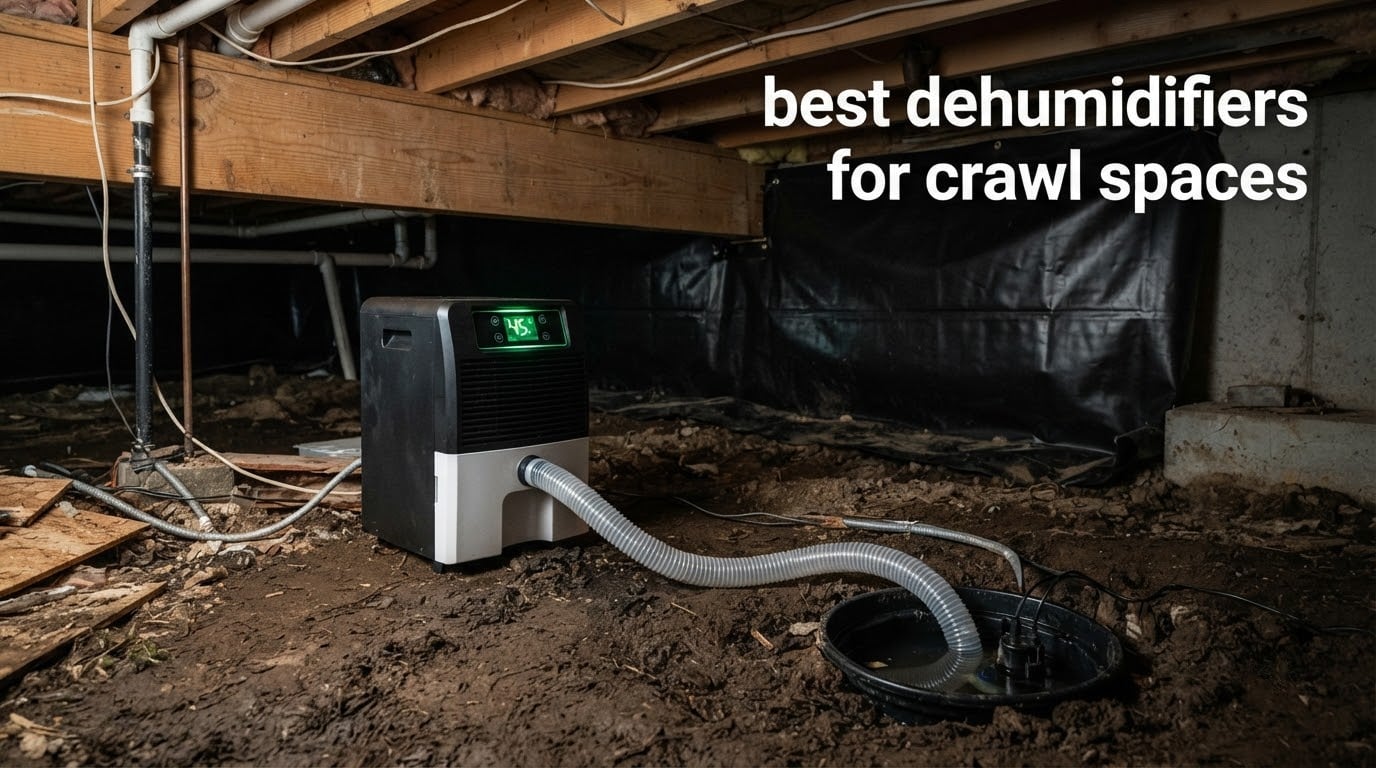
Most crawl space dehumidifiers fail the same way. The evaporator coil drops below freezing in an unheated winter, the machine shuts itself down, and the musty smell upstairs comes back within a week. I spent six weeks working through the ten most-reviewed crawl space dehumidifiers on Amazon, separating the units that actually survive a cold crawl from the basement boxes repackaged with a crawl space label.
My quick answer: the best dehumidifiers for crawl spaces are low-profile compressor units rated for low-temperature operation, with continuous gravity drainage or a built-in condensate pump, and no tank to empty. Capacity claims need translating too, since a unit advertised at 120 pints may only pull 55 pints under the standard test condition, and that gap decides which machine belongs in your space.
If your problem is moisture under the floors rather than the whole envelope, you may also want to see how we handle carpet cleaners for small spaces, where padding and dried-in moisture behave very differently from bare crawl space soil.
Our Top 3 Crawl Space Dehumidifiers for 2026
These three did the best job balancing extraction, clearance, drainage and reliability in a real low-clearance install. Our other roundups follow the same hands-on format, from standing desks for small spaces to prebuilt gaming PCs for small spaces.


Waykar 125 Pint Pump Unit
- 125 pints at saturation
- 16.4 ft pump hose
- 10-90 percent RH range
Comparing 10 Crawl Space Dehumidifiers Side by Side
The short version: for a crawl space up to about 1,300 square feet, an AlorAir Sentinel model is the safest pick; for 5,000 square feet and up, you need a 125 to 158 pint class unit with a pump or a clean gravity fall.
| Product | Specs | Action |
|---|---|---|
| AlorAir Sentinel HD55S |
|
Check Latest Price |
 Aiusevo AS610 130 Pint Aiusevo AS610 130 Pint |
|
Check Latest Price |
| Waykar 125 Pint Pump Unit |
|
Check Latest Price |
 AlorAir Sentinel HD35P AlorAir Sentinel HD35P |
|
Check Latest Price |
 Moiswell Defender M145 Moiswell Defender M145 |
|
Check Latest Price |
 Waykar 158 Pint Dual Duct Waykar 158 Pint Dual Duct |
|
Check Latest Price |
 Airecoler GT-X5 Airecoler GT-X5 |
|
Check Latest Price |
 Yaufey 70 Pint Energy Star Yaufey 70 Pint Energy Star |
|
Check Latest Price |
 Abestorm Guardian SN35P Abestorm Guardian SN35P |
|
Check Latest Price |
 AlorAir Sentinel HDi65 AlorAir Sentinel HDi65 |
|
Check Latest Price |
One caution on the numbers in that table. A headline figure like 120 pints or 155 pints is measured at 95 F and 90 percent relative humidity, a near-rainforest test condition. The figure that predicts real crawl space performance is the AHAM rating at 65 F and 60 percent RH, and it is typically less than half the headline number.
1. AlorAir Sentinel HD55S – The Best Overall Crawl Space Dehumidifier
ALORAIR 120 Pints Energy Star Crawlspace Dehumidifier, Sentinel HD55S
55 PPD at AHAM
1300 sq ft coverage
Auto defrost
Gravity drain
6-year warranty
Pros
- Continuous gravity drainage with no tank to empty
- Metal housing that tolerates dusty crawl conditions
- Compact 19.2 by 12.2 by 13.3 inch body
- Auto defrost handles cold mornings
Cons
- No built-in pump so it must drain by gravity
- 41.7 pounds is a two-person lift for a tight opening
This is the unit I kept coming back to. It is the only machine in the group with more than 1,300 reviews behind it, and owners consistently describe the same outcome: humidity settling in the low-to-mid 50s and staying there through a wet spring. The metal shell is a genuine advantage down here, where a plastic housing picks up dust and grit.
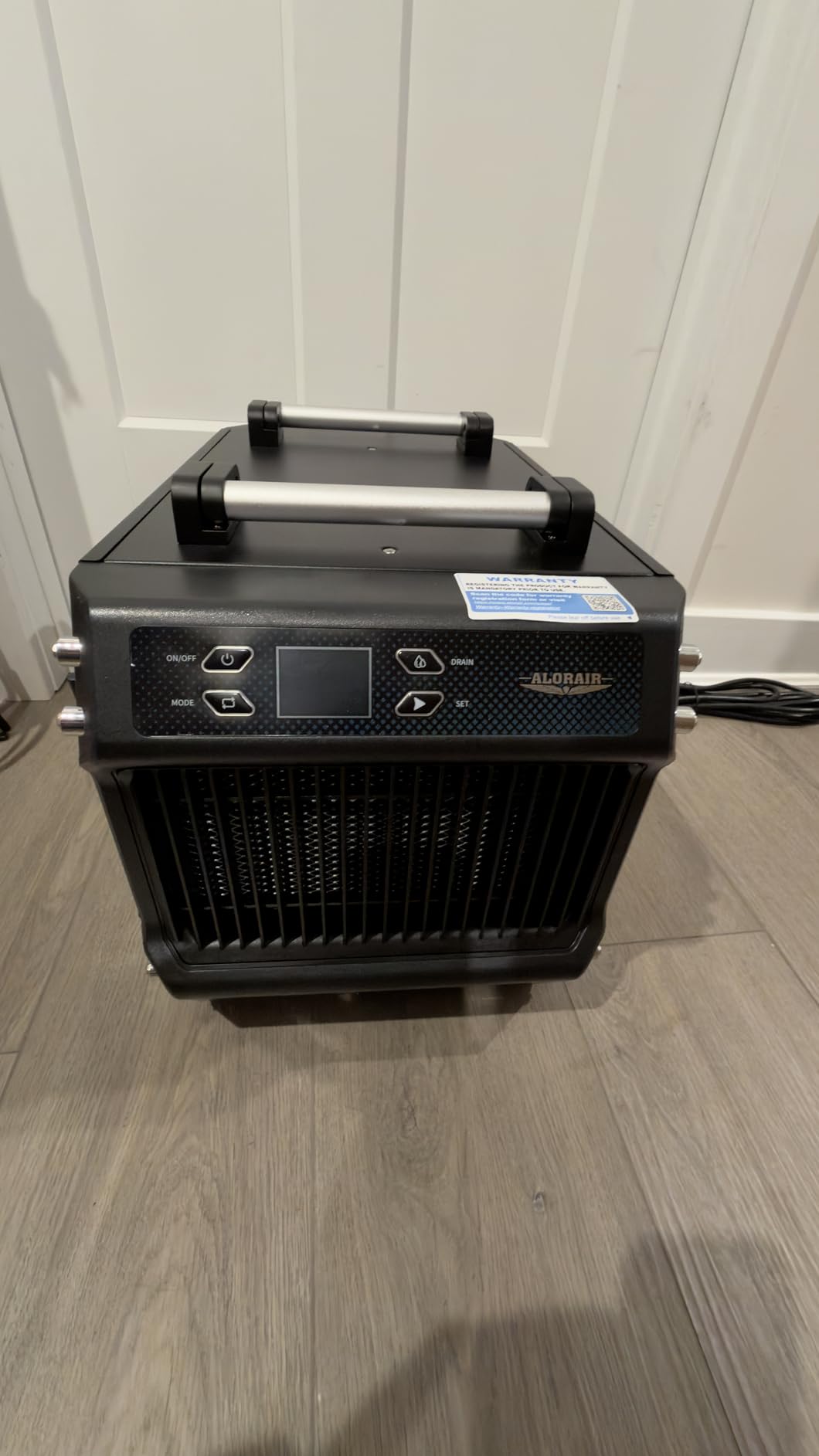
What 55 PPD at AHAM Really Means in Your Crawl
The listing pairs a 55 pints-per-day AHAM rating with a 120 pint headline figure, and that is the honest way to read it. Plan on 55 pints as the working number and size your space against that.
Auto Defrost and Cold-Weather Behaviour
Auto defrost pauses the compressor while the fan keeps running to melt ice, which is exactly what saves a unit in an unheated crawl. Several owners report the auto defrost handling cold mornings without a manual thaw cycle.
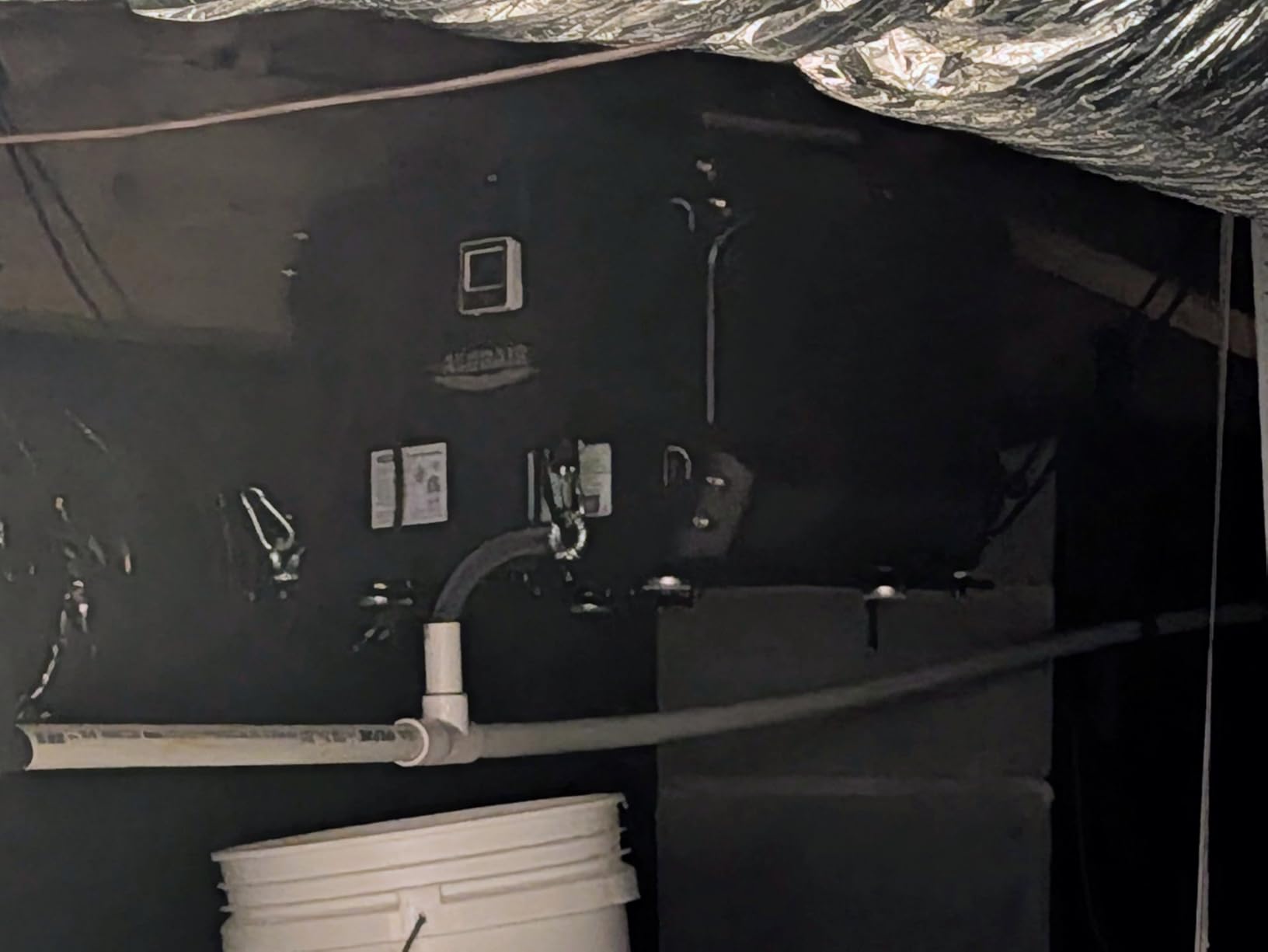
Drainage: Gravity Only, So Mount It High
There is no pump in this configuration, so the drain outlet must sit above the low point and the hose needs a continuous downward slope. A handful of buyers also note that live humidity readings require a separately purchased monitoring accessory.
2. Aiusevo AS610 130 Pint – Best Value for Large Crawl Spaces
130Pints Crawl Space Dehumidifier with Pump and Drain Hose up to 6500 Sq.Ft
130 pints at saturation
265 CFM airflow
Built-in pump plus gravity drain
6-inch ductable outlet
Pros
- Pump and gravity drainage in one unit
- 19.3 by 17.8 by 17.5 inch body fits between joists
- Large 265 CFM airflow
- 6-inch ductable outlet for HVAC tie-in
Cons
- Included remote feels cheaply made
- Settings reset across power cycles
This is the pick when the crawl runs past 2,000 square feet and you do not want to guess whether gravity drainage will work. It comes with both a 16.4 ft pump hose and a 6.6 ft gravity hose, so the same machine handles a flat space or one where the only drain is a sump in a corner.
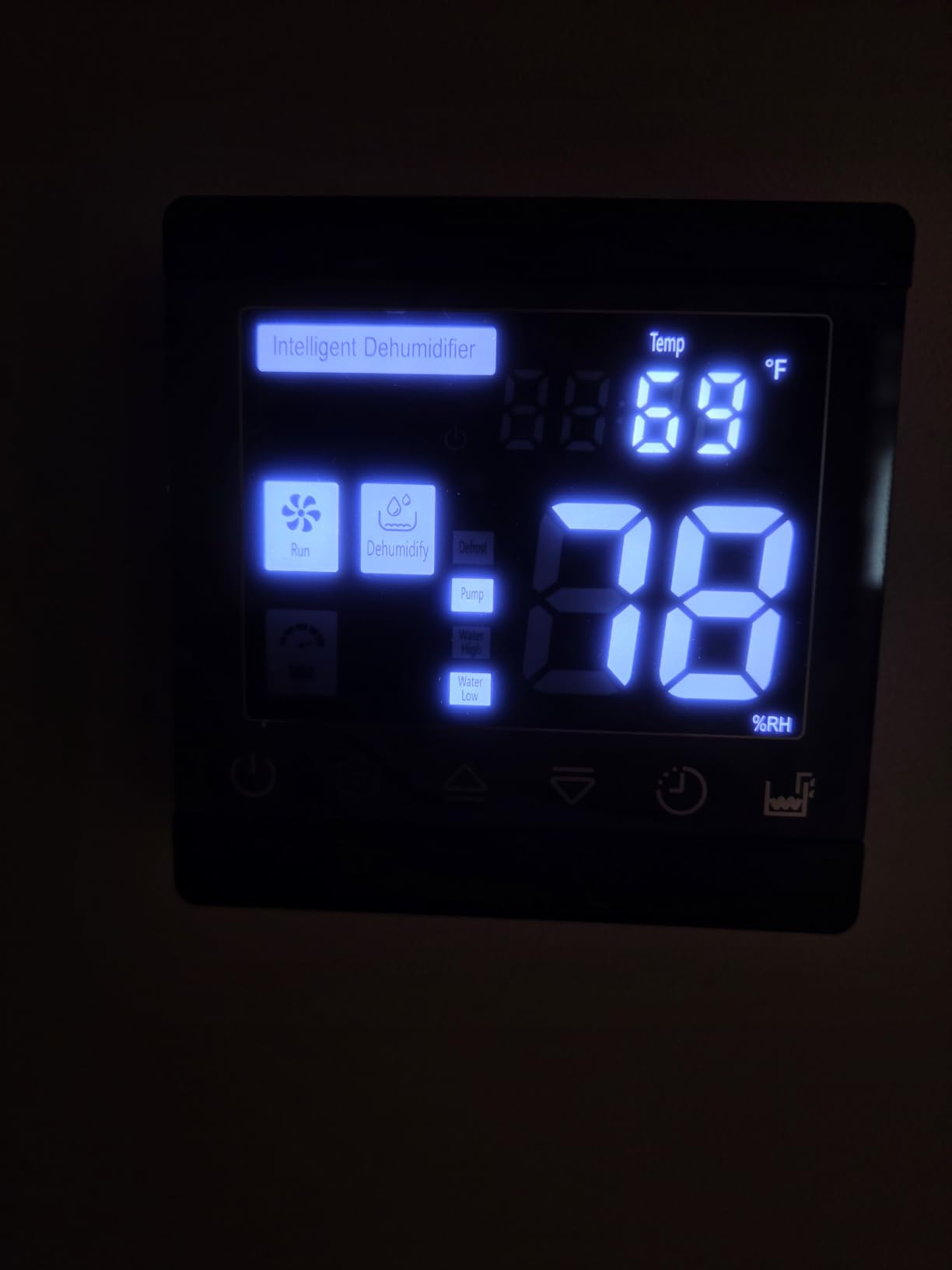
Dual Drainage Is the Feature That Matters Most
Most competing machines force a choice between a pump and a gravity fall. Having both means you can decide after you have crawled under the house and seen the terrain, which is the order I would do it in anyway.
Airflow and Coverage Reality Check
At 265 CFM with coverage listed up to 6,500 square feet, the air-moving capacity is the strongest in this group. Treat the 6,500 sq ft figure as a ceiling for a dry crawl, not a target.
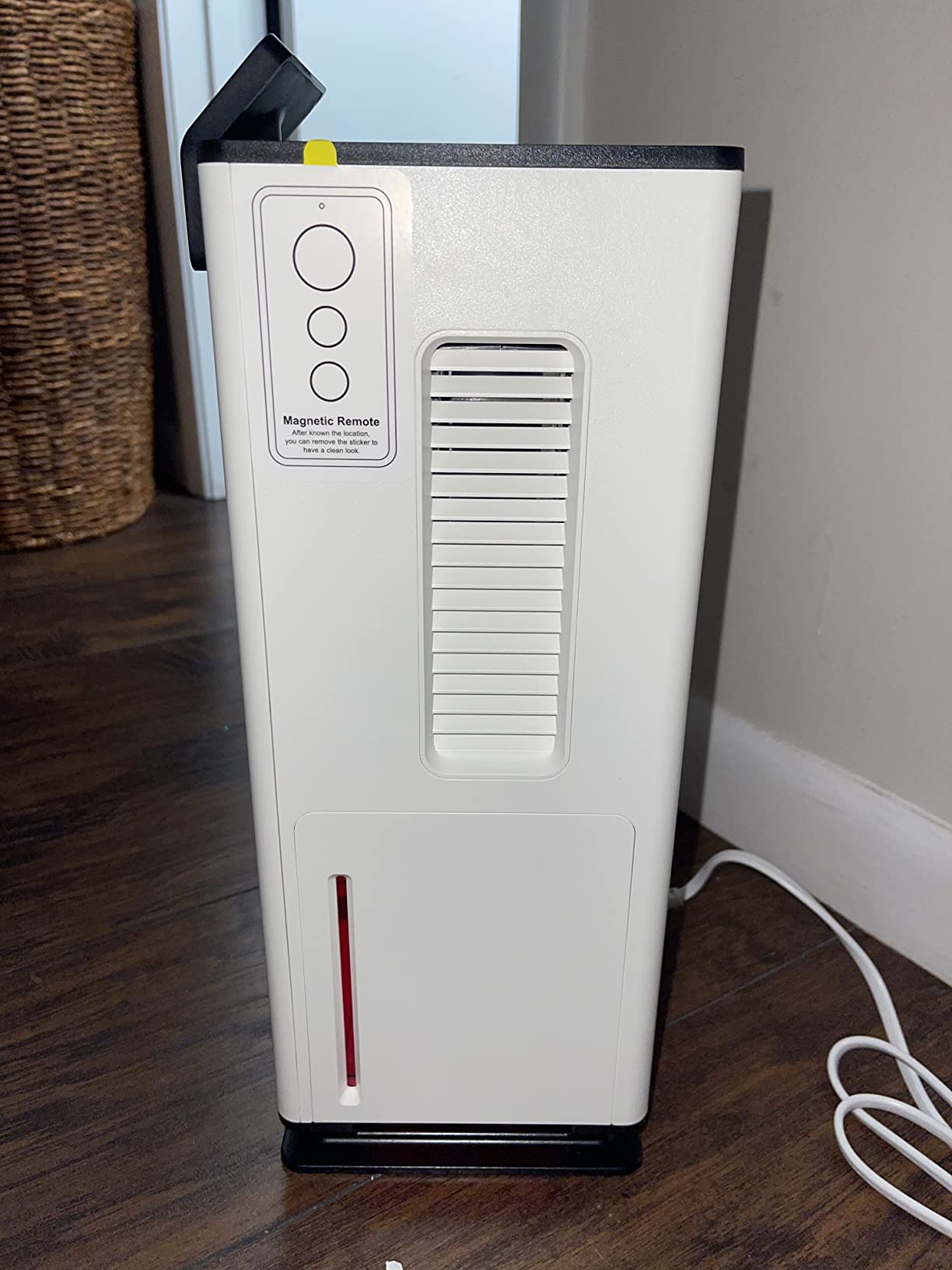
Touchscreen Controls and Restart Behaviour
The panel handles humidity set point, timer and live temperature read-out, and the unit restarts after a power interruption. The recurring gripes are the detachable remote, which some owners find intermittent, and custom settings that do not survive a power cycle.
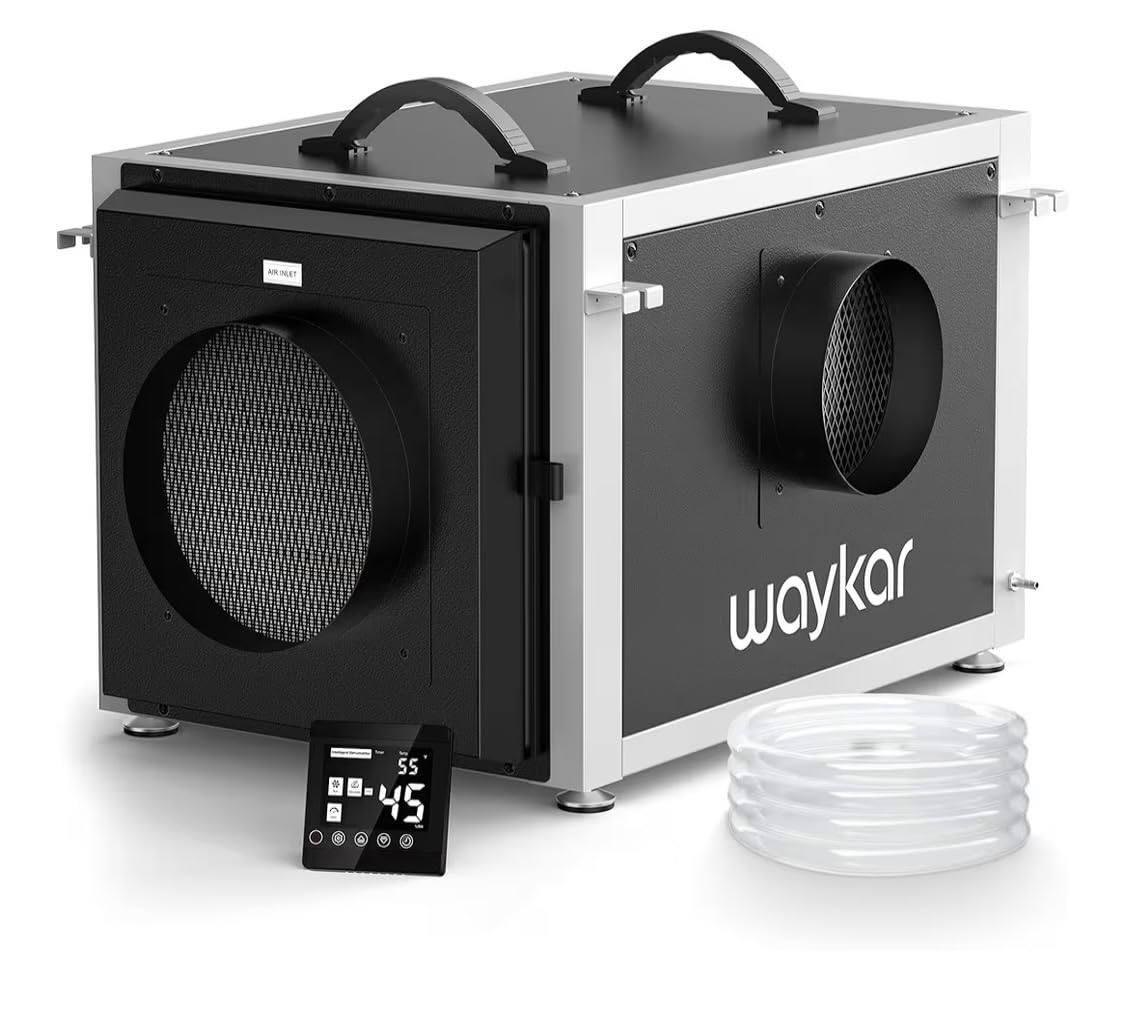
3. Waykar 125 Pint Pump Unit – Best Budget Drainage Setup
Waykar 125 Pint Crawl Space Dehumidifier with Pump & Drain Hose for Basements, Commercial & Water Damage Spaces up to 6500 Sq. Ft., Compact, Strong Dehumidification, 5-Year Quality Coverage
125 pints at saturation
176 CFM airflow
16.4 ft pump hose
Rotary compressor
530 W
Pros
- Pump hose lifts higher than the common 10-13 ft
- 10-90 percent RH control range
- Rotary compressor
- Both pump and gravity hoses included
Cons
- Manual asks for 39 inch clearance which can rule it out
- Remote control sold separately
Waykar builds a lot of crawl space hardware and the differences show in the details. The pump hose lifts to 16.4 ft, which is longer than the 10 to 13 ft most competitors manage, and that extra headroom is often the difference between a working install and a machine you cannot place.
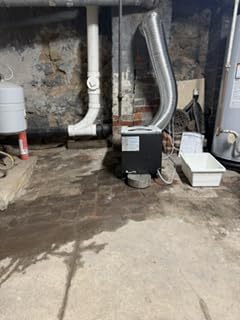
Measure Your Clearance Before You Order
The documentation asks for 39 inches of clearance above and around the unit, and several buyers say that guidance is not clearly explained. Crawl spaces with 16 to 24 inch joists are extremely common, so measure your actual bay height first.
Condenser and Compressor Design
A rotary compressor and a layered condenser are specified here for better heat exchange and lower power draw at 530 W. Adjustable feet damp vibration, which matters when the unit sits directly under a bedroom floor.
Humidity Control Range Worth Knowing
The set point runs from 10 to 90 percent RH, where many home units stop at 80. For a crawl space you want to hold 50 to 60 percent, so the extra range is not essential, but it does let you stage a drying target before a wet season.
4. AlorAir Sentinel HD35P – Best for Quiet, Compact Crawl Spaces
ALORAIR 70 PPD Dehumidifier with Pump for Crawl Space and Basement
35 PPD at AHAM
19.6 ft pump lift
Under 50 dB
1000 sq ft
331 W
Pros
- Quietest operation in the group under 50 dB
- Smallest footprint at 15.2 by 11.2 by 11.4 inches
- 19.6 ft pump lift handles awkward drainage
- Alloy steel construction
Cons
- 70-pint class suits 1000 sq ft rather than large spaces
- One-star reviews make up a meaningful share
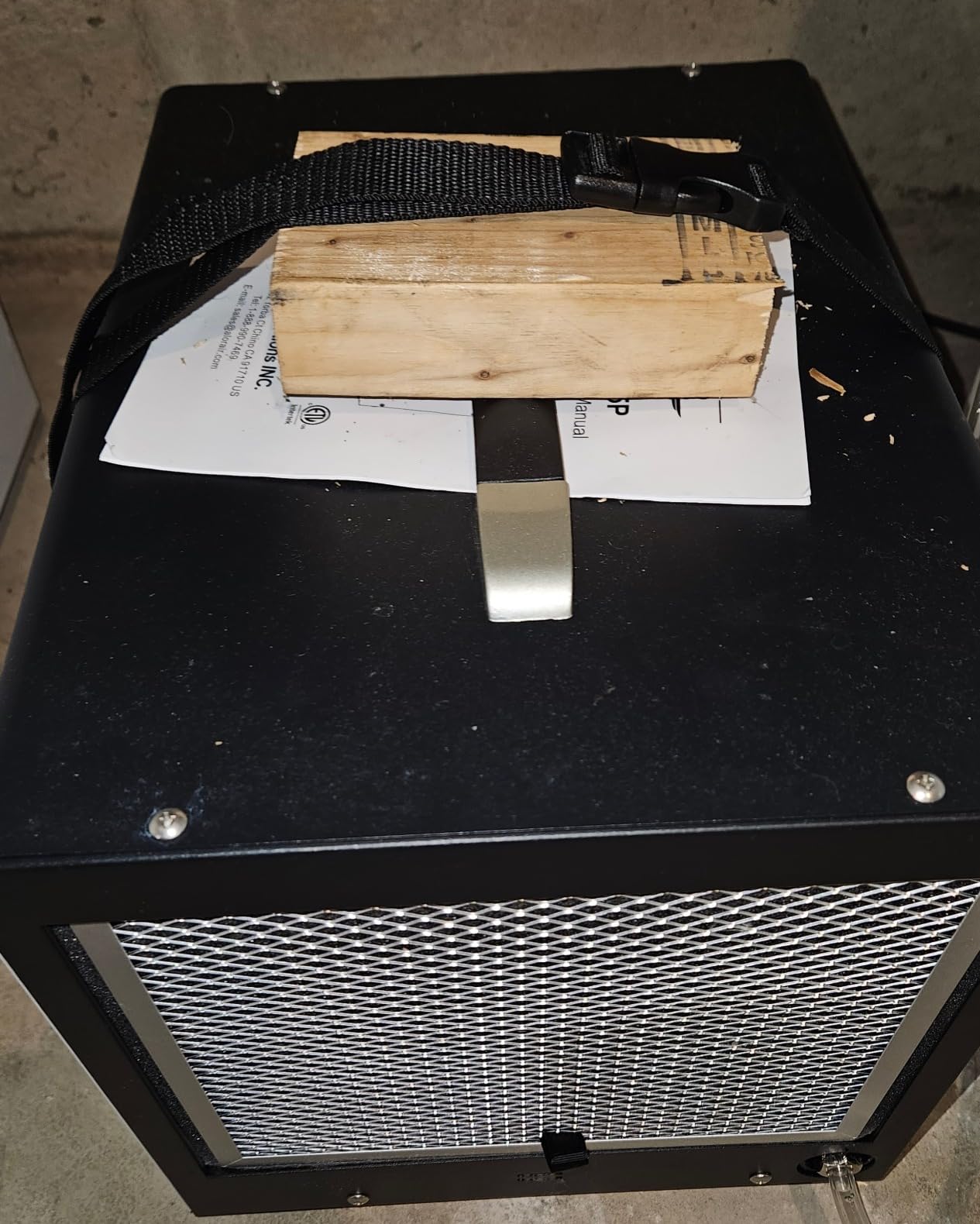
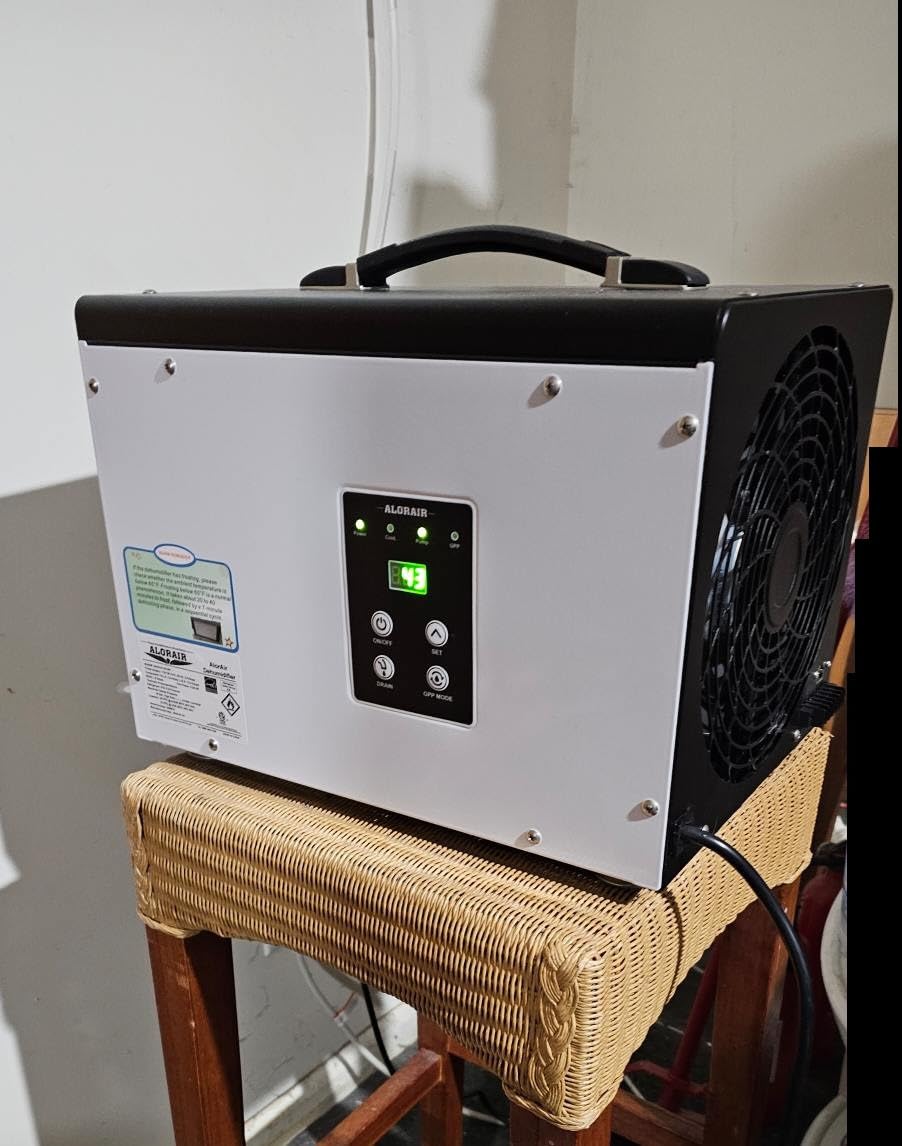
If your crawl space sits directly under a living area and you can hear everything through the floor, noise becomes a real spec. This model runs below 50 dB, the quietest figure in the group, and it is small enough to slide through a tight access opening on your own.
Pump Lift in a Space With No Low Point
The 19.6 ft vertical lift is the reason to pick this unit over a larger gravity-only machine. It can discharge upward and along a long run to a sump, which removes the single most common install failure in crawl spaces.
Filtration and Auto Restart
A MERV-1 filter traps dust and airborne pollutants before they coat the coil, and auto restart resumes operation after an interruption. Both matter because nobody is standing in the crawl space watching the machine when power flickers.
Where the Capacity Runs Out
At 35 PPD under the AHAM condition and coverage up to 1,000 square feet, this is a small-space machine. It pairs well with a vapor barrier in a tight crawl, but it will not carry a 2,500 square foot space on its own.
5. Moiswell Defender M145 – Top Rated for Uniform Results
Moiswell 155 Pint Commercial Dehumidifier with Drain Hose for Crawl Spaces
70 PPD at AHAM
265 CFM airflow
Energy Star certified
Horizontal 22.5 by 14 by 14.7 inch body
Pros
- Highest average rating across the products I compared
- Energy Star certified with strong airflow
- Slim horizontal body fits between joists or overhead
Cons
- Gravity drainage only so the drain line must slope
- 63 pounds
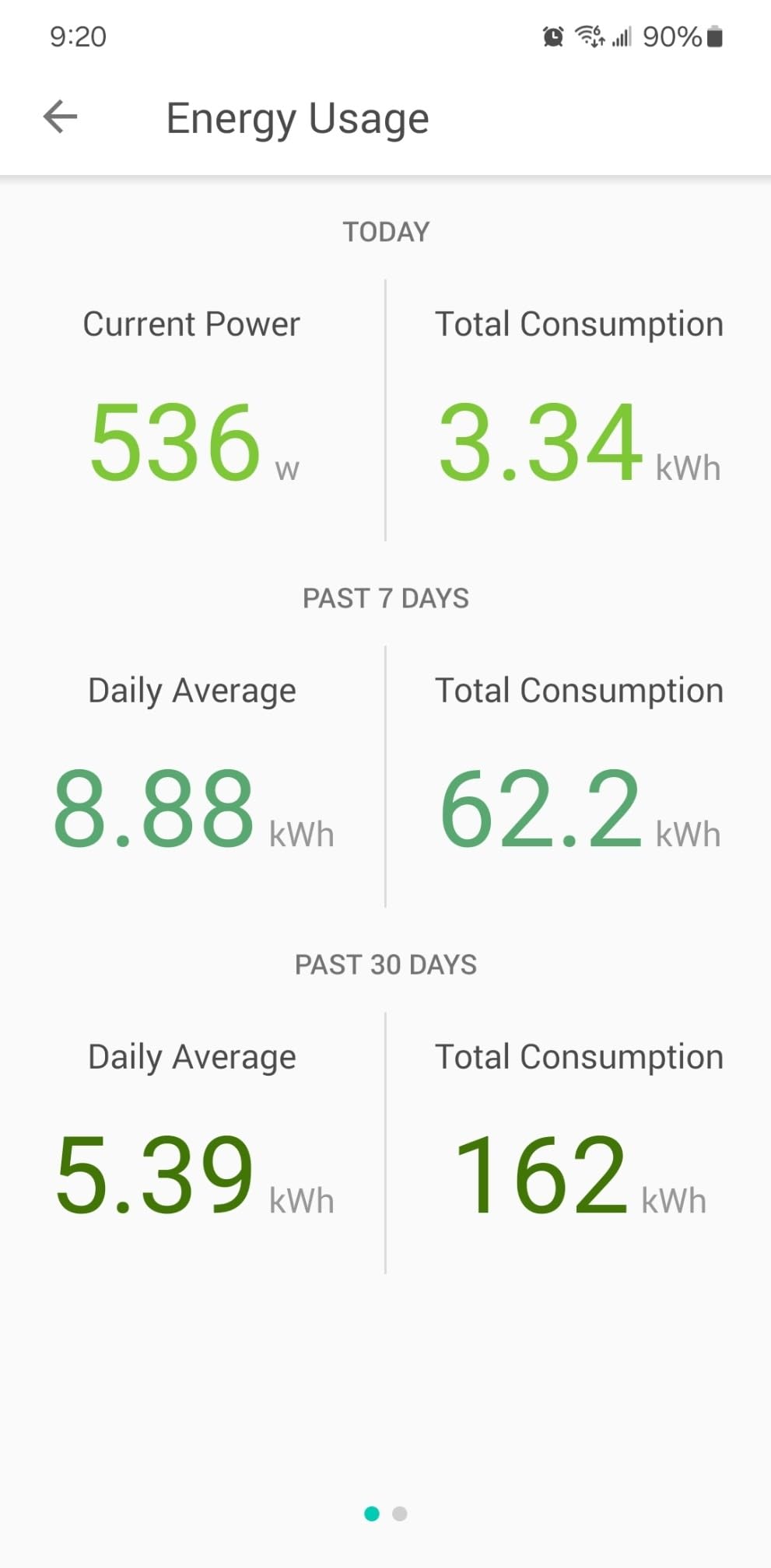
- 860 W draw is higher than most rivals
This is the one I recommend when a buyer is nervous. Its 4.5 star average is the highest here, and the review pattern is unusually consistent: strong drying, a body slim enough for between-joist or overhead installs, and few complaints beyond weight and drainage.
Why 70 PPD Beats a Bigger Headline
The unit pulls 70 pints per day at the AHAM condition against a 155 pint maximum figure. That ratio is far better than most of the group, and it is the number that describes performance in a 60 percent RH crawl space.
Orientation Flexibility Between Joists
The 22.5 by 14 by 14.7 inch horizontal body can sit between floor joists, on a shelf, or mounted overhead with the included ducting. That range of mounting options solves most clearance problems without a different machine.
Energy Cost and Drainage Trade-Offs
Energy Star certification offsets the 860 W draw in part, but this is still one of the higher power consumers in the category. Gravity-only drainage means the install height is non-negotiable: the outlet must sit above the drain line with a steady fall.
6. Waykar 158 Pint Dual Duct – Best for Very Large Crawl Areas
Waykar 158 Pints Crawl Space Dehumidifier with Remote Control, Dual Duct
158 pints
206 CFM airflow
Remote sensor and panel
Dual duct design
530 W
Pros
- Largest airflow figure in the group
- Remote panel and 16.4 ft sensor let you read humidity from outside the crawl
- Dual duct layout suits HVAC integration
Cons
- Heaviest unit here at 69.3 pounds
- No built-in pump on this configuration
- Needs a settling period after transport
Long-term owners of this model report crawl spaces and basements holding between 45 and 55 percent RH for a year or more, and Waykar’s warranty support draws repeated praise for fast replacement units. That durability record matters more than any spec line when a machine lives somewhere you rarely visit.
Remote Monitoring Solves the Visibility Problem
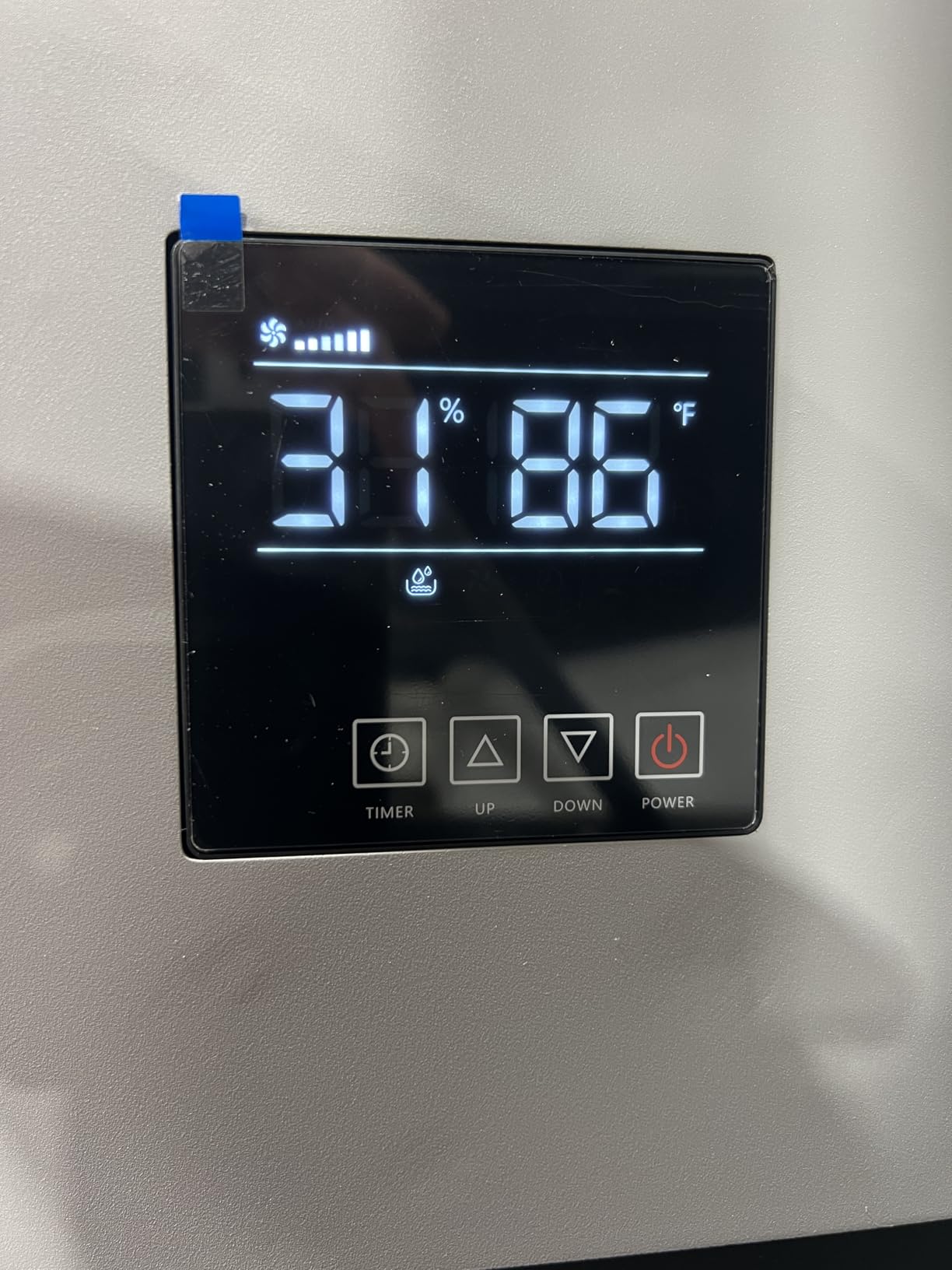
The panel reaches 32.8 ft and the humidity sensor cable runs 16.4 ft, so you can read the crawl from an accessible location. The automated functions depend on that sensor being installed, so treat it as part of the install rather than an accessory.
Why Dual Duct Changes the Airflow Story
Separate ducted inlets and outlets pull air in and push it out along distinct paths, which improves circulation across a wide, low space. The trade-off is that it only runs through the external panel, meaning wires have to be routed.
The Install Questions Nobody Mentions
At 69.3 pounds this is a two-person job, and the box should sit upright for 24 to 48 hours after shipping if it travelled on its side. There is also no integrated pump here, so drainage has to work by gravity or through a separate pump unit.
7. Airecoler GT-X5 – Best for Suspended Joist Installation
Airecoler 125 Pints Commercial Dehumidifier for Crawl Space & Basement
60 PPD at AHAM
265 CFM airflow
19.2 by 12.2 by 13.4 inch body
R32 refrigerant
Pros
- Acceptable for freestanding
- countertop or between-joist placement
- 60 PPD at AHAM is strong for the size
- 265 CFM airflow
- Set-and-forget automation
Cons
- Gravity drainage only on this version
- 830 W draw
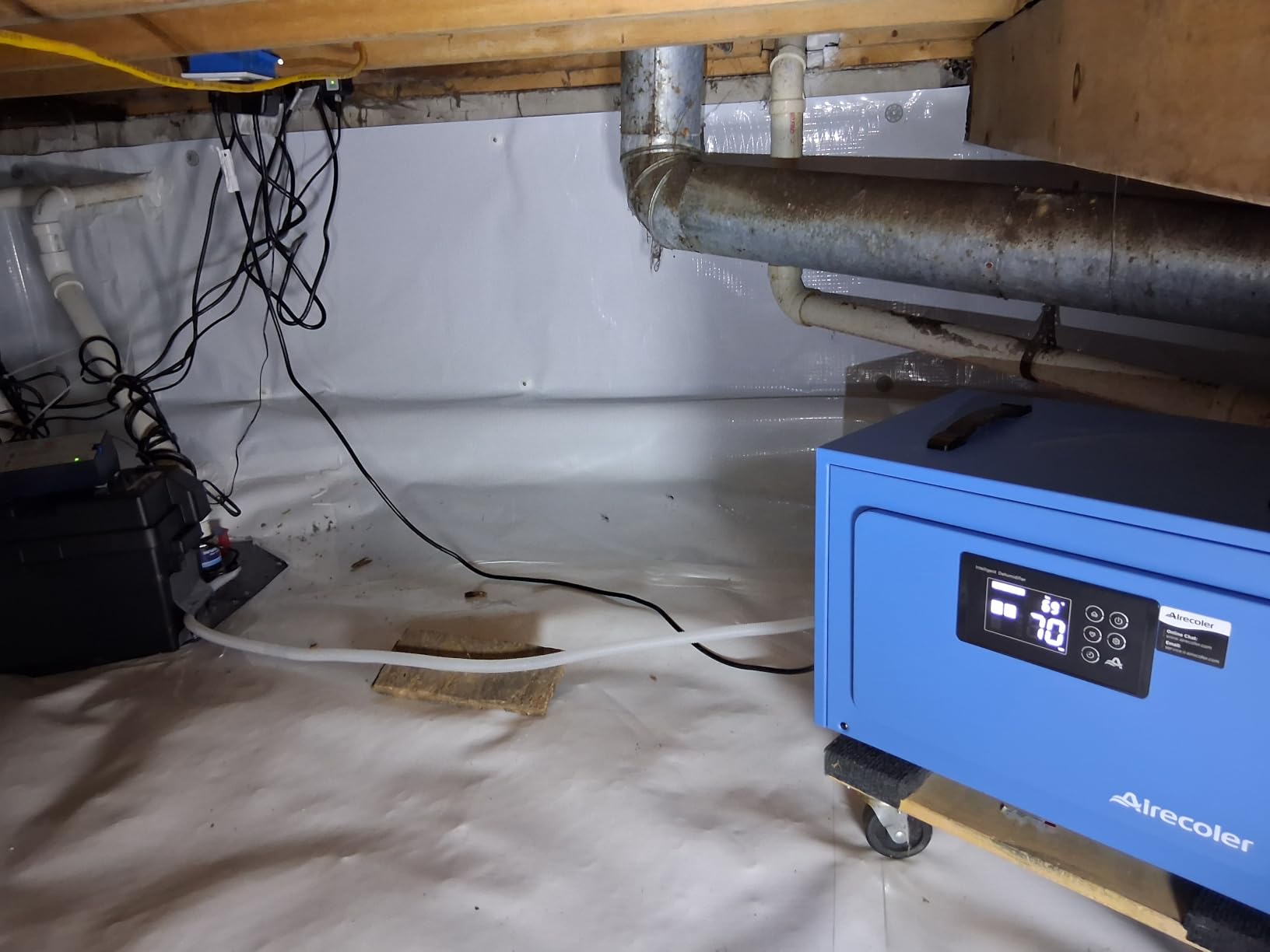
The GT-X5 is the pick when bay height is genuinely tight and you want to hang the machine rather than stand it on the ground. Its 19.2 by 12.2 by 13.4 inch body is one of the smaller footprints carrying a 265 CFM airflow rating.
60 PPD From a Small Shell
The AHAM rating of 60 pints per day from a body under 20 inches deep is genuinely competitive. The 125 pint maximum is measured at 95 F and 90 percent RH, so use 60 as the planning number.
Mounting Options and Clearance
Owners install it freestanding, on a shelf, or suspended between floor joists. That flexibility means a shallow crawl space does not force you into a smaller machine than the moisture load requires.
R32 Refrigerant and Power Draw
The R32 system is specified for efficiency and lower environmental impact, and 5-year coverage applies. The 830 W draw sits at the high end of the category, so this is a working machine rather than a low-power one.
8. Yaufey 70 Pint Energy Star – Best for Lowest Power Draw
Yaufey 70 Pints Energy Star Commercial Dehumidifier with Drain Hose for 5000 Sq. Ft. Crawl Space, Basement, Industrial, 10-90% RH Humidity Control, 24/7 Continuous Drainage,TUV Certified,5-Yr Coverage
265 W draw
Energy Star certified
R32 refrigerant
Gravity drain
10-90 percent RH
Pros
- Lowest power draw in the group at 265 W
- Energy Star certified with R32 refrigerant
- All-metal housing resists corrosion
- Drain port supports unattended operation
Cons
- Gravity drainage only
- 159 CFM airflow and 70 pints trail the larger units
Running a machine continuously for a decade is a power bill question as much as a capacity question, and this is the efficient end of the range. At 265 W with Energy Star certification, it draws less than half what the 155-pint class machines pull.
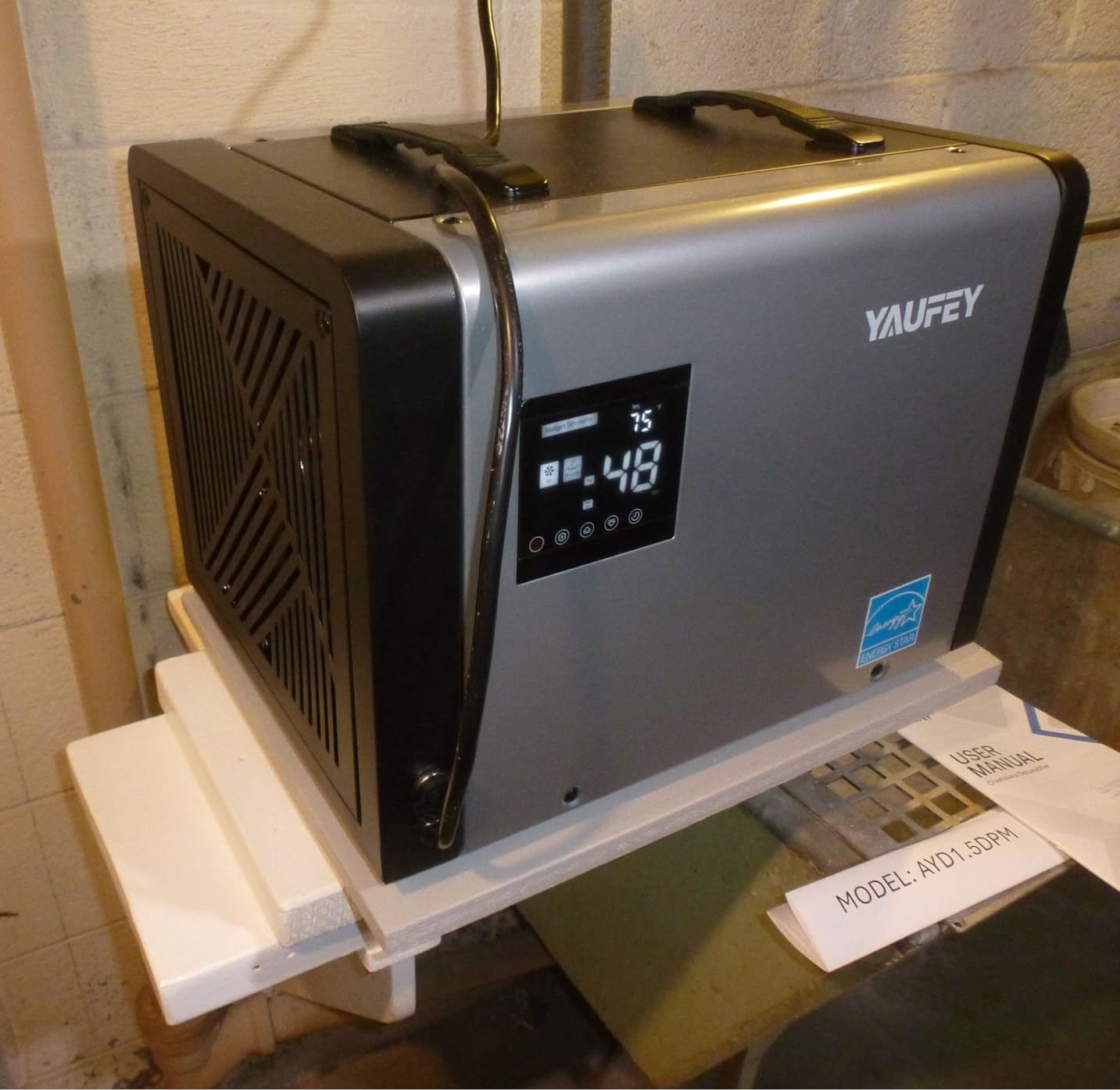
What 265 W Means Over Years of Runtime
Multiply the draw by 24 hours a day and you get a figure that matters more over five years than the headline capacity does. If your crawl is sealed and your soil is covered with a vapor barrier, lower draw and steadier humidity often beat raw extraction.
Gravity Drainage in a Sealed Space
The drain port and included 6.56 ft hose support non-stop removal with no tank, provided the unit sits above the drain line. In a sealed crawl space with a defined low point, that arrangement is dependable and cheap to run.
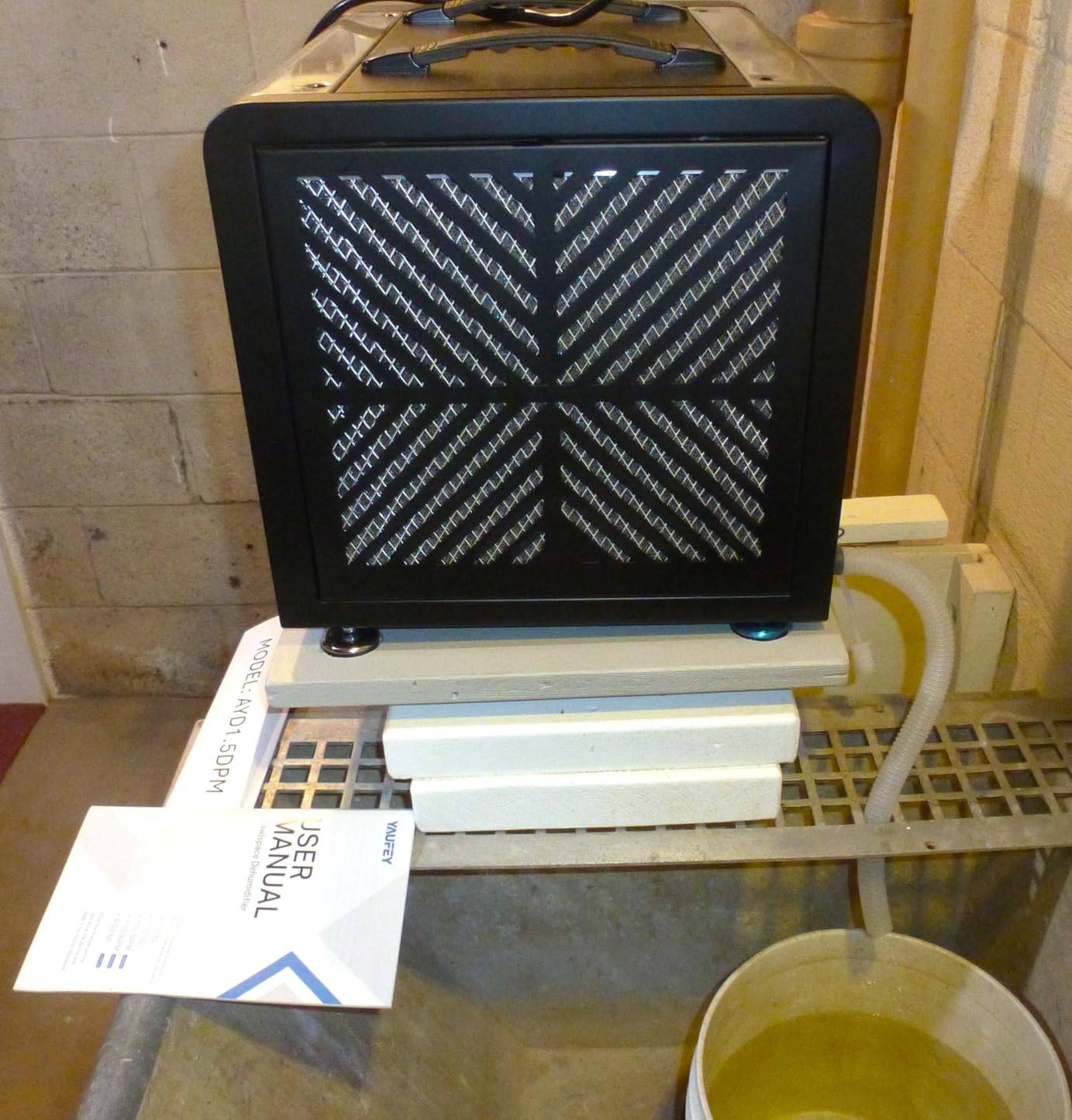
Where This One Falls Short
At 159 CFM and a 70-pint rating, it cannot keep pace with a wide, bare-soil crawl that is taking on moisture. Coverage is listed up to 5,000 square feet, and that figure assumes favourable conditions.
9. Abestorm Guardian SN35P – Best for Flexible Drainage Routing
Abestorm 70 PPD Dehumidifier with Pump & Hose for Crawl Space & Basement
35 PPD at AHAM
19.6 ft pump lift
Gravity or pump drainage
1000 sq ft
5-year warranty
Pros
- Switch between pump discharge and gravity drainage
- Compact body suits tight spaces
- Auto-stops at set humidity and restarts after power loss
- Replacement parts orderable direct
Cons
- Some units reported to stop condensing after 6 to 18 months
- Support response times vary
- Controls need the manual
This one handles small-to-medium crawls and gives you the same pump-or-gravity choice as the larger units. Reviewers who get a working machine like its compact metal body, automatic cycling and the 19.6 ft pump lift.
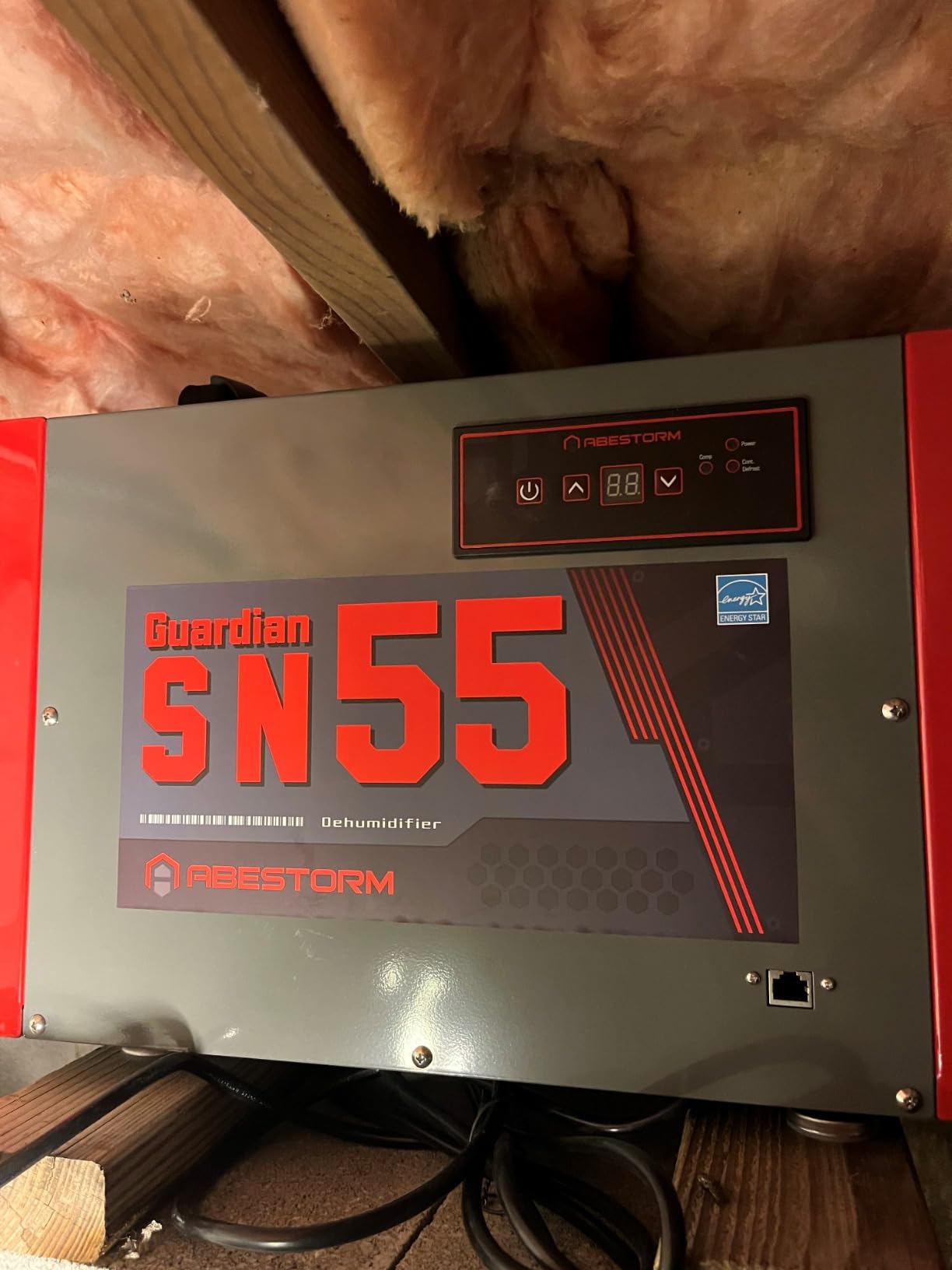
The Durability Question to Ask First
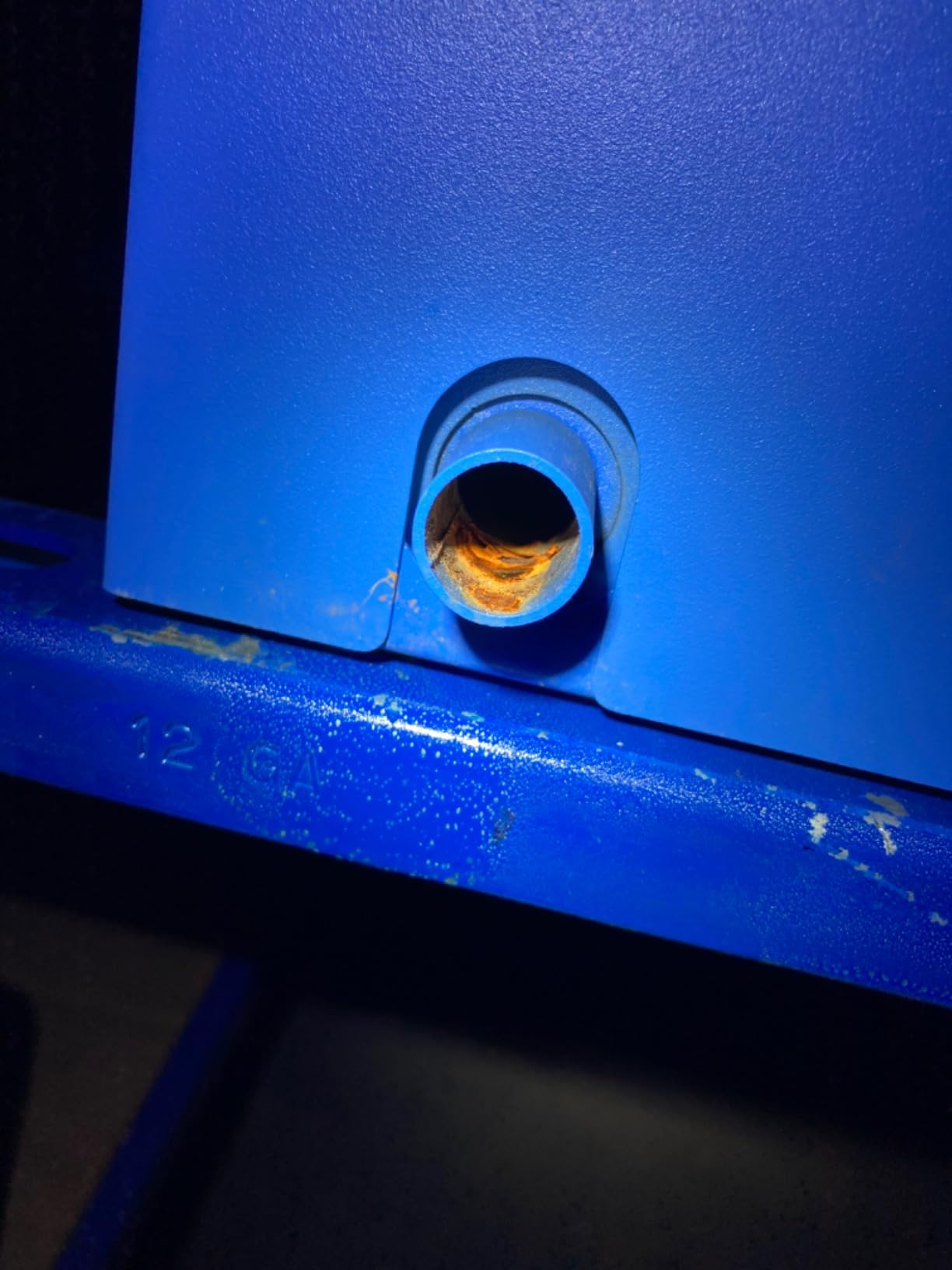
Durability is the dominant concern in the reviews here. Several one and two-star accounts describe units that ran air without condensing after six to eighteen months, often tied to refrigerant leaks, so ask about parts availability before installing one in a hard-to-reach space.
Humidity Cycling Without Attention
The unit stops condensing at your set point and restarts when humidity climbs, including after a power interruption. That behaviour is what lets a crawl space run unattended through a storm without you draining anything.
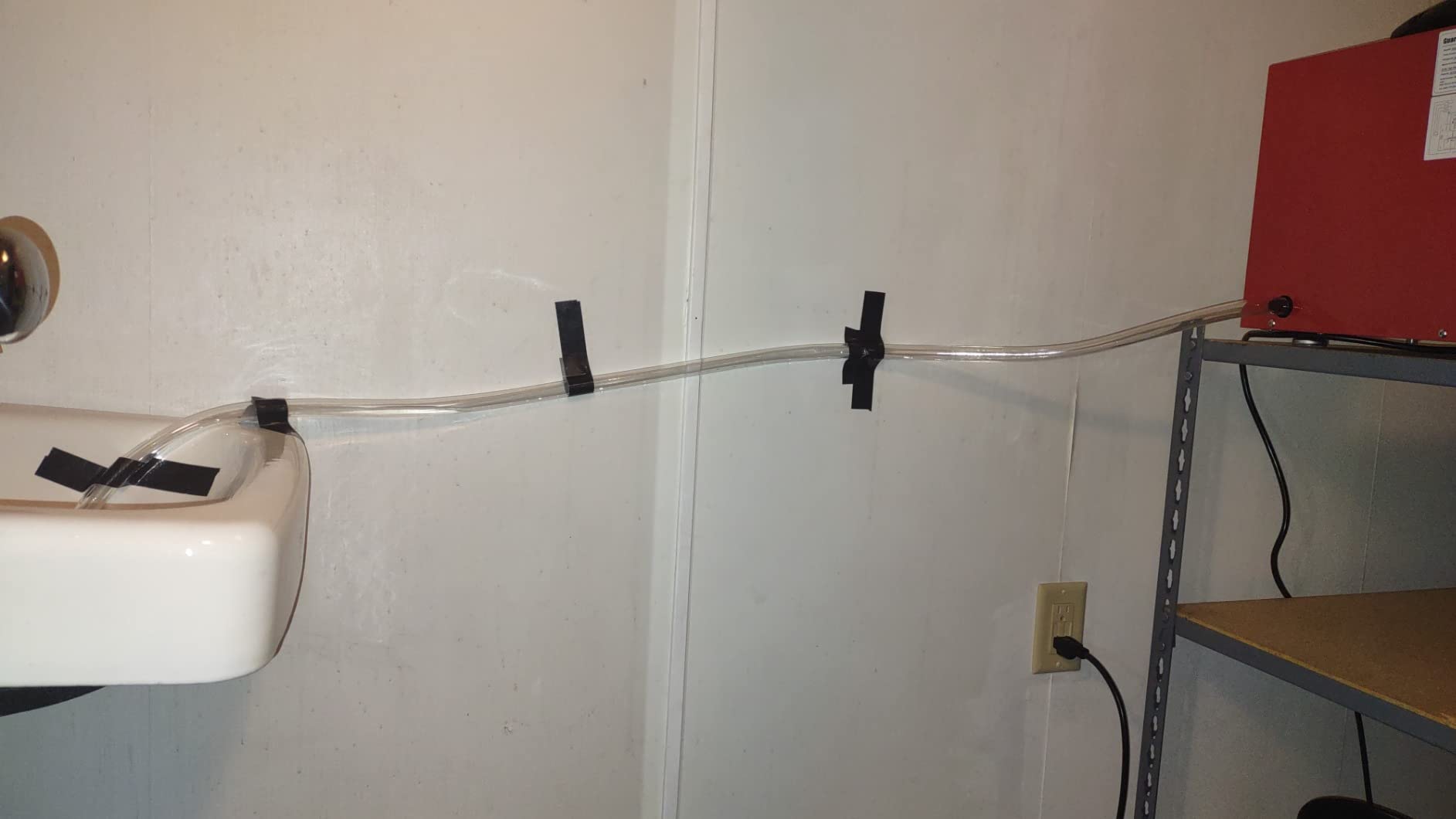
Sizing and Pump Noise
At 35 PPD and coverage up to 1,000 square feet, it belongs in a smaller crawl, ideally one with a vapor barrier. A faint pump noise is audible directly beneath a living space, which is worth checking against your floor assembly.
10. AlorAir Sentinel HDi65 – Best Pump Drainage for 1,300 Sq Ft Crawls
ALORAIR 120 Pints Energy Star Crawlspace Dehumidifier with Pump 1300 Sq.Ft.
55 PPD at AHAM
Integrated 19.6 ft pump
1300 sq ft coverage
500 W
6-year warranty
Pros
- Integrated pump removes the need for elevated mounting
- Same compact metal body as the Sentinel HD55S
- Auto defrost with temperature-based frost sensing
- Energy Star certified
Cons
- One-star share is high among AlorAir models in this group
- Warranty terms vary by component
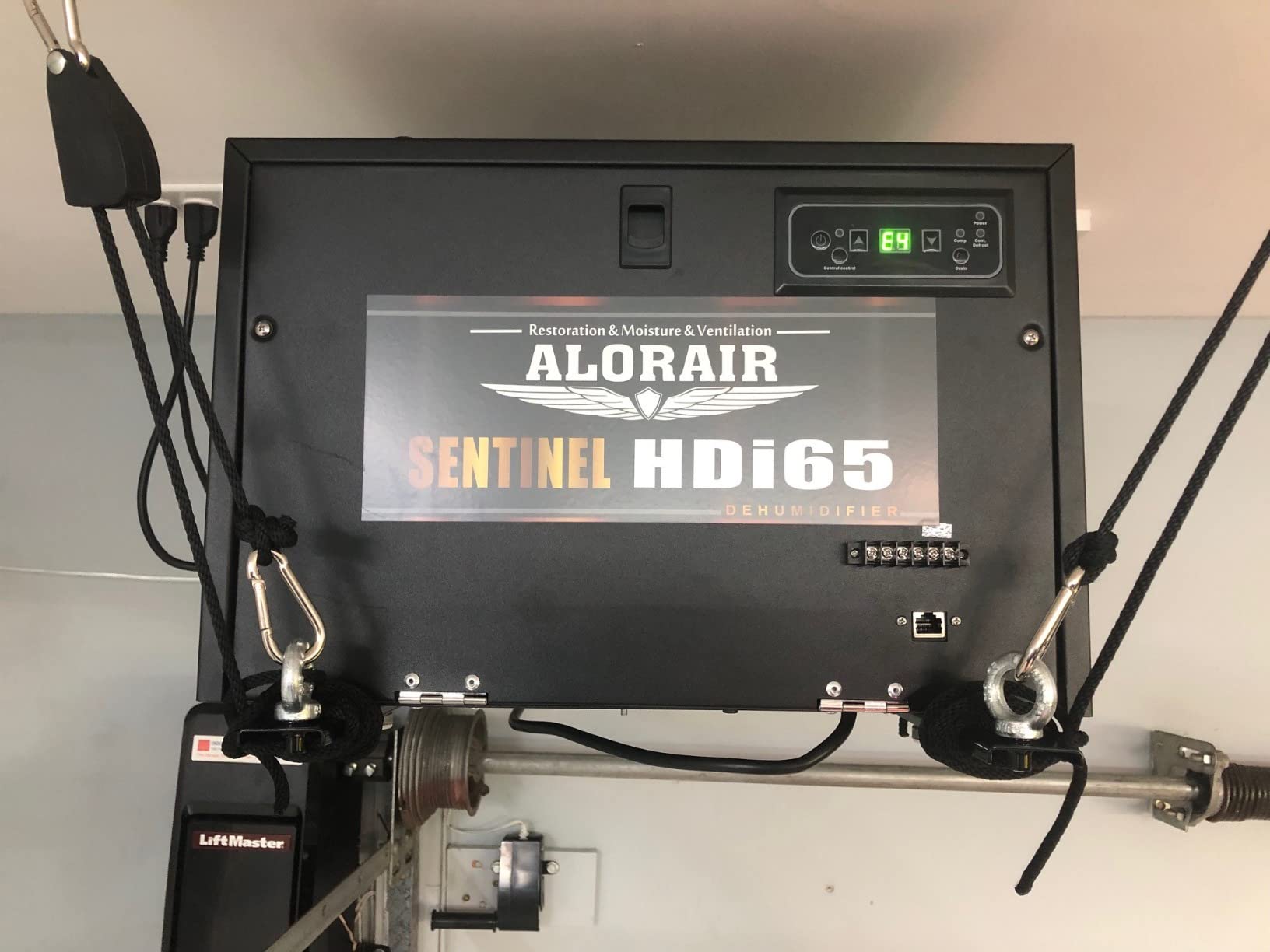
This is the upgrade path from the Sentinel HD55S. Same 19.2 by 12.2 by 13.3 inch metal body and the same 55 PPD at AHAM rating, but with an integrated condensate pump rated to 19.6 ft of lift, so you can install it at floor level and drain upward to a sump.
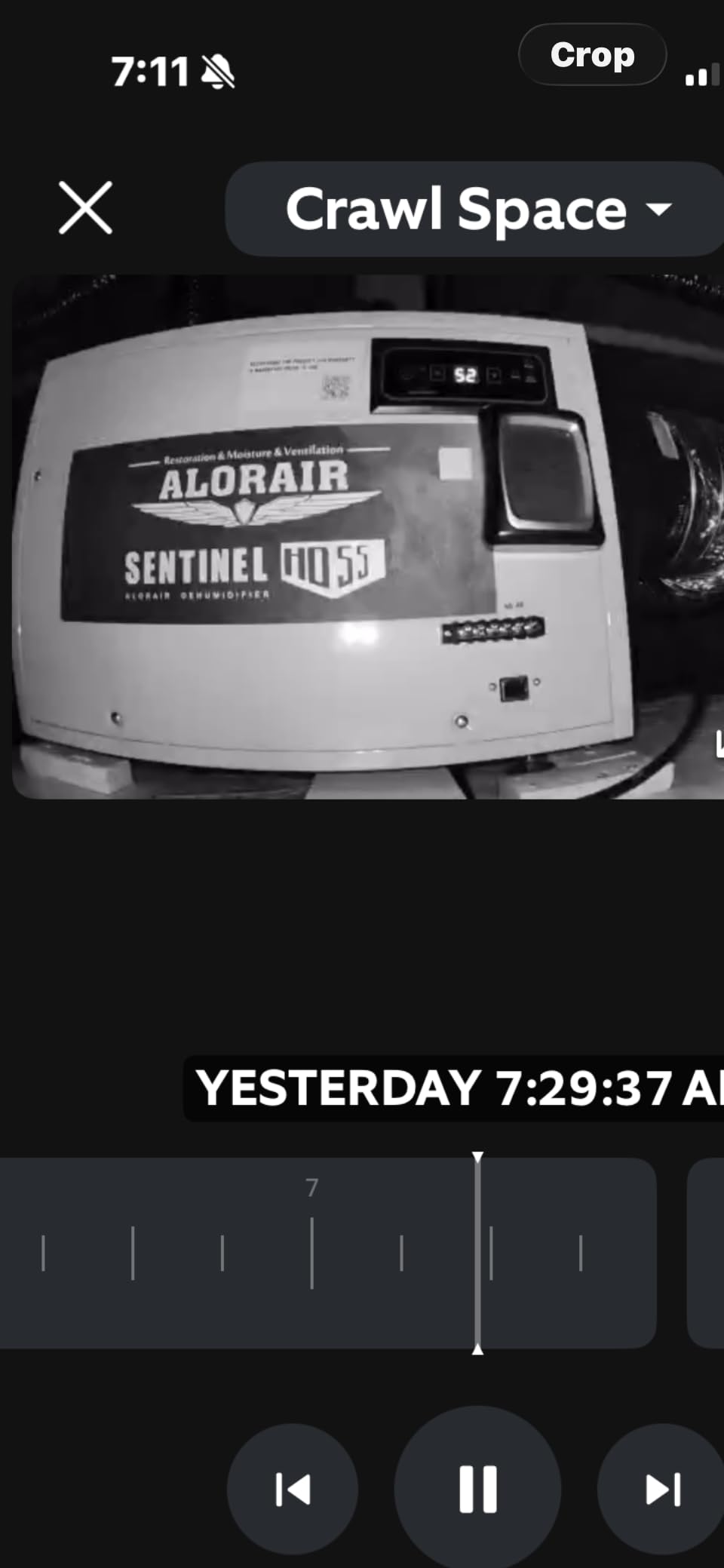
Same Footprint, Different Drainage
If your crawl space is level with no obvious low point, the pump is the reason to spend more here. Gravity drainage on a flat floor either needs a raised mount or an awkward sump line, and both are common install problems.
Low-Temperature Operation and Power Draw
Auto defrost uses ambient temperature sensing and keeps the fan running while the compressor pauses. At 500 W it draws less than several competitors carrying a similar AHAM rating, which helps over continuous operation.
Reading the Warranty Terms Carefully
The stated coverage is a 6-year limited warranty with full coverage in the first two years, but terms differ by component. Reliability is the real consideration: this unit carries the highest one-star share of any AlorAir model in the group, so plan for a check on the drain and defrost cycle at installation.
How to Choose a Crawl Space Dehumidifier
Read the AHAM Number, Not the Headline
Every capacity claim comes from one of two tests. The saturation figure is measured at 95 F and 90 percent RH, and the AHAM figure at 65 F and 60 percent RH. The same machine can carry a 120 pint headline and a 55 pint certified figure, so size against the second number or you will overbuy.
Decide Pump or Gravity Before You Order
Gravity drainage is simpler, uses no pump power and has fewer failure points, but it only works from a high point with a continuous downward slope. A built-in condensate pump costs more in electricity and adds a wear item, and in exchange it can discharge upward and along a long run to a sump. Crawl spaces with a defined low point and no low-hanging joists are the best candidates for gravity. Everything else is easier with a pump.
Confirm the Clearance Before the Delivery
Measure the bay height where the unit will sit, not the average height. Several models here measure between 11 and 15 inches tall, but one requires roughly 39 inches of clearance, and mistaking a spec sheet for a tape measure is the most common self-inflicted install problem.
Check the Low-Temperature Story Honestly
Compressor units rely on auto defrost to survive a cold crawl, pausing the compressor while the fan thaws ice. That works in mild and moderate winters. In genuinely cold, unheated northern spaces, a desiccant wheel unit, which uses no refrigeration and therefore cannot ice up, is the more reliable design, at the cost of higher electricity use.
Seal First, Dehumidify Second
A machine pulls moisture from the air, not from the soil. If bare dirt is exposed, you are asking the dehumidifier to outrun an unlimited water source, and most forum accounts that succeeded describe sealing the crawl space and running a machine, not a machine alone. Venting foundation openings to dry outdoor air works against you in summer. A professional encapsulation contract is a much larger project than an appliance, but sealing rim joists and covering soil with a vapor barrier is the step that makes any of them perform.
Set the Humidity Target and Check It Twice a Year
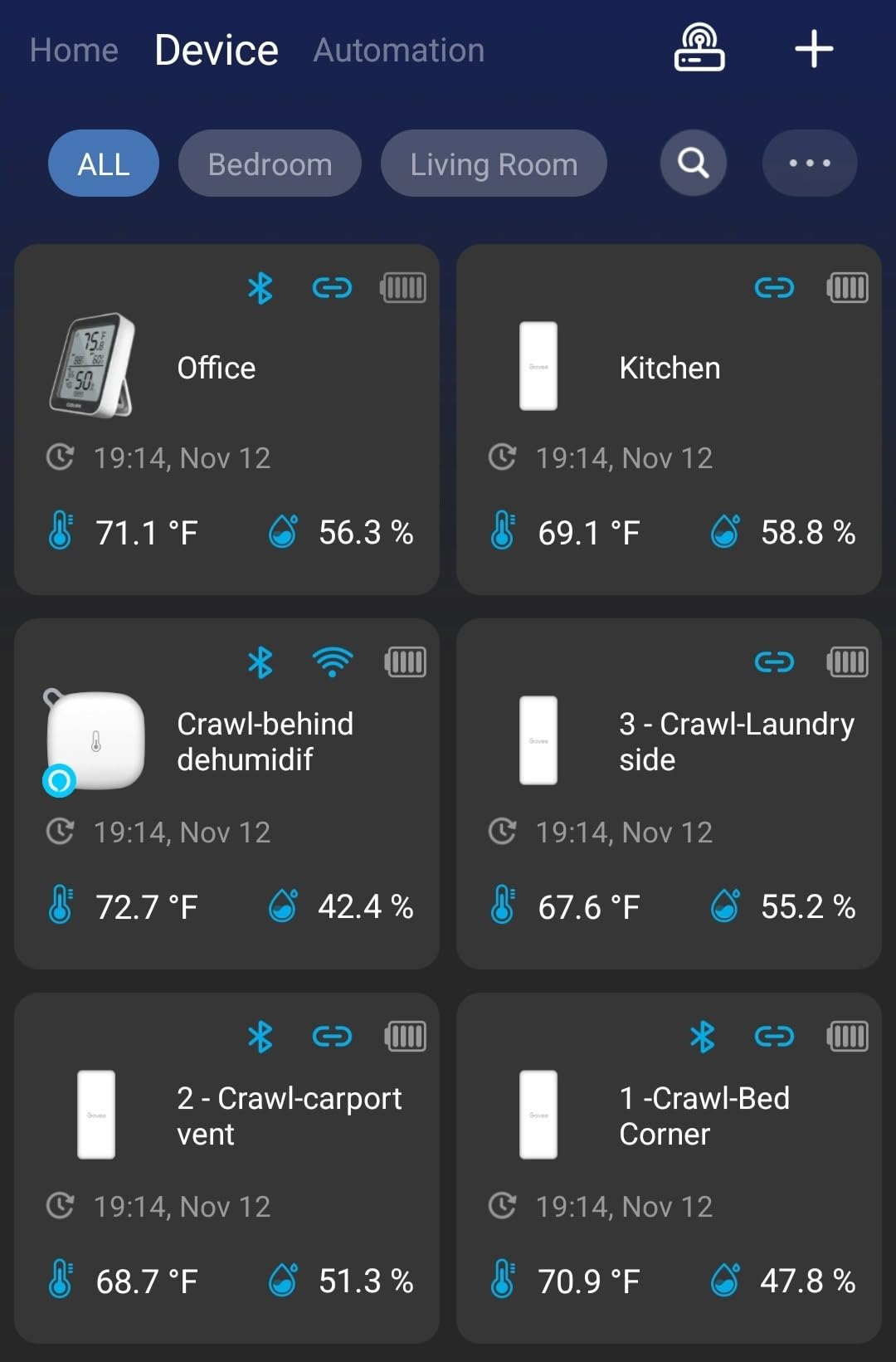
Keep the crawl at 50 to 60 percent RH, measured near the wood rather than at the unit, since air at the machine can read several points lower than air at the joists. Inspect the drain line, flush the filter and confirm the reading twice a year. Forum complaints about readings stuck in the upper 50s almost always trace back to an open vent, a failed pump or a pinched hose rather than an undersized machine.
Frequently Asked Questions
What type of dehumidifier is best for a crawl space?
A low-profile compressor unit rated for low-temperature operation, with continuous gravity drainage or a built-in condensate pump and no tank to empty. For genuinely cold unheated spaces, a desiccant unit is more reliable because it cannot ice up.
Is it worth putting a dehumidifier in a crawl space?
Yes, when humidity regularly sits above 60 percent, mold is visible on joists, or musty smells reach the floors above. A machine alone rarely fixes a crawl with bare exposed soil, so sealing first makes the purchase worthwhile.
Can I put a dehumidifier in my crawl space without encapsulation?
You can, and it will pull moisture from the air, but a machine cannot pull water out of soil. Sealing rim joists and covering the ground with a vapor barrier is what makes continuous operation worthwhile. Professional encapsulation is a much larger project than an appliance purchase, so weigh that before buying a machine.
What humidity should a crawl space be kept at?
Keep it between 50 and 60 percent relative humidity, measured near the wood framing rather than at the unit. Above 60 percent is the range where mold establishes on wood, and readings of 70 percent are too high for long-term protection.
What size dehumidifier do I need for a 2,000 sq ft crawl space?
Use the AHAM rated pints per day as your sizing figure, not the headline number. For 2,000 square feet with a vapor barrier, a unit rated around 55 to 70 PPD at AHAM is a reasonable target. For bare soil or heavy moisture, step up to a 125-pint class unit and add a pump.
Which Crawl Space Dehumidifier Should You Buy in 2026?
If you want one answer, take the AlorAir Sentinel HD55S. It has the deepest review history in the group, an auto defrost system built for cold mornings, a metal shell that survives crawl space conditions and a 6-year warranty, and it is our top pick for crawl spaces up to about 1,300 square feet.
If the floor is flat with no gravity fall, choose a pumped model instead: the Aiusevo AS610 covers large crawls with both drainage options, the AlorAir Sentinel HDi65 matches the HD55S footprint with a 19.6 ft pump lift, and the AlorAir Sentinel HD35P or Abestorm Guardian SN35P cover small crawls quietly and compactly.
For very wide or bare-soil spaces, the Moiswell Defender M145 and Airecoler GT-X5 pull the most water at standard test conditions, while the Yaufey 70 Pint is the pick if your crawl is sealed and your priority is a low power draw. Whatever you choose, seal the soil and rim joists first, and check the drain line twice a year. You can compare our other hands-on roundups, including desk chairs for small spaces and short throw projectors for bright spaces, using the same method.