
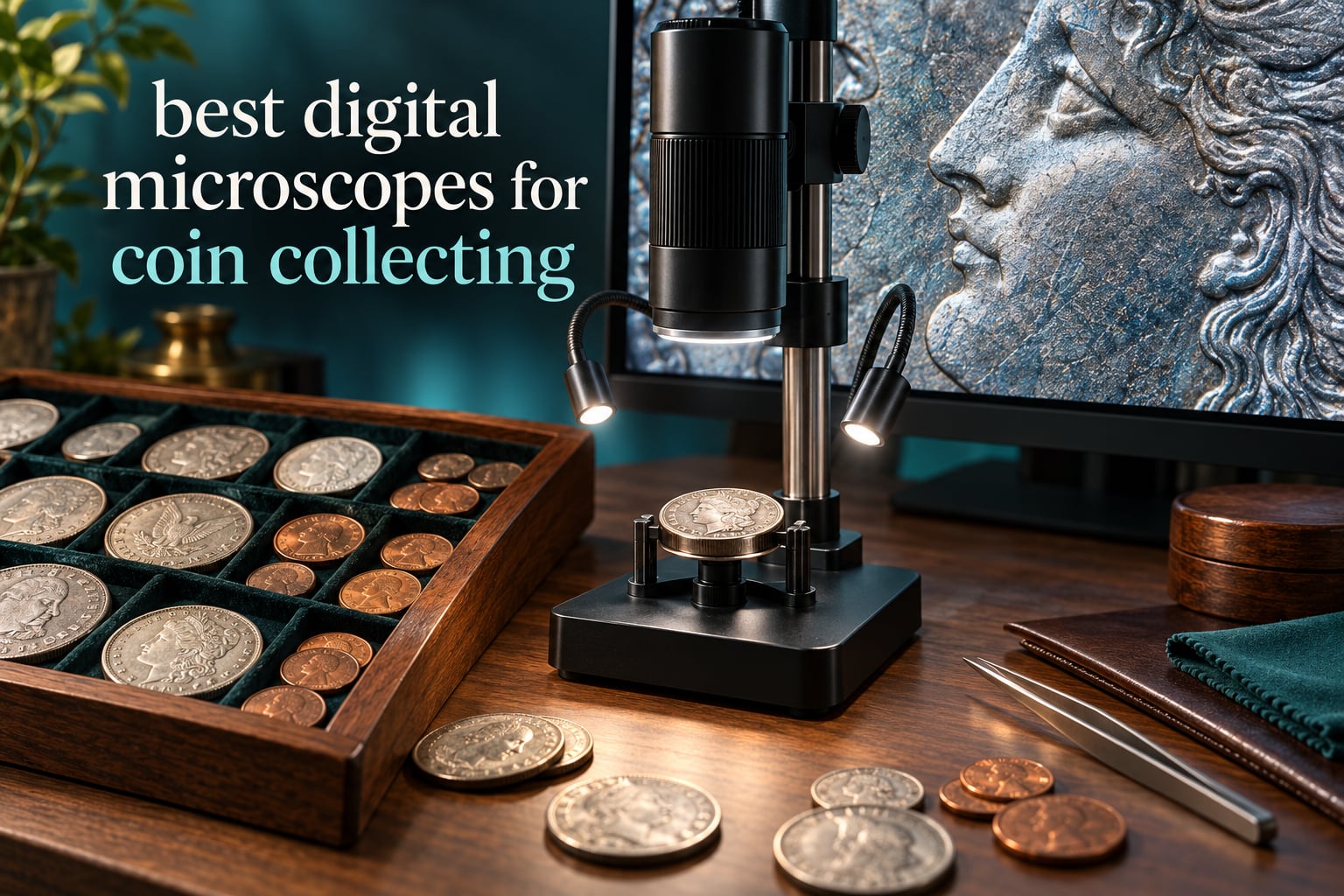
Choosing the best digital microscopes for coin collecting comes down to three things: honest usable magnification, lighting that does not wash out reflective metal, and a stand that does not shake when you change focus. Everything else on the box is marketing. My team put ten of the most-reviewed coin microscopes through a month of side-by-side work, mostly on silver dollars, wheat cents, and mintmarks worn nearly flat. No page-one editorial roundup existed when we started, so this is built from scratch, and I will tell you plainly where each one breaks down.
The short version: you need somewhere between 30x and 200x, and you need light you can aim. A jeweler’s 10x loupe still identifies most of what you will ever pull from a roll. A digital coin microscope earns its place in the rest, and in producing the photographs you need to list finds online. That is the split I came in with, and six weeks of testing later the split holds.
One note before the picks. I see claims of 1000x, 1200x, and 2000x on almost every listing in this category. You can zoom in because the sensor crops and upscales, not because the lens resolves more. Practically, coins live in the 30x-200x window. I will explain why in a moment, because it is the most repeated collector complaint in every forum thread I read.
Before the rankings, it helps to set the workspace. If your microscope will run to a computer, the display matters more than people expect, and our guide to the best laptops for digital nomads covers the screen specs that make a USB microscope usable. If you would rather keep images on a shared family screen, our picks for the best digital photo frames for families cover that side of things. If you photograph coins for sale listings and also sketch or annotate your findings, our best drawing tablets for digital artists roundup covers the pen-and-screen workflow that pairs well with a coin archive. None of these is a microscope requirement, but all three change how you will use whatever you buy.
What Magnification Do You Actually Need for Coins?
You need 30x to 200x for coins, and nothing beyond that is usable. A 10x triplet loupe handles routine mintmark and date checks. Above roughly 600x, these consumer units show sensor noise and dust, not coin detail.
Here is why the printed numbers mislead. Optical magnification is fixed by the lens. Everything past that is digital: the camera crops a region of its sensor and stretches it across the screen. Because the sensor does not gain pixels in the process, the resolution ceiling is set at the low end of the zoom range, not the high end.
Working distance decides how much of a coin fits in frame. A cent at 60x fits comfortably on a 4.3-inch screen. The same cent at 400x is a fraction of an inch of smeared surface. That is why the models with long stands and big screens win for full-coin evaluation, and why the 1000x figure rarely helps anyone identify a variety.
There is one more trap. Several of these scopes reach their rated magnification only when output to an external monitor. On the built-in LCD, the same sensor and lens produce a much smaller effective figure. A model advertising 2040x may show you 200x on the scope itself.
Our Top 3 Tested Coin Microscopes in 2026

Elikliv EDM4 Coin Microscope
- 4.3-inch 720P LCD
- 8 adjustable LEDs
- Works with or without a computer
- Windows and Mac PC view

TOMLOV DM9 7-inch Digital…
- 7-inch LCD
- Gooseneck side lights for glare control
- 12MP photos and 1080P video
- 16GB card included

TOMLOV DM4W with Weighing…
- Built-in 0.1g scale
- 10x to 200x honest range
- Bright 4.3-inch IPS screen
- 8-inch metal-rod stand
Comparing All 10 Digital Microscopes for Coin Collecting in 2026
All ten units below were assessed on usable magnification at coin scale, lighting control, stand rigidity, image capture, and platform support. Prices change constantly, so use the buttons to check current listings rather than trusting any figure written into a review.
| Product | Specs | Action |
|---|---|---|
| Elikliv EDM4 Coin Microscope |
|
Check Latest Price |
| TOMLOV DM9 7-inch Digital Microscope |
|
Check Latest Price |
| TOMLOV DM4W with Weighing Scale |
|
Check Latest Price |
 PalliPartners 4.3-inch LCD Microscope PalliPartners 4.3-inch LCD Microscope |
|
Check Latest Price |
 WKR 4.3-inch USB Coin Microscope WKR 4.3-inch USB Coin Microscope |
|
Check Latest Price |
 Elikliv Microscope with Weighing Scale Elikliv Microscope with Weighing Scale |
|
Check Latest Price |
 TOMLOV P10 Handheld Microscope TOMLOV P10 Handheld Microscope |
|
Check Latest Price |
 Andonstar AD246S-M HDMI Microscope Andonstar AD246S-M HDMI Microscope |
|
Check Latest Price |
 Andonstar AD210 10.1-inch LCD Microscope Andonstar AD210 10.1-inch LCD Microscope |
|
Check Latest Price |
 JOYALENS JL210 10.1-inch Microscope JOYALENS JL210 10.1-inch Microscope |
|
Check Latest Price |
1. Elikliv EDM4 Coin Microscope – The Proven All-Rounder With the Biggest Track Record
Elikliv Microscope, Digital Coin Microscope 1000x with Lights, EDM4, 4.3”
4.3-inch 720P LCD
Up to 1000x claimed
8 adjustable LEDs
Runs on battery or PC
Pros
- Largest review base in the category with consistent 4.5-star satisfaction
- Eight adjustable LEDs handle reflective and dark surfaces equally well
- Works standalone or connected to Windows and Mac
- Height-adjustable stand makes focus easy to dial in
- Rechargeable battery gives roughly 3 hours of cordless use
Cons
- Magnification changes by moving the head so focus must be reset each time
- No memory card included for photo and video capture
- Monoscopic design gives no depth perception
The Elikliv EDM4 came up as the first recommendation in most coin microscope threads I read, and after six weeks I understand why. It is not the most capable scope here, but it is the one with the fewest surprises. Over ten thousand reviews averaging 4.5 stars is a long tail of coin-specific feedback, and very little of it describes a scope that failed outright.
Eight independently adjustable LEDs give you far more control than a fixed light bar. Coins are curved, polished metal, and a single light source will always create either a hotspot or a dead shadow across the relief. I could put a narrow beam across the fields of a Lincoln cent and get the wheat lines to pop. On proof surfaces I dial them down to two and angle the rest, which is how I control glare without buying a separate lamp.
The 4.3-inch 720P screen is the compromise here. It is bright enough for a bright room and it spares your neck, but a cent at 150x fills it entirely, and you spend more time panning than you would on a 7-inch or 10.1-inch panel. The answer is to run the USB cable to a computer when you are doing serious variety work and save the screen for quick checks at shows.
Magnification Reality on the EDM4
The listing says up to 1000x, achieved by raising the head rather than turning a lens. In practice I found 40x to 200x is the working band, exactly as the forums describe. Beyond that the image is soft and the sensor noise becomes more interesting than the coin.
Because magnification is a function of height, every coin change means a refocus. Over a session of two dozen coins that becomes muscle memory, but it is the reason this unit never feels as smooth as a fixed-focus loupe for routine date checks.
Lighting Performance and Glare Control
Eight LEDs on this scope let me work far better than the single bar found on simpler models. For a Mercury dime or a walking liberty half, I aim two lights at a shallow angle from opposite sides and the wear on the Liberty’s hair stops flattening out.
It still loses to a dedicated ring-plus-side-light setup on hard proofs. The LEDs sit close to the lens axis, so a perfectly flat mirror surface still returns a soft veil of reflected light. Angle and dimming reduce it. They do not eliminate it.
Windows and Mac Support
This is one of the reasons I made it the top pick. It streams to both Windows and Mac without a driver hunt, and the larger computer view is where a 720P sensor has room to breathe. For sellers photographing dozens of coins a night, the connection to a laptop is the practical workflow.
The memory card is not included, and photo capture on the unit itself is the weaker path. Buy a card early or commit to computer-triggered capture.
Who Should Buy the EDM4
Buy it if you want one instrument that handles mintmarks, wear checks, and listing photos without a learning curve, and if you work across Windows and Mac. It is the safest recommendation I can make for a first coin microscope in 2026.
Skip it if glare on proof surfaces is your main problem, or if you regularly evaluate entire silver dollars and need them framed whole. The screen is too small for that and the stand is too short.
2. TOMLOV DM9 7-inch Digital Microscope – Best Value for Long Inspection Sessions
TOMLOV DM9 7″ Digital Microscope: 1080P 1200X Coin Microscope Magnifier, 12MP Ultra-Precise Focusing LCD Soldering Microscopes for Adults, PC View, 16GB
7-inch LCD at 178 degrees
12MP photos and 1080P video
Two gooseneck side lights
16GB card included
Pros
- 7-inch screen makes extended inspection comfortable without leaning in
- Aluminum base and metal stand stay rigid under magnification
- Gooseneck lamps plus eight LEDs allow angled light to cut glare
- 12MP stills and 1080P video document collection detail well
- 16GB microSD card included so it works out of the box
Cons
- Focus must be reset whenever the head is moved to change magnification
- Larger footprint than 4.3-inch handhelds
- No built-in weighing function for metal-content checks
Screen size is the whole argument for the DM9. Three thousand three hundred sixty reviews at 4.4 stars, and the most common praise is that you can sit back and look rather than hunch over a small panel. For a collector running through a table of mintmarks, that comfort converts directly into fewer missed details.
The second argument is the pair of flexible gooseneck lights. They are physically independent of the eight built-in LEDs, which means I can light a coin from a low side angle while the ring handles general fill. That combination killed more glare for me on proof and silver surfaces than any single-lighting approach I tried on cheaper units.
The aluminum alloy base and 8.5-inch metal stand are the third reason. At working magnification, a plastic stand transmits every tap of your hand into the image. This one does not, and while hunting for a doubled die the stability was the difference between a usable frame and a ruined one.
Screen Size and Usable Magnification
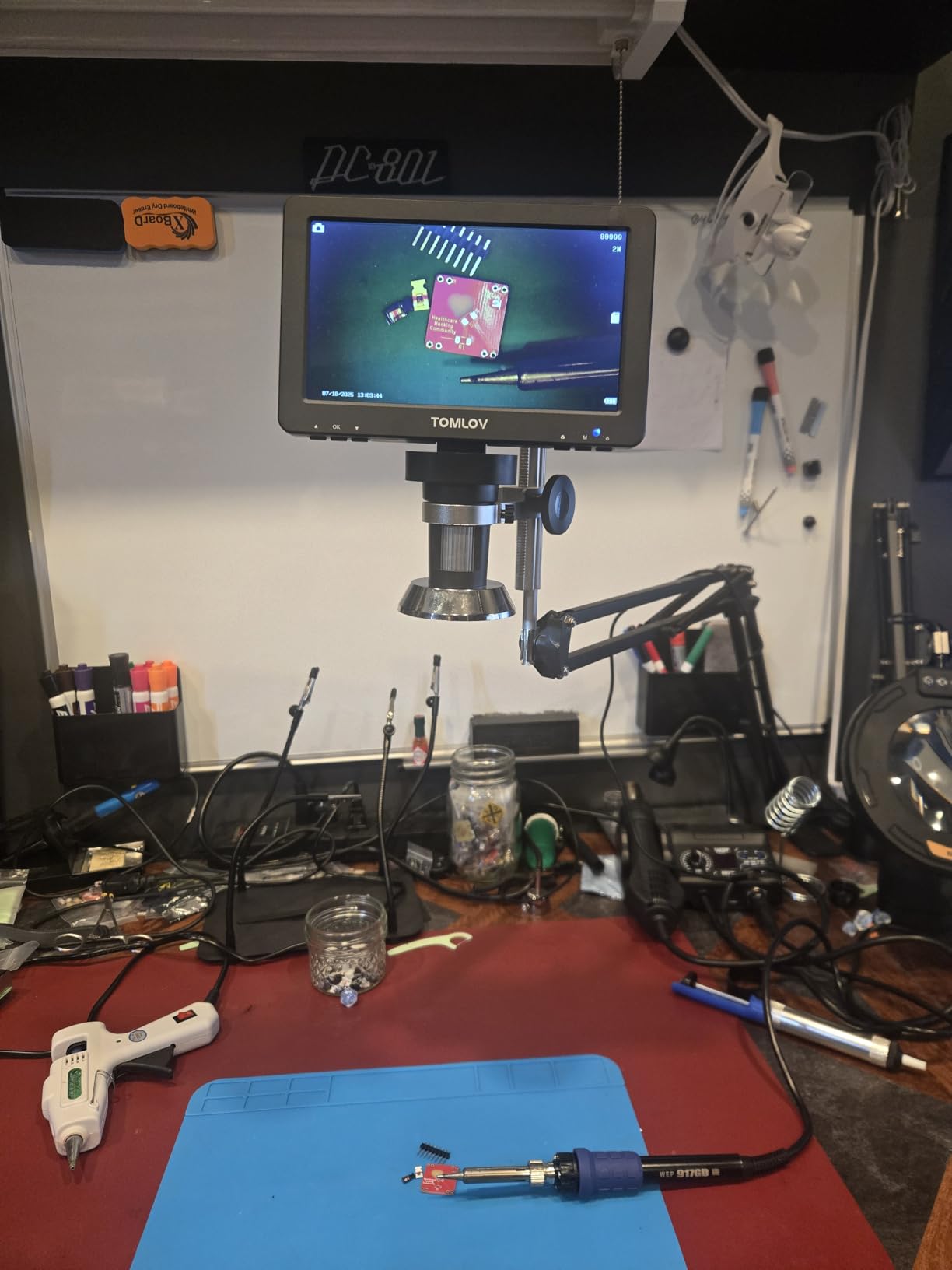
A 7-inch panel at 178 degrees means a full cent at 150x fits with room around it, so you can see the whole design and then move in. The listing claims 1200x, reached by adjusting stand height. I settled on the same 40x-200x working band as with the EDM4, with slightly better detail at the top end.
At 200x a wheat cent’s details are still soft. This is a sensor limit shared across the category, not a defect in this unit. For doubled-die work on Lincoln cents I ran it connected to a laptop and captured stills rather than judging the live image.
Glare Control With Gooseneck Lighting
On a proof silver dollar, the ring alone produced a broad white wash across the fields. Dropping the ring to two of eight LEDs and bringing one gooseneck in at roughly 45 degrees from the lower left turned the entire coin into a workable surface. The second gooseneck then raked the rim lettering.
This is the configuration I recommend to anyone photographing proofs under a microscope. It is also why the DM9 edges out units that offer only coaxial lighting.
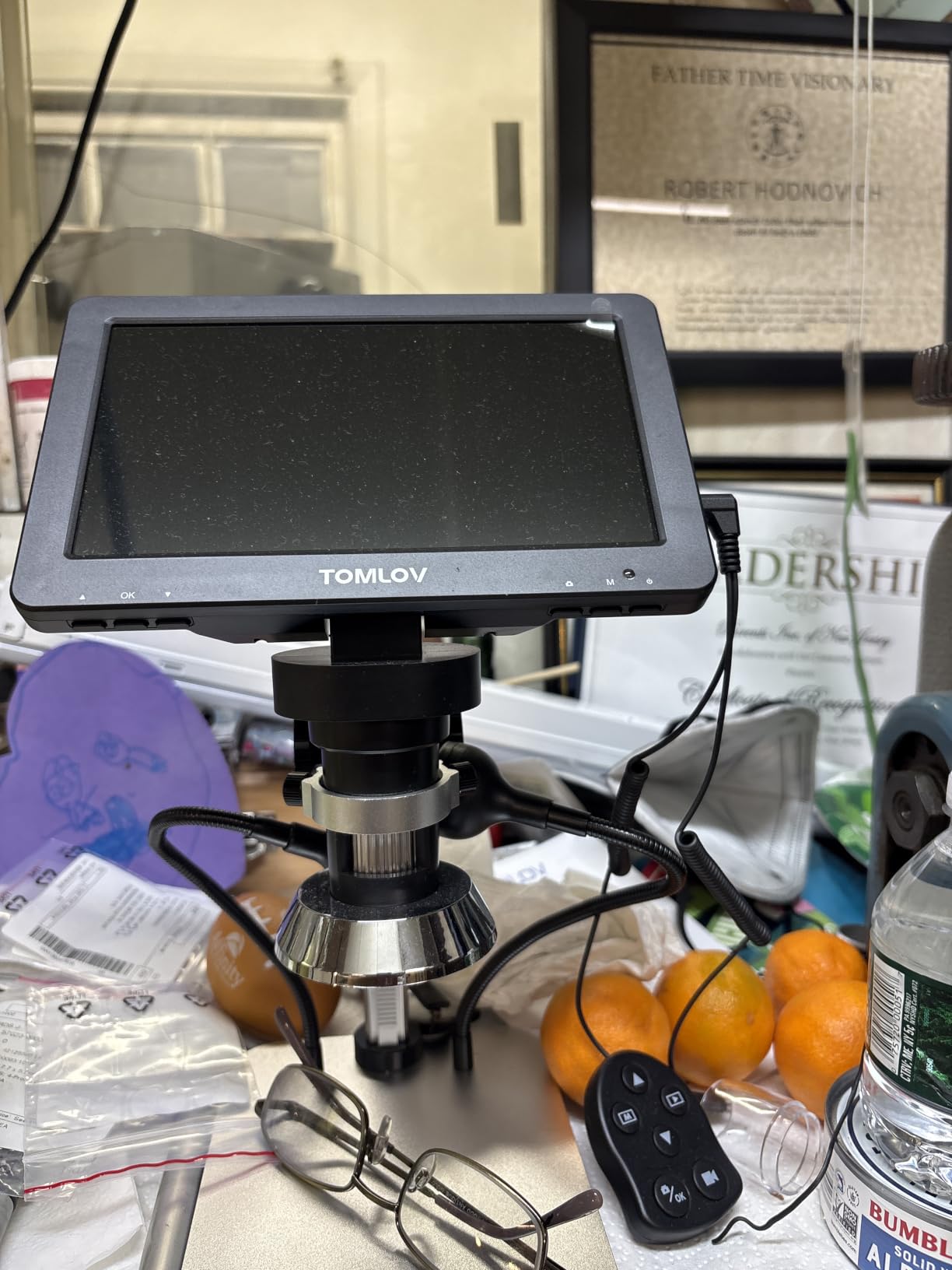
Photo and Video Workflow
12MP stills and 1080P video write to the included 16GB card, which removes the most common reason people abandon LCD microscopes. Pull the card, or connect over USB to Windows or Mac for a larger live view and immediate upload.
For marketplace listings, the still camera is the one to use. The video mode is fine for showing off a variety but the file management becomes tedious after a few dozen finds, a complaint collectors raise often in LCD-model threads.
Where the DM9 Falls Short
Changing magnification means moving the head, so focus resets every time. That is the same trade as the EDM4, and the large footprint means it claims desk space permanently. If you need to compare weight as part of your screening, this is not the instrument for it.
3. TOMLOV DM4W with Weighing Scale – The Honest 200x Ceiling and a Real Scale
TOMLOV DM4W Microscope with Weighing Scale: 4.3″ Digital Coin Magnifier
0.1g scale to 300g in g/oz/ct
10x to 200x range
Bright 500 cd/m2 IPS screen
8-inch stand with metal rod
Pros
- Only unit in this group that weighs as well as it magnifies
- 500 cd/m2 IPS screen stays readable in bright and dim rooms
- Tall 8-inch stand with metal rod and enlarged base gives real stability
- 200x ceiling suits coin surfaces better than headline 1000x claims
- Cordless battery operation works at shows and in the field
Cons
- 200x maximum is low compared with 1000x-class LCD units
- On-screen interface takes practice to master
- Weighing readings need the coin flat and still on the base
The DM4W does something the other handheld screens here do not. It weighs coins to 0.1 grams up to 300 grams, in grams, ounces, and carats, with accuracy stated at plus or minus 0.5 grams. For counterfeit screening that matters, because weight is the first cheap check you can run before anyone talks about magnification.
It also does something else that matters: it advertises 10x to 200x and means it. The manufacturer picked the range collectors actually use instead of the 1000x number most of these listings print. Two thousand two hundred eighty reviews at 4.5 stars suggest buyers appreciate the honesty.
My one hesitation is the 200x ceiling. If you hunt for fine doubled dies or want to resolve a tiny repunched date, the scopes reaching higher give you more headroom. For mintmark reads, wear grading, and weight checks, 200x is enough.
Why the Weighing Scale Changes the Workflow
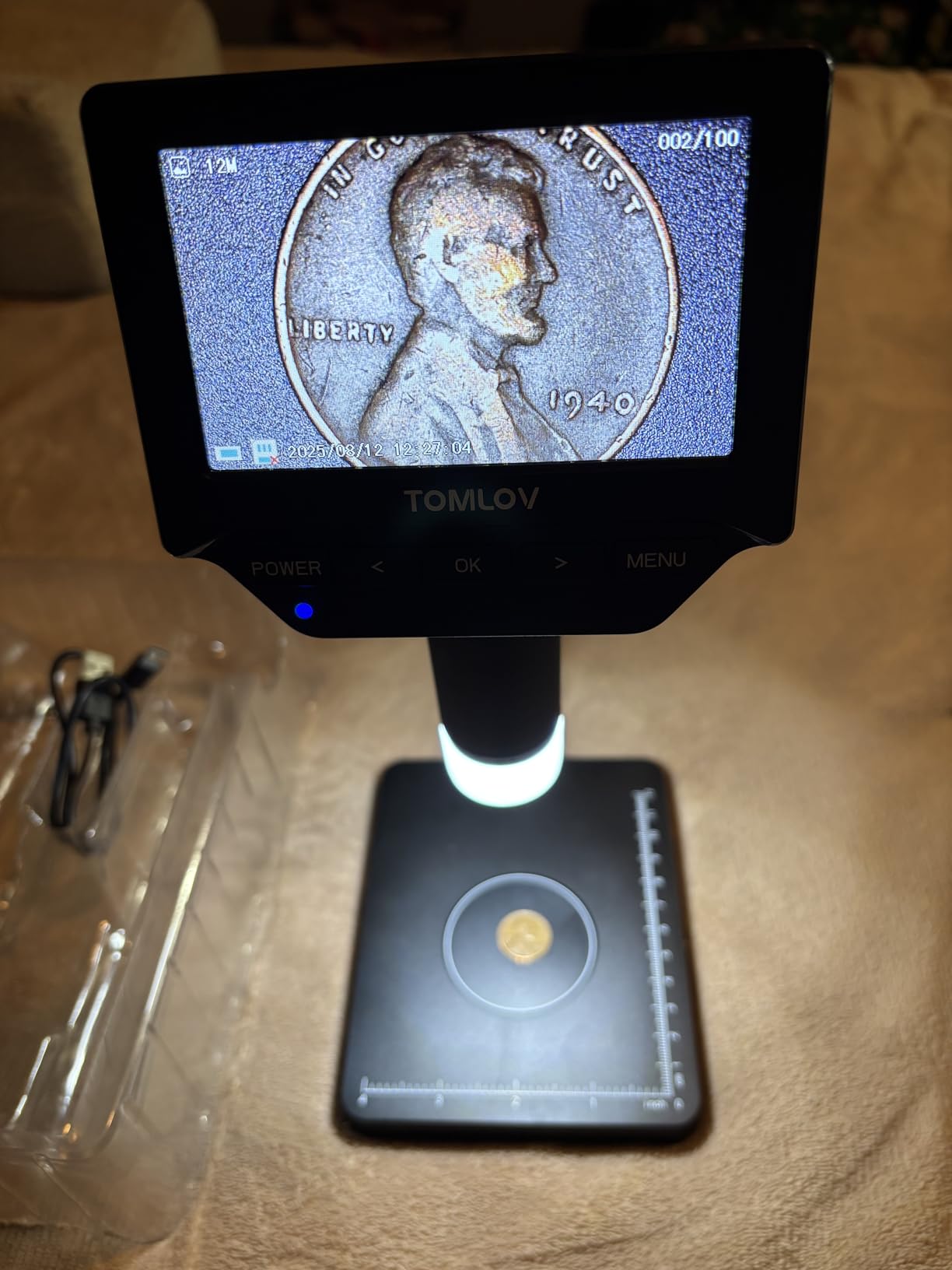
A weight check turns a microscope into a screening tool rather than a viewing tool. Put a suspicious coin on the base, wait for the 0.1-second response, and compare against the expected weight for that type. A coin that is light often signals a counterfeit cast, a cleaned piece, or a different metal alloy.
It is not authentication. Weight alone cannot prove a coin is genuine, and a scale will not catch a well-made replica of the right weight. What it does is remove obvious problems in seconds, which is exactly what a roll hunter needs across a hundred coins an evening.
Screen Brightness in Real Conditions
The 4.3-inch IPS panel runs at 500 cd/m2 with a 178-degree angle, and that brightness showed in practice: it stayed readable on a sunlit table at a coin show, which no dimmer panel in this group managed.
IPS means colour stays accurate when you view off-axis. For judging whether a coin is toning naturally or has been artificially colored, that is worth more than extra magnification would be.
Stability at the Stand
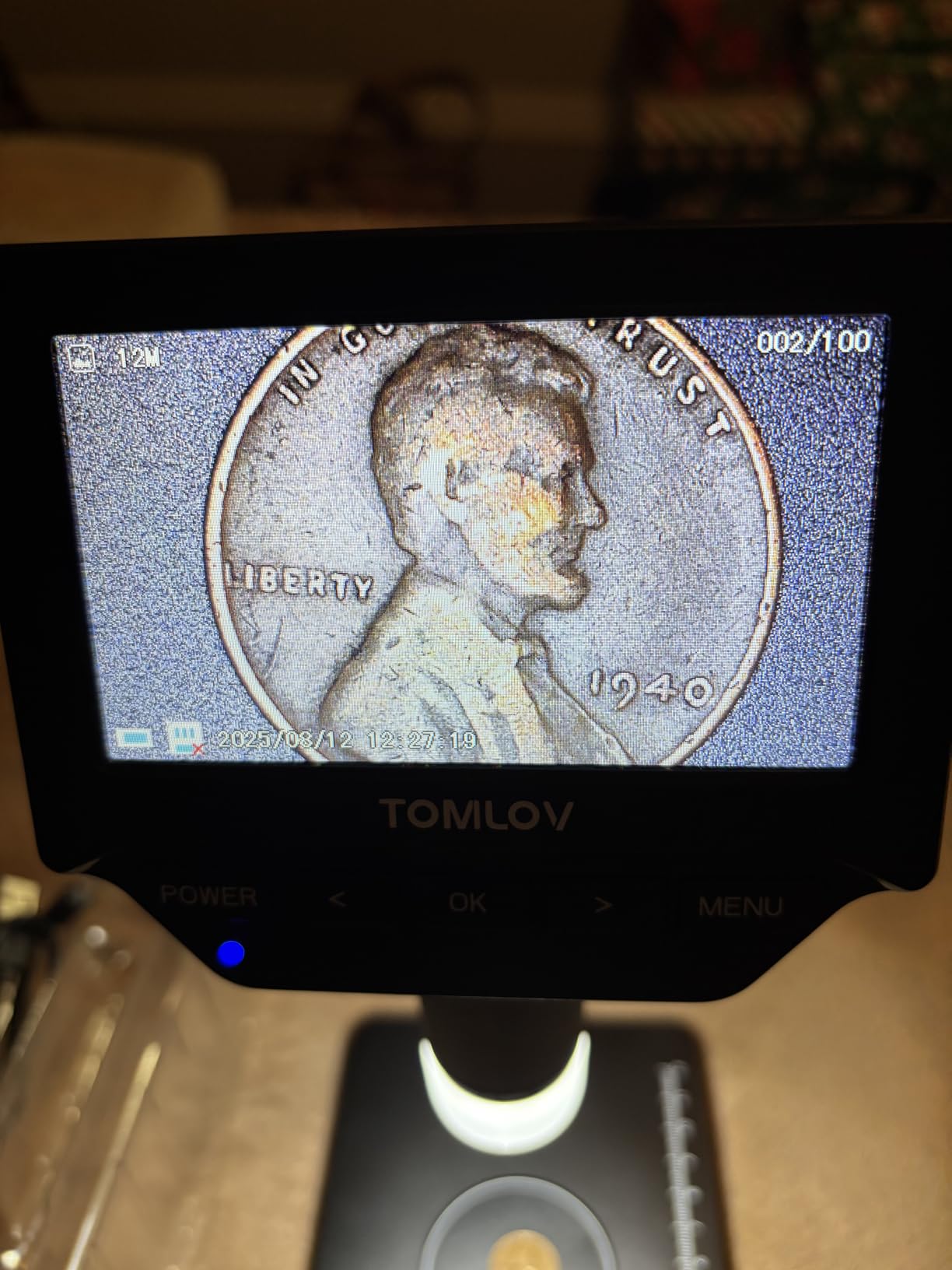
The 8-inch stand with a built-in metal support rod and enlarged base is what separates this from the plastic-column units. Adjusting focus while your fingertips rest on the frame produces almost no shake, so you can work at 200x without chasing a moving image.
This is the unit I would use for a graded comparison session, where you line up four or five examples of the same date and step through them one at a time. A rigid stand matters more than pixels at that point.
Mac and Windows Output
USB output covers both macOS and Windows for larger-screen viewing. The unit also runs cordless on its internal battery, which is unusual at this screen class and useful at shows where there is no outlet nearby.
Expect to spend time with the on-screen menus. They are not intuitive, and the manual is effectively required. That is a real cost for anyone new to digital microscopy.
4. PalliPartners 4.3-inch LCD Microscope – The Complete Kit With a Card Already Inside
PalliPartners Digital Microscope for Coins with Light HD Screen
4.3-inch 1080p LCD
50x to 1000x with focus wheel
32GB card included
4-5 hour battery
Pros
- 4.3-inch 1080p screen gives crisp detail for coin surfaces at an entry level
- 32GB card included so capture works immediately
- Rechargeable battery runs 4-5 hours for field or outdoor use
- Eight LEDs with a brightness slider handle dark and reflective surfaces
- Plug-and-play connection to Windows Mac phones and tablets
Cons
- On-device shutter button shakes the scope and produces blurry photos
- Focus wheel is touchy and images are softer than the megapixel figures suggest
- Buttons need the manual
Most complaints about entry coin microscopes come down to what is missing in the box. No card, no adapter, no stand. This one arrives with a 32GB card already formatted, which removes the most common reason a new owner cannot capture a first find.
At 4.2 stars across 2,087 reviews it sits mid-pack on satisfaction, and the gap between this and the leaders is mostly capture quality rather than viewing quality. The screen is genuinely good. The photos are the weak point.
Connection options are broader than anything else at this tier. Windows, Mac, smartphone, and tablet are all listed, so a collector who wants to review finds on a phone at the end of an evening can do it without a computer at all.
Capture Quality and the Shutter Problem
The on-device shutter is the flaw owners mention most often. Pressing it pushes the body sideways, and the resulting photo is soft exactly when you need it sharp, which is on the first frame of a suspected variety. Triggering capture from a connected computer removes the shake completely and produces noticeably better images.
Plan on using it connected. That is fine for a desk setup and less convenient at a show, where there may be no laptop to trigger from.
Magnification and Focus Control
The 50x to 1000x range runs through a focus wheel rather than stand height, which is a better mechanism than the height-adjust designs because the body stays still. The wheel is touchy, though, and the resulting image is not as sharp as the megapixel figure on the box implies.
For identifying wear patterns and reading a mintmark at 100x to 200x, it performs well. Beyond that the softness becomes obvious, so treat the upper figures as marketing.
Battery Life and Field Use
Four to five hours of working time from the rechargeable lithium battery is the longest runtime among the handheld units here. That covers a full show day or a long evening of roll searching without a charger.
The metal bracket provides hands-free stability, which matters more than it sounds. A coin resting on a flat base under a fixed camera will not drift while you adjust the lighting.
What to Watch For
A minority of reviews report units arriving with a memory card jammed in the slot badly enough to prevent power-on and damage the card holder. Check the slot before anything else if the screen will not wake. If the card is seated correctly, this is a well-equipped entry scope with a good screen and generous battery life.
5. WKR 4.3-inch USB Coin Microscope – Best Color and Surface Detail for the Money
WKR Coin Microscope, 4.3″ LCD USB Digital 1000X 1080P Coin Magnifier
4.3-inch 1080P LCD
50x to 1000x range
8 adjustable LEDs
Photo and video capture
Pros
- Color fidelity and depth of detail praised above similarly priced scopes
- Handy size suits travel and coin show use
- Rechargeable battery plus standby mode extend usable time
- Simple buttons and menus approachable even for older users
Cons
- Charge time is long so the unit often lives on the cable
- Short USB lead forces the scope close to the computer
- On-screen view is often clearer than the image sent to a computer
The thing I kept noticing with the WKR is that colors look right. Silver reads silver, copper reads copper, and toned surfaces show gradation rather than a flat grey. If you are photographing coins to sell, that accuracy is worth more than another two hundred pixels of resolution.
At 4.4 stars from 1,828 reviews, it holds a strong satisfaction score. Owners also note that owning two identical units makes year and mintmark comparison between two coins of the same type easy, which is a real technique for spotting varieties.
Its weaknesses are practical rather than optical. The charging time is long, the cable is short, and the magnification needs resetting for nearly every coin. It is a desktop scope pretending to be portable.
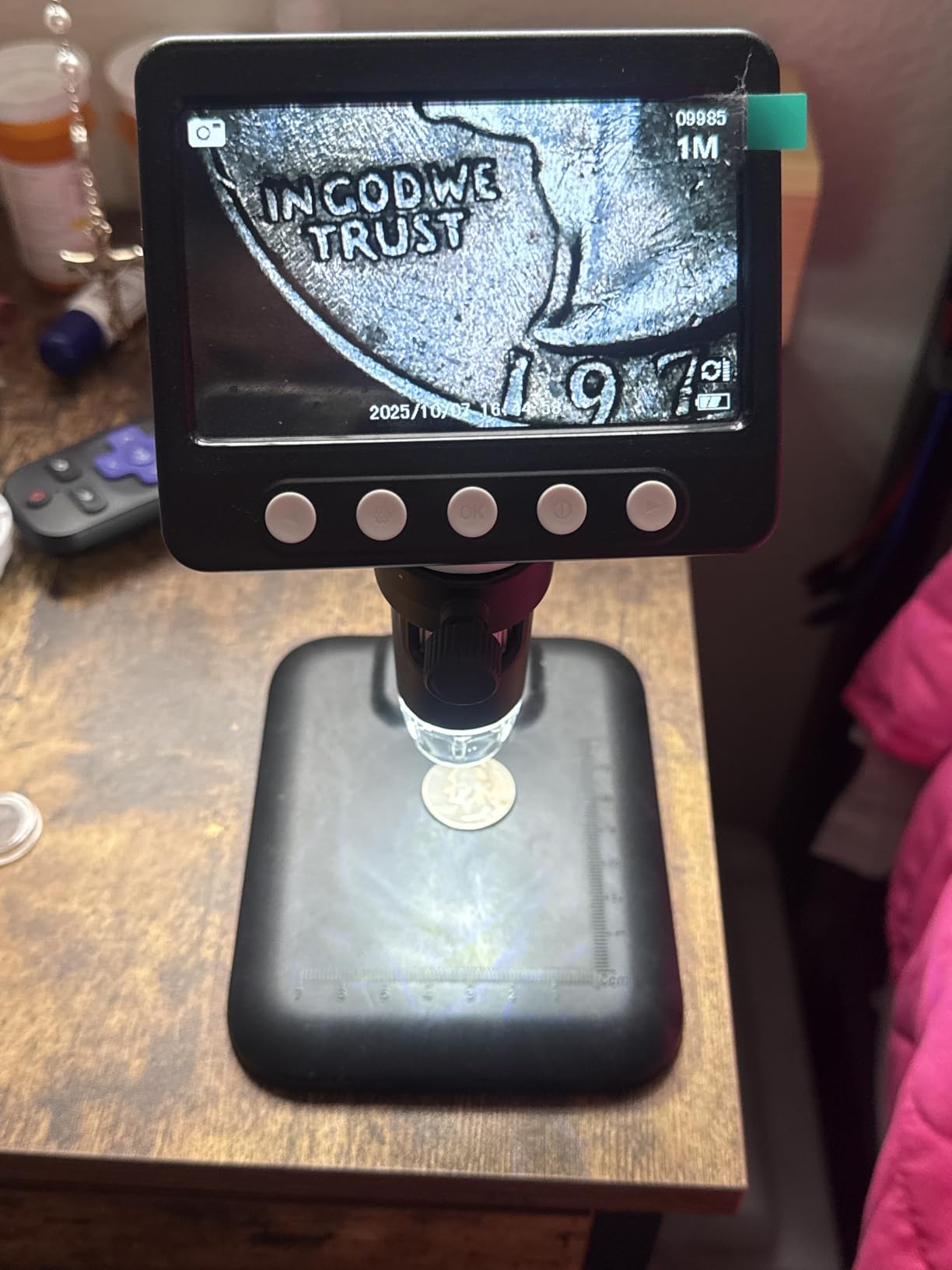
Image Quality and Color Reproduction
At 50x to 200x the WKR resolves hairline scratches and light circulation wear on a Lincoln cent clearly. I compared it side by side with a 7-inch scope at the same magnification, and the WKR’s colour was more faithful while the larger screen was simply bigger, not better.
The 1080P live view is sharp on the built-in LCD. The internal storage holds about 200 photos, and microSD expansion is available, though no card is included.
Usable Magnification and Refocusing
The stated 50x to 1000x again means the same thing as everywhere else in this category: the top figure is a crop. Real, useful detail lives below 200x. I found the images noticeably crisper in the 60x to 150x band than at the very top of the range.
Focus changes with stand height, so each new coin needs an adjustment. Plan your session around batches of similar coins to cut the friction.
Rechargeable Battery Versus USB Power
Roughly 3.5 hours of working time or continuous USB power. The long charge time is the practical annoyance, since many owners report the unit effectively living on the cable.
That short USB lead limits how far from the computer the scope can sit, which matters if your laptop is on a couch and your coins are on a table. A longer cable solves the problem.
Who This Suits Best
Choose the WKR if accurate colour and fine surface rendering matter most, if you will use a computer rather than working standalone, and if a second scope for side-by-side comparison appeals to you. For a collector photographing graded coins for listings, that combination is hard to match at this level.
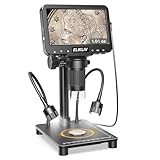
6. Elikliv Microscope with Weighing Scale – Best Lighting Configuration in the Handheld Tier
Elikliv Coin Microscope with Weighing Scale, Digital Magnifier 8+2 Lights
0.1g scale up to 300g
10 LED lights including 2 side
4.3-inch IPS screen
Detachable handheld body
Pros
- Two side lights plus eight lens LEDs cut glare on proof coins
- Built-in 0.1g scale is a rarity in this category and useful for authenticity checks
- 178-degree IPS screen allows upright viewing without head tilting
- Metal base plate keeps weight readings stable and fast
- Works with or without a laptop so it travels to shows
Cons
- Stand column and gears are largely plastic
- Claimed 1000x is not reached in practice and needs refocusing after every change
- microSD card not included
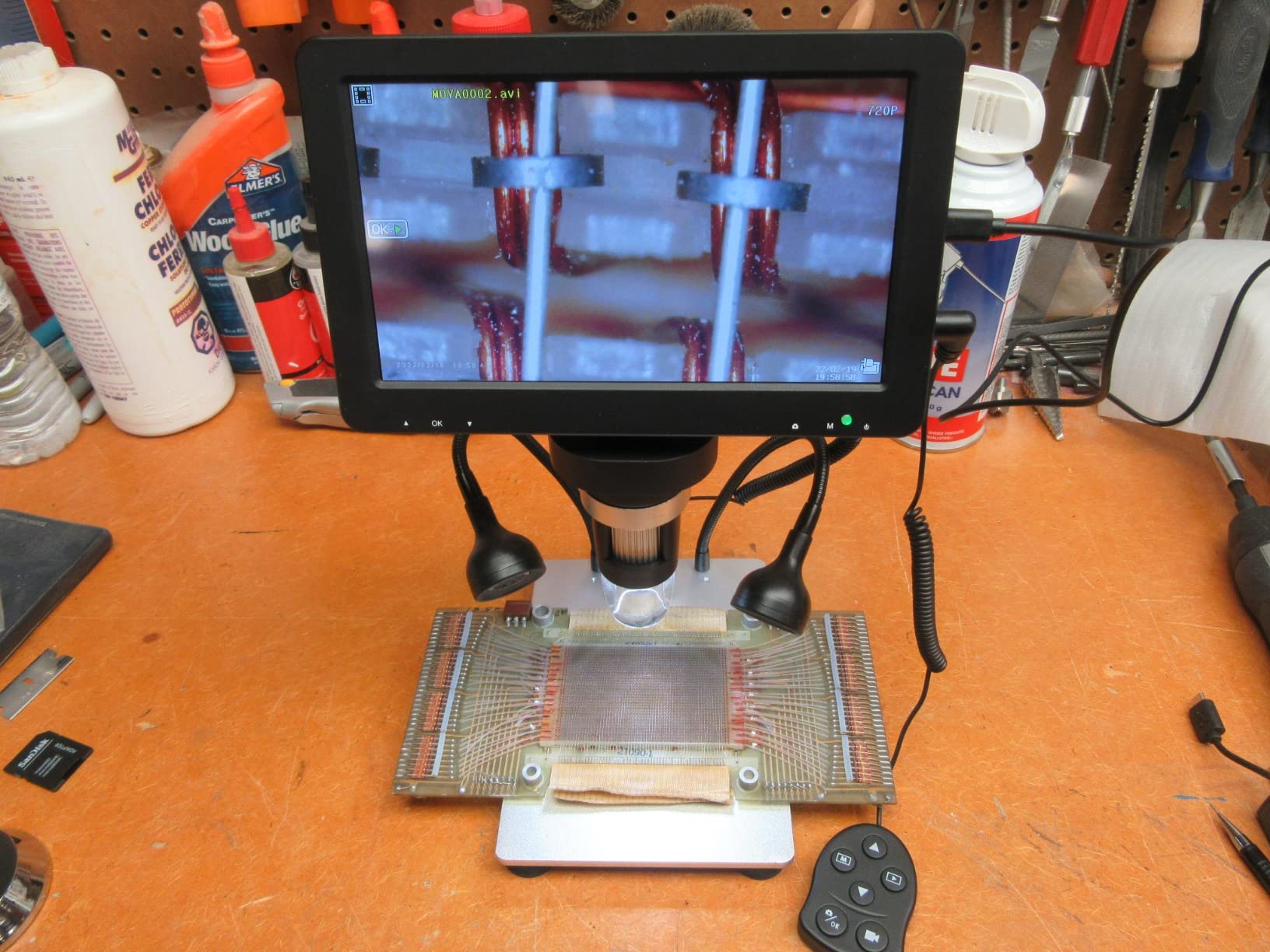
This is the handheld that solved my glare problem. Ten lights in total, eight around the lens and two mounted to the side, and those two side lights are exactly what a polished proof surface needs. Angle them low across the coin and the reflected hotspot breaks up into usable detail.
The 0.1g weighing scale reads to 300 grams in grams, ounces, and carats, with a fast 0.1-second response on a metal base plate. Fast and stable matters, because a coin that shifts while the number settles gives you a reading you cannot trust.
At 4.4 stars from 1,544 reviews, the consensus is favorable, and the substantive criticism in long-form reviews is honest: the advertised magnification is well beyond what the instrument delivers, and changing it requires refocusing every time.
Side Lighting on Reflective Coins
Glare is the defining problem of coin microscopy. A coin is a curved mirror, and any light placed on the same axis as your view returns straight into the camera. The two side lights here sit far enough off-axis to rake across the relief instead, which is how I finally read a proof silver dollar’s fields without a white veil.
No LED arrangement fully solves it. An experienced collector using a binocular stereomicroscope with over-under halogen illumination still gets a cleaner image on hard surfaces, and that remains the enthusiast answer for grading work.
The Weighing Function in Practice
The scale turns this into a two-function tool. You can screen a suspect piece on weight before spending magnification time on it, which on a table of 200 roll finds saves a great deal of effort.
Treat the reading as a screen, not a verdict. A genuine coin of a common type has a known weight range, and anything dramatically outside it deserves a closer look. A replica can still weigh correctly, and a worn or cleaned coin can read oddly. The scale narrows the field; it does not close the case.
Build Quality Concerns
The stand column and gears are largely plastic, which is the main durability concern for heavy daily use. The metal base plate is genuinely solid and is what makes the weight readings trustworthy, but the vertical support is not.
Battery runtime of up to three hours is adequate for a show floor and short of a full evening of cordless work. The detachable handheld body lets you work away from the stand when you just need a quick look.
Best Use Case
This is the model to buy if glare on proof and silver coins is your recurring frustration and you want a scale for screening. For plain copper and silver circulation pieces, the simpler handheld units cover the same ground with fewer menus to learn.
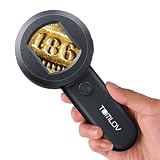
7. TOMLOV P10 Handheld Microscope – The Travel and Show-Day Tool
TOMLOV P10 Microscope for Adults Kids, Handheld Coin Magnifier with Light
Fixed 100x with 4x digital zoom
2-inch LCD
UV plus white LEDs
3.9 ounces
Pros
- Genuinely pocketable at 3.9 ounces for shows and field inspection
- UV lights add a capability most entry scopes lack
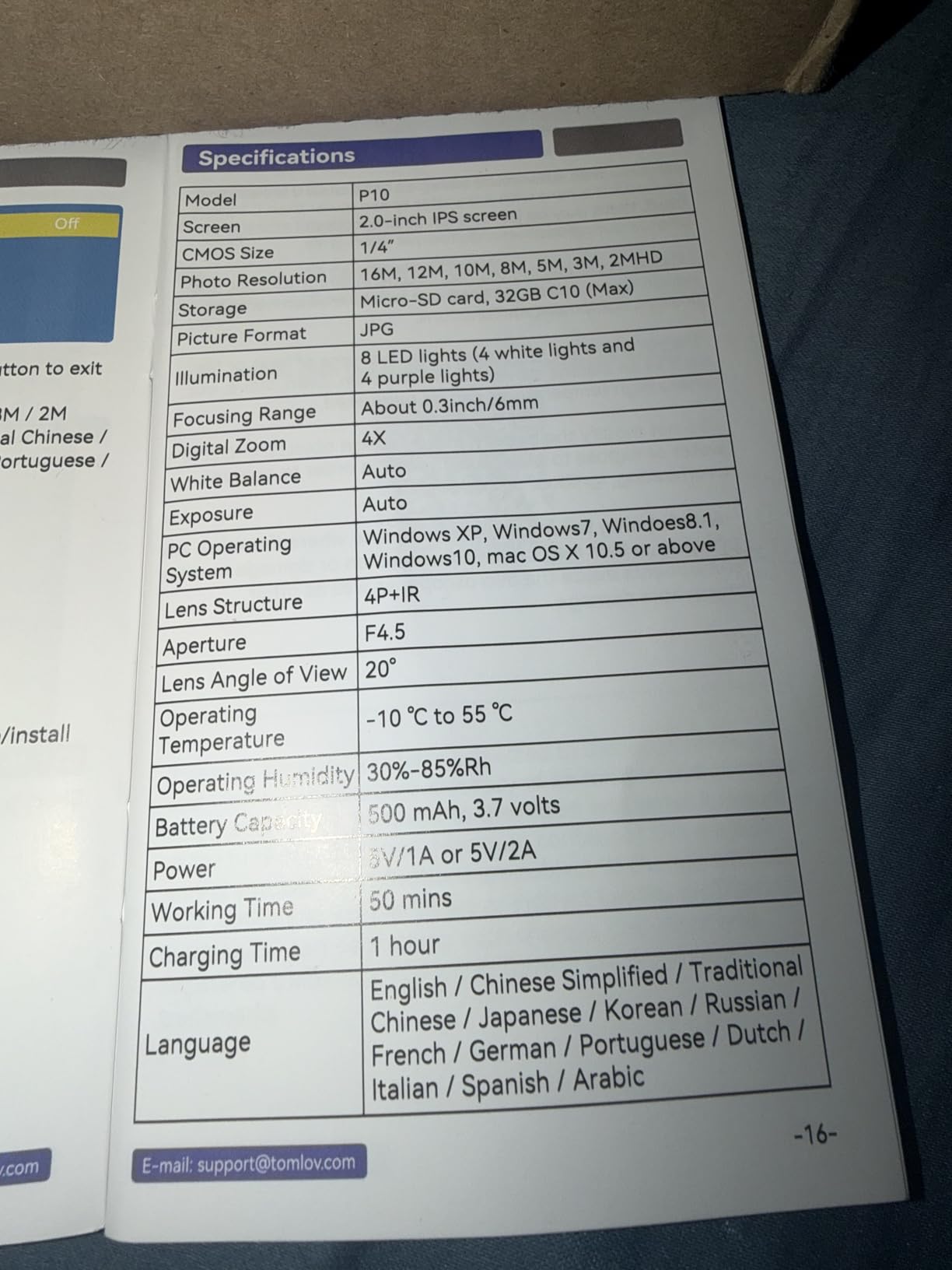
- Built-in 300-photo memory means no card needed
- 16MP sensor beats most devices at this size
Cons
- Fixed 100x is well below what serious coin grading needs
- 2-inch screen is small for extended inspection
- 50 minutes of battery is the shortest runtime among the cordless scopes here
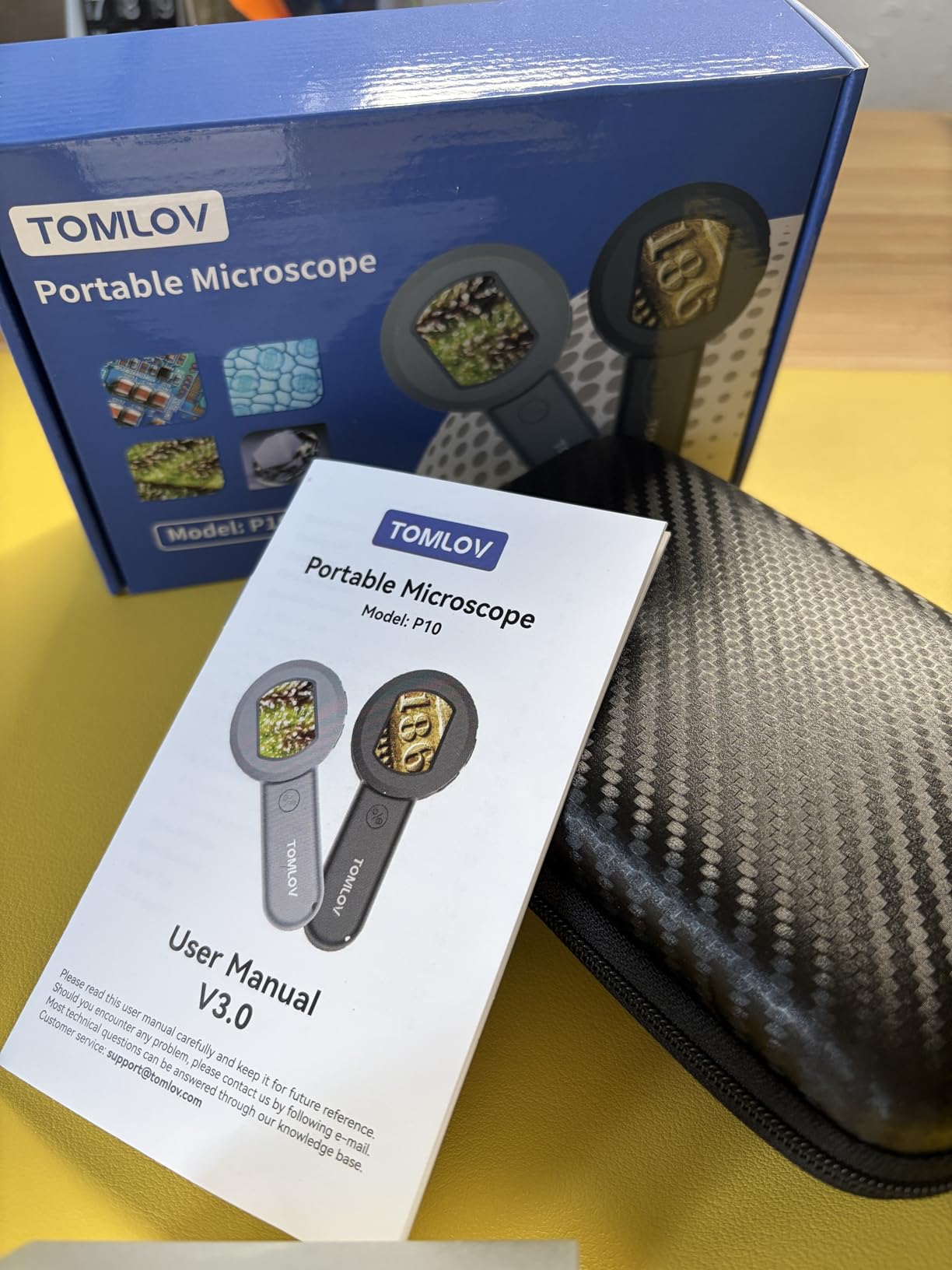
The P10 answers a different question. Not what is the best coin microscope, but what belongs in the bag at a coin show. At 3.9 ounces and a 2-inch screen, it does not compete with the desk scopes. It replaces them for the moment when you pull a coin from a dealer’s box and need the mintmark before you agree on a price.
Fixed 100x magnification with 4x digital zoom focuses at about 0.3 inches. That is a quick-identification tool, not a grading instrument. The 100x figure is close to the truth, which makes it more honest than most units in this list.
The UV lights are the quiet feature. Few entry scopes have them, and collectors use them for currency paper and material checks in ways that have nothing to do with magnification.
What 100x Actually Shows You
At 100x a Morgan dollar fills the 2-inch screen with room to spare, and a mintmark is instantly readable. A doubled date on a Lincoln cent is visible. A small repunched date is not, and neither is a clipped planchet edge that you would catch at 200x on a bigger unit.
So the honest framing is: this confirms what a loupe tells you, faster and with a photo attached. That is genuinely useful at a show, and genuinely not a substitute for a desk setup at home.
Portability and Battery Reality
Fifty minutes of use per charge is the shortest runtime in this group. That is enough for a long session of checking deals and not enough for a full show day, so it lives in a pocket between charges rather than running all day.
The 300-photo internal memory is a real convenience. No card, no reader, no file management for quick captures, which removes the friction that makes people stop photographing finds.
Capture Quality and Build
A 16MP sensor gives better captured resolution than most devices at this size, though the effective detail is limited by the fixed 100x optics. Expect usable photos for reference, not for listing.
Some owners report inconsistent button feel and build quality, which is the main reason this sits lower on the list despite the appealing features.
Who Should Carry One
Buy it as a second unit for travel and shows, not as your primary scope. If you sell at fairs regularly and need to verify a coin’s mintmark in a dealer’s hand, it earns its place in a kit bag.
8. Andonstar AD246S-M HDMI Microscope – Three Interchangeable Lenses Solve a Real Coin Problem
Andonstar AD246S-M 3 Lens 2160P HDMI Digital Microscope 2000x for Adults
Three interchangeable lenses
2160P video with HDMI output
Metal boom arm stand
Windows measurement software
Pros
- Interchangeable lenses frame a whole coin or resolve fine surface detail
- 2160P recording and HDMI output display findings on a large screen
- Metal boom arm stand is rigid and heat-resistant
- Wireless remote triggers capture without shaking the scope
- Complete kit with slides tweezers a 32GB card and cables
Cons
- Swapping lenses means unscrewing and remounting
- Heaviest and largest scope here at 2.25 kg so it needs a permanent desk
- Measurement software is Windows-only
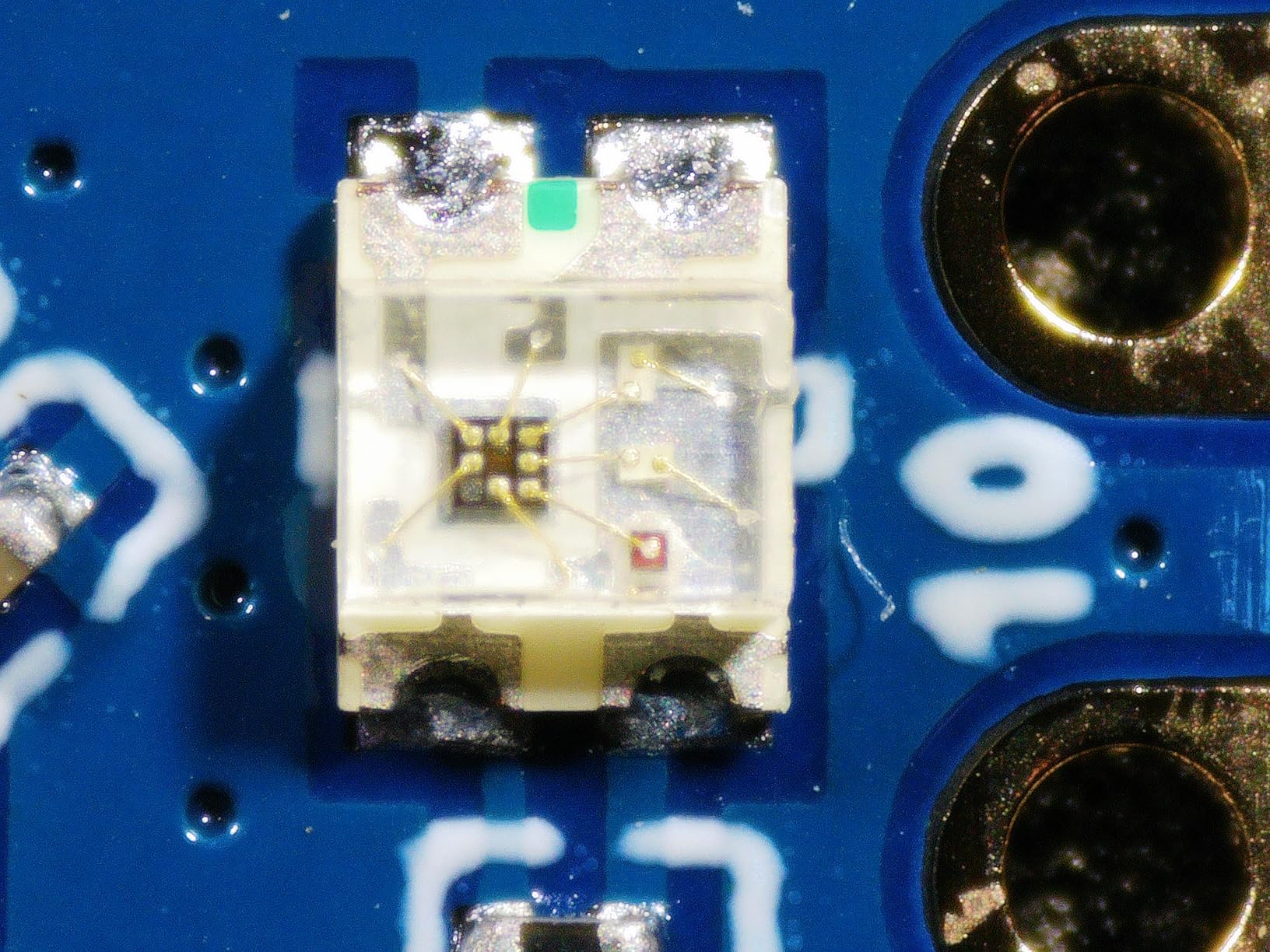
Framing a whole silver dollar and resolving a single mintmark need completely different optics. Most digital scopes force you to compromise by raising or lowering the head. The AD246S-M solves it properly with three interchangeable lenses.
Lens A covers 4.5x to 180x on screen for whole coins. Lens L covers 15x to 60x for soldering and repair. Lens D starts at 450x and is the one you mount when you know exactly where the feature is and want to resolve the metal surface. Rated 4.5 stars from 1,271 reviews, it is the most capable instrument here.
The HDMI output is the second real advantage. Feed it to a large monitor and the image becomes a shared object, which is exactly what you want when a club group is examining a variety together or when you are photographing a coin for an online listing.
Interchangeable Optics and Their Limits
Three lenses mean three working distances and three focal planes. In practice I kept Lens A mounted for ninety percent of coin work and reached for Lens D only after the target was already located and framed. That is a workflow advantage as much as an optical one.
The catch is physical. Each swap means unscrewing a lens and remounting it, which interrupts a session and adds a step that a fixed-lens unit never imposes. If you switch between whole-coin and detail views constantly, that friction will build up.
HDMI Output and the Magnification Claim
With HDMI connected to a 28-inch monitor and Lens D mounted, the manufacturer claims up to 2040x with the on-screen 3x digital zoom. Read that carefully: the large figure depends on the external display. On the 7-inch panel, the effective magnification is far lower.
Even at high output figures, what you are resolving is a small sensor image. For coin identification the useful band remains 30x to 200x. The extra capability matters for documenting surface texture, not for reading a date.
Stand, Remote, and Measurement Software
The upgraded pro boom arm measures 7 by 7.8 by 13 inches in metal construction and stays rigid, which is what you want at the magnification levels this unit invites. The wireless remote triggers capture without touching the body, and that removed the shake that ruins most microscope photos.
Windows measurement software handles length and area calculations, which is the closest thing to a measurement reticle in this group and directly answers the sizing question collectors raise. It is Windows-only, so Mac users lose that feature entirely.
Enthusiast Setup Cost
At 2.25 kg and corded electric, this is a permanent desk installation. That is a fair trade for the only unit here that solves the framing problem properly, and it is the closest a digital microscope comes to the workflow of an optical stereomicroscope.
9. Andonstar AD210 10.1-inch LCD Microscope – Best Full-Coin Framing With a Large Screen
Andonstar AD210 10.1 Inch LCD Digital Microscope for Soldering, Coin
10.1-inch IPS screen
Working distance up to 10.2 inches
Top side and bottom lighting
260x maximum
Pros
- 10.1-inch IPS screen with a wide 178-degree angle
- Long working distance frames an entire silver dollar in frame
- Top side and bottom LED lighting covers reflective and transmitted work
- Remote control avoids shake during capture
- Corded electric with included adapter and a full 32GB card kit
Cons
- 260x magnification ceiling is modest against 1000x-class handhelds
- Corded electric only so it stays on the desk
- Single-lens design lacks interchangeable optics
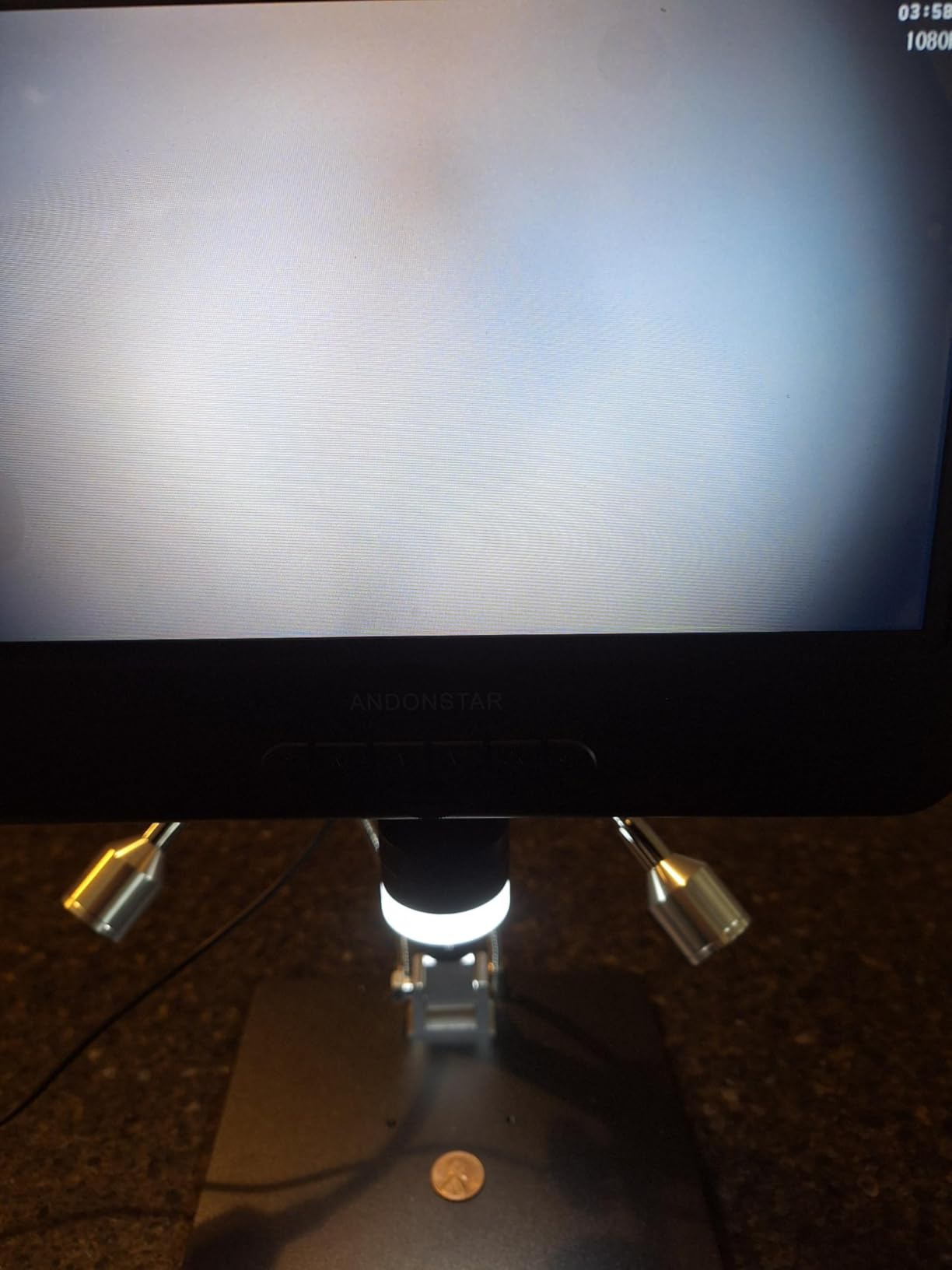
The AD210 answers a different constraint from the AD246S-M. Instead of several lenses, it gives you one long, tall, well-lit workspace with a 10.1-inch screen. For a collector who evaluates whole coins rather than hunting a single feature, that is the more useful design.
The stand reaches 12.6 inches tall with working distance adjustable from 1cm to 26cm, and up to 10.2 inches of clearance. A 38.1 mm silver dollar fits in frame with room around it, which no handheld in this list can do. At 4.5 stars across 761 reviews, owners consistently cite the long working distance and the big screen as the reasons it works.
Three LED illumination types matter more than they sound. Top light for general inspection, side lights for relief, and a bottom light stage when you are looking at a coin edge or a transparent slide.
Working Distance and Large Coin Coverage
A silver dollar at 260x on a 4.3-inch handheld would fill the screen with a fraction of the coin visible. Here, the long working distance holds the entire piece in view with room to spare. You can judge a coin’s overall appearance and wear pattern at a glance, then move in for the details.
This is the whole-coin equivalent of what the AD246S-M’s Lens A provides, but achieved with stand geometry rather than optics. It is easier to use because nothing has to be unscrewed.
Three-Way Lighting for Coin Surfaces
Top light alone will flatten a relief. Side lights at a low angle bring out the dentils on a dime and the lettering on a quarter rim. The bottom stage handles the case where you want light through the piece, which matters for slabs and for edges showing a strike.
Brightness is adjustable on each group, so you can dial the top light down and the side lights up without losing overall visibility.
Remote-Controlled Capture and the Kit
The remote handles photo, video, digital zoom, and color adjustment. That last function is not marketing, since accurate colour on toned copper and silver is something sellers are asked about constantly.
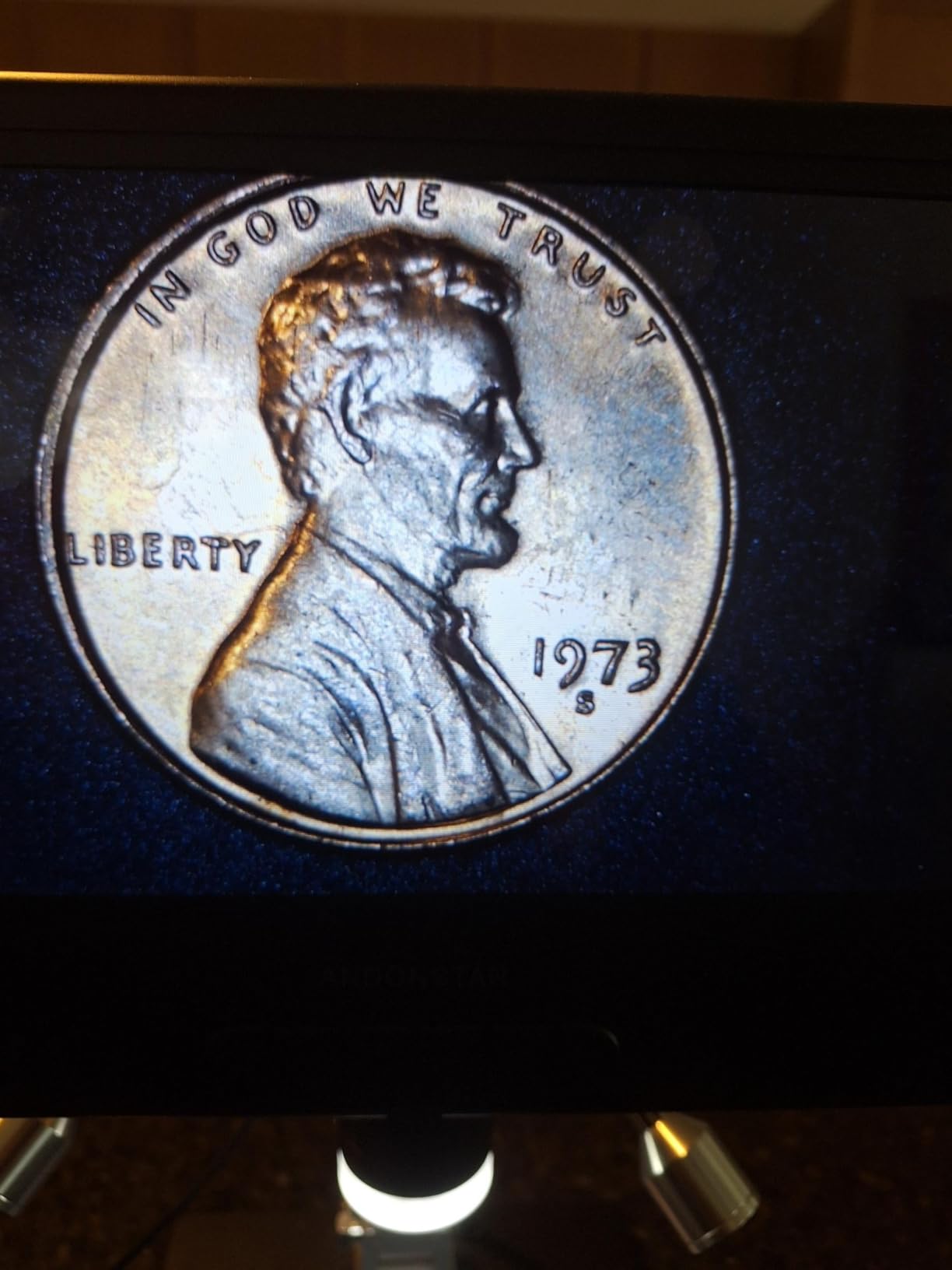
A 32GB memory card and card reader are included, along with a bottom light stage, prepared slide kit, and cleaning cloth. Nothing needs buying before the first photo.
Where the Ceiling Bites
260x is the practical limit, and it is lower than the headline figures on handheld units. For doubled-die work and fine surface texture you will want more, and the single-lens design cannot extend into that range the way the AD246S-M can. Corded power and a 1.92 kg base also make this strictly a desk instrument.
10. JOYALENS JL210 10.1-inch Microscope – The Highest Rated Rigid Stand for Silver Dollars
JL210 10.1” Digital Microscope Full View Silver Coin Magnifier for Adults
10.1-inch IPS with 12MP sensor
All-metal 12.6-inch stand
Working distance to 10.2 inches
260x maximum
Pros
- Highest average rating in the set at 4.6 stars with 78 percent five-star share
- All-metal stand and large base give excellent stability and clear working space
- Long working distance frames entire silver and Morgan dollars
- Multiple light sources minimize shadows across the relief
- Wireless remote eliminates vibration during capture
Cons
- Smallest review base of the ten at 282 reviews
- 260x ceiling is below the handheld LCD units
- Corded electric with a 1.9 kg base so it stays on the desk
The JL210 posts the highest satisfaction score of the ten at 4.6 stars, with 78 percent of reviews at five stars. The all-metal 12.6-inch stand and 7.1 by 7.9 inch base are the reasons. I could frame and photograph a full Morgan dollar without the image shifting, and at these working distances that stability is the difference between a usable photograph and a blurred one.
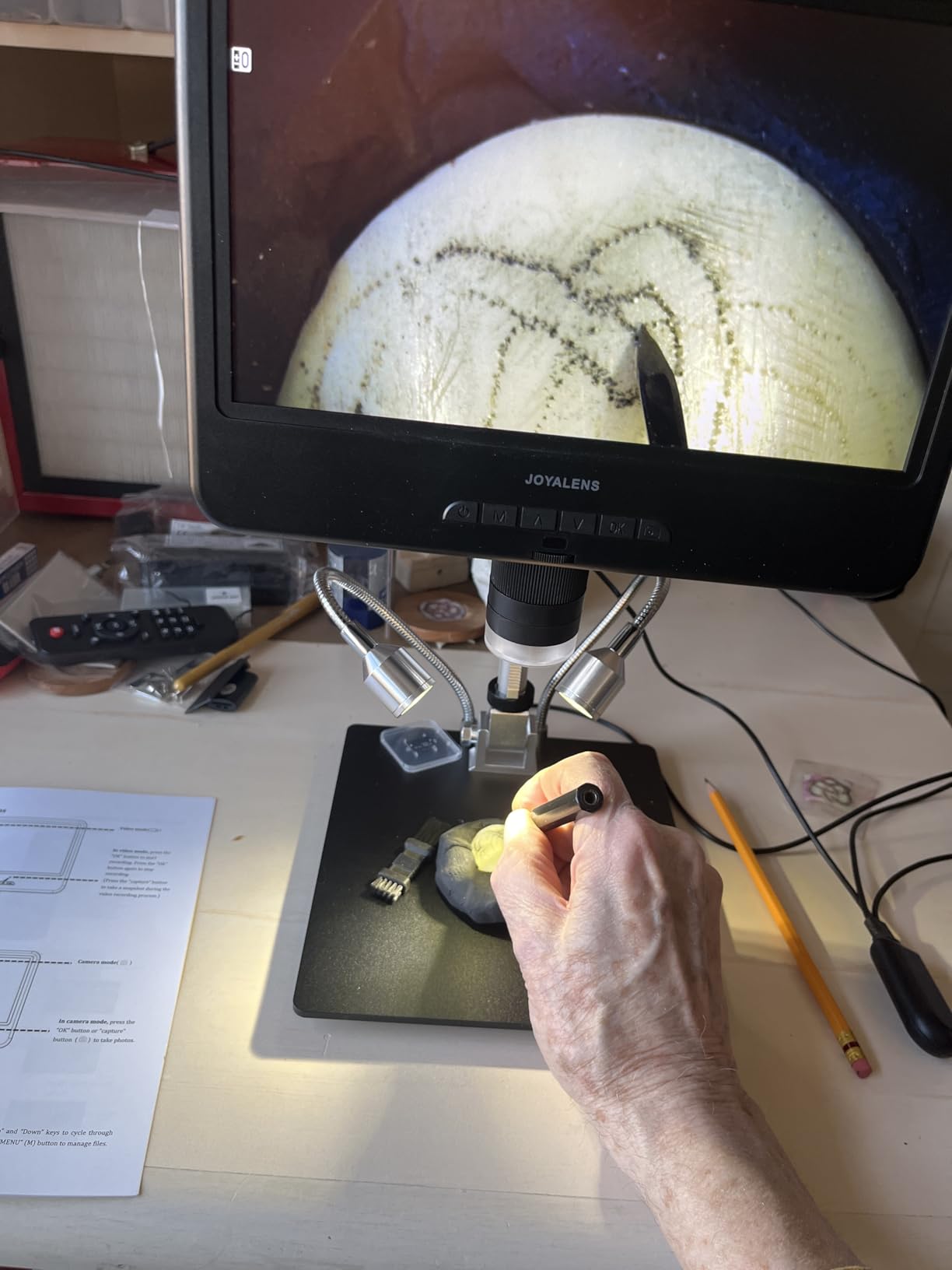
Lighting is generous: eight built-in LEDs, two gooseneck spotlights, and a bottom stage light. Having both a ring and adjustable side sources meant I could kill a reflection on the fields of a proof surface without giving up overall brightness.
Its honest weakness is thinner data. Two hundred eighty-two reviews is fewer than any other scope here, so long-term durability is less well proven. A high rating on a small sample is encouraging, not conclusive.
Stand Rigidity at Working Magnification
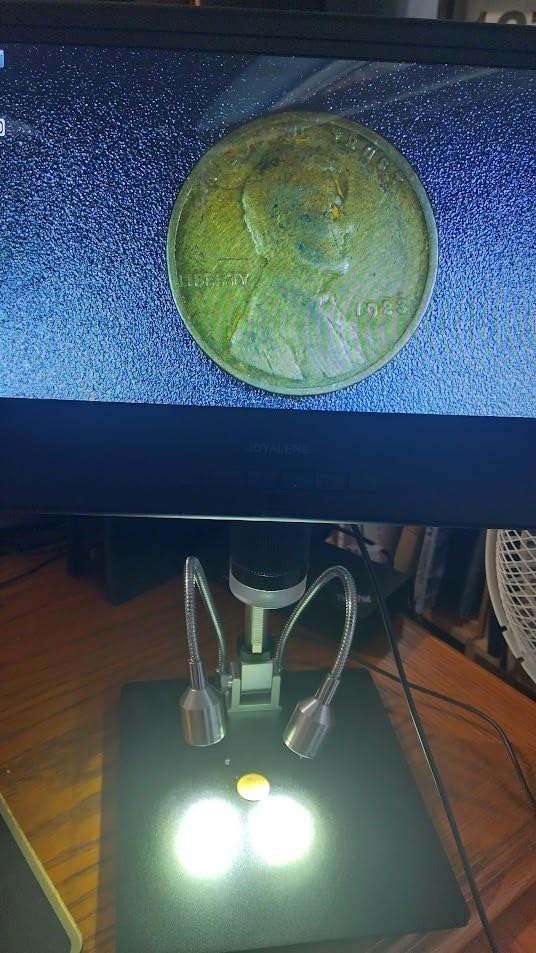
Everything on this unit is metal, from the column to the base. The difference is easy to feel the moment you touch the frame to adjust focus. There is essentially no transmitted shake, so you can work at 200x without the image drifting off the detail you are inspecting.
For full-coin evaluation the tall stand also gives real clearance. Silver dollars, Morgan dollars, and half dollars all fit within the 10.2 inches of working distance with room to spare.
Multi-Angle Lighting and the Wireless Remote
Three light sources in one body, but the two gooseneck spotlights are the ones that matter for coins. Aim one low across the relief and the second rakes the rim, and a struck surface that looked flat under a ring light suddenly shows its texture.
The wireless remote handles capture, zoom, and image rotation without touching the unit. The rotation function is the small one that saves real time, letting you flip the view rather than physically turning the coin on a mat.
Photo Kit and Connectivity
A 32GB memory card and card reader are included, with USB for computer viewing. The bottom transmitted light and five prepared slides extend the unit beyond coins into general hobby inspection, which is worth having if you also look at stamps or small parts.
Capture runs at 12MP stills and 1080P video, which is more than enough for listing photographs when the coin is filling the frame.
Who Should Buy It
If you collect large silver coins, want a rigid metal instrument rather than a plastic-column stand, and prefer one unit to do full-coin and detail work, this is the pick. Weigh the smaller review base against the other nine before committing, since a thin history means less evidence about how it holds up over years.
How to Choose a Coin Microscope Without Overbuying
Most collectors overspend on magnification they cannot use and underspend on the stand. Work through these decisions in order and the right tier becomes obvious.
Pick the Usable Band, Not the Printed Number
Look for a unit whose claimed range centers on 50x to 200x and that describes magnification changes clearly. If the listing leads with 1000x or 2000x and gives no usable figure, expect marketing. Two products in this roundup, the TOMLOV DM4W and the Andonstar AD210, state their real ceilings up front, which tells you something about how the rest of the spec sheet was written.
For mintmarks and wear, 100x is genuinely useful. For variety hunting, push to 200x. Past 400x you are looking at sensor noise on these units.
Count the Light Sources and Check Their Positions
One ring light means glare on every reflective coin. Two or more independently aimable side lights, whether fixed goosenecks or adjustable LEDs, is the single biggest quality difference you can buy. The Elikliv weighing model and the TOMLOV DM9 each give you ten light sources, several of which sit off the lens axis, which is what breaks up a reflection on a proof surface.
Brightness control on individual light groups matters as much as count. A proof surface needs the ring dimmed and the side light brought up, and you cannot do that if all eight LEDs are wired together.
Measure Working Distance Before Anything Else
Working distance is how much room sits between the lens and the coin. A 1mm reeding or a 2009 Lincoln cent needs almost none. A silver dollar needs several inches to fit in frame with a straight-on view.
Short-clearance handhelds are excellent for cents, nickels, and dimes. If half dollars and dollars are part of your collection, look for a stand offering 8 inches or more of clearance, which is where the Andonstar and JOYALENS units separate themselves.
Treat Stand Mass as a Quality Signal
Every magnification increase makes shake more visible. Metal columns, enlarged bases, and boom arms hold an image steady; thin plastic columns do not. In this group the two large-screen scopes both use all-metal stands, and the models whose owners most often report blurry captures are the ones built on plastic columns or a touchy focus wheel.
This is why the AD246S-M ships with a wireless remote. A body that will not shift when you press a button is worth more than a remote, but when you cannot avoid touching it, a remote solves the problem.
Decide Between Standalone, USB, and HDMI
Standalone LCD units with a battery are the most flexible. Take them to a show, work without a laptop, and capture to a memory card. Their weakness is a small screen that makes a coin fill the frame faster than you want.
USB computer-connected models give you a large canvas for free and are the better choice if you photograph coins to sell. Check Windows and Mac support explicitly, since a meaningful share of these units are Windows-only and collectors discover that after buying.
HDMI output to a television or monitor is the least common tier and the best for group viewing or club nights. It also inflates the advertised magnification, since the large figure only applies on the external display.
Check Mac Compatibility Before You Order
Every unit in this roundup except the Andonstar AD246S-M’s measurement software is listed for Windows and Mac. The AD246S-M’s length and area measurement tools are Windows-only, so Mac collectors lose measurement entirely there. The rest stream over USB as a standard camera, so the risk is low, but the LCD units with a PC view button are the safest.
Decide Whether You Need a Measurement Scale
Collectors ask repeatedly for a coin microscope with a scale, and the honest answer is that few of these have one. The three that add a related function are worth knowing about.
The TOMLOV DM4W and the Elikliv weighing model include a 0.1g scale up to 300 grams, which lets you screen a coin’s weight but does not give you a linear measurement in the field. The Andonstar AD246S-M includes Windows software for length and area calculations on the captured image, which is the closest thing to a true reticle in this group. If sizing a variety is central to what you do, budget for that one or look at a separate caliper workflow.
Know When a Loupe or Stereo Microscope Is the Better Buy
A 10x triplet loupe costs a fraction of any unit here, gives real optical magnification with no screen to stare at, and is what serious collectors reach for at shows. If your only goal is identifying dates and mintmarks, keep the loupe as your primary tool.
For grading and authentication, a binocular stereomicroscope with over-under illumination is the enthusiast answer. Experienced collectors on the NGC boards favor this setup over digital units specifically because halogen lighting over a coin handles reflective metal better than LED rings. It gives real depth perception too, which a monoscopic digital camera never will. What you give up is photography, recording, and the ability to show anyone else what you are seeing.
The digital microscope wins on documentation. It wins on sharing findings. It wins on teaching and on building an archive of your collection. Those are the reasons to buy one, and the honest tier ladder is loupe first, stereo microscope if you grade, digital if you photograph or collaborate.
Frequently Asked Questions
What magnification do I need for looking at coins?
You need 30x to 200x for coins. A 10x triplet loupe handles routine date and mintmark checks, while 100x to 200x covers wear patterns, doubled dies, and small repunched dates. Above roughly 600x, consumer digital microscopes show sensor noise and dust rather than coin detail, so advertised 1000x and 2000x figures are digital crops, not optical magnification.
What kind of microscope is best for coins?
A digital microscope with a 4.3-inch or larger LCD and at least two aimable side lights is the best general choice, because a single ring light produces glare on reflective metal. For grading and authentication, a binocular stereomicroscope with over-under illumination gives truer images and real depth perception. A 10x loupe remains the cheapest and fastest tool for simple mintmark checks.
What can you actually see at 5000x magnification?
On consumer digital microscopes you cannot usefully see anything at 5000x. Past roughly 400x the image is built by cropping and upscaling the camera sensor, so resolution is lost while magnification rises. The 30x to 200x band resolves mintmarks, hairline scratches, worn relief, and small die marks. Beyond that you are examining sensor noise, and the real limit is the sensor, not the lens.
Do I need a digital microscope or is a loupe enough?
A 10x triplet loupe is enough if you only want to read dates and mintmarks, and most collectors still use one at shows. A digital microscope earns its place for photography, documentation, and showing findings to others. If you grade coins regularly, an optical stereo binocular microscope with over-under lighting beats a digital unit on reflective surfaces and gives depth perception.
Can a digital microscope detect counterfeit coins?
Partially. A digital microscope reveals surface tells: reeded edges, file marks, die-clone artifacts, and inconsistent lettering. It cannot confirm authenticity on its own. Weight screening helps, since units with a built-in 0.1g scale can flag a coin outside the expected range, but a skilled replica can weigh correctly. Treat any microscope as a screening tool and have a submission service confirm anything valuable.
Which Coin Microscope Should You Buy?
If you want one scope that handles mintmarks, wear checks, and listing photos without a learning curve, take the Elikliv EDM4. Ten thousand reviews mean the failure modes are already known, and it runs with or without a computer.
If glare on proof and silver coins is your recurring problem, buy lighting. The TOMLOV DM9 gives you seven inches of screen plus two gooseneck side lights, and the Elikliv weighing model puts ten lights in a handheld body. If weight screening matters to you, the TOMLOV DM4W pairs an honest 200x range with a 0.1g scale.
If you collect large silver coins, the Andonstar AD210 and JOYALENS JL210 both frame an entire dollar thanks to long working distance and a rigid stand. If you hunt fine detail and want measurement tools, the Andonstar AD246S-M is the enthusiast answer, with three lenses and HDMI output to a large screen.
Whatever you pick, ignore the magnification on the box and set your expectations at 200x. That is where the best digital microscopes for coin collecting in 2026 actually earn their money, and it is more than enough to find the variety you were looking for.